Why Austen’s Works Easily Translate into Modern Adaptations

600full-pride-and-prejudice-2005 Jane Austen’s works are often classified as “romances.” The assumption comes from the premise that if the heroine meets a handsome man in Chapter One, he must be the hero. Fitzwilliam Darcy is the romantic hero of Pride and Prejudice, and although he does not appear in Chapter One, he does make an appearance by Chapter Three, and Austen’s chapters are short in comparison to contemporary writers. However, if you know nothing of the story line nor do you have sweet dreams of Colin Firth emerging dripping wet from a placid lake (Sigh!) or of Matthew Macfadyen walking through the morning mist with an open shirt and lots of chest hair (Sigh!), you may not think much of the infamous Mr. Darcy.

Quite frankly, upon our first meeting of this wonderful character, he is a jerk. He makes a horrendous “first impression.” But that is the thing with Austen. Her original title of the novel and her theme are one and the same: first impressions are misleading. From the first line of Pride and Prejudice, “It is a truth universally acknowledged that a single man in possession of a good fortune must be in want of a wife,” Austen plays a merry game with her readers. “First impressions” are misleading. Repeat that phrase with me: First impressions are misleading. First impressions are misleading.

In truth, Darcy does not come to Hertfordshire seeking a wife; Wickham is not the perfect mate for Elizabeth; Jane might be more beautiful than Elizabeth, but she lacks her sister’s depth of character; Darcy’s best quality is not his wealth, nor is his worst quality his pride. Austen’s theme permeates every line, and, generally, the reader does not recognize that our favorite “Lady” hits us over the head with it. Readers simply sense the resonance found within Austen’s works. Theme explains why Austen’s works are considered “classics.” When I taught school, I used a thematic approach to the literature we covered in class. During the 15 years I spent at the middle school level, we identified common (and not so common) themes, which would tie the many novels we had available for our students together (humor, the Holocaust, science fiction which can become science fact, coming of age, etc.) Theme, well done, brings us universal truths, and discerning readers seek truth well told. Austen writes about the truths of a flawed society in which she was born.

What we find in Austen, as well as in the Brontes, Dickens, Conan Doyle, Shakespeare, etc., is how easily her stories are transferred to the present. Critics of “remaking” the classics refer to the phenomenon as “nostalgia.” We who love these types of stories are accused of wanting to go back to a less complicated time. In reality, I disagree with the idea that the Regency was “less complicated,” but I understand their objections. Yet, it is much more than a longing for an easier time. If it is “nostalgia,” then what is missing from our current time that brings us to seek out another? emma-and-knightley-dancing It is more than an “escape” into the past.

Readers and viewers return again and again to these tales. What parts of these remakes of the classics speak to our contemporary needs and fantasies? I believe, we often use a magnifying lens to view the world. This lens has a filter known as the “past.” We view contemporary society by reinventing the past. Some people would disagree with this idea, but I am of the persuasion we “soften” the difficulties of the Regency.

Early romance writers have set the standard for the times. In contrast, I often write of the prejudice in society, the lack of rights of women, the devastation of being born second or third, the perils of being born first in a wealthy family, the prospects of the servant class, etc., but I can tell you, my works are received with mixed views, because some readers do not wish to know of the seedier side of the Regency.

Parts of the past survive, while others fade away. From the perspective of current cultural and social ambitions, politics, and historiography, the past is remade. Do not our grandparents tell us of a simpler time? Do we not look back and see with our “selected” memory a past in which life moved as an easier pace? Yet, in truth, those easier times had issues similar to those of which we deal every day. Death, famine, disease, betrayal, corruption, war, etc., exist in each era. ecd1

As a writer of Austen-inspired novels, I strongly feel that I “hold” the past in waiting for my readers to cherish, but I also believe my novels, as well as those of other writers of remakes, reshape the past in the current styles and fashions. Remakes (whether sequels, adaptations, what ifs, different genres with Austen’s characters, etc.) appeal to both our need for the classics and our need for popular culture. As a teacher for 40 years, I repeatedly asked my students to read and view and analyze – to imagine themselves in relation to a past and an ever-changing present.

As a writer, I reimagine Jane Austen’s works as a portal through which the reader can consider what we were, what we are, and what we want to be. In doing so, I emphasized the importance of permitting the canon and its past to be complemented by, and in some sense removed by, the tools and technologies of our contemporary culture and popular media. Often when I submit an Austenesque novel for a contest, I am told by a judge (who has never read such a novel) that I “cheated” because I used readily recognizable characters. I am “punished” by the score I am presented. I attempt to take the constructive criticism and use it, while ignoring the chastisements for my choice of characters. Despite the insinuations of my character for choosing Austen’s most famous couples, I say I have  upped my writing because not only must I tell an engaging story, but I must also keep Darcy and Elizabeth and Anne Elliot and Captain Wentworth true to the nature set for me by Jane Austen. persuasion-2007-persuasion-5251162-1024-576

In such adaptations, those of us who delve into these remakes, retain the specifics of the context and the historical setting, while highlighting and exploring current issues. As I mentioned above, in my many Austen sequels/adaptations, I have used political intrigue, issues of race, women’s rights, the plight of the poor, post traumatic stress syndrome, childbirth, governmental spies, etc. These issues fit the historical setting, but they also speak to modern times.

So, how popular are these remakes? How easily have Jane Austen and others made the journey into contemporary times? In 1995, A&E Network aired an Andrew Davies’ retelling of Pride and Prejudice. It earned the network its highest rating ever in the U.S. In England, 21% of British viewers watched the last episode of this series, which starred Colin Firth and Jennifer Ehle. Sales of Pride and Prejudice hit 35,00 copies per week during the broadcast.

In the past twenty years, there have been more than 30 films and TV adaptations of Austen’s works, as well as over 500 continuations and sequels based on Austen’s six simple novels. Multiple markets have grown up around the love of Jane Austen: music to read Austen by; boutiques; guidebooks; cookbooks; dolls; advice books; organized tours, etc.


Book Blurb:hhcovercrop Liz Bennet’s flirtatious nature acerbates Will Darcy’s controlling tendencies, sending him into despair when she fiercely demands her independence from him. How could she repeatedly turn him down? Darcy has it all: good looks, a pro football career, intelligence, and wealth. Pulled together by a passionate desire, which neither time nor distance can quench, they are destined to love, as well as misunderstand, each other until Fate deals them a blow from which they can no longer escape. Set against the backdrop of professional sports and the North Carolina wine country, Honor and Hope offers a modern romance loosely based on Jane Austen’s Pride and Prejudice.

Posted in film, Jane Austen, language choices, Living in the Regency, Napoleonic Wars, Pop Culture, Pride and Prejudice, Regency era, Regency personalities, word play, writing | Tagged , , , | 1 Comment

Meet and Greet: Tudor-Based Author Judith Arnopp + an Excerpt from “Intractable Heart”

Today, I welcome the fabulous Judith Arnopp, a Tudor-based historical author, and her latest release, Intractable Heart: The Story of Katheryn Parr

10447319_10152441087330890_1337771090_aIn 2007 Judith Arnopp graduated from the University of Wales, Lampeter with a BA in English Literature and a Masters in Medieval Studies; she now combines those skills to write historical novels.

Her early books, Peaceweaver, The Forest Dwellers and The Song of Heledd concentrated on the Anglo- Saxon/ medieval period, but in 2010, she published a short pamphlet of ‘Tudor’ stories entitled, Dear Henry: Confessions of the Queens. Many loved the effort, and she received endless requests for full length ‘Tudor’ novels.

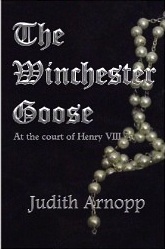
518fFL77DlL._BO2,204,203,200_PIsitb-sticker-v3-big,TopRight,0,-55_SX278_SY278_PIkin4,BottomRight,1,22_AA300_SH20_OU01_For a while Judith buried herself once more in study, refreshing her already extensive knowledge of the period. The result was The Winchester Goose, the story of a prostitute from Southwark called Joanie Toogood, whose harsh existence is contrasted with that of Henry’s fourth and fifth wives, Anne of Cleves and Katherine Howard. The Winchester Goose is a multi-narrative illustrating Tudor life from several, very different perspectives; a prostitute, a Spy, and a Lady-in-Waiting at the royal court.

Judith’s next book The Kiss of the Concubine details the life of Anne Boleyn, told in the first person- present tense, the story takes you to the very heart of England’s most talked about queen.511tRocmLcL._BO2,204,203,200_PIsitb-sticker-v3-big,TopRight,0,-55_SX278_SY278_PIkin4,BottomRight,1,22_AA300_SH20_OU01_

Judith’s latest Tudor novel is Intractable Heart, the tale of Henry VIII’s sixth and last wife, Katherine Parr.
Judith also blogs about the Tudor period, both on her own blog-page and on the English Historical Fiction Author’s website. Her work reaches a world-wide audience, and her following is steadily increasing.
As a self-published author Judith maintains direct control of her work and avoids the hassle involved with agents and publishers. Self-publishing speeds up the process, but accuracy and attention to detail is paramount. Her small team is made up of three proofreaders, an editor, and a cover designer all of whom work with Judith toward a polished finished product.

Linking to Judith:
Website
Blog
Facebook
Twitter
Amazon Author Page

1980701_10152441075315890_1870538565_nAn excerpt from Intractable Heart
March 1543 – Hampton court
Being widowed for the second time is very different to before. Last time I was just twenty years old. I had just lost my mother, and the world was a vast and frightening place. I had little liking for my in-laws and so, with little money of my own, I turned to my friends and buried myself away in the north. But this time, I am comfortably left. I have influence. I have powerful friends and the ear of the king’s daughter.

I also have the admiration and, I hope, the love of Thomas Seymour. He has been paying me illicit attentions for months now, and I had half expected he was dallying with me and would disappear when my husband John died. But instead, he continues to call regularly, treating me like an ornament that will shatter should he speak too loudly. But although I may appear fragile in my grief, inside I am dancing a jig. For the first time in my life I am independent and can follow my own directives.

When Margaret agrees we should join the Lady Mary’s household I am delighted. My life so far has been spent in relative obscurity, far from the delights of court, the gossip and the intrigue. The only time I knew myself to by fully alive was during the siege at Snape, when the danger and conflict made the blood course like a raging river through my veins. But the excitement was short lived and as soon as it was over life returned to its habitual tepid trickle of muddy ennui.

I love clothes; I love jewellery; I love to dance, and I have not yet fully enjoyed any of those things. I have kept my inner-self repressed, my thoughts and beliefs hidden. Now, in Lady Mary’s household I can give my personality full rein – although perhaps, since Mary is so vigorously conservative, it will be as well to keep my views on church reform quiet.

But, just a few weeks into our engagement at court, Margaret has fallen ill. I tuck her into bed, feel her brow which is cool and dry, and ask delicate questions about her female condition. She has no sign of fever. There is no rash, no pain but she is pale and listless, constantly dissolving into tears for no reason at all. I mix a concoction of chervil and woodruff and wait while she drinks it. She pulls a face and hands me the empty cup.

“There,” I tuck the blankets around her. “Try to rest. I will send for some books to divert your mind but do not read for too long.”

Homer is curled into a tight ball on the bed beside her, her finger tips move gently in his coat. Her tragic white face reminds me of when she was a child at Snape. As I close the door I pretend not to see her composure crumple as she subsides into tears again. I don’t know what to do to help, perhaps weeping will relieve her.
Lady Mary will be waiting for me. I skim along the corridor, past the chapel where the choir is practicing, their soaring voices lifting spirits, infusing an ethereal peace throughout the palace. As I hurry through the outer chambers I spy Thomas, send him a fleeting smile as I pass. My heart beats a little faster but I cannot stop. I must wait until later when we have arranged to meet in the gardens.

“Ah, Lady Latimer.” Mary puts her book on her lap as I join her at the fireside. “I was just finding the place where you left off.” Her finger trails down the page, stops and taps three times on a red lettered word. “Here we are. This is it.”

She passes me the book and, still a little breathless from my haste, I begin to read. She lays her head on the back of her chair and closes her eyes. From time to time I look up to ensure she has not fallen asleep.

Although she is younger than I by a few years, she appears older. There is a perpetual crease between her eyes, making her seem cross and unapproachable but, in the company of friends, she is amiable and sweet tempered. Poor Mary, she has been through so much, there is little wonder she is so cautious, so serious. Born a princess, for the first few years of her life she enjoyed adulation from everyone but, when the king began to seek a divorce from Catherine, Mary’s life changed forever. Not only was she dispossessed as a princess, she was forced to bear the stigma of illegitimacy. The hand that was once sought by European princes is now spurned. No one is sure where she stands in the line of succession. It is doubtful if even the king himself remembers.

When the King and Catherine of Aragon parted Mary was separated from her mother, never saw her again. While Anne Boleyn was queen she was forced to act as an underling to the Princess Elizabeth. Mary being Mary of course, she came to adore her little half-sister and even now the girls keep up a correspondence.

It is only since the demise of the last queen, Katherine Howard, that Mary has regained some of her former standing. Until such time as her father remarries she assumes the role of hostess at court, and she does it well. Elizabeth, now also stripped of her title of princess, remains at Hatfield, banished and out of favour with her father. No-one at court knows Elizabeth very well although we are all curious about the offspring of the queen of whom we must not speak.
©juditharnopp2014

 Now that we have covered the customary author formatted interview, let us learn a bit more of Judith Arnopp, the person. So tell us, who was your first celebrity crush? Did you have posters of him all over your bedroom walls?

My first crush was Donny Osmond, and he was on my wall for a few years before I discovered Queen and Freddie Mercury. Fred is still my favourite musician, although I’ve taken the posters down now. The picture I’ve had the longest has been on my wall for almost forty years. It is a portrait of Richard III. I first became interested in Richard long before all the recent hype. In the 1970’s he was still widely regarded as a bit of a monster, but he became my teenage hero and is my eldest son’s namesake.

Do you have a passion for a particular cause or charity?
In my younger days I was a bit of an eco-warrior; but, although I still care very passionately about the environment, I have mellowed in my maturity. During the 70’s and 80’s when I first started to bang on about ‘green’ issues, I was regarded as ‘a bit of a nutter’; however, concern for the environment is more widespread now, and I have become normalized.  My family has been vegetarians for years. I try to use organic food wherever possible and bio-degradable packaging, etc., but it is very hard to be perfect, and I often lapse. We grow our own summer fruit and vegetables and to save trees my books are only available as print on demand, and I concentrate most of my marketing on the Kindle.

 What is your idea of perfect happiness?

My perfect day is usually spent at the coast (not far from home) walking the West Wales cliff path with my best friend/lover/husband, John. We stroll, have a picnic, watch the birds and the dolphins, and it is just a perfect lazy day, especially if it is sunny. We have been together for thirty odd years, and spending time together is still what we like to do best. Or at least, that is what he tells me.

Describe a bit of where you live now (in generalities). What drew you to settle in the area?
I am very, very lucky. It was a huge adventure for us when we moved our family from a town just north of London to West Wales about twenty years ago. Our children were growing up, and the world we lived in was fast and becoming a scarey place to raise kids. We came to Wales and have never regretted it for a moment.
We have a lovely smallholding with smashing views and perfect peace. The children were able to have as many pets as they could fit in: ponies and dogs and rabbits, chickens and goats. They were also able to roam the countryside safely. They are grown up now, but come home often; for most of the time these days John and I are on our own.
I don’t think I would have evolved into a professional author if we’d lived anywhere else: the silence gives me time to think and the long winter nights provide the perfect environment for studying and creating stories. Time has passed, and one by one the animals are dying off, and we are evolving. Now we just have one Welsh mountain pony and a daft Jack Russell. We run part of the smallholding as a holiday let, which writers and artists in particular find a haven of peace. Y Cwtch

In what hobbies or pastimes do you partake?
John and I both enjoy gardening, but should really down size to something smaller now. The garden is so large and demanding it doesn’t leave us enough time for walking and sketching, which we also enjoy. My back is beginning to resent the weeding, and I have had to employ a gardener to see to the lawns. The garden is very pretty and green, full of birds and is a lovely place to sit and contemplate my next project.

Tell us about the genre in which you have chosen to write. Why were you drawn to it?
It was natural for me to write historical novels. It was always my chosen reading genre, and after I graduated with an English and Creative Writing degree, I went on to take a Master’s degree in Medieval Studies. Since I had the combined skills of creative writing and history, I just fell naturally into historical fiction.

Who are your inspirations? Which authors influence your story choices or literary style?
They do say everything you ever read influences you in some way, so I have a great number of authors from which to choose. One of those I love and think have influenced me the most are Geoffrey Chaucer; I love his down-to-earth characters, who are as convincing and funny today as they were in the 14th century. I enjoyed Shakespeare from an early age too. When I was a little girl, my mum used to listen to recordings of Hamlet and Macbeth while she did the ironing, and I must have absorbed it while I was playing.
At school Shakespearean language just came naturally, and I did very well at that part of my English A level. I studied him again at university, and the plays were the favourite part of my course. Modern influences are people like Hilary Mantel and Michel Faber; I like literary characters who are so finely drawn one can scarcely tell he is reading. It is as if they are in the room or seem so real one might bump into them in town. I don’t like overdrawn, blousy, unlikely characters. I love Mantel’s Cromwell; I might not agree with every aspect of the character she has imagined, but I can completely believe the quiet, unobtrusive manner in which he deploys his agenda.

Do you have a favorite character or two amongst the many you have created?
My favourite has to be Joanie Toogood from The Winchester Goose. She is a prostitute from Southwark, and it is largely through Joanie’s eyes that the reader views the goings on at Henry VIII’s court. She is outspoken, prosaic, but very warm-hearted and funny. I also have a soft spot for Harold Godwinson from Peaceweaver. He is big, brave and, like all of us, flawed. It was horrible to have to kill him off at the Battle of Hastings, I felt I was destroying someone I love.

Do you feel your novels have a “message” or a particular theme? Or are your titles purely for entertainment?
I try to give women from history a voice. When the chronicles were written women were unimportant, their thoughts and feelings and, in some cases even their bravest actions, were air brushed from the record. I have to be careful not to make them too strong though. I wouldn’t want to have them behave in a manner that doesn’t ring true to the period. I think it is important to be faithful to the time in which one writes.

What is your writing environment like?
Oh, it is lovely. I am so lucky. I have a large study with a gorgeous view across the garden to the mountain beyond. My desk is big; it has to be to accommodate all my research books. The upper part of two walls are the bookshelves, overflowing with history books, and below there are storage cupboards for office supplies and boxes of first draft material.
I am watched as I work by a portrait of Richard III and another of Henry VIII. The fruit bowl is within arm’s reach, as is the phone so I don’t to leave the desk too often. Sometimes I sit here all day, only getting up to fetch coffee and lunch. It isn’t healthy, and I do try to make certain I take a couple of trips around the garden every day, but often I am so engrossed in my work I don’t notice how much time has passed.

Posted in book excerpts, British history, Great Britain, Industry News/Publishing, interview, Living in the UK, real life tales, Wales, writing | Tagged , , , , | 1 Comment

Editing 101: Homophones and Other Words Often Confused

editing2While editing, we must take comfort in the fact none of us can know everything about language choices. I know the frustration. There is nothing worse than to reread a passage six months after its publication and to spot an error in usage. It is impossible to catch every mistake. The challenge is to learn enough to reach a point where we are comfortable with our language choices. That being said, …

Discreet is being careful or confidential in what one reveals, while discrete means not attached – to be separate or distinct.

Accept means to receive, while except means to exclude or to omit. Everyone except the Republican candidate has accepted the invitation for the debate.

Effect is a noun meaning “result.” Affect is a verb meaning “to influence.” Where the confusion comes is effect can also be a verb meaning “to cause.” (For editing purposes, I find it easier to avoid effect used as a verb, finding better suited synonyms.)

Altogether means wholly. All together means every person and thing at the same place.

Assent means to agree, while ascent is an upward motion.

Dispute means to oppose, doubt or question the truth of a situation, whereas disprove means to prove to be false or in error. There is a difference in disputing the politician’s words and disproving them.

When used as a noun, blond generally refers to males, while blonde refers to females. When used as an adjective, blond is used for both genders.

Acute means intense or of great or critical importance, while chronic means prolonged, recurring or continuing over an extended time period.

Use dissociate, not disassociate when describing what people do when they remove themselves from an affiliation.

Passable means able to be passed or crossed – also barely satisfactory in quality. Passible means capable of feeling or sensitive.images-1

Advice is a noun meaning a recommendation, while advise is a verb meaning to counsel.

Naval refers to military ships (i.e, navy), while navel is the “bellybutton.”

Adverse means unfavorable (as in adverse weather), while averse means opposed to or having a distaste for.

Torturous means extreme pain or punishment. Tortuous meaning full of curves and bends, twisting or winding (The road ran along a tortuous course.).

The palate is the roof of one’s mouth. A palette is the board upon which an artist places his paints. A pallet is a simple bed or mattress (customarily made of straw).

Bemuse means to confuse, to bewilder, or to become lost in thought; amuse means to entertain or to hold another’s attention.

Pique means to excite(as in interest), to stimulate or to wound one’s pride. Peek means to take a brief look, customarily through a small opening. Peak is the highest point of elevation.

This one is a bit harder for both words can mean “to take for granted.” However, assume means to adopt (as in manners or dress), to undertake a duty, to affect, or to pretend to have (as in assuming another’s identity). Meanwhile, presume means to accept something as true until proved otherwise or to take upon yourself without permission or through a dare (as in ‘How dare you presume to speak for me?’).

Antidote means a substance administered to counteract the effects of a drug, while anecdote is a brief recounting of an interesting event.

Each other is used when two people, places or things are involved. One another is used for three or more.

Farther refers to distance, while further to refer to degree or extent.

Fewer is used for things which can be counted; less for bulk or quantity.

Unaware means not conscious of, while unawares means unexpected, without warning.

Persecute means to harass, while prosecute means to bring legal action against.

Are there any particular words you find difficult? How about the words which drive you a bit batty? Add them below, and we can take a closer look next time.images


Posted in editing, language choices, Uncategorized, word play | Tagged , , , | 4 Comments

West Virginia Day – June 20

West Virginia Day – June 20
Posted on June 20, 2011 by reginajeffers
June 20 celebrates the birth of my home state. West Virginia was founded in 1863. I just returned from WV on Sunday. I love driving the mountain roads, but I’m sure many others do not. They are intimidated by the curves. When I come out of the tunnel at Bluefield, the one which separates WV from Virginia, my heart always says “home.”

On June 20, 1863, West Virginia became the thirty-fifth state in the Union. The land that formed the new state formerly constituted part of Virginia. The two areas had diverged culturally from their first years of European settlement, as small farmers generally settled the western portion of the state, including the counties that later formed West Virginia, while the eastern portion was dominated by a powerful minority class of wealthy slaveholders. There were proposals for the trans-Allegheny west to separate from Virginia as early as 1769. When Virginia seceded from the Union in 1861, the residents of a number of contiguous western counties, where there were few slaves, decided to remain in the Union. Congress accepted these counties as the state of West Virginia on condition that its slaves be freed. “Montani semper liberi,” “mountaineers always freemen,” became the new state’s motto.tsusa_img_virginia_hawksnest

Posted in West Virginia | Tagged | 2 Comments

Oh the Places You Will Go…The Places Prominent in Jane Austen’s Life

The grand country estates and locations used in the film adaptations of Jane Austen’s novels often lead her fans into believing that “our Jane” lived in some of Britain’s finest homes. But where, oh where, did Jane Austen call home?

Steventon Rectory in Hampshire
steventonrectory The Steventon Rectory was Jane Austen’s birthplace. She lived at Steventon until she was five and twenty, from 1775-1801. It was a 17th Century property surrounding by large fields and sporting an attached farm. The Rectory is no longer standing, but St Nicholas Church, where Reverend Austen was the rector, can be seen. However, please remember that if you go to Hampshire that St Nicholas burned down and was rebuilt in 1872.

Bath
In 1800, Reverend Austen considered retirement. Because the Austens had met and married in Bath, the resort city became their destination. In May 1801, the Austens moved into a temporary “home.” In September, they found more permanent accommodations. They finally moved into 4 Sydney Place. There’s a plaque outside the house to commemorate Jane Austen’s years at the house. Because it was much smaller than their Steventon home, the Austens sold off Reverend Austen’s library and the pianoforte.

Southampton and Godmersham
With the passing of Reverend Austen in 1805, Jane, her mother, and her sister Cassandra found themselves in poor financial straits. The Austen took on the support of their mother and sisters. In 1806, the women moved in with Frank Austen and his new wife in Southampton. In 1808, they went to stay with Edward Austen at his Godmersham estate in Kent.

Chawton

Chawton Cottage

Chawton Cottage

In 1808, Edward lost his wife to childbirth. After this tragedy, he offered a six-bedroom cottage on another of his estates to his family. The women moved into the Chawton cottage in Hampshire, which was close to the Steventon property upon which they had once lived. By this time, James Austen was the Steventon rector. Jane published four novels while living at Chawton. She finished a fifth and started a sixth one during those years.

Winchester
grave By 1816, Jane was no longer able to write. Her illness had progressed. In May 1817, her family took Jane to Winchester so that she might be near her physician, Giles King Lyford. They moved in with their old friends, the Biggs, at 10 College Street. In July 1817, Jane Austen lost her fight with her illness. She passed peacefully. She is buried at Winchester Cathedral.

Posted in buildings and structures, Great Britain, Jane Austen, Living in the Regency, Pride and Prejudice, real life tales, Regency era, Regency personalities | Tagged , , , , , , | Comments Off on Oh the Places You Will Go…The Places Prominent in Jane Austen’s Life

What’s “Love” Got to Do with It?

It was fun last month to take a look at our favorite romance movies and some of the greatest lines from them. After all, I breathe “romance” novels. They are my favorite escape genre. So, tell me what you think of these tidbits:

The truth is… I gave my heart away a long time ago, my whole heart… and I never really got it back.
– Reese Witherspoon as Melanie Smooter, Sweet Home Alabama

Rose: I love you, Jack.
Jack: Don’t you do that! Don’t you say your good-byes. Not yet! Do you understand me?
Rose: I’m so cold.
Jack: Listen, Rose. You’re gonna get out of here. You’re gonna go on and you’re gonna make lots of babies, and you’re gonna watch them grow. You’re gonna die an old… an old lady warm in her bed. Not here, not this night! Not like this, do you understand me?
Rose: I can’t feel my body.
Jack: Winning that ticket, Rose, was the best thing that ever happened to me. It brought me to you. And I’m thankful for that, Rose. I’m thankful. You must do me this honor. Promise me you’ll survive. That you won’t give up, no matter what happens, no matter how hopeless. Promise me now, Rose, and never let go of that promise.
Rose: I promise.
Jack: Never let go.
Rose: I’ll never let go, Jack. I’ll never let go. – Leonardo DeCaprio (Jack) and Kate Winslet (Rose) in Titanic

Bella and Edward Twilight New Moon movie image Kristen Stewart and Robert Pattision
“I love you. You’re my only reason to stay alive… if that’s what I am.”
—Edward (Robert Pattinson) to Bella (Kristen Stewart) in The Twilight Saga: New Moon


“What I really want to do with my life — what I want to do for a living — is I want to be with your daughter. I’m good at it.”
—Lloyd (John Cusack) to his girlfriend Diane’s (Ione Skye) dad (John Mahoney) in Say Anything 

MV5BMTkwMDIwNzI0Nl5BMl5BanBnXkFtZTgwNDU1MjEyMDE@._V1_SX214_I don’t think you’re an idiot at all. I mean, there are elements of the ridiculous about you. Your mother’s pretty interesting. And you really are an appallingly bad public speaker. And, um, you tend to let whatever’s in your head come out of your mouth without much consideration of the consequences… But the thing is, um, what I’m trying to say, very inarticulately, is that, um, in fact, perhaps despite appearances, I like you, very much. Just as you are. – Colin Firth as Mark Darcy from Bridget Jones’ Diary

It seems right now that all I’ve ever done in my life is making my way here to you. – Clint Eastwood as Robert Kincaid in The Bridges of Madison County

“I would rather have had one breath of her hair, one kiss from her mouth, one touch of her hand, than eternity without it.” – Nicholas Cage as the angel Seth in City of Angels

I have dreamed that arms are love
I have dreamed what a joy you’ll be
I have dreamed every word you whisper
When your close
Close to me
How you look in the glow of evening
I have dreamed and enjoyed the view
In these dreams I’ve loved you so
That by now I think I know
What it’s like to be loved by you
I will love being loved by you – Lun Tha (lyrics from “I Have Dreamed” from The King and I

Robbie, look at me, come back, come back to me. – Keira Knightley as Cecilia Tallis in Atonement

I love you without knowing how, why, or even from where. I love you straight forward, without complexities or pride. So close that your hand on my chest is my hand. So close that when you close your eyes, I fall asleep. – Robin Williams as Patch Adams in the movie by the same name

May I ask your name, my lady? Or perhaps angels have no names, only beautiful faces. – Heath Ledger as William Thatcher in A Knight’s Tale

220px-Four_weddings_poster
 “Ehm, look. Sorry, sorry. I just, ehm, well, this is a very stupid question and… particularly in view of our recent shopping excursion, but I just wondered, by any chance, ehm, eh, I mean obviously not because I guess I’ve only slept with 9 people, but-but I-I just wondered… ehh. I really feel, ehh, in short, to recap it slightly in a clearer version, eh, the words of David Cassidy in fact, eh, while he was still with the Partridge family, eh, “I think I love you,” and eh, I… I just wondered by any chance you wouldn’t like to… Eh… Eh… No, no, no of course not… I’m an idiot, he’s not… Excellent, excellent, fantastic, eh, I was gonna say lovely to see you, sorry to disturb… Better get on…”
—Charles (Hugh Grant) to Carrie (Andie MacDowell) in Four Weddings and a Funeral

Love cannot be found where it doesn’t exist, nor can it be hidden where it truly does.
– David Schwimmer as Max Abbitt, in the movie Kissing a Fool

MV5BMTk3OTM5Njg5M15BMl5BanBnXkFtZTYwMzA0ODI3._V1_SX214_
I am nothing special; just a common man with common thoughts, and I’ve led a common life. There are no monuments dedicated to me and my name will soon be forgotten. But in one respect I have succeeded as gloriously as anyone who’s ever lived: I’ve loved another with all my heart and soul; and to me, this has always been enough. – Ryan Gosling as Noah in The Notebook


I remember once when I was young and I was coming back from some place—a movie or something—I was on a subway. And there was a girl sitting across from me and she was wearing this dress that was bottoned clear up right to here. She was the most beautiful thing I’ve ever seen. And I was shy then, so when she would look at me I would look away. Then, afterwards, when I would look back, she would look away. Then, I got to where I was gonna get off—and got off—the doors closed, and as the train was pulling away, she looked right at me and gave me the most incredible smile. It was awful. I wanted to tear the doors open. And I went back every night, same time, for two weeks. But she never showed up. That was thirty years ago and I don’t think that there’s a day that goes by that I don’t think about her. I don’t want that to happen again. – Robert Redford as John Gage in Indecent Proposal

51367_1219254771542_500_281I love you. Most ardently. – Matthew Macfadyen as Fitzwilliam Darcy in 2005s Pride and Prejudice

Beast: I let her go.
Cogsworth: Yes, yes splendid- You what? How could you do that?
Beast: I had to.
Cogsworth: Yes, but… Why?
Beast: Because I love her. – from Disney’s Beauty and the Beast

Posted in acting, film, Uncategorized | Tagged , , , , , , , , , , , , , , , , | 10 Comments

Do You Remember: the Last Old-Fashioned Presidential Campaign

What do you know of the Presidential race between Harry S. Truman and Thomas E. Dewey, one one where Truman came from behind to beat the anointed “next President,” Dewey? Do you realize it was really a four-party race?

290px-Deweytruman12 “Dewey Defeats Truman” was a famously incorrect banner headline on the front page of the Chicago Tribune on November 3, 1948, the day after incumbent United States President Harry S. Truman won an upset victory over Republican challenger and Governor of New York Thomas E. Dewey in the 1948 presidential election.

The Chicago Tribune‘s erroneous headline became notorious after a jubilant Truman was photographed holding a copy of the paper during a stop at St. Louis Union Station while returning by train from his home in Independence, Missouri, to Washington, D.C. The Tribune, which had once referred to Truman as a “nincompoop,” was a famously Republican-leaning paper. In a retrospective article over half a century later about the newspaper’s most famous and embarrassing headline, the Tribune wrote that Truman “had as low an opinion of the Tribune as it did of him.”

For about a year prior to the 1948 general election, the printers who operated the linotype machines at the Chicago Tribune and other Chicago papers had been on strike, in protest of the Taft–Hartley Act. Around the same time, the Tribune had switched to a method in which copy for the paper was composed on typewriters and photographed and then engraved onto the printing plates. This process required the paper to go to press several hours earlier than usual.

On election night, this earlier press deadline required the first post-election issue of the Tribune to go to press before even the East coast states had reported many results from the polling places. The paper relied on its veteran Washington correspondent and political analyst Arthur Sears Henning, who had predicted the winner in four out of five presidential contests in the past 20 years. Conventional wisdom, supported by polls, was almost unanimous that a Dewey presidency was “inevitable,” and that the New York governor would win the election handily. The first (one-star) edition of the Tribune therefore went to press with the banner headline “DEWEY DEFEATS TRUMAN.”

The story by Tribune correspondent Henning also reported Republican control of the House of Representatives and Senate that would work with President-elect Dewey. Henning wrote that “Dewey and Warren won a sweeping victory in the presidential election yesterday. The early returns showed the Republican ticket leading Truman and Barkley pretty consistently in the western and southern states” and added that “indications were that the complete returns would disclose that Dewey won the presidency by an overwhelming majority of the electoral vote.”

As returns began to indicate a close race later in the evening, Henning continued to stick to his prediction, and thousands of papers continued to roll off the presses with the banner headline predicting a Dewey victory. Even after the paper’s lead story was rewritten to emphasize local races and to indicate the narrowness of Dewey’s lead in the national race, the same banner headline was left on the front page. Only late in the evening, after press dispatches cast doubt upon the certainty of Dewey’s victory, did the Tribune change the headline to “DEMOCRATS MAKE SWEEP OF STATE OFFICES” for the later two-star edition. Some 150,000 copies of the paper had already been published with the erroneous headline before the gaffe was corrected.

Truman, as it turned out, won the electoral vote by a 303–189–39 majority over Dewey and Dixiecrat candidate Strom Thurmond, though a swing of just a few thousand votes in Ohio, Illinois, and California would have produced a Dewey victory.

Instead of a Republican sweep of the White House and hold of both houses of Congress, the Democrats not only won the Presidency but also took over control of the Senate and the House of Representatives.

245px-ThomasDewey The other major candidate in the race was Thomas E. Dewey, the Republican Party nominee. Although Life magazine had “named” Dewey the winner nearly a year prior to the election in its pre-election issue, Dewey had come off as haughty and out of touch with the American public. Dewey had previously given Franklin Roosevelt a close race in 1944. He represented the liberal wing of the party. To his benefit, Dewey was seen as hard-working and incorruptible.

220px-Robert_a_taft An early Republican possibility was Ohio Senator Robert Taft, the son of President and Chief Justice, William Howard Taft. The younger Taft was extremely conservative. As the U.S. Senate’s main opponent of President Franklin Roosevelt’s New Deal domestic policies, after Roosevelt’s death Taft successfully led the conservative coalition’s effort to curb the expanding power of labor unions in America. Taft was also a major advocate of the foreign policy of non-interventionism. He battled New York Governor Thomas E. Dewey (leader of the moderate “Eastern Establishment”) for control of the national Republican Party. Chief Taft biographer James T. Patterson portrayed Taft as honest, conscientious, courageous, dignified, and highly intelligent, while also faulting Taft’s competitiveness and extreme partisanship.

230px-Harold_Stassen A third Republican candidate had been Minnesota Governor Harold Stassen. Stassen was later best known for being a perennial candidate for the Republican Party nomination for President of the United States, seeking it 13 times between 1940 and 2000 (1940, 1944, 1948, 1952, 1964, 1968, 1976, 1980, 1984, 1988 and 1992. Stassen’s strongest bid for the Republican presidential nomination was in 1948, when he won a series of upset victories in early primaries. His challenge to the front runner, New York Governor and 1944 G.O.P. presidential nominee Thomas E. Dewey, was serious enough that Dewey challenged Stassen to a debate on the night before the Oregon Republican primary. The May 17 Dewey–Stassen debate was the first recorded modern debate between presidential candidates to take place in the United States. The debate, which concerned the criminalization of the Communist Party of the United States, was broadcast over the radio throughout the nation.

Vice-President Harry Truman had taken office with the death of Franklin D. Roosevelt in April 1945. Everyone agreed that although Truman was likable, he did not possess his predecessor’s innate power of presence, nor did he speak with an authoritative voice. The major for Truman, however, came in the form of FDR’s long term. In the 1946 Congressional elections, the Republicans adopted the slogan “Had Enough?” referring to the 16 year reign of the Democratic party. Many of the more liberal and conservative members of the party left, among them the former Vice President Henry Wallace.

220px-Henry-A.-Wallace-Townsend Henry Agard Wallace (October 7, 1888 – November 18, 1965) was the 33rd Vice President of the United States (1941–1945), the Secretary of Agriculture (1933–1940), and the Secretary of Commerce (1945–1946). In the 1948 presidential election, Wallace was the nominee of the Progressive Party. With Idaho Democratic U.S. Senator Glen H. Taylor as his running mate, his platform advocated friendly relations with the Soviet Union, an end to the nascent Cold War, an end to segregation, full voting rights for blacks, and universal government health insurance. His campaign was unusual for his time in that it included African American candidates campaigning alongside white candidates in the American South, and that during the campaign he refused to appear before segregated audiences or to eat or stay in segregated establishments.

220px-Strom_ThurmondThe far-right wing of the Democratic party formed the States Rights Democratic (Dixiecrat) Party and nominated South Carolina Strom Thurmond. The Dixiecrats strongly opposed Truman’s ideas on civil rights. James Strom Thurmond (December 5, 1902 – June 26, 2003) was an American politician who served for 48 years as a United States Senator. He ran for president in 1948 as the States Rights Democratic Party candidate, receiving 2.4% of the popular vote and 39 electoral votes. Thurmond represented South Carolina in the United States Senate from 1954 until 2003, at first as a Democrat and, after 1964, as a Republican. He switched because of his opposition to the 1964 Civil Rights Act, disaffection with the liberalism of the national party, and his support for the conservatism and opposition to the Civil Rights bill of the Republican presidential candidate Senator Barry Goldwater.

At the final count, Truman had won 304 electoral votes to Dewey’s 189 and Thurmond’s 38.

Posted in Do You Remember?, political stance, real life tales, Uncategorized | Tagged , , , , , | Comments Off on Do You Remember: the Last Old-Fashioned Presidential Campaign

Doo Wop Quiz – Are You Old Enough to Pass This One?

doowoperaDoo Wop Quiz – Are You Old Enough to Pass This One?

My special friend, George Arnold, sent me this in an email. I know not its source, but for me, it was a fabulous trip down memory lane. George earned 28 out of 30, but he is older than I.  I only managed 27 out of 30. How many did you name correctly?

Doo Wop Test – answers at the bottom. Don’t cheat, now!

1. When did ”Little Suzie” finally wake up?
(a) The movie’s over, it’s 2 o’clock
(b) The movie’s over, it’s 3 o’clock
(c) The movie’s over, it’s 4 o’clock

2. ”Rock Around The Clock” was used in what movie?
(a) Rebel Without A Cause
(b) Blackboard Jungle
(c) The Wild Ones

3. What’s missing from a Rock & Roll standpoint? Earth _____
(a) Angel
(b) Mother
(c) Worm

4. ”I found my thrill . . .” where?
(a) Kansas City
(b) Heartbreak Hotel
(c) Blueberry Hill

5. ”Please turn on your magic beam, _____ _____ bring me a dream,”:
(a) Mr. Sandman
(b) Earth Angel
(c) Dream Lover

6. For which label did Elvis Presley first record?
(a) Atlantic
(b) RCA
(c) Sun

7. He asked, ”Why’s everybody always pickin’ on me?” Who was he?
(a) Bad, Bad Leroy Brown
(b) Charlie Brown
(c) Buster Brown

8. In Bobby Darin’s ”Mack The Knife,” the one with the knife, was named:
(a) MacHeath
(b) MacCloud
(c) MacNamara

9. Name the song with ”A-wop bop a-loo bop a-lop bam boom.”
(a) Good Golly, Miss Molly
(b) Be-Bop-A-Lula
(c) Tutti Fruitti

10. Who is generally given credit for originating the term ”Rock And
Roll”?
(a) Dick Clark
(b) Wolfman Jack
(c) Alan Freed

11. In 1957, he left the music business to become a preacher:
(a) Little Richard
(b) Frankie Lymon
(c) Tony Orlando

12. Paul Anka’s ”Puppy Love” is written to what star?
(a) Brenda Lee
(b) Connie Francis
(c) Annette Funicello

13. The Everly Brothers were . . …
(a) Pete and Dick
(b) Don and Phil
(c) Bob and Bill

14. The Big Bopper’s real name was:
(a) Jiles P. Richardson
(b) Roy Harold Scherer Jr.
(c) Marion Michael Morrison

15. In 1959, Berry Gordy, Jr.., started a small record company called…
(a) Decca
(b) Cameo
(c) Motown

16. Edd Brynes had a hit with ”Kookie, Kookie, Lend Me Your Comb.” What TV
show was he on?
(a) 77 Sunset Strip
(b) Hawaiian Eye
(c) Surfside Six

17. In 1960 Bobby Darin married:
(a) Carol Lynley
(b) Sandra Dee
(c) Natalie Wood

18. They were a one hit wonder with ”Book Of Love”:
(a) The Penguins
(b) The Monotones
(c) The Moonglows

19. The Everly Brothers sang a song called ”Till I ______ You.”
(a) Loved
(b) Kissed
(c) Met

20. Chuck Berry sang ”Oh, ___________, why can’t you be true?”
(a) Suzie Q
(b) Peggy Sue
(c) Maybelline

21. ”Wooly _______”
(a) Mammouth
(b) Bully
(c) Pully

22. ”I’m like a one-eyed cat . . . ..”
(a) can’t go into town no more
(b) sleepin’ on a cold hard floor
(c) peepin’ in a seafood store

23. ”Sometimes I wonder what I’m gonna do . . . . ..”
(a) cause there ain’t no answer for a life without booze
(b) cause there ain’t no cure for the summertime blues
(c) cause my car’s gassed up and I’m ready to cruise

24. ”They often call me Speedo, but my real name is … . . . .. .”
(a) Mr. Earl
(b) Jackie Pearl
(c) Milton Berle

25. ”You’re my Fanny and nobody else’s ……”
(a) girl
(b) butt
(c) love

26. ”I want you to play with my . . . ”
(a) heart
(b) dreams
(c) ding a ling

27. ”Be Bop A Lula ….”
(a) she’s got the rabies
(b) she’s my baby.
(c) she loves me, maybe

28. ”Fine Love, Fine Kissing ..”
(a) right here
(b) fifty cents
(c) just for you

29. ”He wore black denim trousers and . . ..”
(a) a pink carnation
(b) pink leotards
(c) motorcycle boots

30. ”I got a gal named . … ..”
(a) Jenny Zamboni
(b) Gerri Mahoney
(c) Boney Maroney


Answers:

Scroll Down so you aren’t tempted to cheat (as if cheating were needed
here).
* * * * * * * * * * * *
1 (c) The movie’s over, it’s 4 o’clock
2. (b) Blackboard Jungle
3. (a) Angel
4. (c) Blueberry Hill
5. (a) Mr. Sandman
6. (c) Sun
7. (b) Charlie Brown
8. (a) Mac Heath
9. (c) Tutti Fruitti
10. (c) Alan Freed
11. (a) Little Richard
12. (c) Annette Funicello
13. (b) Don and Phil
14. (a) Jiles P. Richardson
15. (c) Motown
16. (a) 77 Sunset Strip
17. (b) Sandra Dee
18. (b) The Monotones
19. (b) Kissed
20. (c) Maybelline
21. (b) Bully
22. (c) peepin’ in a sea food store
23. (b) cause there ain’t no cure for the summertime blues
24. (a) Mr. Earl
25. (b) butt
26. (c) ding a ling
27. (b) she’s my baby
28. (a) right here
29. (c) motorcycle boots
30. (c) Boney Maroney

Posted in film, music, Pop Culture | Tagged | 3 Comments

The Wonderful World of the English Language: From Where Does That Phrase Come?

words.1Do you wonder from where words originate? From whom they originate? Try some of these on for fun. They would make great story starters at a party. LOL!

Ketchup:
Ketchup was originally a sauce composed of the juices of edible fungi, salted for preservation and spiced. The Dutch imported large amounts of this Chinese dish in the 18th Century. It was spelled “ketjap” by the Dutch from the Chinese word “ke-tsiap.”

Sincere:
There are several sources for this word, but I like the one which says it came from two Latin words: “sine,” meaning “without” and “cera,” meaning “wax.” Reportedly, Roman artisans used wax to fill cracks and holes in furniture, so the “sine” and “cera” became to mean “without flaws.”

Jitney:
In the early 1900s in the U.S., “jitney” became to mean “a nickel.” The word then transformed into meaning a passenger vehicle for which the fare was five cents. In A Desk-Book of Idioms and Idiomatic Phrases,” it is suggested that the word might have been a corruption of “jetnee” or the French jeton” (which means a token or counter).

Hollyhock:
There are those who think the word came about as the plant is indigenous in the Holy Land. However, as I am a great fan of the story of St. Cuthert (and the plant is also known as “St. Cuthbert’s cole”), I choose the idea the plant’s name came either from the holy man St. Cuthbert or even from the mystical island, Holy Island, off the coast of Northumberland, to which St. Cuthbert retreated in the 7th Century.

To Knock into a Cocked Hat:
This phrase comes the hats worn by both the American and British soldiers during the Revolutionary War. The tricorn hats were often criticized because the brim was turned up upon all sides and of little use. Therefore, to knock a fellow soldier into a cocked hat was to knock the man useless. The phrase was first used in print in 1833 by James Kirke Paulding in “Banks of the Ohio.”

Sour Grapes:
Those who know the Bible know of the story of Jeremiah and Ezekiel and the ancient proverb which says, “The fathers have eaten sour grapes, and the children’s teeth are set on edge.” One can also find a possible root in Aesop’s “The Fox and the Grapes.” Today we comfort ourselves with the idea that what in unattainable would only be “sour grapes,” after all.

UnknownUpside Down:
This expression only dates back to the time of Queen Elizabeth. Prior to that time, one would say “upsedown” to indicate an item is overturned or in a state of disorder. It was originally “up so down.”

Handwriting on the Wall:
In the fifth chapter of Daniel in the Old Testament, Belshazzar celebrates his accession to his father’s throne upon Nebuchadnezzar’s death. Belshazzar held a great feast and to signal his subjugation of the Jews, Belshazzar removed the golden vessels from the temple at Jerusalem, and he and his household and his concubines drank from them. Then “came forth fingers of a man’s hand, and wrote over against the candlestick upon the plaster of the wall.” The finger wrote “Mene, mene, tekel, upharsin.” Belshazzar demanded the Jewish prophet, Daniel, translate the words meanings: “This is the interpretation of the thing: Mene; God hath numbered thy kingdom, and finished it. Tekel‘ Thou art weighed in the balances, and art found wanting. Peres; Thy kingdom is divided, and given to Medes and Persians.” The fifth chapter ends with “In that night was Belshazzar the king of the Chaldeans slain. And Darius the Median took the kingdom.”

To Ride the Goat:
Likely, this term comes from the initiation of young men into secret collegiate societies. The earliest mention of the phrase in print come from George Wilbur Peck in Chapter 19 of Peck’s Bad Boy and His Pa (1883). “Pa” is given the instructions to say “A pilgrim who wants to join your ancient order and ride the goat,” when he asked if he wishes to be ‘nishiated.

A Donnybrook Fair:
Donnybrook, which is now part of Dublin, where a riotous fair was staged each August for some six centuries, beginning in 1204. The fair ended in 1885, but over the nearly 600 years of its life melees marked the annual week-long celebration. The phrase has come to mean strife of the most severe sort.

To Lose One’s Shirt:
In Chaucer’s “The Wyf of Bathes Tale,” we find “Who that holt him payd of his povert, I holde him riche al [though] had he nought a schert.”

Posted in language choices, word play, writing | Tagged , , | 2 Comments

The Broad Street Riots, June 11, 1837

The Broad Street Riot occurred in Boston, Massachusetts, U.S., on June 11, 1837. The riot began when a company of Yankee firefighters met with an Irish funeral procession on Broad Street. Fire Engine Company 20 was returning from a fire in Roxbury. Many of the firefighters went to a saloon nearby. Afterwards, while traveling back to the firestation, George Fay either insulted or shoved members of a passing Irish funeral procession. The Irish and firemen began to fight, but under the orders of W.W. Miller, the firemen ran to the station. Miller sounded the emergency alarm, calling all of the fire engines in Boston. Although many of the Irish had left the scene, the fire companies continued to come as called. As the fight continued, local Yankees and Irishmen joined the row. Eventually 1000 people were included in the melee, though no one was killed. Several houses were broken into and vandalized, and the rioters launched rocks and other missiles at each other. The fight was broken up when Mayor Samuel A. Eliot commanded 10 companies from the military to patrol the neighborhoods surrounding Broad Street.

Mayor Samuel Atkins Eliot assembled the militia to calm the riots and placed a guard at every church in the city, in order to prevent individuals from raising false alarms.

Mayor Samuel Atkins Eliot assembled the militia to calm the riots and placed a guard at every church in the city, in order to prevent individuals from raising false alarms.

Court Decisions
On June 15, 17 people were forced to pay reparations of three hundred dollars, and to attend the nearest term at the Municipal Court. Mark Adams was held to bail, as witnesses reported him for breaking into homes. Fourteen Irish and four Protestant men that had participated in the riot were put on trial. Only three of the Irish men, John Whaley, John Welsh, and Barney Fanning were assigned hard labor in the House of Correction. John Whaley was sentenced four months, while John Welsh and Barney Fanning were sentenced two months. All four of the protestants were found innocent.

Afterwards
The following Monday, June 18, military forces were located outside of the armories. When engines returned from duty, hissing and hooting was heard. Many people attempted to start brawls throughout the day; however, none were successful. The Broad Street Riot is still considered the worst riot of Boston’s history.

Background Information
Boston was a main place for immigrants to arrive in the United States due to its large seaport. Tension between Irish and English Americans was high, and led to the Broad Street Riot.

References in Popular Culture
The riot was used as the basis of the Mighty Mighty Bosstones song “Riot on Broad Street.” The narrative from the song differs from the facts as presented on the Celebrate Boston website. According to the website, the riot commenced between an engine company returning from a fire, and an Irish funeral procession. In the song, however, the firefighters are described as being on the way to stopping an on-going fire at a brownstone. The song further describes the frustration of the firefighters halted by a funeral procession moving “way too slow.” The song concludes with a lyric that the “brownstone lay in ashes,” implying that the riot prevented the company from putting out the blaze.

But, regardless of the specifics of the particular element that sparked the riots, the basic underlying tensions between the Catholic Irish mourners and the Protestant Yankee firefighters was represented the same by both accounts.

Current Broad Street scene

Current Broad Street scene

Posted in real life tales | Tagged , , , | Comments Off on The Broad Street Riots, June 11, 1837