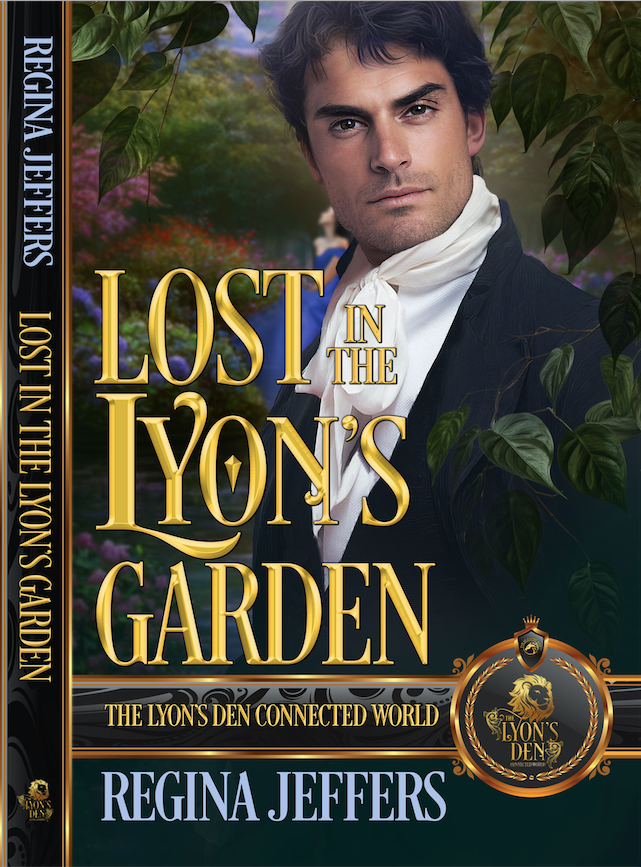
Characters’ Backstories and the PreOrder of “Lyon’s Obsession” from Dragonblade Publishing (Arriving 17 September 2025)

Lord Alexander Dutton, 12th Earl Marksman, was the next to last of the five boys Lord Macdonald Duncan took in to raise as his sons. Alexander was, however, the oldest at age 12, when he actually came to live with Duncan. The other four boys were all around nine to eleven when they came under Duncan’s care.

I suppose I should explain that Lord Duncan and his late wife, Lady Elsbeth, tried and tried again to conceive children. They had their daughter Theodora, who is Alexander’s love interest in this tale, but experienced miscarriage after miscarriage until Lady Elsbeth died in childbirth.

Alexander’s father and mother ran off to marry because Lady Madelyn Smithfield was engaged to another. Because their marriage severed important marriage contracts and cost them retributions, both the Honorable Robert Dutton and Lady Madelyn were disowned by their respective families. They were presented a farm by his father, and she had a small allowance from her maternal grandmother, but neither had the skills to survive such a life.

Madelyn adapted quicker, but Robert Dutton began to drink and drink and drink. They lost the farm and were forced to move again and again until they lived in one room in London’s slews. Alexander was born into those conditions and spent much of his life navigation their existence. A few years later, the Duttons had a daughter, who they named “Annalise.” That daughter is the heroine of book 3 of this series.

Anyway, Robert makes the decision to sell his wife and daughter at a marketplace. Robert tells himself such is better for his “womenfolk,” but it is an act that sends him further into depression and drinking. Before any of you criticize this plot point, it was, for a time, legal for a man to sell his wife as a means of a divorce. Please recall that for a lord of the Realm to divorce, it was a very public matter before the House of Lords. The line in the marriage vows of “two shall become one” was taken seriously.

Alexander was a bit over 8 years old when he watched his mother and sister sail away on a ship.

So how did Alexander make his way from living in London’s slums to becoming the 12th Earl Marksman? FATE and my steady black ballpoint pen both played a big part in the story.

Alexander’s father, whose backstory we know from above was the Honourable Mr. Robert Dutton and the fourth son of the 9th Earl Marksman. As I said above, Robert was disowned when he eloped with another man’s betrothed, bringing shame on the family.

When Lord Jonathan Dutton, 9th Earl Marksman (Alexander’s grandfather) dies, the eldest son Lawrence becomes the 10th Earl Marksman. However, he dies of a heart attack shortly after his succession to the peerage, and Lawrence had only sired daughters. The earldom was to pass through the male line.

The second son Richard was to succeed Lawrence, but Richard dies in a duel on the Continent and does not even know he was to be the 11th Earl Marksman.

The third son Evert Dutton rushes home when the news reaches him of Richard’s demise, but Evert is thrown from his horse and dies without succeeding to the peerage. 

Robert is found by Lord Macdonald Duncan in London’s slums and is brought home to become the 11th Earl Marksman. It is said that Robert’s greatest achievement was to live long enough to claim the earldom for his son, Alexander.

Finally, when his father dies, Alexander becomes the 12th Earl Marksman, and comes to live under Duncan’s care until he is old enough to claim the peerage. BTW, Alexander’s and Duncan’s estates march along together in Derbyshire.

Convoluted, I admit, but is it not deliciously coincidental. LOL!

Lady Theodora Duncan is the only child of Lord Macdonald Duncan and his wife Lady Elsbeth. She is raised in the same household as each of Duncan’s “sons,” beginning with Lord Richard Orson, who shared a love of astronomy with Lady Elsbeth, who was followed by Lord Aaran Graham, a child of one of Duncan’s tenants, whose story is more twisted than is Alexander’s, and then by Lord Navan Beaufort, an Irish earl whose parents were slaughtered in an attempted takeover of the earldom.

Lord Duncan is the senior lord of the Scottish delegation as part of the United Kingdom’s House of Lords. He also leads a division of the Home Office and trains each of the young men he protects to be agents for the Crown. The last two are Alexander and then Lord Benjamin Thompson.

Like Duncan’s “sons,” his daughter Theodora also trains to fight, though Duncan has not yet permitted her to search out spies and forgers and the like. Duncan is, after all, an indulgent father, but Theodora wants to do more than be a “princess on a velvet pillow.” Somewhat like Alexander, she is impulsive, but some of her impulsiveness must be carved back, for she is a female, with a headstrong father and five brothers. Theodora is most efficient with a bow staff and archery.

The family has always assumed Theodora and Alexander will marry. They were essentially raised together, for when Alexander came to live with Duncan, he had had no education, so Dora and Alexander spent a lot of time together in the schoolroom in those early years, and he has made Theodora a promise to find his own mother and sister and share them with Dora.

Theodora has never truly learned to run a household, though she has often served as her father’s secretary, etc.

Lyon’s Obsession: The Lyon’s Den Connected World

Short on temper. Long on pride. True to his word.

Lady Theodora Duncan, daughter and only child of Lord Macdonald Duncan, reluctantly embarks on a London season in hopes of making a suitable match. She had always thought she would marry Lord Alexander Dutton, 12th Earl Marksman. After all, they had been raised together in her father’s house since Duncan became Marksman’s guardian when his lordship was but twelve. Her father’s estate marches along with Marksman’s, and they had shared multiple words of devotion, as well as stolen moments and heated kisses. Yet…

Lord Alexander Dutton always planned to marry Lady Theodora Duncan, but not until he finds his family. His father, long before Robert Dutton became the heir to the Marksman’s peerage, had sold Alexander’s mother and younger sister to the captain of a sailing ship. Alexander has searched for them for some ten years, spending thousands of the Marksman fortune in his desire to reclaim them. He cannot think truly to know happiness until he can share his title and his wealth with them. Assuredly, Theodora understands why he has not made an offer of marriage. Yet, if she does, then why does he constantly find her on the arm of a Sardinian count? He never expected Theodora’s abandonment, but Alexander is finally so close to knowing his real family again.

Must he risk one dream to know another?

Tropes you’ll love:

✔️ Friends to lovers

✔️ Soul mates

✔️ Secret identity

✔️ Fish out of water

✔️ Unrequited love

✔️ Dark secret

✔️ Emotional scars

✔️ Marriage pact

✔️ Innocent cohabitation

✔️ Love interest vs. Missing family

✔️ Honorable marriage

✔️ Marriage pact

✔️ Emotional scars

Read in Kindle Unlimited!

Buy Links: 

BookBub

https://www.bookbub.com/books/lyon-s-obsession-the-lyon-s-den-connected-world-by-regina-jeffers?_gl=1*se6vfn*_gcl_au*MTA2MTk4MDg2Ni4xNzUzMDE3NDMzLjk4NjMxMTk4Ni4xNzU1MTY5NjQ1LjE3NTUxNjk2NDU.*_ga*MTE5NzAyMjI2NC4xNzUzMDE3NDMz*_ga_CQ6ZYMZH0N*czE3NTUxNjk1NzIkbzQkZzEkdDE3NTUxNjk4NzQkajExJGwwJGgw

Amazon

Posted in aristocracy, book excerpts, book release, books, Dragonblade Publishers, eBooks, Georgian England, Georgian Era, hero, heroines, historical fiction, Inheritance, laws of the land, Living in the Regency, mystery, publishing, Regency romance, romance, suspense, writing | Tagged , , , , , , , , , , , , , , , | Comments Off on Characters’ Backstories and the PreOrder of “Lyon’s Obsession” from Dragonblade Publishing (Arriving 17 September 2025)

Impulsive vs. Rational Reasoning + the PreOrder of “Lyon’s Obsession” from Dragonblade Publishing (Arriving 17 September 2025)

Lord Alexander Dutton, Lord Marksman, and Lady Theodora Duncan are the two youngest of my heroes and heroines in this new mystery/romantic suspense series. Alexander is four and twenty, and Theodora is barely nineteen. I thought it important after Lord Richard’s and Lady Emma’s story in book one to contrast Richard’s carefully predicted actions with those at the other end of the spectrum: the impulsive ones. I admit, I am not impulsive, unless I am angered, and, even then, most would still think me possessing reason.

Rational decision-making involves careful consideration of all available information and potential consequences before making a choice, while impulsive decision-making is characterized by quick, often emotional, choices with minimal forethought. Essentially, one relies on logic and analysis, the other on instinct and immediate gratification. 

Rational Decision Making:

  • Process: Involves a systematic approach, often including identifying the problem, establishing criteria, evaluating alternatives, and selecting the best option. 
  • Considerations: Focuses on long-term consequences, potential risks, and benefits, and may involve gathering data and seeking expert opinions. 
  • Examples: Carefully researching and comparing prices before purchasing a car, or developing a detailed financial plan before investing. 

The Human Project Foundation tells us, “Why Humans Lean Toward Impulsivity

Emotional Influences: Emotions can override rational thinking. In emotionally charged situations, impulsive reactions can emerge before reason has a chance to catch up. This is why conflicts between individuals can escalate rapidly if emotions aren’t managed.

Evolutionary Heritage: Impulsivity is rooted in our evolutionary past. In survival scenarios, quick decisions were often essential for escaping threats or seizing opportunities. While modern life is less fraught with immediate dangers, this survival instinct still influences our inclination toward impulsivity.

Instant Gratification: The allure of instant gratification is a significant driving force. The brain’s reward center responds to immediate rewards, releasing dopamine—a neurotransmitter associated with pleasure and satisfaction. This can make impulsive actions, like binge-watching a show instead of studying, more appealing than a delayed, but ultimately more rewarding, activity.

Which are you? Impulsive? Rational?

Lyon’s Obsession: The Lyon’s Den Connected World

Short on temper. Long on pride. True to his word.

Lady Theodora Duncan, daughter and only child of Lord Macdonald Duncan, reluctantly embarks on a London season in hopes of making a suitable match. She had always thought she would marry Lord Alexander Dutton, 12th Earl Marksman. After all, they had been raised together in her father’s house since Duncan became Marksman’s guardian when his lordship was but twelve. Her father’s estate marches along with Marksman’s, and they had shared multiple words of devotion, as well as stolen moments and heated kisses. Yet…

Lord Alexander Dutton always planned to marry Lady Theodora Duncan, but not until he finds his family. His father, long before Robert Dutton became the heir to the Marksman’s peerage, had sold Alexander’s mother and younger sister to the captain of a sailing ship. Alexander has searched for them for some ten years, spending thousands of the Marksman fortune in his desire to reclaim them. He cannot think truly to know happiness until he can share his title and his wealth with them. Assuredly, Theodora understands why he has not made an offer of marriage. Yet, if she does, then why does he constantly find her on the arm of a Sardinian count? He never expected Theodora’s abandonment, but Alexander is finally so close to knowing his real family again.

Must he risk one dream to know another?

Tropes you’ll love:

✔️ Friends to lovers

✔️ Soul mates

✔️ Secret identity

✔️ Fish out of water

✔️ Unrequited love

✔️ Dark secret

✔️ Emotional scars

✔️ Marriage pact

✔️ Innocent cohabitation

✔️ Love interest vs. Missing family

✔️ Honorable marriage

✔️ Marriage pact

✔️ Emotional scars

Read in Kindle Unlimited!

Buy Links: 

BookBub

https://www.bookbub.com/books/lyon-s-obsession-the-lyon-s-den-connected-world-by-regina-jeffers?_gl=1*se6vfn*_gcl_au*MTA2MTk4MDg2Ni4xNzUzMDE3NDMzLjk4NjMxMTk4Ni4xNzU1MTY5NjQ1LjE3NTUxNjk2NDU.*_ga*MTE5NzAyMjI2NC4xNzUzMDE3NDMz*_ga_CQ6ZYMZH0N*czE3NTUxNjk1NzIkbzQkZzEkdDE3NTUxNjk4NzQkajExJGwwJGgw

Amazon

Posted in aristocracy, book release, Dragonblade Publishers, Georgian England, Georgian Era, hero, heroines, historical fiction, marriage, mystery, publishing, reading, Regency era, Regency romance, research, suspense, writing | Tagged , , , , , , , , , , , , , , , | Comments Off on Impulsive vs. Rational Reasoning + the PreOrder of “Lyon’s Obsession” from Dragonblade Publishing (Arriving 17 September 2025)

Spousal Abuse During the Georgian Era

Although I reference spousal abuse in a couple of my 70+ novels, I do not customarily write those types of scenes. I NEVER enjoyed reading graphic scenes of physical abuse of any kind, but especially between a man and a woman. That being said, spousal abuse did occur in more than a few marriages during the Georgian era, just as it does now, and to pretend it did not happen would be a great disservice to the history of the era.

Though the idea of a man raping his wife makes many modern women cringe, there was no such thing as marital rape during the Georgian era. A man could not rape his wife because she was his property and had no choice in the matter.

First, I would like to point out Amanda Vickery’s book, Behind Closed Doors: At Home in Georgian England. If you have not read it, I might suggest it to readers and writers of the Regency Era, especially if you really want to know the “skinny” on the period.

From the award-winning author of The Gentleman’s Daughter, a witty and academic illumination of daily domestic life in Georgian England.

In this brilliant work, Amanda Vickery unlocks the homes of Georgian England to examine the lives of the people who lived there. Writing with her customary wit and verve, she introduces us to men and women from all walks of life: gentlewoman Anne Dormer in her stately Oxfordshire mansion, bachelor clerk and future novelist Anthony Trollope in his dreary London lodgings, genteel spinsters keeping up appearances in two rooms with yellow wallpaper, servants with only a locking box to call their own.

Vickery makes ingenious use of upholsterer’s ledgers, burglary trials, and other unusual sources to reveal the roles of house and home in economic survival, social success, and political representation during the long eighteenth century. Through the spread of formal visiting, the proliferation of affordable ornamental furnishings, the commercial celebration of feminine artistry at home, and the currency of the language of taste, even modest homes turned into arenas of social campaign and exhibition.

The book is also the basis for a 3-part TV series for BBC2.

“Vickery is that rare thing, an…historian who writes like a novelist.”—Jane Schilling, Daily Mail

“Comparison between Vickery and Jane Austen is irresistible. This book is almost too pleasurable, in that Vickery’s style and delicious nosiness conceal some seriously weighty scholarship.”—Lisa Hilton, The Independent

If until now the Georgian home has been like a monochrome engraving, Vickery has made it three dimensional and vibrantly colored. Behind Closed Doors demonstrates that rigorous academic work can also be nosy, gossipy, and utterly engaging.”—Andrea Wulf,  New York Times Book Review

For example, there is a lengthy discussion in Vickery’s book on divorce laws during the Georgian Era verses what we sometimes find in period era novels, especially those from authors who have not taken the time to learn something of the period before putting pen to paper. Readers easily recognize those who think there was an easy way out of a marriage, confusing it with modern times. For example, I live in North Carolina, where “criminal conversation” is still on the books. If you are not familiar with the idea, please check out my piece on Annulments, Divorces, and Criminal Conversation in the Regency.

In the Vickery book, the author discusses several ecclesiastical and regular court cases concerning what we’d call emotional abuse today. These cases are a little earlier than the Regency era, but the general trend through the early 19th century was for liberalizing protections for abused women, not reducing them. So I think this can be taken as good information for the Regency period in broad strokes at least. 

A couple of interesting things I noticed included . . .

Escape from abuse for well-off women suffering from serious physical violence was actually fairly widely available, and the main recourse seems to have been a church law entitling women to “separate maintenance” in the event their husbands were abusive. It seems it was the standard remedy for serious domestic violence, and much more widely available than divorce. Basically it functioned like a modern day order of protection and spousal support. The husband would be required to financially support the wife while staying out of her home. 

Oddly, one of the main types of “abuse” for which the church courts would rule for separate maintenance was when a husband demeaned his wife’s proper household authority by interfering in the internal management of the home. This was considered the woman’s domain, and, essentially, her word was law. It should also be noted that it was seen as laughable, improper, unmanly and “tyrannical” for men to exert excessive control over stuff like small household purchases, laundry, cooking, etc. The family was almost viewed like England and its colonies. There were laws that governed who was entitled to make which decisions, and a husband was not supposed to suppress his wife’s proper range of ‘administration.” Such goes a long way in explaining why young girls of the period were provided instruction on meal planning, etc., but provided only a basic education. Though it’s not clear to me that separate maintenance was typically awarded in the absence of ANY physical abuse, the church courts definitely considered “tyrannical” and overly-controlling behavior as strong evidence of a husband’s being too demeaning to his wife’s dignity for her to be forced to live together with him. 

Another domestic crime for which courts awarded relief to women was the “lock out.” A husband’s marital duties included providing shelter and protection for his wife, and, when he locked her out or put her out on the street, a very common tactic even today, the courts were quite ready to punish him. In one case a court actually broke an entail and the dispossessed father AND surviving sons were forced to give an estate to the mother and daughters who had been locked out of the family home. 

In other words, “Canon law allowed a separation (in the era called a divorce), called the divortium a mensa et thoro (separation from bed and board). The Ecclesiastical courts permitted it for certain specified causes. The causes were life-threatening cruelty and adultery by the husband, or adultery by the wife. This act allowed spouses to live separately and ended the woman’s coverture to her husband and his financial responsibility for her. Yet, if a spouse, man or wife, simply ran off and deserted the other, the doctrine of coverture complicated matters, because they were still legally one person. A woman could not simply leave her husband’s home without permission. He could legally drag her back under his roof—and even soundly beat her for her efforts!” (English Historical Fiction Authors)

Other points of interest on women as property:

There was no such thing as marital rape during the Regency era. A husband could not rape his wife because she had no choice in the matter.

Legal separation. Though most of the cases were initiated by men, when the wife was accused of adultery, women could sue for it. It was not easy to attain and cost a large sum of money. The women usually required a powerful family and friends who would protect her. Until that decree from bed and board was finalized, the husband had a right to have the sheriff seize his wife and return her where he could beat her.

History does provide us a very VIVID example of how this could all shake out. “Laurence Shirley, 4th Earl Ferrers (18 August 1720 – 5 May 1760) was an English nobleman, notable for being the last peer to be hanged, following his conviction for murdering his steward. Shirley was the eldest son of Laurence Ferrers, himself the third son of the first Earl Ferrers. At the age of twenty, he quit his estates and Oxford University education, and began living a debauched life in France in Paris. At the age of 25 he inherited his title from his insane uncle the 3rd Earl Ferrers, and with it estates in Leicestershire, Derbyshire and Northamptonshire. He lived at Staunton Harold Hall in northwest Leicestershire. In 1752, he married Mary, the youngest sister of Sir William Meredith, 3rd Baronet.

“Ferrers had a family history of insanity, and from an early age his behaviour seems to have been eccentric, and his temper violent, though he was quite capable of managing his business affairs. Significantly, in 1758, his wife obtained a separation from him for cruelty, which was rare for the time. She would not accept her husband’s drinking and womanizing, and was particularly upset by his illegitimate children. The old family steward, Johnson, may have given evidence on Mary’s behalf and was afterwards tasked with collecting rents due to her.

“The Ferrers’ estates were then vested in trustees; Ferrers secured the appointment of an old family steward named Johnson, as receiver of rents. This man faithfully performed his duty as a servant to the trustees, and did not prove amenable to Ferrers’ personal wishes. On 18 January 1760, Johnson called at the earl’s mansion at Stauton Harold, Leicestershire, by appointment, and was directed to his lordship’s study. Here, after some business conversation, Lord Ferrers shot him. Johnson did not die immediately, but instead was given some treatment at the hall followed by continued verbal abuse from a drunken Ferrers before Dr. Thomas Kirkland was able to convey Johnson to his own home where he died the following morning.

“In the following April, Ferrers was tried for murder by his peers in Westminster Hall, Attorney General Charles Pratt leading for the prosecution. Shirley’s defence, which he conducted in person with great ability, was a plea of insanity, and it was supported by considerable evidence, but he was found guilty. On 5 May 1760, aged 39, dressed in a light-coloured suit embroidered with silver (the outfit he had worn at his wedding), he was taken in his own carriage from the Tower of London to Tyburn and there hanged by Thomas Turlis. There are several illustrations of the hanging. It has been said that as a concession to his rank the rope used was of silk.After the execution his body was taken to the Barber-Surgeons’ Hall in Monkwell Street for public exhibition and dissection. The execution was widely publicised in popular culture as evidence of equality of the law, and the story of a wicked nobleman who was executed “like a common criminal” was told well into the 19th century.” (Laurence Shirley, 4th Earl Ferrers)

LADY FERRERS V. LORD FERRERS 1 HAO. CON. 130, [130] lady ferrers v. lord ferrers, llth Nov., 1788; 5th March, 1791.- Divorce, by reason of adultery, on the part of the wife-how affected-by delay in instituting proceedings-by alleged condonation, &c. Ultimately granted. [March 5, 1791]

From Curious Punishments of Bygone Days, we find: “The way of punishing scolding women is pleasant enough. They fasten an armchair to the end of two beams twelve or fifteen feet long, and parallel to each other, so that these two pieces of wood with their two ends embrace the chair, which hangs between them by a sort of axle, by which means it plays freely, and always remains in the natural horizontal position in which a chair should be, that a person may sit conveniently in it, whether you raise it or let it down. They set up a post on the bank of a pond or river, and over this post they lay, almost in equilibrio, the two pieces of wood, at one end of which the chair hangs just over the water. They place the woman in this chair and so plunge her into the water as often as the sentence directs, in order to cool her immoderate heat.”

A man called “Mr. Stock” supposedly had his wife denounced as a common scold because she complained about him.

The adjectives pleasant and convenient as applied to a ducking-stool would scarcely have entered the mind of any one but a Frenchman. Still the chair itself was sometimes rudely ornamented. The Cambridge stool was carved with devils laying hold of scolds. Others were painted with appropriate devices such as a man and woman scolding. Two Plymouth ducking-stools still preserved are of wrought iron of good design. The Sandwich ducking-stool bore the motto:

“Of members ye tonge is worst or beste
An yll tonge oft doth breede unreste.”

We read in Blackstone’s Commentaries:

“A common scold may be indicted, and if convicted shall be sentenced to be placed in a certain engine of correction called the trebucket, castigatory, or ducking-stool.”

Wives were at a disadvantage in not having any money of their own. Wives did swear out restraining orders against their husbands, but only where the community sided with her and against the husband who usually had to do something like be publicly drunk and disorderly. A wife had no recourse against a husband who installed a mistress in their house, unless she had friends or family who would take her in and help her plea for a separation. There again, though, many put up with abuse and  humiliation to stay with their children.

All the church could do was excommunicate a person. While that meant that the average person lost ability to go to university or to work in some vocations/professions, it wouldn’t work with a peer or a very rich or very poor man. 

One husband took the children and put them under the care of another and refused to allow the wife to see them, even though they were supposedly living together.

People speak of the horrid way women were treated or the fate of women under the law. For the most part, the law extended equal protections to men and women and allowed both to own property and have money. The ones who needed the law changed were married women. That is why who a woman married was so important. Our romantic book heroes would never mistreat a wife, but such cannot be said for real life husbands.

Posted in British history, family, Georgian England, Georgian Era, history, Living in the Regency, marriage, marriage customs, Regency era, research | Tagged , , , | 2 Comments

Finding Sheet Music During the Regency Er


Although quite expensive, sheet music was readily available during the Regency era. Many a person subscribed to services offered by music publishers, among the Schirmer, the most well known of the time. Sheet music was produced for subscribers in bound volumes. This volumes would contain a selection of songs, including popular ones of the times, excerpts from opera, pieces designed specifically for the pianoforte, and, upon occasion, transcriptions of instrumental string music for playing upon the pianoforte. The bound volumes were customarily produced quarterly. 

In addition, one could find sheet music at print book shops. Some book shops offered sheet music in their lending libraries. Not that I condone the practice, but I do consider it innovative: Ladies would take the sheet music out on a loan, carry it home, and copy it into their own music copy books. Copyrights, as we know them, did not exist. Most aristocratic homes had extensive sheet music libraries. Sometimes, those ladies not of the house, but somehow connected to the family, would be given permission to copy selections from the home library into her music book. Jane Austen was known to have done so on more than one occasion. 

Although music shops did exist, they were few in number, and they certainly did not resemble anything close to what we might envision today. Music shops essentially produced fine instruments. They specialized in particular instruments: pianoforte (Broadwood); harps, violins, etc. They rarely kept sheet music within the shop because they did not have the space needed for this.  Sheet music was seen more as a product of the publishing industry rather than as a product of the music industry.

Naturally, the Napoleonic War affected the availability of music from the Continent. Popularity made some items available more quickly than others, but those in England were often behind the times regarding a new piece or even a new composer. 

Sheet music of individual songs was often published in La Belle Assemblee, as well. I saw one recently from an 1811 issue titled “French Cruelty and British Generosity.” It had several verses.

A word of interesting note: A number of Beethoven’s compositions were seen as too emotionally erotic for young ladies to play. This was not a universal feeling, but many ton ladies, especially those of the dowager and patroness age, would look askance at a young lady playing Beethoven’s more invigorating works.

Special thanks to Louisa Cornell for information for this piece. I do not recall when I wrote down my notes on “music,” (I keep a LARGE file of information as I encounter it) but I did list her name in the margin for me to remember who served as my source. 

Posted in ballads, British history, customs and tradiitons, Georgian England, Georgian Era, history, Jane Austen, music, Napoleonic Wars | Tagged , , , , , | 5 Comments

The Glorious Twelfth, Both a Poem and a Hunting Season

Before any of you reading this wish to complain about hunting animals, please know this short piece is mean to entertain with a poem. That being said, I am from West Virginia, and during deer season, we used to close the schools because a large number of our boys and male teachers would be out in the woods. Ironically, deer season in WV begins around November 24, which meant only the Monday through Wednesday of Thanksgiving Week was affected. Now back to red grouse …

Red grouse – Wikipedia – CC BY-SA 3.0

The start of shooting season for red grouse (lagopus scotica) in Great Britain and Northern Ireland is known as The Glorious Twelfth, the 12th day of August. Ptarmigan (lagopus muta) is also hunted at this time. Not all game (as defined by the 1831 act) have the same start to their open seasons – most begin on 1 September, with 1 October for woodcock and pheasant. [Wild Birds and Management Protection] Since English law prohibits game bird shooting on a Sunday, the start date is postponed to 13 August on years when the 12th falls on a Sunday. [“‘Glorious 13th’ for grouse season”. BBC News. 13 August 2007.]

The date of 12 August has traditional significance; the current legislation enshrining it in England and Wales is the Game Act 1831 (and in Northern Ireland, the Wildlife (Northern Ireland) Order 1985). Prior to the Game Act of 1831, the Game Act of 1773 stipulated that red grouse, or “red-game,” could not be sold before August 12, effectively starting the shooting season on this day.

Those who object to the practice in England claim high levels of biodiversity, including bird who nest on ground level, as well as raptors. Diseases such as the sheep tick, heather beetle (which attacks the heather that several of these species eat) and the intestinal parasite Trichostrongylus tenuis“Grouse season ‘not so glorious'”. BBC News. 12 August 2004] can impact population sizes.

All that being said, since tomorrow is the 12th of August, the official date for the beginning of the grouse-shooting season, this poem from a wistful MP in 1833 seems apposite:

THE COURT JOURNAL

SATURDAY, AUGUST 10, 1833.

SONGS OF THE BELLE AND BEAU MONDE. No. II.

THE MOORS. BY AN M.P.

The Park’s growing thinner and thinner,

A ghost of the season that’s past;

On my list I have scarcely a dinner,

And Almack’s has gallopped its last.

The session will never be over !—

All’s up now in town but the House ;

I swear I’ve a mind to break cover !—

We shall all be too late for the grouse !

My Mantons are packed in their cases,

And Ponto is wagging his tail ;

If Ministers don’t lose their places,

By Jove! I’ll take mine in the mail.

Though they know that the twelfth is approaching,

They all keep as still as a mouse !—

Let’s commit the old Bishops for poaching !

I see we’ve no chance with the grouse.

Once Althorp was reckoned a sportsman,

And Melbourne a capital shot;

But now every statesman and courtsman

Is leagued in this villainous plot !—

They care not where Purdy’s or Nock’s is,

They have not an atom of nous,

Or they’d manage to get us our proxies,

And pack us off after the grouse !—

They say the birds never were stronger

In number and feather and wing;

Should these deuced debates last much longer,

I’ll leave D I O with the King.—

If the Speaker would cast round his eye, he

Might bid them count over the House,—

Then adjourn the whole thing sine die,

And hey ! for the moors and the grouse.

Posted in aristocracy, British history, estates, Georgian England, Georgian Era, history, laws of the land, Living in the Regency, Living in the UK, real life tales, Regency era | Tagged , , , , , , , , , , , , | Comments Off on The Glorious Twelfth, Both a Poem and a Hunting Season

Anxiety Treatment or Poisons? (or) What Should Mrs. Bennet Take for Her “Nerves”?

Ever wonder what was available for Jane Austen’s character Mrs. Bennet as treatment for the lady’s “nerves”? Perhaps an herb, root, or a tea that would have been used to lessen anxiety. Sort of the Regency equivalent of Xanax. Several types of tea have been shown to help lessen anxiety, including chamomile, lavender, peppermint, and green teaThese teas contain compounds that can promote relaxation and reduce stress, helping to ease anxiety symptoms.

Yes, chamomile tea is often cited for its calming properties and can be helpful in managing anxietyIt contains apigenin, a flavonoid that binds to GABA receptors in the brain, potentially promoting relaxation and reducing feelings of nervousness and anxiety. Studies have shown that chamomile can improve anxiety symptoms, particularly in those with generalized anxiety disorder. Yet, then most of us know Mrs. Bennet’s “nerves” were her way of seeking attention from Mr. Bennet (not that he found them anything but a source of amusement). 

According to Culpepper’s Complete Herbal: Consisting of a Comprehensive Description of Nearly All Herbs with Their Medicinal Properties and Directions for Compounding the Medicines Extracted from Them, comfrey, ivy-tree, and wild valerian are recommended for nervous conditions. 

Comfrey - POD easy edible gardening www.podgardening.co.nz

Comfrey – POD easy edible gardening
http://www.podgardening.co.nz


Comfrey served many uses – a wonder herb, indeed. Culpepper (page 98-99) describes the virtues of comfrey as, “The great comfrey helpeth those that spit blood, or make a bloody urine. The root boiled in water or wine, and the decoction drank, helps all inward hurts, bruises, wounds, and ulcers of the lungs, and causes the phlegm that oppressed him to be easily spit forth. It helpeth the deflection of rheum from the head upon the lungs, the fluxes of blood or humors by the belly, women’s immoderate courses, as well the reds as the whites, and the running of the reins, happening by what cause soever. A syrup made thereof is very effectual fro all those inward griefs and hurts, and the distilled water for the same purposes also, and for outward wounds or sores in the fleshy or sinewy part of the body whatsoever; as also take fits of agues and to allay the sharpness of humours.” In addition, Culpepper lists the herb for use of relieving the soreness in a woman’s breasts when heavy with milk, to relieve the inflammation of hemorrhoids and gout, as well as joint pain, ulcers, gangrenes, etc. 

This Shutterstock image was downloaded on 4-13-06 for HSW: TREASURY OF GARDENING http://home.howstuffworks.com/tree-ivy.htm

This Shutterstock image was downloaded on 4-13-06 for
HSW: TREASURY OF GARDENING http://home.howstuffworks.com/tree-ivy.htm


Ivy-Tree taken internally is said to assist with bloody flux. The yellow berries are used to counter jaundice. The white berries can be taken inwardly to prevent the spitting of blood. “The berries prevent and heal the plague, by drink in the powder in wine, two or three days together, this drink breaks the stone, provokes urine and women’s courses; and the fresh leaves boiled in vinegar, and applied warm to the side of those that are troubled with the spleen, ache, or stitch in the sides, do give much ease…. It is an enemy to the nerves and sinews, being much taken inwardly.” (Culpepper 201)

True Wild Valerian is found on dry heaths and in high pastures. “The roots has a strong and disagreeable smell, warm to the taste, bitter, and a little acrid. In habitual costiveness, it is an excellent medicine, and will loosen the belly when other purgatives prove ineffectual. It is excellent against nervous affections, such as headaches, trembling, palpitatious, vapors, and hysteric complaints.” (Culpepper, page 378)

Tea Haven http://teahaven.com/ hops-flower-tea/?gclid=Cj0KEQiA1d WyBRDqiJye6LjkhfI BEiQAw06ITu1MNg IKjUy1vp74TIWldDn YGAqrveIo2HiOxZv XDFwaAv7q8P8HAQ

Tea Haven http://teahaven.com/
hops-flower-tea/?gclid=Cj0KEQiA1d
WyBRDqiJye6LjkhfI
BEiQAw06ITu1MNg
IKjUy1vp74TIWldDn
YGAqrveIo2HiOxZv
XDFwaAv7q8P8HAQ

Richard M. Lucas in Miracle Medicine Herbs provides other possibilities. For nervous disorders, in India gotu kola was used (page 134) for fatigue, depression, exhaustion, rheumatism, fevers, skin conditions, stuttering, and chronic nervous disorders. Hops (page 175-176) and wood betony (page 185)  were suggested for nervous headaches. Hop tea can be used for nervous irritability, sleeplessness, hysteria, and a nervous headache. To prepare the tea, boil one ounce of hops in a pint of water. Cover the pot and simmer for 2-3 minutes and then remove the pot from the fire to steep for another 5 minutes. On the other hand, wood betony was used early on as a remedy for nearly 50 different remedies. Place two heaping teaspoons of the dried herb in and cup and add boiling water. Strain the mixture when it cools.

The lance-shaped leaves of wood betony have astringent properties; use as a tea to treat migranes or anxiety, and as a poultice for cuts and insect bites. Photo by Steven Foster http://www.motherearthliving.com/plant-profile/wood-betony.aspx

The lance-shaped leaves of wood betony have astringent properties; use as a tea to treat migranes or anxiety, and as a poultice for cuts and insect bites.
Photo by Steven Foster http://www.motherearthliving.com/plant-profile/wood-betony.aspx

Drink a half cup in the morning and evenings for nervous headaches. 

Passion flower was used as a sedative, nerving, and anti-spasmodic. In Europe it was considered a calming herb for anxiety, insomnia, seizures, and hysteria. It was described as a remedy that “brings peace to mind and body.” Passion flower would be used as a tincture with 15-60 drops administered in a little water. Meanwhile German chamomile maintains a reputation for soothing nerves, strengthening digestion, and relieving some forms of colic. Place two teaspoons of the dried flower heads in a cup and add boiling water to make chamomile tea. Cover the cup so the tea can steep for 5-10 minutes. A North American plant known as skullcap (also mad dogweed) is also a remedy for nervousness. To make the tea add one ounce of the herb to a pint of boiling water. Remove the mixture from the fire and cover it with a lid. Let it stand until lukewarm. Strain the mixture. A half cup is consumed at a time. 

Passion Flower by Douglas Stucky fineartamerica.com

Passion Flower by Douglas Stucky
fineartamerica.com

 File:Chamomile@original size.jpg - Wikipedia, the free encyclopedia en.wikipedia.org


File:Chamomile@original size.jpg – Wikipedia, the free encyclopedia
en.wikipedia.org

Skullcap Seeds - Baical Skullcap Herb Seed www.outsidepride.com

Skullcap Seeds – Baical Skullcap Herb Seed
http://www.outsidepride.com


Kathryn Kane is the author of the information below: “During the course of my research I discovered that orange flower water was: … regularly prescribed for those with nervous dispositions as a remedy for ‘neuralgic headache’ and palpitations of the heart. Some physicians and apothecaries prescribed orange flower water for a host of minor ‘hysteroidal’ disorders which they considered to be the result of self-indulgence and indolence. … in large doses, orange flower water was often given as a sleeping draught. The full post is HERE:  if you would like more detail on how orange flower water was made and used during the Regency.  And, not only is it totally natural, it is something that was commonly found in the kitchens or pantries of many homes during the Regency.” 

Here is a sample of what I discovered: “The cure is made of oil of turpentine, mucilage of Gum mucilage, thin gruel in a clyster. A mixture of  Asafoetia, six ounces, ammoniated tincture of Valerian, two drachms. Spirit of Sulphuric asther, one drachm. Take two table spoonful every six hours. Take ammoniated tincture of Valerian. One drachm Compound tincture of Lavender, two drachms, spirit Cinnamon three drachms, pure water six ounces, two tablespoons three or four times a day. Take cinnamon water, one ounce and a half; Tincture of Castor one drachm. Fetid spirit of ammonia twenty drops. spirit of sulphuric  aether, thirty drops mix for a draught to be taken every four or six hours. Musk, camphor, Peruvian bark, myrrh, are some other ingredients used.” (MERCY!) 

Lots of these types of books are available if you have a need of them for an interesting plot point. 

If you are writer and thinking of nefarious ways to do away with a “nasty” character, you might consult, Deadly Doses: A Guide for Writers. Fascinating plot bunnies for mystery and suspense writers. Describes the symptoms, forms, methods of administration, and reactions of various poisons, and briefly traces the history of poison. 

Silent Killers – From Arsenic to Strychnine: A History of Poison by Stella Berry – If you write mysteries, thrillers, crime or suspense, or have to do any kind of research involving toxins then you need this excellent compendium of ‘to the point’ information.

A Writer’s Guide to Nineteenth-Century Murder by Arsenic by K.K. Cathers – Imagine having a single book which contains everything you need to write a compelling, historically accurate murder mystery. One which not only provides you with the necessary research, but puts it in social context and explains how each facet can be shaped to fit your plot line.

Posted in American History, British history, Great Britain, herbs, Jane Austen, Living in the Regency, real life tales, Regency era, Victorian era | Tagged , , , , , , , , , , , | 2 Comments

Maneuvering a Coach in a Tight Space

Reader’s Question: How difficult was it to maneuver a coach during the Regency? I want to add this element to a story I am writing.

Response: Okay, I admit up front I am not an expert on this topic. I am a city girl, first, last, and always. I do recall how many of my friends failed their driver’s tests because they could not parallel park the car. I realize I am dating myself in this era when cars can park themselves. I still despise when I must parallel park along a busy street. [If you have never parallel parked, there is a YouTube video for that. Of course, there is.]

However, that being said, a lane wide enough for a carriage to turn around would be most unlikely during this period. This would be especially true if one is talking about a coach with four horses. Consider that there are plenty of roads in England today that are too narrow for two cars to pass —someone has to back up until they hit a (marginally) wider spot in the road. In my sometimes wonky opinion, a lane in the woods sounds definitely too narrow for a U-turn.

Think upon it: With lots of hedges and rock walls in some areas, I think a writer could create a variety of set ups with a less experienced driver. Maybe when the characters leave or somewhere along the way, the regular driver becomes ill or is injured. Then maybe the apprentice is not good at backing the coach.

For those interested in the types of travel and vehicles, try this lovely post from the Jane Austen in Vermont site on Travel in Sense & Sensibility.

https://regency-explorer.net/a-carriage-enthusiasts-paradise/

In addition to the narrow roads and difficulty of backing horses and carriage, one must decide is it one horse, a pair, or a team? The travelers of the time would expect to have generally terrible condition of the roads. While the major roads were in much better shape by the Regency than they had been for much of the 18th C, small local roads were often very bad. In the woods they might be even more likely to be muddy, heavily rutted, etc., all of which would make it harder. 

Now, as to backing, a veteran driver can back a team, BUT the conditions of the road, and what is on the side of the road, would be the variables he cannot control. Have you ever watched an eight-horse daft team do precision backing? As always, there are Youtube videos. HERE

In case of an accident, the horses would be unhitched, and one ridden to reach help. Depending on the size of the item blocking the road, a TRAINED horse or two could pull a tree off to the side, easy-peasy. Horses drag trees all the time. I’ve done that. You tie the rope off to the biggest part of the trunk (the bottom of the tree, not the top.) If you don’t have a harness, put the rope around the horse’s neck. Again, the horse needs to have prior training for this, but most general use horses can do it.

There are great videos on You Tube that can give a very good idea of carriages.

A four in hand during Devon competition – https://www.youtube.com/watch?v=u1cEs1YEm-o

When things go wrong (this is with a modern low-body carriage, but the horses are going home) – https://www.youtube.com/watch?v=-6CrAbDWocQ

Single horse gig (notice how much handier these are than a team) – https://www.youtube.com/watch?v=qr1VLq3MTJA

Lovely team (and drag — this would be how gentlemen went to sporting events since the drag has a built-in grandstand seating) – https://www.youtube.com/watch?v=HZtsAJ-xOrY

Tandem ponies (don’t let the lead horse get facing backwards or you’re done for) – https://www.youtube.com/watch?v=4-bUklX1sIk

Posted in British history, England, Georgian England, Georgian Era, historical fiction, history, Jane Austen, Living in the Regency, Regency era, research, travel | Tagged , , , , , , , | Comments Off on Maneuvering a Coach in a Tight Space

What of the Various Marriage Acts? (And) Marriage Annulments for the Very Young in Regency England?

“In the 12th century, Canon law jurist Gratian, stated that consent for marriage could not take place before the age of 12 years old for females and 14 years old for males; also, consent for betrothal could not take place before the age of 7 years old for females and males, as that is the age of reason. The Church of England, after breaking away from the Roman Catholic Church, carried with it the same minimum age requirements. Age of consent for marriage of 12 years old for girls and of 14 years old for boys were written into English civil law. [Dahl GB (August 2010). “Early teen marriage and future poverty”Demography47 (3): 689–718.]

“The first recorded age-of-consent law, in England, dates back 800 years. The age of consent law in question has to do with the law of rape and not the law of marriage as sometimes misunderstood. In 1275, in England, as part of the rape law, the Statute of Westminster 1275, made it a misdemeanor to have sex with a “maiden within age”, whether with or without her consent. The phrase “within age” was interpreted by jurist Sir Edward Coke as meaning the age of marriage, which at the time was 12 years old. [Robertson S. “Children and Youth in History | Age of Consent Laws”. Chnm.gmu.edu.]

“A 1576 law was created with more severe punishments for having sex with a girl for which the age of consent was set at 10 years old. [Robertson S. “Age of Consent Laws”. Children and Youth in History. Sydney, Australia: University of Sydney.]

“Under English common law the age of consent, as part of the law of rape, was 10 or 12 years old and rape was defined as forceful sexual intercourse with a woman against her will. To convict a man of rape, both force and lack of consent had to be proved, except in the case of a girl who is under the age of consent. Since the age of consent applied in all circumstances, not just in physical assaults, the law also made it impossible for an underage girl (under 12 years old) to consent to sexual activity. There was one exception: a man’s acts with his wife (females over 12 years old), to which rape law did not apply.”[Lindenmuth J. “The age of consent and rape reform in Delaware”. Widener Law Delaware Library.]

In 1875, the Offence Against the Persons Act raised the age to 13 years in England; an act of sexual intercourse with a girl younger than 13 was a felony.

Obviously, our modern sensibilities scream at this possibility, but in America, if you have ever traced your ancestors back to the late 1600s and early 1700s, you will find such was true. I have a couple of 13-year-old grandmothers (age at marriage) in my family tree, especially those branches that settled in the rural areas of Virginia and North Carolina, where women were few and the need to have sons to assist on the land was always looming over a man’s head. Like it or not, there were many young girls who were married off between 12 and 14. Some because there were few neighbors around and the “market” for women was sparse, and some because of the “belief” that young girls could withstand the rigors of child birth better than could a more mature woman.

It was not until 1875 when the Offences Against the Person Act raised the age to 13 in Great Britain and Ireland, and ten years later the Criminal Law Amendment Act of 1885 raised it to 16. That was for consent for sex. That was when having sex with a child under age 16 was statutory rape. 

It wasn’t until 1929 that the age was raised to 16 for marriage. The child still required permission until she or he reached the legal age of adulthood.

The Age of Marriage Act 1929 increased the  age of marriage to sixteen.

The law said that girls of age 12 and boys of 14 did not consent to the marriage, then they were not married. The regular church court dealt with these matters as it did all questions of marriage. I have never read a successful application in all the cases I have studied, but that does not mean there could not be an exception to the rule. 

The Marriage Act (1753) – Marriages in late Georgian England were governed by Hardwicke’s Marriage Act of 1753 which came into force on 25 March 1754 – an Act designed for ‘the better preventing of clandestine Marriages’. Although marriages usually took place in parish churches prior to this, it was possible to circumvent the system and get married in secret at places like the Fleet prison and St George’s Chapel, Mayfair.

“The 1753 Act stated that all marriages in England had to take place in a parish church or chapel, either after banns or by licence, unless under special licence. The law did not apply to members of the royal family. Nor did it apply to Jews and Quakers, but no concessions were made for other non-Conformists. There was a rush to get married before the Act came into force and the registers of St George’s Chapel state that 1,136 marriages took place between October 1753 and March 1754 including 61 on the 24 March 1754.” [Regency History]

The 1823 Marriage Act changed some of the standards for marriage.

Prior to the 1823 Marriage Act, someone had to take out a bond for a large sum of money which would be forfeit if it was later proved that the person applying for the licence had been lying.2 I have learned that very few bonds were forfeited, which suggests that in most cases, parents who had not given their consent were forced to accept the marriage in an effort to avoid scandal.

(4 Geo. 4) C A P. LXXVI.

[18th July 1823]

‘WHEREAS it is expedient to amend the Laws respecting the Solemnization of Marriages inEngland;’ Be it enacted by the King’s most Excellent Majesty, by and with the Advice and Consent of the Lords Spiritual and Temporal, and Commons, in this present Parliament assembled, and by the Authority of the same, That from and after the First Day of November next ensuing the passing of this Act, so much of an Act passed in the Twenty sixth Year of the Reign of KingGeorge the Second, intituled An Act for the better preventing of Clandestine Marriages , as was in force immediately before the passing of this Act; and also an Act passed in the present Session of Parliament, intituled An Act to repeal certain Provisions of an Act passed in the Third Year of His present Majesty, intituled ‘An Act to amend certain Provisions of the Twenty sixth of George the Second, for the better preventing of Clandestine Marriages ;’ shall be and the same are hereby repealed; save and except as to any Acts, Mattersor Things done under the Provisions of the said recited Acts, or either of them, before the said First Day ofNovember , as to which the said recited Acts shall respectively be of the same Force and Effect as if this Act had not been made; save also and except so far as the said recited Acts, or either of them, repeal any former Act, or any Clause, Matter or Thing therein contained.

[Read the whole Act HERE – Anno Regni GEORGII IV. Britanniarum Regis,Quarto. An Act for amending the Laws respecting the Solemnization of Marriages in England ]

If the spouse was particularly undesirable or there was a lot of money involved, the non-consenting parent might demand an annulment. But if the marriage had already been consummated, it was less likely, particularly if it was the bride who was underage, as she would be ruined.

There was a case where children who were married off at a young age but were put to bed together and then separated (for the children usually were separated and kept in the homes of their own family until older) hated each other when they next met. Even so, the court refused to grant the annulment. I am attempting to recall all the details for I read the materials (read lots of inheritance law and marriage law when I first became a writer back in the early 2000s) more than a decade back. I think it was that boy who did not apply for an annulment as soon as he was 14.

Though the boy and girl lived apart, they did meet from time to time. They were never reconciled to their marriage and continued to live apart in bitterness and anger. 

According to the law, they have to apply for the annulment at the age of twelve and fourteen, depending whichever reached the legal age first. Obviously, few children had the money or the knowledge to do so at that age. Most would not be allowed to discuss the matter with a proctor of the court or have the advice of an advocate. Though married they were still minors and under the care and guidance of parents or a guardian. They would have to have a way to earn money to pay the lawyers.

However, by the end of the 18th century, society had turned against child marriages. The Hardwicke Act had pulled the teeth out of the betrothal contract. It was generally believed that 15 and 16 year old girls were too young to marry. However, the law still allowed parents to marry of children as young as seven. These marriages could be annulled when the girls reached 12 and/or the boys reached 14. That was considered the age of puberty, but tat was only true as long as the couple had not slept in the same bed or been otherwise intimate. By the Regency era, the idea of force and “own free will” was beginning to change, but change came slowly to the law and especially the ecclesiastical law. I can see how they could be mistaken about their marriage being annulled. If one thinks on it, it would take a great deal to convince me that mere children that young knew enough of the law or how to go about applying for an annulment, as well as paying the lawyers and doing it all without the knowledge of parents and guardians.

I taught middle school language arts for 13 years of my 40 years in the classroom. We used to say our students were all on an hormonal elevator that never stopped on our floor. We would describe a middle school dance as . . . (1) 6th graders still chasing each other around the floor like they were still on the elementary play ground; (2) 7th graders dancing together in a group, perhaps 10 girls and 4 boys, all having fun together, but not necessarily touching each other; and (3) 8th grader couples where it might be difficult to place a stick pen between them. My fear (as I have two middle school aged grandchildren) is that even those standards no longer exist. What I described at 8th grade behavior could easily be happening to my sixth grade granddaughter this upcoming year. I hope not, for my son would go ballistic, and I am from West Virginia (enough said of my reaction).

Going back to the Regency for one more point of interest. If the boy was married at age 14, he could not attend school, for all students in school must be unmarried to attend.

Posted in Act of Parliament, British history, Church of England, family, Georgian England, Georgian Era, Great Britain, history, laws of the land, Living in the Regency, marriage, marriage customs, Regency era, research | Tagged , , , , , , , , , , , | Comments Off on What of the Various Marriage Acts? (And) Marriage Annulments for the Very Young in Regency England?

Question from a Reader About Yacht Clubs During the Regency

Reader Question: I noted in several of your books, you have the hero keeps his yacht moored or docked somewhere along the coastline. Why not in London?

Answer: It is true that I have not used London for docking a yacht, but that has more to do with the year in which I set the story than London’s accessibility. History in Focus tells us, “In order to get to London, boats had to sail up the Thames and that meant dependence upon the wind. Smaller boats could tack against the wind, but the larger boats usually required square sails, thus limiting their ability to tack. In the mid nineteenth century Henry Mayhew estimated that an easterly wind put 20,000 men on the riverside out of work. (H. Mayhew, London Labour and the London Poor
 (1861), ii. 298) The Thames was an immense traffic jam. Ships did their best to sail up or down it, but being unloaded was another matter and, until the end of the eighteenth century, few docks were built for unloading ships (as opposed to repairing them). There was then a rush of building, and docks and warehouses were built for the West India fleet, the East Indiamen and others. The space taken up by these warehouses was spoken of with awe. These docks were reasonably effective until the arrival of steam power led to the port moving further down the river.”

The Royal Yacht Club and the Royal Yacht Squadron, an actual place to keep yachts in London, was not founded in London until 1 June 1815 by a group of gentlemen drinking at the Thatched House Tavern in St James’s London. More than likely yachts which could have made a channel crossing would have been moored at the Royal Yacht Squadron, but that is an assumption not something I researched. The club included 42 gentlemen interested in yachting, assumably all owning one, but “interested” does not mean owning.

Even the Prince Regent was a member of the Royal Yacht Squadron. In 1819, the Prince expressed his honor at being admitted with a visit in his yacht, The Royal George, at Cowes on the Isle of Wight where he gave a dinner onboard. [As if any members of the RYS would deny their future king’s request to join their group …] The Prince Regent was so pleased with Cowes, he took a cottage there by the sea and returned to it as king in 1821. King George remained a member of the Yacht Club at Cowes until his death.

Okay, I am not a sailor, so I had to do some research for those of us who have a bit of a phobia about sailing. Why would people go all the way to the Isle of Wight to go sailing? The answer is the strip of water between the Isle of Wight and the southern coast of England, which is known as the Solent.

The Solent is reportedly the “heartland” of British sailing. It is known to be extremely challenging sailing with strong winds and fast tidal flows. And equally important it is right situated near Portsmouth, which was home base for the Napoleonic War era British Navy. In that aspect, it is easy to understand the global dominance of the British Navy when you realize just how hard it is simply to get in and out of Portsmouth. The English turned this into an advantage by developing modern compasses, maritime charts, tidal almanacs, and better sail and hull design than anyone else. 

Equally important they instilled an exceptionally high level of sailing skills and basic seamanship in all their young officers. The Solent is where this training took place. Whenever ships were in Portsmouth they would send “the young gentlemen” out on the Solent in small boats to practice sailing skills and race each other. Good captains paid very close attention to how well their junior officers handled small boats, motivated their crews, and dealt with capsizes, squalls, and other minor emergencies. Quite logical, since good seamanship, sound judgment, and command presence are all qualities that scale up to skippering larger vessels. 

This impromptu Navy training system gave birth to modern sport sailing as we know it. It also gave birth to the Royal Yachting Association (RYA) instruction program, which is still based on the Solent and still run largely by ex-Navy instructors. Being trained on the Solent by RYA instructors remains the worldwide gold standard today for both sport sailors and commercial captains. Solent-trained skippers are famous for their extremely high level of technical skill  … and for being cheerfully oblivious to conditions that give normal people panic attacks. 

What is now known as the Cowes Regatta is still carried out on the Solent. The festival originates from the Prince Regent’s interest in yachting which continued, as I said above, even after he became George IV in 1820. The first race started at 09:30 on Thursday 10 August 1826 with the prize of a “Gold Cup of the value of £100” and was held under the flag of the Royal Yacht Club, which later became the Royal Yacht Squadron. Another race was held the next day for prize money only (£30 for first place, £20 for second).

The Cowes Regatta as shown in East Cowes Castle by J. M. W. Turner 1827 ~ Public Domain

Until World War I, gentlemen amateurs employing skippers and crew raced the cutters and raters. Cruiser handicap classes and local one-designs dominated the 1920s and 1930s. A revival of big yacht racing arrived after World War II, and ocean racing classes started to predominate, especially after the first Admiral’s Cup event was held in 1957. Popularity grew with the introduction of the two ocean-going races that start and finish the regatta The Channel and the Fastnet. The Fastnet, which rounds the Fastnet rock far out in the Atlantic and can be dangerous, is held in odd-numbered years only. [Cowes Week]

Cowes Moorings in Race Week, c1900 ~ View across Cowes Harbour entrance – during Cowes Week c1900 – HMY Victoria and Albert (1899) on station at left – steam pinnace possibly from HMY at centre ~ CC BY 2.0 ~ https://en.wikipedia.org/wiki/Cowes_Week#/media/File:061114178-copy_(299998206).jpg

Sources:

How to Moor Your Yacht (and How Not To)

The Differences Between Anchoring, Mooring, and Docking

Posted in British history, British Navy, George IV, Georgian England, Georgian Era, history, Living in the Regency, Regency era, Regency personalities, research, royalty | Tagged , , , , , , , , , , , | Comments Off on Question from a Reader About Yacht Clubs During the Regency

Was the Term “Romance” Used to Describe Such Stories as We Think of Them Today in the Regency Era

First, we should define romance. The Encyclopedia Britannica tells us, “Romanticism can be seen as a rejection of the precepts of order, calm, harmony, balance, idealization, and rationality that typified Classicism in general and late 18th-century Neoclassicism in particular. It was also to some extent a reaction against the Enlightenment and against 18th-century rationalism and physical materialism in general. Romanticism emphasized the individual, the subjective, the irrational, the imaginative, the personal, the spontaneous, the emotional, the visionary, and the transcendental.” Please note in this definition there is no mention of the usual plot most of us nowadays think of as a “romance”: Boy gets girl. Boy loses girl. Boy gets girl again.

Romance and romantic stories do not completely align. A story of romantic love, especially. one which deals with love in a sentimental or idealized way is what we think of when people use the word “romance,” when say, referring to a Hallmark movie. Romantic love does “emphasize the individual, the subjective, the irrational, the imaginative, the personal, the spontaneous, the emotion, “etc., mentioned above.

The Romantic period describes an artistic, literary, musical and intellectual movement that emerged throughout Europe at the close of the eighteenth century and moving into the nineteenth century. Alternatively, Collins Dictionary describes romantic love as “an intensity and idealization of a love relationship, in which the other is imbued with extraordinary virtue, beauty, etc., so that the relationship overrides all other considerations, including material ones.”

Wikipedia provides us a simple comparison: “Romance comes from Roman, and first meant a story translated into French from Latin (the common language of old Rome), usually about the amorous adventures of chivalrous knights, which is how romances came to be associated with love stories. Now it’s used to mean a love relationship, in a story or not.”

Romeo and Juliet in 1870 oil painting by Ford Madox Brown considered to be the archetypal romantic couple, depicting the play’s iconic balcony scene. Public Domain from Wikipedia

The term “romance” had two competing definitions during the Regency period, which makes it even more difficult when the late 1700s and 1800s are seen as the move from the Enlightenment to the Romantic Period. In any case, Coleridge attempted to delineate the two, of course, one being bad and the other good. In 1798 he wrote about  Radcliffe’s Gothic novel, “The Italian”:

“It was not difficult to foresee that the modern romance…would soon experience the fate of ever attempt to please by what is unnatural, a departure from that observance of real life, which has placed the works of Fielding, Smollett, and some other writers, among the permanent sources of amusement.” [Coleridge’s italics].

Coleridge and Wordsworth  saw a ‘romantic’ as someone sensitive to real life and the emotions, as opposed to the ‘unnatural’ or works of art created purely for the purpose of exciting the senses, but having no ‘truth.’ They collaborated on a set of poetry to illustrate that dichotomy. It is called “Lyrical Ballads”, 1798/1800.

Jane Austen’s Northanger Abbey displays some of the same view between unnatural/artificial feelings and ‘true’ romantic sensibilities… as does her novel Sense and Sensibility in character, comparing Marianne to her older sister.  

So someone being ‘romantic’ could be romantic about anything, from the sunset to the opposite sex. It was an emotional, sensitive approach to the world in opposition to the rational, objective view of the Enlightenment. Johnann von Goethe’s “The Sorrows of Young Werther” of the mid-1700s seen as one of the first ‘romantic’ novels as opposed to such earlier novels such as Robinson Crusoe and Pamela, which were more ‘Lesson-focused’ morality tales. “Romance” even crept into dress and politics, with the Whigs being considered far more of a ‘romantic’ bent than the Tory’s.

It was only later that ‘Romantic Novels’ became strictly ‘romance’ novels, love stories.  So, romance was a period term, but had a much broader set of meanings for Regency folk.

Posted in British history, etymology, fashion, Georgian England, Georgian Era, historical fiction, history, Jane Austen, reading, Regency romance, research, romance, romantic verse, terminology, writing | Tagged , , , , , , , , , , , | Comments Off on Was the Term “Romance” Used to Describe Such Stories as We Think of Them Today in the Regency Era