Succession for a Peerage
What happens to a peerage if the peer cannot be found or is presumed dead? What becomes of his wife? His children? This is a familiar plot in many Regency novels. I used it in the first book of my Twins’ trilogy, Angel Comes to the Devil’s Keep. Angelica Lovelace’s father is the third son in the family, but when his eldest brother goes missing and the second son is dispatched with in an unusual plot twist, Horace Lovelace becomes the heir presumptive to the title. However, no one can be certain of the eldest’s death. People saw the Peer go overboard on his “honeymoon,” but there is always the possibility of his still being alive. [No “Gilligan’s Island” plot, but anything is possible.] Obviously, the authorities must wait to see if the Peer’s wife is pregnant and if she delivers forth a son, who would then be the heir apparent and displace Horace in the line of succession, but then what?
Such a search could take forever if there is no child to become the heir. We customarily think that after a person is missing for seven years, that he is declared dead, but that is not so in the case of a peerage. The search could take several lifetimes, though the Committee on Privilege of the House of Lords and the College of Arms may choose to set a time limit. Until the Peer is officially declared dead, his “widow” cannot remarry.
It could be possible for the heir apparent or the heir presumptive to act in the Peer’s place to oversee the property and the business of the peerage, but he cannot officially claim the title until a decision on the Peer’s death has been made.
Another incidence of inheritance plagues book 2 of the Twins’ trilogy, The Earl Claims His Comfort. In it, a doppelgänger attempts to unseat Levison Davids, 17th Earl of Remmington, by claiming the earldom is his rightful heritage. So what really occurs when there is a question as to the line of succession?
First, let us clear up some misconceptions. The most confusing of those, for some, is the difference between an heir apparent and an heir presumptive. The heir apparent can only be the peer’s oldest living son or the oldest of his grandsons ( son of the oldest son), if the peer’s oldest son is deceased. What’s most important to remember is that “if a man inherits a peerage, it is because he is the eldest surviving legitimate male who can trace a direct (father to son) lineage back to an earlier holder of the peerage. In other words, he doesn’t inherit because he was the brother or the cousin or the uncle of his predecessor, but because his own father, or grandfather, or great-grandfather, or great-great-grandfather, etc., was an earlier holder of the peerage. [“Eldest” in this context doesn’t mean that he happens to be the oldest of several different living men who can trace a direct line back to an earlier holder of the peerage, but rather that his line is the eldest, i.e., eldest son of eldest son; and all other lines senior to his have died out.]” (“Hereditary Peerages”)
Although it has taken various forms, the Peerage Roll has existed since the Roll kept by Garter Principal King of Arms in 1514. The early ones still in the custody of the House of Lords are those from 1621, 1628, and 1661. Garter’s Roll was the official roll of the House until 1827. From 1827 to 1999, a sessional Roll became a part of Parliament’s history. After the passing of the House of Lords Act in 1999, the Clerk of the Parliaments ceased to preserve the Roll. Since the enactment of this parliamentary law, the Crown Office issues the Writ of Summons to those 92 hereditary peers remaining in the House of Lords. There is no longer an automatic entitlement to a Writ of Summons to the HOL, but this was not so during the Regency.
To claim a peerage during the Regency (and even now), certain statutory declaration evidence must be supplied by the claimant. For a son, this would include evidence of his birth, his parents’ marriage (and that they were married BEFORE his birth, not necessarily before his conception), the previous Peer’s death, and evidence that the late Peer had no legitimate surviving male issue before the birth of the claimant (meaning he had no elder legitimate surviving brothers). For a brother to succeed, the claimant would need all of the above plus evidence that the late Peer had no legitimate male issue and there was no surviving male issue between the birth of the Peer and that of the claimant (meaning the late Peer had no surviving sons). For a nephew to succeed, the person needed proof of his birth, his parents’ marriage, the birth of his father, the death of his father, the death of the deceased Peer, evidence that the late Peer had no surviving legitimate male issue, that there was no surviving legitimate male issue between the birth of the late Peer and that of the claimant’s father, and the claimant’s father had no surviving male issue before the birth of the claimant.
To make such a claim from a position of collateral succession, meaning those who stand to receive a portion, or all, of a deceased individual estate, but who are not direct descendants of the deceased person, the claimant needed to provide evidence of his birth, evidence to show the claimant is descended from the collateral relations of the Peerage/grantee, and evidence to show that all male lines from the very first Peer are senior to that of the claimant are extinct, and that no male senior to the claimant in. his. own line is still living.
Resource for parts of this piece come from the Ministry of Justice, Crown Office, House of Lords “Guidance Notes on Succession to a Peerage…” http://www.college-of-arms.gov.uk/GuidanceNotes2.pdf
Jeremy Turcotte has a lengthy list of extinct British peerages that was compiled in September 2013. I thought it might be of interest to some of you. Find it at https://jeremyturcotte.wordpress.com/2013/09/21/a-listing-of-extinct-british-peerages/
_______________________________________
 Introducing The Earl Claims His Comfort: Book 2 in the Twins’ Trilogy, releasing September 16, 2017, from Black Opal Books
– a 2016 Hot Prospects finalist in Romantic Suspense
Hurrying home to Tegen Castle from the Continent to assume guardianship of a child not his, but one who holds his countenance, Levison Davids, Earl of Remmington, is shot and left to die upon the road leading to his manor house. The incident has Remmington chasing after a man who remains one step ahead and who claims a distinct similarity—a man who wishes to replace Remmington as the rightful earl. Rem must solve the mystery of how a stranger’s life parallels his, while protecting his title, the child, and the woman he loves.
Comfort Neville has escorted Deirdre Kavanaugh from Ireland to England, in hopes that the Earl of Remmington will prove a better guardian for the girl than did the child’s father. When she discovers the earl’s body upon a road backing the castle, it is she who nurses him to health. As the daughter of a minor son of an Irish baron, Comfort is impossibly removed from the earl’s sphere, but the man claims her affections. She will do anything for him, including confronting his enemies. When she is kidnapped as part of a plot for revenge against the earl, she must protect Rem’s life, while guarding her heart.
Purchase Links:
Black Opal Books https://black-opal-books.myshopify.com/products/the-earl-claims-his-comfort
Kobo https://www.kobo.com/us/en/ebook/the-earl-claims-his-comfort
Barnes and Noble
________________________________
Excerpt…
“Cannot recall the last time I slept in my own bed,” he murmured to no one in particular as he stood to gain his bearings. The room swirled before his eyes, but Rem shook off the feeling. Of late, it was common for him to know a dull vibrating sound marring his thinking.
Levison Davids, the 17th Earl of Remmington, set the glass down harder than he intended. He had consumed more alcohol than he should on this evening, but as his home shire often brought on a case of maudlin, he had drowned his memories. He turned toward the door, attempting to walk with the confidence his late father always demanded of his sons. Lev was not trained to be the earl. His father had groomed Rem’s older brother Robinson for the role, but Fate had a way of spitting in a man’s eye when he least expected it.
Outside, the chilly air removed the edge from the numbness the heavy drink provided him, and for a brief moment Rem thought to return to the common room to reinforce the black mood the drink had induced. A special form of “regret” plagued his days and nights since receiving word of his ascension to the earldom some four years prior, and he did not think he would ever to be comfortable again.
“Storm comin’,” the groom warned when he brought Rem’s horse around.
“We’re in Yorkshire,” Remmington replied. “We are known for the unpredictable.”
Customarily, he would not permit the groom to offer him a leg up, but Rem’s resolve to reach his country estate had waned. He had received a note via Sir Alexander Chandler that Rem’s presence was required at the Remmington home seat, and so he had set out from France, where he had spent the last year, to answer a different call of duty.
Sir Alexander offered little information on why someone summoned Rem home, only that the message had come from the estate’s housekeeper. Not that it mattered who had sent for him. Tegen Castle was his responsibility. The journey from France had required that Rem leave an ongoing investigation behind, a fact that did not please him, even though he knew the others in service to Sir Alexander were excellent at their occupations. Moreover, the baronet had assured Rem that several missions on English shores required Remmington’s “special” skills, and he could return to service as quickly as his business knew an end.
He caught the reins to turn the stallion in a tight circle. Tossing the groom a coin, Rem kicked Draco’s sides to set the horse into a gallop.
As the dark swallowed them up, Rem enjoyed the feel of power the rhythm of the horse’s gait provided. He raced across the valley before emerging onto the craggy moors. At length, he skirted the rocky headland.
He slowed Draco as the cliff tops came into view. When he reached Davids’ Point, he urged the stallion into a trot. Rem could no longer see the trail, but his body knew it as well as it knew the sun would rise on the morrow. After some time, he jerked Draco’s reins hard to the left, and, as a pair, they plunged onto the long-forgotten trail. He leaned low over the stallion’s neck to avoid the tree limbs before he directed Draco to an adjacent path that led upward toward the family estate, which sat high upon a hill overlooking the breakwaters.
When he reached the main road again, he pulled up on the reins to bring the animal to a halt. Rem patted Draco’s neck and stared through the night at his childhood home, which was framed against the rising moonlight. It often made him sad to realize how much he once loved the estate as a child and how much he now despised it.
“No love left in the bricks,” he said through a thick throat. “Even the dowager countess no longer wishes to reside here. How can I?”
It was not always so. Although he was a minor son, Rem always thought to share Tegen Castle with his wife and children—to live nearby and to relate tales of happier days.
“But after Miss Phillips’s betrayal and then, likewise, that of Miss Lovelace, I possess no heart to begin again.”
In truth, of the two ladies, Rem had only loved Miss Delia Phillips.
“Fell in love with the girl when I was but fourteen and she, ten.”
He crossed his arms over the rise of the saddle to study the distant manor house.
“Perhaps Delia could find no solace here,” he murmured aloud.
Even today, it bothered him that Delia had not cared enough for him to send him a letter denying their understanding. He had learned of Delia’s marrying Baron Kavanagh from Sir Alexander, with whom Rem had served upon the Spanish front. Sir Alexander’s younger brother delivered the news in a cheeky letter.
“I suppose Delia thought being a baroness was superior to being Mrs. Davids. Little did she know I would claim the earldom. More is the pity for her.” A large raindrop plopped upon the back of his hand. “If we do not speed our return to the castle, my friend, we will arrive with a wet seat.”
He caught up the loose reins, but before he could set his heels into Draco’s sides, a shot rang out. By instinct, Rem thought to dive for the nearby ditch. Yet, the heavy drink slowed his response, and before he could act, Remmington knew the sharp sting of the bullet in his thigh.
Draco bolted forward before Rem had control of the stallion’s reins. He felt himself slipping from the saddle, but there was little he could do to prevent the impact. He slammed hard into the packed earth just as the heavens opened with a drenching rain. The back of his head bounced against a paving stone, and a shooting pain claimed his forehead. Even so Rem thought to sit up so he might take cover, but the effort was short coming. The piercing pain in his leg and the sharp sting claiming his vision fought for control. The blow to his head won, and Rem screwed his eyes closed to welcome the darkness.
________________________________________

Angel Comes to the Devil’s Keep: Book 1 of the Twins’ Trilogy
– a 2017 Daphne du Maurier Award for Excellence in Mystery/Suspense finalist
-a SOLA’s Eighth Annual Dixie Kane Memorial Award finalist for Historical Romance
Huntington McLaughlin, the Marquess of Malvern, wakes in a farmhouse, after a head injury, being tended by an ethereal “angel,” who claims to be his wife. However, reality is often deceptive, and Angelica Lovelace is far from innocent in Hunt’s difficulties. Yet, there is something about the woman that calls to him as no other ever has. When she attends his mother’s annual summer house party, their lives are intertwined in a series of mistaken identities, assaults, kidnappings, overlapping relations, and murders, which will either bring them together forever or tear them irretrievably apart. As Hunt attempts to right his world from problems caused by the head injury that has robbed him of parts of his memory, his best friend, the Earl of Remmington, makes it clear that he intends to claim Angelica as his wife. Hunt must decide whether to permit her to align herself with the earldom or claim the only woman who stirs his heart–and if he does the latter, can he still serve the dukedom with a hoydenish American heiress at his side?
 This process has me thinking on Austen and her life. We all are aware that Austen wrote what she knew. Most authors do, except perchance those who write paranormal or science fiction or fantasy (although I would argue that these made-up worlds have similarities to the present day) and to an extent, historical fiction, but even with historical fiction, I often include something that occurred in my personal life. For example, in Christmas at Pemberley, I have Elizabeth grieving for the babies she had yet to carry to term. She goes so far as not to permit anyone even to mention the child or to present her with clothing for it. This came from my life. I experienced an ectopic pregnancy and two miscarriages before my son Joshua made it into the world. I refused all baby showers, talking of the pregnancy, speculating on the child’s sex, etc., until I was six months along. I thought if I could carry to six months, that he would make it. [Incidentally, my Josh was anxious for the world. He came at 7 and a half months.]

 In Austen, we view parts of the Regency culture through a microcosm of a handful of families in each village Austen creates. Women married for security (and hopefully, for love). But if there was no love in equation, these women would likely still marry the man (for example, Charlotte Lucas in Pride and Prejudice). They sought out someone of their social class. Remember Elizabeth Bennet’s retort to Lady Catherine De Bourgh: He is a gentleman; I am a gentleman’s daughter; so far we are equal.” (Ch. 56) Those who were obsessed with high rank are satirized by Austen. The few members of the aristocracy that she includes in her tales are dunderheads, who are consumed with their own consequence. They range from the all-knowing Lady Catherine de Bourgh to the amiable, but dense, Sir John Middleton in Sense and Sensibility to the calculating Sir Thomas Bertram in Mansfield Park and the conceited Sir Walter Elliot in Persuasion.



 Meet
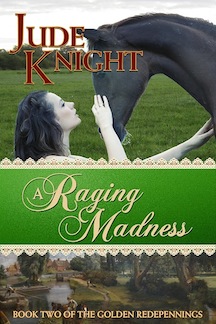
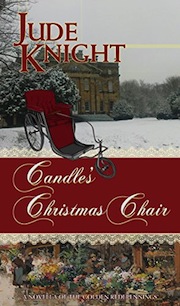 When Viscount Avery comes to see an invalid chair maker, he does not expect to find Min Bradshaw, the woman who rejected him 3 years earlier. Or did she? He wonders if there is more to the story. For 3 years, Min Bradshaw has remembered the handsome guardsman who courted her for her fortune. She didn’t expect to see him in her workshop, and she certainly doesn’t intend to let him fool her again.
 Lieutenant Rick Redepenning has been saving his admiral’s intrepid daughter from danger since their formative years, but today, he faces the gravest of threats–the damage she might do to his heart. How can he convince her to see him as a suitor, not just a childhood friend?
 Rede, the Earl of Chirbury wants the beautiful widow, Anne Forsythe, from the moment he first sees her. Not that he has time for dalliance, or that the virtuous widow would be available if he did. Or perhaps not so virtuous? She lives rent-free in a cottage belonging to the estate, courtesy of his predecessor and cousin, George. And her daughter’s distinctive eyes mark the little girl as George’s child. But it isn’t just the mystery that surrounds her that keeps drawing him to her side.


 Meet Author Heather King
 Introducing



 The birth experience during the Regency era was very difficult for women. We often hear the reason that men chose a younger woman (and women were on “the shelf” at age five and twenty) was that the younger girls were thought better to survive child birth. And no wonder! Did you realize that during this period a woman would experience pregnancy some ten times. The women gave birth to an average of six times during their lifetimes. Edward Shorter in Women’s Bodies: A Social History of Women’s Encounter with Health, Ill-Health and Medicine says, “The indifference of men to the physical welfare of women is most striking in regard to childbirth. …child bearing was a woman’s event, occurring with the women’s culture; a man’s primary concern was to see a living heir brought forth. I am not [Shorter] trying to cast the husbands of traditional society as fiends but want merely to show what an unbridgeable sentimental distance separated them from their wives. Under these circumstances it is unrealistic to think that men would abstain from intercourse in order to save women from the physical consequences of repeated childbearing.”
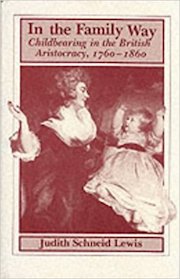 In her book In the Family Way: Childbearing in the British Aristocracy, 1760-1860, Judith Schneid Lewis shares some interesting facts of the time period. Ms. Lewis studied 50 aristocratic women for the book. From these studies we learn that these 50 women averaged 8 children over an eighteen year period. The women in the group married typically at 21 and gave birth to her first child within 2.25 years. They continued to present their husbands with children until the age of 40.
 In her third novel,


 Austen’s first two books,
 In contrast, the romantic interests of her third and fourth novels,
 The last novel that Austen wrote,
 Meet the Author:













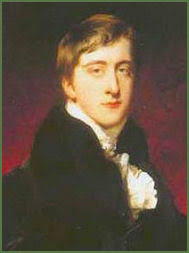 Yet, what happens if there is no son available to succeed the man? Let us look at the perfect scenario to explain this situation. William George Spencer Cavendish, 6th Duke of Devonshire (May 1790 – January 1858) was known as the “Bachelor Duke.” He intended to marry Lady Caroline Ponsonby, but she chose William Lamb, 2nd Viscount Melbourne, over him; therefore, he never married. Without a legitimate son to succeed the 6th Duke, upon his passing, those in charge had to go back one generation, to the 6th Duke’s father, William Cavendish, 5th Duke of Devonshire (1748 -1811) and trace the next eldest direct lineal descendant.
 Introducing


 Of the grand dame herself, Elizabeth has heard something of Lady Catherine De Bourgh from Mr. Wickham.
 Elizabeth’s first observations of Mr. Wickham tells the reader:
 y of my fellow-creatures if I am tempted, or how am I even to know that it would wisdom to resist? All that I can promise you, therefore, is not to be in a hurry. I will not be in a hurry myself to believe his first object. When I am in company with him, I will not be wishing. In short, I will do my best.”
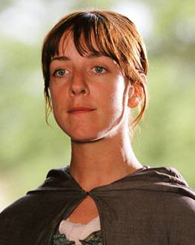

 Elizabeth most errs in her opinions of Mr. Darcy. It is quite clear she as interested in the gentleman as are all the ladies at the Meryton assembly, and his insensitive remarks set the stage for their relationship.