Do You Know the History of ®Murine Eye Drops?

I am forever adding allergy drops to stop my eyes from itching and later adding eye drops to prevent the dryness. It got me thinking…

heritage.jpg Murine UK tells us this about the history of ®Murine: “The Murine® Eye Drops brand was first launched in the 1970’s with a pharmacy strength eye drop containing a medicine known as a vasoconstrictor, which acts by constricting the blood vessels in the eyes to reduce redness. Over the years, the Murine® range of products has continued to grow, offering specialist solutions for a number of common eye conditions such as red, dry and hayfever eyes.”

However I found a “more interesting” tale about ®Murine. I do not know whether it is true or not, but it a grand story. 

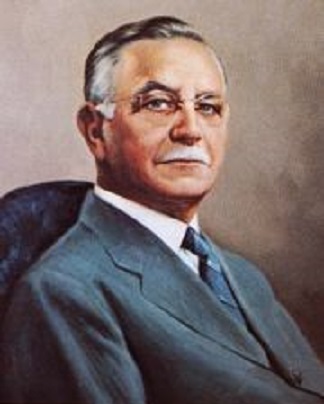
Otis F. Hall was one of the three founders of the Murine Eye Remedy Company, serving as its secretary and general manager. He was born in Auburn, New York, in October 1848, but soon found himself and his family in Michigan. He entered the banking business as a cashier at the People’s Bank of Manchester, and later he joined a private banking business with J. A. Sexton in Detroit. He spent time with the Second National Bank of Detroit, the D. M. Perry Company, and the Gale Sulky Harrow Company. At length, Hall traveled to the West Coast and founded the Old National Bank of Seattle. It was from there that the story of Murine came about. 

Screen Shot 2017-03-14 at 2.36.41 PM copy 2According to the story, around 1890, Otis F. Hal was discussing a broken shoe on a friend’s horse. As he bent to examine the shoe, the horse swished his tail, which struck Hall in the right eye, cutting the cornea’s surface. An ulcer developed. When nothing he tried had proven beneficial, Hall and his son traveled to Chicago to engage the most renowned ophthalmologists of the time, Doctors James B. and George W. McFatrich.

Under the doctors care, Hall’s eye healed within a few weeks. Moreover, Hall’s son was also cured of a minor eye irritation. The doctors used a specially prepared eye lotion that they had compounded in their lab. Mr. Hall, recognizing an opportunity, pressed the doctors to make the compound available upon a wider basis. However, the McFatrich brothers were not easily persuaded. It took Hall several years to convince them to mass produce the mixture. Hall and the McFatrichs formed the Murine Eye Remedy Company, naming the product after the chemical formula – muriate of berberine. They used the “mur” + “ine” from the two words, creating ®Murine.

The trio also founded the Northern Illinois College of Ophthalmology and Otology of Chicago. Hall died in October 1918.


Posted in business, commerce, medicine, real life tales | Tagged , , , , , , , | 4 Comments

A Walk Through Green Park from Guest Author, Joana Starnes

 This is a repeat performance from the archives  from my dear friend, Joana Starnes, who gives us a brief look at London’s Green Park, which plays a pivotal role in Ms. Starnes’s Austen-inspired The Second Chance: A Pride and Prejudice/Sense and Sensibility Variation . 

51xQRHHwoBL When drawn to Jane Austen’s world, we readers attempt to find glimpses of Regency London, but sadly we are often disappointed. Two hundred years have elapsed, bringing along hordes of Victorian improvements, air raids, the dreaded 1960s-70s, also known as the ‘decades that taste forgot’, and the necessary growth of a city which could not be expected to remain frozen in time – much as some of us would have liked it to!

240px-Canada_Gate_-_Green_Park,_London_England

Green Park, London. Canada Gate, located on the south side of the park via Wikipedia

 Green Park and Piccadilly are no exception. No longer associated with the glamour of Devonshire House, long demolished, the junction between Piccadilly and Berkeley Street is now known for the glitz and glamour of The Ritz. Many other townhouses that customarily graced this area are no longer standing, or are substantially altered.

The only mansion that seems unchanged is the one overlooking Green Park: Spencer House, built by the ancestors of Diana, Princess of Wales. Alongside it runs the Queen’s Walk, that used to be greatly favoured in Jane Austen’s time and also before then, as a place to see and be seen.

Green_Park,_London_-_April_2007

via Wikipedia

 Green Park is virtually featureless these days – but a very different vista would have opened before one’s eyes in the early 1800s. A wide open space, not quite so cluttered with trees and allowing a good view of Queen’s Palace, later to become Buckingham Palace. At the other end of the Park, near Piccadilly, one could still see the Queen’s Basin, a reservoir that provided water for St James’s Palace and was adorned with a tall sprinkling fountain. And further down Queen’s Walk stood the Queen’s Library – all named in honour of Queen Caroline, wife of George II.

There is a large collection of engravings on the British Museum website. If you follow the link, the viewer will see one that shows what Mr. Darcy might have seen, if he strolled into Green Park: the reservoir and fountain, the path leading to the Queen’s Library to the left, and Westminster Abbey in the distance.

In my own works of fiction, I’ve chosen to believe that Mr Darcy’s townhouse would have been in Berkeley Square, quite close to Grosvenor Square, Miss Bingley’s oh-so-fashionable address; also very close to the glamorous Devonshire House and Lansdowne House, and a few doors down from Mr. Canning, the Foreign Secretary who fought a duel on Wimbledon Common with Lord Castlereagh, the then Secretary of State for War, over a difference of opinion regarding the Peninsular Campaign – hard as it might be nowadays to imagine politicians settling their differences in this manner!

So, why am I taking you on this trip down memory lane? Just to show the setting of an excerpt from my latest book ‘The Second Chance’.

Hoping for a modicum of peace in times of deep regrets, uncertainty and anguish, Mr. Darcy wanders off from his house to stroll through Berkeley Square, under the same plane trees that Jane Austen herself might have walked past, on her way to Gunther’s, the famous pastry-shop.

And then he makes his way towards Green Park and, unbeknownst to him, towards a most fortuitous encounter…

~ ** ~

EXCERPT from The Second Chance: Bingley had not written yet, of course! He would sooner travel to town on foot than set pen to paper, Darcy thought with more than the customary irritation. The very notion that he was wasting precious days because he did not know where he should seek her was driving him to distraction!

Was travelling to Netherfield his only option, then – to go and ask Bingley, face to face? He frowned, knowing full well he would, if it came to that, though heaven knows how he was to justify such a drastic course of action to his friend without giving rise to speculations or, worse still, to questions that he had no answers for!

Darcy stopped pacing and dropped the post back on his desk. He lowered himself in the great chair and rubbed his temples. He had spent a large part of the morning poring over estate business, and the struggle to give it his undivided attention had brought on a headache. As with everything in recent months, it was impossible to give anything his undivided attention!

He cast another glance at his papers, then pushed them from him and stood. It was no use, and he was getting nowhere! He rubbed his temples again. He needed a respite – from his papers, from this house, from himself!

He should go out. To his club? Nay, he could not bear it! To Hatchard’s, perhaps? Or his favourite small bookseller’s in York Street? Pall Mall maybe, to buy some music for his sister, to follow the pianoforte he had recently acquired for her – although he knew full well that gifts would not compensate for his absence, nor would they assuage his guilt for having left her for so long with none but Mrs. Annesley for company. Still, it could not be helped. At least this time he had assured himself that the lady was eminently trustworthy and it was plain to see that Georgiana was very comfortable with her.

Darcy sighed. He knew that although he ought to, he could not return to Pemberley. Not yet. Perhaps the answer was to ask his sister if she would be willing to travel to town sometime soon.

He walked to the window and pushed the curtains aside, then opened one of the small casements. There was some rain in the early morning, but then most of the clouds were blown away. The gust of fresh air that brushed over his face was cool and pleasantly refreshing. A walk? Perhaps. It might settle his headache. Aye. A walk would suit him very well indeed!

Darcy took a deep breath as the heavy door of his London home closed behind him and finished putting on his gloves. He pondered his direction for a moment, and then he shrugged. Anywhere would do. Green Park was the nearest, and the Queen’s Library ensconced there, in a small pavilion, was proven well-worth visiting in the past.

He ambled along Berkeley Street, crossed the noisy madness that was Piccadilly and wandered into Green Park through the tall wrought-iron gates. He walked slowly past the Reservoir, his gaze wandering over the wide expanse of green, broken here and there by lime trees and tall chestnuts. He smiled to himself, safe in the knowledge that although the Queen’s Walk might be fashionable with some, the time of day was anything but, and he would not be plagued by encounters with the denizens of the West End and their progeny.

He regretted for a brief moment that he had not taken his latest purchase from York Street with him. It would have been quite pleasant to find an unobtrusive bench and enjoy a good book and a moment’s peace, if any could be found!

Seemingly, the notion had occurred to at least two others. Just in front of him, on a quiet alley, two young ladies appeared absorbed in their books. Or perhaps not so absorbed. One of them, suddenly distracted, abandoned her volume on the seat, stood and moved a few steps away from her companion, only to turn and look into the sky, her palm sheltering her eyes from the sunlight.

What was she looking for, Darcy wondered, his curiosity piqued despite himself. Clouds? Swallows? Were there any young ladies left in London who would show an interest in something so mundane as a lovely day? Or indeed an interest in anything at all, rather than exuding what was deemed to be a highly fashionable ennui?

Darcy looked again, then stared. It must be another figment of his imagination, surely! It could not possibly be–…!

“Elizabeth? By God, Elizabeth!” his voice came in a quiet whisper and before he knew how it came about, he found himself a few steps from her, his countenance unrestrainedly suffused in all the joy such a fortuitous encounter brought him.

“Miss Bennet! What a wonderful surprise!” he said, before he could even attempt to remember common civility, or his habitual reserve – only to find to his extreme mortification that he immediately followed it with, “You are looking remarkably well!”

‘Good grief!’, he mentally chastised himself. Could he possibly have been more gauche?

Why, yes, in fact. He could have said ‘You look even more beautiful than I remembered’, which were the very words on his mind at the time, he futilely reasoned.

“Mr. Darcy!”

The unexpected encounter and his surprisingly warm welcome made Elizabeth more open in her greeting than she might otherwise have been. Instead of a restrained curtsy, she offered him her hand. Darcy took it, belatedly remembering to bow over it, and the cheeks of both were overspread with the deepest blush. Darcy nervously cleared his voice and looked away, then down at his feet.

But no, this would not do! This unexpected, wonderful chance! What fool would waste it on mere commonplaces? He swallowed and, uncharacteristically, threw reserve and caution to the wind as he offered quietly but earnestly:

“I consider myself very fortunate to have happened upon this spot, Miss Bennet. ‘Tis far too long since I had the pleasure of seeing you.”

“Indeed, it has been a while, Sir.”

“Over seven months, I believe. We have not met since the 26th of November, when I had the honour of dancing with you at Netherfield.”

Elizabeth looked up in surprise to find his memory so exact and for a few brief moments their eyes met, before she looked away. His openness of manner was nothing short of extraordinary and although she found it pleasing, Elizabeth knew not what to make of it.

~ ** ~

I wonder, what do you make of it? If you enjoyed this excerpt and would like more details about this and my other books, they can be found here: Books by Joana Starnes or at http://www.joanastarnes.co.uk/

You can also find me on Facebook at http://www.facebook.com/joana.a.starnes

and Twitter at

http://www.twitter.com/Joana_Starnes


Posted in book excerpts, British history, buildings and structures, giveaway, Jane Austen, Uncategorized, writing | Tagged , , , | 66 Comments

18th Century Folk Tune: “English Country Garden”

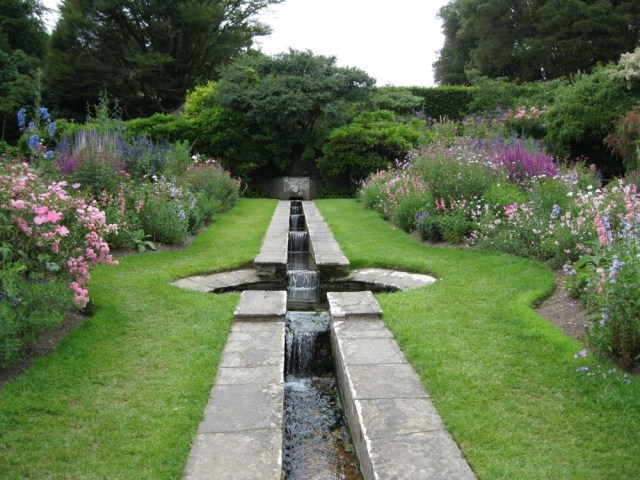
HGTV2501174-gardens-rms_perennials-minnesota-triciaf_s4x3.jpg.rend.hgtvcom.966.725.jpegEnglish Country Garden is well known in the United Kingdom, English Country Gardens was originally a Morris tune (that is a tune usually played on the accordion or violin to accompany traditional English Morris dancing).  The tune was collected by Cecil Sharp, and has more or less entered the contemporary British national consciousness. (Acoustic Music Archive)

According to WikipediaCountry Gardens is an English folk tune collected by Cecil Sharp,the founding father of the folk-song revival  in England in the early 20th century, and arranged for piano in 1918 by Percy Grainger,an Australian-born composer, arranger and pianist. In 2008, Country Gardens was added to the National Film and Sound Archive’s Sounds of Australia registry. A version of Country Gardens appears in the Quaker’s Opera  of 1728.

The tune and the Percy Aldridge Grainger arrangement for piano and orchestra is a favourite with school orchestras, and other performances of the work include morris dancing. Jimmie Rodgers  sang a well-known version (“English Country Garden”), which reached Number 5 in the UK charts in June 1962. Anglo-Australian comedian Rolf Harris recorded a satire of the Rodgers version in the 1970s. Comedian Allan Sherman  used this melody as the tune for his 1963 song, “Here’s to the Crabgrass.” 

How many kinds of sweet flowers grow
In an English country garden?
We’ll tell you now of some that we know
Those we miss you’ll surely pardon
Daffodils, heart’s ease and phlox
Meadowsweet and lady smocks
Gentian, lupin and tall hollyhocks
Roses, foxgloves, snowdrops, forget-me-nots
In an English country garden


How many insects come here and go
In an English country garden?
We’ll tell you now of some that we know
Those we miss you’ll surely pardon
Fireflies, moths and bees
Spiders climbing in the trees
Butterflies drift in the gentle breeze
There are snakes, ants that sting
And other creeping things
In an English country garden


How many songbirds fly to and fro
In an English country garden?
We’ll tell you now of some that we know
Those we miss you’ll surely pardon
Bobolink, cuckoo and quail
Tanager and cardinal
Bluebird, lark, thrush and nightingale
There is joy in the spring
When the birds begin to sing
In an English country garden

imgres.jpg You Tube: PERCY GRAINGER: Country Gardens 

220px-Jimmie_Rodgers_1968.JPG You Tube: Jimmie Rodgers – English Country Garden


Posted in ballads, British history, music, Napoleonic Wars, Uncategorized | Tagged , , , , , | 7 Comments

Announcing More Winners from Regina Jeffers’s “A Dance with Mr. Darcy” Giveaway

winners_are.png These are the winners from the various giveaways associated with the release of A Dance with Mr. Darcy. All winners were chosen by Random.org. Each date will have two winners of eBooks of A Dance with Mr. Darcy listed and will be updated regularly

Announcement for Sunday, March 26

March 21 – Every Woman Dreams Blog: Historical Handfasting as a Plot Point in “A Dance with Mr. Darcy” (ends March 24)

Gerri Bowen 

Anji 

March 22 – Every Woman Dreams Blog: Was an Annulment Possible in the Regency? (ends March 25)

darcyluvr 

Lynn Bischoff

_______________________________

Announcement for Sunday, April 2

March 24 (ends at midnight March 26) – Every Woman Dreams Blog: St. Agnes Eve, a Plot Point in “A Dance with Mr. Darcy”

mbresticker

Patty Edmisson

March 24 (ends March 28) – Darcyholic Diversion 

Becky C

Kate B

March 27 (ends March 30) – Austen Authors 

Rebecca Odom 

Carole in Canada

Suzanne Fraz

March 28 – Every Woman Dreams Blog: Mythical Handfasting (ends March 31)

Ginna

Anita P

March 29 – Every Woman Dreams Blog: The History of St. Agnes Eve (ends April 1)

Glynis

Jacqui

———————————————————

March 31 – Every Savage Can Dance (ends April 3) 

Anna 

Dung 

A Dance With Mr Darcy copy

Posted in book excerpts, book release, British history, Church of England, eBooks, Georgian Era, giveaway, historical fiction, history, Jane Austen, marriage, marriage customs, Pride and Prejudice, romance, Scotland, servant life, Vagary | Tagged , , , , , , , , | 4 Comments

Announcing the Winners of Brenda Webb’s “Brother Can You Spare a Dime?” Giveaway

and-the-winner-is.png We at Every Woman Dreams are pleased to announce the winners of Brenda Webb‘s “Brother Can You Spare a Dime?” Giveaway. Random. org has chosen… 

Nancy Dworak   (and)   Luisa 1111 as the winners  of an eBook from Ms. Webb.  Brenda will contact the winners personally to make arrangements for the eBook delivery. The winners will have their choice of these titles. 

51iV6TC2NmL._UY250_.jpg 51jsehmfatl-_uy250_ 51nRaIxYZxL._UY250_.jpg 51M8w-WorBL._UY250_.jpg 51-e24YjlCL._UY250_.jpg 51rZNlyaHGL._UY250_.jpg

Posted in giveaway, Guest Post, Uncategorized | Tagged , , | 2 Comments

Why Do We Call a Toilet a “John”?

220px-Sir_John_Harington_by_Hieronimo_Custodis Sir John Harington was a courtier, translator, a not so successful poet of the Elizabethan era. Harington’s father married an illegitimate daughter of Henry VIII. His second wife was attendant to Princess Elizabeth, and Queen Elizabeth I stood as godmother to John, who was educated at Eton, Cambridge, and Lincoln’s Inn. Despite all these accomplishment, Harington’s fame came from inventing the flush toilet.

Unfortunately, Elizabeth banished Harington from her Court because he translated a lewd tale the 16th century Italian poet Ariosto. The ladies of the Court complained to the queen of the nature of the tale. Elizabeth sent him away until he could translate the whole of Ariosto’s epic poem, Orlando Furioso. She chose this punishment rather than actually banishing him, but she considered the task so difficult that it was assumed Harington would not bother to comply. Harington, however, chose to follow through with the request and completed the translation in 1591. His translation received great praise, and is one of the translations still read by English speakers today.

During his ‘exile’, 1584-91, he built himself a house, and devised and installed the first flushing lavatory, which he named Ajax. Eventually Queen Elizabeth forgave him, and visited his house at Kelston in 1592. Harrington proudly showed-off his new invention, and the Queen herself tried it out! She was so impressed it seems, that she ordered one for herself. His water-closet had a pan with an opening at the bottom, sealed with a leather -faced valve. A system of handles, levers and weights poured in water from a cistern, and opened the valve.

In spite of the Queen’s enthusiasm for this new invention, the public remained faithful to the chamber-pot. These were usually emptied from an upstairs window into the street below, and in France, the cry ‘gardez-l’eau’ gave warning to the people below to take evasive action. This phrase ‘gardez-l’eau’ may have been the origin of the English nickname for the lavatory, the ‘loo’.

flush

Waste disposal: Harington’s flush toilet describred in ‘A New Discourse of a Stale Subject, called the Metamorphosis of Ajax’, 1596

Around this time, Harington also devised Britain’s first flushing toilet–called the Ajax (i.e., a “jakes”—jakes being an old slang word for toilet). It was installed at his manor in Kelston. He also installed a flush toilet in Queen Elizabeth’s palace at Richmond in Surrey. In 1596, Harington wrote a book called A New Discourse upon a Stale Subject: The Metamorphosis of Ajax about his invention. He published it under the pseudonym of Misacmos. The book made political allusions to the Earl of Leicester that angered the Queen. The book was a coded attack on the stercus or excrement that was poisoning society with torture and state-sponsored “libels” against his relatives Thomas Markham and Ralph Sheldon. After the publication of this work he was again banished from the court. The Queen’s mixed feelings for him may have been the only thing that saved Harington from being tried at Star Chamber. The work itself enjoyed considerable popularity on its publication in 1596.

In 1599 he went on a military expedition to Ireland, winning a knighthood. His barbed epigrams and wanton writings gave too much offense, particularly under James I, to advance him beyond a reputation as Elizabeth’s “saucy godson.”

cummingswatercloset

Cumming’s water closet patented in 1775 (source:http://www.theplumber.com/closet.html) It was almost two hundred years later in 1775 that a flushing water-closet was first patented by an Alexander Cummings of London, a device similar to Harrington’s Ajax. In 1848 a Public Health Act ruled that every new house should have a ‘ w.c., privy, or ash-pit’. It had taken nearly 250 years for Sir John Harrington’s water closet to become universal …it cannot be said that the British embrace all new inventions with enthusiasm, despite Royal Approval!

And just because it is Friday, let us get your blood churning. Here is an FYI: Kit Harington stars on “Game of Thrones” as Jon Snow. In numerous interviews, he’s revealed that his ancestor is Sir John Harington, the inventor of the first flushing toilet in Britain in the 16th century. Not only is Kit Harington the relative of  Sir John Harington, but he suggests that same ancestor might be the very reason we call a toilet “the John.” 

jon-snow-game-of-thrones.jpg

Resources:

“The erudite courtier, and inventor of the flush water closet, died on November 20th, 1612.” History Today 

“History of the Flushed Toilet,” Toiletology 

“John Harington, Writer,” Wikpedia 

“Sir John Harington, English Author,” Britannica 

“The Throne of Sir John Harrington,” Historic UK  

Posted in British history, Elizabethan drama, poetry, real life tales, Tudors | Tagged , , , , , , , | 10 Comments

Georgian Era Commerce – Part II: The West India Docks and the London Docks

This is the second part of a look at the commercial trades during the Georgian Era. If you missed part one, you will find it HERE

The cargo-handling docks of the early 1800s included the West India Dock, the London Dock, the Greenland Docks, the East India Docks, and later the St. Katherine’s Docks. 

Robert Milligan, a wealthy West Indies shipowner, was the spearhead behind the construction of the West India Docks. Milligan suffered numerous losses due to thefts and delays at London’s Thames wharves, and so he organized a group of like-minded businessmen, including George Hibbert, the chairman of the West India Merchants of London. Hibbert promoted the idea of a wet dock circled by a high wall. With Parliament’s permission, the group formed the West India Dock Company. In 1799, the West India Docks were authorized by Parliament (not by the municipality of London). 

West India Docks by Augustus Pugin and Thomas Rowlandson (figures) from Rudolph Ackermann's Microcosm of London, or, London in Miniature (1808-11). Thomas Rowlandson (1756–1827) and Augustus Charles Pugin (1762–1832) (after) John Bluck (fl. 1791–1819), Joseph Constantine Stadler (fl. 1780–1812), Thomas Sutherland (1785–1838), J. Hill, and Harraden (aquatint engravers) - mechanical reproduction of 2D image West India Docks: This engraving was published as Plate 92 of Microcosm of London (1810) ~ Public Domain https://en.wikipedia.org /wiki/West_India_Docks

West India Docks by Augustus Pugin and Thomas Rowlandson (figures) from Rudolph Ackermann’s Microcosm of London, or, London in Miniature (1808-11).
Thomas Rowlandson (1756–1827) and Augustus Charles Pugin (1762–1832) (after) John Bluck (fl. 1791–1819), Joseph Constantine Stadler (fl. 1780–1812), Thomas Sutherland (1785–1838), J. Hill, and Harraden (aquatint engravers) – mechanical reproduction of 2D image
West India Docks: This engraving was published as Plate 92 of Microcosm of London (1810) ~ Public Domain https://en.wikipedia.org
/wiki/West_India_Docks

William Jessop  (23 January 1745 – 18 November 1814), an English civil engineer, best known for his work on canals, harbours and early railways in the late 18th and early 19th centuries, served as a consultant. Ralph Walker (1749 – 19 February 1824), a notable Scottish-born civil engineer in the late 18th and early 19th centuries, particularly associated with harbour engineering works in London also served the project as resident engineer. Architect George Gwilt designed the warehouse block. There was an Import Dock and an Export Dock. A line of warehouses formed along the north side of the Import Dock. 

Map of the Isle of Dogs showing the docks from The Pocket Atlas and Guide to London, 1899 ~ Public Domain  https://en.wikipedia.org/ wiki/West_India_Docks

Map of the Isle of Dogs showing the docks from The Pocket Atlas and Guide to London, 1899 ~ Public Domain https://en.wikipedia.org/ wiki/West_India_Docks

According to English History Online, “The 1801–2 Import Dock walls survive, largely behind and below later alterations (figs 96a, 107). The upper parts of the west wall and the east end of the south wall remain exposed. The walls are of a type first used by Jessop in Dublin and Bristol in 1792–6, and widely adopted in later dock works. They are of brick, 28– 29ft high, with a curved, or ‘banana’, section, both for structural stability and to suit the shape of ships’ hulls. They are 6ft thick and backed by 3ft-thick counterforts, or buttresses, at 10ft centres, to help prevent slippage. The counterforts are bound to the main walling by flattened iron hoops, the earliest known example of such reinforced brickwork. The foundations were not piled, because the gravel bed was considered, and has proved, sufficiently stable. Clay puddle backed the walls and covered the dock floor, to prevent water escaping through the gravel. (fn. 13) [Report of the Committee on Housing in Greater London, p.12.] In the mid-nineteenth century the ‘inefficient’ gritstone copings were replaced by Aberdeen granite, and latticed timber fenders that had protected the upper portions of the walls from contact with shipping were removed.” [‘The West India Docks: The docks’, in Survey of London: Volumes 43 and 44, Poplar, Blackwall and Isle of Dogs, ed. Hermione Hobhouse (London, 1994), pp. 268-281 http://www.british-history.ac.uk/survey-london/vols43-4/pp268-281 [accessed 15 July 2015].

A map of the London Docks in 1831. Henry Robinson Palmer - This file comes from the Bodleian Libraries, a group of research libraries in Oxford University. ~ Public Domain  en.wikipedia.org/wiki/ London_Docks#/media/  File:Plan_of_London_ Docks_by_Henry_Palmer_ 1831.JPG

A map of the London Docks in 1831.
Henry Robinson Palmer – This file comes from the Bodleian Libraries, a group of research libraries in Oxford University. ~ Public Domain en.wikipedia.org/wiki/
London_Docks#/media/
File:Plan_of_London_
Docks_by_Henry_Palmer_
1831.JPG

Daniel Asher Alexander was the architect for the London Docks at Wapping. These were the closest docks to London proper until St. Katherine’s Docks were built in the early 1820s. These docks cost in excess of £5½ million. “The London Docks occupied a total area of about 30 acres (120,000 m²), consisting of Western and Eastern docks linked by the short Tobacco Dock. The Western Dock was connected to the Thames by Hermitage Basin to the south west and Wapping Basin to the south. The Eastern Dock connected to the Thames via the Shadwell Basin to the east. The principal designers were the architects and engineers Daniel Asher Alexander and John Rennie. The docks specialised in high-value luxury commodities such as ivory, spices, coffee and cocoa as well as wine and wool, for which elegant warehouses and wine cellars were constructed. In 1864 they were amalgamated with St Katharine Docks. The system was never connected to the railway network. Together with the rest of the enclosed docks, the London Docks were taken over by the Port of London Authority in 1909.” (Wikipedia)

800px-commercial_dock_rotherhithe

The Commercial Docks. At the Commercial Dock, Rotherhithe, there were multi-storey warehouses designed to store grain and seeds. 1827 http://www.portcities.org.uk/london/server/show/conMediaFile.579/The-Commercial-Docks-by-G-Cooke.html

 Daniel Asher Alexander assumed the role of surveyor to the London Dock Company between 1796 and 1831. Alexander was considered a genius by many. He was the designer of both the Dartmoor and the Maidenstone goals. The “skin floor” he designed for the processing of tobacco has been preserved as a shopping centre. His use of iron stanchions branching out as if tree limbs provided an unusual design, but one which provided a large area of uninterrupted floor space. 


Posted in British history, commerce, Georgian England, Great Britain, Living in the Regency, Regency era | Tagged , , , , , , , | 3 Comments

Celebrating the Release of “A Dance with Mr. Darcy: A Pride and Prejudice Vagary” + Giveaway

A major turning point in my latest Austen-inspired vagary, A Dance with Mr. Darcy, comes when Elizabeth permits Lydia to convince her to join in the St  Agnes Eve festivities.

stagnes_1242269c.jpg But who was St Agnes? And why do we celebrate her? 

On St Agnes Eve, traditionally girls and unmarried women wishing to know more of their future husbands perform a variety of sometimes “bizarre” acts to see who the man might be. Some of these rituals include walking backwards upstairs to bed while not looking behind you, pulling out a row of pins from a sleeve and saying a Pater for each, eat a yolkless boiled egg with salt filling the cavity where the yolk once was, fasting all day, or eating a dumb cake with friends. All these are to ensure that the the woman’s future husband will bring her water to drink in the her dream. That way her “dream man” will be known to her. Some women put a sprig of rosemary and one of thyme and sprinkle them with water and put one in each of their shoes and place the shoes on either side of the bed-head. Then they are to recite “St. Agnes, that’s to lovers kind/ Come ease the trouble of my mind. Afterwards, they are supposed to dream of their future husbands.

And speaking of that Dumb Cake, you may not wish to eat it, for it is made with equal parts flour, salt, and water (but the water is the makers’ own urine). The cake must be baked with other maidens in attendance and no one may say a word. (I imagine gagging is permissible, however!)

stagnesandlamb In Scotland, girls would meet in a field of crops at midnight, throw grain on to the soil and pray:
‘Agnes sweet and Agnes fair,
Hither, hither, now repair;
Bonny Agnes, let me see
The lad who is to marry me.’

An old book called “Mother Brunch’s Closet Newly Broke Open” speaks of this St. Agnes Eve custom:

“There is, in January, a day called Saint Agnes’s Day. It is always the one and twentieth of that month. This Saint Agnes had a great favour for young men and maids, and will bring unto their bedside, at night, their sweethearts, if they follow this rule as I shall declare unto thee. Upon this day thou must be sure to keep a true fast, for thou must not eat or drink all that day, nor at night; neither let any man, woman, or child kiss thee that day; and thou must be sure, at night, when thou goest to bed, to put on a clean shift, and the best thou hast the better thou mayst speed; and thou must have clean cloaths on thy head, for St. Agnes does love to see clean cloaths when she comes; and when thou liest down on thy back as straight as thou canst, and both thy hands are laid underneath thy head, then say

     Now good St. Agnes, play thy part,

     And sent to me my own sweetheart,

     And shew me such a happy bliss,

     This night of him to have a kiss.

“And then be sure to fall asleep as soon as thou canst, and before thou awakest out of thy first sleep thou shalt see him come and stand before thee, and thou shalt perceive by his habit what trademan he is; but be sure thou declarest not thy dream to anybody in ten days, and by that time thou mayst come to see thy dream come to pass.”

The John Keats’ poem, “The Eve of Saint Agnes,” immortalized the girl upon which the legend is based. It was one of his last works.

So who was St Agnes? She was a Christian girl in Rome in the early part of the 4th Century. Deciding to devote herself to religious purity, she supposedly refused a Roman prefect who wished to marry her. The man denounced her to Roman authorities as a Christian. For her punishment, she was thrown into a public brothel. However, she remained unscathed. One legend says all the men who attempted to rape her were immediately struck blind or paralyzed. Another claims that God protected her with a firestorm of thunder and lightning.

As the first punishment did not work, she was sentence to be burnt at the stake as a witch. However, the wood surrounding her would not burn. A guard then beheaded her with his sword. When her parents visited her tomb on the 8th day, they were met by a chorus of angels, including their daughter Agnes, with a white lamb at her side. The lamb’s color is a symbol of purity, and St Agnes is often depicted with a white lamb nearby. She reportedly died on 21 January 304. In the Catholic church, she is the patron saint of chastity, girls, engaged couples, rape victims, and virgins.

It is surprising that the medieval Catholic fast on the eve of her feast, and prayers seeking her intercession, should survive, even in a mangled form, into Protestant England. But in Derbyshire, Yorkshire and Durham, little rites, such as the herbs in shoes continued to be acted out, well into the late 19th century.

***

Now that you know more of St Agnes, enjoy this scene from A Dance with Mr. Darcy: A Pride and Prejudice Vagary.A Dance With Mr Darcy copy

A Dance with Mr. Darcy: A Pride and Prejudice Vagary will release on March 25, 2017, from Regency Solutions. It will be available in both eBook and print formats from Amazon, Kobo, and Nook.

The reason fairy tales end with a wedding is no one wishes to view what happens next.

Five years earlier, Darcy had raced to Hertfordshire to soothe Elizabeth Bennet’s qualms after Lady Catherine’s venomous attack, but a devastating carriage accident left him near death for months and cost him his chance at happiness with the lady. Now, they meet again upon the Scottish side of the border, but can they forgive all that has transpired in those years? They are widow and widower; however, that does not mean they can take up where they left off. They are damaged people, and healing is not an easy path. To know happiness they must fall in love with the same person all over again.

***

“This one be fer you,” Mr. Simpson said as he handed her the letter. “No sense in your goin’ into the village to claim it.” Such was the man’s statement every time she received a letter from her family. Simpson always separated out her mail from those he carried before he continued on his route.

“Thank you, Mr. Simpson. You are very kind.”

“Easy to be kind to a fine lady like yerself,” he replied with a lift of his eyebrow, which Elizabeth smartly ignored. Although Simpson always attempted to engage her in extended conversation, she acted with caution when any man became too friendly. Such was the life of an unmarried woman who dared to cross into a man’s world.

“I wonder from whom this came,” she said as she examined the handwriting and pretended not to notice Simpson’s overtures.

“Appears to be from a female,” Simpson suggested. “The lines be well put together.”

Elizabeth pocketed the letter. “Likely one of my sisters or from Mrs. Collins,” she said, although she knew the script was not one she recognized. “Now if there is nothing more, Mr. Simpson, I have rooms to clean.”

A frown crossed the man’s expression as she stepped away from the entranceway. “I’ll be seein’ ye on me return route,” he called.

Elizabeth waved him off with a small smile. Climbing the steps, she passed Lydia on her way to the laundry area. “Simpson still lingering after your skirt tails?”

Elizabeth glanced to where the coachman exited the inn. “He appears more daring in his tone,” she said with a heavy sigh. “I fear news of my permitting Mr. Darcy into my quarters has emboldened Simpson. He thinks my resolve has lessened.”

“How can Simpson think you would accept his attentions, if you would not accept someone of Mr. Darcy’s exalted position?”

“For all the gossips know, Mr. Darcy rejected me,” Elizabeth countered.

“Ridiculous!” her sister snorted. “I never cared for the man, but he is obviously besotted with you. I cannot fault him in his taste in Bennet sisters.”

Elizabeth squeezed her sister’s hand. “Thank you, Lyddie. I need your kind words more than you know.”

Lydia’s expression brightened. “I have a brilliant idea. As I cannot claim Sir Robert and you must deny Mr. Darcy, we require something adventurous to amuse us. I promised Clara and the other girls that I would join them on St. Agnes’s Eve. You must come with us.”

Elizabeth shook off the idea. “I do not require some very feminine romantic ceremony to identify my one true love. He resides in Derbyshire.”

Lydia snuggled closer to whisper, “What if Mr. Darcy is not your one true love? And what if Sir Robert is not mine.” Her sister lowered her voice further. “Although we do not expect to discover the men of our dreams, joining the other women in this ritual will announce to the neighborhood that Mr. Darcy and Sir Robert are not our choices and that we still seek our true love elsewhere. Such would go a long way in calming any gossip that surrounds us. Think upon it, Lizzy.”

Resources:

Fish Eaters     

The Victorian Web    

If you wish to read all of John Keats’s “The Eve of St. Agnes,” you may do so HERE.

Now for the GIVEAWAY. I have two eBook copies of A Dance with Mr. Darcy available. Leave a comment below to be part of the mix. The giveaway will end at midnight EDST on Friday, March 31. 


Posted in Austen Authors, book excerpts, book release, customs and tradiitons, eBooks, excerpt, giveaway, historical fiction, history, Jane Austen, marriage customs, medieval, Regency romance, religion, Vagary | Tagged , , , , , , , | 22 Comments

The Legend of Handfasting + Release of “A Dance with Mr. Darcy” + Excerpt + Giveaway

hf3.jpg Last Tuesday, we looked at the formal betrothals known as “handfasting,” But what of the mythical handfasting ceremonies purported by popular literature?

In the late 18th Century, an idea arose in Scotland that “handfasting” did not refer to a betrothal, but rather a marriage of sorts where the couple agreed to live with each other for a year and a day ~ a trial of sorts ~ before deciding whether the marriage suited them or not. After the trial period, the couple could be married permanently or go about their separate ways.

In Thomas Pennant’s Tour in Scotland (1776),  Pennant describes a fair he observed near Eskdale: “Among the various customs now obsolete, the most curious was that of handfasting, in use about a century past….there was an annual fair where multitudes of each sex repaired. The unmarried looked out for mates, made their engagements by joining hands, or by handfisting, went off in pairs, cohabited until the next annual return of the fair, appeared there again and then were at liberty to declare their approbation or dislike of each other. If each party continued constant, the handfisting was renewed for life.”

We must be cautious about Pennant’s tale for he was known to embellish, but is not wonderful how the tale has manifested itself into modern times? Pennant, for example, claims that the handfisting practice came about for there were too few clergymen available. What he does not realize was that a clergyman was not necessary for a legal marriage in Scotland, i.e, the reason couples escape to Gretna Green for an elopement in many Regency romances. The Scottish border town held a reputation for being married over the “anvil.” Actually, most who escaped to Gretna Green were married in a civil ceremony by Mr. Robert Elliot, Anvil Priest (1814-1840) Pennant’s tale was the first of many rumors regarding the trial marriage known as “handfasting.”

From Sharon L. Krossa at Medieval Scotland, we find, “The next reference to “handfasting” as trial marriage is in The [Old] Statistical Account of Scotland (1791-99), v. 12, pp. 614-5, in a section dealing with Eskdale in Dumfries, which follows closely Pennant’s description:

… In mentioning remarkable things in this parish, it would be wrong to pass over in silence, that piece of ground at the meeting of the Black and White Esks, which was remarkable in former times for an annual fair that had been held there time out of mind, but which is now entirely laid aside. At that fair, it was the custom for the unmarried persons of both sexes to choose a companion, according to their liking, with whom they were to live till that time next year. This was called hand-fasting, or hand in fist. If they were pleased with each other at that time, then they continued together for life; if not, they separated, and were free to make another choice as at the first. The fruit of their connexion (if there were any) was always attached to the disaffected person. In later times, when this part of the country belonged to the Abbacy of Melrose, a priest, to whom they gave the name Book i’ bosom (either because he carried in his bosom a bible, or perhaps, a register of the marriages), came from time to time to confirm the marriages. This place is only a small distance from the Roman encampment of Castle-o’er. May not the fair have been first instituted when the Romans resided there? and may not the “hand-fasting” have taken its rise from their manner of celebrating marriage, ex usu, by which, if a woman, with the consent of her parents or guardians, lived with a man for a year, without being absent for 3 nights, she became his wife? Perhaps, when Christianity was introduced, this form of marriage may have been looked upon as imperfect, without confirmation by a priest, and, therefore, one may have been sent from time to time for this purpose.

42de8778344bbcd5a555f3be0709922f.jpg This myth became even more widely spread after Sir Walter Scott used the imagery in his novel, The Monastery (1820). The belief may have formed around the custom of couples meeting at large annual gatherings and taking the opportunity at the next annual gathering to marry or part. In the novel, which is set in mid-16th century Scotland, Scott has his main character speak of a trial marriage known as “handfasting,” thus giving credence that the ceremony held a history in Scotland. Scott’s popularity only added “depth” to the myth. W. F. Skene in his The Highlanders of Scoland (1837) speaks of a child born of a handfasted couple. If the woman gave birth or was with child during the trial, the marriage became legal. Skene even remarks that the Highlanders made a distinction between the legitmate sons, born from a handfasted union, and their illegitimate ones, born out of wedlock.

What is important to know of this expansion of the myth is that Skene’s tale stretches the practice of handfasting from the border region to the highlands. How the myth of handfasting began is still debatable, but one can find it perpetrated in academia and in fiction.

Resources:

For more on Handfasting, visit Sharon L. Krossa on Medieval Scotland   

“Handfasting History” 

“History of Marriage in Great Britain and Ireland”  via Wikipedia

* * *

Handfasting is a key plot point in my new Austen-inspired novel, A Dance with Mr. Darcy. Enjoy the excerpt below from this book.

A Dance with Mr. Darcy: A Pride and Prejudice Vagary will release on March 25, 2017. It will be available in both eBook and print formats from Amazon, Kobo, and Nook.

A Dance With Mr Darcy copyThe reason fairy tales end with a wedding is no one wishes to view what happens next.

Five years earlier, Darcy had raced to Hertfordshire to soothe Elizabeth Bennet’s qualms after Lady Catherine’s venomous attack, but a devastating carriage accident left him near death for months and cost him his chance at happiness with the lady. Now, they meet again upon the Scottish side of the border, but can they forgive all that has transpired in those years? They are widow and widower; however, that does not mean they can take up where they left off. They are damaged people, and healing is not an easy path. To know happiness they must fall in love with the same person all over again.

* * *

She tapped upon the door to his room. “Mr. Darcy? I have brought you an extra towel.” Elizabeth did not hold a good reason why she thought it necessary to deliver the towel personally to the gentleman. Her mind knew doing so was the least sensible act she could perform and would only bring her more misery. Yet, her heart would not know satisfaction until she looked upon his countenance again.

When he did not respond, she wondered if he had fallen asleep. He had spoken of being weary, but Jasper had stopped in the kitchen to ask for the towels, and so Elizabeth had expected Mr. Darcy still to be awake. Jasper’s request could not have been but ten minutes prior. Perhaps Mr. Darcy simply wished to avoid her foul temper again. How could she explain how betrayed she had felt that he had not returned to Longbourn after his aunt’s venomous attack upon her person? How could she explain that a small part of her blamed him for the shame and ill use she had suffered at Forde McCaffney’s hand? How could she not provide Mr. Darcy another opportunity to say he understood her pain? That he accepted his part in what had occurred? That he still recognized her worth? So, although Mr. Darcy’s footman meant to carry the towel to his master, she had sent the man upon his way, telling Jasper that Clara, her chore girl, could use his assistance in carrying the rabbit stew and bread out to the various grooms and coachmen who sought shelter in her stables from the night’s storm. Jasper had readily agreed and left Elizabeth to deliver the toweling.

She had been pleased when Jasper had recognized her. It was satisfying to know she had not changed substantially in the nearly five years since she had last seen the man. “I always remarked upon your kindness, ma’am,” he had said with an engaging grin. “And imagine finding you so far from Hertfordshire.”

Yes, imagine, she thought as she tapped louder upon the door. “Mr. Darcy, it is Mrs. McCaffney. I have the towel you requested.” This time she heard the scrap of a chair leg upon the wooden floor.

“Come,” he called. And she opened the door slowly to discover him sitting at the table with a blanket draped over his lap, but it was not the blanket that robbed her of her breath. The gentleman sat ramrod straight, but appeared relaxed, nonetheless. He had removed his fashionable neck cloth, waistcoat, and jacket, and his sleeves were rolled up to expose the dark hair upon his arms. Elizabeth knew she gaped, but she could not help but stare. The man was magnificent in his proper attire, but in this disheveled state, he drove all comprehension from her mind.

“Thank you for delivering the linen,” he pronounced, drawing her attention from the physical strength displayed in the cords of his neck. “I thought Jasper would return with my request. I did not mean to interrupt your evening duties.”

Elizabeth thought it odd that he did not stand upon her entrance. It was so unlike Mr. Darcy to ignore his manners, and somehow, his slight stung more than she cared to admit. He, obviously, no longer viewed her as a lady of the gentry. She was part of the working class. Invisible to men of his set. Perhaps he would have acknowledged her if she had thought to present him a curtsey upon her entrance, but as her inn rarely entertained those of the aristocracy or even the gentry, she rarely bothered to show her deference to others. Her clients were hard working individuals who expected a fair value for a fair price. With a sigh of forebearance, she said, “I sent Jasper with my chore girl to deliver the evening meal to your coachman and the others in the stables. I also had to deliver soap to Mr. Higgam’s room, and so your errand was of no bother.” She noticed Mr. Darcy’s frown of disapproval. “Have I offended you, sir?”

The gentleman quickly recovered his expression. “I have no right to express my opinion.”

Her spine stiffened with his censorious tone. “But I would hear your thoughts, nevertheless.”

“Very well,” he said in clipped tones. “It grieves me to observe you have been brought so low.”

“And what specifically of my current position is your concern?” she countered.

“None,” he said solemnly. “But I have always thought of you fondly. That alone provides me pause.”

She accused, “You thought of me, Mr. Darcy?”

“Assuredly. I thought of you kindly. Did I not once propose marriage to you? I am not of the nature to offer for a woman for whom I hold no affection.”

“Then you hold affections for Mrs. Darcy?” she quipped. It drove her to distraction how quickly the gentleman fired her ire. If she had not experienced his kindness at Pemberley, she would consider him a high-in-the-instep prig, but she had known those few precious days, and it grieved her that not a strand of that interlude remained between them. Moreover, in every pore of her body, she felt betrayed by his marriage to another. When the time came, she had had no other options but to marry Forde McCaffney. She could not wait for a what-may-never-have-been moment. However, her heart would not relent.

His eyes held hers when he announced, “My relationship with Mrs. Darcy is no more your concern than your and Mr. McCaffney’s joining is mine.”

“True.” Elizabeth sucked in a steadying breath. She wished to know if he had ever professed “ardent” love for his wife in the manner he had for her; yet, she it was not her right to know. They had chosen to make their beds separately. “I will leave your towel upon the stand.” With a renewed resolve, she crossed the room and placed the towel beside the wash bowl. “Is there anything else you require, sir?”

“That will be all.”

Elizabeth turned to look upon the back of the gentleman’s head. So often she had wished that he would one day return to her life, but there were too many closed doors standing between them. There were no means to return to what was once silently promised. She walked to where he sat. “Forgive me for my sharp tongue, Mr. Darcy,” she said softly. “You are a guest in my inn, and I know my place.” She dipped into a curtsey and prepared to leave, but his hand caught her wrist.

“It is I who should apologize,” he coaxed. “Finding you here and in this position has played foul with my tender memories of you.” He brought her knuckles to his lips to brush a kiss over them. The warmth of his breath upon her skin brought an awareness deep in the pit of her stomach.

Now for the GIVEAWAY. I have two eBook copies of A Dance with Mr. Darcy available. Leave a comment below to be in the mix. The Giveaway ends at midnight, EDST, Friday, March 31. 

Posted in Austen Authors, book excerpts, book release, books, British history, customs and tradiitons, eBooks, excerpt, giveaway, historical fiction, Jane Austen, legends and myths, Living in the Regency, marriage customs, marriage licenses, Pride and Prejudice, Scotland, Vagary | Tagged , , , , , , , , , | 21 Comments

“Lizzy and Jane,” a Contemporary Tale Based on the Austen from Katherine Reay

This is one of the first posts that my fellow Austen Author, Katherine Reay did for the blog. Check out this piece on Jane Austen and Food. 

Lizzy-Jane


Great writers and my mom never used food as an object. Instead it was a medium, a catalyst to mend hearts, to break down barriers, to build relationships.

— Lizzy from Lizzy & Jane


I had tremendous fun researching the relationship between writers and food for my latest novel, Lizzy & Jane. And in all that yummy reading, I discovered that Jane Austen was not a foodie. She doesn’t sit characters down and regale us with savory, succulent, over-the-top descriptions of food and then allow her characters to recount every bite. And the few times they do – we like them the less for it. Yes, Mr. Elton, I’m talking to you – and you too, Mrs. Bennet.

But, while Jane Austen wasn’t a foodie, she did use food in all her stories. Food revealed motivation, clarified relationships or shined a bright light – good and bad – on some of her players. We see poor, ailing Mary Musgrove in Persuasion downing cold meats upon our first introduction; we gasp

Making dinner at my house.

as Jane Fairfax in Emma refuses some arrowroot “of very superior quality”; we cringe as Mrs. Jennings in Sense & Sensibility hopes that Marianne can be “tempted to eat by every delicacy in the house.” We also watch Mrs. Bennet in Pride & Prejudice count courses and wield food as status and social weapons; we smile as Mr. Knightley (Emma) gives only of his own foods and offers them personally; and we join Elinor (Sense & Sensibility), in a time of great distress, for a quick simple meal to keep up her strength for Marianne.

It’s not the food that grabs our attention – it’s how Austen uses the food. Mary Musgrove was not really ailing – she was a whiner. Jane Fairfax didn’t dislike arrowroot. She was bolding telling Emma, operating as Highbury’s Lady Bountiful, that she “was not at all in want of anything . . .” In other words, Back off, Emma.And Mrs. Jennings? That well-meaning woman really had no clue – so she was throwing the whole kitchen at Marianne in hopes that something could stopper Marianne’s sobs.

I tried to remember these lessons in Lizzy & Jane. And Lizzy, a New York chef, begins the story not fully grasping them.

Another memory flashed before my eyes. It was from that same spring; Mom was baking a cake to take to a neighbor who’d had a knee replacement.

“We don’t have enough chocolate.” I shut the cabinet door.

“We’re making an orange cake, not chocolate.”

Yum!
Yum!

“Chocolate is so much better.”

“Then we’re lucky it’s not for you. Mrs. Conner is sad and she hurts and it’s spring. The orange cake will not only show we care, it’ll bring sunshine and spring to her dinner tonight. She needs that.”

“It’s just a cake.”

“It’s never just a cake, Lizzy.”

I remembered the end of that lesson: I rolled my eyes—Mom loathed that—and received dish duty. But it turned out okay; the batter was excellent.

I shoved the movie reel of scenes from my head. They didn’t fit in my world. Food was the object. Arrowroot was arrowroot. Cake was cake. And if it was made with artisan dark chocolate and vanilla harvested by unicorns, all the better. People would crave it, order it, and pay for it. Food wasn’t a metaphor—it was the commodity—and to couch it in other terms was fatuous. The one who prepared it best won.


Yummy thank you gift a friend sent. Good friend!

But Lizzy learns – as we all do at Austen’s feet… I hope this tiny culinary adventure has whet your appetite and shown you yet another aspect of Austen’s incomparable brilliance. And the next time you pick up your favorite Austen novel, pick out a food reference or two and be sure to savor all they reveal.

Happy, Yummy, Reading!


61fMd9yU6xL._UX250_.jpg Meet Katherine Reay 

Katherine Reay has enjoyed a life-long affair with the works of Jane Austen and her contemporaries — who provide constant inspiration both for writing and for life. Katherine’s first novel, Dear Mr. Knightley, was a 2014 Christy Award Finalist and winner of the 2014 INSPY Award for Best Debut as well as Carol Awards for both Best Debut and Best Contemporary. She is also the writer behind Lizzy & Jane and the The Bronte Plot – all contemporary stories with a bit of “classics” flair. Katherine holds a BA and MS from Northwestern University and is a wife, mother, runner, former marketer, avid chocolate consumer and, randomly, a tae kwon do black belt. After living all across the country and a few stops in Europe, Katherine and her family recently moved back to Chicago.

51H+1Cfr2dL._SX326_BO1,204,203,200_.jpg Lizzy and Jane: A Novel  

Lizzy and Jane couldn’t be further from Jane Austen’s famous sisters for whom they are named.

Elizabeth left her family’s home in Seattle fifteen years ago to pursue her lifelong dream—chefing her own restaurant in New York City. Jane stayed behind to raise a family. Estranged since their mother’s death many years ago, the circumstances of their lives are about to bring them together once again.

Known for her absolute command of her culinary domain, Elizabeth’s gifts in the kitchen have begun to elude her. And patrons and reviewers are noticing. In need of some rest and an opportunity to recover her passion for cooking, Elizabeth jumps at the excuse to rush to her sister’s bedside when Jane is diagnosed with cancer. After all, Elizabeth did the same for their mother. Perhaps this time, it will make a difference.

As Elizabeth pours her renewed energy into her sister’s care and into her burgeoning interest in Nick, Jane’s handsome coworker, her life begins to evolve from the singular pursuit of her own dream into the beautiful world of family, food, literature, and love that was shattered when she and Jane lost their mother. Will she stay and become Lizzy to her sister’s Jane—and Elizabeth to Nick’s Mr. Darcy—or will she return to the life she has worked so hard to create?


51vJOz5a6OL._SX326_BO1,204,203,200_.jpg Dear Mr. Knightley: A Novel 

“Katherine Reay’s Dear Mr. Knightley kept me up until 2:00 a.m.; I simply couldn’t put it down.” —Eloisa James, New York Times best-selling author of Once Upon a Tower

Samantha Moore has always hidden behind the words of others—namely, her favorite characters in literature. Now, she will learn to write her own story—by giving that story to a complete stranger.

Sam is, to say the least, bookish. An English major of the highest order, her diet has always been Austen, Dickens, and Shakespeare. The problem is, both her prose and conversation tend to be more Elizabeth Bennet than Samantha Moore.

But life for the twenty-three-year-old orphan is about to get stranger than fiction. An anonymous, Dickensian benefactor (calling himself Mr. Knightley) offers to put Sam through Northwestern University’s prestigious Medill School of Journalism. There is only one catch: Sam must write frequent letters to the mysterious donor, detailing her progress.

As Sam’s dark memory mingles with that of eligible novelist Alex Powell, her letters to Mr. Knightley become increasingly confessional. While Alex draws Sam into a world of warmth and literature that feels like it’s straight out of a book, old secrets are drawn to light. And as Sam learns to love and trust Alex and herself, she learns once again how quickly trust can be broken.

Reminding us all that our own true character is not meant to be hidden, Reay’s debut novel follows one young woman’s journey as she sheds her protective persona and embraces the person she was meant to become.

Dear Mr. Knightley is a stunning debut—a pure gem with humor and heart.” —Serena Chase, USA Today

51ZU-ukrBlL._SX321_BO1,204,203,200_.jpg The Brontë Plot: A Novel

“You’re going to love The Brontë Plot.” —Debbie Macomber

When Lucy’s secret is unearthed, her world begins to crumble. But it may be the best thing that has ever happened to her.

Lucy Alling makes a living selling rare books, often taking suspicious liberties to reach her goals. When her unorthodox methods are discovered, Lucy’s secret ruins her relationship with her boss and her boyfriend, James—leaving Lucy in a heap of hurt and trouble. Something has to change; she has to change.

In a sudden turn of events, James’s wealthy grandmother, Helen, hires Lucy as a consultant for a London literary and antiques excursion. Lucy reluctantly agrees and soon discovers Helen holds secrets of her own. In fact, Helen understands Lucy’s predicament better than anyone else.

As the two travel across England, Lucy benefits from Helen’s wisdom as Helen confronts ghosts from her own past. Everything comes to a head at Haworth, home of the Brontë sisters, where Lucy is reminded of the sisters’ beloved heroines who, with tenacity and resolution, endured—even in the midst of impossible circumstances.

Now Lucy must face her past in order to move forward. And while it may hold mistakes and regrets, she will prevail—if only she can step into the life that’s been waiting for her all along.

51jromfdqvl-_sx326_bo1204203200_ A Portrait of Emily Price: A Novel

Art restorer Emily Price has never encountered anything she can’t fix—until she meets Ben, an Italian chef, who seems just right. But when Emily follows Ben home to Italy, she learns that his family is another matter . . .

Emily Price—fix-it girl extraordinaire and would-be artist—dreams of having a gallery show of her own. There is no time for distractions, especially not the ultimate distraction of falling in love.

But Chef Benito Vassallo’s relentless pursuit proves hard to resist. Visiting from Italy, Ben works to breathe new life into his aunt and uncle’s faded restaurant, Piccollo. Soon after their first meeting, he works to win Emily as well—inviting her into his world and into his heart.

Emily astonishes everyone when she accepts Ben’s proposal and follows him home. But instead of allowing the land, culture, and people of Monterello to transform her, Emily interferes with everyone and everything around her, alienating Ben’s tightly knit family. Only Ben’s father, Lucio, gives Emily the understanding she needs to lay down her guard. Soon, Emily’s life and art begin to blossom, and Italy’s beauty and rhythm take hold of her spirit.

Yet when she unearths long-buried family secrets, Emily wonders if she really fits into Ben’s world. Will the joys of Italy become just a memory, or will Emily share in the freedom and grace that her life with Ben has shown her are possible?


Posted in Austen Authors, book excerpts, books, contemporary romance, food, Jane Austen | Tagged , , , , | 4 Comments