History of The Odiham Agricultural Society and the Release of “Mr. Darcy’s Bet”

Britain’s first veterinary college has its roots in Hampshire’s Odiham Agricultural Society, formed on 16 May 1783 for the purpose of encouraging local development of industry and agriculture. Livestock breeding and management was very important to this group. The activities and influence of some of its key members was to result in a far more important outcome: the foundation of the veterinary profession in Britain. It led to the establishment of Britain’s first veterinary college in 1791. 
800px-Bishop_Burgess

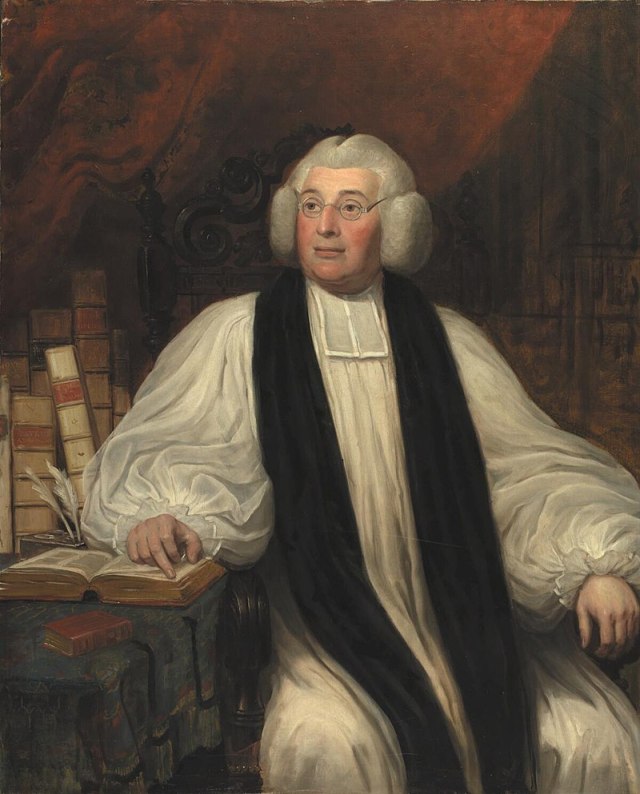
Bishop Burgess ~ Image Available from the National Library of Wales ~ Public Domain ~ https://en.wikipedia.org/wiki/Thomas_Burgess_(bishop)#/media/File:Bishop_Burgess.jpg

Among the Society’s initial members was Thomas Burgess, Winchester and Oxford scholar and son of the local grocer. Burgess later became Bishop of St David’s and he founded St David’s College, Lampeter before being translated to Salisbury. Other members of the group were gentlemen of rank and fortune, as well as a few “intelligent farmers.” 

Burgess was known for his zeal for the Scriptures and his philanthropic nature. [Ironically, “at Salisbury and St David’s, he founded a Church Union Society for the assistance of infirm and distressed clergymen. He opposed both Unitarianism and Catholic Emancipation. The latter policy led to several clashes with the Government: the Duke of Wellington told him sharply that he would do far more to strengthen the Protestant faith by staying in his diocese and minding his flock than he could by bombarding the Government with political pamphlets.”] [Thomas Burgess (bishop)] With the influence of the Odiham Agricultural Society, he, however, took up the cause for animal welfare and humane treatment of sick animals. 

“The minutes of the meeting of 19 August 1785 record Burgess’ motion:

‘That Farriery is a most useful science and intimately connected with the Interests of Agriculture; that it is in a very imperfect neglected state and highly deserving the attention of all friends of Agricultural economy.

“That Farriery, as it is commonly practised, is conducted without principle or science and greatly to the injury to the noblest and most useful of our animals.

“That the improvement of Farriery established on a study of the Anatomy, diseases and cure of cattle, particularly Horses, Cows and Sheep, will be an essential benefit to Agriculture and will greatly improve some of the most important branches of national commerce, such as Wool and Leather.”

The minutes also record that the meeting resolved:

“That the Society will consult the good of the community in general and of the limits of the Society in particular, by encouraging such means as are likely to promote the study of Farriery upon rational scientific principles.”

Unfortunately, neither Burgess or the Society possessed the money or the scientific knowledge to make the resolution a reality. The idea did not die, however. It took root and soon we have further developments.

The next step was agreed at the meeting on 17 June 1786 [Pugh, page 13] at which it was resolved to set up the Farriery Fund: “For the breed, management and improvement of horses, cows, sheep and hogs – for the best fully authenticated cures of diseases incident to horses etc, for accurate registers of dairies – for registers of management, profit and loss of a flock of sheep, etc.”

Arthur Young joined the OAS in 1785 and led the group into the next phase. Young was an author and traveller. Young had visited the French veterinary school (near Paris) in 1787. “In his ‘Travels in France’ he wrote that the school had ‘over one hundred pupils from different parts of France, as well as pupils from every country in Europe except England, a strange exception considering how grossly ignorant our farriers are’. The result of Young’s observation was that, in 1788, the OAS decided to send, at least, two boys to France to study at the French school. They advertised for contributions for the boys’ educational expenses. 

Also in 1788, a Scottish farrier by the name of James Clark published a treatise titled “Prevention of Disease.” He purported the idea of farriery schools in Britain similar to the French ones. 

Granville Penn had read Clark’s treatise and had heard of the OAS’s work in training farriers. He became a subscriber to the Farriery Fund and a member of the Society.

“In the 5 August 1789 minutes of the Society, under his influence it was resolved that:

“From the information collected on this subject it appears that the improvement of Farriery would be most effectually promoted by the Regular Education in that Art on Medical and Anatomical principles. It is to be lamented that there is not yet in England any Establishment adequate to the desired improvement of Farriery by a regular education in that science.”

“This was an admission that it was not enough to send a few boys to France, but that a school was required in England.

“In October 1789 Penn met a Frenchman named Benoit Vial de St. Bel [Pugh, pages 17-19] who was in England finding out about agriculture and thoroughbred horses. He had trained and qualified at the French veterinary school and was also trying, unsuccessfully, to interest the English in establishing a veterinary school in England.

“The combined efforts of Penn and St Bel resulted in a plan for an English school and, for the first time, someone who could provide the teaching experience required.

“Penn sought out the financial support [Pugh, page 22] he needed from wealthy animal owners and also sought moral support from the medical and scientific professions regarding the need to move treatment of animals into the professional sphere. In order to raise money rapidly, he sought large subscriptions from sponsors and patrons, who would be become the first governors of a new ‘College or Body Associating for the purpose of encouraging Veterinary Science” and which would direct the schools.'”

The Odiham Agricultural Society accepted the plan on 5 August 1790. The London Committee of the OAS included both Burgess and Penn, along with Lord Rivers. Penn openly advocated for the school to be in London. Fortunately, Burgess had the foresight to have all related resolutions of the parent Odiham Society read aloud and recorded in detail in the new Minute Book, capturing the OAS’s history for future generations. 

download-1.jpgIn order to earn patronage from the Duke of Northumberland, the London Committee separated itself from the Odiham Society on 18 February 1791. Mr Saint Bell be appointed Professor to the College. The OAS agreed to the separation and presented the Farriery Fund to the new school in London. 

download.jpg  The role of the Odiham Agricultural Society in the foundation of what became the Royal Veterinary Society (in 1844) had ended, and the Odiham Society itself ended a few years later. But its legacy remains today in the Royal College of Veterinary Surgeons. 

Sources: 

Bell, F.R., 1977. The Days of the Farriers. Veterinary History.

Odiham Agricultural Society 

Pugh, L.P., 1962. From farriery to veterinary medicine 1785–1795. Cambridge, Heffer.

_________________________
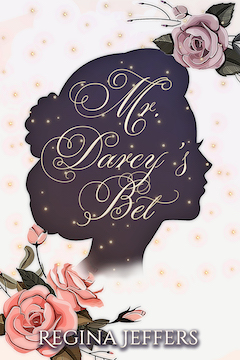
MrDarcy'sBet3x5 Book Blurb 

“Our doubts are traitors and make us lose the good we oft might win, by fearing to attempt.” – Act 1, Sc. 4, William Shakespeare’s Measure for Measure

FITZWILLIAM DARCY has done everything within his power to prove his devotion to ELIZABETH BENNET. He believes they are so close to knowing happiness; howbeit, when his aunt, Lady Catherine de Bourgh, accosts Elizabeth with predictions of Elizabeth never being able to fit in with his social connections, everything changes. Although the lady sent his aunt packing with words to the contrary, a bit of doubt has slipped under Elizabeth’s shield of confidence, and she again refuses his hand in marriage, this time to protect him from the gossiping beau monde.

Therefore, Darcy must take a leap of faith; he proposes to her before the congregation gathered for the marriage of Jane Bennet and his friend Charles Bingley—a public proposal from which Darcy cannot legally or morally withdraw, one only Elizabeth Bennet can refuse. He bets, this time, he can win not only her heart, but also her consent. With the assistance of his family and hers, a plan is put into motion to prove to all comers that Elizabeth Bennet is not only worthy of his attentions, but also the only one Darcy should consider marrying.

In Chapter 11 of Mr. Darcy’s Bet, Darcy speaks of the Odiham Agricultural Society to a boy whose family he is assisting. 

The three boys slept, as they had done for the last two days. Darcy suspected the two older ones had stood guard over young Cobb while in their cell, for when he had arrived to remove them from their incarceration, he found, despite his specific orders to the contrary, two men were also in the cell with the boys. Filthy, he had first taken them to Darcy House and demanded they be scrubbed clean. Jasper had been sent out to purchase new clothes and shoes, and, by mid afternoon yesterday, they had set out for Kimbolton. His steward’s letter said the man had departed Lincolnshire two days prior to Darcy’s leaving London, so, he expected to encounter the man on this very day. However, with the days shorter in November and the roads north of London less well maintained, it was difficult to make good time. It could be possible he must wait another day to meet up with Mr. Atkinson, but he prayed otherwise.

Darcy had despised leaving Elizabeth, especially after the kiss they had shared. Even now, he could taste her sweetness on his lips, and it was all he could do not to groan. He closed his eyes and relived the moment: the surprise he had felt when she willingly encircled his waist with her arms, the brush of his lips against hers, then her capitulation to a deeper kiss. He was so close to claiming happiness; yet, he feared she might still step away from him. What would happen if he failed to gift her with his childhood wish? Would she overlook his failure and agree to marry him, or would she again deny the bond, obviously resting, between them?

He opened his eyes to discover Kit Fyre watching him closely. “How much longer?”

“Depending on the weather we should meet Mr. Atkinson late this afternoon. You will travel to Lincolnshire with him.” The boy nodded his understanding. “Have you thought more on what trade you wish to pursue? Do you wish to be a smith, like your father?” Darcy had learned from the younger boys that the late Mr. Fyre had been a blacksmith, who was often used by Tattersalls before the family fell on hard times.

“I dost not think I’ll be as strong as was me Pa. He be’d a big man, bigger than you even. I’s take after me Ma. I’d like to work with horses, though.”

“A groom, perhaps, or a farrier,” Darcy suggested. “Learn all you can of horses and then set your sights on becoming what Sir Thomas Brown called ‘veterinary medicine.’ There is even the Odiham Agricultural Society in Hampshire whose purpose is to encourage agricultural development and livestock breeding. I consult regularly with some of its members on the latest ideas in improving the stock upon my tenant farms. The group founded a veterinary college in London some twenty years back. A ‘vet’ tends more than horses; yet, learning all you can of those animals would be an excellent start. Even a truly knowledgable farrier would earn a steady income large enough to support himself and a family.” The boy again nodded his understanding. “Do yourself the favor of speaking honestly with Mr. Atkinson of your aspirations. You must consider whether it will be enough for you simply to earn a fair wage to support your younger brothers. You must consider what will happen when they reach an age to take off on their own. A future stretches before you, and you must have the foresight to understand where you wish to be in ten years. Twenty years. Atkinson is a good man and will do all he can to assist you and your brothers, but he will not coddle you and plead with you to do your job. If you do not perform, he will release you at the drop of a hat, and I will not step in again to save you, for, if you fail, it is because you broke your word to me.”

Posted in book excerpts, book release, British history, Church of England, Georgian England, Georgian Era, Great Britain, history, Jane Austen, Living in the UK, medieval, Pride and Prejudice, publishing, real life tales, science, Vagary, Wales, world history, writing | Tagged , , , , , , , , , , , , , , , , , | 4 Comments

What Does a Renown French Astronomer Have to Do with the Release of “Mr. Darcy’s Bet?” + a Giveaway

Comet C/1743 X1, The Great Comet of 1744, or “Comet de Cheseaux-Klinkenberg”, at 4am on March 9, 1744, showing six tails rising above the horizon
Amedee Guillemin, after Jean-Philippe de Cheseaux – Amedee Guillemin, The World of Comets (London, 1877) ~ Public Domain

Charles Messier at age 40 ~ Public Domain

Charles Messier was born in Badonviller on 26 June 1730 in the Lorraine region of France. He was the tenth of twelve children. Six of his siblings died young. Messier’s interest in astronomy was fired by, first, the Great Comet of 1744, and, later, by a solar eclipse in 1748. This eclipse occurred on July 25, near Messier’s home town. 

For those of you unfamiliar with “The Great Comet of 1744, whose official designation is C/1743 X1, and which is also known as Comet de Chéseaux or Comet Klinkenberg-Chéseaux, [it] was a spectacular comet that was observed during 1743 and 1744. It was discovered independently in late November 1743 by Jan de Munck, in the second week of December by Dirk Klinkenberg, and, four days later, by Jean-Phillippe de Chéseaux. It became visible with the naked eye for several months in 1744 and displayed dramatic and unusual effects in the sky.” One can only imagine how such a spectacular display could inspire a curious boy of fourteen. 

Joseph-Nicolas Delisle ~ Public Domain

At the age of twenty-one, Messier was employed by Joseph Nicolas Delisle, a French astronomer and cartographer, associated with the French navy. Delisle instructed Messier on how properly to conduct his observations. The Mercury transit of 6 May 1753 was Messier’s first observation. That one was followed by his observations journals at Cluny Hotel and at the French Navy observatories. 

In 1764, Messier was made a fellow of the Royal Society in England. He was also elected as a foreign member of the Royal Swedish Academy of Sciences in 1769. The next year he was honored to become a member of the French Academy of Sciences. 

He was most notable for publishing an astronomical catalogue consisting of 110 nebulae and star clusters, which came to be known as the Messier objects. The purpose of the catalogue was to assist astronomical observer, in particular comet hunters, to distinguish between permanent and transient visually diffuse objects in the sky. 

Messier discovered 13 comets:
  • C/1760 B1 (Messier) c/2760
  • C/1763 S1 (Messier)
  • C/1764 A1 (Messier)
  • C/1766 E1 (Messier)
  • C/1769 P1 (Messier)
  • D/1770 L1 (Lexell)
  • C/1771 G1 (Messier)
  • C/1773 T1 (Messier)
  • C/1780 U2 (Messier)
  • C/1788 W1 (Messier)
  • C/1793 S2 (Messier)
  • C/1798 G1 (Messier)
  • C/1785 A1 (Messier-Méchain)

Unfortunately, near the end of his life, Messier self-published a booklet connecting the great comet of 1769 to the birth of Napoleon, who was in power at the time of publishing. This is the tidbit of history that plays out in my latest Austen release.

According to Meyer:

As hard as it may seem to accept, the memoir is an ingratiation to Napoleon in order to receive attention and monetary support. It is full of servility and opportunism. Messier did not even refrain from utilizing astrology to reach his goal. Messier comes quickly to the point on the first page of the memoir, by stating that the beginning of the epoch of Napoleon the Great … coincides with the discovery of one of the greatest comets ever observed.

Maik Meyer (see link to Messier and Napoleon below) explains the historic context of this booklet’s publication, “Until 1789, Messier had earned an honored name in astronomy. His comet discoveries led to numerous memberships in national and international academies. The Marine Observatory in Paris, from where he was observing as a chief astronomer was financed by the Navy. In summer 1789, the French Revolution erupted, culminating in the ‘Year of Terror’ (1793-1794). Messier lost all his salaries for the Marine Observatory. This was a hard time for Messier, who was then in his sixties. Things got better for him after 1795, and Messier started to observe again from the Marine Observatory, now maintained and financed by himself. His last named comet discovery happened in 1798, and when he was beaten by Pons on the comet of 1801 (C/1801 N1), with which Pons started an impressive career as a comet hunter, Messier seemed to have a hard time accepting that he was no longer dominating the field of comet hunting….

“Napoleon did not take much notice of this memoir. However, Messier’s reputation was seriously harmed. The observatory’s condition became increasingly bad, since no funds for repair were available. Messier’s observing activities came to an end. Charles Messier died in 1817….” 

So, although history does not show that a disgraced French astronomer by the name of Charles Messier lectured in England in late 1812, an author by the name of Regina Jeffers exercised a bit of dramatic license to place Messier into the life of one Fitzwilliam Darcy. The question remains, what purpose does Messier’s presence serve to the plot of Mr. Darcy’s Bet?

Teaser from the book: 

Monsieur Messier, merci de me recevoir aujourd’ hui,” Darcy said as he bowed to the man, who had not risen when Darcy entered the suite Messier occupied in London. The astronomer appeared frail.

Tu es le bienvenu mon garçon.” Messier gestured to a nearby chair. Once Darcy was seated, the Frenchman switched to a halting form of English. “Your name…brought thought…of other Mr. Darcy. You favor ton père.”

My father would have known honneur in reclaiming your acquaintance, Monsieur.” Darcy spoke in clear, distinct syllables, for the man turned his head to one side as if his hearing was not as sharp as it once was.

“You have kept…ton père’s observatory?” Messier asked.

Oui, but I spend less time studying the heavens than I would wish,” Darcy admitted.

Responsabilités?” Messier asked.

“Yes, many responsibilities,” Darcy explained.

Comment puis-je vous servir?” The man’s expression turned to caution.

“I thought perhaps it would be I who could serve you, rather than the reverse, Monsieur,” Darcy clarified. “May I have your permission to speak honestly of what I have to offer?”

Certainement!” Messier sat straighter. His features had turned to hope. “What did you…have in mind…Mr. Darcy?”

For those of you whose curiosity I piqued with this article, check out these other sources on Messier: 

Charles Messier 

Charles Messier, Napoleon, and Comet C/1769 P1

Mr. Darcy’s Bet: A Pride and Prejudice Vagary 

“Our doubts are traitors and make us lose the good we oft might win, by fearing to attempt.” – Act 1, Sc. 4, William Shakespeare’s Measure for Measure

FITZWILLIAM DARCY has done everything within his power to prove his devotion to ELIZABETH BENNET. He believes they are so close to knowing happiness; however, when his aunt, Lady Catherine de Bourgh, accosts Elizabeth with predictions of Elizabeth never being able to fit in with his social connections, everything changed. Although the lady sent his aunt packing with words to the contrary, a bit of doubt has slipped under Elizabeth’s shield of confidence, and she again refuses his hand in marriage, this time to protect him from the gossiping beau monde.

Therefore, Darcy has taken a leap of faith, he has proposed to her before the congregation gathered for the marriage of Elizabeth’s sister and his friend Bingley. A public proposal from which he cannot legally or morally withdraw, one only Elizabeth Bennet can refuse. He bets he can win not only her heart this time, but also her consent. With the assistance of her family and his, a plan is put into motion to prove Elizabeth Bennet, not only worthy of his attentions, but also the only one he should consider marrying.

GIVEAWAY: I HAVE TWO eBOOK COPIES OF “MR. DARCY’S BET” AVAILABLE TO THOSE WHO COMMENT BELOW. THE GIVEAWAY ENDS AT MIDNIGHT, EDST, FRIDAY, SEPTEMBER 27, SO HURRY!

Posted in book excerpts, book release, excerpt, Georgian England, Georgian Era, historical fiction, history, Jane Austen, Living in the Regency, Napoleonic Wars, Pride and Prejudice, publishing, real life tales, Regency era, Regency romance, research, Uncategorized, writing | Tagged , , , , , , , , , , , , , , | 10 Comments

Did Lady Bertram Suffer from a Thyroid Condition? a Guest Post from Eliza Shearer

This post originally appeared on Austen Authors on July 23, 2019. Enjoy!

Mansfield Park’s Lady Bertram is the epitome of laziness and indolence. Her favourite activity is sitting on her favourite sofa, with a piece of sewing on her lap and pug at her feet.

Jane Austen’s character is wonderfully well depicted. But as a writer, I like to ask questions, and mine in her case was: what if her laziness, which everyone took for a personality trait, was, in reality, a health issue?

Laziness or Tiredness?

Mansfield Park has been on my mind a lot of late. My new Austeniana book, Miss Price’s Choice, begins in the home of the Bertrams about five years after the elopement of Mrs Rushworth. The protagonist is Susan Price, Fanny’s spirited little sister, who becomes Lady Bertram’s companion when Fanny marries Edmund.

Writing Austen-inspired fiction involves re-reading Austen in no small degree. This time, as I was listening to Karen Savage’s excellent audiobook version, something hit me. I realised that Lady Bertram may well have a thyroid condition.

The thyroid is a butterfly-shaped gland that sits in our necks, wrapped around the base of our throat. It is small but mighty and is responsible for much of the body’s metabolism. When it does not work well, the consequences are severe. In hyperthyroidism, the body speeds up and goes too fast. In hypothyroidism, everything slows down, and the sufferer is in a permanent state of exhaustion.

A Personal Experience of Hypothyroidism

My thyroid began to misbehave in my twenties. My thyroid was underperforming. I had dry skin, and I was always cold. Unbeknownst to me, I also had a swollen neck (or goitre), although it was only discernible to those with medical knowledge. Above all, I was tired all the time.

I began to wonder if Lady Bertram might not have been tired instead of lazy. She often naps during the day, and that is certainly something I wanted to do all the time before I was diagnosed. Lady Bertram is not fat, but neither was I: although weight increase is typical in hyperthyroidism, I did not experience it. She is also the age at which many women experience thyroid issues. A story began to form in my head.

Lady Bertram’s Possible Thyroid Problem

Hypothyroidism is slow to develop. The changes to the body happen so slowly that they are difficult to notice. The person affected and her loved ones do not immediately realise that something is wrong.

Lady Bertram had a lethargic disposition, so a thyroid problem may well go unnoticed for some time. It would take a while for her loved ones to notice the tiredness and foggy brain. Perhaps they would not worry until other symptoms like the dry skin or the bulging eyes made an appearance.

At that point, a loving husband like Sir Thomas would surely take decisive action. But what remedies would have been available to Lady Bertram?

New and Old Solutions for Goitre

Once I was diagnosed with hypothyroidism, I began to take synthetic thyroxine. The difference in my energy levels took a few weeks, but the change was striking. After a while, my thyroid was working well again. Going for long walks, keeping focused or having a late night was no longer a struggle.

Of course, synthetic thyroxine was not available during the Regency, but there were medical treatments for the condition. Iodine, an element essential for the thyroid gland to function, was discovered in 1811 in France. Bernard Coindet, a pioneering Swiss doctor, began to use it as a tincture to treat his patients soon afterwards.

However, remedies for goitre had long existed. Seaweed and kelp, naturally rich in iodine, were used in ancient China and Central and South America to treat goitre issues. Word of such treatments probably made its way to Europe in the Middle Ages, and eventually, England as well.

The Coventry Remedy

The famed “Coventry remedy”, first written about by Thomas Warton in 1656, was a tincture developed by a Dr Bate sold as a remedy for goitre. The enterprising Dr Bate and his descendants kept the recipe secret for many years, earning a tidy sum in the process.

By the late eighteenth century, the main ingredient in the Coventry remedy was revealed to be the ashes of burnt sea sponge. The reason why the tincture worked was not understood, but some doctors continued to prescribe it to their patients.

 1da2c2488bc45d8d9b539890211591d1.jpgA Decision for the Bertrams

I thought that Sir Thomas, given a choice between a cutting-edge new therapy developed by a foreigner and an English-made remedy with centuries of proven success, would not think twice. The Coventry remedy had decidedly rustic roots, but it would surely be his preferred course of action.

And this is precisely what happens. After a few weeks of following the treatment, Lady Bertram’s energy levels surge, just as mine did when I started to take thyroid supplements. She even begins to take her new puppy for walks!

But this is a different story, one that I hope to share with you in the autumn.

Miss Price’s Decision launches on 17 October and is now available for preorder.


Do you suffer from a thyroid condition or know someone who does? Was there a symptom in particular that told you that something wasn’t right? What do you think of the Coventry remedy and Regency medicine in general?

Posted in Austen Authors, British history, Georgian England, Georgian Era, Guest Post, Jane Austen, Living in the Regency, Mansfield Park, medicine, real life tales, Regency era, Regency personalities, Regency romance, research, writing | Tagged , , , , , , , , | Comments Off on Did Lady Bertram Suffer from a Thyroid Condition? a Guest Post from Eliza Shearer

“Bell, Book, and Candle” and Excommunication During the Georgian Era

In the Roman Catholic church, “bell, book, and candle” came to be synonymous with “major excommunication,” or “anathema.” The phrase dates back to the 9th Century and has symbolic meaning. The “bell” came to mean the public character of the action taken by the church and its presiding bishop against the one to be excommunicated. The “book” represented the church’s authority over the person charged. The “candle” represented the hope of the ban eventually being lifted, through the person’s repentance and an open show of having changed his ways. The ceremony would be a very public one, and the bishop would write letters to other bishops to report the fact. In that manner, the person could not simply up and move himself into another “see,” the area of a bishop’s ecclesiastical jurisdiction. 

In the traditional ceremony, the bishop and 12 priests would preside, each carrying a lighted candle. “The bishop, wearing violet vestments, then recited the formula, ending thus: ‘We separate him, together with his accomplices and abettors, from the precious body and blood of the Lord and from the society of all Christians; we exclude him from our holy mother the church in heaven and on earth; we declare him excommunicate and anathema; we judge him damned, with the devil and his angels and all the reprobate, to eternal fire until he shall recover himself from the toils of the devil and return to amendment and to penitence.’ Those present answered, ‘So be it!’ Then the bishop and the 12 priests extinguished their candles by dashing them to the ground, and, as a general rule, the ceremony then ended.” [Bell, Book, and Candle]

A form of ecclesiastical censure, what we call excommunication excludes a person from the communion of believers, the rites or sacraments of a church, and the rights of church membership. Sometimes the governing body goes so far as exclusion. 

The Roman Catholic Church distinguishes between two kinds of excommunication. In the first kind, the person is termed to be “toleratus,” or tolerated. The second form is more severe. The person is termed “vitandus,” or one to be avoided. The person is announced by name in a public “shaming,” generally at the See, itself, but for the gravest of crimes, this could take place at the Vatican. The accused is barred from the church sacraments, as well as Christian burial. The Catholic Church has a specified list, set out in the Codex Juris Canonici, of actions that end in excommunication. In January 1983, Pope John Paul II revised the list to “include abortion, violation of the confidentiality of confession, absolution by a priest of one who has committed a sin with the priest’s assistance, profanation of the consecrated communion host, consecration of a bishop without Vatican approval, a physical attack on the pope, and heresy and ‘abandoning the faith.’ 

“If excommunicated persons confess their sins and undergo penance, they are absolved; in some cases this absolution may come from any priest, but in many others it is reserved to the bishop or even to the Holy See alone, save in periculo mortis (‘in danger of death’). Excommunication should be distinguished from two related forms of censure, suspension and interdict interdict [a remedy granted by a magistrate on the sole basis of his authority, against a breach of civil law for which there is no stipulated remedy. Interdicts can be provisionary, opening the way for further action or final.] Suspension applies only to clergy and denies them some or all of their rights; interdict does not exclude a believer from the communion of the faithful but forbids certain sacraments and sacred offices, sometimes to an entire area, town, or region.” [Excommunication]

Various churches handle the situation differently. In fact, some churches do not use the term excommunication, preferring to speak of church discipline. Reformed churches vest the authority for exercising discipline and, if need be, carrying out excommunication, in the session, which consists of the minister and the elders. The 30th article of the Westminster Confession of 1646 specified ‘admonition, suspension from the sacrament of the Lord’s Supper for a season, and excommunication from the church’ as the proper steps of discipline. The Lutheran tradition has followed Martin Luther’s catechism in speaking of ‘the power of the keys’ and in defining excommunication as the denial of the communion to public and obstinate sinners; the clergy and the congregation together have the right to exercise such discipline. In the Anglican Church the bishops have the right to excommunicate, but this right is almost never exercised. Where a Congregational polity and the principle of ‘believers’ Baptism’ are observed, discipline is often very rigorous. In American denominations of the Free Church tradition the term ‘churching’ a sinner refers to excommunication, while in the Mennonite-Amish tradition excommunication also entails social ‘shunning.’ [Excommunication]

During the Georgian Era, in which most of my books occur, two types of excommunication existed: Lesser and greater.

Some changes were made in 1813, which allowed the ecclesiastical courts to send people to the secular courts for contempt, instead of excommunicating them. Also, offense of church rites and tithes were to be sent to the secular courts instead of through excommunication. In such cases, one simply deprives the offender of church services and sacraments–including marriage and a Christian burial. This is pronounced in those who are obstinate and disobedient, such as not appearing at church court when summoned, not submitting to a penance, or not obeying another injunction of the court.

Google Books ~ Ecclesiastical Law by Richard Burns 

The Doctrine of the Trinity Act 1813 (53 Geo. III c. 160. sometimes called the Trinitarian Act 1812) was an Act of the Parliament of the United Kingdom. It amended the Blasphemy Act of 1697 in respect to it Trinitarian provisions. The Blasphemy Act applied only to those educated in or having made profession of the Christian religion. The Act, passed July 21, was also variously known as the Unitarian Relief Act (Trinity Act)The Unitarian Toleration Bill, and Mr William Smith’s Bill, after Whig politican William Smith. The Act granted toleration for Unitarian worship, as previously the Toleration Act 1689 had only granted toleration to those Protestant dissenters who accepted the Trinity. [Note! The Blasphemy Act was repealed in 1967, implicitly taking the Doctrine of the Trinity Act with it.]


Screen Shot 2019-08-06 at 11.59.35 AM

The English Reports: Ecclesiastical, Admiralty, and Probate and Divorce https://books.google.com/books?id=fJRDAQAAMAAJ&pg=PA990& amp;lpg=PA990&dq=Lady+Ferrars +and+divorce&source=bl&ots= pU6j3dqWUT&sig=ACfU3U3sQ207 LvdC_GS82CI8Nav7GgjAlw&hl=en& amp;sa=X&ved=2ahUKEwiO8MHwze 7jAhVlmeAKHaTQBdMQ6AEwEnoECAgQAQ #v=onepage&q=Lady%20Ferrars%20 and%20divorce&f=false (link broken on purpose) 

As one can see, there were several incidents brought for excommunication against gentlemen of the Realm. For example, Lady Ferrers went to the House of Lords to request a separation from her husband the earl. She told the HOL members that her husband had no fear of the church courts or of being excommunicated so she feared he would not allow her to live in peace apart from him.

========================================

Lady Vane v. Lord Vane. Mich. Term, 3rd Session, 1736. 

Cheslyn returned citation and prayed an appearance, or that Lord Vane be pronounced in contempt. The judge pronounced Lord Vane in contempt, but reserved his pain, and continued the assignation to next Court 

Lady Ferrers v. Laurence Lord Ferres. Mich. Term, 2nd Session, 1757. 

Proclamation for Laurence Earl Ferrers, and he not appearing, Crespigny accused his contumacy and prayed him to be decreed excommunicate for not giving in his answers. 

The assignation and certificate to next Court, upon which day Earl Ferrers being thrice called and not appearing Crespigny accused his contumacy, and the judge (Sir Edward Simpson) at his petition pronounced him contumacious for not giving in his answers, but reserved his pain and continued the certificate and assignation to next Court. From which the assignation was continued to the by-day, when the earl not appearing, Crespigny accused his contumacy, and porrected a schedule of excommunication, which the judges read and signed in the presence of Stevens, and continued the rest of the assignation to the first session of next term. 

11 January, 1757-8. — A requisition to take Lord Ferrers’ oath for absolution at the petition of her proctor, and also for his answers. 

Lady Ferrers v. Robert Lord Ferrers* 23 May, 1792. 

Heseltine alleged that Lord Ferrers had not paid the alimony due to his client pursuant to the monition with which he had been personally served; and therefore prayed the Judge to decree Lord Ferrers excommunicate, and porrected a schedule of excommunication which he prayed the Judge to read and sign; but the Judge (Sir Wm. Scott) declined doing so, and continued the certificate to the next Court. 

Note.  — The certificate was continued for several Court-days; and the alimony was at length alleged to have been paid. 

============================================================

The greater excommunication deprived the man of church services and published his name abroad so that no church members who wanted to stay in good standing or have any communication or business with him. The church members were not to patronize the man’s shop, if he were a tradesman. He was not to be invited to dine or to visit or to attend a ball. One was supposed to shun his society until he repented.

One could be excommunicated for refusing to have a child baptized or for refusing the sacraments of the Lord’s Supper, or for idolatry, usury, simony, or perjury. All of these were brought before the ecclesiastical courts. One could be excommunicated for fighting in church. Though the clergyman was to say the person was excommunicated right then and there, it was truly necessary to have the bishop endorse the sentence to have the desired effect. If a plaintiff is excommunicated, a defendant can tell the court so. He must do this before he answers the plaintiff. If he can prove the excommunication, he need not answer the plaintiff in court until the plaintiff has been admitted back into the good graces of the church.

  • All excommunicated persons were not to step into the church.
  • Any one who pronounced himself an atheist and spoke out against the church could be excommunicated.
  • One who refused to pay his tithes or who shortchanged the rector and vicar of their tithes could be excommunicated, but after 1813, were likely to be sued in a secular court, rather than be brought before an ecclesiastical court.
  • One guilty of defamation could be excommunicated.
  • One could also be excommunicated for refusing to go to church.
  • Those who socialize with a excommunicated person or trade with him could be excommunicated as well.
  • An excommunicated person could not be a witness in a court.
  • He could not be buried in church grounds. He could not have the burial service read over his body.
  • If a person remains obstinate in refusing to answer or attend a church court, the church could ask the High Court of Chancery to send out a writ, which was to be answered in the Court of Kings’ bench. The writ was to be opened in King’s bench with all the justices present and handed to the sheriff to enforce. The Bench of Kings Court could put out notices to every sheriff and assize that the person is to be summoned, if not found at the usual address. If it takes all these people and writs, to find the person, he can be put into prison. He can be fined for not obeying. If arrested, he cannot have bail.
Posted in British history, England, Georgian England, Georgian Era, Regency era, religion, research, writing | Tagged , , , , , , , | 2 Comments

People of Colour in Jane Austen’s Time, a Guest Post from Catherine Bilson

This post originally appeared on the Austen Authors’ Blog on 18 July 2019. Enjoy! 

[Last week], Twitter blew up when some more casting for the Bridgerton series was announced and – shock, horror! – not all of the actors were white.

For those of you who don’t know about the Bridgerton series, it’s a TV series based on the Bridgerton novels by Julia Quinn. Produced by Shonda Rhimes, it promises  to be the most ‘Regency’ project possibly ever to hit the small screen, and it’s being released on Netflix sometime in 2020. The Regency fandom on Twitter had a little meltdown a few weeks ago when Julie Andrews – yes, THAT Julie Andrews – was announced as the voice of Lady Whistledown, the anonymous, biting gossip columnist who chronicles a lot of events in the series. (Link goes to a Deadline article with some more details about the series).

And then, on July 10 a  whole stack of new casting information dropped and a bunch of people lost their collective minds.

Because the actor cast to play Simon Basset, a duke who’s the hero of the first book… isn’t white.

Regé-Jean Page is, however, quite obnoxiously gorgeous. And look at the rakish angle of THAT HAT!

duke-2015_276.jpg There were a lot of cries of ‘”Not my Simon!” and “But Simon has blue eyes!” and, frankly, I found it all just as distasteful as the uproar over a black girl being cast to play Ariel.

This is an adaptation of a fictional story. A story which has been loved by people of lots of different nationalities and skin colors, and denying them representation on the grounds of ‘but historical accuracy’ is an ugly, ugly argument. About as ugly as the 27 dukes who were actually real in Regency England, but we rarely mention that little bit of unpleasant truth. There’d be more than 27 books coming out every month which feature a sexy duke, so please, let’s just own the fantasy that Regé-Jean could turn up at a Regency ball and sweep us away into a forbidden waltz!

One thing that bothers me when people use ‘historical accuracy’ to excuse whitewashing their Regency romances is that Regency England was most certainly not all-white. The wealthiest woman in Sanditon, Jane Austen’s last novel? Miss Lambe, a mulatto from the Caribbean. There were free black men and women all over Europe (called Blackamoors) for centuries before Austen’s time, and during her lifetime she would have heard a great deal about the struggle for emancipation. The slave trade is mentioned only a couple of times in her novels, but her disapproval of its ugliness is clearly expressed through Fanny Price in Mansfield Park, where a good deal of the Bertram family’s wealth comes from the ownership of a sugar estate on Antigua, which undoubtedly would have included a number of slaves.

Everything we know about Austen shows her despite for the slave trade – she once declared herself to ‘be in love with’ Thomas Clarkson, author of the History of the Abolition of the African Slave Trade. Her brothers, both in the Navy, wrote of their distaste for the conditions in which slaves were kept and transported. The newness of the Bingley fortune? Almost certainly sourced from the slave trade, and a reason why they would never be accepted by the upper crust of London society.

Honestly, the more I look at that picture of Regé-Jean Page above, the more I can see him as Charles Bingley. Imagine if Mr. Bingley senior married a mulatto woman… possibly after his first wife died, so Caroline and Louisa are white, while their brother is distinctly Not. I can definitely see Darcy befriending a young man of color very much out of his element at Cambridge, and maintaining the friendship years later. But would Charles Bingley being of a different skin color have made a difference to his reception in Hertfordshire? Would he still have been encouraged to court Jane? Well, his five thousand a year would probably still have endeared him to Mrs. Bennet, at least, but I wonder if anyone would have considered Jane Bennet ‘beneath him’ in that case?

Now I’m thinking about it, it’s very possible that this will be a Pride & Prejudice variation I’ll write, one day.

And in the meantime, I’m just going to get ever more excited for The Bridgertons series to start airing!

Posted in Austen Authors, British history, film, film adaptations, Georgian England, Georgian Era, Guest Post, Jane Austen, Living in the Regency, Regency era, Regency romance | Tagged , , , , , , , , , | 1 Comment

A Fight for Inheritance: James Innes-Ker, 5th Duke of Roxburghe and “Lady Chandler’s Sister”

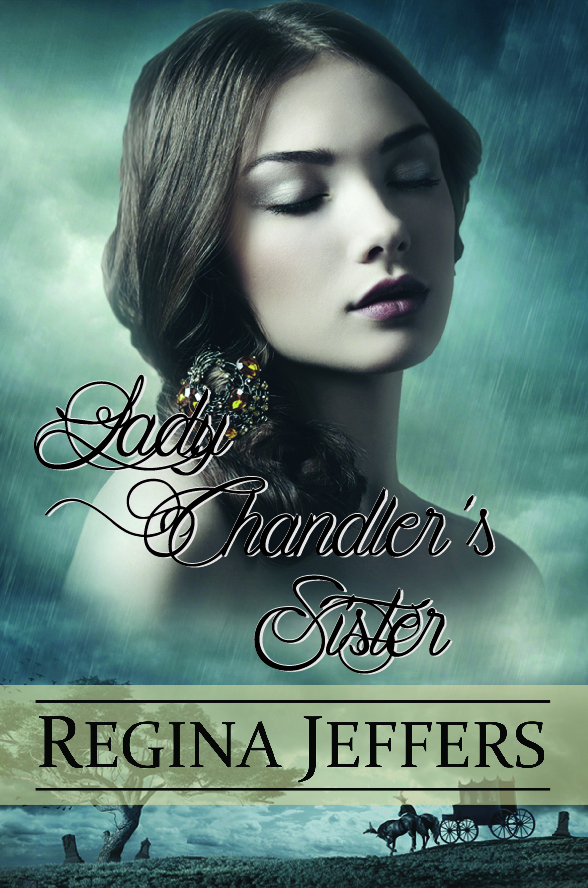
One of the minor characters in my 2019release, Lady Chandler’s Sister, was inspired by James Innes-Ker, 5th Duke of Roxburghe, whose tale I came across when doing research on a piece on primogeniture and inheritance laws. At the time, I thought the contest for the dukedom more than interesting, but had not thought to use the real life character in one of my stories. However, Roxburghe’s life and the location of his home, Floors Castle, fit perfectly for my story line, but I did not wish to name the actual person, for the Roxburghe line continues. Moreover, in the rewrites, I realized Roxburghe’s real-life tale, did not fit with my fictional one. Therefore, I kept the character, and, in the rewrites, left out Roxburghe’ history. Instead, I made the location less specific and made the character the godfather to the hero, but it was the Roxburghe legacy I had in mind while writing. 

Coat_of_arms_of_the_duke_of_Roxburghe

coat of arms of the duke of Roxburghe Arms. uarterly, 1st and 4th grandquarters: quarterly, 1st and 4th, Vert on a Chevron between three Unicorns’ Heads erased Argent armed and maned Or as many Mullets Sable (Ker); 2nd and 3rd, Gules three Mascles Or (Weepont); 2nd and 3rd grandquarters: Argent three Stars of five points Azure (Innes). Crest. 1st: A Unicorn’s Head erased Argent armed and maned Or (Ker); 2nd: A Boar’s Head erased proper langued Gules (Innes). Supporters. On either side a Savage wreathed about the head and middle with Laurel and holding in his exterior hands a Club resting on the shoulder all proper. Motto. 1st, Pro Christo Et Patria Dulce Periculum (For Christ and country danger is sweet); 2nd, Be Traist. Cracroft’s Peerage Saltspan – This file was derived from: Royal Hanover Inescutcheon.svg Coronet of a British Duke.svg Coat of Arms of the College of Arms.svg Wildman Supporter (Heraldry).svg Badge of the Snawdoun Herald.svg White Boar Badge of Richard III.svg Torse of a British Gentleman.svg Coat of Arms of John of Austria (1545-1578).svg ~ https://en.wikipedia.org/wiki/Duke_of_Roxburghe#/media/File:Coat_of_arms_of_the_duke_of_Roxburghe.png


Derived from the royal burgh of Roxburgh in the Scottish Borders, the title was originally created as Earl of Roxburghe in 1616. Before the title was elevated to that of “duke,” other subsidiary titles, all part of the peerage of Scotland, except one) were held, including Marquess of Bowmont and Cessford (created 1707), Earl of Kelso (created 1707), Earl Innes (1837 – the exception, for it was a title belonging to the peerage of the United Kingdom), Viscount Broxounth (1707), Lord Roxburghe (1600), and Lord Ker of Cessford and Cavertoun (1616). The Duke’s eldest son bears the courtesy title of Marquess of Bowmont and Cessford.

The dukedom and its associated titles descend to heirs who shall inherit the earldom which in turn had a very specific line of descent. On the death of the 4th duke the titles became dormant as no one could prove their claim. In 1812 the House of Lords ruled in favor of Sir James Innes-Ker, 6th Baronet, of Innes, rejecting claims by the heir female of the second earl and heir male whatsoever of the first earl. The Duke of Roxburge is considered the Chief of Clan Innes, but cannot be so recognized as he retains the name Innes-Ker. 

The line of succession for the period in which I write had the eldest son of Sir Henry Innes, 5th Baronet, James Innes succeed to the baronetcy upon his father’s death. He was a descendant of Robert Ker, 1st Earl of Roxburghe, and in 1812 placed a claim to the vacant Scottish Duke of Roxburghe title. 

According to Wikipedia:

It took seven years of litigation for the dukedom to be secured by James Innes-Ker. As indicated above, the 3rd Duke never married. The title then devolved upon William Bellenden-Ker, who died within a year of assuming the title. He had no heirs. The succession was contested by Major-General Walter Ker and the Right Honorable William Drummond; and only at vast cost decided, on 11 May 1812, in favour of Sir James, as descended from Lady Innes, the third daughter of Hary, Lord Ker, son of the first Earl of Roxburghe.

Encyclopedia Britannica gives us the following explanation: “John, 3rd duke of Roxburghe (1740-1804), the famous bibliophile. John was betrothed to Christiana, daughter of the duke of Mecklenburg-Strelitz; but when the princess’s sister Charlotte was affianced to George III., reasons of state led to the rupture of the engagement, and he died unmarried on the 19th of March 1804. The duke’s library, including a unique collection of books from Caxton’s press, and three rare volumes of broadside ballads, was sold in 1812, when the Roxburghe Club was’ founded to commemorate the sale of Valdarfer’s edition of Boccaccio. Roxburghe’s cousin William, 7th Lord Bellenden (c. 1728-1805), who succeeded to the Scottish titles and estates, died childless in October 1805, and for seven years the titles were dormant. Then in 1812 Sir James Innes, bart. (1736-182 3), a descendant of the 1st earl, established his claim to them, and taking the name of Innes-Ker, became 5th duke of Roxburghe. Among the unsuccessful claimants to the Roxburghe dukedom was John Bellenden Ker (c. 1765-1842), famous as a wit and botanist and the author of Archaeology of Popular Phrases and Nursery Rhymes (1837), whose son was the legal reformer, Charles Henry Bellenden Ker (c. 1785-1871).

“The 5th duke’s great-grandson, Henry John Innes-Ker (b. 1876), became 8th duke in 1892. The duke of Roxburghe sits in the House of Lords as Earl Innes, a peerage of the United Kingdom, which was conferred in 1837 upon James Henry, the 6th duke (1816-1879).”

Lord Bellenden, mentioned above,  was descended from the second Duke; General Ker claimed to be heir male of the first, and Mr. Drummond heir male of the second Earl, so that the issue turned on the construction of an entail, which gave the right to the female line. One can understand why it took seven years to sort out who was who. “Other claimants included John Bellenden Ker (c. 1765–1842), famous as a wit and botanist and the author of Archaeology of Popular Phrases and Nursery Rhymes (1837), whose son was the legal reformer Charles Henry Bellenden Ker (c. 1785–1871). It is notable that 25 years later, Walter Ker’s daughter Essex Ker was involved in litigation against her father’s lawyers in connection with bonds issued to cover the costs of the succession litigation.” [James Innes-Ker, 5th Duke of Roxburghe]

James Innes-Ker married twice. His first wife, Mary Wray, died in 1807, a mere ten years after they had married. The same year of Mary’s death, Innes-Ker married Harriet Charlewood. His son, James Henry Robert Innes-Ker, delivered by Harriet, succeeded to the Dukedom upon his death.

LCS eBook Cover-01

Lady Chandler’s Sister: Book 3 of the Twins’ Trilogy [March 23, 2019]

Finalist, Romance Novel, 2019 International Book Award 

Sir Alexander Chandler knows his place in the world. As the head of one of the divisions of the Home Office, he has his hand on the nation’s pulse. However, a carriage accident  on a deserted Scottish road six months earlier has Sir Alexander questioning his every choice. He has no memory of what happened before he woke up in an Edinburgh hospital, and the unknown frightens him more than any enemy he ever met on a field of battle. One thing is for certain: He knows he did not marry Miss Alana Pottinger’s sister in an “over the anvil” type of ceremony in Scotland.

Miss Alana Pottinger has come to London, with Sir Alexander’s son in tow, to claim the life the baronet promised the boy when he married Sorcha, some eighteen months prior. She understands his responsibilities to King and Crown, but this particular fiery, Scottish miss refuses to permit Sir Alexander to deny his duty to his son. Nothing will keep her from securing the child’s future as heir to the baronetcy and restoring Sir Alexander’s memory of the love he shared with Sorcha: Nothing, that is, except the beginning of the Rockite Rebellion in Ireland and the kidnapping of said child for nefarious reasons.

An impressive ending to the beautifully crafted Twins’ Trilogy – Starr’s ***** Romance Reviews

Love. Power. Intrigue. Betrayal. All play their parts in this fitting conclusion to a captivating, romantic suspense trio. – Bella Graves, Author & Reviewer

Kindle: https://www.amazon.com/dp/B07PVT5GQ9/ref=sr_1_2?keywords=lady+chandler%27s+sister&qid=1553390378&s=gateway&sr=8-2

Amazon: https://www.amazon.com/dp/1091376581/ref=sr_1_2?keywords=lady+chandler%27s+sister&qid=1553430979&s=gateway&sr=8-2

Kobo https://www.kobo.com/us/en/ebook/lady-chandler-s-sister

Nook https://www.barnesandnoble.com/w/books/1131002644?ean=2940161421314

NOTE!!! Black Opal Books has graciously lowered the price of the eBooks 1 and 2 of the trilogy to $2.99 each. Those are Angel Comes to the Devil’s Keep and The Earl Claims His Comfort. 

Posted in Black Opal Books, book release, books, British history, eBooks, Georgian England, Georgian Era, Great Britain, Inheritance, Uncategorized | Tagged , , , , , , , , , , , | Comments Off on A Fight for Inheritance: James Innes-Ker, 5th Duke of Roxburghe and “Lady Chandler’s Sister”

Jane Austen and the Lottery Craze, a Guest Post from Nancy Lawrence

This post originally appeared on Austen Authors on 20 July 2019. Enjoy! 

In her unfinished novel Sanditon, Jane Austen introduced the character of Mr. Parker by describing his love for the sea-side town of Sanditon in this manner:

Sanditon was a second wife and four children to him, hardly less dear, and certainly more engrossing. He could talk of it forever. It had indeed the highest claims; not only those of birthplace, property and home; it was his mine, his lottery, his speculation and his hobby horse; his occupation, his hope and his futurity.

When Jane spoke of “his mine, his lottery, his speculation and his hobby horse,” she wasn’t talking about games and toys; she was specifically talking about things involving chance and risk, including lottery games similar to those we have in the U.S. today.

“Fortune assists the brave.” A goddess showers money upon lottery players in this handbill from about 1800.

In Jane Austen’s lifetime the lottery itself was government run, a fact that gave ticket-buyers a false sense of security, as did the requirement that ticket sellers be licensed or appointed by the government.

Sometimes ticket dealers were stock brokers, sometimes bankers; and sometimes the sellers were partnerships formed by businessmen, such as the firm of Hazard & Co, which created this advertisement:

Question: Would you take a chance on a lottery ticket purchased from “Hazard” & Co?

The government used the proceeds from lottery ticket sales to fund various projects. One great example is The British Museum; it had its start thanks to funding provided through the sale of lottery tickets priced at £3 each. (Interestingly, the government substantially cut players’ chances of winning by requiring that all winners be present at the time of the drawing or forfeit their prize.)

That lottery was a great success. The needed funds were raised to purchase the libraries and collections of Sir Hans Sloane and Sir Robert Cotton (which were combined to form what we know as the Harleian Library), and to purchase a suitable building in which to house the collections. The result formed the nucleus of what is now the British Museum.

Ticket sellers used all sorts of promises and lures to encourage people to risk their money on lottery tickets. This excerpt from a lottery handbill encouraged elderly spinsters to play so they could lure young husbands:

And this bill cites a Mr. J. Merone’s history of selling winning numbers, implying players might have better luck buying one of his tickets:

The 1806 handbill below—published by the aptly-named firm of Richardson Goodluck & Co.—dazzled potential ticket buyers with lists of potential cash prizes.

The unfortunate truth was that not all prizes were awarded. Sometimes, the lottery drawing resulted in a ticket “this day drawn blank,” which meant that no one won the big prize. That was the case for this lottery drawing held on December 26, 1781:

But that didn’t stop people from buying lottery tickets.

During Jane Austen’s lifetime, playing the lottery was a national craze that lasted well into the 1820s. I’ve sometimes wondered why she didn’t mention the lottery more frequently in her letters and stories; but my JAFF imagination can think up plenty of opportunities for Austen’s characters to hand over their hard-earned money for a chance at a jackpot.

Illustration for a lottery handbill designed with a Valentine’s Day theme.

Can you imagine Lydia Bennet recklessly wagering her pin money on a chance to win a lottery prize?

What about George Wickham? Do you think he would have played the lottery in hopes of making his fortune (and perhaps paying off some of his debts)? Or perhaps he might have run a lottery ticket scheme of his own.

I think it’s possible William Elliot would turn to gambling on the lottery, once he realized he had lost his cousin Anne to Captain Wentworth in Jane Austen’s Persuasion.

9672aaceb9469d6b0d0fbab836aba336.jpg

What about you? Have you ever won a lottery prize?

If you’d like to know more about lottery games in England, you can read this book for free HERE:

It’s full of fun anecdotes and great illustrations.


Posted in British history, commerce, customs and tradiitons, Georgian England, Georgian Era, Guest Post, history, Jane Austen, Living in the Regency, Regency era, research, writing | Tagged , , , , , , , , , | Comments Off on Jane Austen and the Lottery Craze, a Guest Post from Nancy Lawrence

Regency Customs: I Won’t Dance, Don’t Ask Me ~ Using “Dance” As a Plot Device In Jane Austen’s Novels

“To be fond of dancing was a certain step towards falling in love.” (Pride and Prejudice, Chapter 3) During Austen’s time, young people looked for a potential mate at dances. Austen, herself, enjoyed a good dance, and, therefore, she often used dance as part of her plot line. In a 1798 letter to her sister Cassandra, Austen wrote, “There were twenty Dances & I danced them all, & without any fatigue.” Dancing well was a “necessary evil.” Those who trod on their partners toes (i.e., Mr. Collins) were seen as gauche. Children of the gentry learned the latest dance steps early on.

Public balls or assemblies and private balls formed the two types of formal dances. Assemblies took place in large ballrooms in market towns and cities. They were constructed for the purpose of public gatherings. One might also hold a dance in the ballrooms at country inns (as in the Crown Inn in Emma) or in formal ballrooms in large houses (as in the Netherfield Ball in Pride and Prejudice or Sir Thomas’s ball in Mansfield Park).

Occasionally, the gentry would roll up the rugs for an impromptu dance. These were more characteristic of country life.

Characters discussing “dancing” and participating in “dance” occurs often in Austen’s story lines. From Pride and Prejudice, we find, “Elizabeth Bennet had been obliged, by the scarcity of gentlemen, to sit down for two dances…

(and) “Come, Darcy,” said he, “I must have you dance. I hate to see you standing about by yourself in this stupid manner. You had much better dance.”

(as well as) “She had known him only a fortnight. She danced four dances with him at Meryton…”

(and) “Every savage can dance.” Sir William only smiled.

(and) “You would not wish to be dancing when she is ill.”

and) “…and Elizabeth thought with pleasure of dancing a great deal with Mr. Wickham…” In fact, Austen uses “dance” eight and sixty (68) times during the story line.

_________________________

From Persuasion, the reader finds these references to “dancing.”

“The girls were wild for dancing; and the evenings ended, occasionally, in an unpremeditated little ball.”

(and) “This evening ended with dancing.”

(as well as) “Oh, no; she has quite given up dancing.”

(and) “Yes, I believe I do; very much recovered; but she is altered; there is no running or jumping about, no laughing or dancing…” There are ten (10) references to dance in Persuasion.


The reader comes across nine and forty (49) mentions of the word “dance” in Mansfield Park. We have such gems as, “…for it was while all the other young people were dancing, and she sitting, most unwillingly, among the chaperones at the fire…”

(and) “…been a very happy one to Fanny through four dances, and she was quite grieved to be losing even a quarter of an hour.”

(as well as) “…but instead of asking her to dance, drew a chair near her, and gave her an account of the present state of a sick horse…”

(and) “I should like to go to a ball with you and see you dance. Have you never any balls at Northampton? I should like to see you dance, and I’d dance with you if you would, for nobody would know who I was, and I should like to be your partner once more.

___________________________

“Dancing” is mentioned nine and sixty (69) times in Emma. “She was in dancing, singing, exclaiming spirits…”

(and) “She had suffered very much from a cramp from dancing, and her first attempt to mount the bank brought on such a return of it as made her absolutely powerless…”

(and) “Indeed I will. You have shewn that you can dance, and you know we are not really so much brother and sister as to make it at all improper.”

(as well as) “Pleasure in seeing dancing! – not I, indeed – I never look at it – I do not know who does. Fine dancing, I believe, like virtue, must be its own reward.”

___________________________


From Love and Friendship, one finds, “The Dancing, however, was not begun as they waited for Mis Greville.”

(and) “I soon forgot all my vexations in the pleasure of dancing and of having the most agreeable partner in the room.”

(as well as) “I can neither sing so well nor Dance so gracefully as I once did.” There are ten (10) references to “dance” in Love and Freindship.

______________________

One and twenty (21) references to “dance” appear in Sense and Sensibility. They include: “In the country, an unpremeditated dance was very allowable…”

(and) “Never had Marianne been so unwilling to dance in her life…”

(and) “They speedily discovered that their enjoyment of dancing and music was mutual…”

_______________________________


Seven and sixty (67) uses of “dance” can be found in Northanger Abbey. One can find, “He wants me to dance with him again, though I tell him that it s a most improper thing, and entirely against the rules.”

(and) “Oh, no; I am much obliged to you, our two dances are over; and, besides, I am tired, and do not mean to dance any more.”

My favorite quote regarding dancing comes from Northanger Abbey. In it, Henry Tilney makes a comparison between “dancing” and “matrimony.” He says, “…that in both, it is an engagement between man and woman, formed for the advantage of each; and that when once entered into, they belong exclusively to each other till the moment of its dissolution; that it is their duty, each to endeavor to give the other no cause for wishing that he or she had bestowed themselves elsewhere, and their best interest to keep their own imaginations from wandering towards the perfections of their neighbours, or fancying that they should have been better off with any one else.”

So, what are your favorite scenes in Austen’s novels that are associated with dancing? Are there other poignant Austen moments centering around dance? Please share your favorite scenes with all of us.

Posted in British history, dancing, Jane Austen, Living in the Regency, Regency era | Tagged , , , , , , , , , | 22 Comments

Breaking an Engagement During the Regency + an Excerpt from MR. DARCY’S BRIDEs

A popular plot in Regency era romances is the broken engagement, but what was the truth of the situation?

Unless the gentleman involved suddenly uncovered a flaw in the morals of his lady, once a man proposed to a woman, he was expected to go through with the marriage. Sometimes engagements were called off when the lady’s father and/or guardian could not agree on the settlements with the gentleman. However, if a man jilted the one to whom he had proposed, it was thought that he found out something to speak to her low character, particularly that she had known another intimately.

The only means to save the female’s reputation was for the gentleman to marry another quickly, so quickly that the betrothed female sometimes did not even know she was jilted. The jilted person had the right to sue for breach of promise–if of age. Because betrothals and engagements were no longer enforced by the church, they were considered to rest on a man’s honor. The man could more easily jilt a female than the girl could jilt him.

“Breach of promise of marriage suits originated in the ecclesiastical courts; the Hardwicke Marriage Act, however, invalidated betrothals and forced jilted lovers to use the common law courts for redress. Lower-middle and upper-working class couples had a definite set of courtship rituals, based on their desire for respectability and their simultaneous lack of economic security. Though most couples wanted to find the companionate ideal, they also needed to have good homemakers (for men) and solid providers (for women). They indulged in middle-class sentimentality in their letters and poetry, yet their courting was less formal and unsupervised. This mixture of needs was also reflected in their motives for separating, a combination of ideological, structural and personal difficulties. There was a sustained argument over breach of promise in the later Victorian period, which showed the tensions between individualism and companionate marriage in its culture. The legal community was divided over the desirability of the suit; most judges supported it and most lawyers did not. It also divided the populace, since the lower classes were favorable, but the upper classes abhorred it. Women, too, were unable to agree, breach of promise protected them, but it also placed them in a special category that was inherently unequal. Ironically, the plaintiffs, by appealing to the patriarchal courts, proved to be strong feminists, since they refused to be passive in the face of victimization. This showed great determination, since most of the commentators on the action were hostile; breach of promise cases in fiction, in fact, were overwhelmingly negative, legitimizing the upper-class disdain for the suit and ignoring its usefulness for poorer women.” [Rice University Digital Scholarship Archives; Promises broken: Breach of promise of marriage in England and Wales, 1753-1970, Ginger Suzanne Frost, 1991]

The couple would often try to come up with some excuse that showed that the woman simply changed her mind, and she and the man agreed to part amicably. However, the “tale” told was often set aside for the rumors and gossip were much more tantalizing to repeat. More gossip and scandal stuck to female’s name than it did for the man, who was often expected to keep a mistress or have had several women’s names attached as possibilities to his; there was less blame attributed to the man unless the girl’s family entered into a counter attack to shift the blame to him or to make it appear the daughter broke the engagement. The appeal to honor was very strong. Both the Duke of Wellington and Lord Byron married women they didn’t want because they had once made the mistake of showing interest in or of discussing marriage with the women.

That is the bare bones of it–the woman generally paid the price unless the couple could successfully claim she felt they would not suit–however, how society reacted depended on the woman’s dowry and her family position. [This held true for the gentleman, as well.] If a great heiress was jilted, people would be careful not to blame her too much because they would want a chance for a son or nephew to marry her. A rich peer or a rich young man was always a good catch, and a father or guardian of the next young lady to catch his eye would make certain he made it to the altar.

A woman could cry off, but she had to be wary of being labeled a “jilt.”  (1670s term for a “loose, unchaste woman; harlot;” also “woman who gives hope then dashes it;” probably a contraction of jillet, gillet, from Middle English gille “lass, wench,”)

A man who promised marriage and cried off could be sued for breach of promise, particularly if the promise was in writing. To win such a suit, one had to prove the promise and damages. Or he might just be labeled as bad ton. There were a few cases of men winning breach of promise suits. A good reference for those cases is Broken Engagements: The Action for Breach of Promise of Marriage and the Feminine Ideal, 1800–1940, by Saskia Lettmaier; Ginger Frost; Victorian Studies, Vol. 54, No. 1 (Autumn 2011), pp. 151-153, Indiana University Press. Not everyone would sue for breach of promise for it involved there being damages (to the daughter, leaving her unable to marry), so upper class might be inclined to sweep the whole thing aside as soon as possible so the social stain might be forgotten. Either way, it was poor form. A gentleman was not to propose unless he meant to go through with it; likewise a woman should not accept unless she was certain. 

MDF eBook Cover Introducing MR. DARCY’S BRIDEs…

I much prefer the sharpest criticism of a single intelligent man to the thoughtless approval of the masses.

ELIZABETH BENNET is determined that she will put a stop to her mother’s plans to marry off the eldest Bennet daughter to Mr. Collins, the Longbourn heir, but a man that Mr. Bennet considers an annoying dimwit. Hence, Elizabeth disguises herself as Jane and repeats her vows to the supercilious rector as if she is her sister, thereby voiding the nuptials and saving Jane from a life of drudgery. Yet, even the “best laid plans” can often go awry.

FITZWILLIAM DARCY is desperate to find a woman who will assist him in leading his sister back to Society after Georgiana’s failed elopement with Darcy’s old enemy George Wickham. He is so desperate that he agrees to Lady Catherine De Bourgh’s suggestion that Darcy marry her ladyship’s “sickly” daughter Anne. Unfortunately, as he waits for his bride to join him at the altar, he realizes he has made a terrible error in judgement, but there is no means to right the wrong without ruining his cousin’s reputation. Yet, even as he weighs his options, the touch of “Anne’s” hand upon his sends an unusual “zing” of awareness shooting up Darcy’s arm. It is only when he realizes the “zing” has arrived at the hand of a stranger, who has disrupted his nuptials, that he breathes both a sigh of relief and a groan of frustration, for the question remains: Is Darcy’s marriage to the woman legal?

What if Fitzwilliam Darcy and Elizabeth Bennet met under different circumstances than those we know from Jane Austen’s classic tale: Circumstances that did not include the voices of vanity and pride and prejudice and doubt that we find in the original story? Their road to happily ever after may not, even then, be an easy one, but with the expectations of others removed from their relationship, can they learn to trust each other long enough to carve out a path to true happiness?

In this excerpt from the end of Chapter 22 and the beginning of Chapter 23, you might see how a threat of a Breach of Promise suit plays out in MR. DARCY’S BRIDEs.

“Mr. Darcy?” He turned to find Elizabeth beside him. “Although Mrs. Bennet suggested one of the clock for your arrival at Longbourn, by the time Mr. Bingley greets the community, it will be near that time. I must assist my mother so I have asked Miss Darcy to walk back to the estate with me. Mr. Bennet’s coach could not hold eight. Jane, Mary and I walked to services this morning to leave room for the others. Your sister suggested that you may wish to join us. In that manner, Miss Bennet and my sister Mary can join Mr. Bingley and Mrs. Annesley in your coach, leaving only four for Mr. Bennet’s carriage. I am a very good walker, and Miss Darcy claims to be one also. I know you to be hardy enough for the mile to Longbourn.”

He bowed to them. “It would be my pleasure.”

Darcy took a moment to whisper the arrangements in Bingley’s ear before following Elizabeth to where her father stood watching them. When Elizabeth explained her need to speak to him and Georgiana alone, Mr. Bennet declared, “I do not like this sudden interruption in our day, Lizzy.”

“Papa,” she soothed. Darcy watched as Elizabeth reasoned with her father. “We knew we could not keep the rest of the world in ignorance of my daring. It cannot be long until Mr. Collins realizes Mr. Darcy’s identity. He will report Mr. Darcy’s presence in the neighborhood to Lady Catherine. It is imperative that Mr. Darcy and I discuss how best to proceed before Mr. Collins is made known of the facts. Your cousin dines with the Lucases this afternoon. Surely Sir William will have something to say of Mr. Bingley’s and Mr. Darcy’s sudden appearance at Netherfield.”

Mr. Bennet glared at Darcy. “I do not welcome having someone force my hand.”

“At least,” Darcy said in uncompromising tones, “you can be assured a lion will do all within his power to protect his pride.”

“A lion, Mr. Darcy?” Elizabeth asked as they turned their steps toward the road leading to Longbourn.

He chuckled as he assumed his place at her side. He thought to place her hand on his arm, but Elizabeth kept her hands clasped behind her as she strolled along, and so he accepted his role as her escort. “It is a better moniker that the lap dog your father determined Bingley to be.”

Elizabeth smiled widely, and he enjoyed viewing the happy thoughts upon her face. “It is good to know Mr. Bennet’s health has returned. There were many weeks when he made no witty comments.” She squinted up at Darcy. “A lap dog is major step up from what my father calls Mr. Collins, when he thinks no one is listening. Mr. Bennet has been especially caustic in his interactions with his cousin since your aunt’s rector proposed marriage to me.”

Darcy stumbled to a halt. “He did what?”

“Proposed,” Elizabeth said with a teasing lift of her brow. “You understand, do you not, Mr. Darcy. Proposals lead to nuptials which lead to “I, William, take thee, Elizabeth.” Her smile spread across her features when she noted his lack of humor. “Mr. Collins Christian name is ‘William.’”

Georgiana giggled, and both he and Elizabeth turned to stare at his sister as if they had forgotten she accompanied them. “Lady Catherine would have Miss Elizabeth arrested if Mr. Collins delivered Lizzy to Hunsford. It would not surprise me if that was not her purpose in permitting him to come to Hertfordshire.”

Darcy warned, “You should not speak so disparagingly of our aunt.”

“Should I lie?” his sister questioned.

Elizabeth caught Georgiana’s hand. “I am honored that you meant to defend me with your speech, but I believe your brother does not wish you only to look at a person’s negative qualities. Is that not correct, Mr. Darcy?”

“Elizabeth speaks sense,” he said, but he made no further comment, for his mind could not release the idea of another man taking Elizabeth to his bed. The idea was intolerable to him!

“Moreover,” Elizabeth said on a rush when Darcy remained silent, “I refused Mr. Collins, and he is now engaged to my friend, Charlotte Lucas. If her ladyship meant to employ Mr. Collins deviously, he would not have turned his attentions so readily from me to Miss Lucas. He has written to Lady Catherine to ask for her ladyship’s approval, but to the best of my knowledge, your aunt is not in Kent.”

Georgiana looked to him. “Do you think her ladyship learned something of Anne’s presence in Scotland?”

Darcy’s expression tightened. “I pray not, but it would take little effort for our aunt to discover that Anne and Lady Lindale traveled to the Fitzwilliam property in Scotland. A few coins to a servant would bring her the necessary information. Lady Catherine thought to bring a criminal conversation suit against you,” he told Elizabeth. “But such would be Anne’s dominion, not our aunt’s, for my cousin is well past her majority. Mayhap her ladyship means to force Anne to pursue a breach of promise suit against me. Both would require Anne’s cooperation.”

“Crim…criminal conversation?” Elizabeth stammered. “That would mean she would charge that an affair occurred between us. A public accounting of our relationship would be spread in every newspaper in the land.”

Darcy did not think a judge would accept such a case, for the evidence was too sparse, but he would not guarantee that his aunt was not vindictive enough to pursue a public chastisement for his stubbornness. “I will not permit her ladyship to torment you. If she persists, I will bring a breach of promise suit against Anne. She was the one who left me at the altar. I will claim a large portion of Anne’s inheritance if that be the case.”

Tears pooled in Elizabeth’s eyes. “But your cousin is not at fault in this matter. I am. You may say you would have left the church before Miss De Bourgh appeared, but I know your nature, Mr. Darcy. You would have waited to learn of your cousin’s fate. If you bring a breach of promise suit against Miss De Bourgh, she will be termed a jilt. Her reputation will be more problematic than mine. Surely there must be another means from this debacle.”

“There is,” he said. “Marry me again. If we marry quickly, Anne will not be marked by negative gossip—just a bit of sympathy.”

Posted in book excerpts, book release, British history, Church of England, excerpt, heroines, Jane Austen, marriage, marriage customs, marriage licenses, Pride and Prejudice, Regency era, writing | Tagged , , , , , , , , , | 15 Comments

“A Taste of Peanut Butter,” Jennifer Redlarczyk’s Latest JAFF Release + a Giveaway

I read this story on Sunday evening. I must say JAFF (Jane Austen Fan Fiction) Readers will adore the HEA (happily ever after) for ODC (our dear couple). Welcome, Jen. 


A Taste of Peanut Butter

Welcome to A Taste of Peanut Butter where our very own Elizabeth Bennet is a contestant on a televised bake off. Our host, Regina Jeffers, has graciously opened up her blog today so that you may have a sneak peek at the first round in her competition. Gigi DuPaix, aka Georgiana Darcy, is our moderator and is ready to begin.

“Mesdames et Messieurs,” she spoke in a thick French accent. “Bon appétit, and welcome to Another Slice, our newly created show featuring ordinary people with extraordinary cooking abilities; brought to you by the Pemberley Network. For twelve consecutive weekends, we shall present to you contestants from all walks of life who will be competing here in our very own network kitchen for the coveted title of Weekend Prime Baker.” The audience applauded with enthusiasm.

“Now, if I may, let us meet our contestants along with their signature cooking ingredients. First, we have an American student who is pursuing her Master’s Degree in International Marketing here in the UK. Please welcome Mademoiselle Elizabeth Bennet.”

Elizabeth ran out from back stage, waved at the crowd, and confidently put her jar of American peanut butter on the island countertop. “Thank you all for the warm welcome and to the Pemberley Network for this extraordinary opportunity to compete. I must say that I love a challenge and shall look forward to giving you my best.” The crowd cheered as she took her place behind the first work station.

“Next, we have an executive from one of London’s most prestigious hedge funds in the Mayfair district. Please welcome, Mademoiselle Caroline Bingley.”

A tall, skinny redhead sauntered in through the kitchen door, briefly stopping to give Elizabeth a rather demeaning look. With a flip of her head and a wave of dismissal, she faced the audience with an air of triumph in accepting her applause. Decisively placing her bag of shredded coconut next to Elizabeth’s peanut butter, she boasted, “For the record, I should like all of you to know that I will not be bested by an American. I shall triumph over all other contestants with integrity and honour.”

Elizabeth was not surprised in the least by Caroline’s avowal. All morning she had been strutting around the studio, looking down at her fellow competitors and only speaking with Gigi or the three judges when she thought her comments would amaze the entire room. Elizabeth ignored Caroline’s snide remarks knowing that the proof of the pudding was in the eating, not in a lot of hot air. We shall see about that, Miss Bingley. You are about to find out that Americans are not easily intimidated, and I willingly accept your challenge.

“Our third contestant comes to us from the humble village of Meryton in Hertfordshire,” announced Gigi. “A stay-at-home mother with five children, please welcome Madame Martha Long.”

A matronly woman in her early fifties walked in with assurance carrying her container of brown sugar. “Thank you. When cooking for a family of seven, one has to stay creative but disciplined if the house is to run smoothly. I may be a simple housewife, but believe me, I rule with an iron hand and have every expectation of winning this contest.” She curtsied and took her station as the audience gave her their enthusiastic applause.

“Finalement, we have our fourth contestant, a research assistant in the Divinity School at University of Oxford, Monsieur William Collins.”

Nervously peeking through the opening to the staging area, a rather portly man with thinning hair suddenly found his courage and walked straight to the counter where he placed his tray of assorted coffees alongside the other offerings. Feeling a little more at ease, he began to orate as if he were giving a sermon.

“Madame Dupaix, please allow me to tell you and our esteemed judges how honoured I am to be here with you today. Being but a simple clergyman and university employee, it is not often that a man in my position is given the opportunity to exhibit in such a manner. I was truly astounded and humbled when I received my congratulatory letter of acceptance and know that you will not regret your decision in choosing me. While I would not purposely stoop so low as to belittle my fellow women contestants, I would like to state that being the only man in this competition gives me the advantage since everyone knows that a man’s discriminating palate and cooking instincts are superior to most.

As you can imagine we are going to have great fun at this bake off. Now let’s see…. Where does William Darcy come in? Here is the only hint I’m giving. The rest you will have to find out for yourself.

Elizabeth: Jane, You’ll never believe it, but I met a knock-down gorgeous Brit—dark hair, blue eyes, dimples and all, who just went to buy me coffee. We’re on the same flight.

Jane: What’s his name?

Elizabeth: I don’t know yet.

Jane: Whatever you do, keep those secret weapons in their box.

Elizabeth: It’s too late. He saw them when I repacked after security. I had to offer him something to eat since he helped me.

Jane: YOU are hopeless. All I can say is that men are not normal when it comes to your baking, so you had better be careful. Text me when you land.

Elizabeth: Will do.

There you have it: a small but delicious taste of my latest book. If you would like to speculate a little more, be sure to check out my Pinterest page where I have pictures for this book as well as a Regency short story which is included in my publication. I am giving away three eBook copies of A Taste of Peanut Butter. Please leave a comment to enter. The giveaway will end at midnight EDST on September 2.

Many thanks to Regina Jeffers and Every Woman Dreams for featuring me today! Jennifer Redlarczyk

Xxxx

Amazon Link: https://www.amazon.com/Taste-Peanut-Butter-Inspired-Prejudice-ebook/dp/B07WT623T7/ref=sr_1_1?keywords=A+Taste+of+Peanut+Butter+Jennifer+Redlarczyk&qid=1566769178&s=gateway&sr=8-1

Pinterest Link:  https://www.pinterest.com/jenred88/a-taste-of-peanut-butter-and-blame-it-on-the-squas/

Posted in book excerpts, book release, contemporary, contemporary romance, eBooks, excerpt, Guest Post, Jane Austen, Pride and Prejudice, romance, Vagary, writing | Tagged , , , , , , , , , , | 30 Comments