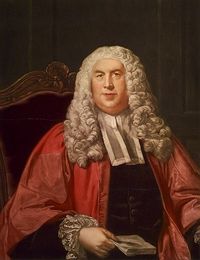
Prince Augustus Frederick, Duke of Sussex: Two Illegal Marriages


Artist: G.E. Madeley (fl.1826–1841, date of death unknown). Photograph by User:Dr_pda – Sir Nicholas Harris Nicolas (1799 – 1848) History’ of the Orders of Knighthood of the British Empire,of the order of the Guelphs of Hanover; and of the medals, clasps, and crosses, conferred for naval and military service, Volume iii, published in London, 1842. Photo taken by User:Dr_pda
Prince Augustus Frederick, Duke of Sussex wearing the robes of a Knight Companion of the Order of the Thistle ~ wikipedia 

The sixth son and ninth child of King George III and Queen Charlotte, Prince Augustus Frederick, Duke of Sussex, was known to have convulsive asthma’; therefore, he did not join his brothers Ernest, Duke of Cumberland, and Adolphus, Duke of Cambridge, in military service. He was tutored at home before being sent to the University of Göttingen in Germany, along with Ernest and Adolphus. He briefly considered becoming a cleric in the Church of England. In 1805, during the Napoleoinic War, he served at home in Britain as Lieutenant-Colonel Commandant of the “Loyal North Britons” Volunteers regiment. [The Complete Peerage, Volume XII, Part 1. St Catherine Press. 1953. p. 535.Edited by Geoffrey H. White.]

Augustus travelled extensively. He was something of a scholar, with a love for music and books. It is said he owned over 5000 bibles, all part of 50,000 books’ collection that he claimed. In Rome, Augustus met Lady Augusta Murray, the second daughter of John Murray,  4th Earl of Dunmore, and Lady Charlotte. Lady Augusta was five years older than the prince, was considered without countenance, being very plain of face, and was known to be as bossy, as was her mother. Augustus and Augusta married, without his father’s permission, on 4 April 1793. The King’s minister of Hanover affairs Ernst zu Münster was sent to Italy to escort him back to London. [T. F, Henderson, ‘Augustus Frederick, Prince, duke of Sussex (1773–1843)’, Oxford Dictionary of National Biography, Oxford University Press, 2004.] Supposedly, the couple married a second time at St George’s, Hanover Square, on 5 December 1793. However, they did not disclose their complete identities to the cleric conducting the ceremony. Both marriages took place without King George III’s consent or knowledge.

Unfortunately, the Royal Marriages Act of 1772 said: “…no descendant of King George II, male or female, other than the issue of princesses who had married or might thereafter marry “into foreign families”, could marry without the consent of the reigning monarch, ‘signified under the great seal and declared in council.’ That consent was to be set out in the licence and in the register of the marriage, and entered in the books of the Privy Council. Any marriage contracted without the consent of the monarch was to be null and void. However, any member of the royal family over the age of 25 [Augustus was only 20 at the time.] who had been refused the sovereign’s consent could marry one year after giving notice to the Privy Council of their intention so to marry, unless both houses of Parliament expressly declared their disapproval. There is, however, no instance in which the sovereign’s formal consent in Council was refused.” [Royal Marriages Act 1772]

Artwork by August Grahl, Portrait of Lady Augusta Murray, Wife of H.R.H. Augustus Frederick ~ https://www.mutualart.com/Artwork/Portrait-of-Lady-Augusta-Murray–Wife-of/C1084E914277119F

In August 1794, the Court of Arches annulled the prince’s first marriage on the grounds that it contravened the Royal Marriages Act 1772, not having been approved by the King. However, Prince Augustus Frederick continued to live with Lady Augusta until 1801, when he received a parliamentary grant of £12,000 and the couple separated. Lady Augusta retained custody of their children and received maintenance of £4,000 a year. Their two children were named Sir Augustus Frederick d’Este (1794-1848), born in Essex, and who later became Deputy Ranger of St James’s and Hyde Parks and who unsuccessfully claimed the dukedom of Sussex on his father’s death, and Augusta Emma d’Este (1801-1855), born at Lower Grovsvenor Street, London, and who married. Thomas Wilde, 1st Baron Truro, (age 63 at the time and Augusta Emma was age 44) who served as Lord High Chancellor from 1850-1852.

Augustus d’Este is the earliest recorded person for whom a definite diagnosis of multiple sclerosis can be made. The course of his MS, which was not diagnosed during his lifetime, is known from the diaries he kept. D’Este left a detailed diary describing his 22 years living with the disease. Meanwhile, like her father, Augusta Emma also suffered from asthma. Upon her death, The Thanet Advertiser remembered her as: “a lady of strict business habits, and rather reserved in manner, of exceedingly good general information, living, while at Ramsgate, in a very quiet and unostentatious way”. Neither of Prince Augustus’s children had children of their own. 

Both parents were descended from the royal House of Este, therefore, the use of “d’Este”. In 1806, their mother, Lady Augusta, was given royal licence to use the surname “de Ameland” instead of Murray. With this she was styled as “Countess.” Prince Augustus was alienated from his parents and the Court for years because of his illegal marriage. Eventually, Augustus and Augusta became estranged. She died in 1830 at Ramsgate. 

Cecilia_Underwood_duchess_of_Inverness

Cecilia Underwood, duchess of Inverness and second wife of Augustus Frederick, duke of Sussex ~ https://en.wikipedia.org/wiki/ Cecilia_Underwood,_1st_Duchess_of_ Inverness#/media/File:Cecilia_ Underwood_duchess_of_Inverness.JPG

Prince Augustus again acted in contravention of the Royal Marriages Act 1772, not receiving his brother’s, William IV’s, permission, when he married Lady Cecilia Letitia Underwood in May 1831. Twelve years Augustus’s junior, Lady Cecilia was a widow, having lost her husband Sir George Buggin. She was the daughter of the Irish lord, Sir Arthur Saunders Gore, 2nd Earl of Arran. The pair sired no children. 

“As the marriage was not considered lawful, Lady Cecilia could not take the style and title Her Royal Highness The Duchess of Sussex. Instead she assumed the name “Underwood”, her mother’s maiden name, by Royal Licence and was known as Lady Cecilia Underwood. The couple resided at the Duke’s apartments in Kensington Palace. However, Lady Cecilia was not accepted as a full member of the British Royal Family. Royal protocol restricted Lady Cecilia from being present at any functions attended by other members of the Royal Family, as she was unable to take a seat beside her husband due to her lower rank. To compensate for this, in 1840 Queen Victoria created her Duchess of Inverness, in her own right, with remainder to the heirs male of her body lawfully begotten. This recognised her husband’s subsidiary title of Earl of Inverness.”

With a morganatic marriage and a illegal marriage plaguing her, Lady Cecilia could not come to Court; therefore, she spent her time in Society, where she was welcomed by many a hostess. Meanwhile, Prince Augustus became a great supporter of the arts, science and literature. He was a favorite of Queen Victoria, when she came to the throne, and even did the honor of giving her away at her wedding to Prince Albert. 

Prince Augustus died of erysipelas on 21 April 1843. [Erysipelas is an infection typically with a skin rash, usually on any of the legs and toes, face, arms, and fingers. It is an infection of the upper dermis and superficial lymphatics, usually caused by beta-hemolytic group A Streptococcus bacteria on scratches or otherwise infected areas. Affected individuals typically develop symptoms including high fevers, shaking, chills, fatigue, headaches, vomiting, and general illness within 48 hours of the initial infection.] Because Cecilia’s body could not be accepted into the royal vault, Prince Augustus is buried at Kensal Green Cemetery, north of Paddington. 

NOTE! “Lady Cecilia is portrayed briefly in the 2016 ITV series Victoria, Episode 6 “The Queen’s Husband” by Dais Goodwin, creator of the series and its main writer. The portion of this episode relative to Lady Cecilia is thus described: “Victoria curries favour with her uncle the Duke of Sussex, who is unable to present his wife at court because their morganatic marriage was in violation of the Royal Marriages Act 1772. Although his wife was the daughter of an earl, she was not a member of the royal family. Victoria uses her discretion to make her the Duchess of Inverness and welcomes her to court.” In this episode, Lady Cecilia’s last name is given as ‘Buggin’, her former married name, and is not cared for much by Victoria for its sound. But no mention is made later of Lady Cecilia’s taking her mother’s surname Underwood. Lady Cecilia’s husband, the Duke of Sussex, is portrayed by David Bamber.”


Posted in British history, Church of England, Georgian England, Georgian Era, Great Britain, kings and queens, Living in the Regency, marriage, Napoleonic Wars, real life tales, Regency era, Victorian era, William IV | Tagged , , , , , , , , , , , , | 8 Comments

Celebrating the Release of “Courting Lord Whitmire” + an Excerpt & Giveaway

thejointblog.co

thejointblog.co


I have a new release which is part of the Regency Summer Escape anthology. In it illness we now call PTSD (Post Traumatic Stress Disorder) plays a major role. The main character has spent 15 years in war, first as part of the Napoleonic Wars and then on the Canadian front. Naturally, we must assume he has memories of the battles. Yet, PTSD did not exist as we know it. So, what do we know of PTSD in history?

GotQuestions.org provides us with a summary of PTSD. “Post traumatic Stress Disorder develops in some people following a traumatic event. The event or “stressor” could be exposure to death or threatened death, actual or threatened serious injury, or actual or threatened sexual violence. The sufferer may be directly exposed, indirectly exposed through a family member or close friend experiencing the event, or extremely or repeatedly indirectly exposed through his or her work (such as first responders, police officers, military personnel, or social workers). Common trauma experiences are combat, car accidents, natural disasters, abuse, rape, and mass violence. After such an event most people will show signs of stress such as feeling on edge, anxiety, fear, anger, feelings of depression, a sense of detachment, desire to avoid trauma-related reminders, flashbacks, difficulty sleeping, headaches, changes in appetite, irritability, self-blame, “survivor’s guilt,” or a sense of numbness. For most people, these reactions lessen and eventually subside with time.”

In the Bible, Job likely suffers from PTSD. Job loses his wealth, family, health, etc. Job says of his suffering: “For my sighing cometh before I eat, and my roarings are poured out like the waters./ I was not in safety, neither had I rest, neither was I quiet; yet trouble came.” (Job 3:25-26) In Job 7: 14-15, we find, “Then thou scariest me with dreams, and terrifies me through vision:/ So that my soul chooseth strangling, and death rather than my life.”

From The History of Post Traumatic Stress Disorder, we learn more of the history of the illness. In “Mahabharata, an epic tale in Indian mythology originally written by Sage Ved Vyas in Sanskrit, Mahabharata illustrates the Great War of Mahabharat between the Pandavas and the Kauravas that happened in 3139 B. C. […] The great epic Mahabharata describes vivid combat stress reactions exhibited by the ancient worriers.” (Sir Lanka Guardian

Examples in literature abound of the evidence of PTSD. The Illiad describes multiple battles scenes and combat suffering. Could Ajax in Homer’s tale suffer from the disorder? And what of Achilles? Was not Achilles devastated by the death of his comrade Patroklos? And what of the Trojan women who waited for their husbands’ return.

In the piece entitled “From ‘Irritable Heart’ to ‘Shellshock’: How Post-Traumatic Stress Became a Disease,” we have, “The Greek historian Herotodus writes a lot about PTSD, according to a presentation by Mylea Charvat to the Veterans Administration. One soldier, fighting in the battle of Marathon in 490 BC, reportedly went blind after the man standing next to him was killed, even though the blinded soldier “was wounded in no part of his body.” Also, Herotodus records that the Spartan leader Leonidas — yes, the guy from 300 — dismissed his men from combat because he realized they were mentally exhausted from too much fighting.” 

In Shakespeare, we find a description of PTSD in Henry IV, Part 2.
Tell me, sweet lord, what is’t that takes from thee
 Thy stomach, pleasure, and thy golden sleep?
Why dost thou bend thine eyes upon the earth,
And start so often when thou sit’st alone?
Why hast thou lost the fresh blood in thy cheeks,
And given my treasures and my rights of thee
To thick-eyed musing and cursed melancholy?

In Act 5, Scene 3 of Macbeth, we are provided:

“Macbeth: How does your patient, doctor?


Doctor: Not so sick, my lord, as she is troubled with thick-coming fancies that keep her from rest.


Macbeth: Cure her of that! Canst thou not minister to a mind diseased, pluck from the memory a rooted sorrow, raze out the written troubles of the brain, and with some sweet oblivious antidote cleanse the stuffed bosom of that perilous stuff which weighs upon her heart.


Doctor: Therein the patient must minister to himself.”

hilobrow.com

hilobrow.com

Charles Dickens speak of how a train accident affected him. He says he was ”curiously weak… as if I were recovering from a long illness,” after a traumatizing railway accident in which the front of the train plunged off a bridge under repair and 10 people died, with another 49 injured. Dickens wrote in letters to people: “I begin to feel it more in my head. I sleep well and eat well; but I write half a dozen notes, and turn faint and sick… I am getting right, though still low in pulse and very nervous.” Dickens admitted to continue to feel anxiety when train travel was necessary, even after the accident described above. (From ‘Irritable Heart’ to ‘Shellshock’)

CourtingLordWhitmire 5x7 copyAlthough in my story there is no real “word” or “diagnosis” to describe the effects of war, the early literature tells us that some sort of upheaval most assuredly did exist. So wether we call it melancholia, nostalgia, ester root, heimweh, malady du pays, soldier’s heart, neurasthenia, hysteria, compensation sickness, railway spine, shell shock, combat exhaustion, stress response syndrome, situational disorders, or PTSD, physical shock, accompanied by horrifying circumstances have haunted men since the beginning of time.

She is all May. He is December. But loves knows not time. 

Colonel Lord Andrew Whitmire has returned to England after spending fifteen years in service to his country. In truth, he would prefer to be anywhere but home. His late wife cuckold him, before he departed England. His daughter, who was reared by his father, enjoys calling him “Father” in the most annoying ways. However, his future is the viscountcy, and Andrew knows his duty to both title and child. He imagines himself the last of his line until he encounters Miss Verity Coopersmith, the cousin of his dearest friend. Miss Coopersmith sets Whitmire’s world spinning out of control. She is twenty years his junior, but all he can think is she is absolute perfection. 

You may purchase copies of Regency Summer Escape for $0.99 on Amazon or read it free on Kindle Unlimited. 

Enjoy this excerpt from “Courting Lord Whitmire,” where our hero, Colonel Lord Andrew Whitmire, acts instinctively to save the life of the one woman who fascinates him, Miss Verity Coopersmith. 

Andrew turned to look out over the groomed lawns and inhaled slowly, while praying for calm. How could anyone, most certainly a woman he had known but a matter of weeks, understand how many people he had failed in his life, especially her relation, Robert Coopersmith. “You cannot know of the kinship I held with your cousin,” he said, attempting to keep the irritation from his tone. He turned his head to permit her to see his sincerity, but he found himself lost in her steady gaze. “Although I hold nothing but honest respect for your uncle and your brother, it should have been my long-time friend, Robert Coopersmith, who sits in this house as the 16th Lord Coopersmith. If he had returned to Worcestershire after the Peninsular battles, he could have been long settled with a family and an heir. Instead, he stayed with me—because of my foolish pride—my fear of others knowing how my wife cuckolded me—Robert died in the last battle of the war, ironically, saving my life.”

“You are in error, my lord,” she said softly, never looking anywhere but into his eyes. “Over the years, Cousin Robert regularly wrote to my parents and to my aunt and uncle and even, occasionally, to me. In each letter, he praised you as the best of men, showering you with compliments for your ability to instill leadership in your men.” She stepped closer still, close enough that Andrew could bend his neck and kiss her if he so chose. “Whether you realized it or not, Robert depended upon you in so many ways.” Her words were infused with a bit of sadness.

“You are in error; it was I who depended upon him,” Andrew contested.

“Robert was afraid to return to the estate and to the assumption of his inheritance,” she continued as if he had said nothing. “He wished the role of baron to pass to my father, but the law would not permit a deviation in the entailment nor in the title.”

“You cannot know this,” he argued.

“Oh, but I do,” she countered. “When I was about ten, I overheard Uncle Theodore and my father discussing that very fact. It was some two years before my father’s death. Evidently, Uncle Theodore had encouraged my father to marry a second time in hopes of an heir who could run Cooper Hall. My Cousin Robert was the most likable of fellows, but he possessed no skills to run an estate. Do you not recall how miserable he was in school?”

“He was just a rambunctious fellow. All would have been fine if he had taken his studies more seriously,” Andrew declared.

“The family kept the secret that Robert could not read—that the letters danced around in front of him each time he attempted to do so. No matter how many punishments he endured, nothing solved his dilemma. He only passed his courses because he would converse with you and his fellow classmates, discussing what you had read in your studies. Such was enough for him to survive university.”

Andrew looked at her expression, searching for any signs of deceit. “His calculating?” he asked, remembering how Robert despised his classes in mathematics.

“The same as with the reading. He could sometimes do the figures in his head, but not if they were too complicated. Can you imagine Robert balancing estate books, ordering supplies, responding to correspondence?”

“He could have hired someone to handle the accounts,” he reasoned.

“And never be certain the person was not robbing him blind or that others would learn of his inability to govern the barony,” she contended. “He could follow orders, but not give them with any assurance of accuracy. How would he contend with the bills in Parliament? How could he form an opinion on what was right to do for his cottagers? For Worcester? For England? For the Commonwealth? If he had been a commoner, he could have simply not run for the Commons, but, as a baron, he could not bear to be thought of as a simpleton. If you think upon your years together, you will recall that during school and in the military, my cousin never asked for your assistance. He did not want anyone to know of what he thought to be his faults, and you were the most perceptive of his acquaintances.”

“Apparently not perceptive enough,” Andrew grumbled.

“Robert stayed in the service because he idolized you as his friend, but, more importantly, because he wished never to be found wanting.”

Before Andrew could respond to such a wild assertion, the unthinkable happened. From somewhere off to his right, an explosion occurred, and, instinctively, he dived for the hard floor of the balcony, taking Miss Coopersmith down with him. Covering her with his body, he clasped his hands on the back of his head to protect it and waited for the debris to rain down upon them. However, nothing happened. The ground did not tremble beneath him, nor did another round of explosions follow closely after the first.

He held his breath, fearing even to breathe. At length, a soft hand caressed his cheek. “My lord? Whitmire? My lord, do you hear me?”

Slowly, he opened his eyes to discover the concerned expression upon the face of the woman who had executed havoc upon his dreams. “Forgive me, Miss Coopersmith,” he murmured in embarrassment.

Again, the lady’s fingers stroked his cheek. “Forgive you, my lord? Should I forgive you for placing yourself between me and what you perceived as danger?”

Andrew attempted to make sense of what had occurred, but his heart still raced in anticipation. “There was an explosion,” he said lamely.

“I know.” She continued to speak in quiet tones. “You were very brave.”

“Perhaps today,” he spoke in sorrowful tones. “But I was not always brave. I was not the brave one at Waterloo,” he confessed. Odd that he would tell another—someone who was essentially a complete stranger what he had never spoken to anyone. Was not confession a weakness? And he had never considered himself weak. He had always thought to suffer his own punishment in silence, but he said, “I sidestepped a French officer charging at me, pulling him from his horse and dispatching him to his God. Then, I turned to view my end. I froze in place.” Despite his best effort, tears formed in his eyes. “Robert was close by, as he always was when we were in battle, literally, fighting all comers, back-to-back, and he knocked me from the way. A cannonball. Hit him, not me.” Again, he had no idea what had driven him to speak so intimately to her—of all people—of that fateful day. Without knowing the reason of it, he had accepted the fact she would not judge him. Looking into her eyes, he could do nothing less than to confess the secret of his soul.

“Oh, my darling,” she whispered, before tugging him into a loose embrace. She rested on the base of the balcony with him now bent over her. “You were not to blame. You simply did not recognize the vagaries of Robert’s personality. It is said within the family that Robert was excessively merry, followed by periods of equally excessive unhappiness.”

Andrew lifted his head a few inches, so he might look more fully upon her. “Are you saying Robert meant to die that day?” An image of Robert on that fateful day flashed before Andrew’s eyes. His friend had taken more than the usual number of chances during the battle. Andrew had always thought his friend was as sick of the fighting as was he, but Miss Coopersmith was suggesting something he had never considered. Part of him wished to permit himself absolution, while part of him rebuked the idea.

“No one will ever know, but even Uncle Spenser has considered the possibilities aloud. We all knew Robert did not wish to return to England. As the battle turned toward a British victory, perhaps he made his decision. My brother would be next in line: The title would not suffer. Then again, it might simply have been Fate, or his faithfulness to you, but my cousin’s death was not your fault.”

“I wish I could be so certain,” he murmured. He might have returned home after Waterloo if he had not set himself a penitence to pay for what happened on the battlefield. How could he claim both his title and happiness if he was the reason Robert Coopersmith was dead? He may have been able to salvage a relationship with Matilda and nurse his father during the former viscount’s last days, but he could not allow himself to assume a normal life when the world, as he knew it, was no longer normal.

“If it is forgiveness you seek, you will find it among those gathered at Cooper Hall,” she assured.

Unfortunately, before he could claim the lady’s hand in forgiveness and lift her from the floor, the sound of voices approaching from the distance had Andrew scrambling to his feet. Spotting Spenser Coopersmith leading a group of visitors toward the house restored his sensibilities. When Coopersmith waved, Andrew warned the lady, “Do not move until your uncle and his guests pass. It would not do for you to be seen in a disheveled state.”

“Am I disheveled?” she asked in that now familiar tone that said he was acting his age, which he most assuredly was.

He studied her and, for a moment, wished to see her thusly arranged beneath him. Nevertheless, he said, “You know my opinion of your comely face. Now, be still until they pass below us.”

He returned his attention to the party crossing the side lawn. From her place stretched out on the balcony floor, she said, “Uncle Spenser enjoys setting off one of the small cannons he secured from the days of Charles II.”

Andrew did not turn to look at her for fear of drawing the attention of those approaching the house; yet, he smiled. “I managed to draw that conclusion,” he said from the corner of his mouth. “Your uncle still carries the rammer.”

Miss Coopersmith giggled, a sound he found delightfully uplifting. “At least, my uncle only uses the small cannon for his lectures. He owns one of the large ones that some say required sixteen horses to move into place, but it remains at the smaller estate outside of Manchester. Can you imagine your reaction if he possessed cannonballs for such a weapon?”

Andrew waited until the last of the visitors were from view before he answered. He extended his hand to assist Miss Coopersmith to her feet. “I would have responded the same, except a man of my ‘advanced years’ might not have survived the shock of large guns being fired once again in Worcestershire.”

The lady brushed off her dress and moved a few curls into place. At length, she looked upon him to pronounce in a voice of reason. “I would never wish you to know troubles, my lord, but I would be proud to accept your protection any time you care to extend it.”

Regency Summer Escape 5x7.jpeg

NOW FOR THE GIVEAWAY!!! I have 2 ebooks of Regency Summer Escape available to those who comment below. The giveaway will end at midnight EDST on Friday, July 26. Winners will be contacted on July 28. 

Posted in book excerpts, book release, British history, eBooks, estates, excerpt, family, Georgian England, historical fiction, history, Living in the Regency, marriage, Napoleonic Wars, reading, real life tales, Regency era, Regency romance, research, romance, writing | Tagged , , , , , , , , , , | 17 Comments

Celebrating the Release of “Courting Lord Whitmire” with an Excerpt + a Giveaway of the Regency Summer Escape Anthology

Regency Summer Escape is currently on preorder for $0.99 or free on Kindle Unlimited on Amazon; it will release on July 23. This wonderful anthology contains stories from my friends Victoria Hinshaw and Arietta Richmond, as well as my “Courting Lord Whitmire.” I have been teasing you with the cover and snippets for awhile now, and, finally, I can provide you more details for my particular story. 

Three wonderful Regency Summer stories! Will the Lord win his Lady by summer’s end?
***** FREE ON KINDLE UNLIMITED *****

This anthology contains:

Her Summer Duke by Arietta Richmond

Courting Lord Whitmire by Regina Jeffers 

Sarah’s Summer Surprise by Victoria Hinshaw

If you love great stories, and the Regency era, you’ll love these!

Presenting “Courting Lord Whitmire”… 

At the bend of a path, an unexpected meeting.

She is all May. He is December. 

But loves knows not time. 

Colonel Lord Andrew Whitmire has returned home to England after spending fifteen years in service to his country. In truth, he would prefer to be anywhere but England. His late wife cuckold him, before he departed England. His daughter, who was reared by his father, enjoys calling him “Father” in the most annoying ways. However, his future is the viscountcy, and Andrew knows his duty to both title and child. He imagines himself the last of his line until he encounters Miss Verity Coopersmith, the cousin of his dearest friend, Robert Coopersmith. Miss Coopersmith turns Whitmire’s world on its axis. She is more than twenty years his junior, but all he can think is she is absolute perfection. 

As you may guess from the book blurb, Andrew Whitmire denies his attraction for Miss Verity Coopersmith, but it vibrates just under the surface whenever they are together. He attempts to be strong; however, Miss Coopersmith has other ideas. Despite his objections, she is determined to win Lord Whitmire’s heart. She accepts the challenge and “courts” Lord Whitmire.


Enjoy this excerpt from Andrew and Verity’s first meeting in Chapter One. 

She wished she had taken her aunt’s warning to heart, but Verity had been determined to mail her letter to her brother at the posting inn, assuring him, once again, she was satisfied with her life and that their aunt and uncle had promised they would bring her out into Society with the Short Season in the autumn. Robinson was concerned she would not be permitted a Season until he took the reins as the new baron. Repeatedly, she had told herself, it was not that either her Uncle Spenser or Aunt Margaret were neglectful of either her or Robinson: It was simply they always had another new discovery or another relic that took precedence over days spent in doing nothing more than attending balls, soirees, afternoon teas, and the like. She hoped she was correct in that assumption, but, of late, a niggling doubt had crept in and would not be displaced. Unfortunately, she had nothing upon which to hang her concerns, and so she had assumed it was simply her loneliness and her desire to see Robinson once again that kept her in a state of melancholy.

Although Robinson was three years her junior, since their parents’ untimely deaths, eight years prior, her brother had considered himself her protector, whereas, their father’s will specifically stated that when she was one and twenty or when she married, Verity was to be Robinson’s guardian, until he reached his majority. Naturally, her parents had thought she would have had a husband and perhaps a child by now, not still be living with her relations. They had expected her to be in a position to aid Robinson; regrettably, no one had considered the possibility of their early demise and the unthinkable outcome.

The fact Uncle Spenser and Aunt Margaret had interrupted their lives and his career to take in a twelve-year-old niece and a nine-year-old nephew when no one else stepped forward proved their worth in Verity’s opinion. The fact she had not been given a Season was of little consequence in the realm of what all had occurred. Moreover, she had been given much more: experiences no fresh maid out of the schoolroom would ever be able to claim. And if not a “parent’s love,” her aunt and uncle had provided her their support and their encouragement. She and Robinson had been fortunate in many ways. Yet, of late, she wondered how benevolent her relations actually were. Certainly, they had placed their lives on hold for some six months, but, after those few months of grieving the family they all had lost, her aunt and uncle had packed up her and Robinson and taken them on an “adventure,” meaning Uncle Spenser had resumed his life as an archaeologist and historian. Until recently, she and Robinson had trailed their family across exotic lands.

“Just a bit eccentric.” She grinned as she pulled her cloak tighter around her. “Eccentric and kind and well-meaning, but more somewhat forgetful,” Verity declared aloud to convince herself of the truth of the words and then looked around, making certain no one had heard her talking to herself. “Everyone will soon think I am quite as odd as is my uncle if they hear me having a conversation with myself.”

It was then a large drop of rain landed upon the top of her hand, where she held her bonnet upon her head. “Wonderful,” she grumbled, picking up her pace. She would likely be soaked to the bone before she reached Cooper Hall.

With every step Verity took, the rain increased in intensity to the point she could barely see a foot or two in front of her. It slanted down in torrents. How she wished she had taken the time to learn some of the alternate paths that led across the stiles and farmlands and woods, instead of taking the traditional road into the village every time she ventured that way. She had been at Cooper Hall for a mere eight months, and she knew little of the surrounding area, for she spent most of her days serving as both housekeeper and companion to her Aunt Margaret, rather than the other way around.

Pausing to claim her bearings, Verity turned in a circle. In the rain and beneath the dark clouds that had stolen away much of the daylight, everything appeared different. Had she reached the fork in the road that led to her family’s residence? “Surely not,” she murmured in indecision. Swallowing her confusion, she plowed ahead, certain she would soon stumble across the entrance road to Cooper Hall.

Shoving back the drooping bonnet for the fifth time, in a fit of anger at herself for being caught out in this onslaught, Verity ripped the dratted thing from her head, which allowed her hair to fall around her shoulders in a matted mess. Water ran into her eyes, but she stumbled forward again. She hoped she would come across Vicar Simonsen’s cottage soon. The vicar would offer her shelter until the storm ended.

Spotting what she thought must be the steeple of the village church, she paused to use her handkerchief to clean away the steady flow of rain from her hair sliding over her forehead and into her eyes. “Must be the church,” she said aloud, as she turned to the left to follow a path she thought she remembered being wider and smoother.

Decision made, Verity again stepped smartly along the road, attempting to sidestep the quickly-forming puddles full of muddy water. Her half-boots were soggy, water seeping in every time her stride was too short to miss the accumulating water overflowing the ditches, leaving her gown some six inches deep in brown smudges.

The farther she walked the less familiar her surroundings became. She debated on turning back, but she was not certain she could find the main road again, for she had made several turns along the way. Her relations were not sociable people, not the type to make calls and have people over for company, and they rarely went into the village. They all resided in Uncle Spenser’s childhood home, and Aunt Margaret’s people had been from an estate some five miles on the other side of the village. They knew the roads when they moved into Cooper Hall, and they had never thought to teach either Verity or Robinson their way around the neighborhood, and, moreover, Verity had never thought to ask them because she knew their doing so would take them away from Uncle Spenser’s work. Renowned as an archaeologist and a military history expert, his work was very important to the history of England and the world.

Feeling her gown and cloak weighing her down, Verity shortened her stride. It was rare for her to know fear, but she wished the rain would stop, so she could claim something familiar. Thunder rumbled through her as easily as it did the sky. And each bolt of lightning made her literally jump in alarm. Not knowing for certain where she was had caused a knot of urgency to settle in her chest—making it harder to breathe. Her steps clicked and stomped along the road, echoing back to her. For a moment, she wondered if a wild animal might have caught her scent and was, at that very minute, stalking her. She looked repeatedly over her shoulder to note its approach. Were there wild animals in Worcestershire? Highwaymen? Smugglers?

As the fear began to fill her chest, she turned to study the path behind her. Was the movement marking the bend in the trail the wind stirring up the trees or had someone stepped back from view? Staring intently at the spot, she prayed she had not stumbled upon the land of some irate farmer or into a den of poachers. Without realizing what she did, Verity slowly backed away from the spot, where, again, she noted movement.

Unfortunately, in her retreat, she had not taken into account how soggy the ground had become until she took a giant step backward, only to feel her right leg sink into a watery bog. “Demme!” she growled. “Now what?” Mud and slime settled around her leg, which held her upright, but she teetered, nearly falling face-first into the muck. Quickly releasing her cloak, she wadded it into a ball, attempting to toss it toward what she hoped was solid ground; however, the movement set her wobbling again, balancing in an awkward stance where her right leg was stuck in the bog, while her left one was raised in the air, placing her in what would have been a high kick if she were standing upon a stage in some Parisian burlesque, her toes resting upon the soggy ground surrounding the pit in which she was trapped.

The trees overhead provided some protection from the rain, but the new leaves hid whatever light remained of the day. “I still have one leg on solid ground,” she reasoned. “Or as close to solid ground as this rain provides. But I possess no means to pull myself out. Not a fingerhold anywhere.” A sigh of frustration escaped as she examined her position. “Claws,” she said with a second sigh, this one in disbelief. She was afraid to move too quickly, fearing, if she slipped, her other leg might slide into the waiting bog. It was reposed slightly above the muck at the moment, but she did not expect to be able to hold it in place for long. If her left leg also slid below the surface, she could be pulled under completely.  Already, that leg cramped from being held in such an awkward position.

“What do we have here?”

A very masculine voice came from behind her, but Verity made no attempt to turn. She feared the slightest movement would spell her doom.

“How does it appear to you, sir?”

“It appears you thought the bog was a warm mineral spring.” The man’s voice held levity, but Verity found nothing amusing about the situation in which she found herself. She heard the man dismount and begin to walk slowly in her direction. “It is not often people dare to trespass upon my land, and, especially, not any as comely as you.” Although he attempted to sound intimidating, Verity suspected he simply thought her situation a diverting tale to share with his chums over ale at the inn. There was no hardness in his tone.

He continued to stroll casually around the outside rim of the bog. At length, he stopped before her. “Perhaps you are one of those fairies who creates the steps which are impossible to climb—so impossible you took a fall and were caught in your own trap.”

Verity scowled. “I would appreciate it, sir, if you would cease with your attempts to make light of my situation and, instead, provide me a hand out of this muck.”

He grinned again, and Verity realized how breathtakingly handsome he was. Certainly, he was not a young man, likely old enough to be her father; yet, there was nothing lacking in his appearance. His eyebrows were everything masculine. He possessed a nose that was a bit crooked—as if he had known more than one round of fisticuffs—but, nevertheless, it was very aristocratic. And his mouth sat in a straight line, but remained unable to disguise his humor. She wished she could view the color of his eyes and the exact shade of his hair. She thought he would make an excellent study for her paints. Would she be capable of capturing the life and depth she viewed in his countenance?

He studied her for a moment, without comment. Finally, he asked, “How did you come to be caught in the bog?”

“It was a mistake,” she began.

“You do not appear to be a half-wit,” he declared, “so I assumed your situation was not purposeful.”

She glanced off to the path. “I permitted my imagination free rein. For a few minutes, I thought someone followed me.” She made her gaze meet his. “In fact, how do I know it was not you who trailed me?” she accused.

“I assure you, a man of my age has better things to do than to frighten young ladies in the midst of a rain storm.” As if on cue, a crack of thunder and a bolt of lightning accented his words. He tossed his hat behind him, and, without notice, he stepped into the bog and edged forward. “At least my batman will kill me but once for the abuse my clothes and boots have known today.” Although he did not ask her permission first, he placed his hand around her waist. “It would be of use if you would wrap your arms around my neck,” he instructed. “I plan to lift you into my arms.”

“But, sir—” she began to protest.

“Dear lady,” he corrected, “there is no tree or rock close enough to the edge for you to use as leverage to release yourself. If I am to remove you from this scum, you must assist me. I intend to lift you and to cradle you in my arms, and we will walk out together.”

After an elongated second, she presented him a nod of acceptance. Carefully, he bent his knees and slid an arm underneath and around her legs and lifted her to him. With a grunt, he pivoted to return to solid ground. It was then that her right leg finally pulled free with a popping sound, and she released a gasp of pain before she could swallow it. Her rescuer did not stop his progress until they stood along the tree line, with her still cradled in his arms. “What occurred?” he asked, as he set her on a downed tree.

Verity was still shaky, but she managed a response. “My boot stayed in the bog. My ankle—” She gestured toward the foot that throbbed as thoroughly as if it were a rotten tooth.

“May I?” He indicated her ankle. All the teasing was gone from his tone.

Tears crept into her eyes, but, again, she nodded her agreement. The gentleman knelt before her and discreetly lifted her skirt before bracing her right heel in the palm of his hand. With the fingers of his other hand, he rotated her foot and studied the movement before poking the soft tissue with his finger. “The ankle is not broken, but I fear it will turn black and blue before it knows no pain.” Standing again, he said, “Permit me to see you home. I will put you up before me on Tyr.”

Just as she thought to remark on the horse’s name being the same as that of the son of the Norse god, Odin, and a god of war, the man bent to lift her to him again. He was certainly a man accustomed to having his way—a man, a gentleman, no doubt, who gave orders and expected them to be obeyed. He strode toward the waiting horse and lifted her, with ease, to the saddle. Verity was, most assuredly, on the lean side, but she was tall and “solid,” as her father had often called her. Even so, her rescuer lifted her as if she weighed no more than a sack of meal. “Be careful, my dear,” he cautioned. “The saddle is wet and, therefore, slippery.” Then he retrieved her discarded cloak and hat and handed the items to her. With that, he stepped into the stirrup and swung himself onto the saddle behind her.

Before he took up the reins, he lifted her onto his lap. “Slide your left hand around my waist and catch hold. If you like, you may rest your head against my shoulder.” He had unbuttoned his coat and wrapped it around her. “Such will provide you more balance, and ladies unaccustomed to riding often require assistance with balance.”

Despite the man’s kind deed, Verity’s temper arrived. She was unaccustomed to men making condescending remarks about her, specifically, or about the female populace, as a whole. Neither her father nor her uncle spoke as such, but she had heard many men do so in the various countries she had visited with her relations. Just because she had heard the tone before did not mean she would tolerate anyone using it in her presence. “I assure you, sir, I am no weeping violet. You will notice I did not cry when I found myself in the bog nor when your rough handling caused me injury, as well as the loss of my boot.”

He leaned back as if to have a closer look at her—to study her as if she were a rare specimen. Verity could feel her cheeks redden under his prolonged gaze; yet, she willed herself not to look away. In spite of her previous ire, she found herself suddenly quite lightheaded. Those eyes she had wished to view when she first encountered him were now only a few inches removed and focused purely on her. Silver. Molten. And darkening in what appeared to be concern.

“Perhaps your previous fear of an attacker has finally known fruition,” he declared in self-assurance. “You are trembling.”

Although she knew the gentleman she faced had more to do with her sudden loss of control than she would care to admit, she declared, “I am soaked to the bone! My ankle is injured! And one of my boots—a favorite pair, I might add—is lost to the muck of a bog located upon your land!”

“So your woes all arrived at my hand?” he asked incredulously.

“All except for the rain,” she retorted.

He leaned closer. They were at eye level, and Verity found the experience quite disconcerting. “At least you did not place that fault also at my feet,” he said boldly. “Mayhap you would prefer I replace you where I found you. I would be less than a gentleman if I ignored the wishes of a lady. That is what you are, is it not? A lady?” He paused as if he knew how he inflamed her pride. His words had been purposeful, but Verity had no means to control her growing temper nor the feeling the man had just undressed her with his eyes. She blushed thoroughly.

“You rogue!” she accused. “I am most certainly a lady. My brother is a baron or will be a baron when he reaches his majority!”

A look of puzzlement crossed his countenance. “The only baron in this area was Theodore Coopersmith of Cooper Hall.”

“Exactly,” she confirmed in triumph.

His features hardened. “Both Theodore and his son Robert are dead. The latter died at Waterloo. I understand Theodore suffered a bout with his heart and passed nearly two years removed.”

The rain had lessened to a steady drizzle, but Verity barely noticed the difference. “Although you obviously consider yourself the chronicler of the aristocracy in this little section of Worcestershire, you forget Theodore was not an only child. My uncle had two brothers: Murdoch and Spenser. My brother and I are products of the marriage of Mr. Murdoch Coopersmith and Miss Clare Hadley.”

“But Murdoch passed some ten years before Theodore,” he argued in tones that spoke of disbelief and of an emotion she could not identify.

“Very true, sir,” she said through trembling lips that betrayed her state of mind. Speaking of her parents’ deaths always had that effect on her. They were sorely missed. “But it was eight years, not ten, and such is why I am blessed that Uncle Spenser and Aunt Margaret showed compassion and accepted the responsibilities for my brother Robinson and me. We returned to Cooper Hall when Uncle Spenser determined that before Robinson could claim his title, my brother would require an English education.”

“Then you are Miss Coopersmith?” he asked in bewilderment.

“Did I not just say so, sir?” She raised her chin on a dare. “And you are?”

He pulled himself up straight in the saddle. “I fear I am your neighbor.”

“Colonel Lord Whitmire?” she said with a small gasp. “But I thought you were still in Canada.” She knew much of the exploits of Lord Whitmire. He was a decorated hero on two Continents. She wished to melt away—to disappear with a snap of her fingers for appearing before a man she had admired from afar for many years.

“Hardly. If Spenser Coopersmith is anything like the man I recall from my youth, it is no wonder you are behind in the latest gossip of the neighborhood. I returned to Whit Manor a fortnight ago.”

GIVEAWAY!!! I have 3 eBooks copies of a Regency Summer Escape to share with those who comment below. The giveaway will end at midnight EDST on Monday, July 22. 

Posted in American History, book excerpts, book release, British history, eBooks, excerpt, Georgian England, Georgian Era, giveaway, Living in the Regency, marriage, Napoleonic Wars, Regency era, Regency romance, titles of aristocracy, Uncategorized | Tagged , , , , , , , , , | 8 Comments

When the Sun Never Set on the British Empire, a Guest Post from Elaine Owen

This post originally appeared on the Austen Authors’ blog on 24 May 2019. Enjoy! 

Today I’d like to share the first of two entries regarding a business entity that played a significant role in Jane Austen’s life. This public company held sway over large parts of the British Empire. It held a charter from the crown, acted as an agent of the British government, and even had its own army and navy. It may even have helped finance the publication of some of Jane’s novels. Yet it is never mentioned in any of her published stories. Can you imagine what it was?

The East India Company (or EIC) was the creation of Queen Elizabeth I of England, who gave it a royal charter in the year 1600 for exclusive trade in the east. The company organizers were eager to explore lands on the other side of the world and to open routes for trading spices and tea. They promptly recruited stockholders, pooled funds, bought ships, and began sending ships to India. By the mid seventeenth century the company had established trading outposts and gained a sizable presence on the Indian sub-continent.

At the time, this region of the world was controlled by the Mughul dynasty, which ruled over a number of provinces from India all the way to modern day Afghanistan. But in the mid eighteenth century the Mughuls were facing outbreaks of rebellion against their rule.  One by one the provinces began to resist their overlords. This left a wide open door for the British, who were quick to offer military and political support to the rebels in order to strengthen their own position. To protect their interests the EIC hired more and more “security officers,” both Indian and British citizens, who gradually became a military force in their own right. Before too long the EIC had effectively taken over control of large parts of India.

In 1765 the EIC deposed the Mughul dynasty itself and took complete control of the entire former empire. From that point on it behaved more like a nation-state than a trading company. England gave the company the right to collect taxes in the areas it controlled, and it negotiated with foreign governments and signed treaties. Nominally, it was still a stockholder corporation operating under a charter, but in practice it ruled India and other territories on behalf of the British government. In fact, by 1805 its “security force” had grown to include 260,000 men, twice the size of the entire British army! It was truly a force to be reckoned with.

Sadly, there was little accountability to go along with all that power. The company imposed crippling land taxes as well as trade tariffs in the areas it controlled, and almost all of the money collected went straight to England. Little of it was used for the benefit of the native people. Trade agreements were always designed for the benefit of the British at the expense of the native population, and England forced India to import only from England. When Indians objected, torture and other atrocities became common. Mismanagement of the land along with natural disasters eventually caused one of the worst famines in modern times.

To be sure, the East India Company did do some good things in the areas it controlled. New methods of transportation and communication were introduced, and legal and administrative systems came into being. The levels of sanitation and medical care went up in some areas, and for awhile the population grew at a healthy rate. Taken as a whole, however, most historians agree that the East India Company did more harm than good.

One of many revolts against British rule in India

How did all of this affect Jane Austen and her writing? What did she think of the practices of the EIC? And how did the EIC’s reign finally come to an end?  I’ll talk about that in next month’s post, but for now I thought you might be interested in the following facts about the EIC:

  • The EIC leadership was incredibly compact and efficient. The entire operation was managed from a relatively small office in London that never had more than 300 permanent employees.
  • Remember the Boston Tea Party, one of the events that set off the American Revolution? The tea thrown overboard into the Boston Harbor came from the EIC.
  • Slavery was a thing. The EIC imported slaves from Africa to work in India, a practice that continued until 1847.
  • The EIC illegally smuggled opium out of India and sold it in China, which eventually caused war between the British and the Chinese. The outcome of these wars led to the founding of Hong Kong as a British territory.
  • General Charles Cornwallis, the British general who surrendered to George Washington, was appointed Governor General of India in 1786. He used his position to make significant reforms to the East India Company. He died in India in 1805.
Posted in Austen Authors, British history, British Navy, Georgian England, Georgian Era, Guest Post, history, Jane Austen, Living in the Regency, military, real life tales, Regency era, Uncategorized | Tagged , , , , , , , , | Comments Off on When the Sun Never Set on the British Empire, a Guest Post from Elaine Owen

Militia Officers During the Regency

What were the differences between the various units of militia officers during the Regency? For example, how could George Wickham in Jane Austen’s Pride and Prejudice serve in Hertfordshire when his home shire was Derbyshire? And how was Colonel Fitzwilliam’s service in the Regulars, from the same book, yet be another facet of the military in the Regency?

At the time of the war with Napoleon, Great Britain did not employ a standing militia. They were only recruited when the Regulars were required to engage the enemy. The militia assumed the “policing” of the country in the absence of the Regulars. They served on home land. They were dispensed to squash riots and seditious actions. They protected British soil while the Regulars engaged the enemy outside of the home land. The militia was often dispatched to shires away from their homes to avoid their sympathizing with those they were charged to dispatch. In Pride and Prejudice, the militia which Mr. Wickham joins in Hertfordshire, is supposedly peppered with Derbyshire volunteers. 

Militia officers served as long as they liked and like Wickham in Pride and Prejudice, could be from anywhere while those picked or volunteering for militia duty in the rank and file served five years, *usually* from their home county. There were substantial signing bonuses during the wars as the Militia, Regulars and Volunteers competed for the same pool of men, so anyone from outside the county would and did join the militia for the bonus and pay.

“In the novel the anonymous regiment of – shires caused a considerable stir on its arrival in the quiet country town of Meryton – and among the Bennet family of five unmarried daughters. “. . . They were well supplied both with news and happiness by the recent arrival of a militia regiment in the neighborhood; it was to remain the whole winter, and Meryton was the head quarters.” (Pride and Prejudice 28). The regiment and its officers figure prominently in the fortunes of the Bennet family for the remainder of the novel. Jane Austen’s own experience of the militia was probably not too different from that of  the Bennet sisters. From about the age of sixteen she began to attend the monthly assembly at the town of Basingstoke, about seven miles distant from her home village of Steventon. Here, during the winter of 1794-95, the assemblies would have been graced by officers of the South Devon Militia: three of their eight companies were quartered in Basingstoke. Their colonel was John Tolle, Member of Parliament for Devonshire since 1780, whose support for William Pitt, the Prime Minister, had made him the butt of the opposition Whigs in the mock-epic Rolliad. The officers of the South Devonshires would have enlivened local society just as the -shires did at Meryton. As they all came from the neighborhood of Exeter, it is likely that Jane Austen heard a great deal about that area from them, and it is probably not coincidence that when she wrote the beginnings of her first mature novel in the summer of 1795 about two girls called Elinor and Marianne, she set their new home, Barton, in South Devon “within four miles northward of Exeter” (Sense and Sensibility 25).” (Breihan and Caplan: Jane Austen and the Militia)

Few members of the militia were trained in military tactics, such as shooting, horsemanship, or use of a sword. They were required to have their own guns to be a member of the militia. Those picked or volunteering for militia duty in the rank and file served five years, while some served for seven years. Officer commissions were not available (as opposed to those in the Regulars). Those who held rank in the militia received that rank based on how much land the family held. Captain Denny in Pride and Prejudice would need either to be the heir of land worth at least £400 per year or actually own land worth at least £200 per year. Although we are given nothing of Denny’s background in Austen’s novel, we are told that George Wickham becomes a lieutenant in the Meryton militia. This is a bit confusing to many who know something of military history, for a lieutenant in the militia would be required to hold land worth £50 per year. If Wickham had nothing of his own upon which to depend, how did he receive his lieutenancy? Most experts speak of a lowering of the standards for the few who would qualify as a junior officer otherwise, meaning Wickham held a gentleman’s education, making him “qualify as a junior officer.” The wages presented to the officers was only to cover their expenses, not replace their income from their land. 

All Protestant males were required to be available for the militia. There was a quota for each area. A local nobleman (customarily referred to as the Lord Lieutenant) was charged “by the King” (or rather by the King’s spokesman) to gather a force of able-bodied men between the ages of 18 – 45 to serve as part of the country’s militia. A local landowner was appointed as the “colonel” in charge of the men of the unit. These men were “guaranteed” not to know service outside of the homeland, meaning they would not know the battlefield frequented by professional soldiers. They also experienced a steady social life provided by the local gentry. Only clergymen were exempt from this duty.

Parishes were fined if they did not raise the required numbers of militiamen, so they were happy to have anyone fill the rosters, paying a bonus that was far less than the fine. And, of course, sooner or later the parishes and regular army learned not to  pay the bonuses before the men were marched away. More than a few made a living out of getting the bonuses and then skipping out, only to ‘enlist’ again someplace else for bonuses there. A man who did not wish to serve could pay another to serve in his stead. They were offered between £25 and  £60, which was equivalent to a year’s wage for many in the Regency. 

Pride and Prejudice takes place in Regency England during the French Revolution, which began in 1789. To combat the threat of Napoleon’s conquest of Europe, militia forces were moved across the countryside to lie in wait of an attack at camps where they were involved in training sessions. Landowning aristocrats generally led the militia of their locality, although the soldiers of each regiment came from various places. Though the militia was made up of volunteers, a commission was needed to enroll. With the Militia Act of 1757, which created a more professional force with proper uniforms and better weapons, the militia became seen as a more respectable occupation, especially for younger sons who would not inherit land.” (The Militia in “Pride and Prejudice”)

In any case, When Napoleon returned, the Militia were called up and regular army volunteers were asked for from the militia, both officers and men. A number went to Belgium, but the militias were held in readiness on the coasts during and after Waterloo. After Waterloo, there was an effort to stop the surge in smugglers and ex-pats trying to escape a now monarchial France, landing along the English coasts, so it is reasonable that the Essex militia would have been in that county on duty.

Because of the militia riots of 1813, militias were more often kept in the county of origin in small groups across the countryside. Doing so also helped in watching the coasts. Most regular army units were not disbanded or reduced until the autumn of 1816, so the militia wouldn’t have been sent to their homes until about the same time depending on the mood of the county folks and the coastal activity.

Remember, when speaking of the Napoleonic Wars, one is speaking of a twenty-year period of war, 1792-1815. There were several kinds of militia during this time, besides yeomanry, fensible, and volunteer organizations. The threat of invasion and the desperate need for manpower in the regular army also affected how and where militia were used.

There were very few barracks at all at the start of the Napoleonic wars, better than 85% of the ones existing for militia and regular troops in 1815 being built during the wars. And then there are the various militia revolts which colored the way the militia was deployed in later years. 

The militia was not seen as the ‘standing army’. In fact, it was seen as a local force which negated the need for a standing army, e.g., the Regulars] …as it was argued in Parliament. It was also seen and used as a police force when more than a couple of locals were needed to enforce the law. Seeing militia ‘guarding’ important groups or individuals was not that unusual. It was only when one adds in the 1813 militia uprisings and such events as Peterloo (1819) that the militia was given a bad name. Usually, a police force made up of militia would be locals whom everyone knew.  Opinions varied, of course, but generally the militia was not viewed in the same way as a standing [regular] army, who had put Cromwell on the ’throne’ and before and during the Napoleonic wars were housed in citizens’ homes … generally strangers and a lower [armed] class than the owners of those homes.  One of the major reasons for the extensive creation of the barrack system during and after the war.

You may also find this previous piece on militia officers of use.  


Posted in British history, British Navy, George Wickham, Georgian England, Georgian Era, history, Jane Austen, Living in the Regency, military, Napoleonic Wars, Pride and Prejudice, Regency era | Tagged , , , , , , , , , | Comments Off on Militia Officers During the Regency

The Craft of Reading, a Guest Post from Leenie Brown

This post originally appeared on Austen Authors on May 7, 2019. I loved it so much, I thought I would share it with you here. 

As an author and passionate lover of writing and storytelling, I often spend time studying my craft. Most often this comes in the form of reading articles and listening to podcasts/video lessons.

About a month ago, I listened to an excellent podcast on the skill of showing and not telling and during the lesson, it struck me how the information contained in this lesson pertained not just to writers but also to readers. It is not the first time I had such thoughts. I have taught both reading and writing, and these two areas of study overlap in many points.

Therefore, today, I am going to talk about the skill of showing and not telling and how it appears in writing and what it can do for a reader.

Warning: This is not a short post because… 

I will be using examples from my own writing as illustrations since they will give you a better idea of how I attempt to use the skill of showing and not telling in my work. These examples will come from stories which are currently posting on my blog so that you can read the examples in context if you so wish.

However, both of these stories are ending — one, His Dearest Friend, just concluded today and the other, Loving Lydia, will conclude on May 30, so do not wait too long to read them because I will have to take them down for publication very soon.

You can take the teacher out of the classroom, but you can’t take the classroom out of the teacher. 🙂

Please note: I am not using these illustrations because I think I have it “all figured out.” There is always…ALWAYS…room for a writer to hone his or her skill. I am just hoping that by sharing these examples it will give us all something to consider as we improve our skills.

Before we dive into my examples, it would probably be good to explain what I mean by showing and not telling.

According to Wikipedia,

Show, don’t tell is a technique used in various kinds of texts to allow the reader to experience the story through action, words, thoughts, senses, and feelings rather than through the author’s exposition, summarization, and description.

If an author can master the use of this skill, it will improve the reading experience for the reader. Characters will become alive. Scenes will play out as if you are there. The character’s emotions and well-being will become a part of the reader and will compel her to keep reading because she desires the resolution as much as the character does.

Because of these things, show, don’t tell is, in this author’s opinion, a fundamental skill, and it demonstrates not only a love and respect for the craft of writing but also for the reader because you are striving to give that reader the best possible reading experience.

As a reader, you can enhance your own enjoyment of a story if you can extrapolate or infer the nuances that such a technique gives to a story.

So are you ready to do some guided extrapolating and inferring? I hope so since we are going to begin the examples and explanation portion of this post.

We will start with two excerpts from His Darling Friend that should give us insights into who the characters are about whom we are reading. This is especially important in a story such as this one since this story is an original sweet Regency romance with deliberate nods to Jane Austen’s Emma but does not build off of any plot or character found in Jane Austen’s work. The characters in this story start out as strangers to us, and we have to get to know them. (Unless you read His Beautiful Bea, then you would have already met Roger.)

Roger Shelton slumped down on the cream-coloured settee in the far corner of the Abernathy’s drawing room next to a pretty young lady whom he knew would not bat her lashes at him or smile coyly as all the other eager young women at this house party seemed wont to do. Not that he blamed them, of course. He would make a fine catch if he were ready to be caught.

This, the opening paragraph of His Darling Friend, should reveal something to you about the hero of the story through his actions and thoughts.

  • He slumps. He does not sit. This should clue us in to the fact that Roger Shelton eases his way through life. He’s a devil-may-care sort of fellow.
  • He is obviously handsome, rich, or both if the ladies at this house party are attempting to flirt with him.
  • He does not have a self-esteem issue. He sees himself as a “fine catch,” and he’s not the sort to deny it.
This book was made available to read on May 14, 2019.

This next example is also from the first chapter of His Darling Friend.

He had known she would not believe him. Her father was too kind to tease in such a fashion, and he was in no rush to see his darling daughter given away to anyone.

“Your father did give me that package for you. That is the truth. As is the fact that my mother suggested I take a good turn through the ladies of the room looking for more than pleasant curves and a willing smile.”

“You are dreadful!”

Roger placed a hand on his heart. “I promise you she said that very thing. Mother is not known for her delicacy when chiding me.” In that way, Victoria was a lot like his mother. “There was also something in the diatribe about grandchildren before she turned her toes up.” He shot a devilish grin at his friend.

“Do not say it,” Victoria hissed.

It amused him how her expression was appropriately appalled at the mere thought of what he was about to say. She did know him well. Of course, her expression would not prevent him from continuing.

“Mother was not pleased when I suggested that producing children did not require a marriage license.”

“You did not!” Victoria shook her head. “Of course, you did. I can nearly hear you saying it.”

“I am wounded.”

“By the truth?”

“No, by the thought that you think I would –” A severe glare stopped his words.

“Are you or are you not, Roger Shelton, the charmer of ladies, the stealer of kisses, the seeker of pleasure?”

Even before we get to Victoria’s statement describing Roger in this section, we should have already ascertained that these two know each other very well, that they are opposites when it comes to propriety, and Roger is a rake. We don’t really need Victoria to state what should be obvious to us from the conversation the two friends are having. However, could there be a reason why that sentence is necessary? Could it be there to reveal something about Victoria? Those words, coupled with the glare she is giving him, should let us know that, in this relationship, Victoria is the more likely of the two to do any scolding.

By the end of the first chapter, the reader of His Darling Friend should have a good understanding of the friendship that exists between Roger and Victoria and should also have a hunch that there is more than just a friendship brewing between the two life-long friends.

Now that we have looked at two brief examples of character and relationships being revealed through the action, dialogue, and thoughts in a story, let’s move on to deciphering how a character might be feeling during a scene.

I want you to pay attention to Lydia in this excerpt from Loving Lydia. Can you see, through her actions, the mix of emotions she is feeling?

Lydia rose, dried her eyes and nose once more, straightened her shoulders, and lifted her chin.

Elizabeth wound her arm around Lydia’s, and they took their time returning to the house. Just as they were about to enter through the servant’s entrance, Lydia stopped.

“I am scared,” she whispered when Elizabeth turned toward her. “What if I am not as good as you or Jane?”

“What do you mean? Neither Jane nor I are better than you.”

“Oh, you are!” Lydia cried. “You think about things that are not fashion.”

“That does not make us better.”

Lydia looked at the ground. “What if I discover I am not the kind of lady who can love someone who is not handsome?”

By Rudolph Ackermann (England, London, 1764-1834) [Public domain], via Wikimedia Commons

She straightens her shoulders and lifts her chin. This should give the feeling of someone determined to take on whatever lies ahead. And her determination carries her as far as the door to the house where she stops and whispers. That whisper should make us pay special attention to what she is fearful of revealing. There is no one there to hear her except Elizabeth. She does not need to hide her words from anyone except herself and her sister. That’s significant. Then, as she comes to the heart of what is causing her unease, she looks at the ground as if she is embarrassed to admit what she is feeling. Again, that little motion is significant to deciphering Lydia’s feelings. I am sure you can tell from this excerpt that the Lydia in this story is not the standard one dimensional Lydia we might expect from canon. This Lydia has layers.

Next, let’s take a look at some nuances of a changing Caroline in this story.

“…There is a door at the far end, do you see it? It is nearly obscured by design.”

“Oh, yes! It is very cleverly done,” Lydia answered.

“That is how your servants will most often enter and exit. Well, the junior staff and below. Servants such as Mrs. Nicholls and Mr. Harvey will enter just as we do. There are lines that must not be crossed. Order cannot be retained as it should be if any maid or groom is allowed to come flouncing in however he or she wishes.” She smiled at Jane. “That is my opinion, of course. A mistress of an estate must determine with the agreement of her husband as to how those lines are formed and how firmly they are held. Sir Matthew, I believe, is more forgiving of things than I am, and, therefore, I shall have to learn his ways.” She turned from the room and took Lydia’s arm. “One must always consider the opinion of one’s husband to be the greater opinion.”

“But what if he is wrong?” Lydia asked.

“He is not. Ever.”

“I think it is not impossible for a husband to be wrong,” Sir Matthew said from where he stood on the grand staircase. “However, I try not to be wrong too often.” He bowed his good days to the ladies. “Not every rule which is parroted from matron to daughter must remain as it is. It is my opinion, that a good marriage is a friendship of the greatest kind. The joining of two people to act as one – not to become as the other but to enhance and support the other.” He smiled and shrugged. “My father was a parson. I fear I have picked up some of his ability to wax eloquent on some subjects which interest me. But, I should allow you to return to your tour. I was just on my way to the library.”

“To read?” Lydia asked.

“Yes,” Sir Matthew replied, his lips twitching ever so slightly.

“Will you be there long?”

He nodded. “Most likely, unless something draws me away from my book.”

“I only ask,” Lydia said very seriously, “so that I will know to be quiet when I enter. My father does not like to be disturbed when he is reading, you see.”

Sir Matthew gave a small bow of his head. “I thank you in advance for your consideration.” He looked at Caroline. “You are doing an admiral job, my dear.”

Caroline beamed as she watched him make his way to the library. “I have been blessed.” She sighed but then looked at Jane. “Even if I did not think it a blessing at first, it is.”

A reader should be able to tell from this excerpt that Caroline is changing. She is not the same Caroline she was when this series of stories departed from Pride and Prejudice’s plot line. However, she has not suddenly become something altogether different either. You should be able to see her feeling of self-importance as she instructs Lydia on things a lady running an estate such as Netherfield should know. We also see her training coming through in her opinion about a husband’s opinion always being correct. Thankfully, Sir Matthew, her betrothed, corrects her on this point. And then at the close, after Sir Matthew has called her my dear and congratulated her on doing a good job, we see her admiration for him. She is a lady in love. And then, we get a quick shot of the sharp Caroline as she gets a little jab in at Jane, who was complicit in the scheme that forced Caroline to accept Sir Matthew’s proposal.

Rudolph Ackermann. August 1812. Los Angeles County Museum of Art [Public domain] via Wikimedia Commons

51zPn+QGsHL._SY346_.jpg Finally, I want to share a look at one of Elizabeth’s other sisters, who will be a main character in the next book of the Marrying Elizabeth series. If you remember Mary from Delighting Mrs. Bennet, you will know from her few lines in that story that she speaks directly and does not bother to contain her snark if she is speaking to someone she does not particularly care for.

This is the first meeting between Mary and Darcy’s cousin (Colonel Fitzwilliam’s older brother); however, Miss Mary has obviously heard a thing or two about the gentleman. See if you can get tell what her opinion of him is from her actions and words.

“Where our mother’s delights will no longer be able to be heard,” Mary muttered from where she sat in the corner of the room.

Elizabeth gave Mary a stern look. It was one thing to add sardonic comments to a conversation when it was just their close family and friends who were present. It was another thing altogether when one was entertaining a person of importance whose opinion could affect the future happiness of a lady’s sisters. As was normal, a stern glare did little to affect Mary, who merely stared blankly in return as if to say, “but it is true.”  And it was true. Elizabeth knew that her mother would not greet Lord Westonbury quietly, for the more excited their mother became, the louder her voice grew.

“Lord Westonbury, this is my sister Mary,” Jane said, “and next to Lydia is Kitty. Mary, Kitty, this is Mr. Darcy’s cousin, the Viscount Westonbury.”

Mary placed her sewing aside and rose – reluctantly, it seemed to Elizabeth – to curtsey and greet Lord Westonbury properly.

“And tell me, Miss Mary,” Westonbury said, making his way across the room to sit near her, “should I fear this introduction to your mother?”

Mary raised an eyebrow at him. “You are likely safe as long as you do not tell her that you know Sally.” She leaned around him to see Lydia. “That was the lady’s name at the brothel, was it not?”

“Mary!” Elizabeth scolded. “A proper lady does not speak of such things.”

“And an honourable gentleman does not do such things, and yet here we are.” She gave Westonbury an appraising look but said no more.

“I am not offended,” Westonbury said.

Mary opened her mouth to speak but closed it again when Elizabeth glared at her. “Then, allow me to be offended on your behalf. I assure you that my sisters do know how to comport themselves properly.”

Again, Mary’s brow rose as if to ask, “Do we?”

If you read that and thought that Mary has no desire to meet Lord Westonbury, has no regard for his title, and is more than a trifling bit angry with the gentleman, you would absolutely correct.

Now, did you note where Lord Westonbury chose to sit? Yep, right next to the angry hornet. And if you are thinking he tends to be the sort to seek out trouble and poke the hornet’s nest, you’d also be correct about that. It should be interesting to find out how their relationship develops.

Before we conclude, let me give one example to answer the question

How does this showing differ from telling?

Instead of showing the meeting of Lord Westonbury and Mary as I did above, I could have said something like…

It was obvious to Elizabeth, from Mary’s expression, that Mary did not care to meet Lord Westonbury while it was equally as evident that Lord Westonbury found Mary to be of interest. How Elizabeth was ever going to endure this call was beyond her. 

I have stayed in Elizabeth’s point of view here and have told you what she saw and even gave you how she felt about it. And in some circumstances, if this meeting was just a small point that did not need more attention than a quick glossing over, this sort of telling might be useful.

(There are times that telling is better than showing. For instance, not every bow and curtsy or formal introduction needs to be shown.)

However, this meeting between these two characters is no small point in the story, and I would hope that you would agree that seeing Mary’s expressions, hearing her words, and witnessing Lord Westonbury’s reaction makes for much more interesting reading.

That is where we are going to leave this lesson for today as it has already been a long one. Hopefully, it has been of some benefit to you in seeing how I attempt to use the advice to show and not tell in my writing.

If you wish to read His Darling Friend or Loving Lydia, you can at the time of this posting find them on my blog at these links:

His Darling Friend

Loving Lydia

Posted in Austen Authors, book excerpts, books, Guest Post, reading, reading habits, Vagary, word play, writing | Tagged , , , , , , , | 7 Comments

Arthur Wellesley, the Duke of Wellington, “the Last Great Englishman”

Lord_Arthur_Wellesley_the_Duke_of_Wellington.jpg Sunday, June 18, will be the 202nd Anniversary of the Battle of Waterloo, marking the final defeat of the French military leader and emperor Napoleon Bonaparte. On the English side stood Arthur Wellesley, the Duke of Wellington, an Anglo-Irish soldier and statesmen, who was one of the leading military figures of 19th Century Britain, and a man Alfred Lloyd Tennyson dubbed “the last great Englishman.” 

1024px-Dangan_Castle,_Co_Meath,_Ireland,_1840

Wellesley spent much of his early childhood at his family’s ancestral home, Dangan Castle, engraving 1842. via Wikipedia ~ Public Domain


images

remnants of Dangan Castle, Meath, Ireland, the duke’s childhood home

Wellesley was the third surviving son (b. 1769) of an Irish aristocratic family. His father was the first earl of Mornington. In truth, as a child Arthur was uninspiring. A mediocre student. Lazy. Socially awkward. Uninvolved. Only excelling in his playing the violin. At age 12, Arthur entered Eton, where is remained withdrawn and occasionally aggressive. It was the same year that marked his father’s death. Eventually, he was removed from school (1784). Arthur traveled to Brussels with his mother in 1785.

With few options, it was decided that a military career would be a good fit for him. His eldest brother’s connections brought Arthur a number of commissions. The first was as a junior officer in the 73rd Foot. Later, he was the aide-de-camp to the Lord Lieutenant of Ireland. As the French Revolution set England on alert, by February 1793, England and France were at war. In April of the same year, Arthur became the commander of the 33rd Foot. His brother’s connections could take him no further. For once, Wellesley was on his own. If he were to advance, it would be because he truly deserved it.

p02tgcys.jpg In 1794, the 33rd Foot was part of the English forces that knew defeat in the Netherlands. Although Wellesley knew praise for his part in the Flanders Campaign, the defeat was a mighty lesson for the young officer: He must learn how to lead his men and the “art” of war. Avoiding being shipped to the West Indies because of foul weather, Arthur found himself instead sent to India.

Wellington, then Colonel Arthur Wesley (the last name was later changed to Wellesley) of the 33rd regiment, arrived in Calcutta at the age of 28 in February 1797, after a journey of more than three months. He spent eight years in India, where his brother was Governor-General. These years were spent in honing the skills for which he later claimed greatness. He learned something of being a tactician in battle. It was in India that the future victor of Waterloo and future prime minister of Great Britain first dealt with questions of war and peace and civil government.

download.jpg On 26 March 1799, the Muslim ruler Tipu Sultan, the Tiger of Mysore attacked Wellington’s army. The enemy forces had been trained by the French and were well armed, but Wellington’s men held their fire until their enemy was but 60 yards removed. Then,  British infantry decimated the columns of their attackers, while cavalry forces scattered the remnants of the attacking force. Later, in April and May of 1799, Wellington participated in the siege of Seringapatam in Mysore and led an attack on the entrenchments of the fortress there. After Seringapatam was taken, Wellington was made civil governor and remained there until 1802.

p02tgk0k

Wellington defeats Indian leader Dhoondiah Waughat the Battle of Conaghull in India. Getty Images

During his time in Seringapatam, Wellington was ordered to suppress a rebellion in north Mysore led by Dhoondiah Waugh. For the first time, Wellington exercised independent command in battle. During this operation, Rory Muir explains, Wellington “displayed all the characteristics of his subsequent campaigns, . . .” which included attention to logistics and “unremitting aggression.” He fought a battle at Conaghul and won a complete victory. Muir writes that Wellington exhibited a remarkable flexibility on the field of battle. A British officer commented on Wellington’s “alacrity and determination” during battle.

Battle_of_Assaye.jpeg-1

Battle of Assaye ~ J.C. Stadler After W. Heath – National Army Museum, London ~ Public Domain ~ via Wikipedia

On 23 September 1803, Wellington, now a Major General, won his first major victory at the Battle of Assaye. His forces were outnumbered 20:1 by troops of the Maratha Confederacy. A cavalry patrol warned Wellington of the advancing enemy. Despite being outnumbered, Wellington attacked before the enemy forces could set up camp, catching them by surprise. With only 7000 men under his command, he earned a decisive victory at Assaye, but with a heavy cost of men. Wellington later remarked that Battle of Assaye was “the bloodiest for the numbers that I ever saw.” One officer noted that Wellington “was in the thick of the action the whole time . . . I never saw a man so cool and collected as he was.” Another officer commented that Wellington “behaved with perfect indifference in the hottest fire.”

2831CF7800000578-3063831-image-a-69_1430467772842.jpg He returned to London and became MP for Rye. In April 1806, he married Kitty Pakenham, a girl he had long loved and to whom he once proposed (but had been found wanting by her father), but meeting her again 1805, he was less enthralled with her, but, perhaps out of duty (for once a gentleman made a promise of marriage, he was honor bound to follow through), he married her, nevertheless. They had two sons, but their marriage was never an easy one. 

In 1807, he was appointed Chief Secretary of London, but he did not forsake his army career for a political one. He was often called upon as a military advisor by then Prime Minister, William Cavendish-Bentinck, 3rd Duke of Portland. When the Spanish revolted against Napoleon’s occupation, it was to Wellington that British ministers turned to deliver an advantageous outcome for the Crown.

According to BBC iWonder, “Wellington had been in overall command of British forces in the Iberian Peninsula since 1809. In January 1812 he led troops from Portugal into Spain. Early victories saw Wellington reach Salamanca in June but by July he was locked in stalemate with an evenly matched French force. On 22 July, his opportunity finally came. Over lunch an aide delivered the message Wellington had been waiting for: the French had over-extended. A quick glance through his telescope was enough. ‘Marmont,’ the French general, he said excitedly, ‘is lost.’ In under an hour, his forces won a decisive victory and all Europe acknowledged Wellington’s military genius.

“Wellington’s victory in Spain and even more devastating French losses in Russia forced Napoleon to abdicate. The duke’s old rival was bested. Victory won him a new title – the Duke of Wellington. Invited to become Britain’s ambassador to France, Wellington moved to Paris, even forging relationships with several of Napoleon’s former mistresses as the deposed emperor endured exile on Elba. He was now a big name on the world stage. After a hero’s welcome on his first return to Britain since 1808, Wellington was dispatched to represent the country at the Congress of Vienna which had been convened to re-draw the map of Europe.”

waterloo.jpg In February 1815, Napoleon escaped from Elba and returned to France, where he mobilized his army once again. At the Duchess of Richmond’s ball in Brussels, Wellesley learned that Napoleon was less than 20 miles removed from the city. Early the next morning, he departed for the front. On 18 June 1815, the bloody Battle of Waterloo took place. The French army was defeated by two of the armies of the Seventh Coalition: an Allied army under Wellington’s command, along side a Prussian arm under the command of Gehard Leberecht von Blucher, Prince of Wahlstatt. At the height of his military career, Wellesley returned to England as the country’s hero. 

Unfortunately, the political battleground was not so easy for him to maneuver. He joined Lord Liverpool’s cabinet at time when the masses were beginning to demand political reform. The refusal of Wellington and the political classes to countenance social and political reform put them out of step with the public.

54bafd47e3c94_harriette_wilson.jpg In his personal life, with his marriage far from a happy one, Wellington sought relationships with several courtesans/mistresses. One of those with with the infamous Harriette Wilson, who wrote a detailed kiss-and-tell book describing their encounters. The publisher, pornographer and scandal-monger Joseph Stockdale, even (unsuccessfully) attempted to blackmail the duke prior to its release. Cartoonists and satirists delighted in Wellington’s reputation. wilson-bloomsbury-11-7-13.jpg

“Affairs at Westminster were no less fraught. Demand for reform refused to quieten. In 1828, George IV asked Wellington to become prime minister. The government was beset with problems. Divisions ran deep between warring factions of the parties. His new role was something of a poisoned chalice. Cannier political operators may have refused the position but the duke, dutiful to the last, accepted. He quickly discovered that leading the country had little in common with leading an army. The autocratic style which had served him so well in the military did not go down so well in Westminster.

“If Wellington thought MPs could be ordered into unity he quickly discovered he was mistaken. One of the most divisive issues of the day centred on Catholic emancipation. Catholics had been barred from holding public office since the 17th Century but by 1829 these restrictions threatened civil strife. Some Tories, who had championed Wellington’s appointment, were aghast at his support for the Roman Catholic Relief Act. One, the Earl of Winchilsea, was particularly vitriolic in his criticism and on 23 March the duke and the earl fought a duel on Battersea Fields. Both survived.

“Wellington had been willing to countenance Catholic Emancipation for the greater good, but parliamentary reform he could not stomach. As a soldier, Wellington had been famed for anticipating what lay “on the other side of the hill” but he lacked the same degree of political imagination. Whig party leader Earl Grey led the calls for reform but Wellington would not budge. Out of step with the times, Wellington’s popularity plummeted. He lost control of the House of Commons, his government unable to tread a path between the attacks from Ultra Tories and reformists. By November he had little option but to resign.

“Despite the collapse of his government, Wellington had continued to lead the charge against Grey’s proposals for parliamentary reform. As his popularity continued to fall, the iron shutters he had installed on his house to protect his windows from the ire of the mob reinforced the image of the ‘Iron Duke’ refusing to move with the times. But in 1832, with the country in deadlock, Wellington backed down for the sake of the country. After persuading his supporters to stay away from Parliament, the Reform Bill finally passed. Even so, he was mobbed by an angry crowd on Waterloo Day. Wellington had remained active in government, as foreign secretary and, latterly, a minister without portfolio. Approaching his ninth decade, Wellington finally retired from public life in 1846. Even then he retained his post as commander-in-chief of the armed forces, unable to step away completely from the public service to which he had devoted his life – servant of crown and country to the last.

“On 14 September (1852) Wellington succumbed to a stroke at his favourite home, Walmer Castle, in Kent. In death the duke’s divisive political legacy was forgotten. Wellington was the hero of Waterloo once more. On 18 November, Britain said goodbye to a hero of a bygone age. The nation united in a display of grief more extravagant than anything seen before. More than 1.5 million lined the streets to pay their respects as Wellington’s coffin was borne to St Paul’s, where a further 10,000 dignitaries packed into the cathedral. Wellington may have been gone, but his reputation lived on.”

Statue_Of_The_Duke_Of_Wellington-Hyde_Park_Corner.jpg

Resources: 

Biography Online

BBC iWonder 

The Diplomat 

“The Duke of Wellington: 11 Things You Didn’t Know,” The Telegraph

Encyclopedia Britannica

The Victorian Web 

Posted in British history, buildings and structures, George IV, Georgian England, Georgian Era, history, Living in the Regency, Napoleonic Wars, political stance, real life tales, Regency era, Regency personalities, religion, titles of aristocracy, war, world history | Tagged , , , , , , , , , , , | 6 Comments

The Duchess of Richmond’s Ball and Waterloo, a Guest Post from Jann Rowland

On June 15, 1815, perhaps the most famous (or infamous) ball in history was held. The Duchess of Richmond’s ball is generally regarded as the event in which Arthur Wellesley, Duke of Wellington, was informed of the advance of French forces into the kingdom of the Netherlands. This is somewhat accurate.

In March of 1815, Napoleon Bonaparte escaped Elba and landed in France, quickly assuming control of the Empire of France from Louis XVIII, setting off the Hundred Days campaign. The nations of Europe, quickly mobilized against him, with the British and the Prussians fielding armies in the Netherlands, while the Russians, Austrians, and several Germanic Princedoms marched to support them. Thus, outnumbered and facing enemies on potentially three sides, Napoleon knew his only chance was to defeat the coalition armies separately before they could assemble against him.

The allies had set the date of their invasion of France for July 1, but it was considered possible (perhaps even likely, given the reputation of the French Emperor) the French would attack first. The Duchess of Richmond, whose husband was the commander of British forces defending Brussels, had planned some weeks earlier to host a ball. When rumors of French advances began to run through the city, she asked Wellington if the ball should be canceled his response was: “Duchess, you may give your ball with the greatest safety, without fear of interruption.” Thus, the ball was held as scheduled, the most likely location being a coach house attached to the house the Lennox family was leasing in Brussels.

When the first circles of Brussels society gathered that night, the main topic of discussion was, of course, the rumored impending invasion. Even with so desperate a subject on the tongues of those who attended, however, by all accounts the ball proceeded smoothly. Wellington and his commanders arrived at about 11 PM that evening, and it was said that “with the exception of three generals, every officer high in [Wellington’s] army was there to be seen.”

before-waterloo-henry-nelson-oneil

fineartamerica.com Before Waterloo Painting by Henry Nelson O’Neil

But Wellington had allowed the ball to go on that evening in an attempt to confirm that all was well and proceeding as planned. In reality, he had received word earlier that day that the French army had crossed the Belgian frontier and was engaging the British allies, the Prussian army, to the east. Wellington put the entire British army on alert. But he was still unaware of the speed of the French advance and the location of the attack and did not order his army to mass just yet.

Just before dinner, a dispatch arrived for William, Prince of Orange, commander of the Dutch-Belgian army. The prince handed Wellington the missive, who put it in his pocket and continued on as if nothing had happened. When he read the note twenty minutes later, he ordered William back to his command post and went into supper. To his surprise, William returned only a short time later with word that the French had pushed much further than expected.

By now rumors were flying through the ballroom. Wellington orders both William and the Duke or Brunswick back to their command posts, though he, himself stayed for another twenty minutes. Then he announced his intention to retire. Before he left the room, however, he whispered in Duke of Richmond’s ear, asking if he had a good map. The two men left the room, going to Richmond’s study, where Wellington surveyed the potential battlefields. The French had pushed far enough into the Belgian countryside that they now threatened Quatre Bras, and Wellington, knowing he would not be able to mobilize his army in time to stop them there, exclaimed: “Napoleon has humbugged me, by God; he has gained twenty-four hours’ march on me.” As he surveyed the map, he fixed his gaze on Waterloo and allowed his finger to fall in the name as the place where the British would stop the French.

By now the ball was all but over. Officers were pulled from the ballroom and given orders to return to their units, and many did so without even changing back into their uniforms, fighting in their suits and dancing shoes. Those who bade them farewell weeping with fear for those who were going into danger, knowing not all of them would return. The city soon became a bustle of movement as the regiments departed for the front and the battle against the invading French.

The next day, both the Battle of Quatre Bras and the Battle of Liege were fought. Quatre Bras was a victory for the British as they denied Napoleon the crossroads and his strategic objective of driving a wedge between the two allied armies. Liege was a victory for Napoleon, but he was not able to destroy the Prussians. The British, by Wellington’s design, fell back to Waterloo and linked up with the Prussian army. Two days later, the final battle of the Napoleonic wars was fought at Waterloo, and the French were defeated, ending Napoleon’s power forever.

Posted in British history, Georgian England, Great Britain, Guest Post, Ireland, Living in the Regency, Napoleonic Wars, Regency era, research, war | Tagged , , , , | 1 Comment

Nigel Lewis’s “The Cover Plan Conspiracy,” a Deception Created by the Allied Forces in WWII

On June 5 of this week, I posted an article on Exercise Tiger, which was a tragic rehearsal for D-Day. That article brought me to the notice of Nigel Lewis, who has written extensively on the subject. Therefore, I asked him to guest post with us. 

unnamed.pngThe Cover Plan Conspiracy takes a new look at a subject that I first wrote about in a book published thirty years ago. Its American title was Exercise Tiger, after the US landing-operation of that name held in the English Channel in late April, 1944.

Tiger is remembered for an incident in the early morning of April 28th, when the last of its eight convoys – Convoy T-4 – was set upon by German E-boats. Two of its landing-ships were sunk, and 639 Americans lost their lives. The incident is routinely mentioned in the histories of D-Day and the Normandy invasion, and readers might imagine that there is nothing new to be said about it. 

But there is. The T-4 incident is usually seen as a temporary setback in the Allied preparations for the invasion. Set in the final few weeks before D-Day,  The Cover Plan Conspiracy goes behind the scenes of the preparations and makes major discoveries about Tiger and T-4. I do not peddle some conspiracy theory. The book is based on hard evidence and years of research in the British National Archives. [Please note: The active part of Exercise Tiger, after the ships set sail, was divided into three phases, 1) the seaborne phase, 2) the landings, 3) the movement inland of the troops who had been landed. The piece below concerns only the seaborne phase (1). The landings were on Slapton Sands. The attack on T-4 was during the seaborne phase, and it occurred almost forty miles from Slapton Sands, off the county of Dorset.]

To the men on T-4 and the other convoys, Tiger was just another training exercise. Their commanding officers knew that it was also a dress rehearsal for the Utah Beach landing in Normandy. But there was something else that even their commanders didn’t know. One of my discoveries is that Tiger was tightly locked into the schedule of the invasion’s top-secret deception plan, Operation Fortitude, also known as the Cover Plan. In fact, the exercise was at the cutting-edge of the Plan, its so-called tactical threat delivered on April 24th, the day that Tiger began.

There was, then, a deceptive side to Tiger, which has been hidden by subtle distortions of its history. In 1944, for example, the Allied Naval Commander, Admiral Bertram Ramsay, claimed that the E-boats were on a routine reconnaissance sortie when they chanced to run into Convoy T-4. The Supreme Commander, General Eisenhower, made the same claim in 1946. The claim is false and was known to be so. The E-boats did not simply happen upon their targets. Almost two days before the attack, the enemy had learned that there were about to be large-scale Allied amphibious operations in the west of the English Channel.

On the morning of April 26th, just hours before the first convoy put to sea, German photo-reconnaissance aircraft overflew Torbay, a natural harbour in the western Channel where ten of Tiger’s landing-ships lay at anchor. It would have been clear from the photos that the ships were combat-loaded, ready for action. The Germans did not know it was an exercise. To them, it looked like the long-expected invasion. Hitler himself anticipated that the invasion would be on April 26th.

Certain British officers in charge of the shore defences knew that the recce (Reconnaissance) had tipped off the enemy. But by disguising it in the intelligence bulletins as a harmless flight over the sea “off Dartmouth”, they concealed this vital piece of information. An even more disturbing discovery is that the Allied air forces paved the way for the reconnaissance. During exercises, it was considered “essential” that air-patrols should watch over the loaded ships while they were still in harbour. A few days later the even bigger D-Day rehearsal, Exercise Fabius, was patrolled by the RAF. The patrols for Tiger, however, were cancelled, leaving a wide-open window of opportunity for enemy aircraft to fly through.

Early that morning, the E-boats had arrived in Cherbourg, having moved there from Boulogne. Royal Navy intelligence knew that the move meant that E-boat operations in the west of the Channel were imminent. It also knew that the E-boats only put to sea after their targets had been identified by German air reconnaissance. A German message decrypted by the British code-cracking operation, Ultra, revealed that an E-boat sortie “northwestward” from Cherbourg was planned for the night of the 26th/ 27th, but postponed. Also decrypted by Ultra was a report on the air reconnaissance over Torbay. A copy of it was sent to the Commander-in-Chief, Plymouth, Admiral Sir Ralph Leatham.

By lunchtime on the 27th, it was clear that E-boats were about to prowl the western Channel, and that great danger awaited Convoy T-4 – the only convoy still in harbour. Leatham had the power to stop it from sailing, but did nothing. Other evidence of underhand action and inaction by him is in Chapters 20 and 21 of my book. He could and should have allocated more warships to Tiger, and because he didn’t its convoys – all apart from the first one – were very weakly defended. 

What explains this devious behaviour by one ally towards another? The Cover Plan does. Fortitude was nothing if not devious. Its aim was to divert attention from the real area of the invasion, Normandy, by convincing the enemy that the Allies would land 150 miles away at the narrow, eastern end of the Channel, in the area known as the Pas de Calais. Historians have not appreciated how difficult it was to fit the far western end of the Channel – where the Americans were – into this plan. As I explain in Part 1 of my book, the fact that there were more invasion ports to the west than to the east, and the refusal of the Americans to take the Cover Plan seriously, only added to the difficulty.

The success of Fortitude was considered indispensable to the invasion, and the failure of the invasion was unthinkable. For all its make believe, Fortitude was a major operation of war, in which it was legitimate to take risks. It aimed to save Allied lives, but above all it aimed to expedite the invasion, even at the cost of incurring loss of life.

This all has a bearing on Tiger, in several ways. The key point is that because the Americans were too far away from the Pas de Calais to include them in the master-narrative of the Cover Plan, another story had to be found for them. We cannot be sure what the story was. But a “pretended diversion” to the west was probably part of it, and a provocative “mock-invasion” certainly was.

There is also the distressing possibility that Tiger was a sacrifice operation carried out to create an impression of Allied unpreparedness and weakness in the west. Tiger was not the first exercise to double as a deception, and unwitting Allied servicemen – and British civilians – were sometimes killed in deception operations. The sacrifice was usually on a comparatively small scale, but in late April the tactical threat allowed for great risks to be taken to safeguard the secret that Normandy was the Allied landing-area. The large presence of US forces in the west jeopardised the secret, and the high death-toll of Tiger may be an indication of how much it mattered to establish a fake “cover story” for the Americans.

The western alliance was supposed to be bilateral in its thinking, planning, and decision-making. But where the Cover Plan is concerned, the bilateralism broke down. Fortitude was almost entirely a British operation, and it was certainly the British who took the lead in hatching and implementing the scheme within Fortitude – a secret scheme that deserves to be called a conspiracy – that collaterally contributed to the deaths of 639 Americans in the E-boat attack. An unresolved question is the extent to which Supreme Allied Headquarters and some of its US generals, including Eisenhower, were aware of the scheme.

The English Channel in early 1944 was a highly dangerous place, and Tiger’s seaborne phase was made even more perilous by the lowering of the air and sea defences and the dissembling of the enemy air recce over Torbay. These were all intentional measures, and in my book I suggest that whether or not Tiger was used as the vehicle for a sacrifice operation, it “certainly became one”. I also say that the 639 who died were “sacrificial victims of the Cover Plan”.

I stop short of saying that a sacrifice on that scale was specifically intended. Before coming to that conclusion, I would want further evidence. Meanwhile, there is the evidence that we already have, of premeditation on the Allied side of the Channel. The deceptionists – as the deceivers called themselves – must have realised that their actions increased the odds that one of Tiger’s convoys would be attacked, ships sunk, and lives lost. They may, however, have gambled on the chance that there would be no attack, or, if there were one, that its death-toll would be low – an acceptable price to pay for the security of the invasion.

If so, the gamble did not come off.

Copyright © 2017, Nigel Lewis

Excerpts from The Cover Plan

        From Chapter 1 – Hesketh’s History

In Arlington Cemetery, Virginia, is a plaque to the memory of the men who died that night. Commending their sacrifice, it states that they died in “the Allied cause”. So they did, but the same may be said of any Allied soldier who died in World War II. In their case, the specific cause was deeply hidden. Caught without knowing it in a story designed to delude the enemy, they were sacrificial victims of the Cover Plan, whose ruthless demands were intrinsic to the catastrophe of T-4. The one operation – the training exercise – was mangled in the machinery of the other one: the deception structured around it.

British historian John Keegan’s description of the T-4 incident, “sad but subordinate”, no longer applies. It would be more accurate to say that it was made to seem subordinate. The emotive story of the doomed convoy turns out not to be random, after all. It can no longer be regarded as an optional add-on to the pre-D-Day history of the Normandy landings – it is right at the heart of that history. Nor can it be construed simply as a “sad” story, sad though it is. General Bradley, the commander of First US Army, rightly called it “one of the major tragedies of the European War”.

What happened to T-4 was monstrously unfair, but there is also a certain wartime inevitability to it, and it is a tragic inevitability. It seems incredible that hundreds of men could die merely for a story. But there were powerful forces at work in the background to Tiger, and the British too were prey to those forces, as we will see …

The deceptionists worked under a disadvantage. They were not responding to events so much as setting the scene for events yet to come, trying to mould an outcome that still lay in the future. Knowing that it was a successful outcome, we are less likely to be amenable to the idea that it might have been less successful if there had been no deception around Tiger, or that T-4 may have forestalled a greater tragedy. Those arguments now look frail and hypothetical. But the deceptionists lived with hypothesis on a daily basis. In trying to second-guess the enemy, they could only act on the basis of conjecture. The ramifications of this point will become clear as the story progresses.

The Cover Plan posed ethical dilemmas that most of us would find intolerable. But the deceptionists could not let the dilemmas detain them for long. They had to choose. They acted out of military necessity, as they saw it, and it is often hard to see how, in the circumstances, they might have acted differently.

But decisions that may have seemed inevitable to them at the time do not necessarily seem so to us in the present-day. There was, as we will see, an objective basis for the Tiger deception, but was it objectively necessary to go ahead with it? There can be no definitive answer to that question. It lies in the realm of “might-have-been” history. Objective necessity does not eliminate the human factor, however. That too had a part to play, as it usually does. Character-defects in some of the commanders make one suspect that the Tiger deception may have got out of hand and run away with itself. I am thinking of the stubborn pride and arrogance that the Greeks knew as hubris, and the misplaced “gung-ho” enthusiasm that is the fatal flaw of many a military disaster. Wartime deception is a dangerous game – the deceptionists may have played it too assiduously.

I will present the evidence known to me, and set the T-4 disaster in the context of the extreme and exacting circumstances in which the decision to weave a deception around Tiger seemed inevitable and right. Before the reader rushes to judgement, I ask that those circumstances be taken into account. It is not my intention either to blame the British en bloc, or to absolve them from blame. But it would be an over-simplification to take the story out of context and see it in black-and-white terms, with the British as the villains of the piece. Their judgements may be in doubt, but not their motives. They were not driven by narrow British self-interest. It was their duty to ensure the security of the invasion, and they took the decisions they did because they saw Allied advantage in taking them. They did not die in the Allied cause, but they did act in that cause. If this is immoral, it is the immorality of war itself.

The concept of the Tiger deception seems to have been British, and the operation was British-led, but readers should be aware from the outset that Americans too took part. The full extent of US participation is unclear, but there were certainly Americans active in carrying out the operation, and others who covered it up. It was eventually an Allied operation, as the Cover Plan was supposed to be. The story unfolds within a warring family – what Eisenhower called “the family relationship of SHAEF”. Americans and British were of course on the same side, not like the house of Atreus in Greek tragedy, warring with one another. It is well known, however, that they were not always as united in thought and deed as they liked to present themselves as being. T-4 – a secret grief of the western alliance – takes that knowledge to a new level.

From Chapter 6 – Sacrifice

Because of Allied protocol, the British could not directly intervene in the crisis in the west. But protocol could not be allowed to get in the way of the overriding operational need for a fully effective Cover Plan. Given US unwillingness to co-operate in the Plan, only the British could save the day by creating the “necessary false picture” in this area. They therefore had to intervene, but could only do so indirectly. Soon enough, Harold Kehm’s prediction of 1943 would come true, as the British took over the American share of the Cover Plan.

To repeat my earlier caveat, all the people in this story – British and American alike – were under the compulsion of the impersonal forces unleashed by war. It would be a mistake to interpret the story in wholly personal terms, to imagine, for example, that the British set out to settle a grudge and punish the Americans for their negligence and non-co-operation in the Cover Plan. That is not how it was. It was the misfortune of the Americans that they had the geographical bad luck of occupying the area that it was most problematic for the deceptionists to accommodate within the Cover Plan. At the same time, it was an Allied responsibility – which became a British responsibility – to ensure that the Overlord cover was watertight and comprehensive. Despite the high-level US reluctance to get involved in the Cover Plan, and despite the extreme difficulty posed by the West Country and the US forces concentrated there, leaving them out of the Plan was not an option.

 515IEe-zmDL.jpg  51SlketIPAL.jpg 41i44u+hSTL.jpg 41isUv1LzYL.jpg

About the Books…

Set in England in the momentous final few weeks before the Normandy invasion of June 6th, 1944, this is the astonishing true story of the deadliest, best kept secret of the Anglo-American alliance of World War II.

The Cover Plan Conspiracy is a complete reappraisal of one of the most publicised but also most misunderstood episodes of the whole D-Day period. In the early morning of April 28, 1944, enemy torpedo-boats attacked an American troopship convoy in the west of the English Channel. Convoy T-4 was the final follow-up convoy of Exercise Tiger, a huge US dress rehearsal for the Normandy landings. The story ever since has been that the 639 Americans killed in the attack were the accidental victims of an unforeseen disaster in training.

The real story, told here for the first time, is devastatingly different. Nigel Lewis draws on extensive research and a wealth of fresh evidence to show that Exercise Tiger was secretly enmeshed in the Allied deception plan for Normandy, the invasion’s so-called “Cover Plan”. Without their knowledge, the men taking part in Tiger were entangled in Allied deception strategy, acting out a narrative designed to mislead the enemy before D-Day. The hundreds killed in the convoy disaster were secret sacrificial victims of the D-Day Cover Plan.

Shedding unprecedented light on Allied disarray and the secret war waged by the Allies before Normandy, this book breaks new ground. The Cover Plan was intended to fool the enemy for a few months. The cover-up of Tiger and T-4 has deceived the historians and peoples of two nations for more than seventy years.

The Cover Plan Conspiracy falls naturally into four parts – The Plan, ‘A Larger Plan’, The Operation, and The Cover-Up. All four parts are available here.

Please note, there are no maps in the book.

Part 1: The Plan sets the scene for the whole book and describes Anglo-American disagreements and other problems that led to the larger plan …

Part 2: ‘A Larger Plan’ shows the net closing around Tiger, and explains the circumstances in which the exercise got caught in the Cover Plan …

Part 3:  The Operation exposes the covert steps taken to weaken Tiger’s defences and tip off the enemy, culminating in the attack on its final convoy …

Part 4: The Cover-Up reveals what was done in 1944 and afterwards to conceal the Tiger deception and the real causes of the convoy disaster …

51ZWjGYSWRL._SX336_BO1,204,203,200_.jpg   519ycaTho7L._SY373_BO1,204,203,200_.jpg You might also check out…

Exercise Tiger: The Dramatic True Story of a Hidden Tragedy of World War II Hardcover – July, 1990 

(This book is only available from 3rd Party book sellers (starting at $3.95)

In the autumn of 1943, the United States armed forces, with the cooperation of the British government, evacuated seven villages and took over 30 acres of Devon to set up a high security camp where thousands of young American recruits could be trained for the forthcoming invasion of Europe. Known as Exercise Tiger, the operation included manoeuvres and rehearsals on landing craft in the English Channel. On the night of April 28th 1944, the landing craft had an inadequate escort of warships and seven German E-boats in the area moved in. At first, the Americans thought they were part of the exercise, but then they saw that their friends were being wounded and killed on several of the vessels, the order was given to abandon ship. Many of the soldiers who jumped, drowned soon after hitting the water.

unnamed-1.jpg Meet Nigel Lewis…

Nigel Lewis was born in Central America in 1948 and is a graduate of Cambridge University. He was a journalist for twenty-five years, for the BBC and other outlets. The Cover Plan Conspiracy is his second excursion into the investigative history of World War II. His first book, Paperchase (1981), exposed a state secret of the Soviet bloc, the secret purloining, by Poland, of thousands of priceless musical and other manuscripts evacuated during the war from the Prussian State Library in Berlin. He is also the librettist of The First Commandment, the English version of an early Mozart opera.

In the late 1980’s he wrote a blow-by-blow documentary account of the E-boat attack on Exercise Tiger in 1944, published in the UK as Channel Firing and in the USA as Exercise Tiger. He is currently working on another book about the US presence in wartime Britain – Bugbear: the Americans and the Beaches of the West Country, 1943-1944. He lives in London, and spends part of the year in Italy. 

Posted in American History, book excerpts, British history, excerpt, Guest Post, history, legacy, military, real life tales, research, war, world history, writing | Tagged , , , , , , , , , , | 2 Comments

Jonathan Martin, Arsonist ~ Full of Fury and Fire

Many of my Regency stories is set in Yorkshire, one of my favorite places in the UK. Today, I bring you a tale that occurred on 1 February 1829, in the town of York and, specifically, involved the Cathedral and Metropolitical Church of Saint Peter, now known as York Minster.

An artist’s impression of Martin in captivity ~ https://www.onthisday.com/articles/the-fire-and-fury-of-jonathan-martin

One Jonathan Martin was outraged with what “went on” in the Gothic cathedral. Martin had sent the church’s clergy several warning letters regarding their sins: “repent of bottles of wine, and roast beef and plum pudding.”

Martin was born at Highside House, near Hexham in Northumberland, one of 12 children. His brother John Martin was an English Romantic painter, engraver and illustrator. Another brother, William Martin, was an English eccentric and self-described philosopher. Jonathan was said to have been farmed out to his aunt, Ann Thompson, a staunch Protestant to spoke often of her visions of hell to the boy. Jonathan was “tongue tied” and spoke with an impediment.

Later, he stood witness to his sister’s murder by a neighbor and was sent to his uncle’s farm to recover from the shock. Eventually, Jonathan was apprenticed to a tanner but was caught in London and press ganged in 1804. He served for six years upon the HMS Hercule and even saw action at the Battle of Copenhagen.

Jonathan finally returned to England when the HMS Hercule was broken up in 1810. He settled to Durham, where he married and where his son Richard was born in 1814. Shortly, thereafter, he became a Wesleyan preacher and denounced the Church of England. He was well-known for disruptive Protestant church services, calling the members of the clergy of the Church of England as “vipers from hell.”

In 1817, he was arrested, tried, and sent to a private asylum in West Auckland for his threats to shoot Edward Legge, the Bishop of Oxford. Later, he was transferred to the public asylum in Gateshead, from which he escaped in June 1820, but was quickly recaptured.

In 1821, upon learning his wife had died, Martin escaped a second time from the asylum. He was not recaptured, and, so, he returned to work as a tanner and a preacher. Because he believed that all prayer should come from the heart, rather than be recited from formal liturgy, Martin thought it his mission to expose the “corrupt state” of the established church, and he acted according to those tenants for nearly a decade following his return to society. He published his autobiography in 1826, with additional editions in 1828, 1829, and 1830. This was his chief source of income.

In 1828, he remarried; this time to Maria Hudson. The couple moved to York, where he experienced another mental breakdown in 1829.

On Sunday, 1 February, Martin attended the evensong (the Anglican equivalent to Vespers in the Roman Catholic Church) at York Minster. During the service, he became distracted by what he termed to be a “buzzing sound” coming from the organ. Instead of returning home after the service, Martin hid in the building, finally making his way to the bell tower. Ironically, any who noted his light did not question its presence in the tower. Later that night, Martin set fire to the woodwork in the choir area, using hymn books, cushions, and curtain as the fuel, and then escaped by climbing down a bell rope from the tower.

Evensong rehearsal in the quire of York Minster, showing carved choir stalls. https://en.wikipedia.org/wiki/Choir#/media/File:Evensong_in_York_Minster.jpg

Smoke was not noted until the early hours of 2 February. It was raging by 8 of the clock. It took until the afternoon of 3 February before the fire was under control. “A section of the roof of the central aisle approximately 131 foot (40 m) long was destroyed, stretching from the lantern tower towards the east window, together with much of the internal woodwork from the organ screen to the altar screen, including the organ, medieval choir stalls, the bishop’s throne, and the pulpit. The cause – arson – soon became apparent, and the culprit was identified from threatening placards Martin had left on the Minster railings in previous days, including his initials and address. (Jonathan Martin, arsonist)

Martin was captured near Hexham on 6 February. He neither denied his guilt nor resist arrest. He simply declared his actions as “God’s will.”

He was tried at York Castle in March 1829, before Baron Hullock and a jury. At his trial Martin said: “It vexed me to hear them singing their prayers and amens. I knew it did not come from the heart; it was deceiving the people.” Martin was defended by Henry Brougham, who had gained notoriety for defending Queen Caroline in 1821 and who became a liberal leader in the House of Lords, as well as Lord Chanceloor of Great Britain (24 November 1830 to 9 July 1834). Unfortunately, like the placards left at the scene, Martin had sent a series of letters to the clergy at the York cathedral. He had signed each with “JM” and include his address. One of them included the threat: “Your great Minsters and churches will come rattling down upon your guilty heads.”

At his trial Martin told the judge: ‘After I had written five letters to the clergy, the last of which I believe was a very severe one, I was very anxious to speak to them by word of mouth; but none of them would come near me. So I prayed to the Lord, and asked him what was to be done. And I dreamed that I saw a cloud come over the cathedral – and it tolled towards me at my lodgings; it awoke me out of my sleep, and I asked the Lord what it meant; and he told me it was to warn these clergymen of England, who were going to plays, and cards, and such like: and the Lord told me he had chosen me to warn them.’

“Feelings were running high against Martin, so much so that a detachment of soldiers remained in court during the trial because the judge feared that he might be lynched. He is said to have smiled a great deal during the hearing, fuelling howls of anger from the public gallery.” (The Fire and Fury of Jonathan Martin)

Despite the jury ruling that he was guilty on a capital charge, which should have resulted in a death sentence, the judge declared him not guilty on the grounds of insanity. He was detained in Bethlem Royal Hospital, where he remained until he died nine years later. During this period of detention, he made a number of drawings, including self-portraits and an apocalyptic picture of the destruction of London. His son, Richard, from his first marriage, was brought up by Jonathan’s brother John. Richard committed suicide in September 1838, three months after his father’s death.

Other Sources: 

Balston, T, The life of Jonathan Martin … with some account of William and Richard Martin (1945).

H. C. G. Matthew, ‘Martin, Jonathan (1782–1838)’, Oxford Dictionary of National Biography, Oxford University Press, September 2004; online edn, October 2006.

“Jonathan Martin, A Madman Who Set Fire to York Minster.” The Newgate Calendar.

Rede, Leman Thomas. “Arson and Sacrifice: The Life and Trial of Jonathan Martin.” York Castle in the Nineteenth Century, Being an Account of All the Principal Offences Committed in Yorkshire, from The Year 1800 to the Present Period; with The Lives of Capital Offenders; Accompanied with Interesting Anecdotes, Etc.

Posted in British history, buildings and structures, Church of England, Georgian England, Georgian Era, Great Britain, history, real life tales, religion, research | Tagged , , , , , , , , | Comments Off on Jonathan Martin, Arsonist ~ Full of Fury and Fire