The Phantom of Pemberley: A Pride and Prejudice Mystery was my sixth Jane Austen book. It was originally released in 2010 by Ulysses Press. As Ulysses no longer publishes fiction stories, I had my rights to the book returned to me. I am re-releasing it to a new audience of Austen fans with a new cover and a bit of updating.
As with many of my author friends, I am more than a bit of a “Jane Austen geek.” I have loved Jane Austen’s works since I was a pre-teen. I also love mystery and suspense. To mix the two was fun.
If he has to kill a thousand men, the Phantom will kill and kill again!
The Phantom of Pemberley is what is known as a “cozy mystery,” along the lines of what one would find with Agatha Christie or Sherlock Holmes. A “cozy” has very specific characteristics: (1) The setting is a country house or small town, customarily without a detective or police or sheriff to assist in discovering the culprit. (2) The murder mystery is a domestic crime, one close to home rather than having far-reaching implications. (3) There is always a gifted amateur who cross examines the suspects and after a clever explanation discloses the guilty person, a person along the lines of mystery writer Jessica Fletcher in the television show “Murder She Wrote.” (4) It generally focuses on solving the mental aspects of the crime (without the assistance of CSI). (5) The “murder” happens off-screen, so to speak. It is spoken of but the reader experiences the violence after the event, rather than reading all the graphic details. (6) Sex and offensive language is kept to a minimum.
So, we open The Phantom of Pemberley to find Darcy and Elizabeth, married for a year and blissfully happy with plans for the future of the Pemberley estate and their marriage. However, we know what happens when we tell God our plans. He has a hearty laugh and sends us a good dose of humility. Enter that humility in the form of the worst snowstorm in a decade. Add the appearances of Lydia Bennet Wickham for a planned visit and of Lady Catherine and Anne de Bourgh, both making an unexpected call at Pemberley, the first since Darcy and Elizabeth’s wedding. Obviously, an eclectic mix requires a bit more than the Austen standard fare. Because of the storm, Lydia invites her fellow traveling companions from the public coach to stay at Pemberley. As readers we meet Nigel Worth, a country solicitor, and Evelyn Williams, a naval widow. Compound the mix of guests at Pemberley with a friend of Colonel Fitzwilliam, Adam Lawrence, the future Earl of Greenwall, who also finds himself stranded in Derbyshire with no place to stay. Therefore, against his better judgment, Darcy accepts Lawrence and Lawrence’s mistress, Cathleen Donnel, at the estate.
You will curse the day you did not do all that the Phantom asked of you!
Snowed in for, at least, a week, Darcy and Elizabeth set about entertaining so varied a guest list, but entertainment becomes a minor problem. First, Elizabeth sees an unknown stranger along one of the fields surrounding the manor house, then Georgiana spots a like figure close to the cottagers’ huts. The Pemberley staff think it the Shadow Man, but even that legend does not explain the unusual thefts about the house, the appearance of a disembodied ghost in Georgiana’s room, a staged accident on the stairs, and a series of what appears to be unconnected murders. What Darcy finds at Pemberley is a “phantom,” who is obviously set on revenge.
One of the things I enjoy when I write is exploring history and incorporating it into the story line. First, for ThePhantom of Pemberley, I used the legend of the Shadow Man or Hat Man, as he is sometimes called. Most cultures have a variation on this legend. The easiest way to explain a Shadow Person is when one thinks he sees someone from the corner of his eye and then turns his head to find nothing. I found it very interesting that Wes Craven spoke of a scary experience with a shadowy creature as a young boy. Some suggest this incident was the inspiration for Freddy Krueger. To read more of Craven’s story and Shadow People go HERE.
Next, discovering creative ways to dispose of the chosen victims was essential. I was very lucky in that women of the Regency era, quite literally poisoned themselves with their beauty products. During this era, white skin signified a life of leisure while skin exposed to the sun indicated a life of outdoor labor. In order to maintain a pale complexion, women wore bonnets, carried parasols, and covered all visible parts of their bodies with whiteners and blemish removers. Unfortunately, more than a few of these remedies were lethal. Into the nineteenth century, ladies used a whitening agent composed of carbonate, hydroxide, and lead oxide, which the body stored with each use, resulting in muscle paralysis or death. By the nineteenth century zinc oxide became widely used as a facial powder, replacing this more deadly mixture. Even in the early 1800s, we must ask the question: What price beauty? (Ideals of Female Beauty in the 1700 and 1800s from Geri Walton)
Hopefully, the red herring is not too obvious for those of you who devour mysteries. I have planned some twists and turns to the story, which I pray will keep it interesting. For example, in ThePhantom of Pemberley, I play a bit more with the character of Anne de Bourgh. In Darcy’s Temptations, I gave Anne de Bourgh a life after Darcy’s desertion, but I found I did not like her much afterwards; and I wanted to like Anne. Therefore, in this one Anne finally discovers she has a spine and seeks love in all the wrong places before finding what is important in a relationship: a apt lesson for a woman well on the shelf by Regency standards.
One of the things I found in writing this book is I became quite interested in the character of Adam Lawrence, a very “major” minor character in The Phantom of Pemberley. Lawrence has developed into what Francis Henning is to author Victoria Alexander. He makes an appearance in eleven other of my works. (Visit Adam’s #SupportingRole post HERE.) Therefore, I have written Adam’s story (His Irish Eve) about what happens to Lawrence in the future, six years after the close of The Phantom of Pemberley.
In dreams, that voice calls to me and speaks my name. And do I dream again? For now I find the Phantom is there, inside my mind.
“It is far harder to kill a phantom than a reality.” (Virginia Woolf)
The Phantom of Pemberley: A Pride and Prejudice Murder Mystery
[Originally Released July 1, 2010]
[ReReleased March 19, 2021]
HAPPILY MARRIED for over a year and more in love than ever, Darcy and Elizabeth can’t imagine anything interrupting their bliss-filled days. Then an intense snowstorm strands a group of travelers at Pemberley, and terrifying accidents and mysterious deaths begin to plague the manor. Everyone seems convinced that it is the work of a phantom—a Shadow Man who is haunting the Darcy family’s grand estate.
Darcy and Elizabeth believe the truth is much more menacing and that someone is attempting to murder them. But Pemberley is filled with family guests as well as the unexpected travelers—any one of whom could be the culprit—so unraveling the mystery of the murderer’s identity forces the newlyweds to trust each other’s strengths and work together.
Written in the style of the era and including Austen’s romantic playfulness and sardonic humor, this suspense-packed sequel to Pride and Prejudice recasts Darcy and Elizabeth as a husband-and-wife detective team who must solve the mystery at Pemberley and catch the murderer—before it’s too late.
In 2008, I took the plunge in the publishing world when one of my AP students challenged me with “If you know how to do this, do it yourself.” Publishing was not on my radar. I was 37 years into a teaching career and counting down to 40. Even so, I grabbed the “golden apple” when it was dangled before me. My self published book rose quickly upon the Amazon sales list, and I was offered a publishing contract with Ulysses Press.
The one thing I forgot to mention in this process is the fact that I am more than a writer who kills, I am also an unrepentant thief. How so? Permit me to explain.
My writing career began with a retelling of Jane Austen’s Pride and Prejudice from Mr. Darcy’s point of view. Since that time, I have written 50+ novels, about half of which are Austen related retellings, sequels, variations, and mysteries. In the dark hours of early evening, I regularly creep into the land of Austen and make away with our dearest Jane’s special treasures.
I was told by another writer recently on Twitter that I should STOP writing Austen-inspired stories—that the tropes are overused. In other words, I should ignore my Austen readers, those who I have carefully cultivated for some twelve years. I should abandon a source of income. As a retired school teacher, I am not rolling in money.
So, why does a customarily law abiding citizen “borrow” someone else’s brilliant body of work? If someone had asked me that question before I wrote Darcy’s Passions, I would have told him that I had no intention of making a career from publishing; therefore, if all I was to do was to dabble in writing a novel in order to answer the challenge of all-too-smart student, why not choose a plot I dearly loved.
I ignored many other works within the realm of public domain to choose Jane Austen because Miss Austen is the friend I always wished I possessed. Jane would understand me; she would cheer for my success. Austen provides her readers a familiar starting point. So, I did not only “borrow” a plot, I also encouraged a plethora of favorite characters to follow me into a “second” life. With plot and characters in my bag, why not slip in a bit of tone and syntax. Although I initially thought only to manipulate the plot, I found some of the less famous of Austen’s characters demanded an introduction to modern audiences.
But why Austen? In Ian Watt’s Rise of the Novel, the author says that Austen combines the internal and external approaches to character. Austen possesses authenticity without diffuseness or trickery. Austen creates a sense of social order, which is not achieved at the expense of individuality and autonomy of the characters. Personally, I believe Austen to be an expert in plot-driven fiction. More than simply telling a story, Austen builds vivid worlds that capture the truths of an imperfect humanity.
Austen serves as both my bane and my salvation. I would not have a writing career without her, but because I write stories with familiar characters, some experts and reviewers look upon my stories as “cheating.” What these so-called experts do not realize is how many hours of study I have completed on Austen’s works. When I create a story line around Austen’s most famous characters, Fitzwilliam Darcy and Elizabeth Bennet, not only must I develop a believable story from my own imagination, but I must also maintain Austen’s “mastery” in the new plot.
In other words, I remain conscious of the canon and the past while I create new situations for familiar characters. I attempt to retain the specifics of the context and the historical setting, while highlighting and exploring current issues. I am in good company with well-known crime writer Phyllis Dorothy James (P.D. James), Baroness James of Holland Park, who released Death Comes to Pemberley in 2013, a year before her death.
My first mystery The Phantom of Pemberley came out in 2010. (It will be rereleased in February 2020) In it, I explore multiple personality disorders in history. The Mysterious Death of Mr. Darcy is a twisted tale of grave robbers and resurrectionists. It will rerelease on August 10, 2020. The Disappearance of Georgiana Darcy is based on the legend of Sawney Bean, a 14th Century Scottish cannibal. It, like the others, has seen a rerelease because I have now received back the rights to my books, originally published by Ulysses Press. Another Pride and Prejudice mystery is The Prosecution of Mr. Darcy’s Cousin, which explores the effects of PTSD long before it was a recognized ailment. But more than a mystery, each of these books views our contemporary world through a narrow lens buried deep in the past. What I write is more than nostalgia. My novels analyze the social, cultural, and pedagogical conditions that reshape Austen’s story into mine. The past is, for all intents and purposes, always being reinvented.
The Disappearance of Georgiana Darcy: A Pride and Prejudice Mystery
A THRILLING NOVEL OF MALICIOUS VILLAINS, DRAMATIC REVELATIONS, AND HEROIC GESTURES THAT STAYS TRUE TO AUSTEN’S STYLE
SHACKLED IN THE DUNGEON of a macabre castle with no recollection of her past, a young woman finds herself falling in love with her captor—the estate’s master. Trusting him before she regains her memory and unravels the castle’s wicked truths would be a catastrophe.
Far away at Pemberley, the Darcys happily gather to celebrate the marriage of Kitty Bennet. But a dark cloud sweeps through the festivities: Georgiana has disappeared without a trace. Upon receiving word of his sister’s likely demise, Darcy and his wife, Elizabeth, set off across the English countryside, seeking answers in the unfamiliar and menacing Scottish moors.
How can Darcy keep his sister safe from the most sinister threat she has ever faced when he doesn’t even know if she’s alive? True to Austen’s style and rife with malicious villains, dramatic revelations and heroic gestures, this suspense-packed mystery places Darcy and Elizabeth in the most harrowing situation they have ever faced— finding Georgiana before it’s too late.
The Mysterious Death of Mr. Darcy: A Pride and Prejudice Mystery [mystery, suspense, historical fiction, Regency, thriller] [February 18, 2013] – rereleased August 11, 2020
A THRILLING STORY OF MURDER AND BETRAYAL FILLED WITH THE SCANDAL, WIT AND INTRIGUE CHARACTERISTIC OF AUSTEN’S CLASSIC NOVELS
Fitzwilliam Darcy is devastated. The joy of his recent wedding has been cut short by the news of the sudden death of his father’s beloved cousin, Samuel Darcy. Elizabeth and Darcy travel to Dorset, a popular Regency resort area, to pay their respects to the well-traveled and eccentric Samuel. But this is no summer holiday. Danger bubbles beneath Dorset’s peaceful surface as strange and foreboding events begin to occur. Several of Samuel’s ancient treasures go missing, and then his body itself disappears. As Darcy and Elizabeth investigate this mystery and unravel its tangled ties to the haunting legends of Dark Dorset, the legendary couple’s love is put to the test when sinister forces strike close to home. Some secrets should remain secrets, but Darcy will do all he can to find answers—even if it means meeting his own end in the damp depths of a newly dug grave.
With malicious villains, dramatic revelations and heroic gestures, The Mysterious Death of Mr. Darcy will keep Austen fans and mystery readers turning the pages right up until its dramatic conclusion.
The Phantom of Pemberley: A Pride and Prejudice Murder Mystery
HAPPILY MARRIED for over a year and more in love than ever, Darcy and Elizabeth can’t imagine anything interrupting their bliss-filled days. Then an intense snowstorm strands a group of travelers at Pemberley, and terrifying accidents and mysterious deaths begin to plague the manor. Everyone seems convinced that it is the work of a phantom—a Shadow Man who is haunting the Darcy family’s grand estate.
Darcy and Elizabeth believe the truth is much more menacing and that someone is attempting to murder them. But Pemberley is filled with family guests as well as the unexpected travelers—any one of whom could be the culprit—so unraveling the mystery of the murderer’s identity forces the newlyweds to trust each other’s strengths and work together.
Written in the style of the era and including Austen’s romantic playfulness and sardonic humor, this suspense-packed sequel to Pride and Prejudice recasts Darcy and Elizabeth as a husband-and-wife detective team who must solve the mystery at Pemberley and catch the murderer—before it’s too late.
The launch coincided with the 200th anniversary of the death of the writer, who passed away prematurely on 18 July 1817. It’s a recognition conveyed to very few individuals (and a tiny number of women). All in all, an incredible honour.
Janeites celebrated the arrival of the new note with much jubilation, and I was elated when I got hold of my first Jane Austen note. However, a second look at it left me bewildered.
The choices of the Bank of England for the note seemed, at best, rather unfortunate – and at worst, a positive boycott of what should have been a poignant remembrance of the author.
Here’s why:
1. The portrait
The note, as you would expect, features a portrait of the author. The slight problem is that it is based on a watercolour painted over 50 years after Jane Austen’s death by someone who had never met her. The painting was a commission by Austen’s nephew, James Edward Austen-Leigh, who wanted it to illustrate the biography he wrote of his famous aunt.
The portrait is loosely based on Cassandra Austen’s sketch of her sister – the only verified likeness we have of Austen. However, the similarities are remarkably few. The painter took many liberties to “beautify” his subject; it was Victorian Photoshop at its best, fuelling the idea that Austen was a gentle and harmless writer of sugary romances. It’s not something she would have appreciated.
2. The see-through window
The see-through window at the front and back of the note features Winchester Cathedral, Jane Austen’s resting place. It’s a pretty metallic image, and the foil is gold on the front window, silver on the back.
My objection to this choice is that Jane’s life in Winchester wasn’t particularly happy. She moved there to undergo medical treatment, but she passed away after just over two months. I find it a rather gloomy memento to put on a note supposedly celebrating Austen’s life and oeuvre.
3. The heroine
In the back of the note, there’s a picture showing a young woman, said to be Elizabeth Bennet. The spirited protagonist of Pride and Prejudice is one of Austen’s most loved heroines, which makes her an excellent choice. But wait, what is Lizzie doing? Well… she is sitting down at a desk, quietly penning a letter.
Really? Wasn’t there a better way to portray such a lively and witty character? Here are some ideas that would have worked better: showing her in a bracing countryside walk with her sister Jane; engaging in some verbal sparring with Mr Darcy; or marvelling at the grandiosity of Pemberley. Which brings me to the next point…
4. The house
The back of the note features Godmersham Park House, the estate of Austen’s brother Edward, who was adopted by the wealthy Knight family. Austen visited Godmersham Park regularly, but not exactly as a guest: as a spinster sister, she was expected to “make herself useful” and help with the many nieces and nephews.
A much better choice would have been the cottage at Chawton. After years of wandering from place to place, Austen finally found stability in Chawton, where was at her most productive. There, she wrote Mansfield Park, Emma and most of Persuasion. It’s also where she most likely revised Sense and Sensibility, Pride and Prejudice and Northanger Abbey. I think it deserved a place in the note.
5. The quote
Jane Austen, famous for her witty remarks and acute observations about every aspect of life and death, is eminently quotable. So who had the unhappy idea to feature the famously insincere “I declare after all there is no enjoyment like reading” quote on the £10 note?
Does anybody really think that Austen would have liked one of her Mean Girls to have that honour?
Don’t get me wrong. Caroline Bingley is one of my favourite Austen characters. Her hypocrisy, selfishness and rudeness towards Elizabeth only make her fate more delicious. I like her so much that I even gave her a second chance in Miss Price’s Decision.
Nevertheless, having this quote on the Jane Austen note makes no sense.
6. The amount
Ten is a nice, round number, but in the context of Jane Austen’s life, it has bittersweet connotations. £10 is exactly the sum paid by publisher Crosby & Co in 1803 for Austen’s Susan, thought to be an early version of Northanger Abbey. Happy days!
The problem, of course, is that the manuscript remained unpublished. In the years that followed the sale, Jane experienced varying degrees of hope, disappointment and anxiety over the manuscript until she bought it back 13 years later. Perhaps £10 wasn’t the most appropriate note amount for Austen, considering what we know about her life.
7. The signature
Jane Austen was a prolific letter writer. Even after Cassandra’s heavy editing, we still have dozens of her letters, many of which feature her famous signature. However, out of all the possibilities available, guess which one the Bank of England chose for the note?
Yes, the signature that Austen stamped on her will.
Something tells me that there are no Janeites in the ranks of the Bank of England.
In the meantime, I rest my case….
What are your thoughts on the above? Have you managed to get hold of a £10 note featuring Jane Austen?
Posted inUncategorized|Comments Off on The Unfortunate Choices in the Jane Austen Ten Pound Note, a Guest Post from Eliza Shearer
Over the centuries, the English people saw first Catholicism in favor, which was replaced by Protestantism, to be replaced by Catholicism again, and finally a return to Protestantism. The reigns of Henry VIII and his children brought a time of unrest for Catholics, where many were forced to either accept Henry VIII’s “reforms” or to lose their heads on the block. Sir Thomas More, for example, refused to accept Henry VIII as Head of the Anglican Church and was convicted of treason and beheaded. Henry’s reign was followed first by Mary, a devout Catholic, and then by Elizabeth I, who abolished Catholicism and replaced it with Protestant teachings.
The fact that Charles II had a Catholic wife saw a lessening of the persecution against Catholics during his reign, but not an end to the practice. During the late 1700s, Catholics were permitted to worship in the embassies of Catholic nations in London, meaning those in the country and spread about London, could not worship in public. It was not until 1791 that they could have mass in a Catholic church. Before that time, many Catholics conducted secret religious services in their homes. During this time of restrictions, priests were trained in European countries, and if they were caught, the priest would be executed, as would be those who aided him. In many houses, their were secret hiding places called “priest holes,” to protect the priest and disguise his actions. I use one of these secret places in my latest Regency romantic suspense, The Earl Claims His Comfort, for Lord Remmington’s (the book’s hero) ancestors were Scottish Catholics.
During the 1700s, Catholics were not permitted to attend universities, act in governmental offices, including Parliament and being magistrates or sheriffs. Nor could they purchase military commissions. In 1785, the future George IV secretly married a Catholic, one Maria Fitzherbert. She was a commoner, six years his elder, twice widowed, and a Roman Catholic. Despite her complete unsuitability, the prince was determined to marry her. This was in spite of the Act of Settlement 1701, which barred the spouse of a Catholic from succeeding to the throne, and the Royal Marriage Act 1772, which prohibited his marriage without the King’s consent, which would never have been granted. Eventually, to become King and to settle his many debts, Prince George abandoned the idea of claiming Mrs. Fitzherbert as his wife.
Changes came in the early 1800s. Catholics were, at length, permitted to become officers in the Royal Navy, as well as in the Army. However, they could still not hold a seat in Parliament.
A marriage between a Protestant and a Catholic had first to be held in an Anglican church before a Catholic ceremony could be conducted. In my A Touch of Honor, Lord and Lady Swenton are first married in a Catholic church, but they spoke their vows in Ireland, rather than in England. When they returned to Yorkshire, they were remarried in the Protestant church. Likewise, I had a Protestant/Catholic marriage in The Earl Claims His Comfort. In this one, the Earl and Countess of Remmington follow the rules of marriage of the time, being first married in the Protestant church and then a few days later in the Catholic one. Note that if one did not follow this procedure, he left himself open to fine and public shunning. In both of these books, the husband is Protestant and the wife is Catholic, an easier task that if the husband was Catholic and the wife Protestant. Although all children of the marriage would be expected to be brought up as Protestants, for certain, all the males would be expected to be Protestant. In both my books mentioned above, the husband is Protestant and the wife is Catholic, an easier task to write than if the husband was Catholic and the wife Protestant. Most Protestant families blocked their daughters from marrying a Catholic. [Keep in mind that Catholics were equally prejudiced in this manner when it came to mixed marriages, a fact that plays out in both of my books, for the wives of each peer are cousins.]
As to the peerage, there were several dozen Catholic peers the persecution began, but that number dwindled throughout the 1700s. Recusancy referred to those Catholics in England, Wales, and Ireland who refused to attend Anglican services. Specifically, these citizens of the United Kingdom were known as Recusants, referring to those who remained loyal to the Pope and the Roman Catholic Church and who did not attend the Anglican services provided by the Church of England. [Magee, Brian (1938). The English Recusants: A Study of the Post-Reformation Catholic Survival and the Operation of the Recusancy Laws. London: Burns, Oates & Washbourne.]
The Act Against Recusants 1593, read in part: “For the better discovering and avoiding of all such traitorous and most dangerous conspiracies and attempts as are daily devised and practised against our most gracious sovereign lady the queen’s majesty and the happy estate of this commonweal, by sundry wicked and seditious persons, who, terming themselves Catholics, and being indeed spies and intelligencers, not only for her majesty’s foreign enemies, but also for rebellious and traitorous subjects born within her highness’s realms and dominions, and hiding their most detestable and devilish purposes under a false pretext of religion and conscience, do secretly wander and shift from place to place within this realm, to corrupt and seduce her majesty’s subjects, and to stir them to sedition and rebellion…
“And be it also enacted by the authority aforesaid, that every person above the age of sixteen years, born within any her majesty’s realms or dominions, not having any certain place of dwelling and abode within this realm, and being a popish recusant, not usually repairing to some church, chapel, or usual place of common prayer, but forbearing the same, contrary to the same laws and statutes in that behalf made, shall within forty days next after the end of this session of Parliament (if they be then within this realm, and not imprisoned, restrained, or stayed as aforesaid, and in such case of absence out of the realm, imprisonment, restraint, or stay, then within twenty days next after they shall return into the realm, and be enlarged of such imprisonment or restraint, and shall be able to travel) repair to the place where such person was born, or where the father or mother of such person shall then be dwelling, and shall not at any time after remove or pass above five miles from thence; upon pain that every person and persons which shall offend against the tenor and intent of this Act in anything before mentioned, shall lose and forfeit all his and their goods and chattels, and shall also forfeit to the queen’s majesty all the lands, tenements, and hereditaments, and all the rents and annuities of every such person so doing or offending, during the life of the same person…
“And if any such offender, which by the tenor and intent of this Act is to be abjured as is aforesaid, shall refuse to make such abjuration as is aforesaid, or after such abjuration made shall not go to such haven, and within such time as is before appointed, and from thence depart out of this realm, according to this present Act, or after such his departure shall return or come again into any her majesty’s realms or dominions, without her majesty’s special licence in that behalf first had and obtained; that then, in every such case, the person so offending shall be adjudged a felon, and shall suffer and lose as in case of felony without benefit of clergy.” A number of English and Welsh Catholics, who were executed in the 16th and 17th centuries were canonized by the Catholic Church as martyrs of the English Reformation. Restrictions against Roman Catholics were not set aside until full Catholic Emancipation in 1829.
This piece on Recusancy lists prominent historical families in the United Kingdom, both Recusant families and those who converted. (Recusancy)
During the Regency period there were less than a dozen Catholic peers. The most notable was the Duke of Norfolk. The Duke of Norfolk is the premier duke in the peerage of England, and also, as Earl of Arundel, the premier earl. The Duke of Norfolk is, moreover, the Earl Marshal and Hereditary Marshal of England. The dukes have historically been Catholic. As Earl Marshal, the duke has the duty of organizing state occasions such as the state opening of Parliament. For the last five centuries, save some periods when it was under attainder, both the Dukedom and the Earl-Marshalship have been in the hands of the Howard family.
The duke is the titular head of the College of Heralds and has long had ceremonial and other positions in the country. During the times when Catholics could not take part in much that was his hereditary right because he was a practicing Catholic, Norfolk employed a Protestant Vice marshal to handle his duties. The Duke of Norfolk, at one time, had two dozen or more livings in which he could place Protestant clergymen. He was supposed to turn these over to the Universities to handle the appointment of clergymen, but he never did that. He had a Protestant be his mouthpiece, but Norfolk actually made the appointments.
Lord Petre was another Catholic. Robert Edward Petre, 9th Baron Petre was a member of the English Roman Catholic nobility, a philanthropist and responsible for employing James Paine to design a new Thorndon Hall and a house in Mayfair.Robert also brought an energetic enthusiasm to his family life and married well. His first wife, whom he married on 19 April 1762, was Anne Howard (29 August 1742 – 15 January 1787), granddaughter to Henry Howard, 6th Duke of Norfolk. When Edward Howard, 9th Duke of Norfolk died without issue, his niece, Anne, became co-heir with his sister Winifred to various baronies. The couple had three children: Robert Edward Petre, 10th Baron Petre, George William Petre, and Anne Catherine Petre.
“Robert and Anne evidently held themselves aloof from politics and the Court, for at the time of the War of American Independence, when France was threatening to aid the Americans by invading Ireland, Horace Walpole noted that the Roman Catholics professed much loyalty, both in Ireland and England, and Lord and Lady Petre went to Court for the first time. Horace Walpole specially remarks on the visit of George III and Queen Charlotte to Lord Petre at Thorndon Hall, after a review of the troops on Warley Common on 19 October 1779.” (Robert Petre, 9th Baron Petre)
Anne died in 1787, and Robert married again a year later, on 16 January 1788 in London. His second wife was Juliana Barbara Howard was the sister of the future Bernard Howard, 12th Duke of Norfolk. Juliana was 19 years old, 27 years younger than Robert, and, indeed, Robert’s son had himself married her older sister two years previously. Juliana and Lord Petre had three children: Julia Maria Petre, Catherine Anne Petre, and Robert Edward Petre.
George Romney (English, 1734–1802), Robert, 9th Baron Petre, Demonstrating the Use of an Écorché Figure to His Son, Robert Edward c. 1775 – 1776, 76 x 63.2 cm, Oil on canvas, Levy Bequest Purchase, Collection of McMaster Museum of Art, McMaster University ~ public domain ~ via Wikipedia
“Robert was a leading figure in the movement for Catholic emancipation, for example Dr. Alexander Geddes, protégé of Robert, was a Catholic theologian, writer and scholar who was an honorary graduate of the University of Aberdeen and an early Roman Catholic pioneer of biblical criticism and originator of the “fragment hypothesis” of thecomposition of the Pentateuch. Between the accession of ElizabethI and the early years of George I, thirty separate statutes that either forbade Roman Catholics the practice of their religion or deprived them of their rights and freedoms had been enacted. It is true that, by this time, the emphasis had changed; Roman Catholics could at least adhere to their beliefs and even worship discreetly without undue risk to their life or liberty but the legislation, particularly to exclude them from any public office or profession, was still in place and Roman Catholics remained effectively second class citizens. How it was that at least some ‘treacherous’ Roman Catholics were left relatively unmolested by the draconian legislation laid against them cannot be considered in detail here but the Petre family was not unique in this respect. In fact Mark Bence-Jones, in his recent book The Catholic Families, even goes so far as to suggest that the effects of the Penal Laws were not entirely disadvantageous to Roman Catholic gentry. Barred as they were from all public office, they were at least spared the risks associated with such ambitions – the heavy cost of ‘electioneering expenses’ (or, bluntly, bribes) and the dire consequences of a fall from favour – and could concentrate their energies on the management of their estates, which accordingly prospered.
“The principal factor, however, which, over the years, helped to protect some Roman Catholic families from the worst effects of the legislation was the simple matter of the personal loyalty and support extended to them by their local community, even by those who might particularly have been expected to point an accusing finger. Indeed, in some places under the patronage of Roman Catholic gentry, there had been an increase in the number of their co-religionists; in the 27 parishes between Brentwood and Chelmsford that were under the aegis of the Petre and the Roman Catholic Wrights of Kelvedon Hall, the population of Roman Catholics rose from 106 in 1625 to 202 in 1706. Even among the common people, loyalty to Rome was not entirely extinct; a national census of 1767 identifies, out of a total population of seven to eight million, 67,916 Roman Catholics, and there is good reason to suppose that this was a considerable underestimate.
“Many did defect, of course, but, at the time of the first Relief Act (1778), there were still eight peers, nineteen baronets and 150 gentlemen of substantial property who remained Roman Catholics. In 1766, Thomas Newman, the Vicar of West Horndon, in whose parish Thorndon Hall lay, was required by the Bishop of London to respond to a questionnaire on the number of Roman Catholics in his parish. He reported:
from the best advice I can collect there are about fifty persons who are reputed to be Papists; Ld. Petre is supposed to be of that persuasion.
“The truth of the matter was that Thorndon Hall contained a private chapel consecrated by Robert’s cousin, Bishop Benjamin Petre in 1739, and the Visitation of Essex conducted by the Roman Catholic Bishop Richard Challoner in 1754 discovered a congregation of 260 there: indeed, in that year alone, 41 had received the sacrament of Confirmation.
“The most practical contribution that Robert made to the cause of Catholic Emancipation was his chairmanship of the two successive committees of Roman Catholic laymen formed to lobby government and negotiate means by which the disabilities enshrined in the Penal Laws might be swept away. It fell to Robert to take the role as senior Roman Catholic layman in this way since, of the two Roman Catholicnoblemen who outranked him, Charles Howard, 10th Duke of Norfolk was a scholarly recluse who rarely left his garden at Greystoke Castle in Cumberland and the 14th Earl of Shrewsbury also had no taste for public life – even though two of the four Apostolic Vicars, who administered the Church in England were his brothers. It would nevertheless have been a disappointment to Robert that he did not live to see more far-reaching emancipation for Roman Catholics. The trend towards it had become irreversible but it was still a long time coming. It was over a quarter of a century later that the Emancipation Act of 1829 removed the bulk of the restrictions that continued to beset Roman Catholics. Even then, some survived. It was only in 1974 that it was formally enacted that a Roman Catholic may hold the office of Lord Chancellor and, to this day, it is only Roman Catholics who are barred, on religious grounds, from ascending the Throne.” (Robert Petre, 9th Baron Petre)
(This post originally appeared on the Austen Authors’ blog on December 30, 2020. Enjoy!)
To the unrefined or underbred, the visiting card is but a trifling and insignificant bit of paper; but to the cultured disciple of social law, it conveys a subtle and unmistakable intelligence. Its texture, style of engraving, and even the hour of leaving it combine to place the stranger, whose name it bears, in a pleasant or a disagreeable attitude, even before his manners, conversation and face have been able to explain his social position. The higher the civilization of a community, the more careful it is to preserve the elegance of its social forms. It is quite as easy to express a perfect breeding in the fashionable formalities of cards, as by any other method, and perhaps, indeed, it is the safest herald of an introduction for a stranger. Its texture should be fine, its engraving a plain script, its size neither too small, so that its recipients shall say to themselves, ‘A whimsical person,’ nor too large to suggest ostentation. Refinement seldom touches extremes in anything.
From “Our Deportment” by John H. Young, 1879 & 1881, p. 76.
Calling cards were a necessary accessory for a gentleman or lady when calling upon friends or acquaintances, or wished to announce their presence in Town. They also were a handy way to recall who had come to visit and which calls needed to be returned – or not. Cards were placed on a silver salver in the entry hall. A lady’s card would have her name, sometimes her address, and the day that she received visitors in the bottom left corner.
A turned down upper right corner indicated the card had been delivered in person, rather than by a servant. More elaborate cards had the words Visite (right upper hand) Felicitation(left upper hand) Condolence(lower left hand) and P.P.C. – pour prendage conde (right lower hand) imprinted on the corresponding corners of the reverse side. That way, whichever corner was turned over, the reason for the visit was readily apparent. P.P.C. meant the family was temporarily leaving the area. Also, Adieucould be used in this instance.
Until a formal acquaintance was recognized, members of the families could not socialize with one another. Which explains Mrs. Bennet’s frustration that her husband has not called upon Mr. Bingley. She has visions of his $5000 a year flying toward another family’s daughter. It was the expected practice of the day for established members of the community to call upon new arrivals. Unlike the social restrictions in Town. There, a socially inferior family was expected to wait for the call from someone of higher social standing. Acceptance by those of higher status was the key to social mobility in Regency society, which explains the reason behind much of Caroline Bingley’s behavior. Mr. Darcy’s friendship with Charles opened doors to places the Bingley siblings would never attain on their own.
Only men called upon men. Women did not initiate the relationship themselves. However, once the man of the house performed introductions, or, in the case of the Meryton Assembly the Master of Ceremony (Sir William Lucas) performed introductions, then the ladies could interact socially with them. Visits were most often made in the afternoon. As a general rule, new acquaintances attended between 3-4 pm, frequent acquaintances between 4-5 pm, and close friends would come after 5 pm, often staying for dinner.
If one has never written an historical book, be it fiction or nonfiction, he/she likely does not quite grasp the idea that having accuracy, even in the smallest of details, is essential.
In my latest release,Captain Stanwick’s Bride: A Tragic Characters in Classic Lit Series Novel, there is a short scene in an operating tent upon a battlefield. The hero, Captain Whittaker Stanwick is a British army prisoner being held with others in tents outside Fort McHenry, near Baltimore, Maryland.
The heroine is the daughter of a Scottish born and trained surgeon and a Powhatan Indian princess. Being an uncouth “Injun,” Beatrice assists her father during the surgery. Whit has been recruited also to assist, but his stomach nearly does him in and provide him shame, when a soldier suffering with dysentery vomits all over the ground, right in front of Whit.
Personally, I understand Whit’s reaction. Even with my own child, I could clean up every mess — and there many such occasions — but I had to find air quickly if my son decided to expel the contents of his stomach into the toilet or on the floor. One thing that always made me feel better was a toothpick, which had been dipped in mint oil, held between my teeth. [As a side note, when I was in junior high school, clove, cinnamon, and mint flavored toothpicks were all the rage. We kept them in our mouths during class until the teachers and administration banned them.] Therefore, I thought to provide Whit a ready solution to his queasy reaction. Unfortunately, in an afterthought, I realized toothpicks were not mass manufactured in America, where the story takes place during the War of 1812, until the 1860s. Even so, the keywords in that sentence were “mass manufactured.” With a twist of the idea and a some research, the scene still worked.
In truth, early Neanderthals used some sort of tool to pick their teeth. We know this because scientists have identified tooth indentations, assumed to be indicative of picking one’s teeth, among Australian Aborigines, prehistoric Native Americans, and even the earliest finds of the Egyptians. “Mesopotamians used instruments to keep dental crevices clear and artifacts such as toothpicks made out of silver, bronze and various other precious metals that date back to antiquity have also been unearthed. By the Medieval period, carrying a gold or silver toothpick in a fancy case became a way for privileged Europeans to distinguish themselves from commoners.” [A Short History of the Toothpick]
It is said that Queen Elizabeth I received six gold toothpicks as a gift from an admirer. She was known to show them off at gatherings at the palace. Supposedly, there is a portrait of an elderly Queen Elizabeth wearing a chain around her neck with a gold toothpick in a case, similar to the one pictured below.
Others made toothpicks from whatever was available. The Romans used bird feathers, chopping off the quill and sharpening the tip. Native Americans carved deer bone to form toothpicks. Eskimos used walrus whiskers. Wooden toothpicks can splinter and cause injuries.
The American Charles Forster had lived and worked in Brazil. It was there that he noticed the excellent condition of the people in the area. The Brazilians credited the imported toothpicks available from Portugal. Inspired, Forster developed a machine that would mass produce toothpicks. Regrettably, Americans were not buying something they could create for themselves with a piece of wood and a whittling knife.
Forster was not abandoning the idea; therefore, he created an unusual marketing campaign. “Some of the unusual marketing tactics he employed included hiring students to pose as store customers seeking toothpicks and instructing Harvard students to ask for them whenever they dined at restaurants. Soon enough, many local eateries would make sure toothpicks were available for patrons who somehow developed a habit of reaching for them as they’re about to leave.”
“In 1869, Alphons Krizek, of Philadelphia, received a patent for an ‘improvement in toothpicks,’ which featured a hooked end with spoon-shaped mechanism designed to clean out hollow and sensitive teeth. Other attempted ‘improvements’ include a case for a retractable toothpick and a scented coating meant to freshen one’s breath. Towards the end of the 19th century, there were literally billions of toothpicks made each year. In 1887, the count got as high as five billion toothpicks, with Forster accounting for more than half of them. And by the end of the century, there was one factory in Maine that was already making that many.”
Enjoy this excerpt from Chapter Three of Captain Stanwick’s Bride.
When he entered the area set aside for the surgical services, Miss Spurlock was separating the injured based on the degree of seriousness of the injuries. Whit had witnessed more than one field hospital and the horrors the surgeons faced, often in a feeble attempt to save the wounded.
She motioned him deeper into the large tented area. Stepping over the legs of a man who had collapsed from exhaustion or injury, Whit was uncertain of which, he turned to haul the fellow up onto a cot. A sourness clung to the soldier, the distinct smell of a man suffering from dysentery.
Whit found himself holding his breath while he assisted in removing the man’s boots. “Someone will be with you soon. Can you tell me if you have an injury?”
The man shook his head in the negative, rolled to his side, and retched. Whit quickly turned away, his stomach churning violently as he heard the man dump the contents of his stomach on the ground. He slapped his hand across his mouth to prevent his own humiliation.
“Are you well, Captain?” Miss Spurlock asked softly. “Should we discover another to assist my father? There is no shame. This work is not for everyone.”
Whit fought hard to swallow a quick intake of fresh air, but the fetid smell was too strong. He rasped, “I can assist with the blood, seen more than my share of blood, but not—”
“I understand.” She turned his shoulders toward where her father examined a man’s bloody wound. “Make yourself useful to my father.”
He forced the lead in his feet into movement, finally claiming a bit of air not laced with miasmic odors, but rather with the metallic scent of blood, something too familiar to every soldier.
“Good to have your strong arm, Captain,” Spurlock said as Whit approached. He had no doubt the surgeon had observed his reaction to the soldier’s vomiting. “I have presented the sergeant, here, laudanum, but, if I can claim any chance to save it, I cannot wait until it completely takes affect to start on the man’s hand. I ask you hold him still so I may begin.”
“Just position me where you think best.”
Spurlock maneuvered Whit to lie across the man’s chest and down on the shoulder to hold the arm in place. The injured man’s shoulders flexed, but quickly slumped back against the wood table, covered with a sheet. Whit was beginning to understand that Spurlock was one who believed in cleanliness.
“Water, Beatrice,” Spurlock ordered as he unwrapped a cloth holding several sharp instruments.
In less than a minute, Miss Spurlock brought over a bowl of water, a bar of soap, and a clean rag. She positioned a small metal tray on the table’s edge and filled it with some sort of alcohol. Then she circled to where Whit laid across the injured man. “Open your mouth,” she ordered.
“Pardon?” he asked.
“Open your mouth,” she repeated. When he did as she asked, she popped a toothpick in between his teeth. “Bite down.” She tapped his cheek, and he closed his lips around the toothpick, using his tongue to position it in the corner of his mouth. Before he could ask, she explained. “Made of wood, not like the deer bone ones my Indian relations would use, and dipped in oil of mint. The scent shall assist in disguising the more disgusting odors, and the taste will assist in settling your stomach.” She wicked at him. “Just do not permit the sergeant to punch you in the mouth while you hold him down. I understand passing a toothpick in your stool can be quite painful.”
A chuckle escaped his lips as she walked away. “Your daughter possesses an unusual sense of humor, sir.”
Spurlock glanced to where Miss Spurlock had returned to the other side of the tent. “My Beatrice be of her mother’s temperament.” The doctor sighed in what appeared to be melancholy. “There are so many nuisances of a woman’s nature a man must learn to appreciate. I miss Elizabeth’s sharp wit.” Spurlock smiled knowingly. “Among many of her other finer qualities. You are married, Stanwick. Surely you know what I mean.”
Whit fought the blush of embarrassment rushing up his chest to his cheeks. “I am no longer married. Mrs. Stanwick passed some sixteen months prior.” He nodded to the faint line where his ring had been, surprised how quickly both the line and his memories of Ruth had faded. “I traded my wedding ring for blankets and food for my men on our journey from Buffalo.”
“Then President Madison’s declaration of war precipitated your arrival in America,” Spurlock observed as he arranged his tools upon the cloth before him.
“I had been presented leave from my time upon the Continent, for I had been with Wellington for some two years upon the Spanish Peninsula. I had been in England, perhaps, two months, when I received orders to the Canadian front. At the time, I did not expect to be doing more than attempting to keep the Indian fears over American encroachment at a minimum. I was not expecting how deep the resentment between the competing parties was until I arrived in Upper Canada.”
Ready to begin the operation, Spurlock, lost in his duties, simply presented Whit a curt nod: Whit was uncertain the man had heard anything of his response, but it did not matter. Whit looked on as Spurlock unwrapped the sergeant’s hand to expose the torn flesh hanging on the white bone, which was covered in dried blood and mud. Spurlock grumbled, “I wish the army would ban muskets. Damn gun explodes nearly as often as it fires.”
Whit glanced to the wound while he sucked on the mint toothpick. He could learn to enjoy the flavor. “Can you save the fingers?”
“Probably not the small one or the ring finger, but the rest.” Spurlock began to clean away the blood and dirt from the wound. “I must remove the bone fragments. Keep him still. This can be time consuming, but necessary. If I do not remove all the fragments, infection will set in.”
“I have nothing on my social calendar,” Whit said with a grin.
“Excellent news,” Spurlock murmured with an answering smile. “You do realize the man beneath you is an American soldier.”
“The war is between our countries,” Whit responded with a shrug.
On Friday, I welcomed another Book Baby. Captain Stanwick’s Bride: A Tragic Characters in Classic Lit Series Novel is a Regency romance that is set against the fiercest battles of the War of 1812 between England and the United States. My hero, Captain Whittaker Stanwick, is a captain in the British army. My heroine, Miss Beatrice Spurlock, is half Native American and half Scottish. Her father is a Scot practicing medicine in America. Her mother is modeled on my sixth great-grandmother, a Powhatan Indian “princess” named Elizabeth by her white father.
It was not uncommon during the War of 1812 for British citizens in America to be held by the U.S. government. They were not “exactly” prisoners, but many were forced to abandon their homes and places of business, especially if they were not naturalized citizens, and move into an area where they could be “watched,” so to speak. Therefore, in my story, Beatrice’s father has been “encouraged” to abandon his surgery practice in Richmond, Virginia, and serve as the physician/surgeon for the American forces at Fort McHenry and Fort Babcock.
Whittaker and Beatrice meet at the fort when he arrives in a wagon filled with prisoners from a battle along the Canadian front. Whit is only at the fort for a matter of weeks before he is traded for an American captain and sent back to England. [Because neither country could withstand the cost of feeding and clothing prisoners, during the War of 1812, the Americans and the British made “equal” trades: an American captain for a British captain, etc.] Those weeks were enough to convince Whit that Beatrice held his heart. Once Whit learns of the British turning their full force on the United States, he races against time and circumstances to reach Beatrice before she is killed at Fort McHenry, a prime target for the British forces in its quest to squash the Americans.
Map of the bombardment on September 13-14, 1814 at Fort McHenry, Maryland. The American forces withstood the British bombardment on Fort McHenry, forcing the British to abandon their land assault on the crucial port city of Baltimore and inspiring the lyrics to the Star Spangled Banner. ~ https://www.battlefields.org/learn/maps/fort-mchenry-september-13-14-1814
What of Fort McHenry’s significance in turning the war?
“And the rockets red glare, the bombs bursting in air” are part of the lyrics of the “Star-Spangled Banner,” the national anthem of the United States. “These few words . . . are some of the most recognizable in American history. . .. Nearly every [American] school child in America knows that Francis Scott Key wrote the anthem as a poem after observing the British bombardment of Fort McHenry in Baltimore Harbor throughout the night of 13 September and into the morning of 14 September 1814. From his vantage point on a British ship, he watched through the rainy night as British guns pummeled the fort. As dawn broke, Key saw a massive American flag defiantly flying over the fort signaling that the British attack had failed. Had the British captured and burned Baltimore, as they had Washington the month before, Philadelphia and New York City would have been the next likely targets.” [Battles that Saved America]
Unbeknown to the British, Baltimore had been preparing for an attack by the British for more than a year. Ordered by the Maryland governor at the time, Levin Winder, the commander of the state militia, Major General Samuel Smith he built a line of defense of the city. Using what funds the federal government provided, along with donations from the local citizenry, Smith managed to place 56 long-range cannons at Fort McHenry. He also ordered the installing of several other lesser-sized forts, Fort Babcock, Fort Covington, and Fort Lookout around the Baltimore Harbor. Fort McHenry also sported a 32-pound cannon battery along the water’s edge, as well as fortifications at Lazaretto Point and other points along the Patapsco Rivers. The Americans had lined up barges across the approach on the Fort Babcock and Fort Covington side. They left the channels open to lure the British fleet into the “kill zone.”
The Americans knew the British were better armed force. Therefore, volunteers dug large trenches east of Baltimore itself. The Baltimore militia drilled regularly and, in many ways, were better prepared than the British. As expected, the British began their attack by land at the North Point Peninsula. The Americans were prepared for the onslaught—squeezing Baltimore between a land and sea advancement. 5,000 infantry troops landed at North Point and marched in an arc toward the city from the east. The British had won an easy battle when they overran Washington City weeks prior. They expected the same at Baltimore. The Battle of North Point began at predawn on September 12, 1814. Major General Robert Ross had three brigades of infantry, plus a company of Royal Sappers and a contingent of Royal Marines at his command, but the battle was not to turn in the favor of the British. [Battle of North Point]
Expecting success from their ground troops, the British Royal Navy moved into place at 0630 on September 13, 1814. The British had 5 bomb ships, a rocket ship, and 10 other war ships in place. “British troops outside Baltimore were probably heartened by the sound, but what they saw must have shocked them. They believed that the day before they had defeated the entirety of the American defenders and expected to march easily into the city. The rising sun revealed the spectacle of 12,000 soldiers facing them. Among the defenders were militia units from the city and surrounding counties; some units came from as far away as Pennsylvania. Furthermore, the Americans possessed 100 cannon, giving the Americans a three-to-one advantage over their British foes. The land between the American and British lines had been largely cleared, offering little in the way of cover of concealment, and the heavy rains from the night before turned much of it into a quagmire. [British] Colonel Brooke sent patrols out to probe for weaknesses in the American lines, but none were discovered. All Brooke could do was wait for support from the heavy naval guns of the British fleet. Before it could get within supporting range of the troops in Baltimore, however, it would have to reduce Fort McHenry.” [Battles that Saved America]
Major George Armistead was the commander at Fort McHenry. He had only a few days’ notice to prepare for the British attack. He had 527 men from the 12th, 36th, and 38th, U. S. Infantry Regiments, along with a contingent of regular and militia artillery units at his disposal. McHenry’s major weakness was its massive munitions structure. It was a brick structure and vulnerable if it took a direct hit from the British. One bomb actually struck the ammunition magazine, but, fortunately, for the Americans, it did not explode. Armistead ordered the 300 barrels of powder redistributed throughout the fort so it would not explode and cause massive destruction to the fort or the loss of lives.
The British began their assault with Congreve rockets, mortars and cannon balls. This went on for hours. Surprisingly though, at the end only 4 men had lost their lives and 24 had been wounded. Few guns were put out of action by the engagement. After some six hours of constant bombing of the fort, Rear Admiral Cockburn, moved his ships closer, thinking they would do better with a close range. However, the 32-pound cannon battery, a French style cannon, forced them to retreat. The French battery was smaller and could not reach the British when so far removed, but up close, they were “deadly,” for they were more accurate than the larger cannons.
“After dark, with the rain falling and their army still menacing the outskirts of Baltimore, the British attempted to bypass the guns of Fort McHenry. Just before midnight on 13 September, boats carrying 1,200 soldiers slid under the guns of Fort McHenry making their way into the middle branch of the Patapsco River. The British obviously intended to mount a ground attack on the rear of the fort. Thinking that they were out of danger from the fort’s guns, they sent up rockets. Perhaps the firing of the rockets was an ill-advised celebration of their having bypassed Fort McHenry, or perhaps it was meant as a signal. In either case, it gave away their position and pinpointed them as targets for the guns at Forts Babcock and Covington. Many of the 1,200 unfortunate British troops were killed or drowned in the ensuing crossfire. Most of those who survived were taken prisoner.” [Battles that Saved America]
Despite having filled the air with close to 1700 rounds of mortar and bombs, on the morning of September 14, 1814, Fort McHenry still stood and was very much intact. Major Armistead ordered the raising of a special American flag over the fort as a signal they would continue to fight. Reportedly, the fort’s musicians played “Yankee Doodle” [“Yankee Doodle”is a well-known American song“, the early versions of which date to before the Revolutionary War. It was sung by British military officers to mock the disheveled, disorganized colonial “Yankees” with whom they served in the French and Indian War. It was also popular among the Americans as a song of defiance, and it mocked the British, who could not defeat George Washington. By 1781, instead of an insult, it became a song of pride.] as the flag was raised. The flag was 42 ft x 30 ft and could be seen easily. The fact the British had thrown all they had at Fort McHenry and it still stood convinced them to withdraw. The war was not to end until December 24, 1814, but, for a moment in time, the Americans could celebrate.
Captain Stanwick’s Bride: Tragic Characters in Classic Lit Series Novel
[Released February 19, 2021]
“Happiness consists more in conveniences of pleasure that occur everyday than in great pieces of good fortune that happen but seldom.” – Benjamin Franklin
Captain Whittaker Stanwick has a successful military career and a respectable home farm in Lancashire. What he does not have in his life is felicity. Therefore, when the opportunity arrives, following his wife’s death, Stanwick sets out to know a bit of happiness, at last—finally to claim a woman who stirs his soul. Yet, he foolishly commits himself to one woman only weeks before he has found a woman, though shunned by her people and his, who touches his heart. Will he deny the strictures placed upon him by society in order learn the secret of happiness is freedom: Freedom to love and freedom to know courage?
Loosely based on Henry Wadsworth Longfellow’s “The Courtship of Miles Standish” and set against the final battles of the War of 1812, this tale shows the length a man will go to in order to claim a remarkable woman as his.
Today is release day for Captain Stanwick’s Bride: A Tragic Characters in Classic Lit Series Novel. It is loosely based on Henry Wadsworth Longfellow’s “The Courtship of Myles Standish.” However in this project, we bring the “tragic characters” into the late Georgian through early Victorian era.
Foundation Behind The Tragic Characters in Classic Lit Series
Nearly a dozen authors are involved in this series where the reader will encounter some of their “favorite,” or should I say, “least favorite” characters found in classic literature. The parameters of the project were quite simple. (1) The story must be, at least, 40,000 words. (2) Instead of the original setting for the tale, all the stories in this series take place between the late Georgian period and early Victorian, meaning late 1700s into about 1840. (3) Each novel is based on a different tragic character from a public domain novel, story, or poem.
The idea is to provide the tragic character a “happily ever after.” It does not matter if he/she was the protagonist or the antagonist in the original tale, in these new renderings he/she will be the hero/heroine.
In the series, one could meet fallen heroes who have succumbed to vice, greed, etc. He/She could originally have been detested for what values he accepted, but, in these new tales, he redeems himself: His fate changes. He will find the fortitude to change his stars, learn to accept what cannot be changed, and move beyond the impossible to discover “Love After All.”
Characters Found in “Captain Stanwick’s Bride: Love After All”
This story is inspired by Henry Wadsworth Longfellow’s “The Courtship of Miles Standish.” Truth first, the “hero” and “heroine” of Longfellow’s narrative poem are John Alden and Priscilla Mullins of the Mayflower and Plymouth Rock fame. The Aldens are my tenth great-grandparents through their daughter Rebecca. However, I am well aware that Longfellow’s (who is also related to the Aldens through their daughter Elizabeth) tale is not necessarily based in history. There is no proof that Captain Standish wished to court Priscilla Mullins and sent Alden as his spokesman, with Priscilla supposedly telling Alden, “Why don’t you speak for yourself, John.”
Captain Whittaker Myles Stanwick
Myles Standish has many fine qualities that I attempted to display in my tale, with the exception of Standish’s renowned quick temper. I have moved my story from 1620 America to the War of 1812 as its backdrop. My Captain Whittaker Myles Stanwick (notice the purposeful change in the spelling) is on the Canadian front when the story begins, fighting alongside the Indian Confederation at the Battle of the Thames. The real Myles Standish was a fierce opponent, who stood against the Native Americans encountered by the Plymouth settlers, but he was respected by them, as well. I wanted to show my Captain Stanwick as a leader of men, one displaying reason and fortitude and being deeply devoted to his duties.
Ruth Stanwick
Ruth Standish was Captain Standish’s first wife. Unfortunately, we know little of the woman, including anything of her family, for she died during that first winter for the Pilgrims at Plymouth, Massachusetts. For my purposes, Ruth Stanwick dies at home in Lancashire, England, while my hero is away at war.
Beatrice Spurlock
Standish’s second wife, Barbara, arrived at Plymouth, Massachusetts, on the second ship to land there, the Anne. We also know little about the second Mrs. Standish, not even her maiden name.
For this story, instead of “Barbara,” I chose the name “Beatrice.” Beatrice is based on some of my family. My sixth great-grandmother was actually a Powhatan Indian Princess named “Elizabeth.” In the story, my great-grandmother serves as the basis for Beatrice’s mother, Elizabeth, who, in real life, married a Scot, named Charles Spurlock, and faced much criticism and repudiation until they moved to the backwoods of what was then Virginia and helped found a settlement called “Spurlock Creek.” Even then, “Princess” Elizabeth did not acclimate well, but it is said her daughter proved to be a leader in the community. Also note, in real life, Charles Spurlock from my family tree was not a surgeon, but his grandson was. You will see how those facts play out in the story.
Jonas Alderson and Portia Miller
I did not totally abandon Longfellow’s poem for inspiration. These two are my John Alden and Priscilla Mullins characters. Stanwick has a friendship with Alderson, who is a cooper, a man who makes casks, buckets, barrels, etc., in which to store food stuffs, whale oil, fresh water, and the like, as was the real John Alden.
History shows that Standish and Alden founded the settlement of Duxbury, Massachusetts. They each served in several positions to both the original colony and that particular town.
Duxbury Hall
Myles Standish’s origins are not clear. In his last will and testament, he did claim to be part of the Standish family of Duxbury Hall in Lancashire, England. I did not go so far as to claim the same in my tale, but I do present my Captain Stanwick with a sizable farm in the shire.
FICTION VERSUS NONFICTION
Before anyone chooses to send me a nasty email about how I bent history for my own device, I will remind the reader that this book is FICTION. I did my research, and, I admit, I did NOT find information that said British prisoners were held in tents outside of Fort McHenry, but then again, I found nothing that said they were not. I took artistic liberty, for the setting of Fort McHenry allowed me to place my main characters in a position of uncertainty with the backdrop of one of the last great battles of the War of 1812 raging around them.
Captain Stanwick’s Bride: Tragic Characters in Classic Lit Series Novel
[Arriving February 19, 2021]
“Happiness consists more in conveniences of pleasure that occur everyday than in great pieces of good fortune that happen but seldom.” – Benjamin Franklin
Captain Whittaker Stanwick has a successful military career and a respectable home farm in Lancashire. What he does not have in his life is felicity. Therefore, when the opportunity arrives, following his wife’s death, Stanwick sets out to know a bit of happiness, at last—finally to claim a woman who stirs his soul. Yet, he foolishly commits himself to one woman only weeks before he has found a woman, though shunned by her people and his, who touches his heart. Will he deny the strictures placed upon him by society in order learn the secret of happiness is freedom: Freedom to love and freedom to know courage?
Loosely based on Henry Wadsworth Longfellow’s “The Courtship of Miles Standish” and set against the final battles of the War of 1812, this tale shows the length a man will go to in order to claim a remarkable woman as his.
Enjoy Whit and Beatrice’s first meetingduring Chapter Two:
15 November 1813
Fort McHenry, Maryland
It had taken his party eighteen days of hard travel to reach Fort McHenry. Whit pitied those who would follow, for the nights, and even some of the days, in the mountains had been bitterly cold, but, thankfully, snow free. He and his men and numerous officers from other units had huddled together, sharing blankets and body heat, even though cleanliness had long since left their persons. They had worn the same clothes for nearly seven weeks, and body odor would make them easy prey for predators in the wild.
“Line up,” an American soldier ordered as Whit and his men stepped gingerly down from the wagons. “Most seriously injured at the front. Sort yerselves out.” The soldier waited while Whit and the other officers arranged some fifty plus British soldiers in some sort of order. At length, the American shouted, “Listen. I shan’t repeat meself. You’ll stand before the clerk presentin’ him yern name, rank, next of kin, and the location of yer home. Then you’ll be seen by the camp doctor—some of you may be sent for treatment. You’ll be given new clothes to wear, meaning shirts, socks, and the like, and then assigned to quarters, meaning the tents you see before you. Some of you will be released immediately in an exchange for arn soldiers. Others will be here until . . . well until yer not.”
* * *
“Your name?” an American sergeant asked.
“Whittaker Stanwick,” he replied.
It had taken more than an hour for him to reach this critical point in the line. They had been brought into the fort itself, three at a time, to be treated by the physician. Like everything else dealing with the military during a war, organization was patchwork at best. Decisions were fluid. He watched as the sergeant scribbled his name into a log book.
“Rank?” The American did not look up from his task.
“Captain.”
“Place of birth?”
“Lancashire, England.”
“Any injuries?”
Whit sighed heavily. He had to remember to break the habit as quickly as possible, for he feared it betrayed his thinking to perfect strangers. He said quickly, “Nothing that a good meal and a bath would not cure. Perhaps some liniment for my knee.”
The sergeant finally looked up long enough to frown his displeasure with Whit’s response. “Speak to Doctor Spurlock for the liniment. Go to the end of the L-shaped hall and wait until they come for you. You’ll see the doc, and he’ll send you on to yer quarters afterwards.” He gestured to the passage behind him.
Whit nodded his understanding and ambled down the long hall, lined with a row of doors on both sides. He had just taken up a stance against the wall where he studied the posted notices when a sound at the other end of the “L” drew his notice. A woman struggled with a soldier. A woman? When was the last time he looked upon a woman not part of the camp whores who followed the army wherever they went. Abandoning his position, despite his ailing knee, Whit took off at a hastened pace to reach the lady. “Halt! None of that!” he declared in his best “captain’s” voice.
The man stiffened, for the passing of perhaps three heartbeats, which was long enough for Whit to step between the American and the woman, shoving her behind him to protect her.
The American attempted to reach around him, but Whit easily blocked the man’s hand. “Ladies are not to be mauled,” he hissed.
“She ain’t being no lady, so tell the Injun to keep her filthy hands off me,” the man protested. “I don’t need none of her potions and elixirs.”
“It is only a bottle of liniment,” the lady responded, anger underlining her tone.
Whittaker eyed the American soldier with disdain and received a like form of contempt in return.
The man pointed an accusing finger at the woman. “Just stay away from me. I know what your type do to the likes of honest men.” The American stalked away, mumbling a series of complaints along the way.
It was then that Whit turned to look upon the woman. Eyes the color of storm clouds met his. A wealth of hair, as dark as coal soot marked with strands of red, wrapped in a tight braid at the nape of her neck, framed an oval-shaped face that displayed both relief and frustration at the same time.
“I beg your pardon, ma’am. I did not mean to handle you so roughly.” Whit thought to offer her a bow, but he knew the Americans did not customarily bow and curtsey, as did those in Great Britain. “I am Captain Stanwick.”
“Miss Spurlock,” she murmured.
“As in Doctor Spurlock?” he questioned. Surely the Americans had not employed a female to treat the prisoners.
“My father,” she responded softly.
Ah, he thought. That makes more sense. Whit tilted his head to the side to study her. “Pardon my forwardness, miss,” he said. “Your accent is laced with bits of the Brit.”
She smiled up at him, doing something to his heart, but he could not name the emotion. “Most Americans maintain the language they learned at their mother’s knees. That is accept those from France, Germany, and various other countries on the Continent.”
Whit frowned. “Yet, you are not part of the majority, miss. Am I correct?”
“In truth, sir, I speak my mother’s language quite fluently.” She sounded as if she were teasing him, and Whit did not know exactly what to think of the young woman. Her eyebrow rose in challenge. “Even though ‘most’ Americans do not understand my mother’s language.”
A new reality arrived. He surmised, “Ah, the private’s reference to ‘Injun.’”
She stiffened as if expecting his disdain, but the woman did not look away from his countenance, indicating her strength of character. Whit found he admired her determination. “Yes, my mother was the equivalent of your British term ‘princess’ of the Powhatan tribe, just as was her mother.” She did not say, just as I am, but the woman’s meaning was implied. “From my last name, you might determine my father is a Scot,” she observed in what appeared to be mild amusement.
“Or someone from Germany,” he countered. Whit discovered his lips twitched in hopes of a smile, which he denied. “I must confess, other than Tecumseh and his braves, and Roundhead and his warriors, I have encountered few Indians upon the American continent. Certainly, none of the Powhatan tribe.” He knew he blushed in awkwardness. “I fear it is very telling of my character that I never bothered to learn more than a few words of Tecumseh’s language.”
Before either of them could say more, a red-headed man in the coat of a gentleman stepped into the hall. “Stanwick.”
“Here,” Whit and Miss Spurlock said together.
Whit presented a nod of farewell to the lady and turned to where the man waited.
“Come in,” the man looked down again to the paper he held in his hand. “Captain Stanwick.”
Whit stepped around the man to enter the small office. Meanwhile, the doctor looked to his daughter. “Are you well, my dear?”
“Perfectly, sir,” Miss Spurlock answered. “Captain Stanwick simply admitted he knew nothing of the Powhatan language.”
“Rightly so,” the doctor announced. “Did you explain to the good captain the Algonquian language of tidewater Virginia has been considered extinct for five and twenty years?”
“Our conversation was interrupted, sir.” Whit could hear the childlike perversity in her tone, and he smiled, despite the inappropriateness of the act.
“No mischief, Beatrice,” the doctor warned as he turned to enter the office, pointedly closing the door behind him and offering a slight bow. “I must apologize, Captain, if my daughter attempted to bam you.”
Whit returned the man’s bow. “Nothing of the sort, Spurlock. I simply stepped in when another refused Miss Spurlock’s offer of liniment.”
“Bloody idiots!” Spurlock growled in frustration. “They distrust me because I am a British subject, who was ‘foolish,’ their word, not mine, enough to marry the most beautiful woman I had ever encountered. They distrust my daughter because they fear all Indian tribes. Think them ‘savages.’”
Whit sat in the chair the man indicated. “Then you have always lived in America? Odd as it may sound, although I know those who founded this country were, customarily British citizens or the descendants of British citizens, when ordered to Canada for the war, I never considered I could be fighting my own. I fought the French on the Continent with Wellington. I suppose I assumed everyone to be of the like of the Frenchies. It is not as if I encountered many French descendants in America, despite your daughter mentioning something to that effect. However, until this journey, I have not been a part of the British forces that occupied strongholds in the ‘States’ proper” He did not know why such an admission was disconcerting, but he found a distinct tightening of his chest as he said the words.
Spurlock commented as he sat, “I suppose you ignored those in French Canada.”
Whit chuckled at his own expense. “Yes, I did not consider the French who aided the Indians across the border as enemies of the British.”
“It sounds as if you have spent more than a few years in the army,” Spurlock observed.
Whit shrugged, embarrassment creeping up the back of his neck. “I should likely have found other employment by now; yet, you know men do not enjoy change. A woman embraces it, but we prefer constancy.”
“My late wife would have disagreed with you,” Spurlock countered. “It was my Elizabeth who did not want our family to live in Great Britain. I should never have taken her and Beatrice there. I foolishly missed my home in the lowlands when I should have realized Elizabeth was all the ‘home’ I required.”
Whit felt continuing this conversation would be too personal. Therefore, he asked, “How did you come to serve at Fort McHenry?”
“I returned to America when Beatrice was but ten. We thought to settle again in New York, but Elizabeth was ill and wanted to spend her final days with her family close at hand; therefore, we came to Virginia. When she passed, we moved, and I opened my office in Richmond. However, with the hostilities, I lost patients who feared to have a British-trained surgeon tending them.” Spurlock scowled in apparent frustration. “I have been assigned to ‘duties’ here by the American government. I serve Fort McHenry and Fort Babcock, an earthen gun battery about two miles removed to the west. It was only recently constructed. The Americans do not exactly trust me, but they require my skills, for physicians and surgeons with experience are in short supply.”
“Your tale is unexpected,” Whit remarked.
“In many ways, I fared better than most of my acquaintances in New York, so it is probably best that my wife and I did not return there. The American Marshal for the District of New York initially required several hundred British citizens to register as such. Later, British heads of households who lived in New York and had applied to be naturalized American citizens, also were required to report to the marshal, a man called Peter Curtenius. The number quickly rose to fifteen hundred.
“As the war progressed, those citizens in the larger towns and cities were removed to the rural areas of the state. They were simply made to quit their homes and their livelihoods for no reason except the matter of their birth. The Army has provided me and my daughter a small cottage along the main road from Baltimore, but, as you can imagine, I spend a great deal of my time in this small office and the surgical tents set up outside the actual fort. I treat both the American wounded and the captured British soldiers.”
“I had no idea,” Whittaker admitted.
Spurlock shrugged his response. “I am grieved to have spoken so bluntly to a stranger. Such is truly not my nature, nor is it a concern of yours. I simply become so annoyed by all these questions of loyalty. I am a surgeon. Dear God, I have sworn to do my best by my patients! I would treat any man who came before me, foe or enemy, with as much care as I would treat my own daughter, if she required it.” He paused briefly to compose himself. “Thank you for tolerating my rant; however, you did not deserve to know my dudgeon.”
“I am not offended, Spurlock,” Whit said in honest tones. “I would prefer to know what to expect. This is all very new to each of us.”
The surgeon nodded his acceptance. “Tell me of your ailments, Stanwick.”
“My knee pains me when I stand too long, and, if I was to speak the truth, my feet are in poor shape,” Whit explained.
Spurlock chuckled, “Most men I see would be happy to own the boots I noted on your feet. They do not realize how uncomfortable Hessians can be. Terrible when they become wet.” He made notations on the paper before him. “Allow me to examine your knee for any major injury, and then we will go from there.”
Although the battle proved to be a success for the British, it came at a high cost, and, in truth, did little to change the course of the war, which was the British hope at the time.
North Point is a peninsula leading to the Chesapeake Bay. It was to serve as the landing point for the British forces following the burning of Washington City, the U. S. Capitol. The idea was to send British troops toward Baltimore, a major port city at the time. In that manner, the British would be in a position to attack Fort McHenry, Fort Babcock, and Fort Covington, all protecting the Chesapeake Bay. A fleet of British warships sat in the bay, and they were to attack Fort McHenry on 13 September 1814. Therefore, the British landed on North Point on September 12. The advance proved to be a limited victory for the British, the battle allowed the Americans to bolster their defences in the region to ultimately thwart the larger British advance into Maryland.
For several months, British naval forces under the command of Rear Admiral George Cockburn had taken up position in the Chesapeake Bay. The idea was to draw the U.S. forces back toward a defense of their Capitol and prevent more attacks along the Canadian front, which is where the Americans had excelled during the war. Along with Cockburn’s efforts, the British employed the talents of Major General Robert Ross, a veteran of the conflict on the Continent with Napoleon, to engage the American forces, which the British considered far inferior to their own. Ross had known success up until the Battle of North Point. He had defeated the hastily assembled forces raised in Maryland and the District of Columbia, and after victory in the Battle of Bladensburg, had burned Washington. After a great storm had put out the fires set in Washington City, he retired to the Royal Navy ships to regroup and make repairs. Afterwards, Ross and his men then made their way to Chesapeake and the strategically valuable port of Baltimore. On 11 September, Ross and forces of close to 5000 men landed at North Point, at the end of the peninsula. From here, they marched hard toward Baltimore. Little did they know, the Americans had been preparing for such a possibility for more than a year. They had built a defensive “wall” around the city, and they laid in wait for the British to appear.
The Canadian Encyclopedia tells us, Major General Samuel Smith, the commander of the Baltimore militia, sent American Brigadier General John Stricker’s 3rd Brigade to defend the city. Stricker prepared his defense, setting up his men between Bear Creek and Bread and Cheese Creek. “With 2 regiments in front with 6 cannon, 2 regiments in support, and 1 in reserve, Sticker made excellent use of the terrain, with the woods providing cover and swamp and muskeg on his left that would make any British flank attack difficult.
“On 12 September, the British stopped for a meal, while Stricker pressed for a skirmish attack to draw them out into a better position. With 250 men, Major Richard Heath raised havoc with the British. Major General Ross, when he heard of the attack, rushed to order his men to hold ground instead of follow until they could get more support for the advance. Before he could command his men in battle, however, Ross was shot in the chest by a sniper’s bullet. He handed command to Colonel Arthur Brooke, and died before the battle had truly begun.
“Brooke wasted no time in preparing his men for an attack on the American position. The first stage was a rain of artillery fire and rockets launched to provide cover for the 44th Regiment to attempt a flank attack. Meanwhile, the main front of British soldiers held the line against a deadly and constant American artillery fire. This included cannon shot made up of broken metal, nails and scraps, a viciously improvised grapeshot. British artillery also hammered the American line. While the casualties grew, the 44th Regiment attacked on the flank, disrupting the American line and forcing them to break up. Stricker reorganized his men and maintained a line to fight muzzle to muzzle with the British for an hour as casualties mounted. As his men broke up, he commanded them in a fighting retreat and returned to Baltimore.”
Unfortunately, for the British, Brooke did not continue to advance. As night fell, he planned to wait until the attack on Fort McHenry in the Baltimore Harbor began. No one foresaw the idea that the Royal Navy would not know success against the fort, which had 32-pound cannon batteries in place. The French made cannons were not as powerful as the ones on the British ships, but they were more accurate. They forced the British to stay, essentially, out of rage of destroying the fort, although the British rained down cannonballs and missiles on the fort for more than 24 straight hours.
The lack of success in destroying Fort McHenry, which, even after all it had sustained, had replaced its customary flag with the one Major George Armistead, the Fort’s commanding officer, had commissioned the previous year. Armistead had desired “to have a flag so large that the British will have no difficulty in seeing it from a distance.” The 17 x 25 foot flag was replaced by the one made by Mary Pickersgill. It was 30 x 42 feet and sported 15 stars and 15 stripes, which was the custom at that time for each state to be represented by a star and a stripe on the flag. The larger flag inspired Francis Scott Key, who watched the bombardment from a ship in the bay, to pen his poem, which would later become “The Star-Spangled Banner.”
The failure of the Royal Navy to bring down Fort McHenry, along with the death of Ross, wore down the resolve of the British forces. Brooke attempted to rally his men for a second push to overtake Baltimore, but when they realized the Americans had amassed more than 20,000 men and 100 pieces of artillery, the idea of losing so many men had Brooke and his troops second guessing their choices. Still, Brooke prepared for a daring night attack against the defences at Loudenslager Hill, but required naval support to quiet the battery of guns at Roger’s Bastion on the flank of his proposed attack. Rear Admiral Cochrane provided the support, but failed to silence the guns, and Brooke called off his attack. He and his remaining men withdrew.
The Battle of North Point was technically a British victory, since they forced the Americans to retreat. But the cost and failure to capitalize on Brooke’s success made it a hollow victory. The British suffered 39 dead, and nearly 300 wounded, compared to the Americans’ 24 dead and 130 wounded.
Captain Stanwick’s Bride: Tragic Characters in Classic Lit Series Novel
[Arriving February 19, 2021]
“Happiness consists more in conveniences of pleasure that occur everyday than in great pieces of good fortune that happen but seldom.” – Benjamin Franklin
Captain Whittaker Stanwick has a successful military career and a respectable home farm in Lancashire. What he does not have in his life is felicity. Therefore, when the opportunity arrives, following his wife’s death, Stanwick sets out to know a bit of happiness, at last—finally to claim a woman who stirs his soul. Yet, he foolishly commits himself to one woman only weeks before he has found a woman, though shunned by her people and his, who touches his heart. Will he deny the strictures placed upon him by society in order learn the secret of happiness is freedom: Freedom to love and freedom to know courage?
Loosely based on Henry Wadsworth Longfellow’s “The Courtship of Miles Standish” and set against the final battles of the War of 1812, this tale shows the length a man will go to in order to claim a remarkable woman as his.
After their first capture of Napoleon, the British turned their sights on the American front and what was known as the War of 1812. Up until that time, the British had been too busy with Napoleon to address fully the goings on in the United States. However, thinking the war on the Continent was finished, the British had more than enough time and men to do the job proper.
The Smithsonian Magazine tells us, “In the 19th century, the Canadian historian William Kingsford was only half-joking when he commented, ‘The events of the War of 1812 have not been forgotten in England for they have never been known there.'” This was not exactly true. [War of Words] “In the 20th, another Canadian historian remarked that the War of 1812 is ‘an episode in history that makes everybody happy, because everybody interprets it differently…the English are happiest of all, because they don’t even know it happened.’
“The truth is, the British were never happy. In fact, their feelings ranged from disbelief and betrayal at the beginning of the war to outright fury and resentment at the end. They regarded the U.S. protests against Royal Navy impressment of American seamen as exaggerated whining at best, and a transparent pretext for an attempt on Canada at worst. It was widely known that Thomas Jefferson coveted all of North America for the United States. When the war started, he wrote to a friend: ‘The acquisition of Canada this year, as far as the neighborhood of Quebec, will be a mere matter of marching, and will give us experience for the attack of Halifax the next, and the final expulsion of England from the American continent.’ Moreover, British critics interpreted Washington’s willingness to go to war as proof that America only paid lip service to the ideals of freedom, civil rights and constitutional government. In short, the British dismissed the United States as a haven for blackguards and hypocrites.”
Therefore, as the British Navy took up positions along the Eastern seaboard of the United States, on 24 August 1814, British troops marched on Washington City (now referred to as Washington, D. C.).
Prior to the British entrance into the U. S.’s center of government, the Battle of Bladensburg was fought in Maryland on August 24, 1814, and this British victory left Washington City perilously unguarded. The embarrassing defeat of American forces under General William Winder allowed British Army Officer Robert Ross’s men to march into nearby Washington City and set fire to public buildings, including the presidential mansion (later to be rebuilt and renamed as the White House) over August 24th and 25th. This British success, at first, devastated American morale by destroying the very symbols of American democracy and spirit, and the British sought to swiftly end an increasingly unpopular war.
As the American militia left Washington City without protection, the British entered the city with little resistance. However, they found that the American President James Madison and his wife, along with key members of government had fled to safety in Maryland. The British supposed ate the meal meant for those who lived and worked in the Presidential Mansion (now called the “White House”). The British ransacked the mansion and set it on fire.
From History.com, we learn, “According to the White House Historical Society and Dolley [Madison]’s personal letters, President James Madison had left the White House on August 22 to meet with his generals on the battlefield, just as British troops threatened to enter the capitol. Before leaving, he asked his wife Dolley if she had the ‘courage or firmness’ to wait for his intended return the next day. He asked her to gather important state papers and be prepared to abandon the White House at any moment.
“The next day, Dolley and a few servants scanned the horizon with spyglasses waiting for either Madison or the British army to show up. As British troops gathered in the distance, Dolley decided to abandon the couple’s personal belongings and instead saved a full-length portrait of former President George Washington from desecration. Dolley wrote to her sister on the night of August 23 of the difficulty involved in saving the painting. Since the portrait was screwed to the wall, she ordered the frame to be broken and the canvas pulled out and rolled up. Two unidentified ‘gentlemen from New York’ hustled it away for safe-keeping. (Unbeknownst to Dolley the portrait was actually a copy of Gilbert Stuart’s original). The task complete, Dolley wrote ‘and now, dear sister, I must leave this house, or the retreating army will make me a prisoner in it by filling up the road I am directed to take. Dolley left the White House and found her husband at their predetermined meeting place in the middle of a thunderstorm.”
They eventually found refuge for the night in Brookeville, a small town in Montgomery County, Maryland, which is known today as the ”United States’ Capital for a Day.” President Madison spent the night in the house of Caleb Bentley, a Quaker, who lived and worked in Brookeville. Bentley’s house, known today as the Madison House, still stands in Brookeville. [“Brookeville 1814”. Maryland State Archives.]
The sappers and miners of the Corps of Royal Engineers, under Captain Blanshard, were employed in burning the principal buildings. The soldiers burned the president’s house, and fuel was added to the fires that night to ensure they would continue burning into the next day.
The following day, Rear Admiral Cockburn had the building housing the National Intelligencer, a newspaper that regularly criticized Cockburn, destroyed brick-by-brick. He also ordered all “C” type buildings burnt to the ground. The British had hoped to find money in the U.S. Treasury Building, but all they found was old records. The Treasury Building, the Blodget Hotel, which housed the U.S. Patent Office, the U.S. Department of War building, etc. were ordered burned, although some records and buildings were saved.
In order to prevent capture of stores and ammunition, itheir retreat, the Americans had already burned the Washington Navy Yard, which had been founded by Thomas Jefferson. They also burned the 44-gun frigate, USS Columbia, and the 22-gun USS Argus, which were being built at the time.
On August 25, General Ross sent 200 hundred men to secure a fort a Greenleaf Point (later known as Fort McNair), only to discover the fort had been destroyed by the Americans. The British discovered 150 barrels of gunpowder, however. Unfortunately, they tried to destroy the ammunition by dropping the barrels into a well. The powder ignited and 30 British soldiers were killed. Many more were maimed and injured.
Four days after the attack on Washington City began, a sudden, but providential storm (possibly a hurricane) arrived in the area, putting out the fires. It spun off a tornado that made its way down what is now Constitution Avenue, supposably lifting two cannons into the air and dropping them down again several yards away. It also killed several dozen British soldiers and American civilians alike.
The storm drove the British from the city and back to their waiting ships, which had suffered a good deal of damage. “There is some debate regarding the effect of this storm on the occupation. While some assert that the storm forced their retreat, [The War of 1812, Scene 5 “An Act of Nature”, History Channel, 2005] it seems likely from their destructive and arsonous actions before the storm, and their written orders from Cochrane to “destroy and lay waste”, [Cruikshank, Ernest (2006) [1814]. The Documentary History of the campaign upon the Niagara frontier. (Part 1-2). University of Calgary. Archived from the original on May 27, 2011.] that their intention was merely to raze the city, rather than occupy it for an extended period. Whatever the case, the British occupation of Washington lasted only about 26 hours. Despite this, the ‘Storm that saved Washington,’ as it became known, did the opposite according to some. The rains sizzled and cracked the already charred walls of the White House and ripped away at structures the British had no plans to destroy (such as the Patent Office).
“An encounter was noted between Sir George Cockburn and a female resident of Washington.
“Dear God! Is this the weather to which you are accustomed in this infernal country?” enquired the Admiral.
“This is a special interposition of Providence to drive our enemies from our city”, the woman allegedly called out to Cockburn.
“Not so, Madam”, Cockburn retorted. “It is rather to aid your enemies in the destruction of your city”, before riding off on horseback.
“Yet, the British left right after the storm completely unopposed by any American military forces. What makes this event even more serendipitous for the Americans is that, as the Smithsonian reports, there have only been seven other tornadoes recorded in Washington, D.C. in the 204 years since with probably a similar rare occurrence in the years prior to this event.” [Peter Snow. “When Britain Burned the White House” 2012]
Although President Madison and his wife were able to return to Washington only three days later when British troops had moved on, they never again lived in the White House. Madison served the rest of his term residing at the city’s Octagon House. It was not until 1817 that newly elected president James Monroe moved back into the reconstructed building.
Captain Stanwick’s Bride: A Tragic Characters in Classic Lit Series Novel
[Arriving February 19, 2021]
“Happiness consists more in conveniences of pleasure that occur everyday than in great pieces of good fortune that happen but seldom.” – Benjamin Franklin
Captain Whittaker Stanwick has a successful military career and a respectable home farm in Lancashire. What he does not have in his life is felicity. Therefore, when the opportunity arrives, following his wife’s death, Stanwick sets out to know a bit of happiness, at last—finally to claim a woman who stirs his soul. Yet, he foolishly commits himself to one woman only weeks before he has found a woman, though shunned by her people and his, who touches his heart. Will he deny the strictures placed upon him by society in order learn the secret of happiness is freedom: Freedom to love and freedom to know courage?
Loosely based on Henry Wadsworth Longfellow’s “The Courtship of Miles Standish” and set against the final battles of the War of 1812, this tale shows the length a man will go to in order to claim a remarkable woman as his.

 One of the things I enjoy when I write is exploring history and incorporating it into the story line. First, for The Phantom of Pemberley, I used the legend of the Shadow Man or Hat Man, as he is sometimes called. Most cultures have a variation on this legend. The easiest way to explain a Shadow Person is when one thinks he sees someone from the corner of his eye and then turns his head to find nothing. I found it very interesting that Wes Craven spoke of a scary experience with a shadowy creature as a young boy. Some suggest this incident was the inspiration for Freddy Krueger. To read more of Craven’s story and Shadow People go HERE.

 So, why does a customarily law abiding citizen “borrow” someone else’s brilliant body of work? If someone had asked me that question before I wrote Darcy’s Passions, I would have told him that I had no intention of making a career from publishing; therefore, if all I was to do was to dabble in writing a novel in order to answer the challenge of all-too-smart student, why not choose a plot I dearly loved.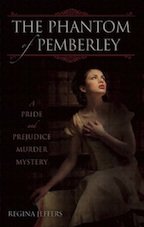

 My first mystery The Phantom of Pemberley came out in 2010. (It will be rereleased in February 2020) In it, I explore multiple personality disorders in history. The Mysterious Death of Mr. Darcy is a twisted tale of grave robbers and resurrectionists. It will rerelease on August 10, 2020. The Disappearance of Georgiana Darcy is based on the legend of Sawney Bean, a 14th Century Scottish cannibal. It, like the others, has seen a rerelease because I have now received back the rights to my books, originally published by Ulysses Press. Another Pride and Prejudice mystery is The Prosecution of Mr. Darcy’s Cousin, which explores the effects of PTSD long before it was a recognized ailment. But more than a mystery, each of these books views our contemporary world through a narrow lens buried deep in the past. What I write is more than nostalgia. My novels analyze the social, cultural, and pedagogical conditions that reshape Austen’s story into mine. The past is, for all intents and purposes, always being reinvented.



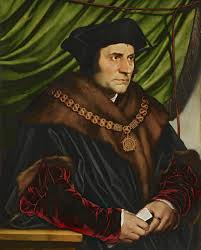 Over the centuries, the English people saw first Catholicism in favor, which was replaced by Protestantism, to be replaced by Catholicism again, and finally a return to Protestantism. The reigns of Henry VIII and his children brought a time of unrest for Catholics, where many were forced to either accept Henry VIII’s “reforms” or to lose their heads on the block. Sir Thomas More, for example, refused to accept Henry VIII as Head of the Anglican Church and was convicted of treason and beheaded. Henry’s reign was followed first by Mary, a devout Catholic, and then by Elizabeth I, who abolished Catholicism and replaced it with Protestant teachings.
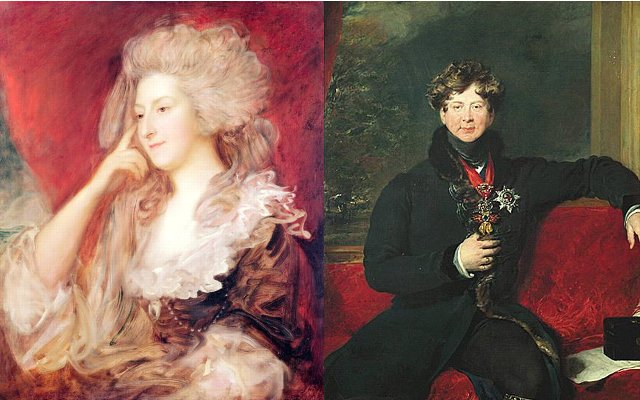 During the 1700s, Catholics were not permitted to attend universities, act in governmental offices, including Parliament and being magistrates or sheriffs. Nor could they purchase military commissions. In 1785, the future George IV secretly married a Catholic, one Maria Fitzherbert. She was a commoner, six years his elder, twice widowed, and a Roman Catholic. Despite her complete unsuitability, the prince was determined to marry her. This was in spite of the Act of Settlement 1701, which barred the spouse of a Catholic from succeeding to the throne, and the Royal Marriage Act 1772, which prohibited his marriage without the King’s consent, which would never have been granted. Eventually, to become King and to settle his many debts, Prince George abandoned the idea of claiming Mrs. Fitzherbert as his wife.
 A marriage between a Protestant and a Catholic had first to be held in an Anglican church before a Catholic ceremony could be conducted. In my A Touch of Honor, Lord and Lady Swenton are first married in a Catholic church, but they spoke their vows in Ireland, rather than in England. When they returned to Yorkshire, they were remarried in the Protestant church. Likewise, I had a Protestant/Catholic marriage in The Earl Claims His Comfort. In this one, the Earl and Countess of Remmington follow the rules of marriage of the time, being first married in the Protestant church and then a few days later in the Catholic one. Note that if one did not follow this procedure, he left himself open to fine and public shunning. In both of these books, the husband is Protestant and the wife is Catholic, an easier task that if the husband was Catholic and the wife Protestant. Although all children of the marriage would be expected to be brought up as Protestants, for certain, all the males would be expected to be Protestant. In both my books mentioned above, the husband is Protestant and the wife is Catholic, an easier task to write than if the husband was Catholic and the wife Protestant. Most Protestant families blocked their daughters from marrying a Catholic. [Keep in mind that Catholics were equally prejudiced in this manner when it came to mixed marriages, a fact that plays out in both of my books, for the wives of each peer are cousins.]
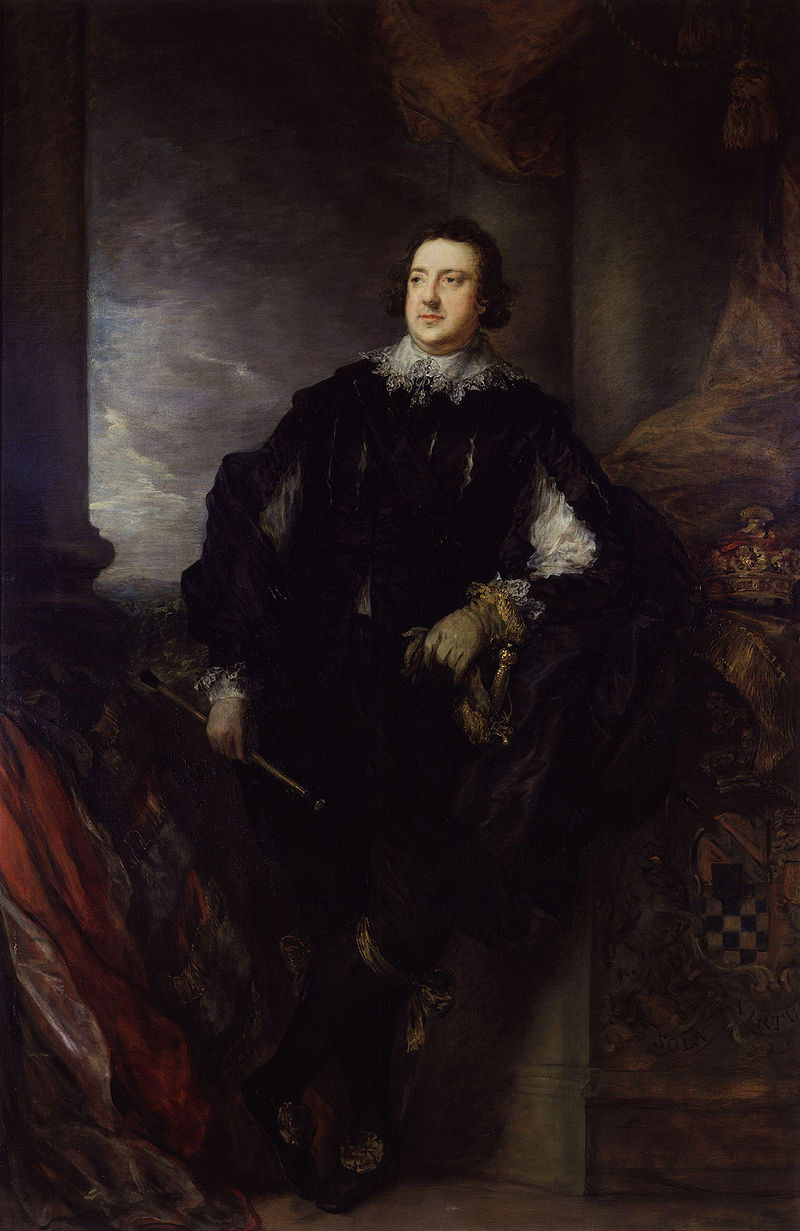 During the Regency period there were less than a dozen Catholic peers. The most notable was the Duke of Norfolk. The Duke of Norfolk is the premier duke in the peerage of England, and also, as Earl of Arundel, the premier earl. The Duke of Norfolk is, moreover, the Earl Marshal and Hereditary Marshal of England. The dukes have historically been Catholic. As Earl Marshal, the duke has the duty of organizing state occasions such as the state opening of Parliament. For the last five centuries, save some periods when it was under attainder, both the Dukedom and the Earl-Marshalship have been in the hands of the Howard family.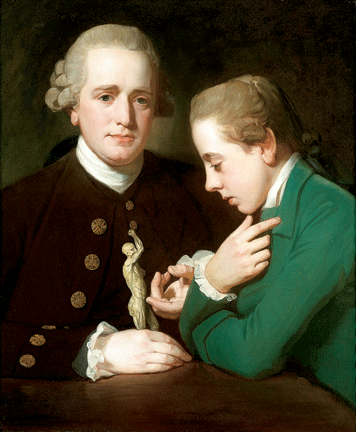


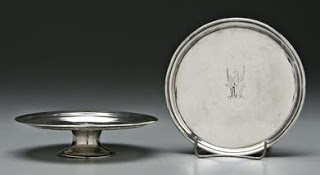
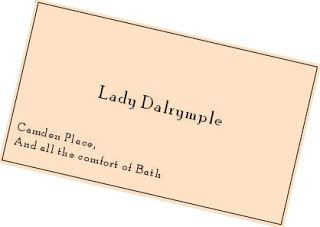


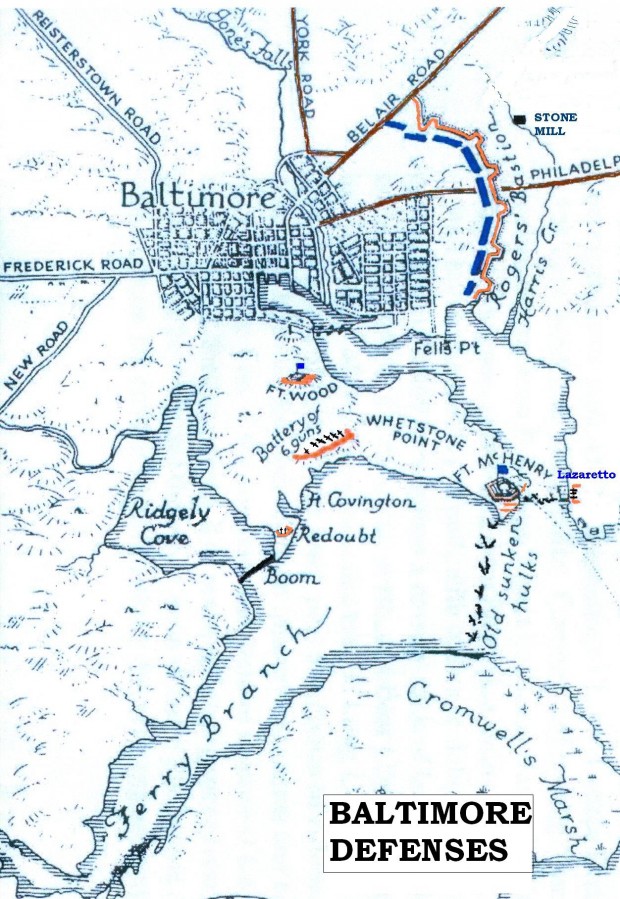
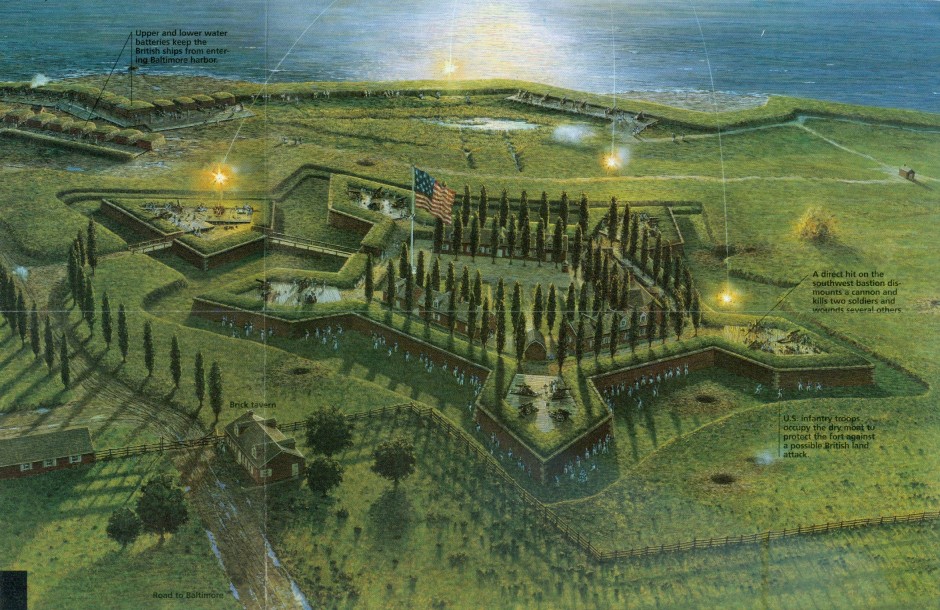


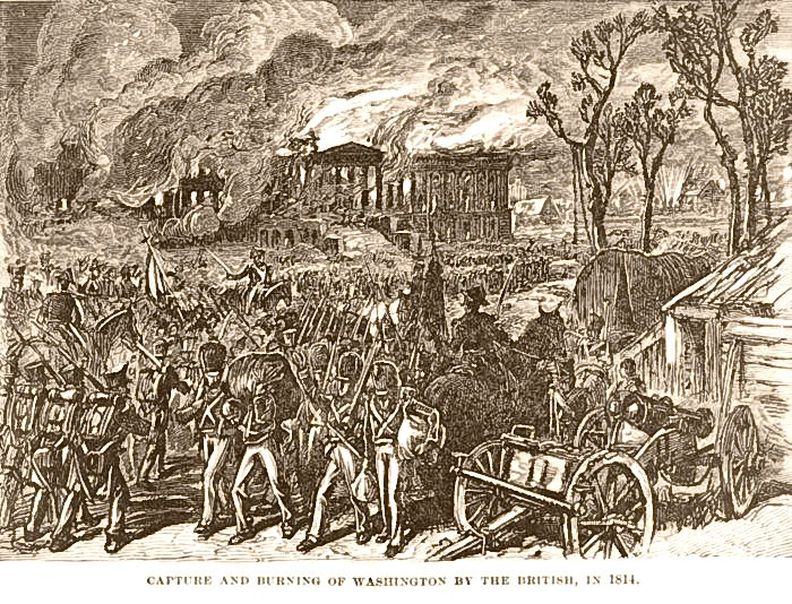


 Every Woman Dreams...
