Life Below Stairs, Part 5 – The “Fallen” Female Servant

The life of a female servant in an English household of the 18th or 19th Century was a lonely one in terms of romantic entanglements, and we can only imagine how easily such a woman might be tempted to “taste” what her position denied her. The idea of a young girl, with aspirations of marriage and of love, entering her first position, only to encounter the handsome son of her wealthy employer to be seduced is a common motif in many historical romances. But how “common” was the situation?

Needless to say, the majority of the female servants were moral and respectable. They would not consider such an alliance, finding the “suggestion” of an assignation as repugnant. However, we must keep in mind that the choice of a marriage partner was greatly limited by their position. That was not to say that NONE achieved a higher position. According to Frank Huggett’s Life Below Stairs [page 117], “In 1763, Thomas Coutts, co-founder of the bank that bears his name, married his brother’s housemaid, Susannah Starkie, the daughter of a small farmer from Lancashire. Before she died in 1815, she had seen her first daughter marry the third Earl of Guildford; her second daughter, the first Marquis of Bute; and her third, Sir Francis Burdett. (Her husband’s fortune was, of course, a big attraction.) Samuel Horsley, Bishop of St Asaph, also married a servant. Shortly after his first wife died in 1777, he married her maid, Sarah Wright. Edward Miles, a nineteenth century Quaker, not only had two careers as a druggist and a dentist but also two wives – the second under common law – both of whom were servants.

tumblr_inline_nk4kkgD16X1rkz5wx“Such marriages were commonplace in ‘silly, sensational’ magazines, but much more exceptional in real life. The peak of most girls’ possibilities had been reached, if they were fortunate enough to marry an honest butler or footman (Downton Abbey plot between Daisy and William Mason, as well as Carson and Mrs. Hughes), who might then set up as a shopkeeper, a cabbie, a publican or a boarding house keeper on their joint savings, small businesses which seem to have failed almost as often as they succeeded. Otherwise, they could hope to marry a man of no higher social standing than a groom, a tradesman, a policeman, a soldier, or a sailor. Many of them returned home, with their little nest eggs, to marry the ‘penny post correspondent’ whom they had left behind in their own village years before.” 

AN00168591_001_l (Image via http://www.britishmuseum.org – Cruikshank’s “Check Mate) Yet, there many who did succumb to the perils of life below stairs. Male servants could set the eyes upon a naive miss. Gentlemen guests in the household sometimes took advantage of the females (another plot in Downton Abbey when Anna Bates is raped). Employers’ sons could also be a threat, as well as the master of the house himself.  Being sent on an errand, especially at night, could prove hazardous for unsuspecting females. The girls could be followed by a “young, disreputable gentleman in his cups” or a street thug. Sailors streamed upon shore and sought out “satisfaction” in port cities. Uniformed soldiers could affect (or is the word “infect”) many a servant girl with “scarlet fever.”

We must also remember that the expectations of a girl from a small village or rural community were quite different from those from the gentry and the aristocracy. In reality, the female from the rural communities likely held a better idea of “sexual matters” in nature than did the young ladies in Town. There were also rural traditions, such as “hand-fasting”in Scotland and “bundling” in Wales, as well as wife-swopping and trial marriage among those who kept with the older ways. Ancient orgiastic rites did not fall away so easily. And there still hiring fairs in the rural areas where farm and domestic servants were acquired, sometimes to the detriment of the females. However, a few “dollymops” cooperated with those who approached them in exchange for a bit of money or a present. 

“There is no means of knowing how many servants were also part-time prostitutes, or enthusiastic amateurs as we might call them, but according to some contemporary experts the number was surprisingly high. One of the greatest authorities on early Victorian prostitution was William Tait, who saw many of the final, and often fatal consequences in Edinburgh Lock Hospital (for venereal diseases), where he was the house surgeon. He estimated that there were about eight hundred full-time professionals in the Scottish capital; but, in addition, there were no less than three hundred servants working part-time at the same trade. Nurses, who had the greatest freedom to spend many hours out of doors, were sometimes inclined to combine their regular calling with a little moonlighting, even, occasionally, in broad daylight. One nurse from ‘a very respectable family’ used to leave her two young children sitting in the High Street, while she went off to oblige a gentleman in a house of assignation nearby. Most of these ‘clandestine prostitutes’ were ‘common servants’, like the one from Leith who visited a house in Edinburgh every alternate Sunday night for four years; but governesses, ladies’ maids and housekeepers were also involved.” (Huggetts, page 122) Imagine the master of the house meeting one of his servants in a house of ill repute. It happened to several. 


Posted in British history, commerce, Georgian England, Great Britain, history, Living in the Regency, Living in the UK, Regency era, romance, servant life, vocabulary | Tagged , , , , , | 9 Comments

Was Sawney Bean Truly a 14th Century Scottish Cannibal or Was He a Legend? + a Giveaway of “The Disappearance of Georgiana Darcy”

Was Sawney Bean Real or a Legend?

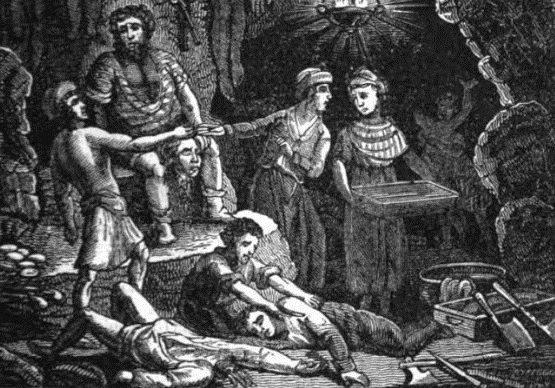
Alexander Sawney Bean was reportedly the head of a cannibalistic family residing along Scotland’s Ayrshire/Galloway coast during the 14th Century. According to the legend, Sawney was born in a small East Lothian village, approximately ten miles from Edinburgh. Enable to hold job, Sawney soon left home and took up with a woman who thought nothing of gaining what she wanted by devious methods.

With no means of making a living, the Beans took up living in sea cave in Galloway. They supported themselves by robbing and murdering travelers and locals foolish enough to be caught out on the roads at night.

Living incestuously, the Bean family grew to a total of six and forty. Over a twenty-five years period, one thousand people lost their lives to the family. The Beans would cast the unwanted limbs of their victims in the sea to be washed up on the local beaches.

Unfortunately, the authorities of the time had few crime investigation skills available to them. In a time when people still believed in witches and vampires, many innocent people stood accused of Sawney’s crimes and lost their lives. As travelers were traced back to the inns in which they took shelter, local innkeepers were often charged with the crimes. Naturally, travelers began to shun the area.

As they grew in number, the Beans began to take on larger groups of travelers. With their cave being so designed as to hide their presence in the area, they were able to attack and then retreat to cave, which went almost a mile into the cliffs. In addition the tide filled the opening so people never looked for them there.

They were discovered when they attacked a couple returning from a local fayre. The man was able to plough his way through the band that attacked him, but the female cannibals managed to pull his wife from her horse. According to the legend, the Beans ripped out the woman’s entrails and feasted on the woman along the road. When revelers from the fayre appeared, the Beans retreated to their cave/home. The group took the distraught husband to the authorities in Glasgow. Eventually, King James IV took personal charge of the case personally. With 400 men and bloodhounds in tow, the hunt for the culprits began in earnest.

The bloodhounds took up the scent from the scene and soon hit on the Beans’ location. Entering the cave, the searchers found dried human parts being cured like other meats, pickled limbs in barrels, and piles of valuables stolen over the years. The Beans were brought to Edinburgh in chains. They were incarcerated in the Tollbooth and taken the next day to Leith. Because of the severity of their crimes, the Beans were barbarically executed. The crowds cut off the men’s hands and feet and were allowed to bleed to death. The Bean women were burned at the stake.

Many “experts” believe this story to be an 18th Century fabrication, one found in the popular chapbooks and broadsheets of the time. In 1843, John Nicholson included the legend in lurid details in his Historical and Traditional Tales Connected with the South of Scotland. However, several local psychics claim the ghosts of Sawney Bean’s family haunt the area. The legend has become part of the Tourism and Heritage trail. The cave is on the coast at Bennane head between Lendalfoot and Ballantrae. There is a reconstruction of the cave at the Edinburgh Dugeon on Market Street, near the Waverly Bridge.

The “meat” of Sawney’s tale inspired Wes Craven’s “The Hills Have Eyes.” In 1994, a British film group tried to come up with financing for a film based on the legend, but the attempt fell through. Snakefinger’s “The Ballad of Sawney Bean” was a part of Ralph Records “Potates”collection.

As a personal footnote, the Sawney Bean legend plays out in my Austen-inspired cozy mystery, The Disappearance of Georgiana Darcy, for the Macbethan family in the novel are supposedly related to Bean.

The Disappearance of Georgiana Darcy: A Pride and Prejudice Mystery  

A THRILLING NOVEL OF MALICIOUS VILLAINS, DRAMATIC REVELATIONS, AND HEROIC GESTURES THAT STAYS TRUE TO AUSTEN’S STYLE

SHACKLED IN THE DUNGEON of a macabre castle with no recollection of her past, a young woman finds herself falling in love with her captor—the estate’s master. Trusting him before she regains her memory and unravels the castle’s wicked truths would be a catastrophe.

Far away at Pemberley, the Darcys happily gather to celebrate the marriage of Kitty Bennet. But a dark cloud sweeps through the festivities: Georgiana has disappeared without a trace. Upon receiving word of his sister’s likely demise, Darcy and his wife, Elizabeth, set off across the English countryside, seeking answers in the unfamiliar and menacing Scottish moors.

How can Darcy keep his sister safe from the most sinister threat she has ever faced when he doesn’t even know if she’s alive? True to Austen’s style and rife with malicious villains, dramatic revelations and heroic gestures, this suspense-packed mystery places Darcy and Elizabeth in the most harrowing situation they have ever faced— finding Georgiana before it’s too late.

Read for FREE on Kindle Unlimited

Kindle https://www.amazon.com/Disappearance-Georgiana-Darcy-Prejudice-Mystery-ebook/dp/B083HMQZRR/ref=sr_1_1?crid=1X6CU5PESKGJC&keywords=the+disappearance+of+georgiana+darcy&qid=1578930549&sprefix=The+disappearance+of+geor%2Caps%2C145&sr=8-1

Amazon https://www.amazon.com/Disappearance-Georgiana-Darcy-Prejudice-Mystery/dp/1655799037/ref=sr_1_2?crid=1X6CU5PESKGJC&keywords=the+disappearance+of+georgiana+darcy&qid=1578930573&sprefix=The+disappearance+of+geor%2Caps%2C145&sr=8-2

NOW FOR THE GIVEAWAY, I HAVE TWO eBOOK COPIES OF “THE DISAPPEARANCE OF GEORGIANA DARCY’ FOR THOSE WHO COMMENT BELOW. THE GIVEAWAY WILL END AT MIDNIGHT EST ON SUNDAY, 2 FEBRUARY 2020. GOOD LUCK! 

Posted in British history, Georgian Era, giveaway, gothic and paranormal, Jane Austen, legends and myths, Living in the Regency, Living in the UK, medieval, mystery, publishing, reading habits, real life tales, research, Scotland, spooky tales, suspense, writing | Tagged , , , , , , , , , , | 6 Comments

The Return of “The Disappearance of Georgiana Darcy” from Regina Jeffers + a Giveaway

Originally published on 12 April 2012, The Disappearance of Georgiana Darcy: A Pride and Prejudice Mystery was my ninth novel released by Ulysses Press. Although I loved working with Ulysses, they have turned their interest toward nonfiction titles, and, so recently, I pushed to have the rights of all my books published with them returned to me. Those of you who have published with traditional publishing houses know that process is not an easy one. The author cannot customarily reclaim the rights to a book for a period of two years (sometimes up to seven years). He/She must ask for the books in a certified letter, return request required. Generally, the publisher has the option to rerelease the title, and if it does so, the cycle starts over. Even if the publisher agrees to release the title back to the author, it can take up to a year or more for that to happen. Some publishers require the author to purchase any copies of the book setting in a warehouse that have not yet sold. As I was asking for the rights returned of ten title, I feared the worst. Such can be an expensive undertaking. When Ulysses finally agreed to remove the titles from Amazon, Kobo, etc., I had to wait for six months for the returns to come back to Ulysses. I was fortunate in many ways as Print On Demand technology has eased the number of copies setting in various warehouses, but I am certain other authors are not so lucky. 

The Disappearance of Georgiana Darcy was only the second mystery I had written, but I am pleased how it turned out. Although the book can be read as a stand alone, I generally say it is helpful if one has read Christmas at Pemberley beforehand, for CaP introduces some of the minor characters in TDoGD. The story begins where Christmas at Pemberley leaves off. Georgiana and our ever-faithful Colonel Fitzwilliam have married right before he is sent back to the Continent after Napoleon’s escape from Elba. He has been made a Major General at the end of Christmas at Pemberley for the service he provided Prince George’s family, which is part of the plot of that book.

With this rerelease of the novel, it was necessary for me to change out the cover. As much as I adored the original cover, the image was purchased for use on the book by Ulysses Press. Moreover, I wanted a cover that reflected the main plot of the story: Georgiana Fitzwilliam has traveled to Scotland to meet her husband for an overdue wedding journey. However, before the Major General can arrive, she goes missing and Darcy and the rest of her family search for her on the Scottish moors. The new image better reflects that story line. 

The Disappearance of Georgiana Darcy: A Pride and Prejudice Mystery 

A THRILLING NOVEL OF MALICIOUS VILLAINS, DRAMATIC REVELATIONS, AND HEROIC GESTURES THAT STAYS TRUE TO AUSTEN’S STYLE

SHACKLED IN THE DUNGEON of a macabre castle with no recollection of her past, a young woman finds herself falling in love with her captor—the estate’s master. Trusting him before she regains her memory and unravels the castle’s wicked truths would be a catastrophe.

Far away at Pemberley, the Darcys happily gather to celebrate the marriage of Kitty Bennet. But a dark cloud sweeps through the festivities: Georgiana has disappeared without a trace. Upon receiving word of his sister’s likely demise, Darcy and his wife, Elizabeth, set off across the English countryside, seeking answers in the unfamiliar and menacing Scottish moors.

How can Darcy keep his sister safe from the most sinister threat she has ever faced when he doesn’t even know if she’s alive? True to Austen’s style and rife with malicious villains, dramatic revelations and heroic gestures, this suspense-packed mystery places Darcy and Elizabeth in the most harrowing situation they have ever faced— finding Georgiana before it’s too late.

Enjoy this excerpt from Chapter Eleven: 

Edward Fitzwilliam bedded down in an orchard. Some of the aristocracy would name his choice of accommodations abhorrent. He was an earl’s son, after all. The “spare” for his brother Rowland. Yet, Edward had always preferred the outdoors and freedom to a crowded ballroom. It was the reason he had chosen the army over the navy when selecting his military calling. That and the fact that rough oceans made him seasick. “I would have made a deplorable captain in that respect,” he mumbled to his horse as he tied the stallion loosely to one of the bushes.

“Another day—maybe a day and a half,” he told the animal as he wiped down its coat. “Then you may rest, my friend, and I may bury myself in the sweet scent of jasmine. I have a beautiful wife, you know. A woman to quell the emptiness.” He patted the stallion’s neck.

He unwrapped the bedding and stretched out under the stars. “At least, there is no rain. No mud. No longer knee-deep in blood,” he continued to talk to himself. “No dreams of the horror that was Waterloo. Only Georgie’s beautiful countenance and her sweet body. Heaven on Earth.” A smile spread across his features. “A lifetime of proving myself worthy of Georgiana’s love.” He sighed deeply. “A sentence I will gladly serve.”

* * *

“Prisoners.” The word beat a staccato in her mind as she reentered the simple chamber with its obvious guard just outside the door. She had considered the idea that she was the MacBethans’ prisoner, but somehow she had not previously mustered the panic that now filled her chest. “Prisoner,” she mouthed the word. The MacBethans continued to lock her in this small room. “It is obviously not a guest room.”

She had observed several elaborate bedchambers during her house tour. With its plain furnishings, the room she occupied did not delineate her as an honored member of the household. What would happen if she refused to become Aulay’s bride? Would the MacBethans return her to where the others were being held? And where was that exactly? Lord Wotherspoon had rushed toward the lower staircase when he had left her in Ronald’s care. “What happens to the other prisoners?” she wondered aloud. “Are they tortured? Killed? Why are they here? What offense have they committed? And if I was one of them, what offense did I practice on the MacBethans to give them dominion over me?”

And there had to be more than one prisoner. The servant had specifically said, “One of the prisoners.” her thoughts flooded the room. Could she escape? Could she assist the others? She must learn exactly where she was being held. She could observe part of the estate’s entrance from the room’s small window. A better view of the grounds became paramount. If she escaped the MacBethans, could she discover someone who would come to her aid? Usually, estates were several miles apart. Could she locate a Good Samaritan before Lady Wotherspoon found her? The girl held no doubt the woman would hunt her down as if chasing a fox in the woods.

“I require more information,” she told herself as she paced the small open space. “What can I remember from my so-called sick-room stay?” she mused. The bandage on her wrist was an obvious reminder. Carefully, she unwrapped the cloth to examine the raw scrapes along the pale skin. “What could have caused these lacerations?” She gently touched the deepest cut, which had scabbed over. “I must remember why I felt gratitude for the kindness Lady Wotherspoon has shown me.” She rewrapped her wrist so no one would know she had considered her injuries to result from anything but a simple fall.

“This shan’t be easy,” she cautioned her rapidly beating pulse. “Lord Wotherspoon reminded me that I must settle my past before I accept the future his mother has designed for me. Most assuredly, I must do so carefully without offending the woman. Domhnall MacBethan has sworn to protect me, but can I trust anyone in this house?”

* * *

“I have sent a message to Drouot house,” Elizabeth explained. “I expect Mrs. Bingley to issue an invitation for your family to join them as quickly as she receives my letter. As Mr. Joseph and Mr. Darcy were to use Drouot as their base for their business dealings, the Bingleys shall be expecting your husband.”

Mary Joseph protested, “Yet, not as a man recovering from a gunshot wound.”

“Trust me, Mrs. Joseph,” Darcy countered, “Mrs. Bingley would be offended if you did not take shelter at Drouot House. My wife’s sister has the kindest of hearts.”

“That means Mrs. Bingley thought highly of Mr. Darcy long before I did,” Elizabeth teased. “Even so, my husband speaks the truth. The Bingleys are two of the most obliging adults on this earth. My father has always contended that Jane and Mr. Bingley would do very well together because their tempers are by no means unlike. Mr. Bennet claimed the Bingleys were each so complying that nothing would ever be resolved upon between them, and they were so easy that every servant would cheat them and so generous they would always exceed their income.”

Darcy chuckled. “I would call Mr. Bennet’s a fair evaluation.”

Mary’s lips twitched. “Mr. Joseph and I shall quash the urge to make the Bingleys our mark.”

“If you are tempted,” Darcy returned the smile, “keep in mind Mrs. Darcy and I will follow you to Newton Stewart, and my wife and I are less inclined to be generous.”

“Did you hear that, Matthew?” Mary teased.

The clergyman sat propped against a stack of pillows. Someone had shaved him, and although he still appeared pale, a bit of color had returned to his cheeks. “I would say we have been duly warned, Wife. And we are very familiar with the Darcys of Pemberley’s less than charitable natures,” he said jokingly. All four knew that if it had not been for the Darcys’ generosity, the Josephs’ son would have been born in a lowly stable and would have likely died. The couple owed them much more than could ever be repaid. Joseph extended his hand to Darcy. “Be safe, sir. You and Mrs. Darcy are very important to the Joseph family. You will remain in our daily prayers.”

“Thank you.” Darcy nodded his understanding. He stood and reached for his hat and gloves. “Mrs. Darcy, we should be on the road.”

“Certainly.” Elizabeth hugged Mary one last time. “Promise me you shall accept the Bingleys’ hospitality.”

Mary returned the embrace. “I promise.”

* * *

Darcy handed her into the carriage. He had taken Bennet from Mrs. Prulock and had deposited his son in his wife’s arms. Then he had assisted the wet nurse to a place beside Elizabeth. Traditionally, the nurse and Bennet would have followed in Darcy’s small coach, but they would make do with the one carriage. He would welcome the nurse’s presence if it meant having Bennet in close proximity. His son had brought Darcy a peace that he could not explain to anyone who had never walked the floor with a colicky baby in order to allow his mate a few extra hours of sleep. He and Elizabeth had created this beautiful bundle of arms and legs and joy as a result of their love. He placed his hat and gloves on the seat beside him. “I will hold Bennet,” he said softly.

Elizabeth smiled brightly. “You will notice, Mrs. Prulock,” she said in that familiar teasing tone he so adored—the one which had disappeared from his wife’s personality after her previous miscarriages. It was as if Bennet’s birth had given him back the woman Darcy loved with every fiber of his being. “That Mr. Darcy relishes holding his son when Bennet sleeps. However, let the boy kick up a fuss, and the child is instantly my son, not our son.”

“Wait until the young master be cutting his teeth. He be keeping the household awake with his temper,” Mrs. Prulock predicted.

With his fingertips, Darcy traced his child’s jawline. “Even a case of the Darcy stubbornness will not deter my joy at looking at this angelic countenance.”

“At least Mr. Darcy did not blame said stubbornness on my side of the family,” Elizabeth countered as the carriage lurched into motion.

Darcy did not remove his eyes from his son’s face, but he said, “I have learned, Mrs. Darcy, to accept that all Bennet’s failings lie at my feet while our son’s more magnanimous qualities are a direct result of your influence.”

Elizabeth suppressed her grin. “You were difficult to bring to the bit,” she teased. “But I am quite content with the end result.” They sat in silence for several minutes while each contemplated his own tumultuous part in their coming together as man and wife. Finally, she asked, “How long before we reach Alpin Hall?”

“Seven to eight hours depending on the roads,” he said softly.

“I am most anxious to settle what has transpired with Mrs. Fitzwilliam,” Elizabeth said.

He nodded as he sat back into the soft squabs. “As am I. I have missed Georgiana.”

* * *

“Shall you sleep the day away?” the voice from her dream asked in concern.

She turned over to look at the room’s ceiling and once more to count the knots in the wood. “Two and twenty,” she said to test her voice.

“Yes, two and twenty,” the voice spoke with a bit of irritation. “What else shall you do today?”

She said defensively, “What else would you have me do?”

The voice “tutted” her disapproval. “Discover a means out of this dilemma. You are a brave, intelligent woman.”

“I would beg to differ. If I were brave and intelligent, I would not have succumbed to my doubts, and I would not be at another’s beck and call.”

* * *

“Shall ye sleep the day away?” Lady Wotherspoon said close to the girl’s ear, pulling her from her dreams. A splitting headache had driven her to her bed several hours prior. She had searched her memory for details of her life before coming to Normanna Hall, as well as what had happened to her since arriving at the estate. The process had left her exhausted and suffering with a megrim.

The girl shoved herself to a seated position. “Forgive me, Lady Wotherspoon. I thought it best to recover my energies fully. If I am to accept Aulay, then I must be at my best.”

“Most assuredly, ye shall accept Aulay,” the woman declared as she began to brush Esme’s hair to remove the tangles.

Esme’ frowned deeply. “I have thought much of what is best. I recall—” she paused. “I recall few details of my life prior to my time in this room.” She sat quietly for several minutes before saying, “Before I could accept Aulay, I must learn more of my child’s father.” Her fingers splayed protectively across her abdomen.

Her request had, evidently, surprised Lady Wotherspoon. The woman’s eyes flared with incredulity, but she quickly masked her true response. “A woman should have pleasant memories to share with the bairn.” She braided Esme’s hair. “I think it best if ye remember on yer own, but if’n ye kinnae I kin tell ye more of yer life.”

“You know of my lost memories?” Esme returned the woman’s earlier surprise.

“I’s know some of it. Enough to know yer husband be gone. Ye do not wish the child to be bairn without a lovin’ father. Aulay would be a good companion.”

“If I cannot remember on my own, you will tell me what you know?” The girl insisted.

“I shall share it all.”

* * *

Lady Wotherspoon rushed through Normanna’s intricate passageways until she reached the Grand Hall. Finding Munro, her husband’s nephew, drinking with several of the other cousins and distant relatives, with a tilt of her head, she motioned him to follow her into the chapel. Although he was of the MacBethan clan, the man had proved resourceful when she had sent him on previous tasks.

“What be it?” he grumbled when he sat behind her on one of the few pews within the circular room.

“Ye shud not be afeared of God’s hand,” she said coldly.

He warned, “Tell me what ye require, Aunt, and leave off worryin’ fer me soul.”

Dolina glanced around to assure their privacy. “I require information on the girl Blane found on the moor. Who might she be? Ride out and check the inns. See if’n anyone be lookin fer her.”

“Why? What hive ye in mind for the lass?”

“Jist do as I say,” she instructed. “What I’ve planned be none of yer doings.”

KINDLE 

AMAZON 

Read for FREE on KINDLE UNLIMITED. 

NOW FOR THE GIVEAWAY. I HAVE TWO eBOOK COPIES OF THE DISAPPEARANCE OF GEORGIANA DARCY AVAILABLE FOR THOSE WHO COMMENT BELOW. THE GIVEAWAY WILL END AT MIDNIGHT EST, JANUARY 31, 2020.

NOTE! THERE IS ANOTHER EXCERPT AND ANOTHER GIVEAWAY FOR THE BOOK ON TODAY’S AUSTEN AUTHORS. SWING OVER THERE AND CHECK IT OUT! 

Posted in Austen Authors, book excerpts, book release, George Wickham, Georgian England, Georgian Era, giveaway, Jane Austen, mystery, Napoleonic Wars, Pride and Prejudice, publishing, romance, writing | Tagged , , , , , , , , , , , , , , | 25 Comments

Life Below Stairs ~ Part Four ~ The Work Never Ends

250px-smedley_maid_illustration_1906Up before dawn, the servants of an aristocratic household found the work tedious. Likely, the lower servants worked two hours before he/she was permitted to sit to his own meager breakfast.

The kitchen maid began her day with lighting the cooking fire. To do so in a cast iron stove, she must first rake out the cinders and sweep the bars, the hobs, and the hearth free of dust. She would then clean the stove with a round-headed brush and black lead mixed with some water to make a “paste.”  When the black lead dried, it was polished with a special brush, which was designed to get into the groves of the ornamental work. At least one weekly, she also swept away the accumulated soot from the flues. Generally, she was expected to bring the cook the woman’s morning tea.

The housemaids began their days with cleaning the carpets. An unusual ritual included scattering wet sand or damp tea leaves over the carpets before they swept them. They cleaned the main hall and receiving rooms thoroughly and set fires in the hearths (after cleaning the grates). After morning prayers, the housemaids cleaned the bedchambers: changed bed linens, emptied chamberpots and baths, swept the carpets, dusted the furnishings, washed and polished wooden floors, etc. One must recall that there were three mattresses on a Victorian bed. The bottom one was filled with straw and was turned once weekly. The middle one was filled with wool or horsehair. It was turned daily. The top mattress was filled with feathers. Please recall that the housemaids were supposed to finished with their work by mid day.

Upper servants (cook, lady’s maid, governess, parlour maid, and nurse) usually got an extra hour sleep while others began their days as early as 5 A.M. The cook was responsible for 4 meals daily for the master and mistress and their guests, the children, and the other servants. She prepared a different type of meal for each group. All the servants, minus the nursery staff, sat down to breakfast shortly after 8 A.M. They would dine on leftovers of yesterday’s roast or cold meat pie and a slice of bread, along with a weak tea or home brewed beer. A tea break for the servants came at approximately 11 A.M. The cook would meet regularly with the mistress to discuss the menus for the day. The servants had their “dinner” between midday and one o’clock. Generally, it was a roast and vegetables with a rice or suet pudding. Beer was served with the meal. The nursery staff were given a shepherd’s pie or mutton stew. The master and mistress and the older children had a luncheon served by liveried footmen. This was a more formal meal than was breakfast. The course was usual fish, which was followed by hot dishes and then a sweet dessert or fresh fruit. The ladies would be out the door for afternoon social calls. 

Parlour maids, which replaced butlers during the Victorian era, set the table in the dining room, as well as to oversee the removal of the leftovers. Occasionally, the parlour maid acted as a valet to the master of the house. Parlour maids, like footmen, were chosen for their height and good looks, and they were often a target for unfaithful husbands. At about 9 each morning, the parlour maid would summon the family, the children, and the other servants to family prayers in the drawing room. (If you recall, Edmund Bertram and Mary Crawford discuss this practice in Jane Austen’s Mansfield Park.) Before she called the household to prayers, the parlour maid had set the table with linen and silverware. She had also placed bread, toast, butter, jam, and honey on the table, along with a cream and sugar for tea. After the prayers, she brought in the covered breakfast dishes. They family would then choose from hot and cold dishes: eggs, bacon, kidneys, kippers, fish, tongue, potted meat, etc.

The lady’s maid woke her mistress and helped the lady of the house with her ablutions and dress. Remember that women of the  Victorian Period wore tightly laced corsets or stays, several petticoats, steel-hooped crinolines, tight pantaloons, and dresses with yards and yards and yards of material.


Nursery maids swept and cleaned the day nursery and lit the hearth for warmth. The governess saw to the children. Upper class ladies rarely visited their children in the nursery for longer than 30 minutes per day. With infants, a wet nurse was engaged. Ladies of quality never breast fed their children. Governesses were occasionally accused of using a bit of laudanum to keep the children in order. The first duty of the day was to bath and feed the babies/children. A mixture of milk and barley water was used for the infants. The governess was also responsible for administering prescribed medicines and purges of castor oil, senna, or peppermint. They took the children out for morning and afternoon excursions. Older children were bathed and dressed. Even little boys wore stays until the age of 7 or 8. Breakfast was a porridge or gruel. It was quite bland when compared to what the parents ate.

Posted in British history, Georgian Era, Great Britain, Living in the Regency, real life tales, Regency era | Tagged , , , , , , | 2 Comments

The Battle of Rorke’s Drift

On 22 January 1879, one of the world’s most remarkable military engagements took place. It was a short, but intense, battle in what is known as the Anglo- Zulu Wars. For two days, some 150 British soldiers defended Rorke’s Drift mission station from an estimated 4,000 Zulu warriors.
The British Empire wished to annex the Zulu Kingdom in South Africa. The entire war lasted only five months. The Zulus decisively won the first of the engagements at the Battle of Isandlwana, but the British knew the final victory. The Battle of Rorke’s Drift occurred some two weeks into the war. 150 British and colonial soldiers spent two days defending their garrison against 4,000 Zulu warriors. 

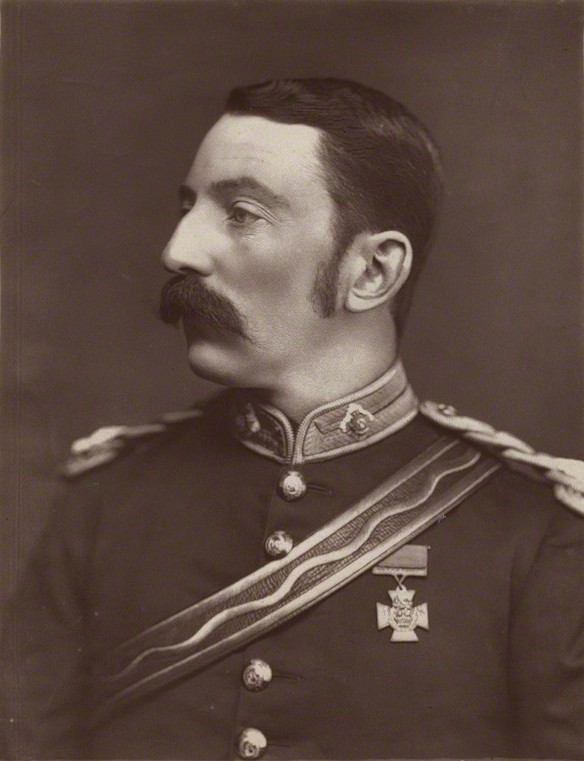
Britain was intent on expanding its territory and influence in South Africa in the 1870s and had declared war on the Kingdom of Zululand. Rorke’s Drift was a mission station — named for James Rorke, an Irish merchant who once ran a trading post there, near the border between the British colony of Natal and the Zulu Kingdom. At the beginning of the war, the British had set up camp there, transforming two bungalows on the site into a supply depot and hospital. When the British troops departed to engage the Zulus in the Battle of Isandlwana, “B” Company was left behind to guard the garrison. Lieutenant Gonville Bromhead was the “B” Company leader. When the Battle of Rorke’s Drift began, though, only 139 soldiers were encamped there. They had no idea how their defense of the mission station would change their lives and history.

Having suffered a devastating defeat at Isanlwana, losing 1300 of the 1800 soldiers involved to an army carrying spears, not guns. Major Henry Spalding and some of those under his command when to look for the British forces when the troops did not return from the battle. He left Rorke’s Drift in the command of Lieutenant John Chard. Unfortunately, for Chard, two British soldiers delivered the news of the British defeat at Isanlwana and the warning that the Zulu Impi (army) was heading for the station. The small company remaining in the mission station had little choice but to set up their defenses. They could not “outrun” the Zulus in their own territory, and it was too dangerous to move the hospital patients. Chard, Bromhead, and other officers at the garrison ordered sacks of corn and biscuit boxes be used to create a crude defensive perimeter, knocked firing holes through the walls of the site’s buildings and barricading the doors with furniture.

As preparations were nearing completion, a group of cavalry on retreat from Isandlwana arrived and offered to take position on a hill near the station in the direction the Zulus would be coming from. They added their numbers to between 100 and 350 foot soldiers from Natal who had been ordered to remain at the garrison to support B Company. At this point there were several hundred men in the vicinity of Rorke’s Drift, including ‘walking wounded’ in the hospital, and Chard felt his force was sufficient to stave off the coming threat.

The site Sabaton provides us with this account of the battle: “But the Zulu force was much larger than feared, comprising 3,000 to 4,000 reserve troops who had not even seen combat in the previous day’s battle and were fresh and fit. The cavalry on the hill engaged the first of the Zulus but, tired and running low on ammunition, they fled. On seeing this, the soldiers from Natal and their commander also turned and ran, leaving B Company and the hospital patients alone. Some members of B Company were so angry that they fired after the deserters, killing one of them.

“With the defending force now down to just over 150 men inside the garrison, Chard ordered a hasty reorganisation of the defences to create a fall-back position for the defenders, and at 4.30pm the first group of 600 Zulus attacked. With few guns, the Zulus resorted to crouching under the defensive wall, trying to grab the British rifles or stab and slash with their spears. In places they climbed over each other’s bodies to try to drive the British off the wall, but were driven back.

“After some time, it was clear the wall could not hold under the sheer volume of attackers, so Chard began pulled his men back toward the inner perimeter and the hospital. A melee ensued, with Zulus grabbing for the British rifles whenever they were put through the firing holes, or trying to fire their own weapons through them into the hospital. At some point the hospital roof was set ablaze. As the entrance to each room in the hospital gave way, the defenders would hack their way through the wall to retreat into the neighbouring room, pulling the hospital patients through with them. Eventually they made it through to the other side and made a break across the yard to the fall-back barricades.

“The Zulus kept up their assault long into the night. The attacks began to subside after midnight but did not cease fully until 2am. By then, the garrison had lost 14 men, with 10 others suffering serious wounds. They had fought for 10 hours and had just 900 rounds of ammunition remaining from the 20,000 that had been stored at the mission.

“Fortunately, when dawn broke, the Zulus were gone; for them it had not been a planned raid but an opportunistic one. As the garrison began picking up the pieces from the night before, another Impi of Zulus suddenly appeared and they rushed to man their positions again. These Zulus, however, had been on the march for days and were carrying wounded comrades, and they left the way they had come. An hour later another group of soldiers appeared and the positions were manned again – but these turned out to be the relief force from the next garrison.

“Eleven of the defenders of Rorke’s Drift were awarded the Victoria Cross, Britain’s highest military honour for bravery. It was the most ever awarded for a single action by one regiment. Some commentators suggested it was a way of drawing the British public’s attention away from the embarrassing defeat at Isandlwana the preceding day, however many more have challenged that assumption, with the battle capturing popular imagination and inspiring generations of artists and authors. The most famous depiction of Rorke’s Drift in popular culture is the 1964 film Zulu, produced by Stanley Baker and starring a young Michael Caine.”

26

According to On This Day, “At 4.20 PM on January 22, 1879 a force of 4,000 Zulu warriors began to lay siege to the station. Their intermittent attacks were to last for almost twelve hours. Fortunately for the British, although some of the Zulus had old muskets and antiquated rifles, most were armed only with a short spear called an assegai and a shield made of cowhide. So in weaponry they were no match for the highly trained soldiers with their (then) sophisticated rifles and firepower. But the manpower advantage lay massively in favour of the Zulus.

“By 4 AM, after nearly 12 hours repulsing wave after wave of attacks involving hand-to-hand combat, a number of British soldiers lay dead. Most of the others were exhausted, rapidly running out of ammunition, and probably in no condition to repel another assault. But they didn’t have to. As dawn broke they saw that the Zulus were gone, leaving behind a battleground littered with the dead and dying. Zulu casualties were around 500, while the British sustained 17 dead and 10 wounded.”

The Victoria Cross is Britain’s highest medal for bravery. Eleven were awarded to the defenders of Rorke’s Drift – the most ever received in a single action by one regiment.

NOTE! The song Rorke’s Drift can be found on Sabaton’s 2016 album The Last Stand. You may listen to the song HERE


Posted in British history, England, history, military, political stance, real life tales, war | Tagged , , , , | Comments Off on The Battle of Rorke’s Drift

Catholic/Protestant Marriages During the Regency + “The Earl Claims His Comfort”

Catholic/ Protestant Weddings During the Regency Era

On 25 March 1754, the Hardwicke Act went into effect in England. It was designed to prevent Clandestine Weddings (Read More on Clandestine Weddings HERE) and to force couples marrying in England to follow certain guidelines or have their marriage declared illegal. Under an earlier Statute of King George II (19 Geo. 2. c. 13), any marriage between a Catholic (Popish) and a Protestant or a marriage between two Protestants celebrated by a Catholic priest was null and void.

Prior to the Hardwicke Act, couples simply required a clergyman ordained by the Church of England to administer their vows. We often hear of Fleet Marriage, which is the best-known example of an irregular or a clandestine marriage taking place in England. These joinings were popular at the end of the late 17th and early 18th Century. The Marriage Duty Act 1695 put an end to irregular marriages at parochial churches by penalizing clergymen who married couples without banns or license. By a legal quirk, however, clergymen operating in the Fleet could not effectively be prosecuted for disobeying the Act, and the clandestine marriage business there carried on. In the 1740s, over half of all London weddings were taking place in the environs of the Fleet Prison.

The Hardwicke Act made marriages more public. A calling of the banns became a requirement, which could only be put aside if the couple obtained an “ordinary”  or “standard” license from the local bishop or a special license from the Archbishop of Canterbury. The standard license came with a bond of £100. This bond was forfeited if the couple lied to the local bishop regarding their fitness to marry. The license named the specific parish church where the exchange of vows would be held. It required a 7-days’ waiting period.

A calling of the banns had to take place over three successive Sundays before the couple could marry before an ordained Church of England clergyman. Two witnesses were required for the ceremony to be legal.

Only Quakers or Jews were exempt from the Hardwicke Act. All others, including Roman Catholics, had to follow the law’s guidelines. NO exceptions! Catholics in England who married only under their own rites were not considered legally married under English law. They had to be married by a Protestant minister legally to be considered married. The Catholics disagreed with this requirement, and many married in the local Catholic church first and then almost immediately in the Protestant church. If they had not married in the Protestant church, their children were illegitimate under the Hardwicke Act. During this time, a Catholic priest faced fines and possible imprisonment for marrying a Protestant to a Catholic unless the couple had already been married by a Protestant clergyman.

In Ireland, the Catholics did not need to be married by a Protestant at all, but the clergy was still forbidden to celebrate a mixed marriage unless there had already been a Protestant one. All through the 19th Century, the restrictions against other religious groups were eased, and there even was a provision for a civil marriage, but a Catholic and a Protestant still could not marry in the Catholic Church unless they had already married by civil or Protestant ceremony. Any marriage of a Protestant to a Catholic by Catholic ritual alone was considered invalid.

Catholic emancipation (or Catholic relief) saw some reduction in and the removal of the restrictions on Roman Catholics during the late 18th and early 19th centuries, but it would be 1829 before the Roman Catholic Relief Act came into being. The Act of Union between Great Britain and Ireland in 1800 issued in greater political emancipation, but such wording was not written into the actual text of the Act for fear it would lead to a stronger opposition by the Irish Protestants to the new law. William Pitt the Younger, who was Prime Minister, had promised emancipation to accompany the Act, but King George III believed doing so would violate his Coronation Oath, which reads in part: “Will you to the utmost of your power maintain in the United Kingdom the Protestant Reformed Religion established by law? Will you maintain and preserve inviolably the settlement of the Church of England, and the doctrine, worship, discipline, and government thereof, as by law established in England? And will you preserve unto the Bishops and Clergy of England, and to the Churches there committed to their charge, all such rights and privileges, as by law do or shall appertain to them or any of them?” Pitt resigned his post, for he failed in keeping his promise to the Irish.

georgeandcarobig

Marriage of the Prince of Wales and Caroline of Brunswick at St. James Palace.

Prince George, the Prince of Wales (the Prince Regent and later King George IV) married a widow, Mrs. Maria Fitzherbert on 15 December 1785 in a secret marriage. This marriage between a Protestant and a Catholic was illegal. The Prince Regent was forced to deny this marriage if he ever wished to claim the throne of England. The Act of Settlement of 1701 forbade a Roman Catholic from sitting on the throne. Maria could not be George IV’s queen. If they were to remain married, he would be required to give up his place in the line of succession. Moreover, the prince and Mrs. Fitzherbert had ignored the Royal Marriage Act of 1772, which required all members of the Royal Family to ask the Sovereign’s permission before marrying. George III, as we saw above, would not extend such permission to any of his children. When the Regent’s debts increased to some £600,000, he finally agreed to abandon Maria and take a Protestant wife of Parliament’s choosing in order to settle his debts.

The Napoleonic Wars saw an increase of Catholic officers and enlisted men in both the army and navy. Even so, these men could not take a seat in Parliament, and they still could not vote or attend university or schools such as Eton, Harrow, Westminster, etc. Before the war, the Catholic children of prominent families were often sent to the continent to elite Catholic schools.

The Dukes of Norfolk were a prominent Catholic family. Charles Howard, 11th Duke of Norfolk, renounced his Catholicism to start his political life, but remained a staunch supporter of Catholic Emancipation. He sat in Parliament from 1780–84, became a lord of the treasury in the Portland cabinet in 1783, and was dismissed in 1798 from the lord lieutenancy of the West Riding for toasting the “sovereign English people” in terms displeasing to the Crown. In addition, he held a hereditary position as Earl marshal, a royal officeholder responsible, along with the constable, for the monarch’s horses and stables. However, Charles Howard was made to permit a Protestant to fulfill many of his official duties. He was also supposed to allow the churches to which he held the livings to be handled by the universities, but he refused to hand them over.

Read the Hardwicke Act (Marital Law 26 Geo II c 33) HERE:

http://www.regencyresearcher.com/pages/marriagelaw.html

___________________________________________

Earl6x9Introducing The Earl Claims His Comfort: Book 2 in the Twins’ Trilogy, releasing September 16, 2017, from Black Opal Books

– a 2016 Hot Prospects finalist in Romantic Suspense

Hurrying home to Tegen Castle from the Continent to assume guardianship of a child not his, but one who holds his countenance, Levison Davids, Earl of Remmington, is shot and left to die upon the road leading to his manor house. The incident has Remmington chasing after a man who remains one step ahead and who claims a distinct similarity—a man who wishes to replace Remmington as the rightful earl. Rem must solve the mystery of how a stranger’s life parallels his, while protecting his title, the child, and the woman he loves.

Comfort Neville has escorted Deirdre Kavanaugh from Ireland to England, in hopes that the Earl of Remmington will prove a better guardian for the girl than did the child’s father. When she discovers the earl’s body upon a road backing the castle, it is she who nurses him to health. As the daughter of a minor son of an Irish baron, Comfort is impossibly removed from the earl’s sphere, but the man claims her affections. She will do anything for him, including confronting his enemies. When she is kidnapped as part of a plot for revenge against the earl, she must protect Rem’s life, while guarding her heart.

Currently Available:

Amazon https://www.amazon.com/dp/1626947457/ref=sr_1_2?ie=UTF8&qid=1505774153&sr=8-2&keywords=the+earl+claims+his+comfort

Black Opal Books https://black-opal-books.myshopify.com/products/the-earl-claims-his-comfort

Nook https://www.barnesandnoble.com/w/the-earl-claims-his-comfort-regina-jeffers/1127101127?ean=2940158592270

Kobo https://www.kobo.com/us/en/ebook/the-earl-claims-his-comfort

Kindle https://www.amazon.com/Earl-Claims-His-Comfort-ebook/dp/B075B323MN/ref=sr_1_1?ie=UTF8&qid=1505561066&sr=8-1&keywords=the+earl+claims+his+comfort

Barnes and Noble

https://www.barnesandnoble.com/w/the-earl-claims-his-comfort-regina-jeffers/1127101127?ean=9781626947450

________________________________________

Excerpt…

“I mean to escort Miss Deirdre to services this morning,” Rem announced as they shared a Sunday breakfast. Other than supper each evening, he purposely had avoided Miss Neville’s company. The temptation to touch her again would disappear on Tuesday with her departure. “I pray you will join us.”

“I think not, my lord,” she said coldly.

It was the first time Rem heard Miss Neville use the same indifferent tone he employed, and the fact the lady meant to place distance between them bothered him more than he cared to admit. “Do you not fear damnation?” he asked with uncharacteristic venom. He was not a Bible thumper, and in truth, he often missed services, but something about the woman’s refusal clawed at his sense of rightness.

“No more than you,” the lady responded smartly. “Moreover, as a Catholic, I am already damned in the eyes of the Church of England.”

“Catholic?” A pang announced his snobbish regrets clutched at his heart. He did not give a fig what religion the woman claimed. Even so, he spoke sternly. “I am surprised Lord Kavanagh would place Miss Deirdre in the care of a Catholic,” he pronounced in misplaced disdain. It was as if he celebrated any spot on Miss Neville’s character to remain detached from her.

“As Lord Kavanagh meant to wash his hands of the child, I doubt he much cared to which God Miss Deirdre prayed,” she snapped.

“Does Lord Swenton realize your preferences?” he countered.

“As his baroness, my cousin, also claims a Catholic upbringing, I doubt his lordship will take note of my ‘transgressions.’ From what I know of the baron, he chooses to see the person’s worthiness rather than his religious beliefs. Lord Swenton is a man of honor.”

“And you are implying I am not.” He could not remove the bitterness from his tone. For days, he had wanted Miss Neville not to look upon him with that softness he so craved, but now that the woman turned on him, he was not happy with the result.

“In truth, I do not know enough of your character to pronounce you a man of honor.” He flinched as if slapped. “It would seem to me that if you performed honorably in your dealings, then there would be no cause for two attempts upon your life within a sennight,” Miss Neville continued, as if a dam of accusations needed to be expressed.

In many ways, Rem supposed they did. He had played with the woman’s emotions, and he deserved her vehemence. At least her tirade would keep her at arm’s length.

“This is what I know of Lord Swenton. The gentleman married a woman who required his protection but who treated him in a false manner. Even so, he risked his life to save her. Although he had developed a deep affection for my cousin, his lordship properly grieved for a wife that was untrue when the previous Lady Swenton lost her life. When he married Isolde, he did so in the Catholic Church before her family and friends in Ireland.

“Only after Cousin Isolde discovered she was enceinte did they marry again in the Church of England. Even then it was at Isolde’s insistence, not Lord Swenton’s. The baron married my cousin because he adores her, and nothing else mattered to the man. Only to name his eventual heir as ‘legitimate’ did Lord Swenton consider remarrying his bride according to the dictates of the Church of England. Therefore, in my opinion, Cousin Isolde claimed the only decent Englishman this country has produced.”

_______________________________________

51Qc31W5ZSL._SX326_BO1,204,203,200_ 

Angel Comes to the Devil’s Keep: Book 1 of the Twins’ Trilogy

– a 2017 Daphne du Maurier Award for Excellence in Mystery/Suspense finalist

-a SOLA’s Eighth Annual Dixie Kane Memorial Award finalist for Historical Romance

Huntington McLaughlin, the Marquess of Malvern, wakes in a farmhouse, after a head injury, being tended by an ethereal “angel,” who claims to be his wife. However, reality is often deceptive, and Angelica Lovelace is far from innocent in Hunt’s difficulties. Yet, there is something about the woman that calls to him as no other ever has. When she attends his mother’s annual summer house party, their lives are intertwined in a series of mistaken identities, assaults, kidnappings, overlapping relations, and murders, which will either bring them together forever or tear them irretrievably apart. As Hunt attempts to right his world from problems caused by the head injury that has robbed him of parts of his memory, his best friend, the Earl of Remmington, makes it clear that he intends to claim Angelica as his wife. Hunt must decide whether to permit her to align herself with the earldom or claim the only woman who stirs his heart–and if he does the latter, can he still serve the dukedom with a hoydenish American heiress at his side?

Posted in Black Opal Books, blog hop, book excerpts, book release, British history, Church of England, excerpt, George IV, Georgian England, historical fiction, Ireland, Living in the Regency, marriage, marriage customs, marriage licenses, real life tales, Regency era, Regency personalities, Regency romance, research, romance | Tagged , , , , , , , , , , , , , , , , , | Comments Off on Catholic/Protestant Marriages During the Regency + “The Earl Claims His Comfort”

Did Jane Austen Play Her Own Version of Regency “Monopoly”? a Guest Post from Eliza Shearer

The post originally appeared on the Austen Authors’ blog on December 10, 2019. I think you will discover it as fascinating as did I. Enjoy!

The Most Agreeable & Rational Recreation Ever Invented”

During a recent visit to Edinburgh’s Museum of Childhood, I was drawn to one of the exhibits, a board game called The New Game of Human Life. Published in London in 1790, it was aimed at the family market and was the British adaptation of a French game, Le Nouveau Jeu de La Vie Humaine

The New Game of Human Life is a classic roll-and-move game with 84 spaces, each representing a year of human life. The 84 spaces are divided into the seven ages of man: childhood, youth, young man, the prime of life, the sedate middle age, the old man and decrepitude. 

The players take turns to advance with the goal is to be the first to reach the ending space: The Immortal Man. It’s like Snakes and Ladders meets Monopoly, in that some spaces take you forward and others set you back, and the players pay and receive stakes depending on where they land. 

Human Life as the Georgians Knew It

The depiction of the life stages in the game is fascinating, and it tells us a lot about what Georgians thought of life as a whole. For example, a player landing on The Studious Boy (nr 7) can advance to The Orator (nr 42). However, one ending up in The Negligent Boy (nr 11) has to pay a stake and skip two rounds.

As the players advance, the stakes also increase. A player arriving at The Duellist (nr 22) has to pay two stakes and return to The Boy (nr 3), presumably to learn to be less troublesome. In contrast, a player landing on The Married Man (nr 34) gets two stakes (the wife’s dowry, of course) and skips ahead The Good Father (nr 56)

There are some interesting distinctions as well. A player landing on The Romance Writer (nr 40) has to pay two stakes and go back to Mischievous Boy (nr 5), while the lucky player landing on The Tragic Author (nr 45) jumps straight onto the last space and wins. It’s clear what type of genre was held in admiration and which in contempt.

The game also features cameos by famous contemporaries. The Poet (nr 41) stands for Alexander Pope. “The Patriot” (nr 55) represents William Pitt. The Glutton (nr 59) is supposedly the Prince of Wales, although for obvious reasons his identity isn’t clearly stated. The last space, The Immortal Man, is for Isaac Newton, who died at the ripe old age of 84.

 “Utility and Moral Tendencies”

The New Game of Human Life had a strong moral component. It even included advice for parents and tutors as to how to explain the meaning of the different spaces to children under the reassuring title “utility and moral tendency of this game.” 

Paradoxically, winning the game was utterly dependent on luck. However, to avoid introducing gambling to children, the London publishers decided to replace the two dice of the original French version with a teetotum, which is a sort of spinning wheel. 

A Clever Marketing Ploy

The game was a commercial success, and one can see why. For starters, it was practical. The board I admired was mounted on 12 separate pieces of thick paper or cardboard with a cloth backing, and could be easily folded and stored away.


Although the copy in the Edinburgh museum was in black and white, the game was sold in different finishes in a scale of rising price points. The cheapest version was little more than printed pieces of paper. In the most expensive version, the materials were more refined and the illustrations in colour. It was a shrewd move to widen the game’s appeal to a broader audience by making it more accessible.

A Game for the Little Knights?

We know from Jane Austen’s letters that she spent long periods at Chawton House, home of her brother Edward Knight and his brood. She doted on her many nephews and nieces and played all sorts of games with them.

Since my discovery of The New Game of Human Life, I have reached the conclusion that Jane Austen must have played a similar board game at some point – or perhaps this very one. Edward’s fortune meant that he could easily afford even the fanciest version of the game!

In any case, if you visit Edinburgh, do give yourself a couple of hours to visit the Museum of Childhood and its collection of toys, games, books and artifacts for children. It’s a little gem, and very centrally located, too – just off the Royal Mile – so you have no excuse to miss it.

What do you think of The New Game of Human Life? Do you enjoy boardgames, or think you will find one under the Christmas tree? 

To find out more:

http://www.branchcollective.org/?ps_articles=christopher-rovee-the-new-game-of-human-life-1790

https://www.lucyworsley.com/jolly-good-fun-parlour-games-of-the-past/

Posted in Austen Authors, customs and tradiitons, Georgian England, Georgian Era, Guest Post, history, Jane Austen, Living in the Regency, real life tales, Regency era | Tagged , , , , , , , | Comments Off on Did Jane Austen Play Her Own Version of Regency “Monopoly”? a Guest Post from Eliza Shearer

“A Touch of Honor” [or] What to Do With a Character You Despise?

ATOH Cover Concept3Early on, I convinced my traditional publisher, Ulysses Press, to print one of my Regency romances – a book I originally called A Touch of Gold and later called A Touch of Scandal. Ulysses released the book under the title The Scandal of Lady Eleanor. That book has been followed by seven others, each the tale of one of the members of a fictional covert military group operating out of the Home Office during the Napoleonic Wars and known as “the Realm.” The men of the Realm have served their country honorably and have returned home to claim their titles and a chance at love, a fleeting hope each held during their service. Unfortunately, a Baloch warlord claims one of the group has stolen a fist-sized emerald, and Shaheed Mir means to have the jewel’s return, or he will know his revenge.
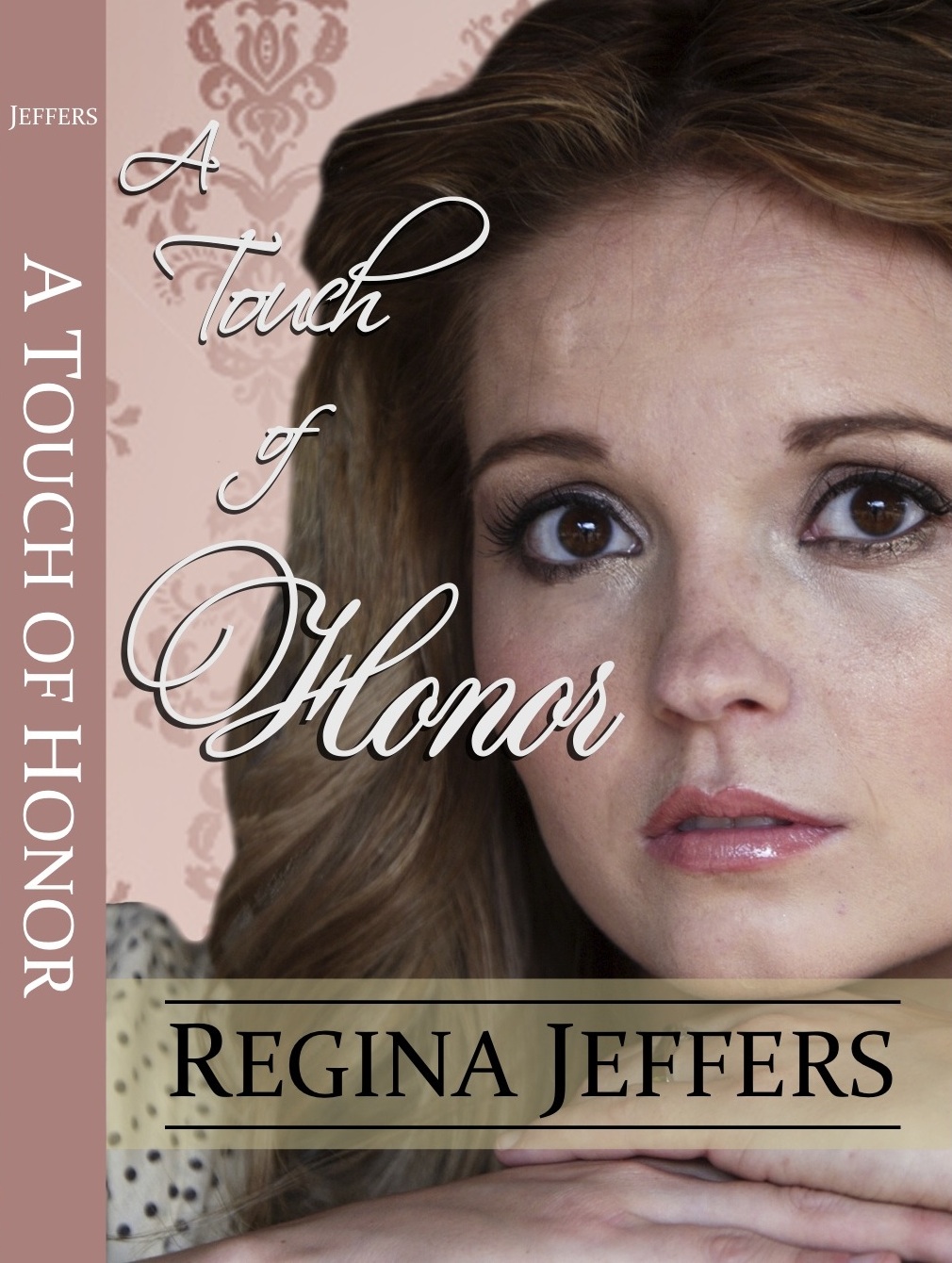
Today, I celebrate Book 7 in the series, one of favorites. As with each of the others, A Touch of Honor addresses what we sometimes think of as “modern” issues, but ones commonplace in the Regency Period. This one addresses the desire of young women to remain slim, as well as the addictive overuse of laudanum during this period.

Those who followed this series waited for this episode, which they had predicted to include the bringing together of Baron John Swenton and Miss Satiné Aldridge. However, for me, I had long ago forsaken the possibility of the two finding happiness. You see, I did not like the character of Satiné Aldridge, and before you chastise me by saying such things as “You created the girl, you could have endowed her with endearing qualities,” I get it! If I wanted Satiné to be as strong willed and intelligent as her twin, Cashémere, who is the heroine of book 3, I should have written her as such.

However, the more I thought of treating her as a “twin” to Cashémere in all ways, Satiné told me otherwise – told me that she had been raised in the “ideal” home with their maternal uncle, Lord Charles Morton, a baron, while Cashé had suffered under the care of their paternal uncle, Lord Samuel Aldridge, a religious fanatic. There was no means for them to be equals. Therefore, Satiné would not react to adversity in the same manner, as had her twin. The more I wrote of her, the less I liked Miss Satiné, and I made up my mind she was not good enough for any of the Realm heroes. That fact created a problem: Who would be the ideal mate for the VERY private Lord Swenton? John has never known love; his mother deserted him and the former baron (his father) for life upon the European continent. John means never to make the same mistakes as his father and never to know the scandal of a disastrous marriage, but from the beginning of their relationship, Satiné Aldridge offers nothing but duplicity and manipulations, even bringing Shaheed Mir’s notice to their marriage.

The books in the series are…
The Scandal of Lady Eleanor (Book 1) – the story of James Kerrington, Lord Worthing, and Lady Eleanor Fowler

A Touch of Velvet (Book 2) – the story of Brantley Fowler, the Duke of Thornhill (and brother to Lady Eleanor), and Miss Velvet Aldridge (the Fowlers’ cousin and Cashémere and Satiné’ s elder sister)

A Touch of Cashémere (Book 3) – the story of Marcus Wellston, the future Earl of Berwick, and Miss Cashémere Aldridge, the middle Aldridge sister and twin to Satiné Aldridge

A Touch of Grace (Book 4) – the story of Gabriel Crowden, the Marquis of Godown, and Miss Grace Nelson, a governess in Samuel Aldridge’s household and sister to a baron

A Touch of Mercy (Book 5) – the story of Aidan Kimbolt, Lord Lexford, a viscount, and Miss Mercy Nelson, the younger sister of Miss Grace Nelson

A Touch of Love (Book 6) – the story of Sir Carter Lowery and war widow, Mrs. Lucinda Warren

A Touch of Honor (Book 7) – the story of Lord John Swenton and, well, he starts out with Satiné

 A Touch of Emerald (Book 8) – the conclusion to the series and the story of Daniel Kerrington (son of James Kerrington by his first wife) and Lady Sonalí Fowler (the Duke of Thornhill’s daughter by his first wife).

His American Heartsong: A Companion Novel to the Realm Series – the story of Lawrence Lowery (brother to Sir Carter Lowery) and Miss Arabella Tilney

Book Blurb for A Touch of Honor

For two years, LORD JOHN SWENTON has thought of little else other than making Satiné Aldridge his wife; so when he discovers her reputation in tatters, Swenton acts honorably: He puts forward a marriage of convenience that will save her from ruination and provide him the one woman he believes will bring joy to his life. However, the moment he utters his proposal, Swenton’s instincts scream he has made a mistake: Unfortunately, a man of honor makes the best of even the most averse situations.

MISS SATINE ALDRIDGE has fallen for a man she can never possess and has accepted a man she finds only mildly tolerable. What will she do to extricate herself from Baron Swenton’s life and claim the elusive Prince Henrí? Obviously, more than anyone would ever expect.

MISS ISOLDE NEVILLE has been hired to serve as Satiné Aldridge’s companion, but her loyalty rests purely with the lady’s husband. With regret, she watches the baron struggle against the impossible situation in which Miss Aldridge has placed him, while her heart desires to claim the man as her own. Yet, Isolde is as honorable as the baron. She means to see him happy, even if that requires her to aid him in his quest to earn Miss Satiné’s affections.

The first fully original series from Austen pastiche author Jeffers is a knockout. – Publishers Weekly

ATOHCrop

Book Excerpt: (In this scene, John has reluctantly escorted his wife to a ball where he has encountered his baroness’s former “lover,” Prince Henrí of Rintoul. Deeply drowsy from the excessive laudanum she has consumed, Satiné is unaware of Henrí’s appearance in London. John has removed Satiné to his Town home, but his quick anger finds a target, Miss Isolde Neville, his wife’s companion and a woman he secretly desires.)

She had repaired the tat where the material had torn in one of the gowns presented to her by Lady Lowery. It was a beautiful royal blue confection, and Isolde had been anxious to wear it. Her cousins would think she had taken on airs, but she would enjoy their jealousy. It was like no gown she had ever thought to wear for she was essentially of a very practical nature. In truth, she would prefer to wear it for Lord Swenton’s eyes only, but those dreams would never know fruition. Tomorrow, the baron meant to remove his household to York, and soon after, Isolde would depart for Ireland. She would never return to England, and most certainly would never see London again. She would accept the intentions of one of her countrymen, marry, and bear the man a half dozen children. Yet, she would always remember her time with Lord Swenton. “Your days are numbered,” she warned her foolish heart. “No dancing a jig in celebration of your marriage. No wearing a gown, which would set his lordship’s heart a reeling.” A wistful sigh escaped before Isolde could swallow it. “Best to wear the drab clothes of a lady’s companion,” she chastised her whims. “It remains my armor against temptation.”

The sound of a ruckus below interrupted her thoughts. She rushed from her rooms to encounter the man over whom she had spent too many hours of late in daydreams. Lord Swenton carried his wife toward the lady’s quarters. Lady Swenton’s limp form announced the baroness had discovered a new supply of laudanum.

“My Goodness!” Isolde rasped and then raced ahead of the baron to open the connecting doors. She jerked the counterpane free of the bed to permit him to deposit Lady Swenton upon the mattress. “What happened?” Isolde asked as she undressed her mistress.

“Did you know?” the baron asked in accusatory tones. He stood beside his wife’s bed, his hands fisting and unfisting, arms akimbo.

Isolde’s fingers released the clasp of the baroness’s necklace and turned her mistress to her stomach so she could unlace Lady Swenton’s gown. Out of breath, she asked testily, “Did I know what?”

Lord Swenton’s voice had turned cold. “When you convinced me to escort my mother’s remains to York, did you know Lady Swenton meant to remain in London to meet her lover? Or was it your purpose for me to encounter Prince Henrí tonight? You did say this evening would be a monumental event.”

Isolde’s fingers froze in their task. “Have you taken leave of your senses?” Her hands wildly brushed away his allegations. “I have been nothing but loyal to you. Other than Lord Morse, I am ignorant of a potential lover, and I have never heard of Prince Henrí.”

“What of a heated spat between your mistress and Lady Fiona?” he accused.

“Nothing!” Isolde said defiantly. “When I came to Miss Aldridge’s service, the baroness was some four months with child. She withdrew from her social engagements shortly after my taking the position. I never held the pleasure of an acquaintance with the former baroness.” With a huff of exasperation, Isolde returned to Lady Swenton’s unconscious state. “If you will pardon me, I must attend to your wife.” Despite her best efforts, a soft sob escaped. He had never spoken to her harshly.

Within a heartbeat, the baron had circled the bed and had caught her to him. He drove Isolde backward until her spine was pressed against the interior door and his hard body plastered her front. “Forgive me,” he whispered roughly against her temple. “I never meant to harm you. Please, Isolde, I have acted a fool.”

Some dark, inexplicable passion rushed through her, and Isolde instinctively pressed against him. The white-flare of need ripped the breath from her chest, and she buried her face into the crook of his neck. “We should not…”

“Should not what?” His voice sounded as breathy as did hers. “Should not claim one moment of happiness?”

Isolde could not dismiss how aware she was of this man’s masculinity. “One moment would never be enough.” She could taste the salt upon his skin, and Isolde ran her tongue along the crease of his neck. A groan of desire rewarded her efforts.

A rush of silence followed before Lord Swenton placed his hands against the wall on either side of her head and lifted his body from hers. Immediately, she experienced the bleakness of his withdrawal. “Some way,” he rasped as he gently cuffed her cheek. “I mean to finish this. For now, please assist me with Lady Swenton. I cannot fathom what the future holds, but please know somehow my soul will find its way to you.”

* * *

After they had undressed Satiné, they had tucked his baroness into her bed to sleep away the effects of the medicinal. Then by silent consent, he had escorted Miss Neville into his sitting room to discuss what had happened earlier. “Evidently, my wife has discovered someone within my household to keep her confidences,” he disclosed when he had seated Miss Neville across from him and had poured her a small sherry and him a well-deserved brandy.

“No doubt Sally,” she asserted. “The girl has ambitions, but has not yet learned subtlety.”

Deep in thought, John nodded his agreement. “I will return the girl to Thornhill tomorrow. The duke has sent Mrs. Tailor and the boy ahead to Marwood Manor. I will see Sally returned to him.”

Miss Neville sat straighter. “Might you inform me of what occurred this evening?”

John closed his eyes to the shame racing to his heart. He dealt better with chaos when he could keep busy; this “rush” to wait endlessly vexed him greatly. “Lady Swenton could barely speak or move. If not for Lady Worthing’s assistance, the prince and much of the ton would have learned of Satiné’s dependency on laudanum. The only saving grace was my wife will likely not recall the appearance of Prince Henrí.”

“Is this prince Rupert’s father?” she asked quietly.

“In appearance, it would seem so. The boy has the countenance of the Prince of Rintoul. However, Prince Henrí claimed no previous knowledge of Rupert. He accused Lady Swenton of keeping secrets.” John recalled the familiar way the prince had spoken to Satiné, and fury rushed to his mind again.

“What does the prince mean to do?”

John attempted to place the tumult of his soul aside. “I have convinced Prince Henrí to call upon my household in a week. I did not think it wise for him to be seen entering Swenton Hall, but the prince made it clear he means to claim Rupert.”

“What will you do?” she whispered into the familiar silence that rested between them. John required these moments or he would run mad into the streets. The lady held no idea how important she had become to his sanity.

“What will I do?” he repeated. Every emotion within John rushed into the dark void of helplessness. “The question is what will my baroness do when her former lover and the father of her child makes an appearance on my threshold?”

Jeffers-Scandal2

51Q64wIzdVL._AC_US218_  51s8f51gtl-_sx331_bo1204203200_ 516yYuuIWKL._AC_US218_  51fa-15awfl-_sx331_bo1204203200_  51ykc0ayull 51wz7wk6k-l-_sx331_bo1204203200_  51itwdjj5xl-_sx331_bo1204203200_   514yjvddlbl-_sx331_bo1204203200_  51y7cf2bsvl-_sx322_bo1204203200_

Posted in book excerpts, Church of England, estates, fashion, Georgian England, historical fiction, Inheritance, Ireland, Living in the Regency, marriage, marriage customs, marriage licenses, medicine, Realm series, Regency era, Ulysses Press | Tagged , , , , , , , , , , , , | 2 Comments

James Wilmot on “Who Wrote Shakespeare’s Plays?” + an eBook Giveaway


Wilmot

anonymous engraving of James Wilmot – scanned from Serres, O The Life of the Author of the Letters of Junius, the Reverend James Wilmot, MD, London, 1813. ~ public domain via Wikipedia

James Wilton was supposedly the first to question whether William Shakespeare was the actual author of the plays and sonnets we now attribute to him. Wilmot was an English clergyman, having been educated at Oxford, and scholar from Barton-on-the-Heath, Warwickwickshire, some six miles from Stratford-upon-Avon. We know something of his Shakespeare research because his friend James Corton Cowell conducted two lectures at the Ipswich Philosophic Society on the subject in 1805. However, there are those who believe the Ipswich Philosophic Society did not exist, nor can they find a record of James Corton Cowell. That being said, Cowell’s two lectures DO exist in handwritten manuscript form: “Some Reflections on the Life of William Shakespeare.” They can be found in the Durning-Lawrence collection at London University. Could Cowell simply have written out his research, but not shared it with others?

D-LL_MS294_55

Page from a manuscript purportedly written in 1805 by James Cowell, which has since been determined to be a forgery. MS 294, Senate House Library, University of London ~ public domain ~ via Wikipedia

Sir Edwin Durning-Lawrence was a British lawyer and Member of Parliament. He was a strong advocate for the idea that Francis Bacon was the true author of Shakespeare’s plays. Durning-Lawrence penned several books on the subject and hosted public debates on his Baconian theory. His widow donated his research to London University upon his death, among those pieces were the two “Cowell” manuscripts, which tell something of Wilmot’s search for any books or papers that reference Shakespeare as being the author of the plays attributed to him. After covering a 50-mile radius of Stratford, Shakespeare’s home, Wilmot concluded that Shakespeare was not the author of the plays, but rather the author was Sir Francis Bacon. The problem is that Wilmot only confided his findings to Cowell. The actual research was supposedly burned.

It has even been suggested that Wilmot may have been the author of The Story of the Learned Pig (1786). “The anonymous pamphlet The Story of the Learned Pig, By an officer of the Royal Navy (1786) picked up the theme of reincarnation. This presents itself as the personal reminiscences of the pig, as told to the author. He describes himself as a soul that has successively migrated from the body of Romulus into various humans and animals before becoming the Learned Pig. He recalls his previous incarnations. After Romulus he became Brutus, and then entered several human and animal bodies. Adapting the Shakespeare theme, the pamphlet states that he became a man called “Pimping Billy”, who worked as a horse-holder at a playhouse with Shakespeare and was the real author of his plays. He then became a famous British aristocrat and general — identified only by asterisks — before entering the body of a pig. [McMichael, George L.; Glenn, Edgar M. (1962), Shakespeare and His Rivals: A Casebook on the Authorship Controversy, Odyssey Press, p.56. via Wikipedia]

220px-Toby_learned_pig

caricature by John Leech

 “Puns on the name “Bacon”, referring to the philosopher Francis Bacon, also appeared in the literature. In the poem ‘The Prophetic Pig,’ in The Whim of the Day (c.1794) a believer in reincarnation states, ‘I can easily trace…A metempsychosis in this pig’s face!…And in transmigration, if I’m not mistaken,/This learned pig must be, by consanguinity,/Descended from the great Lord Bacon. Thomas Hood’s poem The Lament of Toby, The Learned Pig also uses the Bacon pun, adding another on the poet James Hogg.  He describes the thoughts of a learned pig forced to retire from his intellectual pursuits to be fattened for slaughter.” [Learned Pig]

In The Times Literary Supplement, James Shapirio, author of Contested Will: Who Wrote Shakespeare?, declared the document [the lecture manuscripts] a forgery based on facts stated in the text about Shakespeare that were not discovered or publicised until decades after the purported date of composition. Peter Bower, an expert in paper history analysis, identified the paper as drawing paper, not writing paper, probably made shortly after the type was introduced in the mid-1790s. He noted that he knew of no instances of that type of paper being used to write out a long lecture. You can read the whole article HERE: Forgery on Forgery 

PP+SS Cover-01Introducing Pride and Prejudice and a Shakespearean Scholar 


Unless one knows the value of loyalty, he cannot appreciate the cost of betrayal.

What if Darcy and Elizabeth met weeks before the Meryton assembly? What if there is no barely “tolerable” remark to have Elizabeth rejecting Mr. Darcy’s affections, but rather a dip in a cold creek that sets her against him? What if Mr. Bennet is a renown Shakespearean scholar who encourages Darcy to act the role of Petruchio from Shakespeare’s “The Taming of the Shrew” to bring Elizabeth’s Katherina persona to the line.

ELIZABETH BENNET’s pride has her learning a difficult lesson: Loyalty is hard to find, and trust is easy to lose. Even after they share a passionate kiss outside the Meryton assembly hall and are forced to marry, Elizabeth cannot forget the indignity she experienced at the hands of Fitzwilliam Darcy. Although she despises his high-handedness, Elizabeth appreciates the protection he provides her in their marriage. But can she set her prejudice aside long enough to know a great love?

FITZWILLIAM DARCY places only two demands on his new wife: her loyalty and her trust, but when she invites his worst enemy to Darcy House, he has no choice but to turn her out. Trusting her had been his decision, but proving his choice the right one before she destroys two hearts meant to be together must be hers, and Darcy is not certain Elizabeth is up to the task.

Excerpt from Chapter Two, where Darcy learns the true identity of Mr. Bennet. You can see how the “history” becomes part of the story line. 

“Darcy!” Bingley called from the third storey balustrade. “I did not hear your carriage.”

“Likely because it is some two miles removed with a lame horse being tended to by Mr. Farrin. Do you possess an animal that would serve until my horse can heal?”

Bingley spoke as he rushed down the stairs to greet Darcy properly. “I sent my large coach to London to fetch my sisters to Netherfield, but the smaller carriage and its team is available. I planned to dine out this evening—before Caroline and Louisa arrive,” he said conspiratorially, “but I can take my curricle, if necessary arrangements cannot be made otherwise. Longbourn is only a little more than three miles removed. Permit me to send to the stables, and you may explain to the head groomsman what you require.” He motioned to the footman to fetch the groomsman. “Come join me in my study. You must be starving. Mr. Byers, ask Cook to send up something for Mr. Darcy and prepare a room for him.”

“Yes, Mr. Bingley.” The butler rushed away to do Bingley’s bidding.

Bingley motioned for Darcy to follow him. “I did not expect you today. In truth, I was not certain how long you might be required in Kent.”

“I removed my sister from my aunt’s residence and returned her to Darcy House yesterday,” Darcy explained. “Lady Catherine will not have such easy access to Miss Darcy at my home.”

“Another of her ladyship’s demands that you marry Miss De Bourgh?” Bingley asked in what sounded of concern.

“My aunt is hard to dissuade,” Darcy admitted.

Bingley ventured, “Perhaps you should choose another to wife.”

Darcy prayed his friend was not suggesting his younger sister Caroline would make a good mistress for Darcy’s properties. If so, Bingley would be as disappointed as Lady Catherine. “While we traveled to London, Georgiana suggested something similar.”

Bingley, thankfully, changed the subject. “I despise that I was unaware of your distress today. It would be pleasant to be of service to you.”

“You are of service to me,” Darcy corrected. “You have rescued me from Lady Catherine’s manipulations.”

“Most assuredly, but I wish to be more. I mean to employ your knowledge of running an estate to determine whether this one would serve me well. Therefore, I will be further in your debt.”

Darcy chuckled as he sat before his friend’s desk. “We shan’t keep tallies, Bingley. That is not the way of friendship.”

“Nevertheless, I will be in the positive this evening for more than a daring rescue of your person from Lady Catherine’s demands.” Bingley reached for a sheet of foolscap. “Permit me to send a note around to Mr. Bennet that I will be bringing a guest with me this evening.”

“I would be perfectly content to remain at Netherfield. You do not need to alter your plans simply because I have appeared upon your doorstep,” Darcy assured his friend. “I do not expect you to cry off at such short notice nor should you inconvenience Mr. Bennet’s cook by adding another to her preparations.”

“Nonsense,” Bingley declared good-naturedly. “If worse comes to worse, we will split the portions between us. You know I could never abandon you to a house with which you are unfamiliar. The library here is sadly lacking. Moreover, Mr. Bennet of Longbourn is Mr. Thomas Bennet.”

“Thomas Bennet?” Darcy asked. “The Thomas Bennet? The man who is both a Shakespeare and a Bacon expert and who means to refute claims that Francis Bacon wrote Shakespeare’s plays and sonnets? The one our professors at Cambridge so often quoted?”

“The very man,” Bingley said with a wide smile. “Bacon made this part of Hertfordshire his home, thus Mr. Bennet’s interest in the man. Bennet and a group of scholars have been trying to refute Wilmot’s research claiming that Bacon is the true author of Shakespeare’s plays.”

“Ah, naturally. Who better to look for Bacon’s imprint upon the work of Stratford’s hero than England’s most renown expert on each?” Although he considered the true pleasure of taking Bennet’s acquaintance, Darcy wondered more upon the Shakespearean influence upon a certain young lady who had set his blood on fire when he touched her. “I happened to be in Suffolk when James Cowell lectured at the Ipswich Philosophic Society back in ’05. I was preparing for my final exams and thought to gain several insights to impress my professors. It was all quite fascinating.”

Bingley began to scratch out his message to Bennet. “What I find fascinating,” his friend said as he dipped his pen again into the ink well, “has nothing to do with Bennet’s treasured manuscripts. I am more concerned with the fact that the man possesses five daughters, equally renowned for their beauty and their amiability.”

NOW FOR THE GIVEAWAY! LEAVE A COMMENT BELOW TO BE PART OF THE GIVEAWAY, WHICH CLOSES AT MIDNIGHT EST ON FRIDAY, JANUARY 10. THE WINNER WILL RECEIVE AN eBOOK COPY OF PRIDE AND PREJUDICE AND A SHAKESPEAREAN SCHOLAR


Posted in Austen Authors, book excerpts, book release, British history, Elizabethan drama, excerpt, Georgian England, Georgian Era, history, Jane Austen, legends and myths, literature, Living in the Regency, Pride and Prejudice, reading habits, real life tales, theatre, Vagary | Tagged , , , , , , , , , , , | 15 Comments

A Closer Look at “Mr. Darcy’s Present: A Pride and Prejudice Holiday Vagary”

Mr. Darcy’s Present: A Pride and Prejudice Holiday Vagary from Regina Jeffers  is currently on sale until January 5, 2020. Enjoy the excerpt below. 

Genre: Classics; Regency Romance; Austenesque; Christmas Romance

Book Blurb:

When we care more for another than ourselves, the seeds of love have an opportunity to blossom.

What if Mr. Darcy purchased a gift for Elizabeth Bennet to acknowledge the festive days even though he knows he will never present it to her? What if he suffers a terrible accident and cannot tend to his duties personally? What if, during his recovery, the gift is posted to the lady by his servants and without his knowledge? What if the enclosed card was meant for another and is more suggestive than a gentleman should share with an unmarried lady? Join Fitzwilliam Darcy and Elizabeth Bennet, for a holiday romp, loaded with delightful twists and turns no one expects, but one in which our favorite couple take a very different path in thwarting George Wickham and Lydia Bennet’s elopement. Can a simple book of poetry be Darcy’s means to win Elizabeth’s love? Only time will tell.

Excerpt:

Darcy turned to view his sister holding the card from her gift. Her eyes were filled with tears. “Do not fret, my girl,” he said as he scooped her into his embrace. It seemed to him since the incident with Mr. Wickham that Georgiana cried often. “I did not mean for my card to

bring you unrest.” He turned his attention upon the earl. “I will escort my sister into the hall. We will return in a moment, once Georgiana reclaims her composure.”

“Such dramatics!” Lady Catherine grumbled.

In the hall, he turned Georgiana so she faced him. Lifting her chin with his fingertips, he wiped her tears away with a handkerchief. “My sweet girl, I am grieved to have upset you. I thought the circlet would please you.”

“It does,” she insisted. “A girl could not ask for a finer gift or a better brother.”

“Then what brings on your dismals?” he said with a smile of encouragement.

“It is…it is just…” A new round of tears ensued.

“Georgiana,” he said with emphasis. “I cannot correct of what I am ignorant.”

She shoved the gift’s card into his palm. “I know I am foolish,” she sobbed. “But this…this is something…you write to a stranger.”

Darcy tucked her into his shoulder, so she might have her cry while he brought the card to where he could read it. To a woman who will always claim my admiration and respect. “Bloody hell,” he growled beneath his breath, although shouting the curse would have proved more satisfying. He turned Georgiana to him. One step at a time, he told his racing heart. “Georgiana, this card was meant for another. Your card spoke of the pride Lady Anne would know with your debut into Society. Mrs. Guthrie and one of the maids wrapped the gifts because I could not. Somehow the cards and the parcels were mismatched.”

“Truly, William?” she asked through tear-rimmed tones.

“You are the most precious gift our mother could share with me. I think only of your pleasure.”

“I thought I disappointed you,” she confessed. “And you were simply reassuring me of your love while still despising me for what occurred at Ramsgate.”

“I feared for you,” he explained, “but never despised you.” Before more could be said between them a shriek of joy from Lady Catherine told him his worries were far from over. “I have an uncomfortable feeling the card intended for you has been located.” He caught Georgiana’s hand and returned to the drawing room and the confrontation he had anticipated.

“Ah, Darcy ” Lady Catherine gushed upon his entrance to the room. “I now understand why you spoke of not having a wife. You meant to propose to Anne as a surprise to us all!”

Darcy glanced to the Matlocks to determine how they would take his rejection of Anne, but neither the earl nor the countess displayed any emotions. Swallowing his anxiety, he announced, “Your assumption comes from a misunderstanding, your ladyship. It is not my intention to propose to anyone today.”

Lady Catherine held up the card from Anne’s gift. “How else is my daughter to interpret a card that reads Lady Anne looks down upon you and smiles. You were always meant to be a Darcy?”

“Such is the reason for Miss Darcy’s tears,” he explained in more calm than he felt. “The cards for the gifts were knocked to the floor when the fairings were wrapped on my behalf by one of my maids. Fearing she would be sacked for her clumsiness, the maid placed the cards in the prepared parcels, but the girl knows not her letters and made an egregious error.”

“So Georgiana’s card was in Anne’s presentation and vice versa?” his lordship clarified.

“Yes,” Georgiana agreed before he could respond. As it was best he did not mention the fact Georgiana’s card was meant for Elizabeth Bennet, he permitted the tale to stand. His sister knelt before their cousin. “I am grievously sorry, Anne,” she said in comforting tones.

Darcy knelt beside his sister to catch Anne’s fingers in his hand. “It was never my wish to harm you in any manner. We have been dear friends since our youth. I cherish the memories of us together in the nursery and later the schoolroom. Of sharing books and learning to dance. You were my first partner. Do you recall how often I stepped upon your toes?” Anne smiled weakly. “Yet, that is not enough for a tolerable marriage. You deserve someone not so…”

“Moody,” Anne supplied in the softest of tones.

Darcy smiled upon her. “I have been called impossible upon a rainy Sunday afternoon.”

“Impossible,” Anne repeated as if she enjoyed the characterization of his personality.

“Will you be well?” Darcy asked. He did not want his cousin to suffer because of his stubbornness.

Anne shot a glance to her scowling mother. “I believe I feel a headache coming on. Thank you for the music box. I shall cherish it as one of my most precious memories.”

Darcy nodded before standing to extend a hand to Georgiana. He turned to speak to the earl. They were at Rosings, but Lord Matlock was still the head of the Fitzwilliam family. “I should never have attempted to claim the Christmas celebration so soon after my injuries. I have made a bungle of this family tradition and caused my dear cousin to claim her bed once again. I beg you to forgive my vanity in thinking my presence was required this day. Miss Darcy and I will take our leave, so you may continue your reveries without the specter of my foolishness overshadowing your joy.”

“But it is Christmas,” the countess protested.

“Which means no one will be upon the road to delay our return to London.” Before his relatives could lodge another objection, he said, “Come, Georgiana. We must claim the daylight.” He led her from the room with the sound of Lady Catherine’s avowals trailing behind them.

Later, as he assisted Sheffield with the packing, he knew his trials were not yet over. If Mrs. Osborne received the greeting meant for Anne, and Anne received the one meant for Georgiana, and Georgiana received the one meant for Elizabeth, then Elizabeth received the one meant for Sarah Osborne. I learned so much of myself through you. I pray the wedding bells you desire will bring you joy. He must find a means of explaining away how he thought to send an unmarried woman a gift and if not, discover a means to convince Elizabeth Bennet to marry him.

Buy Links:

Amazon  https://www.amazon.com/Mr-Darcys-Present-Prejudice-Holiday/dp/1537422022/ref=sr_1_5?ie=UTF8&qid=1473685089&sr=8-5&keywords=mr.+darcy%27s+present

Kindle  https://www.amazon.com/Mr-Darcys-Present-Prejudice-Holiday-ebook/dp/B01LYSCC2U/ref=sr_1_1?s=digital-text&ie=UTF8&qid=1473780113&sr=1-1&keywords=mr.+Darcy%27s+present#nav-subnav

Read for FREE on Kindle Unlimited

Author Bio:

Regina Jeffers, an award-winning author of historical cozy mysteries, Austenesque sequels and retellings, as well as Regency era romances, has worn many hats over her lifetime: daughter, student, military brat, wife, mother, grandmother, teacher, tax preparer, journalist, choreographer, Broadway dancer, theatre director, history buff, grant writer, media literacy consultant, and author. Living outside of Charlotte, NC, Jeffers writes novels that take the ordinary and adds a bit of mayhem, while mastering tension in her own life with a bit of gardening and the exuberance of her “grand joys.”

Social Media Links:

Every Woman Dreams: https://reginajeffers.wordpress.com

Website: http://www.rjeffers.com

Austen Authors: http://austenauthors.net

Facebook:  https://www.facebook.com/Regina-Jeffers-Author-Page-141407102548455/?fref=ts

Twitter: https://twitter.com/reginajeffers

Amazon Author Page: https://www.amazon.com/Regina-Jeffers/e/B008G0UI0I/ref=sr_ntt_srch_lnk_1?qid=1479079637&sr=8-1

Pinterest https://www.pinterest.com/jeffers0306/

BookBub https://www.bookbub.com/profile/regina-jeffers

Instagram: https://www.instagram.com/darcy4ever/

You Tube Interview: https://www.youtube.com/watch?v=vzgjdUigkkU

Posted in book excerpts, British history, George Wickham, Georgian England, Georgian Era, historical fiction, Jane Austen, Living in the Regency, marriage, poetry, Pride and Prejudice, Regency era, Regency romance, Vagary, writing | Tagged , , , , , , , , , , , | Comments Off on A Closer Look at “Mr. Darcy’s Present: A Pride and Prejudice Holiday Vagary”