PEERAGE SUCCESSION + WELCOMING THE RELEASE OF “COURTING LORD WHITMIRE” + A GIVEAWAY

In “Courting Lord Whitmire,” there is a lengthy scene where Andrew Whitmire claims his viscountcy before the House of Lords.

Although there were some exceptions to a peerage passing to the eldest son, the majority of those written about in Regency novels follow that pattern. The manner in which a peerage passed from one generation to the next was laid out in the original grant and was strictly followed. No peer could sign away his peerage to another person (gaming debts, dislike of the one who will inherit, etc.)

The heir apparent is the only son (or) eldest son of the holder of the peerage. The only exception would be the holder’s grandson would become the heir apparent if the holder’s son is deceased. Only an heir apparent’s death can remove him from the line of succession.

All newly created peers are introduce to the House of Lords by a distinctive ceremony of introduction that dates back to 1621. Although some changes have occurred over the years, the present day ceremony, as described by Publications.Parliament.UK, reflects the pomp and circumstance of the event. The elements of the present ceremony are…

(1)  there is a procession into the Chamber, in which Black Rod and Garter King of Arms lead the new peer, who is accompanied by two supporters, all three wearing parliamentary robes with special hats; at the Woolsack the new peer kneels and presents his or her Writ of Summons to the Lord Chancellor, while Garter presents the new peer’s Letters Patent of Creation;

(2)  at the Table of the House the Reading Clerk reads the Patent and Writ and the new peer takes the Oath of allegiance (or makes the solemn affirmation) and signs the Test Roll;
(3)  Garter “places” the new peer by conducting the peer, with the supporters, to the bench appropriate to their degree in the peerage; there, three times in succession, they sit, put on their hats, rise, doff their hats and bow to the Lord Chancellor; all involved then proceed out of the Chamber, the new peer shaking hands with the Lord Chancellor on the way out.  

Also see “Introduction of a New Peer to the House of Lords” for more details on the ceremony. 

The Regency Researcher site shares with us the cost of becoming a peer. 

The coronation robes and coronets of a baroness and baron ~ https://lornapeel.com/tag/parliament-robes/

“We think of a man being created a peer as having received an honor, and seldom think of his having to pay for it. However, whether a man was created a peer for merit or succeeded to a peerage of his father or other relative, he had to pay a fee. He also had to pay a fee if he were made a bishop and an additional one if he was translated from one see to a better one. 

“These fees are called homage fees, and some sources think the fees were a substitute for knight’s service. There are also fees to have the creation or the succession published in the Gazette.

“When the peer makes his first appearance at the House of Lords, he participates in an old age ceremony for which a fee also must be paid.

These fees were paid to the Receiver of Fees, who was a clerk in the House of Peers. In 1812 this was a Mr. Charles Sutherland.

Prince of Wales: upon creation – £703 6 8 Upon his first introduction to the House he paid £30.

A Duke paid £350 3 4 upon creation and £27 on first introduction

A Marquis paid £272 10 8 , then £19 6 8 upon introduction.

An Earl paid £203 3 4 upon creation, and £14 on first introduction.

A Viscount paid £159 7 4 upon creation, then £12 upon introduction.

A baron paid £150 upon creation and £ 9 upon introduction.

If a peer advanced in title, (If a baron was made a viscount or an earl) he was required to pay the appropriate fee, etc.)

Every bishop was required to pay upon his first Consecration and upon future promotions.

Promotion £14. The Archbishop paid £27 upon introduction.

This information is from the Royal Kalendar and annual Register for 1812.”

_____________________

Releasing Today: Courting Lord Whitmire: A Regency May-December Romance

At the bend of the path, an unexpected meeting.

She is all May. He is December.

But loves knows not time.

Colonel Lord Andrew Whitmire has returned to England after spending fifteen years in service to his country. In truth, he would prefer to be anywhere but home. Before he departed England, his late wife, from an arranged marriage, had cuckolded him in a scandal that had set Society’s tongues wagging. His daughter, Matilda, who was reared by his father, enjoys calling him “Father” in the most annoying ways. Unfortunately, his future is the viscountcy, and Andrew knows his duty to both the title and his child. He imagines himself the last of his line until he encounters Miss Verity Coopersmith, the niece of his dearest friend, the man who had saved Andrew’s life at Waterloo. Miss Coopersmith sets Whitmire’s world spinning out of control. She is truly everything he did not know he required in his life. However, she is twenty-two years his junior, young enough to be his daughter, but all he can think is she is absolute perfection.

Kindle 

Read for FREE on Kindle Unlimited 

Only $0.99

_______________

Excerpt from Chapter Five:

When they learned at Lady Stephenson’s gathering that the Countess of Savidge had taken a fall earlier in the day and had cancelled her entertainment, Verity had convinced Matilda that they should return to Parliament and plead to be admitted to the gallery to view Lord Whitmire’s introduction to the House of Lords.

“What if they turn us away?” Matilda had protested, the girl’s earlier bravado fading quickly before the pudding was set.

“Then we will discover a tea room nearby and wait,” Verity had said without the exasperation she felt. All afternoon, Matilda had bemoaned not being able to join Robinson in the gallery, but now that Verity had suggested their doing so, Matilda wished Verity to beg or to insist, so she would not bear any of the blame, if Lord Whitmire disapproved. It was the girl’s wish not to upset the delicate balance Matilda and Lord Whitmire had achieved, but, on this particular day, Verity had no time, or desire, to coddle the girl. “Do you not wish to view your father’s elevation?”

“Most assuredly, I would wish to observe the proceedings,” Matilda said softly. Her gaze remained steady, although her tone held unrelenting curiosity. “But I have heard it said only those women who hold exalted positions dare enter the gallery. Father may not be happy with our presence.”

“Miss Ridenour again?” Verity questioned. She should have known the chit would say something to discourage Matilda from her desire to sit with Robinson in the gallery.

She did not wait for the girl’s response; instead, Verity decided for them. She had considered Lord Whitmire’s possible disapproval before she had made her suggestion, but she refused to think of his lordship’s disdain when she had the opportunity to look upon him again, especially in such a life-defining moment. She could not consider not being a part of this event, even if it were from a distance. Although he did not recognize her total devotion to him, she wished to share the experiencewished to have the memory to cherish in her old age. Unfortunately for her badly bruised heart, her fascination with the man had not waned; rather, it had intensified the longer she remained in his company. “We shall ask, and, if refused, accept the tradition in which the ceremony is imbued.”

And so, with heavy reprimands delivered toward them by a clerk for even asking for permission to enter the gallery, along with a generous donation to the man’s purse, she and Matilda had been hidden behind a heavy drape, where they might peer down upon the floor of the House of Lords. After what felt like forever, the House was called to order by the Lord Chancellor. A prayer followed, and Verity’s anticipation rose. She tugged Matilda closer, placing the girl before her, so they could share the small space.

She explained in Matilda’s ear. “Black Rod, an officer of the Order of the Garter, has already escorted Lord Whitmire and your father’s two retinues to the King of Arms, who will lead the trio into the main chamber. Just wait a minute, and they will appear where we can see them.” True to her narration, his lordship and the others showed themselves, but, for Verity, the thrill was in watching Andrew Whitmire. Looking upon him, she had never known a prouder moment. His countenance remained stern and respectful of the majesty of the ceremony, while also holding a hint of contentment. He was a man meant for the aristocracy—noble and strong.

“Who is with Father?” Matilda asked softly, destroying the moment for Verity.

Swallowing the sigh of vexation rushing to her lips, Verity leaned closer to whisper once again. “According to tradition, his lordship must be escorted by two of his fellow viscounts. When Robinson goes through the ceremony, my brother will be accompanied by two barons. Lord Whitmire asked two of his former soldiers to serve him. Black Rod leads, followed by the Garter King. The peer in front of your father is the junior peer, Lord Franklin. The one behind Whitmire is Lord Lexford.”

“How did you learn all this?” Matilda asked with what sounded to be a nervous giggle.

Verity smiled easily, enjoying her confession before she spoke it. “I have the habit of overhearing what I should not. I listened as your father explained the process to Robinson.” Her smile grew. “Some day you will learn that men often think women have no brains to understand of what they speak. They sometimes treat the women in their lives as if they were a silent servant.”

“They enjoy strutting their colors as much as would an actor upon a stage,” Matilda observed in hushed tones. Verity realized the girl meant the goings on in the Lords, but Matilda’s words fit many situations where men gathered.

“Or as much as a diamond of the first water in a ballroom,” Verity said with another smile. She pointed over Matilda’s shoulder to the area below. “Notice each peer wears a robe designed to indicate his rank. Also notice that the Garter King of Arms carries a silver gilt scepter in his right hand. In his left is the patent of creation for your father.”

Matilda rose up on her toes and whispered, “Thank you for arranging this. I shall never forget your kindness. I did not think I would enjoy the spectacle of all this, but it is quite remarkable, is it not?”

“Very remarkable, and it is my pleasure to share this with you,” Verity replied in all seriousness.

She wished she could resist the pull and the push that always rested between her and Lord Whitmire. She was both perplexed and fascinated by the man. Her heart knew the deepest compassion when his long-time suffering, at no fault of his own, mind you, marked the lines about his mouth and his eyes. The manner of the conversations in which he partook displayed his quick wit and keen intellect. He was accustomed to giving orders and having them obeyed, but he was also one of the most reasonable men she had ever encountered. His lordship had a firm, stubborn nature, and Verity imagined they would have a regular stream of quarrels, followed by a round of passion, the type she had only read of in Minerva novels. She suspected he held the ability to sweep her off her feet, both, figuratively, and, literally, but he kept his desires rigidly under control. She both admired and despised him at the same time.

Carrying their cocked black hats in their left hands, the lords in the procession below reached the Bar of the House. Lord Whitmire carried his Writ of Summons in his right hand. They walked up the temporal side of the House. They bowed first to where the Sovereign would sit, if present, then to the table where the clerks sat, followed by a third bow to the Judges.

“What now?” Matilda asked. Her excitement showed upon the girl’s face.

“Your father will next approach the Lord Chancellor.” Verity waited, holding her breath until the Lord Chancellor raised his hat to acknowledge Lord Whitmire. “His lordship will kneel on one knee and present the letters patent of his creation to the Lord Chancellor. Once the Lord Chancellor accepts the patent on behalf of the King, he will hand it to the Reading Clerk to be read aloud to all the peers present.”

Along with Matilda, Verity held her breath as she listened to the formalities and to his lordship’s resonant, distinct voice. Then, the oddest thought caught her by surprise: She did not simply admire Lord Andrew Whitmire; she loved him. She could not remove her eyes from where the man stood, tall and proud, even when she felt Matilda shift before her. She could no more control the sense of longing in her chest than she could stop the world from spinning on its axis. The air, what there was to be had in their hiding place, thickened. Her breathing grew short.

“Verity?” Matilda’s voice held the girl’s concern. “Are you unwell? You are so pale. We should leave.”

Verity quickly shook off the idea. “In a moment,” she assured. “The ceremony nears its conclusion.” She returned her attention to what she could view of the proceedings. When the Reading Clerk finished reading the Summons, Lord Whitmire read the Oath of Allegiance. His full-bodied orotund voice carried to the rafters. “Now your father will sign the Test Rolls.”

As his lordship bent over the document to add his signature to a list that went back one hundred twenty-five years, Verity caught Matilda’s hand. “We should go. It is essentially over. Next, your father will change out of the ceremonial constraints and assume his seat in the Lords. Therefore, we should depart before we are seen. We promised the clerk not to be a distraction.” She led the girl through a door and down a set of stairs the clerk had said were rarely used. “I think we should have his lordship’s carriage take us to Whitmire House. Then the driver can return for Lord Whitmire and Robinson. We have no idea how long your father and my brother must tarry before they can leave without being thought poorly of. We might discover ourselves dining alone this evening.”

The door at the bottom of the stairs led to the outside and fresh air. Stepping into a small bricked circle, Verity inhaled deeply. She needed to clear her thinking. What was she to do? Without realizing it, she had given her heart to a man who would never love her.

Purchase Link:

NOW FOR THE GIVEAWAY: I HAVE THREE (3) eBOOK COPIES OF COURTING LORD WHITMIRE AVAILABLE TO THOSE WHO COMMENT BELOW. THE GIVEAWAY WILL END AT MIDNIGHT, THURSDAY,  MARCH 26, 2020. I WILL CONTACT WINNERS DIRECTLY TO SHARE THE BOOK.

Posted in book excerpts, book release, British history, customs and tradiitons, England, excerpt, Georgian England, Georgian Era, giveaway, historical fiction, Inheritance, Living in the Regency, publishing, Regency era, Regency romance, research, titles of aristocracy, writing | Tagged , , , , , , , , , , , , , , | 19 Comments

Meet Francis Grose, Author of the 1811 Dictionary of theVulgar Tongue

As my novels are set in the early part of the 1800s, attempting to discover appropriate words to express “dismay” or “disgust” often sends me searching out my online copy of 1811 Dictionary of the Vulgar Tongue, a Dictionary of Buckish Slang, University Wit, and Pickpocket Eloquence. The book is written by one Francis Grose.  

Amazon describes the books as such… 

The Georgian “Profanisaurus”.

From the 1790s to the 1820s, numerous editions of the Dictionary of the Vulgar Tongue were published. Looking at the slang and vernacular language of the time, this dictionary pre-dated Roger Mellie’s best-selling Profanisaurus by a good 200 years. Reprinted here, it covers the rude, the crude and the downright vulgar.Learn how the Georgians and early Victorians would insult each other and find out how some of today’s words and derivations have come about. But most of all, just dip in and see how our ancestors considered and talked about such subjects as sex and the workings of the human body.

But who was Francis Grose? Born about 1731, at Greenford, Middlesex, Francis Grose was the eldest son Francis Grose (Sr.) or (Esquire) and his wife Ann Bennett (or Bennet), daughter of one Thomas Bennett [you JAFF fans will know I smiled when I saw this name] of Kingston, Oxfordshire, who happens to be my 6th Great-Grandfather and Great-Grandmother. Francis Sr. was born in Berne, Switzerland, an immigrant who came to England in the early 18th Century, with a pedigree in the College of Arms. He was a jeweller of some renown living at Richmond in Surrey. He fitted up the coronation crown of George III (some accounts say George II, but either way he was a jeweller to a king). He was also a collector of prints and shells, which were sold around 1770. 

Frances Jr. (my 6th Great-Uncle) received a classical education, but did not attend university. He studied art at Shipley’s and even exhibited a stained drawing entitled “High Life below Stairs” with the Incorporated Society of Artists in 1768. In 1769, he exhibited tinted drawings of an architectural nature at the Royal Academy. According to the Dictionary of National Biography, Volume 23, “Grose illustrated many of his own works, and some of his original drawings are in the British Museum (Fagan, Handbook of Dept. of Prints, p. 193). From 12 June 1755 till 1763 he was Richmond herald. He then became adjutant and paymaster in the Hampshire militia. He said his only account-books were his right and left hand pockets: into one he put what he received, and from the other he paid out. From 1778 (or earlier) till his death, he was captain and adjutant of the Surrey militia. In 1773 he published the first number of his ‘Antiquities of England and Wales,’ &c., and completed the work in 1787 (London, 4 vols. folio; new ed. 8 vols. London [1783-] 1797, 4to.). Many of the drawings were made by himself, but in the letterpress he was helped by other antiquaries.”

As Francis Sr. was quite wealthy, Francis Jr. came into his wealth, which he quickly spent without much care as to when his next full pocket would be.

In 1789, he toured Scotland and enjoyed the patronage of Robert Riddell, another well-known antiquary, staying at Riddle’s estate, Friars Carse. There he made the acquaintance of Robert Burns, who wrote of Grose’s “Peregrinations through Scotland, collecting the Antiquities of that kingdom,” his “Hear, Land o’Cakes, and brither Scots.” 

Burns was quite vocal regarding Grose. He wrote “Ken ye ought o’ Captain Grose?” and what is termed a rather coarse “Epigram of Captain Grose.” 

The Antiquities of Scotland, published in 1789-1791, 2 vols. 4to. came about from in stay in that land. 

Early in 1791, he traveled to Ireland to for another antiquarian tour, but died on 12 May of an apoplectic fit while dining with his friend, Nathaniel Hone, in Dublin. He was buried on 18 May  in Drumcondra Church, near Dublin. 

From Wikipedia, we find this list of his works: 
A list of works ordered by original year of the publication of the first volume:

Others:

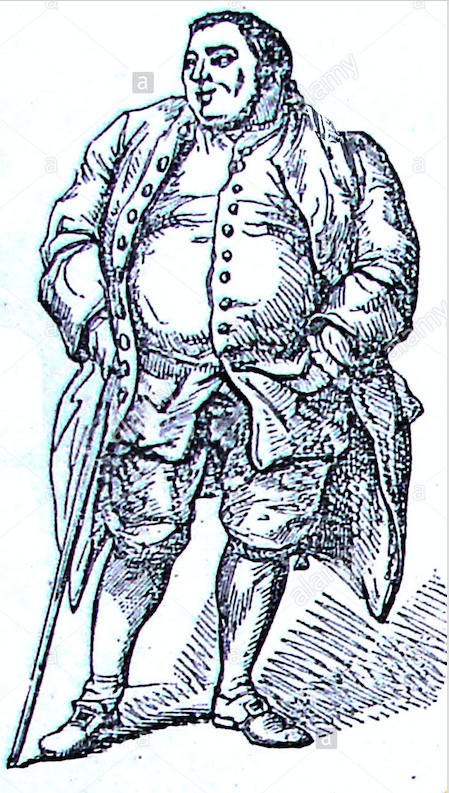
The Dictionary of National Biography says of Grose, “Grose has been described as a sort of antiquarian Falstaff. He was immensely corpulent, full of humour and good nature, and ‘an inimitable boon companion’ (Noble, Hist. of the College of Arms, pp. 434-438, Gent. Mag., 1791, vol.lxi, pt. ii. p. 660). There is a full-length portrait of him, drawn by N. Dance and engraved by F. Bartolozzi, at the beginning of his ‘Antiquities of England,’ vol. i. 1st ed. (for other portraits, see Noble, pp. 436-7; and Gent. Mag. 1791, vol. lxi. pt. i. pp. 493-494). Grose lived chiefly at Mulberry Cottage, Wandsworth Common (Brayley, Surrey, iii. r99). He married Catherine, daughter of Mr. Jordan of Canterbury, by whom he had two sons and five daughters. The eldest son, Colonel Francis Grose, was deputy-governor of Botany Bay (Notes and Queries, ser. ii. 47, 257, 291).” 

Posted in British history, England, Georgian England, Georgian Era, Great Britain, real life tales, research, Scotland | Tagged , , , , , , , , , | 2 Comments

The Many Visions of Jane Austen’s “Emma,” a Guest Post from Eliza Shearer

With the latest release of Emma at the theatres over the weekend, I thought some of you might like to view the various adaptations of Austen’s Emma through the eyes of another. This post originally appeared on Austen Authors on March 3, 2020.

SPOILER ALERT: I don’t wish to spoil anyone’s enjoyment of the latest film version of Emma but I discuss it in some detail below, so if you haven’t seen it yet but plan to watch it, please look away now!

We have been eagerly awaiting it since the last trailer made it to YouTube. Emma., with a full stop, is finally here. The bottom line: the visuals are stunning and I enjoyed it, even though I found it lacking in bits. It also got me thinking about the different Emma adaptations that have graced our screens in the last quarter of a century.

Emma: Handsome, Clever, Rich

Gwyneth Paltrow was my first Emma. I saw the 1996 film adaptation before I read the novel, so for years, Paltrow’s portrayal had a substantial impact on how I saw Austen’s character. However, I revisited the film recently, and it didn’t live up to my memories. Paltrow looks the part, but her acting is a bit off. It’s almost as if she was detached from everything happening around her.

Romola Garai in the 2009 BBC mini-series is quite the opposite. This is a much less restrained Emma, a girl full of passion and not beneath the odd tantrum. I did not like Garai in the first episodes; I found her too unladylike, with all that huffing and puffing. However, she does improve in later episodes, and towards the end, I thought she was quite good.

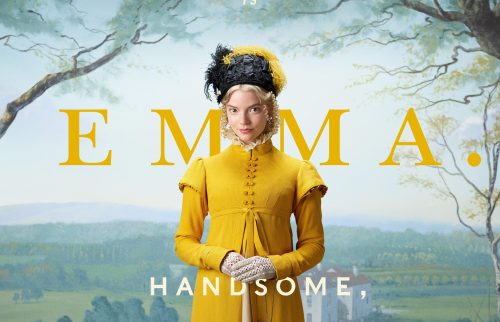
In the new Emma., Anna Taylor-Joy manages to make Emma very likeable despite her flaws, and therein lies my problem: Austen never intended for Emma to be that lovable. “I’m going to take a heroine whom no one but myself will much like,” she famously said, but Taylor-Joy’s big brown eyes make us root for her a bit too much.

The Best Friend

Even before they become friends, Emma knows Harriett Smith “very well by sight”, and that she is interested in her “on account of her beauty”. Jane Austen further gives us a detailed physical description of Harriet, something rare in her work, and it’s worth transcribing it in full:

She was a very pretty girl, and her beauty happened to be of the sort which Emma particularly admired. She was short, plump, and fair, with a fine bloom, blue eyes, light hair, regular features, and a look of great sweetness (…).

Emma, Chapter III

Given this description, why casting directors insist on selecting actresses that don’t fit Austen’s characterisation is a mystery to me. They are never as pretty as Emma (who is merely “handsome”), and as a result, the dynamics of the relationship are entirely skewed. Why would Emma want to become best friends with a rather dim and pliable girl with no family connections, if it wasn’t because she is truly a beauty to behold?

Another point of contention for me is that the actresses who play Harriet are always far too tall (just as Georgiana Darcy is typically played by actresses who are too short). My perfect Harriet would be petite and very pretty, like a live doll that Emma is drawn to play with. However, Gemma Whelan (the latest Harriett) is 5′ 6″, as is Louise Dylan (of the 2009 mini-series). Whelan at least is a blonde. Toni Collette is a terrific actress but, at 5′ 8″ and with her hair dyed red, she is miscast, to say the least.

The Hero

The actors playing Mr Knightley have a tough job. The character walks a fine line, and bringing to the screen the journey from family friend to romantic interest is undoubtedly a challenge. In general, I can only praise the gentlemen who have played him. Johnny Lee Miller, in particular, gets the look just right, although I can’t help but see Edmund Bertram at times in his portrayal.

I always imagined Mr Knightley as dark-haired, but I won’t hold this against Johnny Flynn, who is otherwise a very good actor. My problem with his casting doesn’t lie with his youthful looks for his age, but rather with his evident sex-appeal. When he appeared on screen for the first time, at least half of the audience in the cinema audibly gasped. It’s hard to undergo a believable evolution from uncle figure to dashing lover in that situation.

There is also the issue of the portrayal of the relationship between Mr Woodhouse and Mr Knightley. In Emma., the supposed friendship between Mr Knightley and Emma’s father is not really shown on screen. As a result, it looks like they don’t have much in common, other than their joint affection for Emma. I realise there are necessary edits to be made in feature films, but this is no excuse: the 1996 version manages much better to create the illusion of closeness between both men.

The Other Men

Mr Elton, in Austen’s words, “was reckoned very handsome”, to the point of Mr Woodhouse calling him “a very pretty young man”. Josh O’Connor isn’t quite right in the 2020 version, and it doesn’t help that he plays Mr Elton as a pseudo-Mr Collins. In comparison, Blake Ritson in the 2009 mini-series is excellent. As well as good-looking, Ritson’s portrayal of the character’s self-interest, vanity and superficiality is spot on.

As to Frank Churchill, I’m afraid the film versions don’t do the character justice. I am a huge Ewan McGregor fan, but that wig spoilt his performance in the 1996 adaptation. As to Rupert Evans (2009) and Callum Turner (2020), is it me or do they look like cousins? Evan’s slightly longer hair may explain a trip to London for its maintenance, but Turner’s buzz cut makes him sound shifty rather than vain. Also, I didn’t think Turner and Taylor-Joy had any chemistry, certainly not of the type presented in Austen’s novel.

The Rest of the Cast

In the 2020 adaptation, Miss Bates, one of my favourite Austen secondary characters, is played by Miranda Hart. Hart is a very well known comedian in the UK on account of the sitcom Miranda, which she co-writes and stars, and as a cast member in the series Call the Midwife. I am not a massive fan, but I think Hart makes a very believable Miss Bates. She brings the right mix of comedy and heartbreaking tragedy to every scene.

Ruper Graves and Gemma Wheelan are excellent as Mr Weston and Mrs Weston in this latest adaptation. They come across as a believable pair, and I love that he is played as a much more spirited man than in prior versions. The very talented Amber Anderson portrays Jane Fairfax very competently, like her predecessors in the role, and I loved the constant presence of servants in every scene. But I’m afraid I have to disagree with the portrait of John Knightley as a sort of Mr Palmer, uncomfortable in his role of parent and husband. And wouldn’t it be nice if the two Knightley brothers had looked remotely alike?

I have run out of space, but I would love to hear your thoughts on the different Emma adaptations! Which is your favourite? If you’ve seen the new film, did you enjoy it? Who do you believe makes the best Emma, Mr Knightley, Mr Woodhouse, Mr Weston, Mrs Weston, Harriet Smith, Miss Bates, Jane Fairfax?

Posted in Austen Authors, British history, Emma, film adaptations, Georgian England, Georgian Era, Guest Post, Jane Austen, Living in the Regency, reading habits, Regency era, Regency romance | Tagged , , , , , , , , | 4 Comments

Social Class in Jane Austen “Emma”

Hopefully, you will have the opportunity to view the newest film version of Jane Austen’s “Emma,” this weekend or have been fortunate to have viewed it already. I plan to see it with my friend Kim. Below are some of my thoughts on the character of Emma. 

There are those who claim Emma represents Jane Austen’s literary accomplishment. I am not of that persuasion, although I think my indifference comes more from the fact I do not find Emma Woodhouse a character I admire, than it does from Miss Austen’s ability to craft a tale. In Edward Austen-Leigh’s A Memoir of Jane Austen, he says that Austen, too, thought Emma not a character that many would like. Emma Woodhouse transforms from snobbish girl to mature woman in the length of the novel, which describes her path to self-knowledge.

So, what do we know of Emma’s character? First Miss Woodhouse…
** is 21 years of age
** believes in the rightness of her opinions
** is clever
** is handsome of countenance
** is rich (an oddity in Austen’s heroines)
** is snobbish about class structure
** possesses the tendency to permit her imagination free rein
** manipulates the path of Love for many of her acquaintances
** is the mistress of her father’s house since age 16
** dominates the affable Mr. Woodhouse
** thinks well of her abilities and judgments

Emma_1996_TV_Kate_BeckinsaleEmma is the younger of Mr. Woodhouse’s daughters. She resides with her father at Hartfield; Woodhouse is the second highest ranking man (behind Knightley) in the neighborhood. Mr. Woodhouse (like Mr. Darcy in Pride and Prejudice) comes from an ancient and well-respected family. Like Georgiana Darcy, Emma Woodhouse has a dowry of 30,000 pounds. Her sister Isabella is married to Mr. John Knightley, a lawyer in London and the brother of Mr. George Knightley.

The setting of this novel is more limited than many of the others. Highbury is the center of Emma’s world. People come and go, but Emma never leaves the beloved village where she reigns as the “queen” of society. This constriction creates a quandary for Emma. She would prefer not to associate with those below her social class, but if she acted as such, she would possess no social life whatsoever.

Mr. George Knightley is the ideal country squire. He takes his responsibilities to his land (Donwell Abbey) and to his dependents seriously. He is known for his benevolence to others. The Knightleys and the Woodhouses are the upper echelon of society in Highbury.

One of the things that might appear as out of step with many Regency novels (but is more to the truth of the day) is the fact that Mr. Knightley does not keep a stable of horses. He prefers walking to riding, and when horses are required for his carriage, Knightley lets them. This is a sore point for Emma, who thinks Knightley acting so has people not recognizing his proper place in society. Emma feels that Knightley encourages too much familiarity with those below him.

stovel-figure4Knightley’s interactions with people is in sharp contrast to Emma’s opinions. Knightley is cognizant of social distinctions, but he presents respect to those who are deserving of it. For example, whereas Emma objects to Robert Martin’s position as a tenant farmer on Knightley’s land, Knightley calls Martin superior to Harriet Smith, saying that Martin is a “respectable, intelligent, gentleman-farmer.” Knightley claims Harriet without intelligence and without connections. His words are not disdain, just the truth. Even though Harriet possessed beauty and a sweet nature, her illegitimate parentage would keep her from aspiring to a man above Martin’s station in life. In contrast, Knightley declares Jane Fairfax an appropriate companion for Emma. He judges Miss Fairfax as intelligent, beautiful, and accomplished (although the woman is without a fortune).

Emma is offended by Mr. Elton’s offer of marriage because she feels Mr. Elton should not think himself her equal socially. This situation predisposes Emma to find the new Mrs. Elton as vain and possessing too much self-importance.

Emma’s snobbish attitude is very evident when she tells Harriet:
“A young farmer, whether on horseback or on foot, is the very last sort of person to raise my curiosity. The yeomanry are precisely the order of people with whom I feel I can have nothing to do. A degree or two lower, and a creditable appearance might interest me; I might hope to be useful to their families in some way or other.”

Emma even goes so far as to tell Harriet that it pleases Emma that Harriet refused Martin. “I could not have visited Mrs. Robert Martin of Abbey-Mill Farm.”

Below the Knighleys and Woodhouses, we find Mr. and Mrs. Weston. Mr. Weston spent time in the military, but his fortune comes from trade. The Eltons are also part of this middle ground. All we know of Mr. Elton’s past is that he is “without any alliances but in trade.” As a vicar, he has received a gentleman’s education and Elton is accepted in the finer homes in the area. Mrs. Augusta Elton comes to her marriage with a dowry of 10,000 pounds via her parents’ fortune in trade. Some find it ironic to hear Mrs. Elton speaking of her sister’s family – a family by the name of Sucklings. The Sucklings flaunt their wealth with a large estate near Bristol and a barouche-landau. In this social sphere, we also find Mrs. Bates, who is the widow of a clergyman. Although the woman’s marital status keeps her in the company of the wealthier families, Mrs. Bates and her unmarried daughter reside in let rooms above one of the shops in Highbury. Even so, the Bateses depend upon “the kindness of others” for the luxuries of life. Mrs. Goddard is the last of this class. She is mistress of the village school.

Some of Emma’s neighbors are part of the “upwardly mobile” class. These include the Coles (who prospered in trade), Robert Martin (a farmer on the Donwell Abbey estate), the Coxes (country lawyers in Highbury), Mr. Perry (the apothecary), and Mr. Hughes (a physician).

We note Emma’s reluctance to interact with those in this group beyond what is necessary. In fact, she thinks to refuse an invitation to a dinner at the Coles until she learns that the Westons and Mr. Churchill will attend.

Below the Coles, etc., we find Mr. and Mrs. Ford (shop owners), Mrs. Stokes (the Crown Inn’s landlady), William Larkins (Mr. Knightley’s steward), Mrs. Wallis (the pastry cook’s wife), and Miss Nash and Miss Prince and Miss Richardson (school teachers). Harriet Smith would be part of this level of society if not for Emma’s patronage.

maxresdefaultHarriet Smith is the illegitimate daughter of a merchant, who placed her with Mrs. Goddard, but who ignored Harriet since the placement.

“In taking up an illegitimate parlour boarder in Mrs Goddard’s village school, Emma chooses a protégée she can do what she likes with. There is a snag: Harriet has already formed an attachment with a young farmer, Robert Martin. Emma tries to force the issue by telling Harriet that she (Emma) cannot possibly associate with anyone of Martin’s class. The influential American critic Lionel Trilling argues that Emma is ‘a dreadful snob.’ Being aware of one’s position in society, however, is not the same as being a snob.

“Critic Paul Pickrel argues that Trilling has simply misread Austen’s novel. Whatever we think of her heroine, we shouldn’t take what she says at face value. Emma wants to control everyone and everything around her. The combination is a dangerous one, and by interfering in Harriet’s life she poses a real threat to the future of a naive 17-year-old. But it is too simplistic to say snobbishness causes her to sideline Robert Martin: she wants Harriet to herself and, like a child, will say anything to keep her.” [Austen’s Outspoken Heroines]


Other Highbury characters include James (Mr. Woodhouse’s coachman), Patty (the Bateses’ maid), and Mrs. Hodges (Mr. Knightley’s cook).

The characters who visit Highbury and change the village’s complexion include Jane Fairfax (a rival to Emma for Mr. Knightley’s affections), Frank Churchill (who seeks Jane’s affections and flirts with Emma), Mrs. Elton (who snubs Harriet and attempts to manage Jane), and the gypsies.

Austen masterly weaves these levels of society together. The characters of Mrs. Bates and Miss Bates are the link holding the differing levels together. Miss Bates is gregarious and likable, and the woman, as well as her mother, are the “comic relief” in the novel. Emma’s poor treatment at Miss Bates is the source of Mr. Knightley’s criticism of her and the turning point in the novel.

Although Austen does not go so far as to include characters such as Squire Western from Fielding’s Tom Jones in the plot of Emma, she does display hints of what we find in her last novel, Persuasion: self-made men who are superior to the gentleman class.

“Some of Austen’s female characters – Jane Bennet, Fanny Price, Anne Elliot – are gentle and passive. Austen’s two favourite heroines, Elizabeth Bennet and Emma, are precisely the opposite. Both are able to have equal and intimate relationships with men through their use of speech and laughter. In her essay ‘Silent Women, Shrews, and Bluestockings,’ feminist critic Jocelyn Harris argues that in allowing her women characters to speak so cleverly Austen subverts ‘misogynist constructions of women,’ who ‘have always been discouraged from knowing, speaking, and writing.’

19635888.gif “In Emma, says Harris, the heroine’s openness is preferable to Jane Fairfax’s reserve, even if Emma ‘says too much too often.’ She, ‘like Elizabeth Bennet, speaks too freely because her father’s power is weak.’ But Austen shields these two outspoken, intelligent heroines from being labelled shrews by the use of free indirect speech – so we sometimes find them thinking uncharitable thoughts that they are too tactful to express out loud. Austen was highly conscious of the effect of gender on language. Anne Elliot in Persuasion comments that ‘men have every advantage of us in telling their story. Education has been theirs in so much higher a degree.'” [Austen’s Outspoken Heroines]

“Jane Austen and her works are generally considered representative of the late eighteenth-century “classical” world view and its values—judgment, reason, clarity of perception—those of the ‘Age of Reason.’ In its best sense, this is a moral world view, reflecting the values of the Enlightenment. Austen’s values represent order in the face of disorder, but her concept of order embodies what is true, organic, living, not the static order imposed merely on the exterior, from ‘society’ or ‘the church,’ for example. Austen’s attitudes actually differ in subtle ways from the conventional manifestations of the classical attitudes and forms of the late eighteenth century—of the excesses of classicism that the Romantics rebelled against so vehemently. However, Jane Austen’s novels can also be called anti-Romantic in that they counter the extremes of the Romantic imagination epitomized by the Gothic novels so popular during her time, and satirized by Austen in Northanger Abbey. In Emma she also satirizes romantic excess, particularly in the character of Harriet Smith who, in a sense, enshrines Mr. Elton by keeping as ‘her most precious treasures’ relics of a scrap of ‘court plaister’ he handled and an old pencil piece that had belonged to him.

“The ordered society in Austen’s world is one in which people live in authentic harmony—socially, economically, emotionally, and ethically. Balance, order, and good sense exist in the face of too much sensibility; a balance of intellect and emotion, thought and feeling, outer and inner experience, society and the interior life, is the key to understanding Austen’s schema of meaningful experience and right relationships. Throughout Emma we are part of the energy of the novel leading toward the fulfillment of this ideal in the vitality of the characters.” [PERSUASIONS ON-LINE V.21, NO.2 (Summer 2000) The Dilemma of Emma: Moral, Ethical, and Spiritual Value by Karin Jackson.]


[Note: Squire Western is a caricature of the rough-and-ready, conservative country gentleman. Affectionate at heart, the Squire nevertheless acts with extreme violence towards his daughter Sophia, by constantly incarcerating her, and even verbally and physically abusing her. However, since the Squire is a caricature, Fielding does not intend for us to judge these actions too harshly. Similarly, the Squire’s insistence on Sophia marrying Blifil has less to do with greed than with his stubbornness and adherence to tradition. Squire Western’s speaks in West Country dialect, and peppers his speech with curses.]

Posted in British history, Great Britain, Jane Austen, Living in the Regency, Regency era | Tagged , , , , , | 24 Comments

The Lost Art of Letters, a Guest Post from Elaine Owen

The day after I wrote my post on Mailing Letters in the Regency, the lovely Elaine Owen shared this post on Austen Authors. I thought it appropriate to revisit this topic. This post originally appeared on Austen Authors on 3 January 2020. Enjoy! 

Letter writing, that old-fashioned art we hardly practice any more, has changed a great deal since Jane Austen’s day. Writing letters back and forth flourished in the days before electronic communications but now it’s in danger of dying out completely. This was brought home to me recently when I had a conversation with my son. This is the same son who moved out of our house last June. He recently discovered that he can no longer hand deliver his rent check to his landlady and  told me he was going to have to mail his checks from now on.

Me: So you’re going to need to buy some envelopes and a book of stamps this weekend.

Son: And I put the stamps on those little things you use to hold the letter, right?

Me: Envelope. You mean envelope.

Son: Right.

Me: You put a stamp on the envelope and put your check inside it.

Son: What kind of stamp?

Me (slightly shocked): The kind you buy from the post office! And then you have to put your landlady’s address on it.

Son: That goes on the front, right?

Me (deadpan): No, the back.

Son: Oh, that’s the side with the little flap, right?

Me (trying not to laugh): Yes, the flap. That’s the back. Just kidding, you put the address on the front. You put the stamp on the back.

Son: OK.

Me: Just wait till you have to put your return address on it. That’s really confusing.

Son: I’m going to need some help figuring this out.

At this point I laughed out loud. This is the kid who taught me to use HDMI cables! But it got better.

Son: Then you put the letter in one of those big containers, right?

Me (blank stare): What?

Son: One of those metal containers they have outside post offices, right?

Me: You mean mailboxes?

Son: Nods

Me: You don’t have to go to the post office. You can just put the letter in your own mailbox at home.

Son: Oh, you mean they’ll pick up your mail and take it with them when they come to drop stuff off for you?

Me: Yes. They do both at the same time, at least in most places.

Son : Cool!

Yes, sending letters via the post seems to be dying out! But in Jane Austen’s day upper class people wrote a lot of letters, both for business and for pleasure. A substantial part of any gentleman or gentlewoman’s day was given to correspondence. Jane herself is estimated to have written some three thousand letters over her lifetime (!), and every novel she wrote has the heroine writing and receiving letter. Letters in her day must have been what phone calls, emails or text messages are to us.

Knowing how to write a letter in regency England was a complicated task! To start with, the letter writer had to pick the kind of paper they were going to use. Paper was generally made from cotton and linen mixed together, and each paper producer used their own unique combination of these elements. They all had their own standard sizes, weights, textures, and other qualities. Each paper was so unique, in fact, that paper producers sometimes applied a watermark to their own brand to make it readily identifiable to the buyer.

The letter writer also had to choose a quill pen, the ink they wanted to use, a pen knife (to sharpen the quill as needed), and either sand or blotters to use during their writing (to dry the ink). Quill pens and pen knives came in a dizzying array of choices, from dull and practical to ornate and costly. A writer’s choice of these instruments, like their choice of writing paper, revealed much about their personality, their social status, and even their finances.

The postage charged for a letter depended partly on how many pages were in the letter, so the writing space inside a letter was at a premium. It was not unusual for a letter writer to fill up as much of the paper as possible and then turn the page on its side and write over the previous lines at a right angle.

Envelopes did not yet exist, so once somebody finished writing their letter they folded the left over blank sections of the paper so as to cover up the written portion. Then they wrote the address in that blank portion. Of course, to do this the writer had to make sure there actually was a blank section! There were guides on how to fold a letter in the most practical yet attractive way. Without a doubt writing a letter took some careful planning!

Finally, the letter writer had to choose how to send their missive. Here, too, there were choices. In town, for letters going to recipients in the same part of town, the penny post delivered mail the same day and was pleasingly inexpensive. But letter writers who wanted to send a message to another part of town usually had to hire a messenger to carry it directly. The messenger would be paid by the recipient, not the sender. Outside of town the system was still fairly rapid, taking two or three days in most cases, but the recipient still usually paid to receive the letter. There were times when the recipient simply could not afford to accept it.

In Austen’s day certain government officials could also choose to “frank” the letter, meaning that they would pay the delivery charges up front and the recipient would pay nothing. (You may remember that Edmund uses his father’s status to do this for Fanny in Mansfield Park.) Eventually the government realized that having postage paid up front was the most efficient way to go, and from then on it was customary to buy a stamp to place on the letter to show that the cost of delivery had been paid. But that change did not come about until well after Austen’s death.

Letters are key to many events in Austen’s novels. For example, take the events of Pride and Prejudice. The Bennets find out about Mr. Collins’ impending visit by letter. Caroline Bingley flirts with Mr. Darcy as he writes to his sister and even offers to mend his pen for him. After Darcy’s failed proposal to Elizabeth, he tells her the truth about Bingley and Wickham in a letter. When Elizabeth is visiting Derbyshire she finds out about Lydia’s elopement via a letter from Jane. And Elizabeth receives crucial information about Darcy in a letter from her aunt Gardiner. The list could go on and on!

My son, alas, still does not know how to send a letter. He discovered that he could pay his landlady electronically and the teachable moment was gone. Eventually he will have to learn but it seems unlikely that he will ever sit down, Darcy style, to pour out his heart to the woman he loves using paper and pen.

Here’s a quick trivia challenge for you: can you guess how many times letters are referenced in Austen’s six main novels? Which novel uses the word letter the most? Which one uses it the least? Let me know in your comments below, please!


Posted in Austen Authors, customs and tradiitons, Georgian England, Georgian Era, Guest Post, Jane Austen, reading habits, real life tales, Regency era, writing | Tagged , , , , , , , , | Comments Off on The Lost Art of Letters, a Guest Post from Elaine Owen

The Role of Servants in Jane Austen’s Novels, a Guest Post from Eliza Shearer

To complement my series on Life Below Stairs, I thought you might enjoy this piece from Eliza Shearer which first appeared on Austen Authors on 7 January 2020. 

One of the things I love about Jane Austen is that nothing is wasted in her books. Even the tiniest of details is used to convey information of some kind or as a plot device. This includes the servants, who are ubiquitous in her novels. Let’s look at the role they play in a bit more detail. 

Servants as a Mark of Gentility 

In Jane Austen’s novels, we meet characters in very different financial circumstances, but even most of those bordering on poverty manage to have servants of some kind. In Emma, Mrs and Miss Bates have a tiny income, but it is enough to pay for a servant, Patty. In Mansfield Park, the impoverished Mr and Mrs Price employ an “upper servant,” Rebecca, and “an attendant girl”, Sally, described as of “inferior appearance.” 

Not having at least a girl to help around the house is the Regency equivalent of near-destitution. In fact, only Mrs Smith, as a “poor, infirm, helpless widow” in Persuasion, is “unable to afford herself the comfort of a servant,” which shows the extent of her desperation.  

Servants as Proof of Personal Wealth

No surprise here: the larger the fortune of the master, the more numerous the servants working for him or her. Stately homes such as Rosings, Pemberley or Mansfield Park came with a small army of servants to keep them ticking like clockwork. However, in Longbourn, the Bennets have to make do with five servants (butler, cook, housekeeper, maid and scullery maid) for a household of seven.  

Likewise, in Austen’s novels, a decrease in the number of servants indicates a change in financial circumstances. In Sense and Sensibility, the Dashwoods have to move to a cottage in Devonshire with only “two maids and a man” to attend to them. In Persuasion, the Elliots move to Bath in part because they will need to keep fewer servants. 

Servants as a Source of Information about the Household

Servants knew a lot about the families they worked for. Anything done or discussed in the house was at risk of being talked about. In Pride and Prejudice, Mrs Reynolds, the housekeeper, gives plenty of information about Mr Darcy and Georgiana, and “had evidently great pleasure in talking of her master and his sister.” Mrs Reynolds’ praise contributes to changing Elizabeth’s perception of Darcy.

The characters in Jane Austen’s stories know that one needs to be careful with what one discusses in front of the help, although this can be difficult at times. Also in Pride and Prejudice, when Elizabeth returns to Longbourn from Hunsford, she is in despair when she realises that all the servants must know about Lydia’s escape with Wickham. She knows the town gossips will soon know all about it. 

Servants as a Reflection on Their Masters

Whenever Austen shows us how someone treats a servant, she is also conveying a wealth of information about that character. Take Fanny Dashwood in Sense and Sensibility, when she is discussing annuities with her husband. Annuities were similar to pensions and were paid by masters to reward the loyalty of former servants unable to work because of advanced age or poor health. Fanny makes it clear that she dislikes annuities very much:

“An annuity is a very serious business; it comes over and over every year, and there is no getting rid of it. (…) My mother was clogged with the payment of three to old superannuated servants by my father’s will, and it is amazing how disagreeable she found it. (…) My mother was quite sick of it.”

Sense and Sensibility, Chapter 2

In contrast, Colonel Brandon’s kindness and sense of duty towards his dependents are shown through how he acts towards a previous servant who has “fallen into misfortune”. His concern leads him to “visit him in a spunging-house, where he was confined for debt.” There, Brandon finds Eliza, his disgraced sister-in-law and former love, who is dying of consumption, which brings me nicely to my last point. 

Servants as a Plot Device 

In some occasions, Austen uses servants to advance or alter the course of the story or even deliver the odd red herring. In Sense and Sensibility, a servant unwittingly causes a fair deal of despair amongst his mistresses when he tells the Dashwood ladies that Mr Ferrars is married. As well as sowing confusion, the man’s words show Lucy Steele’s maliciousness when the situation is cleared up soon afterwards. 

In Mansfield Park, when the family visits Sotherton, Mrs Norris behaviour has severe implications. She acts selfishly, associating with the servants to obtain some cream cheese and pheasants’ eggs. As a result, Julia Bertram is forced to keep Mrs Rushworth’s company, Henry Crawford and Maria Bertram are left unchaperoned for quite some time, and we all know what happens next. 

The Grey Areas

Austen also shows us some grey areas in the relationships between master or mistress and servant. In Mansfield Park, Fanny Price’s position in the Bertram household is unclear. She is quiet and accepting of her fluctuating status, but how would someone with more spirit react to the way she is sometimes treated by the Bertrams and Aunt Norris in particular?

Enter Susan Price, Fanny’s spirited little sister, who eventually replaces her as Lady Bertram’s companion. Is she to be considered a relative, or little more than a servant? In Miss Price’s Decision, the implications of this question are apparent when she goes into society in London and Bath, where her position is challenged by both her superiors and her inferiors.

Susan, like all members of Regency society, wants to know her place in the world. Will she find it?

Miss Price’s Decision is available in the leading online bookstores.

Can you think of other examples of the role of servants in Jane Austen’s novels? 

Posted in Austen Authors, book excerpts, Emma, Georgian England, Georgian Era, Guest Post, Jane Austen, Living in the Regency, Mansfield Park, Pride and Prejudice, reading habits, Regency era, servant life, writing | Tagged , , , , , , , , , , , | 2 Comments

Stagecoach Travel During the Regency

It was the late 1700s before the roads were in good enough shape to support coach travel. People until that time were of the nature to ride a horse or walk. Goods were placed upon pack horses. The roads were often muddy and full of ruts. Road surfaces were expensive to maintain and became the “option” of the local gentry or the aristocracy. It was nearly impossible to travel during the rainy seasons. 

The first stage coach company established a route between London and York in the first decade of the 1700s. It would take about 10-14 days to travel from Edinburgh, Scotland to London by the mid 1700s. By the mid 1800s, one could make the same journey in 3-4 days. 

A_Coach_Stop_on_the_Place_de_Passy_-_Edmond_Georges_Grandjean_-_Google_Cultural_Institute

Coach Stop on the Place de Passy, and change of horses, by Edmond Georges Grandjean via Wikipedia

According to Wikipedia, “A stagecoach is a type of covered wagon used to carry passengers and goods inside. It is strongly sprung and generally drawn by four horses, usually four-in-hand. Widely used before the introduction of railway transport, it made regular trips between stages or stations, which were places of rest provided for stagecoach travelers. The business of running stagecoaches or the act of journeying in them was known as staging. Originating in England, familiar images of the stagecoach are that of a Royal Mail coach passing through a turnpike gate, a Dickensian passenger coach covered in snow pulling up at a coaching inn, and a highwayman demanding a coach to ‘stand and deliver.'” The coach traveled in segments or “stages,” thus the name. The coach traveled at 5-7 miles per hour. They changed out hours at the “stages,” meaning about every 2-3 hours. At a staging inn, the travelers could find a bit to eat or take care of their personal needs. He could also spend the night at the inn and take a different coach the following day. 

According to the Georgian Index, “The coach body was suspended on leather straps, called thorough braces, to absorb some of the road shock, but the hanging vehicle body must have swayed terribly. Passenger were expected to get out and walk up steep hills to spare the horses and were even expected to help push the coach when the wheels became mired in mud holes. Worse yet, robberies by highwaymen were so common that paste jewelry was usually carried on trips. Progress on the poor roads was slow and coaching inns were busy, noisy places where uninterrupted sleep was almost impossible. Travelers arrived at their destinations motion sick, muddy, and exhausted.

“The coaching inns provided a support structure for coach routes. Fresh teams of horses were kept in readiness for changing out the exhausted team that had just run the previous stage of the journey. These teams were contracted to stage lines or the Royal Mail. Other horses were available to be leased by individuals. Crack teams of hostlers prided themselves in changing mail coach teams in as little as three minutes. Passengers could get a meal at an appropriately timed stop at a coaching inn. Many inns were famous for house recipes. Others were know for taking advantage of passengers by providing undercooked food or slow service. Inns were generally built around a central cobbled courtyard that gave some protection from the weather and made it easy to watch for coaches coming in. However, the convenience was offset by the difficulty in sleeping in a place where servants and passengers constantly came and went, horns were blown to announce arrivals and departures, and teams of horses created a constant clatter on the cobblestones. Travel guides generally advised coach passengers who were spending the night to stay at an inn rather than the main coaching inn.”

Mail coaches traveled much faster than a private coach owned by a member of the gentry would do. They were not required to wait for changes, did not spend the night anywhere, and had relief drivers. 

Stage coaches used their own horses, or horses under contract purely to the stage company.  They had their own drivers, not postilions, so it was not necessary for them to adhere to the speed limits put on private hires.  Stage coaches did stop at night, unless they were express routes, which operated only between a few large towns.  There were night coach routes, too, that operated only at night, but theses employed the worst vehicles, worst horses, and worst drivers, so passengers customarily avoided them.  They mostly carried packages between towns without going through London. 

stagecoach.jpg Stage coaches averaged about 7 miles per hour on the turnpikes, but much slower on secondary roads, which they traversed often since they were the only real public transportation connecting smaller towns. They also operated across the country instead of always radiating from London like the mail coaches did. They pushed their horses hard and carried LOTS of passengers, so the horses rarely lasted even three years of service, often being sold to farmers as plow horses afterwards.    

Mail coaches were the fastest form of transportation, averaging 9 miles per hour, but they only operated on the turnpikes and only on turnpikes in good condition.  Unless the roads were properly maintained, the mail route would be dropped. They did not stop for anything except changes of horses, which happened very quickly.  Again, the horses were under contract strictly to the post office, so they were unavailable to travelers.  Mail coaches carried, at most, 7 passengers: 4 inside, three outside.  Their coaches were smaller and lighter than the stage coaches, which added to their speed.

claudeduval A traveler would hire horses every 15-20 miles if he wanted to make any time. But the coach was required to stop at all toll gates, slow for all the numerous villages, and give way whenever a mail coach came up behind them. By the 1830s, that speed was doubled due to macadamization, which started in 1814.

Historic UK tells us, “The Regency period saw great improvements in coach design and road construction, leading to greater speed and comfort for passengers. For example, in 1750 it took around 2 days to travel from Cambridge to London, but by 1820 the journey time had been slashed to under 7 hours. This was the golden age of the stagecoach. Coaches now travelled at around 12 miles per hour, with four coaches per route, two going in each direction with two spare coaches in case of a breakdown. However the development of the railways in the 1830s had a huge impact on the stagecoach. Stage and mail coaches could not compete with the speed of the new railways. Soon the post was traveling by rail and by the mid 19th century, most coaches traveling to and from London had been withdrawn from service.”

Posted in British history, business, Industrial Revolution, Living in the Regency, Regency era, travel, Uncategorized | Tagged , , , , | 6 Comments

Love Is in the Air…

love-6.jpgOne of my author friends recently posted her top ten “love” quotes from movies. In response, I have chosen some of my favorites (in no particular order). I had a great time doing this, but I ran out of space. I think I will revisit the idea again soon. (P.S. Tell me some of your favorites. Perhaps we can start a trend and post them on imbd.) Now, I must pull several of these from my collection and have a “love fest” of my own making. A great film and a glass of wine. Enjoy! 

515Ze8T5jWL._SX940_.jpg Pride & Prejudice (2005)

“…If, however, your feelings have changed, I will have to tell you: you have bewitched me, body and soul, and I love … I love … I love you. I never wish to be parted from you from this day on.”
—Darcy (Matthew MacFadyen) to Elizabeth Bennet (Keira Knightley)

images.jpg Dirty Dancing (1987)
“Me? I’m scared of everything. I’m scared of what I saw, I’m scared of what I did, of who I am, and most of all I’m scared of walking out of this room and never feeling the rest of my whole life the way I feel when I’m with you.” Baby (Jennifer Grey) to Johnny (Patrick Swayze).

love+actually+main.jpg Love Actually (2003)
“But for now, let me say — without hope or agenda, just because it’s Christmas and at Christmas you tell the truth — to me, you are perfect. And my wasted heart will love you. Until you look like this [picture of a mummy]. Merry Christmas.” Mark (Andrew Lincoln) to Juliet (Keira Knightley)

NottingHillRobertsGrant.jpg Notting Hill (1999)
“Don’t forget I’m just a girl, standing in front of a boy, asking him to love her.”
— Anna (Julia Roberts) to William (Hugh Grant)


ngrmfuht.jpg Titanic (1997)

“Winning that ticket, Rose, was the best thing that ever happened to me… it brought me to you … You must do me this honor, Rose. Promise me you’ll survive. That you won’t give up, no matter what happens, no matter how hopeless. Promise me now, Rose, and never let go of that promise.”
— Jack (Leonardo DiCaprio) to Rose (Kate Winslet)

Mohicansposter.jpg The Last of the Mohicans (1992)
“…You stay alive, no matter what occurs! I will find you. No matter how long it takes, no matter how far, I will find you.”
— Hawkeye (Daniel Day-Lewis) to Cora (Madeleine Stowe)

images-1.jpg When Harry Met Sally (1989)
“I love that you get cold when it’s 71 degrees out. I love that it takes you an hour and a half to order a sandwich. I love that you get a little crinkle in your nose when you’re looking at me like I’m nuts. I love that after I spend the day with you, I can still smell your perfume on my clothes. And I love that you are the last person I want to talk to before I go to sleep at night. And it’s not because I’m lonely, and it’s not because it’s New Year’s Eve. I came here tonight because when you realize you want to spend the rest of your life with somebody, you want the rest of your life to start as soon as possible.”
— Harry (Billy Crystal) to Sally (Meg Ryan)


1438124471-the-notebook-2004-copy.jpg The Notebook (2004)

“So it’s not gonna be easy. It’s gonna be really hard. We’re gonna have to work at this every day, but I want to do that because I want you. I want all of you, forever, you and me, every day. Will you do something for me, please? Just picture your life for me? 30 years from now, 40 years from now? What does it look like? If it’s with him, go. Go! I lost you once, I think I can do it again. If I thought that’s what you really wanted. But don’t you take the easy way out.”
— Noah (Ryan Gosling) to Allie (Rachel McAdams)

imgres.jpg Sleepless in Seattle (1993)
“It was a million tiny little things that, when you added them all up, they meant we were supposed to be together … and I knew it. I knew it the very first time I touched her. It was like coming home… only to no home I’d ever known … I was just taking her hand to help her out of a car and I knew. It was like … magic.”
— Sam (Tom Hanks) speaking of his deceased wife to the radio show


search.jpg Gone with the Wind (1939)

“No, I don’t think I will kiss you, although you need kissing, badly. That’s what’s wrong with you. You should be kissed and often, and by someone who knows how.”

— Rhett (Clark Gable) to Scarlett (Vivien Leigh)

homepage_eb19960915reviews08401010308ar  Casablanca (1942)
“Here’s looking at you, kid.”
—Rick (Humphrey Bogart) to Ilsa (Ingrid Bergman)

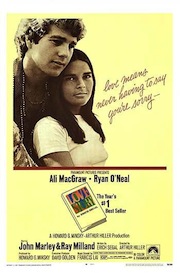
Love_Story_(1970_film).jpg Love Story (1970)
“Love means never having to say you’re sorry.”
—Jennifer (Ali MacGraw) to Oliver (Ryan O’Neal)

jerry-maguire-05.jpg Jerry Maguire (1996)
“You had me at hello.”
— Dorothy (Renée Zellweger) to Jerry (Tom Cruise)

imgres.jpg Sense and Sensibility (1995)
“But wait, there’s more! My heart is, and always will be, yours.” — Edward Ferrars (Hugh Grant) to Elinor Dashwood (Emma Thompson)


214751 On Golden Pond (1981)

“Listen to me, mister. You’re my knight in shining armor. Don’t forget it.”
— Ethel (Katharine Hepburn) to Norman (Henry Fonda)

imgres.jpg An Affair to Remember (1957)
“Oh, it’s nobody’s fault but my own! I was looking up… it was the nearest thing to heaven! You were there…” — Terry McKay (Deborah Kerr) to Nick Ferrante (Cary Grant)

images.jpg Doctor Zhivago (1965)
Lara (Julie Christie): “Wouldn’t it have been lovely if we had met before?”
Zhivago (Omar Sharif): “Before we did? Yes.”
Lara: “We’d have got married, had a house and children. If we’d had children, Yuri, would you like a boy or girl?”
Zhivago: “I think we may go mad if we think about all that.”
Lara: “I shall always think about it.”


imgres-1.jpg Wuthering Heights (1939)

“Catherine Earnshaw, may you not rest so long as I live on! I killed you. Haunt me, then! Haunt your murderer! I know that ghosts have wandered on the Earth. Be with me always. Take any form, drive me mad, only do not leave me in this dark alone where I cannot find you. I cannot live without my life! I cannot die without my soul.” — Heathcliff (Laurence Olivier)

imgres-2.jpg A Room with a View (1985)
“He’s the sort who can’t know anyone intimately, least of all a woman. He doesn’t know what a woman is. He wants you for a possession, something to look at, like a painting or an ivory box. Something to own and to display. He doesn’t want you to be real, and to think and to live. He doesn’t love you. But I love you. I want you to have your own thoughts and ideas and feelings, even when I hold you in my arms. It’s our last chance.” — George Emerson (Julian Sands)

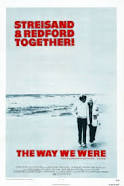
imgres-3.jpg The Way We Were (1973)
Katie (Barbra Streisand): “Wouldn’t it be lovely if we were old? We’d have survived all this. Everything thing would be easy and uncomplicated; the way it was when we were young.”
Hubbell (Robert Redford): “Katie, it was never uncomplicated.”

imgres-4.jpg The Time Traveler’s Wife (2009)
“I want to tell you, again, I love you. Our love has been the thread through the labyrinth, the net under the high-wire walker, the only real thing in this strange life of mine that I could ever trust. Tonight I feel that my love for you has more density in this world than I do, myself: as though it could linger on after me and surround you, keep you, hold you.” Henry DeTamble (Eric Bana) to Claire Abshire (Rachel McAdams)

imgres-5.jpg Ten Things I Hate About You (1996)
“I hate the way you talk to me, and the way you cut your hair. I hate the way you drive my car. I hate it when you stare. I hate your big dumb combat boots, and the way you read my mind. I hate you so much it makes me sick; it even makes me rhyme. I hate it, I hate the way you’re always right. I hate it when you lie. I hate it when you make me laugh, even worse when you make me cry. I hate it that you’re not around, and the fact that you didn’t call. But mostly I hate the way I don’t hate you. Not even close, not even a little bit, not even at all.” Kat Stratford (Julia Stiles) speaking of Patrick Verona (Heath Ledger)


imgres-6.jpg The Bridges of Madison County (1995)

Francesca (Meryl Streep): Robert, please. You don’t understand, no-one does. When a woman makes the choice to marry, to have children; in one way her life begins, but in another way it stops. You build a life of details. You become a mother, a wife, and you stop and stay steady so that your children can move. And when they leave, they take your life of details with them. And then you’re expected to move again, only you don’t remember what moves you because no-one has asked in so long. Not even yourself. You never in your life think that love like this can happen to you.
Robert Kincaid (Clint Eastwood): But now that you have it…
Francesca: I want to keep it forever. I want to love you the way I do now the rest of my life. Don’t you understand… we’ll lose it if we leave. I can’t make an entire life disappear to start a new one. All I can do is try to hold onto to both. Help me. Help me not lose loving you.

The Bridges of Madison County (1995)
Robert Kincaid: This kind of certainty comes but once in a lifetime.

The Bridges of Madison County (1995)
Francesca: And in that moment, everything I knew to be true about myself up until then was gone. I was acting like another woman, yet I was more myself than ever before.

imgres-7.jpg Under the Tuscan Sun (2003)
Frances (Diane Lane): Do you know the most surprising thing about divorce? It doesn’t actually kill you. Like a bullet to the heart or a head-on car wreck. It should. When someone you’ve promised to cherish till death do you part says “I never loved you,” it should kill you instantly. You shouldn’t have to wake up day after day after that, trying to understand how in the world you didn’t know. The light just never went on, you know. I must have known, of course, but I was too scared to see the truth. Then fear just makes you so stupid.
Martini(Vincent Riotta): No, it’s not stupid, Signora Mayes. L’amore e cieco.
Frances: Oh, love is blind. Yeah, we have that saying too.
Martini: Everybody has that saying because it’s true everywhere.

736_DVD_box_348x490_original.jpg It Happened One Night (1934)
Ellie Andrews (Claudette Colbert): Have you ever been in love, Peter?
Peter Warne (Clark Gable): Me?
Ellie Andrews: Yes. Haven’t you ever thought about it at all? It seems to me you, you could make some girl wonderfully happy.
Peter Warne: Sure I’ve thought about it. Who hasn’t? If I could ever meet the right sort of girl. Aw, where you gonna find her? Somebody that’s real. Somebody that’s alive. They don’t come that way anymore. Have I ever thought about it? I’ve even been sucker enough to make plans. You know, I saw an island in the Pacific once. I’ve never been able to forget it. That’s where I’d like to take her. She’d have to be the sort of a girl who’d… well, who’d jump in the surf with me and love it as much as I did. You know, nights when you and the moon and the water all become one. You feel you’re part of something big and marvelous. That’s the only place to live… where the stars are so close over your head you feel you could reach up and stir them around. Certainly, I’ve been thinking about it. Boy, if I could ever find a girl who was hungry for those things…
[she comes around the blanket “Walls of Jericho” and kneels by his bed]
Ellie Andrews: Take me with you, Peter. Take me to your island. I want to do all those things you talked about.
Peter Warne: You’d better go back to your bed.
Ellie Andrews: I love you. Nothing else matters. We can run away. Everything will take care of itself. Please, Peter, I can’t let you out of my life now. I couldn’t live without you.
[she cries in his arms]
Peter Warne: [firmly] You’d better go back to your bed.
Ellie Andrews: I’m sorry.
[she returns to her bed still crying]

imgres-8.jpg Up Close & Personal (1996)
Tally Atwater (Michelle Pfeiffer): Do you want to be with me?
Warren Justice (Robert Redford): So much it hurts.


images-1.jpg Charade (1963)

Adam Canfield (Cary Grant) Well, what did you expect me to say? That a pretty girl with an outrageous manner means more to an old pro like me than a quarter of a million dollars?
Reggie Lampert (Audrey Hepburn): I don’t suppose so.
Adam Canfield: Well, it’s a toss-up, I can tell you that.
Reggie Lampert: What did you say?
Adam Canfield: Hasn’t it occurred to you that I’m having a tough time keeping my hands off you?
[Regina is stunned]
Adam Canfield: Oh, you should see your face.
Reggie Lampert: What’s the matter with it?
Adam Canfield: It’s lovely.
[Regina drops her knife and fork]
Adam Canfield: What’s the matter now?
Reggie Lampert: I’m not hungry anymore; isn’t it glorious?

imgres-9.jpg Two Weeks’ Notice (2003)
George Wade (Hugh Grant): I need your advice on one last thing, then I promise you will never hear from me again. You see, I’ve just delivered the first speech I’ve written entirely by myself since we met, and I think I may have blown it. I want to ask your thoughts. Okay? Then I will read it to you. I’d like to welcome everyone on this special day. Island Towers will bring glamour and prestige to the neighborhood and become part of Brooklyn’s renaissance. And I’m very pleased and proud to be here. Unfortunately, there is one fly in the ointment. You see, I gave my word to someone that we wouldn’t knock down this building behind me. And normally, and those of you who know me or were married to me can attest to this, my word wouldn’t mean very much. So why does it this time? Well, partly because this building is an architectural gem and deserves to be landmarked and partly because people really do need a place to do senior’s water ballet and CPR. Preferably not together. But mainly because this person, despite being unusually stubborn and unwilling to compromise and a very poor dresser, is… she’s rather like the building she loves so much. A little rough around the edges but, when you look closely, absolutely beautiful. And the only one of her kind. And even though I’ve said cruel things and driven her away, she’s become the voice in my head. And I can’t seem to drown her out. And I don’t want to drown her out. So, we are going to keep the community center. Because I gave my word to her and because we gave our word to the community. And I didn’t sleep with June. That’s not in the speech, that’s just me letting you know that important fact. What do you think?
Lucy Kelson (Sandra Bullock): I have to get back to work.
George Wade: Right. Right, yes. Sorry to disturb you. Congratulations, again, Polly.
[leaves]
Lucy Kelson: Aside from the split infinitive that was somewhere in the middle, that speech was actually quite perfect, wasn’t it?
Polly St. Clair: Yeah. I don’t know what the hell you’re still doing sitting here. And I don’t even like him.
Lucy Kelson: [runs after George]

imgres-10.jpg Notting Hill (1999)
P.R. Chief (John Shrapnel): Next question? Yes. You in the pink shirt.
William (Hugh Grant): Uh, right. Miss Scott, are there any circumstances that you and he might be more than just friends.
Anna Scott (Julia Roberts): I hoped that there would be but I’ve been assured that there’s not.
William: Yes, but what if…
P.R. Chief: I’m sorry. Just the one question.
Anna Scott: No. It’s all right. You were saying?
William: I was just wondering what if this person…
Journalist: Thacker. His name is Thacker.
William: Right. Thanks. What if, uh, Mr. Thacker realized that he had been a daft prick and got down on his knees and begged you to reconsider if you would… indeed… reconsider.
Anna Scott: [pause] Yes. I believe I would.
William: That’s wonderful news. The readers of Horse and Hound will be relieved.

Posted in acting, film | Tagged , , , , , , , , , , , , , , , , , , , , , , , , , , , , | 8 Comments

We Get Stacks and Stacks of Letters…The Expense of Mail During the Regency Period

On the Perry Como Show, which began back in 1955, the chorus customarily sang: “Letters, we get letters. We get stacks and stacks of letters.” However, during the Regency Period, the mail was expensive. MPs were the only ones who had a “free” ride for the mail delivery. Until 1840, MPs could “frank” their own letters, but they were supposed only to use this privilege for letters dealing with business for the Crown. That did not stop MPs from leaving pre-franked sheets with a friend for that friend’s personal use; therefore, the system was not perfect. Wax seals were used for the MPs letters. 
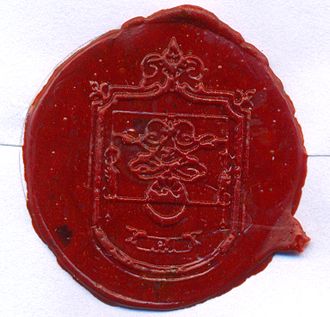


In Jane Austen’s Mansfield Park, Edmund tells Fanny to have a friend or relative who was an MP to frank the letter for her and, hence, save the Price family from the cost of the letter. “As your uncle will frank it, it will cost William nothing.”’ Somewhere, I added the following quote to my stacks of research. (I wish I knew where to provide credit for the information. I apologize to the original blogger.) “There is a fashion in letter-paper and envelopes which is ever varying as to size and shape–sometimes small, at other times large; now oblong, now square; but one thing never alters, and that is the desirability of using good thick paper and envelopes, whatever shape may be. Nothing looks more mean and untidy than thin sheets and envelopes of the same quality, through which the writing exhibits itself.” 

Prior to the introduction of uniform penny postage in 1840, very few letters were sent in envelopes, as the extra paper for the envelope counted as another sheet and cost extra. By 1855, however, it was estimated that 93% if domestic letters were sent in envelopes. One can find a large number of examples of early letters for the aristocracy, the gentry, and for merchants. Fewer are available for those of the lower classes. Lack of literacy was one reason, and let’s face it, if a person of the peasant class had a haypence available, he would use it for food, not to send a letter.

Postage was based on the number of miles the letter traveled from point A to point B and the number of sheets, as mentioned above. The paper that one folded and sealed was one item. Even one tiny slip of paper inside counted as a second item, doubling the cost. Recipients paid, rather than the sender of the letter. Naturally, the person receiving the letter could refuse it and send it back to the sender.

Remember Elvis Presley’s hit “Return to Sender”? Same idea…

Return to sender, return to sender

I gave a letter to the postman, he put it his sack
Bright in early next morning, he brought my letter back

She wrote upon it
Return to sender, address unknown
No such number, no such zone


These were the going rates for a single page: fourpence for the first fifteen miles, eightpence for eighty miles, etc., etc., up to seventeen pence for a letter covering seven hundred miles. Additional pages increased the price accordingly. Afterward, costs were standardized and based on weight instead of distance times number of enclosures. 

To save on the expense of sending a letter, people developed their own form of “Tweeting.” Abbreviations saved space. Often the writer would “cross” the letter, which meant turning the letter at right angles and writing between the previously written words. Sometimes, they turned it again and again. One could spend hours figuring out what the letter said. 

A “two penny post,” which was developed for mail delivery within London proper, was separate from the General Post Office, which dealt with the national mail. There were designated shops for dropping off the mail. As with the writing of the letter, abbreviations were used as part of the address/directions to speed the delivery: “W” for the West End; “N” for north of the Old City, etc.

After 1840, a person could send a letter anywhere in England for the cost of one penny. Railroads sped the delivery system and made the mail service more economical. Also, before 1840 envelopes were generally not used. In Jane Austen’s stories, her characters use a wafer to seal the letters. A wafer was small disk made of flour and gum. A person would lick the wafer and stick it to the folded sheet of writing to form the envelope. Those of the upper class used seals. It was melted and applied to the letter. Commonly, red seals were used for business and other colors for social correspondence. Black was a sign of death and mourning.

I thought you might also find these two articles helpful: 

From Shannon Donnelly on Postal History: 

https://shannondonnelly.com/2010/05/29/the-regency-post-a-pity-weve-lost-letters/

An article posted by the British Museum notes (https://postalheritage.wordpress.com/tag/envelopes/


Posted in British history, customs and tradiitons, Great Britain, Jane Austen, Living in the Regency, political stance, Pride and Prejudice, real life tales, Regency era, Regency personalities, writing | Tagged , , , , , , , , | 11 Comments

Was an Annulment Possible in the Regency? + Release of “A Dance with Mr. Darcy” + Giveaway

 One of the “what ifs” in my latest Pride and Prejudice vagary, A Dance with Mr. Darcy, revolves around Lydia’s marriage to Mr. Wickham. What if the marriage could be voided? What would it entail to break her bond to the gentleman?

In my tale, after less than two months of marriage, Mr. Wickham has sent Lydia home to Longbourn. She believes he did so to protect her, for he was to be sent to the Continent with the Newcastle forces of King George’s Army. In reality, Wickham has abandoned her. He means to ditch her permanently. We must understand that during the Regency, Wickham’s doing so would indicate to the world that his wife was immoral. Realizing the shame Lydia’s new situation brings to the family, Elizabeth has accepted a man who is cruel and abusive, but who agrees to allow Elizabeth to bring Lydia with her into his household. The problem is that Lydia is in a state of perpetual limbo. She cannot remarry as long as  Mr. Wickham lives. She has no future. And divorce at this time was expensive, very public, and literally, an act of Parliament.

However, Lydia attracts the attention of Sir Robert Karn, an Englishman living on the Scottish border, and he means to discover a way to release her from Mr. Wickham. Sir Robert considers an annulment or to have the marriage voided, but the reasons for an such an action were not easy to achieve.

So how did one go about getting an annulment? Annulments were only granted if one or both of the couple were not of age, were too closely related (Remember first cousins could marry, but a man could not marry the sister of his late wife, so “related” was not always as clear cut as we might think in modern times.), the gentleman was impotent at the time of marriage, one of the pair had committed fraud, one or both could be considered insane at the time of marriage, or one of the pair was already married to another. Even if one of the couple was not of age, if they did not stop living together when they became of age (12 for women and 14 for men), then they were still considered married. I think it’s worth mentioning that the fraud, force, or lunacy had to have occurred during the wedding ceremony (or before, if it pertained to the permission granted to a minor), not after the couple were lawfully wed. Even wealthy peers were stuck with a spouse if problems arose only after the ceremony. For example, both the 11th Duke of Norfolk and the 4th Earl of Sandwich were stuck in unfortunate marriages when their wives went insane. In the Duke of Norfolk’s case, his wife was locked up before giving him an heir, so that the dukedom eventually passed to his cousin.

In the Regency period, fraud as a means to voiding the marriage rested in the question of parental permission. The fraud was not the type where a person misrepresented himself by saying he owned property that he did not or held a title that he did not. Lying about circumstances was not fraud. Being drunk at the wedding was not a cause as long as one knew what he was doing. And insanity had to previous to the wedding–simplemindedness came under that category as well. 

Also the idea of forcing someone into a marriage changed over the 19th century. At first force was considered only as more than a reasonable man could withstand. Over the period of time, the courts acknowledged that women were weaker and less force was necessary to overpower them. One had to literally run away or protest at the ceremony or at the signing of the register or in some other way express one’s denial of acceptance. The court did not take into consideration such things as a threats.

annulment.jpg Marriages could be annulled if the spouse was a previous in-law or if one was impotent. I know you have seen it in numerous romance novels, but non-consummation was not grounds for an annulment. Consummation could strengthen a claim of marriage in Scotland and could throw doubt over a claim of being forced into marriage, but non-consummation was not grounds. The church always assumed that the couple would get around to it sooner or later if they were able.

Impotence and real frigidity, on the other hand, were grounds as was a physical deformity of the necessary parts. An impenetrable hymen was also grounds, though that could be fixed by a surgeon.

Invalid marriages were those by minors by license without proper permission or the situation involved bigamy.

English law did not require consummation. Scottish law used it as proof in clandestine marriages, but only if the other forms were not followed. The Consistory court of the Church of England handled annulments.  This was located in London. The Courts within Doctors Commons were very much associated in the public mind with the making and unmaking of marriage from the 17th century forward. Gradually the London Consistory Court assumed a virtual monopoly in matrimonial suits and became the most important matrimonial court for the whole of the country. It became the court of first instance for most matrimonial cases.

The Hardwicke Act simplified the betrothal contract. It was generally believed that 15 and 16-year-old girls were too young to marry. However, the law still allowed parents to marry off children as young as seven. The children could request an annulment at age 12 for girls or 14 for boys as long as the pair had not been intimate. By the Regency period, the idea of force and “own free will” was beginning to change, but change came slowly to the law and especially to the ecclesiastical law. 

* * *

Now that you know more of Regency era annulments, enjoy this scene from A Dance with Mr. Darcy: A Pride and Prejudice Vagary.

A Dance With Mr Darcy copy

The reason fairy tales end with a wedding is no one wishes to view what happens next.

Five years earlier, Darcy had raced to Hertfordshire to soothe Elizabeth Bennet’s qualms after Lady Catherine’s venomous attack, but a devastating carriage accident left him near death for months and cost him his chance at happiness with the lady. Now, they meet again upon the Scottish side of the border, but can they forgive all that has transpired in those years? They are widow and widower; however, that does not mean they can take up where they left off. They are damaged people, and healing is not an easy path. To know happiness they must fall in love with the same person all over again.

===========================

“Well…well,” Sir Robert said in what sounded of satisfaction. “Now I know which former Bennet sister interests you.”

Darcy withdrew his eyes from the sway of Elizabeth’s hips as she sidestepped her way toward the kitchen. “Will that be another obstacle to our friendship?” he asked with a skeptical lift of his brow.

Sir Robert returned to his breakfast. “Most certainly not, for I prefer the younger.”

Darcy found himself frowning. It was not that he wished another admirer for Elizabeth’s charms, but he could not help but challenge the gentleman’s reasoning. “Mrs. McCaffney is the superior sister.”

Sir Robert shrugged his indifference. “Perhaps for you,” he declared. “But I possess a mother and two elderly aunts to keep my feet upon the right path. What I lack is a bit of spontaneity.”

“Does not the lady possess a husband? Speaking of which, is not Mr. Wickham about?”

Sir Robert put down his fork to study Darcy carefully. “Are you attempting to persuade me that you know nothing of Wickham or the ladies since last you encountered them?”

Darcy did not approve of Sir Robert’s accusation. “I am not the type of man to gossip,” he countered. “But if you must know, I have not seen any of the Bennet sisters or Mr. Wickham since we parted during the first part of November of ’13.”

“You appear quite certain,” Sir Robert said suspiciously.

Darcy recalled the day perfectly. He had argued with his aunt regarding the suitability of Miss Elizabeth to be his wife. “I suffered a serious carriage accident around that time. It was after my cautious return to society some six months later that Mr. Bingley informed me of the marriages of both Miss Bennet and Miss Elizabeth. I held no knowledge of the Bennet family’s fortuitous joinings until then.”

“Fortuitous?” Sir Robert accused. “And what may I ask did Mr. Bingley share of the future of the Bennet sisters?”

“Not much beyond the notice of the marriages of the two eldest,” he confessed. “Bingley encountered the Bennets’ neighbor Sir William Lucas in London. I fear Bingley was most upset at the loss of Miss Bennet.”

“The gentleman held no right to injury. It was Mr. Bingley’s choice to abandon the lady,” Sir Robert argued.

Darcy spoke through tight lips. Sir Robert’s censorious tones had Darcy’s backbone stiffening. “I suppose it was Bingley’s fault. I knew nothing of my friend’s withdrawal from Hertfordshire until some five months after the marriages of the Bennet sisters. The accident was severe enough that the surgeon provided me regular doses of laudanum, a medication I despise even when it is required. It was after my recovery began and my withdrawal from the opiate that I learned that the Bingley sisters had persuaded their brother to cry off from his proposal to Miss Bennet and to refuse his option to retain Netherfield as his estate. Miss Bingley informed me with some satisfaction that her brother provided Mr. Bennet with five hundred pounds to satisfy the Bennet family’s claim to retribution.”

Sir Robert shoved his plate aside as if in disgust. “Then you are truly ignorant of what occurred?”

Not certain whether to be offended or amused, Darcy suggested, “Perhaps you should enlighten me. Clear my nescience.”

Sir Robert presented Darcy a pitying look, one meant as acceptance of a bedraggled stray seeking a warm place to spend the night. “You shan’t like what I must disclose,” he announced. “But before I speak of the Bennet sisters, you should know that I was familiar with your name, although not your face, before today’s meeting.” He raised his hand when Darcy thought to respond. “I will explain all. Just bear with me.”

Darcy placed his fork upon his plate. He wished to know how the incomparable Elizabeth Bennet came to this existence and what the man knew of him. “Then I would demand to know both tales.”

Sir Robert curtly nodded his agreement. “You must understand I heard very little of what I am about to share from Mrs. McCaffney, so you will likely possess questions for which I hold no answers.”

“I comprehend that Mrs. McCaffney would be more tight-lipped than would be Mrs. Wickham. From my previous observations, such are their particular personalities,” he said to fill up the space between them.

Sir Robert smiled at Darcy’s attempt at tactfulness. “I knew I would enjoy our acquaintance when I first laid eyes upon you. Mrs. McCaffney has never made the effort to introduce me to another, so I assumed she held you with some regard. I am pleased to be proved correct.” He removed a flask from a pocket in his jacket and added a splash of what smelled of brandy to his tea, as well as to Darcy’s. “You will thank me for my forethought,” he assured when Darcy’s frown found a place upon his forehead. With an ironic smile upon his lips, the man began. “Some six weeks into their marriage, Mr. Wickham sent his wife home with a letter to Mr. Bennet stating that the dastard would not be returning for his lady. Only a few days short of her sixteenth birthday, Mr. Wickham abandoned his wife to a life of perpetual widowhood.”

“What brought Mr. Wickham to such a decision?” Darcy demanded. “What did Wickham do regarding his commission? The agreement was—“ He suddenly recalled that Elizabeth knew nothing of his involvement in Wickham and Miss Lydia’s marriage.

“Do not fret,” Sir Robert assured. “Mrs. Wickham has yet to comprehend your role in the matter. The lady shared with me how you tracked her and Mr. Wickham down and assisted her uncle in arranging her marriage, but I doubt if she has said so to Mrs. McCaffney, for Mrs. McCaffney has never uttered a word to speak to your involvement, and she and I have had numerous conversations upon the subject of the Wickhams’ marriage. I am the one who has placed the pieces of the puzzle together. Lydia thinks her husband asked you, his former companion, to stand up with him after Mr. Bennet pleaded for your intercession in the necessary negotiations for her marriage to the man. She assumes your long standing knowledge of Mr. Wickham’s habits caused her father to seek your assistance. I must admit that it took me several attempts on the subject before your interference made sense. I assumed you either had your heart set on Lydia and would not see her harmed or it was one of her sisters who stirred your passion.”

Darcy ignored Sir Robert’s probing. “Does the family possess any knowledge of Mr. Wickham’s whereabouts?” He wondered why Colonel Fitzwilliam had not mentioned the situation to him. Did his cousin have no knowledge of Wickham’s duplicity, or had the colonel shielded Darcy during his recovery? A letter would be on its way to Fitzwilliam as quickly as the weather permitted its delivery.

Following a sip of his tea, Sir Robert said, “Now that is an enigma. According to Mrs. Wickham, her husband met with an elderly, but immaculately dressed, woman the day before he announced Lydia’s departure for Hertfordshire. Afterwards, the lieutenant announced the necessity of his wife’s return to her parents’ household. He claimed the soldiers training at Newcastle were being sent to the Continent, and she could not remain alone in the city.”

Darcy summarized, “And so Mrs. Wickham returned to Meryton, thinking her husband treasured her safety.”

“It was only after Mr. Bennet read the lieutenant’s letter did the family understand Mr. Wickham’s true intentions of ‘returning’ his wife to her family.”

Darcy sat forward in tense anticipation. “Did not the Bennets protest?”

“By the time Mrs. Wickham traveled from Northumberland to Hertfordshire, and then their Uncle Gardiner made a journey to Newcastle, there was little the Bennets could do. According to Wickham’s commanding officer, the lieutenant volunteered to be part of the unit serving as reinforcements and being shipped to the Spanish-French border.”

Darcy’s mind raced with how well Wickham had executed another scheme. “Such does not sound of Mr. Wickham’s nature. If caught in the line of fire, he would fight to live, but he is not the type to volunteer for what was likely a death sentence,” he surmised.

Sir Robert nodded his agreement. “It was not. Within a week of Mr. Wickham’s arriving on the Continent, the lieutenant deserted his post. No one has heard of or seen the man since.”

“Wickham is a man who lives by his wits, and his not contacting anyone in England makes little sense. Surely he must have cohorts who aided him in this farce!”

Sir Robert’s expression was more troubled than Darcy cared to observe. “One of the few things Mrs. McCaffney shared in a moment of anger at her poor sister’s fate came when Mrs. Wickham described the woman who met with Mr. Wickham. Mrs. McCaffney told me in private conversation that the woman who met with Mr. Wickham resembled the relation of a gentleman she once knew. As you are the only gentleman of whom she has spoken of beyond Mr. Bingley, I assumed it was you. I formed the distinct impression that Mrs. McCaffney blamed herself for her sister’s fate.”

Now for the GIVEAWAY. I have two eBook gifts of A Dance with Mr. Darcy available to those who comment below. The giveaway ends at midnight EDST on Friday, February 7. 

Posted in Austen Authors, book excerpts, book release, customs and tradiitons, excerpt, historical fiction, history, Jane Austen, Living in the Regency, marriage, marriage customs, Pride and Prejudice, Regency era, Regency romance, research, Vagary | Tagged , , , , , , , , | 53 Comments