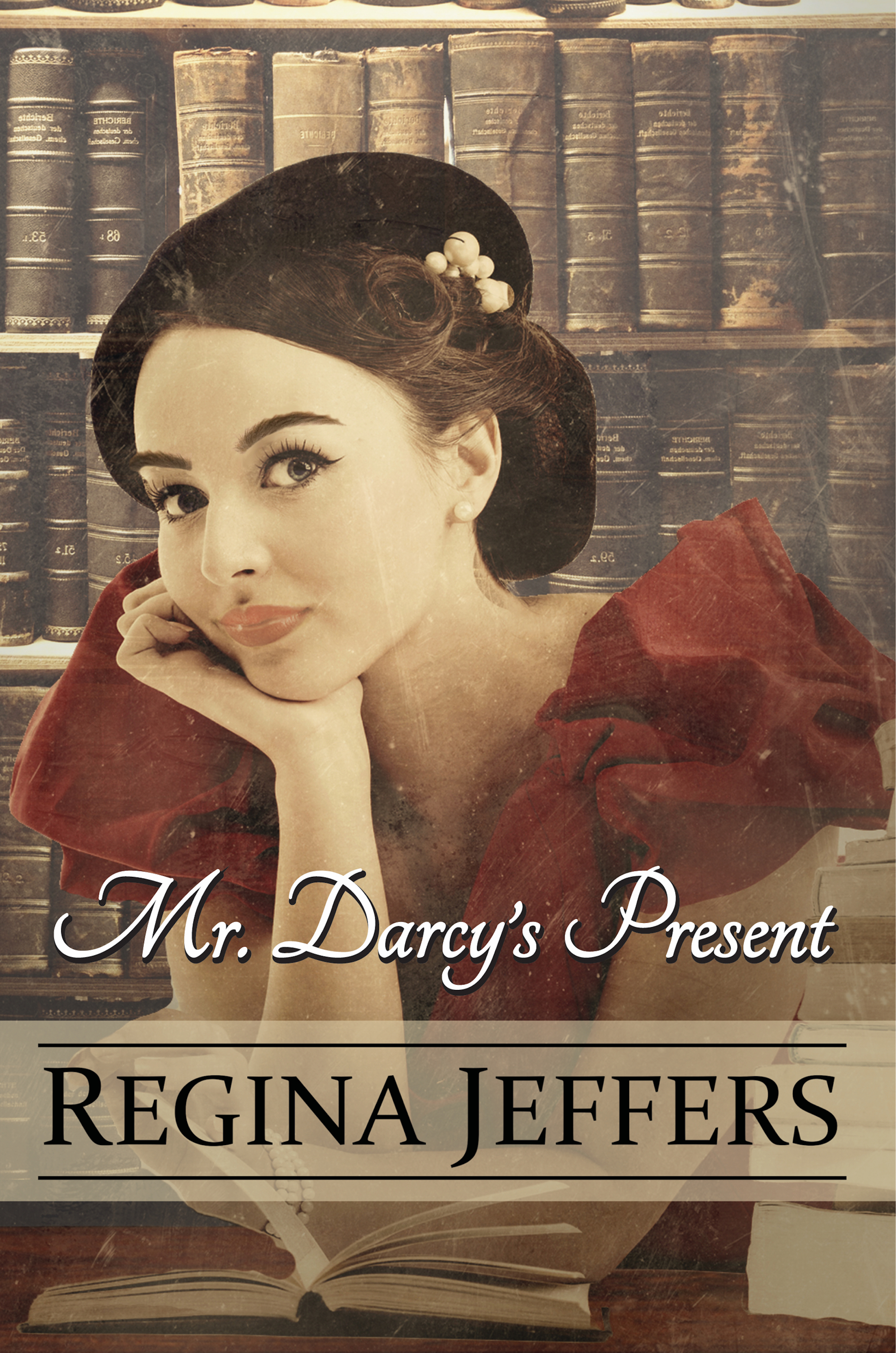
“The Mistress of Rosings Park” Has Arrived!

Today, my latest book baby takes its first breath. I am hoping my faithful readers will enjoy this latest tale of Jane Austen Fan Fiction.

Before I share an excerpt, permit me to give you some of the background. First, the tale is told completely from Elizabeth Bennet’s point of view, just as was Jane Austen’s Pride and Prejudice. The reader does not know what Mr. Darcy is thinking, only something of his actions.

The action begins with Elizabeth’s visit to Hunsford Cottage. Mr. Bingley has not yet arrived in Hertsfordshire. There has been no Netherfield Ball or love at first sight between Bingley and Jane (not yet, anyway). Elizabeth has come to Kent to save her friendship with Charlotte (Lucas) Collins. However, upon her first visit to Rosings Park, she encounters a situation which will throw her into the path of Mr. Fitzwilliam Darcy, Lady Catherine’s nephew, a man her ladyship has come to despise, for Mr. Darcy means to remove Lady Catherine as the mistress of Rosings Park. For you see, my dear readers, Mr. Darcy did as the family expected. He married Miss Anne de Bourgh, who succumbed to her many “illnesses” shortly after their marriage. As Miss de Bourgh was to inherit Rosings Park, in fact, should have been the mistress of the estate for nearly seven years, Mr. Darcy, as the lady’s husband, is now the owner of the estate. He has provided Lady Catherine a year to remove to the dower house, but her ladyship refuses to budge.

When Charlotte Lucas is ordered to bed by the physician in order to save the child she carries, Elizabeth Bennet is “recruited” to assist with Lady Catherine’s transition to the dower house. Despite disapproving of Lady Catherine’s “hysterics,” Elizabeth holds some sympathy for the grand dame. After all, her own mother and any unmarried sisters will be displaced by Mr. Collins when Mr. Bennet dies. Elizabeth believes that a woman who has given the better part of her life as mistress of an estate should not be so easily displaced.

Enjoy this excerpt from Elizabeth and Mr. Darcy’s first meeting.

Some three hours later, Elizabeth asked one of the housemaids to sit with her ladyship while Elizabeth partook of a light meal in the morning room. “Please thank the cook for providing me a meal in here rather than taking a tray in Lady Catherine’s sitting room,” she told Mr. Sidney as he remained close to serve her. “I required a few moments to clear my mind.” In reality, she required those few moments to breathe. Charlotte had been correct about the stuffy air in Lady Catherine’s bedchamber. 

“How goes it with her ladyship?” the man asked. 

“Likely just as Mrs. Fischer has reported,” Elizabeth said diplomatically. “Doctor Wilson believes Lady Catherine shall be laid up for a week or a bit more, but there was no break of her leg, which is a blessing for someone of a particular age, or so I am told.” 

“Nicely put, Miss Bennet,” the man said with a slight turning up of the corner of his lips. 

Elizabeth ventured, “Do you think Lady Catherine would object if I chose a book from the library to entertain myself while I sit with her?”

Mr. Sidney seriously considered her request before stating his permission. 

With a nod of gratitude, after finishing her meal, Elizabeth made her way to the library. She was just beginning her search when a loud rap of the front knocker striking the door filled the empty hallways. 

Quietly, she tiptoed to the still open door to have a look at the visitor. Elizabeth knew it might be a return of the Collinses, but her instincts said it would be the unwelcome appearance of Mr. Darcy, and she was curious about the man. 

A second round of rapping occurred before Mr. Sidney appeared from a side hallway and rushed toward the sound. 

At length, voices could be heard below. Elizabeth could not make out every word, but the occasional phrase reached her ears. 

“The whole house is at sixes and sevens.” 

“My aunt is still at home?”

“Assist with the packing.” 

“Where is her ladyship?”

“An accident, sir.”

A murmured curse. 

“Perhaps you might speak to Miss Bennet,” Mr. Sidney was saying. 

Elizabeth did not wait to hear the gentleman’s response. Instead, she hurriedly grabbed a book from the shelf and rushed to be seated, pretending to read as she caught a steadying breath and stiffened her spine in preparation for her encounter with the oft-spoken-of Mr. Darcy. She settled her eyes on the page halfway through the first chapter, but did not carry her pretense of occupation as far as actually to read the book before her, but instead kept a sharper ear out for Mr. Darcy’s approach. 

Even as she listened intently for the gentleman to make an appearance, Elizabeth considered how calm Mr. Darcy’s voice had sounded when he had heard of his aunt’s presence at Rosings Park, as if he had expected nothing less from her ladyship. He did not raise his voice until he learned of the accident. In reality, Elizabeth had expected him to be furious, allowing her to name his obvious control as an intolerable sort of arrogance. Her opinion, as was her way, had formed quickly, before she set eyes upon the man.

She had no time to present a name to any further impressions before Mr. Sidney announced, “Mr. Darcy, miss.” 

Elizabeth’s idea of the gentleman’s arrogance was rather reinforced by the man’s appearance and the manner in which he carried himself. His presence filled the door, rather to say, it filled the empty room, despite its size. 

Square jaw, displaying the shadow of a beard from his day’s travel rather than perfectly clean as if he were appearing in a lady’s drawing room. His skin had been darkened by the sun; apparently, he spent a great deal of time in the fields. Tall. He was a man who announced his place in the world simply by walking into a room. Although a bit wrinkled, his dark coat, as well as his tailored breeches and highly polished boots declared him a man of means. His presence was so strong, Elizabeth felt a jolt of recognition—an elemental sizzle running through her as she rose to greet the gentleman. 

“Miss Bennet,” he said as he bowed properly. “I am to understand you have assumed the care of my aunt.” 

“Not exactly, sir,” she said with a hint of a smile. She had no reason to smile at the man, for she was certain she did not like him, despite his handsome face; yet, it felt natural to smile upon him. 

“Then perhaps you might explain exactly what is your role at Rosings Park,” he said rather coolly. 

“If you believe, sir, that your aunt’s accident is some sort of hum to delay Lady Catherine’s removal from her home, you are sadly mistaken, Mr. Darcy. I have viewed her injuries myself. They are quite real.” 

“If you stood witness,” Mr. Darcy continued in the same reserved tones as previously, “the account must be accurate.” He gestured to the seats. Elizabeth was not certain whether his remark was an insult or an observation, but she moved to the chair nevertheless. He continued, “Mayhap we might sit and you can explain your role at Rosings Park. Are you her ladyship’s companion? If so, you appear quite young for such an exalted position.” 

Elizabeth fought hard not to frown, but knew she did not succeed. “Today is only my second visit to Rosings Park,” she said evenly. 

“Yet, you believe it is your right to instruct her ladyship’s staff and sit in Lady Catherine’s library reading her books,” he accused. 

Her expression must have displayed the nature of her objections to his insinuations, for the gentleman’s eyebrow rose in speculation. 

“For your information, my cousin Mr. Collins holds the living associated with the baronetcy. I am a guest at Hunsford Cottage. I took your aunt’s acquaintance yesterday afternoon when I accompanied Mr. and Mrs. Collins to Rosings only to discover your aunt in a state of dudgeon as you have apparently ordered her from her home.” 

Mr. Darcy’s eyebrows tugged together in obvious disapproval. “My dealings with Lady Catherine are none of your concern. You are nothing to my aunt; therefore, nothing to me.”

Elizabeth responded in her best imitation of Lord Matlock’s quelling tones. “As Lady Catherine has yet to relinquish control of this house to you, sir, I shall continue to act in her ladyship’s stead until she is in a position to do so for herself. Lady Catherine was set to remove to Bourgh House today, actually to be gone before your arrival. As her accident prevents her from doing so, you can have no doubt of the obvious necessity for a change in your plans. Permit me to suggest that you choose the local inn for your residency in Kent until the plans for Lady Catherine to accept Bourgh House can be renewed.” 

She was satisfied with the calm in her voice and the command she portrayed in her words, but, infuriatingly, her visitor’s composure did not falter even one iota. 

His reply proved equally unsatisfactory. “As I do not recognize your place of authority in this household,” he began in harsh civility, “I will make the decisions for this estate and this manor house, Miss Bennet. Until I have established a reliable steward who can execute the management of the estate’s affairs properly, I will be in residence at Rosings Park. You may return to Hunsford Cottage and your cousin. It will be my domain to oversee Lady Catherine’s care.” 

Before she could organize her thoughts, the gentleman stepped to the door to present Mr. Sidney with orders. Elizabeth should have realized the butler had remained in the hall and had heard her exchange with Mr. Darcy and would, likely, carry the tale to those below stairs; however, she had not considered the obvious. Angry, as much with herself as she was the gentleman, Elizabeth groused beneath her breath, “Of all the arrogance!”

“I heard that,” Mr. Darcy said blandly from his place in the hall. 

Within seconds, the gentleman returned—too quickly for Elizabeth to regain her composure completely. “I ordered tea,” he announced. The man turned his full attention upon her, and Elizabeth fought hard not to fidget. “Might we sit again, Miss Bennet?” he asked in calm tones—tones Elizabeth actually admired, but never would she mention that fact aloud. “I can hardly sit in the presence of a lady, and, personally, I despise drinking tea while standing. The cup and saucer always feel much smaller when one stands about attempting to look comfortable than it does when one is seated. We will both be more agreeable if we are seated during our conversation.” 

“And I am less likely to slap your face when we are both seated,” she challenged. 

A small smile graced his lips. “Another noted advantage,” he remarked in maddening carelessness. 

Flushed in anger, Elizabeth sat heavily in the chair she had occupied when he entered the room. The gentleman followed suit, sitting with a flourish only a man accustomed to the finest of society could manage, with the exception that this particular man of society leisurely stretched his legs out before him. “Perhaps you might speak of what occurred in this house yesterday. I understand from Mr. Sidney that my Uncle Matlock called upon Lady Catherine. Were you witness to their discussion?”

“I was,” Elizabeth said with a lift of her chin. 

“And?” he prodded.

“And,” she spoke in a decidedly unfriendly manner, but she spoke the truth. “Lord Matlock chastised his sister for ignoring your request.” Before he could respond, Elizabeth added, “In my opinion, forcing Lady Catherine from her home names you as cruel.” 

Mr. Darcy corrected, “As Lady Catherine is the Dowager Lady de Bourgh, her ladyship’s home, once my late wife reached her majority and married, should have been Bourgh Hall, the dowager’s residence.” 

Elizabeth knew his reasons true; yet, the idea of a woman being forced from her home hit too close to her own vulnerability to allow the gentleman any level of rightness in her mind. “Could you not share Rosings Park with her ladyship?” she suggested. 

“I mean to set the estate on the path the late Sir Lewis de Bourgh had designed, in consideration of my late wife’s dying wishes.” 

“Is there not another to inherit?” Elizabeth asked, constantly aware Mr. Collins would displace her family someday. “Is there not a means to share this grand estate with your family?”

“My wife Anne inherited the property. The baronetcy was not devised to pass through the male line. Mrs. Darcy’s property reverted to me upon her death,” he explained.

“And what shall you choose to do with it? Will you leave it to another or live in it?” she demanded. 

Still and all, before the gentleman could answer, Mr. Sidney reappeared with John Lucas close behind him. “Mr. Lucas, Miss Bennet.” 

Either John did not see the gentleman coming to his feet or he was too consumed with his news to take note of Mr. Darcy. “Oh, Lizzy, I am sorry to bring bad news.” 

“Is Charlotte unwell?” Elizabeth asked, thinking of her friend’s news. 

“How did you know?” John questioned. His face was flushed, as if he had run to Rosings rather than walked. “Charlotte collapsed when we reached Hunsford Cottage. Mr. Collins sent for Doctor Wilson. Wilson has confined my sister to her bed.” 

Elizabeth wished to ask of the child, but could not do so before Mr. Darcy. Moreover, discussing Charlotte’s condition with Charlotte’s brother felt too personal. She would learn the truth at the cottage. “I shall fetch my things, and we may return to Hunsford immediately.” 

John finally glanced to Mr. Darcy. “I did not mean to interrupt, sir.” 

Elizabeth felt the necessity of the introduction. “Mr. Darcy, may I present Mr. Lucas, Mrs. Collins’s brother. Mr. Lucas is a member of the Dover militia and visits with his sister for the next few weeks.”

Mr. Darcy nodded in John’s direction, but the gentleman’s eyes remained on her. His eyebrows rose in question. “Lizzy?”

“I am Miss Elizabeth Bennet.” 

Mr. Darcy presented her a half-smile. “Elizabeth. The name suits you.” 

Elizabeth was uncertain what he meant and whether his words were a compliment or an insult; yet, she dared not ask. Instead, she said, “You have your wish, Mr. Darcy. Your aunt’s care is now in your hands.” 

John frowned dramatically. “You do not understand, Lizzy. I mean, Elizabeth.” 

“Miss Bennet,” Mr. Darcy corrected in firm tones. 

John’s frown deepened. “Miss Bennet is in Hertfordshire. She is Miss Jane Bennet,” he said with a bit of defiance. 

Mr. Darcy did not blink an eye when he said, “Yet, you are not in Hertfordshire at the moment. From what I can assume, your connections to Miss Bennet is your sister Mrs. Collins and both of you being from the same neighborhood in Hertfordshire. Correct me if I have erred. Do you hold a relationship with Miss Bennet beyond your sister and your families dwelling in close proximity?”

“I do not see where my and Miss Elizabeth’s relationship is any care of yours,” John said testily. 

“Miss Bennet is currently a guest in my house, and I would see her properly addressed,” Mr. Darcy said evenly. 

“You forget yourself, sir. I am not a guest at Rosings Park,” Elizabeth asserted.

“I have reconsidered your position in this household,” Mr. Darcy countered. “Lady Catherine will heal quicker if she has someone she trusts to see to her welfare. With the recent falling out between my aunt and me, I doubt her ladyship would do as I ask. More likely, she would question my motives or even the type of care she was receiving.” 

Elizabeth wished to ask of the supposed “falling out” between Mr. Darcy and Lady Catherine, but the gentleman truly owed her no explanation. Instead, she argued, “I cannot possibly remain in a household with an unmarried gentleman—a man who is an acquaintance of less than an hour.” 

“But, Lizzy,” John began and stopped himself before Mr. Darcy could once again correct him. “Miss Elizabeth, Mr. Collins plans to send for my mother to assist Charlotte, which means there shan’t be enough room at the cottage for all three of us as guests. He begged me to ask that you be prepared to return to Hertfordshire in the morning.” 

Elizabeth knew instant disappointment. She had agreed to this visit specially to spend time with Charlotte and to mend fully the rift between them. Next to her sister Jane, Charlotte had been Elizabeth’s most loyal companion. “Naturally, I must return to Longbourn,” she said in lackluster tones. Placing a smile upon her lips, she recited the necessary assurances, “Again, permit me to fetch my things, and we may return to the cottage.” 

However, before she could act, Mrs. Fischer appeared at the door. “Miss Bennet, thank goodness you remain at Rosings Park. Her ladyship has awakened and is demanding to see either you or Mrs. Collins immediately.” 

“Mrs. Collins is indisposed,” Elizabeth explained after shooting a glance to Mr. Darcy, whose resolve had not disappeared from his countenance. 

“Then you must come, miss,” Mrs. Fischer declared. “Her ladyship is determined to remove from her bed. You must convince her it is too dangerous for her to disobey Doctor Wilson’s orders. 

Elizabeth again looked to Mr. Darcy. He nodded his agreement. “Go. We will decide the rest after you speak to Lady Catherine.” 

She pointed her finger at Mr. Darcy and John. “You two are not to argue in my absence.” 

Mr. Darcy smiled at her. “What topic would you suggest, Miss Bennet, for Mr. Lucas and me to discuss.” 

Elizabeth gestured with a sloping arc of her arm. “How am I to know?” she began as she headed toward the door, but she paused to turn back to the two men, each sporting a scowl upon his features. “Agriculture,” she announced. “Mr. Lucas commented earlier today on the condition of some of the fields and the pathways in the park. Perhaps, he may be of service to you, Mr. Darcy. At home in Hertfordshire, Mr. Lucas has assumed much of the care of his father’s modest estate.” 

Purchase Links:

Kindle https://www.amazon.com/dp/B08R2435N4?ref_=pe_3052080_276849420

Kindle Unlimited https://www.amazon.com/kindle-dbs/hz/subscribe/ku?passThroughAsin=B08R2435N4&_encoding=UTF8&shoppingPortalEnabled=true
Amazon https://www.amazon.com/Mistress-Rosings-Park-Prejudice-Vagary/dp/B08R2CLJ16/ref=sr_1_1?keywords=the+mistress+of+rosings+park&qid=1608841210&sr=8-1

BookBub https://www.bookbub.com/books/the-mistress-of-rosings-park-a-pride-and-prejudice-vagary-by-regina-jeffers

Posted in Austen Authors, book excerpts, book release, books, estates, excerpt, Georgian England, Georgian Era, heroines, historical fiction, Jane Austen, Living in the Regency, Pride and Prejudice, reading habits, Regency era, romance, Vagary, writing | Tagged , , , , , , , , , , | 5 Comments

Linen Drapers During the Regency Era + a Teaser from “The Mistress of Rosings Park” You MUST Read + a Giveaway

Cloth manufacturing was one of the first industries in Great Britain. Wool and cotton fabrics were available with some ease. Cotton printed muslin was often found upon the backs of people of the age. By the end of the Regency era, Great Britain had imported 90 million pounds of cotton. Messrs. Harding Howell & Co in Pall Mall was one of the leaders of choice linen-drapers. In 1811, Jane Austen described a shopping excursion she made to a London establishment that sold handkerchiefs, gauzes, nets, veils, trims, and cloth as . . .

We set off immediately after breakfast and must have reached Grafton House by 1/2 past 11 -, but when we entered the Shop, the whole counter was thronged & we waited a full half an hour before we c’d be attended to. When we were served however, I was very well satisfied with my purchases.

It was not unusual for customers to haggle over the prices, but, by the Regency, the shoppers saw more “set” prices on items. Unfortunately, for the shopkeepers, they were “obliged” to extend credit to the aristocracy, which saw the privilege as a necessary part of their positions in Society. Being paid was purely on the backs of the shopkeepers, who often went bankrupt with little recourse, for peers could not be sent to debtors’ prison for non-payment.

Harding Howell & Co – This print displays the large inventory of the shop. Please note the assistants were all males, who served the female customers. ~ From Ackermann’s Repository of arts, literature, commerce, manufactures, fashions and politics (1809) ‘Harding, Howell, & Co.s grand Fashionable Magazine, No. 89, Pall Mall’ (Plate 12: Vol. 1, No. 3, March 1809)

By the beginning of the 19th Century, it is estimated that 200 different shops could be found in London. These shops kept long hours, generally, 12-hour days. The shopkeepers and their assistants often lived on the premises. Warehouses were located in Covent Garden. Mercers and linen drapers could be found in Cheapside. Shops lined the streets with shopkeepers living above. We know that ladies of Society shopped on Oxford Street an Bond Street in Mayfair. Men frequented the shops and gentlemen’s clubs in St. James. Newer styled shops sprung up along the Strand.

Cheapside 1813, East India House on the left ~ Cheapside’, published 1813 in Ackermann’s Repository of Arts Vol 9, Plate: 44.

Those of us who love Pride and Prejudice can easily recall Caroline Bingley’s disdain when speaking of Elizabeth Bennet’s unsuitable pedigree to Mr. Darcy.

“Yes; and they have another [uncle], who lives somewhere near Cheapside.”

“That is capital,” added her sister, and they both laughed heartily.

“If they had uncles enough to fill all Cheapside,” cried Bingley, “it would not make them one jot less agreeable.”

“But it must very materially lessen their chance of marrying men of any consideration in the world,” replied Darcy. (Pride and Prejudice, chapter 8)

From Jane Austen’s World, we learn, “Shop keepers advertised through circulars, trade cards, newspaper notices, or board-men, who were employed to roam the streets. In the 1760’s, the large shop signs that had once hung over shops and identified the shop’s merchandise to a populace that largely could not read were deemed hazardous. They were removed by law, but a few managed to survive, as this account in the Book of Days describes:

In Holywell-street, Strand, is the last remaining shop sign in situ, being a boldly-sculptured half-moon, gilt, and exhibiting the old conventional face in the centre. Some twenty years ago it was a mercer’s shop, and the bills made out for customers were ‘adorned with a picture’ of this sign. It is now a bookseller’s, and the lower part of the windows have been altered into the older form of open shop. A court beside it leads into the great thoroughfare; and the corner-post is decorated with a boldly-carved lion’s head and paws, acting as a corbel to support a still older house beside it. This street altogether is a good, and now an almost unique specimen of those which once were the usual style of London business localities, crowded, tortuous, and ill-ventilated, having shops closely and inconveniently packed, but which custom had made familiar and inoffensive to all; while the old traders, who delighted in ‘old styles,’ looked on improvements with absolute horror, as ‘a new-fashioned way’ to bankruptcy.

___________________________________

The Mistress of Rosings Park: A Pride and Prejudice Vagary [arriving Friday, January 8, 2021]

I much prefer the sharp criticism of a single intelligent man to the thoughtless approval of the masses. – Johannes Kepler 

When she arrives at Hunsford Cottage for a visit with her long-time friend Charlotte Collins, Elizabeth Bennet does not expect the melodrama awaiting her at Rosings Park. 

Mrs. Anne Darcy, nee de Bourgh, has passed, and Rosings Park is, by law, the property of the woman’s husband, Mr. Fitzwilliam Darcy; yet, Lady Catherine de Bourgh is not ready to abandon the mansion over which she has served as mistress for thirty years. Elizabeth holds sympathy for her ladyship’s situation. After all, Elizabeth’s mother will eventually be banished from Longbourn when Mr. Bennet passes without male issue. She inherently understands Lady Catherine’s “hysterics,” while not necessarily condoning them, for her ladyship will have the luxury of the right to the estate’s dower house, and, moreover, it is obvious Rosings Park requires the hand of a more knowledgeable overseer. Therefore, Elizabeth takes on the task of easing Lady Catherine’s transition to dowager baronetess, but doing so places Elizabeth often in the company of the “odious” Mr. Darcy, a man Lady Catherine claims poisoned her daughter Anne in order to claim Rosings Park as his own.

Purchase Links:

Kindle https://www.amazon.com/dp/B08R2435N4?ref_=pe_3052080_276849420

Kindle Unlimited https://www.amazon.com/kindle-dbs/hz/subscribe/ku?passThroughAsin=B08R2435N4&_encoding=UTF8&shoppingPortalEnabled=true
Amazon https://www.amazon.com/Mistress-Rosings-Park-Prejudice-Vagary/dp/B08R2CLJ16/ref=sr_1_1?keywords=the+mistress+of+rosings+park&qid=1608841210&sr=8-1

BookBub https://www.bookbub.com/books/the-mistress-of-rosings-park-a-pride-and-prejudice-vagary-by-regina-jeffers

Excerpt from Chapter Nine: As part of her duties to aid Lady Catherine de Bourgh’s transition to the dower house at Rosings Park, Elizabeth must oversee the refurbishing of the rooms. The scene below should tease you into wanting to read more. ENJOY!

“Miss,” one of the workers interrupted Elizabeth’s thoughts. “We’s mean to walk up to the manor house for arn midday meal.” 

Elizabeth glanced up to the clock and noted it was nearly half past time for the men to leave. “I apologize. I lost track of the hour. Please hurry along. I did not mean to keep you.” 

“Wud ye care to walk up with us?” he offered. 

“I thank you, but I had my sisters send me a basket when they returned earlier. I shall be kindly kept busy in your absence.”

The man nodded his understanding. “We shan’t be overlong.” 

“Enjoy your meal and your rest,” she said in parting. 

Within minutes, the house was silent, and Elizabeth allowed herself a few moments to breathe. She felt as if she had held her breath since . . .  “Since taking Mr. Darcy’s acquaintance,” she admitted softly to the empty room she had claimed as hers while overseeing the house’s refurbishing. Despite saying otherwise, she had silently fumed over his refusal to attend the assembly and, naturally, stand up with her. Her anger and her shame had kept her awake for most of the night. “Well, no more,” she declared as she stood. “The man has no hold over me.” 

Catching up her sketchbook, she headed for the stairs. She had continued to outline and sketch what must be completed before Lady Catherine could take possession of Bourgh House. She wished to be free of this responsibility as quickly as the business could know an end. She desperately missed her home at Longbourn and the good sense of her father. 

Reaching the family wing, Elizabeth took a peek into the sitting room she had worked on previously. Thankfully, the room had been properly aired out. She had sent for the draper: He was to arrive at three of the clock. She had provided Lady Catherine several suggestions on the colors to be employed in the room. Elizabeth had ordered the walls to be painted a soft cream color. Today, she would order the royal purple cloth Lady Catherine had insisted should remain in both the bedchamber and the sitting room. “Hideous,” she remarked under her breath. “At least, her ladyship has agreed to the lilac, leaf green, and gold accents I suggested,” she said in satisfaction, as she surveyed the room another time. 

She had previously made the necessary notations for the guest rooms upon this storey. “The master’s suite is all that remains. Obviously, those rooms can be the last to know refreshening. Lady Catherine can make the final decisions on those particular rooms. I shall, for now, simply order a thorough cleaning and fresh paint.” 

Decision made, Elizabeth crossed to the door she had entered but three days prior. “No Mr. Darcy to encounter this time,” she warned the hitch in her breath as her hand touched the latch and the image of a very virile man crowded her mind. 

Feeling quite foolish, she made herself turn the mechanism and enter the room. However, a few steps in, she paused instinctively to inhale the slight scent of the cologne Mr. Darcy wore. The pleasant aroma lingered, and, like it or not, Elizabeth found herself closing her eyes to savor the moment. “You are a foolish woman, Elizabeth Bennet,” she murmured in self-chastisement.

Although her reason disagreed, she allowed the idea of dancing with a handsome gentleman, who may or may not be Mr. Darcy, to fill her mind. She turned in a small circle, her feet performing a dance she had, in reality, never danced, at least, not with a gentleman—only with her sisters and her Uncle Gardiner. The Meryton Assembly Hall musicians had never once played a “waltz,” such as those on the Continent were familiar, only a “country waltz,” which bore little resemblance to the dance many of Society had added to their evening entertainment, despite the dance being called “scandalous” by more than a few of Society’s matrons. 

Practicing the steps in her head before executing the move, she stepped awkwardly into the first part of the form. Slowly. Meticulously. Elizabeth picked up the tempo, turning more and more quickly until with one final turn she found herself in the embrace of a real-life gentleman. 

Her eyes sprung open to reveal a living, breathing version of the man she had been imagining: Mr. Darcy. “Sir,” she said in testy tones. “Release me at once!”

As if she had never spoken, his large hand briefly caressed her cheek, before lifting a loose curl to rest behind her ear. She waited for him to say something. To curse her as she had demanded. To fling her from him or to force her toward the waiting bed. Instead, he urged her into the dance pattern. 

“You are omitting the half-step immediately preceding the turn,” he whispered into her hair. “Allow me to demonstrate. Walk. Walk.” He directed her backward. The skirt of her day gown rubbed against the cloth of his work trousers. 

Elizabeth knew she should protest. Should slap his all-knowing features. Should rush from the room to the safety of her sisters’ bosoms. Should purchase a ticket on the next coach departing for Hertfordshire. She did none of these. Despite knowing she risked her reputation, she permitted the gentleman to guide her in a tight circle.

He tugged her to a soft stop. “Here,” he instructed. “Step back, but at a slight angle in anticipation of the turn: Do not transfer all your weight to that foot.” 

“My Uncle Gardiner never demonstrated such a step,” she protested, despite noting the step Mr. Darcy suggested would make it easier for her to move into the turn.

The gentleman still held her closer than any man had ever dared to hold her previously. He said, “I am not familiar with your Mr. Gardiner. Has he performed the waltz at a ball hosted by a Society grand dame?”

Elizabeth frowned. “No. My uncle does not associate with such high flyers socially.” 

Mr. Darcy’s expression remained implacable. “I have.” 

He was once more ruining the experience of being close to him. He seemed to possess a knack for turning her world upside down. Sometimes she wondered if his disdain was purposeful. Surely, he could not be ignorant of his offensive mannerisms. Had no one dared to speak truthfully to his manners? “Then, lead on, Macduff,” she huffed in irritation. 

“I sense your displeasure with me again, Miss Elizabeth,” he said with a scowl. 

“Why must you be such a prat, Mr. Darcy?” she accused. “I was enjoying the moment. Were you not?”

She thought she noted an odd emotion crossing his features, but it was so quick, she could not name it. As he had been previously, Mr. Darcy was better at disguising his thoughts than was she. 

“More than I should,” he said softly. His words were accompanied by his actual retreat. He dropped his hand from her waist and took a pronounced step backward. “I must apologize for my actions, Miss Elizabeth. It was never my intention to place you in a compromising situation. If it is your wish, I would offer you my hand.” 

Other Resources:

Lancashire Cotton Times

Regency Shopping ~ Fashion and Fabrics

GIVEAWAY: I HAVE 2 eBOOK COPIES OF THE MISTRESS OF ROSINGS PARK AVAILABLE TO THOSE WHO COMMENT BELOW. THE GIVEAWAY ENDS AT MIDNIGHT, TOMORROW, THURSDAY, JANUARY 7, 2021. THE PRIZES WILL BE DELIVERED ON FRIDAY, JANUARY 8, 2021, WHEN THE BOOK GOES LIVE. WINNERS WILL BE NOTIFIED BY EMAIL.

Posted in book excerpts, book release, commerce, dancing, eBooks, Georgian England, Georgian Era, Great Britain, historical fiction, Jane Austen, Living in the Regency, Pride and Prejudice, reading habits, Regency era, Regency romance, romance, writing | Tagged , , , , , , , , , , , , , | 5 Comments

Female Inheritance and the Release of “The Mistress of Rosings Park” + a Giveaway

Under English law, women were subordinate to their husbands. It was expected that the woman was under the “protection and influence of her husband, her baron, or lord.” The law stated the old adage of “two shall become one.” She was her husband’s “feme covert.” Any property she owned—real or personal—came under his control. A married woman could not draft a will or dispose of any property without her husband’s consent.

Women rarely inherited property. She could inherit “personal” belongings such as, furniture, jewelry, clothing, moveable goods, etc. But that does not mean that a woman could NOT inherit real property (which means she could inherit land, or what we now call “real estate”). The practice of primogeniture under English law presented the oldest son with the real property upon the death of the father. [Note: Matrilineal primogeniture, or female-preference uterine primogeniture, is a form of succession practiced in some societies in which the eldest female child inherits the throne, to the total exclusion of males. The order of succession to the position of the Rain Queen is an example in an African culture of matrilineal primogeniture: not only is dynastic descent reckoned through the female line, but only females are eligible to inherit.] Daughters could only inherit in the absence of a male heir. The law of intestate primogeniture remained on the statue books in Britain until the 1925 property legislation simplified and updated England’s archaic law of real property.

Aware of their daughters’ unfortunate situation, fathers often provided them with dowries or worked into a prenuptial agreement pin money, the estate which the wife was to possess for her sole and separate use not subject to the control of her husband, to provide her with an income separate from his.

In contrast to wives, women who never married or who were widowed maintained control over their property and inheritance, owned land and controlled property disposal, since by law any unmarried adult female was considered to be a feme sole. Some of the peeresses, in their own right had property, as well as the title which the husband couldn’t touch. Still, inheritance through the female of a peerage by patent was  extremely rare and usually only  put into the patent while the 1st peer was alive. Usually, the patents didn’t allow for female inheritance. It was rare for a woman to be able to inherit a peerage created by patent. The Duke of Marlborough had his patent changed when it was obvious he would not have a son, but that was a rare occurrence. Most females succeeded to a lesser peerage created by writ. Once married, the only way that women could reclaim property was through widowhood.

The dissolution of a marriage, whether initiated by the husband or wife, usually left the divorced females impoverished, as the law offered them no rights to marital property. The 1836 Caroline Norton court case highlighted the injustice of English property laws, and generated enough support that eventually resulted in the Married Women’s Property Act.

Lately, England has considered what is cleverly known as the “Downton Abbey” law. The Bill is so called after the anomaly of female succession at the heart of ITV’s Downton Abbey, in which the character of Lady Mary, the eldest daughter of the drama’s fictional earl, was unable to inherit the family seat because it had to pass to a male heir. The bill adds the rank of “baronets” to those titles in which females can inherit.

Like many in the JAFF community, I often write how Anne De Bourgh can inherit Rosings Park. I do so again in my latest novel, The Mistress of Rosings Park. But how is that possible? As mentioned above, Anne can inherit if she does not marry. By English law, she could inherit when she reaches her majority at age 21. I customarily add something in Sir Lewis’s will that has her wait until she is 25. I did not do so this time, but it is possible. Please consider the “chance” that Sir Lewis anticipated Lady Catherine’s “unwillingness” to be removed from the reins of Rosings Park, and provided Anne a bit of time to find a strong husband who would depose her ladyship. Yet, in reality, it is also possible for Anne to inherit because her father’s title is one of baronet. The rank of “baronet” was created by James I, who founded the hereditary Order of Baronets in England in 1611 to be conferred on 200 gentlemen with large, profitable estates on the condition they funded the salaries of 30 soldiers for the war with Ireland. In these early baronetcies, it was written into the letters patent from the monarch when the titles were created that women could inherit if there was no male heir. The last baronetess, Dame Anne Maxwell Macdonald, whose ancestors became baronets in 1628, died in 2011 at age 104. Therefore, Anne De Bourgh could be the next baronetess of Rosings Park and our “dear” Lady Catherine would then become the dowager baronetess and need to remove to the dower house. Imagine how that would go over, and you have the idea behind The Mistress of Rosings Park. Throw in a husband for Anne in the form of Mr. Fitzwilliam Darcy, and you have the gist of the tale, but not all the twists and turns I adore adding.

The Mistress of Rosing Park: A Pride and Prejudice Vagary

I much prefer the sharp criticism of a single intelligent man to the thoughtless approval of the masses. – Johannes Kepler 

When she arrives at Hunsford Cottage for a visit with her long-time friend Charlotte Collins, Elizabeth Bennet does not expect the melodrama awaiting her at Rosings Park. 

Mrs. Anne Darcy, nee de Bourgh, has passed, and Rosings Park is, by law, the property of the woman’s husband, Mr. Fitzwilliam Darcy; yet, Lady Catherine de Bourgh is not ready to abandon the mansion over which she has served as mistress for thirty years. Elizabeth holds sympathy for her ladyship’s situation. After all, Mrs. Bennet will eventually be banished from Longbourn when Mr. Bennet passes without male issue. Elizabeth inherently understands Lady Catherine’s “hysterics,” while not necessarily condoning them, for her ladyship will have the luxury of the right to the estate’s dower house, and, moreover, it is obvious Rosings Park requires the hand of a more knowledgeable overseer. Therefore, she takes on the task of easing Lady Catherine’s transition to dowager baronetess, but doing so places Elizabeth often in the company of the “odious” Mr. Darcy, a man Lady Catherine claims poisoned her daughter Anne in order to claim Rosings Park as his own.

Enjoy this excerpt:

And what, in that case, would become of Charlotte’s future? Elizabeth would not enjoy viewing Charlotte living in poverty. As Charlotte’s friend, she could not help but to wonder the extent of the living Lady Catherine had presented to Mr. Collins. Elizabeth knew some vicars lived on as little as thirty pounds per year. She suspected Mr. Collins received more, but how much more? It would take somewhere around one hundred pounds per year for the illusion of a modest lifestyle, which was what Elizabeth had observed at Hunsford Cottage. However, it was well understood that the right of presentation could be bought and sold. Was her father’s cousin receiving any of the tithes?  She would write to her father and ask him what he knew of Mr. Collins’s position. 

Like her mother, Elizabeth had made assumptions regarding Lady Catherine’s presentation of the living; none of the Bennets, perhaps with the exception of her father, had thought to question Mr. Collins’s constant praise of Lady Catherine’s generosity—just periodically roll their eyes at his foolishness mannerisms.

Now, since viewing her ladyship’s lack of care of parts of the estate, Elizabeth thought perhaps having Lady Catherine as Mr. Collins’s patroness might not be such a blessing, after all. She could not image her father’s cousin had come away from his days at Oxford with glowing reports that would draw the notice of any among the aristocracy. Then how came Mr. Collins to her ladyship’s notice? Perhaps he was acting in the place of another, more in the role of curate, and had not told anyone of the fragility of his position. Elizabeth made a silent promise to remain at Rosings to determine if she might be of service to her friend and mend the gap that had brought a breach in said friendship nearly a year prior and to learn the truth of Mr. Collins’s role in Hunsford’s future. 

Her thoughts were thusly engaged on what she might do to assist Charlotte, beyond taking over some of her friend’s duties at Hunsford Cottage, when the “play” before her shifted with the entrance of new character. 

“The Earl of Matlock, my lady,” the butler announced unexpectedly. 

Along with the Collinses, Elizabeth scrambled to her feet to curtsey. She had never been presented to an earl, and the idea pleased her, for she thought both her father and her sister Jane would find Elizabeth’s recollection of the encounter amusing. As the earl crossed the room, totally ignoring anyone but Lady Catherine, both Mr. Collins and Charlotte slowly and silently drifted toward the corner of the room which Elizabeth occupied. The earl’s ample figure filled the room with its stoutness and with the gentleman’s obvious importance. In Elizabeth’s opinion, there was a strong likeness between his lordship and Lady Catherine. They both had the same aristocratic features, but in Elizabeth’s opinion, the cut of their noses and jawlines was more attractive on the gentleman than they were on her ladyship. 

“What the deuce are you doing, Catherine?” he demanded of his sister without even an acknowledgement of Elizabeth’s or the Collinses’ presence in the room. 

The invisible servant, Elizabeth thought. She had often heard her father say those words in a derisive manner when observing others’ treatment of the working class. Now, she fully understood his contempt. The earl completely ignored her presence in the room, marking her place in his esteem, despite her being a gentleman’s daughter. 

“I expected to discover you removed to the dower house,” the earl continued. “Never thought you would take it upon yourself to set up such an uproar.” 

“I have not had enough time to make my move official,” Lady Catherine protested. 

“Nonsense,” the earl countered. “Anne, rest her soul, passed some fourteen months prior. Darcy has provided you more than enough time to vacate the manor house. Sir Lewis left everything to Anne. This house and estate have been your daughter’s, not yours, for some seven years. Rosings Park does not belong to you. It never has. From the day Anne met her majority, Rosings no longer was yours to oversee. You must come to terms with this situation. My God, you are a Fitzwilliam. We do not condone such hysterics. In her kindness, Anne erred in allowing you to remain in the role of the Mistress of Rosings Park, but, you must understand, legally, you cannot remain at the manor house. Darcy has the right to demand your withdrawal. If you do not comply, he can have the magistrate force you from your home. Save your dignity, Catherine, and do what is necessary. Such would be our father’s expectations for his eldest daughter.” 

“Darcy,” Lady Catherine hissed. “I am certain I have learned to detest that name! How can it be lawful for him to claim everything simply because he was Anne’s husband? I am Anne’s mother. Should I not have some rights to a home I have nourished and cherished since my wedding day? Darcy has only visited Rosings when it was necessary. He holds no allegiance to the estate.”

“It was your wish for Darcy to marry your daughter,” the earl reminded his sister in cold tones. “You cannot deny that it was so. When George Darcy was still alive, Darcy’s father denied the connection, but, with George’s death, you again began to badger the boy into marrying Anne. You knew Darcy would never make Rosings Park his home seat when his ancestral home is in Derbyshire, and the life blood of that estate runs through his veins. You wanted Rosings for yourself. And that is exactly who you must blame for this fiasco.” 

“He carried Anne off to Derbyshire, without even as much as a by your leave,” her ladyship argued. “Darcy was to protect her, not kill her. You know he poisoned Anne.” 

Elizabeth could not disguise her gasp of surprise. However, before anyone took notice of her presence in the room, Charlotte caught Elizabeth’s hand and tugged her further along the passageway. 

“You are to forget what you just heard,” Charlotte warned. “This is none of your concern. None of mine or Mr. Collins’s concern beyond our duty to Lady Catherine as her tenants. We owe my husband’s living to her ladyship.” 

Although Elizabeth would not soon forget the remark nor her questions regarding Mr. Collins’s pandering to Lady Catherine, she understood the unspoken words: Mr. Collins’s living depended upon what occurred between Lady Catherine and the unknown gentleman by the name of Darcy. “Certainly, Charlotte,” she whispered. “You are correct. I shall do nothing to jeopardize your position in the neighborhood.” 

“Mr. Collins and I will be expected to assist her ladyship,” Charlotte reiterated. “It grieves me not to be in a position to entertain you properly.” 

Elizabeth dutifully said, “I shall be content to walk the park and to learn something of the Kentish countryside.” 

Charlotte nodded sharply. “It shan’t be a total solitary endeavor. My brother John has been presented leave from his duties with the Dover militia. He thought to return to Hertfordshire, but I convinced him to visit with me instead. I hope you will not mind that I have asked him to spend time with us at Hunsford Cottage.” 

Elizabeth prayed Charlotte did not mean to push for an alliance between Elizabeth and John. She knew her mother and Lady Lucas often connived to place Elizabeth in John Lucas’s way. She adored the young man, but only in a “brotherly” manner. She had not set her cap for him. 

“Devilish rum business,” Lord Matlock’s voice reached them again before Elizabeth could respond. “But Darcy has his rights. You chose to force his hand, and, now, you must live with your manipulation. Our nephew married Anne. It is not his fault your daughter died in a little over half a year of pronouncing her vows. Even though they held nothing more than familial affection for each other, who is to say they might have made the best of it for the remainder of their days—mayhap they would have had a half-dozen children. That might have satisfied you to have grandchildren about you. Might have softened your nature. However, I do not think such a marriage would have made either Darcy or Anne happy. Like it or not, Catherine, they did not suit. Darcy adored his parents, and, whether you wish to recognize it or keep fooling yourself, George Darcy and our younger sister Anne were happy together. They loved each other deeply. Your belief that he should have chosen you instead of Anne—that you should have been mistress of such a breathtaking beautiful estate as Pemberley—is what drove you to force Darcy and your daughter together. You made your bed, now, you must lie in it.” 

“Why did you not say all this beforehand—before my Anne’s marriage?” Lady Catherine demanded. 

“I did say it, as did Lady Matlock, and my sons. You simply chose not to listen because you wished to be mistress of Rosings Park and use your courtesy title of ‘Lady Catherine’ from your reign as the daughter of an earl, rather than become the Dowager Lady de Bourgh,” the earl clarified. “Demme it, Catherine, with Anne’s passing, you did not even need to take on that dreaded stigma of ‘dowager.’ You could have simply been ‘Lady de Bourgh,’ a baronetess in your own right.” A long silence followed before Lord Matlock asked with a hint of sympathy, an emotion missing earlier from his voice. “Darcy is not the vindictive type. The boy says he has plans for Rosings Park that will provide you additional funds as part of your widow’s pension for the remainder of your days. Permit Darcy to tend the estate. It is admirable how you have handled Sir Lewis’s holdings for so long, but the political environment has placed even the wisest of land owners in this great kingdom at a disadvantage. If you heard half of what I do in the House of Lords, you would gladly step back from this charge. Permit Darcy to shoulder the responsibility. Accept the use of the dower house and enjoy your days without all these duties hanging over your head. Better yet, choose Bourgh Hall and join Society in London. There was a time you enjoyed the Season and all it brings. Allow the boy to do the work and claim what is your due. You served your husband well. No one can say otherwise.” 

“Do I possess a choice?” her ladyship grumbled in what sounded of sarcasm. 

“None whatsoever,” Lord Matlock pronounced in a cold tone. His lordship clapped his hands together as if the business was finished. “Should I summon your butler and your maid to assist in your removal to Bourgh House?” 

“As yet, I have not one foot in the grave. I am capable of removing to the dower house without your supervision. My staff is quite efficient. Moreover, Mr. and Mrs. Collins will make certain my orders are completed in a timely manner.” 

“Mr. Collins?” the earl asked. 

Charlotte shoved her husband toward the still open door just as Lady Catherine declared, “Mr. Collins.” As if she suddenly recalled their presence in the room, the mistress of Rosings Park called out, “Mr. Collins? Where are you?”

“Here, my lady.” Collins bowed deeply as he stepped into the framed doorway. 

“Tell his lordship you mean to assist me in this ugly business,” Lady Catherine ordered. 

Elizabeth watched in amusement as Mr. Collins swallowed hard. He bowed again, nearly falling over in his obeisance. “Mrs. Collins and my cousin Miss Bennet will consider it not only our Christian duty, but, also, our pleasure to be of assistance to Lady Catherine in whatever manner necessary.” Mr. Collins motioned Charlotte and Elizabeth to join him in the doorway. 

Elizabeth was just in time to note how the earl rolled his eyes when Mr. Collins bowed a third time in less than a minute. Dutifully, Elizabeth followed Charlotte in a curtsey. 

Having recovered some of her renowned bravado, Lady Catherine said, “I have only been notified this very day that the necessary cleaning and painting at Bourgh House has been completed. As Darcy initially indicated I might remove at my leisure, I did not press the workers in their task.” 

Elizabeth thought her ladyship’s reasoning foolish to assume, but she made no comment where her opinion would not be welcomed. 

Lord Matlock shook his head in a disapproving manner, however, confirming Elizabeth’s opinion without it being voiced. 

Lady Catherine quickly added in excuse, “I have not heard from Darcy for nearly a month.” 

Lord Matlock overrode her objection by saying, “I dare say Darcy means to be in Kent by tomorrow, and I doubt you are not aware of his arrival. The boy has not one spontaneous bone in his body. We both know Darcy is not the type to appear without notice. You were informed, but chose to ignore the message. You have wasted your time, your ladyship. You have acted in denial of the inevitable.” 

“Yet, there is no means for me to leave Rosings for, at least, another week.” 

“You cannot demand that Darcy stay at the local inn. It would be little-minded to demand he do so. You will make everyone in the family, including you, uncomfortable. Making them choose sides will not be a wise choice if you cherish your dignity.” He returned his gloves to his hands. “Yet, I doubt you much care for the opinion of others. You never did. Therefore, as I am not required in this matter, I will return to London.” 

“Will you not, at least, stay for tea?” her ladyship countered. 

“My countess has a supper planned this evening. If I press my horses, I could be there in time for the first course.”

Lady Catherine drew herself up in obvious indignation. “Then you held no intention to be of service to me.” 

“I would have stayed if you were not so headstrong, but I do not care to argue with you. You cannot be swayed. As to the supper, Lindale promised to assist his mother, but you know the nature of my eldest son.” With that, the earl brushed past Elizabeth and the Collinses without even a nod of his head in recognition. A quick glance to Lady Catherine noted a crestfallen expression for the briefest of moments, which was quickly replaced by aristocratic arrogance.

A pregnant moment passed before Charlotte found her voice and moved forward to curtsey again to Lady Catherine. “With your permission, your ladyship, I shall ring for tea, and we will assess how best to proceed in solving your dilemma.” 

“Yes . . . yes,” her ladyship stammered. “You are very kind, Mrs. Collins. It appears even my own brother means to see me removed from the house that has been my home for nearly thirty years.” 

Purchase Links:

Kindle. https://www.amazon.com/dp/B08R2435N4?ref_=pe_3052080_276849420

Kindle Unlimited. https://www.amazon.com/kindle-dbs/hz/subscribe/ku?passThroughAsin=B08R2435N4&_encoding=UTF8&shoppingPortalEnabled=true
Amazon https://www.amazon.com/Mistress-Rosings-Park-Prejudice-Vagary/dp/B08R2CLJ16/ref=sr_1_1?keywords=the+mistress+of+rosings+park&qid=1608841210&sr=8-1

BookBub. https://www.bookbub.com/books/the-mistress-of-rosings-park-a-pride-and-prejudice-vagary-by-regina-jeffers

GIVEAWAY: I HAVE TWO eBOOK COPIES OF THE MISTRESS OF ROSINGS PARK AVAILABLE TO THOSE WHO COMMENT BELOW. THE GIVEAWAY ENDS AT MIDNIGHT EST ON THURSDAY, JANUARY 7, 2021. WINNERS WILL BE CONTACTED BY EMAIL AFTER THE BOOK RELEASES.

Posted in Austen Authors, book excerpts, book release, British history, eBooks, estates, excerpt, family, Georgian England, Georgian Era, giveaway, history, Inheritance, Jane Austen, Living in the Regency, marriage, marriage customs, Pride and Prejudice, publishing, reading habits, Regency era, Regency romance, research, writing | Tagged , , , , , , , , , , , , , | 14 Comments

When Was a Presentation of a “Living” Not for Life? + Release of “The Mistress of Rosings Park” + a Giveaway

One of my editors for The Mistress of Rosings Park presented me a question that I thought I should address to all, not just to her. In my story, Mr. Darcy assumes control of Rosings Park after the death of his wife, the former Anne de Bourgh. I understood what I planned to happen to Mr. Collins’s “living,” the one presented to him by Lady Catherine, but still my editor pointed out that she understood that a living was for life and could not be rescinded. That is a common belief, but there were means around the situation.

First, we must acknowledge that to hold a living, meaning retain it for life, the man had to be a rector as in residing in the rectory, vicarage, or parsonage, the “free” home presented to him along with his employment and his duties. A rector had the legal right to the living and could not be forced out unless he had acted in some manner against the church or his duties to his parishioners. Do recall there were NO pension plans upon which an elderly rector could hang his hat. For a variety of reasons, it was important to keep the living as a life term. The rector had the right to lay claim all the money associated with the living.

The income allotted to the rector came from two sources: (1) glebe land, meaning a small farm, a tradition carried forward from mediaeval times when the parish priest was responsible for growing his own food. By the Regency era, the rector would customarily made an arrangement with a local farmer to manage the land in return for part of the crop produced thereon or he let it out to a farmer and used the rent money to purchase the food he required for his household. Naturally, any extra produce could be sold to others, resulting in more income. (2) Tithes, a church tax in the amount of 10% charged against certain land holdings, different properties in the parish, and the crops produced. The rector was expected to collect these tithes himself, meaning he was a “tax collector” who often had to deal with those who defaulted on their payments. These taxes were paid on specific days each year—usually two days, but sometimes quarterly payments were arranged. The person owing the tax would bring it to the rector’s home, where he was served a good meal and plenty to drink in return.

A vicar, on the other hand, could only lay claim to the income allowed him by the rector. A vicar was a “deputy” for the rector, usually meaning a rector was not willing to serve the parish himself. This usually happened if the rectorship was owned by a college or other institution or by a lay-person.

A rector and a vicar could be considered curates for that particular word referred to the ordained person who “cured” the souls of the parish, but, by the Regency era, it had come to a different definition. A curate was a salaried assistant, deputy or locum, who was paid a stipend or salary by the rector or vicar to whom he reported. One might recall in Jane Austen’s “Persuasion,” Captain Wentworth’s brother was a curate. A perpetual curate, a term also found during the Regency was a curate with no allegiance to a rector or vicar. He was employed through an endowment or a charity. He received a salary, but nothing from the tithes.

In Austen’s Pride and Prejudice, we learn: ” Mr. Collins was not a sensible man, and the deficiency of nature had been but little assisted by education or society; the greatest part of his life having been spent under the guidance of an illiterate and miserly father; and though he belonged to one of the universities, he had merely kept the necessary terms, without forming at it any useful acquaintance. The subjection in which his father had brought him up had given him originally great humility of manner; but it was now a good deal counteracted by the self-conceit of a weak head, living in retirement, and the consequential feelings of early and unexpected prosperity. A fortunate chance had recommended him to Lady Catherine de Bourgh when the living of Hunsford was vacant; and the respect which he felt for her high rank, and his veneration for her as his patroness, mingling with a very good opinion of himself, of his authority as a clergyman, and his rights as a rector, made him altogether a mixture of pride and obsequiousness, self-importance and humility.”

Austen’s father was a rector of Deane and of Steventon in Hampshire. Orphaned at the age of nine, George Austen (and his sister Philadelphia) were taken in my Uncle Francis Austen, a rich man. After attending Tonbridge School and St John’s College, his uncle purchased the living at Deane for him. His cousin presented him the living at Steventon, which was turned over to his son James when he retired.

The point is, Jane Austen understood the legality of a “living.”

So, how do I remove Mr. Collins if he has been presented a living, for a living is for life?

During the Georgian era, receiving a living depended upon patronage or influence. The patron or patroness, in this instance, “presented” the living to a clergyman. HOWEVER, it was still up to the diocesan bishop to accept or deny the presentation. The only exception would be a “gift” of the living from the bishop himself. Remember the right of presentation could be bought or sold. The rich and influential would use this “loophole” as a means to hold the living for younger sons. Granting patronage occurred where there was the most advantage. The livings held by Oxford and Cambridge were reserved to provide a career for fellows of the university or alumni. Landed gentry presented their holdings to family members or favorites of the family.

So, I ask you: What if Lady Catherine who likely has no right to Rosings Park (unless Sir Lewis left it to her in his will, rather than to leave it to his daughter Anne or have it pass to another person in the male line of succession) presents Mr. Collins with a living, but the diocesan bishop never approved of the presentation? Lions and Tigers and Bears, Oh my!!!

For additional reading on the Clergy during Austen’s time, you might find this piece from Elaine Owen on the Austen Authors’ blog valuable. I certainly did.

Enjoy this short excerpt from The Mistress of Rosings Park, currently on preorder and available on 8 January 2021.

Late June 1813

“That dreadful man will arrive tomorrow,” Lady Catherine de Bourgh bemoaned. “And I have had no opportunity to remove to the dower house.” 

“There. There,” Mr. Collins commiserated. “Mrs. Collins and I will assist you. Your situation, if I may be so bold to say, is a true travesty, my lady. A travesty indeed.” 

From her position in a chair in the corner of the room, Elizabeth Bennet watched in mild amusement as her father’s cousin attempted to calm the latest round of hysterics displayed by the grand dame of Rosings Park. Mr. Collins, who continually genuflected before his patroness, was a comical creature without even attempting to be so. Elizabeth said a silent prayer of blessing that the man had not become her husband; yet, she again pitied her long-time friend, Charlotte Lucas, who had readily accepted the man’s proposal out of fear of becoming a burden to her family. 

In truth, Elizabeth had been surprised to receive an invitation for a visit to Kent from the Collinses. She suspected Mr. Collins had agreed in order to prove to Elizabeth she had made a mistake in refusing him. The situation had been poorly played by all, and her relationship with Charlotte had suffered greatly. Their bond had been badly shaken by her friend’s acceptance of Mr. Collins’s hand, a man who had proposed to Elizabeth and been rejected fewer than two hours prior to his proposal to Charlotte.

The scene of the man’s insolent superiority played through Elizabeth’s head as she watched Mr. Collins attempt to soothe Lady Catherine’s vexations. 

“I am not now to learn,” replied Mr. Collins with a formal wave of his hand, “that it is usual with young ladies to reject the addresses of the man whom they secretly mean to accept, when he first applies for their favor; and that sometimes the refusal is repeated a second or even a third time. I am, therefore, by no means discouraged by what you have just said, and shall hope to lead you to the altar ere long.” 

“Upon my word, sir,” Elizabeth had cried, “your hope is rather an extraordinary one after my declaration. I do assure you that I am not one of those young ladies, if such young ladies there are, who are so daring as to risk their happiness on the chance of being asked a second time. I am perfectly serious in my refusal. You could not make me happy, and I am convinced that I am the last woman in the world to make you so. Nay, were your friend, Lady Catherine, to know me, I am perfectly persuaded she would find me in every respect ill-qualified for the situation.” 

Elizabeth had been correct. At home, it was Jane and Mary who tended to their mother’s “nerves.” Elizabeth would certainly not be as solicitous to Lady Catherine’s vapors as were the Collinses. She was more likely to tell the woman to “saddle up.” Even so, she understood the Collinses’ position in this melodrama.

Earlier, Charlotte had explained that Rosings Park had passed to Lady Catherine’s daughter when the young woman reached her majority, although it appeared to Elizabeth as if her ladyship had continued to run the estate. Miss Anne de Bourgh had married and had removed to her new husband’s estate. Much to the chagrin of all concerned, reportedly, Miss de Bourgh had passed within months of her marriage, and the property now belonged to the lady’s husband. However, Lady Catherine had yet to abdicate her rule over the estate, which was none of Elizabeth’s business, but, if anyone had been foolish enough to ask, she would agree the estate could use a different hand on the helm. Despite the manor house being a true showcase, on her short walk of the grounds yesterday after services, she had noted how the parkland and the formal gardens did not reflect the same style of care as did the house. 

Elizabeth instinctively glanced to the window which overlooked the undulating lawn. She would love to claim a long walk in the park, but, if Mr. Collins meant to tend to Lady Catherine’s hysterics, the possibility of doing so was slim. It was not as if she could simply pardon herself and leave for a stroll about the grounds while her cousin was thus engaged. She realized this was an important moment in Mr. Collins’s life, for, if Lady Catherine was no longer in control of Rosings Park, what became of Mr. Collins’s living? Obviously, Lady Catherine had presented Mr. Collins the Hunsford living, but had the diocesan bishop accepted the presentation? If not, Mr. Collins’s position could be called in question. 

And what would become of Charlotte’s future? Elizabeth would not like to view Charlotte living in poverty. She could not help but to wonder how much was the living Lady Catherine presented to Mr. Collins worth? Elizabeth knew some vicars lived on as little as thirty pounds per year. She suspected Mr. Collins received more, but how much more? It would take somewhere around one hundred pounds per year for the illusion of a modest lifestyle, which was what Elizabeth observed at Hunsford Cottage. However, it was well understood that the right of presentation could be bought and sold. Was her father’s cousin receiving any of the tithes?  She would write to her father and ask him what he knew of Mr. Collins’s position. Like her mother, Elizabeth had made some assumptions regarding Lady Catherine’s presentation of the living; none of the Bennets, perhaps with the exception of her father had thought to question Mr. Collins’s constant praise of Lady Catherine’s generosity. After viewing her ladyship’s lack of care of parts of the estate, Elizabeth thought perhaps having her ladyship as Mr. Collins’s patroness might not be such a blessing, after all. She could not image her father’s cousin had come away his days at Oxford with glowing reports. Perhaps he was acting in the place of another, more in the role of curate, and had not told anyone of the fragility of his position. Elizabeth made a silent promise to remain at Rosings to determine if she might be of service to her friend and mend the gap that had split their friendship nearly a year prior and to learn the truth of Mr. Collins’s role in Hunsford’s future. 

Her thoughts were thusly engaged on what she might do to assist Charlotte beyond taking over some of her friend’s duties at Hunsford Cottage when the “play” before her shifted with the entrance of new character. 

“The Earl of Matlock, my lady,” the butler announced unexpectedly. 

_____________________________________

THE MISTRESS OF ROSINGS PARK: A PRIDE AND PREJUDICE VAGARY

ARRIVING FRIDAY, JANUARY 8, 2021

I much prefer the sharp criticism of a single intelligent man to the thoughtless approval of the masses. – Johannes Kepler 

When she arrives at Hunsford Cottage for a visit with her long-time friend Charlotte Collins, Elizabeth Bennet does not expect the melodrama awaiting her at Rosings Park. 

Mrs. Anne Darcy, nee de Bourgh, has passed, and Rosings Park is, by law, the property of the woman’s husband, Mr. Fitzwilliam Darcy; yet, Lady Catherine de Bourgh is not ready to abandon the mansion over which she has served as mistress for thirty years. Elizabeth holds sympathy for her ladyship’s situation. After all, Elizabeth’s mother will eventually be banished from Longbourn when Mr. Bennet passes without male issue. She inherently understands Lady Catherine’s “hysterics,” while not necessarily condoning them, for her ladyship will have the luxury of the right to the estate’s dower house, and, moreover, it is obvious Rosings Park requires the hand of a more knowledgeable overseer. Therefore, Elizabeth takes on the task of easing Lady Catherine’s transition to dowager baronetess, but doing so places Elizabeth often in the company of the “odious” Mr. Darcy, a man Lady Catherine claims poisoned her daughter Anne in order to claim Rosings Park as his own.

PURCHASE LINKS:

Kindle https://www.amazon.com/dp/B08R2435N4?ref_=pe_3052080_276849420

Kindle Unlimited https://www.amazon.com/kindle-dbs/hz/subscribe/ku?passThroughAsin=B08R2435N4&_encoding=UTF8&shoppingPortalEnabled=true

Amazon https://www.amazon.com/Mistress-Rosings-Park-Prejudice-Vagary/dp/B08R2CLJ16/ref=sr_1_1?keywords=the+mistress+of+rosings+park&qid=1608841210&sr=8-1

BookBub https://www.bookbub.com/books/the-mistress-of-rosings-park-a-pride-and-prejudice-vagary-by-regina-jeffers

GIVEAWAY: I HAVE 2 eBOOK COPIES OF THE MISTRESS OF ROSINGS PARK AVAILABLE TO THOSE WHO COMMENT BELOW. THE GIVEAWAY WILL END AT MIDNIGHT ON THURSDAY, JANUARY 7, 2021. THE WINNERS WILL BE CONTACTED BY EMAIL, AND THE PRIZES DELIVERED ON FRIDAY, JANUARY 8.

Posted in Austen Authors, book excerpts, book release, British history, Church of England, customs and tradiitons, excerpt, Georgian England, Georgian Era, historical fiction, history, Jane Austen, Living in the Regency, Pride and Prejudice, publishing, Regency era, Regency romance, Vagary, writing | Tagged , , , , , , , , , , , , , , | 10 Comments

Celebrating the Release of “Fated Hearts, A Love After All Retelling of the Scottish Play” and the Gift of a Happily Ever After for Shakespeare’s “Macbeth”

Fated Hearts, A Love After All Retelling of the Scottish Play

Release Day: December 29, 2020

Thank you so much for having me as a guest today, Regina! 

My contribution to the Tragic Characters in Classic Literature Series is a retelling of Macbeth. The real Macbeth had a fairly successful (though of course, bloody) reign in eleventh century Scotland, even making a pilgrimage to Rome. 

More dramatic are Shakespeare’s hero and his lady, characters truly unfit to star in a Regency romance novel. Heavens! Not only do they not have a Happily-Ever-After, they both die! 

And so, with the complete artistic license and abundance of hubris we series authors are claiming, I set about bringing Lord and Lady Macbeth back from the dead and setting them in Regency England.

Resurrected 

Fated Hearts takes place twenty years after Macbeth’s and his lady’s “demise”, i.e., the failure of a disastrous lawsuit, allegations of infidelity, and a divorce that sent Macbeth off to fight in the wars with France and his wife into a hole of depression that has taken years to climb out of. 

With Napoleon vanquished, Macbeth is on half-pay in London, seeking employment. His ex-wife has traveled there also, on the chance of confronting him and introducing him to the daughter he disavowed. Meanwhile, an old villain has also appeared to plague them. Older and wiser, they meet again in London in March 1815 during the worst of the Corn Riots, in a week that ends with the arrival of news that Bonaparte has escaped from Elba. 

While the hero and heroine were easy to identify, lining up the rest of the characters for my retelling was harder. I decided to dispense with Duncan’s second son, as well as the entire MacDuff family, and, to lighten the tone, I added the characters of their daughter Lucie, and Macbeth’s servant. 

Here are the main characters:  

Major Finnley Macbeth, Baron of Calder, late of the Highland Regiment that served in the Peninsular War. 

Greer Douglas, the former Greer Macbeth, Baroness of Calder. The real Lady Macbeth’s name was believed to be Gruoch.

Lucie Macbeth, their feisty daughter. The real Macbeth had a stepson named Lulach. 

Duncan, in my story, is the late Earl of Menteith, who Macbeth sued unsuccessfully twenty years earlier. His son, Malcolm, now holds the title, and is being threatened by the villain. 

Giles Banquo, is a cousin to both Duncan and Macbeth. 

What about the witches? 

Shakespeare’s Scottish play revolves around the characters’ bloody thirst for power incited by the strong paranormal element, the prophesying of the witches. A Romance Hero wouldn’t go about killing people to get his hands on a title—so I decided to give that task over to the villain. 

To add in the paranormal element, the backstory includes a “witch” whose prophecy incites the villain, plus our hero has enough of the Sight to sense when the people he loves are in danger. 

Those Men in Kilts and other Scottish Issues

Developing the story required some research into the deployment of the Highland regiments and uniforms, an enjoyable rabbit hole with men in kilts! Here’s a link to my blog post on this subject. In short, in Wellington’s Peninsular campaign, the rank-and-file wore kilts but the officers wore trousers. 

In my first draft, I referred to the hero and heroine as “lord and lady”. But, I stumbled across some information about the Lord Lyon and Scottish titles and realized I’d better do a bit more research. My discoveries required some revising, but on the plus side, the ways in which Scottish baronial titles can be conveyed worked very well into the story. Wikimedia has a fascinating article on this subject. 

Fated Hearts, A Love After All Retelling of the Scottish Play

Blurb:

Plagued by hellish memories and rattling visions of battle to come, a Scottish Baron returning from two decades at war meets the daughter he denied was his, and the wife he divorced, and learns that everything he’d believed to be true was a lie. What he can’t deny is that she’s the only woman he’s ever loved. They’re not the young lovers they once were, but when passion flares, it burns more hotly than ever it did in their youth.

They soon discover, it wasn’t fate that drove them apart, but a jealous enemy, who played on his youthful arrogance and her vulnerability. Now that old enemy has resurfaced, more treacherous than ever. When his lady falls into a trap, can he reach her in time to rescue this love that never died? 

Excerpt: 

A crush was what they called these suffocating occasions, and the term was apt. 

Major Finnley Macbeth, Scottish baron and late of his majesty’s Highland Brigade, shifted his weight from the leg that still ached like the devil, and scanned the room for his quarry, an undersecretary in the Home Office who he’d met at the army’s winter quarters in Frenada. 

From his spot near a damask covered wall, he measured each breath, trying to calm his rising unease. The heavy scent of perfume mixed with fine beeswax and hothouse florals unsettled more than his stomach. The shimmering silks and waving plumes threatened to stir the disquieting visions plaguing him lately. 

Fire, explosions, rain, the screams of men and horse. 

He squeezed his hands into fists. These were not the hellish memories of the recent past, dammit, but rattling visions of some battle yet to come. 

Or not. Foretelling the future was for Travellers and crones, wasn’t it? Not battle-hardened men like himself.

He inhaled slowly, holding the breath for a count, and then eased the air out. Best keep his purpose in mind—he was here to track down Sir Thomas Abernathy, lately arrived in London, and rumored to be attending this rout. 

His gaze swept the room, seeking the distinctive bald pate. In spite of his own forty-three years, his eyesight was still keen enough to make out a sniper or spot the dust of a fleeing stag. Keen enough as well to relish the deep décolletages and clinging, delicate, almost transparent skirts on display this night, a vision far more cheering than the one the Sight was showing him. 

A more modestly clad woman stood alone halfway across the ballroom, her back turned to him, surveying the room as he was doing. 

A memory stabbed him, laced with an old shame. He’d once known a lass with hair like this, so abundant, so near to black. The lady tonight had crowned all the loveliness with dark feathers, like a glorious cormorant. His hand itched to pull out those feathers and rake his hands through the tumble of hair, as he’d once done…

He caught a steadying breath. It couldn’t be her. He’d simply been without a woman too long.

And these visions plaguing him of he knew not what? That foolishness grew from naught but fatigue, the wages of war, and the steady company of too much death. Napoleon had been defeated. He must put the memories of battle and that more distant passion aside. The lovely lady with feathers atop her head was only a stranger wondering where her man had got to. 

Yet he couldn’t turn away. As he watched, she pivoted one way, and then the other, allowing a glimpse of dangling earbobs and a firm chin. 

Drawn to her, he stepped out on his bad leg just as she turned. 

Pain shot through his hip. The room threatened to fall away but he held onto the pain, let it shore him up whilst he swore a silent curse. 

It was her.

Buy Links:

Universal link: https://books2read.com/u/bQdyPP

Meet Alina K. Field:

Award winning and USA Today bestselling author Alina K. Field earned a Bachelor of Arts Degree in English and German literature, but prefers the much happier world of romance fiction. Though her roots are in the Midwestern U.S., after six very, very, very cold years in Chicago, she moved to Southern California, where she shares a midcentury home with her husband and a spunky, blond rescued terrier. She is the author of several Regency romances, including the 2014 Book Buyer’s Best winner, Rosalyn’s Ring. Though hard at work on her next series of romantic adventures, she loves to hear from readers!

Website: https://alinakfield.com/ 

Amazon Author Page https://www.amazon.com/Alina-K.-Field/e/B00DZHWOKY

Facebook: https://www.facebook.com/alinakfield 

Twitter: https://twitter.com/AlinaKField

BookBub: https://www.bookbub.com/authors/alina-k-field

Instagram: https://www.instagram.com/alinak.field/

Goodreads: https://www.goodreads.com/author/show/7173518.Alina_K_Field

Pinterest: https://www.pinterest.com/alinakf/

Newsletter signup: https://landing.mailerlite.com/webforms/landing/z6q6e3

The Books in the Tragic Characters in Classic Lit Series:

The Monster Within, the Monster Without by Lindsay Downs – November 7, 2020 (Frankenstein)

I Shot the Sheriff by Regina Jeffers – November 30, 2020 (Robin Hood and the Sheriff of Nottingham)

The Colonel’s Spinster by Audrey Harrison – December 8, 2020 (Pride and Prejudice)

Fated Hearts by Alina K. Field – December 29, 2020 (Macbeth)

The Redemption of Heathcliff by Alanna Lucas – January 1, 2021 (Wuthering Heights)

The Company She Keeps by Nancy Lawrence – January 11, 2021 (Madame Bovary)

Captain Stanwick’s Bride by Regina Jeffers – February 19, 2021 (The Courtship of Miles Standish)

Glorious Obsession by Louisa Cornell – February 26, 2021 (Orpheus and Eurydice)

Posted in book excerpts, book release, British history, customs and tradiitons, England, excerpt, Georgian England, Georgian Era, Great Britain, Guest Post, heroines, historical fiction, history, legends and myths, literature, military, reading habits, real life tales, Regency romance, Scotland, suspense, writing | Tagged , , , , , , , , , , , , , , | 10 Comments

December 24, 1814, the Treaty of Ghent, Ending the Last War Between the United States and the UK

On December 24, 1814, British and American diplomates signed the Treaty of Ghent, bringing about an end to the War of 1812, the only war in which America and the United Kingdom took aim at each other. In the War of 1812, caused by British restrictions on U.S. trade and America’s desire to expand its territory, the United States took on the greatest naval power in the world, Great Britain. By terms of the treaty, all conquered territory was to be returned, and commissions were planned to settle the boundary of the United States and Canada.

This event plays a role in my current Work in Progress, Captain Stanwick’s Bride, which will release February 19, 2021.

The United States declared war on the United Kingdom on June 12, 1812. The issues included the British economic blockade of France, the impressment of thousands of neutral American seamen into the British Royal Navy against their will, and the British support of hostile Indian tribes along the Great Lakes frontier.

The Western and Southern states were more inclined for war. They believed they should take advantage of the UK being preoccupied with Napoleon on the European Continent, they could claim territory in both Canada and British-protected Florida.

My new novel begins with the Battle of Thames in October 1813. With the U.S. navy’s victory at the Battle of Lake Erie in September 1813, Brigadier General Henry A. Procter, the British commander at Detroit, ordered a hasty retreat across the Ontario peninsula. Major General William Henry Harrison and 3,500 U.S. troops and militia pursued the retreating British forces. They were supported by the U.S. fleet, which held command over Lake Erie. The forces met early on October 5, the British having abandoned their breakfast, near Moraviantown on the Thames River. The British were outnumbered more than 2 to 1. They had 600 regulars and 1,000 Indian allies under Tecumseh, the Shawnee leader, and the war chief Roundhead of the Wyandott tribe. The American infantry and cavalry drove off the the British and then defeated the Indians, who were demoralized by the deaths of Tecumseh and Roundhead in action. American control was re-established in the Detroit area, the tribal confederacy collapsed, and Procter was court-martialled for his poor leadership. Many British troops were captured, including the hero of my tale. The defeat destroyed the Indian alliance and broke the power the tribes had over the Ohio and Indiana territories. Many of the tribes abandoned their association with the British forces after this defeat.

Battle of the Thames and the death of Tecumseh, by the Kentucky mounted volunteers led by Colonel Richard M. Johnson, 5th Oct. 1813. Lithograph, hand coloured. ~ Public Domain ~ https://en.wikipedia.org/wiki/Battle_of_the_Thames#/media/File:Battle_of_the_Thames.PNG

In the months following the American success on Lake Erie, the U.S. launched a three-point invasion of Canada, none of which were successful. Yet, for a time, they were more successful on the lakes marking the Canadian border and a series of victories along the coast, but, eventually, Britain regained control of the sea and blockaded the Eastern seaboard of the U.S.

With Napoleonic initial capture in 1814, the British were able to allocate more military resources to the American war, and they meant to be done with the “nasty little fly in the ointment.” British troops marched on the U.S. capital of Washington City on August 24, 1814. The British troops, under Major General Robert Ross, knew success at the Battle of Bladensburg and marched on the U.S. capital. They set fire to multiple government and military buildings, including the Presidential Mansion and the Capitol building. President James Madison and other government officials had already fled the city after the British defeat at Bladensburg.

On the day following the attack, a sudden, exceedingly heavy thunderstorm, some say, possibly a hurricane, arrived, putting out the fires. It also spun off a tornado that passed through the center of Washington City, supposedly setting down along what is now called Constitution Avenue and lifting two cannons into the air before dropping them several years away. After the storm, the British returned to their ships, many of which now required repairs due to the storm. The occupation of Washington lasted 26 hours.

On September 11, 1814, the British forces were driven back by the American naval forces under Thomas Macdonough at the Battle of Plattsburg in New York on Lake Champlain. Sir George Prevost and his troops were forced to abandon its part of the British invasion of the United States and retreat into Canada.

“On the morning of September 12, 1814, a British force of 9,000 men landed at North Point, Maryland, with the intention of marching inland and capturing Baltimore. Brig. Gen. John Stricker, commander of the 3d Brigade of the Maryland militia, was ordered to delay the British advance so that the defense entrenchments around the city could be completed. The 5th regiment was assigned the task of holding the American right flank. Despite two hours of artillery and rocket fire, the 5th Maryland stood their ground. After inflicting some 300 casualties, the 5th was order to fall back to a new position in front of the Baltimore trenches. The British army, exhausted by the fighting and surprised by the stubborn defense of the Maryland militia, withdrew, while the British navy failed to silence the guns of Fort McHenry in Baltimore Harbor.” (National Guard)

lithograph reproduction based on the 1814/15 painting of the battle of North Point, by militia man Thomas Ruckle ~ Public Domain ~ https://en.wikipedia.org/wiki/Battle_of_North_Point#/media/File:Lithograph_of_painting_byThomas_Ruckle.jpg

The fall of Fort McHenry, the battle taking place on September 13-14, 1814, was vital to the British plan, as the British Navy could not properly assist the land forces. However, Fort McHenry withstood the twenty-seven hours of bombardment, an event that would inspire Francis Scott Key to write the poem that would eventually become “The Star-Spangled Banner.” The British fleet soon withdrew, ending their invasion of the Chesapeake Bay.

“The American victory on Lake Champlain led to the conclusion of U.S.-British peace negotiations in Belgium, and on December 24, 1814, the Treaty of Ghent was signed, ending the war. Although the treaty said nothing about two of the key issues that started the war–the rights of neutral U.S. vessels and the impressment of U.S. sailors–it did open up the Great Lakes region to American expansion and was hailed as a diplomatic victory in the United States.

“News of the treaty took almost two months to cross the Atlantic, and British forces were not informed of the end of hostilities in time to end their drive against the mouth of the Mississippi River. On January 8, 1815, a large British army attacked New Orleans and was decimated by an inferior American force under General Andrew Jackson in the most spectacular U.S. victory of the war. The American public heard of the Battle of New Orleans and the Treaty of Ghent at approximately the same time, fostering a greater sentiment of self-confidence and shared identity throughout the young republic.” [Treaty of Ghent]

Posted in American History, British history, Georgian England, Georgian Era, Great Britain, history, military, political stance, Regency era, research, War of 1812, weaponry, weather | Tagged , , , , , , , , , , , , , , | Comments Off on December 24, 1814, the Treaty of Ghent, Ending the Last War Between the United States and the UK

The Significance of Birth Order in Jane Austen’s Novels, a Guest Post from Eliza Shearer

Jane Austen was born on December 16, 1775, “the seventh of eight children of a clergyman in a country village in Hampshire, England. Jane was very close to her older sister, Cassandra, who remained her faithful editor and critic throughout her life. The girls had five years of formal schooling, then studied with their father. Jane read voraciously and began writing stories as early as age 12, completing a novella at age 14.” (This Day in History)

This post originally appeared on Austen Authors on June 25, 2019. Let us determine whether Austen herself fits the mold. Enjoy! 

Birth order has an impact on your personality and behaviour, according to many psychologists. Some of the stereotypes related to sibling birth order have primarily been confirmed by scientific studies, but at Jane Austen’s time, such observations would have remained anecdotal only.

Whether you trust said studies or not, it is worth checking out what this observant writer, so talented at describing human emotions, behaviours and interactions, made of the supposed characteristics of children born in the same family, depending on their birth order.

Firstborns, the Responsible Ones?

When it comes to firstborns, stereotypes abound. Because they enjoy the attention of both parents, firstborns are supposedly born leaders, conscientious and responsible achievers, and at the same time tend to be overly cautious, perfectionists and even controlling.

Some of Jane Austen’s characters who are firstborns neatly fit in this category, and you need not look further than collected Elinor Dashwood of Sense and Sensibility, always so organised and responsible (Mrs Dashwood definitely wasn’t a firstborn!). Charlotte Lucas of Pride and Prejudice, who opts for financial security in the shape of a marriage of convenience rather than becoming a burden for her family, is another sensible older sibling.

Mr Darcy in Pride and Prejudice and Mr Knightley in Emma are further examples of firstborn children whose diligence and sense of responsibility for the lives of others are acute, and who respect their elders and want to be the best at everything they do. But this attitude is not always laudable, in Jane Austen’s opinion: Sense and Sensibility‘s Edward Ferrars has such a warped sense of honour that he is prepared to marry a silly woman simply because he promised to do so as a bored young man.

Not all firstborns fit the idealistic picture of duty and respectability. Elizabeth Elliot, Anne’s eldest sister in Persuasion, is selfish, hedonistic, snobby and full of her own firstborn privilege as the eldest Elliot daughter. Tommy Bertram of Mansfield Park is charming and fun, but also thoughtless, even callous, to the point that his spending habits put his brother Edmund’s inheritance and future happiness in jeopardy.

Free-spirited Last Borns

At the other end of the spectrum, we find the baby of the family. Youngest children are supposed to have benefited from their parents’ increasingly lax approach to parenting, especially if there are several siblings between them and the firstborn. They are often accused of being attention-seekers, but on the plus side, they tend to behave in uncomplicated, spontaneous ways.

Lydia Bennet, Elizabeth’s baby sister in Pride and Prejudice, is the Austen character that most closely fits the stereotype. She is fun-loving and outgoing, but also self-centred and manipulative. Lydia elopes with the man she wants without thinking of the consequences. Marrying without parental consent was a severe affront to the family, and therefore a rare occurrence, but interestingly, Mansfield Park’s Julia Bertram, who also elopes, happens to be the youngest Bertram sibling.

To find out what happens when freedom-loving youngest children acquire responsibilities, look no further than Mary Musgrove, the youngest Elliot sister in Persuasion. Mary has a knack for getting others (particularly her sister Anne) to stand in for her when it comes to dealing with the less unpleasant aspects of being a grown-up, such as having to miss out on social occasions on account of sick children.

Amongst the men, there is perhaps a no better example of a spoilt youngest child in Austen’s novels than the foolish Robert Ferrars, Edward Ferrars’ younger brother in Sense and Sensibility. The first time Elinor meets him, at a jeweller’s, he is buying a fancy and ridiculously expensive toothpick case. Need I say more?

Middle Children, the Great Question Mark

What about the children who fall in the middle in sibling birth order? It turns out that they are a bit of a mystery and can turn out either way. In some cases, their behaviour is close to what one might expect from the stereotypical older sibling. Mansfield Park’s Edmund Bertram is a man of honour who cares about those less privileged than himself and is prepared to forfeit their future happiness because of a higher sense of morality. He will not contemplate not going into the church, as is his vocation, even if this means renouncing the woman he loves.

Anne Elliot of Persuasion is another example of a middle child behaving in a far more sensible way than her elder siblings. She is also a bit of a loner, a trait that she shares with Mary Bennet, the middle child in Pride and Prejudice. Poor Mary is definitely the odd one out amongst the Bennet sisters, not just because she isn’t as pretty as the rest of them, but also because the other four are so clearly paired off from the beginning.

There are also instances of middle children who refuse to blend into the familial background and stand out to find a place within the family. In Sense and Sensibility, Marianne Dashwood is not exactly a wallflower, drawing attention to herself at every possible occasion. In Pride and Prejudice, spirited Elizabeth Bennet is her father’s favourite and the most magnetic of all five sisters.

All in all, I am sure that Austen would have agreed with Dr Kevin Leman, a psychologist who has studied birth order for decades, who said that “the one thing you can bet your paycheck on is the firstborn and second-born in any given family are going to be different.”

What do you make of Austen’s depiction of birth order and the impact it has on the personalities of her characters? Do you identify as one character in particular?

Posted in Austen Authors, British history, customs and tradiitons, family, Georgian England, Georgian Era, Guest Post, Jane Austen, Living in the Regency, Mansfield Park, Northanger Abbey, Persuasion, Pride and Prejudice, reading, real life tales, writing | Tagged , , , , , , , , , , | Comments Off on The Significance of Birth Order in Jane Austen’s Novels, a Guest Post from Eliza Shearer

Christmas Carols Jane Austen Might Have Known, a Guest Post from Jann Rowland

This post originally appeared on Austen Authors in December 2016. I thought you might enjoy it, given the time of the year. 

As anyone who knows me will attest, I love music, and I also love Christmas. But while do enjoy Santa Claus and Jingle Bells, I am more partial to sacred music which has, at its heart, a message of the birth of the Savior of the world.

Thus, for my post this month, I thought it might be an interesting idea to talk about Christmas carols, but with a twist. Singing Christmas carols and wassailing was not a custom of Regency times; most of the information I uncovered suggests it was more prominent in Victorian times. But our favorite Regency author still would have been familiar with Christmas carols, and would have sung them with her family, at church, and during events of the neighborhood in which she lived.

If I was creating a comprehensive list of favorite Christmas carols, I would include many that do not fit in this list. O Holy Night is a personal favorite, but it was not written until the 1850s. The Huron Carol is beloved in Canada and it is certainly old enough, dating back to the 17th century in the original Native language. But it was not translated into English until the 20th century, and I doubt it made its way across the ocean to the old world until fairly recently. I love I Heard the Bells on Christmas Day, the hopeless “And in despair I bowed my head, ‘There is no peace on earth,’ I said” to the transcendent “Till, ringing, singing, on its way, the world revolved from night to day, A Song, a chime, a chant sublime, Of peace on earth, good will to men!” which is one of my favorite lines in any Christmas song. But again, it was composed much later than the Regency period. Even Silent Night, which most historians think was written in 1818, was a year after Jane Austen’s death, and was written in Germany, not to be translated until later.

Still, there are lots of good hymns to choose from. Here then, in ascending order, are my five favorite hymns that Jane Austen likely would have known and sung:

5. While Shepherd Watched Their Flocks By Night

This hymn, which tells the story of the angel’s appearance to the shepherds, has long been a stable of sacred Christmas carols. The original version dates to the 18th century, and in researching it, I was surprised how many tunes it has been set to. The most popular and well-known version is the Winchester version, which Jane Austen would have known, but personally, I like the one sung by the Mormon Tabernacle Choir, which is known as the Yorkshire Carol version, which you can find if you search YouTube.

4. Greensleeves

Greensleeves is the first entrant which boasts a minor key, which I have always loved. Minor keys often convey a slightly mournful tone, and are often beautifully haunting melodies. Greensleeves has existed as a ballad since the late 16th century, and the lyrics have been adapted to Christmas, New Years, and many other occasions. Any of my readers who have read My Brother’s Keeper will note that I used the song in that story. Since then, the immensely popular What Child is This? was written to the same tune, and now it is almost impossible to find a recording of any other version. No Christmas list can be complete without Greensleeves somewhere on it. I have included a link to the Mannheim Steamroller version which, though instrumental, is a beautiful rendition.

3. Adeste Fideles

Today this hymn is better known as O Come, All Ye Faithful, and though the English version of the hymn was not written until the mid-19th century, the earliest surviving versions of the Latin version bear the signature of John Francis Wade, who was an English hymnist. Other authors have been suggested and the true origin is uncertain, but it would certainly have been known in Jane Austen’s time. A hymn with beautiful harmony, there is nothing quite like an entire congregation standing and belting out this traditional favorite. This version, by Bing Crosby, is also an especial favorite.

2. Bring a Torch, Jeanette, Isabella

I had a difficult time choosing between putting this one or the next at number one, and either would be marvelous choice. On any given day, I might change the order. With Bring a Torch we get into hymns that are a little more obscure today. It can be difficult to find a version of it on most Christmas collections as it has largely fallen from our common repertoire of hymns. But the beautiful music, exhorting the maidens to visit the babe Jesus’s stall is a true masterpiece of Christmas music, and of music in general. This hymn originated in France in the 16th century, was translated into English in the 18th. I like to imagine Jane Austen, sitting around the pianoforte with her brothers and sisters, and singing this beautiful hymn on Christmas Eve. This is a version by Robert Shaw Chorale, though the instrumental version by Mannheim Steamroller is also gorgeous.

1. Coventry Carol

This last hymn might be a bit of a stretch, though it is still possible that Jane Austen might have heard it. The Coventry Carol dates to the 16th century, and was performed in the city of Coventry as part of a Christmas play entitled The Pageant of the Shearmen and the Tailors, which was a depiction of the Christmas story from the gospel of Matthew. The song itself refers to the massacre of the innocents, ordered by king Herod to try and kill the Christ child when his trickery with the wise men did not work. A haunting, minor key melody, the words evoke the despair of the mothers of Bethlehem, and it depicts Mary singing her lament to the Christ child before she and Joseph were told to flee to Egypt. The harmony in this hymn is sublime, and it is almost impossible to listen to without emotion. It is usually sung a cappella, which is another point in its favor. The words do not refer to Christ’s birth, but it is still used as a Christmas hymn, and is a beautiful melody and an essential part of any Christmas collection.

Honorable mention for this list goes to God Rest Ye Merry Gentlemen (which I almost included in place of While Shepherd Watched Their Flocks By Night), Joy to the World, and I Saw Three Ships Come Sailing In. There are many others such as Hark the Herald Angels Sing and The First Noel and so on. I hope you enjoyed this journey into Regency Christmas carols as much as I enjoyed researching them!

Now, let’s have some fun. What is your favorite Christmas song? Regency, before, or after, it doesn’t matter. Please reply with your favorite carol!

Posted in Anglo-Saxons, British history, customs and tradiitons, Georgian England, Georgian Era, Guest Post, Living in the Regency, music | Tagged , , , , , , , | Comments Off on Christmas Carols Jane Austen Might Have Known, a Guest Post from Jann Rowland

Celebrating the Release of “The Colonel’s Spinster: A Tragic Characters in Classic Lit Series Novel” from Author, Audrey Harrison

Today, I welcome another of the authors involved in the Tragic Characters in Classic Lit Series. Where I took up the tale of the Sheriff of Nottingham in I Shot the Sheriff and Lindsay Downs “transformed” Frankenstein in his The Monster Within, the Monster Without, Audrey Harrison has brought happiness to one of my favorite characters: Colonel Fitzwilliam from Jane Austen’s Pride and Prejudice.

The Colonel’s Spinster

He needs a rich wife. A pity he’s falling for the wrong woman.


She’s looking to find out about her past. She wasn’t expecting to find her future.


Colonel Fitzwilliam is a second son, often overshadowed by his titled, older brother and his cousin, Mr Darcy. Returning from Waterloo, he knows it is time to find a wife with a healthy dowry, but he longs for a love match. Unfortunately for Fitzwilliam, love doesn’t put food on the table.


Miss Prudence Bamber has never known her mother’s family. A woman with her own mind and full life, she indulges her father’s wish to visit her long-lost relations. Mr Bamber hopes his daughter will find a husband; she wishes nothing more than to find out more about her mother’s history. It turns out to be a journey she won’t forget in a hurry.


The Colonel’s Spinster is part of the Tragic Characters in Classic Literature Series, giving Pride and Prejudice’s Colonel Fitzwilliam, the story he deserves.

Excerpt:

Prologue

Netherfield, Hertfordshire, 1813

With his ready smile on his face, Colonel Richard Fitzwilliam entered the bedchamber of his cousin. Darcy frowned at him, at which Fitzwilliam’s smile broadened.

“The nerves getting to you?” he asked, as Darcy’s valet fussed around his cousin.

“Why am I so nervous? I want this wedding to take place, but my stomach is behaving like I’m some sort of callow youth on his first adventure,” Darcy said, with a nod dismissing his valet. He looked resplendent in a blue frock coat and cream breeches; his boots had been polished until they shone in the sunlight.

“It is good to be nervous,” Fitzwilliam reassured his relation. “But I’m convinced they are unnecessary doubts.”

Darcy finished fiddling with his neckcloth. He normally spent an age perfecting the gentle folds, but today he was even more inclined than usual for it to look impeccable. “I know you speak the truth. But it does not help that I’d rather not be the centre of attention for the morning.”

“I have some bad news to break to you, Darcy. No one is interested in you. They all want to see your bride in her wedding dress. All the women will be wondering if there will be lace or if she will wear flowers in her hair or a bonnet, or even a feather! You, my friend, are so low down in everyone’s interest, you are virtually not needed to attend,” Fitzwilliam said.

Darcy laughed. Those who did not know him well, would wonder at the uncommon occurrence, but to the few people who were dear to him, it was a regular, natural sound. “Good! Thank you, Fitzwilliam. I needed to be brought to the reality of the day. I too often allow myself to overthink a simple situation.”

“You? My dear cousin, I don’t know what you could possibly mean!”

Darcy shook his head at his cousin but then became serious. “Fitzwilliam, can I ask you a question in which I need your reply to be very honest?”

“Sounds ominous.”

“It is something I should have raised before now. I know I’m a blockhead for needing to ask, but the niggle will not go away. You and Elizabeth — at Rosings, you were…”

Fitzwilliam looked at his cousin with sympathy. He was a man with ten thousand pounds a year, a capable landlord of one of the largest estates in Derbyshire, and yet he could be so unsure of himself. It endeared him further with the cousin who, in many ways, was more like a brother.

“Darcy, I promise you this. I was never in love with Elizabeth, nor she, me. I admit, I think her handsome, funny, and one of the best people I will soon have the pleasure to call cousin, but there are no other feelings towards her. And never have been,” Fitzwilliam said honestly.

“I can see why she would be drawn to you,” Darcy said, still looking uncomfortable.

Moving over to put his hands on his cousin’s shoulders, Fitzwilliam shook him gently. “She turned your first proposal down because she did not truly know you at that time. Plus the fact that the blackguard, Wickham, had been whispering poison into her ear and the general locality of her town.”

It had been a hard time for Darcy, blundering in and causing what had appeared to be a permanent breach with the woman he’d asked to marry him. He had only confessed the whole situation afterwards to his cousin, after he’d actually secured Elizabeth’s affection.

“I could understand if there had been an attraction…”

“No! There was mild flirtation. You know my character and hers. Neither of us can resist being playful, but she is yours Darcy. I am certain she always was. Your good opinion mattered too much to her to be disinterested. Look how she was with the buffoon, Collins — civil but cool. She was never that with you. From the start, there was something between you. Call it a spark if you like. But you were drawn to each other and teased and tormented one another from the beginning. That evening in Rosings in which she played the pianoforte was a prime example. She was far more playful towards you than at any other time with anyone else. We had been speaking. When you arrived, she started to tease you. Trust me on this. You have always been the only man for her.”

Darcy sighed. “Thank you. Again. It’s just the emotions of today. I am doubting everything that is poor in my character and all that I have known. I feel very unsure, and it is causing me some strange thoughts. I will relax. I will.”

“Good. This uncertainty does you no credit, especially towards Elizabeth. You should be convinced of her regard. We can all see it. She is besotted with you and rightly so. It is time, for once, that you relax and enjoy yourself, Darcy. You deserve happiness,” Fitzwilliam pointed out. “And, you know me. I won’t look at any young woman with serious consideration unless she has at least five thousand a year and three properties, one in London, a hunting lodge in Leicester, and a grand mansion in the country, preferably somewhere near Derbyshire.”

“You tell a good Banbury tale, cousin. You would never be so shallow.”

“I’m the second son. I cannot afford to be anything but particular about what a wife brings to the marriage. Otherwise, we will starve.”

Smiling, Darcy picked up his stove top and placed it on his head. “Come. Let’s go and get this over with. The sooner I make Elizabeth Mrs. Darcy, the better.”

“That’s the spirit,” Fitzwilliam laughed, but inside he felt a little jealous of his cousin. Oh, he had spoken the truth when he confessed that he’d never had feelings for Elizabeth. He had enjoyed her company but hadn’t been anywhere near falling in love with her. He was envious of a couple so perfectly suited setting out on their future life together.

They would have hurdles to overcome, mainly because of the family on both sides, but they were a strong couple who would support and love each other. Fitzwilliam was sure and was glad of it. Darcy had lost his father and mother when he was young and yet had to be brother and parent to his younger sister. He had taken on the role without complaint, but it was now time for him to have his own family.

Fitzwilliam longed to have that connection with someone, but his pocket and birth dictated that he was forced to look for a wife who brought a comfortable dowry to the marriage. His income as a colonel barely covered the costs of his uniform and the horseflesh he needed. His allowance from his father made sure his officer’s mess bill was paid each quarter with a little left over, but without the occasional monetary gifts from his Aunt Catherine and Darcy, he would struggle to keep out of dun territory. That was not conducive when hoping to set-up home or start a family.

Yet those were the two things he longed for.

Purchase Link:

US https://www.amazon.com/dp/B08N1K9Y4H

Also available on Amazon UK, Canada, and Australia.

Meet Author Audrey Harrison

I have had the fortune to live a dream. I’ve always wanted to write, but life got in the way as it so often does until a few years ago. Then a hospital visit and redundancy enabled me to do what I loved: sit down to write. Now writing has taken over my life, holidays being based around research, so much so that no matter where we go, my long-suffering husband says, ‘And what connection to the Regency period has this building/town/garden got?’


That dream became a little more surreal when in 2018, I became an Amazon StorytellerUK Finalist with Lord Livesey’s Bluestocking. A Regency Romance in the top five of an all-genre competition! It was a truly wonderful experience, I didn’t expect to win, but I had a ball at the awards ceremony.

I can be found in the North West of England (a Lancashire Lass), married with two grown-up children, a granddaughter, a mad springer spaniel and two granddogs, who come around to get spoiled (they know exactly where the treat cupboard is at Grandma’s and that a mournful gaze will get it open!)


Oh, and I have a husband who is the most unromantic man ever to walk the earth, so much so, that he inspired me to write my own romances to fill the gap! He does supply me with lots of cups of tea though, so he isn’t that bad.

Social Media Links:

Website www.audreyharrison.co.uk – there is a sign-up for my email, which is only sent out when there is something to say! You also receive a free copy of The Unwilling Earl in mobi format for signing up.


Facebook www.facebook.com/AudreyHarrisonAuthor


Amazon Author Page UK https://www.amazon.co.uk/Audrey-Harrison/e/B009SO2EYO

Amazon US https://www.amazon.com/Books-Audrey-Harrison/s?rh=n%3A283155%2Cp_27%3AAudrey+Harrison

The Books in the Tragic Characters in Classic Lit Series:

The Monster Within, the Monster Without by Lindsay Downs – November 7, 2020 (Frankenstein)

I Shot the Sheriff by Regina Jeffers – November 30, 2020 (Robin Hood and the Sheriff of Nottingham)

The Colonel’s Spinster by Audrey Harrison – December 8, 2020 (Pride and Prejudice)

Fated Hearts by Alina K. Field – December 29, 2020 (Macbeth)

The Redemption of Heathcliff by Alanna Lucas – January 1, 2021 (Wuthering Heights)

The Company She Keeps by Nancy Lawrence – January 11, 2021 (Madame Bovary)

Captain Stanwick’s Bride by Regina Jeffers – February 19, 2021 (The Courtship of Miles Standish)

Glorious Obsession by Louisa Cornell – February 26, 2021 (Orpheus and Eurydice)

Posted in Austen Authors, blog hop, book release, books, Georgian England, Georgian Era, Guest Post, historical fiction, Jane Austen, Living in the Regency, military, Pride and Prejudice, publishing, reading habits, Regency era, Regency romance, romance, Vagary, writing | Tagged , , , , , , , , , , , , , , | 4 Comments

Yorkshire Christmas Traditions Playing Out in “Letters from Home” and “Lady Joy and the Earl”

Christmas traditions in Yorkshire date back to the time of the Roman invasion. For example, documentation shows that a celebration dedicated to Saturn, the god of harvest and agriculture, took place somewhere between December 17 and December 25 in York each year. During this time the Romans suspended the court proceedings, gambling was permitted, instead of frowned upon, those committing crimes, other than murder, were often given a lesser sentence, and masters ordered elaborate banquets served to their servants. 

Saturnalia was characterized by role reversals and behavioral license. Slaves were treated to a banquet of the kind usually enjoyed by their masters. Ancient sources differ on the circumstances: some suggest that master and slave dined together, while others indicate that the slaves feasted first, or that the masters actually served the food. The practice might have varied over time.

Saturnalian license also permitted slaves to disrespect their masters without the threat of a punishment. Everyone knew, however, that the leveling of the social hierarchy was temporary and had limits; no social norms were ultimately threatened, because the holiday would end. Gambling and dice-playing, normally prohibited or at least frowned upon, were permitted for all, even slaves. Coins and nuts were the stakes.  The Sigillaria on 19 December was a day of gift-giving. Because gifts of value would mark social status contrary to the spirit of the season, these were often the pottery or wax figurines called sigillaria made specially for the day, candles, or “gag gifts.” Children received toys as gifts.

Escultura_Saturnalia_de_Ernesto_Biondi

Saturnalia (1909) by Ernesto Biondi, in the Buenos Aires Botanical Gardens ~ https://en.wikipedia.org/wiki/Saturnalia#/media/File:Escultura_Saturnalia_de_Ernesto_Biondi.jpg

These winter celebrations gradually converted from a pagan ritual to a Christian one as the religion spread throughout the Roman Empire during the 4th Century. The idea that the final day of Saturnalia, the 25th December also marked the day of Jesus’ birth was first recognised by Pope Julius I when Christian ideology began to take hold towards the early middle Ages. The Anglo-Saxon influence marked the winter solstice on December 21. Yuletide came to last for twelve days, thus we eventually have “The 12 Days of Christmas.”

This establishment of a celebration in the third week of December swung heavily back toward religious purposes after the Norman invasion. The word “Christes Maesse” (Festival of Christ) was first used as a description for the festival around 1038. William the Conqueror declared himself King of England on Christmas Day 1066, which in his eyes was a further reason to celebrate.

turkey-crest_3500276a.jpgSince the 1400s a tradition called “The Devil’s knell” has taken place in the town of Dewsbury. On Christmas Eve the parish church bells toll once for every year since the birth of Christ. The peel is timed so the last bell is rung exactly at midnight on Christmas Day. Yorkshire has also made several contributions to the food we eat around Christmas time. The first turkeys were brought over to England from the Americas by Yorkshire explorer William Strickland in 1526. Originally from Marske on the North Yorkshire coast, he built estates at both Wintringham in Ryedale and Boynton Hall near Bridlington with the profits he made from selling these exotic creatures. The Strickland family crest, which adorns both of these residencies, is in the shape of a turkey, something which is widely acknowledged as the first ever depiction of the bird in Europe. Boynton village church lectern, a stand that supports the bible, is carved in the shape of a turkey instead of a traditional eagle in honour of Strickland. The custom of eating turkey on Christmas day would only become popular centuries after Strickland’s death in 1598, during the Victorian Period.

During advent in Haworth, around the time of the Bronte’ sisters, vessel maids would call from door to door carrying a box, called the “Wassail bob,” which contained nativity figures wrapped in a sacred cloth. The maids would unveil the figures at the cost of a penny to the household. It was considered unlucky if the vessel maids did not call round to your house during the run up to Christmas.

Sources: 

I’m From Yorkshire 

Saturnalia 

All of the above, except for the Saturnalia celebration, show up in either “Letters from Home” or “Lady Joy and the Earl,” for they are both set in Yorkshire in December 1815. The estates of Major Lord Simon Lanford in “Letters from Home” and James Highcliffe, Earl of Hough, in “Lady Joy and the Earl,” are only a few miles apart. In fact, Hough mentions one of the minor characters in “Letters…” to Lady Jocelyn Lathrop, his love interest in the novella. 

MDP eBook Cover

“Letters from Home”

She is the woman whose letters to another man kept Simon alive during the war. He is the English officer her late Scottish husband praised as being incomparable. Even without the assistance of the spirit of Christmas attempting to bring them together, she stirs his soul; in her, his heart whispers of being “home.” In him, she discovers a man who truly stirs her soul. Unfortunately for both, the lady fears no longer being invisible to the world and assuming a place at his side.

However, the lady wishes to remain invisible and in her place as her cousin’s companion. Can Major Lord Simon Lanford claim Mrs. Faith Lamont as his wife or will his rise to the earldom and his family’s expectations keep them apart?

“This was both a heart-breaking and heart-warming second chance love story, made all the more satisfying by the Christmas setting.”

Read Reviews:
 Meditative Meanderings

Second Place in Short Historical Category ~ 2019 International Digital Awards 

Kindle https://www.amazon.com/Letters-Home-Regina-Jeffers-ebook/dp/B07SJXDZK7/ref=sr_1_2?crid=2KAFCVZZ6VWUD&keywords=letters+from+home+by+regina+jeffers&qid=1564770214&s=gateway&sprefix=letters+from+home+by+r,aps,135&sr=8-2

 Kindle Unlimited https://www.amazon.com/kindle-dbs/hz/subscribe/ku?passThroughAsin=B07SJXDZK7&_encoding=UTF8&shoppingPortalEnabled=true

MDP eBook Cover

“Lady Joy and the Earl”

They have loved each other since childhood, but life has not been kind to either of them. James Highcliffe’s arranged marriage had been everything but loving, and Lady Joy’s late husband believed a woman’s spirit was meant to be broken. Therefore, convincing Lady Jocelyn Lathrop to abandon her freedom and consider marriage to him after twenty plus years apart may be more than the Earl of Hough can manage. Only the spirit of Christmas can bring these two together when secrets mean to keep them apart.

Kindle   https://www.amazon.com/dp/B07HNMR9LY

Read for Free on Kindle Unlimited https://www.amazon.com/kindle-dbs/hz/subscribe/ku?passThroughAsin=B07HNMR9LY&_encoding=UTF8&shoppingPortalEnabled=true

If you prefer a print copy of the stories, you may find both, along with a bonus story in Beautified by Love. 

“Letters from Home”

She is the woman whose letters to another man kept Simon alive during the war. He is the English officer her late Scottish husband praised as being incomparable. Even without the spirit of Christmas, she stirs his soul; in her, his heart whispers of being “home.” However, the lady wishes to remain invisible and in her place as her cousin’s companion. Can Major Lord Simon Lanford claim Mrs. Faith Lamont as his wife or will his rise to the earldom and his family’s expectations keep them apart?

“Lady Joy and the Earl”

They have loved each other since childhood, but life has not been kind to either of them. James Highcliffe’s arranged marriage had been everything but loving, and Lady Joy’s late husband believed a woman’s spirit was meant to be broken. Therefore, convincing Lady Jocelyn Lathrop to abandon her freedom and consider marriage to him after twenty plus years apart may be more than the Earl of Hough can manage.

Bonus Story: “One Minute Past Christmas” (from George T. Arnold and Regina Jeffers) An Appalachian grandfather and his granddaughter are blessed with a special ability—a gift that enables them briefly to witness a miraculous gathering in the sky each year at exactly one minute past Christmas. The experience fills them with wonder, but they worry their secret “gift” will end with them because, in forty-four years, no other relative has displayed an inclination to carry it on to a new generation.

Amazon https://www.amazon.com/Beautified-Love-Regency-Christmas-Novellas/dp/1724004840?keywords=beautified+by+love&qid=1538138770&sr=8-2&ref=sr_1_2

Posted in book release, books, British history, customs and tradiitons, eBooks, Georgian England, Georgian Era, historical fiction, history, holidays, legends and myths, Living in the Regency, publishing, reading habits, Regency era, Regency romance, research, writing | Tagged , , , , , , , , , , , , , , , , | 4 Comments