Gwenllian of Wales or Gwenllian ferch Llywelyn (June 1282 – 7 June 1337) was the only child of Llywelyn ap Gruffudd, the last native Prince of Wales (Tywysog Cymru).
Born in the Gwynedd royal home in Abergwyngregyn near Bangor, Gwynedd, Gwellian’s mother died in childbirth. Gwellian’s mother was Eleanor de Montfort, Princess of Wales and Lady of Snowdon. Eleanor was the daughter of Simon de Montfort, 6th Earl of Leicester and Eleanor of England. Descended from dual royal bloodlines: Gwellian was the daughter of the Prince of Gwynedd, but her maternal great-grandfather was King John of England.
In late 1282, northern Wales was surrounded by King Edward I’s army at a place called Climery, along the Welsh border. During this military engagement, Gwenllian’s father, Llywelyn ap Gruffudd, became separated from his troops and was killed. Her uncle, Dafydd ap Gruffudd, attempted to protect her, but in June 1283, Dafydd ap Gruffudd and his family was captured at Nanhyslain. Dafydd was severely injured and eventually removed to Shrewsbury, where he was executed.
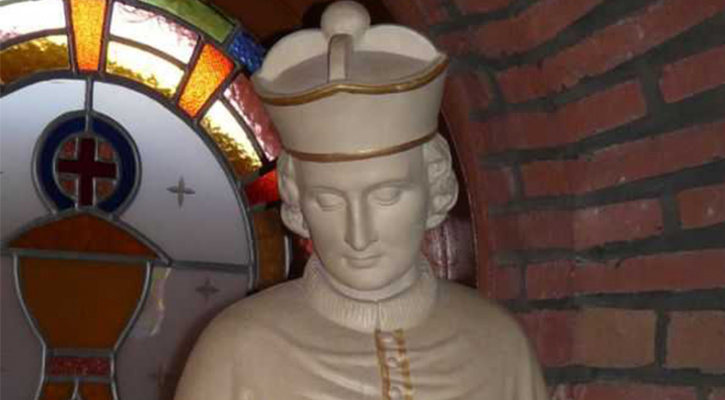
Dafydd’s children and Gwenllian were confined to the priories in Lincolnshire. She spent the next 54 years (in 1337) of her life at the Gilbertine Prior at Sempringham. [See my piece on St. Gilbert from Monday for more information of the man and the priory.] As Gwenllian was the Princess of Wales, her removal and being under King Edward’s oversight assisted the English king is keeping dissenters under control. Gwenllian could, obviously, not be permitted to marry and have sons that might lay claim to the Principality of Wales. Keep in mind what I said in the first paragraph. Gwenllian was not simply the heir to Wales’s principality, her maternal grandmother was Henry III’s sister Eleanor, providing Gwenllian a distant claim to the English throne, as well.
Upon her passing, she was buried somewhere in Sempringham, but no one knows the exact site. There is a Princess Gwenllian Society, and they have erected a memorial to mark the “supposed” burial place of The Last Welsh-Born Princess of Wales.
Having been taken from her native land so young, Gwenllian is unlikely to have remembered any Welsh she may have learned as a toddler, and perhaps never knew the correct pronunciation of her own name. The priory record-keepers listed her as “Wencilian” and was herself shown to have signed her name “Wentliane”
As one of my new stories is set in Lincolnshire, England, I have been researching “bits of history” from the shire. Today, I bring you Saint Gilbert.
At Sempringham, a bit north of Bourne, we find the Gilbertine Order, the only purely English Monastic Order. Its founder was born in Sempringham into a wealthy family 1083. Gilbert was the son of Norman knight. However he could not follow his father’s footsteps, for it is said he was born with a deformity of some sort. Sent to France for his higher education, he decided to pursue seminary studies.
He had not yet been ordained as a priest when he returned to England. After his father’s death, he inherited several estates. His study of religion presented him a different view of the world from many around him. Therefore, instead of living “high on the hog,” so to speak, Gilbert devoted himself to a simple life, sharing as much as possible with the poor. Following his ordination to the priesthood he served as parish priest at Sempringham.
“Among the congregation of the parish were seven young women who had expressed to him their desire to live in religious life. In response, Gilbert had a house built for them adjacent to the Church. There they lived an austere life, but one which attracted ever more numbers; eventually lay sisters and lay brothers were added to work the land. The religious order formed eventually became known as the Gilbertines, though Gilbert had hoped the Cistercians or some other existing order would take on the responsibility of establishing a rule of life for the new order. The Gilbertines, the only religious order of English origin founded during the Middle Ages, continued to thrive.” (Franciscan Media)
This was a “double order,” meaning it housed both monks and nuns. There were two facilities – two cloisters, two dormitories, two dining halls, etc. – so the sexes could live separately within the monastery.
The Gilbertine order spread quickly across England. Gilbert, himself, live to age 100, and by the time of his death, more than 700 brother and 1500 sisters resided in the monastery’s eleven buildings. Gilbert was buried beneath the church’s altar, and he was canonized in 1202.
But the order came to an end when King Henry VIII suppressed all Catholic monasteries. The monastery was pulled down at the Dissolution of Monasteries. Only the Norman church of St Andrew’s remains. This was the church to which the monastery was attached.
Mirta Ines Trupp is a member of the Austen Authors group I admin, along with Sharon Lathan. Her Austen tales come from a totally different perspective from the majority of that group, for Ms. Trupp adds her Jewish roots to each tale, so we see the Regency society from those outside the landed gentry. Please welcome Mirta Ines Trupp.
First, tell us a bit about yourself. From where do you come? Past jobs, awards, the usual bio stuff.
Thank you, Regina, for hosting this interview. I am excited and flattered to share a little bit about myself with your audience. Where do you come from is a loaded question for me! I was born in Buenos Aires although my roots are from Imperial Russia. My grandparents immigrated as children, along with their parents and siblings, escaping persecution and the pogroms so common in the Pale of Settlement. In the early 1960s, my father decided it was time to leave Argentina due to political and economic reasons, and we were fortunate enough to immigrate to the United States of America. For the most part, I was raised in California—although I traveled back and forth to my native country constantly due to my father’s employment with Pan American Airlines. My husband and I were blessed with three children; and for the better part of their youth, I was a stay-at-home-mom. I began writing late in life as an empty-nester, although I have always had a penchant for the craft. There is never enough time for all my little projects, what with a full-time job and being a wife and mother; but my books have been well received, having earned positive reviews and ratings and several “indie-author” awards along the way. I look forward to retiring soon and being able to read and write to my heart’s desire!
What’s the craziest, bravest, or stupidest thing you’ve ever done?
A few years back, I wrote a novel entitled Destiny by Design ~ Leah’s Journey. The story follows an aristocratic family from Imperial Russia to Argentina. Yes, you’ve guessed it. The narrative is loosely based on my own family’s experiences; however, my ancestors were not aristocrats and the story was thoroughly inspired by Jane Austen’s work. One day, I received a message via my Goodreads account. A lovely lady wrote to congratulate me on my new book. She explained that she was the chairwoman of a charitable organization that was planning a guided tour of Buenos Aires, focusing in particular on the Jewish immigrant experience. We continued corresponding via email, while she explained what she was trying to accomplish. Her group was going to visit national sites, important synagogues and meet with the Israeli ambassador in Buenos Aires. She also wanted to organize a Meet and Greet with an Argentine-Jewish author. She asked me if I knew of anyone who would be interested. I indicated that I would ask my family if they knew anyone. She wrote back in bold letters: NO SILLY, I MEAN YOU!Do you want to go to Argentina? So, I guess the craziest thing I have ever done was accepting a plane ticket from a complete stranger. And I’m so glad I did! It was a freeing and fulfilling experience.
What do you write? You’re welcome to include your latest title (shameless plug).
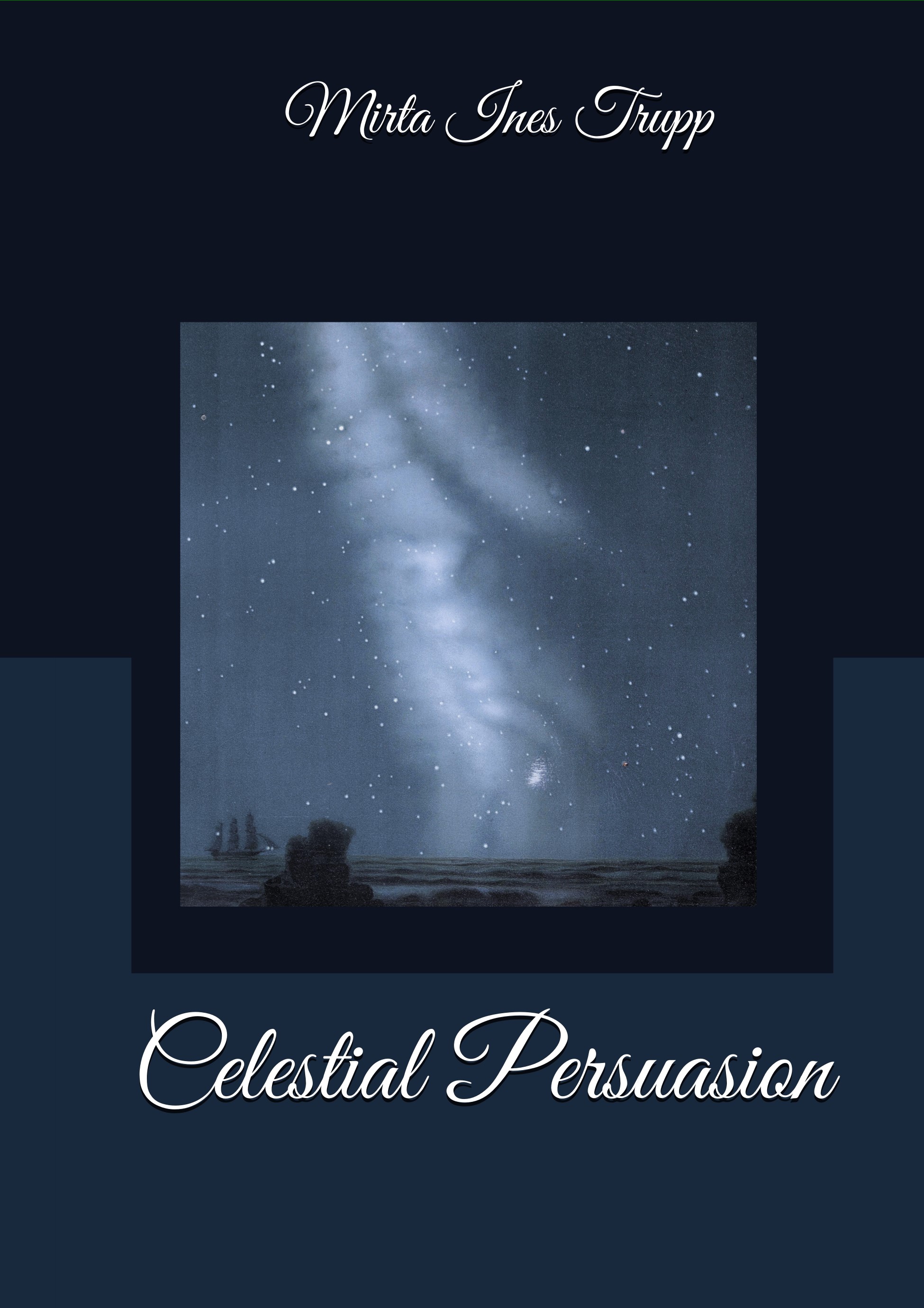
My first book was a Creative non-fiction. I had fifty years of material and had had much experience explaining my unique childhood, my ethnicity, my heritage and my whirl-wind, intercontinental romance. I was inspired by old films and books like I Remember Mama and Little Women (that part when Professor Bhaer advices Jo to write about her life and her surroundings) and that’s when I was bitten by the writing bug! I have always been a great reader of historical fiction, but I was most attracted to the Regency, Victorian and Edwardian eras. There was just one problem. Whether I was reading a classic work or light romance, there was no mention of the Jewish community. And if, by chance, the author did include a Jewish character, I found the portrayal to be a demeaning caricature. I took matters into my own hands and decided to write Jewish historical fiction with an emphasis on clean, light material. I have written two novels which are based on my family’s immigration experiences. These are set in the Victorian/Edwardian eras—one actually has a time-traveling element to the story. The next book to follow was set in the Regency era and is a Pride and Prejudice continuation. I introduced a rabbi and his family into the storyline, as well as some espionage and historical data relating to Wellington’s victory in his Peninsular campaign. My newest project is also a Jewish historical fiction set in the Regency era and is entitled, Celestial Persuasion. Although it is a stand-alone novel, it may be considered a prequel to Austen’s Persuasion.
What difficulties does writing this genre present?
If you do an Internet search for Jewish historical fiction, you will find a plethora of titles. These, for the most part, will deal with the Holocaust or possibly the Spanish Inquisition. In addition to these, you’ll come across biblical narratives. Possibly the one novel that stands out is Daniel Deronda by George Eliot, but otherwise a reader is left wanting in a sea of dark, heavy or academic themes. I wanted to marry my two passions: Period Dramas and Judaica. I wanted to present light, entertaining stories that highlighted the Jewish community in my target eras. There were Jewish aristocrats! The Rothschilds, the Montefiores, the Mocattas, the Brodskys, the Gunzburgs…well, you understand my point. These prominent families intermingled with their Anglican counterparts. They attended soirées, routs, and balls. They formed part of an elite society. Of course, there were still others that lived in different economic spheres: the middle class and those who lived in relative poverty.
I feel strongly about writing stories that showcase a different sort of Jew, someone other than the stereotypical character Dickens or Heyer have provided us. The difficulties in writing such stories are many, but they are not insurmountable. I don’t want to come across “preachy” or write of things that are so foreign that the reader cannot engage with the character. I also don’t want to alienate the Orthodox Jew by writing characters that do not practice the religion with their same fervor. On the other side of the coin, I don’t want to alienate the modern or Reform Jew by writing characters that do not represent their experience! In the end, I have to write to please myself and hope that the story can hold its own.
Tell us about your new release.
While I fashioned the storyline to be a prequel to Austen’s Persuasion, there is so much more to this book! Celestial Persuasion is set against the backdrop of Argentina’s struggle for independence. As fans of the Regency era, we are well versed in the Napoleonic Wars. We understand that the whole of Europe was impacted by these conflicts. But there were other battles being fought around the world. My story will take the reader from the Northern Hemisphere to the Southern Hemisphere, where the Viceroyalty of Río de la Plata was living in its own Regency era. In preparing to write the story, I discovered the history of Lord Duff, the Fourth Earl of Fife and his patronage of José de San Martín, Argentina’s famed liberator. I discovered socialite Mariquita Sanchez de Thompson, a woman whose path to the marital state was so complex and filled with angst, it reminded me of Anne Elliot’s tribulations.Celestial Persuasion introduces Miss Abigail Isaacs—a young lady long considered past her last prayers—to these real-life national heroes.
Abigail is the daughter of a country doctor. A rational creature, she dreams of following in the footsteps of her heroine, Caroline Herschel, and submitting her discoveries to the Royal Astronomical Society. Her brother, Jonathan, is a physician and has been at sea with Captain Wentworth for many years. When tragedy strikes, Abigail is contacted by the good captain and is instructed to meet with Lord Fife in London. Unbeknownst to her, Jonathan Isaacs had been secretly involved with the Spanish Americans in their fight for freedom. It is Lord Fife that presents Abigail with a new trajectory that will lead her away from Exeter—and from all of her aspirations—to the shores of Buenos Aires.
Share a quirky fact from your research.
Mariquita Sanchez was part of the Spanish colonial elite of Buenos Aires. At the age of fifteen, her parents demanded she marry well-to-do Diego del Arco, but Mariquita had fallen in love with a distant cousin— Martín Thompson, a poor naval officer. Now, I don’t want to give anything away. Her true story is stranger—and more romantic—than fiction! In the end, Mariquita weds and becomes a leading patriot in the Viceroyalty. She became famous for her salonnières, hosting the leading authors, artisans, and celebrities of her time. In my research, I discovered a painting of one of her salons. Seeing the ladies in their Regency gowns along with the handsome naval officers, provided me with the inspiration for my book! According to history, the Argentine National Anthem was sung for the first time in Mariquita’s home on May 14, 1813.
What other books (either fiction or nonfiction) could you recommend?
This is a wonderful question, Regina. In keeping with the theme of Argentina, I would recommend two very different novels. The first is Barbara Cartland’s The Tears of Love. The author sets an alluring stage, elaborating on the beauty and glamour of Buenos Aires—the Paris of South America—and expands upon the European influence on architecture and industrial advancements. I enjoyed the storyline, the independent, strong heroine and absolutely LOVED the explanation of the title, but I won’t ruin it for you with spoilers! You’ll have to read it for yourself. The romance, music, and cuisine; the customs and costumes; the gauchos and the politics of the day…it was all perfectly satisfying.
The second novel is the complete opposite of light, clean, easy reading. The Reason for Wings, by Joyce Reiser Kornblatt is a must read. The author spans across generations and continents through the lives of mothers and daughters: Reba and Sonia, Sonia and Rachael, Rachael and Miriam and finally, Miriam and Marcella. With resplendent imagery and a brilliant use of history, the author leads us through their tragic and bittersweet lives. Leaving not one emotion untouched, Kornblatt allowed me to live fully and absolutely with these women, to grieve, to rejoice, to struggle, to exalt and to decry—so completely did I identify with them. This is a painful story, but it is not without hope and therein lies the beauty of the narrative- for whenever a people have been beaten and nearly destroyed, it has been their will to protect their children, their struggle for freedom, their resiliency… their faith that has given wings to their hope. (“You, yourselves, have seen what I did to Egypt, and how I carried you on eagle wings and brought you to Me.” [Exodus 19:4]) I can’t recommend this book enough.
I want to thank you once again for this opportunity, Regina. I hope to have enticed your audience to join me on this journey to new lands, new adventures, and a new romance. Celestial Persuasion will be available on Amazon in both digital and print formats. Arriving soon on June 30, 2021!
Abigail Isaacs fears ever again falling under the power of love and dedicates her life to studying the heavens. However, upon her father’s demise she finds herself in reduced circumstances and must write to her brother, who has long been away at sea. When instead Captain Wentworth of the HMS Laconia sends a tragic reply, Abigail is asked to set aside her own ambitions and fulfill her brother’s dreams in the Viceroyalty of Río de la Plata.
In his relentless pursuit for justice, Lieutenant Raphael Gabay lends his sword to the Spanish American cause. But as he prepares to set sail with the others, he is entrusted with the care of a young woman. She is quite unlike anyone he has ever known, and Raphael wonders whether the brilliant astronomer will see beyond his frivolous façade and recognize his true nature.
Their destinies have been plotted beyond the celestial veil; their charts foretell of adventure. Can these two troubled souls be persuaded to heed the stars and find love—and their purpose—in this fledgling nation?
Short Excerpt:
Captain Wentworth returned to his ship, and nary a crewman offered more than a silent salute as the ship’s commander stormed to his quarters. Every man, from first lieutenant to cabin boy and everyone in between, had seen that look on their captain’s face before. They knew better than to engage him when he was clearly consumed with a task that required his full attention.
He crossed the upper deck and descended the companionway before briefly saluting the marine sentry posted at his door. Cursing, he threw his hat across the room and roughly removed his coat. Normally controlled and reserved, the captain allowed himself a moment to release his frustration Truth be told, he was more than frustrated. He was angry. Angry with Captain Lawrence for his flagrant abuse of power. Angry with the Admiralty for turning a blind eye to rogue and lawless officers. Angry with the helpless situations in which young women found themselves when their menfolk’s choices went awry. He could not help himself and thought of Anne. Would the pain ever subside? Would he be able to set aside the rejection and rally again?
Throwing himself into his chair, uncharacteristically without ceremony or care, Captain Wentworth grimaced at the task before him. He must write to Isaacs’s sister. He—of all men—would have to lay out a new trajectory for her and pray she would comply with the plans he proposed. The captain reached for a nearby bottle of spirits and poured the amber liquid into a crystal glass. He swilled the contents down in one gulp, feeling only the burning sensation as it glided down his throat. The feeling was welcome. Considering what was required of him now left a worse taste in his mouth than the fiery rum. Captain Wentworth could not deny that he was now in the position of having to persuade a young lady to alter the course of her life. Of all things, he despised the thought of manipulating someone by playing on their respect for his rank and command. And again he thought of Anne. She too had been young and naïve in the ways of the world and had allowed someone she trusted to guide her. To guide her in such a way as to lead her away from him.
He took another swallow of courage and thought now of Miss Abigail Isaacs. Throughout their friendship and time at sea, Jonathan had spoken of her often and had provided some of the essentials—she seemed quite unlike other young ladies. But then again, were not all young ladies easily persuaded?
To Learn More of Ms. Trupp’s Books, Follow Her Here:
17th Century Drawing of the Lincoln Cathedral with spires on the west towers – public domain – Wikipedia
The Lincoln Cathedral is the third largest English cathedral and one the prime examples of Gothic architecture. It is a sight that can easily steal away one’s breath. Its long nave crowns the hilltop 200 feet above the River Witham, and its honey-colored towers draws in the eyes to present a glorious sight.
It was the first structure to be built higher than the Great Pyramid. The central tower is 271 feet (83 m) high, reportedly the highest cathedral tower in Europe. That is topped with the highest spire in the world, coming in at 525 feet (160 m).
The first cathedral at Lincoln dates back to 1073. It was begun by Regimus, England’s first Norman bishop, under the orders of William the Conqueror. Regimus moved his see from Dorchester to Lincoln and created the largest diocese in medieval England, hosting more monasteries than all the rest of England combined. Some of his work can still be viewed in the west front; however, a 1185 earthquake left the cathedral in shambles.
What could be saved was saved, but what we see today came at the hands of Hugh of Avalon, a Carthusian monk, meaning he came from what is now Switzerland. Hugh became the Bishopric of Lincoln and instituted a plan to rebuild and even to transform what Regimus began.
Bishop Hugh, coincidentally, was one of the witnesses to the signing of the Magna Carta in 1215, and one of the four surviving original copies of that famous document is kept in the castle associated with the Lincoln Cathedral.
“Under Hugh’s direction, the east transepts and the choir were rebuilt, a project that was not complete until 1210. Between 1215 and 1255 the great transept, the Galilee, and the light and spacious chapter house were added, and the central tower was begun. The chapter house was used by Edward I on three occasions to house meetings of Parliament. Between 1253 and 1280 the superb Angel Choir was built by Simon of Thirsk, in part to house a shrine to Hugh of Avalon, who had been canonized as Great St Hugh.” (Lincoln Cathedral)
The Angel Choir is so named because of the numerous angel carvings in the arches. It is a superb example of Gothic architecture. It was created to be a shrine of sorts for Bishop Hugh, and many make a pilgrimage to visit the place and view its magnificence. The ‘Lincoln Imp’ sits high up on a pillar. Most think it a quirk of a medieval sculptor, but it serves as the symbol of the city these days.
Dating back to 1773, Milton Abbas is a village in Dorset, eight miles south of Blandford and eleven miles northeast of Dorchester. Under the instructions of Lord Milton, the town of Middleton was, literally, moved elsewhere.
Middleton was originally within the grounds of Milton Abbey. Joseph Damer, Lord Milton, 1st Earl of Dorchester, order the town of Middleton demolished and moved into the adjoining valley, known as Luccombe Bottom, reportedly because Middleton was too close to his estate’s manor house and obstructed his view of the surrounding countryside. [This was not so bad as it first may appear. The old village was run down and dirty.] The new village was called Milton Abbas. Most of the existing villages were removed to the new homes. Damer commissioned Sir William Chambers as his architect and Capability Brown as his landscape gardener to design the new village. Both men had previously worked on the Abbey.
The new village contained 36 identical thatched cottages. Each cottage was to house two families. The house were constructed from cob, a natural building material made from subsoil, water, fibrous organic material (typically straw), and sometimes lime. Cob is fireproof, resistant to seismic activity, and inexpensive. The houses were painted yellow and a horse chestnut tree was planted between each dwelling. A church and almshouses were situated across from each others. The almshouses were moved from Middleton. They dated back to 1674. The church was consecrate in 1786. It is built in the Georgian Gothic style. The 14th-century abbey church is now a part of Milton School, which has taken over the mansion built by Lord Milton.
Construction on the new village began in 1773 and continued until 1780. There was a single sloping street lined with thatched-roof cottages, each evenly spaced one from the other.
“Milton Abbey was founded by King Athelstan (925-39) to commemorate the death at sea of his brother Edwin. All the early buildings, as well as documents, books and relics were destroyed in a fire in 1309 caused by lightning. The present huge 14th and 15th Century church comprises only the chancel, tower and transepts, as the eastern chapels were demolished, and the church nave was never built.
“… Milton Abbey is rated by John Phibbs, the leading expert on Capability Brown, as one of the top five Brown landscapes in the whole of England A new feature will be displays recording the History and Heritage associated with the Abbey. ranging from the foundation by King Athelstan, the first king of all England, to the monastic period, the dissolution of the monasteries by Henry V111, to the dramatic tenure of Lord Milton, who destroyed the old town of Middleton, created the village of Milton Abbas, and hired Capability Brown to create the glorious landscape that we all enjoy today. With all these elements to enjoy, no wonder it has been described as ‘The Milton Abbey Experience’.”
The official Milton Abbas website tell us: “Most of the houses are now single dwellings instead of double – in the 19th century they were very overcrowded – it is said that 36 people lived in one of the cottages.” In a 2011 census, Milton Abbas civil parish had 263 dwellings, 232 households and a population of 755.
I thought to look at what was acceptable medical practice during the Regency era and all through the past. We know, for example, that the lack of what we would now call “proper” medical procedures caused Princess Charlotte to lose her life in childbirth. However, what else was popular over the years?
Bloodletting was very common. For thousands of years, medical practitioners clung to the belief that sickness was merely the result of a little “bad blood.” Bloodletting probably began with the ancient Sumerians and Egyptians, but it didn’t become common practice until the time of classical Greece and Rome. Influential physicians like Hippocrates and Galen maintained that the human body was filled with four basic substances, or “humors”—yellow bile, black bile, phlegm and blood—and these needed to be kept in balance to maintain proper health.
Asthma could be cured by eating boiled carrots for a fortnight, according to British evangelist, John Wesley.
Meanwhile, Dr. Thomas Jefferson Ritter’s Mother’s Remedies: Over One Thousand Tried and Tested Remedies from Mothers of the United States and Canada, published in 1910, tells us we would cure asthma with chloroform, or we may be rid of ringworm by rubbing a paste-like mixture of vinegar and gunpowder on the infected area, or to cure chapped hands by burying cold cream wrapped in a cloth overnight, which a person would unearth the next day and rub the cold cream on his hands, or to mix a drop of tincture of nux vomica (commonly known today as ‘strychnine’) in a teaspoon of water to cure severe headaches.
People drank a mixture containing powdered gold during the Middle Ages as a cure for muscle pain. Edible gold is still being purported. See The Health Benefits of Gold.
To cure a hangover in the Wild West, people would drink a tea made of rabbit poo. “Many cultures seem to recommend consuming pickled things to cure a hangover—and in Poland, you’re supposed to drink pickle juice straight up. But Mongols from the era of Genghis Khan took it a step further: They prescribed a breakfast of two pickled sheep’s eyes. This supposed cure is still used in the region, although now they chase it with a glass of tomato juice; it’s known as a ‘Mongolian Mary.'” [15 Historical Hangover Cures] The Roman author Pliny the Elder suggested drinking a mixture of owl eggs and wine for three days to cure a hangover. Would someone really have the same hangover for three days?
Trepanation is the oldest form of surgery and also one of its most gruesome. As far back as 7,000 years ago, civilizations around the world engaged in trepanation—the practice of boring holes in the skull as a means of curing illnesses.
Image of the painting The Extraction of the Stone of Madness, completed around 1494 by Hieronymus Bosch, demonstrating medieval trepanation. The work illustrates trepanation to remove a stone from the patient’s head and presents one artist’s view of the surgical procedure and medical knowledge during that time. The work is displayed in the Museo del Prado in Madrid. ~ https://thejns.org/focus/view/journals/neurosurg-focus/36/4/article-pE9.xml
Chocolate was once thought to be a cure for venereal disease, or so thought some French doctors during the 1500s.
Mercury was once used as a popular elixir and topical application. Moreover, Chinese alchemists prized liquid mercury, or “quicksilver,” and red mercury sulfide for their supposed ability to increase lifespan and vitality. From the early 1900s, mercury was used to cure sexually transmitted diseases.
In the later part of the 1800s in the U.S., some doctors gave their patients a transfusion using milk instead of blood. Big Think tells us, “The first injection of milk into a human took place in Toronto in 1854 by Drs. James Bovell and Edwin Hodder. They believed that oily and fatty particles in milk would eventually be transformed into “white corpuscles,” or white blood cells. Their first patient was a 40-year-old-man who they injected with 12 ounces of cows’ milk. Amazingly, this patient seemed to respond to the treatment fairly well. They tried again with success. The next five times, however, their patients died.”
The Book of Phisick tells us to cure epilepsy, one should cook a strong man’s hair with a deer leg-bone, turn it into powder, then eat it leading up to the new moon.
Animal Dung was used as a cure all for a variety of diseases and injuries. Although this sounds disgusting by modern standards, research shows the microflora found in some types of animal dung contain antibiotic substances.
Along the same vein of thought, ancient Egyptians used crocodile dung suppositories for contraceptive use.
Even Hippocrates, the father of medicine, attempted to cure baldness by smearing pigeon poop on the person’s head.
Mental Floss tells us, “‘The Red Book of Hergest is a Welsh manuscript from around 1382 that contains some herbal remedies, including one to remove drunkenness that involves “eat[ing] bruised saffron with spring water.’ Sadness could be cured by saffron, too, at least in moderation—according to Hergest, ‘If you would be at all times merry, eat saffron in meat or drink, and you will never be sad: but beware of eating over much, lest you should die of excessive joy.'”
“Corpse Blood,” an elixir made of human flesh, blood, and bone, was used to cure migraines and stomach issues. According to History.com, “The Romans believed that the blood of fallen gladiators could cure epilepsy, and 12th century apothecaries were known for keeping a stock of “mummy powder”—a macabre extract made from ground up mummies looted from Egypt. Meanwhile, in 17th century England, King Charles II was known for enjoying a draught of ‘King’s Drops,’ a restorative brew made from crumbled human skull and alcohol.”
To cure rabies, The Book of Phisick tells us, “Tak[ing] 40 grains of ground liverwort and 20 grains of pepper in half a pint of milk … take this quantity four mornings together, then use of Cold Bath, every other day, a month.”
In the early 1900s, the customary cure for hay fever was a 4% solution of cocaine up the person’s nose. Cocaine was commonly used to cure indigestion, hemorrhoids, and fatigue.
History.com also tells us of a woman’s “Wandering womb.” It says, “According to the writings of Plato and Hippocrates, when a woman was celibate for an extended time, her uterus—described as a “living animal” eager to bear children—could dislodge and glide freely about her body causing suffocation, seizures and hysteria. . . . To prevent their wombs from going on walkabout, ancient women were counseled to marry young and bear as many children as possible. For a womb that had already broken free, doctors prescribed therapeutic baths, infusions and physical massages to try to force it back in position. They might even “fumigate” the patient’s head with sulfur and pitch while simultaneously rubbing pleasant-smelling lotions between her thighs —the logic being that the womb would flee from the bad smells and move back into its rightful place.”
We are all aware of the history of “disagreements” between the United States and England that resulted in the American Revolution and the War of 1812, but what do you know of the 1859 Pig War? Never heard of it? Permit me to explain.
In June 1846, the Oregon Treaty brought an end to the dispute between the U.S. and the U.K. over Oregon Country. The division of the land came “along the forty-ninth parallel of north latitude to the middle channel which separate the continent from Vancouver Island, and thence southerly through the middle of the said channel, and of the Strait of Juan de Fuca, to the Pacific Ocean.” The problem with this description was there were TWO straits: the Haro Strait, along the west side of the San Juan Islands, and the Rosario Strait, along the east side.
To complicate the matter, the available maps of the area were unclear on many of the necessary lines to determine the right of each country to claim the area. Ambiguity reigned for many years. Both the United States and the United Kingdom claimed sovereignty over the San Juan Islands. Britain’s Hudson’s Bay Company set up operations on San Juan and established a sheep ranch there. About 30 U.S. families also took up residence.
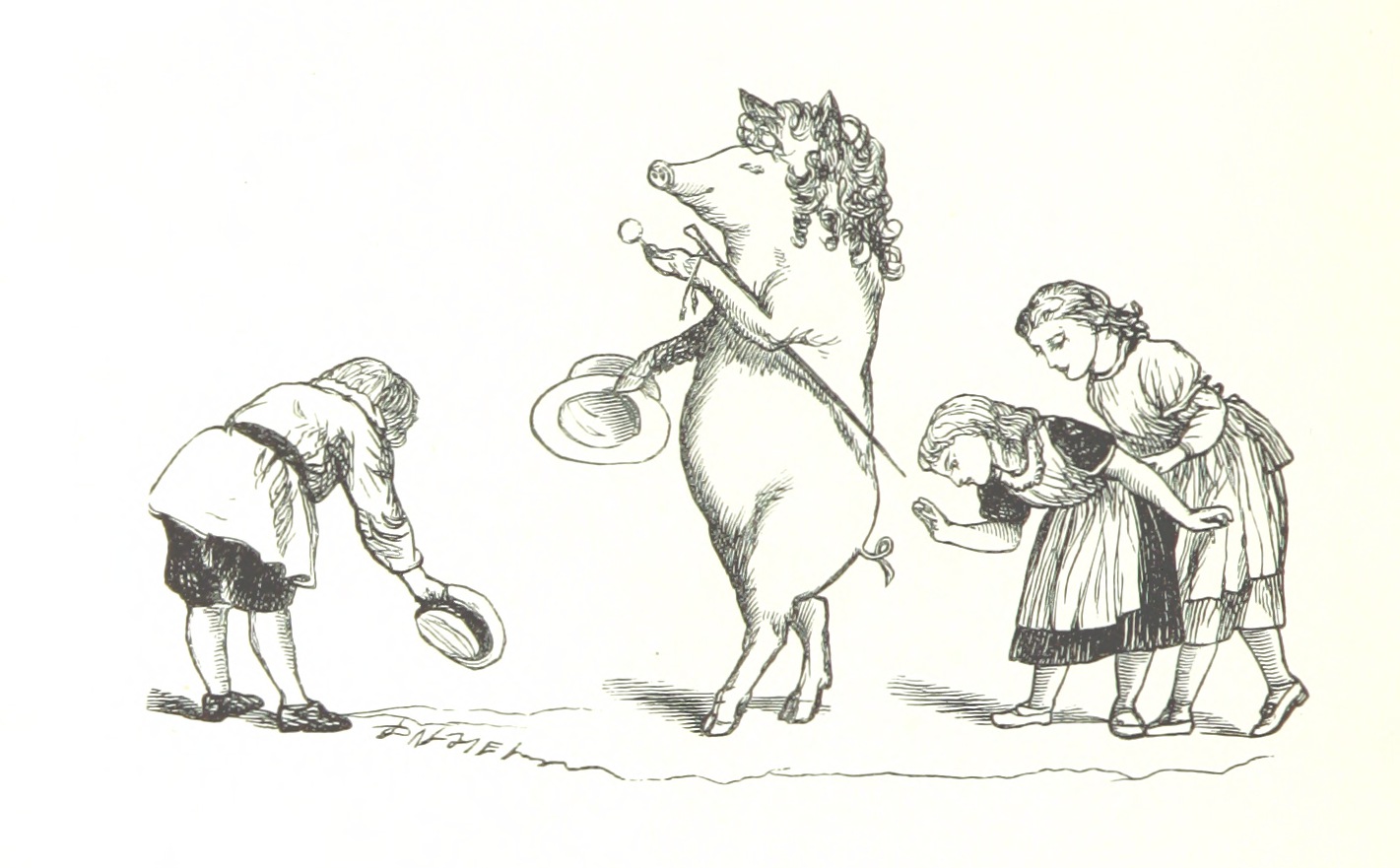
The situation came to “blows” on 15 June 1859, when Lyman Cutlar, an American farmer who had staked his claim to land on San Juan Island under the Donation Land Claim Act, discovered a large black pig, owned by an Irishman, Charles Griffin, who was employed by the Hudson Bay Company to run the sheep ranch on the island, eating parts of Cutlar’s garden. As this was not the first incident of such happening, Cutlar caught up his gun and shot the pig, killing it.
In truth, Griffin owned several pigs that he permitted to roam free. Griffin and Cutlar had gotten along until this time. Cutlar offered Griffin $10 for the pig, but Griffin demanded $100. “Cutlar believed he should not have to pay for the pig because the pig had been trespassing on his land. One likely apocryphal account has Cutlar saying to Griffin, “It was eating my potatoes”; and Griffin replying, “It is up to you to keep your potatoes out of my pig.” [Woodbury, Chuck (2000). “How One Pig Could Have Changed American History”. Out West #15. Out West Newspaper.] When British authorities threatened to arrest Cutlar, American settlers called for military protection.
The British governor, James Douglas, ordered Cutlar to pay $100. The Americans, under U.S. Army General William S. Harney, sent Captain George Pickett, who earlier had been cited for “reckless bravery,” to handle the American complaint. Pickett established the American Camp near the south end of San Juan Island, today one of two historical sites on the island, the other being the British Camp, manned by the Royal Marines on the north end of the island.
Next, the British order five warships and 2000 troops to the area. The situation continued to escalate. By August 10, 1859, 461 Americans with 14 cannons under Colonel Silas Casey were opposed by five British warships mounting 70 guns and carrying 2,140 men.Meanwhile, Harney ordered Pickett to keep the British from landing on the island. Incensed, Governor Douglas ordered his men to take the island by force.
Thankfully, British Rear Admiral Robert L. Baynes thought a war between two great nations over a pig was more than a bit ridiculous. He kept his men onboard their ships, but he had his guns trained on the American fort on the island. Local commanding officers on both sides had been given essentially the same orders: defend yourselves, but absolutely do not fire the first shot. For several days, the British and U.S. soldiers exchanged insults, each side attempting to goad the other into firing the first shot, but discipline held on both sides, and thus no shots were fired. A waiting game ensued.
When news about the crisis reached Washington and London, officials from both nations were shocked and took action to calm the potentially explosive international incident. As a result of the negotiations, both sides agreed to retain joint military occupation of the island until a final settlement could be reached, reducing their presence to a token force of no more than 100 men.
The “English Camp” was established on the north end of San Juan Island along the shoreline, for ease of supply and access; and the “American Camp” was created on the south end on a high, windswept meadow, suitable for artillery barrages against shipping. Today the Union Jack still flies above the “English Camp”, being raised and lowered daily by park rangers, making it one of the few places without diplomatic status where U.S. government employees regularly hoist the flag of another country, though this is only for commemorative purposes.
During the years of joint military occupation, the small British and American units on San Juan Island had an amicable mutual social life, visiting one another’s camps to celebrate their respective national holidays and holding various athletic competitions. Park rangers tell visitors the biggest threat to peace on the island during these years was “the large amounts of alcohol available”.
The dispute was not settled for another 13 years. Kaiser Wilhelm I of Germany arbitrated the matter and presented San Juan Island to the United States.
“The dispute was peacefully resolved after more than a decade of confrontation and military bluster, during which time the local British authorities consistently lobbied London to seize back the Puget Sound region entirely, as the Americans were busy elsewhere with the Civil War. In 1866, the Colony of Vancouver Island was merged with the Colony of British Columbia to form an enlarged Colony of British Columbia. In 1871, the enlarged colony joined the newly formed Dominion of Canada. That year, the United Kingdom and the United States signed the Treaty of Washington, which dealt with various differences between the two nations, including border issues involving the newly formed Dominion. Among the results of the treaty was the decision to resolve the San Juan dispute by international arbitration, with German Emperor Wilhelm I chosen to act as arbitrator. Wilhelm referred the issue to a three-man arbitration commission which met in Geneva for nearly a year. On October 21, 1872, the commission decided in favor of the United States. The arbitrator chose the American-preferred marine boundary via Haro Strait, to the west of the islands, over the British preference for Rosario Strait which lay to their east. On November 25, 1872, the British withdrew their Royal Marines from the British Camp. The Americans followed by July 1874.” [Pig War, 1859]
It was the year 1809. The Napoleonic Wars were in full swing, but the French general had other interests besides fighting the British over Spain and Portugal.
Around the time Jane Austen and her mother and sister moved to Chawton and took possession of their new home, courtesy of Jane’s brother Edward, Napoleon arrived in Vienna. His destination was the breathtaking Schönbrunn palace.
Schönbrunn Schloss (meaning “Beautiful Spring Palace”) is utterly charming, as I was lucky to appreciate during the summer I spent in Vienna, many moons ago. The palace was built as the Austrian’s answer to Versailles. But Napoleon wasn’t there to admire the architecture, but to encounter a very special enemy.
For the Pleasure of the Empress
Napoleon visited Schönbrunn with a very particular purpose in mind: to play a game of chess against the famous Turk, a chess-playing machine designed to beat all opponents. The automaton was built by Hungarian inventor Wolfgang von Kempelen in 1770 under instructions by Empress Maria Theresa of Austria. The Empress was interested in science and its crossover with illusionism, and Kempelen was only too pleased to oblige.
Kempelen’s invention consisted of a large table-height wooden cabinet with doors to one side. The cabinet was three-and-a-half feet long and two feet wide, and it was topped with a chessboard. Next to it sat a human-sized model of a man wearing a traditional Ottoman costume (turban and pipe included) supposedly capable of playing chess – and defeating all human opponents.
By 1809, The Turk had had an eventful existence. After a glorious few years entertaining local and foreign nobility in the Austrian court with its chess mastery, it had been exhibited all over Europe. It drew crowds in Paris, where it played (and won) against Benjamin Franklin, then US ambassador in France. It was subsequently shown in London, Leipzig, Dresden and Amsterdam.
The French Emperor’s Combative Style
After Kempelen’s death, the machine went into storage until it was bought by another inventor, Johann Nepomuk Mälzel, in 1805. The Turk was repaired and given a new lease of life. It was shortly after this that the automaton piqued Napoleon’s interest, and the Emperor of the French demanded to play against it.
The Turk usually had the white chess pieces, and hence had the first move of the game. But Napoleon wanted to go first, and moved one of his pieces before the automaton could move his. The Turk returned Napoleon’s piece to the original position. Napoleon tried the same move again; the same thing happened.
True to his style, Napoleon insisted a third time, but the Turk had had enough. The mechanical arm swiped the chess board and all pieces fell to the floor. This time, the French ruler got the message, and accepted that the Turk should have the first move. The game that followed was short. After 19 moves, and barely twenty minutes, Napoleon was beaten.
An Ingenious Device with a Tragic End
As you may have suspected, the Turk wasn’t actually a chess-playing machine. Inside the large box was a complex set-up designed to trick the eye. Although the cabinet doors, once open, showed clockwork parts, behind it was a hidden compartment with enough room for a chess master to hide and follow – and respond to – the game.
The chess master in the cabinet was able to control the model’s arm through the use of levers capable of picking up and moving the chess pieces. Furthermore, he was able to communicate with the presenter outside via a clever code using turnable brass discs. The overall effect was very realistic and left audiences marvelled (you can check out some of the Turk’s games here).
After defeating Napoleon, the Turk embarked on another long and successful European tour. In 1826, the Turk made it to New York City and Boston, then back to Europe only to return to the US in 1829, inspiring Edgar Allan Poe to write an essay on the automaton. From the United States, Maezel took the Turk to Cuba, but after his death at sea in 1838, the machine was forgotten again. It eventually ended up in a corner of the Chinese Museum in Philadelphia, where it lay abandoned until it was devoured by a fire in 1854.
Today, playing chess against a machine is no biggie: anybody with a mobile phone can do it. But back in the Regency, it must have felt magical. The Turk was just an illusion, but one that, according to legend, became a reality. It is said that a young Charles Babbage saw The Turk in action. Although he was convinced it was a hoax, the automaton got him thinking about intelligent machines, and inspired his work on the Difference Engine, a mechanical calculator that, after input from Ada Lovelace, would become an early model for a computer.
But that’s a story for another day.
What do you make of the invention, particularly if you are a chess aficionado? Have you ever seen automatons in action?
As theatre was my minor in my undergraduate program, I often studied Shakespeare’s play “Macbeth,” and I have taught it many times. However, I have never performed in or directed the play. Even so, I know something of the “Curse of Macbeth.”
As the story goes, looking for authenticity for his play, William Shakespeare researched witches’ spells and curses. They “upset” the “community,” and so a curse was placed on every performance of the play. In fact, many in the theatre community do not even speak the name of the play. Instead, it is referred to as the Scottish play (as the setting is in Scotland) or the Bard’s play (referring to Shakespeare’s nickname). Using the word “Macbeth,” other than when it called for in the script is forbidden in many production houses. Superstition says doing so will create some sort of havoc or even a disaster.
Because of this superstition, the lead character is often referred to as the Scottish King or Scottish Lord. Lady Macbeth is often referred to as the Scottish Lady. Sometimes Mackers or MacB is used to avoid saying the name.
In truth, most theatre history buffs place the superstition’s source on the shoulders of what was going on during Shakespeare’s days. It was not uncommon to discover a theatre company to experience financial woes. Cut backs often meant either the stage was in poor condition or production costs outweighed the theatre’s ability to stage Macbeth, or any play for that matter, properly.
Equally as compelling, but not so practical, is the idea that Macbeth’s and Lady Macbeth’s characters are of the worst sort and should be cursed. After all, they kill their king for their own good. They break the vows of allegiance they owe to any guest in their home, but, most assuredly, to their ruler and king. Being cursed or double-crossed in the end appears only right, does it not?
According to Garber, Marjorie B. (1997). Shakespeare’s Ghost Writers: Literature as Uncanny Causality. Methuen. p. 88: “When the name of the play is spoken in a theatre, tradition requires the person who spoke it to leave, perform traditional cleansing rituals and be invited back in. The rituals are supposed to ward off the evil that uttering the play’s name is feared to bring on.
“The rituals include turning three times, spitting over one’s left shoulder, swearing, or reciting a line from another of Shakespeare’s plays. Popular lines for this purpose include, “Angels and ministers of grace defend us”(Hamlet,1.IV), “If we shadows have offended” (A Midsummer Night’s Dream 5.ii), and “Fair thoughts and happy hours attend on you” (The Merchant of Venice, 3.IV). A more elaborate cleansing ritual involves leaving the theatre, spinning around and brushing oneself off, and saying “Macbeth” three times before entering again. Some production groups insist that the offender may not re-enter the theatre until invited to do so, therefore making it easy to punish frequent offenders by leaving them outside.
“A realistic portrayal of a ritual occurs in the 1983 film The Dresser, in which Sir is the offender, and Norman, his dresser, officiates over the propitiation.”
Wikipedia and other sources (my theatre history books) list a number of such “accidents” regarding the curse of Macbeth:
The male actor who was to play Lady Macbeth in the very first performance of Macbeth took ill with a fever before ever walking on stage and supposedly died.
The Astor Place Riot in 1849, injuries sustained by actors at a 1937 performance at The Old Vic that starred Laurence Olivier, Diana Wynyard’s 1948 accidental fall, and burns suffered by Charlton Heston in 1954. ( Hurwitt, Robert (19 August 2010). “Cal Shakes risks curse of ‘the Scottish play'”. San Francisco Chronicle.)
On 2 December 1964 a fire burned down the D. Maria II National Theater in Lisbon, Portugal. At the time, the play being shown was Macbeth. (“O incêndio no Teatro Nacional D. Maria II | DN 150 Anos”. Archived from the original on 11 October 2016.)
According to records of the 1948 regional theatre production, actress Diana Winyard accidentally walked off the edge of the stage during her sleepwalking scene as Lady Macbeth. Shortly before the accident, she was heard complaining about the need to play the scene with her eyes open. Not a bit of revenge, you may declare, but she was also heard saying that the curse was “ridiculous.”
In 1980, a production of Macbeth at The Old Vic starring Peter O’Toole, often referred to as Macdeath, was performed. It was reviewed so badly that the theatre company disbanded shortly after the play. (The Old Vic) In a 1937 production at the same theatre, Laurence Olivier was nearly killed by a sandbag which fell from the rafters to land only inches from where he stood. Meanwhile, the theatre’s founder, Lilian Baylis, was struck dead by a sudden heart attack.
Mishaps on the set of his film Opera led director Dario Argento to believe that the film had been affected by the Macbeth curse; the opera being performed within the film is Verdi’s Macbeth.
In 1942 production a series of unexplained mishaps occurred. Beatrice Fielden-Kaye, who was playing one of the witches died of an unexpected heart attack. Then, the man playing Duncan, one Marcus Barron, died of an angina. Another of the three witches, actress Annie Edsmond died on stage while she danced around the cauldron with pure abandon. To top off this madness, the set designer committed suicide in his office. He was reportedly surrounded by his set and costume designs. (bbashakespeare) (Theatricalial)
In 1988, Bulgarian singer, coach and translator Bantcho Bantchevsky committed suicide during a nationally broadcast matinee of Giuseppe Verdi’s opera Macbeth. He propelled himself backwards from a balcony railing at the Metropolitan Opera House, Lincoln Square. (“Opera Patron Dies … at the Met”, The New York Times”. 24 January 1988.) (The Washington Post)
Ari Aster, writer and director of Hereditary, said that during filming, “Alex Wolff told me not to say the name of William Shakespeare’s Scottish play out loud because of some superstitious theater legend. I smugly announced the name, and then one of our lights burst during the shooting of the following scene.” (“Ari Aster comments on Shakespeare’s Scottish Play curse”. 15 June 2018.)
Reportedly nine members of a Russian film crew died of food poisoning on set of a production of Macbeth. The film was quickly canceled. Also, in Russia, when Constantin Stanislavski of the Moscow Arts Company forgot his lines in the midst of the murder scene in an early 1900 production of the play, he whispered to the prompter for a line, but none was forthcoming. Angry, Stanislavski called repeatedly for the line, only to discover moments later that the prompter was slumped over dead holding the script. That production never saw light of day.
And for those of you who have been watching the CNN series on Abraham Lincoln, supposed “Honest Abe” was reciting lines from Macbeth over dinner with friends the evening before he was assassinated. Coincidence? I am not one to buck traditions or curses. What of you? Do you believe?
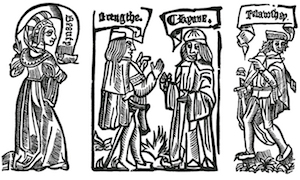
thisstage.la Woodcut illustrations from Duffield & Co.’s 1904 edition of “Everyman.”
Morality Plays, those in which the characters were allegorical persons would attempt to drive home a moral. They provided more scope to the imagination for new plots and incidents and afforded a chance for delineation of characters. (For more information on Miracle Plays, Mystery Plays, and the Cycle Plays, see my earlier post onAnglo-Norman Drama.) At first, many found these plays a bit dull, but with the introduction of Vice, a character who customarily played pranks similar to those of modern-day clowns, interest in the Morality Plays increased. Generally, the individual plays ended with Virtue triumphing over the Devil and Vice. The Devil would return to Hell in disgrace, with Vice riding upon his back.
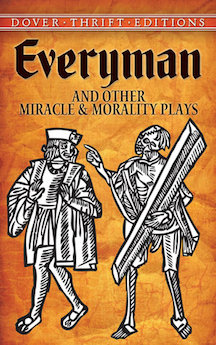
Everyman is a morality play of the late medieval period (c. 1500), which points the way to Virtue. The foreword runs thus:
Here begins a treatise how the high Father of Heaven sendeth Death to summon every creature to come and give account of their lives in this worlde.
Summary of the Tale: God speaks and bewails the lack of virtue in this world. People are in love with worldly riches and the seven deadly sins. He sends Death to show to Everyman the pilgrimage he must take.
There follows the colloquy between Death and Everyman. Death asks for an account of Everyman’s life. Everyman tries to buy off Death, but the effort proves fruitless. Seeking a refuge from Death’s manipulations, Everyman turns to Fellowship, who has sworn he would do anything for Everyman. Everyman tells him he has been commanded to appear before Judge Adonay ( Hebrew for God), and he would prefer that Fellowship bear him company in the task. Needless to say, fickled Fellowship refuses. Everyman then asks the same of his Kindred, only to receive a like response. Neither Goods or Riches agree to accompany him on his dark journey. Next, he calls on Good-deeds, but although Good-deeds is willing to assist Everyman, he has done so few good deeds that she cannot stand upon her feet. However, Good-deeds sends her sister Knowledge to assist him in “his dreadful reckoning.” Knowledge escorts Everyman to Confession, after which he does penance for his sins. Now, Good-deeds sends Discretion, Strength, and Five-Wits along with him on the voyages, as well as Beauty. With these qualities to aid him, Everyman fears nothing. But when it comes to going into the grave, Beauty draws back. Strength soon follows her lead in forsaking Everyman. Then Discretion leaves and finally Five-Wits. Only Good-deeds remains to assist him. “All feeth save Good-deeds.” At length, the Angel receives Everyman. The moral is that of all the qualities and possessions one may have in this life, only Good-deeds may justify you to God.
Analysis: The play shows the measure of dramatic quality and power, which the morality was capable of attaining when it was at its best. There is no classical influence and yet is classically constructed. The beauty of the work is its sincerity and a certain inevitability about the fortunes of the chief character, Everyman.
The Second Shepherd’s Play comes from the Towneley Cycle in the 15th Century. “The Second Shepherds’ Play (also known as The Second Shepherds’ Pageant) is a famous medieval mystery play, which is contained in the manuscript HM1, the unique manuscript of the Wakefield Cycle. These plays are also referred to as the Towneley Plays, on account of the manuscript residing at Towneley Hall. The plays within the manuscript roughly follow the chronology of the Bible and so were believed to be a cycle, which is now considered not to be the case. This play gained its name because in the manuscript it immediately follows another nativity play involving the shepherds. In fact, it has been hypothesized that the second play is a revision of the first. It appears that the two shepherd plays were not intended to be performed together since many of the themes and ideas of the first play carry over to the second one. In both plays it becomes clear that Christ is coming to Earth to redeem the world from its sins. Although the underlying tone of The Second Shepherd’s Play is serious, many of the antics that occur among the shepherds are extremely farcical in nature.” (The Second Shepherd’s Play)
Summary of the Tale:The three shepherds meet and bewail their poverty and the cold weather. They are soon joined by Mak, a notorious sheep-stealer who puts on a big front. Mak seems a rather simple rogue, ingenious but poor. The shepherds make sport of him, but he persists in posing as the messenger of the king. He drops his pose soon enough and discourses in quite lively fashion about his wife, her fecundity, and the expense of her upkeep, ending by offering to pay her burial mass with great readiness. Soon the shepherds become sleepy and lie down on the ground to rest. To prevent Mak from pilfering, they put him between two of them. But Mak puts them under a spell to prevent them from awaking, then simply walks off with a sheep which he brings to Gill, his wife.
Gill, fearing discovery, conceives the ingenious plan of pretending to be ill after childbirth, and she bundles the sheep into the baby’s cradle. Then Mak returns to the sleeping shepherds and lies down as if he never been awake.
When the shepherds arise and discover a sheep missing, Mak immediately falls under suspicion. They go to Mak’s home to make a search. Here they find Gill in bed groaning as if from a recent childbirth. In fact, the shepherds are made to feel ashamed of themselves for coming to search a house where there has so lately been a birth. They are about to go when one of them insists on presenting the newborn child with a gift. Naturally, Mak’s theft is disclosed, and though he insists that the sheep was really born of him and his wife, the shepherds punish him by tossing him in a sheet.
The play continues with the appearance of an angel instructing the shepherds to journey towards Bethlehem, there to give homage to the Christ child. They follow the star, philosophizing as they go, until they read the manger. Having offered their gift, they hail the Savior. Mary speaks, and they depart.
Analysis:Although as a mystery play, the central episode of this play would be the birth of Christ, it is obvious that the birth is hardly more than an anti-climax to the story of Mak. It is clear that in the Second Shepherd’s Play, the drama is liberating itself from ecclesiastical domination, although it was not as yet completely independent. In its general atmosphere, it has departed from its Scriptural basis. The humor and the character of the shepherds are English. The situation is domestic.
The work was written in a vigorous, rhymed stanza suitable to the rather coarse humor and colloquial conversation. An excellent example of this humor is Mak’s complaint that his wife is always bearing children, some years one, some years two. The harshness with which Gill treats her husband until she learns that he has brought home a sheep is an additional touch. The play might well be called our first domestic farce.
Resources:
History of English Literature: Part 1 – Early Saxon Through Milton), Hymarx Outline Series, Student Outlines Company, Boston, MA, pp. 71-74.
Robinson, J. W. (1991). Studies in Fifteenth-century Stagecraft. Kalamazoo: Western Michigan University Medieval Institute.
Feinstein, Sandy (2001). “Shrews and Sheep in The Second Shepherds’ Play“. Pacific Coast Philology36: 64–80.









 Middleton was originally within the grounds of Milton Abbey. Joseph Damer, Lord Milton, 1st Earl of Dorchester, order the town of Middleton demolished and moved into the adjoining valley, known as Luccombe Bottom, reportedly because Middleton was too close to his estate’s manor house and obstructed his view of the surrounding countryside. [This was not so bad as it first may appear. The old village was run down and dirty.] The new village was called Milton Abbas. Most of the existing villages were removed to the new homes. Damer commissioned Sir William Chambers as his architect and Capability Brown as his landscape gardener to design the new village. Both men had previously worked on the Abbey.
![milton-abbas-7648[1].jpg](https://reginajeffers.blog/wp-content/uploads/2018/05/milton-abbas-764811.jpg) The new village contained 36 identical thatched cottages. Each cottage was to house two families. The house were constructed from cob, a natural building material made from subsoil, water, fibrous organic material (typically straw), and sometimes lime. Cob is fireproof, resistant to seismic activity, and inexpensive. The houses were painted yellow and a horse chestnut tree was planted between each dwelling. A church and almshouses were situated across from each others. The almshouses were moved from Middleton. They dated back to 1674. The church was consecrate in 1786. It is built in the Georgian Gothic style. The 14th-century abbey church is now a part of Milton School, which has taken over the mansion built by Lord Milton.
The new village contained 36 identical thatched cottages. Each cottage was to house two families. The house were constructed from cob, a natural building material made from subsoil, water, fibrous organic material (typically straw), and sometimes lime. Cob is fireproof, resistant to seismic activity, and inexpensive. The houses were painted yellow and a horse chestnut tree was planted between each dwelling. A church and almshouses were situated across from each others. The almshouses were moved from Middleton. They dated back to 1674. The church was consecrate in 1786. It is built in the Georgian Gothic style. The 14th-century abbey church is now a part of Milton School, which has taken over the mansion built by Lord Milton.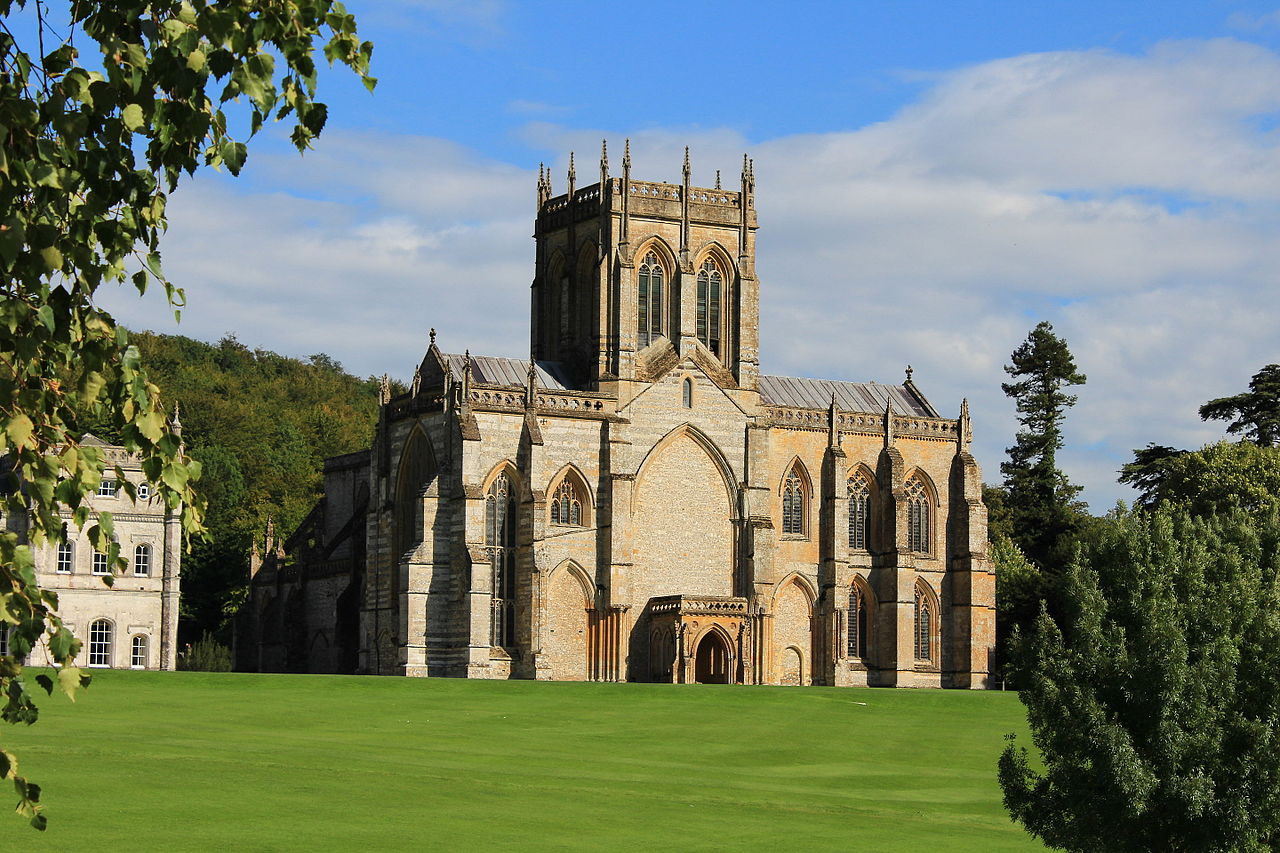
 The official Milton Abbas website tell us: “Most of the houses are now single dwellings instead of double – in the 19th century they were very overcrowded – it is said that 36 people lived in one of the cottages.” In a 2011 census, Milton Abbas civil parish had 263 dwellings, 232 households and a population of 755.




 The French Emperor’s Combative Style


 Summary of the Tale:
 The Second Shepherd’s Play comes from the Towneley Cycle in the 15th Century. “The Second Shepherds’ Play (also known as The Second Shepherds’ Pageant) is a famous medieval mystery play, which is contained in the manuscript HM1, the unique manuscript of the Wakefield Cycle. These plays are also referred to as the Towneley Plays, on account of the manuscript residing at Towneley Hall. The plays within the manuscript roughly follow the chronology of the Bible and so were believed to be a cycle, which is now considered not to be the case. This play gained its name because in the manuscript it immediately follows another nativity play involving the shepherds. In fact, it has been hypothesized that the second play is a revision of the first. It appears that the two shepherd plays were not intended to be performed together since many of the themes and ideas of the first play carry over to the second one. In both plays it becomes clear that Christ is coming to Earth to redeem the world from its sins. Although the underlying tone of The Second Shepherd’s Play is serious, many of the antics that occur among the shepherds are extremely farcical in nature.”


 Every Woman Dreams...


#/media/File:Cob_stitch_copy.jpg)
.JPG)