“Unusual” Medical Cures Found in History

I thought to look at what was acceptable medical practice during the Regency era and all through the past. We know, for example, that the lack of what we would now call “proper” medical procedures caused Princess Charlotte to lose her life in childbirth. However, what else was popular over the years?

Bloodletting was very common. For thousands of years, medical practitioners clung to the belief that sickness was merely the result of a little “bad blood.” Bloodletting probably began with the ancient Sumerians and Egyptians, but it didn’t become common practice until the time of classical Greece and Rome. Influential physicians like Hippocrates and Galen maintained that the human body was filled with four basic substances, or “humors”—yellow bile, black bile, phlegm and blood—and these needed to be kept in balance to maintain proper health.

Asthma could be cured by eating boiled carrots for a fortnight, according to British evangelist, John Wesley.

Meanwhile, Dr. Thomas Jefferson Ritter’s Mother’s Remedies: Over One Thousand Tried and Tested Remedies from Mothers of the United States and Canada, published in 1910, tells us we would cure asthma with chloroform, or we may be rid of ringworm by rubbing a paste-like mixture of vinegar and gunpowder on the infected area, or to cure chapped hands by burying cold cream wrapped in a cloth overnight, which a person would unearth the next day and rub the cold cream on his hands, or to mix a drop of tincture of nux vomica (commonly known today as ‘strychnine’) in a teaspoon of water to cure severe headaches.

People drank a mixture containing powdered gold during the Middle Ages as a cure for muscle pain. Edible gold is still being purported. See The Health Benefits of Gold.

To cure a hangover in the Wild West, people would drink a tea made of rabbit poo. “Many cultures seem to recommend consuming pickled things to cure a hangover—and in Poland, you’re supposed to drink pickle juice straight up. But Mongols from the era of Genghis Khan took it a step further: They prescribed a breakfast of two pickled sheep’s eyes. This supposed cure is still used in the region, although now they chase it with a glass of tomato juice; it’s known as a ‘Mongolian Mary.'” [15 Historical Hangover Cures] The Roman author Pliny the Elder suggested drinking a mixture of owl eggs and wine for three days to cure a hangover. Would someone really have the same hangover for three days?

Trepanation is the oldest form of surgery and also one of its most gruesome. As far back as 7,000 years ago, civilizations around the world engaged in trepanation—the practice of boring holes in the skull as a means of curing illnesses.

Image of the painting The Extraction of the Stone of Madness, completed around 1494 by Hieronymus Bosch, demonstrating medieval trepanation. The work illustrates trepanation to remove a stone from the patient’s head and presents one artist’s view of the surgical procedure and medical knowledge during that time. The work is displayed in the Museo del Prado in Madrid. ~ https://thejns.org/focus/view/journals/neurosurg-focus/36/4/article-pE9.xml

Chocolate was once thought to be a cure for venereal disease, or so thought some French doctors during the 1500s.

Published in 1685, The Manner of Making of Coffee, Tea and Chocolate by French merchant and “pharmacist” Philippe Sylvestre Dufour included a recipe for medicinal chocolate that included sugar, cinnamon, chilies and “the water of orange flowers.” (Wellcome Library, London) ~ https://www.smithsonianmag.com/science-nature/healers-once-prescribed-chocolate-aspirin-180954189

Mercury was once used as a popular elixir and topical application. Moreover, Chinese alchemists prized liquid mercury, or “quicksilver,” and red mercury sulfide for their supposed ability to increase lifespan and vitality. From the early 1900s, mercury was used to cure sexually transmitted diseases.

In the later part of the 1800s in the U.S., some doctors gave their patients a transfusion using milk instead of blood. Big Think tells us, “The first injection of milk into a human took place in Toronto in 1854 by Drs. James Bovell and Edwin Hodder. They believed that oily and fatty particles in milk would eventually be transformed into “white corpuscles,” or white blood cells. Their first patient was a 40-year-old-man who they injected with 12 ounces of cows’ milk. Amazingly, this patient seemed to respond to the treatment fairly well. They tried again with success. The next five times, however, their patients died.”

The Book of Phisick tells us to cure epilepsy, one should cook a strong man’s hair with a deer leg-bone, turn it into powder, then eat it leading up to the new moon.

Animal Dung was used as a cure all for a variety of diseases and injuries. Although this sounds disgusting by modern standards, research shows the microflora found in some types of animal dung contain antibiotic substances.

Along the same vein of thought, ancient Egyptians used crocodile dung suppositories for contraceptive use.

Even Hippocrates, the father of medicine, attempted to cure baldness by smearing pigeon poop on the person’s head.

Mental Floss tells us, “‘The Red Book of Hergest is a Welsh manuscript from around 1382 that contains some herbal remedies, including one to remove drunkenness that involves “eat[ing] bruised saffron with spring water.’ Sadness could be cured by saffron, too, at least in moderation—according to Hergest, ‘If you would be at all times merry, eat saffron in meat or drink, and you will never be sad: but beware of eating over much, lest you should die of excessive joy.'”

“Corpse Blood,” an elixir made of human flesh, blood, and bone, was used to cure migraines and stomach issues. According to History.com, “The Romans believed that the blood of fallen gladiators could cure epilepsy, and 12th century apothecaries were known for keeping a stock of “mummy powder”—a macabre extract made from ground up mummies looted from Egypt. Meanwhile, in 17th century England, King Charles II was known for enjoying a draught of ‘King’s Drops,’ a restorative brew made from crumbled human skull and alcohol.”

To cure rabies, The Book of Phisick tells us, “Tak[ing] 40 grains of ground liverwort and 20 grains of pepper in half a pint of milk … take this quantity four mornings together, then use of Cold Bath, every other day, a month.”

In the early 1900s, the customary cure for hay fever was a 4% solution of cocaine up the person’s nose. Cocaine was commonly used to cure indigestion, hemorrhoids, and fatigue.

History.com also tells us of a woman’s “Wandering womb.” It says, “According to the writings of Plato and Hippocrates, when a woman was celibate for an extended time, her uterus—described as a “living animal” eager to bear children—could dislodge and glide freely about her body causing suffocation, seizures and hysteria. . . . To prevent their wombs from going on walkabout, ancient women were counseled to marry young and bear as many children as possible. For a womb that had already broken free, doctors prescribed therapeutic baths, infusions and physical massages to try to force it back in position. They might even “fumigate” the patient’s head with sulfur and pitch while simultaneously rubbing pleasant-smelling lotions between her thighs —the logic being that the womb would flee from the bad smells and move back into its rightful place.”

Sources Used:

Big Think

History.com

Mental Floss

Posted in history, medicine, medieval | Tagged , , | 2 Comments

A War Between the U.S. and the U.K. Over a Pig

https://www.historyanswers.co.uk/history-of-war/the-pig-war-the-real-story-of-1859s-strangest-conflict/

We are all aware of the history of “disagreements” between the United States and England that resulted in the American Revolution and the War of 1812, but what do you know of the 1859 Pig War? Never heard of it? Permit me to explain.

In June 1846, the Oregon Treaty brought an end to the dispute between the U.S. and the U.K. over Oregon Country. The division of the land came “along the forty-ninth parallel of north latitude to the middle channel which separate the continent from Vancouver Island, and thence southerly through the middle of the said channel, and of the Strait of Juan de Fuca, to the Pacific Ocean.” The problem with this description was there were TWO straits: the Haro Strait, along the west side of the San Juan Islands, and the Rosario Strait, along the east side.

To complicate the matter, the available maps of the area were unclear on many of the necessary lines to determine the right of each country to claim the area. Ambiguity reigned for many years. Both the United States and the United Kingdom claimed sovereignty over the San Juan Islands. Britain’s Hudson’s Bay Company set up operations on San Juan and established a sheep ranch there. About 30 U.S. families also took up residence.

https://www.historic-uk.com/HistoryUK/HistoryofBritain/The-Pig-War/

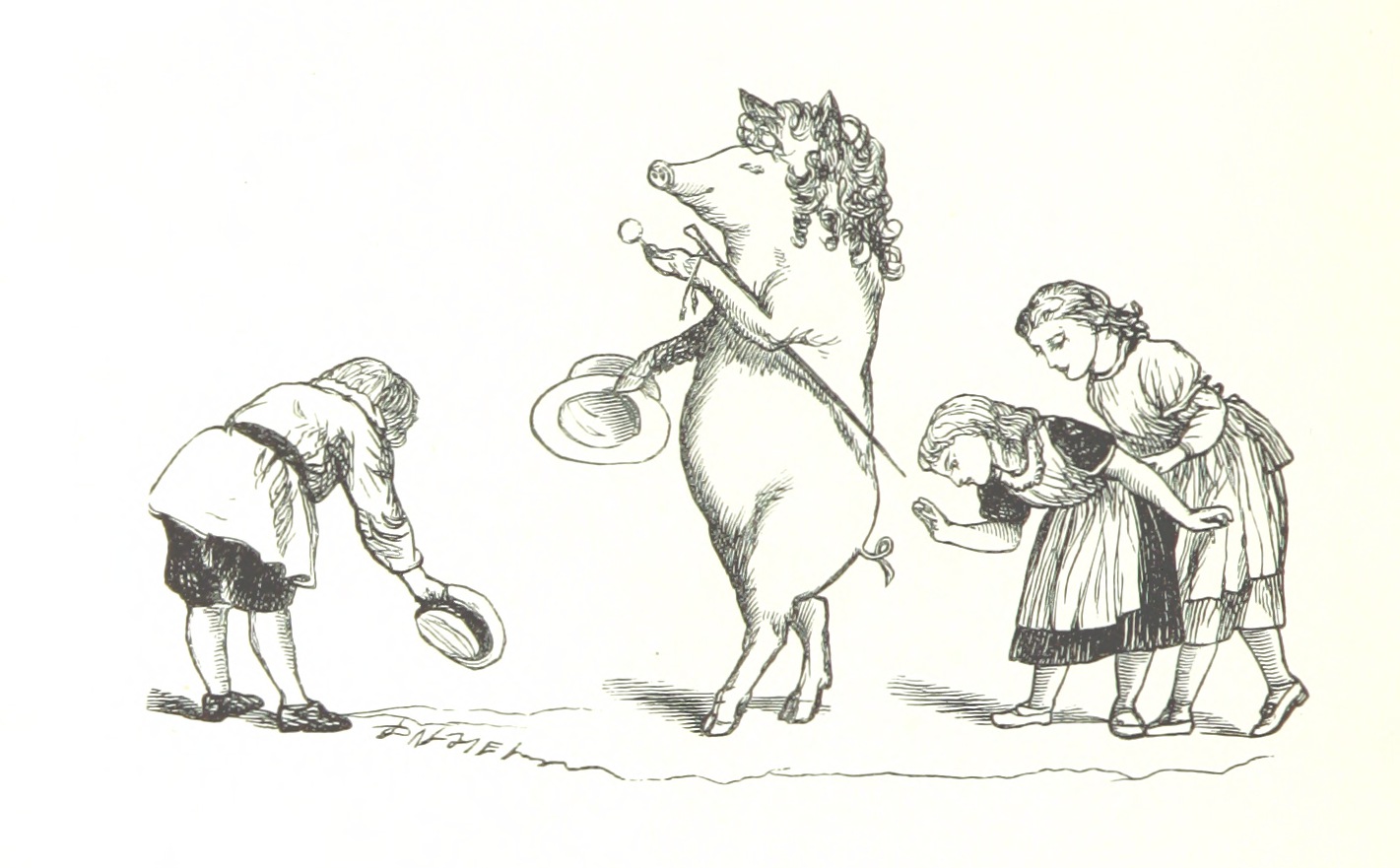
The situation came to “blows” on 15 June 1859, when Lyman Cutlar, an American farmer who had staked his claim to land on San Juan Island under the Donation Land Claim Act, discovered a large black pig, owned by an Irishman, Charles Griffin, who was employed by the Hudson Bay Company to run the sheep ranch on the island, eating parts of Cutlar’s garden. As this was not the first incident of such happening, Cutlar caught up his gun and shot the pig, killing it.

In truth, Griffin owned several pigs that he permitted to roam free. Griffin and Cutlar had gotten along until this time. Cutlar offered Griffin $10 for the pig, but Griffin demanded $100. “Cutlar believed he should not have to pay for the pig because the pig had been trespassing on his land. One likely apocryphal account has Cutlar saying to Griffin, “It was eating my potatoes”; and Griffin replying, “It is up to you to keep your potatoes out of my pig.” [Woodbury, Chuck (2000). “How One Pig Could Have Changed American History”Out West #15. Out West Newspaper.] When British authorities threatened to arrest Cutlar, American settlers called for military protection.

The British governor, James Douglas, ordered Cutlar to pay $100. The Americans, under U.S. Army General William S. Harney, sent Captain George Pickett, who earlier had been cited for “reckless bravery,” to handle the American complaint. Pickett established the American Camp near the south end of San Juan Island, today one of two historical sites on the island, the other being the British Camp, manned by the Royal Marines on the north end of the island.

Next, the British order five warships and 2000 troops to the area. The situation continued to escalate. By August 10, 1859, 461 Americans with 14 cannons under Colonel Silas Casey were opposed by five British warships mounting 70 guns and carrying 2,140 men.Meanwhile, Harney ordered Pickett to keep the British from landing on the island. Incensed, Governor Douglas ordered his men to take the island by force.

Thankfully, British Rear Admiral Robert L. Baynes thought a war between two great nations over a pig was more than a bit ridiculous. He kept his men onboard their ships, but he had his guns trained on the American fort on the island. Local commanding officers on both sides had been given essentially the same orders: defend yourselves, but absolutely do not fire the first shot. For several days, the British and U.S. soldiers exchanged insults, each side attempting to goad the other into firing the first shot, but discipline held on both sides, and thus no shots were fired. A waiting game ensued.

When news about the crisis reached Washington and London, officials from both nations were shocked and took action to calm the potentially explosive international incident. As a result of the negotiations, both sides agreed to retain joint military occupation of the island until a final settlement could be reached, reducing their presence to a token force of no more than 100 men.

The “English Camp” was established on the north end of San Juan Island along the shoreline, for ease of supply and access; and the “American Camp” was created on the south end on a high, windswept meadow, suitable for artillery barrages against shipping. Today the Union Jack still flies above the “English Camp”, being raised and lowered daily by park rangers, making it one of the few places without diplomatic status where U.S. government employees regularly hoist the flag of another country, though this is only for commemorative purposes.

During the years of joint military occupation, the small British and American units on San Juan Island had an amicable mutual social life, visiting one another’s camps to celebrate their respective national holidays and holding various athletic competitions. Park rangers tell visitors the biggest threat to peace on the island during these years was “the large amounts of alcohol available”.

The dispute was not settled for another 13 years. Kaiser Wilhelm I of Germany arbitrated the matter and presented San Juan Island to the United States.

“The dispute was peacefully resolved after more than a decade of confrontation and military bluster, during which time the local British authorities consistently lobbied London to seize back the Puget Sound region entirely, as the Americans were busy elsewhere with the Civil War. In 1866, the Colony of Vancouver Island was merged with the Colony of British Columbia to form an enlarged Colony of British Columbia. In 1871, the enlarged colony joined the newly formed Dominion of Canada. That year, the United Kingdom and the United States signed the Treaty of Washington, which dealt with various differences between the two nations, including border issues involving the newly formed Dominion. Among the results of the treaty was the decision to resolve the San Juan dispute by international arbitration, with German Emperor Wilhelm I chosen to act as arbitrator. Wilhelm referred the issue to a three-man arbitration commission which met in Geneva for nearly a year. On October 21, 1872, the commission decided in favor of the United States. The arbitrator chose the American-preferred marine boundary via Haro Strait, to the west of the islands, over the British preference for Rosario Strait which lay to their east. On November 25, 1872, the British withdrew their Royal Marines from the British Camp. The Americans followed by July 1874.” [Pig War, 1859]

Other Sources:

Atlas Obscura

Canada’s History

Historic UK

History Answers

National Park Services

Posted in American History, British history, England, Great Britain, history, military, real life tales, war | Tagged , , , , | 4 Comments

The Mechanical Turk, or the Chess-Playing Machine that Beat Napoleon, a Guest Post from Eliza Shearer

It was the year 1809. The Napoleonic Wars were in full swing, but the French general had other interests besides fighting the British over Spain and Portugal. 

Around the time Jane Austen and her mother and sister moved to Chawton and took possession of their new home, courtesy of Jane’s brother Edward, Napoleon arrived in Vienna. His destination was the breathtaking Schönbrunn palace.

Schönbrunn Schloss (meaning “Beautiful Spring Palace”) is utterly charming, as I was lucky to appreciate during the summer I spent in Vienna, many moons ago. The palace was built as the Austrian’s answer to Versailles. But Napoleon wasn’t there to admire the architecture, but to encounter a very special enemy. 

For the Pleasure of the Empress 

Napoleon visited Schönbrunn with a very particular purpose in mind: to play a game of chess against the famous Turk, a chess-playing machine designed to beat all opponents. The automaton was built by Hungarian inventor Wolfgang von Kempelen in 1770 under instructions by Empress Maria Theresa of Austria. The Empress was interested in science and its crossover with illusionism, and Kempelen was only too pleased to oblige. 

Kempelen’s invention consisted of a large table-height wooden cabinet with doors to one side. The cabinet was three-and-a-half feet long and two feet wide, and it was topped with a chessboard. Next to it sat a human-sized model of a man wearing a traditional Ottoman costume (turban and pipe included) supposedly capable of playing chess – and defeating all human opponents. 

By 1809, The Turk had had an eventful existence. After a glorious few years entertaining local and foreign nobility in the Austrian court with its chess mastery, it had been exhibited all over Europe. It drew crowds in Paris, where it played (and won) against Benjamin Franklin, then US ambassador in France. It was subsequently shown in London, Leipzig, Dresden and Amsterdam. 

The French Emperor’s Combative Style
After Kempelen’s death, the machine went into storage until it was bought by another inventor,  Johann Nepomuk Mälzel, in 1805. The Turk was repaired and given a new lease of life. It was shortly after this that the automaton piqued Napoleon’s interest, and the Emperor of the French demanded to play against it.

The Turk usually had the white chess pieces, and hence had the first move of the game. But Napoleon wanted to go first, and moved one of his pieces before the automaton could move his. The Turk returned Napoleon’s piece to the original position. Napoleon tried the same move again; the same thing happened. 

True to his style, Napoleon insisted a third time, but the Turk had had enough. The mechanical arm swiped the chess board and all pieces fell to the floor. This time, the French ruler got the message, and accepted that the Turk should have the first move. The game that followed was short. After 19 moves, and barely twenty minutes, Napoleon was beaten. 

An Ingenious Device with a Tragic End

As you may have suspected, the Turk wasn’t actually a chess-playing machine. Inside the large box was a complex set-up designed to trick the eye. Although the cabinet doors, once open, showed clockwork parts, behind it was a hidden compartment with enough room for a chess master to hide and follow – and respond to – the game

The chess master in the cabinet was able to control the model’s arm through the use of levers capable of picking up and moving the chess pieces. Furthermore, he was able to communicate with the presenter outside via a clever code using turnable brass discs. The overall effect was very realistic and left audiences marvelled (you can check out some of the Turk’s games here). 

After defeating Napoleon, the Turk embarked on another long and successful European tour. In 1826, the Turk made it to New York City and Boston, then back to Europe only to return to the US in 1829, inspiring Edgar Allan Poe to write an essay on the automaton. From the United States, Maezel took the Turk to Cuba, but after his death at sea in 1838, the machine was forgotten again. It eventually ended up in a corner of the Chinese Museum in Philadelphia, where it lay abandoned until it was devoured by a fire in 1854. 

Today, playing chess against a machine is no biggie: anybody with a mobile phone can do it. But back in the Regency, it must have felt magical. The Turk was just an illusion, but one that, according to legend, became a reality. It is said that a young Charles Babbage saw The Turk in action. Although he was convinced it was a hoax, the automaton got him thinking about intelligent machines, and inspired his work on the Difference Engine, a mechanical calculator that, after input from Ada Lovelace, would become an early model for a computer. 

But that’s a story for another day. 

What do you make of the invention, particularly if you are a chess aficionado? Have you ever seen automatons in action? 

Posted in Austen Authors, Georgian England, Georgian Era, Guest Post, history, Living in the Regency, Napoleonic Wars, real life tales, world history | Tagged , , , , , , | Comments Off on The Mechanical Turk, or the Chess-Playing Machine that Beat Napoleon, a Guest Post from Eliza Shearer

Is Shakespeare’s Play “Macbeth” Cursed?

As theatre was my minor in my undergraduate program, I often studied Shakespeare’s play “Macbeth,” and I have taught it many times. However, I have never performed in or directed the play. Even so, I know something of the “Curse of Macbeth.”

As the story goes, looking for authenticity for his play, William Shakespeare researched witches’ spells and curses. They “upset” the “community,” and so a curse was placed on every performance of the play. In fact, many in the theatre community do not even speak the name of the play. Instead, it is referred to as the Scottish play (as the setting is in Scotland) or the Bard’s play (referring to Shakespeare’s nickname). Using the word “Macbeth,” other than when it called for in the script is forbidden in many production houses. Superstition says doing so will create some sort of havoc or even a disaster.

Because of this superstition, the lead character is often referred to as the Scottish King or Scottish Lord. Lady Macbeth is often referred to as the Scottish Lady. Sometimes Mackers or MacB is used to avoid saying the name.

In truth, most theatre history buffs place the superstition’s source on the shoulders of what was going on during Shakespeare’s days. It was not uncommon to discover a theatre company to experience financial woes. Cut backs often meant either the stage was in poor condition or production costs outweighed the theatre’s ability to stage Macbeth, or any play for that matter, properly.

Equally as compelling, but not so practical, is the idea that Macbeth’s and Lady Macbeth’s characters are of the worst sort and should be cursed. After all, they kill their king for their own good. They break the vows of allegiance they owe to any guest in their home, but, most assuredly, to their ruler and king. Being cursed or double-crossed in the end appears only right, does it not?

According to Garber, Marjorie B. (1997). Shakespeare’s Ghost Writers: Literature as Uncanny Causality. Methuen. p. 88: “When the name of the play is spoken in a theatre, tradition requires the person who spoke it to leave, perform traditional cleansing rituals and be invited back in. The rituals are supposed to ward off the evil that uttering the play’s name is feared to bring on.

“The rituals include turning three times, spitting over one’s left shoulder, swearing, or reciting a line from another of Shakespeare’s plays. Popular lines for this purpose include, “Angels and ministers of grace defend us” (Hamlet,1.IV), “If we shadows have offended” (A Midsummer Night’s Dream 5.ii), and “Fair thoughts and happy hours attend on you” (The Merchant of Venice, 3.IV). A more elaborate cleansing ritual involves leaving the theatre, spinning around and brushing oneself off, and saying “Macbeth” three times before entering again. Some production groups insist that the offender may not re-enter the theatre until invited to do so, therefore making it easy to punish frequent offenders by leaving them outside.

https://www.ranker.com/list/actors-who-have-played-macbeth/celebrity-lists

“A realistic portrayal of a ritual occurs in the 1983 film The Dresser, in which Sir is the offender, and Norman, his dresser, officiates over the propitiation.”

Wikipedia and other sources (my theatre history books) list a number of such “accidents” regarding the curse of Macbeth:

The male actor who was to play Lady Macbeth in the very first performance of Macbeth took ill with a fever before ever walking on stage and supposedly died.

The Astor Place Riot in 1849, injuries sustained by actors at a 1937 performance at The Old Vic that starred Laurence Olivier, Diana Wynyard’s 1948 accidental fall, and burns suffered by Charlton Heston in 1954. ( Hurwitt, Robert (19 August 2010). “Cal Shakes risks curse of ‘the Scottish play'”. San Francisco Chronicle.)

On 2 December 1964 a fire burned down the D. Maria II National Theater in Lisbon, Portugal. At the time, the play being shown was Macbeth. (“O incêndio no Teatro Nacional D. Maria II | DN 150 Anos”. Archived from the original on 11 October 2016.)

According to records of the 1948 regional theatre production, actress Diana Winyard accidentally walked off the edge of the stage during her sleepwalking scene as Lady Macbeth. Shortly before the accident, she was heard complaining about the need to play the scene with her eyes open. Not a bit of revenge, you may declare, but she was also heard saying that the curse was “ridiculous.”

In 1980, a production of Macbeth at The Old Vic starring Peter O’Toole, often referred to as Macdeath, was performed. It was reviewed so badly that the theatre company disbanded shortly after the play. (The Old Vic) In a 1937 production at the same theatre, Laurence Olivier was nearly killed by a sandbag which fell from the rafters to land only inches from where he stood. Meanwhile, the theatre’s founder, Lilian Baylis, was struck dead by a sudden heart attack.

Mishaps on the set of his film Opera led director Dario Argento to believe that the film had been affected by the Macbeth curse; the opera being performed within the film is Verdi’s Macbeth.

In 1942 production a series of unexplained mishaps occurred. Beatrice Fielden-Kaye, who was playing one of the witches died of an unexpected heart attack. Then, the man playing Duncan, one Marcus Barron, died of an angina. Another of the three witches, actress Annie Edsmond died on stage while she danced around the cauldron with pure abandon. To top off this madness, the set designer committed suicide in his office. He was reportedly surrounded by his set and costume designs. (bbashakespeare) (Theatricalial)

In 1988, Bulgarian singer, coach and translator Bantcho Bantchevsky committed suicide during a nationally broadcast matinee of Giuseppe Verdi’s opera Macbeth. He propelled himself backwards from a balcony railing at the Metropolitan Opera House, Lincoln Square. (“Opera Patron Dies … at the Met”, The New York Times”. 24 January 1988.) (The Washington Post)

Ari Aster, writer and director of Hereditary, said that during filming, “Alex Wolff told me not to say the name of William Shakespeare’s Scottish play out loud because of some superstitious theater legend. I smugly announced the name, and then one of our lights burst during the shooting of the following scene.” (“Ari Aster comments on Shakespeare’s Scottish Play curse”. 15 June 2018.)

Reportedly nine members of a Russian film crew died of food poisoning on set of a production of Macbeth. The film was quickly canceled. Also, in Russia, when Constantin Stanislavski of the Moscow Arts Company forgot his lines in the midst of the murder scene in an early 1900 production of the play, he whispered to the prompter for a line, but none was forthcoming. Angry, Stanislavski called repeatedly for the line, only to discover moments later that the prompter was slumped over dead holding the script. That production never saw light of day.

And for those of you who have been watching the CNN series on Abraham Lincoln, supposed “Honest Abe” was reciting lines from Macbeth over dinner with friends the evening before he was assassinated. Coincidence? I am not one to buck traditions or curses. What of you? Do you believe?

Other Sources of Interest:

16 Actors Who Played Macbeth

The Curse of “Macbeth”

The Curse of the Play

Macbeth’s Myriad of Misfortunes

Posted in acting, drama, Elizabethan drama, paranormal, playwrights, real life tales, research, theatre | Tagged , , , , , | 3 Comments

Origin of the Drama – Everyman and The Second Shepherd’s Play

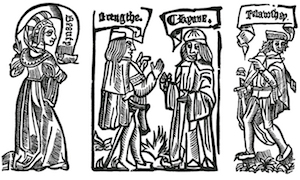
everymancharacters

thisstage.la Woodcut illustrations from Duffield & Co.’s 1904 edition of “Everyman.”

Morality Plays, those in which the characters were allegorical persons would attempt to drive home a moral. They provided more scope to the imagination for new plots and incidents and afforded a  chance for delineation of characters. (For more information on Miracle Plays, Mystery Plays, and the Cycle Plays, see my earlier post on Anglo-Norman Drama.) At first, many found these plays a bit dull, but with the introduction of Vice, a character who customarily played pranks similar to those of modern-day clowns, interest in the Morality Plays increased. Generally, the individual plays ended with Virtue triumphing over the Devil and Vice. The Devil would return to Hell in disgrace, with Vice riding upon his back. 

Everyman is a morality play of the late medieval period (c. 1500), which points the way to Virtue. The foreword runs thus: 


Here begins a treatise how the high Father of Heaven sendeth Death to summon every creature to come and give account of their lives in this worlde. 

449173Summary of the Tale: God speaks and bewails the lack of virtue in this world. People are in love with worldly riches and the seven deadly sins. He sends Death to show to Everyman the pilgrimage he must take. 

There follows the colloquy between Death and Everyman. Death asks for an account of Everyman’s life. Everyman tries to buy off Death, but the effort proves fruitless. Seeking a refuge from Death’s manipulations, Everyman turns to Fellowship, who has sworn he would  do anything for Everyman. Everyman tells him he has been commanded to appear before Judge Adonay ( Hebrew for God), and he would prefer that Fellowship bear him company in the task.  Needless to say, fickled Fellowship refuses. Everyman then asks the same of his Kindred, only to receive a like response. Neither Goods or Riches agree to accompany him on his dark journey. Next, he calls on Good-deeds, but although Good-deeds is willing to assist Everyman, he has done so few good deeds that she cannot stand upon her feet. However, Good-deeds sends her sister Knowledge to assist him in “his dreadful reckoning.” Knowledge escorts Everyman to Confession, after which he does penance for his sins. Now, Good-deeds sends Discretion, Strength, and Five-Wits along with him on the voyages, as well as Beauty. With these qualities to aid him, Everyman fears nothing. But when it comes to going into the grave, Beauty draws back. Strength soon follows her lead in forsaking Everyman. Then Discretion leaves and finally Five-Wits. Only Good-deeds remains to assist him. “All feeth save Good-deeds.” At length, the Angel receives Everyman. The moral is that of all the qualities and possessions one may have in this life, only Good-deeds may justify you to God. 

Analysis: The play shows the measure of dramatic quality and power, which the morality was capable of attaining when it was at its best. There is no classical influence and yet is classically constructed. The beauty of the work is its sincerity and a certain inevitability about the fortunes of the chief character, Everyman. 

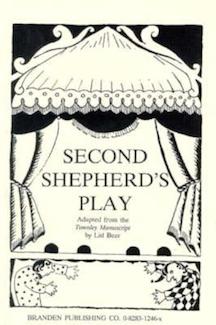
948485The Second Shepherd’s Play comes from the Towneley Cycle in the 15th Century. “The Second Shepherds’ Play (also known as The Second Shepherds’ Pageant) is a famous medieval mystery play, which is contained in the manuscript HM1, the unique manuscript of the Wakefield Cycle.  These plays are also referred to as the Towneley Plays, on account of the manuscript residing at Towneley Hall. The plays within the manuscript roughly follow the chronology of the Bible and so were believed to be a cycle, which is now considered not to be the case. This play gained its name because in the manuscript it immediately follows another nativity play involving the shepherds. In fact, it has been hypothesized that the second play is a revision of the first. It appears that the two shepherd plays were not intended to be performed together since many of the themes and ideas of the first play carry over to the second one. In both plays it becomes clear that Christ is coming to Earth to redeem the world from its sins. Although the underlying tone of The Second Shepherd’s Play is serious, many of the antics that occur among the shepherds are extremely farcical in nature.” (The Second Shepherd’s Play)
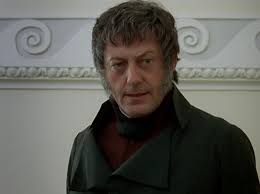
Summary of the Tale: The three shepherds meet and bewail their poverty and the cold weather. They are soon joined by Mak, a notorious sheep-stealer who puts on a big front. Mak seems a rather simple rogue, ingenious but poor. The shepherds make sport of him, but he persists in posing as the messenger of the king. He drops his pose soon enough and discourses in quite lively fashion about his wife, her fecundity, and the expense of her upkeep, ending by offering to pay her burial mass with great readiness. Soon the shepherds become sleepy and lie down on the ground to rest. To prevent Mak from pilfering, they put him between two of them. But Mak puts them under a spell to prevent them from awaking, then simply walks off with a sheep which he brings to Gill, his wife. 

Gill, fearing discovery, conceives the ingenious plan of pretending to be ill after childbirth, and she bundles the sheep into the baby’s cradle. Then Mak returns to the sleeping shepherds and lies down as if he never been awake. 

When the shepherds arise and discover a sheep missing, Mak immediately falls under suspicion. They go to Mak’s home to make a search. Here they find Gill in bed groaning as if from a recent childbirth. In fact, the shepherds are made to feel ashamed of themselves for coming to search a house where there has so lately been a birth. They are about to go when one of them insists on presenting the newborn child with a gift. Naturally, Mak’s theft is disclosed, and though he insists that the sheep was really born of him and his wife, the shepherds punish him by tossing him in a sheet. 

The play continues with the appearance of an angel instructing the shepherds to journey towards Bethlehem, there to give homage to the Christ child. They follow the star, philosophizing as they go, until they read the manger. Having offered their gift, they hail the Savior. Mary speaks, and they depart. 

Analysis: Although as a mystery play, the central episode of this play would be the birth of Christ, it is obvious that the birth is hardly more than an anti-climax to the story of Mak. It is clear that in the Second Shepherd’s Play, the drama is liberating itself from ecclesiastical domination, although it was not as yet completely independent. In its general atmosphere, it has departed from its Scriptural basis. The humor and the character of the shepherds are English. The situation is domestic. 

The work was written in a vigorous, rhymed stanza suitable to the rather coarse humor and colloquial conversation. An excellent example of this humor is Mak’s complaint that his wife is always bearing children, some years one, some years two. The harshness with which Gill treats her husband until she learns that he has brought home a sheep is an additional touch. The play might well be called our first domestic farce. 

Resources:

History of English Literature: Part 1 – Early Saxon Through Milton), Hymarx Outline Series, Student Outlines Company, Boston, MA, pp. 71-74.

Robinson, J. W. (1991). Studies in Fifteenth-century Stagecraft. Kalamazoo: Western Michigan University Medieval Institute. 

Feinstein, Sandy (2001). “Shrews and Sheep in The Second Shepherds’ Play“. Pacific Coast Philology 36: 64–80.


Posted in Age of Chaucer, Anglo-Normans, Anglo-Saxons, British history, Chaucer, Church of England, drama, Uncategorized | Tagged , , , , , | 2 Comments

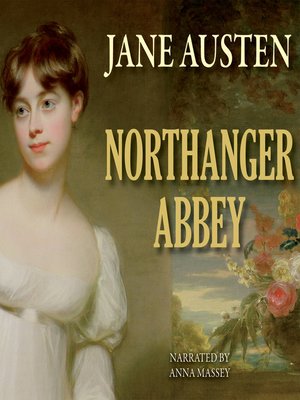
Jane Austen’s “Northanger Abbey” – Who Are Catherine Morland and the Tilneys?

What do we know of Catherine Morland and the Tilneys in Austen’s “Northanger Abbey”?

Title page from the original 1818 edition - Public Domain - Lilly Library, Indiana University

Title page from the original 1818 edition – Public Domain – Lilly Library, Indiana University

Much of the description of the Abbey and of the Tilneys come to us from Austen’s heroine, Catherine Morland.

Catherine comes to Bath with dreams of highwaymen and Gothic heroes. She is a 17-year-old girl who loves reading Gothic novels. Something of a tomboy in her childhood, her looks are described by the narrator as “pleasing, and, when in good looks, pretty.” Catherine lacks experience and sees her life as if she were a heroine in a Gothic novel. She sees the best in people, and to begin with always seems ignorant of other people’s malign intentions. She is the devoted sister of James Morland, and she is good-natured and frank and often makes insightful comments on the inconsistencies and insincerities of people around her, usually to Henry Tilney, and thus is unintentionally sarcastic and funny. (He is delighted when she says, “I cannot speak well enough to be unintelligible.”) She is also seen as a humble and modest character, becoming exceedingly happy when she receives the smallest compliment. Catherine’s character grows throughout the novel, as she gradually becomes a real heroine, learning from her mistakes when she is exposed to the outside world in Bath. She sometimes makes the error of applying Gothic novels to real life situations; for example, later in the novel she begins to suspect General Tilney of having murdered his deceased wife. Catherine soon learns that Gothic novels are really just fiction and do not always correspond with reality.

imagesGeneral Tilney boasts of owning as “considerable a landed property as any man in the country.”
The general is a commoner, not a member of the peerage. He is a man deeply concerned with politics and national affairs. Although Austen never tells us to what political the general belongs, we know he is a party man. The general studies political pamphlets late into the evenings. Austen never expresses her party alignment in her novels, but we can assume that General Tilney represents the Whigs. Austen, herself, was the daughter of an Anglican cleric and came from a Tory family. Many believe Catherine’s marrying of Henry Tilney is an example of moral reclamation.

General Tilney expects his children and household to conform to strict standards. He despises those who do not adhere to punctuality and pre-described standards. He is overly concerned with material wealth. Early on, he caters to Catherine when he thinks she is to inherit the Allens’ wealth and downright caustic when he discovers she is not wealthy. What is ironic is the general believes John Thorpe in both cases. What does this tell us about the general? The general behaves badly, but in a manner that the real world would recognize. He is not the Gothic villain Catherine assumes him to be (He did not murder his wife.), but he is a snob and a bore. He represents the social concerns of Austen’s time. Shmoop 

The scene where General Tilney and John Thorpe choose to keep company in the smoking room is characteristic of Austen’s plots. The general represents pride, avarice, vengeance, and gluttony. Henry Tilney is a prig who constantly corrects both his sister and Catherine. Thorpe is a vain scoundrel, who practices covetousness, rapacity, and materialism. How often in Austen do we see the heroine being wooed by the bounder and finding “happiness” with the prig? The Watsons, Pride and Prejudice, Mansfield Park, Persuasion, Emma, and Sense and Sensibility.

Henry and Elinor Tilney

Henry and Elinor Tilney

Eleanor Tilney is the perfect Gothic heroine: has the mother who passed away, possesses a strange and singular father, dwells within the abbey’s setting, and is a star-crossed lover. Yet, even so, Eleanor is a bit boring. Is this Austen making fun of the Gothic novel? Eleanor’s character is static; she does not change, where Catherine Morland is the dynamic one. Catherine learns from her hard lessons and improves. Eleanor is also the foil for the vivacious Isabella Thorpe. The more-mature Eleanor becomes the model that Catherine chooses to emulate for Eleanor is well-read, rational, and able to keep up with Henry’s wit (a skill Catherine must master if she and Henry are to know happiness). While Isabella is abandoned by Captain Tilney, Eleanor knows the reward of claiming her long-standing love, a viscount.

char_lg_frederickCaptain Frederick Tilney is a seducer of women. (Ever notice how Austen has such a character in many of her novels?) Henry says of his brother (to Catherine), Frederick “is a lively, and perhaps sometimes a thoughtless young man; he [Frederick] has had about a week’s acquaintance with your friend [Isabella], and he has known her engagement almost as long as he has known her” (19.26) Frederick destroys Isabella’s engagement to James Morland, while ruining her reputation. The captain represents Society’s dual standards for behavior for men and women. He also adds to the mystique of the Tilney family: Like father, Like son. Frederick’s actions make Henry and Eleanor more sympathetic characters and his ruining of Isabelle does the same for that character, who readers sometimes see as selfish and greedy and conniving.

Henry Tilney spends a great deal of time “educating” Catherine. He teases her about her ignorance and naiveté. He instructs her in the ways of Society. He speaks to Catherine of art and literature. We never know for certain whether Henry is a bit of a chauvinist or not. He really does not seem to hold women with much regard. Henry is seen treating his sister Eleanor in the same way as he does Catherine. Henry is the voice of the narrator of the piece, but he is also a character in the story whose actions/speech satirizes everything.

“Henry displays a lot of humorous arrogance and very ironic humor towards Eleanor and Catherine, and women in general. In fact, Henry frequently provides humorous commentary on some of the book’s major themes, such as language and gender. But while Henry comments on these thematic issues, the arrogance (possibly fake, possibly genuine) with which he delivers his commentary is itself a thematic statement. In other words, Henry’s personality makes important statements about themes alongside, and sometimes independently of, Henry’s dialogue. And Henry’s dialogue is often difficult to interpret. Take this address to Eleanor and Catherine:

He laughed, and added, “Come, shall I make you understand each other, or leave you to puzzle out an explanation as you can? No – I will be noble. I will prove myself a man, no less by the generosity of my soul than the clearness of my head. I have no patience with such of my sex as disdain to let themselves sometimes down to the comprehension of yours.” (14.25) Shmoop 

We know nothing about the Tilneys from Austen’s description of the house or the family’s history. In “Perusasion” we are treated to a brief history of the Elliot family, and in “Mansfield Park” Austen provides us a history of the house, but that is the extent of Austen’s “background information.”

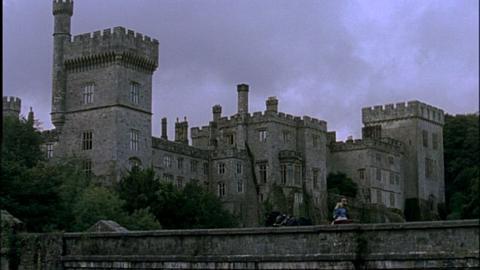
imgres.jpg This is Catherine’s first impression of Northanger Abbey
As they drew near the end of their journey, her impatience for a sight of the abbey — for some time suspended by his conversation on subjects very different — returned in full force, and every bend in the road was expected with solemn awe to afford a glimpse of its massy walls of grey stone, rising amidst a grove of ancient oaks, with the last beams of the sun playing in beautiful splendour on its high Gothic windows. But so low did the building stand, that she found herself passing through the great gates of the lodge into the very grounds of Northanger, without having discerned even an antique chimney.

She knew not that she had any right to be surprised, but there was a something in this mode of approach which she certainly had not expected. To pass between lodges of a modern appearance, to find herself with such ease in the very precincts of the abbey, and driven so rapidly along a smooth, level road of fine gravel, without obstacle, alarm, or solemnity of any kind, struck her as odd and inconsistent. She was not long at leisure, however, for such considerations. A sudden scud of rain, driving full in her face, made it impossible for her to observe anything further, and fixed all her thoughts on the welfare of her new straw bonnet; and she was actually under the abbey walls, was springing, with Henry’s assistance, from the carriage, was beneath the shelter of the old porch, and had even passed on to the hall, where her friend and the general were waiting to welcome her, without feeling one awful foreboding of future misery to herself, or one moment’s suspicion of any past scenes of horror being acted within the solemn edifice. The breeze had not seemed to waft the sighs of the murdered to her; it had wafted nothing worse than a thick mizzling rain; and having given a good shake to her habit, she was ready to be shown into the common drawing–room, and capable of considering where she was.

An abbey! Yes, it was delightful to be really in an abbey! But she doubted, as she looked round the room, whether anything within her observation would have given her the consciousness. The furniture was in all the profusion and elegance of modern taste. The fireplace, where she had expected the ample width and ponderous carving of former times, was contracted to a Rumford, with slabs of plain though handsome marble, and ornaments over it of the prettiest English china. The windows, to which she looked with peculiar dependence, from having heard the general talk of his preserving them in their Gothic form with reverential care, were yet less what her fancy had portrayed. To be sure, the pointed arch was preserved — the form of them was Gothic — they might be even casements — but every pane was so large, so clear, so light! To an imagination which had hoped for the smallest divisions, and the heaviest stone–work, for painted glass, dirt, and cobwebs, the difference was very distressing.

The general, perceiving how her eye was employed, began to talk of the smallness of the room and simplicity of the furniture, where everything, being for daily use, pretended only to comfort, etc.; flattering himself, however, that there were some apartments in the Abbey not unworthy her notice — and was proceeding to mention the costly gilding of one in particular, when, taking out his watch, he stopped short to pronounce it with surprise within twenty minutes of five! This seemed the word of separation, and Catherine found herself hurried away by Miss Tilney in such a manner as convinced her that the strictest punctuality to the family hours would be expected at Northanger.

Returning through the large and lofty hall, they ascended a broad staircase of shining oak, which, after many flights and many landing–places, brought them upon a long, wide gallery. On one side it had a range of doors, and it was lighted on the other by windows which Catherine had only time to discover looked into a quadrangle, before Miss Tilney led the way into a chamber, and scarcely staying to hope she would find it comfortable, left her with an anxious entreaty that she would make as little alteration as possible in her dress.

Posted in British history, Great Britain, Jane Austen, Living in the Regency, real life tales, Regency era | Tagged , , , , | 3 Comments

The “Feejee Mermaid,” Another P. T. Barnum Hoax

I have always been a Hugh Jackman fan, first for his musical performance, and, then, because he portrayed my favorite X-man, James “Logan” Howlett, on a string of Marvel Universe films. Therefore, I dearly loved the film, “The Greatest Showman.” [My grandkids know all the words to the music in this film, and they each have his/her favorite.]

What fascinated me about the film and the character of P. T. Barnum was how easily and expertly he fooled potential customers. Some will argue such is because their was not widespread media, as we have today. Yet, we all likely know at least one person who has fallen for some sort of scam or misinformation, despite how widespread our media outlets may be. We live with the “World” Wide Web, and we are just as easily fooled these days as were people in New York in the 1840s.

https://www.peabody.harvard.edu/feejee-mermaid ~ Gift of the Heirs of David Kimball. Peabody Museum of Archaeology & Ethnology, PM #97-39-70/72853 © President and Fellows of Harvard College

Take the “Feejee Mermaid,” for example. According to the Peabody Museum, “While scholars struggled to establish scientific authority and the value of knowledge based on systematic evidence and logic, showman P.T. Barnum (1810-1891) made a fortune stoking curiosity about the speculative and the singular. Barnum’s fame and fortune began in 1842 when he opened his “American Museum” in New York City and exhibited the “Feejee Mermaid,” ostensibly from the non-existent “London Lyceum of Natural History.”

“In reality, Barnum leased the “mermaid” from his friend Moses Kimball, owner of the Boston Museum, who purchased it from the son of a Boston sea captain. When Kimball’s collections were transferred to the Peabody Museum after a fire in 1899, they included the ‘mermaid’ seen here. It is now known that Japanese craftsmen fabricated mermaids by joining the bodies of monkeys and fish, although the head and torso of this example are made from papier-mâché.”

Barnum’s hoax became reality when, in 1842, Barnum manipulated the New York Herald and two other newspapers to publish exclusive articles about these elusive mermaids. How did he accomplish this task? First, using numerous pseudonyms, he wrote to various newspapers in the New York area and told them of an amazing discovery in Fiji, obviously, a place too far removed for anyone to check the authenticity of the stories. Then, he convinced one of his employees to pose as a naturalist named “Dr. Griffin,” who then presented appropriate “credit” to the “reality” of this display. After that, Barnum had pamphlets printed and distributed to hotels, business, small shops, and mercantiles to spread the word of the Feejee Mermaid. It worked. Soon after Barnum’s original display, sideshows all over the world started “finding” similar mermaids. Research has suggested that the original was made as early as 1822 by Japanese sailors. That almost 200-year-old oddity was supposedly lost in a fire, but a few places still claim to have the original “true” mermaid.

Nearly 100 years later, Robert Ripley displayed the mermaid as a debunked hoax in his New York City Odditorium. The brain-child of P.T. Barnum, the Fiji mermaid, was nothing more than the torso of a monkey sewn to the back half of a large fish.

Unlike images of mermaids in folklore and popular culture, such mermaids were unattractive, often described as hideous. In his autobiography, Barnum described the mermaid as “an ugly dried-up, black-looking diminutive specimen, about 3 feet long. Its mouth was open, its tail turned over, and its arms thrown up, giving it the appearance of having died in great agony.”

Other Sources:

Barnum on the FeJee Mermaid, The Life of P. T. Barnum, Written by Himself, 1855

The FeeJee Mermaid Exhibit

Harvard’s FeeJee Mermaid (on YouTube)

Fiji Mermaid

The Lost Museum

Ripley’s

Posted in American History, business, commerce, film, history | Tagged , , , | Comments Off on The “Feejee Mermaid,” Another P. T. Barnum Hoax

Jane Austen’s “Northanger Abbey” – Literary References Found Within

Title page from the original 1818 edition - Public Domain - Lilly Library, Indiana University

Title page from the original 1818 edition – Public Domain – Lilly Library, Indiana University

Previously, I looked at the history of the writing of Austen’s “first” and “last” novel. Today, we will spend a bit of time with the themes addressed, literary references, etc. Later, we will have a closer look at the main characters in a spoof of the 18th Century Gothic novel. 

Major Themes
The intricacies and tedium of high society, particularly partner selection.
The conflicts of marriage for love and marriage for property.
Life lived as if in a Gothic novel, filled with danger and intrigue, and the obsession with all things Gothic.
The dangers of believing life is the same as fiction.
The maturation of the young into sceptical adulthood, the loss of imagination, innocence and good faith.
Things are not what they seem at first.
Social criticism (comedy of manners).
Parody of the Gothic novels’ “Gothic and anti-Gothic” attitudes.
In addition, Catherine Morland realises she is not to rely upon others, such as Isabella, who are negatively influential on her, but to be single-minded and independent. It is only through bad experiences that Catherine really begins to mature and grow up.

Northanger Abbey was the first novel Jane Austen wrote. It is also the novel most closely related to the novels that influenced Austen’s reading, and parodies some of those novels, particularly Anne Radcliffe’s Gothic novel The Mysteries of Udolpho. In creating Catherine, the heroine of Northanger Abbey, Austen creates the heroine of a Gothic novel. Both Austen and Catherine portray Catherine’s life in heroic terms—Austen humorously, and Catherine seriously, especially when she suspects  General Tilney of murdering his wife. Because Austen couches her portrayal of Catherine in irony, Catherine is realistically portrayed as deficient in experience and perception, unlike the heroines of Gothic and romance novels. Catherine fails to recognize the obvious developing relationship between her brother James and her friend Isabella; she fails to recognize Isabella’s true nature until long after it has hurt her brother; she accidentally leads John Thorpe into thinking she loves him; and most significantly, she embarrasses herself in front of Henry Tilney  when he finds out she suspects his father of murder. While Catherine is an avid reader of novels, she is inexperienced at reading people, and this is what causes many of the problems she encounters. By the end of the novel, she has become a much better judge of character, having learned from her mistakes with Isabella and General Tilney. She is also, perhaps, a bit more cynical about people, as Henry is. Ultimately, it is her integrity and caring nature that win Henry’s heart and bring her happiness.(Spark Notes)

Allusions/References to Other Works
Several Gothic novels are mentioned in the book, including most importantly The Mysteries of Udolpho and The Italian by Ann Radcliffe. Austen also satirises Clermont, a Gothic novel by Regina Maria Roche. This last is included in a list of seven somewhat obscure Gothic works, known as the ‘Northanger horrid novels’ as recommended by Isabella Thorpe to Catherine Morland:

“Dear creature! how much I am obliged to you; and when you have finished Udolpho, we will read The Italian together; and I have made out a list of ten or twelve more of the same kind for you.”
“Have you, indeed! How glad I am!—What are they all?”
“I will read you their names directly; here they are, in my pocket-book. Castle of Wolfenbach, Clermont, Mysterious Warnings, Necromancer of the Black Forest, Midnight Bell, Orphan of the Rhine, and Horrid Mysteries. Those will last us some time.”
“Yes, pretty well; but are they all horrid, are you sure they are all horrid?”
“Yes, quite sure; for a particular friend of mine, a Miss Andrews, a sweet girl, one of the sweetest creatures in the world, has read every one of them…”
Though these lurid titles were assumed by some to be Austen’s own invention, Montague Summers and Michael Sadleir discovered that they really did exist and have since been republished. [See my post on the Northanger Horrid Novels.]

{BC217015-517C-40C2-A0F1-F08AE347F481}Img400.jpg Jane Austen, who referred to Fanny Burney as “the first of English novelists,” in Northanger Abbey refers to her inspiring novels:
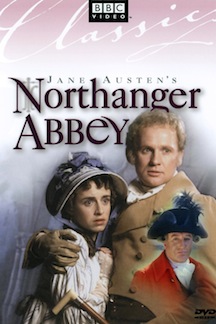
“‘And what are you reading, Miss—?’ ‘Oh! It is only a novel!’ replies the young lady, while she lays down her book with affected indifference, or momentary shame. ‘It is only Cecilia, or Camilla, or Belinda‘; or, in short, only some work in which the greatest powers of the mind are displayed, in which the most thorough knowledge of human nature, the happiest delineation of its varieties, the liveliest effusions of wit and humour, are conveyed to the world in the best–chosen language.”

John Thorpe, who knows little about literature, tells Catherine that he likes The Monk (an over-the-top tale of lurid Gothic horror):

“Novels are all so full of nonsense and stuff; there has not been a tolerably decent one come out since Tom Jones, except The Monk; I read that t’other day; but as for all the others, they are the stupidest things in creation.”
“I think you must like Udolpho, if you were to read it; it is so very interesting.”
“Not I, faith! No, if I read any, it shall be Mrs. Radcliffe’s; her novels are amusing enough; they are worth reading; some fun and nature in them.”
“Udolpho was written by Mrs. Radcliffe,” said Catherine, with some hesitation, from the fear of mortifying him.
“No sure; was it? Aye, I remember, so it was; I was thinking of that other stupid book, written by that woman they make such a fuss about, she who married the French emigrant.”
“I suppose you mean Camilla?”
“Yes, that’s the book; such unnatural stuff! An old man playing at see-saw, I took up the first volume once and looked it over, but I soon found it would not do; indeed I guessed what sort of stuff it must be before I saw it: as soon as I heard she had married an emigrant, I was sure I should never be able to get through it.”

Motifs
Reading 

There are two kinds of reading in Northanger Abbey: reading books and letters, and reading people. Catherine Morland  is young and naïve, and she has a hard time distinguishing between the two types of reading. Before Catherine can really enter the world of adulthood, she needs to improve her ability to read people as well as novels. Throughout Northanger Abbey, Catherine finds herself unable to “read between the lines.” She does not notice the obvious romance developing between James and Isabella, she does not understand why Frederick Tilney gets involved, she has no idea why the General is so kind to her. All of these behaviors and motivations are clear to the reader and to the characters surrounding Catherine. When Catherine finally tries to do some of her own analysis, she gets her perceptions mixed up with those encouraged by her novel-reading: she recognizes General Tilney’s grumpiness and the tyrannical control he tries to exert over his children, but she attributes his attitude to the grisly murder of his wife, since such a plot twist occurs frequently in Gothic novels. One defining moment for Catherine comes as a result of reading text. She receives a letter from Isabella, and its contents open Catherine’s eyes to Isabella’s manipulative, ambitious ways. It would be going a bit too far to say that Catherine is an expert at reading people by the end of the novel, but she does become better at it, and she has learned when imagination can aid perception, and when it can hurt it.

Wealth  
In Austen’s novels, characters are often partly defined by their wealth and status. In Northanger Abbey, several characters are preoccupied with material longings. Isabella wants to marry someone rich, and forsakes James in favor of the richer Frederick. Mrs. Allen is obsessed with clothing and shopping, and when talking to Mrs. Thorpe, she feels less bad about her own childlessness when she notices the shabbiness of Mrs. Thorpe’s clothes. The General wants his children to marry into rich and wealthy families, and his personal obsession is with remodeling and landscaping. While giving a guided tour of Northanger Abbey, the General constantly asks Catherine to compare his home and gardens to those of Mr. Allen, and is always pleased to find that his belongings are larger or more impressive. In her later novels, Austen linked character’s personalities with the particular items they loved. In this early novel, she makes wealth itself the goal and passion of characters like Isabella and General Tilney. (Spark Notes)


Adaptations
p10722_d_v8_aa The A&E Network and the BBC released the television adaptation Northanger Abbey in 1986.

An adaptation of Northanger Abbey with screenplay by Andrew Davies, was shown on ITV on 25 March 2007 as part of their “Jane Austen Season”. This adaptation aired on PBS in the United States as part of the “Complete Jane Austen” on Masterpiece Classic in January 2008.

An adaptation of Northanger Abbey stage adaptation by Tim Luscombe, was produced by Salisbury Playhouse in 2009. It is published by Nick Hern Books (ISBN 9781854598370), and was revived in Chicago in 2013 at the Remy Bumppo Theatre.

A theatrical adaptation by Michael Napier Brown was performed at the Royal Theatre in Northampton in 1998

“Pup Fiction” – an episode of Wishbone featuring the plot and characters of Austen’s Northanger Abbey.

Historical Reference
The book contains an early reference to baseball. (“…Catherine, who had by nature nothing heroic about her, should prefer cricket, baseball, riding on horseback, and running about the country…”). [Fornelli, Tom (6 November 2008). “Apparently Jane Austen Invented Baseball”. AOL News.]

References to Northanger Abbey
MV5BMTM0ODc2Mzg1Nl5BMl5BanBnXkFtZTcwMTg4MDU1MQ@@._V1_SY317_CR0,0,214,317_AL_A passage from the novel appears as the preface of Ian McEwan’s Atonement, thus likening the naive mistakes of Austen’s Catherine Morland to those of his own character Briony Tallis, who is in a similar position: both characters have very over-active imaginations, which lead to misconceptions that cause distress in the lives of people around them. Both treat their own lives like those of heroines in fantastical works of fiction, with Miss Morland likening herself to a character in a Gothic novel and young Briony Tallis writing her own melodramatic stories and plays with central characters such as “spontaneous Arabella” based on herself.

Richard Adams quotes a portion of the novel’s last sentence for the epigraph to Chapter 50 in his Watership Down; the reference to the General is felicitous, as the villain in Watership Down is also a General.[Adams, Richard (1975). Watership Down. Avon. p. 470. ISBN 0-380-00293-0. …[P]rofessing myself moreover convinced that the general’s unjust interference, so far from being really injurious to their felicity, was perhaps rather conducive to it, by improving their knowledge of each other, and adding strength to their attachment, I leave it to be settled, by whomsoever it may concern…]

Unless so noted, information in this post comes from the script of Austen’s Northanger Abbey or from  Wikipedia.

Posted in British history, Great Britain, Jane Austen, Living in the Regency, real life tales, Regency era | Tagged , | 4 Comments

A Character Study of Charlotte Lucas, a Guest Post from Lelia Eye

This post originally appeared on the Austen Authors’ blog on 8 April 2021. I thought those here might enjoy the close examination many writers of Jane Austen Fan Fiction take before placing pen to paper. Ms. Eye is one of the most thorough I have encountered.

Unfortunately, my morning sickness seems to be clinging to me for longer than I had hoped, but life must carry on.

I thought this time I would take a textual look at Charlotte Lucas in Pride and Prejudice. I think she is an often-underutilized character whose practicality and keen eye are quite remarkable. In some ways, I feel she is a mouthpiece for Austen, yet there is always a danger in taking such an approach with a character in any work. After all, despite Charlotte’s general awareness, there is certainly much of the comedic about her (as can be seen with many of the characters in Pride and Prejudice).

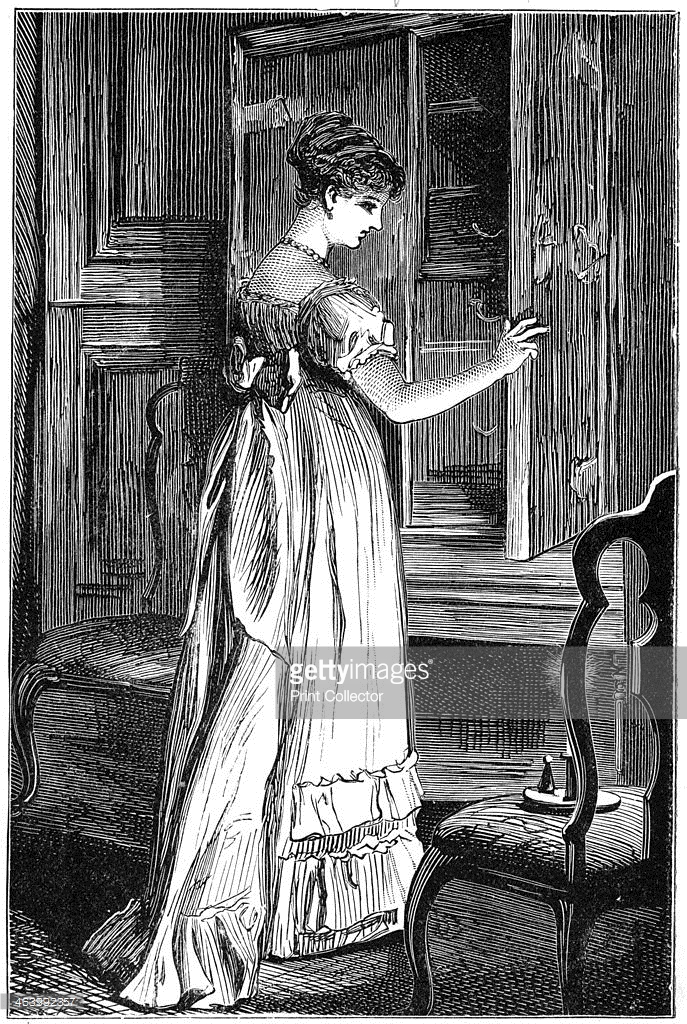
On a side note, to my utmost surprise, while preparing this post, I noticed something that I had not before! In chapter 57, we learn that Charlotte is pregnant! But more on that later.

As I went through the text, I realized that Charlotte plays a much bigger role than I had initially realized. The name “Charlotte” occurs 85 times, and “Mrs. Collins” occurs 29 times. There are 25 instances where “Miss Lucas” refers to Charlotte (as opposed to Maria). Finally, “Collinses” occurs 5 times.

For a sense of perspective, “Mary” only occurs 39 times, and “Kitty” occurs 71 times.

Charlotte is immediately painted by Austen in a positive light:

  • The eldest of [the Lucases’ children], a sensible, intelligent young woman, about twenty-seven, was Elizabeth’s intimate friend.

Furthermore, Charlotte, coming from a large family, helps her family where she needs to, and she must be quite aware of her plainness of appearance since even her mother has observed it:

  • Elizabeth, for the sake of saying something that might turn her mother’s thoughts, now asked her if Charlotte Lucas had been at Longbourn since her coming away.
    “Yes, she called yesterday with her father. …”
    “Did Charlotte dine with you?”
    “No, she would go home. I fancy she was wanted about the mince-pies. For my part, Mr. Bingley, I always keep servants that can do their own work; my daughters are brought up very differently. But everybody is to judge for themselves, and the Lucases are a very good sort of girls, I assure you. It is a pity they are not handsome! Not that I think Charlotte so very plain—but then she is our particular friend.”
    “She seems a very pleasant young woman.”
    “Oh! dear, yes; but you must own she is very plain. Lady Lucas herself has often said so, and envied me Jane’s beauty. …”

Of course, Charlotte also seems (somewhat surprisingly) to be a bit of a gossip:

  • “Something very much to the purpose of course. He begins with congratulations on the approaching nuptials of my eldest daughter, of which, it seems, he has been told by some of the good-natured, gossiping Lucases. I shall not sport with your impatience, by reading what he says on that point. What relates to yourself, is as follows: ‘Having thus offered you the sincere congratulations of Mrs. Collins and myself on this happy event, let me now add a short hint on the subject of another; of which we have been advertised by the same authority. Your daughter Elizabeth, it is presumed, will not long bear the name of Bennet, after her elder sister has resigned it, and the chosen partner of her fate may be reasonably looked up to as one of the most illustrious personages in this land.’
  • And her neighbours at Lucas Lodge, therefore (for through their communication with the Collinses, the report, she concluded, had reached Lady Catherine), had only set that down as almost certain and immediate, which she had looked forward to as possible at some future time.
  • “My dear Sir,
    “I feel myself called upon, by our relationship, and my situation in life, to condole with you on the grievous affliction you are now suffering under, of which we were yesterday informed by a letter from Hertfordshire. Be assured, my dear sir, that Mrs. Collins and myself sincerely sympathise with you and all your respectable family, in your present distress, which must be of the bitterest kind, because proceeding from a cause which no time can remove. No arguments shall be wanting on my part that can alleviate so severe a misfortune—or that may comfort you, under a circumstance that must be of all others the most afflicting to a parent’s mind. The death of your daughter would have been a blessing in comparison of this. And it is the more to be lamented, because there is reason to suppose as my dear Charlotte informs me, that this licentiousness of behaviour in your daughter has proceeded from a faulty degree of indulgence; though, at the same time, for the consolation of yourself and Mrs. Bennet, I am inclined to think that her own disposition must be naturally bad, or she could not be guilty of such an enormity, at so early an age. Howsoever that may be, you are grievously to be pitied; in which opinion I am not only joined by Mrs. Collins, but likewise by Lady Catherine and her daughter, to whom I have related the affair. They agree with me in apprehending that this false step in one daughter will be injurious to the fortunes of all the others; for who, as Lady Catherine herself condescendingly says, will connect themselves with such a family? . . .”

Charlotte’s intimacy with the Bennets is readily evident through their easy conversation and through various pieces showing her closeness with Elizabeth, and furthermore, her handling of Mrs. Bennet seems well done:

  • That the Miss Lucases and the Miss Bennets should meet to talk over a ball was absolutely necessary; and the morning after the assembly brought the former to Longbourn to hear and to communicate.
    You began the evening well, Charlotte,” said Mrs. Bennet with civil self-command to Miss Lucas. “You were Mr. Bingley’s first choice.”
    “Yes; but he seemed to like his second better.”
    “Oh! you mean Jane, I suppose, because he danced with her twice. To be sure that did seem as if he admired her—indeed I rather believe he did—I heard something about it—but I hardly know what—something about Mr. Robinson.”
    Perhaps you mean what I overheard between him and Mr. Robinson; did not I mention it to you? Mr. Robinson’s asking him how he liked our Meryton assemblies, and whether he did not think there were a great many pretty women in the room, and which he thought the prettiest? and his answering immediately to the last question: ‘Oh! the eldest Miss Bennet, beyond a doubt; there cannot be two opinions on that point.’”

    My overhearings were more to the purpose than yours, Eliza,” said Charlotte. “Mr. Darcy is not so well worth listening to as his friend, is he?—poor Eliza!—to be only just tolerable.”
    “I beg you would not put it into Lizzy’s head to be vexed by his ill-treatment, for he is such a disagreeable man, that it would be quite a misfortune to be liked by him. Mrs. Long told me last night that he sat close to her for half-an-hour without once opening his lips.”

    “I do not mind his not talking to Mrs. Long,” said Miss Lucas, “but I wish he had danced with Eliza.”
  • But Elizabeth was not formed for ill-humour; and though every prospect of her own was destroyed for the evening, it could not dwell long on her spirits; and having told all her griefs to Charlotte Lucas, whom she had not seen for a week, she was soon able to make a voluntary transition to the oddities of her cousin, and to point him out to her particular notice.
  • When those dances were over, [Elizabeth] returned to Charlotte Lucas, and was in conversation with her, when she found herself suddenly addressed by Mr. Darcy who took her so much by surprise in his application for her hand, that, without knowing what she did, she accepted him. He walked away again immediately, and she was left to fret over her own want of presence of mind; Charlotte tried to console her:
    “I dare say you will find him very agreeable.”
    “Heaven forbid! That would be the greatest misfortune of all! To find a man agreeable whom one is determined to hate! Do not wish me such an evil.”
  • While the family were in this confusion, Charlotte Lucas came to spend the day with them. She was met in the vestibule by Lydia, who, flying to her, cried in a half whisper, “I am glad you are come, for there is such fun here! What do you think has happened this morning? Mr. Collins has made an offer to Lizzy, and she will not have him.”
    Charlotte hardly had time to answer, before they were joined by Kitty, who came to tell the same news; and no sooner had they entered the breakfast-room, where Mrs. Bennet was alone, than she likewise began on the subject, calling on Miss Lucas for her compassion, and entreating her to persuade her friend Lizzy to comply with the wishes of all her family. “Pray do, my dear Miss Lucas,” she added in a melancholy tone, “for nobody is on my side, nobody takes part with me. I am cruelly used, nobody feels for my poor nerves.”
    Charlotte’s reply was spared by the entrance of Jane and Elizabeth.

Of course, the flighty Mrs. Bennet seems to alternate between praising Charlotte, disparaging her (of course, when Charlotte chooses to marry Mr. Collins, Mrs. Bennet is not the only one with negative comments to make!), and viewing her in a neutral light:

  • “I hope, my dear,” said Mr. Bennet to his wife, as they were at breakfast the next morning, “that you have ordered a good dinner to-day, because I have reason to expect an addition to our family party.”
    “Who do you mean, my dear? I know of nobody that is coming, I am sure, unless Charlotte Lucas should happen to call in—and I hope my dinners are good enough for her. I do not believe she often sees such at home.”
  • “ . . . A great many changes have happened in the neighbourhood, since you went away. Miss Lucas is married and settled. . . .”
  • Bennet was really in a most pitiable state. The very mention of anything concerning the match threw her into an agony of ill-humour, and wherever she went she was sure of hearing it talked of. The sight of Miss Lucas was odious to her. As her successor in that house, she regarded her with jealous abhorrence. Whenever Charlotte came to see them, she concluded her to be anticipating the hour of possession; and whenever she spoke in a low voice to Mr. Collins, was convinced that they were talking of the Longbourn estate, and resolving to turn herself and her daughters out of the house, as soon as Mr. Bennet were dead. She complained bitterly of all this to her husband.
    “Indeed, Mr. Bennet,” said she, “it is very hard to think that Charlotte Lucas should ever be mistress of this house, that I should be forced to make way for her, and live to see her take her place in it!”
    “My dear, do not give way to such gloomy thoughts. Let us hope for better things. Let us flatter ourselves that I may be the survivor.”
    This was not very consoling to Mrs. Bennet, and therefore, instead of making any answer, she went on as before.
    “I cannot bear to think that they should have all this estate. If it was not for the entail, I should not mind it.”
  • “Well, Lizzy,” continued her mother, soon afterwards, “and so the Collinses live very comfortable, do they? Well, well, I only hope it will last. And what sort of table do they keep? Charlotte is an excellent manager, I dare say. If she is half as sharp as her mother, she is saving enough. There is nothing extravagant in their housekeeping, I dare say.”
    “No, nothing at all.”
    “A great deal of good management, depend upon it. Yes, yes. They will take care not to outrun their income. They will never be distressed for money. Well, much good may it do them! And so, I suppose, they often talk of having Longbourn when your father is dead. They look upon it as quite their own, I dare say, whenever that happens.”
    “It was a subject which they could not mention before me.”
    “No; it would have been strange if they had; but I make no doubt they often talk of it between themselves. Well, if they can be easy with an estate that is not lawfully their own, so much the better. I should be ashamed of having one that was only entailed on me.”
  • Elizabeth was sitting with her mother and sisters, reflecting on what she had heard, and doubting whether she was authorised to mention it, when Sir William Lucas himself appeared, sent by his daughter, to announce her engagement to the family.

    Elizabeth, feeling it incumbent on her to relieve him from so unpleasant a situation, now put herself forward to confirm his account, by mentioning her prior knowledge of it from Charlotte herself; and endeavoured to put a stop to the exclamations of her mother and sisters by the earnestness of her congratulations to Sir William, in which she was readily joined by Jane, and by making a variety of remarks on the happiness that might be expected from the match, the excellent character of Mr. Collins, and the convenient distance of Hunsford from London.
    Mrs. Bennet was in fact too much overpowered to say a great deal while Sir William remained; but no sooner had he left them than her feelings found a rapid vent. In the first place, she persisted in disbelieving the whole of the matter; secondly, she was very sure that Mr. Collins had been taken in; thirdly, she trusted that they would never be happy together; and fourthly, that the match might be broken off.
  • A week elapsed before [Mrs. Bennet] could see Elizabeth without scolding her, a month passed away before she could speak to Sir William or Lady Lucas without being rude, and many months were gone before she could at all forgive their daughter.
    Mr. Bennet’s emotions were much more tranquil on the occasion, and such as he did experience he pronounced to be of a most agreeable sort; for it gratified him, he said, to discover that Charlotte Lucas, whom he had been used to think tolerably sensible, was as foolish as his wife, and more foolish than his daughter!
    Jane confessed herself a little surprised at the match; but she said less of her astonishment than of her earnest desire for their happiness; nor could Elizabeth persuade her to consider it as improbable. Kitty and Lydia were far from envying Miss Lucas, for Mr. Collins was only a clergyman; and it affected them in no other way than as a piece of news to spread at Meryton.
    Lady Lucas could not be insensible of triumph on being able to retort on Mrs. Bennet the comfort of having a daughter well married; and she called at Longbourn rather oftener than usual to say how happy she was, though Mrs. Bennet’s sour looks and ill-natured remarks might have been enough to drive happiness away.
    Between Elizabeth and Charlotte there was a restraint which kept them mutually silent on the subject; and Elizabeth felt persuaded that no real confidence could ever subsist between them again. Her disappointment in Charlotte made her turn with fonder regard to her sister, of whose rectitude and delicacy she was sure her opinion could never be shaken, and for whose happiness she grew daily more anxious, as Bingley had now been gone a week and nothing more was heard of his return.
  • “ . . . First of all, he asked Miss Lucas. I was so vexed to see him stand up with her! But, however, he did not admire her at all; indeed, nobody can, you know; and he seemed quite struck with Jane as she was going down the dance. . . .”
  • “ . . . The Collinses will turn us out before he is cold in his grave, and if you are not kind to us, brother, I do not know what we shall do.”

Regardless of Mrs. Bennet’s opinions, Charlotte’s observations are often on-point:

  • “His pride,” said Miss Lucas, “does not offend me so much as pride often does, because there is an excuse for it. One cannot wonder that so very fine a young man, with family, fortune, everything in his favour, should think highly of himself. If I may so express it, he has a right to be proud.”

One of Charlotte’s most important observations is one that would rectify the misunderstandings of Jane’s affection for Bingley – if only Elizabeth had passed on the information to Jane and encouraged her to modify her behavior!

  • It was generally evident whenever they met, that he did admire her and to her it was equally evident that Jane was yielding to the preference which she had begun to entertain for him from the first, and was in a way to be very much in love; but she considered with pleasure that it was not likely to be discovered by the world in general, since Jane united, with great strength of feeling, a composure of temper and a uniform cheerfulness of manner which would guard her from the suspicions of the impertinent. She mentioned this to her friend Miss Lucas.
    “It may perhaps be pleasant,” replied Charlotte, “to be able to impose on the public in such a case; but it is sometimes a disadvantage to be so very guarded. If a woman conceals her affection with the same skill from the object of it, she may lose the opportunity of fixing him; and it will then be but poor consolation to believe the world equally in the dark. There is so much of gratitude or vanity in almost every attachment, that it is not safe to leave any to itself. We can all begin freely—a slight preference is natural enough; but there are very few of us who have heart enough to be really in love without encouragement. In nine cases out of ten a woman had better show more affection than she feels. Bingley likes your sister undoubtedly; but he may never do more than like her, if she does not help him on.”
    “But she does help him on, as much as her nature will allow. If I can perceive her regard for him, he must be a simpleton, indeed, not to discover it too.”
    “Remember, Eliza, that he does not know Jane’s disposition as you do.”
    “But if a woman is partial to a man, and does not endeavour to conceal it, he must find it out.”
    “Perhaps he must, if he sees enough of her. But, though Bingley and Jane meet tolerably often, it is never for many hours together; and, as they always see each other in large mixed parties, it is impossible that every moment should be employed in conversing together. Jane should therefore make the most of every half-hour in which she can command his attention. When she is secure of him, there will be more leisure for falling in love as much as she chooses.”
    “Your plan is a good one,” replied Elizabeth, “where nothing is in question but the desire of being well married, and if I were determined to get a rich husband, or any husband, I dare say I should adopt it. But these are not Jane’s feelings; she is not acting by design. As yet, she cannot even be certain of the degree of her own regard nor of its reasonableness. She has known him only a fortnight. She danced four dances with him at Meryton; she saw him one morning at his own house, and has since dined with him in company four times. This is not quite enough to make her understand his character.”
    “Not as you represent it. Had she merely dined with him, she might only have discovered whether he had a good appetite; but you must remember that four evenings have also been spent together—and four evenings may do a great deal.”
  • He declared himself to be totally unsuspicious of her sister’s attachment; and she could not help remembering what Charlotte’s opinion had always been.

Charlotte also expresses a very practical view on marriage which helps explain her willingness to accept Mr. Collins:

  • “Well,” said Charlotte, “I wish Jane success with all my heart; and if she were married to him to-morrow, I should think she had as good a chance of happiness as if she were to be studying his character for a twelvemonth. Happiness in marriage is entirely a matter of chance. If the dispositions of the parties are ever so well known to each other or ever so similar beforehand, it does not advance their felicity in the least. They always continue to grow sufficiently unlike afterwards to have their share of vexation; and it is better to know as little as possible of the defects of the person with whom you are to pass your life.”
    “You make me laugh, Charlotte; but it is not sound. You know it is not sound, and that you would never act in this way yourself.”
  • In as short a time as Mr. Collins’s long speeches would allow, everything was settled between them to the satisfaction of both; and as they entered the house he earnestly entreated her to name the day that was to make him the happiest of men; and though such a solicitation must be waived for the present, the lady felt no inclination to trifle with his happiness. The stupidity with which he was favoured by nature must guard his courtship from any charm that could make a woman wish for its continuance; and Miss Lucas, who accepted him solely from the pure and disinterested desire of an establishment, cared not how soon that establishment were gained.
    Sir William and Lady Lucas were speedily applied to for their consent; and it was bestowed with a most joyful alacrity. Mr. Collins’s present circumstances made it a most eligible match for their daughter, to whom they could give little fortune; and his prospects of future wealth were exceedingly fair. Lady Lucas began directly to calculate, with more interest than the matter had ever excited before, how many years longer Mr. Bennet was likely to live; and Sir William gave it as his decided opinion, that whenever Mr. Collins should be in possession of the Longbourn estate, it would be highly expedient that both he and his wife should make their appearance at St. James’s. The whole family, in short, were properly overjoyed on the occasion. The younger girls formed hopes of coming out a year or two sooner than they might otherwise have done; and the boys were relieved from their apprehension of Charlotte’s dying an old maid. Charlotte herself was tolerably composed. She had gained her point, and had time to consider of it. Her reflections were in general satisfactory. Mr. Collins, to be sure, was neither sensible nor agreeable; his society was irksome, and his attachment to her must be imaginary. But still he would be her husband. Without thinking highly either of men or matrimony, marriage had always been her object; it was the only provision for well-educated young women of small fortune, and however uncertain of giving happiness, must be their pleasantest preservative from want. This preservative she had now obtained; and at the age of twenty-seven, without having ever been handsome, she felt all the good luck of it. The least agreeable circumstance in the business was the surprise it must occasion to Elizabeth Bennet, whose friendship she valued beyond that of any other person. Elizabeth would wonder, and probably would blame her; and though her resolution was not to be shaken, her feelings must be hurt by such a disapprobation. She resolved to give her the information herself, and therefore charged Mr. Collins, when he returned to Longbourn to dinner, to drop no hint of what had passed before any of the family.
  • Miss Lucas called soon after breakfast, and in a private conference with Elizabeth related the event of the day before.
    The possibility of Mr. Collins’s fancying himself in love with her friend had once occurred to Elizabeth within the last day or two; but that Charlotte could encourage him seemed almost as far from possibility as she could encourage him herself, and her astonishment was consequently so great as to overcome at first the bounds of decorum, and she could not help crying out:
    “Engaged to Mr. Collins! My dear Charlotte—impossible!”
    The steady countenance which Miss Lucas had commanded in telling her story, gave way to a momentary confusion here on receiving so direct a reproach; though, as it was no more than she expected, she soon regained her composure, and calmly replied:
    “Why should you be surprised, my dear Eliza? Do you think it incredible that Mr. Collins should be able to procure any woman’s good opinion, because he was not so happy as to succeed with you?”
    But Elizabeth had now recollected herself, and making a strong effort for it, was able to assure with tolerable firmness that the prospect of their relationship was highly grateful to her, and that she wished her all imaginable happiness.
    “I see what you are feeling,” replied Charlotte. “You must be surprised, very much surprised—so lately as Mr. Collins was wishing to marry you. But when you have had time to think it over, I hope you will be satisfied with what I have done. I am not romantic, you know; I never was. I ask only a comfortable home; and considering Mr. Collins’s character, connection, and situation in life, I am convinced that my chance of happiness with him is as fair as most people can boast on entering the marriage state.”
    Elizabeth quietly answered “Undoubtedly;” and after an awkward pause, they returned to the rest of the family. Charlotte did not stay much longer, and Elizabeth was then left to reflect on what she had heard. It was a long time before she became at all reconciled to the idea of so unsuitable a match. The strangeness of Mr. Collins’s making two offers of marriage within three days was nothing in comparison of his being now accepted. She had always felt that Charlotte’s opinion of matrimony was not exactly like her own, but she had not supposed it to be possible that, when called into action, she would have sacrificed every better feeling to worldly advantage. Charlotte the wife of Mr. Collins was a most humiliating picture! And to the pang of a friend disgracing herself and sunk in her esteem, was added the distressing conviction that it was impossible for that friend to be tolerably happy in the lot she had chosen.
  • From his garden, Mr. Collins would have led them round his two meadows; but the ladies, not having shoes to encounter the remains of a white frost, turned back; and while Sir William accompanied him, Charlotte took her sister and friend over the house, extremely well pleased, probably, to have the opportunity of showing it without her husband’s help. It was rather small, but well built and convenient; and everything was fitted up and arranged with a neatness and consistency of which Elizabeth gave Charlotte all the credit. When Mr. Collins could be forgotten, there was really an air of great comfort throughout, and by Charlotte’s evident enjoyment of it, Elizabeth supposed he must be often forgotten.
    She had already learnt that Lady Catherine was still in the country. It was spoken of again while they were at dinner, when Mr. Collins joining in, observed:
    “Yes, Miss Elizabeth, you will have the honour of seeing Lady Catherine de Bourgh on the ensuing Sunday at church, and I need not say you will be delighted with her. She is all affability and condescension, and I doubt not but you will be honoured with some portion of her notice when service is over. I have scarcely any hesitation in saying she will include you and my sister Maria in every invitation with which she honours us during your stay here. Her behaviour to my dear Charlotte is charming. We dine at Rosings twice every week, and are never allowed to walk home. Her ladyship’s carriage is regularly ordered for us. I should say, one of her ladyship’s carriages, for she has several.”
    “Lady Catherine is a very respectable, sensible woman indeed,” added Charlotte, “and a most attentive neighbour.”
    “Very true, my dear, that is exactly what I say. She is the sort of woman whom one cannot regard with too much deference.”
    The evening was spent chiefly in talking over Hertfordshire news, and telling again what had already been written; and when it closed, Elizabeth, in the solitude of her chamber, had to meditate upon Charlotte’s degree of contentment, to understand her address in guiding, and composure in bearing with, her husband, and to acknowledge that it was all done very well. She had also to anticipate how her visit would pass, the quiet tenor of their usual employments, the vexatious interruptions of Mr. Collins, and the gaieties of their intercourse with Rosings.

Charlotte’s acceptance of Mr. Collins comes to us in a few pieces:

  • [After Mrs. Bennet asked everyone but Mr. Collins to leave the room,] Elizabeth passed quietly out of the room, Jane and Kitty followed, but Lydia stood her ground, determined to hear all she could; and Charlotte, detained first by the civility of Mr. Collins, whose enquiries after herself and all her family were very minute, and then by a little curiosity, satisfied herself with walking to the window and pretending not to hear.
  • The Bennets were engaged to dine with the Lucases and again during the chief of the day was Miss Lucas so kind as to listen to Mr. Collins. Elizabeth took an opportunity of thanking her. “It keeps him in good humour,” said she, “and I am more obliged to you than I can express.” Charlotte assured her friend of her satisfaction in being useful, and that it amply repaid her for the little sacrifice of her time. This was very amiable, but Charlotte’s kindness extended farther than Elizabeth had any conception of; its object was nothing else than to secure her from any return of Mr. Collins’s addresses, by engaging them towards herself. Such was Miss Lucas’s scheme; and appearances were so favourable, that when they parted at night, she would have felt almost secure of success if he had not been to leave Hertfordshire so very soon. But here she did injustice to the fire and independence of his character, for it led him to escape out of Longbourn House the next morning with admirable slyness, and hasten to Lucas Lodge to throw himself at her feet. He was anxious to avoid the notice of his cousins, from a conviction that if they saw him depart, they could not fail to conjecture his design, and he was not willing to have the attempt known till its success might be known likewise; for though feeling almost secure, and with reason, for Charlotte had been tolerably encouraging, he was comparatively diffident since the adventure of Wednesday. His reception, however, was of the most flattering kind. Miss Lucas perceived him from an upper window as he walked towards the house, and instantly set out to meet him accidentally in the lane. But little had she dared to hope that so much love and eloquence awaited her there.
  • He scarcely ever spoke to her, and the assiduous attentions which he had been so sensible of himself were transferred for the rest of the day to Miss Lucas, whose civility in listening to him was a seasonable relief to them all, and especially to her friend.
  • She owed her greatest relief to her friend Miss Lucas, who often joined them, and good-naturedly engaged Mr. Collins’s conversation to herself.

Charlotte serves as good method for Austen to display the ridiculousness of Lady Catherine and Mr. Collins:

  • “ . . . Mrs. Collins, did I tell you of Lady Metcalf’s calling yesterday to thank me? She finds Miss Pope a treasure. ‘Lady Catherine,’ said she, ‘you have given me a treasure.’ Are any of your younger sisters out, Miss Bennet?”
  • “ . . . I have told Miss Bennet several times, that she will never play really well unless she practises more; and though Mrs. Collins has no instrument, she is very welcome, as I have often told her, to come to Rosings every day, and play on the pianoforte in Mrs. Jenkinson’s room. She would be in nobody’s way, you know, in that part of the house.”
  • Collins, seeing that she was really unwell, did not press her to go and as much as possible prevented her husband from pressing her; but Mr. Collins could not conceal his apprehension of Lady Catherine’s being rather displeased by her staying at home.
  • “But if that is the case, you must write to your mother and beg that you may stay a little longer. Mrs. Collins will be very glad of your company, I am sure.”
    “I am much obliged to your ladyship for your kind invitation,” replied Elizabeth, “but it is not in my power to accept it. I must be in town next Saturday.”
    “Why, at that rate, you will have been here only six weeks. I expected you to stay two months. I told Mrs. Collins so before you came. There can be no occasion for your going so soon. Mrs. Bennet could certainly spare you for another fortnight.”
  • “Mrs. Collins, you must send a servant with them. You know I always speak my mind, and I cannot bear the idea of two young women travelling post by themselves. It is highly improper. You must contrive to send somebody. I have the greatest dislike in the world to that sort of thing. Young women should always be properly guarded and attended, according to their situation in life. When my niece Georgiana went to Ramsgate last summer, I made a point of her having two men-servants go with her. Miss Darcy, the daughter of Mr. Darcy, of Pemberley, and Lady Anne, could not have appeared with propriety in a different manner. I am excessively attentive to all those things. You must send John with the young ladies, Mrs. Collins. I am glad it occurred to me to mention it; for it would really be discreditable to you to let them go alone.”
  • “May I take the liberty of asking your ladyship whether you left Mr. and Mrs. Collins well.”
    “Yes, very well. I saw them the night before last.”
    Elizabeth now expected that she would produce a letter for her from Charlotte, as it seemed the only probable motive for her calling. But no letter appeared, and she was completely puzzled.
  • The promised letter of thanks from Mr. Collins arrived on Tuesday, addressed to their father, and written with all the solemnity of gratitude which a twelvemonth’s abode in the family might have prompted. After discharging his conscience on that head, he proceeded to inform them, with many rapturous expressions, of his happiness in having obtained the affection of their amiable neighbour, Miss Lucas, and then explained that it was merely with the view of enjoying her society that he had been so ready to close with their kind wish of seeing him again at Longbourn, whither he hoped to be able to return on Monday fortnight; for Lady Catherine, he added, so heartily approved his marriage, that she wished it to take place as soon as possible, which he trusted would be an unanswerable argument with his amiable Charlotte to name an early day for making him the happiest of men.
  • After a week spent in professions of love and schemes of felicity, Mr. Collins was called from his amiable Charlotte by the arrival of Saturday. The pain of separation, however, might be alleviated on his side, by preparations for the reception of his bride; as he had reason to hope, that shortly after his return into Hertfordshire, the day would be fixed that was to make him the happiest of men. He took leave of his relations at Longbourn with as much solemnity as before; wished his fair cousins health and happiness again, and promised their father another letter of thanks.
  • Collins and Charlotte were both standing at the gate in conversation with the ladies; and Sir William, to Elizabeth’s high diversion, was stationed in the doorway, in earnest contemplation of the greatness before him, and constantly bowing whenever Miss de Bourgh looked that way.
    At length there was nothing more to be said; the ladies drove on, and the others returned into the house. Mr. Collins no sooner saw the two girls than he began to congratulate them on their good fortune, which Charlotte explained by letting them know that the whole party was asked to dine at Rosings the next day.
  • Her ladyship, with great condescension, arose to receive them; and as Mrs. Collins had settled it with her husband that the office of introduction should be hers, it was performed in a proper manner, without any of those apologies and thanks which he would have thought necessary.
  • Elizabeth was ready to speak whenever there was an opening, but she was seated between Charlotte and Miss de Bourgh—the former of whom was engaged in listening to Lady Catherine, and the latter said not a word to her all dinner-time.
  • She enquired into Charlotte’s domestic concerns familiarly and minutely, gave her a great deal of advice as to the management of them all; told her how everything ought to be regulated in so small a family as hers, and instructed her as to the care of her cows and her poultry. . . . In the intervals of her discourse with Mrs. Collins, she addressed a variety of questions to Maria and Elizabeth, but especially to the latter, of whose connections she knew the least, and who she observed to Mrs. Collins was a very genteel, pretty kind of girl.
  • Lady Catherine then observed,
    “Your father’s estate is entailed on Mr. Collins, I think. For your sake,” turning to Charlotte, “I am glad of it; but otherwise I see no occasion for entailing estates from the female line. It was not thought necessary in Sir Lewis de Bourgh’s family. . . .”
  • She had spent six weeks with great enjoyment; and the pleasure of being with Charlotte, and the kind attentions she had received, must make her feel the obliged. Mr. Collins was gratified, and with a more smiling solemnity replied:
    “It gives me great pleasure to hear that you have passed your time not disagreeably. We have certainly done our best; and most fortunately having it in our power to introduce you to very superior society, and, from our connection with Rosings, the frequent means of varying the humble home scene, I think we may flatter ourselves that your Hunsford visit cannot have been entirely irksome. Our situation with regard to Lady Catherine’s family is indeed the sort of extraordinary advantage and blessing which few can boast. You see on what a footing we are. You see how continually we are engaged there. In truth I must acknowledge that, with all the disadvantages of this humble parsonage, I should not think anyone abiding in it an object of compassion, while they are sharers of our intimacy at Rosings.”
  • “I know not, Miss Elizabeth,” said he, “whether Mrs. Collins has yet expressed her sense of your kindness in coming to us; but I am very certain you will not leave the house without receiving her thanks for it. The favour of your company has been much felt, I assure you. We know how little there is to tempt anyone to our humble abode. Our plain manner of living, our small rooms and few domestics, and the little we see of the world, must make Hunsford extremely dull to a young lady like yourself; but I hope you will believe us grateful for the condescension, and that we have done everything in our power to prevent your spending your time unpleasantly.”
    Elizabeth was eager with her thanks and assurances of happiness. She had spent six weeks with great enjoyment; and the pleasure of being with Charlotte, and the kind attentions she had received, must make her feel the obliged. Mr. Collins was gratified, and with a more smiling solemnity replied:
    “It gives me great pleasure to hear that you have passed your time not disagreeably. We have certainly done our best; and most fortunately having it in our power to introduce you to very superior society, and, from our connection with Rosings, the frequent means of varying the humble home scene, I think we may flatter ourselves that your Hunsford visit cannot have been entirely irksome. Our situation with regard to Lady Catherine’s family is indeed the sort of extraordinary advantage and blessing which few can boast. You see on what a footing we are. You see how continually we are engaged there. In truth I must acknowledge that, with all the disadvantages of this humble parsonage, I should not think anyone abiding in it an object of compassion, while they are sharers of our intimacy at Rosings.”
  • “You may, in fact, carry a very favourable report of us into Hertfordshire, my dear cousin. I flatter myself at least that you will be able to do so. Lady Catherine’s great attentions to Mrs. Collins you have been a daily witness of; and altogether I trust it does not appear that your friend has drawn an unfortunate—but on this point it will be as well to be silent. Only let me assure you, my dear Miss Elizabeth, that I can from my heart most cordially wish you equal felicity in marriage. My dear Charlotte and I have but one mind and one way of thinking. There is in everything a most remarkable resemblance of character and ideas between us. We seem to have been designed for each other.”
    Elizabeth could safely say that it was a great happiness where that was the case, and with equal sincerity could add, that she firmly believed and rejoiced in his domestic comforts. She was not sorry, however, to have the recital of them interrupted by the lady from whom they sprang. Poor Charlotte! it was melancholy to leave her to such society! But she had chosen it with her eyes open; and though evidently regretting that her visitors were to go, she did not seem to ask for compassion. Her home and her housekeeping, her parish and her poultry, and all their dependent concerns, had not yet lost their charms.

Elizabeth’s feelings toward her friend are usually positive, though they become much more complex when Charlotte becomes engaged to Mr. Collins:

  • “ . . . The more I see of the world, the more am I dissatisfied with it; and every day confirms my belief of the inconsistency of all human characters, and of the little dependence that can be placed on the appearance of merit or sense. I have met with two instances lately, one I will not mention; the other is Charlotte’s marriage. It is unaccountable! In every view it is unaccountable!”
    “My dear Lizzy, do not give way to such feelings as these. They will ruin your happiness. You do not make allowance enough for difference of situation and temper. Consider Mr. Collins’s respectability, and Charlotte’s steady, prudent character. Remember that she is one of a large family; that as to fortune, it is a most eligible match; and be ready to believe, for everybody’s sake, that she may feel something like regard and esteem for our cousin.”
    “To oblige you, I would try to believe almost anything, but no one else could be benefited by such a belief as this; for were I persuaded that Charlotte had any regard for him, I should only think worse of her understanding than I now do of her heart. My dear Jane, Mr. Collins is a conceited, pompous, narrow-minded, silly man; you know he is, as well as I do; and you must feel, as well as I do, that the woman who married him cannot have a proper way of thinking. You shall not defend her, though it is Charlotte Lucas. You shall not, for the sake of one individual, change the meaning of principle and integrity, nor endeavour to persuade yourself or me, that selfishness is prudence, and insensibility of danger security for happiness.”
    “I must think your language too strong in speaking of both,” replied Jane; “and I hope you will be convinced of it by seeing them happy together. . . .”
  • “She is abominably rude to keep Charlotte out of doors in all this wind. Why does she not come in?”
    “Oh, Charlotte says she hardly ever does. It is the greatest of favours when Miss de Bourgh comes in.”
  • [Mr. Collins’s] marriage was now fast approaching, and [Mrs. Bennet] was at length so far resigned as to think it inevitable, and even repeatedly to say, in an ill-natured tone, that she “wished they might be happy.” Thursday was to be the wedding day, and on Wednesday Miss Lucas paid her farewell visit; and when she rose to take leave, Elizabeth, ashamed of her mother’s ungracious and reluctant good wishes, and sincerely affected herself, accompanied her out of the room. As they went downstairs together, Charlotte said:
    “I shall depend on hearing from you very often, Eliza.”
    That you certainly shall.”
    “And I have another favour to ask you. Will you come and see me?”
    “We shall often meet, I hope, in Hertfordshire.”
    “I am not likely to leave Kent for some time. Promise me, therefore, to come to Hunsford.”
    Elizabeth could not refuse, though she foresaw little pleasure in the visit.
    “My father and Maria are coming to me in March,” added Charlotte, “and I hope you will consent to be of the party. Indeed, Eliza, you will be as welcome as either of them.”
    The wedding took place; the bride and bridegroom set off for Kent from the church door, and everybody had as much to say, or to hear, on the subject as usual. Elizabeth soon heard from her friend; and their correspondence was as regular and frequent as it had ever been; that it should be equally unreserved was impossible. Elizabeth could never address her without feeling that all the comfort of intimacy was over, and though determined not to slacken as a correspondent, it was for the sake of what had been, rather than what was. Charlotte’s first letters were received with a good deal of eagerness; there could not but be curiosity to know how she would speak of her new home, how she would like Lady Catherine, and how happy she would dare pronounce herself to be; though, when the letters were read, Elizabeth felt that Charlotte expressed herself on every point exactly as she might have foreseen. She wrote cheerfully, seemed surrounded with comforts, and mentioned nothing which she could not praise. The house, furniture, neighbourhood, and roads, were all to her taste, and Lady Catherine’s behaviour was most friendly and obliging. It was Mr. Collins’s picture of Hunsford and Rosings rationally softened; and Elizabeth perceived that she must wait for her own visit there to know the rest.
  • March was to take Elizabeth to Hunsford. She had not at first thought very seriously of going thither; but Charlotte, she soon found, was depending on the plan and she gradually learned to consider it herself with greater pleasure as well as greater certainty. Absence had increased her desire of seeing Charlotte again, and weakened her disgust of Mr. Collins. There was novelty in the scheme, and as, with such a mother and such uncompanionable sisters, home could not be faultless, a little change was not unwelcome for its own sake. The journey would moreover give her a peep at Jane; and, in short, as the time drew near, she would have been very sorry for any delay. Everything, however, went on smoothly, and was finally settled according to Charlotte’s first sketch. She was to accompany Sir William and his second daughter.
  • Collins and Charlotte appeared at the door, and the carriage stopped at the small gate which led by a short gravel walk to the house, amidst the nods and smiles of the whole party. In a moment they were all out of the chaise, rejoicing at the sight of each other. Mrs. Collins welcomed her friend with the liveliest pleasure, and Elizabeth was more and more satisfied with coming when she found herself so affectionately received. . . . They were then, with no other delay than his pointing out the neatness of the entrance, taken into the house; and as soon as they were in the parlour, he welcomed them a second time, with ostentatious formality to his humble abode, and punctually repeated all his wife’s offers of refreshment.

    But though everything seemed neat and comfortable, she was not able to gratify him by any sigh of repentance, and rather looked with wonder at her friend that she could have so cheerful an air with such a companion. When Mr. Collins said anything of which his wife might reasonably be ashamed, which certainly was not unseldom, she involuntarily turned her eye on Charlotte. Once or twice she could discern a faint blush; but in general Charlotte wisely did not hear. After sitting long enough to admire every article of furniture in the room, from the sideboard to the fender, to give an account of their journey, and of all that had happened in London, Mr. Collins invited them to take a stroll in the garden, which was large and well laid out, and to the cultivation of which he attended himself. To work in this garden was one of his most respectable pleasures; and Elizabeth admired the command of countenance with which Charlotte talked of the healthfulness of the exercise, and owned she encouraged it as much as possible.
  • She continued in very agitated reflections till the sound of Lady Catherine’s carriage made her feel how unequal she was to encounter Charlotte’s observation, and hurried her away to her room.
  • Sir William stayed only a week at Hunsford, but his visit was long enough to convince him of his daughter’s being most comfortably settled, and of her possessing such a husband and such a neighbour as were not often met with. While Sir William was with them, Mr. Collins devoted his morning to driving him out in his gig, and showing him the country; but when he went away, the whole family returned to their usual employments, and Elizabeth was thankful to find that they did not see more of her cousin by the alteration, for the chief of the time between breakfast and dinner was now passed by him either at work in the garden or in reading and writing, and looking out of the window in his own book-room, which fronted the road. The room in which the ladies sat was backwards. Elizabeth had at first rather wondered that Charlotte should not prefer the dining-parlour for common use; it was a better sized room, and had a more pleasant aspect; but she soon saw that her friend had an excellent reason for what she did, for Mr. Collins would undoubtedly have been much less in his own apartment, had they sat in one equally lively; and she gave Charlotte credit for the arrangement.
    From the drawing-room they could distinguish nothing in the lane, and were indebted to Mr. Collins for the knowledge of what carriages went along, and how often especially Miss de Bourgh drove by in her phaeton, which he never failed coming to inform them of, though it happened almost every day. She not unfrequently stopped at the Parsonage, and had a few minutes’ conversation with Charlotte, but was scarcely ever prevailed upon to get out.
    Very few days passed in which Mr. Collins did not walk to Rosings, and not many in which his wife did not think it necessary to go likewise; and till Elizabeth recollected that there might be other family livings to be disposed of, she could not understand the sacrifice of so many hours. Now and then they were honoured with a call from her ladyship, and nothing escaped her observation that was passing in the room during these visits. She examined into their employments, looked at their work, and advised them to do it differently; found fault with the arrangement of the furniture; or detected the housemaid in negligence; and if she accepted any refreshment, seemed to do it only for the sake of finding out that Mrs. Collins’s joints of meat were too large for her family.
  • “Mr. Collins appears to be very fortunate in his choice of a wife.”
    “Yes, indeed, his friends may well rejoice in his having met with one of the very few sensible women who would have accepted him, or have made him happy if they had. My friend has an excellent understanding—though I am not certain that I consider her marrying Mr. Collins as the wisest thing she ever did. She seems perfectly happy, however, and in a prudential light it is certainly a very good match for her.”
    “It must be very agreeable for her to be settled within so easy a distance of her own family and friends.”
    “An easy distance, do you call it? It is nearly fifty miles.”
    “And what is fifty miles of good road? Little more than half a day’s journey. Yes, I call it a very easy distance.”
    “I should never have considered the distance as one of the advantages of the match,” cried Elizabeth. “I should never have said Mrs. Collins was settled near her family.”

    “ . . . Where there is fortune to make the expenses of travelling unimportant, distance becomes no evil. But that is not the case here. Mr. and Mrs. Collins have a comfortable income, but not such a one as will allow of frequent journeys—and I am persuaded my friend would not call herself near her family under less than half the present distance.”

Of course, Austen is sure to point out a bit of the hypocrisy in Elizabeth’s negative feelings toward what Charlotte has chosen in terms of her marital prospects:

  • The sudden acquisition of ten thousand pounds was the most remarkable charm of the young lady to whom he was now rendering himself agreeable; but Elizabeth, less clear-sighted perhaps in this case than in Charlotte’s, did not quarrel with him for his wish of independence. Nothing, on the contrary, could be more natural; and while able to suppose that it cost him a few struggles to relinquish her, she was ready to allow it a wise and desirable measure for both, and could very sincerely wish him happy.

Charlotte, perhaps knowing even early on of Darcy’s feelings, attempts to temper Elizabeth’s attitude toward him and help display both of them in a positive light (and otherwise kindly schemes for Elizabeth to have good marital prospects):

  • “What does Mr. Darcy mean,” said she to Charlotte, “by listening to my conversation with Colonel Forster?”
    “That is a question which Mr. Darcy only can answer.”
    “But if he does it any more I shall certainly let him know that I see what he is about. He has a very satirical eye, and if I do not begin by being impertinent myself, I shall soon grow afraid of him.”
    On his approaching them soon afterwards, though without seeming to have any intention of speaking, Miss Lucas defied her friend to mention such a subject to him; which immediately provoking Elizabeth to do it, she turned to him and said:
    “Did you not think, Mr. Darcy, that I expressed myself uncommonly well just now, when I was teasing Colonel Forster to give us a ball at Meryton?”
    “With great energy; but it is always a subject which makes a lady energetic.”
    “You are severe on us.”
    “It will be her turn soon to be teased,” said Miss Lucas. “I am going to open the instrument, Eliza, and you know what follows.”
    “You are a very strange creature by way of a friend!—always wanting me to play and sing before anybody and everybody! If my vanity had taken a musical turn, you would have been invaluable; but as it is, I would really rather not sit down before those who must be in the habit of hearing the very best performers.” On Miss Lucas’s persevering, however, she added, “Very well, if it must be so, it must.”
  • When the dancing recommenced, however, and Darcy approached to claim her hand, Charlotte could not help cautioning her in a whisper, not to be a simpleton, and allow her fancy for Wickham to make her appear unpleasant in the eyes of a man ten times his consequence.
  • Collins knew not what to make of him. Colonel Fitzwilliam’s occasionally laughing at his stupidity, proved that he was generally different, which her own knowledge of him could not have told her; and as she would liked to have believed this change the effect of love, and the object of that love her friend Eliza, she set herself seriously to work to find it out. She watched him whenever they were at Rosings, and whenever he came to Hunsford; but without much success. He certainly looked at her friend a great deal, but the expression of that look was disputable. It was an earnest, steadfast gaze, but she often doubted whether there were much admiration in it, and sometimes it seemed nothing but absence of mind.
    She had once or twice suggested to Elizabeth the possibility of his being partial to her, but Elizabeth always laughed at the idea; and Mrs. Collins did not think it right to press the subject, from the danger of raising expectations which might only end in disappointment; for in her opinion it admitted not of a doubt, that all her friend’s dislike would vanish, if she could suppose him to be in her power.
    In her kind schemes for Elizabeth, she sometimes planned her marrying Colonel Fitzwilliam. He was beyond comparison the most pleasant man; he certainly admired her, and his situation in life was most eligible; but, to counterbalance these advantages, Mr. Darcy had considerable patronage in the church, and his cousin could have none at all.
  • Charlotte had seen them from her husband’s room, crossing the road, and immediately running into the other, told the girls what an honour they might expect, adding:
    “I may thank you, Eliza, for this piece of civility. Mr. Darcy would never have come so soon to wait upon me.”
  • A short dialogue on the subject of the country ensued, on either side calm and concise—and soon put an end to by the entrance of Charlotte and her sister, just returned from her walk. The tête-à-tête surprised them. Mr. Darcy related the mistake which had occasioned his intruding on Miss Bennet, and after sitting a few minutes longer without saying much to anybody, went away.
    “What can be the meaning of this?” said Charlotte, as soon as he was gone. “My dear, Eliza, he must be in love with you, or he would never have called on us in this familiar way.”
    But when Elizabeth told of his silence, it did not seem very likely, even to Charlotte’s wishes, to be the case; and after various conjectures, they could at last only suppose his visit to proceed from the difficulty of finding anything to do, which was the more probable from the time of year.
  • Before any answer could arrive from Mr. Collins, or any congratulations to Elizabeth from his wife, the Longbourn family heard that the Collinses were come themselves to Lucas Lodge. The reason of this sudden removal was soon evident. Lady Catherine had been rendered so exceedingly angry by the contents of her nephew’s letter, that Charlotte, really rejoicing in the match, was anxious to get away till the storm was blown over. At such a moment, the arrival of her friend was a sincere pleasure to Elizabeth, though in the course of their meetings she must sometimes think the pleasure dearly bought, when she saw Mr. Darcy exposed to all the parading and obsequious civility of her husband.

And of course, there are some more minor pieces of text with regard to Charlotte:

  • Lady Catherine, Sir William, and Mr. and Mrs. Collins sat down to quadrille; and as Miss de Bourgh chose to play at cassino, the two girls had the honour of assisting Mrs. Jenkinson to make up her party.
  • When Lady Catherine and her daughter had played as long as they chose, the tables were broken up, the carriage was offered to Mrs. Collins, gratefully accepted and immediately ordered.
  • This, however, was no evil to Elizabeth, and upon the whole she spent her time comfortably enough; there were half-hours of pleasant conversation with Charlotte, and the weather was so fine for the time of year that she had often great enjoyment out of doors.
  • Colonel Fitzwilliam seemed really glad to see them; anything was a welcome relief to him at Rosings; and Mrs. Collins’s pretty friend had moreover caught his fancy very much.
  • Elizabeth was sitting by herself the next morning, and writing to Jane while Mrs. Collins and Maria were gone on business into the village, when she was startled by a ring at the door, the certain signal of a visitor.
  • He never said a great deal, nor did she give herself the trouble of talking or of listening much; but it struck her in the course of their third rencontre that he was asking some odd unconnected questions—about her pleasure in being at Hunsford, her love of solitary walks, and her opinion of Mr. and Mrs. Collins’s happiness; and that in speaking of Rosings and her not perfectly understanding the house, he seemed to expect that whenever she came into Kent again she would be staying there
  • On their being joined by Mr. Bingley himself, Elizabeth withdrew to Miss Lucas; to whose enquiry after the pleasantness of her last partner she had scarcely replied, before Mr. Collins came up to them, and told her with great exultation that he had just been so fortunate as to make a most important discovery.
  • “She is a very fine-looking woman! and her calling here was prodigiously civil! for she only came, I suppose, to tell us the Collinses were well. She is on her road somewhere, I dare say, and so, passing through Meryton, thought she might as well call on you. I suppose she had nothing particular to say to you, Lizzy?”
  • As soon as they had driven from the door, Elizabeth was called on by her cousin to give her opinion of all that she had seen at Rosings, which, for Charlotte’s sake, she made more favourable than it really was.
  • Darcy looked just as he had been used to look in Hertfordshire—paid his compliments, with his usual reserve, to Mrs. Collins, and whatever might be his feelings toward her friend, met her with every appearance of composure. Elizabeth merely curtseyed to him without saying a word.
    Colonel Fitzwilliam entered into conversation directly with the readiness and ease of a well-bred man, and talked very pleasantly; but his cousin, after having addressed a slight observation on the house and garden to Mrs. Collins, sat for some time without speaking to anybody.
  • After an affectionate parting between the friends, Elizabeth was attended to the carriage by Mr. Collins, and as they walked down the garden he was commissioning her with his best respects to all her family, not forgetting his thanks for the kindness he had received at Longbourn in the winter, and his compliments to Mr. and Mrs. Gardiner, though unknown.

And finally, here is the piece about Charlotte that most surprised me for having missed it before—the announcement of her pregnancy:

  • “ . . . The rest of his letter is only about his dear Charlotte’s situation, and his expectation of a young olive-branch. . . .”

I have to say that the above is a great piece of text. I love Mr. Bennet calling Collins’s child a “young olive-branch,” already expecting that the apple (or shall I say olive?) won’t be falling far from the tree!

Charlotte seems to be primarily painted as clever and willing to work with what she has to make her situation for herself better. Certainly, there are few who would wish to be married to a man like Collins, but at least he is not an unkind man, and she is able to figure out ways to minimize her exposure to his foolishness. What seems most surprising about her character is her gossipy nature. Of course, it is a little difficult to tell what gossip comes from her and what gossip comes from her family, but based on Mr. Collins’s wording, Charlotte certainly seems to be no innocent.

Of course, living with such a boring man means that she must take some solace in interesting gossip. And the Bennets are certainly not the type to avoid gossip themselves!

I rather like Charlotte, but I think the reason she may be often underused is that she does not seem terribly flawed. If one were to utilize this gossipy side of her, however, might that potentially lead to something interesting? It is certainly worth considering!

Posted in Austen Authors, Guest Post, historical fiction, Jane Austen, Pride and Prejudice | Tagged , , , , , , , | Comments Off on A Character Study of Charlotte Lucas, a Guest Post from Lelia Eye

Jane Austen’s “Northanger Abbey” – The Writing of the Novel

Today, a bit of background of the novel…

Title page from the original 1818 edition - Public Domain - Lilly Library, Indiana University

Title page from the original 1818 edition – Public Domain – Lilly Library, Indiana University

Many Austen fans are not aware that NORTHANGER ABBEY was the first novel Jane Austen wrote. It was true that Austen started what were later to be titled SENSE AND SENSIBILITY and PRIDE AND PREJUDICE, but according to Cassandra Austen’s Memorandum, Northanger Abbey was written circa 1798-99. Of course, at that time, the book was not called Northanger Abbey. It was entitled Susan.

Austen revised the book and sold it to Crosby & Co. (a London bookseller) for £10 in 1803. Unfortunately, Crosby & Co. did not choose to publish the book. In 1816, Jane’s brother Henry Austen negotiated with Cosby & Co. to resale the book to him for the same £10 that Crosby originally paid for it. Crosby & Co. had no idea at the time that the author of Susan was the same author as “the lady” who wrote the popular novels of Pride and Prejudice, Mansfield Park, Sense and Sensibility, and Emma.

Jane Austen revised the novel during 1816 and 1817. She wished to have the book published, going so far as to changing the main character’s name and the book’s title to Catherine.

The final result was a Gothic fiction parody, in which Austen mocks the conventions of the 18th Century novel genre. Catherine Morland, unlike Gothic heroines, is a plain girl from a middle class family. Catherine falls in love with the hero, Henry Tilney, before he has a serious thought of her, and exposing the heroine’s romantic fears and curiosities as groundless.

1172786

Northanger Abbey is often referred to as Jane Austen’s Gothic parody. Decrepit castles, locked rooms, mysterious chests, cryptic notes, and tyrannical fathers give the story an uncanny air, but one with a decidedly satirical twist.

 Claire Tomalin, Austen biographer, states that “Austen may have begun this book, which is more explicitly comic than her other works and contains many literary allusions that her parents and siblings would have enjoyed, as a family entertainment—a piece of lighthearted parody to be read aloud by the fireside.” (Tomalin, Claire. Jane Austen: A Life. New York: Vintage, 1997, p. 165.)

Moreover, as Joan Aiken writes, “We can guess that Susan [the original title of Northanger Abbey], in its first outline, was written very much for family entertainment, addressed to a family audience, like all Jane Austen’s juvenile works, with their asides to the reader, and absurd dedications; some of the juvenilia, we know, were specifically addressed to her brothers Charles and Frank; all were designed to be circulated and read by a large network of relations.” (Aiken, Joan (1985). “How Might Jane Austen Have Revised Northanger Abbey?”. Persuasions, a publication of the Jane Austen Society of North America.)

Austen addresses the reader directly in parts, particularly at the end of Chapter 5, where she gives a lengthy opinion of the value of novels, and the contemporary social prejudice against them in favour of drier historical works and newspapers. In discussions featuring Isabella, the Thorpe sisters, Eleanor, and Henry, and by Catherine perusing the library of the General, and her mother’s books on instructions on behaviours, the reader gains further insights into Austen’s various perspectives on novels in contrast with other popular literature of the time (especially the Gothic novel). Eleanor even praises history books, and while Catherine points out the obvious fiction of the speeches given to important historical characters through, Eleanor enjoys them for what they are.

463992357

Getty Images A print from an edition of Jane Austen’s Northanger Abbey ww.gettyimages.com/detail/news-photo/scene-from-jane-austens-northanger-abbey-a-print-from-an-news-photo/463992357#scene-from-jane-austens-northanger-abbey-a-print-from-an-edition-of-picture-id463992357

The directness with which Austen addresses the reader, especially at the end of the story, gives a unique insight into Austen’s thoughts at the time, which is particularly important due to her letters having been burned at her request by her sister upon her death.

Austen died in July 1817. Northanger Abbey (as the novel was now called) was brought out posthumously in late December 1817 (1818 given on the title page), as the first two volumes of a four-volume set that also featured another previously unpublished Austen novel, Persuasion. Neither novel was published under the title Jane Austen gave it; the title Northanger Abbey is presumed to have been the invention of Henry Austen, who arranged for the book’s publication.

Posted in British history, Great Britain, Jane Austen, Living in the Regency, real life tales, Regency era | Tagged , , | 7 Comments