The Wakefield mystery play cycle included The Second Shepherd’s Play. The author is unknown, but the play is commonly attributed to the Wakefield Master. This play dates from the latter half of the 15th Century. It is written in Middle English. It is play number thirteen of thirty-two contained in the only surviving manuscript, currently held at the Huntington Library in San Marino, California. The Second Shepherds’ Play is included in The Norton Anthology of English Literature, Volume 1 (1993) and in The Towneley Plays (2001), Volume 1, edited by Martin Stevens and A. C. Cawley. The play’s title comes from the Towneley cycle of plays, and this one was the second one of two Shepherds’ plays. A. W. Pollard, bibliographer and scholar of English literature, suggested that in the Prima Pastorum, the author knew some success in telling the story, but in the Second Shepherds’ Play, he achieved the nation’s “first English comedy.”
According to Encyclopedia.com, “Mystery plays, which are so named because they refer to the spiritual mystery of Christ’s birth and death, combine comic elements with biblical stories. For example, in The Second Shepherds’ Play, the author combines the Shepherds’ story of stolen sheep and a swindle involving the birth of a nonexistent infant with the biblical story of Jesus’ birth in Bethlehem. The dual plot is designed to remind the audience of the two-fold nature of man’s existence—the real world on earth and the spiritual world of the afterlife. The play, itself, contains no divisions of act or scene, but there are three distinct scenes: the Shepherds’ soliloquies in which they lament their poverty, the oppressive natures of their lives, and the terrible weather; the scene with Mak and Gil in which they try to disguise the stolen lamb as their newborn child; and the adoration of the Christ-child in Bethlehem. The text shifts both time and place, referring to Christian saints and to the birth of Christ, although these things and events would have been separated by hundreds of years and reversed in time. Additionally, while the first half of the play takes place in Medieval England, the shepherds are easily able to walk to Bethlehem in a matter of hours, where events occurred fourteen centuries earlier. The audience, however, would have had no concern about such details, since The Second Shepherds’ Play easily mixes symbolism and realism with entertainment and biblical lessons.”
The manuscript was originally preserved at Towneley Hall, Lancashire, but was presented by the craft guilds of Wakefield, thus, the name of the piece. According to The English Drama (eds. E. W. Parks and R. C. Beatty, New York, W. W. Norton, 1935), “the cycle is a composite on: (1) a group of didactic-religious plays; (2) a group probably derived from an earlier version of the York plays; (3) a group of five by a single writer of marked dramatic power and bold humor. This final group was completed by 1420.”
With no connection to Biblical incidents, many consider The Second Shepherds’ Play England’s first original comedy – a boisterous English farce. The only Biblical reference comes at the ending scene in which the English shepherds are “transported” to Bethlehem where they view the Christ child. Even in this scene, the shepherds’ speech is quite colloquial. One of shepherds even presents the Christ child a tennis ball as a gift.
The play has many anachronistic phrases and oaths such as “for God that you bought” and “By him that died for us all” and “Christ’s cross me speed.” There is also a reference to Saint Nicholas, which sets up the theme of stealing, for Saint Nicholas was the patron saint of thieves. At line 626, the shepherds toss Mak in a sheet and then return to the fields. Tossing Mak in the sheet was a superstition in action. Being “tossed in a sheet” would allow Mak to have more children. Such phrases and actions may not “entertain” those of our time, but they would prove hilarious to those of medieval times.
This post initially appeared on the Austen Authors’ blog on 26 May 2021. Enjoy!
“Haye Park might do,” said she, “if the Gouldings could quit it—or the great house at Stoke, if the drawing-room were larger; but Ashworth is too far off! I could not bear to have her ten miles from me; and as for Pulvis Lodge, the attics are dreadful.” —Mrs. Bennet, Pride and Prejudice, Chapter 50
Pulvis Lodge is, as most of us know, mentioned exactly once in Pride and Prejudice, when Mrs. Bennet is discussing the possibility of the newlywed Wickhams living in the neighborhood. Ridiculous, of course, as Wickham does not possess the income of a gentleman and cannot afford to take any of the houses she mentions. Pulvis Lodge is interesting for a couple of reasons. First, it is the one estate from that quote that just about everyone seems to remember. In fact, I dare say it is the one that gets the most airtime in Pride and Prejudice adaptations for the least reason. It seems to make an appearance in many, either as a place Darcy leases to be near Elizabeth, or for some other reason. Pulvis Lodge is also notable for one more factor—the fact that no one seems to know what the heck the name actually is.
Let me explain. First I will ask a question: how many of you are screaming at me through your computer right now? “It’s not Pulvis Lodge, it’s Purvis Lodge!” Or is it? There seems to be some disagreement over the name, and different sources disagree. Let’s go through some of those sources, shall we?
First, let me say that my recent interest in Pulvis Lodge is not the first time the subject has come up. Lelia Eye has an uncanny knack for pulling up emails between us that we exchanged years and years ago, when I have often forgotten we even spoke on the subject. When I asked her what her copy said, she pulled up an email from when we were writing A Bevy of Suitors together, where we spoke of this exact topic. The gist of the matter is that we both had copies that called it Pulvis Lodge, and that is what we had decided to go with.
As an aside, it’s interesting to note that my copy of P&P was lent out a few years ago, and I never did get it back. I replaced it with a three-book box set of P&P, S&S, and Persuasion. That copy, when I looked at it, called it Purvis Lodge. Huh. The plot thickens.
The next step is to look at some online references. Let’s try Gutenberg, for example. The quote above was copied directly from Gutenberg without any edits. Thus, it seems Gutenberg agrees with Lelia and me. If you like, you can check it out here. Search for “pulv” and you will find it.
Surely there are others that agree, right? Yes, in fact there are several others that agree and spell it with an l. In fact, sparknotes, americanliterature.com, and other sites with which I was not familiar, such as novel12.com and cleavebooks.co.uk also agree. This was all on the first page of an internet search—though I did not make an exhaustive search, I’m certain there are many more. Furthermore, though from from definitive, Kitty and Mrs. Bennet both call it “Pulvis” Lodge in P&P 1995, unless I’m completely messing up the British accent.
Case closed, right? No so fast. A search for Purvis Lodge does not reveal similar archive sites that our other search did. I found a few bloggers, one in particular that does a sort of digital mock up of the estate. They did it with Ashworth too. I also found references to a Purvis Lodge on Purvis Street. Doesn’t say exactly where it is, but it was for rent a couple of years back. There’s also a masonic temple in Mississippi called Purvis Lodge. Cool.
But if you dig a little deeper, you can find plenty of references to Purvis Lodge too. One in particular I found was Wikisource’s version. There are several others.
So which is it? As you might have guessed from my writing and this blog, I lean toward Pulvis Lodge. There seems to be a greater number of sites that agree with this spelling. Could I be wrong? Could be! I suspect the only way to know for sure is if someone has access to an original 1813 print of Pride and Prejudice and can look. I assume Jane Austen knew what she wanted to call the estate, and ensured it was printed properly in her first edition. If anyone has access to a copy, please respond as I’d love to know what it says!
Prince Augustus Frederick, Duke of Sussex wearing the robes of a Knight Companion of the Order of the Thistle – Wikipedia
Prince Augustus Frederick was the sixth son and ninth child of King George III and Queen Charlotte. He was born at Buckingham House on 27 January 1773. He was initially tutored at home. However, in 1785, along with his brothers, Ernest, Duke of Cumberland, and Adolphus, Duke of Cambridge, he studied at Göttingen University in Germany.
Because of what was known, at the time, as “convulsive asthma,” he did not pursue an army or navy career. Reportedly, he briefly considered becoming a cleric in the Church of England. In 1805, during the Napoleonic War, he served at home in Britain as Lieutenant-Colonel Commandant of the “Loyal North Britons” Volunteers regiment.
Augustus supposedly had a great passion for music and literature, especially the classics, so he spent some time in Europe pursuing his studies. It is said that he had a library of some 50,000 volumes, including some 5,000 copies of the Bible. While studying in Rome, he met his first wife, Lady Augusta. Augusta was the second daughter of John Murray, 4th Earl of Dunmore and Lady Charlotte Stewart. She was 5 years older than Augustus. People claim she was very “plain” of countenance and had the tendency to be as “bossy” as her mother.
Without his father’s permission, Augustus secretly married Lady Augusta in Rome on 4 April 1793 in an Anglican ceremony conducted by the Reverend Gunn. The King’s minister of Hanover affairs, Ernst zu Münster, was sent to Italy to escort Augustus back to London. [Henderson, T.F. (2004). “Augustus Frederick, Prince, Duke of Sussex (1773–1843)”. Oxford Dictionary of National Biography. rev. John Van der Kiste. Oxford University Press.]
The couple married again without revealing their full identities at St George’s, Hanover Square, Westminster, on 5 December 1793. Both marriages took place without the consent, or even the knowledge, of his father, meaning they were in contravention of the Royal Marriages Act of 1772.
Angered by his son’s ignoring his wishes, George III had the marriage declared null and void by the Court of Arches on 3 August 1794. However, Prince Augustus Frederick continued to live with Lady Augusta until 1801, when he received a parliamentary grant of £12,000 and the couple separated. Lady Augusta retained custody of their children and received maintenance of £4,000 a year. Their two children were named Sir Augustus Frederick d’Este (1794-1848) and Augusta Emma d’Este (1801-1855), both parents being descended from the royal House of Este. In 1806, their mother, Lady Augusta, was given royal licence to use the surname “de Ameland” instead of Murray. [The London Gazette. 18 October 1806. p. 1364] She was then styled as “Countess” She died at Ramsgate in 1830.
Sir Augustus Frederick d’Este became Deputy Ranger of St. James’s and Hyde Park. He made an unsuccessful attempt to claim the dukedom (Duke of Sussex) upon his father’s death. Meanwhile, his sister, Augusta Emma d’Este, married Thomas Wilde, 1st Baron Truro. Truro became Lord High Chancellor from 1850-1852. Neither of the Prince’s children produced children of their own.
A year after the death of Lady Augusta D’Ameland (Lady Augusta Murray), the Duke of Sussex married a second time on 2 May 1831. This marriage occurred again in contravention of the Royal Marriages Act. He married Lady Cecilia Letitia Buggin (1793–1873), the eldest daughter of Arthur Gore, 2nd Earl of Arran, and Elizabeth Underwood. She was the widow of Sir George Buggin. She was 12 years Augustus’s junior. They had no children from the marriage. On the same day, Lady Cecilia assumed the surname Underwood by Royal Licence. She was never titled or recognized as the Duchess of Sussex. However, she was created Duchess of Inverness in her own right by Queen Victoria in 1840.
Lady Cecilia was popular in society, and Prince Augustus was known as a great patron of the arts and of science. At Queen Victoria’s wedding to Prince Albert in 1840, Augustus gave her away at the wedding ceremony.
Augustus died of erysipelas on 21 April 1843. He was buried at Kensal Green Cemetery, a little north of Paddington. As Lady Cecilia could not be buried with him in the royal vault, Augustus chose Kensal Green instead. Lady Cecilia died at Kensington Palace on 1 August 1873.
Tomorrow our latest summer anthology, Regency Mid-Summer Mischief, goes on preorder for $0.99. It will release on 20July 2021. In this anthology, all the stories have relatives/family members or friends up to some sort of hijinks and being extremely interfering: therefore, the “mischief” in the title.
My contribution to the grouping is entitled “The Jewel Thief and the Earl.” Permit me to introduce you to my hero and heroine.
Grandison Franklyn, 8th Earl Harlow, is a collector of artifacts from ancient civilizations. He also performs duties for the Home Office bringing him into the search for a missing necklace belonging to Queen Charlotte. He has earned the moniker “Grandison, the Great” for a variety of reasons: his well-honed attitude of superiority; his appearance; and a string of mistresses, most notably Lady Jenest, who created a “great” row when he cut her loose.
Miss Colleen Everley is the daughter of England’s most infamous thief, a man called “Brook’s Crook,” for Thomas Everley’s family estate is in Brook, a hamlet in the civil parish of Branshaw in Hampshire. Colleen has been taught many of her father’s skills of sleight of hand, along with an eye for the value of each item in a room. As Thomas Everley has been caught and transported, naturally, Lord Harlow must depend upon Miss Everley’s assistance in using a thief to catch a thief. Unfortunately, the lady has inherited Everley’s skills, but not necessarily his daring.
Enjoy this Excerpt:
(If you wish to read the beginning of Chapter One, you may read the first half on my post Austen Authors on July 12, where there is a second chance to win an eBook copy of the anthology, keeping in mind the Regency Mid-Summer Mischief, does not release until July 20. The deadline to enter here is midnight EST, next Tuesday, July 6, 2021. Do so by commenting below.)
Second Half of Chapter One
Grandison glanced about him as he stepped down from his carriage in the early afternoon sun. He could easily imagine his name being bandied about at a variety of soirées this evening if anyone of importance observed him entering this unassuming town house on Milk Street. Likely, many would think he had taken the woman within as his latest mistress, but, in truth, he chose his mistresses based on their circumspection equally as well as their ability to please him. That was a lesson he had learned at the hands of Lady Jenest. The notoriety associated with the woman within would not meet his exacting standards for his mistresses to be removed from the public’s eye.
The house before him was unremarkable, as likely was its mistress, he told himself. Liverpool had sent his message saying the Prime Minister had secured the services of none other than the daughter of Brook’s Crook.
“If the most notorious thief operating in England is on his way to a penal colony, we must satisfy ourselves with the likes of Thomas Everley’s daughter and pray the lady is as skilled in her father’s trade as Lord Hampton assures me she is. If nothing less, Miss Everley possesses connections we do not have.”
“A woman,” Grand uttered the words as if they were a curse. “What connections to Lord Hampton does she possess?” The idea bothered him more than he would like, for he knew Hampton to be quite elderly. Surely the woman within was not Lord Hampton’s mistress. “What does that say of me if she is?” he argued aloud, as he approached the door. “You do not want her for your own. Lord, you have not even laid eyes upon her! And the idea that a woman might ‘assist’ me is ridiculous! What might she know, other than how best to steal a necklace, not how to return it!” He shook his head in disbelief. “She is no more than a plague upon my patience. I have no doubt that is exactly how she will prove to be.” With a sigh of resignation, he released the knocker on the door and waited.
And waited.
And waited.
He was just about to pound on the door with his fist, when it swung open, and, like it or not, for the briefest of seconds, Grandison forgot to breathe. Before him stood the most handsome woman he had ever beheld. Tall, certainly taller than most, yet, still significantly shorter than he. Slender, though womanly curves were quite evident. Hair the color of burnt gold, worn in a heavy braid at the nape of her neck. Pale green eyes.
A small frown lifted her brows and brought him from his stupor. His own frown formed when he realized she wore a simple dress of forest green. “Not the daughter, but rather a servant,” his mind announced. He never consorted with servant girls, no matter how fair of face they might be.
He extended his hand, presenting the girl with his card. “Lord Harlow to speak to Miss Everley.”
Her brows hitched higher, and a knowing smile graced her lips. “You were expected, my lord. Please follow me.” As he stepped inside, she brushed past him, briefly touching his elbow in an innocent movement that had him inhaling the fresh scent of lemons.
She turned on her heels and led the way along the passageway to a small room at the back of the house. Stepping aside to permit him to enter the room first, Grand expected to find Miss Everley waiting for him, but a quick scan of the room said it was empty. Turning to face the servant, his brows drew together as he said, “Might you fetch your mistress?”
“There is no need,” she said as she walked past him, only slightly bumping him as she came to stand before a comfortable-looking wing chair. “For I am she.” She gestured to a seat nearby. “Please be seated, my lord.”
Grand hesitated, and the lady lifted her eyes in a challenge, daring him to walk away. As he had never been the type to know fear when it presented itself to him, he flipped the tails of his afternoon coat from his way and sat, before placing his hat and gloves on a low table to the side.
Immediately, the lady rang a tinkling bell resting on a side table. “I asked for water to be heated in preparation for tea,” she shared. “Although, if you prefer, I also have port and brandy available on the table near the window. I am told both are particularly fine.”
“Tea is more than adequate, ma’am,” he said in response, before presenting her a practiced smile. “You had me at a disadvantage. I am familiar with your father’s countenance, and I expected you to favor him; otherwise, I would not have mistaken you for a servant. It is unusual for the mistress of the house to answer her own door.”
She permitted herself the faintest hint of a smile, but Grand suspected the lady meant to mock him before she pronounced her response. “It is not as if many dare to call upon the daughter of Brook’s Crook. They fear to be tainted by the connection. Moreover, like you, I possessed two parents. After all, you did not think you were to meet with a queen bee or an ant or a lizard, did you? You could not have thought my father capable of ‘selfing.’ I assumed you to be more intelligent than that, especially as you are employed by Lord Liverpool in the government.”
Grand forced the reprimand rushing to his lips to remain silent, for, he supposed he deserved a bit of a set-down: He had offended her, and, so, she meant to return the offense. Even though he was unaccustomed to those below his standing in society speaking to him with anything but the highest deference, he knew a bit of approval for the lady before him. Few above his rank dared to cross him, but she had.
“You appear to be very well-educated, Miss Everley,” he said through tight lips.
“I am, my lord. My father believed a woman had the right to study science and languages and . . .” She paused for emphasis. “And, naturally, art and music.”
“Naturally,” he said grudgingly.
“One might say, in many ways I am more educated than many gentlemen sitting in the Lords and Commons,” she challenged a second time.
Although Grandison enjoyed her deceivingly delicate features and admired the sheer force of will she displayed, he would prefer not to be tested by a mere miss. Unfortunately, for him, even through his annoyance, a visceral tug of attraction had him wondering if Miss Everley found him even half as attractive as he did her. Heat crackled between them, and it had nothing to do with her obstinacy. Ice versus fire, he thought. Despite himself, Grand smiled. “I would expect nothing less of Thomas Everley’s daughter, Miss Everley. From what I know of him, your father holds a variety of interests. That being said, if you do not mind, might we discuss the business that brings us together. Time is of the essence.”
Before the lady could respond, a maid rolled in a tea cart. “Should I serve, miss?”
“Thank you, Caro. I shall pour. Please leave the door set ajar upon your exit.”
“Yes, miss.”
With the maid’s exit, the lady took up the strainer and the hot water. “Milk? Sugar, my lord?”
He waved off the offer and rose to accept the cup of tea from her. As their fingers brushed against each other, a frisson of heat crept up Grand’s arm. It was all he could do not to shake off the feeling and, therefore, spill the tea.
He waited for her to pour her tea before he continued. “I am assuming Lord Liverpool has apprised you of the nature of my business.”
“In truth, he did not. His lordship contacted a ‘friend,’ who arranged for our meeting,” she corrected.
Grandison suddenly desired to know the nature of her friendship—whether the “friend” was another female, or a male—someone she held in affection. Naturally, he assumed from Liverpool’s orders that the friend was Lord Hampton, but he could not be certain. If so, perhaps, Lord Hampton had contacted her directly. The idea displeased him. He knew no man of his circle of society who would align himself with such a scandalous family as was hers, but a man could easily ignore her connections if he were of a lower class. Most assuredly, her “friend” could be the man to whom she showed her patronage, but the idea she could be some man’s mistress went against Grandison’s sense of rightness; therefore, he ignored the possibility that another might enjoy her body when he could not.
“Would you speak of why you wished to take my acquaintance?” she asked after sipping her tea, and Grand belatedly realized he had not responded to her remark about her “friend.”
He stalled a bit longer, also sipping his tea while deciding how much to share with her. At length, he said, “A sapphire necklace of great importance and value has gone missing. I was asked to examine the ‘usual suspects,’ so to speak, but there is no word of the necklace or a theft circulating through those quarters of London.”
“And Lord Liverpool believes I have knowledge of this necklace because I am Thomas Everley’s daughter?” She regarded him with ill-disposed stillness.
“If his lordship thought you involved, I imagine he would have had you arrested and questioned, rather than to order me to meet with you,” he corrected.
The faintest glint of a mocking smile edged the corners of her mouth. “Then, if my assistance is required, I must be made aware of the particulars of the necklace and of the theft itself. Who is its owner?”
“I am not permitted to say,” Grandison replied.
She sighed heavily. “I see you do not mean to make this easy. Might you inform me of where the necklace was being kept before it went missing?”
“Again, I am not at leisure to speak of the circumstances,” Grand said evenly.
“Then, pray tell, how am I to assist you if I know nothing of the crime?” she demanded.
Regarding her with remarkable self-possession, he said, “I do not believe Lord Liverpool considered your personal involvement in the investigation. It is my understanding, his lordship simply requires the names and locations of those likely to be involved in what can be called a crime ‘demanding’ his personal attention. I will take the initiative to locate and question the possible suspects.”
The lady raised a sleek eyebrow. “I assure you, my lord, you would not last five minutes in the seamy underside of London that I suspect we must travel without my assistance. Where we must go, being an arrogant earl holds no standing. If you truly wish the necklace’s return, you will convince Lord Liverpool that he requires more than a list of possible suspects. You will require my personal assistance.”
Annoyance came to rest fully on Grand’s shoulders. “If such is so, I suppose I will be required to detain you until you change your mind and cooperate with the investigation, Miss Everley.”
Instead of responding to his threat, the lady asked, “Might I borrow your handkerchief, sir?”
Grandison frowned in confusion. “My handkerchief?”
She presented him a cursory glance. “Never mind,” she said with a too sweet smile. “I already possess it.” She pulled a handkerchief bearing his family crest in its corner from a pocket in her dress. “Along with your monogramed button cover.” She placed both on the low table beside the tea service. “And a note which either contains my directions or that of another.” A folded-over card followed the other items. “My education, as you observe, contained more than numbers and letters and history and science,” she explained.
A simmering vexation arrived. Grand did not enjoy being made to appear the fool, but he knew Liverpool would expect him to place that emotion aside in order to return the queen’s necklace to the Prince Regent. “You have earned my attention, Miss Everley,” he grounded out through tight lips.
“It is not your attention I require, your lordship, but rather your cooperation.”
In James Fordyce’s Sermons to Young Women (1766), Fordyce says, “The world, I know not how, overlooks in our sex a thousand irregularities, which it never forgives in yours; so that the honour and peace of a family are, in this view, much more dependant on the conduct of daughters than of sons; and one young lady going astray shall subject her relations to such discredit and distress, as the united good conduct of all her brothers and sisters, supposing them numerous, shall scarce ever be able to repair.”
In 1806, Jane West in her Letters to a Young Lady says, “A girl is, unquestionably, a more tender care than a boy; every error is more glaring, and comes more feelingly to our hearts and bosoms. A false step is here irretrievable.”
But what of a brother’s duty to the family? Austen’s stories are peppered with a variety of ‘the good, the bad, and the ugly’ when it comes to brothers. Occasionally, she provides us insights into her opinion of brothers, of which she had six: James, George, Edward, Henry Thomas, Francis William (Frank) and Charles John. More often, they are a plot device to move the main story line forward.
There is brotherly competition, such as we find in Sense and Sensibility between Colonel Brandon and his brother, and, naturally, we have the Dashwood ladies’ opinion of their brother, as well as the Ferrars brothers. “For their brother’s sake too, for the sake of his own heart she rejoiced; and she reproached herself for being unjust to his merit before, in believing him incapable of generosity. His attentive behaviour to herself and his sisters convinced her that their welfare was dear to him, and, for a long time, she firmly relied on the liberality of his intentions.”
And what of the brother’s opinion of his half sisters: “One other short call in Harley Street, in which Elinor received her brother’s congratulations on their travelling so far towards Barton without any expense, and on Colonel Brandon’s being to follow them to Cleveland in a day or two, completed the intercourse of the brother and sisters in town;–and a faint invitation from Fanny, to come to Norland whenever it should happen to be in their way, which of all things was the most unlikely to occur, with a more warm, though less public, assurance, from John to Elinor, of the promptitude with which he should come to see her at Delaford, was all that foretold any meeting in the country.”
In chapter 31, we learn of the deceit Colonel Brandon’s brother: ““If I am not deceived by the uncertainty, the partiality of tender recollection, there is a very strong resemblance between them, as well in mind as person. The same warmth of heart, the same eagerness of fancy and spirits. This lady was one of my nearest relations, an orphan from her infancy, and under the guardianship of my father. Our ages were nearly the same, and from our earliest years we were playfellows and friends. I cannot remember the time when I did not love Eliza; and my affection for her, as we grew up, was such, as perhaps, judging from my present forlorn and cheerless gravity, you might think me incapable of having ever felt. Hers, for me, was, I believe, fervent as the attachment of your sister to Mr. Willoughby and it was, though from a different cause, no less unfortunate. At seventeen she was lost to me for ever. She was married—married against her inclination to my brother. Her fortune was large, and our family estate much encumbered. And this, I fear, is all that can be said for the conduct of one, who was at once her uncle and guardian. My brother did not deserve her; he did not even love her. I had hoped that her regard for me would support her under any difficulty, and for some time it did; but at last the misery of her situation, for she experienced great unkindness, overcame all her resolution, and though she had promised me that nothing—but how blindly I relate! I have never told you how this was brought on. We were within a few hours of eloping together for Scotland. The treachery, or the folly, of my cousin’s maid betrayed us. I was banished to the house of a relation far distant, and she was allowed no liberty, no society, no amusement, till my father’s point was gained. I had depended on her fortitude too far, and the blow was a severe one—but had her marriage been happy, so young as I then was, a few months must have reconciled me to it, or at least I should not have now to lament it. This however was not the case. My brother had no regard for her; his pleasures were not what they ought to have been, and from the first he treated her unkindly. The consequence of this, upon a mind so young, so lively, so inexperienced as Mrs. Brandon’s, was but too natural. She resigned herself at first to all the misery of her situation; and happy had it been if she had not lived to overcome those regrets which the remembrance of me occasioned. But can we wonder that, with such a husband to provoke inconstancy, and without a friend to advise or restrain her (for my father lived only a few months after their marriage, and I was with my regiment in the East Indies) she should fall? Had I remained in England, perhaps—but I meant to promote the happiness of both by removing from her for years, and for that purpose had procured my exchange. The shock which her marriage had given me,” he continued, in a voice of great agitation, “was of trifling weight—was nothing to what I felt when I heard, about two years afterwards, of her divorce. It was that which threw this gloom,—even now the recollection of what I suffered—”
Of course, there’s the betrayal of Robert Ferrars that sets up the happy ending for Elinor and Edward. “Lucy’s marriage, the unceasing and reasonable wonder among them all, formed of course one of the earliest discussions of the lovers;—and Elinor’s particular knowledge of each party made it appear to her in every view, as one of the most extraordinary and unaccountable circumstances she had ever heard. How they could be thrown together, and by what attraction Robert could be drawn on to marry a girl, of whose beauty she had herself heard him speak without any admiration,—a girl too already engaged to his brother, and on whose account that brother had been thrown off by his family—it was beyond her comprehension to make out. To her own heart it was a delightful affair, to her imagination it was even a ridiculous one, but to her reason, her judgment, it was completely a puzzle.
Edward could only attempt an explanation by supposing, that, perhaps, at first accidentally meeting, the vanity of the one had been so worked on by the flattery of the other, as to lead by degrees to all the rest. Elinor remembered what Robert had told her in Harley Street, of his opinion of what his own mediation in his brother’s affairs might have done, if applied to in time. She repeated it to Edward.
“That was exactly like Robert,” was his immediate observation. “And that,” he presently added, “might perhaps be in his head when the acquaintance between them first began. And Lucy perhaps at first might think only of procuring his good offices in my favour. Other designs might afterward arise.”
In Northanger Abbey, Austen introduces us to the Tilney brothers, Catherine’s brother, James, as well as, Isabella and John Thorpe, who prove quite the pair of scoundrels.
Isabella addresses Catherine: “My sweetest Catherine, how have you been this long age? But I need not ask you, for you look delightfully. You really have done your hair in a more heavenly style than ever; you mischievous creature, do you want to attract everybody? I assure you, my brother is quite in love with you already; and as for Mr. Tilney–but that is a settled thing–even your modesty cannot doubt his attachment now; his coming back to Bath makes it too plain.”
Catherine’s first impression of Captain Tilney: “Having heard the day before in Milsom Street that their elder brother, Captain Tilney, was expected almost every hour, she was at no loss for the name of a very fashionable-looking, handsome young man, whom she had never seen before, and who now evidently belonged to their party. She looked at him with great admiration, and even supposed it possible that some people might thin khim handsomer than his brother, though, in her eyes, his air was more assuming, and his countenance less prepossessing. His taste and manners were beyond a doubt decidedly inferior; for, within her hearing, he not only protested against every thought of dancing himself, but even laughed openly at Henry for finding it possible. From the latter circumstance it may be presumed that, whatever might be our heroine’s opinion of him, his admiration of her was not of a very dangerous kind; not likely to produce animosities between the brothers, nor persecutions to the lady. He cannot be the instigator of the three villains in horsemen’s greatcoats, by whom she will hereafter be forced into a traveling-chaise and four, which will drive off with incredible speed. Catherine, meanwhile, undisturbed by presentiments of such an evil, or of any evil at all, except that of having but a short set to dance down, enjoyed her usual happiness with Henry Tilney, listening with sparkling eyes to everything he said; and, in finding him irresistible, becoming so herself.”
After Eleanor Tilney manages to marry the man she loved, we learn how the pair assist Henry in winning Catherine’s hand: “The influence of the viscount and viscountess in their brother’s behalf was assisted by that right understanding of Mr. Morland’s circumstances which, as soon as the general would allow himself to be informed, they were qualified to give. It taught him that he had been scarcely more misled by Thorpe’s first boast of the family wealth than by his subsequent malicious overthrow of it; that in no sense of the word were they necessitous or poor, and that Catherine would have three thousand pounds. This was so material an amendment of his late expectations that it greatly contributed to smooth the descent of his pride; and by no means without its effect was the private intelligence, which he was at some pains to procure, that the Fullerton estate, being entirely at the disposal of its present proprietor, was consequently open to every greedy speculation.”
In Mansfield Park, the brotherly love varies greatly. We have Fanny Price and her brother William, along with Mary and Henry Crawford, and, then, of course, the Bertrams: Tom, Maria, Julia, and Edmund. If interested, you might find this article from Marcia McClintock Folsom on the choices of the brothers and sisters in Mansfield Park, quite enlightening.
When Edmund asks Fanny of her first impression of Miss Crawford, he is surprised by Fanny’s candor: “Oh yes! she ought not to have spoken of her uncle as she did. I was quite astonished. An uncle with whom she has been living so many years, and who, whatever his faults may be, is so very fond of her brother, treating him, they say, quite like a son. I could not have believed it!”
Mary welcomes her brother’s choice of whom to marry: “The surprise was now complete; for, in spite of whatever his consciousness might suggest, a suspicion of his having any such views had never entered his sister’s imagination; and she looked so truly the astonishment she felt, that he was obliged to repeat what he had said, and more fully and more solemnly. The conviction of his determination once admitted, it was not unwelcome. There was even pleasure with the surprise. Mary was in a state of mind to rejoice in a connexion with the Bertram family, and to be not displeased with her brother’s marrying a little beneath him.”
Mary Crawford declares: “What strange creatures brothers are!”
After Maria and Crawford’s elopement, the family is at sixes and sevens” “She was an altered creature, quieted, stupefied, indifferent to everything that passed. The being left with her sister and nephew, and all the house under her care, had been an advantage entirely thrown away; she had been unable to direct or dictate, or even fancy herself useful. When really touched by affliction, her active powers had been all benumbed; and neither Lady Bertram nor Tom had received from her the smallest support or attempt at support. She had done no more for them than they had done for each other. They had been all solitary, helpless, and forlorn alike; and now the arrival of the others only established her superiority in wretchedness. Her companions were relieved, but there was no good for _her_. Edmund was almost as welcome to his brother as Fanny to her aunt; but Mrs. Norris, instead of having comfort from either, was but the more irritated by the sight of the person whom, in the blindness of her anger, she could have charged as the daemon of the piece. Had Fanny accepted Mr. Crawford this could not have happened.”
In Persuasion, Captain Wentworth’s brother is a curate and his sister is Admiral Croft’s wife, Mrs. Musgrove’s nephew, Charles Hayter, is also a curate and is engaged to Henrietta Musgrove. Mrs. Musgrove is the sister of Charles’s mother, but as they often did in Austen’s time, Mrs. Musgrove refers to her brother-in-law as her brother Hayter. The Musgroves have their son Charles (the eldest), along with Louisa, Henrietta, and the late Richard (Dick) Musgrove. Meanwhile, Captain Harville is Fanny’s brother, such is the reason Captain Benwick resides with the Harvilles.
Mrs. Musgrove speaks of the engagement of Henrietta and Charles: “Mrs Musgrove was giving Mrs Croft the history of her eldest daughter’s engagement, and just in that inconvenient tone of voice which was perfectly audible while it pretended to be a whisper. Anne felt that she did not belong to the conversation, and yet, as Captain Harville seemed thoughtful and not disposed to talk, she could not avoid hearing many undesirable particulars; such as, “how Mr Musgrove and my brother Hayter had met again and again to talk it over; what my brother Hayter had said one day, and what Mr Musgrove had proposed the next, and what had occurred to my sister Hayter, and what the young people had wished, and what I said at first I never could consent to, but was afterwards persuaded to think might do very well,” and a great deal in the same style of open-hearted communication: minutiae which, even with every advantage of taste and delicacy, which good Mrs Musgrove could not give, could be properly interesting only to the principals.”
Wentworth postpones his visit to his brother Edward in Shropshire once he has the chance to permit Anne Elliot to know regret as having refused him eight years earlier: “Captain Wentworth was come to Kellynch as to a home, to stay as long as he liked, being as thoroughly the object of the Admiral’s fraternal kindness as of his wife’s. He had intended, on first arriving, to proceed very soon into Shropshire, and visit the brother settled in that country, but the attractions of Uppercross induced him to put this off. There was so much of friendliness, and of flattery, and of everything most bewitching in his reception there; the old were so hospitable, the young so agreeable, that he could not but resolve to remain where he was, and take all the charms and perfections of Edward’s wife upon credit a little longer.”
Mrs. Musgrove asks her son Charles to speak to Wentworth to learn what the captain knew of Richard Musgrove’s passing.
“And so then, I suppose,” said Mrs Musgrove, in a low voice, as if thinking aloud, “so then he went away to the Laconia, and there he met with our poor boy. Charles, my dear,” (beckoning him to her), “do ask Captain Wentworth where it was he first met with your poor brother. I always forgot.”
“It was at Gibraltar, mother, I know. Dick had been left ill at Gibraltar, with a recommendation from his former captain to Captain Wentworth.”
“Oh! but, Charles, tell Captain Wentworth, he need not be afraid of mentioning poor Dick before me, for it would be rather a pleasure to hear him talked of by such a good friend.”
In Emma, we find several convoluted relationships to push the story forward, such as how Emma’s beloved governess Miss Taylor has now married Mr. Weston, who is the father of Frank Churchill from his first marriage. Frank is being raised by the late Mrs. Weston’s sister and brother-in-law. The only brothers mentioned that are of major importance to the plot are George and John Knightley. John just happens to be married to Emma’s older sister, Isabella. George is our “hero” in the tale.
After Emma and George have argued, in Chapter 12, she looks for a reconciliation when his brother and her sister are expected to come for a visit: “Mr. Knightley was to dine with them–rather against the inclination of Mr. Woodhouse, who did not like that any one should share with him in Isabella’s first day. Emma’s sense of right however had decided it; and besides the consideration of what was due to each brother, she had particular pleasure, from the circumstance of the late disagreement between Mr. Knightley and herself, in procuring him the proper invitation.”
Emma does not approve of anyone spending too much time with Jane Fairfax, including her brother-in-law: “The day came, the party were punctually assembled, and Mr. John Knightley seemed early to devote himself to the business of being agreeable. Instead of drawing his brother off to a window while they waited for dinner, he was talking to Miss Fairfax. Mrs. Elton, as elegant as lace and pearls could make her, he looked at in silence– wanting only to observe enough for Isabella’s information–but Miss Fairfax was an old acquaintance and a quiet girl, and he could talk to her. He had met her before breakfast as he was returning from a walk with his little boys, when it had been just beginning to rain. It was natural to have some civil hopes on the subject, and he said, ‘I hope you did not venture far, Miss Fairfax, this morning, or I am sure you must have been wet.–We scarcely got home in time. I hope you turned directly.'”
Emma belated realizes the brothers Knightley understood Mr. Elton’s intentions, when she did not: “To Mr. John Knightley was she indebted for her first idea on the subject, for the first start of its possibility. There was no denying that those brothers had penetration. She remembered what Mr. Knightley had once said to her about Mr. Elton, the caution he had given, the conviction he had professed that Mr. Elton would never marry indiscreetly; and blushed to think how much truer a knowledge of his character had been there shewn than any she had reached herself. It was dreadfully mortifying; but Mr. Elton was proving himself, in many respects, the very reverse of what she had meant and believed him; proud, assuming, conceited; very full of his own claims, and little concerned about the feelings of others.”
As to Austen’s Pride and Prejudice, we discover the Fitzwilliam brothers, the charming Colonel Fitzwilliam and his elder unnamed brother, the heir to the earldom. There is also the pseudo “brotherly” connection between Darcy and Wickham, as well as Bingley being brother to Carolina and Louisa and Darcy being brother to Georgiana, and we know that Charlotte Lucas has MANY brothers and sisters.
Jane explains Caroline Bingley’s situation to Elizabeth: “Certainly not; at first. But they are very pleasing women when you converse with them. Miss Bingley is to live with her brother and keep his house; and I am much mistaken if we shall not find a very charming neighbour in her.”
As noted previously, Mr. Bennet refers to Mr. Gardiner as his “brother,” not “brother-in-law,” as we might nowadays. “When Mr. Bennet wrote again to his brother, therefore, he sent his permission for them to come; and it was settled that, as soon as the ceremony was over, they should proceed to Longbourn. Elizabeth was surprised, however, that Wickham should consent to such a scheme; and, had she consulted only her own inclination, any meeting with him would have been the last object of her wishes.”
Caroline’s letter to Jane boasts of Mr. Bingley’s preference for Georgiana Darcy: “Caroline boasted joyfully of their increasing intimacy, and ventured to predict the accomplishment of the wishes which had been unfolded in her former letter. She wrote also with great pleasure of her brother’s being an inmate of Mr. Darcy’s house, and mentioned with raptures some plans of the latter with regard to new furniture. Elizabeth, to whom Jane very soon communicated the chief of all this, heard it in silent indignation. Her heart was divided between concern for her sister, and resentment against all the others. To Caroline’s assertion of her brother’s being partial to Miss Darcy she paid no credit.”
Mr. Darcy’s functioning as a brother is a part of his nature that Elizabeth does not initially recognize.
Wickham subtly speaks of Darcy’s brotherly pride as being a detriment: “He has also brotherly pride, which, with some brotherly affection, makes him a very kind and careful guardian of his sister, and you will hear him generally cried up as the most attentive and best of brothers.”
“What sort of girl is Miss Darcy?”
He shook his head. “I wish I could call her amiable. It gives me pain to speak ill of a Darcy. But she is too much like her brother–very, very proud. As a child, she was affectionate and pleasing, and extremely fond of me; and I have devoted hours and hours to her amusement. But she is nothing to me now. She is a handsome girl, about fifteen or sixteen, and, I understand, highly accomplished. Since her father’s death, her home has been London, where a lady lives with her, and superintends her education.”
Although she had heard Darcy speak of Georgiana’s “affectionate hear” and had noted how often he wrote to his sister, it was at Pemberley that Elizabeth begins to think more favorably on Darcy’s role as Georgiana’s brother: “There was certainly at this moment, in Elizabeth’s mind, a more gentle sensation towards the original than she had ever felt at the height of their acquaintance. The commendation bestowed on him by Mrs. Reynolds was of no trifling nature. What praise is more valuable than the praise of an intelligent servant? As a brother, a landlord, a master, she considered how many people’s happiness were in his guardianship!–how much of pleasure or pain was it in his power to bestow!–how much of good or evil must be done by him! Every idea that had been brought forward by the housekeeper was favourable to his character, and as she stood before the canvas on which he was represented, and fixed his eyes upon herself, she thought of his regard with a deeper sentiment of gratitude than it had ever raised before; she remembered its warmth, and softened its impropriety of expression.”
Yet, Darcy also describes himself as serving another role with Georgiana: “I joined them unexpectedly a day or two before the intended elopement, and then Georgiana, unable to support the idea of grieving and offending a brother whom she almost looked up to as a father, acknowledged the whole to me.”
And Elizabeth explains to Georgiana how a wife may speak to her husband in a manner that sisters may not speak to their brothers: “Pemberley was now Georgiana’s home; and the attachment of the sisters was exactly what Darcy had hoped to see. They were able to love each other even as well as they intended. Georgiana had the highest opinion in the world of Elizabeth; though at first she often listened with an astonishment bordering on alarm at her lively, sportive, manner of talking to her brother. He, who had always inspired in herself a respect which almost overcame her affection, she now saw the object of open pleasantry. Her mind received knowledge which had never before fallen in her way. By Elizabeth’s instructions, she began to comprehend that a woman may take liberties with her husband which a brother will not always allow in a sister more than ten years younger than himself.”
Often, in Austen we observe the absence of fraternal affection, at least, not as we think upon the concept 200 years later (Colonel Brandon and his brother, the Tilneys, the Ferrars, etc.) Austen, like many writers of the period, dwells more on the “fallen” woman (Isabella Thorpe, Lydia Bennet, Maria Bertram) than she does on the men causing the downfall, likely because she writes from the “female” point of view.
The “brothers” we deem as poor examples are the ones that do not assist their siblings, i.e., Dashwood, Tom Bertram, Henry Crawford, etc. The “bad” brothers do not prove trustworthy. For example, Catherine Morland cannot speak to James of her growing affection for Mr. Tilney. Neither does Mary Crawford confide in Henry something of her interest in Edmund. The eldest son in a family was meant to be the protector of his younger siblings, especially the females. However, Charlotte Lucas’s brothers are “relieved from their apprehension of Charlotte’s dying an old maid,” essentially meaning they are happy not to have the responsibility of her in the future. John Dashwood’s denial of his obligation to Elinor and Marianne is probably Austen’s greatest fault. “What possible claim could the Miss Dashwoods, who were related to him only by half blood . . . have on his generosity to so large an amount?”
One thing that always bothered me about the brothers in Austen’s tales, and this is including our dearest Fitzwilliam Darcy (as mentioned above), along with James Morland and Edmund Bertram, is how they neglect those they should protect for the benefit of their own. Edmund’s fascination with Mary Crawford greatly reduces his appeal as the “romantic hero.” Moreover, he offers no “brotherly advice” to either of his two sisters nor does he continue to “protect” Fanny once he becomes infatuated by Mary, going so far as to use the horse belonging to Fanny to teach Mary Crawford to ride. When, after reading Henry VIII, Fanny attention switches to Henry Crawford, Edmund retreats to a corner and reads his newspaper, rather than to become involved, “earnestly trying to bury every sound of the business from himself in murmurs of his own, over the various advertisements.”
To please Isabella Thorpe, James Morland ignores the rough manner in which John Thorpe treats James’s sister Catherine. In fact, James encourages Catherine to choose Thorpe.
For those who wish more on the topic, I would suggest:
Exactly What a Brother Should Be by Susan Allen Ford, whom I heard at the JASNA 2009 session entitled “Jane Austen’s Brothers and Sisters in the City of Brotherly Love.” Several of the ideas in this piece, I took from my notes on that presentation. In that year, we also had…
Brothers of the More Famous Jane by Maggie Lane
Lady Susan, Individualism and the Dysfunctional Family by William Galperin
All of these are available online with a simple Google Search for the title.
Gwenllian of Wales or Gwenllian ferch Llywelyn (June 1282 – 7 June 1337) was the only child of Llywelyn ap Gruffudd, the last native Prince of Wales (Tywysog Cymru).
Born in the Gwynedd royal home in Abergwyngregyn near Bangor, Gwynedd, Gwellian’s mother died in childbirth. Gwellian’s mother was Eleanor de Montfort, Princess of Wales and Lady of Snowdon. Eleanor was the daughter of Simon de Montfort, 6th Earl of Leicester and Eleanor of England. Descended from dual royal bloodlines: Gwellian was the daughter of the Prince of Gwynedd, but her maternal great-grandfather was King John of England.
In late 1282, northern Wales was surrounded by King Edward I’s army at a place called Climery, along the Welsh border. During this military engagement, Gwenllian’s father, Llywelyn ap Gruffudd, became separated from his troops and was killed. Her uncle, Dafydd ap Gruffudd, attempted to protect her, but in June 1283, Dafydd ap Gruffudd and his family was captured at Nanhyslain. Dafydd was severely injured and eventually removed to Shrewsbury, where he was executed.
Dafydd’s children and Gwenllian were confined to the priories in Lincolnshire. She spent the next 54 years (in 1337) of her life at the Gilbertine Prior at Sempringham. [See my piece on St. Gilbert from Monday for more information of the man and the priory.] As Gwenllian was the Princess of Wales, her removal and being under King Edward’s oversight assisted the English king is keeping dissenters under control. Gwenllian could, obviously, not be permitted to marry and have sons that might lay claim to the Principality of Wales. Keep in mind what I said in the first paragraph. Gwenllian was not simply the heir to Wales’s principality, her maternal grandmother was Henry III’s sister Eleanor, providing Gwenllian a distant claim to the English throne, as well.
Upon her passing, she was buried somewhere in Sempringham, but no one knows the exact site. There is a Princess Gwenllian Society, and they have erected a memorial to mark the “supposed” burial place of The Last Welsh-Born Princess of Wales.
Having been taken from her native land so young, Gwenllian is unlikely to have remembered any Welsh she may have learned as a toddler, and perhaps never knew the correct pronunciation of her own name. The priory record-keepers listed her as “Wencilian” and was herself shown to have signed her name “Wentliane”
As one of my new stories is set in Lincolnshire, England, I have been researching “bits of history” from the shire. Today, I bring you Saint Gilbert.
At Sempringham, a bit north of Bourne, we find the Gilbertine Order, the only purely English Monastic Order. Its founder was born in Sempringham into a wealthy family 1083. Gilbert was the son of Norman knight. However he could not follow his father’s footsteps, for it is said he was born with a deformity of some sort. Sent to France for his higher education, he decided to pursue seminary studies.
He had not yet been ordained as a priest when he returned to England. After his father’s death, he inherited several estates. His study of religion presented him a different view of the world from many around him. Therefore, instead of living “high on the hog,” so to speak, Gilbert devoted himself to a simple life, sharing as much as possible with the poor. Following his ordination to the priesthood he served as parish priest at Sempringham.
“Among the congregation of the parish were seven young women who had expressed to him their desire to live in religious life. In response, Gilbert had a house built for them adjacent to the Church. There they lived an austere life, but one which attracted ever more numbers; eventually lay sisters and lay brothers were added to work the land. The religious order formed eventually became known as the Gilbertines, though Gilbert had hoped the Cistercians or some other existing order would take on the responsibility of establishing a rule of life for the new order. The Gilbertines, the only religious order of English origin founded during the Middle Ages, continued to thrive.” (Franciscan Media)
This was a “double order,” meaning it housed both monks and nuns. There were two facilities – two cloisters, two dormitories, two dining halls, etc. – so the sexes could live separately within the monastery.
The Gilbertine order spread quickly across England. Gilbert, himself, live to age 100, and by the time of his death, more than 700 brother and 1500 sisters resided in the monastery’s eleven buildings. Gilbert was buried beneath the church’s altar, and he was canonized in 1202.
But the order came to an end when King Henry VIII suppressed all Catholic monasteries. The monastery was pulled down at the Dissolution of Monasteries. Only the Norman church of St Andrew’s remains. This was the church to which the monastery was attached.
Mirta Ines Trupp is a member of the Austen Authors group I admin, along with Sharon Lathan. Her Austen tales come from a totally different perspective from the majority of that group, for Ms. Trupp adds her Jewish roots to each tale, so we see the Regency society from those outside the landed gentry. Please welcome Mirta Ines Trupp.
First, tell us a bit about yourself. From where do you come? Past jobs, awards, the usual bio stuff.
Thank you, Regina, for hosting this interview. I am excited and flattered to share a little bit about myself with your audience. Where do you come from is a loaded question for me! I was born in Buenos Aires although my roots are from Imperial Russia. My grandparents immigrated as children, along with their parents and siblings, escaping persecution and the pogroms so common in the Pale of Settlement. In the early 1960s, my father decided it was time to leave Argentina due to political and economic reasons, and we were fortunate enough to immigrate to the United States of America. For the most part, I was raised in California—although I traveled back and forth to my native country constantly due to my father’s employment with Pan American Airlines. My husband and I were blessed with three children; and for the better part of their youth, I was a stay-at-home-mom. I began writing late in life as an empty-nester, although I have always had a penchant for the craft. There is never enough time for all my little projects, what with a full-time job and being a wife and mother; but my books have been well received, having earned positive reviews and ratings and several “indie-author” awards along the way. I look forward to retiring soon and being able to read and write to my heart’s desire!
What’s the craziest, bravest, or stupidest thing you’ve ever done?
A few years back, I wrote a novel entitled Destiny by Design ~ Leah’s Journey. The story follows an aristocratic family from Imperial Russia to Argentina. Yes, you’ve guessed it. The narrative is loosely based on my own family’s experiences; however, my ancestors were not aristocrats and the story was thoroughly inspired by Jane Austen’s work. One day, I received a message via my Goodreads account. A lovely lady wrote to congratulate me on my new book. She explained that she was the chairwoman of a charitable organization that was planning a guided tour of Buenos Aires, focusing in particular on the Jewish immigrant experience. We continued corresponding via email, while she explained what she was trying to accomplish. Her group was going to visit national sites, important synagogues and meet with the Israeli ambassador in Buenos Aires. She also wanted to organize a Meet and Greet with an Argentine-Jewish author. She asked me if I knew of anyone who would be interested. I indicated that I would ask my family if they knew anyone. She wrote back in bold letters: NO SILLY, I MEAN YOU!Do you want to go to Argentina? So, I guess the craziest thing I have ever done was accepting a plane ticket from a complete stranger. And I’m so glad I did! It was a freeing and fulfilling experience.
What do you write? You’re welcome to include your latest title (shameless plug).
My first book was a Creative non-fiction. I had fifty years of material and had had much experience explaining my unique childhood, my ethnicity, my heritage and my whirl-wind, intercontinental romance. I was inspired by old films and books like I Remember Mama and Little Women (that part when Professor Bhaer advices Jo to write about her life and her surroundings) and that’s when I was bitten by the writing bug! I have always been a great reader of historical fiction, but I was most attracted to the Regency, Victorian and Edwardian eras. There was just one problem. Whether I was reading a classic work or light romance, there was no mention of the Jewish community. And if, by chance, the author did include a Jewish character, I found the portrayal to be a demeaning caricature. I took matters into my own hands and decided to write Jewish historical fiction with an emphasis on clean, light material. I have written two novels which are based on my family’s immigration experiences. These are set in the Victorian/Edwardian eras—one actually has a time-traveling element to the story. The next book to follow was set in the Regency era and is a Pride and Prejudice continuation. I introduced a rabbi and his family into the storyline, as well as some espionage and historical data relating to Wellington’s victory in his Peninsular campaign. My newest project is also a Jewish historical fiction set in the Regency era and is entitled, Celestial Persuasion. Although it is a stand-alone novel, it may be considered a prequel to Austen’s Persuasion.
What difficulties does writing this genre present?
If you do an Internet search for Jewish historical fiction, you will find a plethora of titles. These, for the most part, will deal with the Holocaust or possibly the Spanish Inquisition. In addition to these, you’ll come across biblical narratives. Possibly the one novel that stands out is Daniel Deronda by George Eliot, but otherwise a reader is left wanting in a sea of dark, heavy or academic themes. I wanted to marry my two passions: Period Dramas and Judaica. I wanted to present light, entertaining stories that highlighted the Jewish community in my target eras. There were Jewish aristocrats! The Rothschilds, the Montefiores, the Mocattas, the Brodskys, the Gunzburgs…well, you understand my point. These prominent families intermingled with their Anglican counterparts. They attended soirées, routs, and balls. They formed part of an elite society. Of course, there were still others that lived in different economic spheres: the middle class and those who lived in relative poverty.
I feel strongly about writing stories that showcase a different sort of Jew, someone other than the stereotypical character Dickens or Heyer have provided us. The difficulties in writing such stories are many, but they are not insurmountable. I don’t want to come across “preachy” or write of things that are so foreign that the reader cannot engage with the character. I also don’t want to alienate the Orthodox Jew by writing characters that do not practice the religion with their same fervor. On the other side of the coin, I don’t want to alienate the modern or Reform Jew by writing characters that do not represent their experience! In the end, I have to write to please myself and hope that the story can hold its own.
Tell us about your new release.
While I fashioned the storyline to be a prequel to Austen’s Persuasion, there is so much more to this book! Celestial Persuasion is set against the backdrop of Argentina’s struggle for independence. As fans of the Regency era, we are well versed in the Napoleonic Wars. We understand that the whole of Europe was impacted by these conflicts. But there were other battles being fought around the world. My story will take the reader from the Northern Hemisphere to the Southern Hemisphere, where the Viceroyalty of Río de la Plata was living in its own Regency era. In preparing to write the story, I discovered the history of Lord Duff, the Fourth Earl of Fife and his patronage of José de San Martín, Argentina’s famed liberator. I discovered socialite Mariquita Sanchez de Thompson, a woman whose path to the marital state was so complex and filled with angst, it reminded me of Anne Elliot’s tribulations.Celestial Persuasion introduces Miss Abigail Isaacs—a young lady long considered past her last prayers—to these real-life national heroes.
Abigail is the daughter of a country doctor. A rational creature, she dreams of following in the footsteps of her heroine, Caroline Herschel, and submitting her discoveries to the Royal Astronomical Society. Her brother, Jonathan, is a physician and has been at sea with Captain Wentworth for many years. When tragedy strikes, Abigail is contacted by the good captain and is instructed to meet with Lord Fife in London. Unbeknownst to her, Jonathan Isaacs had been secretly involved with the Spanish Americans in their fight for freedom. It is Lord Fife that presents Abigail with a new trajectory that will lead her away from Exeter—and from all of her aspirations—to the shores of Buenos Aires.
Share a quirky fact from your research.
Mariquita Sanchez was part of the Spanish colonial elite of Buenos Aires. At the age of fifteen, her parents demanded she marry well-to-do Diego del Arco, but Mariquita had fallen in love with a distant cousin— Martín Thompson, a poor naval officer. Now, I don’t want to give anything away. Her true story is stranger—and more romantic—than fiction! In the end, Mariquita weds and becomes a leading patriot in the Viceroyalty. She became famous for her salonnières, hosting the leading authors, artisans, and celebrities of her time. In my research, I discovered a painting of one of her salons. Seeing the ladies in their Regency gowns along with the handsome naval officers, provided me with the inspiration for my book! According to history, the Argentine National Anthem was sung for the first time in Mariquita’s home on May 14, 1813.
What other books (either fiction or nonfiction) could you recommend?
This is a wonderful question, Regina. In keeping with the theme of Argentina, I would recommend two very different novels. The first is Barbara Cartland’s The Tears of Love. The author sets an alluring stage, elaborating on the beauty and glamour of Buenos Aires—the Paris of South America—and expands upon the European influence on architecture and industrial advancements. I enjoyed the storyline, the independent, strong heroine and absolutely LOVED the explanation of the title, but I won’t ruin it for you with spoilers! You’ll have to read it for yourself. The romance, music, and cuisine; the customs and costumes; the gauchos and the politics of the day…it was all perfectly satisfying.
The second novel is the complete opposite of light, clean, easy reading. The Reason for Wings, by Joyce Reiser Kornblatt is a must read. The author spans across generations and continents through the lives of mothers and daughters: Reba and Sonia, Sonia and Rachael, Rachael and Miriam and finally, Miriam and Marcella. With resplendent imagery and a brilliant use of history, the author leads us through their tragic and bittersweet lives. Leaving not one emotion untouched, Kornblatt allowed me to live fully and absolutely with these women, to grieve, to rejoice, to struggle, to exalt and to decry—so completely did I identify with them. This is a painful story, but it is not without hope and therein lies the beauty of the narrative- for whenever a people have been beaten and nearly destroyed, it has been their will to protect their children, their struggle for freedom, their resiliency… their faith that has given wings to their hope. (“You, yourselves, have seen what I did to Egypt, and how I carried you on eagle wings and brought you to Me.” [Exodus 19:4]) I can’t recommend this book enough.
I want to thank you once again for this opportunity, Regina. I hope to have enticed your audience to join me on this journey to new lands, new adventures, and a new romance. Celestial Persuasion will be available on Amazon in both digital and print formats. Arriving soon on June 30, 2021!
Abigail Isaacs fears ever again falling under the power of love and dedicates her life to studying the heavens. However, upon her father’s demise she finds herself in reduced circumstances and must write to her brother, who has long been away at sea. When instead Captain Wentworth of the HMS Laconia sends a tragic reply, Abigail is asked to set aside her own ambitions and fulfill her brother’s dreams in the Viceroyalty of Río de la Plata.
In his relentless pursuit for justice, Lieutenant Raphael Gabay lends his sword to the Spanish American cause. But as he prepares to set sail with the others, he is entrusted with the care of a young woman. She is quite unlike anyone he has ever known, and Raphael wonders whether the brilliant astronomer will see beyond his frivolous façade and recognize his true nature.
Their destinies have been plotted beyond the celestial veil; their charts foretell of adventure. Can these two troubled souls be persuaded to heed the stars and find love—and their purpose—in this fledgling nation?
Short Excerpt:
Captain Wentworth returned to his ship, and nary a crewman offered more than a silent salute as the ship’s commander stormed to his quarters. Every man, from first lieutenant to cabin boy and everyone in between, had seen that look on their captain’s face before. They knew better than to engage him when he was clearly consumed with a task that required his full attention.
He crossed the upper deck and descended the companionway before briefly saluting the marine sentry posted at his door. Cursing, he threw his hat across the room and roughly removed his coat. Normally controlled and reserved, the captain allowed himself a moment to release his frustration Truth be told, he was more than frustrated. He was angry. Angry with Captain Lawrence for his flagrant abuse of power. Angry with the Admiralty for turning a blind eye to rogue and lawless officers. Angry with the helpless situations in which young women found themselves when their menfolk’s choices went awry. He could not help himself and thought of Anne. Would the pain ever subside? Would he be able to set aside the rejection and rally again?
Throwing himself into his chair, uncharacteristically without ceremony or care, Captain Wentworth grimaced at the task before him. He must write to Isaacs’s sister. He—of all men—would have to lay out a new trajectory for her and pray she would comply with the plans he proposed. The captain reached for a nearby bottle of spirits and poured the amber liquid into a crystal glass. He swilled the contents down in one gulp, feeling only the burning sensation as it glided down his throat. The feeling was welcome. Considering what was required of him now left a worse taste in his mouth than the fiery rum. Captain Wentworth could not deny that he was now in the position of having to persuade a young lady to alter the course of her life. Of all things, he despised the thought of manipulating someone by playing on their respect for his rank and command. And again he thought of Anne. She too had been young and naïve in the ways of the world and had allowed someone she trusted to guide her. To guide her in such a way as to lead her away from him.
He took another swallow of courage and thought now of Miss Abigail Isaacs. Throughout their friendship and time at sea, Jonathan had spoken of her often and had provided some of the essentials—she seemed quite unlike other young ladies. But then again, were not all young ladies easily persuaded?
To Learn More of Ms. Trupp’s Books, Follow Her Here:
17th Century Drawing of the Lincoln Cathedral with spires on the west towers – public domain – Wikipedia
The Lincoln Cathedral is the third largest English cathedral and one the prime examples of Gothic architecture. It is a sight that can easily steal away one’s breath. Its long nave crowns the hilltop 200 feet above the River Witham, and its honey-colored towers draws in the eyes to present a glorious sight.
It was the first structure to be built higher than the Great Pyramid. The central tower is 271 feet (83 m) high, reportedly the highest cathedral tower in Europe. That is topped with the highest spire in the world, coming in at 525 feet (160 m).
The first cathedral at Lincoln dates back to 1073. It was begun by Regimus, England’s first Norman bishop, under the orders of William the Conqueror. Regimus moved his see from Dorchester to Lincoln and created the largest diocese in medieval England, hosting more monasteries than all the rest of England combined. Some of his work can still be viewed in the west front; however, a 1185 earthquake left the cathedral in shambles.
What could be saved was saved, but what we see today came at the hands of Hugh of Avalon, a Carthusian monk, meaning he came from what is now Switzerland. Hugh became the Bishopric of Lincoln and instituted a plan to rebuild and even to transform what Regimus began.
Bishop Hugh, coincidentally, was one of the witnesses to the signing of the Magna Carta in 1215, and one of the four surviving original copies of that famous document is kept in the castle associated with the Lincoln Cathedral.
“Under Hugh’s direction, the east transepts and the choir were rebuilt, a project that was not complete until 1210. Between 1215 and 1255 the great transept, the Galilee, and the light and spacious chapter house were added, and the central tower was begun. The chapter house was used by Edward I on three occasions to house meetings of Parliament. Between 1253 and 1280 the superb Angel Choir was built by Simon of Thirsk, in part to house a shrine to Hugh of Avalon, who had been canonized as Great St Hugh.” (Lincoln Cathedral)
The Angel Choir is so named because of the numerous angel carvings in the arches. It is a superb example of Gothic architecture. It was created to be a shrine of sorts for Bishop Hugh, and many make a pilgrimage to visit the place and view its magnificence. The ‘Lincoln Imp’ sits high up on a pillar. Most think it a quirk of a medieval sculptor, but it serves as the symbol of the city these days.
Dating back to 1773, Milton Abbas is a village in Dorset, eight miles south of Blandford and eleven miles northeast of Dorchester. Under the instructions of Lord Milton, the town of Middleton was, literally, moved elsewhere.
Middleton was originally within the grounds of Milton Abbey. Joseph Damer, Lord Milton, 1st Earl of Dorchester, order the town of Middleton demolished and moved into the adjoining valley, known as Luccombe Bottom, reportedly because Middleton was too close to his estate’s manor house and obstructed his view of the surrounding countryside. [This was not so bad as it first may appear. The old village was run down and dirty.] The new village was called Milton Abbas. Most of the existing villages were removed to the new homes. Damer commissioned Sir William Chambers as his architect and Capability Brown as his landscape gardener to design the new village. Both men had previously worked on the Abbey.
The new village contained 36 identical thatched cottages. Each cottage was to house two families. The house were constructed from cob, a natural building material made from subsoil, water, fibrous organic material (typically straw), and sometimes lime. Cob is fireproof, resistant to seismic activity, and inexpensive. The houses were painted yellow and a horse chestnut tree was planted between each dwelling. A church and almshouses were situated across from each others. The almshouses were moved from Middleton. They dated back to 1674. The church was consecrate in 1786. It is built in the Georgian Gothic style. The 14th-century abbey church is now a part of Milton School, which has taken over the mansion built by Lord Milton.
Construction on the new village began in 1773 and continued until 1780. There was a single sloping street lined with thatched-roof cottages, each evenly spaced one from the other.
“Milton Abbey was founded by King Athelstan (925-39) to commemorate the death at sea of his brother Edwin. All the early buildings, as well as documents, books and relics were destroyed in a fire in 1309 caused by lightning. The present huge 14th and 15th Century church comprises only the chancel, tower and transepts, as the eastern chapels were demolished, and the church nave was never built.
“… Milton Abbey is rated by John Phibbs, the leading expert on Capability Brown, as one of the top five Brown landscapes in the whole of England A new feature will be displays recording the History and Heritage associated with the Abbey. ranging from the foundation by King Athelstan, the first king of all England, to the monastic period, the dissolution of the monasteries by Henry V111, to the dramatic tenure of Lord Milton, who destroyed the old town of Middleton, created the village of Milton Abbas, and hired Capability Brown to create the glorious landscape that we all enjoy today. With all these elements to enjoy, no wonder it has been described as ‘The Milton Abbey Experience’.”
The official Milton Abbas website tell us: “Most of the houses are now single dwellings instead of double – in the 19th century they were very overcrowded – it is said that 36 people lived in one of the cottages.” In a 2011 census, Milton Abbas civil parish had 263 dwellings, 232 households and a population of 755.

 The Wakefield mystery play cycle included The Second Shepherd’s Play. The author is unknown, but the play is commonly attributed to the Wakefield Master. This play dates from the latter half of the 15th Century. It is written in Middle English. It is play number thirteen of thirty-two contained in the only surviving manuscript, currently held at the Huntington Library in San Marino, California. The Second Shepherds’ Play is included in The Norton Anthology of English Literature, Volume 1 (1993) and in The Towneley Plays (2001), Volume 1, edited by Martin Stevens and A. C. Cawley. The play’s title comes from the Towneley cycle of plays, and this one was the second one of two Shepherds’ plays. A. W. Pollard, bibliographer and scholar of English literature, suggested that in the Prima Pastorum, the author knew some success in telling the story, but in the Second Shepherds’ Play, he achieved the nation’s “first English comedy.”
 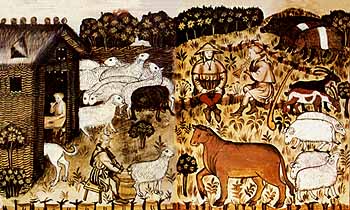 With no connection to Biblical incidents, many consider The Second Shepherds’ Play England’s first original comedy – a boisterous English farce. The only Biblical reference comes at the ending scene in which the English shepherds are “transported” to Bethlehem where they view the Christ child. Even in this scene, the shepherds’ speech is quite colloquial. One of shepherds even presents the Christ child a tennis ball as a gift.


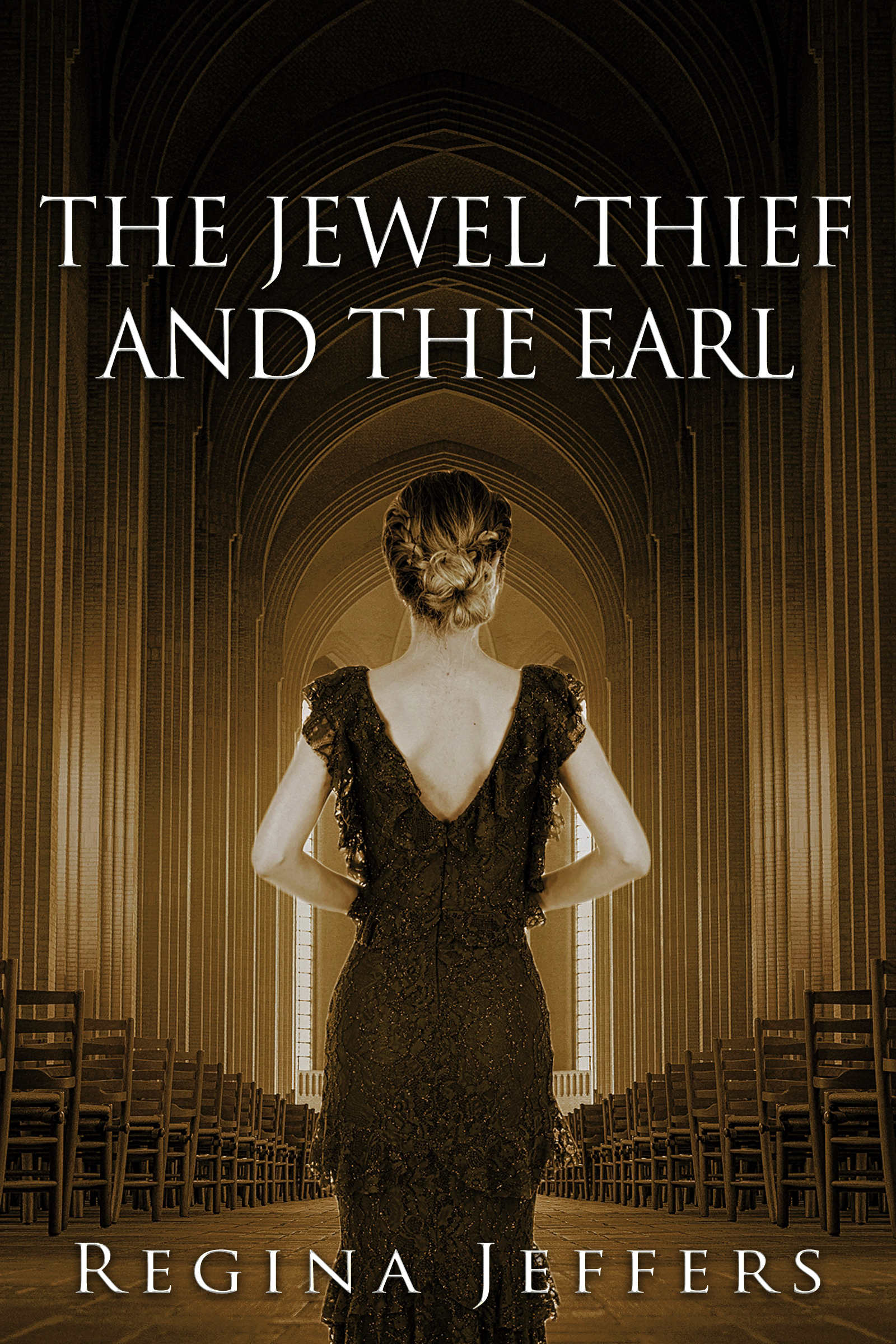


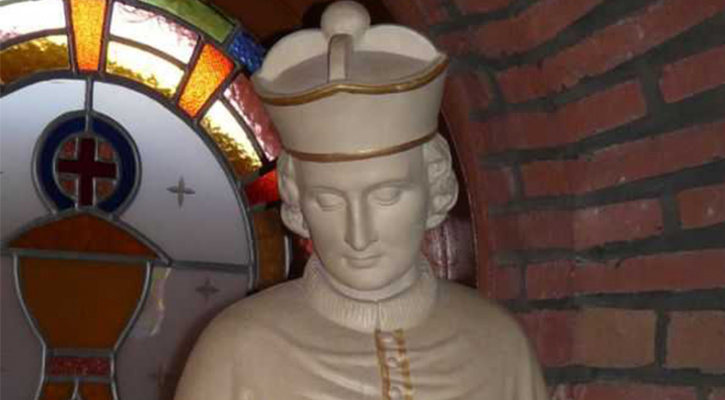




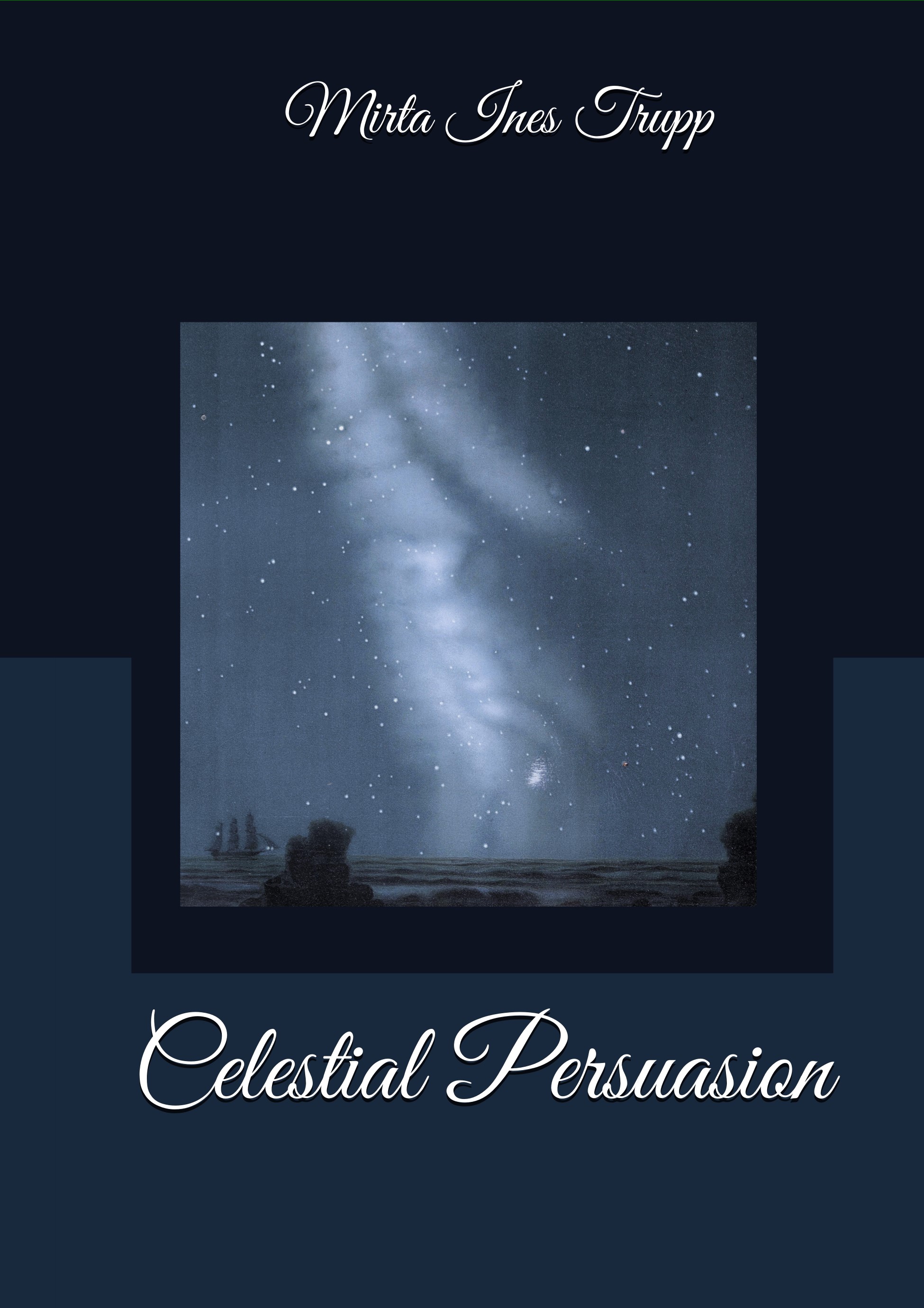



 Middleton was originally within the grounds of Milton Abbey. Joseph Damer, Lord Milton, 1st Earl of Dorchester, order the town of Middleton demolished and moved into the adjoining valley, known as Luccombe Bottom, reportedly because Middleton was too close to his estate’s manor house and obstructed his view of the surrounding countryside. [This was not so bad as it first may appear. The old village was run down and dirty.] The new village was called Milton Abbas. Most of the existing villages were removed to the new homes. Damer commissioned Sir William Chambers as his architect and Capability Brown as his landscape gardener to design the new village. Both men had previously worked on the Abbey.
![milton-abbas-7648[1].jpg](https://reginajeffers.blog/wp-content/uploads/2018/05/milton-abbas-764811.jpg) The new village contained 36 identical thatched cottages. Each cottage was to house two families. The house were constructed from cob, a natural building material made from subsoil, water, fibrous organic material (typically straw), and sometimes lime. Cob is fireproof, resistant to seismic activity, and inexpensive. The houses were painted yellow and a horse chestnut tree was planted between each dwelling. A church and almshouses were situated across from each others. The almshouses were moved from Middleton. They dated back to 1674. The church was consecrate in 1786. It is built in the Georgian Gothic style. The 14th-century abbey church is now a part of Milton School, which has taken over the mansion built by Lord Milton.
The new village contained 36 identical thatched cottages. Each cottage was to house two families. The house were constructed from cob, a natural building material made from subsoil, water, fibrous organic material (typically straw), and sometimes lime. Cob is fireproof, resistant to seismic activity, and inexpensive. The houses were painted yellow and a horse chestnut tree was planted between each dwelling. A church and almshouses were situated across from each others. The almshouses were moved from Middleton. They dated back to 1674. The church was consecrate in 1786. It is built in the Georgian Gothic style. The 14th-century abbey church is now a part of Milton School, which has taken over the mansion built by Lord Milton.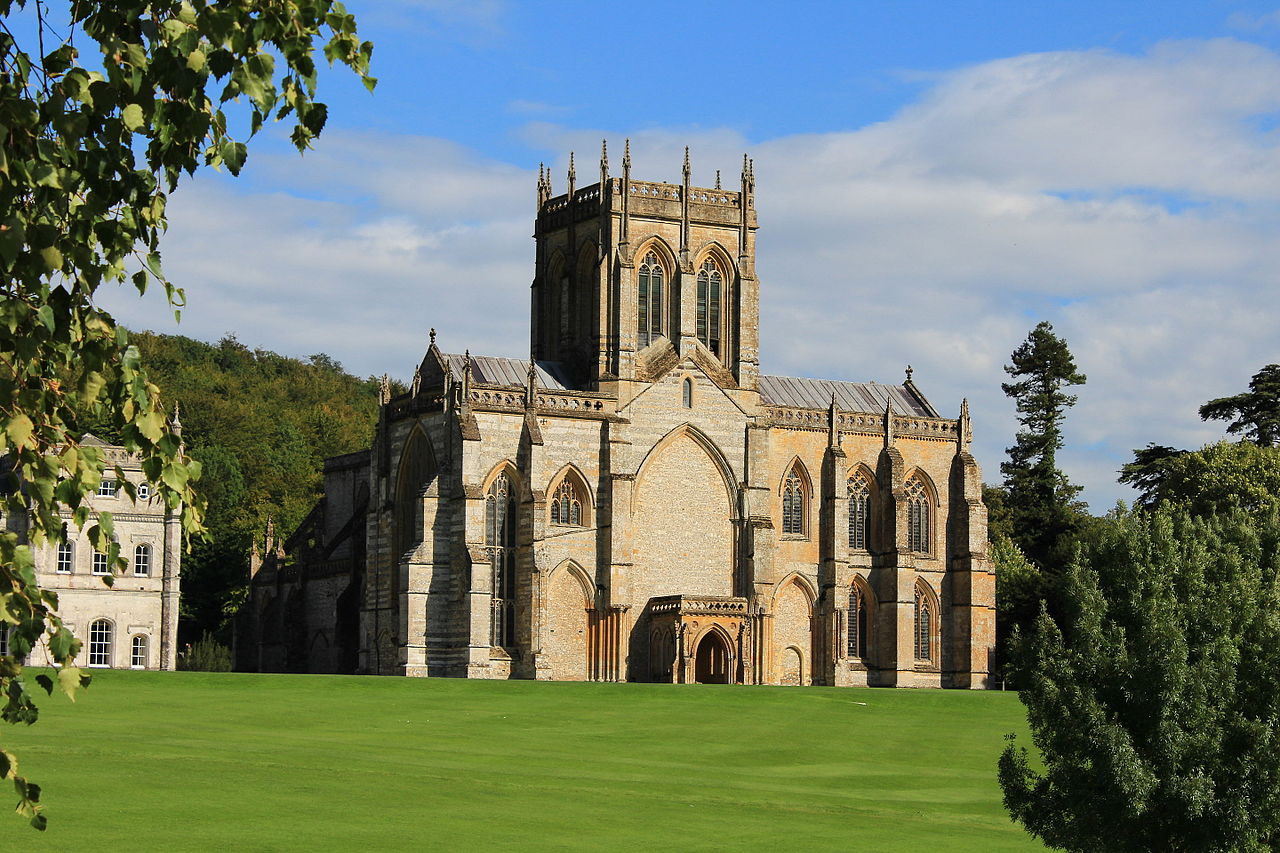
 The official Milton Abbas website tell us: “Most of the houses are now single dwellings instead of double – in the 19th century they were very overcrowded – it is said that 36 people lived in one of the cottages.” In a 2011 census, Milton Abbas civil parish had 263 dwellings, 232 households and a population of 755.


 Every Woman Dreams...


#/media/File:Cob_stitch_copy.jpg)
.JPG)