Being a “Gentleman” in Regency England

51wfZcpn2wL._SL500_SX342_BO1,204,203,200_.jpg In 1583 Sir Thomas Smith wrote: “One who can live idly and without manual labour and will bear the port (deportment) and countenance of a gentleman, he shall be taken for a gentleman.” But what does “being a gentleman” entail? According to Historical and Regency Romance UK, “The original dictionary definition of the word gentleman was strict: A well-educated man of good family. It was also used to refer to a man whose income derived from property as opposed to a man who worked for a living. It was only in the eighteenth century that it came also to mean a man who was cultured, courteous and well-educated with a code of honour and high standards of proper behaviour. By the time of Jane Austen, the gentleman had come to be defined by his personal qualities as much as by his status as a member of the landed gentry. He was not a member of the nobility but was an “esquire” at the top of the pile of untitled landowners. (Knights and baronets also do not belong to the peerage but are still a cut above an esquire by virtue of holding a title, and, of course, Jane Austen emphasized beautifully the superiority of Sir Walter Eliott, for example, a baronet, over Lady Russell the widow of a mere knight!) Even so, a gentleman such as Mr Darcy, untitled but well-connected, with a beautiful house and a very good income, was not to be sneezed at.”

Defining what made a “gentleman” was  a fascinating conundrum, basically because the idea and legal aspects of being a ‘gentleman’ was in flux, in transition, under attack, etc. along with the entire upper class.  Gentleman was a legal term and inheritable title according to long-standing laws. New ideas such as Thomas Paine’s “The Rights of Man” and the French Revolution were real threats to legitimacy of the hereditary ruling classes. The growing wealth of the middle class, buying their way into the gentry was another threat.   

quote-he-is-a-gentleman-and-i-am-a-gentleman-s-daughter-so-far-we-are-equal-jane-austen-34-70-04 Jane Austen’s books all deal with the question: “What is a true gentleman?” Primogeniture laws existed where only the first son inherited. Therefore, second sons, such as Colonel Fitzwilliam in Pride and Prejudice and Edmund Bertram in Mansfield Park, although ostensibly part of the upper class and a gentleman (yet still a commoner), had to discover another means of support. Without forfeiting his place in Society, a landless gentleman could be a barrister because he was given an honorarium, but not a solicitor because he received a salary or fee for work.  He could become a vicar, who was given a ‘living’, possibly several, rather than a salary. He often did not work, per se, generally hiring others. A military officer was another story with its own issues, and one of the more serious threats to the gentry during the Napoleonic Wars. There were far more officers required during the twenty years of war than could be supplied by the upper classes. Purchasing a commission was seen as an entry into the gentry, especially by the wealthy merchant class. In Regency romances, the second son often joins the military ranks, while the third looks to the clergy, and the fourth to the law. Colonel Fitzwilliam tells Elizabeth Bennet, “Younger sons cannot marry where they like.” Needless to say, no one of sense would think Mr. Collins and Mr. Darcy “equals,” but by Regency standards they were both of the gentry class.

51lOLq+YrDL._SX331_BO1,204,203,200_.jpg In addition to the younger sons of the nobility, the gentleman class also included physicians, military, clerics, land stewards, men practicing the law, etc. As time went on, wealthy merchants and manufacturers “cracked” the gentleman classification. Even so, the chasm between the “wanna-bees” and the landed gentry and the aristocracy remained firmly in place.

If we look at order of precedence, we can become more confused. For example, we have at the bottom of the “order” of precedence for those before we even reach the category of “gentleman”…

Eldest sons of the Younger sons of Peers
Eldest sons of Baronets
Eldest sons of Knights
Members of Fifth Class of Victorian Order
Baronets’ Younger sons
Knights Younger sons
Esquires: Including the Eldest sons of the sons of Viscounts and Barons, the eldest sons of all the younger sons of Peers and their eldest sons in perpetual Succession, the younger sons of Baronets, the sons of knights, the eldest son of the eldest son of a Knight in perpetual succession, persons holding the King’s Commission, or who may be styled “Esquire” by the King in any Official Document
Gentlemen (Edwardian Promenade)

Beyond money and land ownership, a “gentleman” was expected to perform in a particular manner. In such is where we find the true “gentleman.” Darcy was superior to either Collins or Wickham. Edmund Bertram outshone his brother Thomas. Sir Walter Elliot was a pompous ass, and his heir Mr. Elliot was a scoundrel, but Captain Wentworth was a true gentleman. Position and wealth were secondary to a sense of honour.

Additional Resources:

513OQWCjhUL._SX331_BO1,204,203,200_.jpg Captain Rees Hollow Gronow’s book, The Reminiscences and Recollections of Captain Gronow, Being Anecdotes of the Camp, Court, Clubs and Society 1810-1860, provides the reader a glimpse into a life of an officer operating among the upper classes. Gronow’s tales speak to acceptance and denial as a military officer/gentleman with little income to claim a position in Society.

There is an interesting 200+ page thesis by Ailwood, Sarah, “What Men Ought to be: Masculinities in Jane Austen novels.” University of Woolongong Theses Collection 2008 that can be downloaded at: http://ro.uow.edu.au/theses/124/ It addresses Austen’s ideas of Masculinity, which pretty much targets the society of gentlemen.

11EMBRVQXKL._BO1,204,203,200_Mrs. Humphrey’s Manners for Men, originally published in 1897 (but facsimiles are available on Amazon for £4,50 HERE )

Posted in British history, customs and tradiitons, George Wickham, Georgian England, Great Britain, historical fiction, history, Jane Austen, Living in the Regency, Persuasion, Pride and Prejudice, primogenture, Regency era | Tagged , , , , | 6 Comments

Governesses in the Regency Era (Part 3)

This post originally appeared on Babblings of a Book Worm. Enjoy!

Women who took on the role of governess during the early years of the nineteenth century had no idea they were changing history. As more and more families demanded a woman with a more extensive education than what people originally thought young girls should receive, the question arising in the mid to late decades of the 1800s revolved around the idea of if a governess has not received a complete education, then she cannot teach her charges what they must know to be productive in society. By the Victorian era, the structure for schooling for girls underwent a great change. The issues surrounding governesses and what women in society were taught was a means to keep women suppressed. By the late 1800s, women demanded an education so they could seek jobs outside the family unit. 

In the 18th Century governesses were considered valuable members of the family. Often the women employed as a governess were the “poor” relations of the wealthier branch of the family tree. In other words, they generally came from titled families. The 19th Century saw governesses being employed in the homes of middle-class families. They provided an education for the younger children and social instruction, but they also safeguarded the virginal innocence of their female students. A separate schoolroom for the use of instruction also came about in the early years of the 1800s. Governesses were not members of the household, nor were they considered servants. Many earned about thirty pounds annually. 

One of the greatest changes seen occurred when employers demanded the governesses they hired be able to teach their sons equally as well as the boys might receive in a public or private educational facility. Governesses were encouraged to expand their knowledge. For example, the North of England Council for Promoting the Higher Education of Women released a lecture series covering natural sciences and history. Attendees could take an exam at the end of the series and earn a “certificate of credit,” of sorts to prove their “expertise” in the subject matter. The lecture series, along with journals and magazines, shared lessons, schoolroom techniques, and classroom management. This led to more formalized standards/qualifications for governesses. [Joan Burstyn, Victorian Education and the Ideal of Womanhood, 1980, Barnes & Noble Books, page 23]

Enjoy the excerpt below in which Darcy watches Elizabeth teach Mr. Hurst’s sons in my novel, Pemberley’s Christmas Governess.

Book Blurb: 

Pemberley’s Christmas Governess: A Holiday Pride and Prejudice Vagary

Two hearts. One kiss. 

Following his wife’s death in childbirth. Fitzwilliam Darcy hopes to ease his way back into society by hosting a house party during Christmastide. He is thrilled when his cousin Colonel Fitzwilliam sends a message saying not only will he attend, but the colonel is bringing a young woman with him of whom he hopes both Darcy and his mother, Lady Matlock, will approve. Unfortunately, upon first sight, Darcy falls for the woman: He suspects beneath Miss Elizabeth Bennet’s conservative veneer lies a soul which will match his in every way; yet, she is soon to be the colonel’s wife. 

Elizabeth Bennet lost her position as a governess when Lady Newland accuses Elizabeth of leading her son on. It is Christmastide, and she has no place to go and little money to hold her over until after Twelfth Night; therefore, when Lieutenant Newland’s commanding officer offers her a place at his cousin’s household for the holy days, she accepts in hopes someone at the house party can provide her a lead on a new position. Having endured personal challenges which could easily have embittered a lesser woman, to all, Elizabeth proves herself brave, intelligent, educated in the fine arts of society, and deeply honorable. Unfortunately, she is also vulnerable to the Master of Pemberley, who kindness renews her spirits and whose young daughter steals her heart. The problem is she must leave Pemberley after the holidays, and she does not know if a “memory” of Fitzwilliam Darcy will be enough to sustain her.

EXCERPT:

Twice more that afternoon, Darcy and the countess had welcomed guests to Pemberley. As if nothing unusual had occurred earlier, neither of them uttered a word regarding the colonel’s announcement. 

Between the arrival of Miss Davidson and her brother, both long time Derbyshire acquaintances of Georgiana and another pair of brother and sister, Mr. Whalen, a casual friend of Darcy from his university days, and the man’s sister, Miss Whalen, Darcy had made his way to the nursery to peer in on Miss Bennet’s progress with Hursts’ boys, who he, personally, thought could use a firmer hand on their shoulders. 

He peeked into the rooms set aside for the school room to watch Miss Bennet place metal figures of soldiers on a map of Europe Darcy recognized as once belonging to him, at a time when Mr. Sheffield had been his tutor, rather than his valet. Instantly, an image of one of his favorite memories of his mother came rushing in. Lady Anne Darcy was sprawled out upon the nursery room floor playing pirate with him as she assembled a stack of boxes to provide him a hiding place. Since Cassandra’s birth, he had often thought he wished to replicate such moments with his child. He almost ached from the knowledge Anne would never be able to see their child grow into womanhood. 

“This, Horace, is the French leader, Bonaparte.” Miss Bennet placed the figure on the map. “What did we learn a moment ago regarding how the English commander, the Duke of Wellington—” She paused to touch a soldier painted with a redcoat. “. . . managed to outmaneuver the French at Waterloo?” 

The boy looked to Miss Bennet with a bit of awe before responding. “Wellington’s men used the constant rain as their partner during the battle.” 

“I know. I know,” his brother chimed in. “Old Boney could not move his heavy guns in the rain.” 

The lady placed a comforting hand on the child to draw his attention to her lesson. “Excellent response from both of you, but, please remember, Philip, a gentleman would not speak of his enemy with a derogatory term. We agreed to call the French commander by his proper name.” 

Darcy would disagree with her statement, but he knew the boy’s tutor would likely reward the child with a slap on the back of his hand, instead of the touch of comfort the lady supplied. Her gentle prompting might save the child a harder lesson to learn. 

“I am sorry, Miss Bennet.” Philip dropped his chin in what appeared to be honest regret. 

“Nothing major of which to be sorry,” she assured. “Just remember, young gentlemen must always speak well. People will judge you with first impressions, and you wish those judgements to be in your favor.” 

“When may we finish setting up the battlefield?” Horace asked. 

Miss Bennet smiled on the boys. “If you have a steady hand, we might do the deed now so you may consider your strategies before I return in the morning.” 

“May we play soldier with a few of the red and blue ones until you return?”

She glanced up to notice Darcy standing in the open door and smiled. He thought her smile could prove quite addictive.

“I did not mean to disturb you, Miss Bennet. I thought I might steal a few moments with my daughter.” He, most assuredly, came regularly to the nursery to spend time with his child, but such was not his purpose on this occasion. He wanted to ease his mind regarding the Hursts’ abuse of Miss Bennet’s goodness. 

“I believe Miss Cassandra is asleep,” she said softly. “Mrs. Anderson slipped down to the kitchen for fresh tea. I told her I would remain until her return.” 

“Teaching the boys something of Waterloo, I see,” he remarked as he entered the school room. 

She glanced to the array of toy soldiers before her. “The boys and I agree we could enjoy playing while learning something of England’s history, although, in reality, I suppose some of our men should be wearing green like the French chasseurs.” A blush caressed her cheeks. “As I have tended young ladies for the last four years, I fear my historical studies have been placed aside for more feminine attributes.” 

“You studied history?” he asked, curious about this particular woman. 

“Not formally, but my father was a great reader of a variety of topics, which he shared with any of his daughters who cared to learn more.” Her smile widened. “As I was his favorite, we spent countless hours reading and dissecting passages full of history, science, the classics, and the like.” 

Darcy stepped further into the room. “I possess an extensive library at Pemberley. If you wish to partake of reading, do so to your heart’s content.” 

Tears misted her eyes. “Truly, you do not mind, sir? Your generosity is a lovely gift.” An idea found her as she glanced again to the two boys who shoved first one soldier forward and then the next while making sounds of combat. “Might you possess any pieces on the battles of the most recent war? The boys and I could read them together and act out the battles on the map with the soldiers.” 

“I will pull a few books which might prove beneficial and ask Mr. Nathan to deliver them to your quarters. If you have no objections, I will add a tome on the Jacobites. My cousin Fitzwilliam and I always enjoyed acting out the bloodiest of the battles.” He smiled in memory. “The colonel would be pleased to share his interest in the rebellion. I am certain my cousin has spoken of his deep interest in history.” 

Her face took on a puzzled look. “I cannot say Colonel Fitzwilliam and I have held a long enough acquaintance to have shared such memories.”

Posted in Austen Authors, book excerpts, book release, Christmas, eBooks, excerpt, Georgian England, Georgian Era, historical fiction, holidays, Jane Austen, Living in the Regency, Pride and Prejudice, publishing, Regency era, Regency romance, research, Vagary, writing | Tagged , , , , , , , , , , , , , | Comments Off on Governesses in the Regency Era (Part 3)

What Do We Know of “Love” in Pride and Prejudice?

Most who have read the book consider Pride and Prejudice a love story, but how often does Austen actually used the word “love” in the novel? And is there more than one kind of love expressed? Let us see…

Books, Tea & Me | Books, Tea & Me | Page 54 bookmarkreview.wordpress.com

Books, Tea & Me | Books, Tea & Me | Page 54
bookmarkreview.wordpress.com

In Chapter 1, Mrs Bennet explains the necessity of Mr Bennet calling upon Bingley at Netherfield in hopes of fostering romantic love for one of her daughters: “Design? nonsense, how can you talk so? But it is very likely that he may fall in love with one of them, and therefore you must visit him as soon as he comes.”

In Chapter 3, Mrs Bennet’s hopes for a match on one of her daughter’s part with Mr Bingley increases when she learns Bingley plans to attend the Meryton assembly. Romantic love is the focus once again. “Nothing could be more delightful. To be fond of dancing was a certain step toward falling in love; and very lively hopes of Mr Bingley’s heart were entertained.”
charlotteIn Chapter 6, Elizabeth and Charlotte Lucas discuss whether Jane’s “supposed indifference” to Mr Bingley could affect Jane’s relationship to the man. Elizabeth and Charlotte speak of romantic love. Charlotte says, “We can all begin freely – a slight preference is natural enough; but there are few of us who have heart enough to be really in love without encouragement.”

In Chapter 7, Mrs Bennet uses “love” as an endearment. “Well, Jane, who is it from? What is it about? What does he say? Well, Jane, make haste and tell us – make haste, my love.”

In Chapter 9, Mrs Bennet is telling Bingley of others who found Jane attractive. Mrs Bennet speaks of affection rather than love, but we consider the romance of marriage. “When she was only fifteen there was a gentleman at my brother Gardiner’s, in Town, so much in love with her that my sister-in-law was sure he would make her an offer before we came away.”

Elizabeth attempts to make light of her mother’s attempts to bring Jane to a higher standing in Mr Bingley’s opinion.  “And so ended his affection. There has been many a one, I fancy, overcome in the same way. I wonder who first discovered the efficacy of poetry in driving away love!”

Later, Darcy says, “I have been used to consider poetry as the food of love.”

To which, Elizabeth replies, “Of a fine, stout, healthy love it may. Everything nourishes what is strong already. But if it is only a slight, thin sort of inclination, I am convinced that one good sonnet will stare it entirely away.”

In Chapter 11, Elizabeth speaks of “love” as a preference. “I dearly love a laugh.”

In Chapter 13, Mrs Bennet uses the word “love” as a sign of affection for her youngest daughter. “Well, I am sure, I shall be extremely glad to see Mr Bingley. But – good Lord, how unlucky! – there is not a bit of fish to be go today! Lydia, my love, ring the bell. I must speak to Hill this moment!”

In Chapter 19, even though she refuses his proposal, Mr Collins cannot fathom that Elizabeth does not hold romantic love in her heart for him. “As I must, therefore, conclude that you are not serious in your rejection of me, I shall choose to attribute it to your wish of increasing my love by suspense, according to the usual practice of elegant females.”

In Chapter 20, Mr Collins fancies himself in love with Elizabeth even though she has refused his proposal, while Mrs Bennet’s actions are not so much concerned with romantic love, but with the possibility of Elizabeth becoming mistress of Longbourn.  “Mr Collins was not left long to the silent contemplation of his successful love; for Mrs Bennet, having dawdled about in the vestibule to watch for the end of the conference, no sooner saw Elizabeth open the door and with quick step pass her toward the staircase, than she entered the breakfast-room, and congratulated both him and herself in warm terms on the happy prospect of their nearer connection.”

In Chapter 25, Elizabeth and Mrs Gardiner discuss Jane’s doldrums with Mr Bingley’s departure. “I am sorry it went off. But these things happen so often. A young man, such as you describe Mr Bingley, so easily falls in love with a pretty girl for a few weeks, and when accident separates them, so easily forgets her, that these sort of inconsistencies are very frequent.”

To which Elizabeth responds, “An excellent consolation in its way, but it will not do for us. We do not suffer by accident. It does not often happen that the interference of friends will persuade a young man of independent fortune to think no more of a girl he was violently in love with only a few days before.”

Mrs. Gardiner counters, “But that expression of ‘violently in love‘ is so hackneyed, so doubtful, so indefinite, that it gives me very little idea. It is as often applied to feelings which arise only from a half-hour’s acquaintance, as to a real strong attachment. Pray, how violent was Mr Bingley’s love?”

Eventually, Elizabeth concedes, “Oh, test – of that kind of love which I suppose him to have felt. Poor Jane! I am very sorry for her, because, with her disposition, she may not get over it immediately.

In Chapter 26, Mrs Gardiner cautions Elizabeth about Elizabeth’s interest in Mr. Wickham. Mrs Gardiner does not want Elizabeth to confuse a flirtation with long-lasting love. “You are too sensible a girl, Lizzy, to fall in love merely because you are warned against it, and therefore I am not afraid of speaking opening.”
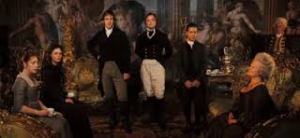
Pride and Prejudice (2005) | Another Cinema Blog...? isthatablog.wordpress.com

Pride and Prejudice (2005) | Another Cinema Blog…?
isthatablog.wordpress.com

In Chapter 31, Elizabeth observes Darcy’s interactions with Miss De Bourgh at Rosings. “Elizabeth looked at Darcy to see how cordially he assented to his cousin’s praise, but neither at that moment nor at any other could she discern any symptom of love and from the whole of his behavior to Miss De Bourgh she derived this comfort for Miss Bingley, that he might have been just as likely to marry her, had she been his relation.”
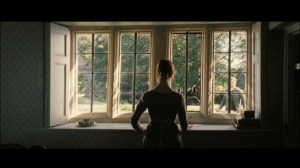
Pride and Prejudice 200 Years | Jane Austen's World janeaustensworld.wordpress.com

Pride and Prejudice 200 Years | Jane Austen’s World
janeaustensworld.wordpress.com

In Chapter 32, at Hunsford Cottage, Charlotte remarks upon Mr Darcy’s interest in Elizabeth. Charlotte recognizes Darcy’s deep-seated feelings for her friend: “My dear Eliza, he must be in love with you, or he would never have called on us in this familiar way.”

In Chapter 33, Darcy asks Elizabeth about her preferences in order to determine their compatibility and to establish an awkward courting. “He never said a great deal, nor did she give herself the trouble of talking or of listening much; but it struck her, in the course of their third reencounter that he was asking some odd, unconnected questions – about her pleasure in being at Hunsford, her love of solitary walks, and her opinion of Mr and Mrs Collins’ happiness; and that in speaking of Rosings, and her not perfectly understanding the house, he seemed to expect that whenever she came into Kent again she would be staying there too. His words seemed to imply it.”

In Chapter 34, we have the opening of Darcy’s disastrous proposal at Hunsford Cottage: “In vain have I struggled. It will not do. My feelings will not be repressed. You must allow me to tell you how ardently I admire and love you.”

In Chapter 35, Darcy’s letter to Elizabeth describes Darcy’s observations of Bingley and Jane’s relationship. “I had not been long in Hertfordshire before I saw, in common with others, that Bingley preferred your elder sister to any other young woman in the country; but it was not till the evening of the dance at Netherfield that I had any apprehension of his feeling a serious attachment. I had often seen him in love before.”

In Chapter 36, Elizabeth reads the letter of explanation that Darcy pressed into her hand before departing Rosings Park. As realization of what all she has lost arrives, Elizabeth bemoans, “Had I been in love, I could not have been more wretchedly blind. But vanity, not love, has been my folly. Pleased with the preference of one, and offended by the neglect of the other, on the very beginning of our acquaintance, I have courted prepossession and ignorance, and driven reason away where either as concerned. Till this moment I never knew myself.”

Pride And Prejudice Film Stock Photos & Pride And Prejudice Film ... www.alamy.com

Pride And Prejudice Film Stock Photos & Pride And Prejudice Film …
http://www.alamy.com

In Chapter 40, after her return from Kent, Elizabeth observes Jane’s continued regret at Mr Bingley’s loss. “She was now, on being settled at home, at leisure to observe the real state of her sister’s spirits. Jane was not happy. She still cherished a very tender affection for Bingley. Having never even fancied herself in love before, her regard had all the warmth of first attachment, and, from her age and disposition, greater steadiness than first attachments often boast…”

In Chapter 41, Mr Bennet uses the word “love” as an endearment for Elizabeth. “Do not make yourself uneasy, my love. Wherever you and Jane are known, you must be respected and valued; and you will not appear to less advantage for having a couple of – or I may say three – very silly sisters.”

In Chapter 42, Mrs. Gardiner uses “love” as an endearment for Elizabeth when they speak of visiting Pemberley. “My love, should you not like to see a place of which you have heard so much?”

P&P 1995 Screencaps (Random) - Pride and Prejudice 1995 Image (6149935) - Fanpop www.fanpop.com

P&P 1995 Screencaps (Random) – Pride and Prejudice 1995 Image (6149935) – Fanpop
http://www.fanpop.com

In Chapter 43, when Darcy finds Elizabeth at Pemberley, he joins her and the Gardiners on a walk along one of the paths. The kindness surprises Elizabeth. “Her astonishment, however, was extreme, and continually was she repeating, ‘Why is he so altered? From what can it proceed? It cannot be for me, it cannot be for my sake, that his manners are thus softened. My reproofs at Hunsford could not work such a change at this. It is impossible that he should still love me.'”

In Chapter 44, with a knowing attitude, the Gardiners observe Darcy’s interest in Elizabeth when he brings Miss Darcy to Lambton to take Elizabeth’s acquaintance. “The suspicions which had arisen of Mr Darcy and their niece directed their observation toward each with an earnest though guarded inquiry, and they soon drew from those inquiries the full conviction that one of them at least knew was what it was to love.”

Also in Chapter 44, after Darcy, Bingley, and Miss Darcy depart the inn, Elizabeth fears her aunt and uncle would question her, but they do not. “But she had no reason to fear Mr and Mrs Gardiner’s curiosity; it was not their wish to force her communication. It was evident that she was much better acquainted with Mr Darcy than they had before any idea of; it was evident that he was very much in love with her. They saw much to interest, but nothing to justify inquiry.”

In Chapter 44, Elizabeth reflects upon Mr Darcy’s bringing his sister and Bingley to the Lambton inn to renew their acquaintance. “But above all, above respect and esteem, there was a motive within her of good-will which could not be overlooked. It was gratitude – gratitude, not merely for having once loved her, but for loving her well enough to forgive all the petulance and acrimony of her manner in rejecting him, and all the unjust accusations accompanying her rejection.”

In Chapter 46, Elizabeth grieves for the lost of Darcy’s affections even before he can depart the inn at Lambton once she tells him of Lydia’s elopement with Wickham: “It was, on the contrary, exactly calculated to make her understand her own wishes; and never had she so honestly felt that she could have loved him as now, when all love must be vain.”

In Chapter 47, the Gardiners and Elizabeth rush to Longbourn having receiving news of Lydia’s elopement. Elizabeth says of her sister’s choice, “Sine the -shire were first quartered at Meryton, nothing but love, flirtation, and officers have been in her head.”

In Chapter 50, the word “love” is used again for “preferences.” This occurs after arrangements are made for Lydia’s wedding. Mr. Bennet regrets his not providing properly for his daughters. “Mrs Bennet had no turn for economy; and her husband’s love of independence had alone prevented their exceeding their income.”

In Chapter 51, Elizabeth attributes Lydia’s fascination with the idea of marriage to describe “love.” ~ “She had scarcely needed her present observation to be satisfied, from the reason of things, that their elopement had been brought on by the strength of her love rather than by his…”

In Chapter 52, in Mrs Gardiner’s response to Elizabeth’s plea for knowledge of why Mr Darcy attended Lydia’s wedding, Mrs Gardiner explains, “The motive professed was his conviction of its being owing to himself that Wickha’s worthlessness had not been so well known as to make it impossible for any young woman of character to love or confide in him.”

In Chapter 53, Mr Bennet sarcastically describes Mr Wickham: “He is as fine a fellow,” said Mr Bennet, as soon as they were out of the house, “as I ever saw. He simpers, and smirks, and makes love to us all. I am prodigiously proud of him. I defy even Sir William Lucas himself to produce a more valuable son-in-law.”

In Chapter 54, after Bingley returns to Netherfield, Jane says that she and Bingley can meet as “indifference acquaintances,” to which Elizabeth pooh-pooh’s the idea: “I think you are in very great danger of making him as much in love with you as ever.”

Pride and Prejudice 1995 - Jane Austen Photo (13601705) - Fanpop www.fanpop.com

Pride and Prejudice 1995 – Jane Austen Photo (13601705) – Fanpop
http://www.fanpop.com

In Chapter 55, Mrs Bennet again uses “love” as an endearment. This time it is directed toward Kitty, when she tries to remove her fourth daughter from the room so Bingley has the opportunity to propose to Jane. “She then sat still five minutes longer; but, unable to waste such a precious occasion, she suddenly got up, and saying to Kitty, ‘Come here, my love, I want to speak to you.’ took her out of the room.”

In Chapter 59, Elizabeth explains to Jane how she feels about Darcy: “Why, I must confess that I love him better than I do Bingley. I am afraid you will be angry.”

A few paragraphs later in Chapter 59, Jane says of Elizabeth’s admitting her affection for Darcy, “Now I am quite happy for you will as happy as myself. I always had a value for him. Were it for nothing but his love of you, I must always have esteemed him; but now, as Bingley’s friend and your husband, there can be only Bingley and yourself more dear to me.” 

Even later in of Chapter 59, Elizabeth must convince her father of her affection for Mr Darcy. “I do – I do like him,” she replied, with tears in her eyes; “I love him. Indeed he has no improper pride. He is perfectly amiable. You do not know what he really is; then pray do not pain me by speaking of him in such terms.”
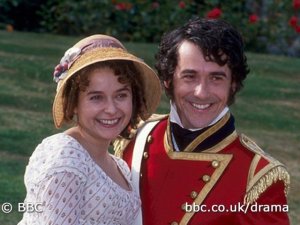
MV5BODA1NzQ4ODg0Nl5BMl5BanBnXkFtZTcwMDg2MjI1NA@@._V1_SX640_SY720_In the book’s last chapter, Lydia writes to Elizabeth: “If you love Mr Darcy half as well so I do my dear Wickham, you must be very happy.”

Posted in British history, Great Britain, Jane Austen, Living in the Regency, Regency era | Tagged , , , , | 5 Comments

Governesses in the Regency Era (Part 2)

This post originally appeared on From Pemberley to Milton in early December 2021. Enjoy!

A governess during the Regency and Victorian eras possessed no expectation ever to marry, which means Elizabeth Bennet, in my tale, cannot hope to win Mr. Fitzwilliam Darcy’s heart. Her reduced circumstances stand in the way of their happiness. These women had no pensions, no hope for long-term employment, and no allegiance past their ability to work. Things were so bad The Governesses Mutual Assurance Society was formed in 1829. 

The way people of the Regency thought of an “education” for a girl was not something particularly new. In the 17th Century, females learned to sing, play instruments, speak foreign language, and dance. Such were thought necessary to attract a husband and to be accepted socially. 

Families required governesses to teach a variety of subjects to both their male and female children. In addition to the general knowledge required to be successful in their occupation, a governess must practice proper deportment, punctuality, well-grounded principles of right and wrong, sound religious principles, some knowledge of how children learn, integrity, kindness, and several established accomplishments. Moreover, she had to be a “lady,” meaning she was part of the gentry class. 

We must remember, at the beginning of the nineteenth century, there was a prevailing attitude of not educating females beyond a certain point. “There is no question that affection and the moral qualities generally, form the best part of a woman’s character. To stint these for the sake of her intellectual development, which will never be worth the sacrifice, is to create a monster, and a foolish one.” [“The British Mother Taking Alarm,” Saturday Review of Politics, Literature, Science and Art 32 (1871):335.]

The most important quality for becoming a governess was to be a “lady.” Beyond what subjects the potential governess thought she could teach, employers wished to know who the woman’s father might be, where he lived, how she was raised, who was her maternal grandmother, the type of education she had, etc., to make certain the candidate was from the correct social class.

An advertisement in The Times, dated 17 June 1845, states, “Wanted, a Governess, on Handsome Terms. Governess – a comfortable home, but without salary, is offered to any lady wishing for a situation as governess in a gentleman’s family, residing in the country, to instruct two little girls in music, drawing, and English; a thorough knowledge of the French language is required.” 

Enjoy the excerpt below from the second half of Chapter One of Pemberley’s Christmas Governess.

Book Blurb: 

Pemberley’s Christmas Governess: A Holiday Pride and Prejudice Vagary

Two hearts. One kiss. 

Following his wife’s death in childbirth. Fitzwilliam Darcy hopes to ease his way back into society by hosting a house party during Christmastide. He is thrilled when his cousin Colonel Fitzwilliam sends a message saying not only will he attend, but the colonel is bringing a young woman with him of whom he hopes both Darcy and his mother, Lady Matlock, will approve. Unfortunately, upon first sight, Darcy falls for the woman: He suspects beneath Miss Elizabeth Bennet’s conservative veneer lies a soul which will match his in every way; yet, she is soon to be the colonel’s wife. 

Elizabeth Bennet lost her position as a governess when Lady Newland accuses Elizabeth of leading her son on. It is Christmastide, and she has no place to go and little money to hold her over until after Twelfth Night; therefore, when Lieutenant Newland’s commanding officer offers her a place at his cousin’s household for the holy days, she accepts in hopes someone at the house party can provide her a lead on a new position. Having endured personal challenges which could easily have embittered a lesser woman, to all, Elizabeth proves herself brave, intelligent, educated in the fine arts of society, and deeply honorable. Unfortunately, she is also vulnerable to the Master of Pemberley, who kindness renews her spirits and whose young daughter steals her heart. The problem is she must leave Pemberley after the holidays, and she does not know if a “memory” of Fitzwilliam Darcy will be enough to sustain her.

EXCERPT:

Elizabeth had managed to hold back her tears until she closed the door behind her. “What am I to do now?” she whispered to the sparsely decorated room. “My denial of Mr. Collins’s proposal proved my mother’s worst fears true.” Charlotte Lucas’s acceptance of Mr. Collins’s hand within hours of Elizabeth’s refusal had prevented Elizabeth from changing her mind. “Not that I would have done so,” she sighed as the tears flowed freely. “At the time, I foolishly believed my opinions to be absolutes. Yet—”

Even after all the years which had passed, the idea of Mr. Collins touching her intimately brought a shudder of revulsion to her person. “Yet,” she whispered once more. “Yet, if I knew then what I know now—if I could have saved my family from living as poor relations of my mother’s siblings, I would have found a means to tolerate the man, just as has Charlotte.” She smiled weakly. “I could have developed a taste for brandy or laudanum, something to dull the possibility of being Mr. Collins’s wife.” 

Elizabeth pushed off from the door to have a look at her appearance in the small mirror on the wall. The sight of how her dress had been ruined brought on more tears. She possessed only a half-dozen gowns, all of which had been repaired numerous times. The thought of Lieutenant Newland’s hands upon her had her wishing to rip the gown from her shoulders, sending the row of buttons flying across the floor. Allowing her to rid herself of the degradation she had endured. Instead, she wiped away her tears with the heels of her hands. It would be necessary for her to make do with what she had available. “Mama would be surprised to learn how much my needlework has improved,” she told her weariness. 

Not one to turn from the storm, Elizabeth swallowed the sadness rushing forward in an effort to calm herself. “No time to wallow in self-pity, my girl,” she warned her wavering resourcefulness. “You have decisions to make and little time in which to make them. As I have been relieved of my duties, her ladyship’s maid may tend the children this evening. I owe Lady Newland no allegiance in this matter. Instead, I shall use the hours ahead to repair this gown, to pack my portmanteau, and to weigh my options for the future. I have a bit of savings which can see me through as long as I can find another position within a few weeks. Likely, it is best if I return to London for the immediate future. I have missed my sisters terribly. A few days with family, yet, I shan’t tell Uncle Gardiner of my situation. I shall just say I was presented an unexpected holiday. A few days with Jane and Mary and then I will find a cheap place to stay while I wait for news of my next post.” 

* * *

She had had a simple meal in the kitchen while she waited for the colonel and Captain Stewart to finish their breakfast in the morning room. Colonel Fitzwilliam had slipped a note under her door explaining how the surgeon had declared Lieutenant Newland’s leg broken in two places, but such would not likely cause the man any permanent damage. The breaks would heal properly if the lieutenant permitted them enough time. The colonel delivered the lieutenant’s apologies and Lord Newland’s promise of a full quarter’s wages. 

Elizabeth had no doubt Lady Newland would have turned her out last evening if not for the colonel’s interference. The gentleman apologized twice for not being able to secure a letter of character for her. Evidently, Lord Newland would not go against his wife in that manner. 

Although no one in the kitchen had looked at her or acknowledged her in any way, when she stood to leave, Elizabeth defiantly said, “I enjoyed my time at Newland Hall. I pray you are equally satisfied with your time in service under the family.” Her words could be construed as sadness or boldness: She would leave the interpretation to the hearer. Bending to reclaim her travel bag and portmanteau, she exited the house through the kitchen door—head held high. “Unbeatable,” she said to fortify her spirits. “You are unbeatable.” 

Posted in Austen Authors, book excerpts, book release, British history, eBooks, Georgian England, Georgian Era, historical fiction, holidays, Jane Austen, Living in the Regency, Pride and Prejudice, publishing, Regency era, Regency romance, research, writing | Tagged , , , , , , , , , , , | Comments Off on Governesses in the Regency Era (Part 2)

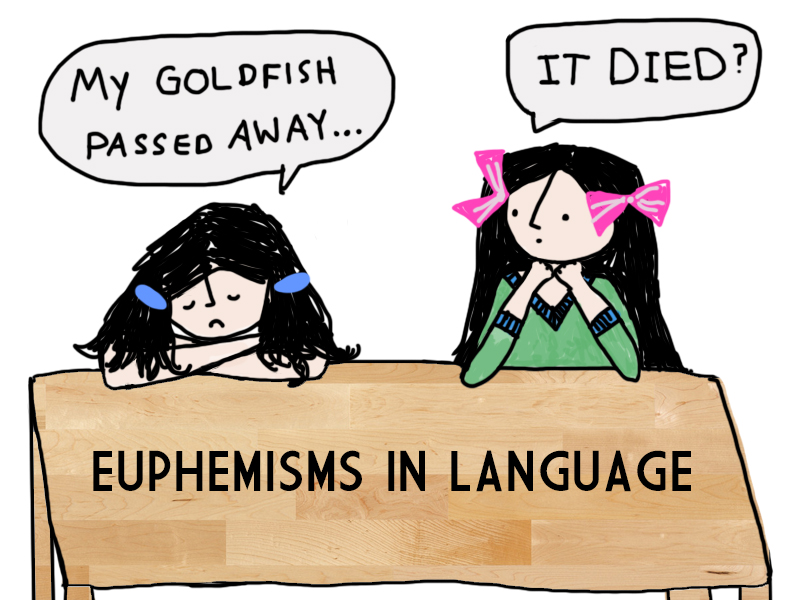
Doublespeak: Favorite Euphemisms or How I Learned Something of “Poppycock”

Free Presentations in PowerPoint format for Euphemisms PK-12 languagearts.pppst.com

Free Presentations in PowerPoint format for Euphemisms PK-12
languagearts.pppst.com

Euphemisms? We learn them in the most peculiar ways. I recall as a child that my mother was very upset with me when I used the word “poppycock.” You see, I thought myself quite sophisticated to learn a new word from “Peter Pan.” 

GEORGE DARLING: Pan! Pirate! Poppycock!

WENDY: Oh, no, Father.

MICHAEL: Father, have you…

GEORGE DARLING: Oh, you don’t understand. Absolute poppycock! And let me tell you, this ridiculous.

It was much later when I learned the word meant more than “nonsense,” which is what I assumed from the context in which I learned it. The word comes to us from the Dutch pappekak, which translates to “soft dung.”

One of my favorite euphemisms when I am writing a story is the situation where I must describe a male’s or a female’s undergarments. “Unmentionables” is generally the word of choice. It was an early 19th Century word for breeches or trousers. In our current times, the word can be used equally as well for women and children. A woman may wear “upper unmentionables” or “lower unmentionables” or both or none. Children might get their “unmentionables” wet when playing in the sprinkler. Such garments can also be inexpressibles (ca.1790), unexplicables, innominables, indescribables, nether garments, netherlings (trousers), small clothes (breeches), sit-upons (trousers), unthinkables, indispensables, ineffables, unspeakables, unutterables, unwhisperables, and subtrousers (underdrawers).

I also often speak of the characters using a chamber pot or a chamber utensil. In Jonathan Swift’s “Strephon and Chloe” (1731) we find…

The nymph/Steals out her hand, by nature led/And brings a vessel into bed;/Fair utensil, as smooth and white/As Chloe’s skin, almost as bright. 

Learn British English: English euphemisms visual » Learn British ... www.learnbritishenglish.co.uk

Learn British English: English euphemisms visual » Learn British …
http://www.learnbritishenglish.co.uk

Recently, I was attempting to describe a book that a gentlewoman found in a library. The book was what we might call pornographic in nature. It took me awhile to come up with facetiae. Although the word originally meant a witty, facetious sayings, in the 19th Century it came to mean erotica. I may still need to change it because it was the mid 1800s before the word appeared in print to indicate sexual matter.  

Likewise, from the 16th to the 19th Century, the word congress would indicate sexual intercourse. I have even seen it presented as sexual congress (so more readers understand the usage) or amorous congress

I often find my writing is peppered with euphemisms such as character line instead of wrinkle, caught out for becoming pregnant, deuce for Devil, enceinte for pregnancy, libation for a fancy drink, nether parts for the area below the waistmonthlies for menstrual cycle, greens for sexual intercourse, and incursion for invasion. [Is it not ironic that many of these terms have something to do with “sex”? I find that very telling of the Regency period.}

As I have turned seventy-four [a definite senior citizen], I recently purchase grave sites and soon I will contract for a grave marker. I hope not to use either for some time to come, but I am of a practical nature. What struck me in the brochures from the cemetery was the phrase “perpetual care.” Essentially this is impossible. According to the International Cemetery, Cremation and Funeral Association, “The term “perpetual care” in cemeteries has come to mean the providing of funds, to be held in perpetual trust, the income of which is to be expended in keeping up forever the necessary care of the individual lots and graves, and the maintenance, repair and future renewal of the borders, drives, water and sewer systems, enclosures and necessary buildings.” In the film The Next Best Thing, the quote reads, “Doesn’t perpetual care include a sprinkler service,” while the TV comedy “Lou Grant” says, “Perpetual care, in the cemetery business, means they mow the lawn.” 

Do you have favorites? Add them to the comments below. 

Posted in euphemisms, word origins, word play, writing | Tagged , , | 5 Comments

Governesses in the Regency Era (Part 1)

Note! This post originally appeared on Savvy Verse and Wit in late November 2021. Enjoy!

The life of a governess in the Regency period was certainly not a glamorous one. These young women were most likely from a gentile family. They would possess a thorough education. For a variety of reason, they became governesses, hired by an aristocratic family or even a well-to-do middle class family, who wished to provide their daughters a “leg up,” so to speak, in society. 

Most of these young women were brought up with a certain degree of indulgence and refinement. They moved in the better circles of society until a sudden loss of fortune, a failed business, or a death reversed the “possibilities” of a fulfilling future. 

A governess would possess no expectation of an offer or marriage. She was at the mercy of her employer, receiving room and board and, perhaps, a small salary (allowance). Generally, a governess was neither part of the upper echelon of household servants (meaning the housekeeper and butler) nor part of the lowest positions (meaning maids, etc.). Often, a governess’s life was lonely and isolated. 

Mary Atkinson Maurice tells us in Mothers and Governesses [London: John W. Parker, Publisher; Harrison and Co., Printers, M.DCCC.XLVII], a governess is “not a member of the family; but she occupies a sort of dubious position. She is neither the companion of the parents, nor the friend of the children, and she is above the domestics; she stands therefore alone. She has too often to guard against the exactions of her employers—the impertinence, or coldness of her charge, and the neglect and rudeness of the servants, she must be forever on the defensive.”  

Enjoy the excerpt below from Pemberley’s Christmas Governess.

Book Blurb: 

Pemberley’s Christmas Governess: A Holiday Pride and Prejudice Vagary

Two hearts. One kiss. 

Following his wife’s death in childbirth. Fitzwilliam Darcy hopes to ease his way back into society by hosting a house party during Christmastide. He is thrilled when his cousin Colonel Fitzwilliam sends a message saying not only will he attend, but the colonel is bringing a young woman with him of whom he hopes both Darcy and his mother, Lady Matlock, will approve. Unfortunately, upon first sight, Darcy falls for the woman: He suspects beneath Miss Elizabeth Bennet’s conservative veneer lies a soul which will match his in every way; yet, she is soon to be the colonel’s wife. 

Elizabeth Bennet lost her position as a governess when Lady Newland accuses Elizabeth of leading her son on. It is Christmastide, and she has no place to go and little money to hold her over until after Twelfth Night; therefore, when Lieutenant Newland’s commanding officer offers her a place at his cousin’s household for the holy days, she accepts in hopes someone at the house party can provide her a lead on a new position. Having endured personal challenges which could easily have embittered a lesser woman, to all, Elizabeth proves herself brave, intelligent, educated in the fine arts of society, and deeply honorable. Unfortunately, she is also vulnerable to the Master of Pemberley, who kindness renews her spirits and whose young daughter steals her heart. The problem is she must leave Pemberley after the holidays, and she does not know if a “memory” of Fitzwilliam Darcy will be enough to sustain her.

Excerpt – Chapter One

Mid-December 1818 – Gloucestershire

“I said to unhand me, sir,” Elizabeth Bennet ordered, as she shoved young Mr. Newland’s hands from her person. Ever since the man had returned home, he had dogged her every step. She had been serving as the governess for his two younger sisters for six months now, but this was the first time the lieutenant had been home since her arrival at his parents’ home. 

“I just be luckin’ for a bit of fun,” Mr. Newland slurred as he attempted to kiss her ear, but all she received was a wet lash of his tongue across her cheek. He reeked of alcohol. 

Elizabeth wished she had been more careful when she left her room a few minutes earlier, but she had briefly forgotten how the lieutenant seemed always to be around when she least expected it. She had thought him below stairs with his friends, both of whom had been excessively respectful to her. She shoved hard against his chest sending him tumbling backward to land soundly upon his backside. “If it is fun you require,” she hissed, “join your friends in the billiard room!” Elizabeth side-stepped the man as he reached for her. 

Lieutenant Newland attempted to turn over so he might stand, but he was too inebriated to put his hands flat for balance and to rotate his hips. “I don’t be requirin’ their kind of fun,” he grumbled. 

Elizabeth edged closer to the steps. She hoped to escape before Lady Newland discovered her with a torn sleeve and the woman’s rascal son doing a poor version of standing on his own. “You must find your ‘fun’ elsewhere, sir. I am not that type of woman.” 

She had been a governess for nearly five years—five years since her dearest “Papa” had died suddenly from heart failure—five years since her mother, Kitty, and Lydia had taken refuge with Aunt Phillips in Meryton, and Jane and Mary had moved in with Uncle Gardiner. Elizabeth, too, had been sent to London with Jane and Mary, but it had been so crowded at her uncle’s town house, she immediately took a position as the governess to Mr. and Mrs. Gregory Sample’s daughters, Livia and Sylvia. She had remained with the Samples, who were a wealthy middle-class gentry family and friends of her Uncle Gardiner, for a little over two years before the Samples brought the girls out into society and married them off. 

In Elizabeth’s estimation, Livia, barely sixteen, was too young for marriage, but the girl appeared happy with her choice of a husband. Sylvia, at seventeen, had been more reluctant to wed, but the girl had followed her parents’ wishes. Few women had the freedom to choose their husbands, even in the lower classes, and certainly not in the gentry. 

Elizabeth had spent an additional two years with another wealthy, but untitled, family, preparing their daughter for an elite school for young women on the Continent. In mid-May, she had answered an advert with an agency to join the Newland household. Although she had often thought Lady Newland was too pretentious, Elizabeth had enjoyed the enthusiasm of her young charges: She had considered them to be very much of the nature of her sisters Mary and Lydia. Pamela wished desperately to please her parents, but to no avail, while Julia was as boisterous and as adventurous as had been Lydia. 

Elizabeth sadly missed her family, but, essentially, she knew their current situation was her fault. Such was the reason she had sacrificed herself by going out on her own—removing the responsibility for her care from her family’s hands—one less mouth to feed and to clothe. 

Jarred from her musings by Lieutenant Newland’s lunge for her legs, Elizabeth squealed and scampered down the steps before the man could catch her. However, the lieutenant’s momentum sent him tumbling after her and marked with a yelp of surprise—heels over head—to land spread-eagle on the floor, except one of his legs had been turned at an odd angle. A loud moan of pain escaped to echo through the hall. 

The sound of running feet filled the open hallway. Instinctively, Elizabeth dropped to her knees to examine the lieutenant’s leg. “Permit me a look at your leg, sir,” she told the man as she swatted away his hands, still attempting to grope her. “Lay back!” she instructed. 

Immediately one of the lieutenant’s fellow officers was beside her. “Lay back, Lieutenant,” he ordered in a strong voice of authority. “Permit the lady to examine your leg.” The colonel looked to her, and Elizabeth mouthed, “Bad break.” 

After that, the colonel took charge. “Mr. Scott, send someone for a surgeon.” The butler rushed away. “You two, find some sturdy blankets and a board—a door, perhaps, so we might move Lieutenant Newland to his room.” 

“Yes, sir,” the footmen scrambled to do the colonel’s bidding. 

Before Elizabeth could extricate herself from the scene, she looked up to view Lady Newland’s worried countenance. It was all Elizabeth could do not to groan aloud. There was no hope her ladyship would take Elizabeth’s side in the matter. “Nigel! Nigel, darling!” Lady Newland screeched as she knelt beside her son. “What has happened?” She shoved Elizabeth from the way. 

Colonel Fitzwilliam explained, “I have sent for a surgeon and a means to move Lieutenant Newland to his quarters.” 

Lady Newland nodded her understanding as she caught her son’s hand to offer comfort. Unfortunately, for Elizabeth, the lieutenant rolled his eyes up to meet hers. “I’m thorry, Miss Bennet.” 

Lady Newland cast a gimlet eye on Elizabeth. “Sorry for what, Miss Bennet?” she asked in accusing tones. 

Even though she knew such would cost her the position she held in the household, Elizabeth refused to tell a lie. “For the lieutenant’s attempt to take liberties where they were not welcomed, your ladyship.” 

Lady Newland stood to confront Elizabeth. “I see how it is. Evidently, you thought one day to take my place as viscountess.” 

The colonel stood also. “I believe you are mistaken, ma’am. Both Captain Stewart and I have warned the lieutenant how it is inappropriate for a gentleman to take favors with the hired help. Your son’s ‘infatuation’ has been quite evident to all who chose not to turn a blind eye to his thoughts of privilege.” 

Lady Newland pulled herself up royally. “I shall not listen to anyone defame Nigel’s character. I realize you are my son’s commanding officer, but I am the mistress of this house, and I say who is and is not welcome under my roof. I would appreciate it if you removed yourself from my home by tomorrow.” 

Captain Stewart joined them then. “Your ladyship, surely you realize the colonel is the son of the Earl of Matlock,” he cautioned. 

For the briefest of seconds, Lady Newland’s resolve faltered, but she looked again upon Elizabeth’s torn sleeve and stiffened in outrage. “You may stay, Colonel, if you wish to condemn the real culprit in this matter.” 

The colonel’s features hardened. “Although it provides me no pleasure to say so, for the British Army holds a standard for its officers, even those of a junior rank, but I have named the culprit, ma’am.” He bowed stiffly. “I thank you for your prior hospitality. I, for one, will depart in the morning after I learn something of your son’s prospects for recovery so I might properly report the surgeon’s prognosis to my superiors. Captain Stewart may choose to stay or depart on his own.” With that, he extended an arm to Elizabeth. “Permit me to escort you to your quarters, Miss Bennet.” 

Though in the eyes of Lady Newland, Elizabeth’s doing so was likely another mark against her character, she gladly accepted the gentleman’s arm, for she did not think her legs would support her without his assistance. She was without a position and had no place to go.

Posted in Austen Authors, British history, excerpt, Georgian England, Georgian Era, historical fiction, Jane Austen, Living in the Regency, marriage, Pride and Prejudice, publishing, Regency era, Regency romance, research, Vagary, writing | Tagged , , , , , , , , , , , , , , | Comments Off on Governesses in the Regency Era (Part 1)

Colchester, the Oldest Recorded Town in England

Colchester is an historic Essex town, Britain’s first city and former capital of Roman Britain. Its rich history dates back over 2000 years. In AD49, Colchester was the capital of the kingdom of Cunobelin. It was considered a Roman Colonia, basically, a community dedicated for retired veteran soldiers. It more terms, this would have been a 55+ type of community. We must remember, however, this was a ROMAN community in a new province.

Colchester was called Camulodunum. It was the first Roman town in Britain. It was, however, reduced to ashes by Queen Boudica in AD 60.

Reportedly, Colchester’s status as a Roman Colonia has never been revoked. It is, therefore, considered to be Britain’s first city, as well as the former capital of Britain. It was also thought to be the capital of the kingdom of Cunobelin, who is Shakespeare’s Cymbeline. In the play, “King Cymbeline of Britain banishes his daughter Innogen’s husband, who then makes a bet on Innogen’s fidelity. Innogen is accused of being unfaithful, runs away, and becomes a page for the Roman army as it invades Britain. In the end, Innogen clears her name, discovers her long-lost brothers and reunites with her husband while Cymbeline makes peace with Rome.” [Summary of Cymbeline] The Roman writer, Pliny the Elder wrote of island of Anglesey, “It is about 200 miles from Camuldodunum, a town in Britain.” This was around AD77. This would prove to be the first known literary reference to any named community in England.

Balkerne Gate

The Saxons later gave the town the name of Colchester, meaning ‘the Roman fortress on the River Colne. In the 11th Century, the Normans constructed the largest keep ever built in Europe. It was on top of the Roman temple of Claudius. Although he is no longer four storeys high, this keep is still the largest in England.

https://www.visitcolchester.com/explore/britains-first-city
Founded about 1100, St Botolph’s was one of the first Augustinian priories in England ~ https://www.english-heritage.org.uk/visit/places/colchester-st-botolphs-priory/

Other Sources:

Visit Colchester Castle

Welcome to Colchester

Posted in British history, castles, history, Living in the UK, real life tales | Tagged , , , , | Comments Off on Colchester, the Oldest Recorded Town in England

On Being a Midwife, a Guest Post from Carole Penfield

During the Georgian and Regency eras, and even earlier, most women who were “breeding” worried a great deal, as these were the most dangerous years of their life. Two of Jane Austen’s brothers lost their wives in childbirth, so she understood pregnancy could lead to death. There was a general concern for a woman’s welfare during breeding, including avoidance of unnecessary travel. In Sense & Sensibility, Mrs. Jennings tells Elinor that her daughter Charlotte Palmer expects to be “confined” in February and should not have taken the long (undoubtedly bumpy) journey to Barton Park. In January, Charlotte is back in London, busily entertaining guests and taking the Dashwood sisters shopping. She apparently does not allow her delicate condition to interfere with her social life, probably laughing it off.

The following month, the newspapers announced to the world, that the Lady of Thomas Palmer, Esq. was safely delivered of a son and heir… an event highly important to Mrs. Jennings’s happiness. She spends every day with Charlotte and attributes her daughter’s well doing to her own care. (S&S, Chapter XIV)

Jane Austen does not describe the actual details of Charlotte’s lying-in. Most women of the upper classes gave birth at home, assisted to some extent by female relatives and female servants, but all these were subordinate to the midwife who was summoned once labour had begun. 

https://nursingclio.org/2019/06/26/a-tale-of-two-midwives-across-four-centuries/

I did extensive on-line research about the history of midwifery before writing The Midwife Chronicles series. Midwives have been around since Biblical times. These women cultivated healing herbs and passed down their formulas from generation to generation. Although denied the advantage of formal education, being barred from books and lectures, early midwives learned birthing skills from each other and passed on knowledge to their daughters and granddaughters. In France, where my first novel takes place, midwives were called sage  femmes (wise women).

Midwife of Normandy (Book One ofThe Midwife Chronicles series)

Not every young maiden in 17th century France dreamt of becoming a midwife, butmy strong-willed protagonist Clare Dupres was anxious to learn the skills of midwifery passed down from her ancestors, including the secret formula for a “magic” elixir, which provided a pain-free birthing experience.  By offering the elixir exclusively to aristocratic women, Clare saw a way to rise from poverty and achieve female independence by engaging in a profession. She was highly successful and rewarded handsomely with gold coins and jewels. One of her wealthy patients was Lady Louise, Marquise of Montjardin who had befriended Clare. 

The following excerpt from Midwife of Normandy occurs when Clare is summoned to Chateau Montjardin for the impending birth of Lady Louise’s fourth child. A Catholic priest sits outside the door, praying for the soul “struggling to be born in there.” He tries to convince Clare, a Huguenot, to convert, but she slides by him and enters the room. 

(Charlotte Palmer’s birth chamber likely matched the description in this excerpt.)

Chapter 18 (excerpt)

Clare almost choked at the stifling-hot atmosphere. Lady Louise’s room had been transformed by the servants into a traditional confinement chamber. The fire was blazing, the shutters closed, and heavy drapery covered all doors and windows. Even the keyholes were plugged, to keep evil spirits from stealing the breath of the newborn, along with other superstitions that made no sense to Clare.

She folded back the shutters and cracked open the window, letting in fresh air and natural light. Just as Maman had taught her.

Lady Louise was calmly sitting up in bed, dressed in a soft linen shift edged with lace. Around her shoulders was a brightly patterned shawl woven of fine English wool, which Clare recognized as one of Jacques’s imports. Louise was busy buttering a roll.

“Why, look at you!” Clare scolded. “I thought you sent for me at this ungodly hour because you were in travail.”

“The pains stopped and I grew hungry.”

“Put down that roll and let me examine you. Can you still feel the child kicking?”

“Yes, very strongly,” she said. Clare removed her gloves and put her hands on Louise’s swollen abdomen. She was reassured to feel movement. Next, she pulled a horn-shaped implement from her birthing bag, pressing one end on the stretched skin and the other end to her ear. To her relief, there were no evident sounds of distress.

“Does it sound like a male child? I do so long for a boy!”

Clare laughed. “I know of no sounds that indicate the sex of the unborn child. I listen for other reasons.”

“Monsieur le Marquis would be delighted if it were a son, after the disappointment of the three daughters I have given him. You would receive a generous reward for a boy,” she said enticingly. Then a shadow crossed her face. “I’m aware my husband has fathered several male children by his mistresses, but he needs a legitimate son to inherit his title.”

“Dear friend,” Clare responded, “if I had the power to determine the sex of a child, I would only deliver baby boys. Then indeed I should become famous and exceptionally wealthy. But alas, an equal share of baby girls is necessary to ensure future wives for the baby boys.”

Lady Louise looked perplexed for a moment. Then she nodded. “Oh, I see. How clever of you, Clare, to figure that out. Now if only you could find a way to tell the sex of this child kicking my insides.”

“Well, we will have to wait.” Clare spread a clean cloth on the table next to the bed and began to set out her birthing tools. This might be a false alarm, but best to be prepared. Seeing the growing concern on Louise’s face, she pulled over a chair and tried to distract her until the pains resumed.

Leaning toward her friend’s left ear, Clare whispered, “I think Father Benedict is listening at the door. Did you send for him?”

“No. I didn’t realize he was here. He often invites himself for dinner, but rarely bestirs himself for breakfast. I wish he would leave. There is no need for him to be standing outside my bedchamber.”

“Let’s confound him by speaking in English,” Clare suggested quietly, wanting a chance to chat with her friend without being overheard.

“Yes, let’s! He can be meddlesome at times.”

Clare remembered her English from Pierre’s books. As a young girl, Louise had the benefit of an English governess. The two friends began conversing in the foreign tongue. Had they been able to see the priest’s consternation as he held his ear to the door, they would both have been amused.

“Perhaps your cousin thinks I will try to convince you to become a Huguenot,” said Clare.

“How shocking that would be! But highly unlikely, my dear friend. I would be banned from Court. You and I both know how King Louis feels about his heretic subjects.”

Clare frowned, remembering the royal edict that had prevented Pierre from studying law, forcing him to leave the country. But then again if Pierre had stayed, she might never have met Lady Louise. Strange how things sometimes work out.

“You don’t think of me as a heretic, do you?” Clare asked.

Louise hesitated for a second, then said, “Of course not. I know you are a Christian. But wouldn’t life in France be easier for you if you agreed to convert to the Church of Rome?”

“It might, but Jacques would get rid of me and keep me from ever seeing my children again.”

“I understand. To lose one’s children would be a terrible loss for any mother.” It was a troublesome thought, but true. Both women knew that in France, fathers legally owned their offspring—mothers had no right to them.

“Speaking of children,” said Clare, “how are your three daughters doing?”

“Praise the Lord, they are all in good health. My husband is already arranging suitable marriages for them.”

“Already? Surely, the eldest cannot be yet eight years of age?”

She shrugged. “They are ten, five and two. It is not too early for their betrothals. And what of your son and daughter, Clare?”

“They thrive on the country air. Jean-Pierre resembles his father, physically and mentally. Slow, patient, and deliberate. He wants to be a soldier someday—sometimes he sits for hours, playing with his tin soldiers. Lately, though, he has developed a stutter and fear of the dark, claiming there is a ghost who roams the nursery at night.”

“You are fortunate to have a son,” said Louise. “What of your daughter?”

“She has an innate curiosity of the world around her, constantly asking questions. She can outrun her older brother and learned to read before he could master his letters. Lucina is destined to become a midwife one day―already wraps her baby dolls in swaddling cloths, as my mother taught her.” Clare choked back a sob. Maman had died last year, and the memory of the loss was still fresh in her mind.

“Lucina, such an unusual name,” remarked Louise. Her three daughters had common French names: Daphne, Marie-Thérèse, and Hélène. Although Louise was a friend, Clare felt it best not to tell her that little Lucina was named after a pagan goddess, so she simply said her mother had chosen the name.

~ ~ ~

After conversing in English for several hours, Clare began pushing up her sleeves. “Louise, it is possible that you became alarmed by false, early pangs. Since I traveled all this way, I will examine you to see if you are in true travail. But first I must wash my hands.”

“You there,” Clare called to the wet nurse―the wife of a farmer, who had recently given birth to her own child, but had been hired to suckle the Montjardin child. “Ask the servants to fetch Madame Dupres a basin of hot water and a bar of soap.”

When the wet nurse left to do the lady’s bidding, Louise asked Clare why she engaged in such unusual practice. “My other midwives never washed their hands.”

Despite the extreme heat in the room, Clare felt a chill. She bit her lower lip and considered how to respond to this question. Her impulse was to laugh and say, “To keep the demons at bay.” But this was not the time to jest. She thought back to Maman’s admonitions. Never voice superstitious ideas to a woman in travail. What if something were to go wrong in the birthing process? You could be blamed and branded a witch. You could be brought to trial and those carelessly uttered words used against you. Do not forget the memory of your great-great-grandmother—may she rest in peace—who was burned at the stake because the woman she attended was brought to bed of a deformed infant.

Clare knew there were still ignorant, uninformed people who believed midwives were witches due to their skills in an area of life that was a mystery to many people—especially men, since midwifery was a profession dominated exclusively by women. So, Clare was careful with her words.

“Is handwashing really such a strange practice, my friend? Do you not wash your own hands before meals?”

“Yes, I suppose I do.”

“Washing my hands when attending a birthing is simply a habit taught me by Maman. I do not know if cleanliness helps, but I do it anyway. What harm can it do?”

“Oh, I see,” said Louise. Clare thought her patient looked like a fragile porcelain doll, sitting in the sumptuous bed.

The servant carried in a steaming basin, along with a fragranced bar of luxurious milled soap. As Clare scrubbed her palms, fingers, and arms, she heard a loud moan.

“Ohhhhh. The pains have started again and I feel like I’m sitting in a puddle of rainwater.” Clare moved quickly to the bed and checked―clear fluid, no blood—all good signs.

“Louise, your water has broken. Your child is ready to greet the world.”

A shadow passed over Lady Louise’s face. She reached for Clare’s hand. “I am suddenly very, very afraid. Mon Dieu. Will I die?”

“There’s always a slight possibility. It’s in God’s hands. But with His help, I will do my utmost to save you and the child―with as little discomfort as can be managed.” She poured a small, carefully measured dose of elixir, because Louise was petite, and pressed the potion to Louise’s lips, urging her to swallow.

Louise grimaced and turned her head away. “Ugh, it smells rotten.”

“Yes, and it tastes worse than it smells. I know from my own experience at Lucina’s birth. But I promise, it will help you bear the pain.”

~ ~ ~

Four hours later, Clare finished delivering the child. Why, she thought with deep satisfaction, I believe I could do this in my sleep. As she wrapped the leavings and the pink ribbons in her birthing bag, she heard angry voices out in the corridor. She recognized the Marquis’s loud voice demanding to know why Madame Dupres was with his wife. Had he not given explicit instructions to call Madame Larque, the Catholic midwife, if his wife went into travail during his absence?

~ ~ ~

About Carole Penfield  

I am a retired attorney, turned novelist. I live in Northern Arizona with my husband Perry Krowne and two overly friendly cats. The Midwife Chronicles series was released last month; all three books are available on Amazon in paperback and eBook format. https://www.amazon.com/dp/1737807912 

Books Two and Three involve the continuing saga of the Dupres midwives; after fleeing France for England, they meet the Austens, and their lives become intertwined. Especially the close friendship between Lucina Dupres and Jane Austens’ great-grandmother Eliza. To learn more, please visit my website https://www.carolepenfield.com  

Posted in book excerpts, book release, British history, eBooks, excerpt, family, film, Georgian England, Georgian Era, Great Britain, Guest Post, historical fiction, history, Jane Austen, Living in the Regency, medicine, publishing, real life tales, Regency era, research, Sense & Sensibility, trilogy, writing | Tagged , , , , , , , , , , , , | Comments Off on On Being a Midwife, a Guest Post from Carole Penfield

“Will Nobody Have Compassion on My Poor Nerves?” a Guest Post from Elaine Owen

This post first appeared on the Austen Authors’ blog on 9 September 2021. Enjoy!!!

Mrs. Bennet is one of Jane Austen’s most memorable characters. Clearly Austen wants us to laugh at her histrionics and her constant, blatant husband hunting, and we feel sorry for her daughters when her antics push away eligible suitors. But we are also frustrated by her lack of manners and wish she would at least try to discipline Lydia once in a while! Does Mrs. Bennet deserve laughter, scorn, or some other reaction? Let’s make a list of her good and bad qualities.

We might as well start with her bad qualities because, let’s face it, they’re what we know the best.

  1. Mrs. Bennet openly plays favorites with her daughters, preferring Lydia and Jane over the others.
  2. She is a terrible judge of character. If Mrs. Bennet likes a particular person it’s likely there is something seriously wrong with them. Think Wickham and Collins here.
  3. She has no filter. She openly (and loudly!) discusses gentlemen’s incomes in public, and she doesn’t try to conceal her opinions of other people’s looks and manners even when they can hear her.
  4. She is mercenary. She is more concerned with how rich her daughters might be after marriage, rather than how happy they would be.
  5. She is self-centered. There is no family drama that can’t be made worse by her sudden fainting fits, palpitations, and pains in the side.
  6. She has little self awareness, contradicting herself frequently.
  7. She spends too much money.
  8. She does not try to control or correct her daughters’ wild behavior, which almost brings about the family’s social ruin.

But Mrs. Bennet has her good points as well.

  1. She is practical. She knows that her daughters must have a way to support themselves by the time their father passes away, and she is determined to make that happen.
  2. She’s friendly. She likes throwing a party and attending events organized by others. Networking is important when you’re trying to get your daughters noticed by eligible men!
  3. She herself was successful in the marriage market. She made a good match with a wealthy member of the gentry and married out of the working class. You go girl!
  4. She may be a shameless gold digger, but at least she’s doing *something* to try to secure her daughter’s future. That’s more than we can say for her husband!
  5. Speaking of husbands, when Mrs. Bennet’s husband openly ridicules her (for shame, Mr. Bennet!), she does not respond in kind. In fact, she sometimes praises her husband when he exerts himself on behalf of their daughters.
  6. She’s observant. She knows when her daughters have caught a young man’s eye, and she usually judges their interest accurately.
  7. She appears to be the only member of the Bennet family who recognizes the absurdity of the entail that requires a male heir. “I do think it is the hardest thing in the world, that your estate should be entailed away from your own children; and I am sure, if I had been you, I should have tried long ago to do something or other about it.”
  8. Against all odds, she eventually succeeds in her mission: her two oldest daughters marry rich, handsome men! Let’s face it: if she hadn’t managed to get Jane and Bingley alone together, would they have ever gotten together on their own?

Considering all these things, I think it’s fine to laugh at Mrs. Bennet a little bit, and perhaps even cheer her on in her husband hunting, at least when she’s not embarrassing her daughters. She may be silly and shallow and yes, sometimes vulgar. But she definitely wants what is best for her daughters, and she is willing to go to some lengths to make that happen. Here’s to all mothers who want only the best for their children!

Posted in Austen Authors, Georgian England, Georgian Era, Guest Post, Jane Austen, Pride and Prejudice | Tagged , , , , , , , , | 3 Comments

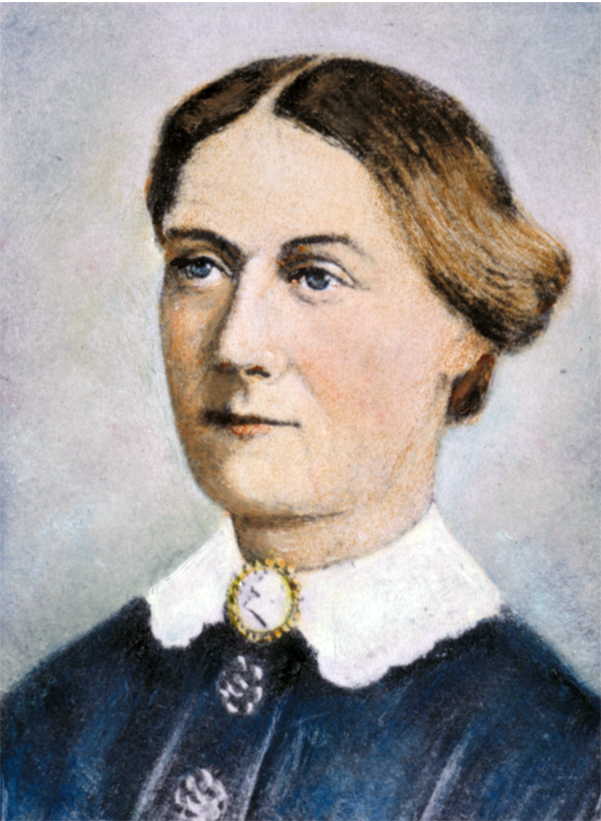
Margaret Mackall Smith Taylor, the First Lady Who Did Not Want Her Husband Elected

I tend to be a history geek, thriving on snippets of history of which I had no prior knowledge. One of my grandkids is equally as interested in history as I; therefore, I love to find snippets I can share with him. I was checking out the “First Families” pages on The White House website and came across a piece on Margaret Mackall Smith “Peggy” Taylor. It caught my eye because my mother’s name was “Peggie,” no Margaret nickname, just “Peggie.” Anyway, I found the piece very interesting. You may find the whole matter HERE.

Margaret married Zachary Taylor when he was still an Army lieutenant. The life as an Army wife was quite different from their aristocratic backgrounds, but she adapted quite well, according to all reports. Historian Elizabeth Thacker-Estrada said of Margaret: She was a “tough, careworn pioneer woman and peripatetic military wife transplanted from her cultured eastern roots. Margaret did not want her husband “Old Rough and Ready” Taylor to run for President. After following him about for 40 years, she had set her mind on a “retirement” of sorts on their plantations, and she definitely did not wish to take on the responsibilities of being the “First Lady.”

She passed off many of the social responsibilities to her 23-year-old daughter, Betty. Meanwhile, Margaret received visitors in an upper room at the White House, claiming “delicate health” issues, although an explanation of those issues was hard to come by. “Though Peggy Taylor welcomed friends and kinfolk in her upstairs sitting room, presided at the family table, met special groups at her husband’s side, and worshiped regularly at St. John’s Episcopal Church, she took no part in formal social functions. She relegated all the duties of official hostess to her youngest daughter, Mary Elizabeth, then 25 and recent bride of Lt. Col. William W.S. Bliss, adjutant and secretary to the President. Betty Bliss filled her role admirably. One observer thought that her manner blended ‘the artlessness of a rustic belle and the grace of a duchess.'”

Because she avoided the “limelight,” so to speak, there are few anecdotal accounts of her service as First Lady, making her both more mysterious and more likely to know unscrupulous remarks about her.

Margaret Taylor, like many women, did not enjoy having her image taken. In fact, the engraver for the image of her husband’s death was quite upset with the fact she held a handkerchief over her face. Her prediction of her husband’s death had come true. Two years into his term, Zachary Taylor died of cholera. Margaret became the first First Lady to serve during the death of her husband.

Margaret Mackall Smith “Peggy” Taylor served as First Lady from 1849 to 1850 as the wife of the 12th President, Zachary Taylor. She followed her husband in death, dying two years later. A New York Times obituary listed her not as the former First Lady or even by her given name, but as “Mrs. General Taylor.”


https://www.historycentral.com/Bio/ladies/taylor.html

The biographies of the First Ladies on WhiteHouse.gov are from “The First Ladies of the United States of America,” by Allida Black. Copyright 2009 by the White House Historical Association.

Posted in American History, history | Tagged , , , , | 2 Comments