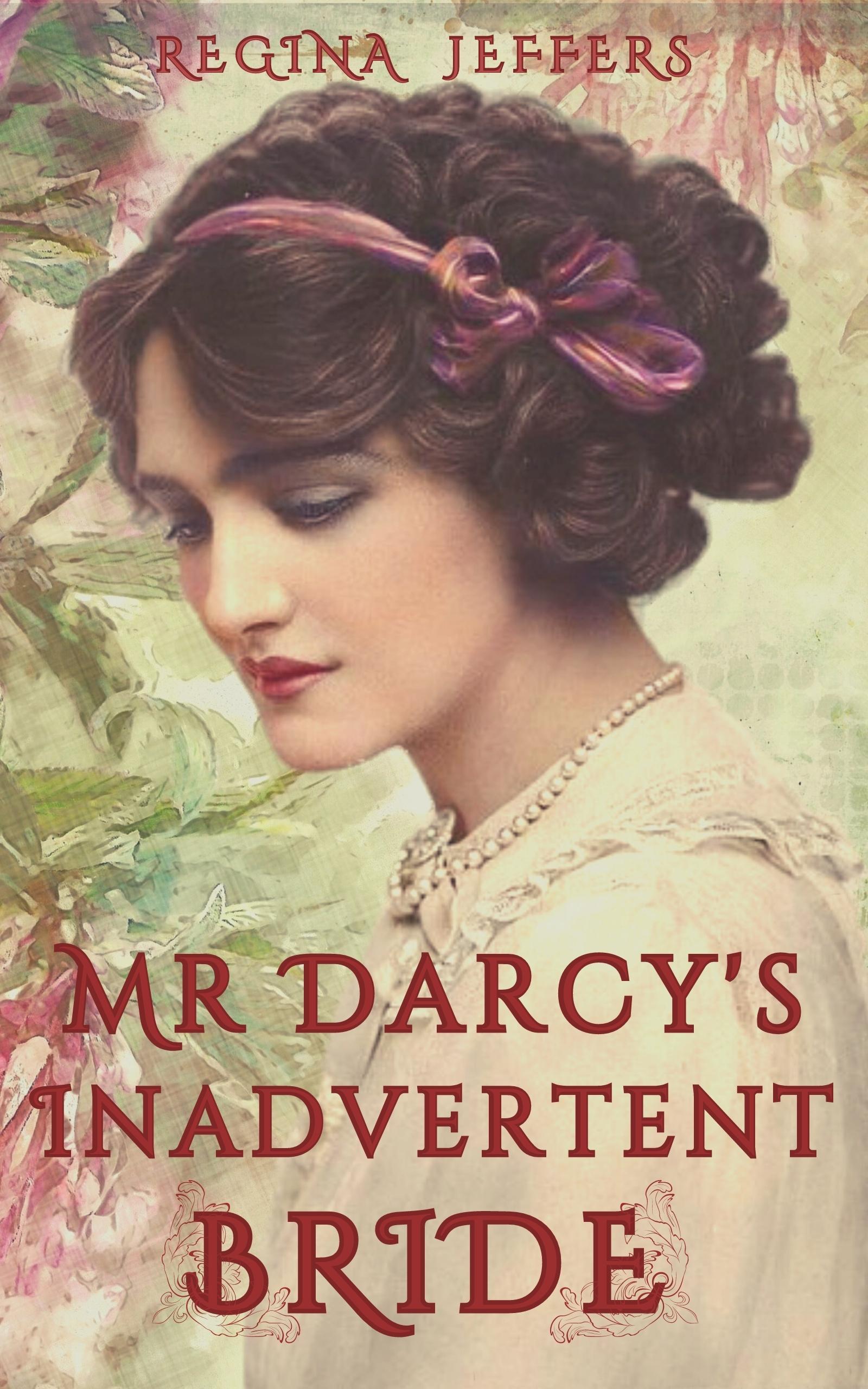
“Obstinate, Headstrong Girl,” Introducing “Austens of Broadford,” a Guest Post and Chapter Excerpt from Carole Penfield

A life lesson universally acknowledged is that when you marry someone, you marry into their entire family. Not infrequently, some family member may act to interfere with the happiness of a couple during their courtship. Such was the case for Lizzy Bennet and Fitzwilliam Darcy, in Jane Austen’s Pride & Prejudice.

Lady Catherine de Bourgh

No sooner does his aunt Lady Catherine deBourgh hear of the growing attachment between her nephew and Lizzy, than she shows up unannounced at Longbourn with every intention of breaking off the possibility of an engagement between them. Announcing she is “not to be trifled with,” she accuses Lizzy of using her “arts and allurement” to draw him in. She insults Lizzy for being socially inferior through her family relations. When Lizzy refuses to promise that she would turn down a proposal from Mr. Darcy, Lady Catherine calls her “obstinate, headstrong girl” and accuses her of being unfeeling and selfish. 

Despite being “most seriously displeased,” Lady Catherine’s efforts to prevent the engagement are in vain. As Darcy later tells Lizzy, “Lady Catherine’s unjustifiable endeavours to separate us were the means of removing all my doubts.” He sends off a letter to his aunt, confirming his engagement.

Aunt Phillips

The Bennet relatives also cause uncomfortable feelings for the couple during their courtship. Being in the society of “vulgar” Aunt and Uncle Phillips takes “some pleasure from the season.” Lizzy looks forward with delight (and probably great relief) to the time they should be removed to the comfort of Pemberley in Derbyshire. Even easy-going Charles Bingley and his wife Jane cannot long abide living near the Bennet relations; after one year of marriage, they leave Netherfield and move to Derbyshire. 

At least Pemberley was far enough removed from Meryton and Rosings to prevent frequent social intercourse with unpleasant, interfering family relatives. Things were much worse for Jane Austen’s great-grandmother, Eliza Weller Austen, forced to live in the same neighbourhood as her curmudgeonly father-in-law who was opposed to the marriage. Much like Lady Catherine, old man Austen tried to prevent the couple from marrying by grossly insulting Eliza during their first meeting. After the marriage went forward, he continued to be a constant thorn in her side.

Austens of Broadford—The Midwife Chronicles, Book Three

My fictionalized biography of Eliza Weller Austen is based in part, on her handwritten memorandum setting forth her grievances against her father-in-law. This document was passed down through the Austen family for generations, where it was undoubtedly read by young Jane and may have influenced her when she created the character of Lady Catherine. In the following excerpt, Eliza (who has been married to John Austen IV for eight years) bemoans the ongoing mistreatment by her father-in-law to her best friend Lucina. 

Excerpt

Lucina hated to see her friend in distress. “I think the signs were there even before you two were wed. I will never forget the day the old man insisted you come to Horsmonden, to ‘look you over’ before consenting to your marriage. You were frightened and asked me to accompany you.”

“I remember,” she said softly.

* * * 

It had been a sultry August day. After admitting them to Grovehurst, Mr. Austen’s housekeeper ushered them into his study, where they were kept waiting for a quarter of an hour. The two thirsty ladies were not even offered a cold drink. Finally, the old man appeared. They stood and curtsied to him. Lucina was ignored, as he glared at Eliza.

“So, Miss Weller, you are betrothed to my son,” he stated without smiling.

“Yes, sir. John and I are deeply in love, and alike in our desire to be wed as soon as possible.”

“Hmph! He replied, scanning her from head to toe.

Eliza looked perplexed, although Lucina surmised that he was searching for signs of a swollen belly.

“Have you a substantial dowry?” he demanded of Eliza.

“As much as my father can afford, having several daughters.”

“I’ve made inquiries. To be sure, it is not a vast sum. At least I am able to provide a marital abode for my son. It is close by.”

“John told me you were indeed fortunate to inherit not one, but two spacious houses from a childless uncle,” said Eliza brightly. “Grovehurst and Broadford, both former clothmaster halls.”

He leaned forward in his chair and pointed his finger at her. “Aha. So, you already know the Austen fortune arose from weaving of Kentish broadcloth.”

“Yes, sire. One of my Weller ancestors was also a clothier.”
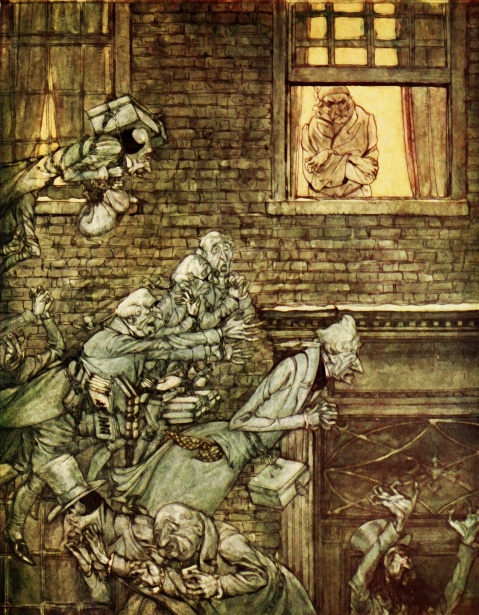
He smirked. “Not nearly as successful as the Austen Greycoats, who wisely invested their profits in rental properties and farmland when the manufacture of cloth began to wane.” His sharp eyes bored into her again. “Stand up,” he suddenly barked, waving his right hand at her in a circular manner. “Turn around so I can have a better look at you.”  

Lucina tried to stop her friend from submitting to inspection. “Don’t,” she whispered in Eliza’s ear. “You are not a mare for sale.” But Eliza complied, trying to win his favour. She was no great beauty, but her overall appearance was not unsatisfactory. Turning around gracefully, she allowed him to gaze on her before smoothing her skirt and returning to her seat.

“As you well understand, Miss Weller, my son is sole heir to the Austen fortune,” said Mr. Austen. “He must have a male heir. A legitimate one, born on the right side of the sheets.”

“Sir—” began Eliza, bewildered by his insinuation. 

He spoke very directly. “Missy, I need to know. Have you already enticed my son into your bed?”

“No, sir!”

He sat forward and wagged his finger at her. “Are you intact?” 

Lucina stood up and said, “Eliza, let us leave now. You need not sit here and be showered with further insults.” But Eliza pulled her friend back down onto the settee.

“I assure you, sir, that I respect your desire to protect your son and the fortune your family has amassed,” she said with an air of defiance. “My reputation as the daughter of a gentleman is unblemished.”

“Humph, I know your father. Together, we shall have to arrange the terms of the marriage settlement, albeit my input shall take precedence. My son turned down a golden opportunity to . . . well, that is water under the bridge. He has apparently fallen under your spell and there is not much I can do to stop him. John acts on his desires without forethought.” With that, he arose to leave the room, then paused to add: “I do not wish you or your insolent friend well.”

Eliza had wept bitter tears during the ride back to Tunbridge. Nonetheless, she had been determined not to break off her engagement. She would prove to Master Austen that she could be a good wife and mother. His assessment of her was unjust.

Chapter Six, Pages 54-57

~ ~ ~

About Carole Penfield

I am a retired attorney, turned novelist. I live in Northern Arizona with my husband Perry Krowne and two overly friendly cats. The Midwife Chronicles series was released in December 2021; all three books are available on Amazon in paperback and eBook format. https://www.amazon.com/dp/1737807904 

This trilogy follows the continuing saga of the Dupres midwives, who are forced to flee France for England in Book One, Midwife of Normandy. They are befriended by the Austens of Kent and find their lives intertwined in Book Two, Lucina’s Destiny. The close friendship between Lucina Dupres and Jane Austens’ remarkable, real-life great-grandmother Eliza Weller Austen which begins in Book Two, is more fully developed inBook Three, Austens of Broadford. Although each of these novels can be read as “standalones,” reading the series in order is highly recommended. To learn more, please visit my website https://www.carolepenfield.com  Customer reviews on Amazon or Goodreads are greatly appreciated!

Posted in book excerpts, book release, books, British history, England, Georgian England, Georgian Era, Guest Post, history, Jane Austen | Tagged , , , , , , , , | Comments Off on “Obstinate, Headstrong Girl,” Introducing “Austens of Broadford,” a Guest Post and Chapter Excerpt from Carole Penfield

Ben Jonson’s “Song to Celia” ~ The Poem You Did Not Know Was a Song

294_bjonson.gif One of my favorite love songs comes to us from the poet Ben Jonson. According to Poets.org, “The poet, essayist, and playwright Ben Jonson was born on June 11, 1572 in London, England. In 1598, Jonson wrote what is considered his first great play, Every Man in His Humor. In a 1616 production, William Shakespeare acted in one of the lead roles. Shortly after the play opened, Jonson killed Gabriel Spencer in a duel and was tried for murder. He was released by pleading “benefit of clergy” (i.e., by proving he could read and write in Latin, he was allowed to face a more lenient court). He spent only a few weeks in prison, but shortly after his release he was again arrested for failing to pay an actor.

“Under King James I, Jonson received royal favor and patronage. Over the next fifteen years many of his most famous satirical plays, including Volpone (1606) and The Alchemist(1610), were produced for the London stage. In 1616, he was granted a substantial pension of 100 marks a year, and is often identified as England’s first Poet Laureate. His circle of admirers and friends, who called themselves the “Tribe of Ben,” met regularly at the Mermaid Tavern and later at the Devil’s Head. Among his followers were nobles such as the Duke and Duchess of Newcastle as well as writers including Robert Herrick, Richard Lovelace, Sir John Suckling, James Howell, and Thomas Carew.”

After March 1616, Ben Jonson took an ancient love letter and turned it into a poem. Ben Jonson’s Song: To Celia” is often identified by its first line: ‘Drink to me only with thine eyes.’ This line is actually simply a word-for-word translation of a line from one of the letters of the 3rd-century Greek author Philostratus. And, the similarities do not stop there. In addition to the Epistles of Philostratus, some experts point to the classical literature of Catullus for the poem’s inspiration.

Study.com tells us, “In fact, many of the sentiments and images Philostratus includes in his erotic love letter are used by Jonson in his ‘Song: To Celia.’ For example, Jonson employs two different allegories in the poem’s two stanzas: one involving wine; the other, roses. This framing structure that Jonson uses closely resembles Philostratus’ closing line, ‘Because, that way, no one is without love like someone still longing for the grace of Dionysus while among the grapevines of Aphrodite.’ Using symbolic representations of the Greek god of wine (Dionysus) and the goddess of love (Aphrodite), Jonson not only repurposes Philostratus’ imagery, but also reflects his predecessor’s sentiment concerning his own sweetheart: no other divine, intoxicating presence (wine/Dionysus) is needed where she is around.”

Song to Celia

Drinke to me, onely, with thine eyes,
    And I will pledge with mine;
Or leave a kisse but in the cup,
    And Ile not looke for wine.
The thirst, that from the soule doth rise,
    Doth aske a drinke divine:
But might I of Jove’s Nectar sup,
    I would not change for thine.
I sent thee, late, a rosie wreath,
    Not so much honoring thee,
As giving it a hope, that there
    It could not withered bee.
But thou thereon did’st onely breath,
    And sent’st it back to mee:
Since when it growes, and smells, I sweare,
    Not of it selfe, but thee.

Around 1770, the poem became the lyrics of “Drink to Me Only with Thine Eyes.” 

Wikipedia provides this information: “John Addington Symonds demonstrated in The Academy 16 (1884) that almost every line has its counterpart in “Epistle xxxiii” of the erotic love-letter Epistles of Philostratus. The Athenian. Richard Cumberland had, however, identified the link to “an obscure collection of love-letters” by Philostratus as early as 1791. George Burke Johnston noted that ‘the poem is not a translation, but a synthesis of scattered passages. Although only one conceit is not borrowed from Philostratus, the piece is a unified poem, and its glory is Jonson’s. It has remained alive and popular for over three hundred years, and it is safe to say that no other work by Jonson is so well known.’ Another classical strain in the poem derives from Catullus.  In a brief notice J. Gwyn Griffiths noted the similarity of the conceit of perfume given to the rosy wreath in a poem in the Greek Anthology and other classical parallels could be attested, natural enough in a writer of as wide reading as Jonson.

“Willa McClung Evans suggested that Jonson’s lyrics were fitted to a tune already in existence and that the fortunate marriage of words to music accounted in part for its excellence. This seems unlikely since Jonson’s poem was set to an entirely different melody in 1756 by Elizabeth Turner. 

Another conception is that the original composition of the tune was by John Wall Callcott in about 1790 as a glee for two trebles and a bass. It was arranged as a song in the 19th century, apparently by Colonel Mellish (1777-1817). Later arrangements include those by Granville Bantock and Roger Quilter.  Quilter’s setting was included in the Arnold Book of Old Songs, published in 1950.” Some think the song was created by Mozart, but there is no evidence to that fact. As to Colonel Mellish being the composer of the music, that is unlikely as he is believed to have been born in 1777. Grattan Flood asserted that he had seen an edition of the song dating from about 1803 with Henry Herrington of Bath (1727-1816).


Drink to Me Only with Thine Eyes 

Drink to me only with thine eyes
And I will pledge with mine.
Or leave a kiss within the cup
And I’ll not ask for wine.
The thirst that from the soul doth rise
Doth ask a drink divine;
But might I of Jove’s nectar sip,
I would not change for thine.
I sent thee late a rosy wreath,
Not so much hon’ring thee
As giving it a hope that there
It could not withered be;
But thou thereon did’st only breathe,
And sent’st it back to me,
Since when it grows and smells, I swear
Not of itself, but thee.
Listen to Versions of “Drink to Me Only With Thine Eyes” on You Tube by going HERE.
Posted in British history, literature, love quotes, music, Uncategorized | Tagged , , , , | 4 Comments

Major General Adam Stephen, Real-Life Model for Doctor Spurlock in My Tale, “Captain Stanwick’s Bride”

In my tale “Captain Stanwick’s Bride,” I based Elizabeth Spurlock on my own 8th great-grandmother, a Powhatan Indian Princess. But where did I find the inspiration for the lady’s husband? Easy enough to answer.

I am from West Virginia originally, and I have completed substantial research on soldiers in the different wars in which the United States participated, who came from West Virginia, or in this case the western part of Virginia, which became a new state in June 1863.

Major General Adam Stephen (1718-1791) was, like my character in Captain Stanwick’s Bride, a Scottish-born American doctor, who earned a degree at King’s College in Aberdeen and studied medicine in Edinburgh. Stephen later married and had one child, a daughter named Ann. In my book the daughter’s name is Beatrice.

Stephen entered the Royal Navy’s service on a hospital ship before emigrating to the British colony of Virginia in the late 1730s or early 1740s. He sat up his practice in Fredericksburg. His first military service came as part of the Province of Virginia’s militia, where he was a senior captain in Colonel Joshua Fry’s regiment, during the French and Indian War. He became a lieutenant colonel of the Virginia Regiment under George Washington. The regiment was based east of the Appalachian Mountains, near Winchester, the county seat of Frederick County. The regiment fought Native Americans at Jumonville Glen, and Fort Necessity, which is considered the opening engagements of the French and Indian War.

He was with Washington at Great Meadows and served with Washington during the disastrous Braddock Expedition, where he was severely wounded. Thankfully, he recovered, again commanding the Virginia regiment against the Creeks to assist South Carolinians (1756). By 1759, Stephen was in command of at Fort Bedford (on the west side of the Appalachian range near the South Branch of the Potomac River) and begged for cattle to be delivered to Fort Pitt (the future Pittsburgh).

Braddock, Edward Lithograph depicting the mortally wounded Edward Braddock being carried from the field after a battle near Fort Duquesne, 1755.
SOTK2011/Alamy ~ https://www.britannica.com/event/French-and-Indian-War

Stephen received the cattle and other goods necessary to organize and fund the Timberlake Expedition, which attempted to reconcile British and Cherokee interests following the Anglo-Cherokee War (part of the much broader French and Indian War). In the summer of 1763, settlers complained of raids by Delaware and Shawnees on South Branch settlements; many inhabitants of then-Hampshire County had abandoned their homes, so in August the Governor authorized Col. Stephen to draft 500 men from the militias of Hampshire, Culpeper, Fauquier, Loudoun and Frederick County militias, and the next month told them to continue guarding the posts on the South Branch and Patterson Creek, lest the Native Americans retaliate for their loss that summer at Brushy Run just south of Pittsburgh to British troops commanded by Col. Henry Bouquet. While Captain Charles Lewis escorted 60 former settler prisoners back to Fort Pitt in 1764, Stephen had assumed command of the Virginia Regiment from Washington, and traveled westward to assist in putting down Pontiac’s Rebellion.

In 1772, he became Frederick County, Virginia’s first high sheriff. In Lord Dunmore’s War, he was second in command to the Governor, and at Fort Gower made a speech in favor of the colonial cause.

He led a division of the Continental Army, again serving under Washington, during the American Revolutionary War. He was with the Continental Arm during the New York and New Jersey campaign (1776) and led a defense of Philadelphia in 1777. At the Battle of Germantown (October 1777), Stephen’s men fought in a thick fog against Anthony Wayne. He was accused of being drunk during the battle convicted in a court martial. He was stripped of his command and was cashiered out of the army, but continued to serve his beloved western Virginia, representing Berkeley County in the Virginia General Assembly.

Stephen had lived in western Virginia before the war broke out, and voters from Berkeley County (created in 1772) had elected him as one of their two delegates (alongside Robert Rutherford) to the Second Virginia Revolutionary Convention, which was held at St. John’s Episcopal Church in Richmond between March 20 and March 27, 1775. When the war ended, he returned to Berkeley County (in what long after his death became West Virginia),. In 1778 Stephen laid out the plan for Martinsburg, and named the new town after his friend, Colonel Thomas Bryan Martin. Stephen became sheriff of then-vast Berkeley County, with Martinsburg as the county seat. Generals Horatio Gates and Charles Lee both later purchased property in the county and lived nearby. In 1780, Berkeley county voters elected Stephen as one of their (part-time) representatives in the Virginia House of Delegates. In 1788, Berkeley County voters elected Stephen to the Virginia Ratifying Convention, where he spoke (and voted) in favor of ratification of the Constitution of the United States. Despite opposition by political heavyweights such as Patrick Henry and George Mason, Virginia ratified the Constitution 89 to 79, in large part because western Virginia delegates (including Stephen) supported it 15 to 1.

Stephen died in Martinsburg in 1791and is buried beneath a monument erected in his honor.

The Adam Stephen House in Martinsburg, West Virginia ~ https://en.wikipedia.org/wiki/Adam_Stephen_House#/media/File:Adam_Stephen_House_WV1.jpg

The Adam Stephen House in Martinsburg, and The Bower near Shepherdstown (on property he owned in what became Jefferson County, West Virginia), survive today and are listed on the National Register of Historic Places.

Other Sources:

Adam Stephen. Moland House Historic Park.

Adam Stephen (Wikipedia)

Adam Stephen Facts and Biography. The History Junkie.

To George Washington from Major General Adam Stephen, 9 October 1777. Founders Online.

Johnson, Ross B. West Virginians in the American Revolution. Baltimore: Clearfield Publishing, pg. 272.

Leonard, Cynthia Miller (1978). Virginia General Assembly 1619-1978. Richmond: Virginia State Library. pp. 112, 137, 141, 145, 149, 153, 172.

Taaffe, Stephen R. (2019). Washington’s Revolutionary War Generals. Norman: University of Oklahoma Press.

Posted in America, American History, Appalachia, British history, British Navy, West Virginia | Tagged , , , , , , , , | Comments Off on Major General Adam Stephen, Real-Life Model for Doctor Spurlock in My Tale, “Captain Stanwick’s Bride”

Prince Albert, Queen Victoria’s “Visionary”

Prince_Albert_-_Partridge_1840

via Wikipedia

To really understand Prince Albert’s role in British history, one must know more of his early life. Albert Francis Charles Augustus Emmanuel of Saxe-Coburg-Gotha was born on 26 August 1819 at Schloss Rosenau, in Bavaria, the younger son of the duke of Saxe-Coburg-Gotha. Albert’s roots were planted in a small European duchy, which held little influence in the great scheme of international politics until Prince Leopold married George IV’s only child, Princess Charlotte of Wales. Later, Leopold’s sister Victorie married another of George III’s sons, the Duke of Kent. Saxe-Coburg-Gotha’s “insignificance” added to Albert’s growing vision of a relationship between those who govern and those who are governed. 

When Albert was four, his mother, Duchess Louise, chose to no longer tolerate her husband’s infidelity. She sought solace in the arms of a young officer in Coburg’s army. Duchess Louise abandoned Albert and his older brother Ernest. When he was seven, Albert’s father, Duke Ernest divorced his mother in absentia on grounds of adultery, and she was sent to live in Switzerland and forbidden to see her children ever again. Duchess Louise died eight years later (1831). The duke remarried, and Albert and his brother developed a healthy relationship with their new stepmother, Princess Marie of Württemberg, who was their cousin. 

Albert was an excellent student, possessing an intelligence that proved more ordered than his future wife, Queen Victoria. He was musically talented. He studied ancient and modern history, French, Latin, natural sciences, English, mathematics, etc. He practiced an unvaried schedule throughout his life, but as a youth 6 – 8 A.M. daily was set aside for his deeper studies. Albert was educated at Bonn University.

As Queen Victoria’s consort, Albert “adopted” England’s so-called enlightenment, which was obviously nothing like the enlightenment now practiced within the United Kingdom. Albert openly purported the idea a fair-minded monarch (who did not endorse party politics) should preside over Parliament. As devious as this might sound in light of today’s political posturing on both sides of the ocean, Albert saw his daughters as a means to spread his ideas to the thrones of other countries into which they would marry. His sons’ destinies were prescribed as the children of the queen and the British rule. 

NSBqIymY_400x400Queen Victoria came to appreciate Albert’s many talents and abilities. He began by overseeing the queen’s domestic affairs of their two households. However, during her lying in and delivery of their first child, Victoria permitted Albert to act in her stead on “official” business. She pressed Albert to write memos and instructions to her various ministers, an act Lord Melbourne referred to as “The Prince’s observations.” Albert’s efforts earned him new respect from those involved in the Queen’s business. With his keen insights, Albert managed to place his wife’s position on policies and laws in a kinder light than would likely have been achieved by Victoria herself. 

In Victoria’s Daughters (Jerrold M. Packard, St Martin’s, 1998) we learn, “Victoria’s premarital fondness for and dependence on her first prime minister, Lord Melbourne, had been thought a dangerous thing, leading to serious difficulties between the sovereign and Melbourne’s successor when Melbourne lost office. It was Albert who diplomatically, and with unarguable logic, taught his wife that the breaking of ties to any minister had to be faced to prevent constitutional injury to the monarchy. In keeping with the passionate nature of her personality, Victoria soon thereafter came under the almost complete tutelage of her prince. One official would write of Albert as ‘in fact, tho’ not in name, Her Majesty’s Private Secretary.’ Another minister went further, stating that the queen had turned Albert into a virtual ‘King-Consort,’ which had, ironically, been the title she suggested for him when the marriage negotiations first got underway.” 

From BBC History, we discover, “Albert’s role as advisor to his wife came into full force after the death of Lord Melbourne, the prime minister, who had exerted a strong paternal influence over Victoria, and Albert began to act as the queen’s private secretary. He encouraged in his wife a greater interest in social welfare and invited Lord Shaftesbury, the driving force behind successive factory acts, to Buckingham Palace to discuss the matter of child labour. His constitutional position was a difficult one, and although he exercised his influence with tact and intelligence, he never enjoyed great public popularity during Victoria’s reign. It wasn’t until 1857 that he was formally recognised by the nation and awarded the title ‘prince consort’.

0119cc4901ff51b148018caa8308abb3d4bbb31d

Prince Albert, 1854 http://www.bbc.co.uk/ history/historic_figures /albert_prince.shtml

“Albert took an active interest in the arts, science, trade and industry. He masterminded the Great Exhibition of 1851, with a view to celebrating the great advances of the British industrial age and the expansion of the empire. He used the profits to help to establish the South Kensington museums complex in London.

“In the autumn of 1861, Albert intervened in a diplomatic row between Britain and the United States and his influence probably helped to avert war between the two countries. When he died suddenly of typhoid on 14 December, Victoria was overwhelmed by grief and remained in mourning until the end of her life. She commissioned a number of monuments in his honour, including the Royal Albert Memorial in Kensington Gardens completed in 1876.”

Posted in Act of Parliament, British history, Great Britain, titles of aristocracy, Victorian era | Tagged , , , | 6 Comments

Turmoil in Europe and Queen Victoria’s England

Mourning was one of the great constants in Queen Victoria’s life. The Queen and her beloved Albert lost his maternal step grandmother, Princess Karoline Amalie of Hesse-Kassel, in February 1848. In her journal, Queen Victoria wrote, “My poor Albert is quite broken down … and sad it breaks my heart.” Since early childhood, Karoline Amalie was betrothed to her double first-cousin Prince Frederik of Hesse; however, the engagement was dissolved in 1799 after the apparent affair between her and chamberlain Count Ludwig von Taube, who ended when Landgrave William I dismissed him from his service and expelled from court. In the summer of 1801 Karoline Amalie met Hereditary Prince Augustus of Saxe-Gotha-Altenburg when he visited the Kassel court. In January of 1802 Duke Ernest II of Saxe-Gotha-Altenburg, in the name of his son, asked the hand of the princess in marriage. The wedding ceremony took place in her homeland, Kassel, on 24 April of that year. Prince Albert (youngest son of Karoline Amalie’s stepdaughter Louise) was the favorite step-grandson of the Dowager Duchess. From 1822 to 1835, he and his brother Ernest spent several weeks every year in the care of Karoline Amalie in the Winter Palace. Until her death, Albert maintained with her an active correspondence, where he always called her “Beloved Grandmother” and addressed his letters with the signature “Your faithful grandson Albert”. [Charles Grey, The youth of Prince Albert of Saxe-Coburg-Gotha, Gotha, 1868.]

the_uprising

The Uprising, by Daumier http://www.fsmitha.com/h3/h36-48.html

The Year of Revolutions, as it was called by many, had already brought anguish to Victoria’s throne. She feared her own upheaval. The Chartists appeared for a time to have the power to displace the monarchy in favor of a republic. The European continent was in turmoil. The Revolutions of 1848, known in some countries as the Spring of Nations, People’s Spring, Springtime of the Peoples, or the Year of Revolution, were a series of political upheavals throughout Europe in 1848. The revolutions were essentially  democratic in nature, with the aim of removing the old feudal structures and creating independent national states. The revolutionary wave began in France in February, and immediately spread to most of Europe and parts of Latin America. Over 50 countries were affected, but with no coordination or cooperation between their respective revolutionaries. Six factors were involved: widespread dissatisfaction with political leadership; demands for more participation in government and democracy; demands for freedom of press; the demands of the working classes; the upsurge of nationalism; and finally, the regrouping of the reactionary forces based on the royalty, the aristocracy, the army, the church and the peasants. [Merriman, John. A History of Modern Europe: From the French Revolution to the Present, 1996, page 715] 

So three days after the passing of Albert’s beloved grandmother, revolution erupted in Paris. The “February Revolution” in France was sparked by the suppression of the campagne des banquets. This revolution was driven by nationalist and republican ideals among the French general public, who believed the people should rule themselves. It ended the constitutional monarchy of Louis-Philippe, [known as the “Citizen King,” a self-styled liberal] and led to the creation of the French Second Republic. The French objected to the disreputable rule of the Orléans monarchy. Louis-Philippe managed to escape the rabble by dressing as a woman and retreating through a servants’ door to freedom. 

Bruxelles_à_travers_les_âges_(1884)_(14740791186)

A depiction of Leopold I of Belgium’s symbolic offer to resign the crown if the people demanded it. via Wikipedia

Albert’s Uncle Leopold had similar problems in Belgium. The uprisings  in Belgium were local and concentrated in the sillon industriel industrial region of the provinces of Liège and Hainaut. The most serious threat of the 1848 revolutions in Belgium was posed by Belgian émigré groups. Shortly after the revolution in France, Belgian migrant workers living in Paris were encouraged to return to Belgium to overthrow the monarchy and establish a republic. Karl Marx was expelled from Brussels in early March on accusations of having used part of his inheritance to arm Belgian revolutionaries. Around 6,000 armed émigrés of the ” Belgian Legion” attempted to cross the Belgian frontier. The first group, traveling by train, were stopped and quickly disarmed at Quiévrain on 26 March 1848. The second group was defeated three days later. Belgian border troops tightened their hold on the country. [Chastain, James. “Belgium in 1848.” Encyclopedia of 1848 Revolutions. Ohio University]

When the French royal family arrived on English shores and seeking asylum, Victoria became so agitated that Prince Albert feared she might lose the child she carried [Princess Louise Caroline Alberta was born on 18 March 1848]. It is said that Prince Albert collected clothes for the displaced royal family. Trade disruptions in Europe caused high unemployment. That was magnified by the Whig party’s move to increase the militia to settle the unrest rather than to address the problem at hand. The populace became angry at the social inequities that existed in England. 

As Princess Louise came into the world, news arrived of the uproar in Germany. Mobs in Berlin had attacked those involved in Prussian king’s government. The mob had more success in the south and the west of Germany, with large popular assemblies and mass demonstrations. Led by well-educated students and intellectuals, they demanded German national unity, freedom of the press, and freedom of assembly. The uprisings were not well coordinated, but had in common a rejection of traditional, autocratic political structures in the 39 independent states of the German Confederation. The middle-class and working-class components of the Revolution split, and in the end, the conservative aristocracy defeated it, forcing many liberals into exile.

At the beginning of April, word arrived that the Chartists planned a mass demonstration at Kennington Common. According to Jerrold M. Packard in Victoria’s Daughters [St. Martin’s, 1998, pages 36-37], “The protestors meant their actions to be law-biding, but the first real specter of any substantive lower-class challenge to the establishment terrified those who believed that to have been born at the top of the social order was an act of divine planning. Ostensibly representing a mass plea for parliamentary reform – votes for all adult males, abolition of property qualifications for the vote, secret ballot, equal electoral districts – the Chartists fatally stirred their ideas with the stick of socialism, the philosophy still damp from the blood of the guillotine and anathema to the queen and the higher orders at whose head she symbolically stood. 

“Buoyed by the events across the Channel, the Chartists claimed to have gathered 6 million signatures – a figure that would have represented a stunningly high proportion of Britain’s male population. The actual chart weighed 584 pounds and was ferried to the House of Commons spread over three cabs. Though most of those who signed would not have supported the tiny minority of revolutionaries advocating actual violence to achieve their objectives, the government was nonetheless sufficiently frightened to enlist 70,000 special constables charged with maintaining “social order.” In the end, parliamentary officials would dismiss the Chartists with the sneer that they had turned in “only” 2 million signatures. [In fact, the chart turned out to have contained 23,000 signatures.] Though the upper classes viewed all this through the prism of a Europe that was in many places really on fire, soon the prevailing mentality said that Britain’s immutable institutions survived because they were superior to those of their foreign counterparts.”

Resources: 

The European Revolutions of 1848 

The German-American Corner: The Revolution of 1848 

Princess Karoline Amalie of Hesse-Kassel 

Revolutions of 1848 

Revolutions of 1848 

Posted in Act of Parliament, British history, commerce, Great Britain, history, real life tales, Victorian era | Tagged , , , , , | 2 Comments

The Story of the Botanics’ Sabal Palm Tree, a Living Vestige of the Regency, a Guest Post from Eliza Shearer

This post originally appeared on the Austen Authors’ blog on October 12, 2020. Enjoy!

I am a proud Edinburgh resident. As such, I’m spoilt for choice when it comes to reminders of the Regency, from windows and house doors to family portraits in museums and art galleries.

However, only a few days ago, one of such reminders disappeared forever. It was a living being, one already in existence when Jane Austen was alive.

The Sabal Palm Tree, A West Indies Native

I am talking of a Sabal palm tree, native to Bermuda, that arrived from the West Indies to the Port of Leith just outside Edinburgh in 1810. It was a long journey, one which the plant made in a Wardian case – essentially a terrarium, or mini-greenhouse (see picture at the top of the page).

In the early 19th century, the Royal Botanic Garden (also known as the “Physick Garden”) was to the west of Leith Walk, and that’s where the palm tree went. It was a little thing at the time: it took 40 years for it to grow a trunk, and another 80 for it to flower for the first time.

A Living Link to the Regency

I find it mind-blowing to think that the palm tree was planted in 1810, the same year that King George III was declared insane and Sense and Sensibility was accepted for publication. Jane Austen was very much alive, and possibly thinking about Mansfield Park.

Image source: Historia naturalis palmarum by Carol. Frid. Phil de Martius at Biodiversity LIbrary

By the way, I can quite imagine Sir Thomas admiring Sabal palm trees during his time overseas, and arranging for one to be transported back to his estate. In Miss Price’s Decision, I gave him (as well as his niece Susan) an interest in botany, which I thought suited a man with his responsibilities.

Following the Pineapple Trail

Conservatories and glasshouses as we know them today wouldn’t come until a few years after Jane Austen’s death. However, around that time, many grand houses had south-facing spaces with large windows and pitched glass roofs aimed at maximising light and warmth to grow plants.

As well as citrus, many fruits and vegetables grew in the so-called orangeries. By the Regency, heating was introduced through different means to enable the growth of exotic pineapples, which had very much taken centre stage.

The End of an Era at the Royal Botanic Gardens

But back to our palm tree. In 1821 they moved it to the present Royal Botanic Gardens site in Inverleith. They housed it in Stove House, kept warm with coal-fired boilers, until the majestic Tropical Palm House opened in 1858. It’s there that I saw the palm tree for the last time, all 60ft (18 metre) of it.

The Victorian Palm House at the Royal Botanic Gardens, empty of all specimens

The Royal Botanic Garden is undergoing an ambitious renovation, which includes stripping back the glasshouses and thoroughly repairing them. But while moving the plants to enable the work, it became apparent that the Sabal palm was way too large to make it outside of the glasshouse. With the glass being removed, it couldn’t say in the building either.

Long story short, they fell the Sabal palm two weeks ago today. It breaks my heart to think of it. Apparently, Sabal palms have a lifespan of around 200 years, so the Edinburgh one was coming to the end of its life.

It’s a sad ending for a majestic vestige of the Regency, but I will always remember it, proud and tall, as the centrepiece of the most beautiful of glasshouses.

Plants are silent beings, but also highly evocative. Have you come across any that have made an impression on you?

Posted in Austen Authors, Georgian England, Georgian Era, Guest Post, Jane Austen, Living in the Regency, Mansfield Park, real life tales, Regency era, research | Tagged , , , , , , , | Comments Off on The Story of the Botanics’ Sabal Palm Tree, a Living Vestige of the Regency, a Guest Post from Eliza Shearer

The Tolpuddle Martyrs, Changing the Face of Employment Rights in Victorian England

 6f2ea1a2a8619dede777fe35f0c8806fd06f3baa.jpg This year is the 181st anniversary of when six Dorset farm labourers were sent to an Australian penal colony, but their ‘crimes’ helped change the face of employment rights for generations to come – and it all began in the small village of Tolpuddle.

Tolpuddle is a village near Dorchester in Dorset. During the years leading up to the arrest of the six offenders, a great wave of trade union activity took place and a lodge of the Friendly Society of Agricultural Labourers was established. Entry into the union involved payment of a shilling (5p) and swearing before a picture of a skeleton never to tell anyone the union’s secrets. The average wage for a farm labourer at the time was 10 shillings per week, but the Tolpuddle men had seen their wages dropped to 7 shillings (with threats of future cuts). The fact that the men sword an oath made their actions illegal. Therefore, the men were arrested. Their employers feared possible unrest, for the British populations had not forgotten the French uprisings. 

 tolpud.gif On 24 February 1834, George Loveless and five fellow workers – his brother James, James Hammett, James Brine, Thomas Standfield and Thomas’s son John – were charged with having taken an illegal oath. But their real crime in the eyes of the establishment was to have formed a trade union to protest about their meagre pay. The jury was made up of 12 farmers, the exact same type of men the labourers had been accused of offending. 

2nd_V_Melbourne.jpg Lord Melbourne, the British Prime Minister at this time, openly opposed the Trade Union Movement, so when six English farm labourers were sentenced in March 1834 to 7 years transportation to a penal colony in Australia for trade union activities, Lord Melbourne did not dispute the sentence. The Whig government had become alarmed at the working class discontent in the country at this time. The government and the landowners, led by James Frampton, were determined to squash the union and to control increasing outbreaks of dissent.

According to the BBC Home, “They were tried before an all-male 12 jury. The jury men were farmers, and the employers of the labourers under trial. The farmers themselves rented their land from the gentry – but it was the gentry who had opposed the idea of the labourers uniting. The men on trial stuck to their view. Their leader was George Loveless, and in addressing the judge and jury, he wrote: ‘My lord, if we had violated any law it was not done intentionally. We were uniting together to save ourselves, our wives and families from starvation.’ Even so, after a two day trial, Judge Baron Williams found them guilty: ‘The safety of the country was at stake,’ he said. They were sentenced to seven years in a penal colony in Australia, where they would have been sold on as slaves. It was the maximum sentence they could have had. They had been made an example of.”

The offenders were to be transported to a penal colony in Australia. After the trial many public protest meetings were held and there was uproar throughout the country at this sentence, so the prisoners were hastily transported to Australia without delay. The working class rose up in response to this sentencing A massive demonstration of 30,000 marched down Whitehall through London in support of the labourers, and an 800,000-strong petition was delivered to Parliament protesting about their sentence.

After three years, during which the trade union movement sustained the Martyrs’ families by collecting voluntary donations, the government relented and the men returned home with free pardons and as heroes.

When finally home and free, some of the ‘martyrs’ settled on farms in England and four emigrated to Canada.

Unfortunately, for two years running, the annual festival commemorating this event has been online because of COVID restrictions, however, dates for the July 2022 celebration have been set. You may find more information HERE

Tolpuddle_martyrs_museum

Stephen McKay w:Tolpuddle Martyrs’ Museum. A museum commemorating the Tolpuddle martyrs is housed in this group of cottages at the west end of Tolpuddle village., Dorset, UK. ~ via Wikipedia

Resources:

Meet the Martyrs 

The Story: Tolpuddle Martyrs

Tolpuddle Martyrs (The Dorset Page)

Tolpuddle Martyrs (Historic UK)

Tolpuddle Martyrs (Wikipedia)

Tolpuddle Martyrs, 1834 (History Home)

Posted in British history, commerce, Dorset, history, Victorian era | Tagged , , , , , , | 6 Comments

Princess Caroline, Jane Austen, and “The Regency Valentine,” a Guest Post from C. D. Gerard

In my “Sense and Sensibility” sequel “The Daughters of Delaford,”  Marianne and the Colonel’s daughter Allegra, and Elinor and Edward’s daughter Grace, become important players in the historic events surrounding Princess Caroline of Brunswick, Princess of Wales, and estranged wife of the Prince Regent.    After George III died in 1820, and the Prince Regent was ascending to the crown, Princess Caroline, who had been living in exile in Italy, returned to claim her throne as Queen of England.  Grace and Allegra support and befriend the very popular princess, who was hated by her husband and loved by the British people, who sympathized with her and disliked the new king for his immoral behavior.   

Who was this woman, who was loved by the public, but hated by the Prince Regent? Caroline Amelia Elizabeth of Brunswick-Wolfenbüttel was the daughter of Charles William, Duke of Brunswick-Wolfenbüttel of Germany, and her mother, Princess Augusta, who was the sister of George III. In 1794, Caroline became engaged to her first-cousin and George III’s eldest son and heir George, Prince of Wales, although they had never met and George was already married to Maria Fitzherbert. Since his marriage to Maria violated the Royal Marriages Act of 1772, which said no member of the royal family could marry without the permission of the reigning monarch, the marriage was considered null and void.  Not to mention that the Prince Regent was a gambler and a careless spender, and his father refused to pay his debts unless he wed Caroline.   The Prince, who despised his wife, saying she smelled bad and that he was repulsed by her, claimed they only had relations three times, but it was enough to bring their daughter, Princess Charlotte, into the world on January 7, 1796.   

George and Caroline’s marriage difficulties were played out in the British press on a daily basis.  George was hated for his bad habits while Caroline was lauded as a wronged wife.  In 1797, the couple separated and Caroline moved to Montagu House in Blackheath.  No longer constrained by her marital vows, the Princess had flirtations and relationships with several men. 

After that, her life was filled with scandals, including one concerning the legitimacy of a boy she adopted, who many said was actually her illegitimate child.  When a commission was formed to look into this, it was found that while her conduct with gentlemen friends was improper, there was no foundation for the charges against her.  Her husband continued to discredit her and forbid her from seeing her daughter.  George’s attempts to keep Charlotte away from her mother failed, and the girl ran way to her mother’s home, and had to be persuaded to return to her father. 

Caroline left England in 1814.  During her time in Europe, Caroline had a notorious affair with one Bartolomeo Pergami, one of her servants.  This became the talk of Europe.  Meanwhile, the Prince Regent continued to make attempts to divorce Caroline on the grounds of adultery, which was unsuccessful.   

When she returned to England in 1820 after the death of George III, riots broke out in her support, and she became the symbol of a movement that opposed the unpopular king.  Parliament then introduced a bill called the Pains and Penalties bill, who sought to strip Caroline of her title as queen and dissolve her marriage, due to her affair with a “lowborn” man.  The House of Lords passed the bill, but it did not pass in the House of Commons; many saying that indeed Caroline had committed adultery at least once; that being with the husband of Mrs. Fitzherbert – the king.

Everyone seemed to have an opinion about Caroline, including Jane Austen.   Here’s her letter to Martha Lloyd written on February 16, 1813: 

“I suppose all the world is sitting in judgement upon the Princess of Wale’s letter.  Poor woman; I shall support her as long as I can, because she is a woman and because I hate her husband.  But I can hardly forgive her for calling herself “attached and affectionate” to a man whom she must detest, and the intimacy said to subsist between her and Lady Oxford is bad.  I do not know what to do about it, but if I must give up the Princess, I am resolved at least always to think that she would have been respectable, if the Prince had behaved only tolerably by her at first.” 

This letter that Jane is probably referring to was published in the Morning Chronicle on February 8, 1813.  The letter from Caroline to George was written on January 14, 1813.  It came to be known as “The Regent’s Valentine,” and  it is easy to see why this letter pulled on Austen’s heartstrings, as Caroline begs the Prince Regent to end the forced separation between herself and her daughter: “The separation which every succeeding month making wider between mother and daughter,” she writes, “Gives a great deal to the deep wounds which so cruel an arrangement inflicts upon my feelings, cutting me off from one of the very few domestic enjoyments left to me…the society of my child.”  She begs George to release Charlotte from her imprisonment at Windsor, since “she enjoys none of those advantages of society.” 

Caroline continues in the letter to discuss the attacks on her reputation: 

“There is a point beyond which guiltless woman cannot with safety carry her forbearance.  If her honour is invaded, the defence of her reputation is no long a matter of choice, and it signifies not whether the attack be made openly, manfully, and directly, or by secret insinuation, and by holding such conduct towards her as countenances all the suspicions the malice can suggest.” 

The letter, dubbed “The Regency Valentine,” by the press, made sympathy for Caroline ever greater than before with the English public.  It is clear Jane Austen agreed with those sympathies, and despite Caroline’s questionable morals, that like many, Austen blamed the prince for, saying they were caused by the prince’s cruelty, neglect and his lack of a moral compass.  As for Austen’s mention of Jane Hartley, Lady Oxford, she was part of Caroline’s court.  She was a woman who had many lovers with whom she had several children.  One of those lovers was the famous Romantic poet Lord George Byron.  One could assume Austen objected to such a woman being part of the royal court.    Concerning the part about Austen objecting to Caroline’s comment in the letter about her being “attached and affectionate” to the Prince, it is clear the Princess was begging not only for herself, but for her daughter as well.  It might have been hard for Austen to understand, not being a mother herself, what lengths a mother will go through to protect her child, which is clearly the main theme of the correspondence. 

In the end, Caroline took an offer of £50,000 a year; a contract that had no preconditions.  Despite this, she still tried to attend the coronation of the king, and was refused entrance.  Soon after, she passed away from what the doctor thought was an intestinal obstruction. 

As for Grace and Allegra in “The Daughters of Delaford,” to find out what happened to them, you’ll have to read the book.  Now you know the story of Princess Caroline, I hope you will be intrigued! 

Posted in Austen Authors, George IV, Georgian England, Georgian Era, Guest Post, history, Regency era, Regency personalities, research, Sense & Sensibility, writing | Tagged , , , , , , , , | Comments Off on Princess Caroline, Jane Austen, and “The Regency Valentine,” a Guest Post from C. D. Gerard

A Suspicious Royal Birth, a Guest Post from Carole Penfield

On a frosty, winter night, there is nothing more comforting than climbing into a warm cosy bed heated by an electric blanket, or even a hot water bottle. These conveniences were not available in drafty 17th century palaces. Instead, the Royals had long-handled, copper bed-warming pans filled with hot coals or embers, placed between the sheets by a servant to remove the chill. Extremely welcome in the winter, but hardly called for in the heat of summer.

Bed Warming Pan

Which causes one to wonder why Queen Mary Beatrice, wife to King James II, insisted on having one brought to her royal bed whilst she was in labour on a sweltering day in June 1688.  In plain view of the courtiers who were there to observe the royal birth, the Queen insisted the heavy bed curtains be closed and called for a warming pan. The only eyewitnesses to the alleged birth of a male heir were the midwives, and much speculation arose from the secrets behind those bed curtains. Had an infant been smuggled in?

Queen Mary Beatrice

Lucina’s Destiny (Book Two of The Midwife Chronicles series)

When I was writing Lucina’s Destiny, about a highly skilled Huguenot midwife and her daughter who had recently fled from Normandy to England, I tried to imagine how they might have been involved in the scandal surrounding the birth of the purported Royal heir, which gave rise to the Glorious Revolution. The following excerpt from Chapter 22 introduces Mr. Rupert Walker, optician to the Lady Anne, who overheard his royal patient gossip about the Queen’s “fake” pregnancy. He willingly relates that conversation to the guests at a garden tea party.

Chapter 22 (excerpt)

All eyes were upon the widower when he arrived at Barton Park. A tall thin man, Mr. Walker wore a chestnut brown periwig and despite the warm weather he was properly attired in breeches, velvet waistcoat, and embroidered skirted coat. His manner was pleasing, and he willingly shared information he had gleaned during his visits to the Lady Anne’s chambers. The princess was miffed she had missed viewing the royal birth in June. Suspected her stepmother, Queen Mary Beatrice, had purposely lied to her—said her confinement would take not take place until July and insisted the Princess spend June in Bath for the sake of her health.

“I’m grieved to hear the Royal Princess was ill. I hope it was not serious,” said Lady Barton, interrupting him. 

“I went to adjust a loose screw in Lady Anne’s spectacles before she left for Bath, and she did not appear unwell to me. I overheard her complain to her ladies-in-waiting that when she reached for the Queen’s belly to feel the child quicken, the Queen slapped her hand away. After the child was born, Lady Anne was convinced the pregnancy was a sham. A pillow stuffed beneath the Queen’s petticoats, she claimed, to give the appearance of being with child.”

“Weren’t there witnesses present?”

“Yes, Lady Barton. According to protocol, there were forty courtiers crowded together in the stifling hot birthing chamber to observe the royal birth. I heard a most unusual thing occurred. Queen Mary Beatrice insisted the bedcurtains be drawn tight for privacy and soon a maidservant scurried in, carrying a long-handled bed warming pan. Imagine, during the heat of summer! An hour later, a tiny squalling infant was presented to the courtiers as the new male heir to the English throne. Some of those witnesses now claim a live babe, an imposter, must have been smuggled inside that warming pan.”

 “Oh, juicy gossip indeed!” Lady Barton looked across the lawn where she spotted Clare conversing with Samuel under the spreading chestnut tree. “Mr. Walker let me introduce you to Madame Dupres. She is an experienced midwife and would know if such a scandalous suggestion was possible.” The matriarch beckoned Clare and Samuel to join them.

*  *  *

Clare was delighted to be introduced to the optician, especially when she learned his daughter was governess to the Montjardin girls. Although Clare was anxious for news about her cherished friend Lady Louise, Lady Barton would not be interrupted until she extracted every detail from Mr. Walker about the royal birth scandal. Clare felt particularly uncomfortable about the subject under discussion, having been secretly involved with Madame Cellier during the Queen’s confinement, a matter she did not feel free to reveal. Instead, she studied her hands and simply listened to the rumours.

“It’s obvious to me the pregnancy was a fabrication,” scoffed Samuel, even though he had not observed the birth. “Things have not been going well for King James, especially since the seven Bishops he arrested for refusing to read his deceptive Declaration of Indulgence were acquitted in May. He probably arranged this cunning artifice, to save his throne.” 

~ ~ ~

Mr. Walker, who insisted on being called Rupert, said, “I tend to agree our King is in trouble. I’ve heard his son-in-law, William of Orange, has been invited to invade England and take over the throne,”

“Nothing would please me more than to see William’s wife Mary ascend the English throne,” said Samuel. “She is the rightful heir, as daughter to Charles II and a staunch Protestant to boot. I’m not thrilled her husband is a foreigner, but at least he is not a Papist. Do you think James will try to quell the invasion?” 

“I imagine so, although loyalties do shift at times like this. Events of the past show many men, even a King’s closest allies, are quick to change sides in times of turmoil. Now with a purported male Papist heir to the throne, I fear outbreak of war in England.”

Clare shivered involuntarily at the thought of soldiers fighting in her new country. Memories of the Dragonnades were still raw in her mind. She dreaded the thought that battles could break out in England, in Kent, perhaps even in Tunbridge, and wondered whether she would once more be forced to flee her home to keep her children safe. Suddenly she felt Lucina tugging on her arm and realised Lady Barton was asking Clare’s opinion on something.

“I’m sorry, Lady Barton. Could you repeat your question please? I was momentarily distracted by the thought of war.”

“We were discussing the royal birth—perchance the Queen was not really carrying a child and an imposter infant was smuggled into the birthing chamber.”

Clare knew for certain the pregnancy was real—she hoped Lucina would be discreet, and not blurt out any hint of her Maman’s involvement in saving the Queen from miscarrying. It was safer to focus attention on the impossibility of fitting a child in a bed warming pan.

“Lady Barton,” she said, “please be so kind as to send a servant to fetch one from your kitchen so your guests may examine the size.” When the pan was carried out and set on the table for all to inspect, Clare declared her opinion that no child could fit inside. Nonetheless, those who wished to believe the new prince was a changeling continued to insist if not in a warming pan, a substitute baby must have been smuggled in another way before the bedcurtains had been reopened. “James Francis Edward Stuart is a pretender to the English throne,” they chimed in self-righteous consternation. “Another Papist plot!”

Lucina ran her finger around the opening of the copper warming pan, absolutely convinced no human infant could fit inside. Her thoughts drifted back to the time Maman spent in London immediately before and after the royal birth. Had a live child been substituted for a dead prince in the days following the birth? Returning home, Clare had rushed directly to her bedchamber, carrying her birthing bag. “Ask me no questions,” she had cautioned Lucina, who was taken aback by Maman’s mysterious, nervous demeanor. Later, she heard Maman scribbling in her journal and saw her place a folded scarlet cape into her locking box. “If Maman is writing about treachery at the palace, the truth of the royal birth will be recorded for all time in her journal,” she thought. “I hope it never falls into the wrong hands.”

Pages 149-51

*  *  *

About Carole Penfield

I am a retired attorney, turned novelist. I live in Northern Arizona with my husband Perry Krowne and two overly friendly cats. The Midwife Chronicles series was released last month (December 2021); all three books are available on Amazon in paperback and eBook format. https://www.amazon.com/dp/https://www.amazon.com/dp/1737807926   

Book One, Midwife of Normandy ASIN B09MRDS212 is an exciting, past faced adventure about Clare Dupres, a Huguenot midwife. The novel is filled with historic details meshed with memorable characters. 

Book Two, Lucina’s Destiny ASINB09MV6BVTL is the sequel; Clare and her daughter Lucina are befriended by the Austen family in Tonbridge, Kent. 

The close friendship between Lucina Dupres and Jane Austens’ great-grandmother Eliza forms the subject of Book Three, Austens of Broadford ASIN B09KW3NNKD.

To learn more about The Midwife Chronicles series, please visit my website https://www.carolepenfield.com  

Posted in book excerpts, book release, books, England, excerpt, Georgian Era, Guest Post, historical fiction, history, Jane Austen, publishing, reading, research, royalty, world history, writing | Tagged , , , , , , , , , , , , , , | 2 Comments

The Paston Letters, the Earliest Known Archive of Private Correspondence in English

The Paston Letters is a remarkable collection of letters between different members of the Paston family, their staff and their friends. In truth, the collection might better be referred to as the Paston Archive, as the medieval section contains many more types of document than just letters – though it is the letters that give us insight into the daily life and troubles of an ambitious family. [You can learn more of the Paston Letters and Caister Castle in my Wednesday post.]

https://www.thisispaston.co.uk/index.php?_m=PAGE&ref=PLETTER&letter=181

“One of Fastolf’s servants, William Worcester, collected material for personal historical research as well as evidence for several lawsuits involving Fastolf. The Pastons involved in the letters include William (d. 1444), who became a justice of the Court of Common Pleas; his son John I (d. 1466), a London lawyer; John’s two sons, John II (d. 1479) and John III (d. 1503), both of whom were knighted; and their respective wives and children. The collection of more than 1,000 items contains legal records, local and national news, and gossip; through all this, the characters of the writers emerge vividly.” [Paston Letters]

There are some 1000 letters passed along by the members of the Paston family. They provide an intimate insight into the social and domestic life of a family living during medieval times. What makes the Pastons so remarkable is their meteoritic rise from the life as peasants to landowning aristocrats in a time marked by both the Black Death and the Wars of the Roses.

The story begins with Clement Paston, a yeoman farmer in the village of Paston, northeast of Norfolk. During the chaos of the Black Death’s plague upon the land, Clement quietly annexed the properties of those who died. He then, quite smartly, used what money he had made to send his son William to become a lawyer. Ironically, this was at a time when society was turning to the law to handle disputes rather than to take up weapons to settle disputes. William Paston married an heiress by the name of Agnes Berry, thus, assuming control of the Oxnead manor house and land.

William’s eldest son John, who is mentioned in the article on Caister Castle, also became a lawyer. Beyond his friendship with Sir John Falstolf, John Paston also made an advantageous marriage, taking Margaret Mauteby to wife. She brought more land and wealth to the family coffers. John Paston was made the recipient of Sir John’s property, Caister Castle, when Sir John passed with issue to inherit.

Without a doubt, the Falstolf branch of the family tree contested this inheritance. This suit against the Pastons plays out in the letters, especially those written between John Paston’s two sons, who took possession of the castle upon their father’s death, and their mother Margaret, who was residing at Oxnead, at the time.

Note! Keep in mind the father is John Paston. The two sons are John Paston, the Elder, and John Paston, the Younger. This can become more than a bit confusing to those scanning the letters.

In 1466, the Duke of Norfolk, a distant relation of Sir John Falstolf, seized Caister Castle, by force. For the next 11 years, this issue was waged in the court of law. Think about what I just said. Before the Black Death and the Wars of the Roses, no “commoner” would dare take issue with a duke’s actions and present that issue in court.

To support their case, the Pastons fought on Henry VI’s side at the Battle of Barnet (1471), when Henry set himself against the Duke of Norfolk. Norfolk died in 1476. John the Elder pleaded for King Henry’s benevolence and the King gave Caister Castle back to the Pastons.

After only three generations, the Pastons has moved from yeomen farmer to courtiers and landed gentry. Eventually, they were even presented with an earldom, becoming the Earls of Yarmouth. They ruled over Caister Castle for 200 years.

“How the Paston Letters were kept from the 15th to the 18th century is unknown, but in 1735 Francis Blomefield explored the muniment room at Oxnead, the Paston family seat in Norfolk. He preserved letters judged “of good consequence in history,” these eventually being acquired by the Bodleian Library, Oxford, and the British Museum. John Fenn of East Dereham, Norfolk, edited four volumes of Original Letters (1787–89); a fifth volume, completed by William Frere, was published posthumously in 1823. The collection was reedited by James Gairdner as The Paston Letters, 1422–1509 in six volumes in 1904.” [Paston Letters]

Other Sources:

Corpus of Middle English Prose and Verse

This is the Paston Portal

You might also enjoy some of these books available on the subject:

The Paston Women: Selected Letters

The Paston letters form one of only two surviving collections of fifteenth-century correspondence, in their case especially rich in letters from the women of the family. Clandestine love affairs, secret marriages, violent family rows, bickering with neighbours, battles and sieges, threats of murder and kidnapping, fears of plague: these are just some of the topics discussed in the letters of the Paston women.
Diane Watt’s introduction seeks to place these letters in the context of medieval women’s writing and and medieval letter writing. Her interpretive essay reconstructs the lives of these women by examining what the letters reveal about women’s literacy and education, lifein the medieval household, religion and piety, health and medicine, and love, marriage, family relationships, and female friendships in the middle ages.

The Paston Treasure: Microcosm of the World

The Paston Treasure, a spectacular painting from the 1660s now held at Norwich Castle Museum, depicts a wealth of objects from the collection of a local landed family. This deeply researched volume uses the painting as a portal to the history of the collection, exploring the objects, their context, and the wider world they occupied.  Drawing on an impressive range of fields, including history of art and collections, technical art history, musicology, history of science, and the social and cultural history of the 17th century, the book weaves together narratives of the family and their possessions, as well as the institutions that eventually acquired them.  Essays, vignettes, and catalogue entries comprise this multidisciplinary exposition, uniting objects depicted in the painting for the first time in nearly 300 years.

(or) 

Posted in British history, family, history, literature, medieval | Tagged , , , | Comments Off on The Paston Letters, the Earliest Known Archive of Private Correspondence in English