Caister Castle, Only English Example of a “Wasserburg-Style Moated Castle”

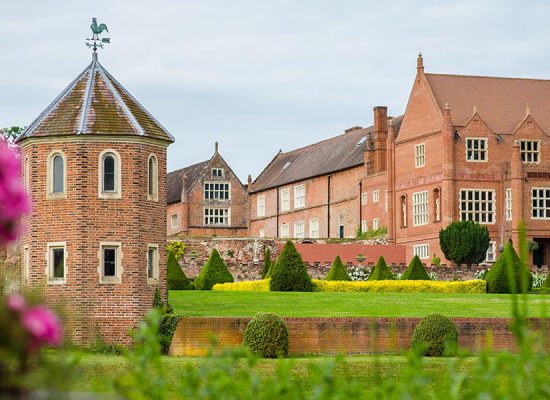
A 90-foot tower is all that remains of Caister Castle, which was originally commissioned in 1432 by Sir John Fastolf, who served bravely during the 100 Year War. However, from the tower, visitors can view the castle ruins and the surrounding area. Caister Castle is one of the earliest buildings of importance in England to employ bricks as the main construction material. It is a 15th Century moated castle some 5 km north of the town of Great Yarmouth in Norfolk.

The castle was built between 1432 and 1446. It suffered severe damage in 1568 when the Duke of Norfolk led a campaign to seize it. A new house was built nearby in about 1600. After that, the castle and its tower was left to ruin.

On a side note, Sir John Fastolf, along with Sir John Oldcastle, supposedly served as inspiration for Wlliam Shakespeare’s Falstaff.

Sir John intended the castle to be converted into a chantry, to pray for his soul and those of his family. After his passing, a detailed inventory was made of all his personal belongings.

The castle’s later claim to fame, so to speak comes from the legal battles between Sir John’s relations and those of John Paston, who served as Sir John’s lawyer. In his will, Sir John left Caister Castle to Paston. The bulk of Sir John’s actual money went to endow Magdalen College in Oxford. Paston was sued by the other factions of Sir John Fastolf’s family, mainly the Yelvertons and the Howeses. Eventually, the Yelverton and Howes factions sold their rights to the castle to the Duke of Norfolk. Norfolk attempted to seize the castle in 1469.

We know what occurred during this siege because Margaret Paston and her two sons exchanged a series of letters documenting the siege. They provided graphic testimony to the violence practiced by Norfolk’s men. They are the first record of private correspondence to survive in Britain and are not housed in the British Museum.

“In the ‘Paston Letters’ is a unique collection of family correspondence covering the period of the Wars of the Roses, documenting the Paston family’s struggles to climb and maintain position on the English social ladder. Sir John died childless, and intestate; the castle was one of many properties in his estate. Some years later, the castle was ultimately returned to the Paston family’s ownership. In 1659 the Pastons sold it to William Crow (d.1688), an upholsterer and money lender of the City of London, whose inscribed mural monument survives in Holy Trinity Church, Caister-on-Sea, although the fine marble sculpted bust of Crowe was stolen from it in 2014. Later the Castle descended by marriage to the Bedingfield family. The Castle later suffered from neglect and the robbing of stonework and other fittings, including in about 1776 when Rev. David Collyer removed a newell staircase with 122 stone steps from the tower and incorporated in into his house at Wroxham. The inner moat was filled in between 1842 and 1893 and a lake was created by the widening of the south-eastern side. In 1952 the owner of the castle was Charles Hamblen-Thomas.” [“Caister Castle, West Caister – 1287573 | Historic England”.]

Caister Castle was a 15th-century moated castle situated in the parish of West Caister, some 5 km north of the town of Great Yarmouth in the English county of Norfolk (grid reference TG504123). ~ https://en.wikipedia.org/wiki/Caister_Castle#/media/File:Caister_Castle.jpg
Posted in Age of Chaucer, British history, buildings and structures | Tagged , , , , , | 6 Comments

Celebrating the Release of “An Escape to Love” with an Excerpt and a Giveaway

An Escape to Love combines two of my most recent novellas into one volume. On Friday, I shared an excerpt from “The Courtship of Lord Blackhurst.” Today, I bring you “Lord Radcliffe’s Best Friend.”

Lord Radcliffe’s Best Friend 

Hendrake Barrymore, Lord Radcliffe, is a typical male, a bit daff when it comes to the ways of women, especially the ways of one particular woman, Miss Adelaide Shaw, his childhood companion, a girl who plays a part in every pleasant memory Drake holds. 

Yet, since he failed to deliver Addy’s first kiss on her fifteenth birthday, his former “friend” has struck him from her life just at a time when Radcliffe has come to the conclusion Adelaide is the one woman who best suits him. 

This tale is more than a familiar story of friends to lovers for it presents the old maxim an unusual twist.

Excerpt:

Tuesday, 14 September 1819, Kent, England

“I am going to kill him!” Hendrake Barrymore, Lord Radcliffe, growled as he looked down upon where his neighbor’s stallion was doing his best to bring another of Drake’s prized mares to foal.

“Dost ye mean to kill the horse or its owner?” Jack McGuyer asked with a grin. 

Drake required no prompting from his steward to bring forth an image of Lord Bernard Shaw nor of the baron’s daughter, Adelaide. Drake had never understood his attraction to the woman. As an earl, he could have his pick of the crop of beauties making their Come Outs for the Season, but none of them could hold a candle to Adelaide. She had inherited the best of both her maternal and paternal ancestors. Her hair was a chestnut brown, rich with hints of gold, and her eyes were a coppery-brown, sparking with fire. She was tall enough not to appear petite when standing beside him, which she rarely did these days unless they both exited the Sunday services at the same time. Then she would acknowledge him before excusing herself to speak to anyone but him. 

There had been a time when they were inseparable, roaming the hills and valleys making up their fathers’ estates. Then he had been sent off to school and had returned home full of himself—too concerned with arrogance at being the future earl to find time to spend with the one person he had always considered as important to his self-worth as were his parents. It was only later that he suspected he did not seek her out because he did not want to hear what she would say regarding the road he had been traveling, and Drake held no doubts, Adelaide Shaw would have had an opinion—she always did, and it would be one he did not want to hear. 

Yet, soon, everything changed for both of them. It had been her fifteenth birthday. He, or rather, he should say, his mother, had presented Adelaide with two song birds in a cage, a gift from his family, and Addy had seemed so pleased to have them. She kept giving him looks, that, at the time, he did not understand, but would be thrilled to receive today. Then he had made a colossal error. Drake could remember the moment as if it had occurred yesterday. His friends Lord Randolph French and Mr. Charles Scott had accompanied him to Cliffe House, and, unlike his previous holidays at the manor, he had ignored Adelaide completely until the evening of the celebration of her birthday. 

His friends had teased him, egging Drake on until he maneuvered one of Lord Shaw’s maids into what he thought was an empty room so he might steal a kiss. He had never treated a servant of his father’s house or Shaw’s as such, but French and Scott had kept saying it was all a “lark” and expected of young lords. As the maid quickly agreed, Drake had foolishly thought them correct. Stealing a kiss from a female servant was part of proving one was a man. 

Unfortunately, Addy was in the room he had chosen. It was not until days later that he had wondered why she had been lurking in the shadows of her family’s library. Had she planned an assignation of her own? The idea bothered him more than he would care to admit at the time, but not enough to consider his pursuit of the maid as being any more than proof he could seduce a willing miss. He meant to demonstrate to his friends his “way” with willing women. 

He had just tugged the maid into the room behind him and closed the door, positioning the girl along the wall, when Adelaide showed herself. “What do you think you are doing?” she demanded in sharp tones, which she had rarely used with him in the past. 

He had searched for an explanation, but none came to him readily enough to satisfy Adelaide. Angry, she had struck him then—not a simple slap, but rather a solid punch to his side. If the blow had not made him wince, Drake would have known pride: He had taught her how to punch so as to deliver a powerful blow while not breaking her thumb or any of her fingers. “You derelict!” she charged. “I thought you above such manipulations, but you are no better than those two coxcombs who accompanied you to my father’s house this evening!”

“Now, Addy,” he began, finally finding his voice. 

She punched him a second time, this one landing against his bicep. “Do not ‘Addy’ me, Hendrake Barrymore! I am ‘Miss Shaw’ to you, as you are ‘Lord Chadwick’ to me.” She turned her venomous tone on the maid. “If I were you, Iris, I would return to my ‘assigned’ duties and pray my mistress has a poor memory.” The girl curtseyed and scampered quickly from the room. 

He and Adelaide stood in silence for a few brief moments, eyeing each other in a manner he had never thought to consider. When had Adelaide Shaw become such a fetching female? She stood there, chest heaving in anger, and he felt his manhood come to life. Regrettably, Addy did not appear to know the same awareness of him as he had experienced for her. “You do not mean to offer me an excuse for your behavior?” she demanded. 

Although Drake was not proud of his intentions, he was not about to admit himself in the wrong, especially to her. She was not his parent. It was not necessary for him to answer to her. “It was only to be a simple kiss, Miss Shaw,” he said with a hint of authority, after all, he was the son of the Earl of Radcliffe. 

“For you, perhaps, it was a simple kiss,” Adelaide had countered. “However, your actions have likely cost Iris her position in my father’s house. Her regrets will fall on my mother’s deaf ears, for the baroness does not tolerate such foolishness from her household staff. It will be considered by both Lady Shaw and Iris as more than a simple kiss before this evening knows an end.” 

Drake had not considered the ramifications of his actions in those terms; he had only thought of proving his manhood to his friends. “What do you wish of me, Adelaide? I have apologized. If you wish me to speak to your mother in Iris’s behalf, I will. I do not wish Iris to lose her position because of me.” 

“What do I wish from you?” she repeated in what sounded of frustration. 

“Yes,” he answered in equal dismay. 

“I shall tell you what I want, my lord,” she accented each of her words by poking him in the chest with her index finger. “I want the return of my friend—the young man who was good and kind and thoughtful. I want that man to return to his sensibilities. I do not much care for the man you are becoming. I fear the earldom is doomed if this is the type of man you have designed for yourself.” 

He caught her finger and forcibly held her hand against his chest. He said softly, “I am the same Hendrake Barrymore you have always known, Adelaide. I promise.” 

“No, you are not,” she said as tears filled her eyes. “The Hendrake Barrymore I know would have recalled what he promised me on my twelfth birthday.” 

Drake searched his memory as to what she referred. At length, it dawned on him. “On your twelfth birthday, when you attempted to kiss me, I told you we would share your first kiss when you were fifteen.” He would not have minded that kiss, for she was, in his estimation, suddenly very desirable. “You wished a kiss when you were twelve and I was sixteen, but I told you you must be closer to becoming a woman to appreciate fully such a kiss.” Belatedly, he realized he had always been fascinated by Adelaide Shaw: She had been more than a valuable friend; she was his truest companion, the one who provided his life the perfect balance. The one who kept him on the straight and narrow. The one who wanted only the best for him. “I would still be willing to share your first kiss, Addy.” His breathing hitched higher, anticipating the possibilities. 

She shoved away from him then. “I fear you are too late, my lord. My first kiss, or should I say, the echo of one, occurred in this very room not ten minutes prior. I found it quite dissatisfying! As to my second kiss, I would prefer it came from a man who held the same values as I. Enjoy your pursuits, my lord, wherever they may take you.” Then, she walked from the room and, essentially, from his life. Afterward, he had made multiple overtures to return to what they once had shared, but six years later, they were no closer than they had been when she left him standing alone in a dark room and regretting his choices. The one woman he wished to court—the one woman he thought might bring satisfaction to his world—despised him. 

His late father had complicated the situation by enacting his Inclosure rights when after two years of wet summers, they had experienced one of the driest springs and summers in the history of the area. The previous earl, who had gladly shared a stream on Radcliffe land with his neighbors, had chosen, first, to place a fence around the open area where others had watered their livestock and, then, diverted the water to save his own crops. It had been a hard decision for Drake’s father to make, but one with which Drake had essentially agreed. Their first responsibility had been to the hundred and twenty families who depended directly upon the estate. 

Consequently, the move had infuriated many, especially Lord Bernard Shaw, Adelaide’s father. The move had laid the grounds for a rift between Drake’s and Addy’s families: A move for the survival of the earl’s estate and Drake’s foolish attempts to prove himself a man.

“What do you wish me to do about the mare?” McGuyer asked. 

“Move her back to the small pasture behind the barn. Keep all the mares there until I can settle this with Lord Shaw. Contact Lord Shelton and inform his lordship we must wait before we match his stallion with our Everlee. Ask Shelton if he wishes to choose a different mare or to wait. Offer his lordship our deepest apologies.”

“Shelton shan’t be happy. Everlee’s blood lines were what interested the viscount.” McGuyer cautioned. “He wanted to purchase the foal for his own line of horses.” 

Drake shook his head in acknowledgement of the truth. “I will make amends to Shelton. Meanwhile, send some of our men out to repair the fence. Evidently, Shaw’s people did a slipshod job. It appears part of it is down. Likely how Shaw’s horse crossed into my pasture.” 

“Aye, sir,” McGuyer said as he took up the reins again to chase down the mare. Before the steward rode away, though, he nodded to the opposing hillside. “Trouble approaching, sir.” 

Drake looked up to view Addy Shaw looking down upon the horses below. Other women would have been embarrassed by the scene of nature taking its expected course, but not Adelaide. Instead, she motioned the two grooms who accompanied her to fetch the stallion, before setting her horse on a slow, ambling descent to the valley below. Although she had presented him no form of acknowledgement nor a request for him to join her, Drake recognized her intent and gently nudged his gelding into motion. A long overdue confrontation awaited him. 

<<<>>>

When news had arrived at the manor of Sultan not be located, Adelaide knew exactly where the horse had gone. She had quickly changed into her riding habit and set out for the border between her father’s property and the land belonging to Lord Radcliffe. Addy suspected Sultan’s natural instinct to mate might be the needle’s prick in the continuing estrangement between the earl and her family. 

She reached a gloved hand down to pat her gelding’s neck. “Might as well face the Devil while the sun is up,” she murmured. She motioned to the grooms, who had accompanied her, to fetch Sultan. “Take him home. I will speak to Radcliffe and discover what restitution will be required. Do not mention any of this to my father. I shall discuss the matter with the baron upon my return. Also, send men out to repair our side of the fence. It appears someone has removed the rails we set atop of the brick wall. For what purpose, I have no idea. Yet, the removal permitted Sultan an easy jump.” 

“Yes, miss,” the men chorused. 

Looking to the opposing ridge, she spotted Radcliffe studying her. Without even a nod of her head in greeting, she nudged her horse forward. Quietly, she questioned, “Why must the man be the handsomest man of my acquaintance?”

Alcon shook his head as if in response. 

“I know,” she said softly. “I should ask the opinion of another female. Perhaps the mare below has taken note of his lordship’s appearance. Mayhap she holds an opinion of her owner which could prove mine in error.” 

She made her approach as Radcliffe had descended his side of the ridge to meet her in the middle. If only they could again find a similar “middle territory” in their relationship, then, she could, perhaps, go on with her life. Yet, Adelaide knew it would take more than this brief meeting to make her whole again. Bringing Alcon to a halt, she schooled her expression before greeting the earl. “Your lordship.” 

“Miss Shaw.” Why did the sound of his voice do odd things to her composure? It had been six years since she had displaced him from her world, and so much had changed within both their lives which should have made a difference, but hadn’t. However, anytime her eyes fell upon the man or someone mentioned his name or her father complained about the expense of having a well dug to use for the stock and the crops, she was right back where she always had been: in love with Hendrake Barrymore. 

If she could discover another man she could tolerate for more than an hour, maybe, then, she could marry and move away to her husband’s home. Distance, she had reasoned often, would aid in forgetting the ease which once had existed between her and the young man who had been her best friend when they were children. 

“I apologize for Sultan, my lord,” she said through tight lips. “I shall speak to my father regarding restitution to Lord—”

“Shelton,” he supplied. 

“To Lord Shelton,” she continued. “I realize Sultan’s actions cost you the sale of the foal, and in these trying times, such business can assist in maintaining the land.” 

“Your father requires the fee, as well,” he said, keeping his steady gaze upon her and making Addy want to fidget. 

“I assure you, my lord, Sultan’s presence here today was not purposeful,” she argued, completely ignoring his gesture of goodwill. 

“Beyond nature and what God designed for him, I did not think the stallion’s actions purposeful,” he corrected. A frown marked his brow. “But certainly inconvenient.” 

She made to concentrate on the task at hand, rather than the bluest eyes she had ever beheld. “It appears someone has removed the wooden rails my father had placed on the brick wall marking the border between our properties. Sultan can easily clear the brick one without the railing.” 

His lordship eyed the wall suspiciously. “Like you, I would not name what remains of the wooden barrier a detriment to a horse of Sultan’s stature.” 

Addy kept her gaze upon the sad state of the wall. Such was safer where interactions with Radcliffe were concerned. From where she sat, the wall was in worse shape than she had originally thought. “It appears someone required . . . required the wood . . . to warm their cottages.” 

He dismounted, crossed to where she sat and lifted his hands to her to assist her to dismount. Obviously, he meant to make more of this encounter than was necessary. The fact she could not dismount or remount, for that matter, without his assistance, was something she was reluctant to admit, even to herself, for she did not want to consider the exquisite warmth of his hands upon her, for if he was to touch her, she would not be responsible for her actions. Despite his having betrayed her, even after six years, the man still held a power over her. 

“May I assist you down?” he questioned, but he did not step away from her.

Reluctantly, she nodded her agreement. “Step back so I might release my foot from the stirrup.”

“With your permission, I will do it,” he suggested with a slight lift of his brows, as if he meant to challenge her, something he had always done—something she desperately missed from having him in her life. 

Biting her bottom lip in frustration, she nodded her agreement. 

The subtle warmth of his hand on her leg above her half boots did crazy things to her most private place; yet, she swallowed her desire by reminding herself of his betrayal. Instead, she carefully shifted her weight to lift her right leg from around the pommel without exposing more of her person to him or tumbling off the saddle into his arms. A woman without the experience upon a horse she held would have not been able to release her leg and swivel in the seat without a spill. 

Both legs free, she leaned forward to place her hands on his broad shoulders and permitted him to assist her to the ground. The process was quite awkward, not the way one reads of it in the novels she adored, but possible, nonetheless.

At length, he set her before him, catching her hand in his. “We will inspect the wall together.” 

Using his hand for support, she bent to catch the loop on the skirt of her riding habit to avoid tripping upon it and to provide herself a few extra seconds to control the sudden racing tempo of her heart. “Such is not necessary, my lord,” she said tartly as she rose. It was important for her to keep her resentment in place, for she was too susceptible to this man. 

“I insist,” he said, setting her hand upon his arm.

Addy reluctantly fell into step beside him. “I assure you, my lord, my father is capable of seeing to the repair without your input.” 

He stopped suddenly, causing Addy to stumble. His hand again caught her about the waist to prevent her from falling, and Adelaide felt her heart jump with the same pleasant surprise she had known when he had been her best friend in the world and thought to share something with her. 

“Why is it you continue to despise me, Adelaide? I made a foolish mistake. Have you never erred in your judgement?”

The fact her body still touched his in two places—her hand rested upon his arm and his hand rested upon her waist—made it difficult for her to concentrate fully. She purposely stepped back to break their connection in order to clear her thinking. She retorted, “Most assuredly I have erred in my estimation of more than one ‘so-called’ gentleman.” 

“I refuse to apologize for my actions of six years past,” he growled. “I am not the same callow youth I was then.” 

“If I recall correctly, you refused to apologize then, as well. You offered your excuses, but no honest apology,” she countered. 

“This is ridiculous, Addy. We are wasting our lives arguing over something which cannot be changed,” he insisted. 

“As you say, my lord.” She walked away toward the wall. Purposely, studying it, she said, “Evidently, my father must ask Mr. Bowden to design a better barrier.” She fingered the two boards left behind. “This is unacceptable. Someone will take up the task in the morning. You have my word on the matter, my lord.” Without waiting for his opinions, she returned to where Alcon stood munching on the grass. Knowing she could not mount without Radcliffe’s assistance, she caught the animal’s reins to lead it home. “Come, Alcon.” She gave a little tug. “We must return to the manor.” 

Radcliffe stood where she had left him by the wall. From the corner of her eye she noted how he shook his head in what appeared to be disbelief. “You are the most stubborn woman of my acquaintance!”

She kept walking, slowly climbing the hill. It was a good mile to the house, but it would not be her first time walking that distance, nor would it likely be her last, although, she would admit, if only to herself, she wished she had worn more comfortable boots. Yet, she would never voice that particular complaint aloud. 

“You do not mean to allow me to assist you to the saddle?” he called. “Be reasonable, Addy!”

“Miss Shaw!” she declared without looking back to judge his reaction. “I am Miss Shaw.” She hid the pain such a declaration caused her. “My father will be in touch, my lord.” 

“Hendrake!” He stormed toward her, but thankfully did not attempt to prevent her retreat. “I am Hendrake! Drake! Not ‘my lord’ or ‘your lordship,’ not even ‘Radcliffe’! Say my name, Adelaide,” he demanded. 

Tears filled her eyes; yet, she did not slow her pace, nor did she look back to him. Instead, she stiffened her resolve, pulling her posture straighter and lifting her chin. She had a mile to allow herself another good cry. She had had plenty of them in the last six years, and, each time, she prayed it would be the last tears she shed over a man who had allowed his friends to attempt to deliver the kiss he had promised her—who had not thought to protect her from such manhandling—who had not even noticed the redness marking her cheek from where Lord French had slapped her when she had used a fireplace poker to fend off the man’s advances—who had only thought of the kiss she had denied him from a mere maid when Addy had been prepared to present him her whole heart. 

Now for the giveaway. I have THREE eBook copies of An Escape to Love available to those who comment below. The giveaway will end at midnight EST on Thursday, February 10, 2022. I will contact the winners through email.

Posted in book excerpts, book release, excerpt, Georgian England, Georgian Era, giveaway, historical fiction, publishing, reading habits, Regency era, Regency romance, writing | Tagged , , , , , , , , , , , , | 3 Comments

Celebrating the Release of “An Escape to Love” + a Giveaway

An Escape to Love brings together two of my most recent novellas: “The Courtship of Lord Blackhurst” and “Lord Radcliffe’s Best Friend.”

Today, we will take a look at “The Courtship of Lord Blackhurst.”

The Courtship of Lord Blackhurst 

What happens when a lady falls in love, not with her betrothed, but rather with his cousin?

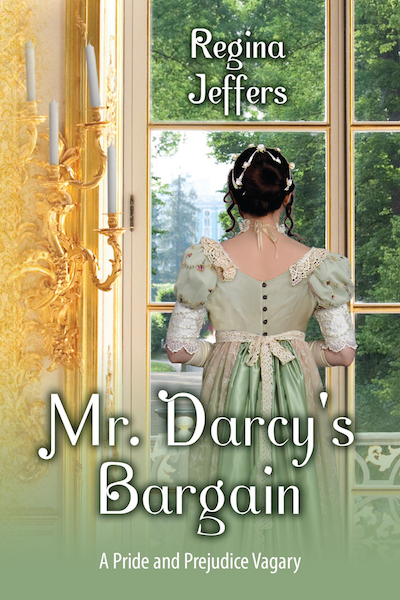
Miss Priscilla Keenan has been promised to the Marquess of Blackhurst since her birth. The problem is: She has never laid eyes upon the man. So, when Blackhurst sends his cousin to York to assist Priscilla in readying Blackhurst’s home estate for the marquess’s return from his service in India, it is only natural for Priscilla to ask Mr. Alden something of the marquess’s disposition. Yet, those conversations lead Cilla onto a different path, one where she presents her heart to the wrong gentleman. How can she and Alden find happiness together when the world means to keep them apart? Inspired by Henry Wadsworth Longfellow’s “The Courtship of Miles Standish,” this tale wants for nothing, especially not a happy ending, which it has, but that ending is not what the reader anticipates.

Excerpt conveying their first meeting:

For more than a week, Cilla had called daily upon the abbey, no longer waiting for either of the Sterlings to assist her. She also no longer wore her better day dresses, for she often assisted the maids—girls from the village she knew either from church or by sight— taking down dusty drapes or rolling up carpets to be beaten. Some items she had chosen to replace, while others only required a thorough cleaning. Each day, she spent time reorganizing her various lists, prioritizing what should be addressed first. 

“After you have had your midday meal,” she told Audrey, Ellis, and Janie, the three maids hired to assist her, “we will take a survey of this music room.” If it had been Cilla’s choice, once she had viewed the spectacular pianoforte located in the music room, she would have started her survey of that particular room first, for music was what touched her soul. Everything else was secondary in her life. However, it was on the third day before she had recalled the room near the rear of the house. 

When she was younger, she would sometimes sneak into the abbey just to have a look around. There were so many wonderful pieces of art and sculptures thereabouts, and Cilla loved simply to curl up on one of the dust-covered chairs and study the artwork, while she made notations of melodies to accompany each piece. The works served as her inspiration. It was perhaps on her third or fourth visit to the abbey that she had discovered the music room. Her hands had itched to play the pianoforte, but she had resisted the urge to do so, knowing someone might hear her and demand to know why she had entered the Blackhurst property without permission. Little did she know, at the time, this would be her future home. She was glad today that she would have a legitimate excuse to view the ornate instrument, perhaps even taking a few moments to play a short composition she had rolling around in her head. 

“Shall I bring you a tray, miss?” Janie asked. 

Cilla’s eyes remained on the instrument. Distractedly, she responded, “Bring it when you return. I am in no hurry.” 

“Yes, miss. Enjoy your time to rest for a few minutes. You’ve worked most diligently,” Audrey added. 

Cilla smiled at the girls. “I plan to test out Lord Blackhurst’s pianoforte.” 

“You play, miss?”

“My late mother loved music as dearly as she loved my father. She made certain each of her children could play an instrument.” Cilla did not say the words aloud, but she thought, As I pray I will be allowed to do so with my own children. Catching the ache of loneliness seeping into her chest, she shooed the maids from the room so she might explore the space alone. 

With the maids’ exit, Cilla made her way about the room, admiring the carved frame of a harp, which had two broken strings, but she strummed the remaining ones, picking out a simple tune. “Even without all its strings, the instrument is excellent, or perhaps it is the room that speaks of perfection,” she murmured. She could imagine herself spending countless hours within. “At least, this is something I can love about the future marriage to which I have been committed.” 

Leaving the harp behind, she began a more complete examination of the room, which she had belatedly realized had been specifically designed to create a musical experience. The room’s location, near the rear of the house, would prevent the noise of a busy household from interfering with a musical performance. Draperies not only hung at the windows, but also covered one of the walls. Persian rugs of various sizes were scattered about the floor, sometimes layered with rugs made of wool supporting an instrument, while several large plants and upholstered chairs and settees dotted the rim of the room. 

One corner held a bookshelf, containing books of various sizes. A floral printed wallpaper covered the wall surrounding the arched entrance, and a fabric-covered folded screen sat opposite the book shelf in another corner. 

“Someone certainly knew what he was doing,” she said as she crossed to one of the windows to draw back the drapes to allow light into the space. A smattering of dust filled the air about her, and she batted away the dust motes floating before her eyes. She turned for a second look at the room, now draped in sunlight. “I could spend my days practicing and not be disturbed.” 

With a sigh of satisfaction she had yet to know since assuming the task of arranging his lordship’s household, Cilla sat at the instrument and positioned her fingers upon the keys. Although the pianoforte, like the harp, could do with a good tuning, within minutes, she was lost in the music, swaying on the bench, allowing the melody to carry her to another place—a place only she knew. Soon she was switching from a piece by Mozart to one she had been working on for several months—one with which she had yet to know fulfillment. 

Over and over again, she played the prelude, changing the phrasing—adding a different chord here and there—dropping a half note she once thought essential. 

So engrossed with the process, she failed to hear the faint sound of a footfall behind her. When she finally realized she was no longer alone in the room, it was too late not to gasp, as she spun around to gape at the handsomest man her eyes had ever beheld. 

“Oh, botheration!” She clapped a hand over her mouth, as she blushed thoroughly. “You startled me, sir! I did not hear you come in. May I assist you?”

What could only be called an arrogant lift of his eyebrow rose in obvious disapproval. “Perhaps it is I who should assist you,” he said in exacting tones. 

Her eyes could not deny her private desire to take in the change in the man’s countenance. Eyes, the color of the vault of the heavens, assessed her appearance, and Cilla instinctively reached for her riot of curls, many of which had worked free of the pins supposedly holding them in place. For all her customary bravado, she found herself stammering, “Although . . . although I appreciate your offer, you are not dressed as a servant. The house maids shall return shortly. Then, we will see to the room. I am certain Lord Blackhurst would object to your varying from whatever occupation you have been employed to do.” 

The gentleman’s lack of a smile validated his disapproval. “Despite being impressed by your aptitude upon the instrument,” he chastised, “I doubt Lord Blackhurst would provide his consent for a maid to take it upon herself to use his family’s pianoforte for her own pleasure.” 

“A maid?” Cilla inclined her head in an equally unfavorable gesture. “You think I am one of his lordship’s maids? You think I play no better than one without any training? I am more than just a bit offended, sir.” 

Just as she stood from the bench, he stepped closer. Although he was the most intriguing man she had ever encountered, she suddenly wondered if he had simply wandered in, without anyone knowing. Was he supposed to be in the abbey? Brazenly, she lifted her chin and spoke in her best “lady of the manor” voice. “Mayhap you should explain your purpose in being in Lord Blackhurst’s home, sir.” 

He matched her cynical look with his own cynical amusement. “I am prepared to ask the same of you,” he said in even tones. 

She cursed herself for discovering she enjoyed his smile, ironic though it may be. The man before her, in spite of being dressed as a country gentleman, rather than a Town dandy, was clearly a man of means. His posture and his manner of speaking suggested he was aware of his consequence. Yet, it was the way his coat stretched taut across his shoulders that had her heart beating out an unfamiliar tattoo. 

“I am waiting,” he said in stern tones that drew her from her musings. 

Cilla presented him her best scowl, crossing her arms across her chest and lifting her chin a notch higher. To emphasize her frustration, she tapped her foot as she said, “As am I.” 

A slight chuckle escaped the gentleman’s lips before his scowl deepened. “Ladies first.” 

However, neither of them had a chance to know an end to their standoff, for the maids had returned with Audrey leading the way and carrying the tray she promised Cilla. “Oh, miss,” Audrey said as she spotted the gentleman while managing an awkward curtsey. “I’d no idea you’d company. Would you prefer us to fetch another cup for tea?”

The gentleman looked suspiciously to the maids and then to her. “Perhaps you might provide me the lady’s identity,” he instructed. 

Cilla motioned Audrey to place the tray on a nearby table before responding, for the girl appeared quite intimidated by the gentleman. She turned to the man. “Such shall not be necessary. I am capable of answering for myself,” she said in a waspish manner that seemed to seep from her when she was near this particular man. 

“Finally,” the man growled under his breath. 

Standing stiffly, her shoulders taut with irritation, Cilla reprimanded, “A lady should not be expected to introduce herself to a true gentleman. Yet, if you insist, I am Miss Keenan. I have been asked by the marquess to ready the abbey for his return. I have a perfectly legitimate reason to be in any room I choose in the manor.” 

Surprisingly, instead of frowning at her again, the man executed a proper bow. “Miss . . . Miss Keenan?” he spoke in what could only be called a lack of composure, one matching her earlier befuddlement. “I did not expect—” He paused as if he thought better of what he was saying. “Lord Blackhurst would not desire his intended actually to go to battle with the dust that has occupied the family estate in his absence.” 

She had no idea of what he spoke until a quick glance to the maids, who each pointed to a different part of her own body, warned Cilla the dust from earlier had landed on her hair, shoulders, and forehead, respectively. Defensively, she said, “How else might I examine the quality of the drapes and other furnishings?” She made herself not reach for the dust to remove it from her person. “Now, might you provide me your identity in return?”

The gentleman regained his composure. With an aristocratic nod, he said, “I am . . . I am . . .” Again, he paused awkwardly to gather his thoughts, and she wondered if this was a characteristic of which he was unaware or was it purposeful? “Mr. Alden. Mr. Johnathan Alden, at your service, miss.” 

“Mr. Alden?” she questioned. Cilla’s first assessment of the man standing before her said he was too top-lofty to be a simple man of all works, and his Christian name was too “ordinary” for a man of his consequence; after all, even in her limited circle of acquaintances, she knew nearly two dozen men called “John.” In her opinion, the man required the name of one of the gods or something along the lines of “Valentine” or “Zepher.” Yet, she swallowed the words rushing to her lips. “I did not expect you until tomorrow.”

“The roads proved better than what I anticipated,” he explained. He glanced about the room before motioning her to the gathering of furniture where the tray rested. “Perhaps we could share your tea while the maids take up their tasks.” To Audrey, he said, “Might I prevail upon you to bring the lady and I another cup, as you suggested?” The maids quickly bowed from the room, leaving Cilla and the gentleman alone.

Cilla knew she frowned, but she nodded her agreement. As she crossed to the seating group, she attempted to brush away the dust from her person. Once they were seated, and she had poured tea for the gentleman, she set herself the task of asking the question that had bounced about in her head since her father had announced she was to assist in restoring the abbey? However, before she could rearrange the words in her head, she felt she must first understand the status of the man sharing her settee. “Are you intimate with his lordship? Have you held a long-standing relationship?”

The gentleman appeared shocked by her forwardness; however, he responded, nonetheless. “I have known his lordship since he was but a child,” he assured. “Actually, since he was in his crib, but no man recalls such details of his youth.” 

“I see. That is good then,” she mumbled, making to organize her thoughts. She knew her frown remained, but there was little she could do but to be honest. “I know this might sound off-putting and ungrateful, and I do not mean for it to be so. Yet, I have no one else to which to speak my thoughts. Would you indulge me in this matter?”

His brows lifted in question, but he nodded his willingness. 

“Right then.” She shrugged her shoulders to shore up her courage. “Could you speak to Lord Blackhurst’s character? I do not understand how this marriage agreement has reared its head so quickly, nor do I understand why his lordship would agree so readily. I mean, if Lord Blackhurst intends to accept the agreement between his father and mine, without question, I would like to hear something of his lordship’s nature. Has he no prospects beyond a country miss? I would think his title would permit him to claim any woman of the ton; yet, he has agreed to marry the likes of me. It simply does not make sense. We are expected to marry, and, in reality, we have never met. I am to set up a home for a man of which I know little beyond the customary rumors. Does the marquess prefer bold colors or more subtle ones? Does his lordship possess an interest in history or science or horticulture? Anything you care to share would be greatly appreciated.”

Mr. Alden wrinkled his nose in what was obviously indecision, but he waited until Audrey quietly placed down a second cup and saucer upon the tray and then disappeared from the room before he responded. “I am certain Lord Blackhurst would be happy with whatever you chose,” he said diplomatically. 

“However, I do not wish my future husband simply to be ‘happy’ with what I choose,” she argued. “I would prefer his approval, but, more importantly, I would wish we shared some of the responsibilities of bringing Blackfriars Abbey back to its previous greatness. If we are to know felicity in marriage, should we not possess common goals?”

“I seriously doubt Blackhurst much cares whether the drawing rooms are all the same color or different shades,” Mr. Alden confessed. “I have never heard him express an interest in such matters.” 

Agitated by his response, Cilla busied her hands, rearranging the items on the tray. She was half-tempted to dump the remaining tea in the pot over his head, but doing so would only prove her another recalcitrant female, a report surely to travel to Blackhurst’s ears. This whole situation was absurd—absolutely absurd. Even as she admitted this to herself, she realized she would require a different approach. Therefore, she placed a smile upon her lips and suggested, “Perhaps I could ask a few questions, and you could share what you know of the marquess.” 

A brow quirked, but the gentleman again nodded his agreement. 

Cilla knotted her fingers together and rested them in her lap. “Mayhap we could begin with Lord Blackhurst’s appearance. I imagine him dark of head. Is that true?”

“I have heard some describe his lordship’s hair as ‘chestnut’ or ‘russet,” the gentleman shared. 

“Darker than yours, then?” she remarked. 

He shook off the idea. “Not much difference.”

She swallowed the sigh of exasperation rushing to her lips. “And his eyes? Are they brown also?”

“Silver or grey.”

“Something of your shade,” Realizing she was grasping at straws, she said nervously, “I understand one might term me as being too bold, but your Saxon ancestors are present in your features. Am I to assume, such is so for his lordship? Can you speak to his height?”

“Permit me to save you a few questions,” he said calmly. “As Lord Blackhurst and I are related, you will find we are of a similar stature and countenance.” 

Cilla allowed herself a breath of relief. Although Lord Blackhurst was not old in years, she had known men of his ilk who were well worn from drink and hard living before they married. At least, her future husband would be relatively pleasing to the eye.

“Then, am I to assume you were in the East with his lordship? I noticed your skin is quite brown from the sun,” she stated. 

Mr. Alden directed a smile at her. “You would assume correctly. I would say quite confidently that where Lord Blackhurst can be found, so can I. We are quite inseparable in that manner.” 

“You will be residing at the abbey also?” she asked. 

“I have no doubt.” 

Cilla nodded her acceptance as her eyes again skimmed the gentleman’s features: Square jaw. Closely shaven. Dark skin on his face and neck, indicating he had spent time in the sun of late. Broad shoulders. Up close, his shoulders appeared wider than she had expected. Deep chested. Obviously, Mr. Alden was accustomed to fine manners. The way he held his teacup was proof he had often spent time in Society’s drawing rooms.

He was hardly old, but she wondered if he was the elder or whether that would be Lord Blackhurst, and, if so, by how many years?

She realized Mr. Alden was speaking to her. With a blush of embarrassment, she said, “Pardon, Mr. Alden, I fear I was woolgathering. Might you repeat what you were saying?”

He presented her a long, slow look. “I was suggesting you might wish to write to his lordship. Direct your questions to Blackhurst himself.” 

Cilla stared at him dubiously. “Would Lord Blackhurst accept a correspondence with me? Is it not too presumptuous on my part to think so? Would not his lordship be too occupied with business in London to be carrying on an exchange of letters with me?” She knew her brow wrinkled in a frown. “Would we even be permitted to write to each other? We have never beheld each other.” 

Mr. Alden returned her stare with an unusual expression—whether it was amusement or serious consideration, she could not tell. “You do have a great many questions, Miss Keenan, but, I assure you, his lordship considers the agreement between your fathers a warrant of his honor. Therefore, a correspondence between you two should be considered one between those intending to marry. I can honestly say, I believe Blackhurst would welcome the opportunity to learn more of you before your wedding.” 

Much struck by the notion, Cilla shook her head absently in the affirmative, all the while wondering if Mr. Alden could be correct. Was this a means to learn more of the man she was to marry?

Now, for the giveaway. Comment below to be in the mix for one of THREE eBook copies of An Escape to Love. The giveaway will end at midnight EST on February 10, 2022. I will contact the winners by email.

Posted in book excerpts, book release, excerpt, Georgian England, Georgian Era, giveaway, heroines, historical fiction, publishing, reading habits, Regency era, Regency romance, romance, writing | Tagged , , , , , , , , , , , | 7 Comments

“To See a Fine Lady on a White Horse”

Ride a cock-horse to Banbury Cross,
To see a fine lady upon a white horse;
Rings on her fingers and bells on her toes,
And she shall have music wherever she goes. [I. Opie and P. Opie. The Oxford Dictionary of Nursery Rhymes. Oxford: Oxford University Press, 1951, 2nd edn., 1997. pp. 65–7.]

Ride a cock horse to Banbury Cross” is an English language nursery rhyme connected with the English town Banbury in Oxfordshire. It has a Roud Folk Song Index number of 21143. Yet, who is the “fine lady” of which the rhyme speaks? Most scholars agree the lady in question is Lady Celia Fiennes, who supposedly rode a white horse from Broughton Castle, her home, to Banbury Cross for the medieval celebration of May Morning.

Lady Celia Fiennes is best remembered as the foremost female travel writer of her day. She was born 7 June 1662. Celia’s parents were known for their anti-monarchical stance, and their children were raised with those beliefs. Her grandfather, 1st Lord Saye and Sele led the House of Lords during the Puritan cause against the monarchy from 1628 to 1642. Although her pedigree was extraordinary, it was her travels, more specifically the travel journey she wrote, which presented her a “name” in British history, for her accounts were more than a bit remarkable for both their time and for her gender. Her “horseback” journeys provides us significant information on British life in the 17th and 18th centuries. She traveled about England and kept a journal of the places she visited and what she saw at each stop. In 1888, the journal was published, with the assistance of her family members, as “Through England on a Side Saddle in the Time of William and Mary.”

“…thence to Winchester; in one mile off the town is Woolsey that was formerly the Bishops house, a large rambling building like a little town, this is on Maudline Hill whereon a considerable Faire is kept neare Michelmas, the traffique mostly hopps which that Country produceth good and cheese; its noted for a vast many of waines from severall parts especially from the West Country.”

Encyclopedia.com tells us, “Sources vary on what year Fiennes began her treks into greater England. The first noted date of departure ranges from 1685 to 1690—making her age at the onset of her travels anywhere between twenty–three and twenty–eight. This discrepancy is attributed to a disconnect between her largely undated notes and posthumous attempts by scholars to establish a timeline. All agree that she ended her roving in 1702, having at that time traversed every county in England as well as having engaged in additional short explorations of portions of Scotland and Wales.”

Fiennes’s biographical entry in The Dictionary of National Biography Missing Persons described her unique attributes as a travel writer in a genre and country that normally defers to the culturally entrenched, “She was interested in the modern rather than the ancient, preferring Nottingham to York … formal gardens and waterworks to ancient houses. The sharpness of her observations on numerous aspects of contemporary life has made her journal a prime source for social and economic historians.”

Celia traveled to every county in England, her journeys basically encompassing the years of 1684-1703. One must recall this was 100 years before the stagecoach. She rode each of those miles, riding side saddle. Her earliest travels were to the southern shires, where she visited Stonehenge, Bath, and Salisbury. In 1698, she undertook what she called her “Great Journey” when she traveled to Newcastle, the Lake District, Durham, Gloucester, Bristol and to “Land’s End,” or rather to Cornwall.

Like Elinor Dashwood in Jane Austen’s Sense and Sensibility, Lady Celia was more interested in the land and the people than in British history. She mentions the historical sites she visited, but Lady Celia demonstrates a keen interest in the land, the crops, in mining and industry, in local foods and drinks, in the conditions of the roads she traveled and the houses in which she stayed, which does address the history of the times. “Through her words we get a glimpse of 17th century everyday life. We might never have thought about what it would be like to travel the country without signposts but she highlights them as a notable feature remarking on ‘posts and hands pointing to each road with the names of the great towns or market towns that it leads to’.” [Wiltshire and Swindon History Center]

Other Sources:

Please have a look at History of Horseback’s tale of Lady Celia’s travels. You will fine it HERE.

You may read Lady Celia’s journal HERE.

You might also find Derek J. Taylor’s book helpful. Discover it HERE.

In 1697, a 34-year-old woman mounted her horse and set off on a 3,000-mile journey which over two summers would take her to every county in England. Her name was Celia Fiennes. It was a time when women didn’t do such things. It could be gruelling, unhealthy and dangerous. As she discovered, most roads were unsigned, marshy tracks, lodgings could be filthy and vermin-ridden, and highwaymen lay in wait for the unwary.

Luckily for us, Celia Fiennes kept a detailed diary about the places she saw and the people she met. She reports on the brutal justice system and political shenanigans of the time, and is fascinated by industry and commerce – workshops, shipping and especially coal-pits and tin mines. What she tells us is significant as the Industrial Revolution would soon change England forever.

Yet this remarkable woman and her story have, until now, been largely neglected.

In England From a Side-Saddle, historian and journalist Derek J. Taylor seeks to put that right. As we follow the route Celia Fiennes took, we see through her eyes an England of 320 years ago, and learn of the courage, determination and curiosity of one woman who was centuries ahead of her time.

Posted in British history, legends, real life tales, research, travel, writing | Tagged , , , , , | Comments Off on “To See a Fine Lady on a White Horse”

Governesses in the Regency Era (Part 4)

This post originally appeared on The Jane Austen Book Club blog. Enjoy!

Parents of the 19th Century required different skills from their governesses. Some governesses taught only a few subjects each day. Others oversaw the children throughout the day. Most families chose a particular governess for the lady’s strengths in specific subject matter. A “finishing” governess might be hired to prepare the older daughters for their society entrance. This might include music lessons, painting, drawing, singing, and social etiquette.

An article in The English Woman’s Journal [“Going a Governessing,” The English Woman’s Journal 1, no. 6 (1858): 399.] from an anonymous governess provides a look at her typical day. These were her instructions from her mistress: 

You will not find your duties heavy. I have three young girls who will require your constant superintendence, and you must find time to read history and science and give lessons in French and on the use of globes to the elder ones. But all the reading lessons can be got through while taking you morning walk from five o’clock till six. When you come home it will be time to wash and dress the younger children, as we have prayers at seven o’clock. After prayers come breakfast, and then you might perhaps give drawing or music lessons to fill up the interval until you commence school at nine. At twelve, you will walk with the younger children until dinner. After dinner, school again until five. Then you will have tea (you will find us very punctual), and, after the meal, you can attend the elder girls while the little ones prepare their lessons for the next day. At eight, you will have to put Emily and Lucy and Georgy to bed, after which, if you have quite finished with the others, you can have all the evening to yourself. 

Often, the governess would also be responsible for teaching other children from the neighborhood, all for between £20 and £30 pounds per year. Notice in the description above how the governess was not only a teacher, but, most often, also a general nurse maid to the children. One must also remember that governesses of the time often dealt with children from what we would call the “toddler” stage to those young ladies preparing to enter the marriage mart. This was a great educational challenge similar to what teachers in the settlements of the western expansion of the U.S. faced in their one-room school houses. Think of how it must have been to teach a lesson, say, in history or science or geography that would suit children from the ages of 3 or 4 to age 16. 

Enjoy the excerpt below in which Darcy joins the others of his Christmas party in the schoolroom for a lesson on the Battle of Waterloo. You will love this scene from Chapter Seven of Pemberley’s Christmas Governess.

Book Blurb: 

Pemberley’s Christmas Governess: A Holiday Pride and Prejudice Vagary

Two hearts. One kiss. 

Following his wife’s death in childbirth. Fitzwilliam Darcy hopes to ease his way back into society by hosting a house party during Christmastide. He is thrilled when his cousin Colonel Fitzwilliam sends a message saying not only will he attend, but the colonel is bringing a young woman with him of whom he hopes both Darcy and his mother, Lady Matlock, will approve. Unfortunately, upon first sight, Darcy falls for the woman: He suspects beneath Miss Elizabeth Bennet’s conservative veneer lies a soul which will match his in every way; yet, she is soon to be the colonel’s wife. 

Elizabeth Bennet lost her position as a governess when Lady Newland accuses Elizabeth of leading her son on. It is Christmastide, and she has no place to go and little money to hold her over until after Twelfth Night; therefore, when Lieutenant Newland’s commanding officer offers her a place at his cousin’s household for the holy days, she accepts in hopes someone at the house party can provide her a lead on a new position. Having endured personal challenges which could easily have embittered a lesser woman, to all, Elizabeth proves herself brave, intelligent, educated in the fine arts of society, and deeply honorable. Unfortunately, she is also vulnerable to the Master of Pemberley, who kindness renews her spirits and whose young daughter steals her heart. The problem is she must leave Pemberley after the holidays, and she does not know if a “memory” of Fitzwilliam Darcy will be enough to sustain her.

EXCERPT:

Finding no one about, Darcy had asked after his cousin only to learn Fitzwilliam was in the school room with Miss Bennet.

Darcy knew he frowned, but he could not quite quash the idea his cousin and the lady might be enjoying some privacy, while settling things between them. His heart sighed in continued disappointment, but he managed to say, “I will not interrupt them, for now. Where might I find the countess?” 

Mr. Nathan also frowned, but, obviously, for a different reason. “I beg your pardon, sir. From what I understand, most of your houseguests are in the school room. That is, all except Mr. and Mrs. Hurst and Miss Bingley.” 

Darcy heard his butler’s unspoken criticism: All except those who should be there.

“And what is so fascinating about Pemberley’s nursery?” Darcy asked with a lift of his eyebrows.

“I believe Miss Bennet, sir, convinced Colonel Fitzwilliam and Captain Stewart to reenact several of the battles to which they personally stood witness. Initially, Miss Darcy and the other young ladies accompanied the colonel, but I have learned from Mrs. Reynolds how Mr. Bingley and the other two gentlemen soon followed, as did Lady Matlock.” 

Darcy’s lips twitched in amusement. Apparently, Mr. Nathan did not know whether to approve of this turn of events or not. “As I possess a legitimate excuse to call upon the nursery, I believe I will follow the others.” 

“As is reasonable,” Mr. Nathan said as he bowed. 

Darcy smiled. “If the party is interrupting Cassandra’s nap, I will be sending them down for tea. You might warn Cook.” 

“Immediately, sir.” 

With anticipation, Darcy quickly climbed the steps to the nursery. He paused briefly at the door to survey the room. The colonel and Captain Stewart were describing the evening of the Duchess of Richmond’s ball in Brussels. As if they had rehearsed it, the young gentlemen in the room claimed the hand of one of the ladies, including Mrs. Anderson, and began to waltz their partners about in small circles, for the room was too cramped to move about freely. Even Hursts’ sons danced around with Megs. 

It was only then did he realized the gentlemen ignored Miss Bennet’s presence in the room. The lady was framed by the window, and she was dancing, only Miss Bennet was dancing with his young daughter. Without considering his actions, Darcy slipped into the room and was standing before her when she turned around. A large smile, likely intended for his daughter or the exercise graced her lips, but he did not hesitate: Darcy placed both the woman and his child in a loose embrace and turned them in a slow circle. “Good afternoon, pumpkin,” he said as he bent his head to kiss the top of his daughter’s head, but his eyes never left Miss Bennet’s shocked gaze. 

“Mr. Darcy,” she began in apology, attempting to step from his arms, but he tightened his hold just enough to dissuade her. As the rest of the room hummed the music, Darcy said softly, “I am dancing with my daughter and the most—”

However, at that moment, Colonel Fitzwilliam called out. “Such is the moment when Wellington received the message of Bonaparte’s advance. We departed the ball, many of us still wearing our evening shoes and trousers. Partners were left upon the dance floor, some women receiving a brief kiss in parting.” Although Darcy had yet to move, he knew from the sound of giggles behind him, many women in the room received a chaste kiss on their foreheads or their hands. 

Such was not what Darcy wished to kiss: Miss Bennet’s lips were so tempting, for the briefest of seconds, the rest of those within the room disappeared. 

Then a laughing Mrs. Anderson appeared at his side to reach for Darcy’s daughter. “It’ll be impossible to convince Miss Cassandra to sleep now she has waltzed with her father. Even so, permit me to take her, Miss Bennet.” 

Darcy reluctantly released his hold on Miss Bennet and his daughter. He scooped the child from Miss Bennet’s hold and lifted Cassandra into the air, teasing another giggle from his daughter’s lips before he deposited her into Mrs. Anderson’s waiting arms. 

He knew Miss Bennet took several steps backward, retreating to the window, just as he turned to the rest of the room. 

“Darcy!” his cousin called. “When did you join us?”

“Only a few moments ago,” he said with a well-placed smile. “I came to inform each of you I ordered tea to be delivered to the blue sitting room. However, I did not wish to disturb your tale or the effects of the duchess’s ball on everyone.” He glanced to Cassandra. “I stole a moment to dance with my daughter and enjoy her smile.” 

Bingley said, “I thought Miss Bennet entertained Miss Cassandra.” 

With difficulty, Darcy kept the scowl from his features, along with the desire to slap his friend across the back of Bingley’s head. He could not understand why none of the gentlemen in the room would think to partner Miss Bennet. If Mrs. Anderson and Megs deserved partners, why did not a gentleman’s daughter—a woman with impeccable manners and a delightful personality. Moreover, if Miss Bennet was Fitzwilliam’s betrothed, why was his cousin dancing with Georgiana? Obviously, the reason the colonel had agreed to this venture was to please Miss Bennet. “She did,” Darcy said with more calm than he felt. “I imposed on the lady to hold Cassandra while Miss Bennet and I took a few turns together. Cassandra did not appear to want to leave the good lady’s care, even to dance with her father.”

Georgiana lifted her chin in a gesture Darcy had never viewed her using previously and one of which he did not approve. It was very reminiscent of a gesture Miss Bingley often employed when criticizing others. “The tea will become cold; therefore, we should go below. I, for one, have had enough of the war for one day. Countess, might you lead?”

Darcy noted the countess’s dismay. “Will you join us, Darcy?”

“I will follow in a few minutes. I wish to spend a bit of time with Cassandra before she falls asleep,” he said in encouragement.

The group nodded their acceptance and departed two-by-two, leaving only the boys, Megs, Mrs. Anderson, Cassandra, and Miss Bennet behind. 

Darcy waited until the sound of their voices died away before he turned to Miss Bennet. “Will you not join us, ma’am?”

“I think not,” she said softly. “I believe I will rest for a bit, that is, if Mrs. Anderson and Megs can oversee the nursery.” 

“You are not employed by Pemberley,” he reminded her. “You are a guest.” 

“I prefer to be of use to the household,” she argued. 

“It is not necessary,” he corrected, “but I shan’t chastise you.” 

With a quick nod of farewell, the lady made her exit. Darcy again reached for his daughter. “Were you having a good time with Miss Bennet?” he asked as he settled his child in his arms. Cassandra patted his cheeks in that adorable way of all small children. 

“Miss Bennet has a way with both Miss Cassandra and Mr. Hurst’s sons,” Mrs. Anderson declared. “It be a shame she be in her situation, for she’d make some man a good wife and a mother for his children.” 

Darcy agreed, but he would not be that man, and the particular idea displeased him more than he would ever admit to another. He stifled a groan of despair when he realized when Colonel Fitzwilliam married Miss Bennet, they would often be in company. He did not know whether he could tolerate the situation or not. Of course, if Fitzwilliam married, his cousin would likely move into the estate which would be his inheritance, the one located in Oxfordshire. Perhaps distance would provide Darcy time to control his jealousy. 

Posted in Austen Authors, book excerpts, book release, British history, Christmas, excerpt, Georgian England, Georgian Era, historical fiction, holidays, Jane Austen, Living in the Regency, Pride and Prejudice, publishing, Regency era, Regency romance, Vagary, writing | Tagged , , , , , , , , , , , , | 4 Comments

“Honor and Hope,” a Contemporary Romance Based on “Pride and Prejudice”


Permit me to introduce you to my contemporary romance based on Pride and Prejudice. Honor and Hope was, actually, my second novel. It came about shortly after I released Darcy’s Passions and served as a segue between Passions and Darcy’s Temptation. In reality, I had hit a wall in Darcy’s Temptation’s development. Therefore, I abandoned DT and took up the writing of Honor and Hope.

In my writing naïveté, I assumed creating a modern version of Pride and Prejudice would be a simple task. Mind you, this was some twelve years ago. After all, I love Austen’s novel, and with Darcy’s Passions, I had already proved I could write an Austen sequel. However, reality is a hard taskmaster. I was late to consider the fact many of the situations in Pride and Prejudice do not translate readily to modern times. For example, Las Vegas negates the idea a couple cannot marry without permission. The Women’s Movement wiped out Elizabeth’s “spunk” as being an aberration. And in contemporary times, not many take notice of a woman who anticipates her wedding night. The issue of Darcy saving Elizabeth Bennet’s reputation after Lydia’s elopement was no longer relevant.

So, what was an author to do? Instead of the actual events in Pride and Prejudice, she must take a closer look at the characters’ motivations and their personalities. Those qualities could easily convert to a modern tale. Therefore, I chose to create characters who displayed the same drive and enthusiasm: The same biological and emotional forces that affect behavior.

My Will Darcy is an amazing quarterback, who leads both his college and his professional teams to national titles. He is successful in every aspect of his professional life, but not in his personal life. He is motivated to see to the well being of his family, and he operates with “honor,” a quality found in little use by his nemesis George Wickham. Liz Bennet waltzes into Darcy’s life just as he is coming into his own, and from the first time he sees her, his every thought rests with her.

As one would find in most modern romances, I used the old adage of “Boy gets girl; boy loses girl; boy gets girl.” Will and Liz come together, but outside forces push them apart. They separate for six years (not 6 months, as in the Austen novel) and then meet again, purely by accident, on Highway 501, the main route to Myrtle Beach, South Carolina. At this point in the novel, I should have brought them together again, but I have a twisted sense of humor. So, I did bring them together, but their road to happiness has some major speed bumps.

I probably should add a disclaimer at this point. This is a contemporary romantica, which means Will and Liz have a “love” relationship. However, in my books, my characters are not “players.” The only game Will Darcy plays is football. He is completely devoted to Liz Bennet, and she to him.

So, why have I not promoted this book previously? The answer is simple: It still needed work. Originally, I allowed one of my students to draw the cover, and I self published it. However, I was NEVER satisfied with the tale. About two years back, I found time to rework the story line. I edited out some 30,000 words and executed several major revisions. Now, it has a more professional cover and is ready to face the world on its own.

This book even has its own soap, created by the delightfully lovely Evie Cotton. 

Review of the book by Evie Cotton: I have to admit I was skeptical of this book when I first heard about it. I am not a sports fan and generally speaking not a big fan of angst. This book has both of those, but also contains vivid descriptions of the North Carolina Wine Country, and nuances of tobacco farming I found to be absolutely fascinating. Overall, this book was fantastic and definitely one I couldn’t put down. I would recommend this novel to anyone looking for a contemporary take on Pride and Prejudice.

North Carolina Homecoming Bar Soap smells of freshly hung tobacco with newly brewed tea to create an intoxicating earthy aroma combined with a fruity floral and finished off with soft baby powder. Its the scent of home for Liz Bennet.

Book Blurb:

Liz Bennet’s flirtatious nature acerbates Will Darcy’s controlling tendencies, sending him into despair when she fiercely demands her independence from him. How could she repeatedly turn him down? Darcy has it all: good looks, a pro football career, intelligence, and wealth. Pulled together by a passionate desire, which neither time nor distance can quench, Will and Liz are destined to love, as well as misunderstand, each other until Fate deals them a blow from which they can no longer escape. Set against the backdrop of professional sports and the North Carolina wine country, Honor and Hope offers a modern romance loosely based on Jane Austen’s Pride and Prejudice.


Excerpt:

Chapter 5

“Learn from yesterday, live for today, hope for tomorrow.”

– Albert Einstein

About five miles outside of North Myrtle Beach, the flashing lights of a car parked precariously along the road had caught his attention first, and then Will had seen her standing there, tears streaming down her face, looking frustrated and helpless. He gave a momentary chuckle; the irony of seeing her after six years had played across his face. Will knew he should drive on and let someone else assist her, but he also knew he couldn’t do so. He had sworn years ago always to protect her even when she had refused to have anything to do with him.

“What the hell is she thinking?” he mumbled to himself. The traffic had slowed and edged around her car because the car’s tail end partially blocked the roadway. Without anticipating what he hoped to accomplish, Will whipped his Mercedes to the road’s side and climbed from the driver’s seat. He stood for a moment by his own car engrossed by how scared she appeared.

“Don’t come near me,” she said as Will stepped forward from the shadows of the headlights. She had said those words to him before.

For a brief moment, Will considered getting back in his car and driving away. “To hell with her,” he thought. She didn’t know who he was so he could escape without her knowledge, but Will Darcy could never escape Liz Bennet’s pull on him. He raised his hands slightly to show her he had no weapon. “I’ll stay here,” he began softly, “but please move away from the car. Someone could clip your car, and it could hit you.” Will had no reason for not identifying himself to Liz right away. He half expected her to recognize him immediately. When she didn’t, a part of him wanted to surprise her and to stride over to her and smother Liz in kisses; another part wanted her to welcome him into her arms.

Liz looked around foolishly, realizing the truth of his words, and edged further away from her Honda Civic. “I understand your caution,” he continued. “I’ll stay here. Are you hurt?” Liz shook her head. The movement reminded him of the video of her freshman races, which still resided on his computer files. “Have you called for assistance?”

“I don’t have my cell phone with me.” She looked as if she should not have told him that. Will wondered how much longer it would be before Liz actually recognized him. He knew from where she stood that Liz would be gazing into the headlights; she’d be able to see his body, but not the distinct features of his face being hidden by the late winter darkness.

“May I call the Auto Club for you?” He nodded his head to assure her, and he saw Liz cock her head as if to discern the familiarity of his voice.

“I don’t have that kind of coverage.” Sobs choked her voice.

“Well, I do. Would you permit me to call someone to assist you?” Will’s thoughts of Liz made him want to move where he could hold her, but he didn’t do so right away so he couldn’t force himself to do so now.

“I can’t,” she began. “I can’t afford to pay you back right away. I’m starting a new job next month if you can wait until then.” Her tears slowed.

“Obviously, I can afford it.” Will gestured towards the Mercedes, and he saw Liz chuckle. “Would you allow me to help you move the car before some yahoo hits it?” The humor of the situation began to fill him with mischief.

“I tried to get it off the road before it died,” she explained, looking back at the automobile.

“May I take that as a yes?”

Liz straightened her shoulders and raised her chin; he had missed her tenacity along with every other facet of Liz Bennet’s personality. “I’d appreciate anything you can do.” Liz’s strong voice riveted him in place, and her eyes locked him there momentarily.

Recovering, Will stepped further into the shadows as he moved around the car to the rear. “Climb in the car, turn it on, and put it in neutral.” He took charge as if he gave orders to teammates. Liz quickly did what he asked, but she got out and helped him push the auto, steering the car from outside the open car door. Will purposely turned his head so she couldn’t see his face in the rear brake lights.

“That should do it,” he said at last. “Now let’s get someone out here to help.” Will turned his back on her, flipped open his cell phone, and made the emergency phone call. When he turned back around to face her, Liz stood within inches of him.

“It’s you!” she exclaimed; then she struck out as if angry at him. Will caught her in a bear hug; and although she struggled against accepting his deceit as being funny, only seconds transpired before she gifted him with a huge smile. “That was a dirty trick!”

“I’m sorry; I couldn’t resist. You told me to stay away from you. I’ve always given you what you wanted,” Will scoffed.

“Then give me a kiss.” Liz tilted her head to meet his mouth. The kiss began innocent enough, but soon his tongue searched her mouth. She pulled away reluctantly. “The media would love this moment,” she laughed.

“Yeah, I can see the headlines now,” he agreed, but he didn’t completely release Liz. “Where are you going?”

“I planned to find a motel for a couple of days and just unwind. Things have been hectic at home lately.” Her words increased her agitation, and Liz walked away a few steps. “Where are you going?”

“I’ve a condo on the beach. I needed a few days away from it all.” Will’s eyes searched Liz’s face trying to determine how she felt about seeing him. Will thought about broaching the subject, but the approach of the mechanic’s truck interrupted his thoughts.

“Look,” she pointed to the flashing lights of the tow truck. The man parked, and Will walked over to speak to him. Liz stepped away where it was safe to stand.

Will returned to her. “He’ll check it out and give us an idea in a few minutes.” Liz looked away and no longer seemed pleased to see him. “Liz,” he said at last, “do you want me to leave?”

Tears began to stream down her face; Will moved to embrace her. “Will, I’m sorry; you deserve better treatment than what you have received from me. When we parted after your chamionship game, I meticulously planned on how we could be together again, but then my world imploded. My father had a massive stroke; I went home to run the farm; I just finished my schooling last month. Every day I thought I’d call you, but each day I didn’t, and then it was too late to call. I waited too long; you moved on.” Liz babbled on and on in that adorable way he remembered as characteristic of her nature.

“It’s okay, Liz,” Will stroked her hair. “I knew about your father and the farm.”

“You did?” She looked up at him in disbelief.

“Of course, I knew.”

“Then you don’t hate me?”

Will wanted to tell her he still passionately loved her. He wanted to say his heart had not beat for six years. “I could never hate you, Liz,” he said at last, and then there was an awkward pause between them. “Let me check on your car.” He moved away from her before he betrayed his susceptibility to Liz again. His initial kiss had shown her how much he still desired her.

“Your missus’ car ain’t going nowhere. The transmission’s shot,” the repairman started. “I can tow it to the Honda dealer in town. You can make arrangements with them tomorrow morning.”

Will wanted to correct the man’s assumption about Liz being his wife, but the words tugged at his sensibility. “Thanks. Do you have papers for me to sign?” Will put the charges on his credit card and then rejoined Liz. “The news isn’t good. You’ve dropped the transmission.”

“Great! Now what do I do? If I pay for the car, I can’t afford the room, but I have to rent a room to wait for the repair. That’s what I get for treating myself to a celebration of finally graduating. It took me six years to do two years of training. I just wanted to do something spontaneous.” Tears welled in her eyes again.

Will stood there with his arms akimbo wanting to act, but unsure whether to do so. His heart still belonged to the woman standing before him, but that heart felt fragile in her presence. “You’ll sayno, I’m certain, but I’m going to offer it anyway. I’ve own a private, multi-bedroom condo at the resort. Would you agree to come with me? You may have your own room; we can celebrate your success together; you know I’d enjoy nothing more. Yet, if you want to be alone, you may come and go as you please, or I’ll pay for a hotel room for you. Add it to what you owe me if you insist on being stubborn and paying me back.” Will intently explored Liz’s face as he made his offer.

“Will, you know how I feel about a man taking care of me. Plus, with our history, I worry about hurting you again.”

“Then don’t hurt me,” Will pleaded. “If there’s no one else in your life right now, give me one reason why after six years we cannot be together. I’ve waited patiently, Liz, but when do we finally stop tending to everyone else and start finding out if we belong together. I’m tired of not knowing, aren’t you?”

Liz’s eyes rose to meet his. “I love you, Will. Even though I’ve not seen you for years, you’re my best friend; you know me better than anyone else.”

“I’ve always loved you, Liz,” Will whispered.

The moments of silence engulfed them. Finally, she began, “I’m not a kid anymore, and what I once valued has changed, but the one thing which has never changed was my idolized feelings for you. You ruined me for every other man.” Liz half laughed.

Will smiled at her. “I wish I could honestly say I’m sorry about that.”

“You’re too ornery, Mr. Darcy,” Liz teased.

“Then may we start again, Elizabeth? I’ve spent too many nights wondering if we had made different decisions, could our feelings carry us forward. We can start with a few dates if you like.”

“I think our intimate knowledge of each other, even after all these years, puts us past the casual dating stage. Would you be willing to permit us time to learn how much each of us has changed? You knew an eighteen years old girl; I’m twenty-four now; I knew a budding football player, and you’re a national champion twice. We may find all we have in common are our memories.”

“Then if that be so, I want to know so I can quit comparing every woman I meet to you. We’ll take it slow; I promise I won’t approach you until or if you’re ready to give yourself to me. I always told you your company would be enough.”

“You always said my company was enough, but I never held you to the promise.” Liz’s taunt relieved the tension in his shoulders. She seriously considered reconciling. He fought the muscles turning up the corners of his mouth.

“Liz, come with me.” Will’s voice skipped because of the depth of his affection for her. “Allow me to spend my lucrative salary in showing you how proud I’m you stayed with your goals and finished your degree.”

“Our history will make it easier, won’t it?” She took a step closer. “At least we won’t have to spend all that time with ‘Where you from?’ questions.”

Will offered her his hand. “Do you have luggage in your car?” he asked without wishing to sound happy.

“Yeah, my things are in the trunk. I’ll get them. I only planned for a long weekend so I didn’t bring much.” Once Liz had made up her mind, she acted quickly. She pulled the small suitcase from the car along with an athletic bag. He arched an eyebrow but said nothing. “I still like to run,” she explained as she handed him the bag.

Will held the door for her and helped Liz into the passenger seat of his car. The touch of Liz’s hand in his sent a shock through his arm and into his chest. Walking around the back of the car, Will found himself gasping for air. When he settled himself in the driver’s seat and placed the key in the ignition, Liz turned to him and said, “Even after all these years, Mr. Darcy,” her eyes sparkled, “you’re still my knight in shining armor. Life sure takes ironic twists!”

“Let’s just enjoy our time, Liz.” Will could barely speak. He often imagined her with him again; reality flooded his emotions.

“Nice car,” Liz joked, “at least, it’s better than what you used to drive.”

“It’s my grown up car,” Will smiled greatly at her. He drove the rest of the way to the resort in silence. Both of them questioned the choices they had just made.

Finally, Liz whispered, “Thank you, Will.”

The dream was close enough to grasp once again. “It’s my pleasure, Liz.”

Purchase Links: 

Kindle   https://www.amazon.com/Honor-Hope-Contemporary-Romantica-Prejudice-ebook/dp/B008G1DAH0/ref=asap_bc?ie=UTF8

Amazon   https://www.amazon.com/Honor-Hope-Contemporary-Romantica-Prejudice/dp/1475158564/ref=tmm_pap_swatch_0?_encoding=UTF8&qid=&sr=

Kindle Unlimited  https://www.amazon.com/kindle-dbs/hz/subscribe/ku?passThroughAsin=B008G1DAH0&_encoding=UTF8&shoppingPortalEnabled=true

Posted in Austen Authors, book excerpts, books, contemporary, contemporary romance, family, heroines, marriage, modern adaptations, Pride and Prejudice, romance | Tagged , , , , , , , | 2 Comments

Being a “Gentleman” in Regency England

51wfZcpn2wL._SL500_SX342_BO1,204,203,200_.jpg In 1583 Sir Thomas Smith wrote: “One who can live idly and without manual labour and will bear the port (deportment) and countenance of a gentleman, he shall be taken for a gentleman.” But what does “being a gentleman” entail? According to Historical and Regency Romance UK, “The original dictionary definition of the word gentleman was strict: A well-educated man of good family. It was also used to refer to a man whose income derived from property as opposed to a man who worked for a living. It was only in the eighteenth century that it came also to mean a man who was cultured, courteous and well-educated with a code of honour and high standards of proper behaviour. By the time of Jane Austen, the gentleman had come to be defined by his personal qualities as much as by his status as a member of the landed gentry. He was not a member of the nobility but was an “esquire” at the top of the pile of untitled landowners. (Knights and baronets also do not belong to the peerage but are still a cut above an esquire by virtue of holding a title, and, of course, Jane Austen emphasized beautifully the superiority of Sir Walter Eliott, for example, a baronet, over Lady Russell the widow of a mere knight!) Even so, a gentleman such as Mr Darcy, untitled but well-connected, with a beautiful house and a very good income, was not to be sneezed at.”

Defining what made a “gentleman” was  a fascinating conundrum, basically because the idea and legal aspects of being a ‘gentleman’ was in flux, in transition, under attack, etc. along with the entire upper class.  Gentleman was a legal term and inheritable title according to long-standing laws. New ideas such as Thomas Paine’s “The Rights of Man” and the French Revolution were real threats to legitimacy of the hereditary ruling classes. The growing wealth of the middle class, buying their way into the gentry was another threat.   

quote-he-is-a-gentleman-and-i-am-a-gentleman-s-daughter-so-far-we-are-equal-jane-austen-34-70-04 Jane Austen’s books all deal with the question: “What is a true gentleman?” Primogeniture laws existed where only the first son inherited. Therefore, second sons, such as Colonel Fitzwilliam in Pride and Prejudice and Edmund Bertram in Mansfield Park, although ostensibly part of the upper class and a gentleman (yet still a commoner), had to discover another means of support. Without forfeiting his place in Society, a landless gentleman could be a barrister because he was given an honorarium, but not a solicitor because he received a salary or fee for work.  He could become a vicar, who was given a ‘living’, possibly several, rather than a salary. He often did not work, per se, generally hiring others. A military officer was another story with its own issues, and one of the more serious threats to the gentry during the Napoleonic Wars. There were far more officers required during the twenty years of war than could be supplied by the upper classes. Purchasing a commission was seen as an entry into the gentry, especially by the wealthy merchant class. In Regency romances, the second son often joins the military ranks, while the third looks to the clergy, and the fourth to the law. Colonel Fitzwilliam tells Elizabeth Bennet, “Younger sons cannot marry where they like.” Needless to say, no one of sense would think Mr. Collins and Mr. Darcy “equals,” but by Regency standards they were both of the gentry class.

51lOLq+YrDL._SX331_BO1,204,203,200_.jpg In addition to the younger sons of the nobility, the gentleman class also included physicians, military, clerics, land stewards, men practicing the law, etc. As time went on, wealthy merchants and manufacturers “cracked” the gentleman classification. Even so, the chasm between the “wanna-bees” and the landed gentry and the aristocracy remained firmly in place.

If we look at order of precedence, we can become more confused. For example, we have at the bottom of the “order” of precedence for those before we even reach the category of “gentleman”…

Eldest sons of the Younger sons of Peers
Eldest sons of Baronets
Eldest sons of Knights
Members of Fifth Class of Victorian Order
Baronets’ Younger sons
Knights Younger sons
Esquires: Including the Eldest sons of the sons of Viscounts and Barons, the eldest sons of all the younger sons of Peers and their eldest sons in perpetual Succession, the younger sons of Baronets, the sons of knights, the eldest son of the eldest son of a Knight in perpetual succession, persons holding the King’s Commission, or who may be styled “Esquire” by the King in any Official Document
Gentlemen (Edwardian Promenade)

Beyond money and land ownership, a “gentleman” was expected to perform in a particular manner. In such is where we find the true “gentleman.” Darcy was superior to either Collins or Wickham. Edmund Bertram outshone his brother Thomas. Sir Walter Elliot was a pompous ass, and his heir Mr. Elliot was a scoundrel, but Captain Wentworth was a true gentleman. Position and wealth were secondary to a sense of honour.

Additional Resources:

513OQWCjhUL._SX331_BO1,204,203,200_.jpg Captain Rees Hollow Gronow’s book, The Reminiscences and Recollections of Captain Gronow, Being Anecdotes of the Camp, Court, Clubs and Society 1810-1860, provides the reader a glimpse into a life of an officer operating among the upper classes. Gronow’s tales speak to acceptance and denial as a military officer/gentleman with little income to claim a position in Society.

There is an interesting 200+ page thesis by Ailwood, Sarah, “What Men Ought to be: Masculinities in Jane Austen novels.” University of Woolongong Theses Collection 2008 that can be downloaded at: http://ro.uow.edu.au/theses/124/ It addresses Austen’s ideas of Masculinity, which pretty much targets the society of gentlemen.

11EMBRVQXKL._BO1,204,203,200_Mrs. Humphrey’s Manners for Men, originally published in 1897 (but facsimiles are available on Amazon for £4,50 HERE )

Posted in British history, customs and tradiitons, George Wickham, Georgian England, Great Britain, historical fiction, history, Jane Austen, Living in the Regency, Persuasion, Pride and Prejudice, primogenture, Regency era | Tagged , , , , | 6 Comments

Governesses in the Regency Era (Part 3)

This post originally appeared on Babblings of a Book Worm. Enjoy!

Women who took on the role of governess during the early years of the nineteenth century had no idea they were changing history. As more and more families demanded a woman with a more extensive education than what people originally thought young girls should receive, the question arising in the mid to late decades of the 1800s revolved around the idea of if a governess has not received a complete education, then she cannot teach her charges what they must know to be productive in society. By the Victorian era, the structure for schooling for girls underwent a great change. The issues surrounding governesses and what women in society were taught was a means to keep women suppressed. By the late 1800s, women demanded an education so they could seek jobs outside the family unit. 

In the 18th Century governesses were considered valuable members of the family. Often the women employed as a governess were the “poor” relations of the wealthier branch of the family tree. In other words, they generally came from titled families. The 19th Century saw governesses being employed in the homes of middle-class families. They provided an education for the younger children and social instruction, but they also safeguarded the virginal innocence of their female students. A separate schoolroom for the use of instruction also came about in the early years of the 1800s. Governesses were not members of the household, nor were they considered servants. Many earned about thirty pounds annually. 

One of the greatest changes seen occurred when employers demanded the governesses they hired be able to teach their sons equally as well as the boys might receive in a public or private educational facility. Governesses were encouraged to expand their knowledge. For example, the North of England Council for Promoting the Higher Education of Women released a lecture series covering natural sciences and history. Attendees could take an exam at the end of the series and earn a “certificate of credit,” of sorts to prove their “expertise” in the subject matter. The lecture series, along with journals and magazines, shared lessons, schoolroom techniques, and classroom management. This led to more formalized standards/qualifications for governesses. [Joan Burstyn, Victorian Education and the Ideal of Womanhood, 1980, Barnes & Noble Books, page 23]

Enjoy the excerpt below in which Darcy watches Elizabeth teach Mr. Hurst’s sons in my novel, Pemberley’s Christmas Governess.

Book Blurb: 

Pemberley’s Christmas Governess: A Holiday Pride and Prejudice Vagary

Two hearts. One kiss. 

Following his wife’s death in childbirth. Fitzwilliam Darcy hopes to ease his way back into society by hosting a house party during Christmastide. He is thrilled when his cousin Colonel Fitzwilliam sends a message saying not only will he attend, but the colonel is bringing a young woman with him of whom he hopes both Darcy and his mother, Lady Matlock, will approve. Unfortunately, upon first sight, Darcy falls for the woman: He suspects beneath Miss Elizabeth Bennet’s conservative veneer lies a soul which will match his in every way; yet, she is soon to be the colonel’s wife. 

Elizabeth Bennet lost her position as a governess when Lady Newland accuses Elizabeth of leading her son on. It is Christmastide, and she has no place to go and little money to hold her over until after Twelfth Night; therefore, when Lieutenant Newland’s commanding officer offers her a place at his cousin’s household for the holy days, she accepts in hopes someone at the house party can provide her a lead on a new position. Having endured personal challenges which could easily have embittered a lesser woman, to all, Elizabeth proves herself brave, intelligent, educated in the fine arts of society, and deeply honorable. Unfortunately, she is also vulnerable to the Master of Pemberley, who kindness renews her spirits and whose young daughter steals her heart. The problem is she must leave Pemberley after the holidays, and she does not know if a “memory” of Fitzwilliam Darcy will be enough to sustain her.

EXCERPT:

Twice more that afternoon, Darcy and the countess had welcomed guests to Pemberley. As if nothing unusual had occurred earlier, neither of them uttered a word regarding the colonel’s announcement. 

Between the arrival of Miss Davidson and her brother, both long time Derbyshire acquaintances of Georgiana and another pair of brother and sister, Mr. Whalen, a casual friend of Darcy from his university days, and the man’s sister, Miss Whalen, Darcy had made his way to the nursery to peer in on Miss Bennet’s progress with Hursts’ boys, who he, personally, thought could use a firmer hand on their shoulders. 

He peeked into the rooms set aside for the school room to watch Miss Bennet place metal figures of soldiers on a map of Europe Darcy recognized as once belonging to him, at a time when Mr. Sheffield had been his tutor, rather than his valet. Instantly, an image of one of his favorite memories of his mother came rushing in. Lady Anne Darcy was sprawled out upon the nursery room floor playing pirate with him as she assembled a stack of boxes to provide him a hiding place. Since Cassandra’s birth, he had often thought he wished to replicate such moments with his child. He almost ached from the knowledge Anne would never be able to see their child grow into womanhood. 

“This, Horace, is the French leader, Bonaparte.” Miss Bennet placed the figure on the map. “What did we learn a moment ago regarding how the English commander, the Duke of Wellington—” She paused to touch a soldier painted with a redcoat. “. . . managed to outmaneuver the French at Waterloo?” 

The boy looked to Miss Bennet with a bit of awe before responding. “Wellington’s men used the constant rain as their partner during the battle.” 

“I know. I know,” his brother chimed in. “Old Boney could not move his heavy guns in the rain.” 

The lady placed a comforting hand on the child to draw his attention to her lesson. “Excellent response from both of you, but, please remember, Philip, a gentleman would not speak of his enemy with a derogatory term. We agreed to call the French commander by his proper name.” 

Darcy would disagree with her statement, but he knew the boy’s tutor would likely reward the child with a slap on the back of his hand, instead of the touch of comfort the lady supplied. Her gentle prompting might save the child a harder lesson to learn. 

“I am sorry, Miss Bennet.” Philip dropped his chin in what appeared to be honest regret. 

“Nothing major of which to be sorry,” she assured. “Just remember, young gentlemen must always speak well. People will judge you with first impressions, and you wish those judgements to be in your favor.” 

“When may we finish setting up the battlefield?” Horace asked. 

Miss Bennet smiled on the boys. “If you have a steady hand, we might do the deed now so you may consider your strategies before I return in the morning.” 

“May we play soldier with a few of the red and blue ones until you return?”

She glanced up to notice Darcy standing in the open door and smiled. He thought her smile could prove quite addictive.

“I did not mean to disturb you, Miss Bennet. I thought I might steal a few moments with my daughter.” He, most assuredly, came regularly to the nursery to spend time with his child, but such was not his purpose on this occasion. He wanted to ease his mind regarding the Hursts’ abuse of Miss Bennet’s goodness. 

“I believe Miss Cassandra is asleep,” she said softly. “Mrs. Anderson slipped down to the kitchen for fresh tea. I told her I would remain until her return.” 

“Teaching the boys something of Waterloo, I see,” he remarked as he entered the school room. 

She glanced to the array of toy soldiers before her. “The boys and I agree we could enjoy playing while learning something of England’s history, although, in reality, I suppose some of our men should be wearing green like the French chasseurs.” A blush caressed her cheeks. “As I have tended young ladies for the last four years, I fear my historical studies have been placed aside for more feminine attributes.” 

“You studied history?” he asked, curious about this particular woman. 

“Not formally, but my father was a great reader of a variety of topics, which he shared with any of his daughters who cared to learn more.” Her smile widened. “As I was his favorite, we spent countless hours reading and dissecting passages full of history, science, the classics, and the like.” 

Darcy stepped further into the room. “I possess an extensive library at Pemberley. If you wish to partake of reading, do so to your heart’s content.” 

Tears misted her eyes. “Truly, you do not mind, sir? Your generosity is a lovely gift.” An idea found her as she glanced again to the two boys who shoved first one soldier forward and then the next while making sounds of combat. “Might you possess any pieces on the battles of the most recent war? The boys and I could read them together and act out the battles on the map with the soldiers.” 

“I will pull a few books which might prove beneficial and ask Mr. Nathan to deliver them to your quarters. If you have no objections, I will add a tome on the Jacobites. My cousin Fitzwilliam and I always enjoyed acting out the bloodiest of the battles.” He smiled in memory. “The colonel would be pleased to share his interest in the rebellion. I am certain my cousin has spoken of his deep interest in history.” 

Her face took on a puzzled look. “I cannot say Colonel Fitzwilliam and I have held a long enough acquaintance to have shared such memories.”

Posted in Austen Authors, book excerpts, book release, Christmas, eBooks, excerpt, Georgian England, Georgian Era, historical fiction, holidays, Jane Austen, Living in the Regency, Pride and Prejudice, publishing, Regency era, Regency romance, research, Vagary, writing | Tagged , , , , , , , , , , , , , | Comments Off on Governesses in the Regency Era (Part 3)

What Do We Know of “Love” in Pride and Prejudice?

Most who have read the book consider Pride and Prejudice a love story, but how often does Austen actually used the word “love” in the novel? And is there more than one kind of love expressed? Let us see…

Books, Tea & Me | Books, Tea & Me | Page 54 bookmarkreview.wordpress.com

Books, Tea & Me | Books, Tea & Me | Page 54
bookmarkreview.wordpress.com

In Chapter 1, Mrs Bennet explains the necessity of Mr Bennet calling upon Bingley at Netherfield in hopes of fostering romantic love for one of her daughters: “Design? nonsense, how can you talk so? But it is very likely that he may fall in love with one of them, and therefore you must visit him as soon as he comes.”

In Chapter 3, Mrs Bennet’s hopes for a match on one of her daughter’s part with Mr Bingley increases when she learns Bingley plans to attend the Meryton assembly. Romantic love is the focus once again. “Nothing could be more delightful. To be fond of dancing was a certain step toward falling in love; and very lively hopes of Mr Bingley’s heart were entertained.”

charlotteIn Chapter 6, Elizabeth and Charlotte Lucas discuss whether Jane’s “supposed indifference” to Mr Bingley could affect Jane’s relationship to the man. Elizabeth and Charlotte speak of romantic love. Charlotte says, “We can all begin freely – a slight preference is natural enough; but there are few of us who have heart enough to be really in love without encouragement.”

In Chapter 7, Mrs Bennet uses “love” as an endearment. “Well, Jane, who is it from? What is it about? What does he say? Well, Jane, make haste and tell us – make haste, my love.”

In Chapter 9, Mrs Bennet is telling Bingley of others who found Jane attractive. Mrs Bennet speaks of affection rather than love, but we consider the romance of marriage. “When she was only fifteen there was a gentleman at my brother Gardiner’s, in Town, so much in love with her that my sister-in-law was sure he would make her an offer before we came away.”

Elizabeth attempts to make light of her mother’s attempts to bring Jane to a higher standing in Mr Bingley’s opinion.  “And so ended his affection. There has been many a one, I fancy, overcome in the same way. I wonder who first discovered the efficacy of poetry in driving away love!”

Later, Darcy says, “I have been used to consider poetry as the food of love.”

To which, Elizabeth replies, “Of a fine, stout, healthy love it may. Everything nourishes what is strong already. But if it is only a slight, thin sort of inclination, I am convinced that one good sonnet will stare it entirely away.”

In Chapter 11, Elizabeth speaks of “love” as a preference. “I dearly love a laugh.”

In Chapter 13, Mrs Bennet uses the word “love” as a sign of affection for her youngest daughter. “Well, I am sure, I shall be extremely glad to see Mr Bingley. But – good Lord, how unlucky! – there is not a bit of fish to be go today! Lydia, my love, ring the bell. I must speak to Hill this moment!”

In Chapter 19, even though she refuses his proposal, Mr Collins cannot fathom that Elizabeth does not hold romantic love in her heart for him. “As I must, therefore, conclude that you are not serious in your rejection of me, I shall choose to attribute it to your wish of increasing my love by suspense, according to the usual practice of elegant females.”

In Chapter 20, Mr Collins fancies himself in love with Elizabeth even though she has refused his proposal, while Mrs Bennet’s actions are not so much concerned with romantic love, but with the possibility of Elizabeth becoming mistress of Longbourn.  “Mr Collins was not left long to the silent contemplation of his successful love; for Mrs Bennet, having dawdled about in the vestibule to watch for the end of the conference, no sooner saw Elizabeth open the door and with quick step pass her toward the staircase, than she entered the breakfast-room, and congratulated both him and herself in warm terms on the happy prospect of their nearer connection.”

In Chapter 25, Elizabeth and Mrs Gardiner discuss Jane’s doldrums with Mr Bingley’s departure. “I am sorry it went off. But these things happen so often. A young man, such as you describe Mr Bingley, so easily falls in love with a pretty girl for a few weeks, and when accident separates them, so easily forgets her, that these sort of inconsistencies are very frequent.”

To which Elizabeth responds, “An excellent consolation in its way, but it will not do for us. We do not suffer by accident. It does not often happen that the interference of friends will persuade a young man of independent fortune to think no more of a girl he was violently in love with only a few days before.”

Mrs. Gardiner counters, “But that expression of ‘violently in love‘ is so hackneyed, so doubtful, so indefinite, that it gives me very little idea. It is as often applied to feelings which arise only from a half-hour’s acquaintance, as to a real strong attachment. Pray, how violent was Mr Bingley’s love?”

Eventually, Elizabeth concedes, “Oh, test – of that kind of love which I suppose him to have felt. Poor Jane! I am very sorry for her, because, with her disposition, she may not get over it immediately.

In Chapter 26, Mrs Gardiner cautions Elizabeth about Elizabeth’s interest in Mr. Wickham. Mrs Gardiner does not want Elizabeth to confuse a flirtation with long-lasting love. “You are too sensible a girl, Lizzy, to fall in love merely because you are warned against it, and therefore I am not afraid of speaking opening.”

Pride and Prejudice (2005) | Another Cinema Blog...? isthatablog.wordpress.com

Pride and Prejudice (2005) | Another Cinema Blog…?
isthatablog.wordpress.com

In Chapter 31, Elizabeth observes Darcy’s interactions with Miss De Bourgh at Rosings. “Elizabeth looked at Darcy to see how cordially he assented to his cousin’s praise, but neither at that moment nor at any other could she discern any symptom of love and from the whole of his behavior to Miss De Bourgh she derived this comfort for Miss Bingley, that he might have been just as likely to marry her, had she been his relation.”

Pride and Prejudice 200 Years | Jane Austen's World janeaustensworld.wordpress.com

Pride and Prejudice 200 Years | Jane Austen’s World
janeaustensworld.wordpress.com

In Chapter 32, at Hunsford Cottage, Charlotte remarks upon Mr Darcy’s interest in Elizabeth. Charlotte recognizes Darcy’s deep-seated feelings for her friend: “My dear Eliza, he must be in love with you, or he would never have called on us in this familiar way.”

In Chapter 33, Darcy asks Elizabeth about her preferences in order to determine their compatibility and to establish an awkward courting. “He never said a great deal, nor did she give herself the trouble of talking or of listening much; but it struck her, in the course of their third reencounter that he was asking some odd, unconnected questions – about her pleasure in being at Hunsford, her love of solitary walks, and her opinion of Mr and Mrs Collins’ happiness; and that in speaking of Rosings, and her not perfectly understanding the house, he seemed to expect that whenever she came into Kent again she would be staying there too. His words seemed to imply it.”

In Chapter 34, we have the opening of Darcy’s disastrous proposal at Hunsford Cottage: “In vain have I struggled. It will not do. My feelings will not be repressed. You must allow me to tell you how ardently I admire and love you.”

In Chapter 35, Darcy’s letter to Elizabeth describes Darcy’s observations of Bingley and Jane’s relationship. “I had not been long in Hertfordshire before I saw, in common with others, that Bingley preferred your elder sister to any other young woman in the country; but it was not till the evening of the dance at Netherfield that I had any apprehension of his feeling a serious attachment. I had often seen him in love before.”

In Chapter 36, Elizabeth reads the letter of explanation that Darcy pressed into her hand before departing Rosings Park. As realization of what all she has lost arrives, Elizabeth bemoans, “Had I been in love, I could not have been more wretchedly blind. But vanity, not love, has been my folly. Pleased with the preference of one, and offended by the neglect of the other, on the very beginning of our acquaintance, I have courted prepossession and ignorance, and driven reason away where either as concerned. Till this moment I never knew myself.”

Pride And Prejudice Film Stock Photos & Pride And Prejudice Film ... www.alamy.com

Pride And Prejudice Film Stock Photos & Pride And Prejudice Film …
http://www.alamy.com

In Chapter 40, after her return from Kent, Elizabeth observes Jane’s continued regret at Mr Bingley’s loss. “She was now, on being settled at home, at leisure to observe the real state of her sister’s spirits. Jane was not happy. She still cherished a very tender affection for Bingley. Having never even fancied herself in love before, her regard had all the warmth of first attachment, and, from her age and disposition, greater steadiness than first attachments often boast…”

In Chapter 41, Mr Bennet uses the word “love” as an endearment for Elizabeth. “Do not make yourself uneasy, my love. Wherever you and Jane are known, you must be respected and valued; and you will not appear to less advantage for having a couple of – or I may say three – very silly sisters.”

In Chapter 42, Mrs. Gardiner uses “love” as an endearment for Elizabeth when they speak of visiting Pemberley. “My love, should you not like to see a place of which you have heard so much?”

P&P 1995 Screencaps (Random) - Pride and Prejudice 1995 Image (6149935) - Fanpop www.fanpop.com

P&P 1995 Screencaps (Random) – Pride and Prejudice 1995 Image (6149935) – Fanpop
http://www.fanpop.com

In Chapter 43, when Darcy finds Elizabeth at Pemberley, he joins her and the Gardiners on a walk along one of the paths. The kindness surprises Elizabeth. “Her astonishment, however, was extreme, and continually was she repeating, ‘Why is he so altered? From what can it proceed? It cannot be for me, it cannot be for my sake, that his manners are thus softened. My reproofs at Hunsford could not work such a change at this. It is impossible that he should still love me.'”

In Chapter 44, with a knowing attitude, the Gardiners observe Darcy’s interest in Elizabeth when he brings Miss Darcy to Lambton to take Elizabeth’s acquaintance. “The suspicions which had arisen of Mr Darcy and their niece directed their observation toward each with an earnest though guarded inquiry, and they soon drew from those inquiries the full conviction that one of them at least knew was what it was to love.”

Also in Chapter 44, after Darcy, Bingley, and Miss Darcy depart the inn, Elizabeth fears her aunt and uncle would question her, but they do not. “But she had no reason to fear Mr and Mrs Gardiner’s curiosity; it was not their wish to force her communication. It was evident that she was much better acquainted with Mr Darcy than they had before any idea of; it was evident that he was very much in love with her. They saw much to interest, but nothing to justify inquiry.”

In Chapter 44, Elizabeth reflects upon Mr Darcy’s bringing his sister and Bingley to the Lambton inn to renew their acquaintance. “But above all, above respect and esteem, there was a motive within her of good-will which could not be overlooked. It was gratitude – gratitude, not merely for having once loved her, but for loving her well enough to forgive all the petulance and acrimony of her manner in rejecting him, and all the unjust accusations accompanying her rejection.”

In Chapter 46, Elizabeth grieves for the lost of Darcy’s affections even before he can depart the inn at Lambton once she tells him of Lydia’s elopement with Wickham: “It was, on the contrary, exactly calculated to make her understand her own wishes; and never had she so honestly felt that she could have loved him as now, when all love must be vain.”

In Chapter 47, the Gardiners and Elizabeth rush to Longbourn having receiving news of Lydia’s elopement. Elizabeth says of her sister’s choice, “Sine the -shire were first quartered at Meryton, nothing but love, flirtation, and officers have been in her head.”

In Chapter 50, the word “love” is used again for “preferences.” This occurs after arrangements are made for Lydia’s wedding. Mr. Bennet regrets his not providing properly for his daughters. “Mrs Bennet had no turn for economy; and her husband’s love of independence had alone prevented their exceeding their income.”

In Chapter 51, Elizabeth attributes Lydia’s fascination with the idea of marriage to describe “love.” ~ “She had scarcely needed her present observation to be satisfied, from the reason of things, that their elopement had been brought on by the strength of her love rather than by his…”

In Chapter 52, in Mrs Gardiner’s response to Elizabeth’s plea for knowledge of why Mr Darcy attended Lydia’s wedding, Mrs Gardiner explains, “The motive professed was his conviction of its being owing to himself that Wickha’s worthlessness had not been so well known as to make it impossible for any young woman of character to love or confide in him.”

In Chapter 53, Mr Bennet sarcastically describes Mr Wickham: “He is as fine a fellow,” said Mr Bennet, as soon as they were out of the house, “as I ever saw. He simpers, and smirks, and makes love to us all. I am prodigiously proud of him. I defy even Sir William Lucas himself to produce a more valuable son-in-law.”

In Chapter 54, after Bingley returns to Netherfield, Jane says that she and Bingley can meet as “indifference acquaintances,” to which Elizabeth pooh-pooh’s the idea: “I think you are in very great danger of making him as much in love with you as ever.”

Pride and Prejudice 1995 - Jane Austen Photo (13601705) - Fanpop www.fanpop.com

Pride and Prejudice 1995 – Jane Austen Photo (13601705) – Fanpop
http://www.fanpop.com

In Chapter 55, Mrs Bennet again uses “love” as an endearment. This time it is directed toward Kitty, when she tries to remove her fourth daughter from the room so Bingley has the opportunity to propose to Jane. “She then sat still five minutes longer; but, unable to waste such a precious occasion, she suddenly got up, and saying to Kitty, ‘Come here, my love, I want to speak to you.’ took her out of the room.”

In Chapter 59, Elizabeth explains to Jane how she feels about Darcy: “Why, I must confess that I love him better than I do Bingley. I am afraid you will be angry.”

A few paragraphs later in Chapter 59, Jane says of Elizabeth’s admitting her affection for Darcy, “Now I am quite happy for you will as happy as myself. I always had a value for him. Were it for nothing but his love of you, I must always have esteemed him; but now, as Bingley’s friend and your husband, there can be only Bingley and yourself more dear to me.” 

Even later in of Chapter 59, Elizabeth must convince her father of her affection for Mr Darcy. “I do – I do like him,” she replied, with tears in her eyes; “I love him. Indeed he has no improper pride. He is perfectly amiable. You do not know what he really is; then pray do not pain me by speaking of him in such terms.”

MV5BODA1NzQ4ODg0Nl5BMl5BanBnXkFtZTcwMDg2MjI1NA@@._V1_SX640_SY720_In the book’s last chapter, Lydia writes to Elizabeth: “If you love Mr Darcy half as well so I do my dear Wickham, you must be very happy.”

Posted in British history, Great Britain, Jane Austen, Living in the Regency, Regency era | Tagged , , , , | 5 Comments

Governesses in the Regency Era (Part 2)

This post originally appeared on From Pemberley to Milton in early December 2021. Enjoy!

A governess during the Regency and Victorian eras possessed no expectation ever to marry, which means Elizabeth Bennet, in my tale, cannot hope to win Mr. Fitzwilliam Darcy’s heart. Her reduced circumstances stand in the way of their happiness. These women had no pensions, no hope for long-term employment, and no allegiance past their ability to work. Things were so bad The Governesses Mutual Assurance Society was formed in 1829. 

The way people of the Regency thought of an “education” for a girl was not something particularly new. In the 17th Century, females learned to sing, play instruments, speak foreign language, and dance. Such were thought necessary to attract a husband and to be accepted socially. 

Families required governesses to teach a variety of subjects to both their male and female children. In addition to the general knowledge required to be successful in their occupation, a governess must practice proper deportment, punctuality, well-grounded principles of right and wrong, sound religious principles, some knowledge of how children learn, integrity, kindness, and several established accomplishments. Moreover, she had to be a “lady,” meaning she was part of the gentry class. 

We must remember, at the beginning of the nineteenth century, there was a prevailing attitude of not educating females beyond a certain point. “There is no question that affection and the moral qualities generally, form the best part of a woman’s character. To stint these for the sake of her intellectual development, which will never be worth the sacrifice, is to create a monster, and a foolish one.” [“The British Mother Taking Alarm,” Saturday Review of Politics, Literature, Science and Art 32 (1871):335.]

The most important quality for becoming a governess was to be a “lady.” Beyond what subjects the potential governess thought she could teach, employers wished to know who the woman’s father might be, where he lived, how she was raised, who was her maternal grandmother, the type of education she had, etc., to make certain the candidate was from the correct social class.

An advertisement in The Times, dated 17 June 1845, states, “Wanted, a Governess, on Handsome Terms. Governess – a comfortable home, but without salary, is offered to any lady wishing for a situation as governess in a gentleman’s family, residing in the country, to instruct two little girls in music, drawing, and English; a thorough knowledge of the French language is required.” 

Enjoy the excerpt below from the second half of Chapter One of Pemberley’s Christmas Governess.

Book Blurb: 

Pemberley’s Christmas Governess: A Holiday Pride and Prejudice Vagary

Two hearts. One kiss. 

Following his wife’s death in childbirth. Fitzwilliam Darcy hopes to ease his way back into society by hosting a house party during Christmastide. He is thrilled when his cousin Colonel Fitzwilliam sends a message saying not only will he attend, but the colonel is bringing a young woman with him of whom he hopes both Darcy and his mother, Lady Matlock, will approve. Unfortunately, upon first sight, Darcy falls for the woman: He suspects beneath Miss Elizabeth Bennet’s conservative veneer lies a soul which will match his in every way; yet, she is soon to be the colonel’s wife. 

Elizabeth Bennet lost her position as a governess when Lady Newland accuses Elizabeth of leading her son on. It is Christmastide, and she has no place to go and little money to hold her over until after Twelfth Night; therefore, when Lieutenant Newland’s commanding officer offers her a place at his cousin’s household for the holy days, she accepts in hopes someone at the house party can provide her a lead on a new position. Having endured personal challenges which could easily have embittered a lesser woman, to all, Elizabeth proves herself brave, intelligent, educated in the fine arts of society, and deeply honorable. Unfortunately, she is also vulnerable to the Master of Pemberley, who kindness renews her spirits and whose young daughter steals her heart. The problem is she must leave Pemberley after the holidays, and she does not know if a “memory” of Fitzwilliam Darcy will be enough to sustain her.

EXCERPT:

Elizabeth had managed to hold back her tears until she closed the door behind her. “What am I to do now?” she whispered to the sparsely decorated room. “My denial of Mr. Collins’s proposal proved my mother’s worst fears true.” Charlotte Lucas’s acceptance of Mr. Collins’s hand within hours of Elizabeth’s refusal had prevented Elizabeth from changing her mind. “Not that I would have done so,” she sighed as the tears flowed freely. “At the time, I foolishly believed my opinions to be absolutes. Yet—”

Even after all the years which had passed, the idea of Mr. Collins touching her intimately brought a shudder of revulsion to her person. “Yet,” she whispered once more. “Yet, if I knew then what I know now—if I could have saved my family from living as poor relations of my mother’s siblings, I would have found a means to tolerate the man, just as has Charlotte.” She smiled weakly. “I could have developed a taste for brandy or laudanum, something to dull the possibility of being Mr. Collins’s wife.” 

Elizabeth pushed off from the door to have a look at her appearance in the small mirror on the wall. The sight of how her dress had been ruined brought on more tears. She possessed only a half-dozen gowns, all of which had been repaired numerous times. The thought of Lieutenant Newland’s hands upon her had her wishing to rip the gown from her shoulders, sending the row of buttons flying across the floor. Allowing her to rid herself of the degradation she had endured. Instead, she wiped away her tears with the heels of her hands. It would be necessary for her to make do with what she had available. “Mama would be surprised to learn how much my needlework has improved,” she told her weariness. 

Not one to turn from the storm, Elizabeth swallowed the sadness rushing forward in an effort to calm herself. “No time to wallow in self-pity, my girl,” she warned her wavering resourcefulness. “You have decisions to make and little time in which to make them. As I have been relieved of my duties, her ladyship’s maid may tend the children this evening. I owe Lady Newland no allegiance in this matter. Instead, I shall use the hours ahead to repair this gown, to pack my portmanteau, and to weigh my options for the future. I have a bit of savings which can see me through as long as I can find another position within a few weeks. Likely, it is best if I return to London for the immediate future. I have missed my sisters terribly. A few days with family, yet, I shan’t tell Uncle Gardiner of my situation. I shall just say I was presented an unexpected holiday. A few days with Jane and Mary and then I will find a cheap place to stay while I wait for news of my next post.” 

* * *

She had had a simple meal in the kitchen while she waited for the colonel and Captain Stewart to finish their breakfast in the morning room. Colonel Fitzwilliam had slipped a note under her door explaining how the surgeon had declared Lieutenant Newland’s leg broken in two places, but such would not likely cause the man any permanent damage. The breaks would heal properly if the lieutenant permitted them enough time. The colonel delivered the lieutenant’s apologies and Lord Newland’s promise of a full quarter’s wages. 

Elizabeth had no doubt Lady Newland would have turned her out last evening if not for the colonel’s interference. The gentleman apologized twice for not being able to secure a letter of character for her. Evidently, Lord Newland would not go against his wife in that manner. 

Although no one in the kitchen had looked at her or acknowledged her in any way, when she stood to leave, Elizabeth defiantly said, “I enjoyed my time at Newland Hall. I pray you are equally satisfied with your time in service under the family.” Her words could be construed as sadness or boldness: She would leave the interpretation to the hearer. Bending to reclaim her travel bag and portmanteau, she exited the house through the kitchen door—head held high. “Unbeatable,” she said to fortify her spirits. “You are unbeatable.” 

Posted in Austen Authors, book excerpts, book release, British history, eBooks, Georgian England, Georgian Era, historical fiction, holidays, Jane Austen, Living in the Regency, Pride and Prejudice, publishing, Regency era, Regency romance, research, writing | Tagged , , , , , , , , , , , | Comments Off on Governesses in the Regency Era (Part 2)