Neidín, Ireland, and the Kenmare River + the Upcoming Release of “Lyon in Disguise” from Dragonblade Publishing (Arriving 17 December 2025)

I have used Neidín, Ireland, and the Kenmare River in two of my Regency novels. This post perfectly fits with the one from yesterday on navigating the entrance to Cork City, for one will quickly understand that the Kenmare River is west of the entrance from Cork and a much easier means of moving product and goods inland to County Kerry and the mountainous regions of western Ireland.

Kenmare, also known by its Irish name Neidín (meaning “The Little Nest”), is a town located at the head of Kenmare Bay, also known as the Kenmare River. The bay is a long, narrow inlet of the sea, enclosed by the Iveragh and Beara peninsulas. The town is situated at the point where the Roughty River flows into the bay. 

  • Kenmare (Neidín): The town is a popular tourist destination, known for its colorful buildings, scenic location, and access to both the Ring of Kerry and the Ring of Beara. 
  • Kenmare River/Bay (An Ribhéar): This is a drowned glacial valley, also referred to as a ria or an estuary. It is a significant body of water, with a max length of around 50 kilometers and a maximum width of 10 kilometers, according to Wikipedia
  • Relationship: The town of Kenmare is located at the head of the Kenmare River/Bay, where the Roughty River flows in, according to Irish Tourism
  • Irish Names: The Irish name for Kenmare, “Neidín,” translates to “The Little Nest,” while the bay’s Irish name, “An Ribhéar,” means “river-mouth estuary” or “the bay of Neidín”, according to logainm.ie.
Dunkerron Islands in Kenmare Bay, County Kerry. View towards south east, with Beara Peninsula in the background. ~ via Wikipedia ~ Dunkerron Islands ~ CC BY-SA 4.0

The bay is enclosed by the Iveragh Peninsula on the north side, and the Beara Peninsula on the south, with most of its shores belonging to County Kerry, except for a small south-western part which belongs to County Cork. At its head is the small town of Kenmare.

A drowned glacial valley with Old Red Sandstone bedrock forms the bay. There are many small islands within the bay, including Dunkerron Islands, Greenane Islands, Rossdohan, Garinish, Inishkeragh, Illaunamadan, Sherky, Inishfarnard, Illaunleagh, and Illaunslea (Oileán Sléibhe). [Site Synopsis]

So, in 1812, when my story is set, items/supplies might be uploaded onto a smaller vessel, and then the ship would sail west from Cork and the River Lee to the opening of the Kenmare River/Bay and then inland. You will note in my tale, that Lord Beaufort takes Lady Annalise over the mountains to his grandmother’s estate, which was shorter in time, but much more rugged and dangerous than if he had taken her to Neidín first. Was he testing her endurance or her loyalty? One must read the tale to discover the answer.

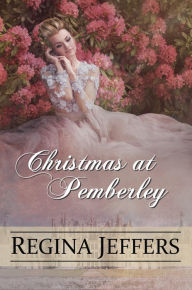
A handsome rake meets his match in a red-headed enchantress who is his enemy!

They may be on different sides of the law, but Lord Navan Beaufort is not going to permit that to stop him from protecting Miss Audrey Moreau. Navan has never thought truly to love anyone, but when he laid eyes on the red-headed beauty, his world shifted. Unfortunately, the lady appears to prefer Lord Alexander Dutton to him, though Navan has rarely had the opportunity to speak to her privately. That is, until he saves her from a fire one miraculous night. From there forward, she is his hope. His future.

Miss Audrey Moreau depends exclusively on her Uncle Jacobi for a home and protection. The man rescued her from a bayman’s plantation in the West Indies when she was five; yet, she well knows the “Marquis of Honfleur’s” schemes. She thought once Jacobi was caught, all would be well, but even from his jail, the man means to rain down harm upon her.

Can two lost souls find happiness together, when everyone in whom they had previously placed their trust have left them alone in the world?

Lyon in Disguise: Lyon’s Den Connected World 

A handsome rake meets his match in a red-headed enchantress who is his enemy!

They may be on different sides of the law, but Lord Navan Beaufort is not going to permit that to stop him from protecting Miss Audrey Moreau. Navan has never thought truly to love anyone, but when he laid eyes on the red-headed beauty, his world shifted. Unfortunately, the lady appears to prefer Lord Alexander Dutton to him, though Navan has rarely had the opportunity to speak to her privately. That is, until he saves her from a fire one miraculous night. From there forward, she is his hope. His future.

Miss Audrey Moreau depends exclusively on her Uncle Jacobi for a home and protection. The man rescued her from a bayman’s plantation in the West Indies when she was five; yet, she well knows the “Marquis of Honfleur’s” schemes. She thought once Jacobi was caught, all would be well, but even from his jail, the man means to rain down harm upon her.

Can two lost souls find happiness together, when everyone in whom they had previously placed their trust have left them alone in the world?

Tropes You’ll Love:

  • Enemies to lovers
  • Self-declared bachelor
  • Friends to lovers
  • Adversaries
  • Damsel in distress
  • Best friend’s sister
  • Different worlds/experiences
  • Soul mates
  • Emotional scars
  • Fish out of water

Read in Kindle Unlimited!

Enjoy book one in a new series within The Lyon’s Den Connected world by Regina Jeffers.

Book 1 – Lyon in the Way

Book 2 – Lyon’s Obsession

Book 3 – Lyon in Disguise

Book 4 – Lost in the Lyon’s Garden

Book 5 – Lyon on the Inside

Amazon https://www.amazon.com/dp/B0G1V963YZ

Please Note: The price of this book will increase to $3.99 on 11/26/2025.

Amazon

f

Posted in aristocracy, book release, British history, Dragonblade Publishers, eBooks, estates, Georgian England, Georgian Era, hero, heroines, historical fiction, history, Ireland, Living in the Regency, mystery, publishing, Regency era, Regency romance, research, travel, writing | Tagged , , , , , , , , , , , , , , , , , , , | Comments Off on Neidín, Ireland, and the Kenmare River + the Upcoming Release of “Lyon in Disguise” from Dragonblade Publishing (Arriving 17 December 2025)

Cork City, Ireland’s Access During the Regency + the Upcoming Release of “Lyon in Disguise” from Dragonblade Publishing (Arriving 17 December 2025)

The Corporation of Cork managed entering and exiting Cork City up until the early years of the 1800s. It was the Corporation’s duty to collect the necessary taxes imposed upon the ships and the city and manage the complex of quays marking the entrance into Cork City. One must remember that the city does not sit on Ireland’s coastline.

The waterway leading into Cork City, Ireland, is called the River Lee. It rises in the Shehy Mountains on the western border of County Cork and flows eastward, eventually reaching the Celtic Sea at Cork Harbour, a large natural harbor on the south coast. As the River Lee flows through Cork City, it splits into two channels for a short distance, forming an island upon which the city center is built. As one could imagine, by the early nineteenth century reaching Cork City’s harbor became more problematic with the size of the boats/ships.

Notable in earlier maps of the city are the quays depicted in the walled town of Cork and the myriad of quays constructed during the eighteenth century especially around the Custom House (now part of the Crawford Art Gallery) on the so-called eastern marshes.

Map of Cork South Docks, 1801 (source: Cork City Library) ~ Note the North Channel and the South Channel and the island in between ~ http://corkheritage.ie/?page_id=5884

“In early nineteenth century records, silting up of the River Lee estuary was a common problem. In 1820, Cork Harbour Commissioners were formally constituted and purchased a locally built dredger. The dredger deposited the silt from the river into wooden barges, which were then towed ashore. The silt was re-deposited behind the Navigation Wall. The Navigation Wall was completed in 1761 to be a guiding wall for ships entering into the city centre’s quays complex. During the Great Famine, deepening of the river created jobs for 1,000 men who worked on creating the Navigation Wall’s road. The road was later to become The Marina Walk.” [Cork Heritage]

In addition to trading with Britain, trading connections were developed with French ports for wine, brandy, and agricultural goods, and timber from the Baltic areas. Travel to and from North America was also developed. “The outbreak of the American War of Independence in 1775 and the subsequent entry of France into that war on the side of the Americans, meant that shipping on the routes across the Atlantic was vulnerable to enemy attack.  One solution was to group large numbers of vessels together in a convoy and escort them to their destination with warships. The large sheltered harbour at Cork was ideal for gathering ships for this purpose during an age when sailing ships often had to wait days or even weeks for a fair wind.  The value of the harbour was not forgotten when war broke out in the 1790s against France and again Cork became a busy gathering place for shipping. During this time, much of the main shipping activity took place in the lower harbour as navigation to the city itself was difficult for larger vessels. This was an increasing problem as the size of ships grew during the 19th and 20th centuries. As late as the 1870s, some ships still had to unload their cargo onto lighters (smaller vessels) at Passage West in the harbour to be brought up to the city.” [Cork Archives]

Lyon in Disguise: Lyon’s Den Connected World 

A handsome rake meets his match in a red-headed enchantress who is his enemy!

They may be on different sides of the law, but Lord Navan Beaufort is not going to permit that to stop him from protecting Miss Audrey Moreau. Navan has never thought truly to love anyone, but when he laid eyes on the red-headed beauty, his world shifted. Unfortunately, the lady appears to prefer Lord Alexander Dutton to him, though Navan has rarely had the opportunity to speak to her privately. That is, until he saves her from a fire one miraculous night. From there forward, she is his hope. His future.

Miss Audrey Moreau depends exclusively on her Uncle Jacobi for a home and protection. The man rescued her from a bayman’s plantation in the West Indies when she was five; yet, she well knows the “Marquis of Honfleur’s” schemes. She thought once Jacobi was caught, all would be well, but even from his jail, the man means to rain down harm upon her.

Can two lost souls find happiness together, when everyone in whom they had previously placed their trust have left them alone in the world?

Tropes You’ll Love:

  • Enemies to lovers
  • Self-declared bachelor
  • Friends to lovers
  • Adversaries
  • Damsel in distress
  • Best friend’s sister
  • Different worlds/experiences
  • Soul mates
  • Emotional scars
  • Fish out of water

Read in Kindle Unlimited!

Enjoy book one in a new series within The Lyon’s Den Connected world by Regina Jeffers.

Book 1 – Lyon in the Way

Book 2 – Lyon’s Obsession

Book 3 – Lyon in Disguise

Book 4 – Lost in the Lyon’s Garden

Book 5 – Lyon on the Inside

Amazon https://www.amazon.com/dp/B0G1V963YZ

Please Note: The price of this book will increase to $3.99 on 11/26/2025.

The authorities recognised this problem and set about a series of improvements.  A new Navigation Wall (now the Marina) was constructed from the mid-18th century to improve the access for shipping as it approached the city.  Similarly, over time, the quaysides in the city itself were improved so that ships could more easily discharge directly onto the city docks.  The result was greatly expanded shipping operations close to the city centre and near the various industries and trades there from the 19th century.  Ironically, by the late 20th century large scale shipping activities again moved to the lower harbour where specially built deep water facilities were developed at Ringaskiddy.

Citizens of Cork saw gradual changes in the type of ships using their port over the centuries.  Wooden hulled sailing vessels were the usual form of transport for people and cargo until the advent of steamships in the early 19th century.  As early as the 1820s there were paddlesteamers regularly using the port, acting as ferries within the harbour itself, to other ports in Ireland and on routes to Britain.  Steam and then diesel  gradually overtook sail, although wooden cargo sailing ships still called to the port as late as the 1930s.  From the mid-19th century iron and steel began to be used instead of wood in the construction of ships and, again, over time fewer and fewer wooden vessels were seen.  During the 19th century Cork had  successful shipbuilding enterprises constructing wooden and later iron vessels.  They also built yachts and boats to cater for the popular recreation of pleasure boating in the harbour area.

https://www.corkarchives.ie/merchant_city/home/shipping/

Posted in book release, British history, Dragonblade Publishers, exploration, Georgian England, Georgian Era, hero, heroines, historical fiction, history, Ireland, mystery, publishing, real life tales, Regency era, Regency romance, research, suspense, writing | Tagged , , , , , , , , , , , , , , , , , , | Comments Off on Cork City, Ireland’s Access During the Regency + the Upcoming Release of “Lyon in Disguise” from Dragonblade Publishing (Arriving 17 December 2025)

The Island of Jersey + the Upcoming Release of “Lyon in Disguise” from Dragonblade Publishing (Arriving 17 December 2025)

Short Excerpt:

When they reached Marksman’s home less than a half hour later, Navan turned Lady Annalise over to the maid who had assisted her mistress earlier. “I will be in the chambers at the end of the hall if her ladyship requires anything.” 

“Yes, my lord.” 

He turned to find Lord Graham still in the open door. “I did not realize you remained,” Beaufort said as he looked once more at the sleeping Annalise. 

“Are you proposing soon?” Graham asked. 

Navan nudged his friend from the room. “I am still considering the possibility.” 

“Marksman will not approve,” Graham suggested with a grin. “Especially as you would be taking his sister so far away from him.” 

“At the moment Marksman does not have a say in the matter. It will be Lady Annalise’s choice. If necessary, we will go to Scotland or Jersey to marry. Marksman gave up his rights to have a say in his sister’s life when he permitted Theodora to drag him around as if he was an obedient puppy.” 

So what do you know of Jersey? I have used both Jersey and Guernsey in several tales, one still waiting to be published.

Jersey is officially called the Bailiwick of Jersey,[ and it is an autonomous and self-governing island territory of the British Islands. It is considered to have British Crown Dependency, and it not a sovereign state it its own right. It does, however, have its own laws and governmental institutions. It is located off the coast of northwest France and is the largest of the Channel Islands. It sets some 14 miles off the Normandy’s Cotentin Peninsula.

The “Baliwick” consists of Jersey and several uninhabited islands: Les Écréhus, Les Pierres de Lecq, Les Minquiers, and Les Dirouilles. [Les Écréhous & Les Dirouilles, Jersey]

Originally, Jersey was considered to be a part of the Duchy of Normandy, but Normandy was lost in war in the 13th Century, and the ducal title was surrendered to France. However, Jersey remained loyal to the English Crown, though it was never a part of the kingdom which became Great Britain. With its close proximity to France, Jersey was invaded several times during the Napoleonic Wars and the Anglo-French Wars. Even Germany occupied it for five years during the Second World War. The island was liberated on 9 May 1945, which is now celebrated as the island’s national day.


St Helier is the capital of Jersey, the largest of the Channel Islands in the English Channel. It is the most populous of the twelve parishes of Jersey, with a population of 35,822, over one-third of the island’s total population. The town of St Helier is the largest settlement and only town of Jersey.

Jersey has it own parliament, financial institutions, judicial system, laws of government. The Bailiff is the civil head, president of the states and head of the judiciary; the lieutenant governor represents the head of state, the British monarch; and the chief minister is the head of government. Jersey’s defence and international representation – as well as certain policy areas, such as nationality law – are the responsibility of the UK government, but Jersey still has a separate international identity.

Mont Orgueil was built in the 13th century after its split from Normandy. ~ Public Domain via Wikipedia

“The island has a large financial services industry, which generates 40% of its GVA.British cultural influence on the island is evident in its use of English as the main language and the pound sterling as its primary currency. Additional British cultural similarities include: driving on the left, access to British television, newspapers and other media, a school curriculum following that of England, and the popularity of British sports, including football and cricket. The island also has a strong Norman-French culture, such as its historic dialect of the Norman language, Jèrriais, being one of only two places in Normandy with government status for the language (the other being Guernsey), as well as the use of standard French in legal matters and officially in use as a government language, strong cultural ties to mainland Normandy as a part of the Normandy region, and place names with French or Norman origins. The island has very close cultural links with its neighbouring islands in the Bailiwick of Guernsey, and they share a good-natured rivalry.”[Quayle, T. (1815). A general view of the agriculture and present state of the islands on the coast of Normandy. London: Board of Agriculture. p. 48.]

Additional Information:

Also, check out Were There Any Requirements for Those of Age to Elope to France?

As well as, Code Napoleon and How It Might Screw Up that Elopement Scene You Are Writing

Lyon in Disguise: Lyon’s Den Connected World 

A handsome rake meets his match in a red-headed enchantress who is his enemy!

They may be on different sides of the law, but Lord Navan Beaufort is not going to permit that to stop him from protecting Miss Audrey Moreau. Navan has never thought truly to love anyone, but when he laid eyes on the red-headed beauty, his world shifted. Unfortunately, the lady appears to prefer Lord Alexander Dutton to him, though Navan has rarely had the opportunity to speak to her privately. That is, until he saves her from a fire one miraculous night. From there forward, she is his hope. His future.

Miss Audrey Moreau depends exclusively on her Uncle Jacobi for a home and protection. The man rescued her from a bayman’s plantation in the West Indies when she was five; yet, she well knows the “Marquis of Honfleur’s” schemes. She thought once Jacobi was caught, all would be well, but even from his jail, the man means to rain down harm upon her.

Can two lost souls find happiness together, when everyone in whom they had previously placed their trust have left them alone in the world?

Tropes You’ll Love:

  • Enemies to lovers
  • Self-declared bachelor
  • Friends to lovers
  • Adversaries
  • Damsel in distress
  • Best friend’s sister
  • Different worlds/experiences
  • Soul mates
  • Emotional scars
  • Fish out of water

Read in Kindle Unlimited!

Enjoy book one in a new series within The Lyon’s Den Connected world by Regina Jeffers.

Book 1 – Lyon in the Way

Book 2 – Lyon’s Obsession

Book 3 – Lyon in Disguise

Book 4 – Lost in the Lyon’s Garden

Book 5 – Lyon on the Inside

Amazon https://www.amazon.com/dp/B0G1V963YZ

Please Note: The price of this book will increase to $3.99 on 11/26/2025.

Posted in Anglo-Normans, book release, British history, customs and tradiitons, Dragonblade Publishers, England, Georgian England, Georgian Era, Great Britain, hero, heroines, historical fiction, mystery, publishing, real life tales, Regency era, Regency romance, research, suspense, writing | Tagged , , , , , , , , , , , , , | Comments Off on The Island of Jersey + the Upcoming Release of “Lyon in Disguise” from Dragonblade Publishing (Arriving 17 December 2025)

Card Playing and Gaming Hells + the Upcoming Release of “Lyon in Disquise” from Dragonblade Publishing (Arriving 17 December 2025)

One of the major plot points of Lyon in Disguise is the hero, Lord Navan Beaufort, is sent to assist Mrs. Bessie Dove-Lyon and those at the Lyon’s Den to spot fake bank notes flooding the streets of London in 1812. One of Navan’s areas of expertise for the Home Office is the security of the Bank of London’s bank notes. He is also presented this assignment as many at the Lyon’s Den are Irish working in England. He is an Irish earl, so it is assumed he will have a easier row to hoe in this matter.”

“Assume,” as we say in America, makes an “ass” out of “u” and “me.”

As this is another of The Lyon’s Den Connected World books, it was necessary for me to include the infamous Lyon’s Den, its owner, and staff, in this tale several times.

A question from a reader led me to respond with both a mention of this upcoming release and a bit on card playing in the Regency.

Question: I know many books mention card playing going on in designated rooms at balls, but I haven’t heard what they were playing? Would they be gambling and playing games for money like 21 (apparently one of the most popular games of the day, even among families) or would they stick to games like Whist (I know they played this for stakes, too)? Would there be a person who would play the bank, as there was at the various clubs or hells?

I read somewhere about Fox and how much he and his brother lost even at supposedly staid places like Almack’s.”

Let us approach this question from several points. First, Charles James Fox (24 January 1749 – 13 September 1806) was a Whig MP and leader of the Opposition to William Pitt the Younger’s Tory government. He was a close personal friend of George, Prince of Wales, later George IV, and of Georgiana Cavendish, Duchess of Devonshire.

Charles James Fox, a prominent Whig statesman of the Regency era, was famously plagued by immense gambling debts throughout his life. 

Here’s a summary of his financial struggles:

  • Gambling Addiction: Fox was an inveterate gambler who frequented London’s gentlemen’s clubs like White’s and Brook’s, and the Newmarket races, where he often won and lost fortunes in single sittings.
  • Father’s Bailouts: His father, Lord Holland, reportedly paid off his son’s gambling debts to the tune of £140,000 before his death in 1774. This amount would be astronomical in today’s terms.
  • Continued Debt: Even after his father’s death and these significant payments, Fox’s debts continued to accumulate. He was declared bankrupt twice between 1781 and 1784.
  • Friends’ Support: Fox relied on a network of friends and political allies who frequently loaned him money or contributed to annuities to help cover his debts. The Earl of Carlisle, for example, even faced financial ruin himself due to his support for Fox.
  • Social Stigma & Tolerance: Despite the enormity of his debts, they didn’t entirely hinder Fox’s political career. While excessive gambling was frowned upon in Regency society, the upper classes were accustomed to high stakes and substantial debts. Gambling debts to fellow aristocrats were considered “debts of honor” that had to be paid promptly, even though debts to merchants were sometimes deferred.
  • Late Life Debts: Fox eventually abandoned gambling and racing in his later years, and his debts were significantly reduced by the support of political friends who not only freed him from debt but settled a comfortable income on him. However, at his death in 1806, he still left debts of £10,000. 

Actually, they were referring to the gentlemen’s club Brooks’s, not our Almack’s;  Brooks’s used to be called Almack’s, in the late 18th century.  (Yes, I know, hopelessly confusing!)  And our Almack’s (the place where every young lady making her come out wanted a ticket) was later called Willis’s Rooms (around late 1820s, which only adds to the confusion. 

So the place Fox lost masses of money was the gentlemen’s club. However, I will say that our Almack’s was not as staid as Heyer and most Regency romances made out: It was assuredly not just a “marriage mart” (That was more the Victorian view of it), but a club where the wheelers and dealers of Parliament wheeled their deals (and dealt their wheels?), and where one would meet everyone of importance on a Wednesday night.  So I expect there was some significant money lost and won at our Almack’s, too, on occasion…

Almacks’ was a gambling house that rented out rooms for private events and the assembly.

In Heyer’s Faro’s Daughter, the family has a gambling house where Faro was played. It was a game with a bank that people played against the house. They had a bouncer and usually had people by word of mouth because it was illegal to have a Faro bank. [I used something similar as a plot point in my The Jewel Thief and the Earl.] The caricaturists had a field day with a couple of high class women who were arrested for running a gambling house playing Faro. The prints show them being whipped at the back side of a cart– that didn’t happened, but the authors and artists advocated it.]

The clubs and gambling hells had games with dealers and held the bank. People bet against the  house which won more than 50% of the time.

Private games were between two or more people, and they set their own terms and limits.

In clubs one had to buy cards. In private parties cards were provided.

If you are interested in a quick overview of the various games, you can find information on Risky Regencies.

BTW, there are multiple period pieces from Hoyle’s on Google books (though the period rules can be hard to make out.)

Lyon in Disguise: Lyon’s Den Connected World 

A handsome rake meets his match in a red-headed enchantress who is his enemy!

They may be on different sides of the law, but Lord Navan Beaufort is not going to permit that to stop him from protecting Miss Audrey Moreau. Navan has never thought truly to love anyone, but when he laid eyes on the red-headed beauty, his world shifted. Unfortunately, the lady appears to prefer Lord Alexander Dutton to him, though Navan has rarely had the opportunity to speak to her privately. That is, until he saves her from a fire one miraculous night. From there forward, she is his hope. His future.

Miss Audrey Moreau depends exclusively on her Uncle Jacobi for a home and protection. The man rescued her from a bayman’s plantation in the West Indies when she was five; yet, she well knows the “Marquis of Honfleur’s” schemes. She thought once Jacobi was caught, all would be well, but even from his jail, the man means to rain down harm upon her.

Can two lost souls find happiness together, when everyone in whom they had previously placed their trust have left them alone in the world?

Tropes You’ll Love:

  • Enemies to lovers
  • Self-declared bachelor
  • Friends to lovers
  • Adversaries
  • Damsel in distress
  • Best friend’s sister
  • Different worlds/experiences
  • Soul mates
  • Emotional scars
  • Fish out of water

Read in Kindle Unlimited!

Enjoy book one in a new series within The Lyon’s Den Connected world by Regina Jeffers.

Book 1 – Lyon in the Way

Book 2 – Lyon’s Obsession

Book 3 – Lyon in Disguise

Book 4 – Lost in the Lyon’s Garden

Book 5 – Lyon on the Inside

Amazon https://www.amazon.com/dp/B0G1V963YZ

Please Note: The price of this book will increase to $3.99 on 11/26/2025.

Posted in book release, British history, Dragonblade Publishers, Georgian England, Georgian Era, hero, historical fiction, publishing, real life tales, Regency era, Regency romance, research, suspense, writing | Tagged , , , , , , , , , , , , , | Comments Off on Card Playing and Gaming Hells + the Upcoming Release of “Lyon in Disquise” from Dragonblade Publishing (Arriving 17 December 2025)

Meaning of “Bedlamite” + the Upcoming Release of Lyon in Disguise from Dragonblade Publishing (Arriving 17 December 2025)

Short Teaser from the latter part of Lyon in Disguise where “belamite” is used.

“Your wife has moved quite easily into the role of society wife,” Aaran said from somewhere off Navan’s shoulders. 

“I do not think Annalise is quite ready to tolerate Prince George, as are the Smithfield ladies, nor could she compete with Lady Orson, but then again I do not hold the same type of aspirations as does Richard, who would one day wish to be Prime Minister,” Navan admitted. 

“Neither do I,” Graham commented. “Then again . . .” 

Navan turned to confront his brother. “No more belittling yourself, Aaran, or you may be required to contend with me.” 

Graham shrugged in embarrassment. “We are an odd pair, you and I. That is because we are the non-English members of Duncan’s family,” Graham observed. 

“But you are also Scottish,” Navan said as he crossed to pour them both a drink. “That leaves me the bedlamite of the family.” 

Navan noted the slight blush on Graham’s cheeks. Perhaps Annalise’s speculation regarding Graham’s interest in the woman was correct. 

So what exactly does the word “bedlamite” mean in this situation? A “bedlamite” is an archaic term for a lunatic or a person with a severe mental illness. The term is derived from “Bedlam,” the popular name for the Hospital of Saint Mary of Bethlehem in London, which was a mental asylum. Therefore, a bedlamite is essentially someone considered to be mad or insane, often associated with the chaotic and uncontrolled environment of the former Bedlam institution according to the Online Etymology Dictionary

https://www.etymonline.com/word/Bedlamite

Lord Navan Beaufort believes he and Aaran Graham have lost their senses, for the are fighting more for England than their home countries, which is a constant source of self-chastisement for the Irish lord, especially when he views his fellow Irishmen being belittled by the English.

Lyon in Disguise: Lyon’s Den Connected World 

A handsome rake meets his match in a red-headed enchantress who is his enemy!

They may be on different sides of the law, but Lord Navan Beaufort is not going to permit that to stop him from protecting Miss Audrey Moreau. Navan has never thought truly to love anyone, but when he laid eyes on the red-headed beauty, his world shifted. Unfortunately, the lady appears to prefer Lord Alexander Dutton to him, though Navan has rarely had the opportunity to speak to her privately. That is, until he saves her from a fire one miraculous night. From there forward, she is his hope. His future.

Miss Audrey Moreau depends exclusively on her Uncle Jacobi for a home and protection. The man rescued her from a bayman’s plantation in the West Indies when she was five; yet, she well knows the “Marquis of Honfleur’s” schemes. She thought once Jacobi was caught, all would be well, but even from his jail, the man means to rain down harm upon her.

Can two lost souls find happiness together, when everyone in whom they had previously placed their trust have left them alone in the world?

Tropes You’ll Love:

  • Enemies to lovers
  • Self-declared bachelor
  • Friends to lovers
  • Adversaries
  • Damsel in distress
  • Best friend’s sister
  • Different worlds/experiences
  • Soul mates
  • Emotional scars
  • Fish out of water

Read in Kindle Unlimited!

Enjoy book one in a new series within The Lyon’s Den Connected world by Regina Jeffers.

Book 1 – Lyon in the Way

Book 2 – Lyon’s Obsession

Book 3 – Lyon in Disguise

Book 4 – Lost in the Lyon’s Garden

Book 5 – Lyon on the Inside

Amazon https://www.amazon.com/dp/B0G1V963YZ

Please Note: The price of this book will increase to $3.99 on 11/26/2025.

Posted in aristocracy, book release, British Navy, Dragonblade Publishers, eBooks, etymology, Georgian England, Georgian Era, hero, historical fiction, history, language choices, mystery, Regency romance, research, suspense, writing | Tagged , , , , , , , , , , , , | Comments Off on Meaning of “Bedlamite” + the Upcoming Release of Lyon in Disguise from Dragonblade Publishing (Arriving 17 December 2025)

The Headless Horseman and the House of Dun

images We have all heard of the Headless Horseman. Surely, you know something of the tale written by Washington Irving in 1820: “The Legend of Sleepy Hollow.” However, did you realize that the Headless Horseman had been a much used motif of European folklore since the Middle Ages. The Headless Horseman is traditionally depicted as a man upon horseback who is missing his head. Depending on the legend, the Horseman is either carrying his head, or is missing his head altogether, and is searching for it.

In Irish folklore, the dullahan or dulachán (“dark man”) is a headless, demonic fairy, usually riding a horse and carrying his head under his inner lower thigh (or holding it high to see at great distance). He makes a whip made from a human corpse’s spine. When the dullahan stops riding, a death occurs. The dullahan calls out a name, at which point the named person immediately dies. In another version, he is the headless driver of a black carriage. A similar figure, the gan ceann (“without a head”), can be frightened away by wearing a gold object or putting one in his path. [Wikipedia and McKillop, James A Dictionary of Celtic Mythology, 2004.]

The most prominent British tale of the headless horseman concerns a man named Ewen decapitated in a clan battle at Glen Cainnir on the Isle of Mull. The battle denied him any chance to be a chieftain, and both he and his horse are headless in accounts of his haunting of the area.

the-house.jpgBut what of the House of Dun? Designed with Georgian pride and baroque extravagance by renowned architect William Adam, House of Dun is every bit the perfect 18th-century laird’s home. It took 13 years to complete and the precision shows in the fine details. Joseph Enzer’s plasterwork in the saloon is masterful – classical tableaux and family emblems rise thickly from the walls and ceilings with filigree flourishes. Throughout the house, hand-stitched woolwork and embroideries by Lady Augusta FitzClarence, daughter of William IV and actress Dorothy Jordan, are equally impressive. [National Trust for Scotland]

Angus Folklore tells us, “Castles and mansions seems to favour larger properties, as if spirits develop an inexplicable sense of snobbery after death.  The House of Dun in the north-east of the county, was built in the Georgian era for the Erskine family who lived here into the 20th century.  The house can be said, without exaggeration, to be fully infested with ghosts.  The House of Dun probably first came to national prominence after its inclusion in Catherine Crowe’s classic compendium The Night Side of Nature (1848):

download “Not very long since, a gentleman set out, one fine midsummer’s evening, when it is light all night in Scotland, to walk from Montrose to Brechin. As he approached a place called Dunn, he observed a lady walking on before, which, from the lateness of the hour, somewhat surprised him. Sometime afterwards, he was found by the early labourers lying on the ground, near the churchyard, in a state of insensibility.  All that he could tell them was that he had followed this lady till she had turned her head and looked round at him, when seized with horror, he had fainted.  ‘Oh,’ said they, ‘you have seen the lady of Dunn.’  What the legend attached to this lady of Dunn is, I do not know. [The Night Side of Nature, 226.]

 “This ghost cannot be definitely identified, but in more recent times there have been sightings of an woman riding a horse through the grounds; unusually, she is facing backwards on her horse. Other ghosts on the estate include a headless horseman, plus – near a certain yew tree –  the spirit of a knight killed after he returned here from the east and found his lover had betrayed him. In recent years voices have been heard inside the house, plus the sound of a crying baby and an invisible harpist.  More bizarrely, a phone has been heard ringing in a part of the house where there was no actual physical telephone.  Diverse other phenomena include:  unseen dogs,  a dress floating around without a body inside, plus an array of spirits both male and female, some of whom resented modern, living intruders.”

House of Dun, meanwhile, is haunted by the Headless Horseman, but the house has plenty of history. A harpist was murdered at the den – and is often spotted in the exact same spot playing musical laments, and the ghost of a knight has been seen on the grounds, too.

Posted in British history, castles, Georgian Era, legends, legends and myths, Scotland, Uncategorized | Tagged , , , , , , , , | 2 Comments

Just for Halloween: Zombies: Monsters of the People!

Group of zombies, shooting of the film Meat Market 3. This photo was taken during the shooting of the film and is not taken from the actual film. The author of the photo and the person responsible for taking the photos released the photos under the CC licenIt mce. ~ https://simple.wikipedia.org/wiki/Zombie#/media/File:Groupofzombiesjoelf.jpg

Have we not all at one time or another felt like a zombie? We work ourselves into a mindless blob of humanity.

My last blog was on vampires, so I thought I would give equal time to zombies. It is true that in the American media that zombies regularly appear, especially in so-called “troubled times.” For example, Night of the Living Dead (1968) came along during the Vietnam era. Zombies are an unfinished portrait of what scares us, and they reflect the crisis of the moment.

As this is an election year, let us look at the political ramifications of zombie movies. I read an article a few years back, which claimed we are polluted with zombie movies when a Republican is in office and with vampire movies when a Democrat takes over. The idea is that Democrats are afraid of upper class America and believe the rich are milking the country dry, and the Republicans fear a revolt of the masses. If one looks at it that way, it makes sense that when the first Bush was in office that we had 183 zombie flicks in seven years. During the Clinton years we were given Dracula: Dead and Loving It, Blade, Interview with a Vampire, Bram Stroker’s Dracula, etc.

Where vampire films are often the metaphor for any misunderstood minority (gays and lesbians, etc.), zombies are used as an analogy for society’s bigger ideas (the Cold War, disease, pollution, etc.). They reflect our greatest fear at the time. Zombies are virtually “unkillable,” are biodegradable, possess a perverse single-mindedness, have no supernatural powers, and are “lovingly” hideous. They are the monsters of the people!

In modern times, the term “zombie” has been applied to an undead being in horror fiction, often drawing from the depiction of zombies in George A. Romero’s 1968 film Night of the Living Dead. They have appeared as plot devices in various books, films, television shows, video games and comics.

In Popular Culture
The figure of the zombie has appeared several times in fantasy themed fiction and entertainment, as early as the 1929 novel The Magic Island by William Seabrook. Time claimed that the book “introduced ‘zombi’ into U.S. speech”.

In 1932, Victor Halperin directed White Zombie, a horror film starring Bela Lugosi. This film, capitalizing on the same voodoo zombie themes as Seabrook’s book of three years prior, is often regarded as the first legitimate zombie film, and introduced the word “zombie” to the wider world. Other zombie-themed films include Val Lewton’s I Walked With a Zombie (1943) and Wes Craven’s The Serpent and the Rainbow, (1988) a heavily fictionalized account of Wade Davis’ book.

The DC comics character Solomon Grundy, a villain who first appeared in a 1944 Green Lantern story, is one of the earliest depictions of a zombie in the comics medium. In 2011, Image Comics released a four issue miniseries entitled Drums, by writer El Torres and artist Abe Hernando. The story consists of Afro-Caribbean zombies that have been created using voodoo.

The zombie also appears as a metaphor in protest songs, symbolizing mindless adherence to authority, particularly in law enforcement and the armed forces. Well-known examples include Fela Kuti’s 1976 album Zombie, and The Cranberries’ 1994 single “Zombie.”

A new version of the zombie, distinct from that described in Haitian religion, has also emerged in popular culture in recent decades. This “zombie” is taken largely from George A. Romero’s seminal film The Night of the Living Dead, which was in turn partly inspired by Richard Matheson’s 1954 novel I Am Legend. The word zombie is not used in Night of the Living Dead, but was applied later by fans. The monsters in the film and its sequels, such as Dawn of the Dead and Day of the Dead, as well as its many inspired works, such as Return of the Living Dead and Zombi 2, are usually hungry for human flesh although Return of the Living Dead introduced the popular concept of zombies eating brains.

Sometimes they are victims of a fictional pandemic illness causing the dead to reanimate or the living to behave this way, but often no cause is given in the story. Although this modern monster bears some superficial resemblance to the Haitian zombie tradition, its links to such folklore are unclear, and many consider George A. Romero to be the progenitor of this creature.

Zombie fiction is now a sizeable sub-genre of horror, usually describing a breakdown of civilization occurring when most of the population become flesh-eating zombies — a zombie apocalypse.

Zombiepedia tells us, “Zombies are an extremely popular theme for video games, particularly in first-person shooters and role-playing genres. The most popular games in the theme include Resident EvilDead RisingHouse of the Dead, and Left 4 Dead. Outside of console games, the 3D multiplayer online game, Dead Frontier, features survivors battling against zombies and mutants, and has over 2,000 players online every minute. Another zombie MMO is grid-based gamed Urban Dead, where players battle the undead. The Last Stand is also an online game and currently has four installments. 

In Music: “Zombies and horror have become so popular that many songs and bands have been based on these flesh-eating zombies. Zombie references crop up in every genre from pop to death metal and some subgenres such as horror punk mine the zombie aesthetic extensively. Horror punk has also been linked with the subgenres of deathrock and psychobilly. The success of these genres has been mainly underground, although psychobilly has reached some mainstream popularity. the well known metal musician (and director) Rob Zombie incorporates zombie aesthetics and references into much of his music and music videos. As well, the zombie also appears in protest songs, symbolizing mindless adherence to authority (especially in law enforcement and the armed forces.) A well-known example is Fela Kuti’s 1976 single Zombie. Likewise, The Cranberries hit single “Zombie” uses them as metaphors for the cultlike perpetrators of continued Irish violence centered around independence movements and religious divisions. Don’t forget Micheal Jackson’s famous Thriller where his back up dancers were dressed in frightening zombie costumes in the graveyard themed video.”

In Art: “Artist Jillian has made several works of video art involving zombies, and exhibited them in her 2007 show, “Horror Stories,” at ThreeWalls Gallery in Chicago. Other zombie-related works by McDonald include “Zombies in Condoland” (prints and animations derived from internet documentation of zombie walks), and a series of lenticular animation photographs called “Zombie Portraits,” in which the subjects transform into zombies.”

In Literature: “Recent zombie fiction of note includes Brian Keene’s 2005 novel The Rising, followed by its sequel City Of The Dead, which deal with a worldwide apocalypse of intelligent zombies, caused by demonic possession. Though the story took many liberties with the zombie concept, The Rising proved itself to be a success in the subgenre, even winning the 2005 Bram Stoker award.

“Famed horror novelist Stephen King has mined the zombie theme, first with 1990’s “Home Delivery”, written for the aforementioned Book of the Dead compilation and detailing a small town’s attempt to defend itself from a classic zombie outbreak. In 2006 King published Cell, which concerns a struggling young artist on a trek from Boston to Maine in hopes of saving his family from a possible worldwide zombie outbreak, created by “The Pulse”, a global electromagnetic phenomenon that turns the world’s cellular phone users into bloodthirsty, zombie-like maniacs. Cell was a number-one bestseller upon its release. Aside from Cell, the most well-known current work of zombie fiction is 2006’s World War Z by Max Brooks, which was an immediate hit upon its release and a New York Times bestseller. Brooks had previously authored the cult hit The Zombie Survival Guide, an exhaustively researched, zombie-themed parody of pop-fiction survival guides.

“David Wellington’s trilogy of zombie novels began in 2004 with Monster Island, followed by two sequels, Monster Nation and Monster Planet. These were serialised in a weblog format before being published in paperback.

“The fictional Disney cartoon character Bombie the Zombie, created by Carl Barks, first appeared in the Voodoo Hoodoo strip in 1949. Bombie had been reanimated by an African voodoo sorcerer, and was sent on a mission to poison Scrooge McDuck. Later on Don Rosa reused the character in his own McDuck stories.

“J.K. Rowling includes zombies, known as Inferi, in the sixth book of her Harry Potter series. The Inferi are dead humans who are re-animated by Dark Magic.”

Other Sources You Might Find Interesting: 

Why Do Zombies Lumber

Posted in film, legends and myths | Tagged , , , , | Comments Off on Just for Halloween: Zombies: Monsters of the People!

Just for Halloween: Vampires: Immortal Prisoners

JeffersVDDSome years back, I wrote a vampire version of Pride and Prejudice. Ulysses Press has again bought the rights to this book, and it is returning to shelves in 2026.

As my book was set in Regency England (1800-1820), even the legend of Dracula could not serve as a basis because Bram Stoker’s classic came out in 1897. Therefore, it took me some time to sort out how I wanted to handle the “vampirism” in the book. I was influenced by several other vampire stories over the years.

In Dracula, Stoker really is using Count Dracula as a combined symbol of old world superstitions and modern economic improvements. It was the Victorian era, and the people had many fears, among them the fear of sexuality and the British fear of being conquered by an “outsider.” Both are evident in the book.

Dracula is a member of the noble class who must mingle with those of a lower class to survive. As far as feminism is concerned, please recall that in Dracula, all vampires are female (except Count Dracula). Vampirism gives them the male trait of being the perpetrator. However, Stoker’s vampires bear little resemblance to humans. Dracula, for example, has an insatiable thirst for blood. When he kills, he does so purely to sustain his own existence. He has no guilt or moral qualms about killing. Dracula’s immortality imprisons him; he has no companions except those he captures and entraps in his home. A stake or a crucifix or clove garlic are the weapons of choice to be rid of the count, where fire does not affect him.

At one time, I read Anne Rice regularly. We all remember Lestat De Lioncourt, Rice’s main character in her Vampire Chronicles. With Lestat, the reader had a different type of vampire. Lestat possessed the human qualities of having a mind and a spirit. We found in him a vampire who did not kill just to kill. The “hunt” was part of the experience. One might find Lestat discussing philosophy or politics. In fact, he has an unusual collection of talents, and we find him to be very passionate. He makes his “lovers” people we might never associate with vampirism (a nun, for example). He seeks friendship from the mortals he turns. Lestat has an eternal soul. Unlike Dracula, Lestat cannot be killed by a stake or a crucifix. Lestat even slept in a church in one of the books. Rice has her vampires killed by fire or by being placed in sunlight, where they ignite into flames.

Vampire legends say that the vampire must be an animated corpse, who claws out of his grave to feed upon human blood. He is dirty and foul-smelling. Yet, the modern vampire is an immortal creature, who retains his youth and lives forever, something very appealing to our youth and sex obsessed culture. He is the eternal bad boy, forever able to indulge in dark desires and sexual urges. The vampire who exhibits self-control is a new phenomenon. Add a bit of compassion, and one has “Twilight.” The post 9/11 world does not look favorably on people or beings who hide in plain sight, yet, have the ability to kill us.

Therefore, our recent vampires are less likely to be portrayed as monsters. I, seriously, believe that the paranormal literature we are currently experiencing is an aftermath of our youth growing up reading the Harry Potter series. Paranormal books are a more sophisticated fantasy.

In Modern Fiction
The vampire is now a fixture in popular fiction. Such fiction began with 18th-century poetry and continued with 19th-century short stories, the first and most influential of which was John Polidori’s The Vampyre (1819), featuring the vampire Lord Ruthven. Lord Ruthven’s exploits were further explored in a series of vampire plays in which he was the anti-hero. The vampire theme continued in penny dreadful serial publications such as Varney the Vampire (1847) and culminated in the pre-eminent vampire novel of all time: Dracula by Bram Stoker, published in 1897. Over time, some attributes now regarded as integral became incorporated into the vampire’s profile: fangs and vulnerability to sunlight appeared over the course of the 19th century, with Varney the Vampire and Count Dracula both bearing protruding teeth, and Murnau’s Nosferatu (1922) fearing daylight. The cloak appeared in stage productions of the 1920s, with a high collar introduced by playwright Hamilton Deane to help Dracula ‘vanish’ on stage.

Lord Ruthven and Varney were able to be healed by moonlight, although no account of this is known in traditional folklore. Implied though not often explicitly documented in folklore, immortality is one attribute which features heavily in vampire film and literature. Much is made of the price of eternal life, namely the incessant need for blood of former equals.

Literature
The vampire or revenant first appeared in poems such as The Vampire (1748) by Heinrich August Ossenfelder, Lenore (1773) by Gottfried August Bürger, Die Braut von Corinth (The Bride of Corinth (1797) by Johann Wolfgang von Goethe, Robert Southey’s Thalaba the Destroyer (1801), John Stagg’s “The Vampyre” (1810), Percy Bysshe Shelley’s “The Spectral Horseman” (1810) (“Nor a yelling vampire reeking with gore”) and “Ballad” in St. Irvyne (1811) about a reanimated corpse, Sister Rosa, Samuel Taylor Coleridge’s unfinished Christabel and Lord Byron’s The Giaour. Byron was also credited with the first prose fiction piece concerned with vampires: The Vampyre (1819). However this was in reality authored by Byron’s personal physician, John Polidori, who adapted an enigmatic fragmentary tale of his illustrious patient, “Fragment of a Novel” (1819), also known as “The Burial: A Fragment.” Byron’s own dominating personality, mediated by his lover Lady Caroline Lamb in her unflattering roman-a-clef, Glenarvon (a Gothic fantasia based on Byron’s wild life), was used as a model for Polidori’s undead protagonist Lord Ruthven. The Vampyre was highly successful and the most influential vampire work of the early 19th century.

Varney the Vampire was a landmark popular mid-Victorian era gothic horror story by James Malcolm Rymer (alternatively attributed to Thomas Preskett Prest), which first appeared from 1845 to 1847 in a series of pamphlets generally referred to as penny dreadfuls because of their inexpensive price and typically gruesome contents.

The story was published in book form in 1847 and runs to 868 double-columned pages. It has a distinctly suspenseful style, using vivid imagery to describe the horrifying exploits of Varney. Another important addition to the genre was Sheridan Le Fanu’s lesbian vampire story Carmilla (1871). Like Varney before her, the vampire Carmilla is portrayed in a somewhat sympathetic light as the compulsion of her condition is highlighted.

No effort to depict vampires in popular fiction was as influential or as definitive as Bram Stoker’s Dracula (1897). Its portrayal of vampirism as a disease of contagious demonic possession, with its undertones of sex, blood and death, struck a chord in Victorian Europe where tuberculosis and syphilis were common. The vampiric traits described in Stoker’s work merged with and dominated folkloric tradition, eventually evolving into the modern fictional vampire. Drawing on past works such as The Vampyre and “Carmilla,” Stoker began to research his new book in the late 19th century, reading works such as The Land Beyond the Forest (1888) by Emily Gerard and other books about Transylvania and vampires.

In London, a colleague mentioned to him the story of Vlad Ţepeş, the “real-life Dracula,” and Stoker immediately incorporated this story into his book. The first chapter of the book was omitted when it was published in 1897, but it was released in 1914 as Dracula’s Guest.

The latter part of the 20th century saw the rise of multi-volume vampire epics. The first of these was Gothic romance writer Marilyn Ross’ Barnabas Collins series (1966–71), loosely based on the contemporary American TV series Dark Shadows. It also set the trend for seeing vampires as poetic tragic heroes rather than as the more traditional embodiment of evil. This formula was followed in novelist Anne Rice’s highly popular and influential Vampire Chronicles (1976–2003).

The 21st century brought more examples of vampire fiction, such as J.R. Ward’s Black Dagger Brotherhood series, and other highly popular vampire books which appeal to teenagers and young adults. Such vampiric paranormal romance novels and allied vampiric chick-lit and vampiric occult detective stories are a remarkably popular and ever-expanding contemporary publishing phenomenon. L.A. Banks’ The Vampire Huntress Legend Series, Laurell K. Hamilton’s erotic Anita Blake: Vampire Hunter series, and Kim Harrison’s The Hollows series, portray the vampire in a variety of new perspectives, some of them unrelated to the original legends.

Vampires in the Twilight series (2005–2008) by Stephenie Meyer ignore the effects of garlic and crosses, and are not harmed by sunlight (although it does reveal their supernatural nature). Richelle Mead further deviates from traditional vampires in her Vampire Academy series (2007–present), basing the novels on Romanian lore with two races of vampires, one good and one evil, as well as half-vampires.

Film and Television
Considered one of the preeminent figures of the classic horror film, the vampire has proven to be a rich subject for the film and gaming industries. Dracula is a major character in more films than any other but Sherlock Holmes, and many early films were either based on the novel of Dracula or closely derived from it. These included the landmark 1922 German silent film Nosferatu, directed by F. W. Murnau and featuring the first film portrayal of Dracula—although names and characters were intended to mimic Dracula’s, Murnau could not obtain permission to do so from Stoker’s widow, and had to alter many aspects of the film. In addition to this film was Universal’s Dracula (1931), starring Béla Lugosi as the Count in what was the first talking film to portray Dracula. The decade saw several more vampire films, most notably Dracula’s Daughter in 1936.

The legend of the vampire was cemented in the film industry when Dracula was reincarnated for a new generation with the celebrated Hammer Horror series of films, starring Christopher Lee as the Count. The successful 1958 Dracula starring Lee was followed by seven sequels. Lee returned as Dracula in all but two of these and became well known in the role. By the 1970s, vampires in films had diversified with works such as Count Yorga, Vampire (1970), an African Count in 1972’s Blacula, the BBC’s Count Dracula featuring French actor Louis Jourdan as Dracula and Frank Finlay as Abraham Van Helsing, and a Nosferatu-like vampire in 1979’s Salem’s Lot, and a remake of Nosferatu itself, titled Nosferatu the Vampyre with Klaus Kinski the same year. Several films featured female, often lesbian, vampire antagonists such as Hammer Horror’s The Vampire Lovers (1970) based on Carmilla, though the plotlines still revolved around a central evil vampire character.

The pilot for the Dan Curtis 1972 television series Kolchak: The Night Stalker revolved around reporter Carl Kolchak hunting a vampire on the Las Vegas strip. Later films showed more diversity in plotline, with some focusing on the vampire-hunter, such as Blade in the Marvel Comics’ Blade films and the film Buffy the Vampire Slayer. Buffy, released in 1992, foreshadowed a vampiric presence on television, with adaptation to a long-running hit TV series of the same name and its spin-off Angel. Still others showed the vampire as protagonist, such as 1983’s The Hunger, 1994’s Interview with the Vampire: The Vampire Chronicles and its indirect sequel of sorts Queen of the Damned, and the 2007 series Moonlight.

Bram Stoker’s Dracula was a noteworthy 1992 film which became the then-highest grossing vampire film ever. This increase of interest in vampiric plotlines led to the vampire being depicted in films such as Underworld and Van Helsing, and the Russian Night Watch and a TV miniseries remake of ‘Salem’s Lot, both from 2004. The series Blood Ties premiered on Lifetime Television in 2007, featuring a character portrayed as Henry Fitzroy, illegitimate son of Henry VIII of England turned vampire, in modern-day Toronto, with a female former Toronto detective in the starring role.

A 2008 series from HBO, entitled True Blood, gives a Southern take to the vampire theme. Another popular vampire-related show is CW’s The Vampire Diaries. The continuing popularity of the vampire theme has been ascribed to a combination of two factors: the representation of sexuality and the perennial dread of mortality. Another “vampiric” series that has recently come out is the Twilight Saga, a series of films based on the book series of the same name.

Games
The role-playing game Vampire: the Masquerade has been influential upon modern vampire fiction and elements of its terminology, such as embrace and sire, have become widely used. Popular video games about vampires include Castlevania, which is an extension of the original Bram Stoker Dracula novel, and Legacy of Kain.

Vampires are also sporadically portrayed in other games, including The Elder Scrolls IV: Oblivion, when a character can become afflicted with porphyric haemophilia. A different take on vampires is presented in Bethesda’s other game Fallout 3 with “The Family.” Members of the Family are afflicted with a manic desire to consume human flesh, but restrict themselves to drinking blood to avoid becoming complete monsters.

Posted in film, legends and myths, Victorian era | Tagged , , , | 6 Comments

By-Elections? What Does That Mean for Parliament? + the Upcoming Release of “Lyon in Disguise” from Dragonblade Publishing (Arriving 17 December 2025)

According to the UK Parliament website, in the United Kingdom, a “parliamentary by-election happens when a seat in the House of Commons becomes vacant between general elections. This can happen when an MP [Member of Parliament]:

  • resigns or dies
  • is declared bankrupt
  • takes a seat in the House of Lords
  • is subject to a successful recall petition
  • is convicted of a serious criminal offence.

“Until an election, an MP of the same party in a neighbouring constituency manages constituency matters.

“What is ‘moving the writ’?

The Chief Whip of the political party whose MP held the vacant seat starts the process of a by-election.

“This starts by ‘moving the Writ’, a motion requesting:

“that the Speaker do issue his Warrant to the Clerk of the Crown to make out a new Writ for the electing of a Member to serve in this present Parliament for the constituency of …. in the room of…”

“The Speaker puts the question to MPs to decide whether to agree to the motion.

“If MPs agree it becomes an Order for the Speaker. The Speaker then issues a Warrant to the Clerk of the Crown who then sends the writ to the Returning Officer.

“Serious practical difficulties also arise in the calculation of the size of a `voterate’ from polling figures alone, because of the nature of elections in double-Member constituencies. Even in a straightforward contest between two pairs of candidates not all freeholders would vote a ‘straight’ party ticket. Some cross-voting, or ‘split’-voting, would be inevitable, even in constituencies polarized by party interests. 

“Pollbook analysis for the counties of Buckinghamshire and Westmorland in the years after 1701 shows an already low percentage of ‘split’ votes declining at every election but never disappearing completely.30 Other voters would ‘plump’ for their favoured candidate by casting a single vote. Calculations based on the votes cast for each candidate thus offer no more than a rough guide to the total number of freeholders polled. 

“The method adopted in the constituency articles has been to add up all the votes cast and divide by the number of seats being contested, which produces a minimum figure. This obviously works best when four candidates have contested two seats. Three-cornered contests, and those rare occasions in which there were more than four candidates, make the arithmetic more problematic and the results even more approximate. “

All the above is well and good for present day elections, but what of one in the early 1800s, for example. There was no central system of transportation. No phone, not even telegraphs. TIME was often the enemy in these type of situations.

By-elections, when fought between two candidates over one seat, produce a precise aggregate of votes cast, but are by definition exceptional, their circumstances (with not every major interest in a county necessarily involved) conducive to a low turnout.

Each elector had two votes? I knew that each borough elected two representatives to the House of Commons, but what would be the point of the electors’ having two votes?

Good question, but without an easy answer.

These are double member constituencies. Or like London where 4 voters had to fill 4 seats. I think there were candidates for each seat and voters could vote for someone for each vacancy. I don’t know if this method changed before 1832. A by election concerned one seat so would involve one vote.

https://www.britannica.com/topic/House-of-Commons-British-government

In a general election, I know each elector had two votes they could cast in filling a borough’s M.P. seats. What about in the case of a  by-election? Say a M.P.s dies or retires, so there’s only one seat to fill, with one candidate being put forward by the Whigs and one by the Tories (For the sake of simplicity, I am not including every conceivable small third party here). Would electors still have two votes to cast?

Definitely yes, two votes, with which voters could vote straight (both votes to one party), split (one each for candidates of two different parties), or plump (cast only one vote for one candidate; the other vote goes unused). I agree with many of you reading this piece and still scratching your head in confusion. It seems to me, a by-election would give voters only one vote, but I cannot locate that information anywhere! If someone knows more on this topic, please share.

The History of Parliament

UK Parliamentary By-Elections

UK Parliamentary By-Elections

What Is a By-Election and Why Do They Happen?

Lyon in Disguise: Lyon’s Den Connected World 

A handsome rake meets his match in a red-headed enchantress who is his enemy!

They may be on different sides of the law, but Lord Navan Beaufort is not going to permit that to stop him from protecting Miss Audrey Moreau. Navan has never thought truly to love anyone, but when he laid eyes on the red-headed beauty, his world shifted. Unfortunately, the lady appears to prefer Lord Alexander Dutton to him, though Navan has rarely had the opportunity to speak to her privately. That is, until he saves her from a fire one miraculous night. From there forward, she is his hope. His future.

Miss Audrey Moreau depends exclusively on her Uncle Jacobi for a home and protection. The man rescued her from a bayman’s plantation in the West Indies when she was five; yet, she well knows the “Marquis of Honfleur’s” schemes. She thought once Jacobi was caught, all would be well, but even from his jail, the man means to rain down harm upon her.

Can two lost souls find happiness together, when everyone in whom they had previously placed their trust have left them alone in the world?

Tropes You’ll Love:

  • Enemies to lovers
  • Self-declared bachelor
  • Friends to lovers
  • Adversaries
  • Damsel in distress
  • Best friend’s sister
  • Different worlds/experiences
  • Soul mates
  • Emotional scars
  • Fish out of water

Read in Kindle Unlimited!

Enjoy book one in a new series within The Lyon’s Den Connected world by Regina Jeffers.

Book 1 – Lyon in the Way

Book 2 – Lyon’s Obsession

Book 3 – Lyon in Disguise

Book 4 – Lost in the Lyon’s Garden

Book 5 – Lyon on the Inside

Amazon https://www.amazon.com/dp/B0G1V963YZ

Please Note: The price of this book will increase to $3.99 on 11/26/2025.

Posted in book release, British history, Dragonblade Publishers, Living in the Regency, Living in the UK | Tagged , , , , | Comments Off on By-Elections? What Does That Mean for Parliament? + the Upcoming Release of “Lyon in Disguise” from Dragonblade Publishing (Arriving 17 December 2025)

Cavaliers in England’s First Civil War + the Upcoming Release of “Lyon in Disguise” from Dragonblade Publishing (Arriving 17 December 2025)

Though this is not the time period in which I write my historicals, I find myself upon occasion (more often than I should, of late) making references to the “cavaliers,” and I am not talking NBA Basketball teams, nor am I speaking of Montreat College, the University of Viriginia or Washington and Lee University, though my high school’s “fight song” was borrowed from that university.

Rather, I am speaking of the English Civil War. In the English Civil War, Cavaliers was the name given to the supporters of King Charles I. They were characterized by their loyalty to the monarchy, their long, fashionable hairstyles, and their aristocratic lifestyle. Cavalier culture was associated with the Royalist side of the conflict and seen by their opponents, the Roundheads, as a symbol of their opposition to Parliament and their perceived foreign influences. 

Sir Thomas Fairfax, commander of the New Model Army ~ Public Domain

Key Aspects of the Cavaliers:

Eventually Defeated: Despite their initial successes, the Cavaliers, and King Charles I, were ultimately defeated by the Parliamentarians. 

Royalist Supporters: Cavaliers were the military and political supporters of King Charles I during the English Civil War. 

Name Origin: The term “Cavalier” was originally a derogatory term used by the Roundheads (Parliamentarians) to mock the Royalists, implying they were overly fond of foreign fashions and military prowess, specifically referring to their cavalry. 

Social Class: Many Cavaliers were from the aristocracy, gentry, and those who lived in the more rural, less economically developed areas of England. 

Lifestyle and Appearance: Cavaliers were known for their elaborate clothing, long hair, and a more flamboyant lifestyle compared to the Roundheads. 

Military Role: The Cavaliers were initially successful in the war, particularly due to their cavalry, led by Prince Rupert. 

Initial Victories: Early battles, like the Battle of Powick Bridge, saw the Cavaliers gaining a psychological advantage with their cavalry. 

Enjoy this Short Excerpt from Lyon in Disguise, releasing 17 December 2025 from Dragonblade Publishing.

“You’ve a beautiful voice, Audrey,” Clara proclaimed. 

Annalise had taken to humming her favorite tunes to assist in passing time while performing her duties. Never having been permitted to leave the house had begun to wear upon her, and humming the songs kept her sane, so to speak. 

“Music possesses a soothing nature, does it not?” she said with a smile. 

“Why don’t you ever practice as does Lady Caroline?” the maid asked in what appeared to be innocence, but Annalise quickly became on guard. She did not consider Clara bright enough to execute some sort of ploy to convince Annalise to do something which would infuriate her uncle, but the girl was coachable. It was a shame Annalise could no longer trust anyone in her life beyond Alexander and Lord Beaufort. 

“It would no longer be appropriate, Clara,” she said as she wiped the dust from the frame of a portrait proudly displayed in the main hall. She recognized some of Lord Amgen’s features in the “cavalier’s” cheekbones and eyes, a portrait likely painted during the English Civil War. The idea of having family and a heritage pleased her, and she was suddenly very curious regarding her appearance in relation to both the Dutton and the Smithfield lines. Annalise had only a faint memory of her mother’s features beyond the small miniature she owned of Madelyn Dutton, which showed her profile. Her mother’s hair was more the color of that upon Alexander’s head, but surely there were others with copper strands somewhere in the mix. Her brother had said she favored both sides of the family. Perhaps she resembled her maternal grandmother, as Alexander had said. She sorely prayed that it was true. She thought it would be grand finally to belong to a family. 

Lyon in Disguise: Lyon’s Den Connected World 

A handsome rake meets his match in a red-headed enchantress who is his enemy!

They may be on different sides of the law, but Lord Navan Beaufort is not going to permit that to stop him from protecting Miss Audrey Moreau. Navan has never thought truly to love anyone, but when he laid eyes on the red-headed beauty, his world shifted. Unfortunately, the lady appears to prefer Lord Alexander Dutton to him, though Navan has rarely had the opportunity to speak to her privately. That is, until he saves her from a fire one miraculous night. From there forward, she is his hope. His future.

Miss Audrey Moreau depends exclusively on her Uncle Jacobi for a home and protection. The man rescued her from a bayman’s plantation in the West Indies when she was five; yet, she well knows the “Marquis of Honfleur’s” schemes. She thought once Jacobi was caught, all would be well, but even from his jail, the man means to rain down harm upon her.

Can two lost souls find happiness together, when everyone in whom they had previously placed their trust have left them alone in the world?

Tropes You’ll Love:

  • Enemies to lovers
  • Self-declared bachelor
  • Friends to lovers
  • Adversaries
  • Damsel in distress
  • Best friend’s sister
  • Different worlds/experiences
  • Soul mates
  • Emotional scars
  • Fish out of water

Read in Kindle Unlimited!

Enjoy book one in a new series within The Lyon’s Den Connected world by Regina Jeffers.

Book 1 – Lyon in the Way

Book 2 – Lyon’s Obsession

Book 3 – Lyon in Disguise

Book 4 – Lost in the Lyon’s Garden

Book 5 – Lyon on the Inside

Amazon https://www.amazon.com/dp/B0G1V963YZ

Please Note: The price of this book will increase to $3.99 on 11/26/2025.

Posted in Act of Parliament, book release, British history, Dragonblade Publishers, eBooks, estates, Great Britain, history, laws of the land, legacy, mystery, publishing, real life tales, suspense | Tagged , , , , , , , , , , , , , , , | Comments Off on Cavaliers in England’s First Civil War + the Upcoming Release of “Lyon in Disguise” from Dragonblade Publishing (Arriving 17 December 2025)