Naval Enlistment in the Regency Era

I had several questions from readers after my Army enlistment post on Monday regarding the rules for enlistment for the British Navy during the Regency era. So here goes . . .

Photograph of the Royal Naval Academy Portsmouth ~ Wikipedia ~ CC BY-SA 2.0

Could one purchase his rank in the Navy?

The navy did not allow the purchasing of rank. They took in young boys and trained them for various positions. As you wished your character is the 3d son of a marquis to join the Navy, that is perfect. Younger sons typically took on the services. 

England Royal Navy History site tells us: “Prior to the Tudor kings, the monarch could call upon merchant ships to supplement his own small fleet in times of war. In particular, trading privileges were granted in the Middle Ages to the south eastern coastal towns of Dover, Hastings, Hythe, Romney, and Sandwich (and later, Rye and Winchelsea), known as the Cinque Ports, in return for contributions to naval defence. The first Tudor king, Henry VII, had seven merchant ships, which in those days were easily convertible to defensive use. The Tudors recognized the need to have a strong navy to defend England as well as to develop trading and colonial interests abroad. His son, Henry VIII, greatly expanded this fleet and founded the English Navy Board in 1546 to oversee it. The latter’s daughter, Elizabeth I, developed it further, and it was during her reign that the Spanish Armada was repulsed in 1588. The fame of Samuel Pepys (1633-1703) as a diarist has obscured the fact that he was the energetic and capable naval reformer who superbly administered the Navy Board after 1660, during the reigns of Charles II and James II.

“Most families have some connection with the Royal Navy as it was one of the country’s largest employers for over 200 years. During the Napoleonic War period in the early 1800s a large sailing ship required nearly a thousand men. Sailor’s careers consisted of intermittent periods of paid work, especially during wartime, and unemployment. Many would alternate between naval and merchant service wherever they could find work. Captains were responsible for manning their own ships and keeping their own records, thus a great variety is seen today amongst those that survive.

“Seamen’s lives are often depicted as adventurous and exciting, but underneath the glamour there was another side as conditions were harsh in the navy, particularly for those below deck. Pay was poor and often delayed for months or years; food was atrocious; conditions dangerous; and punishment frequent and severe. There were people who chose the navy as their career voluntarily, but pay and conditions were better in the merchant service. Most seamen of the Royal Navy up to 1815 were recruited forcibly by the press system that favoured men used to the sea such as merchant seamen, ferrymen, fishermen etc. Navy recruiting centres were opened up in taverns termed rendezvous, where candidates were persuaded to touch the King’s shilling, the typical sign-up bonus. Harbour taverns, and merchant vessels at sea were raided by press gangs, and if these didn’t bring forth enough recruits then the prisons were emptied for the King’s hard bargains. Many men disappeared from parishes this way until the Press Gang died out in the early 19th century. Former sailors of any kind tended to move away from ports and inland to avoid the attentions of the press gangs. Certain numbers of sailors per fishing boat or merchant vessel were able to procure protection from the press and records of this from 1702-1828 are in ADM 7.

“It should also be noted that for various reasons many men used one or more aliases for different periods in the navy, or for navy and shore life. A clever idea was to enroll under an alias so that if later impressed he could revert to his real name and claim mistaken identity to be released (Michael Wood). Burnard paints a good picture of the press gang’s activity, and in an article about the press’s effect on the fishing villages of NE Scotland Mathewson states that only in 1830 was a limit of 5 years put on time served as an impressed man, and contends that impressing is still legal today.

“Conditions did improve in the 19th century, even flogging was abolished (during peacetime only) in 1871, and a regular scheme of entrance into the Navy came about with the Continuous Service Act of 1853. Men could enlist for a 10-year period from age 18, with regular increases in pay and a right to a pension after 20 years service. Those already in service often took up this offer as well, and thus it becomes far easier to trace them through the Continuous Service Engagement Books. In 1903 another system was introduced whereby men could sign on for 5 or 7 years, and commit another period of 7 or 5 years respectively, making a total of 12 years, to the Royal Fleet Reserve.”

Question: Were children enrolled prior to 1800? (see the paragraphs above for specifics)

They did enroll children before about 1800. After that they were not supposed to do so, but a father might take his son or an uncle his nephew as a cabin boy until he was old enough to be an official midshipman. The boy still had to pass the test. All the lieutenants were to be at least 21 years of age, but that did not always happen. Passing the lieutenant’s test did not automatically grant the young man a position. He did not receive the rank until he posted to a the ship.

Question: Did not some people get around that 6 years by having their sons when they were old enough to leave home join the navy? Were they not already lieutenants pretty much when they stepped foot on board?

This is very much the same as I said above. Many sons of dukes and marquesses did rise in the navy.

The youth would go in before he was 16 and had to pass a test and have 6 years service before he could be a lieutenant. Then his father’s or uncle’s or someone’s influence would earn him a berth on a ship and he would be promoted then by seniority.

Question: What were the age requirements for the Navy?

The age requirements in the navy existed, but were not always enforced.

Although children were legally considered infants until the age of 21, they normally began their working lives — or, at least, entered upon apprenticeships – between the ages of 12 and 15, so there was no reason why those contemplating a military career, especially the navy, should not do likewise. This is why, until 1795, the existing age limits had not been enforced. There had been many abuses of this ignored rule, which existed in both the Navy and Army. For instance, the famous frigate captain, Thomas Cochran, comments on his childhood, as he was being groomed for the army by his father:

Unknown to my father, he [his uncle; Hon. Captain Sir Alexander Cochrane] had entered my name on the books of various vessels under his command; so that, nominally, I had formed part of the complement of the VESUVIUS, CAROLINA, LA SOPHIE, and HIND; the object common in those days – being, to give me a few years’ standing in the service, should it become my profession in reality.”

Thomas was twelve at the time. Simultaneously, however, another uncle obtained for him a commission, presumably as an ensign, in the 104th Foot because Thomas’ father, intended that he should indeed become a soldier. He had him dressed in a quasi-military uniform, featuring yellow waistcoat and breeches, and placed him in the hands of a military tutor. Five years later, at 17, young Thomas achieves his own ambition and goes to sea in June 1793—with five years seniority as a midshipman.  However, it isn’t until 1794 that he actually resigns his commission in the 104th.  Of course, during this time he was receiving pay for both commissions. There were no regulations actually forbidding this until 1795, partly because the army was not seen as an occupation equal to that of the Royal Navy, and partly because it was common practice for many officers, both army and navy, to take an ‘indulgence’, an extended leave of absence.

It wasn’t just a question of six years. You had to pass an exam to be made lieutenant, and those years as a young gentleman and midshipman were spent learning all the things you had to know to navigate a ship. And in the days before GPS, there was a lot to learn. Later on, influence certainly helped with promotions and assignments, but there was a certain minimal standard of competence for officers.

Unlike the army, the navy expected its officers to know what they were doing. If an army officer messed up, he only got men killed. If a navy officer messed up, he might lose a ship, and ships cost lots of money.

The England Royal Navy History site also provides us a break down of the positions aboard a ship. This might be helpful if you are writing naval scenes, etc. It goes like this:

“Organization of Royal Navy

Officers Commissioned by the Admiralty

They commanded ships, naval stations and detached squadrons; during peacetime many were put on a kind of retainer with no work, but receiving half-pay and liable for call-up as needed. Until 1860 appointment to the upper levels of officer rank was only by commission, which depended upon the ability to pay and the right social connections. It was possible, especially in wartime, for an outstandingly capable man to rise through the ranks from ordinary seaman through to commissioned officer.

  • The Lord High Admiral commanded the whole battlefleet consisting of three squadrons of 3-7 ships-of-the-line and a number of supporting frigates and smaller vessels. The three squadrons were in a strict order of seniority:

1. Firstly, the Centre Squadron commanded by the Admiral of the Red2. Secondly, the Van Squadron commanded by the Admiral of the White3. Lastly the Rear Squadron commanded by the Admiral of the Blue

The admirals were the flag-officers who each oversaw his squadron from a ship recognized by a red, white or blue flag (hence flag-ship), but didn’t actually command that ship, which had its own captain. Admirals were promoted strictly on seniority.

  • Commodores were in charge of isolated divisions or squadrons of ships; it was a function rather than a rank.
  • (Post-) Captains commanded frigates and ships-of-the-line. Promotion to this coveted rank was by examination, merit and influence. He was termed a Flag-Captain if he had an admiral on board.
  • Commanders and Masters commanded the larger vessels such as sloops-of-war.
  • Lieutenants were graded as 1st to 6th according to length of time in the rank, were in charge of deck watches, and commanded a battery of guns; they could also command a small naval vessel such as a schooner or brig.

The Midshipmen (Middies) did not hold commissions, but were young gentlemen, usually from wealthy or aristocratic families, training to become commissioned officers. They joined at age 12-14 as junior midshipmen and slung their hammocks in the gunroom, where they were under the supervision of the gunner. They learned navigation and other skills from the captain or sailing master, and if there was a chaplain on board he would also act as schoolmaster to them. At about age 17 they passed up to senior midshipmen and transferred their hammocks to the orlop deck. Midshipmen had several responsibilities; they made and received flag signals, supervised groups of men aloft, and were in charge of a division of guns (Abranson). There were also Officer Cadets (Snotties) who were one rank lower than a midshipman.

The Royal Naval Academy for training midshipmen opened in 1733 in Portsmouth. In 1806 it was moved to Portsmouth as the Royal Naval College, and similar colleges operated at Greenwich and now Dartmouth, Devon. Rodger describes the various records of these colleges.

Warrant Officers worked for the Admiralty but most were regulated by the Navy Board or Trinity House. They came from the ranks but had passed examinations and were appointed by a warrant from the captain certifying their skills and rank. Surgeons, gunners and engineers had usually either served an apprenticeship or held a professional qualification.

  • Ÿ(Sailing) Master was the most important non-commissioned officer aboard as he was in charge of navigation and of sailing the ship. In 1808 they became commissioned officers.
  • ŸCarpenters were in charge of the hull and spars.
  • ŸCoopers looked after the barrels.
  • Sailmakers kept the sails, canvas covers, awnings and hammocks in good repair.
  • ŸArmourers were the blacksmiths and responsible for small arms.
  • ŸMaster-at-arms taught fencing with swords and cutlasses and was also in charge of discipline on the ship, and ensured that the curfew was observed.
  • ŸBoatswain (Bosun) was in charge of all the rigging.
  • ŸGunners were in charge of all the artillery and the powder magazines.
  • ŸQuartermasters steered the vessel and acted as leadsmen when soundings for water depth were required.
  • Cooks also held warrants and did the best they could with the meagre provisions they were assigned.
  • ŸSurgeons held warrants after 1815 and were commissioned officers after 1843. Assisted by surgeon’s mates and orderlies known as loblolly boys.
  • ŸPursers were in charge of the stores and accounts and held warrants after 1815 and were commissioned officers after 1843. They were assisted by purser’s mates.
  • ŸChaplains.
  • ŸNaval Instructors.
  • ŸEngineers became commissioned officers in 1847.

The term Civil Officer was used to describe surgeons, pursers, chaplains, naval instructors and engineers. Likewise the term Petty Officer was used for Mates, who were assistants to various warrant officers e.g. masters mate, surgeons mate; Midshipmen; the Top-captains in charge of a gang of topmen working from the top; Gun-captains; and sometimes for Warrant Officers. The masters, boatswains and midshipmen were known as Standing Officers because they stayed to maintain the ship even when it was out of commission.

Ratings were the ordinary sailors and so-called because they were rated to various jobs according to their ability and experience. The old experienced men-o’-war men were rated fo’c’sle hands and worked the anchors and jibs etc. The agile younger men were rated topmen and worked aloft with the sails. In order of ability, and thus pay, were:

  • ŸAble Seamen—the most experienced including helmsmen experienced in steering and taking 2-hour shifts at the wheel.
  • ŸOrdinary Seamen—those with less experience.
  • ŸLand(s)men—the inexperienced recruits who trimmed the braces from the waist (waisters) or from the quarter-deck (afterguard).
  • ŸShip’s boys, aged 12-16, usually paupers and orphans, were at the bottom of the hierarchy and had all the menial jobs. Pauper boys could be apprenticed as young as seven to the navy and other sea service.

The description of a rating is further complicated by the fact that after 1853 he could have a navy rank, which was the highest type of position which he could hold, but actually be rated on his ship by the job he actually did at the time.

Posted in British history, British Navy, Georgian England, Georgian Era, Great Britain, historical fiction, history, laws of the land, Living in the Regency, military, Napoleonic Wars, real life tales, Regency era, tradtions, travel, world history | Tagged , , , | 4 Comments

Army Enlistment During the Regency Era

I regularly receive questions from readers and other authors regarding a “favorite” book being passed around that appeared to have some odd facts in it. No, I will not tell you the name of the book because I do not believe in calling out a person on a public forum, but I will make the explanations to the best of my ability.

Question: Could a 15-year-old join the army.

Answer: If he did so, he would have had to pretend he was sixteen. I suppose it would have been possible, but, after 1795, the minimum age requirement was 16 for the army. Before that time, it was common for family to buy their sons commissions at young ages. John Cockrane of Navy fame found at fifteen his father had purchased a petty officer’s commission for him when he was twelve. His uncle had purchased an ensign’s commission in the army when he was thirteen. He earned pay from both positions, gaining seniority while never actually serving. This was 1790 though. Such practices were eventually eliminated in both the Navy and afterwards, in 1795, the Army.

Question: What does “Crying Out” mean?

Answer: “Crying out” is what an officer who did not pay for his commission would do. If he bought his commission, he would ‘sell out.’   In either case, giving up his commission means he is no longer in the army, making him a civilian again. And yes, he would have to be an officer to do that. If he has spent 14 years in the military as an officer, the odds are he would be a captain or better by then.

Question: What does a “Life Enlistment” mean?  

Answer: If the man enlisted before 1809, it was a life sentence. He could be pensioned off when his battalion disbanded, when he was wounded and, therefore, pensioned off, or if he was placed in the invalid corp and remained in the army. But those were the only alternatives, and the enlisted man did not make the choice. After 1809, this was changed. The government finally realized a life enlistment could discourage volunteers. So enlistment could be for seven or twenty years. With the twenty year enlistment the man would receive a pension when he “retired.”  [I used this issue in my book “Captain Stanwick’s Bride.”]

Army Structure During the Napoleonic War ~ https://www.warlordgames.com/napoleonic-wars-army-structure/

Question: Could an enlisted man move up the ranks and become an officer?

Answer: There were very few opportunities for an enlisted man to ‘better’ himself, other than to gain a higher rank. Only a few men from the ranks became an officer, Richard Sharpe not withstanding. [Note: “Sharpe” is a series of historical fiction stories by Bernard Cornwell centered on the character of British soldier Richard Sharpe. The stories formed the basis for an ITV television series featuring Sean Bean in the title role.] If one had copies of the Gazette, it appears about 5% of officers came from the ranks. They could be identified in the Gazette because they were termed ‘a gentleman of private means,’ but officer records also identified their past occupations, such as laborer or dock worker.

So if the character in the story is looking to better himself, he is really playing the lottery. Not much chance of that. Achieving an officer’s rank, such as ensign or lieutenant was usually done with exemplary service, a sergeant’s rank, AND some act of heroism that was noticed by those who could do something about it. Conduct medals were reserved for officers. The other way a man might better himself was through war booty/prize money. Soldiers would be given a portion of the value of war materials or valuables just as sailors could gain prize money. [Remember Captain Wentworth in Jane Austen’s “Persuasion” won naval prize money during wartime.]

Anyway, becoming an officer was a better way of ‘bettering” himself,’ if he was a gentleman at all. He could volunteer [at his own expense] and go with a regiment overseas in the hopes of filling a vacancy there, which was easier for the commander than waiting months for a possible replacement from home. 

Question: What does it mean to go on half-pay?

Answer: A man could go on half-pay, meaning he is theoretically “excused” from his duties, but he is still officially in the army and can be called up again, not that he would be necessarily. Pensions were for officers who did NOT buy their commissions [meaning about 65% of the officers throughout the wars] and such would occur when the man left the army and was not on half-pay. 

An officer who bought his commission, only received the price of his rank when he ‘cried out’, which could run from 400 pounds for a lieutenant to a thousand or more for a full colonel, depending on whether they were cavalry or infantry, guard or regulars. Artillery officers never bought a commission, but they had to go through Ordinance School to obtain a commission, so they always had a pension.

Posted in British history, British Navy, Georgian England, Georgian Era, Great Britain, history, Napoleonic Wars, real life tales, Regency era, research, war | Tagged , , , , , , | 2 Comments

Costs of Living During the Regency Period

For those of us who write Regency-based novels, the cost of items periodically comes up. How much would would a lady’s gown cost for her Come Out? What was the cost of bread or cheese? For a better understanding of British money, see my post from Tuesday

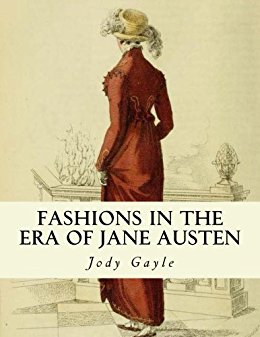
51VMT9uf8TL._SX260_.jpg We can make some viable assumptions on the cost of items. There are several period books that give us insight into the costs of gowns, for example. One of the MANY fabulous reasons to adore Judy Gayle’s Fashions in the Era of Jane Austen: Ackermann’s Repository of Arts is the listing of actual proprietors/dressmakers AND their addresses!
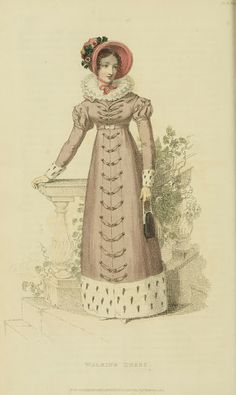
It could cost a father between a hundred pounds to several hundred guineas bring his daughter out into Society. Keep in mind, this amount does not just include the gown for her formal Presentation to the Queen. It includes all the gowns worn throughout the Season. A girl would not wear the same dress to several different balls, for example. There are shoes, stocking, jewels, fan, gloves, headdress, possibly a cloak or an appropriate outer garment. The costs add up. The Court gown could usually only be worn once (like a woman’s wedding dress in the modern era), but sometimes it might be constructed to be adapted and reused. To determine the cost, one can basically look at costs for materials and then add in an extra ten or twenty percent for production.

1a8654685cea393e6c66dcd5be4006d4.jpg For a full Season, there would be walking dresses, morning dresses, evening gowns, riding habits, shoes, boots, half-boots, gloves, stockings, undergarments, bonnets, shawls, muffs (when in fashion), parasols (when in fashion), fans, dominos, spencers, cloaks, pellises, reticules, more jewelry, and all made to match or create an ensemble. A family would pretty much spend what they could afford. There would also be ribbons, handkerchiefs, perfumes, creams, powders, and all sorts of fribbles the young lady might wish to purchase during her Season. And then entertainments–subscriptions, theater seats, lending libraries, ices at Gunters or the cost of a dancing master or music lessons. Is it no wonder that many gentlemen bemoaned the births of daughters? The costs were often charged against the estate.
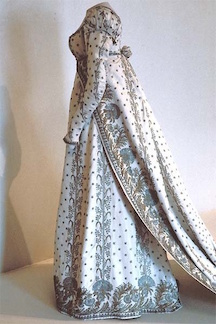
Cost of gowns would depend not just on the modiste, but the materials–gold and silver netting and embroidery, expensive laces, spangles, seed pearls, velvets, etc. Then, of course, there was the actual cost of a season (a house rental if the family did not have a house in Town, the costs for holding a ball or two, servants, horses, etc, etc.) It has been estimated that a court dress could run anywhere up to £500 and even beyond. I think the lowest amount was something like £ 200.  Her bride clothes could run a couple thousand.

00fcbbe8e98be5beb6aa4d8ac25596fa

Empress Josephine’s court dress from around 1800.

Jane Austen’s World tells us, “Female gowns worn at court during the Regency era looked ungainly. Instead of the lovely columnar silhouette of the Grecian-inspired draped gown, court gowns at this time made their wearers resemble the upper half of an extravagantly decorated apple or a pregnant cake topper.

“These custom creations, made with sumptuously expensive materials, adhered to the rules laid down by Queen Charlotte, who presided over the royal drawing rooms until her death.Earlier Georgian gowns flattered a lady’s waist, with corsets that made the waist seem miniscule. As waists rose, the silhouette of the gowns became grotesque, swallowing a lady’s figure in a ball of fabric. Young ladies presented at court for the first time wore white gowns. Married ladies could wear a variety of colors.The gowns’ narrow trains looked out of proportion to the wide-hooped skirts. Head-dresses consisted of a diamond encrusted bandeau and from three to five to seven to more feathers. A variety of feathers were used for head ornamentation – heron, ostrich (the favorite), Bird of Paradise, pheasant, and macaw.”

Dress shops would be places where a young lady could have her fittings and select fabric for the various dresses, but not purchase a ready-made dress. Linen drapers were more apt to be patronized than “dress shops” as women of this era were skilled needlewomen.

As to practical things, most people of any means would have staff to bake the bread required of the household. Bread, during the period, was regulated. The size and cost was pretty much set by law. Bread cost between 3 penny and a shilling six. A 4 pound 6 oz loaf of bread ( weight) cost around 13 pence. The Corn laws were passed in 1815 because the cost of the loaf of bread went over 14d. The cost of bread fluctuated according to the price of wheat (which they called “corn” to include all grain, but not the “corn” as we think of it, meaning “corn on the cob.”) The price was higher after 1815. Also, the prices were higher in 1816 due to the weather. That was the year known as the “Year Without Summer.” In 1815, a pound of bread was quoted at over 4 shillings and predicted to rise to over 5 shillings. This is many times the price in 1813, but such details are difficult to find. 

What of the “bread” for the mind? What was the cost of books? A Minerva Press novel cost 6 shillings, but other books would be more expensive. What kind of books? A volume of an encyclopedia type book cost 3 13 6. A novel in 3 volumes cost 15 shillings. 14 shillings for 2 volumes of criticism of scripture. Another book cost 10s 6d. 2 volume set. A book Essays in Rhyme by Jane Taylor was 6 shillings. One book cost 7 £ 7 s for imperial 4 to but 10£ 10s for the same book in large paper.

In the Regency,  there were twenty shillings in a pound so she had 60 shillings.

240 Pence to a Pound.

20 Shillings to a Pound.

12 Pence to a Shilling.

5 Shillings was a Crown (a silver dollar sized coin in Jane Austen’s time).

4 Crowns was a Pound.

Guinea (always gold) was 21 Shillings (a super pound).

Guineas were replace by sovereigns ( 20 shillings)  in 1817, but high end stores continued  to price items in guineas.

Jane Austen has some prices for inexpensive fabric but it could run up to a couple pounds an ell and the dresses needed several.

In Sense & Sensibility, the Dashwood family lived on 500 pounds a year while keeping two servants.

The post was from 2008, so it’s that year’s conversion amounts, when it was nearly $2/£1.

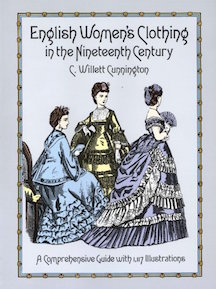
 51mvL3GneQL.jpg A very good reference for cost of fabrics, shoes, hats , gloves and more is this invaluable book by C. Willett Cunnington: English Women’s Clothing in the Nineteenth Century: A Comprehensive Guide with 1,117 Illustrations. It is an excellent source for things such as hairstyles. The author does comment that the prices listed are those he discovered in advertisements and, therefore, were street or average prices. Fine modistes would charge much more.

Project Britain also has a post on Understanding Old British Money. Also check out this page, which that describes pre-decimal sterling money. There is a quick convertor below, accurate to 2 decimal places. While this convertor gives the value in old and new money, it does not take any account of inflation. Use the National Archives currency convertor to find the equivalent buying power.

In creating my post on converting British money, I  found a post that listed prices for various items during Jane Austen’s time. Two sources are cited, so there is a documentation trail. (What the Heck is a Pelisse?)

Silk stockings — 12 shillings (£20.38 or $40.24 in today’s currency!)
Woolen stockings — 2 shillings 6 pence (£4.25 or $8.39)
A white silk handkerchief² — 6 shillings (£10.19 or $20.12)
A pair of gloves² — 4 shillings (£6.79 or $13.41)
A simple white dress — 5 shillings (£8.49 or $16.77)
A fan — 5 shillings (£8.49 or $16.77)
Simple shoes 6-11 shillings (£10.19-18.68 or $20.12-36.89)
Walking boots 2 pounds (£67.92 or $134.12)
Cotton fabric — 1 shilling per yard (£1.70 or $3.36)
Enough cotton fabric for a dress — 6 shillings ($20.12)
Velveteen fabric — 2 shillings 10 pence (£4.81 or $9.50)
Enough silk fabric for a dress — 1 pound 6 shillings (£44.15 or $87.18)

**Shawls — if real silk or Kashmir could run £200-300

Shoes  — men’s shoes went from 10 /6 to several pounds for boots so I

think the ladies shoes will  be in the same range.

A silk purse– a coin purse sort of thing–  2 s

some gloves 2/6

A 1998 article (How Wealthy is Mr. Darcy – Really? Pounds and Dollars in the World of Pride and Prejudice, James Heldman, Department of English, Western Kentucky University, Bowling Green, KY) from the Jane Austen Society of North America (JASNA) gives us this table for costs: 

Some good references:

https://janeaustensworld.wordpress.com/2008/02/10/the-economics-of-pride-and-prejudice-or-why-a-single-man-with-a-fortune-of-4000-per-year-is-a-desirable-husband/

http://www.kristenkoster.com/a-primer-on-regency-era-womens-fashion/

I also recommend the books Candice Hern references: http://candicehern.com/regencyworld/court-dresses-overview/

Posted in British currency, British history, business, Georgian England, Jane Austen, Regency era | Tagged , , , , , | 10 Comments

Corruption of the Blood or Committing a Felony During the Regency Era

In English law, an attainer was the extinction of one’s civil rights and political rights due to the sentence death from outlawry after a conviction of treason or felony.

“The most important consequences of attainder were forfeiture and corruption of blood. For treason, an offender’s lands were forfeited to the king. For felonies, lands were forfeited to the king for a year and a day and then, because felonies were considered a breach of the feudal bond, escheated (forfeited) to the lord from whom the offender held his tenure. Subsequently, in Magna Carta (1215), the crown renounced its claim to forfeiture in the case of felony. Even harsher than attainder was the doctrine of corruption of blood, by which the person attainted was disqualified from inheriting or transmitting property and his descendants were forever barred from any inheritance of his rights to title. All forms of attainder—except the forfeiture that followed indictment for treason—were abolished during the 19th century.” [Britannica]

The man had to be convicted. If he died before conviction, the penalty was not applied. The forfeiture for suicide was one year’s income, rather than everything, which is one reason the murderers were usually encouraged to end their own lives—at least in books. The penalty was modified throughout the19th century and if a charge of murder could be changed to manslaughter, the penalty did not apply after around 1814. There were also bills of attainder. As mentioned above the bills of attainer varied. For political purposes, Lord Edward Fitzgerald was the last one to have a bill of attainder drawn up against him for his part in the Irish uprising in 1798. This was done even though he died before being convicted. It was later modified to help his poor wife. The attainder imposed by a court of law came with conviction of being guilty of murder or treason. It was very hard for the families, though most of those executed had no property to be forfeit.

I used this penalty of murder and forfeiture as part of my plot for The Heartless Earl.

When the real Lord Ferrers was convicted and executed for murder, his property was taken. Fortunately his wife had been able to secure a legal separation with a legal charge against the estate, if I recall correctly. Also, they had no children so the brother succeeded to the earldom. The earldom was not forfeited to the Crown. The property of a murderer was forfeited when he was convicted. He was also attained with corruption of the blood.

Also, if I remember correctly, Writs of Attainder could make acts criminal retroactively. I think Henry VIII used this method to gain property for the Crown with some regularity. Generally, this was executed for treason or treasonous acts or what those in power called “treason.” There were some bills of attainder issued post facto. In addition to his marital problems, Henry was dealing with the Reformation and the break from Rome. It was easy enough to turn a difference of opinion into treason. Attainted means that the person losses all civil rights and becomes a non-person. He cannot sue or be sued. He cannot have a government position or money. Usually, those who are attainted because of a crime are executed. Bills of attainder were passed against some for treason and without a trial. If titled the man does not lose his title until he is executed, but he has no privileges or rights. Corruption of the blood means he cannot inherit from anyone and has no heirs. This is complicated subject and most sites discuss the political bills of attainder for political enemies and those in opposition to policies, like Catholics and supporters of the Starts.

WIKIPEDIA and other sources say that even after 1815 a conviction of murder leads to corruption of the blood, but that has to be premeditated, malice murder—the accused meant to kill someone and made plans to carry out the act. It does not include spontaneous murder, manslaughter, accidental, self-defense, or in the commission of another crime.

“Historically, a legislative act attainting a person without a judicial trial was known as a bill of attainder or—if punishment was less than death—as a bill of pains and penalties. The power of Parliament to declare guilt and impose punishment by such measures was well established by the 15th century. During the Wars of the Roses (1455–85), bills of attainder were used by rival factions to rid themselves of each other’s leaders, and later King Henry VIII (reigned 1509–47) induced both the House of Lords and the House of Commons to pass such bills against ministers whom he had ceased to trust. Unlike impeachment, which is a judicial proceeding in the House of Lords on charges made by the House of Commons, a bill of attainder was a legislative act adopted by both houses with the formal consent of the king. The offenses charged in such bills were usually characterized as treason but did not have to satisfy established legal definitions of that or any other crime. Thus, bills of attainder have generally been deplored not only because they deprived the accused of a fair trial but also because of their typically ex post facto quality. The dominant faction of the legislature could make any past conduct that it found offensive into a crime. In England, the last bill of attainder was against Lord Edward Fitzgerald, who was condemned to death by an act of Parliament for leading the 1798 rebellion in Ireland. The last bill of pains and penalties, introduced in 1820, led to a legislative trial of Queen Caroline, wife of King George IV, on charges of adultery, but the bill was not passed.”

**Before 1815:

Suicide: Forfeiture. Personal property likely lost.

Common-Law Felony or Treason: Death and corruption of the blood. The heir gets nothing–no lands, no title.

Statute enacted by parliament: Attainder, and possible death sentence (or transportation, or forfeiture). The heir inherits, BUT any pending suits–contracts, etc, and rights to money could potentially be lost.

**After 1815:

Suicide: Forfeiture. Personal property likely lost.

Treason: Death and corruption of the blood. The heir gets nothing–no lands, no title.

Felony: Attainder, and possible death sentence (or transportation, or forfeiture). The heir inherits, BUT any pending suits–contracts, etc, and rights to money could potentially be lost. So conviction of an actual crime has an effect on the legal status of the felon that would almost certainly be more detrimental than mere forfeiture, even if there was no corruption of the blood.

If it is known that a man of wealth and property kills a man, it is better that he commit suicide–if he could stage it like an accident so much the better–so the family is not completely ruined and poverty stricken. Earl Ferrers is one of the few peers to be executed for murder. 

Almost all the others who lost their lives did so because of politics and loyalties. A spate of men were executed after the 1715 and 1745 uprisings. Mrs. Drummond Burrell’s great-grandfather lost his life and his earldom, Her father reclaimed some of it. If a man was a peer, his son immediately became the son of none and could not inherit anything when he died. This was obviously very hard on a young man who was not trained for anything means of earning his own support. There was one case where a man whose father, a peer, was still alive murdered a man and escaped abroad where he died. When his father died, his son succeeded him–that is when the grandfather died, the grandson inherited the earldom. The boy’s father never inherited the peerage of his own father so his son was not barred from it. Crazy, I know.

Ironically, the U.S. constitutional provisions prohibits declaring people guilty of crimes by legislative act, and prohibits sentences for crimes that take property or rights from the family or heirs of the convicted person, even in cases of treason. At least that is how it has been interpreted. Fines may be levied, but may only fall on the actual property of the person convicted. [“What Does Corruption of Blood Mean?”]

Posted in Act of Parliament, British history, Georgian England, Georgian Era, history, laws of the land, Living in the Regency, marriage, real life tales, research | Tagged , , , , | 2 Comments

Happy Release Day!!! Love Her But, LEAVE HER WILD

Book Blurb and Purchase Links:

Leave Her Wild: A Pride and Prejudice Vagary

A Mandate from His Uncle 

The only reason Fitzwilliam Darcy has come to London for the Short Season is to save his beloved Pemberley. He requires a bride fast. Unfortunately, only a man’s of Darcy’s prideful nature would laggardly think one female is the same as another. Quickly, he realizes he is in love with his betrothed’s hazel-eyed and highly-opinionated sister, and he has proposed to the wrong sister, but propriety demands he must not abandon Miss Jane Bennet. 

Sitting on the Shelf 

After Lydia’s elopement with Mr. Wickham and the family’s ruin, Elizabeth Bennet understands the need for her sister Jane to marry well, but why must Jane bring home the one man Elizabeth both despises and loves? Elizabeth’s one ball…one dance…had been ruined by the man her sister means to marry. Unfortunately for Elizabeth, Mr. Darcy’s opinion remains the marker by which she looks upon all others. Can she deny the tender feelings she carries for the gentleman and silence her traitorous heart? 

Note: The title comes from a quote from the poet Atticus on Instagram. 

Kindle – https://www.amazon.com/dp/B0DQL8CJ2R

BookBub – https://www.bookbub.com/books/leave-her-wild-a-pride-and-prejudice-vagary-by-regina-jeffers?_gl=1*6o8zot*_gcl_au*MTcwMTM0ODc0OS4xNzM1MDUyNzA3

Amazon https://www.amazon.com/Leave-Her-Wild-Prejudice-Vagary/dp/B0DQVFFDQD/ref=tmm_pap_swatch_0?_encoding=UTF8&qid=

Enjoy this excerpt from Chapter One that sets up the tale.

Chapter One 

Darcy stepped down from his coach before Matlock House. It was not often that his uncle summoned Darcy to the estate. After all, Darcy had been master of Pemberley Estate for some six years, but a knot had arrived two days earlier. “Urgent, it had said,” he murmured as he crossed to the entrance to greet the earl’s butler, Mr. Percevale. 

“Welcome, sir,” Percevale said with a bow. 

“I assume his lordship still requires my attendance,” Darcy said with a smile as he handed off his hat and gloves. 

“Yes, sir. I am to show you through to the earl’s study as quickly as you arrived.” 

Darcy smiled easily. His uncle always wished to be done with business quickly. “Then lay on, Macduff, and damned be him that first cries, ‘Hold, enough!’”

“Shakespeare. Very good, sir.” 

He followed the servant up the wide staircase marked with oak balustrades and trimmed with gold plate—so very stately; yet, also so familiar. How often had he and his cousins, the earl’s sons, run up and down these steps? Perhaps more often than Darcy had at Pemberley, at least, as a child. Classical-styles archways marked recessed areas, which sported statues and suits of armor. “History of the family and this part of England,” he thought.

With a knock and a short wait until a voice called, “Come,” his attendance before the earl was executed with ease, as well as familiarity. Seated in a sturdy wooden chair behind an equally sturdy, as well as formidable, desk sat a man who had crafted Darcy’s future, equally as well as had his father, George Darcy. 

His uncle did not look up from the much-crossed letter which rested upon the highly polished mahogany desk. 

At length, Matlock sat back and gestured Darcy to a nearby chair. “Good to see you, boy.” 

As Darcy was the master of one of the largest estates in England, he no longer considered himself a “boy,” but he made no comment. The man before him was the earl who held both George Darcy’s hand, as well as young Fitzwilliam Darcy’s person, when the Darcy family had lost Lady Anne Darcy. Darcy’s mother had passed from complications associated with multiple efforts at childbirth. 

Lady Anne meant to present her husband with another son, but, after a series of miscarriages, she had finally given birth again. Not another son, but a daughter. Darcy’s sister. Georgiana was twelve years Darcy’s junior, and he adored her, but he often found himself the “parent,” rather than Georgiana’s brother. Anyway, Lady Anne had hung on for nearly two years after giving birth to Georgiana, but his mother had never been the same. Weak. Basically bed ridden. No energy. The “light” of Pemberley passed in her sleep before any of them could pronounce a proper farewell, a fact that had haunted both him and his father. 

In those first few years after Lady Anne’s death, the Darcys would all have faltered without the steady hand of the Earl of Matlock on each of their shoulders. It was only after the grief had worked its way through various stages that Darcy had considered how the earl, too, was also in mourning and required someone to support him. Lord Matlock had lost his youngest sister. In that manner, Darcy often felt he had failed the man he greatly admired. 

“A Darcy,” the earl began without further preamble, “has been at the realm of Pemberley for centuries. From father to son throughout your father’s family’s bloodlines. Even when Pemberley was but a small castle guarding this part of Derbyshire.” 

“Should I be prepared to recite a list of ancestors, my lord?” Darcy asked, half in jest and half in confusion, for he was not confident he understood the purpose of his uncle’s statement nor the necessity of this meeting. 

“You were always a superior student,” the earl said. “There is no need for your performance. I hold no doubt you could go back to France with a long list of your ancestors. Instead, read this.” The earl handed over the last page of the paper before him.

“What am I holding?” Darcy asked casually, though casualness was no longer part of his state. 

“A letter from your Cousin Samuel Darcy’s son by Samuel’s second wife. One Bertram Darcy. Do you recall him?”

Darcy read what the earl had shared with him. “I do not understand. Per the original documents, Pemberley is to pass through my father’s line, not Samuel’s. The only way Samuel and his children inherit is if I do not produce a male heir. And later the continuation of male heirs from my son to his and so forth.” 

“This Bertram Darcy assuredly knows that the line of succession passes through you, but he also comprehends that if you do not produce a child to inherit by your thirtieth birthday, Mr. Bertram Darcy may claim one-fourth of Pemberley Estate. He is making his intentions known now, per your father’s will and the original land grant.”

Darcy continued to read and reread the paper he held. “Samuel Darcy produced only daughters by his first wife and only Bertram Darcy by his second. Samuel presented my father with a signed agreement never to claim any of Pemberley. Samuel has been paid an annual annuity in lieu of his claim to the estate, which Samuel uses to finance his archaeological expeditions. This is prime land to which this man aspires, and it sets where we have developed the roads to Lambton and beyond. It would cripple the rest of the estate if we lost that land. Set us back a decade or more.” 

“I do not wish to ask, but is there a female who has caught your eye? A quicker than what you would prefer courtship could cut off Bertram Darcy before you must fight him in court. Even if you produced a female child first, you could prove your wife fertile and that an heir was possible. In my opinion, your agreement with Samuel supersedes this claim by Bertram. However, we must remember, if you produce a male heir, then any minor agreements with Samuel Darcy are no longer in effect. Samuel will lose his annual payment if that is so. Perhaps, he has encouraged Bertram. Moreover, one never knows how the courts will rule in such matters, especially with an estate as large as Pemberley. There is some criticism of late in both Houses of Parliament regarding how the estates have paralyzed all of England beyond the aristocracy and the gentry.” 

Darcy assuredly had planned to marry. Pemberley would require a mistress, but he had always thought he would wait until he was thirty before he sought a match. He would admit, but only to himself, he wanted a love match, just as had been the one shared by his parents. Lady Anne and George Darcy had held each other in deep affection, and, although their love story ended too soon, George Darcy had never considered remarrying. For his father, no other could have been the mistress of Pemberley House, other than Lady Anne. 

“I suppose you are suggesting that I should go to London.”

“At least I was not required to order you to London,” the earl remarked. “You are always quick to recognize a solution.” 

“Hopefully, there are a few potential brides taking in the Short Season. I shall send word ahead to Darcy House. Is either the colonel or Lindale in London? I am a miserable failure without someone to open doors.” 

“You underestimate yourself, my boy.”

“I am assuredly ill-qualified to recommend myself to strangers,” Darcy argued. 

“Such is because you will not give yourself the trouble,” his uncle argued. 

Darcy shrugged his embarrassment. “I do not have the talent which some people possess of conversing easily with those I have never seen before. I cannot catch their tone of conversation or appear interested in their concerns, as I often see done.” 

“My sons will assist you. Her ladyship and I will return to London in another fortnight, but you should arrive earlier. Choose a young lady fair of face and mild of temperament.”

“As you did with Lady Matlock?” Darcy asked with a lift of his brows in challenge. 

“Your aunt is very comely, even with her years,” the earl countered. “As to her usefulness as a countess, I require more than a woman who can run my different households. Your aunt is capable of being mistress of Matlock House, but she also is quite useful in the stratagems of politics.” 

Darcy thought, “Though I am not part of the aristocracy, I would prefer a wife who did not expect me to make every decision of her day. I do not relish the idea of being a puppeteer.” 

Posted in book excerpts, book release, eBooks, excerpt, Georgian England, Georgian Era, historical fiction, Inheritance, Jane Austen, primogenture, publishing, Regency era, Regency romance, romance, Vagary, writing | Tagged , , , , , , , | 2 Comments

Mensa et Thoro? How it Differs from Divorce… + the Release of “Leave Her Wild” + a Giveaway

If you are a regular follower of this blog, you should be aware that in the Regency Period, divorce was a VERY messy affair – VERY public – VERY expensive – and almost impossible to achieve. It, literally, took an act of Parliament!!!

“The Church of England’s resistance to divorce was so strong that the only route to a divorce was via an act of Parliament—a law voted through by both houses. Not surprisingly, few people had the means or inclination to expose their private unhappiness to the press, the public and 800-odd politicians. When a divorce law was finally enacted in 1857, and the ‘floodgates’ were opened, the number of divorces in English history stood at a mere 324.

“Only four of the 324 cases were brought by women. A husband needed to prove adultery to obtain a divorce. By contrast, a wife was required to prove adultery and some other especially aggravating circumstance to have the same grounds. Over the years, women learned that brutality, rape, desertion and financial chicanery did not count. In fact, Parliament seemed hard pressed to say what did, until Jane Addison launched her case in 1801. She won on the basis of Mr. Addison’s adultery and incest with her sister in the marital home.

“Before Mrs. Addison’s successful suit, the best a woman could hope for was a legal separation. Such arrangements were under the jurisdiction of the church courts. Litigants of either sex could sue for separation on the basis of life-threatening cruelty or adultery. Women who obtained a divortium a mensa et thoro (separation from bed and board) could live apart from their husbands, often on an allowance fixed by the court. The process was expensive and tortuous—hence there were only a few dozen cases a year—and at the end, no matter what the grounds for the separation, a wife was still required to be chaste and obedient to her husband. Unless there were truly extenuating circumstances, she could expect to lose custody of her children, too.” (The Heartbreaking History of Divorce)

Exactly what does this legal term mean? Mensa et Thoro (Latin, From table and bed, but more commonly translated as “from bed and board.”) is literally a form of “divorce”  by means of a legal separation that does not, however, free the parties from the bonds of marriage. It is an obsolete form of divorce order which did not end the marriage but allowed the parties to reside separate; in effect, a legal or judicially-sanctioned separation of two married persons. In England, before the 1857 Matrimonial Causes Act, a decree in these terms from the ecclesiastical courts was equivalent to a decree of judicial separation. In Scotland, prior to the Reformation this was the only form of divorce known. It is still used in the context of judicial separation. (Collins Dictionary of Law © W.J. Stewart, 2006)

This phrase designates a “divorce,” which is really akin to a separation granted by a court whereby a couple are not legally obligated to live together, but their marriage has not been dissolved. Neither spouse has the right to remarry where there is a divorce a mensa et thoro; only parties who have been awarded a divorce a vinculo matrimonii, the more common type of divorce, can do so. (West’s Encyclopedia of American Law, edition 2. Copyright 2008 The Gale Group, Inc. All rights reserved.)

A Mensa et Thoro separation was somewhat easier to claim than was a divorce, which required Parliament’s approval.  It was also less expensive than divorce. However, one must understand that a Mensa a Thoro did not permit the separated parties to remarry. One still possessed a marriage partner. It is simply a legal separation (divorce from bed and board). Neither party could remarry. The wife could not reclaim her dowry. If the couple was friendly enough to agree to a “marriage in name only,” there would be no purpose served by taking this step. The couple could just agree to live separately and make whatever financial arrangements they liked. However, if a legal heir was required, then the only solution after the heir was delivered would be a legal separation. The legitimacy of any future child born to the couple remains intact in a mensa et thoroThis kind of divorce does not affect the legitimacy of children, nor authorize a second marriage.

The above tells you that divorce in England was rare.  It was a term used for permanent legal separation, but not the severing of the legal status to allow for a new wedding. However, there was SCOTLAND. One could rush off to Scotland to marry “over the anvil,” so to speak. One could also achieve a divorce with the right to remarry if one took up residence in Scotland for six months. Scotland was the United Kingdom’s version of Las Vegas or Reno for those in the U.S., especially in the late 1900s. 

Book Blurb and Purchase Links: 

Leave Her Wild: A Pride and Prejudice Vagary

A Mandate from His Uncle

The only reason Fitzwilliam Darcy has come to London for the Short Season is to save his beloved Pemberley. He requires a bride fast. Unfortunately, only a man’s of Darcy’s prideful nature would laggardly think one female is the same as another. Quickly, he realizes he is in love with his betrothed’s hazel-eyed and highly-opinionated sister, and he has proposed to the wrong sister, but propriety demands he must not abandon Miss Jane Bennet.

Sitting on the Shelf

After Lydia’s elopement with Mr. Wickham and the family’s ruin, Elizabeth Bennet understands the need for her sister Jane to marry well, but why must Jane bring home the one man Elizabeth both despises and loves? Elizabeth’s one ball…one dance…had been ruined by the man her sister means to marry. Unfortunately for Elizabeth, Mr. Darcy’s opinion remains the marker by which she looks upon all others. Can she deny the tender feelings she carries for the gentleman and silence her traitorous heart?

Note: The title comes from a quote from the poet Atticus on Instagram.

Kindle – https://www.amazon.com/dp/B0DQL8CJ2R

BookBub – https://www.bookbub.com/books/leave-her-wild-a-pride-and-prejudice-vagary-by-regina-jeffers?_gl=1*6o8zot*_gcl_au*MTcwMTM0ODc0OS4xNzM1MDUyNzA3

Amazon https://www.amazon.com/Leave-Her-Wild-Prejudice-Vagary/dp/B0DQVFFDQD/ref=tmm_pap_swatch_0?_encoding=UTF8&qid=

Comment below for a chance to win one of FIVE eBook copies available for the giveaway of Leave Her Wild. Winners will be chosen on Saturday, February 8, with the books delivered on February 10, 2025, when the tale goes live on Amazon and Kindle Unlimited. Regina will contact the winners by email. Good Luck!

Posted in Act of Parliament, book release, British history, customs and tradiitons, Georgian England, Georgian Era, giveaway, historical fiction, history, Jane Austen, laws of the land, Living in the Regency, Living in the UK, marriage, marriage customs, Regency era, Scotland, terminology, tradtions, Vagary, writing | Tagged , , , , , , , , , , , , , , , , | 7 Comments

Shakespeare’s “Sonnet 29” + the Release of “Leave Her Wild: A Pride and Prejudice Vagary” + a Giveaway

In last Wednesday’s post regarding the game Shove Half Penny, at the end of the excerpt I provided, we have this tidbit of conversation between Darcy and Elizabeth:

“All on your shoulders, Lizzy,” Mr. Bennet whispered, but they had heard him. “Just do not bet on love.” 

“I have never bet on love, Papa,” the lady said with complete seriousness. “In truth, I know very little of affection beyond a Shakespeare sonnet or two.” 

“Your favorite sonnet, Miss Elizabeth?” Darcy asked, though doing so before an audience had been pure whimsy. 

As if the result was scripted, the lady placed her coin on the board. Eyeing the only open bed—the second to the last one on Fitzwilliam’s side, she studied the space, as if she was willing her success. 

At length, she released her breath in a steady exhale and with a quick press of the heel of her hand, she sent her ha’penny sliding across the board’s polished surface to land dead center in the only bed still available. 

His cousin groaned and covered his eyes with his hands. 

Miss Mary declared, “Unbelievable!” 

Mr. Bennet exclaimed, “I taught her everything I know!” 

Darcy said, “Well done, Miss Elizabeth.” 

“Sonnet 29, Mr. Darcy,” she announced, “is my favorite.” As she pranced past him, under her breath, she retorted, “I am confident a man of your intelligence also knows it by heart.” 

So what makes this particular sonnet so special and appropriate for this tales? “Sonnet 29” is a poem written by William Shakespeare, written in the 1590s, though it was not published until 1609. Like many of Shakespeare’s sonnets, “Sonnet 29” is a love poem. It is also traditionally believed to have been written for a young man. Unlike some of Shakespeare’s other love poems, however, which are concerned with physical beauty and erotic desire, “Sonnet 29” is about the power of love to positively affect one’s mindset, as the poem argues that love offers compensation for the injuries and setbacks one endures in life. All of this speaks to the give-and-take happening between Mr. Darcy and Elizabeth Bennet. They have met some five + years earlier – one night and one dance, but the impression of each on the other has never lessened.

Sonnet 29: When, in disgrace with fortune and men’s eyes [Poetry Foundation]

When, in disgrace with fortune and men’s eyes,

I all alone beweep my outcast state,

And trouble deaf heaven with my bootless cries,

And look upon myself and curse my fate,

Wishing me like to one more rich in hope,

Featured like him, like him with friends possessed,

Desiring this man’s art and that man’s scope,

With what I most enjoy contented least;

Yet in these thoughts myself almost despising,

Haply I think on thee, and then my state,

(Like to the lark at break of day arising

From sullen earth) sings hymns at heaven’s gate;

       For thy sweet love remembered such wealth brings

       That then I scorn to change my state with kings.

****************************************************

So what does it mean? Lit Chart gives us this translation:

“Sonnet 29: When, in disgrace with fortune and men’s eyes” Summary

Whenever my luck turns bad and people look down on me
I sit by myself and cry because I’m all alone,
And I pray to God, who doesn’t listen or answer my prayers,
And I look at my life and curse the way it’s turned out,
Wishing that I was like someone with better prospects,
That I was more beautiful, that I had more influential friends,
Wishing that I had this man’s skill and that one’s range of skills,
And even the things I love best don’t bring me any pleasure;
Yet whenever I think like this, almost hating myself,
I think about you and then I feel
Like a bird at the break of day that flies up
From the ground, and sings songs at the pearly gates,
Because thinking about your love brings so much richness to my life
That I would rather have it than be king.

Check out the 2005 Mr. Darcy, Matthew Macfadyen reading the poem on You Tube, and you will never forget the experience. I heard Matthew’s voice when I was writing the scene that follows the one above where Mr. Darcy attempts to reason with himself regarding his slight “obsession” with Miss Elizabeth Bennet. You will have to purchase the book to see how this all turns out. LOL!

Book Blurb and Purchase Links:

Leave Her Wild: A Pride and Prejudice Vagary

A Mandate from His Uncle 

The only reason Fitzwilliam Darcy has come to London for the Short Season is to save his beloved Pemberley. He requires a bride fast. Unfortunately, only a man’s of Darcy’s prideful nature would laggardly think one female is the same as another. Quickly, he realizes he is in love with his betrothed’s hazel-eyed and highly-opinionated sister, and he has proposed to the wrong sister, but propriety demands he must not abandon Miss Jane Bennet. 

Sitting on the Shelf 

After Lydia’s elopement with Mr. Wickham and the family’s ruin, Elizabeth Bennet understands the need for her sister Jane to marry well, but why must Jane bring home the one man Elizabeth both despises and loves? Elizabeth’s one ball…one dance…had been ruined by the man her sister means to marry. Unfortunately for Elizabeth, Mr. Darcy’s opinion remains the marker by which she looks upon all others. Can she deny the tender feelings she carries for the gentleman and silence her traitorous heart? 

Note: The title comes from a quote from the poet Atticus on Instagram. 

Kindle – https://www.amazon.com/dp/B0DQL8CJ2R

BookBub – https://www.bookbub.com/books/leave-her-wild-a-pride-and-prejudice-vagary-by-regina-jeffers?_gl=1*6o8zot*_gcl_au*MTcwMTM0ODc0OS4xNzM1MDUyNzA3

Amazon https://www.amazon.com/Leave-Her-Wild-Prejudice-Vagary/dp/B0DQVFFDQD/ref=tmm_pap_swatch_0?_encoding=UTF8&qid=

Comment below for a chance to win one of FIVE eBook copies available for the giveaway of Leave Her Wild. Winners will be chosen on Saturday, February 8, with the books delivered on February 10, 2025, when the tale goes live on Amazon and Kindle Unlimited. Regina will contact the winners by email. Good Luck!

Posted in book excerpts, book release, British history, eBooks, excerpt, film, Georgian England, Georgian Era, giveaway, historical fiction, Jane Austen, Living in the Regency, love quotes, Pride and Prejudice, publishing, quotes, reading, Regency romance, research, word origins, word play, writing | Tagged , , , , , , , , , , , , , , | 9 Comments

Amending a Will During the Regency Era + the Release of “Leave Her Wild” + a Giveaway

Recently, I had a reader write to me to ask about whether a man could amend a will during the Regency period, and, if so, what all was involved. The implication was the will was amended to subvert another from receiving his proper inheritance in a story the person read. She wanted to know whether someone would have taken note of the changes and whether this was a plot device acceptable for the time period.

In truth, part of the plot of my latest Austen-inspired book, Leave Her Wild, deals with whether George Darcy’s cousin, one Samuel Darcy, has any remaining interest is the Pemberley estate. I often keep the same relationships in all my tales: Mr. Sheffield has been Darcy’s valet since having come to the Darcy household as a young Darcy’s tutor; Mr. Thacker is the butler at Darcy House in London; Mr. Nathan is the butler at Pemberley; Mr. Farrin is Darcy’s coachman, Samuel Darcy is George Darcy’s cousin and a famous archeologist, etc., etc., etc. To this tale, I have added Samuel’s son by the man’s second marriage placing a claim on Pemberley land; therefore, it is necessary for Darcy to marry quickly to produce an heir.

My answer to the question in the first paragraph may shock some of you: Someone would need to come forward to protest a will for any notice to be taken. As long as it and any codicils are in proper form, the probate court would likely approve it for execution. Unless a will is contested, the probate court only looks at the form. Some one has to come forward and say that there is something wrong with the execution and even then one doesn’t always win.

That being said, any will could be contested or disputed, and might well be overturned if the will is drawn up under suspicious circumstance without witnesses who can be called to the court to testify the contents within are what the will maker wanted and he was of sound mind at the time. The mere fact that a man was always changing his will would not draw question to its validity at the time of its execution. However, the question of whether the man died before he made another change may be required before the will could be called “valid.”

The National Archives site is an excellent source for information on wills, inheritance, etc. You may find it at this link:

http://www.nationalarchives.gov.uk/help-with-your-research/research-guides/wills-and-probate-before-1858-further-research/

Wills were proved by a number of courts. The only probate court records held by The National Archives are those of the Prerogative Court of Canterbury up to 1858.

The Prerogative Court of Canterbury (PCC), which actually sat in London, was the senior church court, and dealt:

  • with the wills of relatively wealthy people living in the south of England and Wales
  • with the estates of people who died at sea or abroad leaving personal property in England or Wales

From 1653 to 1660, the PCC was the only court to deal with wills and administrations.

To locate records of wills or administration, first establish where they were proved. The National Archives Guide on Wills or administrations before 1858 can help a person determine which court proved a will or administration.

Disputes regarding wills and the settlement of estates could arise over the:

  • validity of a will
  • claims of people seeking letters of administration
  • disputes about the terms of a will

A single will may have led to lawsuits both in Chancery and the Prerogative Court of Canterbury. If there was litigation, additional records will have been created, such as:

  • the depositions of witnesses
  • pleadings
  • exhibits
Wills 1384 – 1858 ~ These records are Prerogative Court of Canterbury (PCC) wills in series PROB 11 made between 1384 and 12 January 1858.~ https://www.nationalarchives.gov.uk/help-with-your-research/research-guides/wills-1384-1858/

Up to 1782 every executor or administrator was required to send the registry of the court an inventory of the deceased’s goods.

The inventory itemized the estate held by the deceased, including:

  • leases
  • chattels
  • debts owed and owing
  • cash
  • crops
  • stocks
  • slaves

Real estate (land) was not normally included in estimates and totals.

Only about 800 pre-1660 inventories have survived.

For the period 1660-1782, search The National Archives catalogue by name of deceased for records of inventories in:

For the period 1722-1858, they are mostly in PROB 31.

Other records that can indicate the value of a person’s estate are:

  • the bonds in PROB 46 (1713-1858) were entered into by administrators and some executors of estates. In the 16th and 17th centuries the bonds give a rough idea of the value of the estate. In the 18th and 19th centuries bonds are an unreliable measure of the valuation of an estate, although they are thought to be roughly double the value
  • probate and administration act books in PROB 8 and PROB 9 (from 1796)
  • warrants – estimates of servicemen’s estates and those under £40, £20 and £5, respectively, are noted on some of the 17th century warrants and most of the 18th and 19th century warrants in PROB 14
  • register books in PROB 12 for records of pauper estates
  • orders for the distribution of some intestates’ goods in PROB 16
  • orders of court books, 1816-1857 in PROB 38 contain orders for the revaluation of some 19th century estates
  • death duty registers which can give the value of estates. Read the National Archives guide on Death duties 1796-1903 for information

Other Sources:

The Contents of Eighteenth Century Wills

The Regency Estate

Singular Wills of the Regency Period

Strange and Curious Wills of the Georgian Era

Where There’s a Will There’s a Way

Wills and Devises

Book Blurb and Purchase Links:

Leave Her Wild: A Pride and Prejudice Vagary

A Mandate from His Uncle 

The only reason Fitzwilliam Darcy has come to London for the Short Season is to save his beloved Pemberley. He requires a bride fast. Unfortunately, only a man’s of Darcy’s prideful nature would laggardly think one female is the same as another. Quickly, he realizes he is in love with his betrothed’s hazel-eyed and highly-opinionated sister, and he has proposed to the wrong sister, but propriety demands he must not abandon Miss Jane Bennet. 

Sitting on the Shelf 

After Lydia’s elopement with Mr. Wickham and the family’s ruin, Elizabeth Bennet understands the need for her sister Jane to marry well, but why must Jane bring home the one man Elizabeth both despises and loves? Elizabeth’s one ball…one dance…had been ruined by the man her sister means to marry. Unfortunately for Elizabeth, Mr. Darcy’s opinion remains the marker by which she looks upon all others. Can she deny the tender feelings she carries for the gentleman and silence her traitorous heart? 

Note: The title comes from a quote from the poet Atticus on Instagram. 

Kindle – https://www.amazon.com/dp/B0DQL8CJ2R

BookBub – https://www.bookbub.com/books/leave-her-wild-a-pride-and-prejudice-vagary-by-regina-jeffers?_gl=1*6o8zot*_gcl_au*MTcwMTM0ODc0OS4xNzM1MDUyNzA3

Amazon https://www.amazon.com/Leave-Her-Wild-Prejudice-Vagary/dp/B0DQVFFDQD/ref=tmm_pap_swatch_0?_encoding=UTF8&qid=

Comment below for a chance to win one of FIVE eBook copies available for the giveaway of Leave Her Wild. Winners will be chosen on Saturday, February 8, with the books delivered on February 10, 2025, when the tale goes live on Amazon and Kindle Unlimited. Regina will contact the winners by email. Good Luck!

Posted in Act of Parliament, British history, Church of England, England, estates, Georgian England, Georgian Era, history, Inheritance, real life tales, Regency era, research | Tagged , , , , , , , , , | 4 Comments

A Voidable Marriage in History: Marrying the Sister of One’s Late Wife or the Brother of One’s Late Husband + the Release of “Leave Her Wild” + a Giveaway

A plot we readers often encounter in historical romance set in the Regency Period is when the hero takes up with his late wife’s sister. In “Leave Her Wild,” Darcy momentarily wonders if Jane Bennet died in childbirth, could he then marry Elizabeth Bennet, the one he truly loves? Was it possible? Generally, the answer would be a resounding NO! If complaints about such a marriage occurred, any children of the man and his first wife could be deemed as illegitimate, and, in my tale, Darcy requires a legitimate heir to prevent a distant relative from claiming parts of Pemberley. 

“For most of the nineteenth century, the question of whether a man should be able to marry the sister of his deceased wife engaged the English public in protracted and heated debate. The Parliamentary debates, individually published pamphlets and periodical essays, and topical fiction that at times seemed to flood from this debate express a range of nineteenth-century English anxieties about the proper definition and practice of family life, anxieties that provoked serious reconsideration of the legal definitions and cultural meanings of sibling and marital relations. The figure that carried the full weight of these ideological struggles was the adult unmarried sister living in a married sister’s household; the specific issue upon which the English people focused was whether a man’s wife’s sister was, in law, the equivalent of his blood sister and therefore never to be his wife, or his metaphorical sister only and therefore an ‘indifferent person’ whom he could marry.” (Anne D. Wallace, “On the Deceased Wife’s Sister Controversy, 1835-1907″)

Before 1835, the church would annul the marriage of a man with the sister of his late wife if reported, but if no one reported the situation, then the marriage was legal. It  was a voidable marriage not a void one. The same was true for marriage with a late husband’s brother. Both situations, however, were made illegal in 1835. The one involving the sister was repealed in 1907. The brother one was repealed much later. Even before the law passed, the church opposed such unions, and there were quite a few people who did as well. Every year after 1835 some one proposed a law to repeal the law Gilbert and Sullivan referred to it as the “annual blister.”

“The doctrine that such marriages were illicit was reflected in the Table of kindred and affinity in the Anglican (Church of England) Book of Common Prayer. Prohibition of marriage between certain degrees of kindred outlawed what is known as incest; prohibition between degrees of relationship by marriage (affinity) as opposed to blood (consanguinity) seems to have reflected an analogous taboo. At least one novel, Felicia Skene’s The Inheritance of Evil; Or, the Consequences of Marrying a Deceased Wife’s Sister (1849) addressed the topic in polemic fictional form.

“Under ecclesiastical law, a marriage within the prohibited degrees was not absolutely void but it was voidable at the suit of any interested party. Matthew Boulton married his deceased wife’s sister in 1760. He advised silence, secrecy and Scotland, although they married in London; the marriage was opposed by her brother. Similarly Charles Austen, the younger brother of Jane Austen, married his deceased wife’s sister in 1820 and remained married to her until he died in 1852.” (Deceased Wife’s Sister’s Marriage Act 1907

Collins Hemingway in his article “Brotherly Love?” on Austen Authors, tells us: “An even closer—and absolutely prohibited—degree of consanguinity is that of brother and sister. Sibling marriage being an incestuous taboo the world over, one would not expect such a thing ever to enter the environs of Austenia. Yet tradition brought it to Jane’s doorstep, for the law not only forbade marriage between blood siblings but also between brothers and sisters by marriage.

“Therefore, the marriage of Jane’s brother Charles to Harriet Palmer after the death of his first wife was “voidable” because Harriet was Fanny’s sister. As explained in Martha Bailey’s article in ‘The Marriage Law of Jane Austen’s World’ (Persuasions, Winter 2015), this sisterhood created a prohibition by ‘affinity’ (marriage) as strong as one by blood. The logic was: Because Fanny and Harriet were related by blood, and because husband and wife became one flesh upon consummation, then Charles would also be related to Harriet by blood. This thinking applied equally for a woman who married the brother of her dead husband.

“‘Voidable’ in Charles’ case did not necessarily mean ‘voided.’ Someone—most likely a relative seeking to grab an inheritance—would have to sue to have the marriage voided and any children declared illegitimate. Charles never had enough money for anyone to bother trying to disinherit his four children by Harriet.

“To resolve the ambiguity about people marrying the sibling of a deceased spouse, the 1835 Marriage Act validated all previous such marriages but voided any going forward. To evade this prohibition in still another Austen situation, Jane’s niece Louisa Knight went to Denmark in 1847 to marry Lord George Hill, who had been married to Louisa’s now deceased sister Cassandra. Such dodges continued until the affinity laws were removed in 1907.”

Charles John Austen en.wikipedia.org/wiki/ Charles_Austen
Charles John Austen en.wikipedia.org/wiki/
Charles_Austen

Anyone could challenge the validity of the marriage by lodging a complaint with the Ecclesiastical Court. That was apparent from the reams of correspondence in the Beaufort archives on this very case. All that was needed was someone, ANYONE to challenge or complain about one of these voidable marriages to the Ecclesiastical Court, and the court could declare it invalid, thereby making all offspring of the union bastards, a loss of a living, etc.  The complaint or challenge had to be made while both parties to the marriage in question were alive .

The most likely person to challenge a voidable marriage would be the man who would inherit if the marriage didn’t exist — husband’s brother or nephew or whatever.  So a man whose wife produced only daughters, then the wife died, marries her sister and has a son, but his brother wants the title/land so challenges the marriage. The second most likely to challenge would probably be the husband himself if neither wife produced an heir.  But I doubt many of these marriages existed, especially if titles and land were involved.

Men did marry their dead wife’s sister. Such marriages were not automatically void by law, but they were voidable if someone challenged them. Lord Lyndhurst’s concerns about a challenge to the 7th Duke of Beaufort’s marriage was not without substance. Wellington was strongly opposed to that marriage and quite outspoken about it.  Anyway, in 1835, Lyndhurst, concerned that the Duke of Beaufort’s heir could be stripped of his legitimacy, all his rights and his entitlements as heir to the dukedom if someone like Wellington challenged Beaufort’s marriage to his dead wife’s half sister, took the matter to Parliament in the form of a bill to legitimize the marriage. But the issue grew legs of its own.  What eventuated was the bill that decreed that all voidable marriages performed before 31 August 1835, if not already voided, would be declared fully legitimate and all marriages within the prohibited degrees performed after that date would be void, invalid from the beginning whether challenged or not.  But as this Act of Parliament included the marriage between a woman and her dead husband’s brother, an amendment was made – almost immediately- to exclude the marriage of a woman to her dead husband’s brother.

Henry Somerset, 7th Duke of Beaufort en.wikipedia.org/wiki/ Henry_Somerset_7th_Duke_of_Beaufort
Henry Somerset, 7th Duke of Beaufort en.wikipedia.org/wiki/
Henry_Somerset_7th_Duke_of_Beaufort

“Parliament had to tack that part on to get the bill to pass. In the social climate of the time it was ‘too soon’ to eliminate the taboo on in-law marriage in one fell swoop. When the more progressive bill to legalize wife’s sister marriage was finally introduced in 1842, a fight broke out that would last 65 years.

“What was the big deal? Opponents of the bill saw it as a slippery slope that would lead to the legalization of all kinds of incest. They drew arguments from the Bible: Genesis 2 states that husband and wife ‘became one flesh,’ therefore your wife’s sister was really your own sister. Leviticus prohibits a man from uncovering ‘the nakedness of thy brother’s wife,’ and so, by analogy, he shouldn’t do it to his wife’s sister either. Arguments from science included the bizarre claim that married couples become blood relations through some biological consequence of sexual intercourse, or that the idea that in-law marriage was wrong came from evolutionary instinct. People also thought it would destroy the family by encouraging husbands and their wives’ sisters to lust after each other while the wives were still alive.

“Were there really so many brothers- and sisters-in-law who wanted to get married? Not really, but it was more common than it is now. Women often died in childbirth, and their unmarried sisters, who had few other options to support themselves besides marriage, would step in to care for the family. For convenience, and sometimes developing love, remarriage seemed like the thing to do. Supporters of the act argued that prohibiting these marriages was unfair to the poor, who could not afford to hire help and could not travel out of the country to get married, as the upper class often did to get around the law.” (The 65 Year Battle Over the Deceased Sister’s Marriage Act)

The lengthy nature of the campaign was referred to in the Gilbert and Sullivan opera Iolanthe, in which the Queen of the Fairies sings “He shall prick that annual blister, marriage with deceased wife’s sister.”

“The Marriage Act 1835, however, hardened the law into an absolute prohibition (whilst, however, authorising any such marriages which had already taken place), so that such marriages could no longer take place in the United Kingdom and colonies at all (in Scotland they were prohibited by a Scottish Marriage Act of 1567). Such marriages from that date had to take place abroad: see, for example, William Holman Hunt and John Collier, both painters, who married the sisters of their deceased wives in Switzerland and in Norway respectively. However, this was only possible for those who could afford it.” (Deceased Wife’s Sister’s Marriage Act 1907)

“The Deceased Wife’s Sister’s Marriage Act 1907 removed the prohibition (although it allowed individual clergy, if they chose, to refuse to conduct marriages which would previously have been prohibited). The Act did exactly what it said and no more; so, for example, it was not until 1921 that the Deceased Brother’s Widow’s Marriage Act 1921 was passed. The Marriage (Prohibited Degrees) Relationship Act 1931 extended the operation of the 1907 Act to allow the marriages of nieces and nephews by marriage as well. The Deceased Brother’s Widow’s Marriage Act (Northern Ireland) 1924 was passed to remove doubts as to the application of the Deceased Brother’s Widow’s Marriage Act, 1921, to Northern Ireland.” (Deceased Wife’s Sister’s Marriage Act 1907)

Unknown

The Annual Blister: A Sidelight on Victorian Social and Parliamentary History
Cynthia Fansler Behrman
Victorian Studies
Vol. 11, No. 4 (Jun., 1968), pp. 483-502
Published by: Indiana University Press
Stable URL: http://www.jstor.org/stable/3825227
Page Count: 20

Book Blurb and Purchase Links:

Leave Her Wild: A Pride and Prejudice Vagary

A Mandate from His Uncle 

The only reason Fitzwilliam Darcy has come to London for the Short Season is to save his beloved Pemberley. He requires a bride fast. Unfortunately, only a man’s of Darcy’s prideful nature would laggardly think one female is the same as another. Quickly, he realizes he is in love with his betrothed’s hazel-eyed and highly-opinionated sister, and he has proposed to the wrong sister, but propriety demands he must not abandon Miss Jane Bennet. 

Sitting on the Shelf 

After Lydia’s elopement with Mr. Wickham and the family’s ruin, Elizabeth Bennet understands the need for her sister Jane to marry well, but why must Jane bring home the one man Elizabeth both despises and loves? Elizabeth’s one ball…one dance…had been ruined by the man her sister means to marry. Unfortunately for Elizabeth, Mr. Darcy’s opinion remains the marker by which she looks upon all others. Can she deny the tender feelings she carries for the gentleman and silence her traitorous heart? 

Note: The title comes from a quote from the poet Atticus on Instagram. 

Kindle – https://www.amazon.com/dp/B0DQL8CJ2R

BookBub – https://www.bookbub.com/books/leave-her-wild-a-pride-and-prejudice-vagary-by-regina-jeffers?_gl=1*6o8zot*_gcl_au*MTcwMTM0ODc0OS4xNzM1MDUyNzA3

Amazon https://www.amazon.com/Leave-Her-Wild-Prejudice-Vagary/dp/B0DQVFFDQD/ref=tmm_pap_swatch_0?_encoding=UTF8&qid=

Comment below for a chance to win one of FIVE eBook copies available for the giveaway of Leave Her Wild. Winners will be chosen on Saturday, February 8, with the books delivered on February 10, 2025, when the tale goes live on Amazon and Kindle Unlimited. Regina will contact the winners by email. Good Luck!

Posted in Act of Parliament, British history, Great Britain, Living in the Regency, marriage, real life tales, Regency era, Victorian era | Tagged , , , , , | 20 Comments

Playing Shove Half Penny with Elizabeth and Darcy + the Release of “Leave Her Wild” + a Giveaway

One of the fun parts of writing for me is to learn something of the time period. Therefore, I have added the game Shove Half Penny to my story. Do you know it? Here are the basics of the game:

About Shove Halfpenny

Dating back to the taverns of medieval times this game was originally known as ‘Shoffe-grote’.

Still popular today, Shove Ha’penny sees players attempt to push coins so they land between the horizontal lines (beds). The objective is to push the coins so that they land squarely in the beds without touching the horizontal lines.

The Rules of Shove Ha’Penny

Shove Ha’penny is a very old English pub game played by two people or two pairs.

The board is placed flat on a table so that the bar underneath is against the table’s edge. The ha’pennies are placed partly over the edge of the board, one at a time.A sharp tap with the ball of the palm will send the ha’penny up the board.

The object is to slide each ha’penny up the board and get it to stop between two lines without touching either, in which case it scores. The area between the lines is known as a ‘bed’. The first player or pair to score three times in each bed is the winner. The beds can be filled in any order. Once a bed is filled it can be marked with chalk on the scoring area on the side of the board.

If a player scores more than three times in any bed their opponent gains the score. This rule applies unless it is the final point of the game. A player can only win the last point with a clean shove, not by default.

Each player shoves five half pennies in each turn. If a ha’penny stops on a line it does not score, so the player may try to bump it into place with his next shot. This is known as cannoning and is an important feature of the game.

All ha’pennies are left in place until all five have been played. They are then gathered up for the next player’s turn.

Learn more about Shove Ha’penny on Wikipedia.

Enjoy this excerpt from Chapter Ten of the tale.

When they returned to the house, they followed the sound of laughter coming from the sitting room. “What have we here?” Darcy asked as they entered. 

The colonel looked up with a smile. “Mr. Bennet and I have taken on the Misses Elizabeth and Mary in Shove Ha’Penny.” 

“Who is winning?” Darcy inquired with a smile as he handed off his hat and gloves to Mrs. Hill. 

“Miss Elizabeth and her father, but Miss Mary has claimed another bed for us,” the colonel continued to respond for the group. 

Darcy drifted over to watch the game, while Miss Bennet crossed to sit beside her mother. 

“Only two more beds,” Darcy counted the chalk marks on the sides of the boards. “You could still win if you can claim the last two beds, Fitzwilliam.” 

Mr. Bennet declared, “But Lizzy and I only require one more to claim the victory.” He squeezed his daughter’s hand. “I am counting on you, Lizzy, my girl.” 

Darcy smiled upon the woman. He could easily imagine calling her “Lizzy” in the throes of passion, which was not an idea he should give credit, for it was truly an impossibility. 

Miss Elizabeth teased his cousin. “You are a mere soldier, sir, while I am named after a famous queen.” 

“I, too, am named after royalty,” the colonel retorted. “More than one king bears the name ‘Edward,’ while there was only one ‘Elizabeth.’” His cousin played his coins and claimed a bed that still remained open. The score was tied. 

“It only took one ‘Elizabeth’ to clean up the mess of nine ‘Edwards,’” the lady said with a smile of confidence. “And Elizabeth I reigned for five and forty years and did so alone on the throne.” 

In a means to intimidate her, the colonel retorted, “If you place your coin in the same bed as mine,” he warned, “yours does not count.” To Miss Mary, Fitzwilliam said, “Be prepared to call ‘mine’ if such happens so we may claim the bed as our own.” 

Miss Mary offered his cousin a playful salute, and Darcy finally noticed a bit of comeliness in the girl’s features he had not observed previously. 

“All on your shoulders, Lizzy,” Mr. Bennet whispered, but they had heard him. “Just do not bet on love.” 

“I have never bet on love, Papa,” the lady said with complete seriousness. “In truth, I know very little of affection beyond a Shakespeare sonnet or two.” 

“Your favorite sonnet, Miss Elizabeth?” Darcy asked, though doing so before an audience had been pure whimsy. 

As if the result was scripted, the lady placed her coin on the board. Eyeing the only open bed—the second to the last one on Fitzwilliam’s side, she studied the space, as if she was willing her success. 

At length, she released her breath in a steady exhale and with a quick press of the heel of her hand, she sent her ha’penny sliding across the board’s polished surface to land dead center in the only bed still available. 

His cousin groaned and covered his eyes with his hands. 

Miss Mary declared, “Unbelievable!” 

Mr. Bennet exclaimed, “I taught her everything I know!” 

Darcy said, “Well done, Miss Elizabeth.” 

“Sonnet 29, Mr. Darcy,” she announced, “is my favorite.” As she pranced past him, under her breath, she retorted, “I am confident a man of your intelligence also knows it by heart.” 

Book Blurb and Purchase Links for

Leave Her Wild: A Pride and Prejudice Vagary

A Mandate from His Uncle 

The only reason Fitzwilliam Darcy has come to London for the Short Season is to save his beloved Pemberley. He requires a bride fast. Unfortunately, only a man’s of Darcy’s prideful nature would laggardly think one female is the same as another. Quickly, he realizes he is in love with his betrothed’s hazel-eyed and highly-opinionated sister, and he has proposed to the wrong sister, but propriety demands he must not abandon Miss Jane Bennet. 

Sitting on the Shelf 

After Lydia’s elopement with Mr. Wickham and the family’s ruin, Elizabeth Bennet understands the need for her sister Jane to marry well, but why must Jane bring home the one man Elizabeth both despises and loves? Elizabeth’s one ball…one dance…had been ruined by the man her sister means to marry. Unfortunately for Elizabeth, Mr. Darcy’s opinion remains the marker by which she looks upon all others. Can she deny the tender feelings she carries for the gentleman and silence her traitorous heart? 

Note: The title comes from a quote from the poet Atticus on Instagram. 

Kindle – https://www.amazon.com/dp/B0DQL8CJ2R

BookBub – https://www.bookbub.com/books/leave-her-wild-a-pride-and-prejudice-vagary-by-regina-jeffers?_gl=1*6o8zot*_gcl_au*MTcwMTM0ODc0OS4xNzM1MDUyNzA3

Amazon https://www.amazon.com/Leave-Her-Wild-Prejudice-Vagary/dp/B0DQVFFDQD/ref=tmm_pap_swatch_0?_encoding=UTF8&qid=

Comment below for a chance to win one of FIVE eBook copies available for the giveaway of Leave Her Wild. Winners will be chosen on Saturday, February 8, with the books delivered on February 10, 2025, when the tale goes live on Amazon and Kindle Unlimited. Regina will contact the winners by email. Good Luck!

Posted in book excerpts, book release, British Navy, eBooks, excerpt, Georgian England, Georgian Era, giveaway, heroines, historical fiction, Living in the Regency, Pride and Prejudice, publishing, reading, Regency era, Regency romance, research, Vagary | Tagged , , , , , , , , , , , , , , , | 8 Comments