Do Your Speak Jane Austen? (Part 1)

Part I: Do You Speak Jane Austen?

When my son was about three years of age, he shocked several onlookers at the mall by saying, “I have a splendid idea, if you would acquiesce.” You see, his mother is an avid Jane Austen fan, and he had heard me use such words in every day conversation. Of course, his “splendid” idea was to visit Kaybee Toys, but that is not the point. At that time, he “spoke Jane Austen.” Unfortunately, over the years, he has unlearned those phrases which were once so common. Now, he says “you know” to the point where his often-irrational mother has considered strangling him. (He is a coach, and athletes use the phrase to distraction. Yet, never fear. His mother is on the prowl, and I have banned the phrase “you know” from his speak while he is in my presence.)

So, I ask dear Readers, do you speak Jane Austen?

A
abhorrence – hatred and disgust

The sight of Miss Lucas was odious to her. As her successor in that house, she regarded her with jealous abhorrence. (Chapter 23)

acquiesce – to comply passively; to consent

Elizabeth was exceedingly pleased with this proposal, and felt persuaded of her sister’s ready acquiescence. (Chapter 25)

B
barouche-box – a luggage compartment at the front of a mid-sized carriage

“And if you will stay another month complete, it will be in my power to take one of you as far as London, for I am going there early in June, for a week; and as Dawson does not object to the barouche-box, there will be very good room for one of you—and indeed, if the weather should happen to be cool, I should not object to taking you both, as you are neither of you large.” (Chapter 37)

brooking – tolerating

I have not been used to submit to any person’s whims. I have not been in the habit of brooking disappointment.” (Chapter 56)

C
caprice – an inclination to change one’s mind impulsively; a whim

Mr. Bennet was so odd a mixture of quick parts, sarcastic humour, reserve, and caprice, that the experience of three-and-twenty years had been insufficient to make his wife understand his character. (Chapter 1)

condescension – a superior behavior and attitude

The subject elevated him to more than usual solemnity of manner, and with a most important aspect he protested that “he had never in his life witnessed such behaviour in a person of rank—such affability andcondescension, as he had himself experienced from Lady Catherine. (Chapter 14)

D
dilatory – slow; tending to delay

His family knew him to be, on all common occasions, a most negligent and dilatorycorrespondent; but at such a time they had hoped for exertion. (Chapter 48)

E
exigence – a circumstance; a dilemma; a pressing situation

“In such an exigence, my uncle’s advice and assistance would be everything in the world; he will immediately comprehend what I must feel, and I rely upon his goodness.” (Chapter 46)

effusions – outpourings of emotion in writing or speech

“Let our first effusions be less insupportable than those of the generality of travelers.” (Chapter 27)

F
Fordyce’s Sermons – a popular manual of instruction for young women, which was written by James Fordye in 1766

Other books were produced, and after some deliberation he choseFordyce’s Sermons. (Chapter 14)

felicity – great happiness

After a week spent in professions of love and schemes of felicity, Mr. Collins was called from his amiable Charlotte by the arrival of Saturday. (Chapter 25)

G
Gretna Green – a Scottish village on the English border; a famous place for runaways to get married; reportedly by the local blacksmith (over the anvil)

I am going to Gretna Green, and if you cannot guess with whom, I shall think you a simpleton, for there is but one man in the world I love, and he is an angel. (Chapter 47)

genteel – refined; cultured; well-bred

So much the man of fashion! So genteel and easy! (Chapter 9)

H
hauteur – arrogance; overbearing pride

A deeper shade of hauteur overspread his features, but he said not a word, and Elizabeth, though blaming herself for her own weakness, could not go on. (Chapter 18)

heinous – shockingly wicked; abominable

Let me then advise you, dear sir, to console yourself as much as possible, to throw off your unworthy child from your affection for ever, and leave her to reap the fruits of her own heinous offense. (Chapter 48)

I
invectives – abusive expressions

Mrs. Bennet, to whose apartment they all repaired, after a few minutes’ conversation together, received them exactly as might be expected; with tears and lamentations of regret, invectives against the villainous conduct of Wickham, and complaints of her own sufferings and ill-usage; blaming everybody but the person to whose ill-judging indulgence the errors of her daughter must principally be owing. (Chapter 47)

intercourse – conversation

Lady Catherine was extremely indignant on the marriage of her nephew; and as she gave way to all the genuine frankness of her character in her reply to the letter which announced its arrangement, she sent him language so very abusive, especially of Elizabeth, that for some time all intercourse was at an end. (Chapter 61)

(Over the next few days, the alphabetical list will continue. Part 2 is scheduled for tomorrow. These choices are a few of my preferences. What are some of your favorite Regency words?)

Posted in British history, Jane Austen, Living in the Regency, Regency era, writing | Tagged , , , | 9 Comments

Jane Austen and the Concept of Accepting a Marriage of Convenience

Settling for the Compromise Marriage

What hope was there for the dowerless daughters of the middle class during Jane Austen’s lifetime? Such is a topic Austen explored repeatedly in her novels. Elizabeth and Jane Bennet sought men of a like mind. The Dashwood sisters found their choices limited by their financial situation. Fanny Harville and Captain Benwick could not marry until he earned his future. General Tilney drove Catherine Morland from his home because of the lady’s lack of funds. Charlotte Lucas accepted Mr. Collins as her last opportunity for a respectable match. The intricacies and tedium of high society, particularly of partner selection, and the conflicts of marriage for love and marriage for property are repeated themes.

Marriage provided women with financial security. Henry Tilney of Northanger Abbeyexplains, “… in both [marriage and a country dance], man has the advantage of choice, woman only the power of refusal: that in both, it is an engagement between man and woman, formed for the advantage of each.” Women of Austen’s gentry class had no legal identity. No matter how clever the woman might be, finding a husband was the only option. A woman could not buy property or write a will without her husband’s approval. If a woman was fortunate, she would bring to her marriage a settlement – money secured for her when she came of age – usually an inheritance from her mother. The oldest son or male heir received the family estate, and the unmarried or widowed females lived on his kindness.

The ladies of Sense and Sensibility have this reality thrust upon them when Uncle Dashwood changes his will and leaves Norland to his grandnephew. In Uncle Dashwood’s thinking, this change will keep Norland in the Dashwood family. However, the four Dashwood ladies suddenly find themselves living in a modest cottage with an income of £500 annually. As such, they have no occasion for visits to London unless someone else assumes the expenses. Their social circle shrinks, and the opportunities to meet eligible suitors becomes nearly non-existent. With dowries of £1000 each, the Dashwood sisters are not likely to attract a man who will improve their lots.

Jane Austen, herself, lived quite modestly. The Austens lived frugally among the country gentry. The Austen sisters were well educated by the standards of the day, but without chances for dowries, Jane and Cassandra possessed limited prospects. Jane met a Mr. Blackall the year Cassandra lost her Mr. Fowle. In a letter, Blackall expressed to Mrs. Lefroy a desire to know Jane better; yet, he confided, “But at present I cannot indulge any expectation of it.” To which, Jane Austen responded, “This is rational enough. There is less love and more sense in it than sometimes appeared before, and I am very well satisfied.” Imperfect opportunities were Jane Austen’s reality. In 1802, Jane Austen accepted an offer of marriage from Harris Bigg. With this marriage, Jane would have become the mistress of Manydown.

Yet, despite her affection for the family, Austen could not deceive Bigg. The following morning, she refused the man’s proposal. Whether she thought to some day find another or whether Austen accepted the fact that her refusal doomed her to a life as a spinster, we shall never know. In the “limited” world in which Jane Austen lived, she could not have known her eventual influence on the literary canon.

Austen held personal knowledge of young women seeking husbands in one of the British colonies. Reverend Austen’s sister, Philadelphia, traveled to India in 1752, where she married an English surgeon Tysoe Hancock, a man twenty years her senior. When the Hancocks returned to England a decade later, Reverend Austen traveled to London to greet his sister. However, Philadelphia and Tysoe were not to live “happily ever after.” Unable to support his family in proper English style, Tysoe returned to India to make his living. He never saw his wife and child again. Despite its tragic ending, this “marriage” secured Philadelphia’s future and the lady’s place in society. Only marriage could offer a woman respectability.

In Jane Austen for Dummies (page 134), Joan Klingel Ray breaks down the financial prospects of the Dashwood sisters. Converting the £500 to a modern equivalent, Ray comes out with a figure of $46,875. For the gentry, supporting four women, two maids, a man servant, paying rent, buying clothes, food, coal, etc., that sum would have meant a poor existence. I find in reading Sense and Sensibility that I am often disappointed with the eventual choices of the Dashwood sisters. Edward Ferras and Colonel Brandon have less of the “glitz and the glamour” that my innate Cinderella syndrome requires in a love match. However, if any affection did exist between the couples, then Marianne and Elinor, under the circumstances and the times, made brilliant matches. They settled for the “compromise” marriage common in the Regency era.

Posted in British history, Jane Austen, Living in the Regency, Regency era | Tagged , , , , , , | 12 Comments

Pride 47, Prejudice 5


Pride and Prejudice was originally entitled First Impressions, which is a much better title when one considers how Jane Austen bombards her readers with the theme of “impressions”: first, flawed, and founded. However, that is material for a future post.

What I would like to consider today is why did the publishers deem it necessary to change the title to Pride and Prejudice? Several of my writer friends have had title changes at our publishers’ suggestions. For example, I have seen Wayward Lovechanged to Captain Wentworth’s PersuasionDarcy’s Dreams toDarcy’s TemptationDarcy’s Hunger to Vampire Darcy’s Desire, and most recently, A Touch of Gold to The Scandal of Lady Eleanor. Changing titles is a common practice among publishing companies.

Can one imagine the conversation between Thomas Egerton Publishers and Jane Austen?

Egerton: Miss Austen, we believe the reading public would respond to a title change.
Austen: Are you implying that I must add the word Darcy or Pemberley to the title to sell books?
Egerton: No, that will not be necessary for another 200 years.
Austen: (in awe) Do you expect my works to survive and become part of the British literary canon?
Egerton: Of course, not. You are a female. We will be fortunate to sell a few hundred copies, Miss Austen.
Austen: (a bit disconcerted by his condescending tone) But my book is about misconstruing others – of the weakness of making judgments based on first impressions.
Egerton: (ignoring her objection) We will follow the pattern of your first publication.Sense and Sensibility will be followed by Pride and Prejudice. It will give you a “hook” to capture your readers. Now, if you will sign the contract, we can begin publication.

But why did Austen’s publishers choose those two words: pride and prejudice? Was it to stimulate a debate among those who wonder whether it was Darcy or Elizabeth who was prideful? who acted withprejudice? College professors base entire semesters on just that concept. Or, perhaps, it was how often those two words are found in Austen’s text: The publishers’ belief that such repetition would create resonance and “connectiveness.”

The word “pride” appears seven and forty times in the text. One of my favorite uses of the word occurs in, “Vanity and pride are different things, though the words are often used synonymously.” I am also found of, “With what delightful pride she afterward visited Mrs. Bingley, and talked of Mrs. Darcy, may be guessed.”

“Prided” is used but once, as is “proudly” and “proudest.” Meanwhile, “proud” is used one and twenty times. “Some may call him proud, but I am sure I never saw anything of it,” is spoken by Mrs. Reynolds. Later in the story, Elizabeth considers Darcy’s actions in dealing with Wickham. “For herself, she was humbled; but she was proud of him – proud that in a cause of compassion and honor he had been able to get the better of himself.”

“Prejudiced” is found once in the text; “prejudices” is used twice, and “prejudice” appears five times. “The general prejudice against Mr. Darcy is so violent, that it would be the death of half the good people in Meryton to attempt to place him in an amiable light.”

When I originally entitled my second book Darcy’s Dreams, I did so because I mimicked Austen’s repetition. I used the word “dream” seven and fifty times in the book. When Ulysses Press added the word “temptation” to attract readers, I made a mad scramble to add temptation to the manuscript. The process made me wonder if Austen did the same thing with pride and prejudice. Although I know it’s an illogical assumption, I like to imagine our dear Jane adding those two words as motifs within her text and also imagine her grumbling, just as I did with temptation.

Posted in gothic and paranormal, Industry News/Publishing, Jane Austen, Living in the Regency, real life tales, Regency era | Tagged , , , , , , , , , , , , , , | Comments Off on Pride 47, Prejudice 5

Winner of Hearts Through History Blog Hop

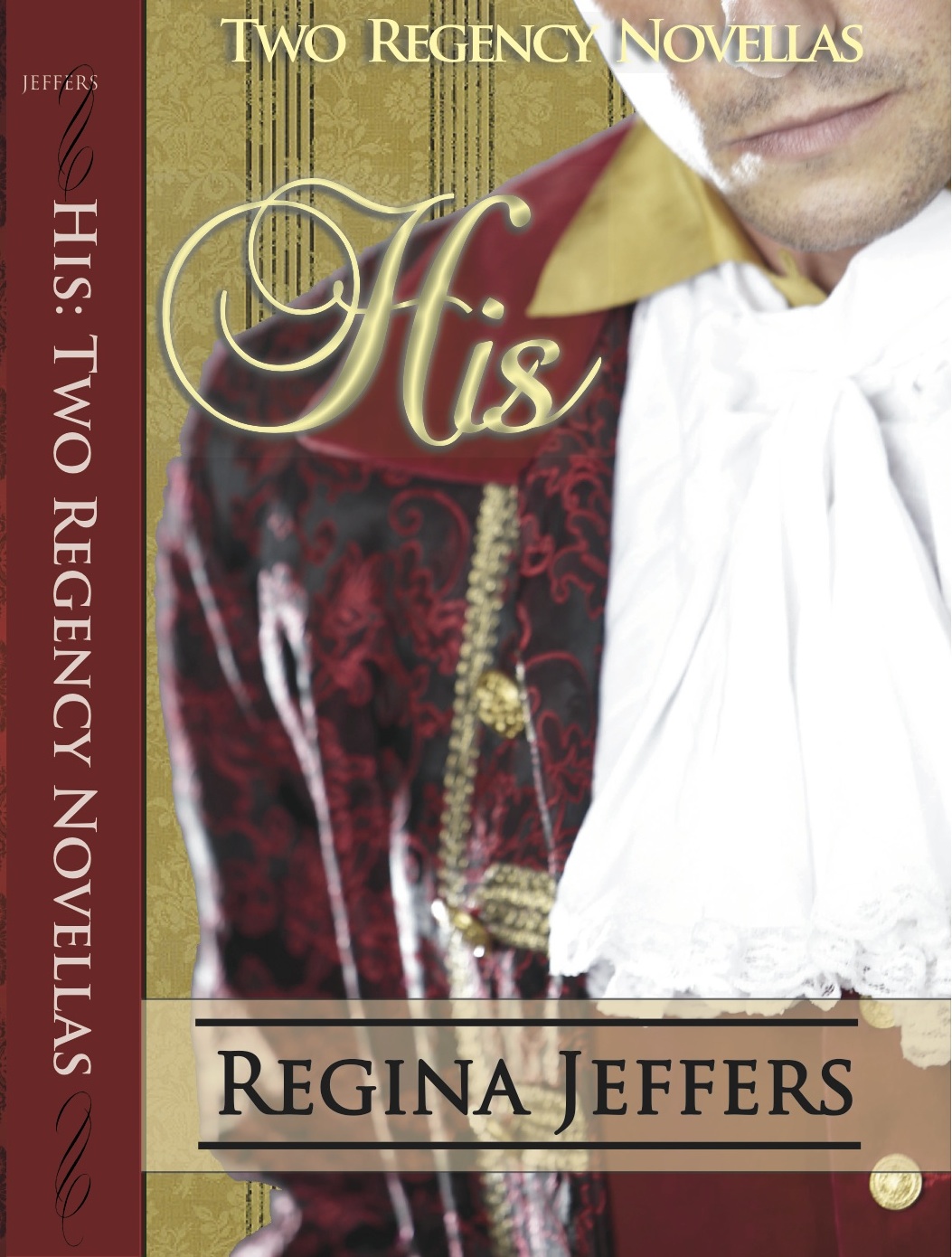
party-clip-art-balloons-different-coloursI am happy to announce the winner of my part of the Hearts Through History Blog Hop is Diane Sallans. Diana will receive an autographed copy of my February release of His: Two Regency Novellas. HisCrop

Posted in British history, Living in the Regency, real life tales, Regency era, White Soup Press | Tagged , , , | Comments Off on Winner of Hearts Through History Blog Hop

Hearts Through History Blog Hop & Giveaway: History of Valentine’s Day

images

As part of the Hearts Through History Blog Hop, I thought today that we would take a closer look at the man who became known as St. Valentine.

For my part of the Blog Hop, I am offering a copy of my latest Regency romance, His: Two Regency Novellas. To enter, please leave a comment below. DO NOT FORGET: You MUST leave an email address or some other means by which to reach you if you are named the winner.

The Legend of St. Valentine

Valentine’s Day holds the vestiges of both Christian and Roman traditions. But who was St. Valentine?

Catholics recognize three different saints named “Valentine” or “Valentinus.” Each were martyred. One of the “Valentines” was Roman priest of the 3rd Century. According to the legend, Emperor Claudius II banned marriage for young men because Claudius believed single men made better soldiers than those who held loyalties to a wife and children. The priest Valentine defied Claudius by performing marriages in secret. When discovered, Claudius ordered Valentine be put to death.

Another story says Valentine was killed in his attempts to assist Christians escape from Roman prisons. Valentine supposedly sent the first “valentine” to a young girl he fancied, possibly his jailer’s daughter. It is alleged that he wrote the girl a letter and signed it “From your Valentine.”

Although the truth behind the Valentine legends is murky, the stories all emphasize his appeal as a sympathetic, heroic and–most importantly–romantic figure. By the Middle Ages,  perhaps thanks to this reputation, Valentine would become one of the most popular saints in England and France.

Beliefs exist that Valentine’s Day began with a mid February celebration to commemorate the anniversary of Valentine’s death or burial, which probably occurred around A.D. 270.  Others believe the Christian church likely chose to “Christianize” the pagan celebration of Lupercalia with a mid February feast. A fertility festival dedicated to Faunus, a Roman god of agriculture, as well as to the Roman founders Romulus and Remus, the ides of February celebration fell on or around February 15.

“To begin the festival, members of the Luperci, an order of Roman priests, would gather at a sacred cave where the infants Romulus and Remus, the founders of Rome, were believed to have been cared for by a she-wolf or lupa. The priests would sacrifice a goat, for fertility, and a dog, for purification. They would then strip the goat’s hide into strips, dip them into the sacrificial blood and take to the streets, gently slapping both women and crop fields with the goat hide. Far from being fearful, Roman women welcomed the touch of the hides because it was believed to make them more fertile in the coming year. Later in the day, according to legend, all the young women in the city would place their names in a big urn. The city’s bachelors would each choose a name and become paired for the year with his chosen woman. These matches often ended in marriage.”

Lupercalia was outlawed as a pagan celebration at the end of the 5th Century when Pope Gelasius declared February 14 as St. Valentine’s Day. During the Middle Ages, people considered February 14 the beginning of the bird mating season, which translated into the idea of “love beginnings.” Written Valentines did not appear until after 1400 (obviously, most were not literate enough to send written Valentines).

“The oldest known valentine still in existence today was a poem written in 1415 by Charles, Duke of Orleans, to his wife while he was imprisoned in the Tower of London following his capture at the Battle of Agincourt. (The greeting is now part of the manuscript collection of the British Library in London, England.) Several years later, it is believed that King Henry V hired a writer named John Lydgate to compose a valentine note to Catherine of Valois.”

“In addition to the United States, Valentine’s Day is celebrated in Canada, Mexico, the United Kingdom, France and Australia. In Great Britain, Valentine’s Day began to be popularly celebrated around the 17th century. By the middle of the 18th, it was common for friends and lovers of all social classes to exchange small tokens of affection or handwritten notes, and by 1900 printed cards began to replace written letters due to improvements in printing technology. Ready-made cards were an easy way for people to express their emotions in a time when direct expression of one’s feelings was discouraged. Cheaper postage rates also contributed to an increase in the popularity of sending Valentine’s Day greetings.”

Hand made valentines were exchanged in the early 1700s by Americans. A creation of Ester A. Howland, the first mass produced valentines appeared in the 1840s.

“Today, according to the Greeting Card Association, an estimated 1 billion Valentine’s Day cards are sent each year, making Valentine’s Day the second largest card-sending holiday of the year. (An estimated 2.6 billion cards are sent for Christmas.) Women purchase approximately 85 percent of all valentines.”

The direct quotes found in this post come from the History Channel.

historyhopicon2copyJoin the other Blog Participants.

Posted in Uncategorized | 5 Comments

Eccentrics of the Regency Period Series: Maria Fagniani

The mistresses of the Prince Regent and his brothers were as well known as the men. The Duke of Clarence, for example, sired ten children with Mrs Jordan, and the Duke of York’s relationship with Mary Anne Clarke caused a major scandal over army commissions. The Duke of Cumberland had rumors of incest, which followed him about. Most of the by-blows sired by upper class families were given the family surname and brought up in the same household as were the legitimate heirs. Occasionally, to avoid scandal, the child was born abroad and at an appropriate age reappeared in England to find a generous “Godfather.”

Maria Fagniani was one such child. She was the daughter of the Marchesa Fagniani, a woman known for bestowing her favors on a variety of gentlemen. Three men claimed Maria as his child. The first of those was the Marchese. The others included Lord March (later the Duke of Queensberry) and George Selwyn. Selwyn left Maria £20,000 pounds as an inheritance. The Duke left her £100,000. At age one and twenty, Mie-Mie married Lord Yarmouth, a man whose reputation was as rakish as her fathers.

Maria Emilia Fagnani (24 August 1771 – 2 March 1856) was the Marchioness of Hertford.

Maria was illegitimate. Born in the 1770s, most likely, she was the daughter of Costanza Brusati, the Italian  Marchesa Fagnani, and of either –

  • William Douglas, 4th Duke of Queensberry(1724–1810), who was famously detested by Robert Burns.
  • George Selwyn  (1719–1791), a prominent Tory and lover of  Grace Elliott. He was also a member of the Satanic Hellfire Club.  
  • George Selwyn’s  butler. 
  • Marchese Fagniani

Each of these men  believed himself  to be her father and left her very large legacies.

On 18 May 1798, Maria married Francis Seymour-Conway, Earl of Yarmouth (1777–1842), the son of the Second Marquess and Isabella Ingram-Shepheard. The Marchioness was the daughter of the Viscount Irvine, and the mistress of the Prince of Wales.

By 1802 they were estranged, and she lived in Paris for the rest of her life. Their children included:

  • Lady Francis Maria Seymour-Conway (d. 1822)
  • Captain Richard Seymour-Conway, 4th Marquess of Hertford (1800–1870)
  • Lord Henry Seymour-Conway (1805–1859)

When George III  was insane, he announced that he was going to take Lady Yarmouth as his mistress.

Later, the Marquess inherited his title in 1822. He died in 1842. The dowager Marchioness died in 1856 in Paris.

Willaim Makepeace Thackery parodied her husband as the Marquess of Steyne in his masterpiece, Vanity Fair.


Posted in British history, Living in the Regency, real life tales, Regency era, Victorian era | Tagged , , , , | 9 Comments

Eccentrics of the Regency Period Series: Richard Barry, 7th Earl of Barrymore


For today, we’ll take an look at another of the Prince Regent’s inner circle, a man known by one and all as “Hellgate,” Richard Barry, 7th Earl of Barrymore.

Richard Barry, 7th Earl of Barrymore (14 August 1769 – 6 March 1793) was an English nobleman of Ireland, as well as an infamous rake, gambler, sportsman, theatrical   enthusiast and womanizer.

He was known as Hellgate and the Rake of Rakes and died at the age of just 24.

Barrymore was born on 14 August 1769 in Marlebone, Middlesex, to Richard Barry, 6th Earl of Barrymore and Amelia Stanhope, daughter of William Stanhope, 2nd Earl of Harrington  and the Lady Caroline Fitzroy. He succeeded his father as Earl of Barrymore 1 August 1773 when he was only three. His mother placed him under the care of the vicar of Wargrave in Berkshire, where he grew up and later settled.

He was heavily in debt before marrying, but instead of “marrying into money” as was common at the time, he married Charlotte Goulding, niece of the infamous Letty Lade,  and the daughter of a common sedan chairman on 7 June 1792. After his death the next year, she eventually “…passed…to the lowest grade of prostitution.”

His sister Carolina (1768-?) was known as “Billingsgate,” due to her use of foul language. Henry (1770–1823), his younger brother, was “Cripplegate,” due to a physical disfigurement. His youngest brother Augustus (1773–1818) was nicknamed “Newgate,” after Newgate Prison in London.

Barrymore became a well-known sportsman, particularly in cricket, running, horse racing, boxing and swordsmanship. He bred his own race-horses and rode as his own jockey. He was especially famous for placing huge bets on both these sports and other extraordinarily ludicrous challenges.

He patronised his own personal bare-knuckle boxer, and his wife also boxed.

He made two known appearances in first-class cricket matches from 1791 to 1792, playing as a member of the Brighton Cricket Club.  He was listed in the scorecards as Lord Barrymore.

His first love was, however, the theatre, a fine example of which he built and ran in Wargrave. He even acted there himself.

He was also a Member of Parliament for Heytesbury from 1791 until his death.

Barrymore retired to life in the Royal Berkshire Militia, into which he had been commissioned in 1789 and was later promoted Lieutenant,  but was accidentally killed at Folkestone on 6 March 1793. His musket discharged while escorting  French prisoners of war to Dover.

He was buried 17 May 1793 in St Mary’s Church in Wargrave.

Despite fears of bankruptcy,  Barrymore died in unexpected solvency. He had alienated much of his Cork  patrimony in 1792, at which time the Buttevant estate passed to Viscount Doneraile and to a Scottish banker, John Anderson.

Posted in British history, legends and myths, Living in the Regency, real life tales, Regency era, Victorian era | Tagged , , , | 6 Comments

Eccentrics of the Regency Period Series: Colonel George Hanger

Unknown

George Hanger, 4th Baron Coleraine (13 October 1751–31 March 1824) was a British solidier, author and eccentric.

He was born into a prosperous family in Gloucestershire,  being the third son of seven children. His father, was Gabriel Hanger,  a Parliamentarian, who in 1762 was created Baron Coleraine.

Colonel George Hanger was a member of Prince George’s inner circle. A gambler and a rake, Hanger gained true notoriety by marrying a beautiful gypsy girl, who unfortunately ran off with a bandy-legged tinker. His wife was christened “the lovely Aegypta of Norwood” by Hanger’s fellow officers.

George Hanger’s education was geared towards entering the army. He was sent to Reading School and then Eton before going to the University of Gottingen.  After joining the army of Frederick the Great, he returned to England  and purchased an Ensigncy  in the 1st Regiment of Footguards in 1771. About this time, he married his first wife, a gypsy,  who soon ran off with a tinker.

In the army he gained the reputation of being a womaniser, to the detriment of his military duties. He purchased a lieutenantcy  in 1776, but retired in disgust after a more junior officer purchased promotion over him. He then purchased a captaincy  in the Hessian Jagers. He served throughout the American Revolutionary War, transferring to Sir Banastre Tarleton’s British Legion as a major and commander of its light dragoons, eventually rising to the rank of lieutenant-colonel in 1793. In the 1780 Battle of Charlotte,   Hanger commanded the legion due to Tarleton’s illness, ordering it to ride into Charlotte, North Carolina  without taking precautions to guard against surprise attacks. As a consequence, the legion’s cavalry was badly mauled by Patriot militia that had set up an ambush in the town centre. Hanger was wounded in the battle, which he termed a “trifling insignificant skirmish”. He shortly thereafter fell ill, likely with yellow fever,  and was shipped to the Bahamas to recuperate.

He also became involved in a minor literary feud, in 1789, publishing An Address to the Army; In Reply To ‘Strictures’, by Roderick M’Kenzie (Late Lieutenant in the 71st Regiment) On Tarleton’s History of the Campaigns of 1780 and 1781. The full title of M’Kenzie’s book was Strictures on Colonel Banaster Tarleton’s History of the Southern Campaigns of 1780 and 1781 and was itself critical of Tarleton’s 1787 account of the southern campaigns called A History of the Campaigns of 1780 and 1781 in the Southern Provinces of North America. Discussion of this apparently continues to this day.

After returning to England, he became a companion of the Prince Regent (later King George IV). They became great friends, the prince apparently loving both his humour and his exploits in both the army and with women, and appointing him Equerry  in 1791. The only surviving painting of Hanger comes from this period. Commissioned by the prince, it remains in the Royal Collection. Hanger was also the butt of caricaturists and many prints of him survive. The National Portrait Gallery in London has a collection of twenty prints by James Gillray satirising him. In 1795 he purchased the Lieutenant-Colonelcy of the 125th Foot. Six months later he exchanged into the 1st Battalion of the 82nd Foot. 

In 1814, he declined a seat in the House of Commons (even though his father and two of his brothers had done so before him). Instead, he took a place in the House of Lords when he succeeded to the family title. In need of money, he sold his lieutenant-colonel’s commission in 1796 and purchased an ensigncy in the 70th Foot and was appointed captain-commissary in the Royal Artillery in 1806. He died in London  in 1824, at the age of 74.


Posted in British history, Jane Austen, Living in the Regency, real life tales, Regency era, Victorian era | Tagged , , | 16 Comments

Eccentrics of the Regency Period Series: Sir John Lade

Sir John Lade, 2nd Baronet (1 August 1759 – 10 February 1838) was a prominent member of Regency society, notable as an owner and breeder of racehorses,  as an accomplished driver, associated with Samuel Johnson’s  circle, and one of George IV’s  closest friends. At the time he caused some sensation both because of the extent of his debts.

Sir_john_ladeSir John Lade managed the Prince’s racing stable and was renown for his tendency to dress and speak like a groom. Lade married the notorious “Letty,” a woman who began her life as a servant in a brothel and who at one time was the mistress of “Sixteen-String Jack,” a highwayman who was sent to the gallows in 1774. Lady Letitia Lade was also said to have been the mistress of the Duke of York and to have acted as procuress for Prince George.

He was born the posthumous child of the first Baronet, also named John. His mother was the sister of the brewer and MP Henry Thrale. He inherited from his father a vast fortune, also founded in brewing.

According to Abraham Hayward,  Samuel Johnson was consulted regularly on his upbringing; unfortunately Dr. Johnson had no very high opinion of the boy’s intellect. His original advice to Henry’s sister, Lady Lade, was “Endeavour, Madam, to procure him knowledge; for really ignorance to a rich man is like fat to a sick sheep, it only serves to call the rooks about him.” However, as Lade grew up, Dr. Johnson found himself disappointed; so much so that Hester Thrale  reports that when Sir John asked Johnson for advice on whether he should marry, the reply came as:

“I would advise no man to marry, Sir,” replied the Doctor in a very angry tone, “who is not likely to propagate understanding;” and so left the room.

This did not stop Johnson, however, from proposing “half in earnest” a marriage between Sir John and Fanny Burney  while the boy was still a minor.

On his attaining the age of twenty-one, he received control of his vast fortune. The event moved Dr. Johnson to write his poem “One-and-twenty”: which began:

Long-expected one-and-twenty/Ling’ring year, at length is flown/Pride and pleasure, pomp and plenty/Great Sir John, are now your own./ Loosen’d from the minor’s tether,/Free to mortgage or to sell.Wild as wind, and light as feather/Bid the sons of thrift farewell…..Lavish of your grandsire’s guineas/Show the spirit of an heir.

The poem, which ended with a – presumably satirical – reminder to “scorn the counsel” of “the guardian friend”, proved both prophetic and influential; the former in anticipating Sir John’s career, and the latter in influencing A. E. Housman’s A Shropshire Lad. 

Sir John swiftly proved Dr. Johnson right by losing large amounts of money at the races and at gambling; however, he simultaneously developed a reputation as a remarkable judge of horseflesh. Particularly notable in retrospect was his discovery and ownership of the horse Medley,  a grey which was one of the first thoroughbreds to be imported into America, and “the most important horse of the last quarter of the eighteenth century.” His colours, which unlike most others were piebald or “harlequin” were a familiar sight at races throughout the British isles.

Criticised for spending so much time in the stables and at race-meetings, Lade clearly did not help matters by dressing in riding clothes at all times – with many capes – and carrying a whip everywhere. According to the dandy Thomas Raikes,  his “ambition was to imitate the groom in dress and in language”. Raikes reports:

“I once heard him asking a friend on Egham racecourse to come home and dine. ‘I can give you a trout spotted all over like a coach-dog, a fillet of veal as white as alablaster (sic), a pantaloon cutlet, and plenty of pancakes – so help me!’ “

As possibly the finest horseman and driver of his time (in honour of which he was nicknamed ‘Jehu’), he was a leading light, and one of the founding members, of the ‘Four-Horse Club’ – also known as the “Four in Hand Club,”  after the number of horses’ reins held in one hand. His slapdash style of dressing gave rise to the simple knot for which the Club is remembered. He himself famously drove a team of six greys, except when he sat up with the Regent in place of the latter’s coachman, driving six matched bays on the road from Brighton  to London.

His fondness for the track and for driving, as well as for gambling caused him to wager vast sums of money on horses as well as on inconsequential feats of skill; he once bet a thousand guineas on one such performance against the Duke of Queensberry. The money was incidental, however, as he was equally willing to wager trifling sums on some absurdity: he once bet Lord Cholmondeley  that he could carry him on his back, from opposite the Brighton Pavilion twice round the Old Steine that faced it. Most of the bets revolved around feats of skill: he “would back himself to drive the off-wheels of his phaeton over a sixpence, and once for a bet successfully took a four-in-hand round Tattersall’s  Yard at Hyde Park Corner.” Tattersall’s cramped premises were in fact inextricably linked to Lade’s social pre-eminence, the phrase he used to describe “settling-up” day at Tattersall’s, when debts for the quarter were paid – “Black Monday” – has passed into the language as a descriptor for a day when fortunes are lost.

Letitia Derby (or Smith, the sources are unclear) was a woman of unclear origins who, prior to being discovered by the royal circle, was fairly definitely a member of the working class in the Drury Lane  district, and possibly a servant in a brothel. Subsequently she befriended and was probably the mistress of “Sixteen String Jack” Rann. After that notorious highwayman was hanged in 1774, she became the mistress of the Duke of York. Soon enough, however, her looks – and her seat on a horse and skills as a driver – attracted Lade’s attention and they were married, after a long affair and in spite of familial disapproval, in 1787. It is conjectured that Lade and Rann knew each other well, as Rann patronised races and had once been coachman of Hester Thrales’s sister.

Letitia Lade was a great favourite with the Regent and his set; she was more than willing to join in the culture of excess that they were infamous for, and once wagered on herself in a driving-contest at – scandalously – the Newmarket races; and also once bet five hundred guineas on an eight-mile race against another woman She took after her husband in dress and demeanour, and eventually overtook him: her casual use of profanity was so “overwhelming”, in fact, that it came to be acceptable to say of someone using particularly strong language that “he swears like Letty Lade.” She is the subject of a famous equestrian portrait by Stubbs  in the Royal Collection,  that was commissioned by the Regent to hand in his chambers; Lade and she were also the subject of a well-known pair of portraits by Sir Joshua Reynolds that now hang in the National Gallery. 

As Johnson predicted in verse on the day of Sir John’s majority, gambling, racing, women and moneylenders eventually combined to ensure that little remained of the once-remarkable Lade fortune. So much so that he spent some time in a debtor’s prison;  subsequently Lade was forced to accept the Regent’s generosity, and received a pension of three (later four, then five) hundred pounds a year as George’s “driving tutor”; to save face, the money was made out to the name of “the Rev. Dr. Tolly.”

Lade’s marriage and his debt, together with his disdain for the conventions of society caused him to be generally disreputable. Many of the stories of snubs that the Regent received on behalf of his friends centre around Lade, and most of them appear to have been delivered by the redoubtable Lord Thurlow,  a friend of George III.

The Lades, like so many leaders of Regency society, eventually faded from the scene when their money ran out and George IV was crowned and grew preoccupied with affairs of state. Letitia died in 1825, and is buried at St Mary’s, Staines. Lade, who lived quietly on his stud farm in Sussex, continued to receive his pension, though it tended to be a near-run thing on each change of reign; his relative Dorothy Nevill, the writer and horticulturist, wrote of him that “my poor crazy cousin” was dependent on the kindness of a court functionary and on hints dropped in suitable ears; Victoria, when a young girl fresh to the throne, records in her diaries that she discovered that she was paying “a Sir John Lade, one of George IV’s intimates.”


Posted in British history, legends and myths, Living in the Regency, real life tales, Regency era, Victorian era | Tagged , , , | 30 Comments

Gambling and the Fate of the Haute Ton’s “Club Widow”

Boodle's

Boodle’s

Being what was known as a “club widow” was a common situation for married women of the aristocracy in London. Men frequented their clubs more often than they did their homes. White’s, Brooks’s, and Boodle’s were the three great clubs of the era. White’s was the most exclusive of the three. It was a social club, which prided itself on remaining party politic free and was the most aristocratic of the three.

Brook’s was founded in 1778 by William Brooks, an ex-manager of Almack’s. The original members of the club numbered seven and twenty and were each young dandies of the time. Macaronis one and all, these men were known for their outrageous clothing choices and their enormous wigs. Quickly, the club earned a reputation for gambling, hard drinking, and sensational behavior. Men won and lost family fortunes at Brooks’s tables. Most of the original members were from Whig families and held liberal ideas. Soon, Brooks’s achieved another reputation, one as the ex-officio headquarters of the Whig party. Politics were the talk of each day, but Brooks also admitted artists and philanthropists and actors, etc. Garrick, Wilberforce, Reynolds, Sheridan, etc., along with the Prince of Wales called Brooks’s “home.”

Boodle’s belonged to the country squires and fox-hunters.

Boodle’s is a London gentlemen’s club,  founded in 1762, at 49-51 Pall Mall, London, by Lord Shelburne the future Marquess of Landsdowne and Prime Minister of the United Kingdom, and the club came to be known after the name of its head waiter Edward Boodle.

In 1782 Boodle’s took over the “Savoir Vivre” club house at 28 St. James’s Street, London,  and has been located there ever since.

The club-house was designed by John Crunden in 1775 and the ground floor was refurbished by John Buonarotti Papworth between 1821 and 1834. Although the three clubs claimed “individuality,” they shared clientele.

All three clubs offered gambling, a great passion of the era. The clubs of St. James’s were descended from the chocolate and coffee houses of the late seventeenth and early eighteenth century period. White’s was named after a popular chocolate house of the era. Lord Byron was a member of the Cocoa-Tree Club, which was originally a Tory chocolate house that held the reputation of being the headquarters of the Jacobite Party.  Because the coffee and chocolate houses were public, gambling became an attraction for card sharks. Making the clubs private eliminated that temptation. Aristocrats preferred to lose their fortunes to other “gentlemen.”

Brooks's

Brooks’s

The most popular games of the time were hazard and faro. Hazard was a dice game, in which the gamester threw the dice against a particular number between 5 and 9. It was a game of pure chance. Faro was a type of roulette, but it fell out of popularity because it was easy for the bank to rig the game. Card games, such as piquet or whist, knew their own heavy gamblers. Although losing one’s family fortune was never the purpose of a hand of cards, many a member of the aristocracy found himself on the steps of Howard and Gibbs, a fashionable money lender for those of the upper crust.


Posted in British history, Jane Austen, Living in the Regency, real life tales, Regency era, Victorian era | Tagged , , , , , , | 6 Comments