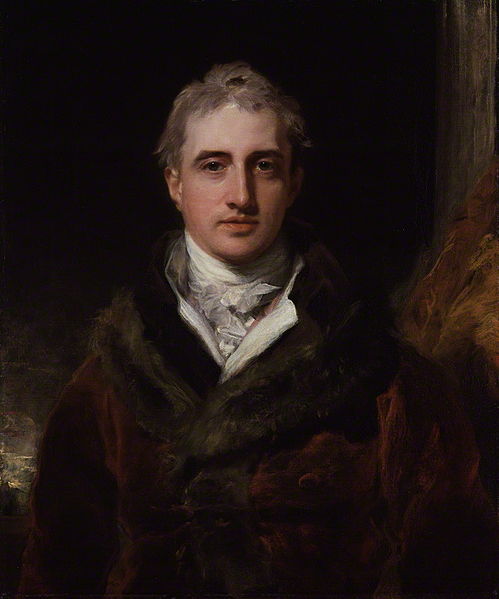
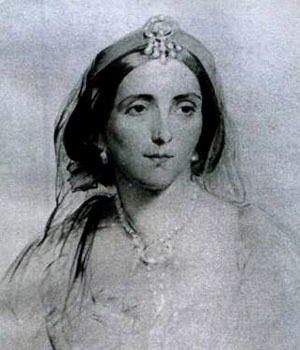
Robert Stewart, 2nd Marquess of Londonderry, KG, GCH, PC, PC (Ire) (18 June 1769 – 12 August 1822), usually known as Lord Castlereagh, was an Irish and British statesman. As British Foreign Secretary, from 1812 he was central to the management of the coalition that defeated Napoleon and was the principal British diplomat at the Congress of Vienna. Castlereagh was also leader of the British House of Commons in the Liverpool government from 1812 until his death by suicide in August 1822. Early in his career, as Chief Secretary for Ireland, he was involved in putting down the Irish Rebellion of 1798 and was instrumental in securing the passage of the Irish Act of Union of 1800.
His foreign policy from 1814 was to work with the leaders represented at the Congress of Vienna to provide a peace in Europe consistent with the conservative mood of the day. Much more than prime minister Lord Liverpool, he was responsible for the repressive domestic measures. Historian Charles Webster concludes:
“There probably never was a statesman whose ideas were so right and whose attitude to public opinion was so wrong. Such disparity between the grasp of ends and the understanding of means amounts to a failure in statesmanship.”
Title
Robert Stewart acquired the courtesy title Viscount Castlereagh in 1796 when his father was created Earl of Londonderry in the Irish peerage. Upon his father’s death in 1821, he succeeded as 2nd Marquess of Londonderry, a title to which his father had been raised in 1816. His younger half-brother, the soldier, politician and diplomat Charles Stewart (later Vane) succeeded him as 3rd Marquess of Londonderry.
Family
Robert Stewart was born in Henry Street, Dublin, Ireland, in 1769 the son of Robert Stewart (1739–1821) of Newtownards and Comber in County Down, with properties in Counties Donegal and Londonderry. The family seat was Mount Stewart, County Down.
The elder Stewart was an Irish politician and prominent Ulster landowner. He was created Baron Londonderry in 1789, Viscount Castlereagh in 1795, and Earl of Londonderry in 1796 by King George III. In 1771 he was elected in the Whig interest to the Irish House of Commons, where he was a supporter of Lord Charlemont and his allies who called for greater independence from Britain. From the Act of Union of 1800, however, he sat in the British House of Lords as an Irish representative peer. In 1816 he was created Marquess of Londonderry by the Prince Regent.
Stewart’s mother, who died in childbirth when he was a year old, was Lady Sarah Frances Seymour, daughter of Francis Seymour-Conway, 1st Marquess of Hertford (a former British Ambassador to France (1764–65) and Lord Lieutenant of Ireland (1765–66)) and Isabella Fitzroy, daughter of Charles FitzRoy, 2nd Duke of Grafton. His father remarried five years later to Frances Pratt, daughter of Charles Pratt, 1st Earl Camden (1714–94), a leading English jurist and prominent political supporter of both the 1st Earl of Chatham and his son, William Pitt the Younger. Through the elder Stewart’s marriages, he linked his family with the upper ranks of English nobility and political elites. The Camden connection was to be especially important for the political careers of both him and his elder son. By Frances Pratt, Stewart’s father had three children who survived to adulthood, including Stewart’s half-brother, Charles William Stewart (later Vane), Baron Stewart of Stewart’s Court and Ballylawn in County Donegal (1814) and 3rd Marquess of Londonderry (1822).
In 1794, Stewart married Amelia (Emily) Hobart a daughter of John Hobart, 2nd Earl of Buckinghamshire, a former British Ambassador to Russia (1762–65) and Lord Lieutenant of Ireland (1776–80). Her mother, Caroline Conolly, was the granddaughter of William Conolly, Speaker of the Irish House of Commons in the early 18th century and one of the wealthiest landowners in Ireland. Caroline’s brother, Thomas Conolly, was married to Louisa Lennox, sister of Emily FitzGerald, Duchess of Leinster, whose son and Emily’s cousin-by-marriage, the aristocratic rebel Lord Edward FitzGerald, was a leader of the United Irishmen and one of their martyrs in the early stages of the Irish Rebellion of 1798.
Emily Stewart was well known as a hostess for her husband in both Ireland and London and during some of his most important diplomatic missions. In later years she was a leader of Regency London high society as one of the Lady Patronesses of Almack’s. She is noted in contemporary accounts for her attractiveness, volubility and eccentricities. By all accounts, the two remained devoted to each other to the end, but they had no children. The couple did, however, care for the young Frederick Stewart, while his father, Stewart’s half-brother, Charles, was serving in the army.
Early Life and Career
Stewart had recurring health problems throughout his childhood, and his family elected to send him to The Royal School, Armagh, rather than to England for his secondary education. At the encouragement of Earl Camden, who took a great interest in him and treated him as a grandson by blood, he later attended St. John’s College, Cambridge (1786–87), where he applied himself with greater diligence than expected from an aristocrat and obtained first class in his last examinations. He left Cambridge due to an extended illness, and after returning to Ireland did not pursue further formal education.
In 1790, Stewart was elected as a Member of the Irish Parliament for Down in one of the most expensive elections in Irish history. Though for a time he was associated with the Northern Whig Club, he entered the Irish House of Commons as an Independent. He ran on a platform supporting Whig principles of electoral reform and opposing the Irish policies of the British Government. But even from the outset of his career, he was a personal supporter of the Prime Minister, William Pitt. Stewart was a lifelong advocate of Catholic concessions, though his position on the specific issue of Catholic emancipation varied depending on his assessment of the potential repercussions on other policy priorities.
When war with France forced Government attention on defense of Ireland, the Irish Volunteers, a potential source of disaffection, were disbanded by Dublin Castle, and a reorganised Militia was created in 1793. Stewart enrolled as an officer, a matter of course for a young Protestant aristocrat, and served as Lieutenant Colonel under the command of his wife’s uncle, Thomas Conolly. Between Stewart’s attendance to his militia duties, his pursuit of cultural, family and political interests in London, two trips to the Continent (in 1791, when he visited revolutionary Paris, and 1792), and the courtship of his wife whom he married in 1794, his life during this period was not centered on the activities of the Irish House of Commons, where he was listened to with respect but where he was not yet an important player. He was also beginning to disappoint some of his more radical original supporters in his constituency. As the French Revolution grew more bloody and Ireland more rebellious, Stewart increasingly worried about Ireland’s future if the threats from France succeeded in breaking Ireland’s links to Britain. He became further inclined to support not only Pitt personally but the British Government, even when he did not approve of a specific line taken in Irish policy.
In 1794, partly as a result of the promotion of Stewart’s interests by his Camden connections, he was offered the Government-controlled seat of Tregony in Cornwall, where he was elected to the British House of Commons on a similar platform of reform principles and support for Pitt, on whose side he sat in Westminster. In 1796, he transferred to a seat for the Suffolk constituency of Orford, which was in the interest of his mother’s family, the Seymour-Conways (Marquess of Hertford).
Chief Secretary for Ireland
In 1795, Pitt replaced the popular Lord Lieutenant of Ireland, Lord Fitzwilliam, with Stewart’s uncle, the 2nd Earl Camden. Camden’s arrival in Dublin was greeted with riots, and that year Stewart crossed the floor to join the supporters of the British Government. Stewart became an essential adviser to the inexperienced and unpopular Lord Lieutenant, who was Stewart’s senior by only ten years.
In 1796, when the French invasion of Ireland failed at Bantry Bay due to bad weather and not to Ireland’s military preparations or the British Navy, Castlereagh as a leader of the Militia saw first hand how ripe Ireland was for breaking from Britain and becoming another French satellite. Despairing of obtaining timely military support from Britain if Ireland were again threatened with invasion, for the next several years, he was increasingly involved in measures against those promoting rebellion, but his initial principles of reform and emancipation continued to hold a place in his political thought.
In 1797, Castlereagh was at last appointed to office, as Keeper of the King’s Signet for Ireland. As martial law was declared in the face of growing turmoil, he was made both a Lord of the Treasury and a Member of the Privy Council of Ireland (1797–1800). At the urging of Camden, Castlereagh assumed many of the onerous duties of the often-absent Chief Secretary for Ireland who was responsible for day-to-day administration and asserting the influence of Dublin Castle in the House of Commons. In this capacity, and after March 1798 as Acting Chief Secretary, Castlereagh played a key role in crushing the Irish Rebellion of 1798, offering clemency to commoners who had supported the rebellion, and focusing instead on pursuing rebel leaders.
In 1799, in furtherance of both his own political vision and Pitt’s policies, Castlereagh began lobbying in the Irish and British Parliaments for an official union between the two, convinced that it was the best way to soothe the long-standing divides in Ireland, insulate Ireland from further radical disaffection, and protect Britain from French military threats via Ireland. His first attempt, at the opening of the Irish session of 1799, met with failure during long, heated debates. A year of further intense preparation followed, with an impressive display of Machiavellian tactics that included the common practice of bribery through peerages, honours and money, but bribery on a truly uncommon scale. In the summer of 1800, Castlereagh together with the Lord Lieutenant, Marquess Cornwallis, finally succeeded in steering the Irish Act of Union through both Parliaments.
During the campaign for the Act of Union, both Castlereagh and Cornwallis had, in good faith, forwarded informal assurances they had received from Pitt’s Cabinet to the Irish Catholics that they would be allowed to sit in Parliament. Both Castlereagh and Cornwallis knew Catholic emancipation would be critical if their objectives for Union were to be realised. Emancipation was, however, opposed by much of the British establishment, including George III, who was convinced that it would violate his royal oath as protector of the Protestant faith. Pitt tried to follow through on his commitment, but when it came to light that the King had approached Henry Addington, an opponent of Catholic emancipation, about becoming Prime Minister to replace the pro-emancipation Pitt, both Castlereagh and Pitt resigned in protest. Still, Castlereagh would long be held personally responsible by many Catholics in Ireland for the apparent breach of promise and Government’s betrayal of their interests.
In Dublin, he was a member of the Kildare Street Club. He was elected a Fellow of the Royal Society in 1802.
At Westminster and in Government
When the newly united Parliament of the United Kingdom met in 1801, Castlereagh took his seat in the House of Commons from his Down constituency. By 1802, tensions between Tories supporting emancipation and those opposing had relaxed, and Addington had obtained his desired cessation of hostilities with France (the Peace of Amiens). At a shift in the composition of Addington’s Government, Castlereagh accepted the offer to enter the Cabinet as President of the Board of Control, where he mediated bitter disputes between the Governor-General of India, Richard Wellsley, and the Directors of the East India Company, smoothing quarrels while generally supporting Lord Wellesley’s policies.
After the renewal of the war against Napoleon, at the urging of Castlereagh and other long-time supporters, in 1804 Pitt returned as Prime Minister, and Castlereagh was promoted to Secretary of State for War and the Colonies. As the only other member of Pitt’s Government in the House of Commons, Castlereagh became Pitt’s political deputy, taking on ever more burdens as Pitt’s health continued to decline. After Pitt’s death in 1806, Castlereagh resigned amid the chaos of the Ministry of All the Talents. When that Government collapsed, Castlereagh again became Secretary of State for War and the Colonies in 1807, this time in the ministry of the Duke of Portland.
The Duel with Canning
As minister for War, he became involved in disputes with Foreign Secretary George Canning over the Walcheren Expedition and its failure. Canning saw it as a diversion of troops from the Peninsular War based on a hopeless plan. However, Castlereagh had the support of Lord Wellesley’s younger brother General Arthur Wellesley (future Duke of Wellington), and evidence later surfaced that Canning himself had interfered with the plan, selecting the Earl of Chatham to command the expedition. The Portland government became increasingly paralysed by disputes between the two men. Portland was in deteriorating health and gave no lead, until Canning threatened resignation unless Castlereagh was removed and replaced by Lord Wellesley. Wellesley himself was neither complicit with nor even aware of the arrangement, but Portland secretly agreed to make this change when it became possible.
Castlereagh discovered the deal in September 1809 and demanded redress. He challenged Canning to a duel, which Canning accepted. Canning had never before fired a pistol. The duel was fought on 21 September 1809 on Putney Heath. Canning missed but Castlereagh wounded his opponent in the thigh. There was much outrage that two cabinet ministers had resorted to such a method, and they both felt compelled to resign from the government. Six months later, Canning published a full account of his actions in the affair, and many who had initially rallied to him became convinced Castlereagh had been betrayed by his cabinet colleague.
Diplomatic Career
Marble bust of Castlereagh by Joseph Nollekens, 1821. Yale Center for British Art
Three years later, in 1812, Castlereagh returned to the government, this time as Foreign Secretary, a role in which he served for the next ten years. He also became leader of the House of Commons in the wake of Spencer Perceval’s assassination in 1812. In his role of Foreign Secretary he was instrumental in negotiating what has become known as the quadruple alliance between Britain, Austria, Russia, and Prussia at Chaumont in March 1814, in the negotiation of the Treaty of Paris that brought peace with France, and at the Congress of Vienna.
At the Congress of Vienna, Castlereagh designed and proposed a form of collective and collaborative security for Europe, then called a Congress system. In the Congress system, the main signatory powers met periodically (every two years or so) and collectively managed European affairs. This system was successfully used to resolve the Polish-Saxon crisis at Vienna and the question of Greek independence at Laibach. The following ten years saw five European Congresses where disputes were resolved with a diminishing degree of effectiveness. Finally, by 1822, the whole system had collapsed because of the irreconcilable differences of opinion among Britain, Austria, and Russia, and because of the lack of support for the Congress system in British public opinion. The Holy Alliance, which Castlereagh opposed, lingered for some time, however, and even had effects on the international stage as late as the Crimean war. The order created by the Congress of Vienna was also more successful than Congresses themselves, preventing major European land wars until the First World War a century later. Scholars and historians have seen the Congress system as a forerunner of the modern collective security, international unity, and cooperative agreements of NATO, the EU, the League of Nations, and the United Nations.
In the years 1812 to 1822, Castlereagh continued to competently manage Britain’s foreign policy, generally pursuing a policy of continental engagement uncharacteristic of British foreign policy in the nineteenth century. Castlereagh was not known to be an effective public speaker and his diplomatic presentation style was at times abstruse. Henry Kissinger says he developed a reputation for integrity, consistency, and goodwill, which was perhaps unmatched by any diplomat of that era. His views on foreign policy were ahead of his time.
Decline and Death
Despite his contributions to the defeat of Napoleon and restoration of peace, Castlereagh became extremely unpopular at home. He was attacked for his construction of a peace that gave a free hand to reactionary governments on the Continent to suppress dissent. He was also condemned for his association with repressive measures of the Home Secretary, Lord Sidmouth (the former Prime Minister Addington). As Leader of the House of Commons for the Liverpool Government, he was often called upon to defend government policy in the House. He had to support the widely reviled measures taken by Sidmouth and the others, including the infamous Six Acts, in order to remain in cabinet and continue his diplomatic work. For these reasons, Castlereagh appears with other members of Lord Liverpool’s Cabinet in Shelley’s poem The Masque of Anarchy, which was inspired by, and heavily critical of, the Peterloo massacre:
I met Murder on the way –
He had a face like Castlereagh –
Very smooth he looked, yet grim;
Seven bloodhounds followed him
All were fat; and well they might
Be in admirable plight,
For one by one, and two by two,
He tossed them human hearts to chew
Which from his wide cloak he drew.
After the death of his father in 1821, Castlereagh became the 2nd Marquess of Londonderry. As a non-representative Irish peer Londonderry was eligible to sit in the House of Commons though he had to leave his Irish seat and instead be elected to an English seat. In 1822, he began to suffer from a form of paranoia or a nervous breakdown, possibly as a result of an attack of gout combined with the stress of public criticism. He was also severely overworked with both his responsibilities in leading the government in the House and the never-ending diplomacy required to manage conflicts among the other major powers. At the time, he said “My mind, is, as it were, gone.” Londonderry returned to his country seat at Loring Hall in Water Lane, North Cray, Kent on the advice of his doctor. On 9 August 1822 he had an audience with King George IV in which he appeared distracted and mentally disturbed. Among other surprising remarks he revealed to the King that he thought he was being blackmailed for homosexuality.
On 12 August, although his wife had succeeded in removing razors from his possession and even though his doctor was in attendance, Castlereagh managed to find a pen knife with which he committed suicide by cutting his own throat.
An inquest concluded that the act had been committed while insane, avoiding the harsh strictures of a felo de se verdict. The verdict allowed Lady Londonderry to see her husband buried with honour in Westminster Abbey near his mentor, William Pitt. Some radicals, notably William Cobbett, claimed a “cover-up” within the government and viewed the verdict and Castlereagh’s public funeral as a damning indictment of the elitism and privilege of the unreformed electoral system. His funeral on 20 August was greeted with jeering and insults along the processional route, although not to the level of unanimity projected in the radical press. A funeral monument was not erected until 1850 by his half-brother and successor, Charles Stewart Vane, 3rd Marquess of Londonderry.
Sometime after Castlereagh’s death, Lord Byron wrote a savage quip about his grave:
Posterity will ne’er survey
A nobler grave than this:
Here lie the bones of Castlereagh:
Stop, traveller, and piss.
And yet, some of Castlereagh’s political opponents were gracious in their epigrams. Henry Brougham, a Whig politician and later the Lord Chancellor, who had battled frequently with Castlereagh, once almost to the point of calling him out, and had denigrated his skills as Leader, wrote in the week following Castlereagh’s death:
Put all their other men together in one scale, and poor Castlereagh in the other – single he plainly weighed them down… One can’t help feeling a little for him, after being pitted against him for several years, pretty regularly. It is like losing a connection suddenly. Also he was a gentleman, and the only one amongst them.
An English Heritage blue plaque is displayed at the entrance to the listed building Loring Hall, now a care facility for those with learning disabilities, in commemoration of Castlereagh, who occupied the property from 1811 until his death.
Ghost Story
Robert Stewart was said to have seen a ghost in the barracks at Ballyshannon one night. He claimed that the face of a boy came out of the fireplace and approached him. When he stepped forward toward it, it receded and then faded away. Castlereagh supposedly told this story to Sir Walter Scott, and called the apparition “The Radiant Boy.”

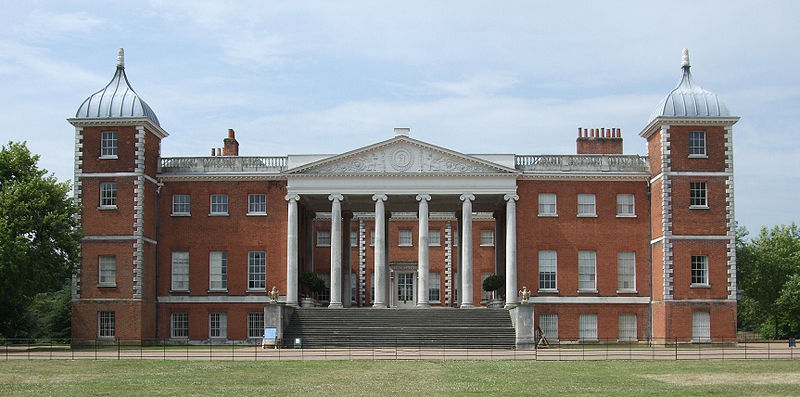 Osterley Park is a mansion set in a large park of the same name. It is in the London Borough of Hounslow, part of the western suburbs of London. When the house was built it was surrounded by rural countryside. It was one of a group of large houses close to London, which served as country retreats for wealthy families, but were not true country houses on large agricultural estates. Other surviving country retreats of this type near London include Syon House and Chiswick House. The park is one of the largest open spaces in west London, though it is marred by the presence of the M4 motorway, which cuts across the middle of it.