Eccentrics of the Regency: Francis Seymour-Conway, 3rd Marquess of Hertford

Francis Charles Seymour-Conway, 3rd Marquess of Hertford (11 March 1777 – 1 March 1842), styledViscount Beauchamp between 1793 and 1794 and Earl of Yarmouth between 1794 and 1822, was a British Tory politician and art collector.

Seymour-Conway was the son of Francis Seymour-Conway, 2nd Marquess of Hertford, by his second wife Isabella Anne Ingram, daughter of Charles Ingram, 9th Viscount of Irvine.

3rdMarquessOfHertford

The Regency Rake is a popular character from romance novels. The Marquess of Hertford was a true Regency rake, one who preferred married women to the innocent maiden. Though 15 years younger than  the Prince Regent, Seymour-Conway quickly became on of Prince George’s intimates. He was nicknamed “Red Herrings” because of his red hair and whiskers. Known for his appetite for sensual pleasures, he was once described by a colleague as “a man without one redeeming quality in the multitude of his glaring, damning vices.” Toward the end of his life, a critic said of Seymour-Conway, “[He was] the debauched sensualist, the heartless roué, the gamester – he who never envinced a latent spark of virtue among the his glaring vices, revelling in crime even in his impotent old age and dotage.”

Lord Yarmouth sat as Member of Parliament for Oxford from 1797 to 1802, for Lisburn from 1802 to 1812, for Antrim from 1812 to 1818 and for Camelford  from 1820 to 1822. In March 1812 he was sworn of the Privy Council and appointed Vice-Chamberlain of the Household under Spencer Perceval. He continued in the post after Lord Liverpool became prime minister in May 1812 after Perceval’s assassination, but relinquished it in July of that year. The same year he was appointed Lord Warden of the Stannaries, a post he held until his death. He succeeded his father in the marquessate in 1822. The same year he was also made a Knight of the Garter and appointed Vice-Admiral of Suffolk, a post he retained until his death.

Lord Hertford was also a considerable art collector, as were his son and grandson; many of his pictures are in the Wallace Collection which they founded.

Lord Hertford married Maria Emilia Fagnani, reputedly the illegitimate daughter of the 4th Duke of Queensberry and a married Italian aristocrat, the Marchesa Fagnani, on 18 May 1798. They had three children:

  • Lady Francis Maria Seymour-Conway (d. 1822).
  • Captain Richard-Seymour Conway, 4th Marquess of Hertford (1800-1870).
  • Lord Henry Seymour-Conway (1805–1859).

Lord Hertford was the prototype for the characters of the Marquess of Monmouth in Benjamin Disraeli’s 1844 novel, Coningsby, and the Marquess of Steyne in William Makepeace Thackeray’s 1848 novel, Vanity Fair, because, like Steyne, “Lord Hertford kept a secret garconniere, where, according to Harriette Wilson [a celebrated Regency era courtesan], who was a regular visitor, he would entertain ‘any fair lady who would honour him with a visit incognita, after his servants should have prepared a most delicious supper and retired to rest.'”   In his last years he was said to live with a retinue of prostitutes. Charles Greville described him as broken with infirmities and unable to speak due to paralysis of the tongue, and claimed ” there has been, so far as I know, no such example of undisguised debauchery.” He died in March 1842, aged 64, and was succeeded by his eldest son, Richard. The Marchioness of Hertford died in March 1856, aged 84.

Harriette Wilson surprisingly respected Seymour-Conway. While she “trashed” many of the Regency most well-known figures in her memoirs, Publish and Be Damn’d, Harriette said of Seymour-Conway, “[H]e is a man possessing more general knowledge than anyone I know. His Lordship appears to be au fait on every subject one can possibly imagine. Talk to him of drawing, or horse-riding; painting or cock-fighting; rhyming, cooking, or fencing; profligacy or morals; religion of whatever creed; languages living or dead; claret, or burgundy; champagne or black strap; furnishing houses, or riding hobbies; the flavour of venison, or breeding poll-parrots, and you might see he had served his apprenticeship to every one of them.”

Lord Hertford’s legacy is marred by his dissipation and his wild extravagance. His scandalous private life caused others to overlook his intelligence and his taste, especially in art. Seymour-Conway was a mix of wasteful recklessness and grace and style.

Posted in British history, legends and myths, Living in the Regency, real life tales, Regency era, Victorian era | Tagged , , , , | Comments Off on Eccentrics of the Regency: Francis Seymour-Conway, 3rd Marquess of Hertford

Interview with Regina Jeffers from Historical Fiction: Georgian Style

This interview was first posted on Laura Purcell’s “Historical Fiction: Georgian Style” on March 7, 2013.

Why is the Regency Period important and why should we want to read about it?

The Regency marked the beginning of the Britannia Pax, a period of relative peace in the Europe and the world. From the time of the end of the Napoleonic Wars (1815) to the beginning of World War I (1914), the British Empire controlled the key maritime trade routes. During this period, the British Empire became the largest empire of all time. In this era of “peace,” the British Empire provided services such as the suppression of piracy and the elimination of slavery. During the early years of the 19th Century, England’s economic and social countenance changed forever. England moved swiftly from the cottage industries to the beginnings of the Industrial Revolution. The time saw the rise of the merchant middle class. Of course, social class held tight to its traditions, but the merchant class was the backbone of the nation and could not be denied.

The British dominated India, the West Indies, and the countries in the area of the present day Persian Gulf, and built its wealth and power with each acquisition. London became the most prosperous city in Europe. The years of the Regency saw a complete revolution in dress for both men and women. Commerce and industry fluctuated, but overall, greater wealth was known. Technological innovations affected the means of production. By 1815, Britain was an industrial nation without any real competition.

Who is your favorite Regency Era personality?

I am certain most people who know me would think that I would respond with the name of “Jane Austen” for this question. After all, I have written eight Austen-inspired novels, but that answer is too predictable for my nature. Unfortunately, other than Austen, I cannot say I favor one of the Regency “personalities” over another. I have a tendency to spend my leisure time research with those of the Royal Court. For a long time, I have thought of mapping out the relationships of George III’s many children, along with the princes’ and princesses’ families, lovers, etc. Of late, I have been reading passages on Harriette Wilson, the courtesan par excellence of the Regency. (In June 2012, BBC Radio 4 series Classic Serial by Ellen Dryden adapted Harriette’s memories for broadcast. Harriet’s book, Publish and be Damn’d: The Memoirs of Harriette Wilson was an instantaneous bestseller in 1825.) The list of Harriette’s lovers would rival Debrett’s list of the nobility. I hold no intention of writing a novel about Harriette, but I am fascinated by the way she conducted her life in a time when women had few rights.

Share a quirky fact from your research.

A Scottish legend brings us the gruesome tale of Sawney Bean. Bean was the head of an incestuous cannibalistic family. For some five and twenty years in the 15th Century, the Beans robbed and murdered unsuspecting travelers along the Ayrshire/Galloway coast. Reportedly, the Bean family lived in a sea cave close to Ballantrae on Bennane head in Ayshire. The tale appears in horrific detail in “Historical and Traditional Tales Connected with the South of Scotland” by John Nicholson (1843).

Supposedly, Bean and his wife killed and then ate their victims. Their family grew to 46 sons, daughters, and grandchildren, all who lived in a watery cave. Much to the horror of coastal communities, bones and skulls often washed ashore after the Beans disposed of their “leftovers.” King James IV reportedly led the mob, which searched for the Beans after a botched attack by the family. Finally caught, the Beans were taken to Edinburgh to meet a barbaric execution. The execution was a slow one: the men bled to death after their hands and legs were cut off, and the women were burned alive after they were forced to watch the execution of the men. John Nicholson tells us about the execution: “…they all died without the least sign of repentance, but continued cursing and venting the most dreadful imprecations to the very last gasp of life.”

One of historical romances hardest questions remains: Georgette Heyer or Jane Austen?

Obviously, this is an easy question for me: Jane Austen. Austen wrote stories of ordinary life. Her subject was common and ordinary, and she rendered it in minute detail. I am not criticizing Heyer. In truth, I have never studied Heyer’s works in detail. My opinion is based purely on my life-long love of all things Austen.

Tell us about your current projects.

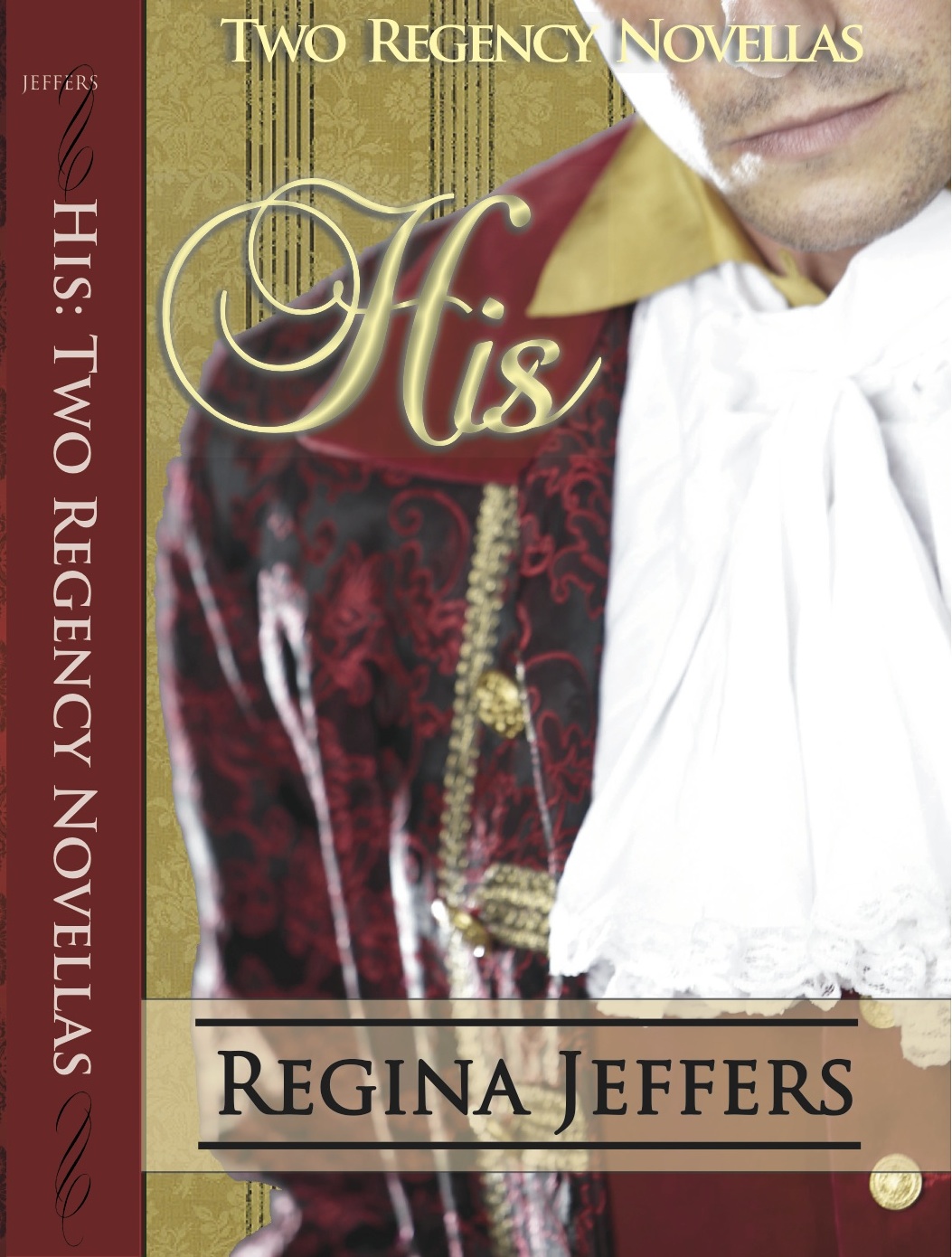
HisCropIn February, I brought out two Regency era novellas in one volume. His: Two Regency Novellas brings together two of my favorite minor characters. Lawrence Lowery is the older brother of one of the main characters in my Realm Series. He has a brief scene in A Touch of Velvet, another in A Touch of Cashémere, and a final one in A Touch of Grace. “His American Heartsong” is Lowery’s story. The second story in the volume is “His Irish Eve.” It is the story of Adam Lawrence, the future Earl of Greenwall. Adam is a regular in my stories with multiple walk throughs. He was given a major role in The Phantom of Pemberley. At the end of Phantom, he releases his mistress Cathleen Donnell. “His Irish Eve” brings us full circle some six years later.

“His American Heartsong”

Lawrence Lowery has been the dutiful elder son his whole life, but when his father Baron Blakehell arranges a marriage with the insipid Annalee Dryburgh, Lowery must choose between his responsibility to his future estate and the one woman who makes sense in his life. By Society’s standards, Arabella Tilney is completely wrong to be the future Baroness–she is an American hoyden, who demands that Lowery do the impossible: Be the man he has always dreamed of being. (A Novella from the Realm Series)

“His Irish Eve”

When the Earl of Greenwall demands his only son, Viscount Stafford, retrieve the viscount’s by-blow, everything in Adam Lawrence’s life changes. Six years prior, Lawrence had released his former mistress Cathleen Donnell from his protection, only to learn in hindsight Cathleen was with child. Lawrence arrives in Cheshire to discover not only a son, but also two daughters, along with a strong-minded woman, who fascinates him from the moment of their first encounter. Aoife Kennice, the children’s caregiver, is a woman impervious to Adam’s usual tricks and ruses as one of England’s most infamous rakes. But this overconfident lord is about to do battle: A fight Adam must win–a fight for the heart of a woman worth knowing.

TMDOMD2coverOn March 12, Ulysses Press will release my latest Austen-inspired novel. It is another cozy mystery based on Pride and Prejudice. It is set some six months into the Darcys’ marriage. The Mysterious Death of Mr. Darcy promises to leave you guessing.

The Mysterious Death of Mr. Darcy

Fitzwilliam Darcy is devastated. The joy of his recent wedding has been cut short by the news of the sudden death of his father’s beloved cousin, Samuel Darcy. Elizabeth and Darcy travel to Dorset, a popular Regency resort area, to pay their respects to the well-traveled and eccentric Samuel. But this is no summer holiday. Danger bubbles beneath Dorset’s peaceful surface as strange and foreboding events begin to occur. Several of Samuel’s ancient treasures go missing, and then his body itself disappears. As Darcy and Elizabeth investigate this mystery and unravel its tangled ties to the haunting legends of Dark Dorset, the legendary couple’s love is put to the test when sinister forces strike close to home. Some secrets should remain secrets, but Darcy will do all he can to find answers—even if it means meeting his own end in the damp depths of a newly dug grave.

With malicious villains, dramatic revelations and heroic gestures, The Mysterious Death of Mr. Darcy will keep Austen fans turning the pages right up until its dramatic conclusion.

What will you be working on next?

For White Soup Press, I have begun writing book 5 of the Realm series (The Scandal of Lady Eleanor, A Touch of Velvet, A Touch of Cashémere, and A Touch of Grace). A Touch of Mercy is tentatively scheduled for an early May 2013 release. A Touch of Love will follow in October. The series will finish next February with the release of a second anthology entitled “Hers” and will feature the solution to where the emerald can be found.

Ulysses Press and I are developing a new Austen-inspired for an early 2014 release.

What other books (either fiction or nonfiction) could you recommend, which speak of the Regency Period?

Kristine Hughes’s The Writer’s Guide to Everyday Life in Regency and Victorian England

Daniel Pool’s What Jane Austen Ate and Charles Dickens Knew

Amanda Vickery’s Behind Closed Doors: At Home in Georgian England

John Summerson’s Georgian London

Mary Balogh’s Bedwyn Series: Slightly Married; Slightly Wicked; Slightly Scandalous; Slightly Tempted; Slghtly Sinful; and Slightly Dangerous

Louise Allen’s A Most Unconventional Courtship; “An Earl Beneath the Mistletoe” from Snowbound Wedding Wishes; The Notorious Mr. Hurst

Girly Question: If you could design and make your perfect Regency outfit, what would it be like?

I am not a fashion person. Although I have watched every season, I have never picked the winner of Project Runway, so this was a difficult question for me. I have several Regency day dresses, which I use for presentations, etc., but for this question I wanted some “classier.” Therefore, I did an Internet search.

1810whtmullwallovrembwsilvrtinslmetI particularly liked this white mull gown from the Metropolitan Museum of Art. It is from 1810 and is made from white mull with silver tinsel embroidery. The sleeves are gathered and designed to set off the slope of the shoulder. The waist is high and sports a knotted cord, which is accented with tassels. The “V” neckline is designed to accentuate a woman’s full bosoms.

Website  www.rjeffers.com

Blogs  – Every Woman Dreams  https://reginajeffers.wordpress.com/

Austen Authors   http://austenauthors.net/

English Historical Fiction Authors  http://englishhistoryauthors.blogspot.com/

Twitter  @reginajeffers https://twitter.com/reginajeffers

Facebook  https://www.facebook.com/pages/Regina-Jeffers-Author-Page/141407102548455

Purchase Links:

The Mysterious Death of Mr. Darcy

Amazon  http://www.amazon.com/The-Mysterious-Death-Mr-Darcy/dp/1612431739/ref=sr_1_1?ie=UTF8&qid=1358967571&sr=8-1&keywords=the+mysterious+death+of+mr.+darcy

Books-a-Million  http://www.booksamillion.com/p/Mysterious-Death-Mr-Darcy/Regina-Jeffers/9781612431734?id=5581760318252

Barnes & Noble  http://www.barnesandnoble.com/w/the-mysterious-death-of-mr-darcy-regina-jeffers/1112705054?ean=9781612431734&itm=1&usri=the+mysterious+death+of+mr.+darcy

Ulysses Press   http://ulyssespress.com/?books=mysterious-death-of-mr-darcy


His: Two Regency Novellas

Amazon  http://www.amazon.com/His-Regency-Romances-Regina-Jeffers/dp/061575774X/ref=sr_1_1?ie=UTF8&qid=1359572029&sr=8-1&keywords=his%3A+two+regency+novellas

Kindle  http://www.amazon.com/His-Two-Regency-Romances-ebook/dp/B00B6QTTL8/ref=sr_1_1?ie=UTF8&qid=1359402822&sr=8-1&keywords=His%3A+Two+Regency+Novellas

Nook  http://www.barnesandnoble.com/w/his-regina-jeffers/1114234802?ean=2940015971132&itm=1&usri=his%3a+two+regency+novellas

Kobo  http://www.kobobooks.com/ebook/His/book-_SMXzWmrU0OkNjT4HatqHg/page1.html?s=Adqex3mxTE2rVgvyNAn2hQ&r=4

Posted in British history, Industry News/Publishing, Jane Austen, Living in the Regency, Regency era, Ulysses Press, White Soup Press, writing | Tagged , , , , , | Comments Off on Interview with Regina Jeffers from Historical Fiction: Georgian Style

Do You Know Your Jane Austen Novels?

Unknown

Becoming Jane is an imaginative, romantic tale that captures Jane Austen’s spirit, while playing with the truth. Many of us on this site have written our own “what if” stories, and so, maybe, we might be able to suspend reality and accept the witty, enchanting romance as all good storytelling. This film takes some well known facts from Austen’s life and spins them into an ingenious tale of lost love.

The film opens in the year 1795 and explores the feisty beginnings of an emerging 20-year-old writer, who wishes to live beyond what is expected of her – to actually marry for love. Anne Hathaway portrays Jane Austen, and James McAvoy plays the non-aristocratic Tom Lefroy, whose intellect and arrogance first raises young Jane’s ire and then captivates her heart. Juliann Jarrold, the film’s director says that “A couple of recent biographies have sort of honed in on this romance with Tom Lefroy, because it’s the older bios that tend to say she [Austen] didn’t have this romance; that somehow, out of her imagination, she was able to portray these amazing characters. Straight after [the alleged romance], she started writing First Impressions – and then Sense and Sensibility, andNorthanger Abbey.” (BTW, do you not love the facial similarities between the real Tom Lefroy and James McAvoy in these two pictures?)

The film is known for taking the truth and making it a reality. For example, there is some evidence that Ann Radcliffe influenced Jane Austen; however, the film creates a meeting between the two. During this encounter, Radcliffe asks Austen of what she will write.

Radcliffe: Of what do you wish to write?
Jane: The heart.
Radcliffe: Do you know it?
Jane: Not all of it.
Radcliffe: In time you will. If not…well, that situation is what imagination is for.

The film also provides us with plenty of “Jane” talk. For example, we hear part of the story/poem that Jane has created as a tribute to her sister Cassandra’s engagement.
The boundaries of propriety were vigorously assaulted, as was only right, but not quite breached, as was also right. Nevertheless, she was not pleased.

When others question Jane’s ambitions to become a novelist, she responds,
Novels are poor insipid things, read by mere women, even, God forbid, written by women.

But beyond the plot’s twists and turns, Becoming Jane playfully references Austen’s themes, characters, and story lines. So my question is how many such references can you name? Here are some (but not all) that I noted.

From Pride and Prejudice, we find…
Jane’s character resembles a cross between the flirtatious Lydia Bennet, who loves to dance, and Elizabeth Bennet, whose verbal swordplay with Mr. Darcy is enticing.
Mr. Warren is the klutzy clergyman whose proposal reminds us all of Mr. Collins. (He also is a bit like Mr. Elton in Emma.)
Lady Gresham (Maggie Smith) is so Lady Catherine De Bourgh. She does not want Wisley to consider Jane as a mate, and I love the scene where she mentions “a little wilderness.”
Lefroy’s character reminds of us the “worthless” activities of George Wickham early on in the film. Like Wickham, Lefroy studies law, but with not much success. Later he is very much Darcy in his judgment of “country” life.

From Sense and Sensibility, we find …
Like Marianne Dashwood, Jane’s decisions are not based on “sense,” but on her “sensibility” (emotional response).
Jane’s situation, if she does not marry Wisley, will be very much like the Dashwood sisters after losing their home.

From Northanger Abbey, we find …
Jane plays cricket, very much as did Catherine Morland.
Jane defends her desire to write novels.
The scene in Uncle Benjamin’s house between Jane and Lefroy reminds one of the staircase scene between Henry Tilney and Catherine Morland.
References to Ann Radcliffe’s (as well as other Gothic novels) are made in the novel. In the film, Jane visits Radcliffe.

From Mansfield Park, we find …
Lady Gresham’s line to Jane about her duty to marry well reminds us of those spoken by Lady Bertram to Fanny Price.
Lady Bertram spends her days with her pug dog, as does Countess Eliza, Jane’s cousin.

From Persuasion, we find …
Although she loves him, Jane breaks an engagement with Lefroy so that he has a chance for a better future. This is similar to what happens between Anne Elliot and Captain Wentworth.
In the novel, Anne meets Wentworth at a concert, where she must translate the opera for her cousin. She recognizes their love still exists, but she can say nothing. “How was the truth to reach him?” In the film, Jane meets Lefory many years after their separation at a concert. He has married and has a daughter named “Jane.”

Posted in British history, film, Jane Austen, Living in the Regency, Regency era | Tagged , , , , , , , | Comments Off on Do You Know Your Jane Austen Novels?

Not Worth the Paper It’s Written On…

Recently, while working on my WIP (work in progress), I spent several hours researching the paper used during the Regency Period. My character was wrapping several dresses in paper to place in storage. My first thought was tissue paper, but before I could add “tissue paper” to the story line, I needed to know if it was used during the period. Below are some of the facts I discovered during my research.

According to the Library of Congress website, “Paper-based materials that are more than 150 years old are in better shape than others that are less than 50.” The composition of paper leads to the rapidity of its deterioration. For example, those papers made with cellulose chains deteriorate quickly in acidic environments when moisture is present. The longer the cellulose chains, the stronger the paper.

Paper products of the 19th Century were commonly made from cotton and linen rags. Therefore, they held up well. Cotton paper fibers are longer than those in more modern paper products. Cotton paper is made from cotton linters or cotton from used cloths (rags) as the primary material source, hence the name rag paper. Cotton paper is superior in both strength and durability to wood pulp-based paper, which may contain high concentrations of acids.

Certain cotton fiber paper is known to last hundreds of years without appreciable fading, discoloration, or deterioration, so it is often used for important documents such as the archival copies of dissertations or theses. As a rule of thumb, for each percentage point of cotton fiber, a user may expect one year of resisting deterioration by use (the handling to which paper may be subjected). Legal document paper typically contains 25% cotton. Cotton paper will produce a better printout than copy paper  because it is able to absorb ink better.

Cotton paper is typically graded as 25%, 50%, or 100% cotton. Holding the cotton paper up to the light and looking just below the watermark for a number allows one to check the quality of the paper. 100% cotton paper may contain small amounts of acids and should be tested or certified before use for archival documents.

Second-cut cotton linters have a normal average fiber length of 1.45 µm and have similar properties as a short softwood pulp. 

Cotton paper is used in some countries’ modern banknotes.  These banknotes are typically made from 100% cotton paper, but can also be made from a mixture of 75% or less flax.  Other materials may also be used and still be known as Currency paper.

Cotton bond paper can be found at most stores that sell stationery and other office products. Though most cotton paper contains a watermark, it is not necessary for it to have one. Higher quality art papers are often made from cotton.

Also it has found extensive use as a Printed Circuit Board substrate when mixed with epoxy resins and classified into CEM 1, CEM 2, etc.

Cotton was first used with a mixture of silk  to make paper called Carta Bombycina. In the 1800s, fiber crops such as linen  fibers or cotton from used cloths (rags) were the primary material source. By the turn of the 20th century most of the paper was made from wood pulp, but cotton is still used in specialty papers. As cotton rags now often contain synthetic fibers, papermakers have turned to second-cut cotton linters as raw material sources for making pulp for cotton papers.

Newsprint breaks down the fastest. Made from ground wood pulp, the pulp is not first treated chemically. Paper, which is used for fine printing and for writing paper, has this chemical treatment. Newsprint is also subject to photolytic degradation (damaged from exposure to light).

Other than alkaline paper, most modern book paper have a short shelf life. Improper storage leads to a quicker decomposition of the paper. Alkaline paper has some sort of alkaline reserve. Chalk and other such reserves neutralize the acid, which destroys the fibers, and give the paper a whiter color. Alkaline paper can last indefinitely. A permanence mark, an infinity symbol within a circle, is often found on this type of paper.

An alum-rosin sizing agent is added to modern paper to prevent the printing inks from feathering. The sizing agent generates sulfuric acid when moisture is present.

HISTORY:

Although cheaper than vellum, paper remained expensive, at least in book-sized quantities, through the centuries, until the advent of steam-driven paper making machines in the 19th century, which could make paper with fibers from wood pulp. Although older machines predated it, the Fourdrinier papermaking machine became the basis for most modern papermaking. Nicholas  Louis Robert of Essonnes, France, was granted a patent for a continuous papermaking machine in 1799. At the time he was working for Leger Didot, with whom he had quarreled over the ownership of the invention.

a fifty euro watermark held up to the light

a fifty euro watermark held up to the light

Didot sent his brother-in-law, John Gamble, to meet Sealy and Henry Fourdrinier, stationers of London, who agreed to finance the project. Gamble was granted British patent 2487 on 20 October 1801. With the help particularly of Bryan Donkin, a skilled and ingenious mechanic, an improved version of the Robert original was installed at Frogmore, Hertfordshire, in 1803, followed by another in 1804. A third machine was installed at the Fourdriniers’ own mill at Two Waters. The Fourdriniers also bought a mill at St. Neots intending to install two machines there and the process and machines continued to develop.

However, experiments with wood showed no real results in the late 18th-century and at the start of the 19th-century. By 1800, Matthias Koops (in London, England) further investigated the idea of using wood to make paper, and in 1801 he wrote and published a book titled Historical account of the substances which have been used to describe events, and to convey ideas, from the earliest date, to the invention of paper.

His book was printed on paper made from wood shavings (and adhered together). No pages were fabricated using the pulping method (from either rags or wood). He received financial support from the royal family to make his printing machines and acquire the materials and infrastructure need to start his printing business. But his enterprise was short lived. Only a few years following his first and only printed book (the one he wrote and printed), he went bankrupt. The book was very well done (strong and had a fine appearance), but it was very costly.

Then in the 1830s and 1840s, two men on two different continents took up the challenge, but from a totally new perspective. Both Charles Fenerty and Friedrich Gottlob Keller began experiments with wood but using the same technique used in paper making; instead of pulping rags, they thought about pulping wood. And at about the same time, by mid-1844, they announced their findings. They invented a machine that extracted the fibres from wood (exactly as with rags) and made paper from it. Charles Fenerty also bleached the pulp so that the paper was white. This started a new era for papermaking. By the end of the 19th-century almost all printers in the Western World were using wood in lieu of rags to make paper.

Together with the invention of the practical fountain pen and the mass-produced pencil of the same period, and in conjunction with the advent of the steam driven rotary printing press, wood based paper caused a major transformation of the 19th century economy and society in industrialized countries. With the introduction of cheaper paper, schoolbooks, fiction, non-fiction, and newspapers became gradually available by 1900. Cheap wood based paper also meant that keeping personal diaries or writing letters became possible and so, by 1850, the clerk, or writer, ceased to be a high-status job.

The original wood-based paper was acidic due to the use of alum and more prone to disintegrate over time, through processes known as slow fires. Documents written on more expensive rag paper were more stable. Mass-market paperback books still use these cheaper mechanical papers, but book publishers can now use acid-free paper for hardback and trade paperback books.

Note! The Library of Congress site also discusses the Development of Solutions for Preservation of Books and Paper and The Synergy of Deacidification and Improved Storage.

Posted in British history, Industry News/Publishing, Living in the Regency, real life tales, Regency era, Victorian era | Tagged , , , , , | 2 Comments

Finding Elizabeth Bennet in Film

138837600982011704_eanWPsHY_bEmphasis on Elizabeth Bennet…

In a previous post, we discussed how Andrew Davies “created” the image of a very masculine and virile Darcy by adding scenes to the 1995 Pride and Prejudice adaptation. Some of us probably participated in “Darcy Loving Parties” at the time of this mini-series’ release.

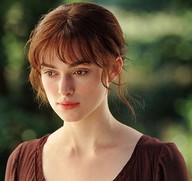
Today, I would like to examine the visual shift of “desire” to Elizabeth Bennet in the 2005 film. Casting the beautiful Keira Knightley in the lead role changed the focus. Choosing Ms. Knightley, who had established herself in Bend It Like Beckham, King Arthur, Love Actually, and The Pirates of the Caribbean, was designed to appeal to a younger and wider audience. Add Joe Wright’s emphasis on social realism to Knightley’s casting, and we have a film that grossed over $125 million worldwide.

Knightley’s casting could have backfired. Remember that Austen describes the character as, “She (Elizabeth) is tolerable, but not handsome enough to tempt me.” and “But no sooner had he made it clear to himself and his friends that she had hardly a good feature in her face ….” and “Though he had detected with a critical eye more than one failure of perfect symmetry in her form ….” Obviously, the casting of the equally lovely Rosamund Pike as Jane helped to “sell” the idea that Elizabeth’s fair face was less than her elder sister’s.

In the 2005 film, Elizabeth (Knightley) is found in EVERY scene, from the opening shot of her walking home while reading her book to the final kiss in the American version. The camera follows Elizabeth through the house. We see her world through Elizabeth’s eyes. When she walks away from Darcy at the Meryton assembly, everyone else pales, but our focus remains constant on Elizabeth. She is framed by the retreating camera lens.

When Elizabeth and Jane share secrets under the blankets, the audience is invited to join them. When she sensually traces Darcy’s belongings with her fingertips, we feel Elizabeth’s longing for a man she has allowed to slip through her fingers.

Through the camera, the viewer is always at Elizabeth’s side. We read over her shoulder in the opening scene. We enjoy the interplay between Elizabeth and Mr. Bennet regarding Mr. Collins’s pomposity. We hide behind a Netherfield column with her when her family’s actions bring humiliation. We observe Darcy’s approach through the morning mist as Elizabeth would, and we peek through the open door as she watches Darcy spin his sister around in circles.

Even when we have the occasional film seconds when Knightley is not in the framing, the scene pans to Elizabeth’s presence. It’s as if the camera leads us back to her. The maid carries items through the Bennet household and ends up in Elizabeth and Jane’s shared room. The intimate scene of Mr. and Mrs. Bennet’s bedroom guides us to another meeting between Jane and Elizabeth. Darcy’s appreciation of Georgiana’s pianoforte skills lead the viewer to Elizabeth’s accepting his invitation to Pemberley.

Knightley’s star power is “lessened” by her appearance in dingy, drab dresses and having her surrounded by a “working” home: animals, a barnyard swing, the kitchen, clothes lines, disarray. These techniques “muffle” Knightley’s beauty and allow the viewer to accept her as Austen’s most famous character. In contrast to the 1995 film, Matthew Macfadyen’s Darcy is often shot from a distance and always fully clothed (minus the American ending again). Even his open-shirt appearance in the pre-dawn hours is viewed from Elizabeth’s point of view. He’s coming to her. She waits for him. Therefore, she remains the center of attention.

Wright’s “extra” scenes direct the desire to Elizabeth. Davies’s film showed Darcy in his bath and diving into a pond to increase Colin Firth’s role. Wright uses the near kiss from Darcy’s first proposal, the caress as Darcy helps Elizabeth to the carriage, and the seductive circling of Darcy and Elizabeth at the Netherfield Ball as part of the film’s sexual subtext. These and several other scenes amplify the desire for Elizabeth.

One part of the film that has received much criticism is the way this adaptation minimizes the relationship between Elizabeth and Wickham and between Elizabeth and Colonel Fitzwilliam. Wright chose to omit Austen’s diversions because Elizabeth is the one to be desired, and Elizabeth desires Darcy. In this version, we do not consider her flirtation with either man as serious possibilities. In the 2005 film, Wickham spends more time with Lydia than he does with Elizabeth.

Okay, it is your turn. Where else in the film is Elizabeth the point of desire? How has her character been created? I have other ideas, but I am waiting for our Austen Authors’ loyal fans to add their own opinions.

Holden, Stephen. “Marrying off Those Bennet Sisters Again, but This Time Elizabeth is a Looker.” Review of Pride and Prejudice. The New York Times. 11 Nov. 2005. {http://movies2.nytimes.com/2005/11/11/movies/11prid.html?ex=1176782400&en=97912be821dd7738&ei=5070}

Posted in film, Jane Austen, Living in the Regency, real life tales, Regency era | Tagged , , , | 13 Comments

Interview with Regina Jeffers from Random Bits of Fascination

This interview originally ran on Random Bits of Fascination, the blog of fellow Austen author, Maria Grace.

Writing is such a challenging endeavor. What got you started on it, and what keeps you doing it?

In November 2008, I was still in the classroom as a teacher. I was explaining to my Advanced Placement class about voice and syntax, and I had pulled several examples of classic literature and popular literature for the students’ examinations. The lesson was in preparation of their reading Pride and Prejudice and later, Ethan Frome. I was highly critical of one of the samples, and one student took up the challenge with “If you know how to do this, do it yourself.” And so, I began writing Darcy’s Passions, a retelling of Pride and Prejudice from Mr. Darcy’s point of view. I held no conceit or thoughts of glory. I simply wished to answer a student’s challenge so that I might return with one of my own.

I admit at the time, I knew very little of JAFF, and I had only read a few of the Austen-inspired authors. So, I was an absolute publishing virgin. The project came from my love of Austen, and it was the perfect way of encouraging the students to look for voice, syntax, etc. I am occasionally criticized for “grammatical” errors in Darcy’s Passions. What people do not realize is that the students originally had editorial say over the manuscript. I had never thought of publishing the story. When I finished each chapter, they would pursue it for errors, but mostly for continuity. For the classroom experience, I self published the book, even encouraged one of my students to draw the original cover. I had never thought of publishing traditionally. The book went to #8 on Amazon’s sales list, and Ulysses Press contacted me to offer a contract. In hindsight, I laugh at my naïveté. As publishing virgins go, I was clueless. Having spent years in the journalism field, I thought the editor would correct all the errors. It was my fault that I did not take more control of the final book. I signed off on the contract before I knew the why and the wherefore of being traditionally published. So, yes there are a few transitive and intransitive verb errors and even the occasional split infinitive. I admit I should have shown more diligence in the publishing realm. I learned my lesson, and 16 books later, I am a better writer for it. However, the occasional verb tense error does not take away from the story of Fitzwilliam Darcy’s anguish when he cannot win Elizabeth Bennet’s love and his glory at finally arriving the woman’s good graces. That is the beauty of Darcy’s Passions.

What did you do with your earliest efforts? Did anyone read them? Do you still have them?

My earliest efforts were in the performance realm. As a young person, I wrote stories in my head and acted them out. Other than fond memories, there is little remaining from my childhood of a creative slant. Some of my earliest efforts in writing news stories still exist; at least, there are copies of the stories in a box of memorabilia in one of my closets. In college, I occasionally wrote for The Parthenon, the university’s paper. After graduating from college, most of my writing efforts came in the form of grant proposals and curriculum instruction, which are far from “interesting” reading.

What made you choose to write in the genres/time periods you write in?

I have always loved period dramas. My mother was a period drama addict, and I come by my obsession naturally. She loved western epics, while I gravitated toward the early years of the 19th Century, first in America, and later in England. When I discovered Jane Austen’s works, I found my niche. To date, I have written eight Austen-inspired novels and one short story, six Regency romances, and two contemporary ones.

What do you enjoy most in the writing process? What parts of it do you really dislike?

I am a pantser, meaning I write “by the seat of my pants.” I have an umbrella idea of what will happen in the book, but not every detail is set prior to my putting pen to paper. Therefore, I am often surprised at the twists and turns the story takes, and I do so love that “ah-ha” moment. I dance about the room and want to shout news of my “genius” to the heavens.

On the other hand, I struggle with description. Our lovely Jane Austen rarely gave us specific tidbits of the setting (describing the house, the lawn, the skyline, etc.), nor did she describe many of her characters’ physical appearances. I would like to say, I have followed Miss Austen’s style, but the truth is in journalism all those bits of information are omitted from the story. After all, a lead in a news story is typically 20-30 words to tell the 5 W’s + H. Therefore, I write my story, and then I go back and add tag lines/description where it appears needed.

One of the other things about the writing process, which pierces most writers’ thick skins, is the review process. I rarely look at reviews on Amazon or Barnes & Noble because, truthfully, some people take great pleasure in destroying a writer’s reputation. I get the fact that some people will like the book and some won’t. I can live with those types of remarks. Of course, I want everyone to love my stories as much as I, but I am a realist. However, when someone posts a review that has nothing to do with the story or the author, but still rates the book as a 1, that bothers me. How is an author, for example, to blame that the seller did not deliver the book in a timely manner?

If you write in multiple genres, how do you make the switch from one to the other? Do you find it a welcome change, crazy making, or a little of both?

Switching from Austen-inspired literature to Regency romance is not a great leap. How the characters speak and react to certain social situations remain much the same. Although I do not add sex to a book simply for the sensationalism, my Regencies are a bit sexier than are the Austen titles. My characters, whether Austen or Regency or contemporary, are not promiscuous. Obviously, there are distinct changes in dialogue and the role of women and social interactions in my contemporaries as opposed to the Regencies. Being permitted to use a contraction in a modern story, for example, is a great relief. I often say that the Wickham/Lydia drama of Pride and Prejudice could not easily translate into the modern story line. In a country where people need only to fly to Las Vegas to marry within hours of their arrival, Darcy giving chance nearly a week after the elopement proves null. Overall, I prefer to stay with the Regency Period, but I have enjoyed the two contemporaries I have on the market. They were sweet diversions.

Historical fiction takes a lot of research. What is the most memorable or interesting thing you have learned along the way?

In research for Captain Wentworth’s Persuasion, I discovered the story of Captain Sir Thomas, Lord Cochrane, a man who exceeded naval fiction. At the height of the Napoleonic Wars, Cochrane presented the future George IV with a secret proposal, which would revolutionalize warfare. At the time, Wellington was struggling in Spain, and the British Navy, which was greatly overextended by the blockade of French ports, was holding Bonaparte’s warships in check. Lord Cochrane had known great success, having earned 75,000 pounds sterling in prize money. His later raids on the Biscay Coast caused Napoleon to label Cochrane as ‘le loup des mers’ (the sea wolf).

Cochrane’s plan was to reduce the need for the blockades. He proposed the use of “the temporary mortar,” or “explosive ship.” In Cochrane’s plan, the decks and inner shell of a ship would be removed and the hull braced with heavy timbers. In the ship’s bottom, a layer of clay would be added. Embedded in the clay would be metal scraps and obsolete ordnance pieces. A thick layer of powder, rows of shells, and animal carcasses came next. When detonated, the mortar would blast a lethal load in a lofty arc. In addition, Cochrane wanted “stink ships” to attack the land fortifications. In these ships, the upper deck would remain, but it would be covered by a layer of charcoal and followed by one of sulphur. The resulting noxious clouds created by the explosion would cover the land fortifications with a choking gas. In other words, Lord Cochrane advocated saturation bombing and chemical warfare.

How do you keep all your research information and plot ideas organized and accessible?

For each book, I keep a “History of…” the title. In each “History,” I record details, such as a list of characters and important details regarding them. For example, I record the name of a character’s horse, his physical appearance, a family tree (especially for the hero/heroine), his servants, etc. I also keep a bulleted list of events for each chapter. For my Realm series, that “History” includes all those details for the four completed books and the fifth one, upon which I am currently working. Finally, each “History” sports a list of historical references/historical notes I used for research.

What is the best piece of writing advice you have ever gotten?

A friend of my presented me with a plague containing a Benjamin Franklin quote. I display it on a shelf of my writing desk. It says, “Either write something worth reading or do something worth writing.” I find my eye seeks out Franklin’s wisdom when I am struggling with a scene or a section of dialogue. I am also quite fond of Ernest Hemingway’s “There is nothing to writing. All you do is sit down at a typewriter and bleed.” Of a personal nature, my favorite journalism teacher was known to say that a news reporter did not write characters. Later, when he discovered I was writing novels, he amended his advice to tell me that I should write “people,” not characters.

Tell us a little about your current project(s).


HisCropIn early February, I released “His,” an anthology containing two Regency based novellas. “His American Heartsong” gives us the tale of Lawrence Lowery, the future Baron Blakehell. Lowery is the older brother of Sir Carter Lowery from my Realm series. He has made brief appearances in three of my “Touch” books. “His American Heartsong” is HIS “happily ever after.”

Blurb: Lawrence Lowery has been the dutiful elder son his whole life, but when his father Baron Blakehell arranges a marriage with the insipid Annalee Dryburgh, Lowery must choose between his responsibility to his future estate and the one woman who makes sense in his life. By Society’s standards, Arabella Tilney is completely wrong to be the future Baroness–she is an American hoyden, who demands that Lowery do the impossible: Be the man he has always dreamed of being.

The second novella, “His Irish Eve,” is the story of Adam Lawrence, Viscount Stafford. Adam makes an appearance, a walk-through in stage terminology, in eight of my novels. In The Phantom of Pemberley, Adam Lawrence becomes an integral part of the Darcys solving the mystery of the Phantom. Many of my fans expressed a desire to learn more of Adam’s future, so this is HIS story.

Blurb: When the Earl of Greenwall sends his only son, Viscount Stafford, to retrieve the viscount’s by-blow, everything in Adam Lawrence’s life changes. Six years prior, Lawrence had released his former mistress Cathleen Donnell from his protection, only to learn in hindsight Cathleen was with child. Lawrence arrives in Cheshire to discover, not only a son, but also two daughters, as well as a strong-minded woman, who fascinates him from their first encounter. Aoife Kennice, the children’s caregiver, is a woman impervious to Adam’s usual tricks and ruses as one of England’s most infamous rakes. But this overconfident lord is about to do battle: A fight Adam must win–a fight for the heart of a woman worth knowing.

TMDOMD2coverThis month, I have released my newest Austenesque title. The Mysterious Death of Mr. Darcy brings readers another Pride and Prejudice cozy mystery.

Blurb: Fitzwilliam Darcy is devastated. The joy of his recent wedding has been cut short by the news of the sudden death of his father’s beloved cousin, Samuel Darcy. Elizabeth and Darcy travel to Dorset, a popular Regency resort area, to pay their respects to the well-traveled and eccentric Samuel. But this is no summer holiday. Danger bubbles beneath Dorset’s peaceful surface as strange and foreboding events begin to occur. Several of Samuel’s ancient treasures go missing, and then his body itself disappears. As Darcy and Elizabeth investigate this mystery and unravel its tangled ties to the haunting legends of Dark Dorset, the legendary couple’s love is put to the test when sinister forces strike close to home. Some secrets should remain secrets, but Darcy will do all he can to find answers—even if it means meeting his own end in the damp depths of a newly dug grave.

With malicious villains, dramatic revelations and heroic gestures, The Mysterious Death of Mr. Darcy will keep Austen fans turning the pages right up until its dramatic conclusion.

What is up next for you?

At the moment, I am working on book 5 of the Realm series. I hope to have A Touch of Mercy out by early May. That will be followed by book 6, A Touch of Love at the end of the 2013 calendar year. In February 2014, I will release Hers, which will again include two novellas. The first will be the story of John Swenton from the Realm series; the second will be the conclusion of that series and the whereabouts of the missing emerald. Finally, Ulysses Press and I are developing a new Austen story line to come out in early 2014.

The Mysterious Death of Mr. Darcy

Amazon

http://www.amazon.com/Mysterious-Death-Mr-Darcy-Prejudice/dp/1612431739/ref=sr_1_1?s=books&ie=UTF8&qid=1357665923&sr=1-1&keywords=the+mysterious+death+of+mr+darcy

Barnes & Noble

http://www.barnesandnoble.com/w/the-mysterious-death-of-mr-darcy-regina-jeffers/1112705054?ean=9781612431734

Books a Million

http://www.booksamillion.com/p/Mysterious-Death-Mr-Darcy/Regina-Jeffers/9781612431734?id=5576661320540

Ulysses Press

http://ulyssespress.com/?books=mysterious-death-of-mr-darcy

Regina Jeffers

Website    www.rjeffers.com

Twitter @reginajeffers

Blog     https://reginajeffers.wordpress.com/

http://austenauthors.net

http://englishhistoryauthors.blogspot.com/

Facebook – Regina Jeffers Author Page https://www.facebook.com/pages/Regina-Jeffers-Author-Page/141407102548455

Posted in book excerpts, British history, Industry News/Publishing, Jane Austen, legends and myths, real life tales, Regency era, Ulysses Press, White Soup Press, writing | Tagged , , , , , | Comments Off on Interview with Regina Jeffers from Random Bits of Fascination

Editing~The Most Dreadful Word in the English Language: Words Which People Often Confuse


As an author, I come across words all the time, which people frequently confuse. Do I sometimes make errors in these choices? Heck, yes. Do I attempt to eliminate the errors prior to a book’s release? ABSOLUTELY! Among those are

Affect = a verb meaning to influence
Effect = a noun meaning result
Effect = a verb meaning to cause an action
The explosive sound affected the crowd’s behavior.
The Cavs fans had little effect on the Miami Heat’s play.
The administration has effected how we see ourselves as students.

Agree To = used when referring to things
Agree With = used when referring to people
We agreed to the changes in policy.
We agreed with the experts in the field.

Amount = an indefinite quantity (cannot be counted)
Number = a quantity which can be counted
The amount of news consumed by individuals each day varies.
The number of people at the malls on Black Friday increased.

Amuse means to entertain or to hold someone’s attention. Bemuse means to bewilder, to confuse or to become lost in thought.

Backward is ALWAYS used; never use Backwards.
She stumbled backward into the arms of the man she loved.

Envelop = means to surround
Envelope = the paper wrapper for a letter

Ensure = to guarantee or to make certain
Insure = to purchase protection for life, health, etc.
Even an expensive stereo system cannot ensure good quality sound.
I will insure the package’s contents when I ship it.

Lead = a soft, heavy material
Lead = to guide, show the way, to be in command of
Led = past tense of the verb “lead”

Passed = is a verb
Past = is never a verb (can be a preposition, a noun, or an adjective)
He passed his test.
I walked past the cemetery on my way here.
In my past, I have done things of which I am not proud.
In the past year, my career has changed dramatically.

Intra meaans within or inside of, where Inter refers to between or with each other.

Interesting means to arouse curiosity or to excite attention; Intriguing means to beguile or puzzle.

Do not use where when the words in which are needed. Use where if you mean to point out a direction or a location, and in which when the reference is not to a direction or location.  For example: The teacher handed out an outline in which (not where) he listed the course requirements.

Poor = lack of financial stability
Pore = (verb) meaning to study or read; (noun) meaning small openings in the skin
Pour = to flow in a continuous stream

Precede = means to go before
The man preceded his wife in death
Proceed = means to continue
He could not proceed with the experiment

respectfully = in an honorable manner
respectively = listing person or things in order
Matthew MacFadyen has played Mr. Darcy and Aramis is Pride & Prejudice and The Three Musketeersrespectively.

Last = means “final”
The last week of the Winter Olympics features my favorite sport: ice skating.
Past = means “previous”
The past two weeks crawled by.

Emerge = to rise from obscurity
Sarah Palin emerged as a legitimate candidate, with whom people would align themselves after the 2008 elections.
Immerge = disappear into or plunge into
Alvin Green immerged quickly into the ranks of obscure candidates.

altogether = wholly; entirely
It is altogether too hot for December.
all together = every person or thing in the same place at the same time
We were all together at Christmas time.

all ready = everyone or everything is prepared or available for use
The PRHS players are all ready for the state championship game.
already = previously (in time)
We have already completed the last draft of the manuscript.

all right = giving permission; better than before
He said he felt all right after his bout with the flu.
It was all right with Mom that we stayed until the end of the game.
Alright is not a word!!!

So, what words and phrases confuse you? Do you have some such as “lie” and “lay,” which forever plague you?

Posted in Industry News/Publishing, writing | Tagged | 7 Comments

The Highland Lady: Elizabeth Grant

At the beginning of the 19th Century, Edinburgh, Scotland, held its position as one of the world’s intellectual centers. The Scottish Enlightenment held a reputation for developing some the most gifted minds of the period. One of the leaders of the group was Francis Jeffrey, a Scottish lawyer, and founder of the Edinburgh Review. Among the earliest contributors to the Whig magazine was Sydney Smith, Henry Brougham, John Murray, and Sir Walter Scott.

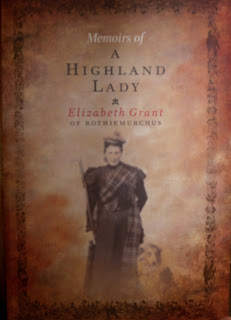
GrantMemoirsOne of the more controversial tenets of the movement was the idea of universal education. The “Highland Lady,” Elizabeth Grant (1797-1886) of Rothiemurchus, was an early success of the movement. Elizabeth Grant was a writer and social observer. She was the eldest child of Sir John Peter Grant. In her early years, Grant was educated at home, much to the standard of the day. Unlike some of her contemporaries, Grant had the opportunity to meet many “movers and shakers” of the Highland scene and society. From these familial acquaintances, Grant absorbed details not normally in the realm of an “educated” lady. After her life, the Memoirs of a Highland Lady (1898) were published, after the original manuscript was loaned to the National Library of Scotland by one of the lady’s descendants.

Spending much of time in Edinburgh, Elizabeth met and socialized with a variety of eminent people, all of whom she recorded in sharp detail. In 1827, she and her family moved to Bombay so her father might avoid his financial troubles. When she was younger, Elizabeth had fallen in love with a young man of which her father disapproved. Sir John had argued with the boy’s father, and Grant would not permit his daughter’s joining to his enemy’s sons. While in India, Elizabeth married Colonel Henry Smith of Baltiboys, Co Wicklow. She lived in Ireland for over 50 years. GrantHighlandHer The Highland Lady in Ireland: Journals 1840-1850 brings readers a different look at the potato famine. Likewise, Grant’s A Highland Lady in France 1843-1845 detailed her time on the Continent.

For Colonel Smith, theirs was a marriage of convenience. Smith was the second son with no great inheritance to his name, and he had chronic and acute asthma. He was also 17 years older than Elizabeth Grant. Grant was two and thirty at the time and possessed a small dowry so finding a “gentleman” husband was an acceptable consequence for her. Surprisingly, Henry lived a long time, and the marriage was a “happy” one.

Several days before the marriage, word arrived that Henry’s brother John passed, without issue, in Paris, and Henry was the new master of the estate at Baltiboys.  From Jim Corley and History Articles, we learn, “Well before that, however, a marriage agreement had been drawn up between the couple. It should be kept in mind that even in the event of Henry’s death the estate in Co. Wicklow could never be owned by Elizabeth, but would be held in trust by trustees. A son or daughter would be heir to the property, and in the event of no children the estate would pass to the nearest male relative. In the possibility, indeed probability, of the demise of her husband, Elizabeth would be well looked after. She would get an annuity of £230. She would have an entitlement from the Military Fund of the East India Company. A sum of £4,000 would be provided for any children of the union. A further £6,000 would become available on her death. certSums of £4,000 and £3,000 were to be immediately directed to the trustees. Provision for the maintenance and education was arranged for any boys till the age of 21 and girls also to 21 or until they married. If Henry were to expire in India Elizabeth was to be paid 8,000 rupees to provide passage to England and she would be left all household furniture, jewels, plate, books, linen, china, uisce (whiskey), and other liquors. £6,000 had been secured on the lands of Kinloss in Scotland by Elizabeth’s father Sir John Peter Grant to the three younger children of his marriage, of whom Elizabeth was one.

“While still in their first year of wedded life, they were advised by their doctor that if husband Henry were to remain in the oppressive climate of India in the pursuit of his career, he faced certain death in the not too distant future. A decision was made, therefore, to return to the more suitable climate of Europe and, in particular, Baltiboys. So it was that on the 4th of November 1829, they headed for home in a sailing ship, the Childe Harold.”

O their return journey, the Colonel and  Mrs Smith visited Napoleon’s tomb. Of it she writes, “The tomb was saddening; ‘after life’s fitful fever’ to see this stranger grave; in a hollow, a square iron railing on a low wall enclosed the stone trap entrance to a vault, forget-me-nots were scattered on the sod around, and the weeping willow drooped over the flag. The ocean filled the distance. It would have been better to have left him there, with the whole island for his monument.” They reached Portsmouth at the end of April 1830. Since they had departed Bombay almost five months had passed

Again from Crowley, we discover, “A few weeks later they arrived in Ireland. Baltiboys House was in a bad state as were its tenants. The previous owner, Henry’s brother John, had fled abroad at the time of the 1798 rebellion. The estate had been neglected. Within a short time plans were drawn up for a new house (these plans are still extant ). The tenants’ lot was improved. They had some employment in building the new mansion, and later on draining their farms. Thousands of trees were sown. An effort was made to do away with small uneconomical holdings, without raising too many hackles. When the potatoes rotted in the mid 1840,s the Smiths were not found wanting in their efforts to relieve their hungry tenants.

“Remember the all important Marriage Settlement made in Bombay in 1829? Well, it was still a binding legal document and came into unexpected prominence many years later. On Henry Smith’s death their only son, Jack, inherited the house and estate at Baltiboys. Jack was married in June 1871 to Frances Harvey, (a relation of the Capt. Harvey R. N. who fought alongside the great Nelson), but died a mere 2 years and 5 months later. Two months after his death his little girl Elizabeth was born. Because Jack had made no will in favour of his mother, this baby was now mistress of the house and estate. Her grandmother was now just a tenant where for 40 years she had held sway. Without Elizabeth’s knowledge there was an auction of her property. All her fine cows were gone. As were her pigs and poultry, horses and carts, implements, beehives, frames, plants from greenhouse, tubs and watering pots and so on. All had belonged to her son Capt. Smith. The scandal of an auction could have been prevented by John J. Hornidge of Russelstown, she felt, but he was bent on doing his utmost for the young widow and orphan child, and the deed was done before she knew of it. Mr Hornidge then tried to sell the house furniture. The Smith solicitor, Mr Cathcart, was contacted to see if this auction could be stopped. Mr Cathcart came down with the Marriage Settlement made in India in 1829. He pointed out the part that stated that in the event of Henry Smith’s death all furniture, plate et cetera would go to his wife Elizabeth. The plans for auction were abandoned. The Highland Lady continued to live at Baltiboys. She purchased a horse and cart, 2 wheelbarrows, spades, rakes, a shovel, plough, harrow, cow, pig, 6 hens, 3 Aylesbury ducks, and had work on her hands for many a year to come. Her jointure paid the rent on Baltiboys, and she took in grazing cattle to pay the workmen and housemaids. Her daughter-in-law Frances was very kind to her and had not allowed her brougham to be sold nor the double harness Jack had given her for it. Frances herself had to buy Jack’s watch, rings, pictures, books, sword and so on. Such was the law.
Aunt Bourne had died and left most of her estate to Mrs Smith. Her share came to £30,000, with which she released her family from liabilities, lent £10,000 to the Bermingham estate in Tuam, Co. Galway, at five and a half % per annum, purchased the townland of Lacken, also land at Golden Hill. Later on her daughter Annie and her 10 children came to live at Baltiboys.”

In her memoirs, Elizabeth speaks of her early education. She writes, “It is curious that I have no recollection of learning anything from and body except thus by chance as it were, though I have understood that I was a little wonder, my Aunts having amused themselves in making a sort of show of me.” Unlike other young girls of her time, Elizabeth’s nursery was full of educational toys: small bags of beans to count, books such as Puss in Boots, Riquet, Blue Beard, Cinderella, colorful prints. A procession of private tutors instructed her and her sisters, including one for the pianoforte, one for the harp, one for French, another for Italian, one for drawing, another for writing and ciphering, and one for dancing.  Her brothers had tutors for chemistry, math and natural philosophy, and even a metaphysician as a tutor.

***There is a wonderful review of Grant’s works on “I Prefer Reading.”

Posted in British history, legends and myths, Living in the Regency, Regency era, Victorian era | Tagged , , | 2 Comments

Characteristic of the Gothic in My Austen-Inspired Novels

First, those who read Gothic novels know that Horace Walpole started the phenomenon with his The Castle of Otranto way back in 1764. We define a Gothic novel based on the characteristics we find in Walpole’s work. With the March release of my eighth Jane Austen-inspired novel, I thought I would take a look back at what some consider Gothic influences in my works.

1. The setting is always based on an old castle. The castle may be occupied or not. It should contain secret passageways or secret rooms. (The Phantom of Pemberley, The Disappearance of Georgiana Darcy, and the upcoming The Mysterious Death of Mr. Darcy). Ruined sections of the castle are often used as part of the story line. (The Disappearance of Georgiana Darcy). The darkened passageways and staircases adds to the mysterious flavor of the work. (The Phantom of Pemberley and The Mysterious Death of Mr. Darcy). In more modern works, we find an old house or mansion. (Vampire Darcy’s Desire)
2. Speaking of mysteries, obviously, a true Gothic is laced with the fear of the unknown. This is usually enhanced by the plot involving an “unknown” secret (Vampire Darcy’s Desire), an “unknown” relative, an inexplicable event (The Mysterious Death of Mr. Darcy), or, best of all, a unexplained disappearance (The Phantom of Pemberley and The Disappearance of Georgiana Darcy).
3. Characters often have dream visions (Vampire Darcy’s Desire) or an omen of death occurs. Shadowy figures appear, but are often mistaken for a nightmare. (The Phantom of Pemberley)
4. An ancient prophecy is connected to the castle or the people who live there. (Vampire Darcy’s Desire and The Disappearance of Georgiana Darcy). The prophecy is not readily explainable.
5. Supernatural elements are found in the book. (Vampire Darcy’s Desire and The Mysterious Death of Mr. Darcy)
6. Women at the mercy of a powerful male. (The Phantom of Pemberley)

The male manipulates the woman into committing an intolerable act. (Vampire Darcy’s Desire) The women in Gothic novels usually respond by crying or screaming. The woman is often a sympathetic character because her life is less than pristine. (The Phantom of Pemberley)
7. Emotions are readily displayed by the characters – terror, surprise, anger, etc. (The Phantom of Pemberley, The Mysterious Death of Mr. Darcy, The Disappearance of Georgiana Darcy,  and Vampire Darcy’s Desire)
8. The text is loaded with the metonymy of a movie. There is a book entitled How to Read Literature Like a Professor. One of the chapters deals with “rain.” What we find is when it rains in literature or in the movies, someone is likely to die. That is metonymy, where something like rain equals death. It is an extended metaphor. (Vampire Darcy’s Desire)


JeffersDofGDThe Disappearance of Georgiana Darcy
A Pride and Prejudice Mystery
By Regina Jeffers

A thrilling novel of malicious villains, dramatic revelations, and heroic gestures that stays true to Austen’s style

Darcy and Elizabeth have faced many challenges, but none as dire as the disappearance of Darcy’s beloved sister, Georgiana. After leaving for the family home in Scotland to be reunited with her new husband, Edward, she has disappeared without a trace. Upon receiving official word that Georgiana is presumed dead, Darcy and Elizabeth travel to the infamous Merrick Moor to launch a search for his sister in the unfamiliar and menacing Scottish countryside. Suspects abound, from the dastardly Wickham to the mysterious MacBethan family. Darcy has always protected his little sister, but how can he keep her safe from the most sinister threat she has ever faced when he doesn’t even know if she’s alive? Written in the language of the Regency era and including Austen’s romantic entanglements and sardonic humor, this suspense-packed sequel to Pride and Prejudice recasts Darcy and Elizabeth as a husband-and-wife detective team hunting for truth amid the dark moors of Scotland.

JeffersPhantom
The Phantom of Pemberley
A Pride and Prejudice Murder Mystery
By Regina Jeffers

HAPPILY MARRIED for over a year and more in love than ever, Darcy and Elizabeth can’t imagine anything
interrupting their bliss-filled days. Then an intense snowstorm strands a group of travelers at Pemberley, and terrifying accidents and mysterious deaths begin to plague the manor. Everyone seems convinced that it is the work of a phan-tom—a Shadow Man who is haunting the Darcy family’s grand estate.
Darcy and Elizabeth believe the truth is much more menacing and that someone is trying to murder them. But Pemberley is filled with family guests as well as the unexpected travelers—any one of whom could be the culprit—so unraveling the mystery of the murderer’s identity forces the newlyweds to trust each other’s strengths and work together.

Written in the style of the era and including Austen’s romantic playfulness and sardonic humor, this suspense-packed sequel to Pride and Prejudice recasts Darcy and Elizabeth as a husband-and-wife detective team who must solve the mystery at Pemberley and catch the murderer—before it’s too late.

JeffersVDDVampire Darcy’s Desire
A Pride and Prejudice Adaptation
By Regina Jeffers

In Austen’s original novel, Darcy and Elizabeth are compelled to overcome countless obstacles — but that’s nothing compared to what they face in Vampire Darcy’s Desire. This inventive, action-packed novel tells of a tormented Darcy who comes to “Netherfield” to escape the intense pressure on him to marry. Dispirited by his family’s 200-year curse and his fate as a half-human/half-vampire dampir, Darcy would rather live forever alone than inflict the horrors of a vampire life on a beautiful wife. Destiny has other plans. Darcy meets Elizabeth and finds himself yearning for her as a man and driven to possess her as a vampire. Uncontrollably drawn to each other, their complex relationship forces them to confront their pride and prejudice like never before and to wrestle with the seductive power of forbidden love. Meanwhile, dark forces are at work all around them. Most ominous is the threat from George Wickham, the purveyor of the curse, a demon who vows to destroy each generation of Darcys and currently has evil intentions for the vulnerable Georgiana.

TMDOMD2coverThe Mysterious Death of Mr. Darcy
A Pride and Prejudice Mystery
By Regina Jeffers

A thrilling story of murder and betrayal filled with the scandal, wit and intrigue characteristic of Austen’s classic novels

Fitzwilliam Darcy is devastated. The joy of his recent wedding has been cut short by the news of the sudden death of his father’s beloved cousin, Samuel Darcy. Elizabeth and Darcy travel to Dorset, a popular Regency resort area, to pay their respects to the well-traveled and eccentric Samuel. But this is no summer holiday. Danger bubbles beneath Dorset’s peaceful surface as strange and foreboding events begin to occur. Several of Samuel’s ancient treasures go missing, and then his body itself disappears. As Darcy and Elizabeth investigate this mystery and unravel its tangled ties to the haunting legends of Dark Dorset, the legendary couple’s love is put to the test when sinister forces strike close to home. Some secrets should remain secrets, but Darcy will do all he can to find answers—even if it means meeting his own end in the damp depths of a newly dug grave.

With malicious villains, dramatic revelations and heroic gestures, The Mysterious Death of Mr. Darcy will keep Austen fans turning the pages right up until its dramatic conclusion.

Posted in gothic and paranormal, Industry News/Publishing, Jane Austen, legends and myths, Regency era, Ulysses Press, Victorian era, writing | Tagged , , , , , , , , | Comments Off on Characteristic of the Gothic in My Austen-Inspired Novels

Male vs. Female Perspective in Writing

When I write a Pride and Prejudice sequel/adaptation, I do so from Darcy’s point of view, rather than from Elizabeth’s. When I speak of Austen’s Persuasion, I speak of Wentworth’s thoughts. When I am writing of the Realm, I do so as a member of this British covert unit. So, what does this mean in terms of how I approach a tale? It means that I must know something about the differences in how a male and a female views the world. For example, a woman would say, “I bought an indiglo-colored gown with a cornsilk netting.” However, a man might respond, “She bought a blue dress with some sort of beige-colored scratchy material attached.” With this in mind, let us take a look at some of the basis differences, which affect the plot line.

*Women are better at judging a person’s character. A man excels in judging cause and effect.
*Women seek acceptance; men seek respect.
*Women see “romance” as the building of tension (eye contact, whispered words, gentle caresses, etc.). For men, desire equals instant gratification.
*Women lie to make someone feel better. Men tell lies as a cover up, as a way to build their own egos, or as a means to expedite an issue.
*Women prefer an emotional bonding (talk about it). Men hate to jump through a woman’s “hoops” just to get what he wants.
*Women are more likely to conform to the group/situation’s rules regarding sex. Men will seek sex even if the group has outlawed it.
*When women dine out, they carefully divide the check for what each owes. Men will often compete to pay the whole bill, or they will throw money on the table to cover the tab.
*Women are competitive about the degree of attractiveness among their acquaintances. They are also competitive about morals and about domestic abilities. Men are highly competitive about job, social/professional status, and income.
*Women can speak and listen at the same time. Men have no idea how to accomplish this.
*Women will use words such as “Always” and “Never” when they argue. This allows a man to prove the woman’s points have no basis.
*Women choose blank greeting cards. Men choose ones already loaded with words so they do not have to write anything beyond their names.
*Women have a better recall of the spoken word than do men.
*Women are more than likely to show their teeth when they smile.
*Women leave a relationship because they are emotionally unfulfilled. A man feels he has failed if “his woman” is unhappy.
*Women ask questions. Men make statements.
*Women use words such as “could,” “would,” and “shall.” Men prefer the word “will.”
*Women nod their heads to show they are listening. Men take that as agreement to their ideas. Little do they know, an argument will ensue later.
*When a man seeks a mistress, he wants only the “status” of doing so. Often, he has no desire to leave his wife. A woman gives a man her heart and her body.
*Men will challenge and interrupt more often than women.
*Men will speak more bluntly than women. They are also more likely to use risqué language.
*When speaking with female friends, women are likely to call each other by their given names and discuss intimate details of their lives. In an all-male gathering, men discuss life in general (no specifics), make crude jokes, and are likely to call each other by some derogatory nickname.
*Women not on hormone replacement or the Pill find more masculine features attractive (the cave man effect). Women on the Pill, etc., find “softer” male faces more attractive.
*Women need a “connection” to allow themselves to be vulnerable. For men, sex is the connection of choice. They use sex to display their vulnerable side.

Posted in Industry News/Publishing, writing | Tagged , , , | 4 Comments