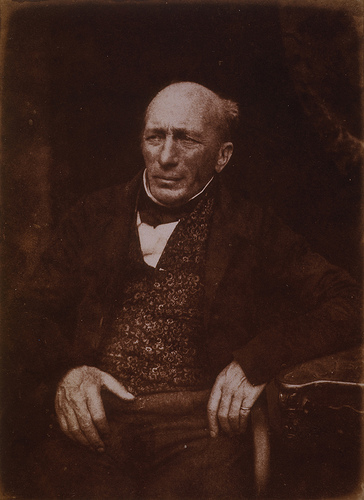
The Fortune Hunter: A German Prince in Regency England, Hermann, Fürst von Pückler-Muskau

453px-Pückler-Muskau

Prince Hermann Ludwig Heinrich von Puckler-Muskau (born as Count Pückler, from 1822 Prince) (30 October 1785 – 4 February 1871) was a German  nobleman, who was an excellent artist in landscape gardening and wrote widely appreciated books, mostly about his travels in Europe and Northern Africa, published under the pen name of “Semilasso.”

He was born at Muskau Castle in Upper Lusatia,  then ruled by the Electorate of Saxony. He served for some time in a cavalry regiment at Dresden, and afterwards travelled through France and Italy,  often by foot. In 1811, after the death of his father, he inherited the big Standesherrschaft (barony) of Muskau. Joining the war of liberation against Napoleon I of France, he left Muskau under the General Inspectorate of his friend, the writer and composer Leopold Schefer.  As an officer under the Duke of Saxe-Weimar he distinguished himself in the field and was made military and civil governor of  Bruges.

After the war, he retired from the army and visited England, where he remained about a year, visiting Covent Garden and Drury Lane, where he admired Eliza O’Neill (an Irish actress and later baroness), studying parks and the High Society, being himself a member of it. In 1822, in compensation for certain privileges which he resigned, he was raised to the rank of “Fürst” by King Frederick William III of Prussia.

In 1817 he had married the Dowager Countess Lucie von Pappenheim, née von Hardenberg, daughter of Prussian statesman Prince Karl August von Hardenberg; the marriage was legally dissolved after nine years, in 1826, though the parties did not separate and remained on amicable terms.

Machbuba,_eine_zeitgenössische_Abbildung_um_1840

Again he visited England, where he spent nearly two years in search of a wealthy second wife capable of funding his ambitious gardening schemes and became something of a celebrity in London society. On his return home he published a not entirely frank account of his time in England. The book was an enormous success in Germany, and also caused a great stir when it appeared in English as Tour of a German Prince (1831-32). Being a daring character, he subsequently travelled in Algeria, Tunisia, Egypt, and Sudan and explored ancient Nubia. He is documented as of having visiting the site of Naqa in modern day Sudan in 1837. At the slave market of Cairo he was enchanted by an Ethopian girl in her early teens whom he promptly bought and named Mahbuba (“the beloved”). Together they continued a romantic voyage in Asia Minor and Greece. In Vienna, he introduced Mahbuba to the European high scociety, but the girl developed tuberculosis and died in Muskau in 1840. Later he would write that she was “the being I loved most of all the world.”

He then lived at Berlin and Muskau, where he spent much time in cultivating and improving the still existing Muskau Park.  In 1845 he sold this estate, and, although he afterwards lived from time to time at various places in Germany and Italy, his principal residence became Schloss Branitz near Cottbus, where he laid out another splendid park.

Politically he was a liberal, supporting the Prussian reforms of  Freiherr vom Stein. This, together with his pantheism and his extravagant lifestyle, made him slightly suspect in the society of the Biedermeier period.

In 1863 he was made an hereditary member of the Prussian House of Lords, and in 1866 he attended — by then an octogenarian — the Prussian general staff in the Austro-Prussian War. In 1871 he died at Branitz, and, in accordance with instructions in his will, his body was cremated.

As a landscape gardener, he is considered to be an outstanding artist on a European level.

As a writer of books of travel he holds a high position, his powers of observation being keen and his style lucid, animated and witty. This is most evident in his first workBriefe eines Verstorbenen (4 vols, 1830–1831), in which he expresses many independent judgments about England and other countries he visited in the late 1820s and about prominent people he met. Among his later books of travel are Semilassos vorletzter Weltgang (3 vols, 1835), Semilasso in Afrika (5 vols, 1836), Aus Mehemed Ali’s Reich (3 vols, 1844) and Die Rückkehr (3 vols, 1846–1848). He is also the author of the still famous Andeutungen über Landschaftsgärtnerei (1834, “Remarks on landscape gardening”), the only book he published under his own name.

There are as well drawings and caricatures by his hand, but he did not publish them.

His name is still remembered in German cookery through a sweet called Fürst-Pückler-Eis (Prince Pückler ice-cream), very similar to Neapolitan ice cream – not invented by him, but named in his honour.

Excerpt from Pukler-Muskau’s “Letters”

Holyhead, August 9th,—Evening

I have had a bad night, a high fever, bad weather, and rough roads. The latter misery I incurred by choosing to visit the celebrated ‘Paris mines’ in the Isle of Anglesea. This island is the complete reverse of Wales; almost entirely flat—no trees, not even a thicket or hedge—only field after field. The copper-mines on the coast are, however, interesting. My arrival having been announced by Colonel H——, I was received with firing of cannon, which resounded wildly from the caves beneath. I collected several beautiful specimens of the splendid and many-coloured ore: the lumps are broken small, thrown into heaps, and set on fire like alum ore, and these heaps left to burn for nine months: the smoke is in part caught, and forms sulphur. It is curious to the uninitiated, that during this nine months’ burning, which expels all the sulphur by the force of the chemical affinity created by the fire, the pure copper, which had before been distributed over the whole mass, is concentrated, and forms a little compact lump in the middle, like a kernel in a nutshell. After the burning, the copper, like alum again, is washed; and the water used for the purpose is caught in little pools: the deposit in these, contains from twenty-five to forty per cent. of copper; and the remaining water is still so strongly impregnated, that an iron key held in it, in a few seconds assumes a brilliant copper colour.

The ore is then repeatedly smelted, and at last refined; after which it is formed into square blocks, of a hundred pounds weight, for sale; or pressed by mills into sheets for sheathing vessels. The ore is then repeatedly smelted, and at last refined; after which it is formed into square blocks, of a hundred pounds weight, for sale; or pressed by mills into sheets for sheathing vessels. A singular

circumstance is observable at the founding, which is a pretty sight. The whole mass flows into a sand-bed or matrix, divided into eight or ten compartments, like an eating-trough for several animals: the divisions do not quite reach the height of the exterior edge; so that the liquid copper, which flows in at one end, as soon as the plug is drawn out must fill the first compartment before it reaches the second, and so on. Now the strange thing is, that all the pure copper which was contained in the furnace remains in this first compartment,—the others are filled with slag, which is only used for making roads. The reason is this;—the copper ore contains a portion of iron, which is magnetically affected: this holds the copper together, and forces it to flow out first. Now as they know pretty accurately, by experience, what proportion of pure copper any given mass of ore will contain, the size of these compartments is regulated so as exactly to contain it. The manager, a clever man, who spoke half Welsh half English, told me that he had first invented this manner of founding, which spared much trouble, and that he had taken out a patent for it. The advantages which arise from it are obvious; since without these divisions or compartments, the copper, even if it flowed out first, must afterwards have spread itself over the whole mass. The Russians, who in matters of trade and manufacture suffer nothing to pass neglected, soon sent a traveller hither to make himself master of the process. It was not in the slightest degree concealed from him;—indeed it is but justice to say that the masters of all commercial and manufacturing establishments in England are generally very liberal.

While I was yet standing by the furnace, an officer made his appearance, and in the name of the brother of Colonel H——, who is likewise a colonel, and commands a Hussar regiment in this neighbourhood, invited me to dine and spend the night. I was, however, too tired and unwell to venture on the exploit of a mess-dinner in England; where, in the provinces at least, the wine is dealt out in right old English measure. I wished too to sail by the packet of to-night; and therefore gratefully declined the invitation, and took the road to Holyhead, where I arrived at ten o’clock.

My usual ill luck at sea did not permit me to sail,—the night was so rough that the packet went off without passengers. I staid behind, not very unwillingly, to take another day’s rest in a comfortable inn.

Posted in British history, Living in the Regency, real life tales, Regency era, White Soup Press | Tagged | Comments Off on The Fortune Hunter: A German Prince in Regency England, Hermann, Fürst von Pückler-Muskau

The Scottish Legend of True Thomas

Thomas Learmonth (c. 1220 – c. 1298), better known as Thomas the Rhymer or True Thomas, was a 13th century Scottish laird and reputed prophet from Earlston (then called “Erceldoune”), which is situated on the Scottish border, not far from the towns of Galashiels and Melrose. He is also the protagonist of the ballad “Thomas the Rhymer” (Child Ballad number 37). He is also the probable source of the legend of Tam Lin. Thomas is said to have lived in various parts of the country. According to the most famous legend associated with Learmont, the man was not born with the power of prophesy, but acquired it after visiting the queen of the fairies.

Sir Thomas was born in Erceldoune (also spelled Ercildoune – presently Earlston), Berwickshire, sometime in the 13th century, and has a reputation as the author of many prophetic verses. Little is known for certain of his life but two charters from 1260–80 and 1294 mention him, the latter referring to “Thomas de Ercildounson son and heir of Thome Rymour de Ercildoun.”

Popular esteem of Thomas lived on for centuries after his death, to the extent that  fabricated prophecies have been attributed to Thomas in order to further the cause of Scottish independence. His reputation for supernatural powers for a time rivalled that of Merlin.  Thomas became known as “True Thomas,” supposedly because he could not tell a lie. Popular lore recounts how he prophesied many great events in Scottish history, including the death of Alexander III of Scotland.  

Thomas’ gift of prophecy is linked to his poetic ability. It is not clear if the name Rhymer was his actual surname or merely a soubriquet. He is often cited as the author of the English Sir Tristrem, a version of the Tristram legend, and some lines in  Robert Mannyng’s Chonicle may be the source of this association.

According to the legend, Thomas had been walking in the Eildon Hills and stopped to rest by Huntly Water under the shade of the Eildon Tree. While he dozed, a woman dressed in green silk and velvet and riding a white horse appeared nearby. The lady introduced herself as the Queen of Elfland. The fairy queen dared Thomas to kiss her, which he gladly took up the challenge. The queen said she would take Thomas to Elfland, where he would serve the fairy queen for 7 years.

Along the way, the queen offered to show Thomas three different wonders: three roads each going a different direction. The queen pointed to a road overgrown with briars and thorns. She explained few men chose to travel upon the Road to Righteousness. The second road was smooth and lined with sweet smelling lilies. It was the Road to Hell disguised as the Road to Heaven. The final road the one to Elfland. The queen warned that if Thomas spoke when they were in Elfland, he would never be able to return home. He must keep a vow of silence.

They traveled for many hours, even crossing the river which drains away all the blood shed upon the earth. They also visited a garden ladened with ripe fruit. The queen fed Thomas an apple, saying after he had eaten it, he would forever speak the truth.

His years of service passed quickly, and Thomas returned to his homeland, where he became a great prophet. Eventually, the Fairy Queen returned for Thomas. A villager reported seeing a white hart and a white kind coming from the nearby forest, and the people asked Thomas to predict what the signs meant. However, Thomas said nothing more than a fond farewell. He walked away with the two creatures, never to be seen again.

Prophecies attributed to Thomas:

  • “On the morrow, afore noon, shall blow the greatest wind that ever was heard before in Scotland.”
This prophecy predicted the death of Alexander III; the exact nature of the blow became apparent only with the king’s death the next day.
  • “As long as the Thorn Tree stands
Ercildourne shall keep its lands.”
Of this prophecy, Barbara Ker Wilson writes: In the year the Thorn Tree did fall, all the merchants of Ercildourne became bankrupt, and shortly afterwards the last fragment of its common land was alienated.
  • “When the Cows of o’ Gowrie come to land
The Judgement Day is near at hand”
The Cows of Gowrie, two boulders near Invergowrie protruding from the Firth of Tay, are said to approach the land at the rate of an inch a year.
  • “York was, London is, and Edinburgh shall be
The biggest and bonniest o’ the three”
  • “At Eildon Tree, if yon shall be, a brig ower Tweed yon there may see.”
  • “Fyvie, Fyvie thou’ll never thrive,
As long as there’s in thee stones three;
There’s one in the oldest tower,
There’s one in the lady’s bower,
There’s one in the water-gate,
And these three stones you’ll never get.”
To this day, only one of the stones has been found. Since 1885 no eldest son has lived to succeed his father
Posted in British history, legends and myths, real life tales, Scotland | Tagged , , , | Comments Off on The Scottish Legend of True Thomas

Regency Scandal Most Sensational

In the spring of 1809, Lady Charlotte Wellesley eloped with Lord Paget. Lady Charlotte was the sister-in-law of the Duke of Wellington and the mother of four children. Lord Paget was the heir to the Earl of Uxbridge and a cavalry officer. Unfortunately, Paget was still married to Lady Caroline Villiers, the daughter of Lady Jersey, the Prince Regent’s ex-mistress. London could speak of nothing else.

Field Marshal Henry William Paget, 1st Marquess of Anglesey, was a British military leader and politician, who lead the charge of the heavy cavalry during the Battle of Waterloo. Born in London, as Henry Bayly, Paget was the eldest son of Henry Paget, 1st Earl of Uxbridge. Paget served well during the Peninsular War, but after his liaison with Lady Charlotte, the wife of Henry Wellesley, his service with Wellington, Wellesley’s brother, became problematic.

In 1810, his wife, Lady Caroline, sought a divorce in Scotland (where such matters were easier to do).

Prior to the divorce, Paget and Lady Charlotte were gossip fodder. In Hary-O: The Letters of Lady Harriet Cavendish, 1796-1809, Harriet Granville (the former Lady Harriet Cavendish, daughter of William Cavendish, 5th Duke of Devonshire and Lady Georgiana Spencer) wrote of the spectacle: “London is full of impenetrable fog and horror at Lady Paget’s elopement – he went off the day before yesterday with Lady Charlotte Wellesley. It is in every way shocking and unaccountable. He has left his beautiful wife and 8 or 9 children and she a husband whom she married about five years ago, for love, and who is quite a Hero de Romance in person and manner, with 4 poor little children.”

To fuel the fire of the scandal, Paget left behind  letter in which he praised his wife, but said, “[H]e could not resist taking the step he had done.” Paget’s family blamed Lady Charlotte, calling the woman a maudite sorciéré. 

In An Elegant Madness, it says, “The Duke of Wellington felt that Lady Charlotte’s brother, Lord Cadogan, should have been able to stop her living ‘and performing’ with a divorced man, and concluded that ‘poor Henry will again be dragged through the Mire & will marry this blooming Virgin as soon as she will have been delivered of the consequences of her little amusements.'”

When it became known Lady Paget was also having an affair – hers with the Duke of Argyll – a double divorce and two weddings resolved the scandal.

Marriages and children

Lord Anglesey was first married on 5 July 1795 in London to Lady Caroline Elizabeth Villiers (16 December 1774 – 16 June 1835), daughter of George Villiers, 4th Earl of Jersey and Frances Villers, Countess of Jersey. They had eight children:

  • Lady Caroline Paget (6 June 1796-12 March 1874). Married Charles Gordon-Lennox, 5th Duke of Richmond. 
  • Henry Paget, 2nd Marquess of Anglesey (6 July 1797- 7 February 1869). Married Eleanora Campbell, granddaughter of  John Campbell, 5th Duke of Argyll. 
  • Lady Jane Paget (13 October 1798-28 January 1876). Married Francis Conyngham, 2nd Marquess Conyngham.  
  • Lady Georgina Paget (29 August 1800- 9 November 1875). Married Edward Crofton, 2nd Baron Crofton. 
  • Lady Augusta Paget (26 January 1802- 6 June 1872). Married Arthur Chichester, 1st Baron Templemore.  
  • Captain Lord William Paget RN ( 1 March 1803-17 May 1873). Married Frances de Rottenburg, a daughter of Francis de Rottenburg. 
  • Lady Agnes Paget (11 February 1804- 9 October 1845). Married George Byng, 2nd Earl of Strafford. They were parents to George Byng, 3rd Earl of Strafford, Henry Byng, 4th Earl of Strafford and Francis Byng, 5th Earl of Strafford. 
  • Lord Arthur Paget (31 January 1805-28 December 1825).

Lord Anglesey and Lady Caroline were divorced on 29 November 1810. The same year, he married secondly to Lady Charlotte Cadogan (born 12 July 1781), former wife of Lord Henry Wellesley and daughter of  Charles Sloane Cadogan, 1st Earl Cadogan and Mary Churchill. Mary was a granddaughter of Lady Maria Walpole, an illegitimate daughter of  Robert Walpole and Maria Skerret. They had ten children, of whom six survived infancy:

  • Lady Emily Paget (4 March 1810 – 6 March 1893). Married John Townshend, 1st Earl Sydney. 
  • Lord Clarence Paget (17 June 1811 – 22 March 1895). Married Martha Stuart, the youngest daughter of Admiral Sir Robert Waller Otway. 
  • Lady Mary Paget (16 June 1812 – 20 February 1859). Married John Montagu, 7th Earl of Sandwich. They were parents of Edward Montagu, 8th Earl of Sandwich.  
  • Lord Alfred Paget (29 June 1816 – 24 August 1888).
  • Lord George Paget (16 March 1818 – 30 June 1880). A Brigadier General of the British Army. 
  • Lady Adelaide Paget (Jan, 1820 – 21 August 1890). Married Frederick William Cadogan, a son of George Cadogan, 3rd Earl Cadogan and his wife Honoria Louisa Blake.
  • Lord Albert Paget (Dec 1821-Apr 1822)
  • Lord Albert Paget (29 May 1823-d. an infant)
  • Lady Eleanor Paget (21 May 1825-d. an infant)

Lady Anglesey died on 8 July 1853, aged 71. Lord Anglesey survived her by less than a year and died on 29 April 1854, aged 85. He was succeeded by his eldest son from his first marriage, Henry.

Regency Tidbit: When Paget’s daughter married the Duke of Richmond, Jane Austen privately criticized the union. “What can be expected from a Paget, born and brought up in the centre of conjugal infidelity & Divorces?”

Posted in British history, Jane Austen, Living in the Regency, real life tales, Regency era | Tagged , , , , , , | 2 Comments

Eccentrics of the Regency Series: Scrope Berdmore Davies

In 1976, the New York Daily News reported a story of an unusual find in the Barclay Bank’s vaults. Scrope Davies’s leather trunk was identified, and as Davies being a close associate of both Byron and Shelley, the news was pronounced swoon worthy. The trunk’s contents were deposited on loan to the Department of Manuscripts at the British Library, and the papers were bound into twenty-three volumes, two of which consisted entirely of letters and bills from bankers and moneylenders and two of records of bets. Of course, the trunk also held an original manuscript of Canto 3 of Childe Harold’s Pilgrimage and two previously unknown sonnets (“Hymn to Intellectual Beauty” and “Mont Blanc”) by Shelley, the find was termed a major success.

Thus was Scrope Davies, a man in the know in the Byron tempestuous circle. Davies was an inveterate gambler and a prodigal spender. According to tales of the time, he lost between £16,000 and £17,000 in one calendar year. He was known to drink heavily and to womanize freely.

Scrope Berdmore Davies was born in the later part of 1782 in Horsley, Gloucestershire, the second son in a family of six sons and four daughters to the Reverend Richard Davies, vicar of Horsley, and his wife Margaretta. He was warden of Magdalen College, Oxford, from 1790 to 1810 and elected to a king’s scholarship at Eton College.

Scope entered Eton at age eleven, where he performed his duty in Montem as college salt bearer. He entered King’s College, Cambridge in July 1802. He became a close associate of John Cam Hobhouse and Charles Kinner Matthews, and through them, of Lord Byron, when Byron returned to Trinity College in 1807. Byron and Davies rapidly became intimate friends. When debts prevented Byron return to Cambridge in 1808, the two set out for London, where Davies often acted on Byron’s behalf. (Byron was underage at the time.)

It being a case of ‘neither barrel better herring,’ the two were soon fast friends; and when his lordship finally left for the Continent it was to Davies he wrote most often. To him Lord Byron confided much about his life during his European sojourn, including his interesting account of his time in Venice and consequently much on the madness of Jonathan Strange. These letters Gilbert Norrell sought to obtain by magical means; and though a drunkard, gambler and profligate Davies so strongly resented Norrell’s attempts upon his private correspondence that he actually threatened him with prosecution.

His anger was aroused by the following incident. According to an affidavit Davies swore out at his lawyer’s, he was quietly in his rooms alone when he observed letters sent to him by his lordship behaving as if they might blow away. Immediately taking them in his hand, he was astonished to see that not only the paper on which they were written was behaving skittishly, but the very ink on the page seemed possessed of a life of its own! Reasoning that such odd behaviour must be the consequence of magic Davies quickly placed them inside a Bible he had by him, and so preserved them from further interference.

The disappearance of Gilbert Norrell into the Pillar of Darkness shortly thereafter naturally ended any attempt by Davies to obtain legal redress. The letters themselves are unfortunately no longer extant.

Gaming hells became Davies’ favorite haunts. In his “Detached Thoughts,” Bryon wrote, “One night Scrope Davies at a Gaming house – (before I was of age) being tipsy as he mostly was at the Midnight hour – & having lost monies – was in vain intreated by his friends one degree less intoxicated than himself to go hom. – In despair – he was left to himself and to the demons of the dice-box. – Next day…he was found in a sound sleep – a Chamber-pot stood by the bed-side – brim-full of – Bank Notes! – all won – …and to the amount of some thousand pounds. (Byron’s Letters and Journals, 9.38-9)

Oddly enough, despite his tendency to play deep, Davies showed a different side by keeping accurate accountings of his winnings and losings. The aforementioned trunk contained notebooks, bills, and receipts, deposited there before Davies’ hasty departure to the Continent in 1820. When Byron went abroad in 1809, it was Davies who guaranteed the loan of £5000, which financed the poet’s grand tour. Byron reportedly discharged the debt in 1814.

Not as showy in his dress as Brummell, Davies shared Byron’s interest in pugilism. He was said to be an excellent shot and the wittiest of his companions. In the few duels Davies fought, Byron served as the man’s second. He received some of Byron’s “leftovers.” Davies took up affairs with Lady Caroline Lamb, Lady Oxford, and Lady Frances Wedderburn Webster after the women ended their affairs with Byron.

Davies split his time between his requirements at King’s College and the racing circuit. While in London, he resided in Limmer’s Hotel in Conduit Street from 1808 to 1811; later he kept rooms on Jermyn Street, on 3 Little Ryder Street (off St. James’s Street), and in 1816 at 11 Great Ryder Street. He held club memberships at Watiers, Brooks’s, the Union Club, and the Cocoa Tree.

Aware of Byron’s feelings for his half-sister Augusta Leigh, Davies remained a strong supporter of Byron’s during the poet’s very public separation from his wife and visited Byron during the summer at Geneva. Davies returned from that visit with several of Byron’s manuscript poems for John Murray. By January 1820, Davies financial troubles had arrived full force upon his doorstep. He went into exile upon the Continent.

In An Elegant Madness, Venetia Murray writes, “Scrope Davies, apparently ‘bore with perfect resignation the loss of the wealth he had once possessed; and though his annual income was very limited, he made no complaint of poverty.’” In his escape to France, Davies “daily sat himself down on a bench in the garden of the Tuileries, where he received those whose acquaintance he desired.”

Davies wrote his condolences to Augusta Leigh upon Byron’s death in 1824 from an address in Ostend. From the Oxford Dictionary of National Biography, we learn, “In 1849 the writer Thomas Grattan who had met him several times in the intervening years encountered Davies in Boulogne ‘looking so old, so bent, but so spruce, so neatly-dressed, so gentlemanlike in air, so lively and fresh in conversation … still flourish[ing] according to his fashion … but no longer a diner-out’ (Burnett, 213).

“Byron recalled that:

One of the cleverest men I ever knew in Conversation was Scrope Beardmore [sic] Davies … When [Beau] Brummell was obliged to retire to France—he knew no French & having obtained a Grammar for the purpose of Study—our friend Scrope Davies was asked what progress Brummell had made in French—to which he responded—‘that B[rummell] had been stopped like Buonaparte in Russia by the Elements.’ (Byron’s Letters and Journals, 9.21–2)

“At the end of May 1852 Edward Hawtrey, headmaster of Eton, wrote to Francis Hodgson, whom he succeeded as provost later that year:

I am sure you will be sorry to hear that our old friend, Scrope Davies, was found dead in his bed at Paris a few days since. He was a most agreeable and kind-hearted person … He seemed quite broken down when I had a glimpse of him a few months since at Eton. I hardly knew him again, and should not have done so had he not mentioned his name. (Burnett, 216)

Davies had died in the night of 23–24 May in his lodgings in the rue Duras, Paris; he was buried in the cemetery at Montmartre in a plot provided by one John Lyon. The Gentleman’s Magazine recorded that:

“For some time his constitution had evinced marks of decay. On the day previous to his dissolution he complained of cold, and retired early to his bed. He was found on the following morning lifeless upon the ground; it was evident that he had got up in the night, and had been seized by something approaching to apoplexy. (Burnett, 216–17)

Although Byron ‘wish[ed] that he would marry & beget some Scrooples—it is a pity that the dynasty should not be prolonged—I do not know anyone who will leave such “a gap in Nature”’ (Byron’s Letters and Journals, 5.168), Davies, mindful, perhaps, of the statutes of King’s College, under which marriage would have entailed forfeiture of his fellowship and the dividends this brought him, never married.”


Posted in British history, gothic and paranormal, Jane Austen, legends and myths, Living in the Regency, real life tales | Tagged , , , , , , | 5 Comments

Mudiford: The Forgotten Resort plus Excerpt from “The Mysterious Death of Mr. Darcy”

(This post and excerpt first appeared on My Jane Austen Book Club on March 11, 2013.)

With the onset of the French Revolution and the Napoleonic Wars, the idea of a European Grand Tour for English aristocratic class lost its appeal. Instead, English men and women turned their sights on popular British destinations, such as Brighton, Margate, Lyme, and Weymouth. In England, inland spas, such as Bath, were the models of health spas like Lourdes. Among the early fashionable Georgian-Regency resorts (from approximately 1789 – 1815) was one favored by King George III, but Mudeford never achieved the popularity of the other tourist destinations.

Some jokingly account the lack of development to the Christchurch district’s name. Mudeford was then part of southwest Hampshire. The idea of “mud” was likely not very appealing to the public. Also to the area’s detriment, Highcliffe was not adopted as a village name until 1892. Before that time, the local hamlets were known as Chuton, Newtown, and Slop Pond. The district’s other name was Sandhills.

In the summer of 1789, George III arrived in Weymouth to partake of the healing waters, a good sign for a concerned English population, which saw its King as a man going slowly mad. Each day, during his visit, as the King partook of his royal plunge into the salt waters, a band played “God Save the King.” Dips in the “curative waters” at Weymouth helped popularize the idea of “spa” towns.

At the time, Mudeford had caught the attention of other members of the aristocracy when a former British Museum curator and retired director of the Bank of England purchased large tracts of land in the area and began to invite members of the aristocracy to visit the area. Gustavus Brander (1720-1787) built a house on the grounds of Christchurch Priory and a summerhouse on Hengistbury Head. Later, the Brander family sold High Cliff estate to Pitt’s retiring Prime Minister, John Stuart, Lord Bute.

Highcliffe today

Highcliffe today

Bute retired to High Cliff in 1770. A botanist (co-founder of Kew Gardens), Bute hired the most famous landscape designer of the time, Capability Brown, to redesign the parkland on the High Cliff estate. The original house, built in a mediaevalist style to a Robert Adam design, set upon the cliff top “to command the finest outlook in England.” In fact, the house was so close to the cliff that it was necessary to dismantle it brick by brick when the cliff side crumbled away. Most of the estate was sold off following Bute’s death.

Bute Homage was the only house remaining on the estate. Lord Stuart de Rothesay, the 4th Earl of Bute, bought back the much of the estate in 1807 and began to build a grander manor than the former High Cliff. Not completed until 1835, the restored Highcliffe Castle sported stained glass windows from Rouen and other French art treasures “rescued” from the aftermath of the French Revolution.

In 1790, George Rose (1744-1818) became a MP for Christchurch. First, Rose, who owned Cuffnells Park in the New Forest near Lyndhurst, had been a Member of Parliament for Lymington (1788). He was a strong supporter of William Pitt the Younger. His youngest son, William Stewart Rose, became the second MP to serve Christchurch. George Rose resided at Cuffnells, where he wrote books on finance and policy and from where he attempted to run his cabinet post of Treasurer of the Navy. He also entertained both Pitt and King George in his home. George III stayed at Cuffnells in 1789, 1801, and 1803.

Sandhills

Sandhills

In 1785, Rose built a seaside house just east of Mudeford Quay, which he named Sandhills. The two Roses used Sandhills as their summer residences when not serving in Parliament.  Rose’s eldest son, Sir George Henry Rose, lived at Sandhills House while George Rose occupied Cuffnells, and William Stewart Rose lived in a row of seaside cottages (completed in 1796 on the Sandhills estate and just east of the main house). The house and the row of whitewashed seafront cottages would be named “Gundimore.”
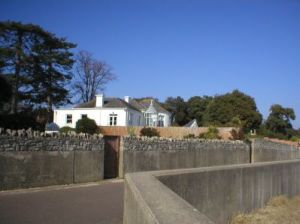
Gundimore

Gundimore

The house sported one room designed to resemble a Persian tent and another room in Arabian Nights style because many of the Romantic poets of the time used exotic Eastern references in their poems. WS Rose was an amateur poet and translator. Robert Southey was among the many poets who visited the area and stayed in the cottages. So, while George Rose invited Pitt, Nelson, and the King to Gundimore, WS Rose held an interest in art and literature. Sir Walter Scott worked on “Marmion” while visiting at Gundimore, as well as on Waverley, Scott’s first historical novel. Samuel Taylor Coleridge (Southey’s brother-in-law) visited in 1816. Coleridge planned a poem about the house, but his various ailments prevented him from working on it. Instead, WS Rose wrote a poem commemorating the visits of these writers, appropriately entitled “Gundimore.”

From “Our Forgotten English Resort,” we learn, “When Southey later became Poet Laureate, his mandatory memorial poem for his late patron George III was ridiculed by Byron and others, who felt Southey might just as well depict the King entering Heaven in a bathing machine. While George III’s favourite seaside resort had been Weymouth, he did visit Sandhills en route at George Rose’s bidding. Rose had him stop over at Cuffnells on his first journey to Weymouth, on 29 June 1789, and some sources say he also stopped at Sandhills. He also visited Sandhills on 3 July 1801, but better known is his 1803 official visit. In 1803 Rose arranged an official Royal ‘inspection’ style visit to Mudeford, complete with military parade, on another stopover by the royal yacht en route to Weymouth. The Christchurch Artillery fired a 3-volley salute echoed by another on Wight opposite, while detachments of the Scots Greys and the local Volunteers stood lined up on the beach. So that the King should not get his feet wet as he re-embarked on the royal barge, the pier-less resort’s three new bathing machines were laid end to end in the shallows. Sir Arthur Mee adds in his The King’s England guidebook series, ‘After that Mudeford brightened and increased the number of its bathing machines’ (apparently from three to seven). ‘…A picturesque little story which will, no doubt, ever be told of Mudeford,’ commented the Bournemouth Times & Directory.

“Despite these claims, that was the end of George’s public patronage. The Prince Regent seems not to have visited either: generally, he tended to steer clear of anywhere his disapproving father might be found. The Prince had privately married the Catholic widow of the owner of Lulworth Castle, but in 1795 he had to put aside his secret Catholic wife and remarry to help pay off his debts. This arranged marriage was disastrously unhappy for both parties. His new Princess Of Wales, Caroline Of Brunswick, did stay at Sandhills in 1796 before she moved back to the Continent. The King’s brother, HRH Duke of Cumberland, also stayed with Rose on New Year’s Eve 1803 to inspect, and thank for their service, the Christchurch Volunteers who had lined up for his brother, although in the event rain cancelled the official parade. However after he became King, the former Regent did visit Gundimore and Mudeford, in the 1820s.

“An early Cooke’s guidebook of circa 1835 refers to this visit: ‘the admired spot, the favourite summer residence of numerous families of distinction … Muddiford, a beautiful village on the sea-shore, possessing every convenience for a watering-place, having good bathing machines, and a fine sandy beach. His late Majesty, George IV, honoured this spot with a visit, and his admiration of its scenery. The air here is salubrious…. These qualities were appreciated and emphatically remarked on by his Majesty George III, who with the royal family honoured Mr Rose with a visit at Sandhills.’”

________________________________________________________

TMDOMD2coverThe Mysterious Death of Mr. Darcy

by Regina Jeffers

Available from Ulysses Press

A thrilling story of murder and betrayal filled with the scandal, wit and intrigue characteristic of Austen’s classic novels

Fitzwilliam Darcy is devastated. The joy of his recent wedding has been cut short by the news of the sudden death of his father’s beloved cousin, Samuel Darcy. Elizabeth and Darcy travel to Dorset, a popular Regency resort area, to pay their respects to the well-traveled and eccentric Samuel. But this is no summer holiday. Danger bubbles beneath Dorset’s peaceful surface as strange and foreboding events begin to occur. Several of Samuel’s ancient treasures go missing, and then his body itself disappears. As Darcy and Elizabeth investigate this mystery and unravel its tangled ties to the haunting legends of Dark Dorset, the legendary couple’s love is put to the test when sinister forces strike close to home. Some secrets should remain secrets, but Darcy will do all he can to find answers—even if it means meeting his own end in the damp depths of a newly dug grave.

With malicious villains, dramatic revelations and heroic gestures, The Mysterious Death of Mr. Darcy will keep Austen fans turning the pages right up until its dramatic conclusion.

_________________________________________________________

Excerpt from Chapter 7 of The Mysterious Death of Mr. Darcy

Elizabeth shivered involuntarily. As Darcy had directed, she had met with the Woodvine cook regarding the weekly menu. They had finished their task when dread had physically rocked Elizabeth’s spine. Despite the feeling of dizziness drowning her senses in its sweep, she desperately pushed the swirling sensation away.

“Is something amiss, Mrs. Darcy?” the cook asked with what sounded of true concern.

Elizabeth shook her head in denial. “Just one of those intuitive moments we women experience daily. Likely, Mr. Darcy has turned his ankle or one of my sisters have has spotted a snake along the road to Meryton.” She laughed at her foolish nature.

The gray-haired woman with the sparkling, equally gray, eyes pushed her spectacles further up her nose. “It be the way of women,” she said sympathetically. “Me boy, Arnie, be one of Mr. Darcy’s grooms. We both have served the old master for many years. Whenever Arnie gets himself kicked by one of them ‘ornery beasts, I knows before he ever shows himself on me doorstep and looking for some of my herbs to ease the pain.”

Elizabeth again wondered if something had happened to Darcy. Her husband had spoken of the possibility that the gypsy band had posed an unknown threat. At home, at Pemberley, she had often sensed Darcy’s presence before he appeared on the threshold of her sitting room, but this was different. The lingering dread which currently wrapped itself about her shoulders had nothing to do with the pleasant anticipation she often experienced when her husband surprised her in the middle of the day. This was a warning of danger. Bravely, she said, “I am certain it is nothing. Mr. Darcy’s cousin, a seasoned military commander, as well as Mr. Cowan, accompanied my husband. I am being foolish.”

Mrs. Holbrook’s eyebrow rose in sharp denial, but the lady wisely said, “If that be all, Mrs. Darcy, I’s best return to me duties.”

Elizabeth gathered her notes. “Remember, Mrs. Holbrook, no sauces on the meats. The colonel prefers his dishes plain. Serve the dressings in a separate dish.”

“Yes, Ma’am. I understand.”

Elizabeth stood slowly to follow the woman to the door. “I expected Mrs. Ridgeway to join us,” she said as nonchalantly as she could muster. In reality, the housekeeper’s absence had irritated Elizabeth. It was another affront to Darcy’s authority, and she planned to express her anger over the woman’s slight.

Mrs. Holbrook paused in her speech, as well as her step. The woman looked about quickly—as if she suspected someone could be eavesdropping on their conversation. “Mrs. Ridgeway sent word, Ma’am, that she be experiencing a megrim.”

“I see,” Elizabeth said knowingly. “I suppose a headache might keep Mrs. Ridgeway from her duties.”

Mrs. Holbrook smiled wryly. “I suspect that be true, Mrs. Darcy.” The woman disappeared into Woodvine’s apparently empty halls.

Elizabeth stood silently by the still open door and listened carefully to what were obviously exchanged whispers. Someone, or several people, concealed themselves in Woodvine’s late afternoon shadows. The thought of others watching her every move, on one hand, shook her resolve, but on the other, it irritated her. She would permit no one to intimidate her. After all, had she not withstood the imperious Lady Catherine De Bourgh? “We shall see how they perceive their positions when I have my say,” she said privately to fortify her resolve.

Then she was on the move, climbing to the house’s third level again. As she turned the corner, Elizabeth declared boldly aloud, “I know you have hidden yourself from my view, but I am aware of your presence. If you have any sense of self-preservation, you will disperse immediately and attend to your duties.” As she climbed, Elizabeth did not turn her head to observe which of Woodvine’s staff broke from his hidden security, but she was well aware of the sound of scrambling feet and the quick opening and closing of doors. “They have chosen to make me their enemy,” she declared. “But they do not know that I am well seasoned in the comings and goings of servants.”

She thought immediately of how Darcy had early on complimented her on her quick assimilation into the role of Pemberley’s mistress. Little had her husband known that at Longbourn, Elizabeth and Jane had equally shared in the running of their parents’ estate. Their mother had taught all her daughters of the responsibilities of an estate’s mistress. As she and Jane had matured, Mrs. Bennet had relinquished more and more of her duties to her eldest children.

Elizabeth had arrived on Pemberley’s threshold well versed in preparing menus, balancing expenses, and settling service disputes. Her transition into the role of Pemberley’s mistress had come easily.

She paused at the top of the stairs and set her shoulders in a stubborn slant. “You mean to frighten me, but I will not be alarmed. There is a stubbornness about me that never can bear to be frightened at the will of others. My courage always rises with every attempt to intimidate me,” she declared to the empty passageway.

With renewed determination, Elizabeth entered Mrs. Ridgeway’s quarters unannounced. “I believe I requested to speak to you this morning,” she said tersely.

It did not surprise Elizabeth to find the woman dressed and working on an embroidery pattern. The housekeeper sprang to her feet. “Mrs. Darcy, I…I had…I had a severe headache,” she stammered. She tucked her sewing hoop behind her, but Elizabeth had observed the meticulous work of the pattern.

Taking a satisfyingly slow breath, Elizabeth’s mouth set in a tight line. “Evidently, you have recovered remarkably.” She gestured to the tea set upon a low table. “That being said, I will see you in my chambers in a quarter hour.” Elizabeth turned on her heels to leave.

However, Mrs. Ridgeway’s offer slowed Elizabeth’s retreat. “Why do we not share tea here?”

Elizabeth turned haltingly to the woman. “I think not. You will attend me. It is not acceptable for the mistress to attend those she employs. You did understand my husband has assumed control of this household?”

“Yes, Ma’am.” Mrs. Ridgeway dropped her eyes.

The act infuriated Elizabeth. “Do not offer me a false face.” She turned again for the door. “A quarter hour, Mrs. Ridgeway.” To emphasize her indignation, Elizabeth launched the door against the wall. The sound echoed throughout the dark passageway.

Returning to her quarters, Elizabeth fought hard to rein in her temper. “It would not do to permit Mrs. Ridgeway to know how much I dread this interview,” she declared as she punched one of the pillows decorating the bed. “Concentrate, Elizabeth,” she chastised her image in the cheval mirror. “You must see this through for Fitzwilliam’s sake.” The thought of her husband brought an immediate smile to Elizabeth’s lips. “Everything he has done he had has done for me,” she thought.

When Lydia had inadvertently disclosed Mr. Darcy’s part in bringing about her sister’s match to Mr. Wickham, Elizabeth could not fathom how his regard for her had allowed him to act without pride. The vague and unsettled suspicions which uncertainty had produced of what Mr. Darcy might have been doing to forward her sister’s match, which Elizabeth had feared to encourage as an exertion of goodness too great to be probably, and at the same time dreaded to be just, from the pain of obligation, were proved beyond their greatest extent to be true: Darcy had followed Lydia and Mr. Wickham purposely to Town; he had taken on himself all the trouble and mortification attendant on such a research; in supplication had been necessary to a woman whom he abominated and despised, and where he was reduced to meet—frequently meet, reason with, persuade, and finally bribe—the man whom he always most wished to avoid, and whose very name it was punishment to Darcy to pronounce. He had done it for her. For a woman who had already refused him.

Even as she considered her husband’s benevolence in the matter, Elizabeth blushed with embarrassment. Every kind of pride must have revolted from the connection. She was ashamed to think how much. Though, at the time, she could not place herself as his principal inducement, she had perhaps believed in Darcy’s remaining partiality for her might have assisted his endeavors in a cause where her peace of mind must be materially concerned. “If Fitzwilliam could place his qualms aside, then I will follow his lead.” Darcy’s ability to overcome a sentiment so natural as abhorrence would serve as her model.

When Mrs. Ridgeway arrived, Elizabeth bade the woman’s entrance in a perfectly calm voice. She motioned the woman to a chair across from where she sat at the small desk before setting the ledger, which she had used as a “stage prop” to make herself appear not to be awaiting the housekeeper’s appearance, aside. In reality, to compose her erratic heart and to soften her anger, Elizabeth had retrieved several of the notes, which Darcy had left for her over their few months of marriage. Beginning with the morning following their first night as man and wife, her husband had periodically presented her an eloquent reminder of their time together: a reminder of their one month anniversary and again to mark their first half year of marital bliss; one for the night they would spent apart when Darcy had been called away on business; and the one where he consoled her during the loss of the child she had not known she carried. Her magnificent husband had grieved silently for their lost child while she openly nursed her broken heart. Today, Elizabeth had read the two “anniversary” letters. They were full of love’s awe, and they had bolstered her spirits immensely.

Elizabeth did not permit Mrs. Ridgeway to speak. Instead, she had assumed the offensive. “I had expected better of you, Ma’am. When we first met, I presumed you to be a woman possessed of kindness, but also a woman well aware of her place in the world. I thought you possessed of an independent nature and capable of overcoming adversity.”

Mrs. Ridgeway asked earnestly, “And you no longer hold the same opinion, Mrs. Darcy?”

Elizabeth’s forthright nature never faltered. “You have proven yourself, Ma’am, to be a coward.”

“Do not think ill of me, Mrs. Darcy,” the woman challenged.

“How may I not?” Elizabeth asked aristocratically. She considered the possibility that Darcy’s air had found a new home in her. “Mr. Darcy gave specific orders for you to present yourself in the role of Woodvine’s housekeeper; yet, last evening, you made no appearance after our arrival, nor did you sit with me and Mrs. Holbrook this morning.”

“And did you find something lacking in your quarters? In Mrs. Holbrook’s attention to your needs?” Mrs. Ridgeway asked confidently.

Elizabeth’s chin rose with the challenge. This was her first real test as Darcy’s wife. Her transition at Pemberley had gone smoothly: partly because of her mother’s training, but partly because of Mrs. Reynolds’ guidance. Pemberley’s long-time housekeeper had brought Elizabeth along and had instilled the confidence of a fine lady in a country miss. “Do you dare claim to be the source of efficiency I have observed from certain members of the late Mr. Darcy’s staff?” Elizabeth would not mention those she suspected had found hiding places to shirk their duties.

Mrs. Ridgeway’s countenance betrayed a momentary lapse of confidence, but the woman quickly schooled her features. “And why should I not? Mr. Darcy blamed me for the deficiencies he discovered among those Mr. Samuel had hired. Why should I not glory in the household’s successes?”

If the older woman thought Elizabeth’s age would provide the housekeeper an advantage, Mrs. Ridgeway would discover otherwise. Elizabeth’s shoulders shifted, and she presented the Woodvine housekeeper with a look of scorn she had once seen displayed upon the countenance of Lady Catherine De Bourgh when the grand lady had instructed Mr. Collins on the state of the cleric’s gardens. “I am pleased to hear it, Mrs. Ridgeway.” The housekeeper’s forehead crinkled with disappointment, and Elizabeth knew satisfaction. She would definitely share her “disapproving” glower with Darcy when they were alone. She would ask her husband’s opinion of its effectiveness as compared to the one of his imperious aunt. “Then you will have no difficulty in overseeing a thorough cleaning of each of Woodvine’s rooms. I shall not have the Earl and Countess of Rardin finding Woodvine lacking. Lady Cynthia holds her uncle in loving regard. I will not tolerate having Her Ladyship’s memories of the late Mr. Darcy tarnished by finding Samuel Darcy’s home in anything but pristine condition.”

Elizabeth noted how the housekeeper recoiled, but the lady held her tongue. Elizabeth continued, “Every shelf will be dusted. Every rug beaten. Every piece of silver polished.” Elizabeth snarled her nose in disgust. “Cousin Samuel’s propensity for clutter will create additional responsibilities, but with your discipline, the staff shall rise to the challenge. You must inform me immediately if any of our current employees choose to seek other positions. As I have noted several among the staff who appear less than enthusiastic about fulfilling their duties, I assume we shall need to replace them. If you do not feel comfortable in making those decisions, I assure you I hold no such qualms. At home in Hertfordshire, I often dispensed with the servants.” That was a stretch of the truth, but Elizabeth would never permit the woman an advantage.

She stood to end the conversation. “I am pleased that we have had the opportunity to address Mr. Darcy’s perceived grievances. It shall make our stay more agreeable. Now, as I know you have many duties to which to attend, I shall excuse you.” Mrs. Ridgeway looked on dismay, but she managed a proper curtsy. Elizabeth led the way to the door. “Is this not more pleasant?” she asked sweetly. “To have a complete understanding between us?”

Mrs. Ridgeway spoke through tight lips, “As you say, Mrs. Darcy.”

* * *

Darcy had resumed his seat in the chariot. His cousin had pocketed the shell fragment, and they had reluctantly returned to their ride. Silence reigned as Mr. Stalling set the horses in motion.

Edward’s cross expression spoke of his cousin’s frustration. “Could the gypsy leader be sending you a message, Darcy? That if he cannot have the horse then neither can you.”

Darcy rubbed a weary hand across his face to clear his thinking. “Obviously, we should examine the American connection?” They did not speak for several minutes, each man lost in his thoughts. Finally, Darcy cautioned, “I would prefer Mrs. Darcy possessed no knowledge of today’s events. I would not worry my wife with news of this attack.” Another elongated silence followed. “I am thankful no one was hurt in this folly,” Darcy said sadly.

Cowan warned, “You must not permit your guard to become lax, Mr. Darcy.”

Darcy frowned noticeably. “I do not understand. Surely, you do not think this was more than a dispute about a horse’s ownership.”

The former Runner’s eyes scanned the passing countryside. “I believe, Mr. Darcy, that your insistence on discovering the disposition of your cousin’s estate has brought a warning. We might think the shooter made an unfortunate shot, but the bullet was placed in the animal’s neck. It was a admonition that a skilled marksman could easily achieve a smaller target. Say a man’s head.”

“You are saying someone wants me dead!” Darcy said incredulously. He felt the air rush from his lungs.

“I am saying, Sir, that someone knows desperation, and he holds no reservations about exercising mayhem in order to relieve himself of your interference.”

Posted in British history, excerpt, Jane Austen, Living in the Regency, real life tales, Regency era, Victorian era, writing | Tagged , , , , , | Comments Off on Mudiford: The Forgotten Resort plus Excerpt from “The Mysterious Death of Mr. Darcy”

Writing “The Disappearance of Georgiana Darcy”

This interview originally was posted to The Dark Jane Austen Book Club website on March 18, 2013. My novel “The Disappearance of Georgiana Darcy” is their book read for March.

When did you begin with your Pride and Prejudice books? Are they related to one another, or isolated works connected solely by their relationship to Jane Austen’s original tale?

JeffersDPDuring the 2008-2009 school year, my Advanced Placement English Language class listened to me complain about a particular retelling of Pride and Prejudice, which had drifted dramatically from the original story line, so much so that I had told the group that in my frustration, I had thrown the book across the room. In saying this, I am not speaking of those who write vampiric or werewolf versions of the tale – oops, that would be moi – but a story which changed Darcy’s personality from a man who uses an implausible power to set everything aright for Elizabeth to one whose vulnerability crippled him. Anyway, one of my students challenged me to write my own version of the story. At first, I considered his challenge as absurd, but the longer I thought on it, I began to think, why not? And so, I began to write Darcy’s Passions: Pride and Prejudice Retold Through His Eyes.

The book began a class endeavor. The students tried their hands at editing, and there are still a few errors within the text, but I have always thought the experience was more important than correcting every tense shift. I, originally, self-published the book and permitted one of my students to draw the cover. I never thought to have a career in publishing. However, the book did very well, and Ulysses Press contacted me about publishing the book professionally.

JeffersDTDarcy’s Passions and Darcy’s Temptation are related. Temptation begins the day after Passions ends. I thought the story line would end there, but others have followed. (Darcy’s Temptation was a 2009 Book Sellers’ Best Award Finalist in Historical Romance.)

Although it is designed to have a sequel, which I hope some day to write, Captain Wentworth’s Persuasion: Jane Austen’s Classic Retold Through His Eyes is a stand-alone book.

JeffersVDDLike Captain Wentworth’s Persuasion, Vampire Darcy’s Desire is designed for a sequel, but as of this date, it, too, is a stand-alone novel.

The Phantom of Pemberley occurs a year into the Darcys’ marriage. It is my first cozy mystery, very much in the vein of Agatha Christie. It is a stand-alone novel. (The Phantom of Pemberley earned a third-place finish in Romantic Suspense in SOLA’s Fifth Annual Dixie Kane Memorial Awards.)JeffersPhantom

JeffersC@PemberleyChristmas at Pemberley, an inspirational novel, is set some two years into the Darcys’ marriage. In it, one finds Georgiana Darcy coming into her own right. The Disappearance of Georgiana Darcy begins three months after Christmas ends. Disappearance is another cozy mystery, which has the Darcys and Colonel Fitzwilliam searching for Georgiana on the Scottish moors. (Christmas at Pemberley was a 2012’s Book Sellers Best Award Finalist in Inspirational Romance, as well as the runner-up at the New England Book Festival.)JeffersDofGD

My March 12 release of The Mysterious Death of Mr. Darcy is set some six months into the Darcys’ marriage. The third of my cozy mysteries, TMDOMD, is a stand-alone novel, but it does “bridge” the gap between Darcy’s Temptation and The Phantom of Pemberley.

H&HCoverHonor and Hope is a contemporary romantica based on Pride and Prejudice and is not related to my other Austen-inspired novels.

What was the most challenging aspect of writing The Disappearance of Georgiana Darcy?

When writing any mystery, the author cannot just have a murderer and a victim. He/She must also have suspects, red herrings (false clues), motives, and deception. There must be a balance between the suspense and the story’s pace must be maintained. The red herrings must lead the reader (and likely the hero/heroine) astray, but they cannot hijack the story line. Then one must mix in the subplots without destroying the purpose of solving the crime. In addition, a cozy mystery has other distinct qualities.

Malice Domestic (http://nancycurteman.wordpress.com/2012/06/21/10-characteristics-of-a-cozy-mystery/) lists these characteristics of a cozy mystery:

1. The murder is either bloodless or committed before the story begins.

2. Violence, sex, and coarse language are held to a minimum or reference off scene.

3. The villain is apprehended and punished at the end of the story.

4. The amateur sleuth who solves the crime is an upstanding person with good values and minor faults.

5. The amateur sleuth has an “occupation” unrelated to detective work. He/she is remarkably capable in deciphering clues and making connections.

6. Standard cozies involved greed, jealousy, or revenge as the motive.

7. The setting is limited in its pool of suspects (likely a small town, neighborhood, an English manor, etc.)

8. Investigating the crime makes the amateur detective the target of the murderer.

9. The cozy is designed for a gradual revelation of clues, which lead to a surprise ending.

10. A bit of romance parallels the main story line in the subplots.

Which character has been your favorite to develop among your Austenesque works?

Colonel Fitzwilliam remains my favorite. Although Austen provides us so little information on the good colonel, I have my own opinions of the man, and in Christmas at Pemberley and The Disappearance of Georgiana Darcy, I have discovered a man I really liked. (Actually, for me, defining Colonel Fitzwilliam in Vampire Darcy’s Desire opened up new possibilities. I was not truly satisfied with my characterization of the Colonel in my earlier works.) He has more layers in Christmas and Disappearance – was more than just Darcy’s sidekick. Readers will find him defined by his actions and his code of conduct.

Unlike some other Austenesque authors, I have called my Colonel Fitzwilliam “Edward” because “Edward” is my father’s name. In my later works, the Colonel has become a bit more of an alpha male, meaning he is successful in his chosen field. Although far from perfect, Edward Fitzwilliam acts from honor. He does not rest upon his laurels nor does he use his position as an earl’s son to bend people’s wills for his own benefit. The colonel possesses integrity; there are unwritten laws that he will not violate. He is masculine, charismatic, and sensual. In each of my cozy mysteries and in my vampiric tale, Colonel Fitzwilliam does not simply rationalize what is best to solve Darcy’s dilemma, he acts to resolve the situation.

Have you considered writing any novels utilizing other of Jane Austen’s works? 

JeffersCWPAs I mentioned earlier, I have a retelling of Austen’s Persuasion entitled Captain Wentworth’s Persuasion.

Blurb from the back of the book: Captain Wentworth’s Persuasion: Jane Austen’s Classic Retold Through His Eyes

Witty, romantic and insightful, this novel retells the love affair at the heart of Jane Austen’s Persuasion from the perspective of the suitor–Captain Wentworth. Written in the language of the era, Captain Wentworth’s Persuasion re-creates the original style, themes and sardonic humor of Jane Austen’s novel while turning the entire tale on its head in a most engaging fashion. Readers hear Captain Wentworth’s side of this tangled story while gazing into his thoughts and emotions.

Wentworth initially suffers rejection and frustration because the titled Elliots do not consider him good enough for their daughter Anne. Despite her feelings for Wentworth, Anne allows others to persuade her to break off their engagement. Eight years later, when Wentworth returns from fighting against Napoleon’s army, the difficult years of war have reversed fortunes. Now it is he who is rich, having won many prizes in battle, while the Elliots are deeply in debt and in danger of losing their good name.

Will Wentworth seek revenge by choosing another woman over his former love? Can he walk away from Anne, or will the memory of her lips and her touch capture his love once again?

This month is particularly exciting with the release of your latest book. What can you tell us about it?

TMDOMD2coverThe Mysterious Death of Mr. Darcy was released by Ulysses Press on March 12. It is my ninth Austen-inspired title and another cozy mystery. It is set six months into the Darcys’ marriage, and I think it one of the “darkest” of my tales. In it, one finds an internal decapitation, witches covens, powerful talismans, a band of gypsies, multiple deaths, ancient treasures, and a nail-biting ending.

Blurb: The Mysterious Death of Mr. Darcy

A Pride and Prejudice Mystery

By Regina Jeffers

A thrilling story of murder and betrayal filled with the scandal, wit and intrigue characteristic of Austen’s classic novels

Fitzwilliam Darcy is devastated. The joy of his recent wedding has been cut short by the news of the sudden death of his father’s beloved cousin, Samuel Darcy. Elizabeth and Darcy travel to Dorset, a popular Regency resort area, to pay their respects to the well-traveled and eccentric Samuel. But this is no summer holiday. Danger bubbles beneath Dorset’s peaceful surface as strange and foreboding events begin to occur. Several of Samuel’s ancient treasures go missing, and then his body itself disappears. As Darcy and Elizabeth investigate this mystery and unravel its tangled ties to the haunting legends of Dark Dorset, the legendary couple’s love is put to the test when sinister forces strike close to home. Some secrets should remain secrets, but Darcy will do all he can to find answers—even if it means meeting his own end in the damp depths of a newly dug grave.

With malicious villains, dramatic revelations and heroic gestures, The Mysterious Death of Mr. Darcy will keep Austen fans turning the pages right up until its dramatic conclusion.

Book Discussion Suggestions: As we are a book club, we like discussing books. Sometimes this involves spoilers, but we try to keep them from telling the whole story or revealing the juiciest bits in any of the posts we write. Are there any discussion topics for The Disappearance of Georgiana Darcy which you would like to suggest we pursue?

Your readers might explore some of the exhibits at The Edinburgh Dungeons http://www.the-dungeons.co.uk/edinburgh/en/attractions/what-is-edinburgh-dungeon-attraction.htm, which is 500 years of Edinburgh’s darkest and most gory history, eleven live actor shows and 2 scary rides make the Edinburgh Dungeon an educationally chilling experience and a great day out for the whole family.

Blog  https://reginajeffers.wordpress.com

Facebook Author Page  https://www.facebook.com/pages/Regina-Jeffers-Author-Page/141407102548455

Website  www.rjeffers.com

Posted in British history, gothic and paranormal, Industry News/Publishing, Jane Austen, legends and myths, Living in the Regency, real life tales, Regency era, Ulysses Press | Tagged , , , , | Comments Off on Writing “The Disappearance of Georgiana Darcy”

Eccentrics of the Regency Series: Robert Barclay Allardice

Captain_Robert_Barclay-AllardyceKnown at Captain Barclay, Robert Barclay Allardice was in Scotland in August 1777. Compared to his sedentary contemporaries, Barclay was one of the most athletic men of his time. Barclay came by his athletic tendencies honestly. His family is said to have wrestled bulls, to carry flour sacks in their teeth, and to have uprooted trees with their bare hands. According to tales of his prowess, Barclay could lift an 18 stone man from the floor to a table with one hand, and he was most proficient in hammer throwing and caber tossing.

Captain Barclay’s father was Robert Barclay (1732–1797), 5th of Ury, a member of an ancient Scottish family, and great-grandson of Robert Barclay (1648–1690), 2nd of Ury, who published in 1678 a noted Apology (i.e. defence) for the Quaker faith. The banking Barclay family which founded Barclays Bank were descended from this 2nd Laird.

Robert Barclay married, in 1776, Sarah Ann Allardice, a descendant of Robert II of Scotland and of the Earls of Airth, Menteith, and Strathearn. In recognition of the nobility of his wife’s family, Robert Barclay thenceforth took the surname of Allardice.

Several of the Barclay family were noted for unusual strength. The 1st Laird of Ury was reputed one of the strongest men in the country at the time of the English Civil War, and Robert Barclay Allardice senior was himself a noted pedestrian, who once walked 510 miles (820 km) from Ury to London in 10 days.

Captain Barclay made his home at Fritwell Manor in Oxfordshire. 

He was nicknamed the “Celebrated Pedestrian” because of his endurance in long distance walking, which was a popular spectator sport in the late 18th and early 19th centuries. Barclay was known to wager on the events, and he earned a small fortune as a competitor. Reportedly, Barclay would “sweeten” the pot by a bit of gamesmanship. For example, he supposedly wager 1000 guineas that he could walk 90 miles in 21 hours. However, he was said to have gotten a cold and lost the bet. Barclay then increased the wager to 2000 guineas, which he lost again. On his third try, the wager had grown to 5000 guineas, which he won with an hour to spare.

Barclay was said to have walked 110 miles in 19 hours and 27 minutes to win his first competition in 1796. Again in 1796, he walked 90 miles in 20 hours and 22 minutes. He completed 64 miles in 10 hours in 1802. In 1805, between breakfast and dinner, he walked 72 miles. Barclay walked 110 miles (100 miles over bad roads) in 19 hours in 1808. In 1807, he managed 78 miles on hilly roads in 14 hours. In 1808, he walked 130 miles and spent two nights without sleep. Barclay reportedly rose at 5 A.M., walked 30 miles while grouse shooting, and then walked home (60 miles) in 11 hours. After that, he dined before walking 16 miles to a ball, from which he returned home at 7 A.M. He followed the night at the ball with another day of grouse shooting.

His most famous feat came at Newmarket in 1809. Over a 42 day period (1 June – 12 July), Barclay walked 1000 miles in 1000 hours. He covered one mile every hour continuous for 1000 hours. At the beginning of his task he walked his first mile in 14 minutes and 54 seconds. By the last week, his time averaged 21 minutes and 4 seconds. Over 10,000 people watched the event over the six weeks Barclay competed. He won a large purse for his efforts.

The enterprise quite caught the public imagination. The Times, which carried little in the way of general interest news, printed this report:

The gentleman on Wednesday completed his arduous pedestrian undertaking, to walk a thousand miles in a thousand successive hours, at the rate of a mile in each and every hour. He had until four o’clock P.M. to finish his task; but he performed his last mile in the quarter of an hour after three, with perfect ease and great spirit, amidst an immense concourse of spectators. The influx of company had so much increased on Sunday, that it was recommended that the ground should be roped in. To this, Captain Barclay at first objected; but the crowd became so great on Monday, and he had experienced so much interruption, that he was at last prevailed upon to allow this precaution to be taken. For the last two days he appeared in higher spirits, and performed his walk with apparently more ease, and in shorter time than he had done for some days before. With the change of the weather, he had thrown off his loose great coat, which he wore during the rainy period, and on Wednesday performed in a flannel jacket. He also put on shoes thicker than any which he had used in the earlier part of his performance. He said that during the first night after his walk he would have himself awaked twice or thrice, to avoid the danger of a too sudden transition from almost constant exertion to a state of long repose.
One hundred to one, and indeed any odds whatever, were offered on Wednesday; but so strong was the confidence in his success, that no bets could be obtained. The multitude of people who resorted to the scene of action, in the course of the concluding days, was unprecedented. Not a bed could be procured on Tuesday night at Newmarket, Cambridge, or any of the towns and villages in the vicinity, and every horse and every species of vehicle was engaged. Among the Nobility and Gentry who witnessed the conclusion of this extraordinary feat, were the Dukes of Argyle and St. Alban’s; Earls Grosvenor, Besborough, and Jersey; Lords Foley and Somerville; Sir John Lode, Sir F. Standish, &c. &c.
Capt Barclay had a large sum depending upon his undertaking. The aggregate of the bets is supposed to amount to £100,000.—He commenced his feat on the first of June.

During the 42 days of this exercise, his weight dropped from 13 st 4 lb (84.5 kg) to 11 st (70 kg). If the report of the total wagers was accurate, they were equivalent to some £5 million ($US 8 million) in modern terms.

In a 1813 book (Pedestrianism), Walter Thorn includes a detailed list of Barclay’s exploits, as well as a chapter on the “Captain’s” family history and another on Barclay’s training methods. Barclay did not adhere to a strict training program, and he held a reputation for purging and sweating, as well as the eating of meat. This techniques were widely used throughout much of the 19th Century.

Thorn describes Barclay’s competition clothing as consisting of a wool suit and socks, a cravat and a top hat. Barclay would bend forward when walking and take short steps. He lifted his foot only a few inches off the ground. If one has ever seen race walkers, he can understand the transition to the current style. Contemporary race walkers must meet the following guidelines.

  • The knee of the advancing leg must be straightened when the advancing foot makes contact with the ground.
  • Bring the knee through low when the advancing leg swings forward.
  • Move legs slowly at first, then gradually increase leg speed (cadence).
  • The proper way to achieve a faster pace is to increase leg speed, not over-striding. Maintain the natural stride length for one’s body and increase the number of strides per minute. Gradually work towards achieving 160 steps per minute. Over time, you may reach 180-200 SPM. However, initially one’s stride length may shorten as the cadence is increased.

Barclay also took an interest in pugilism and served as a trainer for Tom Cribb, the bare knuckles Champion of the World in 1807. Captain Barclay’s rank was in the 23rd Regiment of Foot, which he joined in 1805. In 1809 he served as aide-de-camp to the Marquess of Huntly on the ill-fated Walcheren campaign, starting out just 5 days after the completion of the 1000-mile feat.

In addition to being a successful soldier, Barclay invested heavily in the Defiance Stagecoach Line between Aberdeen and Glasgow. He reportedly once took the London mail to Aberdeen, a feat which kept him in the driver’s seat for three days and nights.

Captain Barclay claimed the Earldom of Airth, his lawyers claiming that this title could be inherited through the female line. The claim was rejected by the House of Lords in 1839. A similar claim to the Earldoms of Menteith and Stathearn was not pursued. A curious aside to the latter claim is that it would have implied that Captain Barclay was the rightful King of Scotland. 

Ironically, he was kicked by a horse in 1854 and died several days following from paralysis. The only surviving child from his marriage was a daughter who settled in America. bio-barclay

Posted in British history, legends and myths, Living in the Regency, real life tales, Regency era, Victorian era | Tagged , , , , , , | Comments Off on Eccentrics of the Regency Series: Robert Barclay Allardice

Eccentrics of the Regency: Francis Seymour-Conway, 3rd Marquess of Hertford

Francis Charles Seymour-Conway, 3rd Marquess of Hertford (11 March 1777 – 1 March 1842), styledViscount Beauchamp between 1793 and 1794 and Earl of Yarmouth between 1794 and 1822, was a British Tory politician and art collector.

Seymour-Conway was the son of Francis Seymour-Conway, 2nd Marquess of Hertford, by his second wife Isabella Anne Ingram, daughter of Charles Ingram, 9th Viscount of Irvine.

3rdMarquessOfHertford

The Regency Rake is a popular character from romance novels. The Marquess of Hertford was a true Regency rake, one who preferred married women to the innocent maiden. Though 15 years younger than  the Prince Regent, Seymour-Conway quickly became on of Prince George’s intimates. He was nicknamed “Red Herrings” because of his red hair and whiskers. Known for his appetite for sensual pleasures, he was once described by a colleague as “a man without one redeeming quality in the multitude of his glaring, damning vices.” Toward the end of his life, a critic said of Seymour-Conway, “[He was] the debauched sensualist, the heartless roué, the gamester – he who never envinced a latent spark of virtue among the his glaring vices, revelling in crime even in his impotent old age and dotage.”

Lord Yarmouth sat as Member of Parliament for Oxford from 1797 to 1802, for Lisburn from 1802 to 1812, for Antrim from 1812 to 1818 and for Camelford  from 1820 to 1822. In March 1812 he was sworn of the Privy Council and appointed Vice-Chamberlain of the Household under Spencer Perceval. He continued in the post after Lord Liverpool became prime minister in May 1812 after Perceval’s assassination, but relinquished it in July of that year. The same year he was appointed Lord Warden of the Stannaries, a post he held until his death. He succeeded his father in the marquessate in 1822. The same year he was also made a Knight of the Garter and appointed Vice-Admiral of Suffolk, a post he retained until his death.

Lord Hertford was also a considerable art collector, as were his son and grandson; many of his pictures are in the Wallace Collection which they founded.

Lord Hertford married Maria Emilia Fagnani, reputedly the illegitimate daughter of the 4th Duke of Queensberry and a married Italian aristocrat, the Marchesa Fagnani, on 18 May 1798. They had three children:

  • Lady Francis Maria Seymour-Conway (d. 1822).
  • Captain Richard-Seymour Conway, 4th Marquess of Hertford (1800-1870).
  • Lord Henry Seymour-Conway (1805–1859).

Lord Hertford was the prototype for the characters of the Marquess of Monmouth in Benjamin Disraeli’s 1844 novel, Coningsby, and the Marquess of Steyne in William Makepeace Thackeray’s 1848 novel, Vanity Fair, because, like Steyne, “Lord Hertford kept a secret garconniere, where, according to Harriette Wilson [a celebrated Regency era courtesan], who was a regular visitor, he would entertain ‘any fair lady who would honour him with a visit incognita, after his servants should have prepared a most delicious supper and retired to rest.'”   In his last years he was said to live with a retinue of prostitutes. Charles Greville described him as broken with infirmities and unable to speak due to paralysis of the tongue, and claimed ” there has been, so far as I know, no such example of undisguised debauchery.” He died in March 1842, aged 64, and was succeeded by his eldest son, Richard. The Marchioness of Hertford died in March 1856, aged 84.

Harriette Wilson surprisingly respected Seymour-Conway. While she “trashed” many of the Regency most well-known figures in her memoirs, Publish and Be Damn’d, Harriette said of Seymour-Conway, “[H]e is a man possessing more general knowledge than anyone I know. His Lordship appears to be au fait on every subject one can possibly imagine. Talk to him of drawing, or horse-riding; painting or cock-fighting; rhyming, cooking, or fencing; profligacy or morals; religion of whatever creed; languages living or dead; claret, or burgundy; champagne or black strap; furnishing houses, or riding hobbies; the flavour of venison, or breeding poll-parrots, and you might see he had served his apprenticeship to every one of them.”

Lord Hertford’s legacy is marred by his dissipation and his wild extravagance. His scandalous private life caused others to overlook his intelligence and his taste, especially in art. Seymour-Conway was a mix of wasteful recklessness and grace and style.

Posted in British history, legends and myths, Living in the Regency, real life tales, Regency era, Victorian era | Tagged , , , , | Comments Off on Eccentrics of the Regency: Francis Seymour-Conway, 3rd Marquess of Hertford

Interview with Regina Jeffers from Historical Fiction: Georgian Style

This interview was first posted on Laura Purcell’s “Historical Fiction: Georgian Style” on March 7, 2013.

Why is the Regency Period important and why should we want to read about it?

The Regency marked the beginning of the Britannia Pax, a period of relative peace in the Europe and the world. From the time of the end of the Napoleonic Wars (1815) to the beginning of World War I (1914), the British Empire controlled the key maritime trade routes. During this period, the British Empire became the largest empire of all time. In this era of “peace,” the British Empire provided services such as the suppression of piracy and the elimination of slavery. During the early years of the 19th Century, England’s economic and social countenance changed forever. England moved swiftly from the cottage industries to the beginnings of the Industrial Revolution. The time saw the rise of the merchant middle class. Of course, social class held tight to its traditions, but the merchant class was the backbone of the nation and could not be denied.

The British dominated India, the West Indies, and the countries in the area of the present day Persian Gulf, and built its wealth and power with each acquisition. London became the most prosperous city in Europe. The years of the Regency saw a complete revolution in dress for both men and women. Commerce and industry fluctuated, but overall, greater wealth was known. Technological innovations affected the means of production. By 1815, Britain was an industrial nation without any real competition.

Who is your favorite Regency Era personality?

I am certain most people who know me would think that I would respond with the name of “Jane Austen” for this question. After all, I have written eight Austen-inspired novels, but that answer is too predictable for my nature. Unfortunately, other than Austen, I cannot say I favor one of the Regency “personalities” over another. I have a tendency to spend my leisure time research with those of the Royal Court. For a long time, I have thought of mapping out the relationships of George III’s many children, along with the princes’ and princesses’ families, lovers, etc. Of late, I have been reading passages on Harriette Wilson, the courtesan par excellence of the Regency. (In June 2012, BBC Radio 4 series Classic Serial by Ellen Dryden adapted Harriette’s memories for broadcast. Harriet’s book, Publish and be Damn’d: The Memoirs of Harriette Wilson was an instantaneous bestseller in 1825.) The list of Harriette’s lovers would rival Debrett’s list of the nobility. I hold no intention of writing a novel about Harriette, but I am fascinated by the way she conducted her life in a time when women had few rights.

Share a quirky fact from your research.

A Scottish legend brings us the gruesome tale of Sawney Bean. Bean was the head of an incestuous cannibalistic family. For some five and twenty years in the 15th Century, the Beans robbed and murdered unsuspecting travelers along the Ayrshire/Galloway coast. Reportedly, the Bean family lived in a sea cave close to Ballantrae on Bennane head in Ayshire. The tale appears in horrific detail in “Historical and Traditional Tales Connected with the South of Scotland” by John Nicholson (1843).

Supposedly, Bean and his wife killed and then ate their victims. Their family grew to 46 sons, daughters, and grandchildren, all who lived in a watery cave. Much to the horror of coastal communities, bones and skulls often washed ashore after the Beans disposed of their “leftovers.” King James IV reportedly led the mob, which searched for the Beans after a botched attack by the family. Finally caught, the Beans were taken to Edinburgh to meet a barbaric execution. The execution was a slow one: the men bled to death after their hands and legs were cut off, and the women were burned alive after they were forced to watch the execution of the men. John Nicholson tells us about the execution: “…they all died without the least sign of repentance, but continued cursing and venting the most dreadful imprecations to the very last gasp of life.”

One of historical romances hardest questions remains: Georgette Heyer or Jane Austen?

Obviously, this is an easy question for me: Jane Austen. Austen wrote stories of ordinary life. Her subject was common and ordinary, and she rendered it in minute detail. I am not criticizing Heyer. In truth, I have never studied Heyer’s works in detail. My opinion is based purely on my life-long love of all things Austen.

Tell us about your current projects.

HisCropIn February, I brought out two Regency era novellas in one volume. His: Two Regency Novellas brings together two of my favorite minor characters. Lawrence Lowery is the older brother of one of the main characters in my Realm Series. He has a brief scene in A Touch of Velvet, another in A Touch of Cashémere, and a final one in A Touch of Grace. “His American Heartsong” is Lowery’s story. The second story in the volume is “His Irish Eve.” It is the story of Adam Lawrence, the future Earl of Greenwall. Adam is a regular in my stories with multiple walk throughs. He was given a major role in The Phantom of Pemberley. At the end of Phantom, he releases his mistress Cathleen Donnell. “His Irish Eve” brings us full circle some six years later.

“His American Heartsong”

Lawrence Lowery has been the dutiful elder son his whole life, but when his father Baron Blakehell arranges a marriage with the insipid Annalee Dryburgh, Lowery must choose between his responsibility to his future estate and the one woman who makes sense in his life. By Society’s standards, Arabella Tilney is completely wrong to be the future Baroness–she is an American hoyden, who demands that Lowery do the impossible: Be the man he has always dreamed of being. (A Novella from the Realm Series)

“His Irish Eve”

When the Earl of Greenwall demands his only son, Viscount Stafford, retrieve the viscount’s by-blow, everything in Adam Lawrence’s life changes. Six years prior, Lawrence had released his former mistress Cathleen Donnell from his protection, only to learn in hindsight Cathleen was with child. Lawrence arrives in Cheshire to discover not only a son, but also two daughters, along with a strong-minded woman, who fascinates him from the moment of their first encounter. Aoife Kennice, the children’s caregiver, is a woman impervious to Adam’s usual tricks and ruses as one of England’s most infamous rakes. But this overconfident lord is about to do battle: A fight Adam must win–a fight for the heart of a woman worth knowing.

TMDOMD2coverOn March 12, Ulysses Press will release my latest Austen-inspired novel. It is another cozy mystery based on Pride and Prejudice. It is set some six months into the Darcys’ marriage. The Mysterious Death of Mr. Darcy promises to leave you guessing.

The Mysterious Death of Mr. Darcy

Fitzwilliam Darcy is devastated. The joy of his recent wedding has been cut short by the news of the sudden death of his father’s beloved cousin, Samuel Darcy. Elizabeth and Darcy travel to Dorset, a popular Regency resort area, to pay their respects to the well-traveled and eccentric Samuel. But this is no summer holiday. Danger bubbles beneath Dorset’s peaceful surface as strange and foreboding events begin to occur. Several of Samuel’s ancient treasures go missing, and then his body itself disappears. As Darcy and Elizabeth investigate this mystery and unravel its tangled ties to the haunting legends of Dark Dorset, the legendary couple’s love is put to the test when sinister forces strike close to home. Some secrets should remain secrets, but Darcy will do all he can to find answers—even if it means meeting his own end in the damp depths of a newly dug grave.

With malicious villains, dramatic revelations and heroic gestures, The Mysterious Death of Mr. Darcy will keep Austen fans turning the pages right up until its dramatic conclusion.

What will you be working on next?

For White Soup Press, I have begun writing book 5 of the Realm series (The Scandal of Lady Eleanor, A Touch of Velvet, A Touch of Cashémere, and A Touch of Grace). A Touch of Mercy is tentatively scheduled for an early May 2013 release. A Touch of Love will follow in October. The series will finish next February with the release of a second anthology entitled “Hers” and will feature the solution to where the emerald can be found.

Ulysses Press and I are developing a new Austen-inspired for an early 2014 release.

What other books (either fiction or nonfiction) could you recommend, which speak of the Regency Period?

Kristine Hughes’s The Writer’s Guide to Everyday Life in Regency and Victorian England

Daniel Pool’s What Jane Austen Ate and Charles Dickens Knew

Amanda Vickery’s Behind Closed Doors: At Home in Georgian England

John Summerson’s Georgian London

Mary Balogh’s Bedwyn Series: Slightly Married; Slightly Wicked; Slightly Scandalous; Slightly Tempted; Slghtly Sinful; and Slightly Dangerous

Louise Allen’s A Most Unconventional Courtship; “An Earl Beneath the Mistletoe” from Snowbound Wedding Wishes; The Notorious Mr. Hurst

Girly Question: If you could design and make your perfect Regency outfit, what would it be like?

I am not a fashion person. Although I have watched every season, I have never picked the winner of Project Runway, so this was a difficult question for me. I have several Regency day dresses, which I use for presentations, etc., but for this question I wanted some “classier.” Therefore, I did an Internet search.

1810whtmullwallovrembwsilvrtinslmetI particularly liked this white mull gown from the Metropolitan Museum of Art. It is from 1810 and is made from white mull with silver tinsel embroidery. The sleeves are gathered and designed to set off the slope of the shoulder. The waist is high and sports a knotted cord, which is accented with tassels. The “V” neckline is designed to accentuate a woman’s full bosoms.

Website  www.rjeffers.com

Blogs  – Every Woman Dreams  https://reginajeffers.wordpress.com/

Austen Authors   http://austenauthors.net/

English Historical Fiction Authors  http://englishhistoryauthors.blogspot.com/

Twitter  @reginajeffers https://twitter.com/reginajeffers

Facebook  https://www.facebook.com/pages/Regina-Jeffers-Author-Page/141407102548455

Purchase Links:

The Mysterious Death of Mr. Darcy

Amazon  http://www.amazon.com/The-Mysterious-Death-Mr-Darcy/dp/1612431739/ref=sr_1_1?ie=UTF8&qid=1358967571&sr=8-1&keywords=the+mysterious+death+of+mr.+darcy

Books-a-Million  http://www.booksamillion.com/p/Mysterious-Death-Mr-Darcy/Regina-Jeffers/9781612431734?id=5581760318252

Barnes & Noble  http://www.barnesandnoble.com/w/the-mysterious-death-of-mr-darcy-regina-jeffers/1112705054?ean=9781612431734&itm=1&usri=the+mysterious+death+of+mr.+darcy

Ulysses Press   http://ulyssespress.com/?books=mysterious-death-of-mr-darcy


His: Two Regency Novellas

Amazon  http://www.amazon.com/His-Regency-Romances-Regina-Jeffers/dp/061575774X/ref=sr_1_1?ie=UTF8&qid=1359572029&sr=8-1&keywords=his%3A+two+regency+novellas

Kindle  http://www.amazon.com/His-Two-Regency-Romances-ebook/dp/B00B6QTTL8/ref=sr_1_1?ie=UTF8&qid=1359402822&sr=8-1&keywords=His%3A+Two+Regency+Novellas

Nook  http://www.barnesandnoble.com/w/his-regina-jeffers/1114234802?ean=2940015971132&itm=1&usri=his%3a+two+regency+novellas

Kobo  http://www.kobobooks.com/ebook/His/book-_SMXzWmrU0OkNjT4HatqHg/page1.html?s=Adqex3mxTE2rVgvyNAn2hQ&r=4

Posted in British history, Industry News/Publishing, Jane Austen, Living in the Regency, Regency era, Ulysses Press, White Soup Press, writing | Tagged , , , , , | Comments Off on Interview with Regina Jeffers from Historical Fiction: Georgian Style

Do You Know Your Jane Austen Novels?

Unknown

Becoming Jane is an imaginative, romantic tale that captures Jane Austen’s spirit, while playing with the truth. Many of us on this site have written our own “what if” stories, and so, maybe, we might be able to suspend reality and accept the witty, enchanting romance as all good storytelling. This film takes some well known facts from Austen’s life and spins them into an ingenious tale of lost love.

The film opens in the year 1795 and explores the feisty beginnings of an emerging 20-year-old writer, who wishes to live beyond what is expected of her – to actually marry for love. Anne Hathaway portrays Jane Austen, and James McAvoy plays the non-aristocratic Tom Lefroy, whose intellect and arrogance first raises young Jane’s ire and then captivates her heart. Juliann Jarrold, the film’s director says that “A couple of recent biographies have sort of honed in on this romance with Tom Lefroy, because it’s the older bios that tend to say she [Austen] didn’t have this romance; that somehow, out of her imagination, she was able to portray these amazing characters. Straight after [the alleged romance], she started writing First Impressions – and then Sense and Sensibility, andNorthanger Abbey.” (BTW, do you not love the facial similarities between the real Tom Lefroy and James McAvoy in these two pictures?)

The film is known for taking the truth and making it a reality. For example, there is some evidence that Ann Radcliffe influenced Jane Austen; however, the film creates a meeting between the two. During this encounter, Radcliffe asks Austen of what she will write.

Radcliffe: Of what do you wish to write?
Jane: The heart.
Radcliffe: Do you know it?
Jane: Not all of it.
Radcliffe: In time you will. If not…well, that situation is what imagination is for.

The film also provides us with plenty of “Jane” talk. For example, we hear part of the story/poem that Jane has created as a tribute to her sister Cassandra’s engagement.
The boundaries of propriety were vigorously assaulted, as was only right, but not quite breached, as was also right. Nevertheless, she was not pleased.

When others question Jane’s ambitions to become a novelist, she responds,
Novels are poor insipid things, read by mere women, even, God forbid, written by women.

But beyond the plot’s twists and turns, Becoming Jane playfully references Austen’s themes, characters, and story lines. So my question is how many such references can you name? Here are some (but not all) that I noted.

From Pride and Prejudice, we find…
Jane’s character resembles a cross between the flirtatious Lydia Bennet, who loves to dance, and Elizabeth Bennet, whose verbal swordplay with Mr. Darcy is enticing.
Mr. Warren is the klutzy clergyman whose proposal reminds us all of Mr. Collins. (He also is a bit like Mr. Elton in Emma.)
Lady Gresham (Maggie Smith) is so Lady Catherine De Bourgh. She does not want Wisley to consider Jane as a mate, and I love the scene where she mentions “a little wilderness.”
Lefroy’s character reminds of us the “worthless” activities of George Wickham early on in the film. Like Wickham, Lefroy studies law, but with not much success. Later he is very much Darcy in his judgment of “country” life.

From Sense and Sensibility, we find …
Like Marianne Dashwood, Jane’s decisions are not based on “sense,” but on her “sensibility” (emotional response).
Jane’s situation, if she does not marry Wisley, will be very much like the Dashwood sisters after losing their home.

From Northanger Abbey, we find …
Jane plays cricket, very much as did Catherine Morland.
Jane defends her desire to write novels.
The scene in Uncle Benjamin’s house between Jane and Lefroy reminds one of the staircase scene between Henry Tilney and Catherine Morland.
References to Ann Radcliffe’s (as well as other Gothic novels) are made in the novel. In the film, Jane visits Radcliffe.

From Mansfield Park, we find …
Lady Gresham’s line to Jane about her duty to marry well reminds us of those spoken by Lady Bertram to Fanny Price.
Lady Bertram spends her days with her pug dog, as does Countess Eliza, Jane’s cousin.

From Persuasion, we find …
Although she loves him, Jane breaks an engagement with Lefroy so that he has a chance for a better future. This is similar to what happens between Anne Elliot and Captain Wentworth.
In the novel, Anne meets Wentworth at a concert, where she must translate the opera for her cousin. She recognizes their love still exists, but she can say nothing. “How was the truth to reach him?” In the film, Jane meets Lefory many years after their separation at a concert. He has married and has a daughter named “Jane.”

Posted in British history, film, Jane Austen, Living in the Regency, Regency era | Tagged , , , , , , , | Comments Off on Do You Know Your Jane Austen Novels?