The Princess Royal’s Not So Happy Life

The Princess Royal’s Not So Happy Life

As we watched Kate Middleton marry into the Royal Family, people kept saying things that made the life of a princess seem “ideal,” but we who have studied the Regency Period can name six princesses who knew nothing of the glam and glamour of being named “princess.” The Princess Royal, Charlotte Augusta Matilda, was the oldest of those.

The infant Charlotte in the arms of her mother, Queen Charlotte

George III and Queen Charlotte beget a total of 15 children: nine sons and six daughters. Life in the royal household was anything but ideal. Reportedly, the boys were often beaten for the least infraction, but they also had their “freedom.” So, despite George III’s “whip hand,” the king’s sons were given money and their own residences, some receiving these liberties as early as age eleven. The King’s daughters, however, were kept at home under the watchful eye of both parents. The diarist, Fanny Burney, wrote, “Never in tale or fable were there six sister Princesses more lovely.” However, late marriages and spinsterhood plagued all six.

One of the issues that kept the daughters out of the marriage ring was their parents’ insistence that the girls marry men whose politics aligned with the King and Queen’s. Therefore, the princesses were rarely out in Society. Obviously, the girls could not be seen dancing with someone of the Whigs party. Only the daughters of loyal Tories were ever invited to Windsor. Queen Charlotte remained quite adamant in that matter.

Princess Charlotte in 1769

Most experts agree that Queen Charlotte’s allegiance to her husband doomed the girls. Although King George III loved his daughters, he did not want them to marry. Repots say that before he went mad in 1788 that the King apologized to his daughters for not finding them appropriate husbands. The King’s madness and the French Revolution kept the girls at home until their mother’s watchful eye. Queen Charlotte feared her husband’s illness may have passed to her children, and she watched them carefully for early signs of the disease.

Several hopefuls applied for the girls, but each was turned away. Charlotte Augusta Matilda, the oldest of the daughters and known as the Princess Royal to distinguish her from her mother, was two and twenty when her father displayed signs of his madness in 1788. No talk of marriage was possible during these trying times. However, when the King took a turn for the better in 1789, the royal court received new offers of marriage. Denmark, Brunswick, Wurttemberg, and Orange sent inquiries, but the King continued to turn down all offers.

The Prince of Wales attempted to arrange a marriage for the Princess Royal to the heir to the Duke of Oldenburg, but those plans were thwarted. Finally, when Charlotte was nine and twenty, the Hereditary Prince of Wurttemberg approached her father about a possible match. Immensely fat, the Prince was no great prize. He was forty when they married. He had been married previously, and after bearing an illegitimate child in Russia, his wife had died under “suspicious” circumstances. The former Princess of Wurttemberg had been George III’s niece, daughter to his sister Augusta, Duchess of Brunswick. Therefore, King George insisted on clearing the Prince’s name before he would allow his daughter to marry the man.

Frederick I of Wurttemberg

On 18 May 1797 (after the Prince had been cleared), the Princess Royal, age 30, and her groom, Prince Frederick, who had turned forty, were finally permitted to marry. Princess Charlotte left England, never to see her dear father again. Charlotte was happy in her new home, and although her only child was stillborn, she gladly became stepmother to her husband’s four children. Prince Frederick succeeded his father as the reigning Duke of Wurttemberg on 22 December 1797. Charlotte courageously faced the ravages of the European continent during the Napoleonic era. Having previously fled the French several times, Charlotte received the conquering Napoleon with dignity when he marched into Wurttemberg in 1805. Duke Frederick ceded Montbeliard to France before assuming the titled of Elector of Wurttemberg, but Napoleon named Frederick King of Wurttemberg on 26 December 1805. Electress Charlotte became Queen on 1 January 1806. The action further alienated the former Princess Royal from her English family. Wurttemberg had joined Napoleon’s short-lived Confederation of the Rhine, which made the country an enemy of England and George III.

Queen Charlotte of Wurttemberg

To reciprocate, the new Queen arranged a match between her stepdaughter Catherine and Napoleon’s brother Jerome, which made Catherine queen of the new Kingdom of Westphalia. Toward the end of 1813, with Napoleon’s losses, Wurttemberg changed sides in the continuing conflict. In 1814, George IV invited his sister Charlotte to England for the victory celebrations, but Frederick refused to permit his wife to go. Frederick remained affronted by his wife’s family abandonment. Charlotte pretended an illness rather than to embarrass all involved with her refusal to attend.


When Frederick died in 1816, Charlotte maintained that she had been happy with the man. To honor her marriage vows, she wore black for the rest of her days. The Dowager Queen of Wurttemberg lived out her days in Stuttgart. Occasionally, she hosted visits from her brothers, the Duke of Kent, the Duke of Sussex, and the Duke of Cambridge, as well as Princess Augusta Sophia. By proxy, she was godmother to her niece, Princess Victoria of Kent, the future Queen Victoria. The year before she died in 1828, she returned to England for surgery for dropsy. Unfortunately, for her sisters, Charlotte’s successful marriage did nothing for their own prospects. The King and Queen used the dangers in which Charlotte found herself during the Napoleonic era as reason not to permit her sisters of making an appropriate match.

Posted in British history, George IV, Georgian Era, Great Britain, Living in the Regency, political stance, real life tales, Regency era | Tagged , , , , | 5 Comments

Victorian Astronomer, Francis Baily

150px-Francis_Baily_(The_Royal_Astronomical_Society) Francis Baily (28 April 1774 – 30 August 1844) was an English astronomer, most famous for his observations of ‘Baily’s beads’ during an eclipse of the Sun.

Life
Baily was born at Newbury in Berkshire in 1774 to Richard Baily. After a tour in the unsettled parts of North America in 1796–1797, his journal of which was edited by Augustus de Morgan in 1856, Baily entered the London Stock Exchange in 1799. The successive publication of Tables for the Purchasing and Renewing of Leases (1802), of The Doctrine of Interest and Annuities (1808), and The Doctrine of Life-Annuities and Assurances (1810), earned him a high reputation as a writer on life-contingencies; he amassed a fortune through diligence and integrity and retired from business in 1825, to devote himself wholly to astronomy.

Astronomical Work
By 1820, Baily had already taken a leading part in the foundation of the Royal Astronomical Society, and he received its Gold Medal in 1827 for his preparation of the Society’s Catalogue of 2881 Stars (Memoirs R. Astr. Soc. ii.). Later, in 1843, he would win the Gold Medal again. He was elected as president of the society for four consecutive two-year terms prior to his death.

The reform of the Nautical Almanac in 1829 was set on foot by his protests. He was elected a Foreign Honorary Member of the American Academy of Arts and Sciences in 1832. He recommended to the British Association in 1837, and in great part executed, the reduction of Joseph de Lalande’s and Nicolas de Lacaille’s catalogues containing about 57,000 stars; he superintended the compilation of the British Association’s Catalogue of 8377 stars (published 1845); and revised the catalogues of Tobias Mayer, Ptolemy, Ulugh Beg, Tycho Brahe, Edmund Halley and Hevelius (Memoirs R. Astr. Soc. iv, xiii.).

His observations of “Baily’s Beads,” during an annular eclipse of the sun on 15 May 1836, at Inch Bonney in Roxburghshire, started the modern series of eclipse expeditions. The phenomenon, which depends upon the irregular shape of the moon’s limb, was so vividly described by him as to attract an unprecedented amount of attention to the total eclipse of 8 July 1842, observed by Baily himself at Pavia.

220px-Solar_eclips_1999_6Baily’s Beads
In other work, he completed and discussed H. Foster’s pendulum experiments, deducing from them an ellipticity for the earth of 1/289.48 (Memoirs R. Astr. Soc. vii.). This value was corrected for the length of the seconds-pendulum by introducing a neglected element of reduction, and was used, in 1843, in the reconstruction of the standards of length. His laborious operations for determining the mean density of the earth, carried out by Henry Cavendish’s method (1838–1842), yielded the authoritative value of 5.66.

Baily died in London on 30 August 1844 and was buried in the family vault in St Mary’s Church in Thatcham. His Account of the Rev. John Flamsteed (1835) is of fundamental importance to the scientific history of that time. It included a republication of the British Catalogue.

The lunar crater Baily was named in his honour, as was the rigid and thermally insensitive alloy used to cast the 1855 standard yard (Baily’s metal, 16 parts copper, 2.5 parts tin, 1 part zinc).

Posted in British history, Great Britain, Living in the UK, real life tales, science, Victorian era | Tagged , , | 2 Comments

Pride 47 – Prejudice 5

Pride and Prejudice was originally entitled First Impressions, which is a much better title when one considers how Jane Austen bombards her readers with the theme of “impressions”: first, flawed, and founded. However, that is material for a future post.

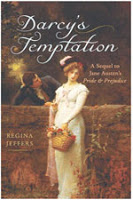
JeffersVDDWhat I would like to consider today is why did the publishers deem it necessary to change the title to Pride and Prejudice? There are several among my friends, who have had title changes at their publishers’ suggestions. For example, I have seen Wayward Love changed to Captain Wentworth’s Persuasion; Darcy’s Dream to Darcy’s Temptation; Darcy’s Hunger to Vampire Darcy’s Desire, and most recently, A Touch of Gold to The Scandal of Lady Eleanor. Changing titles is a common practice among publishing companies.ladyeleanorsmall

Can one imagine the conversation between Thomas Egerton Publishers and Jane Austen?
Egerton: Miss Austen, we believe the reading public would respond to a title change.
Austen: Are you implying that I must add the word Darcy or Pemberley to the title to sell books?
Egerton: No, that will not be necessary for another 200 years.
Austen: (in awe) Do you expect my works to survive and become part of the British literary canon?
Egerton: Of course, not. You are a female. We will be fortunate to sell a few hundred copies, Miss Austen.
Austen: (a bit disconcerted by his condescending tone) But my book is about misconstruing others – of the weakness of making judgments based on first impressions.
Egerton: (ignoring her objection) We will follow the pattern of your first publication. Sense and Sensibility will be followed by Pride and Prejudice. It will give you a “hook” to capture your readers. Now, if you will sign the contract, we can begin publication.

But why did Austen’s publishers choose those two words: pride and prejudice? Was it to stimulate a debate among those who wonder whether it was Darcy or Elizabeth who was prideful? Who acted with prejudice? College professors base entire semesters on just that concept. Or, perhaps, it was how often those two words are found in Austen’s text: The publishers’ belief that such repetition would create resonance and “connectiveness.”
The word “pride” appears seven and forty times in the text. One of my favorite uses of the word occurs in, “Vanity and pride are different things, though the words are often used synonymously.” I am also found of, “With what delightful pride she afterward visited Mrs. Bingley, and talked of Mrs. Darcy, may be guessed.”

“Prided” is used but once, as is “proudly” and “proudest.” Meanwhile, “proud” is used one and twenty times. “Some may call him proud, but I am sure I never saw anything of it,” is spoken by Mrs. Reynolds. Later in the story, Elizabeth considers Darcy’s actions in dealing with Wickham. “For herself, she was humbled; but she was proud of him – proud that in a cause of compassion and honor he had been able to get the better of himself.”

“Prejudiced” is found once in the text; “prejudices” is used twice, and “prejudice” appears five times. “The general prejudice against Mr. Darcy is so violent, that it would be the death of half the good people in Meryton to attempt to place him in an amiable light.”

darcystemptationsmallWhen I originally entitled my second book Darcy’s Dreams, I did so because I mimicked Austen’s repetition. I used the word “dream” seven and fifty times in the book. When Ulysses Press added the word “temptation” to attract readers, I made a mad scramble to add temptation to the manuscript. The process made me wonder if Austen did the same thing with pride and prejudice. Although I know it’s an illogical assumption, I like to imagine our dear Jane adding those two words as motifs within her text and also imagine her grumbling, just as I did with temptation.captainwentworthspersuasionsmall

Posted in British history, editing, Industry News/Publishing, Jane Austen, language choices, Regency era | Tagged , , , , | 3 Comments

During the Reign of George IV: The Catholic Relief Act of 1829

140px-Coat_of_Arms_of_the_United_Kingdom_(1816-1837).svg
The Roman Catholic Relief Act 1829, passed by Parliament in 1829, was the culmination of the process of Catholic Emancipation throughout Britain. In Ireland it repealed the Test Act 1673 and the remaining Penal Laws, which had been in force since the passing of the Disenfranchising Act of the Irish Parliament of 1728. Its passage followed a vigorous campaign on the issue by Irish lawyer Daniel O’Connell. O’Connell had firm support from the Prime Minister, the Duke of Wellington, as well as from the Whigs and liberal Tories.

The Act permitted members of the Catholic Church to sit in the Parliament at Westminster. O’Connell had won a seat in a by-election for Clare in 1828 against an Anglican. Under the then extant penal law, O’Connell as a Roman Catholic, was forbidden to take his seat in Parliament. Sir Robert Peel, the Home Secretary, who had until then always opposed emancipation (and had, in 1815, challenged O’Connell to a duel) concluded: “though emancipation was a great danger, civil strife was a greater danger.” Fearing a revolution in Ireland, Peel drew up the Catholic Relief Bill and guided it through the House of Commons. To overcome the vehement opposition of both the House of Lords and King George IV, the Duke of Wellington worked tirelessly to ensure passage in the House of Lords, and threatened to resign as Prime Minister if the King did not give Royal Assent.

Agitation
The campaign for Catholic emancipation in Ireland, 1828–1829, was led by Daniel O’Connell (1775–1847), organiser of the Catholic Association, but many others were active as well, both for and against.

245px-Richard_WellesleyAs Lord Lieutenant of Ireland from 1822 to 1828, the Marquess Wellesley (brother of the Duke of Wellington) played a critical role in setting the stage for the Catholic Emancipation Bill. His policy was one of reconciliation that sought to have the civil rights of Catholics restored while preserving those rights and considerations important to Protestants. He used force in securing law and order when riots threatened the peace, and he discouraged the public agitation of both the Protestant Orange Society and the Catholic Society of Ribbonman.

Bishop John Milner was an English Catholic cleric and writer highly active in promoting Catholic emancipation, prior to his death in 1826. He was a leader in anti-Enlightenment thought and had a significant influence in England as well as Ireland, and was involved in shaping the Catholic response to earlier efforts in Parliament to enact Catholic emancipation measures.

Meanwhile Ulster Protestants mobilised, after a delayed start, to stop emancipation. By late 1828 Protestants of all classes began to organise after the arrival of O’Connellite Jack Lawless who planned a series of pro-emancipation meetings and activities across Ulster. His move galvanised the Protestants to form clubs, distribute pamphlets and set up petition drives. However the Protestant protests were not well funded or coordinated and lacked critical support from the British government. After Catholic relief had been granted, the Protestant opposition divided along class lines. The aristocracy and gentry became quiescent while the middle and working classes showed dominance over Ulster’s Catholics through Orange parades.

Compromise
The Parliamentary Elections (Ireland) Act 1829 (10 Geo. IV, c. 8) which accompanied emancipation and received its Royal Assent on the same day, was the only major ‘security’ eventually required for it. This Act disenfranchised the minor landholders of Ireland, the so-called Forty Shilling Freeholders and raised fivefold the economic qualifications for voting. Starting in the initial relief granting the vote by the Irish Parliament in 1793, any man renting or owning land worth at least forty shillings (the equivalent of two Pounds Sterling), had been permitted to vote. Under the Act, this was raised to ten pounds.

Political Results
J. C. D. Clark (1985) depicts England before 1828 as a nation in which the vast majority of the people believed in the divine right of kings, and the legitimacy of a hereditary nobility, and in the rights and privileges of the Anglican Church. In Clark’s interpretation, the system remained virtually intact until it suddenly collapsed in 1828, because Catholic emancipation undermined its central symbolic prop, the Anglican supremacy. Clark argues that the consequences were enormous: “The shattering of a whole social order….What was lost at that point… was not merely a constitutional arrangement, but the intellectual ascendancy of a worldview, the cultural hegemony of the old elite.” Clark’s interpretation has been widely debated in the scholarly literature, and almost every historian who has examined the issue has highlighted the substantial amount of continuity between the periods before and after 1828–1832.

Eric J. Evans (1996) emphasises that the political importance of emancipation was that it split the anti-reformers beyond repair and diminished their ability to block future reform laws, especially the great Reform Act of 1832. Paradoxically, Wellington’s success in forcing through emancipation converted many Ultra-Tories to demand reform of Parliament. They saw that the votes of the rotten boroughs had given the government its majority. Therefore it was an ultra-Tory, the Marquis of Blandford, who in February 1830 introduced the first major reform bill, calling for the transfer of rotten borough seats to the counties and large towns, the disfranchisement of non-resident voters, preventing Crown office-holders from sitting in Parliament, the payment of a salary to MPs, and the general franchise for men who owned property. The ultras believed that a widely based electorate could be relied upon to rally around anti-Catholicism.

Posted in British history, George IV, Great Britain, Living in the UK, political stance, real life tales | Tagged , | 1 Comment

Georgian Happenings: The Wapping Coal Riots of 1798

John Harriott

John Harriott

Wapping Coal Riots of 1798
By Regina Jeffers

Coal was a major source of heat and an important commodity to London’s financial stability. As such, ships filled with coal called in at the various ports of London on the River Thames. Early on, officers of the West India Merchants and Planters Marine Police Institute (England’s first organized police force) patrolled the crowded Thames waters from their headquarters at Wapping New Stairs.

To understand the changes coming to the area at the turn of the 19th Century, one must realize that NO absolute authority existed to stifle the crimes, which followed the rapid growth of the area. John Harriott and Patrick Colquhoun organized their “Thames River Police” differently from what we know today of a marine police force. For one thing, the officers were watermen, lumpers, and surveyors. Initially, only five officers patrolled the area, and Harriott and Colquhoun learned to depend on “honest” workers among those who frequented the docks along the Thames. Harriott employed lumpers and watermen to help “police” the unloading of vessels. These men were under the protection of the Marine Police Office. They were paid extra for their diligence in stifling the crimes committed along the river. One such man was Gabriel Franks, the first “police officer” killed in the line of duty. When the coal ships were unloaded, thieves helped themselves to a substantial amount and sold it at “coal markets” along the streets of Wapping.

With Government's approval obtained the Marine Police began on the 2 July 1798 in Wapping High Street, on the site of the present Headquarters of the Marine Support Unit (MSU) of the Metropolitan Police.

With Government’s approval obtained the Marine Police began on the 2 July 1798 in Wapping High Street, on the site of the present Headquarters of the Marine Support Unit (MSU) of the Metropolitan Police.

On 16 October 1798, three men had been accused of coal theft and were standing trial at the Thames Magistrates Court attached to the Marine Police Office. Two of the men were coal heavers, while the third was a watchman’s boy. “They were all convicted and each fined forty shillings. As they left the building, friends arrived at the court, and paid the fines. Upon leaving, one of the three, Charles Eyers was met by his brother, James, who said, ‘Damn your long eyes, have you paid the money?’ Charles said, ‘Yes, I have.’ James then took his brother by the collar, dragged him toward the door and said, ‘Come along and we shall have the money back or else we shave have the house down!’ Within a very short period of time a hostile crowd had gathered outside the police office, and stones and rocks were being directed against the windows. The action that was to follow was to leave two men dead and another wounded.” (Thames Police Museum)

ps354348_lThose inside the Marine Police Office attempted to secure the building, but as the crowd and the violence continued, Officer Perry removed his pistol and fired upon the crowd. One of the rioters was killed, and the crowd outside withdrew slightly, but they did not disperse. Patrick Colquhoun took the opportunity to step into the street and to read the crowd the Riot Act. However, they refused to abandon their mission.

A man named Gabriel Franks was in a nearby public house. Upon hearing the noise of the crowd, he made his way to the Police Office and asked to be admitted, but the crowd drove him away. He retreated where he might observe the goings on. Franks instructed one of his companions (Mr Peacock) from the tavern to keep an eye on the rioters while he went to secure a cutlass for their protection. Unfortunately, before Franks could return, he was shot along the Dung Wharf.
Franks did not immediately succumb to his wounds, but lived on for several days. William Blizzard, a surgeon at the London Hospital, treated him. Assumptions are made as to the reason(s) for Franks’ attack, likely he was singled out for his association with the Police Office. Despite there being little evidence to the act, James Eyers was eventually arrested and charged with Franks’ murder. Eyers’ inciting the riot was, as a point of law, was responsible for Franks’ death, and the court agreed. He was tried and convicted of the crime and sentenced to hang. “In passing sentence the judge, Mr Justice Heath, donned the traditional black cap and spoke the usual and well-known phrase, ‘Prisoner. May the Lord have mercy upon your soul.’ Eyers replied, “Amen, I hope he will.” (The Thames Police Museum)

The actual trial transcript can be viewed at the Old Bailey trial site:
http://www.oldbaileyonline.org/browse.jsp?id=t17990109-5-person78&div=t17990109-5&terms

Meet Regina Jeffers:
Regina Jeffers is the author of several Austen-inspired novels, including Darcy’s Passions, Darcy’s Temptation, Vampire Darcy’s Desire, Captain Wentworth’s Persuasion, The Phantom of Pemberley, Christmas at Pemberley, The Disappearance of Georgiana Darcy, Honor and Hope and The Mysterious Death of Mr. Darcy. She also writes Regency romances: The Scandal of Lady Eleanor, A Touch of Velvet, A Touch of Cashémere, A Touch of Grace, A Touch of Mercy, A Touch of Love and The First Wives’ Club. A Time Warner Star Teacher and Martha Holden Jennings Scholar, Jeffers often serves as a consultant in language arts and media literacy. Currently living outside Charlotte, North Carolina, she spends her time with her writing, gardening, and her adorable grandson.

Posted in British history, buildings and structures, Georgian Era, Great Britain, real life tales | Tagged , , | Comments Off on Georgian Happenings: The Wapping Coal Riots of 1798

Do You Remember? Ingrid Bergman’s Fall from Movie Royalty

This is second installment of my new series: Do You Remember? Tell me, do you recall the extramarital affair with nearly destroyed Ingrid Bergman’s career? What do you think of how this affair shook out? Does it change how you feel about the actress? Leave your comments below.

Bergman had once played the role of “Joan of Arc,” and in the court of public opinion she was “burned at the stake” for the scandal of her infidelity: Ingrid Bergman, wife and mother and beloved movie star, had begun an affair with the Italian avant-garde film director Roberto Rossellini, who was also married at the time.

The Players: Lindstrom, Bergman, and Rossellini

The Players: Lindstrom, Bergman, and Rossellini

Swedish-born Bergman had a married Petter Lindstrom, a much older dentist-turned-neurosurgeon, and had had a child, a daughter named Pia. She had attracted notice in several Swedish films, and David O. Selznick, the producer of Gone with the Wind, had flown to Sweden to bring Bergman to Hollywood to co-star with Leslie Howard in Intermezzo. (The Hairpin) Selznick assumed control of Bergman’s career, casting her in a series of box-office hits: Casablanca (1942); For Whom the Bells Toll (1943); Gaslight (1944), for which she won an Oscar; and Spellbound and The Bells of St. Mary’s (1945). In America, through her films, Bergman earned the reputation of the “virginal, good girl.”

After seeing Open City and prompted by Irene Selznick, “in the late ’40s, Bergman wrote an adorable letter to Italian Neo-Realist director Roberto Rossellini – a man known for womanizing…and wearing sunglasses when most people in America were still squinting into the sun.

Dear Roberto, I saw your films Open City and Paisan, and enjoyed them very much. If you need a Swedish actress who speaks English very well, who has not forgotten her German, who is not very understandable in French, and who in Italian knows only “ti amo,” I am read to come and make a film with you.  – Ingrid Bergman” (The Hairpin)

Rossellini cabled her: “I just received with great emotion your letter which happens to arrive on the anniversary of my birthday as the most precious gift. It is absolutely true that I dreamed to make a film with you…” (Memories, February/March 1989) Bergman and Rossellini met in Paris in 1948 to speak on her starring in Stromboli, the first of seven ill-fated films the pair would make together.

All seemed fine whe Rossellini, Bergman, and Lindstrom came together for the 1948 screening of the film. When Rossellini called upon the Lindstroms, Bergman put down a 30 foot red carpet before her house to welcome the director.

All seemed fine whe Rossellini, Bergman, and Lindstrom came together for the 1948 screening of the film. When Rossellini called upon the Lindstroms, Bergman put down a 30 foot red carpet before her house to welcome the director.

Immediately, Rossellini replaced his previous lover, Anna Magnani, with Bergman for the lead role in his next film Stromboli. Rumors say Rossellini had made a bet with a friend he could bed Bergman within two weeks. There are also reports that the affair started when Rossellini stayed with the Lindstroms in Hollywood, but the affair became more obvious once the pair was on set in Italy.

Bergman denied the rumors of a pregnancy to gossip columnist of the day, Hedda Hopper. Less than a week later, Hopper’s rival Louella Parsons confirmed the pregnancy. Hopper was so angry about being scooped by her arch rival that she lambasted Bergman often and most thoroughly in her columns. Ed Sullivan, who produced and hosted the biggest show on television during this time, refused to permit Bergman on his show. Denunciations came from the Vatican. The actress was also denounced on the floor of the U. S. Senate  by Senator Edwin C. Johnson of Colorado as a “powerful influence for evil.” He continued by saying, “If out of the degradation associated with Stromboli, decency and common sense can be established in Hollywood, Ingrid Bergman will not have destroyed her career for naught. Out of her ashes may come a better Hollywood.” (The Hairpin) Once the affair became public knowledge, Bergman was shunned by Hollywood and was “forced” to leave the United States. She also lost the rights to her only child, 10-year-old Pia. The international press followed Bergman and Rossellini everywhere, reporting of their “vacation” on a remote island off the Italian coast only two weeks after her arrival in Italy for filming. The contrast between Bergman’s husband Lindstrom, who was described as plain spoken, strict and religious, to the flamboyant, poised and charming Rossellini was the text of any good romantic affair.

Bergman and Rossellini

Bergman and Rossellini

The 2 May 1949 issue of Life magazine ran a photo of the pair holding hands and the headline “Stombolian Idyl.” The Motion Picture Association of America reportedly cabled Bergman to warn her that her behavior would destroy her acting career. Instead of taking the caution to heart, Bergman and Rossellini flaunted their affair during the summer’s filming schedule. Lindstrom had no means of contacting his wife because of the lack of phones on the island. He learned of the affair in the newsprint. Lindstrom wrote his wife and begged her to show discretion, but she answered with words of finally discovering her love and her people. Years later, Bergman claimed her marriage was already in tatters before the affair began.

“As the attacks in the press and in Hollywood mounted, she concluded that she had to abandon her career, as well as her husband. At a press conference in Rome on 5 August, she released a statement: ‘Persistent malicious gossip that has even reached the point where I am made to appear as a prisoner has obliged me to break my silence and demonstrate my free will. I have instructed my lawyer to start divorce proceedings immediately. Also, with the conclusion of the picture it is my intention to retire from private life.” (Memories)

Unable to marry in Italy after her Mexican divorce, she and Rossellini married by proxy in Mexico on 24 May 1950, three months after Robertino had been born. Two years later, Bergman bore Rossellini their twin girls, Isabella and Ingrid. Between the two pregnancies, Stromboli was released to poor reviews and poor attendance. Rossellini would not permit her to take roles in the films of other directors, and so a string of forgettable flicks were produced. Bergman said of the period, “The world hated the Rossellini version of me, so nothing worked. It was something we did not talk about. But the silences between us grew longer.” (Brunette, Peter. Roberto Rossellini. Berkeley:  University of California Press,  c1996 1996. http://ark.cdlib.org/ark:/13030/ft709nb48d/)

Their marriage was annulled in 1956. Bergman then traveled to England to make Anastasia, a role which won her her second Oscar. In 1957, she won acclaim for her role in the Paris version of Tea and Sympathy. Bergman’s career was rekindled from the ashes. In 1958, she married Swedish producer Lars Schmidt. At this time, she permitted her children from Rossellini to return to their father in Rome. She won her third Oscar for best supporting actress in 1974’s Murder on the Orient Express. Bergman fought a courageous battle with breast cancer for eight years. She died on her 67th birthday on 29 August 1982.

ingrid-bergman1


Posted in acting, film, Pop Culture, real life tales | Tagged , , , | 6 Comments

Literary References in Jane Austen’s “Persuasion”

Literary References in Persuasion


Henry Austen in “A Biographical Notice of the Author,” said of his sister, “Short and easy will be the task of the mere biographer. A life of usefulness, literature, and religion, was not by any means a life of event.”

6a00cd96f8411f4cd501101631515c860bJane Austen’s last novel is less “light” than her earlier efforts. Anne Elliot is more unhappy and constrained than the likes of Elizabeth Bennet or the Dashwood sisters. Anne certainly is no Cinderella figure. She is too rich and too well placed in Society to be a sympathetic figure, but somehow Austen creates just such a character.

Anne is reminiscent of Charlotte Brontë’s Jane Eyre, except that Anne lacks Miss Eyre’s sharp tongue. Anne’s personality is visible only to Austen’s readers, those who share Anne’s literary mind and understand the references in the story. Persuasion reflects Jane Austen’s very “typical education.” She had improved her mind by extensive reading. Her audience would also have been aware of her references, but modern audiences are less likely to do so. Below are some of the those points of greatness found in Austen’s last novel.           

In reading Persuasion, an Austen fan must have a background in the literature of the time period. For example, the story begins with a reference to John Debrett’s Baronetage of England, which was published in 1808. That is quickly followed by a reference to Sir William Dugdale’s catalogue of Seventeenth Century nobility. Both mentions set the stage for Sir Walter’s vanity.

In Volume 1, Chapter 11, Austen says, “… the woody varieties of the cheerful village of Up Lyme, and above all, Pinny, wiht its green chasms between romantic rocks ….” Likely, Austen was “borrowing” from Samuel Taylor Coleridge’s “Kubla Khan,” in which the Romantic Period poet spoke of “deep romantic chasm” (1. 12) and “dancing rocks” (1. 23). At the end of the same chapter, Anne and Captain Benwick discuss his poetry choices. There are references to Sir Walter Scott’s “Marmion: A Tale of Flooden Field” (1808) and “The Lady of the Lake: A Poem” (1810). George Gordon’s (Lord Byron) receives a mention for “The Giaour: A Fragment of a Turkish Tale” (1813) and “The Bride of Abydos: A Turkish Tale” (1813). Bryon’s works were much talked about at the time of Austen’s writing her novel .

pbb In Volume 1, Chapter 12, there is another Byron reference. “Lord Byron’s ‘dark blue seas’ could not fail of being brought forward ….” This is a reference to Bryon’s “Childe Harold’s Pilgrimage,” Canto 2, Stanza 17 (1812). At the end of Chapter 12, one finds an allusion to Matthew Prior’s poem “Henry and Emma.” Austen says, “Without emulating the feelings of an Emma towards her Henry, she would have attended on Louisa ….” Prior’s poem is based on the traditional ballad “The Nut-Brown Maid.” The poem “Henry and Emma” tells the story of a girl who proves her selfless love by extending her devotion to the woman she considers to be her rival.

Persuasion-2007-persuasion-5250107-1024-576 From Volume 2, Chapter 3, one finds the quote, “The elegant little clock on the mantle-piece had struck ‘eleven with its silver sounds,’” to describe Mr. Elliot’s late visit to Camden-place. This is likely a reference to Alexander Pope’s “The Rape of the Lock,” canto 1, line 18 (1714).

In Volume 2, Chapter 8, Austen adds to the story line with a mention of a character from Fanny Burney’s Cecilia. “She could not do so, without comparing herself with Miss Larolles, the inimitable Miss Larolles ….” In the 1782 novel, the character seats herself at theatrical performances in a manner where she might “cultivate” those in her vicinity.

Finally, in the opening paragraph of Volume 2, Chapter 11, Austen makes a reference to The Arabian Nights or The Thousand and One Nights. “Her faith was plighted, and Mr. Elliot’s character, like the Sultaness Scheherazade’s head, must live another day.” Scheherazade kept her head by telling the legendary king of Samarkand a new tale every night.

Posted in book excerpts, British history, George IV, Great Britain, Jane Austen, language choices, Living in the Regency, real life tales, Regency era, Regency personalities, word play, writing | Tagged , , | 8 Comments

The Lovely World of the English Language ~ Why Do People Speak as They Do?

UnknownIn late February, I included a post on idioms and word play. It was a huge success, so I thought to revisit the format.

“Aboveboard” – No, this one has nothing to do with ships or sailing. Actually, it comes to us from those who attempt to fleece others with their skills of dexterity with cards or magic tricks. Those who practice to deceive place their hands “Under” the table (or “board”) to prepare their tricks. Therefore, “aboveboard” has come to mean to be without guise.

“To bone up,” as with one’s studies comes to us from the publishing of “trots” from the publishing firm known as Bohn. The “trots” were to assist students in passing their Greek and Latin courses. Therefore, to “Bohn up” was to study. Naturally, the word was changed to “bone.”

“Exchequer” comes into the English language from the Old French word (eschequier) for a chess  board. During the reign of Edward I of England, the King’s revenues were collected and overseen by a special court. This court used a checkered table cloth to cover the table upon which the revenues were displayed. Therefore, the court was to be called the “exchequer.”

“Mother Earth” comes to us from a legend retold from the time of the Romans. Supposedly Tarquinius’s two sons, along with Junius Brutus asked the Delphic Oracle which of them would succeed to the Roman throne. The oracle responded as oracles always do, with a riddle: He who shall first kiss his mother. Tarquinius’s two sons raced home to place a kiss upon their mother, but Junius Brutus fell to his knees and kissed the ground upon which he walked. “Thus I kiss thee, oh Earth, great mother of all.” Needless to say, which of the three became the king.

“Damask or Damascene” – In the eleventh and twelfth centuries, the weavers of Damascus brought the production of silken textiles to the pinnacle of rich designs. With colors woven into the pattern, these fabrics became the choice of nobles. English weavers called the fabrics damask after the city of origin of the cloth. There was also a blush-colored rose from Damascus which bore the name of damask. Shakespeare and others spoke of “fair ladies with damask cheeks.”

“Foyer” – In what were often less than pristine theatres of a century and a half prior, the audience was often met with “bitter cold.” Therefore, between acts, they rose and walked about to warm up. In the entrance hall of the theatre, one could also find a fire in the hearth. The actors congregated around a similar hearth in what is known as the greenroom. In French, the word for hearth is foyer. Eventually, the word included the hall in which the hearth was located.

“Maudlin”– The origin of this word is found in the miracle plays of the late 13th to 16th centuries in England. The plays were based on a Biblical miracle story line or a story based on the life of a saint. They were initially produced by English religious houses, but eventually became the product of the various guild halls. Many of the favorite story lines dealt with the life of Christ, and Mary Magdalen was one of the chief characters of the tales. The French name, Madelaine, became the English “Magdalen,” which was pronounced (and often spelled) as “Maudlin.” Magdalen College, Oxford, and Magdalen College, Cambridge, are pronounced thusly. Therefore, maudlin came to mean a state of tears.

“On Velvet” – It is stated in the Wardrobe Accounts of Edward II that the British King had a kerchief of velvet (l courerchief de veluett). From the 1300s of Edward II’s time through the late 1500s, velvet was an expensive fabric. Therefore, to possess any fabric of velvet was a sign of prosperity. Edmund Burke, as Premier, in 1769, stated “who is always on velvet” lacks knowledge of difficulties.

“In One Ear and Out the Other” – The earliest English language reference come from a John Calvin sermon “upon Deuteronomie.” An English translator, Arthur Golding (who translated 30 works from Latin to English), gave us the following translation of Calvin’s work: “goes in one eare and out at the other.”

“Here’s Mud in Your Eye” – This one is not a toast to good health. In truth, its origins can be found in horse racing. If the track is muddy, the losing rider is likely to be covered in the mud of all those ahead of him. The phrase means: “I hope I win over you.”

“To Be a Piker” – Nowadays, the phrase means to be a gambler and a poor loser. This is an American term dating back about 150 years. Likely, it comes from the War of 1812 and Colonel Zebulon M. Pike. Pike’s regiment, ironically, often drilled with a pike in hand instead of a bayonet. A second source could be from Pike County, Missouri. Supposedly, those from the area who were lazy and uninspiring were referred to as Pikes or pikers.


Posted in word play, writing | Tagged , , | 4 Comments

Jonathan Wild, Underworld Figure During the Reign of Queen Anne

Jonathan Wild (1682/3 – 24 May 1725) was a London underworld figure, notable for operating on both sides of the law, posing as a public-spirited crimefighter, titled ‘Thief Taker General.’

Wild was exploiting a strong public demand for action during a major London crime wave in the absence of any effective police force. As a powerful gang-leader himself, he became a master manipulator of legal systems, collecting the rewards offered for valuables he had stolen himself, bribing prison-guards to release his colleagues, and blackmailing any who crossed him. He was responsible for the arrest and execution of his chief rival, Jack Sheppard. But his duplicity was becoming known, and his men began to give evidence against him. After a failed suicide attempt, he was hanged at Tyburn before a massive crowd.
He was featured in novels, poems and plays, some of them noting parallels between Wild and the contemporary Prime Minister Walpole, known as The Great Corrupter.

Early Life
Though his exact birth date is unknown, Wild was born in Wolverhampton in either 1682 or 1683 as the first of five children in a poor family. He was baptised at St. Peter’s Collegiate Church, Wolverhampton. His father, John Wild, was a carpenter, and his mother sold herbs and fruits in the local market. At that time, Wolverhampton was the second-largest city in Staffordshire, with a population of around 6,000, many involved in iron-working and related trades.

Wild attended the Free School in St John’s Lane, and was apprenticed to a local buckle-maker. He married and had a son, but came to London in 1704 as a servant. After being dismissed by his master, he returned to Wolverhampton, before coming back to London in 1708. London was by far the largest city in England, with a population of around 600,000, of whom around 70,000 lived within the ancient city walls of the City of London.

Little is known of Wild’s first two years in London, but he was arrested for debt in March 1710, and sent to Wood Street Counter, one of the debtor’s prisons in the City of London. The prisons were notoriously corrupt, with gaolers demanding a bribe, or “garnish,” for any minor comfort. Wild became popular, running errands for the gaolers and eventually earning enough to repay his original debts and the cost of being imprisoned, and even lend money to other prisoners. He received “the liberty of the gate,” meaning that he was allowed out at night to aid in the arrest of thieves.

There, he met one Mary Milliner (or Mary Mollineaux), a prostitute who began to teach Wild criminal ways and, according to Daniel Defoe, “brought him into her own gang, whether of thieves or whores, or of both, is not much material.” He was also introduced to a wide range of London’s criminal underclass. With his new skills and contacts, Wild was released in 1712 under an Act of Parliament passed earlier that year for the relief of insolvent debtors.

Upon release, Wild began to live with Mary Milliner as her husband in Lewkenor’s Land (now Macklin Street) in Covent Garden, despite both of them having prior marriages. Wild apparently served as Milliner’s tough when she went night-walking. Soon Wild was thoroughly acquainted with the underworld, both with its methods and its inhabitants. At some point during this period, Milliner had begun to act as something of a madam to other prostitutes, and Wild as a fence, or receiver of stolen goods. Wild began, slowly at first, to dispose of stolen goods and to pay bribes to get thieves out of prison.

He later parted with Milliner, cutting off her ear to mark her as a prostitute.

Coming Into His Own
Crime had risen dramatically in London beginning in 1680, and property crime, in particular, rose sharply as London grew in importance as a commercial hub. In 1712 Charles Hitchen, Wild’s forerunner and future rival as thief-taker, said that he personally knew 2,000 people in London who made their living solely by theft. In 1711 Hitchen had obtained public office as the City’s Under Marshal, effectively its top policeman, paying £700 for the appointment. He abused his office, however, by practising extortion on an extravagant scale, both from thieves and from their potential victims. Hitchen would accept bribes to let thieves out of jail, selectively arrest criminals, and coerce sexual services from molly houses. His testimony about the rise of crime was given during an investigation of these activities by the London Board of Aldermen, who suspended him from the Under Marshal position in 1713.

In around 1713, Wild was approached by Hitchen to become one of his assistants in thief-taking, a profitable activity on account of the £40 reward paid by the government for catching a felon. Wild may have become known to Hitchen’s associates, known as his “Mathematicians,” during his lengthy stay in Wood Street Compter; certainly one, William Field, later worked for Wild.

The advent of daily newspapers had led to a rising interest in crime and criminals. As the papers reported notable crimes and ingenious attacks, the public worried more and more about property crime and grew more and more interested in the issues of criminals and policing. London depended entirely upon localized policing and had no city-wide police force. Unease with crime was at a feverish high. The public was eager to embrace both colourful criminals (e.g. Jack Sheppard and the entirely upper-class gang called the “Mohocks” in 1712) and valiant crime-fighters. The city’s population had more than doubled, and there was no effective means of controlling crime. London saw a rise not only in thievery, but in organized crime during the period.

The ending of the War of the Spanish Succession meant a further increase in crime as demobilized soldiers were on the streets. By this time, 1714, Hitchen was restored to his office, but Wild went his own way, and he opened a small office in the Blue Boar tavern, run by Mrs Seagoe in Little Old Bailey. He continued to call himself Hitchen’s “Deputy,” entirely without any official standing, and took to carrying a sword as a mark of his supposed authority, also alluding to pretensions of gentility.

Wild’s Public Career as “Thief-Taker General”
Wild’s method of illegally amassing riches while appearing to be on the side of the law was ingenious. He ran a gang of thieves, kept the stolen goods, and waited for the crime and theft to be announced in the newspapers. At this point, he would claim that his “thief taking agents” (police) had “found” the stolen merchandise, and he would return it to its rightful owners for a reward (to cover the expenses of running his agents). In some cases, if the stolen items or circumstances allowed for blackmail, he did not wait for the theft to be announced. As well as “recovering” these stolen goods, he would offer the police aid in finding the thieves. The thieves that Wild would help to “discover,” however, were rivals or members of his own gang who had refused to cooperate with his taking the majority of the money.

Wild’s ability to hold his gang together, and indeed the majority of his scheme, relied upon the fear of theft and the nation’s reaction to theft. The crime of selling stolen goods became increasingly dangerous in the period from 1700 to 1720. Low-level thieves ran a great risk in fencing their goods. Wild avoided this danger and exploited it simultaneously by having his gang steal, either through pickpocketing or, more often, mugging, and then by “recovering” the goods. He never sold the goods back, explicitly, nor ever pretended that they were not stolen. He claimed at all times that he found the goods by policing and avowed hatred of thieves. That very penalty for selling stolen goods, however, allowed Wild to control his gang very effectively, for he could turn in any of his thieves to the authorities at any time. By giving the goods to him for a cut of the profits, Wild’s thieves were selling stolen goods. If they did not give their take to him, Wild would simply apprehend them as thieves. However, what Wild chiefly did was use his thieves and ruffians to “apprehend” rival gangs.

Jonathan Wild was not the first thief-taker who was actually a thief himself. Charles Hitchen had used his position as Under-Marshal to practice extortion. He had pressured brothels and pickpockets to pay him off or give him the stolen goods since purchasing the position in 1712, and the extortion was already an established practice at that time. When Hitchen was suspended from his duties for corruption in that year, he engaged Jonathan Wild to keep his business of extortion going in his absence. Hitchen was re-instated in 1714, and found that Wild was now a rival, and one of Wild’s first acts of gang warfare was to eliminate as many of the thieves in Hitchen’s control as he could. In 1718, Hitchen attempted to expose Wild with his A True Discovery of the Conduct of Receivers and Thief-Takers in and about the City of London. There he named Wild as a manager and source of crime. Wild replied with An Answer to a Late Insolent Libel and there explained that Hitchen was a homosexual who visited “molly houses.”

Hitchen attempted to further combat Wild with a pamphlet entitled The Regulator, which was his characterization of Wild, but Hitchen’s prior suspensions from duties and the shocking charge of homosexuality virtually eliminated him as a threat to Wild.

Wild held a virtual monopoly on crime in London. Legends arose surrounding his management of his “empire.” One held that he kept records of all thieves in his employ, and when they had outlived their usefulness, Wild sold them to the gallows for the £40 reward. This supposed system inspired a fake or folk etymology of the phrase “double cross.” It is alleged that, when a thief vexed Wild in some way, he put a cross by the thief’s name; a second cross condemned the man to be sold to the Crown for hanging. (This fabulous story is contradicted by the fact that the noun “double cross” did not enter English usage until 1834.)

In public, Wild presented an heroic face. He was the man who returned stolen goods. He was the man who caught criminals. In 1718, Wild called himself “Thief Taker General of Great Britain and Ireland.” By his testimony, over sixty thieves were sent to the gallows. His “finding” of lost merchandise was private, but his efforts at finding thieves were public. Wild’s office in the Old Bailey was a busy spot. Victims of crime would come by, even before announcing their losses, and discover that Wild’s agents had “found” the missing items, and Wild would offer to help find the criminals for an extra fee. However, while fictional treatments made use of the device, it is not known whether or not Wild ever actually turned in one of his own gang for a private fee.

In 1720, Wild’s fame was such that the Privy Council consulted with him on methods of controlling crime. Wild’s recommendation was, unsurprisingly, that the rewards for evidence against thieves be raised. Indeed, the reward for capturing a thief went from forty pounds to one hundred and forty pounds within the year. This amounted to a significant pay increase for Wild. There is some evidence that Wild was favoured, or at least ignored, by the Whig politicians and opposed by the Tory politicians. In 1718, a Tory group had succeeded in having the laws against receiving stolen property tightened, primarily with Wild’s activities in mind. Ironically, this strengthened Wild’s hand, rather than weakening it, for it made it more difficult for thieves to fence their goods except through Wild.

Wild’s battles with thieves made excellent press. Wild himself would approach the papers with accounts of his derring-do, and the papers passed these on to a concerned public. Thus, in July to August 1724, the papers carried accounts of Wild’s heroic efforts in collecting twenty-one members of the Carrick Gang (with an £800 reward—approximately £25,000 in the year 2000). When one of the members of the gang was released, Wild pursued him and had him arrested on “further information.” To the public, this seemed like a relentless defence of order. In reality, it was a gang warfare disguised as national service.

When Wild solicited for a finder’s fee, he usually held all the power in the transaction. For example, David Nokes quotes (based on Howson) the following advertisement from the Daily Post in 1724 in his edition of Henry Fielding’s The Life and Death of Jonathan Wild, the Great:

“Lost, the 1st of October, a black shagreen Pocket-Book, edged with
Silver, with some Notes of Hand. The said Book was lost in the
Strand, near Fountain Tavern, about 7 or 8 o’clock at Night. If
any Person will bring aforementioned Book to Mr Jonathan Wild,
in the Old Bailey, he shall have a Guinea reward.”

The advert is extortion. The “notes of hand” (agreements of debt) mean signatures, so Wild already knows the name of the book’s owner. Furthermore, Wild tells the owner through the ad that he knows what its owner was doing at the time, since the Fountain Tavern was a brothel. The real purpose of the ad is to threaten the notebook’s owner with announcing his visit to a bordello, either to the debtors or the public, and it even names a price for silence (a guinea, or one pound and one shilling).

The Jack Sheppard Struggle and Downfall
By 1724, London political life was experiencing a crisis of public confidence. In 1720, the South Sea Bubble had burst, and the public was growing restive about corruption. Authority figures were beginning to be viewed with scepticism.

In late April 1724, the most famous housebreaker of the era, Jack Sheppard, was apprehended by one of Wild’s men, James “Hell-and-Fury” Sykes, for a burglary Sheppard had committed in Clare Market on 5 February. Sheppard had worked with Wild in the past, though he had struck out on his own. Consequently, as with other arrests, Wild’s interests in saving the public from Sheppard were personal.

Sheppard was imprisoned in St Giles’s Roundhouse, but escaped within three hours. On 19 May, Wild again had Sheppard arrested for pickpocketing, and this time he was put in St. Ann’s Roundhouse in Soho, where he was visited by Elizabeth “Edgworth Bess” Lyon the next day; she too was locked up with him, and, being recognized as man and wife, they were sent to the New Prison at Clerkenwell. They both escaped on 25 May. In July, Field informed Wild about Sheppard, so Wild sought for Lyon on 22 July and plied her with drinks at Temple Bar until she betrayed Sheppard.

The following day, Wild sent another one of his men, Quilt Arnold, and had Sheppard arrested a third time and put into Newgate Prison to await trial. On 13 August he was tried on three charges of burglary, but was acquitted of the first two due to lack of evidence. However, Wild, along with Field and William Kneebone, Sheppard’s former master, presented evidence against him on the final charge of the burglary of Kneebone’s house on 12 July; and Sheppard was convicted, sentenced to death, and put in the condemned hold of Newgate Prison.

On the night that the death warrant arrived, 31 August, Sheppard, once again, escaped. By this point, Sheppard was a working class hero for apprentices (being a cockney apprentice in love, non-violent, and handsome). On 9 September, Sheppard avoided capture by Wild’s men, but he was caught for a fourth time by a posse from Newgate as he hid out on Finchley Common, and Sheppard was placed in the most secure room of Newgate. Further, Sheppard was put in shackles and chained to the floor.

Meanwhile, on 9 October, Wild and his men arrested Joseph “Blueskin” Blake, a highwayman and Sheppard’s partner-in-crime. On 15 October Blueskin was tried for the same act of burglary committed on 12 July, with Wild, Field, and his men giving evidence. Their accounts were not consistent with the evidence given at Sheppard’s trial, but Blueskin was convicted and sentenced to death anyway. After the trial, Blueskin pleaded with Wild in the courtroom to have his sentence commuted from hanging to transportation (since he had worked with Wild before), but Wild refused. Enraged, Blueskin attempted to murder Wild, slashing his throat in the process and causing an uproar, and Wild collapsed and was taken to a surgeon for treatment.

Taking advantage of the disturbance that spread to Newgate next door and continued into the night, Sheppard escaped yet again in early 16 October. Sheppard had broken the chains, padlocks, and six iron-barred doors. This escape astonished everyone, and Daniel Defoe, working as a journalist, wrote an account. In the early morning on 1 November, Sheppard was found for a fifth and final time by a constable and arrested. This time, Sheppard was placed in the centre of Newgate, where he could be observed at all times, and loaded with three hundred pounds of iron weights. He was so celebrated that the gaolers charged high society visitors to see him, and James Thornhill painted his portrait.

On 11 November, Blueskin was hanged. Five days later Sheppard was similarly executed at Tyburn. Wild missed out on the execution while he was confined to his bed for several weeks and his throat was recovering.

During the pursuit of Sheppard, Wild appeared as much to disadvantage in the press as Sheppard did to advantage. Wild was now despised. When, after his recovery, Wild used violence to perform a jail break for one of his gang members, he was being sought out and went into hiding for several weeks, and returned to business when he thought the affair had blown over. On 6 February 1725, he was summoned to Leicester house, where he failed to recover a gold watch for one of his attendants because of the jail break and the incident with Blueskin at the Old Bailey.

It has been reported that Wild had numerous caches of treasure secreted around London at the time of his death, and that many years later people would unexpectedly discover one of these caches, i.e., in the process of tearing down or rebuilding a house, et al.

Arrest, Trial and Execution

A gallows ticket to view the hanging of Jonathan Wild.

On 15 February Wild and Quilt Arnold were arrested for helping one of his men in a jailbreak. Wild was placed in Newgate, where he continued to attempt to run his business. In the illustration from the True Effigy (top of page), Wild is pictured in Newgate, still with notebook in hand to account for goods coming in and going out of his office. Evidence was presented against Wild for the violent jailbreak and for having stolen jewels during the previous August’s installation of Knights of the Garter.

The public’s mood had shifted; they supported the average man and resented authority figures. Wild’s trial occurred at the same time as that of the Lord Chancellor, Lord Thomas Parker, 1st Earl of Macclesfield, for taking £100,000 in bribes. With the changing tide, it appeared at last to Wild’s gang that their leader would not escape, and they began to come forward. Slowly, gang members began to turn evidence on him, until all of his activities, including his grand scheme of running and then hanging thieves, became known. Additionally, evidence was offered as to Wild’s frequent bribery of public officers.

Wild’s final trial occurred at the Old Bailey on 15 May. He was tried on two indictments of privately stealing 50 yards (46 m) of lace from Catherine Statham (a lace-seller who had visited him in prison on 10 March) at Holborn on 22 January. He was acquitted of the first charge, but with Statham’s evidence presented against him on the second charge, he was convicted and sentenced to death. Terrified, Wild asked for a reprieve but was refused. He could not eat or go to church, and suffered from insanity and gout. On the morning of his execution, in fear of death, he attempted suicide by drinking a large dose of laudanum, but because he was weakened by fasting, he vomited violently and sank into a coma from which he would not awaken.

When Wild was taken to the gallows at Tyburn on 24 May 1725, Daniel Defoe said that the crowd was far larger than any they had seen before and that, instead of any celebration or commiseration with the condemned,
“wherever he came, there was nothing but hollowing and huzzas,
as if it had been upon a triumph.”

Wild’s hanging was a great event, and tickets were sold in advance for the best vantage points (see the reproduction of the gallows ticket). Even in a year with a great many macabre spectacles, Wild drew an especially large and boisterous crowd. Eighteen-year-old Henry Fielding was in attendance. Wild was accompanied by William Sperry and the two Roberts Sanford and Harpham, three of the four prisoners who had been condemned to die with Wild a few days before. Because he was heavily drugged, he was the last to die after the three of them, without any difficulty that had happened at Sheppard’s execution. The hangman, Richard Arnet, had been a guest at Wild’s wedding.

In the dead of night, Wild’s body was buried in secret at the churchyard of St Pancras Old Church next to Elizabeth Mann, his third wife and one of his many lovers (who had died in about 1718), as he had wished. His burial was only temporary. In the 18th century, autopsies and dissections were performed on the most notorious criminals, and consequently Wild’s body was exhumed and sold to the Royal College of Surgeons for dissection. His skeleton remains on public display in the Royal College’s Hunterian Museum in Lincoln’s Inn Fields.

Literary Treatments
Jonathan Wild is famous today not so much for setting the example for organized crime as for the uses satirists made of his story.

When Wild was hanged, the papers were filled with accounts of his life, collections of his sayings, farewell speeches, and the like. Daniel Defoe wrote one narrative for Applebee’s Journal in May and then had published True and Genuine Account of the Life and Actions of the Late Jonathan Wild in June 1725. This work competed with another that claimed to have excerpts from Wild’s diaries. The illustration above is from the frontispiece to the “True Effigy of Mr. Jonathan Wild,” a companion piece to one of the pamphlets purporting to offer the thief-taker’s biography.

Criminal biography was a genre. These works offered a touching account of need, a fall from innocence, sex, violence and then repentance or a tearful end. Public fascination with the dark side of human nature and with the causes of evil, has never waned and the market for mass-produced accounts was large.

By 1701, there had been a Lives of the Gamesters (often appended to Charles Cotton’s The Compleat Gamester), about notorious gamblers. In 1714 Captain Alexander Smith had written the best-selling Complete Lives of the Most Notorious Highwaymen. Defoe himself was no stranger to this market: his Moll Flanders was published in 1722. By 1725, Defoe had written a History and a Narrative of the life of Jack Sheppard. Moll Flanders may be based on the life of one Moll King, who lived with Mary Mollineaux/Milliner, Wild’s first mistress.

What differs about the case of Jonathan Wild is that it was not simply a crime story. Parallels between Wild and Robert Walpole were instantly drawn, especially by the Tory authors of the day. Mist’s Weekly Journal (one of the more rough-speaking Tory journals) drew a parallel between the figures in May 1725, when the hanging was still in the news.

The parallel is most important for John Gay’s The Beggar’s Opera in 1728. The main story of the Beggar’s Opera focuses on the episodes between Wild and Sheppard. In the opera, the character of Peachum stands in for Wild (who stands in for Walpole), while the figure of Macheath stands in for Sheppard (who stands in for Wild and/or the chief officers of the South Sea Company). Robert Walpole himself saw and enjoyed Beggar’s Opera without realizing that he was its intended target. Once he did realize it, he banned the sequel opera, Polly, without staging. This prompted Gay to write to a friend, “For writing in the cause of virtue and against the fashionable vices, I have become the most hated man in England almost.”‘

In 1742, Robert Walpole lost his position of power in the British House of Commons. He was created a peer and moved to the House of Lords, from where he still directed the Whig majority in Commons for years. In 1743, Henry Fielding’s The Life and Death of Jonathan Wild, the Great appeared in the third volume of Miscellanies.

Fielding is merciless in his attack on Walpole. In his work, Wild stands in for Walpole directly, and, in particular, he invokes the Walpolean language of the “Great Man”. Walpole had come to be described by both the Whig and then, satirically, by the Tory political writers as the “Great Man,” and Fielding has his Wild constantly striving, with stupid violence, to be “Great.” “Greatness,” according to Fielding, is only attained by mounting to the top stair (of the gallows). Fielding’s satire also consistently attacks the Whig party by having Wild choose, among all the thieves cant terms (several lexicons of which were printed with the Lives of Wild in 1725), “prig” to refer to the profession of burglary. Fielding suggests that Wild becoming a Great Prig was the same as Walpole becoming a Great Whig: theft and the Whig party were never so directly linked.

The figures of Peachum and Macheath were picked up by Bertolt Brecht for his updating of Gay’s opera as The Threepenny Opera. The Sheppard character, Macheath, is the “hero” of the song Mack the Knife.

In Sir Arthur Conan Doyle’s Sherlock Holmes novel, The Valley of Fear, the arch-villain Professor Moriarty is referred to as a latter-day Jonathan Wild by Holmes:

“Everything comes in circles—even Professor Moriarty. Jonathan Wild was the hidden force of the London criminals, to whom he sold his brains and his organization on a fifteen per cent. commission. The old wheel turns, and the same spoke comes up.”

In 1969, James Clavell’s screenplay for the film “Where’s Jack?” told the story of Jack Shepherd (played in the film by the pop singer Tommy Steele) with Wild (played by Stanley Baker) as a suave and sinister criminal mastermind.

More recently, Jonathan Wild appeared as a character in the David Liss novel A Conspiracy of Paper, ISBN 0-8041-1912-0. Jonathan Wild is also the title character in the 2005–2006 Phantom stories “Jonathan Wild: King of Thieves” and “Jonathan Wild: Double Cross.”

Posted in British history, Georgian Era, Great Britain, Living in the UK, real life tales | Tagged , , , | Comments Off on Jonathan Wild, Underworld Figure During the Reign of Queen Anne

Jack Sheppard, Inspiration for John Gay’s “The Beggar’s Opera”

Jack Sheppard or known as John Sheppard (4 March 1702 – 16 November 1724) was a notorious English robber, burglar and thief of early 18th-century London. Born into a poor family, he was apprenticed as a carpenter but took to theft and burglary in 1723, with little more than a year of his training yet to complete. He was arrested and imprisoned five times in 1724, but escaped four times from prison, making him a notorious public figure, and wildly popular with the poorer classes.

Ultimately, he was caught, convicted, and hanged at Tyburn, ending his brief criminal career after less than two years. The inability of the notorious “Thief-Taker General” Jonathan Wild to control Sheppard, and injuries suffered by Wild at the hands of Sheppard’s colleague, Joseph “Blueskin” Blake, led to Wild’s downfall.

Sheppard was as renowned for his attempts to escape imprisonment as he was for his crimes. An autobiographical “Narrative,” thought to have been ghostwritten by Daniel Defoe, was sold at his execution, quickly followed by popular plays. The character of Macheath in John Gay’s The Beggar’s Opera (1728) was based on Sheppard, keeping him in the limelight for over 100 years. He returned to the public consciousness around 1840, when William Harrison Ainsworth wrote a novel entitled Jack Sheppard, with illustrations by George Cruikshank. The popularity of his tale, and the fear that others would be drawn to emulate his behaviour, led the authorities to refuse to license any plays in London with “Jack Sheppard” in the title for forty years.

Early Life

An engraving of Wych Street, from about 1870

An engraving of Wych Street, from about 1870

Sheppard was born in White’s Row, in London’s Spitalfields. He was baptised on 5 March, the day after he was born, at St Dunstan’s, Stepney, suggesting a fear of infant mortality by his parents, perhaps because the newborn was weak or sickly. His parents named him after an older brother, John, who had died before his birth. In life, he was better known as Jack, or even “Gentleman Jack” or “Jack the Lad.” He had a second brother, Thomas, and a younger sister, Mary. Their father, a carpenter, died while Sheppard was young, and his sister died two years later.

Unable to support her family without her husband’s income, Jack’s mother sent him to Mr Garrett’s School, a workhouse near St Helen’s Bishopsgate, when he was six years old. Sheppard was sent out as a parish apprentice to a cane-chair maker, taking a settlement of 20 shillings, but his new master soon died. He was sent out to a second cane-chair maker, but Sheppard was treated badly. Finally, when Sheppard was 10, he went to work as a shop-boy for William Kneebone, a wool draper with a shop on the Strand. Sheppard’s mother had been working for Kneebone since her husband’s death. Kneebone taught Sheppard to read and write and apprenticed him to a carpenter, Owen Wood, in Wych Street, off Drury Lane in Covent Garden. Sheppard signed his seven-year indenture on 2 April 1717.

By 1722, Sheppard was showing great promise as a carpenter. Aged 20, he was a small man, only 5’4″ (1.63 m) and lightly built, but deceptively strong. He had a pale face with large, dark eyes, a wide mouth and a quick smile. Despite a slight stutter, his wit made him popular in the taverns of Drury Lane. He served five unblemished years of his apprenticeship but then began to be led into crime.

Joseph Hayne, a button-moulder who owned a shop nearby, also ran a tavern named the Black Lion off Drury Lane, which he encouraged the local apprentices to frequent. The Black Lion was visited by criminals such as Joseph “Blueskin” Blake, Sheppard’s future partner in crime, and self-proclaimed “Thief-Taker General” Jonathan Wild, secretly the linchpin of a criminal empire across London and later Sheppard’s implacable enemy.

According to Sheppard’s “autobiography,” he had been an innocent until going to Hayne’s tavern, but there began an attachment to strong drink and the affections of Elizabeth Lyon, a prostitute also known as Edgworth Bess (or Edgeworth Bess) from her place of birth at Edgeworth in Middlesex. In his History, Defoe records that Bess was “a main lodestone in attracting of him up to this Eminence of Guilt.”

Such, Sheppard claimed, was the source of his later ruin. Peter Linebaugh offers a different view: that Sheppard’s sudden transformation was a liberation from the dull drudgery of indentured labour and, he progressed from pious servitude to self-confident rebellion and Levelling.

Criminal Career
Sheppard threw himself into a hedonistic whirl of drinking and whoring. Inevitably, his carpentry suffered, and he became disobedient to his master. With Lyon’s encouragement, Sheppard took to crime in order to complement his legitimate wages. His first recorded theft was in Spring 1723, when he engaged in petty shoplifting, stealing two silver spoons while on an errand for his master to Rummer Tavern in Charing Cross.

Sheppard’s misdeeds went undetected, and he moved on to larger crimes, often stealing goods from the houses where he was working. Finally, he quit the employ of his master on 2 August 1723, with less than 2 years of his apprenticeship left, although he continued to work as a journeyman carpenter. He was not suspected of the crimes, and progressed to burglary, falling in with criminals in Jonathan Wild’s gang.

Jack used a rope of knotted bedclothes to lower Bess during their escape from the New Prison in Clerkenwell.

Jack used a rope of knotted bedclothes to lower Bess during their escape from the New Prison in Clerkenwell.

He moved to Fulham, living as man and wife with Lyon at Parsons Green, before moving to Piccadilly. When Lyon was arrested and imprisoned at St Giles’s Roundhouse, the beadle, a Mr Brown, refused to let Sheppard visit, so he broke in and took her away.

Arrested and Escaped Twice
Sheppard was first arrested after a burglary he committed with his brother, Tom, and his mistress, Lyon, in Clare Market on 5 February 1724. Tom, also a carpenter, had already been convicted once for stealing tools from his master the previous autumn and burned in the hand. Tom was arrested again on 24 April 1724. Afraid that he would be hanged this time, Tom informed on Jack, and a warrant was issued for Jack’s arrest.

Jonathan Wild was aware of Sheppard’s thefts, as Sheppard had fenced some stolen goods through one of Wild’s men, William Field. Wild asked another of his men, James Sykes (known as “Hell and Fury”) to challenge Sheppard to a game of skittles at Redgate’s public house near Seven Dials. Sykes betrayed Sheppard to a Mr Price, a constable from the parish of St Giles, to gather the usual £40 reward for giving information leading to the conviction of a felon. The magistrate, Justice Parry, had Sheppard imprisoned overnight on the top floor of St Giles’s Roundhouse pending further questioning, but Sheppard escaped within three hours by breaking through the timber ceiling and lowering himself to the ground with a rope fashioned from bedclothes. Still wearing irons, Sheppard coolly joined the crowd that had been attracted by the sounds of him breaking out. He distracted their attention by pointing to the shadows on the roof and shouting that he could see the escapee, and then swiftly departed.

On 19 May 1724, Sheppard was arrested for a second time, caught in the act of picking a pocket in Leicester Fields (near present-day Leicester Square). He was detained overnight in St Ann’s Roundhouse in Soho and visited there the next day by Lyon; she was recognised as his wife and locked in a cell with him. They appeared before Justice Walters, who sent them to the New Prison in Clerkenwell, but they escaped from their cell, known as the Newgate Ward, within a matter of days. By 25 May, Whitsun Monday, Sheppard and Lyon had filed through their manacles; they removed a bar from the window and used their knotted bed-clothes to descend to ground level. Finding themselves in the yard of the neighbouring bridewell, they clambered over the 22-foot-high (6.7 m) prison gate to freedom. This feat was widely publicised, not least because Sheppard was only a small man, and Lyon was a large, buxom woman.

Third Arrest, Trial, and Third Escape
Sheppard’s thieving abilities were admired by Jonathan Wild. Wild demanded that Sheppard surrender his stolen goods for Wild to fence, and so take the greater profits, but Sheppard had refused. He began to work with Joseph “Blueskin” Blake, and they burgled Sheppard’s former master, William Kneebone, on Sunday, 12 July 1724. Wild could not permit Sheppard to continue outside his control and began to seek Sheppard’s arrest. Unfortunately for Sheppard, his fence, William Field, was one of Wild’s men. After Sheppard had a brief foray with Blueskin as highwaymen on the Hampstead Road on Sunday 19 July and Monday 20 July, Field informed on Sheppard to Wild. Wild believed Lyon would know Sheppard’s whereabouts, so he plied her with drinks at a brandy shop near Temple Bar until she betrayed him. Sheppard was arrested a third time at Blueskin’s mother’s brandy shop in Rosemary Lane, east of the Tower of London (later renamed Royal Mint Street), on 23 July by Wild’s henchman, Quilt Arnold.

Sheppard was imprisoned in Newgate Prison pending his trial at the next Assize of oyer and terminer. He was prosecuted on three charges of theft at the Old Bailey, but was acquitted on the first two due to lack of evidence. Kneebone, Wild and Field gave evidence against him on the third charge, the burglary of Kneebone’s house. He was convicted on 12 August, the case “being plainly prov’d,” and sentenced to death. On Monday 31 August, the very day when the death warrant arrived from the court in Windsor setting Friday, 4 September as the date for his execution, Sheppard escaped. Having loosened an iron bar in a window used when talking to visitors, he was visited by Lyon and Poll Maggott, who distracted the guards while he removed the bar.

His slight build had enabled him to climb through the resulting gap in the grille, and he was smuggled out of Newgate in women’s clothing that his visitors had brought him. He took a coach to Blackfriars Stairs, a boat up the River Thames to the horse ferry in Westminster, near the warehouse where he hid his stolen goods, and made good his escape.

Fourth Arrest and Final Escape
By this point, Sheppard was a working class hero (being a cockney, non-violent, and handsome, and seemingly able to escape punishment for his crimes at will). He spent a few days out of London, visiting a friend’s family in Chipping Warden in Northamptonshire, but was soon back in Town. He evaded capture by Wild and his men but was arrested again on 9 September by a posse from Newgate as he hid out on Finchley Common, and was returned to the condemned cell at Newgate.

His fame had increased with each escape, and he was visited in prison by the great, the good and the curious. His plans to escape in September were thwarted twice when the guards found files and other tools in his cell, and he was transferred to a strong-room in Newgate known as the “Castle,” clapped in leg irons, and chained to two metal staples in the floor to prevent further escape attempts.

After demonstrating to his gaolers that these measures were insufficient, by showing them how he could use a small nail to unlock the horse padlock at will, he was bound more tightly and handcuffed. In his History, Defoe reports that Sheppard made light of his predicament, joking that “I am the Sheppard, and all the Gaolers in the Town are my Flock, and I cannot stir into the Country, but they are all at my Heels Baughing after me.”

Meanwhile, “Blueskin” Blake was arrested by Wild and his men on Friday, 9 October, and Tom, Jack’s brother, was transported for robbery on Saturday, 10 October 1724. New court sessions began on Wednesday 14 October, and Blueskin was tried on Thursday 15 October, with Field and Wild again giving evidence. Their accounts were not consistent with the evidence that they gave at Sheppard’s trial, but Blueskin was convicted anyway. Enraged, Blueskin attacked Wild in the courtroom, slashing his throat with a pocket-knife and causing an uproar. Wild was lucky to survive, and his grip over his criminal empire started to slip while he recuperated.

Jack Sheppard in Newgate Prison before his fourth escape, from the frontispiece of the "Narrative" of his life, published by John Applebee in 1724. The label "A" marks the hole he made in the chimney during his escape.

Jack Sheppard in Newgate Prison before his fourth escape, from the frontispiece of the “Narrative” of his life, published by John Applebee in 1724. The label “A” marks the hole he made in the chimney during his escape.

Taking advantage of the disturbance, which spread to Newgate Prison next door and continued into the night, Sheppard escaped for the fourth time. He unlocked his handcuffs and removed the chains. Still encumbered by his leg irons, he attempted to climb up the chimney, but his path was blocked by an iron bar set into the brickwork. He removed the bar and used it to break through the ceiling into the “Red Room” above the “Castle,” a room which had last been used some seven years before to confine aristocratic Jacobite prisoners after the Battle of Preston. Still wearing his leg irons as night fell, he then broke through six barred doors into the prison chapel, then to the roof of Newgate, 60 feet (20 m) above the ground. He went back down to his cell to get a blanket, then back to the roof of the prison, and used the blanket to reach the roof of an adjacent house, owned by William Bird, a turner.

He broke into Bird’s house, and went down the stairs and out into the street at around midnight without disturbing the occupants. Escaping through the streets to the north and west, Sheppard hid in a cowshed in Tottenham (near modern Tottenham Court Road). Spotted by the barn’s owner, Sheppard told him that he had escaped from Bridewell Prison, having been imprisoned there for failing to support a (nonexistent) bastard son. His leg irons remained in place for several days until he persuaded a passing shoemaker to accept the considerable sum of 20 shillings to bring a blacksmith’s tools and help him remove them, telling him the same tale.

His manacles and leg irons were later recovered in the rooms of Kate Cook, one of Sheppard’s mistresses. This escape astonished everyone. Daniel Defoe, working as a journalist, wrote an account for John Applebee, The History of the Remarkable Life of John Sheppard. In his History, Defoe reports the belief in Newgate that the Devil came in person to assist Sheppard’s escape.

Final Capture

Jack Sheppard, in Newgate Prison awaiting execution, in an engraving by George White from 1728, based on a painting by James Thornhill which has not survived. Note that Sheppard's hair is cropped and that he points toward the door.

Jack Sheppard, in Newgate Prison awaiting execution, in an engraving by George White from 1728, based on a painting by James Thornhill which has not survived. Note that Sheppard’s hair is cropped and that he points toward the door.

Sheppard’s final period of liberty lasted just two weeks. He disguised himself as a beggar and returned to the City. He broke into the Rawlins brothers’ pawnbroker’s shop in Drury Lane on the night of 29 October 1724, taking a black silk suit, a silver sword, rings, watches, a wig, and other items. He dressed himself as a dandy gentleman and used the proceeds to spend a day and the following evening on the tiles with two mistresses. He was arrested a final time in the early morning on 1 November, blind drunk, “in a handsome Suit of Black, with a Diamond Ring and a Cornelian ring on his Finger, and a fine Light Tye Peruke.”

This time, Sheppard was placed in the Middle Stone Room, in the centre of Newgate next to the “Castle,” where he could be observed at all times. He was also loaded with three hundred pounds of iron weights. He was so celebrated that the gaolers charged high society visitors four shillings to see him, and the King’s painter James Thornhill painted his portrait. Several prominent people sent a petition to King George I, begging for his sentence of death to be commuted to transportation. “The Concourse of People of tolerable Fashion to see him was exceeding Great, he was always Chearful and Pleasant to a Degree, as turning almost everything as was said onto a Jest and Banter.” To a Reverend Wagstaffe who visited him, he said, according to Defoe, “One file’s worth all the Bibles in the World.”

Sheppard came before Mr Justice Powis in the Court of King’s Bench at Westminster Hall on 10 November. He was offered the chance to have his sentence reduced by informing on his associates, but he scorned the offer, and the death sentence was confirmed. The next day, Blueskin was hanged, and Sheppard was moved to the condemned cell.

Execution
The following Monday, 16 November, Sheppard was taken to the gallows at Tyburn to be hanged. He planned one more escape, but his pen-knife, intended to cut the ropes binding him on the way to the gallows, was found by a prison warder shortly before he left Newgate for the last time.

A joyous procession passed through the streets of London, with Sheppard’s cart drawn along Holborn and Oxford Street accompanied by a mounted City Marshal and liveried Javelin Men. The occasion was as much as anything a celebration of Sheppard’s life, attended by crowds of up to 200,000 (one third of London’s population). The procession halted at the City of Oxford tavern on Oxford Street, where Sheppard drank a pint of sack. A carnival atmosphere pervaded Tyburn, where his “official” autobiography, published by Applebee and probably ghostwritten by Defoe, was on sale. Sheppard handed “a paper to someone as he mounted the scaffold,” perhaps as a symbolic endorsement of the account in the “Narrative.” His slight build had aided his previous prison escapes, but it condemned him to a slow death by strangulation by the hangman’s noose. After hanging for the prescribed 15 minutes, his body was cut down. The crowd pressed forward to stop his body from being removed, fearing dissection; their actions inadvertently prevented Sheppard’s friends from implementing a plan to take his body to a doctor in an attempt to revive him. His badly mauled remains were recovered later and buried in the churchyard of St Martin’s-in-the-Fields that evening.

Legacy
There was a spectacular public reaction to Sheppard’s deeds. He was even cited (favourably) as an example in newspapers, pamphlets, broadsheets, and ballads were all devoted to his amazing exploits, and his story was adapted for the stage almost immediately. Harlequin Sheppard, a pantomime by one John Thurmond (subtitled “A night scene in grotesque characters”), opened at the Theatre Royal, Drury Lane on Saturday, 28 November, only two weeks after Sheppard’s hanging. In a famous contemporary sermon, a London preacher drew on Sheppard’s popular escapes as a way of holding his congregation’s attention:

“Let me exhort ye, then, to open the locks of your hearts with the nail of repentance! Burst asunder the fetters of your beloved lusts! – mount the chimney of hope! – take from thence the bar of good resolution! – break through the stone wall of despair!”

The account of his life remained well-known through the Newgate Calendar, and a three-act farce was published but never produced, but, mixed with songs, it became The Quaker’s Opera, later performed at Bartholomew Fair. An imagined dialogue between Jack Sheppard and Julius Caesar was published in the British Journal on 4 December 1724, in which Sheppard favourably compares his virtues and exploits to those of Caesar.

Perhaps the most prominent play based on Sheppard’s life is John Gay’s The Beggar’s Opera (1728). Sheppard was the inspiration for the figure of Macheath; his nemesis, Peachum, is based on Jonathan Wild. The play was spectacularly popular, restoring the fortune that Gay had lost in the South Sea Bubble, and was produced regularly for over 100 years. An unperformed but published play The Prison-Breaker was turned into The Quaker’s Opera (in imitation of The Beggar’s Opera) and performed at Bartholomew Fair in 1725 and 1728. Two centuries later The Beggar’s Opera was the basis for The Threepenny Opera of Bertolt Brecht and Kurt Weill (1928).

Sheppard’s tale may have been an inspiration for William Hogarth’s 1747 series of 12 engravings, Industry and Idleness, which shows the parallel descent of an apprentice, Tom Idle, into crime and eventually to the gallows, beside the rise of his fellow apprentice, Francis Goodchild, who marries his master’s daughter and takes over his business, becoming wealthy as a result, eventually emulating Dick Whittington to become Lord Mayor of London.

"The Last Scene" engraved by George Cruikshank in 1839 to illustrate William Harrison Ainsworth's serialised novel, Jack Sheppard. The captions read: "Jack Sheppard's Farewell to Mr Wood", "Blueskin cutting down Jack Sheppard", and "The body of Jack Sheppard carried off by the mob."

“The Last Scene” engraved by George Cruikshank in 1839 to illustrate William Harrison Ainsworth’s serialised novel, Jack Sheppard. The captions read: “Jack Sheppard’s Farewell to Mr Wood”, “Blueskin cutting down Jack Sheppard”, and “The body of Jack Sheppard carried off by the mob.”

Sheppard’s tale was revived in the first half of the 19th century. A melodrama, Jack Sheppard, The Housebreaker, or London in 1724, by W.T. Moncrieff was published in 1825. More successful was William Harrison Ainsworth’s third novel, entitled Jack Sheppard, which was originally published in Bentley’s Miscellany from January 1839 with illustrations by George Cruikshank, overlapping with the final episodes of Charles Dickens’ Oliver Twist.

An archetypal Newgate novel, it generally remains close to the facts of Sheppard’s life, but portrays him as a swashbuckling hero. Like Hogarth’s prints, the novel pairs the descent of the “idle” apprentice into crime with the rise of a typical melodramatic character, Thames Darrell, a foundling of aristocratic birth who defeats his evil uncle to recover his fortune. Cruikshank’s images perfectly complemented Ainsworth’s tale—Thackeray wrote that “…Mr Cruickshank really created the tale, and that Mr Ainsworth, as it were, only put words to it.” The novel quickly became very popular: it was published in book form later that year, before the serialised version was completed, and even outsold early editions of Oliver Twist.

Ainsworth’s novel was adapted into a successful play by John Buckstone in October 1839 at the Adelphi Theatre starring (strangely enough) Mary Anne Keeley; indeed, it seems likely that Cruikshank’s illustrations were deliberately created in a form that were informed by, and would be easy to repeat as, tableaux on stage. It has been described as the “exemplary climax” of “the pictorial novel dramatized pictorially.”

The story generated a form of cultural mania, embellished by pamphlets, prints, cartoons, plays and souvenirs, not repeated until George du Maurier’s Trilby in 1895. By early 1840, a cant song from Buckstone’s play, “Nix My Dolly, Pals, Fake Away” was reported to be “deafening us in the streets.” Public alarm at the possibility that young people would emulate Sheppard’s behaviour led the Lord Chamberlain to ban, at least in London, the licensing of any plays with “Jack Sheppard” in the title for forty years. The fear may not have been entirely unfounded: Courvousier, the valet of Lord William Russell, claimed in one of his several confessions that the book had inspired him to murder his master. Frank and Jesse James wrote letters to the Kansas City Star signed “Jack Sheppard.”

Nevertheless, a number of burlesques of the story were written after the ban was lifted, including a popular Gaiety Theatre, London piece called Little Jack Sheppard (1885-86) by Henry Pottinger Stephens and W. Yardley, with music by Meyer Lutz and others.

The Sheppard story has been revived several times in the 20th century, including three silent movies, The Hairbreadth Escape of Jack Sheppard (1900), Robbery of the Mail Coach (1903) and Jack Sheppard (1923); a book, The Road to Tyburn, by Christopher Hibbert (1957); a British costume drama, Where’s Jack?, directed by James Clavell, with Tommy Steele in the title role (1969); an unrealised film project of FilmFour Productions in 2000, Jack Sheppard and Jonathan Wild, for which Benjamin Ross, who would have been director, co-wrote the screenplay with John Preston, with Tobey Maguire and Harvey Keitel slated for the main parts; a 2002 television drama, Invitation to a Hanging; and a series of novels by Neal Stephenson collectively known as, The Baroque Cycle (2003, 2004), in which the character Jack Shaftoe was partly inspired by events from the life of Jack Sheppard.

Bram Stoker references Jack Sheppard in “Dracula” when referring to the patient Renfield.

“He is safe now, at any rate. Jack Sheppard himself couldn’t get free from the strait waistcoat that keeps him restrained, and he’s chained to the wall in the padded room.”

The reasons for the lasting legacy of Jack Sheppard’s exploits in the popular imagination have been addressed by Peter Linebaugh, who suggests that Sheppard’s legend was rooted in the prospect of excarceration, of escape from what Michel Foucault in Folie et déraison called the grand renfermement (Great Confinement), in which “unreasonable” members of the population were locked away and institutionalised. The laws levelled at Sheppard and similar working class criminals were a means of disciplining a potentially rebellious multitude into accepting increasingly harsh property laws. A nineteenth-century view on the Jack Sheppard phenomenon was offered by Charles Mackay in Memoirs of Extraordinary Popular Delusions and the Madness of Crowds:

“Whether it be that the multitude, feeling the pangs of poverty, sympathise with the daring and ingenious depredators who take away the rich man’s superfluity, or whether it be the interest that mankind in general feel for the records of perilous adventure, it is certain that the populace of all countries look with admiration upon great and successful thieves.”

Posted in British history, buildings and structures, Georgian Era, Great Britain, Living in the UK, political stance, real life tales | Tagged , , , , | Comments Off on Jack Sheppard, Inspiration for John Gay’s “The Beggar’s Opera”