The New Prison in the Regency Era

New Prison plays a part in my current Work in Progress. I thought I might share a bit of information. Unlike the more widely known, Newgate Prison, the New Prison had a less stellar past.

The New Prison was a prison located in the Clerkenwell area of central London between c.1617 and 1877 (it should not be confused with the New Gaol, another name sometimes applied to Horsemonger Lane Gaol in Southwark, south London).

The New Prison was used to house prisoners committed for examination before the police magistrates, for trial at the sessions, for want of bail, and occasionally on summary conviction.

It was rebuilt three times: in 1773, 1818 (after being burnt down in the Gordon Riots of 1780), and in 1847. At this time it was renamed the Clerkenwell House of Detention, also known as Clerkenwell Prison.

Next-door was another prison, the Clerkenwell Bridewell for convicted criminals, built in around 1615. This closed in 1794, being superseded by nearby Coldbath Fields Prison.

Modern Use of Building Remnants
During the Second World War part of the basement was altered to form a bomb shelter.

Today, the site of the New Prison and the Clerkenwell Bridewell is occupied by the former Hugh Myddleton School (1893-c.1960), in Bowling Green Lane. A number of the original underground spaces and cells remain and are used for office space or storage. A 2007 adaptation of Oliver Twist used these spaces for filming in the July 2007.

In 2009, the site was being redeveloped by developer Sans Walk, and the vaults of the building (formerly used for the reception of prisoners, medical examination and baths as well as kitchens) were accessed by members of the IStructE History Study Group.

Famous Inmates
Jack Sheppard – Jack Sheppard or known as John Sheppard (4 March 1702 – 16 November 1724) was a notorious English robber, burglar and thief of early 18th-century London.

Posted in British history, buildings and structures, George IV, Georgian Era, Great Britain, Living in the Regency, Living in the UK, real life tales, William IV | Tagged , , , , | 2 Comments

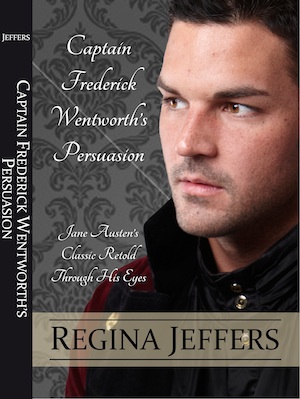
Re-Release of “Captain Frederick Wentworth’s Persuasion: Jane Austen’s Persuasion Retold Through His Eyes”

CFWP Crop2Of late, I have taken on the daunting task of revisiting some of my earlier works. The act had come as a response to several of my loyal followers, who either wished to revisit an earlier piece or had asked if I would place a particular piece on sale. When a traditional publisher releases a book, that publisher has control of the price, when or if the book is placed on sale, and how the book will be promoted. The only time we hold control as authors is if the book is an independent project.  Once a traditionally published book is more than six months old, the publisher rarely spends time in promoting it. A book can, literally, set upon a shelf with no notice for years upon end.

As my first book, Darcy’s Passions, was originally a self-published book, there is a clause in my contract, which says I may self publish that title. I simply cannot sell the manuscript to another traditionally published group. That self-published clause has reappeared in each of my contracts. Therefore, I plan to re-release several of them as independent titles. Captain Frederick Wentworth’s Persuasion: Jane Austen’s Classic Retold Through His Eyes will be the first of those. I chose to begin with CFWP because I plan a sequel to the book, and I wished to introduce it to new readers. Although I adored having a Joshua Reynolds’s painting on the original cover, the book has a new cover. I have reworked some of the scenes, but nothing major has changed in the book. If you do not already own this book, it is an excellent time to pick it up in print or eBook form. If you have the title, anticipate the sequel in about six – eight months.

Below, I hope you will enjoy the “love letter” scene from Austen’s Persuasion retold from Captain Wentworth’s POV instead of that of Anne Elliot.

CFWP Crop1BOOK BLURB:

The love affair behind Jane Austen’s classic, Persuasion, rests at the heart of this retelling from Captain Frederick Wentworth’s point of view.

He has loved her from the moment their eyes met some eight years prior, but Frederick Wentworth is determined to prove to Anne Elliot that she has made a mistake by refusing him. Persuaded by her family and friends of his lack of a future, Anne had sent him away, but now he is back, and it is Anne whose circumstances have brought her low. Frederick means to name another to replace her, but whenever he looks upon Anne’s perfect countenance, his resolve wavers, and he finds himself lost once again to his desire for her. Return to the Regency and Austen’s most compelling love story. Jeffers turns the tale upon its head while maintaining Jane Austen’s tale of love and devotion.

EXCERPT:

From the corner of his eye, Frederick noted how outwardly composed Anne had appeared, and he wondered how he must appear to the others. The moment she had walked into the room, he had felt himself plunged at once into all the agitations, which he had merely anticipated tasting a little before the morning had closed. There was no delay—no waste of time. He was instantly deep in the happiness of such misery or the misery of such happiness.

Clearing his throat and attempted to sound disinterested, Frederick spoke to his friend: “I will write the letter of which we spoke earlier, Harville, if you will hand me the materials.”

“They are on the side table.” Thomas gestured to a small table to Frederick’s left. With the miniature and Benwick’s request in hand, Frederick went to it. Turning his back on the gathered party, He attempted to appear engrossed by writing.

His sister, Sophia, spoke to Mrs. Musgrove, and he listened carefully to their conversation, in tune for any words spoken by Anne. Mrs. Musgrove had informed Sophia about the changes having taken place at Uppercross, and his sister heartily agreed how young people should not dwell in long engagements. Frederick found himself agreeing in principle with Sophia’s sentiments. He knew she had spoken from experience for she and the Admiral had married a little more than a month after their meeting, and if his hopes were fulfilled, he would wish to marry Anne as quickly as possible. Pretending to draft the letter, which he had composed in his head the night before, Frederick thought about how quickly he could marry Anne after she accepted him. He would not be willing to wait any longer than the necessary calling of the banns.

Sophia declared, “To begin without knowing that at such a time there will be the means of marrying, I hold to be very unsafe and unwise. Yet, generally, couples should not delay their coming together.”

His pen ceased to move, and as if he was compelled to do so, his head raised; he paused to listen, and he turned round the next instant to give a look—one conscious look to Anne. She flushed with the recognition, but neither of them turned from the other’s gaze. The two ladies continued to talk—to urge again the same admitted truths and enforced them with such examples of the ill effect of long engagements as had fallen within their observations, but Frederick heard nothing distinctly; it was only a buzz of words in his ears, and his mind felt the confusion. Finally, Anne looked away at Thomas Harville, who motioned her to join him by the window. The moment of understanding broken, Frederick pushed the longing down and returned to the task at hand. He wrote the letter in earnest.

Scratching out the order for the artist he would commission, Frederick heard Thomas speak to Anne about the miniature. His friend explained to her why Frederick had taken up the charge of the letter. He thought it ironic Thomas spoke so openly to Anne when his friend had refused to share his frustration with anyone in the party other than Frederick. When their words turned to a light-hearted debate on which sex loved better, Frederick heard only their musings; his sister’s conversation no longer existed. Every nerve in his body remained attuned to Anne—only she existed in his world, and he must know how she felt.

“It would not be the nature of any woman who truly loved,” she protested against Harville’s assertion that, unlike a female, a man never forsook a woman he loved. Frederick would never forsake Anne—of that he was certain.

Her soft voice brought him back. “Yes, we certainly do not forget you so soon as you forget us. It is, perhaps, our fate rather than our merit. We cannot help ourselves. We live at home, quiet, confined, and our feelings prey on us. You are forced on exertion. You have always a profession, pursuits, business of some sort or other, to take you back into the world immediately, and continual occupation and change soon weaken impressions.”

Frederick stopped breathing for a moment. Was that how it had seemed to Anne? Did she believe I did not suffer from our separation? She must believe as such because I threw myself into my work, I forgot her—that I did not leave my heart behind in Somerset. I must tell her; only her love has ever given me comfort.

Needing to respond immediately, he took another sheet of foolscap from the desk drawer and addressed her passionately:

I can listen no longer in silence. I must speak to you by such means as are within my reach. You pierce my soul! I am half agony—half hope. Tell me not that I am too late, that such precious feelings are gone forever. I offer myself to you again with a heart even more your own than when you almost broke it eight years and a half ago. Dare not say that man forgets sooner than woman, that his love has an earlier death. I have loved none but you.

Anne’s voice now spoke with eagerness, and Frederick jerked his head up and clumsily knocked over the blotting jar, sending it scattering dust across the carpet. His pen followed. He quickly retrieved the items, embarrassed at being so obvious in his intent.

“Have you finished your letter?” called Captain Harville.

Frederick stammered, “Not…not quite, a few lines more. I shall have done in five minutes.”

Harville smiled at Anne. Frederick should have known Anne would win Thomas’s loyalty; he and Harville both understood the qualities of a fine woman. “There is no hurry on my side,” his friend shared. “I am only ready whenever you are.—I am in very good anchorage here—well supplied and wanting for nothing.—No hurry for a signal at all.”

As Frederick rearranged the items on the desk, he heard Harville lower his voice to speak to Anne further. They talked of inconstancy, and Frederick’s heart went out to his friend as Thomas spoke with compassion and with insight into how a sailor feels about the woman he loves. “I speak, you know, only of such men as have hearts!”

“Oh!” cried Anne eagerly; “I hope I do justice to all that is felt by you and by those who resemble you.” She offered his friend empathy, and Frederick smiled, knowing it to be her true nature. “I believe you capable of everything equal and good in your married lives. I believe you equal to every important exertion, and to every domestic forbearance, so long as—if I may be allowed the expression, so long as you have an object.” Frederick leaned forward, hanging on Anne’s every word. “I mean, while the woman you love lives and lives for you. All the privilege I claim for my own sex is of loving longest when existence or when hope is gone.”

From the corner of his eye, Frederick watched as Thomas put his hand on her arm quite affectionately. The gesture drove Frederick to return to his letter; it was important to speak to Anne of his feelings and of the uncommon possession, which remained between them.

Unjust I may have been, weak and resentful I have been, but never inconstant. You alone brought me to Bath. For you alone I think and plan.—Have you not seen this? Can you fail to understand my wishes?—I had not waited even these ten days, could I read your feelings, as I think you must have penetrated mine. I can hardly write. I am every instant hearing something which overpowers me. You sink your voice, but I can distinguish the tones of that voice, when they would be lost on others.—Too good, too excellent creature! You do us justice indeed. You do believe there is true attachment and constancy among men. Believe it to be most fervent, most undeviating in

FW

“Here, Frederick you and I part company, I believe,” Sophia spoke loudly enough to recall him from his task. “I am going home, and you have an engagement with your friend.—Tonight we may have the pleasure of all meeting again at your party.” She directed her last thought to Anne. “We had your sister’s card yesterday, and I understand Frederick had a card, too, though I did not see it—and you are disengaged, Frederick, are you not, as well as ourselves?”

As she spoke, Frederick scratched out his postscript:

I must go, uncertain of my fate; but I shall return hither, or follow your party, as soon as possible. A word, a look will be enough to decide whether I enter your father’s house this evening, or never.

He managed to answer his sister, although a bit incoherently. “Yes, very true; here we separate, but Harville and I shall soon be after you, that is, Harville, if you are prepared, I am in half a minute. I know you will not be sorry to be off. I shall be at your service in half a minute.

Sophia nodded her farewell to each of them, and Thomas retrieved his hat and gloves. Frederick sealed his letter with great rapidity. Having made the decision to write it, he wanted the words in Anne’s hands; Frederick needed to be finished with this part and to begin his life with Anne—if she would have him.

He slid Anne’s letter under the blotter pad, having sealed it and marked it with her initials. “Let us be off, Harville,” he encouraged. Frederick picked up his gloves—laying them purposely to the side of the desk—and then his hat before walking to the door. He could not speak to Anne—nor even look at her. His impatience to be gone created a hurried air as he exited the room.

Frederick heard Thomas offer a kind “Good morning. God bless you,” to Anne.

He regretted not being able to speak his farewells–the agitation too great, but if Anne was to refuse him, he wanted no pity from those who marked his departure.

He and Thomas made it to the outside door before Frederick spoke again. “Harville, wait for me a moment; I seemed to have left my gloves in the Musgroves’ quarters.”

“It is of no matter—I shall remain here.” Harville shifted his weight, allowing the cane to support him.

Making his unexpected return, Frederick said, “I apologize, Mrs. Musgrove,” as he crossed the room, “I left my gloves behind.”

Mrs. Musgrove stood by the window, looking out for the rest of their party. “It is quite all right, Captain Wentworth.” The woman did not even turn around.

However, Anne stood close by, and she watched his every move. Stepping beside the desk, Frederick purposefully slid his fingers along the edge of the blotter paper. He locked eyes with Anne and then he drew out the letter and placed it on the desk. With the slightest of nods, he hastily collected his gloves and was again from the room—the work of an instant!

His future was now in her hands. Frederick found Harville where he had left him, and they started toward the portrait studio to meet with the artist. They walked two blocks in complete silence—Frederick’s vexation clearly evident.

“Do you wish to tell me who will receive the second letter?” Thomas asked softly, never looking at Frederick.

He hesitated. “You noted my ploy?”

“Obviously,” Thomas taunted. “Was it a love letter for Miss Anne?” Then he guffawed at his own joke. His friend chuckled some more at seeing Frederick flinch, but when Frederick did not answer, Harville gasped a little too loudly, “It was a love letter for Miss Anne!”

Barely audible, Frederick acknowledged, “Yes—yes, it was for Anne.”

“Anne?” Thomas responded with disbelief. “How long has she been Anne?”

“From the first day I laid eyes on her—”

“In Somerset more than eight years prior,” Thomas finished the sentence. “I knew it, you sly fox!” He slapped Frederick on the shoulder.

Obviously distressed, Frederick countered, “Do not congratulate me, Thomas; I know not my fate. The letter professes my love, but will Anne accept a renewal of my regard?”

Thomas took pity on him. “May I ask why you are with me? Hand me the miniature and the letter; I can well do this without you.” Frederick protested, but a wave of Thomas’s hand stopped him short. “Go—go back to the White Hart and win the woman you love. Do not leave there until she is yours!”

“Dare I risk it?” Frederick looked longingly toward the way they had come, uncertain what to do.

Thomas grinned. “Do you truly love this woman?”

“Most wholeheartedly,” Frederick insisted.

“I have never known you to permit anything to keep you from what you most desired. If you delay, it will be a first.”

“No.” Frederick shook his head. “It will not be a first.” His anxiety increased as he looked away once more. “I must go—I apologize, Harville, but I must go!” As he strode away, he heard Thomas chuckling. Turning the corner at Bath Street, he noted Anne and Charles Musgrove had crossed to Union. He quickened his step to overtake them, but when Frederick reached the pair, he paused. Knowing within a few minutes he would speak what was in his heart, he froze—irresolute whether to join them or to pass on, saying nothing at all. He stared at Anne, wondering what to do, each heartbeat infinitely long. Then she, sensing his approach, had turned suddenly; Anne blushed—her cheeks, which were pale, now glowed, and the movement, which first hesitated, was decided. Frederick stepped beside her, and they were lost to each other. Eyes danced in happiness, and they were as before–united–hearts interlocked, requiring no words to declare their continued love.

“Say, Wentworth,” Charles implored him. “Which way are you going? Only to Gay Street or farther up the town?” Charles appeared most anxious to leave his responsibility to Anne.

Frederick did not remove his eyes from Anne’s countenance. “I hardly know,” he replied.

Charles continued, oblivious to the moment swirling between Frederick and Anne. “Are you going as high as Belmont? Are you going near Camden Place? Because if you are, I shall have no scruple in asking you to take my place and give Anne your arm to her father’s door. She is rather done for this morning and must not go so far without assistance. And I ought to be at that fellow’s in the marketplace. He promised me the sight of a capital gun he is just going to send off; said he would keep it unpacked to the last possible moment, that I might see it; and if I do not turn back now, I will have no opportunity. By his description, a good deal like the second-sized double barrel of mine, which you shot with one day, round Winthrop. What do you say, Wentworth?”

Frederick attempted to wipe the smile from his lips, but he forsook the effort when he noted a like smile on Anne’s countenance. “It is fine, Musgrove. Go see the gun. I will be most honored to escort Miss Anne home; she will be safe with me.”

“That is superb news! I am in your debt,” Musgrove added quickly. Then he disappeared, hurrying along Union Street. “Which way, Miss Anne?” Frederick’s voice remained husky with emotion.

“Some place quiet, Captain—you may choose.” Anne placed her hand on his proffered arm, and Frederick pulled her close to his side. Relief rushed through him as they turned away from the crowd.

As they entered the park, Frederick led her to a nearby bench. “May we sit for a time?” They had spoken little as they had walked Bath’s streets, each lost in the splendor of the moment. When he properly seated her beside him, Frederick caught her hand in his, clutching it to his chest. “Anne,” he whispered, “my heart beats again because of you—with the hope you will receive me—that you understand how ardently I adore you.” He brought her palm to his lips and planted a kiss on the inside of her wrist. “Please say I am not too late.”

Anne released her hand from his, but she did so to trace the outline of his lips. It was an exquisite familiarity, which spoke of her quiet acceptance. “Yours is the countenance I see every time I close my eyes. It has been so for eight years—nothing you could say or do would ever change that.”

Frederick suddenly felt quite warm: the fire between them remained. “May I be so forward as to presume there is hope for us?”

“There is more than hope, Frederick. I give you my assurance.” She did not look away, but he noted the hitch in her breath. “I am no longer that foolish green girl; I am not so persuadable. If God provides a means for us to possess another opportunity at love, I will never turn from you. If it is truly your desire, you will be my life.” She raised her chin to look him directly in the eyes. “I love you, Frederick Wentworth; I have loved none but you.”

PURCHASE LINKS:

Kindle   http://www.amazon.com/Captain-Frederick-Wentworths-Persuasion-Austens-ebook/dp/B00IJZOR20/ref=sr_1_1?ie=UTF8&qid=1393978188&sr=8-1&keywords=captain+frederick+wentworth%27s+persuasion

Kobo  http://store.kobobooks.com/en-us/Search?Query=captain+frederick+wentworth%27s+persuasion

Nook   http://www.barnesandnoble.com/w/captain-frederick-wentworths-persuasion-regina-jeffers/1118865260?ean=2940149507061

Amazon   http://www.amazon.com/Captain-Frederick-Wentworths-Persuasion-Austens/dp/1495463206/ref=sr_1_1_bnp_1_pap?ie=UTF8&qid=1393978243&sr=8-1&keywords=captain+frederick+wentworth%27s+persuasion

Create Space https://www.createspace.com/4657736

Original Cover

Original Cover

Posted in book excerpts, excerpt, Great Britain, Jane Austen, Living in the Regency, Living in the UK, Napoleonic Wars, Regency era, Regency personalities, White Soup Press | Tagged , , , | Comments Off on Re-Release of “Captain Frederick Wentworth’s Persuasion: Jane Austen’s Persuasion Retold Through His Eyes”

Movie Discussion – Becoming Jane

bj6em>Becoming Jane is an imaginative, romantic tale that captures Jane Austen’s spirit, while playing with the truth. Many of authors have written their own “what if” stories, and so, maybe, we might be able to suspend reality and accept the witty, enchanting romance as all good storytelling. This film takes some well known facts from Austen’s life and spins them into an ingenious tale of lost love.

The film opens in the year 1795 and explores the feisty beginnings of an emerging 20-year-old writer, who wishes to live beyond what is expected of her – to actually marry for love. Anne Hathaway portrays Jane Austen, and James McAvoy plays the non-aristocratic Tom Lefroy, whose intellect and arrogance first raises young Jane’s ire and then captivates her heart. Juliann Jarrold, the film’s director says “A couple of recent biographies have sort of honed in on this romance with Tom Lefroy, because it’s the older bios that tend to say she [Austen] didn’t have this romance; that somehow, out of her imagination, she was able to portray these amazing characters. Straight after [the alleged romance], she started writing First Impressions – and then Sense and Sensibility, and Northanger Abbey.” (BTW, do you not love the facial similarities between the real Tom Lefroy and James McAvoy in these two pictures?)Tom Lefroy bj5

bj3The film is known for taking the truth and making it a reality. For example, there is some evidence that Ann Radcliffe influenced Jane Austen; however, the film creates a meeting between the two. During this encounter, Radcliffe asks Austen of what she will write.

Radcliffe: Of what do you wish to write?
Jane: The heart.
Radcliffe: Do you know it?
Jane: Not all of it.
Radcliffe: In time you will. If not…well, that situation is what imagination is for.

The film also provides us with plenty of “Jane” talk. For example, we hear part of the story/poem that Jane has created as a tribute to her sister Cassandra’s engagement.

The boundaries of propriety were vigorously assaulted, as was only right, but not quite breached, as was also right. Nevertheless, she was not pleased.
When others question Jane’s ambitions to become a novelist, she responds,
Novels are poor insipid things, read by mere women, even, God forbid, written by women.

But beyond the plot’s twists and turns, Becoming Jane playfully references Austen’s themes, characters, and story lines. So my question is how many such references can you name? Here are some (but not all) that I noted.

From Pride and Prejudice, we find…
**Jane’s character resembles a cross between the flirtatious Lydia Bennet, who loves to dance, and Elizabeth Bennet, whose verbal swordplay with Mr. Darcy is enticing. Mr. Warren is the klutzy clergyman whose proposal reminds us all of Mr. Collins. (He also is a bit like Mr. Elton in Emma.)
**Lady Gresham (Maggie Smith) is so Lady Catherine De Bourgh. She does not want Wisley to consider Jane as a mate, and I love the scene where she mentions “a little wilderness.”
**Lefroy’s character reminds of us the “worthless” activities of George Wickham early on in the film. Like Wickham, Lefroy studies law, but with not much success. Later he is very much Darcy in his judgment of “country” life.

From Sense and Sensibility, we find…
**Like Marianne Dashwood, Jane’s decisions are not based on “sense,” but on her “sensibility” (emotional response).
**Jane’s situation, if she does not marry Wisley, will be very much like the Dashwood sisters after losing their home.bj1

From Northanger Abbey, we find…
**Jane plays cricket, very much as did Catherine Morland.
**Jane defends her desire to write novels.
**The scene in Uncle Benjamin’s house between Jane and Lefroy reminds one of the staircase scene between Henry Tilney and Catherine Morland.bj4
**References to Ann Radcliffe’s (as well as other Gothic novels) are made in the novel. In the film, Jane visits Radcliffe.

From Mansfield Park, we find…
**Lady Gresham’s line to Jane about her duty to marry well reminds us of those spoken by Lady Bertram to Fanny Price.
**Lady Bertram spends her days with her pug dog, as does Countess Eliza, Jane’s cousin.

From Persuasion, we find…
**Although she loves him, Jane breaks an engagement with Lefroy so that he has a chance for a better future. This is similar to what happens between Anne Elliot and Captain Wentworth.
**In the novel, Anne meets Wentworth at a concert, where she must translate the opera for her cousin. She recognizes their love still exists, but she can say nothing. “How was the truth to reach him?” In the film, Jane meets Lefory many years after their separation at a concert. He has married and has a daughter named “Jane.”bj2

Posted in film, Jane Austen, Living in the Regency | Tagged , , | Comments Off on Movie Discussion – Becoming Jane

Do You Remember? The Day the Music Died…the Death of Buddy Holly, Ritchie Valens, and the Big Bopper

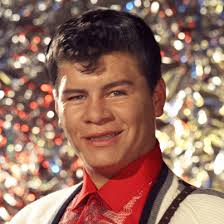
I have started a new series on this blog, one designed to have a look back at events that marked our world in popular culture and in literature. Today, I begin with the “Day the Music Died.” Do you recall the event that killed Buddy Holly, Ritchie Valens, and the Big Bopper? If so, sound off below.

the Big Bopper, Ritchie Valens, and Buddy Holly

the Big Bopper, Ritchie Valens, and Buddy Holly

On 3 February 1959, rock ‘n’ roll’s knew its first great loss: A plane carrying the current stars, Buddy Holly, Ritchie Valens, and J. P. Richardson (known as the Big Bopper) went down outside Clear Lake, Iowa.

A group of men view of the wreckage of a Beechcraft Bonanza airplane in a snowy field outside of Clear Lake, Iowa, early February 1959. The crash, on February 3, claimed the lives of American rock and roll musicians Buddy Holly, Ritchie Valens, and J. P. 'The Big Bopper' Richardson. (Photo by Hulton Archive/Getty Images)

A group of men view of the wreckage of a Beechcraft Bonanza airplane in a snowy field outside of Clear Lake, Iowa, early February 1959. The crash, on February 3, claimed the lives of American rock and roll musicians Buddy Holly, Ritchie Valens, and J. P. ‘The Big Bopper’ Richardson. (Photo by Hulton Archive/Getty Images)

The three stars had been part of the Winter Dance Party Tour, which was to play 24 cities in 24 days throughout the Midwest. Holly was the premiere attraction on the tour for he had previously garnered two appearances on the Ed Sullivan Show. Unfortunately, the bus transporting the musicians had heating problems, and many in the groups took ill with the flu. It was so bad that Holly’s drummer Carl Bunch was hospitalized with frostbite.

The night of the Clear Lake show found the Surf Ballroom packed with 1500 teens, most accompanied by their parents. Frankie Sardo opened the show with his hit “Take Out.” imagesThe Big Bopper was next on the program. Richardson wore a leopard jacket and carried a toy telephone. When he said, “Hellloooo baaaaaaby, this is the Big Bopper speakin’” the audience came to their feet. He continued with several mashups, including “The Big Bopper Wedding,” “Little Red Riding Hood,” and “The Purple People Eater Meets the Witch Doctor,” which was the novelty song on the flip side of his hit “Chantilly Lace.” (Memories, February/March 1989)

Unknown-1Valens was up next. He wowed the crowd with “La Bamba,” “Donna,” and “Come On, Let’s Go.” After the intermission, Dion and the Belmonts took the stage. With Bunch’s illness, Buddy had agreed to play drums for Dion, but he set up the drum set in the shadows of the stage’s lighting so as not to distract from the Belmonts’ performance.

UnknownWhen Holly took the stage, he gave the performance of his life, beginning with Billy Grammer’s “Gotta Travel On,” which was followed “That’ll Be the Day,” “Maybe Baby,” “Well…All Right.” He had obvious fun with “Bo Diddley” and with “Peggy Sue.” He finished with “Brown-Eyed Handsome Man,” which was performed twice–once alone and then with the whole touring troupe.

The conditions had driven Holly to charter a plane from nearby Mason City to Fargo, North Dakota, which was across the state line from Moorhead, Minnesota, the site of their next performance. The plane departed at 12:55 A.M., but it covered only a few miles before crashing, killing all four men instantly, in a snowstorm with high winds.

The plane had only enough room for Holly and his band and the pilot, Roger Peterson. Waylon Jennings, who became a legend in country music and who was Holly’s bass player at the time, relinquished his seat to J. P. Richardson, who was ill with a high fever. “According to Jennings’ autobiography, Holly teased his bass player by saying, ‘Well, I hope your ol’ bus freezes up.’ To which Jennings responded, ‘Well, I hope your ol’ plane crashes.’” (Ultimate Classic Rock)

“There are conflicting stories as to how Valens wound up in the third seat. Tommy Allsup, Holly’s guitarist, claimed that he lost a coin flip to Valens in the dressing room. In 2010, Dion Mimucci [the former lead singer of the popular 50s group Dion and the Belmonts], who had been silent about that night for 51 years, claimed that he, not Allsup, was slated for the third seat because he was one of the headliners. But after winning the coin toss, he balked at paying $36 for the flight–the amount his parents paid in monthly rent for the apartment where he grew up–and gave Valens the seat. Local DJ Bob Hale, who ws the MC for the concert, agrees that it was between Allsup and Valens, but that he, not Allsup, flipped the coin.” (Ultimate Classic Rock)

Most experts believe Peterson’s lack of experience in the storm conditions and the plane’s instrument panel contributed to the crash. Holly’s wife of only six months had a miscarriage when she heard the news.

“In March 1980, a long-missing piece of the plane crash was discovered. Holly’s signature black-rimmed glasses had landed in a snow bank and were discovered in the spring of 1959 [buried in the snow]. They were brought to the Cerro Gordo County Sheriff’s office, sealed in a manila envelope and forgotten about for 21 years. Upon discovery, the glasses were returned to his widow [Maria Elena Santiago] and are currently on permanent display at the Buddy Holly Center in his hometown of Lubbock, Texas.” (Ultimate Classic Rock)

(See “The Day the Music Died: Crash Site Photo Archive” for more images of the crash. )

Posted in Do You Remember?, music, Pop Culture | Tagged , , , , , | 8 Comments

Exquisite Excerpt from “Captain Wentworth’s Persuasion”

Exquisite Excerpt – Captain Wentworth’s Persuasion: Austen’s Classic Retold Through His Eyes

JeffersCWP2This excerpt comes from one of my earliest titles: Captain Wentworth’s Persuasion. It is told from the Wentworth’s point of view and uses flashbacks to set the story. In the beginning, Anne Elliot and Frederick Wentworth have married. They are aboard his ship, The Resolve, and he is leading his men in pursuit of a French ketch. The book’s cover is a Joshua Reynolds’ painting, entitled “Captain Robert Orme.” As I have recently rereleased this title in both eBook and print format, I thought I might pique your interest.  I will share another excerpt from the re-release later this week. 

Chapter 1

By day or night, in weal or woe,

That heart, no longer free,

Must bear the love it cannot show,

And silent ache for thee.

Lord Byron,“On Parting”

“I have you, Captain!” the midshipman cried. “I require assistance over here!” the youth screamed over the turmoil on the deck, as he attempted to support the weight of the slumped-over officer, who clung to his exhausted frame.

Captain Frederick Wentworth had recognized the danger of pursuing the retreating French sloop, but he had also recognized the urgency of keeping the French from reaching reinforcements and from taking English secrets straight to Bonaparte’s pocket. He made the decision to take the French vessel despite the facthis wife traveled aboard ‘The Resolve’ with him and his crew. He had ordered his men to seize the enemy craft. “Above all else, her crew cannot escape,” he instructed; the British had no reason to permit the French to live. The countries, after all, were at war.

For two days, Wentworth’s ship chased the French craft. In truth, he admired how the smaller French ship skimmed the water, attempting to evade his best efforts to overtake the ketch. Frederick initiated his favorite maneuver in stopping his enemy-full broadsides, a lesson he learned from the tales of the infamous Blackbeard. ‘The Resolve’ caught the French ship during the night, and dawn brought his enemy the knowledge it faced the full force of the British Navy, one of the finest to sail the seas.

* * *

Anne Wentworth smiled lovingly at her husband as he ordered her below deck. He meant to protect her from the worst of the battle. Frederick Wentworth possessed a natural charisma; his men had sworn to follow him anywhere, and she knew the truth of those declarations. A strong, formidable man, his intense eyes told the world he would tolerate nothing less than success. He made few errors in his choices, reasoning things out carefully before he made a decision. He lived for the adventure of the sea, but he was her Frederick, a practical man who had accomplished his dreams by organizing the chaos of his mind. She touched the weathered lines of his face with her fingertips before lightly brushing his lips with hers.

“You will be safe, my Love,” he said as he cupped her chin in the palm of one large hand.

“Of course, I am safe,” Anne insisted, realizing he feared for her comfort. “You are the captain of ‘The Resolve’; we are all safe under your command.” She captured his large hand in her two smaller ones and kissed his the before releasing him. “Now, do what you must do, Frederick. I will be well.” With that, she left him. Only when she was certain that he could no longer see her did she look back. He had turned away to load his gun. Knowing the strong possibility of hand-to-hand combat when the British boarded the sloop, Anne fought the shiver of dread simmering down her spine.

* * *

Wentworth glanced at her retreating form as she headed for the protection of the lower levels of the ship. He had loved her from the first time he had looked upon her countenance; only her beautiful expression brought him peace. In that moment long ago, he had set his sights on his Anne. Although it had taken nearly nine years for him to win her, he could say he regretted the wait. Anne Elliot Wentworth epitomized the things to which Frederick Wentworth aspired: acceptance and love. His lovely wife had overlooked his common origins; she had seen the man he was, and he had sworn to prove to her aristocratic world she had not taken a step down with her choice of a husband. Anne Wentworth symbolized why he fought this war against the French emperor.

Some day, he hoped to purchase an estate close to the shoreline, especially for her. They would live there when he finally cashed in his commission from the service or at the end of the war. Anne, the daughter of a baronet, deserved the best he could provide her. Frederick had lost her once, when youth demanded they make decisions not their own. Anne belonged to him now, and he loved her beyond reason. Soon they would take their place in society and start a family. He smiled as the image played before him, and he enjoyed the dream of family before he reluctantly turned his attention to the other ship and prepared to strike at his country’s enemy.

Wentworth felt the distant vibration as ‘The Resolve’ ran out its guns. The ship readied itself for an assault. When he placed a spyglass to his eye, he saw the French scrambling to respond to the surprise encounter. Older seamen shouted orders, but Frederick recognized the confusion and the dismay upon the younger sailors’ faces. His men, on the other hand, stood their positions on the deck, awaiting the inevitable. His crew had kept a determined silent vigil throughout the night, using the darkness to overtake the French.

With a nod of his head, Wentworth ordered his men to their stations. The gun ports were all pointed directly at the French warship, and shots rang out. He watched with satisfaction as the enemy’s sails crashed to the deck. As the smoke cleared, he could readily see the gaping hole in the enemy’s starboard tack. But the French powder magazines did not explode. “What the devil?” he muttered. The sloop’s mizzenmast lay in multiple pieces on the deck. With the longboats in the water, Wentworth knew the French would fight, but he also knew he had managed another capture. Along with it would come the financial reward that would secure his future with Anne. Everything he had ever wanted was within his grasp, but first he must weather the chaos of the battle.

Beside him, a sailor called to his partner, “We’ll not be waiting!”

“They’ll not surrender peacefully,” a lieutenant cautioned his men.

“They’re daft!” a man with a knife held tightly between his teeth hissed to the others gathering on the deck. A fierce curse sounded from the crow’s nest above his head as Wentworth placed a rolled-up map in his assistant’s hand.

He maneuvered ‘The Resolve’ alongside the captured ship, readying to board her officially and claim her in the name of the Crown. Then, the unexpected, the unthinkable arrived in the form of a red hot strike. A single shot rang out, and the heat seared through his side. Surprised, he examined the bloody opening in his jacket. How? he wondered as he slumped forward into the arms of the nearest midshipman. He was not close enough to the French ship for a French sailor to deliver such a blow. Instinctively, he raised his eyes to his attacker. The man, wearing a leather-fringed jacket and a floppy-brimmed hat, held a long rifle. Frederick recognized it as one American privateers used often to fight off personal attack. It was a superior weapon to the Baker rifle used by Wellington’s men in the rifle units. It had the distance the single-shot .60 musket, known as the Brown Bess, that the British carried did not. “Give that to your good King George!” he heard the man’s voice exclaim before British sailors surrounded him.

Frederick’s pain came not from his French enemy but from an American assisting Bonaparte’s Navy. He could hear the air gurgle in his throat as he sank to his knees. The pain and the fire radiated throughout his chest as he sprawled upon his back, allowing his eyes to search the thin, smoky air for the blue sky with streaks of sunlight opening a new day. “Anne,” he murmured as another  midshipman cradled his head.

“Assistance is on its way, Captain. Just stay with us,” the man gasped through clenched teeth. Frederick could feel the man’s fear, and it enflamed his own.

Shipmates rushed to lift his frame onto a net stretcher before carrying him to his quarters. As they settled him on the bed, Laraby, the surgeon assigned to the ship, rushed in, hustling various sailors from the room. “Get me plenty of rum!” the doctor demanded.

“Yes, Sir,” one of the lieutenants snapped as he darted from the room.

Wentworth groaned deeply as another officer assisted the surgeon in removing Frederick’s jacket. Throughout, he told himself he could not die. He told himself he had waited for Anne, and he would not leave her behind. The physician cut the shirt away from the wound and began to clear away the seeping blood. “Easy, Captain,” the surgeon cautioned him. “Allow me to see what we have here.”

His eyes searched Laraby’s countenance for evidence of the severity of his wound. “The bullet tore a zigzag path through part of your lower abdomen, Sir. There is quite a bit of damage. The good news is the bullet exited out your side. I must sew you up, but you will not require surgery.”

Frederick nodded his understanding. “Where is my wife?” Seeing Anne would be the only medicine he required.

“I will retrieve her, Captain,” one of the junior officers said. His pale countenance said he sight of all the blood had taken its toll on the man.

“I am giving you some laudanum.” The surgeon assisted the first officer to ease Wentworth to a resting position onto the bed.

“Might I have some rum?” Wentworth’s mouth had gone dry.

The surgeon mouth turned up in a “I knew it to be so” grin. “That is the reason I ordered it.” He supported Frederick’s head as he sipped the heady brew.

Just as the surgeon set the glass upon the table, Anne rushed into the room, shoving those standing about from her way. “Frederick,” she said, whispering his name close to his ear as she brushed the hair from his eyes. “I am here, my Love.” She interlaced her fingers with his.

With an effort, he squeezed her hand and opened his eyes to hers. “I require an angel watching over me,” he whispered as she lowered her mouth to brush his lips lightly with hers.

“Nothing can keep us apart-nothing ever again. I am here, Frederick. Allow the surgeon to do his work. ‘In sickness and in health,’” she murmured before kissing his temple.

Their eyes held. He felt the laudanum take effect. His lids closed, but Anne’s image remained with him.

* * *

Commander Frederick Wentworth made his way across Somerset. The sway of the public carriage along the uneven roadway reminded him of the rolling motion of the sea; at least, it did as long as he kept his eyes closed. When he had opened them an hour or so earlier, the grandmotherly woman sitting across the way had questioned him about the war and about his prospects. He assumed she had an eligible female somewhere in her family, but Frederick had no intention of pursuing the subject. When he chose a wife, it would be a woman with whom he could share his hopes and dreams, one who would recognize his potential. So he had closed his eyes again, feigning sleep and imagining he strode the decks of his own ship.

Passing through Uppercross, he finally allowed himself the pleasure of looking at the rolling countryside, which was peppered with herds of sheep and Brinny  cattle grazing in the fields. His brother, Edward, resided as the curate at Monkford, and Frederick planned to spend part of his leave with his family. Quiet time was a pleasant prospect after the action he had seen of late. Although he had not been with his sister’s husband, Benjamin Croft, and with Nelson as they defeated Admiral Vileneuve at Trafalgar, Frederick had seen his share of battles and had won his share of the prize money. Like Benjamin, he expected to use the war with the French emperor to make his fortune. Thoughts of his sister brought Frederick a pang of loneliness; Sophia and Benjamin shared a rare love. “Someday,” he silently whispered. “Someday, I will turn my head…”

The slowing of the horses interrupted his thoughts. “Uppercross!” the driver shouted. “Changing horses!”

Frederick disembarked from the carriage and looked around. People hurried forth and back at the posting inn. Knowing he had had not much farther to go, he chose only to stretch his legs in the inn yard rather than spend his hard-earned money on libation inside the crowded tavern.

“How much time?” he inquired of the groom as the man unhitched the horses.

“More than a quarter hour…less than a half hour,” the man responded. The driver leaned over the edge to accept the mail pouch from the innkeeper.

Frederick looked at the  village, which was a smattering of houses and shops. “I will take a short walk. Stretch my legs,” he told the driver as he started away toward the village.

The driver called to his retreating form, “We will not wait!”

Frederick did not turn his head in response. He just raised his hand to let the man know he had heard the warning. Uppercross, a moderate-sized village, was designed in the old English style. He passed a gate, which led to a house, substantial and unmodernized, of superior appearance, especially when compared to those of the yeomen and laborers. With its high walls, great gates, and old trees, Frederick envisioned a veranda, French windows, and other prettiness, quite likely to catch the traveler’s eye.

Strolling along the wooden walkways, he paused only to look in some of the shop windows. Seeing a fan on display, which he knew Sophia would love, he smiled. On impulse, he entered the shop; he would purchase the fan as a surprise for his sister. He would leave it with Edward to mail to her for her birthday. It would surprise the highly critical Sophia to know her seafarer brother had planned for her birthday long before the actual event.

Frederick chose the item and then, having paid for it, turned to leave; but he could not depart, for the shop’s door swung open suddenly, and two ladies swept into the room. The first, a very handsome woman, dominated the space. A strong French perfume wafted over him as he allowed his eyes to assay her beauty. Her hair was nearly black, her eyes were brown, and her long nose had a distinctly aristocratic slant. Belatedly, Frederick offered her a polite bow as she brushed past him, barely acknowledging his presence. “Miss Elliot!” he heard the shopkeeper say, his voice suddenly very alert.  

Frederick had seen the type before. Usually, he preferred to avoid women of high Society,  finding most of them too consumed with their petty interests to be worth his time. Let them spend their days gossiping and shopping;  he preferred a woman with an elegance of mind, a woman with a sweetness of character.

He stepped away from the domineering Miss Elliot and turned toward the door; his carriage would be leaving soon. The second woman remained by the entry, and he started to move around her; but she raised her eyes to his. Frederick froze. Her delicate features and mild, dark eyes mesmerized him in an instant. For some reason, she did not look away, and neither did he. Instead, he stood before her, gazing down into her doe like eyes, watching them darken and sparkle and wondering if she could feel the fire burning in him. She flushed and raised her slim, slightly square jaw a bit; her ramrod-straight back made her appear taller than she was. In fact, she barely reached his shoulder. She said nothing, simply continued to look deeply into his eyes. Frederick found himself unexpectedly amused by the situation, and one eyebrow shot up.

“Come, Anne,” the other woman demanded, and Frederick saw a flash of embarrassment played across the stranger’s cheeks. She ducked her head, allowing her bonnet to shadow her features once again.

“Pardon me,” he said, choking out the words; his throat suddenly very dry. He desperately wanted to say more to her, but she had slipped away to her companion, who was perusing the latest fashion plates.

Frederick opened the door to depart, but he could not resist the urge to look upon the woman one more time. His heart skipped a beat as she raised her head. She presented him with a quick smile before turning her attention to folds of fabric. Frederick paused; the faint smell of lavender surrounded him. He closed his eyes and inhaled deeply. Closing the shop’s door and returning to the walkway, he murmured, “Beautiful.” It was a singular moment, one he would not soon forget.CFWP Crop2

Posted in book excerpts, British history, Great Britain, Industry News/Publishing, Jane Austen, Napoleonic Wars, Regency era, Ulysses Press, White Soup Press | Tagged , , , , , , | 2 Comments

Movie Discussion ~ 1995’s Sense and Sensibility (Part One)

by Regina Jeffers

As part of JASNA’s salute to Jane Austen’s Sense and Sensibilityin 2011, this will be a two-part look of the 1995 film adaptation. Next month (April 14), we will examine the “making” of Edward Ferras and Colonel Brandon. This month, however, I wanted to explore the many non-Austen “creations” added to this film. I do not do so as criticism, but more out of the awareness that, for many people, film adaptations are all they know of the story line. This piece will also point out how Emma Thompson, as the screenwriter, added “bits” to introduce the modern audience to the dire situation in which women of Austen’s time often found themselves.

Prior to the 1995 production, there were three other film versions of Sense and Sensibility. On June 4, 1950, Philco Television Playhouse produced a one-hour adaptation starring Madge Evans as Elinor and Cloris Leachman as Marianne. In 1971, Ciaran Madden (Marianne), Robin Ellis (Edward), and Joanna David (Elinor) were seen in four 50-minute episodes on the BBC (January 3, 10, 17, 24). That screen play was written by Denis Constanduros, who used much of it again for the 1981 version, which was seen on the BBC in seven 30-minute episodes from February 1 through March 14, 1981. This version, starring Irene Richards as Elinor and Tracey Childs as Marianne, had one advantage over the 1971 adaptation. It was shot on location rather than on studio sets.
  • One of the most obvious “twists” to the original Austen is the way that the film creates “sensitive” male characters. This is not a new phenomenon. Film adaptations of Austen’s males often project qualities on the characters, which are not found in the text. For example, Colonel Brandon is excessively attentive to his adoptive daughter Eliza. He also expresses his compassion in dealing with Marianne’s impulsive nature and with the Dashwoods’ situation.
  • Edward is seen as being a sensitive male. He refuses Margaret’s room; he plays games with Margaret.
  • The film also highlights a greater disparity between the male characters from the novels. We have repeatedly seen the strong, dependable male (Darcy, Wentworth, etc.) vs. the sociable, but very unreliable male (Wickham, Mr. Elliot, etc.). Brandon and Willoughby continue that cinematic storytelling. In fact, Brandon is actually given some of qualities that Austen bestowed upon Willoughby. In the novel, Willoughby comes to Cleveland while Marianne is ill. He eloquently expresses his regrets to Elinor. We never see this in the film, which allows Alan Rickman’s Brandon to become a more acceptable mate for Marianne, especially to a modern audience who might otherwise object to the differences in their ages.
  • By the way, did you notice that Willoughby rides a white horse, and Brandon rides a black one? What happened to the tried and true signals for viewers to know a man’s personality by the horse he rides?
  • In the novel’s end, Marianne appears subdued and malleable. Whereas, the film maintains the concept of “equality” in Brandon’s and Marianne’s relationship.
  • Brandon does the same thing as Willoughby – just not as well. This helps with the transfer of the audience’s affections to Colonel Brandon. For example, Willoughby carries Marianne to Barton Cottage; Brandon carries her to Cleveland.  Both men give her flowers, but Willoughby has chosen wild flowers to those which are cultivated. Willoughby recites poetry to Marianne. Brandon reads to her from “The Faerie Queene.” In the novel, Willoughby shares Marianne’s interest in music; Brandon possesses that quality in the film.
  • The role of Margaret is expanded greatly from Austen’s description of the child as a “good-humored, well-disposed girl.” Margaret Dashwood is given the “freedoms” that her sisters can never have. She speaks her mind. She chooses a future of her own (a pirate). Margaret is the device by which Edward is revealed to the viewer. Her character is also the source of much of the film’s humor.
  • The happiness of the wedding scene reminded me of Emma Thompson’s ex-husband’s staging of the ending of Much Ado About Nothing.The coins tossed into the air are much like the procession and flower petals of the Shakespeare remake.
  • The characters of Lady Middleton and her children are omitted from the film, as well as Lucy’s sister Nancy. The latter plays a pivotal role in the novel because it is she who “spills the beans” about Lucy’s engagement to Edward. Of course, Lucy whispering that secret to Fanny in the film leads to a most hilarious scene, so maybe Nancy was not necessary.
  • Instead of visiting Barton Cottage (per the novel), Edward sends Margaret the atlas and an apologetic letter.
  • In the novel, Lucy and Robert’s marriage comes as a complete surprise, but the movie previews their joining when Robert shows his preference for her at the London ball.
  • The movie omits the scene from the novel where Marianne says that Elinor cannot understand the anguish of losing someone because Elinor has Edward’s love.
  • Brandon sends Marianne a pianoforte. In the book, she already has one.
  • In the novel, Edward never hints of his engagement, but, in the film, he tries to tell Elinor in the scene taking place in the stable.
  • Explanatory scenes are required for a modern audience; therefore, we see Elinor telling Margaret why John and Fanny now own Norland. We see the promise that John made to Henry Dashwood to “do something” for his sisters. We see John and Fanny “reduce” what the Dashwoods should receive. Austen would have no need to tell her readers these central facts. Elinor tells Edward, “Except you will inherit your fortune. We cannot even earn ours.” That line is a reminder to modern viewers of a woman’s fate. Unfortunately, it is lessened by Edward’s reference to playing pirate with Margaret. “Piracy is our only option.”
  • Probably the most glaring change to Austen’s novel is Marianne’s walk in the rain to view Combe Magna, which was supposedly 30 miles from Cleveland. In the book, Marianne becomes ill despite her refusing to go out in the rain.

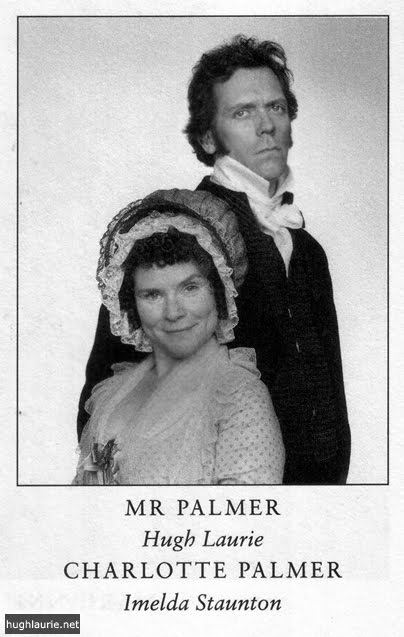
  • Hugh Laurie’s character of Mr. Palmer is also greatly expanded. His dry humor reminds one of his current character of “House,” but Laurie is well known for other comedic stints. Mr. Palmer, of the film, is not just the censorious man we meet in the book. The film shows him as kind and considerate. He carries Marianne upstairs after Brandon brings her to Cleveland. He is upset that he must leave the Dashwoods to fend for themselves during Marianne’s illness. The film also displays how mismatched the Palmers are in marriage.
Austen’s film adaptations tend to focus on contemporary post feminist ideas. Period dramas, as a genre, invite the viewers to take on the rich features of the novel. Yet, no film can reproduce the nuances and exquisite details of the text. For 135 minutes, Sense and Sensibility allows us to explore Jane Austen’s first novel in a visual format. Does it have its strengths? Absolutely! Are there weaknesses? Profoundly so. Tell me what you think, Austen addicts. I will check in periodically to respond to your comments.
Posted in film, Jane Austen, Uncategorized | Tagged , | 6 Comments

Starling Murmurations in Somerset

Starling Murmurations in Somerset

By Regina Jeffers

starlings5_small

starling12One of the most spectacular examples starlings1_smallof British wildlife are Starling Murmurations. Thousands of starlings flocking together to form swirling balls can be found in Somerset each year from early autumn to February. The birds form the flying spheres before swooping down and roosting in the trees.

One of the best places to see this visual feast is the westhay12Somerset’s Wildlife Trust’s Westhay Moor National Nature Reserve, shapwick12Natural England’s Shapwick Heath National Nature Reserve, and RSPB Ham Wall Reserve, all on the Somerset Levels, close to Glastonbury, Street and Wedmore.
To find out exactly where the starlings are at any given time, one can ring the Avalon Marshes Starling Hotline on 07866 554 142 or email http://www.blogger.com/starlings@rspb.org.uk.
A fabulous site, loaded with lots of pictures of the murmurations is http://visitsomerset.co.uk/site/explore-somerset/countryside/starling-murmurationslevels12
Posted in Living in the UK | Tagged , | 1 Comment

Movie Discussion of “Clueless,” the Modern Version of Jane Austen’s “Emma”

Movie Discussion – Clueless

In 1996, Douglas McGrath’s Emma, featuring Gwyneth Paltrow hit the big screen. That same year, Diarmuid Lawrence and Andrew Davies’s small scree version starred Kate Beckinsale. Both offered cinematic reconstructions of the Regency era. Both were faithful adaptations of the time.

In contrast, Amy Heckerling’s Clueless brings the classic tale of a misguided matchmaker into the modern realm. Hecklerling relies heavily on the formula “screwball comedies” of prior decades to tell the tale. What is more ironic is the fact that Clueless, the current day offering, highlights the role of women in society as having less options than does the more traditional films. In Heckerling’s adaptation, women lack empowerment. However, if I asked opinions, most people today would say that “empowerment” was a very modern trait.

So, how does this film match up with the original story line? The comparisons and contrasts are many, indeed, but here are a few of the more obvious.
** To create Emma’s point of view, which readers recognize from the novel, Heckerling used Cher’s first person voice over. This allows the viewer to experience Cher’s perception of the events and contrast those perceptions with the actual details.

** Both the novel and the film stress paternal wealth. The heroine’s “identity” is tied closely to this wealth. This transfer of the traditional image of a woman being tended to by her father’s fortune takes on a non-traditional slant in Clueless. What are Cher’s options in a modern world? Hecklerling ignores those possibilities and keeps Cher tied to her father’s identity.
** Mr. Woodhouse’s health remains an issue in both. The man is preoccupied with his digestive system.
** Class differences in the original story line become issues of racial and sexual tolerance in Clueless. “Harriet Smith” is portrayed as a transfer student whose experiences with drugs and relationships is more intensive than other students at the school. “Frank Churchill’s” character is a homosexual.
** Cher, like Austen’s Emma, misconstrues Christian’s (Frank Churchill’s) intentions. In Clueless, Cher sends herself flowers to make Christian jealous. She is creating an image to attract the boy, but she ignores the images which scream of Christian’s sexual orientation.
** Matchmaking is the central theme of both the novel and the film. In Clueless, Cher’s efforts are centered on Miss Geist, the spinster teacher, and Tai, the transfer student.
** Emma and Cher both serve as the mistress of their fathers’ houses. Cher, like Emma, is accustomed to having her own way. Mr. Woodhouse finds Emma’s manipulations endearing.
** Knightley’s family connection is amplified in Clueless because “Josh” is Cher’s step brother. In the Regency period, in laws would take the familiar titles of “brother” or “sister.” It is important that Emma stresses to Knightley and that Cher reassures Josh that they are NOT brother and sister. In both story lines, romantic feelings requires that the participants ignore family ties.
** Clueless does not end with Josh declaring himself for Cher, but Cher does catch the bouquet at Miss Geist’s wedding, insinuating her eventual marriage.
** Elton requests a copy of Tai’s photo. He also attempts to kiss Cher when he drives her home from a party. This plot device closely follows the original story line.

What other comparisons/contrasts might we make? Add your comments below. (For an interesting read on the subject, take a look at “Popular Culture and the Comedy of Manners: Clueless and Fashion Clues” by Maureen Turim.)

Posted in film, Jane Austen | Tagged , , , | Comments Off on Movie Discussion of “Clueless,” the Modern Version of Jane Austen’s “Emma”

Victorian Happenings: The Disaster of the “Princess Alice”

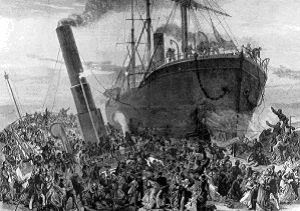
A full capacity of passengers boarded the paddle steamer, the Princess Alice, on 3 September 1878 – many were on holiday, including a school children, as well as a party of invalids in wheel chairs, who were to partake of a breath of ozone at Sheerness. The journey down stream was uneventful, but things changed with the return trip. At each of the boarding stops, many day trippers pleaded for permission to board the already crowded steamer. A few hundred were squeezed onboard. Captain William Grinstead turned away many more. The return should have taken two hours; they were to set in at Woolwich Pier and the Old Stairs landing-stage by London Bridge – a 30 mile journey from the idyllic countryside to London’s “Smoke.”

The Princess Alice was a wooden paddle steamer, some 220 feet long and 35 feet wide. The 251 tons vessel belonged to the London Steamboat Company, having been built in Greenock in 1856. The Princess Alice had been a favorite of the day trippers and of those who followed the popular sailing barge races. These enthusiasts often hired the Princess Alice to follow in the wake of their favourite Spritty. The steamer had also once carried the Shad of Persia and was sometimes known as the “Shah’s Boat.” (The River Thames Police Museum)

In the mid 1850s, “International Law” had determined that steamship should follow specific rules of navigation when at sea: One such rule required they pass each other port side to port side. Unfortunately, these rules were not enforced on the River Thames. “Economics alone ruled. Time and money without consideration for such a regulation, forced shallow craft ‘punching the tide’ to short-shore; that is to cut the corners using a straight line from point to point or ness, and so passing across both shipping lanes. Of course, if there was no traffic coming in the opposite direction when carrying out the economy, it was all right. This not only reduced the distance considerably, but also permitted easier progress in the lee of each ness where the tide was less strong. Vessels traveling ‘with the tide’ used the middle of the river were the tide was fiercest and beneficial, and as navigation with the following tide was less accurate, safer. What was about to happen, or, on the minds of those controlling the Princess Alice that fateful evening is unknown; for most who did know, did not live to tell the tale.” (The River Thames Police Museum)

The Princess Alice approach was on the Kent or south-shore, coming up Barking Reach and passing Tripcock Point into Galleons Reach. Traveling down the centre of Galleons Reach was an empty collier in ‘ballast,’ journeying back to Newcastle. “With a high freeboard the Bywell Castle, an iron built screw-ship of 890 tons, 256 feet in length. Captained by master Mariner and part owner Thomas Harrison and controlled by a qualified pilot, Christopher Dix, had sailed from Millwall Dock at about 1830 at high water – on the turn of the tide – running seawards at half speed with it. The crew on the collier’s bridge saw the Princess Alice across the low headland as she rounded the point on their starboard hand, both vessels had their navigation lights on, so the paddler would at that moment be showing a red (port) light, and they a green (starboard) navigation light on the other vessel. Although it was not obvious at that angle to guess which shore the paddler was navigating, the collier was mid river. Shipping was light and the river about half a mile wide at that point; there appeared to be, and was, plenty of room for them to pass safely. The Bywell Castle‘s bridge party assumed at the time that the two vessels would pass according to the ‘International Law.'”

At a speed of about 18 knots (20 mph) the vessels meant to pass each other, with the Princess Alice to pass “across the bow of the collier towards the Essex shore, her correct station before straightening up into Galleons Reach.” All should have remained well, but when the Princess Alice made her turn for the Galleons Reach, she came across the bow of the collier again. It was 19:20 hours when the pilots ordered “stop engine” and then “full astern.” John Ayres, the lone survivor “from the raised walkway used as a bridge on the Princess Alice was ordered to: ‘…mind your helm, on account of the tide’ and to:  ‘correct the swing.’ Captain Grinstead standing out on the port paddle box commanded him at the last moment before impact: ‘Hard over.’

The Bywell Castle first sliced into the starboard side of the Princess Alice at the paddle-box and nearly cut her in two. The heavier collier wrapped the Princess Alice about its bow. When the collier went full astern to pry the vessels apart, the water rushed in – the boiler of the steamer burst and the weakened hull broke in two. The passengers were dumped into the Thames to find the Barking sewer had released raw sewage into the river for it to be washed away with the tide.

Estimates said that the two parts of the steamer sank within four minutes. Those who had booked cabins between the decks had no opportunity for escape. “Nearly everything went wrong, costing the lives of almost everyone aboard, passengers and crew alike. There were only two lifeboats on davits carried, no rafts or lifebelts and just a few life rings, insufficient even if there had been time to launch them correctly. The tide began bearing some would be survivors away from the collier and possible rescue, while Captain Harrison, seeing all the people in the river around his vessel had stopped his engines and had drawn the fires. He could push ahead for fear of injuring those nearby and was unable to turn the propeller through lack of steam and anyway, his engineers and stokers were in his lifeboats trying to rescue the drowning. The collier’s crew did all they could to save as many people as possible: they launched their own lifeboats; other hands on the forecastle threw lifebuoys, ladders, and lines to those struggling in the river below. Swimming had never been a popular pastime in Victorian London, and the long many petticoated dresses of women were an impossible impediment. Many apparently, just clung to their children and sank from sight.” (The River Thames Police Museum)

The majority of those losing their lives were women and children. By all estimates, 640 perished that day. Those who investigated the accident believe 86% of those on board met their Maker that day. The inquest records show the majority of those who died in the water did so with 8 minutes time lapse. The Bywell Castle eventually was able to refire its boiler and moored at Deptford. The Illustrated London News ran a double page spread showing the Princess Alice being sliced by the Bywell Castle. For some time following the accident, Captain Harrison was looked upon as the culprit of the disaster.

Many bodies could not be identified, and those were washed and shrouded and placed in a mass grave. The Princess Alice’s sinking led to public outcry for new regulations. In addition to the proper passage, all passenger carrying vessels must stand for inspection and earn an annual license to operate. Qualified men must pilot the ship and the number of passengers is limited, with sufficient lifeboats and rafts available. On the Thames today, certain types of vessels are forbidden on specific stretches of the water.  Unfortunately, although exonerated by the inquest, Captain Harrison faced continued public contempt. He suffered a breakdown and never sailed again.

For further information, consult The Great Thames Disaster by Galvin Thurston.

Posted in Uncategorized | 2 Comments

Exquisite Excerpt from “His Irish Eve”

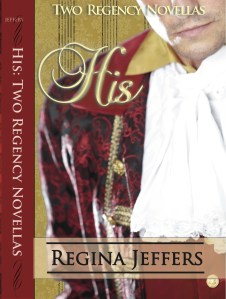
“His” ~ Two Historical Novellas From Regina Jeffers

HisCrop“His Irish Eve” ~ I began this story in response to readers’ requests to know more of Adam Lawrence, Viscount Stafford and heir to the Earl of Greenwall. Lawrence has made an appearance in many of my story lines. He is the one who ties several of my stories together. For example, he meets Brantley Fowler and Velvet Aldridge at the infamous Vauxhall Gardens in A Touch of Velvet. In A Touch of Grace, Gabriel Crowden despises Lawrence’s rakish ways, and although Crowden has known Lady Anthony as one of his conquests, the marquis objects to the lady keeping coming with Lawrence. In A Touch of Honor, Adam is the one who convinces John Swenton to claim the woman Swenton loves. In the first of the two novellas in this new anthology, Lawrence plays a pivotal role in bringing Lawrence Lowery, Baron Blakehell’s heir, and Arabella Tilney together in the piece entitled “His American Heartsong.”

In each of these “walk through” roles, my readers have searched for more of Adam Lawrence’s past and his future. Therefore, Lawrence became a major character in my Austenesque novel, The Phantom of Pemberley. A cozy mystery set as a sequel to Jane Austen’s Ptide and Prejudice, Phantom brings Adam Lawrence and his mistress to the steps of Pemberley. When a blizzard like snowstorm blankets Derbyshire, Fitzwilliam Darcy reluctantly gives the couple shelter. Lawrence’s presence proves an asset to the Darcys’ solving a most unusual mystery. At the novel’s end, Lawrence generously releases Cathleen from his protection. She travels alone to Cheshire to support her family following the passing of her uncle. Phantom takes place in 1813. JeffersPhantom“His Irish Eve” is et against the radicalism of 1819. For six years since the life-changing events at Pemberley, Adam has searched for the one thing in his life, which will ease his loneliness. I hope you enjoy the story.

The events at Peterloo play a pivotal point in my February release of His. Peterloo brings my heroine and hero together in the second of the two novellas, “His Irish Eve,” which make up this new anthology. Below, you will find the history of the event, as well as an excerpt from “His Irish Eve.”

THE MASSACRE AT ST. PETER’S FIELD: On August 16, 1819, the Peterloo Massacre occurred at St. Peter’s Field in Manchester. A crowd of 60,000-80,000 had gathered to protest the lack of parliamentary representation for the heavily populated industrialized areas.

With the end of the Napoleonic Wars in 1815, the Corn Laws exacerbated the famine of the Year without Summer (1816) and the growing unemployment problems. By the beginning of 1819 the pressure generated by poor economic conditions, coupled with the lack of suffrage in northern England, had enhanced the appeal of political radicalism. In response, the Manchester Patriotic Union, a group agitating for parliamentary reform, organized a demonstration to be addressed by the well-known radical orator Henry Hunt.

Fearing the worst, local magistrates called on the military to dispense with the crowd. They also demanded the arrest of Hunt and the other featured speakers. The Cavalry charged the crowd with sabers drawn. In the melee, 15 people were killed and some 500+ were injured. The massacre was given the name Peterloo, an ironic comparison to the devastation found at the Battle of Waterloo. The Peterloo Massacre became a defining moment of the age. Unfortunately, the massacre’s immediate effect was the passage of the Six Acts, which labelled any meeting for radical reform as “an overt act” of treasonable conspiracy.”

It also led directly to the foundation of The Manchester Guardian, but had little other effect on the pace of reform. In a survey conducted by The Guardian in 2006, Peterloo came second to the Putney Debates as the event from British history that most deserved a proper monument or a memorial. A plaque close to the site, a replacement for an earlier one that was criticized as being inadequate, as it did not reflect the scale of the massacre, commemorates Peterloo.

EXCERPT:

Chapter 1

“Respect was invented to cover the empty place where love should be.”

– Leo Tolstoy

Late May 1819–Cheshire

“Bloody hell!” Adam Lawrence cursed as his horse bucked again, each ripple of thunder sending the skittish stallion turning in circles. The skies had opened unexpectedly in mid-morning, and Lawrence had traveled in the rain for nearly an hour. He rode into the storm, the weather following along the God-forsaken emptiness of Cheshire. He knew little of the area except of the Cheshire cheese he often consumed at some of London’s best parties and of the Trent and Mersey Canal, which connected rural Cheshire to the industrial Midlands. Now, as he passed what appeared to be abandoned farmlands, he took pleasure in noting the aristocracy’s end, at least, the aristocracy his father preached.

In fact, it was his father who had sent him out in this torrential downpour. When the Earl of Greenwall summoned his son to Leicestershire, Adam had thought he would receive the usual lecture on financial responsibility. Instead, Robert Lawrence delivered a different edict. “You will bring the boy to me.” The earl narrowed his gaze to rest censoriously on Adam.

Adam stiffened with the unspoken threat. His father’s tone was hardly encouraging. “Plan to replace me, Father?” In matters of his father, he always expected the worst. Cynicism had cloaked Adam’s shoulders so long that he had no trust remaining.

His father’s expression signaled his frustration with their renewed confrontational state. “You leave me no choice.” Adam heard what sounded like a hint of regret, although more than likely, the usual disdain for Adam’s lifestyle. “You have disregarded your obligation to the title, Adam. What else am I to do? Turn everything over to your cousin? Atticus Duncan will ruin Greenwall with his taste for extravagance.”

“Worst than mine, Your Lordship?” Ignoring his finely tailored clothes, Adam flopped in a chair.

The earl shuffled through a stack of papers. “I will not give credence to a debate on your and Atticus’s reputations.” His father extended a letter for Adam’s perusal. “This is from your own man of business. Mr. Jennings has corresponded with the young lady who demands the money from you.”

Adam studied the page. “How are we to prove this woman even knows Cathleen Donnel? My God! I have not seen or heard from Cathleen for nearly six years–not since I put her on a public coach to Cheshire. I released my mistress to her family. Even gave her a generous settlement.” His eyes searched Jennings’s letter for details. “Where in the hell is Mobberley?”

“It is south of Manchester, some fifteen miles,” his father supplied.

Adam asked the question he had avoided from the beginning. “What will you do with the boy? How do we explain the sudden appearance of my son? Your grandson? A child of whom we held no knowledge? A by-blow cannot inherit an entailment, Father.”

“It will be my concern.” The earl closed the conversation. “All you need to do is confirm that the boy is yours and then bring the child to Greene Hall. I will see to the arrangements.” With that, his father stood, picked up his gloves, and prepared to take his leave. “A bank draft is available for the woman–repay her for her kindness toward the child.”

Adam snarled, “Pay the lady for her silence, you mean.”

Greenwall’s brow rose in contention. “Believe what you wish, Adam. All I ask of you in the matter is to give the child safe passage. Then you may return to whatever entertainment is your latest avocation.”

It was typical of his father’s orders: They spoke of disappointment. No matter what Adam did, he had never pleased the earl. Somewhere along the way, Adam had just quit trying. It spoke profusely of their relationship that his father would welcome an illegitimate child into his home in hopes of salvaging the title. “As you wish, Sir.” Adam leisurely stood. “By the way, I may need an advance on my next quarter’s allowance.”

The earl’s eyes narrowed in disapproval. “Bring the boy, Adam, and we will discuss it.”

From the mud, an apparition rose to appear before his rain-blinded eyes, eerily spreading its wings. Opening first one and then another before sending Adam’s mount pawing the air to fight off the attack. Before he could react to the manifestation’s appearance, Adam found himself sliding rear first from the saddle to land unceremoniously in a river of brown ooze. Somewhere in the recesses of his mind, he heard a shriek of surprise, but Adam could not tell whether it came from him or from the dark specter.

* * *

A sudden summer thunderstorm had caught everyone in the village unawares, but now only Aoife Kennice fought Mother Nature. She hurried along the muddy road from Mobberley to the small cottage she shared with her late cousin’s three children. The cousin had passed from pneumonia two years prior, and since that time, Aoife had cared for the children. All born on the wrong side of the blanket.  That fact might mean something to London aristocrats, but to Aoife, they were simply the mac and iníons of her colceathrar – the son and daughters of her cousin.

Although her family had departed Ireland when she was seven, Aoife often thought and spoke her parents’ native language: Another characteristic she had shared with her cousin Cathleen. Dear Cathleen, who had left home at twenty to join a light opera company. Years later, when Cathleen Donnel had passed, Aoife had discovered her beloved cousin had, in reality, lost her way and had become the mistress of one rich aristocrat after another. When Cathleen had returned home briefly following the passing of Aoife’s father, she had brought a tale of a marriage and a husband in the British military. It was only after Cathleen’s untimely demise that Aoife had learned the truth. Cathleen’s illness and her trust in the wrong people had left nothing for the care of the children, nothing but a few personal belongings; and when no one else stepped forward to care for them, Aoife had not hesitated when the call for assistance went out. She had sent for Daniel, Aileen, and Elaine right away.

Today, Aoife had made the trek to Mobberley in hopes that the solicitor she had contacted in London had finally sent word. She desperately needed to locate the children’s father. Realizing the small nest egg her parents had left her nearly gone, she had abandoned her pride and had made a plea for financial assistance.  Three growing children could go through clothes and food at an astounding rate. When Aoife had contacted the solicitor Louis Jennings, a man whose name she had found in her cousin’s papers, she had prayed for a monthly stipend from Cathleen’s former protector, anything to make their lives easier.

However, among her other errands on this particular day, Aoife had dutifully mailed a teaching application to a girls’ school near Newcastle, where her brother was a village vicar. Now, as the mud practically sucked her worn half boots from her feet, she rued her decision to walk to the village. Not a stitch of her clothing remained dry, and her serviceable bonnet drooped on all sides, allowing a steady stream of water to run down her back and between her breasts. A deep rumble of thunder did not threaten her any more than the rain, but knowing Elaine’s fear of storms, Aoife had quickened her efforts to reach the cottage.

The water stood on the road, the ditches lining the hardened pathway overflowing. Light-brown ooze filled every nook and crevice as Aoife trudged toward the cottage. As miserable as she every remembered being, she made herself say her daily prayers of thanksgiving, hoping praise would replace the curses fighting to escape. When her foot sank several inches into yet another mud hole, Aoife did not anticipate not being able to pull it free until she landed face first in the mud and the gook.

Spitting muck and wiping sludge it from her eyes, Aoife had not seen stranger before she staggered to her feet, but by then it was too late. All she could do was shield her face with her arms as the animal clawed the air about her head. Without thinking, she screamed at the top of her lungs. Impending doom circled about her head.

Frozen in place, waiting for the worse to happen, Aoife’s mind, initially, had not registered the sound of the man hitting the ground–the grunt as the impact knocked the air from his lungs–the curse as his ankle popped, his weight coming down on it at an odd angle.

* * *

Adam struggled momentarily for a coherent thought and a complete breath before realizing the muddy ghost was really a woman wrapped in a dark cloak. “Damn it,” he yelled over the pounding rain, “do you plan to stand there like a statue or will you offer me your assistance?”

As he sprawled on the ground, the woman lowered her arms and stared at him. He grappled with bringing himself upright. Two heartbeats later, she was by his side. “I beg your pardon, Sir.” She reached for him, realizing too late that mud covered her hands. “What may I do to assist you?” With the storm swirling around them, she had spoken close to his ear, and Adam had heard the satiny tone of her words. It made him think of silken scarves and luscious fruit spread out before him. Unfortunately, the steady drip of the water from his hat sliding down the back of his shirt carried a taste of reality he had no wish to recognize.

Adam emitted several expletives regarding the stupidity of the locals before he shouted, “Can you bring my horse around?” Without hesitation, she nodded her agreement, but he watched in doubt as the girl looked up, her bonnet flopping in unladylike pursuits. Muddy trails streamed down her face and seeped slowly into her day dress’s high neckline. When she finally spotted the animal at a short distance, to his amusement, she instantly hiked the swirls of her wet skirt around the upper part of her legs and sloshed off after it.

As the woman stepped over his outstretched leg, Adam finally took a look at her. He had assumed her a farmer’s wife, but with the delectable view of her mud-spattered legs, he certainly hoped she belonged to no one. The legs were thin, but muscular, and although he lay on his backside in filthy mud, he envisioned those legs wrapped around his body. The legs forced his gaze higher to her small waist and the soft curve of her hips as the rain plastered her clothes to her lithe form. Even soaked, blood rushed to his groin, and a smile turned up his mouth’s corners.

The natural lilt of the girl’s voice brought his attention to her efforts. “Easy now,” she coaxed as she slowed her progress, moving cautiously closer to the animal. “Come on, my pretty. Is minic a rinne bromach gioblach capall cumasach,” she murmured, as she reached for the reins before patting his horse’s neck. “You are magnificent,” she whispered close to the stallion’s ear, and Adam prayed she might say the same thing of him.

The calming effect she had on the skittish animal did not escape Adam’s notice. Taking a hold on the harness, the girl had turned the stallion and had slowly led it back to where he sat in the murky mess. Although it still came steadily, the intensity of the rain had slackened, but both the woman and Adam moved as if it did not exist. Completely soaked and mud-spattered, they had no reason to protect themselves from the elements.

Without instructions, she brought the horse along side where he sat. Adam breathed a harsh sigh. “Hold him still,” Adam demanded before employing the horse and saddle to pull himself to one leg, avoiding putting his weight on the quickly swelling ankle. Using his upper body to right his stance, Adam managed to first stand and then to place his injured foot into the stirrup. Using the saddle’s horn, he lifted upward. Gritting his teeth, he placed his weight on the injured foot as he swung the other leg over the horse’s back and settled into the seat. Releasing a steadying breath, he ordered, “Come.” He extended his hand to the woman. “I will take you up with me.”

* * *

The rain having washed away much of the dirt that once had covered her eyes, Aoife now fully saw the man. His wide shoulders tapered to a flat stomach–a muscular back supporting his frame and strong arms and thighs, which bunched as he lifted his weight into the saddle, and for a moment she wondered how it would be to know such a man, a man of strength. Deep in thought of masculine arms, it had taken several heartbeats before his words penetrated her conscious mind. When she looked up to see his outstretched hand, Aoife instinctively backed away from him. “I cannot, Sir,” she pleaded for his understanding. “We know not each other. Besides I am covered in mud. It would ruin your fine clothes.”

The absurdity of her contention amused him, and he offered his best seductive smile. “I am Adam Lawrence. If you tell me your name, we will know each other, and as far as my clothes, my valet will wish to burn these when he sees them.”

Aoife found herself staring into steel gray eyes, mesmerizing orbs beneath dark brows. As handsome as the devil, she thought. Just looking at him sent her heart pounding uncontrollably in her chest. She stammered, “You are…you are Viscount Stafford?” 

A crooked smile indicated his appreciation, but the man retracted his outstretched hand. He chuckled as he stared down at her. “I realize I have somewhat of a reputation, but I did not think my fame spread to Cheshire.” He leaned down, crossing his arms over the saddle horn. “However, I will learn more of this vicious gossip later; for now, I wish to be out of the rain, and I wish to tend to my ankle. However, as a peer of the realm, I cannot leave you to tramp through this prank of nature.” He gestured to the stream of mud flowing down the road’s center. “You will come with me, my unknown lady of the sludge; my gentleman’s consequence requires I see you safely to your residence.” Again, he pointedly offered her his hand.

“I thought you said your reputation already poor, Sir?” she challenged. “I would not wish to contribute to your societal renown.”

She watched as his eyes narrowed in disapproval. “Miss Sludge, you will ride with me of your own free will, or I will take you up without your permission,” he snapped.

Her chin rose in defiance. “A threat lacks a choice, Sir.”

Obviously frustrated with the dampness seeping into his bones and with the logic she had thrown back at him, the viscount edged the horse forward and caught her upper arm. With a gargantuan effort, he lifted her first beside the horse where he could take a better hold, and then he jerked her to his lap, sitting her decidedly before him before touching the horse’s flanks with his heels. “That is better.” The man caught her around the waist and forcibly sat her on his right thigh. “Now tell me your name, Miss Sludge, or would you prefer my endearments.” He whispered close to her ear, purposely letting his lips brush across her lobe.

Aoife sputtered from his forwardness, but she managed to sit tall, very prim and proper before answering, “Aoife Kennice.”

Apparently amused by his own consequence, the future earl only half listened. “Pardon me,” he said huskily. With his forefinger, he turned her chin in his direction.

“Did the mud affect your hearing, my Lord?” She answered with a smirk. “My name is spelled A-O-I-F-E. It is Irish for ‘Eve’ or for ‘Life.’ It is pronounced ‘Ee-Fa.’ My surname is Kennice, which means ‘Beautiful.’”

The viscount’s smile broke his mouth’s line, and Aoife thought if he smiled at every woman as such that he must have more women than a sheik’s harem. “Beautiful life. I like that much better than Miss Sludge.” He purpose pulled her closer, where her shoulder lined his chest’s muscular wall and her hips rested above his manhood. “I am Adam, and you can be my Irish Eve.” His breath caressed Aoife’s nape.

She blushed at his forwardness. Aoife had never known a man of such confidence. In some ways, it was exhilarating. In others, panic had become her new best friend. “I shall not indulge your fantasies, my Lord,” she said testily in an attempt to hide her obvious response to him.

Never considering anything but her awakening desire, the viscount chuckled lightly. “Tell we where I may leave you, Love. Where do you call home?”

Aoife attempted to move away from him, but he clasped her tighter. “First, Lord Stafford, I am not your Love,” she insisted. She turned her head, and her face was within inches of his lips, and Aoife swallowed hard. “And where I live is with your issue. When you leave me at my door, I assume you shall call upon those you sired.”

“You are the one…the one who contacted Louis Jennings?” Automatically, he pulled up on the reins, and his smile abruptly faded.

“I am, Lord Stafford.” Her lips thinned in exasperation. “Cathleen Donnel was my cousin. I have provided for yours for the past two years, but as I am a single woman without my own funds; I need assistance if I am to continue providing for Cathleen’s issue.” For some reason, Aoife felt anger at having to insist that this man address his children. Should a gentleman not know responsibility without being prompted?

Aoife knew not what to make of the self-indulgent lord. Parts of her body screamed to lace her arms about his neck and simply accept whatever the viscount offered. His eyes–a steel gray–told stories of desire and of a life she would never know. The thought saddened her. “Let us find surcease in our battle with the elements in your home, Miss Kennice,” he said coldly. “And then we will discuss in detail my duty and my responsibility. I assume my son is at your house?” She noted how annoyance flashed across his countenance.

“He is.” The man turned the horse in tight circles.

Irritably, he asked, “Might I inquire the directions for this house?” He pushed her to the side, sitting Aoife as far away from him as possible, and suddenly she felt bereft of his closeness.

“That way.” She gestured to the right. “A quarter mile or so–the lane is on the left.”

* * *

The rain had turned to an annoying mist, and the afternoon sky had turned lighter. The once threatening clouds had moved on. None of which made Adam feel more charitable toward the woman in his arms. If he had his way, she would warm his bed tonight. Tonight and several more, in fact. Even with the tension between them, his body throbbed to be inside this stranger. It was absolutely uncanny.

They rode in silence. Adam could not understand why he suddenly felt the need to lash out at the girl. After all, she held a right to ask for compensation for rearing the child he had begotten with Cathleen Donnell. The thing was…the thing was until the letter had come from Jennings, he had known nothing of the boy. When he had sent Cathleen home to her family after that debacle in Derbyshire, he had never heard from her again. They had been lovers for less than a year: He was but four and twenty at the time. In his opinion, Cathleen, although pleasant enough, lacked an understanding of what was important in the world. Maybe that was what upset him. Aoife Kennice took care of a child simply because it was the correct thing to do. This Irish lass opened her heart and home to his offspring, and it irritated him to be found wanting in comparison.

* * *

Aoife felt Lord Stafford’s body heat piercing her left side; his large hand spread out about her waist, keeping her balanced on his lap. She thanked Providence he had shifted her away from him. His lips tempted her sensibility. A time in the not too distant past, Aoife had wondered how her dear Cathleen could have given herself to a man without marriage’s banns. Now, she recognized how a woman might fall prey to one such as Adam Lawrence. She had known him less than a half hour, and she fantasized over kissing his mouth and being held in his embrace. When next in church, she would ask Cathleen’s forgiveness for her earlier disparaging thoughts of her cousin.

* * *

Adam pulled up on the reins as they rode into the open area before the cottage. As he lifted the woman to the ground, a young boy burst through the doorway. “Aoife,” he called, “we were so worried.”

Before Adam could dismount, she rushed to the boy’s side. “I am sorry. The storm caught me unawares. Is Elaine well?”

Adam watched with interest as the child glanced towards the house. “She hid under the bed. Aileen is with her.”

“I shall assist her once I rid myself of these muddy clothes,” she assured. Adam noted how the boy’s eyes grew in size when he glanced his way. “You shall lead Lord Stafford’s horse to the stable. If you cannot handle the saddle, I shall see to it later. Lord Stafford shall need to freshen his clothes also.”

The boy reached for the reins. “Yes, Ma’am.”

Painfully, Adam dismounted. “What is your name, Boy?” His tone sounded strained even to his own ears, but suddenly learning the child’s name was the most important fact in the world. He looked upon the spitting image of himself as a child, and the idea that he could finally be more than he thought he could achieve was very profound. Adam was not certain he cared for the idea of being a parent.

“Daniel Lawrence Donnel, Sir.”

The boy’s words struck Adam in the mid section, sucking the air from his lungs. As soon as he had seen the child, he knew the boy to be his. Portraits hung in the Greene Hall gallery, which looked exactly like this waif. “Just give Sampson some oats and water, Daniel. I will see to the saddle later.”

“Are you my father, Sir?” The boy had not moved. He raised his chin in the same manner as his older cousin.

Adam forced himself to swallow, clearing his throat. “It would appear so.” They stared at each other–he and his child–and the boy’s eyes took a full measure of him, and Adam wondered if he was to be found lacking in essentials again. “Take the horse, Boy…Daniel,” he ordered. “I must attend to my ankle.” Unable to bear the evaluation any longer, Adam looked to Aoife. “Might I ask your assistance, Miss Kennice?” He held out his arm for Aoife to slip in beside him to support his weight. He limped past the boy, afraid to look at him again, not wanting to see the man he was in his child’s eyes.

Inside the door, the woman shoved Adam to a bench seat and wrestled his muddy boots from his feet before removing her own shoes. Their resultant battle of wills continued with Miss Kennice insisting upon serving as his valet. Adam struggled to his feet before slinging his bag across his shoulder. “I am afraid all I have with me is a shirt and breeches. When next you look upon me, I pray you will excuse my lack of proper attire, Miss Kennice? My valet follows; he should arrive tomorrow. Do you have adequate rooms or do you wish me to seek an inn?”

“The nearest acceptable inn is in Manchester, some twenty miles away. I have a small bedchamber you may use; I shall take the attic room. You should be close to meet your children.” She removed the dilapidated bonnet and hung it gingerly on a peg. Her gaze never wavered.

“I could not take your room,” Adam began a protest, but then the rest of what she had said struck him. “Excuse…excuse me, Miss Kennice. Did you say children? I assure you, your cousin and I knew each other less than a year. The boy is a Lawrence; I possess no doubt, but it would not be possible for Cathleen’s other children to be mine.”

The woman moved in close, apparently concerned others might hear. “I wondered…outside, just now, you asked your son’s name. You did not know of Cathleen’s confinement?”

“Not until your letter.” Adam had the feeling of inadequacy again.

She acknowledged the truth of what he said with an understanding nod. “Then, Lord Stafford, you are in for quite a shock. Not only is Daniel your child, but you also have two others. Two daughters–Aileen and Elaine.”

“Three?” He staggered back against the wall. Adam felt his composure reel and his heart lurch into recognition. “How is that possible?”

“Just as possible as twins.” The pity in the woman’s eyes rubbed raw against Adam’s conscience. Noting his faltering steps, she said softly, “We may discuss the children later, Your Lordship. Permit me to show you to my room.”

“I will take the attic room,” he insisted automatically. “A gentleman would do nothing less.”

She saddled in beside him again, draping his arm around her shoulder. “You cannot climb the stairs on your knees,” she observed. “You have no choice but to accept my hospitality, Lord Stafford.”

Unable to fully comprehend the reality the house held, Adam slipped into usual persona–that of a spoiled aristocrat. The one that kept others out. The one that had never failed him previously. “I will see your most intimate chamber my Irish Eve.” He leaned sideways to speak confidentially to her. “Shall we strip naked together–Adam and Eve?” Instinctively, he felt Miss Kennice flush with heat–a satisfying response, one he understood. One within his control.

His sexual implication had made her breathing shallow, and Adam ignored the prick of guilt. Assisting him in balancing his weight, Miss Kennice pushed the door to her bedroom open and pointedly left him leaning against the frame. The woman refused to be charmed. “A moment ago, I felt empathy for your situation, my Lord.” She gathered her belongings across her arm, apparently, anxious to escape his forwardness. “But you are nothing but a rake–another worthless piece of the realm. What Cathleen ever saw in you I shall never comprehend!”

In a huff, the lady, with arms full of clothing, started past him. Without considering the consequences to his own sanity, Adam’s hand shot out and caught Miss Kennice around the waist, pulling her into him. Despite her struggle, he held her there. Immediately, Adam realized he had made a mistake. He had meant to show Aoife Kennice that he possessed some redeeming qualities. However, her warmth, even through the dampness of her day dress, lined his chest. An evocative image rose quickly, and Adam felt his erection twitch into life. “I will be happy to show you, Miss Kennice, exactly what your cousin saw in me.” Adam smiled against her skin. He purposely kissed her nape while unbuttoning the back of her high collar, as his lips trailed a line of fire up and down her neck. When he sucked her ear lobe, she instinctively leaned into him. It was very satisfying to be in control. “I will have you, my Irish Eve.” He exhaled as his tongue traced her lobe.

Aoife Kennice caught her breath and forced herself from him. A decided frost crossed her countenance. “That is quite enough, Lord Stafford.” She viciously turned on him. “You are here to make arrangements for your children. That is the extent of our interaction.”

He purposely ignored her challenging glib. “That is where you are wrong, Miss Kennice. I am here to take my son to Leicestershire where my father will arrange his future.”

“What of your daughters?” she charged, clearly requiring an answer.

“Nothing in my father’s edicts mentioned my daughters. Either he had no knowledge of them, or he chose to ignore them. I will escort  Daniel to Greene Hall and then return to London.”

She appeared incensed. “You mean to separate Daniel from his sisters?”

“I do.”

Posted in British history, excerpt, Great Britain, Jane Austen, Living in the Regency, Napoleonic Wars, real life tales, Regency era, Regency personalities | Tagged , , , , , | Comments Off on Exquisite Excerpt from “His Irish Eve”