Pride 47, Prejudice 5

Pride 47, Prejudice 5

Pride and Prejudice was originally entitled First Impressions, which is a much better title when one considers how Jane Austen bombards her readers with the theme of “impressions”: first, flawed, and founded. However, that is material for a future post.

captainwentworthspersuasionsmalldarcystemptationsmallWhat I would like to consider today is why did the publishers deem it necessary to change the title to Pride and Prejudice? Several of my writer friends have had title changes at our publishers’ suggestions. For example, I have seen Wayward Love changed to Captain Wentworth’s Persuasion; Darcy’s Dreams to Darcy’s Temptation; Darcy’s Hunger to Vampire Darcy’s Desire, and most recently, A Touch of Scandal to The Scandal of Lady Eleanor. I fought to keep my working title of The Mysterious Death of Mr. Darcy because I rightly believed the tivampiredarcysdesiretle would catch Austen readers’ attentions. You have no idea how many frantic readers sent me messages to the effect of “You are not killing Mr. Darcy, are you?” Changing titles is a common practice among publishing companies.

Imagine the conversation between Thomas Egerton Publishers and Jane Austen…

Egerton: Miss Austen, we believe the reading public would respond to a title change.
Austen: Are you implying that I must add the word “Darcy” or “Pemberley” to the title to sell books?
Egerton: No, that will not be necessary for another 200 years.
Austen: (in awe) Do you expect my works to survive and become part of the British literary canon?
Egerton: Of course, not. You are a female. We will be fortunate to sell a few hundred copies, Miss Austen.
Austen: (a bit disconcerted by his condescending tone) But my book is about misconstruing others – of the weakness of making judgments based on first impressions.
Egerton: (ignoring her objection) We will follow the pattern of your first publication. Sense and Sensibility will be followed by Pride and Prejudice. It will give you a “hook” to capture your readers. Now, if you will sign the contract, we may begin publication.

But why did Austen’s publishers choose those two words: “pride” and “prejudice”? Was it to stimulate a debate among those who wonder whether it was Darcy or Elizabeth who was prideful? Who acted with prejudice? College professors base entire semesters on just that concept.
Critics have surmised that the original title was discarded following the publication of First Impressions by Mrs. Holford in 1801, and that the final title might well have been suggested by the last pages of Fanny Burney’s Cecilia (1782), in which the phrase “pride and prejudice” is printed in capital letters three times in a single perorational paragraph. The original title may well have been taken from the opening chapter of Mrs. Radcliffe’s The Mysteries of Udolpho (1794), in which we see St. Aubert instructing his daughter Emily “to resist first impressions, and to acquire that steady dignity of mind, that can alone counterbalance the passions” – a lesson of Jane Austen’s novel as well. (Inside Pride and Prejudice by JOHN HALPERIN, Department of English, Vanderbilt University, Nashville, TN 37235, Persuasions #11, 1989)

As I am writing a novella entitled, “Mr. Darcy’s Fault,” in which the word “fault” plays prominently, I would like to think the title choice was how often the words “pride” and “prejudice” are found in Austen’s text, and that the publishers’ belief was such repetition would create resonance and “connectiveness.”

The word “pride” appears seven and forty times in the text. One of my favorite uses of the word occurs in, “Vanity and pride are different things, though the words are often used synonymously.” I am also found of, “With what delightful pride she afterward visited Mrs. Bingley, and talked of Mrs. Darcy, may be guessed.”

“Prided” is used but once, as is “proudly” and “proudest.” Meanwhile, “proud” is used one and twenty times. “Some may call him proud, but I am sure I never saw anything of it,” is spoken by Mrs. Reynolds. Later in the story, Elizabeth considers Darcy’s actions in dealing with Wickham. “For herself, she was humbled; but she was proud of him – proud that in a cause of compassion and honor he had been able to get the better of himself.”

“Prejudiced” is found once in the text; “prejudices” is used twice, and “prejudice” appears five times. “The general prejudice against Mr. Darcy is so violent, that it would be the death of half the good people in Meryton to attempt to place him in an amiable light.”

When I originally entitled my second book Darcy’s Dreams, I did so because I mimicked Austen’s repetition. I used the word “dream” seven and fifty times in the book. When Ulysses Press added the word “temptation” to attract readers, I made a mad scramble during the edits to add “temptation” to the manuscript. The process made me wonder if Austen did the same thing with “pride” and “prejudice.” Although I know it’s an illogical assumption, I like to imagine our dear Jane adding those two words as motifs within her text and also imagine her grumbling, just as I did with “temptation.”

Posted in British history, Great Britain, Jane Austen, Living in the Regency, real life tales, Regency era | Tagged , , , , , , | 2 Comments

Jane Austen’s Relevance

Jane Austen’s Current Relevance

pp1-300x225As we celebrate Jane Austen with the relaunch of Austen Authors, I thought it prudent to examine what makes “our” Jane so popular. Austen’s influence proves that the past is always in the process of being reinvented. There have been over 300 continuations, retellings, adaptations, and sequels to Austen’s works.

In Ian Watt’s Rise of the Novel, the author says Austen combines the internal and external approaches to character, that she has authenticity without diffuseness or trickery, and that Austen offers a sense of social order, which is not achieved at the expense of individuality and autonomy of the characters.

And Devoney Looser says in “Feminist Impressions of the Silver Screen Austen,” that Austen’s worlds “…were not populated with upper-class gentlemen. Sir Walter Scott referred to Austen’s novels as about the ‘middling classes,’…and Madame de Staël called them simply ‘vulgaire.’ …It was not until our own century that Lord David Cecil tried to ‘co-opt Austen…into the aristocracy.'” But it does not take a genius to see that “what motivates the action is neither aristocratic arrogance or greed. Anxieties about money and status abound in the novels and the adaptations – and not simply to keep up with the Joneses or the de Bourghs.”

As we all know, Austen conveys life stories, which are small, but perfect. Her subjects are common, ordinary families. Austen sees things as they are and as they ought to be. Her happy endings translate the heroine’s moral assets into material ones.

So, what are some characteristics of Austen that may be easily translated into modern times?

Theme/Plot/Style

** Jane Austen wrote about the mundane, interior lives of deliberately prosaic characters.

** Austen fills her stories with strong irony and rigorous social critique.

** Her ironic take on society is delivered in a reassuring, sisterly voice.

** Her works deal with the believable, timeless obstacles of class, money, and misunderstandings, which make her works adaptable to any era.

** Austen’s witty, satirical approach to her subjects resonates with contemporary readers.

** Jane Austen looks at society through a comedic screen, examining the problems of a male dominated society.

** Jane Austen’s novels focus on personal conduct and that within a complex system of estates, incomes, and social position, personal conduct creates a bridge between private moral order and social order.

** “Family” is the building block of society.

** Austen’s subject matter remains universal.

** Austen focuses on themes that never die: marriage; social pressure; generation gap, etc.

** Austen proves ordinary people can have interesting lives.

** Her novels focus on the tenuous position of women, who accept the fact they must marry in order to achieve social acceptance.

** Adaptations of Jane Austen’s novels hold a mirror to our own society and expand Jane Austen’s keen analysis of the vicissitudes of class.

Female Characters

** The reader is presented with a protagonist whose life and social position appear similar to her own.

** Austen’s women are women of sense; they embody the notion of rational love.

** Her characters speak to what we were, what we are, and what we want to be.

**Austen’s works hold resonance with Western liberal feminists – a sort of mainstreaming of feminism.

Mr-Darcy-pride-and-prejudice-2005-27959402-500-500-150x150Male Characters

** Courtship offers the hero a paradoxical challenge in that he must follow normalizing rules of public behavior in order to create uniquely personal emotional connections.

** The visual text escapes Austen’s verbal control and encourages her audience to interpret it.

** Modern readers appreciate the male hero’s displaying his struggle to achieve emotional expression, which will bring him into balance. He physically displays the emotions he cannot speak.

** We create “masculine balance” according to our own emotion-based criteria, while Austen creates our ideas of masculinity. Her characters’ internal contradictions become harmonized.

Ideas for this piece come from…

Flirting with Pride & Prejudice: Fresh Perspectives on the Original Chick-Lit Masterpiece (edited by Jennifer Crusie) ©2005.

Jane Austen in Hollywood, 2nd Ed. (edited by Linda Troost & Sayre Greenfield) ©2001.

Posted in Great Britain, Jane Austen, Living in the Regency, modern adaptations, Regency era, Uncategorized | Tagged , , , | 2 Comments

Georgian Celebrity, Captain James Cook, Part 3: Cook’s Legacy

Nathaniel Dance-Holland - from the National Maritime Museum, United Kingdom License details Public domain because of age

Nathaniel Dance-Holland – from the National Maritime Museum, United Kingdom
License details
Public domain because of age

Legacy
Ethnographic Collections

The Australian Museum acquired its Cook Collection in 1894 from the Government of New South Wales. At that time the collection consisted of 115 artefacts collected on Cook’s three voyages throughout the Pacific Ocean, during the period 1768–1780, along with documents and memorabilia related to these voyages. Many of the ethnographic artifacts were collected at a time of first contact between Pacific Peoples and Europeans. In 1935 most of the documents and memorabilia were transferred to the Mitchell Library in the State Library of New South Wales. The provenance of the collection shows that the objects remained in the hands of Cook’s widow Elizabeth Cook, and her descendants, until 1886. In this year John Mackrell, the great-nephew of Isaac Smith, Elizabeth Cook’s cousin, organised the display of this collection at the request of the NSW Government at the Colonial and Indian Exhibition in London. In 1887 the London-based Agent-General for the New South Wales Government, Saul Samuel, bought John Mackrell’s items and also acquired items belonging to the other relatives Reverend Canon Frederick Bennett, Mrs Thomas Langton, H. M. C. Alexander, and William Adams. The collection remained with the Colonial Secretary of NSW until 1894, when it was transferred to the Australian Museum.

Navigation and Science
Cook’s 12 years sailing around the Pacific Ocean contributed much to European knowledge of the area. Several islands such as Sandwich Islands (Hawaii) were encountered for the first time by Europeans, and his more accurate navigational charting of large areas of the Pacific was a major achievement.

To create accurate maps, latitude and longitude must be accurately determined. Navigators had been able to work out latitude accurately for centuries by measuring the angle of the sun or a star above the horizon with an instrument such as a backstaff or quadrant. Longitude was more difficult to measure accurately because it requires precise knowledge of the time difference between points on the surface of the earth. The Earth turns a full 360 degrees relative to the sun each day. Thus longitude corresponds to time: 15 degrees every hour, or 1 degree every 4 minutes.

Cook gathered accurate longitude measurements during his first voyage due to his navigational skills, the help of astronomer Charles Green and by using the newly published Nautical Almanac tables, via the lunar distance method—measuring the angular distance from the moon to either the sun during daytime or one of eight bright stars during night-time to determine the time at the Royal Observatory, Greenwich, and comparing that to his local time determined via the altitude of the sun, moon, or stars. On his second voyage Cook used the K1 chronometer made by Larcum Kendall, which was the shape of a large pocket watch, 5 inches (13 cm) in diameter. It was a copy of the H4 clock made by John Harrison, which proved to be the first to keep accurate time at sea when used on the ship Deptford’s journey to Jamaica, 1761–62.

Cook succeeded in circumnavigating the world on his first voyage without losing a single man to scurvy, an unusual accomplishment at the time. He tested several preventive measures but the most important was frequent replenishment of fresh food. It was for presenting a paper on this aspect of the voyage to the Royal Society that he was presented with the Copley Medal in 1776. Ever the observer, Cook was the first European to have extensive contact with various people of the Pacific. He correctly postulated a link among all the Pacific peoples, despite their being separated by great ocean stretches (see Malayo-Polynesian languages). Cook theorised that Polynesians originated from Asia, which scientist Bryan Sykes later verified. In New Zealand the coming of Cook is often used to signify the onset of colonisation.

Cook carried several scientists on his voyages; they made several significant observations and discoveries. Two botanists, Joseph Banks, and Swede Daniel Solander, were on the first Cook voyage. The two collected over 3,000 plant species. Banks subsequently strongly promoted British settlement of Australia.

Several artists also sailed on Cook’s first voyage. Sydney Parkinson was heavily involved in documenting the botanists’ findings, completing 264 drawings before his death near the end of the voyage. They were of immense scientific value to British botanists. Cook’s second expedition included William Hodges, who produced notable landscape paintings of Tahiti, Easter Island, and other locations.

Several officers who served under Cook went on to distinctive accomplishments. William Bligh, Cook’s sailing master, was given command of HMS Bounty in 1787 to sail to Tahiti and return with breadfruit. Bligh is most known for the mutiny of his crew which resulted in his being set adrift in 1789. He later became governor of New South Wales, where he was subject of another mutiny—the only successful armed takeover of an Australian government. George Vancouver, one of Cook’s midshipmen, later led a voyage of exploration to the Pacific Coast of North America from 1791 to 1794. In honour of his former commander, Vancouver’s new ship was also christened Discovery. George Dixon sailed under Cook on his third expedition, and later commanded his own expedition. A lieutenant under Cook, Henry Roberts, spent many years after that voyage preparing the detailed charts that went into Cook’s posthumous Atlas, published around 1784.

Cook’s contributions to knowledge were internationally recognised during his lifetime. In 1779, while the American colonies were fighting Britain for their independence, Benjamin Franklin wrote to captains of colonial warships at sea, recommending that if they came into contact with Cook’s vessel, they were to “not consider her an enemy, nor suffer any plunder to be made of the effects contained in her, nor obstruct her immediate return to England by detaining her or sending her into any other part of Europe or to America; but that you treat the said Captain Cook and his people with all civility and kindness, … as common friends to mankind.” Unknown to Franklin, Cook had met his death a month before this “passport” was written.

Cook’s voyages were involved in another unusual first: The first female to circumnavigate the globe was a goat (“The Goat”), who made that memorable journey twice; the first time on HMS Dolphin, under Samuel Wallis. She was then pressed into service as the personal milk provider for Cook, aboard HMS Endeavor. When they returned to England, Cook presented her with a silver collar engraved with lines from Samuel Johnson: “Perpetui, ambita bis terra, praemia lactis Haec habet altrici Capra secunda Jovis.”. She was put to pasture on Cook’s farm outside London, and also was reportedly admitted to the privileges of the Royal Naval hospital at Greenwich. Cook’s journal recorded the date of The Goat’s death: 28 March 1772.

Memorials

The coat of arms of James Cook granted by King George III to Cook's widow in 1785, to be borne by his descendants and 'placed on any monument or otherwise to his memory.' (Public Domain)

The coat of arms of James Cook granted by King George III to Cook’s widow in 1785, to be borne by his descendants and ‘placed on any monument or otherwise to his memory.’ (Public Domain)

**Captain Cook memorial statue at the Catani Gardens in St Kilda, Victoria, Australia

**A US coin, the 1928 Hawaiian Sesquicentennial half dollar carries Cook’s image. Minted for the 150th anniversary of his discovery of the islands, its low mintage (10,008) has made this example of Early United States commemorative coins both scarce and expensive.

**The site where he was killed in Hawaii was marked in 1874 by a white obelisk set on 25 square feet (2.3 m2) of chained-off beach. This land, although in Hawaii, was deeded to the United Kingdom.

**A nearby town is named Captain Cook, Hawaii; several Hawaiian businesses also carry his name. The Apollo 15 Command/Service Module Endeavour was named after Cook’s ship, HMS Endeavour, as was the space shuttle Endeavour. Another shuttle, Discovery, was named after Cook’s HMS Discovery.

The first institution of higher education in North Queensland, Australia, was named after him, with James Cook University opening in Townsville in 1970. In Australian rhyming slang the expression “Captain Cook” means “look.” Numerous institutions, landmarks and place names reflect the importance of Cook’s contributions, including the Cook Islands, the Cook Strait, Cook Inlet, and the Cook crater on the Moon. Aoraki/Mount Cook, the highest summit in New Zealand, is named for him. Another Mount Cook is on the border between the US state of Alaska and the Canadian Yukon Territory, and is designated Boundary Peak 182 as one of the official Boundary Peaks of the Hay–Herbert Treaty.

One of the earliest monuments to Cook in the United Kingdom is located at The Vache, erected in 1780 by Admiral Hugh Palliser, a contemporary of Cook and one-time owner of the estate. A huge obelisk was built in 1827 as a monument to Cook on Easby Moor overlooking his boyhood village of Great Ayton, along with a smaller monument at the former location of Cook’s cottage. There is also a monument to Cook in the church of St Andrew the Great, St Andrew’s Street, Cambridge, where his son Hugh, a student at Christ’s College, was buried. Cook’s widow Elizabeth was also buried in the church and in her will left money for the memorial’s upkeep. The 250th anniversary of Cook’s birth was marked at the site of his birthplace in Marton, by the opening of the Captain Cook Birthplace Museum, located within Stewart Park (1978). A granite vase just to the south of the museum marks the approximate spot where he was born. Tributes also abound in post-industrial Middlesbrough, including a primary school, shopping square and the Bottle ‘O Notes, a public artwork by Claes Oldenburg, that was erected in the town’s Central Gardens in 1993. Also named after Cook is the James Cook University Hospital, a major teaching hospital which opened in 2003. The Royal Research Ship RRS James Cook was built in 2006 to replace the RRS Charles Darwin in the UK’s Royal Research Fleet, and Stepney Historical Trust placed a plaque on Free Trade Wharf in the Highway, Shadwell to commemorate his life in the East End of London. In 2002 Cook was placed at number 12 in the BBC’s poll of the 100 Greatest Britons.

In addition to the citations within the post, BBC History and Wikipedia served as sources.

Posted in British history, British Navy, legacy | Tagged , , | 3 Comments

Georgian Celebrity: Captain James Cook, Part 2: Cook’s Voyages

This post continues the one from yesterday, which introduced Captain James Cook.

Nathaniel Dance-Holland - from the National Maritime Museum, United Kingdom License details Public domain because of age

Nathaniel Dance-Holland – from the National Maritime Museum, United Kingdom
License details
Public domain because of age

Voyages of Exploration
First Voyage (1768–71)

Endeavour replica in Cooktown, Queensland harbour — anchored where the original Endeavour was beached for seven weeks in 1770. (Uploaded by John Hill. In public domain.)

Endeavour replica in Cooktown, Queensland harbour — anchored where the original Endeavour was beached for seven weeks in 1770. (Uploaded by John Hill. In public domain.)


In 1766 the Royal Society engaged Cook to travel to the Pacific Ocean to observe and record the transit of Venus across the Sun. Cook, at the age of 39, was promoted to lieutenant and named as commander of the expedition. The expedition sailed from England on 26 August 1768, rounded Cape Horn and continued westward across the Pacific to arrive at Tahiti on 13 April 1769, where the observations of the Venus Transit were made. However, the result of the observations was not as conclusive or accurate as had been hoped. Once the observations were completed, Cook opened the sealed orders which were additional instructions from the Admiralty for the second part of his voyage: to search the south Pacific for signs of the postulated rich southern continent of Terra Australis. Cook then sailed to New Zealand and mapped the complete coastline, making only some minor errors. He then voyaged west, reaching the south-eastern coast of Australia on 19 April 1770, and in doing so his expedition became the first recorded Europeans to have encountered its eastern coastline.

On 23 April he made his first recorded direct observation of indigenous Australians at Brush Island near Bawley Point, noting in his journal: “…and were so near the Shore as to distinguish several people upon the Sea beach they appear’d to be of a very dark or black Colour but whether this was the real colour of their skins or the Clothes they might have on I know not.[“Cook’s Journal: Daily Entries, 22 April 1770″.] On 29 April Cook and crew made their first landfall on the mainland of the continent at a place now known as the Kurnell Peninsula. Cook originally christened the area as “Stingray Bay,” but he later crossed it out and named it Botany Bay after the unique specimens retrieved by the botanists Joseph Banks and Daniel Solander. It is here that James Cook made first contact with an aboriginal tribe known as the Gweagal.

After his departure from Botany Bay he continued northwards. On 11 June a mishap occurred when the Endeavour ran aground on a shoal of the Great Barrier Reef, and then “nursed into a river mouth on 18 June 1770”. The ship was badly damaged and his voyage was delayed almost seven weeks while repairs were carried out on the beach (near the docks of modern Cooktown, Queensland, at the mouth of the Endeavour River). The voyage then continued, sailing through Torres Strait and on 22 August Cook landed on Possession Island, where he claimed the entire coastline that he had just explored as British territory. He returned to England via Batavia (modern Jakarta, Indonesia where many in his crew succumbed to malaria), the Cape of Good Hope, and arriving on the island of Saint Helena on 12 July 1771.

Interlude
Cook’s journals were published upon his return, and he became something of a hero among the scientific community. Among the general public, however, the aristocratic botanist Joseph Banks was a greater hero. Banks even attempted to take command of Cook’s second voyage, but removed himself from the voyage before it began, and Johann Reinhold Forster and his son Georg Forster were taken on as scientists for the voyage. Cook’s son George was born five days before he left for his second voyage.

Shortly after his return from the first voyage, Cook was promoted in August 1771, to the rank of commander. In 1772 the Royal Society commissioned him to search for the hypothetical Terra Australis. On his first voyage, Cook had demonstrated by circumnavigating New Zealand that it was not attached to a larger landmass to the south. Although he charted almost the entire eastern coastline of Australia, showing it to be continental in size, the Terra Australis was believed to lie further south. Despite this evidence to the contrary, Alexander Dalrymple and others of the Royal Society still believed that a massive southern continent should exist.

Cook commanded HMS Resolution on this voyage, while Tobias Furneaux commanded its companion ship, HMS Adventure. Cook’s expedition circumnavigated the globe at an extreme southern latitude, becoming one of the first to cross the Antarctic Circle (17 January 1773). In the Antarctic fog, Resolution and Adventure became separated. Furneaux made his way to New Zealand, where he lost some of his men during an encounter with Māori, and eventually sailed back to Britain, while Cook continued to explore the Antarctic, reaching 71°10’S on 31 January 1774.

Cook almost encountered the mainland of Antarctica, but turned towards Tahiti to resupply his ship. He then resumed his southward course in a second fruitless attempt to find the supposed continent. On this leg of the voyage he brought a young Tahitian named Omai, who proved to be somewhat less knowledgeable about the Pacific than Tupaia had been on the first voyage. On his return voyage to New Zealand in 1774, Cook landed at the Friendly Islands, Easter Island, Norfolk Island, New Caledonia, and Vanuatu.

Before returning to England, Cook made a final sweep across the South Atlantic from Cape Horn and surveyed, mapped and took possession for Britain of South Georgia, which had been explored by Anthony de la Roché in 1675. Cook also discovered and named Clerke Rocks and the South Sandwich Islands (“Sandwich Land”). He then turned north to South Africa, and from there continued back to England. His reports upon his return home put to rest the popular myth of Terra Australis.

Cook’s second voyage marked a successful employment of Larcum Kendall’s K1 copy of John Harrison’s H4 marine chronometer, which enabled Cook to calculate his longitudinal position with much greater accuracy. Cook’s log was full of praise for this time-piece which he used to make charts of the southern Pacific Ocean that were so remarkably accurate that copies of them were still in use in the mid-20th century.

Upon his return, Cook was promoted to the rank of post-captain and given an honorary retirement from the Royal Navy, with a posting as an officer of the Greenwich Hospital. He reluctantly accepted, insisting that he be allowed to quit the post if an opportunity for active duty should arise. His fame now extended beyond the Admiralty; he was made a Fellow of the Royal Society, and awarded the Copley Gold Medal for completing his second voyage without losing a man to scurvy. Nathaniel Dance-Holland painted his portrait; he dined with James Boswell; he was described in the House of Lords as “the first navigator in Europe.” But he could not be kept away from the sea. A third voyage was planned and Cook volunteered to find the Northwest Passage. He travelled to the Pacific and hoped to travel east to the Atlantic, while a simultaneous voyage travelled the opposite route.

Third Voyage (1776–79)
On his last voyage, Cook again commanded HMS Resolution, while Captain Charles Clerke commanded HMS Discovery. The voyage was ostensibly planned to return the Pacific Islander, Omai to Tahiti, or so the public were led to believe. The trip’s principal goal was to locate a Northwest Passage around the American continent. After dropping Omai at Tahiti, Cook travelled north and in 1778 became the first European to begin formal contact with the Hawaiian Islands. After his initial landfall in January 1778 at Waimea harbour, Kauai, Cook named the archipelago the “Sandwich Islands” after the fourth Earl of Sandwich—the acting First Lord of the Admiralty.

From the Sandwich Islands Cook sailed north and then north-east to explore the west coast of North America north of the Spanish settlements in Alta California. He made landfall on the Oregon coast at approximately 44°30′ north latitude, naming his landing point Cape Foulweather. Bad weather forced his ships south to about 43° north before they could begin their exploration of the coast northward. He unknowingly sailed past the Strait of Juan de Fuca, and soon after entered Nootka Sound on Vancouver Island. He anchored near the First Nations village of Yuquot. Cook’s two ships remained in Nootka Sound from 29 March to 26 April 1778, in what Cook called Ship Cove, now Resolution Cove, at the south end of Bligh Island, about 5 miles (8 km) east across Nootka Sound from Yuquot, lay a Nuu-chah-nulth village (whose chief Cook did not identify but may have been Maquinna). Relations between Cook’s crew and the people of Yuquot were cordial if sometimes strained. In trading, the people of Yuquot demanded much more valuable items than the usual trinkets that had worked in Hawaii. Metal objects were much desired, but the lead, pewter, and tin traded at first soon fell into disrepute. The most valuable items which the British received in trade were sea otter pelts. During the stay, the Yuquot “hosts” essentially controlled the trade with the British vessels; the natives usually visited the British vessels at Resolution Cove instead of the British visiting the village of Yuquot at Friendly Cove.

After leaving Nootka Sound, Cook explored and mapped the coast all the way to the Bering Strait, on the way identifying what came to be known as Cook Inlet in Alaska. In a single visit, Cook charted the majority of the North American north-west coastline on world maps for the first time, determined the extent of Alaska, and closed the gaps in Russian (from the West) and Spanish (from the South) exploratory probes of the Northern limits of the Pacific.

The Bering Strait proved to be impassable, although he made several attempts to sail through it. He became increasingly frustrated on this voyage, and perhaps began to suffer from a stomach ailment; it has been speculated that this led to irrational behaviour towards his crew, such as forcing them to eat walrus meat, which they had pronounced inedible.

Return to Hawaii
Cook returned to Hawaii in 1779. After sailing around the archipelago for some eight weeks, he made landfall at Kealakekua Bay, on ‘Hawaii Island,’ largest island in the Hawaiian Archipelago. Cook’s arrival coincided with the Makahiki, a Hawaiian harvest festival of worship for the Polynesian god Lono. Coincidentally the form of Cook’s ship, HMS Resolution, or more particularly the mast formation, sails and rigging, resembled certain significant artefacts that formed part of the season of worship. Similarly, Cook’s clockwise route around the island of Hawaii before making landfall resembled the processions that took place in a clockwise direction around the island during the Lono festivals. It has been argued (most extensively by Marshall Sahlins) that such coincidences were the reasons for Cook’s (and to a limited extent, his crew’s) initial deification by some Hawaiians who treated Cook as an incarnation of Lono. Though this view was first suggested by members of Cook’s expedition, the idea that any Hawaiians understood Cook to be Lono, and the evidence presented in support of it, were challenged in 1992.[Obeyesekere, Gananath (1997). The Apotheosis of Captain Cook: European Mythmaking in the Pacific. Princeton University Press. ISBN 978-0-691-05752-1. With new preface and afterword replying to criticism from Sahlins].

Death
After a month’s stay, Cook attempted to resume his exploration of the Northern Pacific. Shortly after leaving Hawaii Island, however, the Resolution‘s foremast broke, so the ships returned to Kealakekua Bay for repairs.

Tensions rose, and a number of quarrels broke out between the Europeans and Hawaiians at Kealakekua Bay. An unknown group of Hawaiians took one of Cook’s small boats. The evening when the cutter was taken, the people had become “insolent” even with threats to fire upon them. Cook was forced into a wild goose chase that ended with his return to the ship frustrated. He attempted to take as hostage the King of Hawaiʻi, Kalaniʻōpuʻu.

That following day, 14 February 1779, Cook marched through the village to retrieve the King. Cook took the aliʻi nui by his own hand and led him willingly away. One of Kalaniʻōpuʻu’s favorite wives, Kanekapolei and two chiefs approached the group as they were heading to boats. They pleaded with the king not to go until he stopped and sat where he stood. An old Kahuna (priest), chanting rapidly while holding out a coconut, attempted to distract Cook and his men as a large crowd began to form at the shore. The king began to understand that Cook was his enemy. As Cook turned his back to help launch the boats, he was struck on the head by the villagers and then stabbed to death as he fell on his face in the surf. He was first struck on the head with a club by a chief named Kalaimanokahoʻowaha or Kanaʻina (namesake of Charles Kana’ina) and then stabbed by one of the king’s attendants, Nuaa. The Hawaiians carried his body away towards the back of the town, still visible to the ship through their spyglass. Four marines, Corporal James Thomas, Private Theophilus Hinks, Private Thomas Fatchett and Private John Allen, were also killed and two others were wounded in the confrontation.

Aftermath
The esteem which the islanders nevertheless held for Cook caused them to retain his body. Following their practice of the time, they prepared his body with funerary rituals usually reserved for the chiefs and highest elders of the society. The body was disembowelled, baked to facilitate removal of the flesh, and the bones were carefully cleaned for preservation as religious icons in a fashion somewhat reminiscent of the treatment of European saints in the Middle Ages. Some of Cook’s remains, thus preserved, were eventually returned to his crew for a formal burial at sea.[Collingridge, Vanessa (February 2003). Captain Cook: The Life, Death and Legacy of History’s Greatest Explorer. Ebury Press. ISBN 0-09-188898-0.]

Clerke assumed leadership of the expedition, and made a final attempt to pass through the Bering Strait. Following the death of Clerke, Resolution and Discovery returned home in October 1780 commanded by John Gore, a veteran of Cook’s first voyage, and Captain James King. After their arrival in England, King completed Cook’s account of the voyage.

David Samwell, who sailed with Cook on the Resolution, wrote of him: “He was a modest man, and rather bashful; of an agreeable lively conversation, sensible and intelligent. In temper he was somewhat hasty, but of a disposition the most friendly, benevolent and humane. His person was above six feet high: and, though a good looking man, he was plain both in dress and appearance. His face was full of expression: his nose extremely well shaped: his eyes which were small and of a brown cast, were quick and piercing; his eyebrows prominent, which gave his countenance altogether an air of austerity.” [Samwell, David (1791). The Death of Captain James Cook – Google Books. p. 20.]

In addition to the citations within the post,  information came from BBC History and Wikipedia.

Posted in British history, British Navy, exploration, Great Britain, real life tales, Seven Years War | Tagged , , , | 1 Comment

Georgian Celebrity: Captain Jack Cook, Part 1: Cook’s Early Life and Military Career

Nathaniel Dance-Holland - from the National Maritime Museum, United Kingdom License details Public domain because of age

Nathaniel Dance-Holland – from the National Maritime Museum, United Kingdom
License details
Public domain because of age

In exploring information on Alexander von Humboldt for a book I am writing, I was reintroduced to Captain James Cook, and I thought I would share the high points of this remarkable man’s life.

Captain James Cook, FRS, RN (7 November 1728– 14 February 1779) was a British explorer, navigator, cartographer, and captain in the Royal Navy. Cook made detailed maps of Newfoundland prior to making three voyages to the Pacific Ocean, during which he achieved the first recorded European contact with the eastern coastline of Australia and the Hawaiian Islands, and the first recorded circumnavigation of New Zealand.

Cook joined the British merchant navy as a teenager and joined the Royal Navy in 1755. He saw action in the Seven Years’ War, and subsequently surveyed and mapped much of the entrance to the Saint Lawrence River during the siege of Quebec. This helped bring Cook to the attention of the Admiralty and Royal Society. This notice came at a crucial moment in both Cook’s career and the direction of British overseas exploration, and led to his commission in 1766 as commander of HM Bark Endeavour for the first of three Pacific voyages.

In three voyages Cook sailed thousands of miles across largely uncharted areas of the globe. He mapped lands from New Zealand to Hawaii in the Pacific Ocean in greater detail and on a scale not previously achieved. As he progressed on his voyages of discovery he surveyed and named features, and recorded islands and coastlines on European maps for the first time. He displayed a combination of seamanship, superior surveying and cartographic skills, physical courage and an ability to lead men in adverse conditions.

Cook was killed in Hawaii in a fight with Hawaiians during his third exploratory voyage in the Pacific in 1779. He left a legacy of scientific and geographical knowledge which was to influence his successors well into the 20th century and numerous memorials worldwide have been dedicated to him.

Early Life and Family
James Cook was born on 27 October 1728 in the village of Marton in Yorkshire and baptised on 3 November in the local church of St. Cuthbert, where his name can be seen in the church register. He was the second of eight children of James Cook, a Scottish farm labourer from Ednam near Kelso, and his locally born wife, Grace Pace, from Thornaby-on-Tees. In 1736, his family moved to Airey Holme farm at Great Ayton, where his father’s employer, Thomas Skottowe, paid for him to attend the local school. In 1741, after five years schooling, he began work for his father, who had by now been promoted to farm manager. For leisure, he would climb a nearby hill, Roseberry Topping, enjoying the opportunity for solitude. Cooks’ Cottage, his parents’ last home, which he is likely to have visited, is now in Melbourne, having been moved from England and reassembled, brick by brick, in 1934.

In 1745, when he was 16, Cook moved 20 miles (32 km) to the fishing village of Staithes, to be apprenticed as a shop boy to grocer and haberdasher William Sanderson. Historians have speculated that this is where Cook first felt the lure of the sea while gazing out of the shop window.

After 18 months, not proving suitable for shop work, Cook travelled to the nearby port town of Whitby to be introduced to friends of Sanderson’s, John and Henry Walker. The Walkers were prominent local ship-owners and Quakers, and were in the coal trade. Their house is now the Captain Cook Memorial Museum. Cook was taken on as a merchant navy apprentice in their small fleet of vessels, plying coal along the English coast. His first assignment was aboard the collier Freelove, and he spent several years on this and various other coasters, sailing between the Tyne and London. As part of his apprenticeship, Cook applied himself to the study of algebra, geometry, trigonometry, navigation and astronomy—all skills he would need one day to command his own ship.

His three-year apprenticeship completed, Cook began working on trading ships in the Baltic Sea. After passing his examinations in 1752, he soon progressed through the merchant navy ranks, starting with his promotion in that year to mate aboard the collier brig Friendship. In 1755, within a month of being offered command of this vessel, he volunteered for service in the Royal Navy, when Britain was re-arming for what was to become the Seven Years’ War. Despite the need to start back at the bottom of the naval hierarchy, Cook realised his career would advance more quickly in military service and entered the Navy at Wapping on 17 June 1755.

Cook married Elizabeth Batts (1742–1835), the daughter of Samuel Batts, keeper of the Bell Inn, Wapping and one of his mentors, on 21 December 1762 at St. Margaret’s Church in Barking, Essex. The couple had six children: James (1763–94), Nathaniel (1764–80, lost aboard HMS Thunderer which foundered with all hands in a hurricane in the West Indies), Elizabeth (1767–71), Joseph (1768–68), George (1772–72) and Hugh (1776–93), the last of whom died of scarlet fever while a student at Christ’s College, Cambridge. When not at sea, Cook lived in the East End of London. He attended St Paul’s Church, Shadwell, where his son James was baptised. Cook has no known direct descendants—all his recorded children either pre-deceased him or died without issue.

Start of Royal Navy Career

Cook’s first posting was with HMS Eagle, sailing with the rank of master’s mate. In October and November 1755 he took part in Eagle’s capture of one French warship and the sinking of another, following which he was promoted to boatswain in addition to his other duties.[8] His first temporary command was in March 1756 when he was briefly the master of the Cruizer, a small cutter attached to the Eagle while on patrol.

In June 1757 Cook passed his master’s examinations at Trinity House, Deptford, which qualified him to navigate and handle a ship of the King’s fleet. He then joined the frigate HMS Solebay as master under Captain Robert Craig.

Conquest of Canada (1758–63)
During the Seven Years’ War, Cook served in North America as master of Pembroke. In 1758 he took part in the major amphibious assault that captured the Fortress of Louisbourg from the French, after which he participated in the siege of Quebec City and then the Battle of the Plains of Abraham in 1759. He showed a talent for surveying and cartography, and was responsible for mapping much of the entrance to the Saint Lawrence River during the siege, thus allowing General Wolfe to make his famous stealth attack on the Plains of Abraham.

Cook’s surveying ability was put to good use mapping the jagged coast of Newfoundland in the 1760s, aboard HMS Grenville. He surveyed the north-west stretch in 1763 and 1764, the south coast between the Burin Peninsula and Cape Ray in 1765 and 1766, and the west coast in 1767. At this time Cook employed local pilots to point out the “rocks and hidden dangers” along the south and west coasts. During the 1765 season, four pilots were engaged at a daily pay of 4 shillings each: John Beck for the coast west of “Great St. Lawrence,” Morgan Snook for Fortune Bay, John Dawson for Connaigre and Hermitage Bay, and John Peck for the “Bay of Despair.” [Whiteley, William (1975). “James Cook in Newfoundland 1762–1767.” Newfoundland Historical Society Pamphlet Number 3. ]

His five seasons in Newfoundland produced the first large-scale and accurate maps of the island’s coasts and were the first scientific, large scale, hydrographic surveys to use precise triangulation to establish land outlines.They also gave Cook his mastery of practical surveying, achieved under often adverse conditions, and brought him to the attention of the Admiralty and Royal Society at a crucial moment both in his career and in the direction of British overseas discovery. Cook’s map would be used into the 20th century—copies of it being referenced by those sailing Newfoundland’s waters for 200 years.

Following on from his exertions in Newfoundland, it was at this time that Cook wrote that he intended to go not only “farther than any man has been before me, but as far as I think it is possible for a man to go.” [Williams, Glyn (17 February 2011). “Captain Cook: Explorer, Navigator and Pioneer.” BBC.]

In addition to the citations within the post, information on this page came from BBC History and Wikipedia.

Posted in British history, British Navy, Seven Years' War | 3 Comments

The Resurgence of Austen Authors

10857900_355530627958571_4490700117667582828_n

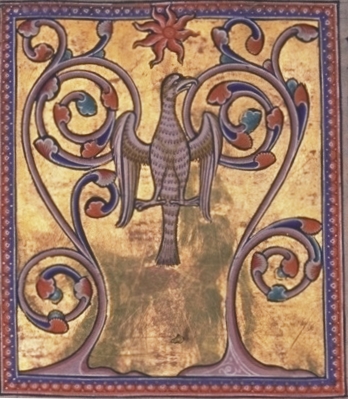
Phoenix_rising_from_its_ashes.jpg   Public Domain

Phoenix_rising_from_its_ashes.jpg Public Domain

Tomorrow a group blog of which I was a member from September 2010 to January 2014 will relaunch with a whole new group of Austen-inspired authors. Sharon Lathan and I will act as administrators for Austen Authors, which will rise from the ashes as did the fabled Phoenix.

This weekend, one can find the “Launch” giveaway details, as well as the winners from our pre-Launch activities. The real, “get-down-to-business” posts begin on Monday, January 26. So, if you are a reader who needs more Austen in your life, please check us out.

Among our happy crew, we have those who write sequels, retellings, variations, and contemporary stories. Some set their stories in Regency England, while others explore the same concepts, but in a modern world. There are those who write women’s fiction and those who write for young adults. Most also pen stories beyond the Austen realm, but they return often to the “love” they have for Jane Austen. There is something for every reader. (Click on the links below to discover more about each of our authors.) Authors participating is the group blog are…

Regina Jeffers Darcy’s Passions, Darcy’s Temptation, Captain Wentworth’s Persuasion, The Phantom of Pemberley, Vampire Darcy’s Desire, Christmas at Pemberley, The Disappearance of Georgiana Darcy, The Mysterious Death of Mr. Darcy, Honor and Hope: A Contemporary Romantica Based on Pride and Prejudice (coming soon: The Prosecution of Mr. Darcy’s Cousin and Mr. Darcy’s Fault)

Sharon LathanIn the Arms of Mr. Darcy, My Dearest Mr. Darcy, A Darcy Christmas, Darcy and Elizabeth: A Season of Courtship, Mr. and Mrs. Fitzwilliam Darcy: Two Shall Become One, Miss Darcy Falls in Love, The Passions of Dr. Darcy, Loving Mr. Darcy, The Trouble with Mr. Darcy

Alexa AdamsHolidays at Pemberley; First Impressions; The Madness of Mr. Darcy; And Who Can Be in Doubt of What Followed?; Becoming Mrs. Norris; Jane and Bingley; Emma and Elton; Second Glances

Elizabeth AdamsThe Houseguest 

P. O. DixonLove Will Grow; Still a Young Man: Darcy is in Love; Pride and Sensuality; The Mission: He Taught Me to Hope; A Lasting Love Affair: Darcy and Elizabeth; Expecting His Proposal; What He Would Not Do: Mr. Darcy’s Tale Continues; Only a Heartbeat Away; ‘Tis the Season for Matchmaking; To Have His Cake and Eat it Too: Mr. Darcy’s Tale; Hope and Sensibility; Bewitched Body and Soul: Miss Elizabeth Bennet; A Tender Moment; Matter of Trust: The Shades of Pemberley; Lady Harriette: Fitzwilliam’s Heart and Soul; Miss Mary King: Almost Persuaded; He Taught Me to Hope

Anna Elliott – Georgiana Darcy’s Diary; Pemberley to Waterloo; Kitty Bennet’s Diary; Margaret Dashwood’s Diary

Jeanna EllsworthPride and Persistence; Mr. Darcy’s Promise; To Refine Like Silver 

Rose FairbanksThe Gentleman’s Impertinent Daughter; Letters from the Heart

Cecilia Gray Fall for You; So Into You; When I’m With You; Suddenly You; Only With You (coming soon Always You)

Jenni JamesNorthanger Alibi; Mansfield Ranch; Emmalee; Pride and Popularity; Persuaded 

Rebecca H. JamisonPersuasion: A Latter-Day Tale; Emma: A Latter-Day Tale; Sense and Sensibility: A Latter-Day Tale

Diana J. Oaks One Thread Pulled: The Dance with Mr. Darcy

Jennifer Petkus Jane, Actually: Or Jane Austen’s Book Tour; My Particular Friend: A Charlotte House Affair

Katherine ReayLizzie and Jane; Dear Mr. Knightley

Barbara SilkstoneMister Darcy’s Dogs;  Mister Darcy’s Christmas; Mister Darcy’s Secret 

Joana StarnesThe Falmouth Connection; The Second Chance; From This Day Forward; The Subsequent Proposal

Brenda J. Webb – Fitzwilliam Darcy: An Honorable Man; Mr. Darcy’s Forbidden Love; Darcy and Elizabeth: A Most Unlikely Couple 

Elizabeth Ann WestBy Consequence of Marriage; A Summer of Shame; A Spring Sentiment; A Winter Wrong; The Trouble with Horses


Posted in Austen Authors, British history, Jane Austen, Living in the Regency, Regency era | 15 Comments

Do You Remember When? Traveling Was a MOOving Experience

As an author, I am often on the road and staying at motels/hotels. My friend Kim crisscrosses America at least once per week and often bemoans the desire to sleep in her own bed. Even so, both Kim and I have it SO-O-O much better than early travelers. In 1925, the word “motel” was coined. Although the word did not appear in dictionaries until after WWII, motor hotels had carved out a niche in society.


A “motel” was customarily a single building of connected rooms whose doors faced a parking lot. Occasionally, the rooms faced a common area. The need for low cost overnight accommodations grew with the improvements to the road system. Motels were situated along the highways. Prior to motels, the urban areas sported hotels, while the rural areas had “tourists courts” or “tourist rooms.” Highway travelers encountering “tourists courts” found a series of one-room dwellings holding a steel cot and perhaps a chair or two. The bathrooms were down the bath to the outhouse. A “tourist home” was generally a family home with extra rooms to let.

Do you recall this song? “King Of The Road” was written by Roger Miller.

Trailer for sale or rent/Rooms to let, fifty cents/ No phone, no pool, no pets/ ain’t got no cigarettes/ Two hours of pushin’ broom/ Buys a eight by twelve four-bit room/ I’m a man of means, by no means/ King of the road/ Third boxcar, midnight train/ Destination: Bangor, Maine/ Old worn out suit and shoes/ I don’t pay no union dues/ I smoke, old stogies I have found/ Short, but not too big around/ I’m a man of means, by no means/ King of the road/ I know every engineer on every train/ All of the children and all of their names/ Every handout in every town/ Every lock that ain’t locked when no one’s around/ They sing, trailers for sale or rent/ Rooms to let, fifty cents/ No phone, no pool, no pets/ I ain’t got no cigarettes/ About two hours of pushin’ broom/ Buys an eight by twelve four-bit room/ I’m a man of means, by no means/ King of the road.


Motels differ from hotels in their location along highways, as opposed to the urban cores favored by hotels, and their orientation to the outside (in contrast to hotels, whose doors typically face an interior hallway). Motels almost by definition include a parking lot, while older hotels were not usually built with automobile parking in mind. Because of their low-rise construction, the number of rooms which would fit on any given amount of land was low compared to the high-rise urban hotels which had grown around railway stations. This was not an issue in an era where the major highways became Main Street in every town along the way and inexpensive land at the edge of town could be developed with motels, car lots, filling stations, lumber yards, amusement parks, roadside diners, drive-in restaurants, theatres, and countless other small roadside businesses.

The automobile brought mobility, and the motel could appear anywhere on the vast network of two-lane highways. Auto camps predated motels by a few years, established in the 1920s as primitive municipal camp sites where travelers pitched their own tents. As demand increased, for-profit commercial camps gradually displaced public camp grounds.

The scene from 1934's "It Happened One Night" where Clark Gable and Claudette Colbert share a motel cabin.

The scene from 1934’s “It Happened One Night” where Clark Gable and Claudette Colbert share a motel cabin.

Until the first travel trailers became available in the 1930s, auto tourists adapted their cars by adding beds, makeshift kitchens and roof decks. The next step up from the travel trailer was the cabin camp, a primitive but permanent group of structures.

During the Great Depression, landholders whose property fronted onto roads in U.S. highway or provincial highway systems built cabins to convert unprofitable land to income; some opened tourist homes. The (usually single-story) buildings for a roadside motel or cabin court were quick and simple to construct, with plans and instructions readily available in how-to and builder’s magazines. Expansion of highway networks would continue unabated through the depression as governments attempted to create employment but the roadside cabin camps were primitive, basically just auto camps with small cabins instead of tents.

The 1935 City Directory for San Diego, California, lists “motel”-type accommodations under Tourist Camps. One initially could stay in the Depression-era cabin camps for less than a dollar per night but small comforts were few and far between. Travelers in search of modern amenities soon would find them at cottage courts and tourist courts. The price was higher but the cabins had electricity, indoor bathrooms, and occasionally a private garage or carport. They were arranged in attractive clusters or a U-shape. Often, these camps were part of a larger complex containing a filling station, a café, and sometimes a corner store. Facilities like the Rising Sun Auto Camp in Glacier National Park and Blue Bonnet Court in Texas were “Mom-and-Pop” facilities on the outskirts of towns that were as quirky as their owners. Auto camps continued in popularity through the Depression years and after World War II, their popularity finally starting to diminish with increasing land costs and changes in consumer demands.

In contrast, though they remained small independent operations, motels quickly adopted a more homogenized appearance and were designed from the start to cater purely to motorists. In town, tourist homes were private residences advertising rooms for auto travelers. Unlike boarding houses, guests at tourist homes were usually just passing through. In the southwestern United States, a handful of tourist homes were operated by African-Americans as early as the Great Depression due to the lack of food or lodging for travelers of color in the Jim Crow era.

Marion Post Wolcott - Library of Congress: Photographs of Signs Enforcing Racial Discrimination: Documentation by Farm Security Administration-Office of War Information Photographers; Location: E-527 ; Reproduction Number: LC-USF34-51945-D "A highway sign advertising tourist cabins for Negroes." [Sign: "Cabins for Colored."] South Carolina.

Marion Post Wolcott – Library of Congress: Photographs of Signs Enforcing Racial Discrimination: Documentation by Farm Security Administration-Office of War Information Photographers; Location: E-527 ; Reproduction Number: LC-USF34-51945-D
“A highway sign advertising tourist cabins for Negroes.” [Sign: “Cabins for Colored.”] South Carolina.

“There were things money couldn’t buy on Route 66. Between Chicago and Los Angeles you couldn’t rent a room if you were tired after a long drive. You couldn’t sit down in a restaurant or diner or buy a meal no matter how much money you had. Your couldn’t find a place to answer the call of nature even with a pocketful of money…if you were a person of color traveling on Route 66 in the 1940s and 1950s.” – Irv Logan, Jr. The Negro Motorist Green Book (1936–64) listed lodgings, restaurants, fuel stations, liquor stores, and barber and beauty salons without racial restrictions; the smaller Directory of Negro Hotels and Guest Houses in the United States (1939, US Travel Bureau) specialized in accommodations. Segregation of U.S. tourist accommodation would legally be ended by the Civil Rights Act of 1964 and by a court ruling in Heart of Atlanta Motel v. United States affirming that Congress’ powers over interstate commerce extend to regulation of local incidents (such as racial discrimination in a motel serving interstate travelers) which might substantially and harmfully affect that commerce.

Omar Omar - http://www.flickr.com/photos/omaromar/16805302/ The Motel Inn of San Luis Obispo (originally known as the Milestone Mo-Tel) — the first motel in the world. Created and built in 1925, in the Spanish Colonial Revival style, now in ruins. Located on old Highway 101 in northern San Luis Obispo, Central California.

Omar Omar – http://www.flickr.com/photos/omaromar/16805302/
The Motel Inn of San Luis Obispo (originally known as the Milestone Mo-Tel) — the first motel in the world. Created and built in 1925, in the Spanish Colonial Revival style, now in ruins. Located on old Highway 101 in northern San Luis Obispo, Central California.

Information for this post can be found in Reminisce: The Magazine That Brings Back the Good Times, July/August 1995 and from Wikipedia.

Posted in travel | Comments Off on Do You Remember When? Traveling Was a MOOving Experience

Eccentrics of the Regency: Maria Fagniani

Eccentrics of the Regency Period Series: Maria Fagniani

The mistresses of the Prince Regent and his brothers were as well known as the men. The Duke of Clarence, for example, sired ten children with Mrs Jordan, and the Duke of York’s relationship with Mary Anne Clarke caused a major scandal over army commissions. The Duke of Cumberland experienced rumors of incest, which followed him about. Most of the by-blows sired by upper class families were given the family surname and brought up in the same household as were the legitimate heirs. Occasionally, to avoid scandal, the child was born abroad and at an appropriate age reappeared in England to find a generous “Godfather.”

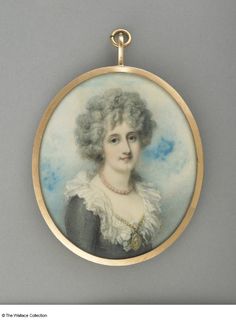
2bd44d259c93243b03b0ad5e56f5f321Maria Fagniani was one such child. She was the daughter of the Marchesa Fagniani, a woman known for bestowing her favors on a variety of gentlemen. Three men claimed Maria as his child. The first of those was the Marchese. The others included Lord March (later the Duke of Queensberry) and George Selwyn. Selwyn left Maria £20,000 pounds as an inheritance. The Duke left her £100,000. At age one and twenty, Mie-Mie married Lord Yarmouth, a man whose reputation was as rakish as her fathers.

Fast Facts:

Maria Emilia Fagnani (24 August 1771 – 2 March 1856) was the Marchioness of Hertford.

Maria was illegitimate. Born in the 1770s, most likely, she was the daughter of Costanza Brusati, the Italian Marchesa Fagnani, and of either –

William Douglas, 4th Duke of Queensberry(1724–1810), who was famously detested by Robert Burns.

George Selwyn (1719–1791), a prominent Tory and lover of Grace Elliott. He was also a member of the Satanic Hellfire Club.

Each of these men believed himself to be her father and left her very large legacies.

On 18 May 1798, Maria married Francis Seymour-Conway, Earl of Yarmouth (1777–1842), the son of the Second Marquess and Isabella Ingram-Shepheard. The Marchioness was the daughter of the Viscount Irvine, and the mistress of the Prince of Wales.

By 1802 they were estranged, and she lived in Paris for the rest of her life. Their children included:

Lady Francis Maria Seymour-Conway (d. 1822)

Captain Richard Seymour-Conway, 4th Marquess of Hertford (1800–1870)

Lord Henry Seymour-Conway (1805–1859)

During one of George III’s fits of insanity, he announced he was going to take Lady Yarmouth as his mistress.

The Marquess inherited his title in 1822. He died in 1842. The dowager Marchioness died in 1856 in Paris.

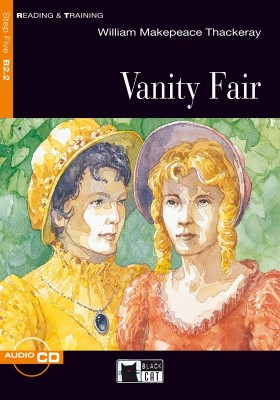
William Makepeace Thackery parodied Maria’s husband as the Marquess of Steyne in his masterpiece, Vanity Fair983-999-thickbox

Posted in British history, Great Britain, Living in the Regency, real life tales, Regency era, Victorian era | Tagged , , , , | 7 Comments

The Admiralty: Command of the Royal Navy

The Admiralty was the authority responsible for the command of the Royal Navy in the Kingdom of England, and later in Great Britain and until 1964 in the United Kingdom. Originally exercised by a single person, the Lord High Admiral, the Admiralty was from the early 18th century onwards almost invariably put “in commission” and exercised by the Lords Commissioners of the Admiralty, who sat on the Board of Admiralty.

In 1964, the functions of the Admiralty were transferred to a new Admiralty Board, which is a committee of the tri-service Defence Council of the United Kingdom and part of the Ministry of Defence. The new Admiralty Board meets only twice a year, and the day-to-day running of the Royal Navy is controlled by a Navy Board (not to be confused with the historical Navy Board). It is common for the various authorities now in charge of the Royal Navy to be referred to as simply The Admiralty.

Flag of the Lord High Admiral [Public Domain, Uploaded by Yaddah]

Flag of the Lord High Admiral [Public Domain,
Uploaded by Yaddah]

The title of Lord High Admiral of the United Kingdom was vested in the monarch from 1964 to 2011. The title was awarded to Philip, Duke of Edinburgh, by Queen Elizabeth II on his 90th birthday. There also continues to be a Vice-Admiral of the United Kingdom and a Rear-Admiral of the United Kingdom, both of which are honorary offices.

The office of Admiral of England (or Lord Admiral and later Lord High Admiral) was created around 1400, though there were before this Admirals of the Northern and Western Seas. In 1546, King Henry VIII established the Council of the Marine, later to become the Navy Board, to oversee administrative affairs of the naval service. Operational control of the Navy remained the responsibility of the Lord High Admiral, who was one of the nine Great Officers of State.

In 1628, Charles I put the office of Lord High Admiral into commission and control of the Royal Navy passed to a committee in the form of the Board of Admiralty. The office of Lord High Admiral passed a number of times in and out of commission until 1709, after which the office was almost permanently in commission (the last Lord High Admiral being the future King William IV in the early 19th century).

In 1831, the Navy Board was abolished as a separate entity and its duties and responsibilities were given over to the Admiralty.

In 1964, the Admiralty was subsumed into the Ministry of Defence along with the War Office and the Air Ministry. Within the expanded Ministry of Defence are the new Admiralty Board, Army Board and Air Force Board, each headed by the Secretary of State for Defence. As mentioned above, there is also a new Navy Board in charge of the day-to-day running of the Royal Navy.

The Board of Admiralty

When the office of Lord High Admiral was in commission, as it was for most of the 18th, 19th and 20th centuries until it reverted to the Crown, it was exercised by a Board of Admiralty, officially known as the Commissioners for Exercising the Office of Lord High Admiral of the United Kingdom of Great Britain and Northern Ireland, &c. (alternatively of England, Great Britain or the United Kingdom of Great Britain and Ireland depending on the period).

The Board of Admiralty consisted of a number of Lords Commissioners of the Admiralty. The Lords Commissioners were always a mixture of admirals, known as Naval Lords or Sea Lords, and Civil Lords, normally politicians. The quorum of the Board was two commissioners and a secretary.

The president of the Board was known as the First Lord of the Admiralty, who was a member of the Cabinet. After 1806, the First Lord of the Admiralty was always a civilian, while the professional head of the navy came to be (and is still today) known as the First Sea Lord.

Admiralty Buildings

 More details The Admiralty complex in 1794. The colours indicate departments or residences for the several Lords of the Admiralty. The pale coloured extension behind the small courtyard on the left is Admiralty House. View author information [Public Domain Uploaded by Ian Dunster]


More details
The Admiralty complex in 1794. The colours indicate departments or residences for the several Lords of the Admiralty. The pale coloured extension behind the small courtyard on the left is Admiralty House.
View author information
[Public Domain
Uploaded by Ian Dunster]

The Admiralty complex lies between Whitehall, Horse Guards Parade and The Mall and includes five inter-connected buildings. Since the Admiralty no longer exists as a department, these buildings are now used by separate government departments:

The Admiralty
The oldest building was long known simply as The Admiralty; it is now known officially as the Ripley Building, a three storey U-shaped brick building designed by Thomas Ripley and completed in 1726. Alexander Pope implied the architecture is rather dull, lacking either the vigour of the baroque style, which was fading from fashion at the time, or the austere grandeur of the Palladian style, which was just coming into vogue. It is mainly notable for being perhaps the first purpose built office building in Great Britain. It contained the Admiralty board room, which is still used by the Admiralty, other state rooms and offices and apartments for the Lords of the Admiralty. Robert Adam designed the screen which was added to the entrance front in 1788. The Ripley Building is currently occupied by the Department for International Development.

Admiralty House
Admiralty House is a moderately proportioned mansion to the south of the Ripley Building, built in the late 18th century as the residence of the First Lord of the Admiralty, serving that purpose until 1964. Winston Churchill was one of its occupants. It lacks its own entrance from Whitehall and is entered through the Ripley Building. It is a three-storey building in yellow brick with neoclassical interiors. Its rear facade faces directly onto Horse Guards Parade. The architect was Samuel Pepys Cockerell. There are now three ministerial flats in the building. [Sir Charles Walker, Thirty-Six Years at the Admiralty (London, 1933)]

Admiralty Extension

The Admiralty Extension (which is also one of the two buildings which are sometimes referred to as the “Old Admiralty”) dates from the turn of the 20th century.
This is the largest of the Admiralty Buildings. It was begun in the late 19th century and redesigned while the construction was in progress to accommodate the extra offices needed due to the naval arms race with the German Empire. It is a red brick building with white stone detailing in the Queen Anne style with French influences. It has been used by the Foreign and Commonwealth Office since the 1960s. The Department for Education will move into the building in September 2017 following the Foreign and Commonwealth Office’s decision to leave the building and consolidate its London staff into one building on King Charles Street.

Admiralty Arch

Admiralty Arch is linked to the Old Admiralty Building by a bridge and is part of the ceremonial route from Trafalgar Square to Buckingham Palace.[C. Hussey, “Admiralty Building, Whitehall”, Country Life, 17 and 24 November 1923, pp. 684–692, 718-726.]

The Admiralty Citadel
This is a squat windowless World War II fortress north west of Horse Guards Parade, now covered in ivy. See Military citadels under London for further details.

“Admiralty” as a metonym for “sea power”

In some cases, the term “admiralty” is used in a wider sense, as meaning sea power or rule over the seas, rather than in strict reference to the institution exercising such power. For example, the well-known lines from Kipling’s Song of the Dead:

If blood be the price of admiralty,

Lord God, we ha’ paid in full!

In addition to the citations within the post, London Remembers and Wikipedia supplied information.

Posted in architecture, British history, British Navy | Tagged , , | 4 Comments

Lighting the House in the Regency Period

Today, I have have dealt with another power outage in my area, and I have privately cursed how dark my home is without the power of electricity. I have had to go without lights, TV, the internet, phone service, etc., and this modern-day “deprivation” has set me to thinking about the days of the Regency era when the almighty CANDLE ruled the home.

Until the Victorian Era, candles, lanterns, and rush-lights served as the principal means of lighting the Georgian styled home, and like every other aspect of Regency life, the use of the these sources of light adhered to their own “hierarchy” of use.

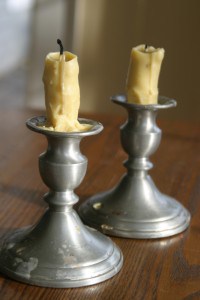
candlesAt the top of the Candle Hierarchy was the beeswax candle. These candles were more expensive than the others and could be left unattended for longer periods than could tallow or rush lights. However, they did melt faster than tallow candles. Wax candles were used by the very rich to prove their superiority to others. Wax candles were used in chandeliers because they burned themselves out rather than having to be snuffed out by the servants.Candles

img_3004-e1272244558721-200x300Tallow candles, usually made from mutton fat, were the main source of light in middle class homes and the lower gentry. They left behind a most annoying odor and did not burn evenly. Generally, the flame had to be snuffed out to prevent the charred wick falling into the tallow. If this happened, a “gutter” formed and melted wax would flow over everything. The tallow candle offered poor lighting and did not last for long.

Rush-lights were used by the poor. Rush-lights were made by dipping the stripped pith of common rushes into hot animal fat, often bacon fat. Rushes are commonly 2 feet long. They were held in place by a stand with a clip, and they usually burned out in an hour or so. The poor sometimes chose to burn tallow candles, but they were not economical. Eleven rushes would cost a family a farthing.rushlight2

It was commonplace to have only two candlesticks in each room. In some homes, wall sconces with mirrors behind them increased the lights. These sconces were typically mounted on the chimney-breast.

Unlike the homes on the Continent, most homes in Georgian London were slow to accept oil burning lamps. Ami Argand of Geneva demonstrated his improved lamp in 1783 to the French Academy of Sciences. Unfortunately for Argand, the French Academy did not take well to the experiment. So, Argand brought his invention to London. Argand lamps using Colza oil were used in some wealthier London homes, but they were very expensive and were “plagued” by the cumbersome need to mount the oil reservoir above the level of the burner. This mounted reservoir blocked off the light from one side of the lamp. After 1798, a pump was available to force the oil upwards.

Candles were more economical and remained the main source of light until the mid-19th Century.

Posted in British history, Great Britain, Living in the Regency, real life tales, Regency era | Tagged , , , | 14 Comments