Owain Glyndŵr, National Hero and The Last Native Welshman to Hold the Title “Prince of Wales”

from The Castles of Wales website

from The Castles of Wales website

Owain Glyndŵr (c. 1349 or 1359 to c. 1415) was the last native Welshman to hold the title Prince of Wales (Tywysog Cymru). He led an unsuccessful revolt against Henry IV of England. Glyndŵr’s family was part of the Anglo-Welsh gentry of the Welsh Marches, the border between England and Wales, along the northeastern border of Wales. Like many of their class, the Glyndŵrs were fluent in both the Welsh and English languages, and they were accepted into Society on both sides of the border. They managed to know success as Marcher Lords, while keeping their position as uchelwyr, the nobility descending from the pre-conquest Welsh royals.

Glyndŵr’s paternal family came from the dynasty of northern Powys. His mother was descended from the Deheubarth power from the south. “The family fought for Llywelyn ap Gruffydd in the last war and regained their lands in north-east Wales only through a calculated association with the powerful Marcher lords of Chirk, Bromfield, and Yale and the lesser family of Lestrange.” (The Castles of Wales)

Glyndŵr’s father, Gruffydd Fychan II, hereditary Tywsog of Powys Fadog and Lord of Glyn Dyfrdwy, died when Owain was but a youth. Most believe he was fostered out to live with David Hanmer, a man of the law and justice of the Kings Bench, and likely studied law at the Inns of Court. As such, Owain witnessed the 1381 Peasants’ Revolt in London. Later, Owain married Hanmer’s daughter Margaret and became the Squire of Sychart and Glyndyfrdwy. “He held the lordships of Glyn Dyfrdwy and Cynllaith Owain near the Dee directly of the king of Welsh Barony. He had an income of some L200 a year and a fine moated mansion at Sycharth with tiles and chimneyed roofs, a deer park, henory, fishpond, and mill.” (The Castles of Wales)

Glyndŵr served the English king for three years in the late 1300s. In 1384, he was in service to Sir Gregory Sais upon the English-Scottish border at Berwick-upon-Tweed. Next, he joined with John of Gaunt in Scotland in support of King Richard. This service brought Owain into the position of being part of the Scrope v. Grosvenor trial. This was one of the earliest heraldic law cases in England. When Richard II invaded Scotland, two of the king’s knights were found to be using the same coat of arms. Richard Scrope (1st Baron Scrope of Bolton in Yorkshire and Sir Robert Grosvenor from Cheshire were both bearing arms blazoned Azure a Bend Or. Owain had good company as a witness in the case: John of Gaunt, King of Castile, Duke of Lancaster, and Geoffrey Chaucer. The case was decided in Scrope’s favor. Finally, Glyndŵr joined Richard Fitzalan, 11th Earl of Arundel in the Channel at the defeat of the Franco-Spanish-Flemish fleet off Kent’s coast. In 1387, Owain returned home for his father in marriage had died. Therefore, he spent the next decade as a Welsh lord. Iolo Goch (“Red iolo”), a Welsh lord and poet, who wrote a number of odes to Owain, praising Glyndŵr’s liberal leanings, visited Owain throughout the 1390s.

In the later 1390s, Glyndŵr had several run-ins with his neighbor Baron Reginald de Grey, Lord of Ruthyn. The first was an argument over property. Unfortunately, the English Parliament ignored Glyndŵr’s appeal for redress. Also, Lord Grey supposedly informed Glyndŵr too late of a royal command to levy feudal troops for Scottish border service; therefore, Glyndŵr was labeled a “traitor” in his legal matters. Grey was reportedly a personal friend of King Henry IV. Brooding over the snub he had received from the English court, Glyndŵr contacted other disaffected Welshmen. This disaffection led to Glyndŵr’s raising his standard outside Ruthyn on September 16, 1400.

In January 1400, an officer serving deposed King Richard II was publicly executed in the English border town of Chester. Along with Glyndŵr, many in Wales were loyal to Richard. In addition, Wales was “strewn with the rubble of dynasties. Wales in the late 14th century was a turbulent place. The brutal savaging of Llywelyn the Last and Edward I’s stringent policies of subordinating Wales had left a discontented, cowed nation where any signs of rebellion were sure to attract attention.” (The Castles of Wales) When Glyndŵr turned against Henry IV’s “friend,” he wore his mantle as a live representatives of the old royal houses of Wales. His followers proclaimed him “Prince of Wales.”

The revolt spread from Glyndŵr’s initial attack upon Ruthyn to a national wave of unrest. Owain scored his first major victory in June 1401 at Mynydd Hyddgen on Pumlumon, but that victory was followed by Henry IV’s attack on the Strata Florida Abbey. In 1402, the English Parliament issued the Penal Laws against Wales, an act that turned many Welshmen toward rebellion.

The capture of Lord Ruthyn cost Henry IV a large ransom, but the King chose not to ransom Sir Edmund Mortimer, who was captured at the Battle of Bryn Glas. Mortimer finally negotiated an alliance with Owain and married one of Owain’s daughters.

In 1402, the French and Bretons joined the Welsh fight against England. By 1404, Owain set up court at Harlech, which was followed by the calling of his first Parliament (Cynulliad) at Machynlieth. At this gathering, Glyndŵr was crowned Prince of Wales. He quickly announced his national programme, which included the promise of a Welsh independent state and a separate Welsh church, as well as two national universities and a return to the traditional law of Hywel Dda. English influence was quickly reduced to a few isolated castles and protected manors.

Glyndŵr negotiated the “Tripartite Indenture” with Edmund Mortimer and Henry Percy, Earl of Northumberland. The trio planned to divide England and Wales among them. Wales would extend as far east as the rivers Severn and Mersey and include what is now Cheshire, Shropshire, and Herefordshire. Mortimer would claim southern and western England and Percy the north. The French officially joined the fight as an ally of Wales in 1405. However, the French withdrew in 1406 after politics in Paris leaned toward peace.

When young Prince Henry took over the military strategy, the pendulum swung once again in England’s favor. The Prince set up a series of economic blockades, which weakened the Welsh efforts. By 1407, Owain’s Aberystwyth Castle surrendered while he was away fighting. Harlech Castle fell in 1409. Mortimer died in the final battle, and Owain’s wife, daughters, and granddaughters were imprisoned in the Tower of London, where they met their deaths in 1415. Owain became a hunted man; however, was hardly silent – for he still led raids against the English.

In an ambush in Brecon, Owain captured Dafydd Gam (“Crooked David”), a Welsh support of King Henry. This was the last time Glyndŵr was seen alive by his enemies. What is more remarkable than the civil war the revolt inevitably became, is the passion, loyalty and vision which came to sustain it. Glyndwr’s men put an end to payments to the lords and the crown; they could raise enough money to carry on from the parliaments they called, attended by delegates from all over Wales – the first and last Welsh parliaments in Welsh history. From ordinary people by the thousands came a loyalty through times often unspeakably harsh which enabled this old man to lead a divided people one-twelfth the size of the English against two kings and a dozen armies. Owain Glyndwr was one Welsh prince who was never betrayed by his own people, not even in the darkest days when many of them could have saved their skins by doing so. There is no parallel in the history of the Welsh. (The Castles of Wales) Henry IV died in 1413, and his son Henry V established a more conciliatory attitude toward Wales. Royal pardons were offered to many of the Welsh leaders.

“The draconian anti-Welsh laws stayed in place until the accession to the English throne of Henry VII, a Welshman, in 1485. Wales became subsumed into English custom law, and Glyndwr’s uprising became an increasingly powerful symbol of frustrated Welsh independence. Even today, the shadowy organization that surfaced in the early 1980s to burn holiday homes of English people and English estate agents dealing in Welsh property has taken the name Meibion Glyndwr, the Sons of Glyndwr. Since 1410 most Welsh people most of the time have abandoned any idea of independence as unthinkable. But since 1410 most Welsh people, at some time or another, if only in some secret corner of the mind, have been ‘out with Owain and his barefoot scrubs.’ For the Welsh mind is still haunted by it’s lightning-flash vision of a people that was free.” (The Castles of Wales)

“Nothing certain is known of Owain after 1412. Despite enormous rewards being offered, he was never captured nor betrayed. He ignored royal pardons. Tradition has it that he died and was buried possibly in the church of Saints Mael and Sulien at Corwen close to his home, or possibly on his estate in Sycharth or on the estates of his daughters’ husbands — Kentchurch in south Herefordshire or Monnington in west Herefordshire.” (The Castles of Wales)

But Glyndwr was not being forgotten in the misery. In his play, Henry IV, Shakespeare portrays Owain Glyndwr (Owen Glendower) as a wild, exotic, magical and spiritual man, playing up the romantic ‘Celtic’ traits. (BBC/Wales History)

Sculpture of Owain Glyndŵr by Alfred Turner at City Hall, Cardiff.

Sculpture of Owain Glyndŵr by Alfred Turner at City Hall, Cardiff.

“In his book The Mystery of Jack of Kent and the Fate of Owain Glyndŵr, Alex Gibbon argues that the folk hero Jack of Kent, also known as Siôn Cent – the family chaplain of the Scudamore family – was in fact Owain Glyndŵr himself. Gibbon points out a number of similarities between Siôn Cent and Glyndŵr (including physical appearance, age, education, character) and claims that Owain spent his last years living with Alys passing himself off as an aging Franciscan friar and family tutor. There are many folk tales of Glyndŵr donning disguises to gain advantage over opponents during the rebellion.”(Wikipedia)

It was not until the late 19th century that Owain’s reputation was revived. The “Young Wales” movement recreated him as the father of Welsh nationalism. The discovery of Owain’s Great Seal and his letters to the French in the Bibliothèque Nationale helped revise historical images of him as a purely local leader. In the First World War, the Welsh Prime Minister, David Lloyd George, unveiled a statue to him in Cardiff City Hall and a postcard showing Owain at the Battle of Mynydd Hyddgen was sold to raise money for wounded Welsh soldiers. Folk memory in Wales had always held him in high regard and almost every parish has some landmark or story about Owain. However, there is no road sign indicating the scene of one of his greatest battles at Bryn Glas in 1415.


This work is released under CC-BY-SA

http://creativecommons.org/licenses/by-sa/3.0/

Posted in British history, Great Britain, legends and myths, Living in the UK, military, political stance, real life tales, Wales | Tagged , , , , | Comments Off on Owain Glyndŵr, National Hero and The Last Native Welshman to Hold the Title “Prince of Wales”

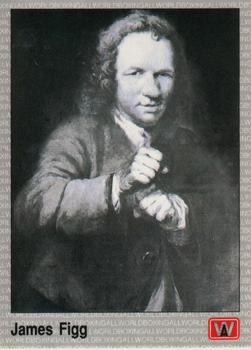
James Figg, Father of Modern Day Boxing

figg-james-222Born into a poor farming family, James Figg is considered the father of Modern Day Boxing. The youngest of seven children, Figg grew up in Thames Village, Oxfordshire. He had achieved renown as a master of the short sword and the cudgel before he took on the role of bare knuckles boxing.

Figg used The Greyhound Inn in Cornmarket, Thame, as his base of operations, from which he traveled the “fair” circuit, plying his skills to challenge all comers in both armed and unarmed combat. He was six feet tall, weighing 185 pounds, and a multi-talented athlete. The Earl of Peterborough soon became Figg’s patron, and the boxer traveled to London under the earl’s directions. In London, he opened a fighting academy in the Tottenham Court Road district, one of the many arenas devoted to staging matches. “The ‘ring’ that had originally been formed by spectators, sometimes holding a rope in their hands, became an elevated square platform, enclosed with wooden rails.” (International Boxing Hall of Fame) Figg served as an instructor to some 1000 students at his “Figg’s Amphitheatre.”

The artist William Hogarth designed Figg’s business card, which declared him “master of the noble science of defence.” He also added a portrait of Figg to the card, one showing the fighter in a lace shirt and wig, and holding his clenched fists before him. (International Boxing Hall of Fame)  Hogarth’s publicity worked; Figg was the first to attain national celebrity as a prizefighter. (East Side Boxing) 58087-79Fr

“The boxing of Figg’s day was not so much boxing as street fighting. Bare knuckles and open-hand blows were allowed, as was grappling, and hip-throws. Kicking a man when he was down (known as ‘spurring’) and eye gouging were permitted as well. In these respects the sport was less civilized than it had been in ancient Greek times, and in fact, it closer resemble Pankration (Greek no-hold-barred-fighting) than it did Pygmahla (Greek boxing). Thanks to his Academy, Figg popularized both armed and unarmed fighting techniques, and added the parries of the sword and staff to the conventional unarmed combat of the time.” (East Side Boxing)

In 1719, Figg declared himself Champion of England, a title no one disputed. In 1720, Figg sold the “franchise” ownership of Figg’s Amphitheater and began again in the Bear Garden district, located in Marleybone Fields on Oxford Street in Lonodn. At the so-called “Boarded House,” one could watch contests between men, between women, and between man and a baited animal. “A printed article from the period featuring a challenge from one Rowland Bennett of Ireland asserts that, having seen a demonstration by James Figg, Bennett became ‘fully persuaded that if the proper method is executed against him, he (like Sampson with his hair off) is like other men.’ Bennet offered the following challenge: ‘For a trial of which I do now invite him to meet me and exercise the usual weapons fought on the stage.’

“Bennett is referring to the custom of the time that had fights consist first of a sword duel to first blood, then of a fistfight to first fall, and finall of a match of cudgels (clubs) to first fall. The winner of two out of three of these matches would win the contest. This method of combat was all the more risky considering antibiotic medicine did not exist, and there was little to prevent an infected would from becoming fatal.” (East Side Boxing)

Figg was triumphant over the boastful Bennett. In fact, Figg is believed to have held a record of 269-1. In 1726, Figg lost to Ned Sutton, a pipe maker. He claimed to have been ill at the time of the match and was granted a re-match, which Figg won. In a grudge match, Sutton was stabbed in the knee and had to withdraw before they could move to the bare knuckles round. Figg was named as the Champion.

“Figg popularized sparring as a public entertainment, and his schools were frequented by the upper classes, with noblemen often arriving in groups to try their hand at boxing or fencing. Since bare knuckle exhibitions were also tremendously popular with the working classes, Figg continued to make appearances in public, often at London’s Sourthwark Fair, in a boxing booth where he could take on all comers. Fighting infrequently in formal matches, Figg retained the championship until his retirement in 1734 when his premier student, George Taylor, declared himself successor to the title. Figg, who socialized with the Prince of Wales and other members of the royal family, died in 1740, leaving a wife and several children. Although some considered him a better swordsman than boxer, Figg is called ‘The Father of Boxing’ for his role in popularizing and teaching the sport.” (International Boxing Hall of FameFiggHandBill

The James FiggFigg was inducted into the IBHF in 1992. At the James Figg Pub (originally The Greyhound Inn in his home of Cornmarket), a blue plague was hung in dedication on 4 April 2011.


This work is released under CC-BY-SA   http://creativecommons.org/licenses/by-sa/3.0/
Posted in British history, Georgian Era, Great Britain, legends and myths, Living in the UK, real life tales | Tagged , | 7 Comments

The Lovely World of the English Language: Do You Know the Origin of These Words and Phrases?

7433803_sNodcock ~ From the Oxford English Dictionary (OED), this is one of many words meaning “fool or idiot” It dates back to the 1500’s. Synonyms include “noddypoop, noddypoll, and niddicock.” [I wish I had known this word when a gentleman told me I had a “photogenic memory.”]

Doing It Much Too Brown ~ Regency Cant and Expressions says this means “overdoing something so it is not credible.”

From Fun Trivia, we get:

DO UP BROWN – 1. To swindle, victimize, trounce, or defeat (someone) thoroughly. 1824 in Partridge. He is said to be “cooked,” or “done brown” and “dished.” 2. To do (something) thoroughly, excellently, or perfectly. 1843 in G. W. Harris “High Times” 29: Those are places where things are done up brown! From “Random House Historical Dictionary of American Slang, Volume 1, A-G” by J.E. Lighter, Random House, New York, 1994.

DO IT UP BROWN – “Do something well; do it to one’s satisfaction. In England the phrase has had the meaning of deceive or take in. Either way, it carries the implication of doing something thoroughly and probably comes from the roasting of meat, yielding a brown color that is the result of thorough cooking. One can see the term in the making in ‘Liber Cure Cocorum’ (1430)” ‘Lay hur (the goose) to frye and rost hyr browne.'” From the “Dictionary of Cliches” by James Rogers (Ballantine Books, New York, 1985).

Blue-Deviled ~ From Inkwell Inspirations, we find this word means “sad or depressed.” Other variations of the word include “blue as megrim” or “mulligrubs.”

Shiner ~ We generally think of a “shiner” as a “black eye.” According to the Urban Dictionary, the term is of Irish origin where it was a punishment for not keeping machinery shiny. The punishment was delivered via the boot of a British officer.

Answerbag states the word is derived from the derogatory word “shiner” meaning a black person. The dates given in Etymonline (which was 1904) make this quite plausible, but Green’s Dictionary of Slang dates the first usage of “shiner” for black eye at 1797, which would tend to militate against this etymology.

Maggie Mackeever’s blog suggests “‘’shiner’ in Regency days meant a mirror, especially the kind of mirror used by card-sharpers.”

To Fish in Troubled Waters ~ Cambridge Dictionaries Online give this definition: to try to win an advantage from a difficult situation or from someone else’s problems. “Troubled Waters” has been used since the mid 1500s. The phrase refers to “mental disquiet.” The phrase was used in Richard Grafton’s Chronicle of England: “Their perswasions whiche alwayes desyre your unquietnesse, whereby they may the better fishe in the water when it is troubled.” In prison Grafton compiled an Abridgement of the Chronicles of England, which he published in 1563. To this he added in 1568 A Chronicle at Large. [The obvious allusion of this phrase is one catches more fish in rough water.] {A Hog on Ice by Charles Earle Funk pg. 73}

To Lie Through One’s Teeth (or) To Lie in One’s TeethSlang and Its Analogues Past and Present: Stra to Z by John Stephen Farmer (page 160) says “to tell unblushing falsehoods.” Lying through one’s teeth means that the person is able to smile while lying. From English Forums, we find: There’s also “TO LIE IN ONE’S TEETH.” It is very old, traceable to the early 1300’s as in THE ROMANCES OF SIR GUY OF WARWICK, “Thou liest amidward and therefore have thou maugreth (shown ill will).”

Between Cup and Lip ~ From Hog on Ice by Charles Earle Funk (page 95), we find “Four centuries ago the saying was “between cup and mouth,” at least it is so recorded in Prouerbes or Adagies, by Richard Taverner, published in 1539: ‘Manye thynges fall betweene ye cuppe and the mouth.’ The saying itself, however, is much older than that, for Taverner was merely translating into English the Latin collection of adages, Chiliades adagiorum, published by Erasmus in 1508. In one form or another, it is found in many languages.

Usually, in English, the saying occurs in the form of a proverb, ‘There’s many a slip between cup and lip.’ …Eramus wrote it, ‘Multa cadunt inter calicem supremaque labra,’ but it is believed he took it from Greek.

Criss-Cross ~ From Thereby Hangs a Tale, also by Charles Earle Funk (page 85), we find “Centuries prior, when children learned the  alphabet, the little ‘hornbooks’ from which they studied were almost invariably decorated with a cross. Sometimes there was just one cross, preceding the letter ‘A.’ Sometimes there was one at the beginning of the alphabet and another at the end, and sometimes the alphabet itself was arranged in the form of a cross. The cross was itself referred to as Christ-cross, to distinguish the figure from the letters that followed, and the row of letters forming the alphabet came to be known as Christ-cross-row. Along with the pronunciation of Christmas, Christian, Christopher, Christ-cross  was always sounded criss-cross, and was often so spelled. Ultimately, in this form, it took on the special meaning, which we now give it: a series of crossing lines.”

{public domain}

{public domain}

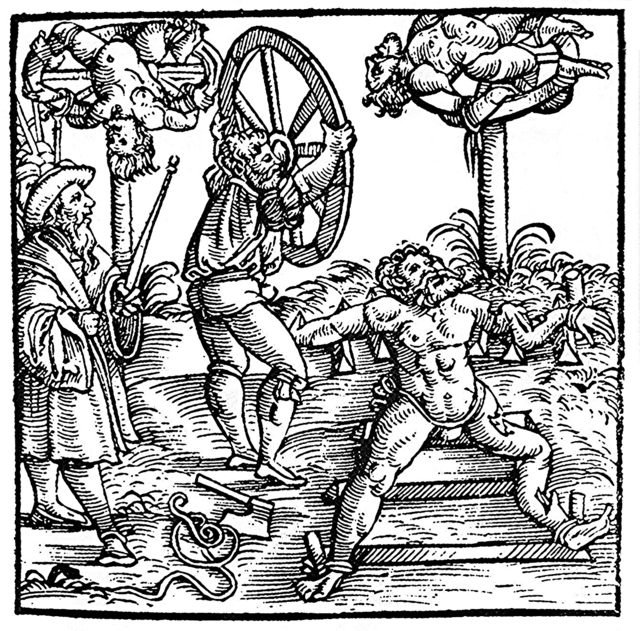
Breaking Wheel ~ The breaking wheel, also known as the Catherine wheel or simply the wheel, was a torture device used for capital punishment from Antiquity into early modern times for public execution by breaking the criminal’s bones/bludgeoning him to death. As a form of execution, it was used from “Classical” times into the 18th century; as a form of post mortem punishment of the criminal, the wheel was still in use into 19th century Germany.

Pieter Spierenburg mentions a reference in sixth century author Gregory of Tours as a possible origin for the punishment of breaking someone on the wheel. In Gregory’s time, a criminal could be placed in a deep track, and then a heavily laden wagon was driven over him. Thus, the latter practice could be seen as a symbolic re-enactment of the previous penalty in which people were literally driven over by a wagon.

The breaking wheel was also known as a great dishonor, and appeared in several expressions as such. In Dutch, there is the expression opgroeien voor galg en rad, “to grow up for the gallows and wheel,” meaning to be destined to come to no good. It is also mentioned in the Chilean expression morir en la rueda, “to die at the wheel,” meaning to keep silent about something. The Dutch expression ik ben geradbraakt, literally “I have been broken on the wheel”, is used to describe physical exhaustion and pain, like the German expression sich gerädert fühlen, “to feel wheeled,” and the Danish expression “radbrækket” refer almost exclusively to physical exhaustion and great discomfort.

In Finnish teilata, “to execute by the wheel,” refers to forceful and violent critique or rejection of performance, ideas or innovations. The German verb radebrechen (“to break on the wheel”) can refer to speaking incorrectly, for example with a strong foreign accent or with a great deal of foreign vocabulary. Similarly, the Norwegian radbrekke can be applied to art and language, and refers to use which is seen as despoiling tradition and courtesy, with connotations of willful ignorance or malice. In Swedish, rådbråka can be used in the same sense as the English idiom “rack one’s brain” or, as in German, to mangle language.

The word roué, “dissipated debauchee,” is French, and its original meaning was “broken on the wheel.” As execution by breaking on the wheel in France and some other countries was reserved for crimes of particular atrocity, roué came by a natural process to be understood to mean a man morally worse than a “gallows-bird,” a criminal who only deserved hanging for common crimes. He was also a leader in wickedness, since the chief of a gang of brigands (for instance) would be broken on the wheel, while his obscure followers were merely hanged. Philip, Duke of Orléans, who was regent of France from 1715 to 1723, gave the term the sense of impious and callous debauchee, which it has borne since his time, by habitually applying it to the very bad male company who amused his privacy and his leisure. The locus classicus for the origin of this use of the epithet is in the Memoirs of Saint-Simon.

In English, the quotation “Who breaks a butterfly upon a wheel?” from Alexander Pope’s “Epistle to Dr Arbuthnot” is occasionally seen, referring to putting great effort into achieving something minor or unimportant.

The Yu-Gi-Oh card “Nightmare Wheel” is similar to the breaking wheel and depicts a creature bound to a breaking wheel and cannot escape.(Wikipedia and History of Violence)

Desultory ~ Etymology: From Latin desultorius (“hasty, casual, superficial”), from desultor (“a circus rider who jumped from one galloping horse to another”), from dēsiliō (“jump down”), from (“down”) + saliō (“jump, leap”). It means “jumping, or passing, from one thing or subject to another, without order or rational connection; without logical sequence; out of course; by the way; as a digression; not connected with the subject; disappointing in performance or progress; (obsolete) leaping, skipping or flitting about, generally in a random or unsteady manner.” It is said medieval soldiers (if two horses were available) would jump from one horse to the other when the first had become weary.

Quiz – From The Free Dictionary, we find “while the origins of quiz remain obscure, we can at least trace the development of its senses. The term, first recorded in the late 1700s, originally meant “an odd or eccentric person.” From the noun in this sense came a verb meaning “to make sport or fun of” and “to regard mockingly.” In English dialects and probably in American English the verb quiz acquired senses relating to interrogation and questioning. This presumably occurred because quiz was associated with question, inquisitive, or perhaps the English dialect verb quiset, “to question” (probably itself short for obsolete inquisite, “to investigate”). From this new area of meaning came the noun and verb senses all too familiar to students.”

QUIZ vs TEASE:
**Quiz started out meaning a person who was really odd– like wearing outmoded clothes or being wildly eccentric in clothes. Then it started meaning to tease a little or to inspect with a Quizzing Glass. It is not in the ordinary dictionary of 1815.
In 1796, it meant to mock or make fun of. Before that, in 1749, it was an eccentric person.

Posted in etymology | Tagged , , , | 4 Comments

Oh, the Places We Will Go… [in Jane Austen’s Novels]

Oh, the Places We Will Go…in Austen Novels

Through Jane Austen’s novels, I was first introduced, at the age of 12, to beautiful English estates and a land beyond my imagination. I fell in love with the time, the homes, the heroes and heroines, and I have spent a lifetime admiring Austen’s works. Do you know the many places found within Austen’s novels?

from Persuasion

Lyme Regis – where Louisa Musgrove falls from the Cobb; later falls in love with Captain Benwick

Uppercross – the Musgroves’ family home

the ancient Roman baths in Bath, UK

the ancient Roman baths in Bath, UK


Bath
– city where the Elliots moved and where Anne and Captain Wentworth are reunited

Kellynch Hall – Sir Walter Elliot’s ancestral home

________________________

from Northanger Abbey

Putney, London – from where the Thorpes hail

Oxford University

Oxford University

Oxford – where James Morland attends university

Bath – the city Catherine Morland visits; she meets Henry Tilney there

Northanger Abbey, Gloucestershire – the family seat of the Tilney family

Fullerton, Wiltshire – the village from which the Morlands hail

_______________________________

from Emma

Bath – where Mr. Elton travels to secure a wife

panoramicearth.blogspot.com Brunswick Square in Camden - London

panoramicearth.blogspot.com
Brunswick Square in Camden – London

Brunswick Square, London – home of John and Isabella Knightley

Donwell Abbey, Surrey – Mr. Knightley’s estate

Randalls, Surrey – where Mr. and Mrs. Weston reside

Hartfield, Surrey – where the Woodhouses live; Emma’s home

Highbury, Surrey – the village near the estates of Hartfield, Randalls, and Donwell Abbey

______________________________

from Mansfield Park

Sotherton – Mr. Rushwoth’s estate

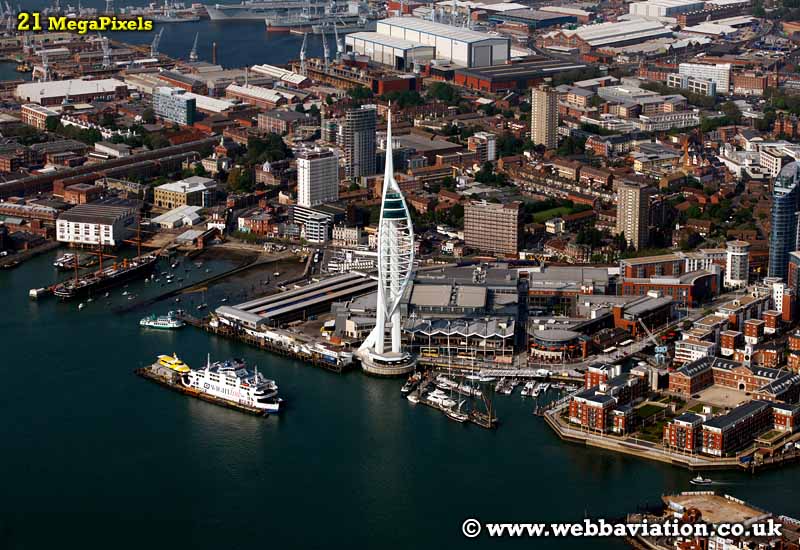
www.webbaviation.co.uk Spinnaker Tower and waterffront at Portsmouth - aerial photograph cb04978.jpg

http://www.webbaviation.co.uk
Spinnaker Tower and waterffront at Portsmouth – aerial photograph cb04978.jpg

Portsmouth – the place from where Fanny Price hails; her family resides there

Antigua – Sir Thomas owns a plantation there

London – from which Maria and Julia elope

Thornton Lacey – the clerical living Edmund will receive as part of his orders

Mansfield Parsonage – where first Mr. and Mrs. Norris reside; later it is the home for the Grants; Mary and Henry Crawford visit at the Parsonage

Mansfield Park – the home of the Bertram family and of Fanny Price

_________________________

from Pride and Prejudice

Brighton, Sussex – where George Wickham is stationed; from which he and Lydia Bennet elope

Gracechurch Street, London – home of Mr. and Mrs. Gardiner, Elizabeth Bennet’s maternal uncle and his wife

Hunsford, Kent – Mr. Collins’ parsonage

Rosings Park, Kent – the estate of Lady Catherine De Bourgh; Darcy’s aunt

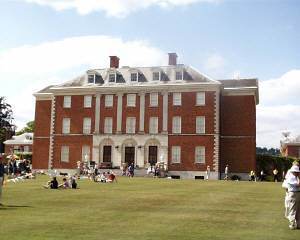
Chevening House, likely the inspiration for Rosing Park

Chevening House, likely the inspiration for Rosing Park

Chatsworth House, likely the inspiration for Pemberley

Chatsworth House, likely the inspiration for Pemberley

Netherfield, Hertfordshire – Mr. Charles Bingley’s let estate

Lucas Lodge, Hertfordshire – home of Sir William Lucas’s family

Meryton, Hertfordshire – the village nearest to Longbourn

Longbourn, Hertfordshire – home to the Bennet family

Pemberley, Derbyshire – Fitzwilliam Darcy’s estate

___________________________

from Sense and Sensibility

Cleveland, Somersetshire – the Palmer’s estate; where Marianne Dashwood falls ill

Allenham, Devonshire – the estate Willoughby is to inherit

Berkeley Street, London – Mrs. Jennings’ London address

Combe Magna, Somersetshire – Willoughby’s estate

Delaford, Devonshire – Colonel Brandon’s home

Barton Park – the home of Sir John Middleton

Barton Cottage – the home for the Dashwood sisters and their mother

Norland Park, Sussex – the Dashwood ancestral home

Posted in British history, Great Britain, Jane Austen, Living in the Regency, Regency era | 2 Comments

Jack Sheppard, Extraordinary Escape Artist, but Mediocre Thief

Jack Sheppard, Extraordinary Thief

2940014377478_p0_v1_s260x420A favorite figure in verse, plays, and burlesque, John Sheppard was an 18th Century English thief. Born in Stepney on 4 March 1702, Sheppard spent several years (from the age of six) in the workhouse in Bishopsgate, where he was indentured to a cane chair maker, after his father passed. When the chair maker also died, Sheppard was apprenticed to a carpenter in Covent Garden. There he remained from ages fifteen to twenty. He learned to read and write, but instead of putting his skills to good use, Sheppard fell in with those who practiced thievery and duplicity upon the London populace. At age twenty, he met Elizabeth Lyon at the Black Lion in Drury Lane. He also met the infamous Jonathan Wild, better known as the “Thief-taker General.”

He was first arrested on 24 April 1724 and was committed to St. Giles Roundhouse, but Sheppard soon escaped this imprisonment. He tossed tiles at the guards during his flight. In May of the same year, with his companion, Elizabeth Lyon, he cut through the bars of New Prison in Middlesex, he descended a twenty-five feet wall, before scaling another to escape a second time. (Enclyclopedia Britannica)

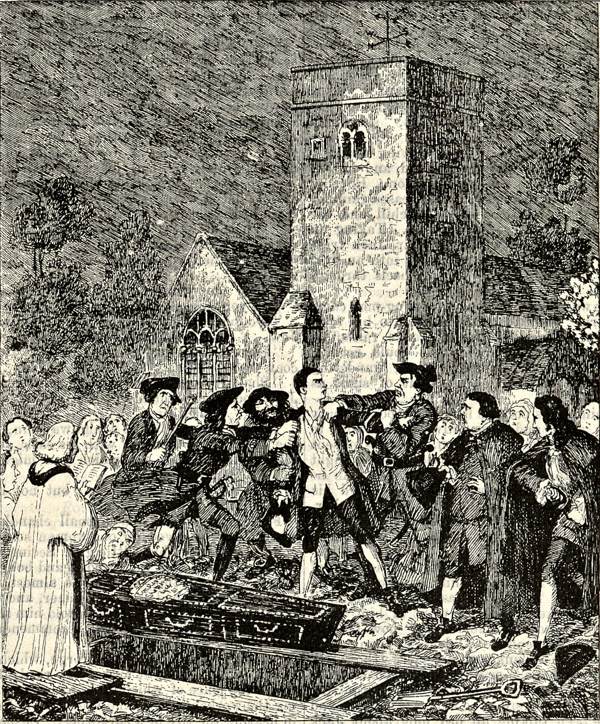
Jonathan Wild seizing Jack Sheppard at his mother’s grave in Willesden.

September 1724 found Sheppard in a death cell at Newgate, having been arrested for the theft of three rolls of cloth, two silver spoons, and a silk handkerchief. He used a metal file, which was smuggled in by Elizabeth and wore one of her dresses as a disguise. This third escape solidified the two and twenty years old Sheppard’s reputation as a criminal extraordinaire. He “embodied the role of the charismatic desperado to such superlative effect that his colorful reputation for youthful defiance gleams in the popular imagination two centuries later.” (Spitalfields Life)

Jonathan Wild seizing Jack Sheppard at his mother’s grave in Willesden.

Jonathan Wild seizing Jack Sheppard at his mother’s grave in Willesden.

On 10 September 1724, Sheppard was rearrested and again taken to Newgate, but this time he was placed in a high security cell in the Stone Castle. The authorities handcuffed him, as well as binding his ankles and chaining him down in a chamber that was locked and barred. Despite all the precautions, Sheppard escaped a month later. This time he spent a “wild” fortnight in London, eluding the authorities by dressing as a dandy and carousing, with Elizabeth on his arm. After he bought a round of drinks for all those in attendance at midnight at a tavern in Clare Market, Lincoln’s Inn Fields, Jonathan Wild arrested Sheppard. He was returned to Newgate, where hundreds of people paid 4 shillings each to view him in his cell. Reports say that during this time, Sheppard had a drinking match with the prizefighter James Figg, an English bare knuckles champ, as well as having his execution portrait painted by Sir Henry Thornhill.

Over two hundred thousand stood witness to Sheppard’s hanging on 16 November 1724. Two months later, Daniel Defoe released the ghostwritten autobiography of Jack Sheppard’s life. John Gay modeled the character of Macheath in “The Beggar’s Opera” on Sheppard and the one of Peachum on Jonathan Wild. In 1839, Henry Ainsworth released “Jack Sheppard,” for which George Cruikshank drew the pictures. At the time, it outsold “Oliver Twist.” Of Ainsworth’s efforts, William Makepeace Thackeray said, “George Cruikshank really created the tale and Mr Ainsworth, as it were, merely put words to it.” (The Cruikshank drawing may be seen on the Spitalfields Life website .


This work is released under CC-BY-SA

http://creativecommons.org/licenses/by-sa/3.0/

Jonathan Wild’s execution was a rum old affair according to Daniel Defoe, who was there, with much “huzzaing” from the excitable crowd.

Jonathan Wild’s execution was a rum old affair according to Daniel Defoe, who was there, with much “huzzaing” from the excitable crowd.

Posted in British history, Georgian Era, Great Britain, legends and myths, Living in the UK, real life tales | Tagged , , , , | 5 Comments

Eccentrics of the Georgian Era: Richard Barry, 7th Earl of Barrymore

Eccentrics of the Georgian Period: Richard Barry, 7th Earl of Barrymore

For today, we’ll take an look at another of the Prince Regent’s inner circle, a man known by one and all as “Hellgate,” Richard Barry, 7th Earl of Barrymore.

Fast Facts: 

Richard Barry, 7th Earl of Barrymore (14 August 1769 – 6 March 1793) was an English nobleman of Ireland, as well as an infamous rake, gambler, sportsman, theatrical enthusiast and womanizer.

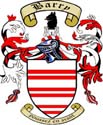
BARRYEarl of Barrymore was a title in the Peerage of Ireland. It was created for David Barry, 6th Viscount Buttevant in 1627/28. Lord Barrymore held the subsidiary titles of Baron Barry (created c. 1261), and Viscount Buttevant (created 1541) in the County of Cork in Ireland. After the death of the 8th earl all these titles became extinct.

The Barrymore title was revived in 1902 in favour of Arthur Smith-Barry, who was created Baron Barrymore in the Peerage of the United Kingdom. He was the grandson of John Smith Barry, illegitimate son of James Hugh Smith Barry (died 1837), son of the Hon. John Smith Barry, younger son of the fourth Earl of Barrymore.

The family was noted for eccentricity and in the eighteenth and early nineteenth century many of its members had nicknames such as Hellgate, Dalegate, Cripplegate, Newgate and Billingsgate. In Georgette Heyer’s novel Regency Buck, a character remarks that ” the Barrymores, you know, really cannot be held accountable for their odd manners.”

He was known as “Hellgate” and the “Rake of Rakes” and died at the age of  24.
Barrymore was born on 14 August 1769 in Marlebone, Middlesex, to Richard Barry, 6th Earl of Barrymore and Amelia Stanhope, daughter of William Stanhope, 2nd Earl of Harrington and the Lady Caroline Fitzroy. He succeeded his father as Earl of Barrymore 1 August 1773 when he was only three. His mother placed him under the care of the vicar of Wargrave in Berkshire, where he grew up and later settled.

He was heavily in debt before marrying, but instead of “marrying into money” as was common at the time, he married Charlotte Goulding, niece of the infamous Letty Lade, and the daughter of a common sedan chairman on 7 June 1792. After his death the next year, she eventually “…passed…to the lowest grade of prostitution.”

His sister Carolina (1768-?) was known as “Billingsgate,” due to her use of foul language. Henry (1770–1823), his younger brother, was “Cripplegate,” due to a physical disfigurement. His youngest brother Augustus (1773–1818) was nicknamed “Newgate,” after Newgate Prison in London.

Barrymore became a well-known sportsman, particularly in cricket, running, horse racing, boxing and swordsmanship. He bred his own race-horses and rode as his own jockey. He was especially famous for placing huge bets on both these sports and other extraordinarily ludicrous challenges.

He patronised his own personal bare-knuckle boxer, and his wife also boxed.

He made two known appearances in first-class cricket matches from 1791 to 1792, playing as a member of the Brighton Cricket Club. He was listed in the scorecards as Lord Barrymore.

His first love was, however, the theatre, a fine example of which he built and ran in Wargrave. He even acted there himself.

He was also a Member of Parliament for Heytesbury from 1791 until his death.

Barrymore retired to life in the Royal Berkshire Militia, into which he had been commissioned in 1789 and was later promoted Lieutenant, but was accidentally killed at Folkestone on 6 March 1793. His musket discharged while escorting French prisoners of war to Dover.

He was buried 17 May 1793 in St Mary’s Church in Wargrave.

Despite fears of bankruptcy, Barrymore died in unexpected solvency. He had alienated much of his Cork patrimony in 1792, at which time the Buttevant estate passed to Viscount Doneraile and to a Scottish banker, John Anderson.

Posted in British history, Georgian Era, Great Britain, real life tales | Tagged , , , , | 1 Comment

The Tale of Aradia, Daughter of Diana and Lucifer

The Tale of Aradia, Daughter of Diana and Lucifer

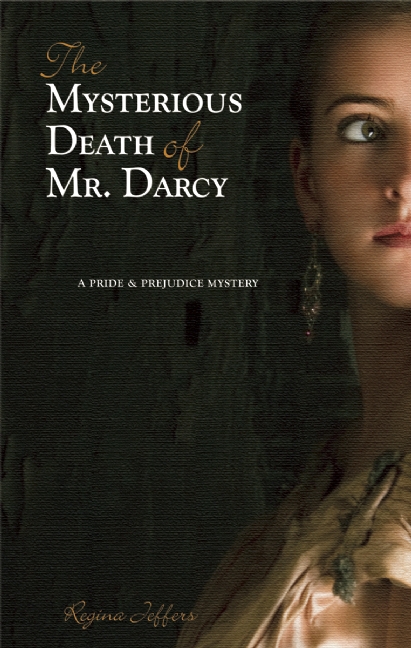
Jeffers-TMDOMDIn researching my Austen-inspired cozy mystery, The Mysterious Death of Mr. Darcy, I spent multiple hours in reading LOTS of tales of paganism, witchcraft, and folklore. Believe me, this is not my usual fare, so it was quite eye-opening. Below, one will find the tale of Diana, Lucifer, and Aradia.

Aradia, a principal figure in American folklorist Charles Leland’s 1899 work “Aradia, or the Gospel of the Witches,” is considered a central figure in the modern pagan witchcraft revival. Aradia is featured in various forms of neopaganism, including Wicca and Stregheria, as an actual deity. Raven Grimassi, founder of Stregheria, claims Aradia was an actual historical figure who led a group of “Diana-worshipping witches” in the 14th Century in Tuscany. That figure was called Aradia di Toscano. aradia

When Leland published his book, he claimed he had received the book from a Tuscan woman named Maddalena and the story was the religious text belonging to a group of Tuscan witches. In the tale, Diana seduces her brother Lucifer, who is described as “the god of the Sun and of the Moon, and of the Light, who was so proud of his beauty, and who for his pride was driven from Paradise.” When Diana sent her child Aradia to the earth below, Diana instructed Aradia “To be a teacher unto women and men/Who fain would study witchcraft.” Aradia became the first of Earth’s witches, and she promised her students that “Ye shall all be freed from slavery/And so ye shall be free in everything.”

According to the legend, Aradia taught witches and gypsies about spells and charms. She also reportedly taught peasants how to perform magic to be used against the upper classes and, specifically, against the Roman Catholic Church. Leland’s tale speaks of Aradia performing magic and of the night assembly, known as the Sabbat. Leland speculated that this folklore ultimately had roots in ancient Etruscan mythology.

The folklorist Sabina Magliocco was originally a supernatural figure in Italian folklore, who was later merged with the other folkloric figures such as the sa Rejusta of Sardinia.

Posted in legends, paranormal | Tagged , , | 1 Comment

Fake Reviews on Some of Your Favorite Book Lists…What Do You Think?

fay_bookreviews3_postFaux Books and Reviews??? What Do You Think?

Below is an excerpt from a fabulous article on a phenomenon I have witnessed on Amazon and Barnes & Noble in the form of “fake” reviews for books. I have a writer friend, for example, who asked a group of her “buddies” to write reviews for her latest Indie piece. Her manipulation didn’t bother me too much, although in hindsight it should have. Most had read the book, and they were loyal friends, in spite of their praise not being completely deserved. What did bother me was, as a group, they targeted another author with a book of a similar theme. They each gave their friend’s competitor “1′s” in their reviews; thereby, lowering the competitor’s overall ranking on the booklist. It was a stark lesson in how people have learned to manipulate the system.

Please read the excerpt from Laura Miller’s article on Social Media Scammers at Salon. If you want more, the complete article can be found at http://www.salon.com/2012/08/09/social_media_scamsters/

From the article…

“I can’t use Amazon to find new e-books anymore,” a friend said recently over dinner. “I used to be able to search on the subject headings, but now all that comes up is a bunch of junk.” The rest of the people around the table looked surprised. “Why would you ever search by subject?” one asked in bafflement. “But it’s true that unless I know exactly the title and author I’m looking for, Amazon is pretty useless these days.”

As someone who’s never browsed Amazon looking for new titles, I was intrigued by their remarks. I’ve written in the past about the proliferation of “spam” or plagiarized books and repurposed public-domain content in the Kindle store — the “junk” that my friend objects to. (The retailer has since vowed to crack down on such abuses.) But I never would have encountered these faux books if I hadn’t gone looking for them in search of a story. My friends’ observations reminded me that readers discover books in a wide variety of ways.

“You always have to read the reader reviews first, before you buy anything,” someone else declared. On that point, everyone agreed. They didn’t know about the companies you can hire to write positive customer reviews of your book if the volunteered ones are not forthcoming. In a recent article for the Guardian newspaper in Britain, Ewan Morrison listed these and other services in a long article arguing that the online forums once heralded as a way to circumvent old-school publishing and media coverage in getting the word out about a book are not very effective. That may be why more and more people are trying to game them, and thereby making them even less useful.

Posted in Uncategorized | 18 Comments

Do You Speak Jane Austen? Part Three

MTE1ODA0OTcxNTQ2ODcxMzA5The last third of the alphabet was a bit of a challenge. The letters “x” and “z” were less than cooperative. I searched Pride and Prejudice, Sense and Sensibility, and Mansfield Park for the letters, but was, generally, unsuccessful. “X” was impossible to find, and “Z” did not willing make an appearance, but below, one may find part 3 of “Do You Speak Jane Austen?” (The quotes are from Pride and Prejudice unless so noted.)

Q

quadrille – a historic dance performed by four couples in a square formation, a precursor to traditional square dancing (but in Pride and Prejudice, Austen used the word not for the dance, but to mean)

quadrille – a card game popular during the 18th century, played by four people with a deck of 40 cards She had been graciously pleased to approve of both of the discourses which he had already had the honour of preaching before her. She had also asked him twice to dine at Rosings, and had sent for him only the Saturday before, to make up her pool of quadrille in the evening. (Chapter 14)

querulous–given to complaint; grumbling; questioning Mrs. Bennet was restored to her usual querulous serenity; and, by the middle of June, Kitty was so much recovered as to be able to enter Meryton without tears; an event of such happy promise as to make Elizabeth hope that by the following Christmas she might be so tolerably reasonable as not to mention an officer above once a day, unless, by some cruel and malicious arrangement at the War Office, another regiment should be quartered in Meryton. (Chapter 42)

R

reel–a type of Scottish dance “Do not you feel a great inclination, Miss Bennet, to seize such an opportunity of dancing a reel?” (Chapter 10)

rapacity–extreme gluttony; greed When the tea-things were removed, and the card-tables placed, the ladies all rose, and Elizabeth was then hoping to be soon joined by him, when all her views were overthrown by seeing him fall a victim to her mother’s rapacity for whist players, and in a few moments after seated with the rest of the party. (Chapter 54)

S

sanguine–optimistic The sanguine hope of good, however, which the benevolence of her heart suggested had not yet deserted her; she still expected that it would all end well, and that every morning would bring some letter, either from Lydia or her father, to explain their proceedings, and, perhaps, announce their marriage. (Chapter 47)

saucy–insolent; bold Oh! how heartily did she grieve over every ungracious sensation she had ever encouraged, every saucy speech she had ever directed towards him. (Chapter 52)

sennight– one week (from “seven nights”) “Indeed I am. I shall entreat his pardon for not having done it earlier. I believe him to be Lady Catherine’s nephew. It will be in my power to assure him that her ladyship was quite well yesterday se’nnight.” (Chapter 18)

subjoin–add to the end “And will you give yourself the trouble of carrying similar assurances to his creditors in Meryton, of whom I shall subjoina list according to his information? (Chapter 50)

supercilious – overly proud For, though elated by his rank, it did not render him supercilious; on the contrary, he was all attention to everybody. (Chapter 5)

T

tractable – obedient; changeable; flexible “I never heard any harm of her; and I dare say she is one of the most tractable creatures in the world.” (Chapter 33)

threadbare – worn; frayed They found Mary, as usual, deep in the study of thorough-bass and human nature; and had some extracts to admire, and some new observations of threadbare morality to listen to. (Chapter 12)

U unabashed – unapologetic; shameless Lydia was Lydia still; untamed, unabashed, wild, noisy, and fearless. (Chapter 51)

ungovernable – incapable of being controlled She was not of so ungovernable a temper as Lydia; and, removed from the influence of Lydia’s example, she became, by proper attention and management, less irritable, less ignorant, and less insipid. (Chapter 61)

untinctured – lacking color; without a trace of vestige as in “untinctured condescension”; not to infuse (as with a quality) On this point she was soon satisfied; and two or three little circumstances occurred ere they parted, which, in her anxious interpretation, denoted a recollection of Jane not untinctured by tenderness, and a wish of saying more that might lead to the mention of her, had he dared. (Chapter 44)

V

vexatious – annoying Were the same fair prospect to arise at present as had flattered them a year ago, every thing, she was persuaded, would be hastening to the same vexatious conclusion. (Chapter 53)

Vingt-et-un – blackjack “Yes; these four evenings have enabled them to ascertain that they both like Vingt-et-un better than Commerce; but with respect to any other leading characteristic, I do not imagine that much has been unfolded.” (Chapter 6)

W

white soup – a soup made of broth and eggs “If you mean Darcy,” cried her brother, “he may go to bed, if he chooses, before it begins—but as for the ball, it is quite a settled thing; and as soon as Nicholls has made white soup enough, I shall send round my cards.” (Chapter 11)

whist – a four-person card game similar to bridge When the card-tables were placed, he had the opportunity of obliging her in turn, by sitting down to whist. (Chaper 16)

X (In the three novels I surveyed, there were no words beginning with the letter X.)

Y

York – a large walled city in Northern England “Aye, there she comes,” continued Mrs. Bennet, “looking as unconcerned as may be, and caring no more for us than if we were at York, provided she can have her own way.” (Chapter 20) 0e7486e

Z (In Pride and Prejudice, I found no words beginning with “Z,” and in Mansfield Park and Sense and Sensibility, I found only the usual “zeal” and “zealous.” I fear I did not check Northanger Abbey, Persuasion, or Emma for either “X” or “Z.” Perhaps, someone else knows more than I on those three Austen classics. Yet, here a few examples of “Z” from MP and from S&S.)

Mrs. Norris was most zealous in promoting the match, by every suggestion and contrivance likely to enhance its desirableness to either party; and, among other means, by seeking an intimacy with the gentleman’s mother, who at present lived with him, and to whom she even forced Lady Bertram to go through ten miles of indifferent road to pay a morning visit. (MP, Chapter 4)

Maria, with only Mr. Rushworth to attend to her, and doomed to the repeated details of his day’s sport, good or bad, his boast of his dogs, his jealousy of his neighbours, his doubts of their qualifications, and his zeal after poachers, subjects which will not find their way to female feelings without some talent on one side or some attachment on the other, had missed Mr. Crawford grievously; and Julia, unengaged and unemployed, felt all the right of missing him much more. (MP, Chapter 7)

He deprecated her mistaken but well-meaning zeal. (MP, Chapter 23) In the promotion of this object she was zealously active, as far as her ability reached; and missed no opportunity of projecting weddings among all the young people of her acquaintance. (S&S, Chapter 8)

But this did not last long; Elinor had hardly got their last visitors out of her head, had hardly done wondering at Charlotte’s being so happy without a cause, at Mr. Palmer’s acting so simply, with good abilities, and at the strange unsuitableness which often existed between husband and wife, before Sir John’s and Mrs. Jennings’s active zeal in the cause of society, procured her some other new acquaintance to see and observe. (S&S, Chapter 21) So, what are some of your favorite Regency era words?

Posted in British history, Jane Austen, Living in the Regency, Regency era | Tagged , , | 10 Comments

Nomenclature of Addressing the Nobility or the Aristocracy

The Nomenclature of Nineteenth Century Address

How did one keep all those numerous titles straight when he addressed the members of the aristocracy and the titled?

Here are some of the MANY differences of which one needed to be aware:

“Lady” – used for the wife of a baronet or a knight (i.e., Sir Thomas Bertram’s wife in Mansfield Park is Lady Bertram)

“Lady” – used for a marchioness, countess, viscountess, or baroness (i.e., the wife of Viscount Lexford became Lady Lexford in A Touch of Mercy)

“Sir” – used for a baronet or a knight with his first name (i.e., Sir Thomas Bertram or Sir Walter Elliot from Persuasion)

“Baron” – used for a judge of the Exchequer Court or for a baron of the peerage upon formal occasions (i.e, Baron Johnathan Swenton in A Touch of Honor)

“Lord” – used for an earl, marquis, or viscount – usually this was the title the man possessed (for example, the Earl of Linworth became Lord Linworth); barons were rarely spoken of as Baron Ashworth; instead, the man would be Lord Ashworth

“My Lord” – used for a peer below the rank of duke and to a bishop of the Church of England

“My Lord” – used for a lord mayor and judges of the King’s Bench and Common Pleas court

“Your Grace” – to a duke or duchess if the person making the address were below the gentry; the title is also used for an archbishop of the Church of England

“Duke” or “Duchess” – used for a duke or duchess and used by a member of the nobility or gentry

“Your Highness” – used for the nephews, nieces, and cousins of the ruling monarch/sovereign

“Your Royal Highness” – used for the monarch/sovereign’s spouse, children, and siblings

“Your Majesty” – used for the king or queen 7433803_s

Posted in British history, titles of aristocracy | Tagged , , , | 7 Comments