Regency Era Lexicon – Next Up is the Letter “G”

0e7486eRegency Era Lexicon – We’re Up to “G”

Gaiters – knee-high leggings that buttoned on the side; a master would wear these over his clothing to protect them from mud, dirt, and rain

Gallery – a long narrow room in a country house where ancestral portraits were displayed

Galop – an energetic dance that later became part of the quadrille’s movements

Gaming – gambling

Gamekeeper – oversaw the protection and breeding of game on an estate

Gangway – the passageway about halfway down the House of Commons that connected the rear and the front benches

Garret – an attic

Garter – the Order of the Garters was the highest order of knighthood; members outranked baronets; generally bestowed only on peers

Gated – to be gated was to be confined to the grounds of a college; a punishment for undergraduate students at a university

Gazette – a nickname for the London Gazette; a publication that listed governmental appointments and bankruptcies (“to be gazetted” was to have received a government appointment) (“to be in gazette” was to have gone bankrupt)

Genteel Poverty – usually the state for widowed or single women; being able to associate with the gentry, but living in a second-class manner

General Post – mail going out from the Central London Post Office to the populated rural areas of England

Gentlemen – male members of the landed gentry, along with noblemen and those of lesser titles (knight or baronet)

Gentleman Farmer – a man who farmed a sizable amount of land but less than 300 acres; came below the gentry in social hierarchy

Gentleman’s Gentleman – a valet

Gentry – landowners below the nobility in the social hierarchy; owned at least 300 acres

Gibbet – a corpse hung in chains at a crossroads as a deterrent to passersby

Gig – a one-horse carriage; highly popular with young wealthy men; could carry two passengers; light weight two-wheeled carriage

Glazier – a man who installed window glass

Glebe – also known as “Church furlong” or “parson’s closes”; an area within a manor and parish used to support the parish priest; an area of land belonging to a benefice in both the Roman Catholic and the Anglican church; the property, along with the parsonage house and grounds, assigned to support the priest; granted by the lord of the manor in which the church was situated; the holder of the benefice could retain the glebe for his own use (usually agricultural endeavors) or he could lease it to others and retain the rents as his own income

George III – (4 June 1738 – 29 January 1820) King of Great Britain and King of Ireland beginning on 25 October 1760; later made King of Hanover on 12 October 1814; during his reign, Great Britain defeated the French in the Seven Years’ War; became the dominant European power in both North America and India; lost the American War of Independence to the colonists; and defeated Napoleon at the Battle of Waterloo in June 1815

George IV – (12 August 1762 – 26 June 1830) King of the United Kingdom of Great Britain and Ireland and also King of Hanover after his father’s death; from 1811 until his accession, he served as Prince Regent during his father’s mental illness

Georgian England – a period of British history, which takes its name from, and is normally defined as spanning the reigns of the first four Hanoverian kings of Great Britain: George I, George II, George III, and George IV; covers the period from 1714 to 1830 (with the sub-period of the Regency from 1811 to 1820, when George IV served as the Prince Regent); occasionally, the short reign of William IV (1830-1837) is included in the period; the term “Georgian” is used chiefly in referring to social history and architecture

Gordon Riots – on 2 June 1780, 50,000 rioters marched on Parliament in opposition to the Roman Catholic Relief Act of 1778; the act removed some of the more extreme discriminatory measures officially taken against the Catholics, especially requiring military recruits to swear an oath of allegiance to the Church of England

Gorm – lower-class slang for “goddamn”

Gout – a hereditary disease, which is aggravated by the consumption of too much protein; results in swollen joints

Grand Tour – when a young made graduated from the university or finished his formal education, he often went on a Grand Tour: a journey across Western Europe, which included Italy and France; an opportunity to learn modern languages (French, German, Italian, etc.); associated with wealthy and titled families on the Continent; toured famous cities and sites; attended numerous parties where he learned something of exotic foods and foreign customs; lasted between 2-4 years

Grange – an isolated farmhouse owned by a member of the gentry

Greatcoat – a large overcoat worn outdoors; had several short collars known as capes about the shoulders

Greengrocer – a man who sells fruit and vegetables

Gretna Green – a village in the south of Scotland on the old coaching route from London to Edinburgh; a popular spot for those ignoring English laws of marriage and eloping; “being married over the anvil”

Groat – nickname for a fourpence

Groom – the servant who tended the horses

Grosvenor Square – a fashionable square in London; a part of Mayfair

Gruel – a food staple of the peasant class; made from some sort of cereal (oat, wheat, rye, rice, millet, hemp, barley, chestnut flour, or in the case of the English, corn) boiled in water or milk; often given to invalids and recently-weaned children; used in institutions and workhouses because it was a “hearty” sustenance and cheap to make

Guinea – a coin worth 21 shillings; last issued in 1813

Posted in British history, language choices, Living in the Regency, Regency era | Tagged , , | 3 Comments

“A Canterbury Tale” Board Game

A Canterbury Tale Board Game

pic965758_tCall me a literary geek, but I got really excited when I saw this on Twitter.
http://www.boardgamegeek.com/boardgame/96792/the-road-to-canterbury

Game description from the publisher:

Greed, Pride, Gluttony, Wrath, Luxury, Idleness, and Envy – the infamous “Seven Deadly Sins”. For the faithful, they instill horror. For you, on the other hand, they present a wonderful business opportunity!

In The Road to Canterbury, you play a medieval pardoner who sells certificates delivering sinners from the eternal penalties brought on by these Seven Deadly Sins. You make your money by peddling these counterfeit pardons to Pilgrims traveling the road to Canterbury. Perhaps you can persuade the Knight that his pride must be forgiven? Surely the Friar’s greed will net you a few coins? The Miller’s wrath and the Monk’s gluttony are on full public display and demand pardoning! The Wife of Bath regales herself in luxury, the Man-of-Law languishes in idleness, and that Prioress has envy written all over her broad forehead. And the naughty stories these Pilgrims tell each other are so full of iniquity they would make a barkeep blush! Pardoning such wickedness should be easy money, right?

Not quite. For you to succeed as a pardoner, you’ll need to do more than just sell forged pardons for quick cash. To keep your services in demand, you will actually need to lead these Pilgrims into temptation yourself! Perhaps some phony relics might help? There is also one big catch. The Seven Deadly Sins live up to their name: each sin that a Pilgrim commits brings Death one step nearer, and a dead Pilgrim pays no pardoners!

So much to forgive, so little time. Will you be able to outwit your opponents by pardoning more of these Pilgrims’ sins before they die or finish their pilgrimage to Canterbury?

What other classic novel would make great board games? Leave your comments below.

Posted in British history, Canterbury tales | Tagged , , | 3 Comments

Heroes Require GMC Too! by Jacki Delecki + a Giveaway of “A Code of Love”

Heroes need GMC too.

I am so pleased to welcome back to my blog, the incomparable Jacki Delecki with a new book in her “Code” series. Jacki has a giveaway also; so comment below to be entered in the giveaway. 

Jacki Delecki

Jacki Delecki

I don’t like to make generalizations but it seems like many historical novels focus on the goals, motivation and conflict (GMC) as it relates to the heroine. A marriage of convenience. A compromised reputation. The orphaned miss who seeks gainful employment. It’s important to remember that heroes need GMC too. As authors, we must create emotionally compelling internal and external conflict for both our heroines and heroes.

While working on research for my latest release, A CODE OF THE HEART, I came across some interesting facts about Robert Fulton, an American inventor and engineer who is credited with developing the steamboat. During the course of his life, he travelled around the world, collaborating with other inventors and scientists on naval vessels and weaponry. He designed the first working submarine while in France before switching alliances and moving to England, where he was commissioned to build weapons for the Royal Navy. One of Fulton’s “secret weapons” was the torpedo-catamaran, which the British Navy hoped to use to blow French ships out of the water. Like many inventions, the early model had some functionality issues, but I was intrigued by the concept of French-British espionage.

When I began developing my characters for the story, I started wondering what it would take to redeem a disreputable young rake. Perhaps protecting his country by preventing a secret weapon from falling into the wrong hands would work. So that is exactly the challenge I put in front of Lord Derrick Brinsley, as well as the not-so-small matter of proving his worth to the very proper society miss, Amelia Bonnington.

By using the information I discovered during my research, I was able to create strong GMC for my hero. As for Amelia Bonnington’s GMC, you’ll have to read the book.

Excerpt: 

Edworth’s Christmas Ball
December, 1803

Amelia Bonnington braced herself as the crowd bumped and pushed, straining to get close to His Highness. The crème of society shoved and elbowed, politely, of course, since one would never want to be accused of bad manners.

The Prince Regent stood on a small platform at the front of the ballroom, elaborately decorated for Christmas. Heavy bows of greenery and bells hung on red velvet throughout the room. Hundreds of beeswax candles burned. No expense had been spared for the house party celebrating His Royalty’s visit.

Amelia had no desire to be part of the Prince’s retinue, a ghastly group who were only interested in themselves and their own pleasure.

She sucked in the little air left in the room and pushed, politely, of course, toward the door. The crowd and the heat were unbearable. She never swooned, but with the strong smell of perfume and the hot pressing bodies, she felt tonight might be her first. A maelstrom of sensations and emotions enveloped her. The last days of upheaval must have had a greater effect on her than she had wanted to believe.

Her whole world had been turned upside down and twisted sideways at this house party. In the last two days, her friends had been poisoned and kidnapped, and she had been ensnared in the French villain’s trap.

She needed to escape from this crowded room. She needed fresh air and open space. A gentleman used the chaos in crowded room to take liberties with her person. After spending years in congested ballrooms, she fully recognized the scoundrel’s ploy to press against her. His heavy eyelids didn’t conceal his roving eyes, focused down her décolletage. As his eyes remained fixated on her breasts, he grabbed her elbow pretending to help her when, in fact, he intended to pull her closer against his heavy, malodorous body.

A sick sensation started in her stomach and crawled to her throat. She pulled her arm away from his grasp, repulsive with sweat seeping through his gloves. “Sir, release me this instant.”

She was about to dig her heel into the supposed gentleman’s fat toe when suddenly a space opened around her and a smell of fresh air and lime soap surrounded her.

The perspiring man stared behind her. His slack mouth and the look of fear on his face were priceless.

She recognized Derrick Brinsley’s scent and heat—the impossible, difficult, yet appealing man. His deep, dark voice flitted down her skin like a caress. “Miss Amelia, may I escort you away from this crowd?”

Relief and something much more potent tingled along her skin. She turned quickly and found herself pressed against the broad chest of the man she had been forced to conspire with to save her friend.

“I’ve never thought I’d be happy to see you.” She refused to be like all the other women who’d be grateful to have his attention.

His lifted one eyebrow in a sardonic way that she always found irritating. He was too big, too handsome, and too confident that she’d find him irresistible. She’d never let him have the satisfaction that she did find him…almost irresistible.

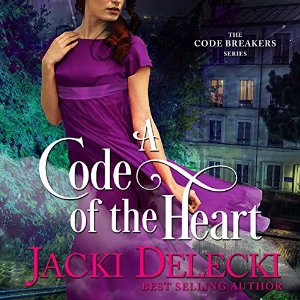
unnamedA CODE OF THE HEART coming February 2015!

Miss Amelia Bonnington has been in love with her childhood hero since she was eleven years old… or so she thought until a not-so proper impassioned and unyielding kiss from the not-so honorable and equally disreputable Lord Derrick Brinsley, gave her reason to question the feelings of the heart.

Lord Brinsley, shunned from society for running off with his brother’s fiancée, hasn’t cared about or questioned his lack of acceptance until meeting the beguiling Amelia Bonnington. One passionate moment with the fiery Miss Bonnington has him more than willing to play by society’s rules to possess the breathtaking, red-haired woman.

Amelia unwittingly becomes embroiled in espionage when she stumbles upon a smuggling ring in the modiste shop of her good friend. To prove her French friend’s innocence, she dangerously jumps into the fray, jeopardizing more than her life.

On undercover assignment to prevent the French from stealing the Royal Navy’s deadly weapon, Derrick must fight to protect British secrets from falling into the hands of foreign agents, and the chance at love with the only woman capable of redeeming him.

Share your favorite historical trope for heroes in the comments below for a chance to win a digital copy of A CODE OF LOVE, Book 1 in the Code Breakers series!51V4E45VDcL._BO2,204,203,200_PIsitb-sticker-v3-big,TopRight,0,-55_SX278_SY278_PIkin4,BottomRight,1,22_AA300_SH20_OU01_

Learn More of Author, Jacki Delecki: Descended from a long line of storytellers, Jacki Delecki spins adventures filled with mystery, healing and romance.

Jacki’s love affair with the arts began at a young age and inspired her to train as a jazz singer and dancer. She has performed many acting roles with Seattle Opera Company and Pacific Northwest Ballet. Her travels to London and Paris ignited a deep-seated passion to write the Regency Code Breaker Series. Jacki is certain she spent at least one lifetime dancing in the Moulin Rouge.

Jacki has set her Grayce Walters Mystery Series in Seattle, her long-time home. The city’s unique and colorful locations are a backdrop for her thrilling romantic suspense. Although writing now fills much of her day, she continues to volunteer for Seattle’s Ballet and Opera Companies and leads children’s tours of Pike Street Market. Her volunteer work with Seattle’s homeless shelters influenced one of her main characters in An Inner Fire and Women Under Fire.

Jacki’s two Golden Labs, Gus and Talley, were her constant companions. Their years of devotion and intuition inspired her to write dogs as main characters alongside her strong heroines. A geek at heart, Jacki loves superhero movies—a hero’s battle against insurmountable odds. But her heroines don’t have to wear a unitard to fight injustice and battle for the underdog.

Look for more heart-pounding adventure, intrigue, and romance in Jacki’s Code Breakers Series. A Code of Love is the first book in the series. A Christmas Code—A Regency Novella, is now available at all retail sites. A Code of the Heart was released on Valentine’s Day 2015. 51q8fCHcz0L._BO2,204,203,200_PIsitb-sticker-v3-big,TopRight,0,-55_SX278_SY278_PIkin4,BottomRight,1,22_AA300_SH20_OU01_

To learn more about Jacki and her books and to be the first to hear about contests and giveaways join her newsletter found on her website: www.jackidelecki.com. Follow her on Facebook—Jacki Delecki; Twitter @jackidelecki.

Purchase Links: 

Amazon
Barnes and Noble
iBooks
Kobo 
GooglePlay

Posted in book excerpts, book release, British history, Great Britain, Living in the Regency, Regency era | Tagged , , | 5 Comments

North Carolina Homecoming Bar Soap Paired with My Contemporary Austen, Honor and Hope

Honor and Hope: A Contemporary Romantica Based on “Pride and Prejudice”

Honor and Hope: A Contemporary Pride and Prejudice

[romance; contemporary romance; classics; Austenesque; football; winery]

Liz Bennet’s flirtatious nature acerbates Will Darcy’s controlling tendencies, sending him into despair when she fiercely demands her independence from him. How could she repeatedly turn him down? Darcy has it all: good looks, intelligence, a pro football career, and wealth. Attracted by a passionate desire, which neither time nor distance can quench, they are destined to love each other, while constantly misunderstanding one another until Fate deals them a blow from which their relationship may never recover. Set against the backdrop of professional sports and the North Carolina wine country, Honor and Hope offers a modern romance loosely based on Jane Austen’s Pride and Prejudice.

Kindle  

Amazon  

Kindle Unlimited 

Book Bub

Audible (Virtual Voice Narration)

North Carolina  Homecoming Bar Soap  

Inspired by the works of Regina Jeffers

Set against the backdrop of a professional football career, Will Darcy and Liz Bennet just can’t seem to connect. “Attracted by a passionate desire, which neither time nor distance can quench, they are destined to love each other, while constantly misunderstanding one another until Fate deals them a blow from which their relationship may never recover.”

Review by Evie Cotton: I have to admit that I was skeptical of this book when I first heard about it. I am not a sports fan and generally speaking not a big fan of angst. This book has both of those, but also contains vivid descriptions of the North Carolina Wine Country, and nuances of tobacco farming that I found to be absolutely fascinating. Overall, this book was fantastic and definitely one that I couldn’t put down. I would recommend this novel to anyone looking for a contemporary take on Pride and Prejudice.

11004710_10205865004207221_1135780387_n

North Carolina Homecoming Bar Soap smells of freshly hung tobacco with newly brewed tea to create an intoxicating earthy aroma combined with a fruity floral and finished off with soft baby powder. Its the scent of home for Liz Bennet.

In honor of the launch of North Carolina  Homecoming Bar Soap, Regina Jeffers is giving our fans the opportunity to purchase Honor and Hope at a discounted price through several market places.


To check out other books by Regina Jeffers, please visit her Amazon Author Page!

All of Evie’s soaps are available for purchase at the Etsy Store. If there is something that you might like but don’t see it listed, please feel free to shoot her an email, chances are good, that if she doesn’t have what you want on hand, she can whip it up in a jiff!

Posted in Uncategorized | 1 Comment

“Getting Hitched” During the Regency Era

Regency Era Marriage Customs

As tomorrow is Valentine’s Day, I thought me might have a look at the natural sequence of “love.” You know the old rhyme… “First comes love, then comes marriage…”

Until 1823, a single person under the age of one and twenty could not marry without his/her parent’s permission. (Lydia’s elopement and Georgiana’s aborted elopement were instances of this rule.) After 1823, the minimum age to marry without a parent’s consent dropped to 14 for a boy and 12 for a girl. Other rules of marriage were also in effect, such as one was discouraged from marrying one’s deceased wife’s sister; yet, it was acceptable to marry one’s first cousin (Lady Catherine hopes Darcy will marry his cousin Anne, and Mr. Collins wishes to marry several of his Bennet cousins before settling on Charlotte Lucas.)

The Marriage Act of 1835 eliminated the possibility of marrying one’s deceased wife’s sister. Such marriages were considered “void”able (if one wished an annulment). However, please recall that Jane Austen’s younger brother Charles married his wife’s (Francis Palmer) sister, Harriet. Francis had died in childbirth, and Charles had left his surviving daughters in Harriet’s care while he returned to sea. In 1820, he returned to England for several years, and after three years of “courtship,” he married Harriet. They remained married for 32 years (until his death in 1852). They had four children (3 sons and a daughter).

The law transferred all of a woman’s property to her husband upon their marriage. Marriages were a BUSINESS CONTRACT, not a romantic attachment. When a wife from the wealthier classes entered a marriage, she, generally, brought a generous dowry to the settlement. The financial arrangements for a marriage were rarely a matter of concealment. According to What Jane Austen Are and Charles Dickens Knew (Daniel Pool, Touchstone Books), “a contemporary courtship etiquette manual says very straightforwardly that once you propose ‘your course is to acquaint the parents or guardians of the lady with your intentions, at the same time stating your circumstances and what settlement you would make upon your future wife; and, on their side, they must state what will be her fortune as near as they can estimate to the best of their knowledge at the time you make the enquiry.’”

Men often used their wives’ dowries to shore up their estates and investments. “Keeping up with the Jones” during the Regency was an expensive endeavor. The bride’s family negotiated her financial future as part of the settlements. What happened to her and her children depended upon making a good settlement. At the man’s death, the wife would receive approximately one-third of her husband’s land, but the Dower Act of 1833 abolished this practice. The woman was often given “pin money,” an annual allowance for her personal needs while her husband remained alive. After his death, a “jointure” could provide the widow money and land for her future, while leaving “portions” for her minor children.

prideweddingUnless one was a member of the Royal family (who often married at night), weddings occurred only during canonical hours, between 8 A.M. and noon. Normally, only close family and friends would attend the wedding. After the ceremony, the couple and their guests attended a wedding breakfast, which would hold food choices beyond “breakfast” items. The size of the wedding breakfast often depended upon the season (what was available to serve).

If an engaged person terminated the agreement before the marriage, he/she could face legal action in a “breach of promise” suit. However, assuming the couple meant to meet their obligations, there were four routes to “placing one’s neck in the parson’s ropes.”

(1) Calling of the Banns – If marrying in the Church of England, the couple would “publish the banns.” From his pulpit, the local clergy would announce the upcoming wedding for three consecutive Sundays. If the bride and groom lived in different parishes, the banns were read in both. If there were no objections to their joining, the couple could marry within 90 days of the final call. This was the method that the poorer families used for it cost nothing to have the banns called. Of course, one ran the possibility that an objection would be lodged in a very public manner. If the persons marrying came from separate parishes, the curate of one parish could not solemnize the wedding without a certificate of the other stating the banns had been “thrice called” and no objections had been lodged.

(2) Common/Ordinary License – For approximately 10 shillings, a couple could purchase a license from a clergyman. Then the couple could marry in either the parish of the bride or the groom. The common/ordinary license was good for 15 days. (This is how Lydia and Wickham were married in Pride and Prejudice. If one recalls, Wickham’s lodgings were in St. Clement’s parish, and St. Clement’s was the site of the marriage. One had to be a resident in the parish for 15 days prior to the ceremony.)

The common license could be obtained from any bishop or archbishop. A sworn statement was given that there were no impediments to the marriage. The marriage was to take place within 3 months of the license’s issuance.

(3) Special License – This was the most expensive way to marry. The Archbishop of Canterbury granted a special license. They cost between 4-5 pounds and were at the archbishop’s discretion. With a special license, a couple could marry in any parish and at any time.

(4) Civil License – After 1836, a fourth option appeared: the civil license. This license could be obtained from the superintendent-registrar. Couples who were Catholic, Jewish, or Dissenters obtained this license. The couple could be married at a church or at the registrar’s office.

220px-Grenta_Green
Of course, the couple could foil all plans for marriage by eloping to Gretna Green, a Scottish town on the border with England. Gretna Green is in Dumfries and Galloway, near the mouth of the River Esk and was historically the first village in Scotland, following the old coaching route from London to Edinburgh. The marriage rules were not as strict as those in England. The Scottish Presbyterian Church was more lax in its requirements than the Church of England. Elopement was frowned upon as a “bad” way to begin a marriage. An elopement brought a family a certain amount of shame as it was a very anti-social act. A couple simply had to pledge yourself to your chosen partner and in the presence of another. The act was often referred to marrying “over the anvil” because Scottish law allowed for “irregular marriages,” and anyone could conduct the marriage ceremony. The blacksmiths in Gretna became known as “anvil priests.”

Posted in British history, Regency era | 13 Comments

“Love” Is in the Air

Love is in the Air

With Valentine’s Day coming up this weekend, I thought we might take a look at “love” as it is portrayed in the movies. Below (in no particular order) are some of my favorite scenes from romantic films. Feel free to share your favs below.

pp1-300x225Pride & Prejudice (2005)
“…If, however, your feelings have changed, I will have to tell you: you have bewitched me, body and soul, and I love … I love … I love you. I never wish to be parted from you from this day on.”
—Darcy (Matthew MacFadyen) to Elizabeth (Keira Knightley)

Dirty Dancing (1987)
“Me? I’m scared of everything. I’m scared of what I saw, I’m scared of what I did, of who I am, and most of all I’m scared of walking out of this room and never feeling the rest of my whole life the way I feel when I’m with you.” Baby (Jennifer Grey) to Johnny (Patrick Swayze).

Love Actually (2003)
“But for now, let me say — without hope or agenda, just because it’s Christmas and at Christmas you tell the truth — to me, you are perfect. And my wasted heart will love you. Until you look like this [picture of a mummy]. Merry Christmas.” Mark (Andrew Lincoln) to Juliet (Keira Knightley)

Notting Hill (1999)
“Don’t forget I’m just a girl, standing in front of a boy, asking him to love her.”
— Anna (Julia Roberts) to William (Hugh Grant)

titanicTitanic (1997)
“Winning that ticket, Rose, was the best thing that ever happened to me… it brought me to you … You must do me this honor, Rose. Promise me you’ll survive. That you won’t give up, no matter what happens, no matter how hopeless. Promise me now, Rose, and never let go of that promise.”
— Jack (Leonardo DiCaprio) to Rose (Kate Winslet)

The Last of the Mohicans (1992)
“…You stay alive, no matter what occurs! I will find you. No matter how long it takes, no matter how far, I will find you.”
— Hawkeye (Daniel Day-Lewis) to Cora (Madeleine Stowe)

When Harry Met Sally (1989)
“I love that you get cold when it’s 71 degrees out. I love that it takes you an hour and a half to order a sandwich. I love that you get a little crinkle in your nose when you’re looking at me like I’m nuts. I love that after I spend day with you, I can still smell your perfume on my clothes. And I love that you are the last person I want to talk to before I go to sleep at night. And it’s not because I’m lonely, and it’s not because it’s New Year’s Eve. I came here tonight because when you realize you want to spend the rest of your life with somebody, you want the rest of your life to start as soon as possible.”
— Harry (Billy Crystal) to Sally (Meg Ryan)

The Notebook (2004)
“So it’s not gonna be easy. It’s gonna be really hard. We’re gonna have to work at this every day, but I want to do that because I want you. I want all of you, forever, you and me, every day. Will you do something for me, please? Just picture your life for me? 30 years from now, 40 years from now? What does it look like? If it’s with him, go. Go! I lost you once, I think I can do it again. If I thought that’s what you really wanted. But don’t you take the easy way out.”
— Noah (Ryan Gosling) to Allie (Rachel McAdams)

Sleepless in Seattle (1993)
“It was a million tiny little things that, when you added them all up, they meant we were supposed to be together … and I knew it. I knew it the very first time I touched her. It was like coming home. .. only to no home I’d ever known … I was just taking her hand to help her out of a car and I knew. It was like … magic.”
— Sam (Tom Hanks) speaking of his deceased wife to the radio show

gone-with-the-windGone with the Wind (1939)
“No, I don’t think I will kiss you, although you need kissing, badly. That’s what’s wrong with you. You should be kissed and often, and by someone who knows how.”
— Rhett (Clark Gable) to Scarlett (Vivien Leigh)


Casablanca (1942)
“Here’s looking at you, kid.”
—Rick (Humphrey Bogart) to Ilsa (Ingrid Bergman)

Love Story (1970)
“Love means never having to say you’re sorry.”
—Jennifer (Ali MacGraw) to Oliver (Ryan O’Neal)

Jerry Maguire (1996)
“You had me at hello.”
— Dorothy (Renée Zellweger) to Jerry (Tom Cruise)

Sense and Sensibility (1995)
But wait, there’s more!
“My heart is, and always will be, yours.” — Edward Ferrars (Hugh Grant) to Elinor Dashwood (Emma Thompson)

on-golden-pondOn Golden Pond (1981)
“Listen to me, mister. You’re my knight in shining armor. Don’t forget it.”
— Ethel (Katharine Hepburn) to Norman (Henry Fonda)

An Affair to Remember (1957)
“Oh, it’s nobody’s fault but my own! I was looking up… it was the nearest thing to heaven! You were there…” — Terry McKay (Deborah Kerr) to Nick Ferrante (Cary Grant)

Doctor Zhivago (1965)
Lara (Julie Christie): “Wouldn’t it have been lovely if we had met before?”
Zhivago (Omar Sharif): “Before we did? Yes.”
Lara: “We’d have got married, had a house and children. If we’d had children, Yuri, would you like a boy or girl?”
Zhivago: “I think we may go mad if we think about all that.”
Lara: “I shall always think about it.”

Some Kind of Wonderful (1987)
Watts (Mary Stuart Masterson): [putting on Keith’s diamond earrings] “What do you think?”
Keith (Eric Stoltz): “You look good wearing my future.”

Wuthering Heights (1939)
“Catherine Earnshaw, may you not rest so long as I live on! I killed you. Haunt me, then! Haunt your murderer! I know that ghosts have wandered on the Earth. Be with me always. Take any form, drive me mad, only do not leave me in this dark alone where I cannot find you. I cannot live without my life! I cannot die without my soul.” — Heathcliff (Laurence Olivier)

A Room with a View (1985)
“He’s the sort who can’t know anyone intimately, least of all a woman. He doesn’t know what a woman is. He wants you for a possession, something to look at, like a painting or an ivory box. Something to own and to display. He doesn’t want you to be real, and to think and to live. He doesn’t love you. But I love you. I want you to have your own thoughts and ideas and feelings, even when I hold you in my arms. It’s our last chance.” — George Emerson (Julian Sands)

The Way We Were (1973)
Katie (Barbra Streisand): “Wouldn’t it be lovely if we were old? We’d have survived all this. Everything thing would be easy and uncomplicated; the way it was when we were young.”
Hubbell (Robert Redford): “Katie, it was never uncomplicated.”
The Time Traveler’s Wife (2009)  I want to tell you, again, I love you. Our love has been the thread through the labyrinth, the net under the high-wire walker, the only real thing in this strange life of mine that I could ever trust. Tonight I feel that my love for you has more density in this world than I do, myself: as though it could linger on after me and surround you, keep you, hold you. Henry DeTamble (Eric Bana) to Claire Abshire (Rachel McAdams)

tumblr_mlrodrEpf81qj4315o1_500Ten Things I Hate About You(1996)   I hate the way you talk to me, and the way you cut your hair. I hate the way you drive my car. I hate it when you stare. I hate your big dumb combat boots, and the way you read my mind. I hate you so much it makes me sick; it even makes me rhyme. I hate it, I hate the way you’re always right. I hate it when you lie. I hate it when you make me laugh, even worse when you make me cry. I hate it that you’re not around, and the fact that you didn’t call. But mostly I hate the way I don’t hate you. Not even close, not even a little bit, not even at all.  Kat Stratford (Julia Stiles) speaking of Patrick Verona (Heath Ledger)

The Bridges of Madison County (1995)
Francesca (Meryl Streep): Robert, please. You don’t understand, no-one does. When a woman makes the choice to marry, to have children; in one way her life begins but in another way it stops. You build a life of details. You become a mother, a wife and you stop and stay steady so that your children can move. And when they leave they take your life of details with them. And then you’re expected move again only you don’t remember what moves you because no-one has asked in so long. Not even yourself. You never in your life think that love like this can happen to you.
Robert Kincaid (Clint Eastwood): But now that you have it…
Francesca: I want to keep it forever. I want to love you the way I do now the rest of my life. Don’t you understand… we’ll lose it if we leave. I can’t make an entire life disappear to start a new one. All I can do is try to hold onto to both. Help me. Help me not lose loving you.

The Bridges of Madison County (1995)    Robert Kincaid: This kind of certainty comes but once in a lifetime.

The Bridges of Madison County (1995)
Francesca: And in that moment, everything I knew to be true about myself up until then was gone. I was acting like another woman, yet I was more myself than ever before.

Under the Tuscan Sun (2003)     Frances (Diane Lane): Do you know the most surprising thing about divorce? It doesn’t actually kill you. Like a bullet to the heart or a head-on car wreck. It should. When someone you’ve promised to cherish till death do you part says “I never loved you,” it should kill you instantly. You shouldn’t have to wake up day after day after that, trying to understand how in the world you didn’t know. The light just never went on, you know. I must have known, of course, but I was too scared to see the truth. Then fear just makes you so stupid.

Martini(Vincent Riotta): No, it’s not stupid, Signora Mayes. L’amore e cieco.

Frances: Oh, love is blind. Yeah, we have that saying too.

Martini: Everybody has that saying because it’s true everywhere.

It Happened One Night (1934)
Ellie Andrews (Claudetter Colbert): Have you ever been in love, Peter?
Peter Warne (Clark Gable): Me?
Ellie Andrews: Yes. Haven’t you ever thought about it at all? It seems to me you, you could make some girl wonderfully happy.
Peter Warne: Sure I’ve thought about it. Who hasn’t? If I could ever meet the right sort of girl. Aw, where you gonna find her? Somebody that’s real. Somebody that’s alive. They don’t come that way anymore. Have I ever thought about it? I’ve even been sucker enough to make plans. You know, I saw an island in the Pacific once. I’ve never been able to forget it. That’s where I’d like to take her. She’d have to be the sort of a girl who’d… well, who’d jump in the surf with me and love it as much as I did. You know, nights when you and the moon and the water all become one. You feel you’re part of something big and marvelous. That’s the only place to live… where the stars are so close over your head you feel you could reach up and stir them around. Certainly, I’ve been thinking about it. Boy, if I could ever find a girl who was hungry for those things…
[she comes around the blanket “Walls of Jericho” and kneels by his bed]
Ellie Andrews: Take me with you, Peter. Take me to your island. I want to do all those things you talked about.
Peter Warne: You’d better go back to your bed.
Ellie Andrews: I love you. Nothing else matters. We can run away. Everything will take care of itself. Please, Peter, I can’t let you out of my life now. I couldn’t live without you.
[she cries in his arms]
Peter Warne: [firmly] You’d better go back to your bed.
Ellie Andrews: I’m sorry.
[she returns to her bed still crying]

Up Close & Personal (1996)
Tally Atwater (Michelle Pfeiffer): Do you want to be with me?
Warren Justice (Robert Redford): So much it hurts.

Charade (1963)
Adam Canfield (Cary Grant) Well, what did you expect me to say? That a pretty girl with an outrageous manner means more to an old pro like me than a quarter of a million dollars?
Reggie Lampert (Audrey Hepburn): I don’t suppose so.
Adam Canfield: Well, it’s a toss-up, I can tell you that.
Reggie Lampert: What did you say?
Adam Canfield: Hasn’t it occurred to you that I’m having a tough time keeping my hands off you?
[Regina is stunned]
Adam Canfield: Oh, you should see your face.
Reggie Lampert: What’s the matter with it?
Adam Canfield: It’s lovely.
[Regina drops her knife and fork]
Adam Canfield: What’s the matter now?
Reggie Lampert: I’m not hungry anymore; isn’t it glorious?

Two Weeks’ Notice (2003)

George Wade (Hugh Grant): I need your advice on one last thing, then I promise you will never hear from me again. You see, I’ve just delivered the first speech I’ve written entirely by myself since we met, and I think I may have blown it. I want to ask your thoughts. Okay? Then I will read it to you. I’d like to welcome everyone on this special day. Island Towers will bring glamour and prestige to the neighborhood and become part of Brooklyn’s renaissance. And I’m very pleased and proud to be here. Unfortunately, there is one fly in the ointment. You see, I gave my word to someone that we wouldn’t knock down this building behind me. And normally, and those of you who know me or were married to me can attest to this, my word wouldn’t mean very much. So why does it this time? Well, partly because this building is an architectural gem and deserves to be landmarked and partly because people really do need a place to do senior’s water ballet and CPR. Preferably not together. But mainly because this person, despite being unusually stubborn and unwilling to compromise and a very poor dresser, is… she’s rather like the building she loves so much. A little rough around the edges but, when you look closely, absolutely beautiful. And the only one of her kind. And even though I’ve said cruel things and driven her away, she’s become the voice in my head. And I can’t seem to drown her out. And I don’t want to drown her out. So, we are going to keep the community center. Because I gave my word to her and because we gave our word to the community. And I didn’t sleep with June. That’s not in the speech, that’s just me letting you know that important fact. What do you think?
Lucy Kelson (Sandra Bullock): I have to get back to work.
George Wade: Right. Right, yes. Sorry to disturb you. Congratulations, again, Polly.
[leaves]
Lucy Kelson: Aside from the split infinitive that was somewhere in the middle, that speech was actually quite perfect, wasn’t it?
Polly St. Clair: Yeah. I don’t know what the hell you’re still doing sitting here. And I don’t even like him.
Lucy Kelson: [runs after George]

mv5bmty3nzqznjy1nf5bml5banbnxkftztywntk0mdc4-_v1-_sy317_Notting Hill (1999)
P.R. Chief (John Shrapnel): Next question? Yes. You in the pink shirt.
William (Hugh Grant): Uh, right. Miss Scott, are there any circumstances that you and he might be more than just friends.
Anna Scott (Julia Roberts): I hoped that there would be, but I’ve been assured that there’s not.
William: Yes, but what if…
P.R. Chief: I’m sorry. Just the one question.
Anna Scott: No. It’s all right. You were saying?
William: I was just wondering what if this person…
Journalist: Thacker. His name is Thacker.
William: Right. Thanks. What if, uh, Mr. Thacker realized that he had been a daft prick and got down on his knees and begged you to reconsider if you would… indeed… reconsider.
Anna Scott: [pause] Yes. I believe I would.
William: That’s wonderful news. The readers of Horse and Hound will be relieved.

Posted in film, love quotes | Tagged , , | 10 Comments

UK “Real” Estate: The Locations of Pride and Prejudice 2005

Locations for Pride and Prejudice 2005

Below, one will find the real-like locations for many of my favorite scenes from this film. I have included a bit of history on each historic building. Most of that information comes from http://www.infobritain.co.uk.

Groombridge Place and Enchanted Forest, Kent (Longbourn, the Bennet family home)
In 1662 by architect Philip Packer, with the help of his friend, Christopher Wren, the seventeenth century’s premier architect, built Groombridge Place. Packer’s house was built on the site of a series of former manor houses owned by wealthy nobles, including Richard Waller, who famously kept Charles Duke of Orleans at Groombridge after capturing him at the Battle of Agincourt. Completing his new house in 1662 Packer then started thinking about his garden. Beginning in 1674, Packer began designing the gardens surrounding Groombridge House He was assisted by John Evelyn, a horticulturist and famous diarist. Evelyn was a multi-talented man who showed an unusually modern concern with the problems of urban living, and a reverence for gardens as an escape from them. Evelyn conceived a series of formal gardens arranged as “outside rooms” of the house. Although Evelyn was generally formal in his gardening ideas, the sense of blurring the boundary between indoors and outdoors was actually a theme that would emerge once again in the 20th Century. Some of Evelyn’s garden rooms at Groombridge also preempted modern design in creating an artfully “natural” landscape. The Secret Garden is the best example. It is suggested that this was Packer’s favourite garden. He is supposed to have died here in 1686 while reading a book.

Basildon Park, Berkshire (Netherfield Park)
In many ways Basildon Park in Berkshire is an historical oddity, a house seeking historical grandeur when all it really found was a kind of Blackadder farce. Building of the house began in 1776, for a Francis Sykes. Sykes was originally a farmer’s son, who joined the British East India Company to make his fortune, which supported his political career. He became governor of Kazimbazar. Returning to England in 1771 a rich man, Sykes decided to buy the estate at Basildon, since this was an area where many men who had made good in India tended to settle with their money. He managed to win a baronetcy, and become an MP, but work on the house he commissioned at Basildon was slow, probably reflecting financial difficulty. Sykes struggled on with the building of his grand house, in a palladian style which was already going out of fashion. When Sykes died in London in 1804, Basildon Park remained unfinished. Sykes’ son inherited the property, but he too died within a few weeks, and the new owner, Sykes’ grandson, Francis Sykes the third baronet, was only five years old. With little money, ownership somehow remained with the boy, who at age 14 started entertaining Prince George at the house. Prince George was famously dissolute, and Sykes’ association with him only drained the family fortune further. With the family in a state of financial turmoil, Basildon Park was offered for sale. Just for good measure, personal turmoil was also thrown into the mix, when Sykes’ wife Henrietta started having an affair with future Prime Minister Benjamin Disraeli. Henrietta also had an affair with the painter Daniel Maclise. When her husband denounced Maclise he broke the unwritten rule that such goings on in high society should be kept discreet. As a result, Charles Dickens, a friend of Maclise, decided to use the name Bill Sykes for a villainous character in a new book he was writing. Oliver Twist, complete with Bill Sykes, was published in 1838 and Francis Sykes was humiliated. He finally sold Basildon Park that year.

Burghley, Lincolnshire (Rosings Park)
Burghley is perhaps the grandest of all England’s sixteenth century Elizabethan houses, capturing the drama and other-worldly spirit of that time. Lord Burghley, William Cecil, Treasurer to Elizabeth I, and her most influential advisor, directed its structure. His grand house is like others of the period, Longleat or Wollaton Hall for example, except Burghley just had more of everything. In fact it may claim to be the definitive grand house of late Tudor England. Burghley, like most great properties, housed lavish collections of art and valuable objects. The Heaven Room became Lady Catherine’s drawing room in the 2005 film. The fifth Earl, Lord Exeter, commissioned the Italian artist Verrio to paint the murals on the wall and ceiling. There is a Hell Staircase leading to this room. Owned by a family trust, Lady Victoria Leatham, daughter of the Marquis of Exeter, the medal-winning Olympic runner portrayed in Chariots of Fire, manages the estate. (As footnotes the late Ian Charleson, who played Exeter in the film, has a RSC Award named after him. Matthew Macfadyen previously was nominated for the award. Also, Lady Victoria appears regularly on Antiques Roadshow.) Burghley has been used as a location for a number of films including Pride and Prejudice, Elizabeth, the Golden Age, and The DaVinci Code.

Chatsworth, Derbyshire (Pemberley)
Chatsworth is home to the Duke and Duchess of Devonshire. Since Chatsworth was first built in the early sixteenth century, it has been closely involved with religious disputes that have shaped Britain into modern times. Elizabeth Hardwick, and her husband Sir William Cavendish, treasurer to Henry VIII, built Chatsworth. When the king decided to marry Anne Boleyn, he needed to escape the influence of the pope who refused to grant Henry a divorce from his first wife Catherine of Aragon. In the upheaval of the Reformation that followed, huge amounts of money were taken from dissolved Catholic monasteries. From 1532 onwards a significant amount of this appropriated money went to Sir William Cavendish. He was made First Earl of Devonshire, and Chatsworth benefited from William’s newfound wealth. The Earls of Devonshire remained Protestant champions thereafter. Protestant Elizabeth I held the Catholic Mary Queen of Scots prisoner at Chatsworth on a number of occasions between 1569 and 1584.

Wilton House, Wiltshire (Mr. Darcy’s music room at Pemberley, where Elizabeth first meets Georgiana)
Wilton has been linked to royalty since early Anglo Saxon times. A nunnery was founded here, which figures quite frequently in Anglo Saxon royal history. The twelfth century saw the nunnery at Wilton being replaced by a Benedictine abbey, which was disbanded during Henry VIII’s Dissolution of the Monasteries. In 1542 Henry VIII granted the abbey and its lands to William Herbert, whose descendents, the Earls of Pembroke, still own Wilton. A year after acquiring his new property William Herbert began creating a Tudor house, incorporating parts of the old abbey. This house was famous during Tudor times as the residence of Mary Sidney, sister of Elizabethan poet Sir Philip Sidney. In the 1630s the 4th Earl of Pembroke commissioned Inigo Jones to re-model Wilton House in a Palladian style. The Double Cube Room used in the film is an example of the style. Many films have used Wilton House as a location including The Young Victoria, Pride and Prejudice, Sense and Sensibility, The Madness of King George, Mrs Brown, and The Bounty.

Haddon Hall, Derbyshire (the inn at Lambton)
Originally built as a fortified manor house in the eleventh century, Haddon Hall belonged to the Vernon family, and then passed by marriage to the powerful Manners family. In 1703 John Manners, 9th Earl of Rutland left Haddon Hall, and went to live at the Manners family seat at Belvoir Castle in Leicestershire. A long period of neglect followed for Haddon Hall. For over two hundred years it lay in a kind of suspended animation in an almost unaltered sixteenth century condition. A lesser house would have fallen down, but this was a strong stone built, fortified manor house. The empty house endured through the centuries until the 1920s when the 9th Duke of Rutland visited his long forgotten family property and realised how important it was. With the help of a restoration expert named Harold Brakspear the building was restored, not as a building representing a single time period, but more as a building that had accreted layers like sedimentary rock over long periods of time. There are small sections that date to the eleventh century, but there are also parts of the building which date to rebuilding between the thirteenth and early seventeenth centuries.
With Haddon Hall illustrating a long period in history it is fitting that the house is often used as a film location for historical film and drama. Haddon Hall has been used for The Princess Bride (1986), Jane Eyre (1996), Elizabeth (1998), and Pride and Prejudice (2005).

Stourhead, Wiltshire (location of The Temple of Apollo used for the first proposal scene)
Henry Hoare, whose father, Sir Richard Hoare had made his fortune in banking, built Stourhead between 1717 and 1725. Stourhead and the banking fortune, which created it, date from a financial revolution that accompanied the Glorious Revolution of 1688. After 1688, British monarchs were obliged to work within the constitution set out by Parliament. Now debt run up by the country became the “national debt.” Debt became increasingly accepted, and this new attitude was one of the reasons Britain became such a powerful country in the 18th century. The gardens at Stourhead illustrate the worldwide power that Britain began to enjoy following the financial revolution. It became increasingly fashionable to have exotic foreign plants in gardens, brought back from countries under British influence. The estate is huge, and includes King Alfred’s Tower, a folly of monumental proportions. This fifty meter high building lies at the end of a long coach track leading away from the house. It commemorates King Alfred’s victory over the Danes in 878 A.D. Stourhead remained with the Hoare family until 1946. Henry Hoare, the Sixth Baronet lost his only son during World War One, and a year before his own death in 1947, he gave Stourhead to the National Trust.

Although the passages are a mixture of several sources, much of the history of these estates came from Wikipedia.

Posted in British history, estates | 4 Comments

Pride 47, Prejudice 5

Pride 47, Prejudice 5

Pride and Prejudice was originally entitled First Impressions, which is a much better title when one considers how Jane Austen bombards her readers with the theme of “impressions”: first, flawed, and founded. However, that is material for a future post.

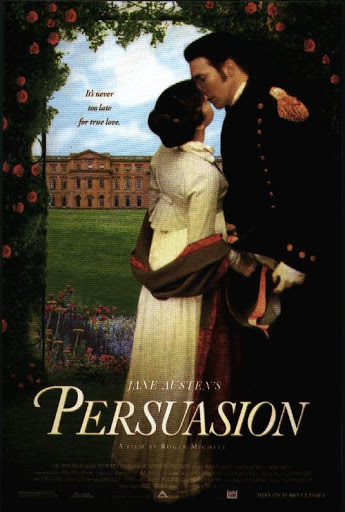
captainwentworthspersuasionsmalldarcystemptationsmallWhat I would like to consider today is why did the publishers deem it necessary to change the title to Pride and Prejudice? Several of my writer friends have had title changes at our publishers’ suggestions. For example, I have seen Wayward Love changed to Captain Wentworth’s Persuasion; Darcy’s Dreams to Darcy’s Temptation; Darcy’s Hunger to Vampire Darcy’s Desire, and most recently, A Touch of Scandal to The Scandal of Lady Eleanor. I fought to keep my working title of The Mysterious Death of Mr. Darcy because I rightly believed the tivampiredarcysdesiretle would catch Austen readers’ attentions. You have no idea how many frantic readers sent me messages to the effect of “You are not killing Mr. Darcy, are you?” Changing titles is a common practice among publishing companies.

Imagine the conversation between Thomas Egerton Publishers and Jane Austen…

Egerton: Miss Austen, we believe the reading public would respond to a title change.
Austen: Are you implying that I must add the word “Darcy” or “Pemberley” to the title to sell books?
Egerton: No, that will not be necessary for another 200 years.
Austen: (in awe) Do you expect my works to survive and become part of the British literary canon?
Egerton: Of course, not. You are a female. We will be fortunate to sell a few hundred copies, Miss Austen.
Austen: (a bit disconcerted by his condescending tone) But my book is about misconstruing others – of the weakness of making judgments based on first impressions.
Egerton: (ignoring her objection) We will follow the pattern of your first publication. Sense and Sensibility will be followed by Pride and Prejudice. It will give you a “hook” to capture your readers. Now, if you will sign the contract, we may begin publication.

But why did Austen’s publishers choose those two words: “pride” and “prejudice”? Was it to stimulate a debate among those who wonder whether it was Darcy or Elizabeth who was prideful? Who acted with prejudice? College professors base entire semesters on just that concept.
Critics have surmised that the original title was discarded following the publication of First Impressions by Mrs. Holford in 1801, and that the final title might well have been suggested by the last pages of Fanny Burney’s Cecilia (1782), in which the phrase “pride and prejudice” is printed in capital letters three times in a single perorational paragraph. The original title may well have been taken from the opening chapter of Mrs. Radcliffe’s The Mysteries of Udolpho (1794), in which we see St. Aubert instructing his daughter Emily “to resist first impressions, and to acquire that steady dignity of mind, that can alone counterbalance the passions” – a lesson of Jane Austen’s novel as well. (Inside Pride and Prejudice by JOHN HALPERIN, Department of English, Vanderbilt University, Nashville, TN 37235, Persuasions #11, 1989)

As I am writing a novella entitled, “Mr. Darcy’s Fault,” in which the word “fault” plays prominently, I would like to think the title choice was how often the words “pride” and “prejudice” are found in Austen’s text, and that the publishers’ belief was such repetition would create resonance and “connectiveness.”

The word “pride” appears seven and forty times in the text. One of my favorite uses of the word occurs in, “Vanity and pride are different things, though the words are often used synonymously.” I am also found of, “With what delightful pride she afterward visited Mrs. Bingley, and talked of Mrs. Darcy, may be guessed.”

“Prided” is used but once, as is “proudly” and “proudest.” Meanwhile, “proud” is used one and twenty times. “Some may call him proud, but I am sure I never saw anything of it,” is spoken by Mrs. Reynolds. Later in the story, Elizabeth considers Darcy’s actions in dealing with Wickham. “For herself, she was humbled; but she was proud of him – proud that in a cause of compassion and honor he had been able to get the better of himself.”

“Prejudiced” is found once in the text; “prejudices” is used twice, and “prejudice” appears five times. “The general prejudice against Mr. Darcy is so violent, that it would be the death of half the good people in Meryton to attempt to place him in an amiable light.”

When I originally entitled my second book Darcy’s Dreams, I did so because I mimicked Austen’s repetition. I used the word “dream” seven and fifty times in the book. When Ulysses Press added the word “temptation” to attract readers, I made a mad scramble during the edits to add “temptation” to the manuscript. The process made me wonder if Austen did the same thing with “pride” and “prejudice.” Although I know it’s an illogical assumption, I like to imagine our dear Jane adding those two words as motifs within her text and also imagine her grumbling, just as I did with “temptation.”

Posted in British history, Great Britain, Jane Austen, Living in the Regency, real life tales, Regency era | Tagged , , , , , , | 2 Comments

Jane Austen’s Relevance

Jane Austen’s Current Relevance

pp1-300x225As we celebrate Jane Austen with the relaunch of Austen Authors, I thought it prudent to examine what makes “our” Jane so popular. Austen’s influence proves that the past is always in the process of being reinvented. There have been over 300 continuations, retellings, adaptations, and sequels to Austen’s works.

In Ian Watt’s Rise of the Novel, the author says Austen combines the internal and external approaches to character, that she has authenticity without diffuseness or trickery, and that Austen offers a sense of social order, which is not achieved at the expense of individuality and autonomy of the characters.

And Devoney Looser says in “Feminist Impressions of the Silver Screen Austen,” that Austen’s worlds “…were not populated with upper-class gentlemen. Sir Walter Scott referred to Austen’s novels as about the ‘middling classes,’…and Madame de Staël called them simply ‘vulgaire.’ …It was not until our own century that Lord David Cecil tried to ‘co-opt Austen…into the aristocracy.'” But it does not take a genius to see that “what motivates the action is neither aristocratic arrogance or greed. Anxieties about money and status abound in the novels and the adaptations – and not simply to keep up with the Joneses or the de Bourghs.”

As we all know, Austen conveys life stories, which are small, but perfect. Her subjects are common, ordinary families. Austen sees things as they are and as they ought to be. Her happy endings translate the heroine’s moral assets into material ones.

So, what are some characteristics of Austen that may be easily translated into modern times?

Theme/Plot/Style

** Jane Austen wrote about the mundane, interior lives of deliberately prosaic characters.

** Austen fills her stories with strong irony and rigorous social critique.

** Her ironic take on society is delivered in a reassuring, sisterly voice.

** Her works deal with the believable, timeless obstacles of class, money, and misunderstandings, which make her works adaptable to any era.

** Austen’s witty, satirical approach to her subjects resonates with contemporary readers.

** Jane Austen looks at society through a comedic screen, examining the problems of a male dominated society.

** Jane Austen’s novels focus on personal conduct and that within a complex system of estates, incomes, and social position, personal conduct creates a bridge between private moral order and social order.

** “Family” is the building block of society.

** Austen’s subject matter remains universal.

** Austen focuses on themes that never die: marriage; social pressure; generation gap, etc.

** Austen proves ordinary people can have interesting lives.

** Her novels focus on the tenuous position of women, who accept the fact they must marry in order to achieve social acceptance.

** Adaptations of Jane Austen’s novels hold a mirror to our own society and expand Jane Austen’s keen analysis of the vicissitudes of class.

Female Characters

** The reader is presented with a protagonist whose life and social position appear similar to her own.

** Austen’s women are women of sense; they embody the notion of rational love.

** Her characters speak to what we were, what we are, and what we want to be.

**Austen’s works hold resonance with Western liberal feminists – a sort of mainstreaming of feminism.

Mr-Darcy-pride-and-prejudice-2005-27959402-500-500-150x150Male Characters

** Courtship offers the hero a paradoxical challenge in that he must follow normalizing rules of public behavior in order to create uniquely personal emotional connections.

** The visual text escapes Austen’s verbal control and encourages her audience to interpret it.

** Modern readers appreciate the male hero’s displaying his struggle to achieve emotional expression, which will bring him into balance. He physically displays the emotions he cannot speak.

** We create “masculine balance” according to our own emotion-based criteria, while Austen creates our ideas of masculinity. Her characters’ internal contradictions become harmonized.

Ideas for this piece come from…

Flirting with Pride & Prejudice: Fresh Perspectives on the Original Chick-Lit Masterpiece (edited by Jennifer Crusie) ©2005.

Jane Austen in Hollywood, 2nd Ed. (edited by Linda Troost & Sayre Greenfield) ©2001.

Posted in Great Britain, Jane Austen, Living in the Regency, modern adaptations, Regency era, Uncategorized | Tagged , , , | 2 Comments

Georgian Celebrity, Captain James Cook, Part 3: Cook’s Legacy

Nathaniel Dance-Holland - from the National Maritime Museum, United Kingdom License details Public domain because of age

Nathaniel Dance-Holland – from the National Maritime Museum, United Kingdom
License details
Public domain because of age

Legacy
Ethnographic Collections

The Australian Museum acquired its Cook Collection in 1894 from the Government of New South Wales. At that time the collection consisted of 115 artefacts collected on Cook’s three voyages throughout the Pacific Ocean, during the period 1768–1780, along with documents and memorabilia related to these voyages. Many of the ethnographic artifacts were collected at a time of first contact between Pacific Peoples and Europeans. In 1935 most of the documents and memorabilia were transferred to the Mitchell Library in the State Library of New South Wales. The provenance of the collection shows that the objects remained in the hands of Cook’s widow Elizabeth Cook, and her descendants, until 1886. In this year John Mackrell, the great-nephew of Isaac Smith, Elizabeth Cook’s cousin, organised the display of this collection at the request of the NSW Government at the Colonial and Indian Exhibition in London. In 1887 the London-based Agent-General for the New South Wales Government, Saul Samuel, bought John Mackrell’s items and also acquired items belonging to the other relatives Reverend Canon Frederick Bennett, Mrs Thomas Langton, H. M. C. Alexander, and William Adams. The collection remained with the Colonial Secretary of NSW until 1894, when it was transferred to the Australian Museum.

Navigation and Science
Cook’s 12 years sailing around the Pacific Ocean contributed much to European knowledge of the area. Several islands such as Sandwich Islands (Hawaii) were encountered for the first time by Europeans, and his more accurate navigational charting of large areas of the Pacific was a major achievement.

To create accurate maps, latitude and longitude must be accurately determined. Navigators had been able to work out latitude accurately for centuries by measuring the angle of the sun or a star above the horizon with an instrument such as a backstaff or quadrant. Longitude was more difficult to measure accurately because it requires precise knowledge of the time difference between points on the surface of the earth. The Earth turns a full 360 degrees relative to the sun each day. Thus longitude corresponds to time: 15 degrees every hour, or 1 degree every 4 minutes.

Cook gathered accurate longitude measurements during his first voyage due to his navigational skills, the help of astronomer Charles Green and by using the newly published Nautical Almanac tables, via the lunar distance method—measuring the angular distance from the moon to either the sun during daytime or one of eight bright stars during night-time to determine the time at the Royal Observatory, Greenwich, and comparing that to his local time determined via the altitude of the sun, moon, or stars. On his second voyage Cook used the K1 chronometer made by Larcum Kendall, which was the shape of a large pocket watch, 5 inches (13 cm) in diameter. It was a copy of the H4 clock made by John Harrison, which proved to be the first to keep accurate time at sea when used on the ship Deptford’s journey to Jamaica, 1761–62.

Cook succeeded in circumnavigating the world on his first voyage without losing a single man to scurvy, an unusual accomplishment at the time. He tested several preventive measures but the most important was frequent replenishment of fresh food. It was for presenting a paper on this aspect of the voyage to the Royal Society that he was presented with the Copley Medal in 1776. Ever the observer, Cook was the first European to have extensive contact with various people of the Pacific. He correctly postulated a link among all the Pacific peoples, despite their being separated by great ocean stretches (see Malayo-Polynesian languages). Cook theorised that Polynesians originated from Asia, which scientist Bryan Sykes later verified. In New Zealand the coming of Cook is often used to signify the onset of colonisation.

Cook carried several scientists on his voyages; they made several significant observations and discoveries. Two botanists, Joseph Banks, and Swede Daniel Solander, were on the first Cook voyage. The two collected over 3,000 plant species. Banks subsequently strongly promoted British settlement of Australia.

Several artists also sailed on Cook’s first voyage. Sydney Parkinson was heavily involved in documenting the botanists’ findings, completing 264 drawings before his death near the end of the voyage. They were of immense scientific value to British botanists. Cook’s second expedition included William Hodges, who produced notable landscape paintings of Tahiti, Easter Island, and other locations.

Several officers who served under Cook went on to distinctive accomplishments. William Bligh, Cook’s sailing master, was given command of HMS Bounty in 1787 to sail to Tahiti and return with breadfruit. Bligh is most known for the mutiny of his crew which resulted in his being set adrift in 1789. He later became governor of New South Wales, where he was subject of another mutiny—the only successful armed takeover of an Australian government. George Vancouver, one of Cook’s midshipmen, later led a voyage of exploration to the Pacific Coast of North America from 1791 to 1794. In honour of his former commander, Vancouver’s new ship was also christened Discovery. George Dixon sailed under Cook on his third expedition, and later commanded his own expedition. A lieutenant under Cook, Henry Roberts, spent many years after that voyage preparing the detailed charts that went into Cook’s posthumous Atlas, published around 1784.

Cook’s contributions to knowledge were internationally recognised during his lifetime. In 1779, while the American colonies were fighting Britain for their independence, Benjamin Franklin wrote to captains of colonial warships at sea, recommending that if they came into contact with Cook’s vessel, they were to “not consider her an enemy, nor suffer any plunder to be made of the effects contained in her, nor obstruct her immediate return to England by detaining her or sending her into any other part of Europe or to America; but that you treat the said Captain Cook and his people with all civility and kindness, … as common friends to mankind.” Unknown to Franklin, Cook had met his death a month before this “passport” was written.

Cook’s voyages were involved in another unusual first: The first female to circumnavigate the globe was a goat (“The Goat”), who made that memorable journey twice; the first time on HMS Dolphin, under Samuel Wallis. She was then pressed into service as the personal milk provider for Cook, aboard HMS Endeavor. When they returned to England, Cook presented her with a silver collar engraved with lines from Samuel Johnson: “Perpetui, ambita bis terra, praemia lactis Haec habet altrici Capra secunda Jovis.”. She was put to pasture on Cook’s farm outside London, and also was reportedly admitted to the privileges of the Royal Naval hospital at Greenwich. Cook’s journal recorded the date of The Goat’s death: 28 March 1772.

Memorials

The coat of arms of James Cook granted by King George III to Cook's widow in 1785, to be borne by his descendants and 'placed on any monument or otherwise to his memory.' (Public Domain)

The coat of arms of James Cook granted by King George III to Cook’s widow in 1785, to be borne by his descendants and ‘placed on any monument or otherwise to his memory.’ (Public Domain)

**Captain Cook memorial statue at the Catani Gardens in St Kilda, Victoria, Australia

**A US coin, the 1928 Hawaiian Sesquicentennial half dollar carries Cook’s image. Minted for the 150th anniversary of his discovery of the islands, its low mintage (10,008) has made this example of Early United States commemorative coins both scarce and expensive.

**The site where he was killed in Hawaii was marked in 1874 by a white obelisk set on 25 square feet (2.3 m2) of chained-off beach. This land, although in Hawaii, was deeded to the United Kingdom.

**A nearby town is named Captain Cook, Hawaii; several Hawaiian businesses also carry his name. The Apollo 15 Command/Service Module Endeavour was named after Cook’s ship, HMS Endeavour, as was the space shuttle Endeavour. Another shuttle, Discovery, was named after Cook’s HMS Discovery.

The first institution of higher education in North Queensland, Australia, was named after him, with James Cook University opening in Townsville in 1970. In Australian rhyming slang the expression “Captain Cook” means “look.” Numerous institutions, landmarks and place names reflect the importance of Cook’s contributions, including the Cook Islands, the Cook Strait, Cook Inlet, and the Cook crater on the Moon. Aoraki/Mount Cook, the highest summit in New Zealand, is named for him. Another Mount Cook is on the border between the US state of Alaska and the Canadian Yukon Territory, and is designated Boundary Peak 182 as one of the official Boundary Peaks of the Hay–Herbert Treaty.

One of the earliest monuments to Cook in the United Kingdom is located at The Vache, erected in 1780 by Admiral Hugh Palliser, a contemporary of Cook and one-time owner of the estate. A huge obelisk was built in 1827 as a monument to Cook on Easby Moor overlooking his boyhood village of Great Ayton, along with a smaller monument at the former location of Cook’s cottage. There is also a monument to Cook in the church of St Andrew the Great, St Andrew’s Street, Cambridge, where his son Hugh, a student at Christ’s College, was buried. Cook’s widow Elizabeth was also buried in the church and in her will left money for the memorial’s upkeep. The 250th anniversary of Cook’s birth was marked at the site of his birthplace in Marton, by the opening of the Captain Cook Birthplace Museum, located within Stewart Park (1978). A granite vase just to the south of the museum marks the approximate spot where he was born. Tributes also abound in post-industrial Middlesbrough, including a primary school, shopping square and the Bottle ‘O Notes, a public artwork by Claes Oldenburg, that was erected in the town’s Central Gardens in 1993. Also named after Cook is the James Cook University Hospital, a major teaching hospital which opened in 2003. The Royal Research Ship RRS James Cook was built in 2006 to replace the RRS Charles Darwin in the UK’s Royal Research Fleet, and Stepney Historical Trust placed a plaque on Free Trade Wharf in the Highway, Shadwell to commemorate his life in the East End of London. In 2002 Cook was placed at number 12 in the BBC’s poll of the 100 Greatest Britons.

In addition to the citations within the post, BBC History and Wikipedia served as sources.

Posted in British history, British Navy, legacy | Tagged , , | 3 Comments