The Road to Somewhere Special

51ZBUCGjkhL._UY250_This post appeared recently as part of Karen Cox’s five-year anniversary celebration of her Austen-inspired release of 1932. I thought it worth repeating here for those of you who missed it. 

As an author, I am often on the road and staying at motels/hotels. My friend Kim crisscrosses America at least once per week and often bemoans the desire to sleep in her own bed. Even so, both Kim and I have it SO-O-O much better than early travelers.

In 1925 in America, the word “motel” was coined. Although the word did not appear in dictionaries until after WWII, motor hotels carved out a niche in society.

A “motel” was customarily a single building of connected rooms whose doors faced a parking lot. Occasionally, the rooms faced a common area. The need for low cost overnight accommodations grew with the improvements to the road system. Motels were situated along the highways.

With the development of a nation highway system, long distance travel exploded in the 1920s, which expanded the need for accessible (and inexpensive) overnight accommodations near the busier routes: Motels quickly filled the need. Several motels are on the U. S. National Registry of Historic Places.

Omar Omar - http://www.flicker.com/photos/omaromar/16805302/
The Motel Inn of San Luis Obispo (originally known as the Milestone Mo-Tel) — the first motel in the world. Created and built in 1925, in the Spanish Colonial Revival style, now in ruins. Located on old Highway 101 in northern San Luis Obispo, Central California.

Omar Omar – http://www.flicker.com/photos/omaromar/16805302/
The Motel Inn of San Luis Obispo (originally known as the Milestone Mo-Tel) — the first motel in the world. Created and built in 1925, in the Spanish Colonial Revival style, now in ruins. Located on old Highway 101 in northern San Luis Obispo, Central California.

Prior to motels, the urban areas sported hotels, while the rural areas had “tourists courts” or “tourist rooms.” Highway travelers encountering “tourists courts” found a series of one-room dwellings holding a steel cot and perhaps a chair or two. The bathrooms were down the path to the outhouse. A “tourist home” was generally a family home with extra rooms to let.
Do you recall this song? “King Of The Road” which was written by and performed by Roger Miller.

Trailer for sale or rent/Rooms to let, fifty cents/ No phone, no pool, no pets/ ain’t got no cigarettes/ Two hours of pushin’ broom/ Buys a eight by twelve four-bit room/ I’m a man of means, by no means/ King of the road/ Third boxcar, midnight train/ Destination: Bangor, Maine/ Old worn out suit and shoes/ I don’t pay no union dues/ I smoke, old stogies I have found/ Short, but not too big around/ I’m a man of means, by no means/ King of the road/ I know every engineer on every train/ All of the children and all of their names/ Every handout in every town/ Every lock that ain’t locked when no one’s around/ They sing, trailers for sale or rent/ Rooms to let, fifty cents/ No phone, no pool, no pets/ I ain’t got no cigarettes/ About two hours of pushin’ broom/ Buys an eight by twelve four-bit room/ I’m a man of means, by no means/ King of the road.

How can one tell the difference between a “motel” and a “hotel”? With a hotel, the rental rooms customarily face inward, toward a central lobby. They are often found in the “downtown” areas of large cities as opposed to motels, which are located along highways. The doors in motels typically face the exterior of the building.

Motels provide a parking area for their patrons, while hotels typically do not. Motels are rarely more than a few stories high, while high-rise urban hotels grew around railway stations.

This was not an issue in an era where the major highways became Main Street in every town along the way and inexpensive land at the edge of town could be developed with motels, car lots, filling stations, lumber yards, amusement parks, roadside diners, drive-in restaurants, theatres, and countless other small roadside businesses.

The automobile brought mobility, and the motel could appear anywhere on the vast network of two-lane highways. Auto camps predated motels by a few years, established in the 1920s as primitive municipal camp sites where travelers pitched their own tents. As demand increased, for-profit commercial camps gradually displaced public camp grounds.

Until the first travel trailers became available in the 1930s, auto tourists adapted their cars by adding beds, makeshift kitchens, and roof decks. The next step up from the travel trailer was the cabin camp, a primitive but permanent group of structures.

During the Great Depression, landholders whose property fronted onto roads in U. S. highway or provincial highway systems built cabins to convert unprofitable land to income; some opened tourist homes. The (usually single-story) buildings for a roadside motel or cabin court were quick and simple to construct, with plans and instructions readily available in how-to and builder’s magazines. Expansion of highway networks would continue unabated through the depression as governments attempted to create employment but the roadside cabin camps were primitive, basically just auto camps with small cabins instead of tents.

A scene from 1934’s “It Happened One Night,” in which Clark Gable and Claudette Colbert must share a motel cabin.

A scene from 1934’s “It Happened One Night,” in which Clark Gable and Claudette Colbert must share a motel cabin.

The 1935 City Directory for San Diego, California, lists “motel”-type accommodations under Tourist Camps. One initially could stay in the Depression-era cabin camps for less than a dollar per night, but small comforts were few and far between. Travelers in search of modern amenities soon would find them at cottage courts and tourist courts. The price was higher, but the cabins had electricity, indoor bathrooms, and occasionally a private garage or carport. They were arranged in attractive clusters or a U-shape. Often, these camps were part of a larger complex containing a filling station, a café, and sometimes a corner store. Facilities like the Rising Sun Auto Camp in Glacier National Park and Blue Bonnet Court in Texas were “Mom-and-Pop” facilities on the outskirts of towns that were as quirky as their owners. Auto camps continued in popularity through the Depression years and after World War II, their popularity finally starting to diminish with increasing land costs and changes in consumer demands.

In contrast, though they remained small independent operations, motels quickly adopted a more homogenized appearance and were designed from the start to cater purely to motorists. In town, tourist homes were private residences advertising rooms for auto travelers. Unlike boarding houses, guests at tourist homes were usually just passing through. In the southwestern United States, a handful of tourist homes were operated by African-Americans as early as the Great Depression due to the lack of food or lodging for travelers of color in the Jim Crow era.

Marion Post Wolcott - Library of Congress: Photographs of Signs Enforcing Racial Discrimination: Documentation by Farm Security Administration - Office of War Information Photographers; Location: E-527; Reproduction Number: LC-USF34-51945-D “A highway sign advertising cabins for Negroes.” [Sign: “Cabins for Colored.”] South Carolina.

Marion Post Wolcott – Library of Congress: Photographs of Signs Enforcing Racial Discrimination: Documentation by Farm Security Administration – Office of War Information Photographers; Location: E-527; Reproduction Number: LC-USF34-51945-D “A highway sign advertising cabins for Negroes.” [Sign: “Cabins for Colored.”] South Carolina.

“There were things money couldn’t buy on Route 66. Between Chicago and Los Angeles you couldn’t rent a room if you were tired after a long drive. You couldn’t sit down in a restaurant or diner or buy a meal no matter how much money you had. You couldn’t find a place to answer the call of nature even with a pocketful of money…if you were a person of color traveling on Route 66 in the 1930s, 1940s, and 1950s.” – Irv Logan, Jr. The Negro Motorist Green Book (1936–64) which listed lodgings, restaurants, fuel stations, liquor stores, and barber and beauty salons without racial restrictions, while the smaller Directory of Negro Hotels and Guest Houses in the United States (1939, US Travel Bureau) specialized in accommodations.

Segregation of U. S. tourist accommodation would legally be ended by the Civil Rights Act of 1964 and by a court ruling in Heart of Atlanta Motel v. United States affirming that Congress’ powers over interstate commerce extend to regulation of local incidents (such as racial discrimination in a motel serving interstate travelers) which might substantially and harmfully affect that commerce.

Information for this post can be found in Reminisce: The Magazine That Brings Back the Good Times, July/August 1995 and from Wikipedia.
Posted in America, American History | Tagged , , , , , , | 2 Comments

Welcome Caroline Warfield and Her Release of “Dangerous Weakness” + a Giveaway

Carol Roddy - Author

Carol Roddy – Author

Today, I wish to welcome my friend, Caroline Warfield, to the Every Woman Dreams blog. Caroline Warfield has at various times been an army brat, a librarian, a poet, a raiser of children, a nun, a bird watcher, an Internet and Web services manager, a conference speaker, an indexer, a tech writer, a genealogist, and, of course, a romantic. She sailed through the English channel while it was still mined from WWII, stood on the walls of Troy, searched Scotland for the location of an entirely fictional castle (and found it), climbed the steps to the Parthenon, floated down the Thames from the Tower to Greenwich, shopped in the Ginza, lost herself in the Louvre, gone on a night safari at the Singapore zoo, walked in the Black Forest, and explored the underground cistern of Istanbul. By far the biggest adventure has been life-long marriage to a prince among men.

She sits in front of a keyboard at a desk surrounded by windows, looks out at the trees and imagines. Her greatest joy is when one of those imaginings comes to life on the page and in the imagination of her readers.

I asked Caroline some quirky questions so you might learn more of her.

What’s the craziest, bravest, or stupidest thing you’ve ever done?

What an interesting question. Risk comes in a variety of forms. I am terrified of heights so, in one sense, the bravest thing I ever did was step off a ninety-foot cliff and rappel down it. “Feel the fear. Do it anyway,” became a life motto for me at one point.

In another sense, however, the bravest thing was allowing myself to love and marry. The utter exposure of one’s vulnerabilities to another takes immense courage. The “danger” from the titles of all the books in my current series is to the human heart. I believe this strongly. The tag line for all my writing is “Love is worth the risk.”

How long have you been writing, and how did you decide this was a career you wanted to pursue?

I completed my first novel in 1998 after diddling with it for a few years. I sent it off to the Harlequin critique service (with a hefty fee, of course). What came back told me essentially that the work wasn’t publishable as it was, but that my writing held promise. I believed them. At that point, I began to think of myself as a writer.

That novel, by the way, is upstairs in a closet and also deep in my laptop files. I recently pulled it out, sliced it, diced it, and massaged the pieces into a novella called A Dangerous Nativity. It is included in the Bluestocking Belles’ boxed set, Mistletoe, Marriage, and Mayhem.

What do you write? You’re welcome to include your latest title (shameless plug)

If a fiction genre has a historical setting, I’ve probably tried it. I worked on a long historical novel set on a medieval pilgrimage. An agent is reviewing one of my historical novels for the middle grades as I type this. Those will carry the by-line “Carol Roddy.” As Caroline Warfield, I write historical romance. My first series is set in the Regency era. The next will be set in the early years of Victoria’s reign, and carry over characters from the first. History and geography are important elements in all my books but in romance, the love story comes first.

My latest title? Dangerous Weakness is set in 1818. It tells the story of a man learning to trust and a woman learning that sometimes love is shown by action not words. It skims over a backdrop of the seething upheavals of the Mediterranean basin in that era, including revolution in Greece, Barbary corsairs, and the weakening grasp of the Ottoman Empire. Readers of my previous books will enjoy seeing the Marquess of Glenaire taken down a peg or two and learning to let his kindness and caring heart out into the open.

Introducing Dangerous Weakness

DANGEROUS WEAKNESS2 (5)How far will he go to protect her? How far will she run from her fears?

If women were as easily managed as the affairs of state—or the recalcitrant Ottoman Empire—Richard Hayden, Marquess of Glenaire, would be a happier man. As it was the creatures—one woman in particular—made hash of his well-laid plans and bedeviled him on all sides.
Lily Thornton came home from Saint Petersburg in pursuit of marriage. She wants a husband and a partner, not an overbearing, managing man. She may be “the least likely candidate to be Marchioness of Glenaire,” but her problems are her own to fix, even if those problems include both a Russian villain and an interfering Ottoman official.

Given enough facts, Richard can fix anything. But protecting that impossible woman is proving to be almost as hard as protecting his heart, especially when Lily’s problems bring her dangerously close to an Ottoman revolution. As Lily’s personal problems entangle with Richard’s professional ones, and she pits her will against his, he chases her across the pirate-infested Mediterranean. Will she discover surrender isn’t defeat? It might even have its own sweet reward.

Excerpt: 

If women were as easily managed as the affairs of state—or the recalcitrant Ottoman Empire—Richard Hayden, Marquess of Glenaire, would be a happier man. As it was, the creatures made hash of his well-laid plans and bedeviled him on all sides.

“What did we miss now? I can tell you’re unhappy.” Will Landrum, Earl of Chadbourn, and one of the handful of men who would call Richard ‘friend,’ was not fooled by the cool façade and bland expression with which the marquess surveyed his ballroom.

“Who invited Lilias Thornton?” Richard demanded under his breath. His eyes followed a slender young woman who paced out the steps of the Quadrille across the parquet floor of the earl’s ballroom.

“No ‘thank you for turning your country seat into a diplomatic snake pit for an entire week so the haut ton can mingle with exotic visitors from the East while the foreign secretary manages the fate of Greece over Brandy and cards?’” Will demanded.

Richard looked at his friend, one eyebrow raised. “Chadbourn Park fit the need precisely. I thanked your Catherine this morning.”

Will grunted. “My Catherine worked miracles when Sahin Pasha showed up with six extra people in his party.”

“We can’t predict how many retainers the Turks will impose,” Richard growled. The Ottomans danced to their own tune; the Foreign Office never knows what to expect. Richard loathed the unpredictable. He went back to surveying the overheated ballroom.

“Who invited Lilias Thornton?” he repeated.

Purchase Links (Kindle only)
US
UK
Canada
Euro
India
Aus
Learn More of Caroline Warfield Here:
Visit Caroline’s Website and Blog
Meet Caroline on Facebook

Amazon Author Page

Follow Caroline on Twitter @CaroWarfield
Email Caroline directly warfieldcaro@gmail.com
Play in the Bluestocking Bookshop

Caroline’s Other Books
Dangerous Works 
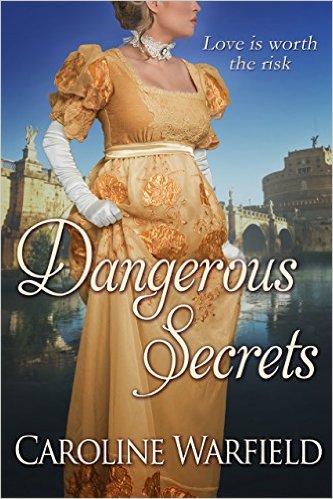
Dangerous Secrets 

51UwXah68dL._SX331_BO1,204,203,200_513niMqPgDL._SX331_BO1,204,203,200_Now, for the Giveaway: 

Caroline will give Kindle copies of both Dangerous Works and Dangerous Secrets, one each to two randomly selected people who comment.

61ZCuF96i+L._SY498_BO1,204,203,200_Mistletoe, Marriage, and Mayhem can be pre-ordered for the remarkable price of 99 cents at
Amazon


Amazon UK

Amazon Australia

Amazon Germany

Posted in British history, excerpt, giveaway, Great Britain, Guest Post, Living in the Regency, Regency era, Victorian era | Tagged , , , , , , , , , , , , | 3 Comments

Excerpt + Giveaway from “Second Chances: The Courtship Wars”


scCoverYesterday, I spoke of the medical research behind my writing of Second Chances: The Courtship Wars. If you did not have the opportunity to check this information out, it is fascinating.
Read it HERE. One of the things that struck me in the original article was the idea that women on birth control change their hormonal makeup, and, therefore, skew their natural instincts. Could this be a factor in the rise of divorces? Of miscarriages? LOL! I hold no means to know, but what an interesting concept! 

With that in mind, I give you the premise behind my contemporary romance, Second Chances: The Courtship Wars

Second Chances is a reality TV show in which couples who were once married and now divorced wish to remarry. The winners will receive the wedding of their dreams, as well as a substantial cash prize. As part of the show’s medical staff, psychologist Dr. Lucian Damron meets his match in Gillian Cornell, a sexologist. Lucian and Gillian are as of much interest to the American viewing public as are the contestants, and the show’s executives decide to highlight their growing romance to boost viewership. Needless to say, things do not go as planned.

Excerpt (This scene takes place early on in the book, and it incorporates some of the research mentioned in yesterday’s article.)

Worried she would be late for her university lecture, Gillian stepped onto the busy sidewalk. Digging  in her purse for her sunglasses, an action, which seemed to claim more and more of her time each day, she did not notice Damron’s approach until the man stood before her. 

“Dr. Damron,” she gasped, reaching for her heart as if frightened.

“Lucian. Please call me Lucian.”

He reached to steady her stance, and Gillian felt the warmth of his touch scooting up her arm. 

“Lu…Lucian,” she flustered. “What are you doing here?”

“I know this is presumptuous on my part, but I wished to see if there’s something I could do to convince you to join the show’s staff.”

“How did you know where I lived?” she asked suspiciously. 

Damron smiled amusedly. 

“I am afraid I purposely did some research on you. I thought if we’re to work together, it might be easier if we knew something other than what the lecture circuit tells the public.”

“I suppose I should be flattered, but it’s a bit disconcerting to know a stranger could find such personal information so easily.”

“I was a bit tenacious in my efforts,” he admitted before releasing his hold on her arm.

“I appreciate your concern, but I’m accustomed to making decisions without assistance from those I know little of,” she announced. 

Dr. Damron smiled, and Gillian realized a smile on his lips was a powerful weapon against her resolve. Deep set dimples. Like those found on Clark Gable. God! To be the recipient of that smile on a regular basis would be heavenly. 

“Naturally. I overstepped my boundaries. I apologize for intruding upon your privacy,” he said dutifully. 

“I am not offended, Doctor…I mean, Lucian.”

Gillian placed her purse across her shoulder.

“I take care of my responsibilities, and I believe I’ll be able to meet the contract. I just possess a few small details to settle, but now, if you’ll excuse me, I must be at the university for a lecture soon.”

She glanced around to hail a cab.

“I’ve my care with me, might I offer you a lift?” he offered.

“I wouldn’t want you to go out of your way on my account.”

Gillian’s eyes finally met his, and a tingle of anticipation rushed through her.

“I’ve nothing else planned, and it would provide us time to talk a bit more.”

The man did not wait for Gillian’s answer; he caught her elbow to lead her to his waiting car. In truth, as soon as he touched her, Gillian swallowed her refusal.

***

The relatively short drive to the university didn’t allow for much conversation, but Lucian used it to his advantage.  

“What’s the lecture on?” he asked as he maneuvered through traffic. 

“MHC.” 

“Is that the subject of your upcoming book?”

“It’s a large portion of it, but there’s more hard core honesty than many psychology based offerings currently on the market.”

A lull in the conversation followed. Lucian did not know much about MHC, but he meant to learn something of it when he returned to his computer later. At length, Miss Cornell asked of his hopes for a talk show. 

“It’s my chance to market myself; I hoped for something more along the lines of Dr. Phil. I prefer to take the high road: no fist fights or married siblings or such foolishness.” 

Lucian asked without forethought, “Would you have lunch with me?”

Miss Cornell stammered, “Lucian…I…I don’t know whether that is wise.”

“Why not? I’m not asking for an intimate evening. We’ll have lunch and learn more of each other. That’s all.”

“I have the lecture.”

“I’ll sit in the back and listen. Then we can spend a leisurely lunch.”

Lucian watched her from the corner of his eye. He could read the moment of indecision swaying in his favor, and he relished the idea. At length, an aggravated sigh escaped Miss Cornell’s lips as she grudgingly accepted. 

“If you insist.”

“Good.” His heart lifted with anticipation. “Thank you, Gillian.

***

Good to his word, Lucian sat in the shadows at the back of the auditorium, but that didn’t keep him from Gillian’s thoughts as she worked her way through the afternoon lecture series. 

“So what makes two people fall in love?” she asked as she stepped from the podium and into the audience. “Have you ever been in love?”

Gillian thrust the microphone before the face of a bleach-blonde co-ed.

“Sure,” the girl’s gum snapped as she answered. 

“How did you know?”

“He was hot!”

The crowd roared with laughter. 

“Ooh. Lust,” Gillian purred. “Isn’t it exhilarating?”

The girl giggled nervously. 

“Yeah, hot!”

“How about shared goals? Mutual interests?”

Gillian moved on to an older grad student.

“Without that,” he said what he thought she wanted to hear, “the sex is useless.”

“Well, I wouldn’t go that far,” Gillian teased. “However, what if I told you an olfactory nerve discovered in a whale could be the real source of a person’s attraction?”

This time she turned to the “jock” type.

“You mean I just need to smell my girlfriend to find out if we’re in love?”

The guy blushed when his obvious girlfriend playfully slugged his shoulder.

Gillian’s eyes rose to where Dr. Damron looked on. 

“An esteemed colleague asked me a similar question recently.”

An enigmatic smile played across his features, and Gillian fought the urge to ask him his thoughts on their previous encounter. 

“But the truth is a bit more complicated.”

Gillian returned to the stage to continue her thoughts. 

“The truth is Nerve O has endings in the nasal cavity, but those nerve endings play a different role from what we might expect. Nerve O doesn’t smell out the person to whom we’re attracted, but it does identify sexual cues from all the thousands of potential lovers we meet on a daily basis. Family members. logically, have a similar chemical make up. That is nature’s way of protecting close family members from procreating as we seek out those with a different chemical program.”

“Unless you live in the South,” a voice from the rear of the audience shared a bit too loudly.

“Hey, I attend school in the South,” Gillian countered, shooting down the laughter before it began. “Nerve O also can be a cue to fertility issues, miscarriages, and infidelity. If your partner has similar chemical markers, such problems may occur. This is where the old adage of opposites attract coming into play. And loading up on your favorite cologne won’t change your love life, no matter what all the commercials tell you; our scents are natural and instinctive. You can’t change the code. My last caution is to the females in the audience. Although I applaud your responsibility in choosing birth control, if you’re sexually active, you must remember that birth control changes your hormonal makeup, simulating pregnancy, and, therefore, making your body seek out those with similar chemical programs, like family kinship, rather than potential mates. Your choices for successful love may be affected by the pill.”

A nervous giggle filled the space. 

“Before I leave you with this last lecture in the series, I wish to thank you for your participation in the program.”

A light round of applause spread across the room, but Gillian raised her hand to let the attendees know she still required their attention. 

“I am considering a contract in the fall that will not permit me to be part of the series when your return to classes; I will not see many of you until the spring semester.”

“Where you going?” A dark-headed prep shouted from the front row. 

Gillian glanced to Dr. Damron again. She hesitated before she offered an explanation. 

“Dr. Lucian Damron, who I am certain many of you took note in the lecture hall today, and I will work on a joint national campaign. That is all I am at liberty to tell you at the moment, but you’ll be hearing about it before long.”

Gillian motioned for Dr. Damron to come to the front. 

“Please welcome Dr. Damron. If you’ve questions for either of us, we’ll be glad to address them.”

Damron self-consciously came forward as the audience applauded. He hugged Gillian quickly – too quickly for her preferences – as he accepted the hand-held microphone from her and turned to face those gathered in the lecture hall. 

“How does she smell, Doc?” 

A sniggering voice penetrated the silence. 

“Like roses,” he responded with a light laugh.

“Actually, it’s lavender,” Gillian corrected.

“Well, that shows you I’ve no sense of smell.”

Damron presented Gillian a knowing look before turning to the audience.

“Are there any questions I can answer.”

Book Blurb:

Rushing through the concourse to make her way to the conference stage, Gillian Cornell comes face-to-face with the one man she finds most contemptible, but suddenly her world tilts. His gaze tells stories she wants desperately to hear. As he undresses her with his eyes, Gillian finds all she can do is stumble through her opening remarks. The all-too-attractive cad challenges both her sensibility and her reputation as a competent sexologist.

Dr. Lucina Damron never allows any woman to capture his interest for long. He uses them to boost his career and for his pleasure. Yet, Lucian cannot resist Gillian’s stubborn independence, her startling intelligence, and her surprising sensuality. Sinfully handsome, Lucian hides a badly wounded heart and a life of personal rejection.

Thrown together as the medical staff on “Second Chances,” a new reality show designed to reunite previously married couples, Lucian and Gillian soon pique the interest of the American viewing public, who tune in each week, fascinated by the passionate electricity coursing between them. Thus begins an all-consuming courtship war, plagued by potential relationship-ending secrets and misunderstandings and played out scandalously on a national stage.


Giveaway: Yesterday, I offered 2 eBook copies of Second Chances: The Courtship Wars to those who commented. I’m adding an additional two copies to this giveaway for a total of four.  If you did not comment yesterday, do so, as well as leave your comments below. The winners will be chosen at midnight EDST on September 30, 2015. 


Posted in contemporary, excerpt, giveaway, publishing, research, romance | Tagged , , , , , , | 4 Comments

Can an Olfactory Nerve Determine With Whom We Fall in Love? + a Giveaway

Today’s post is based upon this article:

Can an Olfactory Nerve Determine With Whom We Fall in Love?
By Dr. Laura Berman
TODAY.com contributor
updated 3/25/2008


scCoverRecently, a reader asked about the most unusual research that I used to create a story line. That research is the one I used to write my contemporary novel, Second Chances: The Courtship Wars. The article listed above comes from the Today Show archives. I was watching the show on the day of the original telecast, and I thought “Gee, that would be a good idea for a story’s plot line.” It was another of those bizarre facts which fill my brain.

The hero and heroine of Second Chances are Dr. Lucian Damron, a psychologist, who wants a television show similar to “Dr. Phil,” and Gillian Cornell, a sexologist, whose seeks a book deal based on her research into “Nerve O.”

They end up as the medical experts on a reality TV show, called “Second Chances.” The premise behind the show is that the couples competing on the show were married (once upon a time) and now divorced. They wish to remarry, and Lucian and Gillian are attempting to determine whether that is such a good idea. The American public votes each week for the couple who they believe stand the “chance” of having a successful marriage the second time around. I do not suppose I need to tell you that the sparks between Lucian and Gillian, first in anger and then in passion. The viewers note the pair’s attraction, and so do the producers of the show, who throw Lucian and Gillian into the fray.  

That being said: What makes us fall in love? Is it lust, mutual interests, shared life goals, or something much more intangible? Recent research suggests the latter.

Researchers discovered an olfactory nerve that they believe is the route through which pheromones are processed. Nerve “O,” (Nerve Zero) as it is called, slipped under the radar for many years because it is so tiny. However, once discovered in a whale, scientists surmised that this little nerve might be found in humans as well. And it was!

So what is the role of Nerve “O”? Nerve “O” has endings in the nasal cavity, but the fibers go directly to the sexual regions of the brain. Indeed, these endings entirely bypass the olfactory cortex! Hence we know the role of Nerve “O” is not to consciously smell, but to identify sexual cues from our potential partners.

What sexual cues do our scents give off? For one thing, we are more likely to be attracted to people whose scent is dissimilar to our own. Family members often share similar chemicals, so our attraction to differing chemical makeup suggests that sexual cues evolved to protect close family members from procreating together. On the other hand, pregnant women have shown to be more drawn to people with similar chemical makeup, which might be due to the fact that during this crucial time, women are more apt to seek out family members than potential mates.

Research also showed that these unconscious cues processed in Nerve “O” can make or break a relationship. Couples who have high levels of chemicals in common are more likely to encounter fertility issues, miscarriage, and infidelity. The more dissimilar your and your partner’s chemical makeup, the better chance you will have at successfully procreating and staying together.

For the complete article, go to http://today.msnbc.msn.com/id/23781652/ns/today-relationships/t/scientists-discover-secret-sex-nerve/


SCCover2Book Blurb: 

Rushing through the concourse to make her way to the conference stage, Gillian Cornell comes face-to-face with the one man she finds most contemptible, but suddenly her world tilts. His gaze tells stories she wants desperately to hear. As he undresses her with his eyes, Gillian finds all she can do is stumble through her opening remarks. The all-too-attractive scoundrel challenges both her sensibility and her reputation as a competent sexologist. 

Dr. Lucina Damron never allows any woman to capture his interest for long. He uses them to boost his career and for his pleasure. Yet, Lucian cannot resist Gillian’s stubborn independence, her startling intelligence, and her surprising sensuality. Sinfully handsome, Lucian hides a badly wounded heart and a life of personal rejection. 

Thrown together as the medical staff on “Second Chances,” a new reality show designed to reunite previously married couples, Lucian and Gillian soon pique the interest of the American viewing public, who tune in each week, fascinated by the passionate electricity coursing between them. Thus begins an all-consuming courtship war, plagued by potential relationship-ending secrets and misunderstandings and played out scandalously on a national stage. 

Giveaway: Leave a comment below to be in the mix for one of two eBook copies of  Second Chances: The Courtship Wars up for grabs. The giveaway ends at midnight EDST on September 30, 2015. 

What of the research? Could you imagine a reality TV show such as the one in the book? Should those who divorce ever remarry their former mates?

Posted in publishing, research, romance | Tagged , , , , , , , , , | 15 Comments

History of the Age of Chaucer and Life in England (1350 -1500): An Overview

Chivalry of the earlier Anglo-Norman period soon fell into disfavor, and the age of Chaucer was the earmark of society’s evolution from medievalism to modernism. During this period, we find religious heretics, Wycliffe, and the Lollards. The emphasis changed to an age of skepticism and satire as faith and authority lost its hold the people. Feudalism was often found to be corrupt, and its strictures were left to die naturally. 

Public Domain ~ Edward III counting the dead on the battlefield of Crécy en.wikipedia.org/wiki/ Edward_III_of_England#/ media/File:Edward_III_ counting_the_dead_on_ the_battlefield_of_Crécy.jpg

Public Domain ~ Edward III counting the dead on the battlefield of Crécy
en.wikipedia.org/wiki/
Edward_III_of_England#/
media/File:Edward_III_
counting_the_dead_on_
the_battlefield_of_Crécy.jpg

The French lost to the English in August 1346 at the Battle of Crecy in what was the Edwardian phase of the Hundred Years’ War. It was the first of three decisive English successes during the conflict. Edward III led an army of English, Welsh, and allied troops in defeat of Philip VI’s much larger army of French, Genoese, and Majorcan troops. The Battle of Neville’s Cross also proved a British victory in October 1346. The battle took place west of Durham, England. The battle ended with a rout of the Scots and the capture of their king, David II. 

Edward III astounded much of Europe with his military prowess, which aroused a sense of patriotism and nationalism in England. This happened even despite the prolonged war with Spain. By the 1370s, the continued wars took its toll on England. John of Gaunt and the Earl of Pembroke suffered severe losses on the Continent, and English continental possessions fell into the hands of its enemies. English towns were sacked. Moreover, the Black Plague spread across England three times in one century. 

The heavy loss of life created a shortage of labor, providing the serfs an opportunity to claim their freedom. Demanding a high pride for his expert services, the serf became an important figure in England’s social strata. 

1349 saw the passage of law forbidding the increase of wages and the fixing of food prices, but the law’s passage of could not hold off economic exigency, and laborers went wherever they could earn the most money for their work. The peasant class became a nomadic population, and the laborer developed a spirit of independence. 

To bring an end to these trends, a law was passed allowing the killing on sight of any laborer who violated the law. A wave of lawlessness resulted, which culminated in the march on London in 1381. The peasants demanded freedom under the inspiration of John Ball, Wat Tyler, and Jack Straw. 

From History.com, we find, “During the Peasants’ Revolt, a large mob of English peasants led by Wat Tyler marches into London and begins burning and looting the city. Several government buildings were destroyed, prisoners were released, and a judge was beheaded along with several dozen other leading citizens.

“The Peasants’ Revolt had its origins in a severe manifestation of bubonic plague in the late 1340s, which killed nearly a third of the population of England. The scarcity of labor brought on by the Black Death led to higher wages and a more mobile peasantry. Parliament, however, resisted these changes to its traditional feudal system and passed laws to hold down wages while encouraging landlords to reassert their ancient manorial rights. In 1380, peasant discontent reached a breaking point when Parliament restricted voting rights through an increase of the poll tax, and the Peasants’ Revolt began.

“In Kent, a county in southeast England, the rebels chose Wat Tyler as their leader, and he led his growing “army” toward London, capturing the towns of Maidstone, Rochester, and Canterbury along the way. After he was denied a meeting with King Richard II, he led the rebels into London on June 13, 1381, burning and plundering the city. The next day, the 14-year-old king met with peasant leaders at Mile End and agreed to their demands to abolish serfdom and restrictions on the marketplace. However, fighting continued elsewhere at the same time, and Tyler led a peasant force against the Tower of London, capturing the fortress and executing the archbishop of Canterbury.”

Richard II promised to make concessions,but when the peasants dispersed and massacred Flemings for good measure, the leaders were taken into custody and prosecuted at the bloody assizes. Richard II withdrew his concessions. 

Wealth was unevenly distributed, and class hatred formed deep roots. The nobles and rich merchants practiced extravagance and the use of public offices for selfish rewards. Even the Church was full of abuses. In 1382, there were two Popes and begging friars infested the land. The summoners of the ecclesiastical courts blackmailed people to increase their wealth. 

A spirit of reform produced satirical literature. John Wycliffe preached for “intellectual freedom,” but the authorities persecuted him, and the Wars of the Roses finally checked the growing reform. Chaucer and his contemporaries reflect the corruption of institutions and the instability of the age in their works. 

A 13th century French representation of the tripartite social order of the middle ages - Oratores: "those who pray," Bellatores: "those who fight," and Laboratores: "those who work." ~ Public Domain en.wikipedia.org/wiki/ Estates_of_the_realm#/ media/File:Cleric-Knight- Workman.jpg

A 13th century French representation of the tripartite social order of the middle ages – Oratores: “those who pray,” Bellatores: “those who fight,” and Laboratores: “those who work.” ~ Public Domain
en.wikipedia.org/wiki/
Estates_of_the_realm#/
media/File:Cleric-Knight-
Workman.jpg

Even so, some progress was made. Parliament became a two-house body in the 14th Century. In it, the three estates were represented and given a voice in the choosing of ministers. “The estates of the realm were the broad social orders of the hierarchically conceived society, recognised in the Middle Ages and Early Modern period in Christian Europe. There was no single system of dividing society into estates, and systems developed over time. The best known system is the French three-estate system that was used until the French Revolution: the clergy (first estate), the nobility (second estate), and commoners (third estate). The two-estate system which eventually evolved in England was to combine nobility and bishops into one lordly estate, with ‘commons’ as the other estate, the two-estate system which produced the two houses of parliament.” (Estates of the Realm)

In the wool trade, England became the foremost country, and laws were created to encourage domestic manufacture. Even the disposition of Richard I, which brought Henry of Lancaster (Henry IV) to the throne brought to England an era of constitutional development. 

Henry IV faced turmoil upon his accession to the throne. The Welsh and Scots were in revolt, but he managed to subdue both groups. When Henry V cmd to the throne, the wars with the French resumed. 

After winning a battle at Agincourt (1415) and making an advantageous  treaty at Troyes (1420), the conquest of France and its attendant hardships laid him low. He died in 1422. The new government continued the war against France. The siege of Orleans was raised by Joan of Arc, but she was taken, and Henry VI was crowned king of France. His reign was a critical one in England’s history. This was the period of Cade’s rebellion. 

Richard of York laid claim to the crown, and the wars in France were going against the invaders. When the Hundred Years’ War came to an end in 1453, England kept only Calais of all its French conquests. In this year, Richard seized the government, and the Wars of the Roses began. Initially the Yorkists knew defeat, but they returned in 1460, only to be beaten at the Battle of Wakefield. Richard met his death, but his followers continued the struggle. At length, Richard’s son, Edward, became Edward IV (1461). 

Even so, the wars continued. A Lancastrian uprising forced Edward IV to flee to France, only to return again and reestablish his supremacy until his death in 1483. His heir was only twelve years old, so Richard of Glouscester was named Protector of the realm. But Richard was ambitious for the crown so he had the heir and his brother imprisoned in the tower and eventually killed so he could be proclaimed King. The country did not favor the move, and he was deposed by the forces of Henry Tudor at the Battle of Bosworth in 1485. (History of English Literature: Part I – Early Saxon Through Milton, Hymarx Outline Series, Boston, Mass.)

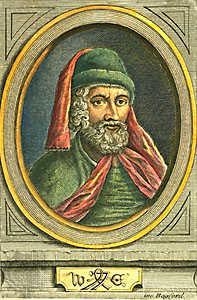
William Caxton, English etching. The Granger Collection, New York ~ Public Domain ~ https://en.wikipedia.org/ wiki/William_Caxton#/ media/File:William_caxton. jpg

William Caxton, English etching.
The Granger Collection, New York ~ Public Domain ~ https://en.wikipedia.org/
wiki/William_Caxton#/
media/File:William_caxton.
jpg

Henry VII became King and brought peace and stability to England. He rid the kingdom of its other pretenders. he reduced the number of nobles and made the Church dependent upon the Crown. Not all was well during Henry Tudor’s reign: agriculture was still quite backward in its views and methods. Labor was not easily had. Disease and famine took many lives, and the working class knew poverty. The nobles were highly in debt. Only the middle class knew any stability. They were moving toward a new materialistic aristocracy. Their actions were supported by governmental ordinances. Yet, the greatest of the events during this period was the introduction of printing to England by William Caxton in 1476. 


Posted in Anglo-Normans, British history, Chaucer, Edward III, Great Britain | Tagged , , , , , , , , , , , , , , , , | 2 Comments

Introducing Black Opal Books’ Futuristic Author, S. B. Redstone + a Giveaway of “Stardust Dreams”

5336425Today S. B. Redstone is joining me on my blog. Mr. Redstone am a School Psychologist and Licensed Clinical Social Worker. After a career of helping children, adolescents, adults, families, and couples he retired to write full time. Redstone is a successful writer of short stories. He has two published novels and a non-fiction work on human nature and relationships. Mr. Redstone is a member of the International Thriller Writers Organization and Romance Writers of America. He lives in Florida and New York with his wife and golf clubs. Let’s learn more of S. B. Redstone…

First, tell us a bit about yourself. From where do you come? Past jobs, awards, the usual bio stuff.

Where did I come from? I could say Brooklyn, New York. My mother’s womb. Or that my genetic material came from the beginning of time on Earth. That’s my way of defining myself. Until I graduated college, I worked from eight years old, starting in my father’s dry cleaning store. My first skills were in cleaning, pressing, and tailoring clothes. I had many part-time jobs to have money to date and put gas in the car. My career began as a caseworker for the New York City Department of Social Services, Protective Services, I investigated the horrors of the abuse and neglect of children and did the best I could saving lives. After attaining master’s degrees in School Psychology and Clinical Social Work, and a post graduate education in psychoanalytic psychotherapy, I continued to help children and families in social agencies, schools and in my private practice. Equally important in my life was writing fiction, but being a Jack-of-all-trades it took a back seat. No longer. I’m no longer building furniture, renovating my homes, doing wood carving and oil paintings. After an early retirement, I’ve been able to write full time. But, I always have time for my wife, two professional children, and three of the most adorable grandchildren. I am a member of the International Thriller Writers Organization and Romance Writers of America. No awards as yet, just people loving my stories. You’ll notice golf is in all my work. It’s a passion that can’t be separated from all other aspects of my life.

What’s the craziest, bravest, or stupidest thing you’ve ever done? 

I have done many crazy and stupid things, but nothing life changing. But, I’ve only done one brave thing that was. As an obscure licensed clinical social worker on Long Island, I had the audacity to write a book on human nature and relationships. And believe me it took an enormous amount of courage to tell Freud that he was wrong about our species and the therapeutic community around the world. In my field only eminent psychologists and psychiatrists write books and create on personality theory. So after a year of research on finding the truth about our species, including my clinical experiences, I nixed fictional psychology, while not using one clinical term. It took many years for me to formulate and write a work that focused on the impediments that prevent us from having happier lives. New Horizon Press Books published Taming Your Inner & Outer Bullies: Confronting Life’s Stressors And Winning. It changed my life and the lives of others for the better.

What do you write? You’re welcome to include your latest title (shameless plug).

I began writing horror short stories and they were all published. My first horror novel has never found a publisher, but it may one day. My second novel, A Sinister Obsession, was published by Black Opal Books. It is a mystery thriller with a paranormal female detective, whose ability is an asset to her police work, but a disaster to her social life. It is a love story as well. Getting hooked on those characters’ relationship, snared me to write a full love story, Stardust Dreams, with two female leads, one an infamous actress and the other an alien desperate for love and purpose.

Tell us about your new release.
Sage Saint Charles lived a wild and notorious life in Hollywood before she descended into obscurity as a social recluse. Sage has regrets, more regrets than a person should have. When her drowsy eyes open, in hospice care, an unfamiliar old man is standing at her bedside.

Lance Forrester is a dreamer. After a celebrated career as an astronaut and engineer, he and a friend built a secret spacecraft to seek their destinies in the stars. But, his friend died. Now that Lance has terminal cancer, he hopes to convince Sage whom he hasn’t seen since high school, to join him on his quest to reach an advanced alien civilization to bring them back to life.

Stardust Dreams is an epic love story. It’s daring plot grasps hold of the lives of two desperate women—one is human, the other an alien, and the man they love. Unfortunately, true life is not a Hollywood movie. Can these two intrepid octogenarians overcome the emotional scars of their pasts and achieve true happiness, or are they doomed to suffer for their mistakes, no matter how far from Earth they go?

This grand love story, with sci-fi/fantasy and futuristic sub-genres begins on Earth in the near future, flourishes on a beautiful Earthlike planet in the distant galaxy, and concludes back on a heartfelt Earth two hundred thousand years into its sad future. I’ve made the story so realistic, I believe the readers who long for eternal youth, love, adventure and a second lifetime to achieve their happiness will imagine they’ve travelled along on this fantastic journey.

Tell us something of the genre in which you choose to write. If you write in more than one genre is your approach different for each genre, in the manner you write, plot the book, or brainstorm ideas?

This what I said to myself. If Shakespeare, Hemmingway, and James Patterson can write what they love, so could I. I have no interest in being a Stephen King, who writes, as far as I am concerned, not being competitive, tedious horror. So far, I written in the genres of horror, mystery thriller, romance, science fiction, and currently comedy. My approach has been to study and learn style through other authors as each genre has a particular style. I do research, take endless notes, and practice. Plots and characters are created in my head. I do not write a word until I have completed the novel in my head from the opening chapter to the final chapter. If I can’t complete a novel in my head, I don’t write it. And if I don’t love it. If I don’t live in it. If I don’t think it’s unique and exciting, it is rejected. Naturally, it changes for the better as my unconscious and edits take over at the computer. Tying in all these genres, the social worker in me has social issues as the heart of all my work.

What do you enjoy most in the writing process? What parts of it do you really dislike?

I hate starting a novel because I’m so impatient to see it come to life. But that’s it. I love every other aspect of writing. Designing great and enduring characters is a thrill. Writing unique plots with various sub-genres takes it out of the realm of ordinary. The use of language and words to enhance mood and emotion tests my ingenuity, creativity, patience, and inner freedom and for a writer, there is no greater enjoyment.

Is it your characters (a character-driven story) or your plot that influences you the most?

For me, characters fit in the plot. When a story comes into my head, initiated by something I saw on television, read about in the newspaper or a book, or seen in a movie, a story percolates in my mind. As that process is taking place, I create the most interesting characters to make the story even more interesting. But, once I am writing the story I would say that I have an equal focus on characters and plot. I believe they are inseparable as did Ian Fleming with James Bond and Charles Dickens with Scrooge. On the other hand, Dan Brown, with his super bestseller, The DaVinci Code, his plot was so strong that it compensated for his lackluster main characters. That’s why Tom Hanks was chosen to star in the movie and not Russell Crowe or Sean Penn. If I can’t imagine fascinating characters in a story, then I won’t continue writing it. My novels, A Sinister Obsession and Stardust Dreams have quite memorable characters, so much so, people are begging me to write sequels.

How do you choose your characters’ names?

I love this question. No one ever asked me this before. First I decide on their nationality. In A Sinister Obsession Sergeant Aubrey McKenzie is part Scottish, so I went to the Internet and searched Scottish last names until I found the one that fit the character I had designed. In Stardust Dreams, the male lead needed a strong name and so I searched all male names. I liked Lance, which was strong but vulnerable. Under English last names I found Forrester, and he was born. Alien names came from phonetics, which I’d say aloud.

What was your favorite chapter (or part) of your current project to write and why? 

I love the second chapter of Stardust Dreams. Lance is trying to convince Sage to join him on his fantastic journey into the galaxy, which has little statistical chance of success. When Sage rejects his offer, he says, “Sure, we can die here on Earth.” Lance says. “We can die in space. Or—we can awaken on a remote and caring world that saves us! We are the captains of our fate—not the Grim Reaper—yet!”

Can you tell us a bit about your upcoming projects?

The novel I am working on now is a series of love stories with fantasy as its sub-genre. It takes place in a magical retirement community where its residents have the opportunity to live their young years over again. It is a comedy/tragedy that takes an honest look at the serious issues that seniors and even grandparents have to deal with: ill health, depression, lost dreams, loneliness, financial troubles, family crises, and marital problems. It is so heartfelt you’ll need a box of tissues next to you.

Meet S. B. Redstone HERE…

Social Media Sites
Website 
Twitter
Facebook
LinkedIn
Goo dreads
Google+ 

Abstract Image Of A Planet With Water. Find New Sources And TechStardust Dreams:

Lance Forrester is a dreamer. After a celebrated career as an astronaut and engineer, he and a friend build a secret spacecraft to seek their destinies in the stars. But his friend dies and Lance is diagnosed with terminal cancer. Desperate not to succumb to his fate, he convinces an acquaintance, ailing actress Sage Saint Claire, whom he hasn’t seen since high school, to join him on his quest to reach an advanced alien civilization which can heal them both. Unfortunately, true life is not a Hollywood movie, as much as Sage might want it to be, and problems abound. Mistakes in the past have turned Sage into a bitter old woman, and she turns out to be a less-than-perfect traveling companion which no amount of optimism, youth, or good health can cure. Can these two intrepid octogenarians-turned-immortals overcome the emotional scars of their pasts and achieve true happiness, or are they doomed to suffer for their mistakes, no matter how far from Earth they go?

Amazon  
Barnes and Noble
Smashwords

AND NOW FOR THE GIVEAWAY. LEAVE A COMMENT BELOW TO BE PART OF THE GIVEAWAY OF TWO eBOOK COPIES OF STARDUST DREAMS. THE GIVEAWAY WILL END AT MIDNIGHT EDST ON FRIDAY, SEPTEMBER 25, 2015. 

Posted in Black Opal Books, giveaway, Guest Post, interview, science fiction | Tagged , , , , , | 3 Comments

Review of Debra White Smith’s Contemporary Austen Tale, “First Impressions”

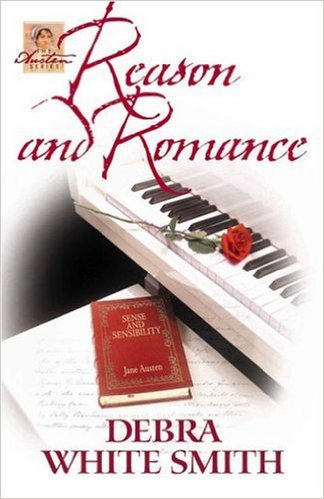
When I am not writing my own novels, I read voraciously. For this review, I chose Debra White Smith’s First Impressions. This book is part of Smith’s backlist, but it is worth doing a search for it. Ms. Smith is a minister, and her Austen Series are modern adaptations of Jane Austen’s novels, each with a religious message. Other than First Impressions, which is a contemporary version of Pride and Prejudice, one may find Possibilities (Persuasion), Amanda (Emma), Northpointe Chalet (Northanger Abbey), and Reason and Romance (Sense and Sensibility). I absolutely loved Possibilities and will address it in the future.

51SdRxSj8NL._SX322_BO1,204,203,200_When Eddi Boswick is cast as Elizabeth, the female lead in a local production of “Pride and Prejudice,” she hesitates. Dave, the handsome young rancher cast as Darcy, seems arrogant and unpredictable. Accepting the challenge of playing opposite him, Eddi soon realizes that he is difficult to work with on and off the set. When a tornado springs out of nowhere, Dave protects Eddi…much to her chagrin. And he is shocked to discover an attraction for the feisty lawyer he can’t deny. Sparks fly when Eddi misinterprets his interest and discovers the truth he’s trying to hide.

First Impressions, by Debra White Smith – from Harvest House Publishers (copyright 2004) ISBN 0-7369-0872-2

The first in her Austen Series, Smith dedicates this novel to Dr. Michael Murphy, the professor who first introduced her to Jane Austen. In this novel, Smith begins by providing her readers with a “Cast” of characters. Please note that for each novel in the series,  she says her characters are “based on” Austen’s, which means that an Austen lover will see the similarities, but Smith has not insisted that the characters “do everything” as the Austen originals. Nor do they react in the same manner as Austen’s beloved characters, a purposeful choice which I appreciated. Even in an “inspirational” series, translating Austen’s characters into contemporary situations is not possible. Obviously, the restraints on marriage and relationships which colored the Regency Period are not an issue in the modern world. Las Vegas is the modern answer to Gretna Green.

Smith masterly tells the story through her dialogue. Although her description is first rate, her dialogue is spotless. Coming from a theatre background, I appreciate advancing the story with dialogue rather than long passages of narration. However, it is apparent from the beginning that Smith makes no attempt to replicate Austen’s style. The characters are relatable, and the book eloquently speaks to the role of religion in a person’s life. The challenges and rewards of love are the main theme.

If you are an Austen fan and are familiar with the scene where Mr. Darcy tells Charles Bingley that Elizabeth Bennet is “tolerable, but not handsome enough” to tempt him. Then this is Smith’s version of that event. (Dave’s aunt Madelynne DeBloom is conducting a reading of Pride and Prejudice to determine parts in the upcoming production.)

Excerpt:

A cautious precognition suggested Eddi should stop eavesdropping. She rubbed her fingertips along the buttons on her linen jacket. A daredevil streak challenged her to ignore caution just this once.

What has caution gotten me so far? she asked. An empty townhouse with a dog pound refugee and two resentful felines to keep me warm at night. She crossed her legs and gazed past the honeysuckle-laden trellis to a woodpecker that was determined to pound his beak into the oak at the porch’s corner. All the while she pined for any signal of interest from the renegade rancher.

“Oh, so we’re not commenting on the lawyer?” Calvin teased. “Why not?”

Dave remained silent. Eddi looked down and pulled at the top of a piece of broccoli.

“Whatsa matter?” Calvin blurted. “Are you afraid of her?”

A caustic laugh bounced around the porch.

“Yeah, right,” Dave retorted.

“Or maybe you’re worried she’s too smart for you! Ha!” Calvin laughed.

“That’s a good one.”

Eddi snapped her attention from the broccoli to the porch’s corner. Calvin slid his chair back and his legs disappeared.

“Oh, shut up, ” Dave groused. “If you must know, Eddi Boswick would have to be way more classy to keep my attention for long.”

~~~~~~~~~~~~

If you are a Jane Austen lover, you will enjoy this novel. It is worth the read to see how Smith handles the “second proposal” scene. My only objection when I first read this novel was it was a bit “preachy” in the middle regarding Linda Boswick and Rick Wallace’s relationship. Linda and Rick are the Lydia Bennet and George Wickham characters in Smith’s novel. Of course, after I realized that Ms. Smith was the founder of Real Life Ministries, the emphasis on abortion issues made more sense.

I would give this book 4.5 stars out of 5. Although it is currently out of print, I encourage you to pick up a used copy on Amazon or another media outlet.

51k3eKkthbL._SX322_BO1,204,203,200_51vq5AYbx-L._SX322_BO1,204,203,200_51vZq8DtyRL._SX325_BO1,204,203,200_51wCBWdu6wL._SX322_BO1,204,203,200_513jHRnAjXL._SX322_BO1,204,203,200_

Posted in review, writing | Tagged , , | 2 Comments

Happy Birthday to Me!

This is the former Huntington High School. Is it not a beautiful building? We were over 1600 strong in grades 10-12, with 543 in my graduating class.

This is the former Huntington High School. Is it not a beautiful building? We were over 1600 strong in grades 10-12, with 543 in my graduating class.

We were the Pony Express.

We were the Pony Express.

This weekend, I will celebrate with my former classmates at our 50th Class Reunion. Moreover, today is my 68th Birthday! I will admit when I was 18 and looking forward to graduation, I thought 68 QUITE ANCIENT. Needless to say my perspective has changed. So, today, I mean to indulge myself with a retrospective look at my younger self. Please excuse my self-conceit. I promise it is only momentary. I’ll be back to examining all this Austen and Regency tomorrow. For now…party-clip-art-balloons-different-coloursparty-clip-art-balloons-different-colours

This is me at age 65. One of my former classmates is making a table book with many of our pictures. It will be "The Class at 65 at 65."

This is me at age 65. One of my former classmates is making a table book with many of our pictures. It will be “The Class at 65 at 65.”

My greatest accomplishment: being a mother to a wonderful son.

My greatest accomplishment: being a mother to a wonderful son.

My senior picture in 1965. I was editor of the yearbook and belong to several clubs.

My senior picture in 1965. I was editor of the yearbook and belong to several clubs.

party-clip-art-balloons-different-colours

This is me in December 1970. If nothing else, this montage will prove me a true blonde.

This is me in December 1970. If nothing else, this montage will prove me a true blonde.

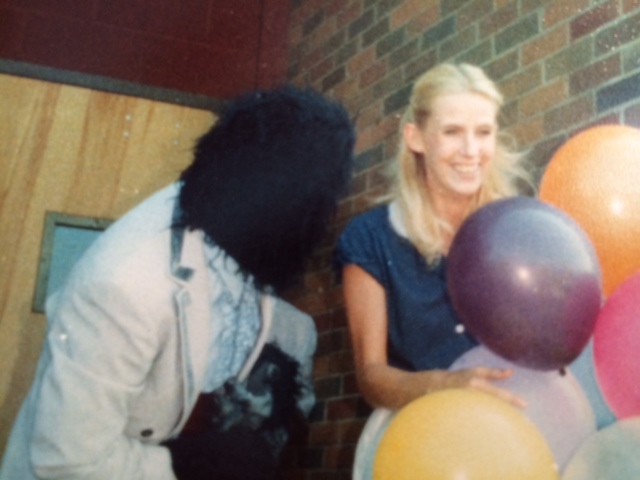
In the early 1970s, I taught at Buffalo High School, an experience I will forever cherish. One year, my students hired a "gorilla" to deliver me birthday balloons. How often does that happen?

In the early 1970s, I taught at Buffalo High School, an experience I will forever cherish. One year, my students hired a “gorilla” to deliver me birthday balloons. How often does that happen?

This is me dressed up in August 1957. I was 10 years old at the time.

This is me dressed up in August 1957. I was 10 years old at the time.

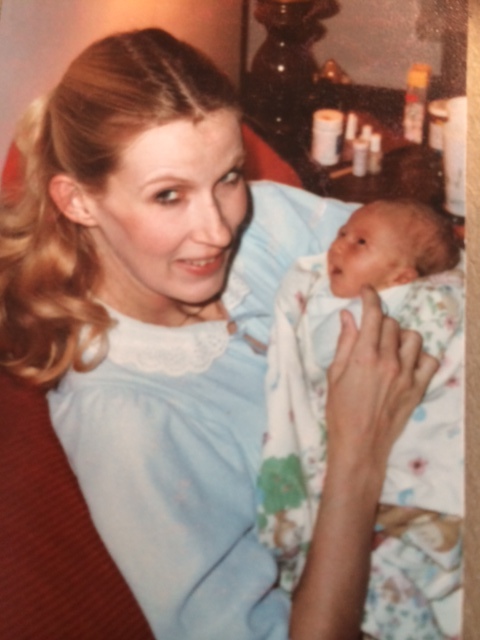
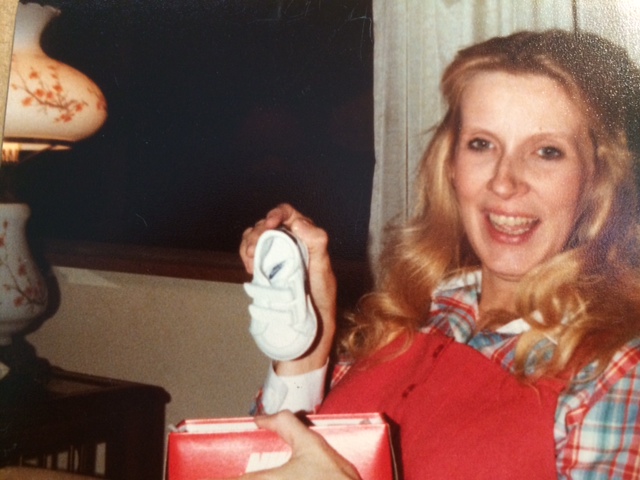
After losing two other children, in 1983, I carried to term (almost). My son was only 5 weeks early. I loved the "baby" Nike shoes. My Joshua is a runner even to this day.

After losing two other children, in 1983, I carried to term (almost). My son was only 5 weeks early. I loved the “baby” Nike shoes. My Joshua is a runner even to this day.

This was in rehearsal for "A Solid Gold Cadillac." I portrayed the prudish secretary, Amelia Shotgraven, to Mrs. Laura Partridge. In the film version, Judy Holliday played Mrs. Partridge. Do not worry, my prudish secretary won the heart of young office intern in the end.

This was in rehearsal for “A Solid Gold Cadillac.” I portrayed the prudish secretary, Amelia Shotgraven, to Mrs. Laura Partridge. In the film version, Judy Holliday played Mrs. Partridge. Do not worry, my prudish secretary won the heart of young office intern in the end.

I'm a second degree black belt. This is me as a green belt with a front kick. In reality, I'm holding the position so the photographer could snap the picture.

I’m a second degree black belt. This is me as a green belt with a front kick. In reality, I’m holding the position so the photographer could snap the picture.

Posted in Uncategorized | Tagged , , | 20 Comments

Interview with Black Opal Books’ Contemporary Romance Author, M. E. Gordon

Today, I’d like to introduce you to M. E. Gordon, another of the authors from Black Opal Books. Ms. Gordon is a new author to me (as well as you), as I just recently joined Black Opal Books for an upcoming Regency romance release (Angel Comes to the Devil’s Keep), so I thought an interview would serve us both well in learning more of  Ms. Gordon’s works. 

First, tell us a bit about yourself. From where do you come? Past jobs, awards, the usual bio stuff.

My name is Megan Gordon, and I hail from central Maryland. I’m a wife and mom to four kiddos under 6. Before I decided to try my hand at writing, I was a pre-school teacher. I stopped that once my husband and I decided to have horde of kids on our own. Didn’t really make sense to pay for someone to watch my kids while I watch someone else’s, so I quit, to stay at home and raise our kids.

How long have you been writing, and how did you decide this was a career you wanted to pursue?
I’ve always considered myself a writer. I journal and when I was a pre-teen I use to write my own stories and get my friends to read them. Thank God I’ve come a long way since then! At first I wrote as something to occupy my downtime, between diapers and bottles, but as I went on and finally finished my first novel Torn Hearts, I wanted to see it through all the way. My thought “Someone’s gonna want to read this.” And they did. Black Opal Books signed me after my submitting query letters to only three different publishers.

What do you write? You’re welcome to include your latest title (shameless plug).
I love writing about two people meeting, as well as their growing relationship: those first looks, funny banter, and electric charges. I live for those special experiences. I like writing this style, because I also like reading it! I love a good back and forth between characters and what might be going through their heads in those vulnerable moments. My genre is contemporary and new adult. But I have plans to explore the syfy new adult, and maybe if I ever really have the time to do research, I’d like to try historical. (Maybe when all the kids are in school…)

Tell us about your new release.
My very first book is called Torn Hearts. It’s not your typical romance in the sense that the main girl is a size 12. She’s not only dealing with love, but the realization that maybe she’s being used or taken advantage of. She has to remember to suck it in and watch the muffin top. These are things that most everyday women in the real world think and have to deal with. I wrote her as a size 12 because I was tired of reading about frail women with no back bone and who always seem to need someone to take care of them and tell them when to eat…really, who needs to be reminded to eat? It was a challenge to write for a plus size woman. For example, the girl is nervous about meeting a guy for a date, now multiply that by a million for a plus size girl. “Is he using me? Am I part of some joke? Are my rolls showing? Do I have a double chin?”

Tell us something of the genre in which you choose to write. If you write in more than one genre is your approach different for each genre, in the manner you write, plot the book, or brainstorm ideas?
With all my books (I’ll soon have three published by Black Opal Books) I find that I start with an idea and just write as if I was watching a movie in my head. I jot down ideas for plot twists (who doesn’t love a plot twist?) but don’t necessarily stick to them. I try to get into my character’s head and react to the situations as they come and just see where it takes me in the story. With Torn Hearts, I had a clear vision of what I wanted to happen, and it was a matter of hitting all the main milestones in the book. With my second book Make Me Stay, I changed the way I wrote. I decided to switch back and forth from the main girl to the main guy so the reader could get inside both the male and female head. I love writing like this. The characters end up driving the story. All I do is add in obstacles for them to navigate around.

What difficulties does writing this genre present?
So in the contemporary genre, I feel like it’s flooded with authors and books. There are so many books in the contemporary/ new adult genre it’s hard to break through and have a stand out book. It’s so difficult to make one’s book stand out from the others, but if a person has a solid story and great characters that readers can either relate to or crush on, he/she’s golden.

What do you enjoy most in the writing process? What parts of it do you really dislike?
I love writing dialogue! It’s my favorite thing about writing. I feel like when I read that I sometimes jump over the boring stuff and get straight to the dialogue. It’s what drives a book in my eyes. You can only read about what someone is thinking for so long before you get bored stiff.
As far as what I dislike about writing… it has to be editing. I know it has to be done, but sometimes I don’t even want to read my book more than ten times. My eyes start going crossed and soon I find myself trolling around the Internet just to avoid it.

How much time do you devote to writing each day?
Once I get the kids in a good schedule with school and drop off/pick up, I try to sit for at least 2-3 hours a day. Now there are times where I’m on a roll and will stay up all night, but I pay for it in the morning.

How do you choose your characters’ names?
I pick my characters’ names by how they sound together. For instance, in my book Make Me Stay is about Kane and Kitty. I like things that flow nicely off the tip of your tongue.

How do you keep all your research information and plot ideas organized and accessible?
I have a journal for each book that I write. In these I jot down everything from character description to possible quotes. I write down songs that inspire me and details about how rooms look or different places in the book.

What was your favorite chapter (or part) of your current project to write and why? 
So in Torn Hearts, my favorite part to write was the argument between Spencer Salvatore and Beth when she finally gave in not only to him, but to the feelings she was suppressing. I feel like it’s sexy and gets the reader’s blood pumping. You don’t know who to be mad at, him for making her choose, or her for running away. Plus, there’s really good dialogue, and we all know I love a good conversation or argument in this case.

How do you get past writer’s block or distractions like the Internet?
When I have writer’s block, I walk away. I put it all away and just live my life. Usually within a few days I find myself coming up with dialogue or plot ideas. I scramble for a pad of paper or jot something down on my phone if I’m out, and before I know it I’m back at it.
The Internet is another topic all together. It’s a black hole for writers, and if you’re not careful you will get sucked in.

What was your favorite book from childhood?
As a child, the story I remember the most was The Giving Tree and the Berenstain Bears books. I enjoyed all of those.

Who has been the most difficult character for you to write?
The most difficult character to write so far for me has been Spencer Salvatore from Torn Hearts. He’s a mystery to me even to this day. He’s so complicated that it’s hard to keep his personality where it needs to be in certain scenes in the book. I know so much more about his background than the reader, and it’s difficult to remember that when writing for him.

How much time does it take you to write a book?
It can take me as little as 3 months and as long as 8 months to write a book. It all depends on what my schedule looks like with the kids, because they do come first.

Can you tell us something of your upcoming projects?
I am so excited about my second book Make Me Stay. I think it’s the best book that I have written. It’s about a rock band called One Night Stand. I plan on writing a book for each one of the guys in the band. In these books, you see them start off in a small town bar where they slept around with a different woman every night to eventually them making it big. On their way to fame, they each meet their match in a feisty woman. These books are when I started switching perspectives back and forth, and I think it works really well and gives the reader a better sense of the characters and why they act the way they do.

What do you find is the hardest part of writing?
Everything has been pretty good up until it was time to promote my book. I’m not a blogger or twitter-er, nor do I have a huge following, so getting my book into people’s hands has been challenging. I keep asking for reviews, and sometimes I get nothing back. Another reason this genre is hard is people already have their favorites, and it’s hard to get people to buy one’s book when they don’t know the author or her writing style. Promoting is almost a full time job in itself. I see why some authors hire someone to help them. Hopefully, I can get there one day because navigating blogs and blitz and tweets is way, and I mean way, over my head.

What will you be working on next?
Right now I’m working on the third book in my rock band series and promoting my first book Torn Hearts. I plan on finishing the sequel to Torn Hearts soon so that it can get it to my publisher and then into readers’ hands.

Pageflex Persona [document: PRS0000040_00008]Torn Hearts from Black Opal Books:

A TALE AS OLD AS TIME – A GIRL, TALL AND WISY, HAIR THE COLOR OF THE SUN, EYES AS BLUE AS THE SKY, CAUGHT IN A LOVE TRIANGLE WITH THE NOBLEST OF MEN…

NOT IN THIS BOOK, HONEY!

My name is Elizabeth, and I’ve managed to avoid men most of my life. I wasn’t a nun by any means, but I knew what the Hot Guys wanted, and it usually wasn’t me. How I got myself involved in a love triangle with one sexy photographer and a millionaire bachelor, who has women worshipping the ground upon which he walks, is beyond me. 

Yet, here I am navigating unknown waters: figuring out which man is right for me, dealing with my family, and you guessed it, the paparazzi.

What a girl to do? Who do I trust? Who is genuine? What if both men are perfect in different ways? How does a girl choose just one? What if I choose to keep them both? 

Purchase Links:

Amazon

Barnes and Noble

Smashwords

KOBO

All Romance eBooks

Black Opal Books

Posted in Black Opal Books, Guest Post, interview | Tagged , , , , | 3 Comments

Desiring Elizabeth Bennet ~ Discussing “Pride and Prejudice” 2005

This past week, the “Devoted Friends of Pride and Prejudice 2005″ and the “Pride and Prejudice 05 Blog” highlighted this post. I thought I might repeat it here because tomorrow, September 16 is the 10 year anniversary of the release of the Joe Wright film in Europe. By the way, the P&P05 blog has a variety of events going on this month in celebration of the anniversary. Check out all the discussions going on. 

In a previous post, I discussed how Andrew Davies “created” the image of a very masculine and virile Darcy by adding scenes to the 1995 Pride and Prejudice adaptation. Some of you reading this post likely participated in “Darcy Loving Parties” at the time of this mini-series’ release.

Today, I would like to examine the visual shift of “desire” to Elizabeth Bennet in the 2005 film. Casting the beautiful Keira Knightley in the lead role changed the focus. Choosing Ms. Knightley, who established herself in Bend It Like Beckham, King Arthur, Love Actually, and The Pirates of the Caribbean, was designed to appeal to a younger and wider audience. Add Joe Wright’s emphasis on social realism to Knightley’s casting, and we have a film that grossed over $125 million worldwide.

Knightley’s casting could have backfired. Remember that Austen describes the character as, “She (Elizabeth) is tolerable, but not handsome enough to tempt me.” and “But no sooner had he made it clear to himself and his friends that she had hardly a good feature in her face ….” and “Though he had detected with a critical eye more than one failure of perfect symmetry in her form ….” Obviously, the casting of the equally lovely Rosamund Pike as Jane helped to “sell” the idea that Elizabeth’s fair face was less than her elder sister’s.

Pride-Prejudice-2005-movie-quoteIn the 2005 film, Elizabeth (Knightley) is found in EVERY scene, from the opening shot of her walking home while reading her book to the final kiss in the American version. The camera follows Elizabeth through the house. We see her world through Elizabeth’s eyes. When she walks away from Darcy at the Meryton assembly, everyone else pales, but our focus remains constant on Elizabeth. She is framed by the retreating camera lens.

When Elizabeth and Jane share secrets under the blankets, the audience is invited to join them. When she sensually traces Darcy’s belongings with her fingertips, we feel Elizabeth’s longing for a man she has allowed to slip through her fingers.

Elizabeth - Pride and Prejudice 2005 Image (10317296) - Fanpop www.fanpop.com

Elizabeth – Pride and Prejudice 2005 Image (10317296) – Fanpop
http://www.fanpop.com

Jane Austen's Pride & Prejudice' Reaches 200 Years | A.E.A. Green ashleagreen.wordpress.com

Jane Austen’s Pride & Prejudice’ Reaches 200 Years | A.E.A. Green
ashleagreen.wordpress.com

Through the camera, the viewer is always at Elizabeth’s side. We read over her shoulder in the opening scene. We enjoy the interplay between Elizabeth and Mr. Bennet regarding Mr. Collins’s pomposity. We hide behind a Netherfield column with her when her family’s actions bring humiliation. We observe Darcy’s approach through the morning mist as Elizabeth would, and we peek through the open door as she watches Darcy spin his sister around in circles.

Even when we have the occasional film seconds when Knightley is not in the framing, the scene pans to Elizabeth’s presence. It’s as if the camera leads us back to her. The maid carries items through the Bennet household and ends up in Elizabeth and Jane’s shared room. The intimate scene of Mr. and Mrs. Bennet’s bedroom guides us to another meeting between Jane and Elizabeth. Darcy’s appreciation of Georgiana’s pianoforte skills lead the viewer to Elizabeth’s accepting his invitation to Pemberley.

Knightley’s star power is “lessened” by her appearance in dingy, drab dresses and having her surrounded by a “working” home: animals, a barnyard swing, the kitchen, clothes lines, disarray. These techniques “muffle” Knightley’s beauty and allow the viewer to accept her as Austen’s most famous character. In contrast to the 1995 film, Matthew Macfadyen’s Darcy is often shot from a distance and always fully clothed (minus the American ending again). Even his open-shirt appearance in the pre-dawn hours is viewed from Elizabeth’s point of view. He’s coming to her. She waits for him. Therefore, she remains the center of attention.

▶ My Immortal- Pride & Prejudice - YouTube www.youtube.com

▶ My Immortal- Pride & Prejudice – YouTube
http://www.youtube.com

Wright’s “extra” scenes direct the desire to Elizabeth. Davies’s film showed Darcy in his bath and diving into a pond to increase Colin Firth’s role. Wright uses the near kiss from Darcy’s first proposal, the caress as Darcy assists Elizabeth to the carriage, and the seductive circling of Darcy and Elizabeth at the Netherfield Ball as part of the film’s sexual subtext. These and several other scenes amplify the desire for Elizabeth.

The queen of modern slang: Jane Austen is revealed to have coined phrases we use everyday | Daily Mail Online www.dailymail.co.uk

The queen of modern slang: Jane Austen is revealed to have coined phrases we use everyday | Daily Mail Online
http://www.dailymail.co.uk

One part of the film that has received much criticism is the way this adaptation minimizes the relationship between Elizabeth and Wickham and between Elizabeth and Colonel Fitzwilliam. Wright chose to omit Austen’s diversions because Elizabeth is the one to be desired, and Elizabeth desires Darcy. In this version, we do not consider her flirtation with either man as serious possibilities. In the 2005 film, Wickham spends more time with Lydia than he does with Elizabeth.

Okay, it is your turn. Where else in the film is Elizabeth the point of desire? How has her character been created? I have other ideas, but I am waiting for our Miss Austen’s loyal fans to add their own opinions.

Holden, Stephen. “Marrying off Those Bennet Sisters Again, but This Time Elizabeth is a Looker.” Review of Pride and Prejudice. The New York Times. 11 Nov. 2005. {http://movies2.nytimes.com/2005/11/11/movies/11prid.html?ex=1176782400&en=97912be821dd7738&ei=5070}

Posted in Austen Authors, Great Britain, Jane Austen, Living in the Regency, Regency era | Tagged , , , , | Comments Off on Desiring Elizabeth Bennet ~ Discussing “Pride and Prejudice” 2005