Northanger Horrid Novels ~ Are They Real?

Northanger Horrid Novels

thoughts from Regina Jeffers…

I have highlighted these books previously, but at a recent event, I was again asked if Austen made up the names of the books in Northanger Abbey. So, I will again  introduce our visitors to what are known as the Northanger Horrid Novels, seven early Gothic examples of fiction.

These books were among the many published by Minerva Press in the late 1700s and early 1800s. William Lane established Minerva Press at No. 33 Leadenhall Street, London, when he moved his circulating library there in 1790. The seven books, which comprise the Northanger Horrid Novels, were once thought to be creations of Jane Austen’s imagination, but research in the early 1900s by Michael Sadleir and Montague Summers proved the stories did exist. In Northanger Abbey, Isabella Thorpe tells Catherine Morland …

“Dear creature! How much I am obliged to you; and when you have finished Udolpho, we will read The Italian together; and I have made out a list of ten or twelve more of the same kind for you.”
“Have you, indeed! How glad I am! – What are they all?”
“I will read you their names directly; here they are, in my pocket-book. Castle of Wolfenbach, Clermont, Mysterious Warnings, Necromancer of the Black Forest, Midnight Bell, Orphan of the Rhine, and Horrid Mysteries. Those will last us some time.”
 
“Yes, pretty well; but are they all horrid, are you sure they are all horrid?”
“Yes, quite sure; for a particular friend of mine, a Miss Andrews, a sweet girl, one of the sweetest creatures in the world, has read every one of them.”


Some years back, Valancourt Books began a project to bring these titles and many others from around the world to the reading public. Along with those found on Valancourt, most of the titles are available from online book sources. Some are even available in their entirety at internet reading sites. So, what are the stories in each of these books? And would Jane Austen have read them?

The Castle of Wolfenbach (1793 )by Eliza Parsons
A lecherous and incestuous uncle forces Matilda Weimar to flee her home and to seek refuge in the ancient Castle of Wolfenbach. Horrifying mysteries also dwell in the castle, including that of the missing Countess of Wolfenbach. Matilda must unravel the clues before her uncle tracks her down and takes her away with him.


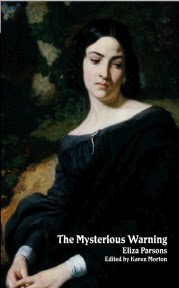
The Mysterious Warning (1796) by Eliza Parsons 

When the much revered Count Renaud dies, his degenerate heir, Rhodophil, assumes his father’s title. The count has disowned his son Ferdinand, who has married without his father’s permission. Rhodophil swears he will share his riches with Ferdinand and the younger brother’s wife, Claudina, but a “mysterious warning” from the grave sends Ferdinand fleeing for his life. To make matters worse, Claudina has aligned herself with Rhodophil. Ferdinand’s quest for his own fortune and adventure brings him to the doorstep of a recluse, who has a horrible secret. Later, he becomes imprisoned by the Turkish army and then encounters one of Gothic literature’s most depraved female characters, Fatima. If he survives all his meanderings, Ferdinand must then return to Renaud Castle to uncover the ghostly truth about his wife and his brother.

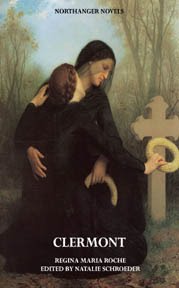
Clermont (1798) by Regina Maria Roche
Madeline lives in seclusion with her father Clermont, who holds a mysterious past. That seclusion is interrupted by one of Clermont’s former friends, a Countess. Madeline is allowed to reside with the Countess, with whom she will receive an education. However, the Countess is attacked by unknown assailants, and Madeline is assaulted in a ghostly crypt. Compounding their problems, a sinister stranger appears to claim Madeline as his bride. The stranger knows Clermont’s secret and threatens to ruin Madeline’s father. Madeline must avoid her pursuers, solve the mystery of her father’s past, and win the love of De Sevignie.
The Orphan of the Rhine (1798) by Eleanor Sleath 
Sleath is very much an Ann Radcliffe wannabe, and she models many of her pieces on Radcliffe’s works, using several of Radcliffe’s signature plot devices: mysterious monks, ruined towers, assumed names for the characters, last-minute rescues, and death-bed scenes. In this novel, Julie de Rubine discovers that her marriage to the Marchese de Montferrat is a sham. Unfortunately, this news is not delivered until after Julie gives birth. Julie takes her child and an orphan by the name of Laurette to live in a half-ruined castle on the Rhine. She remains there under the Marchese’s threats until Laurette becomes old enough to “stir the passion” of other key characters. Then things get very interesting!
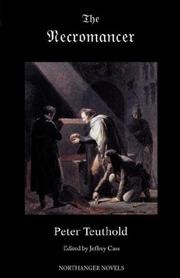
The Necromancer; or, The Tale of the Black Forest (1794) by Karl Friedrich Kahlert
 
This book is a series of interconnected stories, each of which deals with the enigmatic character Volkert the Necromancer. This is a very strange novel. It is filled with murder, dark magic, and plenty of ghosts. The plot takes too many twists and turns to describe in so short of a space, but for the true Gothic fan, it is a must.
The Midnight Bell: A German Story, Founded on Incidents in Real Life( 1798) by Francis Lathom
Alphonsus Cohenburg finds his mother covered in blood. She tells him that his uncle has murdered Alphonsus’s father, and he must flee for his life. He is never to return to Cohenburg castle. Alphonsus’s adventures include being a soldier, a miner, and a church sacristan. He meets and weds Lauretta, but she is kidnapped by a group of ruffians. Alphonsus must solve the mystery of his wife’s disappearance and the question of his mother’s strange pronouncement. Add to those dilemmas the news of ghosts haunting his family’s castle and the sound of great bell each night at midnight, and one has a complete Gothic delight.

71GVlfvYFpL._SL500_SX350_BO1,204,203,200_

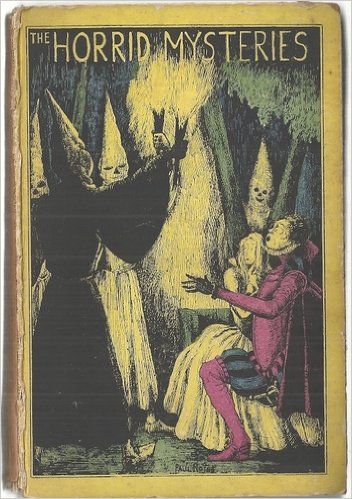
The Horrid Mysteries: A Story from the German of the Marquis of Grosse (a translation of the German Gothic novel Der Genius) (1796)

It was first published by the sensationalist Minerva Press in 1796. A later, two-volume edition published by Robert Holden and Co., Ltd. in 1927 includes a new introductory essay by Montague Summers. The books were bound in pictoral boards, and feature a period-style “advertisement” for Pears’ Soap on the rear cover. The hero of the tale, the Marquis of Grosse, finds himself embroiled in a secret revolutionary society which advocates murder and mayhem in pursuit of an early form of communism. He creates a rival society to combat them and finds himself hopelessly trapped between the two antagonistic forces. The book has been both praised and lambasted for its lurid portrayal of sex, violence and barbarism. H. P. Lovecraft, in his lengthy essay Supernatural Horror in Literature, dismissed it and others like it as “…the dreary plethora of trash like Marquis von Grosse’s Horrid Mysteries…”(Wikipedia)

Posted in book excerpts, British history, castles, gothic and paranormal, Great Britain, Jane Austen, Living in the Regency, Regency era, Victorian era | Tagged , , , , , , , , , | 9 Comments

Winners from Three Recent Giveaways


WinnersJoana Starne
s will gift Vesper with an eBook copy of release of The Unthinkable Triangle.The Unthinkable Triangle_Final cover


ATOE eBook Cover - Green TextRegina Jeffers will gift Luthien84 with an eBook copy of A Touch of Love and Cassandra Samuels with an eBook copy of A Touch of Emerald as part of Regina‘s “Changes in Weaponry” post. ATOL


Regina will also gift tgruy with an eBook of an eBook copy A Touch of Emerald and Annie Whitehead with an eBook copy of His American Heartsong from Regina’s Shine a Light on Our Ladies Blog Hop Week One PostHAHS

Posted in British history, giveaway, Jane Austen, Living in the Regency, Regency era | Tagged , , , , , , , | 2 Comments

“Shine a Light on Our Ladies” Blog Hop: Elizabeth Bennet (and Some Less Favorable Qualities) + a Giveaway


Cathy Helms of www.avalongraphics has designed us this logo

Cathy Helms of http://www.avalongraphics has designed us this logo

During the month of October nine other authors and I are “Shining a Light on Our Ladies” by taking a closer look at what makes our heroines so special. Those involved include: Helen Hollick, Alison Morton, Anna Belfrage, Inge H Borg, Linda Collison, Elizabeth Revill, Patricia Bracewell, Sophie Perinot, and Diana Wilder.

To view last week’s post on four of the heroines from the REALM series, go HERE.

Elizabeth Bennet, a fictional character appearing in the novel Pride and Prejudice, depicted by C. E. Brock Scans from the book at Pemberley.com ~ Public Domain ~ Detail of C. E. Brock illustration for the 1895 edition of Jane Austen's novel Pride and Prejudice (Chapter 56) showing Elizabeth Bennet outdoors in "walking dress", with bonnet and parasol. en.wikipedia.org/ wiki/Elizabeth_Bennet

Elizabeth Bennet, a fictional character appearing in the novel Pride and Prejudice, depicted by C. E. Brock
Scans from the book at Pemberley.com ~ Public Domain ~ Detail of C. E. Brock illustration for the 1895 edition of Jane Austen’s novel Pride and Prejudice (Chapter 56) showing Elizabeth Bennet outdoors in “walking dress”, with bonnet and parasol. en.wikipedia.org/
wiki/Elizabeth_Bennet

Today, I chose to look at the heroine I feel I know best, although she is not my creation. Elizabeth Bennet came to the notice of the reading public in January 1813, and for over 200 years, readers have come to adore Elizabeth’s witty repartee, vitality, intelligence, and charm, and to a certain extent, her discriminating observations of those about her. She is regarded as Austen’s most endearing heroine. Elizabeth is a beloved character in British literature, and her complexity entices us. For example, despite her quick mind, we quickly discover that Elizabeth is as vulnerable to a man with a handsome face as are her sisters. Austen described her creation “as delightful a creature as ever appeared in print.” [Wright, Andrew H. “Elizabeth Bennet.” Elizabeth Bennet (introduction by Harold Bloom). Broomall: Chelsea House Publishers , 2004. 37–38 . Google Book Search. Web. 22 October 2011.]

What else do we know of Elizabeth Bennet? Obviously, to be as relatable as she is, Miss Elizabeth must have more depth that the above characteristics would show. Some of the characteristics we see of Elizabeth in ourselves are not necessarily her more endearing qualities. 

Let us take a look at Elizabeth’s interactions with Charlotte Lucas. Of all the other female characters in the story, Elizabeth assumes that Charlotte is the one most like Elizabeth in her intelligence and her temperament. In reality, Elizabeth imagines Charlotte’s opinions are more of the same nature than they actually are. Elizabeth, like any woman in her social position, understands the need for a marriage of convenience, but she secretly hopes for a bit of affection between her and her future husband. She believes Charlotte feels the same, even when Charlotte declares otherwise. Happiness in marriage is entirely a matter of chance…it is better to know as little as possible of the defects of the person with whom you are to pass your life. To which Elizabeth replies, You make me laugh, Charlotte, but it not sound. You know it is not sound, and that you would never act in this way yourself.

Yet, Charlotte’s choice of Mr. Collins proves Elizabeth’s friend “practical.” Charlotte’s perceived betrayal wounds Elizabeth’s confidence and her sense of dignity. If Charlotte MUST choose a man of Mr. Collins’ character, what choices remain for Elizabeth? She feels trapped by life, and Charlotte’s actions prove there is “no means out.” We in the modern world are often faced with the prospect of being the only one of our friends not married; yet, is this fear truly a modern one?

Charlotte resigns herself to a tedious marriage with Collins, a fact that goes against Elizabeth’s nature for she lives firsthand the outcome of such a marriage, the one between her parents. Elizabeth finds herself clinging to a fading hope of discovering someone who will recognize her as a superior choice. Unfortunately, Elizabeth’s pride is a false one. She has no real competition among her sisters. If she knew a wider society, Elizabeth would be more aware of her shortcomings when Mr. Darcy announces them in his first proposal. True, Jane is far handsomer, but the eldest Miss Bennet is not written by Austen to be Elizabeth’s equal. I am certain that there are many females out there who have asked themselves, “What does he see in her?” 

Like her father, Elizabeth takes pleasure in living among foolish people. But, Lizzy, you look as if you did not enjoy it. You are not going to be missish, I hope, and pretend to be affronted at an idle report. For what do we live but to make sport for our neighbors, and laugh at them in our turn?  When I was still teaching school, one of my favorite lessons was on a “comedy” unit. Humor is the only socially accepted form of criticism, and both Elizabeth and her father use their witticisms as an attack on others and as a defense for their own shortcomings. My students loved it when I pointed out that we humans smile largely when we say, “I didn’t mean it. It was only a joke.” Compare that false “smile,” one with teeth showing and lips stretched wide, to the one an animal shows its enemy in warning. (i.e., The dog bared its teeth.) Very similar…

That being said, does Elizabeth use her humor to deflect attention from her own shortcomings? I do not criticize her actions. I find Elizabeth’s response quite “human.” If the Bingley sisters finding Elizabeth wanting, how else would she respond but to point out their “deficiencies”? 

It is helpful to consider what life skills has Elizabeth learned from Mr. Bennet. Needless to say, Elizabeth is her father’s favorite, and she wallows in his approval. Any admiration she knows comes at the hands of Mr. Bennet. She imitates his love of reading, his witty observations of others, and Mr. Bennet’s “isolation,” although Elizabeth is not as successful as her father in remaining detached. We view Mr. Bennet as jaded in his opinions and in his bending to the wishes of Mrs. Bennet in order to avoid his wife’s “nerves.” In her imitation, Elizabeth takes herself quite seriously in her dealings with others. She tells Darcy, Follies and nonsense, whims and inconsistencies ‘do’ divert me, I own, and I laugh at them whenever I can. 

When the outside world proves her opinions in error, Elizabeth does not know how to react. She cannot understand Bingley’s abandonment of Jane for Elizabeth is certain the man loves her eldest sister. As mentioned earlier, Charlotte’s acceptance of Mr. Collins goes against all things Elizabeth claims as holy. Unconsciously, she does not reject her mother’s opinion of her. We recognize how Mrs. Bennet’s constant reminders to Elizabeth as being “ungrateful” and being “the least dear” of her children must play into Elizabeth’s personality. Elizabeth is defined by this image, and she fights it as does Mr. Bennet. 

How could Elizabeth NOT feel the sting of Mr. Darcy’s rebuke? She is tolerable, but not handsome enough to tempt ‘me’; and I am in no humor at present to give consequence to young ladies who are slighted by other men. Although she thinks herself Mr. Darcy’s equal, he sets her down as if she were a member of the working class. Elizabeth’s opinion of Darcy is a reflection of how badly her pride is bruised by his remark. Again, I find this a very natural response. We all like to think ourselves above such pettiness, but human nature says otherwise. Darcy’s opinion is a blow to Elizabeth’s confidence, and she makes it a point NOT to permit Mr. Darcy or anyone (including the incomparable Lady Catherine de Bourgh) to view her as inferior again. She uses her caustic wit as a sword to fend off all comers.

Elizabeth makes Darcy and the Bingley sisters (and later Mr. Collins and Lady Catherine) the butt of her jokes. Like her father, she weakens the significance of all that is “wrong” in her world with her laughter. By making Mr. Darcy appear ridiculous to others, Elizabeth brings him down to an inferior position. She builds fences around her heart so Mr. Darcy cannot hurt her pride again. This causes her to misinterpret his interest in her. For example, she thinks when Darcy listens in on her conversation with Charlotte at Lucas Lodge that he is attempting to find more fault with her. It is a defensive move on her part, and the reader must understand this before he/she can accept Elizabeth’s change of heart for Mr. Darcy.  These foibles are what makes Elizabeth “one of us.” Just think how boring she would be if she were as one dimensional as Jane or Lydia Bennet. 

In the end, the reader is led to believe that Darcy and Elizabeth experience an ideal marriage, but as both hold several character flaws, I can only assume they find a means of dealing with each other. As much as I would like to believe they live “happily ever after,” an HEA does not mean they do not experience the occasional tiffs/disagreements.

Elizabeth earns the status in Society she desires, while Darcy’s self-esteem is salvaged by Elizabeth’s acceptance of his hand. Darcy depends on his new wife’s constant admiration as part of his overall subjective evaluation of his self worth, while Elizabeth must build him up in order to achieve the admiration of those about her. She finally has her mother’s notice, as well as all who once thought her inferior. She is the Mistress of Pemberley – a reflection of the man she married. Remember that Mrs. Bennet refers to Darcy’s 10000 pounds a year as being “as good as a lord.” 

Perhaps, I am a bit of a cynic, but Darcy and Elizabeth succeed as a couple because they each “feed” the other what he needs. I do not think that is bad, the “practical” part of me sees it as a great solution for marriage; at its best and its worst, marriage is a compromise. I am a bit of Charlotte Lucas’s nature in my view of what makes a successful marriage. It may, perhaps, be pleasant to be able to impose on the public in such a case; but it s sometimes a disadvantage to be so very guarded. If a woman conceals her affection with the same skill from the object of it, she may lose the opportunity of fixing him; and it will then be but poor consolation to believe the world equally in the dark. There is so much of gratitude or vanity in almost every attachment, that it is not safe to leave any to itself. We can all begin freely – a slight preference is natural enough; but there are few of us who have heart enough to be really in love without encouragement….When she [Jane Bennet] is secure of him [Mr. Bingley], there will be leisure for falling in love as much as she chooses….If the dispositions of the parties are ever so well known to each other, or ever so similar beforehand, it does not advance their felicity in the least. They always continued to grow sufficiently unlike afterward to have their share of vexation; and it is better to know as little of the defects of the person with whom you are to pass your life.

All this give and take makes Elizabeth Bennet a character with whom we can relate. She is not perfect. Not one sided. She is tolerable enough to tempt us to read Austen’s Pride and Prejudice again and again. 

Now, it is your turn. Tell me what you think. Leave a comment below to add your opinions or to be part of the Giveaway. I have two eBooks up for grabs. The Giveaway ends at midnight Saturday, 17 October 2015. The winners may choose between the titles listed below… 

(Note! Diana Wilder has an additional giveaways below!!!)

dpcover2UnknownDarcy’s Passions: Pride and Prejudice Retold Though His Eyes

Elizabeth Bennet’s Deception: A Pride and Prejudice Vagary 


Unknown-2EBEZMr. Darcy’s Fault: A Pride and Prejudice Vagary

Elizabeth Bennet’s Excellent Adventure: A Pride and Prejudice Vagary 


Ladies post 2Please seek out the other members of the blog hop. There are a variety of writers, styles, and historical periods among the offerings. Many of the them also are hosting giveaways. This week, we are featuring…

Diana Wilder photoDiana Wilder comes from a family of storytellers and people-watchers. A childhood spent traveling with her military family gave her plenty of opportunities to weave stories around the places and people that she encountered.  Her first novel, written on lined paper and barely legible, was a story of the Hawaii of Kamehameha the Great. The Safeguard, born of a lifelong fascination with its period, features several of her ancestors who were in the area at that time. She says it is difficult to be bored when there is history to read and people to write about.2014-ChristmasPartyBlogHop

And her shining lady, Lavinia Wheeler: Born into the cream of Southern society in Savannah, Georgia, Lavinia Wheeler was raised to run an estate with a light touch. That training proves to be of some use when the American Civil War comes roaring to her doorstep. 

Plus a chance to win a book –  http://dianawilder.blogspot.co.uk/
liz 9

Elizabeth Revill is a professional actress for many years with extensive experience in theatre, radio, film and television fuelled Elizabeth’s passion to write. Ever since she was a little girl I enjoyed writing stories and would keep friends and family entertained with her world of make believe. Born in Birmingham, Elizabeth now lives in North Devon.

2014-ChristmasPartyBlogHop introduces us to WWII District nurse Carrie –
Carrie’s strength, passion and fire prove her to be a determined woman who knows what she wants. Her spiritual and emotional journey survive a heart wrenching struggle of tangled, traumatic and life affirming experiences, which shape her into a woman never to be forgotten. 

To read more on Elizabeth Revill, click here .

2 Helen MediumHelen Hollick lives on a thirteen-acre farm in Devon, England. Born in London, Helen wrote pony stories as a teenager, moved to science-fiction and fantasy, and then discovered historical fiction. Published for over twenty years with her Arthurian Trilogy, and the 1066 era, she became a ‘USA Today’ bestseller with Forever Queen. She also writes the Sea Witch Voyages, pirate-based fantasy adventures.
As a supporter of Indie Authors she is Managing Editor for the Historical Novel Society Indie Reviews, and inaugurated the HNS Indie Award.

Harold Chosen KingAnd Helen’s ‘Ladies’
Edith number one: the love of King Harold’s life – a woman who walked the battlefield at Hastings in 1066 to identify his mutilated body, and Edith number two, Harold’s own sister who despised him…

Visit Helen at http://www.ofhistoryandkings.blogspot.com

Light on ladies groupVisit the blog posts from week 1 (October 6) of “Shine a Light on Our Ladies.”

Hellen Hollick – Queen Emma of Normandy   ofhistoryandkings.blogspot.co.uk/ 
Patricia Bracewell   patriciabracewell.com/blog/
Inge H. Borg   devilwinds.blogspot.com/

Regina Jeffers – Four Heroines of the Realm – https://reginajeffers.wordpress.com/2015/10/06/shine-a-light-on-our-ladies-the-women-of-the-realm-series-part-1/

In case one of the above links becomes broken, here are the links for the first two weeks of the blog tour:

6th October
Helen Hollick:    http://ofhistoryandkings.blogspot.co.uk/2015/10/shining-light-on-our-ladies_6.html
Pat Bracewell:    http://www.patriciabracewell.com/2015/10/shining-light-on-our-ladies-a-tale-of-two-queens/
Inge Borg:    http://devilwinds.blogspot.co.uk/2015/10/shining-light-on-our-ladies-blog-hop.html

13th October

Helen Hollick:   http://www.ofhistoryandkings.blogspot.com/2015/10/shining-light-on.html
Diana Wilder:   http://dianawilder.blogspot.com/2015/10/shining-light-on-our-ladies.html
Regina Jeffers:   https://reginajeffers.wordpress.com/2015/10/13/shining-light-on-our-ladies-blog-tour-elizabeth-bennets-less-likable-qualities/
Liz Spear (Revill):   http://www.elizabethrevill.com/blog/shining-a-light-on-our-ladies


Posted in blog hop, British history, Great Britain, historical fiction, Jane Austen, Living in the Regency, Regency era, Shining Light on Our Ladies | Tagged , , , , , , , , , | 36 Comments

What Would Darcy Do If Elizabeth Chose Another? Welcome Austen Author, Joana Starnes and Her Lastest Release “The Unthinkable Triangle” + a Giveaway

Today, I welcome one of my fellow Austen Authors: Joana Starnes lives in the south of England with her family. A medical graduate, in more recent years she has developed an unrelated but enduring fascination with Georgian Britain in general and the works of Jane Austen in particular, as well as with the remarkable and flamboyant set of people who have given the Regency Period its charm and sparkle. 

***

Many thanks, Regina, for welcoming me here today, to talk about my latest release, ‘The Unthinkable Triangle’.

51j15YuXEbL._AA160_It recently occurred to me that each of my novels has a medical reference, and this one is no exception. I suppose it cannot be helped. I left the profession a while ago, but seemingly the profession did not leave me. Which is probably why I wrote a41p03mcH8CL._AA160_bout Mr. Bennet’s heart condition in ‘The Second41HLlMa-qdL._AA160_ Chance’, of Mr. Darcy’s deep cut treated with slices of agaric in ‘The Subsequent Proposal’, or of his injury acquired in a duel with Wickham in ‘The Falmouth Connection’.


51PkIOH76qL._AA160_In ‘The Unthinkable Triangle,’ as well as my first novel, ‘From This Day Forward’, which in some ways are each other’s counterpart, the medical angle goes a little deeper because, in both, Colonel Fitzwilliam is treated for severe war-related injuries under Mr. Darcy’s roof. In both novels, Darcy goes to fetch his cousin from wherever he was languishing and brings him to his house to recover under a physician’s expert care – and Elizabeth’s gentle ministrations. And in both cases, perhaps predictably, her presence at the bedside has its effects on Colonel Fitzwilliam’s tender heart.

The stark difference between the two novels is that in the first Darcy is assured of Elizabeth’s love and loyalty – they had been happily married for almost a year – while in the second the situation is reversed. Mr. Darcy is the one who seems to face the dire spectre of unrequited love, as he steadily keeps watch at his cousin’s bedside, while Miss Elizabeth Bennet, Colonel Fitzwilliam betrothed, tends the colonel.

The Unthinkable Triangle_Final coverOf course, in ‘The Unthinkable Triangle’ the role reversal does not continue till the end. I am one of those people who cannot read or write a story where Elizabeth marries anyone but Darcy. But for a while, the lovelorn Darcy seems to have no answer to his quandary – because his deep affection for his cousin makes him recoil in horror from pinning his hopes on Fitzwilliam’s death.

The following excerpt from ‘The Unthinkable Triangle’ provides a glimpse into Mr. Darcy’s struggles, as he is caught between two very different kinds of love:

Purchase Links: 

Amazon                       Amazon.UK


* * * *

The Unthinkable Triangle
Excerpt from Chapter 5

They attended him in turns, just one of them, or alongside the doctor, or in constantly changing pairings. Beyond that first dawn, when he felt compelled to walk out and leave them to their heartfelt reunion, Darcy no longer sought to regulate his comings and goings, regardless of who was keeping watch over his cousin at the time.

It came as no surprise that, more often than not, it would be Elizabeth. Georgiana was too young and Mr. Bennet and Mrs. Annesley too old and frail to be kept by the bedside for too long. So, time and again, and especially in the grim hours of the night, they would find themselves caring for him together. Raising him to help him drink, take nourishment or cough. Cooling his brow when the fever mounted. Cajoling him into taking the vile draughts that Dr. Graham was insistently prescribing. Watching him snatch a few minutes of fitful slumber and agonising for him when his rest was disrupted by bouts of racking cough that were supposed to help, yet brought nothing but pain. Exchanging frightened glances when the horrible bouts of coughing showed no sign of abating. Rushing to bring him a warm drink when they did abate, and striving to hide their fear when the cough would recommence to torment him until he would collapse back on his pillows, exhausted and breathless.

Then they would hasten to refresh the flannels applied to his affected side, soak them in the hot decoction of camomile and elderflowers that the housekeeper had prepared at the doctor’s instructions, then wring them and spread them on his chest again. And if their hands touched as they did so, this sparked no untoward emotion in Darcy. It could not, not now. No more than sitting there watching Elizabeth stroke Fitzwilliam’s brow as she whispered tearful, disjointed words of tenderness and comfort.

It sparked no jealousy, no envy. The horrific sight of his cousin fighting for every breath – for his life, even – had drained him of all shameful jealousy, leaving just oppressive anguish.

Every past instance of begging for an answer to his heartache over Elizabeth’s engagement to his cousin returned to torture him with all the sharpness of excruciating guilt. This was not the answer he had begged for! Not this! Merciful God, not this!

‘Let him live!’ was his one and only prayer, as flashing recollections of days of boyhood came unbidden to join ranks with dark thoughts from recent months and point accusing fingers, like as many ghosts of Banquo. Unlike Macbeth’s, Darcy’s own hands were not stained in blood, but every fibre of his being knew that his cousin’s death was not the answer he had prayed for. It was not a deliverance, but the worst possible sentence.

‘Good Lord in Heaven, let him live!’

* * * *
Apothecary photo

This year in Bath, the apothecary’s trade was a new feature at the Jane Austen Festival and I had the privilege to see Mr. John S. Smith, Consultant and Performance Historian, impersonate ‘James Buchan, the Apothecary’. This is just one of the characters that Mr. Smith brings to life with such sparkle and vivacity. For more details please visit http://www.selectsociety.co.uk and you might have the great pleasure of seeing him perform, as he has many appearances in the UK and US.

No doubt for comedic value, he entertained us with tales of coughs treated with ground woodlice, of bruises cured with coins allegedly touched by King Charles I and of distempers of the brain relieved by placing the half of a shelled walnut on one’s forehead.

The real Dr. Buchan (William, not James, and physician rather than apothecary) recommended a trifle more advanced cures, and in the writing of medical scenes I owe a great deal to his treatise on Domestic Medicine published in London, with a second edition in 1785.

There I read about the well-known practices of blood-letting, blistering, cupping, purging, induced vomiting and several other methods of treatment that leave us in wonder how the patient survived the cure, as well as the disease. I also found all manner of details such as the use of an extract of sea-squills (a marine plant) as expectorant. I learned of pleurisy being treated with cabbage leaves or a combination of elderflower, camomile and mallows made into a decoction and applied to the affected side; of pectoral infusions made with linseed, liquorice root and colt’s foot leaves; of acute fevers treated with ‘infusions of the bark’ (willow bark) and ‘sweet spirit of nitre’ (a solution of ethyl nitrite in alcohol).

Of all of the above, it is only the ‘infusion of the bark’ that makes sense to the modern reader, and these days we know the extract as Aspirin. But, to my surprise, I found that, alongside the grim blistering and the leeches, Dr. Buchan also recommended precepts surprisingly in tune with modern ones, such as the benefit of fresh air in the sickroom, limiting visitors to reduce the risk of infection, or not overloading a shivering and feverish patient with bedcovers.

So I must thank Dr. Buchan for teaching me how to treat Colonel Fitzwilliam’s injuries. Perhaps I should say that, either thanks to or in spite of the treatment, he recovers. If you would like to learn what happens next, please leave a comment to enter the international giveaway of one Kindle copy. And be not alarmed, the few medical references are there just to add a little Regency colour. My fascination with old-fashioned medicine is my own and, just as the excerpt shows, ‘The Unthinkable Triangle’ is very much a love-story, not a medical treatise. That task must be left to Dr. Buchan. Thanks for reading and I hope you’ll enjoy the rest of the story.

Join Joana at these links: 

Facebook            Twitter                   Website                Austen Authors

GIVEAWAY: LEAVE A COMMENT BELOW TO BE ELIGIBLE FOR A KINDLE eBOOK GIVEAWAY OF “THE UNTHINKABLE TRIANGLE.” THE GIVEAWAY WILL END AT MIDNIGHT EDST ON MONDAY, OCTOBER 12. 

Posted in British history, Great Britain, Guest Post, Jane Austen, Living in the Regency, medicine, Pride and Prejudice, real life tales, Regency era | Tagged , , , , , , , , , , | 25 Comments

Celebrating Our Ladies ~ Four Heroines of the REALM Series (Part 1) + a Giveaway

Cathy Helms of www.avalongraphics has designed us this logo

Cathy Helms of http://www.avalongraphics has designed us this logo

During the month of October (on Tuesdays) nine other authors and I are “Shining a Light on Our Ladies” by taking a closer look at what makes our heroines so special. The other authors involved include: Helen Hollick, Alison Morton, Anna Belfrage, Inge H Borg, Linda Collison, Elizabeth Revill, Patricia Bracewell, Sophie Perinot, and Diana Wilder.

Specifically, we are looking at what makes heroines in our series such an integral part of the action. With this first post, I wish to highlight some of my favorite female leads from my award-winning REALM series. For those of you who are first timers on “Every Woman Dreams,” the REALM is a covert operation working under the auspices of the Home Office during the Napoleonic Wars. There are seven men in my group, and each book of the series is devoted to one of them (and the lady who brings the gentleman up to snuff). Please note that although the series is about the men of the REALM, the books all sport images of the women the men love. 

After years away from England, members of the REALM return home to claim the titles and the lives they previously abandoned for selfish reasons. Each man holds onto the fleeting dream of finally knowing love and home. For now, all any of them can hope is the resolution of the difficulties which drove them from England before their old enemy Shaheed Mir finds them and exacts his revenge. Mir seeks a fist-sized emerald he believes one of the REALM stole from him.

ATOGraceCrop2My favorite book of the series is Book 4, A Touch of Grace. In the series, I often refer to Gabriel Crowden, the Marquis of Godown, as an “Adonis.” He is a rake about Town, a man who does not trust women until he meets Miss Grace Nelson. Grace’s brother gambled away his fortune, and she must take the position of a governess. While the whole world recognizes the “handsome countenance” of Godown, no one notices Grace. As a defense against the world in which she is thrust, Grace  developed the art of being invisible. She wears nondescript clothing, spectacles with plain glass in the lens, and slicked backed hair in a simple do. From the moment they meet, Gabriel recognizes a beauty to which others are blind. 

One of favorite lines in the story occurs when Grace delivers a message of warning to Godown’s Town home. His butler brings Godown the message.

Gabriel bit back his first retort. Instead, he said, “Does no one else see this woman except me?”  It was true, only Godown recognizes Grace’s true beauty – her true worth.

One of the things I love about Grace is her resilience. She survives where others would fail. Despite loving her beyond distraction, Godown treats her poorly. Even so, Grace risks her life and that of her unborn child to save Godown’s elderly aunts, as well as the marquis himself. When Godown rejects her, Grace disappears into London’s underbelly with a plan to survive without the man she adores. What is most frustrating to Godown when he comes to his senses is the fact that he knows that no matter how hard he searches for Grace so he might beg her forgiveness, he will not find her unless Grace wishes to be found. Where his life is nothing without her, Grace can claim success in the knowledge of her ability to persevere. 

Blurb for A Touch of Grace

GABRIEL CROWDEN, the Marquis of Godown, easily recalled the night that he made a vow to know love before he met his Maker. Needless to say, that was before Lady Gardenia Templeton’s duplicity drove Godown from his home and before his father’s will changed everything. Godown require a wife to meet the unusual demands of the former marquis’s stipulations. Preferably one either already carrying his child or one who would tolerate his constant attentions to secure the Crowden line before the will’s deadline. 

GRACE NELSON dreams of family died with her brother’s ascension to the barony. Yet, when she encounters the injured Marquis of Godown at a Scottish inn, her dreams have a new name. However, hope never takes an easy path. Grace is but a lowly governess with ordinary features. She believes she can never earn the regard of the “Adonis” known as Gabriel Crowden. Moreover, the man holds a well-earned skepticism when it comes to the women in his life. How can Grace prove that she is the one woman will never betray him when the marquis believes she is part of a plot to kill him?

_______________________


ATOMCrop3Grace’s younger sister, Mercy Nelson, is the heroine of Book 5 of the series,
A Touch of Mercy. When Grace leaves her brother Baron Nelson’s manor to become governess to the Averette household in Edinburgh, Mercy is left alone to fend off the attentions of Nelson’s associates. Her brother decides to marry Mercy off to a much older man, who has five children by his previous wife, in order to pay off the baron’s debts. When the household receives word of Grace’s likely demise, Mercy runs off to find her way in the world. 

Mercy, who is five years Grace’s junior, is barely nineteen when she leaves Lancashire for London. Fortunately, she encounters Henry “Lucifer” Hill, the man of all trades to Aidan Kimbolt, Viscount Lexford. Hill gets it in his mind not only to assist the girl to safety, but to play matchmaker to Lexford and Mercy. Hill stages a farce where he introduces Mercy as Aidan’s half sister, the product of an affair his father had years prior. The viscount’s history is one of the more bizarre ones that I concocted, so much so that one of my friend’s called one evening to say tearfully that I should have warned her of what occurred to bring a minor son to the viscountcy. 

As typical of the youngest child in a family, Mercy views Grace’s efforts to thwart the debauchery of their elder brother as adventurous and courageous. Mercy wishes to imitate Grace’s stance, but in a more rebellious manner. Unlike many “babies in the family,” Mercy is not spoiled or manipulative. She has not experienced the luxury of such traits. The men with whom her brother/guardian associates are crude thieves, who mean to have Mercy in their bed long before she is of age. 

What I like about Mercy  is that she is a quick learner. As the youngest, first her parents and then her older siblings made decisions for Mercy. When she begins her adventure, she is less sure of herself  and more naïve than was Grace, but when Mercy meets Aidan Kimbolt, she takes on his troubles as her own, and in the process grows into a vibrant, decisive woman. The viscount holds the power of his title, but his personal life is in total disarray. The encounter provides Mercy the opportunity to prove herself worthy. 

Blurb for A Touch of Mercy:

A devastating injury robbed AIDAN KIMBOLT, VISCOUNT LEXFORD, of part of his memory, but surely not the reality that lovely Mercy Nelson is his father’s by-blow. His “sister’s” vivacity intrigues Aidan. She ushers life into Lexington Arms, a house plagued by Death’s secrets – secrets of his wife’s ghost, of his brother’s untimely passing, and of his parents’ marriage: Secrets Aidan must banish to know happiness. 

Fate delivered MERCY NELSON to Lord Lexford’s door, where she quickly discovers appearances are deceiving. Not only does Mercy practice a bit of her own duplicity, so do all within Lexington Arms. Yet, dangerous intrigue cannot quash the burgeoning passion consuming her and Viscount Lexford, as the boundaries of their relationship are sorely tested. How can they discover true love if they must begin a life peppered with lies?

___________________________________


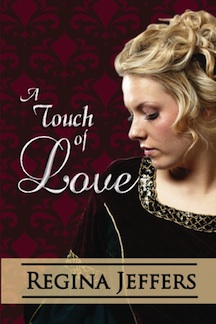
ATOLMrs. Lucinda Rightnour Warren is the heroine of Book 6 of the series, A Touch of Love. We briefly met Lucinda in Book 2, A Touch of Velvet, where she held an acquaintance with Brantley Fowler, the Duke of Thornhill. As the wife of an Army captain, Lucinda encountered Fowler when he served under Wellington. Fowler and Lucinda’s late husband were university companions. But in this book, Lucinda becomes the love interest of Sir Carter Lowery (a baronet destined to assume the role of the REALM’s leadership) when Fowler asks Sir Carter to intervene in Lucinda’s problems. [In this book, I take a closer look at Jews during King George III’s England.]

However, Lucinda’s life is far from easy to set aright. Her late husband kept another wife, a first wife, in fact. A first wife who was of Jewish extraction and who bore the late Captain Warren a son. Not only is Lucinda’s marriage a sham, but so is everything she knew of her husband. When the child mysterious appears on Lucinda’s doorstep, she is forced to learn more of Captain Warren’s actions when he served with Wellington’s forces. This journey places her in danger, so much so that she must turn to Sir Carter for safety, but will the baronet recognize her for who she really is?

Lucinda is the only child of a career military man, a minor son of the Earl of Charleton. She and her mother followed the drum during the war years. She is a very private person and not willing to accept the assistance of others. As such, Lucinda  never experienced the closeness of female friends. In A Touch of Velvet, Velvet Aldridge is jealous of Lucinda because Mrs. Warren can speak freely with men. Why not? She has known nothing but her father’s officers since she was but a child. Lucinda’s lack of social skills are compounded by her husband’s “under my thumb” attitude. She thought Matthew Warren was simply protective of her, when in truth, he possessed a controlling personality. Lucinda acts meek in large social situations for her husband conditioned her to an “eyes cast downward” sort of woman. If I were to label her, Lucinda is a bit of an introvert. Introverts are more easily conditioned than are extroverts, and she is uneasy in large social situations. Even so, when push comes to shove, Lucinda is the first to react. She saves Sir Carter twice during their encounters. She is quite self sufficient, but Lucinda is inherently alone (as is Sir Carter), which makes them the ideal match.

Book Blurb for A Touch of Love

Aristotle Pennington has groomed SIR CARTER LOWERY as his successor as the REALM’s leader, and Sir Carter has thought of little else for year. He has handcrafted his life, filling it with duties and responsibilities, and eventually, he will choose a marriage of convenience, which will bolster his career; yet, Lucinda Warren is a temptation hard to resist. Every time he touches her, Lowery recognizes his mistake because his desire for her is not easily assuaged. To complicate matters, it was Mrs. Warren’s father, Colonel Roderick Rightnour, whom Sir Carter replaced at the Battle of Waterloo, an action which named Lowery as a national hero and her father as a failed military strategist. 

LUCINDA WARREN’s late husband left her to tend to a child belonging to another woman and drowned her in multiple scandals. Her only hope to discover the boy’s true parentage and to remove her name from the lips of the ton’s  censors is Sir Carter Lowery, a man who causes her body to course with awareness, as if he etched his name upon her soul. Fate’s cruel twist throws them together three times, and Lucinda prays to hold off her cry of completion long enough to deny her heart and to release Sir Carter to his further: one to which she ill never being. 

______________________________________
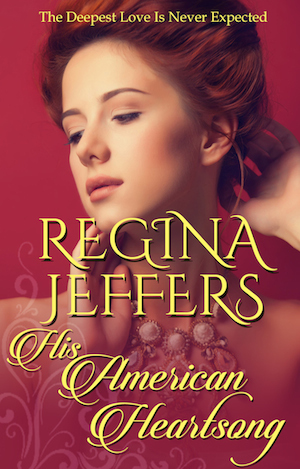
HAHSThis next heroine is not a traditional English lady. In fact, Miss Arabella Tilney is an American hoyden, who always, literally, trips over her own feet. Other than rain storms, few things fluster Arabella. She is practical and decisive and everything Lawrence Lowery, Lord Hellsman (Sir Carter’s older brother) needs in his life. Lowery is a dutiful son, so dutiful that he is isolated from all the spontaneity that Arabella offers. In the novel His American Heartsong: A Companion Novel to the Realm Series, Sir Carter assists Lawrence to a relationship with the one woman his brother cannot ignore.

Lawrence Lowery makes a brief appearance in A Touch of Velvet. His proposal to Arabella is part of both A Touch of Mercy and A Touch of Love. Arabella becomes Lucinda Warren’s dearest friend in A Touch of Love, and the stories are all connected in some manner.

Lawrence calls Arabella “Mouse,” for she darts about with excessive energy, and she cowers with a squeak when a thunderstorm approaches. She knows horses better than most men, and she rides with confidence. Bella also has a working knowledge of roots and herbs and their medicinal values. She can beat most men in a game of chess. Her dancing is more exuberance than grace, and the woman possesses a quick temper and a tongue to pronounce all of Law’s faults. Bella accepts Law’s attentions because she considers him a friend, for she is lonely in a country to which she holds little knowledge or allegiance. Yet, when difficulties arrive, it is Arabella that Law wishes in his corner. She is not only quick to act, she is quite intelligent. 

Arabella’s parents are both English born, but, even so, Arabella feels a bit out of place. She is the eldest of two daughters. Bella’s mother was once a lady in waiting to Queen Charlotte, but her parents’ previous connections to the English aristocracy remain thin. With her mother’s passing, Bella and her younger sister Abigail are sent to England to make their debut, along with their cousin Annalee Dryburgh. Bella’s father is a successful breeder of thoroughbreds in Virginia. 

Book Blurb for His American Heartsong

LAWRENCE LOWERY, Lord Hellsman, remains the dutiful elder son of Baron Niall Blakehell; the baron groomed Lawrence for the future, but his father never considers any of Law’s wishes. When Blakehell arranges a marriage with the insipid Miss Annalee Dryburgh, Lowery must choose between his responsibilities to his future estate and the one woman who makes sense in his life. 

By Society’s standards, MISS ARABELLA TILNEY is completely wrong to be the future baroness. Althoug Bella’s mother was once a lady in waiting to the Queen, Arabella is an American hoyden. She is everything her cousin Annalee is not, and Bella demands that Lowery do the impossible: Be the man he always dreamed of being. Will Law choose love or duty?

Light on ladies groupThese are the first of the heroines of the REALM. Do you see someone who interests you? What about the women do you find admirable? Leave a comment below to be a winner of one of two eBooks available: Winner’s choice of any one of these four books. The giveaway will end at midnight, Monday, October 12, 2015, EST. 

Please visit the other “Shine Light on Our Ladies” blogs for this day. 

6th October Participants:
Hellen Hollick  + Giveaway
Patricia Bracewell  
Inge H. Borg   


Posted in British history, Great Britain, heroines, Living in the Regency, Realm series, Regency era | Tagged , , , , , , , , , | 11 Comments

From Where Does That Word Come?

We are back with more words and phrases with interesting origins. 

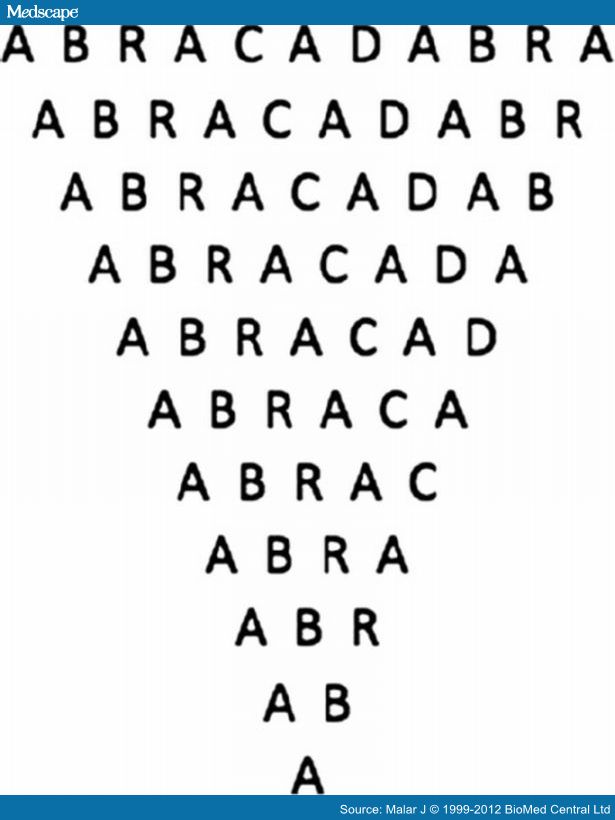
Abracadabra is a late 17th Century word that was originally a mystical word engraved and used as a charm to ward off illness. Coming to us from Latin, it was first recorded in a 2nd Century poem by Gnostic physician Serenus Sammonicus. 

Sammonicus' anti-pyretic abracadabra talisman.

Sammonicus’ anti-pyretic abracadabra talisman.

From Medscape Multispecialty (Quintus Serenus Sammonicus), we learn, “The somewhat mystical concept of bad air set the stage for an alchemistic malaria treatment in the third century CE. Quintus Serenus Sammonicus, physician to the Roman emperor Caracalla, directed patients suffering from fever and ague to wear an amulet with the inscription “abracadabra” in his didactic medical poem ‘Liber Medicinalis:’

“Inscribis chartae, quod dicitur Abracadabra,

Saepius: et subter repetas, sed detrahe summae,

Et magis atque magis desint elementa figuris

Singula, quae semper rapies et coetera figes,

Donec in angustam redigatur litera conum.

His lino nexis collum redimire memento.[Sammonicus QS: Liber Medicinalis. C. 210. Chapter 51, verse 944]

“Write several times on a piece of paper the word ‘Abracadabra,’ and repeat the word in the lines below, but take away letters from the complete word and let the letters fall away one at a time in each succeeding line. Take these away ever, but keep the rest until the writing is reduced to a narrow cone. Remember to tie these papers with flax and bind them round the neck. [Wootton A: Chronicles of Pharmacy, volume 1. London: Macmillan and Co.; 1910::164–166.]

“After wearing the talisman for nine days, it was to be thrown over the shoulder into an eastward-running stream. Failing this treatment, Sammonicus recommended the application of lion’s fat, or the wearing of cat’s skin tied with yellow coral and green emeralds around the neck. [Wootton A: Chronicles of Pharmacy, volume 1. London: Macmillan and Co.; 1910::164–166.]

“Some scholars dismiss the word abracadabra as meaningless. Others, however, translate it as, “let the thing be destroyed”, “Out, bad spirit, out” (from the Hebrew words Abrai seda brai), or “Father, Holy Ghost, Word” (from the Hebrew words Ab, Ruach, Dabar).” [Skemer D: Binding words: Textual amulets in the Middle Ages. University Park, Pennsylvania: The Pennsylvania State University Press; 2006::25.]

__________________________________________

 Tossing the Caber | Celtic Knowledge Wandering Angus: Celtic Traders wanderingangus.com


Tossing the Caber | Celtic Knowledge Wandering Angus: Celtic Traders
wanderingangus.com

Caber is an early 16th Century word. It stands for a roughly trimmed tree trunk used in the Scottish Highland sport of “tossing the caber,” which involves heaving the trunk into the air so that it lands on the opposite end. The word comes from the Scottish Gaelic caber ‘pole.’ “In Scotland the caber is usually made from a Larch tree and is typically 19 feet 6 inches (5.94 m) tall and weighs 175 pounds (79 kg). The person tossing the caber is called a “tosser” or a “thrower”. It is said to have developed from the need to toss logs across narrow chasms (in order to cross them) or by lumberjacks challenging each other to a small contest.”  [Caber

____________________________________________

Magnet is a late Middle English word, originally a name for “lodestone.” Derived from the Latin words magnes, magnet- and from the Greek magnes lithos ‘lodestone,’ it likely came into being from the Anglo-Norman French magnete. In the early 17th Century we find the first written references to the adjective “magnetic.” 1400-50; late Middle English magnete < Latin magnēta < Greek mágnēta, accusative of mágnēs, short for ( hē) Mágnēs (líthos) (the stone) of Magnesia

_____________________________________________

From the Oxford Dictionary of Word Histories [edited by Glynnis Chantrell, Oxford University Press, 2002], we learn that Proprietary is a late Middle English word. “A proprietary was originally a member of a religious order who held property. It is from late Latin proprietarius ‘proprietor,’ from proprietas. The adjective, recorded from the late 16th Century conveys ‘belonging to a proprietor’ is commonly applied in modern use to manufactured items which are patented [proprietary brand].

“During the Middle Ages, the proprietary church (Latin ecclesia propria, German Eigenkirche) was a church, abbey or cloister built on private ground by a feudal lord, over which he retained proprietary interests, especially the right of what in English law is “advowson”, that of nominating the ecclesiastic personnel.” [Proprietary Churches]

______________________________________________

Dog and Pony Show “is a colloquial term which has come to mean a highly promoted, often over-staged performance, presentation, or event designed to sway or convince opinion for political, or less often, commercial ends. Typically, the term is used in a pejorative sense to connote disdain, jocular lack of appreciation, or distrust of the message being presented or the efforts undertaken to present it.

“The term was originally used in the United States in the late-19th and early-20th centuries to refer to small traveling circuses that toured through small towns and rural areas. The name derives from the common use of performing dogs and ponies as the main attractions of the events. Performances were generally held in open-air arenas, such as race tracks or public spaces in localities that were too small or remote to attract larger, more elaborate performers or performances. The most notorious was ‘Prof. Gentry’s Famous Dog & Pony Show,’ started when teenager Henry Gentry and his brothers started touring in 1886 with their act, originally entitled ‘Gentry’s Equine and Canine Paradox.’ It started small, but evolved into a full circus show. Other early dog and pony shows included Morris’ Equine and Canine Paradoxes (1883) and Hurlburt’s Dog and Pony Show (late 1880s). By the latter part of the 20th century, the original meaning of the term had been largely lost.” [Dog and Pony Show]

_______________________________________

According to the Oxford Dictionary of Word Histories, Snuff has two meanings. The first meaning, coming from the late Middle English, of “‘suppress, extinguish’ is of obscure origin. The noun originally described the portion of a wick partly consumed during burning as it gave off light. The slang phrase snuff it meaning ‘to die’ dates from the late 19th Century.”

The second meaning of Snuff (also from late Middle English) was a verb meaning “‘inhale through the nostrils’; it comes from Middle Dutch snugger ‘to snuffle.’ The noun as a term for a preparation of tobacco inhaled through the nostrils dates from the late 17th Century and is probably an abbreviation of Dutch snuftabak.”

__________________________________________

Umbrage is a late Middle English word coming to the language from the Old French and from the Latin umbra, meaning “shadow.” Early one, the word was used to indicate a “shadowy outline.” Eventually, the word transformed to mean “ground for suspicion,” which led to the current usage of an “offense.”

___________________________________________

Raspberry is an early 17th Century word. The dialect rasp forms the first part of the word. It is an abbreviation for the obsolete word rapid ‘raspberry,’ which was also used as a collective. The word’s origin is unknown. In the 19th Century, the word took on the meaning of a derisive sound (coming to the language from the rhyming slang for “fart,” a shortening of raspberry tart. Rhyming slang was particularly used in British comedy to refer to things that would be unacceptable to a polite audience. The nomenclature varies by country. In the United States, Bronx cheer is sometimes used; otherwise, in the U.S. and in other anglophone countries, it is known as a raspberry, rasp, or razz – the origin of which is an instance of rhyming slang, in which the non-rhyming part of a rhyming phrase is used as a synonym. [Blowing a Raspberry]

_____________________________________________

Flummox is a mid 19th Century word (approximately 1830-1840), likely from a dialect origin flummock, meaning ‘to make untidy, confuse.’ It was first recovered in western counties and the north Midlands. 

_____________________________________________

 gypsy-vanner-horses0535 copy.jpg www.gypsymvp.com


gypsy-vanner-horses0535 copy.jpg
http://www.gypsymvp.com

Piebald is a late 16th Century word. The word is used to describe certain horse markings. It comes from pie, as in magpie for the magpie’s black and white plumage + bald in the sense of being ‘streaked with white.’ 

“A piebald or pied animal is one that has a spotting pattern of large unpigmented, usually white, areas of hair, feathers, or scales and normally pigmented patches, generally black. The colour of the animal’s skin underneath its coat is also pigmented under the dark patches and unpigmented under the white patches. This alternating colour pattern is irregular and asymmetrical. Animals with this pattern may include horses, dogs, birds, cats, pigs, and cattle, as well as snakes such as the ball python. Some animals also exhibit colouration of the irises of the eye that match the surrounding skin (blue eyes for pink skin, brown for dark). The underlying genetic cause is related to a condition known as leucism.

“In British English piebald (black and white) and skewbald (white and any colour other than black) are together known as coloured. In North American English, the term for this colouring pattern is pinto, with the specialized term “paint” referring specifically to a breed of horse with American Quarter Horse or Thoroughbred bloodlines in addition to being spotted, whereas pinto refers to a spotted horse of any breed. In American usage, horse enthusiasts usually do not use the term ‘piebald,’ but rather describe the colour shade of a pinto literally with terms such as “black and white” for a piebald, ‘brown and white,’ or ‘bay and white,’ for skewbalds, or color-specific modifiers such as ‘bay pinto,’ ‘sorrel pinto,’ ‘buckskin pinto,’ and such.

“Genetically, a piebald horse begins with a black base coat colour, and then the horse also has an allele for one of three basic spotting patterns overlaying the base colour. The most common coloured spotting pattern is called tobiano, and is a dominant gene. Tobiano creates spots that are large and rounded, usually with a somewhat vertical orientation, with white that usually crosses the back of the horse, white on the legs, with the head mostly dark.” [Piebald]

Posted in word origins | Tagged , , , , , , , , , | 3 Comments

Literature of the Age of Chaucer: Part I

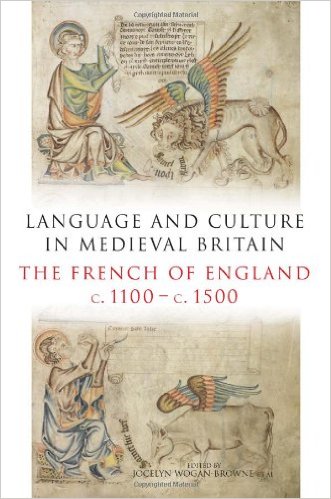
Language and Culture in Medieval Britain http://www.amazon.com/ Language-Culture-Medieval-Britain-c-1100-c-1500/dp/1903153271/ ref=sr_1_1ie=UTF8& qid=1442946211& sr=81&keywords= the+language+of+culture +of+medieval+england

Language and Culture in Medieval Britain http://www.amazon.com/
Language-Culture-Medieval-Britain-c-1100-c-1500/dp/1903153271/
ref=sr_1_1ie=UTF8&
qid=1442946211&
sr=81&keywords=
the+language+of+culture
+of+medieval+england

Many experts consider the Age of Chaucer quite barren in regard to “great” literary production. With the exception of Chaucer, no one of note rises to the top. Most scholars blame the War of the Roses and the decline of the nobility for this condition. Even so, the age is not as null as it first seems to the student of literature. The “stories” that were captured are characteristic of the age and deserve our attention. 

200px-JwycliffejmkOne of the more prominent characteristics of the age was social discontent. John Wycliffe was an advocate for the translating the Bible into the vernacular of the common people.His translation from the Vulgate to more informal speech knew completion in 1382. The book is now knows as Wycliffe’s Bible. Most scholars believe Wycliffe translated the Gospels of Matthew, Mark, Luke, and John. (Wycliffe’s Bible)

William Langland’s Piers Plowman voiced the social discontent of the age and championed the rights of the laboring classes. From the perspective of medieval Catholicism, the poem takes up the narrator’s quest for the Christian spirit. The tale examines the lives of three characters: Dowel (Do-Well), Dobet (Do-Better), and Dobest (Do-Best).

John Gower (c. 1330-1408) was an English poet of courtly love who is remembered as the author of the Confessio Amantis, a collection of exemplary tales (from both classical and medieval sources) about courtly and Christian love. To judge by the language of this work, Gower was from Kent. (Writers from the Middle English Period)

Meanwhile, Sir John Mandeville (mid 14th century) The Travels of Sir John Mandeville was an immensely popular book of the 14th century which has survived in a couple of hundred manuscripts. The name ‘Sir John Mandeville’ was probably adopted by a doctor form Liège called Jehan de Bourgogne, who would have written in French. Hence the English version is a translation, though it is not known who prepared it. The travels described in the book are entirely fictitious though they may be based on genuine travel descriptions by other writers. (Writers from the Middle English Period)

During the period, we find the rise of the narrative as a popular literary form. For example, we are presented with Thomas Occleve’s (1368-1426) Regiment of Princes. This book was a work of advice to a prince. It dealt with politics and religion. “By 1410 he (Occleve)  had married ‘only for love’ (Regiment…, 1.1561) and settled down to writing moral and religious poems. His best-known Regement of Princes or De Regimine Principum, written for Henry V of England shortly before his accession, is an elaborate homily on virtues and vices, adapted from Aegidius de Colonna’s work of the same name, from a supposititious epistle of Aristotle known as Secreta secretorum, and a work of Jacques de Cessoles (fl. 1300) translated later by Caxton as The Game and Playe of Chesse. The Regement survives in 43 manuscript copies. It comments much on Henry V’s lineage, to cement the House of Lancaster’s claim to England’s throne. Its incipit is a poem encompassing about a third of the whole, containing further reminiscences of London tavern life in the form of dialogue between the poet and an old man. He also remonstrated with Sir John Oldcastle, a leading Lollard, calling on him to “rise up, a manly knight, out of the slough of heresy.” (Thomas Hoccleve) Other works by Occleve are the Complaint, the Ars Sciendi Mori, and the poem to Sir John Oldcastle

Stephen Hawes wrote in the Chaucerian tradition. “He (Hawes) was Groom of the Chamber to Henry VII, as early as 1502. According to Anthony Wood, he could repeat by heart the works of most of the English poets, especially the poems of John Lydgate, whom he called his master. He was still living in 1521, when it is stated in Henry VIII’s household accounts that £6, 13s. 4d. was paid to Mr Hawes for his play, and he died before 1530, when Thomas Field, in his Conversation between a Lover and a Jay, wrote “Yong Steven Hawse, whose soule God pardon, Treated of love so clerkly and well.” (Stephen Hawes) Hawes’ poetry was didactic, and he made frequent use of allegory. His Pastime of Pleasure was a love story who hero was Graund Armour. Other characters were Lady Grammar, Geometry, Astronomy, Rhetoric, etc. 

His major work is The History of Graunde Amour and la Bel Pucel, conteining the knowledge of the Seven Sciences and the Course of Mans Life in this Worlde or The Passetyme of Pleasure, printed by Wynkyn de Worde in 1509, but finished three years earlier. It was also printed with slightly varying titles by the same printer in 1517, by J. Wayland in 1554, by Richard Tottel and by John Waley in 1555. Tottel’s edition was edited by T. Wright and reprinted by the Percy Society in 1845. (Stephen Hawes)

The Passetyme of Pleasure is a long allegorical poem in seven-lined stanzas of man’s life in this world. It is divided into sections after the manner of Le Morte d’Arthur and borrows the machinery of romance. Its main motive is the education of the knight, Graunde Amour, based, according to William John Courthope (History of English Poetry, vol. I. 382), on the Marriage of Mercury and Philology, by Martianus Capella, and the details of the description prove Hawes to have been acquainted with medieval systems of philosophy. At the suggestion of Fame, and accompanied by her two greyhounds, Grace and Governance, Graunde Amour starts out in quest of La Bel Pucel. He first visits the Tower of Doctrine or Science where he acquaints himself with the arts of grammar, logic, rhetoric and arithmetic. After a long disputation with the lady in the Tower of Music he returns to his studies, and after sojourns at the Tower of Geometry, the Tower of Doctrine, the Castle of Chivalry, etc., he arrives at the Castle of La Bel Pucel, where he is met by Peace, Mercy, Justice, Reason and Memory. His happy marriage does not end the story, which goes on to tell of the oncoming of Age, with the concomitant evils of Avarice and Cunning. The admonition of Death brings Contrition and Conscience, and it is only when Remembraunce has delivered an epitaph chiefly dealing with the Seven Deadly Sins, and Fame has enrolled Graunde Amours name with the knights of antiquity, that we are allowed to part with the hero. This long imaginative poem was widely read and esteemed, and certainly exercised an influence on the genius of Edmund Spenser. (Stephen Hawes)


Posted in Age of Chaucer, Anglo-Normans, British history, Great Britain, real life tales | Tagged , , , , , , | Comments Off on Literature of the Age of Chaucer: Part I

Winners from Caroline Warfield’s Release Party for “Dangerous Weakness”

Winners513nimqpgdl-_sx331_bo1204203200_Caroline Warfield is happy to announce that Suzan and TaNeshia will each receive an eBook copy of Caroline’s Dangerous Works or Dangerous Secrets.  Congratulations, Ladies.

51uwxah68dl-_sx331_bo1204203200_

Posted in giveaway, Living in the Regency, Regency era, romance | Tagged , , , , , , , | 2 Comments

Winners from Regina Jeffers’ Two-Days of Giveaways of “Second Chances: The Courtship Wars”

WinnersI am very happy to announce that the following ladies will receive an eBook copy of Second Chances: The Courtship Wars as part of my recent giveaway. Check your email boxes, Ladies, for I sent out the gift prize notices late last evening. Congratulations! SCCover2


MaryAnnN

Glynis

Denisia

junewilliams7

anadarcy

Lúthien84

tgruy 

Posted in contemporary romance, giveaway | Tagged , , , , , , | 1 Comment

Getting Ready for October: The Screaming Skull of Bettiscombe Manor

Mike Searle - From geograph.org.uk Bettiscombe - Church of St Stephen The church was entirely rebuilt in 1862 in the Perpendicular style by John Hicks of Dorchester.

Mike Searle – From geograph.org.uk
Bettiscombe – Church of St Stephen The church was entirely rebuilt in 1862 in the Perpendicular style by John Hicks of Dorchester.

Bettiscombe is a small village and civil parish in west Dorset, England, situated in the Marshwood Vale 4 miles (6.4 km) west of Beaminster. Dorset County Council’s 2012 mid-year estimate of the population of the civil parish is 70.

This version of the legend comes to us from The Castle of Spirits website: “84 Bettiscombe Manor located in a village of the same name, near Lyme Regis in Dorset, England is the home of the very famous legend of the screaming skull. There are a few stories around that involve screaming skulls but this would be the most famous. The original story tells of Azariah Pinney who was banished to the West Indies in 1685 for supporting the Duke of Monmouth. He soon became a very successfull businessman and returned back to his home of England with one of his black slaves. The slave, often thought to have been a West Indian native but could also have been African, as most slaves were in those days, became ill and upon his death bed made one last request, that his body be buried back in his native home. Here we find some variation in the story – he also was said to have demanded that his body be returned to native ground or a terrible curse would befall Bettiscombe.

“Azariah promised him that he would fulfill that last request and the slave passed away soon after. The promise was never kept and Azariah buried him in the local churchyard located a short distance from the house. As soon as the body was buried people began hearing roars, moans and screams coming from where the body was buried. The locals didn’t take too kindly to the noisy corpse who both terrified and annoyed their peaceful country village and Azariah was forced to removed the body at once. The slave was then removed and placed up in a loft back at Bettiscombe Manor where it slowly perished and somehow only the skull remained (some versions of this story tell of the body being shipped back to it’s home in West Indies/Africa and the skull remaining behind).

“Over the years many attempts to get rid of the skull have been made only to find soon after it’s removal that screams and other strange phenomena would soon follow it’s removal and not cease until it was placed back inside the manor. One instance the skull was thrown into the depths of a nearby pond, by a resident of the manor – he was said to be so appaled by the appearance of the skull that he immediately ran outside and threw it into the local pond. The resident was trouble by screams and moans all night long and the next day quickly retrieved the skull and replaced it back inside the manor where it resided for a while nice and quietly. GraveyardIt is said that on one particular night of the year a ghostly coach hurtles up the road from Bettiscombe Manor to the local Churchyard, the locals call this incident “the funeral procession of the skull”. A writer by the name of Eric Marple spent a night in the manor with the skull in the 1960’s and claimed to of not heard any screaming but was apparently plagued by nightmares. He declined an offer to stay a second night and hastily left the manor.

“The owners of Bettiscombe manor are now never bothered by the skull – they of course never remove it from it’s home in a box in a bureau drawer. The skull has plenty of mystery surrounding it – no one is sure if any of the stories are true.In 1963 an archaeologist named Michael Pinney owned Bettiscombe manor and had the skull examined by a pathologist, who determined the skull did not belong to a Negro man at all. Rather it belonged to a European woman who died 3,000 to 4,000 years ago. The fossilised skull is believed to have been submerged in the well near the manor house, at the foot of Pilsdon Pen, a hill that covers an Iron Age ritual plot. The skull may have come from the hill itself, and the shiny surface of the skull may be the result of its immersion in the well and the minerals contained therein.

“Skulls or severed heads were often used as offerings to water spirits in ancient times – they were placed in wells and ponds and believed to hold spirits who would protect and guard the homestead as long as they were treated with respect. The sacred heads were feared so much that many would not even speak of where the heads lay for fear of bad luck. Stone heads were also used for guardian and luck purposes and can still be seen to this day around England and the UK.

To add further to the confusion about the skulls origins another popular story is that Azariah and the slave originally had a fight to the death, the skull being the only thing that remained of the looser, only nobody knows which one lost!.

“In 1874, Judge J.S. Udal recorded that the skull had been preserved on the premises ‘for a time long antecedent to the present tenancy’ and ‘the peculiar superstition attaching to it is that if it be brought out of the house, the house itself would rock to its foundation, while the person by whom such an act of desecration was committed would certainly die within the year’.”

Skull Legend
Wikipedia provides a some different details: “Bettiscombe Manor, a manor house in the village, is known as ‘The House of the Screaming Skull’ due to a legend dating from the 17th century. Other ghost stories are also associated with the manor.

‘The legend maintains that the skull is that of a Jamaican slave. John Frederick Pinney disposed of the Nevis estates and returned to the family home of Bettiscombe Manor in the early nineteenth century, accompanied by one of the family’s faithful black servants. While in his master’s service, the servant was taken seriously ill with suspected tuberculosis. As he lay dying, the servant swore that he would never rest unless his body was returned to his homeland of Nevis, but when he died, John Frederick Pinney refused to pay for such an expensive burial and instead had the body interred in the grounds of St. Stephen’s Church cemetery. After the burial, ill fortune plagued the village for many months and screams and crying were heard coming from the cemetery. Other disturbances were reported from the manor house, such as windows rattling and doors slamming of their own accord. The villagers went to the manor to seek advice. The body of the servant was exhumed and the body taken to the manor house. In the process of time the skeleton has long since vanished, except for the skull where it has remained in the house for centuries.

‘In 1963 a professor of human and comparative anatomy at the Royal College of Surgeons stated that the skull was not that of a black man but that of a European female aged between twenty-five and thirty.

Pinney’s Estate
The website Mountravers Plantation (Pinney’s Estate), Nevis, West Indies (by Christine Eickelmann and David Small) tells us about the island plantation at the center of this story. “Mountravers, also known as ‘Pinney’s Estate’, was a medium-sized sugar plantation on the Caribbean island of Nevis. It was made up of several estates and tracts of land. From the late seventeenth century until slavery was abolished in 1834, more than 750 enslaved people are now known to have lived on Mountravers. Successive members of the Pinney family owned the plantation, among them John Pretor Pinney, who settled in Bristol, England, in 1784. His family home in Bristol is now the city’s Georgian House Museum. Nevis was the premier landing point for slaves in the Leeward Islands between 1675 and 1730, and Bristol was the most important British slaving port in the 1730s.”

Nevis AerialCC BY-SA 2.5 Aaron Vos - Own work The east coast of Nevis, partially protected by coral reefs. Long Haul Bay is seen in the foreground. Aerial shot taken from the northeast, depicting the east coast of the island of Nevis, Saint James Windward Parish, Saint Kitts and Nevis, West Indies. Long Haul Bay in the foreground. The islands of Redonda and Montserrat are visible at the horizon.

Nevis AerialCC BY-SA 2.5
Aaron Vos – Own work
The east coast of Nevis, partially protected by coral reefs. Long Haul Bay is seen in the foreground.
Aerial shot taken from the northeast, depicting the east coast of the island of Nevis, Saint James Windward Parish, Saint Kitts and Nevis, West Indies. Long Haul Bay in the foreground. The islands of Redonda and Montserrat are visible at the horizon.

Dark Dorset by Robert J. Newland and Mark J. North explains, “By the time John Pretor Pinney left Nevis in 1783 to settle down in Bristol, the Mountravers plantation was one of the most successful estates in all the Caribbean. Dependent on the labour of their black slaves, the estate produced about 30,000 kg (66,000 lb) of sugar annually and 32,800 litres (7000 gallons) of rum, and comprised of 393 acres, extending from the top of Mount Nevis on down to the sea. His combined estates have about 2000 slaves; a male slave was then worth about £50, a woman £37 and children about £14. John Prector Pinney’s son John Frederick Pinney (the second), in 1811 begins the sale (finalised in 1816) of the estate including, Mountravers and other properties to Edward Huggins for £35,650 (about £1.75 million today).” Anne Marie Pinney’s notes on the family’s papers mentions “the skull,” but no other mention is made.

Mountravers, also known as ‘Pinney’s Estate’, was a medium-sized sugar plantation on the Caribbean island of Nevis. It was made up of several estates and tracts of land. From the late seventeenth century until slavery was abolished in 1834, more than 750 enslaved people are now known to have lived on Mountravers. Successive members of the Pinney family owned the plantation, among them John Pretor Pinney, who settled in Bristol, England, in 1784. His family home in Bristol is now the city’s Georgian House Museum.

Nevis was the premier landing point for slaves in the Leeward Islands between 1675 and 1730, and Bristol was the most important British slaving port in the 1730s.

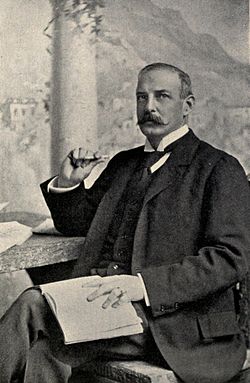
250px-F_Marion_CrawfordThis folktale brings us to the America writer, Francis Crawford. Francis Marion Crawford (August 2, 1854 – April 9, 1909) was an American writer noted for his many novels, especially those set in Italy, and for his classic weird and fantastic stories. Several of his short stories, such as “The Upper Berth” (1886; written in 1885), “For the Blood Is the Life” (1905, a vampiress tale), “The Dead Smile” (1899), and “The Screaming Skull” (1908), are often-anthologized classics of the horror genre. An essay on Crawford’s weird tales can be found in S. T. Joshi’s The Evolution of the Weird Tale (2004); there are many other essays and introductions. The collected weird stories were posthumously published in 1911 as Wandering Ghosts in the U.S. and as Uncanny Tales in the UK, both without the long-forgotten “The King’s Messenger” (1907). The present definitive edition is that edited by Richard Dalby as Uncanny Tales and published by the Tartarus Press (1997; 2008).

A footnote follows the story of The Screaming Skull, which reads [Note. – Students of ghost lore and haunted houses will find the foundation of the foregoing story in the legends about a skull, which is still preserved in the farm-house called Bettiscombe Manor, situated, I believe, on the Dorset coast.]

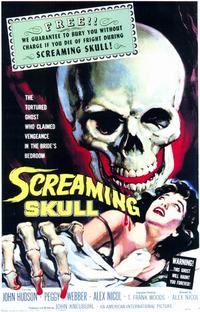
1958 American film "The Screaming Skull," NOT based on the UK legend

1958 American film “The Screaming Skull,” NOT based on the UK legend

Posted in British history, buildings and structures, castles, customs and tradiitons, gothic and paranormal, Great Britain, legends and myths, Living in the Regency, Living in the UK, real life tales, Regency personalities | Tagged , , , , , | Comments Off on Getting Ready for October: The Screaming Skull of Bettiscombe Manor