The Witchcraft Acts in Great Britain


witch_on_a_broom_stick_clip_art_19687
In the 16th Century, ill-fortune was often blamed on acts of witchcraft. In England, Ireland, Wales, and Scotland, there have been a series of acts to prevent the practice of witchcraft. The first of those was Henry VIII’s Witchcraft Act of 1542. It was the first to define the practice of witchcraft as a felony and to prescribe a punishment of death for the accused.

The convicted would also have to forfeit all goods and chattels to the government. The act forbid all citizens to “use devise practise or exercise, or cause to be devysed practised or exercised, any Invovacons or cojuracons of Sprites witchecraftes enchauntementes or sorceries to thentent to fynde money or treasure or to waste consume or destroy any persone in his bodie membres, or to pvoke [provoke] any persone to unlawfull love, or for any other unlawfull intente or purpose … or for dispite of Cryste, or for lucre of money, dygge up or pull downe any Crosse or Crosses or by such Invovacons or cojuracons of Sprites witchecraftes enchauntementes or sorceries or any of them take upon them to tell or declare where goodes stollen or lost shall become.” (Wikipedia) The act also removed the “benefit of clergy” right for the individual convicted of witchcraft. This legal maneuvering spared anyone from hanging who could read a passage from the Bible. Henry’s son, Edward VI, repealed this statute in 1547. Even so, the act was restored in 1562. 

“A further law was passed in 1604 during the reign of James I, who took a keen interest in demonology and even published a book on it. The 1562 and 1604 Acts transferred the trial of witches from the Church to the ordinary courts.” (Living Heritage)

An Act Against Conjurations, Enchantments and Witchcraft was passed in 1562, during the reign of Elizabeth I. It showed a bit of mercy by demanding the death penalty only when the accused caused harm to another. Lesser offenses resulted in imprisonment. The Act said that anyone who should “use, practise, or exercise any Witchcraft, Enchantment, Charm, or Sorcery, whereby any person shall happen to be killed or destroyed, was guilty of a felony without benefit of clergy, and was to be put to death.”(Wikipedia)

The Scottish Witchcraft Act of 1563 spoke to the practice of witchcraft and consulting with witches. Both were considered capital offenses. The Act was on the Scottish law books until 1735.

With James’ accession to the English throne, the Elizabethan Act was broadened to bring the penalty of death without benefit of clergy to any one who practiced the black arts or who consorted with familiars. The act’s official name was An Act against Conjuration, Witchcraft and dealing with evil and wicked spirits. The self-styled Witch-Finder General, Matthew Hopkins, used the act freely to accuse his victims. (Wikipedia

The practice of witchcraft became a felony with the installation of Elizabeth’s and James’s acts. As a felony, the accused was removed from the ecclesiastical courts’ jurisdiction and placed under the judgment of the common court. Burning at the stake was eliminated, except in cases of witchcraft that were also petty treason. As a criminal court proceeding, most convicted were hanged. If a witch was found guilty of a minor offense (punishable by one year in prison) and then committed a second one, he/she was sentenced to death.

Formal accusations were often made against elderly women living in poverty. The practiced peaked in the late 16th Century, with the majority of the accusations centering in southeast England. Between 1560 and 1700, 513 witches were sent to trial. 112 of the accused were executed, with the last known execution taking place in Devon in 1685. The last witch trial took place in Leicester in 1717. (Living Heritage)

The Witchcraft Act of 1735 saw a change in the manner in which “witches” were treated. The change came in the attitude of the educated electorate, who assumed that witchcraft was nothing more than superstition and an impossibility to actually perform. Instead, the punishment was for the pretense of witchcraft. Those who claimed magical powers were punished as vagrants and were subject to fines and imprisonment. The Act applied to the whole of Great Britain, repealing both the 1563 Scottish Act and the 1604 English Act. (Wikipedia) The MPs found the Act quite amusing when it was first proposed by John Conduit in Parliament. Conduit’s wife, coincidentally, was the niece of Sir Isaac Newton, the father of modern science, who was supposedly quite interested in the occult. (Living Heritage)

Parliament passed the Vagrancy Act in 1824. This act made fortune-telling, astrology, and spiritualism punishable offenses. (Living Heritage)

Although it was never actually applied, the Witchcraft Act remains legally in force in Northern Ireland. The Act is still in force in Israel, having been introduced into the legal system of the British Mandate over Palestine; Israel gained its independence before the law was repealed in Britain in 1951. Article 417 of the Israeli penal code of 1977, incorporating much legislation inherited from British and Ottoman reigns, sets two years’ imprisonment as the punishment for witchcraft, fortune telling, or magic. The law in Israel applies only to practitioners of witchcraft who charge a fee. (Wikipedia) The Fraudulent Mediums Act repealed the previous “witchcraft” acts in 1951, but ti was repealed in 2008. (Living Heritage)

For a different perspective, have a look at Traditional Witch and at Persecution and ‘Witchcraft’ (Laws relating to Witchcraft in the UK legal system) http://www.johnnyfin…/witchcraft.htm

(or)

From the BBC, have a look at “Britain’s ‘Last Witch’: the Campaign to Pardon Helen Duncan.”

Posted in British history, Great Britain, real life tales, witchcraft acts | Tagged , , , , , | Comments Off on The Witchcraft Acts in Great Britain

A Regency Era Whig Conversation Club, King of Clubs

unknown4The King of Clubs was a famous Whig conversation club, founded in 1798. In contrast to its mainly Tory forerunner The Club (established by Samuel Johnson, Edmund Burke and Sir Joshua Reynolds), it was a predominantly Whig fraternity of some of the most brilliant minds of the day. For an early description of the club see W.P. Courtney’s description in ‘Lord Byron and his Times.’ (Lord Byron and His Times)

Membership

The Pope of Holland House: Selections From the Correspondence of John Whishaw and His Friends 1813-1840 (Classic Reprint)

The Pope of Holland House: Selections From the Correspondence of John Whishaw and His Friends 1813-1840 (Classic Reprint)

The Rev. Sydney Smith’s older brother, Robert – nicknamed “Bobus” – provided the original inspiration for the club. Bobus gained a reputation at Eton for being such a clever Latin “versifier.” The group of friends who served as the founding members first met at the house of James Mackintosh in February, 1798. Along with Mackintosh, Samuel Rogers, James Scarlett, 1st Baron Abinger, Richard “Conversation” Sharp (see my post on Sharp), the historian John Allen and Robert Smith were those involved. By 1801, what had started as a small clique of friends transformed into a properly constituted club comprising the following members:


Richard Porson
Smithson Tennant
John Courtney
Bryan Edwards
“Bobus” Smith
Jo. Richardson
John Allen
Samuel Rogers
Charles Butler
Richard Sharp
James Scarlett, 1st Baron Abinger
James Mackintosh
William Dickinson
John Whishaw
Josiah Wedgwood II
Pierre Etienne Louis Dumont
Henry Vassall-Fox, 3rd Baron Holland (King of Clubs)

Within seven years the club expanded to include such additional illustrious names as

Thomas Moore
John Wedgwood
Henry Brougham
Thomas Creevey
William Smith
Lord Petty
George Philips
Francis Horner
Rev. Peter Elmsley
Samuel Romilly
John Ward, 1st Earl of Dudley
Rev. Sydney Smith
John Hopper
Samuel Boddington (Lord Byron and His Times)

Well known throughout London as an exclusive Whig dining club where erudite conversation on all matters pertaining to books, authors and literature took place, but where the discussion of politics was positively excluded, the King of Clubs knew great success. Tom Campbell described the club as “a gathering-place of brilliant talkers, dedicated to the meetings of the reigning wits of London”.

“The annual subscription was originally £2 2s. It dropped in 1804 to £2, but in 1808 was raised to 3s. From 1810 onwards the subscription was fixed at £3, and each member when dining paid 10s. 6d. extra. In 1802 the club met monthly at the “Crown and Anchor” in the Strand. For many years the dinners were held at the Freemasons’ Tavern, the last meeting there being on July 3, 1819. They met on February 7, 1820, at Grillion’s Hotel, in Albemarle Street, and dined there for the last time on February 3, 1821. The next gathering was at the Clarendon Hotel, on March 6, 1821. The price of the dinner became a guinea for each person, exclusive of wine and wax-lights, the charge for the latter item being invariably 21s. for the evening. About a dozen persons dined at each meeting, and they drank from six to twelve bottles of wine. Champagne never appears in the list of wines. Claret was the popular drink, and on one occasion five bottles were supplied at a charge of £3 2s. 6d., i.e., 12s. 6d. per bottle.” (Lord Byron and His Times)

“When Thomas Campbell returned to London from Altona in April, 1801, he received an invitation from Lord Holland to dine at the “King of Clubs.” “Thither with his lordship,” says the poet in his diary, “I accordingly repaired, and it was an era in my life. There I met in all their glory and feather, Mackintosh, Rogers, the Smiths, Sydney, and others. In the retrospect of a long life, I know no man whose acuteness of intellect gave me a higher idea of human nature than Mackintosh; and, without disparaging his benevolence—for he had an excellent heart—I may say that I never saw a man who so reconciled me to hereditary aristocracy as the benignant Lord Holland.” (Lord Byron and His Times)

 As a dining club, an additional charge of 10 shillings and 6 pence was made for dinner, a considerable sum in those days, and princely suppers were held in Harley Street and later at the Crown and Anchor, Arundel Street, in the Strand. The Crown and Anchor was the very inn where Samuel Johnson and James Boswell once enjoyed supping together; and it was especially popular among the Whigs after it hosted a great banquet in honour of Fox’s birthday in 1798, when an enormous crowd of 2000 Reformers toasted The People – the Source of Power! (King of Clubs)

Such was the popularity of the King of Clubs, and so sought after did membership become, that in 1808 a decision was taken to limit membership to a maximum of thirty people who were resident in England. By this time the membership had gained:

Lord Melbourne
Earl Cowper
William Blake
Abercromby (Lord Dunfermline)
Alexander Baring, 1st Baron Ashburton
Charles Kinnaird, 8th Lord Kinnaird
Henry Luttrell
R.P. Knight
Thomas Malthus
Lord John Townshend MP
John Fleming
John Playfair
George Lamb
Lord King
Henry Hallam
David Ricardo
Lord Thomas Denman, 1st Baron Denman (King of Clubs)

From Mary D. Archer and Christopher D. Haley, we find, “A near neighbor to the Shipman property was a fellow Emmanuel student, Thomas Smith, who owned the Manor of Easton Grey in Wiltshire. Tennant was a frequent guest at Easton Grey, and there befriended many of the leading figures of English political and economic life: David Ricardio, Thomas Malthus, Leonard and Francis Horner, Samuel Romilly, Lord Brougham and others who moved among the Whigs at Holland House, the Kensington mansion of Lord and Lady Holland. He soon gained access to their London gatherings as well, and in 1799 he became a member of a dining and conversation club known as the ‘King of Clubs.’ The club members met on the first Saturday of each month at the Crown and Anchor in the Strand and the typical meeting consisted chiefly of  literary reminiscences, anecdotes of authors, criticisms of books, etc., made palpable by bottles of sherry, madeira, port, bacillus and claret, as the bill for one dinner indicates. Such close interactions with the leading intellectuals of the day made Tennant a keen student of political economy, and he even contemplated founding a chair of political economy at Cambridge and writing books on the subject.” (The 1702 Chair of Chemistry at Cambridge: Transformation and Change)

Despite such unashamed conviviality there is no evidence that alcohol in any way impeded the flow or the quality of the conversation that took place, and we may imagine that the reverse was probably the case since the atmosphere was always a happy blend of the jovial and the serious. It was expected that members should give time to the preparation of their bon-mots, witticisms and anecdotes so that in due course these could be woven into the discussion as productively and effectively as possible. Clayden recalls how on one occasion Sharp, in fun, chanced upon Boddington’s notes before a meeting, made a mental note of all his stories and brought them into the conversation before Boddington could relate them himself. (King of Clubs)

The preparation that members were expected to undertake before attending meetings of the King of Clubs does not seem to have spoiled either the spontaneity of what occurred or the enjoyment of those who attended. Yet when Francis Horner had his first experience of the club, on 10 April 1802, he gained a very mixed impression, finding the conversation less animated than he anticipated but attributing this to the absence of Sydney Smith:

“This day I dined at the King of Clubs which meets monthly at the Crown and Anchor in the Strand. The company consisted of Mackintosh, Romilly, Whishaw, Abercromby, Sharp, Scarlett, etc. Smith is not yet come to town. The conversation was very pleasing. It consisted chiefly of literary reminiscences, anecdotes of authors, criticisms of books, etc. I had been taught to expect a very different scene – a display of argument, wit and all the flourishes of intellectual gladiatorship, which though less permanently pleasing, is for the time more striking. This expectation was not answered, partly, as I am given to understand, from the absence of Smith, and partly from the presence of Romilly, who evidently received from all an unaffected deference and imposed a certain degree of restraint.” (King of Clubs)

“The last dinner recorded in this book was on June 7, 1823, when those present were Lord Lansdowne, Mr. Whishaw, Mr. Hallam, Lord Dudley, Mr. Blake, Mr. Lamb, Mr. Philips, Mr. R. P. Knight, Mr. J. Allen, Mr. Boddington, and Mr. Smyth as visitor. With that gathering the Club seems to have passed out of existence.

“The reason for its death may perhaps be found in some reflections of Campbell. Many of the members were his warm friends, and as their guest he was present at several of their dinners. But the entertainment gradually palled upon him, and he analysed his feelings in a letter to one of his correspondents.

“‘Much as the art and erudition of these men please an auditor at the first or second visit, the trial of minds becomes at last fatiguing, because it is unnatural and unsatisfactory. Every one of these brilliants goes there to shine, for conversational powers are so much the rage in London that no reputation is higher than his who exhibits them to advantage. Where every one tries to instruct there is, in fact, but little instruction. Wit, paradox, eccentricity, even absurdity if delivered rapidly and facetiously, takes priority in these societies of sound reason and delicate taste. I have watched sometimes the devious tide of conversation guided by accidental associations turning from topic to topic and satisfactory upon none. What has one learnt? has been my general question.The mind, it is true, is electrified and quickened, and the spirits are finely exhilarated; but one grand fault pervades the whole institution—their inquiries are desultory, and all improvement to be reaped must be accidental.’

“If Campbell’s conclusions were correct this combination of wits died from excessive brilliancy. Fortunately for the prolongation of their existence, most London clubs are not at this time composed of such material.” (Lord Byron and His Times)

Posted in British history, Great Britain, Living in the Regency, real life tales, Regency era, Whigs | Tagged , , , | 2 Comments

Celebrating Our Ladies: Roundup of My Regency Heroines + a Giveaway

Cathy Helms of www.avalongraphics has designed us this logo

Cathy Helms of http://www.avalongraphics has designed us this logo

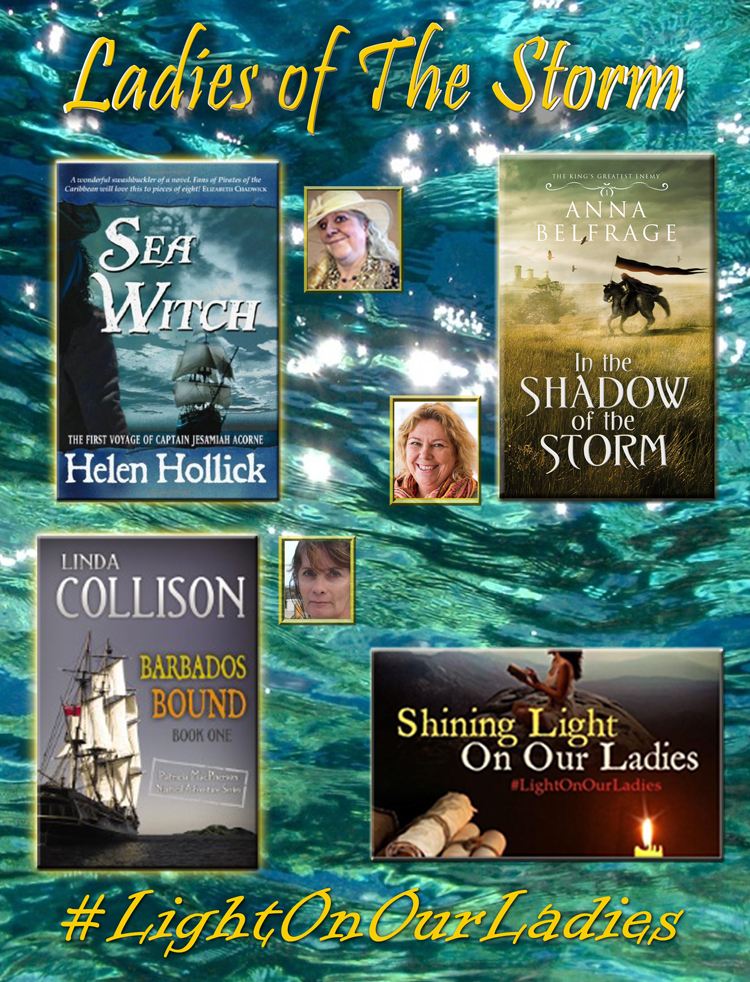
During the month of October (on Tuesdays) nine other authors and I are “Shining a Light on Our Ladies” by taking a closer look at what makes our heroines so special. The other authors involved include: Helen Hollick, Alison Morton, Anna Belfrage, Inge H Borg, Linda Collison, Elizabeth Revill, Patricia Bracewell, Sophie Perinot, and Diana Wilder.

This is the last of the posts on my Regency-based heroines. I loved the process of looking back at some of my creations, and I hope we will soon do the same for the heroes in our books.

Lady Sonalí Fowler of A Touch of Emerald is the last of the ladies from my REALM series. I purposely kept her removed from the previous two posts on the women of the REALM because in book one she was but a five-year old child. The hero of A Touch of Emerald, Daniel Kerrington, Lord Worthing, was but 10 years of age in book one (A Touch of Scandal) and the courtesy title of Lord Worthing belonged to his father. In book 2 (A Touch of Velvet), Lady Sonalí was kidnapped by a Baloch warrior Rahmat Talpur. He held her in the space of the bench in the coach increasing her fear of the dark. Later when the then Lord Worthing (James Kerrington) rescued her, Sonalí was forced to squeeze through a collapsed smugglers’ tunnel in order to reach freedom. Moreover, the realization that her father chose to chase after the kidnapper of his cousin/love interest Miss Velvet Aldridge instead of Sonalí skews Lady Sonalí’s self confidence. In A Touch of Emerald, she must face each of her fears for the Baloch warlord, Shaheed Mir, captures her and places Sonalí and five of the younger REALM children in Chistlehurst Caves, which is 22 miles of passages.

Moreover, the fact that she is of Indian descent plays a role in her development. Beyond fighting for her life, Sonalí must face social criticism and find a means to claim her identity as an asset rather than a deficit to her father’s name. Today’s society often defines a person based on looks. Sonalí encounters this phenomena, and in the beginning she attempts to “hide” from her place in the society, but with the guidance of Daniel’s parents, Sonalí steps into the light. 

ATOE eBook Cover - Green TextA Touch of Emerald: The Conclusion to the Realm Series
(Fiction/Historical; Historical Romance/Mystery/Adventure; Regency)

Four crazy Balochs. A Gypsy band. An Indian maiden. A cave with a maze of passages. A hero, not yet tested. And a missing emerald.

For nearly two decades, the Realm thwarted the efforts of all Shaheed Mire sent their way, but now the Baloch warlord is in England, and the tribal leader means to reclaim the fist-sized emerald he believes one of the Realm stole during their rescue of a girl upon whom Mir turned his men. Mir means to take his revenge on the Realm and the Indian girl’s child, Lady Sonalí Fowler.

Daniel Kerrington, Viscount Worthing, has loved Lady Sonalí since they were but children. Yet, when his father, the Earl of Linworth, objects to Sonalí’s bloodlines, Worthing thinks never to claim her. However, when danger arrives in the form of the Realm’s old enemy, Kerrington ignores all caution for the woman he loves.

Amazon 

Kindle 

Nook 

Kobo 

~~~~~~~~~~~~~~~~~~~~~~~~~~~~~~~~~~~~~~

One of my favorite characters is Adam Lawrence, Viscount Stafford, heir to the Earl of Greenwall. Stafford is my go-to character. He made his first appearance in The Phantom of Pemberley, where he assisted Fitzwilliam Darcy capture a murderer. In that book, Stafford is a bit of a rake; he travels with his mistress Cathleen Donnel. At the end of the book, he releases Cathleen to return to her family. During the next seven years, Stafford makes appearances as a minor character or a walk-through character in A Touch of Velvet, A Touch of Grace, A Touch of Honor, His American Heartsong, and A Touch of Mercy.

Readers asked me to write “Adam’s story.” Therefore, I created His Irish Eve. Adam encounters Aoife Kennice when his father sends Adam to Cheshire to claim Adam’s by-blow by the long-ago dismissed mistress Cathleen. When he arrives in the area, Stafford discovers Cathleen left him to return to her family and to deliver their children (triplets). The children are being cared for by Cathleen’s cousin, Aoife Kennice. [Just as a side point, “Aoife” is the Gaelic name for “Eve.” Get it: Adam and Eve. I know I am sick!!!] Aoife tends sheep and keeps his children safe. Their relationship begins rocky for Adam is accustomed to women falling for him immediately. Aoife considers him a conceited “prat.” From her, however, Adam learns something of the value of a full day’s work, as well as pride in his accomplishments. They literally fight off the brigades storming St. Peters Field during the Peterloo Massacre to keep the children from harm. Moreover, Aoife leads Adam back to his family, especially his father, Lord Greenwall. 

Unknown-1His Irish Eve
(Fiction/Historical Fiction; Romance; Regency Romance/Adventure)

When the Earl of Greenwall demands his only son, ADAM LAWRENCE, Viscount Stafford, retrieve the viscount’s by-blow, everything in Lawrence’s life changes. Six years prior, Stafford released his mistress, Cathleen Donnell, from his protection; now, he discovers from Greenwall that Cathleen was with child when she returned to her family. Stafford arrives in Cheshire to discover not only the son of which Greenwall spoke, but also two daughters, as well as a strong-willed woman, in the form of AOIFE KENNICE, who fascinates Stafford from the moment of their first encounter.

Set against the backdrop of the early radicalism of the Industrial Revolution and the Peterloo Massacre, a battle begins: A fight Lawrence must win: a fight for a woman worth knowing, his Irish Eve.

Amazon 

Kindle

Nook 

Kobo 

~~~~~~~~~~~~~~~~~~~~~~~~~~~~~~~~

The last of my Regency offerings is from Book 1 of the First Wives’ trilogy. The premise behind this trilogy is that each of the heroines will be presented to Society as a “first wife”/widow (even though she is not but a country miss). As a widowed woman of the Regency era, the lady will have more freedom than an unmarried miss, especially in London.

Rosellen Warren comes to stay as a companion to the Dowager Countess Eggleston, but the countess means to find Rosellen an appropriate marriage. However, the countess never suspected that the one person who really takes to Rosellen is the woman’s son, the current Earl of Eggleston. Unfortunately, Nathaniel Epperly is legally married to another. That is until his wife turns up murdered, and he is accused of the slaying. 

Yet, Epperly has a staunch supporter: Rosellen will move heaven and earth to prove Lord Eggleston is NOT the murderer, even risking her own life to do so. 

FWCCoverjpgcropThe First Wives’ Club: Book 1 of the First Wives’ Trilogy (Regency romance, historical romance, trilogy, series, mystery, family relationships)

NATHANIEL EPPERLY, the Earl of Eggleston, married the woman his father chose for him, but the marriage was everything but comfortable. Nathaniel’s wife, Lady Charlotte, came to the marriage bed with a wanton’s experience. She dutifully provides Eggleston his heir, but within a fortnight, she deserted father and son for Baron Remington Craddock. In the eyes of the ton, Lady Charlotte cuckolded Epperly.

ROSELLEN WARREN longs for love and adventure. Unfortunately, she’s likely to find neither. As a squire’s daughter, Rosellen holds no sway in Society; but she’s a true diamond in the rough. Yet, when she meets Epperly’s grandmother, the Dowager Countess Eggleston creates a “story” for the girl, claiming if Rosellen is presented to the ton as a war widow with a small dowry, that the girl will find a suitable match.

BARON REMINGTON CRADDOCK remains a thorn in Eggleston’s side, but when Craddock makes Mrs. Warren a pawn in his crazy game of control, Eggleston offers the woman his protection. However, the earl has never faced a man who holds no strength of title, but who wields great power; and he finds himself always a step behind the enigmatic baron. When someone frames Epperly for Lady Charlotte’s sudden disappearance, Nathaniel must quickly learn the baron’s secrets or face a death sentence.

Kindle

Amazon

Kobo 

Nook

~~~~~~~~~~~~~~~~~~~~~~~~~~

Now, for the giveaway. Three winners will be chosen from those who comment below for eBook copies of the novels listed above. Winners choice of book! The giveaway closes at midnight EST Saturday, October 31, 2015.

In case the links no longer work for the blog hop, here are the original links so you might copy and paste them:

PLEASE JOIN THE OTHER PARTICIPANTS IN THE BLOG HOP. I HAVE LISTED THOSE FOR TODAY AND THOSE FOR THE PREVIOUS THREE TUESDAYS. 

Light on ladies group6 October Participants:

Regina Jeffers ~ Four Heroines of the Realm Series

https://reginajeffers.wordpress.com/2015/10/06/shine-a-light-on-our-ladies-the-women-of-the-realm-series-part-1/
Helen Hollick ~ Emma of Normandy http://ofhistoryandkings.blogspot.co.uk/2015/10/shining-light-on-our-ladies_6.html
Pat Bracewell ~ Emma of Normandy http://www.patriciabracewell.com/2015/10/shining-light-on-our-ladies-a-tale-of-two-queens/
Inge Borg ~ Princess Nefret    http://devilwinds.blogspot.co.uk/2015/10/shining-light-on-our-ladies-blog-hop.html

Ladies post 213 October Participants:

Helen Hollick ~ the two Ediths of King Harold II http://www.ofhistoryandkings.blogspot.com/2015/10/shining-light-on.html
Diana Wilder ~ Lavinia Wheeler and “The Safeguard” http://dianawilder.blogspot.com/2015/10/shining-light-on-our-ladies.html
Regina Jeffers ~ Elizabeth Bennet https://reginajeffers.wordpress.com/2015/10/13/shining-light-on-our-ladies-blog-tour-elizabeth-bennets-less-likable-qualities/
Liz Spear (Revill) ~ Caroline Llewellyn    http://www.elizabethrevill.com/blog/shining-a-light-on-our-ladies

Ladies post 3 smaller20 October Participants:

Alison Morton ~ Aurelia Mitela    http://alison-morton.com/2015/10/20/meet-aurelia-mitela-woman-and-warrior/

Helen Hollick ~ King Arthur’s Ladies http://www.ofhistoryandkings.blogspot.com/2015/10/shiningh-light-on-arthurs-ladies.html

Sophie Perinot ~ Marguerite de Valois http://www.sophieperinot.com/blog/2015/10/20/marguerite-de-valois-shinning-a-light-on-a-much-maligned-french-princess/

Regina Jeffers ~ Four More Heroines of the Realm Series  https://reginajeffers.wordpress.com/2015/10/20/shine-a-light-on-our-ladies-the-realm-part-2-a-giveaway/

week427 October Participants:

Helen Hollick ~ Pirate Captains’ Ladies  http://ofhistoryandkings.blogspot.co.uk/2015/10/shining-light-on-pirate-captains-ladies.html

Linda Collison ~ Patricia MacPherson, an 18th-century cross-dressing protagonist    http://www.lindacollison.com/shining-light-ladies/

Anna Belfrage ~ Kit de Guirande      https://annabelfrage.wordpress.com/2015/10/27/shining-a-light-on-my-lady/

Regina Jeffers ~ Roundup of my Regency Heroines 

Posted in British history, Great Britain, Living in the Regency, Regency era, Uncategorized | Tagged , , , , , , | 5 Comments

Chaucer’s Influence: Minor Stories and Poems

 Geoffrey Chaucer - Author, Poet - Biography.com www.biography.com


Geoffrey Chaucer – Author, Poet – Biography.com
http://www.biography.com

According to Chaucer’s biography on the Luminarium, “GEOFFREY CHAUCER, English poet. The name Chaucer, a French form of the Latin calcearius, a shoemaker, is found in London and the eastern counties as early as the second half of the 13th century. Some of the London Chaucers lived in Cordwainer Street, in the shoemakers’ quarter; several of them, however, were vintners, and among others the poet’s father John, and probably also his grandfather Robert. Legal pleadings inform us that in December 1324 John Chaucer was not much over twelve years old, and that he was still unmarried in 1328, the year which used to be considered that of Geoffrey’s birth. The poet was probably born from eight to twelve years later, since in 1386, when giving evidence in Sir Richard le Scrope’s suit against Sir Robert Grosvenor as to the right to bear certain arms, he was set down as “del age de xl ans et plus, armeez par xxvij ans.” At a later date, and probably at the time of the poet’s birth, his father lived in Thames Street, and had to wife a certain Agnes, niece of Hamo de Compton, whom we may regard as Geoffrey Chaucer’s mother.”

By 1357, Chaucer served in the household of Elizabeth, Countess of Ulster and wife of Lionel, Duke of Clarence. Notations in her household accounts show where she paid for Chaucer’s clothing and expenses. In 1359, Chaucer entered the war with France, spending time at “Retters,” (Rethel) near Reims, where he was taken prisoner and later ransomed by the government. King Edward III paid sixteen pounds toward the ransom in March 1360. 

“…on the 10th of June 1367 Edward granted him a pension of twenty marks for his past and future services. A pension of ten marks had been granted by the king the previous September to a Philippa Chaucer for services to the queen as one of her “domicellae” or “damoiselles,” and it seems probable that at this date Chaucer was already married and this Philippa his wife, a conclusion which used to be resisted on the ground of allusions in his early poems to a hopeless love-affair, now reckoned part of his poetical outfit. Philippa is usually said to have been one of two daughters of a Sir Payne Roet, the other being Katherine, who after the death of her first husband, Sir Hugh de Swynford, in 1372, became governess to John of Gaunt’s children, and subsequently his mistress and (in 1396) his wife. It is possible that Philippa was sister to Sir Hugh and sister-in-law to Katherine. In either case the marriage helps to account for the favour subsequently shown to Chaucer by John of Gaunt.” (Luminarium)

 Philip Mould | Historical Portraits | Geoffrey Chaucer | 16th ... www.historicalportraits.com


Philip Mould | Historical Portraits | Geoffrey Chaucer | 16th …
http://www.historicalportraits.com

Serving as a diplomat, Chaucer traveled to both France and Italy. Eventually, he was given a political appointment as customs controller and later made a justice. Later still, he became a Knight of the Shire. He died in 1400 and is buried in Westminster Abbey. 

Chaucer’s works include…

Before 1372: Minor poems and the Book of the House of Fame, Anelida and Arcite. This is the period of the French influence.

1380-1386: The Parliament of Fowls, Troilus and Cressida, Boece, The Legend of Good Women, and minor poems. This is the period of Italian influence. 

1387-1392: The early Canterbury Tales, and the Astrolobe.

1393-1400: The later Canterbury Tales, and minor poems. 

Chaucer’s Verse:

Chaucer was one of the most musical of English poets. When read properly, his lines retain a fine melody even to the modern ear to which his language is unfamiliar. To read Chaucer properly, the following simple rules should be observed: 

  1. Vowels should be pronounced as in modern European languages, especially the Teutonic. That is, the “a” as in “father”; the “i” as in “machine” or “this”; the “u” as in “full”; the “o” as in “dope” “ou” as in “ghoul.”
  2. An “e” at the end of a word is usually give full syllabic content. 
  3. Chaucer’s favorite line is a five foot line which is accented as follows: 

Whan thát Aprílle wíth his shóures sóote

This type of line is used uniformly throughout the Canterbury Tales. 

Some selections from Chaucer’s works: 

Minor Poems

“The Former Age” – In the former age, men did not know of luxuries or riches. It was a period of blissfulness. Corn grew without ploughing and all lived simply, yet well. It was a wholesome innocent world. 

Now Chaucer says: “For in our days nit but covetyse Doubleness, and treason and envy Poyson, manslaughter and mordre in sundry wise.”

“Truth” – Truth shall deliver all from ill. Be bold and honest and have no fear. 

“Gentilesse” – True gentility is inborn; it cannot be passed down as a title. 

“Lack of Steadfastnesse” – Contrast of former time and the present. The past age was stable and steadfast; the present is false and deceiving. Chaucer is keenly aware of the ills of the world in which he lives. 

“Lenvoy of Chaucer to Scogan” – Scogan has scoffed at love. Chaucer ironically warns him of his great foolhardiness. He has caused Venus so to weep that her tears caused the floods of 1393. 

“Complaint to his Empty Purse” 

“I am so sorry, now that y be light

for certes, but ye make me heavy cheer.”

The Envoy pleads to the king (Henry IV) to remedy the emaciated condition of the poet’s purse.

Please take the time to read Chaucer’s Biography HERE.

Posted in Age of Chaucer, Anglo-Normans, British history, Great Britain, literature, real life tales | Tagged , , , , , | 1 Comment

“One Minute Past Christmas,” a Holiday Short Story + a Giveaway


OMPC Cover Concept 2Are you sick of Halloween already? Dreading Thanksgiving? Are you ready for Christmas? Then I have just the thing to bring a bit of the HOLIDAY Spirit.

In 2012, a gentleman friend released a Christmas-based eBook short story, which his friends and family promptly read, but few others. Although the story had a great premise, Dr. Arnold is not a “story” teller. In truth, he’s a retired journalism professor (my journalism professor some 45 years prior). If you know anything about journalistic writing, as opposed to fiction, you know that in journalism all the “fluff and stuff” is omitted.

Enter moi. An expert in “fluff and stuff.”

Therefore, I convinced Dr. Arnold into permitting me to “rework” the story, and we could release the tale together. When the story was originally written it was 6500 words. Now, it’s over 17,000. “Fluff and Stuff.” 

This is not a Jane Austen story, but I believe you will enjoy it just the same. “One Minute Past Christmas” is the story of a Greenbrier County, West Virginia, family in which a grandfather and his granddaughter share a special ability — they call it a “gift” — that enables them to briefly witness a miracle, for surely only God could grant them such an unbelievable sight. What they see each year begins at precisely one minute past Christmas and fills them with as much relief as it does wonder. But Jared Nicholas and his granddaughter Jessica worry that the “gift” — which they cannot reveal to anyone else — will die with them because it has been passed to no other relative for sixty-five years.

OMPC Cover Concept 1Excerpt:

She climbed the steps to the attic a bit more slowly than she did previously. Jessica claimed her sixty-fifth birthday in September, and even though both the Nicholas and Lawrence families traditionally lived well into their late seventies and early eighties, Jessica could not shake the idea that her days were shorter than she hoped.

“Where to look?” she murmured as she pulled the chain to turn on the bare overhead bulb to illuminate the space once used as a drying room, but which now held the family “treasures.”

Hanna joined Jessica to look around in bewilderment.

“I did not realize there were so many boxes.”

“Several lifetimes chronicled here,” Jessica said as she scanned the markings on the side of many of the boxes.

She turned slowly to scan the many configurations.

“You used to like to play among all the boxes,” Jessica reminded her granddaughter. “We made castles for you to crawl through.”

“Really?” Hanna asked in surprise, and Jessica could not disguise her scowl of disapproval.

“I don’t wish to think upon the values you lost by movin’ away from your family home,” she pronounced in chastisement.

“Yes, your father found a viable position, but your family abandoned so much more.”

“Oh, Gram, don’t be going there again. Papa is accounted one of the best mechanics in the area. He has fifteen men working for him.”

“Financial success doesn’t keep a person warm in the same way as one’s memories do,” Jessica countered.

Her granddaughter rolled her eyes in the way of all young people who think they know everything.

Discarding her frustration with what she could not change, Jessica gestured toward several rows of boxes against the far wall.

“You look over there. I’ll take this side. The boxes are labeled, but it wouldn’t hurt to take a peek into each to make sure the contents match the labels.”

“Do you think there are mice in here?” Hanna asked tentatively.

Her granddaughter lifted a box from the top of the stack to investigate the inside.

“You know nothin’ of livin’ in the country,” Jessica remarked as she adjusted her glasses upon her nose so she could read through the bifocals.

“Your grandfather and I have three of the best mousers in the county. Nothing gets past those cats.”

“I thought you kept the cats because they were treasured pets,” Hanna said in distraction before searching through the first box.

Jessica thought, Not likely, but she said, “No. The cats earn their keep.” Like everyone on this farm.

Silence fell between them as they searched. Hanna made quicker work of the task than Jessica. Reminiscing over one of Jeremy’s toy trucks or a favorite picture frame belonging to her mother required time. Recollections required time. Her grandfather Jared Nicholas taught Jessica that time only bent for those God granted a miracle. When Hanna was born, Jessica thought to teach her granddaughter something of the magic, but Jeremy and Molly snatched the child away from Jessica before she could show the girl what made the child one of God’s chosen beings.

“Any luck?” Hanna called out.

“Not yet,” Jessica murmured as she caressed each of the precious items before returning them to the box.

Hanna stood to scan the stacks.

“Do you recall anything of how the dress was put away?” the girl asked.

Jessica watched Hanna work her way behind what appeared to be an artificial Christmas tree box along the wall.

A smile of recognition claimed Jessica’s lips.

“I recall now,” she said before crossing the small space to spin the box meant for a fake tree around where she could tear away the tape holding it closed.

“There is no need for an artificial tree on a Christmas tree farm,” she declared. “My mother thought it a good joke to store a family heirloom in a hoax of a box.”

Stripping the masking tape away, Jessica placed the box upon the floor and opened the flaps.

“Ah, here it is.”

Jessica lifted the garment bag, which was closed at the bottom with more tape to keep moisture and air from ruining the dress.

“There are mothballs in the box,” she said with a laugh. “We may need to air the dress out.”

Jessica slowly unzipped the bag.

“I imagine my mother covered the hanger before returning the dress to it. My mama, bless her soul, was most particular about the gown. It was the most expensive dress anyone in the family ever owned. I think her cautions and her protestations nearly persuaded your mama not to marry our Jeremy.”

“Will you be as crazy with my wearing it?” Hanna asked half in a tease and half in fear.

“Count on it,” Jessica said smartly as she lifted the dress from the bag.

Beneath the heavy garment carrier was a dry cleaning bag covering the gown and its layers of soft lace.

“Thanks for the warning,” Hanna retorted in what sounded like cynicism.

The girl reached for the bottom of the bag and lifted the plastic to reveal a dress with all the glamour of the 1920s.

“It is like something right out of The Great Gatsby,” Hanna gasped. “It is perfect. We can do the wedding as if it’s high tea in the Hamptons.”

Jessica was more practical.

“We must check all the seams. The lace has yellowed a bit, but not enough to hurt the look of the dress. We may need to find some replacement lace for the sleeves, but matching it shouldn’t be too difficult. It’s a common rose-and-ivy pattern. I do not want you to think of making this a flapper look. My mama and my grandmother would roll over in their graves. Grandma Lily ordered this dress special, based on a picture of her mother’s wedding dress in the old country. Grandpa Jared spent his last penny to please Lily Hardwick. During their first few years of marriage they had nothing to live on but love, but that was enough. Even later, during the Great Depression, they never considered selling the dress or the lace.”

“I promise I’ll treat it properly,” Hanna swore, crossing her heart with her index finger.

“I’ll return the dress to the bag, and we’ll take it downstairs for a closer look. Later, we’ll go into town for lace and whatever else we might need.”

Jessica reached for the box.

“Help me set the empty carton from the way.”

“Yes, Ma’am.”

Jessica thought it ironic that the prospects of wearing her great great-grandmother’s dress brought a return of Hanna’s manners.

“What’s that?” Hanna asked as she lifted the box to hear a thud hit the floor a second time.

“Best we find out.”

Jessica draped the bagged dress over the back of a chest of drawers, which should be donated to one of the shelters, before she knelt to dig into the bottom of the tree box.

“Well, I’ll be,” Jessica swore with a chuckle. “I haven’t seen these since before Grandpa Jared passed. I thought it long gone. I wonder who put them in this box.”

“You must have put whatever it is there, Gram,” Hanna said with a bit of impatience, common of young people dealing with the older generation.

Jessica’s frown lines met.

“You are assuming I am suffering from early ‘old timer’s’ disease, but it’s not true. I thought these were long gone.”

She withdrew two composition notebooks with hard covers.

“Love poems written to Grandpa Bob?” Hanna teased with a raised eyebrow.

Jessica clutched the two books to her chest as she stood.

“No, they contain a story my Papaw Jared thought should be kept alive to be shared sometime after our deaths.. He was in his eighties when he asked me to record his tale, a story I shared with him. Although he could read and write, Papaw Jared was not much for his letters. He worried too much about correct spelling and such. His teacher was quite strict, striking his hands many times for his poor penmanship, and I often helped with legal papers and the such as I grew older. Eventually, Papaw told his tale into an old tape recorder, and I transcribed it for him.”

Jessica shot a quick glance at her granddaughter, and hope lodged in Jessica’s heart. She long regretted not knowing for certain whether Hanna could be the answer to a family mystery. With the absence of Jeremy’s family during those years when the girl might show herself, Jessica remained uncertain about how to approach the subject.

“I’d like very much to share the story with you,” she said tentatively. “There’s a bit about you in it.”

BookCoverImageNOW FOR THE GIVEAWAY! I HAVE 3 eBOOK COPIES OF “ONE MINUTE PAST CHRISTMAS” FOR 3 LUCKY WINNERS. TO BE ELIGIBLE, LEAVE A COMMENT BELOW. THE GIVEAWAY ENDS AT MIDNIGHT EST, SATURDAY, OCTOBER 24.

Purchase Links: 

Nook 

Amazon 

Kindle 
Kobo 

CreateSpace 


Posted in Appalachia, Christmas, Uncategorized | Tagged , , , , , , , , | 10 Comments

Celebrating Our Ladies: Four More Heroines of The Realm Series + a Giveaway

Cathy Helms of www.avalongraphics has designed us this logo

Cathy Helms of http://www.avalongraphics has designed us this logo

During the month of October (on Tuesdays) nine other authors and I are “Shining a Light on Our Ladies” by taking a closer look at what makes our heroines so special. The other authors involved include: Helen Hollick, Alison Morton, Anna Belfrage, Inge H Borg, Linda Collison, Elizabeth Revill, Patricia Bracewell, Sophie Perinot, and Diana Wilder.

Specifically, we are looking at what makes heroines in our series such an integral part of the action. With this first post, I wish to highlight some of my favorite female leads from my award-winning REALM series. For those of you who are first timers on “Every Woman Dreams,” the REALM is a covert operation working under the auspices of the Home Office during the Napoleonic Wars. There are seven men in my group, and each book of the series is devoted to one of them (and the lady who brings the gentleman up to snuff). Please note that although the series is about the men of the REALM, the books all sport images of the women the men love.

I spoke of the Realm ladies of books 4, 5, 6, and the companion novel on October 6. You may see those comments HERE.

Today, I wish to start with A Touch of Scandal, Book 1 (aka The Scandal of Lady Eleanor) and the “stalwart” of the Realm ladies, Lady Eleanor Fowler Kerrington, the Countess of Linworth. Of all the women of this series, Lady Eleanor suffers the most, but she is remarkably resilient. Eleanor’s father, the late Duke of Thornhill, physically abused Eleanor from the ages of fourteen to sixteen. Because Thornhill involved another couple in his “fantasies,” the duke exposed Eleanor to blackmail from Sir Louis Levering. Only with the manipulations of her brother, Brantley Fowler, the Duke of Thornhill, and the man she loves, James Kerrington, Viscount Worthing, is Eleanor saved in a bizarre twist of fate at a party hosted by Prince George.

Later, in the series, we see Eleanor in defense of the injured Viscount Levering’s life when she takes on Murhad Jamot, one of Shaheed Mir’s henchmen. Eleanor also serves as the “mother” for the other ladies of the Realm. She is the first to marry, and she assumes the role of leader of the women as her husband did with the men. When her father was ill, suffering from the pox, it was Eleanor who kept the estate running in her brother’s absence. It is Eleanor who arranges each of the weddings of the Realm ladies. But more importantly, it is Eleanor who accepts Kerrington’s ten-year-old son Daniel as if he is her own. Being a stepmother to two sons, long before I was a mother, I infused some of the qualities I exercised and some I wished I knew into Eleanor and Daniel’s relationship. Even when she bears Viscount Worthing other children, she adamantly considers Daniel her son.

Eleanor never “talks down” to Daniel; she permits the boy to express his opinions and presents him with value. She encourages Daniel to be his own man – not an imitation of his renown father. Although the other members of the Kerrington family “criticize” Daniel’s later mother, Eleanor acknowledges that the memory of the late Elizabeth Kerrington should be a part of Daniel’s life.
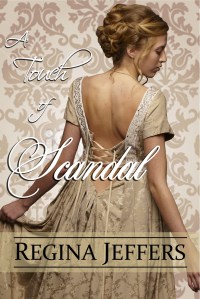
ATOS eBook Cover ConceptBook Blurb for A Touch of Scandal

JAMES KERRINGTON, the future Earl of Linworth, left his title and infant son behind after the death of his beloved Elizabeth, but he returns to England to ten to his ailing father and to establish his roots. With Daniel as his heir, Kerrington has no need to marry, but when Lady Eleanor Fowler stumbles and falls into his arms, Kerrington’s world is turned upon its head. He will do anything to claim her. 

LADY ELEANOR FOWLER hides from Society, knowing her father’s notorious reputation for debauchery tainted any hopes she might have of a happy family. And yet, despite her fears, her brother’s closest friend, James Kerrington, Lord Worthing, rekindles her hopes, but when Sir Louis Levering appears with proof of Eleanor’s participation in her father’s wickedness, she is drawn into a world of depravity, and only Kerrington’s love can save her. 

————————————————

Book 2 of the Realm series features Lady Eleanor’s cousin, Miss Velvet Aldridge, as the heroine. A Touch of Velvet brings childhood “lovers” together. Brantley Fowler, the Duke of Thornhill, has loved Velvet Aldridge since she was twelve. Velvet is a distant cousin of the Fowlers; she came to reside at Thorn Hall when she was but five. The Duchess of Thornhill sent for Velvet to be a companion to her daughter Eleanor. Velvet’s parents are killed in a questionable accident, and the Aldridge sisters are sent to different relatives to reside.

I wrote Velvet as a “dreamer” of sorts. She reads “romance” and “wishes” for Brantley Fowler to act the role of her prince. When she learns he chose an Indian wife (who has passed) and has a daughter, Velvet sets out to make Bran jealous of what he left behind. Velvet does act with some courage when Murhad Jamot kidnaps her, but overall I did not permit her to be as strong as some of the other characters in the series. This was a conscious choice (which I could not discuss with others until the end of the series). Although I liked some of the characteristics I presented Velvet, I did not always approve of her methods. Velvet is a dreamer (not an idealist), and as such she expects opposition and misunderstandings, but she believes she be successful. Another of her more likable characteristics, Velvet takes positive steps toward achieving her goals. In Velvet’s defense, Fowler does not display the same maturity as other members of the Realm. The reader will hope that they mature together. 

I write about modern issues, but set them in the Regency. In “Velvet,” I explore the modern idea of “victim mentality.”

Victim mentality is an acquired (learned) personality trait in which a person tends to regard him or herself as a victim of the negative actions of others, and to think, speak and act as if that were the case — even in the absence of clear evidence. The desire of sympathy is crucial in that the mere experience of a harmful event is not enough for the emergence of the sense of being a victim. In order to have this sense there is the need to perceive the harm as undeserved, unjust and immoral, an act that could not be prevented by the victim. The need to obtain empathy can then emerge.” As the series developed, I presented Velvet with a mild case of this trait, but her sister Satiné is more neurotic. 

ATOV eBook CoverBook Blurb for A Touch of Velvet

No one finds his soul mate when she is twelve and he is seventeen, but BRANTLEY FOWLER, the Duke of Thornhill, always thought he had found his. The memory of Velvet Aldridge’s face is the only thing that kept him alive all those years he remained estranged from his family. Now, he has returned to Kent to claim his title and the woman he loves, but first he must obliterate the memory of his infamous father, while staving off numerous attacks from Mir’s associates. 

VELVET ALDRIDGE always believes in “happily ever after.” Yet, when Brantley Fowler returns home, he has a daughter and his wife’s memory to accompany him. He promised Velvet eight years prior that he would return to Thorn Hall to make her his wife, but Thornhill only offers her a Season and a dowry. How can she make him lover her? Make him her “knight in shining armor”?

——————————————————-

Book 3 of the series is A Touch of Cashémere. Miss Cashémere Aldridge is the youngest of the Aldridge sisters. She is the twin to Satiné. When Velvet was sent to live in the household of the Duke of Thornhill, Satiné was sent to live with the girls’ maternal uncle, Baron Ashton. Unfortunately, Cashémere remains with her father’s younger brother (and heir) and her paternal grandmother. The Aldridges are not easy people with whom to live, and Cashé is expected to follow VERY strict religious teachings. When we first encounter her, Cashémere is opinionated and a bit caustic. Aidan Kimbolt, Viscount Lexford, looks kindly upon her, but it is Marcus Wellston, the Earl of Berwick, whose approval she seeks. Unfortunately, Berwick is besotted with her twin, Satiné. 

Cashémere takes the situation in hand. As they are identical, she maneuvers Satiné toward Lexford, while she charms Berwick. All looks well until a former Scottish suitor kidnaps Satiné, thinking it was Cashémere, and strikes Lexford a blow that nearly costs the viscount his life. Assuming the responsibility for the ruse going awry, Cashémere sets out to set her twin free and to accept the marriage her uncle/guardian arranged with Lachan Charters. 

One of the reasons Cashémere knows success is Berwick. Where Lexford permitted her to rant and rave and called it “adorable,” Berwick holds Cashé accountable for her actions. After learning of her Uncle Samuel’s deceptions, she sees the world through a lens of opportunity. Cashé also is quick in making logical decisions. Where others might act irrationally, Cashémere tests herself and finds her own rhythm. One of Cashé’s most endearing qualities is how she treats Wellston’s oldest brother Trevor. Trevor has what we would now call Down’s syndrome, and although he is the oldest, he is not capable of claiming the title. First his brother Myles and then Marcus accepts the title as Trevor’s regent. This is another “modern” issue I included in the plot lines for the series.

ATOCcrop2Book Blurb for A Touch of Cashémere

MARCUS WELLSTON never expected to inherit his father’s title. After all, he is the youngest of three sons. However, his oldest brother Trevor is judged incapable of meeting the title’s responsibilities, and his second brother Myles loses his life in a freak accident; therefore, Marcus returns to Tweed Hall and the earldom. Having departed Northumberland years prior to escape his guilt in his twin sister’s death, Wellston spent the previous six years with the Realm, a covert governmental group, in atonement. Now, all he requires is a biddable wife with a pleasing personality. Neither of those phrases describe Cashémere Aldridge. 

CASHEMERE ALDRIDGE thought her opinions were absolutes and her world perfectly ordered, but when her eldest sister Velvet is kidnapped, Cashé becomes a part of the intrigue. She quickly discovers nothing she knew before is etched in stone. Leading her through these changes is a man who considers her a “spoiled brat.” A man who prefers her twin Satiné to Cashémere. A man who’s approval she desperately requires: Marcus Wellston, the Earl of Berwick. Toss in an irate Baloch warlord, a missing emerald, a double kidnapping, a blackmail attempt, and an explosion in a glass cone, and the Realm has its hands full. The Regency era has never been hotter, nor more dangerous. 

————————————————————-

The last book I will mention today is A Touch of Honor: Book 7 of the series. As I mentioned above, when I started writing this series, I planned for Miss Satiné Aldridge to play a leading role in book 4. However, I did not care much for the woman I created, and although the fans wished me to bring her back and “tell her story,” I was not convinced. I am one of those who wants a HEA (happily ever after) for my characters, but perhaps not the one the reader anticipated. 

In book 3, I permitted Baron John Swenton to develop a tendre for Satiné. At the time, I anticipated writing a novella for Swenton and the lady, but throughout the series, I began to wish to know more of Swenton. “Honor” is a word that marks his actions throughout the series, so it became an appropriate title for “his” book. At the beginning of this book, Satiné has gone to Europe to hide the shame of her kidnapping and assumed violation by Lachlan Charters. Swenton has kept tabs on her and makes an unexpected call upon the lady’s household when he must travel to Austria to settle his estranged mother’s will. Swenton’s purpose is to propose to the woman. He has witnessed his friends (Berwick and Thornhill) make happy marriages with Satiné’s sisters and so he “assumes” she will make him an excellent wife. Honorably, he “assumes” his title will protect her from any more rumors. 

Unfortunately, when Swenton arrives, he learns Satiné has given birth to a son by a man she met upon the Continent. Most men would walk away from her, but the baron says he will marry her and claim the son is his (but because the boy is born before they marry, the child will be his acknowledged by-blow). Satiné is not happy with this outcome, and she manipulates Swenton for many months. 

However, the baron finds salvation in the woman he hires to be his baroness’s companion. Miss Isolde Neville is the daughter of an Irish baron, who happens to be part of the Elgin expedition. Isolde assists Swenton in understanding Satiné’s nature, and despite their attraction to each other, she encourages John to make the best of his marriage. One of the issues is Satiné’s growing dependence upon laudanum so she might control her weight. 

Isolde’s loyalty and her caring spirit make her a true heroine. She acts with as much honor as does Swenton in the manner in which they handle Satiné’s depression   satisfies the reader (even the ones who wished this to be Satiné’s tale). She walks away from Swenton in order that he can find some happiness in his marriage, but Isolde never forsakes him. The baron is badly bruised by his mother’s desertion and his father’s absolute authority. Only once does he open his heart to a woman, and Satiné walks all over it. It is through Isolde’s thoughtfulness that Swenton is healed. (There is also the matter of bringing an Irish Catholic into a Protestant household…just a bit of history). 
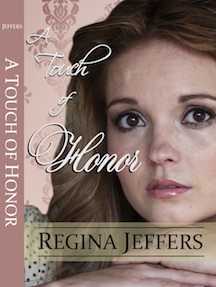
ATOHCrop2Book Blurb for A Touch of Honor:

For two years, BARON JOHN SWENTON thought of little else other than making Miss Satiné Aldridge his wife; so when he discovers her reputation in tatters, Swenton acts honorably: He puts forward a marriage of convenience that will save her from ruination and provide him the one woman he believes will bring joy to his life. However, the moment he utters his proposal, Swenton’s instincts scream he made a mistake: Unfortunately, a man of honor does his best in even the disastrous conditions. 

SATINE ALDRIDGE fell for a man she can never process and accepted a man she finds only mildly tolerable. What will she do to extricate herself from Baron Swenton’s life and claim the elusive Prince Henri? Needless to say, more than anyone would ever expect. 

ISOLDE NEVILLE was hired to serve as Satiné Aldridge’s companion, but her loyalty rests purely with the lady’s husband. With regret, she watches the baron struggle against the impossible situation in which Miss Aldridge places him, while her heart desires to claim the man as her own. Yet, Isolde is as honorable as the baron. She means to see him happy, even if that requires her to aid him in his quest to earn Miss Satiné’s affections. 

GIVEAWAY: LEAVE A COMMENT BELOW TO BE ELIGIBLE FOR AN eBOOK GIVEAWAY. TWO WINNERS MAY CHOOSE FROM ANY OF THE FOUR TITLES LISTED ABOVE. THE GIVEAWAY WILL END AT MIDNIGHT EST ON FRIDAY, OCTOBER 23, 2015.

PLEASE JOIN THE OTHER PARTICIPANTS IN THE BLOG HOP. I HAVE LISTED THOSE FOR TODAY AND THOSE FOR THE PREVIOUS THREE TUESDAYS. I LEFT THE ORIGINAL LINKS IN CASE SOME OF THE CONNECTIONS ARE BROKEN. 

Light on ladies group6 October Participants: 
Helen Hollick ~ Emma of Normandy http://ofhistoryandkings.blogspot.co.uk/2015/10/shining-light-on-our-ladies_6.html
Pat Bracewell ~ Emma of Normandy http://www.patriciabracewell.com/2015/10/shining-light-on-our-ladies-a-tale-of-two-queens/
Inge Borg ~ Princess Nefret    http://devilwinds.blogspot.co.uk/2015/10/shining-light-on-our-ladies-blog-hop.html

Ladies post 213 October Participants:

Helen Hollick ~ the two Ediths of King Harold II http://www.ofhistoryandkings.blogspot.com/2015/10/shining-light-on.html
Diana Wilder ~ Lavinia Wheeler    http://dianawilder.blogspot.com/2015/10/shining-light-on-our-ladies.html
Regina Jeffers ~ Elizabeth Bennet https://reginajeffers.wordpress.com/2015/10/13/shining-light-on-our-ladies-blog-tour-elizabeth-bennets-less-likable-qualities/
Liz Spear (Revill) ~ Caroline Llewellyn    http://www.elizabethrevill.com/blog/shining-a-light-on-our-ladies 
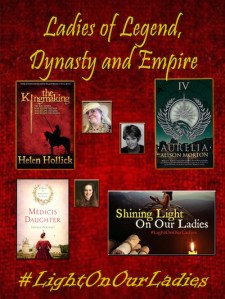
Ladies post 3 smaller20 October Participants:

Alison Morton ~ Aurelia Mitela http://alison-morton.com/2015/10/20/meet-aurelia-mitela-woman-and-warrior/

Helen Hollick ~ King Arthur’s Ladies http://www.ofhistoryandkings.blogspot.com/2015/10/shiningh-light-on-arthurs-ladies.html

Sophie Perinot ~ Marguerite de Valois http://www.sophieperinot.com/blog/2015/10/20/marguerite-de-valois-shinning-a-light-on-a-much-maligned-french-princess/

Posted in Great Britain, heroines, Living in the Regency, Regency era, Uncategorized | Tagged , , , , , , | 1 Comment

History Behind the BBC Series “The Last Kingdom”

MV5BMjE1MzYzNjk3OF5BMl5BanBnXkFtZTgwMzk0MzYwNzE@._V1_SX214_AL_I am watching “The Last Kingdom” on BBC America (Saturday’s at 10 P.M.). It is a tale of Saxon history, with England struggling to become a “nation” in itself, without the rule by the Danes. Although I possess a “working knowledge” of the time period, this is not an era of which I am well versed; even so, I find the series fascinating, even though the author of the book upon which it is based is said to have taken great liberties. Again, I cannot speak to those liberties, but I am certain some of my history novel friends can.

From imdb we learn, “The Last Kingdom is an adaptation of Bernard Cornwell’s Saxon Stories. The books follow Uhtred of Bebbanburg from a boy taken from his birthright and raised by Vikings, later fighting for King Alfred the Great and his son Edward. Shield walls, blood, revenge and the forging of many Kingdoms into one nation, a dream of Alfred’s called England.”

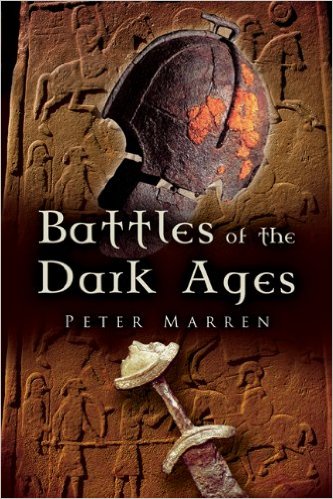
According to several sources, in Bernard Cornwell’s series The Saxon Stories the protagonist is the Northumbrian Earl Uhtred of Bebbanburg. The story of the siege of Durham, which I mention below, and the severed heads on poles is told about the historical Uhtred (see Battles of the Dark Ages, Peter Marren), though it is perhaps possible to assume that the fictional Earl Uhtred of Bebbanburg is an ancestor of this Uhtred. In Bernard Cornwell’s series he adds a ‘historical note’ at the end, in which, especially in the first book, he mentions that Uhtred was his ancestor. He took the liberty of installing Uhtred earlier in history.” (Wikipedia51HD+PdbeML._SX331_BO1,204,203,200_

My only complaint so far in the series is that the “delicious” Matthew Macfadyen, who portrayed Lord Uhtred, the boy’s father, is killed off in episode one.

If you missed the premiere episode (October 10) you may view it HERE.

There are several places that indicate streaming of episode two (shown on October 17), but I did not want to include a link that I felt was not safe.

Disclaimer: I plan to attempt to make sense of the real story of Uhtred. Please bear with me. There is a line in episode one where the Danes say something to the effect how the Saxons had unusual names. After reading this, you will likely agree. I admit that I have cited several sources below for I would not presume to portray myself as an expert on this material. 

“Uhtred, earl of Bamburgh (d. 1016), magnate, was the son of Waltheof (fl. c.994–1006) and an unknown mother. Waltheof was probably the son of Eadwulf, the son of Oswulf (d. 966), the son of Ealdred of Bamburgh (d. 933?); the family had ruled Bernicia (Northumbria north of the Tyne) since the Scandinavian invasion and settlement of the late ninth century. The northern part of their earldom (Lothian) was ceded to the Scots, probably by 973.” (Oxford Dictionary of National Biography)

Uhtred (the Bold) was an ealdorman of Northumbria from 1006 to 1016. Prior to that time, we have records of Uhtred assisting in the removal of St. Cuthbert’s remains from Chester-le-Street to Durham. An English chronicler and a monk of Durham Priory, Syemon of Durham, recorded Uhtred’s efforts in moving St. Cuthbert’s remains. Uhtred married Bishop Aldhun’s (founder of Durham cathedral) daughter Ecgfrida, earning Uhtred several estates once belonging to the church.

“According to the De obsessione Dunelmi, a Durham tract on the history of the earldom of Northumbria, the principal theme of which was the right of Durham to certain estates, Uhtred married Aldhun’s daughter, Ecgfrida, probably at about this time. The marriage brought Uhtred certain vills of the church of St Cuthbert, namely Barmpton, Skirningham, Elton, Carlton, School Aycliffe, and Monk Hesleden in the south of co. Durham. This marriage has been seen as part of the church of St Cuthbert’s policy of recruiting allies, although the earl would also have gained from an alliance with this powerful ecclesiastical institution. Uhtred was to retain control of these vills as long as he lived honourably in marriage with Ecgfrida.” (Oxford Dictionary of National Biography)

Alexander Dreymon, who portrays Uhtred in the series "The Last Kingdom"

Alexander Dreymon, who portrays Uhtred in the series “The Last Kingdom”

“In 1006 Malcolm II of Scotland invaded Northumbria and besieged the newly founded episcopal city of Durham. At that time the Danes were raiding southern England and King Ethelred was unable to send help to the Northumbrians. Ealdorman Waltheof was too old to fight and remained in his castle at Bamburgh. Ealdorman Ælfhelm of York also took no action. Uhtred, acting for his father, called together an army from Bernicia and Yorkshire and led it against the Scots. The result was a decisive victory for Uhtred. Local women washed the severed heads of the Scots, receiving a payment of a cow for each, and the heads were fixed on stakes to Durham’s walls. Uhtred was rewarded by King Ethelred II with the ealdormanry of Bamburgh even though his father was still alive. In the mean time, Ethelred had had Ealdorman Ælfhelm of York murdered, and he allowed Uhtred to succeed Ælfhelm as ealdorman of York, thus uniting northern and southern Northumbria under the house of Bamburgh. It seems likely that Ethelred did not trust the Scandinavian population of southern Northumbria and wanted an Anglo-Saxon in power there.” (Wikipedia) “Æthelred II added the earldom of York in succession to the Mercian Ælfhelm. The king’s grant effectively reunited the two parts of Northumbria under the earls of Bamburgh. In this respect Uhtred may have been seen as a political counterweight to the Scandinavians at York who may still have harboured thoughts of a separate Scandinavian-dominated north.” (Oxford Dictionary of National Biography)

Reportedly, Uhtred abandoned Ecgfrida to marry Sige, whose father (Styr) was a wealthy man residing in York. Sige presented Uhtred with two children, Eadulf III and Gospatric.

By 1013, King Sweyn of Denmark invaded England. Having made connections with the Danish in Deira, Uhtred submitted to Sweyn along with other Danes in the north. Sweyn was made king in December 1013, but he died on 2 February 1014. With Sweyn’s death, Ethelred, who had went into exile with Sweyn’s claim to the kingdom, returned to claim his throne. Therefore, Uhtred and others switched their allegiance once again. Uhtred supposedly married Ethelred’s daughter Ælfgifu.

“In 1016 Uhtred campaigned with Ethelred’s son Edmund Ironside in Cheshire and the surrounding shires. While Uhtred was away from his lands, Sweyn’s son, Cnut, invaded Yorkshire. Cnut’s forces were too strong for Uhtred to fight, and so Uhtred did homage to him as King of England. Uhtred was summoned to a meeting with Cnut, and on the way there, he and forty of his men were murdered by Thurbrand the Hold, with assistance from Uhtred’s own servant, Wighill and with the connivance of Cnut. Uhtred was succeeded in Bernicia by his brother Eadwulf Cudel. Cnut made the Norwegian, Eric of Hlathir, ealdorman (“earl” in Scandinavian terms) in southern Northumbria.” (Wikipedia)

“According to the De obsessione, the marriage was contracted [to Sige] on the understanding that Uhtred would kill Styr’s enemy Thurbrand. Similarly, the marriage of Uhtred’s first wife, Ecgfrida, to Kilvert, son of the Yorkshire thegn Ligulf, may also have been an attempt by Uhtred’s ally, Aldhun, to establish political support in Yorkshire.” (Oxford Dictionary of National Biography)

“Uhtred remained faithful to the West Saxon cause despite Cnut’s promise of substantial rewards, and accompanied Edmund Ironside on campaign in Staffordshire, Cheshire, and Shrewsbury against Eadric Streona. Cnut replied by invading Northumbria, forcing Uhtred to submit. Summoned to Cnut’s court and granted safe conduct, Uhtred was murdered by Thurbrand Hold, presumably that enemy of Styr. Forty of Uhtred’s men were slaughtered with him at Wiheal, identified as Wighill, near Tadcaster, in Yorkshire. Although a comparatively late source puts Uhtred at the battle of Carham leading the English to defeat by the Scots in 1018, it is now generally accepted that this was an error and that his death occurred in 1016.” (Oxford Dictionary of National Biography)

“The killing of Uhtred by Thurbrand the Hold started a blood feud that lasted for many years. Uhtred’s son Ealdred subsequently avenged his father by killing Thurbrand, but Ealdred in turn was killed by Thurbrand’s son, Carl. Eadred’s vengeance had to wait until the 1070s, when Waltheof, Eadred’s grandson had his soldiers kill most of Carl’s sons and grandsons. This is an example of the notorious Northumbrian blood feuds that were common at this time.

“Uhtred’s dynasty continued to reign in Bernicia through Ealdred, Earl of Bamburgh (killed 1038) his son from his marriage to Ecgfrida, and Eadulf (killed 1041) his son from his marriage to Sige, and briefly Eadulf’s son Osulf held the earldom of northern Northumbria 1067 until he too was killed. Uhtred’s marriage to Ælfgifu produced a daughter, Ealdgyth, who married Maldred, brother of Duncan I of Scotland and who gave birth to a son, Gospatric, who was Earl of Northumbria from 1068 to 1072.” (Wikipedia)

Posted in Anglo-Saxons, British history, Great Britain, real life tales | Tagged , , , , , | 9 Comments

Lots of Winners from the Last Few Giveaways

winners_areThese ladies will receive an eBook copy of Elizabeth Bennet’s Excellent Adventure: A Pride and Prejudice Vagary. These are the winners from two separate givEBEZeaways: Kim Amundsen, Glynis, Lynne, Patricia, drcopeland7294, Amy Z, Lora F, and Robin Helm.


In another giveaway, Pam Hunter, Dung, Linda Collison, Becky C, and carylkane will choose an eBook copy of one of these four titles: 

dpcover2Unknown Passions: Pride and Prejudice Retold Though His Eyes

Elizabeth Bennet’s Deception: A Pride and Prejudice Vagary


Unknown-2EBEZMr. Darcy’s Fault: A Pride and Prejudice Vagary

Elizabeth Bennet’s Excellent Adventure: A Pride and Prejudice Vagary

Posted in Jane Austen, Living in the Regency, real life tales, Regency era, Uncategorized | Tagged , , , , , | Comments Off on Lots of Winners from the Last Few Giveaways

Some of My Favorite Movie Quotes ~ What Are Yours?

I admit to being a bit of a movie freak. Today, feeling a bit whimsical, I thought I might share some of my favorite lines from films over the last 70-80 years. ADD YOUR FAVORITES TO THIS LIST BY PLACING YOUR FAVORITES IN THE COMMENTS. 

 5 movies streaming on Netflix to watch for Valentine's Day | KSL.com www.ksl.com


5 movies streaming on Netflix to watch for Valentine’s Day | KSL.com
http://www.ksl.com

“It was a million tiny little things that, when you added them all up, they meant we were supposed to be together…and I knew it.” – SAM BALDWIN (Tom Hanks) in Sleepless in Seattle (1993)

“I coulda had class. I coulda been a contender. I coulda been somebody, instead of a bum, which is what I am, let’s face it.” – TERRY MALLOY (Marlon Brando) in On the Waterfront (1954)

People think a soulmate is your perfect fit, and that’s what everyone wants. But a true soulmate is a mirror, the person who shows you everything that is holding you back, the person who brings you to your own attention so you can change your life. – LIZ GILBERT (Julia Roberts) in Eat, Pray, Love (2010)

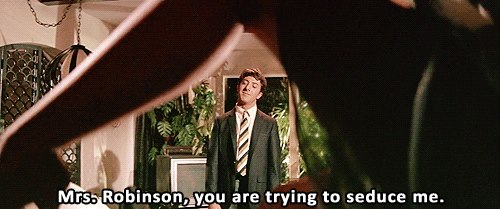
“Mrs. Robinson, you’re trying to seduce me, aren’t you?” – BEN BRADDOCK (Dustin Hoffman) in The Graduate (1967) 

 Um.... Yes | My Little Pony: Friendship is Magic | Know Your Meme knowyourmeme.com


Um…. Yes | My Little Pony: Friendship is Magic | Know Your Meme
knowyourmeme.com

“Hearts will never be practical until they are made unbreakable.”  – WIZARD OF OZ (Frank Morgan) in The Wizard of Oz (1939)

“I-I’ve come here with no expectations, only to profess, now that I am at liberty to do so, that my heart is, and always will be, yours.” – EDWARD FERRARS (Hugh Grant) in Sense and Sensibility (1995)

“Take your stinkin’ paws off me, you damn dirty ape.” – TAYLOR (Charlton Heston) in Planet of the Apes (1968)

“And one day, not long from now, my looks will go. They will discover I can’t act, and I will become some sad middle-aged woman who looks a bit like someone who was famous for a while.” – ANNA SCOTT (Julia Roberts) in Notting Hill (1999)

 BUTCH CASSIDY & THE SUNDANCE KID | THE FILM THAT LAUNCHED AN ERA ... selvedgeyard.com


BUTCH CASSIDY & THE SUNDANCE KID | THE FILM THAT LAUNCHED AN ERA …
selvedgeyard.com

“Kid. The next time I say: ‘Let’s go someplace like Bolivia,’ let’s go someplace like Bolivia.”
– “Next time.”
– BUTCH CASSIDY (Paul Newman) in Butch Cassidy and the Sundance Kid (1969)

“A boy’s best friend is his mother.”  – NORMAN BATES (Anthony Perkins) in Psycho (1960)

“No, Mr. Bond. I expect you to die!” – AURIC GOLDFINGER (Gert Frobe) in Goldfinger (1964)

“When the legend becomes fact, print the legend.” – MAXWELL SCOTT (Carleton Young) in The Man Who Shot Liberty Valance (1962)

dead poets society | The Proactive Professional theproactiveprofessional.com

dead poets society | The Proactive Professional
theproactiveprofessional.com

“Carpe diem. Seize the day, boys. Make your lives extraordinary.”  – JOHN KEATING (Robin Williams) in Dead Poets Society (1989)

“Fasten your seat belts, it’s going to be a bumpy night!”  – MARGO CHANNING Bette Davis) in All about Eve (1950)

“Frankly, my dear, I don’t give a damn!”  – RHETT BUTLER (Clark Gable) in Gone with the Wind (1939)

“Gentlemen, you can’t fight in here! This is the War Room!”  – PRESIDENT MERKIN MUFFLEY (Peter Sellers) in Dr Strangelove (1964)

“Go ahead, make my day.” HARRY CALLAGHAN (Clint Eastwood) in Sudden Impact (1983)

“I am big. It’s the pictures that got small.” – NORMA DESMOND (Gloria Swanson) in Sunset Boulevard (1950)

“I am Spartacus.” – The crowd in Spartacus (1960)

Is he Spartacus? – Telegraph Blogs blogs.telegraph.co.uk

Is he Spartacus? – Telegraph Blogs
blogs.telegraph.co.uk

“If you build it, he will come.” SHOELESS JOE JACKSON (Ray Liotta) in Field of Dreams (1989)

“I see dead people.” COLE SEAR (Haley Joel Osment) in The Sixth Sense (1999)

“It was beauty killed the beast.” CARL DENHAM (Robert Armstrong) in King Kong (1933)

“Life is a box of chocolates, Forrest. You never know what you’re gonna get.”
– MRS. GUMP (Sally Field) in Forrest Gump (1994)

film: Krönika: Arnie kommer INTE tillbaka se.ign.com

film: Krönika: Arnie kommer INTE tillbaka
se.ign.com

“I’ll be back.” TERMINATOR (Arnold Schwarzenegger) in The Terminator (1984)

“Man who catch fly with chopstick accomplish anything.”  – MR. MIYAGI (Pat Morita in The Karate Kid (1984)

“May the Force be with you.”  – HAN SOLO (Harrison Ford) in Star Wars (1977)

“Oh, Jerry, don’t let’s ask for the moon. We have the stars.” CHARLOTTE VALE (Bette Davis) in Now, Voyager (1942)

WITTERINGS: February 2015 fantasybob.blogspot.com

WITTERINGS: February 2015
fantasybob.blogspot.com

“Well. Nobody’s perfect.” OSGOOD E. FIELDING III (Joe E Brown) in Some Like It Hot (1959)

“Rosebud.” CHARLES FOSTER KANE (Orson Welles) in Citizen Kane (1941)

“Say hello to my little friend.”  – TONY MONTANA (Al Pacino) in Scarface (1983)

“I’m ready for my close-up.” – NORMA DESMOND (Gloria Swanson) in Sunset Blvd (1950)

“You know how to whistle, don’t you, Steve? You just put your lips together and… blow.” – SLIM (Lauren Bacall) in To Have and Have Not (1944)

1,001 Reasons I Love Movies | youoffendmeyouoffendmyfamily.com

1,001 Reasons I Love Movies |
youoffendmeyouoffendmyfamily.com

“That’s the way it crumbles, cookie-wise.” CC BAXTER (Jack Lemmon) in The Apartment (1960)

“You talkin’ to me?” TRAVIS BICKLE (Robert de Niro) in Taxi Driver (1976)

“You’re gonna need a bigger boat.” BRODY (Roy Scheider) in Jaws (1975)

 Back to the Future 1985 - Old Man Peabody Breeding Pine Trees ... www.youtube.com


Back to the Future 1985 – Old Man Peabody Breeding Pine Trees …
http://www.youtube.com

“Roads? Where we’re going, we don’t need roads.” – DR. EMMETT BROWN  (Christopher Lloyd) in Back to the Future (1985)

“Hasta la vista, baby.” —TERMINATOR (Arnold Schwarzenegger) in Terminator 2: Judgment Day (1991)

“Calling it your job don’t make it right, boss.” —LUKE JACKSON (Paul Newman) in Cool Hand Luke (1967)

“That’s what makes me sad: Life is so different from books” MARIANNE RENOIR (Anna Karina) in Pierrot Le Fou (1965)

“Leave the gun. Take the cannoli.” –  PETER CLEMENZA (Richard Casstellano) in The Godfather (1972)

Relationships: 6 Major Advantages Of Having Sex With Robots | YourTango www.yourtango.com

Relationships: 6 Major Advantages Of Having Sex With Robots | YourTango
http://www.yourtango.com

“I’ll have what she’s having.” OLDER WOMAN CUSTOMER (Estelle Reiner) in When Harry Met Sally (1989)

“I’m also just a girl standing in front of a boy asking him to love her.” ANNA SCOTT (Julia Roberts) in Notting Hill (1999)

“I’m as mad as hell, and I’m not gonna to take this anymore!” HOWARD BEALE (Peter Finch) in Network (1976)

“I’m gonna make him an offer he can’t refuse.” DON CORLEONE (Marlon Brando) in The Godfather (1972)

Hintergrundinformationen über den Film »Menschen im Hotel« www.greta-garbo.de

Hintergrundinformationen über den Film »Menschen im Hotel«
http://www.greta-garbo.de

“I want to be alone.” – GRUSINSKAYA (Greta Garbo) in Grand Hotel (1932)

“Here’s another nice mess you’ve gotten me into!” OLLIE (Oliver Hardy) in Sons of the Desert (1933)

“Here’s looking at you, kid.” RICK BLAINE (Humphrey Bogart) in Casablanca (1942)

Posted in quotes, Uncategorized | Tagged , | 11 Comments

Welcoming Regency Romance Author, Vikki Vaught

61-k40z+nPL._UX250_Today, I welcome fellow Regency romance author, Vikki Vaught and her latest release, book one of her Honorable Rogue series. Vikki is a fellow Southerner, living in Tennessee. She has a tempting excerpt below. 

~~~~~~~~~~~~~~~~~~~

I want to thank Regina for having me on her blog. I’m very exciting about my new release, Lady Overton’s Perilous Journey. This is the first book in my Honorable Rogue series. The story is set in early 19th century England & America, and I loved delving into a bit of American history for my novel. I’d like to discuss some of the fascinating research I did for my book. 

I originally set this story in 1809, but after further research I discovered Thomas Jefferson convinced the U.S.  Congress to pass the Embargo Act of 1807, which stopped foreign trade. While Jefferson did not want to involve the U.S. in the conflict between France and England, he needed to put financial sanctions in place that could possibly hurt these countries economically. This act devastated the U.S. economy. American ships literally remained in port rotting in the harbors. Illegal trade became the only means of getting goods from foreign shores. Many of the items needed by Americans were brought in through Canada and prices sky-rocketed.

Here is some background history that led up to the embargo. Britain and France resumed their war in 1803, causing relations to become strained between any countries deciding to remain neutral. In 1806, France passed a law against trading with neutral countries, and since America did not take sides in the conflict between the two countries, the French began plundering U.S. ships. In 1807, Britain passed a bill prohibiting trade between France and neutral countries. The Royal Navy began waylaying American vessels and demanded that the ships pull into their ports before they were allowed to trade with other countries.

The British also started boarding American vessels and began seizing sailors they deemed were deserters from the Royal Navy. This infuriated the U.S. and thousands of American sailors were unlawfully impressed into serving on British ships, leaving destitute families behind.

During the last sixteen days of Jefferson’s presidency, a bill was passed replacing the Embargo Act with the Non-Intercourse Act of 1809. While this act opened up trade again, it did not allow trade with Britain. Since my story has my heroine fleeing England on an American vessel, I needed to move it to a different year, prior to the escalating issues between the two countries. Since 1802 was the only year that England and France were not at war for more than twenty years, I decided to place my story in that year.

This was by no means the only research I did for Lady Overton’s Perilous Journey, but was certainly the most important. While this is a novel of fiction, I wanted to ensure that the happenings within the story were possible.

I hope you’ll enjoy the romance between Alex and Anissa as much as I enjoyed writing their love story. Happy reading!

61QEnG2ogNL._SX331_BO1,204,203,200_Book Blurb: 
When Lady Overton’s high-spirited son, the little marquess, distracts Captain Hawks’ cabin-boy and crew, he suspects the lovely lady may threaten his well-protected heart.

When her son’s life is threatened, Lady Overton seeks a vessel bound for America. Before the ship even reaches the high seas, sparks fly between her and Captain Alex Hawks. Although the young widow may be lonely and afraid, she cannot risk the diversion a romantic entanglement could bring, no matter how much she wants to lose herself in the captain’s embrace.  

The Captain vows to protect the little marquess, but can offer no assurance that the marchioness will leave his ship with her virtue intact. Alex is drawn to Anissa’s beauty and courage. How long can he fight a losing battle before he surrenders and makes her his own? 

Will Alex be able to keep this remarkable woman and her child safe? Will his passion for Anissa be enough or will their differences keep them apart?

Author Bio:
Vikki Vaught started her writing career when a story invaded her mind and would not leave.
Over the last few years, she has written more than a half dozen historical romances and is presently working on Book 2 in her Honorable Rogue series. Her new release, Lady Overton’s Perilous Journey, is the first book in the series.

Vikki loves a “Happily Ever After”, and she writes them in her stories. While romance is the central theme of all her books, she includes some significant historical event or place in all her novels.

For the last decade, Vikki has lived in the beautiful foothills of the Smoky Mountains of Tennessee with her beloved husband, Jim, who is the most tolerant man in the world for putting up with her when she is in a writing frenzy. When she is not writing or working her day job, you’ll find her curled up in a comfortable chair reading her Kindle, lost in a good book with a cup of coffee at her side.

Excerpt:
She cuddled her sleeping child close as she scanned the common area. Her insides churned as she wove her way through the crowded tables, the chairs filled with dirty, unsavory-looking men. The strong smell of sweat mingled with ale threatened to turn her stomach and had her breathing through her mouth.
Anissa approached the man the stable boy described. “Sir, are you Captain Hawks?”

He turned around, and in a drawling voice, he answered, “Well, darlin’, that’s my name.”

He swept his tri-corn hat from his head, stood and bowed.

“Captain Alex Hawks, at your service. What can I do for you?”

Anissa gazed up into the blackest eyes she had ever seen and wanted to fall into them. Mesmerized, she blinked as a shiver ran across her shoulders. This was not the time to notice this man’s eyes, no matter how compelling they were. Now was the time to use her charms to convince him to take her on his ship.

“My name is—” she quickly searched for a name, not wanting to give him her identity, “—Mrs. Carlson. I would like to pay for passage on your ship. I understand you are leaving for America this morning.” Then, thinking of a city she had heard of in America, she added, “I need to go to Boston, where some of my family lives. Would you be able to help me?”

Captain Hawks gave her an appraising stare, which unnerved her. This man was intimidating, to say the least. “I’m not going to Boston. And, I don’t normally take on passengers. I’m headed to Baltimore, and it’s a far piece from Boston, darlin’.”

“Please take me. I have to leave for America as soon as possible.” Anissa had to convince him to allow her passage. “And as far as your destination is concerned, I’m sure once I am in America, I shall be able to travel to Boston from there.”

“Darlin’, do you even know where Baltimore is and how far it is from Boston?”

Anissa wished he would quit calling her darling. It was quite presumptuous of him, and she did not appreciate it at all. Of course, she did not want to anger him, so she kept her feelings to herself. “Well, no, not really. How far is it?”

“It’s over four hundred miles,” Captain Hawks explained, as if he were speaking to a child, which further irritated her, tugging at her frazzled nerves. “You would be better served if you found a passenger ship going there. I have an associate who should be arriving in a few days, and his ship is going to Boston. He also takes passengers. I’m sure he would be happy to take you on board.”

Oh, dear, why did I say Boston? Please, Lord, let me convince him to take me.
Every hour brought her closer to the chance of discovery. She could not afford to wait for another ship. She needed to get as far away from Lord Howard as possible, immediately.

“Captain, I do not have a few days to wait. My uncle is dreadfully ill. He may only have a few months to live, so I need to leave right away. Please allow me to travel on your ship.” She looked up at him, willing a few tears into her eyes, praying to gain his sympathy.

Captain Hawks sighed and rolled his obsidian eyes toward the ceiling. “I know I’m going to regret this. All right, darlin’, if it’s that important, I’ll take you. I hope you realize how uncomfortable this voyage will be for you and the child. The cabin you will be in barely has room to turn around in. Are you sure you don’t want to reconsider?”

“We shall be fine, regardless of the conditions.”

He shook his head, sending her heart to the floor.

Oh, Lord, please don’t let him change his mind. What shall I do if he has?

Buy Links:
FREE through Kindle Unlimited
Amazon:
Author Links:
Website
Facebook
Twitter
Google+
Pinterest
Amazon Author Page
Goodreads Author Page

Posted in America, American History, British history, Great Britain, Guest Post, Living in the Regency, Regency era | Tagged , , , , | 5 Comments