
Reader Question: I noted in several of your books, you have the hero keeps his yacht moored or docked somewhere along the coastline. Why not in London?
Answer: It is true that I have not used London for docking a yacht, but that has more to do with the year in which I set the story than London’s accessibility. History in Focus tells us, “In order to get to London, boats had to sail up the Thames and that meant dependence upon the wind. Smaller boats could tack against the wind, but the larger boats usually required square sails, thus limiting their ability to tack. In the mid nineteenth century Henry Mayhew estimated that an easterly wind put 20,000 men on the riverside out of work. (H. Mayhew, London Labour and the London Poor
(1861), ii. 298) The Thames was an immense traffic jam. Ships did their best to sail up or down it, but being unloaded was another matter and, until the end of the eighteenth century, few docks were built for unloading ships (as opposed to repairing them). There was then a rush of building, and docks and warehouses were built for the West India fleet, the East Indiamen and others. The space taken up by these warehouses was spoken of with awe. These docks were reasonably effective until the arrival of steam power led to the port moving further down the river.”
The Royal Yacht Club and the Royal Yacht Squadron, an actual place to keep yachts in London, was not founded in London until 1 June 1815 by a group of gentlemen drinking at the Thatched House Tavern in St James’s London. More than likely yachts which could have made a channel crossing would have been moored at the Royal Yacht Squadron, but that is an assumption not something I researched. The club included 42 gentlemen interested in yachting, assumably all owning one, but “interested” does not mean owning.
Even the Prince Regent was a member of the Royal Yacht Squadron. In 1819, the Prince expressed his honor at being admitted with a visit in his yacht, The Royal George, at Cowes on the Isle of Wight where he gave a dinner onboard. [As if any members of the RYS would deny their future king’s request to join their group …] The Prince Regent was so pleased with Cowes, he took a cottage there by the sea and returned to it as king in 1821. King George remained a member of the Yacht Club at Cowes until his death.
Okay, I am not a sailor, so I had to do some research for those of us who have a bit of a phobia about sailing. Why would people go all the way to the Isle of Wight to go sailing? The answer is the strip of water between the Isle of Wight and the southern coast of England, which is known as the Solent.
The Solent is reportedly the “heartland” of British sailing. It is known to be extremely challenging sailing with strong winds and fast tidal flows. And equally important it is right situated near Portsmouth, which was home base for the Napoleonic War era British Navy. In that aspect, it is easy to understand the global dominance of the British Navy when you realize just how hard it is simply to get in and out of Portsmouth. The English turned this into an advantage by developing modern compasses, maritime charts, tidal almanacs, and better sail and hull design than anyone else.
Equally important they instilled an exceptionally high level of sailing skills and basic seamanship in all their young officers. The Solent is where this training took place. Whenever ships were in Portsmouth they would send “the young gentlemen” out on the Solent in small boats to practice sailing skills and race each other. Good captains paid very close attention to how well their junior officers handled small boats, motivated their crews, and dealt with capsizes, squalls, and other minor emergencies. Quite logical, since good seamanship, sound judgment, and command presence are all qualities that scale up to skippering larger vessels.
This impromptu Navy training system gave birth to modern sport sailing as we know it. It also gave birth to the Royal Yachting Association (RYA) instruction program, which is still based on the Solent and still run largely by ex-Navy instructors. Being trained on the Solent by RYA instructors remains the worldwide gold standard today for both sport sailors and commercial captains. Solent-trained skippers are famous for their extremely high level of technical skill … and for being cheerfully oblivious to conditions that give normal people panic attacks.
What is now known as the Cowes Regatta is still carried out on the Solent. The festival originates from the Prince Regent’s interest in yachting which continued, as I said above, even after he became George IV in 1820. The first race started at 09:30 on Thursday 10 August 1826 with the prize of a “Gold Cup of the value of £100” and was held under the flag of the Royal Yacht Club, which later became the Royal Yacht Squadron. Another race was held the next day for prize money only (£30 for first place, £20 for second).

Until World War I, gentlemen amateurs employing skippers and crew raced the cutters and raters. Cruiser handicap classes and local one-designs dominated the 1920s and 1930s. A revival of big yacht racing arrived after World War II, and ocean racing classes started to predominate, especially after the first Admiral’s Cup event was held in 1957. Popularity grew with the introduction of the two ocean-going races that start and finish the regatta The Channel and the Fastnet. The Fastnet, which rounds the Fastnet rock far out in the Atlantic and can be dangerous, is held in odd-numbered years only. [Cowes Week]

Sources:







 King George V of Great Britain was born on June 3, 1865, the unpromising second son of Edward VII. Initially, he sought a career in the British Navy, but the untimely death of his brother, Albert, placed him on the throne. He became king in 1910 (serving until 1936) and played an active role supporting the troops during World War I. Though lackluster in personality, he won the loyalty of the middle class and many in Great Britain with his steadfast dedication to his country.
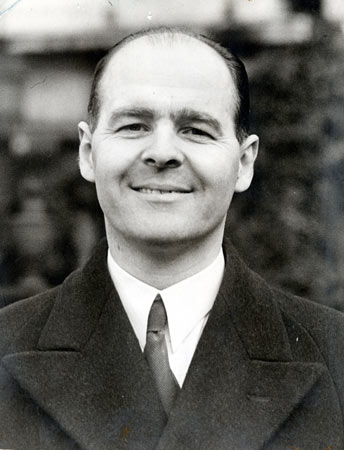 “Details have emerged from the National Archive of the royal family’s anxiety at the way Anthony Hall, who was said to be tall and always impeccably dressed, drew crowds of up to 800 people to hear his claims of direct lineage from Henry VIII. Across the West Midlands, he used his 1931 campaign meetings to denounce King George, the Queen’s grandfather, as a ‘pure blooded German’ with no right to rule Britain.


 The word “genteel” is an adjective, meaning polite, refined, or respectable, often in an affected or ostentatious way. Its roots can be found in the late 16th century (in the sense ‘fashionable, stylish’): from French gentil ‘well-born’. From the 17th century to the 19th century the word was used in such senses as ‘of good social position’, ‘having the manners of a well-born person’, ‘well bred’. The ironic or derogatory implication dates from the 19th century, in which the Regency era lies. (Dictionary.com)
 Most of us believe we know how the word is defined, and, I imagine, for many, your personal definition of a “gentleman” is based on behavior. However, that was not always the case during the Regency era. A man could be a “rake” or womanizer, but still be considered a gentleman.
 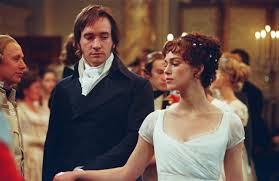 Therefore, when Elizabeth Bennet argues her point regarding Lady Catherine’s objections of Elizabeth setting her sights too high on the “order of precedence” by aspiring to marry Mr. Darcy, her ladyship’s response appears to make more sense. Elizabeth’s father was part of the landed gentry, but Mrs. Bennet’s roots lies in trade, as does Mrs. Bennet’s brother, Mr. Gardiner, and her sister, Mrs. Phillips.
 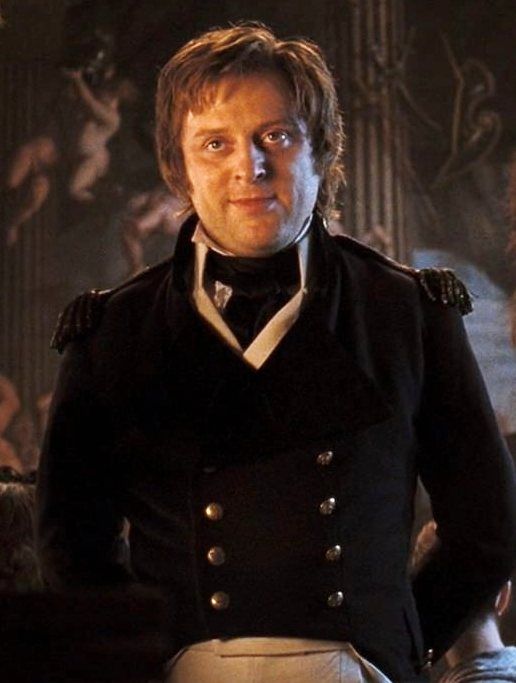 The good colonel’s father, an earl, had enough money to purchase him a position of rank in the Army. He is commissioned as an “officer and a gentleman.” His rank has nothing to do with whether Colonel Fitzwilliam truly behaved as a “gentleman,” as the modern term indicates. He could have been a rascal of a man, but still hold the term “gentleman” as part of his recognition in society.
 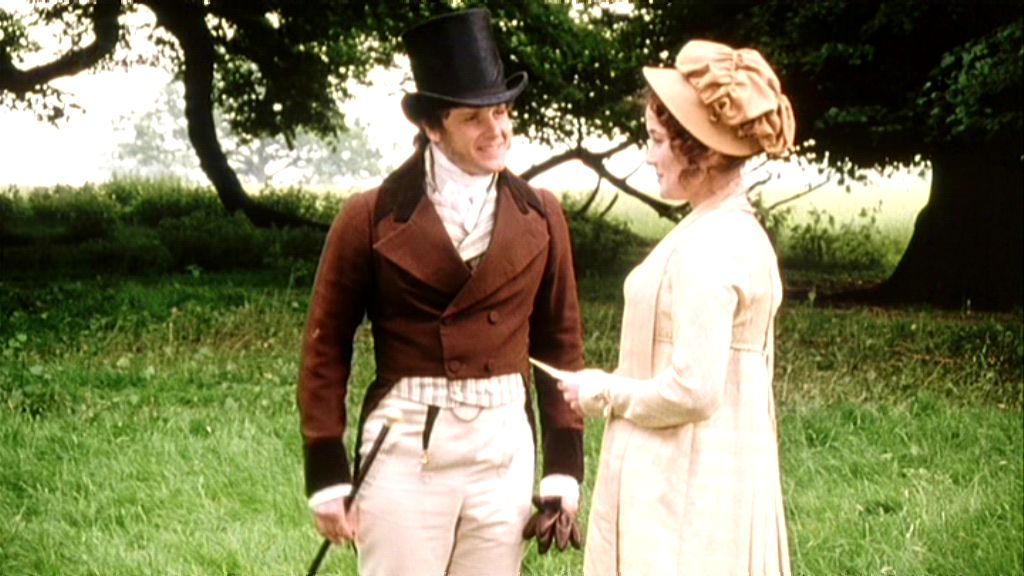 The growing wealth of the middle class purchasing their way into the gentry was another threat. Mr. Bingley in Austen’s Pride and Prejudice is a prime example of this situation. Jane Austen’s books all deal with that question: “What is a true gentleman?” But because of the laws where only the first son inherited, second sons, ostensibly part of the upper class and a gentleman, had to have something to live on Again, I return to Colonel Fitzwilliam in the same book.
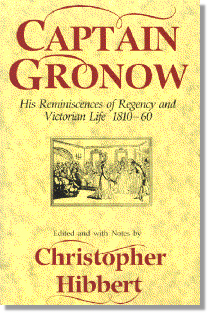
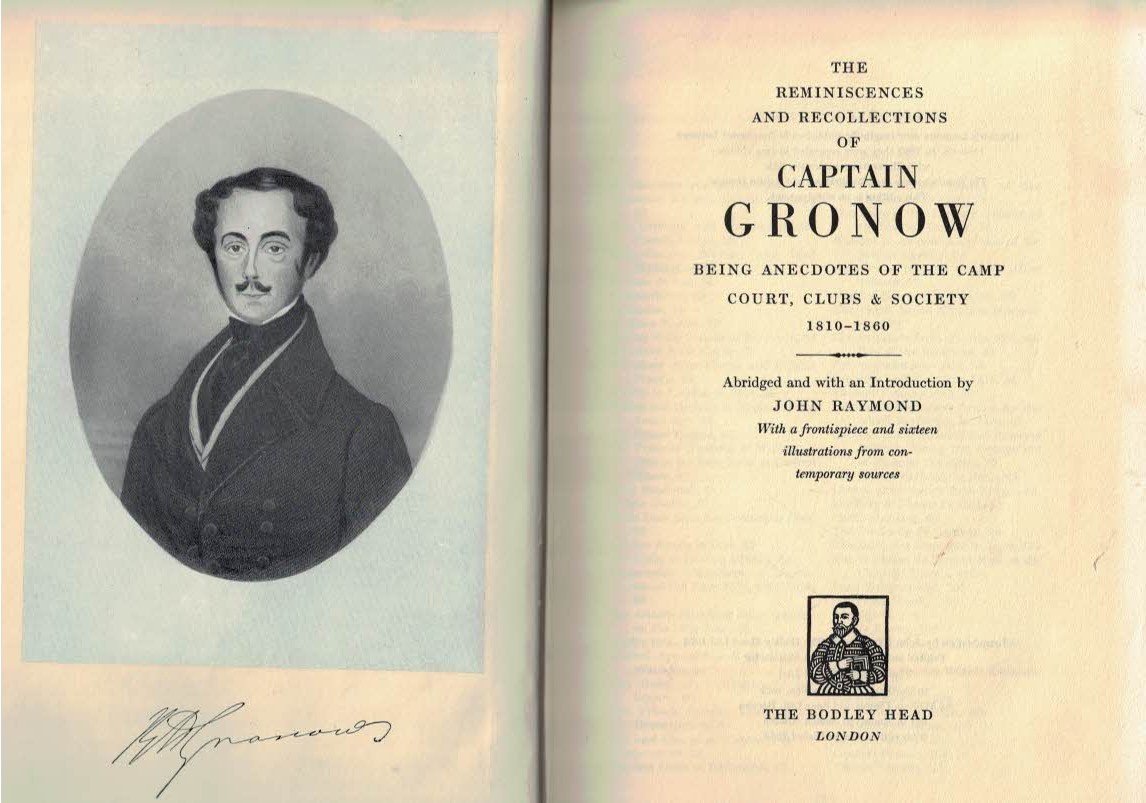 Gronow’s wonderful book is a great illustration of an officer being among the upper classes, but as a war-minted gentleman without much money, he was not fully accepted.


 Every Woman Dreams...
.jpg)