In 1800s England, milestones were crucial markers along turnpike roads, indicating distances to towns and facilitating travel. They were essential for navigation, helping travelers and coaches with distances and timings. Milestones also helped in calculating postal charges before the uniform postal system was introduced.
Milestones were primarily used to indicate distances along turnpike roads, aiding travelers, coaches, and postal services.
Location: They were placed at regular intervals along the roads, often on the right-hand side for convenient reference.
Material and Design: Milestones were typically made of stone, but cast iron was also used, especially for mileposts. The designs varied, with some being cylindrical and others rectangular.
Evolution: While initially simple markers, milestones became more standardized and uniform in design during the Victorian era.
Historical Significance: Despite their decline, milestones are now recognized as important historical artifacts, reflecting England’s transportation history.
There is even a Milestone Society in the UK. The Society’s purpose is to encourage people – Highways and Local Authorities, Parishes, civic societies, local history groups, individuals – to look after their local milestones, which are at risk from neglect, vandalism, vehicle impacts and road works. But to use the appropriate materials, with due regard to permissions and safety – do read through their guidance notes.
Short Excerpt from Lyon’s Obsession, Chapter Fourteen:
Duncan ignored the maid’s question. “Where did you and my daughter leave Lord Almano?” Duncan growled. His face was taut with worry.
“The young mistress swore me to secrecy, my lord,” the maid said nervously.
“You heard me,” Duncan hissed. “And if you value your position, you will not waste one more second of my time!”
Alexander interpreted, “The count has taken your mistress. We must find her.”
Winston nodded her understanding. “He said he would find a means to even their encounter.”
“I require a quick explanation, Winston,” Duncan ordered.
She turned to them. “Originally, my lady and the count were to view the Elgin Marbles, but he set his gig for a different destination. When Lady Theodora finally realized our traveling so far, she ordered him to return her to this house. We were in the country, my lord. About three miles just outside the city,” the maid explained while wringing her hands in obvious worry.
“What was his destination?” Duncan pressed for more information.
“I cannot say with assurance, my lord,” Winston said solemnly. “Lady Theodora demanded he stop the gig, and, when he would not, I convinced him with my Queen Anne pistol.”
“Which road?” Duncan asked as he led the way to his office to retrieve his guns.
“At the corner. To the right. No turns,” Winston described as she followed her master about the room. Meanwhile, Alexander also claimed several of the guns Duncan did not use, along with a box with the necessary ammunition. “No turns, sir,” the maid repeated. “Past the jeweler where Lord Orson’s telescope was engraved. Past the houses rimming the city. Finally, thinned out significantly.”
“Any milestones?” Duncan questioned.
“Charing Cross the opposite way. Two towards Newham,” the maid said.
Alexander was impressed with how well Winston kept her composure.
“Anything else you can recall?” Duncan asked as he headed towards the main door.
“When Lady Theodora demanded the count turn the gig around, the count said there was a lane up ahead where he could turn the gig about. Afterwards, I wondered how he knew of the lane if he had recently arrived from Italy.”
“And you were where?” Duncan implored.
“Past West Ham Marsh and on the left-hand side—my left as I was facing the back of the gig—there were three cottages close together, all a pinkish white,” the maid provided. “Lots of flowers before them, as if they had all been planted by the same person.”
“No one is to speak of this to anyone inside or outside this house,” Duncan ordered.
Lyon’s Obsession: The Lyon’s Den Connected World
Short on temper. Long on pride. True to his word.
Lady Theodora Duncan, daughter and only child of Lord Macdonald Duncan, reluctantly embarks on a London season in hopes of making a suitable match. She had always thought she would marry Lord Alexander Dutton, 12th Earl Marksman. After all, they had been raised together in her father’s house since Duncan became Marksman’s guardian when his lordship was but twelve. Her father’s estate marches along with Marksman’s, and they had shared multiple words of devotion, as well as stolen moments and heated kisses. Yet…
Lord Alexander Dutton always planned to marry Lady Theodora Duncan, but not until he finds his family. His father, long before Robert Dutton became the heir to the Marksman’s peerage, had sold Alexander’s mother and younger sister to the captain of a sailing ship. Alexander has searched for them for some ten years, spending thousands of the Marksman fortune in his desire to reclaim them. He cannot think truly to know happiness until he can share his title and his wealth with them. Assuredly, Theodora understands why he has not made an offer of marriage. Yet, if she does, then why does he constantly find her on the arm of a Sardinian count? He never expected Theodora’s abandonment, but Alexander is finally so close to knowing his real family again.
Okay, 82% of my DNA is made up of England, Scotland, Ireland, and Wales. Scotland is one of the biggest chunks of that. One of my great grandfathers was John MacComie (Iain Mor), 7th Chief of Clan MacThomas. The Clan MacThomas was described in a roll of the clans, in the Acts of Parliament of 1587 and 1595, and they were known to the government in Edinburgh as Macthomas. The seventh chief was John Mccomie (Iain Mòr) who has passed into the folklore of Perthshire. Tax collectors, particularly those of the Earl of Atholl seem to have been offensive to him. The Earl employed a champion swordsman from Italy to slay Mccomie but the swordsman was himself slain by Mccomie.
When I traveled to Disney World with my son and his family several years back, I was quite disappointed for I only saw my favorite Disney princess once. That is Merida from “Brave.” One of things I like about Merida is she chooses her own path to travel, and she does not require a prince to save her. Yada, Yada! The film was released in 2012, but no one then was complaining about the prince not saving Snow White. Yet, that is another story for current times, not the purpose of this post.
In the film, when the clans arrive to bring their suitors from which Merida is to choose, I automatically scream “Macintosh” along with the voice over from Craig Ferguson. My granddaughters always looked at me curiously, but only recently have I explained that my 9th Great-Grandfather on my father’s side is the 7th Chieftain of the clan, John Mccomie (Iain Mòr), who I have mentioned above. You see, the reason I screamed “Mackintosh,” was the fact that the progenitor of the Clan MacThomas was Thomas, who was a Scottish Gaelic speaking Highlander. He was known as Tomaidh Mòr and it is from him that the clan takes its name. He was a grandson of William Mackintosh, 7th chief of Clan Mackintosh and 8th chief of the Chattan Confederation. [Way, George and Squire, Romily. Collins Scottish Clan & Family Encyclopedia. (Foreword by The Rt Hon. The Earl of Elgin KT, Convenor, The Standing Council of Scottish Chiefs). Published in 1994. Pages 258–259.]
If you seen the film, Merida chases the Will-o’-the-Wisp to the cabin where she receives a secret potion. But what exactly is a Will-o’-the-Wisp and what does all this talk of Scotland have to do with “Lyon’s Obsession“?
In folklore, a will-o’-the-wisp, will-o’-wisp, or ignis fatuus (Latin for ‘foolish flame’), generally found over bogs, swamps or marshes. [Phipson, T. L. (October 1868). “Will-o’-the-wisp”. Belgravia. Vol. 6. London: Robson and Son. p. 392.]
The phenomenon is known in the United Kingdom by a variety of names, including jack-o’-lantern,friar’s lantern, and hinkypunk, and is said to mislead and/or guide travellers by resembling a flickering lamp or lantern. [Trevelyan, Marie (1909). Folk-Lore and Folk-Stories of Wales. London: Elliot Stock. p. 178.] Equivalents of the will-o’-the-wisps appear in European folklore by various names, e.g., ignis fatuus in Latin, feu follet in French, Irrlicht or Irrwisch in Germany. Equivalents occur in traditions of cultures worldwide. In North America the phenomenon is known as the Paulding Light in Upper Peninsula of Michigan, the Spooklight in Southwestern Missouri and Northeastern Oklahoma, and St. Louis Light in Saskatchewan. In Arab folklore it is known as Abu Fanous.
In folklore, will-o’-the-wisps are typically attributed as ghosts, fairies or elemental spirits meant to reveal a path or direction. These wisps are portrayed as dancing or flowing in a static form, until noticed or followed, in which case they visually fade or disappear. Modern science can explain how these images are formed, but that is not the purpose of this post.
The Will o’ the Wisp and the Snake by Hermann Hendrich ~ Public Domain
Short Excerpt from Lyon’s Obsession:
Alexander had always been a man who liked perfect order in his world. His childhood had been so chaotic that once he had come under Lord Duncan’s steady hand and had learned something of “order,” Xander had discovered he enjoyed the feeling of knowing what to expect. However, his attachment to Theodora was everything but “orderly.”
He instinctively moved closer to her. Beaufort occasionally called Dora c lúacán, meaning “a sprite.” According to his friend, the cluricaune is one of three different solitary fairies in Ireland, the other two being a “far darrig” and the other a leprechaun. In Scotland, some would call Theodora a will-o’-the-wisp because a wisp is often misleading or elusive.
Like the will-’o-the-wisp, Theodora had been dropped into Alexander’s life. He had once promised to find his mother and share her with Theodora, who had lost Lady Elsbeth when she was quite young.
Without his cognizance of the situation, Dora had been dropped into his life when he had been brought under her father’s roof, and she had changed Alexander forever. Hard to admit, but, sometimes, he desired her so much it hurt. Other times, she made him quite livid with anger.
Lyon’s Obsession: The Lyon’s Den Connected World
Short on temper. Long on pride. True to his word.
Lady Theodora Duncan, daughter and only child of Lord Macdonald Duncan, reluctantly embarks on a London season in hopes of making a suitable match. She had always thought she would marry Lord Alexander Dutton, 12th Earl Marksman. After all, they had been raised together in her father’s house since Duncan became Marksman’s guardian when his lordship was but twelve. Her father’s estate marches along with Marksman’s, and they had shared multiple words of devotion, as well as stolen moments and heated kisses. Yet…
Lord Alexander Dutton always planned to marry Lady Theodora Duncan, but not until he finds his family. His father, long before Robert Dutton became the heir to the Marksman’s peerage, had sold Alexander’s mother and younger sister to the captain of a sailing ship. Alexander has searched for them for some ten years, spending thousands of the Marksman fortune in his desire to reclaim them. He cannot think truly to know happiness until he can share his title and his wealth with them. Assuredly, Theodora understands why he has not made an offer of marriage. Yet, if she does, then why does he constantly find her on the arm of a Sardinian count? He never expected Theodora’s abandonment, but Alexander is finally so close to knowing his real family again.
An 18th-century drawing of ear trumpets ~ Frederic Dekkers ~ Public Domain
An ear trumpet is a tubular or funnel-shaped device which collects sound waves and leads them into the ear. As far back as the 17th century, ear trumpets were being used. In his work, Recreations mathématiques (1634) was the earliest description of an ear trumpet. It was written by French Jesuit priest and mathematician, Jean Leurechon. By the late 18th Century, ear trumpets were made by instrument makers on a one-off basis. The Townsend Trumpet was made by deaf educator John Townsend. The Reynolds Trumpet was built especially for the famous painter of the period, Joshua Reynolds and the Daubeney Trumpet.
“The first firm to begin commercial production of the ear trumpet was established by Frederick C. Rein in London in 1800. In addition to producing ear trumpets, Rein also sold hearing fans and speaking tubes. These instruments helped concentrate sound energy, while still being portable. However, these devices were generally bulky and had to be physically supported from below. Later, smaller, hand-held ear trumpets and cones were used as hearing aids. [Levitt, H. “Digital hearing aids: wheelbarrows to ear inserts.” ASHA Leader 12, no. 17 (December 26, 2007): 28-30.]
“Rein was commissioned to design a special acoustic chair for the ailing King of Portugal, John VI of Portugal in 1819. The throne was designed with ornately carved arms that looked like the open mouths of lions. These holes acted as the receiving area for the acoustics, which were transmitted to the back of the throne via a speaking tube, and into the king’s ear. [ “Concealed Hearing Devices of the 19th Century”] Finally in the late 1800s, the acoustic horn, which was a tube that had two ends, a cone that captured sound, and was eventually made to fit in the ear. [ Howard, Alexander. “Hearing Aids: Smaller and Smarter.” New York Times, November 26, 1998.]
“Johann Nepomuk Mälzel began manufacturing ear trumpets in the 1810s. He notably produced ear trumpets for Ludwig van Beethoven, who was starting to go deaf at the time. These are now kept in the Beethoven Museum in Bonn.“
So how does an ear trumpet fit into a Regency romantic suspense/mystery series? The answer is simple: Mrs. Bessie Dove-Lyon, owner of the Lyon’s Den.
You see, Mrs. Dove-Lyon does not much care for Alexander Dutton, Lord Marksman. Those of you who have read book one of this series will recall that Alexander is Lord Macdonald Duncan’s youngest adopted son. Like the youngest of most families, Alexandr is impetuous, impatient, impulsive . . . Choose an “im” word, and it is likely to fit Alexander. If you have read the many stories set around the Lyon’s Den, you know Mrs. Dove-Lyon is a no-nonsense type of woman. “Hard” when difficult decisions are required. “Soft” when, well those moments are private.
Anyway, when Alexander and Lord Duncan call on her for a favor, Mrs. Dove-Lyon speaks to Alexander’s immaturity. [Enjoy this short excerpt from Chapter Sixteen of Lyon’s Obsession. – [Note this excerpt was added before the book has been edited by Dragonblade, but it will remain much the same.]
“I know I am a doting father, but I viewed the young lady who is part of this evening’s bet and your matchmaking and wondered upon her parents and their approval. Though she was very comely of face, I did not consider her lovelier than my Theodora, but she had three suitors.” He paused briefly. “I feel as if I have not done justice by my child if she was willing to submit to public scrutiny.”
“In truth, my lord,” the woman responded with real understanding laced in her tones, “the gentlemen I have approached regarding Lady Theodora were intimidated by your place in society, as well as expressing not wishing for a wife who obviously loves another.” She turned her gaze on Alexander. “Pardon my saying so, Lord Marksman, it is common knowledge that you intend to marry Lady Theodora. Why would any gentleman choose to go against Lord Macdonald Duncan’s wishes for his daughter and the possibility of facing you in an unlawful duel on the heath, my lord?”
“What has Lady Theodora offered you?” Alexander asked, ignoring the woman’s insinuations, for they were exactly what he had expected: It was he who had ruined Theodora, not in the traditional manner of the word, but by permitting himself too much latitude with Dora before he had actually spoken his proposal.
“My usual fee ranges from one thousand pounds to twenty-five hundred, but then there is a more substantial fee from the gentleman,” she explained. “That is if he earns the lady’s consent by winning a bet between the contenders.”
“But if there are no other contenders, how might there be a bet?” Alexander argued.
Mrs. Dove-Lyon leaned forward to ask, “Do you intend on winning Lady Theodora’s consent, my lord?”
“You wish me to agree to some foolish bet,” Alexander accused.
“Nothing more than I might ask of another suitor,” Mrs. Dove-Lyon countered.
“Lady Theodora will agree to marry me without all these ‘foolish’ wagers,” Alexander protested.
“True,” Mrs. Dove-Lyon said with a slow nod of her head, “but it is my opinion her ladyship will always wonder if you love her enough to know a bit of embarrassment to claim her. Lady Emma, for example, said she proposed to Lord Orson before a crowd of his peers to prove her devotion to his lordship. Your brother, in my opinion, is a better man, for he will never doubt the affection of his wife. Do you not think Lady Theodora also deserves to live without doubt?”
“Should I also make a public proposal?” Alexander asked, becoming a bit miffed at himself for seeking Mrs. Dove-Lyon’s opinion.
“When I spoke to Lady Theodora and Lady Emma, we three agreed your weakness lies not in your self-doubt but, rather, in your misplaced self-worth. We, you see, agreed that you often speak your opinions when you should be listening to those of others.”
Duncan’s poorly-disguised chuckle said his lordship agreed. While Alexander swallowed his retort, Mrs. Dove-Lyon offered her challenge, “The young ladies and I thought it might be appropriate if you spent a day in Parliament with a large ear trumpet and a small mask for your mouth, so you might listen and not speak. I understand a collapsible ear trumpet has been made on a one-off basis for special clients. Even the ever-famous Joshua Reynolds sported one in the late 1700s. Frederick Rein, right here in London, produces ear trumpets. His business even sells hearing fans and speaking tubes to concentrate the sound, but I suppose you do not require those accoutrements.” The woman laughed aloud. “Please inform me if any part of this proposition appeals to you, and I shall be glad to serve as Miss Duncan’s matchmaker.”
Lyon’s Obsession: The Lyon’s Den Connected World
Short on temper. Long on pride. True to his word.
Lady Theodora Duncan, daughter and only child of Lord Macdonald Duncan, reluctantly embarks on a London season in hopes of making a suitable match. She had always thought she would marry Lord Alexander Dutton, 12th Earl Marksman. After all, they had been raised together in her father’s house since Duncan became Marksman’s guardian when his lordship was but twelve. Her father’s estate marches along with Marksman’s, and they had shared multiple words of devotion, as well as stolen moments and heated kisses. Yet…
Lord Alexander Dutton always planned to marry Lady Theodora Duncan, but not until he finds his family. His father, long before Robert Dutton became the heir to the Marksman’s peerage, had sold Alexander’s mother and younger sister to the captain of a sailing ship. Alexander has searched for them for some ten years, spending thousands of the Marksman fortune in his desire to reclaim them. He cannot think truly to know happiness until he can share his title and his wealth with them. Assuredly, Theodora understands why he has not made an offer of marriage. Yet, if she does, then why does he constantly find her on the arm of a Sardinian count? He never expected Theodora’s abandonment, but Alexander is finally so close to knowing his real family again.
In book 2 of my new Dragonblade Mystery/Suspense Series, Lyon’s Obsession, one of the more complicated characters assumes the name Marquis of Honfleur (Lord Honfleur). Nowadays, our heroes would immediately be able to check out the man’s credentials, but this series is set in early 1812 to mid 1813, meaning in the middle of the Napoleonic War. Sneaking in and out of France was not of the faint of heart, shall we say. But what do we know of Honfleur?
In present time, Honfleur is a commune (administrative division of the French Republic) in the Calvados department in northwestern France, meaning it is in northwest Normandy. (Yes, the same Normandy we read about as part of the D-Day landings on June 6, 1944, in World War II). It is located on the southern bank of the estuary of the Seine across from Le Havre and very close to the exit of the Pont de Normandie, along the English Channel.
History of Honfleur in relation to my storyline: The first written record of Honfleur is a reference by Richard III, Duke of Normandy, in 1025. By the middle of the 12th century, the city represented a significant transit point for goods from Rouen to England. At the end of the Hundred Years’ War, Honfleur benefited from the boom in maritime trade until the end of the 18th century. The wars of the French Revolution and the First Empire, and in particular the continental blockade, caused the ruin of Honfleur. It only partially recovered during the 19th century with the trading of wood from northern Europe. Trade was however limited by the silting up of the entrance to the port and development of the modern port at Le Havre.
Eugène Boudin, Navires dans le Port à Honfleur, 1856, Princeton University Art Museum ~ Public Domain
Short Excerpt from Chapter Two, where our heroes learn of Lord Honfleur:
“Speaking of other conspirators,” Richard said with a large grin. “I learned something of the mysterious count that Aaran mentioned on Monday. He turns out to be a French marquis, not a count, after all.”
“From whom did you learn this information?” Duncan inquired.
“From Lord Godfrey,” Richard explained. “His lordship and I both returned to Madame Emmeline’s modiste to retrieve our ladies within a minute or so of each other. However, Madame Emmeline explained there was a slight delay. After congratulating me on my upcoming marriage to Emma, Godfrey began to claim his own personal triumph. It seems the Marquis of Honfleur will arrive in London in time to attend Lady Godfrey’s masque.”
“Has this marquis let a home?” Duncan asked.
“Yes, the one belonging to Lord Amgen,” Richard declared with a smile. “Amgen lets out the house regularly while he takes rooms in London for the Season.”
“Not the most fashionable address, but still respectable,” Beaufort remarked.
“Who else travels with the marquess?” Duncan asked as if he was already strategizing, which Alexander suspected such was true for his lordship. The man’s brain never took a rest.
“His daughter and his niece,” Richard confirmed, “but in accepting Lady Godfrey’s invitation, it will only be Honfleur and his daughter.”
“Why not the niece?” Theodora asked.
“None of us know,” Richard explained. “Perhaps the niece is a poor relation serving somehow in the man’s household as a companion or something along those lines.”
“Richard, would you send what you learned to Hartley, so he might discover what he may from our contacts on the Continent? Where is the area known as Honfleur?”
“I believe it is a port in Normandy, sir,” Beaufort said.
“Thank you, Navan, but do we know, with the war whether it is located a stable area of France? How long has this man been the Marquis of Honfleur? Is it a blood line title? Those sorts of inquiries.”
“Yes, sir. I understand.”
“I should do the same at the embassy.” Donoghue said, though none of them thought the British embassy’s staff would be of much use.
“When is this masque?” Duncan asked. “Should we expect Lord Honfleur to be out and about in society soon? Do we have time to put men in place to observe his comings and goings?”
“This upcoming Thursday,” Theodora answered, “but I had not initially accepted because I did not wish you to overextend yourself, my lord.”
“I should be there,” Duncan instructed. “You will send our pleasures, Theodora.”
“Yes, Papa, but no dancing, and we are leaving early,” Theodora instructed.
“I promise to sit as much as possible,” Duncan assured. “I know my limits.”
Lyon’s Obsession: The Lyon’s Den Connected World
Short on temper. Long on pride. True to his word.
Lady Theodora Duncan, daughter and only child of Lord Macdonald Duncan, reluctantly embarks on a London season in hopes of making a suitable match. She had always thought she would marry Lord Alexander Dutton, 12th Earl Marksman. After all, they had been raised together in her father’s house since Duncan became Marksman’s guardian when his lordship was but twelve. Her father’s estate marches along with Marksman’s, and they had shared multiple words of devotion, as well as stolen moments and heated kisses. Yet…
Lord Alexander Dutton always planned to marry Lady Theodora Duncan, but not until he finds his family. His father, long before Robert Dutton became the heir to the Marksman’s peerage, had sold Alexander’s mother and younger sister to the captain of a sailing ship. Alexander has searched for them for some ten years, spending thousands of the Marksman fortune in his desire to reclaim them. He cannot think truly to know happiness until he can share his title and his wealth with them. Assuredly, Theodora understands why he has not made an offer of marriage. Yet, if she does, then why does he constantly find her on the arm of a Sardinian count? He never expected Theodora’s abandonment, but Alexander is finally so close to knowing his real family again.
Lord Alexander Dutton, 12th Earl Marksman, was the next to last of the five boys Lord Macdonald Duncan took in to raise as his sons. Alexander was, however, the oldest at age 12, when he actually came to live with Duncan. The other four boys were all around nine to eleven when they came under Duncan’s care.
I suppose I should explain that Lord Duncan and his late wife, Lady Elsbeth, tried and tried again to conceive children. They had their daughter Theodora, who is Alexander’s love interest in this tale, but experienced miscarriage after miscarriage until Lady Elsbeth died in childbirth.
Alexander’s father and mother ran off to marry because Lady Madelyn Smithfield was engaged to another. Because their marriage severed important marriage contracts and cost them retributions, both the Honorable Robert Dutton and Lady Madelyn were disowned by their respective families. They were presented a farm by his father, and she had a small allowance from her maternal grandmother, but neither had the skills to survive such a life.
Madelyn adapted quicker, but Robert Dutton began to drink and drink and drink. They lost the farm and were forced to move again and again until they lived in one room in London’s slews. Alexander was born into those conditions and spent much of his life navigation their existence. A few years later, the Duttons had a daughter, who they named “Annalise.” That daughter is the heroine of book 3 of this series.
Anyway, Robert makes the decision to sell his wife and daughter at a marketplace. Robert tells himself such is better for his “womenfolk,” but it is an act that sends him further into depression and drinking. Before any of you criticize this plot point, it was, for a time, legal for a man to sell his wife as a means of a divorce. Please recall that for a lord of the Realm to divorce, it was a very public matter before the House of Lords. The line in the marriage vows of “two shall become one” was taken seriously.
Alexander was a bit over 8 years old when he watched his mother and sister sail away on a ship.
So how did Alexander make his way from living in London’s slums to becoming the 12th Earl Marksman? FATE and my steady black ballpoint pen both played a big part in the story.
Alexander’s father, whose backstory we know from above was the Honourable Mr. Robert Dutton and the fourth son of the 9th Earl Marksman. As I said above, Robert was disowned when he eloped with another man’s betrothed, bringing shame on the family.
When Lord Jonathan Dutton, 9th Earl Marksman (Alexander’s grandfather) dies, the eldest son Lawrence becomes the 10th Earl Marksman. However, he dies of a heart attack shortly after his succession to the peerage, and Lawrence had only sired daughters. The earldom was to pass through the male line.
The second son Richard was to succeed Lawrence, but Richard dies in a duel on the Continent and does not even know he was to be the 11th Earl Marksman.
The third son Evert Dutton rushes home when the news reaches him of Richard’s demise, but Evert is thrown from his horse and dies without succeeding to the peerage.
Robert is found by Lord Macdonald Duncan in London’s slums and is brought home to become the 11th Earl Marksman. It is said that Robert’s greatest achievement was to live long enough to claim the earldom for his son, Alexander.
Finally, when his father dies, Alexander becomes the 12th Earl Marksman, and comes to live under Duncan’s care until he is old enough to claim the peerage. BTW, Alexander’s and Duncan’s estates march along together in Derbyshire.
Convoluted, I admit, but is it not deliciously coincidental. LOL!
Lady Theodora Duncan is the only child of Lord Macdonald Duncan and his wife Lady Elsbeth. She is raised in the same household as each of Duncan’s “sons,” beginning with Lord Richard Orson, who shared a love of astronomy with Lady Elsbeth, who was followed by Lord Aaran Graham, a child of one of Duncan’s tenants, whose story is more twisted than is Alexander’s, and then by Lord Navan Beaufort, an Irish earl whose parents were slaughtered in an attempted takeover of the earldom.
Lord Duncan is the senior lord of the Scottish delegation as part of the United Kingdom’s House of Lords. He also leads a division of the Home Office and trains each of the young men he protects to be agents for the Crown. The last two are Alexander and then Lord Benjamin Thompson.
Like Duncan’s “sons,” his daughter Theodora also trains to fight, though Duncan has not yet permitted her to search out spies and forgers and the like. Duncan is, after all, an indulgent father, but Theodora wants to do more than be a “princess on a velvet pillow.” Somewhat like Alexander, she is impulsive, but some of her impulsiveness must be carved back, for she is a female, with a headstrong father and five brothers. Theodora is most efficient with a bow staff and archery.
The family has always assumed Theodora and Alexander will marry. They were essentially raised together, for when Alexander came to live with Duncan, he had had no education, so Dora and Alexander spent a lot of time together in the schoolroom in those early years, and he has made Theodora a promise to find his own mother and sister and share them with Dora.
Theodora has never truly learned to run a household, though she has often served as her father’s secretary, etc.
Lyon’s Obsession: The Lyon’s Den Connected World
Short on temper. Long on pride. True to his word.
Lady Theodora Duncan, daughter and only child of Lord Macdonald Duncan, reluctantly embarks on a London season in hopes of making a suitable match. She had always thought she would marry Lord Alexander Dutton, 12th Earl Marksman. After all, they had been raised together in her father’s house since Duncan became Marksman’s guardian when his lordship was but twelve. Her father’s estate marches along with Marksman’s, and they had shared multiple words of devotion, as well as stolen moments and heated kisses. Yet…
Lord Alexander Dutton always planned to marry Lady Theodora Duncan, but not until he finds his family. His father, long before Robert Dutton became the heir to the Marksman’s peerage, had sold Alexander’s mother and younger sister to the captain of a sailing ship. Alexander has searched for them for some ten years, spending thousands of the Marksman fortune in his desire to reclaim them. He cannot think truly to know happiness until he can share his title and his wealth with them. Assuredly, Theodora understands why he has not made an offer of marriage. Yet, if she does, then why does he constantly find her on the arm of a Sardinian count? He never expected Theodora’s abandonment, but Alexander is finally so close to knowing his real family again.
Lord Alexander Dutton, Lord Marksman, and Lady Theodora Duncan are the two youngest of my heroes and heroines in this new mystery/romantic suspense series. Alexander is four and twenty, and Theodora is barely nineteen. I thought it important after Lord Richard’s and Lady Emma’s story in book one to contrast Richard’s carefully predicted actions with those at the other end of the spectrum: the impulsive ones. I admit, I am not impulsive, unless I am angered, and, even then, most would still think me possessing reason.
Rational decision-making involves careful consideration of all available information and potential consequences before making a choice, while impulsive decision-making is characterized by quick, often emotional, choices with minimal forethought. Essentially, one relies on logic and analysis, the other on instinct and immediate gratification.
Rational Decision Making:
Process: Involves a systematic approach, often including identifying the problem, establishing criteria, evaluating alternatives, and selecting the best option.
Considerations: Focuses on long-term consequences, potential risks, and benefits, and may involve gathering data and seeking expert opinions.
Examples: Carefully researching and comparing prices before purchasing a car, or developing a detailed financial plan before investing.
“Emotional Influences: Emotions can override rational thinking. In emotionally charged situations, impulsive reactions can emerge before reason has a chance to catch up. This is why conflicts between individuals can escalate rapidly if emotions aren’t managed.
“Evolutionary Heritage: Impulsivity is rooted in our evolutionary past. In survival scenarios, quick decisions were often essential for escaping threats or seizing opportunities. While modern life is less fraught with immediate dangers, this survival instinct still influences our inclination toward impulsivity.
“Instant Gratification: The allure of instant gratification is a significant driving force. The brain’s reward center responds to immediate rewards, releasing dopamine—a neurotransmitter associated with pleasure and satisfaction. This can make impulsive actions, like binge-watching a show instead of studying, more appealing than a delayed, but ultimately more rewarding, activity.
Which are you? Impulsive? Rational?
Lyon’s Obsession: The Lyon’s Den Connected World
Short on temper. Long on pride. True to his word.
Lady Theodora Duncan, daughter and only child of Lord Macdonald Duncan, reluctantly embarks on a London season in hopes of making a suitable match. She had always thought she would marry Lord Alexander Dutton, 12th Earl Marksman. After all, they had been raised together in her father’s house since Duncan became Marksman’s guardian when his lordship was but twelve. Her father’s estate marches along with Marksman’s, and they had shared multiple words of devotion, as well as stolen moments and heated kisses. Yet…
Lord Alexander Dutton always planned to marry Lady Theodora Duncan, but not until he finds his family. His father, long before Robert Dutton became the heir to the Marksman’s peerage, had sold Alexander’s mother and younger sister to the captain of a sailing ship. Alexander has searched for them for some ten years, spending thousands of the Marksman fortune in his desire to reclaim them. He cannot think truly to know happiness until he can share his title and his wealth with them. Assuredly, Theodora understands why he has not made an offer of marriage. Yet, if she does, then why does he constantly find her on the arm of a Sardinian count? He never expected Theodora’s abandonment, but Alexander is finally so close to knowing his real family again.
Although I reference spousal abuse in a couple of my 70+ novels, I do not customarily write those types of scenes. I NEVER enjoyed reading graphic scenes of physical abuse of any kind, but especially between a man and a woman. That being said, spousal abuse did occur in more than a few marriages during the Georgian era, just as it does now, and to pretend it did not happen would be a great disservice to the history of the era.
Though the idea of a man raping his wife makes many modern women cringe, there was no such thing as marital rape during the Georgian era. A man could not rape his wife because she was his property and had no choice in the matter.
First, I would like to point out Amanda Vickery’s book, Behind Closed Doors: At Home in Georgian England. If you have not read it, I might suggest it to readers and writers of the Regency Era, especially if you really want to know the “skinny” on the period.
From the award-winning author of The Gentleman’s Daughter, a witty and academic illumination of daily domestic life in Georgian England.
In this brilliant work, Amanda Vickery unlocks the homes of Georgian England to examine the lives of the people who lived there. Writing with her customary wit and verve, she introduces us to men and women from all walks of life: gentlewoman Anne Dormer in her stately Oxfordshire mansion, bachelor clerk and future novelist Anthony Trollope in his dreary London lodgings, genteel spinsters keeping up appearances in two rooms with yellow wallpaper, servants with only a locking box to call their own.
Vickery makes ingenious use of upholsterer’s ledgers, burglary trials, and other unusual sources to reveal the roles of house and home in economic survival, social success, and political representation during the long eighteenth century. Through the spread of formal visiting, the proliferation of affordable ornamental furnishings, the commercial celebration of feminine artistry at home, and the currency of the language of taste, even modest homes turned into arenas of social campaign and exhibition.
The book is also the basis for a 3-part TV series for BBC2.
“Vickery is that rare thing, an…historian who writes like a novelist.”—Jane Schilling, Daily Mail
“Comparison between Vickery and Jane Austen is irresistible. This book is almost too pleasurable, in that Vickery’s style and delicious nosiness conceal some seriously weighty scholarship.”—Lisa Hilton, The Independent“
If until now the Georgian home has been like a monochrome engraving, Vickery has made it three dimensional and vibrantly colored. Behind Closed Doors demonstrates that rigorous academic work can also be nosy, gossipy, and utterly engaging.”—Andrea Wulf, New York Times Book Review
For example, there is a lengthy discussion in Vickery’s book on divorce laws during the Georgian Era verses what we sometimes find in period era novels, especially those from authors who have not taken the time to learn something of the period before putting pen to paper. Readers easily recognize those who think there was an easy way out of a marriage, confusing it with modern times. For example, I live in North Carolina, where “criminal conversation” is still on the books. If you are not familiar with the idea, please check out my piece on Annulments, Divorces, and Criminal Conversation in the Regency.
In the Vickery book, the author discusses several ecclesiastical and regular court cases concerning what we’d call emotional abuse today. These cases are a little earlier than the Regency era, but the general trend through the early 19th century was for liberalizing protections for abused women, not reducing them. So I think this can be taken as good information for the Regency period in broad strokes at least.
A couple of interesting things I noticed included . . .
Escape from abuse for well-off women suffering from serious physical violence was actually fairly widely available, and the main recourse seems to have been a church law entitling women to “separate maintenance” in the event their husbands were abusive. It seems it was the standard remedy for serious domestic violence, and much more widely available than divorce. Basically it functioned like a modern day order of protection and spousal support. The husband would be required to financially support the wife while staying out of her home.
Oddly, one of the main types of “abuse” for which the church courts would rule for separate maintenance was when a husband demeaned his wife’s proper household authority by interfering in the internal management of the home. This was considered the woman’s domain, and, essentially, her word was law. It should also be noted that it was seen as laughable, improper, unmanly and “tyrannical” for men to exert excessive control over stuff like small household purchases, laundry, cooking, etc. The family was almost viewed like England and its colonies. There were laws that governed who was entitled to make which decisions, and a husband was not supposed to suppress his wife’s proper range of ‘administration.” Such goes a long way in explaining why young girls of the period were provided instruction on meal planning, etc., but provided only a basic education. Though it’s not clear to me that separate maintenance was typically awarded in the absence of ANY physical abuse, the church courts definitely considered “tyrannical” and overly-controlling behavior as strong evidence of a husband’s being too demeaning to his wife’s dignity for her to be forced to live together with him.
Another domestic crime for which courts awarded relief to women was the “lock out.” A husband’s marital duties included providing shelter and protection for his wife, and, when he locked her out or put her out on the street, a very common tactic even today, the courts were quite ready to punish him. In one case a court actually broke an entail and the dispossessed father AND surviving sons were forced to give an estate to the mother and daughters who had been locked out of the family home.
In other words, “Canon law allowed a separation (in the era called a divorce), called the divortium a mensa et thoro (separation from bed and board). The Ecclesiastical courts permitted it for certain specified causes. The causes were life-threatening cruelty and adultery by the husband, or adultery by the wife. This act allowed spouses to live separately and ended the woman’s coverture to her husband and his financial responsibility for her. Yet, if a spouse, man or wife, simply ran off and deserted the other, the doctrine of coverture complicated matters, because they were still legally one person. A woman could not simply leave her husband’s home without permission. He could legally drag her back under his roof—and even soundly beat her for her efforts!” (English Historical Fiction Authors)
Other points of interest on women as property:
There was no such thing as marital rape during the Regency era. A husband could not rape his wife because she had no choice in the matter.
Legal separation. Though most of the cases were initiated by men, when the wife was accused of adultery, women could sue for it. It was not easy to attain and cost a large sum of money. The women usually required a powerful family and friends who would protect her. Until that decree from bed and board was finalized, the husband had a right to have the sheriff seize his wife and return her where he could beat her.
History does provide us a very VIVID example of how this could all shake out. “Laurence Shirley, 4th Earl Ferrers (18 August 1720 – 5 May 1760) was an English nobleman, notable for being the last peer to be hanged, following his conviction for murdering his steward. Shirley was the eldest son of Laurence Ferrers, himself the third son of the first Earl Ferrers. At the age of twenty, he quit his estates and Oxford University education, and began living a debauched life in France in Paris. At the age of 25 he inherited his title from his insane uncle the 3rd Earl Ferrers, and with it estates in Leicestershire, Derbyshire and Northamptonshire. He lived at Staunton Harold Hall in northwest Leicestershire. In 1752, he married Mary, the youngest sister of Sir William Meredith, 3rd Baronet.
“Ferrers had a family history of insanity, and from an early age his behaviour seems to have been eccentric, and his temper violent, though he was quite capable of managing his business affairs. Significantly, in 1758, his wife obtained a separation from him for cruelty, which was rare for the time. She would not accept her husband’s drinking and womanizing, and was particularly upset by his illegitimate children. The old family steward, Johnson, may have given evidence on Mary’s behalf and was afterwards tasked with collecting rents due to her.
“The Ferrers’ estates were then vested in trustees; Ferrers secured the appointment of an old family steward named Johnson, as receiver of rents. This man faithfully performed his duty as a servant to the trustees, and did not prove amenable to Ferrers’ personal wishes. On 18 January 1760, Johnson called at the earl’s mansion at Stauton Harold, Leicestershire, by appointment, and was directed to his lordship’s study. Here, after some business conversation, Lord Ferrers shot him. Johnson did not die immediately, but instead was given some treatment at the hall followed by continued verbal abuse from a drunken Ferrers before Dr. Thomas Kirkland was able to convey Johnson to his own home where he died the following morning.
“In the following April, Ferrers was tried for murder by his peers in Westminster Hall, Attorney General Charles Pratt leading for the prosecution. Shirley’s defence, which he conducted in person with great ability, was a plea of insanity, and it was supported by considerable evidence, but he was found guilty. On 5 May 1760, aged 39, dressed in a light-coloured suit embroidered with silver (the outfit he had worn at his wedding), he was taken in his own carriage from the Tower of London to Tyburn and there hanged by Thomas Turlis. There are several illustrations of the hanging. It has been said that as a concession to his rank the rope used was of silk.After the execution his body was taken to the Barber-Surgeons’ Hall in Monkwell Street for public exhibition and dissection. The execution was widely publicised in popular culture as evidence of equality of the law, and the story of a wicked nobleman who was executed “like a common criminal” was told well into the 19th century.” (Laurence Shirley, 4th Earl Ferrers)
LADY FERRERS V. LORD FERRERS 1 HAO. CON. 130, [130] lady ferrers v. lord ferrers, llth Nov., 1788; 5th March, 1791.- Divorce, by reason of adultery, on the part of the wife-how affected-by delay in instituting proceedings-by alleged condonation, &c. Ultimately granted. [March 5, 1791]
From Curious Punishments of Bygone Days, we find: “The way of punishing scolding women is pleasant enough. They fasten an armchair to the end of two beams twelve or fifteen feet long, and parallel to each other, so that these two pieces of wood with their two ends embrace the chair, which hangs between them by a sort of axle, by which means it plays freely, and always remains in the natural horizontal position in which a chair should be, that a person may sit conveniently in it, whether you raise it or let it down. They set up a post on the bank of a pond or river, and over this post they lay, almost in equilibrio, the two pieces of wood, at one end of which the chair hangs just over the water. They place the woman in this chair and so plunge her into the water as often as the sentence directs, in order to cool her immoderate heat.”
A man called “Mr. Stock” supposedly had his wife denounced as a common scold because she complained about him.
The adjectives pleasant and convenient as applied to a ducking-stool would scarcely have entered the mind of any one but a Frenchman. Still the chair itself was sometimes rudely ornamented. The Cambridge stool was carved with devils laying hold of scolds. Others were painted with appropriate devices such as a man and woman scolding. Two Plymouth ducking-stools still preserved are of wrought iron of good design. The Sandwich ducking-stool bore the motto:
“Of members ye tonge is worst or beste An yll tonge oft doth breede unreste.”
We read in Blackstone’s Commentaries:
“A common scold may be indicted, and if convicted shall be sentenced to be placed in a certain engine of correction called the trebucket, castigatory, or ducking-stool.”
Wives were at a disadvantage in not having any money of their own. Wives did swear out restraining orders against their husbands, but only where the community sided with her and against the husband who usually had to do something like be publicly drunk and disorderly. A wife had no recourse against a husband who installed a mistress in their house, unless she had friends or family who would take her in and help her plea for a separation. There again, though, many put up with abuse and humiliation to stay with their children.
All the church could do was excommunicate a person. While that meant that the average person lost ability to go to university or to work in some vocations/professions, it wouldn’t work with a peer or a very rich or very poor man.
One husband took the children and put them under the care of another and refused to allow the wife to see them, even though they were supposedly living together.
People speak of the horrid way women were treated or the fate of women under the law. For the most part, the law extended equal protections to men and women and allowed both to own property and have money. The ones who needed the law changed were married women. That is why who a woman married was so important. Our romantic book heroes would never mistreat a wife, but such cannot be said for real life husbands.
Although quite expensive, sheet music was readily available during the Regency era. Many a person subscribed to services offered by music publishers, among the Schirmer, the most well known of the time. Sheet music was produced for subscribers in bound volumes. This volumes would contain a selection of songs, including popular ones of the times, excerpts from opera, pieces designed specifically for the pianoforte, and, upon occasion, transcriptions of instrumental string music for playing upon the pianoforte. The bound volumes were customarily produced quarterly.
In addition, one could find sheet music at print book shops. Some book shops offered sheet music in their lending libraries. Not that I condone the practice, but I do consider it innovative: Ladies would take the sheet music out on a loan, carry it home, and copy it into their own music copy books. Copyrights, as we know them, did not exist. Most aristocratic homes had extensive sheet music libraries. Sometimes, those ladies not of the house, but somehow connected to the family, would be given permission to copy selections from the home library into her music book. Jane Austen was known to have done so on more than one occasion.
Although music shops did exist, they were few in number, and they certainly did not resemble anything close to what we might envision today. Music shops essentially produced fine instruments. They specialized in particular instruments: pianoforte (Broadwood); harps, violins, etc. They rarely kept sheet music within the shop because they did not have the space needed for this. Sheet music was seen more as a product of the publishing industry rather than as a product of the music industry.
Naturally, the Napoleonic War affected the availability of music from the Continent. Popularity made some items available more quickly than others, but those in England were often behind the times regarding a new piece or even a new composer.
Sheet music of individual songs was often published in La Belle Assemblee, as well. I saw one recently from an 1811 issue titled “French Cruelty and British Generosity.” It had several verses.
A word of interesting note: A number of Beethoven’s compositions were seen as too emotionally erotic for young ladies to play. This was not a universal feeling, but many ton ladies, especially those of the dowager and patroness age, would look askance at a young lady playing Beethoven’s more invigorating works.
Special thanks to Louisa Cornell for information for this piece. I do not recall when I wrote down my notes on “music,” (I keep a LARGE file of information as I encounter it) but I did list her name in the margin for me to remember who served as my source.
Before any of you reading this wish to complain about hunting animals, please know this short piece is mean to entertain with a poem. That being said, I am from West Virginia, and during deer season, we used to close the schools because a large number of our boys and male teachers would be out in the woods. Ironically, deer season in WV begins around November 24, which meant only the Monday through Wednesday of Thanksgiving Week was affected. Now back to red grouse …
The start of shooting season for red grouse (lagopus scotica) in Great Britain and Northern Ireland is known as The Glorious Twelfth, the 12th day of August. Ptarmigan (lagopus muta) is also hunted at this time. Not all game (as defined by the 1831 act) have the same start to their open seasons – most begin on 1 September, with 1 October for woodcock and pheasant. [Wild Birds and Management Protection] Since English law prohibits game bird shooting on a Sunday, the start date is postponed to 13 August on years when the 12th falls on a Sunday. [“‘Glorious 13th’ for grouse season”. BBC News. 13 August 2007.]
The date of 12 August has traditional significance; the current legislation enshrining it in England and Wales is the Game Act 1831 (and in Northern Ireland, the Wildlife (Northern Ireland) Order 1985). Prior to the Game Act of 1831, the Game Act of 1773 stipulated that red grouse, or “red-game,” could not be sold before August 12, effectively starting the shooting season on this day.
Those who object to the practice in England claim high levels of biodiversity, including bird who nest on ground level, as well as raptors. Diseases such as the sheep tick, heather beetle (which attacks the heather that several of these species eat) and the intestinal parasite Trichostrongylus tenuis [ “Grouse season ‘not so glorious'”. BBC News. 12 August 2004] can impact population sizes.
All that being said, since tomorrow is the 12th of August, the official date for the beginning of the grouse-shooting season, this poem from a wistful MP in 1833 seems apposite:
Ever wonder what was available for Jane Austen’s character Mrs. Bennet as treatment for the lady’s “nerves”? Perhaps an herb, root, or a tea that would have been used to lessen anxiety. Sort of the Regency equivalent of Xanax. Several types of tea have been shown to help lessen anxiety, including chamomile, lavender, peppermint, and green tea. These teas contain compounds that can promote relaxation and reduce stress, helping to ease anxiety symptoms.
Yes, chamomile tea is often cited for its calming properties and can be helpful in managing anxiety. It contains apigenin, a flavonoid that binds to GABA receptors in the brain, potentially promoting relaxation and reducing feelings of nervousness and anxiety. Studies have shown that chamomile can improve anxiety symptoms, particularly in those with generalized anxiety disorder. Yet, then most of us know Mrs. Bennet’s “nerves” were her way of seeking attention from Mr. Bennet (not that he found them anything but a source of amusement).
According toCulpepper’s Complete Herbal: Consisting of a Comprehensive Description of Nearly All Herbs with Their Medicinal Properties and Directions for Compounding the Medicines Extracted from Them, comfrey, ivy-tree, and wild valerian are recommended for nervous conditions.
Comfrey served many uses – a wonder herb, indeed. Culpepper (page 98-99) describes the virtues of comfrey as, “The great comfrey helpeth those that spit blood, or make a bloody urine. The root boiled in water or wine, and the decoction drank, helps all inward hurts, bruises, wounds, and ulcers of the lungs, and causes the phlegm that oppressed him to be easily spit forth. It helpeth the deflection of rheum from the head upon the lungs, the fluxes of blood or humors by the belly, women’s immoderate courses, as well the reds as the whites, and the running of the reins, happening by what cause soever. A syrup made thereof is very effectual fro all those inward griefs and hurts, and the distilled water for the same purposes also, and for outward wounds or sores in the fleshy or sinewy part of the body whatsoever; as also take fits of agues and to allay the sharpness of humours.” In addition, Culpepper lists the herb for use of relieving the soreness in a woman’s breasts when heavy with milk, to relieve the inflammation of hemorrhoids and gout, as well as joint pain, ulcers, gangrenes, etc.
Ivy-Tree taken internally is said to assist with bloody flux. The yellow berries are used to counter jaundice. The white berries can be taken inwardly to prevent the spitting of blood. “The berries prevent and heal the plague, by drink in the powder in wine, two or three days together, this drink breaks the stone, provokes urine and women’s courses; and the fresh leaves boiled in vinegar, and applied warm to the side of those that are troubled with the spleen, ache, or stitch in the sides, do give much ease…. It is an enemy to the nerves and sinews, being much taken inwardly.”(Culpepper 201)
True Wild Valerian is found on dry heaths and in high pastures. “The roots has a strong and disagreeable smell, warm to the taste, bitter, and a little acrid. In habitual costiveness, it is an excellent medicine, and will loosen the belly when other purgatives prove ineffectual. It is excellent against nervous affections, such as headaches, trembling, palpitatious, vapors, and hysteric complaints.” (Culpepper, page 378)
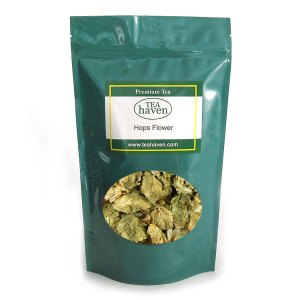
Richard M. Lucas in Miracle Medicine Herbs provides other possibilities. For nervous disorders, in India gotu kola was used (page 134) for fatigue, depression, exhaustion, rheumatism, fevers, skin conditions, stuttering, and chronic nervous disorders. Hops (page 175-176) and wood betony (page 185) were suggested for nervous headaches. Hop tea can be used for nervous irritability, sleeplessness, hysteria, and a nervous headache. To prepare the tea, boil one ounce of hops in a pint of water. Cover the pot and simmer for 2-3 minutes and then remove the pot from the fire to steep for another 5 minutes. On the other hand, wood betony was used early on as a remedy for nearly 50 different remedies. Place two heaping teaspoons of the dried herb in and cup and add boiling water. Strain the mixture when it cools.
Drink a half cup in the morning and evenings for nervous headaches.
Passion flower was used as a sedative, nerving, and anti-spasmodic. In Europe it was considered a calming herb for anxiety, insomnia, seizures, and hysteria. It was described as a remedy that “brings peace to mind and body.” Passion flower would be used as a tincture with 15-60 drops administered in a little water. Meanwhile German chamomile maintains a reputation for soothing nerves, strengthening digestion, and relieving some forms of colic. Place two teaspoons of the dried flower heads in a cup and add boiling water to make chamomile tea. Cover the cup so the tea can steep for 5-10 minutes. A North American plant known as skullcap (also mad dogweed) is also a remedy for nervousness. To make the tea add one ounce of the herb to a pint of boiling water. Remove the mixture from the fire and cover it with a lid. Let it stand until lukewarm. Strain the mixture. A half cup is consumed at a time.
Passion Flower by Douglas Stucky fineartamerica.com
File:Chamomile@original size.jpg – Wikipedia, the free encyclopedia en.wikipedia.org
Kathryn Kane is the author of the information below: “During the course of my research I discovered that orange flower water was: … regularly prescribed for those with nervous dispositions as a remedy for ‘neuralgic headache’ and palpitations of the heart. Some physicians and apothecaries prescribed orange flower water for a host of minor ‘hysteroidal’ disorders which they considered to be the result of self-indulgence and indolence. … in large doses, orange flower water was often given as a sleeping draught. The full post is HERE: if you would like more detail on how orange flower water was made and used during the Regency. And, not only is it totally natural, it is something that was commonly found in the kitchens orpantries of many homes during the Regency.”
Here is a sample of what I discovered: “The cure is made of oil of turpentine, mucilage of Gum mucilage, thin gruel in a clyster. A mixture of Asafoetia, six ounces, ammoniated tincture of Valerian, two drachms. Spirit of Sulphuric asther, one drachm. Take two table spoonful every six hours. Take ammoniated tincture of Valerian. One drachm Compound tincture of Lavender, two drachms, spirit Cinnamon three drachms, pure water six ounces, two tablespoons three or four times a day. Take cinnamon water, one ounce and a half; Tincture of Castor one drachm. Fetid spirit of ammonia twenty drops. spirit of sulphuric aether, thirty drops mix for a draught to be taken every four or six hours. Musk, camphor, Peruvian bark, myrrh, are some other ingredients used.” (MERCY!)
Lots of these types of books are available if you have a need of them for an interesting plot point.
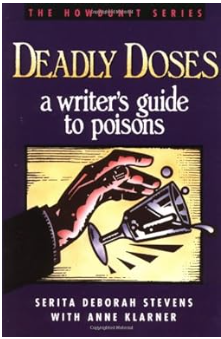
If you are writer and thinking of nefarious ways to do away with a “nasty” character, you might consult, Deadly Doses: A Guide for Writers. Fascinating plot bunnies for mystery and suspense writers. Describes the symptoms, forms, methods of administration, and reactions of various poisons, and briefly traces the history of poison.
Silent Killers – From Arsenic to Strychnine: A History of Poison by Stella Berry – If you write mysteries, thrillers, crime or suspense, or have to do any kind of research involving toxins then you need this excellent compendium of ‘to the point’ information.
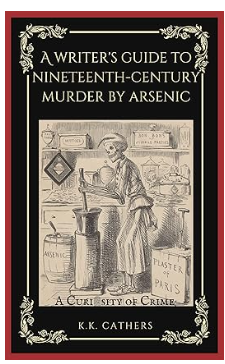
A Writer’s Guide to Nineteenth-Century Murder by Arsenic by K.K. Cathers – Imagine having a single book which contains everything you need to write a compelling, historically accurate murder mystery. One which not only provides you with the necessary research, but puts it in social context and explains how each facet can be shaped to fit your plot line.














 Every Woman Dreams...