Recently, we had our first look at how Sir Walter Scott perfected the “formula” for historical romance while creating a national identity. [June 8, Part I]

Sir Walter Scott’s fiction quite often uses the plot devices of inheritance and lineage. Scott’s generation knew of the defeat of a great stateliest: that of Napoleon Bonaparte. Therefore, it would be an easy jump to the conclusion that Ivanhoe is of the nature of the returning soldiers of the Napoleonic Wars. Patrick Parrinder in Nation and Novel [Oxford University Press, ©2006, 155-156] says, “…Ivanhoe is a returning crusader whose eyes are gradually opened to the ills of his native country. It is true that he belongs to the remnant of the Saxon nobility, grimly hanging on to what is left of their feudal possessions, but Scott sees that their day is over. The imperial unity foreshadowed by the crusading armies represent England’s future. Cedric, the Saxon chief, believes he is the representative of the old English nation, so that his kidnapping and imprisonment in Front-de-Boeuf’s castle ought to give him the status of an important political prisoner. But all the Normans want is to extract a ransom and to rape Rowena, his ward. Cedric, in any case, has divided his followers by disowning Ivanhoe for going on the Crusades, thus separating him [Ivanhoe] from his beloved Rowena. Athelstane, her intended bridegroom, is a renowned Saxon warrior but little else. Eventually, he is exposed as the cock that will not fight against its Norman masters.”
To understand the story, the reader must remember that King Richard mounted the Third Crusade in 1190, shortly after attaining the English crown. Richard had far less interest in ruling his nation wisely than in winning the city of Jerusalem and finding honor and glory on the battlefield. He left England precipitously, and it quickly fell into a dismal state in the hands of his brother, Prince John, the legendarily greedy ruler from the Robin Hood stories. In John’s hands, England languished. The two peoples who occupied the nation–the Saxons, who ruled England until the Battle of Hastings in 1066, and the French-speaking Normans, who conquered the Saxons–were increasingly at odds, as powerful Norman nobles began gobbling up Saxon lands. Matters became worse in 1092, when Richard was captured in Vienna by Leopold V, the Duke of Austria. (Richard had angered both Austria and Germany by signing the Treaty of Messina, which failed to acknowledge Henry VI, the Emperor of Germany, as the proper ruler of Sicily; Leopold captured Richard primarily to sell him to the Germans.) The Germans demanded a colossal ransom for the king, which John was in no hurry to supply; in 1194, Richard’s allies in England succeeded in raising enough money to secure their lord’s release. Richard returned to England immediately and was re-crowned in 1194. (Spark)
We find general disruption among Prince John’s followers. Only the character De Bracy maintains even a semblance of the code of chivalry upon which many early stories thrived. In chapter XXXIV, we find…
“There is but one road to safety,” continued the Prince, and his brow grew black as midnight; “this object of our terror journeys alone—He must be met withal.”
“Not by me,” said De Bracy, hastily; “I was his prisoner, and he took me to mercy. I will not harm a feather in his crest.”
“Who spoke of harming him?” said Prince John, with a hardened laugh; “the knave will say next that I meant he should slay him! —No—a prison were better; and whether in Britain or Austria, what matters it?—Things will be but as they were when we commenced our enterprise—It was founded on the hope that Richard would remain a captive in Germany—Our uncle Robert lived and died in the castle of Cardiffe.”
“Ay, but,” said Waldemar, “your sire Henry sate more firm in his seat than your Grace can. I say the best prison is that which is made by the sexton—no dungeon like a church-vault! I have said my say.”
“Prison or tomb,” said De Bracy, “I wash my hands of the whole matter.”
“Villain!” said Prince John, “thou wouldst not bewray our counsel?”
“Counsel was never bewrayed by me,” said De Bracy, haughtily, “nor must the name of villain be coupled with mine!”
Scott writes an “adventure” story. There are scenes of knights and jousting tournaments; yet there are also scenes with the outlaws of Sherwood Forest and the highwaymen. There are gritty scenes of the attempted rape of both Rowena and of Rebecca. Rebecca is a Jewish maiden, the daughter of Isaac of York. She tends Ivanhoe’s wounds after the tournament at Ashby and falls in love with him, even though she cannot know him as her husband for Ivanhoe is Christian. Rebecca is the most sympathetic character in the novel. She is a tragic heroine. Brian de Bois-Guilbert was a Knight Templar (a powerful international military/religious group dedicated to the conquest of the Holy Land, but often meddling in European politics). It is Brian who attempts to rape Rebecca. During Scott’s time, many believed Bois-Guilbert represented Napoleon’s attempt to unify Europe.
Parrinder [156-157] says, “So, although the Saxon-Norman conflict is the official national historical issue around which Ivanhoe revolves, Scott’s interest in this conflict seems perfunctory at best. He had described his heroes as ‘very amiable and very insipid sort of young men…’ We many say that Scott’s heroes are insipid because they are respectable nineteenth-century young gentlemen [with whom his readers could easily identify] dressed up as actors in history, but Ivanhoe seems like a burlesque even of the normal Scott hero. So marked is his passivity that he is first discovered lying prone, whether from exhaustion or depression, at the foot of a sunken cross near his father’s house. He enters and leaves the house incognito and spends much of the remainder of the novel prostrate, carried from place to place in a litter as he is cured by Rebecca of the wound he receives at the tournament. It is true that we twice see him in his appointed role as a champion on horseback, as if he only comes to life when encased in steel from top to toe. The qualities which have brought him high in King Richard’s counsels are never on display. In his second fight with Bois-Guilbert he is ‘scarce able to support himself in the saddle’ and too weak to strike an effective blow. The day is saved, and Rebecca vindicated, by an act of God, since the Templar is seized by an apoplexy in the moment of combat.”
 Structurally, Ivanhoe is divided into three parts: (1) Ivanhoe’s return to England in disguise and the tournament at Ashby constitutes the first section. [Disguise, at a point of reference, is a major motif in the novel, as not only Ivanhoe, but also Wamba, Richard, Cedric, and Locksley assume disguises.]; (2) Sir Maurice de Bracy kidnaps Cedric’s party. De Bracy lusts after Rowena. Richard and Locksley free the prisoners.; (3) The Templars and Sir Brian de Bois-Guilbert take Rebecca captive. The trial-by-combat decides whether Rebecca will live or die.
One of the major criticisms of Scott’s Ivanhoe is the freedom with which Scott employed historical fact. Also, Scott’s depiction of Jews is considered stereotypical at best. Yet, we must recall this is a “romance,” not a historical novel. As I write Regency romance, I am told often by those who write historicals that my novels are meant to please, not to instruct. Needless to say, I would beg to differ. I spend more hours than I would care to count in research, but my purpose here is not to debate whether there is room for imagination in the mist of research. What I wish to point out is how Scott’s opinion of King Richard goes against the idealized image of the King, especially that found in 19th Century England. Rosemary Mitchell, an Associate Principal Lecturer in History and Reader in Victorian Studies at Leeds Trinity University College, UK, says, “This is the message of Ivanhoe, with its equivocal chivalry: you can learn from the past, you can even recreate it, but ultimately you cannot and perhaps should not try to return to it.” [Mitchell, Rosemary, ‘Glory, Maiden, Glory’: The Uncomfortable Chivalry of Walter Scott’s Ivanhoe, Open Letters Monthly: An Arts and Literature Review]
“The resolution of the novel has never been universally popular: the very earliest readers found fault with Scott’s decision to marry the hero to the blonde Anglo-Saxon princess, Rowena, rather than the beguiling brunette Rebecca, daughter of Isaac the Jew. Scott’s decision was not taken lightly: the marriage of Ivanhoe, the friend of the Norman King Richard and the flower of chivalry, was intended to symbolise the reconciliation of the Anglo-Saxons with their French conquerors and the foundation of an inclusive English nation. But not that inclusive: Scott, no mean medieval scholar and no rosy-eyed observer of his own time, does not pretend that Rebecca and her fellow Jews were acceptable to the new English people – or even to their nineteenth-century descendants. At the close of the novel, Rebecca and her father depart to Spain and we hear no more of them.
“This was – and still is – very unsatisfactory for many readers. True, Rowena is Ivanhoe’s childhood sweetheart: he was disinherited before the novel begins by his father, Cedric the Saxon, for threatening to disrupt her dynastic marriage to the portly Anglo-Saxon pretender Athelstane, and returns in disguise to try and win her hand. That was what brought him to the tournament illustrated on the cover of your abridged copy. But then it is Rebecca who has ensured that he has a horse and armour and could participate in the chivalric combat; it is she who will nurse him after he is wounded at the tournament, and it is for her that he fights in the concluding trial by battle at Templestowe. What a disappointing ‘happy ending’ it is then, when he marries the marginalised Rowena: Rebecca might be a Jewess, but then this is a romance and surely a timely conversion to Christianity and a runaway marriage to Ivanhoe (in the style of Shylock’s daughter, Jessica, and her Christian lover Lorenzo) is a narrative possibility? Not for Scott, whose nationalist and historicist agenda demanded the union of Saxon princess and Norman sympathiser under the aegis of the self-declared king of the ‘English’ people, Richard the Lionheart.
 “Scott’s original readers loved Ivanhoe, but they often did neither liked nor understood what the novel had to say about the creation of nationhood, the character of historical change and the human consequences of it. So they frequently rewrote the plot to satisfy their narrative desires for a happier ending. In Thackeray’s comic sequel, Rebecca and Rowena (1850), the marriage of Ivanhoe swiftly becomes a penitential one, as Rowena develops into a monumentally pious nag. Ivanhoe’s escape to join Richard I’s campaigns in France proves less than entirely successful, as the crusader king has become debauched and unappealing. Relentlessly engaged in the non-stop slaughter of all the enemies of England and Christendom (and these appear to be many, and remarkably poor at warfare), Ivanhoe works his way round Europe like a middle-aged backpacker in armour. In his absence, he is presumed dead, and Rowena marries her old suitor, the fat and jovial Athelstane. He keeps her firmly and affectionately in her place – until she eventually dies in prison, having tactlessly taken King John to task. This neatly emancipates the long-suffering Ivanhoe, whose tour of duty now takes him to Spain: here he again encounters Rebecca, who does now obligingly abandon her faith in favour of Christianity, facilitating their eventual union. One of the great Victorian realists, a still greater satirist, Thackeray was not entirely comfortable with his ‘improved’ ending to Ivanhoe: the couple have no children and are rather melancholy in their mirth. Perhaps Thackeray realised that Scott’s ending was, after all, a more meaningful one.” [Mitchell, Rosemary. Open Letters Monthly: An Arts and Literature Review]
____________________________
As many of you expected, I must bring Scott back to my dearest Miss Austen. This is what Sir Walter Scott said of Jane Austen in 1826.
Jane Austen. (1775–1817). Pride and Prejudice. The Harvard Classics Shelf of Fiction. 1917. [Bartleby.com]
Criticisms and Interpretations
I. By Sir Walter Scott
“READ again, and for the third time at least, Miss Austen’s very finely written novel of “Pride and Prejudice.” That young lady has a talent for describing the involvements and feelings and characters of ordinary life which is to me the most wonderful I ever met with. The big bow-wow strain I can do myself like any now going; but the exquisite touch, which renders ordinary commonplace things and characters interesting, from the truth of the description and the sentiment, is denied to me.”—From “The Journal of Sir Walter Scott,” March, 1826. 1
“We bestow no mean compliment upon the author of “Emma” when we say that keeping close to common incidents, and to such characters as occupy the ordinary walks of life, she has produced sketches of such spirit and originality that we never miss the excitation which depends upon a narrative of uncommon events, arising from the consideration of minds, manners, and sentiments, greatly above our own. In this class she stands almost alone; for the scenes of Miss Edgeworth are laid in higher life, varied by more romantic incident, and by her remarkable power of embodying and illustrating national character. But the author of “Emma” confines herself chiefly to the middling classes of society; her most distinguished characters do not rise greatly above well-bred country gentlemen and ladies; and those which are sketched with most originality and precision, belong to a class rather below that standard. The narrative of all her novels is composed of such common occurrences as may have fallen under the observation of most folks; and her dramatis personæ conduct themselves upon the motives and principles which the readers may recognize as ruling their own, and that of most of their own acquaintances.”—From “The Quarterly Review,” October, 1815.


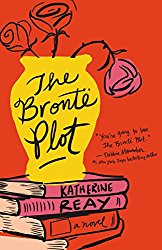
 you can tell The Bronte Plot will be no different. The Classics have me hooked.
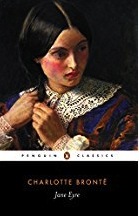 And, while we may think of these stories within the historical fiction genre, they were often cutting-edge contemporary novels at publication, breaking new literary ground and digging into issues previously untouched – pushing the boundaries of storytelling, setting and character. In fact, Jane Eyre is credited for single-handedly ushering in the more emotional, character-focused novel. Today we call it “literary fiction.”
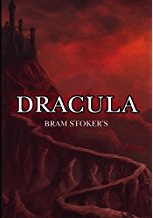 Bram Stoker’s Dracula. How did this one ever pass by my radar? I finally dug into it a few months ago and loved it! It’s incredibly creepy and I love that a book written in 1897 can still make my skin crawl. Death and decay seeped into every page and my dreams. Wow!
 Jane Austen’s Persuasion. It has to be mentioned – not only because this is “Austen Authors,” but because this book is never far from me. It is my all-time favorite novel (and Lizzy’s favorite in Lizzy & Jane –not a coincidence.) And in this quiet story, Austen is brilliant at laying out huge character struggles in her own understated way and often within a single line.
 Meet Katherine Reay: Katherine Reay has enjoyed a life-long affair with the works of Jane Austen and her contemporaries — who provide constant inspiration both for writing and for life. Katherine’s first novel, Dear Mr. Knightley, was a 2014 Christy Award Finalist and winner of the 2014 INSPY Award for Best Debut as well as Carol Awards for both Best Debut and Best Contemporary. She is also the writer behind Lizzy & Jane and the The Bronte Plot – all contemporary stories with a bit of “classics” flair. Katherine holds a BA and MS from Northwestern University and is a wife, mother, runner, former marketer, avid chocolate consumer and, randomly, a tae kwon do black belt. After living all across the country and a few stops in Europe, Katherine and her family recently moved back to Chicago.
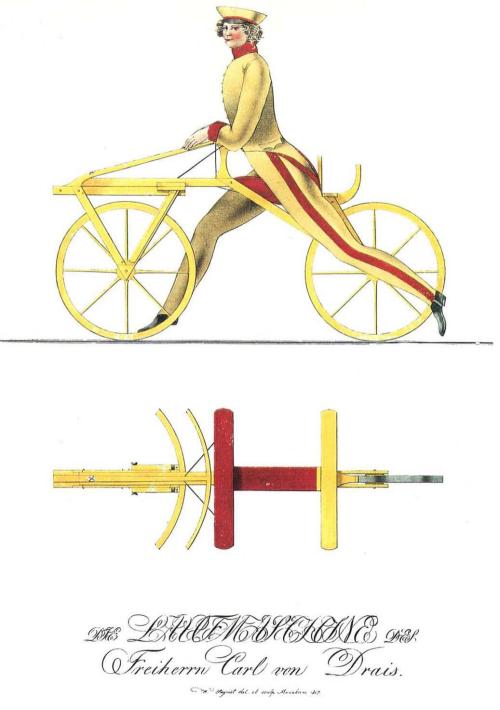
 I have changed my diet and added exercise to my daily regime. I am avoiding sugar and glutton, while adding a good bike ride or a long walk to my day. Naturally, as my brain is likely to do, I began to wonder who invented that first bicycle. I had heard that Pierre and Ernest Michaux, the French father and son team of carriage-makers, invented the first bicycle during the 1860s. Historians now disagree and there is evidence that the bicycle is older than that.




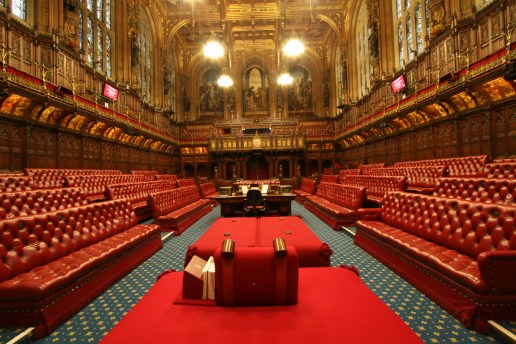
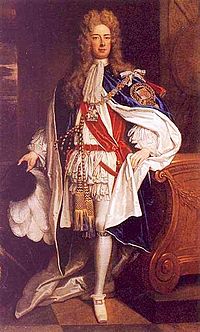
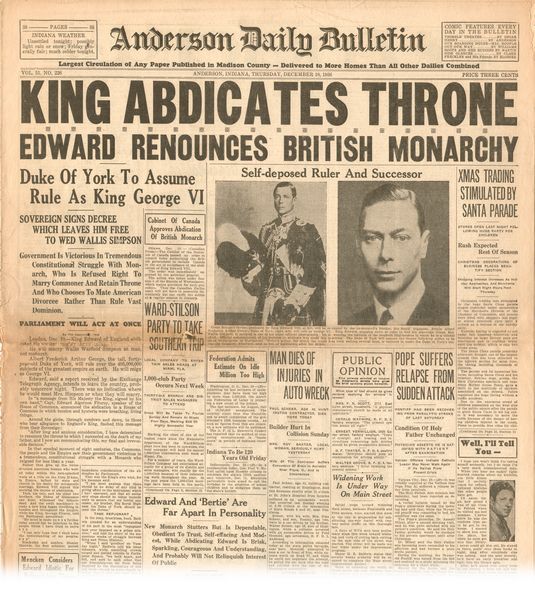 The Duke of Windsor’s (Edward VIII) abdication was a very complicated legal process, and one Parliament allowed and had to handle legally due to the duke’s marrying a divorced woman, which actually made him unfit to be head of the Church of England, which is a job the King of England must claim, and there are laws about the monarch’s marriages. This situation carried itself forward to the present with Prince Charles marrying Camilla, another situation sorted out legally before Parliament.




 Meet the Author: Antoine Vanner


 Meet Elaine Owen:




 Every Woman Dreams...
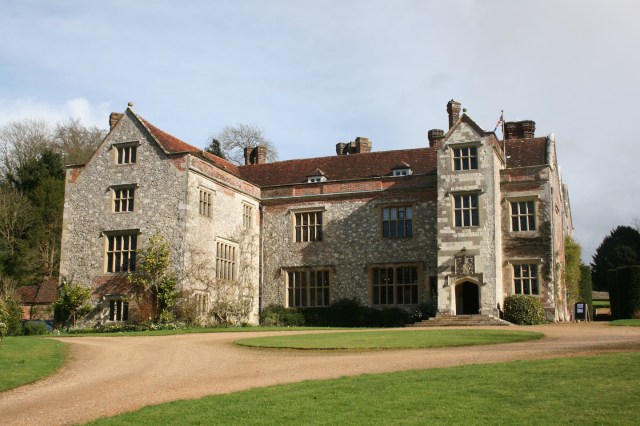
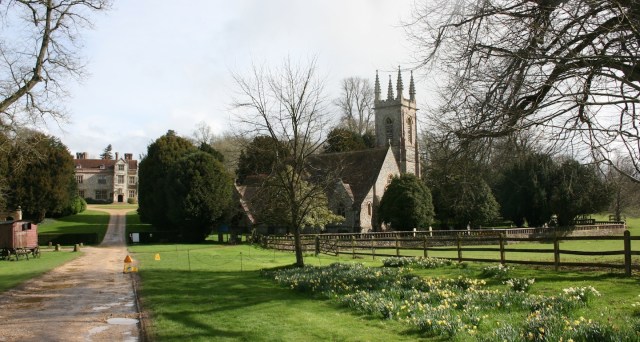
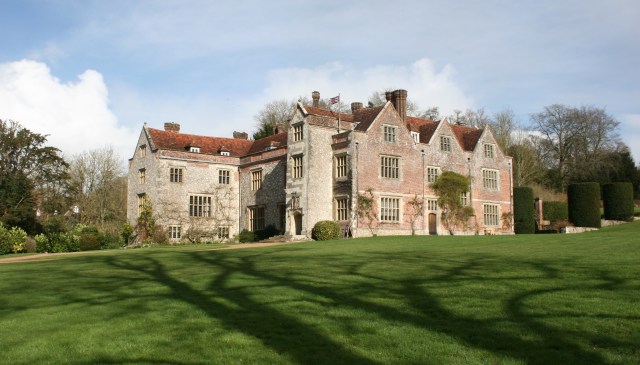
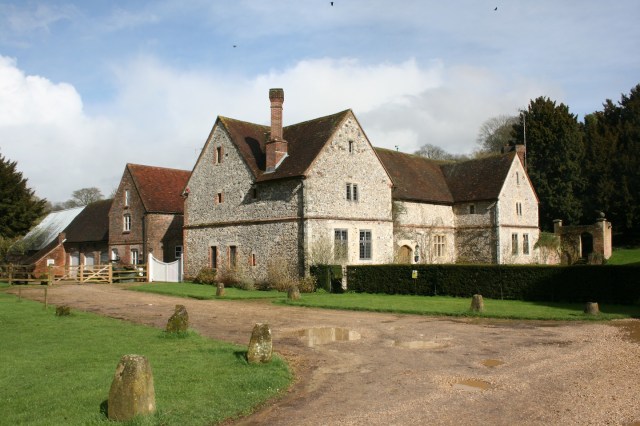
I’m glad you enjoyed Chawton, I am the last Austen descendant (Edward Austen Knight’s fourth great granddaughter) to be raised at Chawton House when it was our family home. It was a magical place to grow up, in the cocoon of 400 years of our history, and great Aunt Jane’s legacy. Granny ran a tearoom in the Great Hall and I earned my pocket money serving Jane Austen devotees who had come to see Jane Austen’s cottage in the village before following in Jane’s footsteps and taking the short walk to her brother’s manor for tea – happy days. I was 17 when my grandfather, Edward Knight (EAK great great grandson) died and his heir, Uncle Richard, inherited the depleted estate….Chawton was magnificent when I lived there, but in desperate need of repair. It is wonderful to see the house now, beautifully restored and being enjoyed.