In book 5, Lyon on the Inside, of my romantic suspense series from Dragonblade Publishing, we have learned of the reasons why Lord Macedonald Duncan and his sons thought they were chasing a man, but . . .
Do you recall this scene from book 4, Lost in the Lyon’s Garden? It will make much more sense than it probably did when you first read it, now that I have brought up the idea of multiple personalities.
******
She picked up her belongings and nodded for him to lead the way.
“I will lock the door behind you, Miss Whitchurch,” Sustar said as she passed through the recessed hallway. She nodded her farewell and stepped into the close’s dark shadows. The lock on the door shot into the slot behind her, and she heard Mr. Sustar turn back along the short passage to climb the stairs to the level above. The shop would not open for sales for a few more hours. The men who worked in the drapery shop would arrive a bit after seven.
Before she could prevent it, an odd feeling crept down her spine. “All I must do is reach the opening,” her mind announced, but her feet did not wish to cooperate.
“Who are you?” she called, noting an unusual shadow on the other side of the close. “Is someone there?” She thought there was a movement in the opening, but she continued to study the dark spot against the lighter wood shingles.
Her heart hitched higher when a raspy voice declared, “You have something that belongs to me.”
Before Victoria could respond, there was a loud crash, sounding as if someone had thrown a stack of metal plates against the wall of the empty shop on the other side of the close, which was followed by what could only be a female voice crying out the word “Help.”
“Cassandra?” Victoria pleaded.
“Had the voice been that of her sister?”
“Cassandra?” Victoria plunged forward into the surrounding darkness in an attempt to reach the shadow and the sound of her sister’s voice.
“Where had that bit of dawn gone?”
“Victoria!” a gravelly voice called out, and this time she was confident it was her sister. Without considering the consequences, Victoria stumbled forward, as one shadowy figure jerked another back towards a now open door in the empty shop. She lifted her skirt to give chase.
Running steps could be heard, but Victoria’s attention was on the two shadows disappearing into the gaping darkness of the former jewelry shop. She slid in the slime covering the bricked opening and nearly lost her footing.
What sounded of a bullet being fired whizzed past her head seconds before someone lifted her from harm’ s way. Carrying her towards the street and setting her down solidly beside the first of the shop walls, a tall, solid body pinned her against the frame of the building.
Though she could not see over her rescuer’s shoulder, she could hear shouts of alarm among those out on London’s streets—those just beginning their day.
Strong thighs and a muscular chest held her against the side of the shop. “You may release me, my lord,” she said as she pushed against his shoulders.
Instead of setting her free, he glared down at her. “Do you have the least sense God gave all his creatures?” he accused.
She attempted to push him away a second time, but to no avail. “You thought me quite bright with my suggestion of a monogram,” she declared in her own defense.
“He meant to shoot you! Did you not see his gun?” he demanded. “I could . . . could not . . .” He broke off what he wished to say, but she understood immediately, for she, too, felt something was happening between them, though it had not yet found its footing.
Victoria sucked in a steadying breath. “You are still supposed to be abed,” she stated the obvious. Ironically, Lord Thompson still pinned her against the wall, but not so aggressively as he did previously.
As she had become accustomed to his nature to analyze and hash out all the facts, he continued to speak to her of what had transpired. “Did you recognize the figure?”
“Figures,” she corrected.
“I only saw one shadow,” he stated with a frown she could not see, but she recognized the tension in his body, which spoke of the uncertainty found in his voice. His lordship was definitely frowning.
“But I distinctly heard two voices,” she assured. “One a male and one I believed to be Cassandra.”
*******
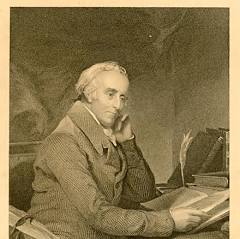
Dr. Benjamin Rush (1745–1813) was a Founding Father and pioneer of American psychiatry. He was among the first to document cases of dual personality and dissociation in the early 19th century. He described patients with alternating personalities, including a notable case involving a woman whose “madness” persona held different memories, behaviors, and beliefs than her “normal” state.
- Case Description: He observed a young woman (daughter of an officer) who exhibited a “madness” persona that was entirely different from her, which was characterized by speaking French, adopting different religious views, and acting differently than her normal, Methodist persona.
- Theoretical Understanding: While he did not use the term “multiple personality,” Rush recognized these as profound mental “derangements” or “disorders of the mind”.
- Documentation: His work on these “double consciousness” cases was foundational in the history of dissociation in the United States.
- Treatment Approach: Rush approached these conditions with his characteristic, though controversial, methods, which included bloodletting and the use of his “tranquilizer chair”.
Despite the limited understanding of the time, Rush’s detailed descriptions of split, alternating personalities were groundbreaking, predating more famous studies of the subject. In fact, he was the doctor who recorded Mary Reynolds’ [see Friday’s post, July 3, for information on Mary Reynolds] alternating personalities.