Silhouettes: An Alternative Portraiture with a Dark History (pun intended), a Guest Post from Sharon Lathan

This post originally appeared on Austen Authors on November 28, 2017. Enjoy! 

For hundreds of years, until the invention of the camera, the only way to quickly and cheaply immortalize a loved one was through a shade, also referred to as a shadow portrait. As opposed to more decorative and expensive forms of portraiture like painting or sculpture, a shade was a simple and inexpensive alternative.

Early artisans could copy a person’s profile using no more than scissors on paper and their two eyes, creating within minutes a freehand miniature in startling accuracy. Or they might paint with soot or lamp black onto plaster or glass. Casting shadows onto paper with lights was another technique utilized. The artist traced the shadow and depending on his talent and the financial offering of the client, would cut from fine materials or add elaborate details.

Being an inexpensive artistry did not halt tracing shadow profiles from becoming all the rage in early 1700’s Europe. In France, the aristocracy embraced the amusement. Featured artists would attend extravagant balls and cut out the distinguished profiles of the Lords and Ladies capturing the latest fashions and elaborate wigs. In a strange twist of irony, it was this thrifty art form taken to incredible extremes by the pre-Revolutionary French noblemen and women that would later give the tracing of shades it’s perpetual name.

While the aristocrats were having their profiles cut out and eating like kings, much of Europe was starving. In the 1760s the Finance Minister of Louis XV, Etienne de Silhouette, had crippled the French people with his merciless tax policies. Oblivious to his people’s plight, Etienne was much more interested in his hobby of cutting out paper profiles. He was so despised by the people of France that in protest, the peasants wore only black mimicking his black paper cutouts. The saying went all over France, “We are dressing a la Silhouette. We are shadows, too poor to wear color. We are Silhouettes!”

The name “silhouette” in relation to shades would not be used for another forty years, but the art of profiling in shadow would proliferate. Thankfully the negative connotation did not last. Nor did the plain, unadorned black sketches. Clients wanted novelty and artists needed to stand out from competitors. This soon led to elaborate variations on the simple cut profile. By the 1790s, many profiles were painted – on paper, ivory, plaster, or even glass. Elaborate embellishments became prominent, depicting jewelry, lace collars, and elaborate hairstyles. Bronzing, or the process of adding fine brushes of gold paint to the hair or clothing, became very popular after 1800.

Inevitably prices increased as the materials became more expensive. Yet, the simple truth is that it is the black face which allows the work to be termed a silhouette. Any extra detail on the face would have made it a portrait, not a shade!

While some shades were life-sized, or nearly so, most were very tiny. Placing the shadowy profile of a loved one onto a brooch or necklace required a skill of astounding proportions. Two of those most gifted were Englishmen John Field and John Miers. The plumed woman to the left is one of Miers’s masterpieces. Miers opened a London business in 1788, attained a high level of success and fame including the honor of painting King George III and Queen Charlotte.

The art of silhouette cutting reached its “golden age” in the 1800s. Many eighteenth-century silhouettists were, in fact, aspiring portrait artists or miniaturists. Some of them turned to creating silhouettes to tide themselves over when business was slack. Others found they developed a name for their work in this genre and quickly developed a market for it. Often unpretentious, they gave their public what they wanted without aspiring to artistic greatness, therefore reflecting with great clarity the pre-occupations and sensibilities of their time.

The most famous silhouettist of the Regency Era was Auguste Edouart. He resisted the fancier flourishes, insisting on the traditional black outline, although his lithographed backgrounds are legendary for their beauty. It was also he who first used the term “silhouette” formally, believing it had a magnificence to elevate the art form. He traveled up and down the English coast plying his artistry and became very wealthy in the process. By the end of his life, it is estimated that he amassed a collection of over 100,000 portraits! Tragically, a shipwreck off the coast of Jersey would lead to the vast bulk of his portfolio being lost at the bottom of the sea, where they presumably still remain. Edouart escaped death but was so grief-stricken at the loss that he never again cut a profile.

With the advent of the camera and the increased availability of reasonably priced paints, silhouette as a unique art form waned. By the 20th century, there were few artisans who maintained the professional attitude, and they were generally found at carnivals and seaside resorts. That is not to say, however, that the craft of silhouette died completely.

Eduart silhouette of a magic lantern show, the silhouettes positioned against a lithographed background.
Posted in Austen Authors, British history, fashion, Georgian England, Georgian Era, Guest Post, Jane Austen, research | Tagged , , , | Comments Off on Silhouettes: An Alternative Portraiture with a Dark History (pun intended), a Guest Post from Sharon Lathan

Between the Lines: Sisterhood and Serendipitous Elusiveness, a Guest Post by Gabrielle Mullarkey

Jane statue, Basingstoke.jpgBETWEEN THE LINES

Sisterhood and serendipitous elusiveness

Jane Austen, like many great artists, reaches out to us across time as both a living presence glimpsed between the lines of her own words and as an image orchestrated and reconstructed endlessly by others – including the woman regarded traditionally as iconographer-in-chief, her elder sister, Cassandra.

Conspiracy theories abound as to the ‘true’ nature of the relationship between Jane and Cassandra. Consider this famous extract from Cassandra’s letter to niece Fanny Knight, written in the wake of Jane’s death in July, 1817:

I have lost a treasure, such a sister, such a friend as never can have been surpassed. She was the sun of my life, the gilder of every pleasure, the soother of every sorrow; I had not a thought concealed from her, and it is as if I had lost a part of myself. I loved her only too well — not better than she deserved, but I am conscious that my affection for her made me sometimes unjust to and negligent of others; and I can acknowledge, more than as a general principle, the justice of the Hand which has struck this blow.

You know me too well to be at all afraid that I should suffer materially from my feelings; I am perfectly conscious of the extent of my irreparable loss, but I am not at all overpowered and very little indisposed, nothing but what a short time, with rest and change of air, will remove. I thank God that I was enabled to attend her to the last, and amongst my many causes of self-reproach, I have not to add any wilful neglect of her comfort.

At first glance, there’s a lot of ‘I’ going on, plus a hint of arch self-regard in my affection for her made me sometimes unjust to and negligent of others; and I can acknowledge, more than as a general principle, the justice of the Hand which has struck this blow.

This seems to recast Jane’s death as a divine reproach to Cassandra’s failings. Taken with Cassandra’s incendiary disposal of so many of Jane’s letters, she’s long been ripe for reappraisal as the patient and supportive foil to her brilliant younger sister.

CASSANDRA THE CRIME QUEEN?

I’m not one for wholesale dismissal of conspiracy theories, since they intrigue and spark the imagination. For example, ‘literary sleuth’ Arnie Perlstein (@JaneAustenCode on Twitter) sees, in Cassandra’s words I loved her only too well — not better than she deserved, an echo of Othello’s when he calls himself ‘one that lov’d not wisely, but too well’ after murdering Desdemona.

The outlandish notion that Cassandra may have murdered Jane fits into a canon of speculation that Jane was poisoned by arsenic, typified by Lindsay Ashford’s 2011 novel, The Mysterious Death of Miss Austen.

As lately as 2017, an examination of Jane’s spectacles concluded that she had very poor eyesight at the time of death, a possible side-effect of medicine she might have taken for rheumatism, which may have contained arsenic.

Notwithstanding the ‘possibles,’ ‘mays’ and ‘might haves,’ amateur detectives speculate that Jane could have been offed by arsenic cloaked in a medical application, suspects ranging from Cassandra to Jane’s brother Henry and even household cook Margaret Bigeon, all after Jane’s £800 nest egg.

hi res JA book cover.png Who doesn’t love such intrigue? I tapped into dramatic possibilities myself to formulate dastardly crimes in my novel Four Riddles for Jane Austen and her artful maid Tilly

But it seems to me that the more distant, elusive and reified the ‘victim’, the more such theories gain traction. We saw it as recently as 1997 in claims that Princess Diana – an image that many people projected onto rather than a person they knew – had been murdered, supported by plausibly intricate research.

Jane Austen’s elusiveness was intensified when Cassandra destroyed letters that might have enabled us to glimpse the ‘real people’ behind the screen – both herself and Jane. But should that matter?

snail detail, JA bench

snail detail on Jane Austen bench

 SISTERLY DYNAMICS

In Lizzie and Jane Bennet, Marianne and Elinor Dashwood, it’s tempting to see hints of Jane and Cassandra, the latter reflected in the more stolid qualities of Jane or Elinor. As readers and admirers, we prefer to imagine Jane Austen as high-spirited Lizzie standing her ground, or as passionate Marianne flouting convention to pursue her heart.

But the ‘true’ nature of the Jane-Cassandra dynamic is bound to remain as elusive as the women themselves. Siblings who grow up co-dependently often become adept at hiding deep feelings from the outside world, from each other and even from themselves. As if to confirm that, in her letter to Fanny Knight, Cassandra writes selfeffacingly, You know me too well to be at all afraid that I should suffer materially from my feelings.

While Cassandra was probably reassuring Fanny that she hadn’t succumbed to physical malady brought on by grief, a gentleman’s daughter in 1817 was not at liberty to rend her garments, beat her breast or declaim loudly, ‘why did she have to die?’ Or even (to acknowledge conspiracy theorists), ‘why did I have to be the unobtrusive helpmeet to the feted writer?’   

Besides, the very idea of unrestrained emotion would have struck Cassandra as self-indulgent and improper. We can muse a great deal on how 18th and 19th century propriety imposed restraint on self-expression, but to assume that women such as Cassandra chafed against decorum is to apply a postmodernist sense of individualism retrospectively; even Marianne Dashwood had a keen sense of propriety; compare her artless conduct to Mary Crawford’s ‘blunted delicacy and… corrupted, vitiated mind’Mansfield Park, Ch. XLVII). Nor should we dismiss Cassandra’s self-effacement as insincere.   

JA bench, Winchester, UK

Jane Austen bench, Winchester, UK

Finally, since maintaining respectability and protecting carefully fostered reputation were paramount social expectations, we shouldn’t be surprised – or censorious – that Cassandra destroyed a cache of Jane’s letters, however benign their contents might have struck modern sensibilities. Glimpses aplenty remain of Jane’s naturalism and dry wit in her surviving correspondence, eg:

I find, on looking into my affairs, that instead of being very rich I am likely to be very poor… as we are to meet in Canterbury I need not have mentioned this. It is as well, however, to prepare you for the sight of a sister sunk in poverty, that it may not overcome your spirits.

Letter to Cassandra, June 20, 1808

However, Cassandra’s actions, whatever their motivation, went beyond maintaining an image of Jane, to creating one. The very act of destroying the letters forged an abiding interest in their imagined content, feeding the mythology of ‘who’ Jane Austen ‘really’ was, and prompting the writers carrying her train to expand the possibilities exponentially. The really intriguing question is – was this done unwittingly or with a shrewd eye to wrapping Jane Austen in mystery, inside her own enigma?

BEHIND THE LINES

The author’s persona is as much a construct as the characters they create, and it is perfectly possible that both Cassandra and Jane were aware of this. As inveterate correspondents, they had an established rhythm and frame of reference, and may well have shared coded acknowledgement of who and what to omit from their letters, Cassandra exercising the privilege of confidentiality still further after her sister’s death.

In so doing, she may (that word again!) have been keenly aware of conflating author with sister and ‘real person’, generations of Janeites ever since rushing to fill the gap and supplement known facts with their own visions of the author and interpretation of her character.

But it is reading between and behind the lines that Jane Austen wrote, as well as the ones we can only imagine, that, paradoxically, bring her to life. 

Every reader who encounters a great writer for the first time invents them afresh in their mind’s eye, just as every active imagination is constantly mining the gaps and seeing into the white spaces on the printed page, suddenly finding themselves looking at a wholly realised world – and themselves – in new and unexpected ways.   

Gabrielle Mullarkey photo.jpgWRITER’S BIOGRAPHY

For the past 25 years, Gabrielle Mullarkey has worked as a journalist in the UK on everything from Cosmopolitan to women’s weeklies, while also contributing over 1.300 short stories to magazines.

Having published two novels (commercial fiction) with Simon & Schuster, her 2017 novel reimagining Jane Austen as a quick-witted sleuth was borne of her abiding passion for all things Austenite.

Since gaining her MSc in creative writing for therapeutic purposes in 2014 from Middlesex University, Gabrielle balances writing for publication with work as a creative writing tutor for adult learning and mental heath groups, and writes with and for patients at local hospices.

She lives in Oxfordshire and eats too much chocolate.

Four Riddles for Jane Austen (and her artful maid Tilly) is published by Corazon Books.

Available from:

https://www.amazon.co.uk/dp/B073WXQ796

Visit www.gabriellemullarkey.co.uk

@authorgabrielle

Photos: JA bench, Winchester & snail detail, JA bench – this carved wooden bench is opposite 8 College Street, the house where Jane died in Winchester in July 1817. The bench was created in the Regency style by local sculptor Nicola Henshaw. Nicola worked with fellow artist Eileen White to develop ideas for the design with local schoolchildren, using Jane’s words, “to sit in the shade on a fine day and look upon verdure is the most perfect refreshment,” as inspiration.

I was intrigued by the addition of snails to the bench’s natural imagery. They struck me as a possible metaphor for the Jane-Cassandra sisterhood: long, patient years of quietly mutual support. When I asked artist Nicola about the snails’ inclusion, she explained: “The position of the snails was to signify their love, tenderness and affection for each other. The reason they’re present is because I brought “verdure” from my garden into the school for a drawing and paper-cutting workshop with the children. In amongst the greenery were tiny, tiny snails, which the children loved. I felt that I had to include them in the work!”

Photo: Jane statue, Basingstoke – a life-size statue of Jane by sculptor Adam Roud was unveiled in the Hampshire town of Basingstoke in summer 2017 to mark the 200th anniversary of her death, Jane Austen biographer Claire Tomalin commenting: “Nothing could be better than a statue of Jane Austen hurrying across Market Square to collect library books, do a little shopping or pick up her mother from Dr Lyford’s house.” Jane knew Basingstoke well and attended social gatherings at the Assembly Rooms in Market Square, often visiting family friends at The Vyne, Oakley Hall and Ashe House.

Posted in Austen Authors, British history, customs and tradiitons, family, Georgian England, Georgian Era, Guest Post, Jane Austen, Living in the Regency, Pride and Prejudice, reading habits, real life tales, Regency era, Regency personalities, suspense, writing | Tagged , , , , , , , , , , | Comments Off on Between the Lines: Sisterhood and Serendipitous Elusiveness, a Guest Post by Gabrielle Mullarkey

Discovering “Pride” in Pride and Prejudice

images-7The word “pride” finds its origin before the year 1000; Middle English (noun); Old English prȳde(cognate with Old Norse prȳthi bravery, pomp),derivative of prūd. In Jane Austen’s Pride and Prejudice, we generally think of the word meaning “a high or inordinate opinion of one’s own dignity,importance, merit, or superiority, whether as cherished in the mind or as displayed in bearing,conduct, etc.” (Dictionary.com)  “Pride is an inwardly directed emotion that carries two antithetical meanings. With a negative connotation pride refers to a foolishly and irrationally corrupt sense of one’s personal value, status or accomplishments, used synonymously with hubris. With a positive connotation, pride refers to a humble and content sense of attachment toward one’s own or another’s choices and actions, or toward a whole group of people, and is a product of praise, independent self-reflection, and a fulfilled feeling of belonging.” (Pride)

Let us look at where the word “pride” appears in the novel. 

images-1From Chapter 5, we find, ““I do not believe a word of it, my dear. If he had been so very agreeable, he would have talked to Mrs. Long. But I can guess how it was; everybody says that he is eat up with pride, and I dare say he had heard somehow that Mrs. Long does not keep a carriage, and had come to the ball in a hack chaise.”

Also from Chapter 5, we have, “His pride,” said Miss Lucas, “does not offend me so much as pride often does, because there is an excuse for it. One cannot wonder that so very fine a young man, with family, fortune, everything in his favour, should think highly of himself. If I may so express it, he has a right to be proud.”

The conversation continues with “That is very true,” replied Elizabeth, “and I could easily forgive his pride, if he had not mortified mine.”

Pride,” observed Mary, who piqued herself upon the solidity of her reflections, “is a very common failing, I believe. By all that I have ever read, I am convinced that it is very common indeed; that human nature is particularly prone to it, and that there are very few of us who do not cherish a feeling of self-complacency on the score of some quality or other, real or imaginary. Vanity and pride are different things, though the words are often used synonymously. A person may be proud without being vain. Pride relates more to our opinion of ourselves, vanity to what we would have others think of us.”

images-4In Chapter 8, the Bingley sisters think Elizabeth displays pride. “When dinner was over, she returned directly to Jane, and Miss Bingley began abusing her as soon as she was out of the room. Her manners were pronounced to be very bad indeed, a mixture of pride and impertinence; she had no conversation, no style, no beauty. Mrs. Hurst thought the same.”

In Chapter 11, after her walk about the room with Miss Bingley, Elizabeth accuses Darcy of being prideful. “Perhaps that is not possible for anyone. But it has been the study of my life to avoid those weaknesses which often expose a strong understanding to ridicule.”
“Such as vanity and pride.”
“Yes, vanity is a weakness indeed. But pride — where there is a real superiority of mind, pride will be always under good regulation.”

In Chapter 15, Elizabeth considers pride as one of Mr. Collins’ characteristic. “A fortunate chance had recommended him to Lady Catherine de Bourgh when the living of Hunsford was vacant; and the respect which he felt for her high rank, and his veneration for her as his patroness, mingling with a very good opinion of himself, of his authority as a clergyman, and his right as a rector, made him altogether a mixture of pride and obsequiousness, self-importance and humility.”

images-5In Chapter 16, Elizabeth speaks of Darcy’s pride to Wickham. “Upon my word, I say no more here than I might say in any house in the neighbourhood, except Netherfield. He is not at all liked in Hertfordshire. Everybody is disgusted with his pride. You will not find him more favourably spoken of by anyone.”

Later in Chapter 16, Wickham spreads his lies of Darcy. “How strange!” cried Elizabeth. “How abominable! I wonder that the very pride of this Mr. Darcy has not made him just to you! If from no better motive, that he should not have been too proud to be dishonest — for dishonesty I must call it.”

“It is wonderful,” replied Wickham, “for almost all his actions may be traced to pride; and pride had often been his best friend. It has connected him nearer with virtue than with any other feeling. But we are none of us consistent, and in his behaviour to me there were stronger impulses even than pride.”

“Can such abominable pride as his have ever done him good?”

“Yes. It has often led him to be liberal and generous, to give his money freely, to display hospitality, to assist his tenants, and relieve the poor. Family pride, and filial pride — for he is very proud of what his father was — have done this. Not to appear to disgrace his family, to degenerate from the popular qualities, or lose the influence of the Pemberley House, is a powerful motive. He has also brotherly pride, which, with some brotherly affection, makes him a very kind and careful guardian of his sister, and you will hear him generally cried up as the most attentive and best of brothers.”

images-6Later in Chapter 16, Wickham plants doubts of Darcy’s character. “Probably not; but Mr. Darcy can please where he chooses. He does not want abilities. He can be a conversible companion if he thinks it worth his while. Among those who are at all his equals in consequence, he is a very different man from what he is to the less prosperous. His pride never deserts him; but with the rich he is liberal-minded, just, sincere, rational, honourable, and perhaps agreeable — allowing something for fortune and figure.”

Then Wickham describes Lady Catherine to Elizabeth. “I believe her to be both in a great degree,” replied Wickham; “I have not seen her for many years, but I very well remember that I never liked her, and that her manners were dictatorial and insolent. She has the reputation of being remarkably sensible and clever; but I rather believe she derives part of her abilities from her rank and fortune, part from her authoritative manner, and the rest from the pride for her nephew, who chooses that everyone connected with him should have an understanding of the first class.”

In Chapter 20, Elizabeth reflects upon Mr. Collins’ feelings after she refuses his proposal. “Mr. Collins, meanwhile, was meditating in solitude on what had passed. He thought too well of himself to comprehend on what motives his cousin could refuse him; and though his pride was hurt, he suffered in no other way. His regard for her was quite imaginary; and the possibility of her deserving her mother’s reproach prevented his feeling any regret.”

In Chapter 21, both Mrs. Bennet and Mr. Collins are upset with her refusal of Collins’ proposal. “The morrow produced no abatement of Mrs. Bennet’s ill-humour or ill health. Mr. Collins was also in the same state of angry pride. Elizabeth had hoped that his resentment might shorten his visit, but his plan did not appear in the least affected by it. He was always to have gone on Saturday, and to Saturday he meant to stay.”

In Chapter 24, Elizabeth and Jane discuss the reasons Miss Bingley expresses in her letter for convincing Bingley to leave Netherfield. “Your first position is false. They may wish many things besides his happiness; they may wish his increase of wealth and consequence; they may wish him to marry a girl who has all the importance of money, great connections, and pride.”

imgres-1In Chapter 33, Elizabeth is angry with Darcy after she learns from Colonel Fitzwilliam that he separated Jane from Bingley. “This was spoken jestingly; but it appeared to her so just a picture of Mr. Darcy, that she would not trust herself with an answer, and therefore, abruptly changing the conversation talked on indifferent matters until they reached the Parsonage. There, shut into her own room, as soon as their visitor left them, she could think without interruption of all that she had heard. It was not to be supposed that any other people could be meant than those with whom she was connected. There could not exist in the world two men over whom Mr. Darcy could have such boundless influence. That he had been concerned in the measures taken to separate Bingley and Jane she had never doubted; but she had always attributed to Miss Bingley the principal design and arrangement of them. If his own vanity, however, did not mislead him, he was the cause, his pride and caprice were the cause, of all that Jane had suffered, and still continued to suffer. He had ruined for a while every hope of happiness for the most affectionate, generous heart in the world; and no one could say how lasting an evil he might have inflicted.”

Later in Chapter 33, Elizabeth ruminates in her room at Hunsford Cottage. She wonders upon Mr. Darcy’s criticisms of her family. “To Jane herself,” she exclaimed, “there could be no possibility of objection; all loveliness and goodness as she is! — her understanding excellent, her mind improved, and her manners captivating. Neither could anything be urged against my father, who, though with some peculiarities, has abilities Mr. Darcy himself need not disdain, and respectability which he will probably never each. When she thought of her mother, her confidence gave way a little; but she would not allow that any objections there had material weight with Mr. Darcy, whose pride, she was convinced, would receive a deeper wound from the want of importance in his friend’s connections, than from their want of sense; and she was quite decided, at last, that he had been partly governed by this worst kind of pride, and partly by the wish of retaining Mr. Bingley for his sister.

Chapter 34 brings the reader Elizabeth’s opinion of Mr. Darcy’s proposal. “Elizabeth’s astonishment was beyond expression. She stared, coloured, doubted, and was silent. This he considered sufficient encouragement; and the avowal of all that he felt, and had long felt for her, immediately followed. He spoke well; but there were feelings besides those of the heart to be detailed; and he was not more eloquent on the subject of tenderness than of pride. His sense of her inferiority — of its being a degradation — of the family obstacles which had always opposed to inclination, were dwelt on with a warmth which seemed due to the consequence he was wounding, but was very unlikely to recommend his suit.”

images-2In the same chapter, Darcy is angry with her refusal and claims Elizabeth of possessing too much pride. “And this,” cried Darcy, as he walked with quick steps across the room, “is your opinion of me! This is the estimation in which you hold me! I thank you for explaining it so fully. My faults, according to this calculation, are heavy indeed! But perhaps,” added he, stopping in his walk, and turning towards her, “these offenses might have been overlooked, had not your pride been hurt by my honest confession of the scruples that had long prevented my forming any serious design. These bitter accusations might have been suppressed, had I, with greater policy, concealed my struggles, and flattered you into the belief of my being impelled by unqualified, unalloyed inclination; by reason, by reflection, by everything. But disguise of every sort is my abhorrence. Nor am I ashamed of the feelings I related. They were natural and just. Could you expect me to rejoice in the inferiority of your connections? — to congratulate myself on the hope of relations, whose condition in life is so decidedly beneath my own?”

At the end of Chapter 34, Elizabeth reflects upon what occurred between her and Darcy. “Her astonishment, as she reflected on what had passed, was increased by every review of it. That she should receive an offer of marriage from Mr. Darcy! That he should have been in love with her for so many months! So much in love as to wish to marry her in spite of all the objections which had made him prevent his friend’s marrying her sister, and which must appear at least with equal force in his own case — was almost incredible! It was gratifying to have inspired unconsciously so strong an affection. But his pride, his abominable pride — his shameless avowal of what he had done with respect to Jane — his unpardonable assurance in acknowledging, though he could not justify it, and the unfeeling manner in which he had mentioned Mr. Wickham, his cruelty towards whom he had not attempted to deny, soon overcame the pity which the consideration of his attachment had for a moment excited.”

imagesIn Chapter 36, Elizabeth reads Mr. Darcy’s letter, but determines him as acting with pride. “She read with an eagerness which hardly left her power of comprehension, and from impatience of knowing what the next sentence might bring, was incapable of attending to the sense of the one before her eyes. His belief of her sister’s insensibility she instantly resolved to be false; and his account of the real, the worst objections to the match, made her too angry to have any wish of doing him justice. He expressed no regret for what he had done which satisfied her; his style was not penitent, but haughty. It was all pride and insolence.”

At the end of Chapter 36, Elizabeth realizes she has acted foolishly. “How despicably I have acted!” she cried; “I, who have prided myself on my discernment! I, who have valued myself on my abilities! who have often disdained the generous candour of my sister, and gratified my vanity in useless or blameable mistrust! How humiliating is this discovery!”

In Chapter 41, Elizabeth again encounters Wickham. The man continues to malign Darcy. “You, who so well know my feeling towards Mr. Darcy, will readily comprehend how sincerely I must rejoice that he is wise enough to assume even the appearance of what is right. His pride, in that direction, may be of service, if not to himself, to many others, for it must only deter him from such foul misconduct as I have suffered by. I only fear that the sort of cautiousness to which you, I imagine, have been alluding, is merely adopted on his visits to his aunt, of whose good opinion and judgement he stands much in awe. His fear of her has always operated, I know, when they were together; and a good deal is to be imputed to his wish of forwarding the match with Miss de Bourgh, which I am certain he has very much at heart.”

In Chapter 43, Mrs. Reynolds takes pride in her position at Pemberley. “And is Miss Darcy as handsome as her brother?” said Mrs. Gardiner.
“Oh! yes — the handsomest young lady that ever was seen; and so accomplished! — She plays and sings all day long. In the next room is a new instrument just come down for her — a present from my master; she comes here to-morrow with him.”
Mr. Gardiner, whose manners were very easy and pleasant, encouraged her communicativeness by his questions and remarks; Mrs. Reynolds, either by pride or attachment, had evidently great pleasure in talking of her master and his sister.

images-3In Chapter 43, Elizabeth expects Darcy’s pride to be evident when she introduces him to her aunt and uncle. “Mrs. Gardiner was standing a little behind; and on her pausing, he asked her if she would do him the honour of introducing him to her friends. This was a stroke of civility for which she was quite unprepared; and she could hardly suppress a smile at his being now seeking the acquaintance of some of those very people against whom his pride had revolted in his offer to herself. ‘What will be his surprise,’ thought she, ‘when he knows who they are? He takes them now for people of fashion.’”

In Chapter 44, the Gardiners draw their own conclusions of Mr. Darcy. “Of Mr. Darcy it was now a matter of anxiety to think well; and, as far as their acquaintance reached, there was no fault to find. They could not be untouched by his politeness; and had they drawn his character from their own feelings and his servant’s report, without any reference to any other account, the circle in Hertfordshire to which he was known would not have recognized it for Mr. Darcy. There was now an interest, however, in believing the housekeeper; and they soon became sensible that the authority of a servant who had known him since he was four years old, and whose own manners indicated respectability, was not to be hastily rejected. Neither had anything occurred in the intelligence of their Lambton friends that could materially lessen its weight. They had nothing to accuse him of but pride; pride he probably had, and if not, it would certainly be imputed by the inhabitants of a small market-town where the family did not visit. It was acknowledged, however, that he was a liberal man, and did much good among the poor.”

At the end of Chapter 44, Elizabeth knows gratitude that Darcy once loved her. “As for Elizabeth, her thoughts were at Pemberley this evening more than the last; and the evening, though as it passed it seemed long, was not long enough to determine her feelings towards one in that mansion; and she lay awake two whole hours endeavouring to make them out. She certainly did not hate him. No; hatred had vanished long ago, and she had almost as long been ashamed of ever feeling a dislike against him, that could be so called. The respect created by the conviction of his valuable qualities, though at first unwillingly admitted, had for some time ceased to be repugnant to her feeling; and it was now heightened into somewhat of a friendlier nature, by the testimony so highly in his favour, and bringing forward his disposition in so amiable a light, which yesterday had produced. But above all, above respect and esteem, there was a motive within her of goodwill which could not be overlooked. It was gratitude; gratitude, not merely for having once loved her, but for loving her still well enough to forgive all the petulance and acrimony of her manner in rejecting him, and all the unjust accusations accompanying her rejection. He who, she had been persuaded, would avoid her as his greatest enemy, seemed, on this accidental meeting, most eager to preserve the acquaintance, and without any indelicate display of regard, or any peculiarity of manner, where their two selves only were concerned, was soliciting the good opinion of her friends, and bent on making her known to his sister. Such a change in a man of so much pride exciting not only astonishment but gratitude — for to love, ardent love, it must be attributed; and as such its impression on her was of a sort to be encouraged, as by no means unpleasing, though it could not be exactly defined. She respected, she esteemed, she was grateful to him, she felt a real interest in his welfare; and she only wanted to know how far she wished that welfare to depend upon herself, and how far it would be for the happiness of both that she should employ the power, which her fancy told her she still possessed, of bringing on her the renewal of his addresses.”

imgresAt the end of Chapter 50, Mr. Gardiner writes of the arrangements made for Wickham and Lydia. “Mr. Bennet and his daughters saw all the advantages of Wickham’s removal from the —— shire as clearly as Mr. Gardiner could do. But Mrs. Bennet was not so well pleased with it. Lydia’s being settled in the North, just when she had expected most pleasure and pride in her company, for she had by no means given up her plan of their residing in Hertfordshire, was a severe disappointment; and, besides, it was such a pity that Lydia should be taken from a regiment where she was acquainted with everybody, and had so many favorites.”

In Chapter 52, Mrs. Gardiner writes of Darcy’s involvement in the marriage of Wickham and Lydia. ” From what I can collect, he left Derbyshire only one day after ourselves, and came to town with the resolution of hunting for them. The motive professed was his conviction of its being owing to himself that Wickham’s worthlessness had not been so well known as to make it impossible for any young woman of character to love or confide in him. He generously imputed the whole to his mistaken pride, and confessed that he had before thought it beneath him to lay his private actions open to the world. His character was to speak for itself. He called it, therefore, his duty to step forward, and endeavour to remedy an evil which had been brought on by himself.”

In Chapter 52, after reading her aunt’s letter, Elizabeth is in a flutter of spirits. “It was difficult to determine whether pleasure or pain bore the greatest share. The vague and unsettled suspicions which uncertainty had produced of what Mr. Darcy might have been doing to forward her sister’s match, which she had feared to encourage as an exertion of goodness too great to be probable, and at the same time dreaded to be just, from the pain of obligation, were proved beyond their greatest extent to be true! He had followed them purposely to town, he had taken on himself all the trouble and mortification attendant on such a research; in which supplication had been necessary to a woman whom he must abominate and despise, and where he was reduced to meet, frequently meet, reason with, persuade, and finally bribe, the man whom he always most wished to avoid, and whose very name it was punishment to him to pronounce. He had done all this for a girl whom he could neither regard nor esteem. Her heart did whisper that he had done it for her. But it was a hope shortly checked by other considerations, and she soon felt that even her vanity was insufficient, when required to depend on his affection for her — for a woman who had already refused him — as able to overcome a sentiment so natural as abhorrence against relationship with Wickham. Brother-in-law of Wickham! Every kind of pride must revolt from the connection.”

At the end of Chapter 53, Mrs. Bennet plans on keeping Bingley’s interest in Jane. “Mrs. Bennet had been strongly inclined to ask them to stay and dine there that day; but, though she always kept a very good table, she did not think anything less than two courses could be good enough for a man on whom she had such anxious designs, or satisfy the appetite and pride of one who had ten thousand a year.”

In Chapter 58, Darcy describes his upbringing. “As a child I was taught what was right, but I was not taught to correct my temper. I was given good principles, but left to follow them in pride and conceit. Unfortunately an only son (for many years an only child), I was spoilt by my parents, who, though good themselves (my father, particularly, all that was benevolent and amiable), allowed, encouraged, almost taught me to be selfish and overbearing; to care for none beyond my own family circle; to think meanly of all the rest of the world; to wish at least to think meanly of their sense and worth compared with my own.”

In Chapter 59, Elizabeth defends Darcy to her father. “I do, I do like him,” she replied, with tears in her eyes, “I love him. Indeed he has no improper pride. He is perfectly amiable. You do not know what he really is; then pray do not pain me by speaking of him in such terms.”

In Chapter 61, Mrs. Bennet looks upon her “handiwork” with pride. “Happy for all her maternal feelings was the day on which Mrs. Bennet got rid of her two most deserving daughters. With what delighted pride she afterwards visited Mrs. Bingley, and talked of Mrs. Darcy, may be guessed. “


Posted in book excerpts, Georgian England, Jane Austen, Living in the Regency, Pride and Prejudice, Regency era, romance | Tagged , , , , | Comments Off on Discovering “Pride” in Pride and Prejudice

The Hidden Key, a Guest Post from Sophie Turner

This post originally appeared on Austen Authors on December 22, 2017. Enjoy!

It was difficult to write about the public entertainments of Bath and other spa and seaside resorts in my last post without delving into architecture, because so much of public entertainments are about public spaces. I think that’s one of the things that fascinates me about architecture – it’s really where art and life intersect.

A view of Bath from Prior Park.

People entering Bath usually stayed for a few days at a coaching inn such as the famous White Hart for a few days, while they found lodgings within the city. In Northanger Abbey, this is what Henry Tilney is doing for the rest of his family, while in Persuasion, the newly arrived Musgroves are staying at the White Hart.

Lodgings, at one of Bath’s beautiful stone townhouses, would then be let. I had a chance to do a lovely one-two of visits (they offer a combined ticket) at the Museum of Bath Architecture and then Number One Royal Crescent, a townhouse restored to the Georgian era. They work exceedingly well together because the architecture museum gives you a sense of how Bath was built as a whole, and also how these townhouses are structured and how the interiors are finished, featuring mesmerizing little details such as videos of people doing decorative plaster (seriously, I could watch that all day). Then Number One gives you a chance to see how it all comes together into a single house.

Model of Queen Square in the Museum of Bath Architecture.
Model showing a cross-section of a terrace house in the Museum of Bath Architecture.
Dining room at Number One Royal Crescent.
Drawing Room at Number One Royal Crescent.
Bedroom at Number One Royal Crescent.
Housekeeper’s room at Number One Royal Crescent. I really liked that they had historically accurate service areas in addition to the usual finer rooms.
Kitchen at Number One Royal Crescent, including a wheel where a dog would have walked to turn the spit.

Number One Royal Crescent is part of Bath’s landmark Royal Crescent, the masterpiece of architect John Wood the Younger. It was his father, John Wood the Elder, who truly ushered in the style of building in Bath that makes it so notable for its architecture today – giant blocks of terraced houses, designed to look like one large home. People could then leave their country estates and live in a smaller portion of something that looked equally grand, while they holidayed in Bath.

The Royal Crescent.
The Royal Crescent set off a building boom of crescents in spa towns, including the beautiful Lansdown Crescent in Bath.

The Woods were not alone, in this building of Bath. Beau Nash, as indicated in my last post, prompted a lot of the major public buildings so that people had spaces appropriate for the quality of entertainment he planned. And local business magnate Ralph Allen grew rich off of the stone quarries providing the stone that helped make the city look so cohesive; Allen was also actively involved with these other men in shaping the city.

Ralph Allen’s magnificent home, Prior Park, just outside the main town. The house is a school now but the landscape gardens with their magnificent Palladian bridge are run by the National Trust.

I suppose you may be wondering what the title of this post has at all to do with architecture and building Bath, and it is that there is actually a key hidden within the city streets. I learned about this during my tour of the Old Theatre, which I wrote about in my previous post; the theatre, now a Masonic Lodge, has tours led by masons from the lodge. Our guide gave us a very thorough overview of the Freemasons, including how they’re organized, and that in medieval times they were among the few people who were not serfs and therefore had freedom to move around from project to project. Their major projects were the building of great abbeys and cathedrals, which in Henry VIII’s time of course suffered a significant reduction in demand. However, the building of the great country houses, also generally made of stone, was rising, and so the masons moved on to working on these. In so doing, the masters of these houses came to respect the intelligence of the masons and the organization of their society, and in a rather shrewd stroke, the masons began to invite these great men to be part of their society as honorary members. This is how you ended up with so many notable people (including so many of our founding fathers, for those of us from the USA) who were Freemasons, but had no family history of stonemasonry.

Our guide also explained that one of the symbols of the society is a key. John Wood the Younger gave us the famous Royal Crescent, but his father, a Freemason, was the mastermind behind the Circus.

The Circus, Bath.

Draw a rudimentary picture of an old skeleton key, and your drawing will likely include a circle. And that is how there is a key hidden in Bath:

The hidden key in Bath’s streets

If that’s enough to freak you out, as it was for me, allow me to double down on it before I return to the building of Bath. Our guide explained that there were three orders of Freemasonry, which correspond to three major orders of architecture: Doric, Ionic, and Corinthian. And wouldn’t you know that when I went back to the Circus later in my trip, I noticed that it does something rather unique in architecture, and uses columns of all three orders.

A portion of the Circus facade showing the Ionic and Corinthian columns.

Aaaagh, goosebumps! Let’s move on. Part of being able to build a spa town like Bath was in being able to accurately speculate on the pace of building that was needed. Phyllis Hembry’s The English Spa 1560-1815 A Social History, is filled with examples of spa towns that grew too slowly because they did not grow available housing quickly enough. On the flip side, economic slumps or poor estimation of demand often led to building booms that went bust, which we can see quite clearly in Austen’s fragment of Sanditon.

Among the infrastructure a growing spa town needed: mews for the stabling of horses and carriages. Note that these “hidden” buildings did not use the same cut and quality of stone as the facades of the grand terraces.

It was also necessary to have other public services. The entertainments were of course key, but a growing town also had to have ample shops for its populace (Bath became famed for its shops), and regular markets or other places to purchase grocery, for in Bath most people took their lodgings without board, and so would have to provide their own meals (although of course servants handled most of this, and indeed Hembry writes that Bath often served as a “nursery” for cooks, so much so that many employers took their cook home with them after the season).

In Bath and most of the southern spa towns, it was the case that lodgings, meals, and entertainments were handled separately. However, Hembry writes that in the northern spas, things were done quite differently. There, inns provided lodging, meals, and entertainments all in one, and although the entertainments could not be on the same scale or same degree of opulence as those in towns like Bath, they seem to have been fully sufficient for a nice holiday, as people would have experienced in Malvern:

In 1757 Abbey House was so full that Benjamin Stillingfleet got a place with difficulty, for Lugard organized some social life in his assembly-room: a public breakfast at 10 a.m. every Wednesday during the season at 1s. 6d. per person, followed by a gambling game, The Shepherd’s Lottery, music for dancing or a concert, and a public meal at a fixed price on a fixed day, Abbey House was described as ‘a good hotel’ in 1796, and apart from the balls on Wednesday there was card-playing on Monday.

This more centralized model was adopted by some seaside resorts, the most notable of which was Brighton. Brighton, of course, with the Prince Regent holding much of the events that the cream of society would have attended at his Marine House (later transformed into the Royal Pavilion…more on that in a future post), had less necessity for separate glittering public rooms. So it was instead the inns that housed assembly rooms, and during my own visit there, I learned that the nice folks at the Old Ship Hotel will show you their still-intact assembly rooms if you ask.

Assembly rooms at the Old Ship Hotel.
I presume this was the entrance to the assembly rooms in Regency days.

It is perhaps appropriate that I close this post with Brighton, for all of its beautiful buildings were not enough to save Bath and other spa towns from the encroachment of that increasingly popular trend: sea-bathing. Would a little sea-bathing set me up forever? That will have to wait for my next post!

Posted in architecture, Austen Authors, British history, buildings and structures, England, Georgian England, Guest Post, Jane Austen, Living in the Regency, Regency era | Tagged , , , , , , , , , | Comments Off on The Hidden Key, a Guest Post from Sophie Turner

Hitting the Books While Writing, a Guest Post from Don Jacobson

This post originally appeared on Austen Authors on December 23, 2017. Enjoy! 

I have a problem.

I possess what might be called a “flypaper mind.” Stuff goes in and then gets stuck. My memory is in no way eidetic, but rather is loosely associative…meaning that I tend to cascade information in an inverse pyramid. You hit me with a general topic—or even something specific—and then I will barf out all sorts of things. There is a lot of information inside, not much of which is correlated with anything else—except when I write.

Then it gets a little weird.

For instance…in The Maid and the Footman, I decided to create a “proposal without words” where Henry Wilson asked for Annie Reynolds’ hand. She is seated at the pianoforte in Burghley House’s Blue Parlor, having been sent there by Kitty Bennet in a “plot” with General Fitzwilliam to set her up for the proposal. While Miss Reynolds waited, she began to play the instrument. Henry slipped in.

“Annie softly exhaled as she ended the melody. Not shifting in her seat, she reached up with her unadorned left hand and gently clasped his right where it rested on her collarbone. Her eyes remained closed so as not to break the trance.

Henry dropped to his knees and carefully—so carefully—grasped hers where they were under the pianoforte. He turned her body on the bench to face him.

Her face, rosy in the room’s firelight, was turned down to his. Her eyes slowly opened as she beheld her world. The golden brown pools glistened with hope and joy.

He gripped her hands in his, holding them prayerfully. Here was his Westminster. His love echoed through the spires, rising like the great buttresses holding the walls of the mighty cathedral to join with the bells tolling a full peal[i]. His Annie…his love…his life.”

And there, in the last paragraph is one of those “things.” Somehow, I recalled that a royal marriage, coronation, or other great national event would be celebrated with a “full peal” of the bells at Westminster Abbey. Now, however, the historian in me took over because I could not, I was constitutionally unable to, simply drop such an interesting tidbit into the middle of Annie and Henry’s story.

So, I checked it out. And, at the bottom of this post (all the way after the excerpt) you will find the reference. The fine folks at the Abbey itself advise that a full peal is over 5,000 changes and takes nearly 3 hours to complete. Gentlemen in the audience: I do not know about you, but when my wife of 41 years said, “My Mom thinks we ought to get married. What do you think?” I nearly shouted back “That’s what I have been saying for five years!” Think every bell at Holy Name Cathedral, St. James and Fourth Presbyterian (all Chicago) let loose all at once? You bet!

As an historian, I have been trained to always—always—cite my sources. Obviously, doing so adds heft to the evidence I am assembling, but it also illustrates that I am being rigorous and not making it up as I go. I could no more stop footnoting than I could voluntarily cease breathing.

That has put me lightly crosswise with a few readers who do offer the valid criticism that excessive endnotes tend to detract from their reading experience. Endnotes (which I use in literature rather than the more common footnote found in academic writing) do not disturb the pagination and layout of either print or e-books. A reader can move past the Roman notation if they desire or, in print, flip to the back of the book which represents a true departure from the narrative. In the e-book, an interested reader simply highlights the note in text to get a full reference.

Many folks tend to think notes are truly boring. However, I see several uses for notes: they answer the questions “Why/What;” they offer backstory and context; or they respond to the author’s desire to interact with the reader outside of the actual story.

Why/What Notes

In The Keeper: Mary Bennet’s Extraordinary Journey, Mr. Benet receives a note from someone. The note is in an envelope that is sealed. But, wait a moment. Thomas Bennet is sitting in his bookroom in January 1812. Were envelopes even around? Time to look it up.

I learned that

“The machine to apply adhesive to the seams and flap of machine-made envelopes was not fully developed until the 1880s.”

Not common knowledge to anyone. If I had let it flow by, I would justifiably been pilloried by astute readers. Having an envelope in 1812 was just as much a sin as having (I kid you not) Darcy receiving a telegram from an investigator looking for Wickham.

In the aforementioned missive opened by Mr. Bennet, I have the writer using the word “closure.” This was very intentional on my part as 1) The writer had undergone years of psychoanalysis and 2) she was writing with a vocabulary of a person living in 1932 (see The Keeper and The Exile Pt. 1). As I have a word maven as one of my beta readers (yes Carol…no teenagers, only adolescents!), I knew I had to explain that I knew what I was doing.

In the modern sense… Sense of “tendency to create ordered and satisfying wholes” is 1924, from Gestalt psychology. http://www.etymonline.com/index.php?term=closure

Context Notes

Sometimes an explanation is necessary to establish a very clear context for a set of actions undertaken by a character.

In The Exile: Kitty Bennet and the Belle Époque, I was curious how large Kitty’s fortune would grown to in 75 years. Why? First, I wanted to know how wealthy she would have been (an interesting conundrum for a young lady who had been raised in the knowledge that her family was one fall from horseback away from poverty). But, her wealth was an important plot motivator for the villain in the story: Lord Junius Winters.

I felt that it was necessary for me to justify the figure at which I arrived (somewhat north of £200,00) for her holdings when she arrived in 1886. I did not want an error detracting from the overwhelming impact of that figure.

Kitty’s £10,000 dowry from Darcy and Bingley along with her £1,000 share of her mother’s dowry calculated at 4% compound interest (annual) would be £208,398 in 1886 after 75 years of investment. Her annual income off of that principal at 4% is about £8,300. That £8,300 would be the 2016 equivalent of £980,000 per year. See http://www.in2013dollars.com/1886-GBP-in-2016

Think Winters’ efforts to get his hands on Kitty’s trust fund was worth it? For my American readers, that £980,000 is about $1.5 to $2 MILLION! A Year!

However, my favorite Context note is the manner in which Colonel Fitzwilliam’s sword is referenced. JAFF writers have often credited the good Colonel with offering that he “should have run that (pick your epithet) through with my sword. I immediately wanted to ask…and what was that sword? Describe it.

There is a psychological reason behind that, I think. I will answer with a question: “While a steak knife is as deadly as a sword, which freaks you out more?” The sword, of course, is the most common response. Why? Because it is a brutal weapon, hacking, amputating, capable of splitting you from (as Sir Thomas Malory wrote) “from guzzle to gatch,” and inflicting such heinous damage that you would run from the field.

Would General Sir Richard Fitzwilliam have fought with a gentleman’s rapier? I think not and put those thoughts into the mouth of Mary Bennet in The Keeper as she dressed down three militia officers who had the temerity to harass her, Maria Lucas, and Georgiana Darcy on the streets of Meryton. She was telling them that Fitzwilliam was protecting all those who lived in Meryton, but particularly the Bennets and Darcys.

“I have seen his working sword. It is not shiny and bright like that little toad-sticker you wear. His is a man’s weapon, heavy to cut through bone and gristle, hued like pewter and with a blade longer than your arm. It is nicked and scarred and so worn from constant sharpening that it is more rapier than saber.”

But, what sword would the General carry? His daily weapon with which, as Mary put it, “dispatched more of Napoleon’s horde to Hades than you can imagine,” was likely the Pattern 1796 Heavy Cavalry Sword. In today’s parlance about hacking (electronic not martial), this is a blade which uses “brute force” to be effective. See the note:

The trooper’s sword, and the officer’s undress sword, was a dedicated cutting weapon with a broad heavy blade and was renowned as being completely unfit for delicate swordsmanship.” https://en.wikipedia.org/wiki/1796_Heavy_Cavalry_Sword

Dialogue Notes

In The Exile, a character in 1886 comments that new legal protections protected young Kitty Bennet, unlike Miss Darcy in 1810, from fortune hunters. The danger to Georgie was the practice known as coverture. That word was never used in the body of the book. More needed to be said, and I took that opportunity in the note.

Coverture was a practice based upon the legal fiction that upon marriage a man and a woman became one in the eyes of the law. Thus all of a woman’s property became her husband’s to do with as he pleased. Hence Wickham’s search for an heiress—or for that matter, Colonel Fitzwilliam’s. Darcy and Bingley’s ability to “marry for love” was, sadly, based upon their income. The woman could only regain direct use of and title to her remaining pre-marital property if she outlived her husband. The Married Woman’s Property Acts of 1870, 82, 84 and 93 gave women rights to their property even within the confines of her marriage.

I did refrain from editorializing here…in spite of my distaste at coverture.

Of course, one can have fun in the notes. Consider the name of Maggie Smalls’ abuser in The Exile—Charlie Watts. My note:

Sorry Stones’ fans…I needed a “w.”

Then there is my fascination with not necessarily useful information as when referring to Lord Henry Fitzwilliam’s 1907 Rolls-Royce Silver Ghost. My wife’s great uncle was Art Souter, so I loved the idea of getting him into my book. Mr. Souter was the “Chief Mechanic” for Rolls-Royce in the United States when the company manufacturer R-R chassis in Springfield, MA.

Rolls-Royce manufactured the chassis and drive train components. Those who purchased an automobile from R-R would then order a body from a coach-maker. An excellent reference on classic Rolls-Royce motorcars is Arthur Souter, The American Rolls-Royce, Mowbray Co., 1976

Finally, when Mary awakens on December 12, 1811, her first day as Miss Bennet, she recalled the dreams she had been having and referenced Samuel Taylor Coleridge. The front end of the note is straight-forward, but I did have fun with the last sentence.

Coleridge composed “Kubla Khan: Or, a vision in a dream. A Fragment” in 1796 after dreaming that he had been composing a poem. He awoke and raced to write down all he could recall as his senses returned. Some argue that he had been under the influence of Mrs. Bennet’s favorite nerve restorative, a tincture of morphine known as laudanum.

Thus, dear readers, the notes, for me, form an integral part of the work…much as Janet Taylor’s covers do or the text itself…and do, I hope, offer an ultimately rewarding reading experience.

I am deep in the last portions of Part 2 of The Exile: The Countess Visits Longbourn.

Please enjoy this excerpt.

Svenska_palascher_cropped.jpg

This excerpt is from a work in progress. ©2017. No reproduction either through mechanical or digital means is permitted without the express written consent of the holder of this copyright. Published in the United States of America.

Chapter XXV

Wilson and Hunters, Lincoln’s Inn January 2, 1812

Kitty was surprised at how different Frederick Hunters’ office appeared in the tepid winter afternoon sunlight. Her only previous experience with the sepulchral master of the firm had been well after sunset. Deep shadows had reached out to envelope all but the golden pools cast by the desk’s whale oil lantern and beeswax candle wall sconces employed against the night. Today, however, the southwest facing coal grime-smudged windows behind his desk admitted enough watery daylight to surround his bald pate with a modern age halo.

She nodded in recognition of his foreshortened bow as he had remained seated rather than struggle into a standing position, and then passed a few minutes making small talk as they awaited the signal indicating that their guests had arrived. The Countess had draped her frame in an antiquated black bombazine gown coupled with a veil that served as more of a shroud, so as to defy any of Mrs. Wickham’s attempts to clearly identify her. While Lady Fitzwilliam doubted that Lydia would be able to see past her selfish fascination with the attractions of the metropolis she preferred to remain in complete control of her alias as the Countess of Deauville.

Yet, forewarned is forearmed. The veil will prevent her from seeing my eyes or my face, even though I am so much older than that which she would recall. However, Lydia is no fool. She possesses her own measure of Bennet cleverness. One slip could upset the applecart. Best I should use Henry’s old trick and put myself between the windows and her eyes. Oh, I ought to deepen my cross-Channel back tone, too.

The tinkling of a small bell told them that Mrs. Wickham had crossed the threshold into the confines of Wilson and Hunters. When Hunters rose from his chair, Kitty did the same from hers, but slid around the desk to fill his empty place. Hunters glanced back at her shifting. For a moment, the Countess did not move a muscle. Then she nodded indicating that the room was now arranged to her satisfaction.

At Hunters assent, the staid knock upon the door swiftly moved to an opening and the introduction of the young lady. A blushing Miss Jenkinson was arrested in her attempt to follow Lydia into the sanctum by Hunters’ lifted paw.

At her questioning look, Hunters offered little explanation except to say, “I can assure you, Miss Jenkinson, that there are no dangers for Mrs. Wickham beyond this door. At my advanced age, I doubt if I am a threat, and besides, the Countess of Deauville will be undertaking the interview. Her presence will ensure that the strictures of propriety will be observed.

“I would ask that you retire to the waiting area through which you passed just moments ago where you will find the Countess’ footman.”

Having said his piece, the gentleman firmly closed the door to his office leaving the companion to find her way back along the dimly lit passageway. She softly entered the area happily organized with two comfortable chairs facing a fireplace snapping loudly with a freshly stoked coal fire. Only one chair was available for her as a man with nearly white shortcut blond hair and ice blue eyes occupied the other. He hauled himself to his feet, towering over her in the process, and dipped his head in recognition of her entry.

&&&&

He even smells old, or so Lydia Wickham thought as Hunters guided her toward the armchair facing his desk. The young lady had had little experience with geriatrics even though she did consider her father to be ancient beyond belief even though he had yet to celebrate his fiftieth birthday. On the other hand, Hunters was of an age with Lydia’s long-deceased Grandfather Samuel Bennet, now in his seventy-seventh year.

Lydia’s habitual stream of consciousness behavior, now diverted from her libidinous observations of the Countess’ footman when she had passed by him in the seating area near Hunters’ office, now focused on the third figure in the room. Her observations used M. Descartes’ deductive methodology—or so Lizzy had explained it to her: reasoning from the general to the specific to arrive at the greater truth.

A woman from form and scent—roses over cut grass.

A woman draped in total mourning.

A woman, older, in full mourning regalia, yet in a lawyer’s office.

Not a woman…but rather a lady given the blue diamond twinkling on her gloved RIGHT ring finger—so a widow in reality.

A lady…and I would imagine a titled one…for her bearing even when seated is impressive—that of someone used to commanding and being obeyed. I think she will thump that silver-headed walking stick resting by her left hand with authority.

So, a lady, but violating propriety by breaking mourning to travel to a place of business.

T’is more likely that she is using mourning as a disguise, otherwise she could have had me and Miss Jenkinson meet her and Mr. Hunters at her residence.

A lady, not wishing me to apprehend her identity, who has gone to great lengths to conceal much…yet, in so doing, she reveals more that she imagines.

Curious!

Lydia firmly planted both feet on the floor in front of her chair and folded both hands in her lap. She neither removed her gloves nor her fur-lined cloak. She schooled her features into a pleasant, but impassive, curiosity, reminding herself how the Majors’ wives had counseled her to behave during her first meeting with the Colonel’s lady.

Then a silent contest of wills ensued with neither the lady nor Lydia giving way.

Eventually—after perhaps two minutes during which she could not penetrate the opaque umbra rendering the lady’s features indistinguishable—Lydia bowed to convention…to an extent. She cleared her throat without changing her expression.

At that sound, the lady raised her left forefinger acknowledging her victory in the battle of societal wills and giving Lydia permission to speak first.

Lydia introduced herself in her clear soprano, still redolent of Hertfordshire with her ‘r’s rolling richly from the upper reaches of her throat. The sound opened great cracks in Kitty’s reserve, fragments of which crashed to the floor of her heart. Tears pricked the corners of her china blue orbs.

I am such a watering pot! T’is well in excess of forty-six years since I have listened to my beloved sister speak. Yet, it is naught but a moment, a blink of the Universe’s eye, yet a cherished entry in my memories hoard.[ii] The shroud was an excellent idea, for if I identified her emerald green eyes when I beheld them as she lay upon her deathbed in her nineties, she will certainly suss me out, watching tears fill my own Bennet eyes, but two-and-sixty years old.[iii]

Lydia continued on, “…I find that I am in your debt, madam, without knowing who you are or why you have decided to turn your eyes in my direction.

“While my elder sister Elizabeth may be called impertinent, I promise you that I will not be gainsaid when I demand something. In this case, I will moderate my language to erase that strident word and substitute ‘strongly desire’ in its place.

“Thus, my lady, I do strongly desire to know who you may be and why you have taken an interest in a lowly lieutenant’s wife.”

Kitty leaned back in her seat, surprised at how well spoken her younger sister had become. She reflected that, perhaps, when she had been a youngster, she had ignored the style and nuance of Lydia’s speech so overcome she had been by their tenor of their content.

There was always a lascivious subtext whenever Lydia took Mama’s exhortations about men in red coats to the next stage. My adolescent brain locked up when it tried to consider why an older man—uniformed or not—would find a fresh-faced young lady attractive. Now, of course, I know…as does Lydie!

However, she speaks today as one would expect a gentleman’s daughter. How much I have missed that voice; how much I misjudged her mentalité.

Seeking to control the pace of the discourse, Kitty paused, channeling her inner British landed aristocratic snobbery. Then, to fully disguise herself, she replied in English tinged not only with her regular Breton tonality, but also blended with some of Jacques’ potent Alsatian, almost Walloon, cant, “Child, you have cut to the heart of the matter. Normally I would never condescend to recognize you even in a polite setting, much less speak with you.

“Perhaps, in recognition of a hostess, who saw fit to invite both you and I to the same event—although I cannot imagine such a curious circumstance—I would nod your way and then proceed to ignore you for the balance of the call.

“This preface does not offer you any intelligence about who I am or why I have taken your part. You will have to be satisfied with that which I provide you.

“I am Lady Katerina Robard, the Dowager Countess of Deauville. I have recently returned to England from the Western Hemisphere, not the Sugar Islands, but rather that now-American territory known as Louisiana. My husband, the Compte passed away these two years past, estranged from our estates and native land. I reside at Madras House here in Town.

“That accommodates the first half of your strong desire.”

Lydia noticed the Countess’ nervous habit of using her right thumb to spin the diamond solitaire around her right ring finger.

Her voice may sound authoritative and settled, but her ‘tic’ tells me otherwise.

“As for the reason I choose to sponsor you this Twelfth Night, let it suffice to say that I owe your family a great debt, something which I can never repay…and something which, if my involvement became known, would place all of you in great danger,” she added allowing Lydia’s facile imagination, steeped in Napoleonic intrigue, to fill in intentionally vacant blanks.

There may be others who will anticipate Moriarty over the next eight decades. Even though Papa is today’s Keeper, he is in no position to fight a mastermind willing to go to the ends of the Earth to control the Wardrobe. Imagine what horrors Napoleon could unleash if he had a venal Bennet willing to do his bidding!

Lydia gulped back in turn, on tenterhooks awaiting more information, “Oh, I assure you, my Lady, I would never breathe a word of this. We know that the Tyrant has agents everywhere. Why, my husband has ordered men in his file to be given two dozen at the crosstrees for babbling about anything to do with the regiment.”

“As well he should. The lower classes have no idea how to keep quiet. They seem intent on bringing Madame Guillotine’s bloody excesses to this peaceful shore,” the lady imperiously snorted.

Lydia relaxed, becoming more comfortable in her conversation, and, thus, igniting her tendency to run on, “Oh, my Lady, my dear Wickham—that is what I call him—is nothing if not the best gentleman soldier you have ever seen. Such a figure he cuts in his regimentals! You know that he is in the 33rd Buffs! They are called Wellesley’s Own because he commanded them in India when he was but a colonel.

“George is away on detached duty, especially sent by our Colonel himself who said that no other but my dear Wickham would do!”

Oh, how I have missed you, sister! That is the sound of my childhood—my beloved nursery mate unleashing a fire hose of talk, beating the neighborhood into submission. But, I needs must keep you under control, or we will never conclude this interview!

The Countess moved like a cobra striking: with blinding speed. The walking stick crashed down lengthwise upon the ancient wooden desktop. Hunters flinched at the violation of his sacred space. The raw sound slammed Lydia back into her chair, cutting the flow of her tongue mid-thought.

Kitty dismissively snapped, “Enough Mrs. Wickham! Your constant chattering wears upon my nerves—famous or not. Yes, I am sure you believe your husband to be the most essential officer in the regiment. But, that fact does not contribute one jot to your understanding of my plans. Now, if you please, allow me to continue.”


[i] Significant events and anniversaries whether royal, national or Abbey related are marked by the ringing of a full peal [at Westminster Abbey]. This comprises a minimum of 5000 different changes (or sequences) and is performed without a break. A peal takes over three hours to complete… from http://www.westminster-abbey.org/our-history/abbey-bells accessed on 11/12/16.

[ii] Graeme Edge, lyric from Departure on the album In Search of the Lost Chord, The Moody Blues, Deram Records, London, 1968.

[iii] Please see the Prologue to The Exile (Pt. 1): Kitty Bennet and the Belle Époque.

Posted in British history, Georgian England, Guest Post, Jane Austen, literature, Napoleonic Wars, publishing, Regency romance, research, Uncategorized | Tagged , , , , , , | Comments Off on Hitting the Books While Writing, a Guest Post from Don Jacobson

Double Your Pleasure with Austen-Inspired Actors and Actresses

Anyone who knows me knows that I am a film buff, especially period dramas. For many years, I taught media literacy, and I love to look for “unique” facts. One of my favorites is a list of actors who regularly appear in period dramas. I have many on my list, but the ones below are those specific to film adaptations of Jane Austen novels.These fabulous actors have appeared in more than one Austen film adaptation. That makes them “doubly” loved by Austen fans.


Kate Beckinsale has portrayed the foolishly immature Emma Woodhouse in 1996’s TV version of Emma, and most recently she appeared as the amoral Lady Susan Vernon in Love and Friendship.

Leo Bill played the roles of Robert Ferris in 2008’s Sense and Sensibility and that of John Warren in Becoming Jane.


Samantha Bond was Maria Bertram in 1983’s Mansfield Park, as well as Mrs. Weston in 1996’s Emma.

Hugh Bonneville has taken on three Austen roles. He was Mr. Rushworth in 1999’s Mansfield Park, the Reverend Brook Bridges in Miss Austen Regrets, and Mr. Bennet in Lost in Austen.


Jim Broadbent has played the role of Bridget’s father in Bridget Jones’s Diary, Bridget Jones: The Age of Reason and Bridget Jones’s Baby.

James Callis has appeared as Tom in Bridget Jones: The Edge of Reason, as well as Colonel Andrews in Austenland.


Anna Chancellor played Caroline Bingley in 1995’s Pride and Prejudice. She also served as the voice over narrator for The Real Jane Austen.

Morfydd Clark has appeared in two recent films. She was Georgiana Darcy in Pride and Prejudice and Zombies, as well as Frederica Vernon in Love and Friendship.


Lucy Cohu appeared as Cassandra Austen in The Real Jane Austen. Later she was Eliza de Feuillide Austen in Becoming Jane.

Christina Cole was Mrs. Elton in 2009’s Emma, as well as Caroline Bingley in Lost in Austen.


Joanna David first appeared as Elinor Dashwood in 1971’s Sense and Sensibility and then later as Mrs. Gardiner in 1995’s Pride and Prejudice.

Embeth Davidtz has appeared as Mary Crawford in 1999’s Mansfield Park, as well as Natasha in Bridget Jones’s Diary.


Lindsay Duncan portrayed Mrs. Price/Lady Bertram in 1999’s Mansfield Park and Lady Catherine De Bourgh in Lost in Austen.


edmund-bertram-episode-1 Nicholas Farrell was Edmund Bertram in 1983’s Mansfield Park and Mr. Musgrove in 2007’s Persuasion.


James Fleet has appeared in three Austen films. He was John Dashwood in 1995’s Sense and Sensibility, Mr. Bennet in Death Comes to Pemberley, and Sir Reginald DeCourcy in Love and Friendship.

Jj Feild first appeared as Henry Tilney in 2007’s Northanger Abbey and later as Mr. Henry Nobley in Austenland.


hugh-grant-9318171-1-402.jpg


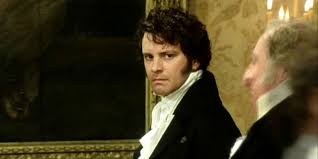
Colin Firth has been the delicious Fitzwilliam Darcy in 1995’s Pride and Prejudice, as well as the modern Mark Darcy in Bridget Jones’s Diary, Bridget Jones: The Age of Reason, and Bridget Jones’s Baby.

Hugh Grant as Daniel Cleaver, the Wickham character in Bridget Jones’s Diary and Bridget Jones: The Age of Reason, as well as Edward Ferrars in 1995’s Sense and Sensibility.

Victoria Hamilton was a three-peat. She can be found at Henrietta Musgrave in 1995’s Persuasion, Mrs. Forster in 1995’s Pride and Prejudice, and Maria Bertram in 1999’s Mansfield Park.


Robert Hardy took on the role of General Tilney in 1986’s Northanger Abbey as part of the Screen Two TV series. Later he was Sir John Middleton in 1995’s Sense and Sensibility.

Shirley Henderson has played Jude in Bridget Jones’s Diary, Bridget Jones: The Age of Reason, and Bridget Jones’s Baby.


Guy Henry has been both John Knightley in 1996’s TV version of Emma and Mr. Collins in Lost in Austen.

Bernard Hepton appeared as Sir Thomas Bertram in 1983’s Mansfield Park and was Mr. Woodhouse in the 1996 TV version of Emma.


Gemma Jones played the role of Mrs. Dashwood in 1995’s Sense and Sensibility, as well as Bridget’s “Mum” in Bridget Jones’s Diary, Bridget Jones: The Age of Reason, and Bridget Jones’s Baby.

Phyllida Law appeared as Mrs. Bates in 1996’s Emma and as Mrs. Austen in Miss Austen Regrets.


Sylvestra Le Touzel played the roles of Fanny Price in 1983’s Mansfield Park and Mrs. Allen in 2007’s Northanger Abbey.

Anna Maxwell Martin took on the role of Cassandra Austen in Becoming Jane. Later, she was cast as Elizabeth Bennet Darcy in Death Comes to Pemberley.


Jonny Lee Miller has made three appearances in Austen-inspired films. Back in 1983, he was a young Charles Price in Mansfield Park. Later, he was Edmund Bertram in 1999’s Mansfield Park. Finally, he took on the role of Mr. Knightly in 2009’s Emma.

Carey Mulligan has been both Isabella Thorpe in 2007’s Northanger Abbey and Kitty Bennet in 2005’s Pride and Prejudice.


Aishwarya Rai Bachchan was Meenakshi (the Marianne Dashwood character) in Kandukodain Kandukondain (“I Have Found It”), the Bollywood version of Sense and Sensibility, as well as Lalita Bakshi (the Elizabeth Bennet character) in Bride and Prejudice.

Jemma Redgrave portrayed Lady Bertram in 2007’s Mansfield Park, as well as Lady DeCourcy in Love and Friendship.


Irene Richard was Charlotte Lucas in 1980’s Pride and Prejudice and Elinor Dashwood in 1981’s Sense and Sensibility.

Blake Ritson took on the roles of Edmund Bertram in 2007’s Mansfield Park and Mr. Elton in 2009’s Emma.


Lucy Robinson was Mrs. Hurst in 1995’s Pride and Prejudice, Mrs. Elton in the 1996 TV version of Emma, and Janey in Bridget Jones: The Edge of Reason.

Greta Scacchi was Mrs. Weston in 1996’s Emma, as well as Cassandra Austen in Miss Austen Regrets.


David Savile first appeared as Charles Bingley in 1967’s Pride and Prejudice and later as Mr. Elliot in 1971’s Persuasion.

Daphne Slater made an appearance as Elizabeth Bennet in 1952’s Pride and Prejudice and later took on the role of Anne Elliot in 1960’s Persuasion.


Emma Thompson played Elinor Dashwood in 1995’s Sense and Sensibility, as well as Doctor Rawling in Bridget Jones’s Baby.

Sophie Thompson took on the roles of Miss Bates in 1996’s Emma, as well as that of Mary Elliot Musgrove in 1995’s Persuasion.


Sophy Vavasseur was Anne Thorpe in 2007’s Northanger Abbey and Jane Lefroy in Becoming Jane.

Tom Ward was a mere milita officer, Lieutenant Chamberlayne, in 1995’s Pride and Prejudice, but in Death Comes to Pemberley, he portrayed Colonel Fitzwilliam.


Peter Wight was Mr. Gardiner in 2005’s Pride and Prejudice, as well as Admiral Croft in 2007’s Persuasion.

Olivia Williams has been two “Janes.” She was Jane Fairfax in 1996’s TV version of Emma and Jane Austen in Miss Austen Regrets.

Renée Zellweger has played the same character, that of Bridget Jones in Bridget Jones’s Diary, Bridget Jones: The Age of Reason, and Bridget Jones’s Baby.

Okay, I known there are likely others to add to this list, especially, as I constructed it some two years prior. If you know of others that have been in at least two Austen-inspired films, add the information to the comments below. I also welcome your comments on memorable performances or on Austen films you have yet to view, etc. 

Posted in acting, Austen actors, drama, film, film adaptations, Jane Austen | Tagged , , , , , , , , , , , , , , , , , , , , , , , , , , , , , , , , , , , , , , , , , , , , , , | 5 Comments

Jane Austen and Babies, a Guest Post from Alexa Adams

This post originally appeared on Austen Authors on December 29, 2017. In it, Ms. Adams reflects on parenthood and children, as she has just delivered her second child two days prior to the post going live. Enjoy what she says of children and Jane Austen. 

I’m writing this in advance, but if all goes as planned, my new son will have been born two days ago (at 8:13 AM on the 27th, a healthy 22 inches long and nearly 9 and a half pounds!). As I prepare to welcome the newest member of the family, our very own Baby New Year, my mind inevitably turns to what Jane Austen had to say on the subject. Though not a mother herself, she is known to have doted on her many nieces and nephews, and the sentiments expressed in her novels regarding babies are very touching, though tinged with her typical razor sharp analysis of human behavior. While she might have some fun at the expense of those of us obsessed with our offspring, had she ever become a mother, one must suppose that she would have been an adoring one.

Emma has the most references to babies of the six novels, and it is the only one in which the babies (two of them) are fully realized creations rather than just props. They even have names! First we meet “Little Emma,” Isabella’s youngest, who acts a peacemaker between Mr. Knightley and “Big Emma” (no one tell her I called her that!). I think this scene illustrates how young children can put things in perspective, allowing us to overlook our grievances and irritations to concentrate on important things. They can even, as in the case of “Big Emma,” inspire an unaccustomed degree of humility and self-awareness:

She hoped they might now become friends again. She thought it was time to make up. Making-up indeed would not do. She certainly had not been in the wrong, and he would never own that he had. Concession must be out of the question; but it was time to appear to forget that they had ever quarrelled; and she hoped it might rather assist the restoration of friendship, that when he came into the room she had one of the children with her—the youngest, a nice little girl about eight months old, who was now making her first visit to Hartfield, and very happy to be danced about in her aunt’s arms. It did assist; for though he began with grave looks and short questions, he was soon led on to talk of them all in the usual way, and to take the child out of her arms with all the unceremoniousness of perfect amity. Emma felt they were friends again; and the conviction giving her at first great satisfaction, and then a little sauciness, she could not help saying, as he was admiring the baby,

“What a comfort it is, that we think alike about our nephews and nieces. As to men and women, our opinions are sometimes very different; but with regard to these children, I observe we never disagree.”

“If you were as much guided by nature in your estimate of men and women, and as little under the power of fancy and whim in your dealings with them, as you are where these children are concerned, we might always think alike.”

“To be sure—our discordancies must always arise from my being in the wrong.”

“Yes,” said he, smiling—”and reason good. I was sixteen years old when you were born.”

“A material difference then,” she replied—”and no doubt you were much my superior in judgment at that period of our lives; but does not the lapse of one-and-twenty years bring our understandings a good deal nearer?”

“Yes—a good deal nearer.”

“But still, not near enough to give me a chance of being right, if we think differently.”

“I have still the advantage of you by sixteen years’ experience, and by not being a pretty young woman and a spoiled child. Come, my dear Emma, let us be friends, and say no more about it. Tell your aunt, little Emma, that she ought to set you a better example than to be renewing old grievances, and that if she were not wrong before, she is now.”

“That’s true,” she cried—”very true. Little Emma, grow up a better woman than your aunt. Be infinitely cleverer and not half so conceited.

Anna Weston is perhaps the more interesting child, because it is through her that we learn a bit more about Austen’s perspective on children. She says:

Mrs. Weston’s friends were all made happy by her safety; and if the satisfaction of her well-doing could be increased to Emma, it was by knowing her to be the mother of a little girl. She had been decided in wishing for a Miss Weston. She would not acknowledge that it was with any view of making a match for her, hereafter, with either of Isabella’s sons; but she was convinced that a daughter would suit both father and mother best. It would be a great comfort to Mr. Weston, as he grew older–and even Mr. Weston might be growing older ten years hence–to have his fireside enlivened by the sports and the nonsense, the freaks and the fancies of a child never banished from home; and Mrs. Weston–no one could doubt that a daughter would be most to her; and it would be quite a pity that any one who so well knew how to teach, should not have their powers in exercise again.

In a society that generally valued boys more than girls, this is a strong argument in favor of the latter. Boys would, in time, be sent off to school or to learn a career, but a daughter belonged in the family home until she married. It is Mr. Woodhouse, however, through whom we receive a more timeless perspective on parenting. I can’t read the following without laughing, as it so clearly brings to mind the many alarms and terrors of being a first-time parent:

The others had been talking of the child, Mrs. Weston giving an account of a little alarm she had been under, the evening before, from the infant’s appearing not quite well. She believed she had been foolish, but it had alarmed her, and she had been within half a minute of sending for Mr. Perry. Perhaps she ought to be ashamed, but Mr. Weston had been almost as uneasy as herself.–In ten minutes, however, the child had been perfectly well again. This was her history; and particularly interesting it was to Mr. Woodhouse, who commended her very much for thinking of sending for Perry, and only regretted that she had not done it. “She should always send for Perry, if the child appeared in the slightest degree disordered, were it only for a moment. She could not be too soon alarmed, nor send for Perry too often. It was a pity, perhaps, that he had not come last night; for, though the child seemed well now, very well considering, it would probably have been better if Perry had seen it.”

I remember my pediatrician assuring me on my third pointless visit to his office that there really was no need to be alarmed by a stuffed up nose. How much time do you think poor Mr. Perry spends reassuring Mr. Woodhouse on any number of his many health alarms?

More than anything, Mrs. Weston as a new mother presents a picture of perfect domestic contentment. It is how I hope to feel (and not just appear) in the coming weeks, but if my previous child is any indication, I expect to have a more frazzled presence. I think I can trust, however, to be just as absorbed in my Jack as she is in her Anna, with very little attention for anything else:

Mrs. Weston, with her baby on her knee, indulging in such reflections as these, was one of the happiest women in the world. If any thing could increase her delight, it was perceiving that the baby would soon have outgrown its first set of caps.

The other prominently placed baby in Austen is that of Mr. and Mrs. Palmer in Sense and Sensibility. Unfortunately, these two are not models of domestic harmony. The baby is less a viable character and more a prop to illustrate the couple’s incongruity:

Mr. Palmer maintained the common, but unfatherly opinion among his sex, of all infants being alike; and though she could plainly perceive, at different times, the most striking resemblance between this baby and every one of his relations on both sides, there was no convincing his father of it; no persuading him to believe that it was not exactly like every other baby of the same age; nor could he even be brought to acknowledge the simple proposition of its being the finest child in the world.

However, no matter how silly the wife or dismissive the father, when it comes to that universal fear new parents have for the safety of their offspring, they have the common reaction:

He came, examined his patient, and though encouraging Miss Dashwood to expect that a very few days would restore her sister to health, yet, by pronouncing her disorder to have a putrid tendency, and allowing the word “infection” to pass his lips, gave instant alarm to Mrs. Palmer, on her baby’s account.

Call Mr. Perry!

I hope that now I have weathered six and a half years of parenthood I will not be quite such an alarmist as I was when my daughter was born. After all, I now know what to do for even the most dire sounding coughs, those terrifying head bumps, and can even handle projectile vomiting with aplomb. At least, I think I can. The number one parenting lesson I have learned is never to say never. So maybe I will find myself, once again, running to the doctors just to be assured that the horrifying symptom is perfectly normal and nothing to fear. Nothing like a newborn to turn us all into Charlotte Palmers.

Happy New Year, Janeites! It’s sure to be a memorable one in my house. Good fortune to us all in 2018!

Posted in Austen Authors, Guest Post, historical fiction, Jane Austen, literature | Tagged , , , , , | Comments Off on Jane Austen and Babies, a Guest Post from Alexa Adams

The Great Valley Road, Setting for My Novel, “The Road to Understanding”

When I began writing The Road to Understanding, I needed a perfect route to take my characters across the mountains between Virginia and Tennessee in the late 1780s.

Colonial_Roads_in_the_South copy2

Who Traveled Across The Great Valley Road?

The majority of the settlers in the area were of German extraction. They settled in the Shenandoah Valley of Virginia. They were known for their “isolationism” for their
farms were situated close to their church and school. These settlers ventured into the towns of New Market, Luray, Woodstock, or Harrisonburg only to trade. According on an article on Ancestry.com “…about 57 percent of the population of Shenandoah and Rockingham Counties and about 33 percent in Page and Frederick counties were of German stock.

Next came large numbers of the Scots-Irish, who were driven from their Ulster homeland by the 1717 drought and who sought economic opportunities in America. 
“Entire families ‘bumped over the Philadelphia road in big-wheeled Conestoga wagons, trailing cattle and dogs. Nearly all were Presbyterians, once employed in the Irish linen and wool trades. Half were so poor that the indentured themselves to obtain passage. By-passing theGermans, the Scots-Irish settled in numbers in Augusta, Rockbridge, Highland, Bath, and southward. Unversed in farming, they frequently chose rocky, hardscrabble land and later moved.’ By 1730 they established Winchester, and six years later Staunton. Then came Lexington, Fincastle, Big Lick (Roanoke), Draper’s Meadows (Blacksburg), Augusta and Rockbridge. (Parke Rouse, Planters and Pioneers; Life in Colonial Virginia; the Story in Pictures and Text of the People who Settled England’s First Successful Colony from its Planting in 1607 to the Birth of the United States in 1789. New York: Hastings House. 1968.)

newspaper-ad-for-the-eliizabeth-town-stagecoach-to-philadelphia-1781-df1h5d

Horse Drawn Stagecoach http://www.alamy.com Newspaper ad for the Elizabeth Town stagecoach to Philadelphia, 1781. Stock Image

Around 1750, newspaper advertisements began touting John Butler’s Philadelphia stage wagon, a coach with places for five passengers and a “boot” for mail replaced the canvas-covered wagon by 1780. “The name ‘stage’ came from the fact that the horses were changed at ‘stages’ along the way, usually at taverns. By 1800, the stagetraffic between Philadelphia and Lancaster, PA averaged one tavern per mile.
In addition to the human traffic on the Great Valley Road, the driving of cattle and hogs continued. About 120 cattle formed a drove, with a manager directing the movement from horseback and two footmen assisting. Pigs moved in droves numbering as many as 5000, driven by a swineherd.

“The road began as a buffalo trail, and was followed by Indians as the Great Warrior Path from New York to the Carolinas. At Salisbury, NC, it was joined by their Great Trading Path. As a road for pioneer settlers, it bore many names. Since the road progressed through the Shenandoah Valley, it came to be called both the Great Valley Road and the Shenandoah Valley Road. The link by the early 1740s from the Pennsylvania communities of Lancaster, York, and Gettysburg became known as the Philadelphia Wagon Road. This portion was also referred to as the Lancaster Pike, and its 63 miles was the most heavily traveled portion of the entire road. Another link, by 1746, was the Pioneer’s Road from Alexandria to Winchester. The section of the Great Valley Road near Fincastle and present-day Roanoke, VA, was known locally as the Harshbarger Road. By the early 1750s, the southwestern end of the road at Big Lick (Roanoke) was extended. Travelers could continue South into North Carolina, or head Southwest into eastern Tennessee.

“Some historical maps will show the road breaking off at Big Lick to go south to Salisbury and Charlotte, NC, and on to Augusta, GA. Still another route went to Savannah, GA. Some historians choose to include the Wilderness Road within the route of the Great Valley Road since early pioneers often used the entire set of trails to move from into Kentucky and the Ohio Valley. The Wilderness Road widened for wagon traffic, but it dates back to the discovery of the Cumberland Gap in 1750 and Daniel Boone’s blazing of the trail in 1775. Since the Shenandoah River formed the geography of the Valley, directions are reckoned by the river’s flow. Therefore, in the Valley, people say ‘up’ meaning ‘south’ and ‘down’ meaning ‘north’ because the flow of the river is from south to north. One goes up to Staunton and down to Martinsburg! The mountain ranges to the West of the Valley are the Alleghenies, and the ones to the east constitute the Blue Ridge chain.The general route of the Great Valley Road today is Interstate 81 or U.S. Highway 11.” (The Great Valley Road

ATOV Cover DARIUS FITZWILLIAM’s life is planned down to who he will marry and where he will live, but life has a way of saying, “You don’t get to choose.” When his marriage to his long-time betrothed Caroline Bradford falls through, Darius is forced to take a step back and to look upon a woman who enflames his blood with desire, but also engenders disbelief. Eliza Harris is everything that Darius never realized he wanted.

ELIZA HARRIS is accustomed to doing as she pleases. Yet, despite being infuriated by his authoritative manner, when she meets the staunchly disciplined Captain Fitzwilliam, she wishes for more. She instinctively knows he is “home,” but Eliza possesses no skills in achieving her aspirations.

Plagued with misunderstandings, manipulations, and peril upon the Great Valley Road between eastern Virginia and western Tennessee in the years following the Revolutionary War, Darius and Eliza claim a strong allegiance before love finds its way into their hearts.

This is a faith-based tale based on Jane Austen’s Pride and Prejudice.

Excerpt from The Road to Understanding (Chapter 1)

 Eliza Harris held her father’s arm tightly.

“Pardon me, Sir,” Mr. Harris said as they approached a tow-headed man whose hair displayed the signs of long hours in the sun. “I’m seekin’ the acquaintance of two gentlemen from the western counties.”

The man looked up and grinned widely. Eliza thought his the most congenial smile she’d ever encountered. “I suppose that be me, but I don’t count myself a gentleman,
not in the strictest sense of the word. I be a frontiersman who knows his Bible teachings. My name’s Charles Bradford. How may I be of assistance, Sir?”

Her father stretched out his hand in greeting. It was only then that Eliza noticed the man’s missing hand. 

Mr. Bradford shrugged in embarrassment. “A gift from good King George,” he said in explanation. “I beg your pardon.”

Mr. Harris shook off Bradford’s apology. “No need, Son. I’m proud to claim the acquaintance of those who served our fledgling country.”

A flush of color claimed Bradford’s cheeks, but Eliza noted how the man stood straighter. “I’ve learnt to do many things with the left one. Now, what business do you claim, Sir?”

Her father cleared his throat before confessing their purpose. “My name is Robert Harris, and this be my daughter Eliza. We heard two men from the western counties meant to set out soon for Jonesborough. We hoped to join them as far as the
Cumberland Gap. Perhaps we can find another group of settlers to continue the journey from there.”

Bradford nodded his greeting to Eliza while her father made his explanation. “Where ye from, Harris?” the man asked.

“Up near the Maryland–Virginia border. My family and I mean to claim land in the valleys in Kentucky County. I hear land be available for less than a dollar an acre.”

“Hears the same,” Bradford assured. “Do you also have sons?”

Her father patted the back of Eliza’s hand. “My only boy be but eight, but have no fear, Sir, my three girls be strong enough to survive the trek if that be yer concern, Mr. Bradford.”

“I’m just askin’ what I know my partner Mr. Fitzwilliam will ask. The journey be difficult even for sturdy men.” Eliza straightened her spine to appear taller than she was.

“My sisters Jonquil and Margaret and I can handle a team of oxen as well as any man, and none of us are afeard of a long walk.”

Bradford smiled kindly upon her. “I’ve no doubt, Miss. As for me, yer welcome to join up with us. Fitz means to see several settlers to the mountain territory, but I’m certain he’ll not object to add a few more to our party.”

“Where’s Mr. Fitzwilliam?” Eliza inquired.

“To the east in Fincastle,” Bradford said with a smile of amusement. “Plans to get himself hitched to my youngest sister.”

“And you won’t attend the wedding?” Eliza asked. It appeared odd to her that both men wouldn’t retrieve the lady.

“Nah,” Bradford said with a shrug. “I left home at eighteen to join General Washington. My pa’s house no longer exists. Only been home once since leaving to fight. Wade Heywood bought the land when my pa passed, and he married my eldest sister, Louisa. There’s nothing for me there. My sister’s neighbors recall a whole man and look upon me as if I’m a derelict. I prefer the wilderness where a man be judged for what he accomplishes, not for his failures. My pa left me a small legacy, and I mean to earn my fortune upon the frontier.

“As to the wedding, Fitz will escort several families west to join up with us. He and Caroline will share a small wagon until we meet up again, and then I’ll claim the smaller one and permit Fitz the larger. There’s no need for a man without a wife
to hold back those who do. Moreover, I consider myself fortunate to claim Fitz to friend. Most wouldn’t consider my needs in such a matter. Even takin’ a small wagon, it’ll be good to have Caroline close. Of late, I find I’m missin’ much of my New York
and Virginia roots. The winter in the mountains reminds me of home.”

“It sounds as if you’ve found yourself a friend with principles,” her father observed.

“He’s a Christian man and the best,” Bradford declared.

“If not for Fitz, I’d be dead in some unmarked cornfield posing as a battleground.”

The man’s words sent a shiver of dread down Eliza’s spine. She’d never been so close to those who’d fought in the war of revolution.

“When do you expect to depart?” her father asked.

“Three to four days. A week at most if’n we get rain. Can you be prepared by then?”

“Absolutely,” her father declared. “Provides us time to restock some of our supplies. We’ll be prepared to leave when you and Mr. Fitzwilliam make the call.”

***

Watching the McClendons cuddle together upon the wagon seat did little to ease Darius’s bruised pride. The couple had professed sorrow at not taking Caroline’s acquaintance, for before he’d ridden to Fincastle, Darius had spoken of his betrothed  to the pair. From his own observation, he didn’t think the McClendons would even know of Caroline’s absence if he’d not informed them of it. Married only a few months, they were rarely seen not holding hands.

In truth, the scene fueled Darius’s anger. He couldn’t say he would be so openly affectionate with Caroline as were Andrew and Marti McClendon, but he’d convinced himself he and Miss Bradford would know contentment. 

“Much longer?” Geoffrey Shannon asked as he brought his horse alongside the one Darius rode.

Darius wasn’t much pleased to add Shannon to their party, but he’d possessed no legitimate excuse to deny the man. He’d known Shannon when he was still in England, and it was at Darius’s suggestion that the Shannons sought their fortunes
in America, and that brought them to his notice a second time. If Darius had known then what he knew now, he’d have kept his counsel.

“Can’t blame the son for the sins of the father,” he thought when he looked upon the man.

With Shannon on the other side of the line of muskets, they’d been enemies during the war, but Shannon had claimed American roots since then. He’d been in the colonies long enough that the English would no longer consider him an “English” man. Even Shannon’s British accent had softened somewhat, picking up the cadence of those born in America. Darius’s conscience said that many of the founding fathers had come to America for their freedom, and he should provide Shannon his forgiveness for a crime the father committed. God would expect it of him. And so,
against his better judgment, Darius had permitted Shannon to claim a spot among the traveling party.

“Be in Wythe Court House by this time tomorrow. It’ll take at least two days to bring the group together. Hope to set out for Franklin by week’s end. The others might wish to stay for one last Sunday service before leaving the closest thing to civilization
this side of the mountains.”

“In that case, I might ride over North Carolina way for a day or two,” Shannon said. “I’ve relations that direction.”

Darius warned, “Can’t wait for your return if the others mean to claim dry weather.”

“No worries,” Shannon said with a grin. “I travel light. If you leave, I’ll follow in a day or two. I’m certain several of those waiting for you are well loaded with supplies. You’ll not make as good a time when you add another half dozen wagons to these
three.”

“Will the boy come with us?” Darius glanced back at the small ox cart owned by Shannon. The fellow had won a Negro child, an ox, and a flat wagon in a card game. The boy of no more than ten to twelve years drove the slow moving cart holding
Shannon’s few belongings, some supplies, and an impressive chest of which Darius had yet to view the contents.

“Finny will wait with the cart in Wythe Court House. It’ll be my contract with you. Everything I own be on that cart. I shan’t forget to return.”

Although Darius held his doubts regarding Shannon’s character, his Christian faith said he must play the role of Good Samaritan. If the worse came, he could send Shannon out on his own or leave the man at one of the forts.

“Before you set out for greener lands, I must reiterate: I won’t tolerate gaming for  more than a few pebbles. The families that travel with me are under my protection. Do I make myself clear?”

“I’d expect nothin’ less, Fitzwilliam,” Shannon declared in what sounded of sincerity, but Darius couldn’t shake the unease he experienced.

The Road to Understanding: A Pride and Prejudice Vagary  is available on Amazon, Kindle, Kobo, Nook, and CreateSpace. 

Posted in America, book excerpts, book release, books, customs and tradiitons, eBooks, George Wickham, historical fiction, Pride and Prejudice, romance, Uncategorized | Tagged , , , , , , , , | 4 Comments

A Closer Look at “The Road to Understanding”

In my short eight years of writing fiction, I have written a variety of genres/settings: retellings, sequels, Regencies, paranormal, cozy mysteries, vagaries, contemporaries, and inspirational. I will admit many of my 34 novels fall under the big “umbrella” of Regencies, I do have one set in the Georgian period (prior to the Prince Regent ruling in place of his father George III), but it is set on the American frontier after the American Revolutionary War. The Road to Understanding takes place on the Great Valley Road between what is current day Roanoke, Virginia, and Johnson City, Tennessee. The time is 1787, and the five counties that now form part of eastern Tennessee had joined together as a new state: the state of Franklin, named after Benjamin Franklin. One of the reviews says…

“… the chemistry between our hero and heroine was such that this reader felt like I was watching a John Wayne/Maureen O’Hara flick. The dialogue was so sharp and the misunderstandings proved quite diverting and frustrating at the same time.”

The characters are NOT Austen’s most famous couple placed in a new setting, but you will recognize the pair, nonetheless. I am one who believes that although Austen writes memorable characters, her plots are masterful and easily translated into new situations. For example, Pride and Prejudice can be found in Bridget Jones’s Diary, You’ve Got Mail, North and South (from Elizabeth Gaskell), Bride and Prejudice, and any other book or film featuring an uptight censorious man and a “free spirited,” independent female. So, why not an American version of my favorite book?

Colonial_Roads_in_the_South copy3The Great Valley Road began as a buffalo trail, used later by Indians as the Great Warrior Path from New York to the Carolinas. At Salisbury, North Carolina, it joined what was known as the Great Trading Path. The road held many names. As it passed through the Shenandoah Valley, it came to be called both the Great Valley Road and the Shenandoah Valley Road. The connection called the Philadelphia Wagon Road laced its way through Pennsylvania. This portion was also referred to as the Lancaster Pike, and its 63 miles was the most heavily traveled portion of the entire road. The section of the Great Valley Road near Fincastle (Virginia) and present-day Roanoke, Virginia, was known locally as the Harshbarger Road. The southwestern end of the road at Big Lick (Roanoke) was extended. Travelers could continue south into North Carolina or head southwest into eastern Tennessee.

State_of_Franklin copy3In August 1784, four counties of western North Carolina declared their independence and formed the state of Franklin. In April of that same year, North Carolina had ceded the land between the Allegheny Mountains and the Mississippi River to the U. S. Congress. The settlers in the area worried that Congress would sell the territory to France or Spain to pay off war debts. As a result, North Carolina retracted its cession and organized a “governing” body for the territory. Simultaneously, the counties petitioned Congress to form a separate state of “Frankland.” The majority of the states agreed, but the proposition did not receive a 2/3 majority required by Congress.

Franklin survived but four years for it could never achieve a strong enough economy. John Sevier, its governor, approached the Spanish for aid. North Carolina feared the Spanish claim to land within its control and had Sevier arrested. The territory returned to North Carolina’s protection in 1788 because the Cherokee, Chickamauga, and Chickasaw Indians increased their attacks in the area.

ATOV Cover 

The Road to Understanding: A Pride and Prejudice Vagary

DARIUS FITZWILLIAM’s life is planned down to who he will marry and where he will live, but life has a way of saying, “You don’t get to choose.” When his marriage to his long-time betrothed Caroline Brad

ford falls through, Darius is forced to take a step back and to look upon a woman who enflames his blood with desire, but also engenders disbelief. Eliza Harris is everything that Darius never realized he wanted.

ELIZA HARRIS is accustomed to doing as she pleases. Yet, despite being infuriated by his authoritative manner, when she meets the staunchly disciplined Captain Fitzwilliam, she wishes for more. She instinctively knows he is “home,” but Eliza possesses no skills in achieving her aspirations.

Plagued with misunderstandings, manipulations, and peril upon the Great Valley Road between eastern Virginia and western Tennessee in the years following the Revolutionary War, Darius and Eliza claim a strong allegiance before love finds its way into their hearts.

This is a faith-based tale based on Jane Austen’s Pride and Prejudice.

Kindle       Kobo      Nook      Amazon     

Excerpt from Chapter 6…

He’d avoided her for the remainder of the morning and through the midday meal by inventing tasks to keep busy. Even so, Darius’s mind was rarely far from the woman. He had congratulated himself when he managed not to look in her direction as Eliza and Miss Jonni crossed the small clearing to enter the wood line. The pair carried a blanket, and Darius assumed they meant to provide each other some privacy as they saw to their personal needs.

He wasn’t an idiot, but Darius never thought much on how a woman attended to such things. He’d been but ten when his mother passed while giving birth to his sister. After that, it was just he and his father and Grace. Grace was eight when Darius departed for the war, and until five year prior, he’d lived alone or with Charlie’s family. 

It was only after he’d attended a tent meeting in a small town upon the South Carolina coast that he’d known any peace from his nightmares of the war. The preacher spoke at length upon forgiving oneself in the same manner as a man prays for God to do. He learned something that night of time. Like John and Simon Peter, he’d found hope where others saw nothing but an empty tomb.

Darius was far from the epitome of a “good” Christian, but he possessed a deep felt faith in God’s existence and God’s goodness, which had served him well since he’d reached his maturity.

“Some were wondering if you mean to reach Sapling Grove by tomorrow evening,” Charlie said as he sat upon a downed tree trunk.

“That might be too much for the animals. The mountains grow steeper,” he observed. “I’d say if the weather holds we’d be at the fort by day after tomorrow. We’d also arrive early enough in the day to permit laundry and socializing.”

The words barely crossed his lips when he heard her call. “Captain!”

Immediately, Darius was on his feet and running in the direction where he observed Eliza’s entering the woods. He responded purely from instinct, pushing through the brush and swatting away low tree limbs. He heard Charlie’s short pants as his friend trailed after him. Darius’s heart beat out the questions: Wild animal? Snake? Renegade Indian? Or a different sort of enemy? Shannon?

Shouldering his way through the undergrowth, Darius was upon the scene within seconds. He came to a stumbling halt to discover an Indian holding the blanket once belonging to the ladies. Miss Jonquil hunkered behind Eliza in a state of dishabille. Darius didn’t know whether to be frightened for Eliza’s safety or that of the cluster of five Cherokee braves. 

When she spotted him, Miss Eliza’s hands fisted at her waist. “Tell him the blanket belongs to me,” she ordered.

Despite the situation, a smile claimed the corners of Darius’s lips: Eliza Harris was like no woman he’d ever known. Whoever earned her regard would never spend a day without excitement.

“Do you think I speak fluent Cherokee, or do you suspect our Indian friends here to be fluent in English?” he asked as edged closer to the Indian holding the blanket.

Behind him, he heard the click of Charlie’s gun, but he motioned his friend to wait.

“You must do something,” she ordered without regard to the danger in which they found themselves.

“I intend to,” Darius said as he gestured to the brave to return the blanket to Miss Eliza’s outstretched hand. The Indians didn’t appear to be overly aggressive, but Darius was of the nature to be cautious.

The brave shook off Darius’s gesture before offeringhim a bargain: the blanket for one of the women. The Cherokee motioned for Darius to take the blanket and to turn over either Miss Jonni or Eliza.

Darius stepped around the Indian to stand before Eliza. “Hequu asaquaningodotu,” he said, enunciating two words he knew of the Indians’ language: “Woman” and something he hoped meant “possession.”

He reached a hand in Eliza’s direction. “The woman is mine,” he declared in his most authoritative voice, one for which he’d rarely found a use since the war’s end.

“I am not yours,” Miss Eliza hissed from behind him.

Darius spoke in low tones so the Cherokees couldn’t hear their discussion. “The man wishes to trade my woman for the stolen blanket. Which is more important?’ He extended his hand again. “Come stand beside me,” he whispered.

“But Jonni…” Eliza began in protest.

“Charlie will see to your sister’s appearance,” he said firmly. “You possess the choice of a bit of embarrassment or to become a Cherokee squaw.”

He suspected Miss Jonquil presented her sister a nudge, but, nevertheless, Eliza accepted his hand, and Darius tugged her safely against his side. Without asking her permission, he planted a kiss upon her upturned forehead. “Smile at me,” he murmured through a gritted toothy smile.

Although he expected reluctance, what he discovered upon Eliza’s features shook him to his core: Welcome. She’d welcomed his presence.

Despite being an even-tempered man, he thought to kill the Indians before him so he might dispense with this farce and claim the lips that enticed him completely.

When Charlie stepped before Miss Jonni, Darius returned to his sense.

He repeated the two words again – “Hequu asaquaningodotu”– before he clutched Eliza to him. If the Indians attacked, he meant to be in a position to protect her from harm.

Hequu asaquaningodotu,” Charlie repeated behind him. Darius suspected his friend had a like hold upon Miss Jonquil.

The leader of the group tossed the blanket to one of the younger braves. Laughter followed his actions, but Darius waited for the man’s next move. For several elongated seconds, no one stirred, but then the brave presented Darius a nod of respect before motioning his men into the underbrush.
And still Darius didn’t move.

And still Darius didn’t move. The heat of Eliza along his side was all he ever wished to know.

“You may release me, Mr. Fitzwilliam,” she grumbled in disapproval. 

Even so, Darius paused to relish her closeness before he loosened his hold on her. For a brief second, he considered claiming Eliza’s mouth for an intimate kiss and relish the consequences of his daring, but a shove against his side said the lady wouldn’t put up with his manipulations further, and so he opened his arms to permit her escape.

“Are you injured, Jonni?” she was asking before Darius could reclaim his wits.

“Just shaken,” her sister responded.

Charlie shrugged from his buckskin jacket to provide Miss Jonquil a moment to right her dress, which was hiked up in th back in a most unladylike manner. Eliza grabbed the jacket, and Charlie judiciously stepped away to provide the ladies a bit of privacy.

Still looking in the direction the Indians had gone, Darius asked, “Did you not hear their approach?”

From behind him, he heard the tut of disapproval return to Eliza’s tone. “We weren’t expectin’ savages,” she protested.

“They weren’t savages,” Darius insisted. “We are. This was their land, and they’re strugglin’ to learn how to survive with our intrusion. They weren’t a war party, for they wore no paint on their bodies, but that don’t mean they weren’t dangerous. If someone invaded my land and attempted to drive me off it, I’d fight also.” 


Before he finished his speech, she was beside him again. Eliza’s eyes flashed with indignation. “I find it very convenient,” she accused, “when a man places his faults on the shoulders of another.”

“For what in the blazes do you take me to task this time? Did I err in savin’ yer life? Perhaps I should’ve chosen the blanket,” he fumed. Darius never knew another woman who so enflamed him as this one did.

“If I negotiated with the Cherokees, there’d have been no trade,” she asserted.

Darius towered over her. “Then next time, don’t call out for me. If you wish to bargain with the Indians, you’ve my permission to negotiate a trade. As long as it’s your father’s goods, and not mine, I’ll give not a fig.”

“What goes on here?”

Darius looked up to view a red-faced Harris and several other men watching their spat. Among them was a smug-lipped Shannon.

“Nothing,” he growled as he turned to exit. “Nothin’ except your daughter can’t be pleased, even when a man be savin’ her hide from the Cherokees!” With that, Darius stormed away. He heard Charlie making an explanation to the gathered onlookers.

Still angry, Darius instructed an anxious-looking MacCaffey, “Tell them we roll out in a quarter hour. We must put distance between that party of Indians and us, just in case the Indians decide not to be satisfied with a blanket. Little do the Cherokees know they got the better of the bargain! At least a blanket will keep a man warm at night. A woman’s cold regard is sour to swallow.”

Posted in American History, Appalachia, book release, British history, Georgian England, Georgian Era, Great Britain, historical fiction, Jane Austen, marriage customs, Uncategorized | Tagged , , , , , , | 1 Comment

UK Underground: Chistlehurst Caves, the Setting for “A Touch of Emerald: The Conclusion of the Realm Series”

p.txtYesterday, we had a closer look at Book 8 of my Realm series, A Touch of Emerald. This piece is on where much of the action of the story takes place.

Near the railroad station in what is now Bromley (southeast of London), one finds the Chislehurst Caves, a well-developed tourist attraction for the area. These caves serve as the setting for much of the newest novel in my Realm series: A Touch of Emerald.

The name “caves” is a bit misleading. The caves are really man-made chalk and flint mines. They were first mentioned in “literature”/documents circa 1250. They were last believed to have been worked in the 1830s. Three separate work areas encompass some two and twenty miles of passages.

“The chalk layer is sandwiched between two harder layers of rock, which gives the passages their tops and bottoms. These days, the sections are called Saxons, Druids, and Romans, because of the age of the workings, and each set of workings has differently shaped passages.” (BBC)

In reality, antiquarian, Dr William Nicholls, gave the caves their names in the Journal of the British Archaeological Association (1903).p-1.txt The caves were first opened to the public in the early years of the 1900s. “…the landlord of the Bickley Arms, in whose grounds the entrance lay, installed coloured electric ‘glow lamps’ in what later became known as the Saxon Caves and charged a small admission fee.” (Teaching Times) Nowadays, some 50,000 visitors take the tour of the caves, which are located at the bottom of Old Hill, Chislehurst.p.txt The chalk was used by the English to make plaster and water paint (whitewash). Flint may have been used to make tools. It is assumed many of the flintlock rifles used at the Battle of Waterloo used flints mined at Chislehurst.


“The Druids section is the oldest and most complicated system in the caves. It may date from between 5000–8000 years ago. There is a theory that the Druids section may have been used for human sacrifice, and there appears to be an altar with a piece cut out to receive the sacrifice’s blood. Other theories suggest that the ‘altars’ were merely platforms left by miners to allow easy access to the roof! It was suggested that the deep well in the Druids section would have got in the way of such ceremonies. In the Druids section is a metal drum, which when banged, reverberates for miles. This might have been a very effective signaling or warning system.” (BBC)

The chalk tunnels range between 40 feet and 95 feet below ground. The caves were used during both World Wars. In WWI they served as an ammunition depot. The Woolwich Arsenal stored high explosives in the caves. “A narrow gauge railway was installed so that the boxes of TNT and Picric Acid could be taken underground by small trains pulled by battery powered electric locomotives. (Teaching Times)

With the shape of the caves the ammunition was relatively safe. Even if one area was breached or there was an accidental explosion, the remainder of the ammunition would remain intact. Carvings from that period can still be seen on the walls. Army personnel are said to have included a carving of Nurse Edith Cavell, who the Germans executed by firing squad on the morning of 12 October 1915 in Brussels, Belgium.p-5.txt In the years between the two great wars, as well as the years following WWII, the caves were used for mushroom growing.

“During the 1960s and 1970s, the caves were used for music, including skiffle, jazz, and later rock and roll. Because of the acoustics, as many as five different bands could be playing close together without interfering with each other. Bands and artists such as the Rolling Stones, the Beatles, David Bowie, and Jimi Hendrix used the caves as a venue. The caves have often been used by film and TV companies. A full-length Sci-fi film Inseminoid was made, and Jon Pertwee as Doctor Who came face to face with ‘The Mutants’ in the caves (Tour guides still point to the silver paint left on the walls of the cave from this show.).”

(BBC) The TV show Merlin has also filmed within the caves. p-3.txtFor a short history of Chislehurst Caves, check out Dr. Eric Inman’s book. To learn more of the rumors of The Ghosts of Chislehurst Caves have a look at the book by James Wilkinson, who interviewed many of the caves’ tour gp-2.txtuides. (The caves play a prominent role in the conclusion to my Realm series. Part of A Touch of Emerald takes places in Chislehurst Caves. 

Images are from…
Best Places to Visit in Kent http://www.kentattractions.co.uk/index.php/chislehurst-caves.html
Stuff About London http://stuffaboutlondon.co.uk/chislehurst-caves/the-chislehurst-caves/
Curious Kat’s Adventure Club http://www.meetup.com/Curious-Kat-Adventure-Club/events/186121262/
Y Travel http://www.ytravelblog.com/subterranean-london/
Kent History Forum http://www.kenthistoryforum.co.uk/index.php?topic=8212.0

A Touch of Emerald: The Conclusion of the Realm Series 

Four crazy Balochs. A Gypsy band. An Indian maiden. A cave with a maze of passages. A hero, not yet tested. And a missing emerald.

For nearly two decades, the Realm thwarted the efforts of all Shaheed Mir sent their way, but now the Baloch warlord is in England, and the tribal leader means to reclaim the fist-sized emerald he believes one of the Realm stole during their rescue of a girl upon whom Mir turned his men. Mir means to take his revenge on the Realm and the Indian girls child, Lady Sonalí Fowler.

Daniel Kerrington, Viscount Worthing, has loved Lady Sonalí since they were but children. Yet, when his father, the Earl of Linworth, objects to Sonalí’s bloodlines, Worthing thinks never to claim her. However, when danger arrives in the form of the Realms old enemy, Kerrington ignores all caution for the woman he loves.

Amazon   http://www.amazon.com/Touch-Emerald-Conclusion-Realm/dp/1516812069/ref=sr_1_2?ie=UTF8&qid=1441298408&sr=8-2&keywords=A+Touch+of+Emerald

Kindle    http://www.amazon.com/Touch-Emerald-Conclusion-Realm-ebook/dp/B014B6KG02/ref=sr_1_1?ie=UTF8&qid=1441298424&sr=8-1&keywords=A+Touch+of+Emerald

Nook   http://www.barnesandnoble.com/w/a-touch-of-emerald-regina-jeffers/1122563582?ean=2940151034135

Kobo    https://store.kobobooks.com/en-US/ebook/a-touch-of-emerald

CreateSpace    https://www.createspace.com/5665730


Posted in architecture, British history, buildings and structures, Great Britain, real life tales, Regency era | Tagged , , , , , , , , , , | Comments Off on UK Underground: Chistlehurst Caves, the Setting for “A Touch of Emerald: The Conclusion of the Realm Series”