 Regina, I’m so happy to be back visiting your blog today with my Mother’s Day Anthology, A Mother’s Touch. This book is a collection of seven stories inspired by Jane Austen’s Pride and Prejudice. See Lady Anne through the eyes of her daughter, Georgiana, in Lady Anne’s Quilt. Experience the relationship young Fitzwilliam has with his mother in An Act of Kindness and Our Special Day. Then join Fitzwilliam and Elizabeth and discover how wonderful it is to have Lady Anne’s influence in their lives as they become parents in Our Future.
Today, I wanted to begin with a scene between Elizabeth and Georgiana from the first story in the collection. Lady Anne’s Quilt was inspired by my love of old quilts and, of course, the famous quilt which resides at Chawton House made by Jane Austen, her mother, and Jane’s sister, Casandra. The Austen quilt is quite unlike the quilts we are used to seeing these days since it has no batting between the top and bottom and is strategically tacked together at various places to keep it from ballooning. By today’s quilting standards it would be considered a coverlet. This particular picture was taken by a Facebook friend, Jane Brereton, who has been making a replica of the quilt.
Many of the quilts made during Regency England were nothing like what we see here. In most cases they were whole cloth quilts and not pieced as this one is. Interestingly, the centre of the quilt is made from a Chintz (glazed) printed floral medallion panel. The panel is surrounded by row after row of diamond shapes and a boarder of similar shapes which are cut smaller. It is owned by one of the descendants of Jane Austen’s siblings and has been on display at Chawton House for decades.
Let us take a look at a scene from the first story in anthology and find out how the discovery of Lady Anne’s quilt plays an important part in my book. This particular excerpt is called Forgotten Treasures. At this point in the story, Elizabeth is nearing her confinement and you can imagine that everyone is anxiously awaiting the birth of the Darcy’s first child.

The Nursery
Looking about the nursery, Elizabeth was pleased with all she saw. It had taken weeks to restore this blessed room. Lady Anne first oversaw its decoration before William’s birth. The sunny yellows and meadow greens were cheerful and inviting. A beautiful picture of the pond, which Lady Anne had painted so many years ago, now hung over the mantle, newly framed. In Elizabeth’s mind, this room would be a cherished place for years to come. Reflecting upon her many blessings, Elizabeth’s musings were interrupted by the sudden entrance of Georgiana.
“Elizabeth, I knew I would find you here.” The young woman beamed. “I have so much to tell you.”
Looking up at her sister Elizabeth smiled taking note of her disheveled appearance. Her dress was soiled, and there was an obvious smudge on her cheek where an errant curl was loose. “My goodness, Georgiana, what have you been up to?”
The girl blushed in embarrassment. “Forgive me; I went to the attics with Rebecca and Jamison and was eager to tell you what we found. Mrs. Reynolds mentioned there might yet be another box of toys for us to go through. With the babe nearly here, I could not wait for the servants to find it, so I took it upon myself to do so. Just look!” Beaming, Georgiana handed Elizabeth a brown cloth sack and watched as her sister carefully untied the string and poured the contents into her lap.
“Tin soldiers! How delightful! Why, there are so many, and they all appear to be in excellent condition with the exception of this poor little man who is missing an arm.”
“I have no doubt that William and Cousin Richard spent hours playing with them when they were boys. I had the rest of the box taken to the work room for cleaning before you look through and decide which toys you would like to have in the nursery.
“Elizabeth,” she continued with excitement. “I found something else. When we were looking for the box of toys, I happened upon the area where my mother’s trunks are being stored. There was one particular trunk which had my name on it. The trunk is being carried to my sitting room at this very moment, and Mrs. Reynolds knew just where to look for the key.” She held up a small bronze key attached to a thin green velvet ribbon. “While William is overseeing the first of the harvest today, I thought the two of us might look through the trunk.”
“Why, of course, I would love to,” Elizabeth said, returning the soldiers to their sack. “And if you would please give me your hand, I will gladly join you.” She chuckled. “While I do enjoy sitting here with our little one, it is becoming more and more difficult to rise from this rocking chair.” Georgiana graciously held out her hand for Elizabeth to take and the two sisters left the nursery arm-in-arm.
Georgiana’s Bedroom
To Elizabeth’s delight, Georgiana giggled and talked almost non-stop as they traversed the hallway towards the girl’s suite of rooms. Though still young, at nearly seventeen, she was no longer the shy girl Elizabeth had first met in Town so many months ago. Under Elizabeth’s guidance, her sister had become more confident and was not afraid to assert herself when the situation called for it.
Because she was fond of pink, Georgiana’s rooms were decorated in soft rose hues and creamy whites. The day was sunny, and her walls were covered with an assortment of rainbows created by the light which filtered through a small bevelled window. William had purchased the window while on a trip to Scotland and had it installed before her last birthday.
“Georgiana, your rooms are lovely today.” Elizabeth spoke as they passed through the doorway.
Georgiana barely acknowledged her comment as she quickly pushed two chairs close to the trunk and knelt in front of it. Holding the key in her trembling hand, she placed it in the keyhole and maneuvered it until she heard a click. With a little more effort, the lock was opened. The girl carefully lifted the lid and propped it back on its hinges.
“Oh my,” Elizabeth said with admiration while watching Georgiana pick up an elegant christening gown covered in delicate white lace and tiny seed pearls.
“This gown must have been mine,” Georgiana proudly exclaimed as the women examined the garment and remarked about the fine needlework.
Elizabeth reached for a beautiful little matching cap and gently fingered several tiny rosettes and ribbons, wondering how it would look on a new born. “Dearest, there is a note inside of the cap.” She unfolded the yellowed paper, and the two women read it together.
“Elizabeth,” Georgiana said with tears in her eyes as she clutched the note and cap to her breast. “I cannot believe my Grandmother Fitzwilliam made this and that both my mother and I wore it at our christenings.”
“My dear, it is a wondrous gift,” Elizabeth lovingly said, giving her sister a hug and handing her a handkerchief. “Your mama must have loved you so very much to have saved these precious things for you.”
“I know,” she answered wiping the last of the tears from her eyes.
“Shall we continue?” Elizabeth asked. “It appears there are many more forgotten treasures in this trunk, and once we are finished looking through everything, we can record them in the journal we started last summer.”
“I would like that.” Shortly after meeting Georgiana in London, Elizabeth had recognised the girl’s need and desire to learn more about the mother she could no longer remember. At Elizabeth’s suggestion, Georgiana began a journal which included stories and remembrances from family members and longstanding servants, such as Mrs. Reynolds. Thus far, it had become a treasured keepsake for Georgiana, a commemoration of the woman she had lost so many years ago.
The next item to catch their interest was an oblong box wrapped in an elegant Persian shawl made of fine silk and adorned with an assortment of embroidered flowers. Georgiana wrapped the shawl around her shoulders saying, “I wonder if Mama might have worn this to a dinner party or even a ball.”
Inside the container, the women found several jewelled combs, two silk fans, numerous used dance cards and a small box filled with the dried petals of a faded white flower. Wiping the smudge from Georgiana’s cheek and securing her loose hair with one of the combs, Elizabeth handed her a fan. “Now, let me see if you can use this to hide your true feelings from an enthusiastic suitor.”
“Elizabeth, you are too funny!” Georgiana giggled before opening the fan and looking demurely over the edge.
“Very pretty,” Elizabeth remarked taking one of the dance cards and placing it on her wrist. “If you will indulge me, I think we should practise.” Straightening her back as best she could and lowering her voice Elizabeth said, “Miss Darcy, what a pleasure it is to see you again this evening.”
Georgiana could not help but giggle again. Playing along with Elizabeth’s tease, she sat tall and simply answered, “Thank you.”
“If you are not already engaged, may I have the privilege of dancing the next set with you?”
“Oh dear,” she pouted. “I believe my dance card is almost full.” Then shyly smiling she continued, “If I may, it will take me but a moment to check the entries.”
Georgiana took the small card from her wrist in order to feign reading of its contents. Suddenly gasping, she exclaimed, “Elizabeth, look here! It is my father’s name! He has not only claimed the supper set, but is listed for the final dance. Is that not gallant?”
“Indeed!”
“Please, I must look at the other cards. I want to know how ardently he pursued her.” Quickly looking through several more of the cards she exclaimed, “Can you believe it? His name is on each card!”
“Yes, but I find there is one other name which appears almost as often on these three.”
“Who?!” Georgiana demanded, her brows knitting in displeasure.
“When your father has not secured the most important sets of the evening, it appears that those entries have been given to a Lord Montague. Look at this card. He has claimed the opening and the closing set. On this one, he has taken the supper set and one other.
“I think I do not like Lord Montague.” Georgiana continued to frown. “His name reminds me too much of Romeo and Juliet, and that story did not end well.”
“Perhaps he was a friend of your family and nothing more.”
“Perhaps,” Georgiana blandly answered.
Elizabeth tried not to laugh at the girl’s guarded nature concerning her parents as she took one last look through the box to see if they had missed any other cards. “Ah!” she declared. “There is one last card, and it is dated towards the end of the season.” Georgiana peered over her shoulder as Elizabeth read through the names.
“I see your father’s name is listed for the first, the supper and the close. Lord Montague’s name is nowhere to be found. It appears, my dear sister, that at the time of this particular ball, your father must have declared himself, and your heritage was secured.” The two women broke into laughter and hugged.
Within minutes, the remainder of the upper rack in the trunk had been emptied. Below, the women found a large package wrapped in plain muslin.
“It is quite soft. I wonder if it could be a bed covering of some kind. Please help me up,” Elizabeth said reaching for Georgiana’s hand. “I think it would be better if we took it to your room and opened it on the bed.”
Once Georgiana placed the package on the bed, the two women began untying the ribbons which bound it together. Pulling back the muslin wrapping, a beautiful cloth quilt was revealed.
“Oh my,” remarked Elizabeth as they began to unfold the quilt. “This is stunning and would make a beautiful coverlet for your bed. The workmanship is superior to any I have ever seen. Just look at the precision where the points of these patches are perfectly joined. I wonder who could have made it.”
“Elizabeth,” Georgiana quietly said. “I believe my mother made this quilt. Her initials are embroidered within the stitches of this square. A … A … F. Anne Amelia Fitzwilliam,” she murmured while lightly brushing her fingertips over the fine letters.
Continuing to spread the quilt across the bed, the two women studied the various sections as though they were reading the pages of a storybook. Beginning in the very centre, a beautiful chintz panel of colourful flowers spilled forth from a woven basket to form a large English medallion. It was set on point and several of the flowers were embellished with French Knots and delicately embroidered stems. The basket was surrounded by row after row of cloth flowers cut in identical diamond shapes. The quilt was made in pleasing hues of pinks which were accented with creamy whites, yellow and grey. Remarkably, the quilt looked as though it had been made especially for Georgiana’s beautiful rooms.
“I am truly stunned by the beauty of this quilt,” Elizabeth commented as she continued to smooth the edges and examine the embroidered flowers displayed in each block of the border. “I cannot comprehend the hundreds of stitches required to make this work of art. Why, it must have taken months to complete.” Straightening out the last corner, her hand felt a protrusion on the underside of the cloth.
“Georgiana, there is something here.” A small casing had been sewn onto the back of the quilt and within it laid a folded letter, written on a thin sheet of paper. Elizabeth removed the letter and handed it to Georgiana who glanced at it several moments before giving it back.
“Please, will you not read it aloud? I find I cannot.” Nodding, Elizabeth accepted the letter and began.
My darling Georgiana,
Your Grandmama Fitzwilliam began this quilt when I was but a young girl. She purchased the fabric and cut the pieces with the intention of completing it for my sixteenth birthday. Alas, she did not live to complete it, and the quilt remained untouched for many years. When I was sent to live with my sister, Catherine, and her new husband, Sir Lewis de Bourgh, she insisted that I improve my sewing skills. With the assistance of my devoted maid, Camille, we finished what my mother had started. I must confess, at the time, I was not interested in pursuing such a monumental task. Yet, when I look back, I am grateful for Catherine’s insistence, as I now have this special gift to leave for you, my dearest child. Know that each stitch is filled with love for you, my precious girl. My only regret is that I will not be here to give it to you in person.
With all my love, Mama
Lady Anne Amelia Fitzwilliam Darcy
“Elizabeth,” Georgiana sobbed as she grasped the quilt and pulled it to her breast. “I love her so very much.” Elizabeth held her sister for many minutes as the two of them cried tears of joy and sorrow. The gifts left by Lady Anne for her daughter were priceless.
The rest of the afternoon was filled with more tears and laughter as the two women examined all of the items once again, making notes in Georgiana’s journal. By the time William returned home from the harvest, it had been a very full day. Like the making of the quilt, Georgiana and Elizabeth had spent hours piecing together a little part of Lady Anne’s life, and for that, they were grateful.
Later that evening, Elizabeth knocked softly on Georgiana’s door to say goodnight before joining her husband, who was exhausted after working all day in the fields with his tenants. “May I come in?”
“Yes, please do.” A single candle burnt low on the night table, faintly illuminating the room and Georgiana, who was already in bed enjoying the comfort of her mother’s quilt.
Elizabeth sat on the side of the bed and gave her sister a loving hug. “Dearest, this has been the most extraordinary day, has it not?”
“Yes, it has,” she beamed.
“When you first opened the trunk, I never dreamed we would find so many beautiful things, let alone such a wealth of information about your dear mama.”
“Elizabeth, I am so happy. At this moment, I feel very close to her.” She smiled. “I wonder if I shall dream of her tonight.”
“Why, of course you will, my darling sister.” Elizabeth lovingly kissed Georgiana on the forehead and left the room. As Georgiana continued to nestle beneath her precious quilt, she closed her eyes, letting her mind drift into another world where a story of love came to life in the midst of her dreams.
♫
I hope you enjoyed this excerpt and were intrigued by the connection Georgiana was given to her mother with the discovery of Lady Anne’s quilt. I would love to know your impressions and if you have ever tried quilting or have a special quilt which resides with your family. In celebration of my Mother’s Day anthology I am giving away TWO eBooks of A Mother’s Touch.
In addition to the eBooks, I’m also having a second giveaway for one print copy of Jane Austen Patchwork Mystery by Linda Franz to one reader who lives in the United States. This book details some of the history behind the making of the Austen quilt and gives instructions on how to make one of your own.
GIVEAWAY: Please leave me your thoughts in the comment box and you will be entered in the giveaway for one of TWO eBooks of A Mother’s Touch or a print copy of Jane Austen Patchwork Mystery. Winners will be contacted by the author for distribution of the prizes. You will need to let me know in the comments if you are interested in winning this mystery book, as well as an eBook of A Mother’s Touch. The giveaway ends at midnight EST on Friday, May 8, 2020. Winners will be contacted on Sunday, May 10. Appropriately, that is Mother’s Day in the U.S.
Jen Redlarczyk ♫
Amazon:
https://www.amazon.com/Mothers-Touch-Inspired-Pride-Prejudice-ebook/dp/B087JXXJCB/ref=sr_1_1?dchild=1&keywords=Jennifer+Redlarczyk+A+Mother%27s+Touch&qid=1588089084&sr=8-1
Books2Read: https://books2read.com/u/bovgYp
Pinterest: https://www.pinterest.com/jenred88/

 Losing Lizzy: A Pride and Prejudice Vagary
 Therefore, I am relatively certain, this practice is more Victorian than Regency. I am taking this stance due to what I read in Ernest Hemingway’s A Moveable Feast, which indicates in the times before the Victorian period, people sat where they wanted. However, I have been proven incorrect before and will likely be made a fool again.
  Over this time, meal times transformed, as some believe thanks to the Duchess of Bedford. “
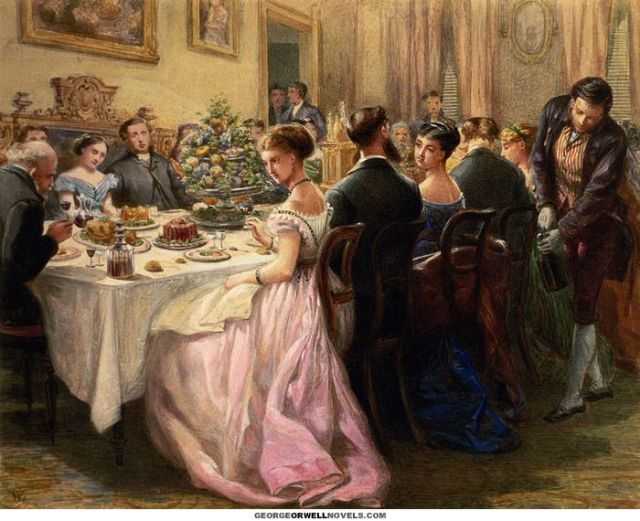 Men and women on different sides of the table, people sitting wherever they wanted, or a rigid formality with precedence followed. There is evidence in letters, books and pictures of all three systems being used. Then again we must consider that there seldom was an equal number of men and women at political dinners, for example, either because just a few women attended (were invited) to keep the hostess company or they were women who were involved in their husbands’ political career. If the host was not a married man, he had to have a female relative to play hostess if females were invited to be his guests for the evening. Only a relative could play hostess at a dinner without causing gossip.
 y Yonge? June Sturrock, editor of the Broadview Texts, gives us this summary of the story. “A very young, timid, but highly principled and religious girl from a large and humble family is taken into a rich, upper-class household, whose money comes mainly from large estates in the West Indies. In this cold and formal family, she is neglected, snubbed, and often made to feel like a vulgar and uneducated outsider, especially by the beautiful but passive lady of the house, by a self-possessed daughter of the house – and most of all by a spiteful, hostile, and mercenary aunt. One of the two sons shows her great kindness, but all the same, she suffers greatly through a number of trials, and is often unwell. She is brought into direct rivalry for the affections of her beloved with a richer, livelier, and better-known young woman. Eventually, after a series of family disasters, her strict adherence to her own ethical code places her as the moral center of her household, a household that is made more humane by her central role in it.
 Stella Waring provides us this plot summary of Heartsease: or The Brother’s Wife on The
  Putnam’s monthly magazine of American literature, science and art.
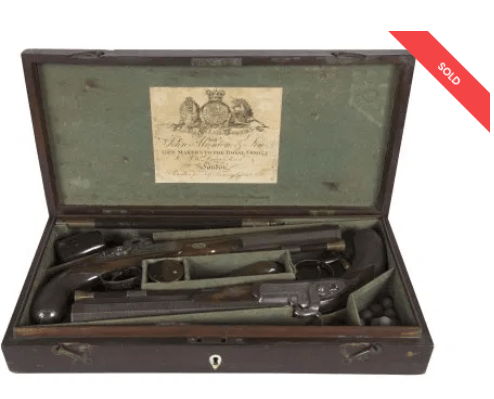


 English women servants were in great demand in the U. S. In 1855, The New York Daily Times (January 20, 1885, quoted in Vere Forster’s Work and Wages. Cash. n.d., p 13 Appendix) conducted a survey of servant girls working on farms in 19 different states. The girls surveyed were paid 75 cents to $2 per week at a time when the British pound equaled four dollars and eighty cents. A prized cook could earn up to $24 per month (about £60 per year). Unlike other territories, English sumptuary laws did not prevail.
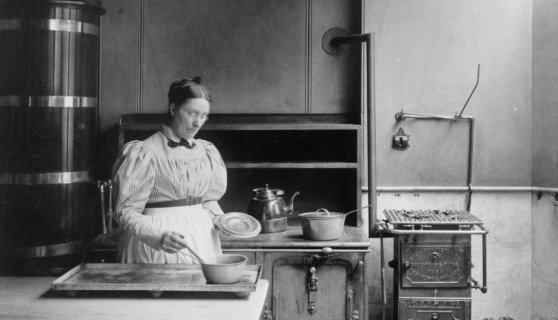
 King William III levied a window tax beginning in 1696. The tax was to level the difference resulting from the clipping and defacing of silver coins, as well as to help pay for the various wars in Ireland and Europe. Initially, if a household had less than 10 windows, they were charged 2 shillings per year. 10-20 windows would cost 4 shillings. Those houses with over 20 would be 8 shillings. The window tax increased 6 times between 1747 – 1808, before a decrease came about.
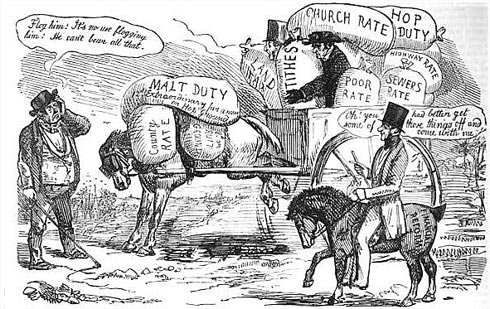 In England and Wales, the legal year 1751 was a short year of 282 days, running from 25 March to 31 December. 1752 began on 1 January. To align the calendar in use in England to that on the continent, the Gregorian calendar was adopted: and the calendar was advanced by 11 days: Wednesday 2 September 1752 was followed by Thursday 14 September 1752. The year 1752 was thus a short year (355 days) as well.
 Both plays featured energetic casts of young actors juggling multiple roles with admirable ease. In Northanger Abbey, Mrs Allen was played with impeccable comic timing, Catherine was suitably naive, and Mr Thorpe was quite perfect. The
 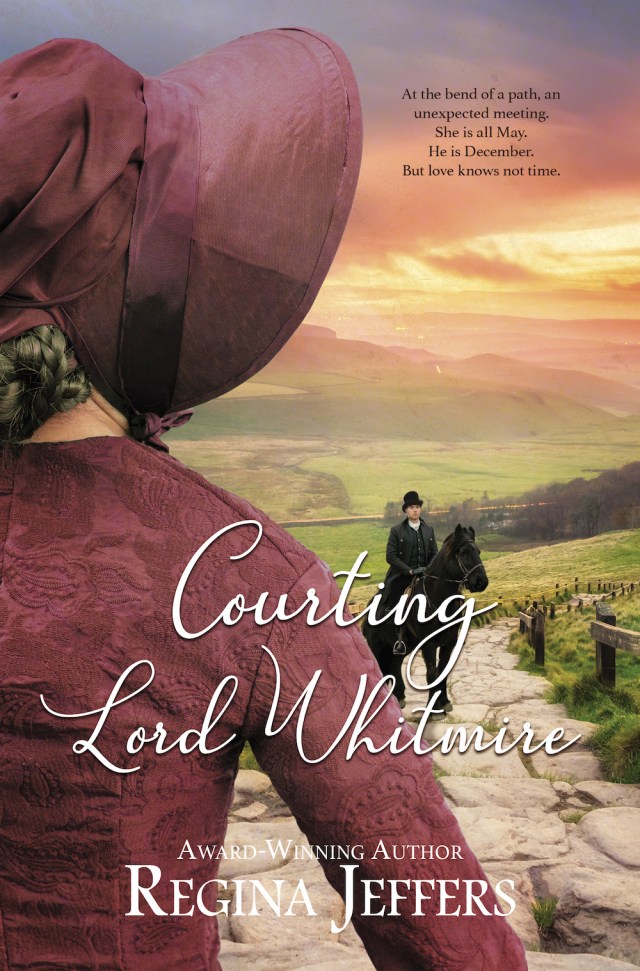 Courting Lord Whitmire: A May-December Regency Romance


