Smugglers in Kent, UK, a Plot Device for “Losing Lizzy: A Pride and Prejudice Vagary”

In my latest Austen-inspired story, Losing Lizzy: A Pride and Prejudice Vagary, smugglers in Kent were mentioned several times. Yet, what do we know of these smugglers?

Daniel Defoe wrote a poem about smugglers in Deal, Kent, who turned the town into a sea of violence and debauchery. They ran the town for almost fifty years. No one could stop them until the crack down came because the gold from England was going to French smugglers and then straight to Napolean’s coffers. Only then did the Crown really take notice, and Dragoons were often sent to stop them.

“If I had any satire left to write,

Could I with suited spleen indite,

My verse should blast that fatal town,

And drown’d sailors’ widows pull it down;

No footsteps of it should appear,

And ships no more cast anchor there.

The barbarous hated name of Deal shou’d die,

Or be a term of infamy;

And till that’s done, the town will stand

A just reproach to all the land”

A good source on smugglers, in general, and specific to Kent is Smuggling in Kent and Sussex 1700-1840 by Mary Waugh.

Also, here is a website with much information about other aspects of smuggling, though, including some  of the methods of concealment.

http://www.smuggling.co.uk/history.html

It is several pages long.  The last page names some of the ones who opposed the smugglers.

Marked with a long and controversial history, it is likely the act of smuggling dates to the first time duties were imposed in any form on products used by the masses. In England smuggling first became a recognized problem in the 13th century, following the creation of a national customs collection system by Edward I in 1275. [Norman Scott Brien Gras,  The Early English Customs System (OUP, 1918)]. Medieval smuggling tended to focus on the export of highly taxed export goods — notably wool and hides. [N.J. Williams, Contraband Cargoes: Seven Centuries of Smuggling (London, 1959)] Merchants also, however, sometimes smuggled other goods to circumvent prohibitions or embargoes on particular trades. Grain, for instance, was usually prohibited from export, unless prices were low, because of fears that grain exports would raise the price of food in England and thus cause food shortages and/or civil unrest. Following the loss of Gascony to the French in 1453, imports of wine were also sometimes embargoed during wars to try and deprive the French of the revenues that could be earned from their main export. [Smuggling]

Generally, we use court records or the letters of Revenue Officers as the resources for tales of smuggling operations. In England, wool was smuggled to the Continent in the 17th Century due to high excise taxes. In England wool was smuggled to the continent in the 17th century, under the pressure of high excise taxes/ In 1724, Daniel Defoe wrote of Lymington, Hampshire, on the south coast of England

“I do not find they have any foreign commerce, except it be what we call smuggling and roguing; which I may say, is the reigning commerce of all this part of the English coast, from the mouth of the Thames to the Land’s End in Cornwall.” [Defoe, Daniel (1724). A Tour Thro’ the Whole Island of Great Britain: Letter III. London.]

Smuggling gangs formed to avoid the high rates of duty levied on tea, wine, spirits, and other goods coming into England from Europe. The high duties were required by the government to finance a number of extremely expensive wars with France the United States. Smuggling became a profitable venture for impoverished fishermen and seafarers. In many smaller villages peppering the southern shires, especially, smuggling was what kept the villages viable. 

Public Domain ~ A book with a concealed space for hiding cigarettes. https://en.wikipedia.org/wiki/Smuggling#/media/File:Cigarette_smuggling_with_a_book.JPG

Revenue agents, the military, constables, the JP’s , the navy, and custom agents all had a part to” play in combating smuggling. Members of all of the groups  were suborned over to the side of the smugglers at one time or another. However, what might have been possible in 1780 was less likely to be possible in 1818. Smugglers rarely used regular harbors or  had anything to do with harbor masters, The Preventative men—the Riding officers were revenue men . The local JP was often in cahoots with the smugglers, and it  was difficult to gather a jury to convict or even to bind men over. There were also Smuggling Wars. They were “WARS,” despite our tendency to romanticize the men.

Other Sources on Smuggling: 

BBC – Nature of Crimes

Foxford History

Historic UK

U. S. History

Losing Lizzy: A Pride and Prejudice Vagary

She thought him dead. Now only he can save their daughter.

When Lady Catherine de Bourgh told Elizabeth Bennet: “And this is your real opinion! This is your final resolve! Very well. I shall now know how to act. Do not imagine, Miss Bennet, that your ambition will ever be gratified. I came to try you. I hoped to find you reasonable; but, depend upon it, I will carry my point,” no one knew how vindictive and manipulative her ladyship might prove, but Darcy and Elizabeth were about to discover the bitter truth for themselves.

This is a story of true love conquering even the most dire circumstances. Come along with our dear couple as they set a path not only to thwart those who stand between them and happiness, but to forge a family, one not designed by society’s strict precepts, but rather one full of hope, honor, loyalty and love.

Amazon https://www.amazon.com/dp/B0884F86FP

Kindle  https://www.amazon.com/Losing-Lizzy-Pride-Prejudice-Vagary-ebook/dp/B08886PXQG/ref=tmm_kin_swatch_0?_encoding=UTF8&qid=&sr=

Kobo https://www.kobo.com/us/en/ebook/losing-lizzy

Nook https://www.barnesandnoble.com/w/losing-lizzy-regina-jeffers/1137038434?ean=2940162951087

Posted in book release, British history, British Navy, Georgian England, Georgian Era, historical fiction, history, Jane Austen, Living in the UK, Pride and Prejudice, publishing, real life tales, Regency era, research, Vagary, writing | Tagged , , , , , , , | Comments Off on Smugglers in Kent, UK, a Plot Device for “Losing Lizzy: A Pride and Prejudice Vagary”

Misuse of Words Driving Me Crazy!

Of late, the news media has been driving me a bit batty with the various reporters misusing words either in their oral reporting or the blips crossing our screens. Do you, too, have a pet peeve when it comes to the misuse of words? 

For example the local FOX news outlet keeps reporting on the AMOUNT of people on the South Carolina beaches now that the COVID-19 restrictions have been lifted. When I was a journalism student (one of my college minors), we were taught that “amount” is an indefinite quantity (water, sand, grass, etc.) that cannot be counted. Whereas, “number” consists of a quantity of people or things that can be counted

Watching one of the Hallmark movies, Candace Cameron Bure’s character corrects one of the other minor characters who asks Bure if Bure is “anxious” to see her fiancé. Bure explains to the woman that “anxious” indicates concern or worry. “Eager” shows impatient desire.

We often hear stories of where a plane “nearly missed” hitting another plane on the runway. The problem with this phrase is if you “nearly missed” something, you collided with it. The correct phrase is a “near hit,” not a “near miss.”

The other day on the blip running across the bottom of the screen the story was about navel maneuvers off the coast of Florida. “Naval” refers to a navy and military ships. “Navel” refers to the “bellybutton.” 

Along the same lines was another story where the newscaster referred to the “ordnance” enacted by the Town Council regarding parking along certain center-city streets. The correct word is “ordinance,” which is a law enacted by a municipal body. “Ordnance” refers to military weapons and ammunition.

Then there was the news article on the premier of a particular movie being delayed. “Premier” means first in rank or leader. “Premiere” means first performance. 

One of the stories spoke of “prostrate cancer” in men. “Prostate” is the correct word in this context. “Prostate” refers to the prostate gland, part of the male reproductive system. “Prostrate” refers to lying down on the ground or on some other surface or to make helpless. 

One of the stories dealt with those going out before the “stay at home orders” were lifted. It said, “The teens said they would play basketball in the park irregardless of the danger of contacting the Covid-19 virus.” Irregardless is not considered standard English, regardless of how many times you hear or see it used. 

Many people confuse sometime and some time. Sometime (one word) means some unspecified time. Some time (2 words) means an unspecified quantity of time.

Likewise, maybe (one word) is an adverb meaning perhaps. May be (2 words) is a verb meaning perhaps.

Everyday is a single word adjective used to refer to days in general, without emphasizing any specific day. Every day used as two words emphasizes the individual day. [Hint! If you can substitute “each” for “every,” use “every day” as two words.]

Everyone refers to several or more people, but not to any one of them in particular. Every one is used when referring to an individual.

Everybody is used to make reference to several of many people. Every body references a specific body, such as a corpse, body of water, a corporation, etc.

Anyone refers to a group, but not to any specific person. Any one refers to an individual.

Any time is used exclusively as two words, not anytime. Also, alright is not standard English. Use all right

Anyway means in any case or regardless. Any way means a method, choice, or direction. Anyways is not standard English and should not be used. 

Use between when two people, places, or things are involved. Use among for three or more. 

I see this mistake all the time in romance novels. “They fell in love with one another at first sight.” Each other is used when two people, places, or things are involved. One another refers to three or more. Unless the author is writing about a “threesome,” the correct choice is “each other.” 


Posted in Uncategorized, word play, writing | Tagged , , , | 18 Comments

Location, Location, Location, a Guest Post from Catherine Bilson

This post originally appeared on Austen Authors on 23 April 2020. Enjoy! 

“It must be very agreeable to her to be settled within so easy a distance of her own family and friends.”

“An easy distance do you call it? It is nearly fifty miles.”

“And what is fifty miles of good road? Little more than half a day’s journey. Yes, I call it a very easy distance.”

Rereading Pride and Prejudice for the umpteenth time recently, I was struck anew by this little conversation between Darcy and Elizabeth, taking place as it does just a few days before the disastrous Hunsford proposal. They are talking about Charlotte, of course, and when the reader has prior knowledge of Darcy’s admiration of Elizabeth, it’s obvious that the conversation is designed to discover Elizabeth’s thoughts on whether she would mind living a long way from her family. There’s an interesting line at the end of the conversation where Darcy says “You cannot always have been at Longbourn”, by which he obviously means he thinks she must have been educated elsewhere, betraying his belief that she could not possibly have learned her manners and wits at home… something which made me think of the possibility of Jane and Lizzy attending a school for a while, perhaps funded by a grandparent who has now passed, and how that could have led to some Interesting Acquaintances… but I digress.

What I want to talk about here is twofold; firstly the gulf in station between Darcy and the Bennet family revealed by this little conversation, and secondly, one of my pet hates when I see writers getting it wrong in historical novels; geography and the logistics and speed of travel.

Firstly, let’s talk about that difference of opinion. Fifty miles is nothing to Darcy; he has carriages, fast horses, and servants. “Little more than half a day” can easily be extrapolated to about five hours’ travel, at a rate of ten miles an hour.

Now, one thing Darcy would not have done is hopped on his horse and ridden all the way. While a fit horse can comfortably cover ten miles an hour (walking pace is about four miles an hour; to do ten miles in a hour you have to trot and canter most of it), sustaining that pace is another matter. You’d wind up with a foundering, lame horse if you tried to cover fifty miles even over the course of a whole day. Yes, riders do it in endurance racing today, but they are very highly conditioned horses bred and trained specially for the purpose (usually Arabians), not heavy hunters of the type a gentleman like Darcy would own. Also, if you’re a horse rider? You know about the pain of spending a couple of consecutive hours in the saddle. Five hours? No, thank you very much. If Darcy wanted his riding horse transported from place to place over longer distances, the horse would have been ridden there by a groom at a much gentler pace, around twenty miles a day which the groom making overnight stops where the horse might very well have better accommodations than the rider!

(Riding this handsome chap for 5 hours would give even Darcy a sore butt. Yes, I meant the horse is the handsome chap… where’s your mind at???)


Darcy would travel a distance of fifty miles via carriage, with his baggage strapped on the roof and in the boot, probably accompanied by a valet who would most likely ride on the box with the driver, and he would have pre-arranged teams of horses to be taken ahead and waiting at stops along the way – probably two stops for that distance, so that each team would cover around seventeen miles before being changed. With two or perhaps even four horses to pull the carriage, that means between six and twelve quality horses, accompanied by servants, put up at inns, fed and watered… the cost of that alone would have made Elizabeth’s eyes boggle. Consider that Longbourn had two horses which could pull a carriage, but were mainly used on the farm, and that someone as wealthy as Darcy might well have had enough carriage horses to enable him to change every twenty miles all the way from London to Derbyshire, and the gulf in wealth between the families becomes even more obvious. It was a major undertaking for Elizabeth to travel to Kent; she was lucky enough to ‘hitch a lift’ there with Sir William Lucas and Maria Lucas, but coming back Mr. Gardiner had to send his carriage for her from London, and then after a stay with the Gardiners she and Jane had to catch a public coach back to Hertfordshire (the exact town isn’t specified, but I guess at either Hertford or Hatfield) and be collected by the Bennet coach there to return to Longbourn. It would have been expensive and inconvenient, and a trip someone like Elizabeth could not have hoped to undertake more frequently than once every few years; thus Elizabeth’s shock at Darcy calling it an ‘easy distance’.

For JAFF writers, the best thing we can do when considering travel times and distances is adhere to canon as closely as we can. Jane Austen knew exactly how long it took to travel distances around England; she resided at various spots in Hertfordshire, Hampshire and Bath, and visited in quite a few other places. She knew how inconvenient, expensive and slow travel was, and I have no doubt she looked with a certain degree of envy at those who could afford carriages and teams of horses (and probably did her best to politely impose herself on them for a lift whenever she could manage it, too!). Sometimes, however, the story we’re working on takes us farther afield than the locations Austen used, and that’s when it becomes important to start looking at maps, measuring distances and calculating travel times – and considering economic circumstances when we do.

Remember, for example, the Gardiners took around 3 weeks to get from Longbourn to Lambton. They didn’t have a change of horses, so they had to set a pace their horses could sustain day after day and choose their overnight spots accordingly. The journey coming back must have been a nightmare – I wonder if Mr. Gardiner splashed some cash to rent horses to enable them to speed up? – another thread I must pursue one day!

Your best resource for working out distances and travel times is always going to be a map. Now, if you’re writing something set in London, you might want to use something like the Google Maps Regency Overlay, from which you can quickly figure out, for example, that it’s only about 200 metres from White’s Gentlemen’s Club to Hatchard’s bookshop, an easy walking distance. Honestly, almost everywhere the fashionable set might have wanted to go in Regency London is easy walking distance… but who would have walked? Gentlemen very probably would have, unless the weather was absolutely foul. Ladies? It depends on the circumstances, the time of day, whether they had a maid or companion with them… something else you need to consider.

For longer distances, between towns, you don’t need a historical map. Google Maps will do the job perfectly. Towns in the UK haven’t been relocated in the last 200 years. They’ve grown, yes, but a good rule of thumb is to measure the distances between the main post offices in different towns – the post offices are almost always right smack in the town centre! Stick to a rule of thumb that a carriage without a change of horses could probably max out at 25 miles per day and someone with Darcy’s resources could cover maybe as much as 80 (significantly less in bad weather and steep terrain) and you’ll avoid making too many geographical howlers.

True story: I read a historical romance (not JAFF) not too long ago by someone who will remain nameless but is Extremely Famous, who had a couple travelling by carriage from Essex (a county slightly east and north of London) to Gretna Green with a single overnight stop. 280 plus miles is a long day trip in a car or by train; by carriage it would have been many, many days, especially if the couple left on impulse and weren’t able to arrange changes of horses. It would actually be far quicker to head for the coast, hire a boat and sail up the east coast of the UK to get to Scotland that way, something I almost never see done in Regency romances but makes a lot more sense than taking a carriage all the way from London… which was a major port, after all. Much less chance of being intercepted, as well, something to bear in mind if you’re ever planning on writing a Scottish elopement! It’s almost 400 miles from Ramsgate to Gretna Green; the expense of travelling so far by carriage would be considerable. I’m quite sure Wickham would have arranged a boat to take him and Georgiana to Scotland instead, and even if Darcy had arrived within hours of their departure, interception would have been impossible. (There’s another story idea…)

Don’t forget… maps are your friend when it comes to getting history right!

Posted in Austen Authors, British history, Georgian England, Georgian Era, Guest Post, historical fiction, Jane Austen, Living in the Regency, Pride and Prejudice, real life tales, Regency era, writing | Tagged , , , , , , | 1 Comment

Exercise Tiger, a Tragic Rehearsal for D-Day

Most of us know something of D-Day. On June 6, 1944, more than 160,000 Allied troops landed along a 50-mile stretch of heavily-fortified French coastline, to fight Nazi Germany on the beaches of Normandy, France. Gen. Dwight D. Eisenhower called the operation a crusade in which, “we will accept nothing less than full victory.” More than 5,000 Ships and 13,000 aircraft supported the D-Day invasion, and by day’s end, the Allies gained a foot-hold in Continental Europe. The cost in lives on D-Day was high. More than 9,000 Allied Soldiers were killed or wounded, but their sacrifice allowed more than 100,000 Soldiers to begin the slow, hard slog across Europe, to defeat Adolf Hitler’s crack troops.(Army.mil)

But what do you know of EXERCISE TIGER? Off Slapton Sands on the coast of Devon, 946 American servicemen perished during what was known a Exercise Tiger, a rehearsal for what would be the D-Day landing on Utah Beach in Normandy, France. This occurred but nine days before the event mentioned above, being organized in April 1944. 

History.com describes Exercise Tiger thusly, “The dry run was designed to simulate the confusion and carnage of combat, but it became all too real after German torpedo boats stumbled upon the landing fleet and sank several of its ships. Despite the loss of some 750 American servicemen, the fiasco was initially covered up to ensure the D-Day mission remained secret. In the early morning hours of April 28, 1944, an Allied fleet slinked toward the coast of southern England. Along with a lone British corvette, the flotilla included eight American tank landing ships, or LSTs, each one of them filled to the brim with soldiers from the U.S. Army’s VII Corps. In just five weeks, these same troops were scheduled to land in France as part of Operation Overlord, the Allies’ secret plan to invade Nazi-held Western Europe. Overlord was integral to the Allied strategy for victory in World World II, and to ensure it went smoothly, military brass had organized a sweeping dress rehearsal codenamed ‘Exercise Tiger.””

Some 3000 residents from Slapton, Strete, Torcross, Blackawton and East Allington in South Devon departed their homes as part of the exercised designed by the American military. Slapton Sands reportedly resembled the Normandy coast line, and, therefore, it was chosen for the military simulation. 

HITH-tiger-nara-E

Troops involved in the action of Exercise Tiger ~ Credit: NARA

Historic UK tells us, “The beautiful and usually tranquil River Dart filled up with landing craft and ships for the operation. Nissen huts sprang up in Coronation Park in Dartmouth and new slipways and ramps were built on the river’s edge, all the way from Dartmouth up to Dittisham. Exercise Tiger was designed to be as realistic as possible and on 22nd April 1944 it began. Landing craft loaded with soldiers, tanks and equipment were deployed along the coast. However, unbeknown to the military, under cover of darkness nine German E-boats (fast attack craft) had managed to slip in amongst them in Lyme Bay. Two landing ships were sunk and a third badly damaged. Lack of training on the use of life vests, heavy packs and the cold water contributed to the disaster: many men drowned or died of hypothermia before they could be rescued. Over 700 Americans lost their lives.”

The exercise conducted upon Slapton beach also proved disastrous. It included a live-firing exercise creating what we now call “friendly fire” deaths from the naval bombardment. The losses occurring during this event were kept secret until long after the war had ended. 

070329jad_ukdor_01-E

Lyme Bay, England ~ Wikimedia Commons


“Later that year on Sunday 4th June, the people of Dartmouth were ordered to stay indoors: tanks rolled through the town and troops converged on the harbour with its landing craft and ships. The following day 485 ships left the harbour, taking a full day to clear the mouth of the river and at dawn on the 6th June, the invasion of France began. Thanks to the training at Slapton, fewer soldiers died during the actual landing on Utah Beach than during Exercise Tiger, and so the training in Devon was not in vain.” (Historic UK)

Footnote:
Slapton was not the only site in Devon to be used by the American military during World War Two. The north coast around Woolacombe Bay was also used for practising amphibious landing assaults in preparation for the D-Day landings.

Posted in American History, British history, Great Britain, history, Living in the UK, military, war | Tagged , , , , , , , , | 11 Comments

“Luminous” Blog Tour ~ Worker Compensation Laws and the Radium Girls, a Guest Post from Samantha Wilcoxson

Many people do not realize how much we owe to the dial painters in 1920’s radium studios for our modern workers’ compensation laws. The idea that workers should be protected from harm and that companies were liable for damages to their health is a fairly modern one. Protection from worker exploitation was increased in the 1930’s due to the cases of young women who would become known as the Radium Girls because of the health problems they suffered due to radium poisoning.

When Marie Curie died from leukemia caused by her exposure to radium, her death was considered tragic, but also a sacrifice in the name of scientific advancement. When Mollie Maggia died after working at US Radium Corp in New Jersey, her death was written off as syphilis, and the company suffered no consequences. Dozens of girls working with radium infused paint would die and dozens more suffer from a myriad of health problems before the government stepped in to stop the exploitation of young working women.

The case of the Radium Girls shines a spotlight on the way our society has historically valued – or failed to value – people of different classes. It was not until the deaths of two prominent men that the concerns of the girls who worked with radium were considered by anyone with the power to do anything about it. These women had to fight multiple battles to have their health problems recognized, to have them attributed to radium, to have the companies held responsible, to receive compensation, and to see laws changed. It was a slow process that many women died before seeing concluded.

What amount of risk is reasonable in employment? Do higher wages make these risks acceptable? How much responsibility does a company have for disclosing risks to employees and protecting them from harm? These were all questions that had not been adequately answered in the early 20th century.

Historically, employers had not taken responsibility for the health of their employees. Paying wages was the only obligation they had, but this was slowly changing in the early 1900’s. The first workers’ compensation laws had offered limited accident protection to men working in the dangerous work of mines, factories, and railroads. Over time, changes were made and protections were added, but radium was nowhere to be found in the workers’ compensation laws of the 1920’s.

First struggling to find doctors who would label their condition for what it was, the women who worked with radium then had to find lawyers who would help them hold their employers liable. Since radium wasn’t specifically mentioned in the existing legislation, it was a long battle to have the women’s condition recognized under the law. Lawyers motivated by justice with the ability to work without pay were needed because most of the women were already bankrupted by their medical expenses.

In my new book, Luminous, Catherine Donohue battles with Radium Dial in Ottawa,Illinois, for radium poisoning compensation. Based on her true story, this biographical novel takes readers into the dial painting studio to watch the slow poisoning process, into the hospitals where the women fight for their lives, and into the courtroom where they fight for their rights.

By the end of the 1930’s companies had lost some radium poisoning cases, but they continued to exploit workers who were none the wiser for several more years. The history of the Radium Girls is heartbreaking, and we have them to thank for many of the protections against worker exploitation that we have today.

Important Links: 

Universal Amazon Link for Luminous: mybook.to/luminous

Samantha’s Blog: https://samanthawilcoxson.blogspot.com/

Meet Samantha Wilcoxson

Samantha Wilcoxson is a history enthusiast and avid traveler. Her published works include the Plantagenet Embers series with novels and novellas that explore the Wars of the Roses and early Tudor era. Luminous is her first foray into 20th century American history, but she suspects that it will not be her last. Samantha enjoys exploring the personal side of historic events and creating emotive, inspiring stories.


Samantha on Social Media:

Facebook: https://www.facebook.com/PlantagenetEmbers/

Twitter: https://twitter.com/carpe_librum

Instagram: https://www.instagram.com/samantha_wilcoxson

Goodreads: https://www.goodreads.com/samanthajw

Posted in American History, blog hop, book release, British history, eBooks, Guest Post, history, Industrial Revolution, medicine, publishing, reading habits, real life tales, research, writing | Tagged , , , , , , , , , , | 2 Comments

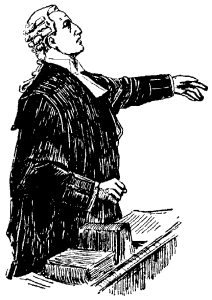
Barristers and Solicitors During the Regency Era

Previously, I did a post about barristers, solicitors, and lawyers, but I have had a few questions come up since then, so I am going to repeat some of what I had written back on April 12, 2017, but add to it to clarify the differences and hopefully answer the questions two readers sent to me. 

Question #1: Could a young man of the merchant social class “choose” to become a barrister? If so, how would he go about it? 

The simple, or not so simple, answer is “Yes.” He could become a barrister, but it would not be easy. The candidate who wished to practice law had to have someone recommend him, meaning someone from the gentry or the aristocracy. It would be necessary for him to read law for seven years if he did not go to university. Best thing he could do would be to go to university and study law there, which would cut his time at an Inn of Court down to about three years of working with someone and eating his dinners. However, going to university during the Regency era could be expensive, as was, basically, living one’s life at the Inn of Court or in residence with a barrister. Remember, the candidate would be paying out funds, even those candidates whose family shoulder the cost paid out funds, needed something to live on. The man would have little or no income for seven years. All that is assuming a university would accept him or an Inn of Court would accept him. My answer would be, though not impossible, certainly not an easy route, for the man, no matter if he was richer than those sons of gentlemen and the aristocracy, would not be easily accepted into the profession. Read on…

In present day UK, the Inns of Court in London are the professional associations for barristers in England and Wales. There are four Inns of Court: Gray’s Inn, Lincoln’s Inn, Inner Temple and Middle Temple. All barristers must belong to one of them. They have supervisory and disciplinary functions over their members. The Inns also provide libraries, dining facilities and professional accommodation. Each also has a church or chapel attached to it and is a self-contained precinct where barristers traditionally train and practise, although growth in the legal profession, together with a desire to practise from more modern accommodations, caused many barristers’ chambers to move outside the precincts of the Inns of Court in the late 20th century.

“During the 12th and early 13th centuries the law was taught in the City of London, primarily by the clergy. But a papal bull in 1218 prohibited the clergy from practising in the secular courts (where the English common law system operated, as opposed to the Roman civil law favoured by the Church). As a result, law began to be practised and taught by laymen instead of by clerics. To protect their schools from competition, first Henry II and later, Henry III issued proclamations prohibiting the teaching of the civil law within the City of London. As a result, the common law lawyers moved to premises outside the City, which in time became the inns of court.

“In the earliest centuries of their existence, beginning with the 14th century, the Inns were any of a sizable number of buildings or precincts where lawyers traditionally lodged, trained and carried on their profession. Over the centuries, the four Inns of Court became where barristers were trained, while the more numerous Inns of Chancery—which were affiliated to the Inns of Court – were responsible for the training of solicitors. In the 16th century and earlier, students or apprentices learned their craft primarily by attending court and sharing both accommodations and education during the legal terms. Prior to the English Civil War in 1642, this training lasted at least seven years; subsequently, the Inns focused their residency requirements on dining together in the company of experienced barristers, to enable learning through contact and networking with experts. In the mid-18th century, the common law was first recognized as a subject for study in the universities, and by 1872, bar examinations became compulsory for entry into the profession of law.” [Inns of Court]

Though the Inns of Court had once been regular law schools, they really were not conducted in that manner by the time of the Regency. The men who wanted to be lawyers worked/apprenticed in a lawyer’s office. They read law, studied the latest rulings, etc., and “ate their dinners.”  

Though attending university for three years reduced the time the man had to “eat his dinners,” the universities did not have any courses in the common law. Those they had to learn by reading cases and listening to barristers work and hunting up the law. The universities taught civil law, and those who graduated with a civil law could practice in the church courts, admiralty, probate and marriage. Some cross trained, and others stayed either as a civil or common law professional. Those training to be a barrister customarily spent time “reading in chambers,” meaning he spent time with a barrister to whom he has paid a fee for the privilege of “training” with the practicing barrister. Nowadays, this is two years’ stint with the candidate spending a year with two different barristers. The most important duty a future advocate had to take and which was compulsory was to eat a certain number of dinners in the hall of his Inn. This is called “keeping terms.” The legal year has four terms: Hilary, Easter, Trinity, and Michaelmas. I am not certain how many meals were to be kept during the Regency, but in today’s terms, the candidate must take six meals during each term. 

To be a solicitor, a proctor, or an attorney, the man had to be an apprentice to a man practicing in the field in which he wished to practice: C=common law, Chancery, or civil law courts. Solicitors were regulated by parliamentary law while all the barrister/Pleaders were regulated by their inns and the judges of the courts to which they were admitted for practice. It took about seven years to become a good solicitor. Solicitors had a lower social standing than did barristers, for the most part, because they did the work and took money into their hands. However, they often became very rich. Some solicitors acted as men of business for large landowners. Solicitors were regulated by parliamentary law, but barristers were governed by the benchers of their Inn.

The various courts were very jealous of one another’s jurisdiction and the processes. They even had some different terminology.

The solicitors/proctors/attorneys spoke with clients and drew up proper forms and did deeds, wills, and contracts. The barristers/advocates/and serjeants (higher level barristers) were the ones who could speak in the higher courts and present the case. Quite often they only spoke to judges and not juries. These men were not supposed to converse with the client at all.

Criminal practice was just coming in as a area of practice as it was not yet common for all accused or even the prosecution to have a lawyer. Barristers/serjeants and advocates could also just be asked a point of law, even if it they were not defending or prosecuting a case.

Also see my piece on a A Simple Overview of the English Courts During the Regency for additional information. 

“A Serjeant-at-Law (SL), commonly known simply as a Serjeant, was a member of an order of barristers at the English bar.  The position of Serjeant-at-Law (servientes ad legem), or Sergeant-Counter, was centuries old; there are writs dating to 1300 which identify them as descended from figures in France before the Norman Conquest. The Serjeants were the oldest formally created order in England, having been brought into existence as a body by Henry II. The order rose during the 16th century as a small, elite group of lawyers who took much of the work in the central common law courts. With the creation of Queen’s Counsel (or “Queen’s Counsel Extraordinary”) during the reign of Elizabeth I, the order gradually began to decline, with each monarch opting to create more King’s or Queen’s Counsel. The Serjeants’ exclusive jurisdictions were ended during the 19th century and, with the Judicature Act 1873 coming into force in 1875, it was felt that there was no need to have such figures, and no more were created. 

“The Serjeants had for many centuries exclusive jurisdiction over the Court of Common Pleas, being the only lawyers allowed to argue a case there. At the same time they had rights of audience in the other central common law courts (the Court of King’s Bench and Exchequer of Pleas) and precedence over all other lawyers. Only Serjeants-at-Law could become judges of these courts right up into the 19th century, and socially the Serjeants ranked above Knights Bachelor and Companions of the Bath. Within the Serjeants-at-Law were more distinct orders; the King’s Serjeants, particularly favoured Serjeants-at-Law, and within that the King’s Premier Serjeant, the Monarch’s most favoured Serjeant, and the King’s Ancient Serjeant, the oldest. Serjeants (except King’s Serjeants) were created by Writ of Summons under the Great Seal of the Realm and wore a special and distinctive dress, the chief feature of which was the coif, a white lawn or silk skullcap, afterwards represented by a round piece of white lace at the top of the wig. 

“The process of being called to the order of Serjeants-at-Law stayed fairly constant. The traditional method was that the Serjeants would discuss among themselves prospective candidates, and then make recommendations to the Chief Justice of the Common Pleas.  He would pass these names on to the Lord Chancellor, who would appoint the new Serjeants. This was intended to provide a way to select possible judges in a period where political favouritism was rampant – since only Serjeants could become judges, making sure that Serjeants were not political appointees was seen to provide for a neutral judiciary. Serjeants were traditionally appointed by a writ directly from the King. The writ was issued under the Great Seal of the Realm and required “the elected and qualified apprentices of the law to take the state and degree of a Serjeant-at-Law”. The newly created Serjeants would then assemble in one of the Inns of Court, where they would hear a speech from the Lord Chancellor or Lord Chief Justice and be given a purse of gold. The Coif was then placed on the Serjeant’s head. The Serjeants were required to swear an oath, which was that they would: …serve the King’s people as one of the Serjeants-at-law, and you shall truly counsel them that you be retained with after your cunning; and you shall not defer or delay their causes willingly, for covetness of money, or other thing that may turn you to profit; and you shall give due attendance accordingly. So help you God.” [Serjeant-at-law]

Question #2:  Could a foreigner be a barrister?

Just as a point of reference, nowadays (not during the Regency era), lawyers qualified in foreign jurisdictions, as well as English barristers, can take the Qualified Lawyers Transfer Scheme (QLTS) assessment, a fast-track route for qualification as an English solicitor which can be completed in a shorter or longer period of time, depending on the legal background of the candidate. There is no training or experience requirement under the QLTS, which comprises two assessments; a multiple choice test (180 multiple choice questions on 14 subject matters) and two practical assessments, the OSCE1 and OSCE2 which include nine written papers, three oral papers and three mixed written-oral papers on the most important areas of practice for solicitors (business law, probate, conveyancing, civil litigation, criminal litigation). The scheme is open to qualified lawyers in many common law and civil law jurisdictions, such as the US, Australia, South Africa, Nigeria, Brazil, Argentina, Turkey, Russia, China, South Korea, Japan, Singapore, India, Pakistan, all EU member states, as well as other countries. [The Law Society: Qualifying From Outside the UK]

Again, as in the previous question, the idea was not an impossible one, but it remained very unlikely, for the same reasons. Almost every profession during the Regency and early 1800s required an oath of allegiance to the Church of England and proof of having taken Communion. I like this description of English Law through German Spectacles from 1890: The Law Students’ Journal, Volume 12. 

Both solicitors and barristers had to have several years of training. Coming to England as a foreigner, it would likely be easier to train as a solicitor than as a barrister. Solicitors had to have 5 years as apprentice, all with the same man, so if he died during those five years, the solicitor candidate had to begin again with another. At the end of five years, he could apply for recognition and admittance to practice as a solicitor. The man had to be recommended by the one who was training him and provide proof of years of service, studies, etc. Sometimes these candidates were given an exam on various aspects of their work.

If a man attained a university degree in civil law, he could be entered without the five years “apprenticeship.” Most who attended university thought of becoming barristers. They were required to study at Inns of Court for four years after their university studies were complete. That is seven years total. When the barristers of their Inn thought them ready, they were Called to the Bar.

“The call to the bar is a legal term of art in most common law jurisdictions where persons must be qualified to be allowed to argue in court on behalf of another party and are then said to have been “called to the bar” or to have received a “call to the bar”. “The bar” is now used as a collective noun for barrister, but literally referred to the wooden barrier in old courtrooms, which separated the often crowded public area at the rear from the space near the judges reserved for those having business with the Court. Barristers would sit or stand immediately behind it, facing the judge, and could use it as a table for their law briefs. 

“Like many other common law terms, the term originated in England in the Middle Ages,  and the call to the bar refers to the summons issued to one found fit to speak at the ‘bar’ of the royal courts. In time, English judges allowed only legally qualified men to address them on the law and later delegated the qualification and admission of barristers to the four Inns of Court. Once an Inn calls one of its members to its bar, they are thereafter a barrister. They may not, however, practise as a barrister until they have completed (or been exempted from) an apprenticeship called pupillage. After completing pupillage, they are considered to be a practising barrister with a right of audience before all courts.” [Call to the bar]

Although there have been some changes to the distinctions in modern England and Wales, most being in social standing, most jurisdictions define two types of lawyers, who are regulated by different bodies, with separate training, examinations, regulation and traditions:

  • Barristers primarily practise in court and generally specialise in advocacy in a particular field of law; they have a right of audience in all courts of England and Wales.
  • Solicitors do not necessarily undertake court work, but have a right of audience in the lower courts (magistrates’ courts and county courts). They are admitted or enrolled as a solicitor, to conduct litigation and practise in law outside court, e.g., providing legal advice to lay clients and acting on their behalf in legal matters.

A solicitor must additionally qualify as a solicitor-advocate in order to acquire the same “higher rights” of audience as a barrister. In other jurisdictions, the terminology and the degree of overlap between the roles of solicitor and barrister varies greatly; in most, the distinction has disappeared entirely.

Briefly, solicitors dealt with clients, while barristers had contact only with the solicitor and depended on the solicitors for an adequate presentation of the case. Both had to be admitted to practice in the different courts. King’s Bench and Common pleas were common law courts as were the criminal court. Chancery was a court of equity, and the church courts dealt with marriages and wills and were under civil (Roman) law.

They had attorneys, solicitors, and proctors. These did the legal work of investigation, writing up the writs, determining the charge when working for a plaintiff and  looking for a rebuttal for a defendant. They paid the one who pled the case in court.

Serjeants, barristers, and advocates. These were the pleaders. Despite what one reads in novels, they rarely ever met the client and seldom spoke to the client about the case. They were hired and paid by the attorney, solicitor and  proctor.

By the way, even the English of the day became exhausted with trying to keep all the groups and classes straight and which man worked in which court, so there was a general trend to dropping the distinction between solicitors and attorneys. All pleaders were called barristers by the general public. Records of court cases or legal texts might hold to the distinction. The church court held to proctor (solicitor) and advocate (barrister) the longest and some state divorce courts continued to do so for ages afterwards.

Many solicitors became very wealthy, though it was usually the barristers who went on to silk and a peerage. When a man took his silk, he changed his customary gown for a silk one and became a king’s Counsel. These men were called upon to argue many of the cases for the Crown. They could take a private case as long as it was not against the Crown or any government office or official. Barristers had chambers. There were no law firms, as we think of them in present time. They could share the chambers with other barristers– sharing the rent and expenses of the clerks, but they worked independently. The clerk of chambers would  be the one to receive the brief from solicitors and would collect the”honorarium” from the  solicitor, but other than the shared expenses the men were independent. 

To the best of my knowledge, and I have been wrong on several occasions, so do not quote me, solicitors were forbidden to form companies. They could employ others, but their businesses were independent from other solicitors. A man who had been practicing for awhile and  had a  thriving business could take in his son or his nephew or a stranger as a student  apprentice. There is not as much information around on the organization and rules governing solicitors as there are regarding the governing of barristers. 

“Before the creation of the Supreme Court of Judicature under the Supreme Cour tof Judicature Act 1873, solicitors practised in the Court of Chancery, attorneys practised in the common law courts and proctors practised in the ecclesiastical courts. After 1873, the offices of ‘attorney’ and ‘proctor’ disappeared as terms relating to legally qualified persons, being replaced by “Solicitor of the Supreme Court of England and Wales”, except for the unique government offices of Queen’s (or King’s) Proctor (now generally Treasury Solicitor which is co-held with the title), and Attorney- General. Since the replacement of the judicial aspect of the House of Lords with the Supreme Court the full title of a solicitor is ‘Solicitor of the Senior Courts of England and Wales’.

“In the English legal system, solicitors traditionally dealt with any legal matter including conducting proceedings in courts although solicitors were required to engage a barrister as advocate in a High Court or above after the profession split in two. Minor criminal cases are tried in magistrates’ courts, which constitute by far the majority of courts. More serious criminal cases still start in the magistrates’ court and may then be transferred to a higher court.” [Solicitor]

Additional Sources: 

The Honourable Society of the Inner Temple: Call to the Bar

The Honourable Society of Lincoln’s Inn: Becoming a Barrister

The Honourable Society of the Middle Temple: Education and Training

Hugh H. L. Bellot: The Inner and Middle Temple: Legal, Literary, and Historic Associations 

Posted in Act of Parliament, British history, Church of England, Georgian England, Georgian Era, Living in the Regency, Regency era, research | Tagged , , , , , , , , | 2 Comments

Burntwick Island, Setting as Character in “Losing Lizzy: A Pride and Prejudice Vagary”

On Friday, we had a closer look at Deadman’s Island, and its part in the setting for Losing Lizzy: A Pride and Prejudice Vagary. Like Deadman’s Island, Burntwick can be found in the estuary of the River Medway in Kent. Although a little larger, also, like Deadman’s Island it is a flat area of marshland. It is approximate 1.2 miles long and two-thirds of a mile wide. It was once attached to the British mainland of Chetney Marshes. It formed the northernmost area of the Upchurch Parish. 

On the southern side of the estuary, it is separated by a narrow channel known as Stangate Creek. Just as was Deadman’s Island, Burntwick is crossed by several narrow tidal channels, meaning at high tide the island is separated into several smaller ones. 

In the late 18th and early 19th centuries, it was used as a quarantine base for disease-infected ships. The bodies of those who died were buried on Deadman’s Island, which lies about 2 miles to the east of Burntwick Island.

With the rise of custom duties in the late 18th Century, especially those on tea and spirits, the island was “claimed” by smugglers, specifically the North Kent Gang, as their staging ground. The North Kent Gang were known for their ruthlessness and for their ability to stymie the efforts of the excise men, meant to capture them. 

In 1820, two blockade officers confronted them uploading goods in Stangate Creek. The smugglers escaped, but one of the officers was seriously injured. Eventually, the members of the North Kent Gang—some 50 members in all—were captured. Three were executed on the Penenden Heath near Maidenstone. Fifteen were transported to Tasmania. When the import duties, which necessitated their activities, ended in 1831, smuggling in the area was nearly eradicated. 

Looking towards Sheppey 400ft above Burntwick island

According to History of Rainham, Kent Website: “Later in 1845 a ship’s surgeon named Sidney Bernard who served on H.M.S Rollo just off the coast of Sierra Leone in West Africa became associated with the island. The crew of another ship, H.M.S Éclair, contracted yellow fever and some of them died. Bernard’s ship was sent by the Royal Navy to assist and Bernard was appointed assistant surgeon on H.M.S Eclair to treat the sailors. The ship returned to England but the naval authorities, worried that the disease might spread to the general population, ordered the captain to moor the ship in Stangate Creek just off the Ham Green peninsular. The cargo was then transferred to one of two hulks permanently moored there and a naval cutter guarded the infected ship to prevent anyone going ashore. Sidney Bernard continued treating the crew but was unable to save them until he also contracted the disease and died aged 27 on October 9th 1845. He was buried on the island and his grave remains there today, maintained by the Royal Navy.

“During the 19th century the island became a dumping ground for refuse from London and even today the ground is covered with Victorian glass and crockery.

“Sheep had grazed on Burntwick Island for years and during the 1840s a shepherd named James Woolley and his wife Sarah lived there in a solitary house. The remains of the house still exist there today. A track ran from Shoregate Lane at Ham Green out to the island and traces of it can still be seen. Later, In the 1860s, the famous ‘Great Eastern’ ship which laid the first cable line between England and the United States was temporarily moored nearby. After that, during the 1870s, a shepherd named Thomas Hoare and his housekeeper Emma Castleton lived there and tended farmer Richard Sands sheep but during the early 20th century the tide flooded the island making it unsuitable for grazing so from that time livestock only grazed on the mainland.

“Burntwick Island eventually became the property of the Ministry of Defense. During the early years of the 20th century a battery was constructed there which included two 12 pounder guns, machine gun emplacements and three searchlights. A torpedo school later became established with a barracks building and ammunition depots with target practice taking place during World War Two. The island then fell into disuse and is now just a desolate haven for seabirds and is completely under water for several hours at high tide.”

Losing Lizzy: A Pride and Prejudice Vagary 

She thought him dead. Now only he can save their daughter.

When Lady Catherine de Bourgh told Elizabeth Bennet: “And this is your real opinion! This is your final resolve! Very well. I shall now know how to act. Do not imagine, Miss Bennet, that your ambition will ever be gratified. I came to try you. I hoped to find you reasonable; but, depend upon it, I will carry my point,” no one knew how vindictive and manipulative her ladyship might prove, but Darcy and Elizabeth were about to discover the bitter truth for themselves.

This is a story of true love conquering even the most dire circumstances. Come along with our dear couple as they set a path not only to thwart those who stand between them and happiness, but to forge a family, one not designed by society’s strict precepts, but rather one full of hope, honor, loyalty and love.

Amazon https://www.amazon.com/dp/B0884F86FP

Kindle  https://www.amazon.com/Losing-Lizzy-Pride-Prejudice-Vagary-ebook/dp/B08886PXQG/ref=tmm_kin_swatch_0?_encoding=UTF8&qid=&sr=

Kobo https://www.kobo.com/us/en/ebook/losing-lizzy

Nook https://www.barnesandnoble.com/w/losing-lizzy-regina-jeffers/1137038434?ean=2940162951087

Posted in book release, British history, eBooks, England, Georgian England, Georgian Era, Great Britain, historical fiction, history, Jane Austen, Pride and Prejudice, publishing, reading habits, real life tales, Regency era, research, spooky tales, Vagary, writing | Tagged , , , , , , , , , , , | 1 Comment

Congratulations to the Winners!!!

These lucky winners just won an eBook copy of my latest novel, Losing Lizzy: A Pride and Prejudice Variation. The Kindle notice should be in your email box.

The list below reflects the winners on my blog, Every Woman Dreams, and those from Austen Authors and the other blogs hosting this release: 

Aimee J

Amy Z

Beth

charlene 

deborahanne2

Glenda M

G Sw

Juliana 

lesliegb

Lüthien84

Kayelem 

Susan 

Teresa

Vanessa M

Zahra

Posted in Austen Authors, blog hop, book release, eBooks, giveaway, Jane Austen, Pride and Prejudice, Vagary | Tagged , , , , , | 3 Comments

Deadman’s Island, Setting as Character in “Losing Lizzy: A Pride and Prejudice Vagary”

Deadman’s Island, located at the mouth of The Swale, opposite the town of Queenborough on the Isle of Sheppey, off the north Kent coast, plays a major role in my new JAFF story, entitled Losing Lizzy: A Pride and Prejudice Vagary

As mentioned above, Deadman’s Island is a flat, raised area of marshland approximately 1200 metres long and 200 metres wide. It is found in the estuary of the River Medway in Kent in England near where the Swale flows into the Medway. It lies among the tidal sand banks on the southern side of the estuary and is separated from the mainland of Chetney Marshes by a narrow channel known as Shepherd’s Creek. The town of Queenborough lies a kilometer to the east of the West Swalle channel. The island is crossed by several narrow tidal channels, which means at high tide, the island is separated into several smaller islands. 

This island is a fascinating place, but, unfortunately, it is not one the general public can visit. The uninhabited mudbank is owned by Natural England, who lease it to two people.The wetland site is protected land, and is a Site of Special Scientific Interest (SSSI) and recognised to be of international importance under the Ramsar convention. The Ramsar Convention is a Convention on Wetlands, an intergovernmental treaty that provides the framework for national action and international cooperation for the conservation and wise use of wetlands and their resources. Deadman’s Island is also an important bird breeding and nesting site.

Back in January 2017, the BBC’s Inside Out South East programme took a boat across to investigate whether any of the rumours were true. The Inside Out team was only allowed to visit after receiving permission from the leaseholder and because it was not the bird breeding season.

FERRARI PRESS AGENCY…Dozens of bodies are being uncovered by the elements at mysterious Deadman’s Island off the coast of Sheppey, Kent. A BBC Inside Out South East programme revealed grisly bones which are now littering the remote island’s beaches. Credit: BBC Inside Out South East. See Ferrrari copy.

Bodies were buried on Deadman’s Island as early as the 1600s, but it became a “burial ground” of sorts for those who died upon ships carrying diseases. The ships were quarantined on nearby Burntwick Island, and the dead were buried on Deadman’s Island. Both islands set at the mouth of the Thames. The quarantine and burials were meant to prevent another “plague” to reach London. Later, Deadman’s Island was used as a port for Prison Hulks. Originally, prison hulks were used to detain prisoners who were used for work details during the day and imprisoned upon the hulks at night.

In 2016, the remains of more than 200 humans were found on the island. The remains are believed to be those of men and boys who died of contagious diseases or on board floating prisons, known as prison hulks, which were moored off the Isle of Sheppey more than 200 years ago.

They were buried in unmarked coffins in six feet of mud.

They were originally buried in wooden coffins under six feet of mud. Unfortunately, rising sea levels and coastal erosion over the years have begun to slowly wash away their final resting place, leaving wooden coffins and skeletal remains sticking out of the mud. They are only visible when the tide is out. The remains are being washed out into the sea, and would be difficult to rebury. The island is marked with wooden posts across it, though these are probably to help identify the island and prevent erosion and not grave markers as sometimes claimed.

Locals in the Sheppey town of Queenborough grew up with the legend of a red-eyed hound who ate the heads of its victims on the eerie land mass. But historians have shown it was used a cemetery for inmates onboard prison hulks – converted warships used as floating jails for criminals waiting to be transported to the colonies in the 1820s and 30s.

FERRARI PRESS AGENCY…Dozens of bodies are being uncovered by the elements at mysterious Deadman’s Island off the coast of Sheppey, Kent. A BBC Inside Out South East programme revealed grisly bones which are now littering the remote island’s beaches. Credit: BBC Inside Out South East. See Ferrrari copy. https://www.dailymail.co.uk/news/article-4184394/Bones-19th-century-prison-ship-inmates-uncovered.html

Experts say more than 1,000 men and boys were incarcerated in floating fortresses ‘Retribution’ and ‘Bellerophon’ anchored at Sheerness, made of decommissioned Ships of the Line stripped of their masts and sails. Naval historian Professor Eric Grove said: ‘Obviously when people died on board these prison hulks they had to be buried somewhere and island close-by was the obvious place.’ There has been debate about how bad the conditions were on board, but it is believed a cholera outbreak on Retribution on the 1830s may help explain the dozens of bodies now littering the island.

Coincidentally, during the Napoleonic wars, many French prisoners of war were held around the coast at Chatham, with those who died buried on the nearby marshes.

Deadman’s Island Gives Up Its Secrets

Deadman’s Island Reveals the Grisly History of Kent 

Six Things to Know About Deadman’s Island

Thousands of Bodies Dumped (Deadman’s Island) 

Losing Lizzy: A Pride and Prejudice Vagary 

She thought him dead. Now only he can save their daughter.

When Lady Catherine de Bourgh told Elizabeth Bennet: “And this is your real opinion! This is your final resolve! Very well. I shall now know how to act. Do not imagine, Miss Bennet, that your ambition will ever be gratified. I came to try you. I hoped to find you reasonable; but, depend upon it, I will carry my point,” no one knew how vindictive and manipulative her ladyship might prove, but Darcy and Elizabeth were about to discover the bitter truth for themselves.

This is a story of true love conquering even the most dire circumstances. Come along with our dear couple as they set a path not only to thwart those who stand between them and happiness, but to forge a family, one not designed by society’s strict precepts, but rather one full of hope, honor, loyalty and love.

Amazon https://www.amazon.com/dp/B0884F86FP

Kindle  https://www.amazon.com/Losing-Lizzy-Pride-Prejudice-Vagary-ebook/dp/B08886PXQG/ref=tmm_kin_swatch_0?_encoding=UTF8&qid=&sr=

Kobo https://www.kobo.com/us/en/ebook/losing-lizzy

Nook https://www.barnesandnoble.com/w/losing-lizzy-regina-jeffers/1137038434?ean=2940162951087

Posted in Austen Authors, book release, British history, eBooks, England, Georgian England, Georgian Era, Great Britain, historical fiction, Jane Austen, Living in the Regency, Living in the UK, Pride and Prejudice, reading habits, Regency era, Regency romance, suspense, Vagary, writing | Tagged , , , , , , , , , , , , , , | 4 Comments

Announcing the Release of “Losing Lizzy” with an Excerpt + a Giveaway

Okay, I admit it. This idea for a new Pride and Prejudice variation has been floating about in my head for more than two years, likely closer to three. Each time it resurfaced, however, I have placed the premise aside because for the story to happen, Darcy and Elizabeth needed to anticipate their vows, and, in truth, I tend to avoid those type of stories myself. So, if you are one of those who prefers our dear couple to wait for their marriage bed, I pray you will give this story a chance before rejecting it. The story starts nearly four years after Darcy does not show for his wedding. Please know, other than a few kisses, this story is squeaky clean. 

I also admit this tale goes further away from canon than do most of my stories. It takes its roots from the scene where Lady Catherine de Bourgh calls at Longbourn and attempts to convince Elizabeth to abandon her hopes of ever being Mrs. Darcy. For those of you who require a reminder: 

“You are then resolved to have him?”

“I have said no such thing. I am only resolved to act in that manner, which will, in my own opinion, constitute my happiness, without reference to you, or to any person so wholly unconnected with me.”

“It is well. You refuse, then, to oblige me. You refuse to obey the claims of duty, honour, and gratitude. You are determined to ruin him in the opinion of all his friends, and make him the contempt of the world.”

“Neither duty, nor honour, nor gratitude,” replied Elizabeth, “have any possible claim on me, in the present instance. No principle of either would be violated by my marriage with Mr. Darcy. And with regard to the resentment of his family, or the indignation of the world, if the former were excited by his marrying me, it would not give me one moment’s concern — and the world in general would have too much sense to join in the scorn.”

“And this is your real opinion! This is your final resolve! Very well. I shall now know how to act. Do not imagine, Miss Bennet, that your ambition will ever be gratified. I came to try you. I hoped to find you reasonable; but, depend upon it, I will carry my point.

The question answered in my story is how far will Lady Catherine carry her point to separate Elizabeth from Darcy?

____________________

She thought him dead. Now only he can save their daughter.

When Lady Catherine de Bourgh told Elizabeth Bennet: “And this is your real opinion! This is your final resolve! Very well. I shall now know how to act. Do not imagine, Miss Bennet, that your ambition will ever be gratified. I came to try you. I hoped to find you reasonable; but, depend upon it, I will carry my point,” no one knew how vindictive and manipulative her ladyship might prove, but Darcy and Elizabeth were about to discover the bitter truth for themselves.

This is a story of true love conquering even the most dire circumstances. Come along with our dear couple as they set a path not only to thwart those who stand between them and happiness, but to forge a family, one not designed by society’s strict precepts, but rather one full of hope, honor, loyalty and love.

Excerpt from Chapter One (Read the beginning of this chapter at AustenAuthors.net today and enter to win there, as well.)

Even after reaching England, it had taken them another two days to maneuver up the Thames and dock in London. In all, he had spent three weeks with the crew of The Resolution, an appropriate name for a ship that brought about an ending to his ordeal, who once they had retrieved him from the water and had heard his tale, had altered their course to trap those on The Lost Sparrow in the cove before the pirates could respond. They may have made it to England sooner if they were not required to tow The Lost Sparrow into port, but Darcy knew satisfaction when he finally stepped down on the docks in London, where his nightmare had begun. The clothes he wore had been borrowed from various members of The Resolution’s crew. They were ill-fitting, but so much more than the rags he had known since being pressed into service on The Lost Sparrow.

Wilder had hired a hackney to return Darcy to Darcy House. Now, as he stepped down before his London home, people stared at him in distaste as he approached the door and released the knocker, but Darcy made himself not turn around, concentrating all his energies on surviving the next few minutes. He knew his appearance was less than pristine for he wore mismatched clothes several sizes too large for him. One step at a time—the advice from Bruester, who had heard from his parents in a letter how Lord Matlock had moved to declare Darcy as dead after the authorities had found his cane and the ring he had purchased for Elizabeth somewhere upon the docks, rattled about in Darcy’s head. Therefore, he did not know what to expect when the door opened, but any preparations he had made mentally had not been enough.

“Yes, sir?” A man he did not recognize swung the door open.

“Where is Mr. Thacker?” he asked before he could stop himself.

“Mr. Thacker has taken another position, sir. That was nearly four years past.” The man pulled himself up stiffly. “I am Mr. Jones. Do you have business with the master?” The man eyed Darcy’s mishmash of clothing up and down and edged the door partially closed.

“The master?” Darcy asked. He knew his voice held surprise, but there was no way to control his reaction to this new reality.

“Mr. Fitzwilliam.” Again, the door moved another inch closer to being slammed in Darcy’s face.

Darcy employed his best Master of Pemberley voice. “Yes, I would like to speak to Mr. Fitzwilliam.” The idea the Matlocks had taken over his house did not set well with him. If he were dead, it should be Samuel Darcy residing in this house, not the colonel. His father’s cousin, Samuel, was the heir to the Darcy fortune, not those in the Fitzwilliam family.

“Who is it, Jones?” a familiar voice called out from the second storey landing.

“I am not certain, sir.” Jones narrowed the opening.

Darcy caught the edge of the door and gave it a good shove, sending the butler stumbling backward. “Fitzwilliam!” he called, using his shoulder to barrel his way into the foyer.

From above, he heard his cousin cry out, “What the—?”

Darcy paused from his exertion to look up. “Why are you acting as master of my my house?” he demanded.

His cousin caught hard at the railing. “My God, Darcy. It is you.”

“Most assuredly, it is I.” He started for the stairs, but two unfamiliar footmen stepped before him. “Have you removed all who once served me?” he questioned, a scowl of disapproval forming on his features.

Fitzwilliam gestured the servants from his way. “Permit Mr. Darcy admittance,” his cousin instructed. “After all, as he says, this is his house.”

As Darcy climbed the stairs, never removing his eyes from his cousin, he ordered, “Mr. Jones, if you expect to retain your position, bring me a small meal and a proper cup of tea and do so quickly.”

“Yes, sir,” the man called as he scrambled away.

Fitzwilliam appeared as stunned as was Darcy. There was no embrace of emotions. Only something that appeared like regret upon the colonel’s features showed. “Lead on, Cousin,” Darcy said through tight lips, a feeling of betrayal settling in his chest. “I am most eager to hear your explanations.”

Without uttering a word, Fitzwilliam turned crisply upon his heels and preceded Darcy into the study. In anger, Darcy purposely closed the door behind them.

His cousin crossed to the tray holding a decanter of brandy. “May I pour you a drink?”

Darcy eyed the room. Subtle changes had been made in the furnishings of the room. At least all he held dear had not been set aside. “I will pass. I fear I will require a clear head to understand what has gone on in my absence?”

Fitzwilliam turned toward him, his features grim. His cousin was a man Darcy had always trusted, but, now, he wondered if he had made a serious mistake in judgment. “It is not as this must first appears,” his cousin pleaded. “What I have done, I did so to protect your interests and your sister.”

Darcy thought to assume the chair behind the desk, but, rather, he chose the two wing chairs before the hearth. “I am willing to listen, but know I have recently been in the company of Captain Robert Bruester, who had heard from his family that Matlock has attempted to have me declared dead.”

“Bruester? I thought him at sea,” Fitzwilliam remarked as he joined Darcy before the empty hearth. The colonel studied Darcy carefully.

“He was. As was I until I managed to escape the pirate ship upon which I have been held for nearly four years.” He nodded to his cousin. “Was my uncle successful? Must I begin my return to the world by proving I am truly alive?”

“A pirate ship? My God, Darcy! I would never have thought you had been caught by a press gang. We assumed you had been robbed and tossed into the Thames.”

Darcy held himself very stiff. “It is not that I object to making an explanation regarding my capture and my escape, but I require some answers from you first.”

Fitzwilliam nodded his agreement. With a heavy sigh, he began, “We were all at sixes and sevens when you did not show at your wedding.”

Darcy wished to ask of Elizabeth, but his first task was to learn where his father’s legacy stood before he could inquire of Elizabeth Bennet’s fate.

“What did you do?”

If Fitzwilliam had expected Darcy to ask of Elizabeth, the colonel quickly hid his curiosity. He permitted Darcy to dictate their conversation. “Georgiana and I returned to London, and I began to trace your steps. The day your sister and I departed for Netherfield, you were to retrieve Miss Elizabeth’s ring from the jeweler. That is where I began.”

“And you discovered?” Darcy questioned.

“Very much what I shared a moment ago. I employed the services of my friend Thomas Cowan, who you might recall was a former Bow Street Runner. He and I called upon the jeweler, who assistant told us two men were seen following you when you exited the shop.”

Darcy wished he had paid more attention on that particular day, but his head was full of memories of Elizabeth Bennet, and he belatedly realized he had not practiced caution. “Why was not an alarm raised?”

“A series of excuses, but none worth pursuing,” his cousin said with a frown.  “The jeweler and his assistant each blamed the other for not performing as they should have. When we departed the jeweler, Cowan suggested we search the docks and question those who were employed there. One of your tasks that day was to see to a shipment in which you and father had invested.”

“That was my destination,” Darcy admitted, but he listened carefully to hear what the colonel left out of his tale.

“We learned of two ships that departed the night you left the jewelers. I spoke to everyone who would share information; yet, there were no substantial leads as to your whereabouts.”

Darcy remembered how the men who had caught him had struck him repeatedly until he had gone unconscious. When he finally woke up, The Lost Sparrow was departing the docks, but not those in London. He had been transported further down the Thames to somewhere in Kent.

Fitzwilliam continued, “Cowan located the ring and the cane in a pawn shop, and we traced the items backed to the man who pawned them. He swore he found them behind some crates near the docks.”

Darcy recalled throwing the ring away, hoping against hope the men only meant to rob him. He thought they might leave him be long enough for him to make an escape, but they ignored the box. They had ripped the cane from his hands as he had used it as a weapon against them and had tossed it aside also.

“There was nothing to connect him to your disappearance. If you say he was involved, I will have Cowan locate him and bring him in for questioning.”

Darcy shook off the idea. “I know the identities of those involved. There were five all together. Two were killed in a skirmish with another pirate ship and the other three are presently in the custody of the British navy, along with their captain and crew mates.”

“Were you never permitted on land in all those years?” Fitzwilliam asked in bewilderment.

“Not once,” Darcy said in deep sorrow. “I thought, especially in the beginning, I would go mad. Only the memories of Elizabeth and Georgiana kept me alive.”

“You wish to know of Miss Elizabeth’s fate?” Fitzwilliam asked in sympathetic tones, which made Darcy’s heart ache. How would he survive if she had married another?

“Not yet,” he said solemnly. “You still have not spoken to me of the earl’s efforts to declare me dead nor why you are at Darcy House rather than my father’s cousin, Samuel Darcy?”

Amazon https://www.amazon.com/dp/B0884F86FP

Kindle  https://www.amazon.com/Losing-Lizzy-Pride-Prejudice-Vagary-ebook/dp/B08886PXQG/ref=tmm_kin_swatch_0?_encoding=UTF8&qid=&sr=

Kobo https://www.kobo.com/us/en/ebook/losing-lizzy

Nook https://www.barnesandnoble.com/w/losing-lizzy-regina-jeffers/1137038434?ean=2940162951087

GIVEAWAY: To be entered into the giveaway of 3 eBook copies of “Losing Lizzy,” comment below. The Giveaway will close a midnight EST on Thursday, May 21.


Posted in book release, British history, excerpt, Georgian England, Georgian Era, Jane Austen, Pride and Prejudice, publishing, Regency era, Regency romance, Vagary, writing | Tagged , , , , , , , , , , | 18 Comments