When you think of Jane Austen, you often think of ballrooms and conversations, but the characters who her novels focus on are often playing card games! I initially intended to showcase quotes from all of Austen’s novels concerning different games, but as I looked at Pride and Prejudice for certain key terms, I found myself entertained by what the text surrounding them revealed. Part of it is just my renewed interest in card games lately. As a child, I played a lot of different card games, but it has been quite some time since I’ve been able to play them, and I miss having the time for such things!
I found no mention of more exciting terms like “Snapdragon” or “Charades.” But I did find success with card game terms:
Game
Card
Fish
A gambling chip.
Loo
“Loo” is short for “Lanterloo.” It involves 3 to 8 players who play for tricks.
Piquet
Piquet is a two-player card game.
Whist
Whist is a 4-player card game that involves playing for tricks.
Lottery
In this game, you win if you hold the winning card.
Cassino
A “fishing” game for 2 or 4 players (preferably 2).
Quadrille
A trick-taking game involving 4 players.
Commerce
This involves 3-10 players. The goal is to have the best three-card combination.
Vingt-un
“Vingt-un” is French for 21, so naturally the game is about trying to reach a score of 21. There are typically 3-7 players.
When you look at these games in a simplistic sense as plot devices, you can see how the number of players and the method of winning can be quite important. (More later on that.)
We will start with just some simple references to card games:
Elizabeth was so much caught with what passed, as to leave her very little attention for her book; and soon laying it wholly aside, she drew near the card-table, and stationed herself between Mr. Bingley and his eldest sister, to observe the game.
When Lady Catherine and her daughter had played as long as they chose, the tables were broken up, the carriage was offered to Mrs. Collins, gratefully accepted and immediately ordered. The party then gathered round the fire to hear Lady Catherine determine what weather they were to have on the morrow.
Elizabeth allowed that he had given a very rational account of it, and they continued talking together, with mutual satisfaction till supper put an end to cards, and gave the rest of the ladies their share of Mr. Wickham’s attentions.
Elizabeth, who had a letter to write, went into the breakfast room for that purpose soon after tea; for as the others were all going to sit down to cards, she could not be wanted to counteract her mother’s schemes.
She then hastened away to her mother, who had purposely broken up the card party, and was sitting up stairs with Kitty.
When Lady Catherine and her daughter had played as long as they chose, the tables were broken up, the carriage was offered to Mrs. Collins, gratefully accepted and immediately ordered. The party then gathered round the fire to hear Lady Catherine determine what weather they were to have on the morrow.
Here is a brief reference to a few card games we do not otherwise see in action:
“Yes; these four evenings have enabled them to ascertain that they both like Vingt-un better than Commerce; but with respect to any other leading characteristic, I do not imagine that much has been unfolded.”
The game of lottery tickets is one of luck, and as such, it appears to be especially enjoyed by those who do not seem, shall we say, as intelligent as others:
This was agreed to, and Mrs. Phillips protested that they would have a nice comfortable noisy game of lottery tickets, and a little bit of hot supper afterwards.
Lydia talked incessantly of lottery tickets, of the fish she had lost and the fish she had won; and Mr. Collins in describing the civility of Mr. and Mrs. Phillips, protesting that he did not in the least regard his losses at whist, enumerating all the dishes at supper, and repeatedly fearing that he crowded his cousins, had more to say than he could well manage before the carriage stopped at Longbourn House.
Mr. Wickham did not play at whist, and with ready delight was he received at the other table between Elizabeth and Lydia. At first there seemed danger of Lydia’s engrossing him entirely, for she was a most determined talker; but being likewise extremely fond of lottery tickets, she soon grew too much interested in the game, too eager in making bets and exclaiming after prizes to have attention for anyone in particular. Allowing for the common demands of the game, Mr. Wickham was therefore at leisure to talk to Elizabeth, and she was very willing to hear him, though what she chiefly wished to hear she could not hope to be told—the history of his acquaintance with Mr. Darcy.
In all fairness, however, Mrs. Phillips does seem to enjoy the 4-player, trick-taking Whist:
When the card-tables were placed, [Mr. Collins] had the opportunity of obliging her in turn, by sitting down to whist. “I know little of the game at present,” said he, “but I shall be glad to improve myself, for in my situation in life—” Mrs. Phillips was very glad for his compliance, but could not wait for his reason.
Quadrille being a 4-player game and Cassino being a game for 2 or 4 players, you can see here how the games fall in line here:
When the gentlemen had joined them, and tea was over, the card-tables were placed. Lady Catherine, Sir William, and Mr. and Mrs. Collins sat down to quadrille; and as Miss de Bourgh chose to play at cassino, the two girls had the honour of assisting Mrs. Jenkinson to make up her party. Their table was superlatively stupid. Scarcely a syllable was uttered that did not relate to the game, except when Mrs. Jenkinson expressed her fears of Miss de Bourgh’s being too hot or too cold, or having too much or too little light. A great deal more passed at the other table. Lady Catherine was generally speaking—stating the mistakes of the three others, or relating some anecdote of herself. Mr. Collins was employed in agreeing to everything her ladyship said, thanking her for every fish he won, and apologising if he thought he won too many. Sir William did not say much. He was storing his memory with anecdotes and noble names.
However, despite the fact that money seems to be frequently involved in card games, the notion of someone being a “gamester” (gambler) and owing debts to folks is a horrifying one:
He owed a good deal in town, but his debts of honour were still more formidable. Mr. Gardiner did not attempt to conceal these particulars from the Longbourn family. Jane heard them with horror. “A gamester!” she cried. “This is wholly unexpected. I had not an idea of it.”
In fact, Austen seems to indicate that an obsession with cards is something to beware:
Miss Bingley was engrossed by Mr. Darcy, her sister scarcely less so; and as for Mr. Hurst, by whom Elizabeth sat, he was an indolent man, who lived only to eat, drink, and play at cards; who, when he found her to prefer a plain dish to a ragout, had nothing to say to her.
When tea was over, Mr. Hurst reminded his sister-in-law of the card-table—but in vain. She had obtained private intelligence that Mr. Darcy did not wish for cards; and Mr. Hurst soon found even his open petition rejected. She assured him that no one intended to play, and the silence of the whole party on the subject seemed to justify her. Mr. Hurst had therefore nothing to do, but to stretch himself on one of the sofas and go to sleep. Darcy took up a book; Miss Bingley did the same; and Mrs. Hurst, principally occupied in playing with her bracelets and rings, joined now and then in her brother’s conversation with Miss Bennet.
Elizabeth remains cautious when the stakes are high, as her family is on the poorer side, which leads to a misunderstanding of sorts:
On entering the drawing-room [Elizabeth] found the whole party at loo, and was immediately invited to join them; but suspecting them to be playing high she declined it, and making her sister the excuse, said she would amuse herself for the short time she could stay below, with a book. Mr. Hurst looked at her with astonishment. “Do you prefer reading to cards?” said he; “that is rather singular.” “Miss Eliza Bennet,” said Miss Bingley, “despises cards. She is a great reader, and has no pleasure in anything else.” “I deserve neither such praise nor such censure,” cried Elizabeth; “I am not a great reader, and I have pleasure in many things.”
Mr. Collins seems glad to indicate he has no need to worry about losing a bit of money at cards:
“I know very well, madam,” said he, “that when persons sit down to a card-table, they must take their chances of these things, and happily I am not in such circumstances as to make five shillings any object. There are undoubtedly many who could not say the same, but thanks to Lady Catherine de Bourgh, I am removed far beyond the necessity of regarding little matters.”
The whist party soon afterwards breaking up, the players gathered round the other table and Mr. Collins took his station between his cousin Elizabeth and Mrs. Phillips. The usual inquiries as to his success was made by the latter. It had not been very great; he had lost every point; but when Mrs. Phillips began to express her concern thereupon, he assured her with much earnest gravity that it was not of the least importance, that he considered the money as a mere trifle, and begged that she would not make herself uneasy.
Here we see evidence of the importance of numbers when determining what card games can be played, who can sit with who, and how the presence or absence of a player can make a difference:
The entertainment of dining at Rosings was repeated about twice a week; and, allowing for the loss of Sir William, and there being only one card-table in the evening, every such entertainment was the counterpart of the first.
When the tea-things were removed, and the card-tables placed, the ladies all rose, and Elizabeth was then hoping to be soon joined by him, when all her views were overthrown by seeing him fall a victim to her mother’s rapacity for whist players, and in a few moments after seated with the rest of the party. She now lost every expectation of pleasure. They were confined for the evening at different tables, and she had nothing to hope, but that his eyes were so often turned towards her side of the room, as to make him play as unsuccessfully as herself.
[Mr. Collins indicates that Lady Catherine had] asked him twice to dine at Rosings, and had sent for him only the Saturday before, to make up her pool of quadrille in the evening.
It now first struck her, that she was selected from among her sisters as worthy of being mistress of Hunsford Parsonage, and of assisting to form a quadrille table at Rosings, in the absence of more eligible visitors.
Mr. Collins: ” . . . Twice has [Lady Catherine] condescended to give me her opinion (unasked too!) on this subject; and it was but the very Saturday night before I left Hunsford—between our pools at quadrille, while Mrs. Jenkinson was arranging Miss de Bourgh’s footstool, that she said, ‘Mr. Collins, you must marry. A clergyman like you must marry. Choose properly, choose a gentlewoman for my sake; and for your own, let her be an active, useful sort of person, not brought up high, but able to make a small income go a good way.’”
In fact, cards can be exclusionary in a way due to the need to match numbers to the game. Piquet is a two-person game, so when Hurst and Bingley play it, that means no one else can play with them:
Mrs. Hurst and Miss Bingley had spent some hours of the morning with the invalid, who continued, though slowly, to mend; and in the evening Elizabeth joined their party in the drawing-room. The loo-table, however, did not appear. Mr. Darcy was writing, and Miss Bingley, seated near him, was watching the progress of his letter and repeatedly calling off his attention by messages to his sister. Mr. Hurst and Mr. Bingley were at piquet, and Mrs. Hurst was observing their game.
These quotes make me appreciate Austen’s humor all the more. What were the alternatives to traditional occupations like card games, reading, playing the pianoforte, and the like? Well, Sir William, as we saw earlier, chose to store “his memory with anecdotes and noble names.” The Rosings party at one point gathers “round the fire to hear Lady Catherine determine what weather they were to have on the morrow.” (I suppose she is like the proverbial groundhog!) And at one point, Mrs. Hurst occupies herself “in playing with her bracelets and rings.” These all seem like quite important occupations, no?
Do you have a favorite quote that seems to be a sort of snide Austen comment like those? Have you played any of the games referenced? It’s always fun to hear from you! When my kids are older, I am hoping to pick back up War, Spades, and Bridge, along with some new ones. At this point, I’ll even go for “Go Fish” and “Old Maid” if I could just find some time to play!
Today, I am celebrating the release of my Regency novella, The Jewel Thief and the Earl. If you missed this tale in last summer’s Regency Anthology, now is the time to claim it. You can find it HERE on Amazon Kindle, and it will also be available to read for free on Kindle Unlimited. (Chapter One can be found on Wednesday’s post, if you wish to read it before the one below.) Comment to be a part of the giveaway. I will contact winners by email.)
The heroine, Miss Colleen Everley, has been taught her father’s skills of being a master thief. Her father, Thomas Everley, is an interesting mix of loving father and self-centered #%@&*&^.
Thomas Everley is a notorious thief from a place called Brook in Hampshire. Thomas has been presented the moniker of “Brook’s Crook.” He is a man of many faces—a younger son of a viscount, who, early on, simply found sleight-of-hand an interesting skill. At school, he “practiced” pulling coins from the ears of his friend, but when his family, meaning his late father, turned Thomas out after Thomas’s scandalous elopement to Gretna Green with Miss Genevieve Saunders, who was to marry another, Thomas often found it easier to “borrow” a quid or two, rather than to discover a marketable trade. As the second son, he was intended for either the British Army or the Royal Navy, neither of which would have suited him, for, although Thomas Everley would fight like a rabid dog if cornered, he was essentially a kind man—a man who doted on Colleen when she was a child. He was a man who had shown Colleen much of the world through the eyes of an artist. Her father was a man who loved the finer things in life, despite being set adrift with only a pauper’s purse. As the story begins, Thomas has been caught in Brook, tried, and sentenced to transportation.
Mrs. Genevieve Saunders Everley, Colleen’s mother had been blind to her husband’s faults until he was too steeped in his “craft” to consider quitting. The realization of how far Thomas had sunk broke Genevieve’s heart. One day the woman took to her bed and never came out, leaving Colleen’s education to Thomas, who taught his daughter more than her letters and figures.
Brook is a hamlet in the civil parish of Bramshaw, in Hampshire, England. It lies just inside the New Forest. The hamlet contains a mix of 18th and 19th century cottages,[just south of the village of Bramshaw. There are two inns in Brook on opposite sides of the road – The Green Dragon and The Bell Inn. Both buildings date from the 18th century, albeit with 19th and 20th century alterations. Brook is also home to the club-house of Bramshaw Golf Club, which claims to be the oldest golf club in Hampshire.
Just south of the village at Lower Canterton lies the Rufus Stone. This stone is said to mark the place where in 1100 the then King of England, William Rufus, was killed by an arrow whilst out hunting. The arrow was fired by a French nobleman, Walter Tyrell, but it has never been established if the death was an accident or murder.
Brook: the green A largeish wedge-shaped green on the acute junction of the B3078 and a small side lane. The Bell Inn is in the distance. ~ CC BY-SA 2.0 File:Brook, the green – geograph.org.uk – 1444359.jpg ~ Created: 15 August 2009 ~ https://en.wikipedia.org/wiki/Brook,New_Forest#/media/File:Brook,_the_green–geograph.org.uk-_1444359.jpg
Grave Marker for Sir Arthur Conan Doyle at All Saints Church in Minstead, about 2.1 miles from Brook
Book Blurb:
Grandison Franklyn, 8th Earl Harlow, has earned the moniker “Grandison, the Great” for a variety of reasons: his well-honed attitude of superiority; his appearance; and a string of mistresses, most notably Lady Jenest, who created a “great” row when he cut her loose.
Miss Colleen Everley is the daughter of England’s most notorious thief, a man called “Brook’s Crook.” Colleen has been taught many of her father’s skills, along with an eye for the value of each item in a room. Unfortunately, the lady does not possess Thomas Everley’s daring.
Lord Harlow and Miss Everley must combine forces to return Queen Charlotte’s sapphire necklace before Her Majesty learns it is missing. Toss in a healthy sprinkling of quirky characters and missteps in the investigation, and the reader will find a delightful tale that goes beyond the “Cinderella” effect and opposites attract.
Excerpt from Chapter Two:
Colleen should have permitted Caro or Jones to respond to Lord Harlow’s knock, especially as she still wore the day dress she had worn to her meeting with the lady who assisted in overseeing the foundling home, which Colleen had organized and supported for more than three years, but she could not quite quash her curiosity. She could easily recall how she had observed Lord Harlow, then Lord Franklyn, once in Hyde Park. She had been upon her father’s arm, and it had been glorious to be among those of society, for, at the time, all of London had no idea of the notoriety that would one day fill her life. Lord Franklyn had been with several other young gentlemen, who bowed and doffed their hats to her, Lord Franklyn going so far as to speak his “good day” before walking on.
Colleen had been hard-pressed not to turn and look more closely upon the young man who was the most strikingly handsome man she had ever seen. Ironically, although she had hope he had not aged well, the same fluttering of anticipation she had known on that fateful day in Hyde Park had settled in her chest when she looked upon his lordship’s fine countenance today.
After that day, she had combed the newsprints for word of Lord Franklyn. She knew when his father had passed—knew when he took his seat in the Lords—knew the names of his various mistresses over the years—and knew something of his reputation for quirkiness. In the sketches of him in the more gossipy news, he was referred to as “Grandison, the Great,” a wealthy lord who was very regimented in his ways and who had earned the praise and loyalty of those populating the higher positions of England’s government and society as a whole. He was so popular among the lords and ladies of fashion, he had been dubbed “the great” for more than the uproar caused by Lady Jenest when he released her as his mistress. The man was said to possess a great mind, great wealth, and great . . . Well, young ladies of society were not supposed to be interested in his other “great” attributes. The idea made Colleen smile when she looked upon him.
It was also said that Harlow collected artifacts and relics of ancient civilization, as well as rare books, with a robust interest, equalled by his desire for the “jewels” of fine society. Her father had often spoken of the man’s collections as if they were the Holy Grail.
Tall. Muscular. Dark hair and eyes. A well-honed attitude of superiority, one that would certainly name her as far below his notice. Such was the reason Colleen had used her own fully-developed skills to remove a variety of items from his person.
“You have earned my attention, Miss Everley.”
“It is not your attention I require, your lordship, but rather your cooperation,” she said, never allowing herself to forget the disdain apparent in his eyes and what she named as his patronizing way of speaking to her. It made her wonder what had happened to the young man who had briefly flirted with her all those years prior and why she had ever privately claimed a fascination with him.
Colleen considered simply sending Lord Harlow on his way. If she chose to find the necklace, she could certainly do so without his lordship’s presence at her side. Harlow would more likely prove to be a detriment: his disapproval of her lineage serving as a plague upon her ability to meet with the necessary people to locate the necklace. Jones could escort her just as easily as could Lord Harlow, and Jones, her butler, would, most assuredly, be better trained than was his lordship in the event of trouble. It was time to set her terms and learn Lord Harlow’s response.
“As you can easily determine, my lord, I possess particular skills that, once it is located, shall permit me to remove the necklace you seek. I do not require your participation or your permission in order to serve both my friend and Lord Liverpool.”
“I assure you, Miss Everley, a simple sleight of hand will only infuriate those you seek. I know London’s worst neighborhoods and the habitué within.”
“Do you, Lord Harlow? I wonder,” she said as a means to present him the gauntlet of a challenge. “Are we or are we not to be partners in this endeavor?”
Colleen forced herself to meet his steady gaze. The same heat of recognition she had experienced that day in Hyde Park and earlier when she opened the door to him had returned; yet, she refused even to blink.
After an elongated pause, he said, “For the time, I will follow Lord Liverpool’s orders.”
She wished to dance a jig in celebration, but, instead, Colleen presented him a simple nod of acceptance. “Although you may not disclose the owner of the necklace or its location when it disappeared, might you tell me if other items were removed from what I must assume was a home safe?”
Lord Harlow frowned dramatically, indicating hers was a question he had not asked of his employer. “Not to the best of my knowledge,” he admitted in reluctant tones. “Is such important?”
“It is to us. We must determine whether the theft was one of opportunity or one designed to make a statement,” she explained.
His eyebrow rose, announcing his question before it was spoken. “A statement?”
“Did the thief take the necklace because he might never have another opportunity to claim such a priceless piece, or did the thief wish to prove the ease with which he could remove the necklace, despite what I must assume were precautions to prevent such an eventuality. Before you ask, my father was, generally, of the second type.”
Again, his brows drew together in an obvious acknowledgement of the consideration he gave her questions. “Before I can respond properly, I must ask for clarification from Lord Liverpool.” Which meant he could not speak on the theft itself with any certainty. He grudgingly asked, “What else should we know before we go further in this search?”
Colleen wanted to purr with satisfaction: She had bested Grandison the Great. When his lordship departed, she would be dancing that jig, after all. Rather, she said, “It would be helpful to be aware of how many knew of the necklace in the safe. If nothing less, did the servants possess knowledge of the necklace’s presence? Were any doors or windows left unlocked for the night? After all, whoever managed to enter the property to open the safe avoided encountering both servants and the house’s residents, am I correct in my assumption?”
His lordship nodded his head in agreement.
She continued, “The person must possess very specific skills. Stealth, for example, not to mention the ability to open a safe. Was the safe itself one of the more secure models found in many finer homes or was it a simple lock and key style? Also, do we know how the thief came by the knowledge of the necklace’s value and whether he, or she,” Colleen said with a mischievous grin, “possessed any accomplices. I am assuming, at this time, you do not possess the answers to these questions.”
“Perhaps the house proved convenient pickings for the thief or thieves,” he suggested lamely.
Colleen shook off his suggestion. “I would again assume the owner of the necklace holds a prominent position in Society if both you and Lord Liverpool are involved.” He kept his lips sealed, indicating her assumption correct. “A common thief would not take the chance of being caught by such auspicious personages, for he would hang because of the notoriety of the deed.”
“Then we are searching for someone of your father’s skills?” he asked with a lift of his eyebrows, insinuating she, herself, could be a suspect.
“As the British government has seen to my father’s permanent place of residence for the remainder of his days, your thief cannot be Thomas Everley,” she responded, irritation lacing her tone.
His lordship’s predictable accusation arrived. “Perhaps the thief is someone Thomas Everley has trained.”
Colleen set her tea aside and stood abruptly. “I believe our business is at an end, my lord. I shall have Mr. Jones see you out.” She started for the door, but Lord Harlow was quicker.
“Not so fast, Miss Everley,” he said as his hand wrapped about her forearm. “Our ‘business’ is not finished until I say it is.”
“I am not your property, my lord. I am of age, and I can say with whom I keep company, and you are not among those I choose to entertain. I shall thank you, first, to remove your hand from my person, and, then, likewise, remove yourself from my house.” She glared at him until his fingers lifted from her arm. “Good day, my lord.” With that, she strode from the room, allowing the door to swing hard against the wall as she shoved it from her way.
Today, I am celebrating the upcoming release (Friday, May 6) of “The Jewel Thief and the Earl” by including an excerpt to tempt you. To enter the giveaway, comment below. I will reach out to the winners by email after the Mother’s Day weekend.
The Jewel Thief and the Earl will be available on Amazon Kindle for $0.99 and Kindle Unlimited. You may purchase it HERE.
Grandison Franklyn, 8th Earl Harlow, has earned the moniker “Grandison, the Great” for a variety of reasons: his well-honed attitude of superiority; his appearance; and a string of mistresses, most notably Lady Jenest, who created a “great” row when he cut her loose.
Miss Colleen Everley is the daughter of England’s most notorious thief, a man called “Brook’s Crook.” Colleen has been taught many of her father’s skills, along with an eye for the value of each item in a room. Unfortunately, the lady does not possess Thomas Everley’s daring.
Lord Harlow and Miss Everley must combine forces to return Queen Charlotte’s sapphire necklace before Her Majesty learns it is missing. Toss in a healthy sprinkling of quirky characters and missteps in the investigation, and the reader will find a delightful tale that goes beyond the “Cinderella” effect and opposites attract.
Chapter One
Late June 1817
“We require an expert thief to capture an expert thief.” Lord Liverpool stated the obvious, as Prince George paced his private chambers in a fit of anxiety. The quickness with which the Prince Regent covered the distance from his bed to the door and back amazed Grandison Franklyn, 8th Earl Harlow, for the Prince’s bulk had, in Grandison’s opinion, greatly increase since the last time, perhaps a year prior, Grand had been summoned before His Royal Highness.
Grandison’s role in Prince George’s latest complaint was to correct the “error” made by His Royal Highness before it became public knowledge. Grand’s position in the Home Office called for his ability to respond quickly and with discretion. He often referred to himself as a “coordinator.” He possessed connections to a variety of resources and people; yet, even he held his doubts about the return of a royal sapphire necklace, likely presented to the Prince’s latest paramour, a woman too flighty for the necessary secrecy of any woman who became one of Prince Regent’s mistresses. Certainly, a woman placed in such a position could not expect others never to discover she was willing to accept the prince’s attentions, but to discuss openly the gifts His Royal Highness presented her only asked for censure and a rebuke from the prince.
“Find the best and offer the man a reprieve if he secures my mother’s sapphire necklace,” Prinny instructed.
“Queen Charlotte’s sapphire necklace?” Grand asked, suddenly comprehending the urgency of his being summoned to Carlton House.
Prinny purposely turned his back on Grand, in obvious disapproval for not attending to the conversation, but Liverpool answered in soft tones, “Yes, part of Her Royal Highness’s bridal gifts from the King.”
Grand swallowed the series of questions and “reprimands” rushing to his lips. Instead, he said, “The best thief in England is currently on a ship to a penal colony, a reprieve from the hangman’s noose presented to him in return for his agreement to surrender more than a dozen pieces of Egyptian relics and an equal number of pieces of priceless jewelry waiting to be returned to the appropriate owners.”
“Then turn the ship around!” the prince demanded.
Grandison said evenly, so as not to offend his future king, but, rather, to practice reason, “As the ship departed London nearly three weeks prior, even if another was launched immediately to give pursuit, it would take more than a handful of months to overtake the prison ship and return Brook’s Crook to London. I assume we require a quicker resolution.”
Even with Grand’s simple explanation, the prince’s face turned a purplish-red with anger. “I would prefer to have the necklace in my hands by the day’s end!”
Grandison warned, “I suspect we will be fortunate to know success by week’s end.”
“Week’s end!” the prince screeched.
Lord Liverpool stepped before Prinny to say, “Lord Harlow’s warning was purely standard, Your Highness. Naturally, we will have more than a dozen men searching for the necklace within the hour.”
Those words appeared to sober the prince. “I would prefer only a few were made aware of my shortcomings,” he announced with an air of superiority ingrained in Prince George’s nature.
Lord Liverpool reasoned, “Then I cannot guarantee your wish to know a resolution by day’s end.”
“How soon?” Prinny asked, while a frown marked his forehead.
Grandison admired Liverpool’s calm while soothing their future king. It was the odd man who stood toe-to-toe with Prince George and won an argument.
“As Lord Harlow says, a week. We will attempt to resolve the situation sooner, but I cannot warrant the deed done until it is done. May I ask, Your Highness, of the urgency lacing this commission?”
Prinny glanced to Grandison before lowering his voice. Because he was not meant to hear the prince’s confession, Grand looked away, but he remained in place, knowing, quite well, he would be held responsible if he failed the Home Office. “Her Royal Highness means to wear the necklace for a family gathering set to mark the King and Queen’s anniversary in early September. She has asked me to have the jeweler at Mr. Grose’s establishment to have it cleaned and the settings tightened before then.”
Liverpool kept his voice soft, as if soothing a baby or a puppy, but loud enough for Grandison to hear. “Then you did not present the necklace to the Marchioness of Hertford?”
The prince lowered his voice further. “I had imbibed too much brandy and trusted those I should not, who said someone might think to remove the necklace from my person without my knowledge.”
Liverpool continued to ask the necessary question to which Grandison would require answers in order to conduct an investigation. “Did you view Lady Hertford placing the necklace securely away?”
The prince puffed up in indignation. “I never said I was with Lady Hertford at the time. Her ladyship is beyond respectable. In fact, she remains unaware of my indiscretion.”
“I see,” Liverpool said gravely. “Then please explain what occurred. Lord Harlow must be made aware upon whom to call.”
Prince George’s countenance screwed up in defiance. “I would prefer this incident was handled with the greatest discretion.”
“Naturally, Your Highness. Yet, Lord Harlow must have a starting point,” Liverpool insisted.
The prince shot a wary glance toward Grandison. “Perhaps we should claim the assistance of someone other than Lord Harlow.”
Lord Liverpool directed a steady gaze on Grand, warning him to remain silent until the Prime Minister “handled” Prince George. “Most assuredly, Your Highness, Lord Harlow can be replaced by another, but you must understand that his lordship possesses specialized skills, as well as a number of connections in such circles as will be required to assist us in retrieving the necklace before it is sold to a rich count or marquis upon the Continent.”
After a long pause, the Prince huffed his disapproval, but he nodded his agreement, nevertheless. “I was with Ridgeworth and Spratt. We all had had too much to drink; yet, we still called upon Lady Jenest. She was having her bi-monthly gaming ‘at-home’ gathering on Friday evening.”
Grand swallowed the words forming on his lips. Olivia Brownstone, Lady Jenest, had, at one time, served as Grand’s mistress. A widow, Lady Jenest had chosen the freedom her “widowhood” had provided, rather than to shackle herself to another. As Lord Franklyn, Grand had frequently enjoyed the pleasure of bedding a woman “with experience”; however, as Lady Jenest demanded more and more of his time and his allowance from his father, Grand had cut her loose in what turned out to be a very public breakup; thus, his moniker, “Grandison the Great,” meaning a “great” uproar occurred with their separation, although he had heard himself spoken of for both a ‘great’ sense of self consequence, as well as ‘great’ ease when it came to wooing the finer sex.
After a very awkward pause, Grand said, “Perhaps, His Royal Highness has the right of it, my lord. I doubt Lady Jenest would respond to any request from me to meet with her on this matter, despite the urgency of the investigation.”
Before the prince could agree, Lord Liverpool announced, “Nonsense, Lady Jenest will do what is necessary: I will assure it. Moreover, I possess an idea of how we might proceed. Trust me, Your Highness. Lord Harlow is your best choice for settling this matter quickly and with significant discretion.”
* * *
Dawn’s light barely streaked the sky as Grandison set his key to the lock and turned the latch. It surprised him to view his butler reaching for the door, for it would be nearly an hour before Mr. Shelby would be expected to be on duty.
“You took me unawares, Shelby,” Grand murmured as he handed his waiting servant his hat and gloves. “What are you doing on duty at this ungodly hour?”
Mr. Shelby tilted his head toward the passageway. “Lord Liverpool arrived an hour prior. He is enjoying his breakfast in the morning room.”
Grand nodded his understanding: When called upon by necessity, his servants could respond with a moment’s notice. “Extend my gratitude to Cook and her staff for rising to the occasion. Assure all I will reward their loyalty at the next quarter day.”
“That is very gracious of you, my lord.”
Before more could be said, Liverpool stepped into the hall to say, “Ah, it is you, Harlow. Please join me. I have been anticipating your return for some time now.”
Grand inclined his head in acceptance of the Prime Minister’s request, while his insides groaned with the idea he would be made to wait a bit longer before he could claim his bed. “I will require coffee and my usual fare, Shelby.”
“Right away, sir.”
As he made his way to his morning room, he set his shoulders in expectation of Liverpool’s disappointment when Grand made his report. “You have risen early, my lord,” he said as he permitted his footman to hold his chair.
“You would be surprised how few hours of sleep a man requires. I believe such is a prerequisite before assuming the role of Prime Minister,” Liverpool countered.
“If that is all that is required for the position, perhaps I should place my hat into the ring of candidates,” Grand said with as much levity as he could muster, especially as he was bone-tired and frustrated by his lack of leads to the necklace.
Liverpool nodded sagely. “If you do not discover the necklace, neither of us is likely to retain our position in government, let alone be Prime Minister.”
Mr. Shelby appeared at Grand’s side with a steaming pot of coffee, which he poured into Grand’s cup, essentially bringing a momentary end to Liverpool’s poorly veiled threat. The footman who had followed set a plate of coddled eggs and ham before Grand.
“Will there be anything else, my lord?” Shelby asked.
“As long as Lord Liverpool requires no further service, I am content,” Grand instructed.
“I, too, am content for the time being.”
With Liverpool’s flick of his wrist, Grand’s servants disappeared into the nearby servants’ hall to wait for another summons.
“Tell me, you, at least, have a lead as to the whereabouts of Her Royal Highness’s necklace,” the Prime Minister said in exacting tones.
Grand sucked in a steadying breath before responding. He wished he had known then what he knew now of the intricacies of keeping a mistress in London society. “Permit me to say before we go further, I would prefer not to be the one required to speak to Lady Jenest. I do not think my doing so would be wise. We both know the woman lacks discretion. Yet, I completely understand the necessity of interviewing her ladyship in this matter.” He sighed heavily, “I am grieved to say, my lord, that no one appears to know anything of someone attempting to sell the gems as individual jewels, rather than in a gold setting, as we thought the person might do, nor selling the necklace itself.”
Liverpool’s frown lines deepened. “Just as I feared.” He placed his fork upon the plate. “It sounds as if we are to squeeze out a suspect, we must search where only the lowest of the low dare to venture.”
Grand did not like the sound of the charge, obviously being dumped into his lap. “I will claim a few hours of sleep and then return to the streets,” he assured.
Liverpool wiped his mouth with the serviette. “As I said to the Prince Regent, although I had hoped for a ready resolution, I have an idea of someone who may be of assistance to us. I will send over the person’s directions after I have made arrangements for your house call.” With that, the country’s Prime Minister strode from the room. Within seconds, the door leading to the street closed behind him.
Grand sat looking down at his plate of food in stunned silence. He did not want to know what Lord Liverpool planned for him. “Not much chance of sleep,” he grumbled, “as my good name and reputation is on the line.” He took a long draught of the coffee. “I wonder what his lordship has in mind for me.”
* * *
Grandison glanced about him as he stepped down from his carriage in the early afternoon sun. He could easily imagine his name being bandied about at a variety of soirées this evening if anyone of importance observed him entering this unassuming town house on Milk Street. Likely, many would think he had taken the woman within as his latest mistress, but, in truth, he chose his mistresses based on their circumspection equally as well as their ability to please him. That was a lesson he had learned at the hands of Lady Jenest. The notoriety associated with the woman within would not meet his exacting standards for his mistresses to be removed from the public’s eye.
The house before him was unremarkable, as likely was its mistress, he told himself. Liverpool had sent his message saying the Prime Minister had secured the services of none other than the daughter of Brook’s Crook.
“If the most notorious thief operating in England is on his way to a penal colony, we must satisfy ourselves with the likes of Thomas Everley’s daughter and pray the lady is as skilled in her father’s trade as Lord Hampton assures me she is. If nothing less, Miss Everley possesses connections we do not have.”
“A woman,” Grand uttered the words as if they were a curse. “What connections to Lord Hampton does she possess?” The idea bothered him more than he would like, for he knew Hampton to be quite elderly. Surely the woman within was not Lord Hampton’s mistress. “What does that say of me if she is?” he argued aloud, as he approached the door. “You do not want her for your own. Lord, you have not even laid eyes upon her! And the idea that a woman might ‘assist’ me is ridiculous! What might she know, other than how best to steal a necklace, not how to return it!” He shook his head in disbelief. “She is no more than a plague upon my patience. I have no doubt that is exactly how she will prove to be.” With a sigh of resignation, he released the knocker on the door and waited.
And waited.
And waited.
He was just about to pound on the door with his fist, when it swung open, and, like it or not, for the briefest of seconds, Grandison forgot to breathe. Before him stood the most handsome woman he had ever beheld. Tall, certainly taller than most, yet, still significantly shorter than he. Slender, though womanly curves were quite evident. Hair the color of burnt gold, worn in a heavy braid at the nape of her neck. Pale green eyes.
A small frown lifted her brows and brought him from his stupor. His own frown formed when he realized she wore a simple dress of forest green. “Not the daughter, but rather a servant,” his mind announced. He never consorted with servant girls, no matter how fair of face they might be.
He extended his hand, presenting the girl with his card. “Lord Harlow to speak to Miss Everley.”
Her brows hitched higher, and a knowing smile graced her lips. “You were expected, my lord. Please follow me.” As he stepped inside, she brushed past him, briefly touching his elbow in an innocent movement that had him inhaling the fresh scent of lemons.
She turned on her heels and led the way along the passageway to a small room at the back of the house. Stepping aside to permit him to enter the room first, Grand expected to find Miss Everley waiting for him, but a quick scan of the room said it was empty. Turning to face the servant, his brows drew together as he said, “Might you fetch your mistress?”
“There is no need,” she said as she walked past him, only slightly bumping him as she came to stand before a comfortable-looking wing chair. “For I am she.” She gestured to a seat nearby. “Please be seated, my lord.”
Grand hesitated, and the lady lifted her eyes in a challenge, daring him to walk away. As he had never been the type to know fear when it presented itself to him, he flipped the tails of his afternoon coat from his way and sat, before placing his hat and gloves on a low table to the side.
Immediately, the lady rang a tinkling bell resting on a side table. “I asked for water to be heated in preparation for tea,” she shared. “Although, if you prefer, I also have port and brandy available on the table near the window. I am told both are particularly fine.”
“Tea is more than adequate, ma’am,” he said in response, before presenting her a practiced smile. “You had me at a disadvantage. I am familiar with your father’s countenance, and I expected you to favor him; otherwise, I would not have mistaken you for a servant. It is unusual for the mistress of the house to answer her own door.”
She permitted herself the faintest hint of a smile, but Grand suspected the lady meant to mock him before she pronounced her response. “It is not as if many dare to call upon the daughter of Brook’s Crook. They fear to be tainted by the connection. Moreover, like you, I possessed two parents. After all, you did not think you were to meet with a queen bee or an ant or a lizard, did you? You could not have thought my father capable of ‘selfing.’ I assumed you to be more intelligent than that, especially as you are employed by Lord Liverpool in the government.”
Grand forced the reprimand rushing to his lips to remain silent, for, he supposed he deserved a bit of a set-down: He had offended her, and, so, she meant to return the offense. Even though he was unaccustomed to those below his standing in society speaking to him with anything but the highest deference, he knew a bit of approval for the lady before him. Few above his rank dared to cross him, but she had.
“You appear to be very well-educated, Miss Everley,” he said through tight lips.
“I am, my lord. My father believed a woman had the right to study science and languages and . . .” She paused for emphasis. “And, naturally, art and music.”
“Naturally,” he said grudgingly.
“One might say, in many ways I am more educated than many gentlemen sitting in the Lords and Commons,” she challenged a second time.
Although Grandison enjoyed her deceivingly delicate features and admired the sheer force of will she displayed, he would prefer not to be tested by a mere miss. Unfortunately, for him, even through his annoyance, a visceral tug of attraction had him wondering if Miss Everley found him even half as attractive as he did her. Heat crackled between them, and it had nothing to do with her obstinacy. Ice versus fire, he thought. Despite himself, Grand smiled. “I would expect nothing less of Thomas Everley’s daughter, Miss Everley. From what I know of him, your father holds a variety of interests. That being said, if you do not mind, might we discuss the business that brings us together. Time is of the essence.”
Before the lady could respond, a maid rolled in a tea cart. “Should I serve, miss?”
“Thank you, Caro. I shall pour. Please leave the door set ajar upon your exit.”
“Yes, miss.”
With the maid’s exit, the lady took up the strainer and the hot water. “Milk? Sugar, my lord?”
He waved off the offer and rose to accept the cup of tea from her. As their fingers brushed against each other, a frisson of heat crept up Grand’s arm. It was all he could do not to shake off the feeling and, therefore, spill the tea.
He waited for her to pour her tea before he continued. “I am assuming Lord Liverpool has apprised you of the nature of my business.”
“In truth, he did not. His lordship contacted a ‘friend,’ who arranged for our meeting,” she corrected.
Grandison suddenly desired to know the nature of her friendship—whether the “friend” was another female, or a male—someone she held in affection. Naturally, he assumed from Liverpool’s orders that the friend was Lord Hampton, but he could not be certain. If so, perhaps, Lord Hampton had contacted her directly. The idea displeased him. He knew no man of his circle of society who would align himself with such a scandalous family as was hers, but a man could easily ignore her connections if he were of a lower class. Most assuredly, her “friend” could be the man to whom she showed her patronage, but the idea she could be some man’s mistress went against Grandison’s sense of rightness; therefore, he ignored the possibility that another might enjoy her body when he could not.
“Would you speak of why you wished to take my acquaintance?” she asked after sipping her tea, and Grand belatedly realized he had not responded to her remark about her “friend.”
He stalled a bit longer, also sipping his tea while deciding how much to share with her. At length, he said, “A sapphire necklace of great importance and value has gone missing. I was asked to examine the ‘usual suspects,’ so to speak, but there is no word of the necklace or a theft circulating through those quarters of London.”
“And Lord Liverpool believes I have knowledge of this necklace because I am Thomas Everley’s daughter?” She regarded him with ill-disposed stillness.
“If his lordship thought you involved, I imagine he would have had you arrested and questioned, rather than to order me to meet with you,” he corrected.
The faintest glint of a mocking smile edged the corners of her mouth. “Then, if my assistance is required, I must be made aware of the particulars of the necklace and of the theft itself. Who is its owner?”
“I am not permitted to say,” Grandison replied.
She sighed heavily. “I see you do not mean to make this easy. Might you inform me of where the necklace was being kept before it went missing?”
“Again, I am not at leisure to speak of the circumstances,” Grand said evenly.
“Then, pray tell, how am I to assist you if I know nothing of the crime?” she demanded.
Regarding her with remarkable self-possession, he said, “I do not believe Lord Liverpool considered your personal involvement in the investigation. It is my understanding, his lordship simply requires the names and locations of those likely to be involved in what can be called a crime ‘demanding’ his personal attention. I will take the initiative to locate and question the possible suspects.”
The lady raised a sleek eyebrow. “I assure you, my lord, you would not last five minutes in the seamy underside of London that I suspect we must travel without my assistance. Where we must go, being an arrogant earl holds no standing. If you truly wish the necklace’s return, you will convince Lord Liverpool that he requires more than a list of possible suspects. You will require my personal assistance.”
Annoyance came to rest fully on Grand’s shoulders. “If such is so, I suppose I will be required to detain you until you change your mind and cooperate with the investigation, Miss Everley.”
Instead of responding to his threat, the lady asked, “Might I borrow your handkerchief, sir?”
Grandison frowned in confusion. “My handkerchief?”
She presented him a cursory glance. “Never mind,” she said with a too sweet smile. “I already possess it.” She pulled a handkerchief bearing his family crest in its corner from a pocket in her dress. “Along with your monogramed button cover.” She placed both on the low table beside the tea service. “And a note which either contains my directions or that of another.” A folded-over card followed the other items. “My education, as you observe, contained more than numbers and letters and history and science,” she explained.
A simmering vexation arrived. Grand did not enjoy being made to appear the fool, but he knew Liverpool would expect him to place that emotion aside in order to return the queen’s necklace to the Prince Regent. “You have earned my attention, Miss Everley,” he grounded out through tight lips.
“It is not your attention I require, your lordship, but rather your cooperation.”
Today through Sunday, May 8, 2022, all my Austen titles will be on sale for only $0.99. Many of the titles are available to read for free in Kindle Unlimited. Price change occurs Monday, May 9, 2022.
Darcy’s Passions: Pride and Prejudice Retold Through His Eyes
FITZWILLIAM DARCY loves three things: his sister Georgiana, his ancestral estate, and Elizabeth Bennet. The first two come easily to him. He is a man who recognizes his place in the world, but the third, Elizabeth Bennet, is a woman Society would censure if he chose her for his wife. Can he risk everything he has ever known to love an impossible woman, a woman who has declared him to be “the last man in the world (she) could ever be prevailed upon to marry”?
Revisit Jane Austen’s beloved novel, Pride and Prejudice, retold from Mr. Darcy’s point of view. Discover his soul-searching transformation from hopeless into the world’s most romantic hero. Experience what is missing from Elizabeth Bennet’s tale. Learn something of the truth of Fitzwilliam Darcy’s pride. Return to your favorite scenes from Austen’s classic: Darcy’s rejection of Miss Elizabeth at the Meryton assembly; the Netherfield Ball; the first proposal; his discovering Elizabeth at Pemberley; and Darcy’s desperate plan to save Lydia Bennet from his worst enemy, George Wickham, all retold through his eyes. Satisfy your craving for Austen’s timeless love story, while defining the turmoil and vulnerability in a man who possesses everything except the one thing that can make him happy.
Captain Frederick Wentworth’s Persuasion: Austen’s Classic Retold Through His Eyes
The love affair behind Jane Austen’s classic, Persuasion, rests at the heart of this retelling from Captain Frederick Wentworth’s point of view.
He loved her from the moment their eyes met some eight years prior, but Frederick Wentworth is determined to prove to Anne Elliot that she made a mistake by refusing him. Persuaded by her family and friends of his lack of a future, Anne had sent him away, but now he is back with a fortune earned in the war, and it is Anne, whose circumstances have brought her low. Frederick means to name another to replace her, but whenever he looks upon Anne’s perfect countenance, his resolve wavers, and he finds himself lost once again to his desire for her. Return to the Regency and Austen’s most compelling and mature love story. Jeffers turns the tale upon its head while maintaining Jane Austen’s tale of love and devotion.
Vampire Darcy’s Desire: A Pride and Prejudice Paranormal Adventure
Vampire Darcy’s Desire presents Jane Austen’s Pride and Prejudice as a heart-pounding vampire romance filled with passion and danger.
Tormented by a 200-year-old curse and his fate as a half human/half vampire dhampir, Fitzwilliam Darcy vows to live a solitary life rather than inflict the horrors of his life upon an innocent wife and his first born son. However, when he encounters the captivating Elizabeth Bennet, his will is sorely tested.
As a man, Darcy yearns for Elizabeth, but as a vampire, he is also driven to possess her. Uncontrollably drawn to each other, they are forced to confront a different kind of “pride” and his enemy’s “prejudice,” while wrestling with the seductive power of forbidden love. Evil forces, led by George Wickham, the purveyor of the curse, attack from all sides, and Darcy learns his only hope to survive is to align himself with Elizabeth, who is uncannily astute in how to defeat Wickham, a demon determined to destroy each generation of Darcys.
Vampire Darcy’s Desire retells Austen’s greatest love story in a hauntingly compelling tale. Can love be the only thing that can change him?
“An engaging and romantic paranormal surprise” ~ JustJane1813
“Jeffers ups the ante even more by basing the core of the plot line on the traditional Scottish ballad.” ~ The Royal Reviews
Christmas at Pemberley: A Pride and Prejudice Holiday Vagary, Told Through the Eyes of All Who Knew It
THE DARCYS AND THE BENNETS CORDIALLY INVITE YOU TO CHRISTMAS AT PEMBERLEY: A PRIDE & PREJUDICE HOLIDAY SEQUEL
2011 Booksellers’ Best Award Finalist, Inspirational Romance
2012 New England Book Festival, 2nd Place, General Fiction
Darcy has invited the Bennets and the Bingleys to spend the Christmastide’s festive days at Pemberley. But as he and Elizabeth journey to their estate to join the gathered families, a blizzard blankets the English countryside. The Darcys find themselves stranded at a small inn while Pemberley is inundated with refugees seeking shelter from the storm.
Without her brother’s strong presence, Georgiana Darcy tries desperately to manage the chaos surrounding the arrival of six invited guests and eleven unscheduled visitors. But bitter feuds, old jealousies and intimate secrets quickly rise to the surface. Has Lady Catherine returned to Pemberley for forgiveness or revenge? Will the manipulative Caroline Bingley find a soul mate? Shall Kitty Bennet and Georgiana know happiness?
Written in Regency style and including Austen’s romantic entanglements and sardonic humor, Christmas at Pemberley places Jane Austen’s most beloved characters in an exciting yuletide story that speaks to the love, the family spirit and the generosity that remain as the heart of Christmas.
What if an accident prevents Elizabeth Bennet from reading Mr. Darcy’s letter of apology? What if said letter goes missing and ends up in the hands of George Wickham? What if Mr. Wickham plans to use the evidence of both Georgiana Darcy’s ruination and Darcy’s disdain for the Bennets to his benefit? How will Darcy counter Wickham’s plans and claim happiness with the woman he loves?
When he notices his long-time enemy in the vicinity of Hunsford Cottage, FITZWILLIAM DARCY means to put an end to an assignation between ELIZABETH BENNET and Mr. Wickham, but Darcy is not prepared for the scene which greets him in Rosings Woods. Elizabeth lies injured and crumpled beneath the trees, and in order to save her, by Society’s standards, Darcy must compromise Elizabeth. Needless to say, Darcy does not mind being forced into claiming Elizabeth to wife, but what of the lady’s affections? Can Darcy tolerate Elizabeth’s regard being engaged elsewhere?
The Pemberley Ball: A Pride and Prejudice Vagary Novella
Elizabeth Bennet’s acceptance of his hand in marriage presents FITZWILLIAM DARCY a hope of the world being different. Elizabeth offers warmth and naturalness and a bit of defiance; but there is vulnerability also. With characteristic daring, she boldly withstood Caroline Bingley’s barbs, while displaying undying devotion to her sister Jane. More unpredictably, she verbally fenced with the paragon of crudeness, his aunt, Lady Catherine, and walked away relatively unscathed. One often finds his betrothed self-mockingly entertaining her sisters and friends, and despite Darcy’s best efforts, the woman makes him laugh. She brings lightness to his spirit after so many years of grief.
Unfortunately for ELIZABETH BENNET, what begins gloriously turns to concern for their future. She recognizes her burgeoning fears as unreasonable; yet, she cannot displace them. She refuses to speculate on what Mr. Darcy will say when he learns she is not the brilliant choice he proclaims her to be. Moreover, she does not think she can submit to the gentleman’s staid lifestyle. Not even for love can Elizabeth accept capitulation.
Will Elizabeth set her qualms aside to claim ‘home’ in the form of the man she truly affects or will her courage fail her? Enjoy a bit of mayhem that we commonly call “Happily Ever After,” along with three alternate turning points to this tale of love and loss and love again from Austen-inspired author, Regina Jeffers.
Elizabeth Bennet’s Excellent Adventure: A Pride and Prejudice Vagary
The Last Man in the World She Wishes to Marry is the One Man Who Owns Her Heart!
ELIZABETH BENNET adamantly refused Fitzwilliam Darcy’s proposal, but when Maria Lucas discovers the letter Darcy offers Elizabeth in explanation of his actions, Elizabeth must swallow her objections in order to save her reputation. She follows Darcy to London and pleads for the gentleman to renew his proposal. Yet, even as she does so, Elizabeth knows not what she fears most: being Mr. Darcy’s wife or the revenge he might consider for her earlier rebuke.
FITZWILLIAM DARCY would prefer that Elizabeth Bennet held him in affection, but he reasons that even if she does not, having Elizabeth at his side is far better than claiming another to wife. However, when a case of mistaken identity causes Darcy not to show at his wedding ceremony, he finds himself in a desperate search for his wayward bride-to-be.
Elizabeth, realizing Society will label her as “undesirable” after being abandoned at the altar, sets out on an adventure to mark her future days as the spinster aunt to her sisters’ children. However, Darcy means to locate her and to convince Elizabeth that his affections are true, and a second chance will prove him the “song that sets her heart strumming.”
Elizabeth Bennet’s Deception: A Pride and Prejudice Vagary
What if Fitzwilliam Darcy refused to approach Elizabeth Bennet when he observes her upon the grounds of Pemberley? What if Elizabeth permits Mr. Darcy to think her the one ruined by Mr. Wickham? What if love is not enough to bring two souls together?
FITZWILLIAM DARCY’S pride makes the natural lead to ELIZABETH BENNET’S ruination when the lady appears, without notice, upon Pemberley’s threshold to plead for Darcy’s assistance in locating his long-time enemy, George Wickham. Initially, Darcy cannot look beyond the pain of lost hopes, but when Charles Bingley demands that Darcy act with honor, Darcy assumes the task. Even so, the idea of delivering Miss Elizabeth into the hands of Mr. Wickham leaves Darcy raw with anguish. Yet, Darcy loves Elizabeth Bennet too much to see her brought low. He sets his heartbreak aside to save the woman he affects, but it is not long before Darcy realizes Elizabeth practices a deception, one Darcy permits so he might remain at her side long enough to convince the lady that only in each other can either find happiness.
The Greatest Present He Would Ever Receive is the Gift of Her Love…
What if Mr. Darcy purchased a gift for Elizabeth Bennet to acknowledge the festive days even though he knows he will never present it to her? What if the gift is posted to the lady by his servants and without his knowledge? What if the enclosed card was meant for another and is more suggestive than a gentleman should share with an unmarried lady? Join Darcy and Elizabeth, for a holiday romp, loaded with delightful twists and turns no one expects, but one in which our favorite couple take a very different path in thwarting George Wickham and Lydia Bennet’s elopement. Can a simple book of poetry be Darcy’s means to win Elizabeth’s love? When we care more for another than ourselves, the seeds of love have an opportunity to blossom.
Words of Praise for Mr. Darcy’s Present… Jeffers takes a familiar story and reinvigorates it with humor, warmth, and wisdom. – Roses and Lilacs Reviews
Darcy and Elizabeth are about to learn how “necessity” never makes a fair bargain.
When ELIZABETH BENNET appears on his doorstep some ten months after her refusal of his hand in marriage, FITZWILLIAM DARCY uses the opportunity to “bargain” for her acceptance of a renewal of his proposal in exchange for his assistance in bringing Mr. George Wickham to justice. In Darcy’s absence from Hertfordshire, Wickham has executed a scam to defraud the citizens of Meryton, including her father, of their hard-earned funds. All have invested in Wickham’s Ten Percent Annuity scheme. Her family and friends are in dire circumstances, and more importantly, Mr. Bennet’s heart has taken an ill turn. Elizabeth will risk everything to bring her father to health again and to save her friends from destitution; yet, is she willing to risk her heart? She places her trust in Darcy’s ability to thwart Wickham’s manipulations, but she is not aware that Darcy wishes more than her acquiescence. He desires her love. Neither considers what will happen if he does not succeed in bringing Mr. Wickham before a magistrate. Will his failure bring an end to their “bargain”? Or will true love prevail?
The Road to Understanding: A Pride and Prejudice Vagary
DARIUS FITZWILLIAM’s life is planned down to who he will marry and where he will live, but life has a way of saying, “You don’t get to choose.” When his marriage to his long-time betrothed Caroline Bradford falls through, Darius is forced to take a step back and to look upon a woman who enflames his blood with desire, but also engenders disbelief. Eliza Harris is everything that Darius never realized he wanted.
ELIZA HARRIS is accustomed to doing as she pleases. Yet, despite being infuriated by his authoritative manner, when she meets the staunchly disciplined Captain Fitzwilliam, she wishes for more. She instinctively knows he is “home,” but Eliza possesses no skills in achieving her aspirations.
Plagued with misunderstandings, manipulations, and peril upon the Great Valley Road between eastern Virginia and western Tennessee in the years following the Revolutionary War, Darius and Eliza claim a strong allegiance before love finds its way into their hearts.
This is a faith-based tale based on Jane Austen’s Pride and Prejudice.
A Dance with Mr. Darcy: A Pride and Prejudice Vagary
The reason fairy tales end with a wedding is no one wishes to view what happens next.
Five years earlier, Darcy had raced to Hertfordshire to soothe Elizabeth Bennet’s qualms after Lady Catherine’s venomous attack, but a devastating carriage accident left him near death for months and cost him his chance at happiness with the lady. Now, they meet again upon the Scottish side of the border, but can they forgive all that has transpired in those years? They are widow and widower; however, that does not mean they can take up where they left off. They are damaged people, and healing is not an easy path. To know happiness they must fall in love with the same person all over again.
I much prefer the sharpest criticism of a single intelligent man to the thoughtless approval of the masses.
ELIZABETH BENNET is determined that she will put a stop to her mother’s plans to marry off the eldest Bennet daughter to Mr. Collins, the Bennet heir to Longbourn, but a man that Mr. Bennet considers an annoying dimwit. Hence, Elizabeth disguises herself as Jane and repeats her vows to the supercilious rector as if she is her sister, thereby voiding the nuptials and saving Jane from a life of drudgery. Yet, even the “best laid plans” can often go awry.
FITZWILLIAM DARCY is desperate to find a woman who will assist him in leading his sister back to Society after Georgiana’s failed elopement with Darcy’s old enemy George Wickham. He is so desperate that he agrees to Lady Catherine De Bourgh’s suggestion that Darcy marry her ladyship’s “sickly” daughter Anne. Unfortunately, as he waits for his bride to join him at the altar, he realizes he has made a terrible error in judgement, but there is no means to right the wrong without ruining his cousin’s reputation. Yet, even as he weighs his options, the touch of “Anne’s” hand upon his sends an unusual “zing” of awareness shooting up Darcy’s arm. It is only when he realizes the “zing” has arrived at the hand of a stranger, who has disrupted his nuptials, that he breathes both a sigh of relief and a groan of frustration, for the question remains: Is Darcy’s marriage to the woman legal?
What if Fitzwilliam Darcy and Elizabeth Bennet met under different circumstances than those we know from Jane Austen’s classic tale: Circumstances that do not include the voices of vanity and pride and prejudice and doubt that we find in the original story? Their road to happily ever after may not, even then, be an easy one, but with the expectations of others removed from their relationship, can they learn to trust each other long enough to carve out a path to true happiness?
Pride and Prejudice and a Shakespearean Scholar: A Pride and Prejudice Vagary
Unless one knows the value of loyalty, he cannot appreciate the cost of betrayal.
What if Darcy and Elizabeth met weeks before the Meryton assembly? What if there is no barely “tolerable” remark to have Elizabeth rejecting Mr. Darcy’s affections, but rather a dip in a cold creek that sets her against him? What if Mr. Bennet is a renown Shakespearean scholar who encourages Darcy to act the role of Petruchio from Shakespeare’s “The Taming of the Shrew” to bring Elizabeth’s Katherina persona to the line?
ELIZABETH BENNET’s pride has her learning a difficult lesson: Loyalty is hard to find, and trust is easy to lose. Even after they share a passionate kiss outside the Meryton assembly hall and are forced to marry, Elizabeth cannot forget the indignity she experienced at the hands of Fitzwilliam Darcy. Although she despises his high-handedness, Elizabeth appreciates the protection he provides her in their marriage. But can she set her prejudice aside long enough to know a great love?
FITZWILLIAM DARCY places only two demands on his new wife: her loyalty and her trust, but when she invites his worst enemy to Darcy House, he has no choice but to turn her out. Trusting her had been his decision, but proving his choice the right one before she destroys two hearts meant to be together must be hers, and Darcy is not certain Elizabeth is up to the task.
Honor and Hope: A Contemporary Pride and Prejudice
Liz Bennet’s flirtatious nature acerbates Will Darcy’s controlling tendencies, sending him into despair when she fiercely demands her independence from him. How could she repeatedly turn him down? Darcy has it all: good looks, intelligence, a pro football career, and wealth. Attracted by a passionate desire, which neither time nor distance can quench, they are destined to love each other, while constantly misunderstanding one another until Fate deals them a blow from which their relationship may never recover. Set against the backdrop of professional sports and the North Carolina wine country, Honor and Hope offers a modern romance loosely based on Jane Austen’s Pride and Prejudice.
ELIZABETH BENNET’s world has turned upon its head. Not only is her family about to be banished from their beloved Longbourn after her father’s sudden death, but Mr. Darcy has appeared upon her threshold, not to renew his proposal, as she first feared, but, rather, to serve as Mr. Collins’s agent in taking an accounting of the estate’s “treasures” before her father’s cousin steals away all her memories of the place.
FITZWILLIAM DARCY certainly has no desire to encounter Elizabeth Bennet again so soon after her mordant refusal of his hand in marriage, but when his aunt, Lady Catherine de Bourgh, strikes a bargain in which her ladyship agrees to provide his Cousin Anne a London Season if Darcy will become Mr. Collins’s agent in Hertfordshire, Darcy accepts in hopes he can convince Miss Elizabeth to think better of him than she, obviously, does. Yet, how can he persuade the woman to recognize his inherent sense of honor, when his inventory of Longbourn’s entailed land and real properties announces the date she and her family will be homeless?
“It is a truth universally acknowledged, that a single man in possession of a good fortune, must be in want of a wife.” – Jane Austen
Elizabeth Bennet Darcy wakes in an unfamiliar room, attended by a stranger, who claims she is his wife and saying she has suffered an injury to her head. He accuses her of pretending her memory loss, but to Elizabeth, the fear is real.
“Surely you know me,” he protested. His words sounded as if he held his emotions tightly in check. “I am William. Your husband.”
She thought to protest, but the darkness had caught her hand and was leading her away from him. With one final attempt to correct his declaration, her mind formed the words, but her lips would not cooperate. Her dissent died before she could tell him: I do not have a husband!
Fitzwilliam Darcy despises his new wife, for he fears she has faked her love for him, better to see her family well-settled, and if love is not powerful enough to change a life, what is?
“This is unacceptable. I realize I was never your first choice as a husband, but it is too late to change your mind. The vows have been spoken. The registry signed. You cannot deny your pledge with this ploy. I will not have it. No matter how often you call out George Wickham’s name, he will never be your husband. I will never release you.”
“Our doubts are traitors and make us lose the good we oft might win, by fearing to attempt.” – Act 1, Sc. 4, William Shakespeare’s Measure for Measure
FITZWILLIAM DARCY has done everything within his power to prove his devotion to ELIZABETH BENNET. He believes they are so close to knowing happiness; howbeit, when his aunt, Lady Catherine de Bourgh, accosts Elizabeth with predictions of Elizabeth never being able to fit in with his social connections, everything changes. Although the lady sent his aunt packing with words to the contrary, a bit of doubt has slipped under Elizabeth’s shield of confidence, and she again refuses his hand in marriage, this time to protect him from the gossiping beau monde.
Therefore, Darcy must take a leap of faith; he proposes to her before the congregation gathered for the marriage of Jane Bennet and his friend Charles Bingley—a public proposal from which Darcy cannot legally or morally withdraw, one only Elizabeth Bennet can refuse. He bets, this time, he can win not only her heart, but also her consent. With the assistance of his family and hers, a plan is put into motion to prove to all comers that Elizabeth Bennet is not only worthy of his attentions, but also the only one Darcy should consider marrying.
The Mysterious Death of Mr. Darcy: A Pride and Prejudice Mystery
2013 SOLA’s Eighth Annual Dixie Kane Memorial Awards, Honorable Mention, Romantic Suspense
Finalist 2014 Frank Yerby Award for Fiction
Winter Rose Awards 2014, 2nd Place, Romantic Suspense
A THRILLING STORY OF MURDER AND BETRAYAL FILLED WITH THE SCANDAL, WIT AND INTRIGUE CHARACTERISTIC OF AUSTEN’S CLASSIC NOVELS
Fitzwilliam Darcy is devastated. The joy of his recent wedding has been cut short by the news of the sudden death of his father’s beloved cousin, Samuel Darcy. Elizabeth and Darcy travel to Dorset, a popular Regency resort area, to pay their respects to the well-traveled and eccentric Samuel. But this is no summer holiday. Danger bubbles beneath Dorset’s peaceful surface as strange and foreboding events begin to occur. Several of Samuel’s ancient treasures go missing, and then his body itself disappears. As Darcy and Elizabeth investigate this mystery and unravel its tangled ties to the haunting legends of Dark Dorset, the legendary couple’s love is put to the test when sinister forces strike close to home. Some secrets should remain secrets, but Darcy will do all he can to find answers—even if it means meeting his own end in the damp depths of a newly dug grave.
With malicious villains, dramatic revelations and heroic gestures, The Mysterious Death of Mr. Darcy will keep Austen fans and mystery readers turning the pages right up until its dramatic conclusion.
The Disappearance of Georgiana Darcy: A Pride and Prejudice Mystery
A THRILLING NOVEL OF MALICIOUS VILLAINS, DRAMATIC REVELATIONS, AND HEROIC GESTURES THAT STAYS TRUE TO AUSTEN’S STYLE
SHACKLED IN THE DUNGEON of a macabre castle with no recollection of her past, a young woman finds herself falling in love with her captor—the estate’s master. Trusting him before she regains her memory and unravels the castle’s wicked truths would be a catastrophe.
Far away at Pemberley, the Darcys happily gather to celebrate the marriage of Kitty Bennet. But a dark cloud sweeps through the festivities: Georgiana has disappeared without a trace. Upon receiving word of his sister’s likely demise, Darcy and his wife, Elizabeth, set off across the English countryside, seeking answers in the unfamiliar and menacing Scottish moors.
How can Darcy keep his sister safe from the most sinister threat she has ever faced when he doesn’t even know if she’s alive? True to Austen’s style and rife with malicious villains, dramatic revelations and heroic gestures, this suspense-packed mystery places Darcy and Elizabeth in the most harrowing situation they have ever faced— finding Georgiana before it’s too late.
She thought him dead. Now only he can save their daughter.
When Lady Catherine de Bourgh told Elizabeth Bennet: “And this is your real opinion! This is your final resolve! Very well. I shall now know how to act. Do not imagine, Miss Bennet, that your ambition will ever be gratified. I came to try you. I hoped to find you reasonable; but, depend upon it, I will carry my point,” no one knew how vindictive and manipulative her ladyship might prove, but Darcy and Elizabeth were about to discover the bitter truth for themselves.
This is a story of true love conquering even the most dire circumstances. Come along with our dear couple as they set a path not only to thwart those who stand between them and happiness, but to forge a family, one not designed by society’s strict precepts, but rather one full of hope, honor, loyalty and love.
The Mistress of Rosings Park: A Pride and Prejudice Vagary
I much prefer the sharp criticism of a single intelligent man to the thoughtless approval of the masses. – Johannes Kepler
When she arrives at Hunsford Cottage for a visit with her long-time friend Charlotte Collins, Elizabeth Bennet does not expect the melodrama awaiting her at Rosings Park.
Mrs. Anne Darcy, nee de Bourgh, has passed, and Rosings Park is, by law, the property of the woman’s husband, Mr. Fitzwilliam Darcy; yet, Lady Catherine de Bourgh is not ready to abandon the mansion over which she has served as mistress for thirty years. Elizabeth holds sympathy for her ladyship’s situation. After all, Elizabeth’s mother will eventually be banished from Longbourn when Mr. Bennet passes without male issue. She inherently understands Lady Catherine’s “hysterics,” while not necessarily condoning them, for her ladyship will have the luxury of the right to the estate’s dower house, and, moreover, it is obvious Rosings Park requires the hand of a more knowledgeable overseer. Therefore, Elizabeth takes on the task of easing Lady Catherine’s transition to dowager baronetess, but doing so places Elizabeth often in the company of the “odious” Mr. Darcy, a man Lady Catherine claims poisoned her daughter Anne in order to claim Rosings Park as his own.
The Phantom of Pemberley: A Pride and Prejudice Murder Mystery
2010 SOLA’s Fifth Annual Dixie Kane Memorial Awards, Third Place, Romantic Suspense
HAPPILY MARRIED for over a year and more in love than ever, Darcy and Elizabeth can’t imagine anything interrupting their bliss-filled days. Then an intense snowstorm strands a group of travelers at Pemberley, and terrifying accidents and mysterious deaths begin to plague the manor. Everyone seems convinced that it is the work of a phantom—a Shadow Man who is haunting the Darcy family’s grand estate.
Darcy and Elizabeth believe the truth is much more menacing and that someone is attempting to murder them. But Pemberley is filled with family guests as well as the unexpected travelers—any one of whom could be the culprit—so unraveling the mystery of the murderer’s identity forces the newlyweds to trust each other’s strengths and work together.
Written in the style of the era and including Austen’s romantic playfulness and sardonic humor, this suspense-packed sequel to Pride and Prejudice recasts Darcy and Elizabeth as a husband-and-wife detective team who must solve the mystery at Pemberley and catch the murderer—before it’s too late.
Pemberley’s Christmas Governess: A Pride and Prejudice Holiday Vagary
Two hearts. One kiss.
Following his wife’s death in childbirth, Fitzwilliam Darcy hopes to ease his way back into society by hosting a house party during Christmastide. He is thrilled when his cousin Colonel Fitzwilliam sends a message saying not only will he attend, but the colonel is bringing a young woman with him of whom he hopes both Darcy and the colonel’s mother, Lady Matlock, will approve. Unfortunately, upon first sight, Darcy falls for the woman: He suspects beneath Miss Elizabeth Bennet’s conservative veneer lies a soul which will match his in every way; yet, she is soon to be the colonel’s wife.
Elizabeth Bennet lost her position as a governess when Lady Newland accuses Elizabeth of leading her son on. It is Christmastide, and she has no place to go and little money to hold her over until after Twelfth Night; therefore, when Lieutenant Newland’s commanding officer offers her a place at his cousin’s household for the holy days, she accepts in hopes someone at the house party can provide her a lead on a new position. Having endured personal challenges which could easily have embittered a lesser woman, Elizabeth proves herself brave, intelligent, educated in the fine arts of society, and deeply honorable. Unfortunately, she is also vulnerable to the Master of Pemberley, who kindness renews her spirits and whose young daughter steals her heart. The problem is she must leave Pemberley after the holidays, and she does not know if a “memory” of Fitzwilliam Darcy will be enough to sustain her.
Writers often hear another author warn them about losing their “voice.” But what exactly is “voice”? In reality, there are so many theories on this question that I could be here for years debating them all. I am of the belief that we all possess many voices (yes, listen to the voices in your head). I taught school for 40 years. I dragged both cooperative and uncooperative students through the writing process. Although many of them thought otherwise, I did not expect them to write on dull subject matter and make it interesting by employing an oratorical greatness. For what it is worth, the key to finding one’s voice is sincerity. Be yourself. So to the Amazon reviewer who gave me a one-star review for my “overuse of the word ‘mayhap,'” I say “mayhap” is embedded in my genes. I come from a strong Appalachian stock that uses the word, even today. I can ditch phrases such as “needless to say,” for it a filler, and if it is needless to say, then why say it? I have taught myself to avoid split infinitives, even though everyone in my family doctors his speech with them. However, “mayhap” is likely to slip into my speech because it is part of who I am. It is not contrived. It is sincere. It is part of my author’s voice.
When I taught school, I wanted my students to write with clarity and directness. Jacqueline Berke in her “The Qualities of Good Writing” provides us with some excellent examples of the need for chopping out the deadwood. Berke gives us this example: “It would be difficult, if not impossible, to predict on the basis of my limited information as to the predilections of the public, what the citizenry at large will regard as action commensurate with the present provocation, but after arduous consideration I personally feel so intensely and irrevocably committed to the position of social, political, and economic independence, that rather than submit to foreign and despotic control which is anathema to me, I will make the ultimate sacrifice of which man is capable—under the aegis of personal honor, ideological conviction, and existential commitment, I will sacrifice my own mortal existence.”
Have you not read something similar? I judge quite a few writing contests at both the high school and the “professional” level. I come across such passages all the time, especially in what we call JAFF (Jane Austen fan fiction). Many self-published writers (I leave out the traditionally published ones, for, hopefully, a good editor will lead him/her to the Promise Land.) of JAFF think they must write “like Austen” by adding every convoluted phrases they can conjure up to their story.
Do you recall the episode on “Friends” when Joey learns to use a thesaurus to write a recommendation for adoption for Chandler and Monica? (View it here: https://www.youtube.com/watch?v=LcM4zWiikKQ) This is what I mean.
The problem with attempting to “sound like Austen” is we cannot write “like Austen.” Jane Austen possessed her own unique voice. We can use correct terminology for the period, but Austen wrote/spoke as did all others of her period. We think of her as an historical writer, when, in reality, she composed contemporary pieces. JAFF writers can flavor their pieces with Regency based words, but their own unique voice must remain.
Now, let us return to the Berke paragraph above. As written, no one would recall it, but nearly all know a phrase that permits the author’s voice to ring sincere and expresses the same idea. “I know not what course others may take, but as for me, give me liberty or give me death.” – Patrick Henry.
Patrick Henry’s line is not better because it is shorter. It is better because it expresses clarity and directness and we hear Henry’s “voice” as he shares something of himself with us. Patrick Henry’s line challenges us to take up arms with him. It rouses us to action, but the passage above we simply bores us.
So although the Berke example is grammatically correct, it lacks economy and simplicity and clarity and the writer’s sense of who his readers are (and who he is).
Overall, the early 19th Century novels were those that expressed society in realistic terms. Austen’s novels, as well as others of her time, immerse the reader in the various levels of society, the social strata, so to speak. Austen does not spend much time in addressing the issues of the lower classes, for she likely knew little of their struggles. Like her most popular character, Elizabeth Bennet, Austen was a “gentleman’s daughter.” She was also a writer of satire. She looks at her world by employing humor, exaggeration, irony and a bit of ridicule in the context of what she knew. Why is that? Does the life she must lead frustrate her? Isolate her? Malign her? Is Austen concerned with politics? Other contemporary social issues?
Social class and money and a good marriage and rules of propriety controlled Austen’s world. She is part of the English landed gentry, and all the “very” essential characters of her novels are from that class. There are few mentions of the aristocracy. Fitzwilliam Darcy, for example, is the nephew of an earl, and we meet Sir William Lucas, who has been knighted, and Sir Thomas Bertram, who is a baronet, but Austen’s characters do not, as a rule, interact with the aristocracy. Austen’s characters are creatures of their surrounding. They live in rural England. They do not work. They have more money at their disposal than does the working class or the peasants, but they are not usually wealthy.
Richard Posner in Subversion and Sympathy (edited by Martha Nussbaum and Alison LaCroix, Oxford Press, 2013, p. 86) tells us “Their incomes consist of rent paid by tenant farmers, but some of them also own bonds. They are remarkably candid, by our standards, about their incomes, with the result that everyone seems to know everyone else’s income almost to the shilling. It appears that ‘fortunes,’ whether in land or in bonds, yield about 5 percent annually, so that if you know the size of a person’s fortune you know his income, and vice versa. A fortune of £200,000, yielding an income of £10,000 a year, would be immense; that is the lower-bound estimate of Fitzwilliam Darcy’s fortune in Pride and Prejudice. In the same novel Mr. Bennet’s fortune of £40,000, which yields an income of £2,000 a year, is adequate—it is the average income of a baronet—but not princely. (Colonel Brandon, in Sense and Sensibility, lives very comfortably on £2,000 a year, but he is a bachelor, whereas Mr. Bennet has six dependents.) Adequacy is relative; a laborer or farmer would have earned only about £15 to £20 a year, a servant less (and even the least affluent members of the landed gentry have servants). It is impossible to estimate a modern equivalent of any of these incomes.
“The fact that members of the landed gentry cannot work without sacrificing their position in society has enormous consequences. It means that if your fortune (plus any confident expectation of an inheritance) is inadequate to enable you to sustain the standard of living expected of a person of your social standing, your only, or at least your main (I am about to note an alternative), recourse is marriage. A poor man (poor by the standard of the gentry, though wealthy, as we have just seen, by the standards of the wider English society at the time) must marry a rich woman, and a poor woman a rich man. A poor man who cannot find a rich woman to marry will have to get a job—which will spell expulsion from his class, though, if he prospers he may be able upon retirement to buy his way back into his former social class, as Captain Wentworth, having obtained prize money as a naval officer, does in Persuasion. That option was not open to a poor woman because so few occupations were open to women. A poor woman who failed to land a rich husband would either have to work as a teacher or as a governess (the fate narrowly avoided by Jane Fairfax in Emma) for negligible wages, or live at home with her parents—often just the widowed mother—becoming an ‘old maid’ and imposing upon them (or her) what might be an intolerable expense.”
In our last posting of the Line of Succession, we made note that Princess Alexandrina Victoria made an appearance into the world on 24 May 1819, three days before her cousin, Prince George Frederick Alexander Charles Ernest Augustus (Prince George of Cumberland), giving her precedence in the line of succession. When she was but eight months of age, her father passed; therefore, the opportunity for Edward Augustus, Duke of Kent, to sire a son who would usurp Victoria’s claim to the throne did not occur. Six days after Kent died, his father King George III, finally passed. Prince George came to the throne as George IV.
(Image of Frederick, Duke of York) In 1827, Frederick, Duke of York, was the second son of George III and Queen Charlotte. He became heir presumptive to the British throne on the death of his father in 1820 but never became king because he died before his older brother, George IV. Frederick died of dropsy and apparent cardio-vascular disease. Three years later, George IV died. George IV (George Augustus Frederick; 12 August 1762 – 26 June 1830) was King of the United Kingdom of Great Britain and Ireland and of Hanover following the death of his father, George III on 29 January 1820 until his own death in 1830.
“George’s heavy drinking and indulgent lifestyle had taken their toll on his health by the late 1820s. Through huge banquets and copious amounts of alcohol, he had become obese, making him the target of ridicule on the rare occasions that he appeared in public. By 1797 his weight had reached 17 stone 7 pounds (111 kg; 245 lb),and by 1824 his corset was made for a waist of 50 inches (130 cm). He suffered from gout, arteriosclerosis, peripheral edema (‘dropsy’), and possibly porphyria. In his last years, he spent whole days in bed and suffered spasms of breathlessness that would leave him half-asphyxiated.
(Image of George III) “By December 1828, like his father, he was almost completely blind from cataracts, and was suffering from such severe gout in his right hand and arm that he could no longer sign documents. In mid-1829, Sir David Wilkie reported the King ‘was wasting away frightfully day after day,’ and had become so obese that he looked ‘like a great sausage stuffed into the covering.’ The King took laudanum to counteract severe bladder pains, which left him in a drugged and mentally handicapped state for days on end. In 1830 his weight was recorded to be 20 stone (130 kg; 280 lb).
“By the spring of 1830, George’s imminent end was apparent. Attacks of breathlessness due to dropsy forced him to sleep upright in a chair, and doctors frequently tapped his abdomen to drain excess fluid. He was admired for clinging doggedly to life despite his obvious decline. He dictated his will in May and became very devout in his final months, confessing to an archdeacon that he repented of his early dissolute life, but hoped mercy would be shown to him as he had always tried to do the best for his subjects. At about half-past three in the morning of 26 June 1830 at Windsor Castle, he reportedly called out ‘Good God, what is this?’, clasped his page’s hand and said ‘my boy, this is death,’ after which he died. An autopsy conducted by his physicians revealed he had died from upper gastrointestinal bleeding resulting from the rupture of a blood vessel in his stomach (gastric varices). A large tumour “the size of an orange” was found attached to his bladder, and he had an enlarged heart surrounded by a large fat deposit and heavily calcified heart valves.” (George IV of the United Kingdom)
(Image of William IV) George III’s third son followed his older brother to the throne on 26 June 1830 until his death on 20 June 1837. He was the last king and penultimate monarch of Britain’s House of Hanover. By the time that Clarence came to the throne, it was not likely that his Queen Adelaide would produce more children. His children were Princess Charlotte Augusta Louisa of Clarence (who died a few hours after being baptised on 27 March 1819); a stillborn child on 5 September 1819; Princess Elizabeth Georgiana Adelaide of Clarence (10 December 1820 to 4 March 1821); stillborn twin boys (8 April 1822). Ironically, many of Clarence’s illegitimate children survived and thrived.
With William IV’s passing in 1837, Victoria’s path to the throne opened before her. Victoria was the first sovereign queen in over 120 years – not since Anne Stuart. There were concerns for Victoria’s future as queen. It was thought that her mother, Victorie, Duchess of Kent, kept a lover, her “adviser,” Sir John Conroy. The fear was that the two would control Victoria until she turned eighteen.
According to the law of the land, a monarch at age 18 could rule alone without a supplementary regent required for a minor child. The very ill William IV set his sights on surviving until May 1837 in order to keep Victorie, the Duchess of Kent (who was named regent-designate for her minor daughter), and Conroy from exercising power over Kent’s daughter.
Thankfully, William lived long enough for Victoria to turn 18. Her accession came only days after her birthday. Moreover, Victoria had no care for Conroy, and she forbid Conroy any say in how she would conduct herself as Britain’s sovereign.
In my quest to learn more about Lady Catherine de Bourgh for my current work-in-progress, I’ve decided to make a character study of her. While some of the minor characters in Pride and Prejudice get no more than a line or two (indeed, if you look for information about Lady Anne Darcy or Sir Lewis de Bourgh, you’ll find next to nothing about them), in the case of Lady Catherine, there is actually a wealth of detail. Long before we ever meet her in the story, her reputation precedes her in the form of Mr. Collins’ lavish praise and Charlotte’s letters to Lizzy, and even a few lines from Mr. Wickham. Once she enters the stage, we begin to see other sides of her as she is presented from Lizzy’s point of view and we see her in action. Finally, she goes from a humorous side-character to an antagonist when she verbally assaults Lizzy and tries to extract a promise from her that Lizzy will never try to get married to Mr. Darcy. But her efforts to keep the two of them apart end up having the opposite effect. Lady Catherine is then left to decide: hold a grudge forever, or make amends with her nephew.
Background
Barbara Leigh-Hunt as Lady Catherine, P&P 1995
Lady Catherine is the daughter of an earl. We know this from several clues in the text. One, Lady Catherine is never referred to as “Lady de Bourgh”. It is always her full name, or “Lady Catherine”. This courtesy title signifies she is the daughter of a peer, and because she married beneath her station, she is allowed to continue using her birth title rather than their husband’s title. Why an earl? In the text, we are told that Lady Catherine’s nephew Colonel Fitzwilliam is the younger son of an earl, whose title is only given as Lord _____. We can presume that the colonel’s father is the brother of both Lady Catherine and her sister Lady Anne, and therefore, their father (whom this brother inherited his title from) was also an earl.
Her maiden name, we can presume, was Fitzwilliam. Why, you may ask? Again, it comes down to clues in the text. While we may not know the earl’s title, the family name is given to us directly as it is Colonel Fitzwilliam’s last name. It cannot be his title, since younger sons would use the family name and would not have a courtesy title. Further confirmation on Lady Catherine’s family name: it was common practice for women to name their son after their family name. What first name did her sister Lady Anne give to her son? You guessed it– Fitzwilliam!
Reputation
Edna May Oliver as Lady Catherine, P&P 1940
The first mention of Lady Catherine comes through one of Mr. Collins’ letters, where he tells the Bennets that her “bounty and beneficence has preferred me to the valuable rectory of this parish” (chapter 13). It is immediately clear that Mr. Collins considers her to be a generous person, since she could have bestowed the Hunsford rectory on anyone, but she chose to give it to Mr. Collins.
When Mr. Collins arrives at the Bennets house, his praise continues. “Lady Catherine was reckoned proud by many people he knew, but he had never seen anything but affability in her. She had always spoken to him as she would to any other gentleman; she made not the smallest objection to his joining in the society of the neighbourhood nor to his leaving the parish occasionally for a week or two, to visit his relations.” (chapter 14). Here, we see that she does have a reputation for being proud, but she appears to treat Mr. Collins as a gentleman and includes him in her society. He also describes her as displaying “affability”, or having friendly and obliging nature. Not what we might usually think about Lady Catherine, huh?
We get a different picture of Lady Catherine from the conversation between Elizabeth and Mr. Wickham.
“Mr. Collins,” said she, “speaks highly both of Lady Catherine and her daughter; but from some particulars that he has related of her ladyship, I suspect his gratitude misleads him, and that in spite of her being his patroness, she is an arrogant, conceited woman.”
“I believe her to be both in a great degree,” replied Wickham; “I have not seen her for many years, but I very well remember that I never liked her, and that her manners were dictatorial and insolent. She has the reputation of being remarkably sensible and clever; but I rather believe she derives part of her abilities from her rank and fortune, part from her authoritative manner, and the rest from the pride of her nephew, who chooses that everyone connected with him should have an understanding of the first class.” (chapter 16).
But we know that Mr. Wickham’s opinion of anyone is not to be trusted, right? 😉 Let’s see if Charlotte has anything different to say about her.
Charlotte writes to Lizzy that “Lady Catherine’s behaviour was most friendly and obliging.” (vol. 1, Chapter 26) When Lizzy comes to visit, Charlotte also tells her that “Lady Catherine is a very respectable, sensible woman indeed,” added Charlotte, “and a most attentive neighbour.” It sounds like Lady Catherine has the capacity to be friendly and nice when she wants to be!
This, of course, is on the heels of Mr. Collins telling Lizzy that “She is all affability and condescension, and I doubt not but you will be honoured with some portion of her notice when service is over. I have scarcely any hesitation in saying she will include you and my sister Maria in every invitation with which she honours us during your stay here. Her behaviour to my dear Charlotte is charming. We dine at Rosings twice every week, and are never allowed to walk home. Her ladyship’s carriage is regularly ordered for us. I should say, one of her ladyship’s carriages, for she has several.” (Chapter 28)
Mr. Collins’ hopes are realized: his cousin and his wife’s family are invited to join Lady Catherine for dinner and they will get to see Lady Catherine in all her splendour.
As the guests prepare for this meeting, we are given a few more insights into Lady Catherine’s character.
“Do not make yourself uneasy, my dear cousin, about your apparel. Lady Catherine is far from requiring that elegance of dress in us which becomes herself and her daughter. I would advise you merely to put on whatever of your clothes is superior to the rest—there is no occasion for anything more. Lady Catherine will not think the worse of you for being simply dressed. She likes to have the distinction of rank preserved.”
“While they were dressing, he came two or three times to their different doors, to recommend their being quick, as Lady Catherine very much objected to be kept waiting for her dinner. Such formidable accounts of her ladyship, and her manner of living, quite frightened Maria Lucas who had been little used to company, and she looked forward to her introduction at Rosings with as much apprehension as her father had done to his presentation at St. James’s.”
So it seems that despite Mr. Collins’ admiration of her, she has some classist attitudes and impatience, and Mr. Collins makes her out to be a bit formidable.
Lady Catherine, in the flesh
Judi Dench as Lady Catherine, P&P 2005
At long last, Elizabeth meets the woman whose reputation has preceded her.
“Lady Catherine was a tall, large woman, with strongly-marked features, which might once have been handsome. Her air was not conciliating, nor was her manner of receiving them such as to make her visitors forget their inferior rank. She was not rendered formidable by silence; but whatever she said was spoken in so authoritative a tone, as marked her self-importance, and brought Mr. Wickham immediately to Elizabeth’s mind; and from the observation of the day altogether, she believed Lady Catherine to be exactly what he represented.” (Chapter 29)
So, Lady Catherine does not come across as warm and friendly, and this reception confirms to Elizabeth the suppositions she has made about her based on her conversation with Wickham.
We also learn that she seems to enjoy the gratuitous behaviour of Mr. Collins and Sir William Lucas. “ But Lady Catherine seemed gratified by their excessive admiration, and gave most gracious smiles, especially when any dish on the table proved a novelty to them.”
After dinner, she displays her propensity to talk and to give advice on every matter. “When the ladies returned to the drawing-room, there was little to be done but to hear Lady Catherine talk, which she did without any intermission till coffee came in, delivering her opinion on every subject in so decisive a manner, as proved that she was not used to have her judgement controverted. She enquired into Charlotte’s domestic concerns familiarly and minutely, gave her a great deal of advice as to the management of them all; told her how everything ought to be regulated in so small a family as hers, and instructed her as to the care of her cows and her poultry. Elizabeth found that nothing was beneath this great lady’s attention, which could furnish her with an occasion of dictating to others.”
In the drawing room, Lady Catherine asks Elizabeth a series of questions about her family, growing more impertinent all the time, to the point that she insists on knowing Elizabeth’s age (and we all know it’s rude to ask a lady her age, no matter how young she is!). She is rather astonished that Elizabeth would trifle with her by giving her evasive answers.
Even when the men rejoin the ladies and they play cards, Lady Catherine seems to dominate the scene. “Lady Catherine was generally speaking—stating the mistakes of the three others, or relating some anecdote of herself.”
Lena Heady as Lady Catherine, Pride and Prejudice and Zombies
There are more meetings that take place over the next few weeks, but Elizabeth manages to avoid them for the most part. That is, until the arrival of Mr. Darcy and Colonel Fitzwilliam. Then, Elizabeth has no choice but to accept the invitation to dine again at Rosings, and it is here that we get another cameo of Lady Catherine. Colonel Fitzwilliam and Elizabeth are having a lively conversation about music, which catches the attention of Lady Catherine across the room, and she demands to know what they are talking about. When they answer, she says, “Of music! Then pray speak aloud. It is of all subjects my delight. I must have my share in the conversation if you are speaking of music. There are few people in England, I suppose, who have more true enjoyment of music than myself, or a better natural taste. If I had ever learnt, I should have been a great proficient. And so would Anne, if her health had allowed her to apply. I am confident that she would have performed delightfully.” (Chapter 31)
Despite her admittance that she never learned to play any instrument, she then offers a great deal of advice about practicing.
“I am very glad to hear such a good account of her,” said Lady Catherine; “and pray tell her from me, that she cannot expect to excel if she does not practice a good deal.”
“I assure you, madam,” he replied, “that she does not need such advice. She practises very constantly.”
“So much the better. It cannot be done too much; and when I next write to her, I shall charge her not to neglect it on any account. I often tell young ladies that no excellence in music is to be acquired without constant practice. I have told Miss Bennet several times, that she will never play really well unless she practises more; and though Mrs. Collins has no instrument, she is very welcome, as I have often told her, to come to Rosings every day, and play on the pianoforte in Mrs. Jenkinson’s room. She would be in nobody’s way, you know, in that part of the house.”
And later in the conversation, she says, “Miss Bennet would not play at all amiss if she practised more, and could have the advantage of a London master. She has a very good notion of fingering, though her taste is not equal to Anne’s. Anne would have been a delightful performer, had her health allowed her to learn.” It also tells us that “Lady Catherine continued her remarks on Elizabeth’s performance, mixing with them many instructions on execution and taste. Elizabeth received them with all the forbearance of civility, and, at the request of the gentlemen, remained at the instrument till her ladyship’s carriage was ready to take them all home.”
Lindsay Duncan as Lady Catherine, Lost in Austen
Lady Catherine does not appear in person again until Chapter 37, after Darcy and Fitzwilliam have left, and it is towards the end of Elizabeth’s stay in Hunsford. She sees that Elizabeth is downcast, and without asking the reason, assumes that it must be that Elizabeth is sad to return home. In the course of her attempts to persuade Elizabeth to remain longer, we are given a revealing statement about her relationship with her own father. “Oh! your father of course may spare you, if your mother can. Daughters are never of so much consequence to a father.” This strongly suggests that Lady Catherine was not regarded with much importance by her father in her own youth.
Here also, we are given another glimpse at Lady Catherine’s attempts to appear generous, when she is actually being a bit selfish.
“And if you will stay another month complete, it will be in my power to take one of you as far as London, for I am going there early in June, for a week; and as Dawson does not object to the barouche-box, there will be very good room for one of you—and indeed, if the weather should happen to be cool, I should not object to taking you both, as you are neither of you large.”
An offer to go back to London, but only for one, either Elizabeth or Maria. She’ll only take both if it’s not going to be too stuffy in the carriage and because neither one of them is fat. That’s rich! Either way, she’s making her servant Dawson (who I presume to be her lady’s maid) ride outside next to the driver to accommodate. Real classy, Lady C!
At least Lady Catherine seems to have good intentions most of the time.
“Mrs. Collins, you must send a servant with them. You know I always speak my mind, and I cannot bear the idea of two young women travelling post by themselves. It is highly improper. You must contrive to send somebody. I have the greatest dislike in the world to that sort of thing. Young women should always be properly guarded and attended, according to their situation in life. When my niece Georgiana went to Ramsgate last summer, I made a point of her having two men-servants go with her. Miss Darcy, the daughter of Mr. Darcy, of Pemberley, and Lady Anne, could not have appeared with propriety in a different manner. I am excessively attentive to all those things. You must send John with the young ladies, Mrs. Collins. I am glad it occurred to me to mention it; for it would really be discreditable to you to let them go alone.”
“My uncle is to send a servant for us.”
“Oh! Your uncle! He keeps a man-servant, does he? I am very glad you have somebody who thinks of these things. Where shall you change horses? Oh! Bromley, of course. If you mention my name at the Bell, you will be attended to.”
She seems to be the sort of person that usually means well, but is oblivious to the fact that she is coming across as a busybody and a know-it-all. Also, she is apparently unaware of what danger almost befell Georgiana on that trip to Ramsgate, when she was supposedly so well-attended.
On the final night of Lizzy’s stay in Hunsford, Lady Catherine puts her busybody ways to good use once more.
“The very last evening was spent there; and her ladyship again enquired minutely into the particulars of their journey, gave them directions as to the best method of packing, and was so urgent on the necessity of placing gowns in the only right way, that Maria thought herself obliged, on her return, to undo all the work of the morning, and pack her trunk afresh. (Chapter 37)
“When they parted, Lady Catherine, with great condescension, wished them a good journey, and invited them to come to Hunsford again next year”
Well! If Elizabeth ever wished to go back to Lady Catherine’s house, at least she would know she was welcome to. A nice gesture, but I doubt that it would have been honored after what happened a few months down the road.
From Caricature to Antagonist
Judy Parfitt as Lady Catherine, P&P 1980
From our first introduction to her, Lady Catherine is drawn as a caricature of a “great lady”; a well-meaning busybody who has a great deal of pride and self-importance and makes herself look ridiculous by attempting to be an expert on every subject. It is not until the final act of the book in Chapter 56 that she becomes one of the novel’s antagonists.
Rumors spread quickly among those who have nothing better to do than gossip, and it is by this means that a rumor reaches Lady Catherine’s ears that Darcy and Elizabeth will be imminently engaged. This infuriates her, because she had big plans to keep all the money in the family by having Darcy marry her daughter. To stop her nephew from making a big mistake, she goes to Elizabeth’s house to deal with the matter in person. After putting up a show of the usual pleasantries she takes Elizabeth out for a walk and begins her verbal assault.
She declares the rumor to be a “scandalous falsehood”, and expects that Elizabeth will contradict it. But when Elizabeth refuses to confirm that there is no foundation, Lady Catherine accuses Elizabeth of trying to draw in Mr. Darcy and entrap him.
Lady Catherine is incensed.
“Obstinate, headstrong girl! I am ashamed of you! Is this your gratitude for my attentions to you last spring? Is nothing due to me on that score?” (Chapter 56)
Barbara Leigh-Hunt as Lady Catherine, P&P 1995
But Elizabeth is resilient, and Lady Catherine does not get her way, which apparently is quite out of the norm.
“I have not been used to submit to any person’s whims. I have not been in the habit of brooking disappointment.”
Their argument continues, as Lady Catherine attempts to insist that Mr. Darcy is engaged to his cousin, brags about how the two of them are formed for each other, and disparages Elizabeth’s family.
“The upstart pretensions of a young woman without family, connections, or fortune. Is this to be endured!”
“But who was your mother? Who are your uncles and aunts? Do not imagine me ignorant of their condition.”
When Elizabeth finally gives in and admits that she and Mr. Darcy are not engaged, Lady Catherine tries to extract a promise from her that she will never do so. This, of course, is also refused. That brings Lady Catherine to declare the real reason she objects to Elizabeth’s family– the scandal brought on by Lydia and Wickham’s elopement.
“Not so hasty, if you please. I have by no means done. To all the objections I have already urged, I have still another to add. I am no stranger to the particulars of your youngest sister’s infamous elopement. I know it all; that the young man’s marrying her was a patched-up business, at the expence of your father and uncles. And is such a girl to be my nephew’s sister? Is her husband, who is the son of his late father’s steward, to be his brother? Heaven and earth!—of what are you thinking? Are the shades of Pemberley to be thus polluted?”
Finally, having had enough of Lady Catherine’s insults and attempts to stop her from marrying Mr. Darcy (even though such a thing is not even a real possibility at the moment), Elizabeth shows her to her carriage.
Lady Catherine drives straight to London, where she gives a repeat performance of this behavior to her nephew, who also refuses to comply. Though we are not told the exact words she said, it is through this conversation that Darcy learns that Elizabeth refused to promise that there could never be anything between her and Darcy– a fact which gives him enough hope that her feelings might have changed for him to take another chance at proposing to her.
Lady Catherine has played the antagonist well, but in doing so, has unwittingly been the means of exposing Elizabeth and Darcy’s feelings to each other. As Darcy says of her, “Lady Catherine has been of infinite use, which ought to make her happy, for she loves to be of use.” (Chapter 60)
Epilogue
Penelope Keith as Lady Catherine, Death Comes to Pemberley
As we all know by now, Elizabeth and Darcy do get engaged, and Darcy is not remiss in letting his dear old aunt know straight away. Her fury is so strong that even Mr. and Mrs. Collins flee to Hertfordshire to escape it.
“The reason of this sudden removal was soon evident. Lady Catherine had been rendered so exceedingly angry by the contents of her nephew’s letter, that Charlotte, really rejoicing in the match, was anxious to get away till the storm was blown over.” (Chapter 60)
Lady Catherine’s reply to Darcy’s engagement announcement was no less insulting than her visits had been.
“Lady Catherine was extremely indignant on the marriage of her nephew; and as she gave way to all the genuine frankness of her character in her reply to the letter which announced its arrangement, she sent him language so very abusive, especially of Elizabeth, that for some time all intercourse was at an end. But at length, by Elizabeth’s persuasion, he was prevailed on to overlook the offence, and seek a reconciliation; and, after a little further resistance on the part of his aunt, her resentment gave way, either to her affection for him, or her curiosity to see how his wife conducted herself; and she condescended to wait on them at Pemberley, in spite of that pollution which its woods had received, not merely from the presence of such a mistress, but the visits of her uncle and aunt from the city.”
Well, I guess after all is said and done, Lady Catherine, bad as she may be, is still able to let go of a grudge. Maybe she does have a little bit of good in her after all.
She’s an interesting character, to say the least. A strong mixture of the laughable and the despicable who, through her role as an antagonist, becomes the plot device that brings the hero and heroine together.
TheEncyclopedia Britannica defines the Salic Law of Succession as “the rule by which, in certain sovereign dynasties, persons descended from a previous sovereign only through a woman were excluded from succession to the throne. Gradually formulated in France, the rule takes its name from the code of the Salian Franks, the Lex Salica (Salic Law).”
In France the line of succession faced no problem of the male successor until King Louis X’s death in 1316. Although Louis’ wife delivered a male heir after the king’s death, the child passed within a week. Louis’ brother, Philip V, convened the Estates-General, which adopted a resolution that women would not be part of the line of succession to the French throne. The corollary principle also came into effect. With it, the children of a daughter of a French king could not make a claim to the throne. Salic law was used as reason to rebuff a claim to the French throne by England’s King Henry IV in 1410. The premise of Salic Law officially denied the infanta Isabella of Spain, the granddaughter of Henry II of France, her claim to the throne. Napoleon accepted the fundamental right of the practice, and it was applied to succession as late as the latter part of the 19th Century.
Succession to the English throne was different. It occurred in this precise manner: (1) Sons of the sovereign in the order of their birth and (2) Daughters of the sovereign in order of their birth. At the time of George III’s death, in order of succession we have George, the Prince of Wales, followed by the dukes of York, Clarence, Kent, Cumberland, Sussex, and Cambridge. The legitimate children of the heir (presumably the first born son) followed the rules likewise. There was, however, the stipulation that the daughters of the higher heir took precedence over any child of the heir’s sibling(s).
George III’s daughters produced no heirs to the throne, and his sons were well into their prime before they considered the family obligation of an heir to the throne. After Princess Charlotte’s death, George IV made no effort to produce another child with his wife Princess Caroline. York’s (next in line) marriage to Princess Frederica of Prussia produced no issue. William, Duke of Clarence, married (1818) Princess Adelaide of Saxe-Meiningen, but had no surviving issue. He did produce ten children with his mistress Dorothea Jordan, but they could have no claim upon the throne.
Prince Edward, Duke of Kent, was next line of succession. Replacing his long-standing mistress, one of 27 years, he married Princess Victoria of Saxe-Coburg-Saalfeld. Queen Victoria was his daughter.
. Ernest Augustus, Duke of Cumberland, was next in line. “He was the fifth son and eighth child of George III, who eleven years before Ernest’s birth had inherited the thrones of two kingdoms, Great Britain and Ireland, and also that of the Electorate of Hanover, still part of the Holy Roman Empire. As a fifth son, initially Ernest seemed unlikely to become a monarch, but Semi-Salic Law, applied to the succession in Hanover, and none of his elder brothers had any legitimate sons. Therefore, when in 1837 his niece, Victoria, became Queen of England and Ireland, ending the personal union between the British Isles and Hanover that had existed since 1714, Ernest became King of Hanover, which had been raised to a kingdom after the end of the Holy Roman Empire.” (Ernest Augustus I of Hanover)
Prince Augustus Frederick, Duke of Sussex, married in contravention of the Royal Marriages Act of 1772, to Lady Augusta Murray with whom he had issue. As this action eliminated him from the line of succession, the marriage was annulled in 1794. In 1831, he married Lady Cecilia Buggin, the Duchess of Inverness, but they had no issue.
Prince Aldolphus, Duke of Cambridge married Princess Augusta of Hesse-Cassel. They produced children.
Ironically, 1819 saw the birth of four children in the royal line. Clarence became a father legitimately in March. Neither that daughter, nor her sister two years later, survived. Clarence’s brother, Prince Aldolphus, produced a son born that month also, but the boy was well down the line of succession. On 27 May, Cumberland also greeted a son, who in other circumstances would have been the future ruler of both Hanover and the United Kingdom, except for the fact that Kent’s daughter Victoria came into this world three days before Prince George of Cumberland on 24 May 1819.Before long, any claims of her rivals to Victoria’s rise to the queendom dissipated.
Ironically, the Salic Law of Succession was applied when Victoria, who was from the House of Hanover, became queen of England in 1837 but was barred from succession to the Hanover crown, which went to her uncle Cumberland, whose son she usurped.
The lovely Jennifer Duke is attempting to bring her fabulous novel, Back to the Bonnet, out in audiobook format, but, as many of you know, or perhaps you have no idea, it is quite expensive for a self-published or small press author to make the transition to other formats. Jennifer has set a goal of a little over 4500 pounds. She has set up a GoFundMe page to accept donations. I told her I would share this information with you all, and if you wish to participate, please do.
What is very special about this project, and the reason I agreed to promote it was the involvement of Lucy Briers who played Mary Bennet in BBC’s 1995 adaptation of Pride and Prejudice. She enjoyed Back to the Bonnet and said if it were to be made into an audiobook, she’d love to narrate it. Moreover, Lucy Briers’ friend and audiobook director Tamsin Collison, who directed the relatively recent Mansfield Park for Audible, and her colleague Tshari King, who is a sound editor, have all agreed to work on the project.
Lucy Briers as Mary Bennet
Lucy Briers
‘Mary Bennet takes matters into her own hands in this hilarious and enjoyable time traveling version of Pride and Prejudice.’ — Cressida Downing, The Book Analyst’ This is a sweet treat of a book: exciting, insightful and enormous fun.’— Jane Austen’s Regency World Uncover the secret life of Mary Bennet and the extraordinary adventures you had no idea were hidden between the lines of Jane Austen’s classic tale. Matrimony is not a destiny that attracts plain, but clever ,Miss Mary Bennet. With her family’s fortunes threatened by their own foolish mistakes, deceptive rogues and the inconvenience of male heirs to her family home, the future looks unstable, even bleak. But Mary possesses a secret weapon . . . a bonnet that allows her to travel in time. In orchestrating events according to her own inclinations, Mary takes an unconventional route to protect her family from ruin. However, she is unprepared for the dark path down which duty and power will lead her.
10% of the author’s net royalties go to UK registered charity TreeSisters.


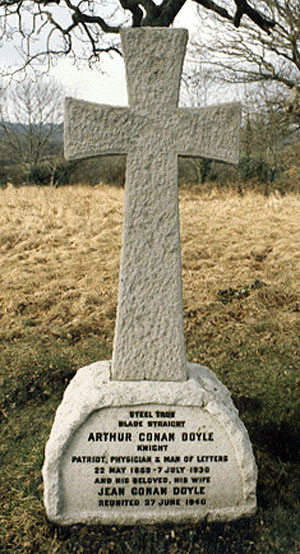
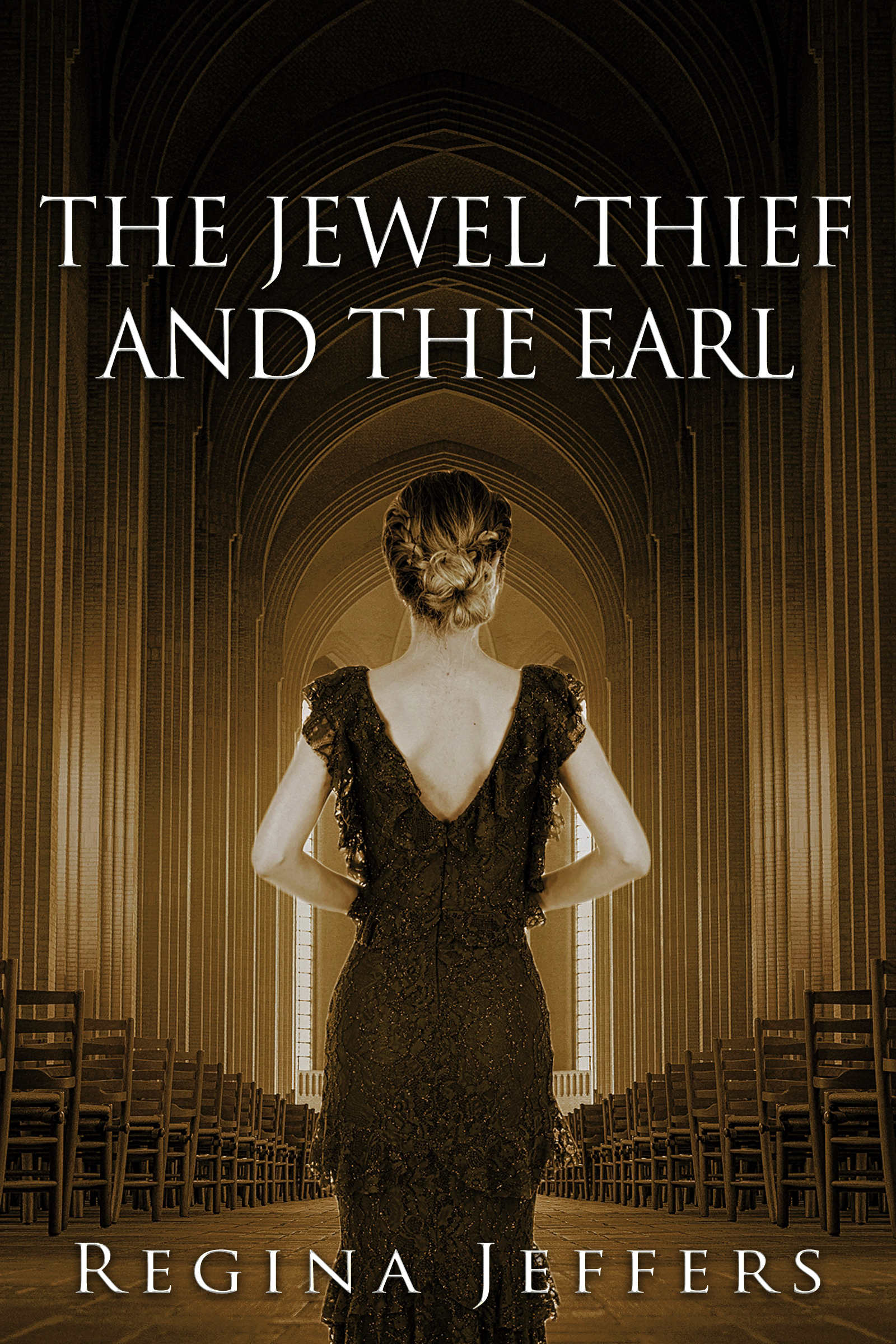


















 Richard Posner in Subversion and Sympathy (edited by Martha Nussbaum and Alison LaCroix, Oxford Press, 2013, p. 86) tells us “Their incomes consist of rent paid by tenant farmers, but some of them also own bonds. They are remarkably candid, by our standards, about their incomes, with the result that everyone seems to know everyone else’s income almost to the shilling. It appears that ‘fortunes,’ whether in land or in bonds, yield about 5 percent annually, so that if you know the size of a person’s fortune you know his income, and vice versa. A fortune of £200,000, yielding an income of £10,000 a year, would be immense; that is the lower-bound estimate of Fitzwilliam Darcy’s fortune in Pride and Prejudice. In the same novel Mr. Bennet’s fortune of £40,000, which yields an income of £2,000 a year, is adequate—it is the average income of a baronet—but not princely. (Colonel Brandon, in Sense and Sensibility, lives very comfortably on £2,000 a year, but he is a bachelor, whereas Mr. Bennet has six dependents.) Adequacy is relative; a laborer or farmer would have earned only about £15 to £20 a year, a servant less (and even the least affluent members of the landed gentry have servants). It is impossible to estimate a modern equivalent of any of these incomes.
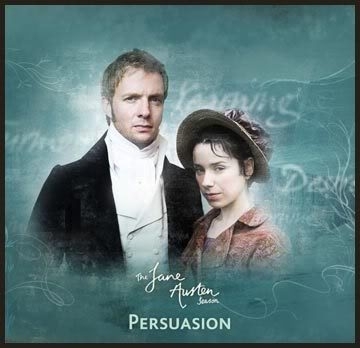
 (Image of
  (Image of
  (Image of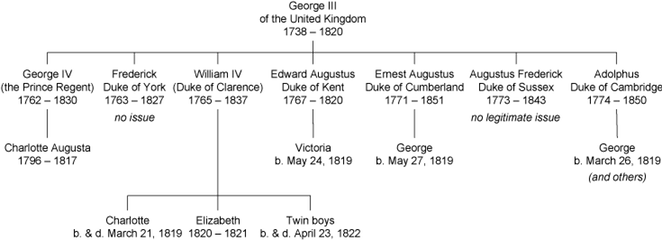


 In France the line of succession faced no problem of the male successor until King Louis X’s death in 1316. Although Louis’ wife delivered a male heir after the king’s death, the child passed within a week. Louis’ brother, Philip V, convened the Estates-General, which adopted a resolution that women would not be part of the line of succession to the French throne. The corollary principle also came into effect. With it, the children of a daughter of a French king could not make a claim to the throne. Salic law was used as reason to rebuff a claim to the French throne by England’s King Henry IV in 1410. The premise of Salic Law officially denied the infanta Isabella of Spain, the granddaughter of Henry II of France, her claim to the throne. Napoleon accepted the fundamental right of the practice, and it was applied to succession as late as the latter part of the 19th Century.
 William, Duke of Clarence, married (1818) Princess Adelaide of Saxe-Meiningen, but had no surviving issue. He did produce ten children with his mistress Dorothea Jordan, but they could have no claim upon the throne.
  Prince Edward, Duke of Kent, was next line of succession. Replacing his long-standing mistress, one of 27 years, he married Princess Victoria of Saxe-Coburg-Saalfeld. Queen Victoria was his daughter.
 Ernest Augustus, Duke of Cumberland, was next in line. “He was the fifth son and eighth child of George III, who eleven years before Ernest’s birth had inherited the thrones of two kingdoms, Great Britain and Ireland, and also that of the Electorate of Hanover, still part of the Holy Roman Empire. As a fifth son, initially Ernest seemed unlikely to become a monarch, but Semi-Salic Law, applied to the succession in Hanover, and none of his elder brothers had any legitimate sons. Therefore, when in 1837 his niece, Victoria, became Queen of England and Ireland, ending the personal union between the British Isles and Hanover that had existed since 1714, Ernest became King of Hanover, which had been raised to a kingdom after the end of the Holy Roman Empire.” (
 Prince Augustus Frederick, Duke of Sussex, married in contravention of the Royal Marriages Act of 1772, to Lady Augusta Murray with whom he had issue. As this action eliminated him from the line of succession, the marriage was annulled in 1794. In 1831, he married Lady Cecilia Buggin, the Duchess of Inverness, but they had no issue.


 Every Woman Dreams...