
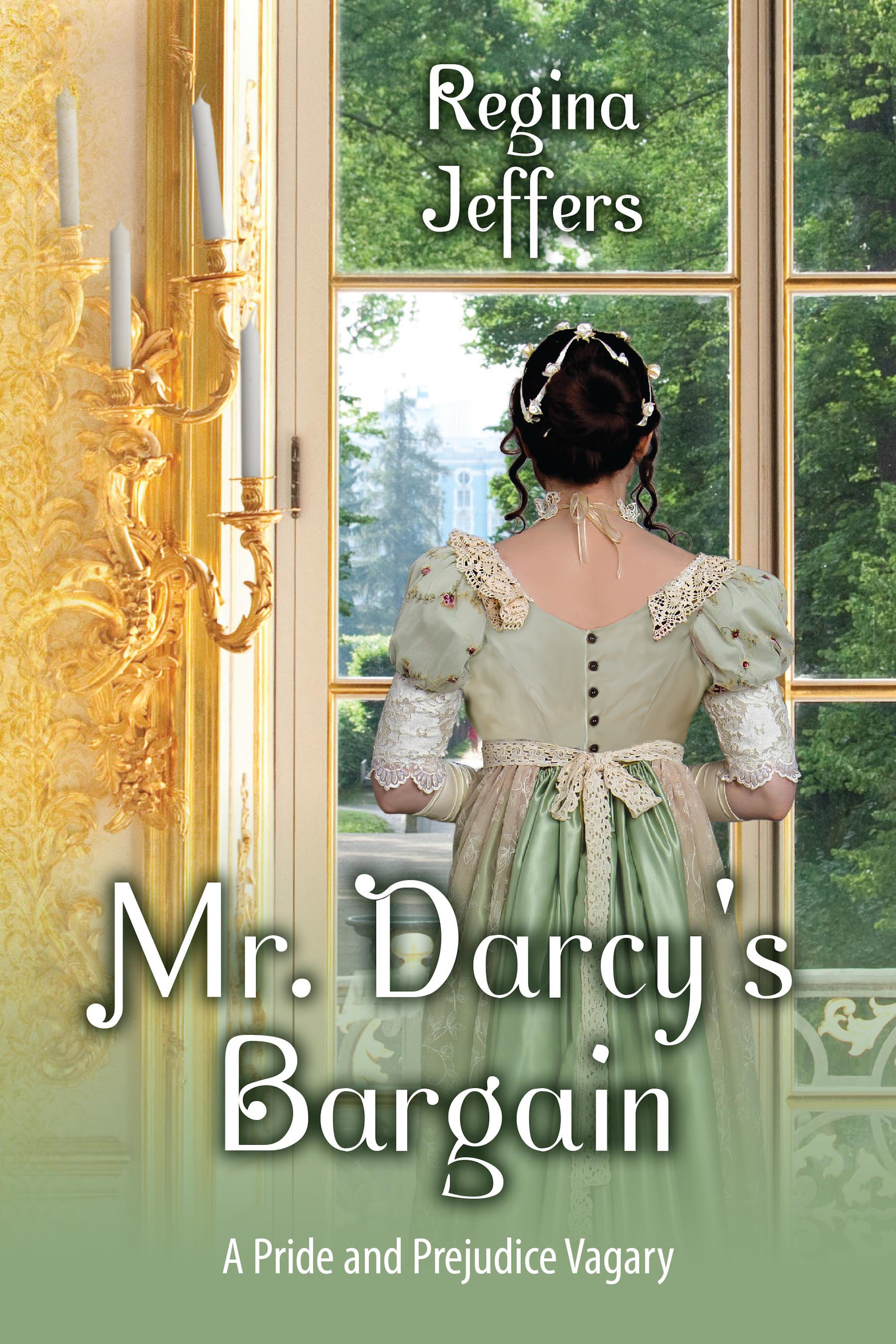
My latest Austen-inspired tale, Elizabeth Bennet’s Gallant Suitor, goes on preorder today. It is a friends to lovers to tale, but with more than one twist to mess with your minds. LOL! Part of it was inspired by William Hogart’s The Marriage Settlement.
The Marriage Settlement is the first in the series of six satirical paintings known as Marriage A-la-Mode painted by William Hogarth. (Wikipedia)

The plot of the painting is the unmitigated greed of the two fathers, the Alderman and the Earl. The Alderman is wealthy to excess, and the Earl is heavily in debt but still retains his ancient title. The Alderman is desirous of becoming the grandfather to a noble son, and the Earl wants to ensure his line is carried on, and is willing to put up with the common Alderman for the sake of his money.
Meanwhile, the soon to be married two are completely ignoring each other, and the bride is being courted by the lawyer. Myriad details show the true natures of the characters present, especially the Earl and his son.
In my tale the couple ignoring each other are Colonel Fitzwilliam and Jane Bennet, but, if you know anything of my writing, you know I love to twist a tale, sometimes turning it on its head and giving it a good shake.
Book Blurb:
When Elizabeth Bennet’s eldest sister is named as the granddaughter of Sir Wesley Belwood, the Bennet family’s peaceful world is turned on its ear. Over Mr. Bennet’s objections, when Sir Wesley orders Jane to Stepton Abbey, Mrs. Bennet escorts her daughter to meet Jane’s true grandfather, a man who once turned the former Frances Gardiner Belwood out without even a widow’s pension. Elizabeth accompanies the pair, in hopes of protecting both from a man none of them truly know.
Fitzwilliam Darcy travels to Stepton Abbey with his cousin, Colonel Fitzwilliam, whose Uncle Wesley has summoned the colonel to the abbey to meet the baronet’s granddaughter. Sir Wesley is the Countess of Matlock’s brother, and the man wishes for a marriage between the colonel and Jane Bennet (née Belwood) in order to keep the abbey in the family, while Darcy means to be in a position to protect his cousin from being forced into a marriage of convenience.
When Elizabeth Bennet and Mr. Darcy meet sparks of self-righteousness fly between them, but soon they join forces to protect their loved ones from Sir Wesley’s manipulations. Moralizing soon turns to respect and then to trust and then to love. This is a friends to lovers tale turned upon its head with unexpected consequences for all.

Excerpt from Chapter Three
Elizabeth had waited, somewhat impatiently, for the gentlemen to retire for the evening. Supper had been a very stifled affair, even more so with Sir Wesley’s edicts and Mrs. Bennet’s continued silence, although her mother must have bitten off the end of her tongue many times over, for the baronet continued to insult all except his nephew and his granddaughter. If nothing else became of this chaos, Mrs. Bennet would, incontestably, own a renewal of her appreciation of Mr. Bennet’s generally kind nature.
Mr. Darcy had kept his comments directed to his cousin and the baronet, and Elizabeth had felt the sting of his “silence” most poignantly; therefore, she had tacitly pledged to issue an apology as soon as possible, which, for her, meant counting the minutes until she heard Mr. Darcy and the colonel talking softly as they made their way to their quarters.
As they drew near, she stepped into the soft light of the hallway. “Mr. Darcy, would you do me the honor of permitting me a moment of your time?”
The gentleman glanced to his cousin, who said, “We may require the lady’s assistance, Darcy.” With those words, the colonel left his cousin and her alone in a semi-dark corridor.
Elizabeth waited until the colonel entered his quarters before she said, “I wish to confess I have acted despicably in my dealings with you. I find myself quite off kilter in my thoughts of late. My dearest sister is being ripped from the bosom of her family, and I am being expected to stand alone and permit it to happen.
“Moreover, your announcement of Mr. Wickham’s true nature was another blow to my previous view of the world. I have always prided myself on my discernment until now.” She avoided looking directly into his steely grey eyes. She played with her lower lip a moment before asking, “Is there a means of earning a bit of your forgiveness?”
He leaned closer and spoke in hushed tones. “You are not the first woman to be taken in by Mr. Wickham’s half-truths and lies, and my cousin reminded me you had no point of reference to discern the truth. I, too, acted in a prideful manner. However, Fitzwilliam says our conversation was fortunate because, now, you will be less prone to accept any other lies Mr. Wickham offers you. In such a manner, our acquaintance has likely saved you from an imprudent choice.”
“Are there other lies of which I should be made aware?” she asked in concern.
The gentleman’s face screwed up in obvious self-chastisement. “You and I speak to each other in a different manner than do many new acquaintances. Why do you suppose such is true?”
She pulled a grimace at him. “I imagine it is because we care deeply for our loved ones and do not wish to view them injured by Sir Wesley’s manipulations. Consequently, we set aside some of the strictures society would have us practice.”
“On that point, I can agree.”
She opened the subject again. “You did not respond to my question regarding Lieutenant Wickham’s other schemes. What else should I know of the man?”
For an elongated pause, Mr. Darcy remained tight-lipped before saying, “Mr. Wickham wishes to live a life of luxury, never comprehending even a small estate demands constant care and labor. He, generally, how should I phrase this, searches out the wealthiest woman upon whom to share his ‘charms.’”
“Miss King,” Elizabeth whispered.
“Pardon?” Mr. Darcy asked.
“Miss King. The lady recently received an inheritance of ten thousand pounds. Mr. Wickham calls often on the girl,” Elizabeth explained.
“I have viewed his efforts along those veins many times,” Mr. Darcy commented, “and I personally know three women who foolishly considered eloping with him.”
“Three?” Elizabeth asked in amazement.
Mr. Darcy replied, “I will explain all at a more opportune time, for now, it is late, and I am keeping you from your bed. Are we each forgiven for our earlier testiness?”
“I am willing if you are, sir,” she said with a small smile.
“I am willing, Miss Elizabeth.” He caught her hand and brought it to his lips, placing a gentle kiss on her knuckles. The sensation sent her heart pounding a quick tattoo. “Good night,” he whispered.
Releasing her hand, he turned and walked away, pausing briefly to nod to her before entering his quarters. Even so, Elizabeth did not move beyond bringing the spot on her hand where he had kissed it to caress her own cheek. “Oh, my . . .” she whispered.
* * *
Darcy found her in the gallery the next morning. Like it or not, he had had several very “specific” dreams of Miss Elizabeth Bennet last evening, and the memory of how he shared himself with her still clung to him, even though he knew nothing was possible between them. He assumed it had something to do with how quickly their relationship had progressed and the sincerity with which they spoke to each other. “I thought we might go down to breakfast together. It would be good to prove to the others we have resolved our differences.”
“Certainly,” she murmured in distraction. “Permit me a moment to return these engravings to their rightful place.”
Darcy glanced to the collection. “Hogarth?” he questioned.
“Yes, reportedly, Sir Wesley purchased the set when they were offered to subscribers back in the middle of the last century. According to my mother, Sir Wesley presented them to his son a year or so before Stewart Belwood married my mother. When the baronet drove her from the abbey, my mother wished to take them with her as something to give to Stewart’s child when it was older, but Sir Wesley adamantly refused her, going so far as placing the blame of his son’s death squarely on my mother’s shoulders. A guinea was all these items had cost him; yet, he would not permit my mother even one memory of her marriage.”
“A bit of irony, do you not think?” Darcy asked as he looked closer upon the grouping. “Especially as the first one in the series is called ‘The Marriage Settlement.’”
Miss Elizabeth smiled up at him. “Yes, it depicts Hogarth’s opinion of the disastrous consequences of marrying for money rather than love.”
Darcy agreed. “Just look. There are the two self-seeking fathers—one a spendthrift nobleman requiring a fortune to keep his estate alive and the other a wealthy London tradesman who desires to see his daughter move in aristocratic circles.”
“Irony indeed,” the lady remarked. “See how the unhappy couple sit with their backs to each other and are obviously bored by the negotiations when it is their future being discussed.”
“Perhaps Sir Wesley thought the image hit a little too close to home,” Darcy summarized, “although he likely presented the engraving to Stewart long before the man made your mother’s acquaintance.”
“Mama says otherwise. She claims they were in a package presented to Stewart from his father some weeks before the wedding. Sent from the family estate along with other items belonging to her late husband and left behind when Stewart departed the family estate. I think it was a last minute reminder of what Stewart should expect in his marriage. As to my mother, she claims to have held Stewart Belwood in affection and he likewise with her, but I cannot help but to think it more than a coincidence how Stewart was disowned by Sir Wesley and my mother was the daughter of a wealthy London merchant. Perhaps ‘the father’ shared the engravings with his son as a warning rather than a gift from the heart.”
“I thought Sir Wesley disowned Stewart before the wedding,” Darcy observed.
“He did, but only days before, not months, as one would assume. When he received word of Stewart’s intentions, the baronet made his objections known.” She shrugged her indecision. “Hogarth created art which imitated life.”
“Do you believe the engraving was an effort to prevent Stewart from pursuing a woman for whom the baronet held disdain?”
“You must have observed how much contempt Sir Wesley holds for my mother. He blames her for his son’s death. I assume, although the baronet already owned the engraving set, he chose to share it with Stewart when his arguments against the marriage did not prevail.”
Darcy found he enjoyed the quickness of the lady’s mind as she discussed her points, as well as the myriad of emotions crossing Miss Elizabeth’s features. He thought he might seriously miss her when this adventure was over; yet, it was too soon to say. He asked with a smile and an offer of his arm, “We could speculate forever on the workings of Sir Wesley’s mind. For now, breakfast, Miss Elizabeth?”
“Gladly, Mr. Darcy,” she responded with the most compelling smile he had ever seen. He knew in that instant she would change his life in ways he had not anticipated.
GIVEAWAY: I have 2 eBook copies of Elizabeth Bennet’s Gallant Suitor available to those who comment on this post. The winners will be notified by email on October 6, 2022.
PREORDER the ebook HERE.
 Purchase Links:
 Other parishes were not as meticulous as St Martin-in-the-Fields. Generally, the person requesting the recording of the birth was at the “mercy” of the clergyman overseeing the parish. The clergyman’s opinions or those of the aristocrat providing his living could differ greatly from parish to parish. Some clergy would look poorly upon an abortive situation. An aristocrat might privately have a stillborn child baptised, but a public announcement of such would not occur. The recording of a child’s birth, or the lack thereof, is a major plot point in Book 2 of my Twins’ Trilogy, The Earl Claims His Comfort. Any “public” records, such as Debrett’s The New Peerage, would simply include the line
  We find an example of such in Chapter 1 of Jane Austen’s Persuasion, Sir Walter Elliot picks up the Baronetage to read of his family history, “”ELLIOT OF KELLYNCH-HALL.
 Anciently, a chrisom, or “chrisom-cloth,” was the face-cloth, or piece of linen laid over a child’s head when he or she was baptised or christened. Originally, the purpose of the chrisom-cloth was to keep the chrism, a consecrated oil, from accidentally rubbing off. With time, the word’s meaning changed, to that of a white mantle thrown over the whole infant at the time of baptism. The term has come to refer to a child who died within a month after its baptism—so called for the chrisom cloth used as a shroud for it. Additionally, in London’s Bills of Mortality, the term chrisom was used to refer to infants who died within a month after being born.
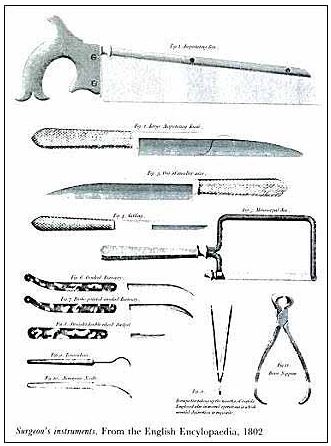
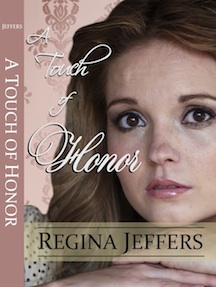 In A Touch of Honor, Book 8 of the Realm Series, I used a different plot point associated with the recording of births and deaths. In the book, Lady Satiné Swenton dies in a terrible accident and the child she carried is also lost. The surgeon tending the body asks Lord Swenton if he wishes to have the stillborn buried with his mother.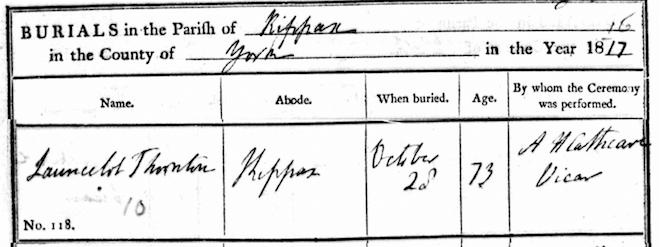
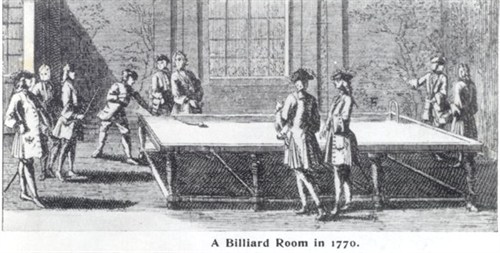


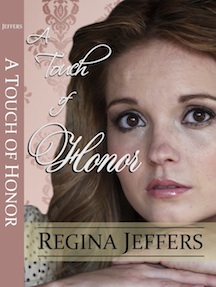 Most barons use their family name as their title so the two are the same. But in some cases they are different. In my A Touch of Honor, John Swenton is Lord Swenton. He is a baron. However, it is possible that I could have styled him as John Swenton, Lord Monroe. Obviously, in an 8-book series, one more name would have been confusing to my readers, but it was an option. More confusion could arise because sometimes there are two barons with the same title name, so if there were two Lord Swentons, one would be Lord Swenton of Swenton Hall, while the other would be Lord Swenton of Nash Manor. In other words, they become known as Lord XXXX of (some place name at or near their seat) to differentiate them, though the ‘of’ is merely a way to keep them straight than an actual part of their title.
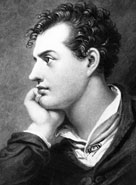 Though one can say “Lord Byron is a baron,” one would never call him Baron Byron. He would always be “Lord Byron.” One did not say “Baron and Baroness Byron” arrived, entertained, etc. The fact that Byron was a baron was noted in the book of peerage, in his seat in the House of Lords, and when one had to rank men by precedence. Otherwise he is always Lord Byron. His wife is Lady Byron. He would have been styled as The Right Honourable The Lord Byron.


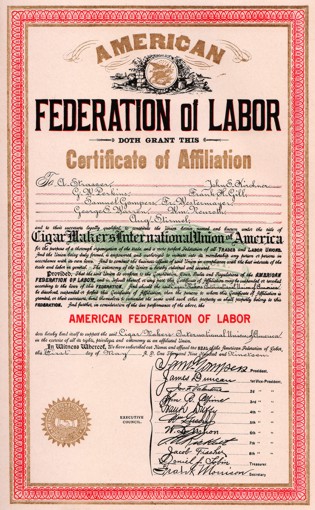
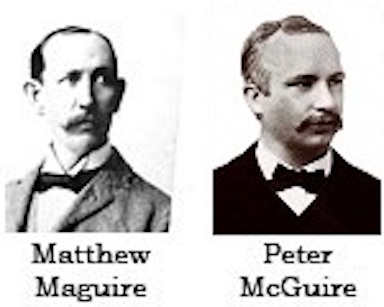 According to the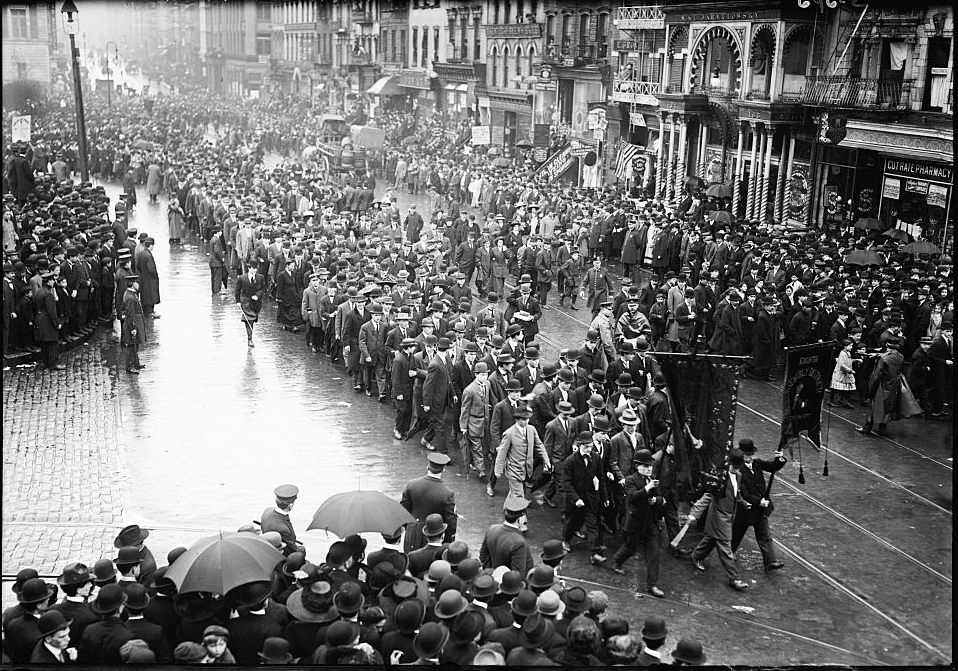
 Spectators for the event had arrived early to claim a spot to view the parade that was to pass near City Hall in Manhattan, along Broadway. A newspaper account of the day described “…men on horseback, men wearing regalia, men with society aprons, and men with flags, musical instruments, badges, and all the other paraphernalia of a procession.”


 Every Woman Dreams...

