Happy 10th Book Birthday to “Second Chances: The Courtship Wars”!!!!

Most of you know me as a Regency romance/mystery/romantic suspense writer, but I have dabbled in a few contemporary romances. One of those turns 10 years old today.

One morning in 2008, I was watching the Today Show, and Dr. Laura Berman shared a study involving pheromones and the connection to Nerve 0 and the human sex drive. The short piece caught my interest so much so I did additional research on the findings. There was a wonderful article “Sex and the Secret Nerve” from Scientific American, which was not too far over my head. http://mugwump.pitzer.edu/~bkeeley/pix/Portugal/Nervus_Terminalis.pdf

Nerve 0 has endings in the nasal cavity, which are attached directly to the sexual regions of the brain. This nerve has no olfactory cortex, meaning it is not used to smell, but to identify sexual cues of potential partners. We are attracted to those with scents in opposition to our own. Family members share similar chemical makeup, a means to keep humans from seeking sexual partners within one’s own family. This next fact is the one that caught my attention in the study. Pregnant women are drawn to people with similar chemical makeups, likely to seek comfort. As the pill “simulates” pregnancy conditions in a woman’s body, women on the pill often choose someone of a similar makeup rather than the opposite. Could this be the reason for so many divorces? I found that possibility totally confounding.

Anyway, combining Nerve 0 with the study of MHC (Major histocompatibility complex) proteins became the basis of Gillian Cornell’s research, and a contemporary romp began. When I retrieved the manuscript from mothballs, I pressed Rebecca Young (Abigail Reynolds’s daughter) into creating a jazzy new cover and made major revisions to the story line. 

Dr. Lucian Damron, a noted psychologist, has it all: good looks, a high society girlfriend, a growing fan base, and a media deal for his own television show. Yet, when he meets Gillian Cornell, he ironically sees what he does not have—a love which will complete him. A bit of a control freak, Gillian Cornell does not need complications such as Lucian Damron in her well-ordered life. He is shallow and surprisingly self-assured. Moreover, Gillian has her own goals to define, and she has responsibilities the infantile Dr. Damron would never understand. However, a once-in-a-lifetime love dangles teasingly within their reach if they can put their former prejudices regarding each other to rest and work together on television’s newest reality show “Second Chances.”

Each week the show’s contestants compete for a dream wedding and a quarter million dollars. To do so, the couples, who were previously married but presently divorced, must undergo psychological therapy and good, old-fashioned competitions. As the medical support staff, Gillian and Lucian find themselves thrown head first into the competitions also. It seems the American public are enthralled with their blossoming relationship. Tuning in each week to watch the next level of competition and to vote for their favorites, viewers tell the show’s producers they like the battling psychologists as much as they do the contestants. Ultimately, Lucian and Gillian become the show’s stars and the face of the franchise. Meanwhile, secrets of a former life and previous relationships threaten to end their budding happiness, keeping it barely beyond Lucian’s and Gillian’s grasps. Can their love survive the complex emotional swirl forcing them to put their trust to the test? Is “happily ever after” only a dream?

Book Blurb:

Rushing through the concourse to make her way to the conference stage, Gillian Cornell comes face-to-face with the one man she finds most contemptible of everyone she knows, and suddenly her world tilts. His gaze tells stories she wants desperately to hear. As he undresses her with his eyes, Gillian finds all she can do is stumble through her opening remarks. The all-too-attractive cad challenges both her sensibility and her reputation as a competent sexologist.

Dr. Lucian Damron never allows any woman to capture his interest for long. He uses them to boost his career and for his own pleasures. Yet, Lucian cannot resist Gillian’s stubborn independence, her startling intelligence, and her surprising sensuality. Sinfully handsome, Lucian hides a badly wounded heart and a life of personal rejection.

Thrown together as the medical staff on Second Chances, a new reality show designed to reunite previously married couples, Lucian and Gillian soon pique the interest of the American viewing public, who tune in each week, fascinated by the passionate electricity between them. Thus begins an all-consuming courtship, plagued by potentially relationship-ending secrets and misunderstandings and played out scandalously on a national stage.

Excerpt (using a bit of the research in the opening):

“Time Does Not Bring Relief”

by Edna St. Vincent Millay

Time does not bring relief; you all have lied

Who told me time would ease me of my pain!

I miss him in the weeping of the rain;

I want him at the shrinking of the tide;

The old snows melt from every mountain-side,

And last year’s leaves are smoke in every lane;

But last year’s bitter loving must remain

Heaped on my heart, and my old thoughts abide.

There are a hundred places where I fear

To go, – so with his memory they brim.

And entering with relief some quiet place

Where never fell his foot or shone his face

I say, “There is no memory of him here.”

And so stand stricken, so remembering him.

Chapter 1

“Jackson,” Lucian Damron extended his hand as he maneuvered the man out of earshot of other conference attendees. “Any news?”

Jackson Ryder knew what Lucian wanted to hear. “We’ve made progress.” Jackson dropped his voice. “Starline is developing a new reality show, and they want you as one of its medical consultants. If this one goes the way we think, they’ll pick up the talk show format for the fall season.”

“You’re not kidding me, are you, Ryder?”

“We’ll meet after your session, and I’ll give you all the details.” Lucian realized Ryder lived for such moments–teasing his clients, dangling the proverbial carrot before them. “One of my other regulars could also be picked up by the show. Maybe we can all meet–hash out the details.”

* * *

Praying she wasn’t late, Gillian Cornell rushed into the civic arena’s conference room only to find clusters of people standing around waiting for the session to begin. Out of breath from running through the concourse, Gillian stood, chest heaving, before making her way to the stage. She wondered if she’d made a mistake in accepting Jackson Ryder’s proposal to be part of this conference round table. Her science wasn’t the science of the rest of those in attendance. Gillian practiced what most of the conference attendees would call “New Age Medicine,” although Gillian certainly didn’t call it that. In fact, that particular term was so passé. A sex therapist and relationship counselor, Gillian held hopes of releasing her first book soon. If Ryder’s promise of the new Starline reality show came through, she could launch her book to a national audience.

* * *

As he settled into his place at the presenters’ table, Lucian Damron’s eyes surveyed the room before settling on the still open doorway. Riveted to the portal, he couldn’t curtail his instinctive appraisal of a striking beauty rushing through the entrance: a bit disheveled in her appearance, but oh so breath-taking, he noted how a moment of insecurity played across her countenance. Unexpectedly, he found himself rising to assist her.

“Is there a problem, Damron?” the moderator asked.

“No…no. I was just looking for the water pitcher before we began.”

“I will take care of it for you,” the man offered, but Lucian merely nodded; his eyes still searched the room for the woman.

Then he found her, and an uncomfortable deep rush of blood to his lower body, as well as a lift of his brow accentuated the pleasure he experienced in watching the slender woman march purposefully toward the front of room. The conference participants blocked part of Lucian’s sight lines, but he managed to find her immediately each time she reappeared from behind another cluster. He enjoyed this perverted game of hide-and-seek as the woman, zigzagged her way through the crowd. Then, she began to ascend the stage’s steps. So, she’s part of the program, Lucian thought. Perhaps a late night rendezvous.

As she settled her belongings under the table, a sensual delight in the woman’s perfection—her thin, aquiline nose and lush lips—coursed through him. When her eyes narrowed in response to Lucian’s stare, he turned his head quickly, looking the other way for several minutes; yet, those same magnificent eyes drew him back to the woman’s countenance. It had been a very long time, if ever, for Lucian to be taken so instantly with someone, but, this auburn-haired beauty had left his senses rattled. Unfortunately, for him, the moderator cleared his throat to set the program’s beginning.

* * *

 “Are you telling me . . . telling this audience, you seriously believe we choose our mates by how they smell?” After several less than stellar presentations, the discussion had become a heated one between him and the pretty brunette. In the back of his mind, Lucian considered how tantalizing it would be to argue and then have make up sex with his opponent.

“Why not? Attraction must be based on something . . . an intangible,” she retorted. “Is science absolutely certain it knows what attracts two people to each other.”

Although her impertinence infuriated him, a crooked, boyish smile played across Lucian’s features. “Maybe it is something as tangible as a person’s looks.” Her appearance had certainly piqued his interest.

The woman quipped. “Or their body odor.” A snicker crisscrossed the room as Lucian felt a twinge of indignation; in claiming her own respect from the audience, she had dismissed his.

His voice rose with the embarrassment: No one spoke to him with such bravado, especially not a woman. He knew full well his appeal to women for he had used it to carve out his current success. No cheeky female, despite how attractive she might be, would show him up. “Then explain to me, Miss Cornell, why there are so many divorces if all we must do is sniff people to find our perfect mate. Maybe we should act more like dogs.”

Incredulously, she flushed before saying, “Some women already think men act like dogs.” Again, came the snickers of laughter. “In reality, it is not so simple.”

Lucian leaned back in his chair, crossing his arms across his chest, symbolically closing off the discourse and denying her ideas their validity. “It never is.” A look of amusement overspread his face, and the laughter accorded him lasted longer than what his sexy opponent had engendered.

Despite his being her target, Lucian liked the fact she did not concede defeat. It spoke to the type of woman she was. The type he normally avoided. Miss Cornell demanded, “Dr. Damron, do you challenge the existence of Nerve ‘O’?”

“I am a man of science, Miss Cornell; I am willing to accept the possibility of what you purport.” He thought he saw the flash of her eyes, and Lucian smiled as if they were already lovers.

However, the lady brushed off his overtures, a fact he duly noted. Obviously, the woman meant to spend her time discussing her research and placing her agenda on the table. She had no time for him, and Lucian wondered if he had made a mistake in demonstrating an interest in the woman. “Reproductively speaking,” she continued, “MHC may determine how healthy our offspring will be, and as far as our susceptibility to another person, it does appear, sir, that next to our brain, our nose is a powerful sex organ.” The crowd responded as tainted images drifted among the attendees. “Women in my research groups report a connection between a satisfying sex life and their guy’s scent.”

“Oh, God, save us from scent aphrodisiacs!” Lucian protested loudly.

“A study by the Berlinger Foundation discovered which smells increase a man’s arousal by increasing the blood flow to the penis,” she countered. “Would you be interested in knowing what those might be, Dr. Damron?” Her voice held its own taste of sarcasm.

“Of course, Miss Cornell, enlighten me. I may need to know what scents to avoid in the future.” Smugness crept across Lucian’s countenance.

Even though the lady apparently meant to put him in his place, Miss Cornell laughed, and Lucian could hear the seductiveness of it. “Turn up your attraction,” she smirked, “by having your mate indulge in pumpkin pie or black licorice or a donut or lavender.”

* * *

“You were magnificent,” Charlotte purred into his ear as she laced her arms around Lucian’s neck. “You had the entire audience hanging on your every word.” She kissed him intimately behind the ear.

Lucian smiled, but his attention lay elsewhere. His eyes searched the room for the likes of Gillian Cornell. Once they had exited the presentation, he had watched her move from one group to another, relishing in the attention but not dwelling with any one person too long. Lucian had found he liked that idea. Unrealistically, the idea of her being with someone special didn’t set well with Lucian. Charlotte moved closer and allowed her hand to caress his hip. For some nine months, a casual sexual relationship had existed between Lucian and Charlotte Blakeley. The casual part had existed purely on Lucian’s side: Charlotte held hopes of something more permanent. “You certainly put that Cornell woman in her place,” Charlotte intoned in her best socialite attitude.

“That was never my intention.” Lucian nonchalantly extracted himself from Charlotte’s hold while he distractedly searched the crowd for another glimpse of Gillian Cornell.

Charlotte’s apparent jealousy sounded through her tone. “You cannot possibly believe the woman’s opinions hold any merit?”

“Most certainly, I don’t find her opinions valid.” Lucian’s voice carried a little too far. “The woman is a sex therapist for Christ’s sake,” he protested.

“Actually, I am a sexologist.” Lucian turned to face a furious Gillian Cornell. “That means I have a psychology degree—the same as you, Dr. Damron.”

Lucian flushed at being caught calling forth his masculinity before his acquaintances. “I stand corrected, Miss Cornell.” He made her an exaggerated bow before stepping away from the contrariness displayed on the woman’s countenance. “Your advanced education is duly noted.” Her cheeks began to burn, and for that he felt a twinge of guilt; but in reality, the lady had her life and so did he. Lucian purposely threaded Charlotte’s hand into the crook of his arm as he walked away. From behind him, he had no doubt it was the very correct Gillian Cornell who growled, “Pompous ass!”
Posted in book excerpts, books, contemporary romance, dancing, eBooks, Industry News/Publishing, marriage, publishing, reading habits, romance, science, writing | Tagged , , , , , , | Comments Off on Happy 10th Book Birthday to “Second Chances: The Courtship Wars”!!!!

Dressmakers and Fashion and What Jane Austen Said of Both

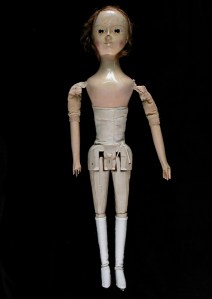
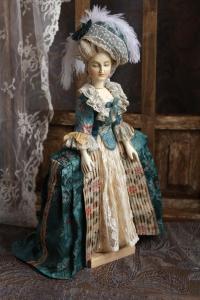
A woman’s dressmaker, or “mantua maker,” as they were often known during the late Georgian era, were essentially paid to know what was the latest fashion trends. Most of us who are obsessed with the era, know something of fashion plates and La Belle Assemblée, but did you know many dressmakers had “fashion dolls” in their shop to allow customers to view the latest fashion in miniature. According to The Hidden Wardrobe, “Before Vogue and before The Sartorialist how on earth did Georgian ladies keep up with the fashions across the Channel?? Meet the Pandoras…the miniature dolls that were sent over from France in the eighteenth century to keep the Georgian fashion pack in the know about the latest trends, in every detail. These dolls were considered to be more accurate than word of mouth. They were invented as a means of conveying costume detail long before the technology of the woodcut and copperplate were available to create the fashion plate….”

Pandora from the Victoria and Albert Museum

Many fashionable women actually owned a pair of these dolls, one dressed grandly, which was known as the Grande Pandore, and one in en dèshabille, known as Petit Pandore. French fashions dolls could be found throughout Europe. Meanwhile, English fashion dolls were shipped to America. Paper dolls were also used to preview one’s choice of wardrobe or coiffure.

Before a new gown was commissioned or sewn, ladies were required to make decisions regarding the type of sleeve, flounces, a train, etc. Ladies sewing a garment at home did not have pattern books available to them. One might find full sized patterns of children’s garments, however. Most women took apart a gown they already owned and used it as the pattern. A dressmaker who hold a piece of paper or fabric up the lady and would shape and cut it. If the dressmaker used fabric in this process, that fabric would become the lining for the dress. A person could also purchase an item/dress to use as the pattern.

White gowns were elegant, but difficult to keep clean. Even colored fabrics could be problematic if not handled properly. The dye would wash away. Informal day wear could customarily be calico, chintz, etc. Evening wear was made from fine muslins, sarsenet, and satin.

A few dressmakers kept a stock of fabric in their shops, but as this was costly for them, this practice was rare. Customers, generally, provided their own fabric, which could be purchased at shop or from door-to-door peddlers, who sold fabric and drapery goods.

Surprisingly, or perhaps not, Jane Austen speaks often of fashion, dressmaking, and the like in her stories and in her letters. Check out these comments from her letters regarding fashion:

“We are busy making Edward’s shirts, and I proud to say I am the neatest worker of the party.” (1 September 1796)

“I have made myself two or three caps to wear of the evenings since I came home, and they save me a world of torment as to hair-dressing.” (1 December 1798)

“I believe I shall make my new gown like my robe, but the back of the latter is all in a piece with a tail, & will 7 yards enable me to copy it in that respect?” (18 December 1798)

“I cannot determine what to do about my new Gown; I wish such things were to be bought ready made.” (25 December 1798)

“But I will not be much longer libelled by the possession of my coarse spot, I shall turn it into a petticoat very soon.” (25 December 1798)

“It is to be a round gown, with a jacket and a frock front, to open at the side. The jacket is all in one with the body, and comes as far as the pocket holes –about half a quarter of a yard deep, I suppose, all the way round, cut off straight at the corners with a broad hem. No fulness appears either in the body or the flap, the back is quite plain–and the side equally so. The front is sloped round to the bosom and drawn in, and there is to be a frill of the same to put on occasionally when all ones handkerchiefs are dirty, which frill must fall back. She is to put two breadths and a half in the tail, and no gores–gores not being so much worn as they were. There is nothing new in the sleeves; they are to be plain, with a fulness of the same falling down and gathered up underneath. Low in the back behind, and a belt of the same.” (January 1799)

My cloak is come home, I like it very much, and can now exclaim with delight, like J. Bond at hay harvest, ‘This is what I have been looking for these three years.’ I saw some gauzes in a shop in Bath Street yesterday at only fourpence a yard, but they were not so good or so pretty as mine. Flowers are very much worn, and fruit is still more the thing. Elizabeth has a bunch of strawberries, and I have seen grapes, cherries, plums, and apricots. There are likewise almonds and raisins, French plums, and tamarinds at the grocers’, but I have never seen any of them in hats. A plum or areengage would cost three shillings; cherries and grapes about five, I believe, but this is at some of the dearest shops.” (2 June 1799)

“I am quite pleased with Martha and Mrs Lefroy for wanting the pattern of our Caps, but I am not well pleased with Your giving it to them.” (2 June 1799)

“Though you have given me unlimited powers concerning Your Sprig, I cannot determine what to do about it, & shall therefore in this & in every future letter continue to ask you for further directions.” (11 June 1799)

“Mary has likewise a message—. She will be much obliged to you if you can bring her the pattern of the Jacket & Trowsers, or whatever it is, that Eliz[abe]th’s boys wear when they are first put into breeches—; or if you could bring her an old suit itself, she would be very glad.” (22 January 1801)

“I shall want two new coloured gowns for the summer, for my pink one will not do more than clear me from Steventon. I shall not trouble you, however, to get more than one of them, and that is to be a plain brown cambric muslin, for morning wear; the other, which is to be a very pretty yellow and white cloud, I mean to buy in Bath. Buy two brown ones, if you please, and both of a length, but one longer than the other–it is for a tall woman. Seven yards for my mother, seven yards and a half for me; a dark brown, but the kind of brown is left to your own choice, and I had rather they were different as it will be always something to say, to dispute about, which is the prettiest. They must be cambric muslin.” (25 January 1801)

“Gores not being so much worn as they were…” (6 May 1801)

“I find my straw bonnet looking very much like other people’s, and quite as smart. Bonnets of cambric muslin on the plan of Lady Bridges’ are a good deal worn.” (6 May 1801)

“Mrs. Tilson’s remembrance gratifies me, & I will use her patterns if I can; but poor Woman! how can she be honestly breeding again! (1 October 1808)

“[H]ow is your blue gown?—Mine is all to pieces.—I think there must have been something wrong in the dye, for in places it divided with a Touch.—There was four shillings thrown away.” (7 October 1808)

I am to be in Bombazeen & Crape, according to what we are told is universal here [Southampton]; & which agrees with Martha previous observation.” (15 October 1808)

“I can easily suppose that your [Cassandra’s] six weeks here will be fully occupied, were it only in lengthening the waist of your gowns.” (17 January 1809)

“Your letter came just in time to save my going to Remnants, & fit me for Christian’s where I bought Fanny’s dimity. I went the day before (Friday) to Laytons as I proposed, & got my Mother’s gown, 7 yds at 6/6.” (24 May 1813)

“I learnt from Mrs Tickar’s young Lady, to my high amusement, that the stays now are not made to force the Bosom up at all;—that was a very unbecoming, unnatural fashion. I was really glad to hear that they are not to be so much off the shoulders as they were.” (15 September 1813)

“I am glad you like our caps—but Fanny is out of conceit with hers already; she finds that she has been buying a new cap without having a new pattern, which is true enough.” (23 September 1813)

“Miss Chapman’s name is Laura & she had a double flounce to her gown. —You really must get some flounces. Are not some of your large stock of white morn[in]g gowns just in a happy state for a flounce, too short?” (14 October 1813)

“I have determined to trim my lilac sarsenet with black sattin ribbon just as my China Crape is.” (6 March 1814)

“I have been ruining myself in black sattin ribbon with a proper perl edge; & now I am trying to draw it up into kind of Roses, instead of putting it in plain double plaits.” (7 March 1814)

“I wear my gauze gown today, long sleeves & all; I shall see how they succeed, but as yet I have no reason to suppose long sleeves are allowable.” (9 March 1814)

“Mrs Tilson had long sleeves too, & she assured me that they are worn in the evening by many. I was glad to hear this.” (9 March 1814)

“I am amused by the present style of female dress; —the coloured petticoats with braces over the white Spencers & enormous Bonnets upon the full stretch, are quite entertaining. It seems to me a more marked change than one has lately seen. — Long sleeves appear universal, even as Dress, the Waists short, and as far as I have been able to judge, the Bosom covered. —I was at a little party last night at Mrs Latouche’s, where dress is a good deal attended to, & these are my observations from it. —Petticoats short & generally, tho’ not always, flounced. —The broad-straps belonging to the Gown or Boddice, which cross the front of the Waist, over white, have a pretty effect I think.” (2 September 1814)

Molland’s Circulating Library

Women in World History Review

For more of Austen’s wit and wisdom, I might suggest The Letters.

Posted in British history, England, fashion, Georgian England, Georgian Era, Great Britain, history, Jane Austen, Living in the Regency, Regency era, research | Tagged , , , , , , | 1 Comment

Breaking an Engagement in the Regency Era (Round 2)

After my last post in August on the issue of a breach of promise in the Regency, I have received several more questions on the subject. I hope some of what I am sharing below will clear up those concerns.

I believe the first time I came across a breach of promise situation, as a reader, was in Georgette Heyer’s The Grand Sophy. In the tale, Sophy must convince the lady the arrangement is not a good match. This is an era in which marriage is pretty much forever, and engagements mean you are just as good as married. Neither person can call it off without damage to his or her reputation, but the lady has more leeway to back out. Even so, she still risks being labeled a jilt if she makes a habit of this.

Of course if the man is a “rotter,” then he can cry off, but the lady (or her family) could sue him for breach of promise. Likewise, if she has the money and he is losing it due to her crying off, he can sue her. The beach of promise before 1754 was different from what it was afterwards. It also changed in the 19th century. There were many such suits in the early 20th century. Some were what have been called palimony cases.

It may surprise quite a few people to learn the very right to bring such an action is relatively a “new trend,” rather than being buried in ancient law. It was also a right peculiar to the common law of England and those countries who have derived their system of jurisprudence from English ties. Unfortunately, today, the action is used often as a form of blackmail and fraud, rather than for what it was originally designed. It did not exist in Roman law nor among later civilizations, nor does it exist today, as we know it, in any country where civil law prevails.

Originally matters affecting marriage or divorce came under the protection of the ecclesiastical courts. Those courts gave no damages for breach of promise or marriage, but they did decree “specific performance of the promise where the words of promise had amounted to matrimonium pèr verba de presenti, which, by the canon law, of itself constituted a marriage, all that was enforced being the additional formality of solemnization ‘in face of the church.’

“But the notion of compelling parties to enter into and maintain so sacred and delicate a relation as that of matrimony was repugnant to the growing sense of refinement which came with advancing civilization. In England, the action for specific performance of such a contract fell into disuse, the last instance of it being in 1752, and the right to bring the action was formally abolished by the Act of 27 Geo. II, (1754). In lieu of the old proceeding, however, there was developed by a course of ‘judicial’ legislation the common law action for damages arising from the breach of the marriage.” [Wright, Harter F. The Action for Breach of the Marriage Promise. Virginia Law Review. March 1924, Vol. 10, No. 5, pp. 361-383, Online]

In other words, it was common law which defined how a breach of promise suit would proceed. It became what is legally known as an “assumpit,” meaning, an express or implied promise or contract not under seal on which an action may be brought. It is a former common-law action brought to recover damages alleged from the breach of an assumpsit. It is an action to recover damages for breach of a contract.

Ironically, an assumpsit action was not originally considered a contract at all. It was a “tort” action, meant to recover damages for a wrong executed against the person. Originally only those suing for misfeasance were permitted to seek damages in such cases. The idea of “deceit” on one of the parties involved became part of the ‘unstated’ law. In all forms of contracts there is the assumption both parties will perform in an agreed upon manner. To those overseeing these trials, a promise to marry was equivalent to a promise to build a new house out of a certain type of material. A promise is a promise.

Moreover, most marriages of the time held some sort of monetary value. The judges of the day, consequently, not only saw these cases as a “promise,” but they also took into consideration the contract was not only an agreement to marry, but something of monetary value to one or both parties involved.

In light of these stipulations, one can understand how, early on, more men than women launched the suit, for they were expecting a hefty dowry with the marriage. Young men often borrowed money against expected income from a woman’s dowry. Remember her fortune became his fortune once they were married. However, when we think of the idea of a jilted “bride,” it is easy to see how they came about. A woman’s reputation was a large commodity, even up through the Victorian and Edwardian eras.

Most of us think of breach of promise suits as being brought by a jilted woman against her former fiancé. And so they typically were later on, in the Victorian era and the Edwardian era. With a shorter “shelf life,” so to speak, and fragile reputations, a long engagement which came to nothing was far more likely to damage the intended bride’s future prospects than the groom’s.

Ginger S. Frost in her book Courtship, Class, and Gender in Victorian England calls such suits “the myth of breach of promise.” She cites Dickens’s Pickwick Papers and Gilbert and Sullivan’s Trial by Jury, as being responsible for some or our misconceptions, writing:

Suits for breach of promise of marriage were well known to the public in Victorian England. From at least the 1830s a variety of writers recognized the inherent humor and drama of the action and began to fictionalize the cases as they were then brought. The depictions of trials during the century gave a strangely uniform representation of the people who brought such litigation and the outcome of their conflicts. This interpretation built up an idealized myth of breach of promise, one which influenced the perception of the suit far more than actual cases did.

Do you recall this episode of the episode of Downton Abbey where the man dies in Lady Mary’s bed? For a quick refresh, in Season 1, episode 3, Kemal Pamuk (Theo James – yes, Theo James who played in Sanditon) and Lady Mary (Michelle Dockery) enjoyed a fleeting steamy romance, which ended when the pair got into bed together and Pamuk died in flagrante delicto. With a fresh corpse lying in her bed, and the prospect of her reputation being shattered by the scandal looming, Lady Mary wakes Anna Smith, her lady’s maid (Joanne Froggatt), and her mother, the Countess of Grantham, Cora Crawley (Elizabeth McGovern). Then, the trio carry Pemuk’s lifeless body back to his own room to make it look like he died in his sleep, alone. The “adventure” was based on a true story. You can read all about it HERE.

Tainted reputations were hard to repair, even with a public trial. Remember: Neither the male nor the female were permitted to provide oral testimony in these cases. It was purely a paper trail until the late 19th Century. Doing so was considered to prejudice those trying the case.

It was to a person’s advantage to employ a barrister with a certain “flare” for the dramatics. The man could possible sway the jury, although the judgement was supposed to be based on such factors as the actual costs incurred by either or both, the loss of reputation (and, Heaven forbid, virtue), the defendant’s ability to pay, the length of the engagement, etc.

Obviously, some unscrupulous individuals hid their money or even leaving the country to keep from paying the judgments against them. As society changed, so did the breach of promise suits. Men were eventually seen as “weak” and “unmanly” if they pursued the suits. Therefore, by Victorian times, most breach-of-promise cases were initiated by women. However, the law abolishing the action was not passed until 1971. As women earned other rights under law (ability to own property, voting privileges, employment and fair wages, etc.), dependence upon making a “good marriage” was no longer necessary for a woman to know success. Obviously, unlike the Regency era, a woman of today does not need to be a virgin to know success in marriage.

Posted in British history, family, Georgian, Georgian England, Georgian Era, Great Britain, history, Living in the Regency, Living in the UK, marriage, marriage customs, real life tales, Regency era, research, tradtions | Tagged , , , , , , , , | 1 Comment

Happy 7th Book Birthday to “Elizabeth Bennet’s Excellent Adventure: A Pride and Prejudice Vagary”!!!

EBEA Cover-2 copy

Elizabeth Bennet’s Excellent Adventure is another of my Pride and Prejudice vagaries. For those of you unfamiliar with the “variation” genre, the author changes one key event in the original story line and sends the tale in a different (often more complicated) direction. Elizabeth Bennet’s Excellent Adventure begins with Elizabeth’s first refusal of Mr. Darcy’s proposal. Instead of Darcy disappearing from Elizabeth’s life until she encounters him again at Pemberley, Maria Lucas, with whom Elizabeth shares a room at Hunsford Cottage discovers Mr. Darcy’s letter, forcing Elizabeth’s hand. You see in Jane Austen’s time, a man and a woman could not exchange letters if they were NOT engaged. 

I am one of those people who write “caustic letters” (which I do not mail) to people who offer me a great offense. Such is one of my means to be rid of the anger I wish to control, as well as to curb the urge to say things I might regret later. Therefore, in this story, after the refusal Mr. Darcy does not imagine a joining with Elizabeth Bennet ever being possible. Therefore, he writes more than one letter to Elizabeth. In the first, he blatantly tells her the truth of Mr. Wickham, but he thinks it too strongly worded for a woman’s sensibilities. Next, he writes a letter where he demands justice for the accusations Elizabeth made against him. Realizing this second letter is not what a gentleman should say to a genteel woman, especially as Elizabeth previously accused him of ungentlemanly behavior, Darcy begins a third, more formal letter – the one we know from the original tale. 

To mix up the tale further, I placed Darcy in a dire situation. He is attacked by footpads outside of the jewelers, where he purchased Elizabeth’s ring. He is beaten and left for dead, and so, he does not make it to the wedding ceremony. A woman shunned in such a manner would be thought to be loose in her morals. Elizabeth assumes his absence from the wedding is Mr. Darcy’s means of taking revenge on her initial refusal of his hand. Therefore, she sets out on an “adventure” to view parts of England she will never be able to see as the “eccentric aunt” to her sisters’ children. Along the way, she encounters a certain melancholy captain in the form of Frederick Wentworth, who has longed for what might have been with Miss Anne Elliot in Persuasion. When he is healed enough to do so, Darcy must track Elizabeth down and then fend off Wentworth’s attention to claim Elizabeth to wife. This is a convoluted tale you cannot help but enjoy.

_____________________________________

Book Blurb: 

The Last Man in the World She Wishes to Marry is the One Man Who Owns Her Heart!

ELIZABETH BENNET adamantly refused Fitzwilliam Darcy’s proposal, but when Maria Lucas discovers the letter Darcy offers Elizabeth in explanation of his actions, Elizabeth must swallow her objections in order to save her reputation. She follows Darcy to London and pleads for the gentleman to renew his proposal. Yet, even as she does so, Elizabeth knows not what she fears most: being Mr. Darcy’s wife or the revenge he might consider for her earlier rebuke.

FITZWILLIAM DARCY would prefer Elizabeth Bennet held him in affection, but he reasons even if she does not, having Elizabeth at his side is far better than claiming another to wife. However, when a case of mistaken identity causes Darcy not to show at his wedding ceremony, he finds himself in a desperate search for his wayward bride-to-be.

Elizabeth, realizing Society will label her as “undesirable” after being abandoned at the altar, sets out on an adventure to mark her future days as the spinster aunt to her sisters’ children. However, Darcy means to locate her and to convince Elizabeth his affections are true, and a second chance will prove him the “song that sets her heart strumming.”

________________________________________

Excerpt from Chapter 2: 

THE MOMENT ELIZABETH OPENED THE DOOR to the room and spotted the pale countenance of Maria Lucas, she knew her world tilted upon its points. Maria held Mr. Darcy’s letter in her hands.

“What are you about?” she demanded as she attempted to conjure up an appropriate excuse for the letter’s presence in her belongings.

Maria jumped in surprise. A flush of color spread across the girl’s cheeks.

“Oh, Lizzy, I am so sorry. I searched for the green ribbon you borrowed two nights prior.”

The letter fluttered in the air as Maria gestured to the dresser they shared. As foolish as it would sound to others, Elizabeth prayed Maria’s handling of the letter did not damage it.

“I did not mean to intrude,” the girl pleaded.

Elizabeth closed the door behind her. “Yet, you did intrude on my privacy.”

Maria glanced to the still open drawer containing Elizabeth’s intimate wear. “This letter,” the girl whispered through her bewilderment. “It is from Mr. Darcy.”

Elizabeth fought the urge to groan. “It is,” she said simply.

Maria lifted the pages as if to read from them. “Who would think stuffy old Mr. Darcy could write such a letter?” Maria declared in awe.

Elizabeth crossed the short space to snatch the pages from the girl’s fingers. “Still waters carve a deep path to reach the river,” she snapped. Elizabeth had no idea why she defended the man, but she strongly disliked the idea of anyone calling Mr. Darcy “stuffy,” but her.

“Mr. Darcy is in love,” Maria continued.

“Perhaps,” she said enigmatically as she unconsciously smoothed the pages to refold them.

“No perhaps,” Maria protested. “Mr. Darcy is violently in love with . . . ” Maria gasped for air, and Elizabeth braced her shoulders against the accusation. She had not had time enough to analyze Mr. Darcy’s professions of affections.

“In love with . . . Miss Bennet. With your sister Jane. Did Mr. Darcy ask you to serve as courier? Is such the reason you always disclaim the gentleman’s worth?”

The girl’s words stunned Elizabeth, and it took several elongated seconds before she drew her wits about her. “I assure you, Maria, Mr. Darcy does not speak of Jane,” she said evenly.

“But the letter is addressed to Miss Bennet, and it speaks of another man not your sister’s equal. Surely Mr. Darcy speaks of Mr. Bingley’s connections to trade,” Maria reasoned. “I never thought of Mr. Bingley’s wealth being a detriment to his attentions to Miss Bennet, but now I understand the gentleman’s quick withdrawal from Netherfield after the ball he hosted.”

Elizabeth shook her head in the negative before sighing heavily in resignation. “While in Kent, I am ‘Miss Bennet’ to Lady Catherine and her household,” Elizabeth argued. “Without doubt, you heard her ladyship address me as such.”

Maria’s gaze ran over Elizabeth’s dowdy appearance. “Why would Mr. Darcy write such a passionate letter to you?”

“Ask your sister,” Elizabeth said testily. “Charlotte remarked more than once of late upon the gentleman’s growing regard for me.”

“Which you denied,” Maria said suspiciously.

“I did not recognize Mr. Darcy’s regard,” Elizabeth said honestly.

“What will you do about Mr. Darcy’s ardor?” Maria demanded. “Unless you mean to marry him—unless there is an understanding, Mr. Darcy should not speak to you with so much familiarity.”

Elizabeth replaced the letter in the drawer and closed it. She cursed herself for being so lackadaisical in regards to the letter’s security.

“Is there any hope you could forget you saw the letter?” she asked cautiously.

Maria’s frown lines deepened. “It is not proper, Lizzy. A gentleman should not take such liberties. You are a gentleman’s daughter, not a woman the man means to make his mistress.”

Elizabeth sat on the edge of the bed. “Would you permit me to speak to Charlotte before anyone learns of this letter, especially my cousin? Mr. Collins would take umbrage with my drawing Mr. Darcy’s regard from Miss De Bourgh. This situation must be treated with discretion.”

“Mr. Darcy must be made to speak an honest proposal, Lizzy,” the girl asserted.

Elizabeth thought of last evening’s confrontation with the gentleman. “Trust me, Maria. Mr. Darcy did exactly that.”

***

Two days later, over Lady Catherine’s objections of how a proper young lady would not act so foolishly, Elizabeth took the public coach to London. Her Uncle Gardiner would have sent his carriage for her, but there was no time for the luxury of a private coach. Charlotte agreed that Elizabeth must speak to Mr. Darcy as quickly as possible, and so Elizabeth and her long time friend constructed a tale of Mrs. Gardiner taking ill and requiring Elizabeth’s assistance.

Thankfully, Mr. Collins did not recall how Jane remained at Gracechurch Street, and Elizabeth could be spared if there were a true need for a caretaker.

“I shall write to Mama to say I mean to keep Maria with me an extra sennight,” Charlotte assured. “Such should provide you time to convince Mr. Darcy to renew his affections.”

Elizabeth was not so certain. She provided Charlotte an abbreviated version of the gentleman’s proposal, but at much as Elizabeth wished for a second opportunity to know Mr. Darcy better, she doubted the gentleman would be so inclined. Who would believe the always-practical Elizabeth Bennet would succumb to Mr. Darcy’s pretty words of devotion?

Her relations welcomed her with surprised exclamations, but they readily accepted her excuse of Sir William’s upcoming return to Kent as the reason for Elizabeth’s early departure.

“I could not subject Charlotte to another banishment to Mr. Collins’ quarters,” she said with a mischievous shutter. “This way, Maria can move in with Charlotte, and Sir William may have the smaller bedroom.”

“You should have sent word,” her Uncle Gardiner chastised.

“I did, but we received word of a seat available on the mail coach, and I took advantage of it.”

If all went as planned, her uncle would receive the hastily written post later that very day.

Jane hugged Elizabeth affectionately. “You are always so adventurous; I wish I possessed your mettle.”

Elizabeth did not feel adventurous; the possibility of another confrontation with Mr. Darcy frightened her. Yet, she knew it would be only a matter of time before Maria Lucas carried the tale of a lascivious letter to the Meryton neighborhood.

Elizabeth’s keeping the letter announced her complete ruin. Even so, she could not think upon the man’s words without a now more familiar warmth claiming her cheeks. She knew she should curse the fates which prevented her from burying Mr. Darcy’s letter before returning to Hunsford Cottage, but Elizabeth’s pride at engendering such a passion in a man of Mr. Darcy’s stature had her acting without reason—acting very much of the nature of her two youngest sisters.

Over supper, she laid the plan. “I did not tell you, Jane,” Elizabeth said with casual practice, “Mr. Darcy and his cousin, Colonel Fitzwilliam, joined Lady Catherine’s household perhaps a fortnight prior. The gentlemen attend to her ladyship’s affairs at the quarter day.”

“Were you much in Mr. Darcy’s company?” her aunt asked more in an afterthought, rather than a question requiring a response. “I wonder if he resembles his late father.”

Elizabeth’s Aunt Margaret resided many years in Lambton, a village near the Pemberley estate. Mrs. Gardiner knew something of the Darcy family.

“Her ladyship invited Mr. Collins’ household to tea quite often and to cards upon occasion,” Elizabeth confided. “Periodically our paths crossed when walking the parkland.”

She offered no more information as her aunt appeared content to speak at length upon the Darcys and the family’s connections to the Fitzwilliam family of Matlock.

Only once did Elizabeth experience regret at her manipulations. It was when Jane made a private inquiry of Mr. Bingley. Her sister’s crestfallen countenance had Elizabeth modifying her plan to contact Mr. Darcy. She would use the opportunity to foster a reunion between Jane and Mr. Bingley.

***

“A letter, sir.”

Darcy glanced up from his ledger to meet his butler’s scowling expression. “Did not the post arrive earlier?” Darcy inquired.

A shiver of anticipation ran up Darcy’s spine. He had returned to London four days prior, but the ghost of Elizabeth Bennet still haunted his days and his nights.

“This one came from a young servant at a house in Cheapside,” Mr. Thacker said in distaste.

“Thank you, Thacker,” Darcy murmured as he examined the flourish of his name upon the paper. It was a feminine hand which wrote his directions upon the folded over page. The realization had Darcy swallowing hard. Did his letter change the lady’s mind? Did Miss Elizabeth forgive him?

Darcy wished it were not so early: He would pour himself a stiff drink to bolster his resolve before he broke the wax seal.

“Fool,” he grumbled. “The woman is a devious chit. Miss Elizabeth likely means to insult your pride again, saying all the things of which she wishes to accuse me.”

Darcy used a penknife to cut away the wax and unfolded the single page. His eyes scanned it to know its purpose.

Mr. Darcy,
As you are likely to recognize, I rejoined my family in London yesterday. As such, it would please me to accept your call at Gracechurch Street during the customary receiving hours. My sister Jane remains in London with our aunt and uncle. If Mr. Bingley resides at his London address, I am certain Miss Bennet would thrive under the gentleman’s attentions.

E. B.

“That is all,” Darcy grumbled. He turned the page over thinking something must certainly be amiss. “Why in bloody hell did Miss Elizabeth return to London so soon after my departure from Kent? Does she place Mr. Bingley’s return to Miss Bennet’s side as a contingency to our future connection? Why is Miss Elizabeth suddenly ‘pleased to accept my call’? What demme foolishness does the woman practice?”

Darcy thought to ignore her summons, but when he returned to his ledger, the paper teased him from where he tossed it upon his desk. Taunted him. Coaxed him.

“I can never refuse an intriguing puzzle,” he grumbled as he took up the letter again. “I must be a glutton for misery to permit the woman’s manipulations.”

With a sigh of resignation, Darcy rose to summon his man. He must call at the house Bingley let in Town. Darcy prayed Miss Bingley remained in the country with her older sister. It would take all of Darcy’s persuasion and likely a well overdue confession to convince Bingley to take up his pursuit of the eldest Bennet daughter, but Darcy would risk losing Bingley’s acquaintance if it meant he might maintain a hope of claiming Elizabeth Bennet to wife.

***

He did not provide Bingley a full confession for Darcy considered the possibility his friend would not accompany him to Gracechurch Street, and Darcy suspected Bingley’s appearance would please both Bennet sisters. He did explain to Bingley how he and Miss Elizabeth argued over whether Bingley meant to break Miss Bennet’s heart by withdrawing from Netherfield when Darcy and Elizabeth connected in Kent.

“I would never act so cruelly,” Bingley protested.

“If you wish to reclaim your acquaintance, I have it on reliable information Miss Bennet and Miss Elizabeth temporarily reside with Mrs. Bennet’s brother in Cheapside. Miss Elizabeth explained as such before I departed Rosings Park,” Darcy said with false calmness.

“Then we must make our addresses,” Bingley said with an energy long absent from his friend’s demeanor.

Likely when Miss Bennet told Bingley of Caroline’s snub and her denial of Miss Bennet’s call, Darcy’s friend would hold second thoughts regarding their association, but Darcy would face that dilemma when it occurred.

At length, Mrs. Gardiner’s servant showed them into the parlor, and Darcy bowed before Elizabeth’s aunt. Surprisingly, it was a flush of color upon Elizabeth’s cheeks and the smile turning up the corners of her lips, which caught at Darcy’s heart.

***

“Mr. Darcy. Mr. Bingley,” Elizabeth said with what sounded of perfect calm, but she was anything but calm. “Please permit me to give you the acquaintance of my aunt Mrs. Gardiner. Aunt, may I present a gentleman from Derbyshire, Mr. Darcy, and Mr. Bennet’s nearest neighbor in Hertfordshire, Mr. Bingley.”

“Gentlemen,” her aunt said graciously. “How kind of you to call upon our household. Permit me to send for refreshments.”

“It is you who are kind to receive us without notice, ma’am,” Bingley said with his typical amiability. “When I learned from Darcy of Mr. Bennet’s daughters being guests in your household, I insisted we renew our acquaintance. I pray you will not think us too presumptuous.”

“Never so,” Elizabeth added quickly. “You are most welcomed.”

“Please be seated,” Aunt Gardiner gestured to a grouping of chairs. It did Elizabeth well to observe how Mr. Bingley claimed the seat closest to Jane. Perhaps things would progress in that matter.

As to the other gentleman, Mr. Darcy came as she knew he would, but how was she to explain to the man he must save her honor with another proposal.

“I would recognize you anywhere, Mr. Darcy. You have the look of your late father,” her aunt remarked as Elizabeth rang for tea to be brought in.

Mr. Darcy’s response spoke of the gentleman’s surprise. “You were familiar with my father, ma’am?”

“My aunt fares from Lambton, Mr. Darcy,” Elizabeth explained.

“My father was Mr. Montgomery, the surgeon,” Aunt Gardiner added.

Mr. Darcy nodded his understanding. “I am familiar with your family, ma’am. You lost Mr. Montgomery some years past.”

“Nearly five years,” Aunt Gardiner replied sadly. “Along with my eldest brother. They attempted to save a family caught in the river’s rising waters after a terrible storm and lost their lives.”

“God moves in unexplained way, Mrs. Gardiner,” Mr. Darcy said with what sounded of genuine sympathy. “I am sorry for your loss, ma’am. Our loved ones always leave us too soon.”

Elizabeth wondered for the first time of his parents’ passings. How old was he when the late Mrs. Darcy left the world? And what of Mr. Darcy’s father? How long had the current Mr. Darcy known the responsibility for his family?

Her aunt bowed her head graciously before saying, “Let us speak of more pleasant things. Elizabeth tells me you were recently in Kent, Mr. Darcy.”

And so the next half hour passed in harmonious conversation. It pleased Elizabeth to observe Mr. Bingley’s tender gestures toward Jane and Mr. Darcy’s genuine care of Aunt Gardiner’s reminiscences. But such was not the reason Elizabeth asked the gentleman to call upon her.

“Mr. Bingley,” she addressed Darcy’s friend rather than the man himself. “Perhaps Jane and I might show you and Mr. Darcy Aunt Gardiner’s prize roses. It is a pleasant day.”

“I would enjoy the opportunity to praise Mrs. Gardiner’s gardening skills,” Mr. Bingley replied with a wide smile.” “What of you, Darcy?”

“Most assuredly.”

Elizabeth was glad to hear the gentleman acquiesce. Out in the spring sunshine, she walked in silence beside Mr. Darcy. It did not surprise her when Mr. Bingley directed Jane’s steps toward the rose arbor.

Mr. Darcy nodded in the direction of his friend. “If your sister still wishes the match, it is hers to claim.”

“Did you explain your perfidy in Mr. Bingley’s unexpected withdrawal from Netherfield?” Elizabeth asked with more sharpness than she intended.

Mr. Darcy shrugged his response. “Not completely, but I will. Today I feared appearing on your doorstep without Mr. Bingley in tow would earn me no favor.”

“And you wished my favor, Mr. Darcy?” Elizabeth asked with an arched eyebrow.

“I wished to learn of the urgency your note implied,” he corrected.

Elizabeth gestured to a nearby bench. Once seated, she swallowed a deep steadying breath. She kept her eyes on her hands rather than to look upon Mr. Darcy’s countenance. “Obviously, your letter brought me moments of unrest,” she began softly.

“Unrest was not my objective,” Mr. Darcy assured. “I simply wished to clarify my actions, especially as to my conduct with Mr. Wickham.”

“Mr. Wickham?” Elizabeth looked up in confusion.

“There is little in the letter that speaks of Mr. Wickham, and nothing where your former friend is specifically named.”

“You must be mistaken,” the gentleman insisted. “I disclosed the secret of Mr. Wickham’s attempted seduction of a member of my family and the shame he delivered to her door. I pleaded for your discretion, but I thought it important for you to know the truth.”

Elizabeth’s irritation grew by leaps and bounds. “Mr. Darcy, if you offered me such confidences, you can be assured I would never abuse them; however, there is a mistake, but not on my end. I reread the letter only this morning. It is as if we speak of two different missives.”

The gentleman frowned in deep disapproval. “Would you please describe the letter you received?” he asked in what sounded of dread.

Elizabeth could not keep the blush from claiming her neck and cheeks. “A lady cannot repeat such promises to a gentleman,” she said with a squeak in her voice.

“Please, Miss Elizabeth,” Mr. Darcy pleaded.

Elizabeth looked away in embarrassment. She could not understand why Mr. Darcy meant to torment her. She shook her head in the negative as another flush of color sped across her skin.

Mr. Darcy spoke with sympathy. “Did the letter address my desire to cherish, adore, and protect you?”

Elizabeth nodded in the affirmative this time, but she kept her eyes diverted from Mr. Darcy’s.

The gentleman cleared his throat. “I must apologize, Miss Elizabeth. I wrote more than one letter during the slow hours of the night. The first one, I burned because I spoke of Mr. Wickham in very unflattering terms. I fear my anger controlled my response. Upon second thought, I realized that particular letter was not fit for your eyes.”

Mr. Darcy paused as if considering what to say next, and Elizabeth permitted herself several quick glances at his expression, but his features were unreadable.

“I must confess,” he continued, “my emotions ruled my response to your refusal of my hand. I suspect the letter I presented you was my reasoning out what occurred at Hunsford Cottage. Again, the letter was never meant for anyone’s eyes but mine.”

Elizabeth admitted, “Many write of their anger. Mr. Bennet does so. I have witnessed my father scratching out a rant only to toss his efforts into the nearest grate.”

“The letter where I offered what I hoped was a logical explanation for my involvement in Bingley’s affairs and a recitation of my connection to Mr. Wickham and my turning from my former associate remains in my travel case. It grieves me my lack of forethought exposed you to my baser side. Please forgive me.”

Elizabeth looked upon him for Mr. Darcy spoke of his earnest contrition. “I am not a wilting flower, sir,” she declared. “And although I knew shock at the familiarity with which you spoke, your words provided me a mirror to your person.”

Mr. Darcy grimaced in remorse. “Pray say the letter softened your heart on my behalf, rather than making you detest me further,” he whispered.

Elizabeth was not certain she could admit the emotional turmoil his letter elicited. “I remain uncertain, sir. I would appreciate a more thorough explanation in the near future of our sticking points. More importantly, a giving of my heart is not the reason I summoned you to Gracechurch Street.”

“Then pray tell what did,” Mr. Darcy said testily.

“Whether my heart is engaged or not is irrelevant,” Elizabeth declared. She wished her words held the truth, but she suspected Mr. Darcy’s passion invaded her soul. “Miss Lucas discovered the letter where I secreted it away when I returned to Hunsford Cottage. Mrs. Collins’ sister read part of the letter.”

Mr. Darcy groaned in disapproval.

“Miss Lucas assumed you meant the letter for Jane and the unworthy gentleman of which you spoke was Mr. Bingley. I immediately claimed the letter as mine. I could not . . .”

Elizabeth broke off, but Mr. Darcy finished her thought. “You could not bear to see your sister forced into a marriage with an ogre such as I,” he said in sadness.

Elizabeth protested, “Jane could not thrive with a man of your disposition. That fact is more than obvious. My dearest Jane accepts the foibles of others more kindly than I.” Since accepting Mr. Darcy’s devotion as a reality, Elizabeth did not think she could bear to observe another at the gentleman’s side, but she could not give voice to those feelings. They would make her too vulnerable, and they were too new.

His lips twisted in irony. “Yours is an understatement of the extreme.”

“My temperament is not to your liking, Mr. Darcy?” Elizabeth taunted.

“Not so much your temperament, but I do not find your shrewish tongue brings me much pleasure,” he admitted.

“No, I suppose not,” Elizabeth agreed.

Mr. Darcy replied with a silent shrug, which left Elizabeth feeling a bit off kilter. She would prefer the gentleman would counter her assertions with words of praise. The Mr. Darcy of the letter and the one sitting beside her on the garden bench were quite in opposition.

“I am assuming,” he said cautiously, “Miss Lucas will spread news of our lack of propriety to your Longbourn neighbors.”

Elizabeth surrendered to the pressing demand for a response, a response she considered for the last four days, but now that it became her time to agree, she held second thoughts. Even so, Elizabeth kept her unwavering focus on Mr. Darcy: He was truly a handsome man in the classical sense of the word. She could imagine him as a centurion of the Roman army. Swallowing hard against the panic claiming her voice, Elizabeth inclined her head in affirmation. “I thought . . . I thought since you previously proposed . . . ” She could not say the words. What if Mr. Darcy had changed his mind? What if the gentleman refused to see the necessity in their joining? Perhaps it would be better for Uncle Gardiner to speak to Mr. Darcy’s honor. Elizabeth did not tell her aunt and uncle of her dilemma for fear they would demand to read the letter and then think poorly of her.

“You thought since I previously proposed,” Mr. Darcy said in kinder tones than Elizabeth expected, “I would agree to save your reputation with a second offering of my hand.”

“It sounds so sorted when said as such,” Elizabeth insisted.

“A marriage of convenience is often sorted,” the gentleman observed.

“Of convenience?” Elizabeth whispered. Shrouded in what felt of despair, her eyes looked up into Mr. Darcy’s expressionless countenance.

“You do not affect me,” Mr. Darcy said baldly.

“No,” she murmured. “But perhaps.”

His frown deepened, not that Elizabeth could blame him. Cynicism colored his response. “I hoped for more than convenience,” he explained, “but I will not desert you, Elizabeth, if you will agree to accept my hand in marriage.”

Shockingly, Elizabeth wished to hear him repeat the sentiments his letter held, but she supposed her earlier refusal hardened Mr. Darcy’s ardor.

Noting Bingley’s return, Mr. Darcy whispered in rushed tones, “If you will permit me to escort you tomorrow, we will settled things between us then. Until that time, let us keep our counsels private.”

***

Claiming a prior engagement with his man of business, Darcy departed before Bingley. It stung Darcy’s pride to recognize the quick return of Miss Bennet’s regard for Bingley. Certainly he held culpability in Bingley’s withdrawal from the eldest Bennet daughter; yet, Darcy ached with the irony of the situation: He never deserted Elizabeth Bennet. Nothing or no one could convince him to do so, but although both he and Bingley would claim the women they adored, only Bingley would know his lady’s affections.

“Unfair,” he grumbled as he dismounted before Darcy House. Darcy tossed the reins to a waiting groom and glanced up to his Town residence.

Could he make Elizabeth Bennet the mistress of this property and of Pemberley? Could he spend a lifetime with the woman at his side and never know the perfection of her heart? Could he enjoy the lilt of Elizabeth’s laugh, the sharpness of her wit, and the pleasure of her body beneath his without the love he coveted?

“Better than the alternative of taking another to wife,” Darcy told his foolish heart. “Even a marriage of convenience to Elizabeth Bennet is infinitely preferable to a lifetime of wondering if she is well and happy with another. You will not possess all for which you wish, but a bit of heaven trumps the hell out of a lonely heart.”

Purchase Links:

Amazon 

Kindle 

Nook

Kobo 

Posted in book excerpts, historical fiction, Jane Austen, Living in the Regency, marriage, marriage customs, Regency era, Regency romance, Vagary, writing | Tagged , , , , , , , , | 46 Comments

Inheritance and Illegitimate Heirs + “The Earl Claims His Comfort” + Excerpt

INHERITANCE FOR ILLEGITIMATE SONS

Could an illegitimate son inherit during the Regency? We are speaking of the illegitimate son inheriting the man’s property, not necessarily his peerage/title. First one must realize that there is actually a rule against perpetuity law (a restriction saying the estate cannot be taken away from or given away by the possessor for a period beyond certain limits fixed by law) which addresses an entail that lasting more than the three lives (generally the grandfather who is the holder of the entailed property, his first born son, and his first born grandson) plus twenty-one years. Keep in mind that an entail can be renewed when the original owner’s son (meaning the first born son), as described above, becomes the grandfather, the original grandson becomes the father, and there is a new grandson.

The common rule against perpetuities forbids instruments (contracts, wills, and so forth) from tying up property for too long a time beyond the lives of people living at the time the instrument was written. For instance, willing property to one’s great-great-great-great grandchildren (to be held in trust for them, but not fully owned, by the intervening generations) would normally violate the rule against perpetuities. The law is applied differently or not at all, and even contravened, in various jurisdictions and circumstances. Black’s Law Dictionary defines the rule against perpetuities as “[t]he common-law rule prohibiting a grant of an estate unless the interest must vest, if at all, no later than 21 years (plus a period of gestation to cover a posthumous birth) after the death of some person alive when the interest was created.” At common law, the length of time was fixed at 21 years after the death of an identifiable person alive at the time the interest was created. This is often expressed as “lives in being plus twenty-one years.” (Wells Law Blog http://wellslawoffice.com/2011/05/remember-the-rule-against-perpetuities/)

Another point to keep in mind is that property and peerages followed different rules of inheritance, so customarily matters were set up so that the family seat went along with the title.

Property was disposed of through deeds, marriage settlements, and wills. Trusts were established to hold property for the benefit of the real owners. The rules of descent and distribution of these trusts could be set up any way one wanted-—within reason, of course. If property was disposed of by a settlement that was in force for the three lives in being + 21 years (as described above), at the end of that time it would need to be resettled by creating a new entail. That is what many did. If the property was not resettled, or dealt with in a will, it descended by through PROPERTY LAWS, not by LAWS GOVERNING PEERAGES. As long as the  property went from father to son or from grandfather to grandson along with the title, all was well. However, if there suddenly was no male heir in the direct line, other provisions were established for disposing of the property. The title might go to a cousin twice removed, but the property could even go to a daughter or the offspring of a daughter.

Male heirs were preferred only because males, especially of the gentleman class, did not want the property to go to another family. Though daughters have as much family blood as a son, when a daughter married (at least, up until the 1870’s) her property came under the control of her husband. Her son would belong to a different family then.

The laws of descent and distribution and inheritance of real estate are complex. It should be remembered that property and peerage have different rules of descent. The family seat can be separated from the title. Property cannot be extinct though titles could be. Property was rarely forfeited to the Crown due to lack of heirs. Usually it was due to a criminal action.

For example, Richard Seymour-Conway, 4th Marquess of Hertford, died without legitimate issue. In 1871, his illegitimate son, Richard Wallace, inherited all his father’s unentailed estates and an extensive collection of European art, while the title and a country estate passed to a distant cousin. Later, Wallace was made a baronet for his services during the siege of Paris, when he equipped several ambulances (using his own funds), founded the Hertford British Hospital, and spent lavish sums to bring relief to those afflicted by the clash.

Another example of the illegitimate son inheriting comes to us from Charles Wyndham, 2nd Earl of Egremont, who was the eldest son and heir of Sir William Wyndham and Catherine Seymour, daughter of Charles Seymour, 6th Duke of Somerset. He succeeded to the Orchard Wyndham estates as 4th baronet on his father’s death in 1740, and in 1750, he succeeded by special remainder as 7th Duke of Somerset, 1st Earl of Egremont and received his share of the Seymour inheritance, the former Percy estates, including Egremont Castle in Cumbria, Leconfield Castle in Yorkshire, and the palatial Petworth House in Sussex. Charles’ son George, the 3rd Earl of Egremont, inherited in 1763, but after the 3rd earl’s death in 1837, his son inherited all but the title due to illegitimacy. How so, you may ask?

George Francis Wyndham, 4th Earl of Egremont was the son of William Frederick Wyndham (youngest son of Charles Wyndham, 2nd Earl of Egremont and Frances Mary Hartford, the illegitimate daughter of Frederick Calvert, 6th Baron Baltimore. George’s father’s eldest brother, George O’Brien Wyndham, 3rd Earl of Egremont of Petworth House, Sussex, died without legitimate male issue and so George Francis Wyndham as the heir male succeeded him as Earl of Egremont, as well as Baron Wyndham and Baron Cockermouth. Unfortunately, George Francis Wyndham did not inherit the Petworth estate or mansion, which was inherited by the 2nd Earl Egremont from the Percy family). Instead, the 3rd Earl of Egremont bequeathed that property to his natural son, Colonel George Wyndham, who was created Baron Leconfield in 1859.

Royalty often bestowed titles upon their illegitimate children. King William IV, for example, presented his illegitimate son, George Augustus Frederick FitzClarence with the title(s) 1st Earl of Munster, 1st Viscount FitzClarence, and 1st Baron Tewkesbury on 4 June 1831.

For a more modern take on the law of perpetuities, check out this piece from CBS News, dated 9 May 2011. “Millionaire’s Heirs Get Inheritance After 92 Years.” https://www.cbsnews.com/news/millionaires-heirs-get-inheritance-after-92-years/

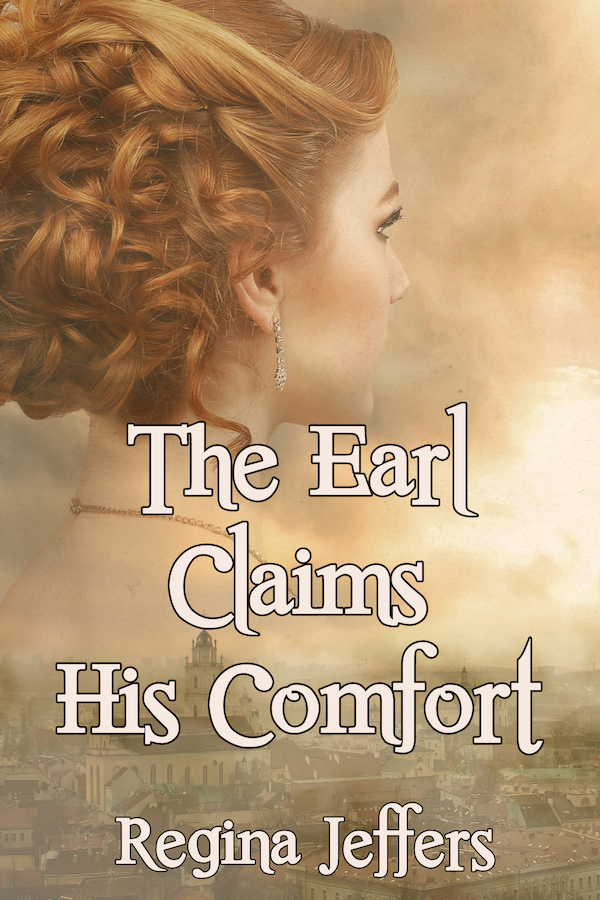
front cover-2 copy.jpgIntroducing The Earl Claims His Comfort: Book 2 of the Twins’ Trilogy (releasing September 16, 2017, from Black Opal Books)

Hurrying home to Tegen Castle from the Continent to assume guardianship of a child not his, but one who holds his countenance, Levison Davids, Earl of Remmington, is shot and left to die upon the road leading to his manor house. The incident has Remmington chasing after a man who remains one step ahead and who claims a distinct similarity—a man who wishes to replace Remmington as the rightful earl. Rem must solve the mystery of how Frederick Troutman’s life parallels his while protecting his title, the child, and the woman he loves.

Comfort Neville has escorted Deirdre Kavanaugh from Ireland to England, in hopes that the Earl of Remmington will prove a better guardian for the girl than did the child’s father. When she discovers the earl’s body upon road backing the castle, it is she who nurses him to health. As the daughter of a minor son of an Irish baron, Comfort is impossibly removed from the earl’s sphere, but the man claims her affections. She will do anything for him, including confronting his enemies. When she is kidnapped as part of a plot for revenge against the earl, she must protect Rem’s life, while guarding her heart.

Excerpt:

Howard’s expression became more serious. “In the beginning, I enjoyed the novelty of the situation. When we called in at the clubs, everyone thought Troutman was you. I knew a few meals would not break your credit, and so Frederick and I considered it amusing. But soon I heard rumors of your accepting invitations to some of the ton’s finest events. I am profoundly grieved, Remmington, that my lack of forethought encouraged Troutman’s deception.”

“So this Troutman fellow learned of my directions and my habits from you?”

“I fear so,” Howard admitted. “I beg you to extend your forgiveness.”

“When we finish our conversation,” Rem instructed, “I will expect you to repeat your story to Sir Alexander.”

Howard nodded his agreement. Rem had not offered his forgiveness, but eventually he would. He learned long ago to keep Howard on a short rope.

“How long did you remain Troutman’s associate?”

“No more than a fortnight,” Howard confided. “I enjoyed his company at first, but over the first sennight his interrogation regarding your comings and goings began to wear thin. In the midst of our second week of acquaintance, Troutman said something that set my hackles on alert.”

“And that was?” Rem asked suspiciously.

A vaguely disturbing smile crossed his cousin’s features. “One day in the midst of a conversation as we reviewed new quarters for my residence, Troutman said if he were the earl, then he would see that I did not go without, and that is was a grave oversight on your part that I was to know less than I deserved. I attempted to explain how my fortune came from a yearly allowance from my revered father, and I was not your dependent, but Troutman was adamant that I was your responsibility.

“Then he said it would serve you right to lose the earldom to a stranger with ties to the title. I explained that, with my father’s poor health, many saw me as your heir presumptive for even if father first succeeded, I would soon follow. I also explained that if another had a right to claim the earldom that it would not lessen your position in Society. Parliament accepted you as Remmington, and even if another proved to be the earl, the fortune and the unentailed lands would remain with you. The claimant would have Tegen Castle and Davids Hall and little else. From what could be salvaged from those properties, your mother retains her widow’s dower.”

Rem wondered if his pretender had aspirations of unseating him as the earl. “Is there anything else that I should know?”

“Yes,” Howard said as he set his glass upon a nearby table. “The remark that caused me to curtail my association with him was when Troutman asked if I thought you were the father of Lady Kavanagh’s daughter.”

Rem lifted his brows in surprise. He wondered who spoke so intimately to Troutman of Rem’s business.

Howard continued as if Rem had not reacted to the remark. “Certainly it is possible that Troutman overheard those awful rumors, but as many in Society thought Troutman were you, I cannot imagine any fool would speak so freely to your face.”

Rem presented his cousin a slow nod of agreement.

“As I suspected,” Howard confirmed. “It appears Troutman matched his name. The man fished for information about you.”

“Those I questioned speak of my pretender walking with a limp. Was that also true when you knew Troutman?” Rem inquired.

“Yes,” Howard confirmed. “Troutman said it was from a childhood injury, but I hold no personal knowledge of how it came about. I did not ask, and Troutman did not confide the information.”

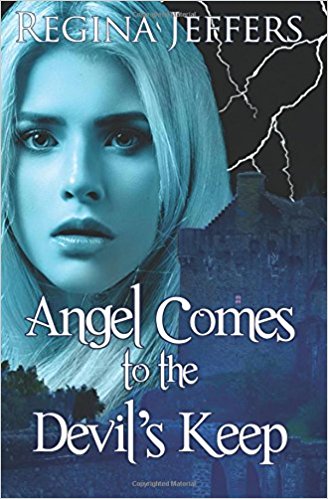
51Qc31W5ZSL._SX326_BO1,204,203,200_.jpg Angel Comes to the Devil’s Keep: Book 1 of the Twins’ Trilogy
Huntington McLaughlin, the Marquess of Malvern, wakes in a farmhouse, after a head injury, being tended by an ethereal “angel,” who claims to be his wife. However, reality is often deceptive, and Angelica Lovelace is far from innocent in Hunt’s difficulties. Yet, there is something about the woman that calls to him as no other ever has. When she attends his mother’s annual summer house party, their lives are intertwined in a series of mistaken identities, assaults, kidnappings, overlapping relations, and murders, which will either bring them together forever or tear them irretrievably apart. As Hunt attempts to right his world from problems caused by the head injury that has robbed him of parts of his memory, his best friend, the Earl of Remmington, makes it clear that he intends to claim Angelica as his wife. Hunt must decide whether to permit her to align herself with the earldom or claim the only woman who stirs his heart–and if he does the latter, can he still serve the dukedom with a hoydenish American heiress at his side?

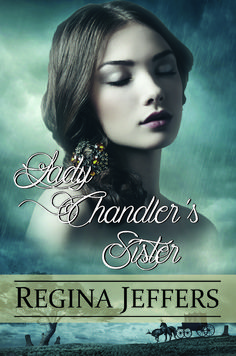
Lady Chandler’s Sister: Book 3 of the Twins’ Trilogy

Sir Alexander Chandler knows his place in the world. As the head of one of the divisions of the Home Office, he has his hand on the nation’s pulse. However, a carriage accident on a deserted Scottish road six months earlier has Sir Alexander questioning his every choice. He has no memory of what happened before he woke up in an Edinburgh hospital, and the unknown frightens him more than any enemy he ever met on a field of battle. One thing is for certain: He knows he did not marry Miss Alana Pottinger’s sister in an “over the anvil” type of ceremony in Scotland. 

Miss Alana Pottinger has come to London, with Sir Alexander’s son in tow, to claim the life the baronet promised the boy when he married Sorcha, some eighteen months prior. She understands his responsibilities to King and Crown, but this particular fiery, Scottish miss refuses to permit Sir Alexander to deny his duty to his son. Nothing will keep her from securing the child’s future as heir to the baronetcy and restoring Sir Alexander’s memory of the love he shared with Sorcha: Nothing, that is, except the beginning of the Rockite Rebellion in Ireland and the kidnapping of said child for nefarious reasons.

An impressive ending to the beautifully crafted Twins’ Trilogy – Starr’s ***** Romance Reviews

Love. Power. Intrigue. Betrayal. All play their parts in this fitting conclusion to a captivating, romantic suspense trio. – Bella Graves, Author & Reviewer

2019 International Book Award Finalist in Historical Romance 

Posted in Black Opal Books, blog hop, book excerpts, book release, British history, eBooks, Georgian England, Georgian Era, historical fiction, Inheritance, primogenture, Regency era, Regency romance, research, romance | Tagged , , , , , , , , , , , | 2 Comments

Happy Book Birthday to my “Vampire Darcy’s Desire” – Entering Its Teenage Years!!!!

Vampire Darcy’s Desire: A Paranormal Pride and Prejudice Adaptation

Original Cover of Vampire Darcy’s Desire, published by Ulysses Press

Vampire Darcy’s Desire: 

A Paranormal Pride and Prejudice Adaptation  

by Regina Jeffers

(Released October 1, 2009; Rereleased October 4, 2016)

Vampire Darcy’s Desire presents Jane Austen’s Pride and Prejudice as a heart-pounding vampire romance filled with passion and danger. 

Tormented by a 200-year-old curse and his fate as a half human/half vampire dhampir, Fitzwilliam Darcy vows to live a solitary life rather than inflict the horrors of his life upon an innocent wife and his first born son. However, when he encounters the captivating Elizabeth Bennet, his will is sorely tested.

As a man, Darcy yearns for Elizabeth, but as a vampire, he is also driven to possess her. Uncontrollably drawn to each other, they are forced to confront a different kind of “pride” and his enemy’s “prejudice,” while wrestling with the seductive power of forbidden love. Evil forces, led by George Wickham, the purveyor of the curse, attack from all sides, and Darcy learns his only hope to survive is to align himself with Elizabeth, who is uncannily astute in how to defeat Wickham, a demon determined to destroy each generation of Darcys. 

Vampire Darcy’s Desire retells Austen’s greatest love story in a hauntingly compelling tale. Can love be the only thing that can change him?

“An engaging and romantic paranormal surprise” ~ JustJane1813

“Jeffers ups the ante even more by basing the core of the plot line on the traditional Scottish ballad.” ~ The Royal Reviews

Interviews:

  • Austen Prose

  • The Real World According to Sam 

Reviews:

• JustJane1813

• The Royal Reviews

• From Pemberley to Milton

Entertainment Weekly, July 17, 2009 (My book was originally entitled “Darcy’s Hunger”)
People’s Magazine, August 24, 2009
Smithsonian Association Magazine/Program, March 2010

Kindle  https://www.amazon.com/Vampire-Darcys-Desire-Prejudice-Paranormal-ebook/dp/B01LXG0NJB/ref=sr_1_2?ie=UTF8&qid=1475700131&sr=8-2&keywords=vampire+darcy%27s+desire

Kobo https://store.kobobooks.com/en-us/ebook/vampire-darcy-s-desire-1

Amazon U.S.  https://www.amazon.com/Vampire-Darcys-Desire-Prejudice-Paranormal/dp/1539344657/ref=sr_1_2?ie=UTF8&qid=1475839165&sr=8-2&keywords=vampire+darcy%27s+desire

Nook https://www.barnesandnoble.com/w/vampire-darcys-desire-regina-jeffers/1140268938?ean=2940162211471

Vampire Darcy’s Desire: A Paranormal Pride and Prejudice Adaptation 

Excerpt from the Prologue 

She was beautiful in all her innocence, much more beautiful than the infamous Mrs. Younge, his latest minion, who arranged this encounter and waited for him in the adjoining woods. Long, thick lashes rested on the rise of her high cheekbones, and although a bit mussed, the golden tresses spread out across her pillow like the sun’s rays. A deep sigh brought his attention to her lips, and for a moment he thought her awake, but Georgiana Darcy slept soundly thanks to his spellbinding charm. She was the embodiment of his beloved Ellender. 

One candle lit the room, casting shadows, which danced in the corners. There was nothing mediocre about her chamber–rich tapestries and elegant sculpting. “Only the best for the Darcys,” he mumbled as he moved forward to stand over her. 

With a unique swagger not found in many of his kind, he glided to the bed’s edge. Unable to hide his anger and his contempt, a frown furrowed his brow, and a flash of fire transformed his vision. A torrent of images racked his soul–pictures of blood–of betrayal–of revenge. “You will do quite well, my Dear,” he whispered. “I will enjoy spending an eternity with you.” He lightly twisted one of her curls around his finger. “This is for the suffering I have endured at the Darcys’ hands.” 

Slowly, he leaned over her, feeling the blood rush through her veins—hard, dark eyes, seeking the indentation of her neck–relishing a feeling of expectancy—ringing silence broken only by his breathing. 

Fully engulfed in his desire, when the door swung open, it took several seconds before he realized an intruder discovered his inexplicable need for her. “Move away from her, Wickham,” the tall, dark figure ordered as he stepped carefully into the room. “You will not bring your death and decay into my household.” 

“You brought it into mine, Darcy.” Wickham stood, trying to judge his next move. He knew in an out-and-out fight to the end, the man before him stood no chance of survival, but sensing no supernatural fear from the intruder, Wickham questioned what else this confrontation held. Absent of all volition, he hesitated only a moment before moving in a swirling whirlwind to an advantageous point, but the man framed in the doorway’s light did not move. 

A dramatic black eyebrow lifted quizzically. “You forget, Wickham, you and I already share the same characteristics. You cannot infect what is already infected. I will not follow you into the darkness nor will I allow you to convert my sister. This madness ends–the curse–the wicked allure will die with us.” His voice’s deep rumbled filled the room, and a gleam entered his ice blue eyes, intensified by his opponent’s muteness. 

Wickham glowered. “I have not given up taking my fill of beautiful young ladies.” A squall-like eruption pushed Wickham forward, arms extended to the side, sending Darcy rolling along the floor, scrambling to avoid the chasm–death’s abhorrent shudder. “I am coming for you, Darcy,” the voice boomed through the room as cold blasts flew from sinewy hands, reminiscent of the grave. 

Sucking noises filled Fitzwilliam Darcy’s senses, and he realized the tall, pale form loomed over him in an infuriating counterattack. Sliding against the far wall, it was all Darcy could do to bite back a scream, but he ducked first and came up, arm flung overhead, preparing to unload. “Now, Wickham,” he hissed, and then he released it. 

A vial, carrying clear liquid, tumbled end-over-end, splitting the silence surrounding them–each figure moving in slow motion, playing out their parts in a swirling tableau. 

And then the stopper exploded, and the transparent fluid rained down on George Wickham’s apparition. An agonized scream–full of old blood and dark radiance—filled the room. The shadow hissed in the moonlight, and the odor of burning flesh wafted over them. 

Fitzwilliam Darcy’s smile turned up the corners of his mouth. “Holy water,” he whispered in affirmation. 

“You will rot in hell!” Wickham threatened. “I will see those you love ruined—see them lick the blood from your body. Sharp fangs jutting from their mouths—smelling of death and decay—ghoulish nightmares!” He started forward again, but Darcy anticipated the move. Pulling the double crucifixes from his pocket, he met Wickham’s intent with one of his own. “Iron,” he mocked, unfurling the chain and reaching out to his enemy. 

Panic showed in Wickham’s fever-filled eyes as he backed away from the Trinity’s symbol, stumbling—recoiling—and suddenly, he was gone, a grey shadow moving across the lawn, a highly combustible howl billowing upon the breeze in his retreat. 

Darcy stood motionless for several long minutes, needing to clear his head. He took a slow breath, trying to control his anger, and then he smelled it: smoke. Against his better judgment, he rushed to the bedchamber’s open door. “Wickham!” he cursed. The house he rented in Ramsgate heated with a fiery blaze, started at three separate entry points on the bottom floor. Thick smoke, fueled by heavy draperies and fine upholstered furniture, rolled from the doorways of the lower rooms and rose in a black drape to cover the stairway. Acrid smoke drifted his way. Immediately, he turned toward the body still reclining on the bed where George Wickham left her. 

“Georgiana!” he called in a panic as he scooped her into his arms and pulled his sister tight to his chest. Darcy grabbed a towel on the washstand and dipped it into the tepid water she used earlier. He draped the wet towel over her head and face, repeating the procedure for himself. Then he made his way to the top of the stairs. Thick smoke covered the lower half of the rise. He took a deep breath and lunged forward. 

Surprisingly, a pocket of air existed once he stumbled his way to the bottom of the steps. He felt Georgiana slipping from his grip as he fought his way past flaming lips, consuming doorways along the corridor. Using the last of his strength to lift her to him again, Darcy braced his shoulders along the wall leading to the servant’s entrance, the only door not blocked by flames. Forcibly, he shoved his way into the night–into the shelter of the open air. Heaving from the weight of her—from the fear—from the effort—from the deadly murk filling the night sky, he staggered forward, trying to get away. 

When the explosion hit, he was far enough from the house to escape the brunt of the debris, but not far enough to go unscathed. Splintered doorways and shards of glass flew like deadly projectiles, many of them lodging in his arms and legs and back, but Darcy kept moving, trying to get his precious Georgiana to safety. Finally, he collapsed to his knees, laying her gently on the dewy grass before uncovering her face. 

“Georgie,” he pleaded as he patted her hands and face. Over a few elongated moments, he prayed, and then she caught a deep breath and began to cough uncontrollably. A soft moan told him she was well; only then did Fitzwilliam Darcy allow the exhaustion to overtake him, collapsing—face first—into the dirt. 

“Mr. Darcy!” his valet, Henry Sheffield called as he rushed to his employer. Covered with ashes, his clothes, torn and disheveled, Darcy lay in a defeated heap upon the soft earth. 

Georgiana righted herself and crawled to where he lay. “Fitzwilliam,” she begged between fits of coughing. “Oh, please . . . please . . . talk to me.” 

“He is hurt, Miss Darcy,” Sheffield told her as he jerked off his coat and wrapped it around her light muslin gown. 

“Help him,” she pressed. 

By that time, footmen and neighbors rushed forward carrying lamps. Mr. Phelps, the owner of the house to the left, examined Darcy’s body. “We should not turn him; he has several lacerations–no telling what might be in the wounds.” As the man spoke, Darcy’s body arched, seeking air before choking on the same gulping breath. “Georgie,” he managed to say between barking gasps. 

“I am here,” she assured him, draping her soot-covered arm over his shoulder. 

Mr. Phelps took charge. “Lift him to his feet, and be careful about it,” he ordered. “Jemmy, go for the doctor. You others help Mr. Darcy to my house.” 

Two footmen shoved themselves under his arms, arranging them about their shoulders and supporting his weight as they nearly dragged him towards Phelps’s open door. Townspeople scrambled to the bucket brigades to put out the fire. Darcy’s head hung low, trying to recover his senses as the servants struggled under his weight. Finally, he forced his gaze towards the gathering crowd across the street. Then, instinctively, his eyes fell on George Wickham, a figure wrapped in a long, black cape and sporting a beaver. With a wry smile and a nearly imperceptible salute, the usurer disappeared into the crowd. 

Darcy could do nothing more tonight; he stopped Wickham this time; he was lucky. Could he do again? Could he kill the man who plagued his family? “Come, Georgiana,” he urged, demanding his body to relax into his rescuers’ arms. Phelps’s town house and momentary safety awaited. 

Posted in birthdays, British history, eBooks, excerpt, George Wickham, Georgian England, gothic and paranormal, historical fiction, history, Pride and Prejudice, publishing, Regency era, Regency romance, religion, research, romance, spooky tales, suspense, Vagary, vampires, writing | Tagged , , , , , , , , , , , , , , , , , , | Comments Off on Happy Book Birthday to my “Vampire Darcy’s Desire” – Entering Its Teenage Years!!!!

Presenting My New Book Baby: Elizabeth Bennet’s Gallant Suitor

My latest book, Elizabeth Bennet’s Gallant Suitor is available today. Enjoy chapter one below (There are 22 more to tempt you. LOL!). Then hurry over to Amazon to claim your copy before the price changes.

Book Blurb:

When Elizabeth Bennet’s eldest sister is named as the granddaughter of Sir Wesley Belwood, the Bennet family’s peaceful world is turned on its ear. Over Mr. Bennet’s objections, when Sir Wesley orders Jane to Stepton Abbey, Mrs. Bennet escorts her daughter to meet Jane’s true grandfather, a man who once turned the former Frances Gardiner Belwood out without even a widow’s pension. Elizabeth accompanies the pair, in hopes of protecting both from a man none of them truly know.

Fitzwilliam Darcy travels to Stepton Abbey with his cousin, Colonel Fitzwilliam, whose Uncle Wesley has summoned the colonel to the abbey to meet the baronet’s granddaughter. Sir Wesley is the Countess of Matlock’s brother, and the man wishes for a marriage between the colonel and Jane Bennet (née Belwood) in order to keep the abbey in the family, while Darcy means to be in a position to protect his cousin from being forced into a marriage of convenience.

When Elizabeth Bennet and Mr. Darcy meet sparks of self-righteousness fly between them, but soon they join forces to protect their loved ones from Sir Wesley’s manipulations. Moralizing soon turns to respect and then to trust and then to love. This is a friends to lovers tale turned upon its head with unexpected consequences for all.

Chapter One 

“In spite of the scowl sometimes marking his features, Mr. Darcy has not an ill-natured look. On the contrary, there is something pleasing about his mouth when he speaks, and there is something of dignity in his countenance that would not give an unfavorable idea of his heart.” 

– Pride and Prejudice, Chapter 43

“It is decided,” Sir Wesley declared, “your eldest will marry my nephew.” 

“Jane cannot marry him! A complete stranger! Mama, tell him. Tell Sir Wesley he has no right to determine Jane’s future!” Elizabeth argued. 

Sir Wesley’s letter to Mrs. Bennet had taken all at Longbourn by surprise. Naturally, her parents were well aware of the situation in which Jane now found herself, but Mr. and Mrs. Bennet had kept the specifics of Jane’s birth a “secret” until Sir Wesley’s letter had arrived a month earlier. 

Unmistakably, the whole Bennet family knew something of Sir Wesley Belwood and Stepton Abbey, for the property, which was some twelve miles removed from their beloved Longbourn, was one of the most historic estates in Hertfordshire and the Belwood family could trace its time in England back to the Norman conquest; however, what neither Elizabeth nor any of her sisters had known was, Jane was not one of Thomas Bennet’s daughters, although Mr. Bennet had raised the girl as his own. The difference in Jane’s coloring and her figure made sense in light of the news, but it still had ripped out all their hearts to acknowledge a part of the family history, best kept hidden. To all their shock, Miss Frances Gardiner had originally been married to Mr. Stewart Belwood, Sir Wesley’s second son.

Evidently, from what her parents finally shared, Sir Wesley had not approved of his son’s marriage to the daughter of a wealthy merchant, and the baronet had, for all intents and purposes, disowned his youngest son, although Stepton Abbey remained in the man’s hands. Unfortunately for the man’s young wife, Stewart Belwood passed away some six months into his marriage, and, as the child Mrs. Frances Belwood carried had been a daughter rather than a male to inherit the estate, Mrs. Belwood had been removed to her family home, where she later met and married Mr. Thomas Bennet, a true gentleman, who had accepted Mrs. Belwood’s infant daughter as his own. 

Elizabeth looked to her customarily animated mother to find Mrs. Bennet pale and wan, and Elizabeth quickly realized her pleas were falling on deaf ears. No matter how much Mrs. Bennet wished to deny Sir Wesley, she would not. Elizabeth knew, as well as her mother, if Mrs. Frances Bennet placed a daughter as the mistress of Stepton Abbey and wife to a perfectly respectable gentleman associated with the aristocracy, an unspoken dream would come true. A woman who had delivered five daughters, all of whom would require husbands, could not do better than to place the eldest in a position to marry the son of a powerful earl and the nephew of Sir Wesley. 

Instead of opposing Sir Wesley, Mrs. Bennet shook her head in the negative and shot Elizabeth a begging look, asking Elizabeth not to rile the baronet further. Instead of responding, her mother concentrated on her needlework with an intensity Elizabeth had rarely observed. 

Sir Wesley tapped his cane sharply against the floor to emphasize his displeasure with Elizabeth. “Mrs. Bennet permits you too much latitude, Miss Bennet,” he said in critical tones. “However, I will not tolerate your insolence under my roof!”

Elizabeth valiantly declared, “I am ‘Miss Elizabeth.’ Jane is ‘Miss Bennet.’”

Sir Wesley sat forward and pointed his cane at Elizabeth to place an accent on his response. “Your step-sister Jane is ‘Miss Belwood,’ my granddaughter, and she will do as she is instructed by her mother and by me. If my youngest son had married the woman his family had chosen for him—a woman from a well-placed family—instead of aligning himself with a woman who brought him only misery, he might still be alive and well.” 

Elizabeth immediately looked to her mother for a response: Instead of a rebuttal, Mrs. Bennet looked up in dismay, gasped, and ran quickly from the room, a heartfelt sob echoing in her wake. 

Fed up with Sir Wesley’s innate mean streak, Elizabeth stood to confront him. “I understand you still grieve for the passing of your son, but attacking my mother will not resolve your loss nor will it promote my family’s cooperation in this endeavor. Your son died in a carriage accident. His fate could happen to anyone. A rain storm and slick roads contributed to his death, not marriage to my mother.” 

“How do you know Stewart was not racing away from the greatest mistake of his life?” Sir Wesley argued. 

“How do you know Mr. Belwood was not racing home to spend time with his loving wife?” Elizabeth countered. 

“You speak nonsense,” Sir Wesley declared. 

“Foolish, I may be, sir, but I am not vindictive. From all my mother has shared of her short-lived relationship with Mr. Belwood, your son would not wish to press his daughter into a marriage she does not desire. After all, he remained strong against your edicts, despite the fact you withdrew support of his household. I doubt Mr. Belwood would stand idly by and permit you to demand his daughter marry your choice for Stepton Abbey’s new master.” 

“You are warned, Miss Elizabeth, or whatever you choose to call yourself, I will not tolerate your interference in this endeavor. I will send both you and that tart you refer to as ‘mother’ packing. I do not require your opinion or hers—only my granddaughter’s acceptance of my nephew’s marriage proposal will suffice.” 

* * *

Darcy’s coach turned off the main road onto a lane covered in wood chips and pea-sized gravel. 

“We must be nearing Stepton Abbey,” his cousin Colonel Edward Fitzwilliam, said with a slight snarl of disapproval.

“There is no need for you to go through with this charade,” Fitzwilliam Darcy declared. 

“Easy for you to say. You inherited Pemberley. There is little arranged for a second son in English society.” 

“I thought you were to inherit the estate in Oxfordshire,” Darcy reasoned. “The one from your mother’s portion of the marriage settlements.” 

“Only after my mother’s cousin passes, and Lawrence Petty is but a few years younger than my father,” Fitzwilliam explained. “He is certainly not prepared to stick his spoon in the wall any time soon.”

Darcy did not remark on Fitzwilliam’s accounting of his future inheritance. Instead, he noted, “We must be nearing the abbey. The lane has narrowed.” 

“I pray we reach the abbey soon, so I can foil my uncle’s plans for a marriage. I do not mind the idea of inheriting the property, but a marriage is out of the question. Moreover, I am to return to my regiment at the end of the next fortnight. I would prefer a more enjoyable pastime than arguing with my mother’s elder brother over whether he has the right to choose my bride for me.” The colonel sat in silence for a less than a minute, before he said, “Now I fully understand how you must despise the trappings Lady Catherine sets for you each year at Lady’s Day to force you to speak your proposal to our cousin Anne.” 

Darcy nodded his sympathy. “After all the times you have diverted Lady Catherine’s attention away from her stratagems, I thought it only fair to place myself between you and Sir Wesley. From what your father has said of his brother-in-marriage, the baronet is not one who is easily swayed.” 

“Neither am I,” Fitzwilliam declared. 

“A family trait both the Fitzwilliams and the Belwoods share,” Darcy said with a smile.

“As do the Darcys,” Fitzwilliam remarked. “Let us pray this ‘duty call’ proves to be a better entertainment than what we traditionally discover at Rosings Park each year. Perhaps, if we are fortunate, Miss Belwood will be a beautiful siren calling my name, or, at a minimum, a woman who is proficient on the harp or some other instrument, who can keep us entertained in the evenings.” 

Darcy said with a lift of his brows in jest, “Even if the lady’s skills are lacking, she will be more proficient in a knowledge of music than Lady Catherine and more entertaining than poor Anne, whose potential is dwarfed by her sickly manner.” 

In truth, Darcy prayed the situation at Stepton Abbey would not be as volatile as he anticipated it would be, but some “gut”—some visceral feeling—told him otherwise, and he meant to stand between Sir Wesley and Fitzwilliam, if such proved necessary. 

The idea pleased Darcy, for his older cousin had always been Darcy’s protector. Two years Darcy’s senior, Edward Fitzwilliam had always been the strongest and, ironically, most amiable man of Darcy’s acquaintance. It was a real shame Edward was a second son, for he would have made a better future Earl of Matlock than his older brother Rowland. 

Sir Wesley, the colonel’s uncle, held the reputation of being a man who ruled his family with an iron fist, which meant a confrontation with Fitzwilliam was inevitable, for the colonel was not built to stand aside, such was Fitzwilliam’s success as a military leader, a quality Darcy admired in the man.

“Hertfordshire is proving quite beautiful,” Darcy remarked as he studied the scenery. “Nothing along the order of our beloved Derbyshire, but it has its grassy hills and its deep foliage. I enjoyed the brief time I spent in the area.” 

“I had forgotten you visited Hertfordshire some months back with Bingley,” Fitzwilliam observed. “You wrote of it when I was away.” 

“Nearly a year removed,” Darcy shared. “I was here less than a sennight.” 

“How far removed is Bingley’s estate?” the colonel inquired. “If not too far, perhaps when Sir Wesley becomes more than we can stomach, we can spend the evening with Bingley.” 

Darcy admitted, “I am uncertain, but I imagine we can ask at the abbey. Surely someone will know the distance to Meryton, the nearest village to Bingley’s estate. It is not as if Hertfordshire is so large.” 

“Is the structure ahead the house?” Fitzwilliam questioned as he leaned forward for his first view of the estate, which could become his, if he agreed to marry Sir Wesley’s granddaughter. 

“Must be.” Darcy looked around his cousin’s head for a glimpse of the manor house. “It is in better shape than I expected. Some of the facade has crumbled away, but such is nothing unusual in maintaining a house.” 

When the coach came to a halt, Darcy stepped down first, while the colonel gathered his hat, gloves, and sword. He looked around quickly before saying, “I would wager . . .”

“Do you wager often, sir?” a very feminine voice off to his right asked. Darcy turned to look for the source of the voice, but did not view the woman until she stepped from behind a large oak tree. She daringly eyed him with more disdain than he obviously deserved from a complete stranger, but the cause of her displeasure was not readily discernible. Therefore, he simply watched her as intently as she watched him. 

She was more petite than most women who interested him, but Darcy would admit she was uncommonly pretty—several auburn curls surrounded her face, but most were tucked beneath her bonnet. Darcy assumed her tresses would entice many men, for there was a spark of fire touching her hair when the sun came out from behind a cloud. Her appearance certainly made his fingers itch to run a brush through her hair for her and then, perhaps, kiss behind her ear, which was a totally uncharacteristic thought for him. Her body proved to be a bit buxom, with each of her breasts appearing to be more than a handful. Her complexion was speckled by a few delicate freckles, but not so many as to distract the viewer, but her most compelling feature were her eyes: Hazel. Sometimes green and then with a blink, they were brown. Intelligent eyes. Pathways to her soul. And sparking with unexplained disdain directed at him. 

* * *

So, this was the man Sir Wesley had summoned to Stepton Abbey to claim both an inheritance and her sister Jane. Elizabeth had no doubt his appearance proved him to be a libertine, and she instantly decided she disliked him. The words from his mouth spoke of a wager. Was he a man who placed a bet on the turn of a leaf as easily as he did a turn of a card? No wonder he wished to claim both the abbey and Jane. 

Although there was nothing she could do to prevent Sir Wesley from turning the abbey over to a man from his extended family, Elizabeth would never permit the baronet and Mrs. Bennet to force her sweet sister into a marriage of convenience. Jane deserved love. She and all her sisters did. 

Elizabeth stood tall or as tall as her five feet and three inches would allow. She had the fleeting notion the gentleman’s eyes were the most compelling ones she had ever viewed. Over the distance separating them, they appeared gray—the color of unpolished silver. Elizabeth meant to prove she would not be intimidated by him or his uncle, so she returned his steady gaze with one of her own.

“You will never do, sir,” Elizabeth warned. “I will not stand idly by and permit Sir Wesley his manipulation.” 

“Most assuredly,” the fellow said. A smile turned up the corners of his lips as if they conversed at a tea party or while waiting for the sets to form at a country assembly. 

“Do not mock me, sir. I am not the type to be trifled with. Do not doubt my resolve, for I am not easily moved.” 

“Such is excellent news,” the stranger said. “I am most pleased to know you are my gallant.” He offered her a very proper bow. 

“With whom in the devil do you converse, Darcy?” an unknown man asked as he stepped to the ground. The man’s head turned in Elizabeth’s direction, while the first gentleman simply continued to stare at her. 

Like it or not, realization arrived upon her features, along with dismay mixed with anger. 

The man in the uniform glanced first to her and then to his travel mate. “What transpires, Darcy?” he asked. 

The stranger nodded to her. “Evidently, Cousin, you possess a kindred soul. The lady does not appear to wish for a marriage to occur. Unfortunately, she briefly thought me to be you.” The first gentleman turned to her. “Permit me to give you the acquaintance of Colonel Edward Fitzwilliam, the man you wish to deny a marriage. I am simply the colonel’s humble cousin, here in Hertfordshire for moral support.” 

Elizabeth thought the colonel was not as handsome as was his cousin, but he appeared to be more amiable than was the other gentleman, with whom she had taken an instant dislike. 

Make me appear a fool, she thought. You will rue the day, sir.

To the colonel she said, “I am Miss Elizabeth Bennet, colonel, and I pray, sir, I may convince you to assist me in thwarting Sir Wesley’s plan to engage my sister to you.” 

* * *

“Welcome, Colonel Fitzwilliam,” the butler spoke in reverent tones. “I am Mr. Shield. I remember when your mother married your father. It was a grand day, sir.” 

“You have been the Belwood butler for more than thirty years?” Edward questioned. 

“I was a messenger boy and then footman and then under butler and finally butler on the Belwood estate. More than forty years of service, sir.” 

Edward apparently noted how Mr. Shield eyed Darcy, for the colonel said, “This is my cousin, Mr. Darcy. He will be staying with us.” 

“Naturally, sir.” Shield bowed. “Might you wish to join Mrs. Bennet in the main drawing room while I have a room aired out for Mr. Darcy?”

“Mrs. Bennet?” Edward asked. 

“The former Mrs. Stewart Belwood,” the butler explained, “and mother of Miss Belwood. Mrs. Bennet has brought her daughter to Stepton Abbey at Sir Wesley’s request.” 

Edward remarked, “Likely the same style of ‘request’ I received. From what I recall of my uncle, he rarely makes a ‘request.’ He issues orders.” 

“As you say, sir.” The butler shot a glance to a room along the hall. “A tea service has recently been delivered to Mrs. Bennet. I will see fresh water is brought up.” 

Without other options, Edward gestured for the butler to lead the way. “And my uncle?” the colonel asked. “Will he join us for tea?” 

“The baronet is with his man of business and left specific instructions not to be disturbed. Yet, I will venture in to inform him of your arrival, as Sir Wesley has been most desirous of your presence at Stepton.” 

“Colonel Fitzwilliam and Mr. Darcy, ma’am,” Mr. Shield announced as Edward and Darcy were shown into a drawing room no respectable hostess of the aristocracy of today would tolerate. It was greatly out of date and reminiscent of the previous century. It even smelled moldy. At least someone had thought to open the windows. 

The woman who sat behind the tea service stood quickly. She appeared agitated, wiping her hands down the front of the day gown she wore. “Colonel. Sir,” she said through a squeak in her voice. “We are most pleased to host you. Are we not, Lizzy?”

It was then Darcy realized the woman who had moments earlier announced him to be “unsatisfactory” had somehow managed to appear in the drawing room with Mrs. Bennet. The woman must have run to a side entrance to appear before them now. He would have enjoyed viewing her scampering across the abbey’s lawn.

“Yes. Yes, indeed. Please. Please have a seat, Colonel. Mr. Darcy.” The woman glanced around uncomfortably. “I assume we still wait for Sir Wesley.” 

The colonel explained, “I understand my uncle is with his man of business. Forgive us for interrupting your tea time, ma’am.” 

As the woman resumed her seat, Darcy said as casually as he could while he sat, “We were fortunate to have encountered your daughter briefly outside, but I fear I must have misunderstood when she presented us her name. I believe you gave us the name ‘Bennet.’ Is your daughter not a ‘Belwood’?”

The woman suspiciously glanced to said daughter and frowned; yet, the young lady took up the response. “The story is truly not mine to tell,” she admitted, “but as Mama worries regarding Sir Wesley’s displeasure, I assume a basic explanation should be made, as the colonel is Sir Wesley’s relation.” 

Darcy’s cousin said, “I rarely recall being in Stewart Belwood’s company, for Stewart was much older than I. I was a mere child the last time we encountered each other.” 

The young woman nodded her gratitude for the information. “My mother married Stewart Belwood despite Sir Wesley’s disapproval. The baronet’s objection cut off Stewart’s income, except this estate could not be ripped from Mr. Belwood’s hands.” 

“Such explains much of the missing family history,” the colonel confirmed. 

“As my younger sisters and I are new to the idea, sir, we commiserate with your wishing to understand who holds which cards in the game.” 

The older woman said softly, “I married Elizabeth’s father within a year of Stewart’s passing. I was a young widow with an infant.” 

“Miss Belwood?” the colonel asked. 

“Jane was christened a ‘Bennet,’” Miss Elizabeth declared. “She is not ‘Miss Belwood.’”

“If your Bennet family expects to use my family’s name to better themselves, then my granddaughter must learn to embrace the idea of being a ‘Belwood,’” an angry voice declared loudly into the silence crowding the room.

You may order the eBook copy HERE.

Posted in Uncategorized | Tagged , , , , , , , , , , | 3 Comments

The Origin of Chasing + the Upcoming Release of “Elizabeth Bennet’s Gallant Suitor” + a Giveaway

Steeplechase has its origins in an equine event in 18th-century Ireland, as riders would race from town to town using church steeples — at the time the most visible point in each town — as starting and ending points (hence the name steeplechase). Riders would have to surmount the various obstacles of the Irish countryside: stone walls, fences, ditches, streams, etc.

As the name might suggest, that very first race took place in 1752 between two steeples in rural county Cork in the south of Ireland. These types of races are often called “point-to-point” races. At that time, church steeples were among the tallest buildings in the landscape. Two men, Cornelius O’Callaghan and Edmund Blake, made a bet between them, to race from Saint John’s Church in Buttevant to Saint Mary’s Church in Doneraile, which was approximately 4 miles. However, it was 4 miles across the countryside, crossing rivers and streams and walls, etc. Although we do not know the winner’s name, he was to earn a prize of 600 gallons of port.

Castle Buttevant
St Mary’s Church

In 1839, the British Grand National race at Aintree was established, a race that is still run today over roughly the same distance of around 4 miles.

In my newest Austen-inspired story, Elizabeth Bennet’s Gallant Suitor, Bingley has taken Netherfield for the customary reasons of a “gentleman” owning an estate, but he is also developing a line of thoroughbreds (his real passion, not farming). He has had some hard times, of late, of which you must read the story to know something of their nature, for they are essential to the plot, but he has a chance to turn things around if his Arabian mare can win a race designed for fillies. In the scene below, Darcy and Elizabeth are “teaching” a young groom something of how the race will be conducted. The boy is secretly Bingley’s new jockey, but they cannot let on to everyone who is about, so he is Elizabeth’s servant, serving as a chaperone as she and Darcy ride the course for pleasure a few days before the actual race. This one is not a steeplechase race, but Darcy explains it all to the youth. 

Other Sources:

About Steeplechasing 

Britannica

The Course of Chasing

Queen’s Cup

Wikipedia 

Book Blurb: 

Elizabeth Bennet will not tolerate her dearest sister Jane being coerced into marriage. Yet, how she will prevent the “inevitable”? Jane, after all, has proven to be the granddaughter of Sir Wesley Belwood, a tyrannical baronet, who means to have his say in Jane’s marriage in order to preserve the family bloodlines. When Colonel Fitzwilliam appears at Stepton Abbey as the prospective groom, Elizabeth must join forces with the colonel’s cousin, a very handsome gentleman named Mr. Darcy, to prevent the unwanted betrothal. 

Lacking in fortune and unconventionally handsome, Elizabeth Bennet is willing to risk everything so her beloved sister may have a happily ever after, even if Elizabeth must thwart all of Sir Wesley’s plans, as well as those of Mr. Darcy. 

Fitzwilliam Darcy meant to flirt with the newly named Miss Belwood himself to prevent the girl’s marriage to his cousin, Colonel Fitzwilliam, but one glance to Miss Elizabeth Bennet has Darcy considering everything but his cousin’s fate. Miss Elizabeth thought him a wastrel, but when incidents throw them together, they must combine forces to fight for love for the colonel, for Jane, and maybe, even for themselves.

Excerpt from Chapter 15 

The colonel and Miss Mary had decided to walk about the town and enjoy tea together instead of joining Miss Elizabeth and Darcy on the course. It was obvious to all, Elizabeth’s sister was not the natural rider Miss Elizabeth was. In reality, it pleased Darcy to have the lady all to himself, despite the fact slowly riding the course set out for the race along with another fifty or so horsemen and women did not constitute “all to himself.” Moreover, the groom rode nearby. Yet, the lady’s attention belonged to him, and, for that, Darcy was quite thankful. 

Before they began their ride, Darcy explained a few “givens” to Toby. “I am certain Mr. Bingley has spoken of the horse’s characteristics prior to our outing, but I mean to speak to the obvious.”

“Yes, sir,” the boy said in serious tones. 

Darcy wished there was another Arabian available for him to use as an example, but he continued, nonetheless. “Bingley’s T is an Arabian mare, and I assume you have noted her slightly smaller head, finely chiseled lines, dished face, long arching neck, and high tail carriage.” 

“Yes, sir, she be magnificent.” 

“She also has a small muzzle, dark eyes, which are well set apart, and small ears with the tips tilted slightly inward. More importantly, for the race, she possesses large nostrils, which extend when in action.” 

“So noted, sir.” 

Darcy continued, “Unlike the other horses you have encountered, Bingley’s T has one less vertebra than is common in other breeds. She also possesses perfect balance and symmetry, a deep chest, well-sprung ribs, long legs, and a more horizontal pelvic bone position.” 

“Mr. Bingley be explaining all these points and fancy words to me, sir.” The youth looked about him and said, “I wish ‘T’ be here now, so I kin sees how she performs with so many people about.” 

“I agree,” said Darcy, “but it is too dangerous for now. To protect both you and the horse, we must keep ‘mum’ on what we plan. However, when you return to Netherfield, you might ask Mr. Bingley to arrange people along the rails to yell and wave hats and make noise and the like to allow the horse to become accustomed to some of the sights and sounds she will encounter here.”

“I’s do what ye suggest, sir.” 

Elizabeth instructed, “According to both Mr. Bingley and Mr. Darcy, Bingley’s T is the superior mount, but you must permit her to run her race. Control, but do not attempt to master her.” 

Toby said, “I’s learnt that lesson already. ‘T’ nearly tooken off my knuckle ‘til she gets to know me when I be feeding her.” 

Darcy added, “We will not have you dress as Mr. Bingley’s rider until the last minute. We have spread the word about to say the hired rider is traveling in from the north.” 

“Understand, sir. If they knows, the other riders not be afeared of me,” the boy declared. 

Miss Elizabeth said with a protective squeeze of the boy’s arm, “You must use that particular fact to your advantage.” 

“I mean to, Miss Elizabeth,” the boy said eagerly. 

Darcy was quick to add, “Such will not keep the other riders from attacking both you and Bingley’s T, if the opportunity arises. Your horse’s strength is the race, not the jumps over the barricades. When you must jump, remember ‘T’ leads with her left leg and will, therefore, require a five-step approach. You may be required to swing a bit wider to accommodate the horse’s natural gait.” 

Toby nodded his understanding, but Darcy knew the boy had not considered the jumps prior to today. 

“We will jump a few of the barricades today just so you have the feel of them. You will jump with Miss Elizabeth, which would be natural for you to protect her as part of her family’s estate. Moreover, your doing so will confuse those who cannot determine if you are employed by Mr. Bennet or Mr. Bingley as a groom.” 

Darcy continued, “When I observed riders on the Continent who chose an Arabian mount, the more consistent successful horsemen found it profitable to lay out along the horse’s neck rather than to sit upright as do most Englishmen.” 

The boy swallowed hard, but said, “Lots of lessons to learn, but I’ll do me best, sir.” 

Finished with the basics, they mounted and prepared to ride the course. As they leisurely walked their animals, Darcy spoke loud enough to Miss Elizabeth to ensure the trailing Toby could hear him also. “It is a three-miles’ course. Outriders will be posted along the route to assure none of the riders choose a shorter course. There are five hurdles or walls, a half mile between each. They will not be as high as one might find in, say, a fox hunt. In fact, I heard one of the course officials say they were thinking of removing all but the one board. The boards are meant to represent the type of obstructions a person might discover when out on a pleasure ride.” 

“But not at such frequency,” the lady said to emphasize the necessity of Toby jumping each of them. “I do so appreciate your suggestions, sir. Most useful. Might we attempt the first jump now, Mr. Darcy?” she asked. 

“Are you accustomed to jumping, my dear?” he said loud enough for others on the course to hear, but also to assure himself she was not in danger. 

“Not as assured as others of your acquaintance, I imagine, but certainly I can manage to stay on the horse, if such is what you fear,” she responded in a tone Darcy thought could reflect real irritation. 

“I will ask Toby to follow, and I will lead you across each to assure your safety. Neither of us wishes to see you harmed. Heh, Toby?” he asked the boy. Darcy meant to provide Elizabeth information on each barricade, so he might also instruct the groom. 

“Aye, sir.” 

Miss Elizabeth appeared to understand his purpose and nodded her agreement. 

“According to Mr. Bingley and all those I have asked, none of the horses in the race are steeplechased trained, and no one wishes them injured,” he continued. 

“Naturally,” Miss Elizabeth declared as another pair of riders passed them. 

Darcy stopped his horse and waited for her and the groom to join him. “Do you know what I mean by ‘steeplechase,’ Toby?”

The boy looked shamefaced. “Not exactly, sir.” 

“Now is the time to learn,” Darcy said, “especially if you are expecting employment with Bingley.” He nodded toward the surrounding countryside. “The steeplechase-style racing originated in Ireland during the last century. In contrast to a flat course race, of which you may have some basic knowledge, the idea was the horses would race from one church steeple to the next. The first such race of any notice was between two men named Cornelius O’Callaghan and Edmund Blake, who raced four miles cross-country from Buttevant Church to Saint Leger Church in Doneraile, Ireland. That is in county Cork. The first ‘English’ steeplechase took place only a few years back in Bedford, although the one in Newmarket has been happening since the 1790s, but it was not as structured as the one in Bedford. The Newmarket race is only a mile long, but it has five-foot bars every quarter mile. Obviously, because the horses in this race are trained for cross-country, only one bar is being used, and, truthfully, I expect even that bar will no longer be required by the time of the race. Even so, I imagine each rider will still be required to go through the gates as part of the course. You will need to be flexible and make changes as they come.” 

Toby appeared a bit in awe at Darcy’s knowledge of the sport. “I nevers thought all this be required.” 

“The reason I know this is not a steeplechase is what Mr. Bingley described of the rider he had hired before you came along. A flat course horse carries a lighter weight than do steeplechase animals. Riders for steeplechase races tend to be taller and heavier than those on flat runners.”

Miss Elizabeth teased, “If you keep growing Toby, we may be required to train you on a different type of horse.” 

“Yes, ma’am,” he said with a smile. “Me father will be surprised when I tells him all I’ve learned.”

Afterwards, they jumped the first barricade twice, circling around the second time once they set their horses at a faster pace, with Miss Elizabeth and Toby jumping together to provide the boy the feel of having another rider so close. Then they rode on to the second jump. 

They waited for the area to clear before permitting Toby to jump the stallion he rode. Afterwards, Darcy instructed the boy as they looked on and Miss Elizabeth executed the jump. “As we said previously, do not think to impose your will on the horse, for it has been bred for this purpose. Set a steady gallop. In the race, permit Bingley’s T to choose what is comfortable for her. As I understand it, she is the only Arabian mare in the race. There are supposed to be five and twenty horses in the mix, although I expect a couple will not run, for one reason or another, but, at this point of the race course, you and ‘T’ should be in the top eight or nine.” 

They rode steadily over the second of the three miles, stopping to jump the barricade several times. Darcy jumped with Toby when there was no one about and purposely attempted to cause the boy to make a mistake. With each jump, he crowded the boy to provide the lad the feel of the race. However, Toby appeared confident in his ability to read the hazards correctly, and Darcy was impressed with the lad’s overall knowledge, as well as Toby’s determination. 

“Some will attempt to unseat you over the walls,” Darcy warned. “You are likely to feel the sting of some unscrupulous rider’s crop, but, if you lay out along the horse as I showed you, it will be harder to dislodge you.”

Toby swallowed hard, but he nodded his understanding of what Darcy suggested. 

They stopped at the second mile marker and the fourth barricade while Darcy pretended to adjust Elizabeth’s stirrups. “Many of the initial contenders will have fallen behind by this point,” he said as both Elizabeth and Toby remained silent and attentive. “Many of the horses will be lathered and struggling to finish. You will be able to pass them easily if you have not ridden ‘T’ too hard. However, do not yet permit ‘T’ to break away. You will require all her speed the last three-quarters to half mile. Keep a steady pace, but stay within striking distance of the front runners. They should hear you, but not see you.

“I would imagine with a mile remaining, you must begin to edge her forward. Lightly whipping the reins from side to side would be advisable, but no actual whip. I do not believe in whipping an animal which has given you all he or she has. Catch a good hold on ‘T’s’ mane, for she may disagree with you, as most spirited females do.” Darcy chuckled when Miss Elizabeth presented him a scowl. “Meanwhile, it might be a sound idea to reassure ‘T’ how splendid she is,” he said as he looked up into Miss Elizabeth’s lovely face. “I have been led to understand, it is the established custom of the female of the species to reject a fellow’s request on the first application. Therefore, be prepared to apply to ‘T’s’ finer qualities more than once.” He then returned her booted foot to the stirrup before teasingly saying, “Of course, one must recall, a mare is a lady, and, as such, her modesty rather adds to her perfections.” 

Elizabeth immediately kicked his arm away, and Darcy burst into laughter, while Toby appeared perplexed by what just occurred. Darcy said to her, “Just wished for assurances you, too, paid, attention to my instructions, my dear.” 

Her chin hitched a notch higher. “Upon my word, sir, your hope is rather an extraordinary one. Now, if you have completed your warnings to Toby, may we continue?”

“As you wish, Miss Elizabeth.” Darcy mounted quickly. “Naturally, you must read the competition in your own manner, Toby. You must stay aware of what is transpiring around you. By this point in the race, you will be hit with a wall of sound which will only grow louder the closer you come to the finish line. People will be shouting their encouragements and their curses. The thunderous stomping of hooves will lodge in your chest and make you wish to turn Bingley’s T loose too soon. You must be disciplined, Toby. If you are disciplined, so will be ‘T.’ She will take her cues from you.” 

“Yes, sir,” the boy said in awe. 

When they reached the final jump, Darcy paused. “Hopefully, by this point, you will be in a position to steal away the race from the others. You must be with the leader or leaders of the race in order to win, whether such be one horse or a trio. You should be matching them stride for stride, and all your senses must be in tune, heart by heart, with your horse. As you pass the others, you will be able to smell your opponent’s fear.” 

The boy laughed nervously. 

“It is true,” Darcy insisted. “When your opponent fears losing, you will smell his emotions and know the victory is yours. 

“I believe you, sir.” 

“Just remember that said fear will make him desperate, and, so, this will be the point when your opponent may even think to attack you. He will likely make an effort to unseat you.” 

“What should I do, sir?” Toby asked in a breathy voice, as if he could feel the race himself, which is exactly what Darcy hoped he would experience.

“Dig into your strength, boy. Miss Elizabeth would not have recommended you as Mr. Bingley’s groom if the lady did not believe you possessed the talent to win. You must believe as she believes. As Mr. Bingley believes. Use your instincts. You have experiences with horses many of the riders do not, for they only ride them, not train them. Clear the last barricade, whatever form it takes and then provide Bingley’s T her head and her heart. Be one with the horse. Feel her strength beating in your chest. Permit her to know when her heart falters, she can claim a piece of yours to sustain her. Feel her head and her heart in your every bone. If you do so, I guarantee you a win.” 

Darcy heard Miss Elizabeth expel a sigh of satisfaction. “We are each free to write our own stories, Toby. Stories just like the tales I read to you as a boy. Be the hero you always wanted to be. The ending you always sought is within your grasp.” 

As she and the lad rode side-by-side toward the finish line, Darcy wondered what story Miss Elizabeth Bennet would choose for herself. He would be sorry not to remain in Hertfordshire to learn her fate.

GIVEAWAY: I have two eBook copies of Elizabeth Bennet’s Gallant Suitor to share with those who comment below. The books will be presented to readers on October 6, the day after the book’s release. 

PREORDER the eBook HERE.

Posted in book excerpts, book release, British currency, British history, contest, Georgian England, Georgian Era, giveaway, historical fiction, history, Pride and Prejudice, publishing, Regency era, Regency romance, writing | Tagged , , , , , , , , , , , , , | 15 Comments

Kimpton and the Dacre Family + Celebrating the Upcoming Release of “Elizabeth Bennet’s Gallant Suitor” + a Giveaway

Arriving October 5 is my latest Pride and Prejudice vagary. PreOrders of Elizabeth Bennet’s Gallant Suitor continue. If you have not done so previously, claim it while you may, before the price goes up. 

Okay, here are the parameters of the tale… 

Darcy came to Hertfordshire a year earlier to assist Bingley in letting Netherfield, but he did not stay long and never met the Bennets. 

Bingley permitted his sisters to lead him away from Jane and Netherfield, and he does not immediately return, just as before, his return is due to several legitimate reasons, which I will not disclose at this time. 

Although Bingley still carries on with his father’s business, one of his true passions is horse breeding and thoroughbreds. He has expanded his stables at Netherfield. 

Jane Bennet is NOT Mr. Bennet’s biological daughter, although she has been christened as a “Bennet,” and, during the Regency, the record of the church was the official one. 

Mrs. Bennet was previously married to Stewart Belwood, the youngest son of Sir Wesley Belwood, a baronet from Hertfordshire. Stewart died in a carriage accident before Jane was born. 

Stepton Abbey is one of the properties belonging to the baronetcy, but was owned free and clear by Stewart Belwood. Thus, as Stewart’s only child, Jane is to inherit it. 

Sir Wesley is brother to Lady Matlock, and, in order to keep the abbey in the family, he wants his nephew, Colonel Fitzwilliam, to marry Jane. (There are more nefarious things going on, but you will learn of those when you read the story.)

Elizabeth means to protect Jane from being “forced” into a marriage not of her sister’s choosing. 

Darcy places himself in a position to do the same for the colonel. 

They all end up together at the abbey. And then . . . 

Book Blurb

When Elizabeth Bennet’s eldest sister is named as the granddaughter of Sir Wesley  Belwood, the Bennet family’s peaceful world is turned on its ear. Over Mr. Bennet’s objections, when Sir Wesley orders Jane to Stepton Abbey, Mrs. Bennet escorts her daughter to meet Jane’s true grandfather, a man who once turned the former Frances Gardiner Belwood out without even a widow’s pension. Elizabeth also travels with the pair, in hopes of protecting both from a man none of them truly know. 

Fitzwilliam Darcy travels to Stepton Abbey with his cousin, Colonel Fitzwilliam, whose Uncle Wesley has summoned the colonel to the abbey to meet the baronet’s granddaughter, a woman few in the family knew existed. Sir Wesley is the Countess of Matlock’s brother, and the man wishes for a marriage between the colonel and Jane Bennet (née Belwood) in order to keep the abbey in the family, while Darcy means to be in a position to protect his cousin from being forced into a marriage of convenience.  

When Elizabeth Bennet and Mr. Darcy meet sparks of self-righteousness fly between them, but soon they join forces to protect their loved ones from Sir Wesley’s manipulations. Moralizing soon turns to respect and then to trust and then to love. This is a friends to lovers tale turned upon its head with unexpected consequences for all. 

Historical Background: 

Most of my latest Austen vagary takes place in Hertfordshire; therefore, it was necessary for me to work in some of the places in the area and relate them back to the original Pride and Prejudice. One way I did so was to introduce my readers to a place called “Kimpton,” a village in Hertfordshire (with only a little over 2000 residents today), some seven miles north of St Albans. It is mentioned in the Domesday Book, which you will learn something of in the excerpt below. The manor house associated with the village’s founding was later held by the Hoo-Keate family and then, by marriage to the “Dacre” family. 

I dearly love it when little links fall into place and become part of the story line.

Do you not think the real-life “Kimpton” sounds something of the imaginary “Kympton,” where Wickham was to be clergyman? And what of the “Dacre” family? Could they be distant relations to Fitzwilliam Darcy? Spellings varied greatly at the time. LOL! 

In truth, the title Baron Dacre was created three times in the Peerage of England, every time by writ. (You may read about the various times the barony was created and forfeited HERE.) Ralph (or Ranulph) Dacre, 1st Baron Dacre, was summoned to the House of Lords as Lord Dacre in 1321. Ten years later, he was appointed High Sheriff of Cumberland and Governor of Carlisle. [Remember: By some accounts, Carlisle is none other than Camelot, the mythical seat of King Arthur’s court, based on the idea Sir Gawain, one of the Knights of the Round Table, stayed at the Castle of Carlisle on a hunting expedition in the haunted Inglewood Forest, as related in a poem of the period. These events parallels another 14th century poem, “Sir Gawain and the Green Knight.” [Sorry! Former English teacher geeking out again!]

If one looks at the list of Governors of Carlisle, he will see a number of the Dacres were named so, including William de Dacre (appointed by Henry III), Ralph Dacre, 1st Baron Dacre (appointed by Edward III), Thomas Dacre, 2nd Baron Dacre (appointed by Henry VII), William Lord Dacre of Gillesland (appointed by first Henry VIII and also by Edward VI, Mary I, and Elizabeth I). Yet, a closer look shows us one Ralph Fitzwilliam, Baron of Greystoke, who was appointed by Edward II. “Fitzwilliam”??? Now, where have we heard that surname before?

Enough of my teasing. In this excerpt, Darcy has let horses from Bingley so Darcy, Elizabeth, Jane, and the colonel can all go riding out together. Bingley tags along in hopes of an opportunity to apologize to Jane Bennet AGAIN for not returning to Hertfordshire when the lady thought he should. At this point, the colonel is “ignorant” of the former connection between Jane and Bingley. 

Earlier in the book, Elizabeth realized Darcy was the same man of whom Wickham had spoken. They have a mighty argument (as would be expected of ODC), but the colonel has set Elizabeth straight on Wickham’s true character. In this scene from the end of Chapter Five and the beginning of Chapter Six, she explains something of her confusion to Darcy. ENJOY!  

Elizabeth greatly enjoyed the banter between the gentlemen, but she would wish, just once, to be thought equal to Jane’s attractiveness. Her sister’s blue riding habit made Jane’s eyes appear bluer and her complexion fairer. Meanwhile, Elizabeth’s sometimes green and sometimes brown eyes knew no complementary color, at least, not one which did not make her feel “drab” and “insignificant.” She had never been one to be jealous of Jane; yet . . . 

“As to your cousin’s observations, I shall answer for myself, Mr. Darcy,” Elizabeth responded. “Better to be called ‘sensible’ than ‘insensible.’” 

Mr. Darcy appeared to ignore her defense. Instead, he said, “If you are prepared, allow me to provide you a hand up, Miss Elizabeth.” 

Elizabeth reluctantly nodded her agreement. First, she fished in her pocket to provide the bay a sliver of sugar. “Permit me to spoil you, my beauty. No one can look upon you and not see your exquisiteness.” 

Mr. Darcy stepped behind her. “No man worth his salt could think you anything but exceptionally handsome,” he said softly and for her ears only. 

She turned slowly to look up at him. “Sometimes I wish . . .” 

She was not permitted the opportunity to confess her deepest wish, for the colonel called, “Do you require my assistance, Darcy?” 

The gentleman shook off his cousin’s teasing. “Miss Elizabeth is simply pampering the bay.” He caught her elbow and directed her toward the animal’s side. Rather than asking her to place her foot in his interlocked fingers, he lifted her with ease—his hands about her waist—to the saddle, to set her in the seat and brace her until she could wrap her knee about the “horn,” before adjusting the strap holding the stirrup iron. 

Afterwards, the gentleman strode to the dappled grey stallion awaiting him and mounted easily. Elizabeth admired his seat. The man obviously knew his way about a horse. She could give no credence to his naming her as “handsome,” but his praise had been what she had required at the moment. It was nice to think he understood her just a bit. 

Naturally, she would not latch her hopes on the man, but she was not completely immune to his charms. “He will only be in Hertfordshire for another sennight,” she murmured. “Then he will return to London. Do not become too attached to him.” Yet, she feared her warnings had been spoken too late.

* * *

Darcy had never viewed a woman so in tune with the horse she rode. Certainly, he was acquainted with any number of women who rode in London’s parks and even a few who rode with men at a fox hunt. His own sister was a fair hand with the ribbons, and his mother was said to be a superb rider, but watching Miss Elizabeth and the bay was as if he watched how God imagined a horse and a human could communicate. 

He knew without being told Miss Elizabeth Bennet thoroughly enjoyed the freedom the ride provided. He, too, felt the pressures of the last few days leaving his stiff muscles as the miles sped by. He glanced over his shoulder to view his cousin, Bingley, and Miss Belwood further and further behind. 

The wind upon his face felt as if it cleared his thinking, and he was one with nature. Hertfordshire certainly could not compete with his blessed Derbyshire, but the shire possessed its own unique beauties, one of which rode the little bay some twenty feet ahead of him. He should not have taken note of the lady’s perfectly formed le cul d’une femme—her derriere, but he had, and his hands still tingled from the pleasure of holding her about her waist. 

* * *

Elizabeth smiled as she rode ahead of her little party. It was not because they had, by silent consent, permitted her to lead, but, rather, it was simply being seated upon a spirited horse, as well as still indulging in the compliment Mr. Darcy had provided her. Although it would have been an impossible task, she was relatively certain the gentleman had read her thoughts, and, even if his declaration was false, she would cherish his compliment and his kindness forever. 

They had permitted the horses to gallop for a good period of time. Breathing in the clean Hertfordshire air, she guided the bay around the cluster of Holm oaks surrounded by a field of sedum, still in bloom. 

At length, she pulled up on the reins and looked down upon the village of Kimpton. Within seconds, Mr. Darcy drew up beside her. “This was always one of Papa’s favorite places,” she explained as they waited in companionable silence for the others to join them. The gentleman appeared to be of a like nature, not wishing to speak unless absolutely necessary; yet, Elizabeth knew from his quietness he, too, appreciated the view. 

Within minutes, the others joined them, and Elizabeth swallowed the twinge of regret at losing the feeling of “closeness” she had experienced with Mr. Darcy. 

“One of our father’s special places,” Jane said. 

“As we waited, I told Mr. Darcy something similar,” Elizabeth admitted. “The village below is Kimpton, and it is mentioned in the Domesday Book. It says, ‘In the Half-Hundred of Hitchin 24 Ralph holds Kimpton from the Bishop. It answers for 4 hides. Land for 10 ploughs. In Lordship 2; a third possible. 2 Frenchmen and 12 villagers with 2 smallholders have 7 ploughs. 3 cottagers; 5 slaves. Meadow for 6 oxen; woodland, 800 pigs; 1 mill at 8s. The total value is and was £12; before 1066 £15. Aelfeva, mother of Earl Morcaz held this manor.’” 

“You know the passage word for word?” Mr. Darcy asked in awe. 

“Not as accurately as I would hope,” Elizabeth admitted with a blush. 

“Do not believe her, Mr. Darcy,” Jane teased. “Elizabeth possesses a remarkable memory.” 

Feeling self-conscious, Elizabeth shrugged her response. “Not so remarkable,” she declared. “Unless for a bit of history.” 

Jane added, “Some of the houses from what is called ‘High Road’ date back to the 1500s.”

The colonel asked, “Does the village possess an inn or an ale house?”

“Yes, I will show you,” Jane said. “Follow me.” 

Her sister led Mr. Bingley and Colonel Fitzwilliam down the gentle hill. By silent consent, Elizabeth and Mr. Darcy followed. She glanced to the man beside her. “Might I share a revelation of sorts with you, sir?”

The gentleman sounded curious. “More history, Miss Elizabeth?” he asked as he nudged his horse forward so they might follow the others at a sedate pace.

“My observation involves Mr. Wickham,” she cautioned. 

She did not look at him. Even so, she knew a frown marked his brow, and he sat very tall and straight in the saddle, as if he expected her to strike him. “If you must, madam,” he said through stiff tones. 

“I would not wish to injure you, sir,” she admitted. 

They remained in silence for several seconds before he offered assurances. “I will trust you, Miss Elizabeth.” However, his facial expressions, when she looked upon him, told her he would prefer not to hear her tale. 

Yet, Elizabeth was certain Mr. Darcy would find her story “amusing,” or perhaps the word might be “enlightening.” Therefore, she claimed the trust he had presented her and carefully spoke what she thought was important for him to know. “When Mr. Wickham spoke of the living he thought had been denied him, he spoke of ‘Kympton.’ With his northern accent, at first, I kept thinking the lieutenant was saying ‘Kimpton.’ They sound so similar and possess a close spelling. I kept wondering where a church for his services existed in Kimpton, for I was relatively assured those in Kimpton go into Harpender and attend the church at St Nicholas.” 

Thankfully, Mr. Darcy smiled at her. “Did not Mr. Wickham tell you I held the living for Kympton?”

“Naturally, he did,” Elizabeth shared. “But, you see, the Earl of Morcar’s manor—the earldom I mentioned from the Domesday listing—was later held by the Hoo-Keate family and then, by marriage, to the Dacre family. When Mr. Wickham was saying ‘Darcy,’ through his somewhat strong Derbyshire accent, my mind was conjuring up all the tales of the Dacres I could recall from my father’s stories of the family.”

“I have warned Mr. Wickham on multiple occasions,” he shared, “those in London speak with a different intonation than do those in the shires.” He looked off to where his cousin’s party rode ahead of them. “Were the Dacres notorious?” he asked with a gentle smile, and Elizabeth knew she had not offended him. 

“Just in the fact they were styled as barons in three different generations, and, perhaps,” she teased, “for a sundry of other offenses.” 

“How so?” he inquired.

“In 1321, Ralph Dacre was summoned to the House of Lords as Lord Dacre. Later, he became High Sheriff of Cumberland and Governor of Carlisle.” 

“A member of my mother’s family, the Fitzwilliams, also served as Governor of Carlisle, and, ironically, he, too, was a ‘Ralph.’ Ralph Fitzwilliam, Baron of Greystoke. He served under Edward II.” 

“Ralph Dacre served under Edward III,” she clarified before continuing. “Lord Dacre married Margaret de Multon, Baroness Multon of Gilsland, but he did so without Edward III’s permission, for, you see, Margaret was the King’s ward. Ralph stole her away in the night.” 

“Was he not hanged for his offense? Many have hanged for a lesser crime,” he observed. 

“Pardoned, for the lady was of age.” 

“Fortunate for him,” Mr. Darcy remarked. “Being drawn and quartered would have placed a period on his barony.” 

Elizabeth was quick to say, “Oh, there were those in the Dacre family who were murdered and one, in particular, who was accused of murder. As to the second creation of the title, another Ralph, son of Thomas Dacre, the sixth baron, became Lord Dacre of Gilsland, but the title did not continue through that Ralph’s line. Thomas Dacre’s fifth son, Humphrey, became Lord Dacre in the third creation.” 

“I suppose for family history, it was advantageous for Thomas Dacre to father multiple sons,” he summarized. 

“Yet, can you see why I thought so lowly of you with Mr. Wickham’s tale of your perfidy? In my uninformed opinion, you were just another ‘Dacre’ whose sordid past brought about sometimes ill-gotten gains.” 

“I have forgiven you, Miss Elizabeth,” he said as he dismounted to assist her to the ground before a small inn. “There is no need for further explanation.” 

“For your kindness, I am truly blessed, but I wished you to know how much of our previous misunderstanding came about. I do not wish us to be at loggerheads.” She did not totally comprehend why she had confessed her tale, for the gentleman would soon be gone from her life forever, but, while he was here, she wished for his good opinion. 

“We will not argue, at least, not over someone as insignificant as Mr. Wickham,” he assured as he turned their steps toward the inn. 

“Yet, you may argue over something ‘significant,’” she asked. 

“I am counting on it, Miss Elizabeth,” he said with a grin. “I find you quite delightful when you mean for us to ‘discuss’ a topic upon which you are certain we will disagree.” 

TIME FOR A GIVEAWAY!!! I have 2 eBooks of Elizabeth Bennet’s Gallant Suitor available for those who comment below. Winners will be contacted via email October 6, the day after the book goes live.

Posted in Austen Authors, book excerpts, book release, British history, eBooks, Georgian England, Georgian Era, giveaway, historical fiction, history, Pride and Prejudice, Regency era, Regency romance, Vagary | Tagged , , , , , , , , , , , , , , , , | 14 Comments

St Albans in Hertfordshire, Setting for my Latest JAFF Novel, “Elizabeth Bennet’s Gallant Suitor” + a Giveaway

Today is a continuation of my celebration for my newest Austen-inspired book, Elizabeth Bennet’s Gallant Suitor: A Pride and Prejudice Vagary. The book is on preorder now and will release on October 5. Grab your copy before the price change kicks in. 

Cathedral and Abbey Church of St Albans, St Albans, Hertfordshire, UK ~ Wikipedia

Much of the action of Elizabeth Bennet’s Gallant Suitor takes place in or near St Albans in Hertfordshire. St Albans is a cathedral city, some 20 miles northwest of London. It was the first major town on the old Roman road of Watling Street for travelers heading north and became the Roman city of Verulamium. Nowadays, it is within the London commuter belt. 

St Albans takes it name from the first British saint, Alban. The most elaborate version of Alban’s story appears in Bede’s Ecclesiastical History of the English People. In the tale set in the 3rd or 4th century, Alban provided shelter for a Christian priest fleeing his persecutors and sheltered the man in his own home. In speaking extensively to the man, Alban is converted to Christianity. When the authorities searched his house, he dressed himself as the Christian and accepted the persecutors’ punishment in the man’s place. He was beheaded, and it is said a well sprang up where his head came to a stop. 

Before the 20th century, St Albans was a rural market town, a Christian pilgrimage site, and the first coaching stop of the route to and from London, which accounts for its numerous old inns. 

St Albans High Street in 1807, showing the shutter telegraph on top of the city’s Clock Tower ~ Public Domain ~  https://en.wikipedia.org/wiki/File:Stalbanshighstreet1807_cropped640.jpg Original print is annotated “Engraved from a Drawing by G. Shepherd”, “for the Beauties of England and Wales.”

“The mixed character of St Albans and its proximity to London have made it a popular filming location. The Abbey and Fishpool Street areas were used for the pilot episode of the 1960s ecclesiastical TV comedy All Gas and Gaiters. The area of Romeland, directly north of the Abbey Gateway and the walls of the Abbey and school grounds, can be seen masquerading as part of an Oxford college in some episodes of Inspector Morse (and several local pubs also appear). Fishpool Street, running from Romeland to St Michael’s village, stood in for Hastings in some episodes of Foyle’s WarLife Begins was filmed largely in and around St Albans. The Lady Chapel in the Abbey itself was used as a location for at least one scene in Sean Connery’s 1995 film First Knight, whilst the nave of the Abbey was used during a coronation scene as a substitute for Westminster Abbey in Johnny English starring Rowan Atkinson. The 19th-century gatehouse of the former prison near the mainline station appeared in the title sequence of the TV series Porridge, starring Ronnie Barker. The 2001 film Birthday Girl starring Ben Chaplin and Nicole Kidman was also partly filmed in St Albans.

“More recently, several scenes from the film Incendiary, starring Michelle Williams, Ewan McGregor and Matthew Macfadyen, were filmed in St Albans, focusing in particular on the Abbey and the Abbey Gateway. It has also been used in the setting for the fictional town Waltringham, in the TV show Humans. As well as this, in late 2021 celebrities such as Timothee Chalamet and others were spotted in Verulanium Park filming the new Charlie and the Chocolate Factory, though the release date has only been speculated at, rather than being released officially by the filmmakers.”

Book Blurb 

When Elizabeth Bennet’s eldest sister is named as the granddaughter of Sir Wesley  Belwood, the Bennet family’s peaceful world is turned on its ear. Over Mr. Bennet’s objections, when Sir Wesley orders Jane to Stepton Abbey, Mrs. Bennet escorts her daughter to meet Jane’s true grandfather, a man who once turned the former Frances Gardiner Belwood out without even a widow’s pension. Elizabeth accompanies the pair, in hopes of protecting both from a man none of them truly know. 

Fitzwilliam Darcy travels to Stepton Abbey with his cousin, Colonel Fitzwilliam, whose Uncle Wesley has summoned the colonel to the abbey to meet the baronet’s granddaughter. Sir Wesley is the Countess of Matlock’s brother, and the man wishes for a marriage between the colonel and Jane Bennet (née Belwood) in order to keep the abbey in the family, while Darcy means to be in a position to protect his cousin from being forced into a marriage of convenience.  

When Elizabeth Bennet and Mr. Darcy meet sparks of self-righteousness fly between them, but soon they join forces to protect their loved ones from Sir Wesley’s manipulations. Moralizing soon turns to respect and then to trust and then to love. This is a friends to lovers tale turned upon its head with unexpected consequences for all. 

Excerpt from Chapter Twelve . .

When Lindale learned of the upcoming horse race, the viscount had insisted they all go into St Albans and enjoy the amusements already pouring into the market town. Fearing Sir Wesley’s return and the baronet finding an empty house, Mrs. Bennet “regrettably” remained at the abbey, charging each of her girls, especially the two youngest, to remember they were in the company of “two very distinguished gentlemen and a future earl.” They were each to be on her best behavior, but Darcy overheard the woman warn the two eldest not to permit Miss Lydia and Miss Katherine out of their sights. 

The men had ridden in Lindale’s town coach, while Darcy permitted the ladies the use of his larger traveling carriage, even though he would have preferred to have sat beside Miss Elizabeth and enjoyed the scent of lavender wafting off her skin and the conversation he had become accustomed to share with the lady. He would, unquestionably, regret losing her company when this adventure knew completion. 

At last, they reached St Albans without incident. If the rest of the day had gone as smoothly, Darcy would have been on his knees with words of thanksgiving. Such was not to be. 

Lindale had claimed Miss Belwood on his arm, with Miss Lydia demanding to join them. Darcy thought Lindale should have seen Fitzwilliam and Miss Belwood together, but his eldest cousin would, naturally, wish to be seen with the so-called “beauty” of their group. Darcy could tell Rowland Fitzwilliam was not best pleased by Miss Lydia’s forwardness, but he tucked the girl in on his other side and led the way down the busy street. The colonel followed with Miss Mary and Miss Kitty, leaving Darcy and Miss Elizabeth to walk together. 

In truth, he did not mind having the lady all to himself; even so, he prepared himself for more of her astute observations. 

“I suppose Jane told you of her aversion to a reconciliation with Mr. Bingley,” she said as they followed the others. 

“She did,” he said, “As Bingley’s friend, I had hoped she would agree to forgive him, but she assures me, she cannot. I explained why he delayed his return, and your sister grudgingly admitted she understands his predicament. However, she cannot forgive his lack of effort in informing her of his intended return: He did not consider the situation in which he left her to face the shame and mocking of others.”

Miss Elizabeth admitted, “Dozens of our neighbors commented on Jane losing yet another suitor, but I thought once we encountered Mr. Bingley at Longbourn again, all would be forgiven. Even I did not realize the depths of her despair. It makes me very sad to realize I failed her and nearly as bad as did Mr. Bingley.” 

“I doubt Miss Belwood sees you as anything less than a loving sister who wants only the best for her,” Darcy assured.

“Will Colonel Fitzwilliam agree to a marriage to Jane?” Miss Elizabeth asked. “Your cousin appears less than enthusiastic about marrying her. How could he object to Jane? She is both lovely and kind.” 

Darcy did not respond immediately. At length, he said, “No doubt Fitzwilliam would agree regarding Miss Belwood’s many fine attributes, but, in order to marry her, my cousin would be giving up a career in the military, one he has crafted over the last eight years, with a look forward to what he will do as an occupation after the war. Fitzwilliam hopes to join Whitehall and earn his living in government service. Did you realize he may soon be made a brigadier?” 

Miss Elizabeth said, “I had no idea. I never considered how much he might lose if he married Jane. I simply thought of the advantages of their joining.” 

“Fitzwilliam will eventually inherit a small estate in Oxfordshire when another relation passes; therefore, though it would be an asset, Stepton Abbey does not have the draw it might have for another man. My cousin has known his destiny all his life, and he has purposely crafted connections over those years since university with individuals who would aid him in a life of his own choosing. Just as Miss Belwood has been forced into a life not designed for her, so will be my cousin if he agrees to marry your sister. It truly worries me for the success of such a joining, for each will have given up his or her dreams for a ‘whim’ of a man of Sir Wesley’s nature. Pardon me, but if I am required to agree Miss Belwood should have a say in this matter, I must insist we apply the same standards to the colonel.” 

Miss Elizabeth was quick to say, “I agree. I just assumed, as a second son, he would embrace the opportunity to claim an estate and a comely wife.” 

“You do not think Miss Mary is comely?” Darcy asked cautiously. 

Miss Elizabeth looked to where the colonel walked with two of her sisters. “You have previously suggested a connection between the colonel and Mary, but I never considered it seriously, even though Mary asked Kitty to assist in making her appearance more appealing, something Mary has never done previously. As the colonel is proving to be Mary’s ‘first flirtation,’ I just assumed he would leave, and she would know a broken heart. My father and I briefly discussed how such might be devastating for her, at first. But . . .” She did not finish, simply watched the ease with which the colonel and Miss Mary conversed, viewing it with “new” eyes. 

“A man, especially a man who has often looked Death in the eye and walked away, wants something different in a woman than does a man who has never worked a day in his life,” Darcy confided. “Previously, you said, Miss Mary tends to be more religious than, say, even yourself. Can you not imagine a man who questions God’s hand in the destruction to which Fitzwilliam has stood witness requires a mate who can quietly speak to God’s love and the Lord’s benevolence in keeping the colonel alive when others have died—a woman—perhaps not an enchantress on the outside, but one who possesses a deeply beautiful and caring soul? Equally as important, I know Fitzwilliam will claim he possesses a less than  handsome countenance, for I have heard him say so often, though I can think of no finer gentleman. Yet, I have never viewed him singling out the beauty at a ball. He often chooses those looked over the first time, for he says they are essentially more interesting than the diamonds of the first run. Despite holding an allegiance to Lord Lindale, I must say Fitzwilliam is the truest companion of my life. Obviously, one cannot judge a book or a person upon first glance.”

Before Miss Elizabeth could respond, Lindale stopped up ahead, and, when Darcy noted who was to greet them, he instinctively nudged Miss Elizabeth closer to his side. 

“Darcy,” Lord Samuels said, “I should have known you would be around.” 

“Would not wish to disappoint you, Samuels,” Darcy said blandly. He and Samuels had competed for top honors, as well as competitive rowing while at university, and Samuels did not enjoy being second in either. 

Lindale was saying, “Samuels, Coppersmith. Permit me to introduce my cousins. This is Miss Belwood, Miss Elizabeth Bennet, Miss Mary Bennet, Miss Katherine Bennet and Miss Lydia Bennet.” He nodded to each lady in turn as they bobbed a curtsey. “Ladies, may I present Lord Samuels and Mr. Coppersmith.”

Coppersmith asked, “Is there no Miss Bennet. You have Miss Elizabeth, Miss Mary, Miss Katherine, and Miss Lydia?”

Miss Lydia responded before any of them could form a proper explanation. “Jane is also Miss Bennet.” 

“Jane?” Samuels asked. 

Lindale must not have approved of the lecherous look in Samuel’s eyes. “It is a long story.” Darcy’s cousin offered the baron no further explanation. “You must pardon us. We promised the ladies new ribbons for their bonnets and a proper meal before we return to the abbey.” 

“The abbey?” Samuels inquired.

“One of my uncle’s homes. We are visiting with him for a few days,” Lindale said with a touch of impatience. 

“Will we see you ‘all’ at the race?” Samuels persisted with a knowing tone. 

Thankfully, Miss Belwood caught her youngest sister’s arm before Miss Lydia could again provide information no one wished her to share. “Come along, before the gentlemen change their minds about the ribbons, Lydia.” She tugged the girl away from where they all still stood. Immediately, the other three ladies dipped a parting curtsey and followed, with Miss Elizabeth keeping the Misses Mary and Kitty close to her side.

“Explain yourself,” Samuels demanded. 

“Nothing to explain. Miss Belwood is the daughter of my mother’s nephew, Stewart Belwood, who passed before she was born,” Lindale spoke in bored tones, indicating his impatience with Samuels. “Her mother remarried and produced additional children for her husband, a country squire from Hertfordshire. Now you know my family’s history and should be excessively glad I do not pester you to chronicle your own family lines. I assume even you are reasonably capable of repeating mine accurately, if anyone else is foolish enough to ask something of the Matlock family.” Lindale pulled himself up in a manner reminiscent of his father when someone taxed Matlock’s patience one time too many. He gestured for both the colonel and Darcy to precede him. 

Samuels, evidently, did not know when to cut his losses. “Will you return to St Albans for the race?”

Darcy and Fitzwilliam turned to view Lindale’s response. 

“I do not recall a need to ask for your approval of my plans,” Lindale said in displeasure. 

“We should go,” Coppersmith tugged slightly on Samuels’s arm. 

“All I meant,” Samuels persisted, “was to tell Lindale not to bet on the filly from the Netherfield estate.” 

Darcy’s interest had returned. “And why is that, Samuels?” he asked. 

The baron appeared to be satisfied to know Darcy was game for some gossip. “Last evening, I overheard two shabby-looking men talking about making certain the Netherfield horse would not be able to run.” 

“Is such all they said? Nothing on what they planned to do?” Darcy pressed. 

“No more,” Coppersmith assured. “They left the inn shortly afterwards.” 

“Are you planning to bet against the odds, Darcy?” Samuels taunted. 

Darcy’s mind was already planning on how to protect Bingley’s investment. “You of all people should know I never lose,” he said cryptically. “Come along, Lindale, we should not keep the ladies waiting.” 

Giveaway: I have 2 eBook copies of the Elizabeth Bennet’s Gallant Suitor available to those who comment below. The eBooks will be presented to winners on October 6, after the book’s release.

Preorder the eBook HERE.

Posted in Austen actors, Austen Authors, book excerpts, book release, eBooks, Georgian England, Georgian Era, giveaway, historical fiction, Jane Austen, Pride and Prejudice, publishing, Regency era, Regency romance, research, writing | Tagged , , , , , , , , , , , , , , , , , | 13 Comments