“Lord Radcliffe’s Best Friend” was originally part of the anthology A Regency Christmas Together. The idea behind the stories in the anthology was the hero and heroine are “trapped” together at Christmas. The “trapping” could be anything from being snowed in to being in a dangerous situation. My story “Lord Radcliffe’s Best Friend“ is something of the latter nature, for those who regularly follow me know I adore a bit of drama in my tales.
To write the story, I did my usual LOADS of research, but I also spoke to experts near my home to learn the “do’s” and “don’t’s” of what I was thinking of putting my hero and heroine through.
Lord Radcliffe’s Best Friend
Hendrake Barrymore, Lord Radcliffe, is a typical male, a bit daff when it comes to the ways of women, especially the ways of one particular woman, Miss Adelaide Shaw, his childhood companion, a girl who plays a part in every pleasant memory Drake holds.
Yet, since he failed to deliver Addy’s first kiss on her fifteenth birthday, his former “friend” has struck him from her life just at a time when Radcliffe has come to the conclusion Adelaide is the one woman who best suits him.
This tale is more than a familiar story of friends to lovers for it presents the old maxim an unusual twist.
Drake waited in Lord Shaw’s study to speak to Adelaide’s father. Before the window was the cage with the birds he had presented her for her fifteenth birthday. He wondered when she had moved the cage into her father’s sanctuary. Had it been the night which had marked the end of their relationship or later? Perhaps she realized the gift had been his mother’s inspiration, rather than his. He had arrived upon her father’s threshold with nothing more upon his mind than to steal a kiss from a willing female. Obviously, the songbirds were a poor replacement for what she had asked of him: He had failed to present Adelaide the one gift she thought was indicative of their friendship.
Thinking upon how much had changed between their families since that disastrous evening, Drake was not certain what he would say to Shaw. Drake just knew he could not spend another day obsessing over the baron’s daughter.
He wanted to walk over and look upon the birds. He realized, belatedly, his mother had been correct in her choice: The birds would have been a thoughtful gift for a girl of Adelaide’s nature. Yet, he remained perfectly still; even so, his emotions churned as if he were a duck upon a crystal-clear lake. He hoped he appeared composed on the surface, but beneath the proverbial water, his mind raced to know what he could do to change Adelaide’s opinion of him.
“My lord,” her father said in the terse tones the man often used when they were forced to converse over business. “How may I be of service, Radcliffe?”
Drake rose to his feet and presented the man a bow. “I have come on a mission of which I expect you, initially, will disapprove, but I pray you provide me time to persuade you otherwise.”
Shaw pointedly closed the door. “You have piqued my interest, Lord Radcliffe.” The man crossed to a table in the corner of the room and poured himself a drink. “Might I interest you in a brandy, my lord?”
Although Drake would have enjoyed several drinks to bolster his resolve, he politely refused the offer. “I am satisfied, my lord.”
Shaw claimed the seat across from Drake. The man’s desk separated them. “Is this another issue with Sultan? I have spoken to Lord Shelton and a reimbursement has been settled between us, as he will no longer receive the stud fee from you for your mare Everlee. Obviously, I will not require a like fee from you for Sultan’s efforts. You may sell the foal with no complaints from me.”
“It is not Sultan.” Drake nervously straightened the line of his coat. “My business is of a more personal nature.”
Shaw’s eyebrow rose in question. “More personal, you say?”
Drake swallowed hard before announcing, “I am seeking your permission to court Miss Shaw.”
Shaw’s frown deepened, and Drake’s heart plummeted to the pit of his stomach. He would be refused. “You wish to marry our Adelaide? Have you spoken your wishes to my daughter?”
Drake switched his legs to cross the left over the right, seeking a more comfortable position, but it was no use. “I thought it best to approach you first, sir.”
Shaw folded his hands to rest them on his desk. “As Adelaide is of age, or will reach her majority in three weeks’ time, my daughter would take offense if I chose to speak for her.”
“I see,” Drake said shakily. He had hoped to convince her father first, allowing the baron to soften Adelaide’s regard. “Then I must speak to Miss Shaw.” He sucked in a steadying breath. “Might I tell your daughter you hold no objections to my suit.”
Shaw leveled a serious expression upon Drake. “I did not say I possess no qualms regarding your joining. I said Adelaide would have something to say to the acceptance or rejection of your proposal.”
There was a rush to silence. At length, Drake asked, “May I inquire as to why Miss Shaw would refuse to accept my courtship? We have known each other most of our lives. At one time, we were quite good friends. As my wife, she would be a countess, and she would remain near you and her brother, eliminating her removal to another part of England if she chose another.”
“All true,” Shaw said, “but I doubt Adelaide will consider any of those points when deciding whether to accept your attentions or not, my lord.”
Swallowing the dryness in his throat, Drake asked, “Then you suspect Miss Shaw wishes to claim a husband she could love and know affection in return?” Drake held Adelaide Shaw in deep affection—they shared so many common interests, and he was more than just a little attracted to her; yet, he had never thought he would marry for love. His parents’ marriage had been one of convenience, although he knew, for a fact, for he had walked in on them more times than he cared to count, the late Lord and Lady Radcliffe had a satisfying physical marriage.
“In truth, my daughter and I have never held a discussion regarding what she would or would not expect of her future husband. It was the late Lady Shaw in whom Adelaide confided.” Lord Shaw sighed heavily in honest regard. The muscles along his jaw bunched in obvious disapproval. “On her death bed, my Claire shared what occurred on my daughter’s fifteenth birthday.”
“I swear,” Drake began, while a flush of color rushed to his cheeks. “My actions that evening were not indicative of the man I have become. I promised Miss Shaw I would confess my ‘sins’ to your wife, and I did so despite Miss Shaw’s disbelief regarding my honesty. When Lady Shaw saw the necessity to dispense with Iris’s services, I spoke privately to my mother, apprising her of my poor choices and asking Lady Radcliffe to offer Iris a position at our Cornwall estate. I did not think then, nor do I now, think the maid should be punished for my lack of judgement.”
Some nameless emotion crossed Lord Shaw’s features, and Drake felt a sense of dread creep up his spine. “All admirable behavior,” his lordship said through tight lips. A long pause held between them. “Did you believe such would soften Adelaide’s disdain?”
Drake’s temper flared, but he reined it in quickly. Even so, when he spoke, his tone remained biting. “Am I to be held accountable forever? Am I permitted no forgiveness?”
Obviously, from the man’s expression, Lord Shaw neither agreed with nor appreciated Drake’s tone. Shaw inclined his head as if seeing Drake for the first time. Despite that fact, his tone remained cold when he spoke. “Are you not aware of what occurred that evening? Of how my daughter’s world was turned upon its head?”
Drake could not imagine how his forgetting to present Adelaide with her first kiss could have altered Addy’s life to the point she held him in contempt. He stiffened. “You offend me if you suggest my poor choice that evening has kept Miss Shaw from reaching her full potential as a woman of Society.”
Shaw rose and came around the corner of his desk where he propped a hip upon the edge and looked down upon Drake critically. “You will not approve of what I will share, but it is important you know it all.”
Drake felt his entire body grow taut, as if in preparation for a blow of the magnitude to bring him down in defeat.
There was an uneasy pause before Lord Shaw began to speak in flat and uncompromising tones. “When Lady Shaw shared Adelaide’s tale, it was all I could do not to race to London, but as my lady wife had sworn me to keep her confidences, I had no choice but to protect Adelaide with my silence. However, perhaps it should be you who protects her, especially if you mean to make her your wife, and, more importantly, it was your foolishness which ruined Adelaide’s chances at happiness.”
Fearful of what he would learn, instinctively, Drake’s shoulders hitched higher, and his chin jutted out in defiance against the blow he was to receive. “Please speak whatever it is you believe I should know, my lord,” he pleaded. In reality, if he would not be judged cowardly, he would have exited immediately, as fast as his legs would carry him. He was certain what Lord Shaw was about to disclose would change Drake’s life forever, and he wondered if he were man enough to bear some of Lord Shaw’s trials. Unfortunately, for Drake, he possessed many faults, but cowardice was not among them: He would hear, and he would act upon the tale.
A brief moment of resignation crossed the baron’s features. “This is my wife’s tale, and I will attempt to provide her credit for all I must share. I know nothing beyond the words she provided me, for she did not permit me the liberty of answers to the string of questions rushing to my lips at the time. Therefore, I may not be able to respond responsibility to all of yours.”
“Fair warning,” Drake said softly.
Shaw sucked in a breath. “I must have your word of honor you will never tell Adelaide I allowed her story to go beyond these walls.”
Drake did not wish to look upon the worried expression upon Shaw’s countenance, but he did, nevertheless. “I swear on the honor of all my ancestors, my lord.”
Something dark settled in Lord Shaw’s eyes as he began the tale. “I understand my daughter had hoped her first kiss would come from a young man she trusted as a friend.”
Drake meant to protest, but Shaw waved off Drake’s words of regret.
“Evidently,” the baron continued, “some time or another, you shared Adelaide’s secret with Lord French and Mr. Scott.”
Drake frowned as he searched for a memory of speaking so intimately of Adelaide to his former friends. Although he did not recall doing so, he knew he had often shared much of his life in Kent with the two in order to impress his good fellows and be taken into their confidences and their companionship. “I did not do so to make light of what I shared with your daughter,” he said because he felt he must voice some sort of defense. “I have always cherished my time with Miss Shaw, even when she was simply ‘Addy’ and I was ‘Drake.’”
Lord Shaw nodded his acceptance before continuing. “On the night of Adelaide’s birthday celebration, your friends convinced you to solicit a kiss from Iris. Am I correct?”
“Yes,” Drake said reluctantly. “But, in truth, I had forgotten the promise to share a kiss with Miss Shaw. I had had more than one glass of champagne, attempting to shore up my courage to steal a kiss from a servant, something I had never considered doing in the past. Naturally, such is no excuse, but I was well on my way to being in my cups, for I was never much of a drinker.”
Shaw said in reproof, “It appears you were easily persuaded by your companions. I pray you are not so quick to allow others to lead you about by the ear now as you were then. If so, this conversation will know a quicker ending than either of us would wish. I will not place Adelaide’s confidences in the hands of a man who permits others to navigate his life when he should be in charge.”
“I assure you, sir,” Drake said in honest tones. “After the incident with Iris, my father was quick to rein in my foolish steps. I broke ties with French and Scott and a few others at school. My life at university those last few years was lonelier, but infinitely better than my previous years away at school.”
Shaw nodded his understanding. “Such is a hard lesson for men, especially those in titled positions, to learn. I am glad some good came from that evening.” The baron claimed the seat beside Drake. “Then you should know the rest. Unfortunately, unlike you, Lord French and Mr. Scott did not forget the intimacies you shared with the pair of your and Adelaide’s relationship. Scott took Adelaide to the side and told her you awaited my daughter in the library. I do not approve of Adelaide’s actions that evening, but I was not blind to my daughter’s fascination with you. Your parents, Lady Shaw, and I often expressed our pleasure at the idea of you and Adelaide forming an affection for each other.”
Shaw sighed heavily before continuing. “After speaking to Scott, during the evening, my daughter rushed to the library to meet you, but it was your friends who awaited her. French attempted to force himself upon my sweet innocent child. When she refused to cooperate, the reprobate raised his hand to her and slapped her hard on the cheek, leaving a bruise.” Lord Shaw’s voice hardened, and Drake realized his own hands fisted into tight knots. “Thankfully,” Shaw bit out the words as if they tasted sour, “you had shown Adelaide something of how to use a sword. She elbowed French’s ribs and caught up the fireplace poker as her weapon.” Shaw chuckled ironically. “It is my understanding Adelaide managed to stab French in the man’s private parts.”
Drake did not know whether to laugh or to curse. He, too, thought it quite appropriate Adelaide had thought to strike French where the man thought himself the strongest; yet, he wished he had known something of what had occurred, at the time. He would certainly have enjoyed beating French into a pulp, for, after his confrontation with Adelaide over Iris, Drake would have enjoyed a bit of fisticuffs to ease the pain of Adelaide’s withdrawal. “Mr. Scott and Lord French departed my parents’ house early the next morning and without an explanation,” Drake shared. “As they were aware of my apologies to Lady Shaw and of my speaking to my mother regarding Iris, I assumed they did not wish to be called to task by my father. Most assuredly, they were the last thing on my mind when I stood to the accounting before the earl.”
Shaw’s gaze settled upon Drake again, and Drake knew there was more to the tale than the birthday celebration incident. With dread, he watched as his lordship pressed his lips together in a tight line. “If that incident had been the end of it,” the baron said in cold tones, “it would have been enough, but French and Scott were in London when Adelaide made her debut. They made a nuisance of themselves, but, what I consider to be most reprehensible, they told others of how they had seduced her.”
Drake could not breathe. He had delivered the vehicle for Adelaide’s destruction to her door. He had failed her in every means possible. No wonder she despised him.
“Lady Shaw’s tendency toward first one illness and then another proved a balm for Adelaide’s misery. They were able to leave London with a proper excuse. However, Adelaide blames her own weakness for causing my dear Claire’s death. Although my baroness’s constitution was a weak one, Adelaide believes if she had stayed in Town, then her mother might still be with us. I do not see it as such, but you are aware of my daughter’s nature to fret over her shortcomings.
“Moreover, you are intelligent enough to know such stories of a woman’s lax morals never go away. They are spoken again and again, true or not, despite the source of the tale.” Tears formed in Shaw’s eyes. “And there is nothing I can do beyond calling French out to defend my daughter’s honor. I have thought of doing just that more times than I care to admit. Each time I look upon my daughter’s woebegotten face, I wish I had done so. I admit I was never a crack shot or so handy with a sword, but it would be satisfying to see that particular pair of scoundrels brought to account. Yet, as my dear Claire pointed out, a duel would not only confirm Adelaide had something to hide, but if I lost, and I would surely expect to do so, there would be no one to oversee the care of my dearest child. I would resign her to becoming a spinster in her brother’s house when her brother Robert comes of age. At least, in this path I have chosen to follow, my silence provides her the glimmer of hope for Adelaide to claim a country gentleman to husband—a man who would gladly accept her dowry despite the whispers of her suitability.”
Some of you have heard me say previously that my 10th great-grandparents were John Alden and Priscilla Mullins of Pilgrim and the Mayflower fame. So, when I came across a piece about Christopher Jones, I, naturally, stopped to read more of the man who captained the ship which brought the Pilgrims to America.
Jones is believed to have been born in the seaside town of Harwich in 1570, and was the son of Christopher Jones Senior, who was also a mariner and ship owner. He lived at No. 21 Kings Head Street. He married Sara Twitt, his seventeen-year-old neighbor, in December 1593, but Sara died at the age of 27. Their son in 1596, at age three. They had no more children.
Thomas Twitt, Sara’s father, held expansive shipping interests. He left a small share of his ship Apollo to the couple upon his death. Christopher’s family and that of Sara combined their shipping interests.
the house in Harwich ~ Visitors tracing the history of the Mayflower to Harwich can look inside the home of the man who mastered and captained the Mayflower ship on that pioneering journey in 1620. Visitors to the historic town in Essex will be able to experience home life as it was back in the 1600s when the Captain’s home is opened as a tourist attraction for the 400th anniversary – subject to reaching an agreement with its owner. The house is being converted into a museum in time for the 2020 commemorations and a large part of it will be restored to its original features to give visitors a real taste of what it would have been like to live there. ~ https://www.mayflower400uk.org/education/who-were-the-pilgrims/2019/july/christopher-jones/
Jones’s second wife was a widow at the young age of 19 when they married. Her name was Josian Gray. Her late husband, Richard Gray, and many of her relations had friends among mariners and among the Captains of the 1588 Armada fleet. Christopher and Josian had 8 children: Christopher, Thomas, Josian, John, Roger, another Christopher, Joane, and Grace.
Jones took the oath as freeman in 1601. He was named as a burgess of Harwich in a town charter granted by King James.
Later still, he built a 240-ton ship of his own, which he named Josain, to use for trading purposes. With the aid of his wife’s family in 1609, he became master and part owner of the Mayflower. The ship was chartered by various groups to travel from England to parts of Europe. This development had Jones moving his family to Rotherhithe on the Southbank of the River Thames so he might make his voyages. There is some speculation that he traded the Josain for a quarter share of the Mayflower. He profited heavily from the wine trade between Europe and England, bringing wines to his homeland from Spain, France, Portugal, etc.
In the summer of 1620, a group seeking religious freedom during the reign of King James I. “After two attempts to leave England and move to Holland, a Separatist group was finally relocated to Amsterdam where they stayed for about one year. From there the group moved to the town of Leiden, Holland, where they remained for about ten years, able to worship as they wished under lenient Dutch law. Fearing their children were losing their English heritage and religious beliefs, the resumption of war and their inability as non-citizens to find decent jobs, a small group from the Leiden church made plans to settle in Northern Virginia – as New England was known at the time. In August 1620 the group sailed for Southampton, England, where other English colonists who hoped to make a new life in America met them. They planned to make the crossing to America in two ships, the Speedwell and Mayflower. However, after many problems the Speedwell was forced to return to England where the group was reorganized. In their second attempt to cross the Atlantic, they boarded the Mayflower in September 1620 bound for the New World. They arrived as winter was settling in and endured significant hardships as they struggled to establish a successful colony at Plymouth.” [Pilgrim History]
Christopher Jones captained the Mayflower with 102 passengers onboard. They departed Plymouth on September 6, 1620, and suffered much on the Atlantic Ocean to land in what came to be called Plymouth Harbor on November 11, 1620. The Mayflower remained in America through the 1620-1621 winter, during which half the passengers and some of Jones’s crew died from a variety of diseases.
Jones departed America in April 1621, arriving in Rotherhithe on May 5, 1621. He returned to his trading voyages, but his health had been badly affected by the trans-Atlantic journeys. He died in early March 1622.
https://www.mayflower400uk.org/education/who-were-the-pilgrims/2019/july/christopher-jones/ ~ A statue in the grounds of the church commemorates his role in the Mayflower story. It is represented in the guise of St Christopher, patron saint of travellers, holding a child. The adult is looking back towards the Old World and the child is looking towards the New World. The statue is by Jamie Sargeant and was unveiled in 1995 to mark the 375th anniversary of the voyage of the Mayflower. The plinth is in the form of a stylised boat, with sharp prow and rounded stern. Around the plinth is written: “To the memory of Christopher Jones 1570 – 1622, Master of the Mayflower. He landed 102 planters and adventurers at Plymouth Massachusetts 21 Dec 1620. They formed the Mayflower Compact & the first permanent colony in New England.”
Prize money awarded by the British Royal Navy usually came about during naval warfare, but there were other means for a man to earn “his fortune.” The capture of enemy ships or of cargoes belonging to an enemy in time of war customarily earned the men upon a ship prize money. The captured ship could be in port at the outbreak of the war or captured in international waters or other waters that were not the territorial waters of a neutral state. A Prize Court customarily adjudicated the claim for prize money, first, condemning the prize before any distribution of cash or good could be made to the captors.
La Blanche towing La Pique, a French prize, 1795 by Robert Dodd
Contraband goods being shipped to enemy-controlled territory and used to make war was considered part of the “prize.” Occasionally, prizes were awarded for the capture of pirate ships, slave ships (after the abolition of the slave trade) and ships in breach of The Acts of Trade and Navigation (a long series of English laws that developed, promoted, and regulated English ships, shipping, trade, and commerce between other countries and with its own colonies). “Similar monetary awards include Military Salvage, the recapture of ships captured by an enemy before an enemy Prize Court has declared them to be valid prizes (after such ships have been condemned, they are treated as enemy ships), and payments termed Gun money, Head Money or Bounty, distributed to men serving in a state warship that captured or destroyed of an armed enemy ship. The amount payable depended at first on the number of guns the enemy carried, but later on the complement of the defeated ship.
“Certain captures made by armies, called Booty of War, are distinct from naval prize because, unlike awards under naval prize legislation, the award of booty is only made for a specific capture, often the storming of a city; the award does not set a precedent for other military captures in the same war, and does not require adjudication by a prize court. When the British army and navy acted together, it was normal for instructions to say how any prizes and booty should be shared, and the shares allocated. In this case, combined naval and military force to be dealt with under naval prize law rules. Although prize law still exists, the payment of prize money to privateers ceased in practice during the second half of the 19th century and prize money for naval personnel was abolished by those maritime states that had provided it at various times in the late 19th century and the first half of the 20th century.” [Prize Money]
Jane Austen’s naval brother Charles was assigned to command the Indian (18 guns) in January 1805. His primary role in Britain’s war efforts at that time off the North American coast was to protect trade, transport troops, and search American ships for British deserters. Those duties did not keep Charles Austen and his fellow shipmates and officers from hoping to capture an “enemy” ship to earn prize money. We know the Indian captured several privateer vessels. Some of these belonged to France’s allies. Some belonged to neutral nations. Most carried munitions, goods required by the French soldiers, or other contraband.
From 1805 – 1811, Charles Austen and his men brought claims to the Vice Admiralty courts in Halifax and Bermuda against some twelve vessels. As was custom at the time, the capturing captain of a ship could expect to receive a three-eighths share of the prize money.
Therefore, we can expect that if her brother was in such a position, Jane Austen would have held more than just general details on the ships, goods, and the prizes involved.
Comparing Charles Austen to Austen’s most famous sea captain, Captain Frederick Wentworth, Charles did not do as well as did the fictionalized Captain Wentworth. In reality, Charles Austen earned only about £1200 in prize money, while Wentworth accumulated some £25,000. Even so, the Austens knew of several of Charles’s associates who had earned much more than did he.
from Chapter 8 of Jane Austen’s Persuasion:
Anne suppressed a smile, and listened kindly, while Mrs Musgrove relieved her heart a little more; and for a few minutes, therefore, could not keep pace with the conversation of the others.
When she could let her attention take its natural course again, she found the Miss Musgroves just fetching the Navy List (their own navy list, the first that had ever been at Uppercross), and sitting down together to pore over it, with the professed view of finding out the ships that Captain Wentworth had commanded.
“Your first was the Asp, I remember; we will look for the Asp.”
“You will not find her there. Quite worn out and broken up. I was the last man who commanded her. Hardly fit for service then. Reported fit for home service for a year or two, and so I was sent off to the West Indies.”
The girls looked all amazement.
“The Admiralty,” he continued, “entertain themselves now and then, with sending a few hundred men to sea, in a ship not fit to be employed. But they have a great many to provide for; and among the thousands that may just as well go to the bottom as not, it is impossible for them to distinguish the very set who may be least missed.”
“Phoo! phoo!” cried the Admiral, “what stuff these young fellows talk! Never was a better sloop than the Asp in her day. For an old built sloop, you would not see her equal. Lucky fellow to get her! He knows there must have been twenty better men than himself applying for her at the same time. Lucky fellow to get anything so soon, with no more interest than his.”
“I felt my luck, Admiral, I assure you;” replied Captain Wentworth, seriously. “I was as well satisfied with my appointment as you can desire. It was a great object with me at that time to be at sea; a very great object, I wanted to be doing something.”
“To be sure you did. What should a young fellow like you do ashore for half a year together? If a man had not a wife, he soon wants to be afloat again.”
“But, Captain Wentworth,” cried Louisa, “how vexed you must have been when you came to the Asp, to see what an old thing they had given you.”
“I knew pretty well what she was before that day;” said he, smiling. “I had no more discoveries to make than you would have as to the fashion and strength of any old pelisse, which you had seen lent about among half your acquaintance ever since you could remember, and which at last, on some very wet day, is lent to yourself. Ah! she was a dear old Asp to me. She did all that I wanted. I knew she would. I knew that we should either go to the bottom together, or that she would be the making of me; and I never had two days of foul weather all the time I was at sea in her; and after taking privateers enough to be very entertaining, I had the good luck in my passage home the next autumn, to fall in with the very French frigate I wanted. I brought her into Plymouth; and here another instance of luck. We had not been six hours in the Sound, when a gale came on, which lasted four days and nights, and which would have done for poor old Asp in half the time; our touch with the Great Nation not having much improved our condition. Four-and-twenty hours later, and I should only have been a gallant Captain Wentworth, in a small paragraph at one corner of the newspapers; and being lost in only a sloop, nobody would have thought about me.” Anne’s shudderings were to herself alone; but the Miss Musgroves could be as open as they were sincere, in their exclamations of pity and horror.
You might also wish to visit these resources for more information:
Question from a follower: I’ve often wondered about the term “half-pay officer.” Does an officer who sells out still receive half pay or only officers who retire without selling their commissions (if there is such a thing). My question concerns a major who sold out after Waterloo. Does he still receive half-pay?
First, let us clarify what “Half Pay Officers” mean.
Definition: Half-Pay (h.p.) was used from the 18th to early 20th centuries in reference to the British Army or the Royal Navy to refer to the pay or allowance an officer received when in retirement or not in actual service.
The half-pay option developed during the late 17th and early 18th centuries, which was about the same time as the concept of purchasing commissions and promotions by officers found its footing. The officers who were not required at that time could go on half-pay voluntarily or be required to do so until they were summoned to return to their regiments. For example, all listed half-pay officers were required to return to service during the 1715 Jacobite Rising. Many well-to-do officers used this loophole after the Napoleonic Wars, especially if their regiments were ordered to other wars and uprisings, such as those in India. They simply purchased new appointments to regiments assigned to home service in Britain. The Secretary of War was responsible for approving or rejecting transfers to and from the half-pay list.
This list includes the wars which finished out the 1800s:
Half-Pay officers were similar to what we now think of a reserve officers. My husband spent thirty years in the U.S. Army, but most were with the Army Reserves. In Britain during the 19th century, officers who were retired or otherwise not required for active service received half of the salary of their fully-commissioned counterparts.
“The half-pay list could also serve as a means of ridding the service of ineffective or incompetent officers who had too much political influence to be dismissed entirely. Such officers would be placed on half-pay and never recalled to active service. In periods of extended conflict, the half-pay lists became a significant expense for militaries when it was coupled with the selling of half pay-commissions, which was common in the British Army.” [Half-pay]
Further Explanation: Wondrium Daily explains the term in this manner: “Because of the cost of entering this career, commissioned army officers were largely drawn from the upper classes. A commission might be purchased for, say, 2000 pounds, to take up a position that paid 200 pounds a year. Thus, it might pay off after 10 years of service, depending on tours of action and active duty.
“Officers could request permission to be on half-pay. Unless some crisis necessitated a regiment’s call to active duty, individual requests were routinely approved, especially with the right connections, as favors. Some officers used this route, the leave of absence, to avoid going abroad with their regiments.
“When, in [the PBS series] Sanditon, Lady Denham refers with such disdain to half-pay officers coming to their resort town, that’s what she’s talking about. These were often officers on hiatus, or even on vacation, at reduced pay. Her complaint is both that they have lesser social status and less money to spend.”
Follow-Up Question: So if an officer bought his commission and sold it upon retiring, he was paying for his own retirement? i.e., he just paid for his pension up front? Then, if he died, what happened to that money? A pretty good deal for the Army. It sounds like the military didn’t actually pay any pension, they just gave you back what you paid them for the honor of fighting and possibly dying.
Yes, it was an excellent deal. As officers, up until 1790, were overwhelmingly gentry [thus ‘gentlemen’] the expectation was most officers did not require the money to survive or to support their families, and upper class families were doing their civil duty by buying a commission and then supporting them while serving. As Colonels ran their regiments as a business, this was also important. After all, one was purchasing a commission in a regiment, not the army. The idea that officers did not require the money while being the upper crust of society, they:
Were expected to supply their uniforms and all equipment.
They were paid a quarterly salary that simply did not cover the expenses of being an officer in the army at any rank.
There was no need for pensions or much in the way of compensation for those serving their country. The officer was a part of a rich family.
This slowly changed during the wars, because the war covered some 20 years and so many officers were required, the middle class, and in some cases [about 5%] enlisted men were commissioned without buying a commission.
Did someone who paid for their commission receive an additional pension as well? It doesn’t sound like it from your response. So the paid commission officer paid for his own retirement and the free commission officer didn’t?
No, there was no pension for a purchased commission, for the reasons given above. The upper class did not require the money. The families were expected to support their sons monetarily while in the army. I just read“A Light Infantryman with Wellington”, the letters of Captain George Ulrich Barlow.Throughout his service, Barlow was receiving money from his family, not just father, but uncles and cousins too.
If I am understanding correctly, I see the incentive as the “free commission” route is the best deal? One does not have to pay for one’s pension (outside of the bribe fee), and there is an improved social status which is otherwise impossible to attain in Regency England? i.e., it was very difficult to improve one’s social status in this era. Even making money was frowned upon (the merchant class). But the new status only went so far? (shunned later by one being equal in military rank if not in birth). So how far did the “officer” status really go socially?
Exactly. How far did the status go ‘socially?’ During the war, pretty far, particularly if one could move up the ranks. Everyone was equal in the regimental Mess. After the war? Not as much, which created some resentment among the middle class officers who were now seen again as less that socially acceptable among the gentry. Obviously, retiring as a colonel was much better than as a captain. Read “The Reminiscences and Recollections of Captain Gronow, being anecdotes of the camp, court, clubs and society 1810-1860” He gives great descriptions of the social relationships and social movement of war and post-war officers. [copies are available at many book outlets, as well as on Google]
Just as an aside, I had understood that officers never fraternized with soldiers, that it was an unwritten code. Is this true?
True, a rule no more unwritten than gentlemen did not ‘fraternize’ with the lower classes. Same social structure Officers=upper class NCOs=Middle Class Enlisted=Lower classes. Officers communicated with NCOs [Who actually did all the professional work], but rarely with the enlisted men.
I’m very interested in this topic. I have thought a lot about “honor” lately, what that used to mean, and if anyone cares about honor anymore. i.e., if honor is so removed from our culture (people question why one would do anything if it does not serve him/her, one is almost thought to be “stupid”, and getting away with something is revered as clever instead of dishonorable) that it is difficult to write about honor as a subject readers can relate to and understand. When we watch a film and someone fights a duel of honor, the modern viewer wonders why anyone would risk his life for his perceived ‘honor’, mentally labeling the character as foolish and naive. I can understand that perspective, but having character, knowing the difference between right and wrong, and putting someone else before oneself does not seem to be revered and is even ridiculed. If honor is defined as one’s reputation and one’s character, how is honor defined if none of that matters? i.e., if the only thing that matters is what one can get for oneself? Sometimes we really are in living history, our culture is changing, and it feels like the ground is boiling underneath our feet. I’m not meaning to go on a diatribe, but I’m trying to come to terms with what honor used to mean, what it means today, and how to write a novel from the perspective of a different culture and make it sympathetic to the modern reader.
The self-serving and self-sacrificing parts of Regency Honor is not that hard to understand.
1. Only the Gentry and Upper Class were seen as possessing or concerned with ‘Honor,’ as they understood it.
2. Honor was the reputation of you AND your family. So often duels were fought to ‘preserve one’s honor,’ which was one’s social reputation. Honor was part of an upper class family’s duty to the Crown, to serve and support the government and the running of society.
3. Winning ‘glory’ was in part garnering more honor for the and his family. All this goes way back to the Sun King and earlier where the main responsibility or goal of a prince was to win glory and honor for the family . . . either through war or extravagant spending . . . or both.
4. Saving face, personal pride, winning social acceptance or more acceptance today is not all that different from the Regency period honor. It was just seen as being achieved differently at times. ;
The wars and the infusion of middle class officers widened and generalized the ideals of honor and what it meant to be a gentleman, actions slowly superseded the notions of family honor and rank. One can see this conflict in “Pride and Prejudice”. Darcy feels to be a ‘gentleman’ means to make and enforce social distinctions, where Elizabeth sees it more as an issue of proper behavior. In the end, she still has to argue with Darcy’s aunt about whether as a gentleman’s daughter she is equal to Darcy in social status, while Lady Catherine de Bourgh operating on the older distinctions says, yes, but who are your family, aunts and uncles? During the Regency there were deep social changes going on and Jane Austin really illustrates them. In each of her books she contrasts class and rank against behavior and ethics. Being a Gentleman went from being a specific social rank to being primarily a code of behavior.
“This is not to be borne. Miss Bennet, I insist on being satisfied. Has he, has my nephew, made you an offer of marriage?”
“Your ladyship has declared it to be impossible.”
“It ought to be so; it must be so, while he retains the use of his reason. But your arts and allurements may, in a moment of infatuation, have made him forget what he owes to himself and to all his family. You may have drawn him in.”
“If I have, I shall be the last person to confess it.”
“Miss Bennet, do you know who I am? I have not been accustomed to such language as this. I am almost the nearest relation he has in the world, and am entitled to know all his dearest concerns.”
“But you are not entitled to know mine; nor will such behaviour as this, ever induce me to be explicit.”
“Let me be rightly understood. This match, to which you have the presumption to aspire, can never take place. No, never. Mr. Darcy is engaged to my daughter. Now what have you to say?”
“Only this; that if he is so, you can have no reason to suppose he will make an offer to me.”
Lady Catherine hesitated for a moment, and then replied:
“The engagement between them is of a peculiar kind. From their infancy, they have been intended for each other. It was the favourite wish of his mother, as well as of hers. While in their cradles, we planned the union: and now, at the moment when the wishes of both sisters would be accomplished in their marriage, to be prevented by a young woman of inferior birth, of no importance in the world, and wholly unallied to the family! Do you pay no regard to the wishes of his friends? To his tacit engagement with Miss de Bourgh? Are you lost to every feeling of propriety and delicacy? Have you not heard me say that from his earliest hours he was destined for his cousin?”
“Yes, and I had heard it before. But what is that to me? If there is no other objection to my marrying your nephew, I shall certainly not be kept from it by knowing that his mother and aunt wished him to marry Miss de Bourgh. You both did as much as you could in planning the marriage. Its completion depended on others. If Mr. Darcy is neither by honour nor inclination confined to his cousin, why is not he to make another choice? And if I am that choice, why may not I accept him?”
“Because honour, decorum, prudence, nay, interest, forbid it. Yes, Miss Bennet, interest; for do not expect to be noticed by his family or friends, if you willfully act against the inclinations of all. You will be censured, slighted, and despised, by everyone connected with him. Your alliance will be a disgrace; your name will never even be mentioned by any of us.”
“These are heavy misfortunes,” replied Elizabeth. “But the wife of Mr. Darcy must have such extraordinary sources of happiness necessarily attached to her situation, that she could, upon the whole, have no cause to repine.”
“Obstinate, headstrong girl! I am ashamed of you! Is this your gratitude for my attentions to you last spring? Is nothing due to me on that score? Let us sit down. You are to understand, Miss Bennet, that I came here with the determined resolution of carrying my purpose; nor will I be dissuaded from it. I have not been used to submit to any person’s whims. I have not been in the habit of brooking disappointment.”
“That will make your ladyship’s situation at present more pitiable; but it will have no effect on me.”
“I will not be interrupted. Hear me in silence. My daughter and my nephew are formed for each other. They are descended, on the maternal side, from the same noble line; and, on the father’s, from respectable, honourable, and ancient—though untitled—families. Their fortune on both sides is splendid. They are destined for each other by the voice of every member of their respective houses; and what is to divide them? The upstart pretensions of a young woman without family, connections, or fortune. Is this to be endured! But it must not, shall not be. If you were sensible of your own good, you would not wish to quit the sphere in which you have been brought up.”
“In marrying your nephew, I should not consider myself as quitting that sphere. He is a gentleman; I am a gentleman’s daughter; so far we are equal.“
“True. You are a gentleman’s daughter. But who was your mother? Who are your uncles and aunts? Do not imagine me ignorant of their condition.“
“Whatever my connections may be,” said Elizabeth, “if your nephew does not object to them, they can be nothing to you.”
Recently, one of my author friends sent me her Work in Progress manuscript for me to comment on what she had written to that point. She and I often bounce ideas off each other. Although beautifully written, making me sorry not to be more eloquent in my word choices, the initial plot possessed a major flaw from an historical standpoint. Her heroine runs the family estate in the absence of her father, who has passed, and the notion that her brother has gone missing—or, rather, the military cannot account for him being absent, after a major battle. The story takes place some two years after the end of the Napoleonic War, and she has heard nothing of her brother’s demise or a possible act of cowardice.
My friend’s story is one I have read “before,” meaning this is a relatively common plot line in Regency-based novels. I used something similar in one of my JAFF (Jane Austen Fan Fiction) vagaries. In Where There’s a FitzWILLiam Darcy, There’s a Way, Elizabeth Bennet returns earlier to Longbourn from Rosings Park, than in the original novel, because she has received a letter announcing the death of her dear father, Mr. Bennet. Having often imagined that Mr. Bennet’s love of his second daughter had him sharing something of the running of Longbourn with Elizabeth, I have her struggling to keep the estate afloat until Mr. Collins arrives to assume control of the property. Even so, I was cognizant that such a situation would not be accepted in the Regency. Quite quickly, Darcy arrives, having been pressed into service by his aunt, Lady Catherine de Bourgh, to act in Mr. Collins’s stead until she can employ a new clergyman for the living at Rosings. If you are interested, that particular plot line discusses what can and cannot be inherited by the females of the family. Moreover there is a WILL (notice the title) that provides some solace for the Bennet females.
However, that is not the subject of this piece. What was incorrect about my friend’s plot line?
Generally speaking, a woman would not have been left to manage an entailed estate. Instead, a group of predetermined trustees would have assumed that role. In the running of any estate, there were many legal documents, contracts, tenant agreements, purchases for the running of the estate, selling goods produced upon the estate (wheat, wool, etc.), paying taxes, paying tithes, etc., which required a male to sign the papers. (Some of you may recall that in my novel, A Touch of Scandal: Book 1 of the Realm Series, Lady Eleanor Fowler had her father, in the month’s leading up to his demise, sign blank pages when he was conscious enough to do so. Therefore, she could create the necessary documents to keep the estate running until she could convince her brother, Brantley, to return home and assume the dukedom. Please note, be that as it may, I added a cousin who would inherit if Brantley Fowler did not return to claim the peerage, which would keep everything legal. In fact, Eleanor knows where to discover her brother. It is simply a matter of convincing him to return to a place he despises.)
If a peerage is in question, as it was in my example above, it would go dormant, if there was a question as to whether the one to inherit was dead or not. The property could not go to another until it could be proven that the one to inherit, as in the case above, Brantley Fowler, was dead. Bran was the former duke’s only son. If no such proof existed, a “committee” of trustees would run the property and its subsidiaries with the next male in line (the cousin mentioned above) in charge, but always it was with the understanding that the property had to be turned over to the legal son, if said son made an appearance.
Nowadays, we think a person is presumed dead if he cannot be located within seven years, but that was not the case during the Regency. Much of the court’s rulings over such a matter was determined by the efforts to locate the lost/missing person. It could be a year or two or go on indefinitely. Even if there was a younger brother and the lady was acting in his stead until he reached his majority, the situation would not be a go. Once the father died, an estate descended to the oldest son, unless a will said otherwise. If that oldest son was declared dead, the question would exist as to whether or no he had time to sire a legitimate son before he died. The younger might be allowed to assume the responsibilities, but he would not be the “owner” until the eldest is proven dead beyond a reasonable doubt, and it is proven the eldest did not sire a legitimate male child.
A property, like that of Mr. Bennet in Pride and Prejudice, which was under an entailment, was different from a peerage. Someone could be named to assume charge of the property as manager for the “supposed” owner, but only as a life tenant (meaning the property could not be inherited by that “manager’s” sons) and only until the court decided that the current occupant could continue in that role, even if a legitimate heir of the other man shows up. The peerage (dukedom, earldom, barony, etc.) stayed dormant until it could be proven the oldest son was dead. The peerage could remain dormant forever.
Are you confused? Could not a woman be able to assume the estate? Here is part of the gobbledygook that makes this even more bewildering.
Though the lady being female had a definable impact on her ineligibility to run the estate, the main reason for her not being permitted to do so was the lack of legal authority to act in her brother’s stead, whether her older brother is declared dead or not. Even if there was a younger brother who had reached his majority, he would also lack the legal authority to run the estate. Her being female was both a Society-restrictive (frowned upon) problem and a legal one. If she had had the legal authority to act in her brother’s place, she could have hired a good manager who could execute the necessary transactions in her name.
Except for the fact that as quickly as the father dies, the executor has the legal right to see to the legal matters associated with the estate, and her land steward no longer can assist in that matter unless employed by the new executor. The woman could have the right to remain at the estate until she marries, but, without the oversight of an executor, she had no legal right to to sell anything, not even the crops or goods produced by the cottagers, nor could she pay anyone from estate funds (servants) if she did not hold some sort of power of attorney.
Last Will and Testament document with quill pen and handwriting
Are there other scenarios that could work in this plot line? Keep in mind the property cannot be entailed upon the eldest for any of these situations to work.
If the eldest son made a will naming his younger brother as his heir, this might work. Even then, the eldest would have likely added restrictions to the inheritance. First and foremost, the youngest must be 21 years of age before he inherits. If the youngest is less than 21, the eldest could have appointed a friend or business associate as a co-trustee along with the sister. Perhaps, then that male trustee could have died or could have ignored his responsibilities, and then the sister could have acted in her younger brother’s stead.
Or it might be stipulated in the eldest brother’s will that the younger could not touch the capital produced by the estate until he reaches an age, of say, 25. Then the sister could still be a trustee.
The eldest could not have a will, but he did grant power of attorney to his sister. This would work, perhaps, if his leaving was a planned absence, such as accepting a commission in the war. This would only work if there was a power of attorney (letter of attorney). She could be running the estate under a constructive trust for the eldest brother’s benefit. If the eldest were to be declared dead, she would not have the authority to continue running it for the youngest unless the eldest brother appointed her as his steward or power of attorney.
If the eldest brother stormed off years ago and the father recently died (as is what happened in A Touch of Scandal above), the father could have named her executor of his will and his estate if she were 21. Then she would have had the right to handle the estate for a specific period of time. [Nevertheless, in my story A Touch of Scandal, not all those restrictions were available. Lady Eleanor is but 20 when the story begins, and her father was a duke, not a member of the gentry. Those properties involved with the peerage play by different rules than say one owned by a country gentleman.]
If the property was not entailed, her father could have left it to her to handle until the eldest son returned. Such would provide her the legal authority for contracts, etc., likely with the assistance of a good man of business, and it would also provide her many suitors hoping to assume the position of her husband, who would legally take those tasks off her hands.
Again, if the property is not entailed, the father could have made her the executor of his will. The will could also state that she could own the property if the eldest brother did not return within a specific period of time, say 10 years or 20 years. Then the younger son would inherit after her death. Such a legal stipulation would keep the property out of the hands of her husband, if she chose to marry. If it were just she and her older brother, who had gone missing, even with the will presenting her the property, if she married, the property comes to her husband.
The first boy born to a marriage is usually referred to as the “heir,” though a more legal term might be “heir apparent.”
Birth notices are usually something to the effect of: “The Duchess of Devonshire, a son and heir.”
The rights of inheritance to peerage of England, Great Britain or the United Kingdom had to follow the rules of England.
I remember reading somewhere that the male heir could be up to the third cousin. After that, the procedure becomes a bit murky. And do not even start on rights of inheritance in Wales and Scotland. I was lost in some of those documents.
Rules of inheritance to other property varied from place to place, even within England. There were different rules in Kent, for instance, than there were for Devonshire. However, these rules of inheritance were only applied if there was no will, deed, settlement, or other document disposing of property.
All peerages by patent descended according to the patent. Peerages by writ by common law heirs general. If a man with much property died, the various pieces of property could all descend to different people.
If a peerage was 400 years old, the hunt for an heir could go back as far as the younger sons of the original peer.
In stories, we usually have the heir or newly-minted peer being pressed to marry and have children. The supposition was that if they married, they would have children. Yet, we know such was not always true.
The peerages were supposed to go straight down the line from father to son. In reality, I would say a peerages always going directly father to oldest son only happened slightly more than half the time.
It was not at all uncommon for peers who were in the British Navy to die either without children or without sons.
One would think a peerage held by a man who had ten children, with four or more boys included, would be safe from extinction, but that was not always the case.
More than one peerage has descended from uncle to nephew and then to cousins.
Can a duke’s heir sit in the House of Lords in place of his sick father? Answer: Not unless he is given a writ of acceleration and sent to the House of Lords in one of his father’s lesser titles, such as a barony. In that case, he will sit with the barons and use the baron’s title in the House, but still be the more prominent title outside of it and for most questions of precedence.
All heirs have to prove their pedigree and legitimacy to sit in the House of Lords.
The man has to have the pedigree going back to the ancestor from whom he descends and show all the marriages and legal births in his line. He has to show the line of the late peer ended and how he is the only legitimate heir around.
The Committee on Privilege of the House of Lords hears all cases of contested claims.
The College of heralds, Bibles, letters, parish registers and living people’s memories can be accepted as “evidence” in such cases.
A Brit living in America could assume the title. However, if he were an American citizen he did not receive a seat in the House of Lords and at various periods there were laws against “aliens” owning property, so what property could go to him would probably be fought over.
He could ask to be naturalized.
Americans could always inherit the titles. The peerage law made the point that whoever was next in line was the absolute owner of the title. However, the American either took up the title or it went dormant and no one could have it in his place unless he or his father had been attainted for treason or some other egregious crime.
Some Australians have been eligible for a title for nearly a century. The title is still dormant, no one else can have it, but the property has long since been handled by others.
U. S. law said no citizen could be granted a title by a foreign government without permission of Congress, but succession to it was not the same thing.
It did not much matter if any one took up the title or not as a title was not real property.
What mattered was the property and that was a more complicated story.
One book I read had an American captain who fought against Great Britain succeeding to a title and walking into the House of Lords. If he was English enough to be entitled to sit in the House of Lords, he was a traitor for fighting against his country. If he was American, so was not a traitor, then he could not become a member of the House of Lords. One cannot have one’s cake and eat it too.
The seat in the House of Lords and property went to natural citizens and some naturalized ones.
Dual Citizenship did not exist in those days, as far as I have been able to discover. Correction of my perception is welcomed. Except for USA, which allows citizenship to any born inside its borders. For the most part, diplomatic corps take their nationality with them and a child born to a diplomat in a foreign country is considered as born at home. The father’s domicile was still England though his residence was in a different country.
A man could live for decades outside of England and yet have his main domicile be England as long as he did not become involved in foreign politics or apply for naturalization elsewhere. [In my upcoming Lady Glynis and the Earl, the heroine lives with her aunt and uncle. He is a British diplomat and owns an estate which carries a title. Such was the type of relationship required, though he had not lived in England for more than twenty years.]
The USA and Great Britain fought a couple of wars against each other, and people of the US were considered aliens. If a subject of the king stayed on after the revolution, for example, and took part in the new country, he was considered as having changed his allegiance. It cost one woman an inheritance. [Another book plug: The heroine’s father in Captain Stanwick’s Bride is a Scottish surgeon in the U.S., working for the U.S. Army. He cannot go back to Great Britain and claim land he inherited.]
Americans could hold British titles. For example, the title of Lord Fairfax of Cameron was held by Americans for several generations starting in 1798:
A small portrait of Bryan Fairfax, in an article by Constance Cary Harrison, his great-granddaughter. ~ Public Domain
Rev. Bryan Fairfax, 8th Lord Fairfax of Cameron(1736—1802) was an Anglican clergyman and Scottish peer (the title was created in 1627 before the Union of 1707). He was a lifelong friend of George Washington and became the first American-born Lord Fairfax; his predecessors were born in the UK. The Rev. The Lord Fairfax was the first cousin once removed of the seventh Lord. He lived in Virginia. He was the grandson of Reverend the Hon. Henry Fairfax, second son of the fourth Lord. However, it wasn’t until 1800 that he was confirmed in the title by the House of Lords. Fairfax did not pursue his peerage until 1798, while on a business trip to England. The previous Lord Fairfax, his cousin Robert, had died in 1793. After his death in 1802, his widow sued his executor, but the Supreme Court found for the executor in 1809. His son Thomas Fairfax became the 9th Lord Fairfax of Cameron.
The title was forgotten by the family except as a curiosity until one of the heirs returned to England and was confirmed in the title in 1908.
Born at Northampton, in Largo, Prince George’s County, Maryland, Fairfax was discovered to be the rightful holder of his title after it had been essentially forgotten by his family (which had resided in the United States for several generations). After researchers determined Albert Kirby Fairfax to be the 12th Lord Fairfax of Cameron, his title was allowed by the House of Lords in 1908. His father was John Fairfax, 11th Lord Fairfax of Cameron, and his mother was Mary Brown Kirby
He was a member of Fairfax & Company, of George Street, London. He was a partner of Bonbright & Company, George Street, London. He was naturalized as a UK citizen on 17 November 1908. He was elected a Scottish Representative Peer and served in that capacity from 19 October 1917 to his death on 4 October 1939.
Naturalization took what ever time it took for a private act of parliament when it was in session.
Rev. Bryan Fairfax never renounced his British citizenship so was not really an American. Albert Fairfax became a British subject. However, despite the fact the men did not claim the peerage while it was forgotten by their heirs, it remained dormant, as such, no one else could claim it. When Albert Fairfax wished to claim it, he had to prove he was next in line, as does everyone else who claim a peerage. Sons succeeding fathers merely had to prove that they were born after the parents married. To succeed, one had to trace his legitimate lineage back to the last known peer or to the first one, if not a direct descendant of the last one.
But he could NOT sit in the House of Lords. I think they probably managed to take the entailed property that went with the title because such only gave the man a life interest in it. He needs to marry quickly and have a son born in England.
Citizenship was also complicated by the fact once a woman married, she assumed the citizenship of her husband. My great-great grandmother’s U.S. passport application in the late 19th century stated she was a U.S. citizen by virtue of her marriage to her husband, who had been born in the States.
An act of March 2, 1907, also known as the Expatriation Act, changed all this. Congress mandated that “any American woman who marries a foreigner shall take the nationality of her husband.” Upon marriage, regardless of where the couple resided, the woman’s legal identity morphed into her husband’s.
The Cable Act, or the Married Women’s Independent Nationality Act, was passed by Congress in 1922. The Cable Act was written in response to sections of the Expatriation Act of 1907 that stripped women of their U.S. citizenship if they married non-citizen men.
The 1931 amendment to the Cable Act allowed women to retain their American citizenship even if they married a person ineligible for naturalization.
As for why some peers did not marry, another reason was venereal disease, including such situations as his parents were afflicted and he was born sterile (many had mistresses, but did they have children by these liaisons?), or they had contracted it themselves and did not want to pass it on to an unsuspecting bride.
William Spencer Cavendish, 6th Duke of Devonshire (1790-1858) oil on panel 76 x 63.5 cm later inscribed t.l.: William Spencer; / 6th.. Duke of Devonshire ~ Public Domain
I am surprised at the number of peers who never marry. The young man who became the Duke of Devonshire in 1811 was one of them. William George Spencer Cavendish, 6th Duke of Devonshire, , styled Marquess of Hartington until 1811, was a British peer, courtier, nobleman, and Whig politician. Known as the “Bachelor Duke”, he was Lord Chamberlain of the Household between 1827 and 1828 and again between 1830 and 1834. The Cavendish banana is named after him. I have not read any real reason why he never married, though reasons have been presented:
One Wikipedia page says he was devastated when his cousin Lady Caroline married another, so he chose never to marry. As he was 21 in 1811 and she married in 1805 or so, such an attraction could be called “calf love” for a lovely older cousin.
Another Wikipedia page suggests he stayed single because he liked the young cousin and his wife who was next in line to inherit. As the heir was in line to succeed to an earldom, he would not actually be sending a man into poverty if he had married and fathered a son.
Other reasons given:
He felt that he was not the son of the Duke of Devonshire so not entitled to the dukedom, though he treated it as his and used the money while he lived so that does not hold water.
He never felt enough interest in a woman to marry her. There are letters to his mistresses which I have not seen, but that does not preclude him not having a desire to marry.
Reading the peerage or even Wikipedia pages about peers shows the peers were generally closely related to each other, and the aristocracy could be called “the cousins. ” Also, there are some stories there which are stranger than fiction.
Alcohol consumption was somewhat “necessary” during the Regency Era, as well as before and after that particular time period. Water obtained from public sources was unsanitary. The Georgian England site tells us, “The growth of cities and towns during the 1700s placed enormous pressures on the availability of cheap housing. With many people coming to towns to find work, slum areas grew quickly. Living conditions in many towns consequently became unimaginable. Many families were forced to live in single rooms in ramshackle tenements or in damp cellars, with no sanitation or fresh air. Drinking water was often contaminated by raw sewage and garbage was left rotting in the street. Problems with the disposal of the dead often added to the stench and decay. Many London graveyards became full to capacity, and coffins were sometimes left partially uncovered in ‘poor holes’ close to local houses and businesses.”
Cholera and typhoid epidemics were common, both diseases caused by contaminated water. Therefore, many did not drink from a public water source or from any “fresh” water source. Waste and fecal matter still found their way into public streams, rivers, and water supplies.
Jane Austen’s World tells us, “Those who drank ale, beer, wine, or a fermented drink, since the fermentation process killed almost all bacteria. Until the 16th century, the most common choice of drink was ale. By the end of the century, beer had replaced ale in popularity. Housewives and cooks gathered their own recipes for making beer, wine, cordials, possets, punch, spirit waters, and other distilled spirits, although these drinks could also be bought commercially. Fermented beverages were stored in containers similar to those in the photo above. Hops were added to beer to make the beverage last longer in storage. Interestingly, hops acted as antibacterial agents, making the beverage safe. In addition, real ale, or un-pasteurized beer, rich in nutrients, vitamin Bs, and minerals, was as nutritious as food.”
People were known to drink ale with each meal of the day. Keep in mind these products were not as potent as those we consume today. “Small beer, a term used to describe a weaker second beer, averaged an alcoholic content of only 0.8%. This concoction was obtained after the first brewing had used up almost all the alcohol from the grain. The product from the second brewing was 99.2% water and tasted nothing like our beer today. Small beer was consumed by people of all ages and strata in society, even children. Recipes for stronger drinks existed, but they were too expensive for ordinary people, taking twice as much grain to produce.”
Other drinks included cider and mead. Wine was the drink of the wealthy. It was imported from France and Germany and so it was expensive. Wine was also imported from the Eastern Mediterranean. It was called Malmsey wine, which is a corruption of Monemvasia, a town famous for its wine.
Another popular drink in England was sherry, which was known as sack and as brandy. In Scotland, whisky was a popular drink. In the 17th century, new drinks were introduced to England. Gin was invented in Holland early in the 17th century. It was introduced into England in the late 17th century. Gin soon became a very popular drink. Drinking cheap gin became endemic in the early 18th century, causing many social problems as shown by the picture Gin Lane by William Hogarth. However, gin-drinking was curtailed after 1751 when a duty was charged. In the early 18th-century porter became a common drink in London and Guinness was first brewed in Dublin in 1759. Another drink, champagne was invented in England in the late 17th century. Drinking rum became common in Britain in the 18th century. The British navy gave sailors a daily rum ration. (A History of Drinks)
Port became very popular in England after the Methuen Treaty of 1703, when merchants were permitted to import it at a low duty, while war with France deprived English wine drinkers of French wine. British importers could be credited for recognizing that a smooth, already fortified wine that would appeal to English palates would survive the trip to London. In 1678, a Liverpool wine merchant sent two new representatives to Viana do Castelo, north of Oporto, to learn the wine trade. While on a vacation in the Douro, the two gentlemen visited the Abbot of Lamego, who treated them to a “very agreeable, sweetish and extremely smooth” wine,” which had been fortified with a distilled spirit. The two Englishmen were so pleased with the product that they purchased the Abbot’s entire lot and shipped it home. The continued British involvement in the port trade can be seen in the names of many port shippers and brands: Broadbent, Cockburn, Croft, Dow, Gould Campbell, Graham, Osborne, Offley, Sandeman, Taylor, and Warre being amongst the best known. Shippers of Dutch and German origin are also prominent, such as Niepoort and Burmester. The British involvement grew so strong that they formed a trade association that became a gentlemen’s club. (Tom Stevenson, “The Sotheby’s Wine Encyclopedia,” The Fourth Edition, p. 334, DK Publishing, 2007)
Up until around 1802 all the wine from abroad had to be imported in casks to be bottled in England. Though the beverages were allowed to be imported in bottles after that, most importers continued buying wine in casks. The smugglers usually brought in wine in casks and kegs. Bottles are much more difficult to handle. They were heavy and noisy when they rubbed against each other and were easily broken. Wine could not be drunk immediately, as it had to settle so it was delivered to a bottler who acted as wholesaler.
I can see how this might play out depending on an individual or family’s wealth. The wealthiest could afford to buy entire casks for their private cellars, whereas the not-as-wealthy might buy smaller quantities in individual bottles from a wine merchant to stock their cellars, and the not-wealthy might only be drinking their own home-made wines and beers, probably in bottles they cleaned and reused. I am relatively certain the variations would depend on the particular beverage. I know most of the champagne people drank in the Regency was made in England by adding extra sugar into imported French wine and then bottling (or re-bottling) it for additional fermentation. They used the “sparkling wines,” not the “bubbly kind,” generally imported through Portugal. Champagne does not do as well in casks as did other beverages.
Also, the wire cage and cork affair sealing champagne bottles had not been invented. It was known as “The Devil’s Wine” because of the frequency of explosions caused by the fizz.
& Juliet is a 2019 coming-of-age jukebox musical. The story focuses on a “what if” scenario [Geez! Are not all Austenesque literature also “What If” scenarios?] where Juliet does not die at the end of Shakespeare’s Romeo and Juliet. In it, Juliet learns Romeo has had other relationships (both F & M), so she backs out of the dual suicide, meaning only Romeo dies.
Problem/Can’t Feel My Face (originally Ariana Grande/The Weeknd)
That’s The Way It Is (originally Celine Dion)
Everybody (originally Backstreet Boys)
As Long As You Love Me (originally Backstreet Boys)
It’s Gonna Be Me (originally NSYNC)
Shape Of My Heart (originally Backstreet Boys)
Stronger (originally Britney Spears)
F…..’ Perfect (originally P!nk)
Roar (originally Katy Perry)
I Want It That Way (Reprise) (originally Backstreet Boys)
Can’t Stop The Feeling! (originally Justin Timberlake)
One More Try (new song)
As I did a previous post on Pride and Prejudice with Broadway tunes, I thought I might take up the challenge and follow the & Juliet‘s example with “jukebox” tunes. [I will apologize up front to our younger readers. I am OLD and will be even OLDER in September. Though you are as likely to discover Taylor Swift on my iTunes as as easily as you will find Bachman Turner Overdrive, Taylor did not fit my purpose in this post. Sorry, Swifties!] I have included a YouTube link for each song if you are unfamiliar with it or simply wish to sing along.
Let’s start with the Meryton Assembly. We all recall how Darcy snubs Elizabeth and she overhears the “barely tolerable” comment and something of her response (from the 2005 film because I enjoyed the sassiness:
And that put paid to it. I wonder who first discovered the power of poetry in driving away love?
I thought that poetry was the food of love.
Of a fine stout love, it may. But if it is only a vague inclination I’m convinced one poor sonnet will kill it stone dead.
So what do you recommend to encourage affection?
Dancing. Even if one’s partner is barely tolerable.
First, let’s have Elizabeth tell Darcy something of how he must “get with her friends” if he wants not to be so snobbish. I would adore hearing Elizabeth break out into “Wannabe” by the Spice Girls.
Yeah, I’ll tell you what I want, what I really, really want
So tell me what you want, what you really, really want
I’ll tell you what I want, what I really, really want
So tell me what you want, what you really, really want
I wanna, I wanna, I wanna, I wanna
I really, really, really wanna zigazig ah
I wanna, I wanna, I wanna
I really, really, really wanna zigazig ah
If you want my future, forget my past
If you wanna get with me, better make it fast
Now don’t go wasting my precious time
Get your act together we could be just fine
If you wanna be my lover, you gotta get with my friends
Make it last forever, friendship never ends
If you wanna be my lover, you have got to give
Taking is too easy, but that’s the way it is
Yeah, I’ll tell you what I want, what I really, really want
So tell me what you want, what you really, really want
I wanna, I wanna, I wanna, I wanna
I really, really, really wanna zigazig ah
What do you think about that, now you know how I feel
Say, you can handle my love, are you for real
I won’t be hasty, I’ll give you a try
If you really bug me then I’ll say goodbye
If you wanna be my lover, you gotta get with my friends
Make it last forever, friendship never ends
If you wanna be my lover, you have got to give
Taking is too easy, but that’s the way it is
Yeah, I’ll tell you what I want, what I really, really want
So tell me what you want, what you really, really want
I wanna, I wanna, I wanna, I wanna . . .
To which Darcy sings “Walk Away” by the James Gang. You do recall how Keira Knightley leaves Matthew Macfadyen looking puzzled when she turns and walks away from him. When had any woman walked away from Darcy? I would NOT. [Note: The words in parentheses would replace the more modern words in yellow to fit the Regency era more appropriately.]
Although I realize I require a few more scenes before the Netherfield ball, this post will be long enough as it is. In preparation for the ball, I can view the Bennet sisters (along with Mrs. B, for she does want her daughters to marry well) singing “Gimme, Gimme, Gimme” by ABBA.
Half-past twelve (four)
And I’m watching the late show in my flat all alone (reliving the ball with just us two)
How I hate to spend the evening on my own
Autumn winds
Blowing outside the window as I look around the room
And it makes me so depressed to see the gloom
There’s not a soul out there
No one to hear my prayer
Gimme, gimme, gimme a man after midnight
Won’t somebody help me chase the shadows away?
Gimme, gimme, gimme a man after midnight
Take me through the darkness to the break of the day
Movie stars (Young ladies)
Find the end of the rainbow with a fortune to win
It’s so different from the world I’m living in
Tired of TV (the games)
I open the window and I gaze into the night
But there’s nothing there to see, no one in sight
There’s not a soul out there
No one to hear my prayer
Gimme, gimme, gimme a man after midnight
Won’t somebody help me chase the shadows away?
Gimme, gimme, gimme a man after midnight
Take me through the darkness to the break of the day
Gimme, gimme, gimme a man after midnight
Gimme, gimme, gimme a man after midnight
Upon arrival at Netherfield ball, Elizabeth is quite enamored with Mr. Wickham. Therefore, she seeks him out among Bingley’s many guests. I have appropriately presented her Dolly Parton’s “Romeo” for this segment.
A cross between a movie star (an aristocrat)
And a hero in a book
Romeo comes struttin’ in
And everybody looks
‘Cause he’s just got that special thang
That everybody needs
And everybody wants him
But not as bad as me
Hey, Romeo, where art thou
Get out here on the floor
I want to dance you darlin’
‘Til you forget wherefore
Let’s two step to a new step
We’ll keep it all in line
And we’ll call this the Romeo
‘Cause you’re so mighty fine
Romeo, Romeo, Romeo come dance with me
That sexy little body
Beats all I’ve ever seen
I ain’t never seen a cowboy (soldier)
Look that good in jeans (Who ever was bolder)
My temperature keeps risin’
Every time we meet
I may not be in love
But let me tell you
I’m in heat
Romeo, Romeo, I just know I’ll get you yet
Romeo, Romeo, I want to be your Juliet
So step it high, step it low
Step it out and in
Step to the side and let it slide
Then steppin’ up again
Step on toes, it all goes
Steppin’ as you please
But I’m one step away from love
So don’t step out on me
Romeo, Romeo, Romeo with the magic feet
So step it high, step it low
Step it out and in
Step to the side and let it slide
Then steppin’ up again
Step on toes, it all goes
Steppin’ as you please
But I’m one step away from love
So don’t step out on me
Romeo, Romeo
I just know I’ll get you yet
Romeo, Romeo
Won’t you be my Juliet
Romeo, Romeo
Romeo, Romeo
And we all know Darcy spies on Elizabeth at the ball before he asks her to dance with him. It is not so evident with the Colin Firth version, but in the Matthew Macfadyen version we see “Darcy” following Elizabeth about the many open areas. I thought “Creeping Up on You” by Darren Hayes would be a nice touch.
One, two, one, two, three
Yeah, yeah, oh, oh
Oh, yeah
Do do do do
Creepin’ up on you is the wrong thing to do
I found your address (directions), got your phone number (know the exact house), too
Visit all the stores shops where you buy all your clothes
Been to secret places you think nobody knows
If I have to live without you
Nobody could
I need to be around you
Watchin’ you
No one else can love you like I do
Feel it when I’m creepin’ up on you
I know that it wouldn’t be right
If I stayed all night
Just to peek in on you
Creepin’ up on you
Creepin’ up on you
I been hangin’ round all the places you haunt
Spyin’ on your friends to find out what you want
Drinkin’ from the glass that you left on the bar
Follow you around drivin’ home in your car (Together, wishing on the same star)
Do I have to breathe without you?
‘Cause nobody could
I need to be around you
Watchin’ you
No one else can love you like I do
Feel it when I’m creepin’ up on you
I know that it wouldn’t be right
If I stayed all night
Just to peek in on you
Creepin’ up on you
I’m creepin’ up on you
I know this must be wrong
It can’t go on
This kind of thing
Is taking all my sanity and making me a mockery
This must be wrong
It can’t go on
So won’t somebody free me from this misery
Bring my baby closer to me, yeah
Do do do do
Do do do do
Do, yeah, oh
‘Cause no one else can love you like I do
You feel it when I’m creepin’ up on you
I know that it wouldn’t be right
If I stayed all night
Just to peek in on you
Creepin’
No one else can love you like I do
Feel it when I’m creepin’ up on you
I know that it wouldn’t be right
If I stayed all night
Just to peek in on you
Creepin’ up on you
‘Cause no one else can love you
No, no, like I do
(I know you feel it) And when I’m peekin’ in on you
Watchin’ everything you do
‘Cause no one else can love you, no, like I do
No one else should love you, no, like I do
Baby, creepin’ up on you
Watchin’ everything you do, yeah
No one else can love you, no
No one else should touch you, no
No one else can love you, touch you
Love you, be with you
No, ’till I do, oh
***************************************
When the Bingley’s house party leaves Netherfield, we find Elizabeth telling Jane not to cry, for the gentleman will return. She will remind her sister that “Big Girls Don’t Cry,” a song by The Four Seasons.
Big girls don’t cry (they don’t cry)
Big girls don’t cry (who said they don’t cry)
My girl said good-bye (my oh my)
My girl didn’t cry (I wonder why)
(Silly boy) Told my girl we had to break up
(Silly boy) Thought that she would call my bluff
(Silly boy) But she said to my surprise
Big girls don’t cry
Big girls don’t cry (they don’t cry)
Big girls don’t cry (who said they don’t cry)
Baby I was cruel (I was cruel)
Baby I’m a fool (I’m such a fool)
(Silly girl) Shame on you your Mama said
(Silly girl) Shame on you, you cried in bed
(Silly girl) Shame on you, you told a lie
Big girls do cry
Big girls don’t cry (they don’t cry)
Big girls don’t cry (that’s just an alibi)
Big girls don’t cry [repeat and fade]
Meanwhile, we view Darcy’s solemn resignation with their departure. I think the song “She” by Elvis Costello fits perfectly. (Did you not love the song in the movie “Notting Hill”?)
She may be the face I can’t forget
A trace of pleasure or regret
May be my treasure or the price I have to pay
She may be the song that summer sings
May be the chill that autumn brings
May be a hundred different things
Within the measure of a day
She may be the beauty or the beast
May be the famine or the feast
May turn each day into a Heaven or a Hell
She may be the mirror of my dreams
A smile reflected in a stream
She may not be what she may seem
Inside her shell
She, who always seems so happy in a crowd
Whose eyes can be so private and so proud
No one’s allowed to see them when they cry
She may be the love that cannot hope to last
May come to me from shadows of the past
That I remember ’til the day I die
She may be the reason I survive
The why and wherefore I’m alive
The one I’ll care for through the rough and ready years
Me, I’ll take her laughter and her tears
And make them all my souvenirs
For where she goes I’ve got to be
The meaning of my life is
She, she
Oh, she
**********************************************
Our dear couple do not meet again until they encounter each other at Hunsford. First, Elizabeth “reprimands” Darcy for not dancing at the Meryton assembly. Notice, she omitted the fact she was the only female, other than Bingley’s sisters, he asked to dance at the ball, and he had asked her to do the same at Lucas Lodge. Darcy might be a slow learner, but he does learn his lessons. LOL!
“You mean to frighten me, Mr. Darcy, by coming in all this state to hear me? I will not be alarmed though your sister does play so well. There is a stubbornness about me that never can bear to be frightened at the will of others. My courage always rises at every attempt to intimidate me.”
“I shall not say you are mistaken,” he replied, “because you could not really believe me to entertain any design of alarming you; and I have had the pleasure of your acquaintance long enough to know that you find great enjoyment in occasionally professing opinions which in fact are not your own.”
Elizabeth laughed heartily at this picture of herself, and said to Colonel Fitzwilliam, “Your cousin will give you a very pretty notion of me, and teach you not to believe a word I say. I am particularly unlucky in meeting with a person so able to expose my real character, in a part of the world where I had hoped to pass myself off with some degree of credit. Indeed, Mr. Darcy, it is very ungenerous in you to mention all that you knew to my disadvantage in Hertfordshire—and, give me leave to say, very impolitic too—for it is provoking me to retaliate, and such things may come out as will shock your relations to hear.”
“I am not afraid of you,” said he, smilingly.
“Pray let me hear what you have to accuse him of,” cried Colonel Fitzwilliam. “I should like to know how he behaves among strangers.”
“You shall hear then—but prepare yourself for something very dreadful. The first time of my ever seeing him in Hertfordshire, you must know, was at a ball—and at this ball, what do you think he did? He danced only four dances, though gentlemen were scarce; and, to my certain knowledge, more than one young lady was sitting down in want of a partner. Mr. Darcy, you cannot deny the fact.”
“I had not at that time the honour of knowing any lady in the assembly beyond my own party.”
“True; and nobody can ever be introduced in a ball-room. Well, Colonel Fitzwilliam, what do I play next? My fingers wait your orders.”
“Perhaps,” said Darcy, “I should have judged better, had I sought an introduction; but I am ill-qualified to recommend myself to strangers.”
“Shall we ask your cousin the reason of this?” said Elizabeth, still addressing Colonel Fitzwilliam. “Shall we ask him why a man of sense and education, and who has lived in the world, is ill qualified to recommend himself to strangers?”
“I can answer your question,” said Fitzwilliam, “without applying to him. It is because he will not give himself the trouble.”
“I certainly have not the talent which some people possess,” said Darcy, “of conversing easily with those I have never seen before. I cannot catch their tone of conversation, or appear interested in their concerns, as I often see done.”
Instead of Darcy’s explanation about yada-yada, what if he broke into song instead. I am suggesting “Right Place, Wrong Time” from Dr. John. Just think of Colin Firth swiveling his hips in Mama Mia! and you will understand my thought process here.
I been in the right place
But it must have been the wrong time
I’d have said the right thing
But must have used the wrong line
I been on the right trip
But I must have used the wrong car (star)
Head is in a bad place and I wonder what it’s good for
I been in the right place
But it must have been the wrong time
My head is in a bad place
But I’m having such a good time
I’ve been running trying to get hung up in my mind
Really got to give myself a good talking to this time
Just need a little brain salad surgery
I got to que my insecurity
But I’ve been in the wrong place
But it must have been the right time
I been in the right place
But it must have been the wrong song
I been in the right vein
But it seems like a wrong arm
I been in the right world
But it seems like wrong, wrong, wrong, wrong, wrong
Slipping, dodging, sneaking, creeping, hiding out down the street
See my life shaking with every who I meet
Refried confusion is making itself clear
Wonder which way do I go to get on out of here
But I been in the right place
But it must have been the wrong time
I’d have said the right thing
But I must have used the wrong line
I took the right road
But I must have took a wrong turn
I took a right move
But I made it at the wrong time
I was in the right trip
But I made it in the wrong car (it was too far)
Head is in a good place, and I wonder what it’s bad for
At Rosings Park, Darcy musters up his nerve to propose to Elizabeth. We all know such did not go so well, but what if he offered her “Colour My World” from Chicago instead. [Personal note: This was my “wedding” song for one of my marriages. Love the song. The groom proved to be a Wickham, not a Darcy, in more ways than one.]
As time goes on
I realize
Just what you mean
To me
And now
Now that you’re near
Promise your love
That I’ve waited to share
And dreams
Of our moments together
Color my world with hope of loving you
Okay, so when Darcy proposed, Elizabeth was still blinded by her prejudice and did not fall in love as she should have. Therefore, Darcy returns to his room to rant and rave. This is the song before he decides he should write her a letter. You all know how it is. Sometimes you must “curse your destiny” before you “plead your case.” For the “cursing” part of this story, I chose “You Ain’t Seen Nothing Yet,” by Bachman-Turner Overdrive (BTO). I warned you there were more than a few songs by this group in my playlist. They still make me get up and dance when they come on.
I met a devil woman
She took my heart away
She said, I’ve had it comin’ to me
But I wanted it that way
I think that any love is good lovin’
So I took what I could get, mmh
Oooh, oooh she looked at me with big brown eyes
And said,
You ain’t seen nothin’ yet
B-b-b-baby, you just ain’t seen n-n-nothin’ yet
Here’s something that you never gonna forget
B-b-b-baby, you just ain’t seen n-n-nothin’ yet
“Nothin’ yet
You ain’t been around
That’s what they told me”
And now I’m feelin’ better
‘Cause I found out for sure
She took me to her doctor
And he told me of a cure
He said that any love is good love
So I took what I could get
Yes, I took what I could get
And then she looked at me with them big brown eyes
And said,
You ain’t seen nothin’ yet
B-b-b-baby, you just ain’t seen n-n-nothin’ yet
Here’s something, here’s something your never gonna forget
baby, you know, you know, you know you just ain’t seen nothin’ yet
“You need educatin’
You got to go to school”
Any love is good lovin’
So I took what I could get
Yes, I took what I could get
And then, and then, and then
She looked at me with them big brown eyes
And said,
You ain’t seen nothin’ yet
Baby, you just ain’t seen n-n-nothin’ yet
Here’s something, here’s something
Here’s something that your never gonna forget, baby
Baby, baby, baby you ain’t seen n-n-nothin’ yet
You ain’t been around
You ain’t seen nothin’ yet
That’s what she told me
She said, “I needed educatin’, go to school”
I know I ain’t seen nothin’ yet
I know I ain’t seen nothin’ yet
As this was just a pivotal point in the story, we must not forget that even after Elizabeth receives Mr. Darcy’s letter, it takes her a good number of readings before she begins to believe him. While she is still angry at him, I am offering her the song “It Ain’t Me Babe,” which was written and sung by Bob Dylan. I am sharing the Joan Baez version, for she is the one about whom Dylan wrote the song.
As Darcy regrets his actions and the loss of the woman he loves, we see him grieving for his mistakes. You must excuse this choice if you are not a country music fan. Yet, you see, in my home town, from the interstate, one can read a sign on the side of a building that says, “The Bar Billy Ray Cyrus …” In my humble opinion, Darcy has an “Acky, Breaky Heart.”
You can tell the world you never was my girl
You can burn my clothes up when I’m gone
Or you can tell your friends just what a fool I’ve been
And laugh and joke about me on the phone (in the hall)
You can tell my arms go back to the farm
You can tell my feet to hit the floor
Or you can tell my lips to tell my fingertips
They won’t be reaching out for you no more
But don’t tell my heart, my achy breaky heart
I just don’t think he’d understand
And if you tell my heart, my achy breaky heart
He might blow up and kill this man
Ooh
You can tell your ma I moved to Arkansas (myself to Hull)
Or you can tell your dog to bite my leg
Or tell your brother Cliff (sister Kit) who’s fist can tell my lips
He (She) never really liked me anyway
Or tell your Aunt Louise, tell anything you please
Myself already knows I’m not okay
Or you can tell my eyes to watch out for my mind
It might be walking out on me one-day
But don’t tell my heart, my achy breaky heart
I just don’t think he’d understand
And if you tell my heart, my achy breaky heart
He might blow up and kill this man
Ooh
But don’t tell my heart, my achy breaky heart
I just don’t think he’d understand
And if you tell my heart, my achy breaky heart
He might blow up and kill this man
Don’t tell my heart, my achy breaky heart
I just don’t think he’d understand
And if you tell my heart, my achy breaky heart
He might blow up and kill this man
Ooh
********************************************
So Elizabeth returns to Longbourn with a better understanding of Mr. Darcy, though with only Jane to confide the new knowledge of Mr. Wickham. Unfortunately, Jane offers no real solution to dealing with Lieutenant Wickham, and he elopes with Lydia. In London, when questioned by the always naïve Lydia, Wickham offers her this song: “Don’t Let Me Be Misunderstood” by The Animals.
Baby, do you understand me now
Sometimes I feel a little mad
Well, don’t you know that no-one alive
Can always be an angel
When things go wrong I seem to be bad
I’m just a soul who’s intentions are good
Oh Lord, please don’t let me be misunderstood
If I seem edgy, I want you to know
That I never meant to take it out on you
Life has it’s problems and I’ve got my share
And that’s one thing I never meant to do
‘Cause I love you
Baby, don’t you know I’m just human
And I’ve thoughts like any other man
And sometimes I find myself alone and regretting
Some foolish thing, some foolish thing I’ve done
But I’m just a soul who’s intentions are good
Oh Lord, please don’t let me be misunderstood
*************************************
The story progresses. Elizabeth goes on vaca with the Gardiners. As with any good “coincidence,” they end up at Pemberley. While there, Elizabeth hopes Darcy will propose a second time, but before such can occur, she receives the letter regarding Lydia’s elopement with Wickham. Elizabeth’s hopes are destroyed. On her return to Longbourn, she considers what might have been. “Insensitive” by Jann Arden expresses the pain of lost love.
How do you cool your lips after a summer’s kiss?
How do you rid the sweat after the body bliss?
How do you turn your eyes from the romantic glare?
How do you block the sound
Of a voice you’d know anywhere?
Oh, I really should have known
By the time you drove me home
By the vagueness in your eyes, your casual goodbyes
By the chill in your embrace
The expression on your face, told me
Maybe, you might have some advice to give
On how to be insensitive, insensitive, ooh, insensitive
How do you numb your skin after the warmest touch?
How do you slow your blood after the body rush?
How do you free your soul after you’ve found a friend?
How do you teach your heart
It’s a crime to fall in love again?
Oh, you probably won’t remember me
It’s probably ancient history
I’m one of the chosen few
Who went ahead and fell for you
I’m out of vogue, I’m out of touch
I fell too fast I feel too much
I thought that you might have some advice to give
On how to be insensitive
Oh, I really should have known
By the time you drove me home
By the vagueness in your eyes, your casual goodbyes
By the chill in your embrace
The expression on your face that told me
Maybe, you might have some advice to give
On how to be insensitive (how to be)
Insensitive (how to be)
Insensitive (how to be)
*****************************************
Back at Longbourn, the Bennets are miraculously saved from ruin by their “Uncle Gardiner.” Eventually, Darcy confesses his perfidy to Bingley. In convincing his friend to return to Jane Bennet, Darcy tells him, “You ain’t got nothing if you ain’t got love.” Cue Michael Bolton, please.
You can live your life on the edge of your seat
You can take your place down on easy street
Or just lose your mind
Over things only money can but
But it’s a fact of life no matter what you do
Every stake ya claim, every dream come true
Down deep inside these kinda things never satisfy
Oh love is the precious thing
Set ya free and give your heart the wings, to fly
Love is the living dream
Callin’ your name
Tellin’ you somethin’ ’cause you
Ain’t got nothin’ if you ain’t got love
Ain’t got nothin’ if you ain’t got love
You can conquer the world but it’s never enough
Because you ain’t got nothin’ if you ain’t got love
You can carry the flame across the finish line
You can sign your name in the sands of time
But fortune and fame, they’re just things that ya leave behind
Well you think you got the world in the palm of your hand
But there’s one thing missin’ in your promised land
It’s a thing called love, the one thing that your heart demands
Oh love is the rhythm of life
In your soul is where the secret lies
When love is lookin’ through your eyes
Every feelin’ inside
Is tellin’ you somethin’
Ain’t got nothin’ if you ain’t got love
Ain’t got nothin’ if you ain’t got love
You can conquer the world but it’s never enough
Because you ain’t got nothin’ if you ain’t got love
You can chase your dreams down the yellow brick road
Sail full steam down the river of gold
If you ever get it all ya never get enough
‘Cause you ain’t got nothin’ if you ain’t got love
Oh love is the precious thing
Set you free and give your heart the wings, to fly
Callin’ your name, ooh
Bingley chickens out and does not speak the necessary proposal and leaves as quickly as he arrived. Elizabeth says she is sorry Mr. Bingley did not ask Jane to marry him. Jane, however, has decided, he came for her, and she tells Elizabeth, “It’s Gonna Be Me.” I had to put a bit of Backstreet Boys in this story line.
It’s gonna be me
Ooh, yeah
You might been hurt, babe
That ain’t no lie
You’ve seen them all come and go, oh
I remember you told me
That it made you believe in
No man, no cry
Maybe that’s why
Every little thing I do
Never seems enough for you
You don’t want to lose it again
But I’m not like them
Baby, when you finally
Get to love somebody
Guess what
It’s gonna be me
You’ve got no choice, babe
But to move on, and you know
There ain’t no time to waste
You’re just too blind to see
But in the end, ya know it’s gonna be me
You can’t deny
So just tell me why
Every little thing I do
Never seems enough for you
You don’t want to lose it again
But I’m not like them
Baby, when you finally
Get to love somebody (somebody)
Guess what (guess what)
It’s gonna be me
It’s gonna be me
Ooh, yeah yeah
There comes a day
When I’ll be the one, you’ll see
It’s gonna gonna gonna gonna
It’s gonna be me
All that I do is not enough for you
I don’t want to lose it
But I’m not like that
When finally (finally)
You get to love
Guess what? (guess what?)
It’s gonna be me
Every little thing I do
Never seems enough for you (for you, babe)
You don’t want to lose it again (don’t want to lose it)
But I’m not like them
Baby, when you finally
Get to love somebody (love)
Guess what (guess what)
It’s gonna be me
Every little thing I do
Never seems enough for you
You don’t want to lose it again (don’t want to lose it)
But I’m not like them
Baby, when you finally (baby, when you finally)
Get to love somebody
Guess what (guess what)
It’s gonna be me
Bingley realizes he was a doofus and returns to propose. He woos Jane with “Sometimes When We Touch” by Dan Hill. [The is another wedding song. A better husband than the other one I mentioned.]
You ask me if I love you
And I choke on my reply
I’d rather hurt you, honestly
Than mislead you with a lie
And who am I to judge you
On what you say or do?
I’m only just beginning
To see the real you
And sometimes when we touch
The honesty’s too much
And I have to close my eyes and hide
I wanna hold you ’til I die
‘Til we both break down and cry
I wanna hold you
‘Til the fear in me subsides
Romance and all its strategy
Leaves me battling with my pride
But through the insecurity
Some tenderness survives
I’m just another writer
Still trapped within my truth
A hesitant prize fighter
Still trapped within my youth
Sometimes when we touch
The honesty’s too much
And I have to close my eyes and hide
I wanna hold you ’til I die
‘Til we both break down and cry
I wanna hold you
‘Til the fear in me subsides
At times I’d like to break you
And drive you to your knees
At times I’d like to break through
And hold you endlessly
At times I understand you
And I know how hard you’ve tried
I’ve watched while love commands you
And I’ve watched love pass you by
At times I think we’re drifters
Still searching for a friend
A brother or a sister
But then the passion flares again
And sometimes when we touch
The honesty’s too much
And I have to close my eyes and hide
I wanna hold you ’til I die
‘Til we both break down and cry
I wanna hold you
‘Til the fear in me subsides
Elizabeth is happy for Jane, but still miserable. Darcy says he will return to London. That evening she blows out the candle (in the 2005 movie, not so in the book) and lies awake, while Jane sleeps beside her. I am thinking “Sleeping Single in a Double Bed” by Barbara Mandrell might be appropriate. [Many of you have never heard of this song. I offer my apologies. Sort of …]
Sleeping single in a double bed
Thinking over things I wish I’d said
I should have held you but I let you go
Now I’m the one sleeping all alone, oh
Sleeping single in a double bed
Tossing, turning trying to forget
I could be lying with you instead
I’m sleeping single in a double bed
I’d pour me a drink, but I’d only be sorry
‘Cause drinking doubles alone don’t make it a party
Another sleepless night and it’s the same old story
When you’re the only one at two in the morning
I’m sleeping single in a double bed
Thinking over things I wish I’d said
I should have held you but I let you go
Now I’m the one sleeping all alone
Sleeping single in a double bed
Tossing, turning trying to forget
I could be lying with you instead
I’m sleeping single in a double bed
Yet, we all know Darcy cannot stay away from Elizabeth for long. He returns with hope in his heart after hearing Lady Catherine’s declaration that he cannot marry Elizabeth Bennet. “Will You Still Love Me?” by Chicago is the song.
Take me as I am, put your hand in mine now and forever
Darling here I stand, stand before you now deep inside I always knew
It was you, you and me, two hearts drawn together bound by destiny
It was you and you for me, every road leads to your door
Every step I take forever more
Just say you’ll love me for the rest of your life
I gotta lot of love and I don’t want to let go
Will you still love me for the rest of my life?
‘Cause I can’t go on, no I can’t go on
I can’t go on if I’m on my own
Take me as I am, put your heart in mine, stay with me forever
‘Cause I am just a man who never understood, I never had a thing to prove
There was you you and me then it all came clear so suddenly
How close to you that I wanna be
Just say you’ll love me for the rest of your life
I gotta lot of love and I don’t want to let go
Will you still love me for the rest of my life?
‘Cause I can’t go on, no I can’t go on
I can’t go on if I’m on my own
Do you believe a love could run so strong?
Do you believe a love could pass you by?
There was no special one for me
I was the lonely one, you see
But then my heart lost all control
Now you’re all that I know
Just say you’ll love me for the rest of your life
I gotta lot of love and I don’t want to let go
Will you still love me for the rest of my life?
‘Cause I can’t go on, no I can’t go on
‘Cause I can’t go on, no I can’t go on
I can’t go on without somebody I could call my own
‘Cause I can’t go on, no I can’t go on
I can’t go on
‘Cause I can’t go on, no, I can’t go on
Elizabeth is quickly enamored with Darcy. They have a connection other couples do not. She accepts his proposal and attempts to convince her family her feelings are legitimate.
Lizzy, are you out of your senses? I thought you hated the man.
No, Papa.
He’s rich, to be sure, and you will have more fine carriages than Jane. But will that make you happy?
Have you no objection other than your belief in my indifference
None at all. We all know him to be a proud, unpleasant sort of fellow… but that would be nothing if you really liked him.
I do like him.
Well . . .
I love him. He’s been a fool about so many things, about Jane, and others . . . but then, so have I. You see, he and I are so similar. (laughs at herself) We’ve been nonsensical! Papa, I . . .
[Her fatherhas tears in his eyes and starts laughing, softly] You really do love him, don’t you?
Very much.
“Say Goodnight, but Not Goodbye” by Beth Nielsen Chapman seemed an appropriate choice.
Say goodnight not good-bye
You will never leave my heart behind
Like the path of a star
I’ll be anywhere you are
In the spark that lies beneath the coals
In the secret place inside your soul
Keep my light in your eyes
Say goodnight not good-bye
Don’t you fear when you dream
Waking up is never what it seems
Like a jewel buried deep
Like a promise meant to keep
You are everything you want to be
So just let your heart reach out to me
I’ll be right by your side
Say goodnight not good-bye
You are everything you want to be
So just let your heart reach out to me
Keep my light in your eyes
Say goodnight not good-bye
They are married. This last song could have been part of the second proposal, but . . . It is an oldie, but goodie, so I am adding here: “If I Was a Carpenter” by Bobbie Darren.
If I were a carpenter
And you were a lady,
Would you marry me anyway?
Would you have my baby?
If a tinker were my trade
Would you still find me,
Carrin’ the pots I made,
Followin’ behind me.
Save my love through loneliness,
Save my love for sorrow,
I’m given you my onliness,
Come give me your tomorrow.
If I worked my hands in wood,
Would you still love me?
Answer me babe, “Yes I would,
I’ll put you above me.”
If I were a miller
At a mill wheel grinding,
Would you miss your color box,
And your soft shoe shining?
If I were a carpenter
And you were a lady,
Would you marry me anyway?
Would you have my baby?
Would you marry anyway?
Would you have my baby?
Such is my attempt at creativity. Please feel free to suggest other song titles. There is a lot more story to tell.
What is the “Windsor Uniform”? The Windsor uniform is a type of formal dress worn at Windsor Castle by male members of the British royal family (and some very senior courtiers). [“Windsor uniform”. Dress and insignia worn at His Majesty’s court (London: 1921).]
Introduced in 1777 by George III, the full dress version of the Windsor uniform did not survive after 1936. It was quite strict and consider too ornate for modern times. Just too much gold!
However, the “undress” version, introduced in 1798, is still worn today. It includes a dark blue jacket with red facings. For those of you who do not know the term “facings,” it is a common tailoring technique for European military uniforms where the visible inside lining of a standard military jacket, coat or tunic is of a different color to that of the garment itself. The jacket lining evolved to be of different colored material, then of specific hues. Accordingly, when the material was turned back on itself: the cuffs, lapels and tails of the jacket exposed the contrasting colours of the lining or facings, enabling ready visual distinction of different units, each with their own specific and prominent colors.
It is now worn only at Windsor Castle, and since the reign of King Edward VII, it has generally been worn only as evening dress (although King Charles III has worn a version of it as a riding coat).
The uniform currently takes the form of an evening tail coat of dark blue cloth, lapelled, with scarlet collar and cuffs. There are three buttons on each front, two at the back of the waist, two at the end of each tail, and also two on each cuff (plus one above). The gilt buttons bear a design of a Garter star within a garter, surmounted by the imperial crown.
It is worn with a white single-breasted waistcoat with three small gilt buttons of the same pattern, and with plain black evening-dress trousers. When the court is in mourning, a black waistcoat and black armband are worn. As well as the tail coat version, the late Prince Philip, Duke of Edinburgh, also wore (and King Charles III continues to wear) a dinner jacket version of the coat.
During the reign of George III, females at court were expected to dress in a manner which reflected their status. They wore silks and the formal court mantua or suit.
In the early 1700s, women wore the open-fronted mantua, with a train and a matching petticoat. To keep the shape, stays and hooped petticoat or panniers were worn underneath. They were decorated with opulent embroidery, often using silver or gold thread or gilt lace.
Both George III and his wife Queen Charlotte made moves to protect British silk making, going so far as to, in 1765, King George introduced an Act of Parliament that prevented the import of French silks, while Queen Charlotte encouraged members of her court to wear English silks instead.
George III was considered by many to be a bit eccentric, often dressing in practical clothes and wandering about London. [See the post from Wednesday on His Majesty, Farmer George]
Kelly Crawford tells us, “In 1777, the King introduced what became known as the ‘Windsor uniform’, which he originally intended to wear while at Windsor Castle. The blue suit was very similar to military uniforms and hunting outfits of the day, and it is possible he was inspired by a similar hunting outfit worn by his father, Frederick, Prince of Wales (1707‒1751). Dark blue was also an increasingly popular colour of choice for men’s coats in the second half of the century. There were two versions of the suit, a plain and a dress uniform, both dark blue with red facings (collars and cuffs) and the only difference being the dress uniform had gold embellishment and gilt, monogrammed buttons.”
——- the Windsor uniform, rich, handsome, and laced as it was, and worn with a sword, cocked hat, and buckles, ——-was a frock; because the cape and collars were red, while the coat was blue ; and because the cape was a double one. Of this Windsor uniform there were three classes in the last thirty years of George III.: the common blue frock with red cape and cuffs, worn in the morning ; the laced blue frock, with gold‑laced button‑holes on the breasts, pocket‑flaps, capes, and cuffs; with this coat, white breeches, and a cocked hat and sword, were worn. It was the dress of those who attended the king when not actually at court. The third was a blue full‑dress coat with standing collar, embroidered, with red silk breeches: this was a complete court dress, but worn only by cabinet ministers and the great officers of the crown. The Princes of the Blood, and the Lord Lieutenant of Ireland, have a kind of frock uniform; blue for the former, &c.j the latter the colour he may choose, lined with silk, and with a button bearing the initial and coronet of the Prince or Lord Lieutenant; but not otherwise differing from the usual frock coat. The uniform of George IV., when Prince of Wales, was blue lined with buff, and buff waistcoats and breeches. When he became Prince Regent, the buttons bore G. P. R., and also the members of his government wore it. There was also established a kind of full dress of blue, with black cape and cuffs, and gold frogs, and Brandenberg embroidery; but it did not take.
From Gentleman’s Fancy Dress published in 1882:
WINDSOR UNIFORM. The Windsor uniform, of blue coat and red collar, dates from the early part of the reign of George III. It has been asserted that the King adopted the blue and red in compliment to the Countess of Pembroke, who at that time was an object of the King’s admiration; blue and red being the colours of the Pembroke livery. This uniform is worn only by members of the Household, or by those to whom the privilege has been granted by the sovereign. The blue coat and red collar are its distinctive characteristics, but the shape of the coat and the other parts of the dress are adapted to the fashion of the day. The coat for ordinary occasions is cut like the usual evening coat, but the full‑dress one is made like a military uniform, buttoned up the centre, with a stand‑up collar and gold embroidery. A cocked hat, edged with white feathers ; blue trousers, with a broad stripe of gold lace, and a sword, complete the equipment. The present Ministerial and Diplomatic uniforms are the same as the Windsor uniform, with the exception of black velvet in lieu of red collars, and were first introduced during the Regency. Drawings of all State uniforms are deposited in the Lord Chamberlain’s office. An Evening Dress Coat, with red cloth or blue silk cuffs and lapels, is an easy and effective method of wearing a fancy costume, and is called Windsor Uniform.
If one were to search history books, he would learn that King George III was King of England during the American Revolutionary War. He might also discover that the same King George “went mad” in his later years. Hopefully, the person would also learn the following, which is provided (in more detail than I have included below) by Royal.uk:
**”George III became heir to the throne on the death of his father in 1751, succeeding his grandfather, George II, in 1760. He was the third Hanoverian monarch and the first one to be born in England and to use English as his first language.
**George III was devoted to his wife, Charlotte of Mecklenburg-Strelitz. They had 15 children, 13 of whom reached adulthood.
**”George III was the first king to study science as part of his education (he had his own astronomical observatory), and examples of his collection of scientific instruments can now be seen in the Science Museum.
**”The American War of Independence ran from 1775 to 1783 and resulted in Britain’s loss of many its colonies in North America. France was eager to retaliate against Great Britain following their defeat during the Seven Years’ War. Various conflicts against Napoleonic France started in 1793 and led to the Battle of Waterloo in 1815.
**”George III bought Buckingham House (now known as Buckingham Palace) in 1761 for his wife Queen Charlotte to use as a comfortable family home close to St James’s Palace, where many court functions were held. Buckingham House became known as the Queen’s House.
**”One of the most cultured of monarchs, George III started a new royal collection of books (65,000 of his books were later given to the British Museum, as the nucleus of a national library) and opened his library to scholars.
**”After serious bouts of illness in 1788-89 and again in 1801, George became permanently deranged in 1810. He was mentally unfit to rule in the last decade of his reign; his eldest son – the later George IV – acted as Prince Regent from 1811. Some medical historians have said that George III’s mental instability was caused by a hereditary physical disorder called porphyria.
**”During his reign, George III acquired the nickname ‘Farmer George’, in part due to his agricultural interests and in part as a playful pun. The survival of private papers offers one of the best opportunities to assess the true character and extent of George III’s agricultural interests including many notes made by him on agricultural books.”
It is said by many that George was a child who did not progress as fast mentally, as did others his age. He was a passionate young man, which made him difficult to teach or to command. Supposedly, he could not read properly until he was 11 years of age. When his father died, George, age 12 at the time, became the heir to the throne of England. Because he was aware of his “deficiencies,” George never thought himself worthy of the throne. Even so, he appeared determined to be successful, hiding his self doubt behind a facade of confidence. His method of screwing up his courage was to set himself an ideal of conduct. John Stuart, 3rd Earl of Bute became this ideal for George III. Bute became George’s inspiration, his teacher, and later his chief minister.
“Succeeding to his father’s earldom in 1723, Bute was known to remained aloof from politics until he met (1747) and won the favour of Frederick Louis, Prince of Wales, son of King George II. Upon Frederick’s death in 1751, Bute became the constant companion and confidant of the prince’s son George, heir to the throne, whose tutor he had been. After his accession George III made the earl secretary of state (March 1761). The king appointed Bute in order to break the power of the dominant Whig leaders and to achieve a peace with France. From the first, Bute, as a Scotsman, was widely disliked in England. He aroused further hostility by ousting from his administration William Pitt (later 1st Earl of Chatham), creator of England’s successful strategy in the Seven Years’ War. Bute replaced Thomas Pelham-Holles, 1st Duke of Newcastle, as first lord of the Treasury (in effect, prime minister) in May 1762, and in February 1763 he signed the Treaty of Paris, which made peace with France but was extremely unpopular in England. After imposing a hated cider tax and becoming involved in the controversial elevation of Henry Fox to the peerage, Bute resigned (April 1763). Nevertheless, he maintained his influence with George III until the new prime minister, George Grenville, made the king promise (May 1765) that he would neither employ Bute in office nor seek his counsel.”
One must not think of the nickname of “Farmer George” to be a disparaging one, for during George III’s long reign, England was very much an agricultural country, so referring to the King as “Farmer George” was a tribute of sorts. The Royal Collection Trust tells us: “During his reign, George III acquired the nickname ‘Farmer George’, in part due to his agricultural interests and in part as a playful pun – a nod toward nominative determinism given that his name, George, derived from the Greek geōrgos (γεωργός), meaning ‘farmer’ or ‘earth worker’. However, the extent to which this popular name arose from his reputation as an agriculturalist has been debated. The anecdotes and caricatures from the 1780s and 1790s tended to depict a friendly, homespun country gentleman, rather than a progressive, experimenting improver. The ‘farmer’ characterisation captured both his reportedly simple domestic life and his traditional paternalistic role as the nation’s father, as much as his zeal for the theory and practice of agriculture. Furthermore, it is difficult to reconstruct an accurate portrait of his engagements with farming from the accounts of contemporaries, whose compliments and stories are partly attributable to the honour owed to a patron and a king.”
In 1780, George III began to develop the parklands around Windsor Castle. The history of Windsor Castle on the internet tells us: “George I took little interest in Windsor Castle, preferring his other palaces at St James’s, Hampton Court, and Kensington. George II rarely used Windsor either, preferring Hampton Court. Many of the apartments in the Upper Ward were given out as “grace and favour” privileges for the use of prominent widows or other friends of the Crown. The Duke of Cumberland made the most use of the property in his role as the Ranger of Windsor Great Park. By the 1740s, Windsor Castle had become an early tourist attraction; wealthier visitors who could afford to pay the castle keeper could enter, see curiosities such as the castle’s narwhal horn, and by the 1750s buy the first guidebooks to Windsor, produced by George Bickham in 1753 and Joseph Pote in 1755. As the condition of the State Apartments continued to deteriorate, even the general public were able to regularly visit the property.
“George III reversed this trend when he came to the throne in 1760. George disliked Hampton Court and was attracted by the park at Windsor Castle. George wanted to move into the Ranger’s House by the castle, but his brother, Henry, was already living in it and refused to move out. Instead, George had to move into the Upper Lodge, later called the Queen’s Lodge, and started the long process of renovating the castle and the surrounding parks. Initially the atmosphere at the castle remained very informal, with local children playing games inside the Upper and Lower Wards, and the royal family frequently seen as they walked around the grounds. As time went by, however, access for visitors became more limited.”
Under George III’s orders, the parklands surrounding Windsor Castle were transformed from grounds for hunting to pristine parks and gardens. One major change was the conversion of the areas known as the Lower Park and the Upper Park into agricultural lands to be used by Frogmore farm. George III was known to have enjoyed overseeing the husbandry efforts at the farm. It is said, King George insisted that newer farming methods be practiced at Frogmore. A four-crop rotation was incorporated so as not to overuse the land.
Charles Townsend, 2nd Viscount Townsend, who served as Secretary of State under George I, used the four crop method on his estate in Norfolk. Townsend had learned of the method from farmers in Holland. It was also used in America and to a lesser extent in Scotland. Crops were rotated on a four-year basis. Townsend considered clover and turnips as two of the crops. The Open Door Website explains the The Four Field System, thusly: “Viscount Townshend successfully introduced a new method of crop rotation on his farms. He divided his fields up into four different types of produce with wheat in the first field, clover (or ryegrass) in the second, oats or barley in the third and, in the fourth, turnips or swedes. The turnips were used as fodder to feed livestock in winter. Clover and ryegrass were grazed by livestock. Using this system, he found that he could grow more crops and get a better yield from the land.
“If a crop was not rotated, then the nutrient level in the field would go down with time. The yield of the crop from the field decreased. Using the four field system, the land could not only be “rested”, but also could be improved by growing other crops. Clover and turnips grown in a field after wheat, barley or oats, naturally replaced nutrients into the soil. None of the fields had to be taken out of use whilst they recovered. Also, where animals grazed on the clover and turnip fields, eating the crop, their droppings helped to manure the soil. The four field system was successful because it improved the amount of food produced.”
Back at Frogmore, George III also set up a dairy. All together, more than 1,000 acres were used for farm purposes at Windsor. George may have been “slow” at reading when he was young, but he held a great deal of knowledge in the areas of animal husbandry and botany and agriculture. He imported sheep from Spain, a suggestion from Sir Joseph Banks, the President of the Royal Society. Those sheep became the ancestors of the Merino sheep found in New Zealand and Australia.
George III wrote letters for the Annals of Agriculture under the pen name of ‘Ralph Robinson,’ the name of one of the shepherds he employed on the farm. He kept meticulous notes on the latest improvements in farming practices and animal husbandry.
The Royal Collection Trust tells us: “The start of George III’s reign coincided with a new surge in agricultural publishing, such that by 1776 Lord Kames was moved to open his own treatise with a joke about the flood of texts: ‘Behold another volume on husbandry!’ It is, therefore, not entirely surprising that in the 1760s and 1770s a monarch concerned with the wealth of his kingdom and curious about the arts and sciences would collect and read books on agriculture. Indeed, George’s intellectual interest can be considered typical of many British gentlemen landowners at the time. Moreover, the surviving papers on agriculture form only a small proportion of the total number in the collection of George’s essays (around one to two per cent). We should therefore resist the temptation offered by his nickname to over-interpret the significance of such notes.
“The first point to make about George’s notes is that they are mostly taken from books published over a relatively short period, 1762–71. This may only be an effect of what survives, but it suggests that George was concerned with the latest ideas and debates, and it is not unreasonable to assume that his notes were made within a relatively short number of years following the publication of a new book or treatise. The exceptions are a short note on a book of 1775 and notes from volumes the periodicals Annals of Agriculture and Transactions of the Society of Arts, Manufacturers and Commerce from the 1780s. We can roughly divide the surviving notes made by George into three general themes: the political economy of agriculture, the merits of old versus new husbandry methods and the cultivation of specific crops.”
ERP_15a_BOOK_19 083
Unfortunately or fortunately, depending on how one views history, George III’s keen interest in agriculture made him a “subject” of several cartoonists of the day. He was lampooned by the famous James Gillray on more than one occasion. John Wolcott satirized the King, just as he did members of the Royal Society. In Wolcott’s piece, King George explains how to make an apple dumpling to a farmer’s wife.
In tempting row the naked dumplings lay,
When lo! the monarch is on his usual way,
Like lightening spoke “What’s this? what’s this? what? what?”

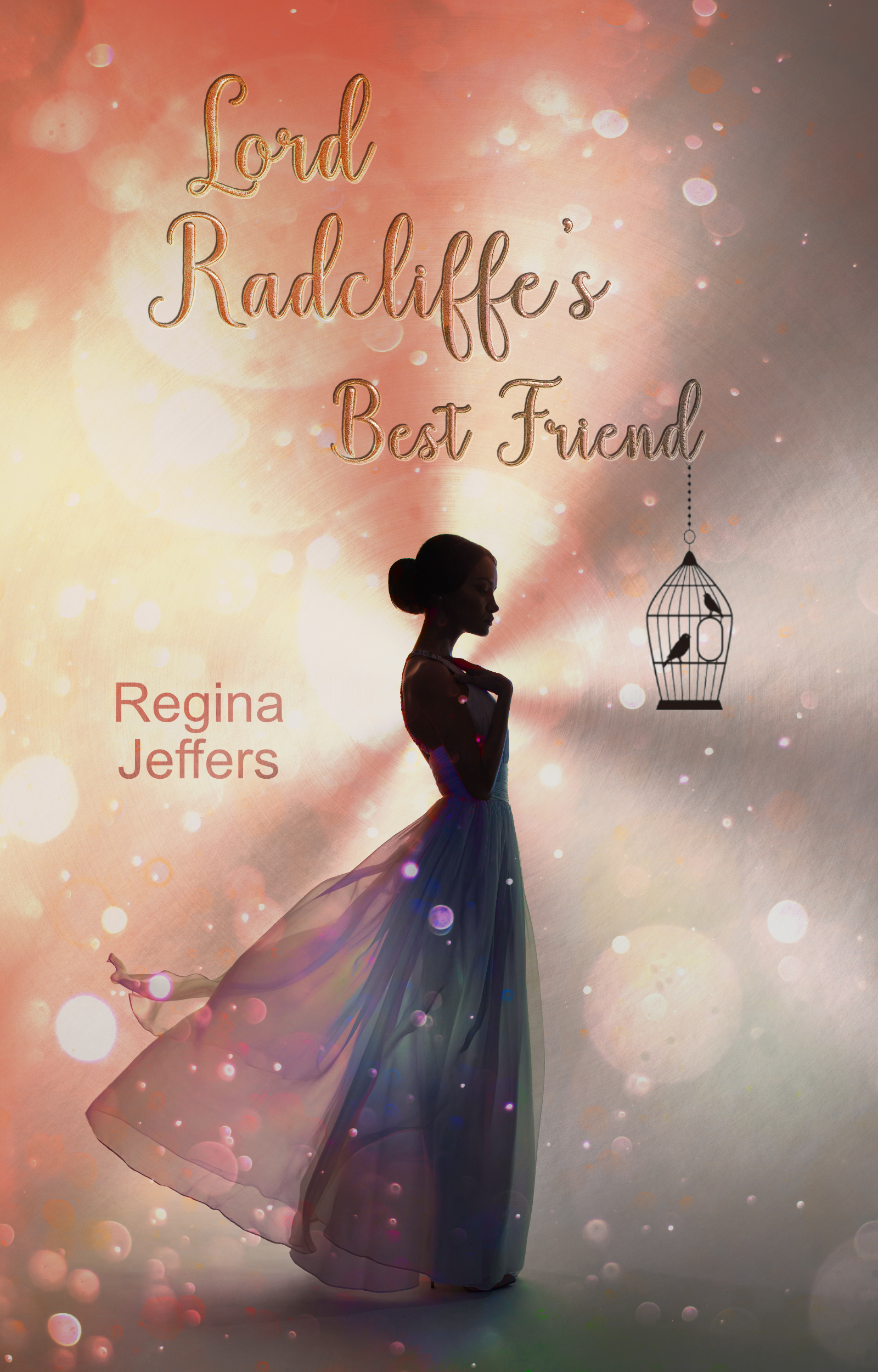

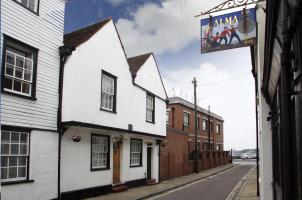

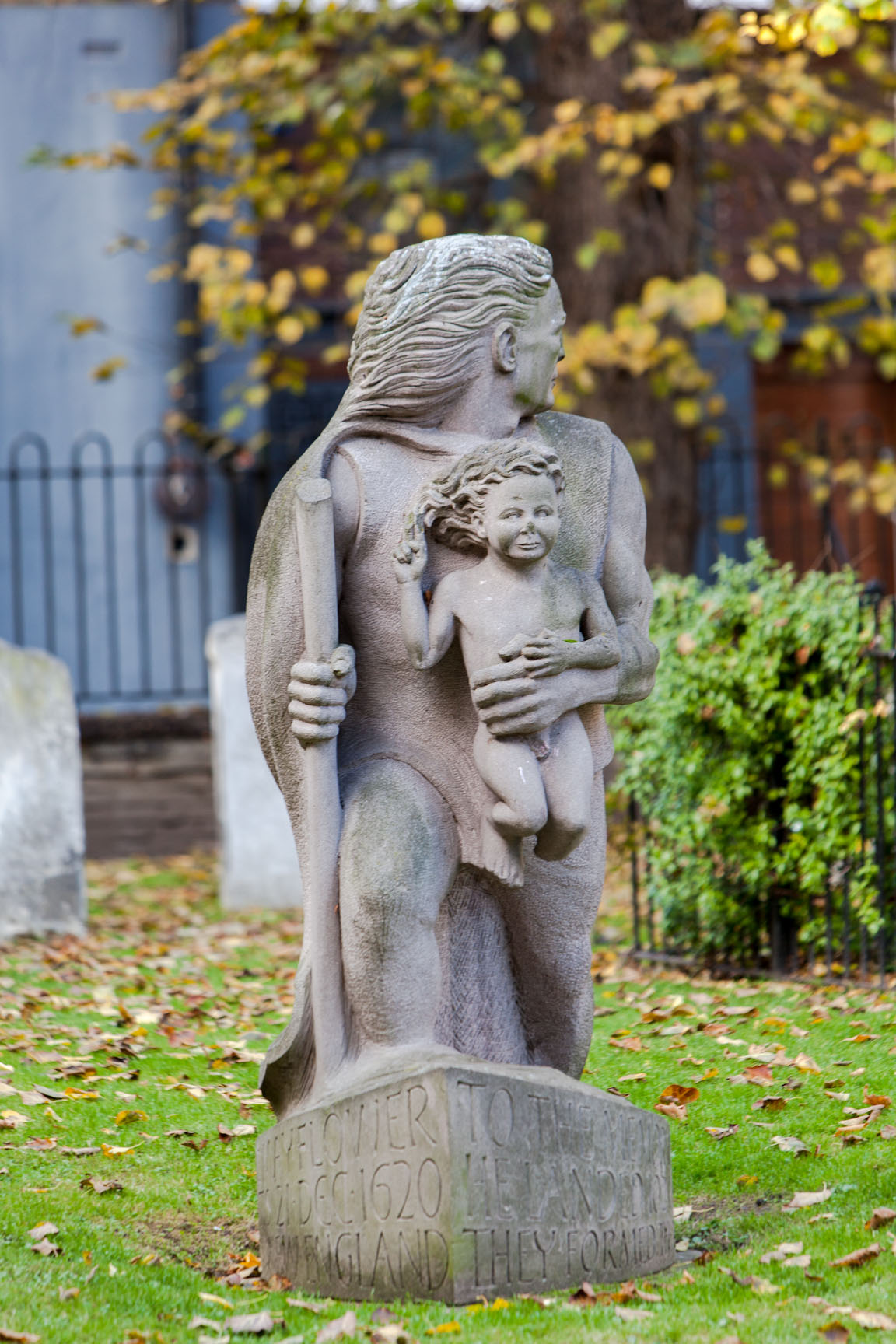
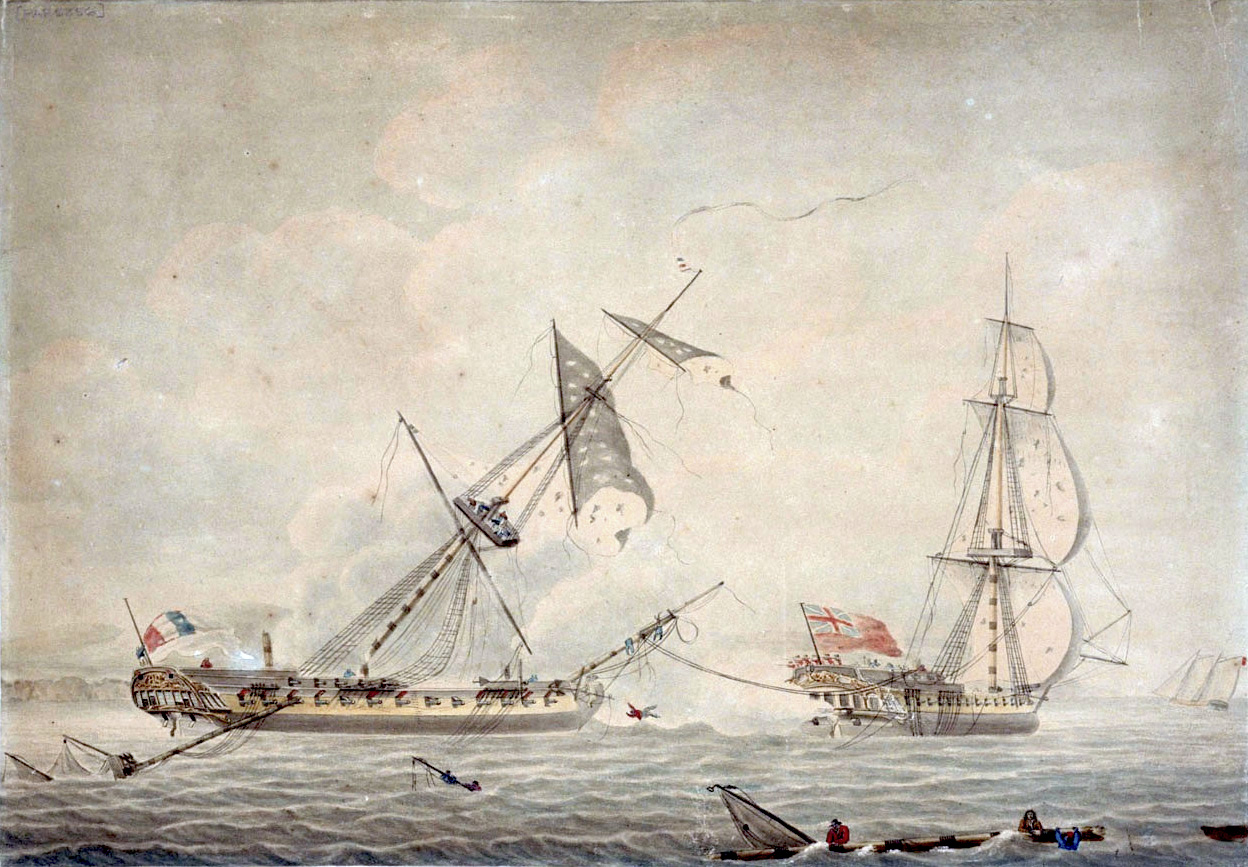
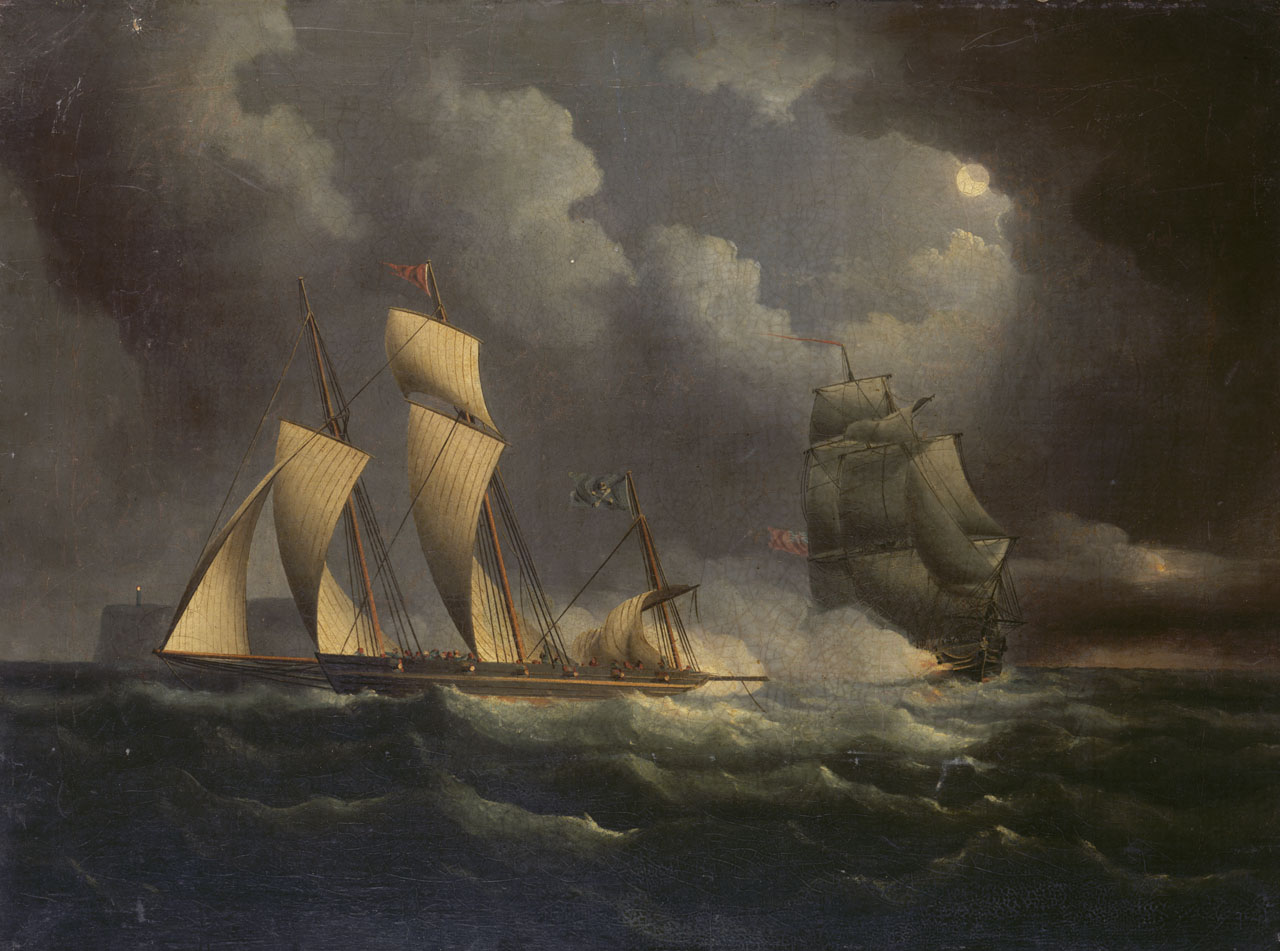
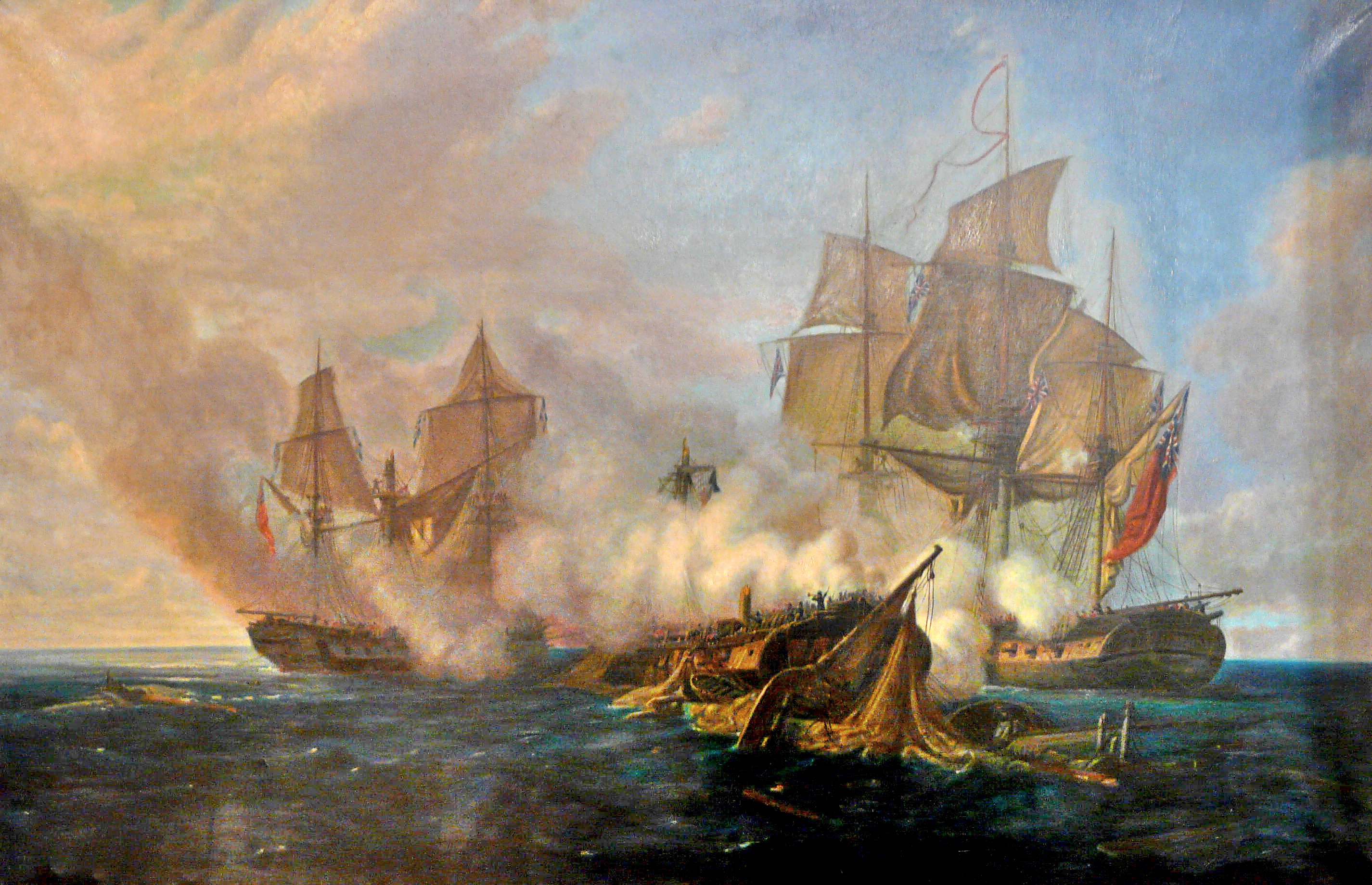


 Recently, one of my author friends sent me her Work in Progress manuscript for me to comment on what she had written to that point. She and I often bounce ideas off each other. Although beautifully written, making me sorry not to be more eloquent in my word choices, the initial plot possessed a major flaw from an historical standpoint. Her heroine runs the family estate in the absence of her father, who has passed, and the notion that her brother has gone missing—or, rather, the military cannot account for him being absent, after a major battle. The story takes place some two years after the end of the Napoleonic War, and she has heard nothing of her brother’s demise or a possible act of cowardice.
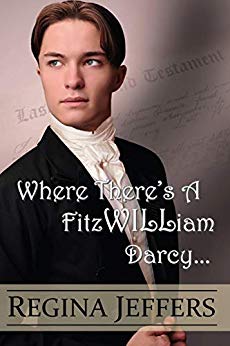 My friend’s story is one I have read “before,” meaning this is a relatively common plot line in Regency-based novels. I used something similar in one of my JAFF (Jane Austen Fan Fiction) vagaries. In Where There’s a FitzWILLiam Darcy, There’s a Way, Elizabeth Bennet returns earlier to Longbourn from Rosings Park, than in the original novel, because she has received a letter announcing the death of her dear father, Mr. Bennet. Having often imagined that Mr. Bennet’s love of his second daughter had him sharing something of the running of Longbourn with Elizabeth, I have her struggling to keep the estate afloat until Mr. Collins arrives to assume control of the property. Even so, I was cognizant that such a situation would not be accepted in the Regency. Quite quickly, Darcy arrives, having been pressed into service by his aunt, Lady Catherine de Bourgh, to act in Mr. Collins’s stead until she can employ a new clergyman for the living at Rosings. If you are interested, that particular plot line discusses what can and cannot be inherited by the females of the family. Moreover there is a WILL (notice the title) that provides some solace for the Bennet females.
 Generally speaking, a woman would not have been left to manage an entailed estate. Instead, a group of predetermined trustees would have assumed that role. In the running of any estate, there were many legal documents, contracts, tenant agreements, purchases for the running of the estate, selling goods produced upon the estate (wheat, wool, etc.), paying taxes, paying tithes, etc., which required a male to sign the papers. (Some of you may recall that in my novel, A Touch of Scandal: Book 1 of the Realm Series, Lady Eleanor Fowler had her father, in the month’s leading up to his demise, sign blank pages when he was conscious enough to do so. Therefore, she could create the necessary documents to keep the estate running until she could convince her brother, Brantley, to return home and assume the dukedom. Please note, be that as it may, I added a cousin who would inherit if Brantley Fowler did not return to claim the peerage, which would keep everything legal. In fact, Eleanor knows where to discover her brother. It is simply a matter of convincing him to return to a place he despises.)



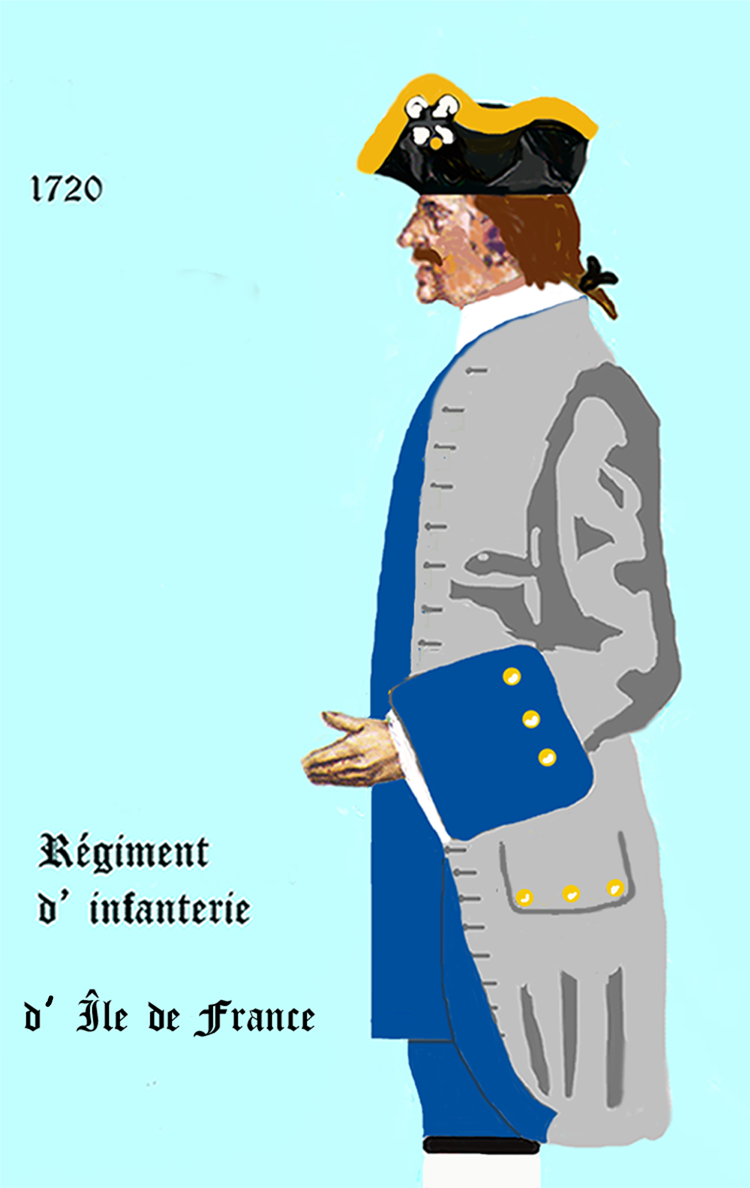
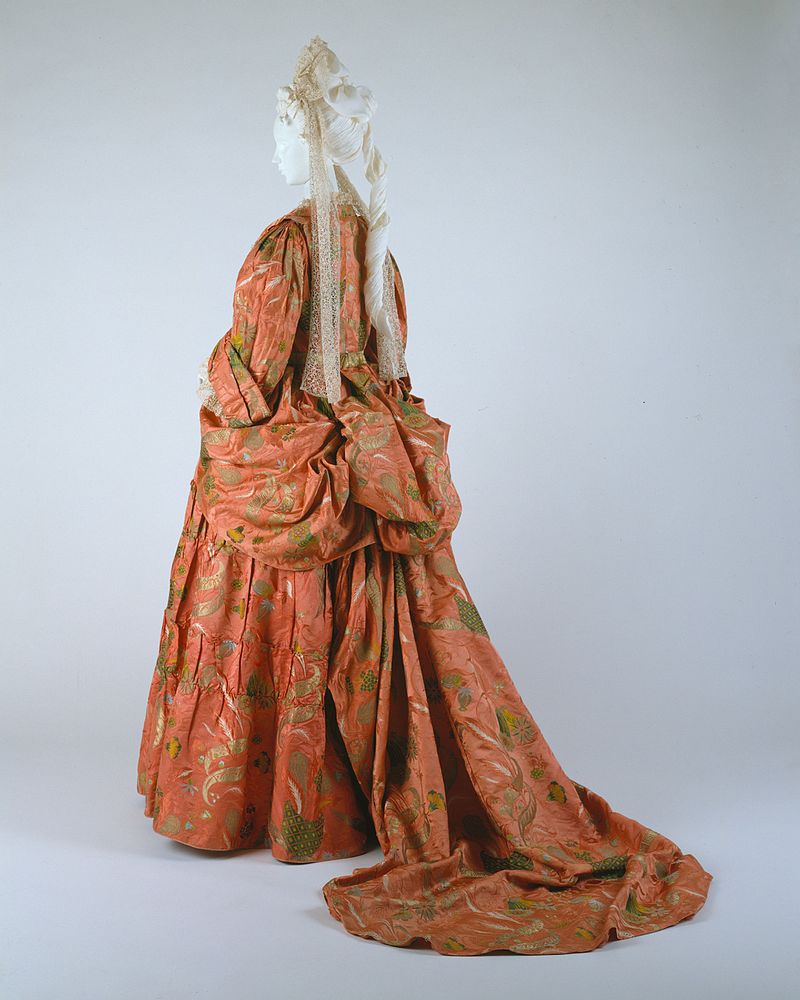
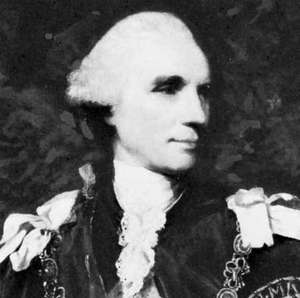 “Succeeding to his father’s earldom in 1723,
 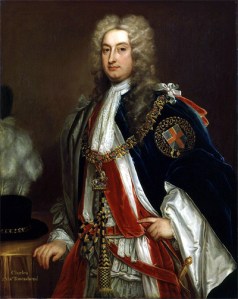 Charles Townsend, 2nd Viscount Townsend, who served as Secretary of State under George I, used the four crop method on his estate in Norfolk. Townsend had learned of the method from farmers in Holland. It was also used in America and to a lesser extent in Scotland. Crops were rotated on a four-year basis. Townsend considered clover and turnips as two of the crops. The Open Door Website explains the


 Every Woman Dreams...