Women’s rights to property plays out in several of my stories, including, Captain Stanwick’s Bride, therefore, I searched for minute details regarding whether women could inherit property after their husband’s demise. Although I thought I knew the answer, I wanted to check for some of the more obscure points in such a scenario.
Unfortunately, “informal” and “instructional” type blogs all over the web continue to proclaim that women in the time of the Regency, and decades after, had NO legal rights. It is repeated over and over that while a woman could inherit property, she could not control it. It is even said that if a woman inherits property that a male had to be in charge of it and could sell it or lose it, say in a gaming debt.
In reality, property laws were some of the strictest laws around, and even guardians of minors could be held responsible for what they did to a minor’s estate.
A female, who had reached her majority, meaning twenty-one years or older had as much right to own and control property as her brother. It is true, however, that legacies left to females often were further protected by conditions. This was not done in every case, but was executed in many. These conditions were not in place because the female could not have a say in her property, but, rather, to protect it from a MAN. The worse condition of females at the time was that they almost ceased to exist after they married. Married women’s ability to own and control property was severely limited. Whereas, widows often had a very free hand. Such is the situation in my story mentioned above. The hero’s late wife despised the idea that her father could direct her to whom she should marry, and she despised asking for additional pin money from her husband, but she would have enjoyed the freedoms of being a widow his death would have brought her. Her brother says he “will protect her,” but the late Mrs. Stanwick refused. She wanted her freedom.
Most of the restraints placed on property inherited or deeded to women were not placed there because it was thought a female could not handle all there is to oversee any property, but to protect the property from a husband or brother or uncle, etc.
There was no legal process that would allow a man to take charge of an adult spinster’s property and sell it. The courts would have returned the property to woman and make the man disgorge the money.
Legally, when it was determined that the guardian exceeded his authority, property sold by the guardian of a minor—male or female—had to be returned and the money refunded after the minor came of age.
The situation and conditions of females was restricted and bad enough without presenting it as worse.
The Married Women’s Property act was not passed until the 1870’s. There had been agitation about this matter throughout the century. Caroline Norton did much to change matters, but the story of Catherine Tilney Long (or Tylney-Long)—a great heiress–—probably had as much influence.
“Caroline Sheridan was born in London on 22 March 1808 into a grand but impoverished family. She was the granddaughter of the playwright Richard Brinsley Sheridan. Her father died when she was eight years old, leaving the family with serious financial problems. So when George Norton, who was a Tory member of parliament for Guildford at the time, asked to marry Caroline only eight years later, Caroline’s mother was keen for the match to proceed. Against her wishes, but fearing for the well-being of her family, Caroline conceded.
“The marriage was an extremely unhappy one and Caroline was the victim of regular and vicious beatings. She found solace in her writing and the publication of her verses ‘The Sorrows of Rosalie’ (1829) and ‘The Undying One’ (1830), which resulted in her appointment as editor of ‘La Belle Assemblée’ and ‘Court Magazine’. With these appointments and publications came a taste of financial independence.
“In 1836, she finally left from her husband who, despite previously encouraging the friendship, now claimed that Caroline was guilty of adultery with the home secretary Lord Melbourne and sued Melbourne for seducing his wife. Norton lost the case but Caroline’s reputation was ruined. Norton refused Caroline access to her three children and her subsequent protests were instrumental in the passing of the Infant Custody Bill of 1839.
“Norton later attempted to take the proceeds of her writing. Her campaign to ensure women were supported after divorce included an eloquent letter to Queen Victoria, which was published. Caroline’s efforts were influential in the passing of the Marriage and Divorce Act of 1857.” (BBC History)
Now to the case of Catherine Tilney Long. . .
“[Catherine Tilney Long] was the eldest daughter of Sir James Tylney-Long, 7th Baronet, of Draycot, Wiltshire. Her only brother James had inherited their father’s fortune but died just short of his eleventh birthday in 1805, meaning that the vast estates gathered by the 7th Baronet in Essex, Hampshire, and Wiltshire and financial investments in hand worth £300,000 devolved to Catherine. These estates were said to bring in total annual rents of £40,000. She thus became known in fashionable London society as “The Wiltshire Heiress” and was believed to be the richest commoner in England.
“Her suitors included the Duke of Clarence, later King William IV, keen to pay off his great debts. She eventually chose William Wesley-Pole (b. 1788), who on 14 January 1812 assumed the additional surnames of Tylney-Long, changing his name by Royal Licence. The couple married on 14 March 1812, but his extravagance meant the marriage was an unhappy one.
William gained an appointment as Gentleman Usher to George IV in 1822 (rendering him immune to arrest for debt) and left Britain to escape his creditors around 1823. Whilst on the continent he began a relationship with Helena Paterson Bligh, the wife of Captain Thomas Bligh of the Coldstream Guards, eventually abandoning Catherine entirely. She died in 1825, leaving her children in the care of her two unmarried sisters, Dorothy and Emma. William had only had a life interest in Catherine’s property, although he was responsible for the demolition of Wanstead House in 1825 to pay off some of his debts and also unsuccessfully tried to gain custody of their eldest child William, on whom Catherine’s fortune had devolved.” (Catherine Tylney-Long)
Sarah Lady Jersey inherited a large part of her grandfather’s interest in a bank. She attended the board meetings. There is no record of Lord Jersey taking any part in the affairs of the bank, though his son did when he came of age.
Property left to a woman as dowry was meant to be given to the husband when she married. It was never expected to be hers. If the property was included in the dowry, it often had a condition attached that it return to her father’s (or mother’s) family if she died without legitimate children. The husband could not legally sell or give away this property. It was being held to protect her future, providing her a home and income when her husband passed, and she must make way for her son’s wife.
All property and all money left to a female was not expected to be used as a dowry.
One of the purposes of a marriage settlement was to “protect” any unprotected property from being wasted, sold, or otherwise dealt with by the husband. He was supposed to be content with the income and any money his wife had.
I must say that one very weak point in this protection was that the husband seldom received more than a slight slap on the wrist for violations.
Thomas Jefferson is best known for writing the Declaration of Independence, but what other “credits” might we attribute to him? He was also a scientist, an inventor, an architect, and even a philosopher. “The papers of Thomas Jefferson (1743-1826), diplomat, architect, scientist, and third president of the United States, held in the Library of Congress Manuscript Division, consist of approximately 25,000 items, making it the largest collection of original Jefferson documents in the world. Dating from the early 1760s through his death in 1826, the Thomas Jefferson Papers consist mainly of his correspondence, but they also include his drafts of the Declaration of Independence, drafts of Virginia laws; his fragmentary autobiography; the small memorandum books he used to record his spending; the pages on which for many years he daily recorded the weather; many charts, lists, tables, and drawings recording his scientific and other observations; notes; maps; recipes; ciphers; locks of hair; wool samples; and more.” (Library of Congress)
If you have ever used a pedometer to count your steps (I do so daily.), you can thank Jefferson for improving the pedometer function.
We all likely know Leonardo di Vinci created a device that periodically dropped stones into a bucked to count distance. His “design was a device worn at the waist with a long lever affixed to the thigh with a ratchet-and-gear mechanism that recorded the number of steps taken during walking.” (Science Direct) Then, In 1525, a French engineer/artisan and physican to Catherine de Medici, used the oldest known pedometer to compute the size of the earth. According to Interesting Engineering, “Jefferson’s contribution to the history of the pedometer may have involved improving on then-current designs and taking learnings from existing devices. He probably introduced a mechanical pedometer obtained from France and may have modified the design. Evidence for his work on the pedometer is difficult to come by, as he did not apply for patents on any of his inventions.”
If you have ever set down to a bowl of macaroni, you can acknowledge Jefferson for the noodles. But what else might be accredited to the man? Essentially what Jefferson did was create a machine that could make pasta. It was a board with different holes spread about it that would produce small curved, hollow macaroni noodles as a crank was turned. This speed up the pasta-making process, helping turn it from a largely hand-worked endeavor into a far more automated one. (Interesting Engineering) “The best pasta in Italy,” Thomas Jefferson opined around 1787, “is made with a particular sort of flour, called Semola, in Naples.”
Jefferson also had a device he called a “polygraph,” not a lie detector (as we think of the word now), but, rather, a device that took its function from the meaning of the word: “poly” means “many” and “graph” has something to do with “writing.” Jefferson’s polygraph created “many writings.” Interesting Engineering tells us, “Jefferson first acquired a polygraph in 1804 and called it ‘the finest invention of the present age. It used the principles of the pantograph, a draftsman’s tool for reducing and enlarging drawings. The writer’s hand moves one pen, whose action is duplicated by a second pen, producing an almost exact copy. Its inventor, an Englishman named John Hawkins, assigned his American patent rights to Charles Willson Peale, and Jefferson was one of Peale’s most eager clients. Jefferson made many suggestions for how Peale could improve the design, which Peale took up.”
The Monticello Organization speaks to us of the Great Clock. It is a seven-day clock and can be found in two places at Monticello: the main entrance hall and on the east front of the house. Two cannonball-like weights keep the clock working. The gong to strike the hour is on the roof. The ropes carrying the weights descend on either side of the clock through holes in the floor to the cellar. Designed by Jefferson and built by Peter Spruck in 1792, the clock is still fully functional, even today. “The clock, with both an interior and exterior face, dictated the schedule of the entire plantation, inside the building and out. On the outside wall, the clock has only an hour hand, which Jefferson believed was accurate enough for outdoor laborers. The inside face of the clock reveals much greater precision by offering not only hour and minute hands, but also a smaller dial for a second hand.”
007 might have admired this next invention. “The wheel cipher was a helpful tool devised by Jefferson for encoding messages with ease. It was a small circular device with 36 wooden disks on a spindle. Each disk had letters of the alphabet in different orders. When arranged in different patterns, you could create a ‘key’ and inscribe messages under a set cipher.” Jefferson basically abandoned the idea sometime around 1802, but it was revived around 1922 and used by the U.S. military to the beginning of WWII.
And most importantly for the purpose of this post, was the dumbwaiter, or more appropriately, the dumbwaiters found in Thomas Jefferson’s house.
There was a dumbwaiter in the cellar upon which a wine bottle could be placed to be drawn upwards into the dining room. Guests could serve themselves in what at that time was known as the “French” style. Food was prepared in the kitchen, located under the south terrace and connected to the house by the all-weather passageway. The meal was then carried up a narrow and steep staircase, and stacked on rounded shelves attached to one side of the Dining Room door. The door rotates from the center instead of hinging on one edge. Once the shelves were loaded, [servants] would turn the door so that the food would be inside the Dining Room. From there, dishes would be placed on small tables with shelves called dumbwaiters. The dumbwaiters — some of which were built at Monticello — were on casters so that they could be wheeled to the table. A guest who dined at the President’s House during Jefferson’s tenure recalled: ‘by each individual was placed a dumbwaiter, containing everything necessary for the progress of dinner from beginning to end.'” [The Jefferson Monticello] You can see a video of the contraption HERE.
**************************
Book Blurb:
Mr. Darcy and the Designing Woman: A Pride and Prejudice Vagary
“You do not know your place!” Elizabeth Bennet had heard those words time and time again from every man she encountered, with the exception of Mr. Thomas Bennet. Her dear father encouraged her unusual education, especially her love of architecture.
Fitzwilliam Darcy finally could name the day his beloved Pemberley would know its renewal. For five years, he had denied himself the pleasures afforded the landed gentry in order to view Pemberley House rebuilt after a questionable fire had left it in ashes. He would now choose a wife as the next mistress of Pemberley and raise a family.
When Darcy hires Elizabeth’s relation as his architect, they are thrown together in unexpected ways. He requires a proper Georgian manor to win the hand of an equally proper wife, but Elizabeth is determined only the house she has designed will do. The house of her heart for the man of her heart, even though she will never spend a day within.
Excerpt from Chapter 9 (where Jefferson is mentioned for the first time):
It was nearly eleven of the clock when the carriage bringing Ericks, Luepke, and the two other men who would oversee the work on the house arrived. Though Mr. Nathan offered to greet the men, Darcy chose to do so himself. The surveyor, Mr. Bertram, and the builder, Mr. Campbell, accepted Darcy’s greeting, but quickly excused themselves to be about their own examinations of the site. Misters Ericks and Luepke asked Darcy to join them.
As they walked about the perimeter of the present house, Ericks asked, “We are still in agreement for three storeys?”
“Yes, three,” Darcy responded. He noted how Mr. Luepke made notations of their conversation.
Ericks pointed to a stand of burned-out timbers marking several rooms. “Some of the rooms must be razed, which will mean some of the walls still standing must also be brought down and rebuilt in order to have the proper load-bearing walls. As we are changing the size and shape of many of the rooms formerly in this part of the house, much removal and new construction will occur here.”
“Understandable,” Darcy repeated, as he saw his former house with new eyes.
Ericks smiled, “It is a bit daunting to think of how much has changed since your house was built in the late sixteen hundreds. If nothing less, think upon how much taller both men and people of the eighteen hundreds are in comparison to our ancestors. My brother Samuel jokingly says it is because the air is more filled with smoke and construction, and we must rise above it, but I believe it was God’s plan, which is ironic as I am the builder and he is the man of God. Nevertheless, I imagine a man of your height might, upon occasion, enter some rooms and be required to duck your head so as not to bang it on the door frame. Door frames, ceilings, and the like are higher than they once were, just as our beds are longer and sturdier, for they contain multiple mattresses. All these changes in the way people live change what we do as architects. While we are rebuilding your house, we should think a bit of the future. Sizes of the rooms should be a foot or two longer and the ceilings higher. Your three storeys will stand higher than your father’s did.”
“Will that not look odd,” Darcy asked, “if this wing is taller than the other?”
“Perhaps, a bit,” Ericks stated, “but do you wish to give up modern conveniences to keep everything equal? Such can be done, but I would not suggest it. Obviously, eventually, you will be required to remodel the other wing. Buildings cannot stand forever against the elements, and the weather in Derbyshire can be quite harsh at times. Would you not agree?”
Darcy looked at the man suspiciously. “You are thinking I will hire you again sometime in the near future.”
“Perhaps,” Ericks said with a laugh, “but I am attempting to be honest with you in all my estimations. Some you will enjoy hearing, others, not so much.”
“So noted,” Darcy remarked.
“Are you still satisfied with the number of pillars in the front? Not only do they mark the house’s greatness, but they serve as supports for different parts of the house. If you wish less, another means to support roofs, overhangs, and the like must be created,” Ericks explained.
“I am satisfied.”
“On another matter, all the surfaces must be covered in brick, meaning not only the new wing and the entrance, but also the older wing. There is no means of duplicating the color of the brick on the old wing of the house,” Ericks shared.
“You are telling me, if I wish to remodel the wing I currently live in and have the house match in brick color, I should consider doing so sooner, rather than later,” Darcy said with a lift of his brows. “Could I not simply purchase more of the same brick and use them when I rework the other wing?”
“You could,” Ericks said with a grin. “The grey brick is currently readily available. It is generally easier to find if you are considering additional wings in the future. The yellow sandstone cannot be restored. It is too old and too worn. Again, we must consider the materials which will withstand both nature and time.”
“I assume you have brought samples,” Darcy said.
“Naturally,” Ericks said with a point of his finger to his drawing. “And a half storey on the top to be used as a drying room, extra quarters for servants, the movable table’s pulley, and storage. I provided you a view with and without the mechanism.”
As Darcy studied the images before him, Ericks continued, “Do you know that fellow, Thomas Jefferson, the one who wrote the American independence document, has a number of such revolving shelves in his home. When he lived in France, Jefferson used portable serving stands when he hosted suppers at his home there. He put all the courses on the stands, which one actual servant could move about, even for a party of twenty or more people.
“They say this Jefferson fellow has five such devices in his dining area at his home. He even has a spring-loaded turning shelf between the kitchen and dining room, which likely means it is all on the same floor, but the kitchen puts the plates on the shelf and then turns it so it appears in the dining room. After the meal, the empty plates are placed on the device to be returned to the kitchen. People say he had one just like it installed in the American president’s residence when he was there. When he wanted to discuss matters of national importance with those he dined, there were no servants about to overhear those secrets. I would have loved to have viewed it in person to see how it worked.
“He also had some sort of lift mechanism to bring bottles of wine from the cellar to the floor above. Such is what I am thinking here.” Ericks pointed to the place on his drawing. “A system of weights and pulleys to move a variety of items through the house. Wine, as I have mentioned previously, food, smaller items, and even the laundry when it is to be dried on the lines in the garret. Naturally, nothing extremely heavy, for the lines would break, but strong enough for several pounds. As an added bonus, the shaft can assist with air flow throughout the house.”
“Ingenious,” Darcy mumbled as he studied the diagrams from several angles and on several floors to have a better understanding of what Ericks spoke.
“We will use a combination of dovetail joints, mortises and tenons and a post-and-beam construction.”
“No wall studs from the sill of one storey to the second storey?” Darcy asked.
“We will use whichever technique is most appropriate for the land upon which the house stands. Some parts are on solid rock and others on shifting earth. They cannot all be executed in a like manner, but the end result will be the same in the look of the rooms,” Ericks explained.
“Let us revisit the garret when you come closer to that objective,” Darcy said. “I was looking at the dormers on Miss Elizabeth’s drawing, and I found them a very satisfying look.”
“I will explore some other possibilities,” Ericks said with a slight frown, “but those decisions must be made quickly, as they will change other features of the house.”
“Nevertheless, I would like the opportunity to make minor changes in your design if I see fit,” Darcy insisted. He could not quite let the house be built without a bit of Miss Elizabeth Bennet’s vision in it. Those changes would be his silent salute to the woman who had become quite essential to his view of the world. In years to come, he would look upon them and remember a remarkable woman. “I assume you either have such drawings available or can create them. I tend to be very ‘visual’ in such matters. I wish to know the end effect rather than to guess at the look of it.”
“I understand perfectly, sir. I take the planning and construction of a man’s house as a sacred duty.”
Last Monday, my latest Austen-related book, Mr. Darcy and the Designing Woman, released. It has been the work of many days, and those of you who have read it already know there was a great deal of research involved to have the “special bits” of the story accurate.
Much of my research was on a variety of houses from the period, especially those standing in the Regency era. Kedleston Hall in Derbyshire influenced some of my choices for it was used as Pemberley in the 2005 Pride and Prejudice movie. Yet, I made a conscious effort not to duplicate the floor plan of Kedleston Hall when Darcy and Elizabeth rebuild Pemberley after a fire has destroyed part of Mr. Darcy’s house.
Kedleston Hall via Wikipedia
Hylands House in Chelmsford also made up some of my choices. In 1814, a Dutch banker named Pierre Labouchere bought Hylands, and completely redesigned the Queen Anne house, creating a symmetrical building encased in stucco (I purposely did not choose stucco for Pemberley), fronted by a huge neo-classical portico. He added a pleasure garden, stable block, and filled the house interior with classical statues. I particularly liked the idea of the two wings, with one being used for the Darcy family and the other for guests and entertaining.
Hylands House via Wikipedia
The final house which played a great deal upon my preferences was Audley End House, which sits outs of Saffron Walden in Essex. I particularly chose this house for the three storeys, which Mr. Darcy insists on in my tale. The impressive house that can be seen today is only about a third the size of the vast mansion created in about 1605–14 by Thomas Howard, 1st Earl of Suffolk. It retains much of its original character, and contains fine Robert Adam (a favorite of Elizabeth Bennet in my tale) and Jacobean revival interiors. Moreover, on the English Heritage site, one might download a “blueprint” of the house, which was extremely helpful in writing the tale. I would like to share it with you, but that “blueprint” is copyrighted and cannot be share for such purposes, only for research.
The final source, which proved extremely beneficial, was found in one of the footnotes on a Wikipedia page about stone and building in the different shires. It is from the Historic England website. On the site there is a PDF entitled “Building Stones of England: Derbyshire and the Peak District.” This guide describes “Derbyshire and the Peak District’s local building stones in their geological context. It includes examples of buildings and structures where the stones have been used.
“This guide is one of a series for each English county. The guides draw on research and fieldwork with the British Geological Survey, geologists and building historians to compile the Building Stones of England Database. The guides are aimed at mineral planners, building conservation advisers, architects and surveyors, and those assessing townscapes and countryside character.”
A second source on the site is “Derbyshire and the Peak District: building examples and stone sources. I did my happy dance when I came across both these docs. This one provides examples of buildings, architectural style, building stone sources, a list of know (active and ceased) building stone sources (quarries, mines, delphs, etc.), plus additional information on stones such as grain size, sedimentary structure, weathering, etc.
Sample:
Mr. Darcy and the Designing Woman: A Pride and Prejudice Vagary
“You do not know your place!” Elizabeth Bennet had heard those words time and time again from every man she encountered, with the exception of Mr. Thomas Bennet. Her dear father encouraged her unusual education, especially her love of architecture.
Fitzwilliam Darcy finally could name the day his beloved Pemberley would know its renewal. For five years, he had denied himself the pleasures afforded the landed gentry in order to view Pemberley House rebuilt after a questionable fire had left it in ashes. He would now choose a wife as the next mistress of Pemberley and raise a family.
When Darcy hires Elizabeth’s relation as his architect, they are thrown together in unexpected ways. He requires a proper Georgian manor to win the hand of an equally proper wife, but Elizabeth is determined only the house she has designed will do. The house of her heart for the man of her heart, even though she will never spend a day within.
Giveaway: Comment on the post to be entered into a giveaway for eBook copies of Mr. Darcy and the Designing Woman. Two copies are available on Always Austen and additional copies on my blog Every Woman Dreams. Winners will be contacted by email.
To write “Mr. Darcy and the Designing Woman,” I had to learn the “technical” architectural terms for many architectural effects I enjoy viewing in historic houses and buildings. Two such terms are “trompe L’oeil,” and the other is “grisaille.”
Trompe-l’œil (French for ‘deceive the eye’) is an artistic term for the highly realistic optical illusion of three-dimensional space and objects on a two-dimensional surface. Trompe l’œil, which is most often associated with painting, tricks the viewer into perceiving painted objects or spaces as real. Forced [Forced perspective is a technique that employs optical illusion to make an object appear farther away, closer, larger or smaller than it actually is.] perspective is a related illusion in architecture. If you have ever seen one of those pictures of a person “supposedly” holding up the Leaning Tower of Pisa, then you have experienced “forced perspective.”
The John Canning Perfect Preservation website tells us, “The technique to develop seemingly three-dimensional objects with paint requires information from the room itself and skill from years of experience. The shadows simulated in the paint composition must mirror the real shadows in the room. The shadow itself must be unique to the object. For instance, colored glass transmits a shadow diffused with colors of the glass where as an opaque object will create grey shadows. This use of shadow, color, and light is called chiaroscuro. Proper perspective in the composition is required if the painted object is going to appear real. Shadows are composed of primary characteristics: the shape following the object; the most direct light source, and the closer the shadow to the object, the greater detail. The rules of perspective apply, meaning; the horizon line of the composition is most convincing at the eye level of the viewer. Trompe l’oeil often fails because the improper attention to dimensions and to the real shadows in the space. But knowing when to add in highlights and mid-tones in the illusionistic painting process is just as important as adding shadows. The most effective trompe l’oeil compositions are convincing from many perspectives in the space, not just at close distance or straight on.
Widewalls goes on to tell us, “Originating from the French word “gris” meaning “gray”, the term grisaille stands for a monochrome painting or underpainting usually created in shades of gray or neutral grayish colors. These ash tone values can range from dark to light, transparent to opaque, flat to reflective, and sometimes from warm to cool. This method is commonly used in oil and acrylic painting.”
“Grisaille has two primary uses. When properly master, the technique might be used to imitate sculpture and architectural details making it the most complex form of trompe l’oeil. Grisaille may also be used during the preparation and planning stages of a mural. To create a three-dimensional illusion, very much the same as trompe l’oeil, light and shade are painted into the composition utilizing different shades of grey. The shadows of a real object in the same place must be thoroughly studied in order to properly convey truth in the shadows. When grisaille is intended as trompe l’oeil, the simulated form is usually that of an architectural element.” [John Canning Perfect Preservation]
Robert Campin – Altar des Stabwunders und der Vermählung Mariae, Rückseite Der Hl. Jakob der Ältere und die Hl. Klara, circa 1420. Captions, via Creative CommonsGrisaille painting at Basilica St. John the Evangelist, Stamford, CT. ~ from John Canning Perfect Preservation
Book Blurb:
“You do not know your place!” Elizabeth Bennet had heard those words time and time again from every man she encountered, with the exception of Mr. Thomas Bennet. Her dear father encouraged her unusual education, especially her love of architecture.
Fitzwilliam Darcy finally could name the day his beloved Pemberley would know its renewal. For five years, he had denied himself the pleasures afforded the landed gentry in order to view Pemberley House rebuilt after a questionable fire had left it in ashes. He would now choose a wife as the next mistress of Pemberley and raise a family.
When Darcy hires Elizabeth’s relation as his architect, they are thrown together in unexpected ways. He requires a proper Georgian manor to win the hand of an equally proper wife, but Elizabeth is determined only the house she has designed will do. The house of her heart for the man of her heart, even though she will never spend a day within.
Excerpt from the latter part of the book where Elizabeth and Darcy discuss these techniques:
The following day, they gathered with Jacob Ericks and Mr. Campbell around the supper room table in the dower house so they might spread out Ericks’s original drawings, as well as Elizabeth’s larger version of her sketch in order to mull over what was and was not possible. “We all are still in agreement to keep the ground floor rusticated, while the upper floors are of smooth dressed stone?” Ericks asked.
Darcy nearly laughed when all three men looked to Elizabeth to lead. It was quite ironic considering how Ericks initially set Elizabeth’s ideas aside. Last evening, in preparation for an argument, Darcy had had an honest talk with his wife, suggesting she would be called upon to know compromise on some points of her house’s design. “Any successful negotiation requires a person to stand firm on essential points, but be more adaptable on others.”
“It would be frivolous of us to choose a different stone at this point,” Darcy declared. “Do you not agree, my dear?”
“I adore the possibility of the grey bricks,” Elizabeth announced. Both Ericks and Campbell breathed easier. She pointed to the central and most imposing block on her drawing and then to Ericks’s plan. “The central corps de logis will be the center of entertaining. Mr. Darcy has said the formal supper room and ballroom will ‘lead’ into this wing.” She traced the lines on the paper. “Could not either the supper room or the ball room extend into this wing? Because of lighting issues, there will be no interior guest rooms. Does this not become wasted space? From what I can perceive by studying this diagram is some space is not designated. Storage? Large sitting for each guest quarters? To me, a larger sleeping quarters and storage for a lady’s gowns and so forth is more important than sitting rooms. Will not guests spend the majority of their spare time with their hosts or others of their party? Mark my words, Jacob, within a dozen or so years, women will again be wearing larger skirts. Women’s fashions, like that of gentlemen, runs in cycles.”
Darcy watched as Ericks and Campbell exchanged skeptical looks, but Darcy lightened the mood by saying, “I may again accept laces on my sleeves, but never again will I wear a powered wig.” He looked to Ericks. “Is Mrs. Darcy’s suggestion not feasible?”
“Absolutely, I can make the necessary adjustments. Doing so means only the large rooms, meaning the drawing rooms or suites with a sitting room, will have more than one hearth.”
“Thank you, Jacob,” Elizabeth said. “I am fully aware you cannot divide a room with two hearths into three rooms without creating a useless space, but it seems foolish to have a three-storey open space in this wing. Even with the hallways for the guest rooms, there is more than enough space for a ballroom. Perhaps a portrait gallery on the third floor and a games room for Mr. Darcy and, later, the children.” She reached for his hand, and Darcy accepted it in solidarity.
“Neoclassical, do you not think, Mrs. Darcy?” he asked.
“The entrance and the accents throughout the house, but not everywhere,” Elizabeth agreed with a happy smile.
“I knew you would bring Robert Adam into your design,” Ericks said with a matching grin. “What think you of niches in the wall of the grand hall or the entranceway to house the statues?”
“With grisaille panels,” his wife said, “where the simulated form is part of the architectural element. Capture the shadows and the light to imitate the sculpture. A complex form of trompe l’oeil. We could also include a mural sometime in the future and use the technique there also.”
“None of my men can create what you describe,” Campbell admitted. “I must see whether such an artist can be located in the area. It would be unique and breath-taking, ma’am, if it can be done.”
A moment of respect passed between Campbell and Elizabeth, before Darcy asked, “Can we keep the marble floor already in the main hall?” Darcy asked. “It is marked by generations of Darcys. I wish some traditions to remain intact. Mine and Elizabeth’s names will complete the first circle of the hall, and our children’s names and their mates will begin the second row.”
Tears rushed to Elizabeth’s eyes. “How wonderful,” she murmured as a few tears trickled down her cheeks. “If someone means to destroy the Darcy tradition, they must come through me. You are on notice, Mr. Campbell.”
“I understand, Mrs. Darcy. When Mrs. Campbell permits others to view her tears, I know not to cross or disappoint her. I imagine you are much of the same nature.”
Ericks suggested. “Instead of four, we will require at least six, perhaps eight, columns for support.”
“You have our permission to make the necessary adjustments,” Darcy guaranteed Mr. Ericks. “Elizabeth and I have agreed we would keep the former majesty of Pemberley, while softening the stark lines to demonstrate that the house is not only the manor of a grand estate, but also the ‘home’ of the Darcy family.”
Ericks smiled. “I owe you a great debt, sir. I expected our Elizabeth and I would require fisticuffs to settle our differences.”
Darcy jovially slapped Ericks on the back. “I have the advantage of being the lady’s husband, but she did demand that I remind you if you had previously agreed to consider her suggestions, mind you, with an open mind, rather than to assume a woman had no place in architecture, we might now be anticipating the end of Pemberley’s repairs, rather than restarting the project.” He grinned at Elizabeth. “Did I say it correctly, my dear?”
His wife playfully shook her finger at both him and Ericks. “You forgot to mention my brilliance, sir.”
“Duly noted, Mrs. Darcy.” He looked at Ericks’s plans. “Now that we have begun so well, we should settle other matters so you might draw up new plans.” He consulted Elizabeth, “I pray you do not object to the two sets of steps leading to the front door, my dear? I am one who believes in a balance of form.”
She frowned, “I suppose as Lord and Lady Parrish approved of the dual stairs,” she said with a lift of her brows, “I must agree. After all, the aristocracy possesses a refined taste we in the gentry do not.” One evening recently, Darcy had described the house party and his misery.
“It also had Lady Ester’s approval,” he teased before his wife pinched the back of his hand. To Ericks and Campbell, he said, “My favorite fishwife agrees. A large recessed arch over the entrance door to keep out the weather. Perhaps some sort of garland or a Latin phrase carved over the door.”
“Would you like to provide the quote?” Ericks asked.
“I must think upon it,” Darcy said.
“Something you learned at university which impressed you,” his wife suggested.
“What makes you think anything at university impressed me?” Darcy challenged. He could not say why he felt so lighthearted, but he suspected the woman beside him had something to do with it. He now understood why his father was a much easier man with which to live when Lady Anne was still alive.
“I was not there,” his wife countered, “but I know you to be a learned man, Mr. Darcy.”
“Really?” he asked. “How so?
“You were intelligent enough to realize how important I could be to your existence,” she answered smartly.
Both Campbell and Ericks broke into laughter. “Walked into that one, Darcy,” Ericks said. “You must recall you married a woman who adores verbal swordplay.”
Elizabeth handed her original sketch to Jacob. “Such is enough for today. Either Mr. Darcy or I will be available when you reach a point where our input is required. We are calling on the tenants and such, and I am hiring several seamstresses to create drapes and bed clothing and the like. When you are finished, we wish to be prepared to occupy the house.”
Adelphi is a district in the City of Westminster. The Adelphi Buildings, a block of 24 unified neoclassical terrace houses, between The Strand and the River Thames in the parish of St Martin in the Fields, was named “Adelphi,” for it the Greek word meaning “brothers.” The Adam brothers (John, Robert, James, and William Adam) were the masterminds of this development in the late 1700s. Robert Adam in my new story “Mr. Darcy and the Designing Woman” is the architect of choice of Miss Elizabeth Bennet. But who was he?
The Adelphi forms one of the most notable works of the brothers Adam. The design of the buildings was, for the most part, the work of Robert Adam, though his brothers, James and William, were also concerned with the scheme.
After being educated at Edinburgh University, Robert Adam visited Italy and other countries and was greatly influenced by the architecture he observed. He, therefore, developed his own unique style of architectural design based on Classic domestic architecture, not he severe temple architecture which inspired the Renaissance. “The light and elegant treatment thus evolved resulted in a decorative manner that has come to be considered typical of the Adam style. The characteristic qualities of Robert Adam’s method of working were well illustrated in the Adelphi group of buildings and the attractive forms of decorative design developed by him appear, externally, in doors and door-cases, in the flat but richly ornamented pilasters, entablatures, string courses, medallion ornaments, etc., applied to the various facades, and, internally, in door-cases, columned screens, fireplaces, and delicately ornamented ceilings.
Robert Adam ~ Wikipedia
Whereas, Mr. Darcy and Elizabeth’s relation prefer the more “traditional” designs of Sir William Chambers. The Royal Academy and Sir William Chambers essentially ignored the “Adam designs,” though a few imitations were exhibited. To say Chambers and Robert Adam did not get along well would be an understatement. [Sir William Chambers was an eclectic architect of the Georgian period. who was one of the leading Palladian-style architects of his day and a founding father of the Royal Academy. Chambers’s best-known works are Somerset House (1776–86) in London, now home of the Courtauld Institute Galleries; the casino at Marino (c. 1776), near Dublin; Duddingston House (1762–64) in Edinburgh; and the ornamental buildings, including the Great Pagoda (1757–62), at Kew Gardens, Surrey (now in London). In the last he went as far in the direction of Romantic eclecticism as any architect of his time. In general, however, he was an architectural conservative who used a profound knowledge of European (especially French) architecture to give a new look to the accepted motifs of Palladianism. His books, notably A Treatise on Civil Architecture (1759), had widespread influence. (Britannica)
Sir William Chambers ~ Wikipedia
Book Blurb:
“You do not know your place!” Elizabeth Bennet had heard those words time and time again from every man she encountered, with the exception of Mr. Thomas Bennet. Her dear father encouraged her unusual education, especially her love of architecture.
Fitzwilliam Darcy finally could name the day his beloved Pemberley would know its renewal. For five years, he had denied himself the pleasures afforded the landed gentry in order to view Pemberley House rebuilt after a questionable fire had left it in ashes. He would now choose a wife as the next mistress of Pemberley and raise a family.
When Darcy hires Elizabeth’s relation as his architect, they are thrown together in unexpected ways. He requires a proper Georgian manor to win the hand of an equally proper wife, but Elizabeth is determined only the house she has designed will do. The house of her heart for the man of her heart, even though she will never spend a day within.
Excerpt:
The lady nodded her head in affirmation before asking, “What was your intended destination, Mr. Darcy?”
“I was considering Leeds or Leicester or perhaps York,” he explained. “My uncle, Lord Matlock, provided me the names of several architects with whom he was familiar. I fear my manor house suffered fire damage and requires repairs.”
“I fire can be so devastating,” Mrs. Bingley said in sympathy.
“I was not at home at the time. My beloved father lost his life in the tragedy. I will forever regret my absence when both he and my sister required me,” he admitted.
Miss Bennet said, “I know you think you could have prevented what occurred, but I have sadly learned God often has alternate plans for us.”
“I appreciate your kind words, Miss Bennet.”
“Would you mind calling me ‘Miss Elizabeth’? I know Miss Bennet is the proper form of address, but every time someone says those words, I look around for Jane.”
“As you wish,” he said.
“In speaking of your home and your family, I heard real pain in the tone of your words,” she said softly. “I shall add you to my prayers this evening.”
Darcy felt his heart warm to the woman. Few had spoken of the sacrifices he had known to bring Pemberley back. “My family will tell you I am singular in my desire to secure my family’s legacy.”
“Such is admirable,” Mrs. Bingley assured him.
Meanwhile, Miss Elizabeth asked, “Must you level the remains of the manor house or is it possible some of it can be salvaged?”
“I cannot speak to what is best,” Darcy confided. “Obviously, I wish to save as much of the beauty of Pemberley House as possible; yet, I also realize it would be foolish not to invest in some much-needed improvements so the house can survive for future generations. I owe as much to my family name. Because of a lack of foresight on the part of many of my ancestors and even my father, the fire spread quickly. All that being said, I hope to soon take a wife. The house must be repaired before we marry. My cousin, Colonel Fitzwilliam, tells me I cannot think to bring my new wife into such conditions.”
“If she really loved you, she would adapt to the chaos about her,” Mrs. Bingley said, and Darcy imagined the lady would have done so for Mr. Bingley’s sake. “Surely some of the house is livable, for you have been residing there, have you not?”
“Do not allow an architect to thrust upon you and your future lady too much pomp,” Miss Elizabeth declared in authoritative tones. “You must remember just because Vitruvius was the grandfather of architecture, all the venerable gentleman purported—all his ancient trumpery—they are not required in the design of every house.”
Darcy smiled upon her, but he had a desire to dismiss her enthusiasm. “All I have considered is I wish for a house with a certain dignity in its design—one easily recognizable with a simple glance.”
“A Roman basilica possesses dignity,” Miss Elizabeth argued, “but I cannot imagine a sensible woman wishing to be mistress of a basilica.”
“Should not a woman be happy with the dwelling her husband provides?” he countered.
“Certainly, if the house has stood for several centuries, such is true, but, in my most humble opinion, a wife would wish to be consulted regarding the style of architecture of her future home, especially one to be rebuilt, specifically the arrangement of the rooms.”
“Would the lady not wish a home similar to her father’s?” Darcy knew something of homes in the Midlands and thought his future bride would approve of such a style.
“What does her father’s house have to do with a woman’s preferences?” Miss Elizabeth asked in testiness. Her question made Darcy wonder if he had committed some great sin in thinking any woman would be satisfied with whatever he presented her. “Our father’s house has been standing since the 1500s. Though parts have been redesigned and repaired, overall, it can be most disjointed—parts never conforming to a modern house.”
“Elizabeth,” Mrs. Bingley warned. “Mr. Darcy should be permitted his taste in architectural style.”
Giveaway!!! Leave a comment below to be in the mix for a Giveaway of TWO eBooks of Mr. Darcy and the Designing Woman. Winners will be contacted by email,
Back in 2017, when I wrote Pride and Prejudice and a Shakespearean Scholar, an idea occurred to me, but I kept pushing it to the side, thinking I could not manage it. You see, in P&P&SS, Mr. Bennet is a scholar on Shakespeare and means to refute claims that Frances Bacon wrote Shakespeare’s play. Do you recall this scene:
“I would be perfectly content to remain at Netherfield. You do not need to alter your plans simply because I have appeared upon your doorstep,” Darcy assured his friend. “I do not expect you to cry off at such short notice nor should you inconvenience Mr. Bennet’s cook by adding another to her preparations.”
“Nonsense,” Bingley declared good-naturedly. “If worse comes to worse, we will split the portions between us. You know I could never abandon you to a house with which you are unfamiliar. The library here is sadly lacking. Moreover, Mr. Bennet of Longbourn is Mr. Thomas Bennet.”
“Thomas Bennet?” Darcy asked. “The Thomas Bennet? The man who is both a Shakespeare and a Bacon expert and who means to refute claims Francis Bacon wrote Shakespeare’s plays and sonnets? The one our professors at Cambridge so often quoted?”
“The very man,” Bingley said with a wide smile. “Bacon made this part of Hertfordshire his home, thus Mr. Bennet’s interest in the man. Bennet and a group of scholars have been trying to refute Wilmot’s research claiming Bacon is the true author of Shakespeare’s plays.”
Anyway, in Pride and Prejudice and a Shakespearean Scholar, Darcy, Mr. Bennet, and Elizabeth visit Old Gorhambury House. The remains of the house are situated just outside St Albans in Hertfordshire. It was once an immense mansion constructed in 1563-8 by the Lord Keeper of the Great Seal, Sir Nicholas Bacon. A prolific builder, Sir Nicholas spent many years expanding and adapting the residence. In the tale, Elizabeth rattles off some impressive observations about the structure of the house and the newer Gorhambury House, built in the late 1700s. Now there is the rub! What if instead of Shakespeare, Mr. Bennet had taught her something of architecture? Do you see where this story is heading?
One of the more famous houses in “Pride and Prejudice” fame is Kedleston Hall, a neo-classical house in Kedleston, Derbyshire. The current house was commissioned by Nathaniel Curzon and designed by Robert Adam (whose name you will hear mentioned often in the novel). If you have seen the 2005 movie version of Pride and Prejudice, Kedleston Hall serves as Pemberley in the film. Wikipedia’s article on the house provides a nice description of the interior, as well as the garden and grounds.
“You do not know your place!” Elizabeth Bennet had heard those words time and time again from every man she encountered, with the exception of her father. Mr. Thomas Bennet had encouraged her unusual education, especially her love of architecture.
Fitzwilliam Darcy finally could name the day his beloved Pemberley would know its renewal. For five years, he had denied himself the pleasures afforded the landed gentry in order to view Pemberley House rebuilt after a questionable fire had left it in ashes. He would now choose a wife as the next mistress of Pemberley and raise a family.
When Darcy hires Elizabeth’s relation as his architect, they are thrown together in unexpected ways. He requires a proper Georgian manor to win the hand of an equally proper wife, but Elizabeth is determined only the house she has designed will do. The house of her heart for the man of her heart, even though she will never spend a day within.
Excerpt:
“Fitzwilliam!” Georgiana called from the open door, and Darcy forced the memory of his dream to the recesses of his mind. “You were not gone so long,” his sister announced as he approached. “Hopefully, you knew success.” She slid her hand about his arm.
“I made definite progress, which I will gladly share with you and the others,” he told her as he escorted her towards his aunt’s favorite sitting room. “I am hoping you and Fitzwilliam will join me at Pemberley on Monday to take the acquaintance of the architect I have employed.”
“Employed an architect?” the colonel asked as he stepped into the foyer to extend his hand to Darcy. “Did you travel to Nottingham or Birmingham?”
“Neither,” Darcy confided. “Let us go inside, and I will share it all.”
The colonel presented Darcy an elegant bow. “As you say, Cousin. Georgiana and I are all ears.”
Once they three were settled and refreshments delivered, Darcy began his tale of encountering Charles Bingley, the man’s wife, and Miss Elizabeth Bennet. The colonel interrupted, as was his habit, to relate a few of his own stories for Georgiana’s amusement about how naïve Bingley had been at university.
Georgiana was laughing so hard during the colonel’s retelling, Darcy simply sat back into the chair and enjoyed the sound of his sister’s happiness. He had made the correct decision to send her to live with the Matlocks, though his Aunt Catherine had volunteered to take Georgiana in, his sister had always been a bit frightened of Lady Catherine de Bourgh. He made a mental notation to warn Lady Matlock not to mention the possibility of his taking a wife. Otherwise, Lady Catherine would again be purporting a match between him and his cousin Anne.
“And so, you delivered Mr. Bingley’s family to safety?” his sister questioned.
“Yes, to Sheffield,” he assured, “where, ironically, I encountered Albert Sheffield and his new wife Hannah,” Darcy confirmed. “Sheffield assisted me in ordering new clothes. I have asked him to return as my valet once Pemberley is restored and have promised to discover a position for Mrs. Sheffield in the household also.”
“In the new Mrs. Darcy’s employ?” Georgiana asked.
Darcy’s first thought was of Miss Elizabeth. When he had taken Mrs. Sheffield’s acquaintance, he had considered how easily it would be for Hannah Sheffield and Miss Elizabeth to become friends. “Such would be the most practical solution,” Darcy said evenly, attempting not to relay how his mind had again returned to Miss Elizabeth Bennet, “but, more likely, whomever I choose to extend my hand will already have a lady’s maid to attend her.”
“Such may be determined once other issues are addressed,” the colonel responded. “By the way, her ladyship has accepted an invitation to a house party in your name and ours three weeks removed. She says such will signal to others you are in the market for a wife.”
Darcy frowned. “I had not thought to begin such negotiations until I knew the fate of Pemberley House. I certainly cannot bring a wife to my ancestral home in its present condition, and Mr. Ericks and I have yet to agree on a set of plans. Once we do, it could be anywhere from three to six months before Pemberley is again livable enough for a woman of society.”
“So long?” Georgiana asked. “I know the repairs are likely to be extensive; yet, I had hoped you would soon be relieved of such depressing conditions. I often feel quite guilty enjoying the fare of Lady Matlock’s table when I know there is not a proper kitchen at Pemberley. You must eat whatever one of the cottagers supplies you.”
“It is not so ill,” he told her, although often he did without, for the lack of even a bit of taste in the food. “And, soon I will know something of the time it will take to make Pemberley livable for a family. The architect is to come to Pemberley on Monday to view the conditions of the house and to determine if any of it can be saved. He will also examine the location, create a list of required materials and determine how many storeys would be safe. I have told him I would prefer three storeys as we have had previously, but doing so might complicate the plans if I choose to add water closets and different lighting, especially as such options will be the way of the future. Chimneys and fireplaces for each room will be expensive, if necessary.
“We also spoke of two wings in the beginning around the central corps de logis for entertaining and so forth,” Darcy explained.
The colonel nodded his approval. “It sounds as if you and this architect have had several serious conversations. What did you say his name might be? Erickson, was it?”
“Ericks,” Darcy confided. “Jacob Ericks. Ironically, he is brother to Samuel Ericks, the man who is the new rector in Lambton. Remember, the father was a surgeon when we were young.”
“The one who died in the flood?” the colonel asked.
“Yes, Samuel Ericks is the one who held the curacy at Kympton before the vicarage opened in Bakewell.” Darcy said as he eyed his sister, hoping his comment would not remind her of George Wickham and their father’s death. Georgiana had been hard-pressed to speak of the events of that evening to anyone, even him. At one time, she had trusted Mr. Wickham, perhaps thought herself in love with him, or so Darcy had suspected, but the death of George Darcy and Wickham being the last man to see him alive had soured Georgiana on the man. He continued, “I had hoped you two could travel to Pemberley on Monday and take Mr. Jacob Ericks’s acquaintance,” he said to the colonel and Georgiana. “Your mind, Colonel, for logistical matters would be of great service to me. Would greystone or some other Derbyshire stone be more practical? Those types of decisions.”
“I am often called upon in my service to England to fit a square peg into an oddly-shaped hole, so to speak. One can imagine how often that square peg is shaped into a round one,” the colonel observed.
“Exactly,” Darcy confirmed. “A different perspective.”
“And what of me?” Georgiana asked.
Darcy sucked in a quick breath so as not to relay his earlier musings on the lady. “Traveling with Mr. Jacob Ericks on Monday will be the man’s family. They hope to join their brother Samuel at the rectory for a short visit after Jacob completes all his measurements.”
“That is wonderful for them,” Georgiana said. “Yet, do you expect me also to visit the vicarage?”
Darcy knew he was making more of this situation than he should, but he did not wish to provide his family false hopes. “I have not explained all which occurred as well as I should have done. When I transported Mr. Bingley’s family to Sheffield, I delivered Bingley’s wife and Mrs. Bingley’s sister to Mr. Ericks’s house. The ladies’ maternal uncle is married to the Ericks brothers’ sister. Mr. and Mrs. Gardiner reside in London. Mr. Gardiner owns Mayo’s Imports and Exports.”
“One of the largest such businesses in London,” the colonel observed. “Her ladyship has dealt with Mr. Gardiner often in that capacity. Several rooms at our London home were exclusively furnished by the gentleman. My mother swears by his taste in custom-made furniture. I believe there are several pieces at Darcy House purchased from Mayo’s.”
Darcy was a bit surprised to learn his own parents had presented Mr. Gardiner their patronage. “I was not aware of all you have shared, Cousin.” He paused briefly before saying, “The Bingleys traveled on to the northern shires. Miss Elizabeth Bennet remained with Mr. and Mrs. Ericks. She will be in Sheffield for some six weeks. Therefore, she will likely visit Pemberley with the Ericks family. The lady knows a great deal of architecture: Her father has provided her an unusual education. You should hear her, Fitzwilliam. She recites Shakespeare and Greek philosophers and translates Latin, and she possesses ‘very’ strong opinions and does not mind defending them.”
Fitzwilliam grinned. “Do you admire the woman or fear her, Darcy?”
“In truth, I am not assured which,” Darcy admitted.
Giveaway!!!! Leave a comment below to be entered into the giveaway of TWO eBooks of Mr. Darcy and the Designing Woman.Winners will be contacted by email. Good Luck!
First, and foremost, one must understand the creation of peerages is a royal prerogative. Letters patent are used exclusively now for this task, but this was not always so. Letters patent are a form of open or public proclamation and a vestigial exercise of extra-parliamentary power by a monarch. Prior to the establishment of Parliament, the monarch ruled absolutely by the issuing of his personal written orders, open or closed. They can be contrasted with an Act of Parliament, which is in effect a written order by Parliament involving assent by the monarch in conjunction with its members. However, we must understand, there is no explicit government approval contained with letters patent, only a seal or signature of the monarch.
Parliament today tolerates only a very narrow exercise of the royal prerogative by issuance of letters patent, and such documents are issued with prior informal government approval, or indeed are now generated by government itself with the monarch’s seal affixed as a mere formality. In their original form they were simply written instructions or orders from the sovereign, whose order was law, which were made public to reinforce their effect. For the sake of good governance, it is of little use if the sovereign appoints a person to a position of authority but does not at the same time inform those over whom such authority is to be exercised of the validity of the appointment.
Wikipedia provides a chart as to the wording of a letters patent for dukes/duchesses, marquesses/marchionesses, earls/countesses, viscounts, hereditary barons, life barons, etc., for those who are interested in the subject.
The patent bears the Great Seal but no signature. It describes how the title may descend after the death of the person who has been ennobled. This is called the “remainder.”
“. . . unto him and the heirs male of his body lawfully begotten and to be begotten. Willing and by these Presents granting for Us Our heirs and successors that he and his heirs male aforesaid and every of them successively . . .”
Customarily, the title is limited to the male heirs of the body, legally begotten, but some patents contain what is known as a “special remainder,” meaning other members of the family (daughters, brothers, sisters, nieces, nephews, etc.) may inherit the title.
Usually there is a limitation on the remainder, i.e. the title is limited to the male heirs of the body, legally begotten (i.e. legitimate), but some patents contain a special remainder, whereby other members of the family (for example, daughters, brothers or sisters or their children) may inherit the title.
The letters patent created for Charles Portal, 1st Viscount of Hungerford, Horatio Nelson, 1st Viscount Nelson, Louis Mountbatten, 1st Earl Mountbatten of Burma (Prince Philip’s uncle), Edmund Allenby, 1st Viscount Allenby, and the like were all created peers with a special remainder as none had male issue to inherit. Having the letters patent worded, as such, allowed the peerage to survive beyond the peer’s life span.
In contrast to letters patent, the earliest peerages, meaning the English baronies, were created by writ of summons to Counsel or Parliament. Successors of the more important baronies received a like summons, creating what we now know as a hereditary barony, rather than a life baron.
Life peers are appointed to the peerage, but their titles cannot be inherited. Modern life peerages, always given the rank of “baron,” are created under the Life Peerage Act 1958. They provide the holder a seat in the House of Lords, as long as the person meets the qualification of age and citizenship. Their children cannot inherit a Life Peerage, but they can style themselves with the prefix “The Honourable.”
“The remainders of baronies by writ, having no patent, are not limited to ‘heirs male’, but to heirs-general. So, for instance, if such a baron died without leaving a male heir, but leaving a sole daughter, this daughter would be permitted to inherit the barony.
“Should there be more than one daughter, the title will fall into abeyance between the co-heirs. The co-heirs should come to an honourable agreement (ie without bribery or corruption) as to which of them is to claim the title, and then the claimant may petition The Crown to have the abeyance terminated. A claimant must represent at least a third share of the abeyant title, and the title must not have been in abeyance for more than a hundred years. The Sovereign may terminate an abeyance by exercise of the royal prerogative.
“If, in the fullness of time, the co-heirs to an abeyant peerage diminish to a single heir, the claimant may assume the title without petition to The Crown. Recent examples of peerages being called out of abeyance include Strange 1986, Grey of Codnor 1989, Berners 1995, Arlington 1999 and Howard de Walden 2004.
“Historically, there was also a doctrine of baronies by tenure. These were feudal titles which were held by possession of land and castle (most famously Fitzalan of Arundel Castle, who successfully petitioned to be considered Earl of Arundel in 1433). Most claims to baronies by tenure, however, were challenged in the House of Lords and, in 1861, the Committee for Privileges of the House of Lords decided that, irrespective of whatever might have been the position in the past, baronies by tenure no longer existed.” [Creation and Inheritance of the Peerage]
Keep in mind the Peerage of Scotland and the Peerage of Ireland do not follow the same rules. There are variations, dictated by the “limitation.”
The legal definition of peerage is an artificial dignity associated with nobility, in accordance to the words of limitation contained in the grant (of peerage).
Another kink not mentioned previously is the idea of “dissenters.” In the Regency, in which I write, any one who had the right pedigree could inherit a title. However, not every peer could sit in Parliament. Those who had an English or UK peerage, not being female or under age, had to take an oath, essentially swearing they abjured the Pope. Catholics peers, therefore, could not sit in the House of Lords.
For example, the Duke of Norfolk, is the premier duke in the peerage of England and the premier earl as the Earl of Arundel. In addition to the ducal title, the dukes of Norfolk also hold the hereditary position of Earl Marshal, which has the duty of organizing state occasions such as coronation and the opening of Parliament. For the last five centuries, save some periods when it was under attainder, both the dukedom and earl-marshalship have been in the hands of the Howard family. Even today, due to the duties of Earl Marshal, Norfolk is one of two hereditary peers automatically admitted to the House of Lords, without being elected by the general body of hereditary peers.
Additionally, in the State of Opening of Parliament, the Duke of Norfolk is one of four individuals who precede the monarch and one of the two who walk facing backwards, meaning facing the monarch (although in recent years, we have not seen this tradition carried forward). The Duke of Norfolk also is head of the College of Arms, through which he regulates all matters connected with armorial bearings and standards. He is one of three claimants to the title of Chief Butler of England
Charles Howard, 11th Duke of Norfolk by Thomas Gainsborough ~ Public Domain
The Duke of Norfolk (1746 – 1815) for a time had to do his ceremonial duties as Earl marshal of England through a Protestant because he was a Catholic. One of the Dukes became a Protestant until the law changed. That duke was Charles Howard, 11th Duke of Norfolk. Norfolk renounced his Catholicism to start his political life, but remained a staunch supporter of Catholic Emancipation, as well as opposing the war with the American colonies. He sat in Parliament from 1780 to 1784 and became a lord of the treasury in the Portland cabinet in 1783. He succeeded to the title of 11th Duke of Norfolk in 1786 upon the death of his father. Eventually he was dismissed from the lord lieutenancy of the West Riding in 1798 for toasting “Our sovereign’s health—the majesty of the people” in terms displeasing to George III. [Charles Howard, 11th Duke of Norfolk]
Charles Howard was followed by his cousin. Bernard Howard, 12th Duke of Norfolk, was an ardent Roman Catholic, like most of his family. He strongly supported Catholic Emancipation, giving offence to his Protestant neighbours by hosting a banquet to celebrate the passage of the Roman Catholic Relief Act 1829.
After the English Reformation, from the 16th to the 19th century those guilty of such nonconformity, termed “recusants”, were subject to civil penalties and sometimes, especially in the earlier part of that period, to criminal penalties. Catholics formed a large proportion, if not a plurality, of recusants, and it was to Catholics that the term initially was applied. Non-Catholic groups composed of Reformed Christians or Protestant dissenters from the Church of England were later labelled “recusants” as well. Recusancy laws were in force from the reign of Elizabeth I to that of George III, but not always enforced with equal intensity. However, if a Dissenter could take the oath and the 39 articles, he could take a seat in Parliament. If he objected, depending upon the time period in which he lived, he could be charged with treason.
To become more familiar with the Oath of Supremacy – quick overview from Wikipedia.
Today, one of my “partners in Austen,” so to speak is paying us a visit and promoting her latest Austen-inspired book. Let us all welcome Amanda Kai, who also provides my readers a chance at a giveaway.
*************************************
Regina, thank you so much for inviting me to join you at Every Woman Dreams to celebrate the release of Miss Bingley and the Baron. You’ve been such an inspiration to me in my writing career that it’s really an honor to partner with you in the JAFF community.
Miss Bingley and the Baron is a companion to my novel Not In Want of a Wife: A Pride and Prejudice Variation, but it can be enjoyed as a standalone.
I love Regency romances where somebody falls in love under false pretenses or under some sort of disguise. So, when I had the idea to make Caroline Bingley fall in love with somebody who she thought was a gardener, but was actually a baron in disguise, I thought to myself “this is exactly the sort of story I would gobble up!” My hope is that my readers will like it too.
This novella takes place in the spring and summer of 1812. Caroline goes up to Scarborough with Mr. and Mrs. Hurst just after Bingley and Jane’s wedding. Almost immediately, she sets her sights on capturing the wealthy baron next door. She meets a man on the baron’s estate whom she presumes to be one of his gardeners, not knowing that he is actually the baron himself.
Lord Theodore Connally has been leery of fortune hunters ever since an overzealous lady tried to trap him into marriage. Worried that Miss Bingley will be the same, Theo decides to test her by trading places with his best friend, the gardener’s son, who is to become a clergyman. Of course, we all know, he’s setting himself up for disaster by doing this. 😊
So excited to share this story with you! Here’s a teaser excerpt:
The sun was still low when Theo began work on the pear orchard. He knew that his two under gardeners ought to be doing this sort of thing, but as usual, they were slacking off, nowhere to be seen on the grounds, and he had no inclination to bang on their cottage doors and wake them. He meant to replace Bill and Jack soon, and hire additional men to assist Mr. Hodge with the restorations to the grounds. He had plans to design a country garden like those he had seen in Ireland, and to add a water feature. Additionally, he hoped to manage the orchard and harvest a good crop this year. Too long had it lain overgrown, bearing almost no fruit, and what little fruit it bore left to rot on the trees. With proper care, he knew he could make it beautiful and fruitful again. This was the first order of business, to ready the trees for a summer harvest before they blossomed.
Theo was up on a ladder, pruning a pear tree, when he spotted a glimpse of yellow coming towards him. The lady seemed exhausted and wet.
Did she come from the beach?
He had already been down to the beach earlier that morning, and knew it must be about high tide by now. He wondered what a lady might be doing all alone on such a morning, and where she could have come from. She did not seem to notice him as she pecked her way through the rows of pear trees, trying to avoid being scratched. He watched her remove her cap in frustration after it got caught on a particularly long branch. A tumble of red curls fell out of her coif. Theo felt his breath hitch.
Miss Bingley! At least, he presumed her to be Miss Bingley. He supposed it could be her sister, or perhaps even her maid- which might account for her state of dress- but it was clearly the redheaded woman he had seen in the carriage the day before. As she passed by his ladder, he called out. “I say there, what are you doing here?”
Startled, the woman looked around, then up into the tree, where she finally spotted him.
“Sir! You gave me a fright. What do you mean by hiding up in that tree?”
“I am pruning it. But you have yet to answer my question. Why are you trespassing?”
She pushed her shoulders back and stuck her chin out indignantly. “I am merely passing through. I was walking along the beach, but got caught by the tide, and so was forced to seek higher ground for my safety. I had no choice but to trespass. I am sure that your master would not deny a lady safe passage through his land in such an instance.”
“My master?”
“Yes, the man who owns this land. Lord Conrad, or whatever his name is. The baron.”
She thinks I am a servant, Theo realized. He supposed, dressed as he was and performing a servant’s work, he should expect nothing less.
“Do you think that your master would want his gardener scaring a lady off of his land when she needed safety?”
Theo descended the ladder to face her. “Madam, you are welcome to pass through Lord Connally’s land.” He looked to see if her cheeks would redden at his correction, but her face remained as proud as ever. “You were down by the beach, you say? You must have walked a long way. Where are you headed?”
“I seek the lane, that I might find my way back to Fairclough Hall.”
“If it is Fairclough you are bound for, then that way would be more direct.” He pointed. “The lane is long and indirect. It will take you two miles to return by that route. If you cut through the orchard, you will find yourself in the moors which border Fairclough in half the time. A small gate exists between the properties, built some generations ago as a mark of friendship between the two families.” He neglected to tell her that the gate was long in disuse, had been locked, and that she would probably have to climb the wall to get over it.
“Thank you, sir. Pass on my regards to your master, and thank him for allowing me to trespass. I can assure you, it will not happen again.”
“Take care, Madam, should you find yourself walking the beach again. As you have seen, the tides here can be dangerous.”
He expected some reply, but she had already set off in the heading he had given. It was only after she was too far to see that he realized she had not even given him her name.
Miss Bingley and the Baron is now available on Amazon and Kindle Unlimited.
Amanda Kai’s love of period dramas and classic literature inspires her historical romances and other romances. She is the author of several stories inspired by Jane Austen, including Not In Want of a Wife, Elizabeth’s Secret Admirer, and Marriage and Ministry. Prior to becoming an author, Amanda enjoyed a successful career as a professional harpist, and danced ballet for twenty years. When she’s not diving into the realm of her imagination, Amanda lives out her own happily ever after in Texas with her husband and three children.
THE MYSTERIOUS DEATH OF MR. DARCY was originally published on February 18, 2013. It is a cozy mystery set in Dorset, and it is a real thriller. There are witches and resurrectionists and a mass murderer, oh my!!! I hope you enjoy the excerpt below.
A thrilling story of murder and betrayal filled with the scandal, wit and intrigue characteristic of Austen’s classic novels
Fitzwilliam Darcy is devastated. The joy of his recent wedding has been cut short by the news of the sudden death of his father’s beloved cousin, Samuel Darcy. Elizabeth and Darcy travel to Dorset, a popular Regency resort area, to pay their respects to the well-traveled and eccentric Samuel. But this is no summer holiday. Danger bubbles beneath Dorset’s peaceful surface as strange and foreboding events begin to occur. Several of Samuel’s ancient treasures go missing, and then his body itself disappears. As Darcy and Elizabeth investigate this mystery and unravel its tangled ties to the haunting legends of Dark Dorset, the legendary couple’s love is put to the test when sinister forces strike close to home. Some secrets should remain secrets, but Darcy will do all he can to find answers—even if it means meeting his own end in the damp depths of a newly dug grave.
With malicious villains, dramatic revelations and heroic gestures, The Mysterious Death of Mr. Darcy will keep Austen fans turning the pages right up until its dramatic conclusion.
_____________________________________________
Augusta Literary Festival ~ 2014 Yerby Award for Fiction Finalist
******************************
8th Annual Dixie Kane Memorial ~ SOLA Finalist
*************************************
2014 Yellow Rose Romance Writers ~ 2nd Place Romantic Suspense
Elizabeth had finally fallen asleep with her head resting on her folded arms on the small escritoire in her chambers. She had removed Samuel Darcy’s journals from the hiding place among her most intimate wear to return to the coded passages. With Darcy searching for Mr. Barriton, it became more vital for her to solve the mystery of his cousin’s words. Steadfastly, she had manipulated the possible dates for Perdita Sanderson’s birthday, for Elizabeth was certain, after learning something of Samuel Darcy’s history with the child’s grandmother, it seemed only natural for Darcy’s cousin to hold a perverted heightened interest in the girl named for Samuel’s great love.
It had taken Elizabeth thirteen attempts before she had come across the correct combination. “14 September 1808,” she had announced to the empty room. “Fitzwilliam shall will be surprised to learn Perdita Sanderson is a year older than my dear husband recalled.”
Diligently, she had translated several related passages. She found with gratitude that Samuel had used the same coded pattern for the entries. In his own words, Darcy’s cousin spoke of contacting a gentleman in a newly minted state in what was once known as the Northwest Territory in America. According to the late Mr. Darcy, Ohio had become a state in 1803. Surprisingly, Samuel spoke of having explored several sections of the land beyond the mountains of Virginia some fifteen years prior, and having made the acquaintance of a Giles O’Grady. The gentleman of Samuel’s acquaintance had passed some ten years prior, but Samuel had maintained his correspondence with Mr. O’Grady’s son, Peter.
Three years prior, the younger O’Grady had contacted Samuel Darcy with news of an invention Peter thought would awaken Samuel’s scientific hunger. Samuel and the younger O’Grady had corresponded regularly, and Darcy’s cousin Samuel had offered financial support for the man’s efforts.
Samuel Darcy had traveled to America twice in the past eight years. The earlier of the journeys had served as a duty call on the O’Grady’s, for Cousin Samuel had held a great affection for the elder. Samuel had written, “Giles O’Grady had saved my life when I foolishly stumbled into a bear trap. Giles nursed me to health over a six-weeks’ period. In gratitude, I had made O’Grady a gift of a loan so Giles could purchase his homestead. A proud one, Giles refused my thanks, but I finally convinced O’Grady to accept my money. I held no doubts of Giles’ success. My friend repaid me every penny.”
Elizabeth enjoyed reading of the O’Grady family, but when Samuel Darcy began to speak of the likelihood of the young O’Grady’s creation exploding if not handled properly, she had ceased her translation and had studied the sketches Samuel had made in the margins. “Fitzwilliam referred to this device as some sort of torpedo.” Elizabeth turned the sketch on its side, and upside down. “I have not the right of it,” she grumbled as she compared one sketch to another. Each drawing displayed more details than the previous one. “I can give no account of what I have read,” Elizabeth said in frustration. “Perhaps Fitzwilliam or the colonel will understand these notations.”
She had left the pages behind to stand and stare out the window. Heavily, she leaned against the frame. Elizabeth’s cheek rested against the cool pane. “Protect him, God,” she whispered to the night sky. She said no more. God would know her sentiments regarding the probability of Darcy’s demise.
There she stood from three to five of the clock, staring out the window, gazing at the road, but seeing nothing. She kept an anxious vigil awaiting Darcy’s return. As dawn’s fingers broke through the blackness, her anxiety increased. “Where is he?” she whispered as she searched the outline of trees and shrubbery on the horizon. Elizabeth reasoned, “If he were injured, Mr. Holbrook would have brought word.” For a brief moment, she felt the satisfaction of Darcy’s continued health, but the dread Elizabeth had forcibly placed aside reared its ugly head. “But if Darcy were dead…” She stared intently at the narrow path leading to the main road, the same road her husband would ride upon his return. Hot tears pricked her eyes, and Elizabeth could not catch her breath. “Would …would they not inform me?” she sobbed. “Would they not permit me to comfort Fitzwilliam in his last hours? His last minutes?”
A figure appeared at the far end of the path, and for the pause of three heartbeats, hope swelled in Elizabeth’s chest. She clung to the sash and watched as the figure moved closer. Her heart lurched. “Not Darcy,” she whispered. The figure belonged to a woman. “Too spry for Mrs. Jacobs,” she reasoned.
Whoever she was, Woodvine was the female’s destination. Elizabeth turned from the window. She quickly gathered Samuel’s journals and shoved them from view between the mattresses of her bed. She would hide them more carefully upon her return. Elizabeth shed the satin robe she had worn over a simple chocolate-brown day dress. She had donned the robe to fight the night’s chill. She had chosen the brown dress for its warmth when she had hoped to accompany Darcy to the field. When her husband had refused, Elizabeth had remained dressed for an impending emergency.
Now, she caught up a heavy wool shawl before rushing toward the servants’ stairs. Elizabeth meant to meet their visitor and learn news of her husband. Surely, a woman would not be on the road at this hour without words of pressing importance.
Elizabeth burst into the kitchen just as the door opened quietly upon the room. Few servants were about at this hour, and other than a scullery maid filling a kettle with water at the well, no one stirred. The familiarity of the visitor’s countenance subtracted from the surprise Elizabeth might have felt otherwise.
“Mrs. Ridgeway?” Elizabeth hissed. “What has brought you to Woodvine at this hour?”
The woman glanced to where the door to Mrs. Holbrook’s small room was propped open with a broom. She stilled, her features, initially, going flat. With a grimace, the housekeeper caught Elizabeth’s arm and tugged her in the direction of an alcove that served as a stillroom. “I came to fetch you, Mrs. Darcy,” she whispered.
“Why all the secrecy?” Elizabeth asked.
“Mr. Stowbridge did not want the others to know what happened in Mr. Rupp’s field.”
Elizabeth’s breath caught in her throat. She let out a long exhale. It was her impatience showing, but Mrs. Ridgeway appeared to ignore Elizabeth’s exigency. “You have word of my husband.” The housekeeper nodded curtly. “Is Mr. Darcy in health?” Elizabeth asked through trembling lips.
Mrs. Ridgeway tugged Elizabeth along a passage to a side entrance. “I cannot say for certain,” she said seriously. “For I have not seen Mr. Darcy personally. Mr. Stowbridge thinks such matters are not in the realm of a lady’s disposition.”
Elizabeth could hear the strained words, a sound of contention between the housekeeper and the woman’s new employer, but she had more pressing concerns. “Speak to me of Mr. Darcy.” She rushed to keep pace with the housekeeper. They had exited Woodvine and had set off across the well-tended lawns.
Mrs. Ridgeway spoke over her shoulder at the trailing Elizabeth. “I possess only the knowledge of second tongue and in what I overheard Mr. Holbrook tell Mr. Stowbridge.”
Elizabeth caught the housekeeper’s arm and dragged the woman to a halt. For a discomfiting moment, neither of them moved. “I understand,” she said with more calm than she possessed, “that Mr. Stowbridge did not confide in you. Yet, if you possess any knowledge of Mr. Darcy, I demand you speak of it immediately.”
Mrs. Ridgeway’s eyes appeared distant, and Elizabeth could not read the woman’s true intentions; yet, she would let nothing stand between herself and her husband. The lady paused for what seemed forever, but was likely only a handful of seconds. Finally, Mrs. Ridgeway said, “If you will accompany me, I shall explain what I have learned. I think it best if we speak while we walk. It will save time, and, as I am certain you will wish to reach Mr. Darcy’s side as soon as possible, we should hurry our steps.”
Elizabeth offered, “Should I have someone saddle horses or bring around a gig?”
Mrs. Ridgeway tutted her disapproval. “By In the time it would take to rouse one of Captain Tregonwell’s men to assist us, and then have the gentleman find us appropriate transportation, you could be reunited with your husband. That is assuming you do not mind a walk across a country lane.”
Elizabeth despised the challenging tone in the woman’s voice, but she hesitated only a moment to glance toward the house before making her decision. “Lead on, Mrs. Ridgeway,” she said with determination.
The housekeeper strode toward the line of trees, and Elizabeth quickened her step to keep abreast of the woman. “This is what I overheard when Mr. Holbrook came to Stowe Hall in the early hours.” Their pace slowed when they reached the rough terrain of the wooded area. “Mr. Samuel’s groom called at the squire’s house at a little past four of the clock. He told Mr. Stowbridge a most astounding tale.”
Elizabeth and the housekeeper climbed a stile and emerged on the other side. Mrs. Ridgeway set a diagonal path across the field. “Mr. Holbrook spoke of discovering a coven celebrating Beltane under the stars where the old monoliths are found. Do you know the field, Mrs. Darcy?”
Elizabeth wished the woman would speak of Darcy’s condition, but she understood the housekeeper’s perverseness. Mrs. Ridgeway held all the high cards, and Elizabeth was a mere player. She said encouragingly, “I am familiar with Mr. Rupp’s land.”
The housekeeper continued her tale and the punishing exercise. When they exited the field over a like stile, Elizabeth realized this was a part of the estate with which she was unfamiliar, but she brushed the thought aside as she hiked her skirt to maintain her gait. If Mrs. Ridgeway thought her a pampered lady of the ton, the housekeeper was in for a surprise. Elizabeth was not afraid of a long walk or a steady stride.
“Apparently, Mr. Barriton had taken Mrs. Jacobs prisoner and threatened to kill the woman.”
Elizabeth heard the derision in Mrs. Ridgeway’s voice. She supposed the woman thought Mrs. Jacobs deserved part of her punishment. Elizabeth said cautiously, “Mr. Darcy and Mr. McKye journeyed to Mr. Rupp’s field to stop Mr. Barriton.”
“Well, they certainly managed to accomplish their task,” the housekeeper declared. “One of Mr. Tregonwell’s men shot Mr. Barriton after the man shoved Mrs. Jacobs into the fire the coven had built in Mr. Rupp’s field.”
Elizabeth offered up a silent prayer that it had not been Darcy who had dispatched Mr. Barriton. She thought such an act would lie heavily on her husband’s conscience. “Was Mrs. Jacobs injured badly?”
The housekeeper led Elizabeth deeper into the woods. Elizabeth supposed this was the shortcut to Stowe Hall. She glanced around to learn her bearings.
“According to Mr. Holbrook, he was to seek the services of the junior surgeon Mr. Glover had once trained,” Mrs. Ridgeway shared.
“Mr. Newby,” Elizabeth provided the name.
Mrs. Ridgeway confided. “If Geoffrey Glover trained the man, Mr. Newby will serve this community well. Mr. Glover was a man of science.”
Elizabeth’s patience had worn thin. She had thought to permit Mrs. Ridgeway her moment. In some ways, she supposed she owed the housekeeper that much, for Mrs. Ridgeway’s forced exit from Woodvine had placed the woman in an untenable position. In truth, Elizabeth felt a bit of guilt for having dismissed the woman, but she could no longer tolerate the lack of news of her husband. “Please,” she said as she came to a halt. “I beg of you; speak to me of Mr. Darcy. I cannot bear not knowing.”
The housekeeper came to an abrupt standstill. She turned to Elizabeth, and with a smile of what appeared to be satisfaction, she said, “Mr. Holbrook was to fetch the surgeon to tend your husband. It appears Mr. Darcy fought with the kidnapper. Your husband was stabbed with some sort of ceremonial knife. Mr. Holbrook says Mr. Darcy has lost a significant quantity of blood.”
Elizabeth felt her legs buckle, and she could do little to prevent herself sinking to her knees. Darcy had been seriously injured. While she slept at her small desk, her husband had lain in a field, possibly bleeding to death. “Dear God,” her trembling lips offered in supplication. “Do not take him from me.” She swayed in place as the darkness rushed in.
“Mrs. Darcy,” the housekeeper said brusquely. “We have no time for histrionics. Your reaction is why I have waited to speak of your husband.”
Despite wishing to rock herself for comfort, Elizabeth gave herself a sound mental shake. She bit her lip to prevent the cry of anguish on the tip of her tongue. She looked up into the disapproving countenance of the housekeeper. However, she did not apologize; instead Elizabeth managed to stagger to her feet. “What else should I know?” Elizabeth asked fearfully.
“Mr. Stowbridge sent word of his late return to Stowe Hall. In the message, he indicated the surgeon had seen to your husband and had advised Mr. Darcy to permit Mrs. Rupp to nurse him until a coach could be sent from Woodvine. However, Mr. Darcy insisted on returning to your side.”
Elizabeth thought how like Darcy it was to recognize her concern and, therefore, place himself in danger in order to relieve Elizabeth’s anxiety. “Where is my husband now? At Stowe Hall?”
“They found him on the road after he could not sit his horse. Mr. Newby is treating Mr. Darcy in a small tenants’ cottage while Mr. Holbrook escorts Mrs. Jacobs to Woodvine and returns with a wagon. Tregonwell’s men assist Mr. Stowbridge with the investigation and the prisoners.” The woman turned back to the path, and Elizabeth fell in step beside her. “It was thought that Mr. Darcy would prove a better patient with you in attendance.”
Despite the seriousness of the situation, a smile shaped Elizabeth’s lips. She could easily imagine aristocratic Darcy barking orders to the young surgeon. That is if he were able, Elizabeth cautioned herself. “Where is this cottage?” she asked in concern.
“One more field to cross,” Mrs. Ridgeway said confidently. “See.” The woman pointed to where a thatched roof could be seen behind an overgrown hedgerow.
Elizabeth quickened her stride. “Why in the world would they have taken shelter in such a deserted area?”
The housekeeper shrugged her shoulders. “It is the way of men to make women’s lives complicated.” The woman looked off in the opposite direction. “If you have no other need of my time, Mrs. Darcy, I will leave you to tending to your husband. I am certain Mr. Darcy has no desire for my presence.”
Elizabeth nodded her agreement and watched as the woman turned her steps toward Stowe Hall. Alone in the early morning hours, she rushed across the field, which now stood in fallow. Her heart pounded in her ears from the speed of their journey and from the all-encompassing fear which surrounded her. Would she be in time? Mr. Holbrook said Mr. Darcy had lost a significant quantity of blood. Men did not normally worry so unless danger existed. Was Mr. Newby skilled enough to stop the bleeding? What of infection? She lifted her skirts higher and quickened her pace. Soon she was running, needing to reach Darcy before it was too late.
Gasping for air, Elizabeth burst into the small cottage, nothing more than a one-room sanctuary from the cold, to discover a profound silence. Nothing moved within. Her chest heaved from her run and from the heart heart-stopping realization that Mrs. Ridgeway had erred somehow. She caught at the stitch of pain in her side. “Where is he? Where is my husband?” she croaked.
An arm caught her across the neck while another hand placed a large damp handkerchief over her mouth and nose. “Dead,” a harsh voice whispered in her ear. ”Mr. Darcy is dead.”
When writing any mystery, the author cannot just have a murderer and a victim. He/She must also have suspects, red herrings (false clues), motives, and deception. There must be a balance between the suspense and the story’s pace must be maintained. The red herrings must lead the reader (and likely the hero/heroine) astray, but they cannot hijack the story line. Then one must mix in the subplots without destroying the purpose of solving the crime. In addition, a cozy mystery has other distinct qualities.
ALL BOOKS FEATURED THIS MONTH ARE ON SALE IN eBOOK FORMAT FOR $1.39. GRAB THEM WHILE THE PRICE IS RIGHT. THE SALE ENDS 5 NOVEMBER 2023.
1. The murder is either bloodless or committed before the story begins.
2. Violence, sex, and coarse language are held to a minimum or referenced off scene.
3. The villain is apprehended and punished at the end of the story.
4. The amateur sleuth who solves the crime is an upstanding person with good values and minor faults.
5. The amateur sleuth has an “occupation” unrelated to detective work. He/she is remarkably capable in deciphering clues and making connections.
6. Standard cozies involved greed, jealousy, or revenge as the motive.
7. The setting is limited in its pool of suspects (likely a small town, neighborhood, an English manor, etc.)
8. Investigating the crime makes the amateur detective the target of the murderer.
9. The cozy is designed for a gradual revelation of clues, which lead to a surprise ending.
10. A bit of romance parallels the main story line in the subplots.
Among my Austenesque works, Colonel Fitzwilliam remains my favorite. Although Austen provides us so little information on the good colonel, I have my own opinions of the man, and in Christmas at Pemberley and The Disappearance of Georgiana Darcy, I have discovered a gentleman I really liked. (Actually, for me, defining Colonel Fitzwilliam in Vampire Darcy’s Desire opened up new possibilities. I was not truly satisfied with my characterization of the Colonel in my earlier works.) He has more layers in Christmas at Pemberley and TheDisappearance of Georgiana Darcy – was more than just Darcy’s sidekick. Readers will find him defined by his actions and his code of conduct.
Unlike some other Austenesque authors, I have called my Colonel Fitzwilliam “Edward” because “Edward” is my father’s name. In my later works, the Colonel has become a bit more of an alpha male, meaning he is successful in his chosen field. Although far from perfect, Edward Fitzwilliam acts from honor. He does not rest upon his laurels nor does he use his position as an earl’s son to bend people’s wills for his own benefit. The colonel possesses integrity; there are unwritten laws he will not violate. He is masculine, charismatic, and sensual. In each of my cozy mysteries and in my vampiric tale, Colonel Fitzwilliam does not simply rationalize what is best to solve Darcy’s dilemma, he acts to resolve the situation, and in a reversal of plots, it is Darcy who solves Fitzwilliam’s dilemma in The Prosecution of Mr. Darcy’s Cousin.
To provide you an opportunity to explore The Disappearance of Georgiana Darcy, I thought I might provide you a taste of the story with three short excerpts and a bit about the historical setting. The Disappearance of Georgiana Darcy begins some three months after the close of Christmas at Pemberley. At the end of Christmas at Pemberley, Georgiana Darcy and Colonel Fitzwilliam have married in a rush before he must join Wellington at Waterloo. At the beginning of The Disappearance of Georgiana Darcy, Georgiana, in anticipation of her husband’s return to England, has traveled to Galloway in Scotland to prepare the Fitzwilliam property for their “honeymoon.” Alone on the Scottish moors, Georgiana receives word her beloved Edward has died on the battlefield. Distraught, she races from the home she had set in preparation for celebrating their joining.
Back at Pemberley, Darcy and Elizabeth are told in a hastily written letter from the Fitzwilliam housekeeper how the staff have conducted a search for Darcy’s sister on the Merrick moor, and Georgiana is presumed dead.The Disappearance of Georgiana Darcy is a cozy mystery based on the Scottish legends of the Merrick Moor and of Sawney Bean.
EXCERPT #1 (A girl has been found upon the moors and placed in a prison cell.)
Although the nightmare had returned, when a brace of candles floated into the room her eyes opened to devour the precious light. She pushed herself to a seated position and shoved several loose strands of hair behind her ears. She no longer possessed an idea of the number of days and nights she had spent curled up on the hard cot.
“I ‘ave brought ye a warmer gown—one of wool,” a female voice said. “If ye will change from yer fine cloth, I’ll be seeing to the stains.” The woman placed the expected food plate on the small stool. “I ’ave brought ye a bit of cheese this time.”
She watched the movements—memorizing the actions. How would it feel to walk across the room—to stretch her cramped muscles? By twisting awkwardly, she had managed to stand beside the cot and to mark her steps in place. To provide her weakened legs some much-required relief. But actually to take a step would be glorious. However, even the slightest shift on her part allowed the manacle to cut into her wrist.
“Come,” the woman said as she unlocked the metal cuff and assisted her to her feet. “There. Doest that not feel better?” The woman rubbed her hands with her own, and life rushed into the girl’s fingertips. She searched the woman’s face, but all she could discern was the lady’s age. Likely her late fifties. Silver-gray hair. Very strong hands. Not dainty like those of a woman of good breeding. Her ministrations indicated the woman did not readily retreat from hard work. Was she someone familiar? She could not be certain for the shadows robbed the girl of her savior’s other features. “Permit me to assist ye with yer laces and yer stays.”
Obediently, the girl turned her back to the woman. “My, yer skin be so smooth,” her captor said. The gown slipped down her body to the floor, and she stepped from it. A cold shiver rocked her spine, but she kept her focus on her surroundings. Where was she? Could she escape? The room resembled a cell–a place for prisoners, which is exactly what she was: someone’s prisoner, and she need never to forget that fact. Breaching the stone walls was not possible. She would require another form of flight.
“This gown should be making ye more comfortable.” The woman dropped the cloth over her head and began to lace the eyelets. Without her stays, she would be able to move more freely. “I ’ave also brought ye some gloves, as well as this strip of cloth. It’ll be keepin’ the shackle from cuttin’ into yer skin.”
She turned to the stranger. “Must I be returned to the cuff?” She wanted to explore her options more fully, but she permitted the woman to refasten the chain.
“I ’ave no right to order it otherwise.” Her captor’s gravelly voice held sadness, but the girl wondered if the woman offered an untruth. Something did not feel right. A shiver ran down the girl’s spine as she bent to accept the fastening.
“Then to whom should I plead my case?” she implored.
The woman’s mouth set in a tight line. “You’ll see in time.” The stranger straightened the gown’s line, tugging at the seams. “It be a bit tighter than I be thinkin’,” the woman said as she bent to retrieve the discarded traveling dress from the floor.
Without considering the gesture, the girl’s hand came to rest upon her abdomen. “My family shall pay whatever you ask for my release,” she said softly.
“Not yer husband?” the woman accused as she strode toward the door.
“My husband is dead,” the girl said softly into the empty room.
EXCERPT #2 (When Elizabeth Darcy discovers the news of Georgiana’s disappearance, she chases her husband into the Scottish countryside. She refuses to permit Darcy to face the possibility of Georgiana’s death alone.)
“How much farther, Mrs. Darcy?” Ruth Joseph asked as she shifted in the coach’s seat.
“Mr. Simpson reports we should be in Gretna Green within the hour. We shall spend the night. I would like to share some time outdoors with Bennet. I miss walking about with my son in my arms.”
“From Gretna, where to next?” Mary asked as she searched the landscape.
“Tomorrow, we shall turn toward Dumfries and then onto Thornhill. The next day we shall arrive at Kirkconnel.” Elizabeth, too, stared at the changing scenery. “The land seems so hard,” she said as she thought of her home. “I once considered Derby and the Peak District quite savage, especially as compared to Hertfordshire. Yet, it was not wild, but wonderfully majestic and as old as time. Now, I look at this rugged terrain and wonder about those who live in the Scottish Uplands.” Elizabeth sighed deeply. “Will these people have nurtured Mr. Darcy’s sister? Is she safe among those who eke out a living in this rocky soil? Will such people treat kindly a girl who until not two years prior shrank from her own shadow?”
EXCERPT #3 (When the girl who was held prisoner falls and strikes her head upon the harden floor, she is moved to a room where her captors can tend her.)
“There. There.” The woman patted the back of her hand. “Ye be safe. We let nothin’ happen to you.”
The girl opened her eyes wider. The room was cleaner and larger than she had expected. “Where am I?” She attempted to sit up, but the woman pressed her back.
“Might be best not to move too quickly,” she said.
The girl sank into the soft cushions. “I am thankful for your consideration, but I would know the name of my rescuers and of my current direction.”
The woman captured her hand. The warmth felt comforting against her chilled fingers; yet, a warning rang in her subconscious. She could not pinpoint the exact moment betrayal manifested itself upon the woman’s countenance, but it had made a brief appearance. The girl’s breathing shallowed in response. “We be the MacBethan family, and you be a guest at our home in Ayr. Me oldest son is the current laird. Of course, ye know me youngest Aulay.” She gestured to a young man in his twenties waiting patiently by the door. “One of arn men found ye and brung ye to arn home. Do ye remember any of wot I tell?”
The girl’s mouth twisted into a frown. “I recall a different room, and I remember your presenting me with a fresh gown.”
“And that be all ye remember?” The woman asked curiously. “Nothin’ of yer home? Yer family befoe ye came to Normanna Hall?”
The lines of the girl’s forehead met. A figure stroking her hair softly fluttered at the edges of her memory. And another of water sucking the air from her lungs. Tentatively, she said, “Only what I have previously said.” She would not speak more of the comfort the figure had given her until she knew what she faced in this house. The woman shot a quick glance at her son. Soothing the hair from her face, she told the girl, “The room must ’ave been the sick-room. Ye be lost on the moor for some time and be in despair. We not be knowin’ if’n ye wud live. The family be thankin’ the gods for yer recovery.”
The girl stared at the woman who tenderly stroked her arm; nothing of what this woman spoke rang true; yet, she could not dispute the obvious. She had suffered, and she was a stranger at Normanna Hall. “May I know your name?”
“Dolina MacBethan. Me late husband, may he rest in peace, and now me son be Wotherspoon.”
“Dost thou raise sheep?” The girl inquisitively asked before she could resist the urge to know more of her surroundings. She knew something of the derivation of the family’s peerage.
The woman pointedly dropped her hand. “The family surname comes from those who tend sheep. It be an honest trade. Although our fortunes are now tied to Galloway cattle. The land be not so fit for farmin’.”
The girl shoved herself to her elbows. “I meant no offense.” The woman’s tone reminded her that she would need to guard her impulsive tongue.
As she watched, her hostess purposely smiled; yet, the gesture did not appear genuine. “Of course, ye not be offering an offense. ye be part of the family. Or very near to being so.”
Suspicion returned, but the girl schooled her tone. “I am a part of the MacBethan family? When did that happy event occur?”
“It not be official.” The woman straightened her shoulders. “Ye have accepted Aulay’s plight, and we be planned a joinin’ in a week or so. As soon as ye be regainin’ yer strength.”
“I am to marry Aulay?” she said incredulously. “How can that be? Until a few hours ago, I held no memory of your son. He is a stranger to me.”
The woman turned quickly toward the door; she shooed her son from the room. “I be givin’ ye time to remember yer promise to this family, Lady Esme, and yer lack of gratitude for our takin’ ye to our bosom.”
“Lady Esme?” The girl called after her. “Is that my name?”
The woman turned to level a steady gaze on her. “Obviously, it be yer name. Ye be Lady Esme Lockhart, and ye be Aulay’s betrothed.
***
“Mam?” Aulay whispered in concern once they were well removed from the closed doorway. “Wot have ye done? She not be Lady Esme Lockhart.” he gestured toward the room where they detained the girl. “She no more be Lady Esme than I be Domhnall.”
Dolina shushed his protest. “Didnae ye hear the gel? She cannae remember her own name. We kin create the perfect mate fer ye. Do ye not comprehend? I knows ye be slow, but it must be as plain as the lines on me face. She cannae rescind her agreement without just cause. It not be the ’onorable thing to do. Besides, when the gel recalls the bairn she carries, then she’ll be glad to ’ave a man who’ll accept another’s child.”
“But we be tellin’ her the truth?” he insisted. “We tell the gel of ’er real family?”
His mother rolled her eyes in exasperation. “Certainly, we’ll tell the gel of ’er roots. But for now, she be Lady Esme.”
This is the infamous “Murder Hole.” Legend has it many years ago weary travelers were robbed and their bodies dumped in the hole never to be seen again. In summer. there is a ring of reeds growing around the hole but none grow in it. It’s also rumored in even the coldest winters, the centre never freeze.
Book Blurb:
Shackled in the dungeon of a macabre castle with no recollection of her past, a young woman finds herself falling in love with her captor–the estate’s master. Yet, placing her trust in him before she regains her memory and unravels the castle’s wicked truths would be a catastrophe.
Far away at Pemberley, the Darcys happily gather to celebrate the marriage of Kitty Bennet. But a dark cloud sweeps through the festivities: Georgiana Darcy has disappeared without a trace. Upon receiving word of his sister’s likely demise, Darcy and wife, Elizabeth, set off across the English countryside, seeking answers in the unfamiliar and menacing Scottish moors.
How can Darcy keep his sister safe from the most sinister threat she has ever faced when he doesn’t even know if she’s alive? True to Austen’s style and rife with malicious villains, dramatic revelations and heroic gestures, this suspense-packed mystery places Darcy and Elizabeth in the most harrowing situation they have ever faced – finding Georgiana before it is too late.


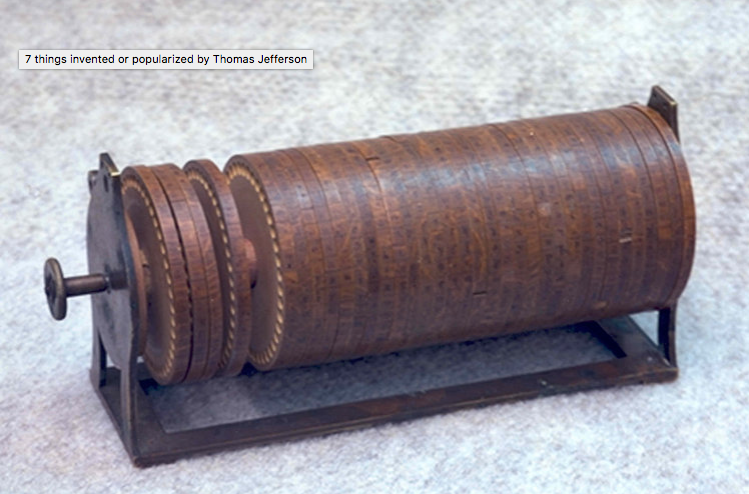


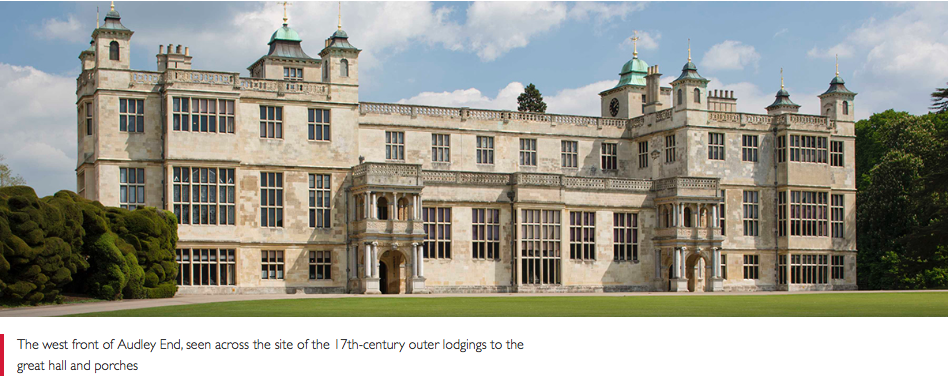

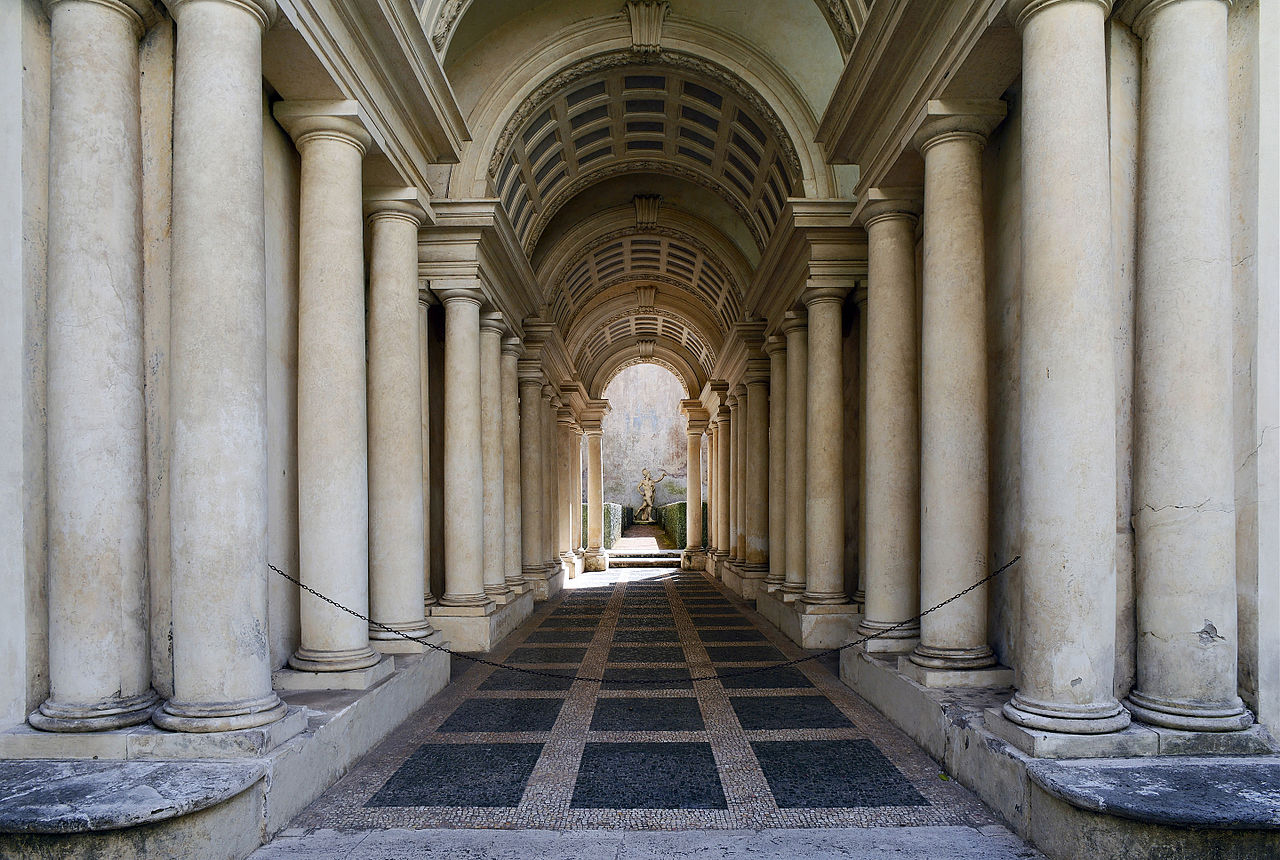
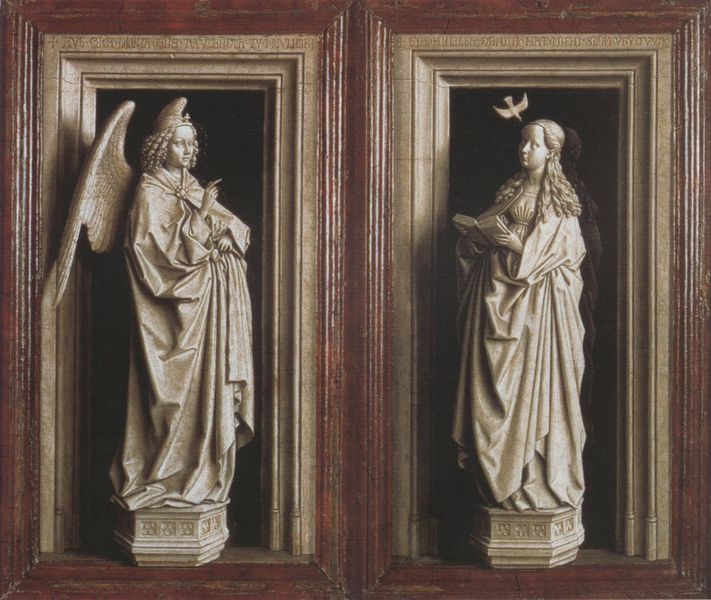
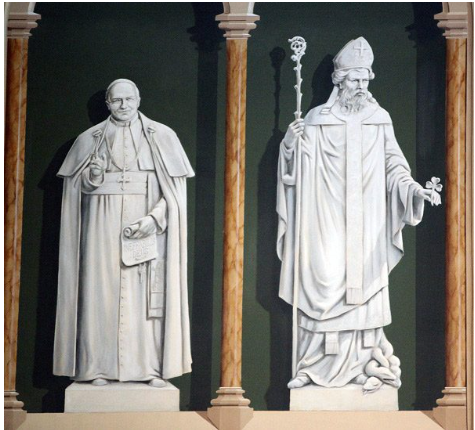

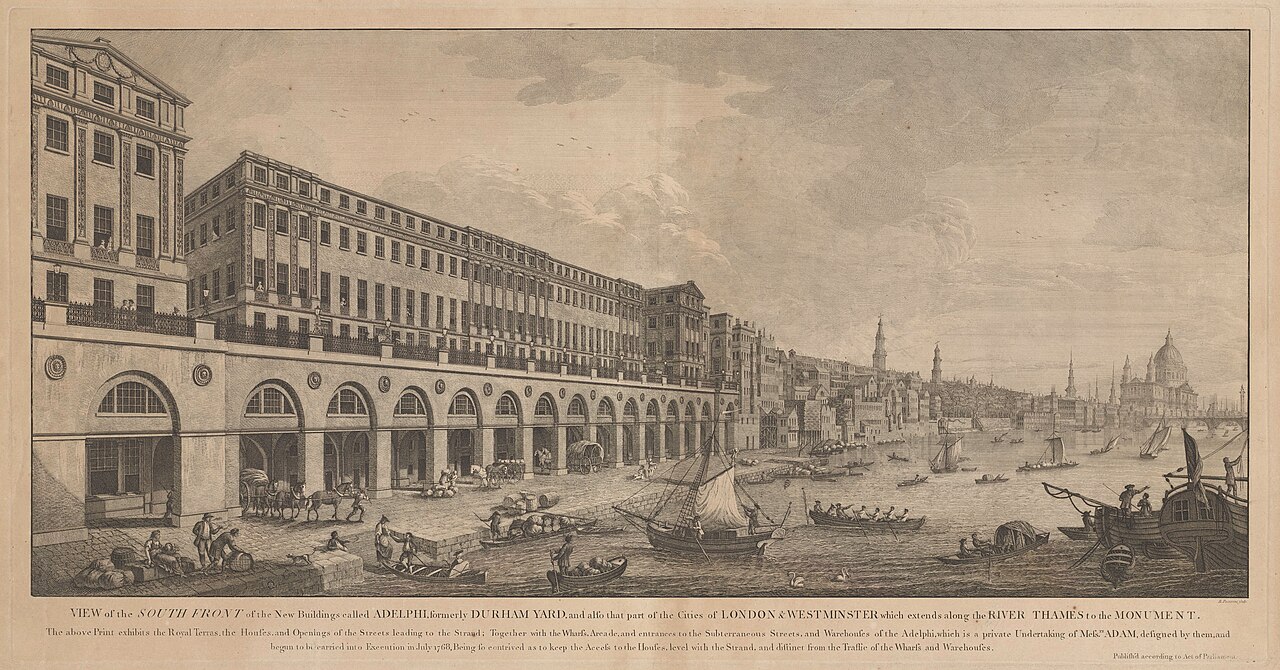
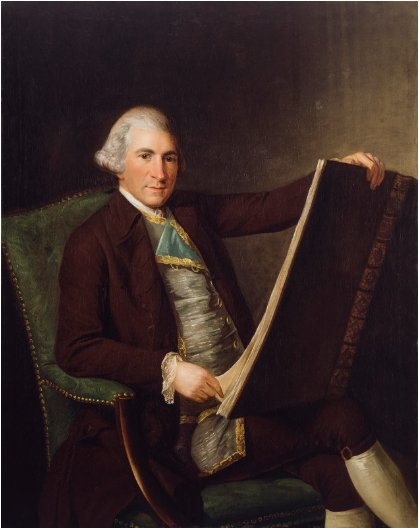









 Every Woman Dreams...


