Life Below Stairs – Snobbery and Rules of Engagement

Upstairs, Downstairs

Upstairs, Downstairs

Previously, we looked at what a servant in an upper house, or even in a second-class household, of the late Regency Period or early Victorian times, might encounter. We spoke of wages, delineation of duties, and additional compensation. Today, we wish to examine the “snobbery” found among the servant class. As mentioned in yesterday’s article, the servants in upper households expected “tips” from the master’s guests. If he did not receive it, he might still exact his revenge on those who paid a second visit to the estate. On his return, a guest might find himself in a one of the draftier bedchambers or he might be met at the train in a cart rather than an estate carriage.

The servants expected the guests to conform to certain standards of gentility. Heaven help a stranger who appeared on a the doorstep and not dressed to the hilt. John James, in The Memoirs of a House Steward, tells a tale of how, in 1895, he mistook His Grace the Duke of Westminster for a servant. Apparently, Westminster wore shabbily care for clothing, and he was clean shaved, which was frowned upon in that time. James did not realize his mistake until he examined the man’s card.

Of course, below stairs, the servants commented freely on the master’s guests. “Behind the servants’ mask of perfect politeness and consummate gentility, there were dark thoughts and hidden feelings, another world to which only the still innocent children of the house were ever admitted, where rumours echoed from the lofty ceilings and were imagined and distorted into malicious gossip and false report. The roots of the servant grapevine were embedded deep in the foundation of each great London house. A fragment of conversation overheard by a footman at the dinner table or some actual confidence foolishly entrusted by some too ingenuous mistress to her maid, would be carried swiftly downstairs to the kitchen. From there it was transported lovingly up and down the neighboring area steps by the visiting butterman and butcher to be deposited with that day’s order on the great wooden tables in nearby kitchens, whence it could be disseminated to every part of the house by a word and a wink between the first and second footman or by a whispered conversation between two under housemaids who shared the same room, and sometimes the same bed, in the cold and draughty attic.” (Huggett, “Life Below Stairs”)

This situation reminds me of the chauffeur in the play Sabrina Fair (basis of the movie Sabrina, which starred Humphrey Bogart and Audrey Hepburn) who earns a fortune by simply listening to his employer conduct business in the backseat of the car and then buying and selling stocks based on Linus Larrabee’s knowledge of the stock market.

Some servants even followed their masters into battle. Yet, such devotion to the old ways died quickly as the servant class became more aware of the world in which they lived. The penny post might have brought down a feudal way of life. Although wages increased significantly in the later part of the 19th Century, it did not guarantee a servants’ loyalty. Also, the lower servants no longer accepted the strict unspoken rules of the household. One might find those below stairs sporting more freely among the servant dichotomy.

This information comes from a website I dearly adore. Wedding Castle – An Online History (KEY PEOPLE: The Life of Victorian Servants). http://www.webspinners.org.uk/weddingtoncastle2/new_page_77.htm

Below are examples of some of the rules that the servants had to follow

1 – When being spoken to, stand still, keeping your hands quiet, and always look at the person speaking.

2 – Never let your voice be heard by the ladies and gentlemen of the household, unless they have spoken directly to you a question or statement which requires a response, at which time, speak as little as possible.

3 – In the presence of your mistress, never speak to another servant or person of your own rank, or to a child, unless only for necessity, and then as little as possible and as quietly as possible.

4 – Never begin to talk to the ladies or gentlemen, unless to deliver a message or to ask a necessary question, and then, do it in as few words as possible.

5 – Whenever possible, items that have been dropped, such as spectacles or handkerchiefs, and other small items, should be returned to their owners on a salver.

6 – Always respond when you have received an order, and always use the proper address: “Sir”, “Ma’am”, “Miss” or “Mrs,” as the case may be.

7 – Never offer your opinion to your employer.

8 – Always “give room”: that is, if you encounter one of your betters in the house or on the stairs, you are to make yourself as invisible as possible, turning yourself toward the wall and averting your eyes.

9 – Except in reply to a salutation offered, never say “good morning” or “good night” to your employer.

10 – If you are required to walk with a lady or gentleman in order to carry packages, or for any other reason, always keep a few paces back.

11 – You are expected to be punctual to your place at mealtime.

12 – You shall not receive any Relative, Visitor or Friend into the house, nor shall you introduce any person into the Servant’s Hall, without the consent of the Butler or Housekeeper.

13 – Followers are strictly forbidden. Any member of the female staff who is found to be fraternizing shall be immediately dismissed.

14 – Expect that any breakages or damages in the house shall be deducted from your wages.


Servants’ Wages

In Victorian times, live-in servants, who had all their expenses (food, lodging, clothes etc) taken care of, earned as little as £10 a year, (which is only the equivalent of £77 in today’s money).

Here is a list of the average wages of servants (figures collected by the Board of Trade in the 1890s).

Between Maid            £10, 7s
Scullery Maid             £13
Kitchen Maid             £15
Housemaid                £16, 2s
Parlour Maid             £20, 6s
Cook                         £20, 2s
Lady’s Maid              £24, 7s
Cook / Housekeeper £35, 6s
Housekeeper             £52, 5s

In 1888 Butlers earned £45 per annum and had no expenses except clothes. They would make up their income from such perks as tradesman offering discounts to receive continued orders. Butlers would also collect the end of candles and one bottle of wine for every six opened.

Posted in British history, food and drink, Georgian Era, Great Britain, Living in the UK, real life tales, Regency era, Victorian era | Tagged , , , , , , , , | 4 Comments

Life Below Stairs ~ The Role of the Male Servant

Dinner in the Servants' Hall

Dinner in the Servants’ Hall


The English aristocrat often lived beyond his means. Maintaining country houses (often several of them) and a large Georgian town house in Mayfair took its toll on his purse strings. In addition to owning the property, Society forced him to maintain an extensive staff, which would see to his family’s needs.

 Rank among the serving class manifested itself in extra bedrooms and workrooms to meet the servant hierarchy. The house steward and the housekeeper were often given a sitting room in which the upper servants could dine. A work space was required for the steward to conduct his business. The butler oversaw an extensive pantry. A stillroom was necessary. Storerooms for groceries. A separate china closet. The scullery. The ladies’ maids required a separate room where they could do their mending and ironing. Don’t forget a knife room. A shoe room. A lamp room. A brushing room. A servants’ hall. Etc. Etc. Etc.

Even a modest staff was costly. Characteristically, a land owner maintained 40-50 servants. A large number of male servants was an indication of a man’s wealth. Employing males, instead of females, created a greater expense because a tax on male servants was introduced by Lord North in 1777. The tax was to be used for the cost of fighting the Americans and the war with the French. It cost a landowner £7 for each male servant if there were eleven or more in the household. Although it was gradually reduced over the years, the tax continued until 1937.

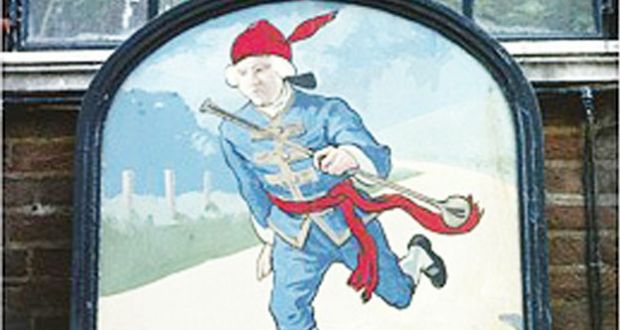
Running Footman

Compounding the issue of keeping powdered footmen increased by the duty placed on the hair powder. That tax remained in place from 1786 to 1869. Is it any wonder that some landowners forced their servants to use ordinary house flour to save on expenses. A smart footman might use the household flour and then claim the reimbursement for the expense of the duty.

Footmen and other male servants were provided tailored livery. In the mid 1800s, it would cost 3 guineas for a footman’s uniform. Typically, a footman received 2-3 suits per year. Only the wealthiest aristocrat could afford to employ a house steward, groom of the chambers, valet, cook, butler, under-butler, footmen, footboy, usher, page, “tiger,” coachmen, grooms, a man-of-all-work, gardeners, etc.

Footman

LibertaBooks tells us in their piece entitled “Footmen: The Curse of Manly Calves in Silk Stockings”… 

footmen in livery“The naming of footmen

“Gentry addressed footmen by Christian name. It might be their own name. It might not. Some families always used the same names for their footmen: the most senior might be “Charles”, the next “John” and so on. The approach was convenient for the employers who did not have to bother to learn the real names of real people.

“For the footmen, it probably felt demeaning, but what could they do? (Perhaps they followed some of Dean Swift’s advice for getting their own back?)

The curse of footmen — Dean Swift’s “advice”

Jonathan Swift, author of Directions to Servants

“Jonathan Swift’s satirical essay Directions to Servants (published posthumously in 1745) devotes many pages to its “advice” to footmen, including suggested excuses to use when absent for somewhat longer than the message requires, perhaps two, four, six, or eight hours, or some such trifle.

“My favourite is probably this, relating to service at table: Never wear Socks when you wait at Meals, on the Account of your own Health, as well as of them who set at Table; because as most Ladies like the Smell of young Men’s Toes, so it is a sovereign Remedy against the Vapours.

“Swift’s satire had little effect. A file of nine tall, matched footmen in silver and lace preceded the Countess of Northumberland’s sedan chair. It’s not clear what else her footmen actually did. (Footmen often created trouble among the maids, but it was always the female who was dismissed; a member of a matched set of footmen was too difficult to replace.)”

Footmen were chosen for their height and their handsomeness. Most were at least six feet tall. It was desirable to match the footmen in height (like the Rockettes). Most households had 3 footmen. The first footman, who was often called “James,” no matter what was his Christian name, usually acted as the lady’s footman. He would serve her breakfast, clean her shoes, take her dogs for a walk, stand behind her chair when she dined elsewhere, carry packages when she shopped, etc. The second footman served the afternoon meal. Often he completed valet duties for the eldest son. The third footman carried the coals and wood. The first and second footman served meals. They would accompany the carriage whenever it was used by any member of the household. The footmen were responsible for cleaning and polishing the silver.

The valet was usually at least 30 years of age. He was expected to have a superficial air of aristocracy about him. He saw to his master’s dress and was expected to be abreast of social gossip to aid his master in social engagements, etc. He did not wear livery. He would rise before his master. The aristocrat’s clothes were prepared, a bath drawn, and everything his master required for his ablutions prepared. He might also be required to dress the master, or he might need to know how to load a gun quickly so that his master could shoot with his friends.

The butler needed similar skills as the valet. He was responsible for the footmen, the custody of the plate, and the contents of the wine cellar. He also oversaw the brewing of the servants’ beer, the arrangement of the dining room, etc. Unlike our perceptions of the haughty butler who ruled a household with an iron hand, the Victorian butler was in a more lowly position. In reality, the valet, the house steward, and the groom of the chambers, all outranked him in the household. They also received higher pay.

The groom of the chambers was the one who attended the main door, opened doors for members of the household, filled inkpots, saw that everything the household members needed was within reach.

The house steward oversaw the transition from country estate to Town when the Season came around. He was responsible for all the servants. He maintained the household accounts.

Posted in British history, Georgian Era, Great Britain, Living in the Regency, real life tales, Regency era | Tagged , , , , , , , , , , , | 4 Comments

Birthdays and Jane Austen

This week I mark another birthday. That makes me a Virgo. 

Virgos expect perfection from themselves, and they may project those high standards on the other people in their lives. A Virgo hates when someone lets him or her down, even if the indiscretion is minor and unavoidable, like a last-minute cancellation. Virgos never want to disappoint the people in their lives, so they may spread themselves too thin and put themselves last.

Intelligent and a lifelong learner, Virgos love trying new things, reading books, and learning about the world. They will happily sign up for an adult-education course, and they consider an afternoon in bed with a book pretty much ideal. A Virgo prefers an evening with good friends to a huge party and values downtime just as much as socializing. This sign does not need to fill their calendar to be content.

Strictly Jane Austen Tours tells us,  “For centuries throughout Europe people had traditionally celebrated their name day as well as their birthday. By the Regency era, it had become more typical to celebrate a birthday, and this was due to changing religious practices that were symbolised by the royal family. … A young boy from a wealthy family in Regency Britain would often have his fifth birthday marked with a ‘breeching ceremony’; this was a grand occasion with relatives visiting to bestow gifts. For girls, their sixteenth birthday was considered the day they reached marriageable age and they were often given gifts such as fine jewellery, a trinket box, an enamel fan or fabric for a new gown in recognition of their social debut.” As to Jane Austen’s celebration of birthdays, we learn, “Austen’s correspondence with her sister offers some insight into how birthdays were noted and celebrated by families from the gentry. In a letter from Steventon, dated January 8 1799, she writes, ”I wish you joy of your birthday twenty times over.”  Much later, regarding her own birthday, she wrote: “My dearest Cassandra, I will keep this celebrated birthday by writing to you.”  This letter then details a drive with her brother Edward, assemblies and other amusements, but not an official birthday celebration.”

All this talk of birthdays got me thinking about the lack of birthday celebrations in Austen’s novels. It is quite disheartening to have others forget one’s birthday, but it was not so for Jane Austen and her family. We know Christmas had not the “glorious significance” as it does these days, but what of birthdays? Quite simply, as Anglicans, such humoring of a person, would have been frowned upon.

Sense-and-Sensibility-007Can you think of one person in Austen’s books who even mentions a birthday? The only one which springs to mind to me is Harriet Smith in Emma. Harriet speaks of hers and Robert Martin’s birthdays occurring within a fortnight, and those birthdays were separated only by one day.

As readers we know many of the characters’ ages. Lydia Bennet is but fifteen when we first meet her, but she is sixteen when she marries George Wickham. Marianne Dashwood is seventeen at the beginning of Sense and Sensibility and is nineteen when she marries Colonel Brandon. Fanny Price is a child when she first comes to Mansfield Park; yet, never once are her birthdays mentioned as a passing of time. Jane Fairfax is approaching one and twenty and the prospect of becoming a governess. Charlotte Lucas at seven and twenty has “become a burden to her family.” Elizabeth Elliot is nearly thirty and not married, and Anne Elliot is seven and twenty when Captain Wentworth returns to claim her. Catherine Morland turns eighteen just before Henry Tilney claims her as his wife. Even Elizabeth Bennet must have had a birthday somewhere in the year she had taken Mr. Darcy’s acquaintance. But when? There is no mention of her chronological aging, only her emotional aging. The closest we come to knowing something of Elizabeth’s age is when she admits to being twenty to Lady Catherine. But we do not know if she was nineteen when the book began and turned twenty some time between November when she dance with Mr. Darcy at the Netherfield Ball, or whether, like me, she is a September baby, turning one and twenty after she encounters Darcy again at Pemberley. Is such true for all of Austen’s characters? Austen wrote from her life experiences. If she did not “celebrate” such milestones, why would her characters? Tell me what you think. Am I being bizarre or is there some truth in this assumption?

Meanwhile, enjoy this list of September birthdays celebrated by some of our favorite Austen Actors. 


party-clip-art-balloons-different-coloursHappy September Birthday to these Fabulous Austen-Inspired Actors…

images September 1 – Aisling Loftus, who portrayed Charlotte Lucas in Pride and Prejudice and Zombies

Unknown-3henrySeptember 7 Christopher Villers, who portrayed Tom Bertram in 1983 Mansfield Park

September 7 – Henry Maguire, who portrayed Jack Wickam in 2003’s Pride and Prejudice: A Latter Day Comedy

Unknown-4Unknown-5September 9Hugh Grant, who portrayed Edward Ferrars in 1995’s Sense and Sensibility

September 9 Julia Sawalha, who portrayed Lydia Bennet in 1995’s Pride and Prejudice

Unknown-3September 10 Colin Firth, who portrayed Fitzwilliam Darcy in 1995’s Pride and Prejudice Unknown-4

September 11 – Alan Badel, who portrayed Fitzwilliam Darcy in 1958’s Pride and Prejudice (11 September 1923 to 19 March 1982)

images-2September 15 – Sabina Franklyn, who portrayed Jane Bennet in 1980’s Pride and Prejudice Unknown-5

September 16 – Alexis Bledel, who portrayed Georgiana Darcy in Bride and Prejudice

imagesUnknown-3September 19 David Bamber, who portrayed Mr. Collins in 1995’s Pride and Prejudice 

September 22 – Billie Piper, who portrayed Fanny Price in 2007’s Mansfield Park

Unknown-4September 22 – Rupert Penry Jones, who portrayed Captain Frederick Wentworth in 2007’s PersuasionUnknown-6

September 23 – Crispin Bonham Carter, who portrayed Charles Bingley in 1995’s Pride and Prejudice

2b03d4f0September 23Peter Settelen, who portrayed George Wickham
in 1980’s Pride and Prejudice 

hqdefault September 24 – Ryan Paevey, who portrayed Donovan Darcy in Unleashing Mr. Darcy

images-1 September 26Talulah Riley, who portrayed Mary Bennet in 2005’s Pride and Prejudice

2202857,tjUBdj3LNXhm0qAuo3TLB1ygUfTrZOGQXAeMS1OawmjRfXEvlZLprOD9Mx5Ha3GHNTcYybJh04GQPbBKSvfyoQ==Unknown-3September 26Edmund Gwenn, who portrayed Mr. Bennet in 1940’s Pride and Prejudice (26 September 1877 to 6 September 1959)

September 27 Gweyneth Paltrow, who portrayed Emma Woodhouse in 1996’s film version of Emma

Unknown-4September 29 – Greer Garson, who portrayed Elizabeth Bennet in 1940’s Pride and Prejudice (29 September 1904 to 6 April 1996)

Posted in film adaptations, Georgian England, Georgian Era, Jane Austen, reading, real life tales, Regency era, research | Tagged , , , , , , , , , , , , , , , , , , , , , , , , | 19 Comments

Life Below Stairs – The Valet

62822851_servants-poster_large_graphic

The Servant Hierarchy | countryhousereader.wordpress. com

Footmen as we learned the last time often thought to join the upper servants in the role of valet or butler. (We saw the character of Thomas Barrow work in all three positions in Downton Abbey.) Today we have a closer look at the role of the valet in an aristocratic home. 

The valet is sometimes referred to as the “gentleman’s gentleman.” Often, in finer homes he was of foreign extraction. In the manner of keeping a “French cook,” many British gentleman sought the skills of a foreign valet. There were certain servants, such as the governess, the valet, etc., who did not quite fit into the categories of upper servants and lower servants. Through his connection to the master of the house the valet was often among others of Society at sporting events, social engagements, etc. This placed the valet in a position to know the latest gossip of those with whom his master associated and made him a figure of “authority” when the upper servants dined in the steward’s quarters. 

The valet was not required to dress in house livery, and most valets dressed in the manner of country gentleman or business owner. His main occupation was to make certain his master appeared to the best advantage. The valet’s job was to see his master well-dressed and immaculate, to the point that the master was free to wile away his time without fretting. 

0156dc722a031861fbf104e3e87fc1d4The valet’s day began long before his master’s. After seeing himself properly dressed, he went about preparing for his master’s day. He would see that clean, polished shoes or boots (depending upon the time period and the occasion) and clean and brushed clothing were prepared for the day. He would gather a pot of tea, bread and butter from the stillroom, the master’s correspondence, and the daily newspaper (pressed, no less) were brought to his master’s quarters on a tray. Hot water would be brought up also for shaving purposes. Entering the bedchamber, the valet would draw back the drapes and open the shutters. He would then empty the wash basin in a slop pail, clean and dry the basin with a cloth, and set out the hot water for shaving. Customarily, the valet would cover the ewer or can containing the hot water for shaving in order to keep it hot. 

He would then set out his master’s clothes for the day: jacket, trousers or breeches (depending upon the decade), shirt, stockings, small clothes or underwear, cravat or neck cloth, and shoes/boots. These were arranged across a chair on hung upon a valet stand. Studs, stick pins, and cuff links were chosen. Then he would prepare a bath if not taken the evening before. If necessary, he would see that the night shirt, etc., was cleaned, brushed, and pressed or placed in the laundry. If his master was elderly or still suffering from too much alcohol, the valet may be required to assist in dressing the gentleman. On page 199 of Charles Cooper’s Town and Country ©1937, a servant describes dressing his gentleman as, ” You throw the dress shirt over his head and fasten the front studs, hand the trousers and fasten braces, put on collar and tie the tie, assist on with waistcoat, jacket or coat, and put on socks and shoes.” The valet may also assist in dressing the gentleman’s hair. 

article-2207935-0B6311FC000005DC-422_306x575

Brendan Coyle as Bates, Lord Grantham’s valet at Downton Abbey.

E. S. Turner’s What the Butler Saw: Two Hundred and Fifty Years of the Servant Problem contains a quote from the Duke of Wellington to Lord Strangford, “‘that I shave myself and brush my own clothes: I regret that I cannot clean my own boots; for menservants bore me and the presence of a crowd of idle fellows annoys me more than I can tell you.’ Nevertheless, he employed a valet who served him faithfully, even to the extent of consulting secretly with the Mendicity Office in an effort to eliminate the numerous dishonest contenders for the Duke’s charity. 

The valet customarily stood behind his employer’s chair, both in his master’s house and when dining elsewhere. During shooting and other diversions, the valet would accompany his employer. He was expected to load the gentleman’s gun. The valet would often arrange travel both at home and abroad. He was expected to possess a knowledge of foreign phrases, especially those that a gentleman would not choose to learn himself. He might be required to sleep in his master’s room to guard the gentleman against robbery and insult. In addition, he would know how to rid a bed of fleas and how to make noxious water drinkable. 

When traveling, he located a cab or a hackney. He attended to his master’s luggage. He was expected to know his master’s preferences for gifts (flowers, jewelry, etc.) He had a knowledge of herbal potions and toiletries. He would mix up draughts to fight off a cold or to soothe a headache. He made soap from fresh ley, lamb suet, and olive oil. When the railways multiplied, he was expected to read Bradshaw. To assist his gentleman, the valet required a knowledge of flies, rods, and lines for fishing and of guns for shooting. 

According to Frank Hugget’s Life Below Stairs (pages 30-31), “Although the valet’s duties may seem simple to the uninitiated, he needed a vast amount of equipment if he was do his work well. One former valet recommended that he should have trees for top boots and walking shoes; shoe brushes, black and brown; clothes-brushes, narrow hat and button; a button stick; sand or emery paper; a boot bone, chamois leathers, dusters and cleaning rags; breeches paste and breeches ball; brush for red hunting coat and sponges; American cloth; painter’s white overall, apron and chemicals; hat iron; dubbin; grease brush; old tooth brush; oil for fishing lines; gun oil, cartridge bags, boot top tags and spare boot and shoe laces. In other words, he had to be prepared. The valet was far more immediately and continuously exposed to the whims, peccadilloes and temperament of his employer; but, in compensation, he had a more varied and outgoing life.” 

The valet was the first to feel his master’s wrath. Occasionally, he would rebel. Such was what occurred n 1840 when François Courvoisier, a Swiss valet in service to Lord William Russell, took umbrage with Lord William’s treatment. Reportedly, Lord William berated Courvoisier for attempting to anticipate his employer’s needs by bringing a warming pan to the gentleman when Lord William rang some time after midnight. His lordship sent his servant away, but rang again some 20 minutes later, this time for the same warming pan. Another round of reprimands followed. Later, Lord William went down stairs to find Courvoisier sitting in the dining room. For a third time in as many hours, Lord William read Courvoisier “the riot act,” even making threats to dismiss the valet. Angry, in the wee hours of the night, Courvoisier took a knife and attempted to decapitate his master. Courvoisier was sentenced to hanging. Some 20,000 viewed the execution. The Annual Register, ‘the number of menservants present was remarkable as envincing the fearful interest taken in the culprit’s fate by the class to which he had belonged.’ (What the Butler Saw)

Footnote: Nineteenth-Century Timetables and the History of Reading by Mike Esbester; Book History, Vol. 12 (2009), pp. 156-185 Published by The John Hopkins University Press, http://www.jstor.org/stable/40930543. “Around the turn of the twentieth century, Punch reprinted, in book form, some to the thoughts offered in its pages over the preceding sixty years on the subject of railway travel. This included the ‘Tourist’s Alphabet,’ in which ‘B is the Bradshae that leads you to swear.’ George Bradshaw’s surname became a synonym for ‘timetable,’ such was the success of his publication, which gave the times of trains to and from all stations in Britain. Bradshaw’s first timetable was issued in 1838, taking on the recognizable format in the 1840s. It was widely imitated, to the extent that after the 1840s ‘Bradshaw’ would have needed no explanation to most people, to whom the word meant no only ‘timetable,’ but also fiendish complexity.'”

Posted in British history, Georgian England, Georgian Era, Great Britain, Living in the Regency, Living in the UK, Regency era, servant life, Victorian era | Tagged , , , , , , | 2 Comments

The Thames River Police + the Release of “Crime and Culpability”

When I was writing my short story “Order and Disorder” LOTS of research was required, especially information about the policing practices in Regency Era London. One of my discoveries was the River Thames Police….

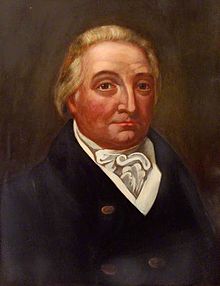
John Harriott - Wikipedia, the free encyclopedia en.wikipedia.org
John Harriott – Wikipedia, the free encyclopedia
en.wikipedia.org

In the 18th Century, importers docking along the River Thames in London had lost £500.000 annually as cargoes were unloaded on the unprotected River Thames. In 1797, an Essex Justice of the Peace, farmer, and inventor from Great Stanbridge, Mr John Harriott, came up with a plan to change all that. Mr Patrick Colquhoun, LLD. (the principle magistrate of Queens Square Police Office), advocated for Harriott’s plan with the West India Merchants and the West India Planters Committees to finance preventative policing of the central shipping area of the Thames. The government approved the establishment of the Marine Police on 2 July 1798 in Wapping High Street. Originally, the West India Merchants Company Marine Police Institute was to operate for just one year, but as the Government was involved with the war with France, the time was extended.

A Surveyor (equivalent rank of an Inspector, by today’s standards) and three waterman Constables under the direction of a Superintending Surveyor manned each of the rowing galleys. The Superintending Surveyor also had a supervision galley with a crew of four. The Surveyors had taken an oath to the Crown and were issued an excise warrant by the Customs and Excise Service.

In addition, ship and quay guards were employed on a part-time basis. They were only employed when the West India fleets were on the river. Otherwise, they were dismissed until needed again. These “guards” were supervised by the boat patrols, which eventually became the first River Police Special Constables. Initially, it cost £4.200 to set up the force (hires and premises), but , by all  estimates, they had saved £122.000 in cargo and had saved a dozen individuals.

Only numbering in the low 50s, these Officers were expected to control some 30.000 + people who made their living on the river. One must realize a large portion (some 25-35%) of that 30.000 were likely criminals. Unfortunately, during the first six months, a riot took place outside the Office, and a crowd of 2000+ threatened to burn the building to the ground, with officers and magistrates inside. Harriott managed to quell the riot. Sadly, Gabriel Franks (Master Lumper) was shot and killed – the first recorded police death. “After a year, Harriott was able to give his first report to the Home Office stating ‘instead of many waterman’s boats hovering nearby while ships unloaded, the river now appears quiet and peaceful, except for those going about their lawful business.” (River Thames Police – History – Establishment)

Ship owners convinced the government of the value of the Marine Police. Letters from importers, shipmasters, and wharf owners praised the deterrent tactics of the boat patrols and quay guards. On 28 July 1800, Parliament passed the Marine Police Bill making the river police a public domain. The bill also increased the number of officers to 88. “They were taken with the Magistrate John Harriott to be directly under the control of the Home Secretary, who used their hard won experience throughout the whole of the Metropolis until such times as the Metropolitan Police were formed.” In 1800, Patrick Colquhoun released a book entitled The Commerce and Policing of the River Thames. “As the only police body extant whole chapters were included about criminals of the Thames, its policing and the effect. The book was widely read and approved of, so much so that many other police forces were formed throughout the world on his principles, the most famous being Dublin, New York and Sydney, Australia.” (River Thames Police – History – Government Support)

By the time the Metropolitan Police began in 1829, the River Thames Police had grown in numbers and in stations. They had extended their jurisdiction to above Chelsea and down to Woolwich and had acquired two old naval vessels to patrol the extent of the Thames. “In 1817 an excise “Cutter” was purchased to patrol the lower reaches as far as the Downs, firstly to protect the Kings stores at Sheerness, a Magistrate with powers in the surrounding counties was then essential to empower the River Police to prevent such crimes and in particular crimping. Winter for the officers patrolling in open boats was most rigorous.” (River Thames Police: History

By 1839, the Metropolitan Police, under Commissioners Sir Richard Mayne and Sir Charles Rowan, who operated with the Home Secretary’s permission, had unified other police bodies in London, including the Bow Street Runners, Horse patrols, and the River Police. The only exception was the City of London Police force, which was founded in 1834 and remains a separate entity even today.

With this unification, the Thames Magistrate Office was moved to Arbour Square and renamed the Thames Magistrates Court. “Thames Division of the Metropolitan Police was built on the officers and experience of its earlier force. It was always that the land police were formed (and indeed their uniform suggests it) on the pattern of an army regiment and the River Police on the pattern of a Royal Navy ‘man of war’ (Hence their reefer jackets and naval boaters.).

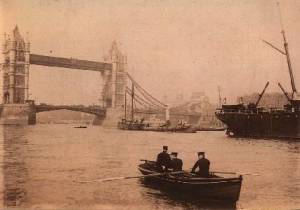
Thames Police rowing galley around 1900. http://www.thamespolicemuseum.org.uk/h_police_3.html

For the next forty years the rowing galleys and sailing patrols continued and were found adequate, while the river trades slowly became merchandised and to a large extent iron replaced wood. In 1878 the loss of over 600 lives in the disastrous collision between the paddle steamer “Princess Alice” and the collier “Bywell Castle” made it obvious that at least some powered craft were necessary. In 1884, two steam launches were purchased for supervisory purposes and later a third was found necessary.” (River Thames Police: History)

Crime and Culpability: A Jane Austen Mystery Anthology 

“No one can withstand the charm of such a mystery.” – Jane Austen, Persuasion

Jane Austen mysteries have become a popular subgenre of Austen variations, but this is more than just a trend. Austen was a masterful storyteller who embedded clues within her stories for her readers to follow, inviting readers to read between the lines and “gather the evidence” to follow her intricate plot lines.

In this anthology, various authors who are also fans and admirers of Austen’s work have taken the challenge to add some mystery to Austen’s stories and characters. From Regency sequels to film noir retellings to cozy art heists, Crime and Culpability: A Jane Austen Mystery Anthology explores the many faces of Austen and all of her enigmas.

Featuring stories by Regina Jeffers, Riana Everly, Jeanette Watts, Michael Rands, Linne Elizabeth, Emma Dalgety, and Elizabeth Gilliland, with a foreword by Regina Jeffers and an introduction by Elizabeth Gilliland Rands.

Purchase Links:

Kindle https://www.amazon.com/Crime-Culpability-Austen-Mystery-Anthology-ebook/dp/B0D6JQN6JL

Available to Read on Kindle Unlimited 

BookBub https://www.bookbub.com/books/crime-culpability-a-jane-austen-mystery-anthology-by-regina-jeffers-and-elizabeth-gilliland

Posted in book release, books, British history, George Wickham, Georgian England, Georgian Era, historical fiction, Jane Austen, Pride and Prejudice, publishing, Regency era, writing | Tagged , , , , , , , , , , , | Comments Off on The Thames River Police + the Release of “Crime and Culpability”

Celebrating the Release of “Crime and Culpability” + a Giveaway

Tomorrow, September 10, marks the release of a new Jane Austen Mystery Anthology. Crime and Culpability features seven short story mysteries, including ones from Riana Everly, Jeanette Watts, Elizabeth Gilliland, Michael Rands, Linné Elizabeth, Emma Dalgety, and me. I also wrote the book’s foreward.

Crime and Culpability: A Jane Austen Mystery Anthology 

“No one can withstand the charm of such a mystery.” – Jane Austen, Persuasion

Jane Austen mysteries have become a popular subgenre of Austen variations, but this is more than just a trend. Austen was a masterful storyteller who embedded clues within her stories for her readers to follow, inviting readers to read between the lines and “gather the evidence” to follow her intricate plot lines.

In this anthology, various authors who are also fans and admirers of Austen’s work have taken the challenge to add some mystery to Austen’s stories and characters. From Regency sequels to film noir retellings to cozy art heists, Crime and Culpability: A Jane Austen Mystery Anthology explores the many faces of Austen and all of her enigmas.

Featuring stories by Regina Jeffers, Riana Everly, Jeanette Watts, Michael Rands, Linne Elizabeth, Emma Dalgety, and Elizabeth Gilliland, with a foreword by Regina Jeffers and an introduction by Elizabeth Gilliland Rands.

Purchase Links:

Kindle https://www.amazon.com/Crime-Culpability-Austen-Mystery-Anthology-ebook/dp/B0D6JQN6JL

Available to Read on Kindle Unlimited 

BookBub https://www.bookbub.com/books/crime-culpability-a-jane-austen-mystery-anthology-by-regina-jeffers-and-elizabeth-gilliland

Like most of my mysteries, they are what are called “cozies.” Cozy mysteries find their roots in the early 20th century with authors such as Dorothy Sayers and Agatha Christie. They were typically British and were in total opposition to the American fascination with gritty crime novels being written. This was extended to include whodunits by Rex Stout and Ellery Queen, etc.

A cozy mystery has no gruesome deaths, sex, profanity, or abuse. The protagonist is an amateur sleuth, with no particular training in police style work. Rather, the person is often in a position/occupation to “overhear conversations” on a regular basis. The protagonists are likable; the antagonists are despicable, but not evil. The settings of a cozy mystery can be anywhere, but they are often set in smaller communities where everyone knows each other. For example, in The Phantom of Pemberley, everyone was snowed in at Pemberley and there was no way out. In The Disappearance of Georgiana Darcy, the action takes place around the Fitzwilliam estate in Scotland. Novel Suspects tells us, when it comes to the crimes, “no on-the-page violence, murder, sex, or swearing are the tenets of the cozy mystery genre. While protagonists can and often do encounter some kind of peril in the course of their sleuthing, that peril is never exceptionally violent or dark.”

My story for the anthology is entitled “Order and Disorder,” and it features a character I have used previously, one Thomas Cowan, a former “Bow Street Runner” who became a private investigator. For those of you not familiar with the term, the Bow Street Runners were the law enforcement officers of the Bow Street Magistrates’ Court in the City of Westminster. (See Elaine Owen’s piece for more information on the Runners – To Catch a Thief.) They are often considered to be London’s first professional police force. The force originally numbered six men and was founded in 1749 by magistrate Henry Fielding, who was also well known as an author. His assistant, brother, and successor as magistrate, John Fielding, moulded the constables into a professional and effective force. Bow Street Runners was the public’s nickname for the officers, although the officers did not use the term themselves and considered it derogatory. The group was disbanded in 1839, and its personnel merged with the Metropolitan Police, which had been formed ten years earlier. As the Runners proved a successful format and the crime rate was reduced, they took on positions outside of London proper, sometimes chasing criminals across England.

My readers were first introduced to Thomas Cowan in The Mysterious Death of Mr. Darcy. Cowan was a former soldier under Colonel Fitzwilliam’s command, and he travels with the colonel to assist Darcy in discovering who has killed Darcy’s cousin. If you like a “Sherlock Holmes” type of character, you will enjoy Thomas Cowan. He sees things others do not see.

Fitzwilliam Darcy is devastated. The joy of his recent wedding has been cut short by the news of the sudden death of his father’s beloved cousin, Samuel Darcy. Elizabeth and Darcy travel to Dorset, a popular Regency resort area, to pay their respects to the well-traveled and eccentric Samuel. But this is no summer holiday. Danger bubbles beneath Dorset’s peaceful surface as strange and foreboding events begin to occur. Several of Samuel’s ancient treasures go missing, and then his body itself disappears. As Darcy and Elizabeth investigate this mystery and unravel its tangled ties to the haunting legends of Dark Dorset, the legendary couple’s love is put to the test when sinister forces strike close to home. Some secrets should remain secrets, but Darcy will do all he can to find answers—even if it means meeting his own end in the damp depths of a newly dug grave.

With malicious villains, dramatic revelations and heroic gestures, The Mysterious Death of Mr. Darcy will keep Austen fans turning the pages right up until its dramatic conclusion.

Augusta Literary Festival  ~ 2014 Yerby Award for Fiction Finalist

*****************************

8th Annual Dixie Kane Memorial ~ SOLA Finalist

*****************************

2014 Yellow Rose Romance Writers ~ 2nd Place Romantic Suspense

**********************

Honorable Mention – General Fiction 2023 San Francisco Book Festival

************************

2024 Mystery/Suspense – Romantic Suspense – Finalis

*******************************

Thomas has a larger and more important role in The Prosecution of Mr. Darcy’s Cousin.

Fitzwilliam Darcy is enjoying his marital bliss. His wife, the former Elizabeth Bennet has presented him two sons and a world of contentment. All is well until “aggravation” rears its head when Darcy receives a note of urgency from his sister Georgiana. In truth, Darcy never fully approved of Georgiana’s joining with their cousin, Major General Edward Fitzwilliam, for Darcy assumed the major general held Georgiana at arm’s length, dooming Darcy’s sister to a life of unhappiness.

Dutifully, Darcy and Elizabeth rush to Georgiana’s side when the major general leaves his wife and daughter behind, with no word of his whereabouts and no hopes of Edward’s return. Forced to seek his cousin in the slews of London’s underbelly, at length, Darcy discovers the major general and returns Fitzwilliam to his family.

Even so, the Darcys’ troubles are far from over. During the major general’s absence from home, witnesses note Fitzwilliam’s presence in the area of two horrific murders. When Edward Fitzwilliam is arrested for the crimes, Darcy must discover the real culprit before his cousin is hanged and the Fitzwilliam name marked with shame.

2015 Just Jane Reviewer’s Favorite JAFF Mystery Award 

More Agreeably Engaged FavoriteBooks of 2015

*********************

2015 Finalist for the Frank Yerby Award for Fiction

***************************

2016 Daphne du Maurier Award for Excellence in Mystery/Suspense

**************************

Finalist in Historical Mystery 

2016 Finalist for Mystery and Mayhem
The Chanticleer International Book Awards

I have another novel planned where Thomas Cowan finally discovers a woman he could trust and love, but it is only in the planning stages, so all must wait a bit longer. I have so many books in various stages of writing, it is not even a bit humorous any more.

I am going to finish this post by “tooting my own horn,” for I am pushing the number “70” for novels written and published. You may find all my books on my Regina Jeffers Website (each with a book blurb, an excerpt and purchase links and separated into JAFF and Regency and Contemporary). In case, you lost count or need to check which ones you have read and which you missed, here they are:

Other Novels from Regina Jeffers 

Jane Austen-Inspired Novels 

Darcy’s Passions: Pride and Prejudice Retold Through His Eyes

Darcy’s Temptation: A Pride and Prejudice Sequel 

Captain Frederick Wentworth’s Persuasion: Jane Austen’s Classic Retold Through His Eyes

Vampire Darcy’s Desire: A Pride and Prejudice Paranormal Adventure

The Phantom of Pemberley: A Pride and Prejudice Mystery

Christmas at Pemberley: A Pride and Prejudice Holiday Sequel

The Disappearance of Georgiana Darcy: A Pride and Prejudice Mystery

The Mysterious Death of Mr. Darcy: A Pride and Prejudice Mystery

The Prosecution of Mr. Darcy’s Cousin: A Pride and Prejudice Mystery

Mr. Darcy’s Fault: A Pride and Prejudice Vagary

Mr. Darcy’s Bargain: A Pride and Prejudice Vagary

Mr. Darcy’s Present: A Pride and Prejudice Holiday Vagary

Mr. Darcy’s Brides: A Pride and Prejudice Vagary

Mr. Darcy’s Bet: A Pride and Prejudice Vagary

Mr. Darcy’s Inadvertent Bride: A Pride and Prejudice Vagary

Elizabeth Bennet’s Deception: A Pride and Prejudice Vagary

Elizabeth Bennet’s Excellent Adventure: A Pride and Prejudice Vagary

Elizabeth Bennet’s Gallant Suitor: A Pride and Prejudice Vagary

The Pemberley Ball: A Pride and Prejudice Vagary

A Dance with Mr. Darcy: A Pride and Prejudice Vagary

The Road to Understanding: A Pride and Prejudice Vagary

Pride and Prejudice and a Shakespearean Scholar: A Pride and Prejudice Vagary

Where There’s a FitzWILLiam Darcy, There’s a Way: A Pride and Prejudice Vagary

In Want of a Wife: A Pride and Prejudice Vagary

Losing Lizzy: A Pride and Prejudice Vagary

The Mistress of Rosings Park: A Pride and Prejudice Vagary

Pemberley’s Christmas Governess: A Pride and Prejudice Vagary

Amending the Shades of Pemberley: A Pride and Prejudice Vagary

Mr. Darcy and the Designing Woman: A Pride and Prejudice Vagary

The Colonel’s Ungovernable Governess: A Pride and Prejudice Vagary

Honor and Hope: A Contemporary Pride and Prejudice 

Order and Disorder: A Pride and Prejudice Short Story Mystery

Regency and Contemporary Novels 

The Scandal of Lady Eleanor: Book 1 of the Realm Series (aka A Touch of Scandal)

A Touch of Velvet: Book 2 of the Realm Series

A Touch of Cashémere: Book 3 of the Realm Series 

A Touch of Grace: Book 4 of the Realm Series 

A Touch of Mercy: Book 5 of the Realm Series 

A Touch of Love: Book 6 of the Realm Series 

A Touch of Honor: Book 7 of the Realm Series

A Touch of Emerald: Book 8 of the Realm Series 

His American Heartsong: A Companion Novel to the Realm Series 

His Irish Eve

Angel Comes to the Devil’s Keep: Book 1 of the Twins’ Trilogy

The Earl Claims His Comfort: Book 2 of the Twins’ Trilogy

Lady Chandler’s Sister: Book 3 of the Twins’ Trilogy

The Heartless Earl: A Common Elements Romance Novel

I Shot the Sheriff: A Tragic Heroes in Classic Lit Series Novel 

Captain Stanwick’s Bride: A Tragic Heroes in Classic Lit Series Novel 

Lady Joy and the Earl: A Second-Chance Regency Romance 

Letters from Home: A Regency Romance 

Courting Lord Whitmore: A Regency May-December Romance 

Last Woman Standing: A Regency Christmas Romance 

The Courtship of Lord Blackhurst: A Regency Romance 

Lord Radcliffe’s Best Friend: A Regency Friends to Lovers Romance 

The Jewel Thief and the Earl: A Regency Romance 

His Christmas Violet: A Regency Second Chance Romance 

The Earl’s English Rose: A Regency Summer Romance

Bell, Book and Wardrobe: A Regency Romance

Loving Lord Lindmore: Book 1 of Strong Regency Women Duo

Taming Lord Truist: Book 2 of Strong Regency Women Duo

Beautified by Love: Two Regency Novellas 

Something in the Air: Two Regency Novellas

Escape to Love: Two Regency Novellas

Two Earls to Love: Two Regency Novellas

Second Chances: The Courtship Wars 

One Minute Past Christmas, a Holiday Short Story

Coming Soon . . .  

Obsession: The One Where the Princess Saves Herself 

Lady Glynis and the Earl

The Marchioness’s Madness

an upcoming Regency romance mystery series (5 books in total)

GIVEAWAY: I have one eBook copy of Crime and Culpability available for those who comment on this post. The winner will be chosen on Friday, September 13. Friday the 13th seems like a good day to read a mystery anthology. Good Luck!

Posted in anthology, book release, British history, eBooks, George Wickham, Georgian England, Georgian Era, giveaway | Tagged , , , , , , , , , , , | 7 Comments

King Henry and English Abbeys by a Partial, Prejudiced and Ignorant Historian and the Upcoming Release of “Crime and Culpability,” a Guest Post by Jeanette Watts

Northanger Abbey, Donwell Abbey, and Downton Abbey may all be fictional locations, but homes titled an “abbey” are perfectly real, scattered across England: Forde Abbey in West Dorset. Anglesey Abbey in Cambridge. Woburn Abbey is the family seat of the Duke of Bedford. Notley Abbey is available to rent for weddings.

Woburn Abbey – Public Domain via Wikipedia

When I was asked to write a mystery for the Crime & Culpability anthology, I admit to being a little stumped at first. Which Jane Austen character do I turn into a detective? It’s just not the way my brain works. But then I realized that what I wanted to do was take a place, not a person, from Jane Austen’s world, and use it as the setting for a mystery. At that point, I knew instantly which location needed to have a mystery written about it.

Anything labeled an abbey has some dark history attached to it.

When Henry VIII was on his desperate quest to provide England with a male heir to the throne, he really would stop at nothing to fulfill his duty. I feel so horrible for Catherine of Aragon: she did her part. She gave birth to six children, including three boys. She provided him with sons, they just didn’t survive. When she passed her childbearing years, Henry had to deal with all the stupidity of the rules: he HAD a son – by a mistress, so that was no good. And his only surviving child through his wife was a girl – and THAT was no good. So he needed a new wife to provide that male heir.

Unfortunately, the rules of the time said once you got married, you were married for life. Henry had to break those rules in order to dispose of his no longer fertile wife. He made lame excuses, he petitioned, but the Catholic Church (one of the only organizations that held any checks and balances with a monarch) was not going to change their rules for him. They didn’t care if he had no heir, and the political stability of England was at stake. England had just gotten out of all that Wars of the Roses stuff, but that was just too bad. They would just have to go back to civil war again. 

Since Henry didn’t like that answer, (you get the feeling he didn’t like being told “no” very much) he did what any despot who wields too much power does: he changed the rules. If the church told him no, well, he’d just start his OWN church. He didn’t invent the concept: protesting the edicts of the church was also going on in Germany. Back in 1517 Martin Luther was nailing protests on the church doors. Now it was 1533 and Henry was GOING to marry Anne Boleyn.

Starting a church, in a time when there really only was one church, wasn’t like starting a church today. The church was the ultimate authority. You don’t share power with the church. So Henry had to eradicate it. No more Catholicism. He had to think of what made the church powerful and take it away from them. 

Which brings us back to the abbeys. The abbeys were the administrative centers for the church – where the personnel lived and worked, and carried out the will of the Pope and the Catholic Church. They were also a source of wealth: monks weren’t living in hovels. The monasteries were the wealthiest institutions in the country. According to Historic UK, the monasteries owned over a quarter of all the cultivated land in England.

After divorcing Catherine of Aragon and marrying new wives until he got that male heir for the throne, Henry now had to protect the son that came via the THIRD wife. The church was sure to question Edward’s legitimacy. So Henry couldn’t just disagree with the Pope; he had to break the church in England. Part of doing that was to “dissolve” the monasteries. 

The monks and nuns were evicted, and land and buildings owned by the church were redistributed as Henry saw fit. As a savvy ruler, he used this newly-acquired asset to strengthen his base of support, and awarded these estates to his friends—to people whose loyalty he, well, frankly, bought. Who was going to cross the guy who gave you a giant estate? Especially a guy who liked to execute people who annoyed him. 

The magnitude of this change in English society kind of fascinates me. What was it like? Where did the monks and nuns go when they were evicted? How did people feel about all this? Was it awkward, being the recipient of one of these monasteries? Sure, you just got one because the king liked you, but what did all the neighbors think? 

So I set my mystery, “Shadows at Northanger,” at Northanger Abbey during this time of huge changes, in order to explore these questions a little, and examine a very different time period than we usually do when writing stories inspired by Jane Austen!

I hope you enjoy my exploration of this question when the anthology Crime and Culpability comes out on September 10th. Many thanks to Elizabeth Gilliland for putting together this fun collection!

Crime and Culpability: A Jane Austen Mystery Anthology 

“No one can withstand the charm of such a mystery.” – Jane Austen, Persuasion

Jane Austen mysteries have become a popular subgenre of Austen variations, but this is more than just a trend. Austen was a masterful storyteller who embedded clues within her stories for her readers to follow, inviting readers to read between the lines and “gather the evidence” to follow her intricate plot lines.

In this anthology, various authors who are also fans and admirers of Austen’s work have taken the challenge to add some mystery to Austen’s stories and characters. From Regency sequels to film noir retellings to cozy art heists, Crime and Culpability: A Jane Austen Mystery Anthology explores the many faces of Austen and all of her enigmas.

Featuring stories by Regina Jeffers, Riana Everly, Jeanette Watts, Michael Rands, Linne Elizabeth, Emma Dalgety, and Elizabeth Gilliland, with a foreword by Regina Jeffers and an introduction by Elizabeth Gilliland Rands.

Kindle https://mybook.to/1JpI

Available to Read on Kindle Unlimited 

BookBub https://www.bookbub.com/books/crime-culpability-a-jane-austen-mystery-anthology-by-regina-jeffers-and-elizabeth-gilliland

You may also find it listed on Goodreads

Posted in architecture, blog hop, book release, British history, Church of England, England, Guest Blog, Guest Post, history, Jane Austen, Northanger Abbey, political stance, publishing, religion, world history, writing | Tagged , , , , , , , , , , , , , | 2 Comments

Fashion, Flirting, and Fundamental Views with the 18th-Century Fan, a Guest Post from Linné Elizabeth + the Release of “Crime and Culpability: A Jane Austen Mystery Anthology”

How do you communicate without saying a word? Today, most people agree that text messages or messenger apps check that box. Lacking this tech in the 18th and 19th centuries, men and women resorted to more creative options. Parasols, postage stamps, window signals, and even hats, helped men and women circumvent the strict rules for courtship by creating freedom to say how they felt through code.

Sadly, these methods weren’t the best-kept secrets. The signals were printed in pamphlets or books by many well intentioned authors. For example, in The Mystery of Love, Courtship and Marriage Explained, Henry Wehman decodes the language of hats, gloves, handkerchiefs, and fans (see images). This public outing of supposed secret signals may have been helpful for those in the dark, but it did not help people, women in particular, who wanted a subtle method for sharing their point of view. Fortunately, there was a portable accessory that served more than one purpose.  The 18th-century fan was fashionable, flirty, and a billboard for displaying a woman’s opinion in a social setting.

With a meaningful swipe or flutter of the fan, a woman could communicate messages such as “kiss me” or “I’m engaged.” But fans were used as more than a courtship “weapon.” Hugh Davies’s research suggests fans were a precursor to mobile communication.  Davies says, “In a time when women were considered “better seen than heard,” fans offered a means by which women could project a range of views. For the 18th-century woman, the surface of the hand-fan ensured that to be seen was to be heard” (Davies, emphasis mine). Much like the smartphones we rely on today, the 18th-century woman used the surface of a fan to transmit non-verbal messages that spoke to her character and beliefs.

During the French Revolution, women commissioned double-sided fans, often one side floral and one side political.“The fall of Versailles, the French Revolution and, most notably, Napoleon’s planned invasion of England were documented in illustrated fans” (Davies). This system allowed women to display their political support while avoiding negative repercussions. A woman could freely display the political image or flip the fan to the floral side to “hide” her opinion. With a seemingly nonthreatening accessory women exuded fashion and wealth while controlling with whom, when, and where they shared their ideals. 

Fans weren’t always political or used to evade dangerous situations. There’s evidence that women also selected images that made “claims to character, fashionable sentiments, and cultural taste, as well as to patriotism and political opinion” (Chalus, 2012, pp. 99–100). In this sense, fans served a similar role to social media sites like Instagram, but instead of a digital collection of images, women commissioned fans.  

A flourish, flip, or flutter allowed women to hold (no pun intended) a sense of power while out in society. This is no doubt why the 16th-century English writer Joseph Addison quipped that “Men have the sword, women have the fan and the fan is probably as effective a weapon!” At the height of fashion, fans had the potential to display wealth and class, lure suitors, or even stir support for a revolution. That is the power of mobile communication, or in this case, a portable accessory.  In a society that championed women as something to be seen and not heard, they wielded fashion and imagery to speak through the silence. 

Linné Elizabeth is an award-winning author with a penchant for chocolate and Jane Austen retellings. Her latest short story, “New Year, New Problems,” will be published September 10, 2024 in Crime and Culpability: A Jane Austen Mystery Anthology. You can find out more about her writing adventures on Instagram @Library4One or by visiting her website.

Crime and Culpability: A Jane Austen Mystery Anthology 

“No one can withstand the charm of such a mystery.” – Jane Austen, Persuasion

Jane Austen mysteries have become a popular subgenre of Austen variations, but this is more than just a trend. Austen was a masterful storyteller who embedded clues within her stories for her readers to follow, inviting readers to read between the lines and “gather the evidence” to follow her intricate plot lines.

In this anthology, various authors who are also fans and admirers of Austen’s work have taken the challenge to add some mystery to Austen’s stories and characters. From Regency sequels to film noir retellings to cozy art heists, Crime and Culpability: A Jane Austen Mystery Anthology explores the many faces of Austen and all of her enigmas.

Featuring stories by Regina Jeffers, Riana Everly, Jeanette Watts, Michael Rands, Linne Elizabeth, Emma Dalgety, and Elizabeth Gilliland, with a foreword by Regina Jeffers and an introduction by Elizabeth Gilliland Rands.

Linné Elizabeth’s offering is entitled “New Year, New Problems” ~ ~ ~
What do an unexpected romantic encounter and a stolen family heirloom have in common? Liam Darcy. In the dogged pursuit of justice, Darcy’s misguided suspicion eventually unveils an unlikely thief.  

Purchase Links:

Kindle https://www.amazon.com/Crime-Culpability-Austen-Mystery-Anthology-ebook/dp/B0D6JQN6JL

Available to Read on Kindle Unlimited 

BookBub https://www.bookbub.com/books/crime-culpability-a-jane-austen-mystery-anthology-by-regina-jeffers-and-elizabeth-gilliland

References

Chalus, E. (2012). Fanning the flames: Women, fashion and politics. In T. Porter (Ed.), Women, 

popular culture and the eighteenth century (pp. 92–112). Toronto, Canada: University of Toronto Press.

DAVIES, H. Fanology: Hand-fans in the prehistory of mobile devices. MOBILE MEDIA & 

COMMUNICATION, [s. l.], v. 7, n. 3, p. 303–321, 2019. DOI 

10.1177/2050157919846181. Disponível em: 

https://research-ebsco-com.libproxy.utahtech.edu/linkprocessor/plink?id=aa6066e5-15b2

-323f-abdb-36433210aa2c. Acesso em: 8 ago. 2024.

Wehman, Henry  J. The Mystery of Love, Courtship, and Marriage Explained. Wehman 

Brothers, 1890.

Posted in blog hop, book release, customs and tradiitons, Georgian England, Georgian Era, Guest Post, Jane Austen, Living in the Regency, mystery, publishing, reading, real life tales, Regency era, Regency romance, research, writing | Tagged , , , , , , , , , , , , , , , | Comments Off on Fashion, Flirting, and Fundamental Views with the 18th-Century Fan, a Guest Post from Linné Elizabeth + the Release of “Crime and Culpability: A Jane Austen Mystery Anthology”

The “Roots” of Labor Day

For this Labor Day, I am sharing a variety of sources on the history of the Labor movement and the founding of Labor Day in 1894.

https://www.pbs.org/articles/workers-rights-activists-and-the-history-of-labor-day/#:~:text=Labor%20Day%20has%20been%20a,of%20workers%20at%20the%20time.

CNN tells us, “Labor Day was first celebrated unofficially by labor activists and individual states in the late 1800s, according to the US Department of Labor. New York was the first state to introduce a bill recognizing Labor Day, but Oregon was the first to actually codify it into law in 1887. Colorado, Massachusetts, New Jersey and New York had followed suit by the end of 1887.” You may read the full article: When Labor Day Started

_________________________________________

LABOR DAY FACTS via HyroWorx

  1. The first U.S. Labor Day was celebrated on Tuesday, September 5, 1882 in New York City, planned by the Central Labor Union.  The Labor Day parade of about 10,000 workers took unpaid leave and marched from City Hall past Union Square uptown to 42nd street, and ended in Wendel’s Elm Park at 92nd Street and 9th Avenue for a concert, speeches, and a picnic.
  2. Oregon was the first to declare Labor Day an official holiday in 1887.
  3. Labor Day is considered the ‘unofficial NFL season kickoff.’ 99.44 percent of the time, the NFL plays its first official season game the Thursday after Labor Day.
  4. The first Waffle house opened on Labor Day. In 1955, in Avondale Estates, GA, the very first Waffle House opened its doors to the public.
  5. What are we celebrating? The contributions and achievements of the 155 million men and women who are in the U.S. workforce.
  6. On June 28, 1894, Congress passed an act making the first Monday in September of each year a legal holiday in the District of Columbia and the territories.

___________________________________________

From VOANews, we learn Why American Labor Day Is in September …

What is the difference between Labor Day and May Day?

Both Labor Day and International Workers’ Day, or May Day, honor the common worker. May Day, which is celebrated in most industrialized countries in the world, got its start because of events in the United States.

In May 1886, a worker demonstration was held in Chicago’s Haymarket Square to push for an eight-hour workday. A bomb went off at the protest killing seven police officers and four civilians. The episode made headlines internationally and the day became an annual occasion for worker protests around the world.

Why don’t Americans celebrate May Day?

Following the Haymarket affair, a strong anti-union movement arose in the United States. Over the years, May Day became more associated with the political far left, while Labor Day, held in September, was recognized by a growing number of municipalities and states. When the United States began to seriously consider creating a national holiday for workers, U.S. President Grover Cleveland did not want to choose the May date because of its association with the Haymaker bombing, so instead picked the alternative day in September.

____________________________________________

Videos on Labor Day subjects:

History of Labor Day in the U.S.

_______________________________________________________

Workers Rights Activists and the History of Labor Day furnishes us a number of videos. These are via the PBS channels. They can be accessed individually (links below) or all are found on this page.

Do You Know the History of Labor Day?

The Revolutionist: Eugene V. Debs

For Jobs and Freedom: A Black Nouveau Special

César Chávez and Dolores Huerta

Larry Itliong

Rose Schneiderman

Why is There a Minimum Wage?

Why Do We Still Work 40 Hours a Week?

Posted in America, American History, laws of the land | Tagged , , , , | Comments Off on The “Roots” of Labor Day

Life Below Stairs: Non-Existent Legal Redress

Was there legal redress for the servants of Victorian households?  Although there was genuine concern for the conditions in which many of the servants operated, most claimed it was impossible to make laws to protect domestic servants. Those that were passed were heavily settled in favor of the master and mistress of the house rather than the staff. For example, if a servant was dismissed and her wages withheld illegally, a magistrate could not settle the matter for there was no legal statutes to protect the servant. Occasionally, a master or mistress would be summoned to explain why the servant’s wages were withheld, but if he or she did not respond, there was no legal recourse. 

servant_1.jpg Servants could be released for any number of arbitrary reasons. Employers were not responsible for medical care, even if the servant became ill or was injured because of the household conditions. Neither was an employer required to supply the servant was a character, or reference, which permitted the mistress to hold that knowledge over the servant’s head in all disputes for a servant without a character reference would not be able to secure another position. Servants, as a whole, had few rights and little hope for a future. 

 dirtyoldad2.jpg From M. Collet’s Report on the Money Wages of Indoor Domestic Servants [1899, Volume XCII, page 15], we learn, “The young ‘slavery,’ working in a lodging house or a coffee shop or with ‘rough-mannered’ employers had to ‘work harder and under more unfavorable conditions perhaps than any other class of the community…. As soon as she reaches an age when she wants more than a very small sum in wages, she is dismissed and replaced by another young girl…. This class of girl in a very few years disappears from the ranks of domestic servants, and in doing so, in generally in a worse position than the factory girl in the same grade.”

Even mature women who devoted their lives to the welfare of the family in which she operated found that they earned little more than the maid-of-all-work. They might receive a grateful remark upon their leaving, and perhaps as much as a month’s wages. They could look forward to some charity providing them a token for their service. For example, the Female Servants’ Home Society presented the servant a Bible for two years of service, a testimonial and a suitable book for five years continuous service, a silver medal for nine, and a gold medal for fifteen years. [T. Henry Baylis, The Rights, Duties, and Relations of Domestic Servants, their Masters and Mistresses, Sampson Low, 1837, page 39.] Generally there was little awaiting an elderly servant beyond the almshouse or the workhouse. “Service is no inheritance” was a maxim often heard from Victorian servants. 

51Nmv0OkB-L._SX312_BO1,204,203,200_.jpg Outside of London, on St. Thomas’s Day, which is four days before Christmas, some charities provided little gifts of goods or money to selected servants. In 1663, the James Frethern’s Charity was founded ‘for the benefit of a maid servant who has continued six years as a hired servant in Burford, Oxfordshire.’ In Wargrave, Berkshire, the Rev. Walter Sellon’s Charity was founded in 1793 to provide 8 guineas ‘for the benefit of poor persons resident in the parish who are engaged in domestic service.’ The Margaret Dew Charity (1816) was for the ‘general benefit of Godly and deserving poor and decayed Housekeepers of Bramton Abbots parish’ in Herfordshire. 

According to Frank E. Huggett’s Life Below Stairs (page 115), “Servants’ charities and institutions of all kinds were severely handicapped by a chronic shortage of funds in Victorian times. Mistresses were reluctant to give servants money either in the form of well-earned wages or in charitable donations. In 1861, only £6,250 was subscribed to the twenty-one servant charities in the capital; Bible and missionary societies, on the other hand, received no less than £332,679. The Victorians had an inflexible, and often unfeeling, sense of priorities.” 

Other Resources: 

List of Victorian Charities 

Charity and Condescension: Victorian Literature and the Dilemmas of Philanthropy, by Daniel Siegel

Posted in British history, Living in the UK, servant life, Victorian era | Tagged , , , , | 2 Comments