Jane Austen and Feminism

(Editors Note: Voice of the Women's Liberation Movement was the first national women's liberation newsletter. The first issue appeared in March of 1968 and the final issue in June of 1969. Several future CWLU members worked on it during its 7 issue lifetime. Edited by Jo Freeman aka "Joreen", out of Chicago, Illinois, it provided a way for many small groups across the country to communicate.) https://www.uic.edu/ orgs/cwluherstory/ CWLUArchive/voice. html
(Editors Note: Voice of the Women’s Liberation Movement was the first national women’s liberation newsletter. The first issue appeared in March of 1968 and the final issue in June of 1969. Several future CWLU members worked on it during its 7 issue lifetime. Edited by Jo Freeman aka “Joreen”, out of Chicago, Illinois, it provided a way for many small groups across the country to communicate.)
https://www.uic.edu/
orgs/cwluherstory/
CWLUArchive/voice.
html

In 1968, the Women’s Liberation Movement staged a demonstration at the annual Miss America Beauty pageant in Atlantic City, New Jersey. They protested the idea that the most important thing about a woman is how she looks. Women’s liberation attacked “male chauvinism, commercialization of beauty, racism and oppression symbolized by the Pageant.”(JoFreeman.com)

I am a product of that particular generation. I was a teen in the 1960s and a young woman in 1970s. Generally, I was raised in the Southern states, and I thoroughly understand the “good ole boys” system. Recently, at my retirement recognition gathering at the high school where I taught for many years, instead of praising me for my dedication to my academic area or to my students, my principal stood up and said, “If you have ever served on a committee with Regina, you know that she has no problem in speaking her mind.” Well, that is something, but, obviously, not how one would like to be remembered after 40 years in the classroom. In other words, I had “ruffled his feathers” on more than one occasion by not always conforming to how he thought a woman should act. I have never been subservient to a male. That was my mother’s generation. I am a daughter of the women’s movement. So, like Jane Austen, while I write about romance and tradition and virtue, I still place my female characters in roles where they “defy” the never ending patriarchal society in which they live. 

Title page from the third edition of A Serious Proposal Mary Astell - http://ots.utoronto.ca/ users/kirsch/ Mastell.jpg Author has been dead for over 70 years Public Domain Uploaded by Awadewit
Title page from the third edition of A Serious Proposal
Mary Astell – http://ots.utoronto.ca/
users/kirsch/
Mastell.jpg
Author has been dead for over 70 years
Public Domain
Uploaded by Awadewit

If all Men are born free, how is it that all Women are born Slaves? – Mary Astell, Some Reflections upon Marriage

In 18th Century England, certain educated women began to question why men did not see women as rational creatures. Among those were Mary Astell (whose advocacy for equal educational opportunities for women earned her the title “the first English feminist”) and Catherine Macaulay, who discussed such issues as the lack of a female educational system and the absolute authority of males in the family unit. One must wonder if these ideas influenced a young Jane Austen or perhaps it was the forward thinking males within her family. In each of Austen’s six main novels, the concept of marriage is told from a female perspective. Is Jane telling us that the male view is obsolete?

Mary Wollstonecraft by John Opie (c. 1797) John Opie - National Portrait Gallery: NPG 1237 ~ Public Domain
Mary Wollstonecraft by John Opie (c. 1797)
John Opie – National Portrait Gallery: NPG 1237 ~ Public Domain

 It would be difficult to call Austen a   feminist because her point of view is   very subtle. Yet, her message has   been read by millions of women   around the world, and I openly admit that it influenced me. But who   influenced Jane? We shall never   know for certain, but it is likely that   one of those could have been Mary   Wollstonecraft.

 In 1792 (when Jane was but an impressionable 16-year-old), Wollstonecraft released A Vindication of the Rights of Woman. As an English teacher, this was one of my favorite pieces to bring to my students for it has strong parallels to modern times. Wollstonecraft openly stated that both men and women have the potential to conduct themselves as reasonable and rational human beings. One sex did not have dominance over the other. Wollstonecraft also attacked earlier writers, especially John Milton and Rosseau, for advocating the subordinate position of women in a man’s life. The author’s idea that the 18th Century English educated their women only in how to attract (or “trap”) a man into marriage, but did nothing to equip them with the skills to be good wives and mothers was quite controversial. With Vindication’s release, new doors opened for women writers.

However, Wollstonecraft soon lost her life to childbirth. (BTW, her daughter was Mary Godwin, who eventually became the wife of Percy Shelley and the author of Frankenstein.) Afterwards, Wollstonecraft’s husband, William Godwin, wrote a sometimes embellished Memoir of his wife’s life. He told the world of the love affair that produced an illegitimate child and of her suicide attempts and of her rejection of Christianity. Wollstonecraft was labeled an atheist and a “whore.” Critics held a new weapon in discrediting her work, and indirectly, the writings of all women.

Unfortunately, Mary’s downfall brought close scrutiny on those who followed. A female writer could not be seen as advocating the overthrow of marriage rituals. In 1798, the Reverend Richard Polwhele published an anti-feminist satirical poem entitled “The Unsex’d Females.” In it, Polwhele  argued that the “sparkle of confident intelligence” was proof that female writers were immodest and that it was a sign of the “corrupt”  times that anyone would go so far to consider a woman’s work on the same level as a man’s. Please remember that it was that same year (1798) when the publisher Cadell refused Rev. Austen’s offer of his daughter Jane’s First Impressions (later to be retitled Pride and Prejudice) manuscript.

Jane Austen does one thing better than any other female writer. She writes dominate female characters with spotless reputations. In each novel, one finds the seduced-and-abandoned plot embedded in the main story line, but Austen’s subject is not courtship. Kathryn B. Stockton of the University of Utah says, “Austen’s works are about ‘marriageship: the cautious investigation of a field of eligible males, the delicate maneuvering to meet them, the refined outpacing of rivals, the subtle circumventing of parental power and the careful management, which turns the idle flirtation into a firm offer of marriage with a good settlement for life. All this must be carried on in a way that the heroine maintains her self-respect, her moral dignity, and her character as daughter, sister, friend, and neighbor.’” For myself, I am more inclined to agree with G. K. Chesterton, who said, “Jane Austen could do one thing neither Charlotte Bronte or George Eliot could do: She could cooly and sensibly describe a man.”

In Persuasion, Austen wrote, “But let me observe that all histories are against you, all stories, prose and verse. If I had such a memory as Benwick, I could bring you fifty quotations in a moment on my side the argument, and I do not think I ever opened a book in my life, which had not something to say upon woman’s inconstancy. Songs and proverbs, all talk of woman’s fickleness. But perhaps you will say, these were all written by men.”

“…Men have had every advantage of us in telling their story. Education has been theirs in so much higher a degree; the pen has been in their hands. I will not allow books to prove any thing.”

After Wollstonecraft’s “downfall,” women writers, even those who did not express views of “female philosophers,” had difficulty finding a market for their writing and gaining respect for their talents in a male-dominated occupation. They had to stress the virtue of ladylike qualities and respectable lives. Rights for women could not be their focus.

Posted in British history, Jane Austen, political stance | Tagged , | 3 Comments

Why Are Americans So Unhappy?

Biltmore_Estate.jpg

fixedw_large_4x.jpgAt a Christmas outing to the Biltmore estate near Asheville, North Carolina in 2018, I struck up a conversation with a man from the Middle East, likely Pakistan, but I cannot be confident, as I was not bold enough to ask. As we moved from room to room, we exchanged more than one quip about the exhibits—things like the small size of the beds or the fact the house has its own bowling alley. For those of you unfamiliar with the Biltmore Estate, it is a large (6950.4 acre or 10.86 square miles) private estate and tourist attraction near Asheville, North Carolina. Biltmore House, the main residence, is a Chåteauesque-style mansion built by George Washington Vanderbilt II between 1889 and 1895 and is the largest privately owned house in the United States, at 178,926 square feet (16,622.8 m2) of floor space (135,280 square feet (12,568 m2) of living area). Still owned by George Vanderbilt’s descendants, it stands today as one of the most prominent remaining examples of the Gilded Age. 

fixedw_large_4x-1

The greenhouse entrance

fixedw_large_4x-2.jpg

As we made our way from one roped area to another, our conversation also took a more serious tone. At length, he asked me, “Why does the American society view only the negatives? I have never understood why in such a great land, one that can produce such opulence, why the Americans I meet walk around in profound sadness.”

In truth, I was a bit taken aback. I admit that I am the person who always sees the glass half empty—even with my age in the 70s, I cannot keep hidden the hopes of the little girl who was forever forbidden what others took for granted. Touring rooms at a grand estate is not a place for such a heavy conversation, but I did ask him if he had ever read “The Unhappy American Way,” an article from the British philosopher and mathematician, Bertrand Russell. He had not, and so I suggested that he might find it interesting. Soon we parted ways as his party decided to loop through an open area again, while my friend Kim and I headed for the exit. It was well after midnight, and our “pumpkin” was looking more and more like a frost-covered SUV. 

However, some two weeks later, I received a quick email on my website from the gentleman (I am a writer; most assuredly, I handed him one of my cards to pass along to the women in his party.), in which he thanked me for the recommendation. In the email, he spoke of the parts he found both enlightening and the ones he thought disturbing. Therefore, I thought I might share the piece with you. It is quite short. Let me know what you think. 

1(57).jpg

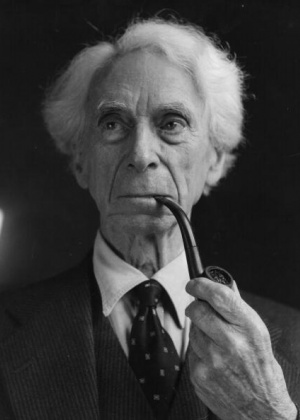
Bertrand Arthur William Russell, 3rd Earl Russell, (18 May 1872 – 2 February 1970) was a British philosopher, logician, mathematician, historian, writer, social critic, political activist, and Nobel laureate. At various points in his life, Russell considered himself a liberal, a socialist, and a pacifist, but he also admitted that he had “never been any of these things, in any profound sense”.  Russell was born in Monmouthshire into one of the most prominent aristocratic families in the United Kingdom. In the early 20th century, Russell led the British “revolt against idealism. [Russell, Bertrand, The Autobiography of Bertrand Russell. (3 vols.) Allen & Unwin: London, 1967-1969.]

[Before you read this, please understand that I spent 40 years as a teacher. I always preferred to challenge my students — to permit them to question what they read and accept or disregard it. I offer you the same challenge.]

“The Unhappy American Way” by Bertrand Russell

It used to be said that English people take their pleasures sadly. No doubt this would still be true if they had any pleasures to take, but the price of alcohol and tobacco in my country has provided sufficient external causes for melancholy. I have sometimes thought that the habit of taking pleasures sadly has crossed the Atlantic, and I have wondered what it is that makes so many English-speaking people somber in their outlook in spite of good health and a good income.

In the course of my travels in America I have been impressed by a kind of fundamental malaise which seems to me extremely common and which poses difficult problems for the social reformer. Most social reformers have held the opinion that, if poverty were abolished and there were no more economic insecurity, the millennium would have arrived. But when I look at the faces of people in opulent cars, whether in your country or in mine, I do not see that look of radiant happiness which the aforesaid social reformers had led me to expect. In nine cases out of ten, I see instead a look of boredom and discontent and an almost frantic longing for something that might tickle the jaded palate.

But it is not only the very rich who suffer in this way. Professional men very frequently feel hopelessly thwarted. There is something that they long to do or some public object that they long to work for. But if they were to indulge their wishes in these respects, they fear that they would lose their livelihood. Their wives are equally unsatisfied, for their neighbor, Mrs So-and-So, has gone ahead more quickly, has a better car, a larger apartment and grander friends.

Life for almost everybody is a long competitive struggle where very few can win the race, and those who do not win are unhappy. On social occasions when it is derigueur to seem cheerful, the necessary demeanor is stimulated by alcohol. But the gaiety does not ring true and anybody who has just one drink too many is apt to lapse into lachrymose melancholy.

One finds this sort of thing only among English-speaking people. A Frenchman while he is abusing the Government is as gay as a lark. So is an Italian while he is telling you how his neighbor has swindled him. Mexicans, when they are not actually starving or actually being murdered, sing and dance and enjoy sunshine and food and drink with a gusto which is very rare north of the Mexican frontier. When Andrew Jackson[2] conquered Pensacola from the Spaniards, his wife looked out of the window and saw the population enjoying itself although it was Sunday. She pointed out the scandal to her husband, who decreed that cheerfulness must cease forthwith. And it did.

When I try to understand what it is that prevents so many Americans from being as happy as one might expect, it seems to me that there are two causes, of which one goes much deeper than the other. The one that goes least deep is the necessity for subservience in some large organization. If you are an energetic man with strong views as to the right way of doing the job with which you are concerned, you find yourself invariably under the orders of some big man at the top who is elderly, weary and cynical. Whenever you have a bright idea, the boss puts a stopper on it. The more energetic you are and the more vision you have, the more you will suffer from the impossibility of doing any of the things that you feel ought to be done. When you go home and moan to your wife, she tells you that you are a silly fellow and that if you became the proper sort of yesman your income would soon be doubled. If you try divorce and remarriage it is very unlikely that there will be any change in this respect. And so you are condemned to gastric ulcers and premature old age.

It was not always so. When Dr. Johnson[3] compiled his dictionary, he compiled it as he thought fit. When he felt like saying that oats is food for men in Scotland and horses in England, he said so. When he defined a fishing-rod as a stick with a fish at one end and a fool at the other, there was nobody to point out to him that a remark of this sort would damage the sale of his great work among fishermen. But if, in the present day, you are (let us say) a contributor to an encyclopedia, there is an editorial policy which is solemn, wise and prudent, which allows no room for jokes, no place for personal preferences and no tolerance for idiosyncrasies. Everything has to be flattened out except where the prejudices of the editor are concerned. To these you must conform, however little you may share them. And so you have to be content with dollars instead of creative satisfaction. And the dollars, alas, leave you sad.

This brings me to the major cause of unhappiness, which is that most people in America act not on impulse but on some principle, and that principles upon which people act are usually based upon a false psychology and a false ethic. There is a general theory as to what makes for happiness and this theory is false. Life is concerned as a competitive struggle in which felicity consists in getting ahead of your neighbor. The joys which are not competitive are forgotten.

Now, I will not for a moment deny that getting ahead of your neighbor is delightful, but it is not the only delight of which human beings are capable. There are innumerable things which are not competitive. It is possible to enjoy food and drink without having to reflect that you have a better cook and a better wine merchant than your former friends whom you are learning to cold shoulder. It is possible to be fond of your wife and your children without reflecting how much better she dresses than Mrs. So-and-So and how much better they are at athletics than the children of that old stick-in-the-mud Mr. Such-and-Such. There are those who can enjoy music without thinking how cultured the other ladies in their women’s club will be thinking them. There are even people who can enjoy a fine day in spite of the fact that the sun shines on everybody. All these simple pleasures are destroyed as soon as competitiveness gets the upper hand.

But it is not only competitiveness that is the trouble. I could imagine a person who has turned against competitiveness and can only enjoy after conscious rejection of the competitive element. Such a person, seeing the sunshine in the morning, says to himself, “Yes, I may enjoy this and indeed I must, for it is a joy open to all.” And however bored he may become with the sunshine he goes on persuading himself that he is enjoying it because he thinks he ought to.

“But,” you will say, “are you maintaining that our actions ought not to be governed by moral principles? Are you suggesting that every whim and every impulse should be given free rein? Do you consider that if So-and-So’s nose annoys you by being too long, that gives you a right to tweak it?” “Sir,” you will continue with indignation,” “your doctrine is one which would uproot all the sources of morality and loosen all the bonds which hold society together. Only self-restraint, self-repression, iron self-control make it possible to endure the abominable beings among whom we have to live. No, sir! Better misery and gastric ulcers than such chaos as your doctrine would produce!”

I will admit at once that there is force in this objection. I have seen many noses that I should have liked to tweak, but never once have I yielded to the impulse. But this, like everything else, is a matter of degree. If you always yield to impulse, you are mad. If you never yield to impulse, you gradually dry up and very likely become mad to boot. In a life which is to be healthy and happy, impulse, though not allowed to run riot, must have sufficient scope to remain alive and to preserve that variety and diversity of interest which is natural to a human being. A life lived on a principle, no matter what, is too narrowly determined, too systematic and uniform, to be happy. However much you care about success, you should have times when you are merely enjoying life without a thought of subsequent gain. However proud you may be, as president of a women’s club, of your impeccable culture, you should not be ashamed of reading a lowbrow book if you want to. A life which is all principle is a life on rails. The rails may help toward rapid locomotion, but preclude the joy of wandering. Man spent some million years wandering before he invented rails, and his happiness still demands some reminiscence of the earlier ages of freedom. 

NOTE! PLEASE LEAVE YOUR POLITICAL RHETORIC ELSEWHERE. THE ELECTION IS OVER, AND MY BLOG IS NOT THE PLACE FOR IT. 

Posted in American History, political stance, real life tales, research, writing | Tagged , , , | 15 Comments

Drinking Champagne in the Regency Era (or NOT)

The drink, Champagne, received it name from the French region of Champagne and has been produced locally in France since the Gallo-Roman era. “Champenoise” vintners produced a pale, pink wine from Pinot Noir grapes. However, it was not always an easy go. Champagne, the region, was more northerly than was its counterpart and competition, Burgundy. This created a major problem because of the cold snaps that interrupted the fermentation process. This could cause the wine bottles to explode because yeasts and sugars would form carbon dioxide.

This was both a blessing and a learning experience for those producing champagne. The bottles that did not explode contained effervescent bubbles that the French royalty found to be most pleasing. “In 1715, the Duc d’ Orléans began serving locally produced ‘vin mousseux’ (sparkling wine) at his court in Paris’ Palais Royal, entertaining wealthy and famous guests with a drink that was generally only accessible to the high aristocracy. Its popularity exploded among Parisian elites. But sparking wine remained an accidental novelty item. And in pre-Industrial Revolution France, most winemakers still frowned upon it and sought to eliminate those pesky bubbles.” [History of Champagne – Paris Unlocked]

The BBC website tells us, “Some of the biggest innovations of Champagne came down to the ingenuity of several women. In the 19th Century, the Napoleonic Code restricted women from owning businesses in France without permission from a husband or father. However, widows were exempt from the rule, creating a loophole for Barbe-Nicole Clicquot-Ponsardin, Louise Pommery and Lily Bollinger – among others – to turn vineyards into empires and ultimately transform the Champagne industry, permanently changing how it’s made and marketed.

“In 1798, Barbe-Nicole Ponsardin married François Clicquot, who then ran his family’s small textile and wine business, originally called Clicquot-Muiron et Fils in Reims. It turned into a financial disaster. When Clicquot died in 1805, leaving her widowed at 27 years old, she made the unconventional choice to take over the company.

“‘It was a very unusual decision for a woman of her class,’ said Tilar Mazzeo, cultural historian and author of The Widow Clicquot. ‘It would have been extremely unusual for her to have a business, because she didn’t need to… She could have spent her life in drawing rooms and as a society hostess.'” [“The Little Known History of Champagne” https://www.bbc.com/travel/article/20230301-the-little-known-history-of-champagne]

Barbe-Nicole Ponsardin took over what became Veuve Clicquot-Ponsardin when her husband passed (Credit: INTERFOTO/Alamy) ~ https://www.bbc.com/travel/article/20230301-the-little-known-history-of-champagne

Up until around 1802, all the wine from abroad had to be imported in casks to be bottled  in England. Though the beverages were allowed to be imported in bottles after that, most importers continued  buying wine in casks. The smugglers usually brought in wine in casks and kegs. Bottles are much more difficult to handle. They were both heavy and noisy when they rubbed against each other and were easily broken. Wine could not be drunk immediately as it had to settle so it was delivered to a bottler who acted as wholesaler.

I can see how this might play out in a plot point in a book, depending on an individual’s or family’s wealth. The wealthiest could afford to buy entire casks for their private cellars, whereas the not-as-wealthy might buy smaller quantities in individual bottles from a wine merchant to stock their cellars, and the not-wealthy might only be drinking their own home-made wines and beers, probably in bottles they cleaned and reused. I am confident the variations also depended on what the particular beverage was. Obviously, from the above information, we know most of the champagne people drank in the Georgian era was likely made in England by adding extra sugar into imported French wine and then bottling (or re-bottling) it for additional fermentation. 

Obviously, champagne does not do as well in casks. Therefore, we might make the assumption that most of the “champagne” sold in England during the Napoleonic War was actually sparkling wine and not the bubbly kind. That being said, some French wines were imported through Portugal. Many advances were made to champagne in France, but they were not readily available in England during the war.

One must remember when writing Regency tales, the wire cage and cork affair sealing champagne bottles had not yet been invented. It was known as “The Devil’s Wine” because of the frequency of explosions caused by the fizz. Like many of you who read Regencies, I read a lot of people drinking champagne and always wonder if this was a real habit or not.

Other Sources on Champagne and Its History:

Champagne – 10 Surprising Facts about Its History

The Regency Redingote – Champagne, but no glasses?

Champagne and its History

The World’s Oldest Champagne Discovered

Posted in aristocracy, British history, food and drink, Georgian England, Georgian Era, Great Britain, historical fiction, Living in the Regency, Living in the UK, publishing, Regency era, research | Tagged , , , , , , , , | Comments Off on Drinking Champagne in the Regency Era (or NOT)

December 27, National Fruitcake Day with a Celebration of Both Truman Capote and the Fruitcake

Okay, I know many of you do not fruitcake, but I am in the minority. I am one of those who still, for example, makes a Christmas pudding. I begin it on Stir Up Sunday, which was 24 November this year.

For those who do not know of Stir-up Sunday, it is “an informal term in Catholic and Anglican churches for the last Sunday before the season of Advent. It gets its name from the beginning of the collect for the day in the Book of Common Prayer, which begins with the words, “Stir up, we beseech thee, O Lord, the wills of thy faithful people…”, but it has become associated with the custom of making the Christmas puddings on that day. [Oxford English Dictionary] The Christmas pudding is one of the essential British Christmas traditions and is said to have been introduced to Britain by Prince Albert, husband of Queen Victoria (the reality is that the meat-less version was introduced from Germany by George I in 1714). Most recipes for Christmas pudding require it to be cooked well in advance of Christmas and then reheated on Christmas Day, so the collect of the day served as a useful reminder.

If one is writing a Christmas tale set in the Regency, Stir Up Sunday is often inserted. I did so in A Touch of Grace, book 4 of my Realm series. It is what finally brings the hero Lord Gabriel Crowden, Marquis of Godown, and the heroine Miss Grace Nelson together. Of course, I pull them apart again, just for good measure, but that is material for another post.

“Traditionally, families gather together in the kitchen of their homes to mix and steam Christmas pudding on Stir-up Sunday. Parents teach their children how to mix ingredients for the pudding. Everyone takes a turn to stir the pudding mix, for each person involved is able to make a special wish for the year ahead. Practically, stirring the mixture is hard work, therefore as many people as possible are involved. By tradition the pudding mixture is stirred from East to West in honor of the three wise men who visited the baby Jesus.” [Christmas Pudding “Stir Up Sunday]

https://www.daysoftheyear.com/days/fruitcake-day/

Days of the Year tells us, “While none of us know the true creator of the fruitcake, many historians believe that fruitcakes originated from Rome, over 2,000 years ago! Historians believe that one of the earliest recipes known comes from ancient Rome listing pomegranate seeds, pine nuts, and raisins that were mixed into a barley mash. Then there are records from the Middle Ages documenting that they added honey, spices, and preserved fruits into the original mix.

“Starting in the 16th century, sugar from the American Colonies along with the discovery that high concentrations of sugar could preserve fruits, ended up creating an enormous excess of candied fruits, thus resulting in making fruit cakes more affordable and popular in regions around the world. The fruitcakes that began in the Roman era are quite different from today, which can be iced, gluten-free, lactose-free, diabetic, alcoholic, or just a regular old fruitcake.

“It is said that in the 18th century, European-made fruitcakes were banned from production for having too much butter and sugar. These ingredients were restricted for being unhealthy. After these cakes were allowed to be sold again in the 19th century, they were common in high-class European weddings.

“Fruitcakes have an incredible shelf life, they can remain on the shelves for many, many years and still be edible and non-harmful to the human body. An example of this is in a 2003 episode of The Tonight Show, where Jay Leno sampled a piece of a fruitcake baked in 1878 which was kept as an heirloom by a family in Michigan.

“The reason that fruitcakes can remain edible for long periods of time is actually in the cooking methods. The fruits and nuts used are often dried and then soaked in a sugar substance, which means that they can remain on the shelf without adding preservatives. In addition to this method, some recipes also include alcohol, or involve an alcohol-soaked storage cloth during the baking process, removing harmful bacteria that decrease the shelf life.

As to literary references, did you know, “Truman Capote, known for his book In Cold Blood, discussed the popular dessert in his short story “A Christmas Memory.” Originally published in Mademoiselle magazine in December 1956, A Christmas Memory was reprinted in The Selected Writings of Truman Capote in 1963. The largely autobiographical story, which is set in the 1930s, describes a period in the lives of the seven-year-old narrator and an elderly woman who is his distant cousin and best friend. The woman was Nanny Faulk, elder sister of the household where Capote’s wayward parents deposited him as a young boy. Nanny, whom everyone called Sook, was thought to be developmentally disabled. But Capote later wrote a friend, “I had an elderly cousin, the woman in my story ‘A Christmas Memory,’ who was a genius.”[“”A Christmas Memory” and a Season’s Truths”The Attic.]

“The family is very poor, but Buddy looks forward to Christmas every year nevertheless, and he and his elderly cousin save their pennies for this occasion.  Every year at Christmastime, Buddy and his friend collect pecans and buy other ingredients to make fruitcakes; although set during Prohibition, this includes whiskey, which they buy from a scary—but ultimately friendly—Indian bootlegger named Haha Jones.  They send the cakes to acquaintances they have met only once or twice, and to people they’ve never met at all, like President Franklin Delano Roosevelt.”

In a sad but poignant ending, they spend one finally Christmas together. The following year, the boy is sent to military school.  Although Buddy and his friend keep up a constant correspondence, this is unable to last because his elderly cousin suffers more and more the ravages of old age, and slips into dementia.  Soon, she is unable to remember who Buddy is, and not long after, she passes away.

I remember watching this tale spins out in a Hallmark television adaptation in 1997. This production starred Eric Lloyd as Buddy and Patty Duke as Sook.

Truman Capote further explored the lives of Buddy and Sook in his story “The Thanksgiving Visitor,” which also was adapted for television. The 1967 television production of The Thanksgiving Visitor earned Geraldine Page a second Emmy Award. Capote’s third short story about Buddy and Sook was “One Christmas“, published in 1983, and televised in 1994.

Posted in American History, British history, Christmas, food, Georgian Era, Great Britain, holidays | Tagged , , , , , , | Comments Off on December 27, National Fruitcake Day with a Celebration of Both Truman Capote and the Fruitcake

Some Facts About a Regency Christmas You May Not Have Heard Previously

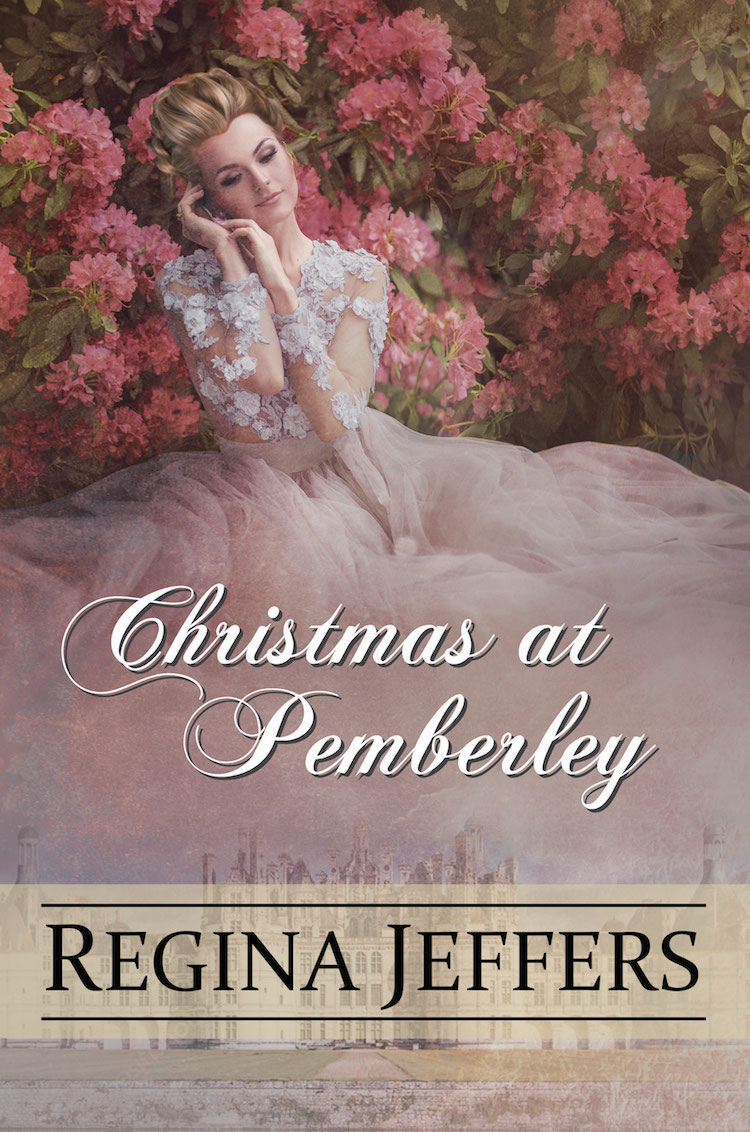
I am often asked questions on tidbits of information I have accumulated over the years on this subject or that concerning the Regency era in which Jane Austen lived. Sometimes I have volumes of information to share and others not so much so. Unfortunately, Christmas as we think of it is more a product of the Victorian era rather than that of the Regency. I recall when I was still writing for Ulysses Press they sent me the cover for “Christmas at Penberley.” It was beautiful, but I quickly rejected it for it has a Christmas tree, which, again, was more Victorian than Georgian in tradition.

second Ulysses Press cover for the book
current cover for the book

First, we must remember there was NO Christmas celebrations, from around 1645 to 1666 in England.  After the Restoration, some vestiges of religion were still attached to certain Holy days, Christmas being one of them. It was Christ’s Mass at first and was a Quarter day. It was celebrated except during the rule of the Puritans.

The three days people were supposed to go to church to prove they were members of the Church of England and not Catholics or Dissenters were Christmas, Easter, and Pentecost, also called Whitsunday. Whitsunday has been called the day the Christian church came into being.

Actual information about the celebration Christmas during the Regency period is hard to find.

Jane Austen mentions Christmas in a couple of books but gives no details, just scenes of children making  decorations or family gatherings.

Also, while we say “Christmas” and often mean Christmas day, most of the Regency accounts mean  anytime within a fortnight, basically what is sometimes referred to as “Christmastide” or “Twelfth Night.”

The weeks before Christmas and Advent were often treated in the same manner as was Lent as to restrictions of weddings and balls.

“Christmastide” is a season of the liturgical year in most Christian churches. It is sometimes referred to a Twelvetide (for the Twelve Days of Christmas).

For those in the Anglican Church, Catholic Church, Lutheran Church and for many in the Methodist Church, Christmastide begins at sunset (or Vespers) on December 24. Therefore, December 24 is not considered part of Christmastide, but rather part of Advent, the season of the Church Year that precedes Christmastide. Christmastide ends at sunset on January 5 (Twelfth Night) by the related season known as Epiphanytide. It begins on Epiphany Day, and ends at various points as defined by those denominations. The typical liturgical color for the day of Epiphany is white, and the typical color for Epiphany season is green.

Christmastide includes these celebrations: December 25 (Christmas Day); December 26 (St. Stephen’s Day); December 28 (Childermas or Children’s Mass or Holy Innocents’ Day); December 31 (New Year’s Eve); January 1 (the Feast of the Circumcision of Christ or the Solemnity of Mary, Mother of God Day); the Feast of the Holy Family day varies. The Twelve Days of Christmas finish with Epiphany Eve or Twelfth Night on January 5.

December 26 was originally called “Boxing Day” or “St Stephens Day,” a Catholic holiday. It was the second day of Christmastide. Originally it was a holiday to give gifts to the poor. However, in the present, it is, generally, a shopping holiday.

Boxing Day originated in Great Britain and is celebrated in a number of countries once part of the British Empire. The bank holiday or public holiday can occur up to December 28, if necessary, to ensure it falls on a weekday.

The origin of “Boxing Day” is not as definitive as we would like. In the Middle Ages, those in Europe were known to give gifts to those “in service” to their families. Alms boxes were placed in the narthex of early Christian churches to collect offerings for the poor. This is where the Feast of Saint Stephen comes in. In the early Christian churches and even today, it is customary in some localities to open the alms boxes and distribute the contributions to the poor.

The Oxford English Dictionary gives the earliest attestations from Britain in the 1830s, defining it as “the first weekday after Christmas day, observed as a holiday on which postmen, errand boys, and servants of various kinds expect to receive a Christmas box”[“Boxing-day, n.”, OED Online, 1st ed. (Oxford: Oxford University Press, 1887).]

The term “Christmas box” dates back to the 17th century, and among other things meant:

A present or gratuity given at Christmas: in Great Britain, usually confined to gratuities given to those who are supposed to have a vague claim upon the donor for services rendered to him as one of the general public by whom they are employed and paid, or as a customer of their legal employer; the undefined theory being that as they have done offices for this person, for which he has not directly paid them, some direct acknowledgement is becoming at Christmas. [Christmas-box, n.”, OED Online, 1st edn (Oxford: Oxford University Press, 1889), sense 3.]

Tradesmen collected “Christmas boxes” of money or fairings on the first weekday after Christmas in reward for their exemplary service through the year. I, for one, still present the trash collectors, my postal carrier, etc., each year with a token of my thanks for their good service.

This giving of “thanks” is mentioned in Samuel Pepys‘ diary entry for 19 December 1663. [“Saturday 19 December 1663 (Pepys’ Diary)”. Pepysdiary.com] This custom is linked to an older British tradition where the servants of the wealthy were allowed the next day to visit their families since they would have had to serve their masters on Christmas Day. The employers would give each servant a box to take home containing gifts, bonuses, and sometimes leftover food. Until the late 20th century there continued to be a tradition among many in the UK to give a Christmas gift, usually cash, to vendors, although not on Boxing Day as many would not work on that day. [“Boxing Day and it’s surprising facts”shoppersinusa.]

During the Regency, it is said, the church gave out boxes to the poorer families, and landlords presented villagers and tenants and workers boxes. I read somewhere how all the maids in a house, generally, received a length of cloth from which to have a gown made. I also recall how the men received material for shirts or received shirts made up. Pensioners/tenants would receive a goose or a hen. There were no set rules, and each employer/landlord gave as the spirit moved him or not. Some might just present the boxes so as not to lose face in front of neighbors.

The fun and frolic lasted until January 6, which was Three Kings’ Day. In Spain and Latin America, Three Kings ‘s Day celebrates when Jesus was born in Bethlehem during the time of King Herod, and is symbolic of the Three Magi from the East who came to Jerusalem. The gifts the Three Kings gave Jesus were meant to be symbolic. Gold was associated with the belief Jesus was the King of Jews. Frankincense, which is often burned in churches today, was meant to represent the divine nature of Jesus and the fact people would come to worship him as the Son of God. And myrrh, a perfume sometimes used to embalm dead bodies, represented the fact Jesus would eventually suffer and die. Each gift represented a distinct part of the baby’s destiny.

Ironically, in Britain, the Holy Days and Fasting Days Act of 1551 (which has not yet been repealed) states every citizen must attend a Christian church service on Christmas Day and must not use any kind of vehicle to get to the service.

Although, in fact, what had not been repealed of this act in previous legislation was repealed as part of the Statute Law (Repeals) Act 1969, under section 1 of, and Part II of the Schedule to, the 1969 act many believe this act is still in effect.

However, we know hackney rules in London modified this, though probably just in Town. London passed laws to prohibit hackneys from operating on Sundays, but that prevented those who could not walk from attending church, which was required by law. At the time, the law required attendance every Sunday. So an exemption was passed to allow a limited number of hackneys to operate on Sundays solely for the purpose of transporting people to church. The entire hackney law was repealed in 1930.

It would not at all be unusual for a law to have an exception for the city of London.

Enforcement depended on how vigilant the constable, vicar, sexton, and church wardens were. In some parishes, fines were handed out for none attendance more than in other parishes.

The sources I have consulted say it was still in effect. A duke was entitled to six chaplains and so could easily say he had services in a private chapel. 

Bits and pieces of the law were repealed over the centuries, a lot of it in 1888. (See Holy Days and Fasting Days Act 1551)

Pity. One could have fun with it. Imagine a pompous magistrate charging the dissolute duke for his failure to go to church!

Posted in British history, Christmas, Church of England, customs and tradiitons, Georgian England, Georgian Era, history, holidays, Jane Austen, Living in the Regency, real life tales, Regency era, religion, research, tradtions | Tagged , , , , , , , , , , , , , , , | Comments Off on Some Facts About a Regency Christmas You May Not Have Heard Previously

Christmas in Regency England

Often times, the average reader or those not familiar with the early 1800s in England, think that Christmas was celebrated in the same manner as it is today, or at the very least something from the Victorian era. I once had a publisher provide me with a wonderful cover for my novel, Christmas at Pemberley, but it had a lighted Christmas tree, a no-no for the Regency Period. So what might we find in the Regency?

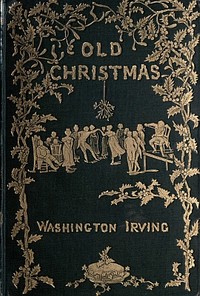
If you read the story from my last post by Washington Irving, you hold a bit of knowledge of the time. But is that what we should expect from our Regency characters in the novels we read? In truth, it is very difficult to come across even the briefest mention of “Christmas” or “presents” or “holiday decorations” in pieces written during the actual Regency period.

In Persuasion, Jane Austen (chapter 14) describes the arrival of the Musgrove children, who have been away at school. “Immediately surrounding Mrs. Musgrave were the little Harvilles, whom she was sedulously guarding from the tyranny of the two children from the Cottage, expressly arrived to amuse them. On one side was a table occupied by some chattering girls*, cutting up silk and gold paper; and on the other were trestles and trays, bending under the weight of brawn and cold pies, where riotous boys were holding high revel; the whole completed by a roaring Christmas fire, which seemed determined to be heard in spite of the noise of the others.” This is seen as too noisy by the heroine and her friend Lady Russell, who remarks, “I hope I shall remember in future not to call at Uppercross in the Christmas holiday.”

In a letter to her sister Cassandra that holds the dates of 24 December and 25 December, our beloved Austen does wish her sister a “Merry Christmas,” but that is the extent of the mention of the day. Austen tells her sister of being invited to supper at a nearby house, but does think she can attend because the weather was too bad to be out.  Ironically in Austen’s Emma, we are told, “At Christmas every body invites their friends about them, and people think little of even the worst weather.” So, what was Christmas like through most of our Regency period? From what I gather from the simple mentions of the celebration among the gentry, Christmas was still very much a religious holiday. Many of the traditions we now associate with Christmas were practiced in the past, but by the Regency period, they were considered rustic and unrefined, which if one thinks of the “hype” now associated with Christmas, “vulgar” and “unrefined” are appropriate words. 

BAL_242578_sml_0

John Taylor’s pamphlet The Vindication of Christmas, 1652.

Part of the problem for a lack of celebrations dates back to the 1640s and 1650s. History Extra tells us: “As the year 1645 limped towards its weary close, a war-torn England shivered beneath a thick blanket of snow. A few months earlier, parliament’s New Model Army, led by Sir Thomas Fairfax and Oliver Cromwell, had routed the forces of Charles I at the battle of Naseby. Although that defeat had struck the king’s cause a mortal blow, the royalists still refused to surrender, and the bloody Civil War which had divided the country ever since 1642 continued to rage.

‘Under constant pressure from the armies of both sides to supply them with money, clothing and food, few Englishmen and women can have been anticipating a particularly merry Christmas. Yet, for those who lived in the extensive territories which were controlled by the king’s enemies, there was to be no Christmas this year at all – because the traditional festivities had been abolished by order of the two Houses of Parliament sitting at Westminster.

“Following parliament’s victory in the Second Civil War and the execution of Charles I in 1649, demonstrations in favour of Christmas became less common. There can be no doubt that many people continued to celebrate Christmas in private, and in his pamphlet The Vindication of Christmas (1652), the tireless John Taylor provided a lively portrait of how, he claimed, the old Christmas festivities were still being kept up by the farmers of Devon.

“Nevertheless, recent scholarship has shown that, as time went by, Christmas effectively ceased to be celebrated in the great majority of churches. It was ironic, to say the least, that while the godly had failed to suppress the secular Yuletide festivities which had vexed them for so long, they had succeeded in ending the religious observance of Christmas!

“Following Cromwell’s installation as lord protector in 1653, the celebration of Christmas continued to be proscribed. While he had not been personally responsible for ‘cancelling Christmas’ in the first place, it is evident that both Cromwell and the other senior members of his regime were behind the ban, frequently transacting government business on 25 December as if it were a day just like any other. Only with the restoration of the monarchy in 1660 was ‘old Christmas Day’ finally brought back in from the cold, to widespread popular joy.” 

Some “decorating” appears to have occurred during the Regency. A Yule log is likely and the use of greenery. BBC History tells us, “The tradition of decorating the home with native evergreens is a truly ancient one. Since pagan times evergreens have been valued for their ability to retain signs of life in the middle of winter – even in some instances producing berries and flowers.

“Early Christians displayed evergreen plants in the home to symbolise everlasting life. Holly, ivy and evergreen herbs such as bay and rosemary were the most commonly used, all with symbolic meanings that were familiar to our ancestors. Rosemary, for remembrance, and bay, for valour, are still well known. Holly and ivy were a particularly popular combination, the holly traditionally thought to be masculine and ivy feminine, giving stability to the home.

“A kissing-bough was often hung from the ceiling. This would consist of a round ball of twigs and greenery, decorated with seasonal fruit, such as apples. It was the precursor to the bunch of mistletoe, under which no lady could refuse a kiss. Mistletoe was sacred to the Druids and was once called ‘All Heal’. It was thought to bring good luck and fertility, and to offer protection from witchcraft.

“In the medieval period, the Yule log was ceremoniously carried into the house on Christmas Eve, and put in the fireplace of the main communal room. Often decorated with greenery and ribbon, it was lit with the saved end of the previous year’s log and then burnt continuously for the Twelve Days of Christmas, providing much needed light and warmth.”

Greenery, such as holly and ivy and mistletoe were used in the Winter Solstice Festival to ward off spirits. The greenery stood true even in winter, so the greenery represented a renewal of life. When Christianity reached Western Europe, some people held onto these pagan rituals and presented the greenery with Christian symbolism. The was especially true in Germany and the countries that now constitute the United Kingdom. 

holly.jpg ivy.jpg laurel01.jpg rosemary.jpg Holly’s prickly leaves came to represent the crown of thorns that Jesus wore upon the cross. The berries are the color of the blood he shed. In Scandinavia, the holly bush/tree is sometimes referred to as the “Christ Thorn.” In medieval times, the holly was the male plant and the ivy the female plant. Whichever plant was brought in first would indicate whether the male or the female of the house would rule the household for the year. The fact that ivy must cling to something to survive and grow is meant to remind Christians that they must “cling” to God’s teachings. From the Roman days, men have worn a laurel wreath upon their heads to symbolize victory over an enemy. To Christians, it was God’s victory over Satan. Pagan’s thought that rosemary could protect a person from evil spirits. It was used to garnish the boar’s head eaten by the rich at the main “Christmas” meal celebrated in the Middle Ages. Rosemary is sometimes referred to as the “remembrance herb.” Do you not recall the Simon and Garfunkle tune? Are you going to Scarborough Fair/ Parsley, sage, rosemary and thyme/ Remember me to one who lives there/ She once was a true love of mine.” For Christians, it is used at Christmas for we must remember the birth of Jesus. “In the late 1700s a special Christmas Rosemary Service was started in Ripon Cathedral School where a red apple, with a sprig of Rosemary in the top of it, was sold by the school boys to the members of the congregation for 2p, 4p or 6p (depending on the size of apple!).” (Why Christmas)

You might also check out this article from Jo Beverley on a Regency Christmas. I keep it in a file as a reference to the day. 

~~~~~~~~~~~~~~~~~~~~~~~~~~~~~~~~~~~~~~

419Tf4g4GSL.jpg Christmas at Pemberley: A Pride and Prejudice Holiday Sequel

(Inspirational Romance; Fiction/Historical Fiction; Classics)

2011 BooksellersBest Award Finalist, Inspirational Romance

2012 New England Book Festival, 2nd Place, General Fiction

To bring a renewed sense joy to his wifes countenance, Fitzwilliam Darcy secretly invites the Bennets and the Bingleys to spend the Christmastide festive days at Pemberley. But as he and Elizabeth journey to their estate to join the gathered families, a snowstorm blankets the English countryside. The Darcys find themselves stranded at a small out-of-the-way inn with another couple preparing for the immediate delivery of their first child, while Pemberley is inundated with friends and relations seeking shelter from the storm.

Without her brothers strong presence, Georgiana Darcy desperately attempts to manage the chaos surrounding the arrival of six invited guests and eleven unscheduled visitors. But bitter feuds, old jealousies, and intimate secrets quickly rise to the surface. Has Lady Catherine returned to Pemberley for forgiveness or revenge? Will the manipulative Caroline Bingley find a soul mate? Shall Kitty Bennet and Georgiana Darcy know happiness?

Written in Regency style and including Austens romantic entanglements and sardonic humor, Christmas at Pemberley places Jane Austens most beloved characters in an exciting yuletide story that speaks to the love, the family spirit, and the generosity that remain as the heart of Christmas.

Amazon    https://www.amazon.com/dp/1790547946

Available to Read on Kindle Unlimited

Audible     http://www.amazon.com/Christmas-Pemberley-Pride-Prejudice-Sequel/dp/B00J55WFXG/ref=tmm_aud_swatch_0?_encoding=UTF8&qid=1448475874&sr=1-1

Kindle  https://www.amazon.com/Christmas-Pemberley-Prejudice-Holiday-Through-ebook/dp/B07L9G7YTV/ref=sr_1_7?ie=UTF8&qid=1544626483&sr=8-7&keywords=christmas+at+Pemberley

Book Bub https://www.bookbub.com/books/christmas-at-pemberley-by-regina-jeffers

~~~~~~~~~~~~~~~~~~~~~~~~~~~~~~~~~~~~~~~~~~~~~~~~~~~~~~~

51c1Oq1-zcL.jpg Mr. Darcy’s Present: A Pride and Prejudice Vagary 

[Fiction; Romance; Regency; Austenesque; vagary; Christmas; holiday]

The Greatest Present He Would Ever Receive is the Gift of Her Love

What if Mr. Darcy purchased a gift for Elizabeth Bennet to acknowledge the festive days even though he knows he will never present it to her? What if the gift is posted to the lady by his servants and without his knowledge? What if the enclosed card was meant for another and is more suggestive than a gentleman should share with an unmarried lady? Join Darcy and Elizabeth, for a holiday romp, loaded with delightful twists and turns no one expects, but one in which our favorite couple take a very different path in thwarting George Wickham and Lydia Bennets elopement. Can a simple book of poetry be Darcys means to win Elizabeths love? When we care more for another than ourselves, the seeds of love have an opportunity to blossom. 

Words of Praise for Mr. Darcys Present

Jeffers takes a familiar story and reinvigorates it with humor, warmth, and wisdom. – Roses and Lilacs Reviews

Amazon  https://www.amazon.com/Mr-Darcys-Present-Prejudice-Holiday/dp/1537422022/ref=sr_1_5?ie=UTF8&qid=1473685089&sr=8-5&keywords=mr.+darcy%27s+present

Kindle  https://www.amazon.com/Mr-Darcys-Present-Prejudice-Holiday-ebook/dp/B01LYSCC2U/ref=sr_1_1?s=digital-text&ie=UTF8&qid=1473780113&sr=1-1&keywords=mr.+Darcy%27s+present#nav-subnav

Kindle Unlimited     https://www.amazon.com/kindle-dbs/hz/subscribe/ku?passThroughAsin=B07HHFYJ1X&_encoding=UTF8&shoppingPortalEnabled=true

BookBub https://www.bookbub.com/books/mr-darcy-s-present-a-pride-and-prejudice-holiday-vagary-by-regina-jeffers

~~~~~~~~~~~~~~~~~~~~~~~~~~~~~~~~~~~~~~~~~~~~~~~~~~~~~~~~~~~~~~~~~~~~~~~~~~~~~~~~~~~~


Pemberley’s Christmas Governess: A Holiday Pride and Prejudice Vagary

Two hearts. One kiss.

Following his wife’s death in childbirth, Fitzwilliam Darcy hopes to ease his way back into society by hosting a house party during Christmastide. He is thrilled when his cousin Colonel Fitzwilliam sends a message saying not only will he attend, but the colonel is bringing a young woman with him of whom he hopes both Darcy and the colonel’s mother, Lady Matlock, will approve. Unfortunately, upon first sight, Darcy falls for the woman: He suspects beneath Miss Elizabeth Bennet’s conservative veneer lies a soul which will match his in every way; yet, she is soon to be the colonel’s wife.

Elizabeth Bennet lost her position as a governess when Lady Newland accuses Elizabeth of leading her son on. It is Christmastide, and she has no place to go and little money to hold her over until after Twelfth Night; therefore, when Lieutenant Newland’s commanding officer offers her a place at his cousin’s household for the holy days, she accepts in hopes someone at the house party can provide her a lead on a new position. Having endured personal challenges which could easily have embittered a lesser woman, Elizabeth proves herself brave, intelligent, educated in the fine arts of society, and deeply honorable. Unfortunately, she is also vulnerable to the Master of Pemberley, who kindness renews her spirits and whose young daughter steals her heart. The problem is she must leave Pemberley after the holidays, and she does not know if a “memory” of Fitzwilliam Darcy will be enough to sustain her.

Kindle https://www.amazon.com/Pemberleys-Christmas-Governess-Prejudice-Holiday-ebook/dp/B09KHK7FTG/ref=sr_1_3?dchild=1&keywords=pemberley%27s+christmas+governess&qid=1635602893&s=digital-text&sr=1-3

Amazon https://www.amazon.com/dp/B09KNCX1RF?ref_=pe_3052080_397514860

Available to Read on Kindle Unlimited

Book Bub https://www.bookbub.com/books/pemberley-s-christmas-governess-a-pride-and-prejudice-holiday-vagary-by-regina-jeffers

Audible (Virtual Voice Narration) https://www.amazon.com/dp/B0CXJ1QCK8

Posted in Austen Authors, book release, books, British history, Church of England, customs and tradiitons, Georgian Era, reading, real life tales, Regency era, Regency romance, world history | Tagged , , , , , , , , , | 4 Comments

A “Christmas Eve” Tale from 1820

TheSketchbookTitlePage

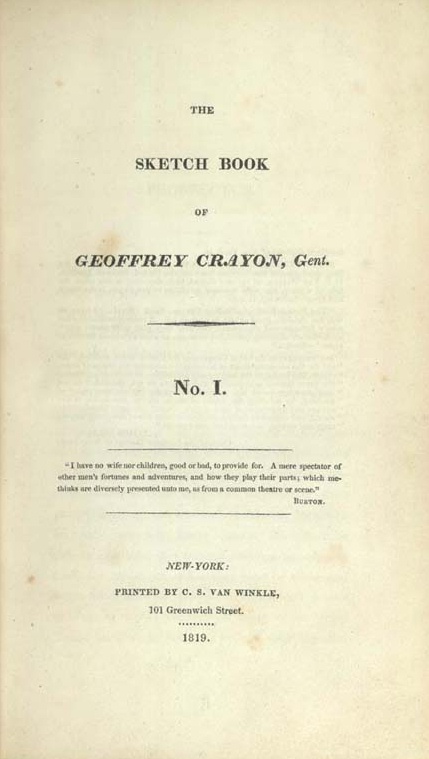
Author: Washington Irving Original title: The Sketch Book of Geoffrey Crayon, Gent. No.1 Illustrator: F. O. C. Darley Country: United States/England Publisher: C. S. Van Winkle (USA) (serialized), then in book form by Burlington Arcade (self published, UK), and John Murray (UK) Wikipedia ~ Public Domain

Today, I share with you a “Christmas Eve” piece from the Sketchbook of Geoffrey Crayon, Gent. The piece comes to us from Washington Irving. The Sketch Book of Geoffrey Crayon, Gent., commonly referred to as The Sketch Book, is a collection of 34 essays and short stories written by the American author Washington Irving. It was published serially throughout 1819 and 1820. The collection includes two of Irving’s best-known stories, attributed to the fictional Dutch historian Diedrich Knickerbocker: “The Legend of Sleepy Hollow” and “Rip Van Winkle.” It also marks Irving’s first use of the pseudonym Geoffrey Crayon, which he would continue to employ throughout his literary career. The piece is in public domain, and if you have never read it, now is the time. I love it and wanted to share it with you, especially if you are as nostalgic as I for a simpler Christmas without all the hype. Enjoy! 

Saint Francis and Saint Benedight

Blesse this house from wicked wight;

From the night-mare and the goblin,

That is hight good fellow Robin;

Keep it from all evil spirits,

Fairies, weezels, rats, and ferrets:

    From curfew time

    To the next prime.

CARTWRIGHT.

pg20656.cover.medium.jpg IT WAS a brilliant moonlight night, but extremely cold; our chaise whirled rapidly over the frozen ground; the postboy smacked his whip incessantly, and a part of the time his horses were on a gallop. “He knows where he is going,” said my companion, laughing, “and is eager to arrive in time for some of the merriment and good cheer of the servants’ hall. My father, you must know, is a bigoted devotee of the old school, and prides himself upon keeping up something of old English hospitality. He is a tolerable specimen of what you will rarely meet with nowadays in its purity, the old English country gentleman; for our men of fortune spend so much of their time in town, and fashion is carried so much into the country, that the strong rich peculiarities of ancient rural life are almost polished away. My father, however, from early years, took honest Peacham1 for his textbook, instead of Chesterfield; he determined in his own mind that there was no condition more truly honorable and enviable than that of a country gentleman on his paternal lands, and therefore passes the whole of his time on his estate. He is a strenuous advocate for the revival of the old rural games and holiday observances, and is deeply read in the writers, ancient and modern, who have treated on the subject. Indeed, his favorite range of reading is among the authors who flourished at least two centuries since, who, he insists, wrote and thought more like true Englishmen than any of their successors. He even regrets sometimes that he had not been born a few centuries earlier, when England was itself and had its peculiar manners and customs. As he lives at some distance from the main road, in rather a lonely part of the country, without any rival gentry near him, he has that most enviable of all blessings to an Englishman—an opportunity of indulging the bent of his own humor without molestation. Being representative of the oldest family in the neighborhood, and a great part of the peasantry being his tenants, he is much looked up to, and in general is known simply by the appellation of ‘The Squire’—a title which has been accorded to the head of the family since time immemorial. I think it best to give you these hints about my worthy old father, to prepare you for any eccentricities that might otherwise appear absurd.”

We had passed for some time along the wall of a park, and at length the chaise stopped at the gate. It was in a heavy, magnificent old style, of iron bars fancifully wrought at top into flourishes and flowers. The huge square columns that supported the gate were surmounted by the family crest. Close adjoining was the porter’s lodge, sheltered under dark fir trees and almost buried in shrubbery.

9781346491448-us-300.jpg The postboy rang a large porter’s bell, which resounded though the still frosty air, and was answered by the distant barking of dogs, with which the mansion-house seemed garrisoned. An old woman immediately appeared at the gate. As the moonlight fell strongly upon her, I had a full view of a little primitive dame, dressed very much in the antique taste, with a neat kerchief and stomacher, and her silver hair peeping from under a cap of snowy whiteness. She came curtseying forth, with many expressions of simple joy at seeing her young master. Her husband, it seemed, was up at the house keeping Christmas Eve in the servants’ hall; they could not do without him, as he was the best hand at a song and story in the household.

My friend proposed that we should alight and walk through the park to the hall, which was at no great distance, while the chaise should follow on. Our road wound through a noble avenue of trees, among the naked branches of which the moon glittered as she rolled through the deep vault of a cloudless sky. The lawn beyond was sheeted with a slight covering of snow, which here and there sparkled as the moonbeams caught a frosty crystal, and at a distance might be seen a thin transparent vapor stealing up from the low grounds and threatening gradually to shroud the landscape.

My companion looked around him with transport. “How often,” said he, “have I scampered up this avenue on returning home on school vacations! How often have I played under these trees when a boy! I feel a degree of filial reverence for them, as we look up to those who have cherished us in childhood. My father was always scrupulous in exacting our holidays and having us around him on family festivals. He used to direct and superintend our games with the strictness that some parents do the studies of their children. He was very particular that we should play the old English games according to their original form, and consulted old books for precedent and authority for every ‘merrie disport;’ yet I assure you there never was pedantry so delightful. It was the policy of the good old gentleman to make his children feel that home was the happiest place in the world; and I value this delicious home-feeling as one of the choicest gifts a parent could bestow.”

We were interrupted by the clamor of a troop of dogs of all sorts and sizes, “mongrel, puppy, whelp, and hound, and curs of lower degree,” that disturbed by the ring of the porter’s bell and the rattling of the chaise, came bounding, open-mouthed, across the lawn.

“‘——The little dogs and all,

    Tray, Blanch, and Sweetheart, see, they bark at me!’”

cried Bracebridge, laughing. At the sound of his voice the bark was changed into a yelp of delight, and in a moment he was surrounded and almost overpowered by the caresses of the faithful animals.

9781276676533-us.jpg We had now come in full view of the old family mansion, partly thrown in deep shadow and partly lit up by the cold moonshine. It was an irregular building of some magnitude, and seemed to be of the architecture of different periods. One wing was evidently very ancient, with heavy stone-shafted bow windows jutting out and overrun with ivy, from among the foliage of which the small diamond-shaped panes of glass glittered with the moonbeams. The rest of the house was in the French taste of Charles the Second’s time, having been repaired and altered, as my friend told me, by one of his ancestors who returned with that monarch at the Restoration. The grounds about the house were laid out in the old formal manner of artificial flower-beds, clipped shrubberies, raised terraces, and heavy stone balustrades, ornamented with urns, a leaden statue or two, and a jet of water. The old gentleman, I was told, was extremely careful to preserve this obsolete finery in all its original state. He admired this fashion in gardening; it had an air of magnificence, was courtly and noble, and befitting good old family style. The boasted imitation of Nature in modern gardening had sprung up with modern republican notions, but did not suit a monarchical government; it smacked of the leveling system. I could not help smiling at this introduction of politics into gardening, though I expressed some apprehension that I should find the old gentleman rather intolerant in his creed. Frank assured me, however, that it was almost the only instance in which he had ever heard his father meddle with politics; and he believed that he had got this notion from a member of Parliament who once passed a few weeks with him. The squire was glad of any argument to defend his clipped yew trees and formal terraces, which had been occasionally attacked by modern landscape gardeners.

As we approached the house we heard the sound of music, and now and then a burst of laughter from one end of the building. This, Bracebridge said, must proceed from the servants’ hall, where a great deal of revelry was permitted, and even encouraged, by the squire throughout the twelve days of Christmas, provided everything was done conformably to ancient usage. Here were kept up the old games of hoodman blind, shoe the wild mare, hot cockles, steal the white loaf, bob apple, and snap dragon; the Yule-clog and Christmas candle were regularly burnt, and the mistletoe with its white berries hung up, to the imminent peril of all the pretty housemaids.2

So intent were the servants upon their sports that we had to ring repeatedly before we could make ourselves heard. On our arrival being announced the squire came out to receive us, accompanied by his two other sons—one a young officer in the army, home on a leave of absence; the other an Oxonian, just from the university. The squire was a fine healthy-looking old gentleman, with silver hair curling lightly round an open florid countenance, in which the physiognomist, with the advantage, like myself, of a previous hint or two, might discover a singular mixture of whim and benevolence.

The family meeting was warm and affectionate; as the evening was far advanced, the squire would not permit us to change our travelling dresses, but ushered us at once to the company, which was assembled in a large old-fashioned hall. It was composed of different branches of a numerous family connection, where there were the usual proportion of old uncles and aunts, comfortable married dames, superannuated spinsters, blooming country cousins, half-fledged striplings, and bright-eyed boarding-school hoydens. They were variously occupied—some at a round game of cards; others conversing around the fireplace; at one end of the hall was a group of the young folks, some nearly grown up, others of a more tender and budding age, fully engrossed by a merry game; and a profusion of wooden horses, penny trumpets, and tattered dolls about the floor showed traces of a troop of little fairy beings who, having frolicked through a happy day, had been carried off to slumber through a peaceful night.

While the mutual greetings were going on between young Bracebridge and his relatives I had time to scan the apartment. I have called it a hall, for so it had certainly been in old times, and the squire had evidently endeavored to restore it to something of its primitive state. Over the heavy projecting fireplace was suspended a picture of a warrior in armor, standing by a white horse, and on the opposite wall hung a helmet, buckler, and lance. At one end an enormous pair of antlers were inserted in the wall, the branches serving as hooks on which to suspend hats, whips, and spurs, and in the corners of the apartment were fowling-pieces, fishing-rods, and other sporting implements. The furniture was of the cumbrous workmanship of former days, though some articles of modern convenience had been added and the oaken floor had been carpeted, so that the whole presented an odd mixture of parlor and hall.

The grate had been removed from the wide overwhelming fireplace to make way for a fire of wood, in the midst of which was an enormous log glowing and blazing, and sending forth a vast volume of light and heat: this, I understood, was the Yule-clog, which the squire was particular in having brought in and illumined on a Christmas Eve, according to ancient custom.3

Herrick mentions it in one of his songs:

Come, bring with a noise,

    My metric, merrie boys,

The Christmas Log to the firing;

    While my good dame, she

    Bids ye all be free,

And drink to your hearts’ desiring.

The Yule-clog is still burnt in many farm-houses and kitchens in England, particularly in the north, and there are several superstitions connected with it among the peasantry. If a squinting person come to the house while it is burning, or a person barefooted, it is considered an ill omen. The brand remaining from the Yule-clog is carefully put away to light the next year’s Christmas fire.

It was really delightful to see the old squire seated in his hereditary elbow-chair by the hospitable fireside of his ancestors, and looking around him like the sun of a system, beaming warmth and gladness to every heart. Even the very dog that lay stretched at his feet, as he lazily shifted his position and yawned would look fondly up in his master’s face, wag his tail against the floor, and stretch himself again to sleep, confident of kindness and protection. There is an emanation from the heart in genuine hospitality which cannot be described, but is immediately felt and puts the stranger at once at his ease. I had not been seated many minutes by the comfortable hearth of the worthy old cavalier before I found myself as much at home as if I had been one of the family.

Supper was announced shortly after our arrival. It was served up in a spacious oaken chamber, the panels of which shone with wax, and around which were several family portraits decorated with holly and ivy. Besides the accustomed lights, two great wax tapers, called Christmas candles, wreathed with greens, were placed on a highly polished beaufet among the family plate. The table was abundantly spread with substantial fare; but the squire made his supper of frumenty, a dish made of wheat cakes boiled in milk with rich spices, being a standing dish in old times for Christmas Eve. I was happy to find my old friend, minced pie, in the retinue of the feast and, finding him to be perfectly orthodox, and that I need not be ashamed of my predilection, I greeted him with all the warmth wherewith we usually greet an old and very genteel acquaintance.

The mirth of the company was greatly promoted by the humors of an eccentric personage whom Mr. Bracebridge always addressed with the quaint appellation of Master Simon. He was a tight brisk little man, with the air of an arrant old bachelor. His nose was shaped like the bill of a parrot; his face slightly pitted with the small-pox, with a dry perpetual bloom on it, like a frostbitten leaf in autumn. He had an eye of great quickness and vivacity, with a drollery and lurking waggery of expression that was irresistible. He was evidently the wit of the family, dealing very much in sly jokes and innuendoes with the ladies, and making infinite merriment by harping upon old themes, which, unfortunately, my ignorance of the family chronicles did not permit me to enjoy. It seemed to be his great delight during supper to keep a young girl next to him in a continual agony of stifled laughter, in spite of her awe of the reproving looks of her mother, who sat opposite. Indeed, he was the idol of the younger part of the company, who laughed at everything he said or did and at every turn of his countenance. I could not wonder at it; for be must have been a miracle of accomplishments in their eyes. He could imitate Punch and Judy; make an old woman of his hand, with the assistance of a burnt cork and pocket-handkerchief; and cut an orange into such a ludicrous caricature that the young folks were ready to die with laughing.

I was let briefly into his history by Frank Bracebridge. He was an old bachelor, of a small independent income, which by careful management was sufficient for all his wants. He revolved through the family system like a vagrant comet in its orbit, sometimes visiting one branch, and sometimes another quite remote, as is often the case with gentlemen of extensive connections and small fortunes in England. He had a chirping, buoyant disposition, always enjoying the present moment; and his frequent change of scene and company prevented his acquiring those rusty, unaccommodating habits with which old bachelors are so uncharitably charged. He was a complete family chronicle, being versed in the genealogy, history, and intermarriages of the whole house of Bracebridge, which made him a great favorite with the old folks; he was a beau of all the elder ladies and superannuated spinsters, among whom he was habitually considered rather a young fellow; and he was master of the revels among the children, so that there was not a more popular being in the sphere in which he moved than Mr. Simon Bracebridge. Of late years he had resided almost entirely with the squire, to whom he had become a factotum, and whom he particularly delighted by jumping with his humor in respect to old times and by having a scrap of an old song to suit every occasion. We had presently a specimen of his last-mentioned talent, for no sooner was supper removed and spiced wines and other beverages peculiar to the season introduced, than Master Simon was called on for a good old Christmas song. He bethought himself for a moment, and then, with a sparkle of the eye and a voice that was by no means bad, excepting that it ran occasionally into a falsetto like the notes of a split reed, he quavered forth a quaint old ditty:

Now Christmas is come,

    Let us beat up the drum,

And call all our neighbors together;

    And when they appear,

    Let us make them such cheer,

As will keep out the wind and the weather, &c.

The supper had disposed every one to gayety, and an old harper was summoned from the servants’ hall, where he had been strumming all the evening, and to all appearance comforting himself with some of the squire’s home-brewed. He was a kind of hanger-on, I was told, of the establishment, and, though ostensibly a resident of the village, was oftener to be found in the squire’s kitchen than his own home, the old gentleman being fond of the sound of “harp in hall.”

maxresdefault.jpgThe dance, like most dances after supper, was a merry one: some of the older folks joined in it, and the squire himself figured down several couple with a partner with whom he affirmed he had danced at every Christmas for nearly half a century. Master Simon, who seemed to be a kind of connecting link between the old times and the new, and to be withal a little antiquated in the taste of his accomplishments, evidently piqued himself on his dancing, and was endeavoring to gain credit by the heel and toe, rigadoon, and other graces of the ancient school; but he had unluckily assorted himself with a little romping girl from boarding-school, who by her wild vivacity kept him continually on the stretch and defeated all his sober attempts at elegance: such are the ill-sorted matches to which antique gentlemen are unfortunately prone.

The young Oxonian, on the contrary, had led out one of his maiden aunts, on whom the rogue played a thousand little knaveries with impunity: he was full of practical jokes, and his delight was to tease his aunts and cousins, yet, like all madcap youngsters, he was a universal favorite among the women. The most interesting couple in the dance was the young officer and a ward of the squire’s, a beautiful blushing girl of seventeen. From several shy glances which I had noticed in the course of the evening I suspected there was a little kindness growing up between them; and indeed the young soldier was just the hero to captivate a romantic girl. He was tall, slender, and handsome, and, like most young British officers of late years, had picked up various small accomplishments on the Continent: he could talk French and Italian, draw landscapes, sing very tolerably, dance divinely, but, above all, he had been wounded at Waterloo. What girl of seventeen, well read in poetry and romance, could resist such a mirror of chivalry and perfection?

The moment the dance was over he caught up a guitar, and, lolling against the old marble fireplace in an attitude which I am half inclined to suspect was studied, began the little French air of the Troubadour. The squire, however, exclaimed against having anything on Christmas Eve but good old English; upon which the young minstrel, casting up his eye for a moment as if in an effort of memory, struck into another strain, and with a charming air of gallantry gave Herrick’s “Night-Piece to Julia:”

Her eyes the glow-worm lend thee,

The shooting stars attend thee,

        And the elves also,

        Whose little eyes glow

Like the sparks of fire, befriend thee.

No Will-o’-the-Wisp mislight thee;
Nor snake nor slow-worm bite thee;
But on thy way,
Not making a stay,
Since ghost there is none to affright thee,

Then let not the dark thee cumber;
What though the moon does slumber,
The stars of the night
Will lend thee their light,
Like tapers clear without number.

Then, Julia, let me woo thee,
Thus, thus to come unto me,
And when I shall meet
Thy silvery feet,
My soul I’ll pour into thee.

The song might or might not have been intended in compliment to the fair Julia, for so I found his partner was called; she, however, was certainly unconscious of any such application, for she never looked at the singer, but kept her eyes cast upon the floor. Her face was suffused, it is true, with a beautiful blush, and there was a gentle heaving of the bosom, but all that was doubtless caused by the exercise of the dance; indeed, so great was her indifference that she amused herself with plucking to pieces a choice bouquet of hot-house flowers, and by the time the song was concluded the nosegay lay in ruins on the floor.

The party now broke up for the night with the kind-hearted old custom of shaking hands. As I passed through the hall on my way to my chamber, the dying embers of the Yule-clog still sent forth a dusky glow, and had it not been the season when “no spirit dares stir abroad,” I should have been half tempted to steal from my room at midnight and peep whether the fairies might not be at their revels about the hearth.

My chamber was in the old part of the mansion, the ponderous furniture of which might have been fabricated in the days of the giants. The room was panelled, with cornices of heavy carved work, in which flowers and grotesque faces were strangely intermingled, and a row of black-looking portraits stared mournfully at me from the walls. The bed was of rich thought faded damask, with a lofty tester, and stood in a niche opposite a bow window. I had scarcely got into bed when a strain of music seemed to break forth in the air just below the window. I listened, and found it proceeded from a band which I concluded to be the Waits from some neighboring village. They went round the house, playing under the windows. I drew aside the curtains to hear them more distinctly. The moonbeams fell through the upper part of the casement; partially lighting up the antiquated apartment. The sounds, as they receded, became more soft and aerial, and seemed to accord with the quiet and moonlight. I listened and listened—they became more and more tender and remote, and, as they gradually died away, my head sunk upon the pillow and I fell asleep.

Posted in American History, British history, Christmas, customs and tradiitons, tradtions | Tagged , , , , | Comments Off on A “Christmas Eve” Tale from 1820

Christmas Tales on Sale for Your Holiday Reading

These titles are on sale through Twelfth Night (5 January 2025). They are all set around Christmas or have a “holiday” theme. Grab them while you may. First, let us beigin with my Jane Austen Tales, which are set in and around Christmas.

The Pemberley Ball: A Pride and Prejudice Vagary Novella (with multiple endings)

Elizabeth Bennet’s acceptance of his hand in marriage presents FITZWILLIAM DARCY a hope of the world being different. Elizabeth offers warmth and naturalness and a bit of defiance; but there is vulnerability also. With characteristic daring, she boldly withstood Caroline Bingley’s barbs, while displaying undying devotion to her sister Jane. More unpredictably, she verbally fenced with the paragon of crudeness, his aunt, Lady Catherine, and walked away relatively unscathed. One often finds his betrothed self-mockingly entertaining her sisters and friends, and despite Darcy’s best efforts, the woman makes him laugh. She brings lightness to his spirit after so many years of grief.

Unfortunately for ELIZABETH BENNET, what begins gloriously turns to concern for their future. She recognizes her burgeoning fears as unreasonable; yet, she cannot displace them. She refuses to speculate on what Mr. Darcy will say when he learns she is not the brilliant choice he proclaims her to be. Moreover, she does not think she can submit to the gentleman’s staid lifestyle. Not even for love can Elizabeth accept capitulation.

Will Elizabeth set her qualms aside to claim ‘home’ in the form of the man she truly affects or will her courage fail her? Enjoy a bit of mayhem that we commonly call “Happily Ever After,” along with three alternate turning points to this tale of love and loss and love again from Austen-inspired author, Regina Jeffers.

Amazon    http://www.amazon.com/The-Pemberley-Ball-Prejudice-Novella/dp/1530668697?ie=UTF8&keywords=the%20pemberley%20ball&qid=1459702867&ref_=sr_1_2&s=books&sr=1-2

Kindle  http://www.amazon.com/The-Pemberley-Ball-Prejudice-Novella-ebook/dp/B01DR71OKC?ie=UTF8&keywords=the%20pemberley%20ball&qid=1459702898&ref_=sr_1_5_twi_kin_1&s=books&sr=1-5

Available to Read on Kindle Unlimited 

Book Bub https://www.bookbub.com/books/the-pemberley-ball-a-pride-and-prejudice-vagary-novella-by-regina-jeffers-and-a-lady

~~~~~~~~~~~~~~~~~~~~~~~~~~~~~~~~~~~~~~~~~~~~~~~~

Christmas at Pemberley: A Pride and Prejudice Holiday Sequel

To bring a renewed sense joy to his wife’s countenance, Fitzwilliam Darcy secretly invites the Bennets and the Bingleys to spend the Christmastide festive days at Pemberley. But as he and Elizabeth journey to their estate to join the gathered families, a snowstorm blankets the English countryside. The Darcys find themselves stranded at a small out-of-the-way inn with another couple preparing for the immediate delivery of their first child, while Pemberley is inundated with friends and relations seeking shelter from the storm.

Without her brother’s strong presence, Georgiana Darcy desperately attempts to manage the chaos surrounding the arrival of six invited guests and eleven unscheduled visitors. But bitter feuds, old jealousies, and intimate secrets quickly rise to the surface. Has Lady Catherine returned to Pemberley for forgiveness or revenge? Will the manipulative Caroline Bingley find a soul mate? Shall Kitty Bennet and Georgiana Darcy know happiness?

Written in Regency style and including Austen’s romantic entanglements and sardonic humor, Christmas at Pemberley places Jane Austen’s most beloved characters in an exciting yuletide story that speaks to the love, the family spirit, and the generosity that remain as the heart of Christmas.

Amazon    https://www.amazon.com/dp/1790547946

Available to Read on Kindle Unlimited

Audible     http://www.amazon.com/Christmas-Pemberley-Pride-Prejudice-Sequel/dp/B00J55WFXG/ref=tmm_aud_swatch_0?_encoding=UTF8&qid=1448475874&sr=1-1

Kindle  https://www.amazon.com/Christmas-Pemberley-Prejudice-Holiday-Through-ebook/dp/B07L9G7YTV/ref=sr_1_7?ie=UTF8&qid=1544626483&sr=8-7&keywords=christmas+at+Pemberley

Book Bub https://www.bookbub.com/books/christmas-at-pemberley-by-regina-jeffers

~~~~~~~~~~~~~~~~~~~~~~~~~~~~~~~~~~~~~~~~~~~~~~~~~~~~~~~~

Mr. Darcy’s Present: A Pride and Prejudice Vagary

The Greatest Present He Would Ever Receive is the Gift of Her Love… 

What if Mr. Darcy purchased a gift for Elizabeth Bennet to acknowledge the festive days even though he knows he will never present it to her? What if the gift is posted to the lady by his servants and without his knowledge? What if the enclosed card was meant for another and is more suggestive than a gentleman should share with an unmarried lady? Join Darcy and Elizabeth, for a holiday romp, loaded with delightful twists and turns no one expects, but one in which our favorite couple take a very different path in thwarting George Wickham and Lydia Bennet’s elopement. Can a simple book of poetry be Darcy’s means to win Elizabeth’s love? When we care more for another than ourselves, the seeds of love have an opportunity to blossom.  

Words of Praise for Mr. Darcy’s Present… 

Jeffers takes a familiar story and reinvigorates it with humor, warmth, and wisdom. – Roses and Lilacs Reviews

Amazon  https://www.amazon.com/Mr-Darcys-Present-Prejudice-Holiday/dp/1537422022/ref=sr_1_5?ie=UTF8&qid=1473685089&sr=8-5&keywords=mr.+darcy%27s+present

Kindle  https://www.amazon.com/Mr-Darcys-Present-Prejudice-Holiday-ebook/dp/B01LYSCC2U/ref=sr_1_1?s=digital-text&ie=UTF8&qid=1473780113&sr=1-1&keywords=mr.+Darcy%27s+present#nav-subnav

Available to Read on Kindle Unlimited

BookBub https://www.bookbub.com/books/mr-darcy-s-present-a-pride-and-prejudice-holiday-vagary-by-regina-jeffers

~~~~~~~~~~~~~~~~~~~~~~~~~~~~~~~~~~~~~~~~~~~~~~~~~~~~~~~~~~~~~~~~~

A Dance with Mr. Darcy: A Pride and Prejudice Vagary

The reason fairy tales end with a wedding is no one wishes to view what happens next. 

Five years earlier, Darcy had raced to Hertfordshire to soothe Elizabeth Bennet’s qualms after Lady Catherine’s venomous attack, but a devastating carriage accident left him near death for months and cost him his chance at happiness with the lady. Now, they meet again upon the Scottish side of the border, but can they forgive all that has transpired in those years? They are widow and widower; however, that does not mean they can take up where they left off. They are damaged people, and healing is not an easy path. To know happiness they must fall in love with the same person all over again. 

Kindle https://www.amazon.com/dp/B06XSGZW5G/ref=sr_1_1?ie=UTF8&qid=1490190603&sr=8-1&keywords=a+dance+with+mr.+Darcy

Available to Read on Kindle Unlimited

Amazon Print  https://www.amazon.com/dp/1544676565/ref=sr_1_4?s=books&ie=UTF8&qid=1490302135&sr=1-4&keywords=a+dance+with+mr.+darcy

Book Bub https://www.bookbub.com/books/a-dance-with-mr-darcy-a-pride-and-prejudice-vagary-by-regina-jeffers-and-a-lady

~~~~~~~~~~~~~~~~~~~~~~~~~~~~~~~~~~~~~~~~~~~~~~~~~~~~~~~~~~~~~~~~~~

Pemberley’s Christmas Governess: A Holiday Pride and Prejudice Vagary

Two hearts. One kiss. 

Following his wife’s death in childbirth, Fitzwilliam Darcy hopes to ease his way back into society by hosting a house party during Christmastide. He is thrilled when his cousin Colonel Fitzwilliam sends a message saying not only will he attend, but the colonel is bringing a young woman with him of whom he hopes both Darcy and the colonel’s mother, Lady Matlock, will approve. Unfortunately, upon first sight, Darcy falls for the woman: He suspects beneath Miss Elizabeth Bennet’s conservative veneer lies a soul which will match his in every way; yet, she is soon to be the colonel’s wife. 

Elizabeth Bennet lost her position as a governess when Lady Newland accuses Elizabeth of leading her son on. It is Christmastide, and she has no place to go and little money to hold her over until after Twelfth Night; therefore, when Lieutenant Newland’s commanding officer offers her a place at his cousin’s household for the holy days, she accepts in hopes someone at the house party can provide her a lead on a new position. Having endured personal challenges which could easily have embittered a lesser woman, Elizabeth proves herself brave, intelligent, educated in the fine arts of society, and deeply honorable. Unfortunately, she is also vulnerable to the Master of Pemberley, who kindness renews her spirits and whose young daughter steals her heart. The problem is she must leave Pemberley after the holidays, and she does not know if a “memory” of Fitzwilliam Darcy will be enough to sustain her.

Kindle https://www.amazon.com/Pemberleys-Christmas-Governess-Prejudice-Holiday-ebook/dp/B09KHK7FTG/ref=sr_1_3?dchild=1&keywords=pemberley%27s+christmas+governess&qid=1635602893&s=digital-text&sr=1-3

Amazon https://www.amazon.com/dp/B09KNCX1RF?ref_=pe_3052080_397514860

Available to Read on Kindle Unlimited

Book Bub https://www.bookbub.com/books/pemberley-s-christmas-governess-a-pride-and-prejudice-holiday-vagary-by-regina-jeffers

~~~~~~~~~~~~~~~~~~~~~~~~~~~~~~~~~~~~~~~~~~~~~~~~~~~

This one is a contemporary tale:

NOTE: As this title is one on Dr. Arnold’s account, I do not control the price of the book. Dr. Arnold was my journalism professor in college, and we have remained friends for some 45 years. It is well worth the read, though.

One Minute Past Christmas

One Minute Past Christmas is the story of a Greenbrier County, West Virginia, family in which a grandfather and his granddaughter share a special ability — they call it a gift — that enables them to briefly witness each year a miraculous gathering in the sky. What they see begins at precisely one minute past Christmas and fills them with as much relief as it does wonder. But they worry that the “gift” — which they cannot reveal to anyone else — will die with them because it has been passed to no other relative for forty-four years.

Amazon   http://www.amazon.com/gp/product/1475224273?keywords=one%20minute%20past%20christmas&qid=1443971109&ref_=sr_1_2&sr=8-2

Kindle  http://www.amazon.com/gp/product/B009YZKHZ0?keywords=one%20minute%20past%20christmas&qid=1443971133&ref_=sr_1_1&sr=8-1

Kindle Unlimited   https://www.amazon.com/kindle-dbs/hz/subscribe/ku?passThroughAsin=B009YZKHZ0&_encoding=UTF8&shoppingPortalEnabled=true

Book Bub https://www.bookbub.com/books/one-minute-past-christmas-an-appalachian-christmas-short-story-by-regina-jeffers-and-george-arnold

~~~~~~~~~~~~~~~~~~~~~~~~~~~~~~~~~~~~~~~~~~~~~~~~~~~~~~~

These are Regency Era-based Christmas tales. Most can be purchased individually or with another of the tales in a duo for a slightly higher price.

Lady Joy and the Earl: A Regency Christmas Romance

They have loved each other since childhood, but life has not been kind to either of them. James Highcliffe’s arranged marriage had been everything but loving, and Lady Joy’s late husband believed a woman’s spirit was meant to be broken. Therefore, convincing Lady Jocelyn Lathrop to abandon her freedom and consider marriage to him after twenty plus years apart may be more than the Earl of Hough can manage. Only the spirit of Christmas can bring these two together when secrets mean to keep them apart.

Kindle   https://www.amazon.com/dp/B07HNMR9LY

Available to Read on Kindle Unlimited

Book Bub https://www.bookbub.com/books/lady-joy-and-the-earl-a-regency-christmas-novella-by-regina-jeffers

~~~~~~~~~~~~~~~~~~~~~~~~~~~~~~~~~~~~~~~~~~~~~~~~~~~~~~~~~

Letters from Home: A Regency Romance

She is the woman whose letters to another man kept Simon alive during the war. He is the English officer her late Scottish husband praised as being incomparable. Even without the assistance of the spirit of Christmas attempting to bring them together, she stirs his soul; in her, his heart whispers of being “home.” In him, she discovers a man who truly stirs her soul. Unfortunately for both, the lady fears no longer being invisible to the world and assuming a place at his side. 

However, the lady wishes to remain invisible and in her place as her cousin’s companion. Can Major Lord Simon Lanford claim Mrs. Faith Lamont as his wife or will his rise to the earldom and his family’s expectations keep them apart?

“This was both a heart-breaking and heart-warming second chance love story, made all the more satisfying by the Christmas setting.”

Kindle https://www.amazon.com/Letters-Home-Regina-Jeffers-ebook/dp/B07SJXDZK7/ref=sr_1_2?crid=2KAFCVZZ6VWUD&keywords=letters+from+home+by+regina+jeffers&qid=1564770214&s=gateway&sprefix=letters+from+home+by+r,aps,135&sr=8-2

Available to Read on Kindle Unlimited

BookBub https://www.bookbub.com/books/letters-from-home-by-regina-jeffers

~~~~~~~~~~~~~~~~~~~~~~~~~~~~~~~~~~~~~~~~~~~~~~~~~~~~~~~~~~~

If you wish, you may purchase all three of the above in the Beautiful by Love Bundle for less than you would pay for them separately.

“Letters from Home”

She is the woman whose letters to another man kept Simon alive during the war. He is the English officer her late Scottish husband praised as being “incomparable.” Can Major Lord Simon Lanford claim Mrs. Faith Lamont as his wife or will his rise to the earldom and his family’s expectations keep them apart?

“Lady Joy and the Earl”

They have loved each other since childhood, but life has not been kind to either of them. James Highcliffe’s arranged marriage had been everything but loving, and Lady Joy’s late husband believed a woman’s spirit was meant to be broken. Therefore, convincing Lady Jocelyn Lathrop to abandon her freedom and consider marriage to him after twenty plus years apart may be more than the Earl of Hough can manage.

Bonus Story: “One Minute Past Christmas” (from George T. Arnold and Regina Jeffers) An Appalachian grandfather and his granddaughter are blessed with a special ability—a gift that enables them briefly to witness a miraculous gathering in the sky each year at exactly one minute past Christmas. The experience fills them with wonder, but they worry their secret “gift” will end with them because, in forty-four years, no other relative has displayed an inclination to carry it on to a new generation.

Purchase Links:

Kindle https://www.amazon.com/dp/B08NZSBVZ7/ref=sr_1_1?dchild=1&keywords=beautified+by+love+by+regina+Jeffers&qid=1606076335&sr=8-1

Kindle Unlimited https://www.amazon.com/kindle-dbs/hz/subscribe/ku?passThroughAsin=B08NZSBVZ7&_encoding=UTF8&shoppingPortalEnabled=true

BookBub https://www.bookbub.com/books/beautified-by-love-two-regency-christmas-novels-by-regina-jeffers

Amazon https://www.amazon.com/dp/1724004840

~~~~~~~~~~~~~~~~~~~~~~~~~~~~~~~~~~~~~~~~~~~~~~~~~~~~~~~~~~~~

The Courtship of Lord Blackhurst: A Regency Romance

What happens when a lady falls in love, not with her betrothed, but rather with his cousin?but rather with his cousin?

Miss Priscilla Keenan has been promised to the Marquess of Blackhurst since her birth. The problem is: She has never laid eyes upon the man. So, when Blackhurst sends his cousin to York to assist Priscilla in readying Blackhurst’s home estate for the marquess’s return from his service in India, it is only natural for Priscilla to ask Mr. Alden something of the marquess’s disposition. Yet, those conversations lead Cilla onto a different path, one where she presents her heart to the wrong gentleman. How can she and Alden find happiness together when the world means to keep them apart? Inspired by Henry Wadsworth Longfellow’s “The Courtship of Miles Standish,” this tale wants for nothing, especially not a happy ending, which it has, but that ending is not what the reader anticipates.

Kindle https://www.amazon.com/dp/B09237K1ZY?ref_=pe_3052080_276849420

Available to Read on Kindle Unlimited

Book Bub https://www.bookbub.com/books/the-courtship-of-lord-blackhurst-by-regina-jeffers

~~~~~~~~~~~~~~~~~~~~~~~~~~~~~~~~~~~~~~~~~~~~~~~~~~~~~~~~~~~~

Lord Radcliffe’s Best Friend: A Regency Friends to Lovers Romance 

Hendrake Barrymore, Lord Radcliffe, is a typical male, a bit daff when it comes to the ways of women, especially the ways of one particular woman, Miss Adelaide Shaw, his childhood companion, a girl who plays a part in every pleasant memory Drake holds. 

Yet, since he failed to deliver Addy’s first kiss on her fifteenth birthday, his former “friend” has struck him from her life just at a time when Radcliffe has come to the conclusion Adelaide is the one woman who best suits him. 

This tale is more than a familiar story of friends to lovers for it presents the old maxim an unusual twist.

Kindle   https://www.amazon.com/dp/B09D8YJ5NG?ref_=pe_3052080_276849420

Kindle Unlimited  https://www.amazon.com/kindle-dbs/hz/subscribe/ku?_encoding=UTF8&passThroughAsin=B09D8YJ5NG

Book Bub https://www.bookbub.com/books/lord-radcliffe-s-best-friend-by-regina-jeffers

~~~~~~~~~~~~~~~~~~~~~~~~~~~~~~~~~~~~~~~~~~~~~~~~~~~~~~~~~~~~~

If you wish, you may purchase the two novellas above in the An Escape to Love bundle.

An Escape to Love: Two Regency Romances 

The Courtship of Lord Blackhurst 

What happens when a lady falls in love, not with her betrothed, but rather with his cousin?

Miss Priscilla Keenan has been promised to the Marquess of Blackhurst since her birth. The problem is: She has never laid eyes upon the man. So, when Blackhurst sends his cousin to York to assist Priscilla in readying Blackhurst’s home estate for the marquess’s return from his service in India, it is only natural for Priscilla to ask Mr. Alden something of the marquess’s disposition. Yet, those conversations lead Cilla onto a different path, one where she presents her heart to the wrong gentleman. How can she and Alden find happiness together when the world means to keep them apart? Inspired by Henry Wadsworth Longfellow’s “The Courtship of Miles Standish,” this tale wants for nothing, especially not a happy ending, which it has, but that ending is not what the reader anticipates.

Lord Radcliffe’s Best Friend 

Hendrake Barrymore, Lord Radcliffe, is a typical male, a bit daff when it comes to the ways of women, especially the ways of one particular woman, Miss Adelaide Shaw, his childhood companion, a girl who plays a part in every pleasant memory Drake holds. 

Yet, since he failed to deliver Addy’s first kiss on her fifteenth birthday, his former “friend” has struck him from her life just at a time when Radcliffe has come to the conclusion Adelaide is the one woman who best suits him. 

This tale is more than a familiar story of friends to lovers for it presents the old maxim an unusual twist.

Purchase Links:

Kindle https://www.amazon.com/Escape-Love-Regina-Jeffers-ebook/dp/B09Q4568PB/ref=sr_1_1?crid=8EXH1AQPYUOB&keywords=an+escape+to+love+by+regina+Jeffers&qid=1641992893&sprefix=an+escape+to+love+by+regina+jeffers+%2Caps%2C59&sr=8-1

Kindle Unlimited https://www.amazon.com/kindle-dbs/hz/subscribe/ku?_encoding=UTF8&passThroughAsin=B09D8YJ5NG

Amazon https://www.amazon.com/Escape-Love-Regina-Jeffers/dp/B09QFDJTM1/ref=sr_1_1?crid=248YL4EVA5DYH&keywords=an+escape+to+love+by+regina+jeffers&qid=1687890185&sprefix=an+escape+to+love+by+regina+jeffers%2Caps%2C88&sr=8-1

BookBub https://www.bookbub.com/books/an-escape-to-love-by-regina-jeffers

~~~~~~~~~~~~~~~~~~~~~~~~~~~~~~~~~~~~~~~~~~~~~~~~~~~~~~~~~~~~~~~

Courting Lord Whitmire: A May-December Regency Romance

At the bend of the path, an unexpected meeting.

She is all May. He is December.

But loves knows not time.

Colonel Lord Andrew Whitmire has returned to England after spending fifteen years in service to his country. In truth, he would prefer to be anywhere but home. Before he departed England, his late wife, from an arranged marriage, had cuckolded him in a scandal that had set Society’s tongues wagging. His daughter, Matilda, who was reared by his father, enjoys calling him “Father” in the most annoying ways. Unfortunately, his future is the viscountcy, and Andrew knows his duty to both the title and his child. He imagines himself the last of his line until he encounters Miss Verity Coopersmith, the niece of his dearest friend, the man who had saved Andrew’s life at Waterloo. Miss Coopersmith sets Whitmire’s world spinning out of control. She is truly everything he did not know he required in his life. However, she is twenty-two years his junior, young enough to be his daughter, but all he can think is she is absolute perfection.

Kindle: https://www.amazon.com/Courting-Lord-Whitmire-Regency-May-December-ebook/dp/B085QNYHRW/ref=sr_1_1?keywords=courting+lord+whitmire&qid=1584536924&sr=8-1

Available to Read on Kindle Unlimited


Book Bub https://www.bookbub.com/books/courting-lord-whitmire-a-regency-may-december-romance-by-regina-jeffers

~~~~~~~~~~~~~~~~~~~~~~~~~~~~~~~~~~~~~~~~~~~~~~~~~~~~~~~~~~~~~~~

Lord Radcliffe’s Best Friend: A Regency Christmas Novella 

Hendrake Barrymore, Lord Radcliffe, is a typical male, a bit daff when it comes to the ways of women, especially the ways of one particular woman, Miss Adelaide Shaw, his childhood companion, a girl who plays a part in every pleasant memory Drake holds. 

Yet, since he failed to deliver Addy’s first kiss on her fifteenth birthday, his former “friend” has struck him from her life just at a time when Radcliffe has come to the conclusion Adelaide is the one woman who best suits him. 

This tale is more than a familiar story of friends to lovers for it presents the old maxim an unusual twist.

Kindle   https://www.amazon.com/dp/B09D8YJ5NG?ref_=pe_3052080_276849420

Available to Read on Kindle Unlimited

Book Bub https://www.bookbub.com/books/lord-radcliffe-s-best-friend-by-regina-jeffers

~~~~~~~~~~~~~~~~~~~~~~~~~~~~~~~~~~~~~~~~~~~~~~~~~~~~~~~~~~~~~~~

If you wish, you may purchase the two novellas above in this bundle.

Something in the Air: Two Sweet Regency Romances

Courting Lord Whitmire: A Regency May-December Romance

At the bend of the path, an unexpected meeting.

She is all May. He is December.

But loves knows not time.

Colonel Lord Andrew Whitmire has returned to England after spending fifteen years in service to his country. In truth, he would prefer to be anywhere but home. Before he departed England, his late wife, from an arranged marriage, had cuckolded him in a scandal that had set Society’s tongues wagging. His daughter, Matilda, who was reared by his father, enjoys calling him “Father” in the most annoying ways. Unfortunately, his future is the viscountcy, and Andrew knows his duty to both the title and his child. He imagines himself the last of his line until he encounters Miss Verity Coopersmith, the niece of his dearest friend, the man who had saved Andrew’s life at Waterloo. Miss Coopersmith sets Whitmire’s world spinning out of control. She is truly everything he did not know he required in his life. However, she is twenty-two years his junior, young enough to be his daughter, but all he can think is she is absolute perfection.

Last Woman Standing

JACKSON SHAW, the Marquess of Rivens, never considered the “gypsy blessing” presented to his family during the time of Henry VIII truly a blessing. He viewed it more as a curse. According to the “blessing,” in his thirtieth year, at the Christmas ball hosted by his family, he was to choose a wife among the women attending. The catch was he possessed no choice in the matter. His wife was to be the one who proved herself to be his perfect match, according to the gypsy’s provisions: a woman who would bring prosperity to his land by her love of nature and her generous heart. In his opinion, none of the women vying for his hand appeared to care for anything but themselves.

EVELYN HAWTHORNE comes to River’s End to serve as the companion to the Marchioness of Rivens, his lordship’s grandmother. However, Lady Rivens has more than companionship in mind when she employs the girl, whose late father was a renown horticulturalist. The marchioness means to gather Gerald Hawthorne’s rare specimens to prevent those with less scrupulous ideas from purchasing Hawthorne’s conservatory, and, thereby, stealing away what little choice her grandson has in naming a wife, for all the potential brides must present the Rivenses with a rare flower to demonstrate the lady’s love of nature. Little does the marchioness know Hawthorne’s daughter might not only know something of nature, but be the person to fulfill the gypsy’s blessing.

Purchase Links:

Kindle   https://www.amazon.com/Something-Air-Two-Regency-Romances-ebook/dp/B08B1T59BF/ref=sr_1_1?dchild=1&keywords=something+in+the+air+by+regina+jeffers&qid=1591965043&sr=8-1

Amazon  https://www.amazon.com/dp/B08B33M1NX/ref=tmm_pap_swatch_0?_encoding=UTF8&qid=1591965043&sr=8-1

Available to Read on Kindle Unlimited

Book Bub https://www.bookbub.com/books/something-in-the-air-two-regency-romances-by-regina-jeffers

~~~~~~~~~~~~~~~~~~~~~~~~~~~~~~~~~~~~~~~~~~~~~~~~~~~~~~~~~~~~~~~

The Jewel Thief and the Earl: A Regency Romance

Grandison Franklyn, 8th Earl Harlow, has earned the moniker “Grandison, the Great” for a variety of reasons: his well-honed attitude of superiority; his appearance; and a string of mistresses, most notably Lady Jenest, who created a “great” row when he cut her loose. 

Miss Colleen Everley is the daughter of England’s most notorious thief, a man called “Brook’s Crook.” Colleen has been taught many of her father’s skills, along with an eye for the value of each item in a room. Unfortunately, the lady does not possess Thomas Everley’s daring. 

Lord Harlow and Miss Everley must combine forces to return Queen Charlotte’s sapphire necklace before Her Majesty learns it is missing. Toss in a healthy sprinkling of quirky characters and missteps in the investigation, and the reader will find a delightful tale that goes beyond the “Cinderella” effect and opposites attract.

Kindle https://www.amazon.com/dp/B09Y9DWVGV?ref_=pe_3052080_276849420

Available to Read on Kindle Unlimited 

BookBub https://www.bookbub.com/books/the-jewel-thief-and-the-earl-by-regina-jeffers

~~~~~~~~~~~~~~~~~~~~~~~~~~~~~~~~~~~~~~~~~~~~~~~~~~~~~~~~~~~~~~~~

The Earl’s English Rose: A Regency Romance

The new Earl of Everwalt was not one to appreciate being bamboozled by an obstinate, headstrong girl, though pretty she may be. If he did not require her to repair his reputation, he would leave her to the schemes she had concocted to save her father’s estate. 

Just because he was now her guardian, the Earl of Everwalt had no right to decide who she might marry. Therefore, Miss Rose Vickers sets out for London to provide the new earl a piece of her mind, only to run into a highwayman. As if scripted, the new earl proves to be her savior, but it would be some time before the suspicious Rose and the extremely susceptible Everwalt learn the depth of their connection and the true meaning of love.  

Kindle https://www.amazon.com/Regency-Summer-Garden-Romance-Anthology-ebook/dp/B0B4K23RKP/ref=cm_cr_arp_d_product_top?ie=UTF8

Read for free on Kindle Unlimited 

BookBub https://www.bookbub.com/books/the-earl-s-english-rose-a-regency-romance-novella-by-regina-jeffers

~~~~~~~~~~~~~~~~~~~~~~~~~~~~~~~~~~~~~~~~~~~~~~~~~~~~~~~~~~

If you wish, you may purchase the two novellas above in this bundle.

Two Earls to Love: Two Regency Romances 

The Jewel Thief and the Earl: A Regency Romance

Grandison Franklyn, 8th Earl Harlow, has earned the moniker “Grandison, the Great” for a variety of reasons: his well-honed attitude of superiority; his appearance; and a string of mistresses, most notably Lady Jenest, who created a “great” row when he cut her loose. 

Miss Colleen Everley is the daughter of England’s most notorious thief, a man called “Brook’s Crook.” Colleen has been taught many of her father’s skills, along with an eye for the value of each item in a room. Unfortunately, the lady does not possess Thomas Everley’s daring. 

Lord Harlow and Miss Everley must combine forces to return Queen Charlotte’s sapphire necklace before Her Majesty learns it is missing. Toss in a healthy sprinkling of quirky characters and missteps in the investigation, and the reader will find a delightful tale that goes beyond the “Cinderella” effect and opposites attract.

The Earl’s English Rose: A Regency Romance 

The new Earl of Everwalt was not one to appreciate being bamboozled by an obstinate, headstrong girl, though pretty she may be. If he did not require her to repair his reputation, he would leave her to the schemes she had concocted to save her father’s estate. 

Just because he was now her guardian, the Earl of Everwalt had no right to decide who she might marry. Therefore, Miss Rose Vickers sets out for London to provide the new earl a piece of her mind, only to run into a highwayman. As if scripted, the new earl proves to be her savior, but it would be some time before the suspicious Rose and the extremely susceptible Everwalt learn the depth of their connection and the true meaning of love.

Purchase Links: 

Amazon https://www.amazon.com/Two-Earls-Love-Regency-Romances/dp/B0C87SH7LG/ref=tmm_pap_swatch_0?_encoding=UTF8&qid=&sr=

Available to Read on Kindle Unlimited

Kindle https://www.amazon.com/dp/B0C8F7SDT7/ref=tmm_kin_swatch_0?_encoding=UTF8&qid=&sr=

Audible (with Virtual Voice Narrator) https://www.amazon.com/dp/B0CXGX8R94

BookBub https://www.bookbub.com/books/two-earls-to-love-two-regency-romances-by-regina-jeffers

~~~~~~~~~~~~~~~~~~~~~~~~~~~~~~~~~~~~~~~~~~~~~~~~~~~~~~~~~

Last, but not least . . .

His Christmas Violet: A Second Chance Regency Romance 

Sir Frederick Nolan stayed true to his late wife through all their years of marriage, but now he is widower and has waited the proper mourning period, he sees no reason he should not finally know the happiness of having Lady Violet Graham at his side. He meant to marry Violet when he was fresh from his university years and she was but a young lady; however, the realization she was perfect for him had come too late, and Violet had already accepted the proposal of Lord Graham. 

Lady Violet Graham never strayed from the love she held for Sir Frederick, but she had proven herself a good wife to her late husband, serving dutifully as Lord Giles Graham’s chatelaine and presenting him three sons. Now, her widow’s pension and the use of the dower house will provide her the only freedom she has ever known as a woman. She cannot think to become another man’s “property,” even when that man is the only one she has every loved. Enough is enough when it comes to having no voice in her  future. 

They have been in each others’ pockets, so to speak, since they were children, but how does Sir Frederick convince Lady Violet to marry him, when she is most determined never again to permit any man dominion over her person, even though they both know they would be great together?

Kindle https://www.amazon.com/dp/B0BNWB8RD2/ref=sr_1_1?crid=2C46IF1VGUURJ&keywords=his+christmas+violet+by+regina+jeffers&qid=1670030118&sprefix=%2Caps%2C75&sr=8-1

Available to Read in Kindle Unlimited 

BookBub https://www.bookbub.com/books/his-christmas-violet-a-second-chance-regency-romance-by-regina-jeffers

Posted in books, Christmas, eBooks, Georgian Era, historical fiction, holidays, Jane Austen, reading, Regency era, Regency romance, writing | Tagged , , , , , , , , , , , , , , | Comments Off on Christmas Tales on Sale for Your Holiday Reading

Friday, the 13th is Only Unlucky in Western Civilizations

Friday the 13th marked on a calendar – Wikipedia

Friday the 13th is a Western civilization superstition. The 13th falls on a Friday, at least, once every year on the Gregorian calendar, but it can happen up to three times in year. 2024 had two Friday the 13th. “For example, 2015 had a Friday the 13th in February, March, and November, which will happen again in 2026. Leap years that begin on Sunday (i.e. that follow Dominical Letter AG) such as 2012 and 2040, also have three Friday the 13ths in January, April, and July. 2017 through 2020 had two Friday the 13ths, as did 2023; 2016, 2021, and 2022 had just one Friday the 13th, as will 2025, 2027, and 2028; 2024 will have two Friday the 13ths.” [“Months and years having Friday the 13th”Time and Date (timeanddate.com).

NOTE: A month has a Friday the 13th if and only if it begins on a Sunday.

History.com tells us, “While Western cultures have historically associated the number 12 with completeness (there are 12 days of Christmas, 12 months and zodiac signs, 12 labors of Hercules, 12 gods of Olympus and 12 tribes of Israel, just to name a few examples), its successor 13 has a long history as a sign of bad luck.

“The ancient Code of Hammurabi, for example, reportedly omitted a 13th law from its list of legal rules. Though this was probably a clerical error, superstitious people sometimes point to this as proof of 13’s longstanding negative associations.

Fear of the number 13 has even earned a psychological term: triskaidekaphobia.

13 Is Only Unlucky in the West

“It also seems as if unexplained fears surrounding the number 13 are a primarily Western construct. Some cultures, including the Ancient Egyptians, actually considered the number lucky, while others have simply swapped numbers as the base of their phobias—4 is avoided in much of Asia, for example. 

“According to the Stress Management Center and Phobia Institute in Asheville, North Carolina, more than 80 percent of hi-rise buildings in the United States do not have a 13th floor, and the vast majority of hotels, hospitals and airports avoid using the number for rooms and gates as well. 

“But in much of East and Southeast Asia, where tetraphobia is the norm, you’d be hard-pressed to find much use of the number 4 in private or public life, thanks to similar sounds for the Chinese language (and Chinese-influenced linguistic sub-groups) words for ‘four’ and ‘death.'”

Many believe the number 13 as a sign of doom and gloom comes to us from a Norse myth about twelve gods having supper together in Valhalla, a majestic hall located in Asgard and presided over by the god Odin. Half of those who die in combat enter Valhalla, while the other half are chosen by the goddess Freyja to reside in Fólkvangr. 

The trickster god Loki, who was not invited, arrived as the thirteenth guest, and arranged for Höðr, the god of darkness, to shoot Balder, the god of joy and gladness, with a mistletoe-tipped arrow. Balder died, triggering much suffering in the world, which caused the number 13 to be considered unlucky. [Yes, before you ask, this is the same Thor and Loki from the Marvel Universe.]

The Last Supper by Leonardo da Vinci

Meanwhile, many Christians associate the “evil” of the number 13 with the story of Jesus and the Last Supper. There were 13 individuals present in the Upper Room on the thirteenth of Nisan (the first month of spring) Maundy Thursday 9or Holy Thursday, among other names, is the day during Holy Week that commemorates the Washing of the Feet, the night before the Jesus’s death on Good Friday.

As to the evilness of “Friday,” while there is evidence of both Friday and the number 13 being considered unlucky, there is no record of the two items being referred to as especially unlucky in conjunction before the 19th century.

The Knights Templar

The arrest of the Knights Templar on Friday, October 13, 1307, by officers of King Philip IV of France has some roots to the Friday the 13th superstition, though that is questionable also.

19th century

Gioachino Rossini by Henri Grevedon ~ Wikipedia

“In France, Friday 13th might have been associated with misfortune as early as the first half of the 19th century. A character in the 1834 play Les Finesses des Gribouilles states, “I was born on a Friday, December 13th, 1813 from which come all of my misfortunes.” [“Who’s Afraid of Friday the Thirteenth? | Folklife Today”. 12 January 2017.]

“An early documented reference in English occurs in H. S. Edwards biography of Gioachino Rossini, who died on Friday 13th of November 1868:”Rossini was surrounded to the last by admiring friends; and if it be true that, like so many Italians, he regarded Fridays as an unlucky day and thirteen as an unlucky number, it is remarkable that on Friday 13th of November he passed away.” [Edwards, H. S. (1869). The Life of Rossini. Blackett. p. 340.]

Frequency

  1. 1.There is always one Friday the 13th in each calendar year.

2. It can be as long as 14 months between two Friday the 13ths, either from July to September of the following year being a common year starting on Tuesday or from August to October the following year being a leap year starting on Saturday.

3. The shortest period that occurs with a Friday the 13th is just one month.

4. There can be no more than three Friday the 13ths in a single calendar year.

Posted in American History, British history, history, horology, legends, religion, research | Tagged , , , , , | Comments Off on Friday, the 13th is Only Unlucky in Western Civilizations

Succession or Stipulation – Inheritance Questions from a Reader

QUESTION FROM A READER: I have read in some stories where a gentleman is made a peer through the death of the title holder. A will is then produced indicating that in order to keep the fortune and lands the new title holder must marry, produce offspring or meet and overcome some obstacle or goal. Is this just a tool of fiction, or were such stipulations actually placed on an inheritance? 

ANSWER: I wish there was a straight forward answer without all the layers of “What If,” but I shall attempt to explain as best I can. Like you, I have read those books as well. The first part of my answer is usually the conditions can only be attached to money or something portable like a casket of jewels. Land is treated differently and has different  requirements and any condition except the death of issue was frowned upon by the courts for land. Those stipulations were made, and still are. However, they could only apply to unentailed property. 

However, one can do what one wants with money and attach all sorts of conditions to it, as long as a recipient is named to receive the money, if the first beneficiary does not fulfill the condition. The usual conditions relate to marriage as conception of a child is considered left to God. A condition will be declared invalid if it appears to be hindering the beneficiary from marrying, but not if it just says the person cannot marry one specific person or a member of a family. Conditions set have been that the person marry with the approval of the trustee of the money or else the money goes to another. Or that the person marry within a year, or not marry a hussy, or not marry a member of some family. If the beneficiary violates the condition then the money goes to another. Quite often the one with the money wants the money to go to the remainder man but feels obligated to leave it to the first beneficiary so puts conditions on the money that the beneficiary will not or cannot meet.

This is one area of the law where judges have a great deal of discretion within the parameters of precedence.

However, peerages, entailed lands, settled lands and any property dealt with by a previous will, testimony, or deed usually cannot be handled in this way. No condition can ever be placed to keep the  next in line from inheriting a peerage title.

A person can place conditions on the disbursement of his estate, and that stipulation could be challenged in the courts and still be upheld. If, however, you are talking about assets and property that are entailed to a title, that is a different kettle of fish, for it is not the personal property of the deceased, but is entailed to a title granted by the Crown and as such, is not the deceased’s. The laws of inheritance take precedence over any personal dislikes or the like.

QUESTION #2: What if an elder son could not be found? Given that my hero’s family has good reason to believe he is dead, would his younger brother have already been confirmed to the title? If so, could that confirmation be undone now that the hero is back?

Any inheritance (land and other assets) would be put in trust to be run for the heir until he could be found. Any inheritance due to others via a will would be distributed as per the will. The title would not go to anyone until the government had absolute, irrefutable evidence of his death and proof that he had no legitimate issue. Once that evidence was received, the title would go to the younger brother. If, after all that, the elder son turned up alive, he would still be considered dead as far as the title was concerned. Once a title was given to someone, it was never taken away unless he was convicted of treason or murder. Then it goes to the government and nobody has it. The only way an absent elder son could receive the title is if it remains in limbo until he returns and he is properly identified. The younger brother cannot use it — and cannot even use a courtesy title that was not already his.

The standard of proof for death in peerage cases is higher than in just ordinary cases. When one Napier brother was thought killed in battle, his brother was given letters of administration to his estate. When the brother survived and returned, all was restored as it had been. 

However, once a peerage was given, it could not be taken back. If the next brother put in a petition to be named the peer, and if his brother’s death was assumed, and he received the peerage, and then the brother returned, The House of Lords could not take it from one man and give it to the other, unless the new peer had not yet taken his seat in the House of Lords. 

However, all real and personal property that was supposed to go to the allegedly deceased brother would be returned to him. So one would have the land, etc., and the other the title. 

If the House of Lords had approved the younger brother for the title, it might just suggest to the King that he create a title for the one thought dead. Big legal mess. Everyone wanted to avoid such confusion. 

Property and money can be returned, but a peerage could not so the House of Lords and the King usually took their time deciding such cases. It was easy enough to have a title go dormant, and it was the safest means to solve a difficult situation. 

Posted in aristocracy, British history, customs and tradiitons, estates, Georgian England, Georgian Era, Great Britain, historical fiction, history, laws of the land, reading, real life tales, research | Tagged , , , , , , , , , , | 5 Comments