Introducing AvonSocialReader.Com

This article comes from Forbes. If you would like to read the entire article, please visit, http://www.forbes.com/sites/michaelhumphrey/2012/10/16/learning-from-fifty-shades-of-grey-avon-books-and-facebook-tap-social-romance-market/

 
10/16/2012

Learning From ‘Fifty Shades of Grey,’ Avon Books And Facebook Tap Social Romance Market

We’ve known for years that word-of-mouth marketing has been partially co-opted by word-of-post, but the power of that lesson continues to impress when words like Grey (as in Fifty Shades) cease to instantly invoke Goose, sky or sweaters.

Romance publisher Avon Books has learned the lesson. Starting today, the company is partnering with Facebook to take the next logical step in sharing and discovering one’s passion for passion with AvonSocialReader.com.

“The recent word-of-mouth phenomenon surrounding Fifty Shades of Gray confirms that women are talking about the books they are reading in equal measure,” Liate Stehlik, SVP and publisher of William Morrow and Avon Books said in a release this morning. ”Thus, Avon worked to create a simple way for friends to connect on Facebook over the books they are most passionate about.”

Here are the key details:

  • Up to 20 percent of each book will be available to read right on Facebook;
  • Once a book is browsed in the app, a person can choose to have that book show up in their News Feed or timeline for friends to see. (Opting out during sign-in is fairly simple, but it does default to “Everyone.”)
  • There will also be clickable buy links to Digital Rights Management-free editions of the selected Avon books from allromanceebooks.com. (Share with any device.)
  • Consumers can also choose to purchase DRM-enabled versions of the books at other online retailers. (Such as Amazon and Barnes & Noble.)
Posted in Industry News/Publishing, writing | Comments Off on Introducing AvonSocialReader.Com

Book Industry ~ Not a Dinosaur, After All

This article comes from The Atlantic, to read the entire article, please visit http://www.theatlantic.com/entertainment/print/2012/10/ignore-the-doomsayers-the-book-industry-is-actually-adapting-well/263992/

Ignore the Doomsayers: The Book Industry Is Actually Adapting Well

By Peter Osnos
Numbers show that the publishing industry is handling the rise of e-readers better than what folk knowledge might suggest. 

AP

The fall publishing season is in full swing. There can hardly have been a year with more luminaries atop both the fiction and nonfiction bestseller lists; J. K. Rowling, Michael Chabon, Ken Follett, Junot Diaz, among others, represent literary acclaim and commercial appeal. Diaz (This Is How You Lose Her) is having an especially good run: He is both a National Book Award finalist and a recipient of a MacArthur “Genius” prize. Stephen Colbert, Arnold Schwarzenegger, Neil Young, Bob Woodward, and Salman Rushdie are just a sampling of the nonfiction bestsellers. (For the full array, check out theNew York Times‘s copious five pages of print and e-book listings in the book review, which are supplemented online with “expanded rankings” featuring “more titles, more rankings and a full explanation of our methodology.”) Whatever else may be happening in this tumultuous period of transition in how books are produced and distributed, the sheer range and quality of so many titles is indisputable proof that our marketplace has writers and readers in impressive numbers.For all the complexities that publishing faces, the notion that books are somehow less of a factor in the cultural or information ecosystem of our time doesn’t hold up to the evidence.

Recently, Colin Robinson, a respected founder of a New York-based independent publisher, OR Books, wrote anessay for The Guardian entitled “Ten Ways to Save the Publishing Industry.” The summary paragraph was grim: “Book sales are stagnating, profit margins are being squeezed by higher discounts and falling prices and the distribution of book buyers is being ever more polarized between record-shattering bestsellers and an ocean of titles with tiny readerships.” For the most part, Robinson’s recommendations are common sense: an emphasis on selection, pricing, effective use of the Internet, and a focus on readers by devoting more effort to reaching them directly through social media. Jeremy Greenfield, editorial director of Digital Book World, in a response to Robinson’s manifesto makes a strong case with observations that I generally share: “The publishing industry isn’t a monolithic thing: some publishers are doing well and others are not. … I don’t see an industry that’s flailing—I see one that’s managing a complicated transition much better than would be expected.”

Posted in Industry News/Publishing, writing | Comments Off on Book Industry ~ Not a Dinosaur, After All

Regency Era Lexicon – And Then We Find “N” and “O”

national school – schools set up by the Church of England’s National Society for Promoting the Education of the Poor in the Principles of the Established Church throughout England and Wales; originally founded in 1811; organized to teach children to read the Bible; eventually became the man source of primary education for the England’s lower classes

navy list – a list of the officers in the navy, as well as their positions/ships

navvy – those who worked on the building of the canals in the early 1800s; they were “inland navigators”

negus  – a popular drink at balls and assemblies; made from sugar mixed with water and wine (sherry and port); credited to Colonel Francis Negus

newel post – the post at the bottom of the stairs; a bannister extended upward from it

Newgate Prison – the main prison in London; site of public executions; connected to the Old Bailey by a passageway; sadistically, the accused was seated beside his coffin in the prison chapel; people were charged a shilling to view the proceedings

Newgate Calendar – a collection of the biographies of some of Newgate Prison’s most notorious inmates

nob – a person with a great deal of social status

nobility – generally used to refer to the peerage

noblesse oblige – a French phrase that means “nobility obliges”; the obligation of honorable, generous, and responsible behavior associated with high rank or birth

nonconformists – the Protestant sects (Quakers, Unitarians, Baptists, and Methodists) who did not conform to the Church of England’s teachings; nonconformists could not hold office in a borough (until 1828), nor could they receive an Oxford or Cambridge degree

Nore Naval Mutiny (May 1797) – near the Thames Estuary, sailors mutinied over the terrible living conditions on board ship and for the low pay; the mutineers blocked the London port; unfortunately, the mutiny failed as a result of deserters and a lack of food

normal school – one that trained teachers

note of hand – a promissory note

nursery – a room set aside for your children (infants to age 4 or 5)

nursery maid – bathed and dressed the children of wealthy women; they entertained their charges during the day

oakum – the tarred strands that make up ropes; in many prisons, the inmates picked oakum apart; then ships were caulked with the oakum substance

oatcakes – the wealthy in Scotland, Ireland, and northern England ate oatcakes, while the poorest classes settled for ones made from corn, barley, and wheat

Octagon Room – in Bath; a central room with a domed roof and walls painted with scenic designs; served as a meeting room and as a music room

offices – the parts of the house where work was conducted (kitchen, stables, etc.)

Old Bailey – the  site of the main criminal court in London

Old Style – the means to reckon dates before 1752, when the English changed out the Julian calendar and replaced it with the Georgian calendar; they permanently “lost” eleven days in the process (Thursday, September 14, 1752 followed Wednesday, September 2, 1752, under the new calendar.)

(taking) orders – becoming a clergyman in the Church of England; the church consisted of three orders: deacons, priests, and bishops

ormolu – from the French word for “gold”; a piece of furniture/clock/ornamentation made to look gold through the use of gold leaf or a substance resembling gold

ottoman – (not a footstool) an upholstered bench, generally with no arms or back used as kind of sofa

Posted in British history, Jane Austen, Regency era | Tagged , , | Comments Off on Regency Era Lexicon – And Then We Find “N” and “O”

What You Didn’t Know About Thanksgiving…

It took more than 200 years after the first Thanksgiving before it became an official holiday.

The first Thanksgiving was a three day feast, which included hunting, athletic games, and eating. The Pilgrims dined on venison, NOT turkey. There was also NO pumpkin pie or potatoes or cranberry sauce.

In 1789, George Washington announced the first NATIONAL Thanksgiving holiday, but Thanksgiving did not become an annual tradition until the 19th Century. The Americans celebrated on Thursday, November 26, 1789.

As the first Thanksgiving (1622) was to celebrate the Pilgrims’ first successful harvest, the celebration was not repeated.

American writer, Sarah Josepha Hale, was inspired by A Diary of Pilgrim Life. In 1827, Hale began a 30 year campaign to make to make Thanksgiving a national tradition. At her own expense, Hale published recipes for pumpkin pie, stuffing, turkey, etc.  (By the way, Hale is the author of the nursery rhyme “Mary Had a Little Lamb.)

In 1939, FDR moved the holiday to the 3rd Thursday in November to give retailers an extra week to make money during the holiday buying season. It was the Depression, after all.

In 1863, Abraham Lincoln declared Thanksgiving will would be celebrated on the last Thursday of November.

Ironically, in 1941, FDR signed a bill to keep Thanksgiving on the 4th Thursday of November.

In 1989, George H. W. Bush gave the first official turkey pardon.

These facts and lots more about Thanksgiving can be found at History.com.

Posted in real life tales | Tagged | Comments Off on What You Didn’t Know About Thanksgiving…

Social Media Rules for Facebook Promotions: What You Don’t Know Can Hurt You!

In late October,  Maria Grace shared this link on several of the blogs that we both follow, but if you missed it, you might want to take time to read the article carefully, especially if you run giveaways, etc., through your Facebook page. To read the complete article, PLEASE visit the Social Media Examiner’s Website at http://www.socialmediaexaminer.com/facebook-promotions-what-you-need-to-know/

Facebook Promotions: What You Need to Know

By 
Published March 1, 2011

Are you thinking of running a contest or promotion on Facebook? Have the rules imposed by Facebook confused you?

Look no further.  This article will provide an in-depth look at Facebook’s promotional rules.

The Tricky Rules

Running a contest on Facebook is a powerful way to generate buzz, increase engagement, boost your fan count and build your email list. But Facebook has rigorous rules governing what campaigns you can and cannot administer and promote on their platform.

For several years, the contest rules were fairly loose and Facebook users and page admins could pretty much administer whatever campaigns they wished within the confines of Facebook’s general terms (now called Statement of Rights and Responsibilities).

However, in 2009, Facebook severely tightened up their promotion guidelines, causing a great deal of confusion even two years later. To quote Susan Getgoodon her post about Facebook contests:

Bottom line, Facebook doesn’t want any explicit involvement in ANY of your contests. It’s all about liability, and the Facebook promo guidelines are designed to distance the social network from whatever companies and bloggers do with their contests.

Posted in Industry News/Publishing, real life tales | Tagged , | Comments Off on Social Media Rules for Facebook Promotions: What You Don’t Know Can Hurt You!

Regency Era Marriage Customs

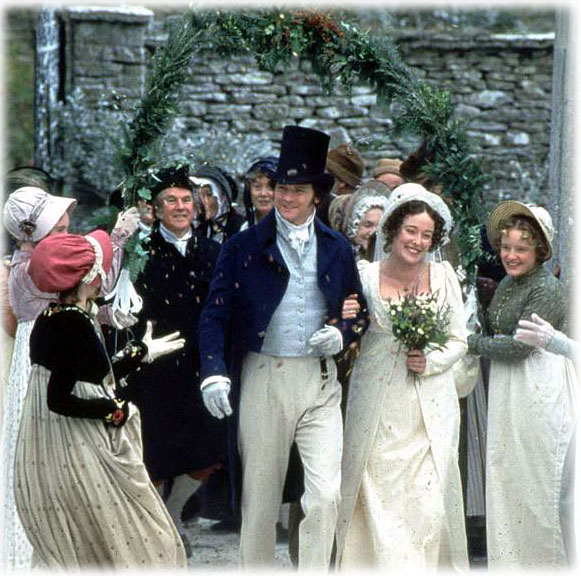
Until 1823, a single person under the age of one and twenty could not marry without his/her parent’s permission. (Lydia’s elopement and Georgiana’s aborted elopement were instances of this rule.) After 1823, the minimum age to marry without a parent’s consent drop to 14 for a boy and 12 for a girl. Other rules of marriage were also in effect, such as one was discouraged from marrying one’s deceased wife’s sister; yet, it was acceptable to marry one’s first cousin (Lady Catherine hopes Darcy will marry his cousin Anne, and Mr. Collins wishes to marry several of his Bennet cousins before settling on Charlotte Lucas.) The Marriage Act of 1835 eliminated the possibility of marrying one’s deceased wife’s sister. Such marriages were considered “void”able (if one wished an annulment). However, please recall that Jane Austen’s younger brother Charles married his wife’s (Francis Palmer) sister, Harriet. Francis had died in childbirth, and Charles had left his surviving daughters in Harriet’s care while he returned to sea. In 1820, he returned to England for several years, and after three years of “courtship,” he married Harriet. They remained married for 32 years (until his death in 1852). They had four children (3 sons and a daughter).

The law transferred all of a woman’s property transferred to her husband upon their marriage. Marriages were a BUSINESS CONTRACT, not a romantic attachment. When a wife from the wealthier classes entered a marriage, she, generally, brought a generous dowry to the settlement. The financial arrangements for a marriage were rarely a matter of concealment. According to What Jane Austen Are and Charles Dickens Knew (Daniel Pool, Touchstone Books), “a contemporary courtship etiquette manual says very straightforwardly that once you propose ‘your course is to acquaint the parents or guardians of the lady with your intentions, at the same time stating your circumstances and what settlement you would make upon your future wife; and, on their side, they must state what will be her fortune as near as they can estimate to the best of their knowledge at the time you make the enquiry.’”

Men often used their wives’ dowries to shore up their estates and investments. “Keeping up with the Jones” during the Regency was an expensive endeavor. The bride’s family negotiated her financial future as part of the settlements. What happened to her and her children depended upon making a good settlement. At the man’s death, the wife would receive approximately one-third of her husband’s land, but the Dower Act of 1833 abolished this practice. The woman was often given “pin money,” an annual allowance for her personal needs while her husband remained alive. After his death, a “jointure” could provide the widow money and land for her future, while leaving “portions” for her minor children.

Weddings occurred only during canonical hours, between 8 A.M. and noon. Normally, only close family and friends would attend the wedding. After the ceremony, the couple and their guests attended a wedding breakfast.

If an engaged person terminated the agreement before the marriage, he/she could face legal action in a “breach of promise” suit. However, assuming the couple meant to meet their obligations, there were four routes to “placing one’s neck in the parson’s ropes.”

(1) Calling of the Banns – If marrying in the Church of England, the couple would “publish the banns.” From his pulpit, the local clergy would announce the upcoming wedding for three consecutive Sundays. If the bride and groom lived in different parishes, the banns were read in both. If there were no objections to their joining, the couple could marry within 90 days of the final call. This was the method that the poorer families used for it cost nothing to have the banns called. Of course, one ran the possibility that an objection would be lodged in a very public manner. If the persons marrying came from separate parishes, the curate of one parish could not solemnize the wedding without a certificate of the other stating the banns had been “thrice called” and no objections had been lodged.

(2) Common/Ordinary License – For approximately 10 shillings, a couple could purchase a license from a clergyman. Then the couple could marry in either the parish of the bride or the groom. The common/ordinary license was good for 15 days. (This is how Lydia and Wickham were married in Pride and Prejudice. If one recalls, Wickham’s lodgings were in St. Clement’s parish, and St. Clement’s was the site of the marriage. One had to be a resident in the parish for 15 days prior to the ceremony.)

The common license could be obtained from any bishop or archbishop. A sworn statement was given that there were no impediments to the marriage. The marriage was to take place within 3 months of the license’s issuance.

(3) Special License – This was the most expensive way to marry. The Archbishop of Canterbury granted a special license. They cost between 4-5 pounds and were at the archbishop’s discretion. With a special license, a couple could marry in any parish and at any time.

(4) Civil License – After 1836, a fourth option appeared: the civil license. This license could be obtained from the superintendent-registrar. Couples who were Catholic, Jewish, or Dissenters obtained this license. The couple could be married at a church or at the registrar’s office.

Of course, the couple could foil all plans for marriage by eloping to Gretna Green, a Scottish town on the border with England. Gretna Green is in Dumfries and Galloway, near the mouth of the River Esk and was historically the first village in Scotland, following the old coaching route from London to Edinburgh. The marriage rules were not as strict as those in England. The Scottish Presbyterian Church was more lax in its requirements than the Church of England. Elopement was frowned upon as a “bad” way to begin a marriage. An elopement brought a family a certain amount of shame as it was a very anti-social act. A couple simply had to pledge yourself to your chosen partner and in the presence of another. The act was often referred to marrying “over the anvil” because Scottish law allowed for “irregular marriages,” and anyone could conduct the marriage ceremony. The blacksmiths in Gretna became known as “anvil priests.”

Posted in Jane Austen, Regency era | Tagged , , , , , , , | 4 Comments

Harper Collins to Bring a Global Publishing System to the Marketplace

This article comes from Publisher’s Weekly. To read the complete article, please visit http://www.publishersweekly.com/pw/by-topic/industry-news/publisher-news/article/54323-harper-to-implement-global-publishing-system.html

Oct 11, 2012

HarperCollins is to roll out a new global publishing system, which it claims is “one of the largest undertakings of its kind to be implemented by a trade publisher.”

Developed in partnership with Publishing Technology and built on its advance platform, Global Product Manager will enable the unifying of editorial, marketing and business data around the world, widening the reach of HC’s print and digital publications in its core target markets. By integrating systems and assets across the globe, the new system will provide the company with the long-term infrastructure needed to maximize its extensive catalogue of books, ebooks and apps, empowering HC staff to explore current and future content delivery types and business models, while enabling better metadata management to improve discoverability.

The system will be rolled out first in the US, followed by the UK and subsequently Canada and Australia, as well as to the Christian Publishing Division through 2013.

Posted in Industry News/Publishing, writing | 1 Comment

Regency Era Lexicon – “M” is for …

M.P. – a member of Parliament

macintosh – invented by Charles Macintosh in the 1820s; rubberized waterproof clothing; originally these smelled “terrible”

madeira – a sweet white wine

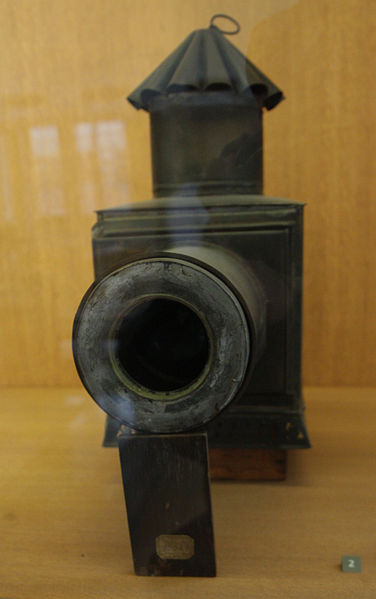
magic lantern – The magic lantern has a concave mirror in front of a light source that gathers light and projects it through a slide with an image scanned onto it. The light rays cross an aperture (which is an opening at the front of the apparatus), and hit a lens. The lens throws an enlarged picture of the original image from the slide onto a screen. Main light sources used during the time it was invented in the late 16th century were candles or oil lamps. These light sources were quite inefficient and produced weak projections. The invention of the Argand lamp in the 1790s helped to make the projected images brighter. The invention of the limelight in the 1820s made it even brighter.

magistrate – another term for a justice of peace; where justices were usually unsalaried country gentlemen, magistrates received a stipend

maid-of-all-work – a maid who performed all the chores in those households, which could afford only one servant

“making love” – During the Regency, this phrase held no physical or sexual connotations. It simply meant verbal flirting or visual flirting (as in a knowing glance across a crowded ballroom).

mail coaches – replaced the ill-conceived post boys in 1784; delivered the post to and from rural areas; was also a means of transportation for many

“making violent love” – is telling the person of the depth of one’s love (i.e., Mr. Elton in “Emma”)

male inheritance defines a “gentleman’s status” – a true gentleman was a man of property; very likely he inherited his country estate and manor from his father; no other requirements were needed to define a “gentleman”

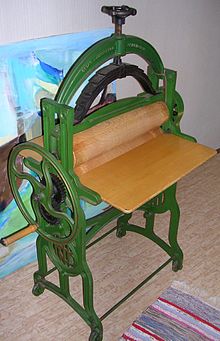
mangle – A mangle (as it is called in the United Kingdom) or wringer (as it is called in the United States) is a mechanical laundry aid consisting of two rollers in a sturdy frame, connected by cogs and, in its home version, powered by a hand crank.

man-of-war – large ship built specifically for warfare

man-trap – used to catch poachers; steel traps weighing up to 80 pounds

mantua-maker – a term for a dressmaker, based on the type of gown she made

marchioness – wife or widow of a marquis

marl – soil used as a fertilizer; it contained clay

marquis – the second highest rank of the peerage after a duke

marriage – was more of a business arrangement than a romantic attachment; the girl’s father/guardian assured her financial protection

marriage settlement/articles – a contract between the future bride and groom, which stipulated how the gentleman’s money would be settled upon the wife and future children upon his death

Martin’s Day– Martinmas, November 11; “Martin’s summer” was used to describe a period of good weather continuing into the late autumn

Master of Ceremonies – employed to oversee the protocol of the large public assemblies (especially those held at the Upper and Lower Rooms in Bath); introduced young ladies and gentlemen to each other so they might dance together (i.e., Henry Tilney and Catherine Morland in “Northanger Abbey”); held knowledge of people’s backgrounds and shared information discreetly; Mr. James King was the MC for the Lower Rooms from 1785-1805, then moved to the Upper Rooms

Mayfair – a half mile square in London’s West End; bounded by Oxford Street on the north, Bond Street on the east, Piccadilly on the south, and Hyde Park on the west; contains Pall Mall, Grosvenor Square, and Berkeley Square; the most elite residential area of London

merino – a superior wool from Spain

mews – any lane or open area where a group of stables could be found

Michaelmas – the feast of St. Michael, which is held on September 29; one of the quarter days

Middlesex – the county in which London north of the Thames was located (to the south was Surrey)

Midsummer Day – another quarter day; celebrated on June 24, which was also the feast of John the Baptist

militia – volunteer soldiers; unlike the regular army, a man from a lower class could enter the militia as an officer

milliner – a maker of women’s hats

“Miss” – used with a surname meant the eldest of several sisters

“Mister” – used with the man’s surname to indicate a surgeon or apothecary; a physician was “Doctor”

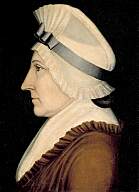
mobcap – a standard indoor headgear; A mob cap or mob-cap is a round, gathered or pleated cloth (usually linen) bonnet consisting of a caul to cover the hair, a frilled or ruffled brim, and (often) a ribbon band, worn by married women in the era.

minuet – a French dance for two people

moor – a wild, desolate area in Yorkshire, which is usually covered by heather; a term used in northern England and southern Scotland to designate a boggy or marshy area

morning calls – ceremonial visits paid by the genteel to ladies “at home” in their drawing rooms between 3-5 P.M.

muslin – a fine quality of cotton; very thin material; some young women wore muslin dresses with damped down chemises underneath

mute – a person hired to attend a funeral and mourn

Posted in British history, Jane Austen, Regency era | 4 Comments

Oh, the Places We Will Go…in Austen Novels

Chatsworth House, likely the inspiration for Pemberley

Through Jane Austen’s novels, I was first introduced, at the age of 12, to beautiful English estates and a land beyond my imagination. I fell in love with the time, the homes, the heroes and heroines, and I have spent a lifetime admiring Austen’s works. Do you know the many places found within Austen’s novels?

from Persuasion

Lyme Regis – where Louisa Musgrove falls from the Cobb; later falls in love with Captain Benwick

Uppercross – the Musgroves’ family home

Bath – city where the Elliots moved and where Anne and Captain Wentworth are reunited

Kellynch Hall – Sir Walter Elliot’s ancestral home

________________________

from Northanger Abbey

Putney, London – from where the Thorpes hail

Oxford – where James Morland attends university

Bath – the city Catherine Morland visits; she meets Henry Tilney there

Northanger Abbey, Gloucestershire – the family seat of the Tilney family

Fullerton, Wiltshire – the village from which the Morlands hail

_______________________________

from Emma

Bath – where Mr. Elton travels to secure a wife

Brunswick Square, London – home of John and Isabella Knightley

Donwell Abbey, Surrey – Mr. Knightley’s estate

Randalls, Surrey – where Mr. and Mrs. Weston reside

Hartfield, Surrey – where the Woodhouses live; Emma’s home

Highbury, Surrey – the village near the estates of Hartfield, Randalls, and Donwell Abbey

______________________________

from Mansfield Park

Sotherton – Mr. Rushwoth’s estate

Portsmouth – the place from where Fanny Price hails; her family resides there

Antigua – Sir Thomas owns a plantation there

London – from which Maria and Julia elope

Thornton Lacey – the clerical living Edmund will receive as part of his orders

Mansfield Parsonage – where first Mr. and Mrs. Norris reside; later it is the home for the Grants; Mary and Henry Crawford visit at the Parsonage

Mansfield Park – the home of the Bertram family and of Fanny Price

_________________________

from Pride and Prejudice 

Brighton, Sussex – where George Wickham is stationed; from which he and Lydia Bennet elope

Gracechurch Street, London – home of Mr. and Mrs. Gardiner, Elizabeth Bennet’s maternal uncle and his wife

Hunsford, Kent – Mr. Collins’ parsonage

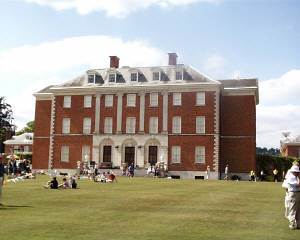
Chevening House, likely the inspiration for Rosing Park

Rosings Park, Kent – the estate of Lady Catherine De Bourgh; Darcy’s aunt

Pemberley, Derbyshire – Fitzwilliam Darcy’s estate

Netherfield, Hertfordshire – Mr. Charles Bingley’s let estate

Lucas Lodge, Hertfordshire – home of Sir William Lucas’s family

Meryton, Hertfordshire – the village nearest to Longbourn

Longbourn, Hertfordshire – home to the Bennet family

___________________________

from Sense and Sensibility

Cleveland, Somersetshire – the Palmer’s estate; where Marianne Dashwood falls ill

Allenham, Devonshire – the estate Willoughby is to inherit

Berkeley Street, London – Mrs. Jennings’ London address

Combe Magna, Somersetshire – Willoughby’s estate

Delaford, Devonshire – Colonel Brandon’s home

Barton Park – the home of Sir John Middleton

Barton Cottage – the home for the Dashwood sisters and their mother

Norland Park, Sussex – the Dashwood ancestral home


Posted in Jane Austen, Regency era, writing | Tagged , , , , , , | 6 Comments

Remembering the 1970 Marshall University Plane Crash

A Memory of the Marshall University Plane Crash
Originally Posted on November 14, 2010, by reginajeffers
This is not a post on Jane Austen. Rather it is a moment in time when I saw the true human spirit, and like Jane Austen, I need to speak of it. Today is the anniversary of one of the most tragic events I have ever experienced, and I hope you will allow me to take you into my life, and by doing so, you will understand more of what makes me the person I am and comprehend why I look to the simplicity of romance for my release. When I think back to the moments which have defined me as a person, I must choose my senior year in college. I attended Marshall University in Huntington, West Virginia.

On November 14, 1970, the Marshall faithful followed the team to Eastern Carolina University for a closely contested game. Returning to Huntington after the loss, Flight 932, a chartered twin-engine Southern Airways DC-9, struck a tree on a hill 5,543 feet west of the runway. The plane cut a path 95 feet wide by 279 feet long through the tree line, even clipping an abandoned house. It crashed, nose-first, in a hollow 4,219 feet short of the runway. The plane, essentially, came apart. A fire melted most of the fuselage. All 75 people aboard, including the entire football team, coaches, a group of supporters, and a crew of five, died. Even today, the cause remains uncertain: weather (fog and rain) or too low of a descent or improper use of cockpit instrumentation data.

Besides being a MU student, I also spent some time with a volunteer fire unit, one of the closest to the accident. Upon my arrival at the scene, I was pressed into combing the hillside for the bodies, one of the most horrendous experiences of my life. With flashlights and flares used for light, we began to gather what we could salvage. Taking my finds to a temporary morgue at the National Guard Armory at the airport, I recall the terrible moment when we realized we had not enough body bags. On the hillside, small fires burned for hours, and only the jet’s engine and a wing section were recognizable. Pieces of bodies were scattered throughout the area. We covered our finds with white plastic to block the view of “interested” onlookers who rushed to the scene. What we could recover, we placed on sheets laid on the armory’s floor. I remember that, ironically, Logan Packing Company provided a cooling unit to preserve the bodies.

Over the next week and a half, I attended 13 funerals, three in one day alone. An “instant” snuffed out the lives of the young who still had potential before them (the players) and those who had greeted life as a partner (mothers, fathers, business leaders, doctors, lawyers, coaches). A 52-minute flight had changed a town and changed me. A grief impossible to explain gripped the area. It was not only that we lost a football program. In reality, we were not a powerhouse at the time, but we were one of the first schools to recruit Black athletes, a statement of change following the Civil Rights movement. And like every young person, I had my hopes on a brighter tomorrow. The crash was a gaping hole waiting to be healed.

Despite our common anguish, things happened to keep the hope alive. The NCAA allowed Marshall to play freshmen, something never permitted previously, and with the insistence of Nate Ruffin, a man who later served on the university’s Alumni Board, as did I, the program became whole again. Walk-on players stepped up, and a team resurfaced. I would like to tell you that the program miraculously became automatic winners, but that would be a lie. For my birthday weekend, the first game in 1971, I was among those in the stands at Morehead State University watching the “Young” Thundering Herd; and although MU lost, many of us saw it as a victory for the university and the town. The next weekend, I was again among the throng crowded into Fairfield Stadium for the team’s first home game. And miracle of miracles, God answered the combined prayer of a crazed crowd – from those who pleaded for a sign that He had not forsaken them. I am not one to beg God for winning lottery numbers or for an unexpected inheritance, but I admit to adding my silent prayers for a win and was granted a last-minute one over Xavier. For hours afterwards, we remained in the stands, hugging strangers who shared the joy of seeing hope resurrected.

Marshall won only one more game that season, and for over a decade the university and the town suffered through numerous losing seasons; yet, even with those losses, people remembered the Xavier win. Often one heard someone say, “Were you here when the plane crashed?” Meaning, “Do we have a shared identity?” In the mid-80′s, MU won a I-AA National Championship and in the 90s more games than any other Division I school. Like every other school, MU has its good seasons and its rebuilding ones, but football is not the lesson here.

What did I learn from this tragedy? First, life is short. Embrace each day as if it is your last. Secondly, hope never dies. Even when faced with complete devastation, some moment, no matter how brief, tells a person that the phoenix will rise from the ashes. Lastly, true love is the most compelling of tasks. It is what sees us through the darkness.

November 14, 1970, serves as a defining date in my life. Like many who experienced this tragedy first hand, I am forever changed. However, the release of the 2006 movie We Are Marshall filled that gaping hole. I cried the first time I saw the film – the memory still too raw even after 35 years, but with each subsequent viewing, the hurt has lessened. Instead of death, I now view the resiliency of the human spirit. That resiliency and that need for hope and love are the subject of my writing.

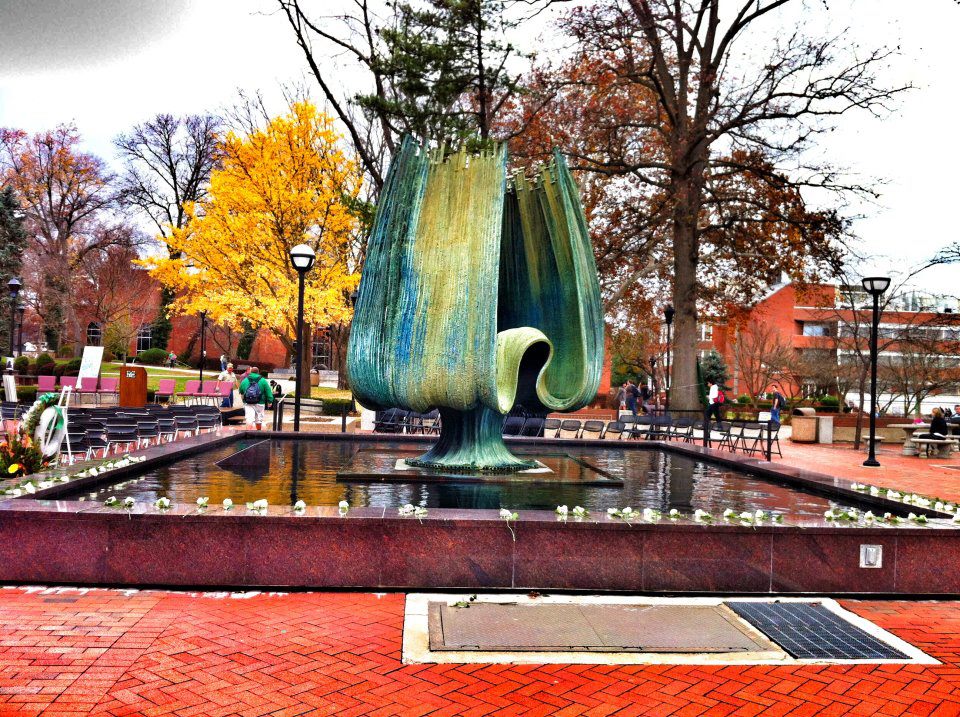
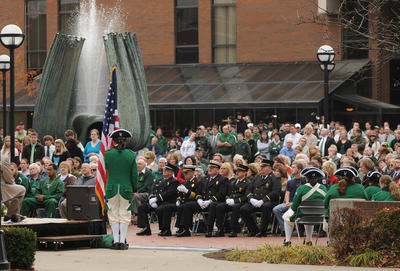
The Memorial Student Center Fountain was dedicated to the memory of the plane crash victims on November 12, 1972. Each year on the crash’s anniversary the water is turned off until the next spring. Its creator Harry Bertora said, “I hoped the fountain would ‘commemorate the living – rather than the dead – on the waters of life, rising, receding, surging, so to express upward growth, immortality, and eternality.’”

Posted in Uncategorized | Comments Off on Remembering the 1970 Marshall University Plane Crash