The Face of Jack the Ripper

On Friday, I included a post on The Brutality of Jack the Ripper. This is one of favorite sources on the crime. In 2006, BBC News brought us a look at “Jack the Ripper” by using modern day profiling techniques. Below is a short excerpt from the article, which is well worth the read.

Jack the Ripper’s face ‘revealed’
Jack the Ripper e-fit

The case has fascinated people for decades

An e-fit showing what detectives believe serial killer Jack the Ripper looked like has been revealed.Using new profiling techniques, investigators have created a picture of what they believe the 19th Century murderer would have looked like.

The man, who evaded police in the 1880s, is thought to have killed and mutilated five London prostitutes.

The Scotland Yard team describe him as “frighteningly normal” but someone capable of “extraordinary cruelty”.

And investigators have admitted that police at the time were probably searching for the wrong kind of man.

Head of analysis for Scotland Yard’s Violent Crime Command Laura Richards, who has studied serial killer Fred West and Soham murderer Ian Huntley, revisited the case using modern police techniques.

To continue reading go to http://news.bbc.co.uk/2/hi/6164544.stm

Posted in British history, gothic and paranormal, Industry News/Publishing, legends and myths, real life tales, Victorian era | Tagged , | Comments Off on The Face of Jack the Ripper

The Brutality of Jack the Ripper

Anyone who knows me, knows that I am a BIG Matthew Macfadyen fan. So, needless to say, I am anticipating the premiere of “Ripper Street” on BBC America on January 19 at 9 P.M. And yes, I do realize “‘Ripper Street’ is a BBC mini-series set in Whitechapel in London’s East End in 1889, six months after the infamous Jack the Ripper murders.”


That being said, I thought we could take a look at the definitive serial killer, Jack the Ripper. Many consider “Jack” the most terrifying of killers. The pure ferocity of Jack’s crimes continue to fascinate us over a century later.


The killer we know as Jack the Ripper made his first appearance on 31 August 1888 with the murder of a prostitute named Mary ‘Polly’ Nichols. Mary’s was the third killing of a prostitute in London’s East End, and despite its brutality, it did not initially attract attention. However, a week later, another prostitute, Annie Chapman, known as ‘Dark Annie,’ met a similar death. Mary’s throat and torso had been slit open, and there were stab wounds to the genitals. Polly also sported a slit throat, but with Polly, the Ripper  had disemboweled the woman, even going so far as to drape her entrails over Polly’s shoulder and to cut her vagina and ovaries. The precision of the cuts immediately led investigators to believe that the killer had medical training and was familiar with dissecting bodies in a post-mortem room.


On September 30, the killer upped the ante when he killed twice in one night. Elizabeth Stride, a seamstress and part-time prostitute, was the first victim. ‘Long Liz’ was done away with by a knife wound to the throat. Unlike Mary and Polly, though, Elizabeth displayed no other markings. Most experts believe the Ripper was interrupted in his mutilation of Elizabeth’s body. Dissatisfied, Jack the Ripper struck a second time in the same evening. He killed prostitute Catherine Eddowes with characteristic brutality. For example, the killer had removed Catherine’s kidney. In addition, someone had written on the wall of the building behind which Catherine was found this cryptic message: ‘The Juwes are not the men that will be blamed for nothing.’ Uncertain what the message meant, an investigating officer had the message removed, claiming he wished to avoid anti-Jewish hysteria.


Shortly before the double murder, the Central News Agency had received a letter reportedly from the killer. CNA ignored the first letter, but a second one arrived within hours of the first. In it, the note’s author signed the letter ‘Jack the Ripper.’ The moniker brought the expected sensationalism. Two weeks later, a third letter arrived. This one was directed to the attention of George Lusk, head of the Whitechapel Vigilance Committee. This third letter was, obviously, from a different author. The note showed the writer to be less literate than the first two and more disturbing. The return address simply said “From Hell,” and inside was a slice of human tissue, one the writer claimed to be part of Eddowes’ removed organ.


Another three weeks passed before the Ripper struck again. Mary Kelly, like the others, was a prostitute, but a different mode of operation occurred. Mary Kelly was killed indoors, in a room in Miller’s Court. Her body was the most brutalized. The killer had partially skinned Kelly, disemboweled her, and many of her organs, including her uterus and a fetus taken from it, were displayed like trophies about the room.


Victorian London held its breath and waited another murder, but none came. A knife murder of a prostitute occurred in 1890 and again in 1892, but neither displayed the characteristic savagery of the Ripper’s murders. As quickly as he appeared, Jack the Ripper was gone.


Many theories as to the Ripper’s identity have risen from time to time. Some of the suspects have included Queen Victoria’s grandson, Prince Eddy, who was thought to have taken his revenge on prostitutes because he had “earned” a case of syphilis from a prostitute. Then there is the idea that Sir William Gull, the Queen’s surgeon, had conspired to cover up an illegitimate child that Prince Eddy had conceived with a Whitechapel girl. Crime novelist Patricia Cornwell reportedly spent $8 million of her own money to prove the Victorian painter Walter Sickert was the murderer. We shall likely never know the true identity of the world’s most infamous murderer.

430px-Ripper_cartoon_punch

Posted in British history, gothic and paranormal, legends and myths, real life tales, Victorian era | Tagged , , , | 5 Comments

Regency and Victorian Eras: Growing Up Female in the Country

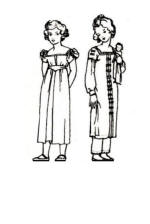
Young girls had little control over their lives during the Regency and Victorian eras. Their lives were strictly regulated by nurses and governesses. The girls were expected to practice correct moral and social standards. Responsibilities to family and name were numerous. Young girls learnt the necessity of benevolence. Charitable acts were taught by mothers and other female relatives.

1815

1815

Other than this “insistence” on their daughters showing condescension, parental involvement in their daughters’ educations was very limited. Remaining remote and indifferent was more the mode of the day. Mothers were traditionally active with their own social lives. Children remained at home with nurses/governesses while their mothers lived an active social life. Girls remained under the control of their nannies or governesses until they were old enough to make their debut into Society. Children often knew more affection from the house’s servants than did their parents.

Even when in residence, parents often preferred formal “daily visits” with their children rather than interacting with them informally. During the “children’s hour,” the young ones “performed” for their parents in carefully prepared exhibitions of what they had learned during their studies. The children, essentially, lived in a different world upstairs, and they were at the mercy of their caregivers. Sometimes, children resided in another of the family’s properties, or they were left in the country while their parents saw to their father’s developing political career in London. And Heaven Forbid, a marriage knew its troubles. Female children might be foisted off on other relatives or sent to live abroad under the care of a distant relative or governess. Male children were sent away to school and experienced a different type of isolation.

The segregation from the family extended to all parts of the child’s life: meals, sleeping quarters, and entertainment. Larger houses might have both day and night nurseries, as well as separate rooms for the older children. Food was often monotonous. Separate meals were prepared for the nursery. Furniture inside the nursery was often shabby. Girls often received a doll’s house, a rocking horse, and a painted screen as toys.

1840

1840

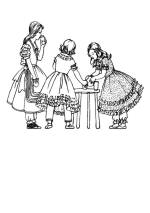
During the Victorian era, girls were dressed in numerous petticoats. During the winter, the petticoats were made of flannel. In the summer, they were starched stiff. Black-buttoned shoes, elaborate hats, and pelisses were worn out of doors. The same clothes were not worn for both morning and afternoon activities, and another change of clothes was required for the formal visits with their parents.


Posted in British history, Jane Austen, real life tales, Regency era | Tagged , , , | 3 Comments

“Going Courtin'” in the Regency Era

Society during the Regency era expected strict propriety from its young people. Sometimes the rules were strict and unreasonable, but somehow the youth of Jane Austen’s time managed to come together.

Young men of the time were often older than the women they courted. Men were expected to establish themselves before seeking a wife. They were expected to have sound financial prospects, especially if they were not the eldest son and expected to inherit the family property. Men often sought wives straight from the schoolroom, meaning ages 16 and 17 because childbirth was difficult for a woman of the era. It was thought that a younger wife could withstand those difficulties more easily than a “woman on the shelf” (women of 25+ years of age). An heir and a spare was expected of the marriage. In addition, the woman was expected to secure her financial future with her marriage.

At age 16 a girl of the gentry made her Come Out, which was a formal introduction of the girl to Society. It was the “signal” that she was prepared to become a bride. New dresses and jewelry and riding habits and… were required for the young lady’s debut. She would be “on display” at all times, and people would be evaluating her elegance and manners.  The Season in London involved balls, soirees, the theatre, assemblies, trips to the museum, etc. Finally, the young lady could participate in conversation with adults and her suitors.

In Jane Austen’s Pride and Prejudice, Lady Catherine De Bourgh is flabbergasted by the news that all five Bennet sisters are Out at the same time “The younger ones out before the elder are married!” Of course, Elizabeth Bennet defends her mother’s lax sense of propriety by saying, “I think it would be very hard upon younger sisters, that they shouldn’t have their share of society and amusement because the elder may not have the means or inclination to marry early.” When Charlotte Lucas finally marries at age 27, her sisters her happy because “hopes of coming out a year or two sooner than they might otherwise have done” arise.

A proper young lady was to have a chaperone in tow at all times. Often, a chaperone traveled with the husband and his new bride on their “honeymoon.” Eligible gentlemen were only to give their attentions to the young ladies who had made their Society debut.  A young woman who was Out could engage in conversation with eligible gentlemen, could attend formal dances and social outings, and could walk out with a gentleman, if she was properly chaperoned. Girls, who were not Out, could not engage in conversation until a parent or other familial adult asked her a question. She could only walk out with a male relative (again with a chaperone). Many girls wore what is known as a “close bonnet.” This was a hat with a deep brim, which hid most of the girl’s countenance from view.

Tom Bertram in Austen’s Mansfield Park relates a story of a young lady who did not practice decorum. The girl approached Tom at a party, claiming him an acquaintance and “talked and laughed till [he] did not know which way to look.” In sharp contrast is the novel’s heroine, Fanny Price. At Fanny’s Come Out, the guests note that Fanny is “attractive…modest…Sir Thomas’s niece…and soon to be admired by Mr. Crawford. It was enough to give her general favour.”

Posted in British history, Jane Austen, real life tales, Regency era | Tagged , , , , , | 9 Comments

The Governess: Qualified to Teach the Usual Branches of a Good English Education

jane eyre bbc versionA governess’s job was to teach the children of middle and upper class households in 19th Century England. By 1850, there were 21,000 governesses registered in England. In Charlotte Bronte’s Jane Eyre, our heroine places the following advertisement, which eventually lands her the position at Thornhill Hall: A young lady accustomed to tuition is desirous of meeting with a situation in a private home where the children are under fourteen. She is qualified to teach the usual branches of a good English education, together with French, Drawing, and Music.” The governess would remain in the household until the children departed for school or, in the case of young ladies, made her Come Out.

Being a governess was one of the few occupations considered suitable for middle-class girls to earn her a living. A governess was expected to have the education and manners of a genteel lady, but in the household, she held a tenuous situation. She was considered a servant by the master and mistress, but NOT one of their own to those below stairs. In Jane Austen’s Emma, Jane Fairfax bemoans her having to become a governess. She says, “…offices, where inquiry would soon procure something–offices for the sale not quite of human flesh, but of human intellect.”

jane-eyreBeing neither family nor servant, the governess spent a lonely lifestyle. Unfortunately, a large number of governesses had no family of their own to visit when given a rare holiday or from whom to receive a letter to ease the hours of isolation. Of course, in romance novels, the governess often attracts the attentions of the younger sons, or in Jane Eyre’s case, the master’s eye. For every “Jane Eyre,” there were likely many governesses who succumbed to the attentions of the households’ most seductive gentlemen. Affairs were more commonplace than we would like to think.

_________________________________

Currently available

Currently available

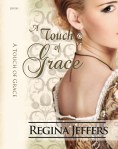
In my A Touch of Grace, the main character, Grace Nelson, is a governess in Viscount Averett’s home. When she meets the Marquis of Godown, Gabriel Crowden, her life changes, but not in a “Jane Eyre” sort of plot.

A Touch of Grace placed third in historical romance in 2012’s SOLA Seventh Annual Dixie Kane Memorial Awards.

“The first fully original series from Austen pastiche author Jeffers is a knockout.”
– Publishers Weekly

“Jeffers’s close look at the dark secrets of Regency society instills a sense of realism.”
– Publishers Weekly

After years away from England, members of the Realm return home to claim the titles and the lives they had previously abandoned. Each man holds onto the fleeting dream of finally know love and home. For now, all any of them can hope is the resolution of his earlier difficulties before Shaheed Mir, their old enemy, finds them and exacts his revenge. Mir seeks a mysterious emerald, and he believes one of the Realm has it.

GABRIEL CROWDEN, the Marquis of Godown, can easily recall the night that he made a vow to know love before he met his Maker. Of course, that was before Lady Gardenia Templeton’s duplicity had driven Godown from his home and before his father’s will had changed everything. Godown requires a wife to meet the unusual demands of the former marquis’s stipulations. Preferably one either already carrying his child or one who would tolerate his constant attentions to secure the Crowden line before the deadline.

GRACE NELSON dreams of family died with her brother’s ascension to the title. Yet, when she meets the injured Marquis of Godown at a Scottish inn, her dreams have a new name. However, hope never has an easy path. Grace is but a lowly governess with ordinary features. She believes she can never earn the regard of the “Adonis” known as Gabriel Crowden. Besides, the man has a well-earned skepticism when it comes to the women in his life. How can she prove that she is the one woman who will never betray him? The Regency era has never been hotter.

Posted in British history, Jane Austen, real life tales, Regency era | Tagged , , , , | 5 Comments

Oh, the Places You Will Go (Part 2)…the Settings for Jane Austen’s Novel

Sense and Sensibility

Norland Park in Sussex – the Dashwood’s family estate

Barton Park in Devonshire – home of Sir John Middleton

Barton Cottage in Devonshire – home of the Dashwood women

Delaford in Devonshire – home of Colonel Brandon

Combe Magna in Somerset – Willoughby’s estate

Berkeley Street in London – Mrs. Jennings’ home in London

Allenham in Devonshire – the estate Willoughby is to inherit

Cleveland in Somerset – the Palmers’ estate

___________________________________________

Persuasion

Kellynch Hall (likely in Dorset or Hampshire) – the Elliot’s home; later rented by Admiral Croft

Uppercross (likely in Dorset or Hampshire) – the Musgroves’ home

Uppercross Cottage (likely in Dorset or Hampshire) – home of Charles and Mary Musgrove

Lyme Regis in Dorset – home for Captain and Mrs. Harville, as well as their friend Captain Benwick

Bath in Somerset – where the Elliots decamp to save on finances; most of the characters also arrive to spend time in Bath

_____________________________________________________

Emma

Hartfield in Surrey – home of Mr. Woodhouse and Emma

Randalls in Surrey – home of Mr. and Mrs. Weston

Donwell Abbey in Surrey – Mr. Knightley’s estate

Highbury in Surrey – the village closest to Hartfield, Randalls, and Donwell Abbey

Brunswick Square in London – home of John and Isabella Knightley

Bath in Somerset – where Mr. Elton meets and courts his wife

Richmond in London – where Mrs. Churchill goes for her health

Weymouth in Dorset – where Frank Churchill first meets Jane Fairfax

Southend in Essex – where John and Isabella holiday with their children

_________________________________________________

Northanger Abbey

Fullerton in Wiltshire – the village from which Catherine Morland comes

Bath in Somerset – where Catherine holidays; where she meets Henry Tilney

Oxford in Oxfordshire – where James Morland attends university

Putney in London – from where the Thorpes hail

Northanger Abbey in Gloucestershire – the Tilney family estate

_________________________________________

Mansfield Park

Mansfield Park – home to the Bertrams and Fanny Price

Mansfield Parsonage – home to Mr. and Mrs. Norris; later home to the Grants and to Mary and Henry Crawford

Portsmouth – where Fanny’s family lives

Sotherton – Mr. Rushworth’s estate

Antigua – Sir Thomas Bertram has a plantation there

London – from where both Maria and Julia elope

Thornton Lacey – the clerical living Edmund Bertram is to receive

_______________________________________

Pride and Prejudice 

Pemberley in Derbyshire – Fitzwilliam Darcy’s estate

Rosings Park in Kent – home of Lady Catherine De Bourgh

Hunsford Cottage in Kent – parsonage Mr. Collins receives as part of the living from Lady Catherine

Gracechurch Street in London – home of Mr. and Mrs. Gardiner

Brighton in Sussex – from where Lydia Bennet and George Wickham elope

Longbourn in Hertfordshire – the Bennet family estate

Netherfield Park in Hertfordshire – the estate Mr. Bingley lets

Lucas Lodge in Hertfordshire – home of Sir William and Lady Lucas

Meryton in Hertfordshire – the village nearest to Longbourn

___________________________________

Real Places in Austen’s Life:

Chatsworth House – likely the model for Pemberley in Pride and Prejudice

Lyme Regis – Austen visited the Dorset town in both 1803 and 1804

Cottesbrooke Hall in Northamptonshire – likely the model for Mansfield Park; Austen’s brother Henry knew the Langham family who owned the property

Bath – Austen lived in Bath for several years

Posted in British history, Jane Austen, Regency era, writing | Tagged , , , , , , , | 4 Comments

Courtship During the Regency Period

Elizabeth-Bennet-played-by-Jennifer-Ehle-in-Pride-and-Prejudice-19951Expectations placed on young people of the aristocracy and the gentry were quite high. A young man was “expected” to make a match that would bring wealth or position to his family name. First, a gentleman was often several years older than his potential mate.  For example, Fitzwilliam Darcy is eight and twenty years of age, while Elizabeth Bennet is twenty. In fact, Elizabeth and Jane Bennet are very close to being “on the shelf.” Girls made their Society debut at age sixteen. Gentlemen at age one and twenty.  Several logical reasons affected these unspoken rules of courtship. For example, childbirth was a difficult time for women. Dangers were aplenty. It was believed that a young wife could withstand the need to produce the necessary “heir and a spare.” For the gentleman, twenty-one was the age at which a man could enter a contract without his father’s permission. One must recall that an engagement required a written contract during the Regency Period. Men without financial prospects often waited to marry in order to establish their careers and earn enough money to support a wife and children. Therefore, it was not uncommon for a man to marry at age 30 and for his wife to be between 16 and 20 years of age.

To meet the “perfect” or “not-so-perfect” mate, one attended dances (private balls and public assemblies) or other socials. Family and friends were a source of potential mates. When someone of interest appeared, finding private time to learn more of one another was difficult. A young lady was expected to chaperoned at all times. Dancing was one of the few activities in which the couple could participate and hold a conversation. However, a couple could dance no more than two 30 minute sets, otherwise, the couple would be thought to have an understanding in place, meaning they were considered engaged.

Apart from dancing, young people attended family parties or functions. At such social events, one was expected to be sociable with everyone in attendance. Again, spending time alone together was nearly nonexistent. Walking out or riding together required proper chaperones. Marianne Dashwood risks her reputation in Austen’s “Sense and Sensibility” by riding alone in Mr. Willoughby’s gig, and in “Northanger Abbey,” Catherine Morland is very upset when John Thorpe maneuvers her into his gig alone.

A couple could not even correspond until they were officially engaged. Marianne pushes the lines of propriety when she writes Willoughby. Her letters are why Elinor assumes that Marianne is engaged to Willoughby.

wedding-ringsActually, the first time most couples were alone was during the actual proposal. Engagement rings were not necessarily given as a symbol of the lady’s acceptance.  A woman’s power of refusal was her only control in the situation. Henry Tilney says as such in “Northanger Abbey.” Rarely did a woman refuse the proposal (except in the case of Elizabeth Bennet with both Mr. Collins and Mr. Darcy). If one recalls, Mr. Collins points out that Elizabeth is not likely to receive another proposal if she refuses him. Occasionally, a woman would break the engagement, but it was frowned upon for a gentleman to break the engagement. Society’s disapproval of his breaking the engagement is why Edward Ferrars keeps his word to Lucy Steele in “Sense and Sensibility.”

Once the proposal is accepted by the woman, the gentleman then asks the bride’s father for permission to marry her. Once the bride’s father approved, the marriage articles were drawn up. This contract defined the distribution of wealth and property in the marriage and what would happen to the wife and children if the husband met an early death. Occasionally, a jointure became part of the articles.  A jointure stated that the wife would receive a guaranteed portion of her husband’s property upon his death.

Posted in British history, Jane Austen, real life tales, Regency era | Tagged , , , , , , , | 25 Comments

The Massacre at St. Peter’s Field

A depiction of the Peterloo Massacre by Richard Carlile

A depiction of the Peterloo Massacre by Richard Carlile

The events at Peterloo play a pivotal point in my February release of His. Peterloo brings my heroine and hero together in the second of the two novellas, “His Irish Eve,” which make up this new anthology.

On August 16, 1819, the Peterloo Massacre occurred at St. Peter’s Field in Manchester. A crowd of 60,000-80,000 had gathered to protest the lack of parliamentary representation for the heavily populated industrialized areas.

With the end of the Napoleonic Wars in 1815, the Corn Laws exacerbated the famine of the Year without Summer (1816) and the growing unemployment problems. By the beginning of 1819 the pressure generated by poor economic conditions, coupled with the lack of suffrage in northern England, had enhanced the appeal of political radicalism. In response, the Manchester Patriotic Union, a group agitating for parliamentary reform, organized a demonstration to be addressed by the well-known radical orator Henry Hunt.

Fearing the worst, local magistrates called on the military to dispense with the crowd. They also demanded the arrest of Hunt and the other featured speakers. The Cavalry charged the crowd with sabers drawn. In the melee, 15 people were killed and some 500+ were injured. The massacre was given the name Peterloo, an ironic comparison to the devastation found at the Battle of Waterloo. The Peterloo Massacre became a defining moment of the age. Unfortunately, the massacre’s immediate effect was the passage of the Six Acts, which labelled any meeting for radical reform as “an overt act” of treasonable conspiracy.”

It also led directly to the foundation of The Manchester Guardian, but had little other effect on the pace of reform. In a survey conducted by The Guardian in 2006, Peterloo came second to the Putney Debates as the event from British history that most deserved a proper monument or a memorial. A plaque close to the site, a replacement for an earlier one that was criticized as being inadequate, as it did not reflect the scale of the massacre, commemorates Peterloo. 650px-PeterlooRedPlaque

HisCrop


The Deepest Love Is Always Unexpected

“His American Heartsong”

Lawrence Lowery has been the dutiful elder son his whole life, but when his father Baron Blakehell arranges a marriage with the insipid Annalee Dryburgh, Lowery must choose between his responsibility to his future estate and the one woman who makes sense in his life. By Society’s standards, Arabella Tilney is completely wrong to be the future Baroness–she is an American hoyden, who demands that Lowery do the impossible: Be the man he has always dreamed of being. (A Novella from the Realm Series

“His Irish Eve”

When the Earl of Greenwall demands his only son, Viscount Stafford, retrieve the viscount’s by-blow, everything in Adam Lawrence’s life changes. Six years prior, Lawrence had released his former mistress Cathleen Donnell from his protection only to learn in hindsight Cathleen was with child. Lawrence arrives in Cheshire to discover not only a son, but also two daughters, along with a strong-minded woman who fascinates him from the moment of their first encounter. Aoife Kennice, the children’s caregiver, is a woman impervious to Adam’s usual tricks and ruses as one of England’s most infamous rakes. But this overconfident lord is about to do battle: A fight Adam must win – a fight for the heart of a woman worth knowing.

Posted in British history, real life tales, Regency era, writing | Tagged , , , | Comments Off on The Massacre at St. Peter’s Field

Poison, Passion, and Politics

Albertus Magnus

The German scholar, Albertus Magnus, is generally credited with the discovery of arsenic in or about 1250. All sorts of poisons have been used since the time of the ancient Greeks and Romans. The Greeks had a fondness for water hemlock, a plant in the carrot family, not the evergreen family. Plato celebrated the use of hemlock in his description of the death of Socrates.

Beginning with the Roman Empire forward, arsenic became the preferred poison. There are some references to the use of arsenic as far back as the 4th Century B.C., but Magnus perfected the compound in the 1200s. A metallic arsenic is mentioned in the writings of Paracelsus, a physician-alchemist in the late Middle Ages, who is often referred to a the “Father of Modern Toxicology.”

In the first century, Dioscorides, a Greek physician at the court of the Roman Emperor Nero, offers a brief listing of the advantage of arsenic for sinister uses: no odor or taste when mixed with food/drink and its lack of color. Arsenic is readily found in nature, which makes it easily accessible to ALL people. Because arsenic poisoning mimics food poisoning, making it harder to detect, especially before physicians had full toxicology labs available to aid their diagnoses.

A single large dose of arsenic brought about diarrhea, vomiting, and death from shock, while smaller doses over a period of time resulted in lost of muscle control, paralysis, and mental confusion. As203 became the arsenic of choice for it could kill a man with a dose less than that of tip of a teaspoon in the powder.

Poison became the way to go about business in politics during the Roman reign. It became commonplace to deal with those who were disliked by slipping a dose of poison in their drinks or food. The poisons were so common that few believed in the natural deaths of kings, emperors, or clergymen. In 82 B.C., the Roman dictator Lucious Cornelius Sulla issued the Lex Cornelia, the first law outlawing poisons. Poisons were readily used during the Renaissance. A woman named Toffana from Florence, Italy, was renowned for making arsenic-laced cosmetics. Hieronyma Spara taught young married women how to rid themselves of their husbands of convenience.

Cesare Borgia

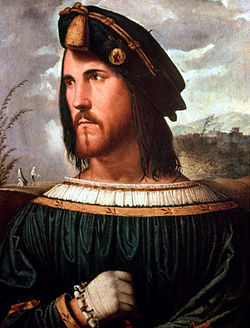
The Borgias perfected the art of poisoning during the Middle Ages. Pope Alexander VI and his son Cesare easily rid themselves of interfering bishops and cardinals. Cesare’s half sister Lucretia is often thought to have mastered the art of poison, but many experts think her an innocent. Following the inevitable death of their victims, the Borgias profited by the law of the church, which reverted the victim’s property to the church (i.e., the pope).

The Borgias knew great wealth from their acquisitions, from Cesare’s position as a captain-general in the papal army, and from Lucretia’s three successful marriages for money and station. Ironically, the Pope and Cesare partook of some poisoned wine by accident. The Pope died. It is said that Cesare invoked the ancient superstition of encasing himself in an animal’s carcass. He had a mule slaughtered and wrapped himself in the animal skin. Surprisingly, the remedy worked. Cesare lived.

In 1821, Napoleon Bonaparte passed after suffering many of the symptoms of arsenic poisoning. Modern toxicology has never proven this rumor, but it persists. Trace amounts of arsenic were found in Bonaparte’s hair, but those amounts were in line with what could have been readily absorbed into the body. The official cause of death was stomach cancer.

Claire Booth Luce became a victim of arsenic poisoning when she was the U.S. Ambassador to Italy. Believe it or not, the arsenic-based paint from the ceiling of the embassy easily fell into the food. Luce resigned her position.

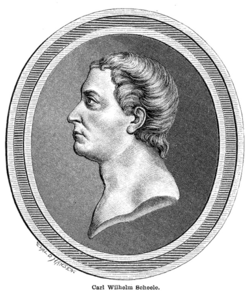
Carl Scheele developed “Paris Green,” an arsenic compound in 1775. It was used as a pigment in paints, wallpaper, and fabrics. Although thousands of people reportedly took ill from exposure to the compound, it was the end of the 1800s before Paris Green was recognized as a health hazard.

In the 1830s, a British chemist named James Marsh became the first to use arsenic detection in a jury trial. Marsh had developed a method for determining the level of arsenic in foods and beverages. Arsenic lingers in the urine, nails, and hair of the victim. Arsenic was an ingredient in Victorian fly papers. A deadly liquid was created when the paper was soaked in water. The liquid could then be used to cook food or mix with drinks. Arsenic is sometimes called “inheritance powder” due to its ready availability.

Arsenic is a favorite means to an end, especially in the hands of mystery writers. As late as the 1940s, arsenic was given to syphilis patients, as well as to those who suffered from yaws and leprosy. Today, it is used to remove color from glass, to promote growth in livestock, to preserve animals in taxidermy, and to create a metal alloy.

Posted in British history, gothic and paranormal, real life tales | Tagged , , , , , , , , , , , , , , | Comments Off on Poison, Passion, and Politics

Celebrating the Epiphany

Epiphany (Koine Greek: ἐπιφάνεια, epiphaneia, “manifestation”, “striking appearance”) or Theophany (Ancient Greek (ἡ) Θεοφάνεια, Theophaneai meaning “vision of God”), which traditionally falls on January 6, is a Christian feast day that celebrates the revelation of God the Son as a human in the form of Jesus Christ. Western Christians commemorate principally (but not solely) the visitation of the Biblical Magi to the infant Jesus, and thus Jesus’s physical manifestation to the Gentiles. Eastern Christians commemorate the baptism of Jesus in the River Jordan, seen as his manifestation to the world as God’s son. 

Eastern churches following the Julian Calendar observe the Theophany feast on what for most countries is January 19 because of the 13-day difference today between that calendar and the generally used Gregorian calendar. 

Since 1970, the date of the celebration by Latin Rite Roman Catholics is fixed as January 6 only in countries where the feast is a Holy Day of Obligation, while in other countries it falls on the Sunday after January 1. In the Church of England,  also, the feast may be celebrated on the Sunday between January 2 and 8 inclusive.

A separate celebration of the Baptism of the Lord  was introduced for Latin Rite Roman Catholics in 1955. Initially, this was to be held on January 13, previously the octave day of the Epiphany, but in the 1969 revision of the General Roman Calendar the date was changed to the first Sunday after January 6. In countries where in a particular year the Epiphany falls on January 7 or 8, the feast of the Baptism of the Lord is celebrated on the following Monday. In the Church of England, the same custom may be followed. In the Episcopal Church in the United States, the feast of the Baptism of the Lord is always the Sunday after January 6.

Christians fixed the date of the feast on January 6 quite early in their history. Ancient liturgies noted Illuminatio, Manifestatio, Declaratio (Illumination, Manifestation, Declaration); cf. Matthew 3:13-17; Luke 3:22; and John 2:1-11;  where the Baptism and the Marriage at Cana were dwelt upon. Western Christians have traditionally emphasized the “Revelation to the Gentiles” mentioned in Luke, where the term Gentile means all non-Jewish peoples. The Biblical Magi, who represented the non-Jewish peoples of the world, paid homage to the infant Jesus in stark contrast to Herod the Great (King of Judea), who sought to kill him. In this event, Christian writers also inferred a revelation to the Children of Israel. Saint John Chrysotom identified the significance of the meeting between the Magi and Herod’s court: “The star had been hidden from them so that, on finding themselves without their guide, they would have no alternative but to consult the Jews. In this way the birth of Jesus would be made known to all.”

The West observes a twelve-day festival, starting on December 25, and ending on January 5, known as Christmastide or the Twelve Days of Christmas. Some Christian cultures, especially those of Latin America  and some in Europe, extend the season to as many as forty days, ending on Candlemas (February 2).

On the Feast of the Epiphany, the priest, wearing white vestments, will bless the Epiphany water, frankincense, gold, and chalk. Chalk is used to write the initials of the three magi over the doors of churches and homes. The letters stand for the initials of the Magi (traditionally named Caspar, Melchior, and Balthasar), and also the phrase Christus mansionem benedicat, which translates as “may Christ bless the house”.

According to ancient custom, the priest announced the date of Easter  on the feast of Epiphany. This tradition dated from a time when calendars were not readily available, and the church needed to publicize the date of  Easter, since many celebrations of the liturgical year depend on it. The proclamation may be sung or proclaimed at the ambo by a deacon, cantor, or reader either after the reading of the Gospel or after the post communion prayer. 

The Roman Missal  thus provides a formula with appropriate chant (in the tone of the Exsultet) for proclaiming on Epiphany, wherever it is customary to do so, the dates in the calendar for the celebration of Ash Wednesday, Easter Sunday, Ascension of Jesus Christ, Pentecost, the Body and Blood of Christ, and the First Sunday of Advent that will mark the following liturgical year.

Posted in British history, legends and myths, Regency era | Tagged , , | Comments Off on Celebrating the Epiphany