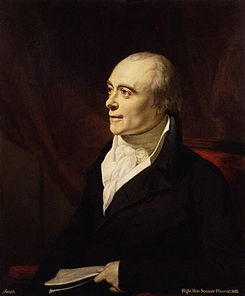
Spencer Perceval, KC (1 November 1762 – 11 May 1812) was the Prime Minister of the United Kingdom from 4 October 1809 until his death on 11 May 1812. He is the only British Prime Minister to have been assassinated. He is also the only Solicitor General or Attorney General to have been Prime Minister.
The younger son of an Irish earl, Perceval was educated at Harrow and Trinity College, Cambridge. He studied law at Lincoln’s Inn, practised as a barrister on the Midland Circuit and in 1796 became a King’s Counsel before entering politics at the age of 33 as a Member of Parliament for Northampton. A follower of William Pitt, Perceval always described himself as a “friend of Mr Pitt,” rather than a Tory. Perceval was opposed to Catholic emancipation and reform of Parliament; he supported the war against Napoleon and the abolition of the slave trade. He was opposed to hunting, gambling and adultery, did not drink as much as most Members of Parliament, gave generously to charity, and enjoyed spending time with his twelve children.
After a late entry into politics his rise to power was rapid; he was Solicitor and then Attorney General in the Addington Ministry, Chancellor of the Exchequer and Leader of the House of Commons in the Portland Ministry, and became Prime Minister in October 1809. At the head of a weak ministry, Perceval faced a number of crises during his term in office including an inquiry into the disastrous Walcheren expedition, the madness of King George III, economic depression and Luddite riots. He survived these crises, successfully pursued the Peninsular War in the face of opposition defeatism, and won the support of the Prince Regent. His position was looking stronger by the spring of 1812, when John Bellingham, a merchant with a grievance against the Government, shot him dead in the lobby of the House of Commons.
Although Perceval was a seventh son and had four older brothers who survived to adulthood, the Earldom of Egmont reverted to one of his great-grandsons in the early 20th century and remained in the hands of his descendants until its extinction in 2011.
Childhood and Education
Perceval was the seventh son of John Perceval, 2nd Earl of Egmont; he was the second son of the earl’s second marriage. His mother, Catherine Compton, Baroness Arden, was a grand-daughter of the 4th Earl of Northampton. Spencer was a Compton family name; Catherine Compton’s great uncle Spencer Compton, 1st Earl of Wilmington, had been Prime Minister.
His father, a political advisor to Frederick, Prince of Wales and King George III, served briefly in the Cabinet as First Lord of the Admiralty. Perceval’s early childhood was spent at Charlton House, which his father had taken to be near Woolwich docks.
Perceval’s father died when he was eight. Perceval went to Harrow School, where he was a disciplined and hard-working pupil. It was at Harrow that he developed an interest in evangelical Anglicanism and formed what was to be a lifelong friendship with Dudley Ryder. After five years at Harrow he followed his older brother Charles to Trinity College, Cambridge, where he won the declamation prize in English and graduated in 1782.
Legal Career and Marriage
As the second son of a second marriage, and with an allowance of only £200 a year, Perceval faced the prospect of having to make his own way in life. He chose the law as a profession, studied at Lincoln’s Inn, and was called to the bar in 1786. Perceval’s mother had died in 1783, and Perceval and his brother Charles, now Lord Arden, rented a house in Charlton, where they fell in love with two sisters who were living in the Percevals’ old childhood home. The sisters’ father, Sir Thomas Spencer Wilson, approved of the match between his eldest daughter Margaretta and Lord Arden, who was wealthy and already a Member of Parliament and a Lord of the Admiralty. Perceval, who was at that time an impecunious barrister on the Midland Circuit, was told to wait until younger daughter Jane came of age in three years’ time. When Jane reached 21 in 1790 Perceval’s career was still not prospering, and Sir Thomas still opposed the marriage. So the couple eloped and married by special licence in East Grinstead. They set up home together in lodgings over a carpet shop in Bedford Row, later moving to Lindsey House, Lincoln’s Inn Fields.
Perceval’s family connections obtained a number of positions for him: Deputy Recorder of Northampton, and Commissioner of Bankrupts in 1790; Surveyor of the Maltings and Clerk of the Irons in the Mint — a sinecure worth £119 a year – in 1791; counsel to the Board of Admiralty in 1794. He acted as junior counsel for the Crown in the prosecutions of Thomas Paine in absentia for seditious libel (1792), and John Horne Tooke for high treason (1794). Perceval joined the Light Horse Volunteers in 1794 when the country was under threat of invasion by France.
Perceval wrote anonymous pamphlets in favour of the impeachment of Warren Hastings, and in defence of public order against sedition. These pamphlets brought him to the attention of William Pitt the Younger and in 1795 he was offered the appointment of Chief Secretary for Ireland. He declined the offer. He could earn more as a barrister and needed the money to support his growing family. In 1796 he became a King’s Counsel and had an income of about £1000 a year.
Early Political Career 1796–1801
In 1796 Perceval’s uncle, the 8th Earl of Northampton, died. Perceval’s cousin, who was MP for Northampton, succeeded to the Earldom and took his place in the House of Lords. Perceval was invited to stand for election in his place. In the May by-election he was elected unopposed, but weeks later had to defend his seat in a fiercely contested general election. Northampton had an electorate of about one thousand — every male householder not in receipt of poor relief had a vote — and the town had a strong radical tradition. Perceval stood for the Castle Ashby interest, Edward Bouverie for the Whigs, and William Walcot for the corporation. After a disputed count Perceval and Bouverie were returned. Perceval represented Northampton until his death 16 years later, and is the only MP for Northampton to have held the office of Prime Minister. 1796 was his first and last contested election; in the general elections of 1802, 1806 and 1807 Perceval and Bouverie were returned unopposed.
When Perceval took his seat in the House of Commons in September 1796 his political views were already formed. “He was for the constitution and Pitt; he was against Fox and France,” wrote his biographer Denis Gray. During the 1796–1797 session he made several speeches, always reading from notes. His public speaking skills had been sharpened at the Crown and Rolls debating society when he was a law student. After taking his seat in the House of Commons, Perceval continued with his legal practice as MPs did not receive a salary, and the House only sat for a part of the year. During the Parliamentary recess of the summer of 1797 he was senior counsel for the Crown in the prosecution of John Binns for sedition. Binns, who was defended by Samuel Romilly, was found not guilty. The fees from his legal practice allowed Perceval to take out a lease on a country house, Belsize House in Hampstead.
It was during the next session of Parliament, in January 1798, that Perceval established his reputation as a debater — and his prospects as a future minister — with a speech in support of the Assessed Taxes Bill (a bill to increase the taxes on houses, windows, male servants, horses and carriages, in order to finance the war against France). He used the occasion to mount an attack on Charles Fox and his demands for reform. Pitt described the speech as one of the best he had ever heard, and later that year Perceval was given the post of Solicitor to the Ordnance.
Solicitor and Attorney General 1801–1806
Pitt resigned in 1801 when the King and Cabinet opposed his bill for Catholic emancipation. As Perceval shared the King’s views on Catholic emancipation he did not feel obliged to follow Pitt into opposition and his career continued to prosper during Henry Addington’s administration. He was appointed Solicitor General in 1801 and Attorney General the following year. Perceval did not agree with Addington’s general policies (especially on foreign policy), and confined himself to speeches on legal issues. He kept the position of Attorney General when Addington resigned and Pitt formed his second ministry in 1804. As Attorney General Perceval was involved with the prosecution of radicals Edward Despard and William Cobbett, but was also responsible for more liberal decisions on trade unions, and for improving the conditions of convicts transported to New South Wales.
Pitt died in January 1806. Perceval was an emblem bearer at his funeral and, although he had little money to spare (by now he had eleven children), he contributed £1000 towards a fund to pay off Pitt’s debts. He resigned as Attorney General, refusing to serve in Lord Grenville’s ministry of “All the Talents” as it included Fox. Instead he became the leader of the Pittite opposition in the House of Commons.
During his period in opposition, Perceval’s legal skills were put to use to defend Princess Caroline, the estranged wife of the Prince of Wales, during the “delicate investigation”. The Princess had been accused of giving birth to an illegitimate child and the Prince of Wales ordered an inquiry, hoping to obtain evidence for a divorce. The Government inquiry found that the main accusation was untrue (the child in question had been adopted by the princess) but was critical of the behaviour of the princess. The opposition sprang to her defence and Perceval became her advisor, drafting a 156-page letter in her support to King George III. Known as “The Book,” it was described by Perceval’s biographer as “the last and greatest production of his legal career.” When the King refused to let Caroline return to court, Perceval threatened publication of the book. But Grenville’s ministry fell – again over a difference of opinion with the King on the Catholic question – before the book could be distributed and, as a member of the new Government, Perceval drafted a cabinet minute acquitting Caroline on all charges and recommending her return to court. He had a bonfire of the book at Lindsey House and large sums of Government money were spent on buying back stray copies, but a few remained at large and “The Book” was published soon after his death.
Chancellor of the Exchequer 1807–1809
On the resignation of Grenville, the Duke of Portland put together a ministry of Pittites and asked Perceval to become Chancellor of the Exchequer and Leader of the House of Commons. Perceval would have preferred to remain Attorney General or become Home Secretary, and pleaded ignorance of financial affairs. He agreed to take the position when the salary (smaller than that of the Home Office) was augmented by the Duchy of Lancaster. Lord Hawkesbury (later Liverpool) recommended him to the king by explaining that he came from an old English family and shared the king’s views on the Catholic question.
Perceval’s youngest child, Ernest Augustus, was born soon after Perceval became Chancellor (Princess Caroline was godmother). Jane Perceval became ill after the birth and the family moved out of the damp and draughty Belsize House, spending a few months in Lord Teignmouth’s house in Clapham before finding a suitable country house in Ealing. Elm Grove was a 16th-century house that had been the home of the Bishop of Durham; Perceval paid £7,500 for it in 1808 (borrowing from his brother Lord Arden and the trustees of Jane’s dowry) and the Perceval family’s long association with Ealing began. Meanwhile, in town, Perceval had moved from Lindsey House into 10 Downing Street, when the Duke of Portland moved back to Burlington House shortly after becoming Prime Minister.
One of Perceval’s first tasks in Cabinet was to expand the Orders in Council that had been brought in by the previous administration and were designed to restrict the trade of neutral countries with France, in retaliation to Napoleon’s embargo on British trade. He was also responsible for ensuring that Wilberforce’s Bill on the Abolition of the Slave Trade, which had still not passed its final stages in the House of Lords when Grenville’s ministry fell, would not “fall between the two ministries” and be rejected in a snap division.[6] Perceval was one of the founding members of the African Institute, which was set up in April 1807 to safeguard the Abolition of the Slave Trade Act.
As Chancellor of the Exchequer Perceval had to raise money to finance the war against Napoleon. This he managed to do in his budgets of 1808 and 1809 without increasing taxes, by raising loans at reasonable rates and making economies. As leader of the House of Commons he had to deal with a strong opposition, which challenged the government over the conduct of the war, Catholic emancipation, corruption and Parliamentary reform. Perceval successfully defended the Commander-in-Chief of the army, the Duke of York, against charges of corruption when the Duke’s ex-mistress Mary Anne Clarke claimed to have sold army commissions with his knowledge. Although Parliament voted to acquit the Duke of the main charge, his conduct was criticised and he accepted Perceval’s advice to resign. (He was to be re-instated in 1811).
Portland’s ministry contained three future prime-ministers – Perceval, Lord Hawkesbury and George Canning – as well as another two of the 19th-century’s great statesmen: Lord Eldon and Lord Castlereagh. But Portland was not a strong leader and his health was failing. The country was plunged into political crisis in the summer of 1809 as Canning schemed against Castlereagh and the Duke of Portland resigned following a stroke. Negotiations began to find a new Prime Minister: Canning wanted to be Prime Minister or nothing, Perceval was prepared to serve under a third person, but not Canning. The remnants of the cabinet decided to invite Lord Grey and Lord Grenville to form “an extended and combined administration” in which Perceval was hoping for the Home Secretaryship. But Grenville and Grey refused to enter into negotiations, and the king accepted the Cabinet’s recommendation of Perceval for his new Prime Minister. Perceval kissed the king’s hands on 4 October and set about forming his Cabinet, a task made more difficult by the fact that Castlereagh and Canning had ruled themselves out of consideration by fighting a duel (which Perceval had tried to prevent). Having received five refusals for the office, he had to serve as his own Chancellor of the Exchequer – characteristically declining to accept the salary.
Prime Minister 1809-1812
The new ministry was not expected to last. It was especially weak in the Commons, where Perceval had only one cabinet member – Home Secretary Richard Ryder – and had to rely on the support of backbenchers in debate. In the first week of the new Parliamentary session in January 1810 the Government lost four divisions, one on a motion for an inquiry into the disastrous Walcheren expedition (in which, the previous summer, a military force intending to seize Antwerp had instead withdrawn after losing many men to an epidemic on the island of Walcheren) and three on the composition of the finance committee. The Government survived the inquiry into the Walcheren expedition at the cost of the resignation of the expedition’s leader Lord Chatham. The radical MP Sir Francis Burdett was committed to the Tower of London for having published a letter in William Cobbett’s Political Register denouncing the government’s exclusion of the press from the inquiry. It took three days, owing to various blunders, to execute the warrant for Burdett’s arrest. The mob took to the streets in support of Burdett, troops were called out, and there were fatal casualties. As Chancellor, Perceval continued to find the funds to finance Wellington’s campaign in the Iberian Peninsula, whilst contracting a lower debt than his predecessors or successors.
King George III had celebrated his Golden Jubilee in 1809; by the following autumn he was showing signs of a return of the illness that had led to a Regency in 1788. The prospect of another Regency was not attractive to Perceval, as the Prince of Wales was known to favour Whigs and disliked Perceval for the part he had played in the “delicate investigation”. Twice Parliament was adjourned in November 1810, as doctors gave optimistic reports about the King’s chances of a return to health. In December select committees of the Lords and Commons heard evidence from the doctors, and Perceval finally wrote to the Prince of Wales on 19 December saying that he planned the next day to introduce a Regency Bill. As with Pitt’s bill in 1788, there would be restrictions: the Regent’s powers to create peers and award offices and pensions would be restricted for 12 months, the Queen would be responsible for the care of the King, and the King’s private property would be looked after by trustees.
The Prince of Wales, supported by the Opposition, objected to the restrictions, but Perceval steered the bill through Parliament. Everyone had expected the Regent to change his ministers but, surprisingly, he chose to retain his old enemy Perceval. The official reason given by the Regent was that he did not wish to do anything to aggravate his father’s illness. The King signed the Regency Bill on 5 February, the Regent took the royal oath the following day and Parliament formally opened for the 1811 session. The session was largely taken up with problems in Ireland, economic depression and the bullion controversy in England (a Bill was passed to make bank notes legal tender), and military operations in the Peninsula.
The restrictions on the Regency expired in February 1812, the King was still showing no signs of recovery, and the Prince Regent decided, after an unsuccessful attempt to persuade Grey and Grenville to join the government, to retain Perceval and his ministers. Richard Wellesley, 1st Marquess Wellesley, after intrigues with the Prince Regent, resigned as Foreign Secretary and was replaced by Castlereagh. The Opposition meanwhile was mounting an attack on the Orders in Council, which had caused a crisis in relations with America and were widely blamed for depression and unemployment in England. Rioting had broken out in the Midlands and North, and been harshly repressed. Henry Brougham’s motion for a select committee was defeated in the Commons, but, under continuing pressure from manufacturers, the government agreed to set up a Committee of the Whole House to consider the Orders in Council and their impact on trade and manufacture. The committee began its examination of witnesses in early May 1812.
 A painting depicting the assassination of Perceval. Perceval is lying on the ground while his assassin, John Bellingham, is surrendering to officials (far right)Assassination
At 5:15 on the evening of 11 May 1812, Perceval was on his way to attend the inquiry into the Orders in Council. As he entered the lobby of the House of Commons, a man stepped forward, drew a pistol and shot him in the chest. Perceval fell to the floor, after uttering something that was variously heard as “murder” or “oh my God.” They were his last words. By the time he had been carried into an adjoining room and propped up on a table with his feet on two chairs, he was senseless, although there was still a faint pulse. When a surgeon arrived a few minutes later, the pulse had stopped, and Perceval was declared dead.
At first it was feared that the shot might signal the start of an uprising, but it soon became apparent that the assassin – who had made no attempt to escape – was a man with an obsessive grievance against the Government and had acted alone. John Bellingham was a merchant who believed he had been unjustly imprisoned in Russia and was entitled to compensation from the Government, but all his petitions had been rejected.[9] Perceval’s body was laid on a sofa in the Speaker’s drawing room and removed to Number 10 in the early hours of 12 May. That same morning an inquest was held at the Cat and Bagpipes public house on the corner of Downing Street and a verdict of wilful murder was returned.
Perceval left a widow and twelve children aged between three and twenty, and there were soon rumours that he had not left them well provided for. He had just £106 5s 1d in the bank when he died. A few days after his death, Parliament voted to settle £50,000 on Perceval’s children, with additional annuities for his widow and eldest son. Jane Perceval married Lieutenant-Colonel Sir Henry Carr, brother of the Reverend Robert James Carr, then vicar of Brighton, in 1815 and was widowed again six years later. She died aged 74 in 1844.
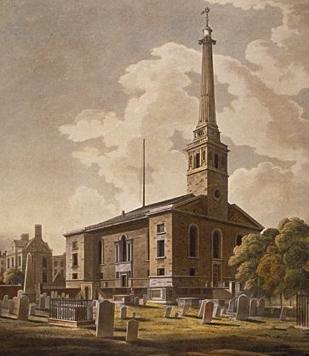
Perceval was buried on 16 May in the Egmont vault at St Luke’s Church, Charlton. At his widow’s request, it was a private funeral. Lord Eldon, Lord Liverpool, Lord Harrowby and Richard Ryder were the pall-bearers. The previous day, Bellingham had been tried, and, refusing to enter a plea of insanity, was found guilty. He was hanged on 18 May.
In a curious echo Henry Bellingham, who is descended from a relative of Bellingham’s, was elected in 1983 as the Member of Parliament for North West Norfolk. In 1997 he lost the seat by 1,339 votes. This could be attributed in part to the 2,923 votes received by the Referendum Party candidate Roger Percival, who claimed to be descended from Perceval.

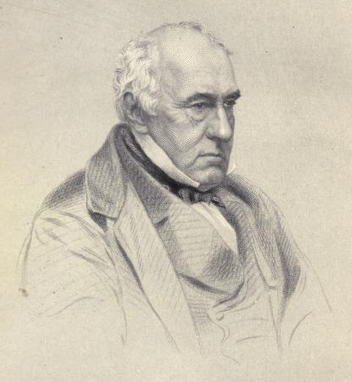 Charles Cavendish Fulke Greville (2 April 1794 – 17 January 1865) was an English diarist and an amateur cricketer who played first-class cricket from 1819 to 1827. His father Charles Greville was a second cousin of the 1st Earl of Warwick, and his mother was Lady Charlotte Bentinck, daughter of the 3rd Duke of Portland (former leader of the Whig party and Prime Minister).