Victorian Happenings: The Slavery Abolition Act 1833

140px-Royal_Coat_of_Arms_of_the_United_Kingdom_(HM_Government).svg The Slavery Abolition Act 1833 (citation 3 & 4 Will. IV c. 73) was an 1833 Act of the Parliament of the United Kingdom abolishing slavery throughout the British Empire (with the exceptions “of the Territories in the Possession of the East India Company,” the “Island of Ceylon,” and “the Island of Saint Helena”; the exceptions were eliminated in 1843). The Act was repealed in 1998 as part of a wider rationalisation of English statute law, but later anti-slavery legislation remains in force.

Background
In 1772, Lord Mansfield’s judgement in the Somersett’s Case emancipated a slave in England, which helped launch the movement to abolish slavery. The case ruled that slavery was unsupported by law in England and no authority could be exercised on slaves entering English or Scottish soil. In 1785, English poet William Cowper wrote:

“We have no slaves at home – Then why abroad? Slaves cannot breathe in England; if their lungs receive our air, that moment they are free. They touch our country, and their shackles fall. That’s noble, and bespeaks a nation proud. And jealous of the blessing. Spread it then, And let it circulate through every vein.”

By 1783, following the American Revolutionary War, an anti-slavery movement to abolish the slave trade throughout the Empire had begun among the British public.

In 1808, Parliament passed the Slave Trade Act of 1807, which outlawed the slave trade, but not slavery itself. The Royal Navy established the West Africa Squadron to suppress the Atlantic slave trade by patrolling the coast of West Africa. It did suppress the slave trade, but did not stop it entirely. It is possible that, when slave ships were in danger of being captured by the Royal Navy, some captains may have ordered the slaves to be thrown into the sea to reduce the fines they had to pay. Between 1808 and 1860 the West Africa Squadron captured 1,600 slave ships and freed 150,000 Africans. They resettled many in Jamaica and the Bahamas.

In 1823, the Anti-Slavery Society was founded. Members included Joseph Sturge, Thomas Clarkson, William Wilberforce, Henry Brougham, Thomas Fowell Buxton, Elizabeth Heyrick, Mary Lloyd, Jane Smeal, Elizabeth Pease and Anne Knight.

During the Christmas holiday of 1831, a large-scale slave revolt in Jamaica, known as the Baptist War, broke out. It was organised originally as a peaceful strike by the Baptist minister, Samuel Sharpe. The rebellion was suppressed by the militia of the Jamaican plantocracy and the British garrison ten days later in early 1832. Because of the loss of property and life in the 1831 rebellion, the British Parliament held two inquiries. The results of these inquiries contributed greatly to the abolition of slavery with the Slavery Abolition Act 1833.

A successor organisation to the Anti-Slavery Society was formed in London in 1839, which worked to outlaw slavery in other countries. Its official name was the British and Foreign Anti-Slavery Society. The world’s oldest international human rights organisation, it continues today as Anti-Slavery International.

Britain’s anti-slavery stance was not viewed as a benevolent one by some of the United States’ senior politicians. In a January 24, 1842 letter to Senator John C. Calhoun, diplomat Duff Green wrote from Paris after recently visiting London:

“England finds it impossible to maintain her commercial and manufacturing superiority, because she cannot raise cotton, sugar, etc., as cheap in India as it can be raised in the United States, Cuba, and Brazil, and that her war on slavery and the slave-trade is intended to increase the cost of producing the raw material in the United States, Brazil, and Cuba, that she can sell to other rival manufacturing, continental powers, the product of her East India possessions cheaper than they can purchase from us. If she can do this, having the power to compel her East India subjects to purchase her manufactures, and hers alone, she can, through her manufactures, command the supply of raw material, and thus compel rival manufacturing nations to pay her tribute, while she, in a great measure, controls the manufacture itself. … Under the aspects of the case, you will find that England has much more than a work of benevolence in the suppression of the slave-trade.”

The Act
Slavery was officially abolished in most of the British Empire on 1 August 1834. In practical terms, only slaves below the age of six were freed in the colonies. Former slaves over the age of six were redesignated as “apprentices,” and their servitude was abolished in two stages; the first set of apprenticeships came to an end on 1 August 1838, while the final apprenticeships were scheduled to cease on 1 August 1840.

The Act provided for compensation for slave-owners who would be losing their property. The amount of money to be spent on the compensation claims was set at “the Sum of Twenty Millions Pounds Sterling.” Under the terms of the Act, the British government raised £20 million to pay out in compensation for the loss of the slaves as business assets to the registered owners of the freed slaves. The names listed in the returns for slave compensation show that ownership was spread over many hundreds of British families, many of them of high social standing. For example, Henry Phillpotts (then the Bishop of Exeter), with three others (as trustees and executors of the will of John Ward, 1st Earl of Dudley), was paid £12,700 for 665 slaves in the West Indies, whilst Henry Lascelles, 2nd Earl of Harewood received £26,309 for 2,554 slaves on 6 plantations. The majority of men and women who were awarded compensation under the 1833 Abolition Act are listed in a Parliamentary Return, entitled Slavery Abolition Act, which is an account of all moneys awarded by the Commissioners of Slave Compensation in the Parliamentary Papers 1837–8 Vol. 48.

In all, the government paid out over 5,000 separate awards. The £20 million fund was 40% of the government’s total annual expenditure. In the Cape Colony, where farmers had loans estimated at a total £400,000 secured against their slave, the Dutch-language newspaper De Zuid-Afrikaan first campaigned against abolition and then for a compensation package to enable farmers to pay their debts.

As a notable exception to the rest of the British Empire, the Act did not “extend to any of the Territories in the Possession of the East India Company, or to the Island of Ceylon, or to the Island of Saint Helena.” Slavery was abolished in India by the Indian Slavery Act of 1843.

On 1 August 1834, an unarmed group of mainly elderly people being addressed by the Governor at Government House in Port of Spain, Trinidad, about the new laws, began chanting: “Pas de six ans. Point de six ans” (“Not six years. No six years”), drowning out the voice of the Governor. Peaceful protests continued until a resolution to abolish apprenticeship was passed and de facto freedom was achieved. Full emancipation for all was legally granted ahead of schedule on 1 August 1838.

It is believed that after 1833 clandestine slave-trading continued within the British Empire; in 1854 Nathaniel Isaacs, owner of the island of Matakong off the coast of Sierra Leone was accused of slave-trading by the governor of Sierra Leone, Sir Arthur Kennedy. Papers relating to the charges were lost when the Forerunner was wrecked off Maderia in October 1854. In the absence of the papers, the English courts refused to proceed with the prosecution.

Repeal
The Slavery Abolition Act 1833 was repealed in its entirety by the Statute Law (Repeals) Act 1998. The repeal has not made slavery legal again, with sections of the Slave Trade Act 1824, Slave Trade Act 1843 and Slave Trade Act 1873 continuing in force. In its place the Human Rights Act 1998 incorporates into British Law Article 4 of the European Convention on Human Rights which prohibits the holding of persons as slaves.

Posted in British history, Great Britain, real life tales, Victorian era | Tagged , , | 1 Comment

Victorian Celebrity: Ada Lovelace, Lord Byron’s Daughter, English Mathematician, and First Computer Programmer

250px-Ada_Lovelace_portrait Augusta Ada King, Countess of Lovelace (10 December 1815 – 27 November 1852), born Augusta Ada Byron and now commonly known as Ada Lovelace, was an English mathematician and writer chiefly known for her work on Charles Babbage’s early mechanical general-purpose computer, the Analytical Engine. Her notes on the engine include what is recognised as the first algorithm intended to be carried out by a machine. Because of this, she is often described as the world’s first computer programmer.

Lovelace was born 10 December 1815 as the only legitimate child of the poet Lord Byron and his wife Anne Isabella Byron. All Byron’s other children were born out of wedlock. Byron separated from his wife a month after Ada was born and left England forever four months later, eventually dying of disease in the Greek War of Independence when Ada was eight years old. Ada’s mother remained bitter at Lord Byron and promoted Ada’s interest in mathematics and logic in an effort to prevent her from developing what she saw as the insanity seen in her father, but Ada remained interested in him despite this (and was, upon her eventual death, buried next to him at her request).

Ada described her approach as “poetical science” and herself as an “Analyst (& Metaphysician).” As a young adult, her mathematical talents led her to an ongoing working relationship and friendship with fellow British mathematician Charles Babbage, and in particular Babbage’s work on the Analytical Engine.

Between 1842 and 1843, she translated an article by Italian military engineer Luigi Menabrea on the engine, which she supplemented with an elaborate set of notes of her own, simply called Notes. These notes contain what many consider to be the first computer program—that is, an algorithm designed to be carried out by a machine. Lovelace’s notes are important in the early history of computers.

She also developed a vision on the capability of computers to go beyond mere calculating or number-crunching while others, including Babbage himself, focused only on those capabilities. Ada’s mind-set of “poetical science” led her to ask basic questions about the Analytical Engine (as shown in her notes) examining how individuals and society relate to technology as a collaborative tool.

Biography
Childhood

Ada Lovelace was born Augusta Ada Byron on 10 December 1815, the child of the poet George Gordon Byron, 6th Baron Byron, and Anne Isabella “Annabella” Milbanke, Baroness Byron. George Byron expected his baby to be “the glorious boy” and was disappointed that his wife gave birth to a girl. Augusta was named after Byron’s half-sister, Augusta Leigh, and was called “Ada” by Byron himself.

On 16 January 1816, Annabella, at George’s behest, left for her parents’ home at Kirkby Mallory taking one-month-old Ada with her. Although English law gave fathers full custody of their children in cases of separation, Byron made no attempt to claim his parental rights but did request that his sister keep him informed of Ada’s welfare. On 21 April, Byron signed the Deed of Separation, although very reluctantly, and left England for good a few days later.

Aside from an acrimonious separation, Annabella continually throughout her life made allegations about Byron’s immoral behavior. This set of events made Ada famous in Victorian society. Byron did not have a relationship with his daughter and never saw her again. He died in 1824 when she was eight years old.

Her mother was the only significant parental figure in her life. Ada was not allowed to view any portrait of her father until her twentieth birthday. Her mother became Baroness Wentworth in her own right in 1856.

Annabella did not have a close relationship with the young Ada and often left her in the care of her own mother Judith, Hon. Lady Milbanke, who doted on her grandchild. However, due to societal attitudes of the time, which favored the husband in any separation, with the welfare of any child acting as mitigation, Annabella had to present herself as a loving mother to the rest of society.

This included writing anxious letters to Lady Milbanke about Ada’s welfare, with a cover note saying to retain the letters in case she had to use them to show maternal concern. In one letter to Lady Milbanke, she referred to Ada as “it”: “I talk to it for your satisfaction, not my own, and shall be very glad when you have it under your own.” In her teenaged years, several of her mother’s close friends watched Ada for any sign of moral deviation. Ada dubbed these observers the Furies, and later complained they exaggerated and invented stories about her.

Ada was often ill, beginning in early childhood. At the age of eight, she experienced headaches that obscured her vision. In June 1829, she was paralyzed after a bout of measles. She was subjected to continuous bed rest for nearly a year, which may have extended her period of disability. By 1831, she was able to walk with crutches.

Despite being ill Ada developed her mathematical and technological skills. When Ada was twelve years old, this future “Lady Fairy,” as Charles Babbage affectionately called her, decided that she wanted to fly. Ada went about the project methodically, thoughtfully, with imagination and passion. Her first step in February 1828, was to construct wings. She investigated different material and sizes. She considered various materials for the wings; paper, oilsilk, wires and feathers. She examined the anatomy of birds to determine the right proportion between the wings and the body. She decided to write a book Flyology illustrating, with plates, some of her findings. She decided what equipment she would need, for example, a compass, to “cut across the country by the most direct road,” so that she could surmount mountains, rivers and valleys. Her final step was to integrate steam with the “art of flying.”

In early 1833, Ada had an affair with a tutor and, after being caught, tried to elope with him. The tutor’s relatives recognized her and contacted her mother. Annabella and her friends covered the incident up to prevent a public scandal.

Ada never met her younger half-sister, Allegra Byron, daughter of Lord Byron and Claire Clairmont, who died in 1822 at the age of five. She did, however, have some contact with Elizabeth Medora Leigh, the daughter of Byron’s half-sister Augusta Leigh. Augusta Leigh purposely avoided Ada as much as possible when she was introduced at Court.

Adult Years
Lovelace developed a strong relationship with her tutor Mary Somerville. She had a strong respect and affection for Somerville, and the two of them corresponded for many years. Other acquaintances included Andrew Crosse, Sir David Brewster, Charles Wheatstone, Charles Dickens and Michael Faraday.

By 1834, Ada was a regular at Court and started attending various events. She danced often and was able to charm many people and was described by most people as being dainty. However, John Hobhouse, Lord Byron’s friend, was the exception and he described her as “…a large, coarse-skinned young woman but with something of my friend’s features, particularly the mouth.” This description followed their meeting on 24 February 1834 in which Ada made it clear to Hobhouse she did not like him, probably due to the influence of her mother, which led her to dislike all of her father’s friends. This first impression was not to last, and they later became friends.

On 8 July 1835 she married William King, 8th Baron King, becoming Baroness King. Their residence was a large estate at Ockham Park, in Ockham, Surrey, along with another estate on Loch Torridon and a home in London. They spent their honeymoon at Worthy Manor in Ashley Combe near Porlock Weir, Somerset. The Manor had been built as a hunting lodge in 1799 and was improved by King in preparation for their honeymoon. It later became their summer retreat and was further improved during this time. The house was built on a small plateau in woodland overlooking the Bristol Channel and surrounded by terraced gardens in the Italianate style.

They had three children: Byron born 12 May 1836, Anne Isabella (called Annabella, later Lady Anne Blunt) born 22 September 1837 and Ralph Gordon born 2 July 1839. Immediately after the birth of Annabella, Lady King experienced “…a tedious and suffering illness, which took months to cure.”

In 1838, her husband became Earl of Lovelace. Thus, she was styled “The Right Honourable the Countess of Lovelace” for most of her married life. In 1843-4, her mother, Anabella, assigned William Benjamin Carpenter to teach Ada’s children and to act as a ‘moral’ instructor for Ada. He quickly fell for her and encouraged her to express any frustrated affections, claiming his marriage meant he’d never act in an “unbecoming” manner. When it became clear Carpenter was trying to start an affair, Ada cut it off.

In 1841, Lovelace and Medora Leigh (daughter of Lord Byron’s half-sister Augusta Leigh) were told by Ada’s mother that her father was also Medora’s father. On 27 February 1841, Ada wrote to her mother: “I am not in the least astonished. In fact you merely confirm what I have for years and years felt scarcely a doubt about, but should have considered it most improper in me to hint to you that I in any way suspected.” Ada did not blame the incestuous relationship on Byron, but instead blamed Augusta Leigh: “I fear she is more inherently wicked than he ever was.” This did not prevent Ada’s mother from attempting to destroy her daughter’s image of her father, but instead drove her to attack Byron’s image with greater intensity.

In the 1840s, Ada flirted with scandals: firstly from a relaxed relationship with men who were not her husband, which led to rumours of affairs—and secondly, her love of gambling. The gambling led to her forming a syndicate with male friends, and an ambitious attempt in 1851 to create a mathematical model for successful large bets. This went disastrously wrong, leaving her thousands of pounds in debt and being blackmailed by one of the syndicate, forcing her to admit the mess to her husband. Ada also had a shadowy, possibly illicit relationship with Andrew Crosse’s son John from 1844 onwards. Few hard facts are known about this because Crosse destroyed most of their correspondence after her death as part of a legal agreement. However, the relationship was strong enough that she bequeathed him the only heirlooms her father had personally left to her. During her final illness, Ada would panic at the idea of John Crosse being kept from visiting her.

Death
Ada Lovelace died at the age of thirty-six, on 27 November 1852, from uterine cancer probably exacerbated by bloodletting by her physicians. The illness lasted several months, in which time Annabella took command over whom Ada saw and excluded all of her friends and confidants. Under her mother’s influence, she had a religious transformation (after previously being a materialist) and was coaxed into repenting of her previous conduct and making Annabella her executor. She lost contact with her husband after she confessed something to him on 30 August that caused him to abandon her bedside. What she told him is unknown but may have been a confession of adultery.

She was buried, at her request, beside her father at the Church of St. Mary Magdalene in Hucknall, Nottingham.

Education
Throughout her illnesses, she continued her education. Her mother’s obsession with rooting out any of the insanity of which she accused Lord Byron was one of the reasons Ada was taught mathematics from an early age. She was privately schooled in mathematics and science by William Frend, William King, and Mary Somerville, noted researcher and scientific author of the 19th century. One of her later tutors was the noted mathematician and logician Augustus De Morgan.

From 1832, when she was seventeen, her remarkable mathematical abilities began to emerge, and her interest in mathematics dominated the majority of her adult life. In a letter to Lady Byron, De Morgan suggested that her daughter’s skill in mathematics could lead her to become “an original mathematical investigator, perhaps of first-rate eminence.”

Lovelace often questioned basic assumptions by integrating poetry and science. While studying differential calculus, she wrote to De Morgan: “I may remark that the curious transformations many formulae can undergo, the unsuspected and to a beginner apparently impossible identity of forms exceedingly dissimilar at first sight, is I think one of the chief difficulties in the early part of mathematical studies. I am often reminded of certain sprites and fairies one reads of, who are at one’s elbows in one shape now, and the next minute in a form most dissimilar….” Lovelace believed intuition and imagination were critical to effectively applying mathematical and scientific concepts. She valued metaphysics as much as mathematics, viewing both as tools for exploring “the unseen worlds around us.”

Work
Throughout her life, Ada was strongly interested in scientific developments and fads of the day, including phrenology and mesmerism. Even after her famous work with Babbage, Ada continued to work on other projects. In 1844, she commented to a friend Woronzow Greig about her desire to create a mathematical model for how the brain gives rise to thoughts and nerves to feelings (“a calculus of the nervous system”).

She never achieved this, however. In part, her interest in the brain came from a long-running preoccupation, inherited from her mother, about her ‘potential’ madness. As part of her research into this project, she visited electrical engineer Andrew Crosse in 1844 to learn how to carry out electrical experiments. In the same year, she wrote a review of a paper by Baron Karl von Reichenbach, Researches on Magnetism, but this was not published and does not appear to have progressed past the first draft. In 1851, the year before her cancer struck, she wrote to her mother mentioning “certain productions” she was working on regarding the relation of maths and music.

Lovelace first met Charles Babbage in June 1833, through their mutual friend Mary Somerville. Later that month, Babbage invited Lovelace to see the prototype for his Difference Engine. Lovelace became fascinated with the machine and used her relationship with Somerville to visit Babbage as often as she could.

Babbage was impressed by Lovelace’s intellect and analytic skills. He called her The Enchantress of Numbers. In 1843 he wrote of her:
Forget this world and all its troubles and if
possible its multitudinous Charlatans—every thing
in short but the Enchantress of Numbers.

During a nine-month period in 1842–43, Ada translated Italian mathematician Luigi Menabrea’s memoir on Babbage’s newest proposed machine, the Analytical Engine. With the article, she appended a set of notes. Explaining the Analytical Engine’s function was a difficult task, as even other scientists did not really grasp the concept and the British establishment was uninterested in it. Ada’s notes even had to explain how the Engine differed from the original Difference Engine. The notes are longer than the memoir itself and include (in Section G), in complete detail, a method for calculating a sequence of Bernoulli numbers with the Engine, which would have run correctly had the Analytical Engine been built (only his Difference Engine has been built, completed in London in 2002). Based on this work, Ada is now widely credited with being the first computer programmer, and her method is recognised as the world’s first computer program. Her work was well received at the time: Michael Faraday described himself as a fan of her writing.

Lovelace and Babbage had a minor falling out when the papers were published, when he tried to leave his own statement (a criticism of the government’s treatment of his Engine) as an unsigned preface—which would imply that she had written that also. When “Taylor’s Scientific Memoirs” ruled that the statement should be signed, Babbage wrote to Ada asking her to withdraw the paper. This was the first that she knew he was leaving it unsigned, and she wrote back refusing to withdraw the paper. Historian Benjamin Woolley theorised that, “His actions suggested he had so enthusiastically sought Ada’s involvement, and so happily indulged her… because of her ‘celebrated name’.”

Their friendship recovered, and they continued to correspond. On 12 August 1851, when she was dying of cancer, Ada wrote to him asking him to be her executor, though this letter did not give him the necessary legal authority. Part of the terrace at Worthy Manor was known as Philosopher’s Walk, as it was there that Ada and Babbage were reputed to have walked while discussing mathematical principles.

First Computer Program</strong
Luigi Menabrea, a young Italian engineer, and future Prime Minister of Italy, wrote up Babbage's lecture in French, and this transcript was subsequently published in the Bibliothèque universelle de Genève in October 1842.

Babbage’s friend Charles Wheatstone commissioned Ada to translate Menabrea’s paper into English. She then augmented the paper with notes, which were added to the translation. Ada spent the better part of a year doing this, assisted with input from Babbage. These notes, which are more extensive than Menabrea’s paper, were then published in Taylor’s Scientific Memoirs under the initialism AAL.

In 1953, over one hundred years after her death, Ada’s notes on Babbage’s Analytical Engine were republished. The engine has now been recognized as an early model for a computer, and Ada’s notes as a description of a computer and software.

Lovelace’s notes were labelled alphabetically from A to G. In note G, she describes an algorithm for the Analytical Engine to compute Bernoulli numbers. It is considered the first algorithm ever specifically tailored for implementation on a computer, and Ada is often cited as the first computer programmer for this reason. The engine was never completed, however, so her code was never tested.

Conceptual Leap
In her notes, Lovelace emphasized the difference between the Analytical Engine and previous calculating machines, particularly its ability to be programmed to solve problems of any complexity. Lovelace realised that the potential of the device extended far beyond mere number crunching. She wrote:
[The Analytical Engine] might act upon other things besides number, were objects found whose mutual fundamental relations could be expressed by those of the abstract science of operations, and which should be also susceptible of adaptations to the action of the operating notation and mechanism of the engine…
Supposing, for instance, that the fundamental relations of pitched sounds in the science of harmony and of musical composition were susceptible of such expression and adaptations, the engine might compose elaborate and scientific pieces of music of any degree of complexity or extent.

This analysis was a conceptual leap from previous ideas about the capabilities of computing devices, and foreshadowed the capabilities and implications of the modern computer. This insight is seen as significant by writers such as Betty Toole and Benjamin Woolley, as well as programmer John Graham-Cumming, whose project Plan 28 has the aim of constructing the first complete Analytical Engine.

Controversy Over Extent of Contributions
Though Ada Lovelace is often referred to as the first computer programmer, there is disagreement over the extent of her contributions, and whether she can accurately be called a programmer. Allan G. Bromley, in the 1990 essay Difference and Analytical Engines, wrote, “All but one of the programs cited in her notes had been prepared by Babbage from three to seven years earlier. The exception was prepared by Babbage for her, although she did detect a ‘bug’ in it. Not only is there no evidence that Ada ever prepared a program for the Analytical Engine, but her correspondence with Babbage shows that she did not have the knowledge to do so.” On the other hand, Eugene Eric Kim and Betty Alexandra Toole wrote, “[Lovelace] was certainly capable of writing the program herself given the proper formula; this is clear from her depth of understanding regarding the process of programming and from her improvements on Babbage’s programming notation.”

Curator and author Doron Swade, in his 2001 book The Difference Engine, wrote, “The first algorithms or stepwise operations leading to a solution—what we now recognize as a ‘program,’ although the word was used neither by her nor by Babbage—were certainly published under her name. But the work had been completed by Babbage much earlier.” Kim and Toole dispute this claim: “Babbage had written several small programs for the Analytical Engine in his notebook in 1836 and 1837, but none of them approached the complexity of the Bernoulli numbers program.”

Historian Bruce Collier went further in his 1990 book The Little Engine That Could’ve, calling Ada not only irrelevant, but delusional:
It would be only a slight exaggeration to say that Babbage wrote the ‘Notes’ to Menabrea’s paper, but for reasons of his own encouraged the illusion in the minds of Ada and the public that they were authored by her. It is no exaggeration to say that she was a manic depressive with the most amazing delusions about her own talents, and a rather shallow understanding of both Charles Babbage and the Analytical Engine.

Writer Benjamin Woolley said that while Ada’s mathematical abilities have been contested, she can claim “some contribution”: “Note A, the first she wrote, and the one over which Babbage had the least influence, contains a sophisticated analysis of the idea and implications of mechanical computation” and that this discussion of the implications of Babbage’s invention was the most important aspect of her work. According to Woolley, her notes were “…detailed and thorough [a]nd still… metaphysical, meaningfully so.” They explained how the machine worked and “…[rose] above the technical minutiae of Babbage’s extraordinary invention to reveal its true grandeur.”

Babbage published the following on Ada’s contribution, in his Passages from the Life of a Philosopher (1864):
I then suggested that she add some notes to Menabrea’s memoir, an idea which was immediately adopted. We discussed together the various illustrations that might be introduced; I suggested several but the selection was entirely her own. So also was the algebraic working out of the different problems, except, indeed, that relating to the numbers of Bernoulli, which I had offered to do to save Lady Lovelace the trouble. This she sent back to me for an amendment, having detected a grave mistake which I had made in the process.

Eugene Eric Kim and Betty Alexandar Toole elucidate Babbage’s role in writing the first computer program:
From this letter, two things are clear. First, including a program that computed Bernoulli numbers was Ada’s idea. Second, Babbage at the very least provided the formulas for calculating Bernoulli numbers… Letters between Babbage and Ada at the time seem to indicate that Babbage’s contributions were limited to the mathematical formula and that Ada created the program herself.

In Popular Culture
**Vladimir Nabokov’s Ada or Ardor: A Family Chronicle (1969) includes a nod to Ada Lovelace when referring to one of its main characters named Ada (“Ada was transformed into a sort of graceful computing machine, endowed, moreover, with phenomenal luck, and would greatly surpass baffled Van in acumen, foresight and exploitation of chance…”).
**Lovelace has been portrayed in Romulus Linney’s 1977 play Childe Byron, the 1990 steampunk novel The Difference Engine by William Gibson and Bruce Sterling, the 1997 film Conceiving Ada, and in John Crowley’s 2005 novel Lord Byron’s Novel: The Evening Land, where she is featured as an unseen character whose personality is forcefully depicted in her annotations and anti-heroic efforts to archive her father’s lost novel.
**In Tom Stoppard’s 1993 play Arcadia, the precocious teenage genius Thomasina Coverly (a character “apparently based” on Ada Lovelace—the play also involves Lord Byron) comes to understand chaos theory, and theorises the second law of thermodynamics, before either is officially recognised.

Commemoration
The computer language Ada, created on behalf of the United States Department of Defense, was named after Ada Lovelace. The reference manual for the language was approved on 10 December 1980, and the Department of Defense Military Standard for the language, MIL-STD-1815, was given the number of the year of her birth. Since 1998, the British Computer Society has awarded a medal in her name and in 2008 initiated an annual competition for women students of computer science. In the UK, the BCSWomen Lovelace Colloquium, the annual conference for women undergraduates is named after Ada Lovelace.

“Ada Lovelace Day” is an annual event celebrated in mid-October whose goal is to “…raise the profile of women in science, technology, engineering and maths.”

The Ada Initiative is a non-profit organization dedicated to increasing the involvement of women in the free culture and open source movements.

On the 197th anniversary of her birth, Google dedicated its Google Doodle to her. The doodle shows Lovelace working on a formula along with images that show the evolution of the computer.

The Engineering in Computer Science and Telecommunications College building in Zaragoza University is called the Ada Byron Building. The village computer centre in the village of Porlock, near where Ada Lovelace lived, is named after her. There is a building in the small town of Kirkby-in-Ashfield, Nottinghamshire, named Ada Lovelace House. One of the tunnel boring machines excavating the tunnels for London’s Crossrail project is named Ada in commemoration of Ada Lovelace.220px-AdaLovelaceplaque

Posted in British history, Great Britain, political stance, real life tales, Victorian era | Tagged , , | 5 Comments

Regency Celebrity: Thomas Lord, Professional Cricketer and Founder of Lord’s Cricket Ground

Thomas Lord (23 November 1755 – 13 January 1832) was an English professional cricketer who played first-class cricket from 1787 to 1802. He made a brief comeback, playing in one further match in 1815. Overall, Lord made 90 known appearances in first-class cricket. He was mostly associated with Middlesex and with Marylebone Cricket Club (MCC) as a ground staff bowler.

Lord is best remembered as the founder of Lord’s Cricket Ground.175px-Lord's_Cricket_Ground_logo.svg

Early Life
Lord was born in Thirsk, Yorkshire, in what is now the town museum. His father was a Roman Catholic yeoman, who had his lands sequestered for supporting the Jacobite rising in 1745 and afterwards he had to work as a labourer. The Lord family later moved to Diss, Norfolk, where Thomas Lord was brought up. Once he was out of childhood, Lord moved to London and got a job as a bowler and general attendant at the White Conduit Club in Islington.

Career
Lord is known to have begun playing about 1780, but his first recorded game was on his “own ground,” now referred to as Lord’s Old Ground, at the current site of Dorset Square on 31 May 1787 when he played for Middlesex v Essex. Lord has never been given much credit as a player, but the match records of the 1790s indicate he was a very good bowler, although it is true his opposition was not always of the highest standard.

In 1786 Lord was approached by George Finch, 9th Earl of Winchilsea, and Charles Lennox, 4th Duke of Richmond, who were the leading members of the White Conduit Club. They wanted Lord to find a more private venue for their club and offered him a guarantee against any losses he might suffer. In May 1787, Lord acquired seven acres (28,000 m²) off Dorset Square and started his first ground. White Conduit relocated there and soon afterwards formed, or merged into, the new Marylebone Cricket Club.

The lease on the first ground ended in 1810 and Lord obtained an eighty-year lease on two fields, the Brick and Great Fields at North Bank, St John’s Wood. The second venue, now referred to as Lord’s Middle Ground, was built by 1809 when the first games were played there by St John’s Wood Cricket Club. This was later merged into MCC, who relocated to the Middle Ground in 1811. In 1813, Parliament requisitioned the land for the Regent’s Canal, which was cut through the site, thereby necessitating a further move.

Lord’s Third Ground
Lord then moved his ground to the present site in St John’s Wood, literally taking his turf with him. It opened in 1814. Lord was not, however, making enough money and therefore obtained permission to develop part of the ground for housing, a move which would have left only 150 square yards of playing area. To counter his plan, Lord was bought out for £5,000 by prominent MCC member William Ward, a noted batsman who was also a director of the Bank of England. Despite the change of ownership, the ground has continued to bear Lord’s name.

Retirement
Lord remained in St John’s Wood till 1830 when he retired to West Meon in Hampshire, where he died in 1832. His son, also Thomas Lord, and born in Marylebone on 27 December 1794, was also a first-class cricketer.

Thomas Lord is buried in the churchyard of St John’s Church at West Meon. The village has a public house named after him and is just a few miles from Hambledon, home of the famous Hambledon Cricket Club.

Grandstand during Victorian Era

Grandstand during Victorian Era

Posted in Uncategorized | Tagged , , , , , , | 1 Comment

Victorian Celebrity: Joseph Livesey, Temperance Campaigner and Social Reformer

220px-Joseph_Livesey_portrait Joseph William Livesey (5 March 1794 – 2 September 1884) was an English temperance campaigner, social reformer, local politician, writer, publisher, newspaper proprietor and philanthropist.

Early Life
Livesey was born on 5 March 1794 at Walton-le-Dale near Preston, Lancashire, the son of John Livesey, a cloth manufacturer, and Jennett (née Ainsley). His father had a warehouse and warping mill in the village and contracted work out to local weavers. However, both of Joseph’s parents died of tuberculosis when he was 7, and his grandfather, also Joseph Livesey, and uncle, Thomas Livesey, stepped in to run the business and look after the boy; they were not successful and the business had to be wound up after 3–4 years.

The family became weavers instead, practising their trade in a damp cellar, prone to flooding due to the nearby River Ribble. Shortly afterwards, his grandfather died and young Joseph had to take on the domestic duties as well. The hardships of his early life continued until after his marriage in 1815 to Jane Williams, when he moved to Preston and abandoned the trade of weaving for the business of cheese selling. He successfully continued this trade in Preston until his death.

Business Career and Social Activism
Livesey engaged energetically in local politics, filled many public posts, and was a leader in every kind of philanthropic effort, especially identified with the teetotal movement. From January 1831 to December 1883, he published The Moral Reformer, a monthly magazine, priced at 6 pennies, in which he attempted to provide cheap and elevated reading. It became the Preston Temperance Advocate in January 1834, a monthly priced at 1 penny. This was the first temperance publication produced in England. Lindsey ran it for 4 years, then transferred it to the British Temperance Association, where it became the British Temperance Advocate.

In January 1838, the Moral Reformer was revived and continued until February 1839. In 1841 Livesey engaged in agitation against the Corn Laws. From December 1841 until the repeal of the laws, he issued The Struggle, weekly, price a halfpenny. Its 235 editions, reaching up to 15,000 readers a week, proved valuable to the repealers.

In 1844, he established (with the assistance of his sons) the weekly Preston Guardian, which became the leading North Lancashire paper until 1859 when it was sold off. From August 1851 to May 1852, he issued the Teetotal Progressionist, and in 1867, commenced a penny monthly called the Staunch Teetotaller, which ran for two years. In 1881, Livesey issued his memoirs under the title The Autobiography of Joseph Livesey (Preston 1881; 2nd edition, London 1885). He also authored numerous tracts and lectures.

Later Years
Livesey had inherited a tendency to rheumatism from his mother, which was aggravated by having to work in a damp cellar in his early years; He also suffered from rheumatic fever throughout his life, which interrupted his literary work on several occasions. He maintained doctors did not help him at all in his affliction, but credited hydropathic treatment with bringing him much-needed relief–even investing in the “hydro” at Bowness-on-Windermere.He was also an enthusiast for vegetarianism from 1867 after spending a year without meat.

Livesey died, at the age of 90, on 2 September 1884, leaving a large family. His wife, Jane had died before him in June 1869. In his will he left a provision that every household in Preston should receive a free copy of his Malt Liquor Lecture, in which he maintained that “there is more food in a pennyworth of bread than in a gallon of ale”; each of the 20,000 copies distributed was inscribed with the words, “he being dead yet speaketh.”

A speech given by Livesey at the Oak Street Chapel in Manchester inspired John Cassell (founder of Cassell & Co.) to become a travelling temperance campaigner, and to “never let go the desire to be somebody and to do something from that moment.”

Posted in British history, Great Britain, Living in the Regency, political stance, real life tales, Victorian era | Tagged , , , , , | Comments Off on Victorian Celebrity: Joseph Livesey, Temperance Campaigner and Social Reformer

Regency Celebrity: Archibald Cochrane, 9th Earl of Dundonald

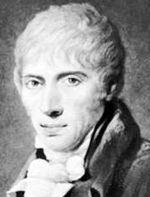
200px-9thEarlOfDundonald Archibald Cochrane, 9th Earl of Dundonald (1 January 1748 – 1 July 1831) was a Scottish nobleman and inventor.

Life
The son of Thomas Cochrane, 8th Earl of Dundonald, he joined the British Army as a youth and also served time in the Royal Navy before returning to Culross in 1778 after inheriting the Earldom of Dundonald from his father. He inherited a title and family lands, but little money. Left with no other means of support, Archibald turned to invention.

Cochrane’s most noted invention was a method for making coal tar (patented in 1781) on an industrial scale. The British Tar Company invested in a works; it was managed by John Loudon McAdam. The coke byproduct was used, in part, by an ironworks at Muirkirk. McAdam bought the company, but the deal was troubled.

Cochrane hoped that he would be able to sell tar as a sealant for the hulls of ships to the Royal Navy. After contacts with the British Admiralty were made, a test was performed on a buoy. The buoy was coated on one side and left uncoated on the other. After some time the uncoated half was leaking and full of worms and barnacles, while the treated half was in quite good condition. A patent for his invention was drawn up, while the family estates were used as collateral.

The coal tar technique was a rival to copper sheathing, preferred by the Admiralty. It has been argued that were also powerful interests at play, shipyards needing the maintenance business. The patent expired, and the Royal Navy eventually adopted the tar mixture.

Other experiments with alum production, making bread from potatoes, and paint manufacturing also proved unprofitable. His experiments with producing soda from table salt proved more successful but were not enough to reverse his financial misfortunes.

Cochrane died impoverished in Paris at the age of 83. The earldom of Dundonald passed to his son Thomas Cochrane.

Family
He married three times. His first wife was Anne Gilchrist, daughter of Captain James Gilchrist whom he married in 1774. After her death, he married Isabella Raymond, daughter of Samuel Raymond, in 1788. His third wife was Anna Maria Plowden, daughter of Francis Plowden whom he married in 1819. He had four sons: Thomas Cochrane who was a highly successful Royal Navy officer, Basil Cochrane who briefly served in the Royal Navy before transferring to the British Army, William Erskine Cochrane who served in the British Army and Archibald Cochrane who also served in the Royal Navy.

The Cochrane Brothers
Cochrane’s younger brothers also had notable careers. Basil Cochrane (1753-1826) made a fortune providing supplies to the Royal Navy in India. Alexander Cochrane (1758-1832) became an admiral. George (b. 1762) served in the army and in Parliament. Andrew (1867-1833) was an army officer, colonial governor, member of Parliament, and fraudster.

The Earl of St. Vincent, Admiral of the Fleet, wrote of the Cochrane brothers in 1806, “The Cochranes are not to be trusted out of sight, they are all mad, romantic, money-getting and not truth-telling—and there is not a single exception in any part of the family.”

Posted in British history, buildings and structures, Great Britain, Living in the Regency, Napoleonic Wars, real life tales, Regency era, Regency personalities, Scotland | Tagged , , , , | Comments Off on Regency Celebrity: Archibald Cochrane, 9th Earl of Dundonald

Victorian Happenings: The Rebecca Riots in Wales

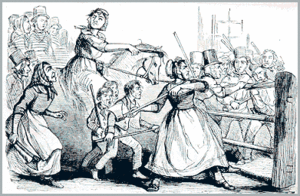
Depiction of the Rebecca Riots, Illustrated London News 1843

Depiction of the Rebecca Riots, Illustrated London News 1843

The Rebecca Riots took place between 1839 and 1843 in South and Mid Wales. They were a series of protests undertaken by local farmers and agricultural workers in response to perceived unfair taxation. The rioters, often men dressed as women, took their actions against toll-gates, as they were tangible representations of high taxes and tolls. The riots ceased prior to 1844 due to several factors, including increased troop levels, a desire by the protestors to avoid violence and the appearance of criminal groups using the guise of Rebecca for their own purposes. In 1844 a Parliamentary act to consolidate and amend the laws relating to turnpike trusts in Wales was passed.

History
Events Leading to the Riots
In the late 1830s and early 1840s, the agricultural communities of south Wales were in dire poverty. In 1837 and 1838 the whole country suffered from poor harvests, worse in the south west, where atrocious seasons of rain forced farmers to buy corn at famine prices to feed themselves, their animals and their families, which further eroded what little capital they had. Grain harvests collapsed, but the price of butter between 1837 and 1841, and sheep between 1839 and 1841, was relatively high, and even the low cattle prices of 1839 recovered by 1841.

But by 1842 a general fall in prices occurred throughout the agricultural markets that continued into 1843. Cattle prices slumped sharply in 1842, and the blame was placed on the Government, and in particular Robert Peel’s tariff measures which eased importation of foreign cattle and meat.

In 1842, the harvest was one of the most successful in years, and that combined with the contraction in demand from the Glamorgan ironworks, led to a slump in corn prices. Therefore, the farmers’ economic position had shifted from that of dire grain harvests, with life supported by sheep and butter sales, to one where the price of their corn, when the weather was favourable, was a very low. The diminution of the Glamorgan ironworks, coupled with the new tariff, also had an adverse effect on the prices of butter, cheese, pigs, horses, sheep and lean cattle, impacting harshly on the Welsh pastoral farmer.

The farmers were faced with a drastic reduction in their income, but had no financial relief in similar reductions in their outgoings, mainly rents, tithes, county rates, poor rates and the turnpike tolls. Farm rents stayed mainly static, but the tithes, tolls and poor rates increased. Seeing themselves as victims of ‘tyranny and oppression,’ the farmers and their workers took the law into their own hands to rid themselves of these unjust taxes. The first institutions to be attacked were the hated toll-gates.

In the early 19th century many toll-gates on the roads in Wales were operated by trusts which were supposed to maintain and improve the roads, funding this from tolls. However, many trusts charged extortionate tolls and diverted the money raised to other uses. Even where this was not done, the toll-gate laws imposed an additional financial burden on poor farming communities. The ‘oppression,’ felt by the farmers, began in the late 1830s, when a group of English toll-renters took over the region’s trusts. This group was led by Thomas Bullin, an Englishman, who was hated by those who paid his tolls. The main reason for his dislike was the exacting method of the toll collection and the big toll increases of side-bars. The side-bars were simple toll gates, away from the main trunk roads, placed strategically on by-roads to catch any traffic that had tried to bypass the main toll booths via side lanes. These side-bars increased the cost dramatically of farmers’ carting lime to their fields that was needed as fertilizer or to counteract acidity in soil: e.g. it was said that it cost an amount to buy a load of lime in Cardiff docks, and then ten times as much in road tolls to cart it to a farm in the hills inland.

Rebecca
The first appearance of Rebecca, as the members called themselves, occurred in 1839. Although this precedes the economic events of 1842, the early appearances of Rebecca were sporadic isolated outburts, with the true body of rioting not beginning until the winter of 1842.Although these early ‘uprisings’ were few and uncommon, they were the first appearance of mobs dressed in the guise of Rebecca. These gangs became known as Merched Beca (Welsh for “Rebecca’s Daughters”) or merely the Rebeccas. The origin of their name is said to be a verse in the Bible, Genesis 24:60 – ‘And they blessed Rebekah and said unto her, Thou art our sister, be thou the mother of thousands of millions, and let thy seed possess the gate of those which hate them’. This verse was shouted many a time from the religious urban dwellers.

Prior to destroying the toll gates, ‘Rebecca’ would call to his followers who were also dressed as women and perform a scene which involved the following words:

Rebecca: “What is this my children? There is something in my way. I cannot go on….”
Rioters: “What is it, mother Rebecca? Nothing should stand in your way,”
Rebecca: “I do not know my children. I am old and cannot see well.”
Rioters: “Shall we come and move it out of your way mother Rebecca?”
Rebecca: “Wait! It feels like a big gate put across the road to stop your old mother.”
Rioters: “We will break it down, mother. Nothing stands in your way.”
Rebecca: “Perhaps it will open…Oh my dear children, it is locked and bolted. What can be done?”
Rioters: “It must be taken down, mother. You and your children must be able to pass.”
Rebecca: “Off with it then, my children.”
This would then in turn lead to the destruction of the toll gates.

Although not all members of the mob would wear women’s clothes, those that did, often in white gowns, would also blacken their faces or otherwise wear masks. The attacks were accompanied by much noise; and in the earliest attacks, a mock trial would also take place.

The accepted leader of the first protests, Thomas Rees (Twm Carnabwth), wore women’s clothes when leading attacks. Some versions of the story say that these clothes were borrowed from a woman called Rebecca living near his home at the foot of the Preseli Hills. The story states that this woman was an old maid and her clothes were borrowed because she was the only woman tall enough and large enough in the village. Local records do not bear this out—and the wearing of women’s clothes was an established part of traditional Welsh justice (the Ceffyl Pren, wooden horse), of which Twm Carnabwth is remembered as a notoriously enthusiastic participant.

The Ceffyl Pren bears many similarities to the Rebeccas, with men wearing female clothing, blackening their faces and conducting mock trials; and was on a significant increase in the late 1830s in Wales. The Ceffyl Pren was a way of frightening and punishing members of a community, to whom wrongdoing was suspected, but little will or evidence existed to bring the person to justice. Normally ‘crimes’ punished by the Ceffyl Pren included marital infidelity or informing on a neighbour.

The Riots
The Rebecca Riots are often mistaken as a response solely against the toll gates, ignoring the other factors affecting the Welsh farming communities of the time. The main reason for the choice of toll gates as targets for Rebecca, was that the booths and gates were tangible representations of the system they so despised. The only other options for the rioters would be the union workhouses, as the Poor Law was as hated as the toll roads; but these could be easily defended and were often garrisoned by troops.

The first protests led by “Rebecca” destroyed the toll-gates at Yr Efail Wen in two attacks in Carmarthenshire in 1839. These were believed to be led by Twm, though he did not appear to participate in further riots when the attacks flared again three years later. Other communities later adopted the name and disguise, and other grievances besides the toll gates were aired in the riots. Anglican clergymen from the established Church of Wales were targets on several occasions. The Church of England could demand tithes and other ecclesiastical benefits even though most of the population of Wales were Nonconformists. Other victims were petty local villains such as the fathers of illegitimate children.

The next time the Rebeccas assembled was roughly three years later, when Tom Bullin was allowed to raise a tollgate by the Mermaid Tavern near St Clears. This was an obvious ‘trap’ side-bar, and angered the locals, who destroyed it and two other gates. Other tollgates to be target included the Bolgoed tollgate on the outskirts of Pontarddulais. On 6 July 1843 the Bolgoed tollgate was attacked and destroyed by a group of some 200 men. In mid-July 1843, letters were sent from representatives of the Rebeccas, targeting the landlords of farmers. These threatening letters warned the landlords to make reductions in the rent of their tenant farmers. The summer of 1843 also saw farmers conducting open meetings demanding a lowering of rent by at least a third. The threats came to little and the meetings had no effect, and the rents remained the same, though by August farmers had changed tactics to calling for an independent assessment of the regulations of rents.

The riots caused at least one fatality, in the small village of Hendy on 7 September 1843, in which a young woman and gate keeper named Sarah Williams died. She had been warned beforehand that the rioters were on their way but refused to leave. On the night of her death she could be heard shouting “I know who you are” by a family living up the road who had locked their doors from the rioters. Williams called for help at the house of John Thomas, a labourer, to extinguish a fire at the toll gate, but when she returned to the toll house, a shot was heard. Williams returned to the house of John Thomas, and collapsed at the threshold of the house. Two minutes later she was dead.

From August 1843, local and open protest meetings were taking the place of riots. Partly due to the farmers scaling back on violent activity, and also due to the increasing presence of troop numbers. Another major factor that saw the riots reduce were the activities of a group of petty criminals masquerading as Rebecca operating from Five Roads near Llanelli. This group, led by known trouble-maker John Jones (Shoni Sguborfawr) and his associate David Davies (Dai’r Cantwr), who were eventually convicted and transported to Australia, turned more respectable people away from Rebecca. Jones, unlike Davies, was not convicted of crimes during the riots, but for a later assault charge.

Aftermath
By late 1843, the riots had stopped. Although Rebecca had failed to produce an immediate effect on the lives of the farmers she had sought to serve, the very nature of a leaderless uprising of the downtrodden peasantry in an attempt to obtain justice from an unfair system, was an important socio-political event within Wales. In the aftermath of the riots, some rent reductions were achieved, the toll rates were improved (although destroyed toll-houses were rebuilt) and the protests prompted several reforms, including a Royal Commission into the question of toll roads, which lead to the Turnpikes Act of 1844. This Act consolidated the trusts, and simplified the rates; furthermore it reduced the hated toll on lime movement by half. More importantly, the riots inspired later Welsh protests.

Rebeccaism in Radnorshire
Throughout the second half of the 19th century and even as late as the 1930s, Radnorshire gangs known as Rebecca rioters continued to engage in violent protests, mainly but not exclusively against the Fishery laws. These often involved open poaching of salmon on the River Wye and its tributaries and resulted in the dispatch of troops and police to the area in largely fruitless efforts to restore order.

The Rebecca Riots in Popular Culture
The Rebecca Riots were the setting for the novel Hosts of Rebecca by Alexander Cordell.

One of the earliest novels about the Rebecca Riots was written by Welsh author Amy Dillwyn, who wrote The Rebecca Rioter, first published in 1880.

In 1948 Dylan Thomas wrote the screenplay for a film, Rebecca’s Daughters, which was published as a novel of the same name in 1965. The film was not released until 1992, and starred Peter O’Toole, Paul Rhys and Joely Richardson. The 44 years between the writing of the screenplay and the release of the film is the longest on record.

The name Rebecca is also mentioned in the context of the Merthyr Rising of 1831 (see my November 25, 2013, post on the Merthyr Rising) in the song “Ironmasters” by the British folkpunk band “The Men They Couldn’t Hang” on their album Night of a Thousand Candles.

The phrase “The Rebeccas ride at dawn, petticoat ghost and Tom. Working to reclaim the land for no reward” is found in the song “Newtown Jericho” from rock band The Alarm.

Posted in British history, buildings and structures, Great Britain, political stance, real life tales, Victorian era, Wales | Tagged , , | 1 Comment

Regency Celebrity: John Loudon McAdam, Bringing Progress Through Road Improvements: Macadamisation

150px-John_Loudon_McAdam John Loudon McAdam (21 September 1756 – 26 November 1836) was a Scottish engineer and road-builder. He invented a new process, “macadamisation,” for building roads with a smooth hard surface that would be more durable and less muddy than soil-based tracks.

Modern road construction still reflects McAdam’s influence. Of subsequent improvements, the most significant was the introduction of tar (originally coal tar) to bind the road surface’s stones together – “tarmac” (for Tar Macadam) – followed later by the use of hot-laid tarred aggregate or tar-sprayed chippings to create better road metalling. More recently, oil-based asphalt laid on reinforced concrete has become a major road surface, but its use of granite or limestone chippings still recalls McAdam’s innovation.

Early Life
McAdam was born in Ayr, Scotland. He was the youngest of ten children and second son of the Baron of Waterhead. The family name was traditionally called McGregor, but was changed to McAdam (claiming descent from the Biblical Adam) for political reasons in James VI’s reign.

He moved to New York in 1770 and, as a merchant and prize agent during the American Revolution, made his fortune working at his uncle’s counting house. He returned to Scotland in 1783 and purchased an estate at Sauchrie, Ayrshire.

Besides taking part in local Ayrshire affairs, McAdam operated the Kaims Colliery. The colliery supplied coal to the British Tar Company, of Archibald Cochrane, 9th Earl of Dundonald and partners in the coal tar trade; McAdam ran its kilns. He further was involved in the ironworks at Muirkirk, which was a customer for the coke byproduct of the tar business. This business connection is the only direct relationship of McAdam and tar.

Road Builder
McAdam became a trustee of the Ayrshire Turnpike in 1783 and became increasingly involved with day-to-day road construction over the next 10 years. In 1802 he moved to Bristol, England, and he became general surveyor for the Bristol Corporation in 1804. He put forward his ideas in evidence to Parliamentary enquiries in 1810, 1819 and 1823. In two treatises written in 1816 and 1819 (Remarks on the Present System of Road-Making and Practical Essay on the Scientific Repair and Preservation of Roads) he argued that roads needed to be raised above the surrounding ground and constructed from layered rocks and gravel in a systematic manner.

McAdam had also been appointed surveyor to the Bristol Turnpike Trust in 1816, where he decided to remake the roads under his care with crushed stone bound with gravel on a firm base of large stones. A camber, making the road slightly convex, ensured rainwater rapidly drained off the road rather than penetrate and damage the road’s foundations. This construction method, the greatest advance in road construction since Roman times, became known as “macadamisation,” or, more simply, “macadam.”

The macadam method spread very quickly across the world. The first macadam road in North America, the National Road, was completed in the 1830s and most of the main roads in Europe were subject to the McAdam process by the end of the nineteenth century.

Although McAdam was paid £5,000 for his Bristol Turnpike Trust work and made Surveyor-General of Metropolitan Roads in 1820, professional jealousy cut a £5,000 grant for expenses from the Parliament of the United Kingdom to £2,000 in 1827. His efficient road-building and management work had revealed the corruption and abuse of road tolls by unscrupulous Turnpike Trusts, many of which were run at a deliberate loss despite high toll receipts.

Death and Descendants
McAdam died in Moffat, Dumfriesshire, while returning to his home in Hoddesdon, Hertfordshire, from his annual summer visit to Scotland. His three sons, and in turn four grandsons, followed him into the profession and assisted with the management of turnpike trusts around the country. His second surviving son, James Nicholl MacAdam, the “Colossus of Roads,” was knighted for managing turnpike trusts—a knighthood, it is said, previously offered to his father, but declined.

(P.S. John Loudon McAdam will play a minor role in my upcoming release of A Touch of Honor, book 7 of my highly popular Realm series.)

Posted in British history, buildings and structures, Great Britain, Living in the Regency, real life tales, Regency era, Regency personalities, Scotland | Tagged , , , , , , | 7 Comments

The Presbyterian Church of Wales: In 1811, It Seceded from Church of England

Caernarfon Church

Caernarfon Church

The Presbyterian Church of Wales (Welsh: Eglwys Bresbyteraidd Cymru), also known as The Calvinistic Methodist Church (Yr Eglwys Fethodistaidd Galfinaidd), is a denomination of Protestant Christianity.

History
It was born out of the Welsh Methodist revival and the preaching of Howell Harris and Daniel Rowland in the 18th Century and seceded from the Church of England in 1811. In 1823, a Confession of Faith was created and adopted, based on the standard Westminster Confession. Theological colleges for ministerial training were opened in Bala, then in Merionethshire, now Gwynedd (1837), Trefeca, then in Brecnockshire, now Powys (1842), and Aberystwyth, in Ceredigion (1906). It produces a quarterly journal Y Traethodydd and a monthly periodical Y Cenhadwr.

It is distinguished from other forms of Methodism by the Calvinistic nature of its theology. For the history of the church, see Calvinistic Methodists. In 1840, the Foreign Missionary Society was formed in Liverpool to provide missionaries to India. It held its first General Assembly in 1864. In 1928 it officially adopted the name Presbyterian Church in Wales but still retained the name Welsh Calvinistic Methodism with equal standing. In 1933 its constitution was modified as a result of the Presbyterian Church in Wales Act of Parliament in 1933, receiving Royal assent. In 1947 the Association in the East was established for English speaking churches.

In 1978 Pamela Turner became the first woman to be ordained as a minister. In 2004 the central office moved to Cardiff. In 2007 new boundaries and structures was adopted for presbyteries. It claims to be the only truly Welsh denomination in Christianity, and is rare among Presbyterian Churches, by originating in the Methodist Revival rather than deriving from the Calvinist Reformation.

Statistics
The Presbyterian Church of Wales has around 30,000 members who worship in around 700 churches. Most of these churches are in Wales, but due to strong historical links between the Welsh and certain English cities, there are churches using both the English and the Welsh languages in London, Manchester, Birmingham, Coventry and Liverpool. Churches belong to one of eighteen Presbyteries, grouped into three Provinces, the Association in the North, the Association in the South (both in Wales), and the Association in the East (England), along with a General Assembly. About 5% of the Welsh population have official membership.

The Church offices are located at the Tabernacle Church, Merthyr Road, Whitchurch, Cardiff.
The Moderator is the Reverend Meirion Morris.

Posted in British history, Living in the Regency, real life tales, religion, Wales | Tagged , , , | Comments Off on The Presbyterian Church of Wales: In 1811, It Seceded from Church of England

A Jane Austen Time Line

1764-The Reverend George Austen marries Cassandra Leigh. They take up residence at Deane Parsonage in Hampshire.
1765-Brother James was born. Like his sister, James had literary aspirations, but unlike Jane, he never knew success.
1766-George Austen was born. Mentally challenged, George was boarded out for most of his life.
1767-Edward Austen was born. Later, he was adopted by Thomas Knight. Because the Knight family had no children, Edward inherited all their property.
1767-The Austens move to Steventon Rectory.
1771-Jane’s brother Henry was born. It was with Henry’s influence that Jane found her publisher.
1773-Cassandra Austen is born.
1774-The first of Jane’s sea-faring brothers, Frank, was born.
1775-On December 16, Jane Austen is born.
1779-Charles Austen was born. Charles spent seven years in the British navy’s efforts in the West Indies.
1783-Jane nearly dies from typhoid fever, which she contracted while attending a boarding school in Oxford.
1787-Jane’s formal education ends, and she begins to write. She preserves scraps of her early writing in Volume the First.
1793-The last pieces are added to Volume the Third. Jane’s nieces Anna and Fanny Austen are born.
1795-Jane writes Elinor and Marianne.
1796-The first of the letters, which were preserved, are dated from this year. For example, in a January letter, Jane writes of flirting with Tom Lefroy, and in an October one, she tells of beginning First Impressions.
1797-Jane finishes First Impressions. It is offered to the publisher, Cadell, who declines Rev. Austen’s presentation of the manuscript.
Jane also begins Sense and Sensibility in 1797.
1798-Jane begins writing Lady Susan. Her nephew (and future biographer), James Edward Austen is born.
1799-Jane finishes Lady Susan. She stays for some time in Queen Square in Bath.
1800-Jane’s parents decide to retire in Bath.
1801-Jane’s parents take a lease on 4 Sydney Place in Bath.
1802-Harris Bigg-Wither proposes.
1803Susan is sold to publisher Crosby.
1804-Jane’s family moves to Green Park Buildings, Bath.
1805-Rev. George Austen dies. Jane begins The Watsons, which she soon abandons. Her family moves to Gay Street in the spring and then to Trim Street in the autumn.
1807-The Austen women (mother, Jane, and Cassandra) take a house with brother Frank and his wife in Castle Square, Southampton.
1808-Brother Edward offers the Chawton cottage to his mother and sisters.
1809-In July, the women move into the Chawton cottage.
1811-Jane begins writing Mansfield Park. In November, Egerton publishes Sense and Sensibility.
1813-In January, Jane releases Pride and Prejudice. By July, Mansfield Park is finished.
1814-Austen begins Emma in the early part of the year. In May, Mansfield Park is published.
1815-Jane begins Persuasion. Emma is published in December.
1816-Sir Walter Scott gives Emma favorable notice in Quarterly Reviews. In August, Jane finishes Persuasion. She takes ill shortly afterwards.
1817-She begins Sanditon, but abandons it due to her health issues. In July, Jane Austen dies. She is buried in Winchester Cathedral. Persuasion and Northanger Abbey are published posthumously with a Biographical Notice written by Henry.

Posted in British history, Great Britain, Jane Austen, Living in the Regency, real life tales, Regency era, Regency personalities, writing | Tagged , | 2 Comments

Victorian Happenings: The Bedchamber Crisis

The Bedchamber crisis occurred in May 1839 after Whig politician Lord Melbourne had resigned as Prime Minister. Queen Victoria invited Tory politician Robert Peel to form a new government. Peel realised that such a government would hold a minority in the House of Commons and would be structurally weak, possibly damaging his future political career.

Peel accepted the invitation on the condition that Queen Victoria dismiss some of her ladies of the bedchamber, many of whom were wives or relatives of leading Whig politicians. The Queen refused the request, considering her ladies as close friends and confidantes, not as objects of political bargaining. Peel, therefore, refused to become Prime Minister and Melbourne was eventually persuaded to stay on as Prime Minister.

The Lady of the Bedchamber is the title of the person holding the official position of personal attendant on a British queen or princess. The position is traditionally held by a female member of a noble family.

In 1839, concerns that Queen Victoria was determined to surround herself with wives of Whig politicians led to the bedchamber crisis, preventing the installation of a Tory government under Robert Peel.

This is a list of those who have served as Lady of the Bedchamber (also styled Gentlewoman of Her Majesty’s Bedchamber) in the British Royal Household under Queen Victoria.

Ladies of the Bedchamber to Victoria, 1837-1901
1837–1838: Louisa Petty-FitzMaurice, Marchioness of Lansdowne
1837–1838: Louisa Lambton, Countess of Durham
1837–1841: Maria Phipps, Marchioness of Normanby

Anna Russell, Duchess of Bedford

Anna Russell, Duchess of Bedford

1837–1841: Anna Russell, Duchess of Bedford
1837–1842: Sarah Lyttelton, Baroness Lyttelton, then Governess (Lady Superintendent) of the Royal Children 1842–1850.
1837–1842: Frances Noel, Countess of Gainsborough
1837–1851: Emma Portman, Baroness Portman
1837–1854: Anne Caulfield, Countess of Charlemont
1838–1840: Blanche Cavendish, Duchess of Devonshire
1839: Elizabeth Campbell, Marchioness of Breadalbane
1839–1842: Mary Montagu, Countess of Sandwich
1840–1854 & 1863–1865: Carolina Edgcumbe, Countess of Mount Edgcumbe
1841–1845: Catherine Murray, Countess of Dunmore
1841–1867: Frances Jocelyn, Viscountess Jocelyn (extra 1867-1880)
1842: Susan Broun-Ramsay, Countess of Dalhousie
1842–1843: Charlotte Fitzalan-Howard, Duchess of Norfolk
1842–1855: Charlotte Canning, Countess Canning
1843–1858: Elizabeth Wellesley, Duchess of Wellington
1845–1864: Elizabeth Cuffe, Countess of Desart
1851–1889: Jane Loftus, Marchioness of Ely
1854–1897: Anne Murray, Duchess of Atholl
1854–1900: Jane Spencer, Baroness Churchill
1855–1863: Maria Bosville-Macdonald, Baroness Macdonald
1858–1878: Jane Alexander, Countess of Caledon
1864–1890: Elizabeth Cavendish, Baroness Waterpark
1865–1895: Susanna Innes-Ker, Duchess of Roxburghe
1867–1872: Eliza Agar-Ellis, Viscountess Clifden
1872–1874: Blanche Bourke, Countess of Mayo
1873–1901: Eliza Hay, Countess of Erroll
Julia Janet Georginana Duncan

Julia Janet Georginana Duncan

1874–1885: Julia Abercromby, Baroness Abercromby
1878–1901: Ismania FitzRoy, Baroness Southampton
1885–1901: Emily Russell, Baroness Ampthill
1889–1901: Cecilia Dawnay, Viscountess Downe
1890–1901: Louisa McDonnell, Countess of Antrim
1895–1901: Edith Bulwer-Lytton, Countess of Lytton
1897–1901: Anne Innes-Ker, Duchess of Roxburghe

After Victoria’s marriage to Prince Albert in 1840, the Queen no longer relied on her ladies as companions. In the 1841 general election, Peel’s Tories gained a majority and Peel replaced Melbourne. Perhaps on the advice of Prince Albert, Victoria made no attempt to block Peel’s request to replace the Whig ladies of the bedchamber with Conservatives.

The Bedchamber Crisis was depicted in the 2009 film The Young Victoria.

Posted in British history, Great Britain, political stance, real life tales, Victorian era | Tagged , , | 2 Comments