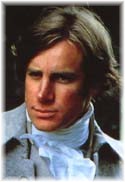
Last week, I brought you an excerpt from my latest release, Elizabeth Bennet’s Deception: A Pride and Prejudice Vagary ©2015. This week, I have another variation. This one is a 43,000 word novella entitled Mr. Darcy’s Fault: A Pride and Prejudice Vagary. ©2015 I hope you enjoy the excerpt below. Leave a comment for a chance to win one of two eBook copies of the book up for grabs.
Chapter One
“There is nothing for it,” he said with a heavy sigh. “I will gather Georgiana from London and set a course for Pemberley.”
Attempting to clarify his thoughts, Darcy stood under the trees of the well-groomed grove of Rosings Woods. He spent a long night, a night in which he saw his dreams of marital happiness dissolve as quickly as the mist drifting in from the Swale. He spent the hours of darkness composing a letter of apology and of parting for Miss Elizabeth Bennet, and a few minutes prior in the new day’s early hours, he placed it in her hands with a plea for the lady to read it.
Darcy sank down upon a wooden bench that his aunt placed along the carefully cleared path. Darcy doubted Lady Catherine ever walked in this part of the grove, but it was very much of his aunt’s nature to maintain carefully tended lawns and enchanting pathways leading to a nature walk.
“It is my fault,” he told a rabbit, which scurried into the opening. “I sorely misjudged the lady. I assumed my consequence would secure Miss Elizabeth’s approval.” Darcy shook his head in disbelief. “I certainly acted in a gormless fashion. I desired the woman because she did not easily succumb to the allure of my family’s position, and then I knew surprise when Miss Elizabeth acted as she always does. My fault…” he groaned before burying his head in his hands.
With his eyes closed, the scene of last evening’s horror replayed across his imagination.
“In vain have I struggled. It will not do. My feelings will not be repressed. You must allow me to tell you how ardently I admire and love you.”
Darcy expected Miss Elizabeth’s immediate agreement, but was met instead with her cold response.
“In such cases as this, it is, I believe, the established mode to express an obligation for the sentiments avowed, however unequally they may be returned. It is natural that obligation should be felt, and if I could feel gratitude, I would now thank you. But I cannot–I never desired your good opinion, and you certainly bestowed it most unwillingly. I am sorry to occasion pain to anyone. It was most unconsciously done, however, and, I hope will be of short duration. The feelings which you tell me long prevented the acknowledgment of your regard can have little difficulty in overcoming it after this explanation.”
A second groan escaped Darcy’s lips.
“Certainly I did not show well before the lady,” he whispered harshly. “I should have guarded my words. The colonel will have a sound laugh when he learns of my folly.”
His cousin’s words in describing Darcy’s lack of social skill to Miss Elizabeth still echoed in Darcy’s memory.
“It is because he will not give himself the trouble.”
“Yet, even so, how could Miss Bennet be so misguided as to think I would quickly recover from my professions of love? Did she not realize my declarations honest?”
Another would never fill the hole in his gut. Emptiness always followed Darcy about, but after taking the acquaintance of Elizabeth Bennet, Darcy thought she would make him whole. Now the yearning was stronger than ever, as if his Soul reached out, only to have its hands slapped away for being imprudent.
“How do I begin again with the image of Miss Elizabeth etched upon my heart?”
With acceptance of the impossible, Darcy stood slowly before sucking in a steadying breath.
“Lady Catherine and Ann are likely to be in the morning room. Her Ladyship will not be happy to learn I mean a speedy exit from Rosings.”
Returning his hat to his head, Darcy squared his shoulders. Yet, the sound of hurried footsteps had him spinning in the direction of the gate where he encountered Miss Elizabeth earlier to observe a familiar figure weaving his way in the direction of Hunsford Cottage.
“What the devil is he doing in Kent?” Darcy growled.
* * *
If Elizabeth, when Mr. Darcy gave her the letter, did not expect it to contain a renewal of his offers, she formed no expectations at all of its contents. No longer encumbered by his sudden appearance or his equally speedy exit, she could now stomp her foot in annoyance and complain under her breath, both of which brought little relief to her anxiousness.
“Dratted man! I should have thrown his letter at his too stiff back.”
Yet, instinctively, Elizabeth clasped the letter to her chest.
“It is not as if the man plans to offer you his hand a second time,” Elizabeth told the rising hopes she fought hard to quash. “Foolish girl,” she warned her racing heart. “A man of Mr. Darcy’s importance could not be made to beg for my acquiescence.”
After Mr. Darcy’s withdrawal last evening, the realization of what she did made inroads into Elizabeth’s resolve.
“Even though the connection would benefit my dearest family, my esteemed father would never permit me to marry purely for the bond.” Elizabeth sought justification for what others would perceive as a moment of pure foolhardiness. “And God knows I could never tolerate the man’s control of my life. I am not cut of the same cloth as Jane: I cannot act the martyr.”
Thoughts of the pain Mr. Darcy brought to her sister’s door only riled Elizabeth further.
“I have no wish in denying that I did everything in my power,” Mr. Darcy replied to Elizabeth’s accusation with assumed tranquility, “to separate my friend from your sister, or that I rejoice in my success. Toward him I was kinder than toward myself.”
Elizabeth looked in the direction Mr. Darcy walked: The gentleman had turned once more into the plantation.
“I should follow him, tear up this declaration of his superiority, and throw it into his face. How would you like that, Mr. Darcy?” Elizabeth taunted the spot where she last saw the gentleman.
Although she would never admit it aloud, recovering from Mr. Darcy’s proposal was not yet achieved: Since his hurried departure from Hunsford Cottage last evening, Elizabeth thought of little else. Such was the reason she begged off assisting Charlotte in the garden to indulge her need for air and exercise.
“After last evening’s headache, I fear I am totally indisposed for employment,” Elizabeth told her friend.
When she left upon her walk, she purposely chose the lane, which led farther from the turnpike road rather than to face the possibility of encountering Mr. Darcy in the parkland. But Elizabeth’s efforts were fruitless for Mr. Darcy appeared suddenly from a grove, which edged the park. She thought to retreat, but he saw her, and Elizabeth was not of the nature to cower; therefore, she stood her ground, moving again toward the gate, which led to the groomed grounds.
“Miss Elizabeth,” he called while she refused to acknowledge his approach with either a curtsy or verbal reply. Mr. Darcy held out the letter, which she took without thought. He said with what Elizabeth termed as haughty composure, “I was walking in the grove some time, in the hope of meeting you. Will you do me the honor of reading that letter?”
Elizabeth looked down at the letter held tight in her grasp.
“I suppose I should read the poisonous missive and be done with it,” she grumbled.
Reluctantly she returned to the path leading further into the woods. As she walked, Elizabeth broke the wax seal and opened the letter, two sheets of foolscap, written quite through, in a very close hand covered by an envelope, itself likewise full.
“Rosings. Eight of the clock,” she read aloud the first line. Her steps slowed, but Elizabeth continued along the prescribed path. “Be not alarmed, madam, on receiving this letter by the apprehension of its containing any repetition of the sentiments, or renewal of those offers, which were last night so disgusting to you.”
As I expected, she thought, there will be no renewal of Mr. Darcy’s proposal. Elizabeth did not know whether that particular fact disappointed her or brought gladness for the finality of the man’s regard.
“I write without any intention of paining you, or humbling myself, by dwelling on wishes which, for the happiness of both, cannot be too soon forgotten; and the effort which the formation and the perusal of this letter must occasion should have been spared, had not my character required it to be written and read.”
Elizabeth paused suddenly to huff her indignation.
“Naturally Mr. Darcy’s unbridled pride would demand the last word on the matter. Heaven forbid Mr. Darcy practiced the idea of going one’s own way and letting others do likewise. I wish he were before me so I might bring the gentleman more clarity upon the subject.”
With a growl of resignation, she returned to both her walk and the letter.
“You must therefore pardon,” she read through tight lips, “the freedom with which I demand your attention; your feelings, I know will bestow it unwillingly, but I demand it of your justice. Demand?” she hissed. “When did you not demand, Mr. Darcy? And do not flatter yourself to think you know my disposition!”
Despite the fact she unwillingly gave into her strong curiosity to read what would amount to nothing but untruths, Elizabeth was not about to give the gentleman an inch of rightness.
With anger’s bile rising to her throat, she raised her eyes to the heavens, saying a quick prayer for patience. Elizabeth stood perfectly still, seeking the goodness Jane would practice in this sham, but she could not seem to bring her emotions into check. In frustration, she sat a bruising pace, knowing she could not return to the Cottage and her friend without first burning away some of her animosity toward the man. If Mr. Collins learned of Mr. Darcy’s proposal, her cousin would likely drag Elizabeth by her hair to Rosings Park to apologize to Lady Catherine for having drawn the attention of Her Ladyship’s nephew.
“It is very unladylike of me to think so, but I would enjoy throttling the gentleman!” Elizabeth fumed as she marched along smartly while ignoring the beauty of God’s hand, which she would customarily cherish. “How is this madness ever to end? How may I face Mr. Darcy and his aunt when all I can think upon is the gentleman’s umbrage? It will be a difficult fortnight before I can escape to Longbourn.”
Elizabeth glanced at the pages she held tightly to her cloak.
“Should I continue with this deceit or place it in one of Mrs. Collins’s fireplaces?” she mocked.
She shook the offending letter harshly. Determined to have no more to do with Mr. Darcy, with trembling fingers, Elizabeth began to refold the pages. Yet, before she could complete the task, her eyes fell upon the lines from which she last read.
Her pace slowed once more, and unwittingly, Elizabeth read, “Two offenses of a very different nature, and by no means of equal magnitude, you last night laid to my charge. The first was that, regardless of the sentiments of either, I detached Mr. Bingley from your sister.”
The man possessed a way of forthright speaking, which always challenged Elizabeth’s best efforts of equanimity. Never having fully subsided, her anger roared again.
“Do you mean to deny your involvement, Mr. Darcy? You bragged of your success in the matter only last evening,” she huffed.
Ignoring where her steps led her, as well as the thickening of the vegetation surrounding her, Elizabeth bit out the words as she continued reading Mr. Darcy’s recitation aloud:
“My second offense, that I had, in defiance of various claims, in defiance of honor and humanity, ruined the immediate prosperity and blasted the prospects of Mr. Wickham. Willfully and wantonly to throw off the companion of my youth, the acknowledged favorite of my father, who had scarcely any other dependence than on our patronage, and who was brought up to expect its exertion, would be a depravity to which the separation of two young persons whose affection could be the growth of only a few weeks, could bear no comparison. But from the severity of that blame which was last night so liberally bestowed, respecting each circumstance, I shall hope to be in the future secured, when the following account of my actions and their motives are read. If, in the explanation of them, which is due to myself, I am under the necessity of relating feelings, which may be offensive to yours, I can only say that I am sorry. The necessity must be obeyed, and further apology would be…”
“Absurd!” Elizabeth screeched as she stumbled upon a tree root, pitching forward. Before she could right her stance, a loud click announced she wandered too far from the customary path through the woods. All she could do was scream as the trap meant for a fox snapped shut about her ankle. Her half boots did not prevent the sharp claws of the leg trap from piercing her skin.
* * *
Darcy quickened his pace, but even so, by the time he reached where the lane leading to the turnpike road marched along with the parkland’s paling, he lost sight of the figure. In frustration, he turned in a circle to survey the various paths leading to Hunsford Cottage, the woodlands, and the park.
“Which way did the scoundrel flee?” He ground out the words. “I thought the dastard in Meryton.” But then the obvious connections arrived. “Could Mr. Wickham’s presence in Kent be the reason for Miss Elizabeth’s refusal?”
Darcy’s mind became a red-hot haze.
“Has Miss Elizabeth renewed her interest in the gentleman?” he whispered in harsh tones. “Perhaps an elopement is afoot. Would than not be the pinnacle of irony?” A deep sigh of acceptance escaped Darcy’s lips. “If the lady’s heart is engaged elsewhere, you escaped a miserable marriage, Darcy.”
More determined than ever to be quickly from Rosings, Darcy crossed to the gate to return to his aunt’s manor house. He knew he should make the effort to ensure the unwelcomed visitor left the area, but he could not engender the effort. He would instruct Lady Catherine’s head groom to send out men to drive Darcy’s long-time enemy from the estate’s land.
“And if Miss Elizabeth chooses to follow Mr. Wickham, then more the pity for the Bennets.”
The sound of a dog barking somewhere off to his right had Darcy’s ears straining to locate the noise. Lady Catherine’s games keeper used several Springer spaniels and bloodhounds to keep poachers at bay, as well as to rid the parkland of the creatures Her Ladyship deplored.
“Perhaps the hound cornered a different breed of poacher,” Darcy declared with a wry twist of his lips. “As much as I hold no desire to come upon a lover’s tryst, my pride demands I know the truth.”
* * *
Face first, Elizabeth smacked the ground hard. With nothing upon which she could catch a handhold, she struck the earth with a resounding thud, one that drove the air from her lungs and literally, shook every bone in her body.
“Lord in Heaven,” she groaned when a breath was finally possible, as she attempted to shove her body upward upon her elbows, only to collapse again from the pain shooting up her calf. She sputtered against the clump of grass and dead leaves at her lips. “What have you done, Elizabeth Bennet?” she chastised. The pain coursed through her leg, and tears formed in her eyes. Raising her head to claim her bearings, she made a second attempt to right her position, only to be held firmly in place.
“A trap,” she pronounced aloud, as the blackness fogged her thinking.
In her distracted state, Elizabeth stepped into a trapper’s lure, which was bad enough, but the leg trap also caught part of the bowl of her day dress, essentially locking her right side in place. She could not bend her knee, nor could she sit to remove the trap. Elizabeth lay upon her stomach in a wooded area of the estate, a place few would think to look for her; there was no means of escape unless she created one.
“It is not as if God means to send you a rescuer,” Elizabeth grumbled as she fought for a lucid thought.
Even though, she realized the futility of her efforts, Elizabeth dutifully emitted several loud calls for assistance. She waited after each for an answering response, but when none came, the fear returned to her heart. Moisture ran down her temples and formed upon her upper lip. With difficulty, Elizabeth worked her right arm free of her cloak to wipe at the droplets only to come away with blood smears upon her glove.
“What else, God?” she grumbled, realizing her nose and forehead seeped blood.
With a concentrated effort, Elizabeth raised her head to look over her shoulder to the trapped ankle; again, she attempted to move her injured foot only to be met with more excruciating pain.
“I cannot simply lie here,” she groaned in frustration.
However, as the blackness staked its claim upon her sensibility, Elizabeth succumbed to the need to rest her forehead upon her arm, thinking she simply required a few moments to construct an idea for escape. The calm of her surrounds lured her closer to unconsciousness, but the sound of something moving through the woods had her alert with apprehension.
When the two dogs came bounding into the path ahead of her, Elizabeth did not know whether to celebrate or know more fear. The animals stilled with a warning growl and a barring of teeth.
“Easy,” she whispered. Her heartbeat hitched higher. “Is your master about?” She turned her head slowly to look for the animals’ owner. The hound put his nose to the ground and began to sniff her cloak and arm. “I am not your enemy,” she said in soothing tones.
And then the dog did the unthinkable. He sat beside her and lifted his voice to the trees. The spaniel joined the hound in setting up an alarm, and if the sound was not so ear piercing, Elizabeth would applaud their efforts in her behalf. Instead, she covered the ear closest to the dog with her free hand.
“This is all Mr. Darcy’s fault,” she added her complaint to the mayhem, as the hound took up the call once more. “Him and his dratted letter.”
* * *
With a couple of miscues, Darcy followed the sound of dogs’ pleas. Yes, there were two: a hound, which split the air with his long, mournful howl, and the deep, resonant ‘woof’ of a working dog. Periodically, Darcy paused simply to listen to the animals ring an alarm. They evidently cornered either a two-legged intruder or a four-legged one. Darcy was betting on the former, but either way, he meant to learn the truth of the racket. However, he did not chase the sound without first removing the Queen Anne pistol he carried in his jacket and then checking the hidden blade in his walking cane.
Prepared for action, when Darcy rounded the curve in the narrow path, he did not expect the sight, which greeted him.
“Miss Elizabeth?” Darcy stumbled to a halt when the spaniel sat low in his haunches to growl a warning against Darcy’s approach.
“Easy,” Darcy said without the anxiousness rushing through his veins. He glanced to where Elizabeth Bennet lay unmoving upon the ground. Instinctively, he knelt to the dog’s level. “I mean the lady no harm.”
Darcy permitted the animal to sniff him before he stood again. Edging closer to Elizabeth, he cautiously examined the situation. Her crumpled form brought an ache to his heart. Seeing her such reminded Darcy of the petite fragility her frame claimed; often, Elizabeth’s personality made her appear larger than she was.
“Elizabeth?” Darcy knelt to whisper into her hair. “Speak to me.”
Although muffled by the earth into which she spoke, Elizabeth weakly chastised him.
“I never gave you permission, Sir, to use my Christian name.”
Despite the dire situation, Darcy smiled.
“That is my darling girl,” he taunted.
Raising her upper body upon her elbows, Elizabeth protested his familiarity.
“I am not your ‘darling girl,’ Mr. Darcy. Not your darling anything.”
Darcy thought, Not yet, but instead he asked, “Where are you injured?”
She turned her head stiffly to glance at him over her shoulder.
“My right ankle. While reading your cursed letter, I stepped in a trapper’s lure.”
Her lips were tight, and there was blood caked upon her forehead and chin.
“My God, Woman!” Darcy exclaimed as he flipped Elizabeth’s cloak from his way. “Why are you not caterwauling in pain?”
Darcy’s fingers trembled as they lightly brushed the steel trap, while his admiration for the woman increased substantially.
“I promise I will fill several handkerchiefs with my tears once this is over,” she quipped.
Elizabeth gasped, biting hard on her lip to stifle the cry of pain, when Darcy attempted to loosen her skirt tail from the mechanism.
“I apologize, Miss Elizabeth,” he mumbled as he examined the situation from a different angle.
Elizabeth heaved a heavy sigh.
“I would like to say I am your champion, but I fear my patience is dwindling. You will know success in this matter, will you not, Mr. Darcy?” she asked breathlessly.
Darcy’s mind filled with unbearable pressure to yank the offending lure from her sight, but he said, “Bear with me. I promise to free you.”
Elizabeth returned her head to her forearm.
“I am at your disposal, Mr. Darcy,” she said wearily.
Darcy suspected her supposed calm came from a bit of delirium. He wished he fetched a groom or Lady Catherine’s grounds’ man before he set out upon this task, but his pride told him Elizabeth Bennet refused him because she preferred Mr. Wickham. Little did he think a letter of explanation could bring her more pain.
Darcy caught the rent in the hem of her gown and gave it a mighty yank to open the tear further. Unsurprisingly, Miss Elizabeth did not protest, a sign the lady succumbed to her peril. Gently, Darcy ran his hand along her back to check her breathing. Although weak, her breaths were as if she were sleeping.
Assured, his worse fears would know another day, Darcy reached behind him to find his discarded cane lying beside the pistol upon the ground, before giving Elizabeth’s shoulders a tender shake to arouse her.
“I mean to pry the trap open,” he explained. “Do you possess the strength to lift your leg free of the contraption while I hold the lure open?”
Elizabeth raised her chin from the ground.
“Tell me when, Sir.” For a split second, Elizabeth’s body stiffened with alertness, and then she went completely limp. From beside him, the spaniel whined.
“I agree,” Darcy grumbled as he crawled on all fours to check her breathing once more.
Finding her unconscious, but breathing normally, Darcy scrambled to his feet to straddle her booted ones. Stripping away his caped coat and tossing it to the ground, he edged Elizabeth’s left foot from his way; anxiously, he placed the toe of one of his Hessians on the right side of the trap, loosening the tension of the mechanism as it eased from her skin. Even so, Elizabeth did not move, a fact that worried Darcy greatly. Miss Elizabeth was likely the most strong-willed woman of his acquaintance. Her resting docilely was not a good omen, in his opinion.
Slowly and carefully, Darcy wedged the cane into the small opening. His heart told him to hurry, but his mind kept repeating the need for great care.
“Do not wreak more damage upon the woman,” Darcy said aloud. “If the trap is sprung again, it will likely do irreparable harm to Miss Elizabeth’s ankle.”
He swallowed hard before he placed the toe box of his left boot upon the opposite side of the trap. Using his weight to lower the left side of the lever, Darcy paused only long enough to suck in a steadying breath. Squatting awkwardly over the device, Darcy reached down to capture the curve of Elizabeth’s ankle in his gloved hand. He wished he could shift his weight to keep his balance, but any swift movement could release the trap again.
Patiently, he lifted Elizabeth’s foot, bending her leg at the knee. There were several jab wounds in the creamy skin of her exposed calf, and her ankle appeared badly bruised and swollen. Inch by terrifying inch, Darcy lifted her foot higher. When he cleared her limb of the trap, Darcy removed his right foot, and the lever slammed against his cane. Keeping a tight grasp upon her foot, he released the left side. This time, his cane cracked and bent. Free to rest Elizabeth’s foot again upon the ground, Darcy gently lowered her leg to rest upon the grassy area. Standing to look upon his work Darcy’s eyes fell upon the trap. In anger, he caught the bent metal of his hidden sword and tossed the trap against the side of a nearby tree.
Clear at last, Darcy dropped to his knees beside Elizabeth.
“I have you,” he chanted as he rolled Elizabeth to her back. Darcy used his handkerchief to wipe away the trickle of blood from her nose. Unconscious, Elizabeth did not fight him, and Darcy took a perverted pleasure in having the right to tend her.
“You shall have a black eye, my love,” he observed as Darcy checked her arms and legs for any broken bones. With the release of the pressure upon Elizabeth’s ankle, the puncture wounds began to bleed, and Darcy stripped off his cravat to wrap about her leg. He would like to remove her boot, but he suspected he could cause Elizabeth more injury if he did so.
Instead, Darcy loosened the fastenings of Elizabeth’s cloak to toss it upon his discarded coat. He would leave both garments until later.
“Come, Love,” Darcy spoke in soft tones as he lifted Elizabeth to him. Her breathing was even, which gave Darcy hope. “Like it or not, Elizabeth Bennet, after your recovery, you will be Mrs. Darcy. You are thoroughly compromised, my girl.”
Darcy turned his steps toward Rosings Park. Lady Catherine would disapprove of his actions, but he would not permit his aunt to hush up his actions. One way or another, Darcy meant to have Elizabeth as his wife. Darcy assured his pride that she would learn to return his affections once Darcy had her alone at Pemberley. His ancestral estate would work its magic on Miss Elizabeth’s heart, and he would have her in his bed each night.
“My wish is for you and children,” Darcy whispered into Elizabeth’s hair.
With tails wagging and playful yips, the dogs rushed ahead of him as Darcy wove his way along the tree-rooted path. Neither he nor the animals took note of a dark figure stepping from behind a tree. The man scooped Darcy’s coat and pistol from the ground. Turning to where he hid while Darcy tended Miss Elizabeth, the interloper bent to gather the pages of the long-forgotten letter. With a smile of conniving, the man saluted Darcy’s retreating form. The interloper refolded the pages and slipped them into his jacket pocket, along with the pistol, before disappearing the way he came.
The eBook version of Mr. Darcy’s Fault is on sale for a special introductory price for a limited time.
Purchase Links
Amazon
Kindle
Kobo
CreateSpace
Nook

 The Finnesburg — or Finnsburh — Fragment is a portion of an Old English heroic poem about a fight in which Hnæf and his 60 retainers are besieged at “Finn’s fort” and attempt to hold off their attackers. The surviving text is tantalizingly brief and allusive, but comparison with other references in Old English poetry, notably Beowulf (c. 1000 AD), suggests that it deals with a conflict between the Danes and the Frisians in Migration-Age Frisia (400 to 800 AD). It survives only in George Hickes’s Thesaurus (1705). The fragment’s attribution comes from a single leaf of manuscript found in the Lambeth Palace library – either Lambeth Palace MS 487 (a 13th Century collection of English homilies) or Lambeth Palace MS 489 (an 11th Century Old English homily book). The fragment is important for it is tied to Beowulf. In the epic poem of Beowulf, a lay of the Battle of Finnesburh is sung by a gleeman at Hrothgar’s court (Beowulf II.1067-1158). [Beowulf on Sterarume]
 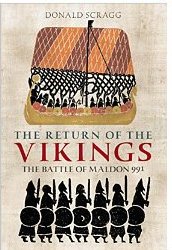 From 991, we have The Battle of Maldon, a poem that celebrates the heroic battle of Earl Byrhtnoth against the Norwegians under Anlaf (Olaf Trygvesson). After harrying Stone, Sandwich, and Ipswich, the Vikings came to Maldon on the banks of the River Panta. The stream divides here into two branches; the Danes drew up their forces on the island. The poem displays many of elements of the heroic works, especially that of personal glory coming from the deliverance of selfless acts.