Do You Remember the First Time You Read a Charles Schultz Cartoon?

Charles Schulz - Biography - Illustrator, Writer - Biography.com www.biography.com

Charles Schulz – Biography – Illustrator, Writer – Biography.com
http://www.biography.com

For nearly 50 years, Americans opened their daily newspaper to read the latest adventure of Charlie Brown, Linus, Lucy, Snoopy, etc., in the “Peanuts” cartoon. On February 13, 2000, Charles Schultz, the series creator passed away peacefully during his sleep from complications of colon cancer. Schultz “once described his life as being ‘one of rejection.'” (Charles M. Schultz Museum)

“The poetry of Schulz’s life began two days after he was born in Minneapolis, Minnesota, on November 26, 1922, when an uncle nicknamed him ‘Sparky’ after the horse Spark Plug from the Barney Google comic strip. Sparky’s father, Carl, was of German heritage and his mother, Dena, came from a large Norwegian family; the family made their home in St. Paul, where Carl worked as a barber. Throughout his youth, father and son shared a Sunday morning ritual reading the funnies; Sparky was fascinated with strips like Skippy, Mickey Mouse, and Popeye. In his deepest desires, he always knew he wanted to be a cartoonist, and seeing the 1937 publication of his drawing of Spike, the family dog, in the nationally-syndicated Ripley’s Believe it or Not newspaper feature was a proud moment in the young teen’s life. He took his artistic studies to a new level when, as a senior in high school and with the encouragement of his mother, he completed a correspondence cartoon course with the Federal School of Applied Cartooning (now Art Instruction Schools).

“As Schulz continued to study and hone his artistic style from the late 1920s through the 1940s, the genre of comic art experienced a great shift. The full-page comics of the 1920s and 30s afforded artists the space to reflect the Art Deco details and sensibilities of the day, including the highly-stylized illustrations of Dick Tracy and Little Nemo in Slumberland. Newspaper editors in the late 1940s and 50s, however, promoted a post-War minimalist model, pushing their cartoonists to shrink strip size, minimize pen strokes, and sharpen their humor with daily gags and cerebral humor for an ever-increasingly educated audience. Schulz’s dry, intellectual, and self-effacing humor was a natural fit for the evolving cultural standards of the mid-20th century comics.” (Charles M. Schultz Museum)

According to Rheta Grimsley Johnson (Memories, “Perspective: Good Grief,” December 1989/January 1990), Schultz was well read, religious, and was one to find humor in everything in a serious, melancholy manner.  He was one to stick to a regiment, keeping a regular routine for drawing and creating each day. He was commonly 8 to 10 weeks ahead in his cartoons for the United Feature Syndicate deadline on the Sunday strip and customarily six weeks ahead on the daily strip. 

He was adamant about factual accuracy and on using correct spellings. He double checked references to music, law, sports, medicine, etc. He regularly added sensitive topics to his cartoons. He touched on religion, old age, war, psychiatry, but never on politics. He loved hockey and classical music and golf, but despised barbershop quartets and people who asked him to autograph stuffed animals. Schultz perfected the idea of “rejection” and “failure” with Charlie Brown being quintessential loser. 

Do you have a favorite cartoon strip? Do you miss reading newspapers and finding a gem of a cartoon strip to share with your family? Leave a comment below. 

Posted in American History, Uncategorized | Tagged , , , , , , | 4 Comments

How Austen Changes Up the “Courtship Novel”

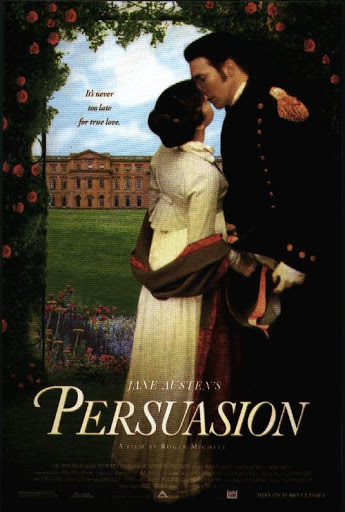
Inspired by Jane Austen's Persuasion – Captain Wentworth's Glove ... janeaustensequelsblog.wordpress.com

Inspired by Jane Austen’s Persuasion – Captain Wentworth’s Glove …
janeaustensequelsblog.wordpress.com

Earlier, we examine Austen’s art in the “courtship novel,” specifically in Pride and Prejudice.”Here we see that Jane Austen’s portrayal of courtship differs from that of many courtship novels written throughout the eighteenth century: in Austen’s novels, instead of submitting to authority and convention, a young woman takes charge of her own marriage.” (H. Giles: Eighteenth-Century Courtship Novels)

In “Courtship, Love and Marriage in Jane Austen’s Novels,” tells us, “It is right that the three words at the head of this article come in the order that they do, because in Jane Austen’s novels the manoeuvring by which a man presents himself to a woman (and her parents) as a possible husband often comes before any signs of love. Charlotte Lucas in Pride and Prejudice offers the most tough-minded and unsentimental analysis, counselling that Jane Bennet should secure her rich husband first and think about love only after they are married. ‘Happiness in marriage is entirely a matter of chance’ (ch. 6). She is not the only articulate cynic. Mary Crawford in Mansfield Park, possessed of a good fortune and on the lookout for a husband, calls marriage ‘a manoeuvring business’ (ch. 5). Conduct books of the period tend to represent marriage as a solemn religious duty but in Austen’s novels the harsh economic reality of a young woman’s value in the marriage market is what preoccupies most of the characters. – See more at: (Romantics and Victorians)

“Yet we are also invited to think that Charlotte Lucas’s and Mary Crawford’s views are dismal. Austen’s novels, while alive to the pressures of family expectations, unreservedly endorse the aim of marrying for love. Catherine Morland in Northanger Abbey declares, ‘to marry for money I think the wickedest thing in existence’ (ch. 15). She is an unworldly 17-year-old, but her heart is right. And women’s choices, while constrained, are their own. In the earlier novels of the 18th century, fathers often try to command their sons and daughters whom to marry. In Austen’s world, as she says in the last chapter of Persuasion, ‘When any two young people take it into their heads to marry, they are pretty sure by perseverance to carry their point’ (ch. 24). “- See more at: (Romantics and Victorians)

In the traditional courtship novel, the heroine leaves her childhood home behind eventually to find herself in the hero’s home. Austen’s novels vary this basic plot line. In Pride and Prejudice, Elizabeth ascent into the Mr. Darcy’s social circle parallels her moving from southern England to the northern county of Derbyshire. Did you ever consider how only in Pride and Prejudice and Persuasion do the heroine’s “move” into an exogamous marriage? How they travel away from what they once knew, abandoning their childhood homes? Emma stays put in the Highbury neighborhood. Once she comes to Mansfield Park, Fanny Price remains very much upon the estate. The Dashwood sisters spend their lives in Kent. Catherine Morland visits Bath with the Allens, but it is her time in Fullerton which define her. 

Persuasion is Pride and Prejudice in reverse in more than one manner. Anne Elliot is the symbol of the “aristocracy” as the daughter of a baronet, while Captain Wentworth is the one who will ascend into her sphere. The Elliots were an old Royalist family who served “the office of High Sheriff, representing a borough in three successive parliaments, exertions to loyalty, and dignity of baronet, in the first year of Charles II” (ch 1). 

It's All About Books: January 2012 sueysbooks.blogspot.com

It’s All About Books: January 2012
sueysbooks.blogspot.com

Austen makes a political statement in her portrayal of Sir Walter Elliot, who squandered away his family fortune and his “exertions to loyalty.” Sir Walter’s disparagements of Admiral Croft, a Trafalgar hero, speaks of Sir Walter’s Whig descent. (Patrick Parrinder, Nation & Novel, Oxford University Press)

Anne Elliot abandons the ways of her foolish father and snobbish sister to become the equal of an intelligent and masterful man. “Anne was tenderness itself, and she had the full worth of it in Captain Wentworth’s affection. His profession was all that could ever make her friends wish that tenderness less, the dread of a future war all that could dim her sunshine. She gloried in being a sailor’s wife, but she must pay the tax of quick alarm for belonging to that profession which is, if possible, more distinguished in its domestic virtues than in its national importance.” (ch 24)

Parrinder asserts (pages 194-195), “Yet this brings us up against the self-imposed limitations of Austen’s fiction, since she can merely hint at the national importance of the fighting services. There is a strong awareness of social change, of a movement from ‘the old English style’ to ‘the new’ (33) in Persuasion; but while the naval officers symbolize the change, they cannot determine its direction. The fragment of Sandition, which Austen did not live to finish, suggest that she may have been about to turn her attention to the commercial classes. In neither novel are the stately houses and their owners as formidable as they once were. It would be fascinating to know whether Sandition or Perusasion, would have been a portrait of the hero as bounder rather than the hero as (like Edmund Bertram and Mr. Knightley) gentlemanly prig. The last sentence of Persuasion observes that the drawback of being a sailor’s wife is Anne Elliot’s ‘dread of a future war’, and the novelist could not have foreseen that the long peace after Napoleon’s defeat was likely to condemn Frederick Wentworth to a humdrum and largely inactive future. Perhaps, like those other would-be dominant males Willoughby and Wickham, he would have to settle for country sports.” 


Posted in British history, Great Britain, Jane Austen, Living in the Regency, real life tales, Regency era | Tagged , , , , , , | 2 Comments

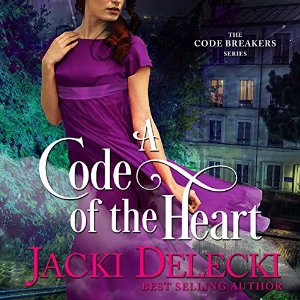
The Making of a Book Trailer + a Giveaway of an Audiobook of “A Code of the Heart”

I wish to welcome back to the blog, Jacki Delecki. Descended from a long line of storytellers, Jacki spins adventures filled with suspense, healing, and romance. Jacki’s love affair with the arts began at a young age and inspired her to train as a jazz singer and dancer. She has performed many acting roles with Seattle Opera Company and Pacific Northwest Ballet. Her travels to London and Paris ignited a deep-seated passion to write the Regency Code Breaker Series, of which her new audiobook, A Code of the Heart, is part. Welcome, Jacki…

HeadShot_SmallDearest Readers,

I don’t usually create video trailers for my books, but I did create trailers for both of my audiobooks. Why, you ask? With the addition of sound, adding video is a way to add dimension to this engaging book promotion technique. I work with my assistant, Maria Connor of My Author Concierge, and this is a look at our process.

Developing a book trailer starts with a script. This can be the book cover copy (also called the book blurb or book summary), an excerpt from the book, or something entirely different. For A CODE OF THE HEART, we used a brief excerpt that reflected the storyline, plus the tag line for the Code Breakers series. The script can either be narrated or added as text.

The next step in the process is to assemble the graphic and audio components. This can be a challenge, as one must comply with copyright laws. He must have permission or be authorized to use the content in the trailer. To avoid any problems, we either use images owned by the author, his/her assistant, or stock art/music that one purchased. One can also use material under a Creative Commons license.

Finding licensed images for Regency romance can sometimes be a challenge. We discarded one of the images we considered using for this book trailer when we realized the male model–posed in a classic historical romance cover embrace–was wearing a gold chain necklace. We didn’t want any readers complaining about the historical inaccuracy of such an image so we selected a different graphic.

Another means to solve the problem of limited Regency England images is to look for photos that reflect the story elements without specifically portraying them. For example, in this book trailer, the “spilled” tea cup represents the poisoning, as well as the danger and betrayal incidents in the story, while we selected the British flag to signify the intrigue and danger to the British monarch.

The audio and video elements are crafted into a final product using Windows Movie Maker and an audio “mixing” program called Audacity.

61iIdTbBX0L._SL300_Below are links to book trailers for my two historical romantic suspense books available as audiobooks:

A Code of Love

A Code of the Heart

For an audio sample of Jacki’s new audiobook, listen HERE.

I hope you enjoyed our creative efforts and that we’ve made you curious to learn more about Jacki’s Regency romantic suspense! If you’d like more information about Jacki’s audiobooks, you can find A CODE OF LOVE and A CODE OF THE HEART on Audible, Amazon and iTunes.

About Jacki Delecki

Jacki Delecki is a bestselling romantic suspense writer. Delecki’s Grayce Walters Series, which chronicles the adventures of a Seattle animal acupuncturist, was an editor’s selection by USA Today. Delecki’s Romantic Regency The Code Breaker Series hit number one on Amazon. Both acclaimed series are available for purchase at http://www.JackiDelecki.com. To learn more about Jacki and her books and to be the first to hear about giveaways join her newsletter found on her website. Follow her on Facebook as Jacki Delecki; Twitter @jackidelecki.

GIVEAWAY – LEAVE A COMMENT BELOW TO BE ENTERED INTO A GIVEAWAY OF AN AUDIOBOOK COPY OF “A CODE OF THE HEART.” THE GIVEAWAY ENDS AT MIDNIGHT EDST ON SUNDAY, JULY 19, 2015.

Posted in British history, giveaway, Great Britain, Guest Blog, Living in the Regency, Regency era | Tagged , , , , , | 9 Comments

Early Anglo-Norman Literature

Anglo-Norman literature was a verse literature in which we find a love for word play. The tone was lighter and the themes romantic. Even when the subject was an imaginary historical or religious figure, the overall effect remained romantic. Imagination and fancy ruled the day. These were stories of love and adventure. 

Geoffrey of Monmouth related the tale of King Arthur. Soon other found the Arthurian legend great fodder for their stories. Even historical accounts lost their “factual” presentation. Layamon told the history of Britain in rhyme. “Layamon’s Brut (ca. 1190-1215) is a Middle English poem. At a little over 16,000 lines, it was the first historiography written in English since the Anglo-Saxon Chronicle. The story line for Brut follows the mythical founder of Britain, Brutus of Troy. It is based on the Anglo-Norman poem, Roman de Brut by Wace, which was a version of Geoffrey of Monmouth’s Latin Historia Regum Britanniae. 

“The versification of the Brut has proven extremely difficult to characterise. Written in a loose alliterative style, sporadically deploying rhyme as well as a caesural pause between the hemistichs of a line, it is perhaps closer to the rhythmical prose of Ælfric of Eynsham than to verse, especially in comparison with later alliterative writings such as Sir Gawain and the Green Knight and Piers Plowman. Layamon’s alliterating verse is difficult to analyse, seemingly avoiding the more formalised styles of the later poets.

“Layamon’s Middle English at times includes modern Anglo-Norman language: the scholar Roger Loomis counted 150 words derived from Anglo-Norman in its 16,000 long-lines. It is remarkable for its abundant Anglo-Saxon vocabulary; deliberately archaic Saxon forms that were quaint even by Anglo-Saxon standards. Imitations in the Brut of certain stylistic and prosodic features of Old English alliterative verse show a knowledge and interest in preserving its conventions.” (Wikipedia via Ackerman, Robert W. (1966) Backgrounds to Medieval English Literature. 1st. New York: Random House, Inc.)

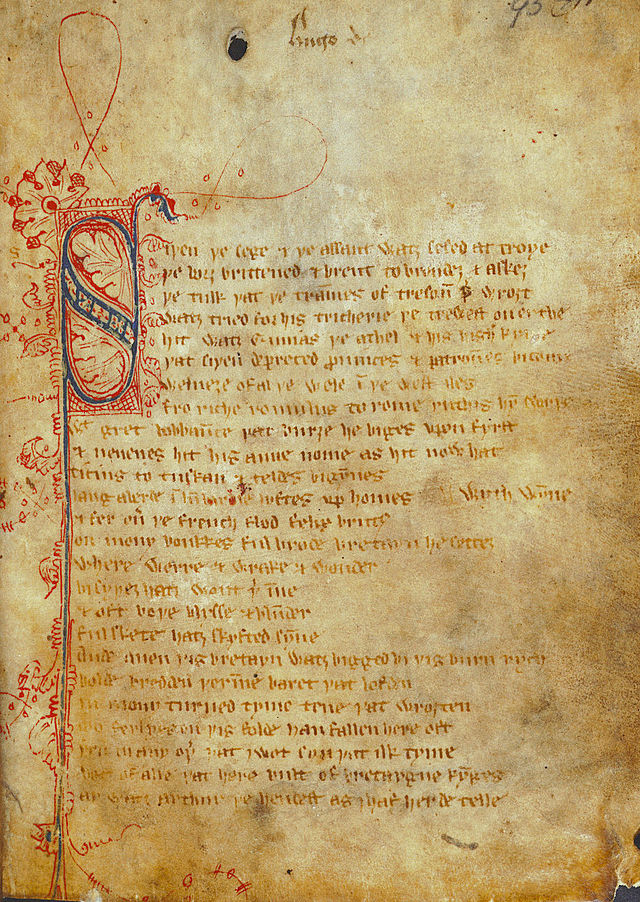
Public Domain https://en.wikipedia.org/ wiki/Sir_Gawain_and_the _Green_Knight

Public Domain https://en.wikipedia.org/
wiki/Sir_Gawain_and_the
_Green_Knight

Metrical romances were popular. There were stories of Charlemagne, heroes of ancient Troy, Robin Hood, etc. The story of Sir Gawain and the Green Knight is a 14th Century Middle English chivalric romance classified as a “beheading game” story. It is one of the best known Arthurian stories. It is written in stanzas of alliterative verse, each stanza ending with a rhyming ‘bob and wheel.’ Many believe the story line is based in the folklore of the Green Man (a face surrounded by or made from leaves). In it the hero goes on a quest which tests his intelligence, his strength, and his honor. 

Religious writing were also widely found. The Ancrene Riwle, Ancrene Wisse (Rules/Guide for an Anchoresses) recommended the proper way of life of people who devoted their lives to religion. It was written in the early 13th Century. The piece is divided into eight parts: Parts 1 and 8 deal with the anchoresses’ outer life, while 2-7 deals with the inner life. Anecdotes are used as examples of the devotional tone of the work. An anchorite customarily lived in a cell connected to a church. Cursor Mundi is an anonymous Middle English religious poem of some 30,000 lines written ca. 1300. It describes the history of the world as seen in the Christian Bible mixed with legends drawn from Historia scholastic. The Cursor Mundi is divided into the seven ages of salvation. 

Twelfth century writers included Geraldus of Wales, the French writer Wace, and Walter Map. Gerald wrote an autobiography which reflected his travels. Wace was the author of Roman de Brut, which contained Arthurian stories. Walter Map was an aristocrat who criticized the royal court of the time. He wrote his Courtier’s Trifles in Latin, which were moral lessons and satire on aristocratic ways and manners. 

History was a popular subject of the day. William of Malmesbury was a leader among 12th Century historians. His Gesta pontifical Anglorum (Deeds of the English Bishops, Volumes 1 and 2); Gesta degum Anglorum (Deeds of English Kings, Volumes 1 and 2, etc. sheds light on the Bishops and the Kings of England. Henry of Huntingdon’s Historia Anglorum was a charge from Bishop Alexander of Lincoln to write a history of England from the earliest period to the Present, ending it with the accession of Henry II to the throne in 1154. His Epistles offer insights into 12th Century life. Geoffrey of Monmouth’s is best known for his Historia Regum Britanniae (History of the Kings of Britain), even though the work smacks more of prose romance than history. Jocelin of Brakelonde was an English monk and the author of a chronicle narrating the fortunes of the monastery of Bury St. Edmunds Abbey. The Chronicle of St. Edmundsbury tells the story of the Abbot Samson who revolutionized monastic life. Jocelin “tells us that he was with Samson night and day for six years; the picture which he gives of his master, although coloured by enthusiastic admiration, is singularly frank and intimate. It is all the more convincing since Jocelyn is no stylist. His Latin is familiar and easy, but the reverse of classical. He thinks and writes as one whose interests are wrapped up in his house; and the unique interest of his work lies in the minuteness with which it describes the policy of a monastic administrator who was in his own day considered as a model.” (Wikipedia)

During the 12th and 13th centuries, there was a rise of nationalism. The crusades opened England to an essentially unknown world. The literature of the time was influenced by the importation of Oriental stories, the institution of chivalry, and the elaborate church rituals. Chronicles were written in Latin. 

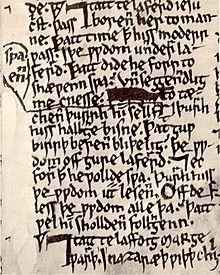
Public Domain ~ A page from the Ormulum demonstrating the editing performed over time by Orm (Parkas 1983, pp. 115–16), as well as the insertions of new readings by "Hand B". en.wikipedia.org/wiki/Ormulum

Public Domain ~ A page from the Ormulum demonstrating the editing performed over time by Orm (Parkas 1983, pp. 115–16), as well as the insertions of new readings by “Hand B”. en.wikipedia.org/wiki/Ormulum

In addition, we find the first works written in English after the Norman Conquest. These included Poema Morale and the Ormulum. The first was a moral poem describing proper Christian conduct. It was an account of heaven and hell and of the nature of good deeds, which lead to eternal life. The second is a biblical exegesis, written by Orm, a monk. It preserves many details of English pronunciation existing at the time. 

The Cursor Mundi also appeared in English, as did Robert Mannyng’s Handlynge Synne. It is a devotional verse on the practice of morality. We also have Richard Rolle’s Pricke of Conscience. It is a deeply religious work, which advocates the philosophy of love. A long poem of the time is called The Owl and the Nightingale. At 1800 lines, the poem is a debate between two birds, one representing a life of contemplation and the other a life of frivolity. 

Roger Bacon was an early English philosopher and a Franciscan friar known for a study of nature through empirical methods. His Opus Majus deals with mathematics, alchemy, and astronomy. He also authored Opus Minus and Opus Tertium. Opus Tertium discussed the relationship between philosophy and theology. Opus Minus dwelt on the same relationship, but also explored the faulty interpretation of Scriptures. Joining Bacon was John Duns (Duns Scotus), who had considerable influence upon Catholic doctrines. He developed arguments for the existence of God and for the Virgin Mary’s Immaculate Conception. 


Posted in Anglo-Normans, British history, Great Britain, literature, real life tales | Tagged , , , , , , , , , | 1 Comment

Euphemisms

Learn British English: English euphemisms visual » Learn British ... www.learnbritishenglish.co.uk

Learn British English: English euphemisms visual » Learn British …
http://www.learnbritishenglish.co.uk

Dictionary.com says a euphemism is “the substitution of a mild, indirect, or vague expression for one thought to be offensive, harsh, or blunt.”  Euphemisms are plentiful, some old and some of a more modern twists. Let us look at a few. 

Accouchement is a one-hundred year old term for childbirth. In the Regency Period in which many of my novels are set, I use the words “lying in” or “enceinte.” A physician might use the word “parturition.” Accouchement comes from the French word “accouter,” meaning “to put to bed.” In James Joyce’s Ulysses (1922), he says, “Meanwhile the skill and patience of the physician had brought about a happy accouchement.” 

Language Arts comes to us by combining language skills and communication arts. In a favorite play, Bel Kaufman’s Up the Down Staircase (1964), we find “Language Arts Dept. is the English office.” My undergraduate degree was in Language Arts Comprehensive 7-12, which permitted me to teach English, speech, journalism, and theatre in the American public school systems.

Ablutions, another word I often use in my novels, means to wash (sometimes ceremoniously as in purification, rather than for hygienic purposes). The word dates to the mid 1700s. 

Authentic Reproduction is a good example of double-talk. A reproduction is not authentic. 

Make love is a euphemism turned into a euphemism. It was originally the flowery language used by a gentleman to woo or to court his lady love. The Oxford English Dictionary gives us a reference to John Lyly and “a phrase now there is which belongeth to your Shoppe boorde, that is to make loud” (Euphues and His England, 1580). The OED did not use “make love” as a euphemism for sex until the 1976 supplement and then the earliest example given was from 1950.

Cripes is an euphemism for “Christ.” We also have Christopher Columbus, criminey, Jiminy Cricket, cricky. cracky, etc. 

Free Presentations in PowerPoint format for Euphemisms PK-12 languagearts.pppst.com

Free Presentations in PowerPoint format for Euphemisms PK-12
languagearts.pppst.com

Pluck is another word for courage. In A Classical Dictionary of the Vulgar Tongue (1796), Francis Grose indicates “pluck” and “guts” can be used interchangeably. “Pluck” is another word for “viscera.” From Mary Kingsley, Travels in West Africa (1897) we find this quote, “I saw…five unpleasantly looking objects stuck on sticks. They were the livers and lungs, and in fact the plucks of witch-doctors.” 

Monthlies is an older term for a woman’s menstrual cycle or period. I use it in my Regency based novels. If we return to James Joyce’s Ulysses, we discover, “That squinty one is delicate. Near her monthlies, I expect, makes them ticklish.” 

Criminal Conversation is the term for adultery in British common law and in the laws of some states in the U. S. I live in North Carolina, which still has this term upon the law books. John Edwards’ (senator and presidential candidate) late wife brought suit against Rielle Hunter for criminal conversation in the North Carolina courts. The “conversation” is an euphemisms for non-spoken intercourse. A British case of the mid 1800s involved Thomas Brudenell seventh Earl of Cardigan’s affair with Lady Frances, wife of Lord William Paget. Paget sued for 15,000 pounds in damages. 

Silly means feebleminded. It is a 16th Century word. The OED gives us this example, “The King’s uncle, being rather weak in intellect, was called Silly Billy” (Goldwin Smith, Lectures and Essays, 1881). 

Smallclothes can mean small articles of clothing (as in underclothing or handkerchiefs). In the 18th Century the word meant close-fitting breeches.

Posted in British history, euphemisms, Great Britain, Living in the Regency, Regency era | Tagged , | 4 Comments

Two More Winners of “The Prosecution of Mr. Darcy’s Cousin”

winner-is-badgeI am pleased to present two more winners with eBook copies of The Prosecution of Mr. Darcy’s Cousin: A Pride and Prejudice Mystery. You should have a prize notice in your emPoMDC Cover-2-2ail box. The winners are Vesper Meikle and June Williams. Congratulations!

Posted in British history, giveaway, Great Britain, Jane Austen, Living in the Regency, Regency era | Tagged , , , , , | Comments Off on Two More Winners of “The Prosecution of Mr. Darcy’s Cousin”

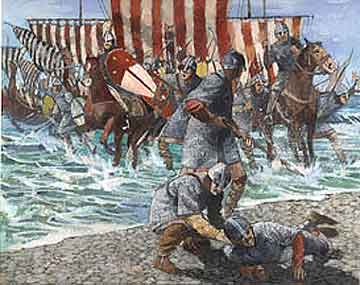
Political History of England Under the Normans

The Norman Conquest www.bl.uk In 1066, the Normans invaded England. It was an event that was to transform the English language forever.

The Norman Conquest
http://www.bl.uk
In 1066, the Normans invaded England. It was an event that was to transform the English language forever.

The French influence upon England and its culture lasted some 300 years, creating changes in the political, social and cultural realms. 

Politically, England saw an acceleration of a “united” England and a spirit of nationalism. The acceptance of a centralized language and literature style sped up this process. The period also saw closer association with the Continent, a manipulation of England’s legal and governmental systems to reflect more localized control, and a great influence in the king’s power and the feudal system. 

Socially and cultural, a code of chivalry developed. There was an exaltation of women and a sense of religious ardor, bordering on mysticism. Normans introduced a different style of architecture and the control of literary English.

Essential Norman Conquest - An interactive day-by-day retelling of ... www.essentialnormanconquest.com

Essential Norman Conquest – An interactive day-by-day retelling of …
http://www.essentialnormanconquest.com

William of Normandy’s two sons followed his time on the throne. With the death of the second of those sons (Henry I), the country fell into a period of civil war and anarchy, which did not end until the accession of the Angevin Henry II in 1154. 

William and his wife Matilda of Flanders had at least nine children. The birth order of the boys is clear, but no source gives the relative order of birth of the daughters.

**Robert was born between 1051 and 1054, died 10 February 1134. Duke of Normandy, married Sybil of Conversano, daughter of Geoffrey of Conversano.
**Richard was born before 1056, died around 1075.
**William was born between 1056 and 1060, died 2 August 1100. King of England, killed in the New Forest.
**Henry was born in late 1068, died 1 December 1135. King of England, married Edith of Scotland, daughter of Malcolm III of Scotland. His second wife was Adeliza of Louvain.
**Adeliza (or Adelida, Adelaide) died before 1113, reportedly betrothed to Harold II of England, probably a nun of Saint Léger at Préaux.
**Cecilia (or Cecily) was born before 1066, died 1127, Abbess of Holy Trinity, Caen.
**Matilda was born around 1061, died perhaps about 1086. Mentioned in Domesday Book as a daughter of William.
**Constance died 1090, married Alan IV Fergent, Duke of Brittany.
**Adela died 1137, married Stephen, Count of Blois.
**(Possibly) Agatha, the betrothed of Alfonso VI of León and Castile. (Wikipedia)

Of the two sons who followed William I to the throne, William II was named his father’s heir in place of Robert (the eldest son), who received the Duchy of Normandy. William II accedes to the throne in 1087. He successfully squashed a baronial rebellion in Normandy (led by his uncle, Odo of Byeux, who supported Robert’s claim to the throne) in 1088 and withstood two invasion attempts (1091 and again in 1093) by Malcolm III of Scotland. During his reign, the Normans capture Carlisle from Scotland and Cumberland is annexed. William II suppressed a revolt in Northumbria in 1095 and a Welsh rebellion in 1098. He was killed in a hunting accident in the New Forest in 1100, although many suggest his brother Henry had William murdered. 

Henry I came to the throne with William II’s death. He ruled for 35 years. During his reign, England saw many important reforms. The King’s Council to settle disputes between the Crown and its tenants came into use. Upon coming to the throne, Henry issued a Charter of Liberties, which was a pledge of good governance. In 1101, he defeats his brother Robert’s attempt to steal the throne, forcing Robert to sign the Treaty of Alton. Even with the treaty, Henry must again face his brother in 1106. Robert was defeated at the Battle of Tinchebrai. Henry has his brother imprisoned in Cardiff Castle and assumes control of Normandy. With the death of his son and heir, William, Henry persuades the barons to accept his daughter Matilda as the successor. He died of food poisoning in 1135. 

On Henry I’s death, Stephen usurped the throne from Matilda, and a period of civil war ensued. This unrest continued until Henry of Anjou convinced the barons to recognize his claim to the throne in 1153.

“The towns of England commended their phenomenal growth, which was abetted by the financial needs of Richard I (1189-99) in going on the Third Crusade. Under John (1199-1216), a weak and vicious king, the long-drawn conflict between nobles and King reached a high pitch. The victory of the nobles bore fruit in the most noted of English constitutional documents, the Magna Carta (1215). This marked a striking step forward in the development of Parliament, which was to grow steadily in power. The baronial wars continued under Henry III (1216-1272), with a great popular leader rising in Simon de Montfort. 

“The conquest of Ireland was attempted by Richard de Clare. Attempts to force English control upon Scotland and Wales began in Saxon times, but conquest was not systematically attempted until Edward I (1271-1307) mdd a determined but unsuccessful attempt. This king is known as the English Justinian because of his expansion and reform of England’s courts and laws.” (History of English Literature: Part I – Early Saxon Through Milton, Hymarx Outline Series, Boston, MA)

During the Anglo-Norman era, the English people saw: (1) internal quarrels diminish: (2) an increase in taxes; (3) a well-organized government; (4) a stronger tie to the Continent and its culture; (5) a sense of nationalism; (6) a feudal system in which the lords of the land supplied the King his army [These lords met three times a year to advise the King in the implementation of new laws.]; (7) the use of Latin in written laws and records, while French was the language of the court; (8) the rise of chivalry; and (9) the rise of new monastic orders

Posted in Anglo-Normans, British history, Great Britain, real life tales | Tagged , , , , , | 7 Comments

The Ratcliffe Highway Murders as a Plot Point in “The Prosecution of Mr. Darcy’s Cousin” + an excerpt + another giveaway

When I began writing The Prosecution of Mr. Darcy’s Cousin: A Pride and Prejudice Mystery, I thought to use the actual Regency era case known as “The Ratcliffe Highway Murders” in the plot line for the although a suspect was identified, the man committed suicide and nothing was proved in court. P. D. James and T. A. Critchley discuss this case in great detail (and a bit of editorializing) in “The Maul and the Pear Tree.”

However, as I set up the story line for my novel, many changes needed to be made to the actual Ratcliffe mystery to fit my manuscript. Most importantly, the Ratcliffe murders occurred in December 1811. In my books, Major General Fitzwilliam (Colonel Fitzwilliam in the original Pride and Prejudice) married Miss Georgiana Darcy right after Napoleon escaped from Elba and right before the Major General returned to serve with Wellington at Waterloo. That moves my story to 1816.

The Major General and Mrs. Fitzwilliam have been married sixteen months and are the parents of a daughter. The major general resigned his commission and became a landed gentleman in Oxfordshire. Yet, doing so brings Fitzwilliam no success for 1816 was the “Year Without Summer,” when the ash from the Mount Tambora eruption spread across Europe, England and America, disturbing the weather and disrupting crops. Fitzwilliam knew much success as an Army officer, and this “failure” plays hard with his nature.

I used the concept of the mass hysteria associated with the Ratcliffe Murders in this book. What would happen if several gruesome murders occur in Wapping? What if the prime suspect is the son of an earl? Would justice prevail? Would the victims, part of the poor of London, know justice? There are bits of Jack the Ripper-like hysteria in the tale.

I did draw some on the Ratcliffe murders. My first victims are modeled after the linen draper, Timothy Marr, and his family, but that is the extent of the similarities. I created a mystery within a mystery within a mystery.

In the original Ratcliffe Highway murders, there were two households attacked by an unknown assailant. The occupants of the house were clubbed to death; seven people lost their lives, including an infant. There was an outcry by the London populace, and the government advertised a reward for information leading to the discovery of the murderer. The Times gave the crimes a position of prominence in their headlines.

No metropolitan police existed at the time. People depended upon magistrates, night watchmen, the Thames River Police, Bow Street Runners, etc. Jurisdiction was often overlooked. Crime scene investigation was nearly nonexistent. In the case of the Ratcliffe murders, hundreds of spectators tramped through the households to view the gruesome scene.

In the foreword of “The Maul and the Pear Tree,” James and Critchley say their “principal source [was] the Home Office paper (Domestic Series) now in the Public Record Office. Before the Metropolitan Police were set up, the Middlesex magistrates maintained a regular correspondence with the Home Secretary on criminal matters, and the bundles of papers for December 1811 and the early part of 1812 contain a wealth of material on the Ratcliffe Highway murders that has never before been assembled or, with the exception of a few documents referred to by Radzinowicz (Note: Sir Leon Radzinowicz was an academic criminologist and founder of the Institute of Criminology), published.” The fact that the Home Office became involved with the crimes speaks to the devastation Londoners felt. Not since the Gordon Riots was there such an outcry.

Ironically, there is no record of the resting place of the victims. The grave sites of the victims of the Ratcliffe murders were replaced with new buildings or the gravestones were removed. The bones of the accused (who committed suicide) were uncovered as part of an excavation for public utilities. Amateur criminologists claimed various bones from the site. “A scrapbook now in the rectory of St. George’s-in-the-East contains an undated entry about John Williams [the accused]. It ends: ‘His skull is at present in the possession of the owner of the Public House at the corner of Cable Street and Cannon Street Road.’” (James and Critchley, page 264)
______________________________________________

The Prosecution of Mr. Darcy’s Cousin: A Pride and Prejudice Mystery

Fitzwilliam Darcy is enjoying his marital bliss. His wife, the former Elizabeth Bennet, presented him two sons and a world of contentment. All is well until “aggravation” rears its head when Darcy receives a note of urgency from his sister Georgiana. In truth, Darcy never fully approved of Georgiana’s joining with their cousin, Major General Edward Fitzwilliam, for Darcy assumed the major general held Georgiana at arm’s length, dooming Darcy’s sister to a life of unhappiness.
Dutifully, Darcy and Elizabeth rush to Georgiana’s side when the major general leaves his wife and daughter behind, with no word of his whereabouts and no hopes of Edward’s return. Forced to seek his cousin in the slews of London’s underbelly, at length, Darcy discovers the major general and returns Fitzwilliam to his family.
Even so, the Darcys’ troubles are far from over. During the major general’s absence from home, witnesses note Fitzwilliam’s presence in the area of two horrific murders. When Edward Fitzwilliam is arrested for the crimes, Darcy must discover the real culprit before the authorities hanged his cousin and the Fitzwilliam name knew a lifetime of shame.

Kindle 
Amazon
Barnes and Noble 
Nook

____________________
Excerpt from The Prosecution of Mr. Darcy’s Cousin (Scene: Darcy rescued this cousin from a public house and brought Fitzwilliam to Darcy House. Fitzwilliam’s father, the Earl of Matlock, tracks his son to Darcy’s door.)

For the next hour, Edward offered an explanation to each of the earl’s accusations while Darcy attempted to soften the angry words spoken by both. It always was so. Matlock never recognized Edward’s strengths, only his second son’s faults.

Darcy did not approve of Edward’s self-absorption: In fact, he found the squalor into which the major general sank deplorable; however, he knew his cousin did not abandon his honor. Edward would suffer for his moments of self-pity. Darcy intervened to allay the earl’s most recent attack.

“At a minimum—all of which the major general may be accused is drinking too heavily and exercising poor judgment.”

The irony of those words would long haunt Darcy’s logical mind for as if he announced the next act of a Shakespearian tragedy, a second knock upon his door changed the room’s tenor.

He looked up to find Thomas Cowan framed by the open door, a painful expression upon the man’s features. Behind him, two cleanly dressed men created a formidable wall.

“Cowan?” Darcy remarked in curiosity. “What brings you and your acquaintances to Darcy House? I thought upon this day you were to search for a certain lady’s lover. I did not realize you meant another social call upon my household.”

Recognizing Cowan’s wariness, Darcy waved away his servants.

“It was my purpose, but Mr. Richards and Mr. Parker,” Cowan gestured to the men behind him, “called upon me this morning. It seems word of our visit to Wapping reached the ears of those of Bow Street via the Thames Police.”

A sharp unease settled in the pit of Darcy’s stomach; he realized Cowan symbolically placed himself between the Runners and the major general.

“Why would the Thames Police have a care for my cousin’s presence in Wapping?”

Darcy’s first thought was of a report of Edward’s altercation upon the docks, but Cowan’s expression cautioned of more shocking news.

Extending his arm in Darcy’s direction, Cowan handed over a folded newsprint.

“What is amiss, Darcy?” the earl demanded.

Darcy unfolded the paper and scanned the page for something of significance, which would affect his cousin, but nothing unusual jumped from the page to draw his attention.

“I fear I do not understand, Cowan.”

His friend pointed to the lead line: “Murder Most Foul.”

“Murder? A murder in Wapping?” Darcy whispered into the silent room.

His nerves remained tense.

“Murder?” the earl expelled in exasperation. “What murder? This is ridiculous. What could a murder in Wapping have to do with an earl’s son?”

The earl was on his feet and storming toward Cowan when Darcy stepped between the irascible Matlock and the former Runner.

“We should listen to what Mr. Cowan has to say, Sir,” Darcy cautioned.

Falling into the familiarity of their military roles, Edward asked, “What is the issue, Sergeant?”

Cowan smiled with the major general’s slip.

“During the past sennight, Sir, two gruesome murders occurred. All of London is astir with fear. Saunders Welch sent Mr. Richards and Mr. Parker to escort you to No. 4 Bow Street.”

Matlock blustered, the earl’s face turning red with anger.

“You think my son holds knowledge of this murder simply because he had too much to drink one night. With that type of logic, half of London should be under suspicion!”

“The innkeeper at the Sephora testified that Fitzwilliam stayed with him for more than a week, and the innkeeper has yet to observe the major general sober,” Cowan explained.

“The innkeeper also provided a statement that the major general returned to the Sephora covered in blood on the night of the first murder.”

Darcy attempted to reason with the Runners sent by Mr. Welch.

“We spoke to a dock overseer of an altercation involving my cousin and several crew serving on the ship Towson. The sailors meant to impress the major general into service. You were with me, Cowan, when the harbormaster, Mr. Belker, described the incident.”

“I gave Mr. Welch my statement, Darcy,” Cowan assured, “but as the Towson set sail, it will be difficult to question the ship’s captain or his men.”

“Even those in the infirmary?” Darcy asked.

“Even those in the infirmary,” Cowan confirmed. “They sailed with another ship to rejoin the Towson in Dover.”

“What proof then?” Matlock demanded. “If you, Darcy, and this Belker fellow describe a fight, what proof would draw a shadow across my son’s name?”

“Could you produce your sword, Sir? The one from your uniform,” Richards asked.

While the others argued, Darcy scanned the news story for details that might be connected to the major general.

“It says here a man, his wife and child were killed by a military-style sword. Their throats slit, even the child’s.”

Edward glanced to Cowan and Darcy.

“I have no idea of the sword’s whereabouts. It was not among my things when I awoke this morning. I assumed either Darcy or Cowan retrieved it when they carried me from the inn.”

“We gathered your purse, the watch Uncle presented you upon your enlistment, your gloves, and the Queen Anne pistol you carried,” Darcy admitted, but I took no notice of your sword Did you, Cowan?”

“No, Sir, but we hurried our perusal of the room because the carriage would not wait more than a quarter hour. We could have overlooked it.”

“This is preposterous!” Matlock exclaimed, appearing black with rage. “My son spent more than a decade in the King’s service in both America and upon the Continent. For God’s sake, he was with Wellington at Waterloo! Fitzwilliam received his latest commission at the hand of the Prince Regent!”

“You possess little choice, Sir,” Cowan cautioned. “Mr. Welch means to question any suspect. Concerned with the outcry, the Home Office offered a reward in the case. It would be best to make your statement.”

“Did the major general wear a uniform when you rescued him?” Mr. Parker asked.
Cowan answered before Darcy had time to form a response.

“Why would the major general’s clothing be of interest?”

Darcy recognized what Cowan wished him to know: Edward’s uniform could be used as evidence against the major general.

“I ordered it burned,” Darcy swore, although he knew his household staff washed his cousin’s filthy clothing. “Fleas and lice polluted the garment. I would not risk the life of my servants or of my infant children with the prospect of typhus or worst. We destroyed my cousin’s items as quickly as we could remove them from his back.”

“Was there evidence of blood upon the items?” Parker asked.

Darcy did not wish to lie, but he knew that even in a drunken state Edward could not commit willful murder. The deaths of war haunted his cousin, but Fitzwilliam would not lash out at an innocent family as part of his anguish.

“I cannot say for certain. My cousin’s clothes were caked with mud and dried dirt and human feces. I did not recognize blood as part of the stains.”

“We should depart,” Cowan suggested in a tone of false calmness. Edward shot a look of panic to Darcy.


“Surely there is another means for the major general to respond without creating a public spectacle,” Darcy concluded.

“I will escort my son to Bow Street,” Matlock declared with authority. “Fitzwilliam and I will follow you in my coach.”

Richards and Parker looked to Cowan for assistance.

“If you hold no objections, Sir, Richards and Parker will follow you. They have very strict orders,” Cowan explained.

“I mean to go with you also,” Darcy assured Edward. “We will clarify any misconceptions, and then you will return to Darcy House to reunite with Mrs. Fitzwilliam and the countess later today.”

“My God!” Edward exclaimed as his anguish returned. “What will Georgiana and mother think of this shame?”

GIVEAWAY: LEAVE A COMMENT BELOW TO BE ENTERED IN A GIVEAWAY OF 2 eBOOK COPIES OF “THE PROSECUTION OF MR. DARCY’S COUSIN.” THE GIVEAWAY ENDS ON FRIDAY MIDNIGHT EDST ON JULY 10, 2015.
_______________________________________
Regina Jeffers is an award-winning author of Austenesque, Regency, and contemporary novels. She is a retired English teacher and an often sought after consultant for media literacy and language arts.

Posted in British history, Great Britain, Jane Austen, Living in the Regency, real life tales, Regency era | Tagged , , , , , , , | 2 Comments

More Winners of “The Prosecution of Mr. Darcy’s Cousin”

winners_areCongratulations to Suzan and to Euridice, the latest winners of an eBook copy of The Prosecution of Mr. Darcy’s Cousin: A Pride and Prejudice Mystery

Posted in Austen Authors, British history, giveaway, Great Britain, Jane Austen, Living in the Regency, Regency era | Tagged , , , | 1 Comment

Another Set of Winners of “The Prosecution of Mr. Darcy’s Cousin”

winner-is-badgeCongratulations go out to drcopeland7294 and ladysusanpdx. These ladies will receive an eBook copy of The Prosecution of Mr. Darcy’s Cousin: A Pride and Prejudice Mystery

There are still eBooks copies available this week at 

2 copies at More Agreeably Engaged (ends Thursday, July 2)

2 copies at My Jane Austen Book Club  (ends Wednesday, July 1)

2 copies at For Love of Austen    (ends, Friday, July 3)

Beginning Wednesday, July 1 at Diary of an Eccentric.


Posted in British history, Great Britain, Jane Austen, Living in the Regency, Regency era | Tagged , , , , , , | 1 Comment